The Editor welcomes any contributions of articles, shorter items or photographs for inclusion in future issues. All material submitted is voluntary and payment cannot be made for any material published.
The opinions expressed in the magazine, with the exception of Club announcements, are those of the contributors and do not indicate the views of the Club as a whole. All items are held copyright by the contributor and the NTET. The Editor reserves the right to amend or refuse contributions. The magazine is normally published during January, April, July and October. The Club accepts no liability for failure to meet intended publication dates.
The Steam Apprentice Club is a section of the National Traction Engine Trust.
NTET is a Registered Charity, No. 291578. Registered in England No. 1302197.
Registered Office: 4 Church Green East, Redditch, Worcestershire B98 8BT.
www.ntet.co.uk general.secretary@ntet.co.uk
Have you got an image or story you’d like to share? Why not send it to sac.raisingsteam@ntet.co.uk!
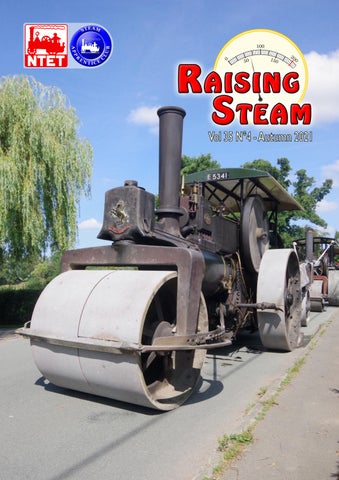
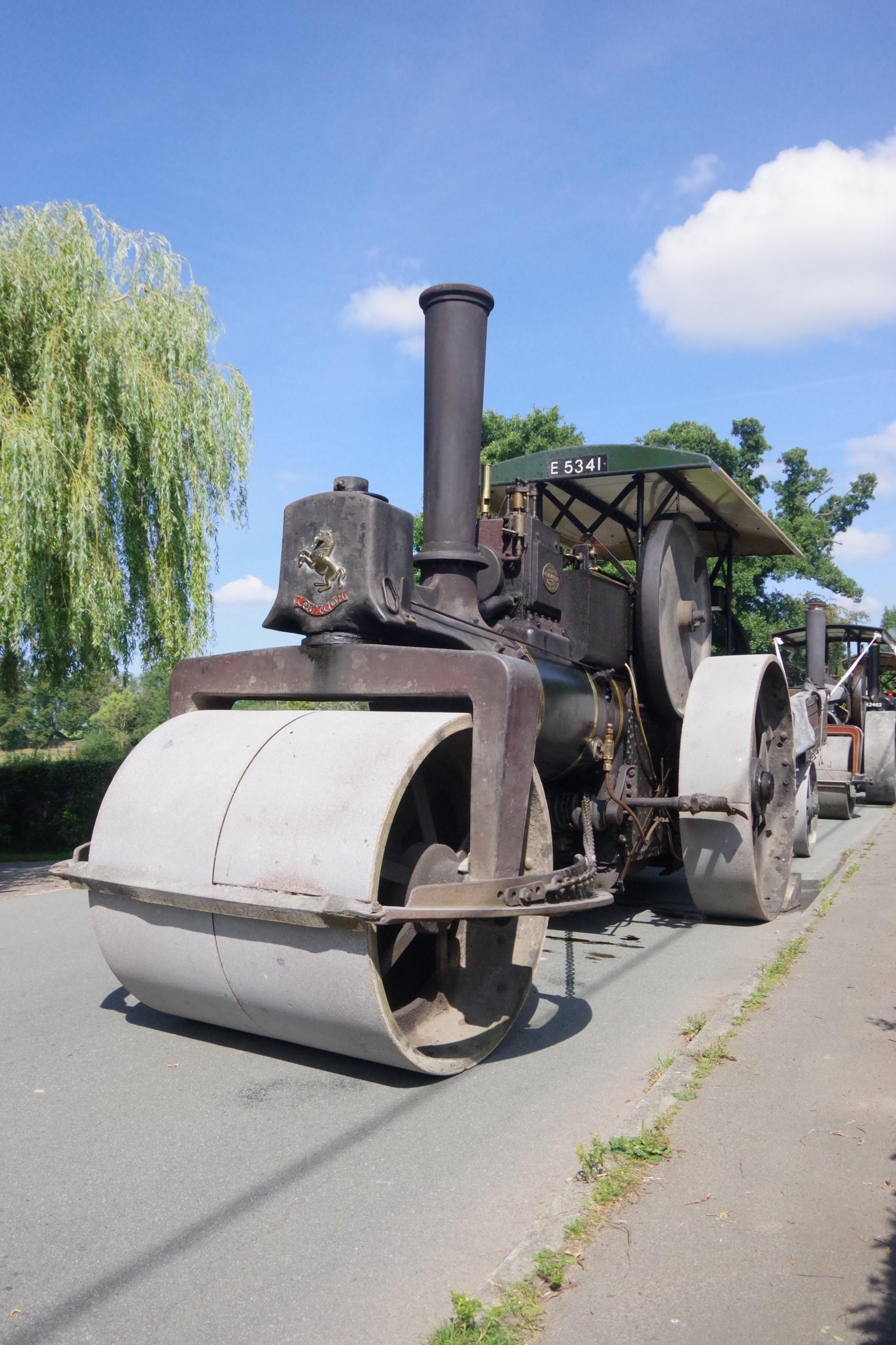
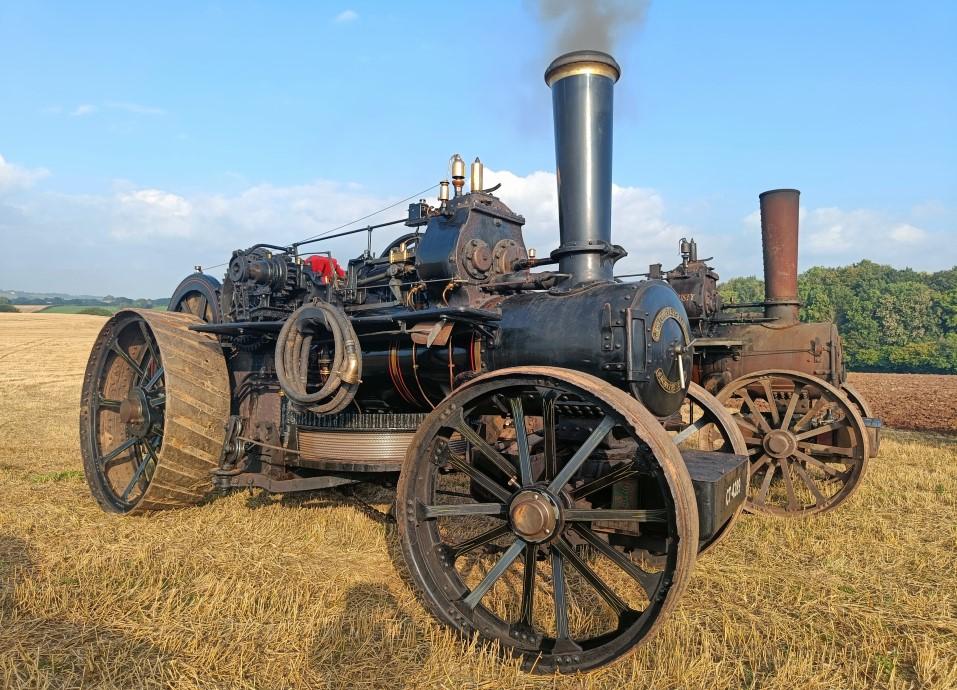
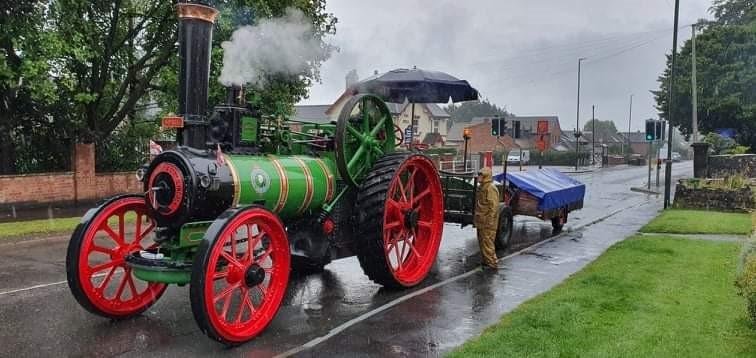
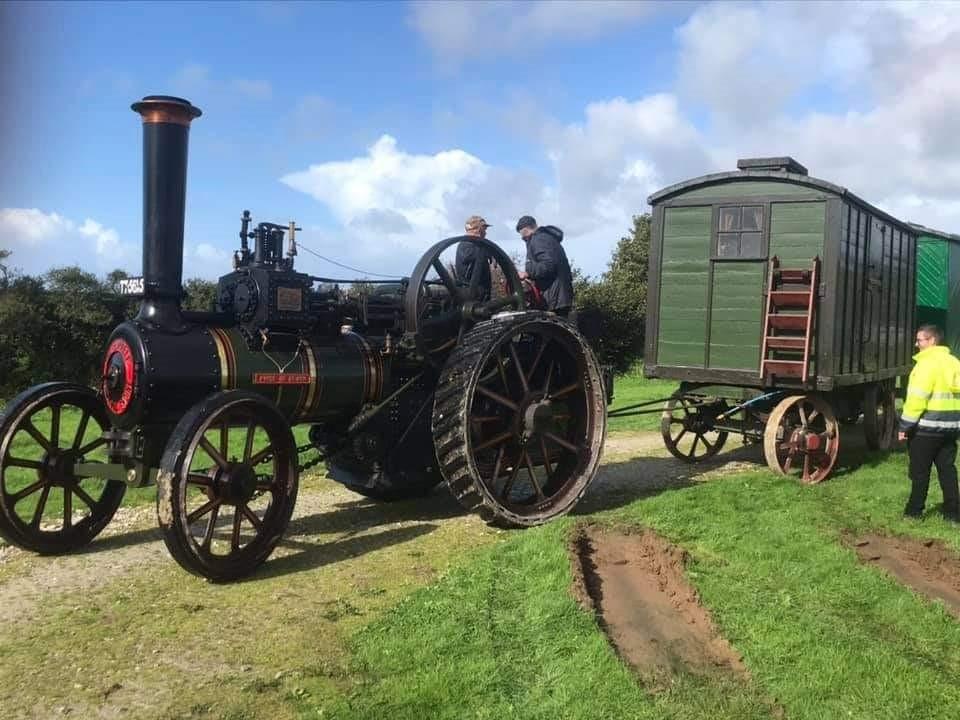
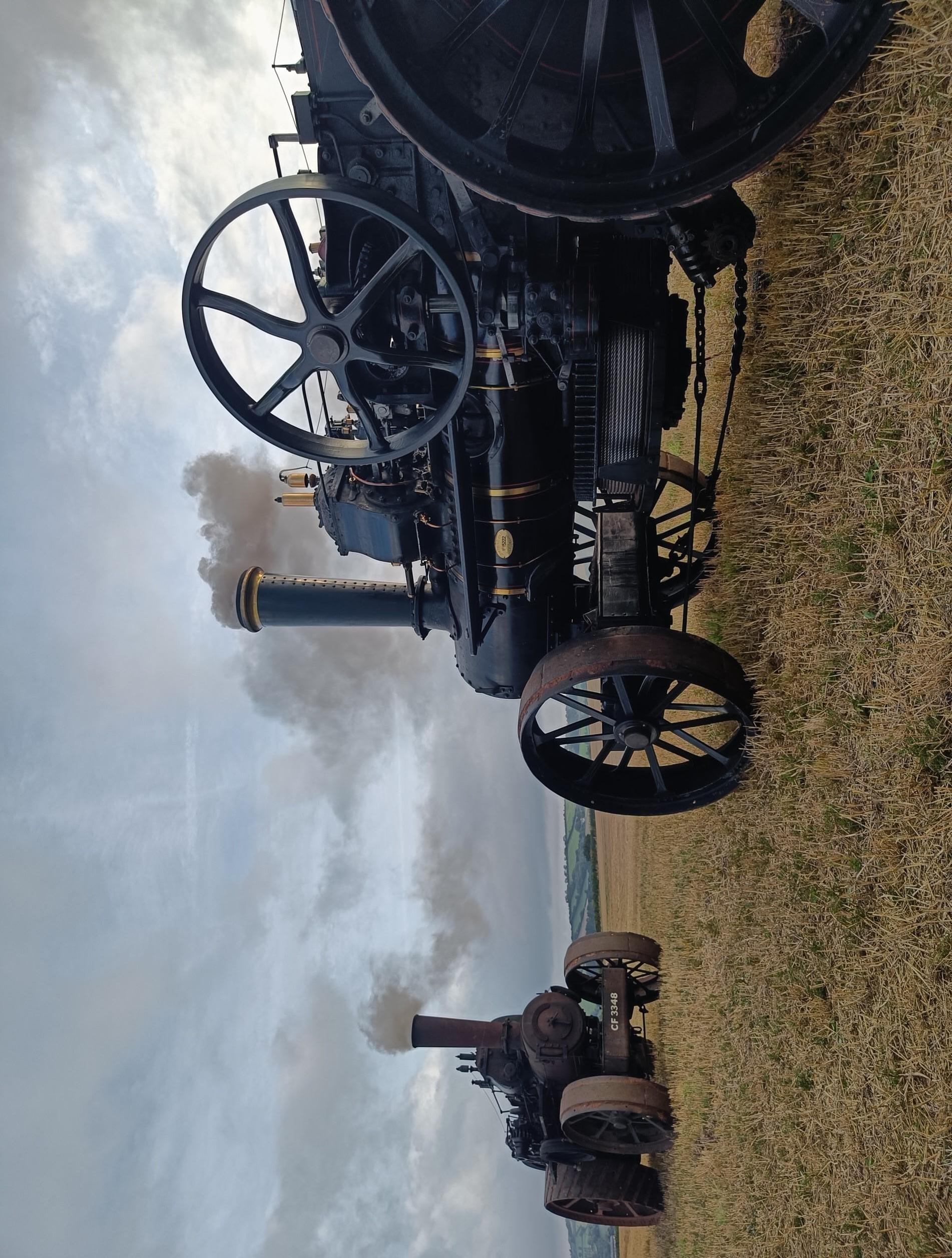
Front cover: Aveling BS type roller No. 8290 of 1914 out and about on the road. Photo: Steve Cockram. Rear cover: Fowler BB1 ploughing engines No.s 15145 and 15222 raising steam for a days ploughing.
Thoughts from the Editor
Jim Huntley
Hello and welcome to the autumn edition of Raising Steam!
Firstly I’d like to thank all of the members for their entries into the GDSF competitions, the quality of the entries was brilliant and it was very difficult for the committee members to select the winners. The winning entries are shown later in the magazine. It’s been brilliant to see engines back out in steam and rallies going ahead as things have started to get back to normal. I hope you’ve all been able to be involved with some steam over the summer, be it visiting a rally, driving an engine, attending the Tinkers Park driving day or just seeing an engine on the road. I think with how things are going now we can be safe in the knowledge that we should have a full season of rallies and driving days next year so there’s something to look forward to!
I even managed to get my roller to the Bath and West Show, the first show I’ve been to since GDSF 2019. It was a brilliant feeling to be back out enjoying the engines, talking to friends and generally feeling like a bit of normality has returned! It was also good to have the NTET/SAC exhibition unit present manned by Andrew and Richard Semple to try and share our hobby to others. Have you managed to get to any shows this year? Why not write in and tell us about anything interesting you saw when visiting?
I’ve been lucky enough to have spent several days ploughing with my friends set of ploughing engines, my favourite part of engine driving! I was very pleased to see the Steam Plough Club invited a couple of SAC members to take part in their Hands on Weekend - I’d certainly have jumped at the chance for a weekend on a ploughing engine when I was a SAC member!
The last few weekends have been spent taking my friends Fowler agricultural engine apart ready for an overhaul of the motion work, a new back axle and a repaint all ready for a full season next year, so it’s been all go recently!
As ever, I welcome your contributions to Raising Steam - it’s always interesting to see what you’ve been up to, be it a rally report, doing something hands on with engines, model making, or doing some historical research, it’s all welcome! Anyway, that’s enough from me, so enjoy the read and happy steaming!
Thoughts from the Chairman
Nick Bosworth (Acting Chair)
Welcome to the Autumn edition of Raising Steam. Over the summer it has been good to see a few more events and rallies going ahead.
Over the August bank holiday weekend, committee member Jim Huntley, assisted by Andrew & Richard Semple, took a display to the Bath & West Show. The show doesn’t usually have a steam presence, so this gave the NTET & SAC a change to promote our hobby to a wider audience. Lady Sylvia also attended the Sutton on Trent Festival, on the 4th & 5th of September.
Our annual summer competitions for colouring, models and photographs
received a good number of entries. See later in the magazine for the winners.
We have been able to run an apprentice driving day at Tinker’s Park in Sussex on the 18th of September. This is the only driving day we have been able to run this year, and I would like to thank the team at Tinker’s park for their time and effort. I trust everyone who took part enjoyed themselves.
In early September, two members of the Steam Apprentice Club were able to take part in the Steam Plough Club’s ‘HandsOn’ training weekend; two days of operating ploughing engines, along with their associated equipment. The SPC had two last-minute cancellations, so generously offered the spare places to the SAC I would like to thank SPC chairman Mark Jones, as well as the rest of the SPC team for thinking of the SAC when they had the spare places available.
On a personal note, my family attended Cromford steam rally at the start of August with Foster 14410 and Garrett 33986. Unfortunately it was
very wet leading up to the weekend, and most exhibits had to be towed onto the rally field. Luckily the weather improved and on the Monday we had good weather when I drove the Foster the 14 miles home.
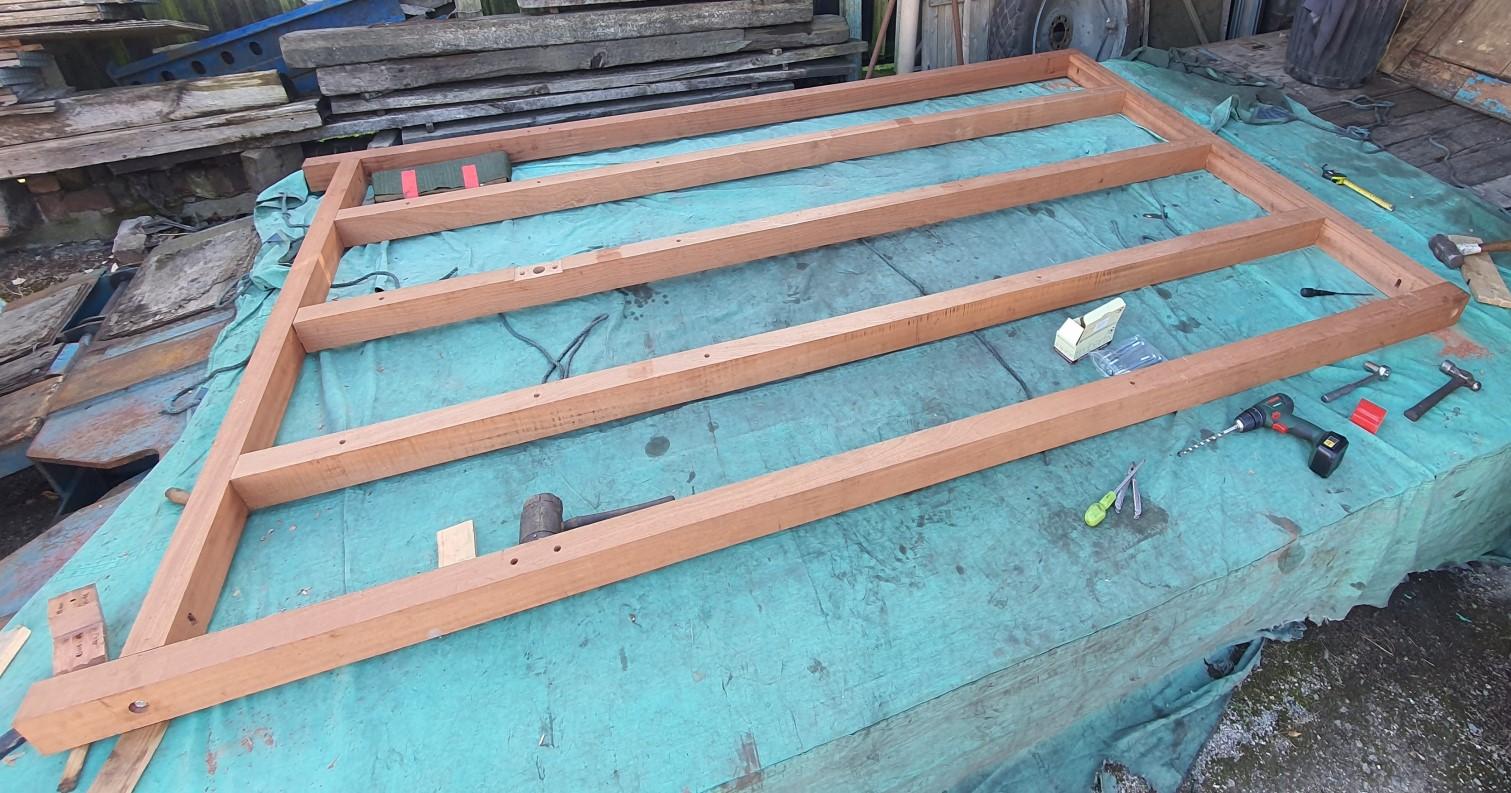
Workshop update: We have made some progress on a new chassis for the Garrett living van. New wood has been purchased, and I have recently been cutting the new chassis beams to length, and forming the joints to connect the pieces together, ready for a trial assemble of the parts.
We are also taking nominations for the annual Technical Achievement and Apprentice of the year awards. Technical areas of achievement may include: engineering work on full size engines, model engineering or any other appropriate steam related subject.
Nominations to be entered by a sponsor for whom they have been working or have been under the instruction of, or apprentices may enter themselves. The Apprentice of the year award is to recognise an Apprentice who has shown all round enthusiasm in their involvement with Road Steam. This may be hands-on experience with an engine or helping to maintain or restore an engine. Consideration should be given to how well they have learnt and respected the necessary skills needed in the operation of an engine. There is no particular type of submission we are looking for other than that you feel the Apprentice has made an effort, has learned from whatever activity they are doing and has shown the ability to ‘stay the course’.
Please send any nominations to sac.chairman@ntet.co.uk.
Money Matters
The NTET has recently appointed a new treasurer, Amy Reynolds. Amy has the important job of looking after the finances so that we are able to keep doing everything we do. She has written in to introduce herself and say a bit about what she does...
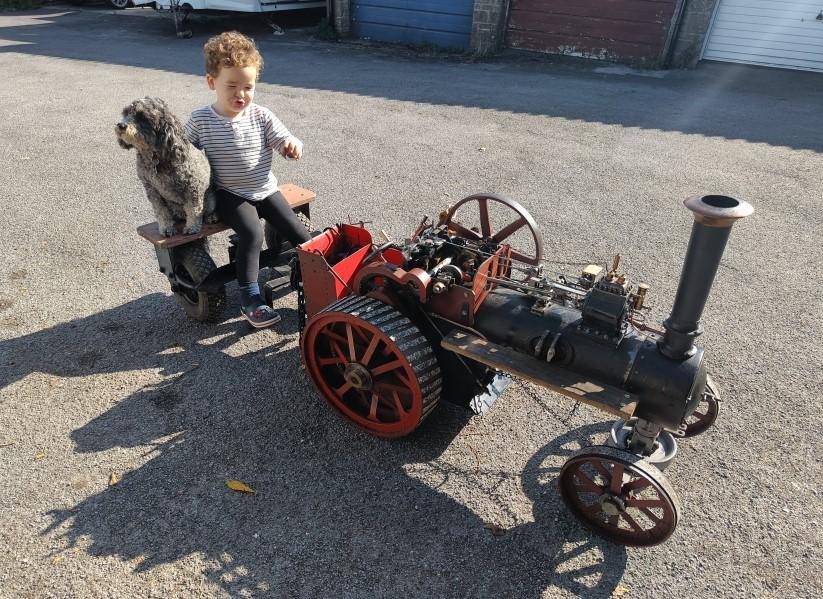
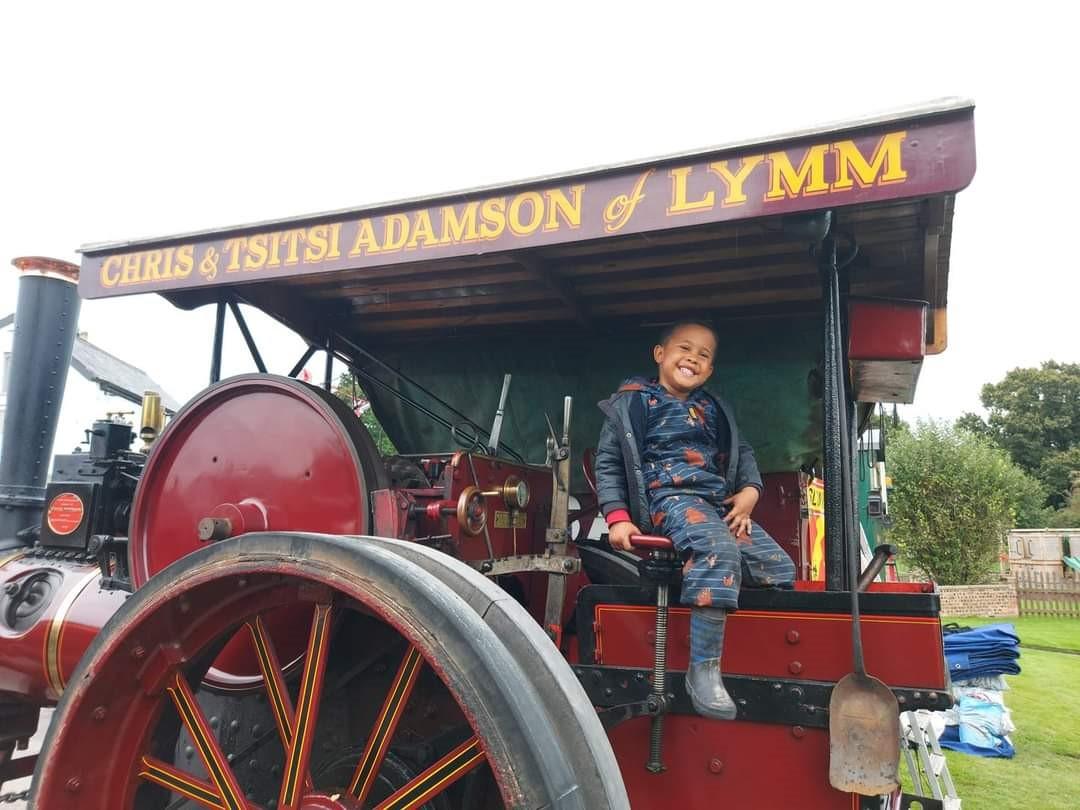
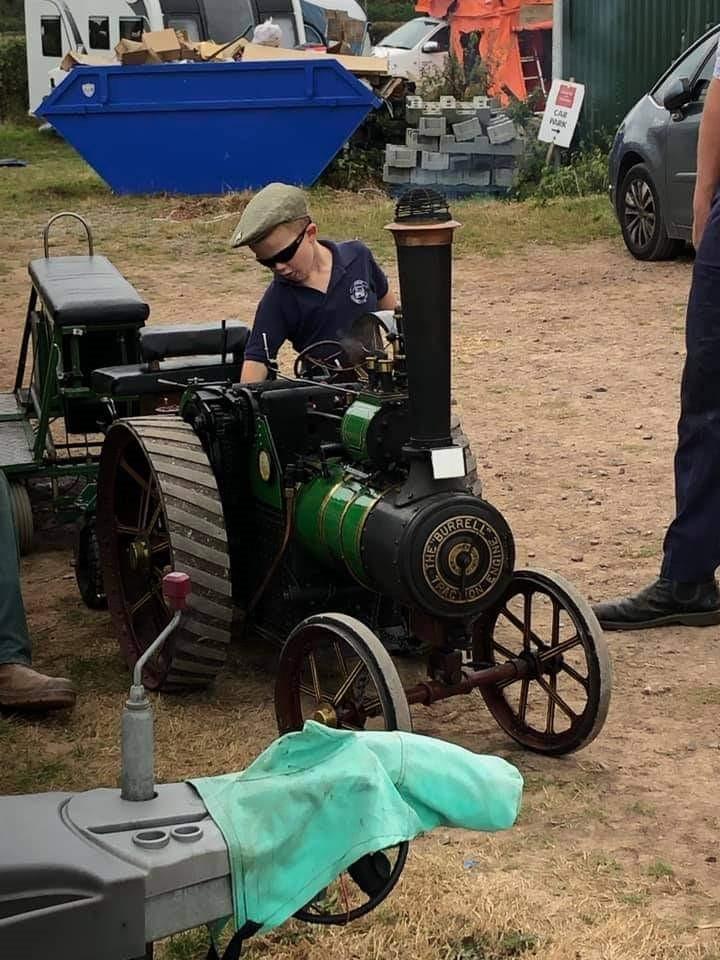
My name is Amy Reynolds, I was a steam apprentice and was brought up within the steam world. Now I am the Treasurer and look after the NTET piggy banks! I have two sons (5 and 7) who are loving being involved with steam and are members of the SAC –hopefully they will be following in my footsteps and big enough to fire the waggon soon, but for now they are enjoying their miniature!
All companies have a “year end” and the NTET’s is 31 March, therefore we are in the process of finalizing the accounts for the year to 31 March 2021. I thought I would take this opportunity to talk you through the results for 2021.
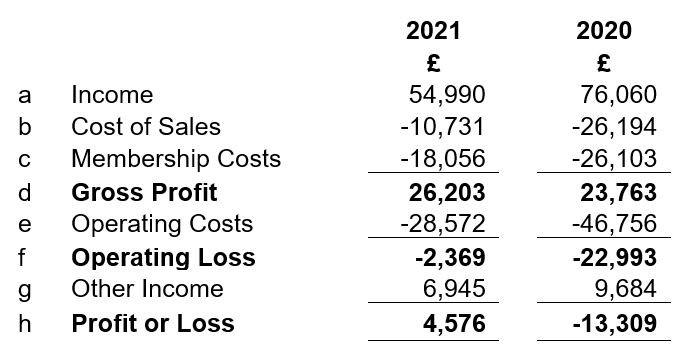
The income and expenditure statement is shown in a summarised format below:
a) Income is mainly made up of subscription income from people being members of the NTET and SAC. It also includes income from sale of merchandise such as NTET clothing and badges. The income has dropped from 2020 to 2021 mainly due to activities which have not taken place due to Covid – such as the Drivers Day and Sales at the Great Dorset Steam Fair.
b) Cost of Sales includes the costs which directly relate to the income – such as purchases of merchandise. These costs have reduced for the same reason.
c) Membership Costs relate to the editing, publishing and postage of Steaming and running the Drivers Day – these have reduced because the Drivers Day did not happen in 2021.
d) Gross Profit = a – b – c
e) Operating Costs include all the other costs that it takes to run the NTET – such as the website, finance costs, insurance and stationary. Some savings have been made since 2020 due to the lack of activities as a result of Covid.
f) Operating Loss = d – e
g) Other income covers the “non-core” income, such as donations and interest. Finally, this allows us to calculate the final Profit or Loss (h) of the club = f – g
As you can see, in 2021 we made a small profit despite the effects of Covid, but this was mainly because a lot of the activities the club normally runs or attends did not happen. In 2020 we made a loss overall, but luckily the club has reserves of around £165,000 which support the loss. Going forwards, we need to find a way to increase subscriptions to cover the costs of activities – so please encourage any friends or relations to join up!
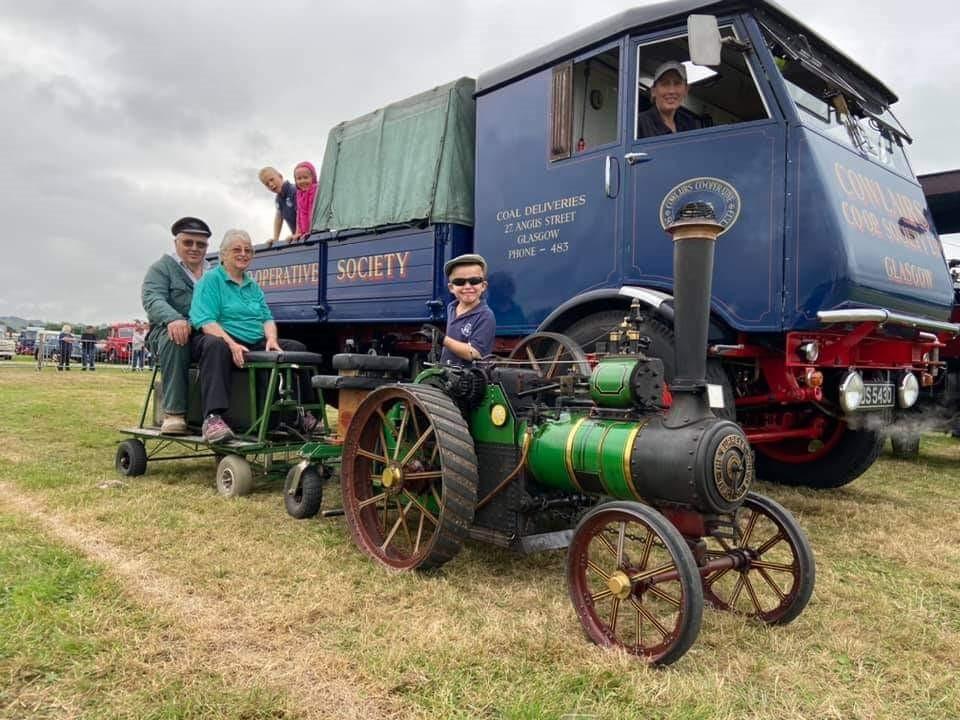
I’m sure you’ll all joining me in welcoming Amy to the NTET/SAC team! Below is a photo of Amy in her families waggon alongside one of her sons on their miniature Burrell. Ed.
Summer Competitions - The Winners
We were delighted not only to receive so many entries to our competitions which were judged during the week that we should have been at the Great Dorset Steam Fair, but that each and every one of
you showed such talent and skill that our judges had a VERY hard time deciding who should be the overall winners.
And here they are...
The Photographic Competition
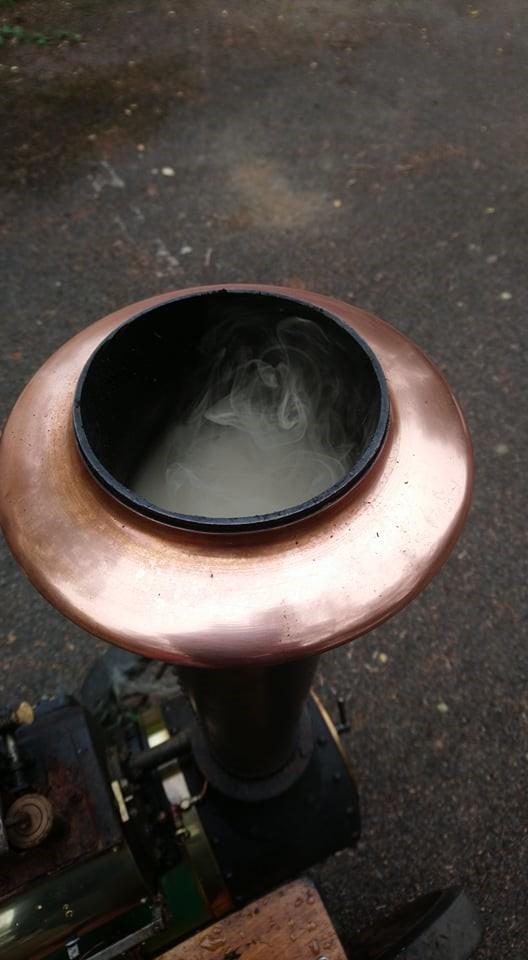
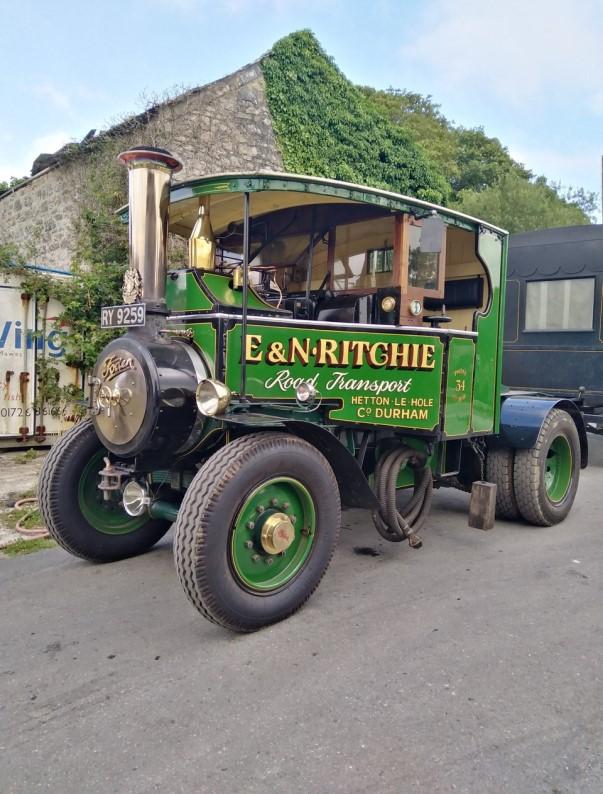
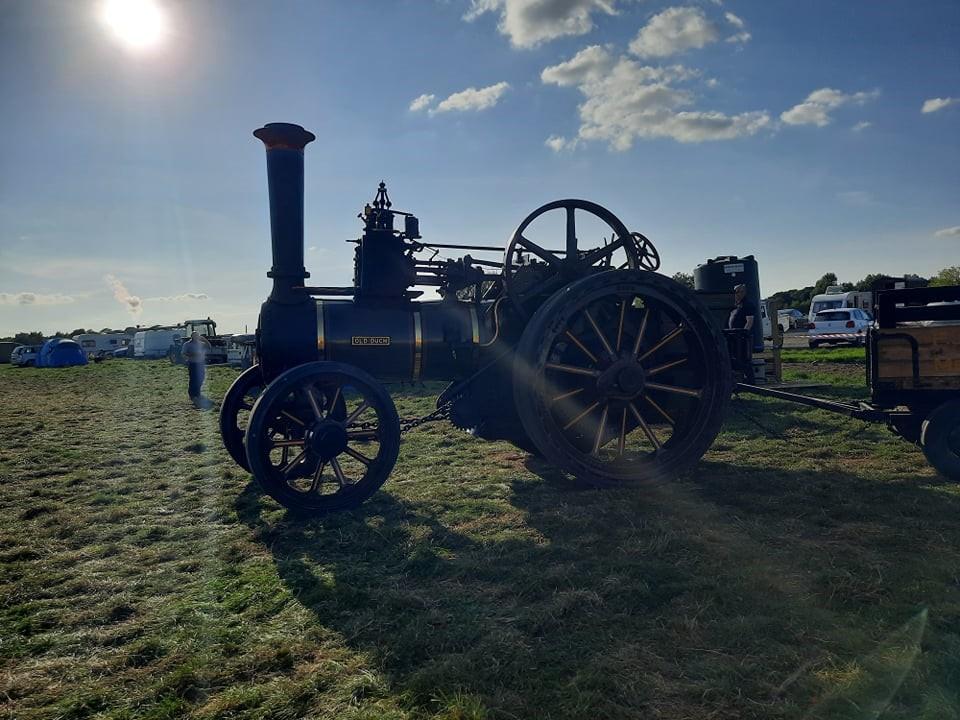
An unusual view of an engines chimney. Very artistic!
A cracking portrait of a Foden tractor with a period background.
An atmospheric shot of a lovely old Burrell with a lovely blue sky.
Oliver
Lincoln
Abbie
The
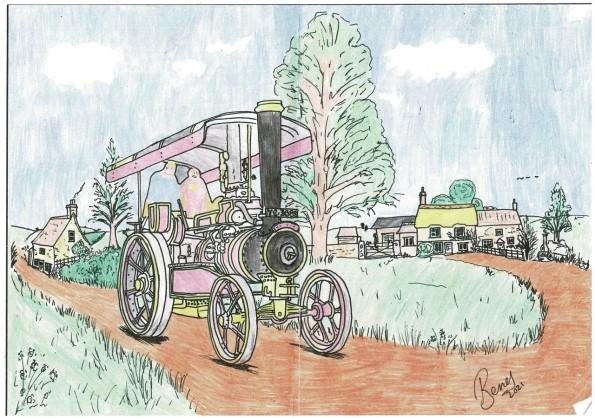
Colouring Competition
First Second Third
Ethan
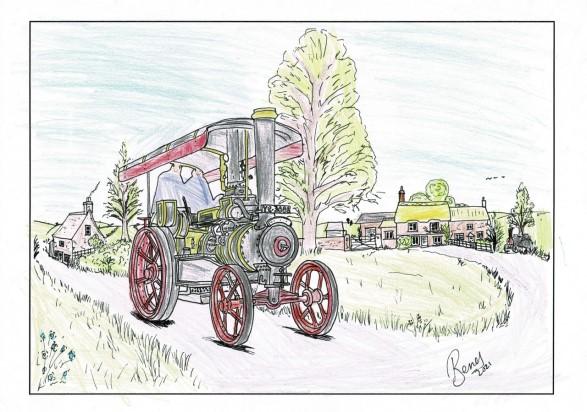
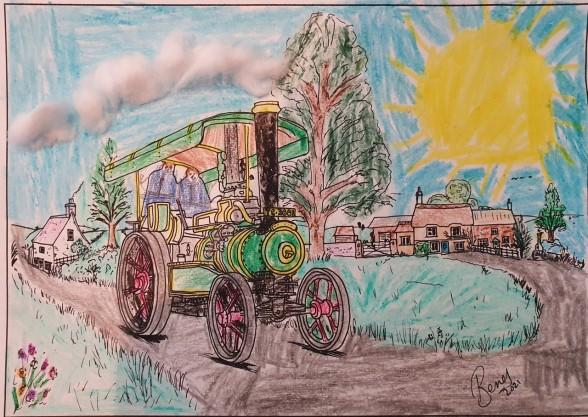
A lovely colour scheme for the Fowler and an authentic background.
Leo
The Fowler on a sunny day. A clever addition of cotton wool smoke!
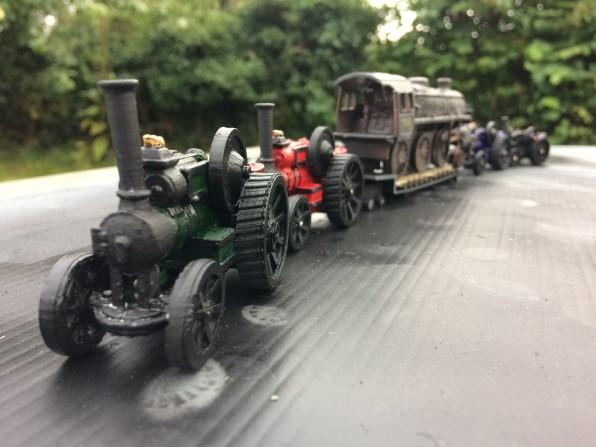
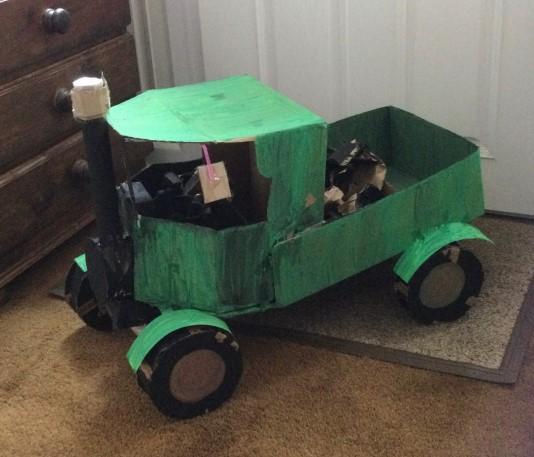
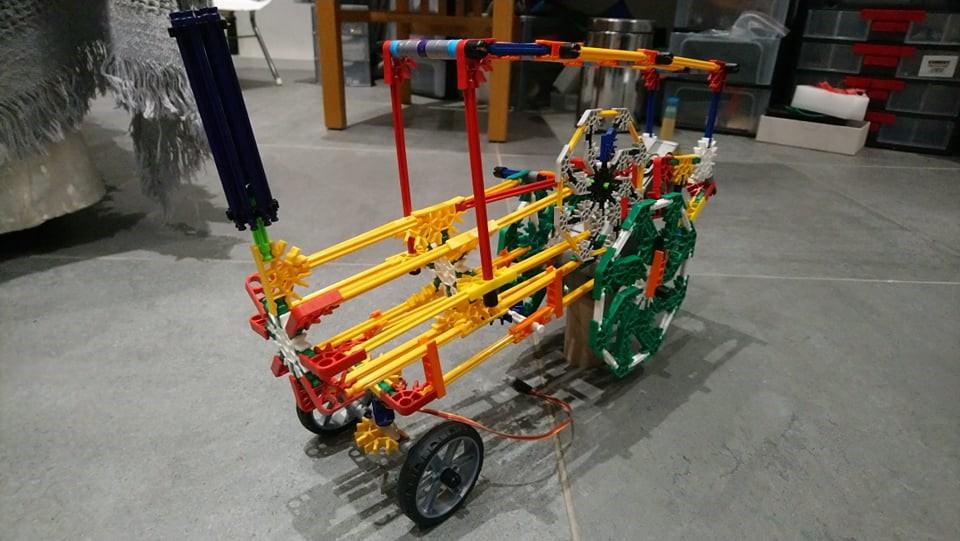
The Model Competition
Charlotte
A great choice of colours and expertly done shading. Very realistic.
First Second Third
Stanley
An excellent application of 3D printing. Complete with a load on the trailer!
Emily
A huge Foden wagon made in cardboardexcellent recycling!
Oliver
A well detailed model made from K’Nex. I love the bright colours!
From the Archive
Elijah Bell has had another trawl into his archives to share with you. If any members enjoy researching engines like Elijah, I’d love to publish what you’ve found out...
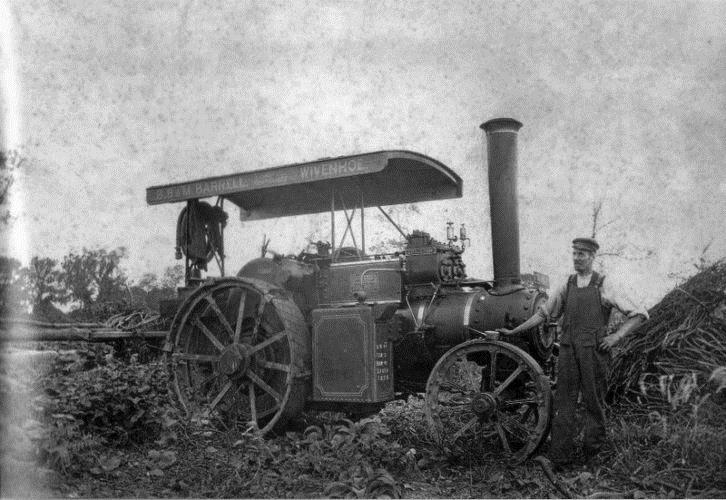
A fine example of a Foster ‘Wellington’ Tractor owned by timber merchants B.B & Barrell of Wivenhoe, Essex. Presumably the engine has been working in some soft ground as a set of spuds are fitted to the rear wheels. I have no further details on this engine sadly, but the company also owned surviving Garrett 4CD Tractor ‘The Hot Favourite’.
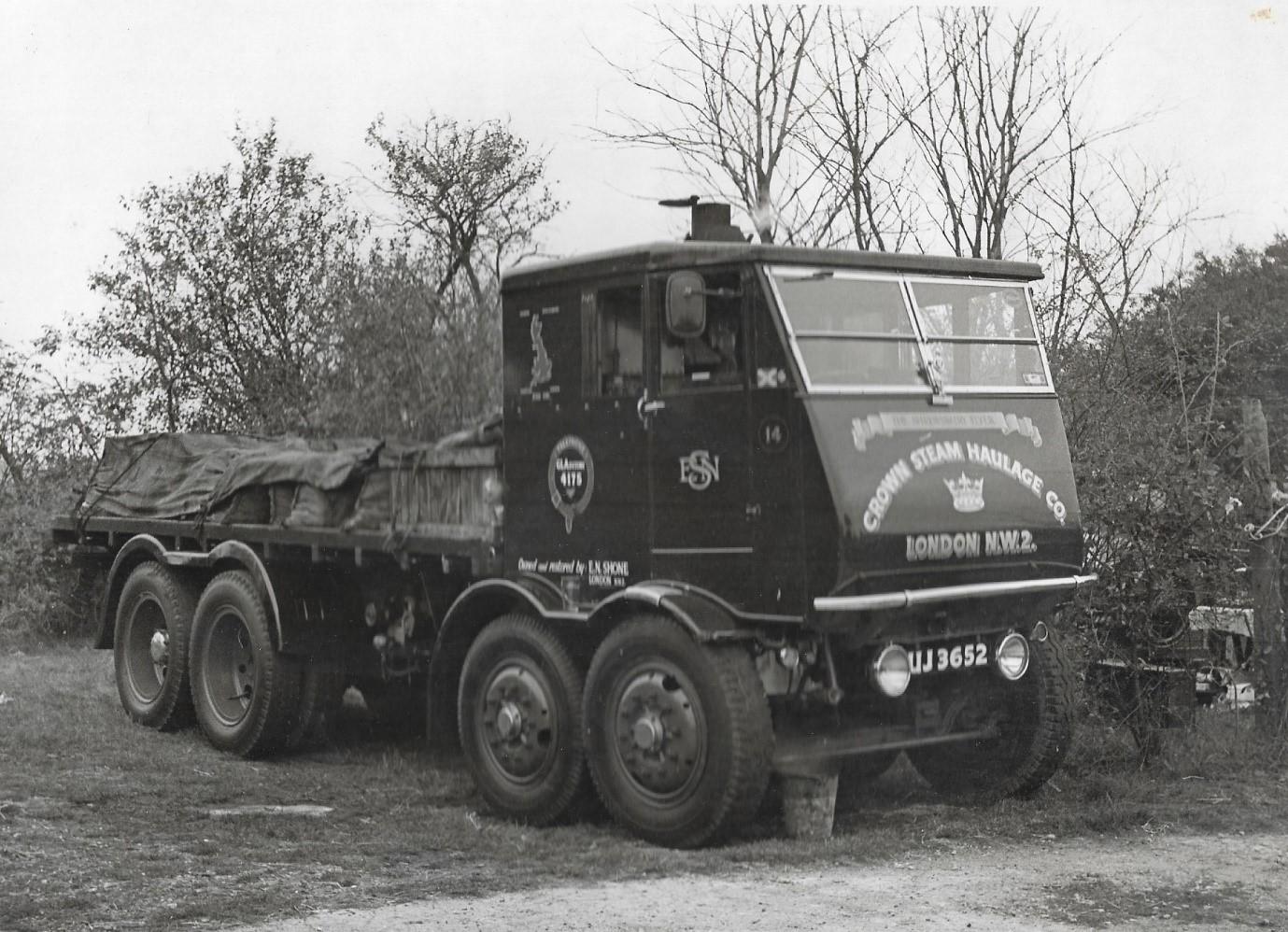
The sole surviving Sentinel S8 Steam Waggon ‘The Shrewsbury Flyer’ No.9105 of 1934. Seen her in the ownership of Edgar Shone at an early preservation event. Edgar rescued the chassis of this waggon from her last commercial owners Robert Wynn of Newport. She is now owned by Richard Hazell where it shares a stable with an S4 and S6.
Member Mail
It’s always good to see what you’ve been up to so thankyou for sending your photos in. Do be sure to send photos or a few words in if you’ve got something you think the other members may be interested to see!
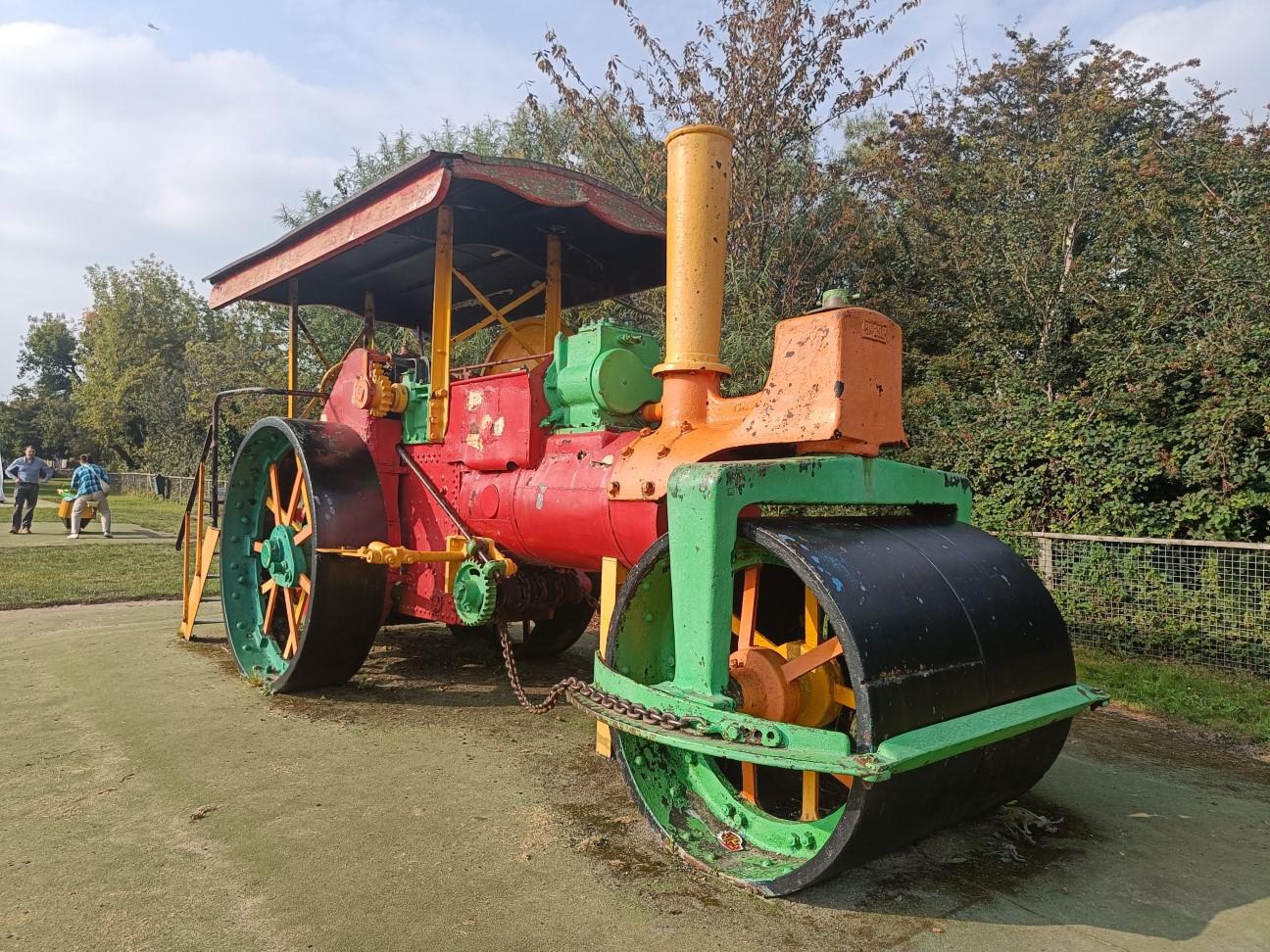
The Dorchester Playground Roller
While passing through Dorchester recently I came across a steam roller, in a playground of all places so I just had to stop and have a look!
Back in the 1950s and 60s when the use of steam rollers was coming to an end, many found a new life being used as climbing frames for children in playgrounds. Over the years most of them have been removed and restored and many of these ex ’playground rollers’ can be found running at steam rallies. This one and one in Scotland are the only two left in playgrounds in Great Britain. The roller is Aveling and Porter E-Type No. 10317 of 1922 and was donated to the playground by her original owners, Edisons of Dorchester. She’s in quite poor condition now with the boiler clearly very rotten as a support has had to be placed
under the front to support it.
If any of you have seen the other playground roller up in Scotland, then why not write in and share some photos?
Steam Plough Club Hands On Weekend
SAC member Jack Potter has written in to tell us about his experience at the SPC Hands on Weekend.
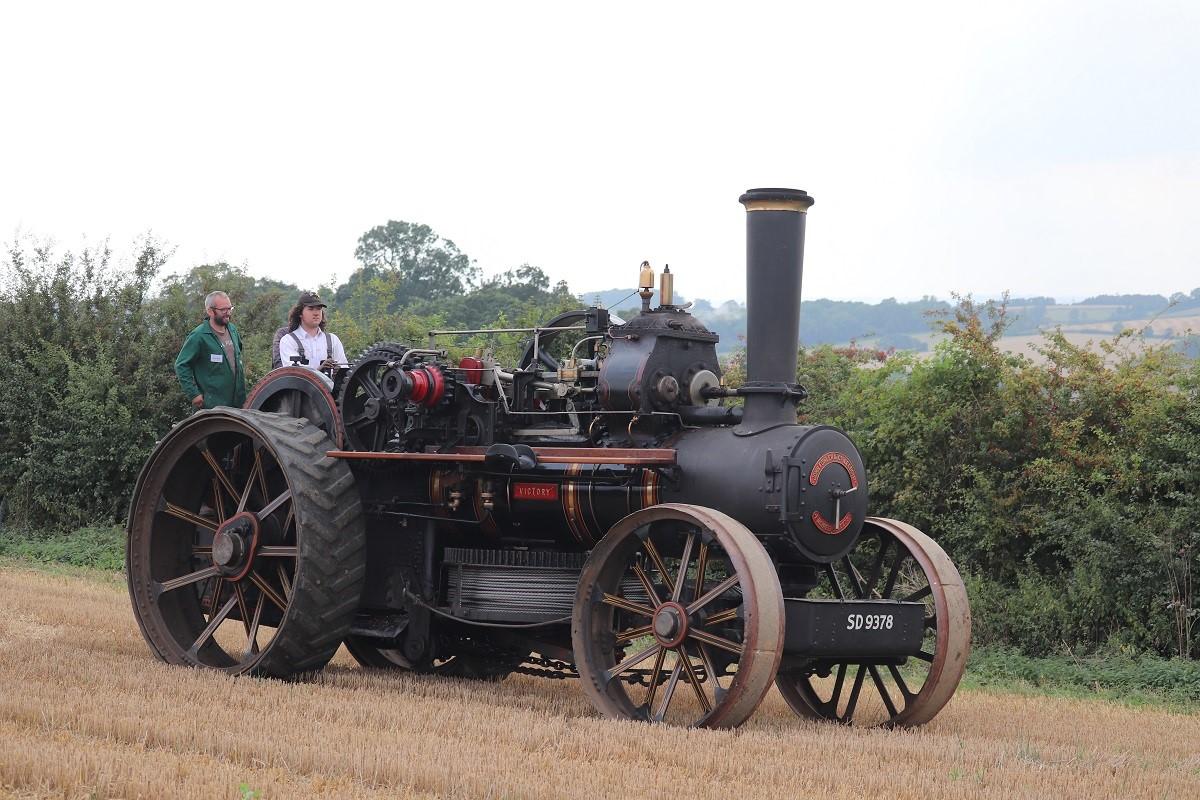
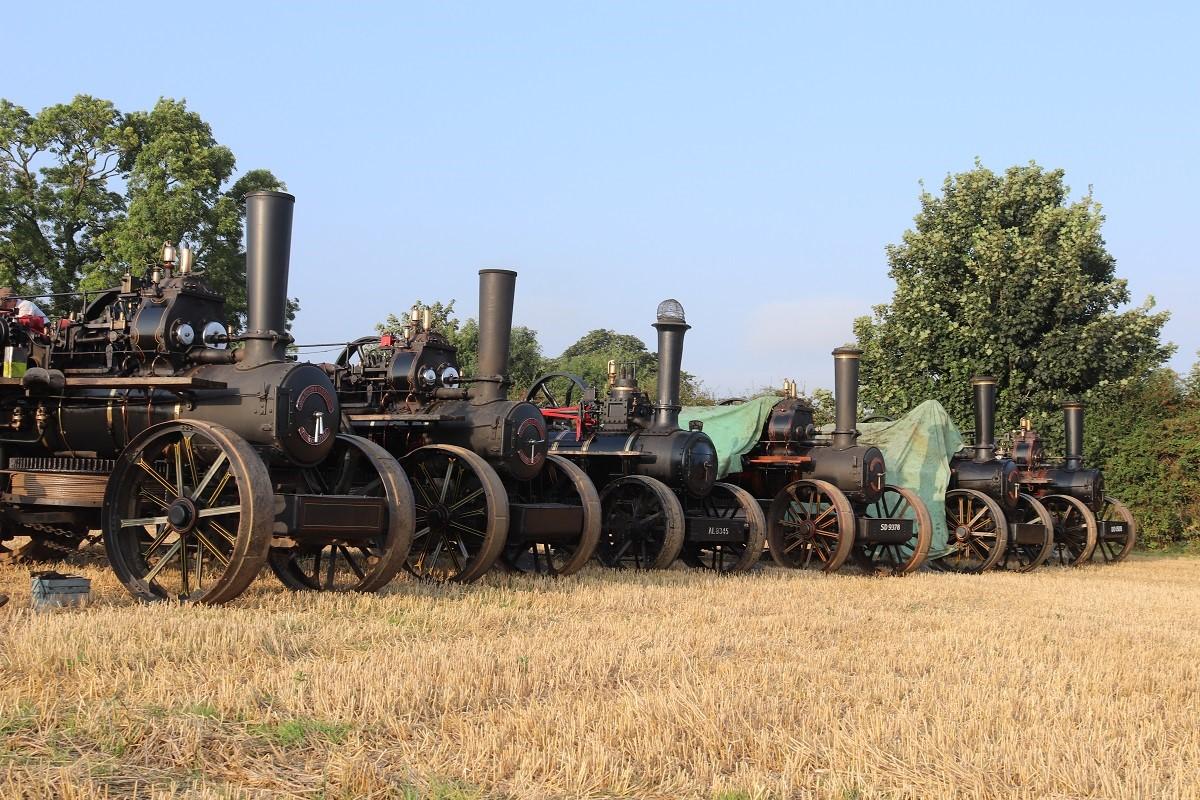
On Tuesday the 31st of August, a post went up on the Steam Apprentice Club Facebook, offering a SAC Member over the age of 15 a place on the Steam plough Club ‘Hands On Weekend.’ I entered and was surprised when I was chosen. We arrived at Joe Nourish’s Farm on the Friday at 11:00 am as we were told there would be plenty to do, we met Archie and Andrew. They said to speak to Joe Nourish, he would say what we could do. I was allowed to unsheet and clean Joe’s Fowler BB1 15182 ‘Achilles’, later we were asked to light it up and then take it to the field ready for the weekends ploughing, while we were getting up steam, Howard Bolton’s BB1 15337 turned up. After we had taken Achilles around to the field, Kev Mills brought Brian Knight’s pair of BB1’s 15451 ‘Victory’ and 15452 'Dreadnought’ around to the field. Later Peter Wilson’s Fowler BB1 15183 ‘Ajax’ and Hal and Guy Debes’ single 2528 ‘The Chief’ appeared
and went into the field. The implements were a 6 furrow plough, a 4 furrow plough and a cultivator. There were 12 participants including another SAC member, Cameron.
Saturday
I woke up bright and early ready to go and light up the engine I had been told I could the night before. Achilles was the first in steam ready to get set up for cultivating. 9:00 am was the safety briefing, then we were put into 3 groups. Group 1 went with ‘The Chief’ and Howard Bolton’s BB1 with the 6 furrow plough, Group 2 with Brian Knights pair of BB1’s ‘Victory’ and ‘Dreadnought’ on the 4 furrow plough and Group 3 with Peter Wilson's BB1 ‘Ajax’ and Joe Nourish’s BB1 ‘Achilles’ on the cultivator. I was in Group 2 with ‘Victory’ and ‘Dreadnought.’ Kev
showed us around the oiling points on a ploughing engine and on the ploughing gear. We then took them over to where the 4 furrow plough was. We used ‘Dreadnought’ to take the wire rope over to the other side of the field and then we winched it back to us at ‘Victory.’ We attached the wire ropes to the plough and got ploughing, Kev showing us what I had to do. After about an hour on ‘Victory’, I went and had a go on the plough, it was good fun but was difficult with the steering going the opposite way to what you think it should on one of the pulls. We then had a 1 hour lunch break and a group photo in front of one of the engines, we then got back to ploughing where I stayed with ‘Victory’ until it was time to pack away.
Sunday
I was up early as I was asked if I would like to help light up ‘Victory.’ We got there for 7:30, unsheeted ‘Victory’ and ‘Dreadnought’, swept the tubes of ‘Victory’ and emptied the ash pan. Then I lit the fire and started polishing. When most of the engines were in steam, we were told where we would be going. I was able to stay with ‘Victory’ for the morning. After lunch, I
was told by Joe Nourish to go and have a go on Hal and Guy Debes’ 14NHP Single ‘The Chief’ on the 6 furrow plough. Then I went to ‘Achilles’ to have a turn at pulling the cultivator, which was good as Andrew, one of the instructors, said I had the cultivator going at the right speed for cultivating. Then I wandered back to ‘Victory’ and steered it back to the top of the field with Cameron driving. Then I was lucky enough to be asked by Kev Mills if I would like to drive ‘Victory’ down into the farmyard and down the steep track and into the shed.
Many thanks to the Steam Plough Club and the SAC for this chance of a lifetime at the age of 15 and a special thanks to Kev Mills who invited me back the following weekend to do some mole ploughing.
Glad you enjoyed your weekend Jack, and what a lovely line up of ploughing engines! Nothing quite beats a BB1! Ed.
When You Can’t Find Spare Parts...
It is now over 100 years since most steam engines were built, so unfortunately you can’t just go to your local garage to buy spare parts. Most parts have to be made as-and-when needed.
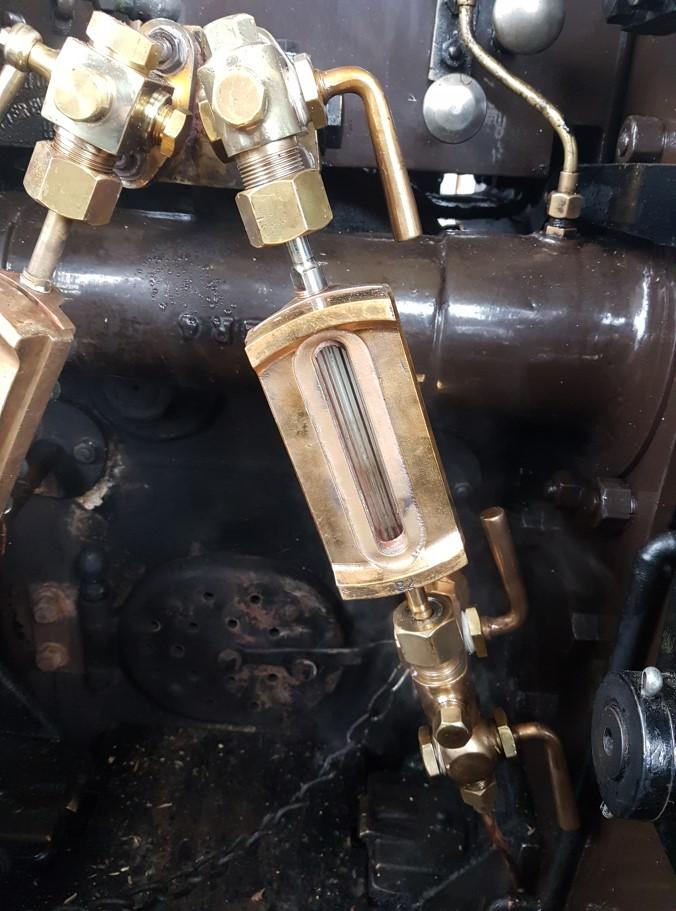
A few years ago, we needed another water gauge for my cousin’s Garrett Tractor. It has the Klinger’ type gauges, which are a bronze body with a glass window’ at the front to see the water level.
Most steam engines have two water gauges. The Garrett did have two, but one was much smaller than the other, so wasn’t ideal.
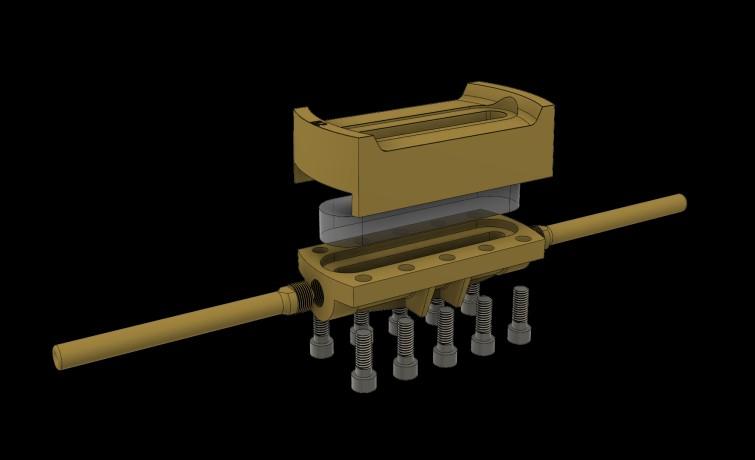
The body of a Klinger gauge is in two halves, sandwiching the glass in-between. The rear half also has the two tubes (top and bottom) for connecting to the top & bottom gauge cocks.
The original method of producing these gauges was to make the two body pieces as a casting. To make the castings wooden ‘patterns’ were made the same
shape as the body pieces, which were then used to make a mould into a special sand that is used for casting metal parts (known as green sand). The sand mould was done in a way that the wooden pattern can be removed, leaving an empty space inside the sand. The empty space was then filled with molten bronze.
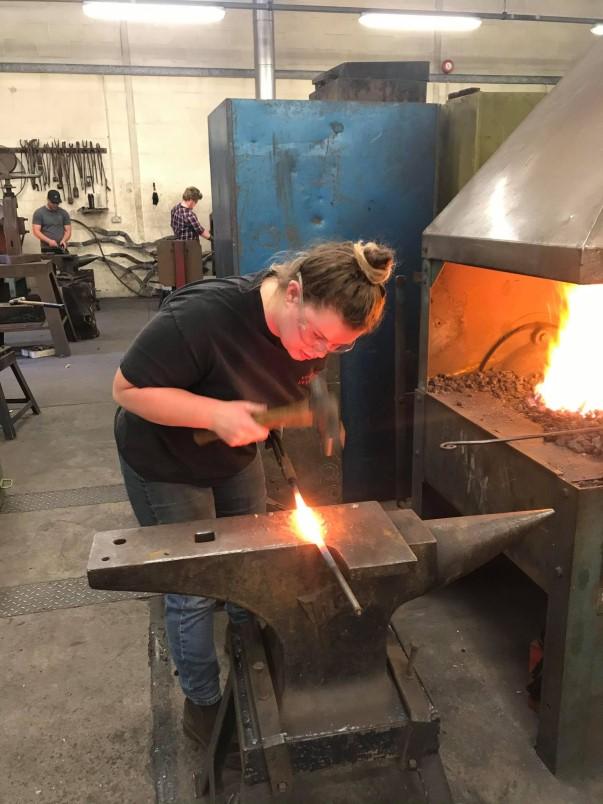
The ‘cast’ parts then undergo some final shaping and machining in a milling machine, to smooth some of the edges, attach the top & bottom tubes, and to make the threaded holes to bolt the two halves together.
To make a new gauge, I needed a pattern. It is still possible to have wooden patterns made for jobs like this by professional pattern makers. This is a relatively simple part so it may have been easy enough to make one myself out of wood.
However, I had recently bought a 3D printer, so why not have a go at making a pattern with it!
The first job was to create a CAD (Computer Aided Design) model of the front and back. The new gauge would be an exact copy of the other gauge we have (that was the correct size), so it was just a matter of taking measurements from the existing one, and using them to construct the CAD model.
I used CAD software called Fusion 360, which is a professional CAD package that is currently free for hobbyist use. If you are interested in CAD, it is a good tool to get started without having to buy expensive software.
Here is the 3D CAD model:
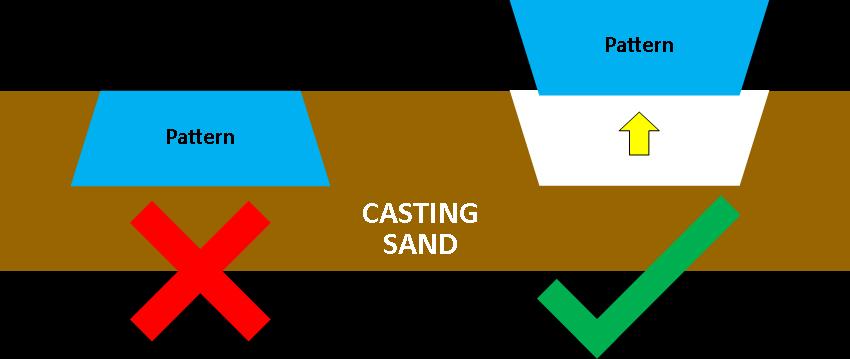
When creating a pattern for casting a part, you need to keep in mind that the pattern needs to be removed from the sand after it has been moulded around the pattern. This means you must have the largest bit of the pattern on the outer edge of the sand, with only narrower parts further into the sand.
The image below shows an example of two patterns. One can be removed from the sand, but the other can’t because of it’s shape.
The pattern on the right is tapered, which makes it come loose as soon as it is lifted, and will be easy to remove. Where the finished part needs to have parallel sides, a slight taper is usually put on the pattern (called a draught angle), which allows the pattern to be removed from the sand. This does leave the same taper on the casting, but the taper is usually removed when the part is finish-machined. In my CAD model, I added the draught angles to both halves of the Klinger body.
Another key part of making a pattern is allowing for the shrinkage of the metal you are casting. When metal is heated it expands, and when it cools it contracts. The castings are made using molten metal poured into the mould, and when it cools to become solid it is still very hot. As it cools, it shrinks a little, which means the cast metal part is always slightly smaller than the pattern that was used to make it. To compensate for this, the patterns are always made slightly larger. Bronze, which is used for the Klinger gauges shrinks roughly 4%. Aluminium shrinks around 6%, and steel shrinks roughly 2%.
The second part of the process was to print the pattern using the 3D printer. This was a reasonably easy job using the software that came
with the printer. I had drawn the CAD model exactly the same size as the original, so I used the software to scale it up by 4% to allow for the shrinkage of the Bronze. After this, I set the printer running to make the patterns.
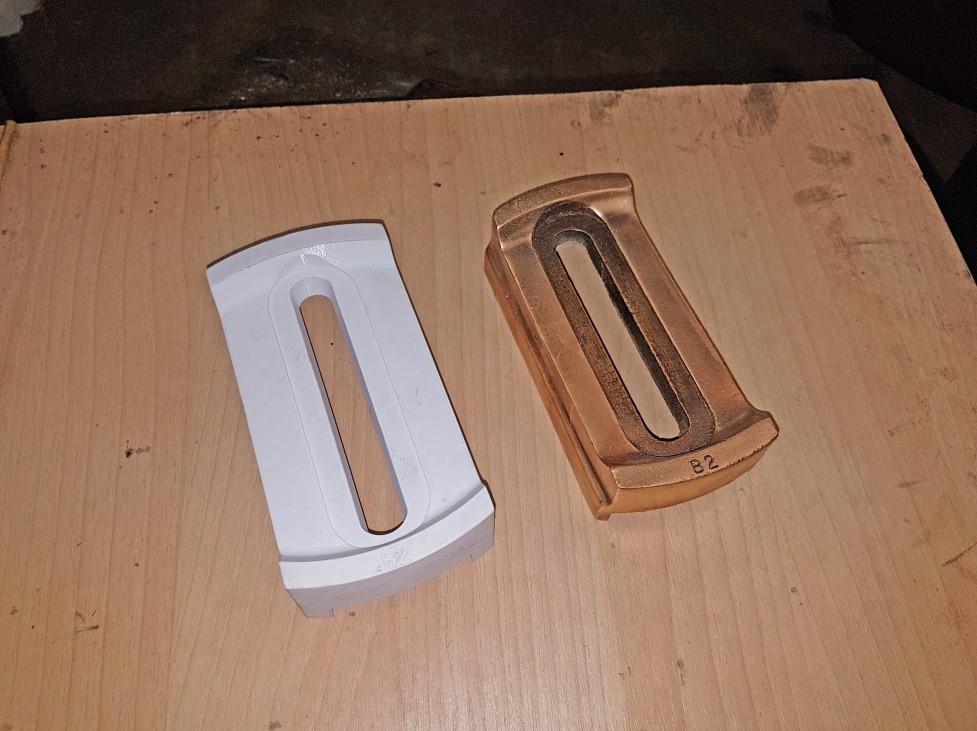
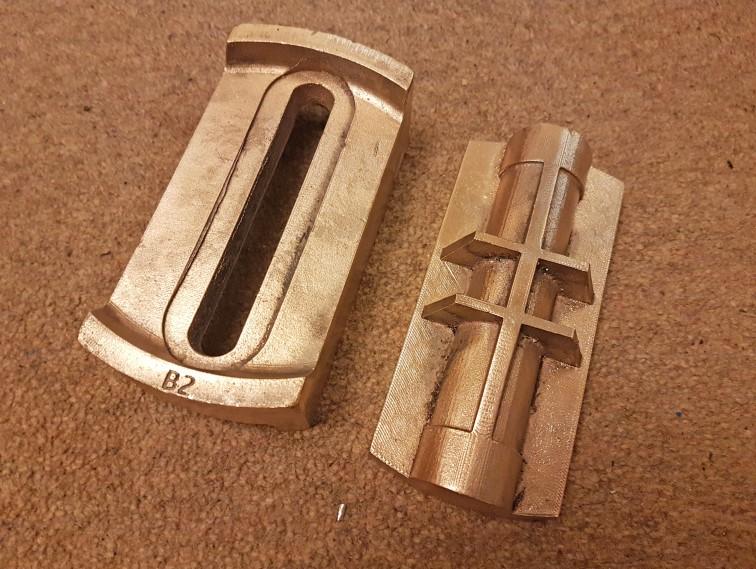
the castings made. I don t have the equipment or skills to cast bronze myself, so I took the pattern to a local foundry, who cast the parts for me. The same pattern could be used multiple times to make several copies of the part.
And here we have the casting as it came back from the foundry.
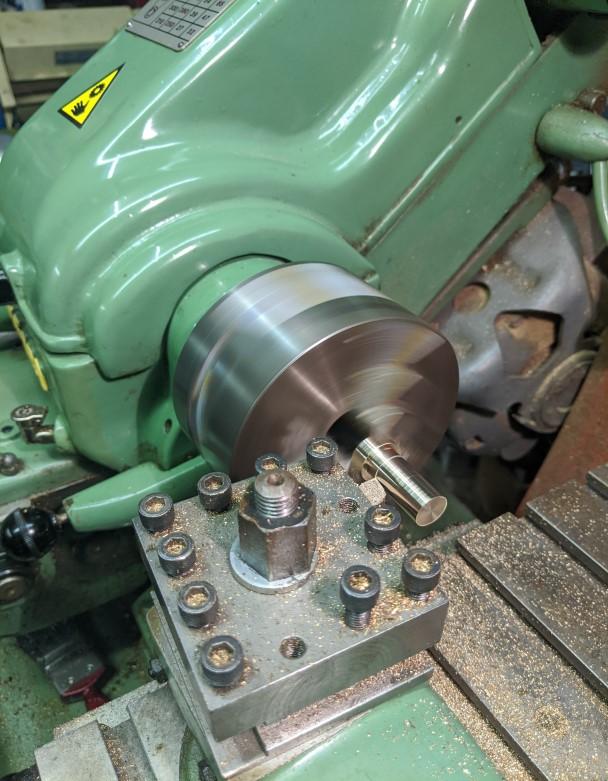
The fourth stage is to machine the bits that needed to fit against each other, and make the threaded holes to bolt the two halves together. I also made the top & bottom tubes, which are made from bronze bar stock.
Once this was done, the gauge could be assembled. The glass is a special toughened glass, which can still be bought in the correct size.
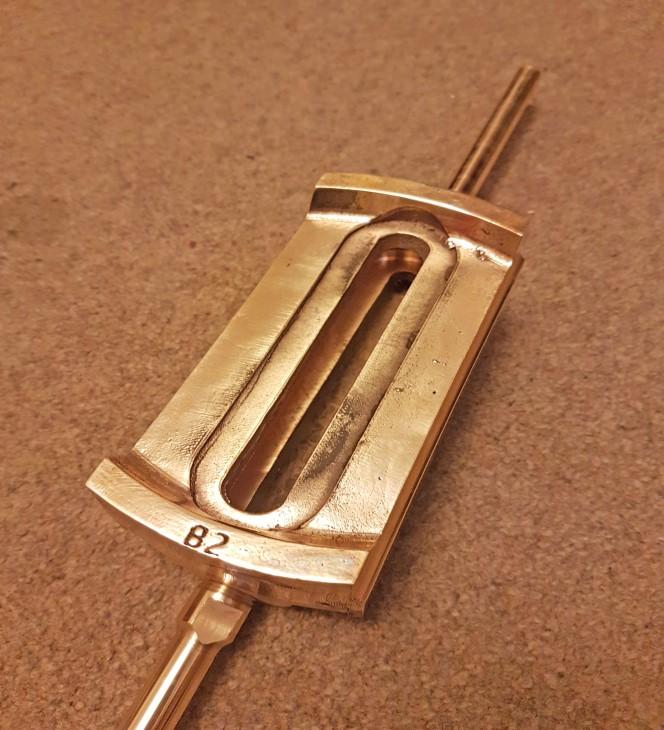
A good polishing, and I had a finished Klinger gauge.
This project managed to bring together old and new technologies, traditional casting methods using modern 3D printing equipment. The new Klinger gauge has now been used on my cousin’s Garrett for the past 3 years without any issues.
Nick
Bosworth. SAC Chairman.
Unusual Engines 7
This edition’s unusual engine is about as weird an engine as you’ll ever see, and is certainly not something you’d be seeing at a steam rally!
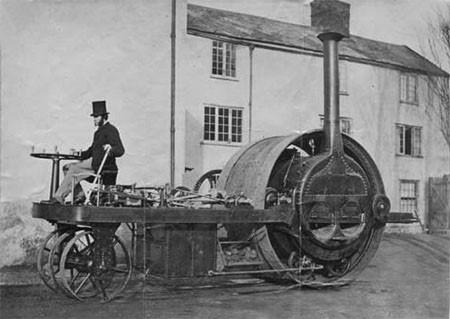
In the 1850s and 1860s a lot of experimentation was happening to try and develop a means of ploughing by steam. Robert Blackburn developed his engines for direct ploughing with a mechanical digging attachment on the back, much like the Derby Digging Engines we have covered before. However Blackburn chose a very unusual layout with a huge single driving wheel at the rear of the engine.
The boiler was fitted inside of the wheel and the wheel ran around the outside. I assume the fireman would’ve followed alongside the engine shovelling coal in from the side! The engine was placed in front of the wheel and drove the wheel by a large annular gear. Making the large gear would’ve been an impressive engineering feat at the time. The steersman sat right up front and steered the engine with the horizontal steering wheel in front of him.
The idea behind the large driving wheel was to
spread the weight of the engine over a large area and stop the engine sinking in while ploughing, to make it steadier and less likely to tip over, and finally to stop it from damaging soft ground.
Like the Derby Digging Engine, the Blackburn engines were not a success and eventually steam ploughing developed following the Fowler double engine system that you’ve probably seen before. Wouldn’t you love to see one of these out in the field though!
For those of you who’d like to research these odd engines a bit further, the famous model engineer Cherry Hill has researched Blackburn's engines and built models of two of them - you can find pictures and information about these online. There is also a video on YouTube of a brilliant model made from Lego of a Blackburn engine that is worth watching.
Steam It Sunday
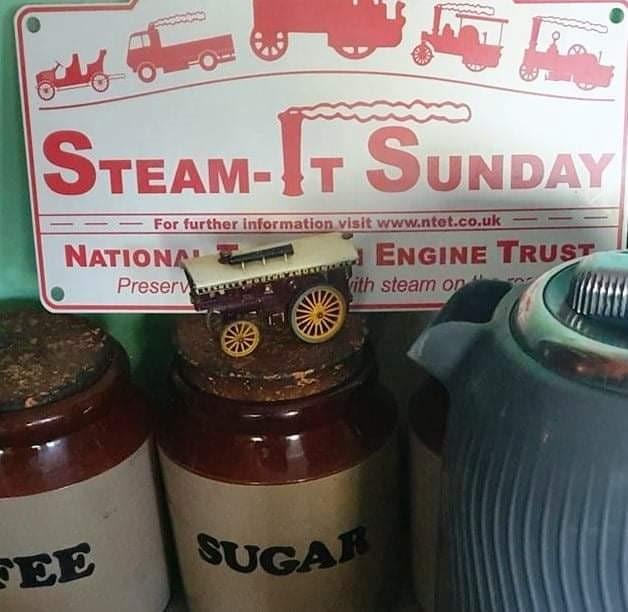
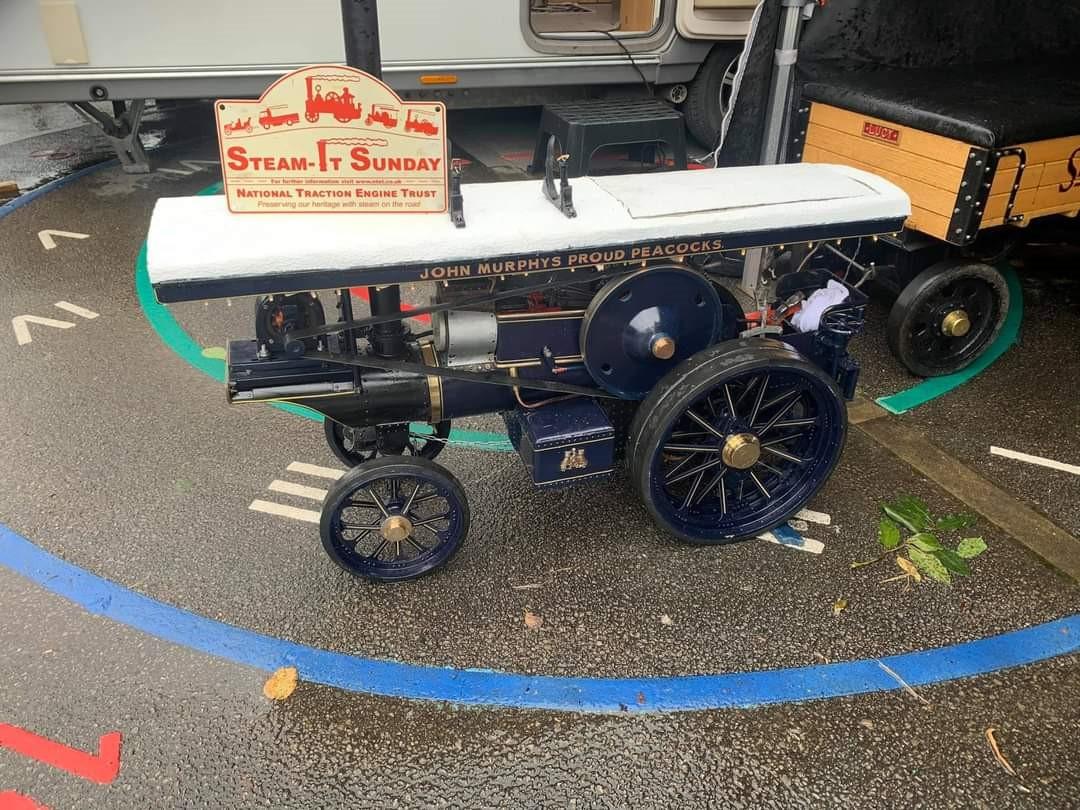
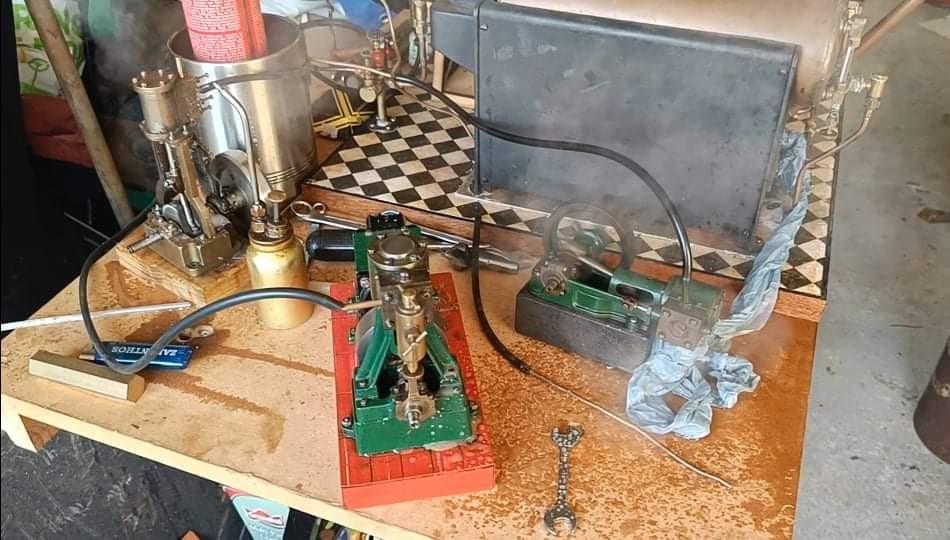
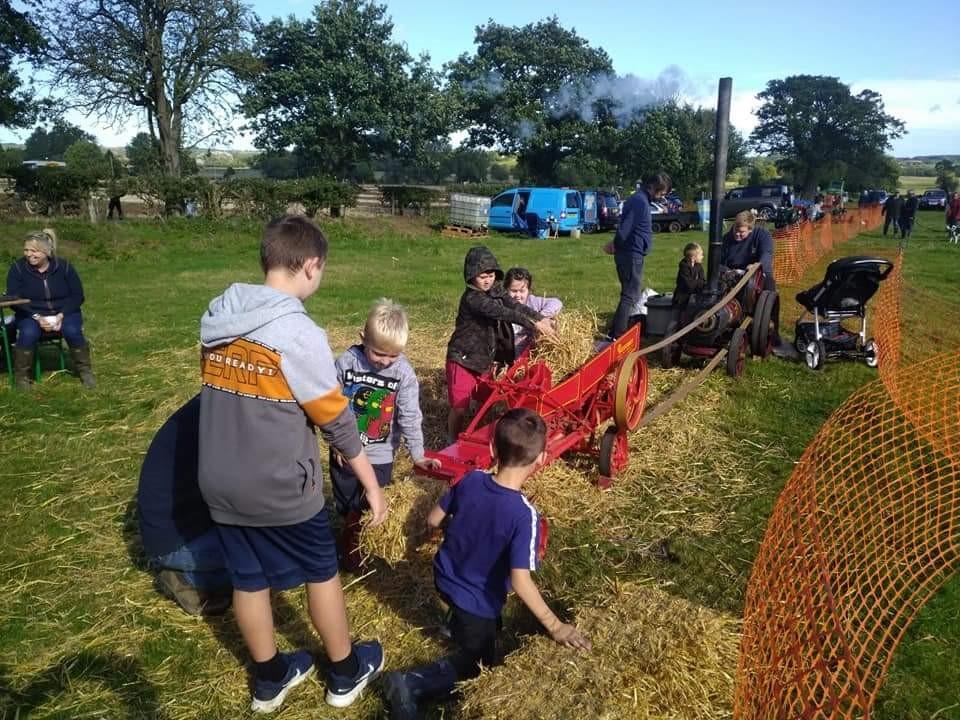
I think it’s a sign of the return to normality that we received lots of photos to the SAC and NTET Facebook page of activity on Steam It Sunday. Below are a few photos to give a flavour of what people got up to. Here’s to next year!
Then and Now
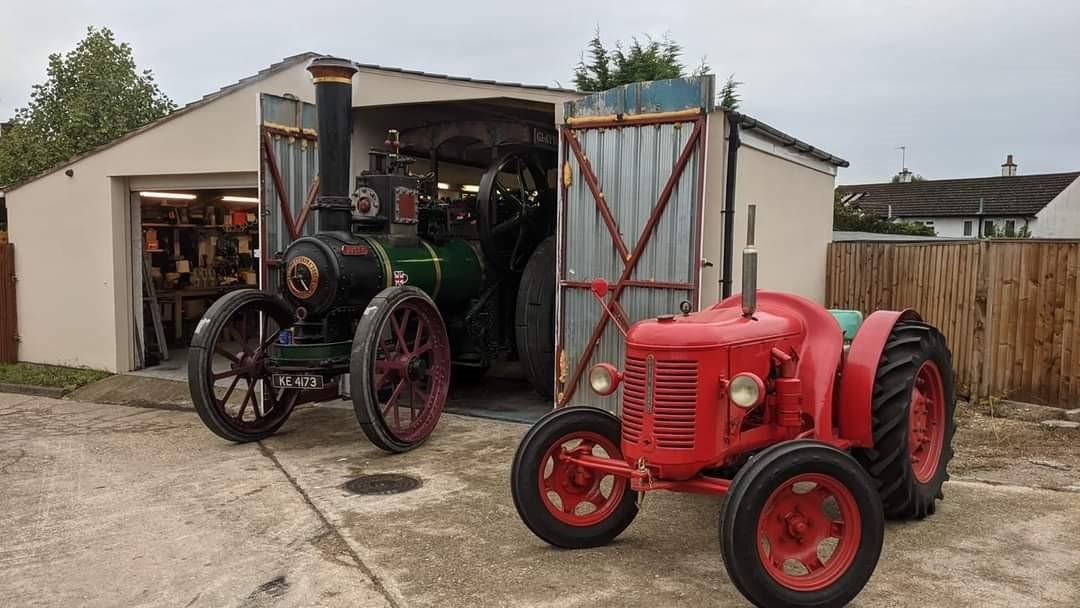
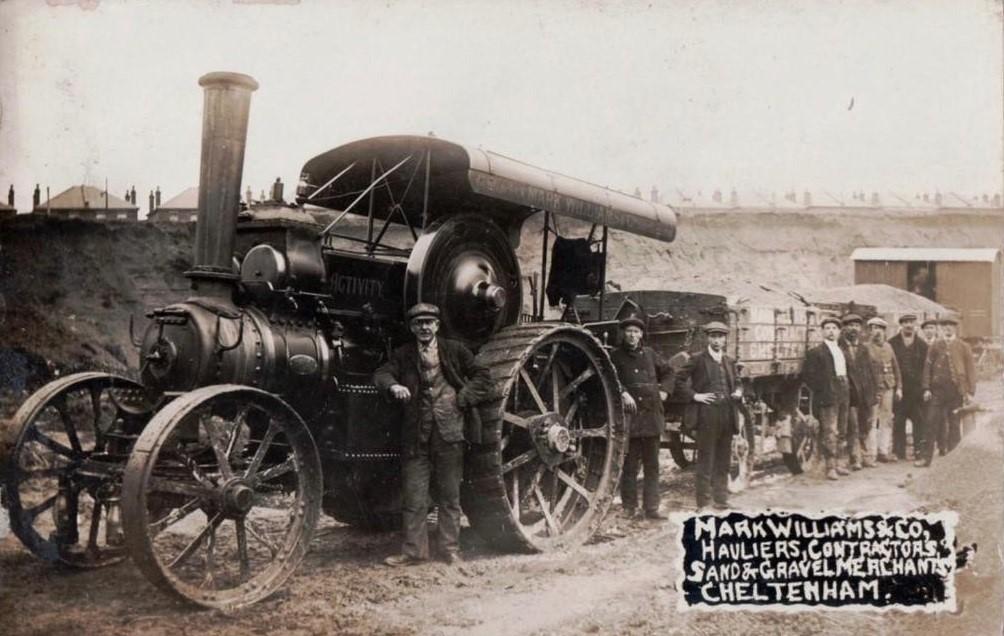
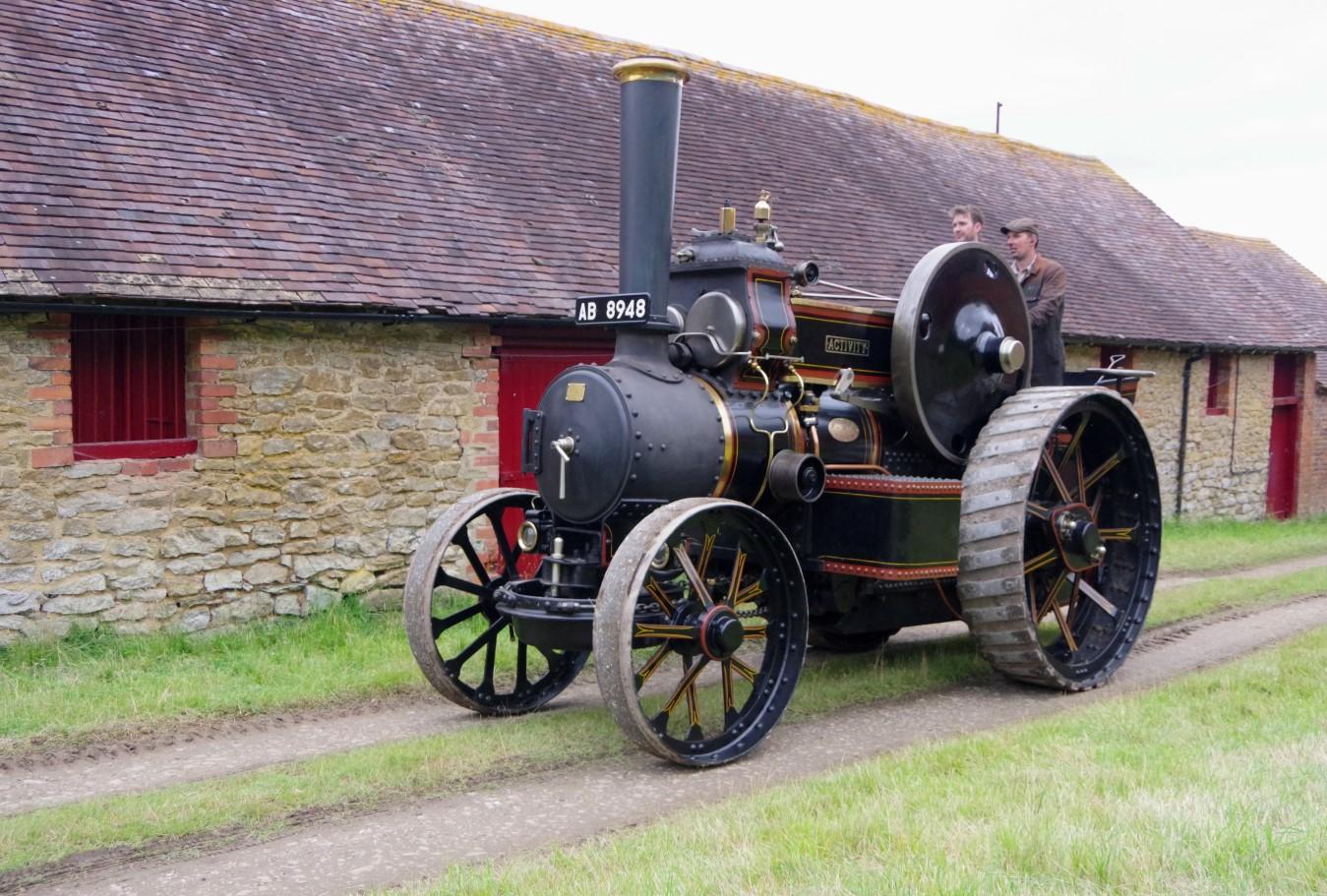
For this editions ‘Then and Now’ we take a look at Fowler D2 Road Locomotive No. 12902 of 1913, ‘Activity’. Photos with thanks to Miles Banks and Steve Cockram.
Then: Photo taken in 1913 when owned by Mark Williams & Co.
Now: Photo taken in 2021 at Eastnor Castle. Now owned by Richard Wilcox.
Competition
Thankyou to those who got in touch to guess what the photo was in the last edition, we had just the one correct answer this time, from Albert Chiverton.
The photo showed a line up of First World War tanks. The tanks were a new British invention in WW1 and were used for crossing no mans land and attacking enemy trenches. The development of the tanks was lead by William Tritton, the director of the traction engine manufacturers William Foster & Co. of Lincoln. Fosters went on to build a lot of the tanks that saw use in the war. If you look at smokebox door ring on a Foster engine built after the war you ll notice a small image of a tank cast into it to celebrate
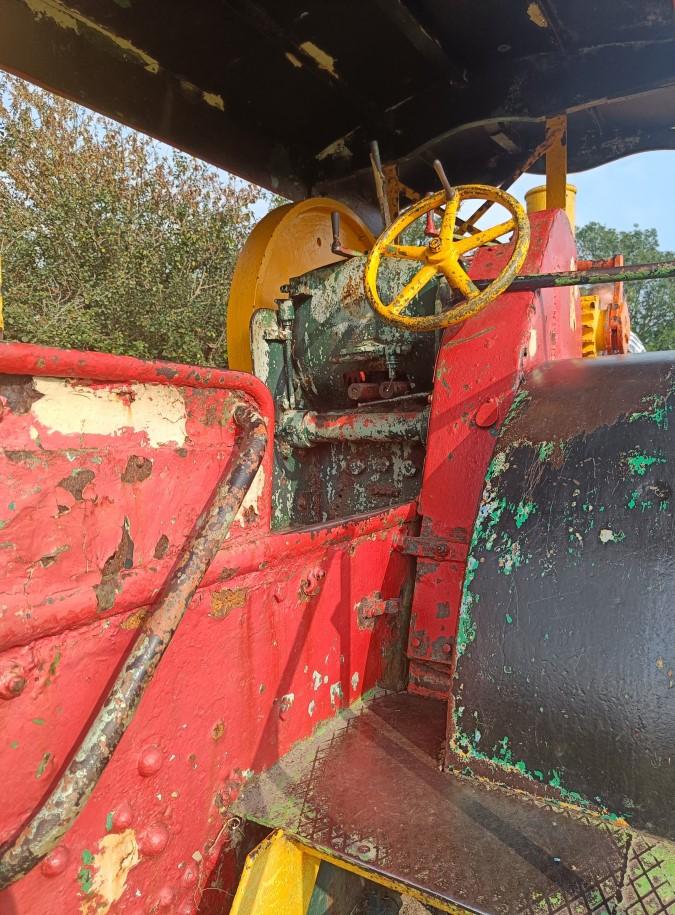
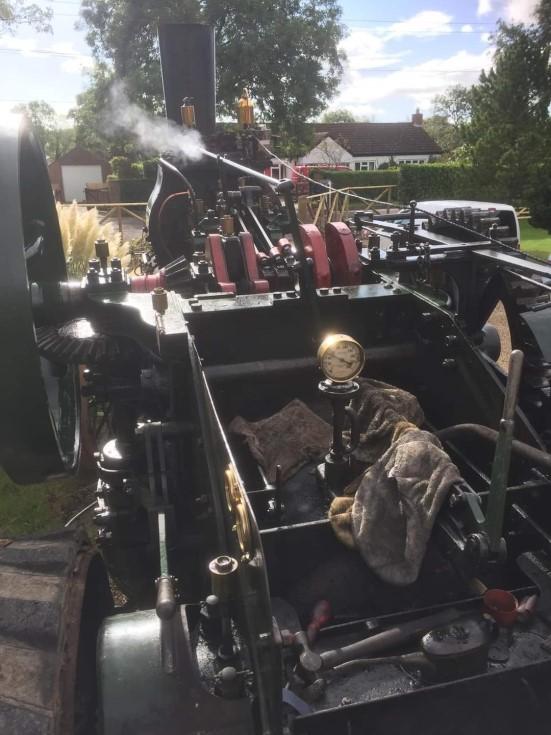
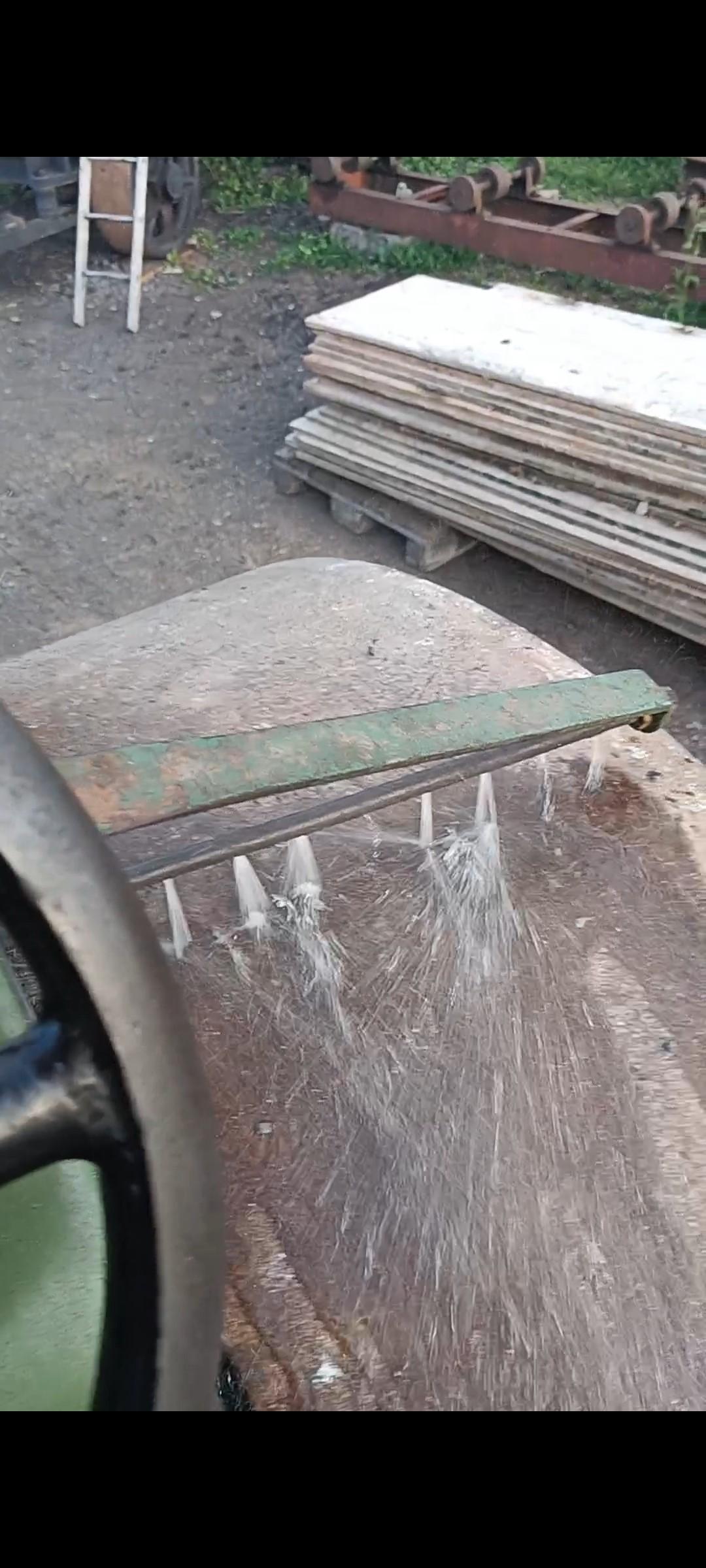
For this editions competition I wonder if anyone can tell me what these parts mounted