The Editor welcomes any contributions of articles, shorter items or photographs for inclusion in future issues. All material submitted is voluntary and payment cannot be made for any material published.
The opinions expressed in the magazine, with the exception of Club announcements, are those of the contributors and do not indicate the views of the Club as a whole. All items are held copyright by the contributor and the NTET. The Editor reserves the right to amend or refuse contributions. The magazine is normally published during January, April, July and October. The Club accepts no liability for failure to meet intended publication dates.
The Steam Apprentice Club is a section of the National Traction Engine Trust. NTET is a Registered Charity, No. 291578. Registered in England No. 1302197.
Registered Office: 4 Church Green East, Redditch, Worcestershire B98 8BT.
www.ntet.co.uk general.secretary@ntet.co.uk
Have you got an image or story you’d like to share? Why not send it to sac.raisingsteam@ntet.co.uk!
Thoughts from the Editor
Jim Huntley
Hello and welcome to this edition of Raising Steam! Firstly I’d like to start with an apology a you'll be reading this one a touch later than usual, I’ve held off sending it out as we were hoping to get some confirmation on driving days, but the latest lockdown has meant the organisers need some more time to confirm their plans.
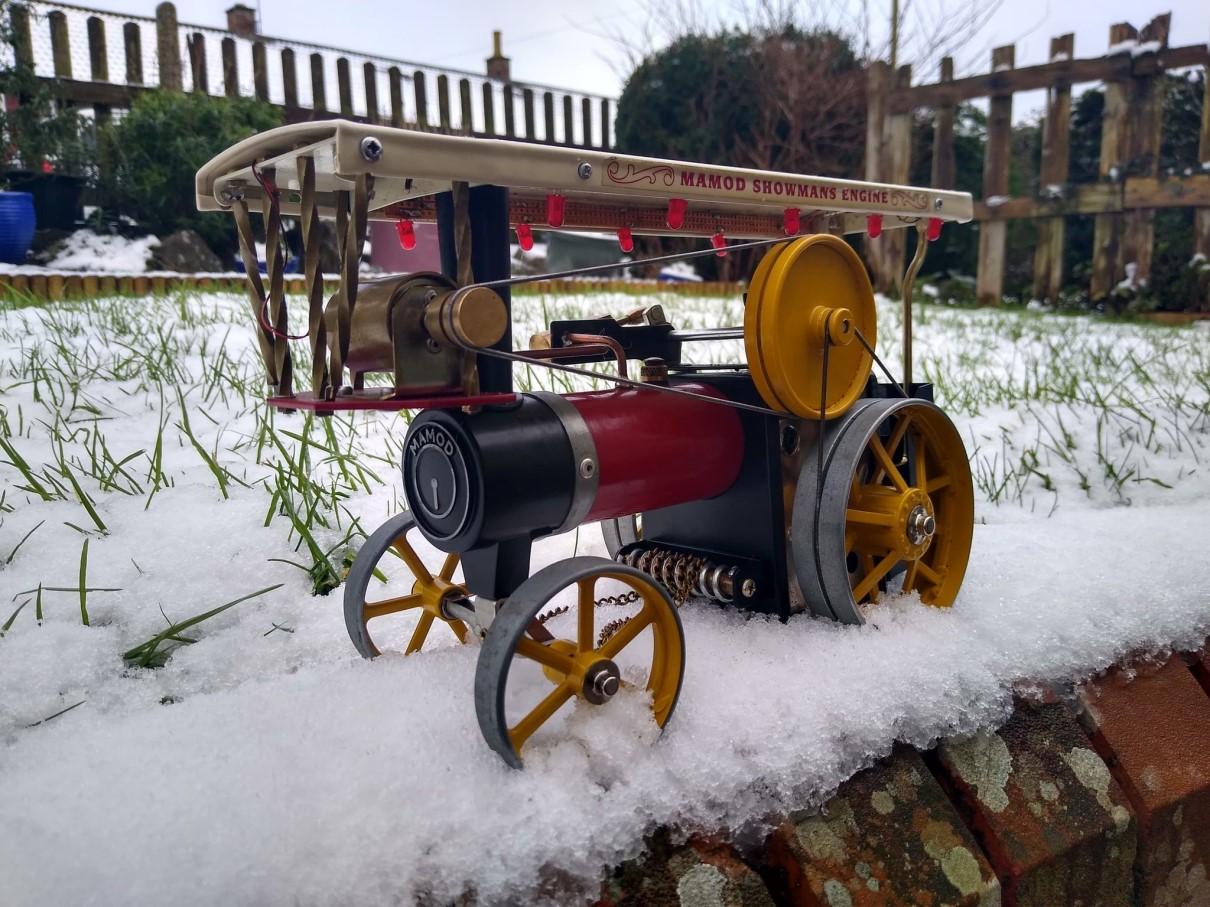
I hope you’ve all had a fantastic Christmas and New Year! Did you get some steam related goodies under the Christmas tree, or did you get on with some projects over the Christmas break? If so, we’d love to hear about them so why not write something up for Raising Steam? I was chuffed to unwrap a Mamod Showmans Engine so that shows that you’re never too old for a steam toy under the tree!
Since the last edition we’ve gained a new SAC Committee Member and a new NTET Chairman, so a warm welcome to Louise Maunder and Rob Wing. They’ve written a few words introducing themselves to the members. It’s also been a couple of years since we did a ‘Meet the Team’, and there have been several changes since then so the team have put a few words together for that too.
Sadly, thanks to Covid, the first part of this year looks like it going to be a write off in terms of rallies, we’ve already seen several rallies cancel or postpone until 2022, so it looks like the first part of the year will be steam ups in your back garden and virtual events again!
However, driving days are far more controlled events than rallies so we are still hopeful that they can go ahead. We managed to run a Covid secure driving day last year as you’ll see later in this edition, so everything is crossed there!
I’d like to congratulate Charlotte Coulls for winning the ‘Apprentice of the Year’ award for her efforts in organising the #twittersteamrally back in May 2020. A very worthy recipient. Just as we’ve gone to press, I received some exciting news from Charlotte as you’ll see later on…
Justin Steam has been down on holiday with me, having a look at a few workshops so have a look at what he’s been up to! Still, keep an eye out for where he has been! You’ll also find a couple of brilliant historical articles sent in to us by NTET members - they’re certainly worth a ready. Enough from me now, enjoy the read, and I hope to see
Thoughts from the Chairman
Nick Bosworth (Acting Chair)
Happy new year from the Steam Apprentice Club!
(Or at least it will be by the time you are reading this!). I am actually sat writing this report in the days between Christmas and New year, in those few days where you don’t really know what day it is! I hope you all had a good Christmas, with plenty of steamy Christmas presents.
Please let us know what you’ve been up to lately, did you get anything steamy for Christmas? I received a socket set from Santa, which will come in very useful!
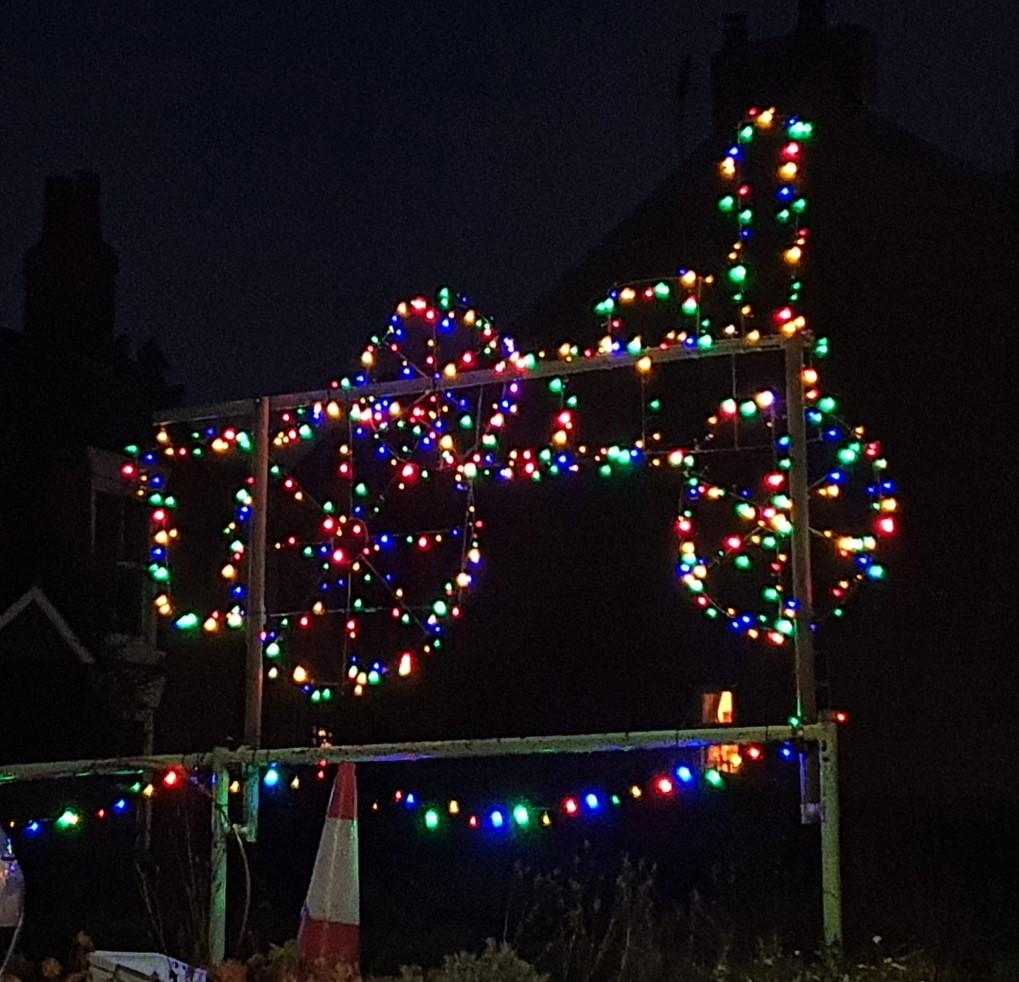
What do you think of my Christmas decorations?!
2020 was unfortunately a very quiet year for the SAC, as we weren’t able to attend any of the usual events, and all but one of our driving days had to be cancelled.
The one that did go ahead was in September at Tinker’s Park, where we put special measures in place so that a socially distanced event could go ahead. I will be speaking with the organisers of the events in the hope we can put on some Covid secure driving days this coming year.
We do have details for some 2021 driving days later in this magazine, but as you may expect some driving days may have to be postponed until later in the year, therefore details of some events will be published in the April edition of the magazine.
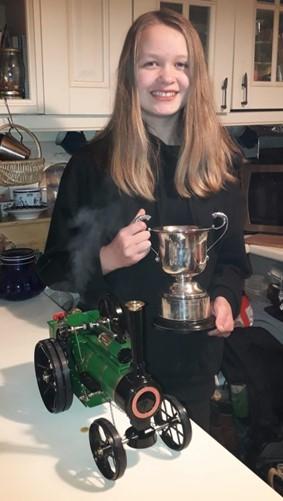
On a happy note, I can report that the Steam Apprentice Club has awarded the ‘Apprentice of the year’ trophy to Charlotte Coulls. Charlotte is the daughter of former NTET Chairman Anthony Coulls, and in early 2020 she created the Twitter Steam Rally, which saw over 10,000 people taking partfrom Australia, New Zealand, America, Canada,
Greece, Germany, France, Denmark, as well as the UK. Over £3000 was raised for charity.
The Twitter Steam Rally brought the steam community together during the lockdown months, and it was a fantastic sight to see everyone posting their own socially-distanced steam-ups.
The Steam Apprentice Club consider Charlotte a very worthy recipient of this trophy, the only one we have been able to award this year. The trophy was presented to her on her birthday at the end of last month.
Well done Charlotte!
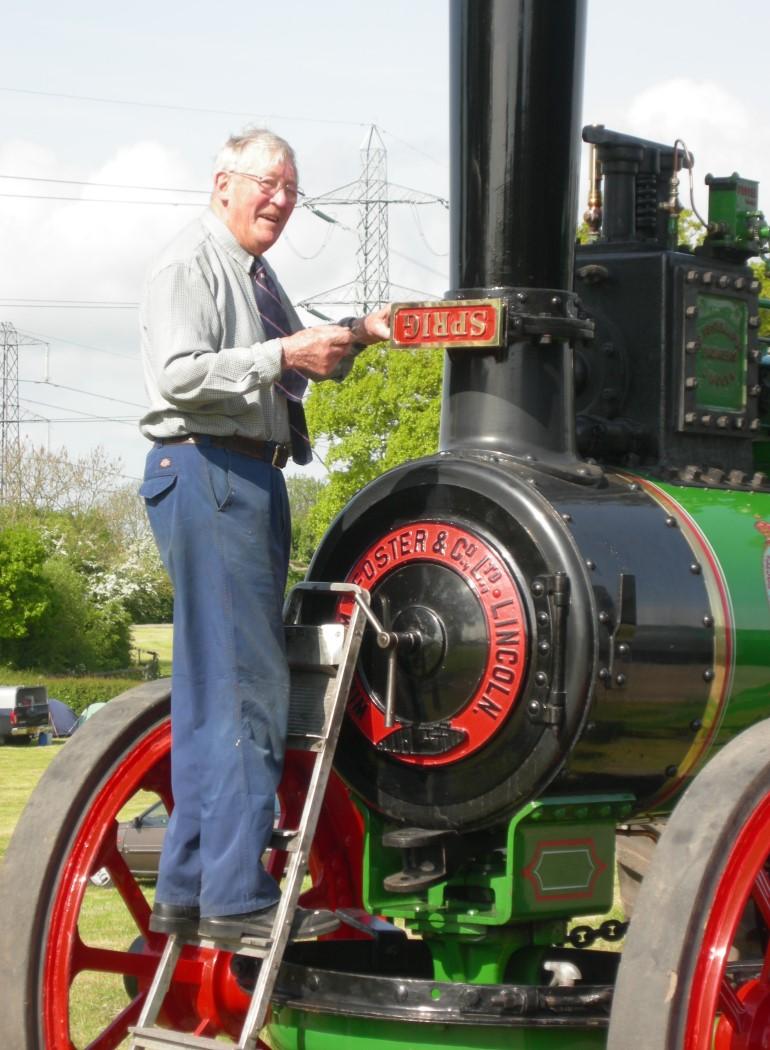
I must conclude my report with some sad news. My uncle, and former chairman of the SAC, John Bosworth sadly passed away on the 27th of December. John was chairman of the SAC from 1994 to 1996, and also served many years on the NTET’s General Council.
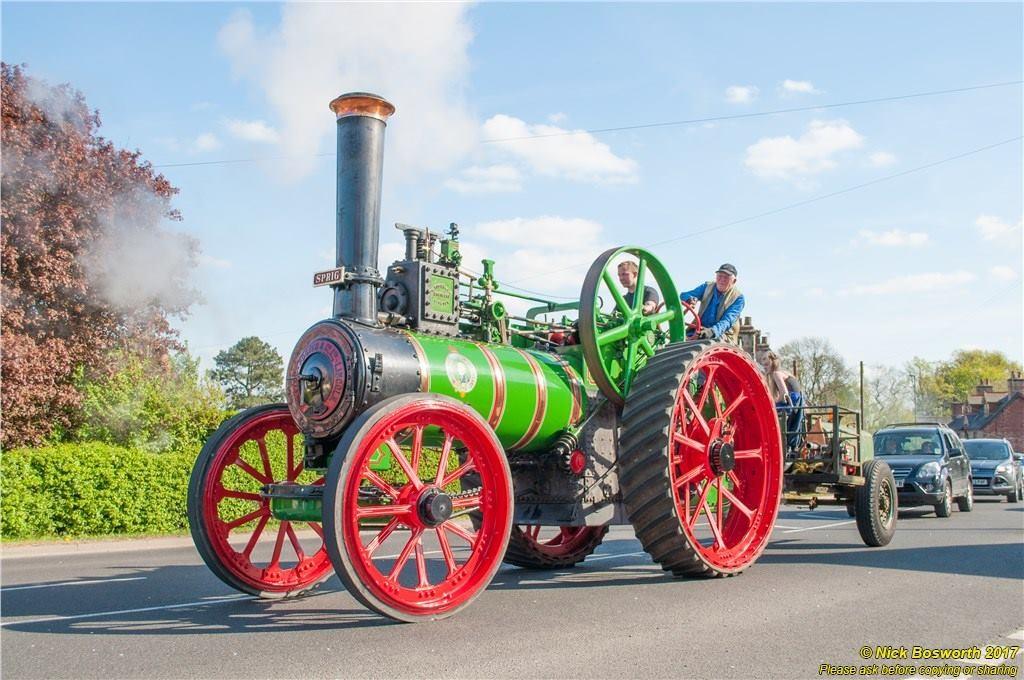
I have been privileged to have grown up being able to play on John’s Foster, SPRIG, which he has owned for nearly 50 years.
Thoughts from the NTET Chairman
Rob Wing
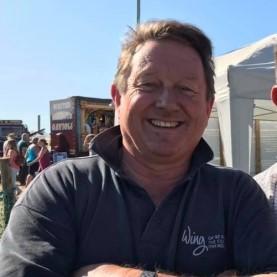
Firstly, I hope you all had a lovely Christmas and, where possible, you have been able to enjoy some steam time? My name is Rob Wing and it is my privilege to have recently taken over the chairman's job within the National Traction Engine Trust. I thought it might help if I introduced myself to you all and told you a little bit about me and my family; that way I'm a bit more real than just a name.
My family have been involved with steam for some 20 years. Some of you will know the Burrell Road Locomotive Clinker. We’ve had Clinker for 16 years and have rallied it extensively within Cornwall and of course the Great Dorset Steam Fair, amongst other national venues. My son Jack was a steam apprentice since he was four years old, so I've got a good idea as to what it's like to have a member of the family learning all about steam on the road and also the benefits he gained during his time with SAC.
One of the many roles NTET has been involved with in 2020 was to influence government policy over the continued burning of ‘normal’ coal in our fireboxes. Senior Trust members have liaised with other heritage organisations and together they have enlightened and hopefully positively swayed Government departments as to why it’s so important we are allowed to continue our hobby.
The Steam Apprentice Club is an important part of our organisation and we are very proud of you all you do within the club after all, you are the future of our hobby. We're really keen to help and support you in enjoying yourself because, we want you to have fun learning all about our engines and how to operate them safely.
I know over the past nine months none of us have had much playtime with our engines and I can imagine it must be really hard for you; it's been hard for me too. The team within the SAC have been working behind the scenes to make sure they help you enjoy yourself as much as possible, within the restrictions of social distancing and COVID-19.
Your SAC chair and his team will continue to produce a series of events for you all to enjoy but, expect 2021 to present according to prevailing Covid-19 restrictions.
Happy steaming to you all in 2021!
New Committee Member– Louise Maunder
Hello! My name is Louise and I am a new member of the SAC committee. I became involved in steam because my son Oliver began to show a fascination with anything to do with coal, steam and pistons at the age of one. We started off visiting a couple of steam fairs a year, drinking coffee, eating pizza, having a quick look at the engines until we got fed up with dragging a pushchair through the mud and then going home with a couple of steam related DVDs. Once Oliver was out of the pushchair and quite clearly in charge our visits took a different slant with hours spent watching the saw bench or lifting him up to see the pistons moving on the miniatures. Occasional weekends turned into most weekends and I started asking engine owners if Oliver could have a closer look. This was a difficult time which I am sure a lot of apprentices (and their parents) go through. Some owners were great and others, quite understandably, not so keen to have a 5 year old poking around their engine! We attended a few of the SAC driving days (which are brilliant) and Oliver loved every second. We continued visiting the rallies and eventually a few owners took Oliver under their wing and became an inspiration
to him and a very welcome friendly face to me. Realising that the steam world was quite an interesting place to be I decided that I had better roll my sleeves up and join in. Just over a year ago we started looking for our own miniature engine and bought Ivor. Unfortunately Ivor has only seen our drive so far due to the lack of rallies last year but we have had a few goes at chuffing up and down and getting to know him. We can’t wait to get to the rallies and meet you all. If you see us please come and say hello, have a look at Ivor and sit up on the driving seat. I have gradually become aware of how much the steam world needs you the apprentices, there are a lot of engines out there and it takes a lot of crew to look after and run them. Look out for any driving days near you and I look forward to meeting lots of apprentices when the events can start again.
Meet the Team
The Steam Apprentice Club is run by a dedicated team of volunteers. Here’s a little bit about a few of them!
Nick Bosworth - Chairman
Favourite type of engine?
Foster Traction Engine.
What was your first experience of an engine?
Growing up going to rallies with my Uncle's Foster .
What is the hardest bit about driving an engine?
Keeping the fire, water and pressure just right when you don't know the road ahead.
What are you most looking forward to after missing the 2020 season?
Taking the Foster to Beamish Museum, 10 miles from where it was delivered new.
Public Relations
Favourite type of engine?
Marshall Steam Rollers!
What was your first experience of an engine?
Although I don’t remember it, at two weeks old I was in my mum’s arms on the footplate of the steam roller my family now own.
What is the hardest bit about driving an engine?
Seeing where I’m going and steering on grass as our engine weighs 14 tons.
What are you most looking forward to after missing the 2020 season?
Seeing my steam friends, the smell of steam engines, a good smokebox cooked meal!
Clara Taylor - Membership Secretary
Favourite type of engine?
Armstrong Whitworth Steam Roller.
What was your first experience of an engine?
Chatting to an engine owner at a classic car show and being invited to be their apprentice!
What is the hardest bit about driving an engine?
Every engine being different so having to be alert to any noises that indicate an issue.
What are you most looking forward to after missing the 2020 season?
Meeting friends on the rally field face to face again, they’re like my second family!
Editor
Favourite type of engine?
Fowler Ploughing Engine
What was your first experience of an engine?
A ride on Alan Sparkes’ Fowler traction engine ‘Delilah’.
What is the hardest bit about driving an engine?
Loading an engine onto a low loader in the pouring rain, especially
What are you most looking forward to after missing the 2020 season? it’s been a long time. Also, Appleford 70 (+1)!
SAC Committee Member
Favourite type of engine?
Anything steam powered!
What was your first experience of an engine?
Steering McLaren No. 1295 'Mr Tweedie' around Davis’ yard on a sunny October day.
What is the hardest bit about driving an engine? the early mornings! I do like my sleep!
What are you most looking forward to after missing the 2020 season?
Well, not the early morning starts, that's for sure. But seriously, I think everything -
SAC Committee Member
Favourite type of engine?
What was your first experience of an engine?
Riding in the tender of a roller during public steering about age 5.
What is the hardest bit about driving an engine?
Getting up early to start a long day of driving on the road! (Seems to be a common thing here, Ed!)
What are you most looking forward to after missing the 2020 season?
Looking forward going back out on the road with friends and attending some shows
Louise Maunder - SAC Committee Member
Favourite type of engine?
I think that I like engines with a friendly face at the regulator the best! Although, I do love my own miniature Burrell!
What was your first experience of an engine?
Trying to work out what my son was finding so amazing. My first experience driving an engine was terrifying, I felt so nervous!
What is the hardest bit about driving an engine?
I find it all difficult because I am still very much a beginner. I need to concentrate a lot and I am very bad at reversing - which everyone seems to find very amusing.
What are you most looking forward to after missing the 2020 season?
I am looking forward to seeing my steam friends, I have missed them so much! We have met such brilliant people and I can't wait to enjoy their company again.
SAC Committee Member
Favourite type of engine?
I love all engines, but my absolute favourite has to be the Steam Apprentice Club’s own engine, Lady Sylvia!
What was your first experience of an engine?
Steam has always been in my family - must be where my surname came from!
What is the hardest bit about driving an engine?
Reaching up to look over the regulator is always a struggle for me! That and cleaning the coal dust and oil out of my fur after a days steaming!
What are you most looking forward to after missing the 2020 season?
I am looking forward to getting out and about and seeing all of you Steam Apprentices enjoying yourselves at rallies and driving days.
As well as the team mentioned above, the Steam Apprentice Club is also supported by all of the volunteers of the National Traction Engine trust, as well as a larger group of ‘unofficial’ helpers and volunteers who help out when we take the SAC exhibition unit around to rallies, help at driving days and other events or put on the display at the GDSF. We couldn’t do it without them!
Driving Days 2021
Unfortunately, all but one of last year’s driving days had to be cancelled due to Covid lockdowns. Fortunately we were able to run the driving day at Tinker’s Park on the 19th of September, albeit with some special measures and a risk assessment in place to comply with the Covid restrictions of the time.
During September, there was a limit of a maximum of 6 people meeting outdoors, therefore on arrival at Tinker’s, two apprentices were grouped into a bubble with one engineman, and these bubbles stayed together throughout the day, whilst keeping the appropriate distance from other bubbles. We also had other precautions, such as bringing your own food, and hand washing facilities in place.
The procedures we had in place for Tinkers park give us hope that we will be able to run some driving days this year, but as we are currently in lockdown, and may remain so for some time, we cannot confirm the details of the 2021 driving days quite yet.
We have been in contact with the organisers of the driving days, who agree that if their driving days can go ahead, they will likely happen later on in the year.
Therefore we hope to confirm the details in time for the April edition of Raising Steam.
Member Mail: Model Sawbench
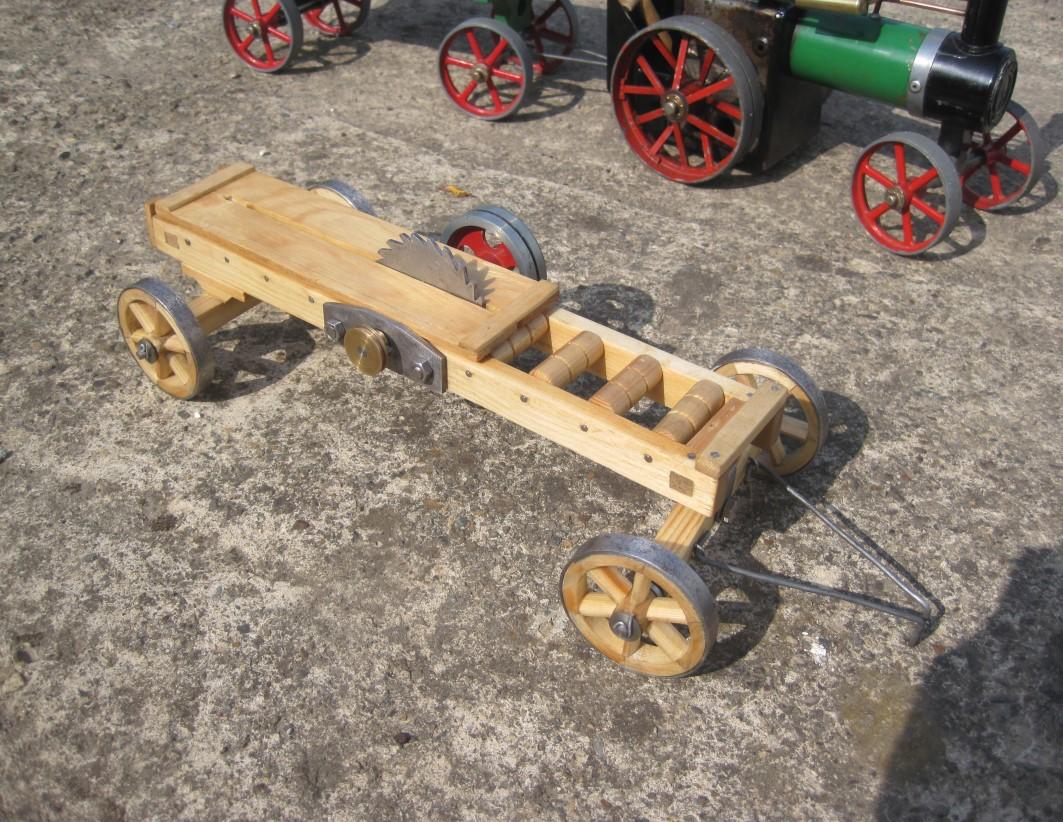
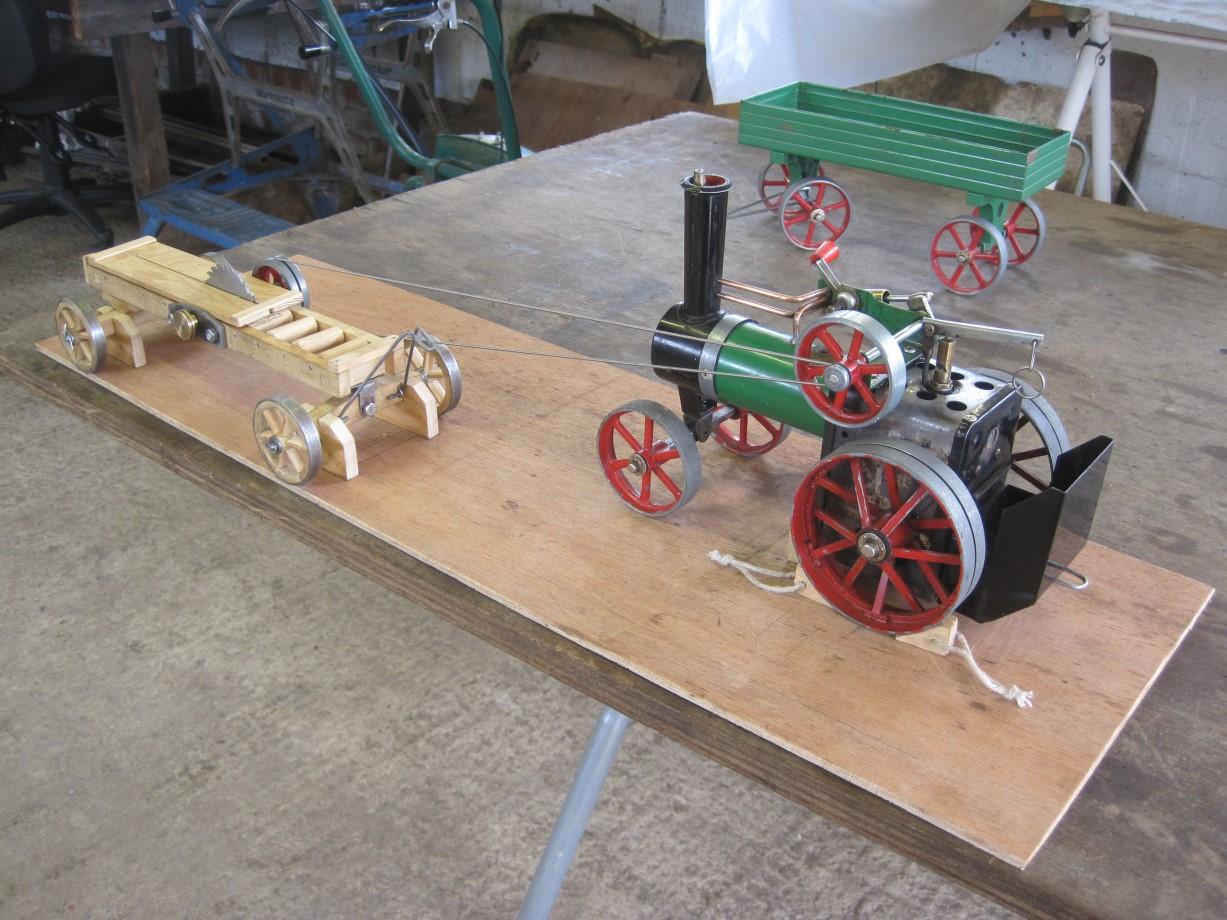
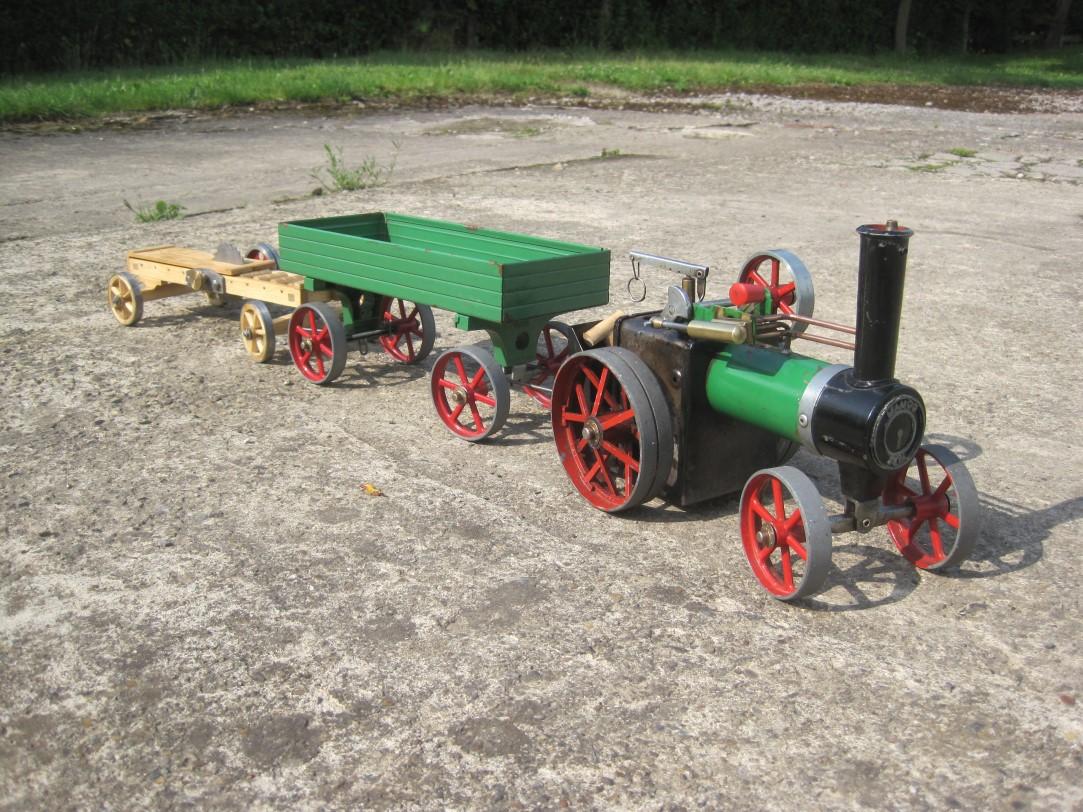
SAC member Finlay Brown has written in to tell us how he built this cracking model saw bench.
At the age of five, I was given a Mamod steam wagon and this is probably what started my interest in steam engines. This was soon followed by a Mamod traction engine and a railway locomotive which I still run regularly although I now have bigger engines to play with. I decided earlier this year that my traction engine could do with an item of machinery to run when stationary, as well as just trundling around the garden and this vague idea materialised into a basic drawing of a portable saw bench to determine the general sizes of wheels, blade and overall dimensions.
steam rally to keep everyone amused with no real events taking place. A date was soon set for what would become the Twitter Steam Rally and this gave me a reason to get on with the saw bench so that it could attend this virtual event.
After this initial thought, little happened regarding the saw bench project but after
I started in the Easter holidays by making the saw blade as I concluded that this was the determining factor for the rest of the bench’s construction. One of the crucial considerations influencing the design of this saw bench was that I wanted to make it using leftover material from other projects, which is why I chose to make the blade from scratch using 1mm mild steel. Following this, I was quickly
able to make a frame using some planed pine and a quick turning exercise on my lathe made an axle to mount the blade on. I used a spare Mamod flywheel to attach this axle to a drive band from the engine. By this time the saw bench was operational, ready for the Twitter Steam Rally and I was able to cut through a piece of balsa wood about 10mm square
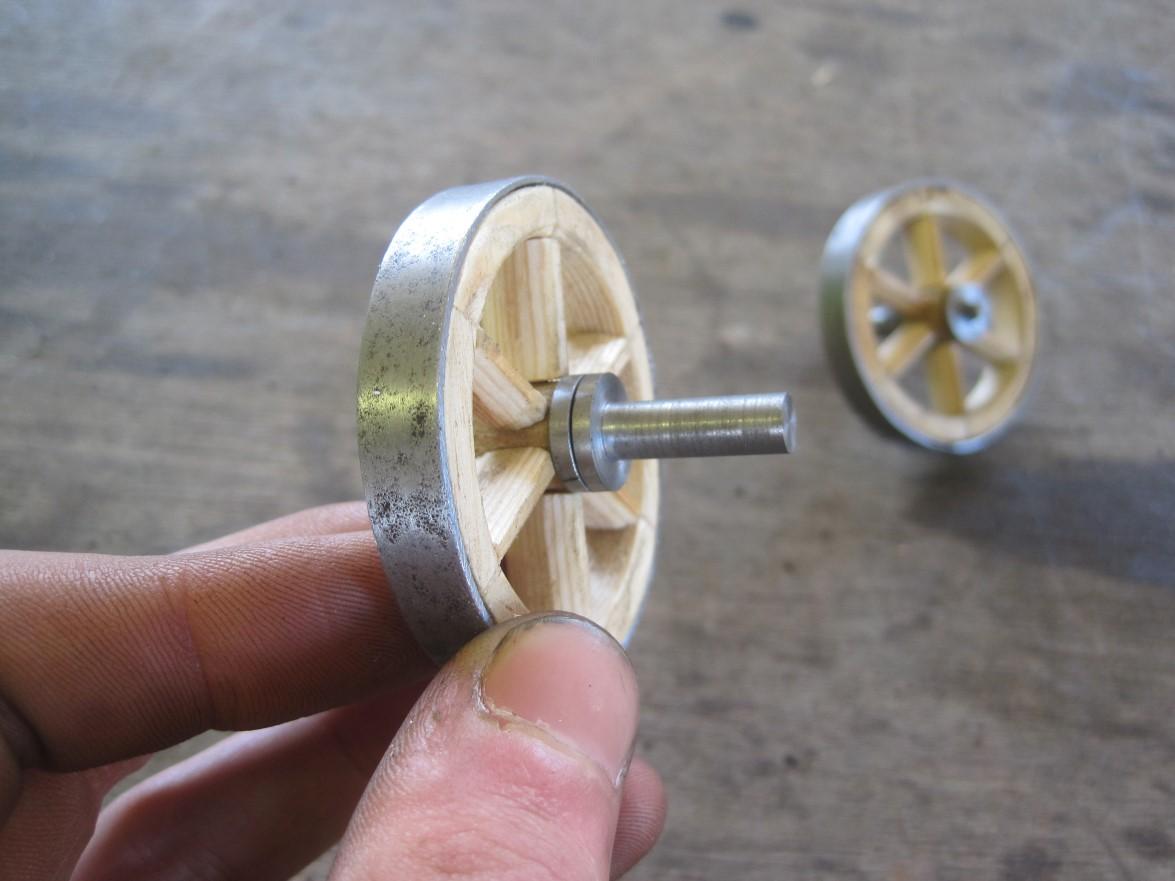
on the saw bench, the major items required were some wheels. I chose to construct these in roughly a similar manner as the full sized ones would be; cutting individual wooden spokes and attaching these to a segmented wooden rim surrounded by a steel tyre made from thin steel strip and soldered together. This unsurprisingly turned out to be
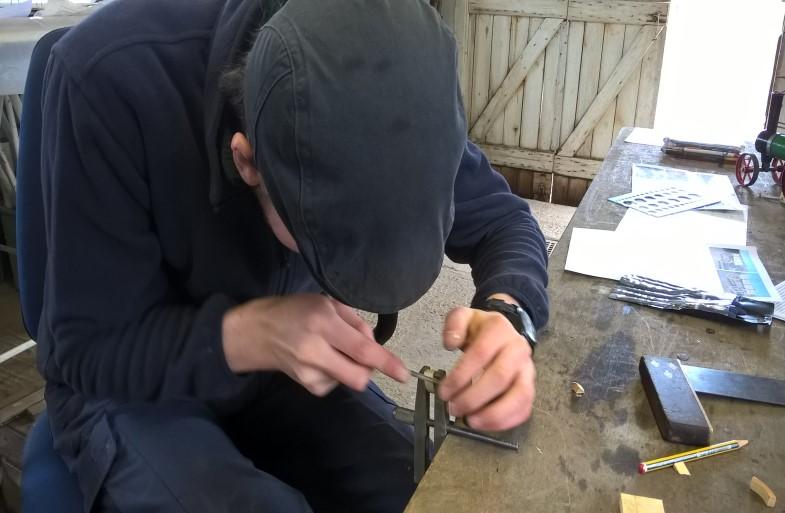
very fiddly and a tool I found most useful was my toolmakers clamp I had made last year. As our vice jaws were a little worn and rather too large for spoke cutting, I clamped my toolmakers clamp to the bench and it formed a sort of miniature precision vice for this delicate job and performed it perfectly. These were all glued together and mounted on axles, along with a drawbar to the engine’s coupling for towing the machine. I then had a completed saw bench, the finished product looking good as well as functioning perfectly, although I think to fully maximize its useful potential, an engine that provides more torque than
Apprentice of the Year
This award is to recognise an Apprentice who has shown all round enthusiasm in their involvement with Road Steam. This may be hands-on experience with an engine or helping to maintain or restore an engine. Consideration should be given to how well they have learn and respected the necessary skills needed in the operation of an engine. There is no particular type of submission we are looking for other than that you feel the Apprentice has made an effort, has learned form whatever activity they are doing and has shown the ability to ‘stay the course’. We would expect that the Apprentice has been working with one engine or group for at lease 3 or 4 years.
Submissions should consist of a brief description on one side of A4 paper of what they have been doing and why you think the Apprentice deserves the award, perhaps with 3 or 4 photographs and/or sketches if you feel it will better illustrate the case. Entries to be with the SAC Chairman by mid September, see address inside your latest copy of Raising Steam or Steaming. Judging will be completed by mid October, with the announcement made at the NTET AGM where the award will be presented. The final decision on the recipient will be made by the SAC committee.
2020 Winner - Charlotte Coulls
We would like to say a huge congratulations to Charlotte Coulls, who has been awarded the Steam Apprentice Club's 'Apprentice Of The Year' trophy.
Earlier this year Charlotte created the Twitter Steam Rally, which saw over 10,000 people taking part, from Australia, New Zealand, America, Canada, Greece, Germany, France, Denmark, as well as the UK.
Over £3000 was raised for charity!
The Twitter Steam Rally brought the steam community together during the lockdown months, and it was a fantastic sight to see everyone posting their own sociallydistanced steam-ups.
The Steam Apprentice Club consider Charlotte a very worth recipient of this trophy, the only one we have been able to award this year.
The trophy was presented to her this evening, on her birthday and she is seen here celebrating with her Allchin traction engine! Happy Birthday Charlotte!
Congratulations again Charlotte, from the SAC team.
Lady Sylvia
Did you know the Steam Apprentice Club has its own steam engine?
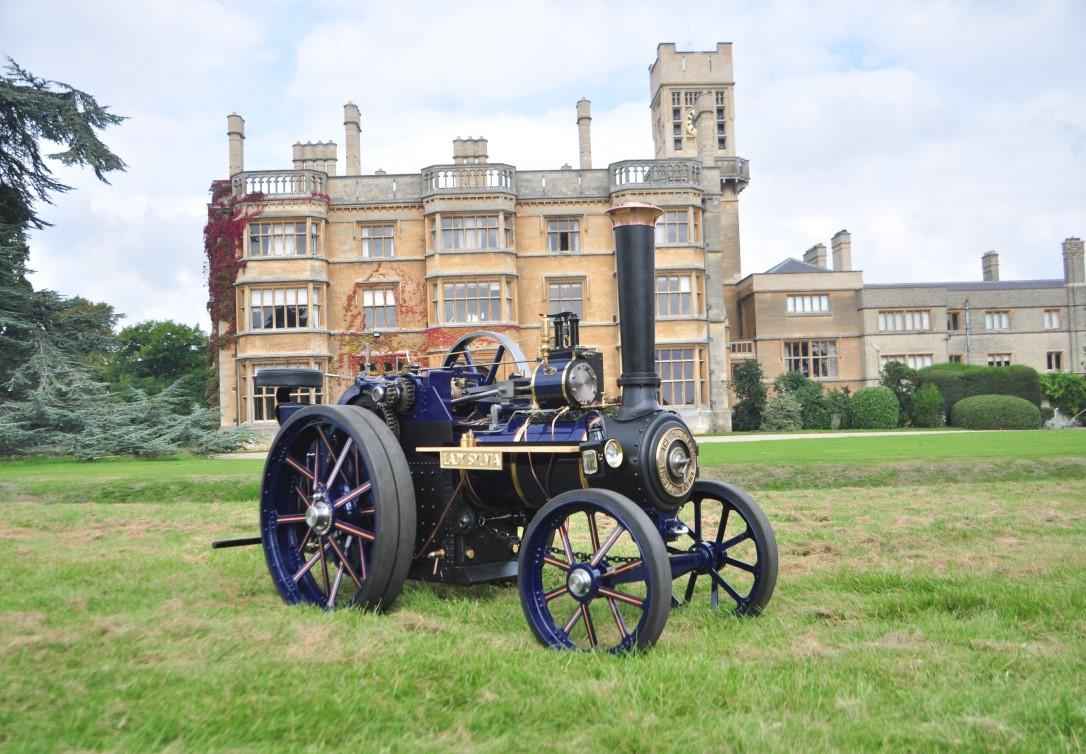
It’s a four inch scale miniature Burrell traction engine named ‘Lady Sylvia’. Our members actually built the engine as part of the ‘Build a Burrell Project’.
Thanks to the invaluable support given to from our sponsors; we were able to get a kit from a company called Steam Traction World. This provided us with the parts to put a traction engine together, with all the heavy and more difficult machine work already done.
Our apprentices got to see and handle many of the different parts of this engine, see how where they were supposed to go and fit them together themselves under supervision.
This gave our apprentices many opportunities to learn and develop their skills.
The project took two years in total, and at the Bedfordshire Steam and Country Fayre, September 2014, the newly completed Burrell Traction Engine was introduced. All our sponsors turned up, alongside apprentices and their parents to see Lady Sylvia unveiled. Although, many of the apprentices had already spent some time with her that day, polishing her up to look her best!
Later in the day, after all the special cakes had been eaten, some of the apprentices took her for a drive around a spacious, quiet area. They all had a turn driving and steering, it was such a fun day for all around.
Two weeks later, Lady Sylvia was given the number one spot at the National Traction Engine Trust’s 60th Anniversary Road Run. She, alongside a few apprentices and SAC volunteers, lead the start of this special run around the roads of Bedfordshire.
Now Lady Sylvia tours the country each year, attending different steam events and driving days. When possible, we ask for apprentices to come and help us steam and look after her. She is used to help apprentices learn how engines work, how they need to be cared for and maintained and how to drive a traction engine! Lady Sylvia is one very special engine; don’t forget to keep a look out for her running around!
Sponsors of Lady Sylvia
Building Lady Sylvia wouldn’t have been possible without the generous help from our sponsors. First and foremost, we have Steam Traction World who provided the kit of parts to build Lady Sylvia, and more recently a replacement perch bracket to replace the damaged original.
The SAC would again like to thank everyone who has contributed to the building, maintenance and ongoing running of Lady Sylvia since her creation in 2014.
With the years rolling on parts of Lady Sylvia will continue to wear out and eventually parts will need replacing: be them fire bars, tubes… this is natural wear and tear that comes from the successes of having her in steam for Apprentices to use. The very reason she was built!
Would you be interested in sponsoring Lady Sylvia? Contact us to learn more about how you can keep her steaming and being used by Apprentices.
List of Sponsors
Member Mail
Although it’s been a quiet time for the members, we’ve still enjoyed hearing what you've been up to over the last few months! As usual, if there is anything members would like to share then please do get in touch!
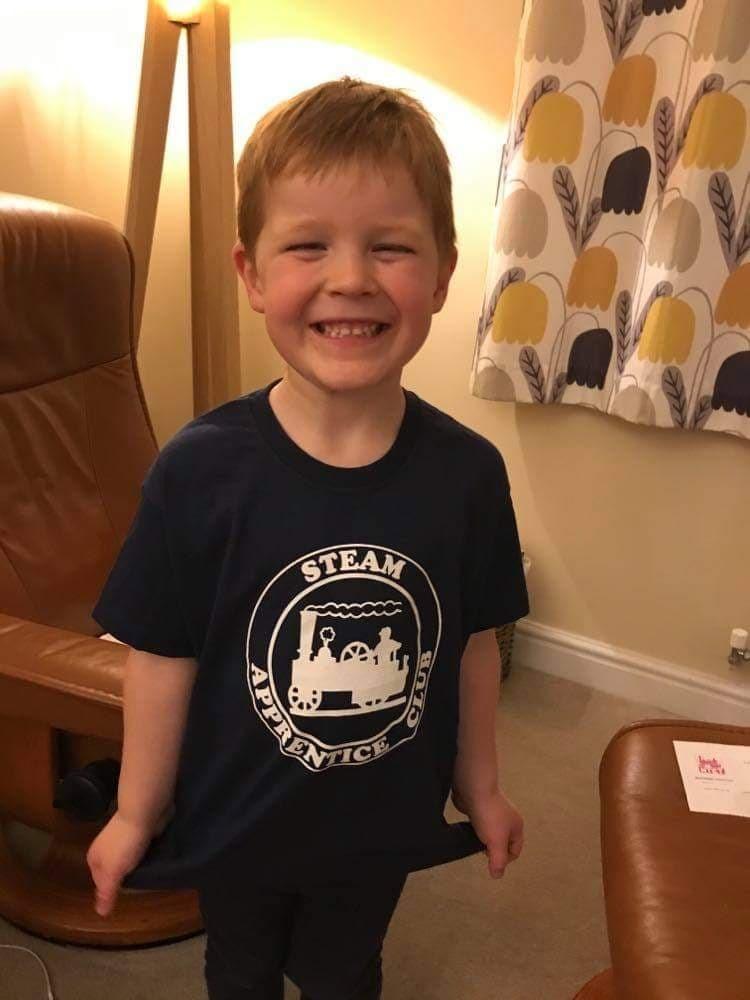
Henry Jones looks over the moon with his SAC shirt that we won as a prize in the GDSF Modelling Competition! Well done Henry!
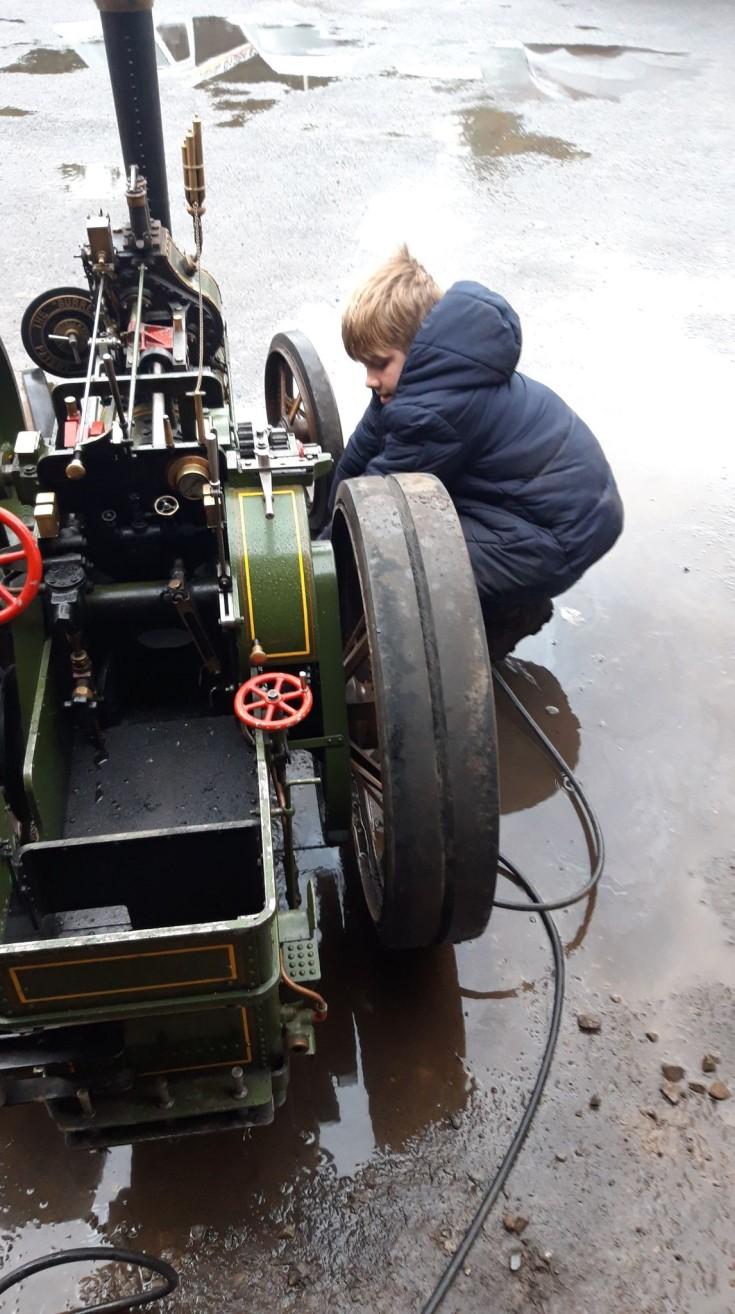
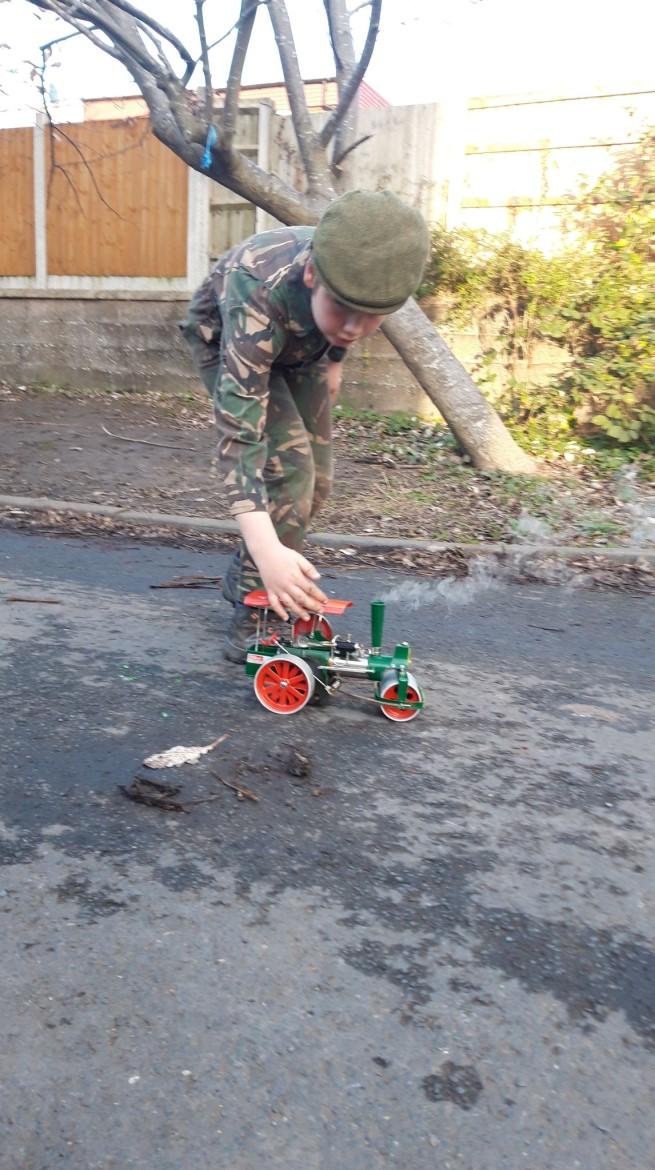
Bert Fox has been hard at work washing out his 4” scale Burrell agricultural engine and has had his Wilesco roller out for a road run!
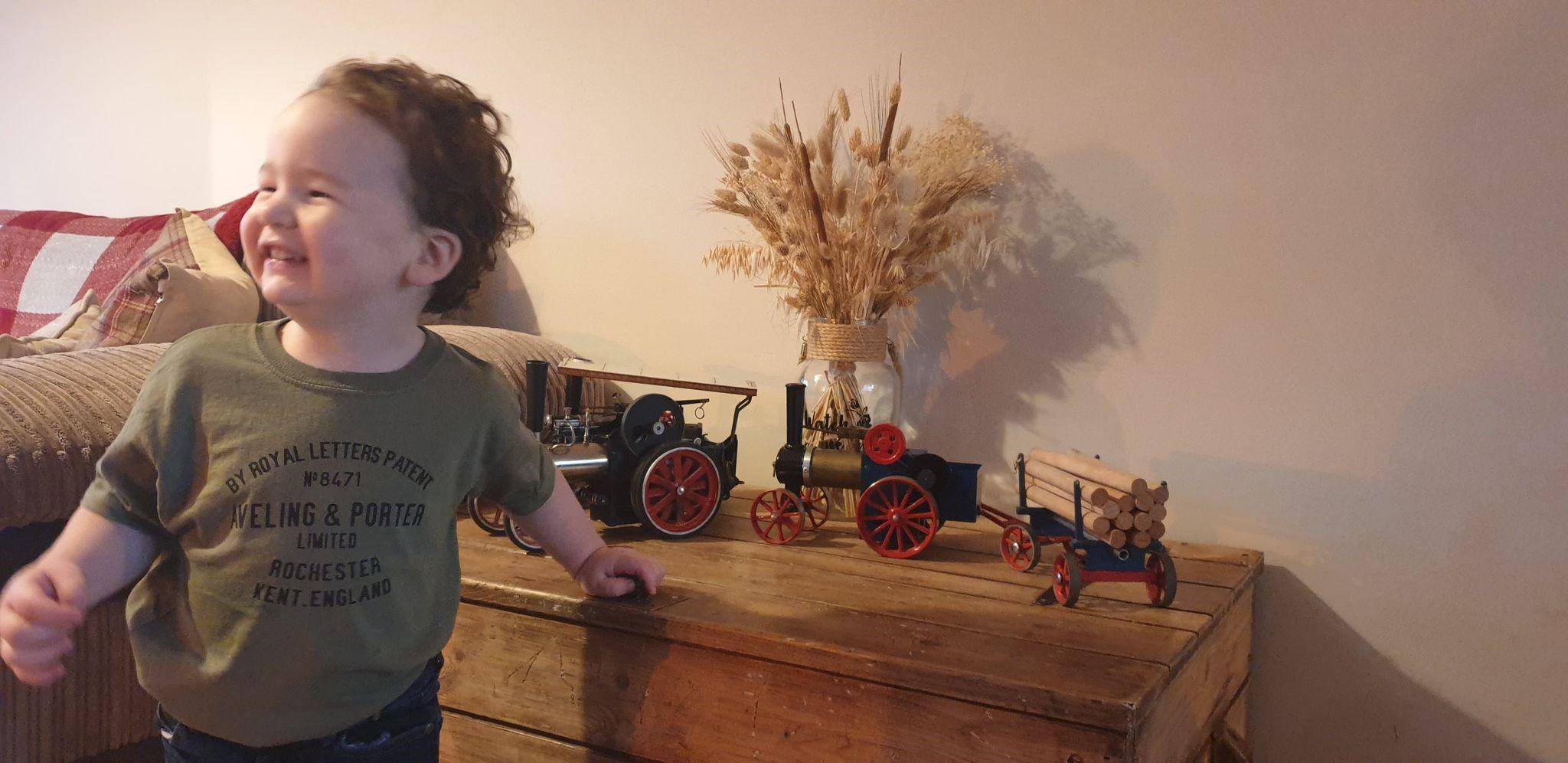
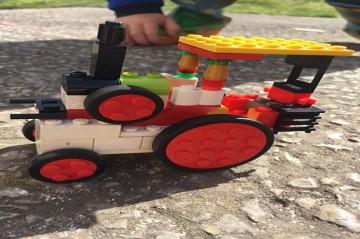
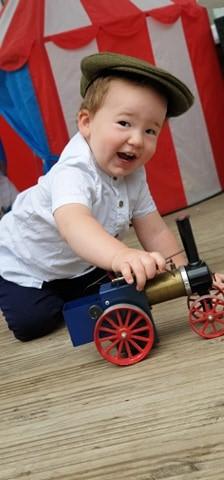
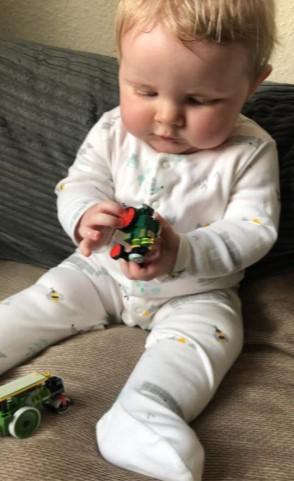
“Bertie has enjoyed his Christmas break with his Mummy and Daddy as he has been able to play with the Mamods! At 2, Bertie can point out the flywheel, cylinder, wheels, and whistle, and also enjoys counting the logs on the trailer! He is happily wearing his Aveling & Porter shirt that he got for his birthday, to match Daddy's!”
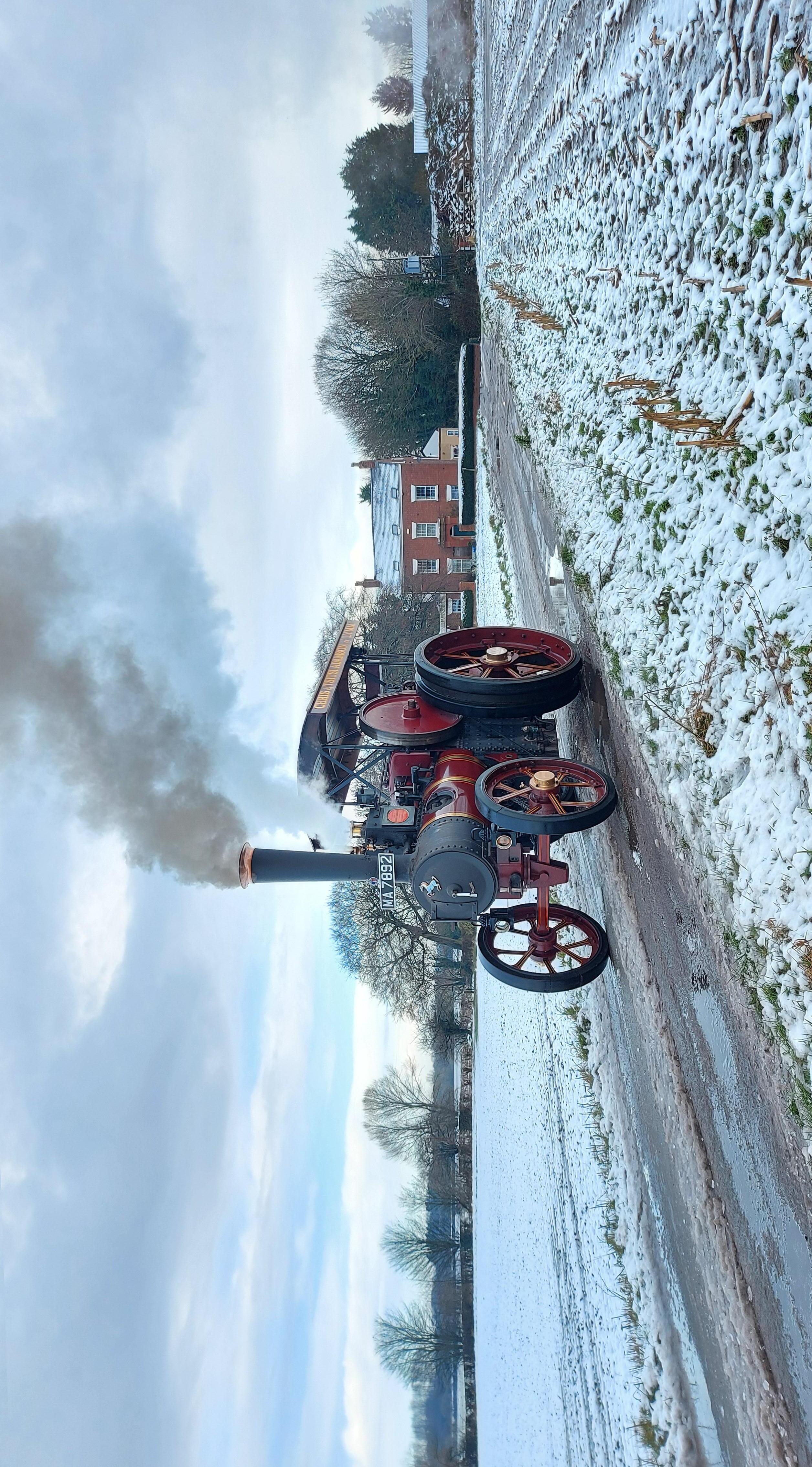
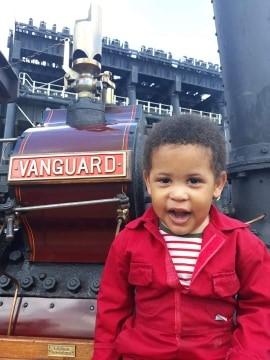
John Adamson has been out and about in the snow over the Christmas break on his dad’s Aveling and Porter traction engine ‘Vanguard’! You’ll see a lovely photo of Vanguard out in the snow overleaf.
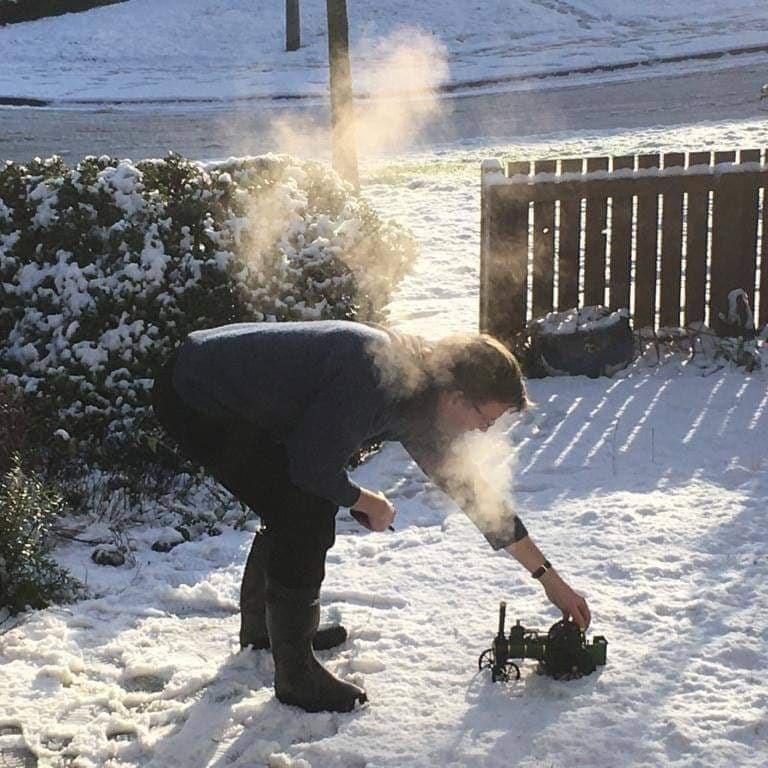
Apprentice of the Year, Charlotte Coulls has let her dad loose with her model Allchin in the snow!
Justin Steam
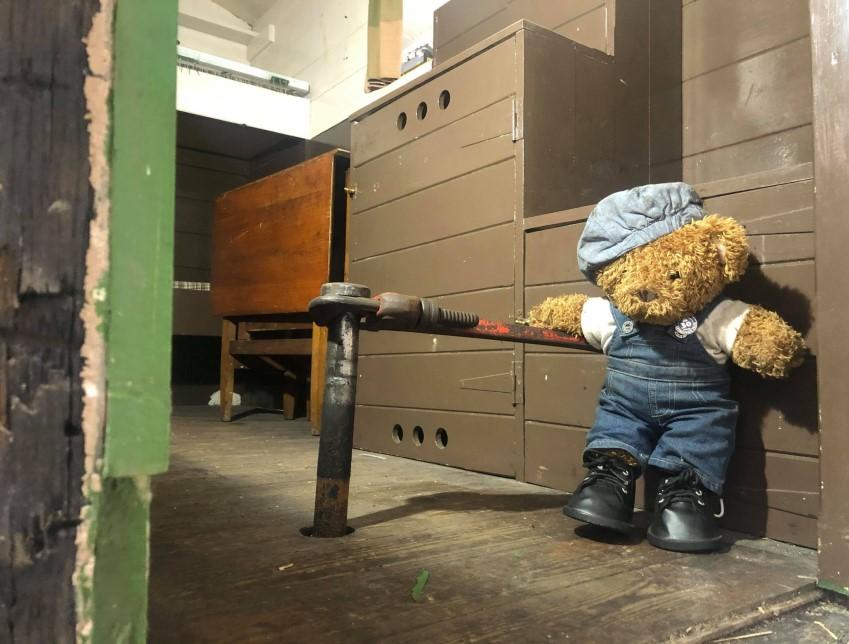
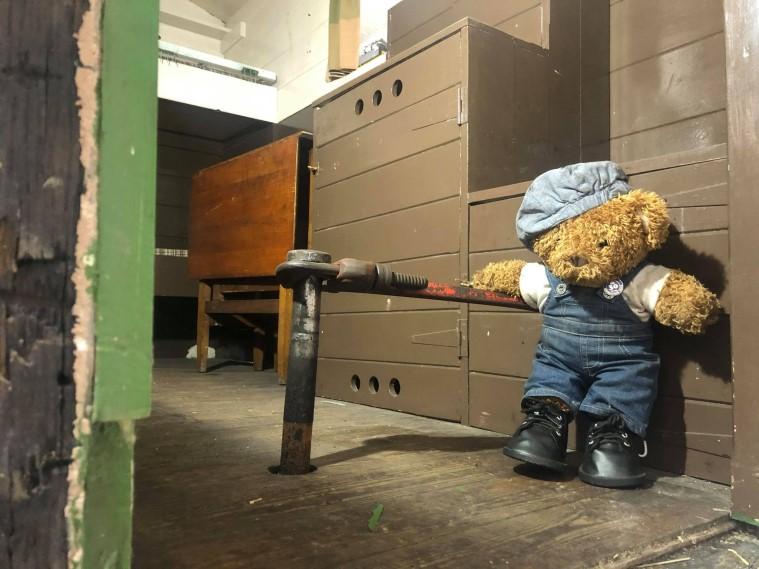
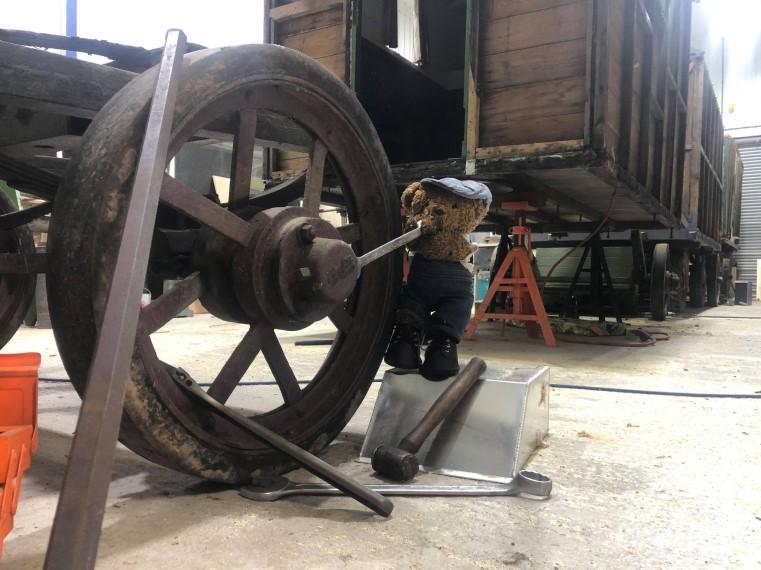
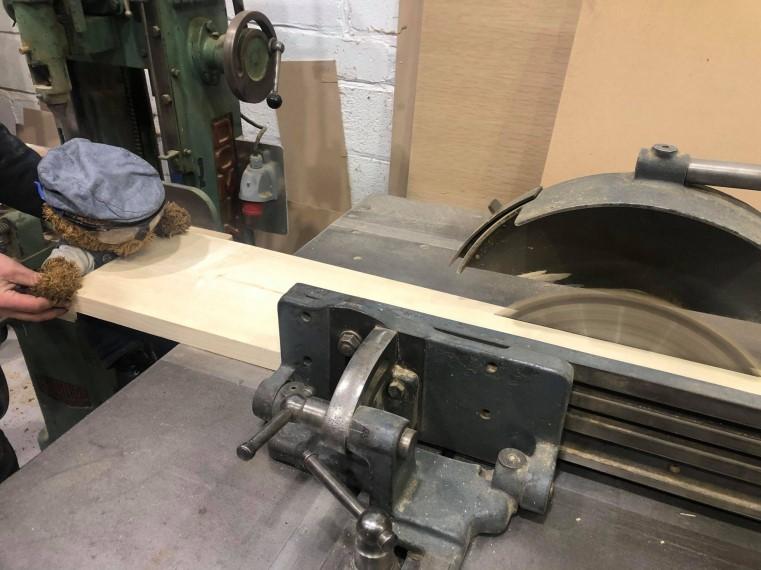
Unfortunately, due to the restrictions currently in place, Justin Steam hasn’t got around to as many workshops as he had planned. He did however manage to help out with the restoration of NTET Council Member John Durling’s Clayton and Shuttleworth living van that is currently with Miles Banks for restoration.
Living vans are mainly made of wood, so after nearly 100 years of being outside, the wood has started to rot in places and a lot of it is currently being replaced to get the living van back into a condition that should see it last another hundred years! Justin helped with removing the front axle pin, taking the wheels off, and cut some new wood up ready for the living van - fortunately Miles had a set of bear sized safety glasses for Justin!
Justin has his paws crossed that we’ll be able to get out to some events this year and looks forward to seeing you at driving days and steam rallies!
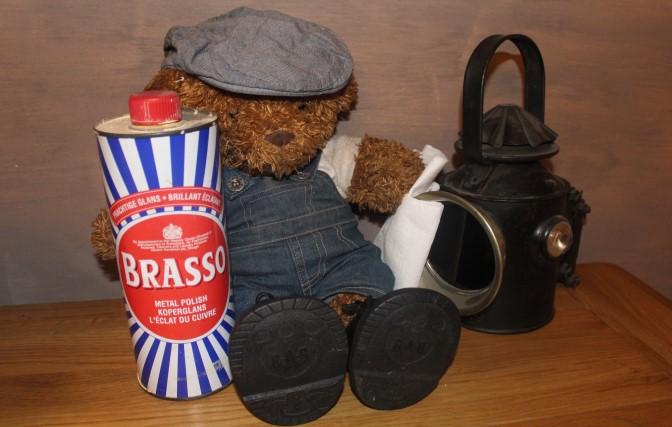
While Justin was here I made sure I kept him busy by polishing my lamps!
Dredging by Steam
NTET President Andrew Semple has written in to tell us about his experience of working traction engines commercially.
I have been fascinated by steam engines of all types all my life so now at 76 years old that is a long time! I have been fortunate to own and use an engine for many years but actually seeing engines being used for commercial work and being involved is quite a different experience
Today we are used to seeing engines at rallies and often there will be demonstrations of threshing and wood sawing and occasionally you will enjoy a demonstration of steam ploughing. Ploughing engines carry 550 metres of wire rope and they pull with the rope going sideways from the engine. This makes them ideal for one application which even today they are best equipped to do compared to modern machines.
What is that you might be wondering?
Well the answer is dredging ponds and ornamental lakes. Often lakes and ponds are surrounded by trees and in the autumn the leaves will fall in the water which means over the years, combined with the mud carried into the pond by the incoming water, they will gradually fill up, reducing the amount of water to the
detriment of any fish living there.
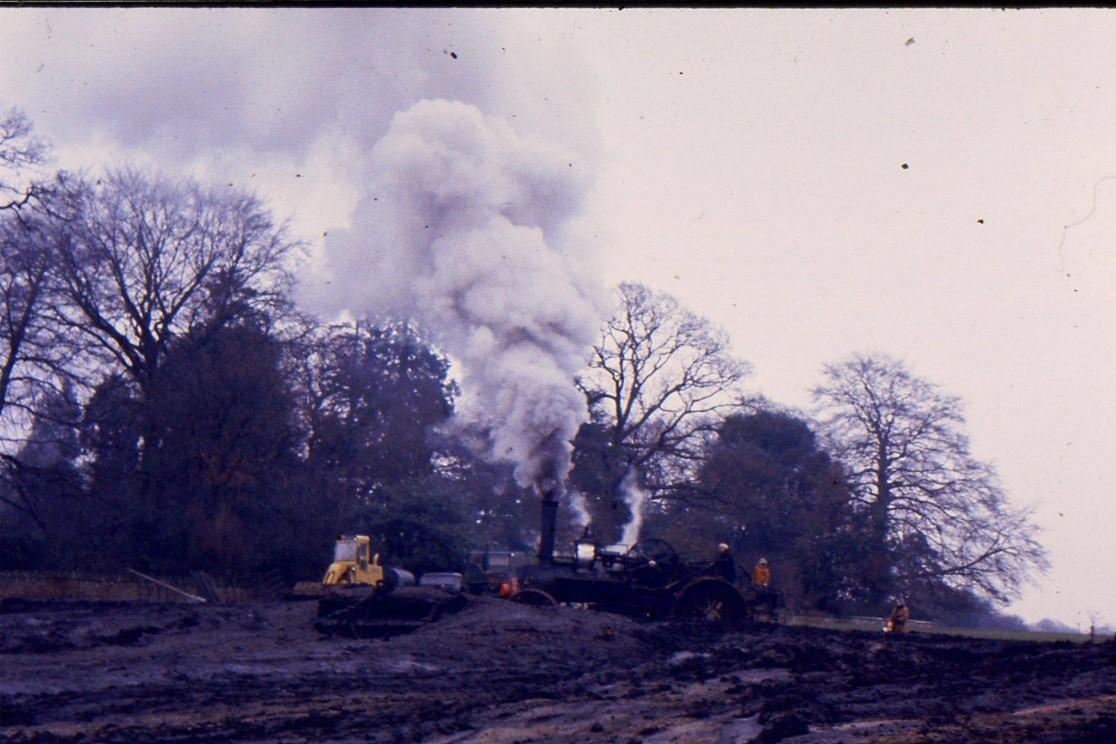
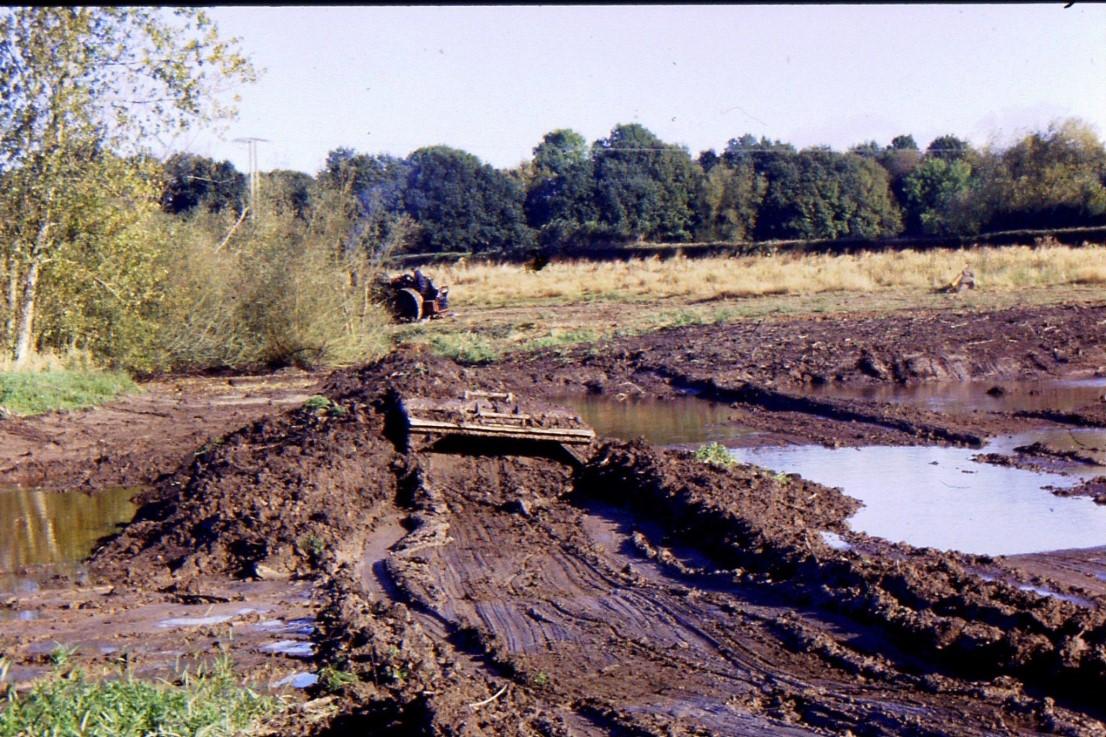
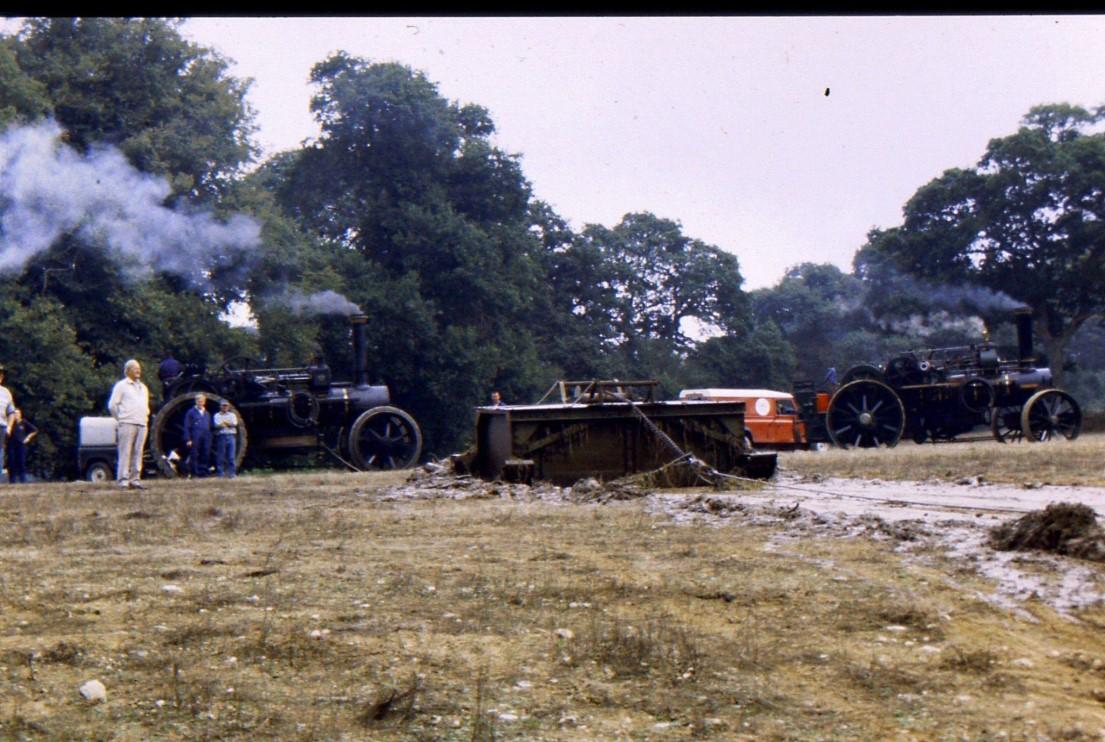
So, from time to time the dead leaves and mud need to be cleared away to restore the pond’s depth of water. This can be done very successfully using a pair of ploughing engines and a thing called a scoop or dredging bucket. The scoop has two sides and a top and is carried on two skids on the bottom of the sides. In one open end it has a door hinged to the top. To clean out a pond you put an engine at each side of the pond with their wire ropes connected to the scoop. One engine pulls the empty scoop into the pond when it is sufficiently far in, the other engine takes over and pulls it out again but because of the door on the scoop the mud trapped inside is pulled out of the pond to be left on the bank. This is then repeated until part of the pond is cleared then the scoop has to be moved to a new area of the pond, this is done by moving the pulling back engine along the side of the pond to alter the direction the empty scoop will go when pulled back into the pond. This process carries on until all the pond is cleared of mud which can go on for several weeks.
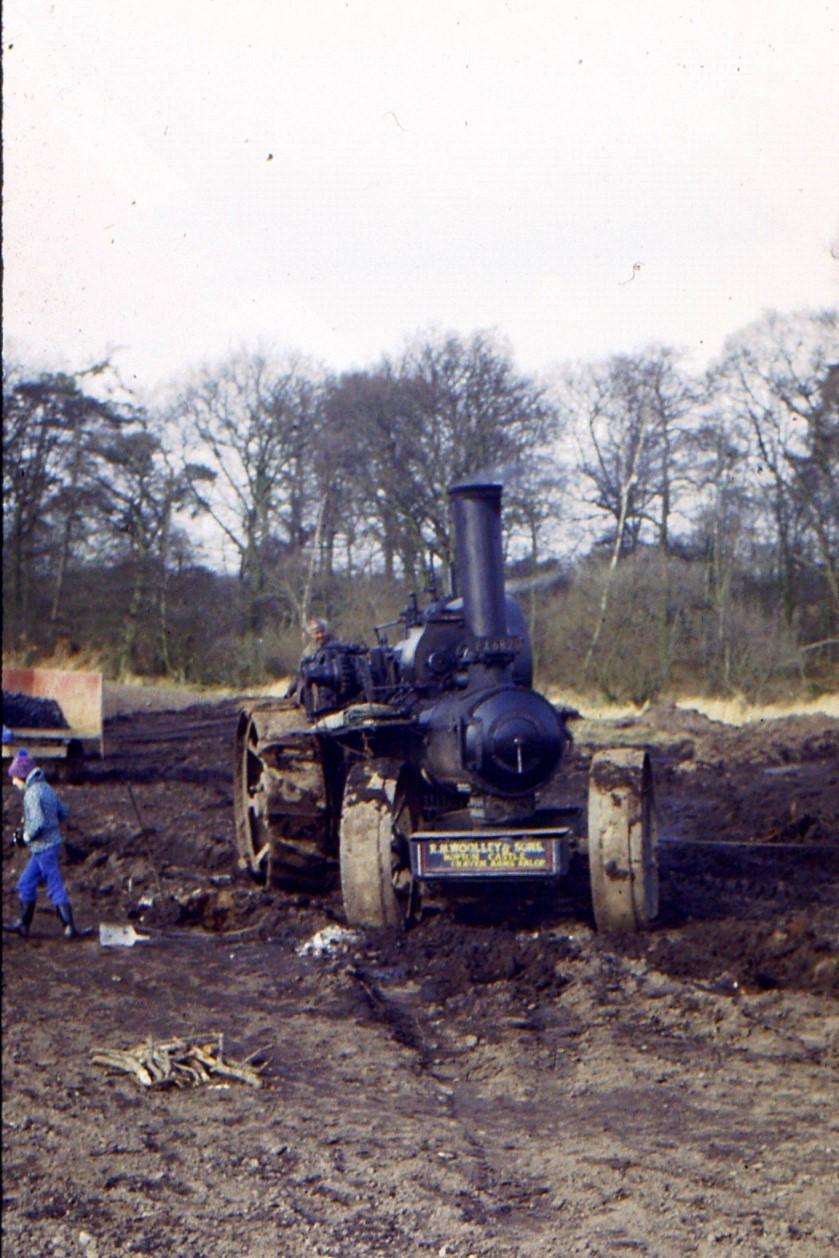
I first saw this work being done over 40 years ago by a well-known man of steam called Dick Woolley who lived in Shropshire and was dredging a pond very
close to where the County of Salop steam rally is held every August bank holiday. Dick also ran a fleet of steam wagons and steam rollers on road making. This pair of engines were built in 1918 and are now part of the National collection and are in store at Wroughton near Swindon. They are building exhibition halls there at present so one day they may well be on display. Progress on this exciting new development can be found on the website www.sciencemuseumgroup.org.uk
A good friend of mine Jon Garman, who at one time worked for Dick Woolley is a real steam enthusiast who spent his life as an earth moving contractor and from time to time also did dredging work when he had the opportunity using his Fowler BB1 ploughing engines so I was able to join him and have some experience of the work involved
It is dirty muddy work and certainly is not fun like taking an engine to a rally, the work goes on all day and you may stand in the rain all day getting soaked but you are there to do a job and earn money so the work goes on. It is also very hard work for the engine pulling the full scoop out of the pond and you need to keep the engine up to full pressure to pull the scoop when it is full of mud, so management of the fire is important because you cannot keep stopping for
lack of steam. Plans must be made to get a suitable water supply for the engines because the pulling out engine will need several fills during a long day
If you ever hear of this work being done try to arrange to see it, because nowadays it is very rare. Jon Garman has retired and sold his engines; he was the last man who advertised to do this sort of work. His engines live not far away from him still, just over the border at Hay on Wye and are kept in working order by their new owner.
It may all become a little clearer by studying some of the pictures of the work which I have taken over the years. In years gone by several companies have done this sort of work, indeed, to make it more efficient and productive some of them used ploughing engines converted to diesel engine power but that is another story!
I have included some pictures of different jobs Jon has done over the years and a couple of Dick Woolley when he was working back in 1976.
Please see overleaf for the pictures Andrew has kindly supplied, they really do show the awful conditions the engines and their crews were working in on jobs like this. Looks like hardy dirty work, but I’d sure love a go at it, wouldn’t you?! Ed.
This was the scene at Onslow Park near Shrewsbury with Dick Woolley driving his BB1, you can see the scoop ap-
Dick’s engine on its very last job in his ownership, a small pond at Beam Farm, near Shrewsbury, I drove the pull back engine on that day which was surrounded by bushes so we worked by whistle signals
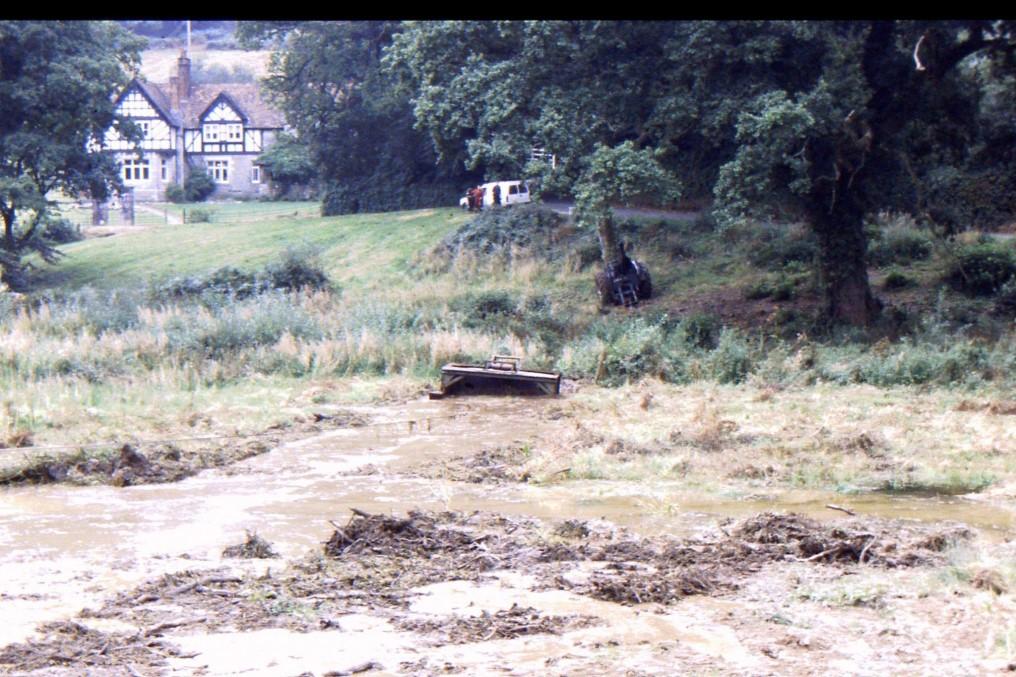
We move on to pictures of some work done by Jon Garman with Fowler BB1 engines as well. This is the scene at Blackcurrant Farm near Madley in Herefordshire. The scoop can be seen on top of the windrow of mud ready to fill as it is pulled out by the engine right by the camera. The pond had a very hard bottom so an excavator was used to put the mud up into windrows.
This was the start of a little pond near Ludlow, so local for all the crew. The scoop can be seen in the pond ready to be pulled out again. The pulling back is being done by a tractor mounted winch on this occasion.
Here you see the scoop in Cornwall with the Daniel Bros. There were lots of trees around one side of the pond so both engines are on the same side. A ‘snatch block’ was secured to an anchor and the rope put round it. Watch out on your travels because one of these engines is very rare, one of only two McLaren ploughing engines to survive, number 1552 of 1918.
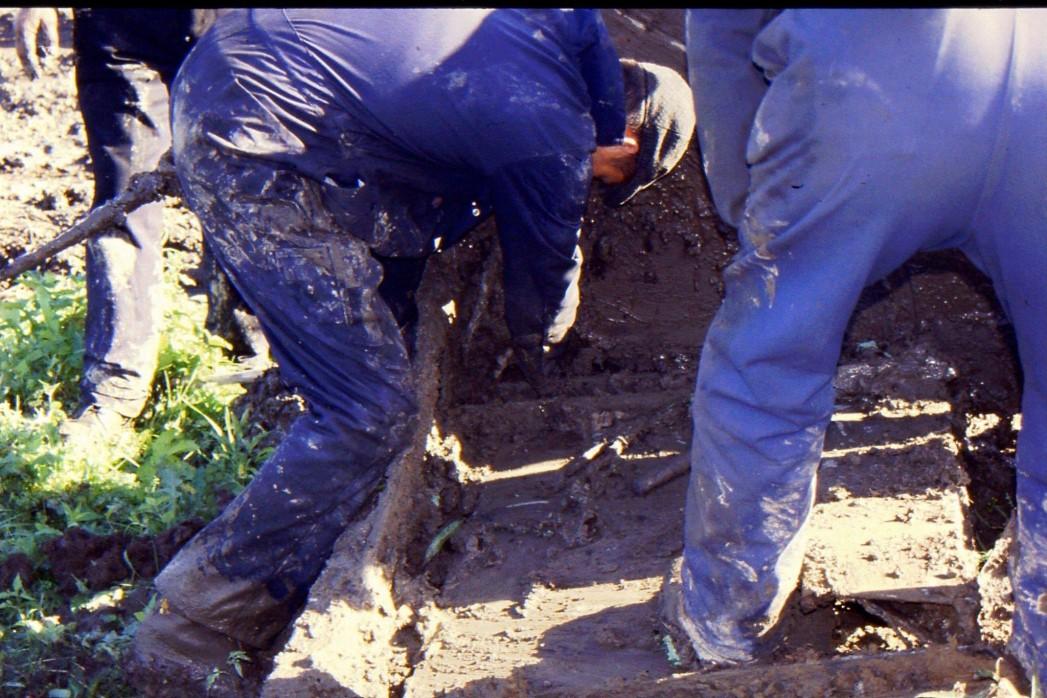
Dredging is not a glamorous job, here the door on the scoop has broken and it is being removed to go to the workshop for repair, clean overalls tomorrow!
SAC Logbook
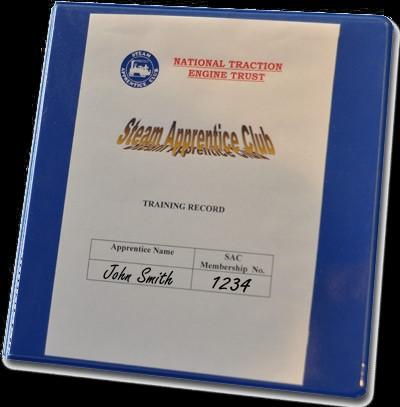
The log book is a very important tool for an apprentice. The purpose of a log book is to keep a record of your experiences with the different steam engines you have helped with.
Then, when you start with a new steam engine, the engine owner/crew can look through your records and get a good understanding of what you can already do, and what new things they should be teaching you.
Though be warned, although the majority of steam engines work in a similar way, just because something happens one way on a certain make of engine it doesn’t necessarily follow it will be the same on another.
Log books can be bought from NTET Sales. Email Kathy Smith at sales@ntet.co.uk for more information.
Wordsearch
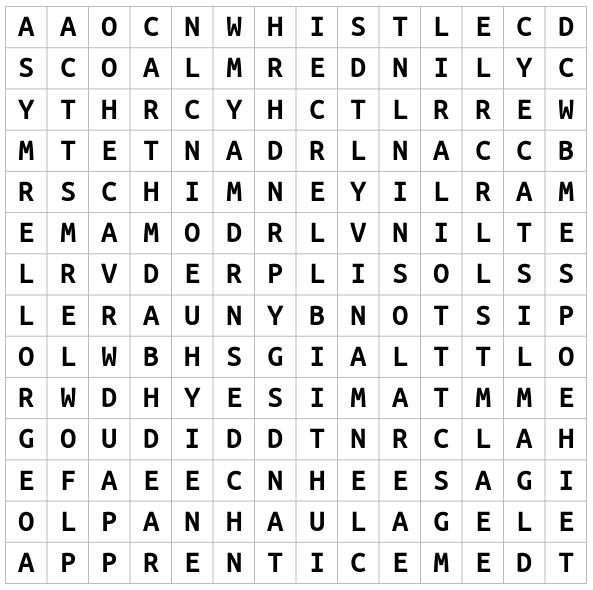
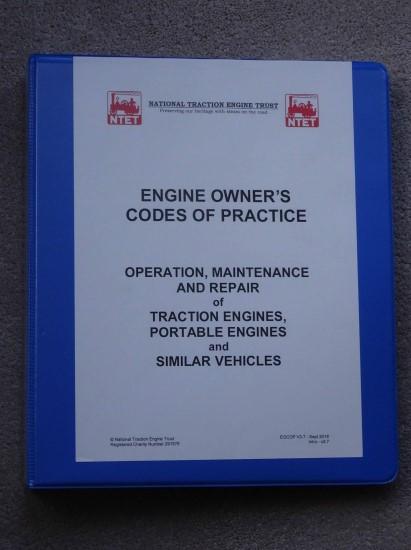
NOTHING TO DO, NO RALLIES TO GO TO, WHY NOT READ THE Engine Owners’ Code of Practice
The NTET Code of Practice; “The Management of Traction Engines and Similar Devices” has for a long time been widely accepted in the Insurance and Boiler Repair and Steam Engineering communities as a 'de facto' reference manual.
The CoP is 200 pages of practical advice on every aspect of engine usage, including Operation and Maintenance, Driving on the Road and in Public Places, Transport, Laying up and Storage, the NTET Written Scheme of Examination, Mechanical Inspection, Repairs, Appeals and Arbitration, and Records and Reports.
Your Steam Apprentice logbooks have been developed based on the information in the CoP to give you a good grounding with steam vehicles, and the CoP provides an excellent addition to further develop your understanding of the usage of steam vehicles.
The Code of Practice can be downloaded free as a PDF from the NTET website (www.ntet.co.uk). Alternatively, you can purchase a hard copy in a loose-leaf folder, with pages in plastic wallets, by sending a cheque for £35 inc. p&p payable to the NTET to the Chairman of the Engine Owners Section (address below). The hard copy includes relevant extracts from British Standards which are NOT available to download.
Bob Siddall
Stud Farm House
Castle Hill
Carlton-on-Trent
Nottinghamshire
NG23 6NX
Steam it Sunday
Steam-It Sunday is a national event based on the idea from the Federation of British Historic Vehicle Clubs ‘Drive It Day’.
The National Traction Engine Trust decided it needed an event where we all try and promote Steam on the road in it’s various forms, through a series of improvised and essentially free events organised at grass roots and local level, like in the early days of the road going steam movement.
In short: Steam it Sunday takes place on the first Sunday of October (this year will be 3rd October) and is all about steaming up your engines and enjoying our hobby!
Every year there are many gatherings up and down the UK and we are delighted with the response to the idea. Be it at local club level, regional society or just one man taking his for
a trundle, the first weekend in October will be alive the sight, sound and smell of engines doing what they do best – being enjoyed.
We encourage any enthusiast who wants to know more about local activities to contact their own local or regional steam and vintage club, to see what may be happening in your region. We would like to thank everyone who has supported ‘Steam It Sunday’. As you would expect we hope it will take off and become a free for all annual event for everyone to enjoy and to highlight the fact that we are still able to drive steam driven vehicles of various designs on our highways and byways.
Although 2020 was a difficult year, we were pleased to see engines out and about on Steam it Sunday. Let’s just hope we see a lot more this year!
Fun Fair Kings and the Blitz 1940 - 1941
During the Second World War both Britain and Germany subjected enemy cities to terrible bombing campaigns. Using bomber aircraft, the air forces aimed to destroy important factories, military targets and transport links. Alongside this the bombing of ordinary civilians occurred – in an attempt to destroy the will of the nation to fight. The German air force, the Luftwaffe, concentrated bombing campaigns on British cities during 1940 and 1941. Major industrial towns and ports such as Liverpool, Portsmouth, Coventry and Manchester were targeted as well as London.
The Luftwaffe dropped two main types of bombs on British cities. High explosive bombs were designed to detonate on impact and destroy buildings. Incendiary bombs were perhaps even more dangerous, these were designed to start fires in the timber frames and roofs of buildings – they were dropped in the thousands. Because of these bombs British cities were left with
dozens of buildings which had been gutted by fire – and the stone and brick walls were left in danger of collapse without any timber supports. The councils needed to find a way to quickly and safely demolish these dangerous structures. This was no easy task – they needed something hugely powerful, but able to work within the tight spaces around these buildings. The obvious answer was to use steam traction engines – but during the last 20 years or so they had been scrapped in their hundreds or replaced by faster diesel lorries. But there was one industry where steam power was still used in force and this is where
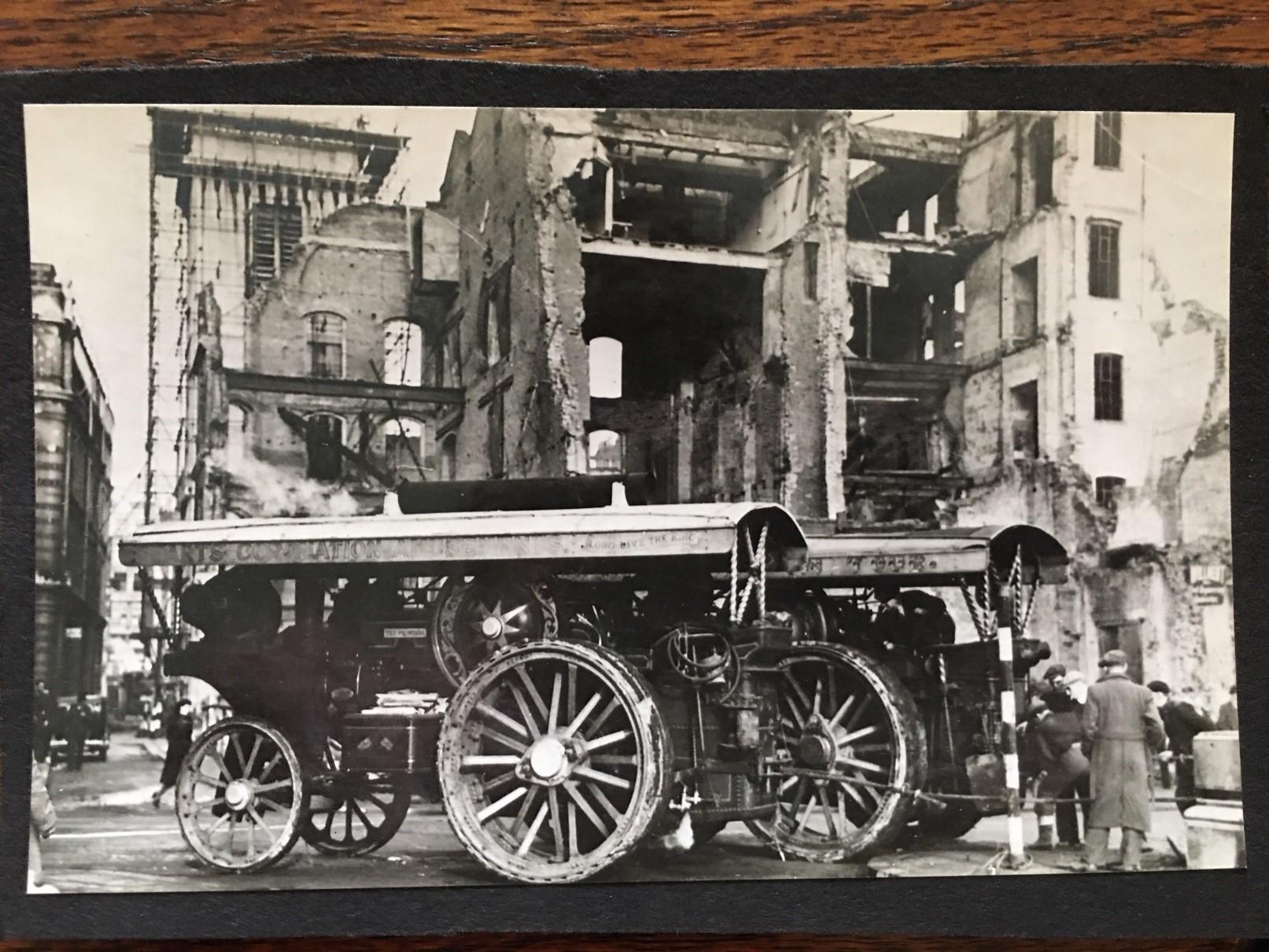
Fowler 8NHP Showman’s Engine ‘The Princess’ No. 14868 of 1917 in the foreground with what is believed to be Fowler No. 14902 behind, in London, 1942.
Showmen were struggling to keep the fair industry going in wartime – many fairs had been closed, and those that were still running faced shortages of material and manpower.
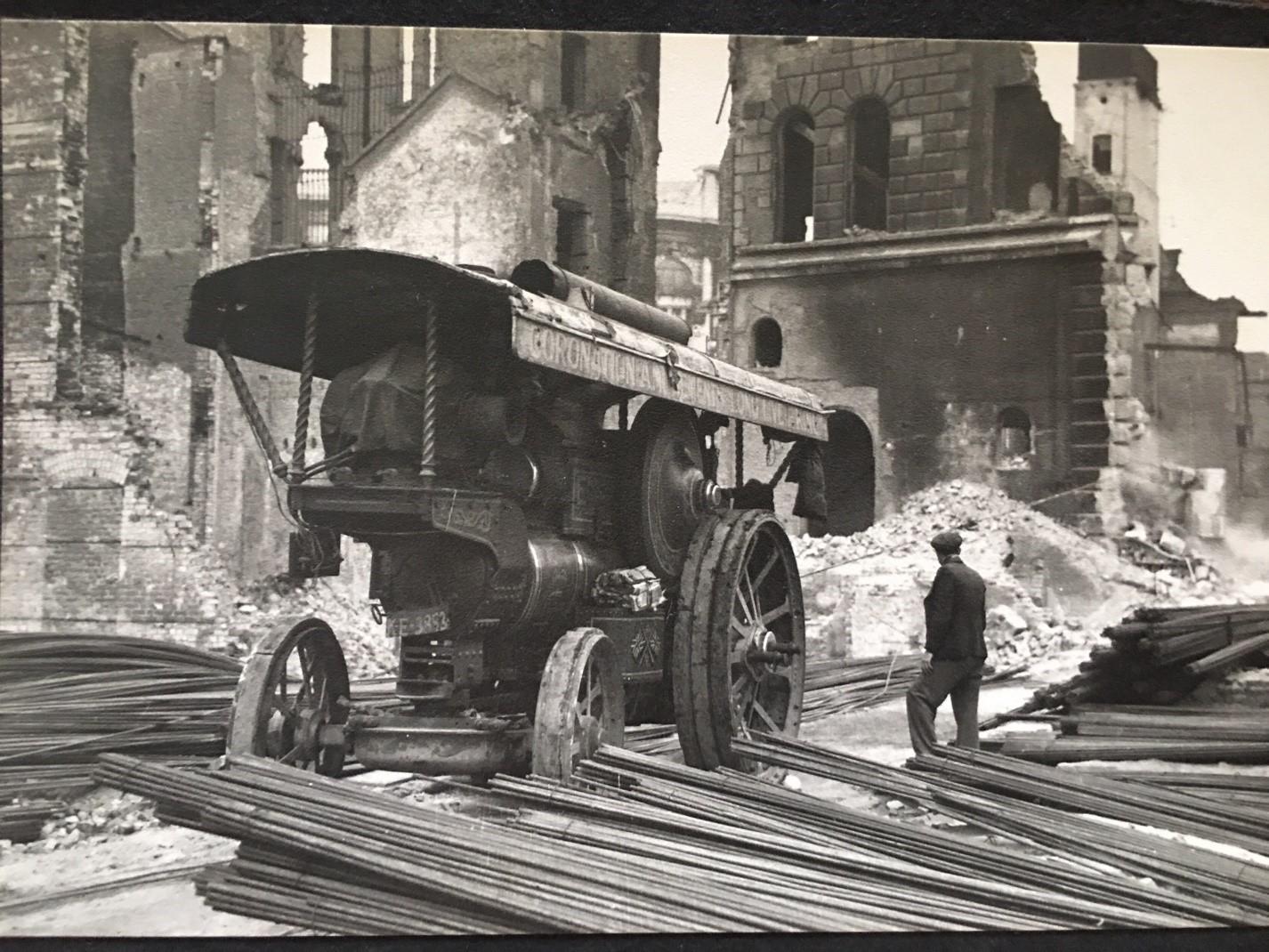
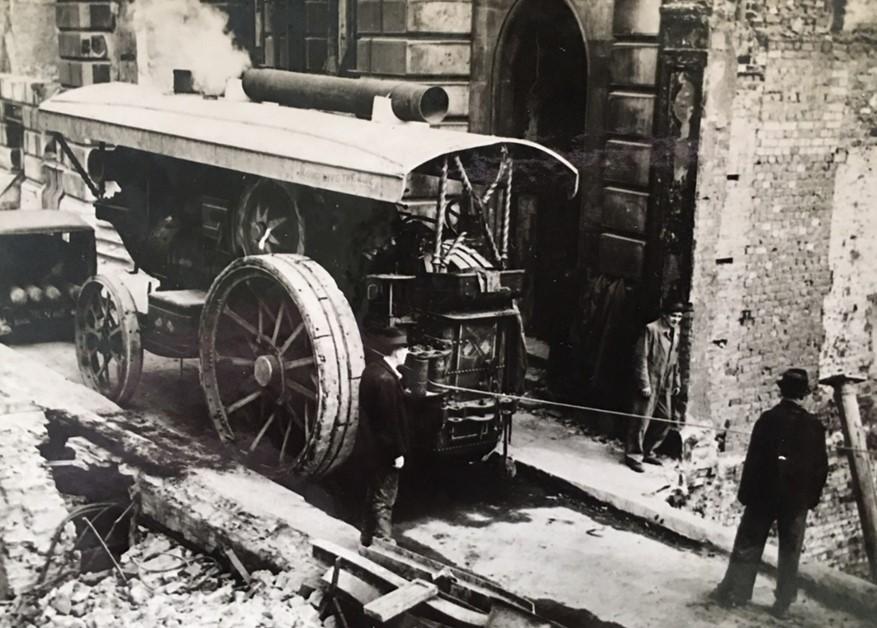
Showmen jumped at the chance to get work and help the war effort in offering their drivers and engines to help pull down blitzed buildings. In London alone over 50 showman’s engines were put to work, their dynamos were sheeted over to protect them from the dust. The engines would be parked up away from the buildings, secured in position with wooden chocks, and the steel winch rope from behind the flywheel-side rear wheel was pulled around parts of the damaged buildings. Once this was secured the engine would wind in the rope and pull down the wall. Other methods included securing the winch rope to each end of a steel girder which would be placed behind walls, and the engine would drag the girder through the building.
Although dozens of showmen put their engines to work on demolition a few are worth noting here. In Manchester John
Collins put Fowler ‘King George VI’ and 1906 Burrell 8nhp ‘The Albert’ No. 2818 to work, and several engines owned by H.P. Studt were busy in Swansea throughout 1940 and 1941. In London Billy Smart put his fleet of Fowler Showman’s Engines onto demolition work; The Princess, Norah and Little Margaret were busy throughout the blitz of the city. Fred Gray of Battersea was a well known London showman, and his engines including Burrell Scenic Showman’s Engines Lord Lascelles and Gladiator were put to work. Fairground historian Philip Bradley recalled seeing Gray’s Foster 8NHP Showman’s Engine ‘Olympic’ No. 12468 built in 1909 “absolutely smothered in masonry dust, proceeding at good speed up the
Fowler 7NHP Showman’s Engine ‘Norah’ No. 10302. On demolition work for owner Billy Smart’s in London, 1941.
Pentonville Road on its arrival the belt was immediately fitted and it was running Mrs Gray’s Chair-oplanes within minutes”. This engine must have been working nearly 24 hours a day! Demolishing buildings during the day and running fairs at night!
It was hard and dangerous work, but showmen were applauded by councils for their efforts – in 1940 the Daily Mail included an article which reported Manchester Council was saying thank you to “the fun-fair kings”. A great many showman’s engines which survive in preservation worked hard during the Second World War on lots of interesting jobs including demolition –next time you see one at a show ask the driver or crew what that engine did!
Above and Below: Billy Smart’s Fowler R3 Road Locomotive ‘The Princess’ No. 14868 Reg. BN5793 built in 1917 engaged in pulling down bomb-damaged buildings using its winch rope in Little Britain, London E.C.1 Photographed on October 24th , 1941.
Editor: Thanks to Elijah Bell for another cracking article on an often forgotten bit of traction engine history. Elijah recently completed his history doctorate on this topic! Perhaps one of you would like to do some research on an engine related topic and write it up for Raising Steam?
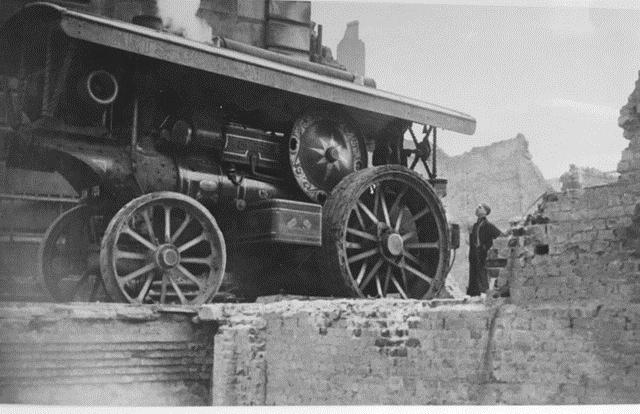
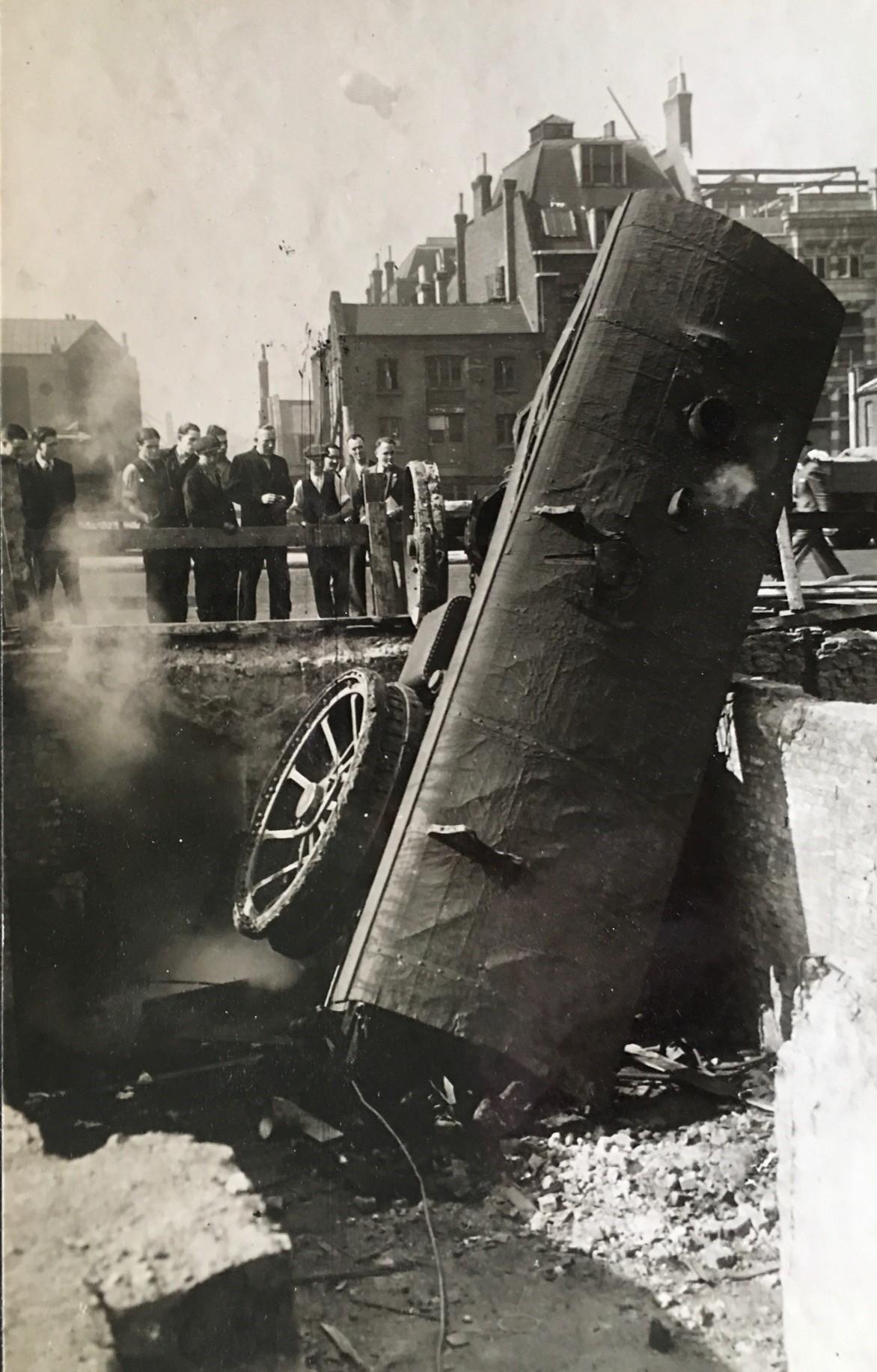
Overleaf: John Sanders of Peckham’s Fowler A7 Showman’s Engine ‘Spitfire’ No. 13152 built in 1913. Photographed on June 5th 1942 after slipping backwards into a cellar during demolition work on Lower Victoria in London. Fortunately, although the engine’s dynamo came loose and lodged itself in the canopy, the driver escaped uninjured.
In The Workshop
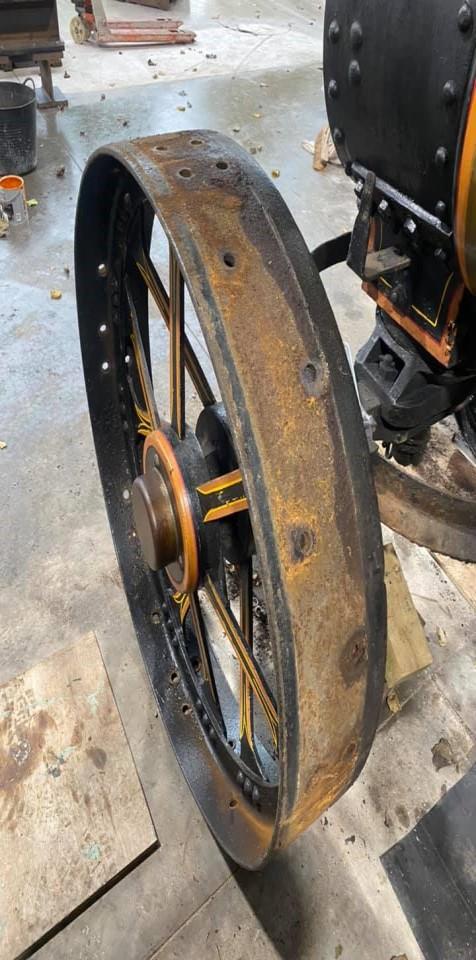
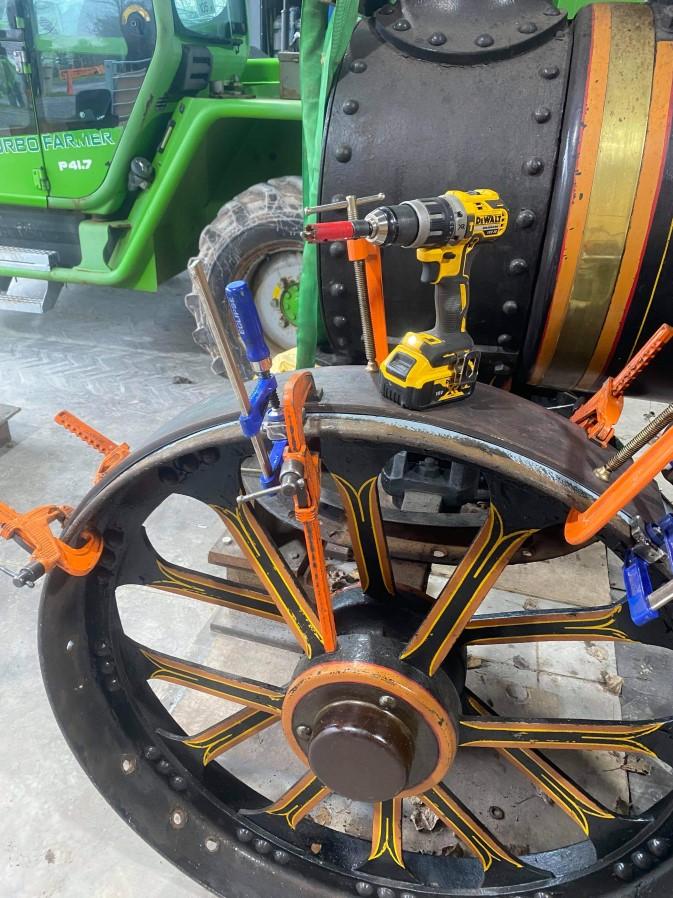
gave a very rough ride so the decision was made to put her back as original. The rear quad tracks unbolted to leave the strakes underneath but when fitting the tyres to the front wheels the original steel bands had been removed so a new set was needed.
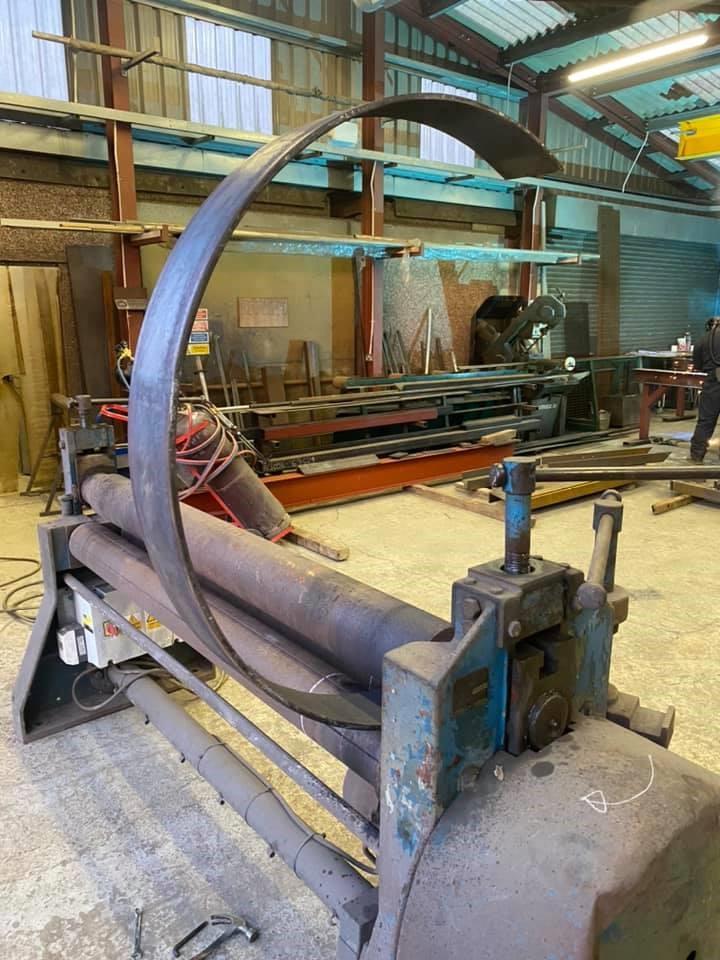
plate into rings to match the diameter of
separate pieces to match how they were separate pieces were then clamped tight to the outside of the wheels to ensure they fitted correctly, and holes to attach them to the wheels were drilled.
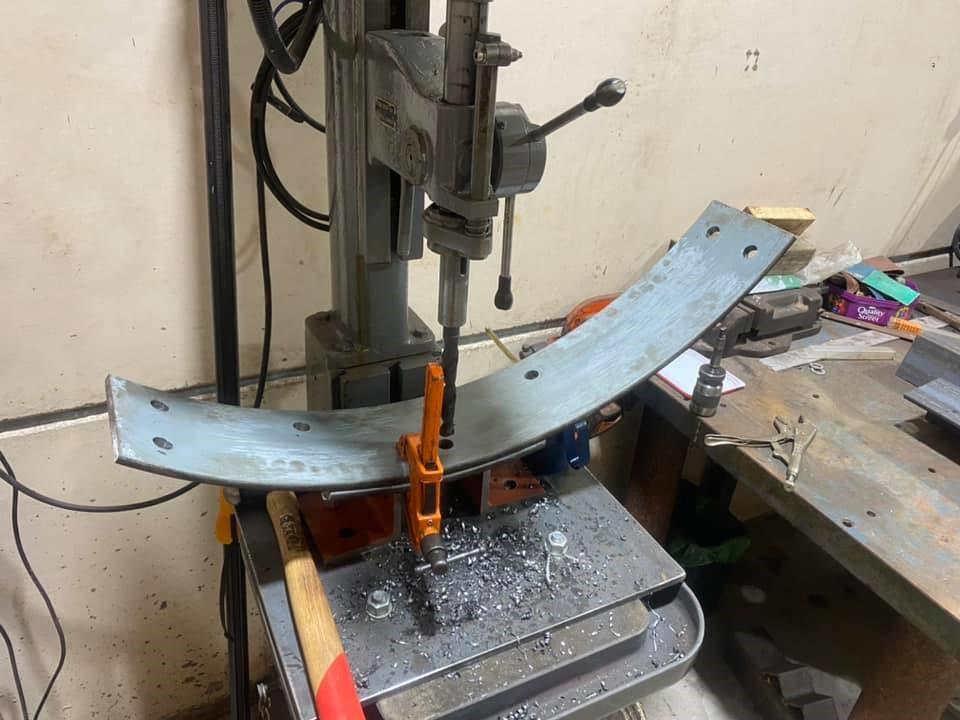
The steel tyres were then taken back off of the wheels and placed in the pillar drill to enlarge the holes up to the final size for the rivets that will hold the tyres to the wheel.
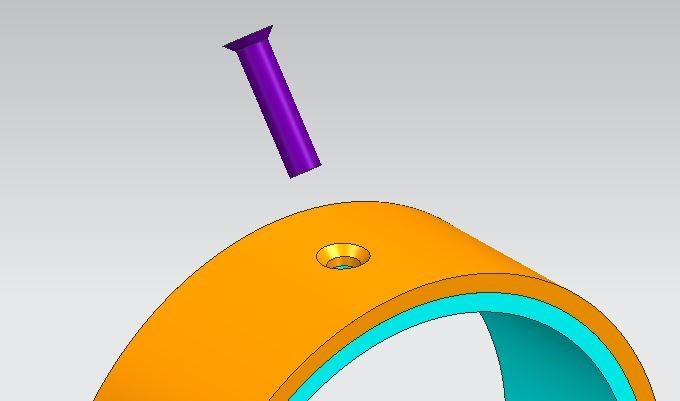
The holes were then countersunk as below to allow the head of the rivet to be level with the surface of the tyre (otherwise you’d get a very bumpy ride!)
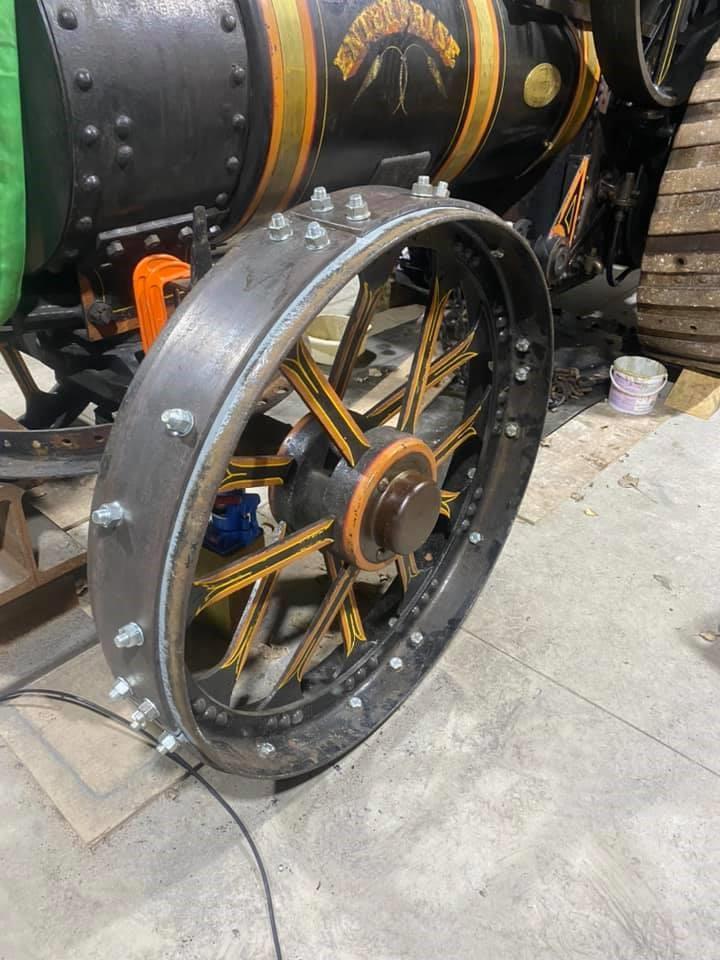
The steel tyres were then bolted back on to ensure they fitted correctly and all of the holes lined up correctly, which fortunately they did!
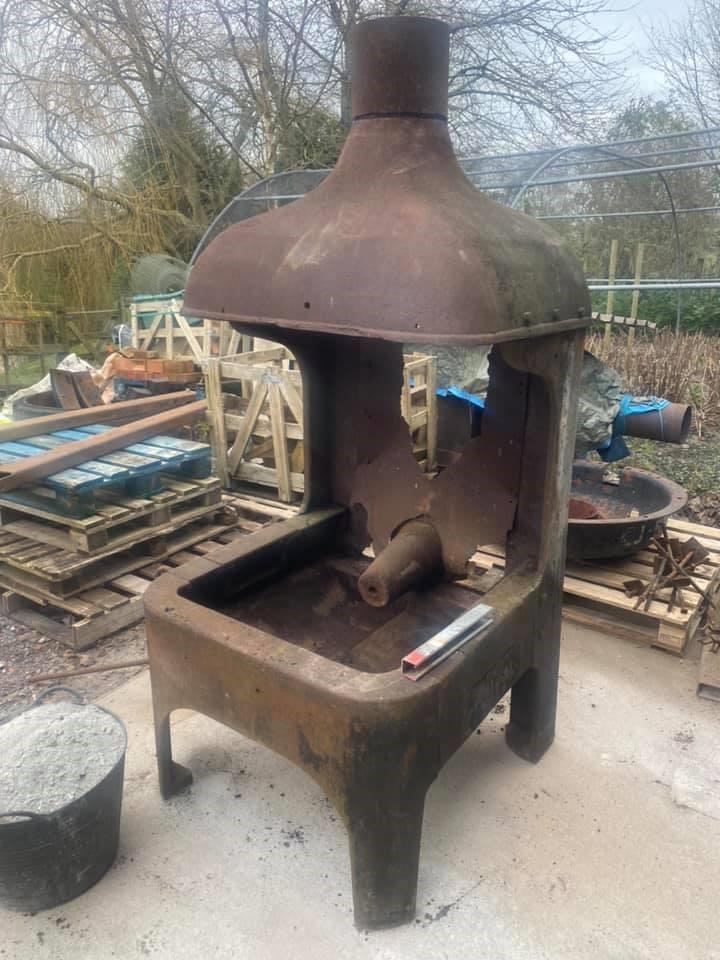
The next step is to remove the bolts and rivet the steel tyres to the wheels. Hopefully, when the latest lockdown eases Justin Steam will be helping out with this and will report back how it went in the next edition. Before the riveting can start however, the forge for heating the rivets needs a few repairs done!
Then and Now...
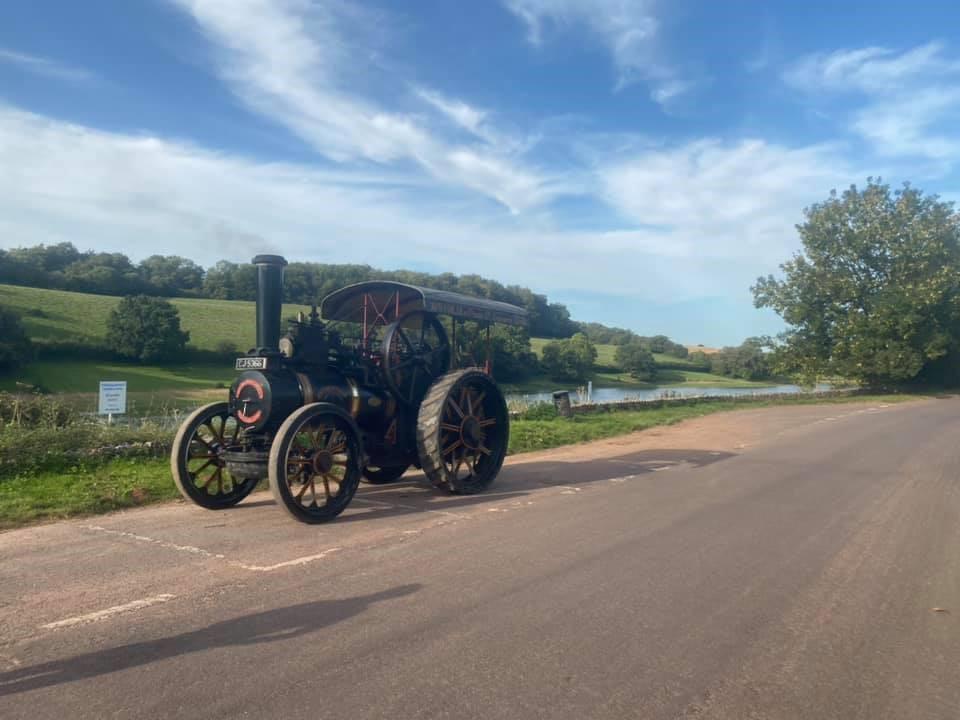
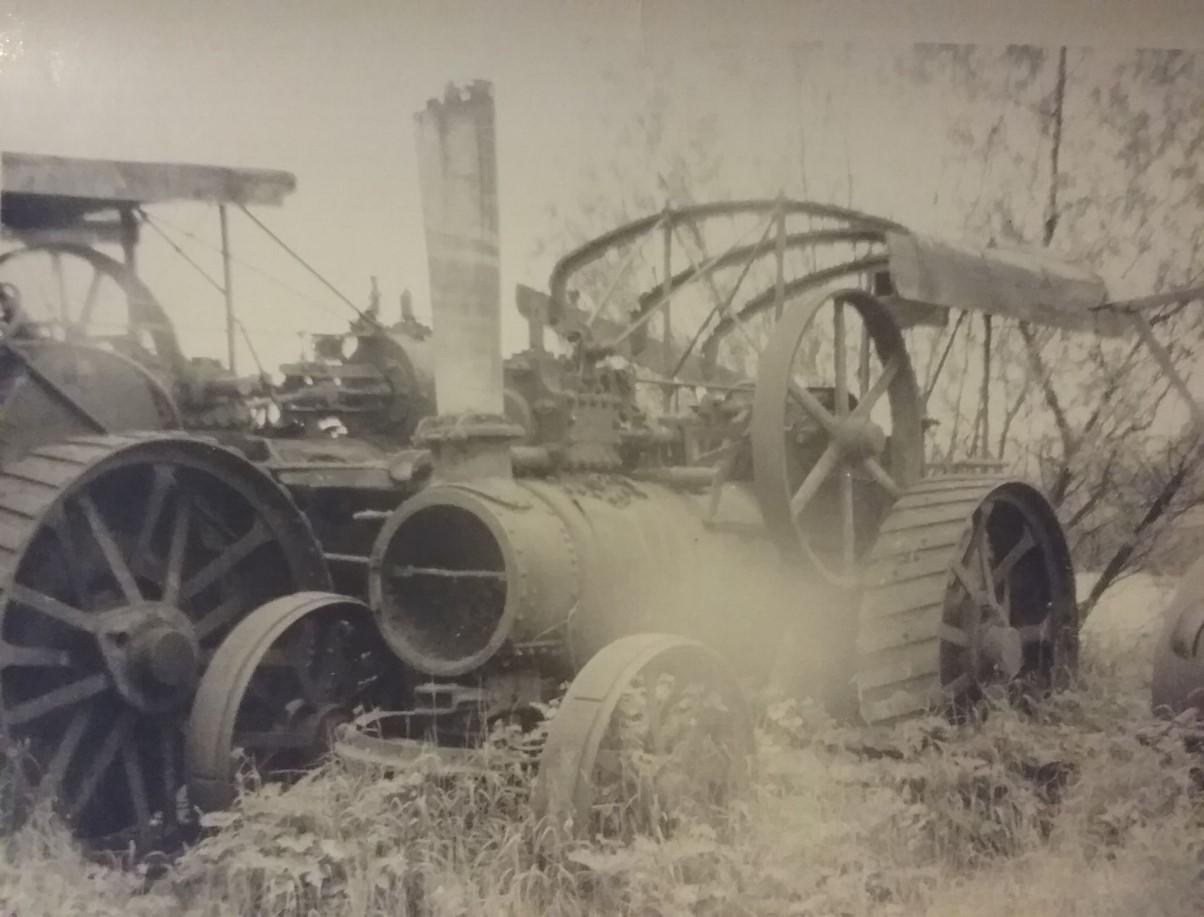
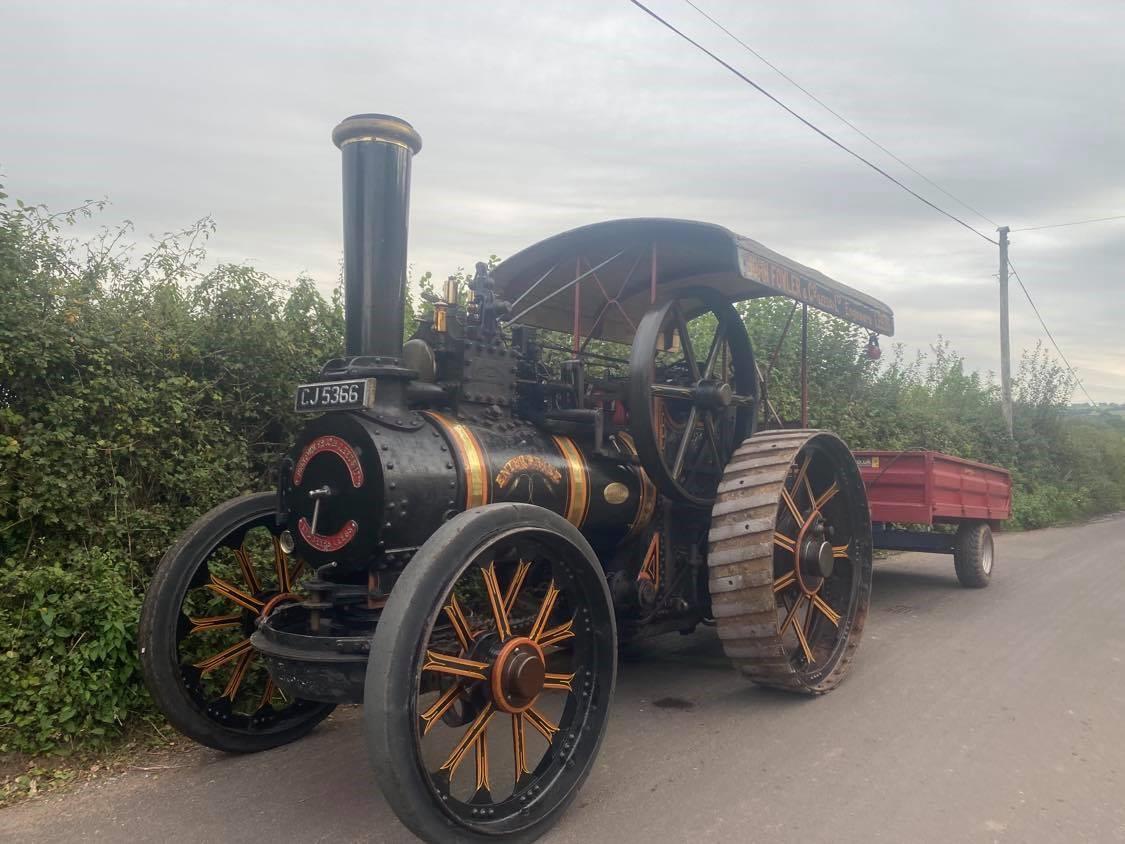
While sorting through photos for the article on rebuilding Enterprise’s wheels I found an old photo of her and thought it interesting to make a ‘then and now’ comparison. I’d like to make this a regular feature of Raising Steam as I think it will interest members. If you’ve some ‘then and now’ photos to share then please send them in!
Thanks to John Wharton for the ‘Then’ photo.
19th September 2020
Fairford Gravel Pits, 30th May 1964
Free to a Good Home!
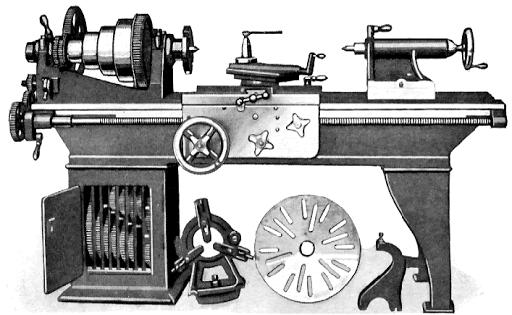
We recently received the below message from an NTET member offering a lathe free to a member of the Steam Apprentice Club to help them start their journey into the world of machining! If you think you’d be interested in the lathe, then please drop us a message and we’ll make contact with the current owner.
“I have a small Drummond lathe on a stand with a few bits of tooling that is free to a good home of a Steam Apprentice. It is a good little machine but hasn't been used for a little while so could benefit from a bit of love and clean up. It will do an apprentice a good turn as a start. I also have a small drill press that is to go to the same home. Both machines are small and compact so won't take up loads of room in your mum and dad’s garage!
People were very kind to me at a young age with giving me tools and equipment, a lot of which I still have and use almost daily and feel it important to do the same for someone else. We can have a look around the workshop and put some other useful stuff together for you like spanners and a few hand tools whilst having a look at what we have in the workshop we are working on.
I am in St Ives, Cambridgeshire. For obvious reasons we won't be able to do anything straight away but when Boris lifts the restrictions again, we can sort something out. Socially distanced of course. Pictures can be sent of the machines.
I hope these find a good home to a young person who will use and look after them.”
Stop Press!
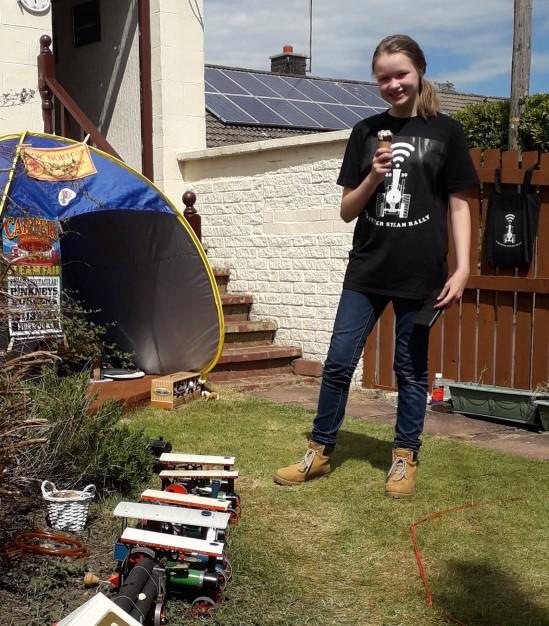
Just as we were going to press, we had some news from Charlotte Coulls - with the cancellation of a lot of the rallies early in the 2021 season, the Twitter Steam Rally will be repeated, hopefully for the last time on May 1st 2021. As in 2020 this will be an virtual event held mainly on Twitter and Facebook where we can all get together to enjoy all of the usual things that go on at a steam rally, but online instead. It’d be brilliant if SAC members can get involved with the event again, sharing photos and videos of previous rallies, showing off their latest project or steaming a Mamod in the back garden and videoing it, or whatever else you can think of for the event!
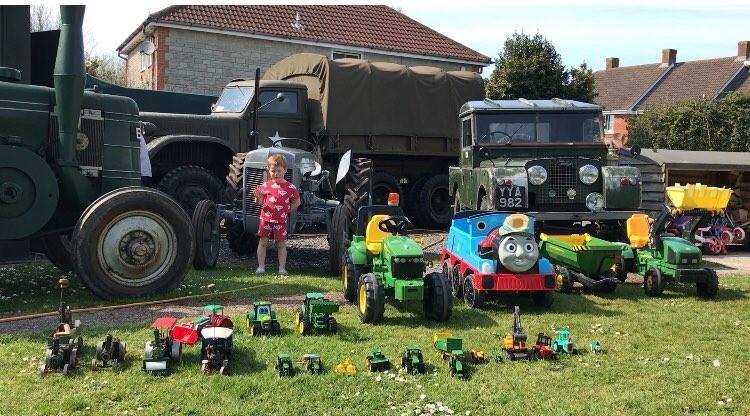
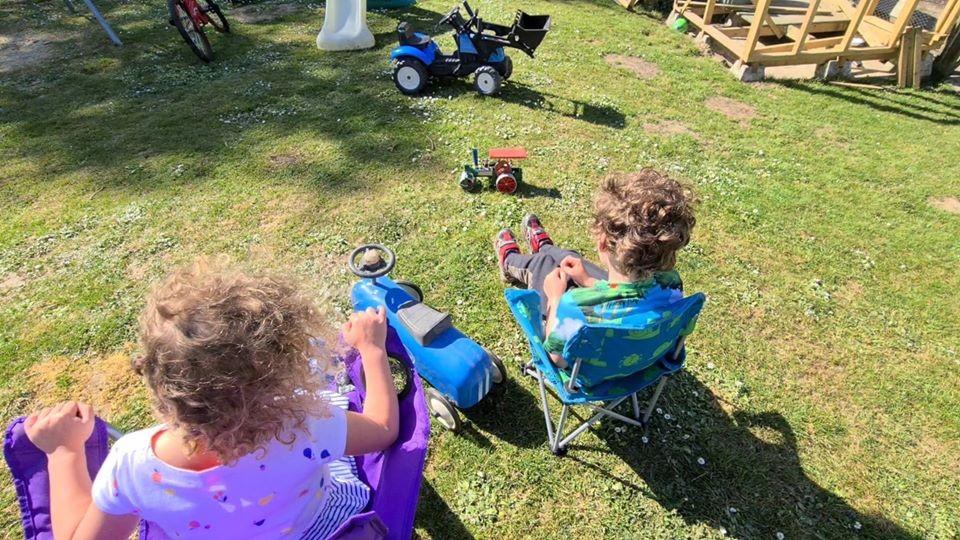
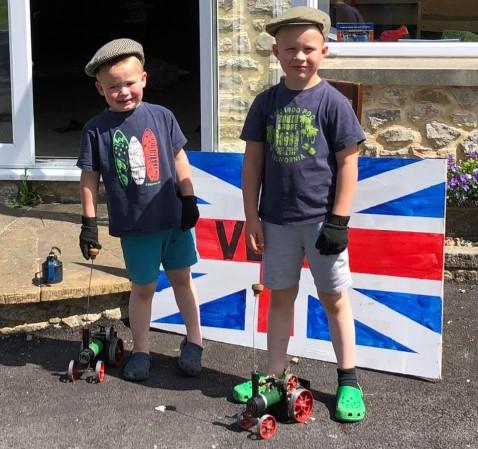
I’ve had a quick hunt through some of the contributions from SAC members to the 2020 #TSR event and included them on the next page to give you a bit of inspiration.
See you there!
NTET Driving Training Course
The NTET hosts a driver training weekend once a year for its members.
This course consists of both practical hands on driving time and theory sessions and is now open to Apprentices aged 13 years or older.
The course has three levels: foundation, intermediate, and advanced. It is recommended that Apprentices start with foundation and move up each year to get the most from the training.
Each level consists of a mix of both theory sessions with our skilled members and plenty of practical time on a selection of steam traction engines.
If you have any questions regarding this event please contact the event organiser, Joe Black, at training@ntet.co.uk
As it stands, we are still planning for the NTET Driver Training Day to go ahead, subject to Covid restrictions at the time. All attendees will be kept updated with any changes.
Date 8th & 9th May 2021
NTET Driving Training Course
Foundation Day 1
Introduction to Traction Engines -Boiler construction and Fittings -Motion work drive train and brakes, lubrication and gland packing, drive an engine, clean the engine.
Foundation Day 2
Light up and steer/drive an engine, engine insurance, engine maintenance, clean engines and help load up.
Intermediate Day 1
Light up and drive engine, repacking glands and ring bush renewal, Gauge frames and gauge glasses, Safety valves, cocks and clacks, clean the engine.
Intermediate Day 2
Washing out and preparation for inspection, low loading demonstration, water pumps and mechanical lubricators, boiler management and combustion, drive an engine, clean engines and help load up.
Advanced Day 1
Light up and drive engine, steering chains and maintenance, replacing tubes and stays, injectors, hydraulic testing and valve timing, clean the engine.
Advanced Day 2
Shafts, bearings, axles and wheel bushes, engine insurance, low loader demonstration, boiler management and combustion, drive an engine, clean engines and help load up.
Governors - How do they work?
Governors are an important part of a steam engine that does work on the belt, such as driving a saw bench or threshing drum, and also Showman’s engines for generating. But what are they? What are they for, how do they work?
When a steam engine is driving something by a belt, it needs to run at a reasonably constant speed, and be able to stay at that speed even when the work gets harder or easier. For a showman’s engine, this is necessary to produce a constant voltage from the dynamo, and be able to handle the higher power needed when a ride starts moving. For a traction engine running a threshing drum, the drum needs to run at the correct speed to separate the corn from the wheat correctly.
Trying to do this manually, by just setting the regulator at the correct speed isn’t a very good way of achieving the constant speed, because the speed will change depending on how much pressure is in the boiler, and it won’t be able to give more steam when extra power is needed. What we need is a dynamic system that gives more steam when power is needed, and less steam when it isn’t. This is where the governor comes in.
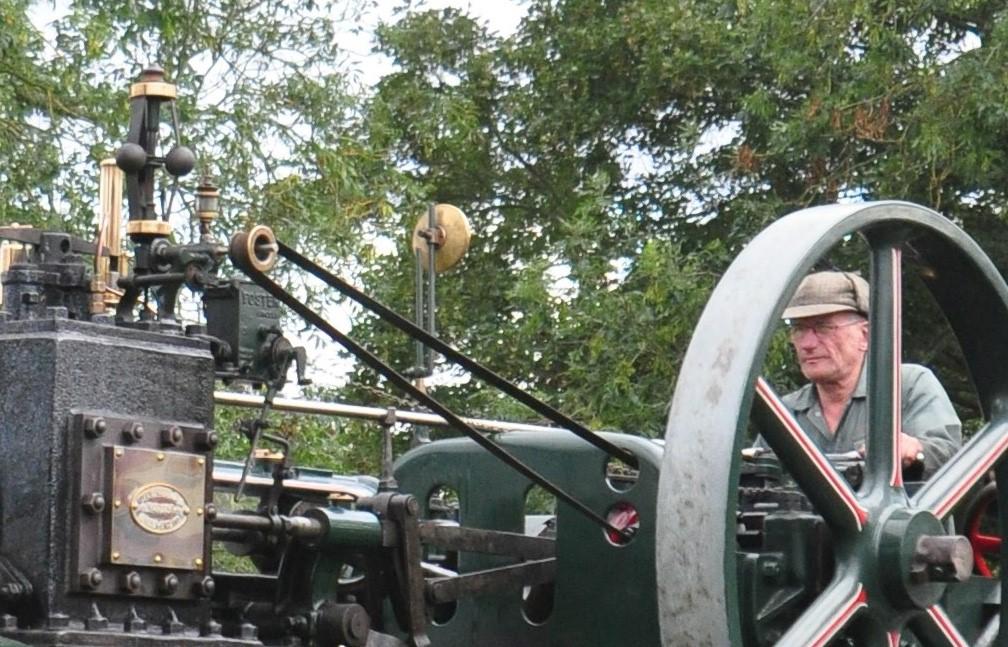
You may have noticed the set of spinning
balls near to the cylinder block of a steam engine, driven by a belt from the crankshaft.
There are quite a few different variations of governors, but most have either two or three spinning balls. These are the part of the governor that react differently depending on the speed of the crankshaft. There is also a part of the governor (usually hidden inside the cylinder block) that acts as a valve to control the flow of steam.
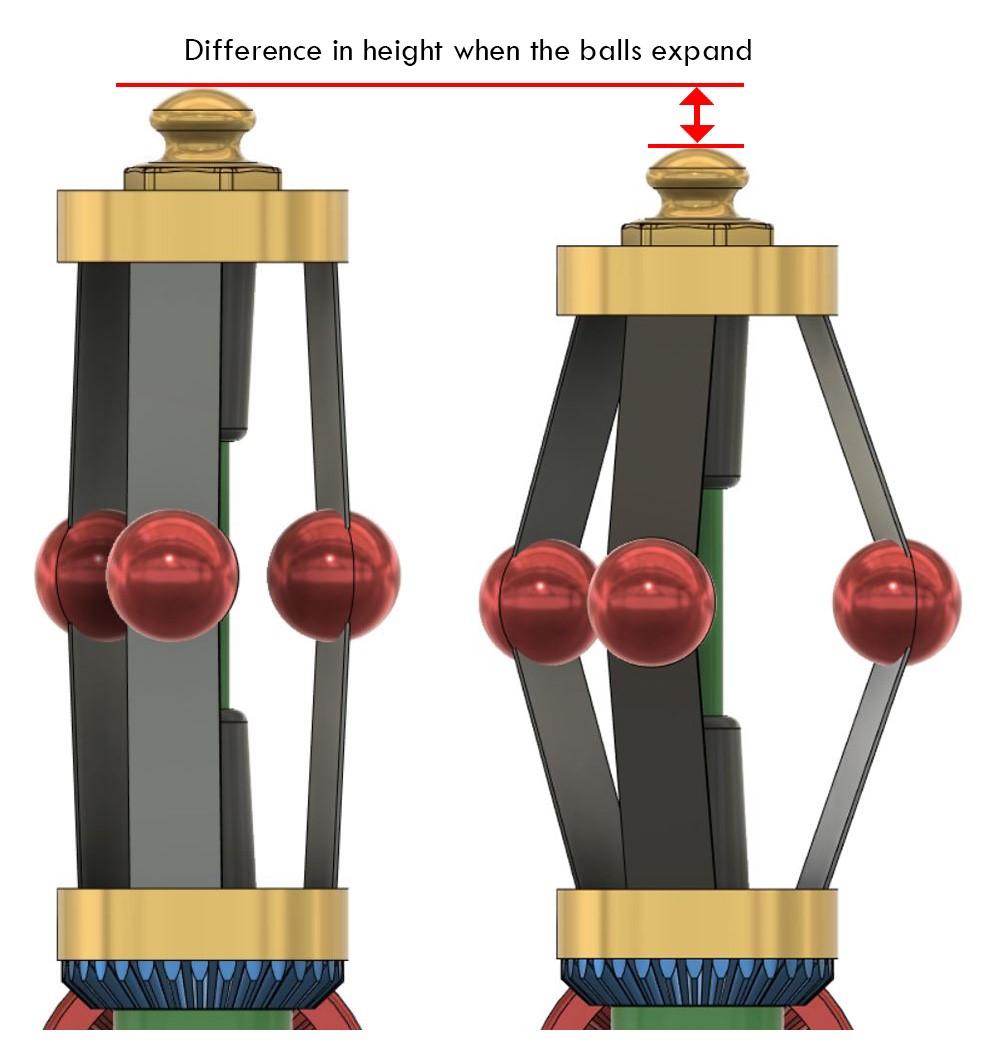
When the spinning part of the governor goes faster, the centrifugal forces make the balls swing outward, usually pushing against a spring. This is connected to a mechanism or shaft that is connected to the valve. The further the balls swing outwards, the more the valve is closed.
This means that if the steam engine runs too fast, the balls swing out, closing the valve and reducing the amount of steam, which makes the steam engine slow down. If the steam engine slows down
too much (such as when more power is needed) the balls swing inwards, which in turn opens the valve, letting more steam through to make the engine go faster.
This process creates a balance, where the engine runs not too fast, and not too slow, and if the speed changes, the governors can compensate by opening or closing the valve. All of this happens without any input from the driver.
Lets get technical – How do the governor balls move the valve?
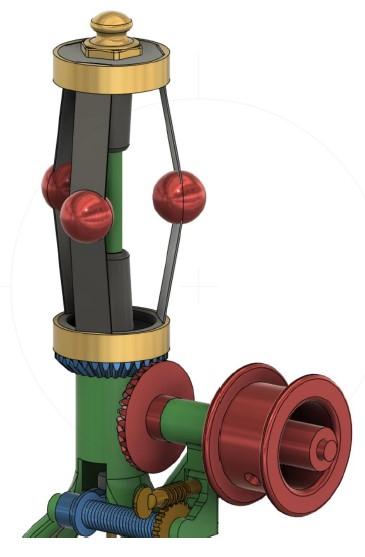
Here we have a diagram of a set of “Pickering” governors.
As the balls spin faster, they move outward. The connections between the base, the balls and the top pull the top section downward. There is a rod attached to the top section that passes through the centre of the governors, which is also pushed downward.
How does the valve control the steam?
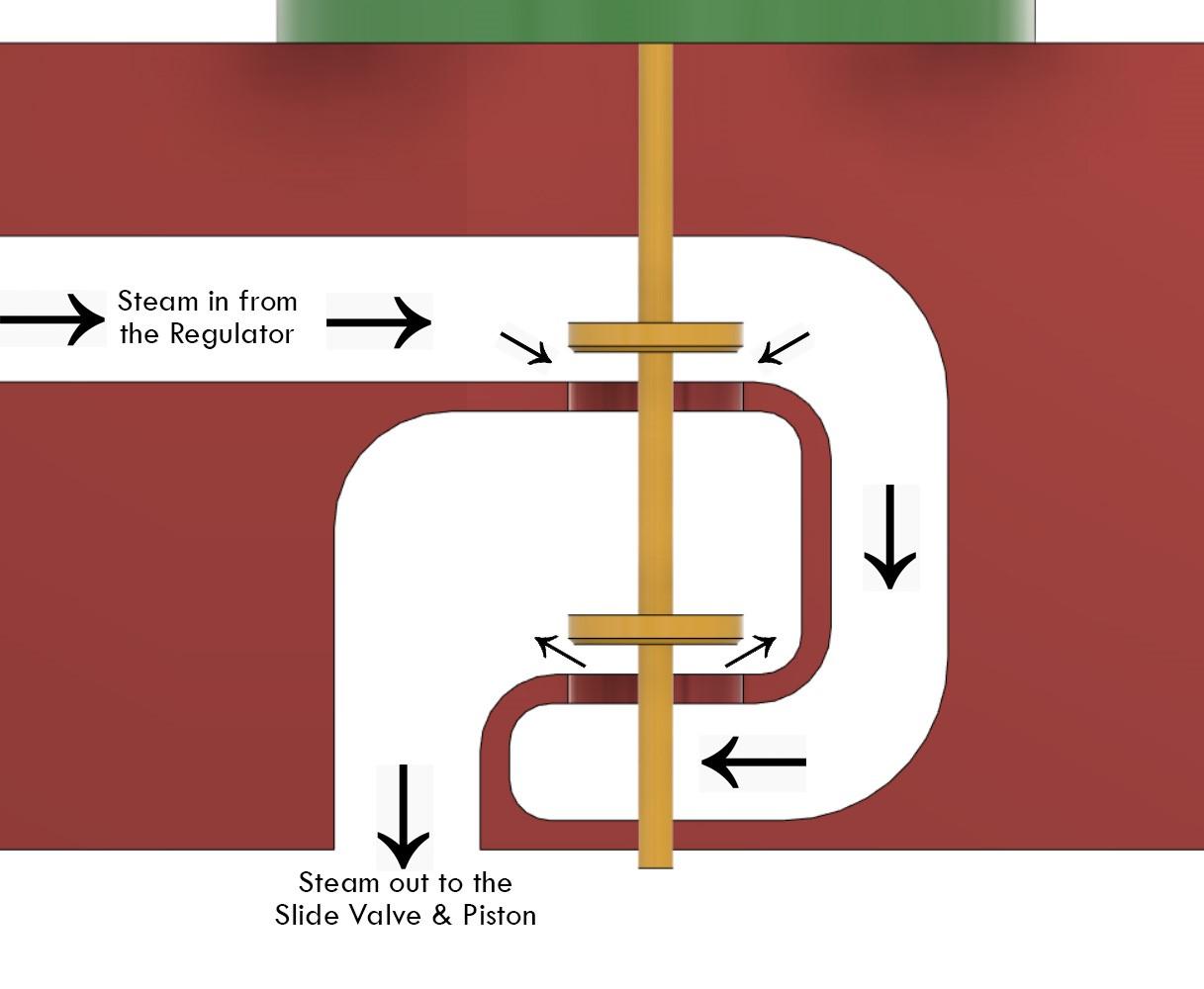
Inside the cylinder block is a valve (shown in yellow). The diagram below is a very simple example of the valve’s layout.
The valve has two sections, and the steam passes through the small gaps (with the small arrows). As the centre shaft is pushed downwards by the governor balls, the gap for the steam to pass through gets smaller.
The reason the valve is made up of two parts is so the force of the steam is balanced, and doesn’t affect the movement of the valve. The steam pressure would try to push the top valve downwards, and the bottom valve upwards. The forces acting on the valve are equal and balance each other out, therefore the boiler pressure has no effect on the valve, and being balance it makes it easier for the governors to move.
How do we change the running speed?
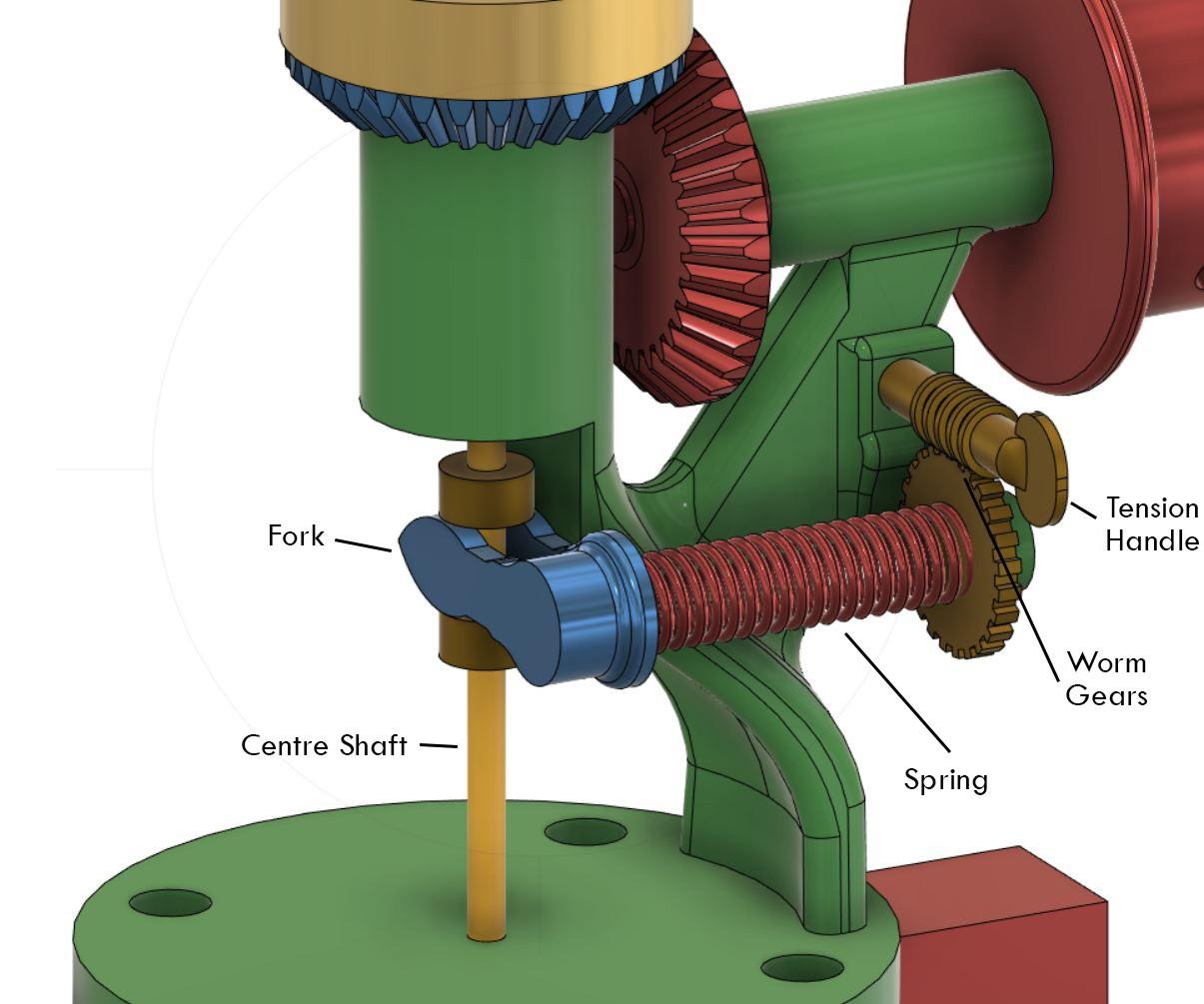
Different machinery has to be driven at different speeds, so it is necessary to be able to alter the ‘governing’ speed of the engine. On a set of Pickering governors this is done by altering the strength of a spring connected to the centre shaft. The fork shown in blue passes through flanges on the centre shaft, to that as the shaft goes up or down, the fork is rotated. The red spring applies pressure on the fork to push the centre shaft upwards, working against the movement when the governors expand. The other end of the spring is attached to the yellow worm gears, so that by turning the handle, more or less tension can be applied with the spring. Nick Bosworth.
Unusual Engines 4 - Condensing Engine
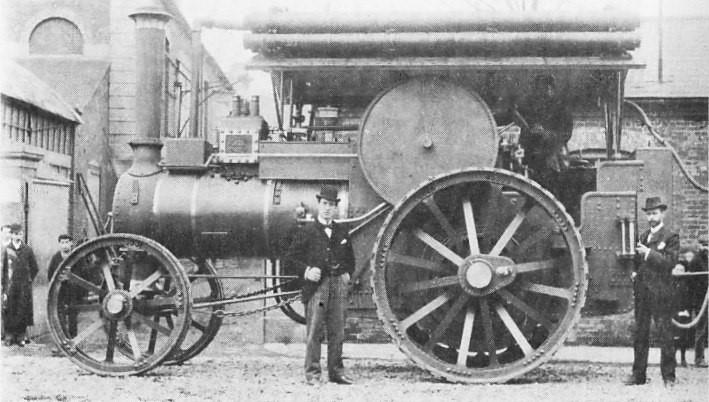
This months ‘unusual engine’ doesn’t look that unusual until you look in a bit more detail. At first glance it seems to be a relatively standard Wallis and Steevens traction engine, until you notice the odd arrangement on top of the canopy. All engines carry feedwater in the tender underneath the driver, and if extra water is needed are usually fitted with belly tanks. A condenser is used to condense the exhaust steam back to water to pump back into the boiler. They are likely to be used where there is no water supply available to replenish the feedwater tanks, such as on a steam boat but are rarely seen on road steam engines.
This engine, No. 2362, is fitted with a condenser built to the patent of Frederick
John Burrell (one of the owners of Charles Burrell & Sons) and was originally intended to be fitted to steam trams.
The steam appears to pass through a chamber Infront of the cylinder block which I suspect is a feedwater heater and then passes up the vertical pipe and then into the series of large tubes mounted on the canopy. In here the steam is cooled condenses back to water, then trickles down a pipe to refill the tender tank.
Condensers on traction engines never caught on, as in most cases ample water was available to replenish the tanks without fitting a cumbersome condenser. The extra weight up on top of the canopy must also have made the engine very unstable and prone to tipping over!
Competition
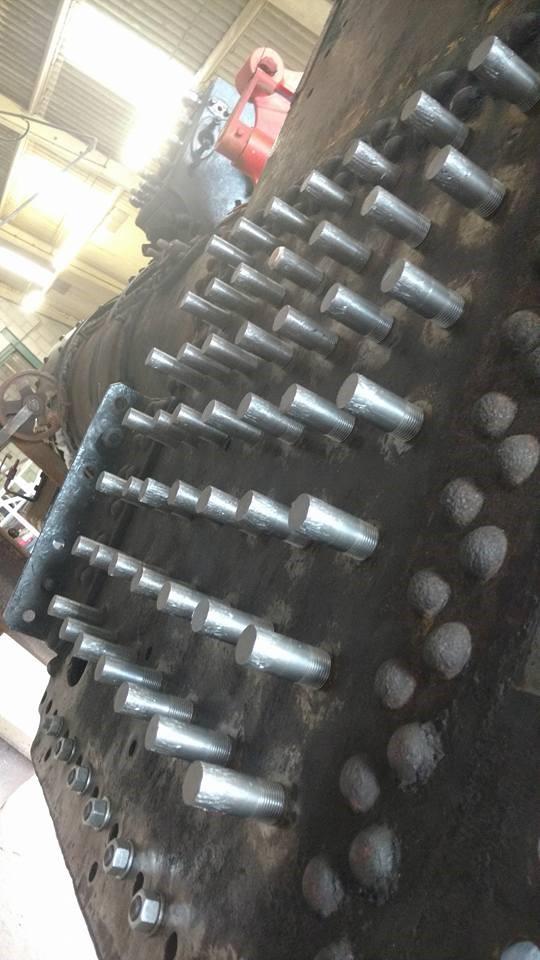
Thankyou to those who got in touch to guess what the engine parts were last month, we had only had one correct answer this time from Oliver Maunder. They were a set of injector cones from a Whites injector off of a Fowler ploughing engine. The cones accelerate the steam in the injector and allow it to mix with the feed water before forcing it into the boiler.
Here’s another one for you to ponder over taken during the restoration of Burrell Showmans Engine, The Masterpiece. What does the photo show and can anyone tell
Send in your guesses or answers to and we’ll publish the
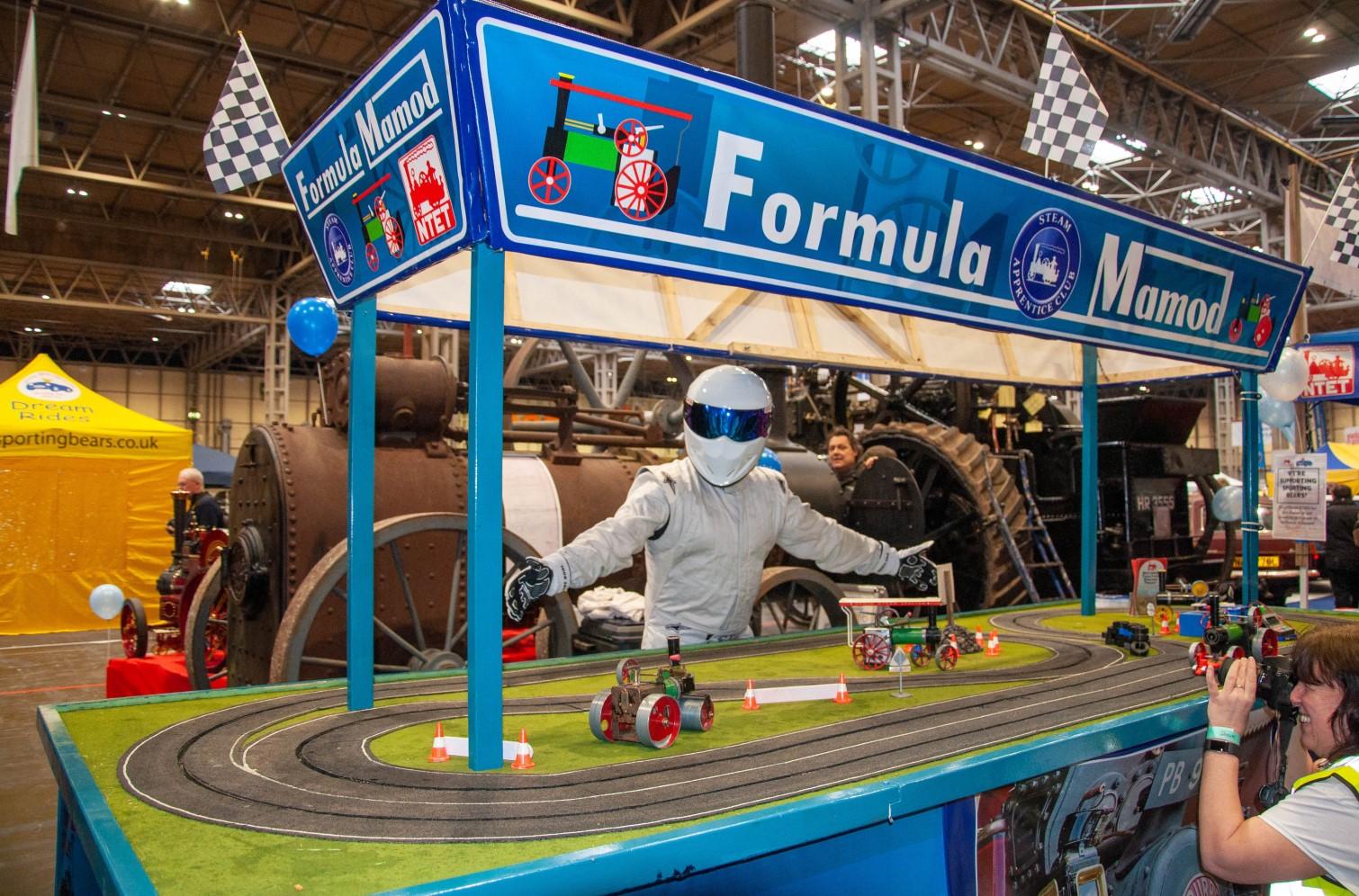
Formula Mamod
Formula Mamod gives members the opportunity to test your engine building and driving skills out on the track!
If you have a Mamod and want to modify it to get a faster lap time, remember that:
• The firebox must be standard.
• The safety valve must be standard.
• The fuel burner tray (solid fuel) must be standard.
To ensure a fair competition the SAC provides you with fuel to use a solid fuel burner tray if you don’t have one.
Don’t worry if you don’t have a Mamod as we have been donated standard engines for you to use.
A member of the team will inspect vehicles prior to their racing to make sure they’re safe to use (just like all race cars) and help you set yours up if you are not sure how to.
Remember that Formula Mamod is only for SAC and NTET members so if you have a friend who wants to join in, make sure they are signed up!
We’ll have to wait and see which rallies happen to know if Formula Mamod will be out and about this year, but if we do then with all the time you’ve had to modify and fettle your Mamods in lockdown, we’re expecting to see some very quick times!
Code of Conduct
Keeping everyone safe on a rally field (grown ups this means you too)
Now that the events season is nearly starting we thought it would be useful for everyone to be reminded of how to keep EVERYONE safe when we are at a Steam Apprentice Club driving event – or at any other event where we get to be hands on with an engine.
We are very proud of our apprentices that get to experience hands on working with an engine and we work hard to make these opportunities happen! This means that we must be safe and remember to make people proud to be associated with the Steam Apprentice Club.
It only takes one Steam Apprentice to do something silly or dangerous for Engine Owners to decide that they don’t want to allow young people to go on engines and stop offering their vehicles to driving events. Every engine our apprentices get to go on at an event is volunteered by its owner and crew and we are very lucky that many give their time so willingly.
With Facebook and Twitter news of bad behaviour will spread very quickly and affect EVERY driving day.
Of course we are not just concerned about the behaviour of Apprentices – but
also the engine crews as well!
As enthusiasts we must do everything we can to protect each other.
If you are at an event and see something that you do not think is right and could be dangerous – don’t be scared and tell the rally organiser right away!
Apprentices
• Dress safely
• Ask if you are not sure about something
• Be polite and respectful to both then engine crew and their machine
• Always be sensible when walking around moving vehicles
• Have a great time and remember to say thank you when you finish!
Crews
• It is not your responsibility to physically help a person on to or off an engine. Give advice on where to stand or what to hold on to but it is up to the Apprentice (and their adult) to safely climb on to your engine.
• You have the right to stop immediately, and ask any Apprentice misbehaving or acting unsafely to leave your engine or workspace and return to their responsible adult. You have given your time and
equipment willingly and we realise that as Apprentices we must respect both them and your crew.
Responsible Adults
• It is your responsibility to help your apprentice climb on and off an engine.
Listen carefully to the engine crew as they will give you instructions on how to so safely.
• Do not leave the area where your Apprentice is on an engine or attending a session (i.e. instructional workshops or
story time). In the event of a mechanical or medical emergency you will be required so quickly escort your Apprentice to safety. Unattended children will be removed from the activity and taken to the lost child points for their own safety.
• You are responsible for the behaviour of your Apprentice at all times.
• Please ask before you take photographs of your Apprentice on the engine: some crews are very shy. Others might show you where to stand for a better photograph!
Bursaries
The National Traction Engine Trust encourages and supports road steam by offering financial assistance and bursaries (maximum £500) for those who would like to improve their knowledge and skills so they can help and take part in maintain steam on the road.
These skills can include but are not limited to:
•Boiler maintenance
•Boiler management
•Boiler Inspection
•Signwriting
•Welding
•Fabricating
Lathe and millwork
The list is not exhaustive and any application will be considered which shows that it informs and educates about road steam as described in the NTET mission statement:
“Preserving our heritage with Steam on the Road”
Look in the heritage journals and prospectuses of colleges and schools for suitable courses. Approach people who already have a skill you are interested in to see if they would be willing to share their knowledge then fill out the application form with all the details. An application form can be found by going to:
www.ntet.co.uk/heritageeducation
Over 18? Nearly 21?
Older Members of Steam Apprentice Club will be delighted to know that from the age of 18 you can receive FREE copies of the National Traction Engine Trust (NTET) quarterly magazine STEAMING.
Once you turn 21 you are eligible to join the NTET for the reduced rate of £15 for your first year: the same you currently pay for your SAC membership!
If you could like to take up either of these offers just contact Clara.
Email: membership@ntet.co.uk
Clara Taylor, NTET Membership, PO Box 5937, Sheffield, S25 9FB
You do not need to be an owner or driver of an engine to be a member of the NTET.
As a member you will receive STEAMING magazine, the quarterly publication. It provides communication from the trust to its members, technical topics, historical articles and photos, information on events and engines around the U.K. as well as free classified adverts available to members.
You will be able to vote at the Annual General Meeting and stand to be part of the committee of volunteers.
The NTET produce an extensive rally list, detailing all NTET authorised events across the U.K. This is issued at the beginning of each year NTET authorised events have paid a small fee and agree to abide by the Rally Organisers Code of Practice, as produced by the Rally Organisers section of the NTET, which if followed ensures a safe and trouble free event.
About the NTET
The National Traction Engine Trust represents owners and enthusiasts alike and is pleased to be regarded as the World’s Premier Steam Traction Preservation Organisation.
Now in its 67th year the NTET aspires to be the Organisation of Choice for the vintage steam enthusiast, engine owner or driver and events organiser working together to meet a common aim:
Preserving our Heritage in Steam on the Road.
The main aims of the NTET are to:
• Encourage ownership and preservation of all forms of steam powered equipment.
• Set and maintain standards in equipment management and operation.
• Provide facilities to teach basic skills in engine management.
• Attract junior members via the Steam Apprentice Club.
• Set and monitor safety and operating standards in rallies and event organisation.
• Secure insurance and other related services for the benefit of members and rally organisers.
• Support the maintenance of records of engine manufacturers, design, livery and colour schemes, history and ownership.
• Administer a ‘rare spares and patterns’ register.
• Monitor and manage the introduction of legislation as it effects the movement.
• Administer a world wide club membership scheme.
• Communicate with members, clubs, organisations via the quarterly magazine STEAMING.
• Affiliate with similar bodies in the UK and World Wide.
• Promote the production and distribution of books, videos, tapes and other related memorabilia.
About the SAC
The Steam Apprentice Club (SAC) is a dedicated club for everyone aged under 21 who has an interest in steam.
Formed 41 years ago 1979, our slogan is ‘The Future Driving the Past’. We firmly believe our members are THE FUTURE and what can be more fun than DRIVING a traction engine: some of which are over 100 years old and are an important link to our industrial and engineering PAST.
Who can be a member?
You don’t have to own a traction engine or even have a traction engine in your family to be a member! Your parents might be members of the NTET or they may not have any interest in steal at all. We don’t mind if you work on an engine every weekend or if you’ve never been on an engine before.
All we ask is that you are interested in traction engine! It could be that you enjoy taking photographs at rallies, or that you want to learn more about the technical side of driving or even how to build an engine yourself. Simple really. Everyone is welcome to join us up until their 21st birthday - after that we encourage you to join the NTET (which is why after the age of 18 years you can ask to receive FREE copies of the NTET quarterly magazine STEAMING).