

Chairman
Elaine Massey, 21 Down Close, Northolt, Middlesex UB5 6NS
Tel: 020 8248 6570
sac.chairman@ntet.co.uk
Editor & Vice Chairman
Kevin Munn, 11 Tiverton Close, Woodley, Wokingham, Berkshire RG5 3BE. Tel 01189696821 sac.raisingsteam@ntet.co.uk
Membership Secretary
Lisa Crankshaw, NTET Membership PO Box 10348
Hinckley LE10 9FB membership@ntet.co.uk
Membership fee £15 per annum
Webmaster
Nick Bosworth, 76a Main Road, Smalley, Ilkeston, Derbyshire, DE76EF
Tel: 07931 577430
sac.webmaster@ntet.co.uk
SAC Committee
Main email: sac.raisingsteam@ntet.co.uk
Matthew Lund Tel: 01329 832462
Helen Tyrrell Tel: 01793 751830
Rebecca Hurley (Derbys) sac.publicity@ntet.co.uk
David Hurley (Lincolnshire)
Clara Taylor (Sheffield)
Adam Brown (East Anglia)
Glen Prince (Essex)
Driving Days Coordinator
Linda Allen: allenlinda178@gmail.com
The Editor welcomes any contributions of articles, shorter items or photographs for inclusion in future issues. All material submitted is voluntary and payment cannot be made for any material published. The opinions expressed in the magazine, with the exception of Club announcements, are those of the contributors and do not indicate the views of the Club as a whole. All items are held copyright by the contributor and the NTET. The Editor reserves the right to amend or refuse contributions. The magazine is normally published during January, April, July and October. The Club accepts no liability for failure to meet intended publication dates.
The Steam Apprentice Club is a section of the National Traction Engine Trust.
N TET is a Registered Charity, No. 291578. Registered in England No. 1302197. Registered Office: 4 Church Green East, Redditch, Worcestershire B98 8BT.

www.ntet.co.uk


www.ntet.co.uk/sac
Kevin Munn
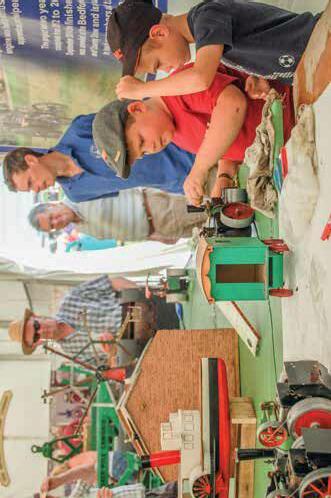
What a good time we all had at Great Dorset Steam Fair especially as it was dry! The marquee was busy and with a new type of layout on the stand, we met lots of new friends as well as old ones. But, the star of the stand was the Mamod racing track. Yes, you read that right, slightly modified mamods went on a track racing each other. Basically a bogie with two pins were fitted to the front of the Mamod and this went into a slot which then ‘steered’ the engine around the oval circuit. See our Facebook page to see how they went or scan this code into your smartphone!

Looking ahead in 2019 it is our 40th anniversary, how do you think we should mark the occasion? Contact me with your thoughts. At Dorset I was approached by a gentleman who is willing to give away some 3 inch Burrell parts to an apprentice who is wanting to make their own miniature traction engine. Again, contact me for further information. As the end of the rally season comes to a close there is still much to do and see so keep watching the facebook page and website. Last ask for any Apprentice of the year or Technical achievement award nominations. But be quick we announce the winners at the N.T.E.T Annual General meeting in November
Elaine Massey
I genuinely cannot believe that we are at the end of this rally season! It has scuttled by, without too much in the way of brilliant weather, but I hope you have all enjoyed your steaming regardless.
A REMINDER: Technical Achievement Award / Apprentice of the Year
I am hopeful that you all know the worth and procedures for these two awards. Make sure that all your applications / nominations are in.
The next issue of Raising Steam will be dated 2018, can you believe that?
Watch out for all the driving day dates, and book up as early as you can.
Consider applying for the NTET driving course at Astwood Bank, Redditch in May. Prices are very favourable for SAC members and there is camping on site. Its a good course in three parts, some classroom time, and the rest outside driving engines! Whats not to enjoy!
Members of the SAC are eligible, at 17, to take the NTET Voluntary Competancy test. Recently we have not had many apprentices putting themselves forward
for this. It is done over a full day, from taking sheets off, steaming up, steering/ driving, and shutting down. To see the full syllabus go to www.ntet.co.uk/owners-drivers/ voluntary-competency-scheme. It would be really great to be able to shout about a few successful SAC members.
Keep an eye on our website, and facebook pages over the winter, and get in touch with any ideas you have.
Happy Steaming, Elaine Chair SAC
In the last edition of Raising Steam we asked you to suggest names for the newest addition. We had some great suggestions, and the SAC committee voted to choose our favourite, which was:
Congratulations to Oscar Brett who suggested the name. Oscar has won a year’s membership to the SAC.
Here’s the list of other suggestions
We look forward to hearing more stories from bear.


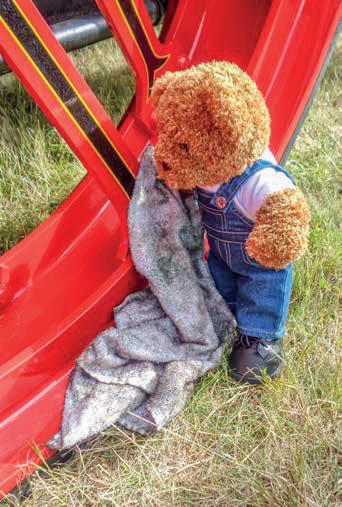
During the summer there are lots of rallies to go too and I really enjoy looking at the engines. Have you ever noticed that they always look so clean and shiny?
That’s because keeping an engine clean is an important job in keeping the engine working and SAFE. So why do we always need to keep our engines so clean?
When the engine is cold before we leave the engine shed we can give it a really good wipe down
1. Empty the ash pan.
2. Clean the tubes.
3. Wipe away oil that might be carrying dirt that could damage the metal work
4. Gives us the time to carefully check every little bit of the vehicle for damage.
5. It gives apprentices chance to climb onto the engine when she is cold and we can learn what all the levers do and where they are.
6. If the driver gives us permission, we can touch the levers and get used to how they feel: ready for when we learn to drive. Some levers are very hard to move so practicing when the engine is cold and safe is very important.
When the engine is hot
1. Stops the paint being stained with oil.
2. Check that nothing has come loose or has been damaged on the journey.
3. Show off how much pride we have in the engine because we want it to look really smart.
So there you go! There are lots of reasons why we need to keep our engines clean and tidy. Maybe you could practice your polishing skills on your toys ready for the next time you get to help with an engine? I’m going to make sure my Mamod is super smart.
See you all soon!
by Rebecca Hurley
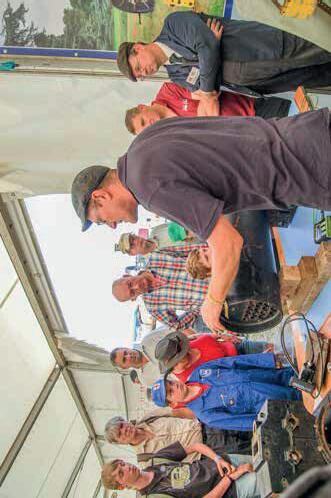
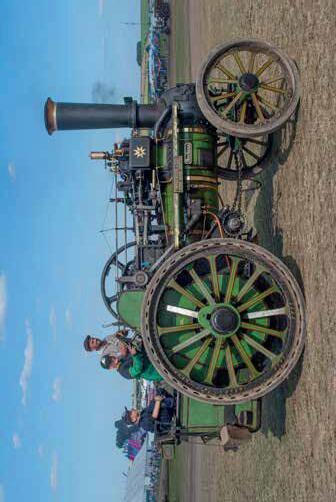
Where to start? We have so much to tell you about this year’s Great Dorset Steam Fair! We also have a lot of thankyous to say!
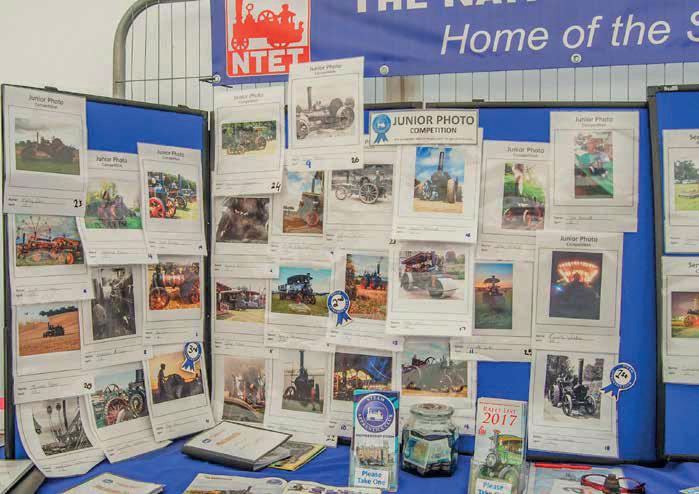
We would like to say a huge well done to everyone that entered our competitions this year! There were so many entries we almost ran out of space for them all! There were some pretty fantastic entries too. We must say a big thankyou to our judges Colin Tyson (Old Glory Magazine Editor) and Clive Flack!
For 3 days of the show we held technical Tutorials on topics such as Boiler Insopections. We must say a big thankyou to Andy Potter, Dave Wothers and David Hurley who held the tutorials for us..
Another new activity was ‘Story Time’, some of our helpers read the wonderful new Victoria’s Torton Tales story books to young children. It was such fun listening to Victoria’s adventures!
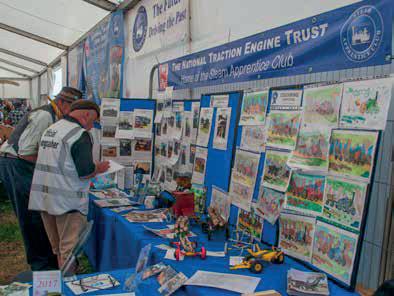
They had a very difficult time judging the competitions this year.
We had a large oval Mamod track in the National Traction Engine Trust Marquee. It came with 4 Mamods and a Wilesco toy steam engine that ran round the track. We had lots of apprentices come and join in, steaming up the engines and sending them round the track. It was amazing fun to play with and we very much enjoyed having it at Dorset this year. We would like to say a huge thankyou to Simon Atkins for lending us this track!
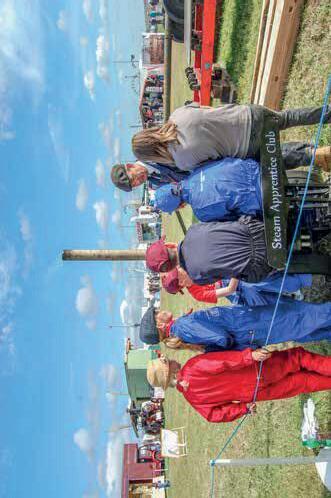
Lady Sylvia was at the show too! She had her own playpen in front of the NTET marquee, where apprentices helped steam her up, looked after her during the day, drove and steered her around and helped us put her to bed after the show. They all looked like they had a lot of fun and certainly got very mucky!
We also had apprentices on full size engines, learning and a having a go maintaining and running a full size engine, thank you to all those engine owners and crew that spent time with apprentices.
On Sunday we held our annual Cavalcade event. Our apprentices had the chance to steer different engines around the Heavy Haulage Arena. Big thankyou to all the enginemen who came along with their engines to give our apprentices this wonderful opportunity!
And finally, we must say a HUGE thankyou to all those who gave us their time and energy helping on our stand, with engines and thankyou to all apprentices that joined in with our activities this year. It was a fantastic week and we hope all our apprentices that came along enjoyed themselves.
www.ntet.co.uk/sac
Rebecca Hurley
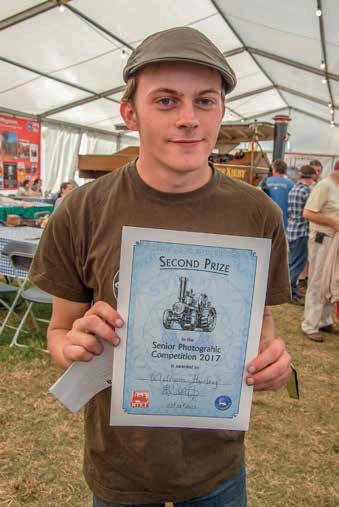
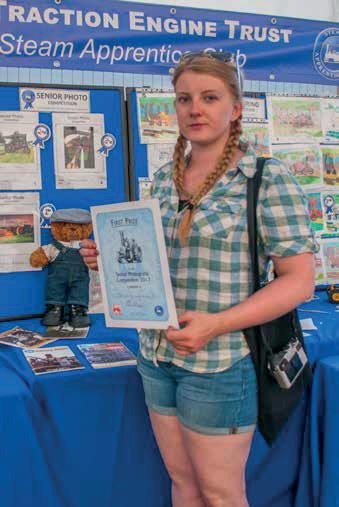
We had another great show of entries for our Dorset competitions this year. Here are the results:
1st: Oliver Maunder
2nd: Hannah Cannings
3rd: James Crane
1st: Hannah Cannings
2nd: Cameron Kemp
3rd: Harvey Yarham
1st: Isaac Jacobs
2nd: Sean Og Lordan
3rd: Peter Heal
1st: Danielle Wainwright
2nd: William Hurley
3rd: James Phillips
Congratulations to the winners and a big thankyou to our judges, Old Glory Editor Colin Tyson and Photographer Clive Flack
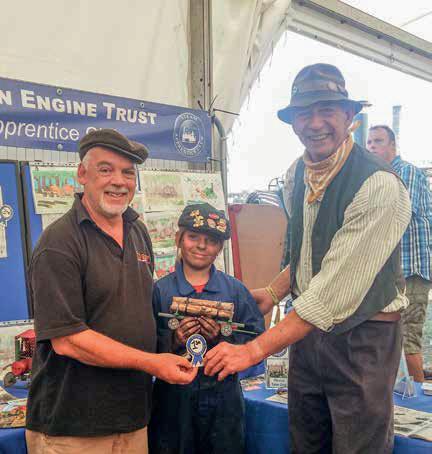
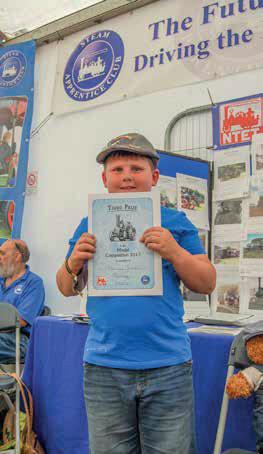
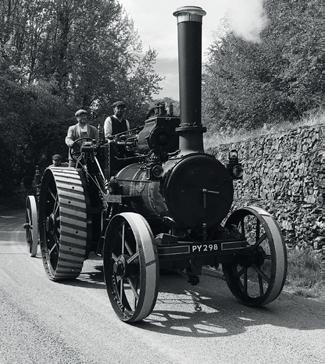
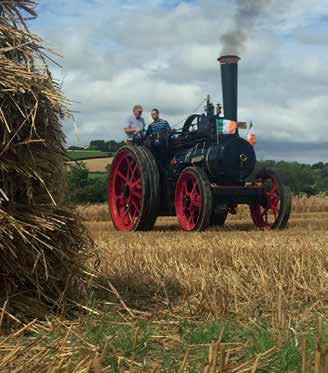
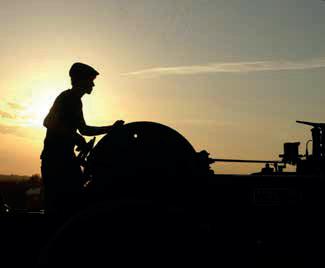
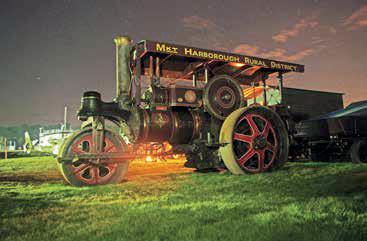
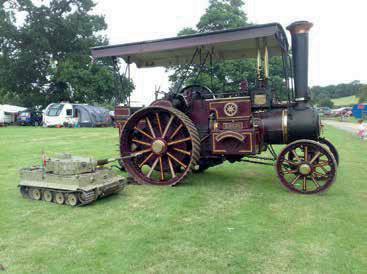
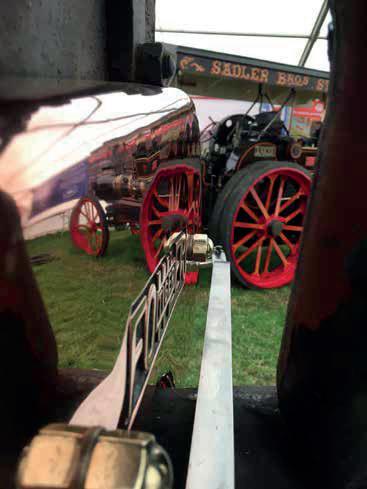
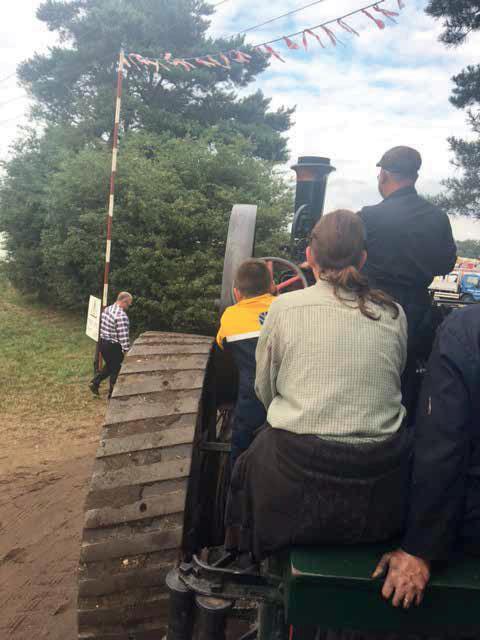
Here we have a letter and a few photos from the parents of SAC member Harvey Yarham.
On the 16th July, 2017 we went to Weeting Steam Engine Rally.
Our son,Harvey, 9, was lucky enough to work on ‘Felicity’, a Allchin engine built in 1911 owned by Peter Williams from Wymondham.
Harvey checked water levels, oiled up, maintained the boiler water and the fire. All recorded in his Steam Apprentice log book.
Later that day, Harvey was the Steers man on Mr Parrot’s engine, Princess Royal, built in1909. Harvey steered the engine the whole way round the rally site. In Harvey’s own words “it was fun and a good experience”.
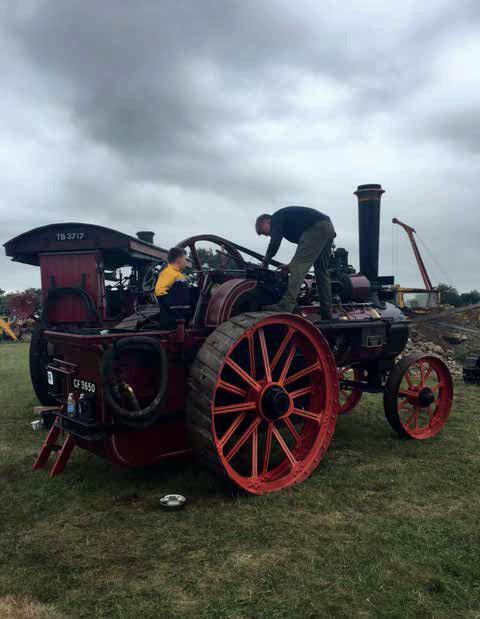
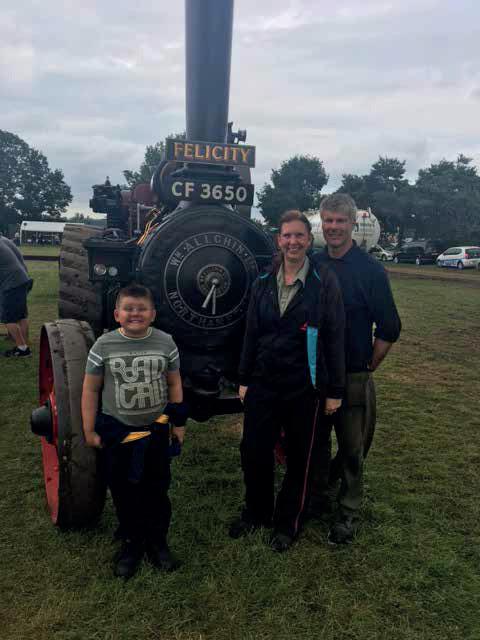
by Gary Peach
It’s that time of year again when many of us have just returned from the dusty plains of Dorset having been entertained by the antics of Horsham Traction Company and others in the heavy haulage arena at the Great Dorset Steam Fair.
A few years ago there were TV adverts urging us all to ‘Recycle – the possibilities are endless’, whilst I think they were only referring to food packaging and electrical goods, I took it beyond that, salvaging all sorts of scrap and food tins with an idea that they could be useful for something….
Several years ago I was fortunate
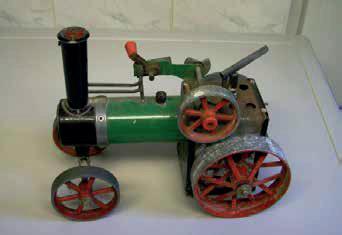
enough to meet Len and Jane Crane and at one of the Old Warden rallies. I was allowed to steer his Fowler Crane engine around the arena. It was after this that I decided I was going to build a crane engine based on ‘Wolverhampton Wanderer’.
However, with the lack of any workshop facilities, so to speak and a using a table in my father in laws garage as a workbench it had to be small. What better starting block than a rather tired, but complete Mamod TE1a. That was the easy part, as an appropriate crane jib and mechanism didn’t exist I had to design and build one with what was available in the scrap bin at work or in the shed at home.
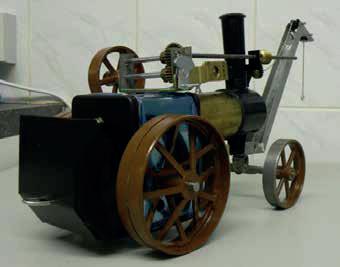
To start with the gears and line shaft were standard Meccano. The brackets for the crane mechanism were made out of was some sheet tin found in the scrap bin at work. Templates were first made out of cardboard to ensure everything was in proportion with the engine and that it worked. The worm gear was originally a Meccano part but this looked too chunky in proportion with the rest of the mechanism and the engine – this has since been replaced with an old grub bolt salvaged from a bike rack which does the job just as well.
With the gearing mechanism sorted, attention turned towards the crane jib. With just photos to go by I again made a template out of card to ensure it looked right. At this time my ever patient fatherin-law had been refitting his kitchen and the sheet of metal off of the back of the cooker proved perfect material for forming the jib out of. It was taken to work and bent around an old casting used in the press at work.
The flywheels needed to be covered and some material was sourced from an old cracker tin and cut to size. The pulley wheels were sourced from an old Hornby
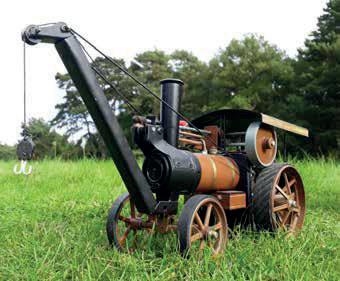
wagon which, when turned to face each other and glued together, fitted perfectly in the space in the jib!
Finally for aesthetic purposes the jib support wires were made of used sparklers salvaged (when cold) from a friends bonfire party.
With the crane mechanism now working by hand, it was dismantled, primed, painted and lined out. The final item to be made was the roof with the canopy supports made of old wire coat hangers and the roof cut out of an old ‘Roses’ tin and shaped by hand.
When the engine was completed we took it to show Len Crane at one of his open days at the Bratch pumping station. I’m pleased to say he was impressed by the end result and was more so when he saw the nameplate we had affixed to the bunker, for we had decided to call it ‘Little
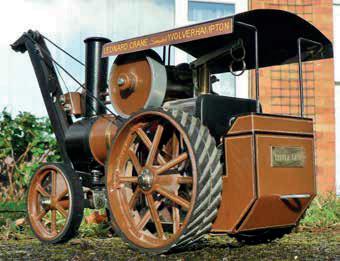
Len’ naming it after him. We also took the opportunity to take some photos with Len’s Fowler the inspiration behind the model.
Summer came and went and with it the annual trip to Tarrant Hinton and once again, with enthusiasm spurred on by the antics of the ‘Horsham Traction Co’ and in particular the Mclaren ‘Boadicea’ I went home with plans to not only build a model of ‘The Mac’ but also to build a model of the Pickfords trailer and eventually a suitable brake engine.
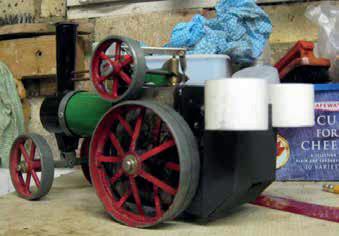
A model of ‘Boadicea’ would prove to be far easier to build than the crane engine with only the coal tubs and the roof to create. After a bit of searching, suitable sized coal tubs were cut from a couple of pieces of plastic water pipe and the roof was again, made of old coat hangers and a piece of chocolate tin.
We decided to name this one ‘Baby Boad’ and a nameplate was duly fitted to the bunker. As luck would have it the engine was completed just be fore the McLaren gathering at that years Dorset steam fair and so was taken down to have some photos taken with the full sized version.
Back from Dorset and attention turned to building the low loader; again, with just photos to go by. Fortunately, I volunteer at Didcot Railway Centre in the carriage and wagon department and found some suitable off cuts in the scrap wood bin that
would be ideal to make the framework for the trailer and the wheel set carriers. Before cutting any timber however, a mock up was made of cardboard to ensure the correct size was met and angles were correct.
The wheels were old Mamod Me1 flywheels bought sometime before at a rally and the axles were made from some small diameter copper rods again saved whilst enroute to the scrap bin! As luck would have it, I mentioned my project to an old friend whilst on holiday and he offered to make a bed out of metal for the loader so we could put something on it. So a trip up the M6 to Preston ensued where he also kindly made some tow bars for it as well.
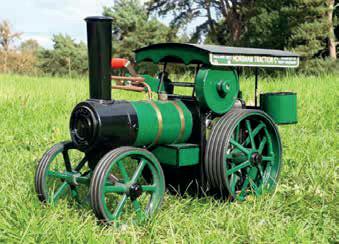
To complete the set a suitable brake engine had to be modelled. For this I looked back at some old photos of ‘Amalgamated Heavy Haulage’ in action and thought that an engine based on the Burrell ‘Lord Roberts’ would finish it off nicely.
Another tired TE1a was purchased, stripped down and repainted in a suitable
red, again more coat hangers and chocolate tins were sacrificed to create the roof canopy and supports.
Unfortunately, being a bit of a technophobe I relied on the computer skills of my ever patient wife Niki to draw up all of the canopy side boards.
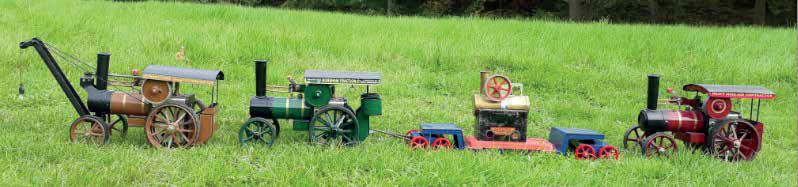
We finally found the time to take all of the Mamods to their first steam rally where they were put on display in the model tent a Taunton last August where plenty of visitors were very complimentary having never seen anything like it before
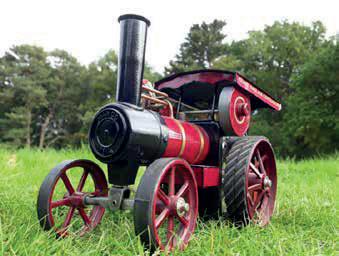
(in Mamod form!). With anyluck they provided someone with the motivation that with abit of imagination anything is possible….
Having visited the Steam Apprentice club stand at his years Dorset steam fair, thought has now turned to building my own ‘running track’ as was on display. With timber already sourced for that and a few more derelict TE1a’s purchased there could be several more ‘Mini’ versions of full sized engines to come and a few more project to come….
Since the last Issue of Raising Steam Lady Sylvia has had a very busy summer! She’s been to to South Cerney, the Great Dorset Steam Fair, Sutton on Trent village Festival, Otley Driving day and Bedford Steam Rally.
We’d love to hear from you if you came along to see her at any of those events!
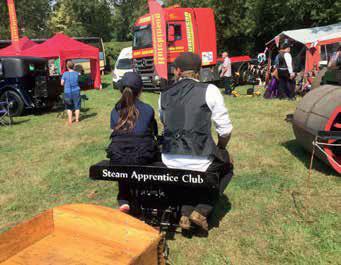
At Sutton on Trent we had new apprentice Masie Stenhouse at the helm. Lady Sylvia was joined by Babcock and WIlcox steam roller ‘Toby’ and Marshall Agricultural Traction Engine ‘Tea Pot’.
At the Great Dorset Steam fair we had 5 days of steaming in our own playpen. Check out our Dorset report on page 6.
Lady Sylvia was only able to attend Bedford rally on the Saturday, which turned out to be quite a wet day!
Due to rain the day before there was no engne movement allowed on site, but lickily Lady Sylvia was placed towards the edge of the miniature section, and had a patch of clear grass to move around.
Between rain showers we had 5 apprentices (and Bear) learning to fire, steer and drive!
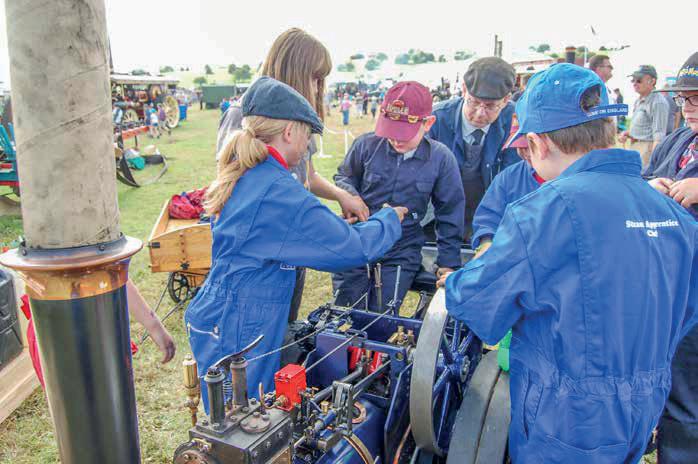
On the 9th and 10th September, Lady Sylvia undertook a journey up the A1 from where she was temporarily staying near Newark to the outskirts of Otley in Yorkshire.
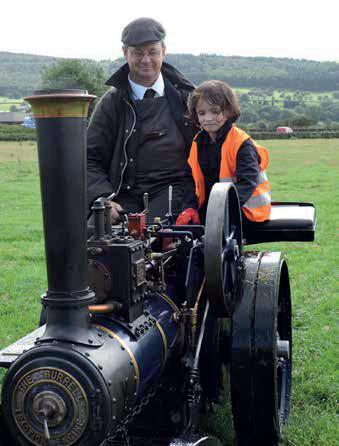
Lady Sylvia was joining the full size engines at the SAC Driving day very kindly hosted by the Leeds and District Traction Engine Club.
There were 4 full size engines and Lady Sylvia was the only miniarure, and the only Burrell! The weather was quite wet when she arrived but following an introduction and safety briefing, tube sweeping and lighting up commenced.
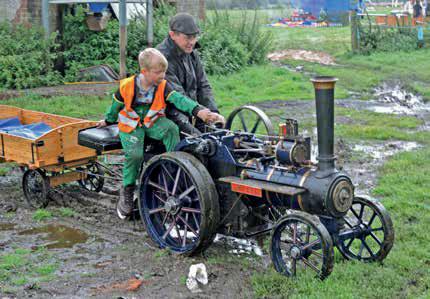
The weather was mixed for the rest of the day, however, once steam was raised, engines could go in the paddock for Apprentices to have a go at driving and steering. Unfortunately, due to the wet conditions, the Aveling roller, White Rose was not able to travel very far, however the Apprentices on the engine did a grand job of rolling a short strip of grass by travelling back and forth. Comment was made that by the end of the day it was fit for a game of cricket!
The Fowler tried to cross the road way but unfortunately also became stuck but was rescused by the Alchin. Lady Sylvia however, was able to continue right through the day and all of the Apprentices were able to have a go at driving and or steering.
We all enjoyed a wonderful lunch provided by the Leeds Club and many thanks to India and Seren for making lots of hot drinks to keep everyone going in the rain.
The following day Lady Sylvia attended the Vintage Day where she was much appreciated by the general public and was able to still be enjoyed by the Steam
Apprentices that had stayed for this event.
On Sunday night she travelled South in readiness for a trip to the Bedfordshire Country Fayre.
We were made very welcome in Yorkshire and we are looking forward to more events in the North.
A huge thank you to Leeds and District Traction Engine Club for welcoming the SAC and especially to the Rimmington family for looking after us so well.
Jack Hammond, Driffield
Luke Hammond, Driffield
Alex Lewis, Launceston
Sam Wilkinson, Winchester
Sam Shardlow, Malvern
Louis Barnard, Cuddington
Samuel Bennett, Bracknell
Jakae James, Heathfield
Michael Cowling, Langport
James Phillips, Corsham
Ellie Lloyd, Colwall
Rosie Prince, Witham
Tiernan Richards, High Lanes
Reuben Fellows, Sunderland
Henry James Wiseman, Chester
Isaac Farnbank, Isle of Wight
Jack Smith, Upton upon Severn
Caitlin Bostock, St Austell
Molly Lockyer, Street
Charlie Witcher, Andover
Reuben Evans, Malmesbury
Corey Evans, Malmesbury
Barney Davis, Hastings
Ryan Biddick, Tiverton
Elliot I’Anson, Thornton Curtis
Harvey I’Anson, Thornton Curtis
Stanley Clare, Newport
Conner Magee, Dudley
Jack Lygo-Harris, Sheffield
Daniel Buncle, Devon
Matt Bond, Fleet
Anya Bodman, Bradstock
Laila Bodman, Bradstock
Jacob Cooper, Folkestone
Toby Cooper, Folkestone
Harry Gambrill, Warnford
Stephen Vincent, Newquay
Brookly Holland, Nr Newquay
Georgia Warren, Indian Queens
Thomas Henshaw, Stoke on Trent
Robbie Mutton-Roffey, Caterham
Maisie Wyatt, Dorset
Charles Stanley Webb, Sudbury
Leyton Nelson, Hampshire
Henry Cobb, Oxford
Oliver Cobb, Oxford
William Satchwell, Broseley
Hannah Eden, Hampshire
Jamie Salter, Paignton
William Rogers, Thetford
Lewis Carter, Bath
Aaron Selby - Sansford, Dorset
Tommy Dixey, Gloucestershire
Timothy Moores, Sturminster Newton
Daniel Fedonczuk, Hampshire
Jenson Duncan-Ferguson, Uttoxeter
Benjamin Holland, Tunbridge Wells
Jason Culmer, Nuneaton
Konnan Burrows, Redruth
Shannon Pengelly, Redruth
Rory Franks, Peterborough
Stuart Lowther, Boston
Tyler Stevens, Knockholt
Ben Turner, Cirencester
George Barnes-Collier, St Columb
George Hirst, Bury
Charlie White, Huntingdon
Thomas Vaughan, Chipping
Piran Lugg, Helston
James Moore, Winchester
Ashley Barella, Whitehaven
Peter Hirst, Leeds
Alby Hill, Biggleswade
Tristan Astbury, Criggion
Robert Hanmer, Shrewsbury
Joseph Briggs-Harris, Bunbury
by Clara Taylor
Although this edition of Raising Steam is packed with reports from really large rallies like Dorset, Lincoln, Bedford and more, there have been so many smaller rallies providing a brilliant time to members of the public who attend them and the crews that support them.
It still takes the same amount of preparation to get an engine to an event: sometimes even more for smaller events when crews tend to road vehicles to and from the event as they are local where as travelling to Dorset would almost certainly require a low loader from Yorkshire!
In July I visited Bassetlaw Country Show which is held on the edge of a small town called Worksop (Nottinghamshire). This event was typical of many small country shows in that it had a wide but small selection of different displays.
In terms of steam this event had two full size steam rollers and two miniatures traction engines on display: all in steam and when allowed going around the event which delighted members of the crowd! There was an interesting mix of portables and some very interesting classic cars too.
The crews on the engines at this event were all very friendly and for older apprentices that want to get more hands on this is often a really good time to introduce yourself (with your family) to local owners.
Remember :
• Respect that engine crews might be too busy, or unwilling to talk to you. Ask them if you could come back later when they are less busy.
• Tell them that you are a Steam Apprentice Club member: this shows them that you are serious about your interest in traction engines.
• Do not touch anything without their permission.
• NEVER climb on an engine or into a living van unless you have the permission of the crew.
• Do not approach an engine crew on your own. Take a parent or other older family member with you.
• Be polite.
• Let us know how you get on!
This is how I first got my chance to get involved with steam engines: but it would be a long time before I was allowed on the footplate so be prepared to get involved in all the dirty jobs as part of your time with a crew. They are a fantastic way to learn how an engine works.
by Clara Taylor
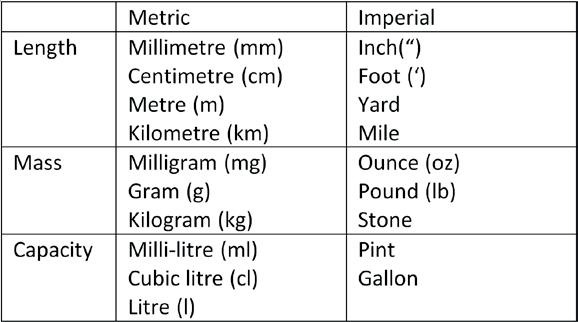
When Bear went to Lincoln did you notice that he said that the planks of wood that the Willi-Cut-It Crew were cutting to 2” ?
What does that even mean? The “ stands of an inch and if you saw ‘ that would mean a foot. Both of these are imperial measurements and how things were measured before things changed to metric (cm - centimetre and mm –millimetre).
Lots of crews when working on engines will work to imperial measurements (even though most of the Willi-Cut-It are under 30 years old) because the engines and equipment (like
the saw bench) were created in imperial measurements and so are set up to run to imperial.
Having a good understanding of both not only helps you when creating spare parts for engines and equipment but although the metric system started to be put into common use in the United Kingdom in 1965 but the more astute of you will notice that we still measure things in MILES and milk (or beer) in PINTS! Both of these are imperial measurements!
To convert between imperial and metric is really very simple.
Julian Tyrrell
On the Sunday of the South Cerney show, as we were raising steam, the sight glass on Lady Sylvia decided to break! So what should you do when this happens? The first thing is “don’t panic”. There will be lots of steam everywhere and the two isolation valves on the sight glass have to be turned off. This is always easier if you have a cloth that you can place over the valves to keep your hands away from the steam and you can feel the levers though it to turn them both off. The older engine drivers say about keeping an old sack on full size engines for just this purpose; but 4” scale coal sacks are hard to come by, so an old rag is ideal.
Now we have the problem of a boiler with a good fire generating steam (the pressure gauge still works) but no way of telling how much water is in it. If the water level drops too far the fusible plug in the firebox roof will melt, so we cannot safely continue and have to stop and sort this out. So we dropped the fire (removing the heat source) and ran the engine with the pump on; this has the benefit of adding cold water (which bring s the pressure down) and using steam (again reducing the pressure). Luckily the sight glass broke with about 30psi showing, so it was quite quick to for the pressure to drop to zero.
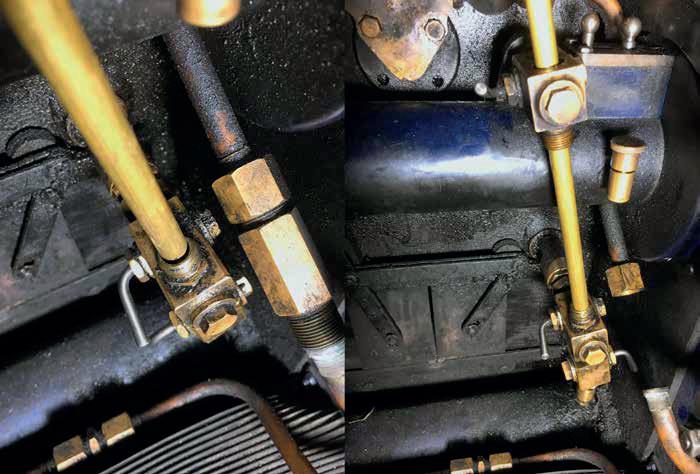
In picture 1 (left) the broken glass in the top and bottom blocks is all that was left after the engine was back in my workshop. This also shows the two isolation values turned off. The new replaced glass (right) shows that we managed to keep a good level of water in the boiler.
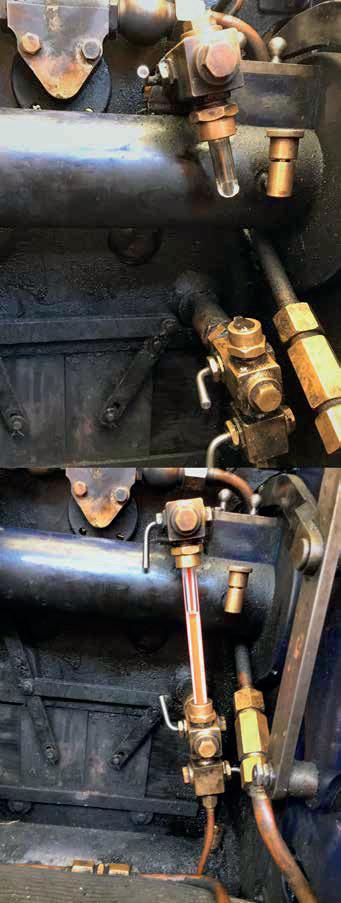
So how to you fit a new sight glass? The glass is held in place by a nut and a silicone sealing washer at both ends, so just unscrew these and carefully remove the broken glass. Then we need to have a new glass tube, of the correct diameter and length, undo the screw plug on the top of the upper block and drop the new glass in, do up the seals and replace the top plug. Sounds simple if you have the correct bits and tools.
However, Lady Sylvia did not have a spare glass, but Steam Traction World helped by sending 2 new red-stripe glass tubes (so we now have a spare). These
were too long for the engine (they are the glass tubes from the DCC/Showmans, which are longer), so we had to shorten it. This is actually easy to do as shown in picture 2. You have to work out the length required; the glass has to fit into both the bottom and top block, to allow the seals to work, but not too long to block the top steam passage. Wrap a piece of masking tape and mark the length required; then using a triangular file score a notch in the glass. To break the tube, place the notch on a match stick, and then a quick press with the flat of your hands either side causes the glass to cleanly break.
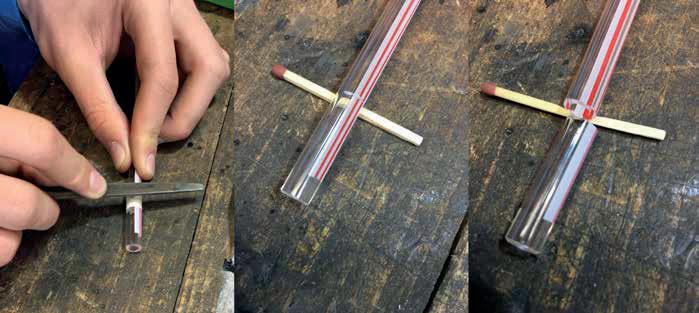
The alignment of the top and bottom blocks has to be correct, so that the glass tube fits without any stress. The design of the Burrell engine can cause problems here; as the bottom block is attached to the boiler, and the top block is attached to the second shaft tube on the horn plates. So if the horn plates shift we have a problem!
The picture on the next page shows a metal rod (the same diameter as the glass tube, 8mm) is used to check the alignment. The problem of why the glass broke is shown on the left, as the rod doesn’t easily drop into the bottom block. The bottom block is easily moved
as it screws into the boiler with a fine pitch thread, so one turn in fixed the alignment (right), and all of the lock nuts were done up tight to hold them in place. This actually took a bit of work as you have to dismantle the injector steam pipe and remove the blowdown valve block to rotate the bottom block.
Once the alignment is done, fitting the glass tube is easy.
Does it work? Once the new sight glass tube is in place, with the new silicone seals and the nuts done up ‘finger tight’, the isolation values can be opened and the water level should be shown ( as in picture 1). Check for leaks on the glass
www.ntet.co.uk/sac
seals, the block connections to the boiler and blow down valve. Also check that the sight glass works and all of the water/ steam passages are clear by a full ‘blow down’ procedure. Then when the engine is used for the first time and everything warms up and the pressure increases
check for leaks, and also check that the blow down “still works”.
For those of you that saw Lady Sylvia at GDSF, you would have seen the new glass; the red-stripe is much better for seeing the water level. And hopefully it won’t break again.