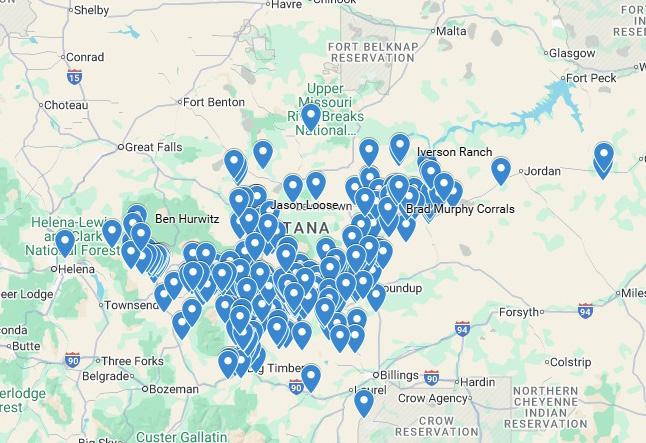
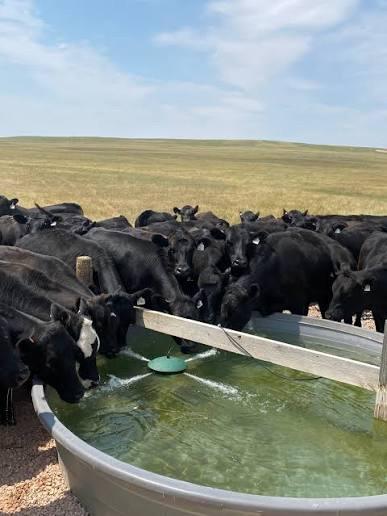
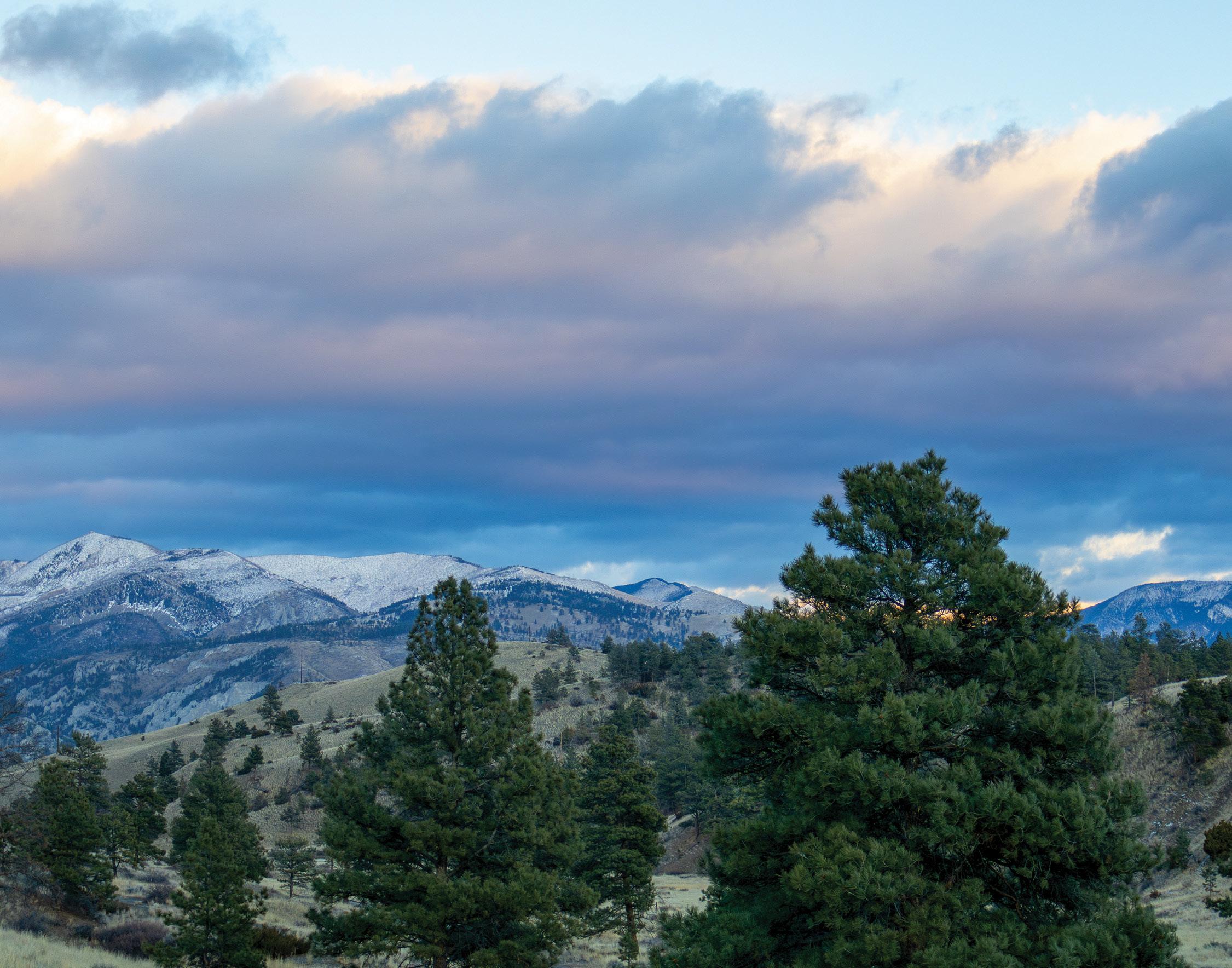
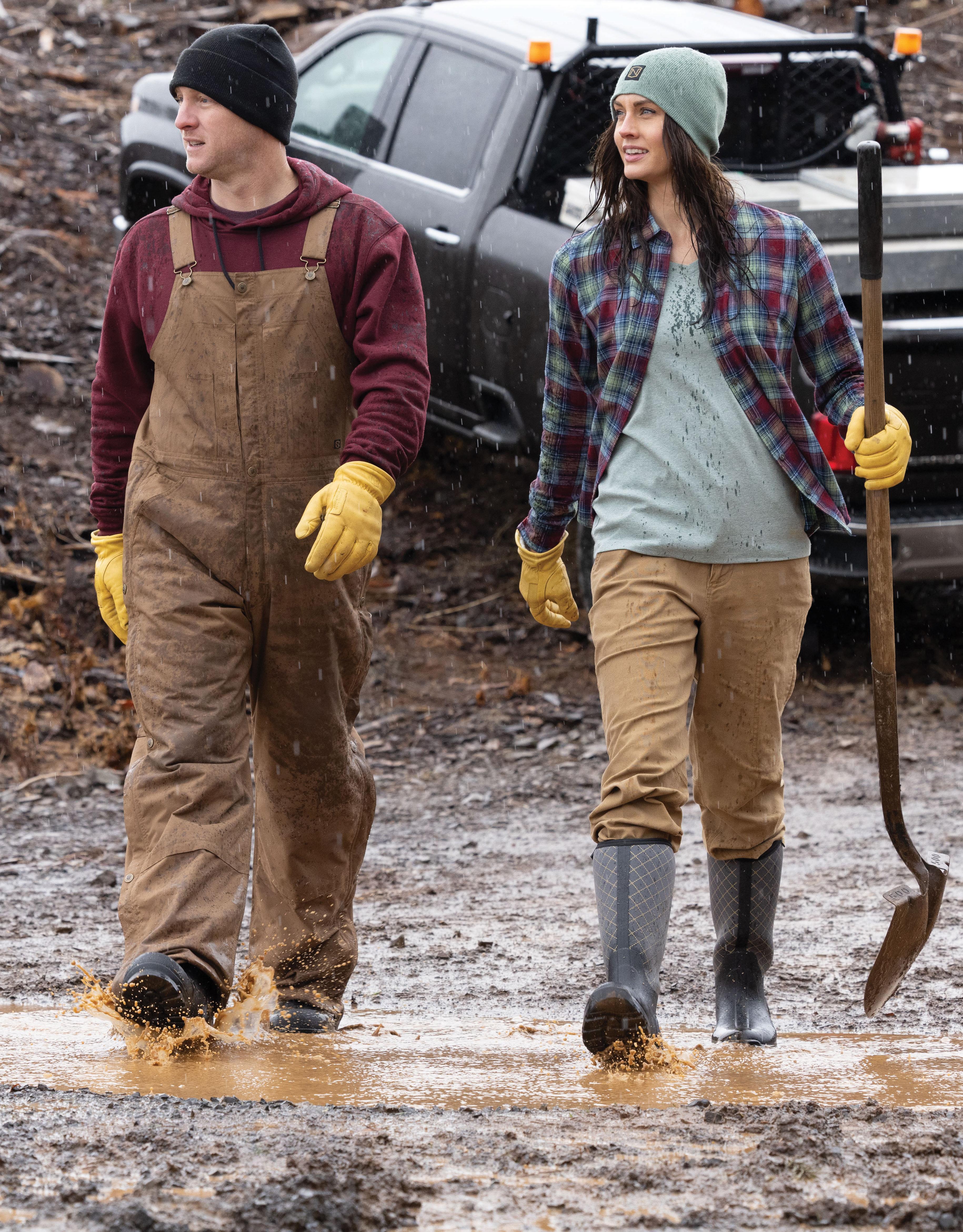
Your ag operation is one of a kind, and you need a bank that understands. As Montana’s largest Ag Bank, we have the knowledge and expertise to assist you in all stages of your ag business. We are Montana’s homegrown bank. Come experience the difference.
GROWN LOCAL
Songwriter
June 18-20, 2026 in Red Lodge, Montana
Nashville Songwriter Hall of Fame Inductee
Georgia Middleman “I’m In” recorded by Keith Urban
Nashville Songwriter Hall of Fame Inductee
Darden Smith
Nicholson
Nashville Songwriter Hall of Fame Inductee
“Angel Flight” recorded by Radney Foster “She’s Country” recorded by Jason Aldean Bridgette Tatum
Presented By plus Eighteen Rising Stars from across the US & Canada
Twenty-Four Songwriters Eight Downtown Stages Fifty Plus Performances
Tickets ON SALE
Gary Burr
Even Stevens Gary
publisher's note
Abraham Lincoln was once quoted as saying, “It’s not the years in your life that count, it’s the life in your years.”
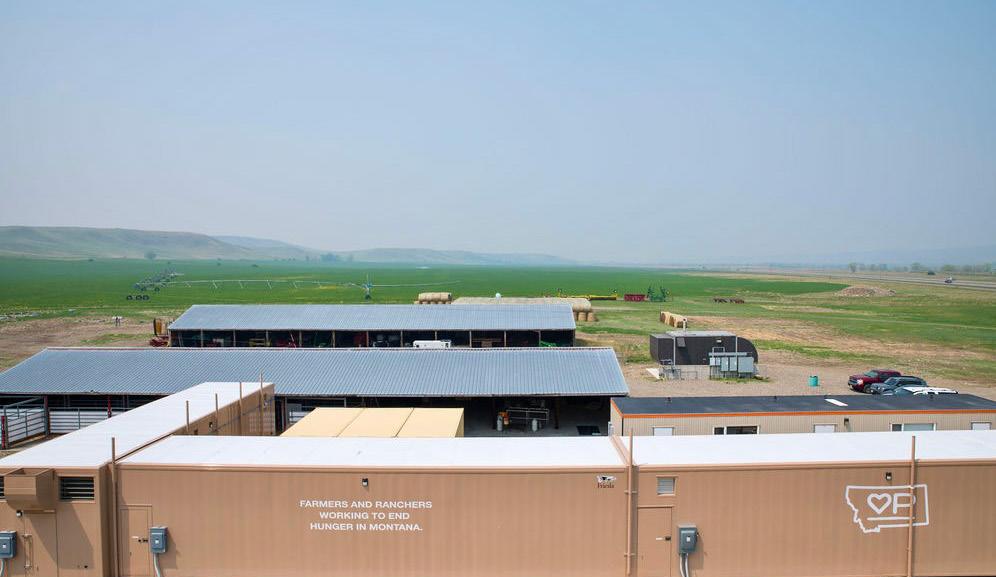
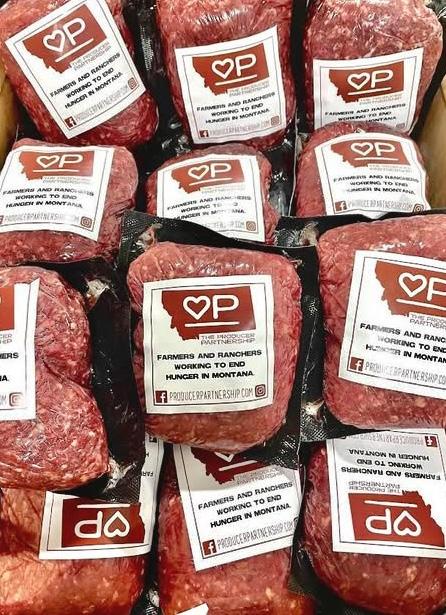
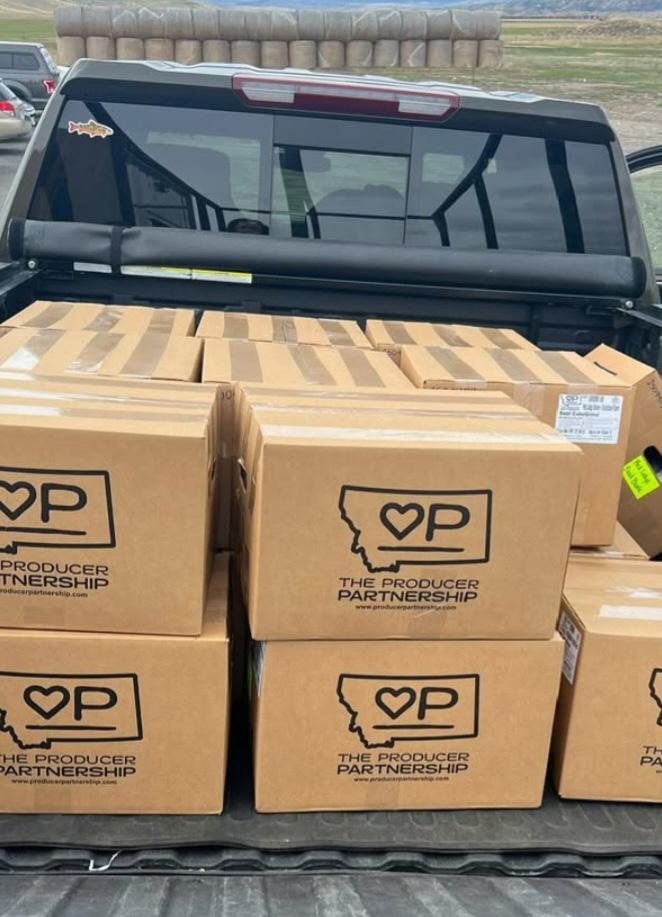
As 2025 wound down, we visited the Producer Partnership facility outside of Livingston and met with rancher and founder, Matt Pierson. Matt started the non-profit just five years ago and already has donated over 350,000 pounds of meat to schools and food banks across Montana.
We followed Harlowton veterinarian Katie Rein while she pregnancy tested 200 of the over 25,000 she singlehandedly tested last year. Katie’s a multi-generational Montanan and has a reputation for being one of the top large animal veterinarians in the state.
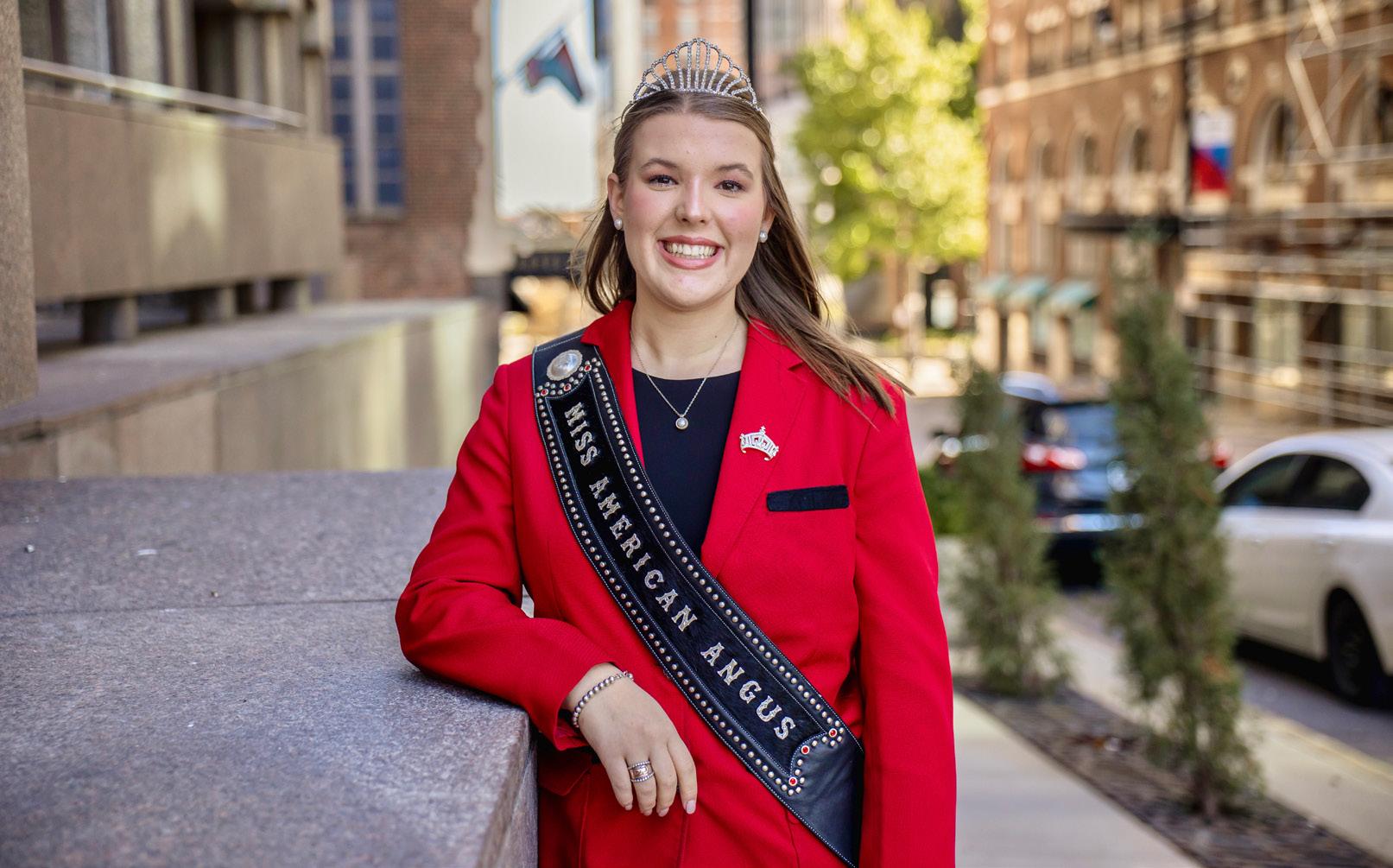
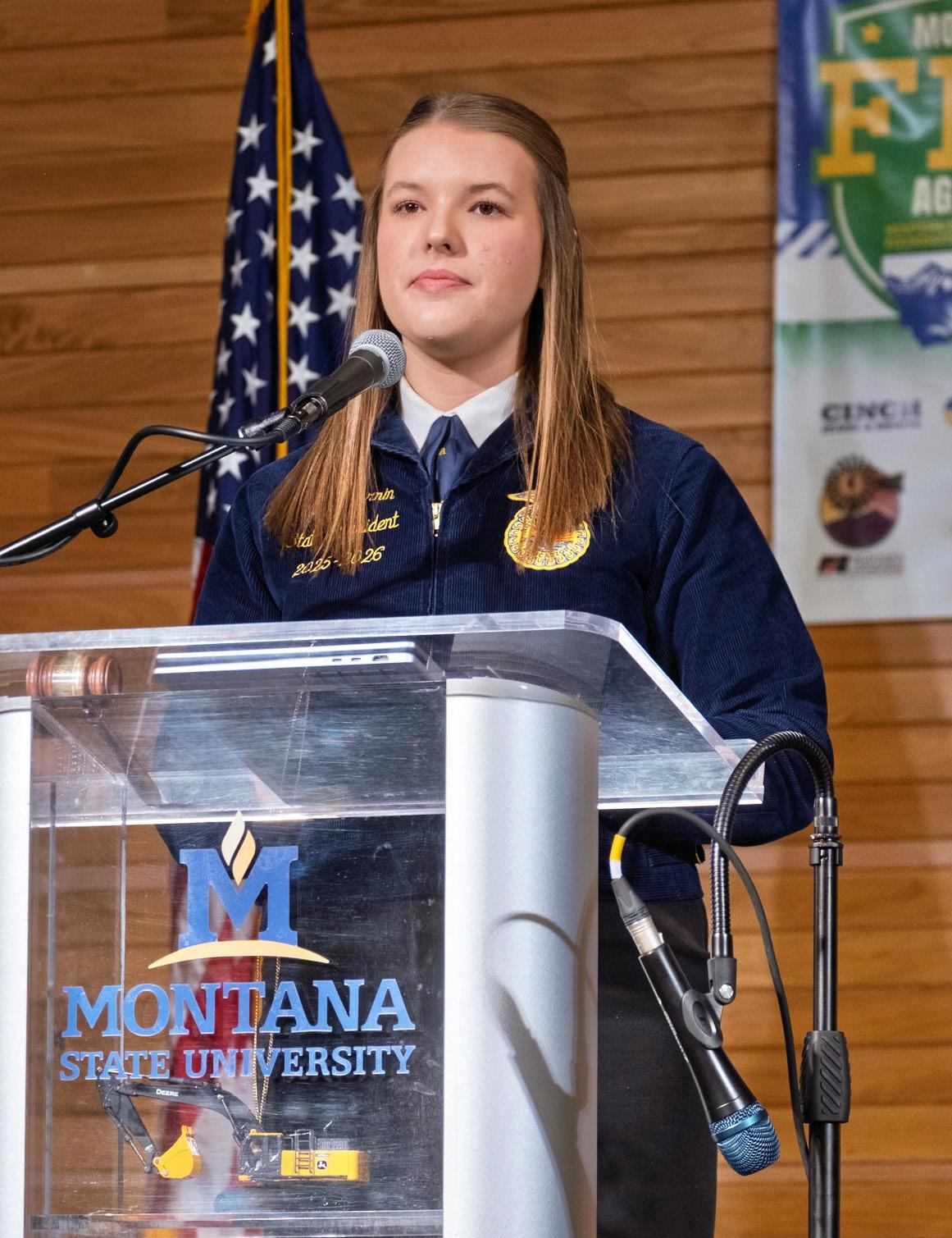
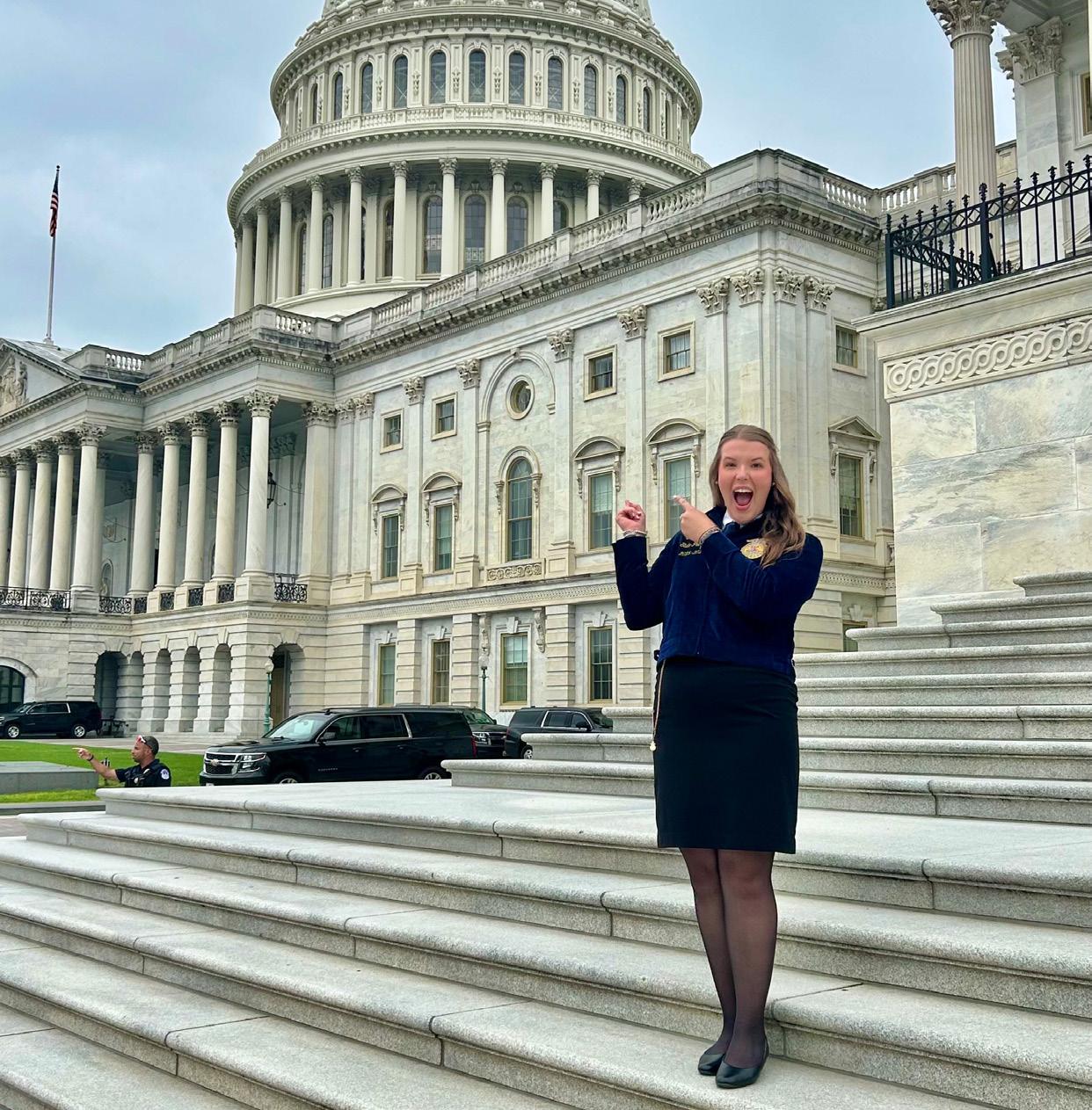
We visited with Claire Murnin, who at 18 was recently elected the Montana State FFA President and crowned Miss American Angus. She’ll be spending the year attending college, crisscrossing the state and the country for FFA and Angus and promoting her daily life in agriculture through her social media
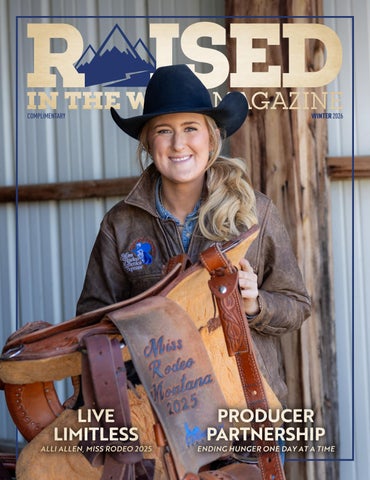
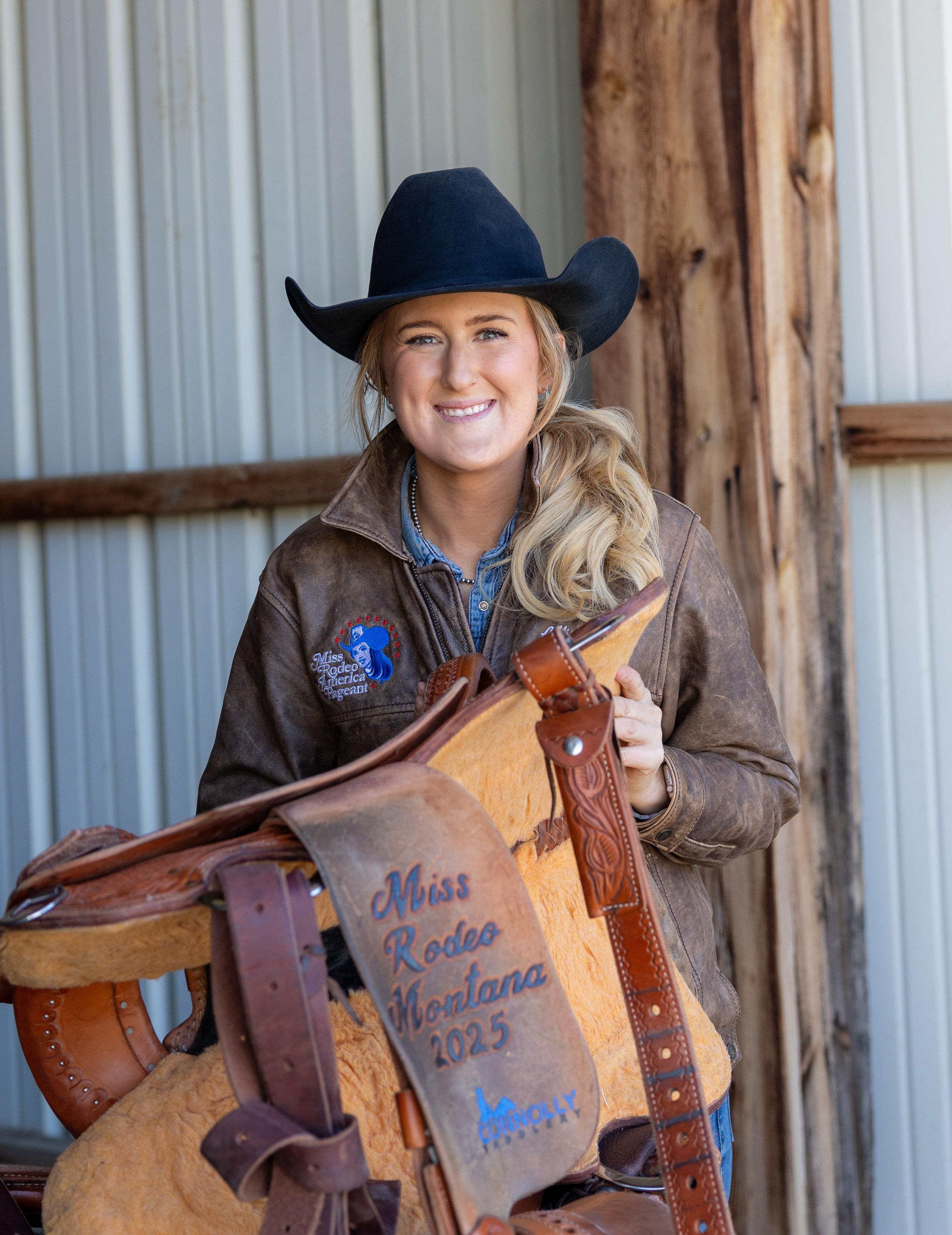
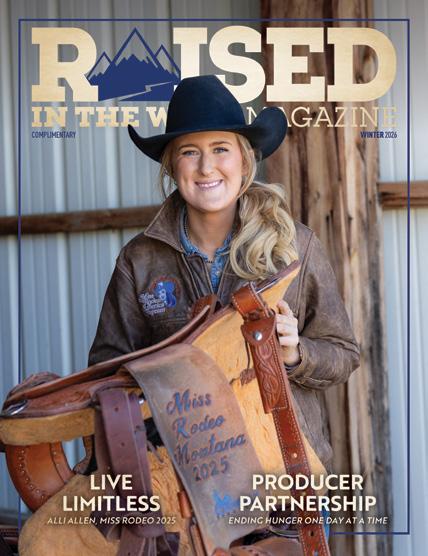
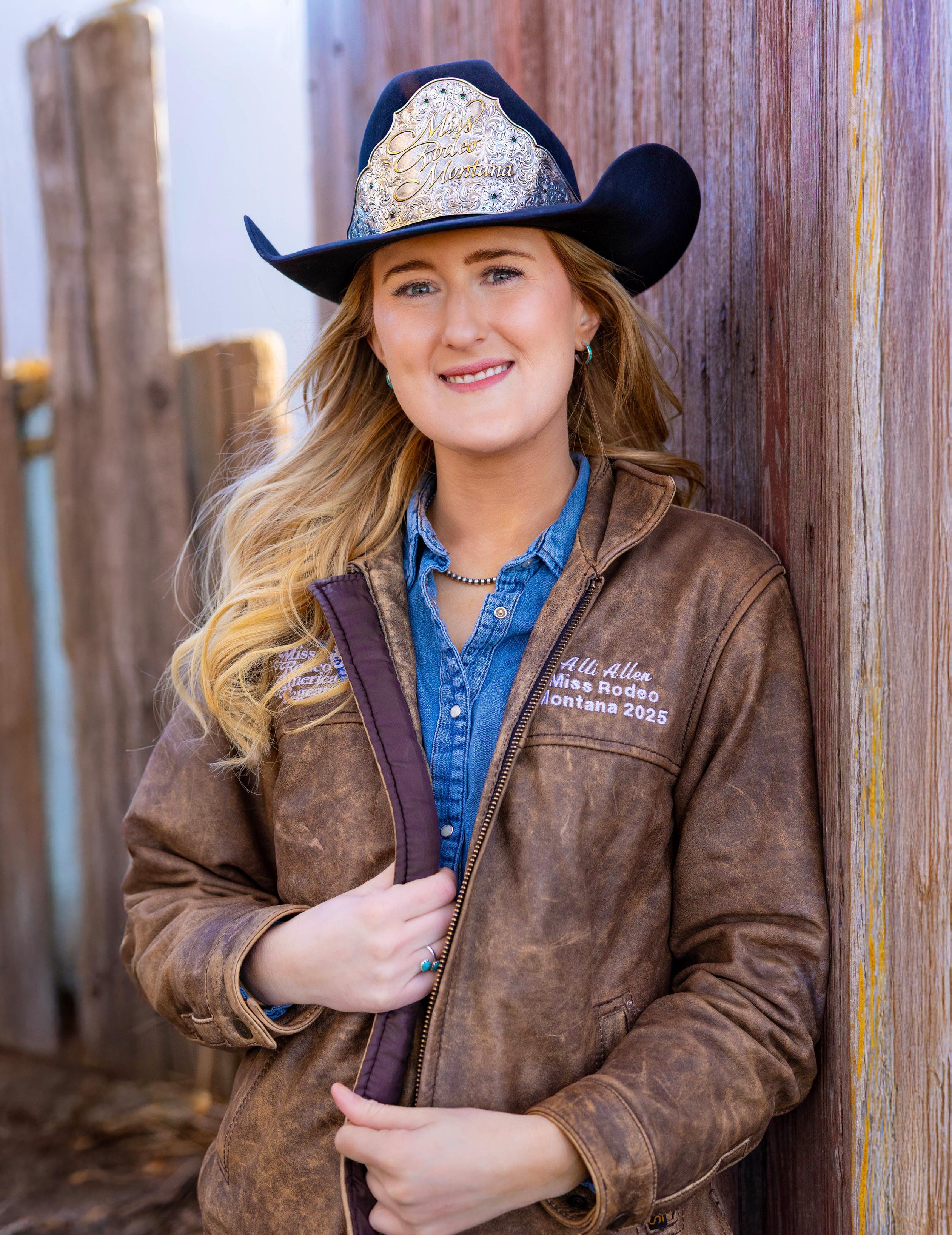
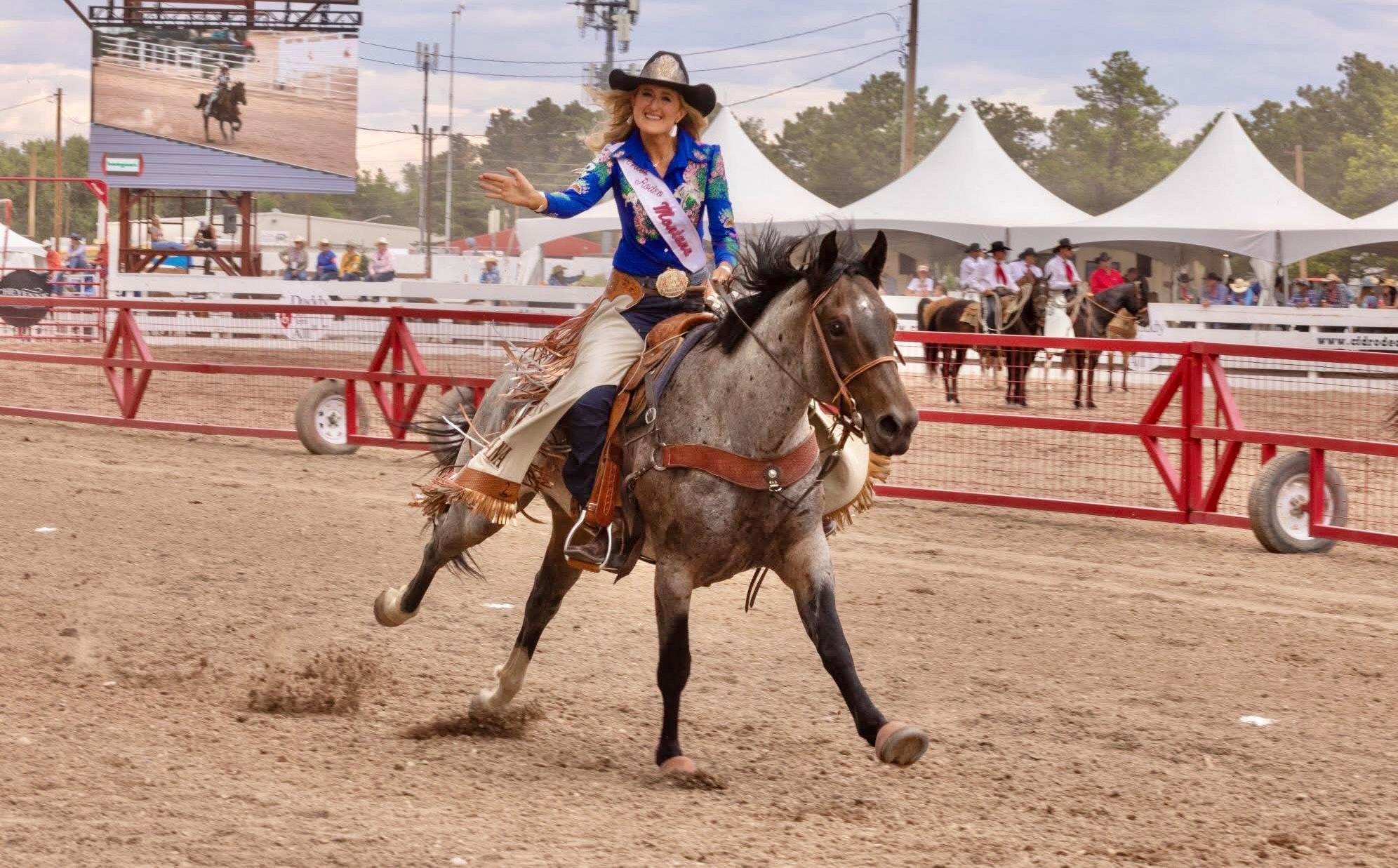
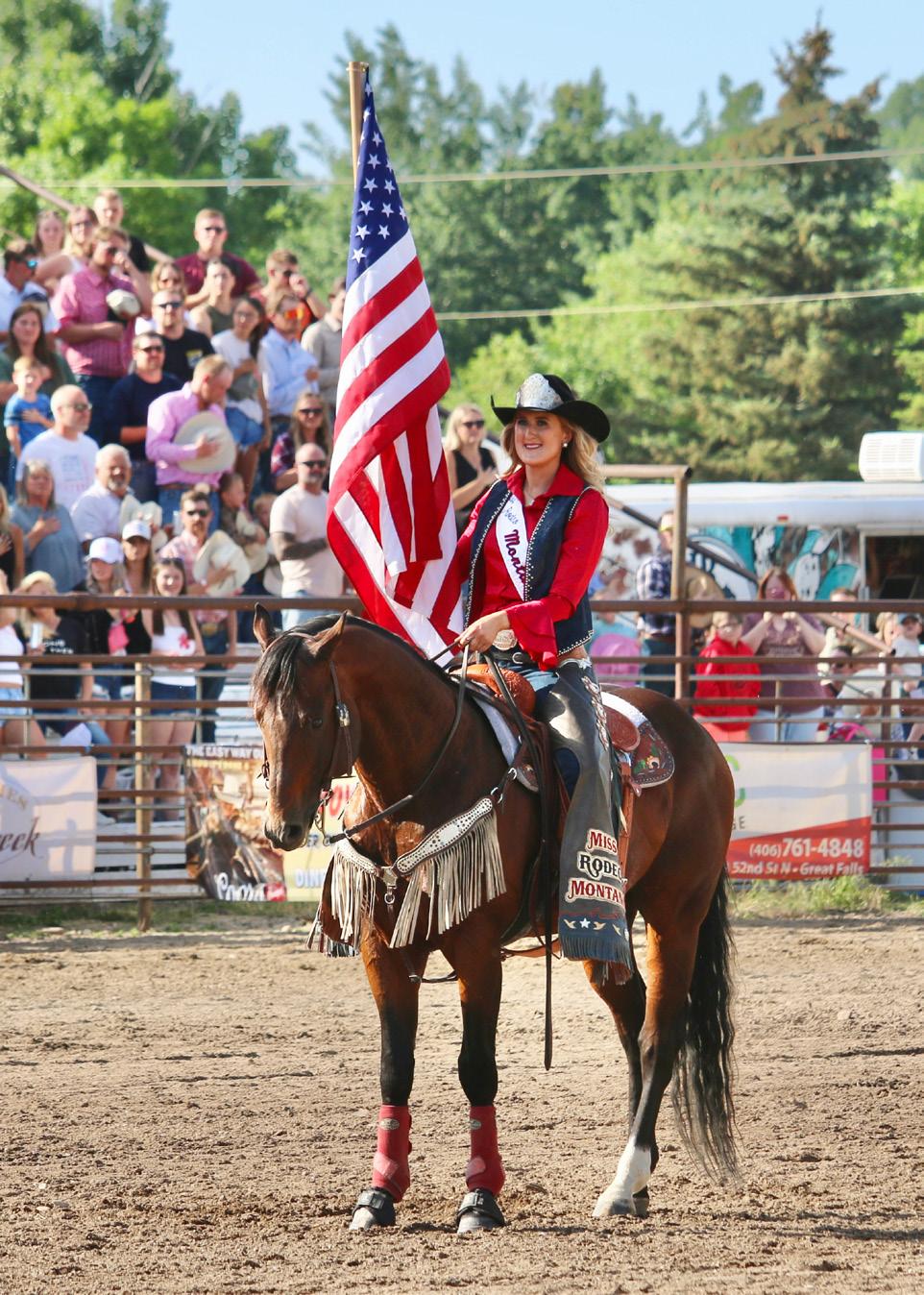
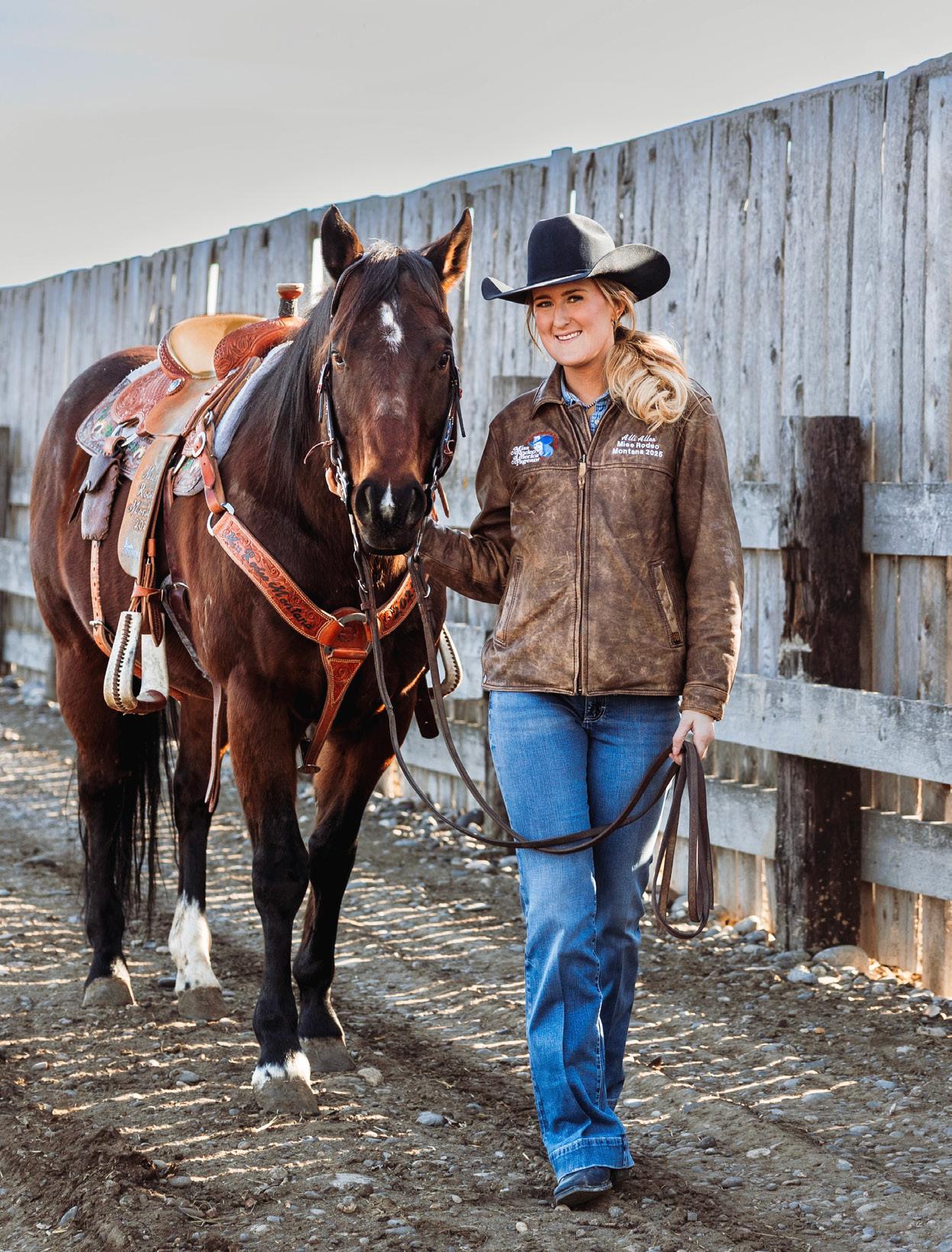
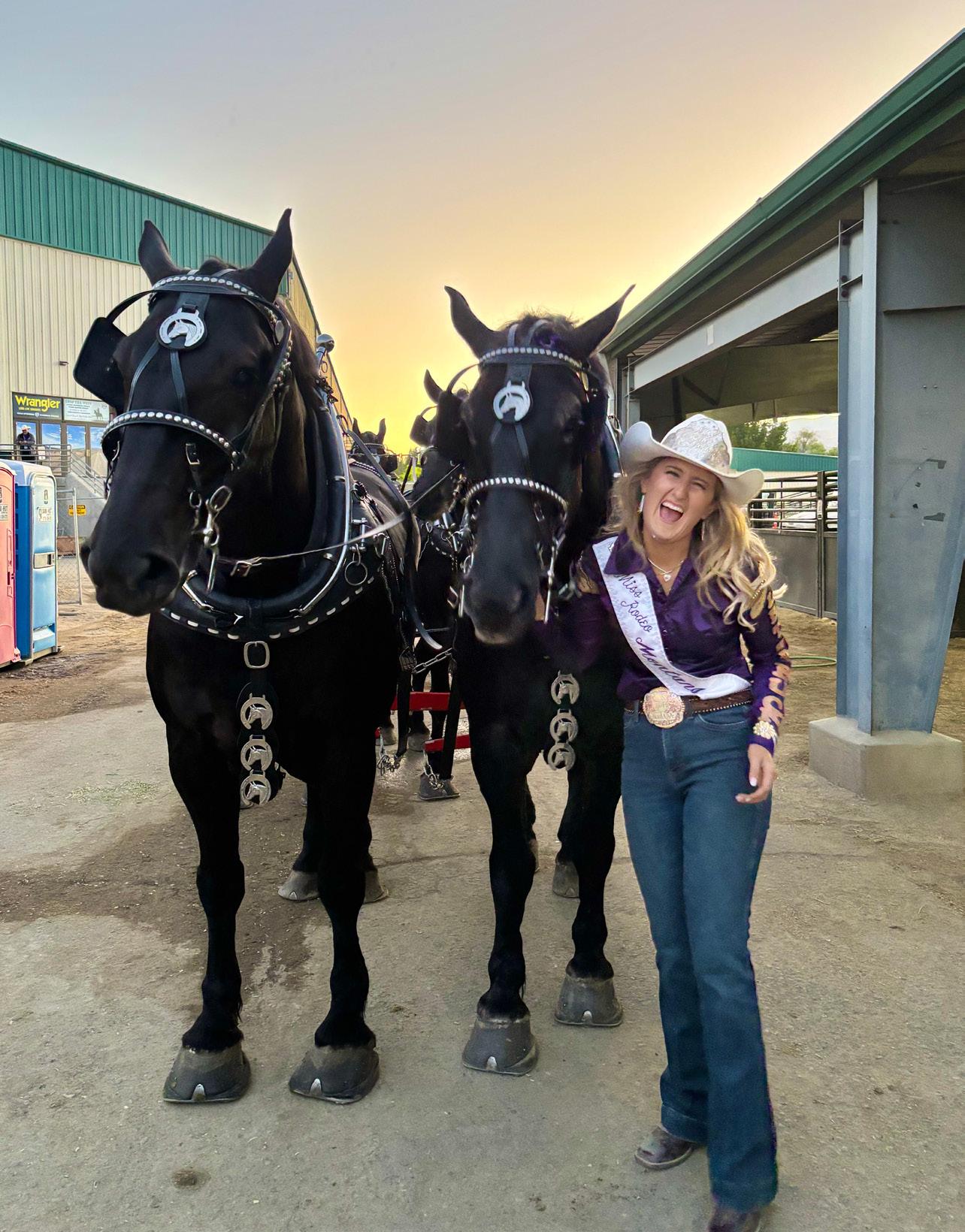
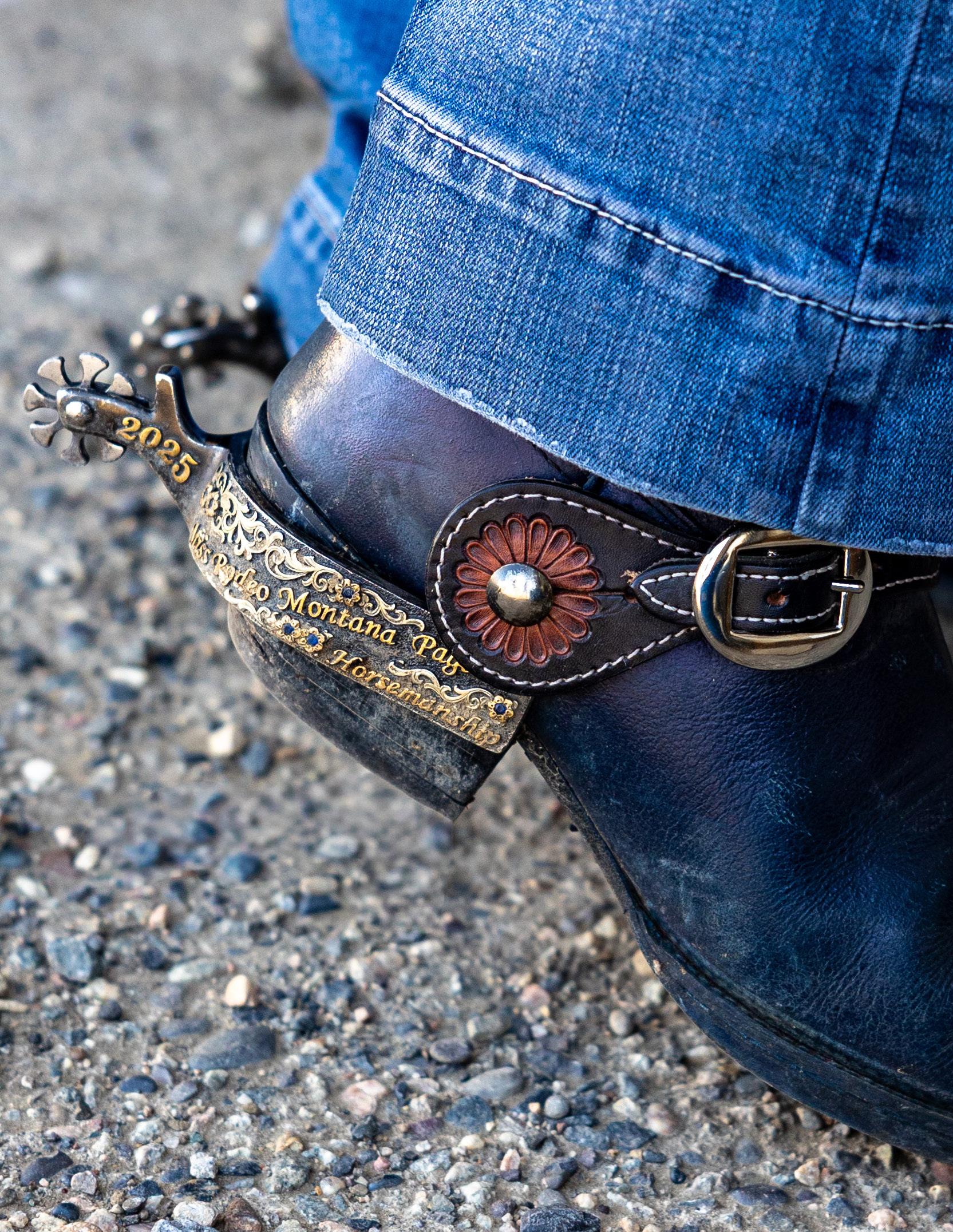
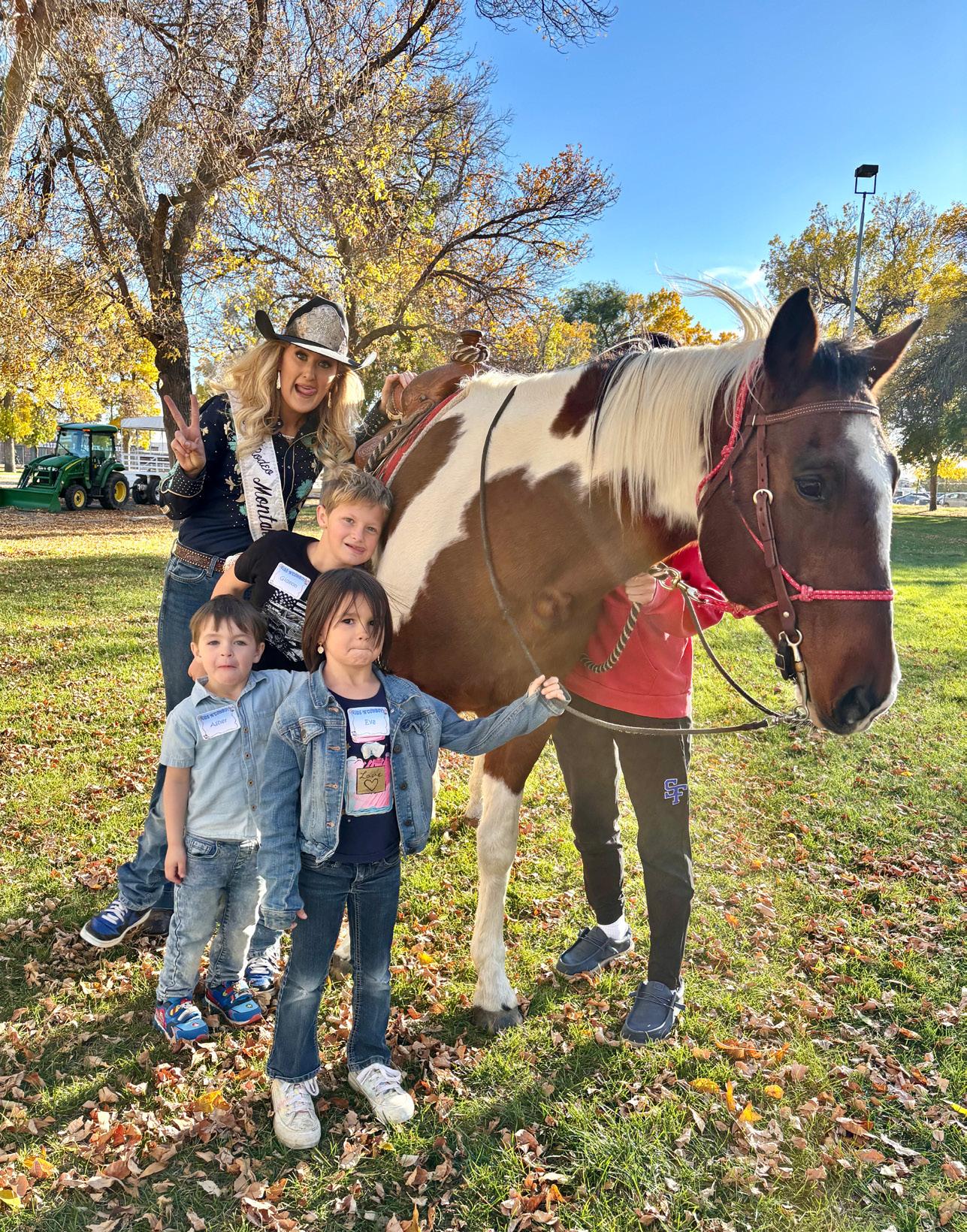
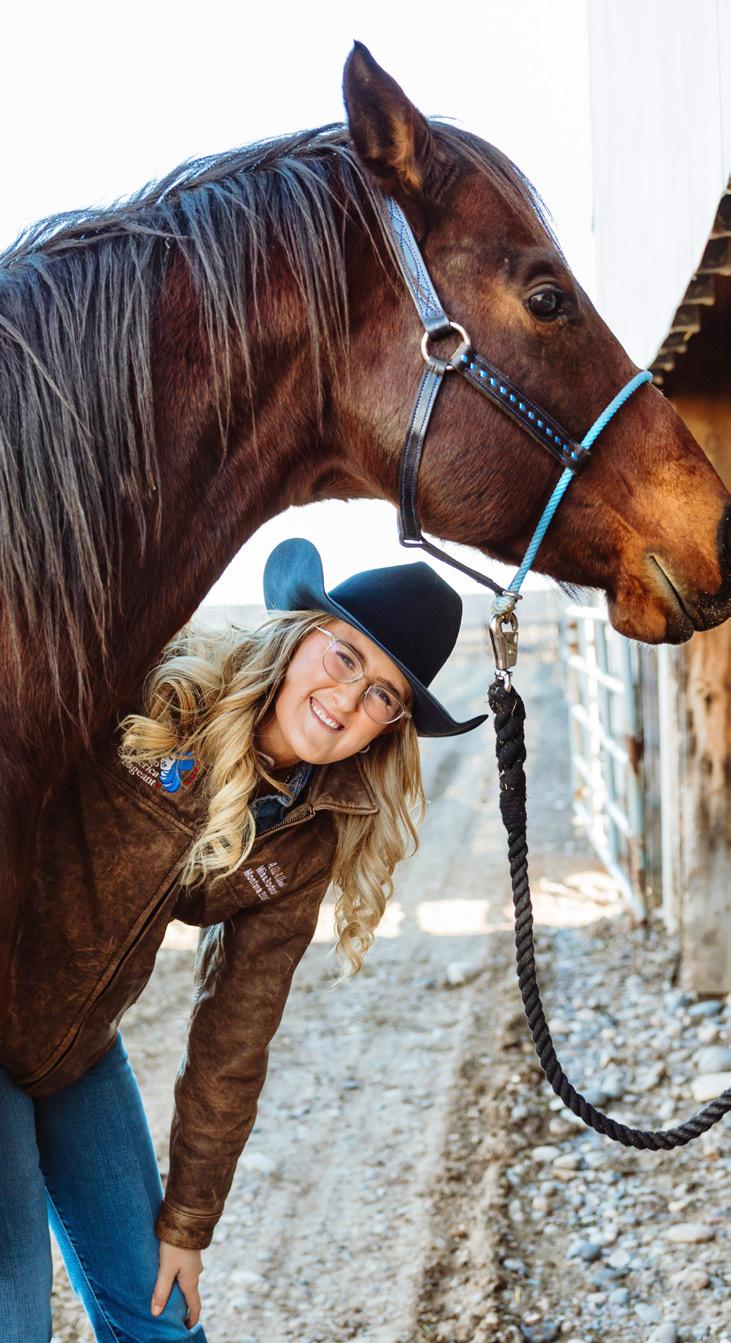
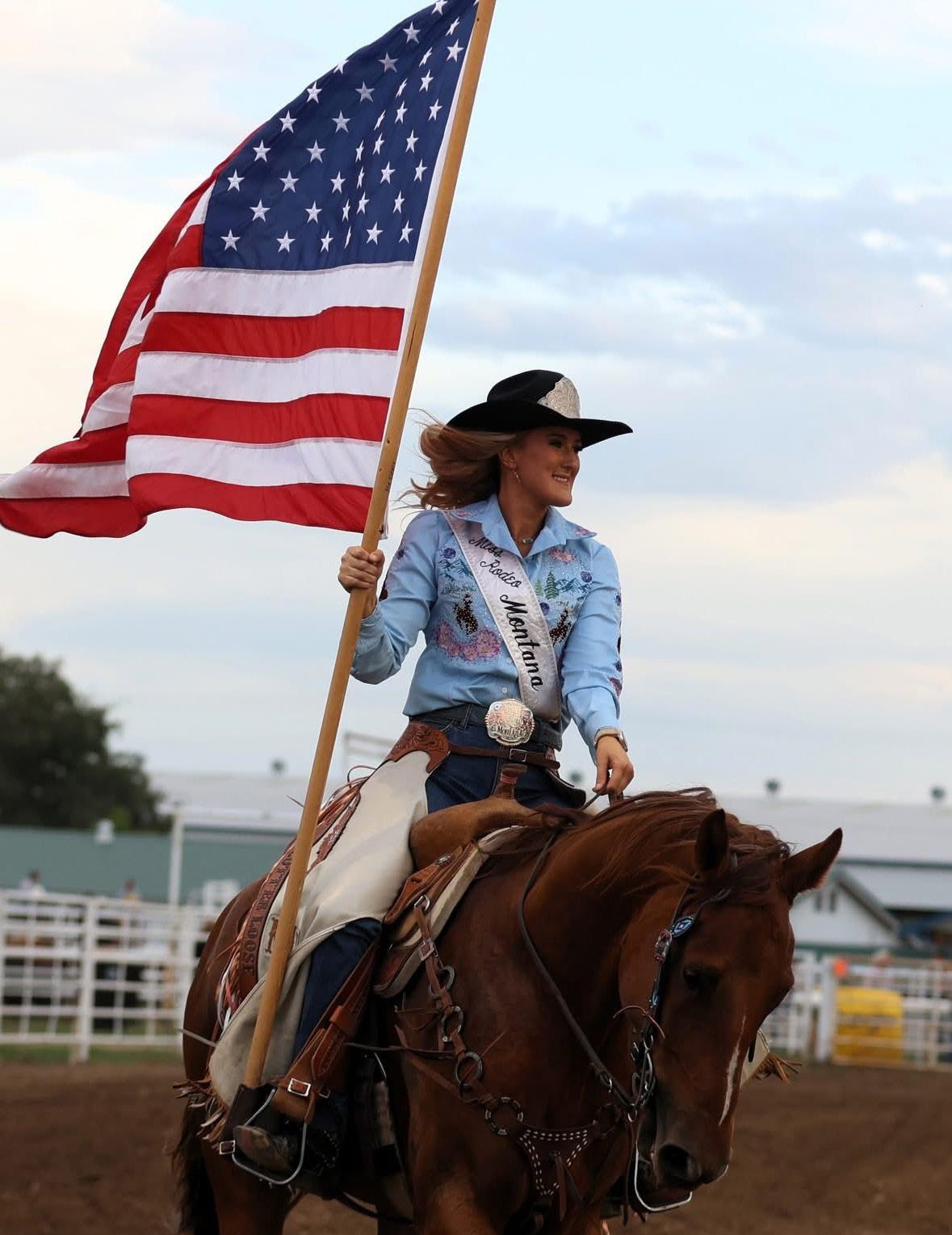
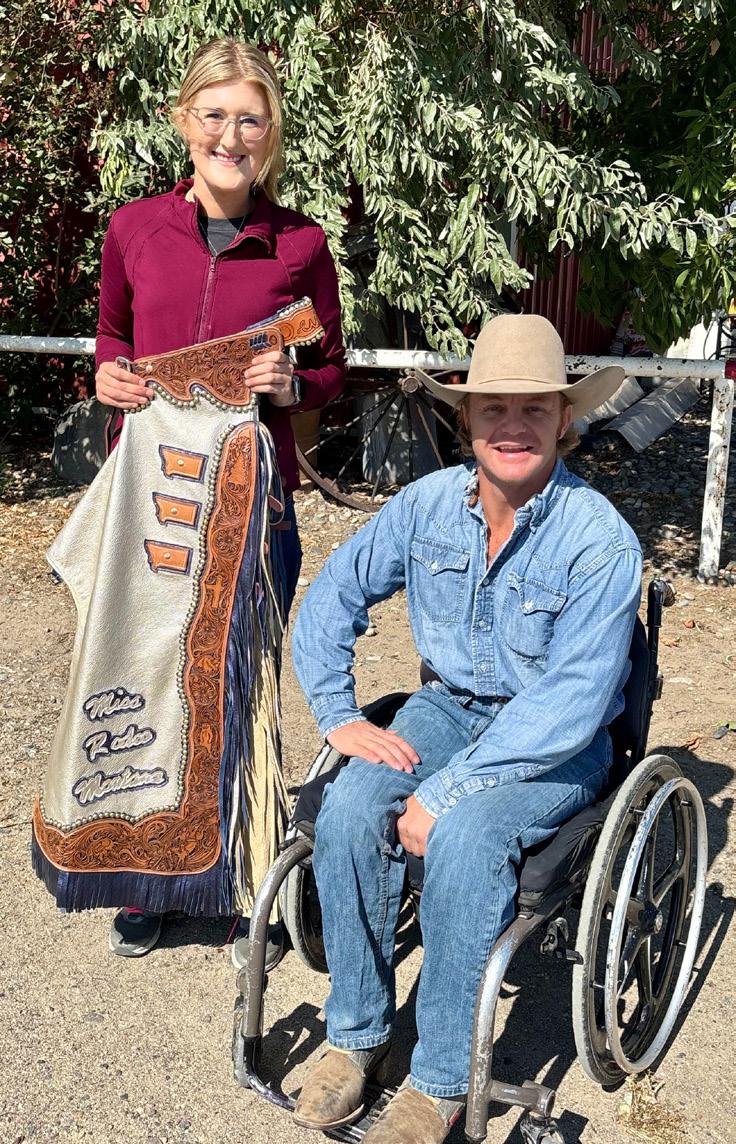
And we met Alli Allen, Miss Rodeo Montana 2025, who began her reign a year ago after overcoming a traumatic brain injury. Alli raises the bar for all of us to put life in our years. Her attitude, her faith and her determination are
What do these folks have in common? They are making a difference. We love featuring authentic people. Folks that work tirelessly every day to make the world around them a better place to
It’s that spirit of independence, yet a willingness to be helped; the idea of seeing a need and filling it, rather than hoping someone else will take care of it. Their humility, strength and determination and going the extra mile despite risks are the reason that they stand out and we’re honored to share their stories.
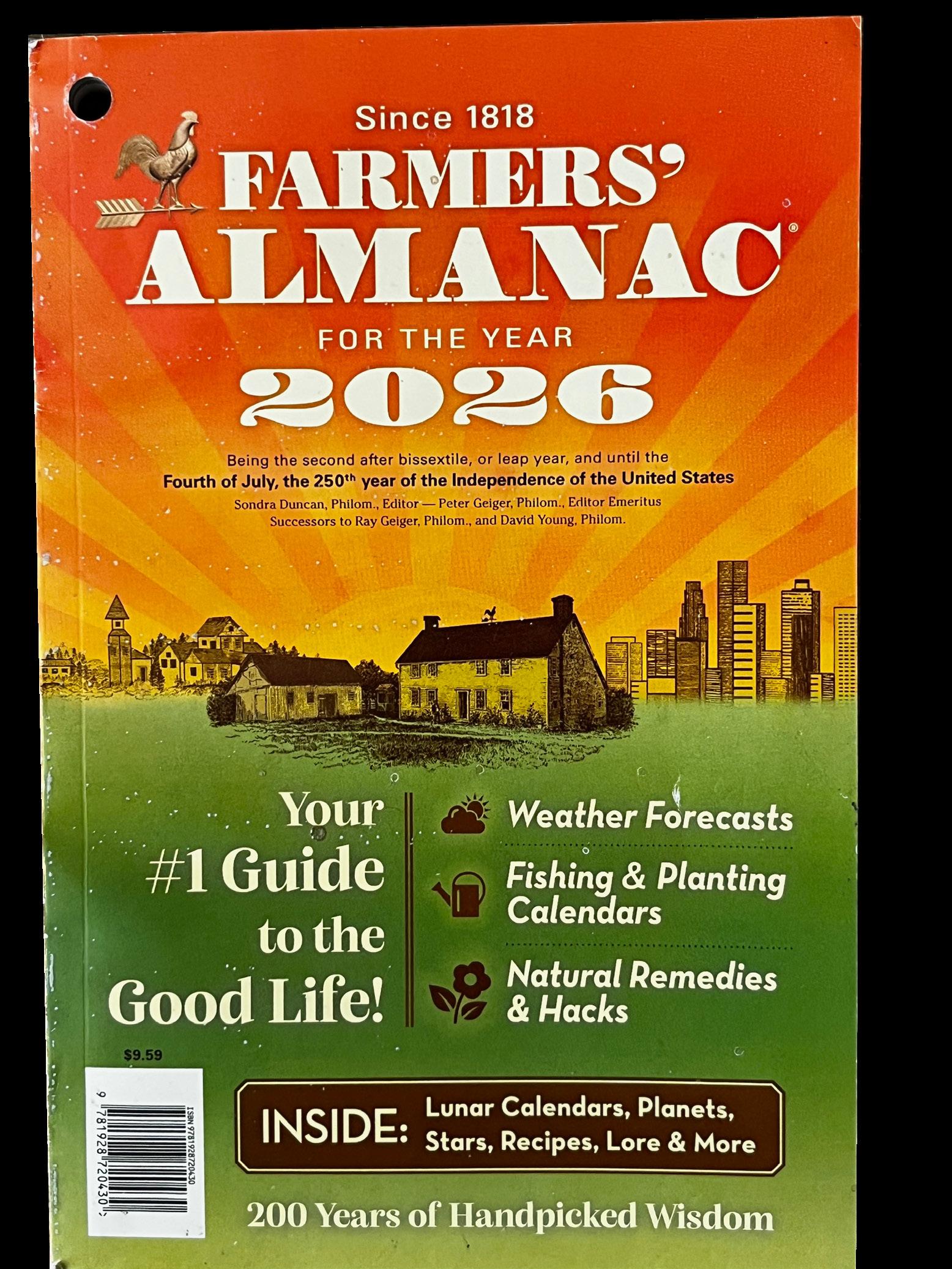
We also pay tribute to the Farmers’ Almanac. 2026 marks the last year of publication. Be sure to grab a copy! It’ll be a collector’s item one day.
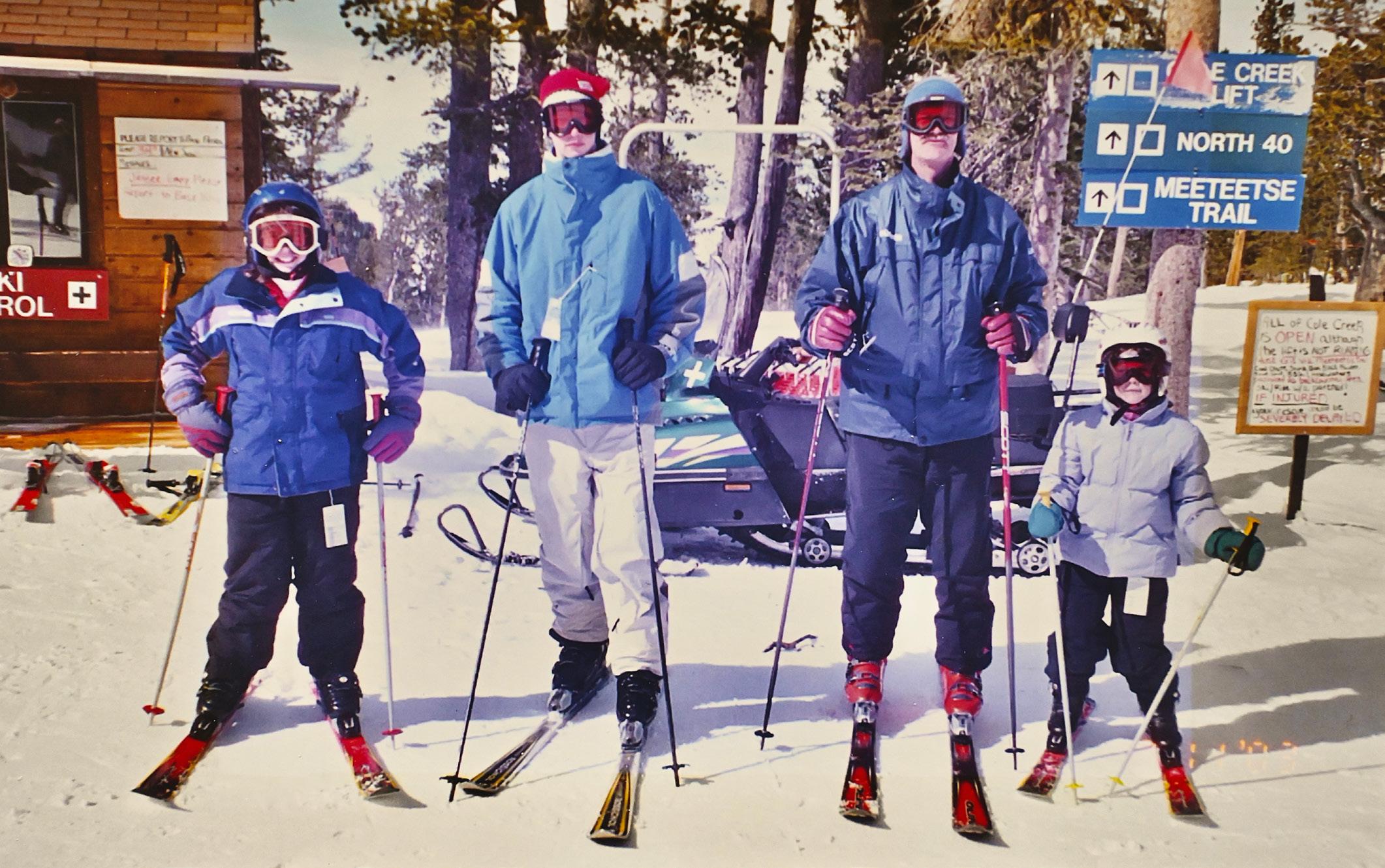
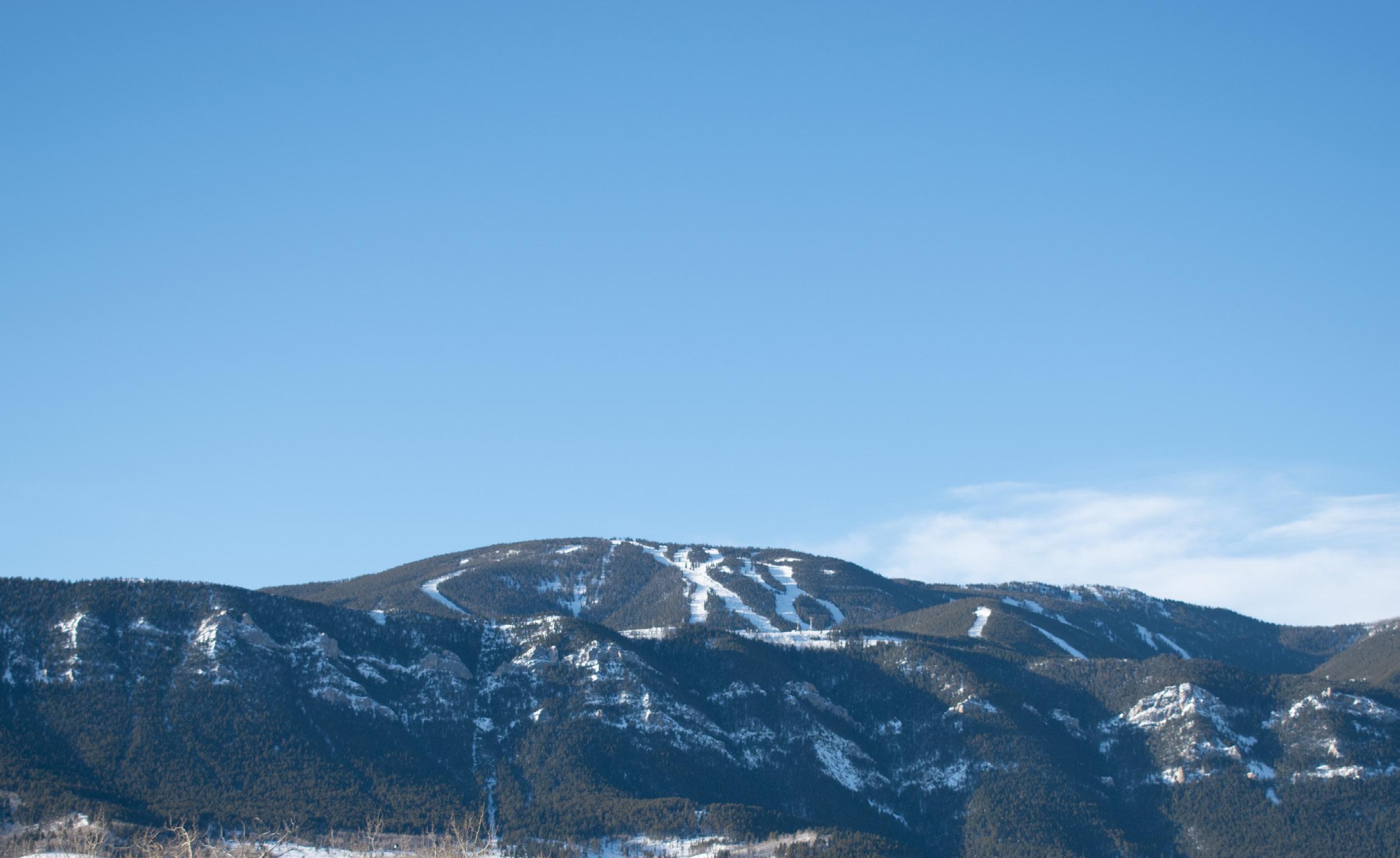
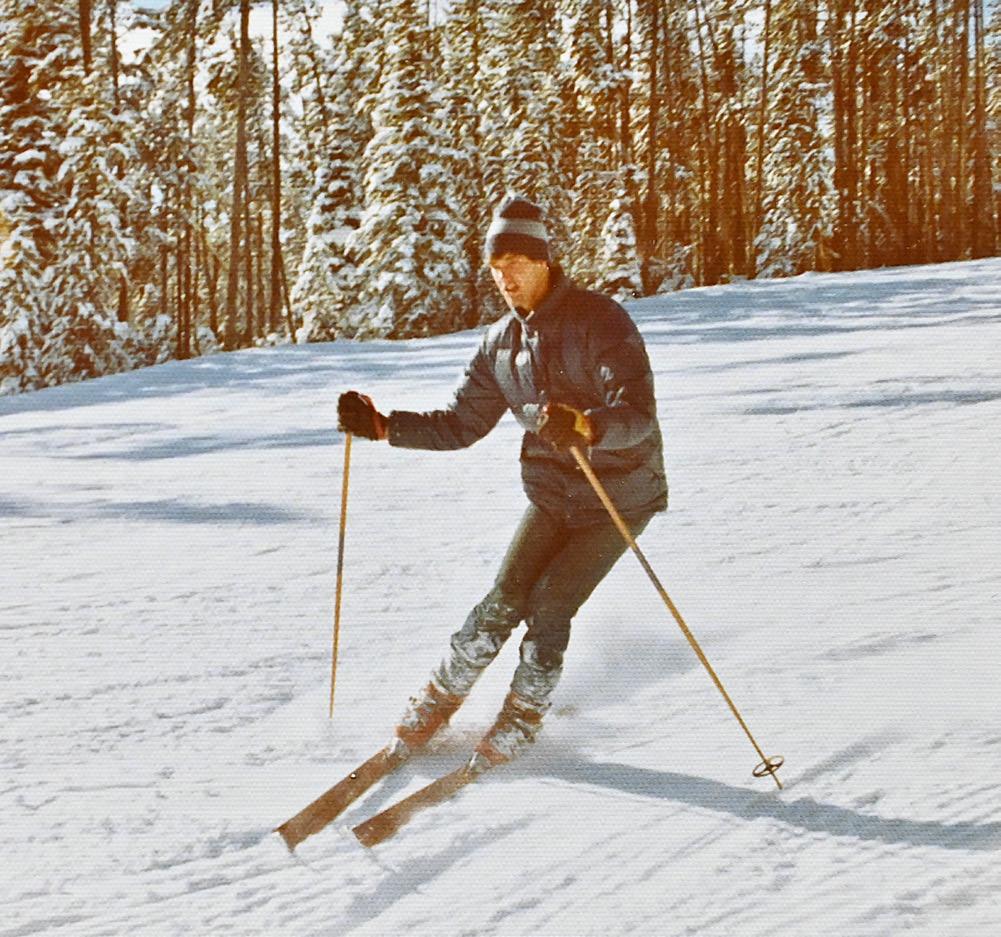
We share ways to prepare for the upcoming gardening season, and we feature not only a few of Jean’s favorite recipes, but those of her 13-year-old daughter, who, under Jean’s direction is also becoming a great chef in the kitchen. And we include a trip down memory lane with Stu recounting stories of skiing in the early days of Red Lodge Mountain.
Our news for the new year is that we’ll be publishing five issues! We’re planning four seasonal issues and a special holiday issue at the end of the year. Look for the latest issue in all our usual distribution points, subscribe to receive a magazine by mail, or read us online at raisedinthewest.com.
Happy New Year! May it bring many blessings to you and yours!
“Be strong and courageous. Do not be afraid; do not be discouraged, for the Lord your God will be with you wherever you go.” Psalm 50:15
LEAVE HIBERNATION TO THE BEARS
contributors
MELANIE FABRIZIUS, GRAPHIC DESIGN
Melanie grew up on a farm in Belfry, Montana and is currently living in Billings. Her lifelong love of art led her to a career as a freelance graphic artist. Melanie enjoys camping, rockhounding, fashion and watching the sunset with her two dogs, Comanche Sue and Pistol Annie. Check out her art at www.fancymf.com
MELANIE
LIMPUS, ASSISTANT PUBLISHER
Melanie was born and raised in Billings and is a fifth generation Montanan. She moved to Wyoming in 2013 to attend the University of Wyoming where she earned a degree in Marketing. She fell in love with Wyoming and her husband, Blaine, and the two of them make their home in Lander. Mel enjoys climbing, painting (Acrylic Melon), skiing, biking, graphic design, and her crazy cat. She can be reached at publisher@adventuresinthewest.com
CAROLYN FRASER, COPY EDITOR
Carolyn is the fourth generation from a Montana ranching family. Raised on a registered Hereford cattle ranch at Reed Point, MT, cattle and horses are in her blood. But so is writing. She has been freelance writing since high school for various agricultural publications. Married to John Deeney, the couple ranch near Grass Range and raise Hereford and Red Angus cattle.
AMY GRISAK, WRITER/PHOTOGRAPHER
Great Falls writer, Amy Grisak balances her life between the mountains and the prairie looking for stories that catch her interest. She’s an award-winning author and shares what she loves with readers, whether it’s finding gorgeous hikes in Glacier National Park or how to push the gardening envelope in our challenging Montana climate. She’s published several books which can be found at www.amygrisak.com
JEAN PETERSEN, WRITER
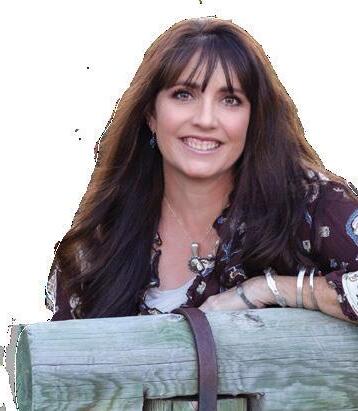
Jean is a cookbook and children’s picture book author, freelance writer and has been a weekly columnist with Western Ag Reporter for over 15 years. She lives near the Beartooth Mountains in Red Lodge with her four children. Most days she can be found outdoors with her animals, on a hike, at her children’s activities, or cozying up writing and reading. You can find her books at www.jeanpetersen.com
MICHELE PEDERSEN, PHOTOGRAPHER
Michele grew up on the Brinkel farm near Broadview, MT, where she learned the value of work and the generosity of a good neighbor. Seven years ago, she started Pedersen Photography shooting portraits of seniors, families, weddings and couples. Her husband, Greg is her biggest fan and provides entertainment on almost every shoot. She also works with her 96-year-old dad making epoxy wood items. She has two amazing stepsons; Bryce and Nick married to Melissa and Maria and last year was blessed with her first grandson.
MAKING USE OF WINTER MONTHS
MAKING USE OF WINTER MONTHS
ACROSS MONTANA
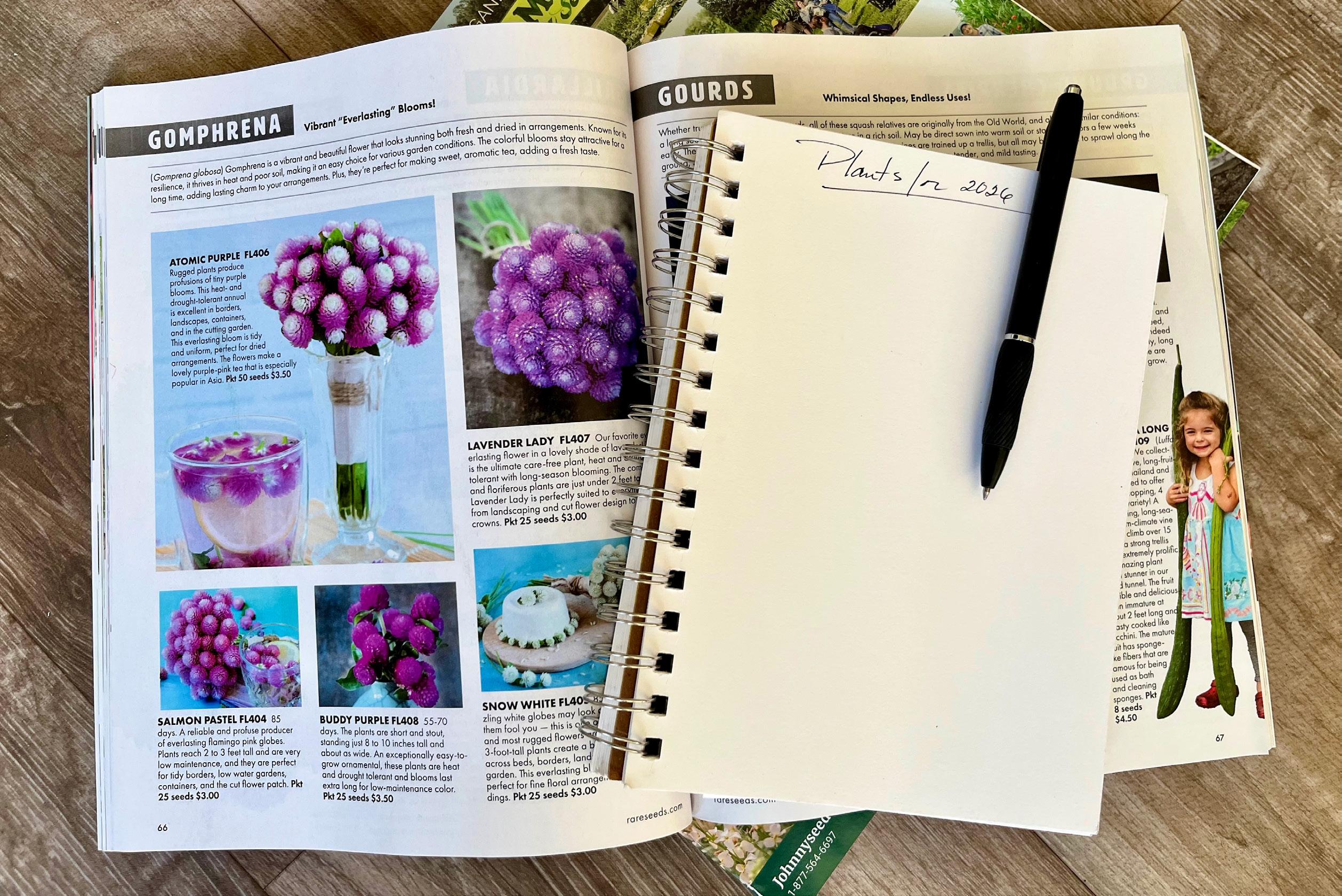
It’s the New Year and seed catalogues are beckoning us to look ahead to spring. Winter is the perfect time to plan summer gardens to be ready to go once the weather is warm enough for planting.
Before cracking open a catalog, it’s wise to think and dream about what you want your garden to look like and what you want to produce. But it’s equally important to be grounded in reality. Start by asking a few questions:
HOW MUCH SPACE DO YOU HAVE?
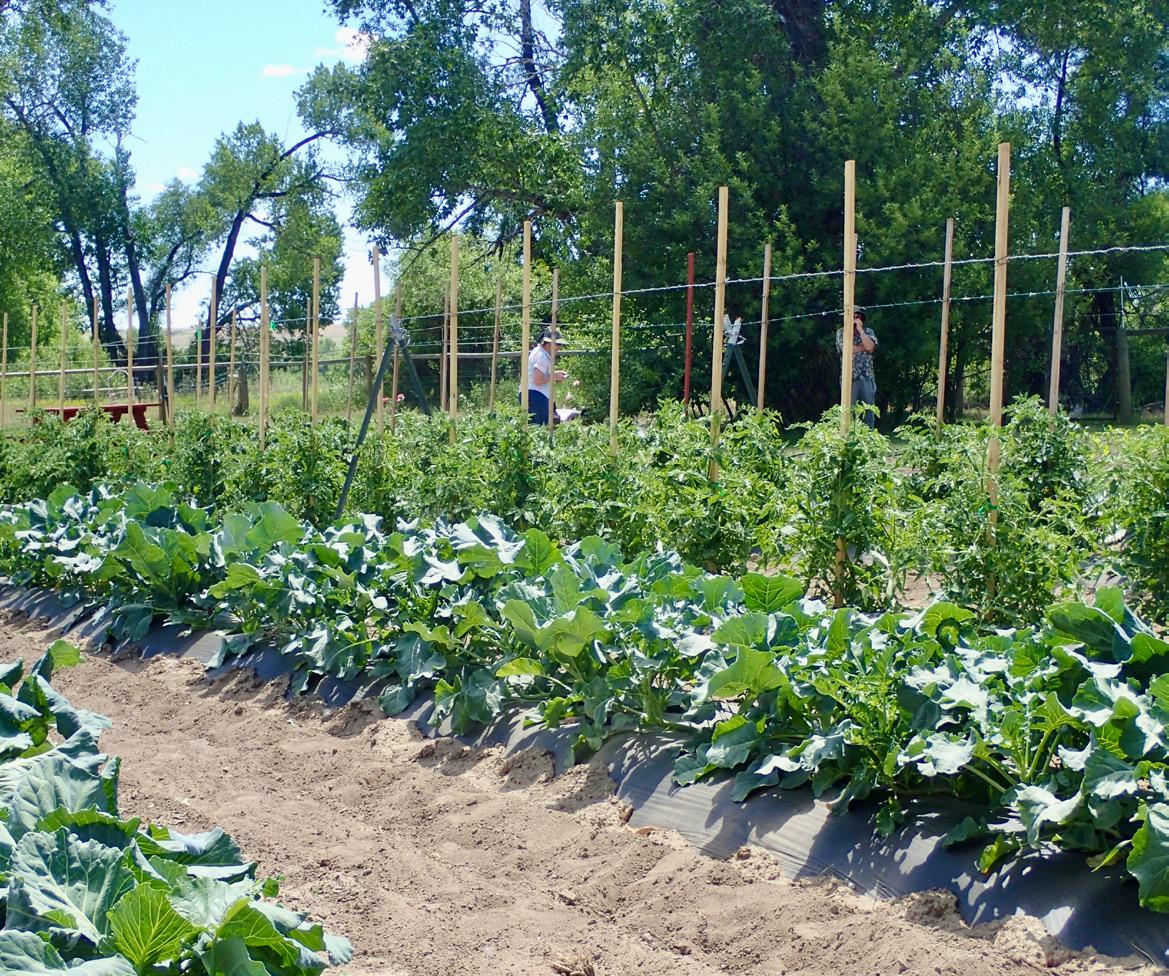
A space that measures approximately 400 square feet (approximately 20’ x 20’) is enough to feed a family of four fresh vegetables throughout the summer.
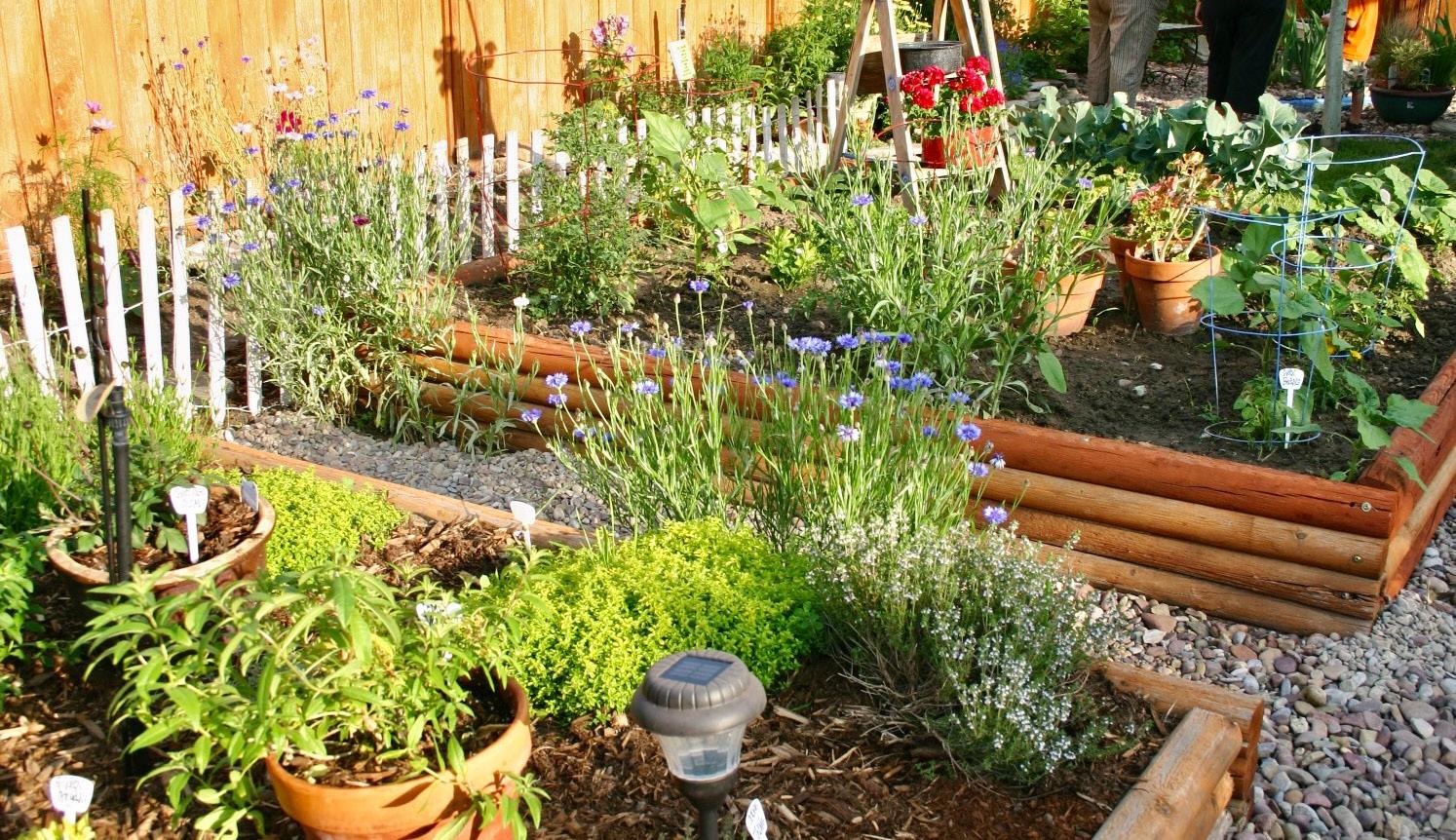
If you’re relegated to a smaller area, it might be more productive to build raised beds or grow fruits and vegetables in containers,
WHAT DO YOU WANT TO GROW?
Seed catalogs are helpful, but they can also be a bit deceiving. It can be difficult to pass up beautiful varieties of vegetables but be sure to have enough space for what you like first, then see if you have room for a plant or two of a new variety.
GROWING FOR THE SEASON OR FOR PRESERVATION
FOR THE SEASON:
Gardens can be planted in succession multiple times over the course of the summer. For example: for crops like lettuce, spinach and radishes, plant a 2’ x 2’ block every two to three weeks.
Crops like beans and beets can be sown after spring vegetables, such as peas, or even when the first flush of these vegetables is harvested. When the spinach is done, it’s a good time to plant beans because the soil temperature is usually perfect by then. Beets can be planted when the beans are finished and harvested in the fall.
FOR PRESERVING:
To grow enough vegetables to preserve, use the same space for more of the same kind of plant, whether it is beans, tomatoes, corn, potatoes or whatever else you plan to preserve in quantities larger than will be used over the summer.
KNOW YOUR REGION:
Check to see which varieties grow well in your region. Count the days between the first and last frosts, which will vary considerably depending on your area. For example, Great Falls has 90-120 growing days, while Butte, at 5500 feet, has 85-100 frost-free days.
Choose varieties that mature in less time than your frost-free days. For tomatoes and other summer vegetables, a good rule of thumb is to focus on 90 days or less to maturity because of the chance of early frost. Plus, diminished sunlight in autumn slows growth. Take advantage of the optimum growing window.
MAKE A SEED PLAN
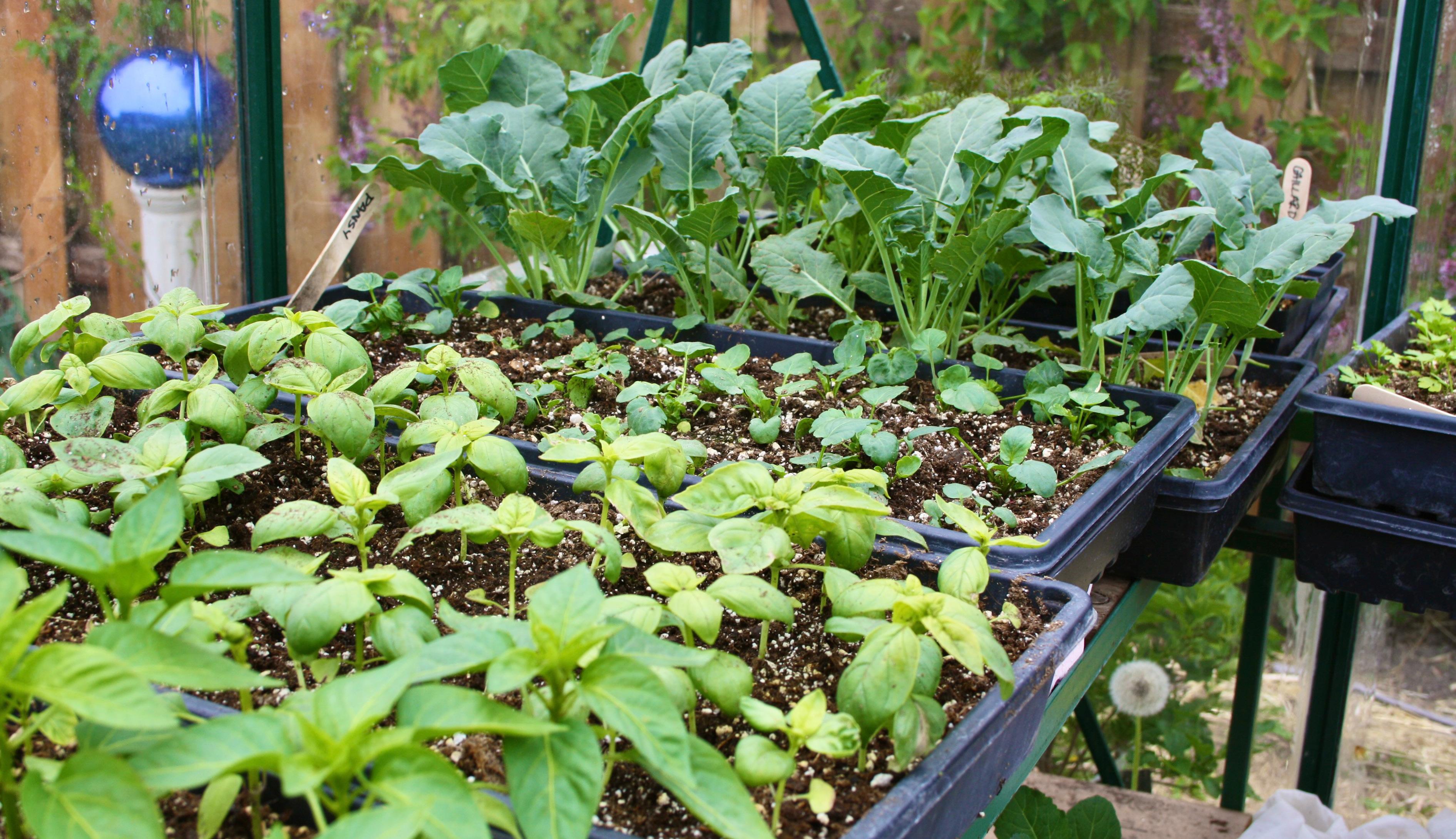
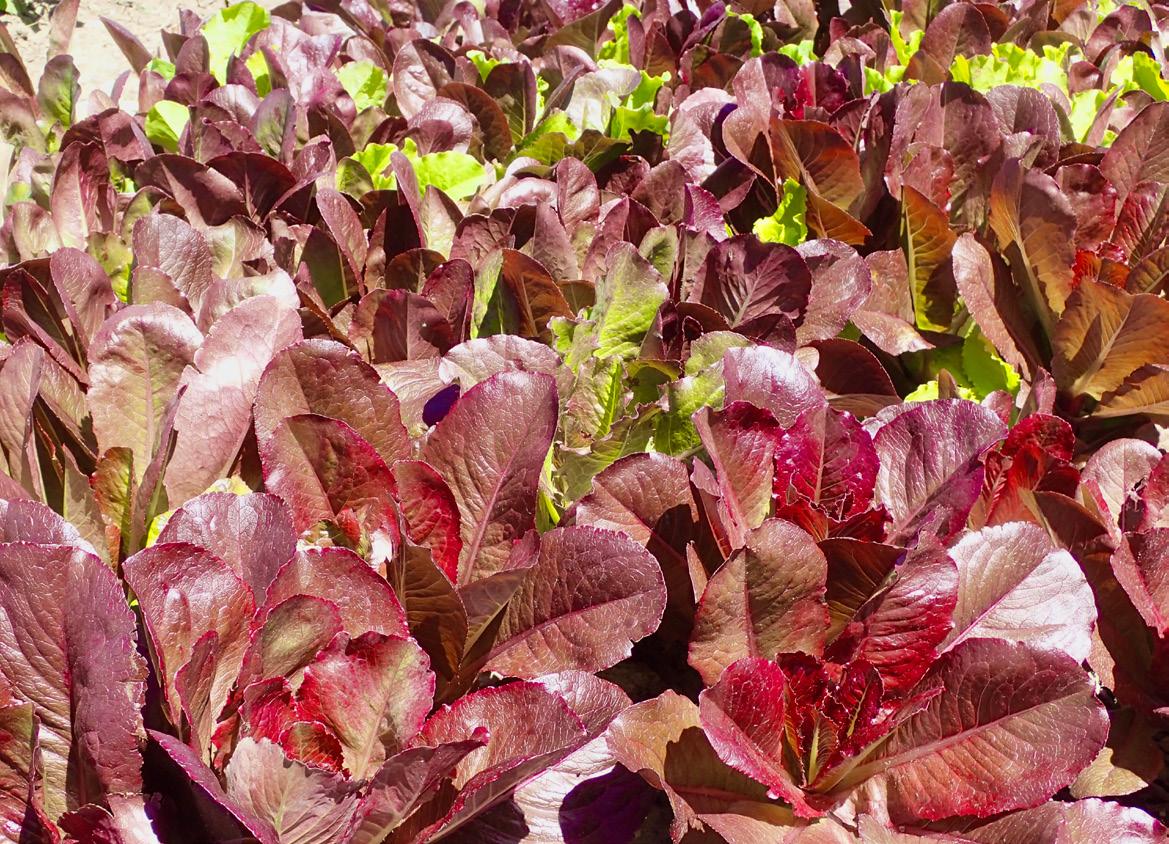
Once you have a general idea of what and how much you want to grow this year, the next question is about seeds. Some plants can be seeded directly in the garden, including greens such as lettuce and spinach, cucumbers, radishes, beets, carrots, corn, beans, and peas.
Others, such as tomatoes, peppers, squash, eggplant, herbs (like basil and parsley), broccoli, cabbage, cauliflower, celery, Brussels sprouts, and kohlrabi, do best planted as transplants. Onions can be planted as either sets (tiny onions) or plants.
Corn, Swiss chard, lettuce, spinach, and even beets are typically directly seeded into the soil but can be started early and transplanted. Conversely, it’s often a good idea to seed cucumbers and squash weeks before setting them out to gain a jump on the season.
GROW TRANSPLANTS OR BUY THEM IN THE SPRING
If you have specific varieties you want to grow, room to do so, and you need more than a plant or two, starting plants is a good option.
If you’re growing a container garden or only have space for a few plants, buying at a local garden nursery in the spring is probably a better option.
SEEDING INDOORS
When to start the process depends on what you’re growing. The back of the seed packet contains valuable information about how
AMY’S GARDEN CALENDAR
✿✿ JANUARY ✿✿
Study seed catalogs and plan garden
FEBRUARY ✿✿
Start onions, peppers and celery
MARCH ✿✿
Early in the month start tomatoes and herbs
Mid month start broccoli, cabbage, kohlrabi and cauliflower Late month start pumpkins, squash and cucumbers
✿✿ APRIL ✿✿
Keep tending plants, garden season is almost here!
many days it takes to germinate and how many weeks to wait before planting it in the garden.
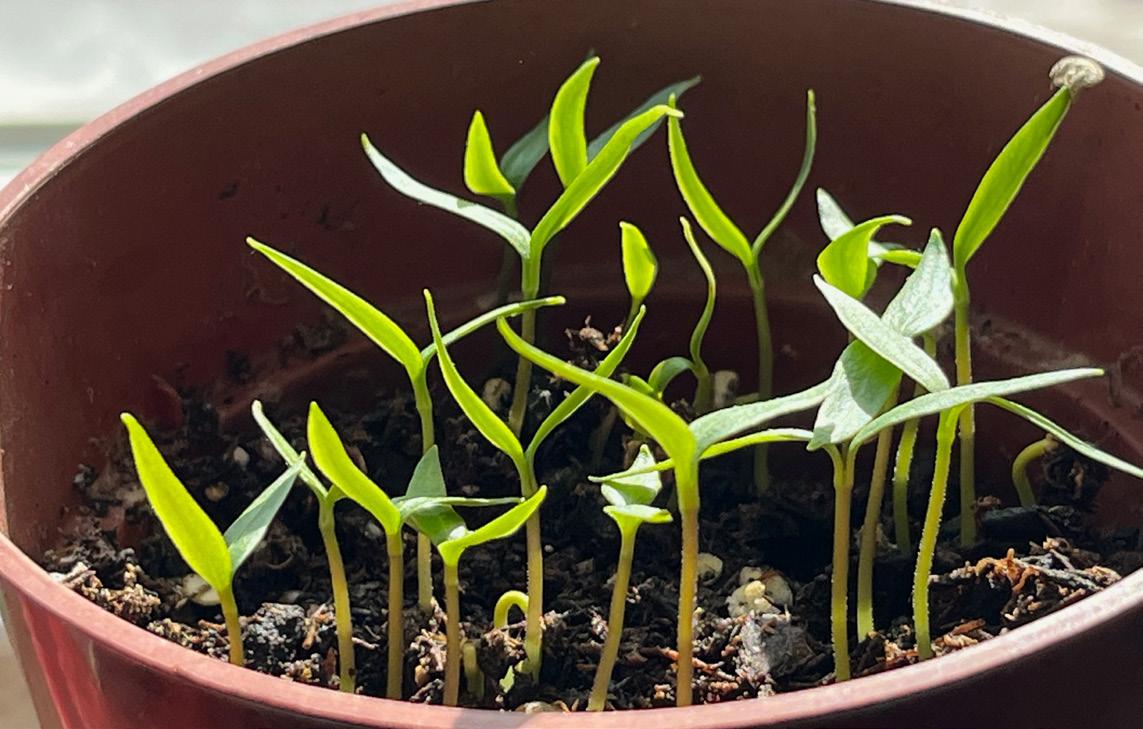
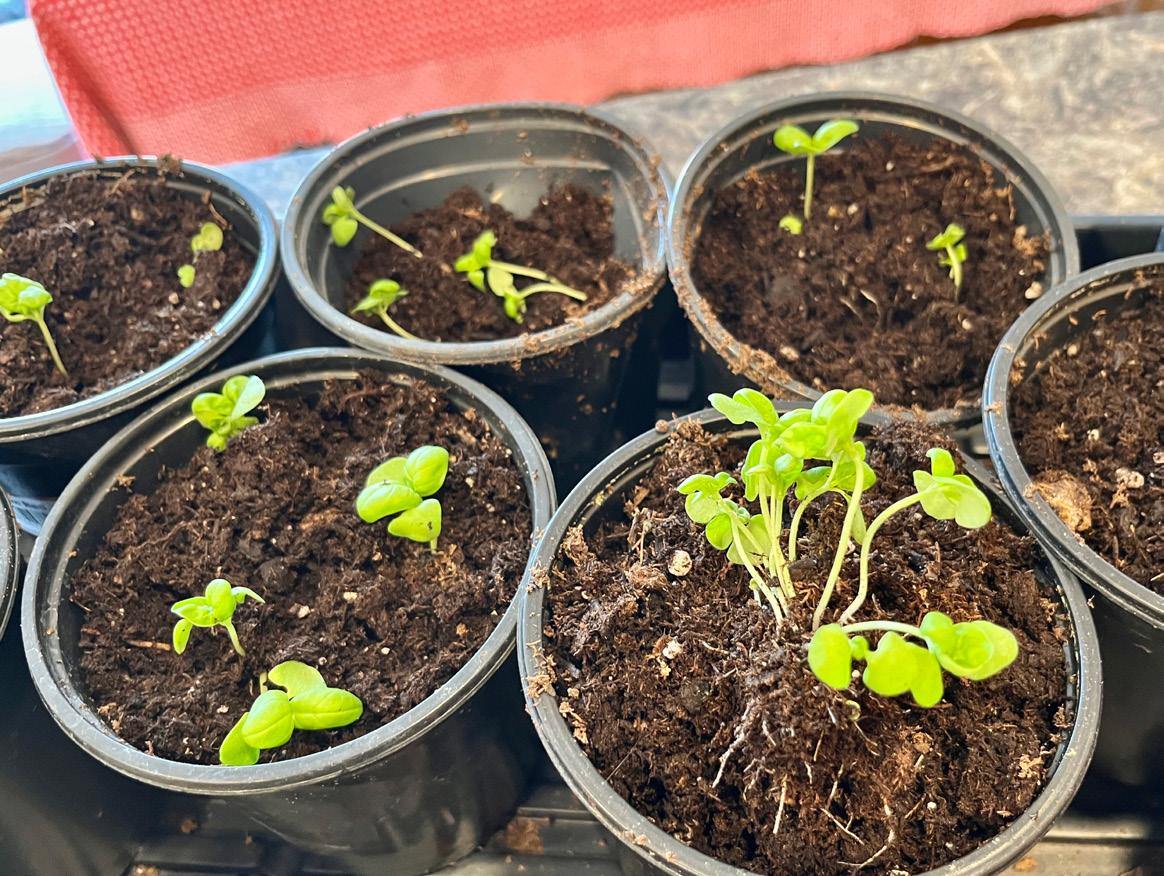
Not everything grows at the same rate. Tomatoes are great for instant gratification because the seeds usually poke through the soil within a few days, while plants such as onions and peppers sometimes take weeks to germinate, and once they’re up, they grow slowly.
Using the calendar, plan your seeding plan. The key to seeding is to plant them early enough to have nice-sized plants to set out in the garden, before they become massive, leggy specimens.
If you have a south-facing window or grow lights, including portable LED lights that clip onto a counter or table, you can start enough plants to stock most gardens. Extra plants, especially free ones, are usually welcomed by neighbors.
With the garden plan in place, the seeds ordered, and the seeding schedule penciled out, it’s a matter of counting the days and basking in the ever-increasing sunlight. Before we know it, we’ll be in the garden again.
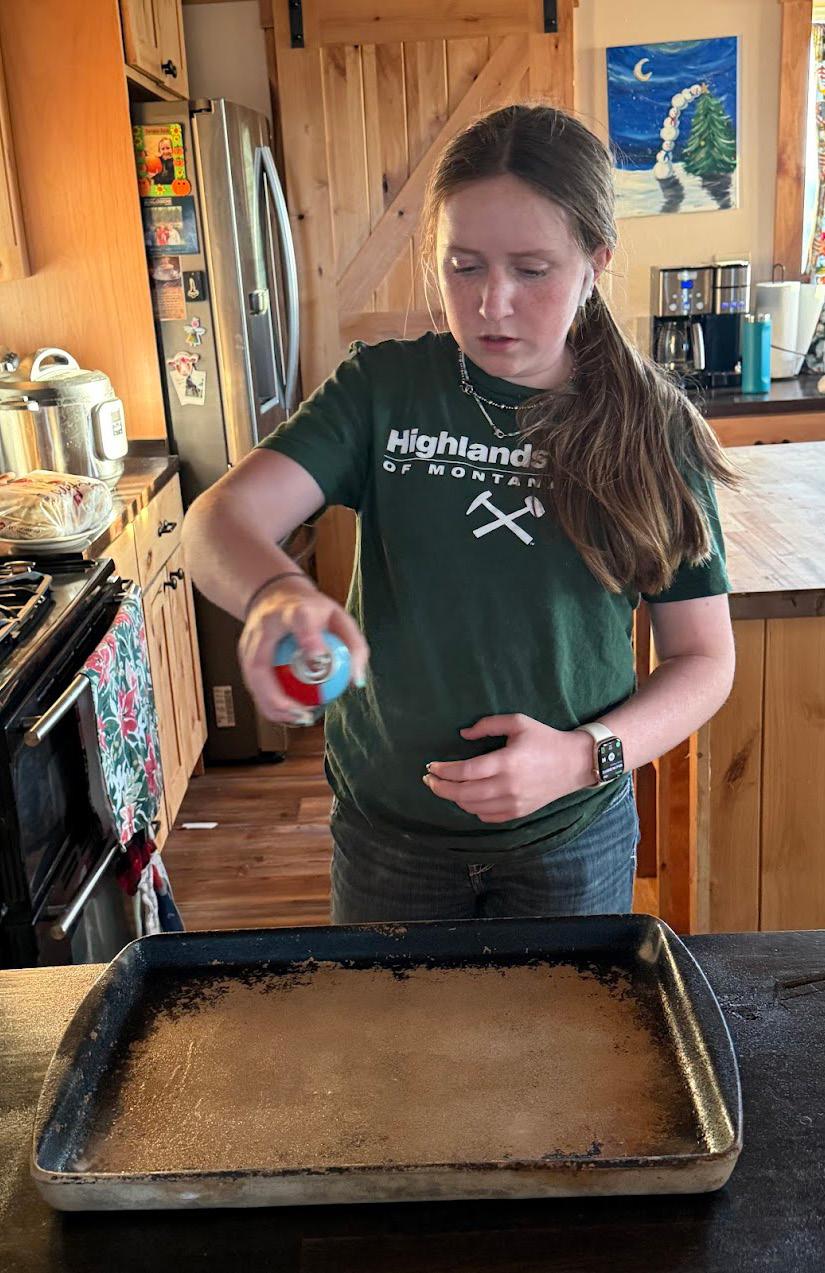
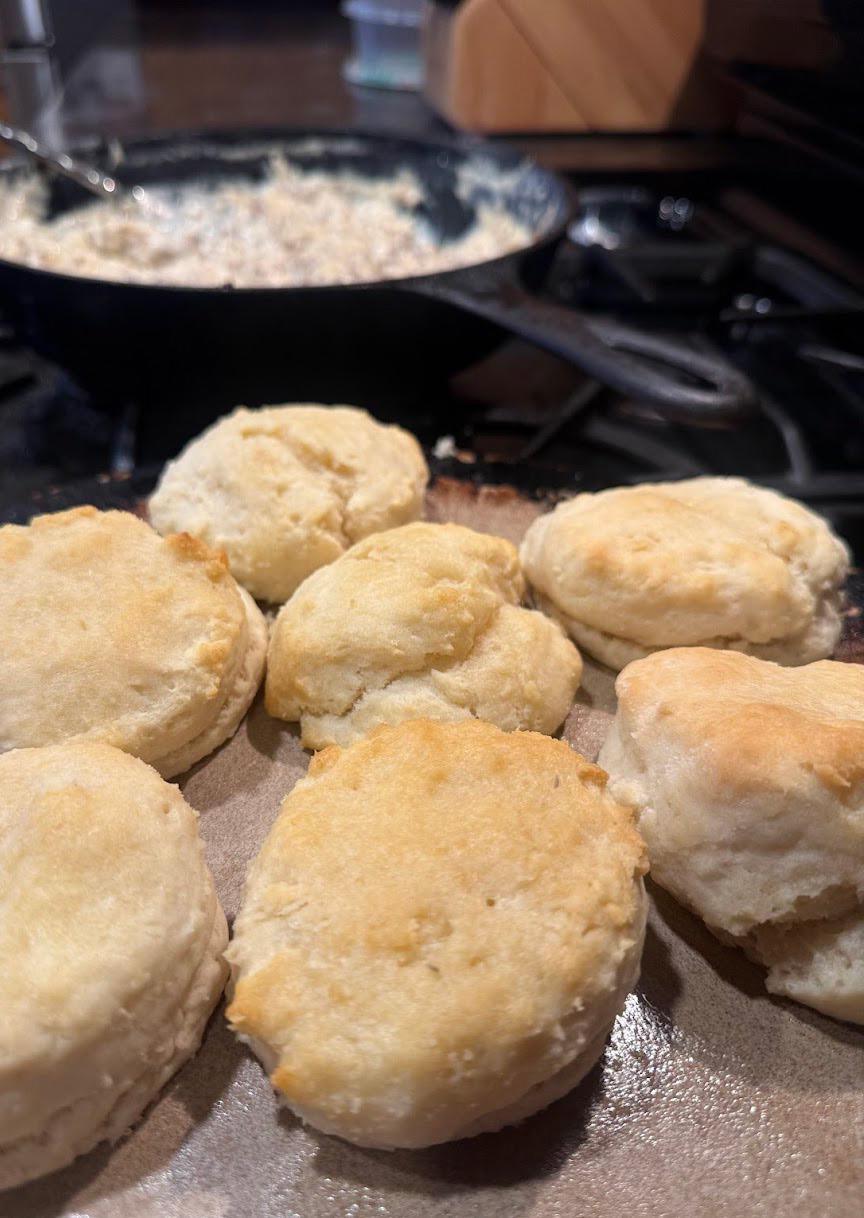
Baking is something I’ve always enjoyed. Some of my earliest memories are of my mom and me baking Spritz cookies for the holidays and events throughout the year. I have the same memories with my children. At an early age they joined us in the kitchen. As our 13-year-old daughter began baking in 4-H and more independently the past couple of years, she’s come up with her own specialties. I love to make sourdough and biscuits, and she has a special knack at making her famous cookie brownies with just the perfect consistency of soft and chewy with a crispy outside. We hope you’ll enjoy these recipes from our home to yours.
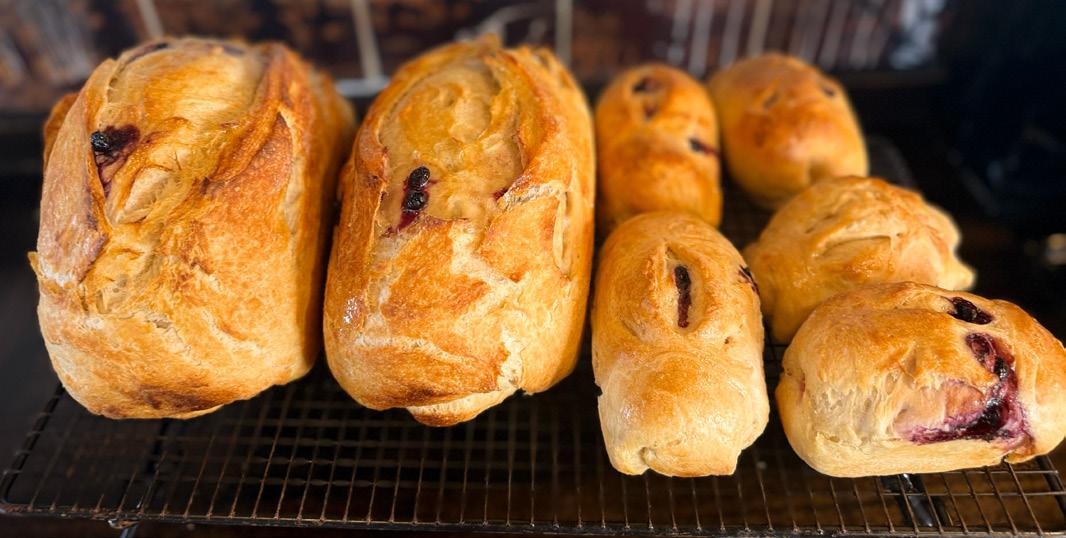
SWEET OR SAVORY SOURDOUGH
INGREDIENTS:
• 8 ½ cups bread flour
• 3 ¾ cups tepid water
• 2 tsp Salt
• 3 Tbsp sourdough starter
OPTIONAL ‘ADD-INS’: Berries, cheese, jalapenos, ground cinnamon, lemon or orange zests. For best results, research how to add it to the dough to see what’s the best amount for the end product.
FARMHOUSE
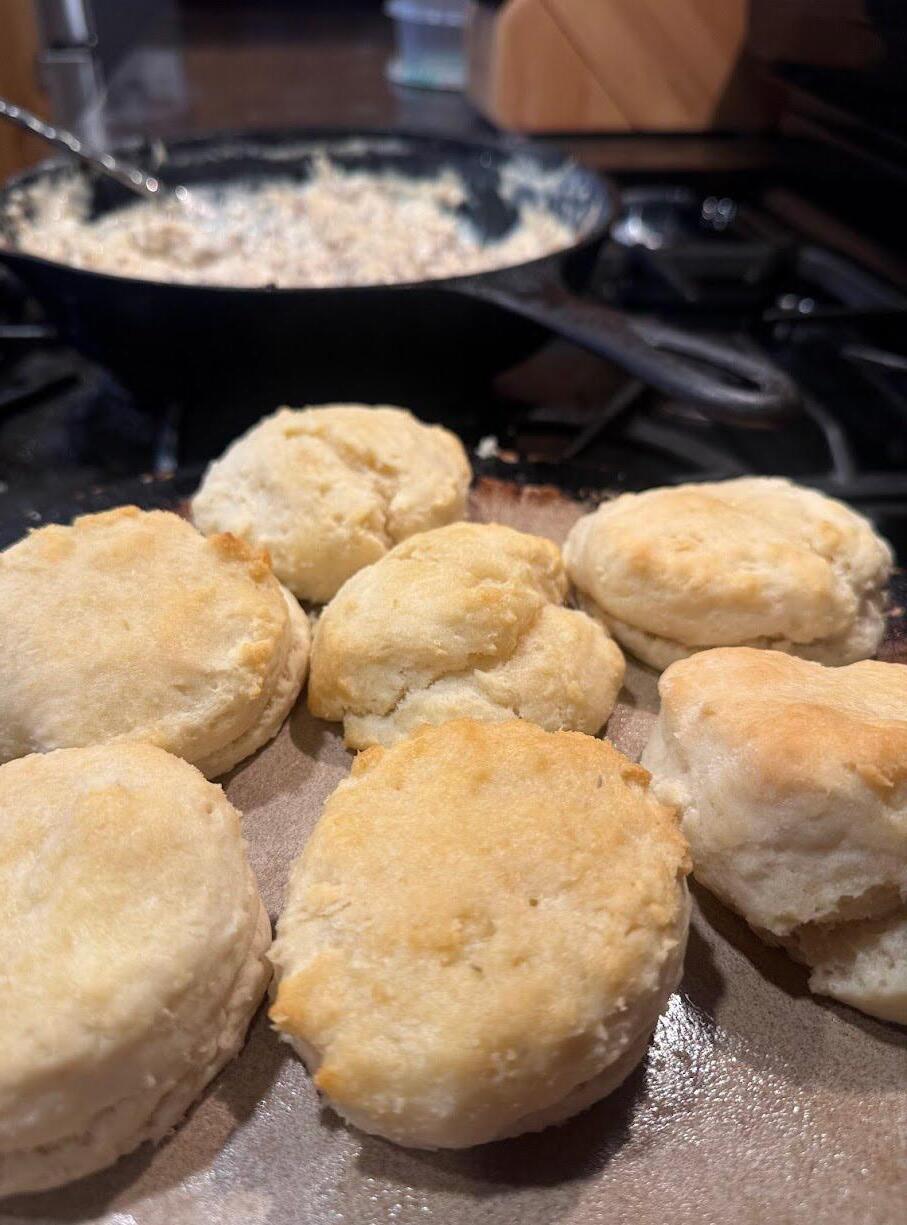
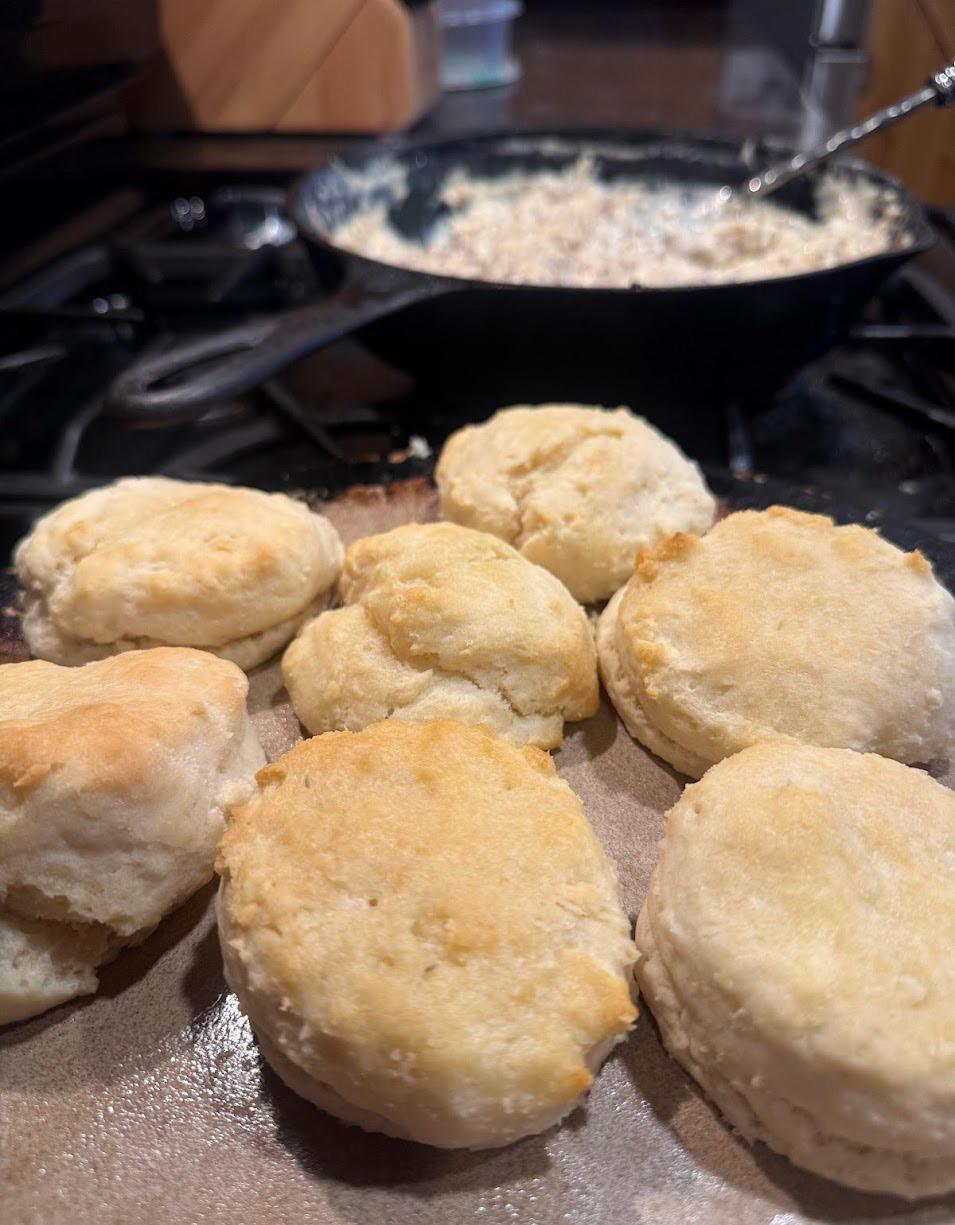
BISCUITS
DIRECTIONS: Mix ingredients in a large bowl. If hand mixing, run hands under warm water to keep dough from sticking to them. Once the dough is mixed into a rounded form, cover it and let it sit for about 30 minutes or an hour. Come back to the dough, and fold it over itself a couple of times, and then cover it again and let it rise for at least another hour.
Preheat the oven to 450 degrees. Prep two seasoned cast iron Dutch ovens for baking. Remove the dough from the bowl and place it on a lightly floured surface. Cut the dough in half. Then fold in a minimal amount of the optional 'add-ins’. Fold the dough over itself a couple times, add a sparse bit of the ‘add-ins’ and then fold over itself once more bringing the dough to a nice, rounded place, tucking in the sides to the base.
Place in the Dutch ovens and cut a couple slits along the top. Cover and bake for about 30 minutes; remove the lid. Reduce the oven to 350 degrees and continue letting the bread bake until golden brown. Remove from the oven and cool on baking racks.
INGREDIENTS:
• 1 ½ cups self-rising flour
• 1 ¼ cups cream
• ¼ cup 7-up or Sprit
OPTIONAL CINNAMON HONEY-BUTTER:
• ½ cup unsalted butter-1 stick of butter
• ¼ cup honey
• 2 Tbsp powdered sugar
• 1 tsp Cinnamon
• Mix ingredients and refrigerate prior to serving
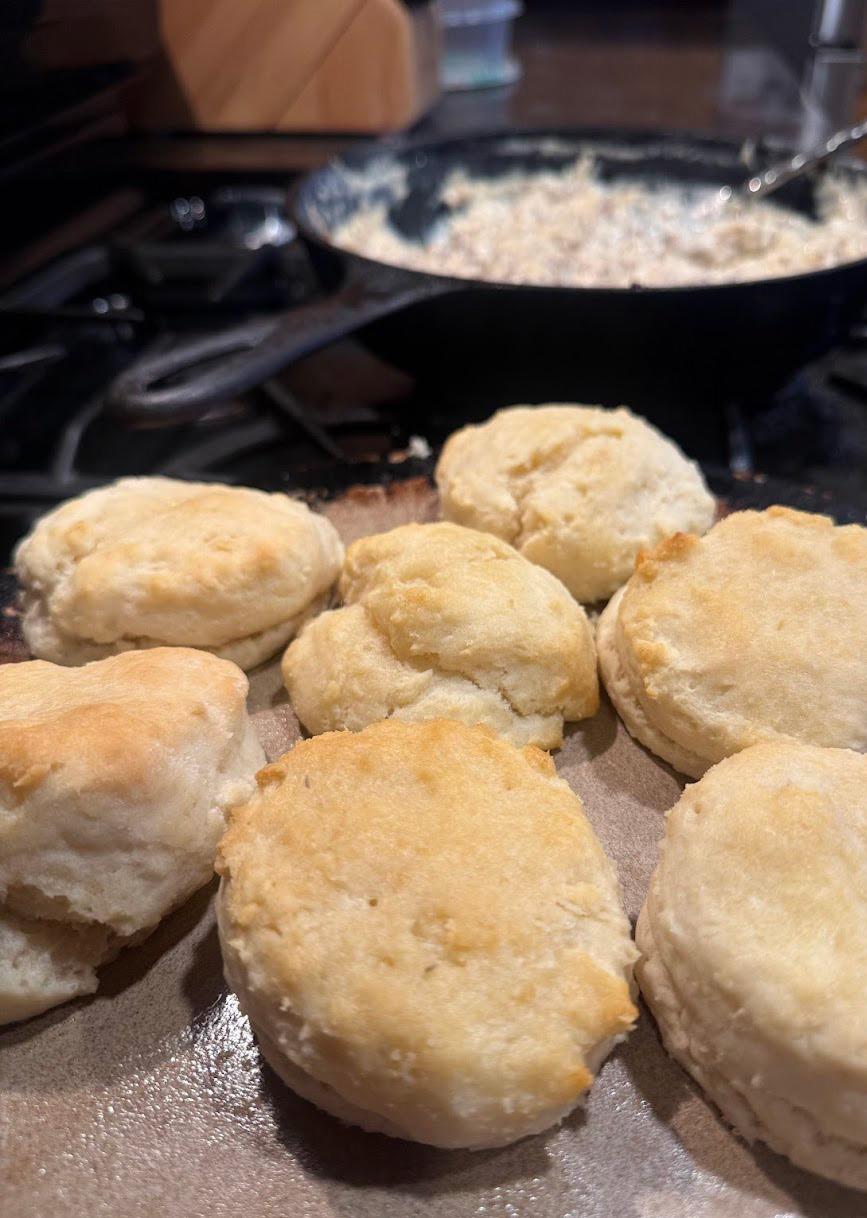
DIRECTIONS: Preheat the oven to 425 degrees. Grease baking sheet. Mix ingredients. The dough will be sticky, but when it forms a ball, pull it out and place it on a lightly floured counter. Use a little of the excess flour to pat the dough as it’s kneaded and folded over. Laminate the dough before rolling it out. Using a biscuit cutter, cut out dough and place on the baking sheet. Brush with butter or optional honey butter. Bake for 14 minutes. Remove and serve fresh from the oven. These can be frozen and thaw out great.
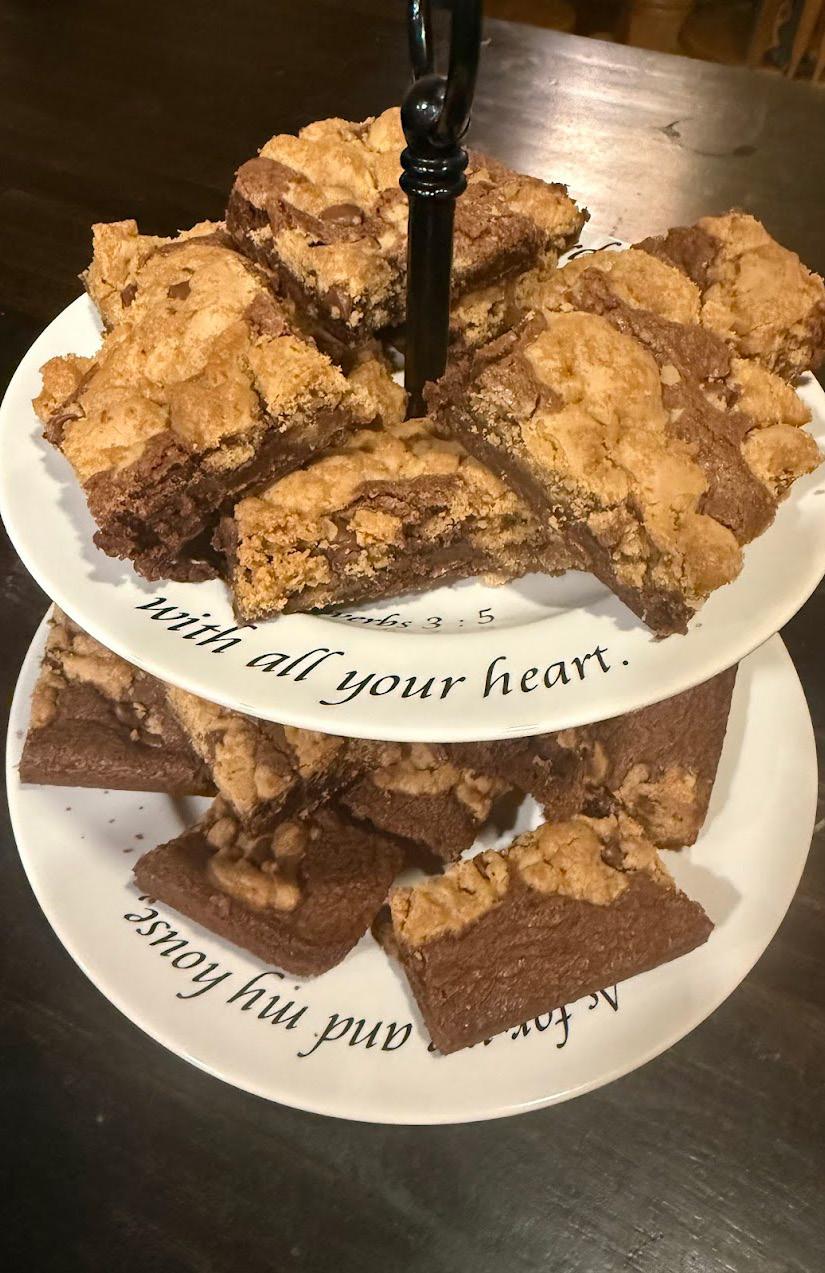
KATIE’S COLOSSAL COOKIE BROWNIES
A combination of cookies and brownies in one dessert. Both are excellent on their own, but combine them for an extra burst of incredible flavors!
CHOCOLATE CHIP COOKIES
INGREDIENTS:
• ½ cup butter
• ½ cup shortening
• 1 cup sugar
• 1 cup brown sugar
• 2 eggs
• 2 tsp vanilla
• ½ tsp salt
• ½ tsp baking soda
• 2 ½ cups flour
• 2 cups chocolate chips
DIRECTIONS: Preheat the oven to 375 degrees. In a bowl, mix butter, shortening, eggs and vanilla. Add remaining ingredients. Mix well. Set aside until the brownies are mixed then follow the next steps.
BIG BROWNIES
INGREDIENTS:
• 2 cups sugar
• 1 cup butter
• 4 eggs
• 1 tsp salt
• ½ cup cocoa
• 1 ½ cups flour
• 1 tsp vanilla
• Splash of coffee
• 1 cup nuts-optional
DIRECTIONS: In a bowl combine butter, eggs, vanilla and coffee, add the remaining ingredients. Mix well. Pour the brownie mix into a greased pan (9 x 12) Dollop the chocolate chip dough across the top of the brownies. Bake for 30 minutes. Cool and serve with a heaping scoop of ice cream.
SIMPLE SPRITZ
INGREDIENTS:
• 1 cup shortening
• ¾ cup sugar
• 2 eggs
• 2 tsp almond extract
• 2 ¼ cup flour, sifted
• ¼ tsp baking powder
• ¼ tsp salt
• Optional: Food coloring
DIRECTIONS: Preheat the oven to 375 degrees. Grease cookie sheets. Cream the shortening and sugar. Beat in the eggs, almond extract. (For colored cookies, add several drops of preferred color). Sift dry ingredients, then gradually blend those in and mix well. Fill a cookie press or form the cookies into a ball-push the center in with a finger and add sprinkles to the top. Bake for 1012 minutes. Remove and cool on baker’s racks. Makes about 6-7 dozen.
KATIE IN THE KITCHEN
POMPEY'S PILLAR MONTANA
A Blue Jacket AND A Red Coat and Crown A Blue Jacket AND A Red Coat and Crown
★ ★ ★ AGRICULTURE ADVOCATE, CLAIRE MURNIN
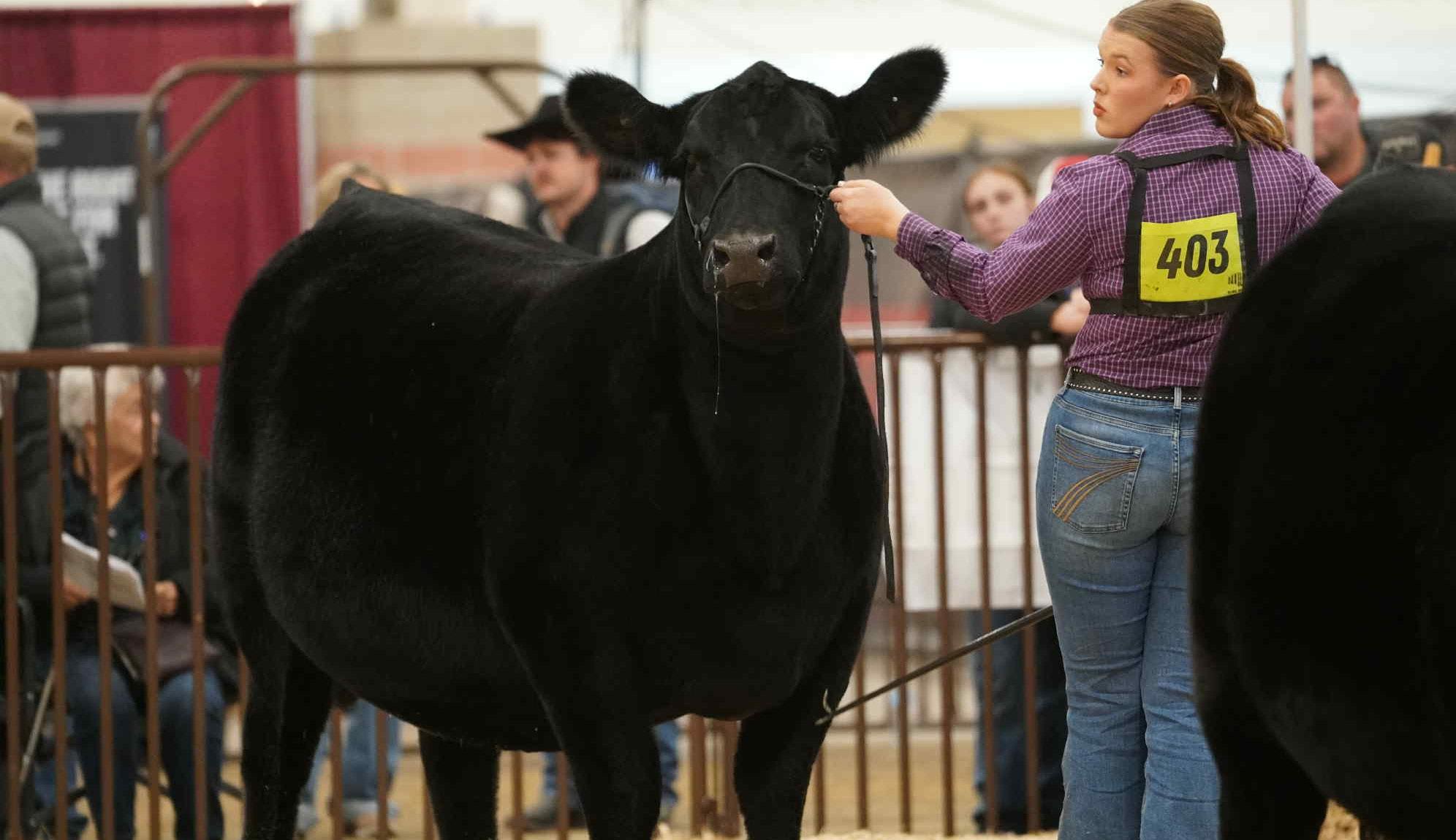
As a young girl, Claire Murnin had lofty dreams. She wanted to show cattle and be a princess. When she met Sally Yon, a former American Angus Queen, an everlasting goal was fostered.
“She was like a Disney princess to me,” Claire said. “But she also showed cattle and I wanted to be like her. I wanted to show cattle and be a princess of Angus cattle too!”
It would be a few years before Claire achieved her dreams, but the seeds planted in her heart at that tender age would grow and flourish to fruition.
Raised on a registered Angus operation at Pompey’s Pillar, Claire started her cattleshowing career with an Angus heifer as an 8-year-old in 4-H. It was the beginning of a decade of not only showing cattle in 4-H and FFA but growing her own registered Angus herd on her family’s ranch, Murnin Angus.
“I have about 25 head of my own registered Angus,” Claire said.
Caring for and showing livestock, developing leadership skills, and learning to serve, all culminated with being elected Montana State FFA President as well as winning the title of Miss American Angus for the American Angus Association (AAA).
Claire was active in 4-H through high school and joined FFA in the seventh grade. In both clubs, she showed cattle. She also showed pigs and sheep before she honed in entirely on Angus cattle.
“The sheep weren’t for me,” she laughed. “But showing cattle, that’s what I like doing.”
Claire was a freshman at Shepherd High School when she witnessed the benefits of FFA.
“One of my best friends was elected to state office for FFA,” Claire said. “Seeing what an impact being a state officer had on her and the opportunities that it opened impressed me.”
Claire added another dream to her repertoire; to become a state FFA officer too. At about the same time, after a trip to the
MISS AMERICAN ANGUS
365DAYSOFAGRICULTURE
RIGHT NOW, I HOPE TO BE AN inspiration to young people AS AN ADVOCATE FOR BOTH FFA AND THE ANGUS BREED.
— CLAIRE MURNIN
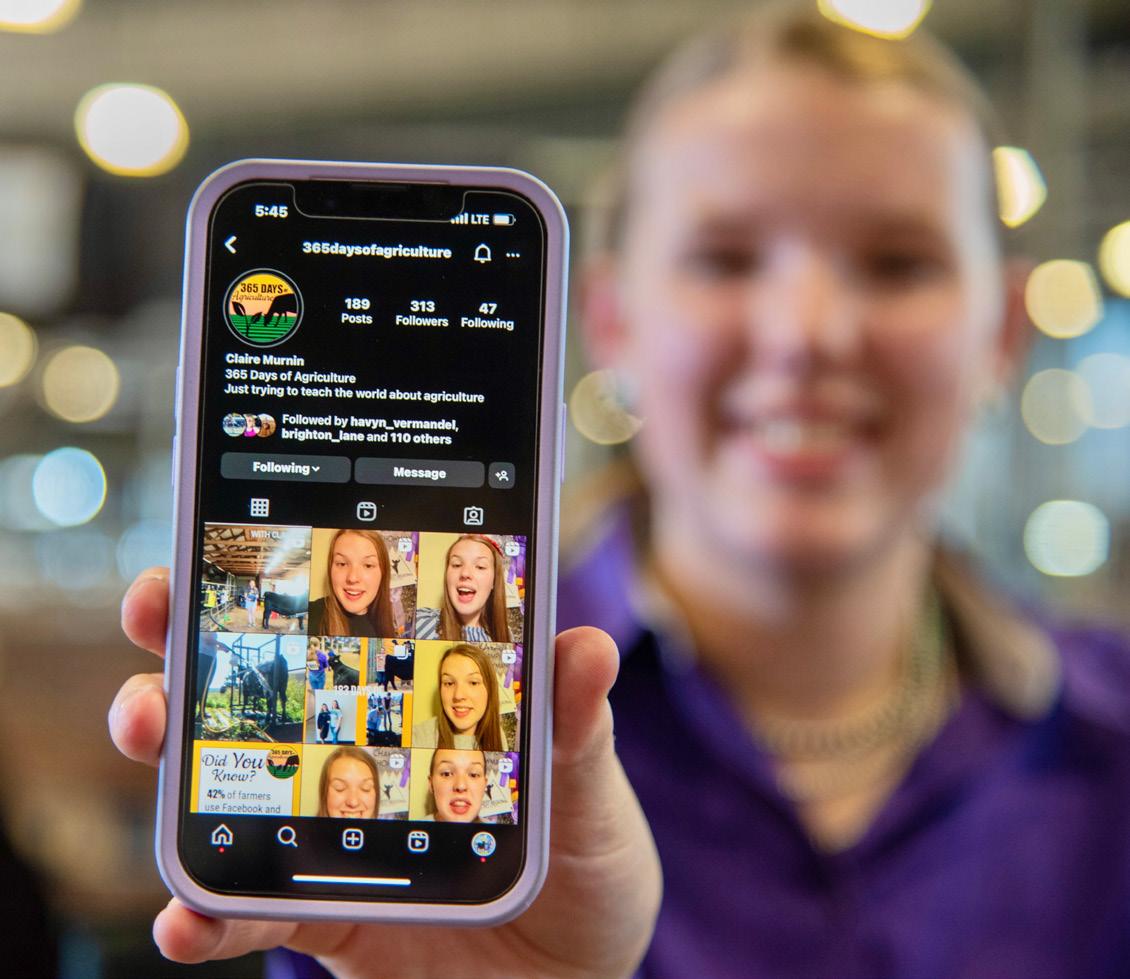
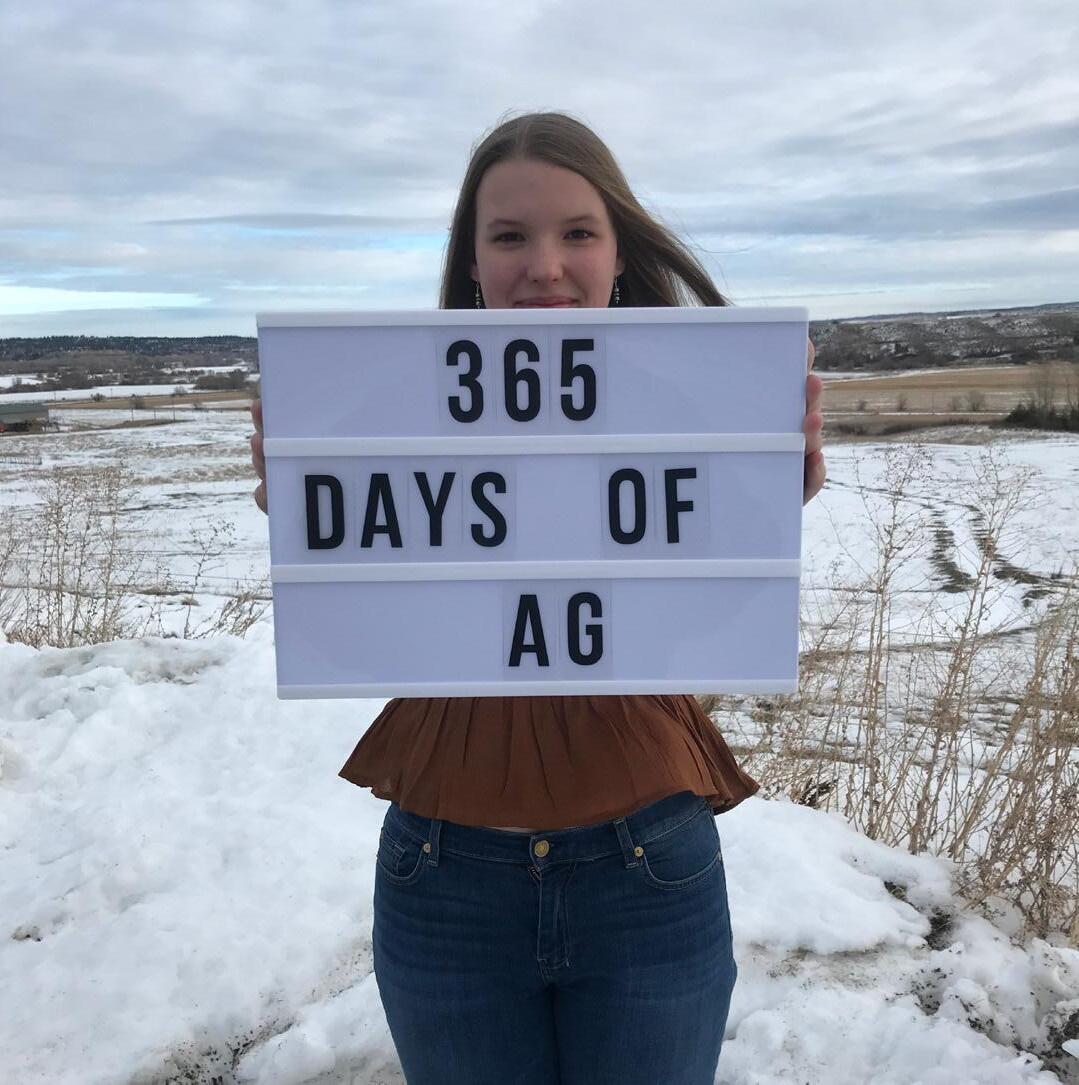
national FFA convention and a speech on agriculture advocacy and social media, Claire began daily social media posts on her newly launched platform, “365daysofagriculture.”
“Initially I started posting facts about agriculture,” Claire said. “But it’s evolved into a glimpse of my daily life and how I am being an advocate for the industry.”
The short reels that are posted on Instagram and TikTok are a combination of videos and photos of Claire going about her daily life, washing cattle for a show, doing chores in the predawn hours, trekking through snow to check cows or prepping for an FFA event. Claire’s authenticity is evident.
“I try to be educational and objective in what I post,” she explained. “I haven’t missed a single day of posting in the last three years. I feel like it makes a difference and I’d love to continue for as long as possible.”
With her daily media platform; her term as state FFA President; her reign as Angus Queen; her education and her contribution to the family ranch: Claire stays busy.
“It’s been quite a year,” she said. “The real excitement started when I was elected state FFA President.”
Claire wouldn’t have it any other way. She graduated from Shepherd High School right after being elected and following a whirlwind summer of FFA functions, she began online college courses through MSU-Billings. In November she started her reign as the first Montanan to hold the title of Miss American Angus. The year will be filled with travel, conventions, events, sales and conferences for both FFA and AAA. With a full schedule, the 18-year-old will stay busy, but utmost in her mind is service responsibilities as a state FFA officer and as Miss American Angus.
As FFA President, Claire is required to attend statewide contests, events and conferences. She will also visit FFA chapters across the state encouraging membership and opportunities for students.
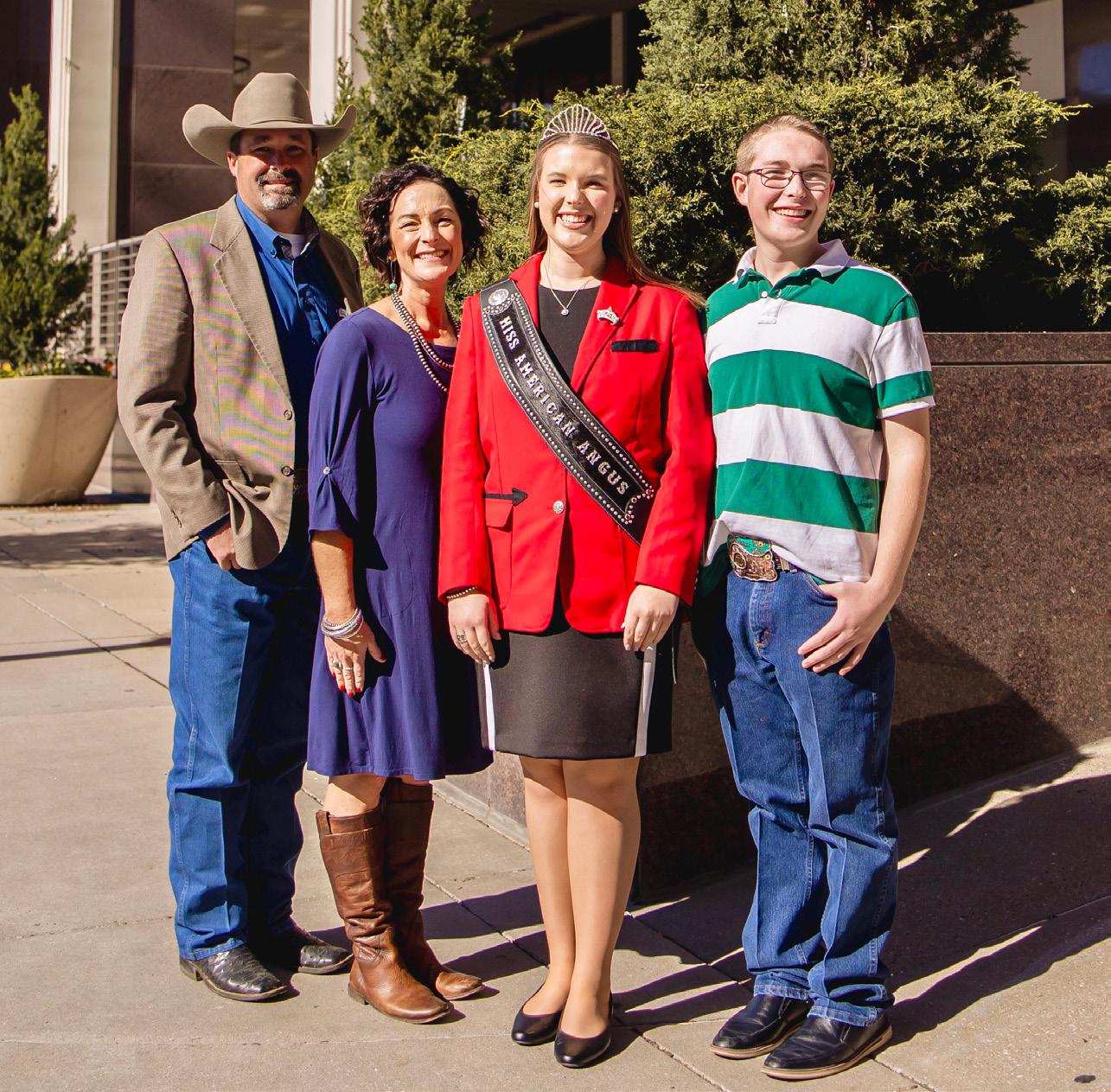
JARED, JULIE, CLAIRE AND COOPER MURNIN
“There are many ways that students perceive us as officers,” Claire began. “We’re not that important as individuals, what’s important is the members’ experience. That’s what they will remember, not the person initiating the experience, but the experience itself.”
Claire’s role as Angus Queen is similar. She will travel to all the major stock shows across the country and attend as many Angus production sales as her schedule allows. Her parents, Jared and Julie Murnin, have encouraged her every step of the way.
“Thankfully I have the support of my family,” Claire said. “They truly are involved in every single part of what I’m doing. My younger brother, Cooper, calls himself ‘The Coatrack for Miss American Angus.’ I’m so grateful. Without them, I couldn’t do what I’m doing.”
As she wraps up her term as President and her year as Angus Queen, Claire will begin a more studious focus; a degree in Animal Science on a pre-law track, with plans to become an agricultural lobbyist.
“Right now, I hope to be an inspiration to young people as an advocate for both FFA and the Angus breed,” Claire said. “Both associations have a heart for service, and that’s the role I have taken on. How can I impact others, whether it’s through FFA, the Angus Association or 365daysofagriculture? At the end of the day, that’s what counts.”
LARGE INVENTORY OF GOOSENECK STOCK TRAILERS ON HAND!
TITAN, EXISS, CIRCLE D, SOONER & SWIFT BUILT
the f i nal Farmers' Almanac
A TWO - HUNDREDYEAR - OLD TRADITION IS LAID TO REST
For as long as I can remember, the bright orange Farmers‘ Almanac has been part of my family’s life. My dad picked up a copy every year at Gamauf’s Hardware, and it was always kept at hand.
When I started gardening around age 10, I studied the “Best Planting Days” charts that listed whether it was time to plant root or aboveground crops, prune trees, or perform a number of other gardening tasks. There were even recommendations on the best or worst times to ask for a loan, castrate farm animals, hunt, buy a home, and, of course, fish. Honestly, I’ve lost track of the days we’ve been skunked fishing when we fished on days not on the list.
According to the Farmers’ Almanac, the days for all the activities listed are based upon the moon phase and place in the Zodiac. This might seem pretty woo-woo, but folklore and natural observations have long guided people’s activities, and a lot of people put a fair amount of credence in the recommendations.
My dad, a teacher, was always one of the more scientific-minded folks I knew and surprisingly adhered to the Farmers’ Almanac’s “best days” list, especially when it came to planting. He kept careful notes, and over the years proved to himself that planting on those dates made a significant difference in germination. In early spring, he seeded the garden vegetables according to the Almanac's recommendations.
Besides helping to plan projects around the farm, the Farmers’ Almanac has always been one of those publications offering age-old advice. It’s one of the few print publications I hang on to over the years. Whether you need a recipe for switchel, also known as “haymaker’s punch” and is the OG (old gangster) of sports drinks, want to learn ways of long-term storage of garden crops when refrigeration isn’t an option, or discover a few tidbits of meteorological lore - at some point in the 200+ years, the Farmers’ Almanac covered it.
My favorite aspect has long been weather forecasting. I immediately open to the general forecast, then scour the months to find potential dates to plan activities. Although people often teased me about doing
this, I’ve had many folks casually ask me, “So, what does the Farmers’ Almanac say about that time?”
Granted, the forecast isn’t terribly specific. Our area, the North Central Region, covers ten states, including Montana, Minnesota, Missouri, and Colorado. The weather between Great Falls and Billings can be a night and day difference at any given time, but the Almanac offers us generalities, and they report roughly an 80 percent accuracy.
The “how” of developing the weather reports is more difficult to pinpoint, though they explain the use of a secret, proprietary formula that considers solar activity (which has been wild lately!), along with lunar phases and planetary placements, combined with historical trends. My eldest son, who is studying meteorology, rolls his eyes at me, but I still stand by having at least a heads-up on what the seasons might bring.
Sixteen years ago, my relationship with the Farmers’ Almanac deepened. As a writer, it’s always special to produce content for a publication that has been part of your life for so many years. When I decided I wanted to query them, I asked Dad to look at the Almanac masthead and tell me the editor's name. I reached out to Sandi Duncan, and much to my delight, she assigned me a story.
WINTER VARIETY PACKAGE
Available now thru the end of April 2026
I cannot remember the first article, although I fondly recall many of the others, including sharing the Native star stories I learned from listening to the Native Speaks programs in Glacier, teaching readers how to build a hugelkultur bed, explaining the social implications of casseroles and sharing a few recipes. I even delved into which home heating fuel is the most efficient when electricity or natural gas is not an option. (Here’s a hint: Anthracite coal burns cleaner and more efficiently than wood!)
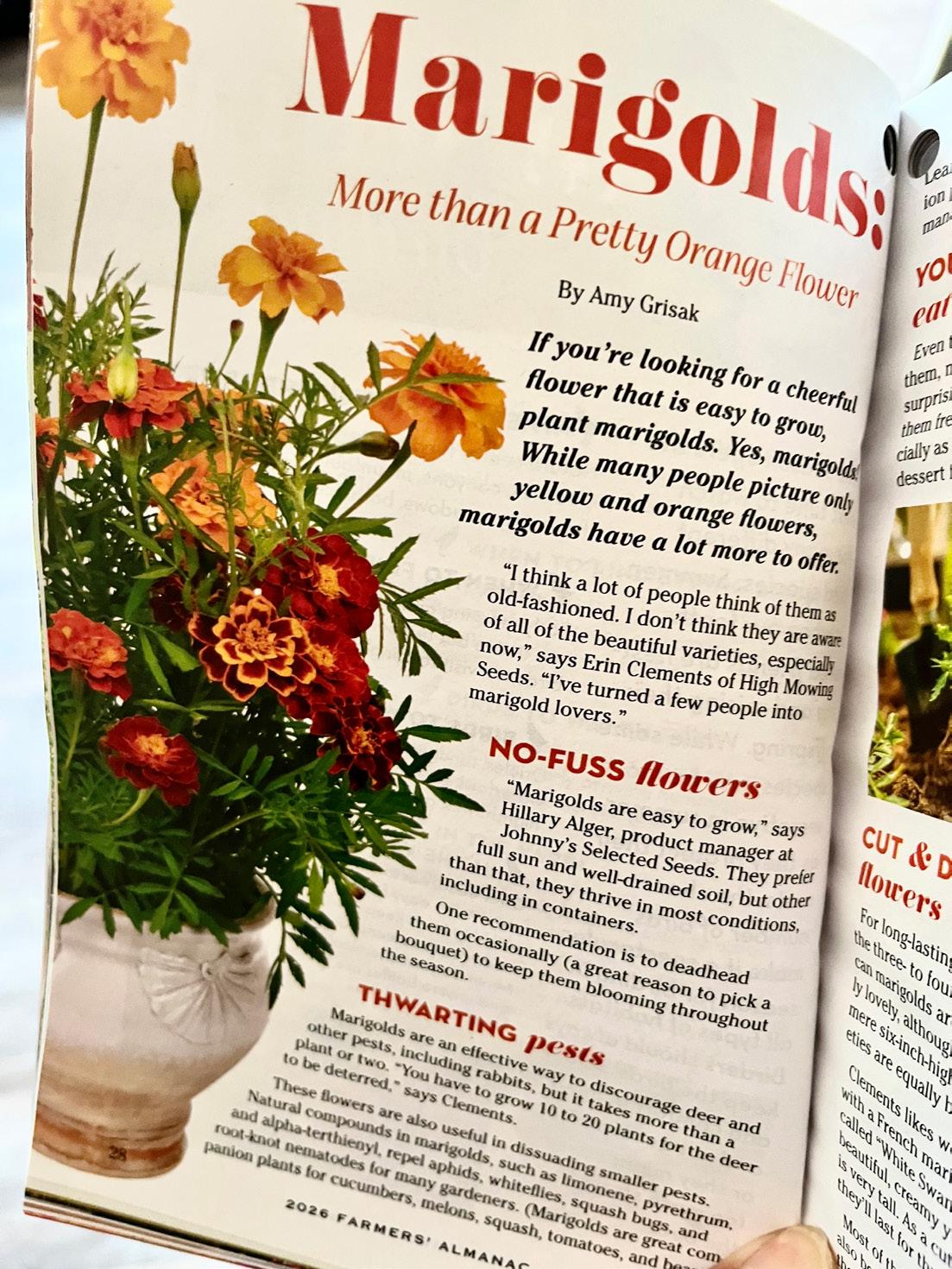
For 2026, Sandi asked me to write a piece on marigolds, which was a treat because it was a flower my father always grew. Plus, being an October baby, it is my birth flower, making it even more special. Little did I know it was the
BEST DAYS FOR FISHING
BEST DAYS FOR WINTER PLANTING
last article I would write for them.
The copies I received in August were accompanied by the standard letter outlining ideas for 2027. But in early November 2025, we received an email sharing the bad news: After 208 years, the Farmers’ Almanac was ceasing production for good.
The Geiger family purchased the rights to the Farmers’ Almanac nearly 75 years ago. They’ve weathered a few ups and downs along the way, but for whatever specific reasons, they decided it was no longer viable.
editor, but its importance to its readers over the past 208 years. It’s been a fixture; yet everything changes.
The Farmers' Almanac
Dad has been gone for nearly 17 years, and he never saw the articles I wrote for the Farmers’ Almanac. I’m sure he would have been pleased as punch to pick up the latest copy at Gamauf’s, although even they are closing now, as the town evolves from an agricultural community to a suburb of a larger city.
IS ENDING AFTER MORE THAN 200 YEARS OF PROVIDING WEATHER FORECASTS, PLANTING GUIDES, FOLKLORE, RECIPES, AND "BEST DAYS" FOR ACTIVITIES LIKE FISHING OR POTTY TRAINING.
“It’s hard to believe, but they say there's a season for everything, right?” Sandi shared with me. “Not sure I could say much more or different than what's been said before, but I will say it's been a wonderful career, and I do hope that people continue to live by the Almanac way of life.”
Her very thoughtful words do a fine job of summarizing the impact of the Farmers’ Almanac, not only on me as a writer and an
Sandi is right, there is a season for everything. The Farmers’ Almanac is stepping into the realm of history, although for those of us who love staying in touch with tradition, there is still the Old Farm -
er’s Almanac, which was established in 1792. If you haven’t already, pick up a copy and incorporate these time-tested practices while they’re still available to us.
BEST DAYS FOR SPRING PLANTING
LiveLimitless
ALLI ALLEN, MISS RODEO MONTANA 2025
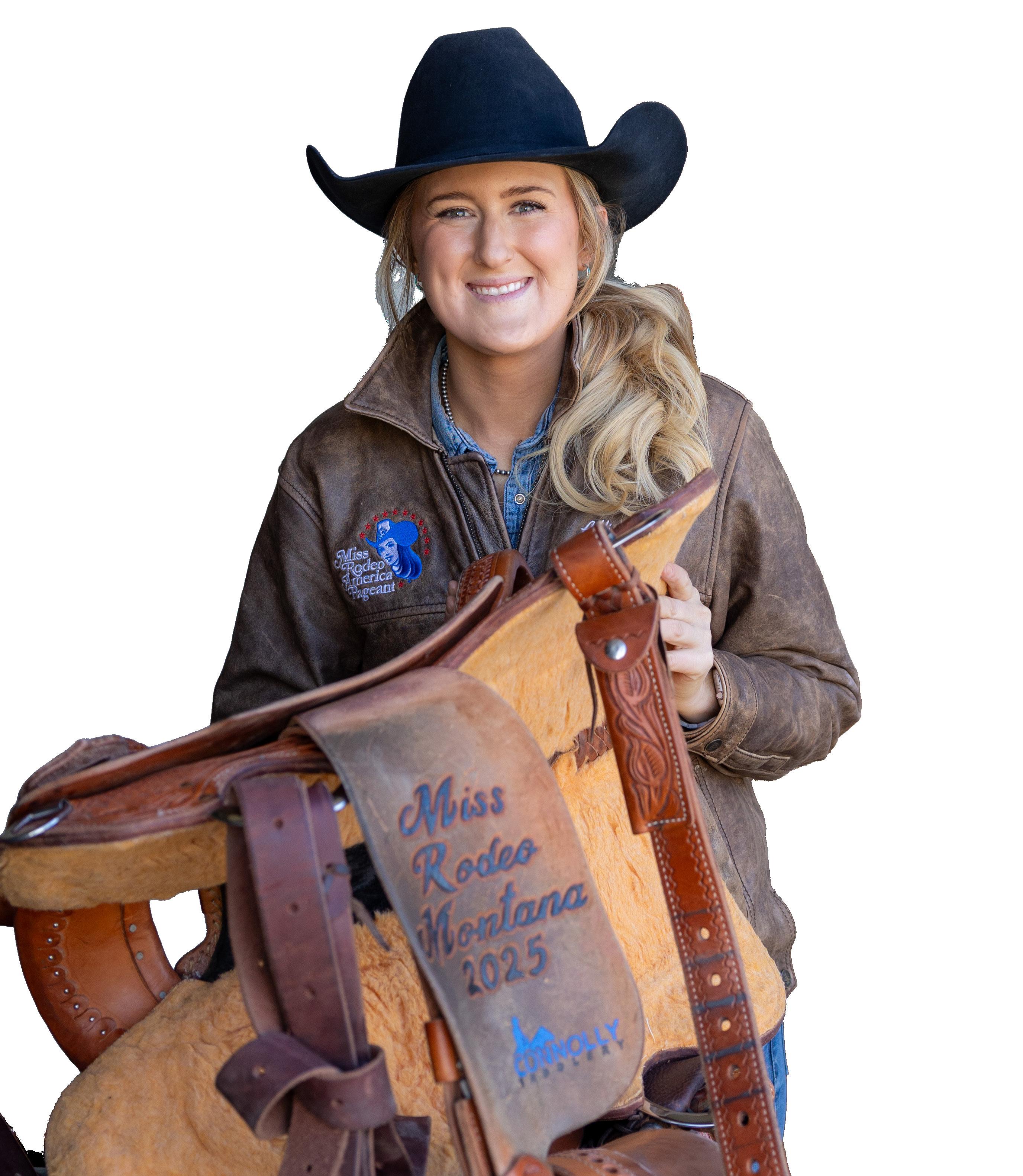
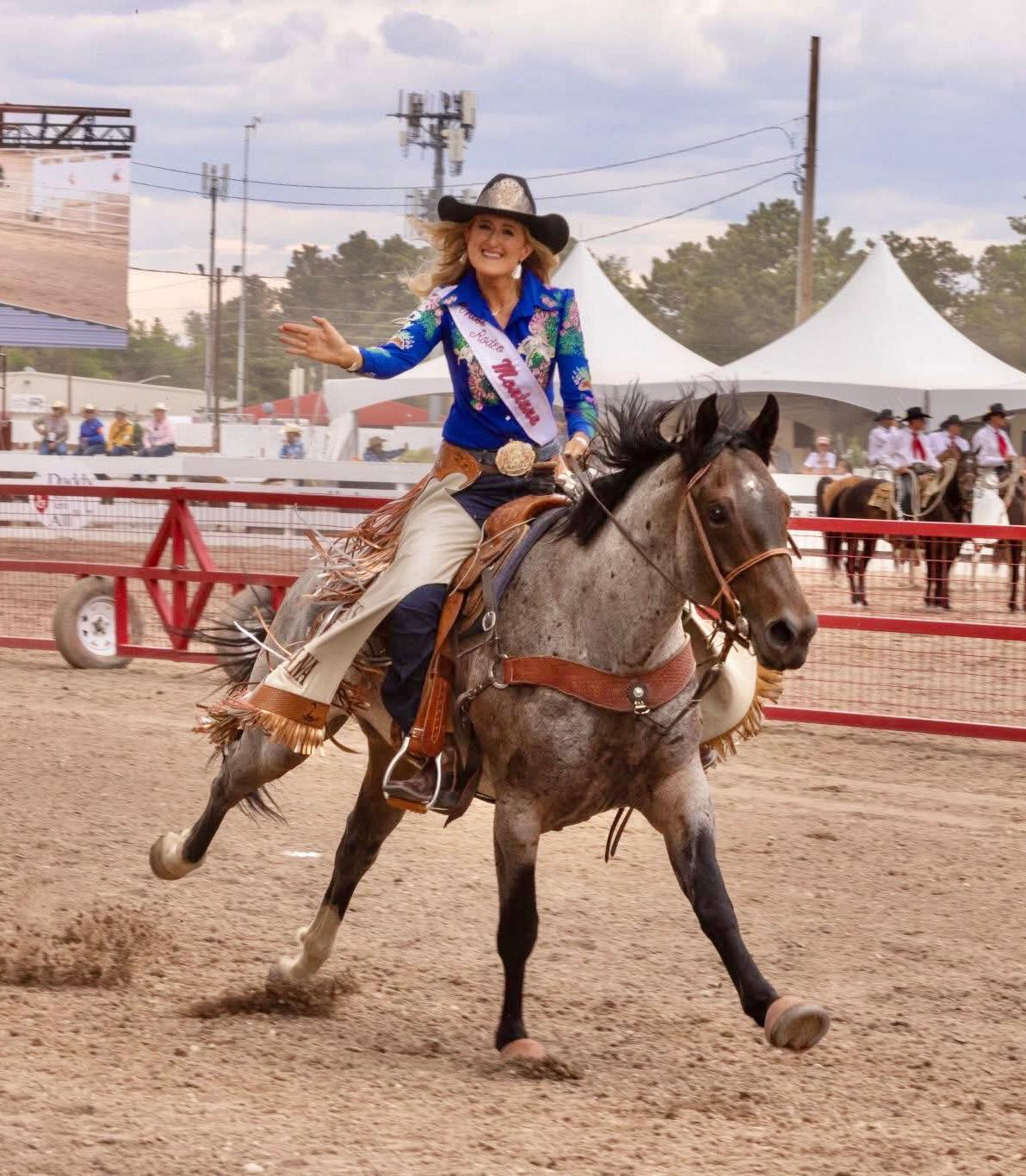
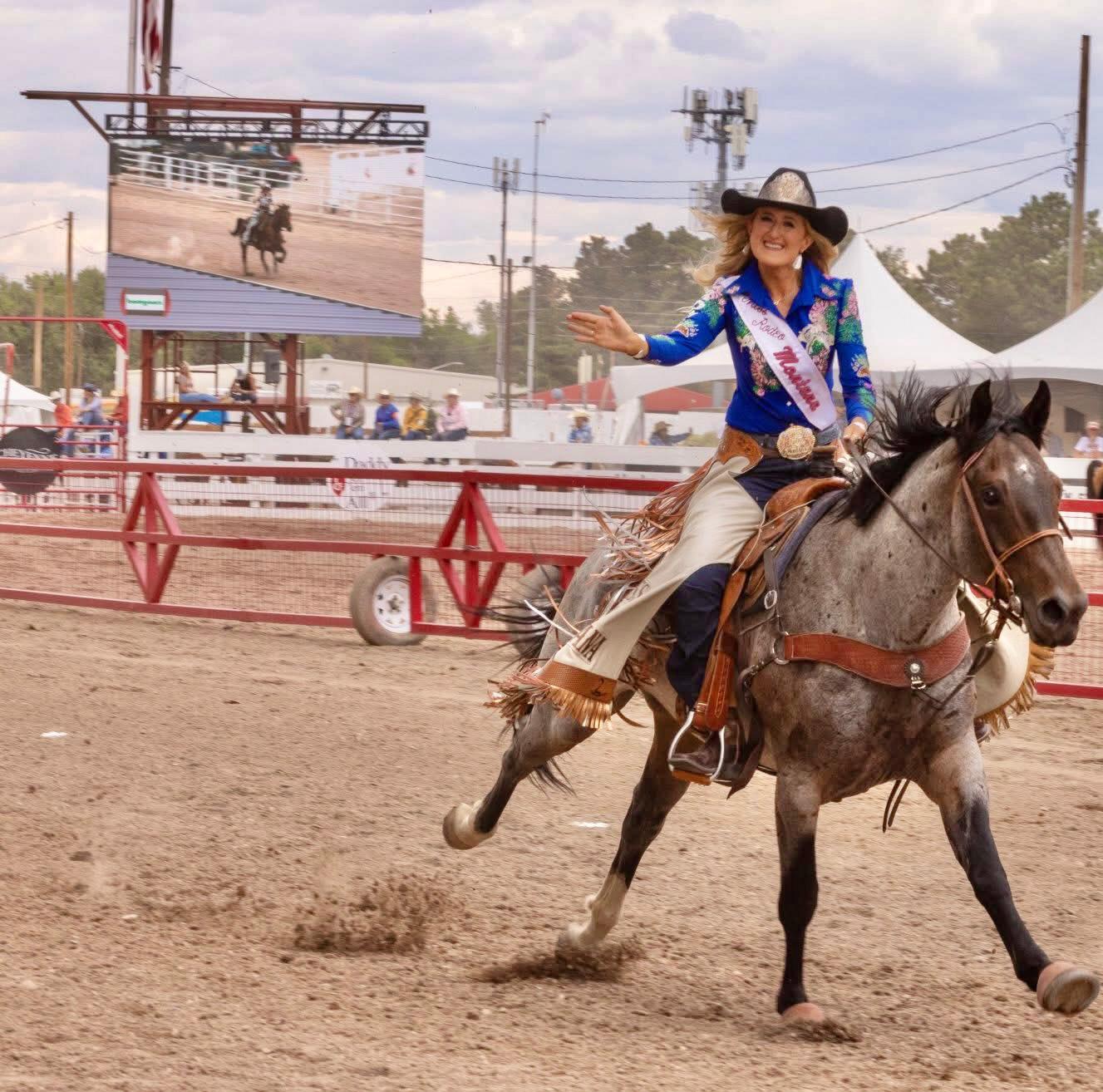
Alli Allen, Miss Rodeo Montana 2025, recently returned from nine intense, activity-filled days at the Miss America Rodeo pageant in Las Vegas. She ended her yearlong reign as a top ten finalist in the pageant and made her last public appearance at the Montana Circuit Finals in January.
Representing Montana at major rodeo grand entries, parades and ceremonies promoting the sport of rodeo has been demanding. She attended 20 PRCA sanctioned Montana rodeos from Father’s Day through Labor Day, as well as rodeos in Colorado Springs, Cheyenne, WY and Pendleton, OR.
“It’s a packed three months,” she said. “One week I drove 900 miles in five days, but I loved every minute of it.”
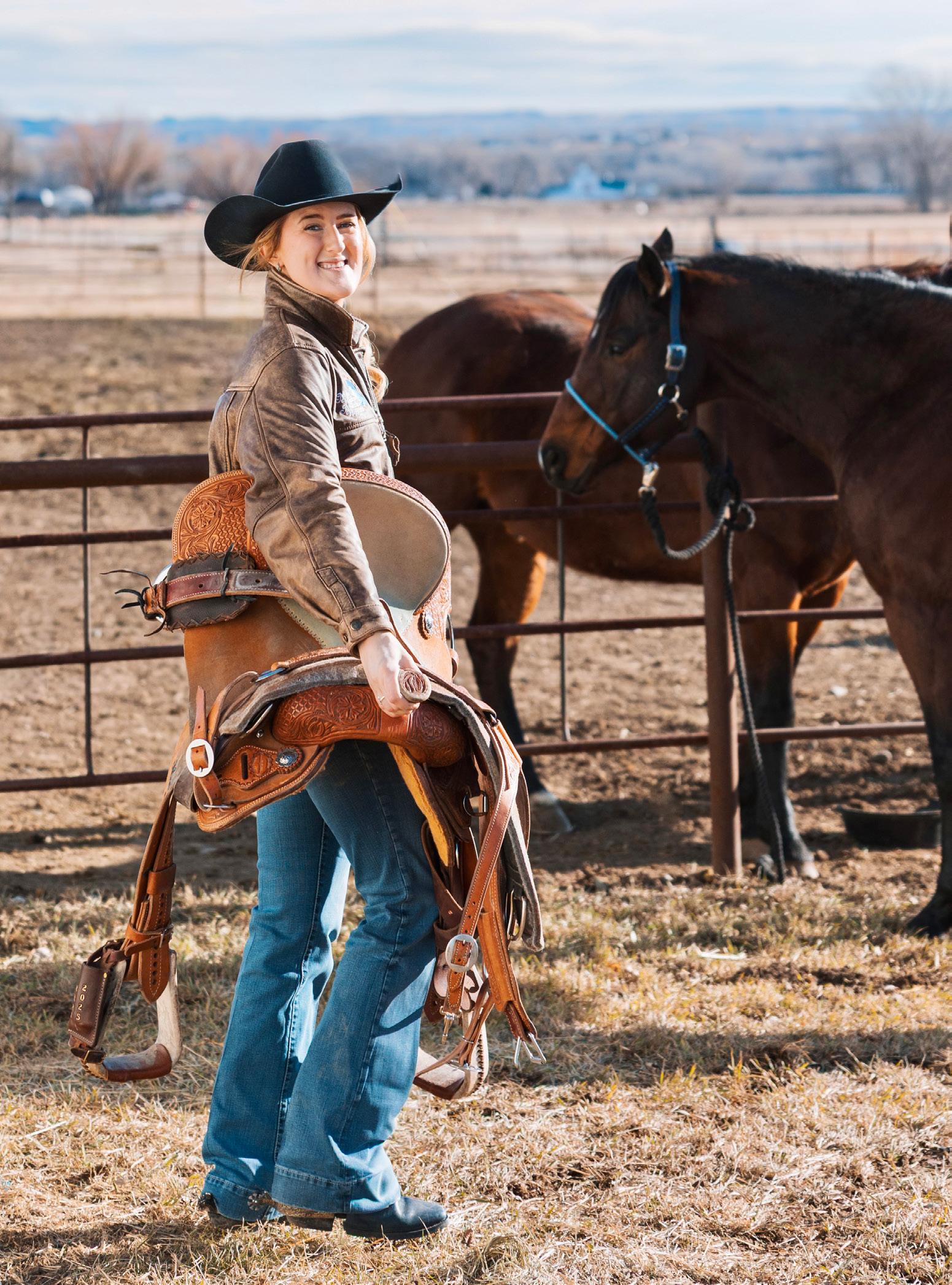
Practically born on the back of a horse; Alli was riding, “before I could do anything else,” and she’s not exaggerating. Her mother, KayLynn Allen, would put her on top of a horse she trusted and just let her sit there. “He was a good babysitter,” she laughed.
Alli grew up in a rodeo/ranch family. Her mother barrel raced and both she and her sister did too.
She remembers being in O-Mok-Sees as a toddler. When they weren’t rodeoing, she was expected to help on the ranch. By the time she was in high school, she was training horses and taking care of livestock at the feedlot her family co-owned near Shepherd.
“My mom expected my sister and me to show up, behave, and follow through. We had responsibilities on the ranch, and we were expected to do them,” Alli said. “As an adult, I feel blessed to have been raised that way. I love everything about the western lifestyle that I’m living.”
As much as she loves horses, rodeos and wearing a crown, she believes sharing her personal experience and recovery from a brain injury is a calling that she must answer.
Eight years ago, Alli endured a traumatic brain injury while skiing that sidelined her life and changed the course she had set for herself. The actual brain injury didn’t seem that serious at the time
PEDERSEN PHOTOGRAPHY
PEDERSEN PHOTOGRAPHY
and Alli was released from the hospital relatively quickly, but it was the two concussions she sustained following her injury and the subsequent seizures that shut her life down.
“The seizures took over my life,” she said. “I had to quit college, I couldn’t drive and I had to have people take me to doctor appointments. The only way I knew I had a seizure coming on was because I’d have a tachycardia right before the seizure started where my heart would go crazy.”
For over two years Alli suffered up to 30 seizures every day and was unable to find help in the medical industry to stop them. For a time, she lost her purpose. Raised to be independent, self-sufficient and always outgoing, she became withdrawn, her short-term memory suffered, and she struggled with headaches and depression. Alli joined her mom and stepdad at their winter home in Arizona.
“We had a stud on stall rest that was healing, and he needed to be hand-walked,” she said. “I was feeling purposeless and cognitively wasn’t all there, so it became my job to walk him.”
and parts of my brain were overcompensating causing my neurons to go crazy, which resulted in the seizures,” she explained.
The physical and cognitive rehab was very expensive and not covered by insurance.
“They treat their patients how they believe they need to be treated, not based on what insurance covers, so it’s all out-of-pocket. We were desperate to try it, but without insurance, I was going to have to say no,” Alli began to explain and then teared up, “But then my rodeo family stepped up.”
The horse, Big Time, instinctively knew when Alli was about to have a seizure and would stop and wait until it passed. He was instrumental in her healing.
“Big Time became my seizure dog,” Alli smiled. “But he didn’t cost as much as seizure dogs do so we bought him. I still have him too.”
Kay-Lynn worked tirelessly seeking solutions for Alli’s seizures and after exhausting all medical leads, they reached out to a brain rehab center in Provo, Utah. The facility helped Alli understand what she was going through and guided her toward rehabilitation that would be beneficial. “They said that parts of my brain weren’t working,
When word got out that Alli was in need, her friends and family in the rodeo world rallied around her. A fundraiser was organized. Chase Hawks and other foundations and individuals made donations, and the cost of the rehabilitation was covered.
“I was told that my entire body needed to be fixed, not just my brain,” Alli said. “They started with my toes and worked up reconnecting neurons, muscle and tissue.”
After weeks of treatment, the rehabilitation worked. Alli has been seizure-free for three years. Shortly after, she was named Red Lodge Rodeo Queen and Southeast Montana Rodeo Queen. After both reigns, she thought she’d be done with “queening,” as she put it.
“I thought I was done, but I love rodeo. I’m super passionate about the people and the sport, and I wanted to figure
PEDERSEN PHOTOGRAPHY
You’re so much more than your limitations. I HAVE A DEEP GRATITUDE FOR OVERCOMING MY BRAIN INJURY AND BEING ABLE TO MOVE ON.
— ALLI ALLEN
out a way to give back to my rodeo family for what they did for me,” she said. “I felt being Miss Rodeo Montana would allow me the opportunity to promote the other side of the sport and the people behind it.”
Learning so much about brain injuries and how susceptible rodeo athletes are to concussions, Alli’s focus as Miss Rodeo Montana was to educate people about brain injuries and how to care for concussions. But she took it further. She advocated for believing in yourself and not letting setbacks set you back. Dubbing her platform, “Live Limitless,” Alli told her story repeatedly through the course of the past year.
"Telling my story has educated people about what it takes to heal from a concussion or brain injury, but it also encourages people to overcome,” Alli said. “I spent a lot of time asking God, ‘Why?’ Sometimes it takes almost losing everything to really show you what’s important. I could either let it beat me, or I could believe that God is good and He will get me through this.”
As she pondered the “Why,” her faith in God grew deeper.
“You’re so much more than your limitations,” she said. “I have a deep gratitude for overcoming my brain injury and being able to move on. I was told so many things that I would never be able to do again, but here I am.”
Developing an attitude of gratitude, Alli’s outlook on life has dramatically changed because of her injury. It’s difficult now to detect the consequences of her trauma, but that’s what makes her so incredible. Her positive outlook on life is infectious.
“I learned that gratitude, anger and anxiety cannot coexist in the brain. When things get frustrating and aren’t going my way, I stop myself and think of three things I’m grateful for and the frustration just melts away. It’s what framed a lot of my last year and my life. I don’t typically get my boat rocked too badly be-
PEDERSEN PHOTOGRAPHY
cause if I’m not in the dirt having a seizure, it’s a pretty good day,” she laughed.
As her reign as Miss Rodeo Montana drew near, Alli found contentment in trusting God’s plan for her future. She works parttime at the Yellowstone Boys and Girls Ranch taking care of the livestock and teaching the residents how to care for the livestock. She also works for NILE and hopes to one day pursue her dream of becoming a rodeo producer.
“I’m very content in my life and I trust God’s plan,” Alli said. “I love talking about rodeo with kids and spreading brain injury awareness. I feel like I’ve lived every moment the best that I could. I trust in what God has planned for me.”
WHILE IN LAS VEGAS, SEVERAL TUBS OF ALLI’S QUEEN COSTUMES WERE STOLEN
...including jeans, boots and her custommade Miss Montana Rodeo chaps. The one-of-a-kind leather chaps were designed and made by JR Vezain and include a series of hand-tooled characters including a barrel racer, bronc rider, a grizzly and a bobcat.
If anyone sees any evidence of rodeo queen costumes or the chaps, please reach out to Alli at missrodeomontana2025@gmail.com
ALLI & JR VEZAIN
• KATIE REIN DVM • RURAL VETERINARIAN RELISHES VOCATION
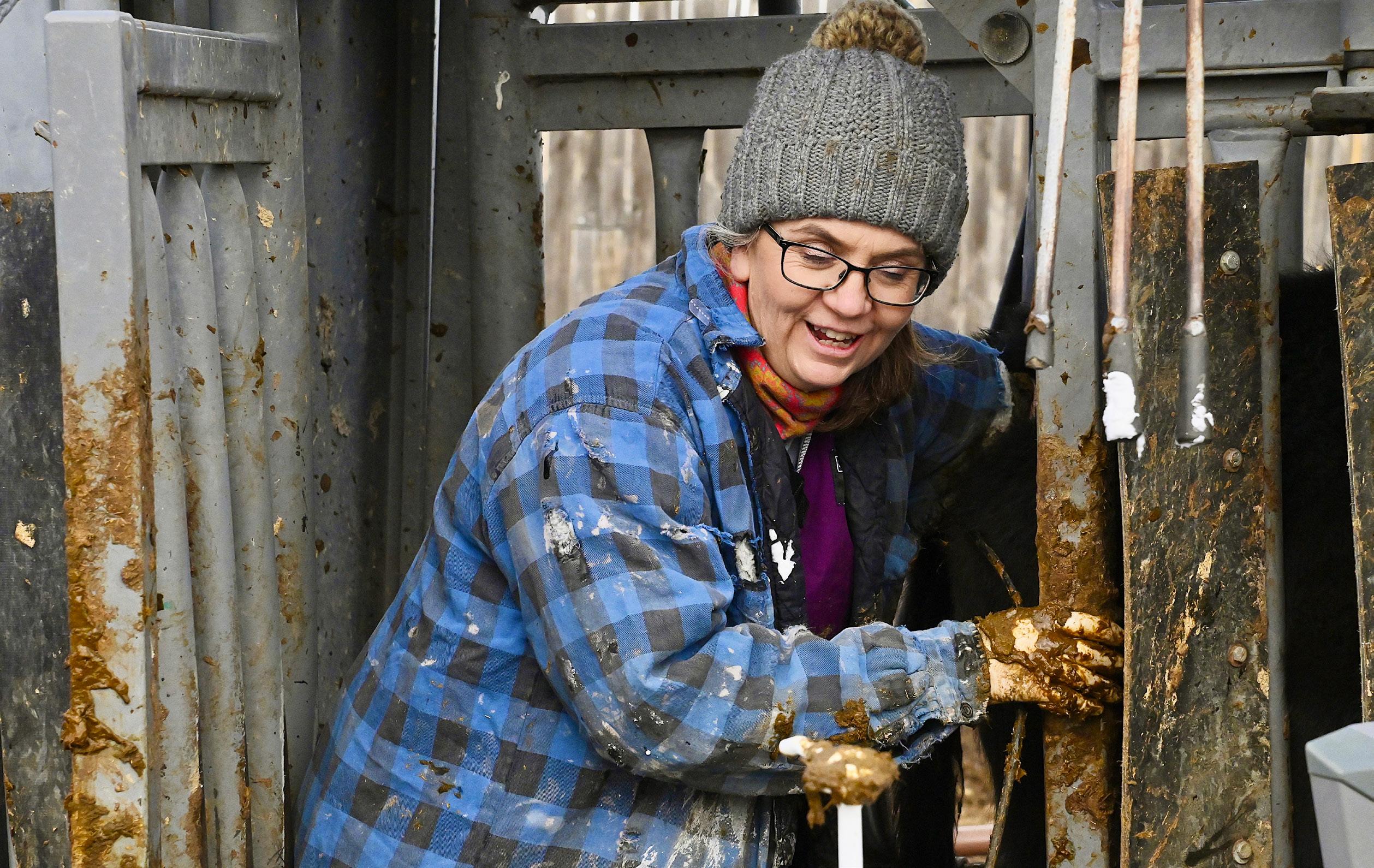
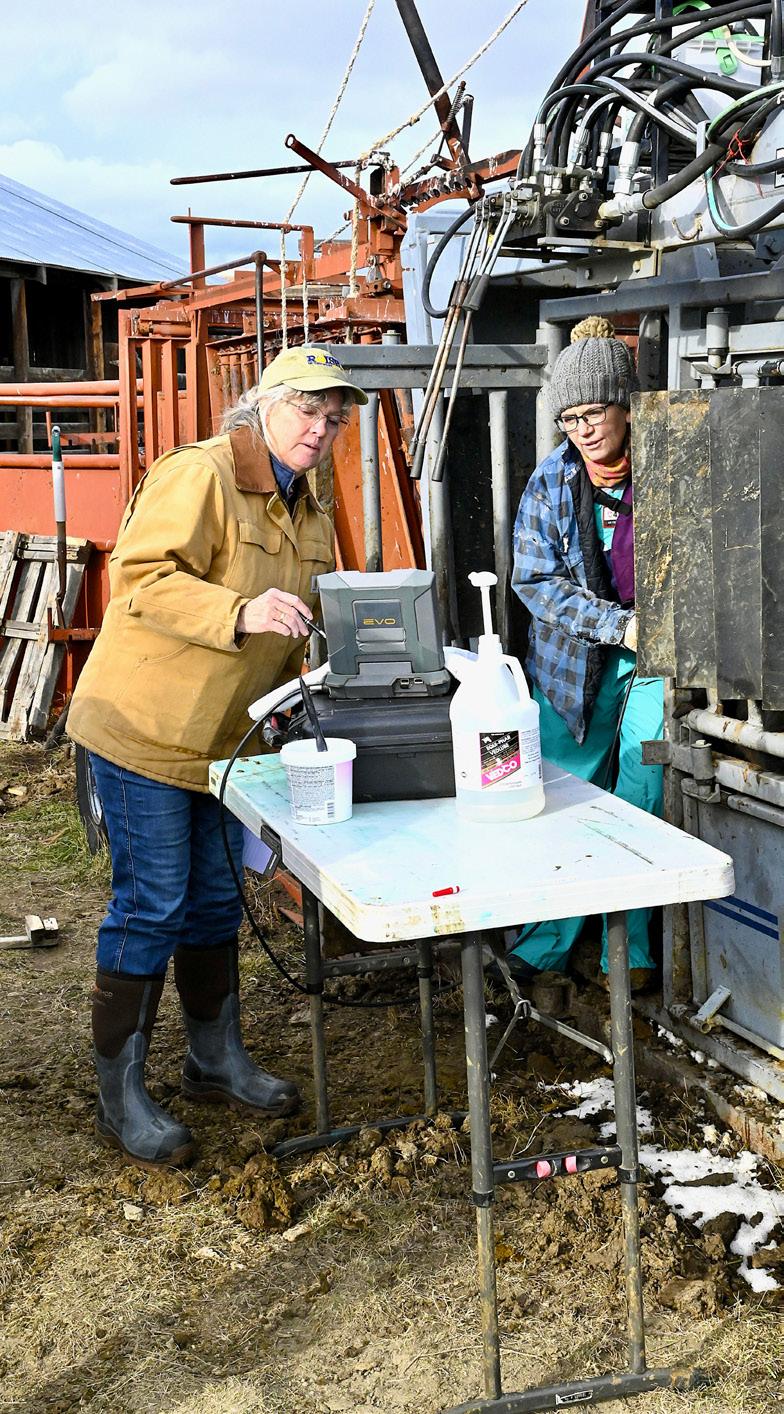
“It’s a great day for preg testing,” Dr. Katie Rein said recently on a cloudy, 40-degree afternoon. “Cows do better when there are no shadows, so, it should go well.”
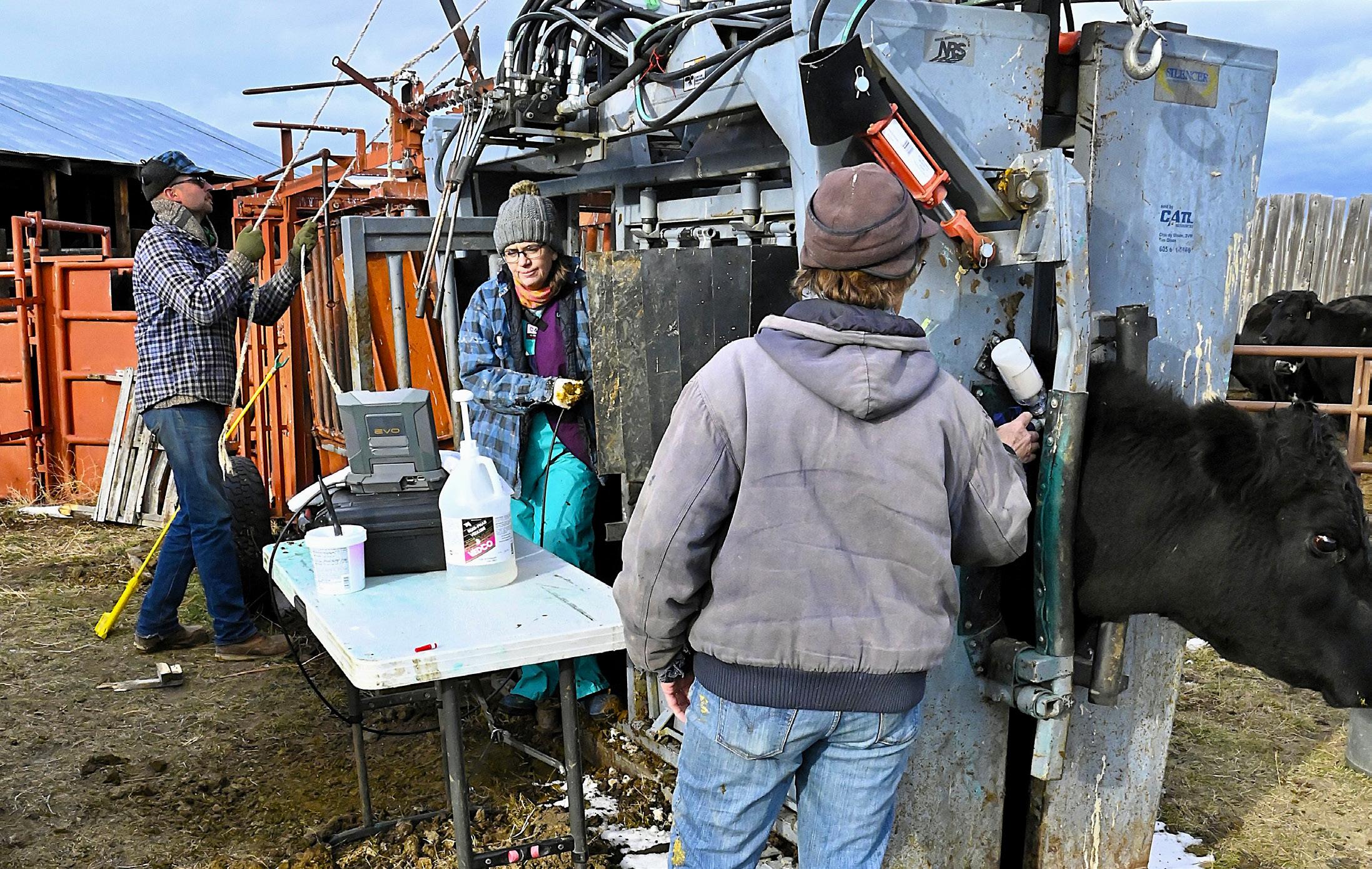
Katie was pregnancy testing around 200 cows for one of her many clients. She’d driven from her clinic in Harlowton to the Sargent Ranch south of Shawmut. Everything was ready when she arrived.
“Once the cow is in the chute, it doesn’t take but a few seconds,” she said. “It helps when there’s a good crew working.”
With their calves freshly weaned, the cows had been separated into a holding corral ready to be worked. As they were pushed through the narrow alley into the squeeze chute, Katie performed a transrectal palpation on each one and read the ultrasound to determine if they were pregnant.
“Bred” or “Open,” she called out after she tested each cow. She paused long enough to explain what to look for on the ultrasound. On the small black and white screen, once Katie pointed it out, it was easy to see a head, a leg, even the heartbeat. The cows were only about 100 days into gestation, but with the technology being used, even an inexperienced eye could see the dark movement inside the uterus. For Katie, reading the results took less than ten seconds. Having single-handily tested 25,589 cows this year alone – it doesn’t take her long.
Katie showed up alone in her well-used, four-wheel drive flatbed pickup truck. From the outside it looked like an ordinary farm truck. But inside she had a plethora of tubs and kits, bottles of vaccines and medications, blankets, tools and a portable table. She set up her temporary exam room as close to the end of the squeeze chute as she safely could and donned a pair of coveralls, an old jacket and a long pair of rubber gloves.
Greeting the crew around her, Katie joked with them as the cows were pushed up the alley. From the camaraderie and exchange of lighthearted teasing, it appeared that it would be an easy day.
“Some ranches are just better run,” she explained. “This one is one of my favorites. I’ve known the Sargents since long before I was a vet. Our families go back three generations.”
The Sargent crew worked efficiently as cows were pushed from the holding pen, through the alley and into the chute. In addition to being pregnancy tested, they were also vaccinated and treated for parasites. As the day wore on, Katie’s clean coveralls became
covered in loose, liquid cow excrement. “That’s why I wear coveralls,” she laughed. “It’s all part of the job.”
A veterinarian for twenty-one years, Katie’s love of animals began long before she made the decision to attend veterinary school. She graduated from Sweet Grass County High School in Big Timber and was considering a career in engineering but changed direction as a senior.
“Two things happened that changed the course,” she said. “One was an assignment of building a tower out of cards – I couldn’t imagine enjoying that for the rest of my life. The other was a trip I took to Denver with the Livestock Judging Team.”
That trip included a stop at the School of Veterinary Science at Colorado State University. “It just excited me,” she said. “I remember asking my friends if it didn’t make them want to be a vet – but they didn’t get it. I guess it’s not for everyone!”
Katie cultivated a love of ranch life while working with her herd and caring for her animals in 4-H and FFA. She attended Montana State University, then transferred to veterinary school at Washington State University before doing an internship at Texas A&M. After returning to Montana, she worked at a vet clinic in Harlowton before starting her own practice, Crazy Mountain Veterinary Service (CMVS).
80% OF STUDENTS ATTENDING VET SCHOOL ARE WOMEN. ALL OF OUR VETS ARE WOMEN . — DR. KATIE REIN
As a high school student, Katie owned a herd of about 20 head of cows that she ran on her parents’ ranch at Melville. “I could run three head rent free,” she explained. “After that, I had to pay to have them there.”
Singlehandedly running the business for seven years, Katie covered every facet of the business and was one of the only large animal vets in the area. She covered a lot of ground too. Traveling from White Sulphur Springs to Lewistown and down to Big Timber kept the young vet on the road a great deal of time.
She still travels thousands of miles a year but, since the early days, she’s expanded exponentially with clinics in Harlowton and White Sulphur Springs serving ranches and animal owners across Central Montana and surrounding communities. Her staff now includes six veterinarians.
“Eighty percent of students attending vet school are women,” Katie said. “All of our vets are women.”
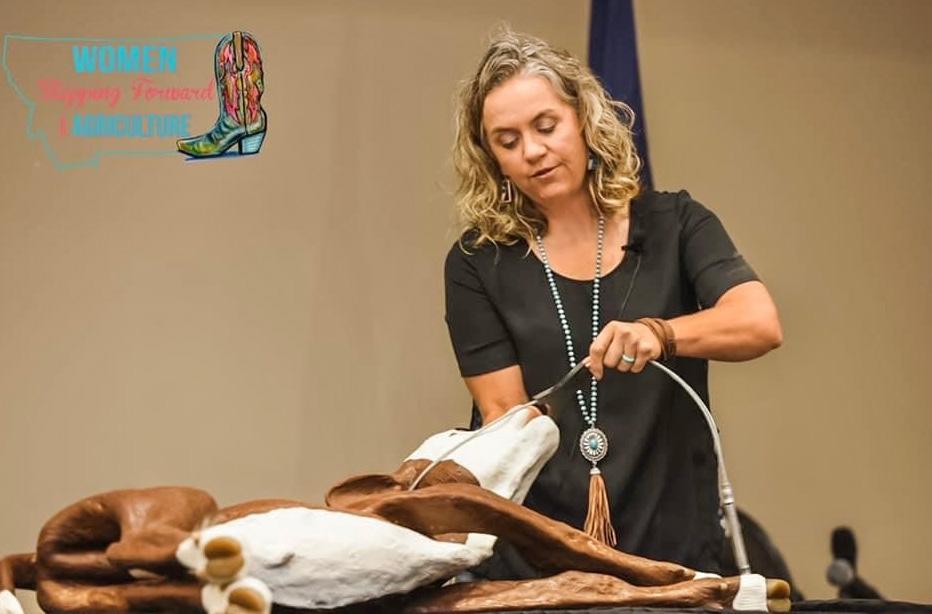
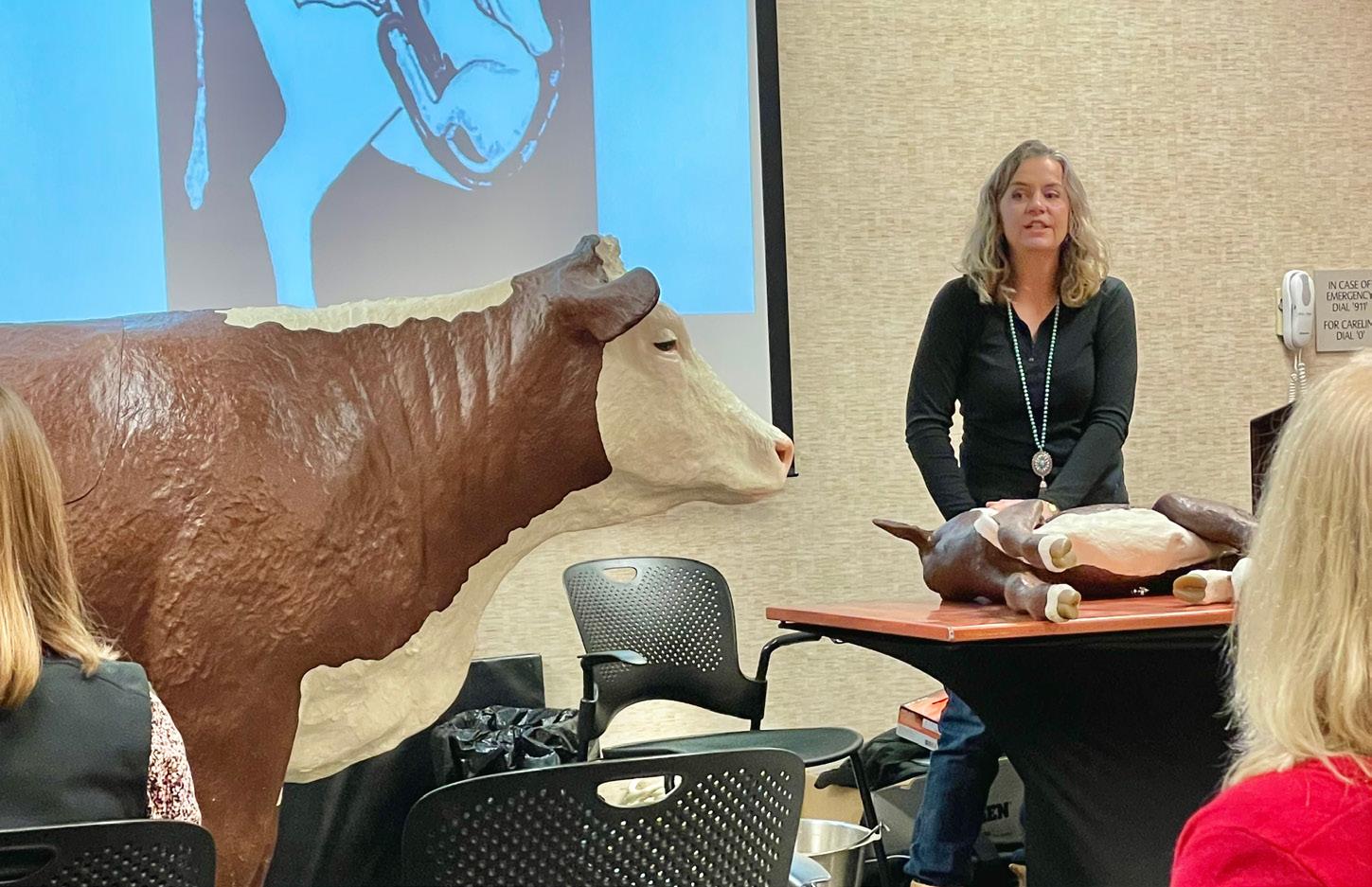
DR KATIE DEMONSTRATES STELLA AND HER NEWBORN CALF
76,909
As Katie and her team of veterinarians travel around Montana, they are recognized as one of the top clinics in the state. This year alone, they have pregnancy tested 76,909 cows.
“Preg testing season is definitely our busiest,” Katie said. “Calving season is a close second.”
Rushing to ranches during difficult deliveries that require pulling the calf, c-sections or prolapses keeps the team busy through the calving season.
“Some days, we’re in our trucks for a long time,” Katie said. She recalled one winter when she made three trips to White Sulphur Springs in a 24-hour period enduring bad roads and a blizzard. That’s when she decided to open her second clinic there and employ a full-time vet.
Agriculture is currently experiencing a rural vet shortage. In answer to the need to fill that shortage, Katie holds calving
workshops for ranchers, focusing on first generation producers.
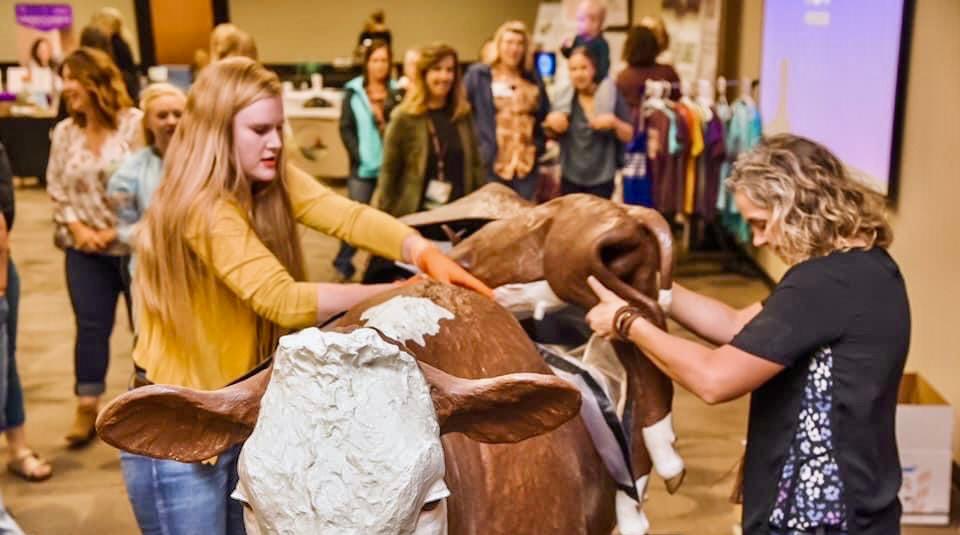
CMVS received a grant to buy a full-size fiberglass model cow to help display calving techniques. The cow and unborn calf model are hauled to functions and Katie demonstrates different things that can go wrong while calving and ways to overcome the problem.
“Stella is our traveling bovine, and she’s very realistic,” she said, “We try to teach ranchers things they can do on their own to avoid calling a vet, but also to know when it’s absolutely necessary to call. Ranchers learn a lot from it.”
She enjoys taking the cow to the Farm Fair in Big Timber and other functions so elementary school students and kids are given an opportunity to experience birthing a calf.
“When I ask at the end of the presentation if anyone wants to help pull a calf, 99% of the kids raise their hands,” she laughed. She believes the exposure also plants an interest in veterinary science in some of the students.
Like anyone involved in agriculture, burnout is an issue that Katie does experience.
“When the days are full and long, when I’m exhausted, it can be hard,” she said. “Sometimes my hands and arms ache. But the satisfaction of what I do far outweighs it.”
Growing up in an agricultural community and knowing so many ranchers, Katie has a great appreciation for the lifestyle. A generous woman, she gives back to her community in tangible ways as often as possible, including scholarships, student internships and veterinary tech apprenticeships and one of
her favorites: CMVS’s annual customer appreciation golf tournament.
“It’s an opportunity that we take to give back to our customers,” Katie explained. “Plus, it’s a whole day of a lot of fun.”
Katie understands the importance of family and many of her employees have young families. In addition to flexible schedules, she also offers health insurance.
“It’s not unusual for someone to need to bring one of their kids to work,” Katie said. “We work around that.”
Katie is quick to attribute her success to her team of veterinarians, office managers, support staff and her husband, Jason Loose, whom she says only ranches part-time because “he’s usually busy fixing something one of us broke, building something or using his muscle.”
“I can’t think of anything that would fulfill me more than being a vet,” Katie said. “I live in the community where I grew up, I’m close to friends and family and I have the best team surrounding me. I really do love what I do.”
Producer Partnership
ENDING
HUNGER ONE DAY AT A TIME
In 2006, the USDA coined the term “food insecurity,” as an official designation of not only hunger but also the lack of access to nutritious food. Fast forward to 2020 when food insecurity was running rampant because of the pandemic. Grocery stores, unable to keep stock on their shelves due to unstable food chains, forced many to turn to food banks to tide them over, causing extra strain on the system.
When the pandemic hit, in early 2020, Matt Pierson was in the middle of calving season - already “social distancing,” as he jokingly said. Matt operates a cow/calf operation at the base of the Absaroka Mountain Range with his wife and two sons. The ranch goes back three generations. It’s a beautiful place; the views and the serenity are second to none.
As every cattle producer knows, there’s rarely enough time in a day to finish what needs to be finished. Matt is no exception. He’s plenty busy, but he also has a servant’s heart.
were considered food insecure. He didn’t stand back and wait for someone to figure out what to do, the Livingston rancher took the bull by the horns.
“I knew I could do something about it,” he said. “I could feed them beef.”
WHEN WE SET OUT, WE WANTED TO MAKE SURE THAT WE WERE part of the solution and not part of the problem .
— MATT PIERSON
In addition to ranching, Matt spent the last 25 years coaching youth soccer in Livingston. When the impact of the pandemic hit food supplies, Matt knew families in the Livingston area that
As the shelves in Livingston grocery stores emptied faster than they could be filled, Matt and his crew came up with the idea of processing donated cattle and giving the meat to the local food bank. Within a week he contacted several ranchers who were immediately on board with the idea. The timing was providential. Just as Covid reared its ugly head and everyone was trying to figure out how to move forward, producers quit taking their livestock to processing plants. Quite abruptly there was no livestock to butcher.
“It was a window of about ten days,” Matt explained. “My ranch and a couple of others donated some cows and Pioneer Meats in Big Timber processed them for us. For those ten days, we were able to fill the time slots with animals and donate the meat right back into the Livingston community.”
The window, however, quickly slammed shut. Consumers began scrambling for alternative ways to purchase meat. Direct sales from farms to consumers took off and suddenly processing facilities were looking at a year to eighteen month wait list.
But the seed had been planted, the need evident and Matt wasn’t about to stop what he had started. Naming his newly formed nonprofit, Producer Partnership and appointing a board of directors, he called every processing facility within a five-state region and found a plant in Williston, North Dakota that could take up the slack. The ND facility agreed to process the donated livestock; Matt just had to deliver them.
“People wanted to help,” Matt said. “It exploded after that.”
As donations of livestock came in and word spread, more producers stepped up. When the food bank in Livingston ran out of freezer space, Matt reached out to neighboring communities, who gratefully accepted the donations of quality meat.
A rhythm fell into place. With continued donations of livestock, Matt began holding the animals on feed until he had a trailer load and would then haul them to North Dakota. Once the animals were processed, the Montana Food Bank Network (MFBN) would pick up the packaged, frozen meat and distribute it to one of their 240 food bank locations.
Though grateful for the ND plant, it was obviously not a longterm solution. Matt’s next step was to figure out how to process the animals at a lower cost. Opening a processing plant closer to home provided the best solution.
“When we set out, we wanted to make sure that we were part
of the solution and not part of the problem,” Matt said. “The number one problem with locally sourced protein is the cost of processing.”
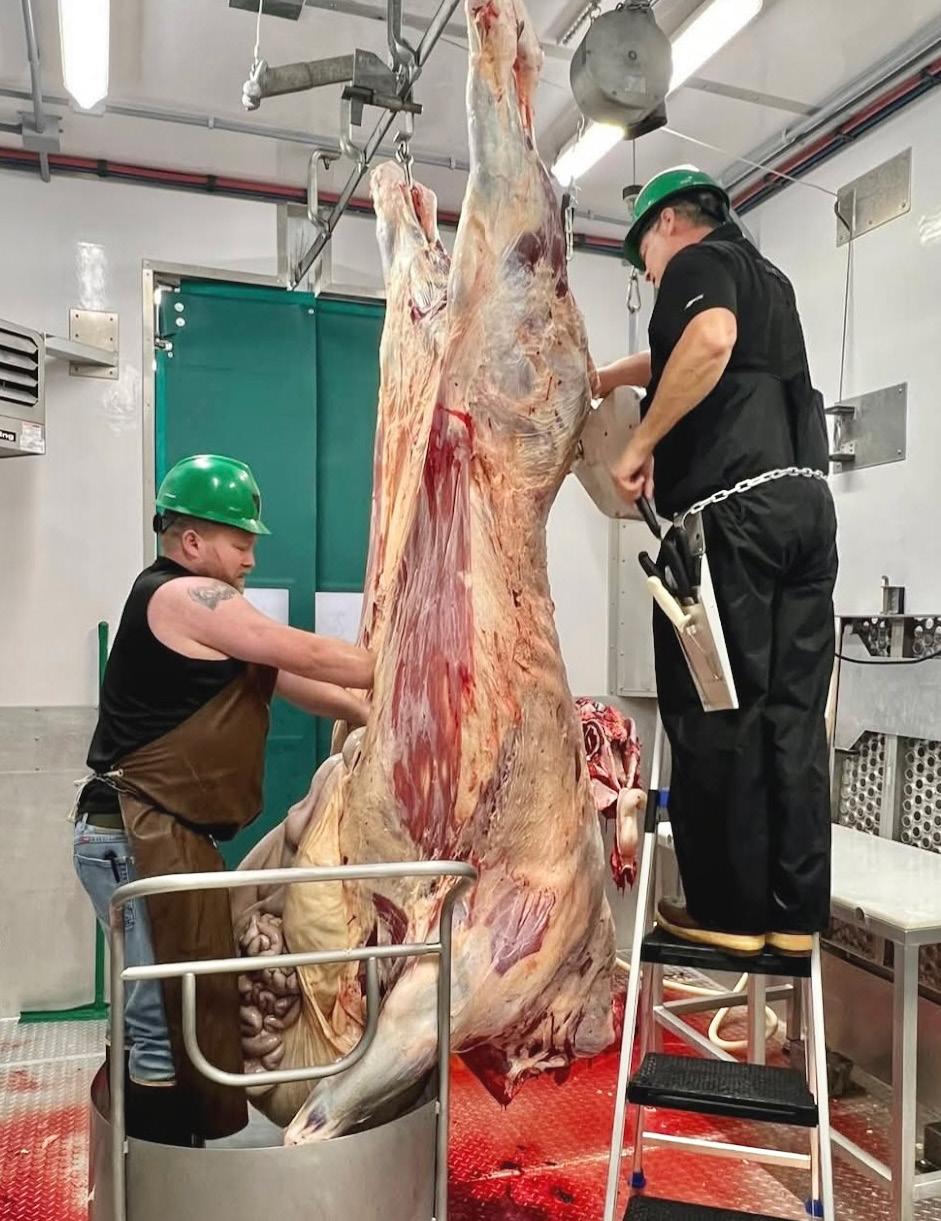
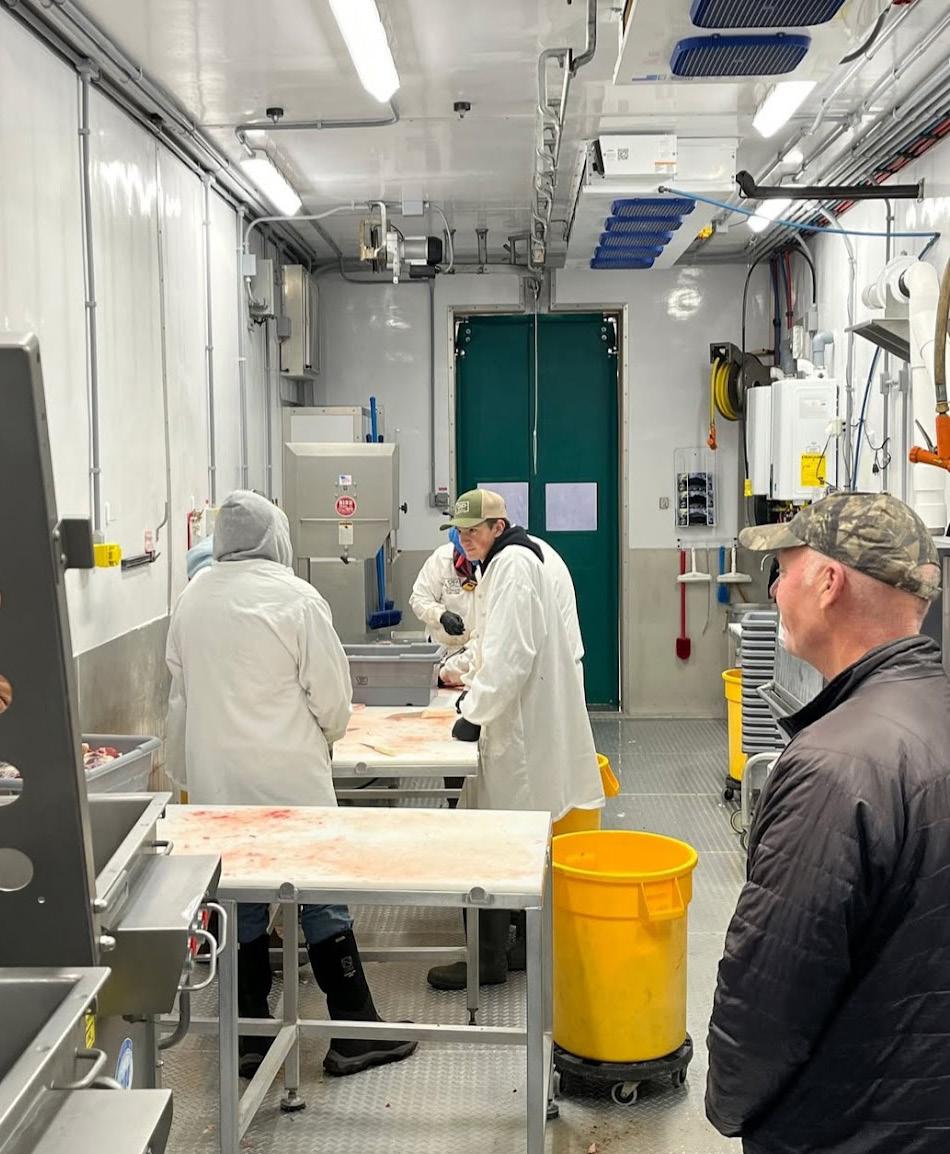
Logically, since Matt’s ranch parallels I-90, it made the most sense to build a facility right on the property. Raising over $2 million for the project took time, but Matt and the board of directors found favor with several foundations, companies and individuals who donated generously. By Spring of 2021, construction started and four modular meat processing units were purchased. In June of 2022, the doors were opened to the new facility, and it became the first and only USDA federally inspected non-profit facility in the U.S.
That first year, Producer Partnership donated over 53,000 pounds of meat to MFBN. As the needs and donations simultaneously continued to rise, Matt went from being a full-time rancher and soccer coach to working full-time providing meat to the hungry in Montana.
MFBN is the only statewide food bank in Montana and has a network of locations that distribute food to Montanans most in need, including food pantries, schools, senior centers and other community sites. From the beginning, Producer Partnership has made an impact.
“Producer Partnership has donated over 215,000 pounds of beef, pork, breakfast sausage and chorizo to MFBN,” said Brent Weisgram, Vice President and COO of MFBN. “That’s over $1 million worth of highly nutritious protein. It’s made a substantial difference to our program.”
In addition to MFBN, Producer Partnership has donated another
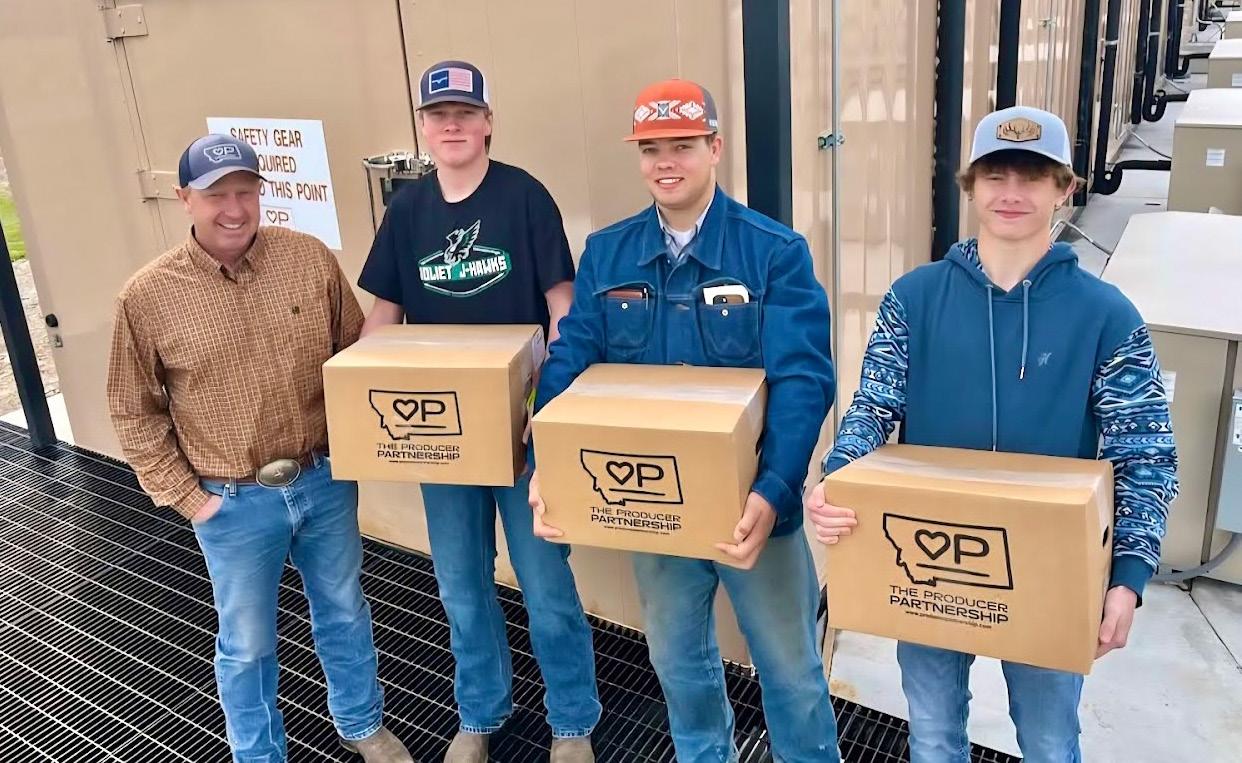
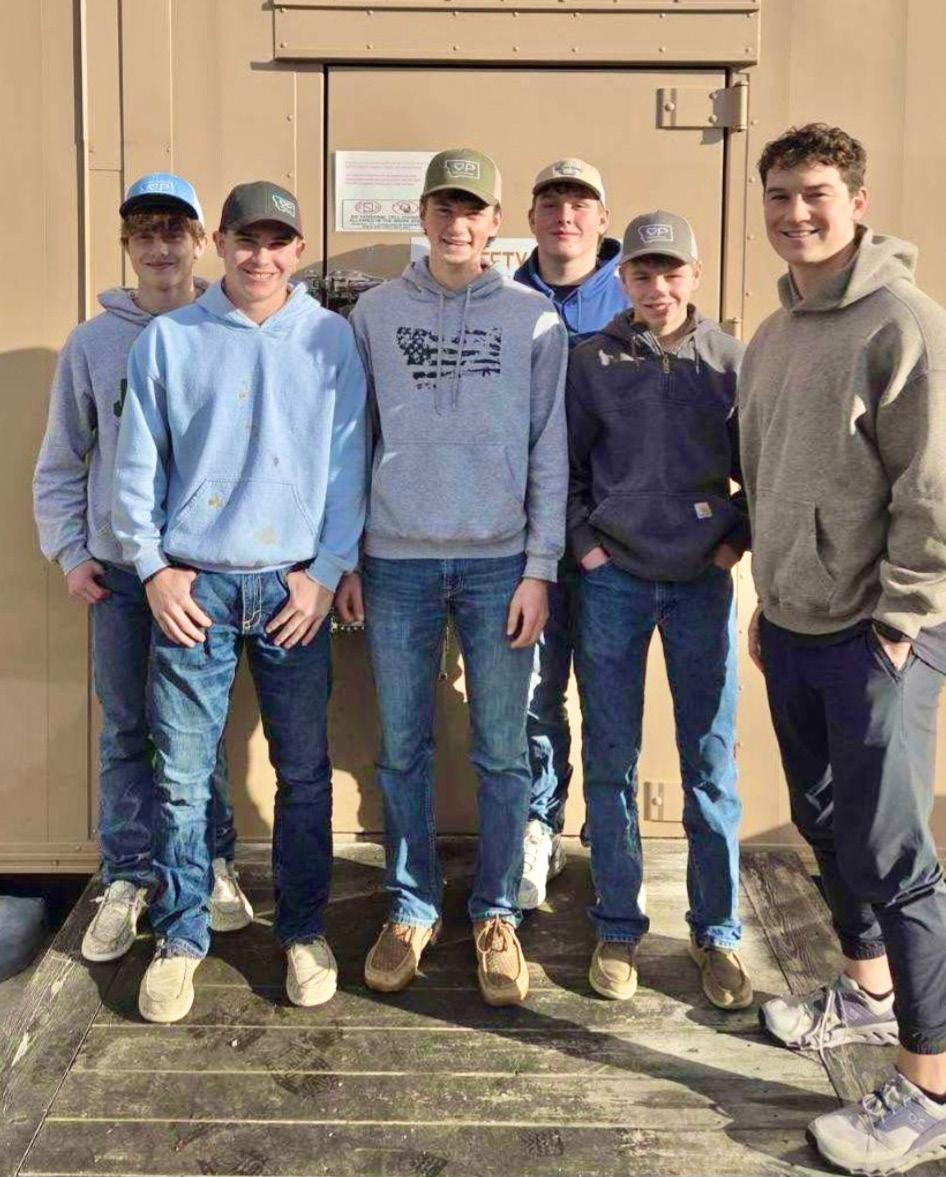
FOUNDER MATT PIERSON WITH JOLIET HIGH SCHOOL JOB TRAINEES
135,000 pounds of meat directly to schools and senior centers.
The Joliet school system has been one of the recipients. Clark Begger, Superintendent, said the donation of meat from Producer Partnership has changed the trajectory of their hot lunch program. They are currently going through four to five carcasses per year.
“A local ranch family has specified that the cattle they donate go to Joliet,” Clark said. “It’s been a great way for them to give back to our community and we really appreciate it. For us, it helps balance the budget. We try to keep lunches affordable for our students and this has made it possible for kids to keep eating here.”
But that’s not all that Joliet has experienced from Producer Partnership. Last year, five high school students trekked to the facility once a week to take part in a newly developed school program that exposes students to all aspects of meat processing.
“There’s a shortage of good (meat processing) workers,” Matt explained. “We’d like to be able to close that gap.”
Brandon Williams, a Joliet senior, was one of the students that was involved in the program.
“It was really a cool experience,” he said. “I learned so much about where my food comes from and how it’s handled.”
Brandon said his experience made him a better hunter and he was excited to put those butchering skills to use last fall when he went hunting.
“A good knife is well worth the investment,” he said. “That and
knowing the best way to cut up an animal. I’ll always have those skills now.”
Matt is a Montana State University alum and lifelong supporter of the MSU Bobcats, and one day he surprised the boys when Tommy Mellott, former quarterback for the MSU Bobcats and professional football player for the New Orleans Saints, stopped by while they were there.
“Now that was really cool,” Brandon said excitedly. “I’ll never forget that!”
As Producer Partnership continues to make donations to schools across Montana and bolster their lunch programs, the same thing is true at MFBN.
“Because of Producer Partnership’s generous program, the $1 million we saved for our food purchase budget has been redirected and used toward other programming needs,” Brent Weisgram continued.
And it's not just beef that Producer Partnership donates, it’s all livestock. Matt is very strict about the health and care of the animals that he accepts. This fall the state rounded up 100 head of domestic hogs that had been released in northern Montana to run wild and dropped them off at the facility.
“The pigs weren’t feral, but close,” Matt said. “The state was just going to shoot them, but for us, if there is a will, there’s a way.”
The crew at Producer Partnership processed the animals into breakfast sausage and chorizo for MFBN.
“If there is a way to keep from wasting potential food, I’ll do it,”
TOMMY MELLOTT SURPRISES THE JOLIET BOYS WITH A VISIT
GOVERNOR GIANFORTE VISITED PRODUCER PARTNERSHIP
Matt said. “It amounted to over 10,000 pounds of pork for the food bank.”
As more schools across the state look into locally sourced meat, Matt has seen growing collaboration between communities.
“We really encourage ranchers to decide themselves where they want their meat to go,” he said. “Local ranchers like knowing that the cow they donated is being fed to the kids in their community. For a school like Joliet, they know where their meat is coming from, they get a higher quality product, the school uses the money saved from purchasing meat to buy other higher quality foods and the rancher gets a tax break and the chance to help feed the kids. It’s an amazing ripple effect of good.”
IF THERE IS A WAY TO KEEP FROM WASTING POTENTIAL FOOD, I’LL DO IT. It amounted to over 10 , 000 pounds of pork for the food bank .
— MATT PIERSON
Future plans include doubling the number of livestock processed; building a smoker to process bacon; constructing a compost facility where the byproducts can be used to eliminate waste; and offering more internships for both high school and college students.
To date, there has been no federal dollars granted to Producer Partnership and just one state grant of $64,000. Governor Gianforte gave a portion of his salary to the foundation this fall, privately donating over $20,000. Foundation grants and private donations have provided the remaining funding.
Matt doesn’t stop. He attends conventions to showcase what he’s doing, always looking for financial support and more donations of cull cattle. He’s an open book, inviting interested parties to tour the Producer Partnership facility. His mission is to end hunger in the state by taking it one day at a time.
“It’s not rocket science,” Matt said. “But the longer we continue doing what we do, the better our track record is. We’ve taken the core of what people are already doing and made it a lot bigger and more accessible and easier for both sides. The easier you make a program, the more likely people are to use it.”
NO SKIMPIN' ON THE SKI HILL
COLD!! I knew it was going to be a cold day. It was February. The house was cold, so I burrowed deeper under my quilts and thought about the day to come and the separation from my warm nest.
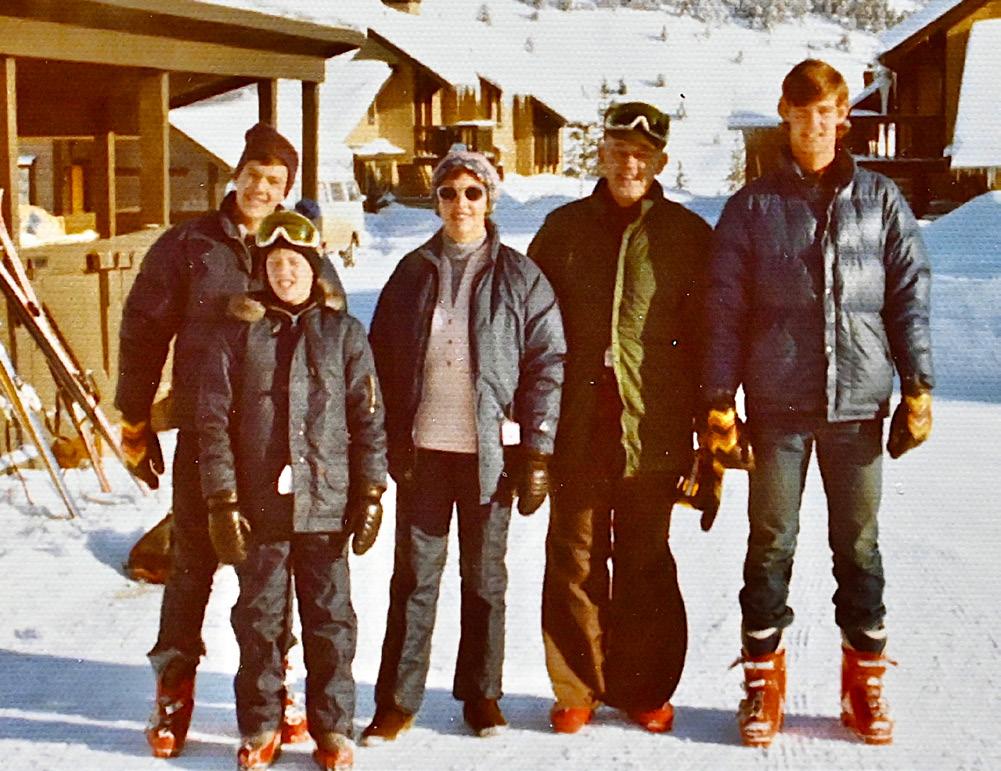
My family was at our “Red Lodge House” for the weekend to take advantage of a fresh dump of snow on the Mountain. We lived in Billings but spent most winter weekends in Red Lodge.
Mom and Dad started skiing there in the 50’s when the ski area was further down the mountain from its current location. Dad told us about the old ski hill and said it was pretty primitive. A rope-tow took you to the top of the hill, about 300 feet up, kind of a “hang on and hope,” situation. There was no chair lift, or lodge and you picnicked out of the back of your station wagon.
When the idea of moving the ski hill to its present location started to circulate among the ski crowd, Dad bought lifetime season passes for Mom and himself. When one of the old banker houses on North Houser came up for sale, he bought it, knowing that’s how he wanted to raise his family in the winter.
Dad started my brothers and me skiing when we were each about five-years-old. Sometimes it was begrudging because it seemed like we were always cold.
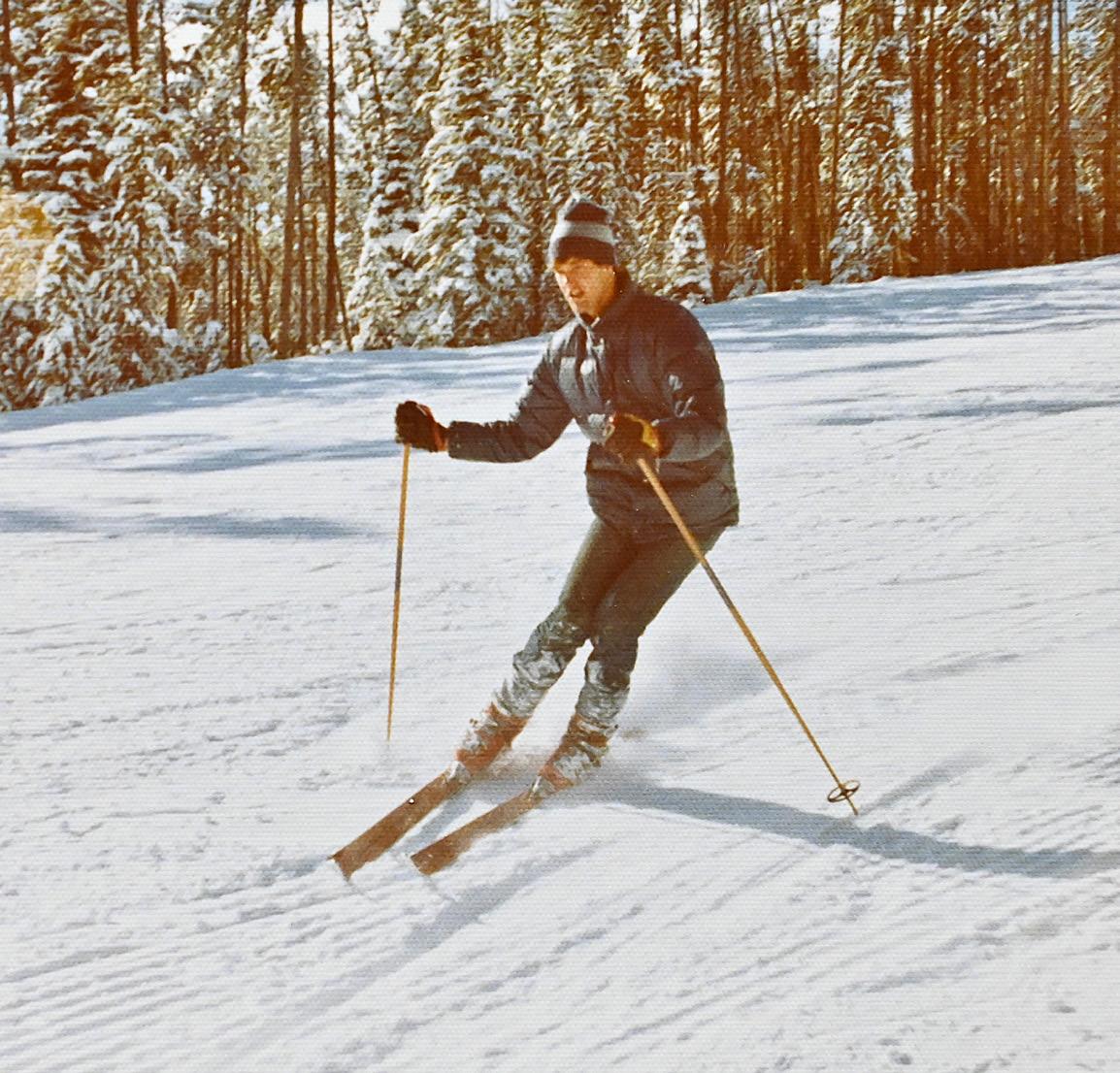
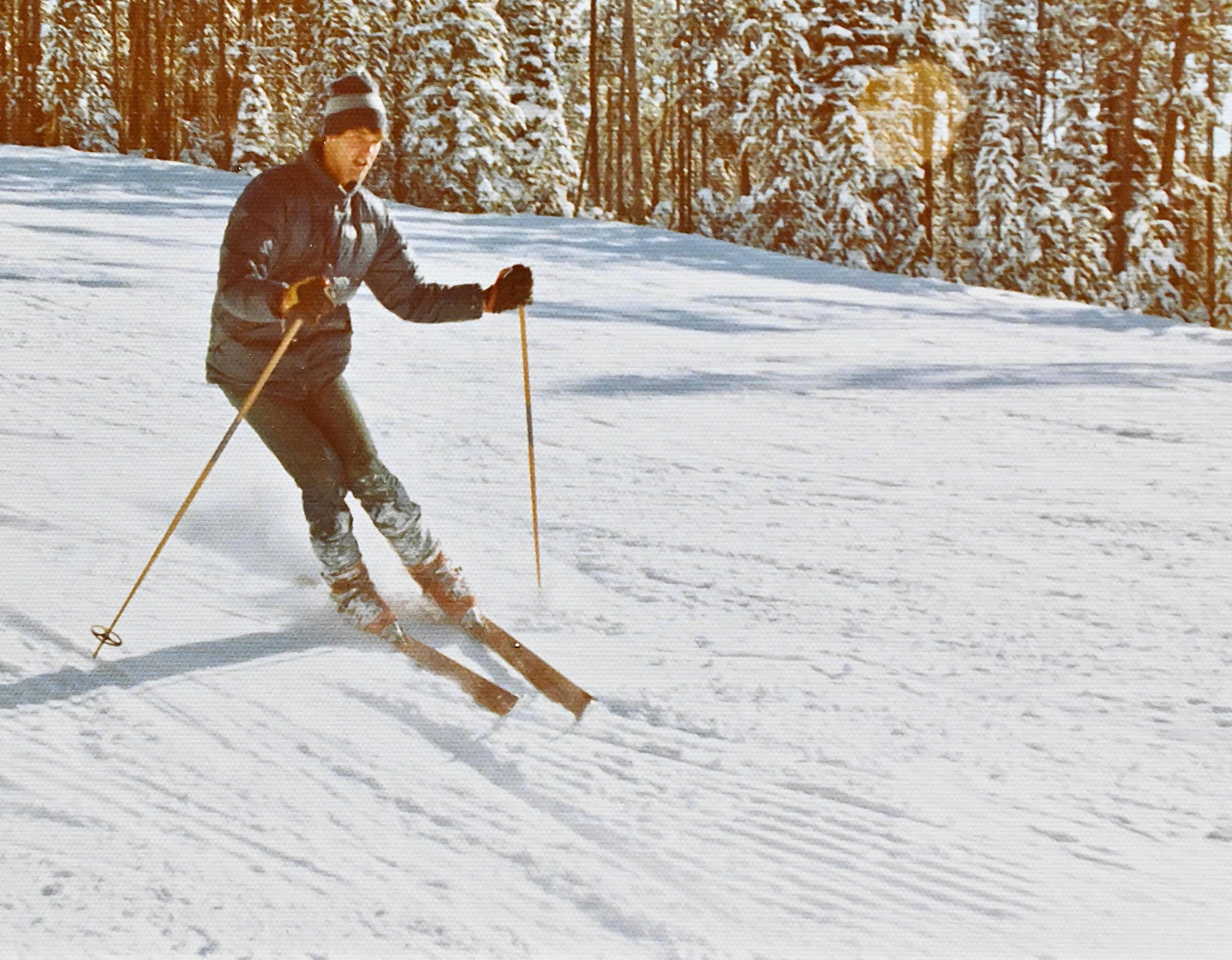
Back then our equipment consisted of skinny wooden skis, cable bindings, leather lace up boots, and ineffective thermal clothing. The skis were always about two feet longer than we were tall. But Dad had a great vision, and skiing became a way of life as he led us on many ski adventures through the years.
On that February morning I knew Dad was going to roust us out of bed early because two feet of new snow had fallen overnight. Yes, it would be cold, but I also knew the day would be spectacular. The promise of hot pancakes at the Red Lodge Café before heading up the hill lured me out of bed. Dad wanted to be the first in the lift line so we could make the first tracks down “Lazy M,” so we got ready in a hurry.
I was 10 at the time but I already had five seasons of skiing behind me. It was Sunday morning, and it had already been a great weekend. We skied on Saturday and then Dad treated us to dinner at Piney Dell, one of his favorite spots to take his family.
At night there were about three things for us boys to do in town besides dinner: go ice skating (we’d actually skate down Hauser to the ice rink), hit a movie at the Roman or play pinball at the soda fountain shop. Our folks let us roam because they knew we wouldn’t get into too much trouble; or so they thought. The television only picked up one station, and it was always miserably cold at the house, so we were constantly scampering around looking for ways to entertain ourselves. But the days were all about skiing.
Grizzly Peak had just two chair lifts in the early 60’s, and as planned, we were first in line that morning. We jumped on the lower lift, anxious to get to the upper lift and the top of the mountain. As we skied off, an unmarked blanket of new snow stretched out before us. Dad led the way down “M” floating through the snow, showing us how it’s done and making the first tracks on that beautiful morning. We eagerly followed. My brothers and I had a lot of days like that. Skiing was a great part of our lives, and Dad always had an adventure in mind.
BROTHER STEVE (BACKGROUND) AT RACE CAMP
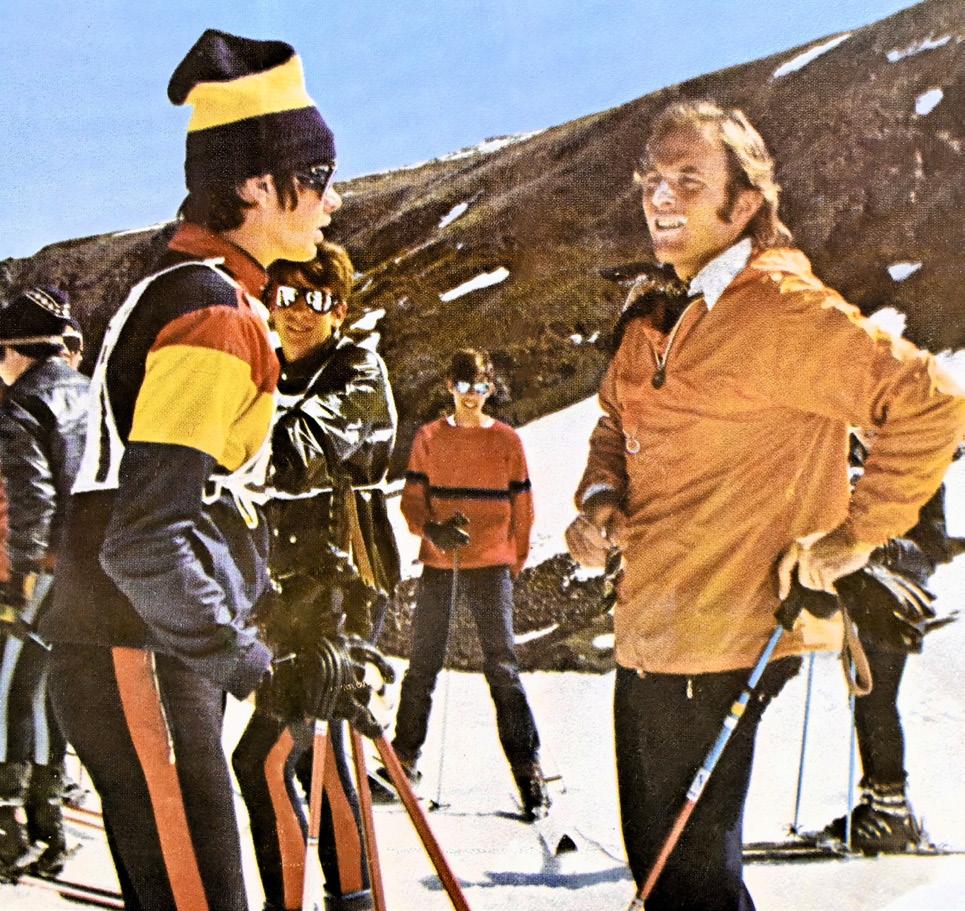
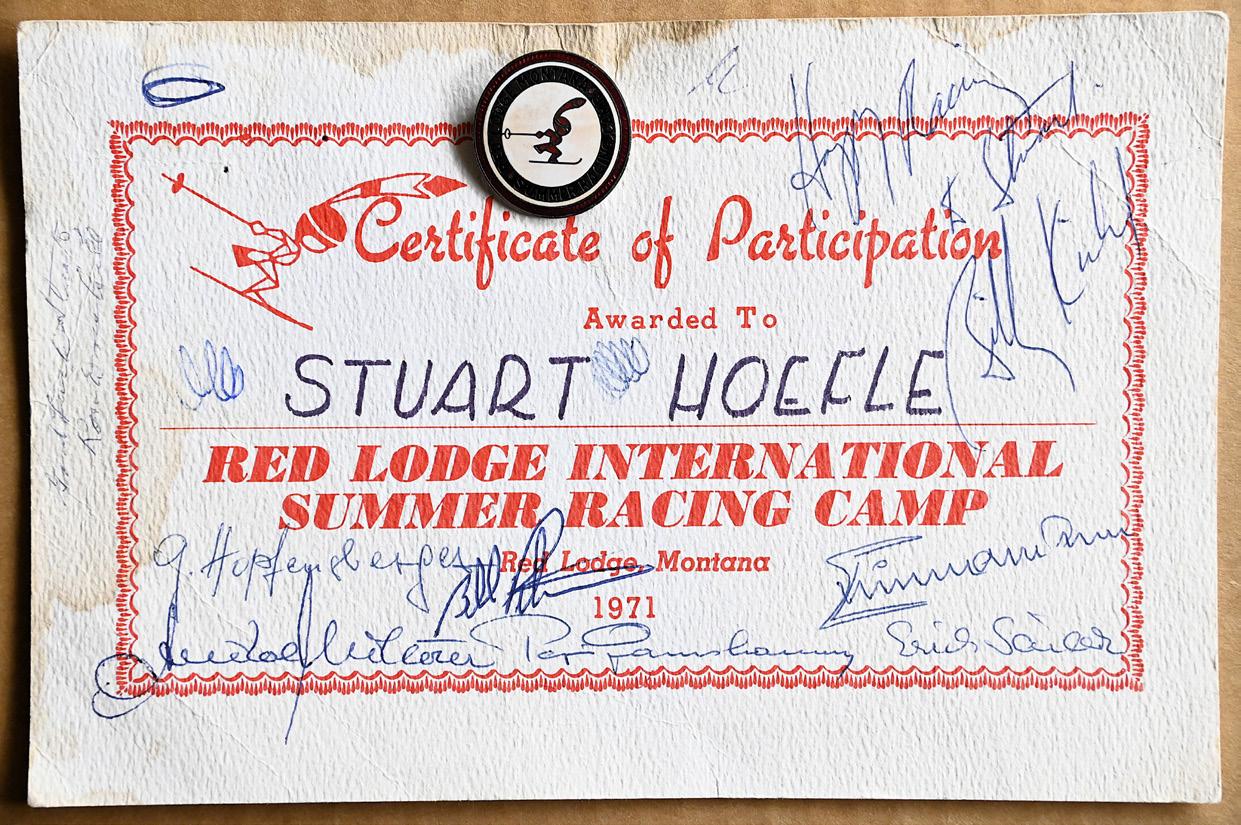
When I turned 14, Dad signed us up for the infamous Red Lodge International Summer Racing Camp held in June. Best known to the locals as the Headwall Race Camp on the Beartooth Pass. He thought it would be a great way to improve our skills and keep us occupied for a week.
Race camp and far better equipment led to an entirely new level of skiing and exhilarating episodes on our weekends in Red Lodge. The 70’s were filled with high school friends and Mom and Dad took them in happily. Some knew how to ski, some didn’t, but that soon changed. By then, if I wasn’t flying down the hill myself, I was teaching someone else to ski. Teaching friends became one of my favorite endeavors. I’d explain the basics to them; the motions of balance, shifting your weight, positioning on the skis. But mainly I just told them to follow me and do what I do. And it worked. That was the best way - get behind me and just do what I do. Of course I was shouting a little advice too.
That was a challenge! We thought we could ski, but we had no idea. After a week under the coaching and instruction from Billy Kidd, Eric Sailer and Pepi Gramshammer, all former Olympians from the 60’s, we really learned how to ski.
The industry had also advanced by then to buckle boots, shorter higher performance skis and much warmer clothes. Just a few years prior, the standard length for skis was measured by standing tall and raising your arm over your head. Then you picked out a pair of skis that went from the floor, up to your extended wrist. For me, a tall kid, I was skiing on boards over seven feet long. Thank goodness for shorter skis and warmer boots and clothes. Better equipment meant better performance.
Those years were some of the best as we skied in packs and we were fast. Half the time the ski patrol was chasing us to get us to slow down, but they could never catch us.
At night, there still wasn’t that much to do in Red Lodge, but the house on Hauser was always full of boys on the weekends and Saturday nights became known for the big spaghetti feeds Mom cooked. She’d serve upwards of a dozen kids or more and no one went hungry.
My ski days slowed down through college, mainly because Dad no longer paid for my lift tickets since he wanted me in class. I had skipped enough school to ski or fish or do something fun. Thankfully I did make it through and graduated.
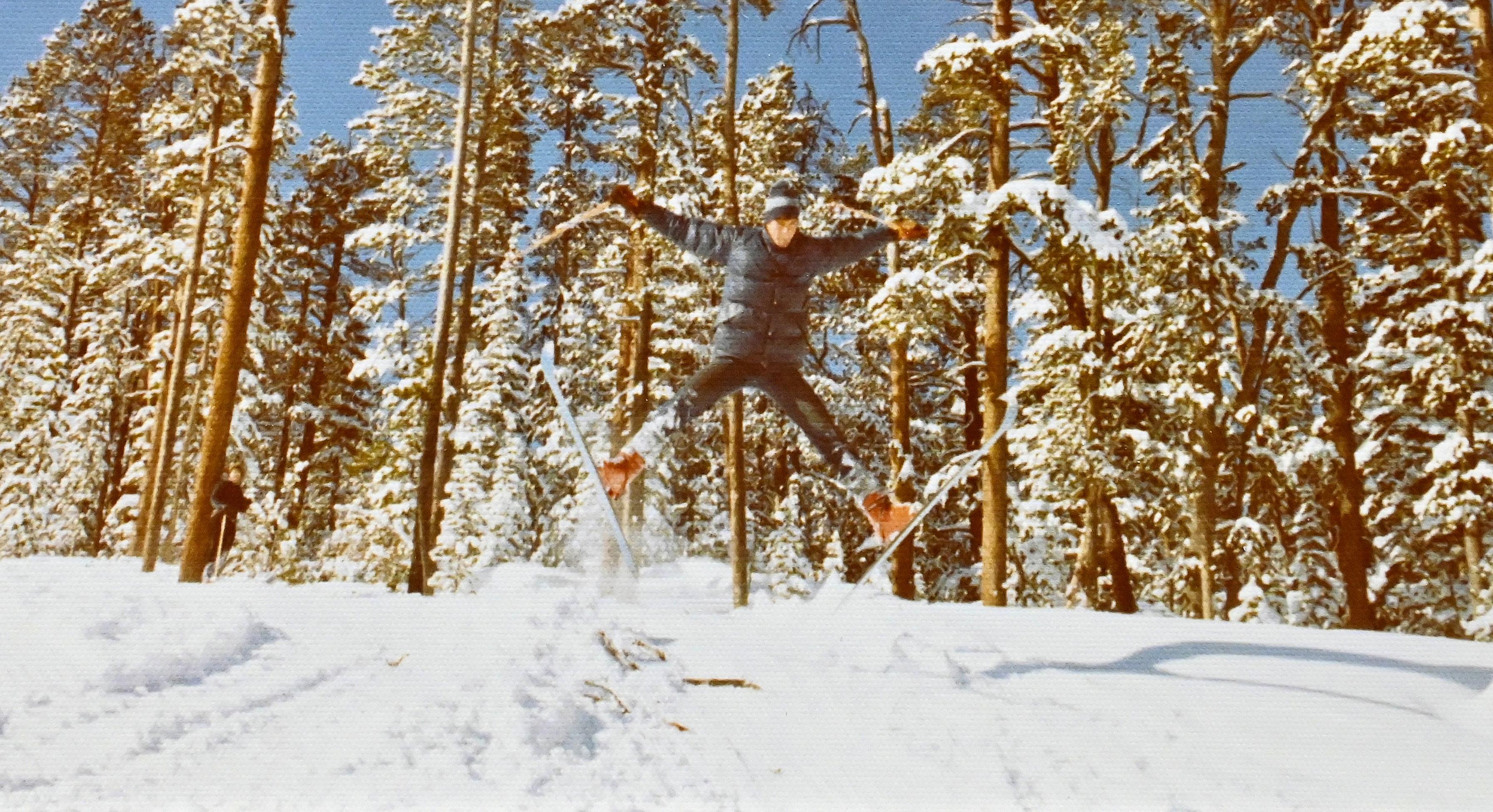
JUMPING FOR JOY – WHAT FORM!
MEL’S FIRST DAY – OFF SHE GOES!
Before I knew it, I had a family of my own. I wanted to get them on skis as soon as they were old enough and pass on the adventure that was so generously given to me.
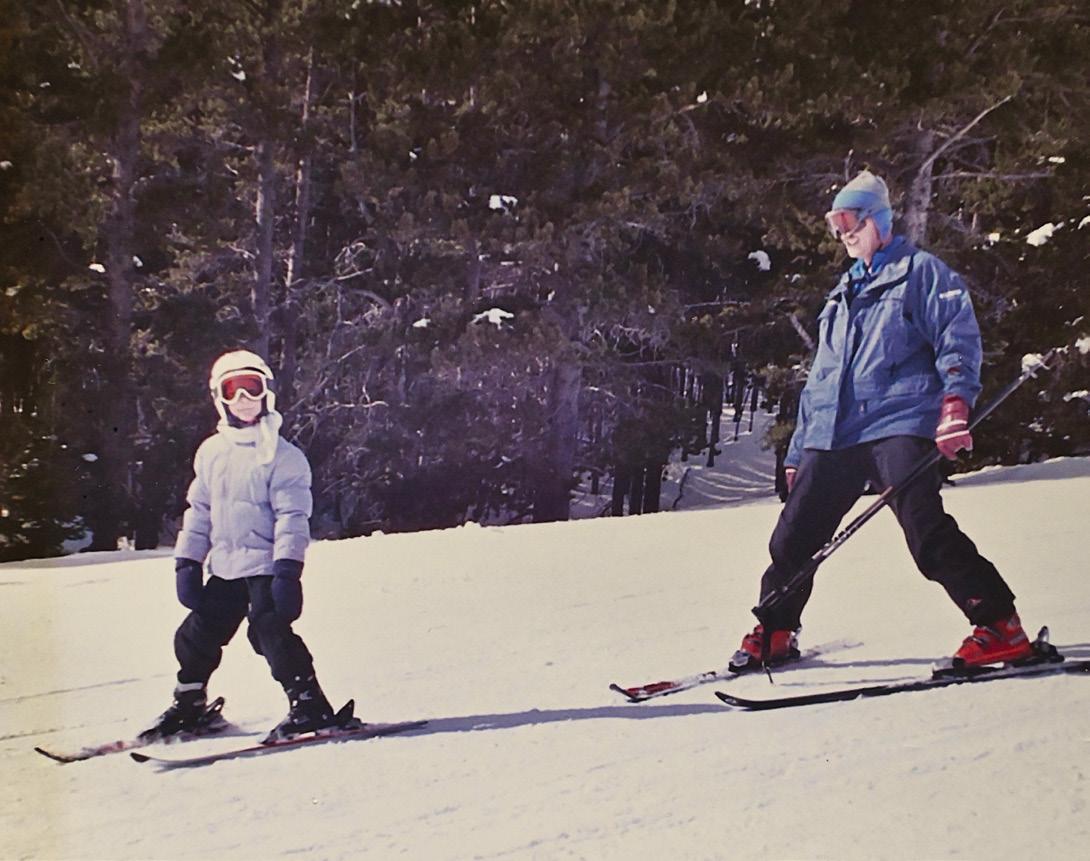
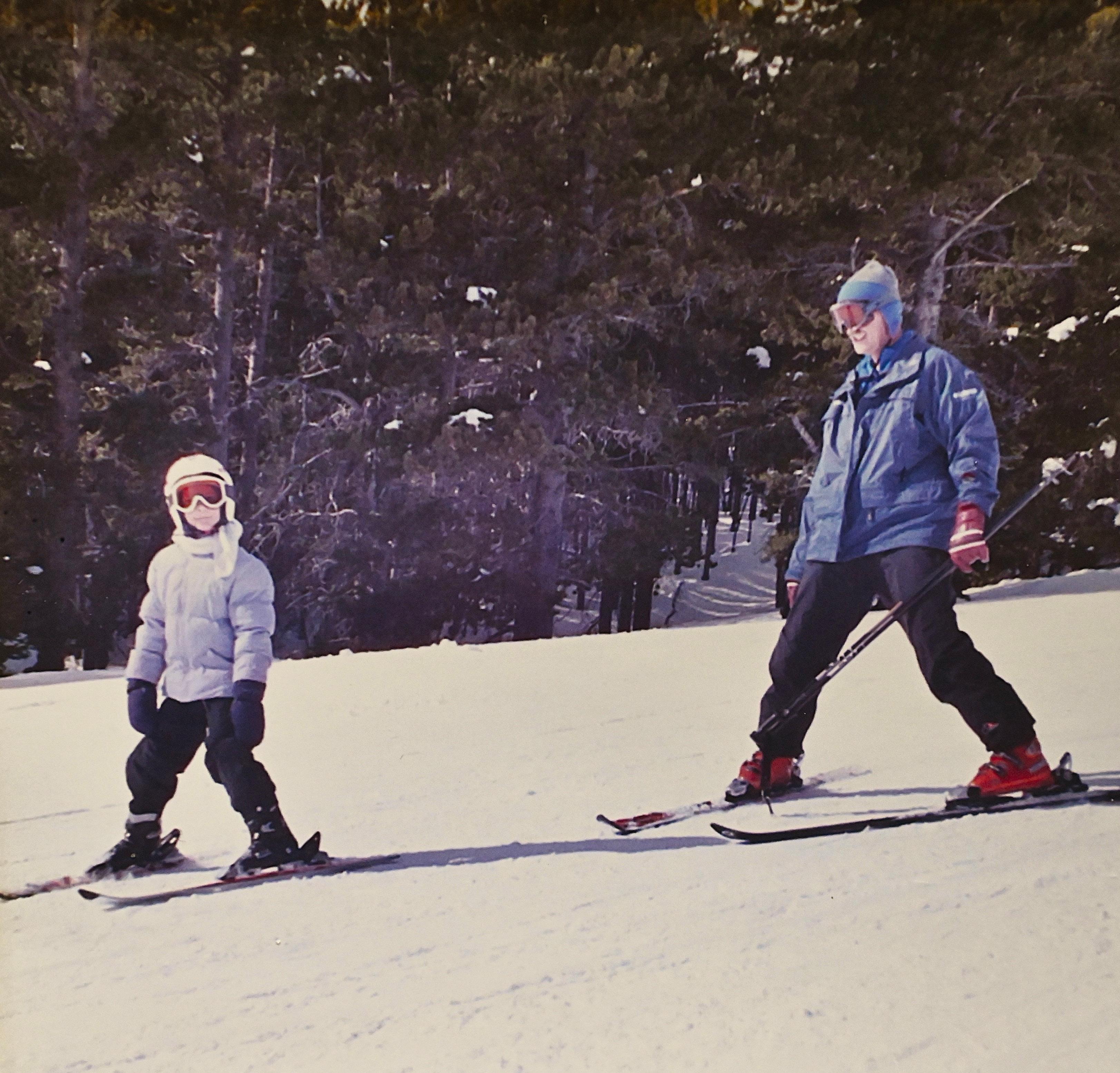
Since we lived in Billings, my old stomping grounds of Red Lodge Mountain became their learning ground too. And I had a foolproof method. Starting when the kids were small, I held my ski poles in front of me like a monkey bar and positioned my skis in a snowplow, with the tips together and the tails wide apart. I’d fit my little skier into the space, in front of me, also in a snowplow position. We’d then push off together with our skis parallel to each other, my skier holding on to my ski poles. I told them to hang on, and off we’d go.
After one run they’d get the feel of it. After two runs, they gained confidence. After three runs, they wanted me to drop the monkey bar so they could try on their own. At about the fourth, I’d open up my plow and off they’d go. All three of them learned that way and have been skiing since. We went on to build a lot of memories of our own as a skiing family.
Looking ahead, it won’t be long before I’ll qualify for a Senior Pass up at Red Lodge. It’ll be a great part of turning 70, as the cost of ski tickets has kept me off the slopes for a few years. I was once buying a season pass for the same price as a day pass is now. But the timing might be perfect. My grandsons will be just about old enough and the right size for me to work my magic on them and expose them to the slopes.
That’s what life has been for me; passing on what was passed to me and enjoying the memories.
Working Together to Elevate Care Across Montana and Wyoming
As a unified, independent health system, Billings Clinic and Logan Health are collaborating to strengthen and expand opportunities to serve our communities. Our focus includes:
• Enhancing quality, safety, and service
• Expanding access to comprehensive primary and specialty care
• Developing an integrated rural trauma and emergency transport network
• Building on each organization’s long standing commitment to mental health
• Growing medical education, research opportunities, and innovation
• Fostering an inclusive, welcoming environment that advances population health, health equity, and care for underserved communities
• Reinvesting strategically to improve care and services for the communities we serve
• Recruiting and retaining exceptional physicians, nurses, clinicians, and other key team members
For more information or to find a provider near you, visit billingsclinic.com or logan.org