UNDERSTANDING THE STATE OF GLOBAL LGBTQI+ PERSECUTION
Annual Report


Looking through the windows of the plane, seeing the snow, and saying
‘Yes, I am here’ ...That was the day I’ll never forget.

Terry-Kay Walker, newcomer to Canada
Annual Report
Looking through the windows of the plane, seeing the snow, and saying
‘Yes, I am here’ ...That was the day I’ll never forget.
Terry-Kay Walker, newcomer to Canada
Before Terry-Kay Walker was approved for relocation to Canada last winter, the 38-year-old trans woman had long been living in limbo.
Seeking refuge from her home country of Jamaica, where she reported experiencing homelessness and violent attacks due to her gender identity, the activist applied for asylum to the US in 2024.
But shortly after her asylum application through the Priority 1 (P-1) referral pathway for at-risk LGBTQI+ refugees to enter the US was approved, the incoming administration terminated that program, and upended much of the wider asylum system in the so-called “nation of immigrants.”
“I started to run out of funds, starving for resources,” Terry-Kay says about her months in waiting. “I had to figure that out for myself.”
Prolonged periods of instability and precarity are common for many LGBTQI+ people
in search of safety, even more so amidst the global rise of xenophobia and antiLGBTQI+ sentiment.
Rainbow Railroad has sought to address these challenges through the Government-Assisted Refugees (GAR) program, a partnership with the Government of Canada that allows Rainbow Railroad to directly refer at-risk LGBTQI+ people to Immigration Refugees and Citizenship Canada (IRCC) for resettlement consideration.
This relocation pathway grants newcomers permanent residency upon arrival to Canada— allowing them to access healthcare, housing, employment, and other vital support. GAR has served as a critical lifeline in the context of worsening global tensions, reflected in the record number of state-based conflicts in 2024. In the same year, the UNHCR found a 6% uptick in the number of forcibly displaced people escaping persecution, violence, and political conflict.2


The drivers of displacement that defined 2024 also fueled the record-breaking requests for help received by Rainbow Railroad last year. In 2025, more than 20,000 requests were made by individuals in countries spanning from the United States to Uganda. The US, once a desirable destination for LGBTQI+ migrants, now tops the list of countries where citizens, and particularly trans people, are asking for help.
The radical shift in the United States’ reputation as a “safe” country for LGBTQI+ people starkly impacts individuals from countries with even harsher political and societal attitudes towards queer and trans communities—countries like Jamaica. In addition to laws criminalizing same-sex intimacy between men, the tropical island, whose tourism board3 calls on its millions of annual visitors to immerse themselves in the “freedom to let go and just be you”, is also home to strong anti-trans sentiment and violence. “In Jamaica, I can’t walk into a nail salon to get a service done. I can’t walk into a hair salon to get my hair done. I can’t dress and feel comfortable walking in the streets,” Terry-Kay recounts. “It just wasn’t safe [there] for me.”
A total of 250 applications for GAR were submitted in 2025, some of which were from asylum seekers who had originally been approved for relocation, or who were in process of applying for relocation, in the US. Just one LGBTQI+ refugee was resettled to the US through P-1 in early 2025, compared to the 21 individuals who were able to enter the US with the assistance of Rainbow Railroad and other refugee and LGBTQI+ non-governmental organizations the year prior.4 Other applications came from individuals living in nations where citizens have no available relocation pathways due to visa restrictions and passport immobility—states including Pakistan, Afghanistan, Kenya, Iraq, and Iran.
Backlogs and lengthy application processing times mean GAR newcomers wait an
average of three-and-a-half years from the time they first submit a request for help to the moment they arrive in Canada, though the wait time for some can be even longer. Many LGBTQI+ people can’t afford to wait, causing some to travel to other countries in the interim, where they still face barriers to safety.
Shaker Nabil’s story underscores the difficulties faced by many LGBTQI+ people at risk globally. The 39-year-old gay man, whose name has been changed to protect his privacy, fled his home country of Egypt after family members reported him to officials for posting in defense of LGBTQI+ people on social media. Homosexuality and consensual same-sex intimacy are illegal in the African country5 under its existing morality Penal Code, which prohibits acts of “indecency” and “debauchery.” While the maximum penalty for these acts is a three-year prison sentence, at least one local organization has reported longer sentences for people convicted under this law.6
“The lawyer [representing me] told my mother, ‘As long as your son is here, it will be under the chance that anyone can make more reports to the police,’” Shaker recounts. “‘He needs to go find somewhere else.’”
The threat of prolonged imprisonment prompted him to quickly flee to Dubai. Shaker’s lack of residency, however, barred him from accessing employment and essential medicine, including his inhaler. “It was hell on earth,” he shares of his experience. Enduring hunger and feeling hopeless about what to do next, he reached out to Rainbow Railroad as a last resort.
“Before I knew about Rainbow Railroad, I tried to contact other organizations…I was trying to explain how down I am, how I’m about to die, how I’m about to be stuck somewhere or jailed for life. I didn’t know how to express the point where I was at this moment. I was trying to find salvation.”
After connecting with Rainbow Railroad, Shaker received funds through Rain-


bow Railroad’s cash assistance program to buy food and essential medicine. And eventually, through the Emergency Travel Support (ETS) program, Shaker was able to successfully relocate to France from Jordan, where he had travelled following his short stint in Dubai.
Today, thousands of other individuals continue to await assistance as support systems for refugees, migrants and LGBTQI+ communities more broadly continue to shrink. In the absence of other relocation partnership programs with other nations, Rainbow Railroad relocated just 85 individuals through ETS in 2025. This significant decline—from 242 individuals who were assisted through ETS in 2024— speaks to the immediate, and severe, consequences of harsher rules surrounding migration globally.
Now more than ever, access to pathways like GAR is the difference between safety and danger. This relocation pathway has allowed individuals like Terry-Kay to look forward to the everyday parts of life. For her, this means finding a job, sporting long
red manicures, and the dream of one day purchasing a small home outside of the big city. Thankful to have traded in the sandy beaches for the snow, she recounts the moment her plane started to descend in the country that is now her home. It’s her favourite memory in Canada thus far. “Looking through the windows of the plane, seeing the snow, and saying ‘Yes, I am here…The day that I landed [in Canada]… That was the day I’ll never forget.”
Now more than ever, access to pathways like GAR is the difference between safety and danger.


People are seeking safety from within a country that has long positioned itself as a global refuge. When that premise fractures, the consequences do not stay contained within its borders. They reverberate across the entire protection system.
This year, we mark a sobering milestone.
In 2025, Rainbow Railroad received 20,215 requests for help from LGBTQI+ people from 172 countries — the highest number of requests we have ever received in our 20-year history. That is a 51% increase from the year before. Behind each number is a person navigating fear, exclusion, or violence, often with nowhere else to turn.
As an international human rights organization, we have long said that our work exists at the intersection of crisis and courage. Today, that intersection is under strain. The space between what people need and what systems can provide is shrinking rapidly, and by design.
Across the world, the systems that once offered pathways to safety are being dismantled or hollowed out. Governments are restricting access to asylum. Funding for LGBTQI+ organizations is being slashed. Digital spaces, once a refuge, are increasingly sites of surveillance and harm. And policies rooted in anti-rights ideologies are reshaping the global landscape in ways that make it harder for at-risk LGBTQI+ people to survive.
We feel these shifts acutely because the people we serve feel them first.
For the second year in a row, the United States was the single largest source of requests for help. In 2025, we received 6,253 requests from the US, accounting for 30.9% of all global requests. The overwhelming majority (88%) came from US citizens. This is not a trend. It is a rupture in the global protection system.
This is not an abstraction. It is a signal.
Alongside individual requests, we saw unprecedented demand from organizations holding the line around the world. In 2025, 827 LGBTQI+ organizations reached out to Rainbow Railroad, representing more than 1.7 million individuals in need of services. This surge reflects a deeper systemic failure. When systems retreat, the burden does not disappear. It is pushed onto those closest to the crisis, with the fewest resources to carry it. Grassroots organizations, often the first and only line of defense, are being asked to do more with less, even as the risks they face intensify.
The consequences are profound. Funding cuts have triggered a cascade of closures, service reductions, and unmet needs across the sector. Among global LGBTQI+ intermediary funders, regranting budgets dropped by an average of 25%, with nearly 60% reporting overall budget declines. In our own programs, demand for support from frontline organizations surged far beyond what available resources could meet. Across our Grassroots Mobilization Fund and Crisis Response Fund, we received requests totalling $18.5 million CAD and were able to fund only 6% of them. The gap between what is needed and what is possible is widening.
And yet, this is not a story of retreat. It is a story of how we respond when the ground shifts beneath us.
In 2025, Rainbow Railroad directly supported 7,521 individuals and an addi tional 17,855 people through funded part nerships. These numbers reflect not only the scale of need, but also the power of collective action.
Partnerships are not ancillary to our work — they are foundational. Local organizations and activists hold the knowledge, trust, and proximity required to respond effectively in their communities. In a moment when global systems are faltering, these networks are sustaining lifelines.
We have expanded how we resource this ecosystem. Through funding mechanisms such as the Crisis Response Fund, Grass roots Mobilization Fund, Community Access Fund, and Housing & Livelihood Assistance Fund, we direct critical resources to at-risk LGBTQI+ individuals and the communi ty-based organizations that serve them in countries of origin and resettlement.
Partnerships have also shaped the evolu tion of one of our most critical responses: our Information Services and Referrals Program. This program was built out of necessity. As requests for help continue to grow, it is clear that not everyone will be able to access international relocation. The question, then, is not only how we move people across borders, but how we help people survive where they are.
We have invested deeply in strengthen ing these partnerships, even as resources contract. Through our Support Refer ral Network, we link individuals to trusted, sometimes underground, partners who provide mental health care, shelter, legal



assistance, and other essential services. This model allows us to extend our reach beyond what any single organization could achieve alone.
In collaboration with grassroots partners, we developed information packages for countries including Egypt, Kenya, Nigeria, Russia, South Africa, Türkiye, Uganda, and the United States. These guides provide practical, vital, and often life-sustaining information: where to find affirming healthcare, how to access legal support, and whom to trust in moments of crisis.
These country packages are tools for navigation in environments where information itself can be dangerous or deliberately obscured. Alongside these resources, we
In 2025, the number of people we were able to support through Emergency Travel Support declined sharply. Not because the need decreased, but because the routes themselves are disappearing. Restrictive policies, prolonged processing times, and political barriers are making it increasingly difficult for LGBTQI+ people to move to safety, even in the most urgent cases.
When borders harden and systems retract, vulnerability deepens. And still, people persist in seeking safety. They continue to reach out. They continue to resist invisibility. They continue to imagine futures beyond the constraints placed on them.
Our responsibility is to meet that persistence with action.

That means holding states accountable to international legal obligations and the enforcement of global and domestic human rights standards that apply to LGBTQI+ people experiencing persecution. It means ensuring their access to bodily integrity, autonomy, and self-determination, housing, healthcare, food security, and non-discrimination.
It also means advocating for policies that uphold the right to seek asylum and protect against refoulement. It means documenting and exposing the real-world impacts of legislative changes and funding cuts.
And it means continuing to transform our own organization.
Our commitment to becoming a refugee-led organization remains a critical direction, one that reflects our belief that lived expertise must shape how this work is done. At the same time, we are realistic about the constraints of this moment. Building towards this vision requires time, trust, and resources that are themselves under pressure.
Even so, we are taking steps to deepen the role of lived expertise across our organization, embedding insight into our programs, and ensuring that those closest to these systems inform how we navigate them. This is not about arriving at a fixed endpoint. It is about shifting how decisions are made, even in constrained circumstances.
There is no honest way to describe this moment without acknowledging its difficulty. We are operating in a time of contraction — of rights, of resources, of political will. The pressures facing our sector are not temporary disruptions; they are part of a broader erosion of rights and democratic backsliding that will shape the years ahead.
And yet, our response is grounded in two decades of action and impact. Since our founding in 2006, Rainbow Railroad has supported more than 48,000 LGBTQI+ individuals and families in finding safety. Over that time, we have grown into a global leader addressing queer forced displacement, working not only as direct service providers, but also as advocates, thought leaders, and movement strategists.
We have expanded and evolved our programming to meet changing contexts, adapting how we deliver services, how we resource communities, and how we influence systems. This evolution was required to remain effective in an increasingly volatile geopolitical and funding landscape.
But there is also continuity.
For 20 years, Rainbow Railroad has existed to respond to moments like this. Our methods have evolved, but our purpose has not. We co-create pathways to safety for at-risk LGBTQI+ individuals; however, that safety must be redefined in a changing world. Safety may mean relocation. It may mean accessing healthcare without fear. It may mean finding a community that affirms your existence. It may mean having the information you need to make your next life-changing decision. Safety is not static. And neither are we.
The tension between what is being dismantled and what we are building is real. We do not resolve that tension — we work within it. We adapt. We push. We hold the line where we can, and we create new pathways where we must.
This is what it means to continue under strain. It is also what it means to fight. Not with abstraction, but with action. Not with certainty, but with commitment. Not because the conditions are favourable, but because the stakes are too high to do otherwise.
To our supporters, partners, and the communities we serve: thank you for standing with us in this moment. The work ahead will demand more — from all of us. But it is work we know how to do. Because we have done it before. And because we will do it again.



Ilana Landsberg-Lewis CEO Becky MacFarlane Former CEO



As I reflect on the past year, I am struck by the tension that defines this moment for Rainbow Railroad. We are operating amid a global contraction — of funding, of political will, and of protection systems that at-risk LGBTQI+ people have long relied on. Across the humanitarian sector, resources are shrinking even as need intensifies. In this report, you will see what that looks like in real terms: record levels of requests for help, growing demand from frontline organizations supporting more than a million people, and an increasing number of crises requiring urgent response.
Last year, we were able to insulate much of our work from these pressures. That has shifted rapidly. Government support has become less predictable, and in some cases has been reduced outright. At the same time, philanthropy has not closed the gap, and some corporate partners are stepping back from commitments to the global queer community. The result is simple and stark: we are being asked to do more, for more people, with fewer resources.
And yet, within this contraction, something equally powerful has revealed itself — our


collective solidarity. The strength of this community continues to be our greatest constant. Our donors have shown up with conviction and generosity, even in uncertain times. Your support is not just financial; it is a statement that this work matters. At a time when others are pulling back, you are holding steady, and in many cases, increasing your support, affirming that LGBTQI+ lives are worth protecting, and that we will not retreat in the face of adversity.
I want to be especially clear about one truth: none of this work happens without the extraordinary staff of Rainbow Railroad. In a year that has asked more of them than ever before, they have responded with clarity, compassion, and resolve. They navigate increasingly complex and high-risk situations with care and agility, and continue to push the boundaries of what is possible, even when the systems around them fall short. Their expertise, humanity, and relentless commitment are the foundation of this organization, and this report reflects their courage and dedication.
Looking ahead, we know the road will be difficult. The forces driving displacement and exclusion are not receding. But neither is our resolve. We are adapting, strengthening our partnerships, and continuing to build pathways to safety that are both immediate and enduring.
This is a moment that demands more — from governments, from partners, from supporters, and from all of us. If you believe in a world where LGBTQI+ people are not forced to flee, then now is the time to act. To donate, to advocate, and to stand in solidarity. The need is urgent, and the path forward depends on what we do next.

Caleb Goodman Chair, Board of Directors


AGENDER
ALIAGENDER
ASEXUAL ASYLUM SEEKER BISEXUAL
CAR
CIS-MAN
CIS-WOMAN
CISGENDER
CITIZEN
EE
ETS
FDP
A term describing people who do not identify with any gender. This term may also encompass people who experience a lack of gender and people whose gender is neutral. Agender people have a range of sexual orientations, gender expressions and sex characteristics.
A non-binary gender identity that doesn’t fit into existing gender schemas or constructs. Persons are not a mixture of male and female, nor an absence of gender, but instead identify with a strong, specific gender identity that is not man or woman.
Often called “ace”, asexual refers to a complete or partial lack of sexual attraction or lack of interest in sexual activity with others. Asexuality exists on a spectrum, and asexual people may experience no, little or conditional sexual attraction.
An asylum seeker is a person who has left their country and is seeking protection from persecution and serious human rights violations in another country, but hasn’t yet been legally recognized as a refugee and is waiting to receive a decision on their asylum claim.
A person emotionally, romantically or sexually attracted to more than one gender, though not necessarily simultaneously, in the same way or to the same degree. Sometimes used interchangeably with pansexual.
Caribbean
Cisgender Man. A person designated male at birth who identifies as a man.
Cisgender Woman. A person designated female at birth who identifies as a woman.
A person whose gender identity aligns with the sex they were assigned at birth.
A citizen is a person who, by place of birth, nationality of one or both parents, or naturalization is granted full rights and responsibilities as a member of a State.
Eastern Europe
Emergency Travel Support
Forcibly Displaced Person; an umbrella term to refer to any person experiencing forced displacement regardless of their particular legal status.
FDP
GAY
GENDER IDENTITY
GENDER NONCONFORMING
GENDERFLUID
HETEROSEXUAL
HRD
Forcibly Displaced Person; an umbrella term to refer to any person experiencing forced displacement regardless of their particular legal status.
A person who is emotionally, romantically, or sexually attracted to members of the same gender. People of all genders may use this term to describe themselves.
A person’s internal, deeply felt sense of being female or male, both, or something other than female and male, such as third gender or non-binary.
A person who does not conform to stereotypical appearances, behaviors or traits associated with sex assigned at birth.
A person who does not identify with a single fixed gender or has a fluid or unfixed gender identity.
Also “Straight;” a person whose romantic, emotional and/or physical attraction is to people of a different gender.
Human Rights Defender
IDP Internally Displaced Person
INTERGENDER
INTERSEX
LA LESBIAN
LGBTQI+
A nonbinary gender identity that describes the experience of having a gender that falls somewhere in between woman and man or is a mix of both man and woman.
An umbrella term that refers to a range of variations in chromosomes, gonads, and/or genitals that vary from what is considered typical for female or male bodies.
Latin America
Women and non-binary people who are emotionally, romantically, or sexually attracted to other women and non-binary people.
Lesbian, Gay, Bisexual, Transgender, Queer, Intersex, Plus
MENA Middle East and North Africa
NA North America
NO LEGAL STATUS
Someone without any legal immigration status (either temporary or permanent) in their country of residence. This is sometimes also referred to as an undocumented migrant or a person without status.


OCEA PANSEXUAL NON-BINARY
PERMANENT RESIDENT
QUEER
REFOULEMENT
SCA
SEX
SEX CHARACTERISTICS
SEXUAL ORIENTATION
SOGIESC
SSA
An adjective describing a person who does not identify exclusively as a man or a woman. Non-binary people may identify as being both a man and a woman, somewhere in between, or as falling completely outside these categories. While many also identify as transgender, not all non-binary people do. Non-binary can also be used as an umbrella term encompassing identities such as agender, bigender, genderqueer or gender-fluid.
Oceania and Pacific Islands
Describes someone who has the potential for emotional, romantic or sexual attraction to people of any gender though not necessarily simultaneously, in the same way or to the same degree. Sometimes used interchangeably with bisexual.
A person who has been granted the right to reside permanently in a certain country, but is not a citizen. Permanent residents are often afforded basic rights similar to those of citizens, with some limitations and restrictions.
A term people often used to express a spectrum of identities and orientations that are counter to the mainstream. Queer is often used as an umbrella term, including those who do not identify as exclusively straight and/or folks who have non-binary or gender-expansive identities.
The forced return of asylum seekers or refugees to their country of origin, or another country, where they could face threats to their life and liberty.
South-Central Asia
The biological classification of bodies as male or female based on such factors as external sex organs, internal sexual and reproductive organs, hormones, and chromosomes.
Each person’s physical features relating to sex, including chromosomes, gonads, sex hormones, genitals and secondary physical features emerging from puberty.
An inherent or immutable enduring emotional, romantic or sexual attraction to other people. An individual’s sexual orientation is independent of their gender identity.
Sexual Orientation, Gender Identity and Expression, and Sex Characteristics
Sub-Saharan Africa
STATELESS PERSON
A person is “stateless” if no State considers them a citizen. States have specific obligations towards their citizens and grant citizens significantly more rights than non-citizens. Since no State recognizes them, stateless persons are deprived of many basic rights and have no State to protect them.
STRAIGHT Also “Heterosexual”. A person whose romantic, emotional and/or physical attraction is to people of a different gender.
TEMPORARYRESIDENT
TRANSGENDER/ TRANS
TRANSGENDER MAN
TRANSGENDER WOMAN
UNHCR
USRAP
REFUGEE
RFH
WE WHO
A foreign national who is legally authorized to enter and live in a certain country for temporary purposes (work, studies, etc.).
The gender identity of people whose sex assigned at birth does not conform to their identified or lived gender. A transgender person usually adopts, or would prefer to adopt, a gender expression in consonance with their gender identity but may or may not desire to alter their physical characteristics to conform to their gender identity.
A man who was designated female at birth.
A woman who was designated male at birth.
United Nations High Commissioner for Refugees
United States Refugee Admissions Program
Refugees are persons who are outside their country of origin for reasons of feared persecution, conflict, generalized violence, or other circumstances that have seriously disturbed public order and, as a result, require international protection. Some refugees are registered by UNHCR under their mandate.
Request for Help. This is Rainbow Railroad’s terminology for tracking the number of individuals who reach out to us to request our help.
Western Europe
World Health Organization


Stranded, Denied, and Displaced: Why Safe Pathways Matter More Than Ever
Foreword
A Message from Rainbow Railroad’s Board Chair
Glossary
SECTION 1
CRIMINALIZED AND TARGETED: EXCLUSIVE DATA ON LGBTQI+ LIVES AT RISK
Understanding Our Work
Understanding Our Perspective
Our Work
Individuals Directly Supported by Rainbow Railroad
Emergency Travel Support
Cash Assistance to Individuals in Imminent Danger
Government Resettlement Pathways
Post-Relocation Support
Refugee Leadership and Inclusion
Individuals Supported Through Partnerships
Grassroots Mobilization Fund
Crisis Response Fund
Community Access Fund
SECTION 2
DATA ON THE STATE OF GLOBAL LGBTQI+ PERSECUTION
Who We Help
Regional Breakdown
Top 10 Nationalities and Countries of Request
Sexual Orientation, Gender Identity, Gender Expression and Sex Characteristics
Age Breakdown Individuals and Families Requesting Our Help
A Year of Escalation and Resistance: What the Data Reveals
SECTION 3 OUR WORK IN ACTION
The Human Cost of Funding Cuts for Organizations on the Frontline
The Pathway Problem: Routes to Safety and the EU Pact on Migration
Retreating Asylum Access in the US
Digital Expression and Queer Online Repression
Our Continued Presence Across the Border
SECTION 4 WHAT MAKES OUR WORK POSSIBLE






We recognize that collecting data on LGBTQI+ individuals is a complex process. To understand our data, it is useful to know how we collect and interpret it. The data in this report is based on total requests for help from LGBTQI+ individuals, as well as data specific to those we support. Through this information, we aim to provide insight into LGBTQI+ persecution and displacement around the world.
There are 5 Guiding Principles for How we Collect and Share our Data
1. Evidence-Based and Human-Centered
We prioritize methods that respect individuals’ experiences while ensuring non-extractive data collection.
2. Queer-Sensitive and Inclusive
Our frameworks address the unique challenges faced by LGBTQI+ individuals.
3. Decolonizing Data
We focus on identifying and amplifying underrepresented voices in forced displacement data.
4. Politically Informed and Context-Aware
We adapt our work to sociopolitical contexts impacting the people we serve.
5. Adaptable and Innovative
We use flexible methods and new technologies to meet evolving needs and emerging challenges.
Our data is subject to a few specific limitations and considerations:
6. Our data is limited to LGBTQI+ individuals who work with Rainbow Railroad. Rainbow Railroad’s data draws from the global requests for help we receive. Many factors, including limits to what people feel they can safely disclose, their perceptions about who Rainbow Railroad helps, and their ability to access our services cannot be fully accounted for in our data.
Collecting data about the personal experiences of individuals is an interactive process. Often, more concerns are uncovered as we work with a person over time. Because we have limited resources, we are not always able to assist each person who reaches out to us. It is possible that individuals reaching out for support are experiencing more safety or health and welfare concerns than can be captured in our system. Any trends we identify from our data may be underreported.
7. This data is not generalizable or representative of all LGBTQI+ displaced and at-risk persons. Although there is limited data available on LGBTQI+ forced displacement, this report sheds light on patterns in human rights violations and protection concerns which can inform policy responses and offer key insights into the unique experiences of this particularly vulnerable population. Our data can play a role in addressing the broader gap in research about international forced displacement and LGBTQI+ rights.
8. Data is disaggregated by SOGIESC identity and other demographics. Rainbow Railroad receives requests for help from individuals of many different identities. However, it is important to acknowledge that our requests for help are a reflection of the intersecting forces of marginalization that result in our services being most accessible to cisgender gay men. To mitigate the overrepresentation of certain demographics in the data, we have disaggregated some data by location, age, and sexual orientation, gender identity and expression, and sex characteristics (SOGIESC) information.
Despite our best efforts to indicate where regional trends impact our data, in 2025, over 30% of requests for help came from individuals from the United States requesting assistance following the inauguration of the president and the subsequent escalation of anti-LGBTQI+ policies. This must also be considered when viewing the data.



9. Our data focuses on the primary LGBTQI+ applicant requesting help from Rainbow Railroad. The data analysis provided in this report is based only on the individuals who submitted requests for help, even if other members of their families have also faced persecution and subsequently received our support. Our most detailed data surrounds the primary applicant and we provide limited information on dependents.
10. Not all cases in Rainbow Railroad’s system have been verified. These requests for help include both verified cases and those which we have not yet verified through interviews and documentary evidence. In that sense, we cannot independently corroborate all of the reported concerns. However, trends between verified cases and cases which are not yet verified are broadly consistent.
• In 2025, Rainbow Railroad received 20,215 direct requests for assistance from LGBTQI+ individuals around the world. This is a 51% increase from 2024 and the highest number of requests the organization has ever received in one calendar year.
• This increase is primarily driven by requests from the United States. In 2025, we received 6,253 requests from the United States. This constituted 30.9% of our requests. An
overwhelming majority (88%) of the requests from the United States are from US citizens, 4.4% are asylum seekers, 3% are permanent residents, 1.9% have no legal status, 1.6% are temporary residents, and the remaining 1.1% are requests from registered refugees, stateless individuals, or individuals who reported their status as “other”.
• Individuals supported by Rainbow Railroad may benefit from different programs throughout a given year. For example, an individual travelling through the Emergency Travel Support program may also receive cash assistance, as well as additional referrals or resources through our Information Services and Referrals program. Across our programs, we were able to support the following number of individuals:
Emergency Travel Support:
85 Individuals supported
Cash Assistance:
355 Individuals supported Information Services and Referrals: 7,128 Individuals supported Government Resettlement Pathways:
339 Individuals supported Post-Relocation Support: 143 Individuals supported Refugee Leadership and Inclusion: 27 Individuals supported
• We also received 827 applications from LGBTQI+ organizations accounting for 1,728,529 individuals in need of services from 96 different countries and 9 regions.
• We were able to support an additional 17,855 individuals by funding partner organizations globally:
Grassroots Mobilization Fund:
11,866 Individuals supported
Crisis Response Fund:
4,909 Individuals supported
Community Access Fund:
1,080 Individuals supported
• Overall, in 2025, Rainbow Railroad supported 7,521 unique individuals directly, and an additional 17,855 individuals through funded partnerships.
• In addition to providing targeted services for LGBTQI+ people, in 2025, Rainbow Railroad also continued our commitment to support diverse SOGIESC identities.
• In previous years, cis-men have been the most supported gender identity. However, in 2025 we focused our casework to prioritize and recognize the unique vulnerabilities of trans people. Of the individuals we served, trans women represented the most supported group at 34%. This shift also reflects a political climate where escalating anti-trans policies and rhetoric have made trans women more visible targets of violence and forced displacement.
• Trans men constituted the second most supported group at 19% of the individuals we served, followed by cis-men at 17%. Many individuals also identify with more than one gender identity.
Overall, in 2025, Rainbow Railroad supported 7,521 unique individuals directly, and an additional 17,855 individuals through funded partnerships



• Rainbow Railroad supported 7,521 unique individuals through relocation, cash assistance, information services and referrals, post-relocation, and refugee leadership and inclusion programs.
• The majority of ETS cases who relocated last year were nationals of Russia, Jamaica, Tunisia, Egypt, and Venezuela.
• 28% of the individuals we supported through ETS were already displaced and living outside of their country of nationality when they originally requested help from Rainbow Rail-

• The program supports individuals through direct cash assistance that can alleviate essential needs such as shelter, healthcare, and transportation. Individu als can also access support in situations where in-country relocation is the most viable option.
• In 2025, the top three areas of support through our cash assistance program were shelter, food, and post-relocation cash assistance.



• In 2025, there was a more than 1,000% increase in the number of individuals we supported through the Information Services and Referrals Program compared to 2024.
• A large portion of this increase is a result of information packages designed to support individuals around the world. Designed in collaboration with our local partners, these packages contain critical details about local resources in their countries of residence, helping individuals meet urgent and vital needs with greater ease.
97.6% of individuals supported through this program received support through resources.
• IN 2025, RAINBOW RAILROAD SUPPORTED 7,128 INDIVIDUALS WITH INFORMATION SERVICES AND REFERRALS.
• Rainbow Railroad continues to work directly with governments to pursue relocation pathways for LGBTQI+ refugees. There are limited safe pathways for many of the LGBTQI+ individuals who request our assistance, and these pathways allow us to prioritize individuals facing the highest barriers to resettlement options, such as trans individuals, and lesbian and bisexual women.
• IN 2025, RAINBOW RAILROAD SUPPORTED 339 INDIVIDUALS THROUGH GOVERNMENT RESETTLEMENT PATHWAYS.
• 118 of these individuals relocated by the end of 2025; the remaining individuals are currently awaiting travel.
• In 2025, we expanded our post-relocation support for LGBTQI+ individuals. This support includes the following areas of work:
Housing and Livelihood Assistance Fund (HLAF)
Community Support Teams (CST)
• The Housing and Livelihood Assistance Fund (HLAF) provides emergency cash assistance grants directly to LGBTQI+ asylum seekers and other LGBTQI+ migrants in the US and Canada who are experiencing financial hardship.
In 2025, the fund supported 131 LGBTQI+ individuals living in the US and Canada.
• Through our Community Support Teams (CST) program, volunteer teams partner with Rainbow Railroad to provide up to 6 months of financial support, housing assistance/resources, and community integration support to LGBTQI+ asylum seekers.
• In 2025, ten volunteer teams participated in the CST program and supported 12 LGBTQI+ newcomers in the United States.
• The newcomers were from the Dominican Republic, Honduras, Uganda, Jamaica, Venezuela, Bangladesh, Iran, Uzbekistan, and Egypt.
• IN 2025, RAINBOW RAILROAD PROVIDED POST-RELOCATION SUPPORT TO 143 INDIVIDUALS.
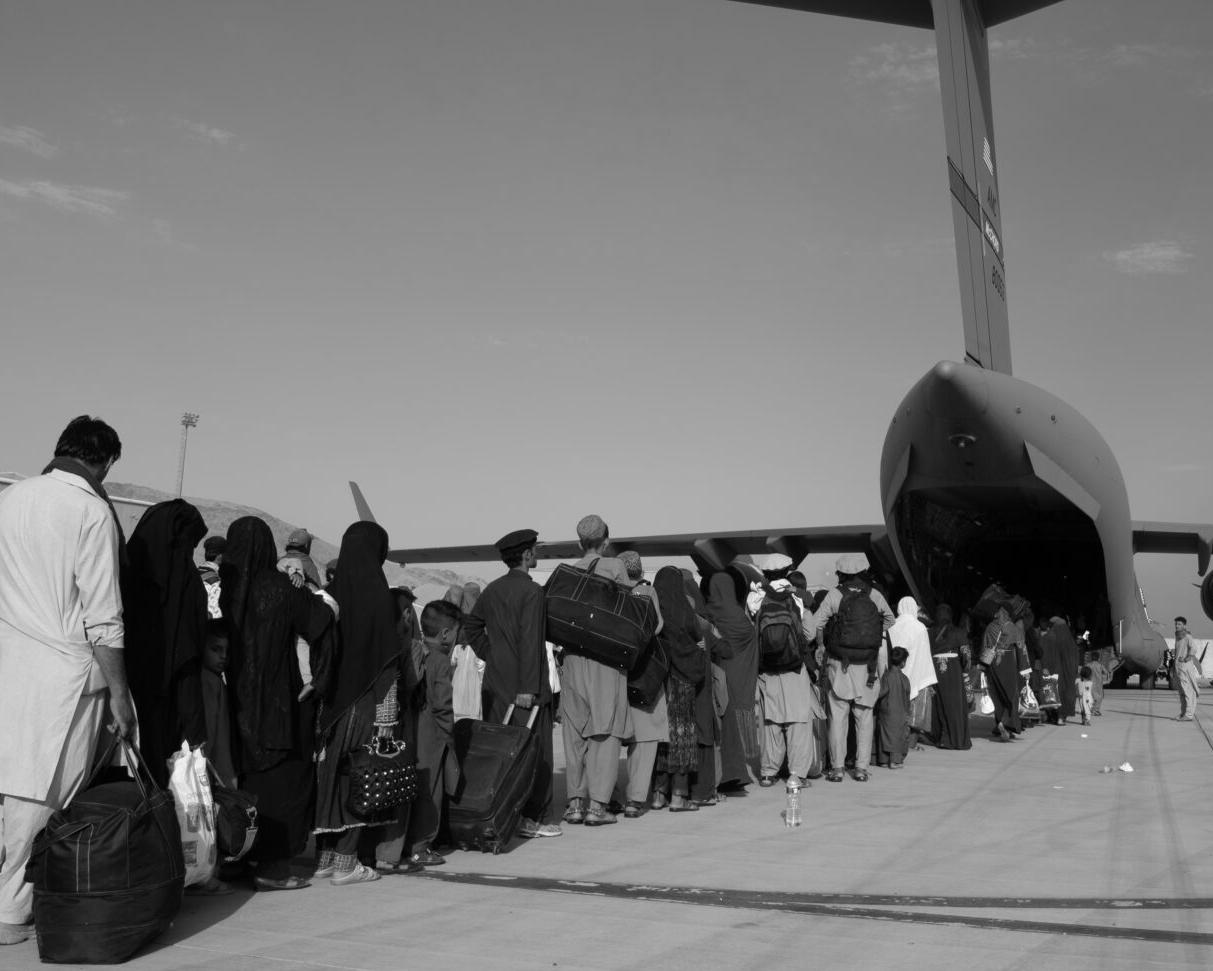
There are limited safe pathways for many LGBTQI+ individuals seeking assistance.
Refugee Leadership and Inclusion
• In 2025, we expanded our work in Refugee Leadership and Inclusion. This area of work includes our: Ambassador Program Internship Program
• The ambassador program offers structured training and advocacy opportunities for LGBTQI+ individuals we previously helped relocate to the US and Canada.
In 2025, a total of 20 ambassadors brought their international expertise to 8 advocacy events in the US and Canada.
• The internship program supports refugees with short-term job placements that help them gain valuable work experience, develop new skills, and access professional networks in their new communities.
• Interns worked at Rainbow Railroad, Pride at Work Canada, Toronto People with AIDS Foundation, Family Service Toronto, and Metropolitan Community Church of Toronto.
In 2025, 7 different individuals participated in the internship program.
• IN 2025, WE WORKED WITH 27 INDIVIDUALS IN REFUGEE LEADERSHIP AND INCLUSION.


• We provide grants to CSOs and grassroots organizations globally through three different funds:
Grassroots Mobilization Fund
Crisis Response Fund
Community Access Fund
• In 2025, through our funding streams, we were able to support 17,855 LGBTQI+ individuals in 47 countries across 7 regions.
• Through the Grassroots Mobilization Fund (GMF), Rainbow Railroad works with local human rights defenders (HRDs), activist networks, and grassroots organizations.
• The GMF provides flexible funding to enable local actors to respond to emerging needs while also strengthening the sustainability and long-term capacity of LGBTQI+ community support structures.
• In 2025, we built and sustained partnerships with 30 organizations across 20 countries and 6 regions.

This graph depicts the different types of support that a partnership project can provide. Because each partnership may include multiple types of support, the numbers in this graph will not add up to the total number of partnerships.
• IN 2025, A TOTAL OF 11,866 INDIVIDUALS RECEIVED ASSISTANCE THROUGH THE GRASSROOTS MOBILIZATION FUND.
• The Crisis Response Fund (CRF) is a new funding stream first announced in 2024 and operationalized in 2025 .
• The CRF addresses urgent funding gaps faced by grassroots organizations that are supporting LGBTQI+ individuals and communities experiencing displacement.
• This fund provides accessible, flexible micro-funding to enable local organizations to respond effectively to crises and mitigate drivers of displacement by strengthening existing support structures for LGBTQI+ people in crisis.
• In 2025, we built and sustained crisis response partnerships with 33 organizations across 32 countries and 6 regions.
• IN 2025, A TOTAL OF 4,909 INDIVIDUALS RECEIVED SUPPORT THROUGH THE CRISIS RESPONSE FUND.
• The Community Access Fund (CAF) is a new funding stream created and operationalized in 2025.
• The CAF provides grants directly to service providers, community activists, and grassroots organizations in order to help meet the needs of LGBTQI+ asylum seekers and other migrants in Canada and the US.
• In 2025, we established and sustained partnerships with 20 organizations supporting LGBTQI+ individuals in Canada and the United States.
• IN 2025, A TOTAL OF 1,080 LGBTQI+ INDIVIDUALS RECEIVED SUPPORT THROUGH THE COMMUNITY ACCESS FUND.

Flexible funding enables local organizations to respond effectively to crises.



• In 2025, Rainbow Railroad received 20,215 requests for assistance from LGBTQI+ individuals around the world. This is a 51% increase from 2024.
To better understand the circumstances that cause LGBTQI+ individuals to seek assistance, it is important for us to analyze who is requesting help and where requests are originating from.
• Our requests for help are categorized into the following regions: Caribbean (CAR), Eastern Europe (EE), Latin America (LA), Middle East and North Africa (MENA), Sub-Saharan Africa (SSA), North America (NA), Oceania and Pacific Islands (OCEA), Asia (ASIA), and Western Europe (WE).
• In 2025, the top region of request was North America, with 6,786 individuals seeking assistance; 92.1% of those requests came from individuals living in the United States seeking help in the aftermath of the inauguration of the president and the escalation of anti-LGBTQI+ policies.
• The Middle East and North Africa constituted the second-highest number for requests by region, with 5,315 individuals requesting assistance.
• Sub-Saharan Africa continued to be in the top 3 regions of request, with 3,508 requests.



• In 2025, the United States remained the top country requesting help, a trend that suddenly emerged in 2024 following the results of the November 2024 election.
• In 2025 we received over 6,253 requests from individuals living in the United States. Most requests from the US were driven by fear of future persecution due to new policies targeting the LGBTQI+ community. This trend is divergent from typical requests received from other regions, where individuals tend to seek assistance after experiencing violence.
• In 2025, Uganda, Pakistan, Egypt, and Afghanistan remained in the top five countries requesting help. However, in 2025, Uganda replaced Afghanistan as the second-highest country of request, with 1,055 requests.
• It is important to note the 5,196-person difference between the country with the highest number of requests (the United States) and the country with the second highest number of requests (Uganda). In 2025, the United States constituted 30.9% of all our requests, which is an important consideration when viewing our data.
United States
States



• While individuals have the option to describe their identities to our caseworkers outside of existing labels, we also disaggregate our data into the following gender identities: Agender, Aliagender, Cis-Women, Cis-Men, Genderfluid, Gender Non-conforming, Intergender, Transgender Women, and Transgender Men.
• In 2025, the top three gender identities requesting help were cisgender men, transgender women, and transgender men.
• With a 51% increase in the total number of requests received in 2025 compared to 2024, all gender identities also experienced an overall increase in requests.
• We also disaggregate our data by the following sexual orientations: Asexual, Bisexual, Gay, Heterosexual/Straight, Lesbian, Pansexual, and Queer.
• The top three sexual orientations remained the same from 2024-2025, with the most requests coming from individuals identifying as gay, bisexual, and lesbian, respectively.
• Gay individuals continued to represent nearly half of requests for help at 46% of all requests.
• In 2025, intersex individuals accounted for 3.7% of total requests for help in which individuals disclosed their identity.
• In 2025, the 18-25 age group was the largest group requesting help, representing 40% of all requests. The 26-35 age group followed closely behind, constituting 39% of all requests.
• These two categories were consistent with the top two age groups of individuals supported. However, in 2025, the 26-35 age group was the largest at 43% of the individuals we supported, while 25% were between the ages of 18-25.
• People aged 18-35 made up the overwhelming majority of those seeking assistance and receiving support, underscoring the disproportionate need among young people.
Young people made up the overwhelming majority of LGBTQI+ individuals seeking support in 2025.

This graph depicts the age groups represented in requests for help. Rainbow Railroad collects age data from the primary contact in a case and only from individuals who choose to disclose this information. This means that there is a portion of individuals requesting help for whom we have no age data.


• In 2025, the vast majority of requests for help came from individuals seeking safety on their own behalf.
• 77% of requests came from single individuals.
• 15% of requests come from individuals seeking help for themselves and one partner or one dependent.


Medical / Medication Resources
Letters of Support
• 80% of individuals from 172 different countries requested International Relocation. Of the individuals requesting international relocation, 26% were living in the United States.
• The second and third most requested program services were Shelter/Housing Assistance (35%) and Mental Health Services (22%).


Health and Welfare Concerns and Safety Concerns
• When individuals reach out to Rainbow Railroad for support, we track the specific threats to safety, health, and welfare that they face throughout their journeys. These concerns are categorized as Health and Welfare Concerns and Safety Concerns, and are constantly evolving.
• Health and Welfare Concerns refer to factors relating to physical and mental well-being that put people at risk. In 2025, we tracked 16 Health and Welfare Concerns.
• In 2025, the top five Health and Welfare Concerns reported by individuals supported by Rainbow Railroad were:
Lack of Basic Needs
Mental Health Concerns
Homelessness
Employment discrimination
Lack of Income due to discrimination
• Safety Concerns refer to direct threats faced by individuals from their family, community or the state. In 2025, we tracked 39 Safety Concerns.
• In 2025, the top five Safety Concerns reported by individuals supported by Rainbow Railroad were:
Community rejection
Family-based rejection (non-violent)
Life-Threatening Violence
Verbal threats/ abuse
Community violence
Health and Welfare Concerns
• In 2025, we tracked the Health and Welfare Concerns of the individuals we supported across all of our programs.
• Lack of basic needs, mental health concerns, and homelessness were the top three Health and Welfare Concerns that individuals reported, consistent with 2024.


• This is particularly evident for individ-
Section 2: Data on the State of Global Persecution
4. Employment discrimination - 29%
concern. Community rejection often results in social exclusion, loss of housing or livelihood, and increased risk of violence. Family-based rejection also persisted, affecting 75% of individuals supported. All harms were more significant in countries where anti-LGBTQI+ legislation has codified homophobia and transphobia.
• Violence and threats also continue to affect the LGBTQI+ individuals we work with. Last year, 63% of the individuals we supported reported facing life threatening violence, while 55% reported community violence.
• Thevse circumstances are often what force individuals to seek refuge in other countries.
Our data reflects the reality of a world in which LGBTQI+ rights are under attack. In 2025, Rainbow Railroad received a total of 20,215 direct requests for assistance from LGBTQI+ people at risk around the world, a 51% increase compared to the previous year.
At the same time, access to safe pathways is deteriorating, global humanitarian aid systems are being dismantled, governments are abandoning LGBTQI+ people and migrants, and hate is escalating. Countries previously considered “safe” for our community are experiencing backsliding on LGBTQI+ and refugee rights, driving a sharp increase in the number of individuals reaching out for support.
This data cannot be ignored. Requests for help are increasing because violence, fear, and dangerous political narratives are all affecting the wellbeing of our global LGBTQI+ community. The overwhelming majority of individuals reaching out to us are young people who are unable to meet their basic needs, experiencing family and community-based rejection. Frequently,
they are internally or externally displaced, confronting additional barriers to accessing support systems. Geopolitical crises, well-funded anti-LGBTQI+ and xenophobic movements also compound the precarity and instability for individuals most at risk.
Despite overlapping pressures and worsening conditions, our community continues to resist, adapt, and seek pathways forward. Our data represents the resilience of our community, and the potential for change. In 2025 we expanded our partnerships and grantmaking programs, deepening our connections within a global network of civil society organizations and human rights defenders. By working with frontline partners we were able to significantly increase the number of individuals we supported, meeting a variety of needs across a wider breadth of programming.
Overall, in 2025, Rainbow Railroad supported 7,521 unique individuals directly, and an additional 17,855 individuals through partnerships—the highest number of individuals we have ever been able to connect to vital services. Examining the data and insights from the past year of our work, it is clear that the needs of our community are intensifying but, alongside our supporters, our resolve is strengthening to meet this moment.




Global funding cuts caused severe harm to LGBTQI+ organizations around the world in 2025. In January of last year, the US administration issued an executive order that initiated the systematic destruction of international assistance around the globe. This decision, driven by anti-gender, anti-rights, and anti-trans ideology, marked the beginning of a year-long effort to dismantle USAID, weaponize foreign assistance for political gain, and purge federal references to LGBTQI+ rights, LGBTQI+ people, and DEI.
The administration scrubbed trans history from the Stonewall National Monument website. The Department of Government Efficiency used AI to scan and reject grant applications that mentioned LGBTQI+ rights.7 The ongoing attempts to erase LGBTQI+ identities have resulted in a wave of litigation and uncertainty. The cessation of US contributions to foreign aid is devastating. The administration targeted crucial areas of international funding that support LGBTQI+ rights, women’s health and reproductive rights, and diversity equity and inclusion programming, calling them “antithetical to American interests.”8
The consequences of cuts to foreign assistance have been most significant for vulnerable populations. Multiple marginalized populations, such as individuals living with HIV, have been severely impacted by the shifting tides of the current political landscape. LGBTQI+ people are a key population disproportionally burdened by incident HIV infections, already living on
the margins of society.9
While the US administration is not the only government regressing in support for LGBTQI+ rights, its position on the global stage has been consequential. The cuts to funding for LGBTQI+ rights have led to a domino effect, with previously progressive nations retreating on their commitments, and others advancing regressive laws and policies. For example, there have been concerns expressed that the UK may back away from its £40 million pledge to support LGBTQI+ rights around the world.10 The Netherlands also scaled back support for LGBTQI+ rights through their missions, contributing to an estimated shortfall of 55% for embassy grants to local LGBTQI+ organizations.11 Because of the global decline in funding, Canada and other donor countries must step up and increase their support.12 Private donations are also contracting, with LGBTQI+ organisations confronting the fallout of an increasingly hostile political environment. It is anticipated that available funding from private donors and government will decrease



significantly in the coming years.13 There have been tectonic shifts in official development assistance (ODA) and philanthropy that are influencing the global LGBTQI+ funding ecosystem. Twenty-nine of the leading global LGBTQI+ intermediary funders were surveyed in 2025 and reported reductions to their LGBTQI+ focused regranting budgets, averaging 25% cuts since 2024. Nearly 60% have experienced declines in their own organizational budgets, and one-third have already reduced staff—most losing around 20% of their workforce. The largest intermediaries, which collectively move the most funding to LGBTQI+ movements in the Global South and East, report the steepest reductions.14 We are in the midst of an
authoritarian shift, backed by coordinated government and billionaire-funded attacks that scapegoat LGBTQI+ communities.15
Rainbow Railroad has seen the impacts of funding cuts firsthand. Our data indicates that more organizations are seeking financial support as global funding sources evaporate. Demand for partnership and crisis response support is surging. Our Grassroots Mobilization Fund received 178 applications in 2025, a 305% increase from 2024. This represents a need of more than CAD $2.5 million. Additionally, demand for funding under our new Crisis Response Fund was overwhelming. We received 592 applications for support, representing CAD $16 million in requests.

These aren’t just numbers, they are lifelines for LGBTQI+ people and the organizations that support them.
Global funding cuts have put LGBTQI+ organizations under pressure; this is evident in the widening gap between demand and funds distributed. We were only able to meet 6% of the organizational support requests we received, leaving the vast majority of LGBTQI+ organizations that sought our help without critical assistance. Substantially more funding is needed to respond to the increased risks facing frontline organizations. In 2025, we disbursed over CAD $1.1 million to support grassroots movements and crisis response efforts, but we experienced funding demand of CAD $18.5 million.
The Crisis Response Fund is one way we support communities. These aren’t just numbers, they are lifelines for LGBTQI+ people and the organizations that support them. A beneficiary of a CRF-supported project shared the following reflection:
“In a context where being an LGBTQI+ person means living with fear and without access to support, this project represented a safe and vital space for me. Receiving affirmative psychological support and legal guidance allowed me to feel protected, validate my experience, and understand my rights. Beyond individual support, knowing that there are organizations backed by international allies such as Rainbow Railroad restored my hope and the certainty that our lives matter. This accompaniment marked a before and after in my well-being and my ability to envision a future with greater safety and dignity.”


Pathways to safety are disappearing for LGBTQI+ people around the world. In 2025 the Canadian government introduced two separate pieces of legislation that target asylum seekers. The names of these bills reveal the government’s intention; C-2 the Strong Borders Act, which was eventually abandoned after public pressure, and the second, C-12 the Strengthening Canada’s Immigration System and Borders Act which became law.
The Strengthening Canada’s Immigration System and Borders Act undermines access to asylum, and makes the process of claiming asylum more difficult for LGBTQI+ claimants. The Act limits the right to claim asylum by imposing a one-year bar on the ability to secure a hearing before the independent Immigration and Refugee Board. It also imposes harsh penalties for failing to meet deadlines in the immigration process, putting vulnerable LGBTQI+ people at risk.16
Our data shows the impact these and other laws around the world are having on LGBTQI+ people seeking safety. We received 20,215 requests for help in 2025; more than 7,000 of these requests came from countries where it is extremely difficult or impossible to find pathways to safety.
In 2024 we supported 242 people through our Emergency Travel Support program. In 2025 that number dropped to 85, representing a 65% decline, and only 8 of those people were able to leave countries where routes to safety are extremely difficult to map. We are also seeing a worrying number of requests for help from within the European Union. Despite the EU’s public
commitment to international human rights, LGBTQI+ refugees in the bloc are facing serious protection gaps, an issue we are actively monitoring.
Across the international landscape, Canada’s new laws are not unique. By mid-2025 the UNHCR was reporting that policy changes by several countries were expected to lead to further substantial reductions of new asylum applications. Because of these policy changes, reported statistics on individual asylum applications are likely to become less reflective of the true number of people who need to access asylum globally.17
Historically, the United States was the world’s leading resettlement country, accepting more refugees in most years than all other resettlement countries combined. In January 2025, the administration suspended the United States Refugee Assistance Program. For fiscal year 2026 (October 1, 2025 to September 30, 2026), the US will reduce resettlement numbers by 94%, to 7,500 people, and most slots will be allocated to white Afrikaners from South Africa.18 Although the administration later decided to lift a previous asylum adjudication pause,19 the landscape remains uncertain, making life even more challenging and precarious for LGBTQI+ people seeking asylum.
The UK has also proposed aggressive reforms to their immigration system. Proposals to make refugee status temporary, limit the number of safe pathways, and create fast-track removals will have a major impact on asylum seekers in the country.20 These reforms are said to have been influenced by Denmark’s already harsh asylum system, and may be even more restrictive.21
Germany likewise implemented significant changes in 2025, contributing to the gradual erosion of the asylum system and running counter to the spirit of The 1951 Refugee Convention.22 German policy has also wavered on issuing humanitarian visas for Russians and Belarusians facing political persecution at home.23
Despite many challenges, we continue to intervene to support people facing an increasingly hostile asylum policy landscape in the United States. After individuals we support have found a way into the US, many spend time in detention centers as they await decisions on their case. Our volunteer Community Support Teams (CSTs) represent the strength of grassroots efforts to help individuals who are the targets of regressive anti-LGBTQI+ and xenophobic policies. In one case, we mobilized volunteers and worked with a church to show up in strong support of Michel — an LGBTQI+ asylum seeker — at a bond hearing. The Immigration Judge cited this support when setting an extremely low bond, enabling Michel’s release to his CST who temporarily hosted him after his release from detention before church-sponsored housing was ready. Mobilized by Rainbow Railroad, this community-level intervention was the difference between freedom and continued ICE detention in hostile conditions.
Another disturbing trend in 2025 that will negatively impact LGBTQI+ people seeking pathways to safety is the “offshoring”24 of refugees. The Netherlands and Uganda made one such deal, under which the Dutch government would send claimants to Uganda. The Dutch government has said that they would not send LGBTQI+ claimants to Uganda, which is cold comfort for LGBTQI+ people fleeing persecution.25 This follows Australia’s enhanced legal rules for paying third countries to accept people Australia intends to deport.26 This legal change caps 25 years of Australian involvement in extended off-shore detention.27
All these changes point to the incoming European Pact on Migration, which will introduce new restrictions across the European Union. The Pact includes provisions that, once implemented, will severely curtail human rights. These new rules will make it harder for individuals to access the right to seek asylum, as well as making it easier to rush decisions on asylum applications. This will disproportionately impact LGBTQI+ asylum seekers, and will increase instances of detention. Human Rights Watch has expressed that these
changes encourage EU states to return people to transit countries outside the EU where they could face abuse or chain refoulement.28 While the EU may identify a country as “safe” for refugees, safety may not apply equally to LGBTQI+ refugees.
Rainbow Railroad received 269 requests for help from the 27-country EU bloc last year. This is a 49% increase over 2024, when we received 181. Two thirds of these requests came from asylum seekers, temporary residents, registered refugees and people with no legal status. Individuals living in this context have expressed fears about their urgent needs for support; one individual shared “I have felt ignored, exposed, and treated as a number rather than as a human being. My real and urgent needs for protection and healthcare were ignored.”
Behind the language of efficiency, solidarity, and border management is a system built to exclude, detain, and deport.29



Another disturbing trend in 2025 that will negatively impact LGBTQI+ people seeking pathways to safety is the “offshoring”24 of refugees. The Netherlands and Uganda made one such deal, under which the Dutch government would send claimants to Uganda. The Dutch government has said that they would not send LGBTQI+ claimants to Uganda, which is cold comfort for LGBTQI+ people fleeing persecution.25 This follows Australia’s enhanced legal rules for paying third countries to accept people Australia intends to deport.26 This legal change caps 25 years of Australian involvement in extended off-shore detention.27
All these changes point to the incoming European Pact on Migration, which will introduce new restrictions across the European Union. The Pact includes provisions that, once implemented, will severely curtail human rights. These new rules will make it harder for individuals to access the right to seek asylum, as well as making it easier to rush decisions on asylum applications. This will disproportionately impact LGBTQI+ asylum seekers, and will increase instances of detention. Human Rights Watch has expressed that these changes encourage EU states to return people to transit countries outside the EU where they could face abuse or chain refoulement.28 While the EU may identify a country as “safe” for refugees, safety may not apply equally to LGBTQI+ refugees.
Rainbow Railroad received 269 requests for help from the 27-country EU bloc last year. This is a 49% increase over 2024, when we received 181. Two thirds of these requests came from asylum seekers, temporary residents, registered refugees and people with no legal status. Individuals living in this context have expressed fears about their urgent needs for support; one individual shared “I have felt ignored, exposed, and treated as a number rather than as a human being. My real and urgent
needs for protection and healthcare were ignored.”
Behind the language of efficiency, solidarity, and border management is a system built to exclude, detain, and deport.29 The Pact will make seeking pathways to safety across the EU more difficult and dangerous for LGBTQI+ people. The Pact weakens the procedural rights of asylum seekers;30 for instance, trans people will be systematically exposed to detention, where they will be segregated based on the gender markers on their official documents, leading to heightened vulnerability, discrimination, as well as physical, mental and sexual abuse.31 One family impacted by the Pact shared the following:
“We traveled through Czechia but did not apply for asylum there. We applied for asylum in Denmark, but our case was rejected under the Dublin Regulation.32 Denmark plans to deport us to Czechia, even though we face real danger there (we have received threats and cannot rely on protection from Czech authorities). We suffer from serious mental health conditions: PTSD, OCD, hallucinations, borderline personality disorder, severe anxiety, depression, and suicidal thoughts. We are under medical treatment, and doctors have confirmed that deportation would place us at extreme risk.”
These developments are part of a broad global trend towards restricting access to asylum and externalizing refugee protection. These policies are being advanced despite, and in contravention to, the obligations states have under the 1951 Refugee Convention. Returning a LGBTQI+ asylum seeker to a country that criminalizes and persecutes LGBTQI+ people is a clear violation of the principle of non-refoulement. Policies shaping the treatment of LGBTQI+ claimants across the EU demand scrutiny. The Pact is a clear assault on the EU’s foundational values of human dignity, human rights, and freedoms. Rainbow Railroad will continue to document, monitor, and speak out on the impact of the EU Pact on Migration, and the risks it poses to LGBTQI+ people.


Meeting People Where They Are: Developing Information Services and Referrals
Rainbow Railroad developed its Information Services and Referrals Program in response to the growing number of requests for help we receive from LGBTQI+ people around the world. The program is designed to connect as many people as possible with critical resources and affirming support wherever they are, recognizing that not everyone is able to access international relocation.
Through our Support Referral Network, we connect individuals directly with trusted partner organizations that provide vital services, including mental health support, medical care, shelter, asylum information, and legal representation. In addition to these referrals, Rainbow Railroad offers tailored queer competent guidance including consultations, letters of support, practical advice, and emotional support.
A key part of this work is the development of information packages – curated technical guides that help people identify and access assistance in their country of residence. In 2025, we deployed information packages for several countries including Egypt, Kenya, Nigeria, Russia, South Africa, Türkiye, Uganda, and the United States. These packages include practical information, support channels, and trusted contacts for LGBTQI+ people at-risk, helping individuals navigate options that are often difficult to find or inaccessible due to underground operations. As requests for help increase, Rainbow Railroad continues to strengthen and expand this program to ensure more LGBTQI+ people can access support, information, and community wherever they are.
The suspension of the United States Refugee Assistance Program has been devastating for LGBTQI+ refugees, and the global impact continues to be felt. The United States has retreated from their role as the world’s leading resettlement country, and the right to seek asylum is also being systematically dismantled, despite this right being protected by international and US law.33
The US administration temporarily halted asylum decision-making on November 28, 2025. Although the temporary asylum adjudication pause was lifted for some coun-
tries, they remain paused for individuals from the 39 countries on the administration’s travel ban list. Asylum seekers have since reported widespread cancellations of interviews.
At the same time, asylum decisions continue to be granted to some of the individuals we support, underscoring the inconsistency and shifting policy signals within the current US asylum system. Additionally, the administration plans to review all asylum decisions made during the Biden administration.34 These policy shifts abandon decades of US leadership in building responsibility-sharing between well-resourced donor and resettlement countries and those on the front lines of mass migration.35
The increase in requests for help received from the United States is staggering. These requests include both citizens and non citizens including asylum seekers, refugees, permanent residents, people with no legal status, temporary residents, and others. These requests illustrate that, even within the United States, people seeking pathways to safety are being challenged by an increasingly hostile environment. The three most common types of support requested were for international relocation, shelter and housing assistance, and letters of support.
We do not collect state-level location data in our requests for help, but, after reviewing requests for help received in the first quarter of 2025 following the inauguration of the current US administration, we observed that 80% of requests for help from the United States originated from red states. Although Canada’s immigration jurisprudence has begun to recognize the need to consider up-to-date dangers faced by LGBTQI+ individuals in their country of citizenship, including the United States,36 the Canada-U.S. Safe Third Country Agreement creates significant barriers for individuals in the United States who wish to seek asylum in Canada.
Following the November 5, 2024 election, requests for help from the United States surged, with nearly three quarters of US requests for help from 2024 received in the final weeks of the year. Our data shows troubling trends with regards to the lived experiences of LGBTQI+ people in the US in recent years. In 2023 we received over 1,900 requests from individuals seeking our assistance from the United States, representing a 523% increase from 2022. In 2022, the majority of individuals seeking help from the US were asylum seekers from other countries – in 2023 that trend was reversed.
tries – in 2023 that trend was reversed. The following year, 2024, one out of every five requests for help originated from the United States; in 2025, this increased to one out of every three requests. 2025 was the second year in a row where the largest single source of requests for help was the United States. In cases where an individual requesting help disclosed their gender identity to us, the largest groups seeking assistance were trans women and trans men.
Although US citizens are asking for support, our data also shows that non-citizens are still seeking support from within the United States. We received 427 requests for help from non-US citizens within the United States in 2025. This represents an exponential increase over time, from 38 requests for help in 2023 and 94 in 2024, excluding cases where citizenship was not reported.
The political realities of the US today are severe. Travel bans have been imposed by the US administration on countries around the world. Individuals who felt protected have had their status revoked, and others are experiencing severe financial hardship because of significant cuts to refugee and asylum support programs. Rainbow Railroad’s Housing and Livelihood Assistance Fund is one of the tools deployed to respond to this reality. It provides emergency cash assistance grants directly to LGBTQI+ asylum seekers and other LGBTQI+ migrants who have been affected. In 2025, the fund supported 131 people.
Even amidst a worsening climate, our community is still mobilizing in support of LGBTQI+ asylum seekers and migrants in the United States. Through the team we have built and the partnerships we rely on, we have been able to witness real moments of resilience and progress on an individual level. After 9 months in detention, one of the individuals we supported gained her freedom and a new start with the assistance of her volunteer Community Support Team, a powerful reminder of what community-building can make possible.


The following year, 2024, one out of every five requests for help originated from the United States; in 2025, this increased to one out of every three requests. 2025 was the second year in a row where the largest single source of requests for help was the United States. In cases where an individual requesting help disclosed their gender identity to us, the largest groups seeking assistance were trans women and trans men.
Although US citizens are asking for support, our data also shows that non-citizens are still seeking support from within the United States. We received 427 requests for help from non-US citizens within the United States in 2025. This represents an exponential increase over time, from 38 requests for help in 2023 and 94 in 2024, excluding cases where citizenship was not reported.
The political realities of the US today are severe. Travel bans have been imposed by the US administration on countries around the world. Individuals who felt protected
have had their status revoked, and others are experiencing severe financial hardship because of significant cuts to refugee and asylum support programs. Rainbow Railroad’s Housing and Livelihood Assistance Fund is one of the tools deployed to respond to this reality. It provides emergency cash assistance grants directly to LGBTQI+ asylum seekers and other LGBTQI+ migrants who have been affected. In 2025, the fund supported 131 people.
Even amidst a worsening climate, our community is still mobilizing in support of LGBTQI+ asylum seekers and migrants in the United States. Through the team we have built and the partnerships we rely on, we have been able to witness real moments of resilience and progress on an individual level. After 9 months in detention, one of the individuals we supported gained her freedom and a new start with the assistance of her volunteer Community Support Team, a powerful reminder of what community-building can make possible.

Over the past 20 years, the digital landscape for LGBTQI+ people has changed dramatically. When other spaces feel closed off, LGBTQI+ people find community online. For LGBTQI+ young people in particular, online spaces may serve as a place to explore their identities, and seek out affirmation, resources, and peer support.38 But the digital ecosystem is not always safe, and the targeting of LGBTQI+ people online is a byproduct of their legal precarity offline. The criminalization of consensual same-sex relations and the application of vague “morality” and “debauchery” laws against LGBTQI+ people embolden digital targeting, suppresses LGBTQI+ expression online and offline, and serve as the bases for prosecutions of LGBTQI+ people.39
Rainbow Railroad’s data offers us a window into this understudied environment. In 2016 and 2017, requests for help received by Rainbow Railroad rarely mentioned online platforms. In those two years, only 11 requests for help mentioned dating apps or social media. In 2025, almost 600 requests for help cited an online interaction as part of their reason for seeking safety, representing a more than 5,000% increase over 10 years. Since 2016 we have received more than 2,000 requests for help that reference the digital domain, inclusive of social media and dating apps. Among these 2,000 requests, the average age of individuals is 25 years old, which shows that young LGBTQI+ people are disproportionately affected by online risks.
The harms people reference experiencing online include being publicly outed or humiliated, date baiting, and blackmail. Our data shows that these harms are prevalent across the globe. Requests from the United States, Egypt, Pakistan, Uganda, and Nigeria most frequently include reference to online dangers. A total of 112 countries are reflected in this data. Dangers online can result in real physical harm when people seek connection offline.
Our requests for help indicate that, in certain cases, dating apps are being used by police and state actors to trap and extort LGBTQI+ people. Once a person is detained, authorities will routinely search through their digital platforms and accounts to find evidence of illegality. Individuals report violent, humiliating and degrading experiences at the hands of authorities when they are detained. In some cases, individuals report police trying to use information they have obtained to ambush or out other LGBTQI+ people.
Even if an experience of date baiting isn’t perpetrated by the police, there are barriers to reporting any crimes that may occur; individuals who speak up risk being outed, blackmailed and revictimised. Dating apps may be used to sexually assault and rob LGBTQI+ people. In other instances, a person’s intimate images are captured and used to blackmail them.
Despite the fact that LGBTQI+ people face particular dangers in a digital world, requests for help also demonstrate hope. Rainbow Railroad’s presence on digital platforms continues to reach people in search of safety and community. Requests for help from countries like Sierra Leone, Mauritania and the United States all reference the sense of hope they experienced when they saw our work profiled on social media. The duality of hope and harm in digital spaces is an evident tension in our work. Despite the dangers online, our ability to connect people with resources is enhanced through digital platforms. It is clear that, given the significant risks and dangers present, partnerships between digital platforms and organizations like Rainbow Railroad are needed to improve safety for LGBTQI+ people online.

While the story below is true, some details, including the name of the individual, have been modified to protect his identity.
Rio Santos can’t help it. The smile lines of the 26-year-old gay asylum seeker, who hails from a country where consensual same-sex intimacy between men is criminalized, deepen as he recalls it: the first time he saw two men kiss each other in public.
“I felt freedom,” Rio, who self-relocated to the US in 2025 in search of safety, tells Rainbow Railroad. “Nobody, no other people, were looking at them. Nobody beat them. Nobody hit [them]. If I were to do it… publicly, they would [have] kill[ed] me,” he says about his home country.
The experience, which rendered him emotional, happened in the presence of his six-person volunteer Community Support Team (CST). CSTs, mobilized by Rainbow Railroad, provide six months of community integration assistance to LGBTQI+ forcibly displaced people in Canada and the US. The program emerged from the recognition that newcomers face additional barriers after resettlement, such as social and linguistic isolation, confusion about how to navigate the asylum or legal system, and a general change in cultural customs.
Rio is one of the nearly dozen individuals who has been assisted through CSTs in cities including Boston, Chicago, Los Angeles, and Toronto. The program, in the absence of other forms of support, has allowed him to grow and learn; it’s helped Rio enroll in free English classes, secure housing through a local place of worship, and feel a sense of belonging in queer community spaces.
“They’ve already taken me in as a family member,” Rio says about his CST. “They want to make sure that I’m enjoying myself, that I’m trying things that make me happy.”
Rio, who calls every moment with them his favourite memory, recounts the big and small moments that have made his time in the US meaningful: watching sunsets at the beach, visiting art museums, eating Korean barbecue for the first time, and relishing in the reciprocal good this program has brought all of them.
Community Support Teams alone cannot offer sufficient assistance for the many obstacles that asylum seekers face. Rio faced a months-long stay in detention, after which his asylum case was eventually approved in fall 2025. But the Department of Homeland Security (DHS) filed an appeal against his case, pausing his eligibility to obtain a work permit, which he otherwise would have been able to access after a 180-day period. “Getting him a job is our biggest hurdle and our biggest concern,” says CST member Ryan Howard. “We have temporary free housing right now, but that’s not going to last forever. And without employment, he can’t earn enough to make a living.”
It remains unclear when Rio’s case, still in the hands of immigration officials, will be resolved.
The impact of this program, however, is not small. “You have this person who has been raised in an environment where being himself is a fearful thing. He risked everything to travel halfway around the world, sent to detention for months, which couldn’t have been easy, and then, all of a sudden is just released into the world,” explains Howard, who said he’s seen Rio’s confidence grow in the short time he’s known him. “I don’t know what people without a support team do because it’s just an overwhelming thing to try to set up your life in a new country where language is an initial barrier.”
This post-relocation program emerged following the termination of Welcome Corps, a partnership between the US government and several organizations including Rainbow Railroad that allowed for the private sponsorship of LGBTQI+ refugees to resettle to the US. Welcome Corps was suspended in 2025, on the current president’s first day in office. The asylum system in the US has largely imploded.
Despite evolving policy around LGBTQI+ people, the CST program helps newcomers find a sense of community as an antidote to national anti-gender conversations on queer and trans individuals. It also serves as a reminder that the US can remain a hopeful place of safety for individuals like Rio who are fleeing persecution.
Relocating to the US, he says, was his only option. “I really do love my country, and I really do love my family, but I actually had no choice when it came to leaving,” says Rio. “If there had been any opportunity whatsoever for me to find somewhere in my country where I could live peacefully and not feel threatened, I would never have [left]. I just did it because I had to.”
If there had been any opportunity for me to live peacefully in my country, I would never have left. I did it because I had to.
RYAN HOWARD

Ilana Landsberg-Lewis
Ajay Patel
Adriana Espinosa
Ally Geist
Ann Nweke
Anthony Mercurio
Brandon Pearl
Brittany Skerritt
Craig Palmer
Deema Shahin
Dennis Wamala
Devon Matthews
Dorrin Narenjiha
Gen Melito
Hazem Ghaith
Ilena Gudino
Jacquie Daly-Voyska
Jasmine Ford
Jim Kapches
Justin McCormick
Karim Khalifeh
Karine Jaouich
Kathryn Busch
Kel Kelly
Kendra Frith
Kevin Lemieux
Kiana Reyes
Leora Mosman
Maicel Neema
May Tartoussy
Melissa Pierce
Michael Cady
Michelle Jung
Milo Stewart
Mindy Wu
Monique Sereneo
Nicoy Davis
Paige MacLean
Rabab Al Khatib
Rachel Bryce
Ralph Guth
Rawand Najm
Rebaz Khursheed
Ricardo Simpson
Roland Kwesiga
Scott Ferguson
Siu Mee Cheng
Sizwe Inkingi
Swathi Sekhar
Taiwo Olaniyan
Taylor Luftig
Tazrian Islam
Tiffany Namtu
Timothy Chan
Vero Lahaie
Zahra Mahmoodi Staff
Chief Executive Officer
Senior Design and Digital Officer
Logistics Officer
Crisis Response and Grassroots Mobilization Fund Officer
Controller
Chief Development Officer
Director, Intake, ETS, and Cash Assistance
Director, Community Giving
Senior Officer, Event Management
Senior Administrator, Strategy
Program Officer, Resettlement
Chief Program Officer
MEL Officer, Evaluation
HR Admin Contractor
Senior Policy Research Officer
Director, Service Referrals and Post-Relocation Support
MEL Officer, Data
Interim Director of Individual Giving Canada
Director of Policy, Advocacy, and Government Relations
Senior Development Officer, Major Gifts USA
Senior Strategy Officer, Grassroots Mobilization
Fractional CFO
Director, Development Operations
Operations Officer
Senior Program Officer, Post-Relocation and Service Referrals
Development Officer, Operations
Senior Program Officer, Post-Relocation and Service Referrals
Program Officer, Post-Relocation
Director of Resettlement Pathways
Program Officer, Case Support
Senior Development Officer, Foundations
Senior Development Officer, Major Gifts USA
Director, HR & Admin
Programs Officer, Intake
Senior Finance Officer
Director of MEL
Engagement Officer, Volunteer Coordination and Mobilization
Senior Program Officer, GAR Coordinator
Chief Impact Officer
Program Officer, Resettlement Applications
Program Officer, Emergency Travel Support and Cash Assistance
Program Officer, Intake and Case Support
Program Officer, ETS and Cash Assistance
Program Officer, Resettlement Program Officer, Resettlement Pathways Director, Partnerships
Chief Operating Officer
Policy and Advocacy Officer
Director, Protection Initiatives
Finance Administration Officer
Senior Development Officer, Community Fundraising
Development Officer, Major Gifts
Development Officer, Corporate Partnerships
Director, Communications
Program Officer, Resettlement
Senior Program Officer, Resettlement


Caleb Goodman
Muneer Panjwani
Shreya Shah
Marina Paleka
Malik Brown
Bruce Koff
Devin O’Neill
Joli Robinson
Julian Morris
Karoline Katus
Krishna Omkar
Patrick Sheahan
Victor Madrigal-Borloz
Chair, Rainbow Railroad
Chair, Rainbow Railroad USA
Vice-Chair, Rainbow Railroad Treasurer
Secretary, Rainbow Railroad
Secretary, Rainbow Railroad USA
Director Director Director Director Director Director Director Director


Sorted alphabetically, by last name for individuals
* includes fundraised amounts
† includes in-kind support
CANADA
$1M+
Estate of John Christopher Murray
$500,000 – $999,999
IRCC - Resettlement Assistance Program
UK - Foreign, Commonwealth and Development Office
$250,000 – $499,999
DECIEM I The Abnormal Beauty Company †
LCBO (Liquor Control Board of Ontario) lululemon
$100,000 – $249,999
The Fresh Perspective Group †
Global Affairs Canada
GreenShield *
IKEA Canada †
Barry Inouye
Martha LA McCain
Robert Quartermain
TD Bank Group †
WES Mariam Assefa Fund
Women & Gender Equality Canada
$50,000–$99,999
The Auxilium Foundation
The Beer Store
BMO Financial Group *
Canada Lands Company † *
River Champeimont
Clyde & Co Canada LLP
MAC Viva Glam Fund
La Fondation Emmanuelle Gattuso
Google LLC † *
H&M North America
Reiss *
George Yabu and Glenn Pushelberg
Anonymous (1)
$25,000 – $49,999
Aviva Canada *
Keith and Michael Battista *
Choose Love
Tom Deacon
Digital Extremes
Estate of Frederick Grant McDiarmid
Out Adventures
Scott Powell and Kirk Hill † *
Sephora *
Anonymous (3)
$10,000 – $24,999
A4A Network Inc.
Abundant World Foundation
The Michael Baylis Foundation
Robert Brews
Connor, Clark & Lunn Foundation /
Connor, Clark, & Lunn Financial Group *
Elephant Shoes Foundation
The Jon Fedder and Mark Robertson
Community Fund
Fidelity Investments Canada ULC
Fierté Canada Pride
GatoNegro †
The Get REAL Movement *
Immigration Equality †
Kismet Fund
The Kraft Heinz Company
Estate of John Kriter
Bruce Lawson
LGBT Purge Fund
William MacKinnon and James Cooper
Russell Mathew and Scott Ferguson
Tom Mitchinson and David Connolly
Plusgrade
Polar Labs †
RBC Foundation
Royal Ontario Museum †
Debra Sanchuk
The Lawrence Schafer Foundation
Noel Semple
Sentinel Maintenance Incorporated
Shreya Shah
Team Noel Semple *
Team Stacy Zosky *
TELUS Communications Inc.*
TreadRight Foundation
The Wawanesa Mutual Insurance
Company
David Wong and Dennis Yu
Stacy Zosky
Anonymous (4)
$5,000 – $9,999
A Thinking Ape Entertainment Ltd.
Absolut Vodka
John Andru
Arno Family Foundation
Scott Baker and Blair Mascall
Earl and Joan Bardswich
Joanna Bell
Chris Carter
Carrosseries C.A.
Cboe Canada Inc.
Coyote Jocks
Ecclesiastical Insurance
Electronic Arts *
Enterprise Holdings Foundation
Fairmont Vancouver Airport
Daniel Gauvin
Dr. Lawrence Gitterman and John
Gilchrist
A.J. Goulding and Jason Huang
Andrew Grimes
Kat Hanna
Stephen Johnson
Kroeker Farms Limited
Laidlaw Foundation
Roger Larios-Gallant
Christopher Lucki and Rodey Wing
Angela Maxwell *
Kevin McGuire
Sean McKenna and Sandro D’Ascanio
Cedric Menard
Michael Murdoch *
Netflix, Inc.
Ian Nordheimer
Oak & Willow
Our Flag Means Pride *
Alon Ozery
Simon Paluck †
PMA Canada Ltd.
PMJ Edwards Giving Fund - OCF
Andrew Pruss
Righteous Gelato
Roots Corporation
Joel Rotstein and Frank Chester
Ryan Sanders and Timothy Chan *
Glenn L. Smith
Andrew Swart and Michael Sacke
Take Two Software
That’s Spooky Podcast
TheCoffeeMonsterzCo.
Jim and Judy Thiessen
June Thompson and Terri Holizki
Adam Toffoli
Torys LLP
Trisura
Ian Turner
Allan Walkinshaw and Nancy Cobban
Z Zurich Foundation *
Anonymous (8)
$2,500 – $4,999
Daniel Abolafia
Barry Adam in memory of John Dufour
Paul Alexander
Avanade
Kathryn and Travis Beals
Becky & Latoya (Sapphic Tithe Pay Up!) *
Bell Canada *
Kurt Blais *
Breeches & Leather Uniform Fanclub *
Ray Brillinger and Cy Hack Fund at the
Hamilton Community Foundation
Brisco Family Foundation
Linda Briskin and Kye Marshall
Neil Buddel *
The Cabinet Salon Inc.
Cattelan Family Foundation
Steven Chitovas and Ronald Lawton
CIBC *
Constantine Yorkville Run *
Edward DaCosta
Data Communications Management
Jeffrey Dawson and Janice James Foundation
Doane Grant Thorton Foundation
Dychuck Family Fund
Emmy Tran Art
The Edith and Bernard Ennis Foundation
Kayla F
Robert Fisher and Jim Sargant
FlowDecor
Devon Francis
GLUE Community
Goodmans LLP
Dominic Hoar
Lauren Hogarth *
The Jaffer Family
JTMH Family Foundation
Wlliam Kreutzweiser
Left Turn Right Turn Ltd.
John Lennard
Taylor Luftig *
McCall MacBain Foundation
Ian McKay and Rob Vanderheyden
Rod Miller
National Show Systems †
Newall Family Foundation Trust
NVIDIA Corporation *
David Nowak
Latoya Nugent


Perry Orestes
OTIP/RAEO Benefits Inc.
Marina Paleka
Park & Fifth †
RIDE CYCLE CLUB
Alex Rogers, Tess Capern and Friends
Jesse Root - Roots in Canada
Immigration
Rupen Seoni and Gerry Dimnik
Sony Music Entertainment Canada Inc.
Spinco Toronto Downtown
William Svihovec
Team Help a Lesbian Woman and her
Daughter to safety *
Jill Tinmouth and Dianne Davis
TopHatMonocle Corp. TH
Toronto Spartan Volleyball League
Universal Music Canada
Nora Young
Anonymous (10)
$1,000 – $2,499
7shifts
Muqaddar Ahmad
Alexander Mann Solutions Inc.
Qasim Ali
Marcus Allan
Ms. Laura Alper and Mr. Laszlo Barna
Connie Anderson
Dave Anderson
Scott M. Anderson
Wesley Andreas
Christopher Annen
Wendy Arnott
Judy and Adam Arshinoff
Assent Inc.
Edward Babin
Daniel Bacinello
Carolyn Ball
Nick Banyard
Kevan Barnett
John James Belaskie
Anne Benedetti
Trent Berry
Andrew Black
Devon Black
Blaney McMurtry LLP
Jenna Bly *
James Bogle and Chrissy Bozik
Anne Bolton Charitable Fund
James Booty and Brett Sherlock
Jonathon Borland
Taylor Bos
Andrew Boyer and Panos Papanagiotou
Brandsicle Inc. †
James Bruce
Amanda and Ron Burkholder
Ross Burnett
Burlington Trampoline & Tumbling Inc.
Buttrum Family Foundation
ByteDance *
Paulo Cabral
Canadian Centre for Diversity and Inclusion
Andrew Carroll
Blair Carter
Mr. R. Brian Cartwright
Chloe Case
Edwan Chan
Isabelle Chalhoub
Paulina Chiacchia
The Chucklehead Movement *
Joseph Cirone
Bruce Clark
Greg Clark
Cloudhead Games Ltd.
Bernard F. Cocchiola
Alexandre Coholan
Andrew Collins
Jacob Cook and Antonino Urbano
Kim Connors
COPE-SEPB
Morgen Cookson
Lorna Cunningham-Rushton and Dave Rushton
Spencer Dane and Peter Vysek
Michael Daniels and Al Ramsay
Jonathan DeGeer
Nia Dickson
Dignity Memorial
Philip Doiron
Michelle Douglas and Rebecca Moran
Colin Druhan and Fraser Abe
Kevin Dutrisac
Enbridge
Joseph Erban
Simon Faux
John Fitzgerald
Marlaine Fitzpatrick
Travis Flath
Fledgling Studios
Flair Airlines †
Robert Fraser
Sandra Friesen
Steven Frost
Kristian Gaetano
Alex Galatis and Gary Westwood
Serge Gallant and Alexandru Traicu
Jake Tobin Garrett
Phil Gazaleh
Joanne Gellatly
Genumark
Golbey Levine, Lawyers + Advisors
Pamela Gordon
Grape Witches Inc.
Mark Greenfield
Ben Grys
Allan Guinan and Chris Rock
Richard Guisso
Krista Guo
Gordon Hamilton
Zoe Hanneman
Tim and Michele Hayman
Brian Henderson
Jennie Hepburn and Christopher Clarke
April Hickox
Cameron Hill
Hitachi Rail
The Hogarth Family Foundation Fund at Hamilton Community Foundation
Holy Trinity School
Hopewell Avenue Public School
Keegan How
Hydro One *
Hyper Hippo Entertainment Ltd.
Steve Hutton
Infinity Fine Homes
Derek Innis
Inter Toronto *
Mark Irvine
Michael Irvine
Richard Isaac
Tajinder Ivany
Jackman Avenue Public School
Edward Janiszewski
Steven Jamieson
Glen Johnson
Erin Quinn Jones
Kris Joseph
Douglas Judson and Peter Howie
Terence Jukes
Jeffrey Kahlina
Paul Kaplan
Karim Karsan and John Rider
Keefer Bar
David Kenyon
Doug Kerr and Michael Went
Amardeep Khosla and Daniel O’Connor
Kick Point
Greg Kim
Kinaxis
William and Gary Klein
Jeffrey Knowles
Philip Kocev and Andrew Mainprize
Kevin Komisaruk and Jeffrey Steele
Marissa Korda
KORT Payments
Dario Kosarac
Mike Krieger
Emily Kupp
Dr. Ricky Ladyshewsky and Ronald Pettapiece
Mary Landon
R&M Lang Foundation
Colin Lavery
Kate Lazier and Jane Pyper
Doug Lee
Wayne Lemire
Michael Lisetto-Smith
Loft Cycle Club Inc.
Chris Lorway
David Lubin
Malcolm Lucy
Irv Luftig and Nancy Bresinger
Mark Luukkonen
James Macaulay
Carol Macdonald
Sarah MacKinnon and Family
Edmund Maidlow
Roy Male
Manulife
Manulife Centre *
Mark Anthony Group
Cody Mattson
Rami Mayer
MCAP
Becky McFarlane
Brett McGoldrick
Andrew McGrath
Mike McGuire
John McKenna
Colin McMillan
DW Meadows and Sister Jac’o’licious
Boink
Jordan Merkur and Ivan Joya Gonzalez
Mill Street Brewery †
Ben Mitchell and Ash Aruljothy
Sheona and Kendra Mitchell-Foster
David A. Moore
Clare Morgan
Tyffanie Morgan
Morningstar Inc. & Employees
Adam Morrison and James Owen
Movement for a Cause *
Murray Frum Foundation
Scott Murray and Clinton She
John Nelson
David Newman
NRStor Incorporated


Mary O’Donovan
OSSTF District 20
Nathaniel Osgood
Pablo’s Mecenat
Laura Pacione
PagerDuty *
Kristin Parker
Pegasus on Church *
Neil Pengelly
Shane Percy
James Gray Picco
Pilot Coffee Roasters
Barry Plant
Ruth and John Plumpton
Power Yoga Canada - Etobicoke
The Powell Family
Karrin Powys-Lybbe
Mark Pratt
Doina Precup, Magdalena Nitchi and Sandra Nitchi
Jordan Premo
Rich Pring
Provincial Employees Community
Services Fund
Elizabeth Prosser
Brian Provini
Queer House *
Queeraoke, London Ontario
Quickies Beauty Inc.
RandD Charitable Fund
Michael Rayment
The Margaret and Alexander Rea, Dora and Elly Ellsworth and Frank Lowery
Charitable Fund
Anna Redekop
Juan Camilo Rendon Ocampo
Reunion Yoga & Pilates
Alejandro Reyes García
Elizabeth Richardson
Candice and Jared Riley
Rob and Rick
John Roeleveld
Rogers Communications Canada Inc. † *
Rosehall Run Vineyards †
Matthew Rowe
Royal St. George’s College
Joe Rubin and Casey Gaunt
Shiv A. Ruparell
Dr. Kimberly Rutherford
Ryan & Laurel’s Wedding
Brian Sambourne
Mark Schaan
Kevin Schultz and Blake MacDonald
Scott Funeral Home - West Toronto
Chapel
Scout Ltd.
Sara Seck
Sidney Semple
Janice Siekawitch
Travis Simms
Ross Slater and Wayne Smith, Reach
Capabilities Inc.
Smile.io
SML Canada Acquisition Corp. / Steve
Madden
Babette Smith
Carolyn Smith and David Simms
Sobrii †
Solo Chicken Productions Inc.
Ron Southerland
Stantec
Grant Statchuk
Ted Steenburgh
Margot Stevens
Jay Stibbs
Sun Life Financial *
Swept Technologies Inc.
Cat Swytink-Binnema
Emily Taylor
Team Vanessa and Therence *
Teck Resources Limited
Ten Foot Henry Inc.
Teranet Inc.
Cole Thomson
Kyle Thomson
Gemma Tomlinson
Vincent Tong
David Townsend
Trinity College School
Turner/Herrmann Foundation
Timasha Udugama
Ursel Phillips Fellows Hopkinson LLP
Ventum Financial Corp
Jennifer Vieno
Tuan Vu and G. Gruber
Megan Wagoner
Kevin Wallace-Horswill
Edward Wang
Robin Ward
Glen Watson and Jamie Young
Maggie Wente
John M. Whillans
John White
Sarah Whitmore
Lindsay Wiginton *
Nino Wijangco
Dave Wilkin and Evan Dell’aquila
Sandra Wilkinson
Bruce Wilson
Mark Wilson
Wade Wright
Eugene Yu
Anonymous (53)
USA
$100,000+
11:11 Media
IKEA US
Alison Lawton
Lillian Lincoln Foundation
Estate of Martin W. Madden
PLUS1 x Sabrina Carpenter
Zegar Family Foundation
$50,000 – $99,999
Arch Capital Group
The Steven & Alexandra Cohen Foundation
Expedia Group *
GLBT Fund of America of the Philadelphia Foundation
The Lefkofsky Family Foundation
Clark Pellett and Robert Kohl *
Anthony Pritzker Family Foundation
Anonymous (2)
$25,000 – $49,999
Ross Boucher
Stephen Brockman and John Doc
Willoughby *
Caleb Burson and Timothy Gug
Brandon Clarke and Matthew López
Rodney B. and Marjorie S. Fink
Foundation & Lee Bell and Fotios
Pantazis
Holgate/Baum z”l Fund
Bruce Koff and Mitchell Channon *
Estate of John G. Kroll
Morfitt Family Fund and Michael Wright
Qatalyst Partners
Anonymous * (1)
$10,000 – $24,999
Richard Appel
Joseph Arena and Dr. Thomas D’Eletto
Charitable Fund
Berger Family Foundation, Inc.
David Blatt and David Moore
Candy Hearts Anthology
Lukas Ceha Charitable Fund
Chrest Foundation
Classical Pride
The Danielson Foundation
Kitty and Reg Emans Memorial Fund
Epilogue Gaming *
First Presbyterian Church
Taner Halicioglu
The Jeanine Heller Foundation, Inc.
Izzy’s Steaks & Chops †
Owen Keehnen
David C. Kleiman Charitable Giving Fund
The Kolasa Foundation
David Landis and Sean Dowdall
David Lapham and Clark Mitchell
Liz Lefkofsky
Lu Regent Street Fund
Daniel Mallory
Maxwell Sedel Family Foundation, Inc.
Charles Melton
Vivek Moitra
Mouthy Media LLC
Jeffrey Nussbaum Charitable Gift Fund
Dean Ogren
Michael Perrone
The Points Guy
Poop Coven *
George William Rogers
Eric Schuman and Lorn Folsom
Thomas Stahl and Julie Kim
Jeremy Vogel
$5,000 – $9,999
Austin Baidas
Malik Brown *
Bryan and Derek’s Wedding Fundraiser *
Graham Connell
D Squared Gay Gents Fund of Horizons Foundation
Mark Davis
Timothy Dean and Christi Martin
Kenneth D. Dillon
Martin Duberman and Eli Zal
Engage for Good †
David Fernandes and Jesse M. Kahn
Lars Förberg
Brad Fresia and Allister D’Souza
Nika Gay
Google LLC † *
Douglas Hanna and Nick Paulson
Mark Heumann and John Millea
Jessica Ibbitson
JRS Fund
Karoline Katus and Diedra Nelson
The Kaufmann Foundation
Alison Kemp
Timothy Kirsch
Jonathan Kratz and James Kuerschner


Craig and Daniel Loftin Family
Philanthropic Fund
Richard Merk and Brad Peyton of Silicon
Valley
NM Giving Fund
Matthew Norman
Dan Oliverio
Demir Oral
OutOfOffice.com LGBTQ+ Travel
Carol and John Pesek
Eric Porterfield and Kalman Varga
Rainbow Rat Parade *
Rainbow Risk Alliance
The Rainbow Pineapple Foundation
Wade A. Rakes and Nicholas T. Miller
Estate of George Rudasill
Patrick Sheahan
Jeffrey M. Slutsky and John R. Spitzig
Heather A. Steans and Leo A. Smith
Tikkun Olam Foundation, Inc.
Andrew Tobias
Austin Walsh
Webpros
Aaron Jase Whipple and Frank Buccola
Zivin Family Foundation
Anonymous (3)
$2,500 – $4,999
Apple Inc.
Axis Specialty U.S. Holdings, Inc.
Donald Bacigalupi and Dan Feder
Michael Balaban
Glenn Bigonet
Robert Breit
Laura Cherny
Mark Colclasure and Charlie Potts
Flags for Good
Franklin Templeton
Joel and Demerise Gratch
Kevin Gray and Justin Weitz
Hrothmarket *
JPC Giving Fund
David Kerlick
Christopher Lin-Brande
Danny MacDonald and Garrett Rippe
Kathy Mallis
Kurt Mergen
Margie Morrison Zivin and Mark Zivin
Patrick Murphree
Brian O’Donnell
Ralph Pellecchio and Jim Wernz
PepsiCo
Richard Perera
Pfizer Inc. *
Prizeo
Everette Quinton and William Fellows
Holly Sasser
StarCraft II Community *
John Steffens
Team Lakeview Episcopalians FETCHing
Neighbor *
James Nozar and Adam Unger *
Jerre van den Bent
Warburg Pincus LLC
Waukegan Friends Corporation
Zoom Video Communications & Employees *
Anonymous (2)
$1,000 – $2,499
1Password
24-hr Charity Stream! *
A Plus B Media
Abbott Laboratories
Adobe Inc. *
Amplitude, Inc. *
Michael Anderson and Timothy
Buckenmyer
The ATHENA Fund at The Chicago Community Foundation
Abigail Atkinson
Azeroth Pride *
Bank of America
John Bardi
Chris Basilisk
Vic Basile and Fabrizio Claudio
Richard Baxter
Frederic Beal
Gabriel Benroth
Emanuel Berger
Brian and Monica Berkeley Giving Fund
Mark Black and Glen Leiner
BlackRock, Inc.
The Bookish Box & Shop
David Booth
Stephen Boustouler
Fred Bove
Jerry Brooks
Bulletproof Inc.
Bulova Gale Foundation
Taylor Buscher
David Buss and David W. Larson
Angelo Caravano
Celestica
Armand R. Cerbone and Michael F
Zartman
Michael Chong
Robert Cieri
Cisco Systems Inc. *
Howard Clauser
Steve Coleman
Ted Coltman, in memory of Wade Carey
Sean Congdon
Christian Cooper
James Cundiff and Dale Woods
DGBH Charitable Fund
The Clio Fund at Oregon Community Foundation
David Dotlich
Dodson Family Charitable Trust
Huy Duong
Elouise East
Reuben William Edminster
Kayla Ellis
Martin Erwin
Felter Family Descendants Fund
Jeffrey Foldvik
Matt Ford
Andrew Fox
Peter Frank and Michael Bailey
Francisco Partners
Zoe S. Friend Charitable Fund
Fuirst Family Charitable Fund
Frank Gannon
Tracy and Christopher Giglio
Drew Glick and Alan Miles
Raymond Goetz
The Goldish Family Fund
Jeffrey Goodman
Goldman, Sachs & Co
Sallie Gratch
The Will Green Charitable Fund
Lynn Gutter
Alex Hachiya
Howard Hahn
Halo Pride Community “Bonded by Battle” *
The Lucy Harper Grier Benevolent Foundation
Arthur Harrill
Telaireus K. Herrin, PsyD
Hi-Scores House: Friday *
Hippiemommabags
Brian Hope
Jaren Howard
William Hsu
Daniel Ignatoff
INSTANDA *
Instacart *
Intellistack †
Hayder Jaafar
Christopher Jenkinson
JMao Photography
Jamila K. Johnson
Quinn Jones
Joy Family West
Martin Kahn
Mitchell Karp
Micah Keawe
Rick Ketchum
KKSWEAT LLC
Sara Konstantine
Eric Kratsa
Harry LaBelle
Mark LaChapelle and Scott Brush
Nancy Lanoue
Ryan LaRosa
Katie Leary Sebastian and Jim Sebastian
Doug Lester and John Mandeville
The Lightbringers *
Lighthouse Future Fund
Michael Longacre
Loeb Charitable Foundation
lululemon
Victor Madrigal Borloz
Steve Mahkovec
Benjamin Manwaring and Daniel Fox
John Manley
Ernest March
Scott Marson
Christopher Mashiak
Sean McBride and Steve Cary
Dr. Susan McEwen-Fial
Shane McHugh
Jack McMahon
Francesca McLin and Veronica
Betancourt
Medtronic plc.
Merck & Co., Inc.
Shayna Meyer
Ellen Meyers
MonsterdonSavesChristmas *
Mortal Girl
Ryan Mrazik
Jeffrey Murdock
Jeff Myers and Randy Bye
Joe Nekrasz
Netflix, Inc.
Roman Nesis
Maya Nigrosh
OneStream Software
Victor Ortale
Otako’s Charity Auction *
German Pabon and Marco Camacho
Terry Pannell
Noah Perrine
Seth Persily
James Petrine
Tam Pham
Gabriel Pitta


Jonathan Pizer
Plus Life Lacquer
Polk Bros. Foundation
Pride Month Streams *
Bryan Rafanelli and Mark Walsh
Rainbow Raid Relay *
Rainbow Railroad Fundraising
Streamathon *
Steven Reilley
Jonathan Reel
Reiss/King Family Fund
Carol Risher
Richard Rodes
Jefferson Rogers
Jordan Rose
Rachel Ross
Molly Roush
Cullen Ruff
Sarah Rund
Luella T. Russo
The River Rose Fund
Tomer Saraf
Ms. Ellen Saunders
John Saveland
Brett Schmidt
Christopher Schlesinger and Albert
Bussink
Bea Schutz
Jared Schwartz
Philip Schwab
Norman Scrivner
Jared Seeger
Yolanda Shea
Jeffrey Sheets
Randall A. Shields and Harrison Yeoh
Silver-Streak *
George Skillman
David Skeist
John Philip Smith-Lontz II
Aaron Sofaer
Jordan Sorensen
Stephen Spivey
Stat Check
June Steen
Alexander Steffensmeier
The Brian D. Stevens Foundation
Eric W. Stults
Meghan Sullivan
Sun & Moon Zine
Kenneth Sugarman
Mark R. Swanson
TartHeart *
Teddi’s July Charity Fundraiser *
Dennis Teske
TextNow, Inc.
themarriedmakers * themavshow *
Ann M. Throckmorton
Boji Tony
Garo Toomajanian
Trans Justice Canberra
Transgender Day of Remembrance
Fundraiser *
Traub Lieberman Straus & Shrewsberry
LLP
tridenttail *
Tullsen Family Giving Account
Unitarian Universalist Church of the
Monterey Peninsula
Ryan Valencia
John VanderLinden and John William
Butler
Tom Watson
Ben Weinberg
Nola Werlinich
Monica Williams
Darrell Windle and Dave Samber
Margaret Jeanne Wirpsa
Dr. Michael Wolf
The Robert Wood Johnson Foundation President’s Grant Fund
Joel Yambert
Tze Yep
Mat Young
YZY Prints Media
Anonymous (24)
With gratitude, we are recognizing those who have generously confirmed a gift to Rainbow Railroad in their estate plans. These are just some of the thoughtful individuals who are dedicated to providing more at-risk LGBTQI+ people with pathways to safety.
Robert Adams Chvostal
Cecilia Alejo Rivas
Bernie Altman
Michael Anderson
Chanel Attema
Scott Baker and Blair Mascall
Eryn Batchelor
Roger L. Bell
Lawrence Bennett
Stephanie Berliant
Chris Black
Mark Black and Glen Leiner
Claire Blume Tate
Alex Borovoy
Christopher Brown
Colin Brownlee
Neil Buddel
Paul Cadiente
Cassian Catanzaro
Jamieson Cochrane
Mark Colclasure
Keyvis Damptey
Robert Di Vito
Martin Duberman and Eli Zal
David Scott Edelman
Monique Fiedler-Sills
Richard Firsten
Jasmine Rae Friedrich
Michael Friesner
Peter Gallant
Edward S. Garrett
Caleb Goodman
Robin Grindley and Neil Hubert
Richard Guisso
Steve Gumbley
Charles Haack
John Thomas Hilton, Jr.
Stuart Holms
Michael Horvat
Taly Hotimsky
Rohit Jajoo
Stephen Johnson
David Kerlick
Bruce Koff and Mitchell Channon
David Lampert
Malcolm Leibel
Michael Lisetto-Smith
Lenore MacAdam
Blair MacKinnon
Russell Mathew and Scott Ferguson
Victoria Jeanette Matthews
Richard McLellan
Richard Meyers
Charley Mills
Greg Minch
H. S. Mingle
Michael Murphy and Shane Small
Ceilidh Nevling
Christina Norgrove
Mark Owen
Jimmy Partee
Renzo Pella
Scott Powell and Kirk Hill
Rochelle Pyette
Steven Randolph
Ann Rosenfield
Paul Rosina
Roger Schmitz
Thomas Schroeter
Eric Schuman and Lorn Folsom
Sharon Scott
David Secter
Samuel Sferrazza
Catharine Shannon
Usman Sheikh and Jack Chang
Jesse St Croix
Grant Statchuk
R. Christopher Strietman and Blane E.
Halliday
Guillermo Javier Adrian Talavera
Mark Tan
Ray Wallach
Andrea Williams
George Yabu and Glenn Pushelberg
Anonymous (10)


In 2025, Rainbow Railroad volunteers continued to show up with care, commitment, and purpose. Across 598 recorded volunteer shifts and engagements, 256 volunteers contributed 24,799 hours in support of our mission, the equivalent of nearly 12 full-time employees. Their contributions strengthened work across events, private sponsorship and community support teams, interpretation, legal support, refugee-led advocacy, and other direct support efforts. In a year shaped by increasing attacks on LGBTQI+ rights and shrinking pathways to safety, our volunteers helped expand the care, connection, and community that make Rainbow Railroad’s work possible.
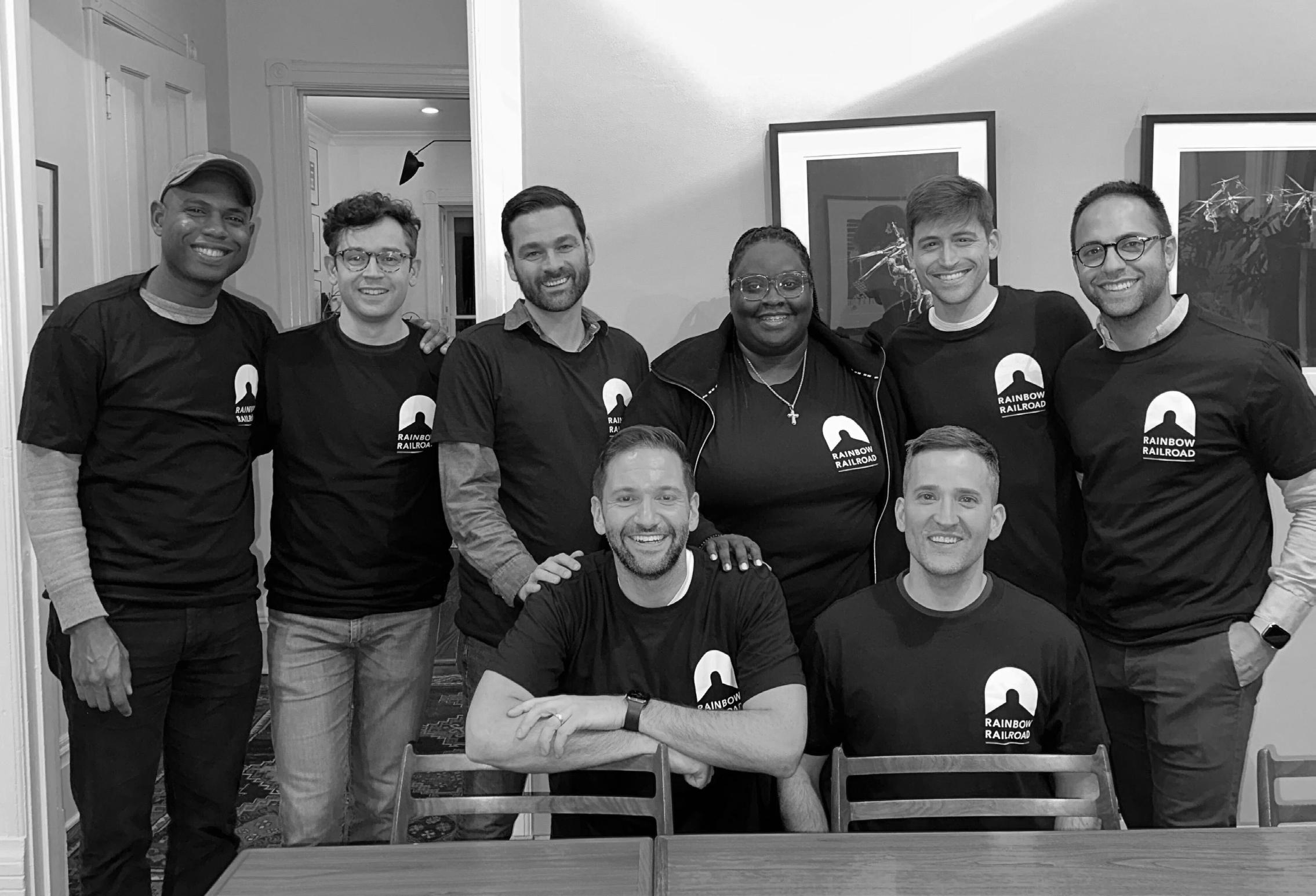

Team LeDroit
Daniel Watson de Roux
Larry Handerhan
Trent Bauserman
Windy City Welcome Crew (2U)
Alicia Obando
Brenna Lemieux
Amanda Thompson
Janet Scanlon
Sarah Byrne
Windy City Welcomers (CoH)
Grant Gigot
Gabrielle Gigot
Erik Renth
Anna Hastings
Trey Hansen
Don Berkman
Monica Berkman
Laura Varela
Lakeview Episcopalians FETCHing
Neighbors
Joshua Anderson
Kitty Wilson
Owen Johnson
David Long
Peter Wasik
Sweet Home Chicago
Liam Yonker
Lauren Draftz
Team Rainbow Loop
Jordan Russell
Peter Siepiora
Robert Bailey
Michael Fiorentino
DC Rainbow Metro Line
T.A. Green
[Boston Group]
Cristina Kotz Cornejo
Bear Secunda
Tristan Angieri
Anna Barsan
Finn McSwiggan
Pancho Mackin-Plankey
Bay Area United
Anne Raeff
Lori Ostlund
Jessica Woodard
Hema Padhu
Claire Hannemann
DC Rainbow Metro Line
Eli Frankel
Michael Gluck
Gabriela/ Gabi Rossner
Jordan Stoner
Andrea Z Solarz
Hollywood Depot
Ryan Howard
Brad Damaré
Russ Sommer
Lakeview Episcopalians FETCHing
Neighbors
Joshua Anderson
Kitty Wilson
Owen Johnson
David Long
Peter Wasik
NYC Welcoming Project
Clint Okayama
Ace Sutherland
Henry Perea
Nathan Zebedeo
Qoachella Valley Embrace
Richard Renn
Bruce Scharf
Tim Baker
Phong Chu
June Sanchez
Sweet Home Chicago
Evan Siegel
Annie Avery
Eileen Castellanos
John Cipriano
Mike Duesenberg
Barbara Hill
Rich Rodes
Charlie Garrido
Welcome to New York (Not Taylor’s Version)
Nathan Burstein
Tommy Lodge
Dan Fogarty
Danny Rosemarin
Jonathan Smith
Emma Webley
Team Rainbow Loop
Andrew Zickmund
Kaleidoscope Boston
Cristina Kotz Cornejo
Bear Secunda
Tristan Angieri
Anna Barsan
Finn McSwiggan
Pancho Mackin-Plankey
ABQ Pod
Molly Luethi
Daniella Matthews-Trigg
Evon Youkhana
Debbie Weissman


Hadley Pope
Bay Area United
Anne Raeff
Lori Ostlund
Jessica Woodard
Hema Padhu
Claire Hannemann
CoH Welcomes You to Chicago!
Ed Job
Leslie Worrell
Natalia Gancedo
Ben Rowley
Jonathan Horowitz
Joel Goldsmith
DC Rainbow Metro Line
Eli Frankel
T.A. Green
Michael Gluck
Gabriela/ Gabi Rossner
Jordan Stoner
Andrea Z Solarz
Hollywood Depot
Ryan Howard
Brad Damaré
Russ Sommer
Chrissy Heriat
Xavier Heriat
Ledroit Park
Jason Bello
Justin Conairis
Larry Handerhan
Rich Rossi
Ed Wood
David Robertson
Antoni Conidas
Donald Gatlin
NYC Welcoming Project
Clint Okayama
Ace Sutherland
Henry Perea
Nathan Zebedeo
Qoachella Valley Embrace
Richard Renn
Bruce Scharf
Tim Baker
Phong Chu
June Sanchez
Ruth’s Promise
Doug Treadwell
Bee Davis
Gary Ely-Grisham
Chris Ely-Grisham
Jaime Segura
Dennis Bull
Steven Reed
Bill Skinner
Sharon Henry
Sweet Home Chicago
Evan Siegel
Annie Avery
John Cipriano
Mike Duesenberg
Barbara Hill
Rich Rodes
Liam Yonker
Lauren Draftz
Charlie Garrido
Team Rainbow Loop
Andrew Zickmund
Jordan Russell
Peter Siepiora
Robert Bailey
Michael Fiorentino
Tree Town Welcomes You
Catherine Thomas
Margaret McCall
Kevin Carney
Spencer Smith
Elizabeth Shea
United Prosperity Center
Maha Ahmed
Nancy Bleau
Richard Burgess
Zaid Thamer
Welcome to New York (Not Taylor’s Version)
Nathan Burstein
Tommy Lodge
Dan Fogarty
Danny Rosemarin
Jonathan Smith
Emma Webley
Team Blue
Kerri True-Funk
Masha Trefilova
Jordyn Duggan
Feel at Home Inc
John Ssenyonjo
Sharifah Nangonzi
Paul Sekanjako
New Roots
Matthew Banninga
Hani Zakaria
Juan Rendon
Team Deloitte Canada
Alexandra Wilkinson
Ryan Sebastain
Annelise DeRoche
Sahhara Leckie
Nancy Dong
Michelle Zou
Attique Chattha
Jeff Dennler
Ashish Gupta
Pratanu Mitra
Sachin Kumar
Ogo Egwudo
Ritika Saraswat
Team Adrian
Kaanu Joshi
Vincent Mboya
Leticia Pinheiro Guimaraes
Morad Hallami
Noor ul Ain
Zoya Hussain
Zaina Aziz
Betina Sehnke
Team Craig (Frisha+Raad)
Victoria Hong
Alireza Sayahi Zenouz
Sarah McMillan
Arif Nagori
Craig MacDougall
James Breen
Saukyn Luque
Alireza Sheshlou
Team Dario (Deng)
Dario Kosarac
Stephanie Cook
Jayme Nadolny
Moein Sabouhiyan
Preetika Sharma
Antony Bright
Team David Balaga
Wilson Lixon Canirimana
Angela Bird
Kathleen Ann Namiiro
Brett Kane
Mohammad Faris Mohammad Rasiff
Bernard Price
Ross Dickson
Tyler Meidema
Julie Martinson
Maegan Thomas
Kintanar Andrea
Team Gionni (Bridget+Grace)
David Bayat
Sarah Leaper
Jerry Ajang Daniel
Ernest Akobundu
Team Greg (Aisha)
Paula Potts
Aidan Tammaro
Greg Wilson
Xander Feng
Jackie Cisneros
Sadie Lewis
Team Mama Makeba
Roza Sapir
Naim siyoufi
Mathew Gallant
Shan Meshwa
Taki Missaoui
Yousef Alhamadi
Team Namar
Batu Kaya
Sergio Perez
SIMON LYNCH
Rita Wairimu
Tahirih Nasseri
Marko Shkil
Team Tina (Stacy)
Laleh Moshiri
Kim Culmone
Alison Halsall
Stacy Zosky
Brendah Thurston
Zachary Levy
Alex Rogers
Team Abdulla
Noel Semple


Donations
Grants
Other
Total Revenue
Programs
Fundraising Administration
Total Expenses
Surplus (Deficit)
Net Assets
Beginning of year
Surplus (Deficit) End of year
United States ($USD)
Donations
Other
Total Revenue
Programs
Fundraising Administration
Total Expenses
Surplus (Deficit)
Net Assets
Beginning of year
Surplus (Deficit)
Other changes
End of year
2025
$8,305,110
$2,054,790
$241,265
$10,601,165
$7,420,047
$1,597,021
$856,034
$9,873,102
$728,063
$1,519,675
$728,063
$2,247,738
$3,324,823
$366,245
$3,691,068
$2,914,416
$850,261
$183,856
$3,948,533
($257,465)
$1,113,915 ($257,465)
$856,450
2024
$7,021,027
$1,452,874
$315,197
$8,789,098
$6,038,945
$1,553,139
$1,095,728
$8,687,812
$101,286
$1,418,389
$101,286
$1,519,675
$2,875,057
$216,357
$2,923,037
$2,875,057
$738,814
$162,752
$3,776,623
($853,586)
$841,857
($853,586)
$1,125,644
$1,113,915

At the start of 2025 Rainbow Railroad was prepared for a difficult financial year following the pressures experienced in 2024.
The fundraising landscape was unpredictable.
We were clear-eyed about the challenges and committed to restoring our reserves, creating pathways to safety for LGBTQI+ people experiencing violence and persecution, and strengthening our long-term financial position.
Our community of donors met the moment in the face of growing threats to LGBTQI+ people around the world.
In 2025, Rainbow Railroad saw renewed growth across our operations in Canada and the United States. In Canada, revenue grew by 20.6% from CAD $8.8 million to CAD $10.6 million, supported by an increase in donations and grants. In the United States, we saw a 26.3% increase in revenue from USD $2.9 million to USD $3.7 million, primarily driven by donations.
While the U.S. entity ended the year in a deficit, that deficit narrowed significantly compared with 2024 when we had to draw on reserves to manage immediate cash flow challenges. We ended the year with a surplus in Canada, which improved the organization’s capacity to respond to future financial shocks.
We continue to run a lean operation, with over 70% of revenue across Canada and the U.S. dedicated to programs.
What our 2025 financials show is that in the face of global retreat on LGBTQI+ rights and refugee protection, donors continue to demonstrate confidence in Rainbow Railroad’s mission.
This confidence is a galvanizing force as we mobilize the community to help us respond to recent funding cuts from the Canadian and UK governments.
Despite the challenges of this global moment, Rainbow Railroad remains a stable, resilient organization committed to getting more at-risk LGBTQI+ people to safety.



1. https://www.prio.org/ news/3616#:~:text=2024%20 marked%20a%20grim%20 new,spike%20%E2%80%93%20 it’s%20a%20structural%20shift.
2. https://www.unhcr.org/us/global-trends.
3. https://www.visitjamaica.com/ discover-jamaica.
4. https://www.rainbowrailroad.org/ stories/annualreport-2024
5. https://www.humandignitytrust.org/ country-profile/egypt/=.
6. https://rightsafrica. com/2020/03/08/repression-inegypt-92-lgbtiq-arrests-last-year.
7. https://www.advocate.com/politics/national/doge-chatgpt-deilgbtq-grants.
8. https://www.whitehouse.gov/ wp-content/uploads/2025/03/ Proposed-Rescissions-of-Budgetary-Resources.pdf.
9. https://phr.org/our-work/ resources/on-the-brink-of-catastrophe-u-s-foreign-aid-disruption-to-hiv-services-in-tanzaniaand-uganda.
10. https://kaleidoscopetrust.com/ the-cost-of-retreat-when-aid-iswithdrawn.
11. https://globalphilanthropyproject. org/coordinatedresponseodacuts/
12. https://www.rainbowrailroad.org/ the-latest/will-the-canadian-government-hold-the-line-on-anti-gender-backsliding.
13. Dale, E. J. (2026). Funding LGBTQ+ projects: Navigating the US philanthropic landscape. Dorothy A. Johnson Center for Philanthropy at Grand Valley State University.
14. https://globalphilanthropyproject. org/wp-content/uploads/2025/11/ ShocksShifts_SummaryReport.pdf.
15. Dale, E. J. (2026). Funding LGBTQ+ projects: Navigating the US philanthropic landscape. Dorothy A. Johnson Center for Philanthropy at Grand Valley State University. https://www.arcusfoundation.org/ publications/funding-lgbtq-projects-navigating-the-u-s-philanthropic-landscape.
16. https://www.rainbowrailroad. org/the-latest/rainbow-railroadcondemns-bill-c-12-for-limiting-theright-to-seek-asylum.
17. https://www.unhcr.org/sites/ default/files/2025-11/mid-yeartrends-report-2025.pdf.
18. https://williamsinstitute.law.ucla. edu/wp-content/uploads/RefugeeLimits-LGBTQI-Oct-2025.pdf.
19. https://www.cbsnews.com/ news/trump-administration-scaling-back-asylum-crackdown-national-guard-shooting.
20. https://www.refugeecouncil.org.uk/ stay-informed/articles/five-criticalconcerns-about-the-new-asylumplans.
21. https://migrationobservatory.ox.ac. uk/resources/commentaries/ temporary-protection-the-uksnew-policies-on-asylum-and-returns.
22. https://www.fes.de/en/news/a-serious-risk-the-gradual-undermining-of-the-asylum-system.
23. https://theins.ru/en/politics/286986.
24. This is when a country physically locates refugees under their responsibility outside their geographic territory.
25. https://www.ft.com/content/ e999e0d5-4012-4b66-a9a4130ae6511b08.
26. https://www.hrlc.org.au/explainers/ explainer-the-anti-fairness-bill.
27. https://www.refugeecouncil.org.au/ first-deportation-under-multi-billiondollar-nauru-deal-a-dark-new-chapter-for-australia.
28. https://www.hrw.org/world-report/2025/country-chapters/european-union.
29. https://www.collectiveaidngo.org/ blog/2025/11/8/the-eus-migration-reform-in-action-exclusion-detention-and-deportation.
30. https://www.iemed.org/ publication/the-european-pact-on-asylum-and-migration-an-existential-challenge.
31. https://tgeu.org/eu-asylum-pactfails-trans-and-gender-diverse-asylum-seekers.
32. The purpose of the Dublin Regulation is to determine which member state is responsible for deciding an asylum application, and it is normally the state where the asylum seeker first entered the EU.
33. https://www.americanimmigrationcouncil.org/fact-sheet/asylumunited-states.
34. https://hias.org/news/trump-administrations-alarming-new-attacks-refugees-and-asylum-seekers.
35. http://hrw.org/news/2025/01/22/ us-closing-door-refugees-asylum-seekers-and-migrants.
36. https://cila.co/jenkel-decision-federal-court-of-canada-halts-deportation-to-the-u-s-due-to-lgbtq-risk.
37. A pseudonym.
38. https://bornthisway.foundation/ wp-content/uploads/2025/04/ BTWF_HL_onlinespaces_DRAFT16_ revised-3April2025.pdf.
39. https://www.hrw.org/ report/2023/02/21/all-terror-because-photo/ digital-targeting-and-its-offline-consequences-lgbt.
