PATHWAYS TO SAFETY
YOUR IMPACT IN A CHANGING WORLD
Donor Impact Report, Spring/Summer 2026
YOUR IMPACT IN A CHANGING WORLD
Donor Impact Report, Spring/Summer 2026
The global landscape continues to shift in ways that place LGBTQI+ people at greater risk. As legal protections erode and migration pathways narrow, more individuals are left with fewer options for safety and security. For many, danger is no longer a distant possibility but an immediate reality — forcing people to leave everything they’ve known behind just to survive.
Because of you, they are not alone.
Your support last year helped Rainbow Railroad respond to a rapidly evolving crisis for LGBTQI+ people facing forced displacement. As the global reality intensified, you made it possible for us to expand both our direct support and partnerships needed to ensure people are supported throughout their journey to safety. In 2025, Rainbow
SECTION 1 - BUILDING SAFER PATHWAYS TO FREEDOM
SECTION 2 - ADDRESSING LGBTQI+ FORCED DISPLACEMENT WITH LIVED EXPERIENCE
SECTION 3 - EMERGING FROM SILENCE, CLAIMING A FUTURE
SECTION 4 - LEADING WITH SOLIDARITY IN A TIME OF URGENCY
Railroad received more than 20,000 requests for help from over 160 countries — one request every 26 minutes. Because of you, thousands of LGBTQI+ people accessed emergency housing, legal aid, medical care, mental health services, and pathways to longer-term safety. Your support also strengthened local networks of care, expanded our Communities of Care program in Canada and the United States, and helped refugees and asylees, including individuals facing ICE detention, begin rebuilding their lives in safety and dignity.
Last year, we made significant progress towards the launch of the Queer Forced Displacement Network (QFDN). With your partnership, Rainbow Railroad is creating a global network to address a long-standing gap at the intersection of LGBTQI+ rights and refugee protection. The QFDN will bring together governments, UN
agencies, humanitarian organizations, and grassroots leaders, and will be guided by people with lived experience of forced displacement. Because of you, solutions are being shaped by those who know this reality firsthand.
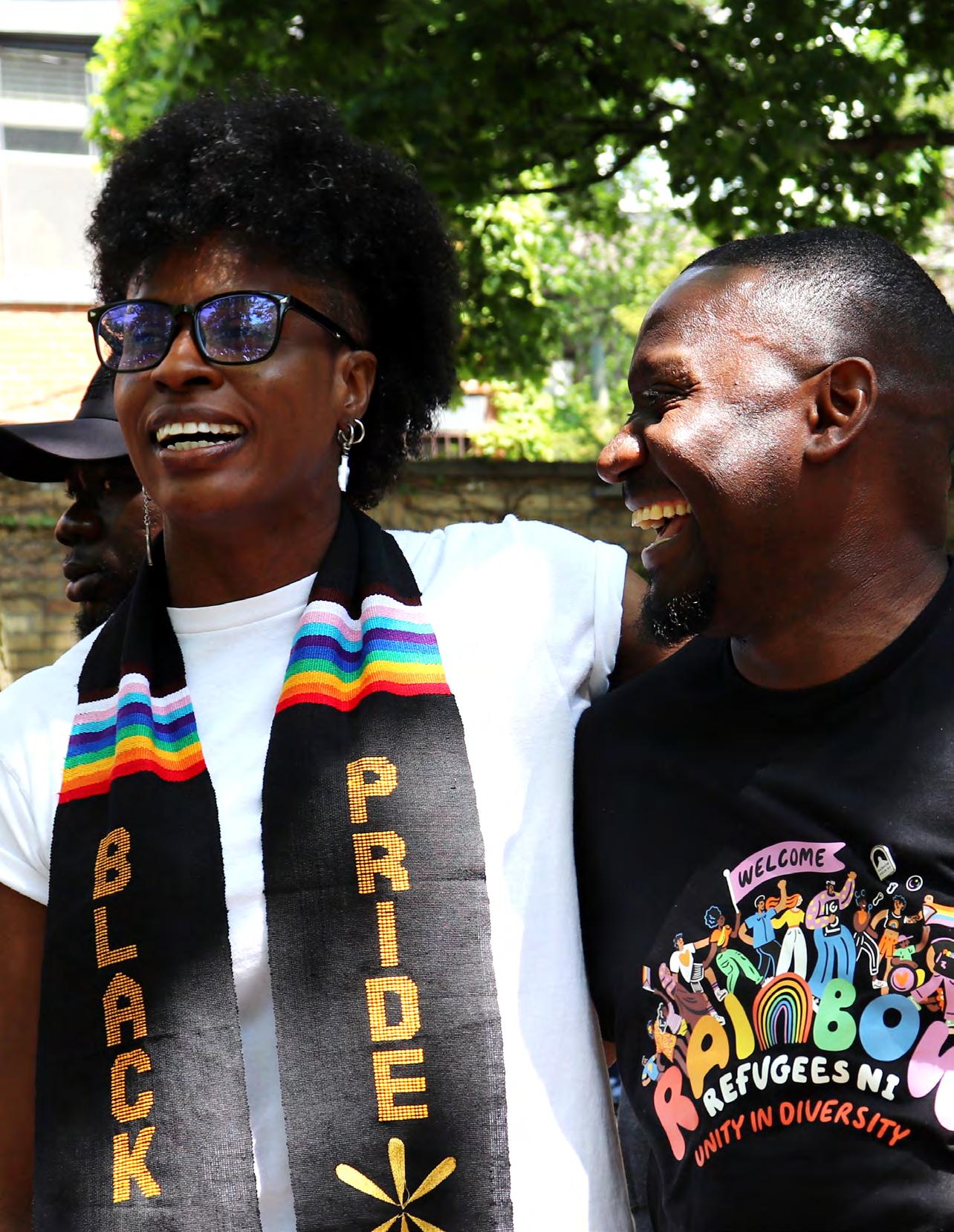
Behind every number is a person. In the pages that follow, you will meet individuals like Miss Tu, a transgender woman who fled persecution in Uganda and was able to resettle in safety and begin a new chapter. Her story reflects both the danger LGBTQI+ people face and the life-changing impact your generosity makes possible.
You will also hear from our new Chief Executive Officer, Ilana Landsberg-Lewis, whose leadership is guiding Rainbow Railroad with a deep commitment to shared leadership, accountability, and centering lived experience in our work.
As we look ahead, the need is only growing. This year marks Rainbow Railroad’s 20th anniversary, an opportunity to honor two decades of courage, resilience, and solidarity, and to recommit ourselves to building safer, more coordinated pathways for LGBTQI+ people around the world.
As you read this report, I hope you see the extraordinary impact of your partnership. Thank you for standing with Rainbow Railroad and with LGBTQI+ people on their journey to safety. Your support is a lifeline and a promise that no one has to face that journey alone.
With deep gratitude,
Anthony Mercurio, Chief Development Officer
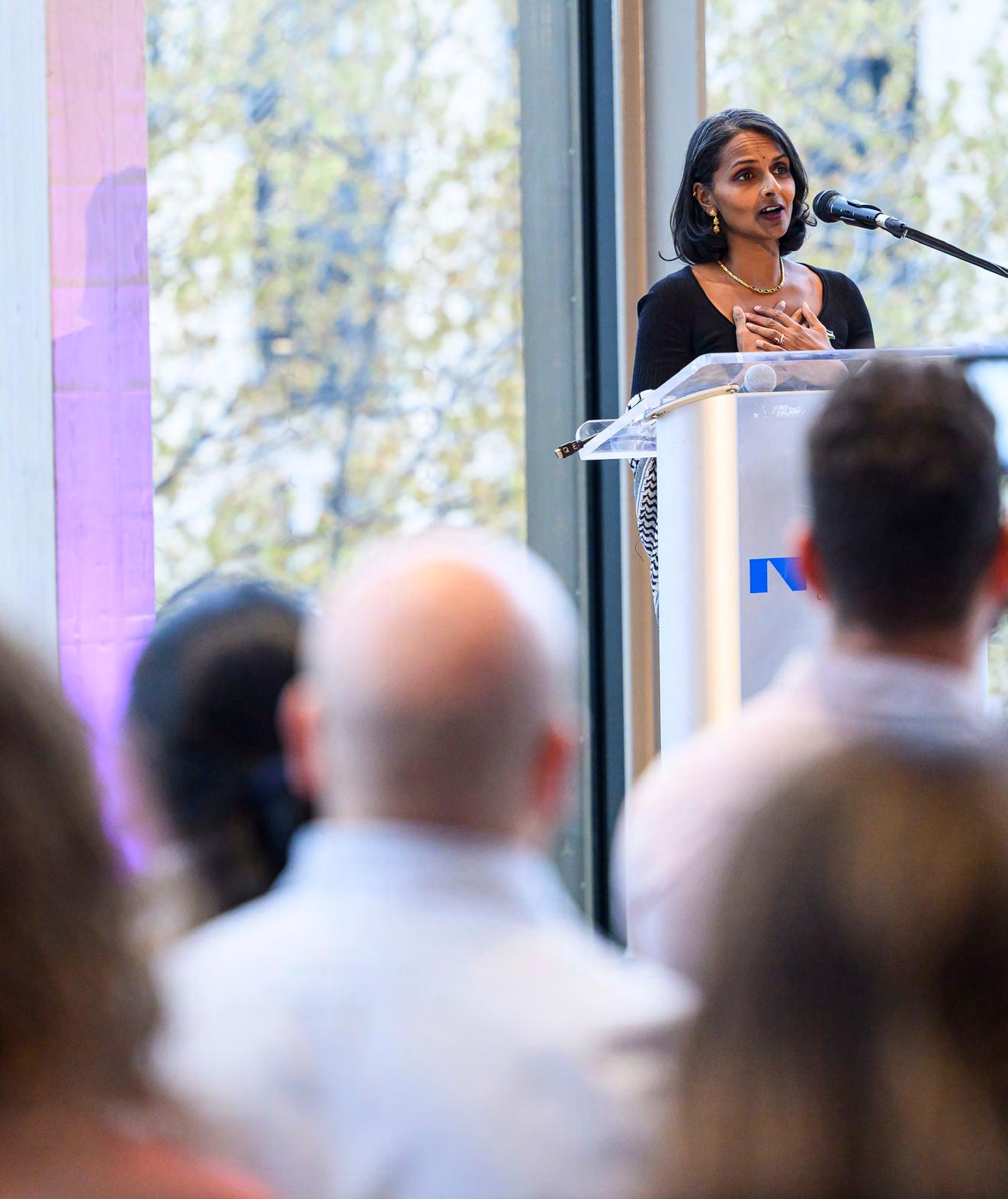
Even after leaving their countries of origin, many of the hundreds of thousands of LGBTQI+ individuals forced to flee each year continue to face violence, isolation and uncertainty. Too often, refugee protection systems are not built with the realities of queer and trans refugees in mind, and in many cases, actively exclude them. Support can be inaccessible, unsafe, or ineffective for those who need it most.
At the same time, grassroots organizations and community leaders supporting LGBTQI+ displaced people often work in isolation — under-resourced, disconnected, and with limited access to decision-making spaces that shape protection policies.
These gaps in coordination, representation, and power made one thing clear: a new approach is urgently needed.
For this reason, Rainbow Railroad is launching the Queer Forced Displacement Network (QFDN) this May.
QFDN is the first sustained global network dedicated specifically to LGBTQI+ people in forced displacement, ensuring they are no longer overlooked or left navigating danger alone.
This launch is the culmination of two years of regional roundtable consultations with expert stakeholders in key transit countries, places where LGBTQI+ displaced people often face particularly acute risks.
For many, reaching another country does not mean reaching safety. Displaced LGBTQI+ people can spend months or years in transit countries, living in limbo while seeking a durable solution. In these
contexts, they may face criminalization, violence, housing discrimination, barriers to employment, and exclusion from humanitarian services. Even where protection systems exist on paper, they can be nearly impossible to access in practice.
While QFDN will be global in scope, the consultations focused on transit countries because of the urgent protection gaps LGBTQI+ people experience there. Those conversations surfaced critical insights about coordination failures, funding inequities, policy gaps, and the need to center lived experience in designing solutions. They laid the groundwork for a truly accountable network.
QFDN will bring together governments, UN agencies and humanitarian organizations, but it will be guided by
people with lived experience of forced displacement and grassroots frontline leaders. Their leadership will shape the network’s priorities and strategies from the start.
“Without a coordinated, accessible global platform, LGBTQI+ displaced people cannot effectively communicate their needs to governments and key decisionmakers, resulting in protection laws and policies that fail to address on-theground realities,” says Swathi Sekhar, Director of Protection Initiatives. “These consequences aren't theoretical — they are being experienced right now by LGBTQI+ migrants and refugees all over the world.”
What makes QFDN different is its commitment to co-creation. Rather than designing solutions from the top down,
the network is being built on the expertise of those most directly affected. The consultations have created a strong foundation for long-term global solidarity and movement building, connecting grassroots actors across regions who have historically been siloed from one another and from global policy spaces.
“People with lived experience of displacement and grassroots frontline actors are the experts in their own lives and communities. They hold invaluable knowledge that could strengthen protection programming developed by states, humanitarian actors, and INGOs,” says Swathi., “Without genuine co-creation and leadership from people with lived experience, everything else fails.”
With your support, QFDN will help build a stronger, more coordinated global response — one rooted in lived experience, collective action, and the belief that safety should not depend on who you are or where you were born.
“Without a coordinated, accessible global platform, LGBTQI+ displaced people cannot effectively communicate their needs to governments and key decision-makers, resulting in protection laws and policies that fail to address on-theground realities,”
Swathi Sekhar Director of Protection Initiatives, Rainbow Railroad
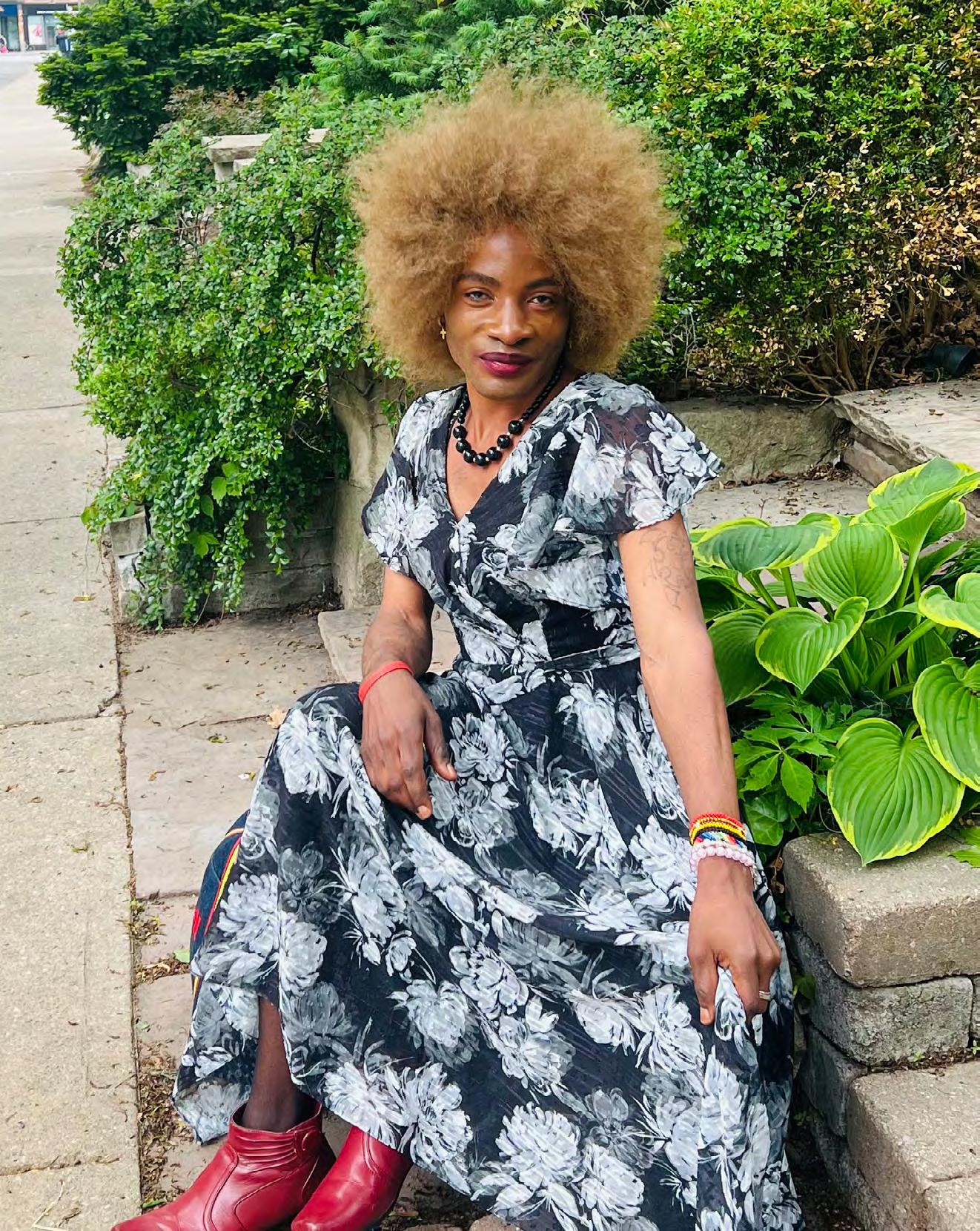
Miss Tu is a transgender woman from Uganda whose life has been shaped by resilience in the face of fear. Born in the early 90s to a single mother, she grew up as one of four children in a household where love existed alongside constant struggle. From a young age, Miss Tu knew that her inner truth did not align with how the world saw her. “I always felt like a woman on the inside,” she shares. “But in Uganda, I learned very early that expressing that truth could cost me everything.”
For years, Miss Tu hid her identity to survive. Fear of persecution and discrimination forced her to live a life of silence. That silence was broken when she was exposed on social media. Soon after, she was arrested and imprisoned for three days—an experience that deeply traumatized her and made it clear that her life was no longer safe. “After that incident, I knew I couldn’t continue living my old life,” she reflects.
“Staying meant risking death.”
In 2021, Miss Tu made the painful decision to flee Uganda for Kenya. Leaving behind her family, friends, and everything she had ever known was devastating. “I was very sad,” she recalls. “I didn’t want to leave my home, but I had no choice. I was escaping just to stay alive.” While Kenya offered distance from immediate danger, it did not bring the safety or stability she hoped for. Isolation and uncertainty became part of her daily reality.
Miss Tu learned about Rainbow Railroad through a mutual connection who understood her situation. With nowhere else to turn, she reached out for help. “Rainbow Railroad gave me hope when I felt I had none,” she says. In 2025, with Rainbow Railroad’s support, Miss Tu was able to resettle in Canada and begin building a new life in safety. “I am so grateful,” she shares. “Rainbow Railroad gave me a second chance.”
Resettlement, however, has come with new challenges. Miss Tu speaks openly about loneliness, cultural differences, language barriers, and the difficulty of adjusting to life in a new country. “The weather is very cold,” she adds with a small laugh. “Sometimes it feels overwhelming.” Despite these hardships, she remains deeply thankful and hopeful. “I am surrounded by kind people now. I feel safer than I ever have.”
Today, Miss Tu is focused on moving forward. Her dreams are simple but powerful: finding a job, becoming independent, and giving back. “I want to support other women in Africa who are living hidden and painful lives like I did,” she says. “I am a strong woman, and I want my strength to mean something.”
By sharing her story, Miss Tu hopes the world will understand that people like her
matter. “Many are still living in fear, just as I was,” she says. “I left, but they are still there.” Though her journey is far from over, Miss Tu remains hopeful—grateful for the support she has received and determined to build a future defined not by fear, but by dignity, purpose, and pride.
“Rainbow Railroad gave me hope when I felt I had none... I am so grateful.”
Miss Tu Newcomer from Uganda
A Q&A WITH
ILANA LANDSBERG-LEWIS, CHIEF EXECUTIVE OFFICER
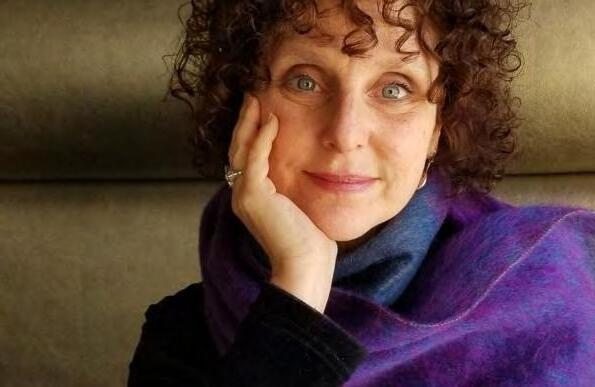
As Rainbow Railroad enters 2026 amid escalating global threats to LGBTQI+ and migrant rights, we are grounded by the leadership, partnerships, and collective resolve that make our work possible. In this Q&A, our new CEO, Ilana Landsberg-Lewis, reflects on her early priorities, what sustains her hope, and how our global community of supporters continues to shape what safety and belonging can look like in an increasingly hostile world.
What are your early priorities as you step into the CEO role in 2026?
To listen intentionally, strengthen our foundations, and ensure Rainbow Railroad is positioned for both the moment we are in and the one ahead. That means deep engagement with staff who do this demanding work with extraordinary care and courage; with newcomers and communities we serve, whose lived experience must continue to shape our strategies; and with partners and supporters whose solidarity makes this work possible. At the same time, the global context demands urgency. As anti-LGBTQI+ laws expand and access to asylum narrows, our work must remain responsive, principled, and sustainable.
I approach this role with an acute awareness of power — how it’s held, how it’s shared, and how institutions can unintentionally reproduce harm. My commitment is to lead transparently, accountably, and collectively, while recognizing leadership as something we build together, not something held by one individual.
At a time of increasing backlash against LGBTQI+ and migrant rights, what gives you hope?
Hope, for me, is not passive optimism — it’s something I see in action every day. It lives in the courage of LGBTQI+ people who resist erasure simply by existing. It lives in the communities that organize under extraordinary pressure, and in the supporters, advocates, and donors who refuse to look away when rights are under attack.
What gives me hope is that even as governments retreat from their obligations, people step forward. They open their communities. They fund relocation and resettlement. They call their representatives. They choose solidarity over silence. History reminds us that backlash is often a response to progress, and that progress is sustained by people who stay engaged, even when the path forward is difficult. Rainbow Railroad exists because of that collective resolve, and it’s why I remain deeply hopeful.
What are you most excited to share with supporters as you begin meeting the Rainbow Railroad community?
I’m excited to share the stories that rarely make headlines — the stories of survival, yes, but also of joy, resilience, and rebuilding. I’m looking forward to deepening the relationship between supporters and the people behind the work: caseworkers navigating impossible systems, partners creating lifelines on the ground, and newcomers who are forging new futures after unimaginable loss.
I’m also eager to share how supporters are not just witnesses to this work, but participants in it. Whether through community support teams, advocacy, or sustained giving, our community is actively shaping what safety and belonging can look like in a hostile world. That sense of shared responsibility — and shared possibility — is incredibly powerful.
Rainbow Railroad exists because people refuse to accept a world where safety is conditional. As we look ahead, Ilana’s leadership reflects the values that have always guided this work. To our supporters — thank you for standing with us, and with the communities we serve, as we continue this urgent work together.
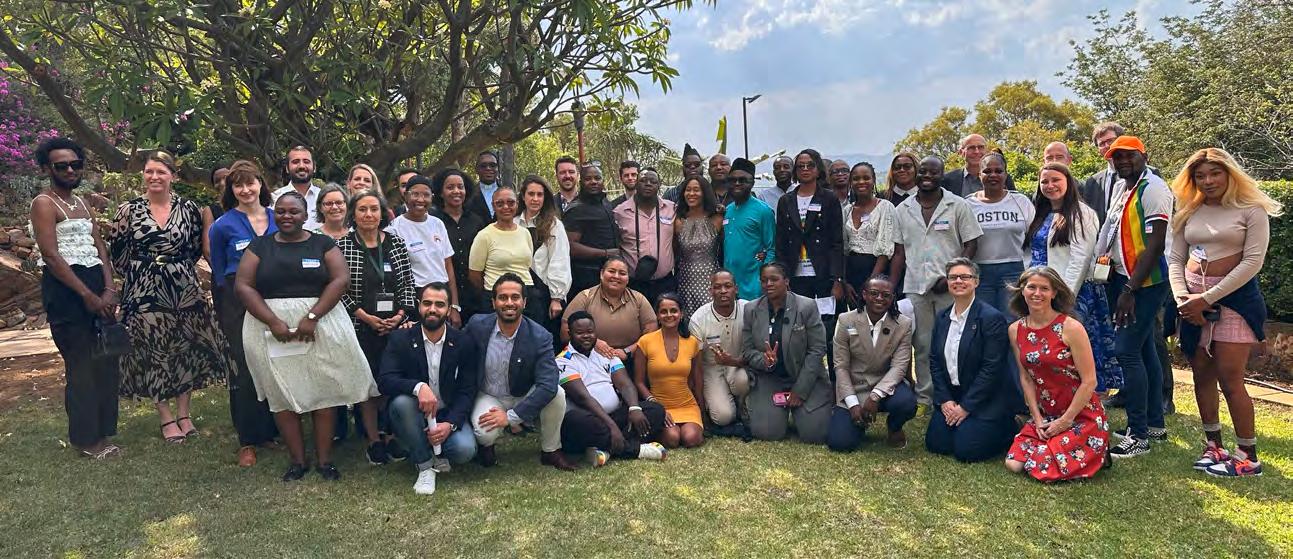
Rainbow Railroad's mission is to help at-risk LGBTQI+ people worldwide find safety from violence and persecution by providing emergency relocation, crisis response, and other forms of assistance. We work to create pathways to safety for those facing state-sanctioned or communitybased violence based on their sexual orientation, gender identity, or sex characteristics.