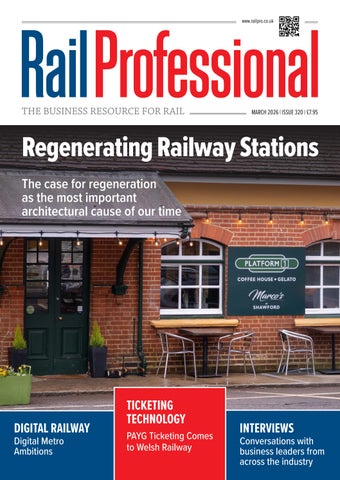
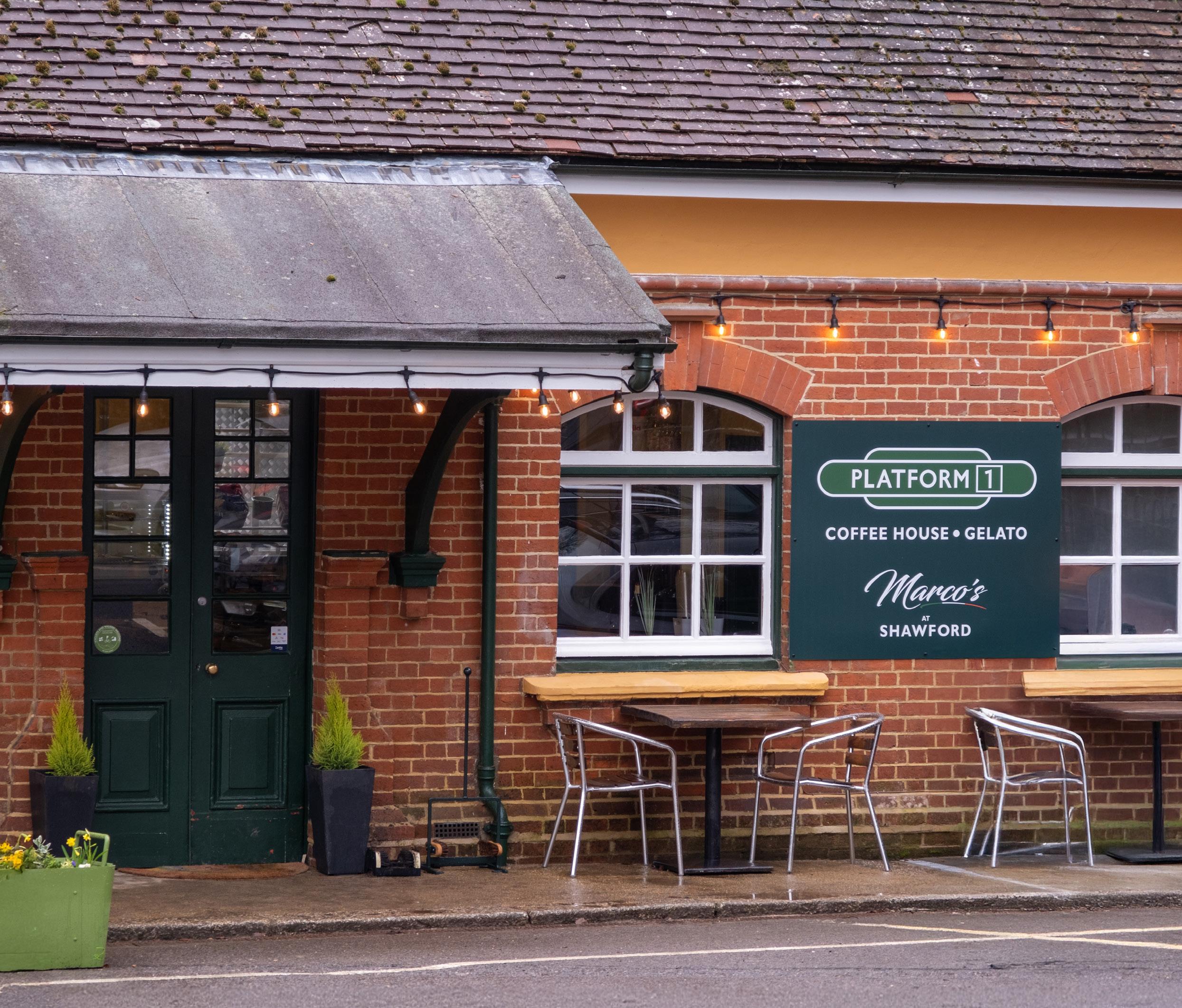
Regenerating Railway Stations
Safety tailored solutions, designed with your employees and their wellbeing in mind
With over three decades of safety-critical expertise, the OPC delivers bespoke solutions that strive to improve people performance, identify talent and nurture a safer culture.
Our expert psychologists help to:
Discover top talent through specialised recruitment support and role profiling.
Improve performance using Non-Technical Skills and safety initiatives.
Develop best practices, stand-out safety leaders, and deliver post-incident support for a safer culture.
Partnering with the OPC means collaborating with a dedicated team focused on safety and people performance. Trust us for tailor-made solutions from pre-selection to employment. We prioritise safety and strive to enhance your processes to go beyond industry standards.


PUBLISHER
Lakes Innovation Centre, Lakes Road, Braintree, Essex, CM7 3AN
EDITORIAL
EDITOR
Sam Sherwood-Hale editor@railpro.co.uk
DISPLAY ADVERTISING
Jamie Tregarthen sales@railpro.co.uk
RECRUITMENT ADVERTISING recruitment@railpro.co.uk
SUBSCRIPTIONS subscriptions@railpro.co.uk
ADMINISTRATION
Cherie Nugent info@railpro.co.uk
Lisa Etherington admin@railpro.co.uk
DESIGN &
Lukasz Saczek production@railpro.co.uk COVER
EDITOR’S NOTE

The Railways Bill moves through Parliament at a pivotal moment. On 1 February, West Midlands Trains became the fourth operator to transfer into public ownership under the Passenger Railway Services (Public Ownership) Act, with services now run by the newly created WM Trains Limited. That means eight of the fourteen operators under the Department for Transport are now in public hands, with Govia Thameslink Railway next in line for transfer on 31 May. Lord Hendy was clear that public ownership, while welcome, is not a silver bullet — it is the structural reform promised by Great British Railways that will determine whether this generation’s railway truly works for passengers and freight alike.
The Transport Select Committee’s conclusions on the Bill, published this month, make for important reading. The Committee broadly supports the establishment of GBR as a single directing mind for the railway, but has identified a number of areas where the legislation needs strengthening. Among the most significant are concerns about the Secretary of State’s unchecked power of direction under Clause 7, which the Committee recommends be amended to require any direction to be necessary and proportionate. The freight sector’s position is addressed too, with the Committee noting that the Bill’s current drafting leaves too much to goodwill when it comes to protecting capacity for freight operators. Jonathan Walker of Logistics UK develops this theme in his viewpoint this month, setting out the amendments the sector believes are essential if the 75 per cent freight growth target by 2050 is to be credible rather than decorative.
Coming to this month’s issue, I spoke with Gary Wilburn, founder of EP Architects, whose practice has spent the last five years focused almost entirely on regenerating historic railway station buildings in partnership with community rail partnerships across southern England. Gary’s background is an unusual one for this kind of work — airports, high street retail, hospitality — but it is precisely that commercial experience that he brings to the challenge of making these projects financially viable. His account of Romsey Station, which has sat empty for around 50 years and where pigeon waste now lies a metre deep, is a striking illustration of what is at stake if funding and ambition fail to materialise. With planning permission finally secured after nearly five years of work, Romsey is now a case study in patience, creativity and community engagement — the kind of project, Gary argues, that deserves a central fund rather than the current piecemeal approach to financing.
We also speak with Simon Hochhauser, CEO of PiPcall, about mobile call recording and the requirements of OPS-301. Simon’s argument is straightforward: the question should not be whether a solution technically meets the regulation as written, but whether it delivers the safety outcome the regulation was designed to achieve. With carrier-grade call quality, AI-driven assessment and a shared-service model that brings costs within reach for organisations of all sizes, PiPcall’s approach offers a timely challenge to those tempted by cheaper, tick-box compliance.
Rounding out the issue, Nokia’s Benoît Leridon makes the case for the missioncritical wide area network as the connective tissue of the modern digital metro. As urban rail operators adopt video analytics, predictive maintenance, CBTC and AI, the WAN is no longer infrastructure in the background — it is the strategic foundation on which everything else depends. It is a theme that sits comfortably alongside this month’s broader question: as the railway is reformed and rebuilt, are we putting the right foundations in place from the start?
SAM SHERWOOD-HALE EDITOR




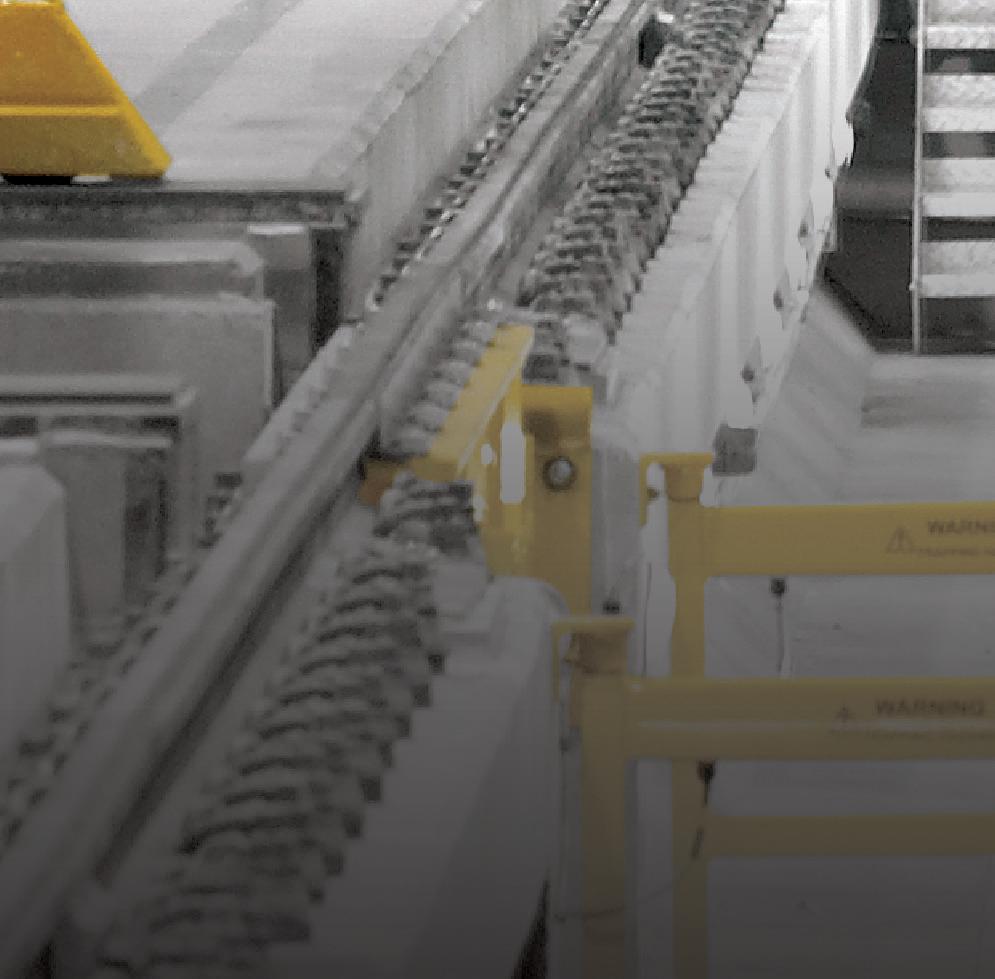
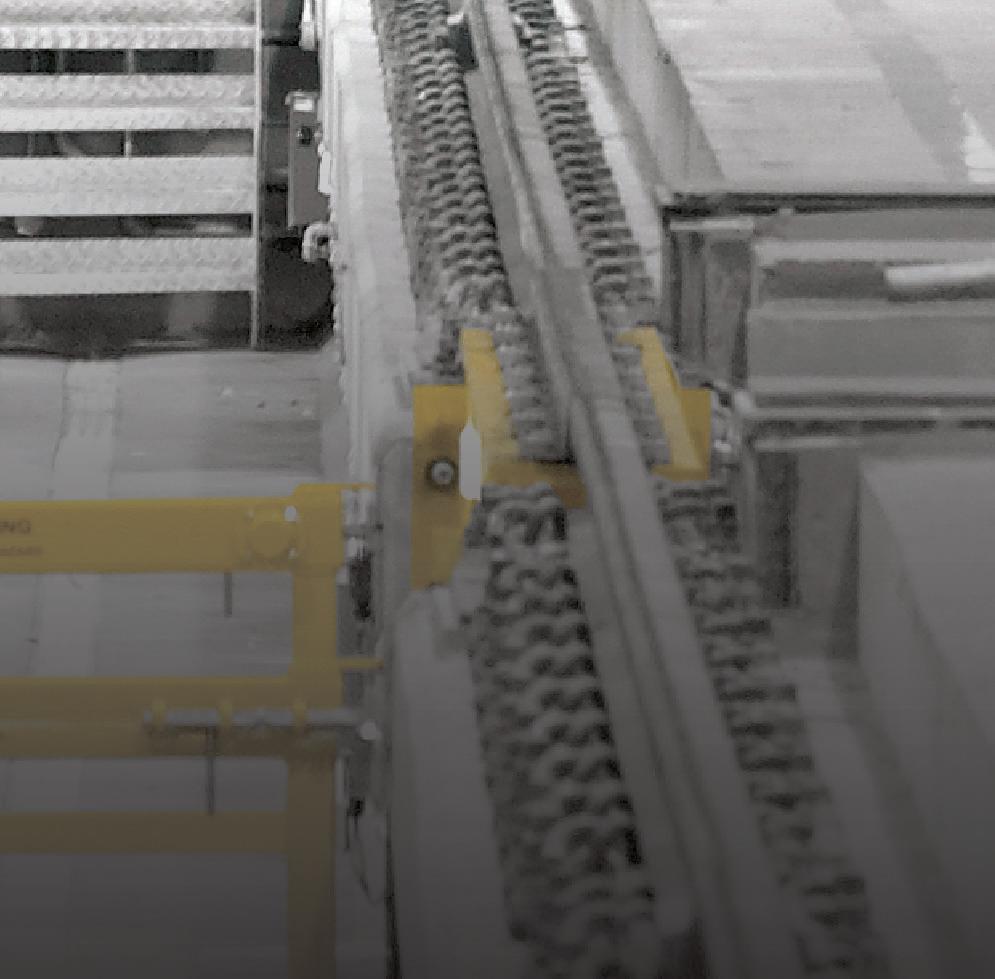
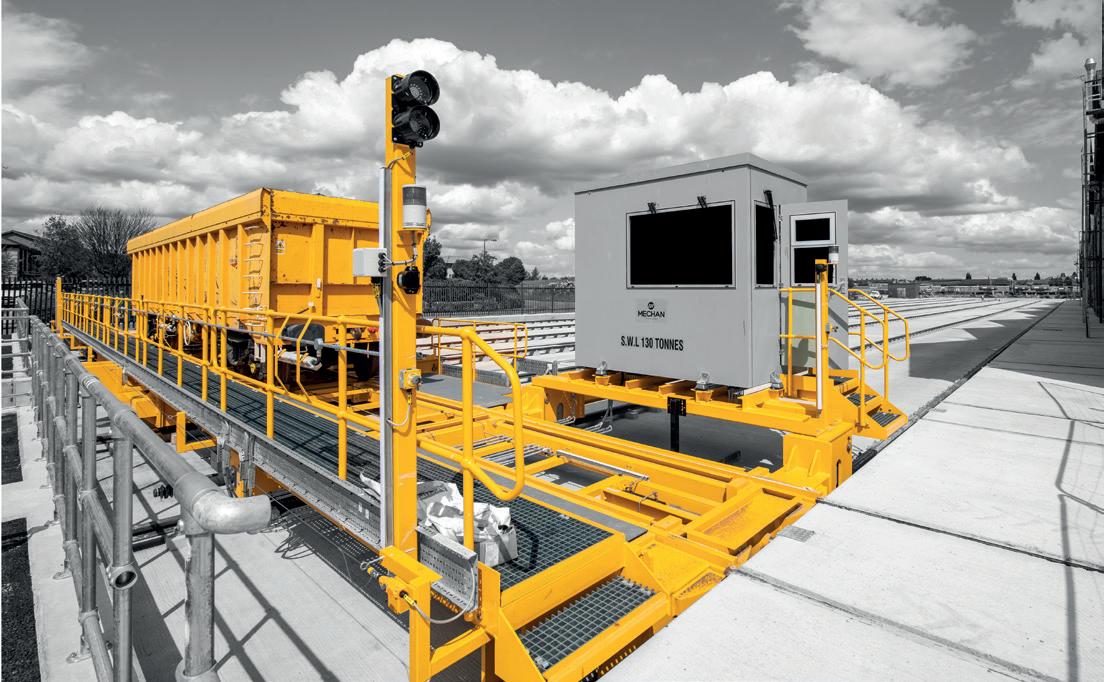
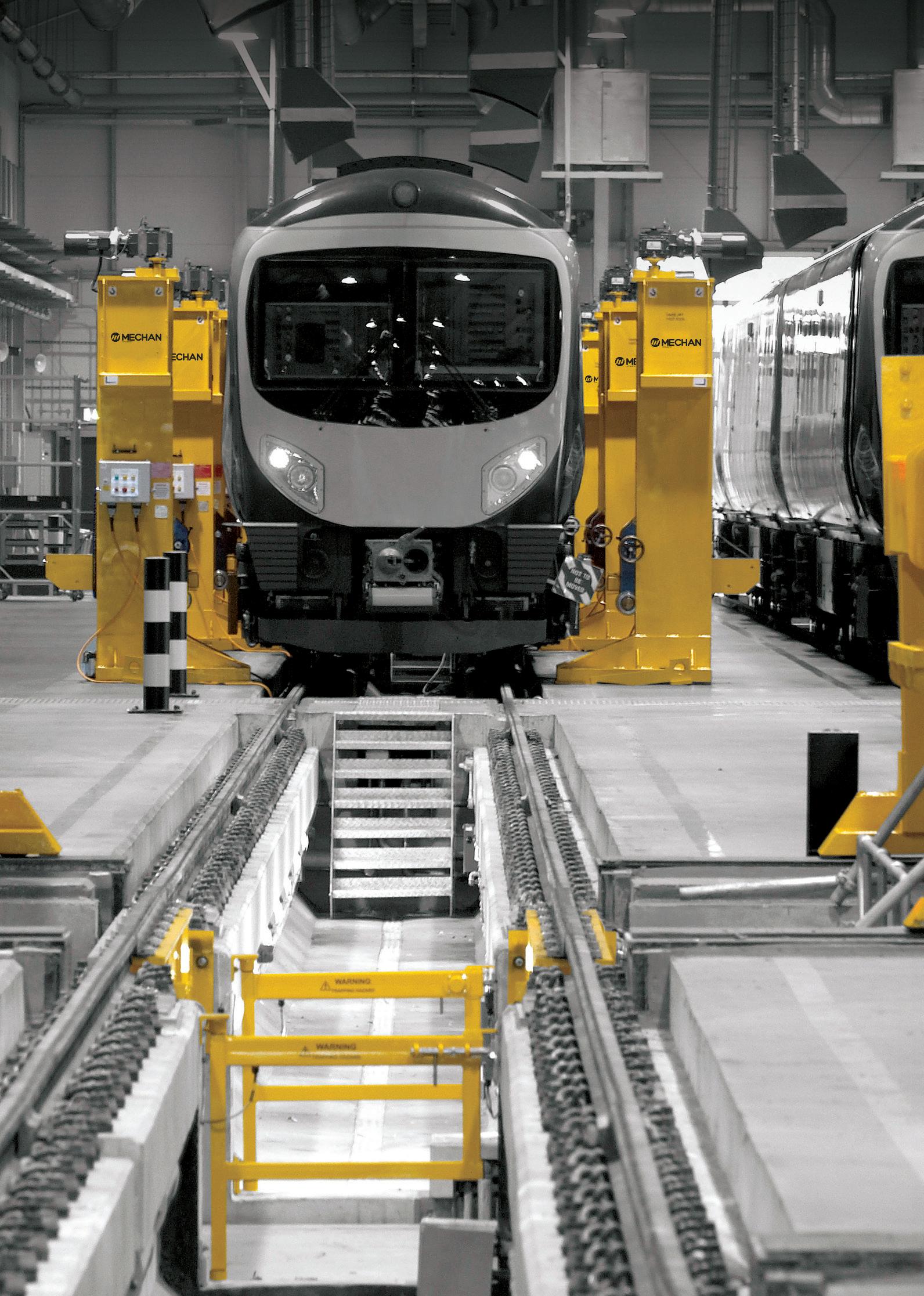
• RAILCAR LIFTING JACKS
• BOGIE/EQUIPMENT DROPS
• TRAVERSERS
• TURNTABLES
• BOGIE WORKSHOP MACHINES
• UNDER CAR EQUIPMENT HANDLING
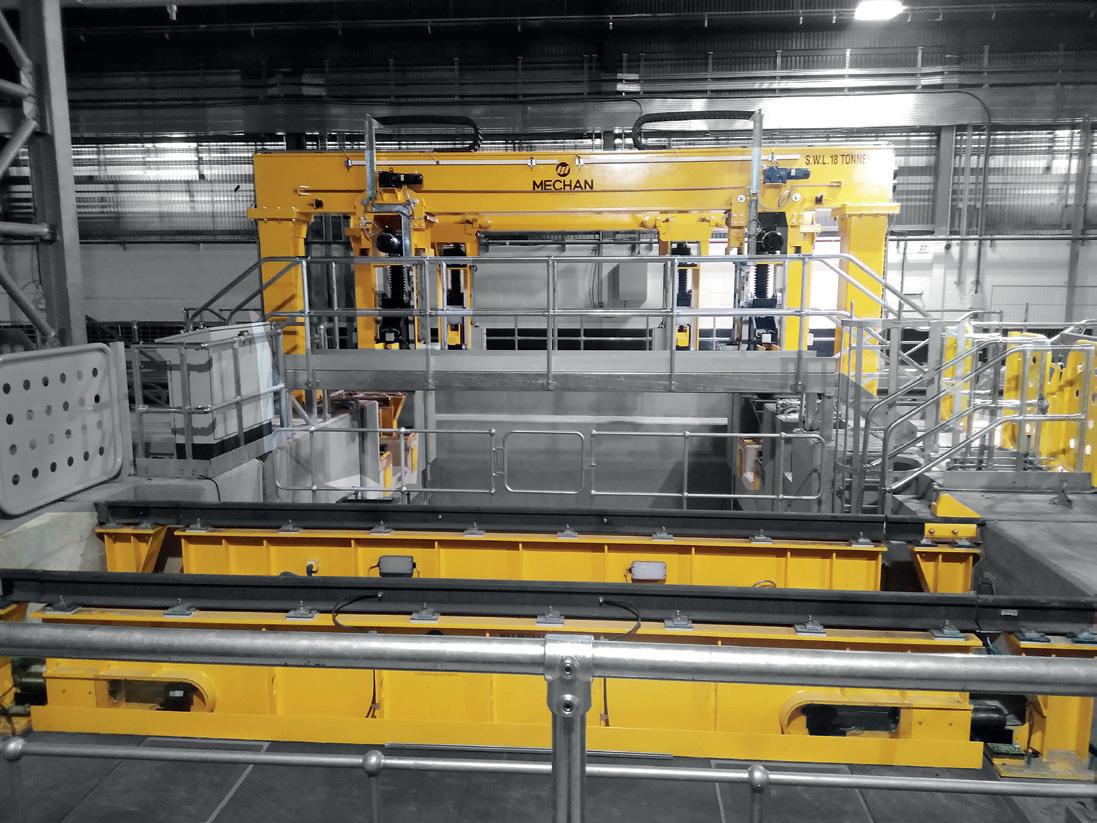
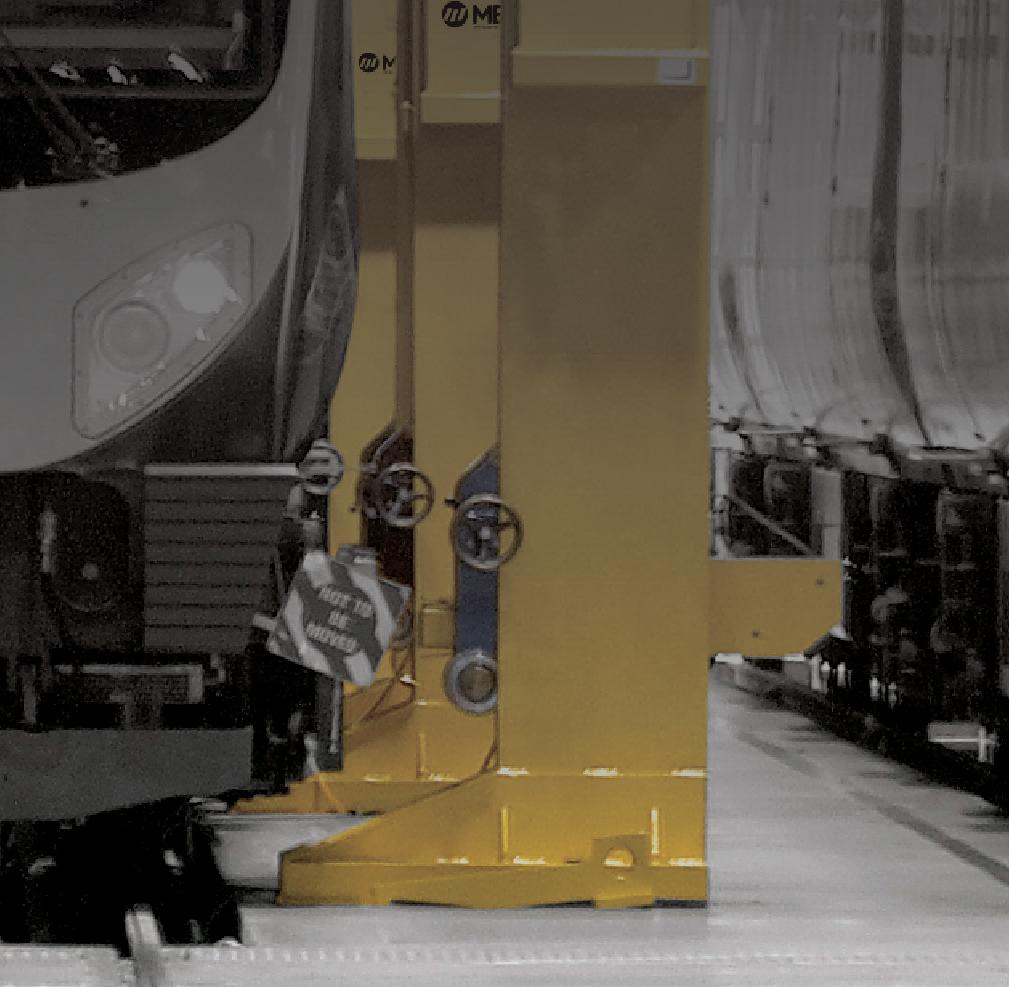
• LASER MEASURING
• SANDBOX FILLING
• SHUNTERS
• EXHAUST EXTRACTION
• UNDER FLOOR WHEEL LATHES





All the latest from The Chartered Institution of Railway Operators, Alstom, DB Cargo and more

14 Sam Sherwood-Hale spoke to Graham Scanlon, Head of Critical National Infrastructure at Atos UK, about the company's inclusion on Crown Commercial Service's Transport Technology Framework and how cross-sector innovation is driving a new era of AI-powered, data-led infrastructure management.
18 THE CHEEK OF IT
Branding – a Suitable Case for
Martin looks at clarification of a contractor termination clause under JCT standard form contracts
VIEWPOINT
Simon French, a former Chief Inspector of rail accidents, assesses the sadly growing problem of attacks on both staff and passengers on UK railways
DELIVERING THE GOODS
Jonathan Walker, Head of Infrastructure and Planning Policy at Logistics UK sets out why stronger statutory safeguards are essential if rail freight is to play its full role in the UK's growth and decarbonisation ambitions
26 Sam Sherwood-Hale spoke to Carl Kent, Sales Director at GB Railfreight (GBRf), about the company's £150 million investment in 30 Class 99 bimodal locomotives, how GBRf has more than doubled in size since 2018, and what infrastructure improvements could unlock the sector's potential
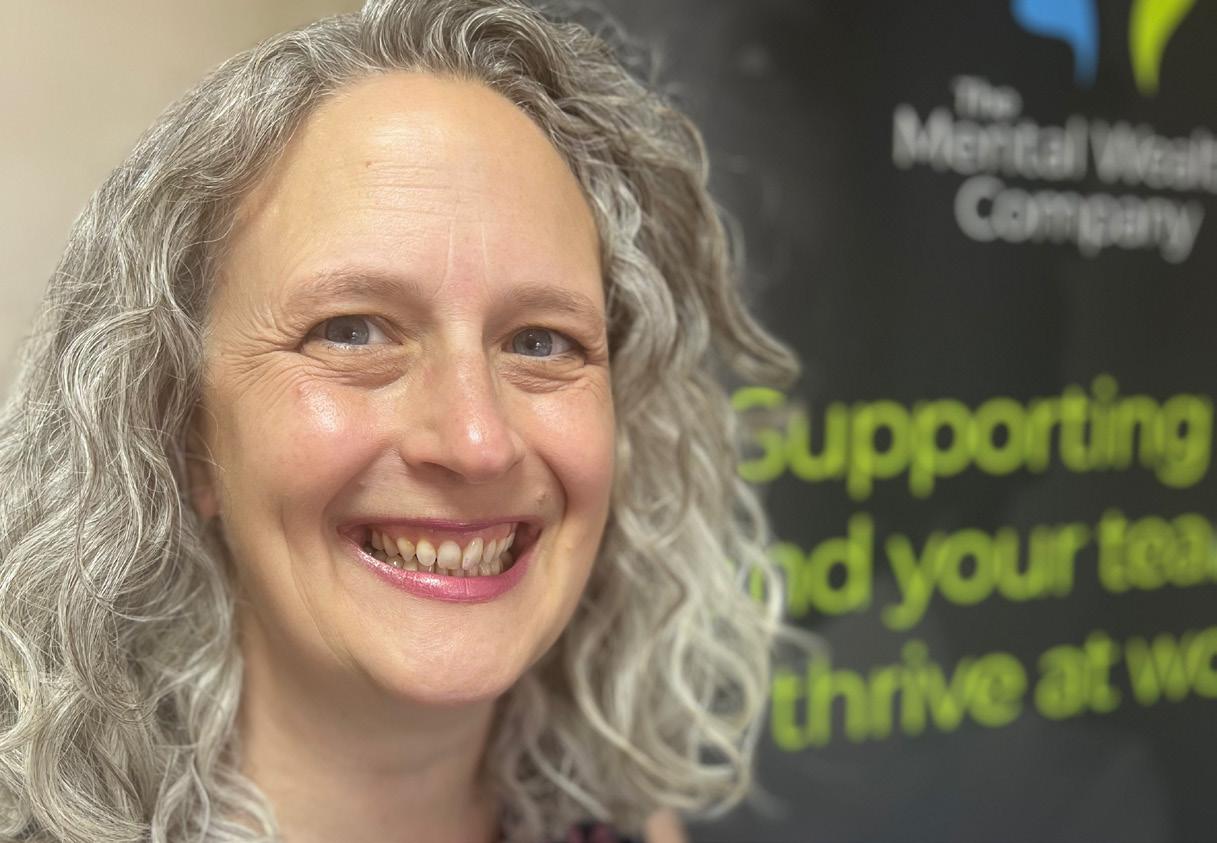
30 Sam Sherwood-Hale spoke to Wendy McCristal, the Founder and Managing Director of The Mental Wealth Company about burnout, belonging, and why you can't firefight your way to a healthy workforce
36 Sam Sherwood-Hale spoke to Simon Hochhauser, CEO of PiPcall, about how carrier-grade mobile call recording and AIpowered assessment are helping the rail industry meet its OPS301 obligations


Sam Sherwood-Hale spoke to Gary Wilburn, Managing Director of EP Architects about regenerating

Kate

Daniel Poad, Applications Engineer at Fujikura Europe Ltd
Martin Tenhumberg, Managing Director Dach at Traco Power
Subbu Bhat, Interim President and VP of Software Engineering at Tideworks Technology
James Howard, Marlene Pearson-McGrath, Leon Kong, Helen Hardy, Sheena

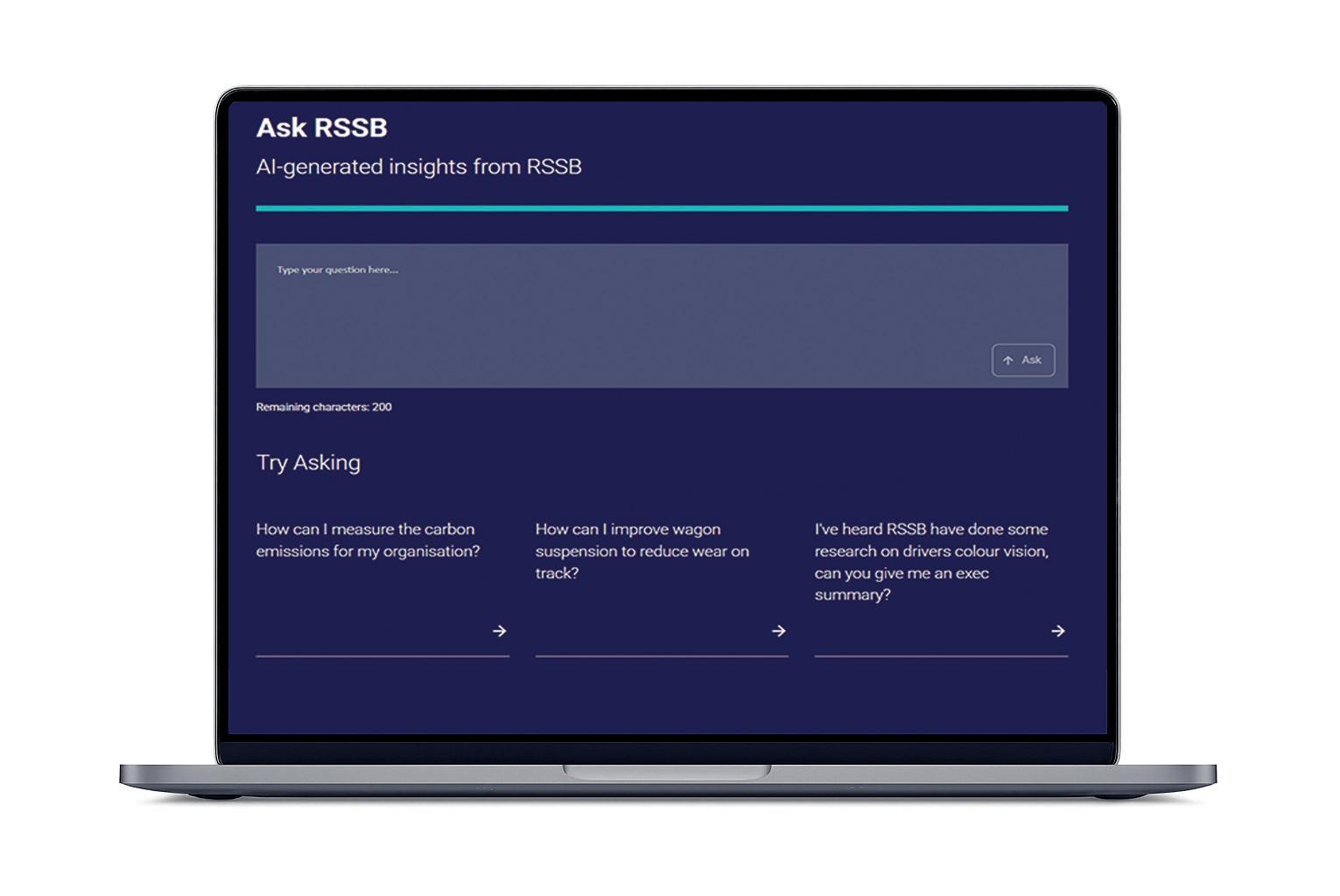
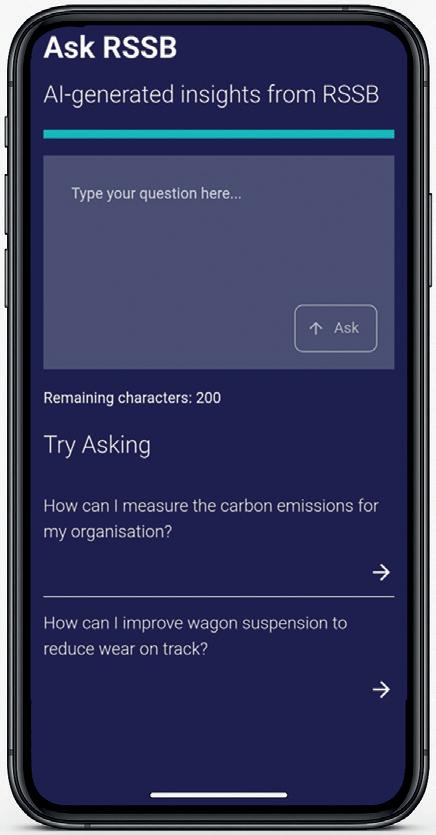
Ask RSSB
Ask RSSB gives you quick, easy access to the wealth of information on the Rail Safety and Standards Board website
One simple question delivers trusted guidance and the tools and services you need to support your role.

CIRO and RDG Win at the Rail Business Awards 2026
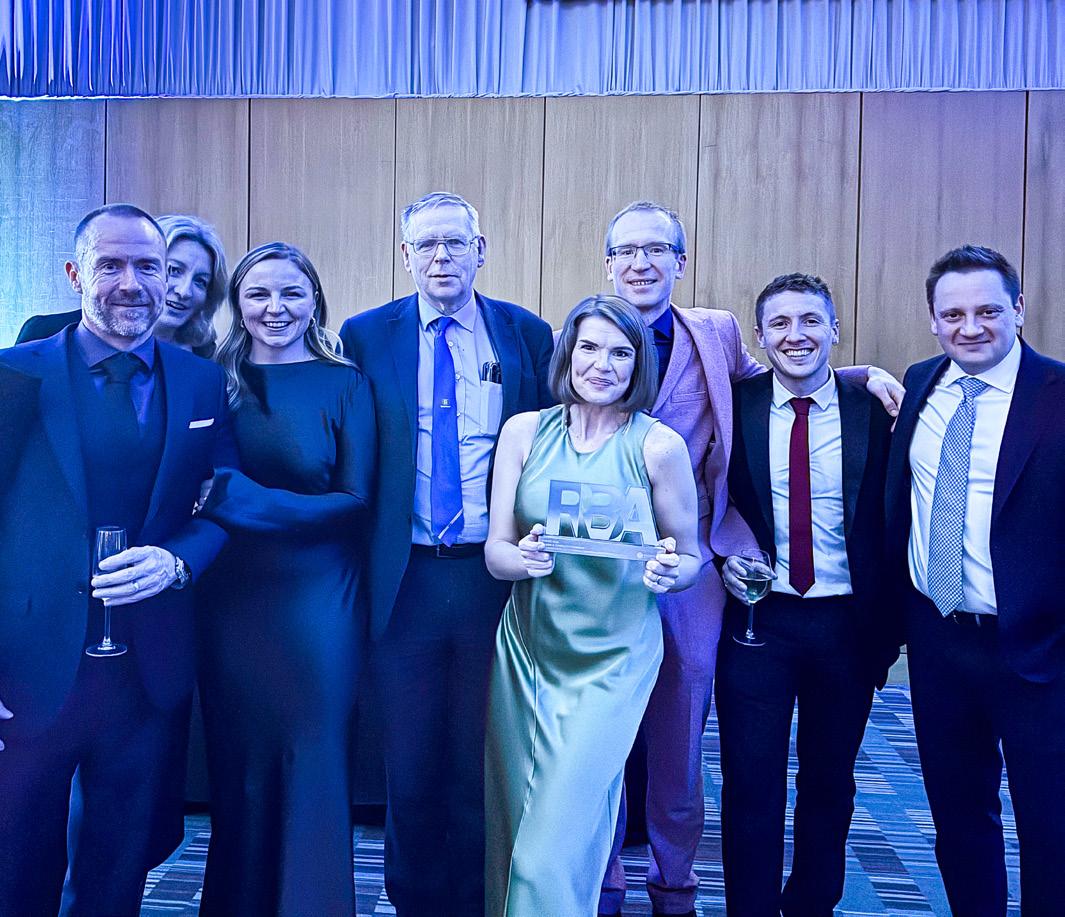
From left Paul Groves, Train Services Director, Govia Thameslink Railway, Jacqui Kendall, Traincrew Programme Manager, Rail Delivery Group, Tennessee Airdrie, Head of People Strategy, Rail Delivery Group, Andrew Pennington, Operations Projects Specialist supporting CIRO,Holly Hancock, Business Development and Projects Manager,
Phil Sherratt,
Executive Officer, CIRO, Callum Flynn,
Project Manager,
Delivery Group, Daniel Mann, Director of Industry Operations, Rail Delivery Group.
The Chartered Institution of Railway Operators’ (CIRO) Traincrew Management Training Programme Pilot has won Supplier & Contractor Excellence at the Rail Business Awards 2026. The award was presented at the industry ceremony held at the Manchester Deansgate Hotel, attended by leading rail stakeholders from across the UK sector. The recognition celebrates the programme’s significant contribution to strengthening operational leadership capability across the railway.
Delivered in collaboration with the Rail Delivery Group (RDG), the programme was developed to address a long-recognised gap
in structured development for traincrew managers. It focuses on building the leadership, people management and industrial relations skills required to operate effectively within complex, safety-critical environments. Through a blend of practical learning, operational context and real-world application, the pilot has supported improved confidence, competence and performance among participants.
Representatives from both CIRO and RDG were present on the evening to receive the award, celebrating the partnership behind the programme’s design and delivery and its positive impact on the wider industry. The development and delivery of the pilot paved the way for the wider rollout of the Operational Leadership for Traincrew Managers programme, which CIRO and RDG are currently working in partnership to deliver. More than 500 industry personnel are scheduled to receive this training over the coming months, supporting the industry’s wider efforts to improve operational performance.
Speaking after the awards ceremony, Phil Sherratt, Chief Executive of CIRO, said: ‘We are incredibly proud to see the Traincrew Management Training Programme recognised at the Rail Business Awards. This achievement reflects the strength of collaboration behind the programme and our shared commitment to investing in the people who keep the railway running every day.
Traincrew managers play a critical role in operational performance, workforce culture and service delivery. This programme was designed to give them the structured development and practical leadership capability they need to succeed, and to see that impact recognised by the industry is something we are immensely proud of.’
Daniel Mann, Director of Industry Operations at RDG, said: ‘We’re delighted and proud that the Traincrew Management Training Pilot Programme was the winner of its category at the Rail Business Awards. This is just the beginning of a much wider initiative, underpinned by brilliant collaboration with CIRO and hard work by everyone involved.
‘Investing in our traincrew management community is now more important than ever and this bold new approach represents an industry-first. It reflects a real desire to think differently about the way we equip traincrew managers with the skills, knowledge and networks which are so critical to the important roles they play. We look forward to continuing to work alongside CIRO as we welcome new colleagues onto the programme as part of the nationwide rollout.’
South Eastern Railway Reports Record Customer Trust Scores
YouGov data shows customer trust in South Eastern Railway has reached its highest recorded level, six months after the creation of an integrated railway model combining train operations and Network Rail infrastructure under a single leadership team.
The survey, conducted on a 1–7 scale, found record scores across four measures: acting fairly to customers (4.3), communicating effectively (4.23), running a reliable service (4.21), and keeping promises (4.13). Trust scores varied by journey purpose, with commuters scoring highest at 4.4, followed by business travellers at 4.2 and leisure passengers at 3.0.
South Eastern Railway launched in June 2025 and is intended as a model for the planned national Great British Railways structure.
The operator says the integrated model has delivered savings of more than £60 million in taxpayer subsidy this year.
On performance, the operator recorded a cancellation rate of 2.1 per cent in the most recent Rail Period 10, which it says is nearly half the national average. A December timetable change added 29 weekly Highspeed St Pancras–Faversham services and additional Saturday trains. A passenger survey of 1,227 respondents recorded 84 per cent satisfaction with onboard crowding. The Office of Rail and Road assessed Southeastern as joint most reliable for passenger assistance in December, alongside LNER and Network Rail, and rated it best in class for delay repay processing and complaints handling in a report dated 8 January.
CIRO,
Chief
Traincrew
Rail
IST Programme Launches in the Southern Region
The Initial Signaller Training (IST) endorsed programme has been launched in the Southern Region, as CIRO and Network Rail continue to roll out the programme nationally.
Nadine Schmidt, CIRO’s Head of Awarding Organisation Centres and Quality Assurance, visited Network Rail colleagues to meet the latest cohort and formally welcome the programme to the region.
This regional launch represents a further step in establishing a consistent national standard for signaller training. As signaller recruitment continues to grow in response to workforce demand and future operational needs, the IST programme provides a robust, industry-recognised foundation to ensure new entrants are equipped with the knowledge, confidence and professional skills required from day one. The introduction of the programme in the Southern Region further demonstrates Network Rail’s commitment to delivering high-quality learning environments and supporting its people across the country.
“The Diploma in Initial Signaller Training (IST) represents an exciting step forward in shaping the future of railway operations. Our collaboration with the CIRO marks a pivotal moment in the professionalisation of our signaller colleagues”.
Justin Willett (FCIRO), Director of Operational Capability, Network Rail
A consistent high training standard
Co-developed by CIRO’s Awarding Organisation and Network Rail’s Operational Capability team, the 10-week IST programme blends theory, simulation and assessment to provide new signallers with strong underpinning knowledge in signalling regulations, safety, decision-making and operational communication. The combination of classroom learning and hands-on simulator experience enables learners to apply their knowledge in realistic operating scenarios, helping to build situational awareness and operational resilience from the outset.
Reflecting on the programme’s introduction to the region, Nadine Schmid said:
“It was a privilege to join colleagues in the Wales and West Region to support the introduction of the IST programme. Each new rollout highlights the value of a consistent, high-quality approach to signaller training. Seeing the dedication of the learners and the training teams reinforces why
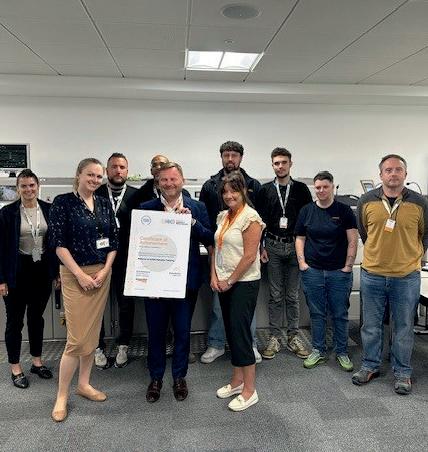

this partnership is so important. Together, CIRO and Network Rail are strengthening the capability of the workforce and supporting the safe, reliable operation of the railway.”
Driving professional excellence
The IST programme benefits from CIRO’s external quality assurance, ensuring training delivery meets rigorous professional standards and reflects best practice across the rail industry. This shared commitment to quality is central to Network Rail’s strategy to strengthen operational capability nationally, providing greater consistency, higher levels of assurance and a professionalised development pathway for those entering the signaller role.
Justin Willett (FCIRO), Director of Operational Capability at Network Rail, highlighted the significance of the programme:
“The Diploma in Initial Signaller Training represents an exciting step forward in shaping the future of railway operations.
Our collaboration with the CIRO marks a pivotal moment in the professionalisation of our signaller colleagues. With this endorsement, the programme not only meets the highest industry standards but sets a bold new benchmark for excellence.”
Find out more
To learn more about CIRO-endorsed training or to explore how the Awarding Organisation can support your programmes, contact:
ciroao@railwayoperators.co.ukor visit www.ciro.org/awarding-organisation

Alstom Unveils First Refurbished CrossCountry Voyager
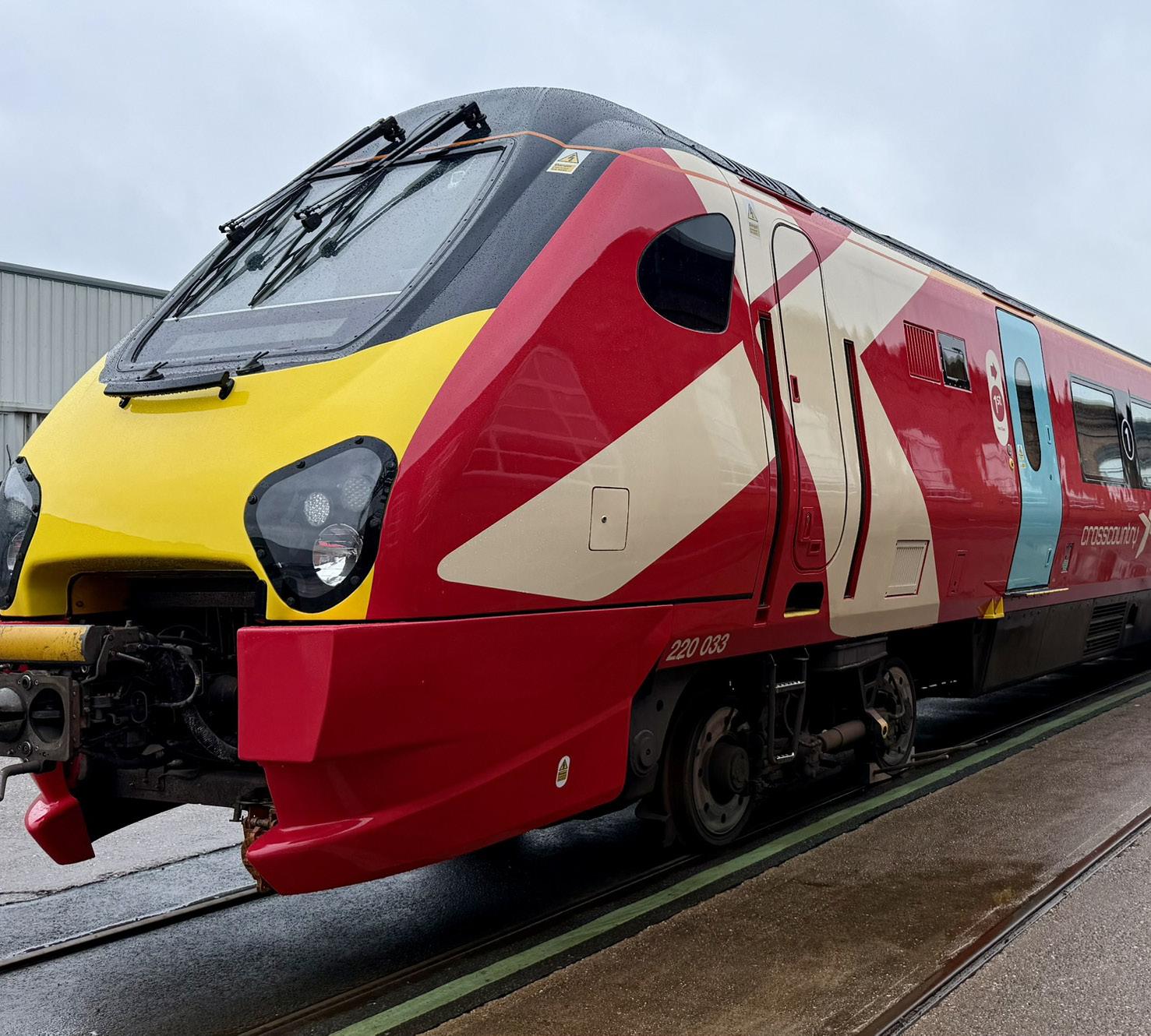
Alstom has revealed the first completed train from its £60 million programme to refurbish CrossCountry's long-distance Voyager fleet, presenting the train at its Litchurch Lane Works in Derby on 12 February. Over the next two years, Alstom will refurbish all 70 trains in CrossCountry's long-distance fleet — comprising 136 Class 220 Voyager cars and 176 Class 221 Super Voyager cars — at the Derby facility, which employs around 130 staff on the programme. The fleet is owned by rolling stock company Beacon and maintained by Alstom at its Central Rivers Depot in Staffordshire.
Refurbishments include new seating with increased legroom and integrated power sockets (three-pin, USB-A and USB-C), upgraded tables, new carpets, LED lighting, refreshed interior and exterior artwork, refurbished toilets and vestibules, and upgraded CCTV and passenger counting systems. The programme also covers twelve additional trains transferred to CrossCountry from Avanti West Coast.
The Voyager fleet has operated on the CrossCountry network since 2000, serving routes between Aberdeen and Penzance and calling at more than 100 stations. CrossCountry recorded 39.6 million journeys in 2025.
Alstom states that waste material from the refurbishment will be recycled in line with its no-landfill policy.
DB Cargo UK Trials Class 93 Tri-Mode Locomotive
DB Cargo UK has trialled a Class 93 trimode locomotive on an intermodal service in the North West, as part of a review of its future fleet investment strategy. Working with Rail Operations Group and Network Rail, DB Cargo UK used locomotive 93006 to haul a Peel Ports service from Seaforth in Merseyside to Mossend in Glasgow and back. The Class 93 is manufactured by Stadler in Valencia, Spain, and operates in four traction modes.
On electrified lines it runs on 25kV AC overhead power at up to 4,000kW, with an additional 600kW available from onboard batteries. On non-electrified lines it uses a Stage V 900kW diesel engine, supplemented by 400kW from two Lithium Titanate Oxide battery packs. The batteries can also operate independently, enabling zero-emission running without loss of tractive effort.
During the trial, the locomotive hauled loads of up to 1,500 tonnes and completed standing starts on gradients. Representatives from train driver union ASLEF were present to assess its performance.
Rail Operations Group confirmed further trials with DB Cargo UK are planned in the coming months.
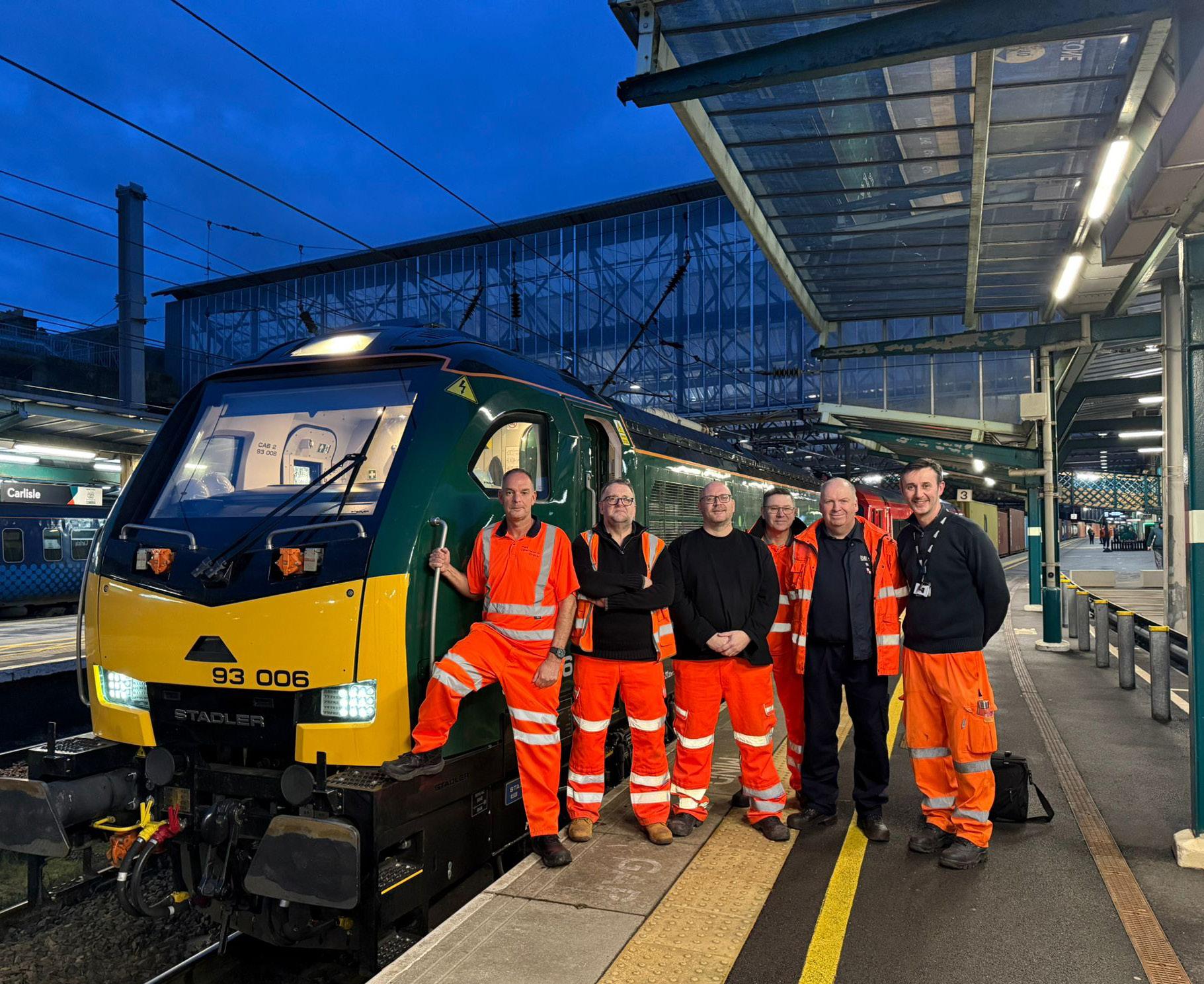
Members of DB Cargo UK’s Operations Team with 93006.



When someone listens, people will make the right call.
Thousands of organisations in the transport sector are members of CIRAS. We build a strong listening partnership with our members to improve safety. Our confidential safety hotline provides extra listening to help staff make the right call and report their concerns even when they feel they can’t use other channels. When we listen, we learn.

Learn how you can build your listening partnership with CIRAS at ciras.org.uk/rightcall. Scan me We find safety in listening.


•
•
•




Transport Committee Calls for Clearer Framework for Great British Railways
The House of Commons Transport Committee has published two reports calling for greater clarity on the Government's rail reform programme and an end to the ‘boom and bust’ cycles that have characterised rail investment. The first report, examining the Railways Bill, concludes that the legislation provides only a partial picture of how the new Great British Railways (GBR) body will operate. Key policy documents, including a draft licence setting out GBR's parameters, have yet to be published, and the committee says the timetable for their emergence is unknown or imprecise. It calls on the Department for Transport to publish a comprehensive list of outstanding decisions, documents and planned consultations, with target dates, ahead of GBR's establishment, which is expected by the end of 2027.
The committee also identifies what it describes as a potential tension between the Secretary of State's central role in the new system and the expectation that GBR will function as an arm'slength body. It recommends the legislation be amended to clarify the boundary between ministerial oversight and operational independence, and to guard against micromanagement. Separately, the report recommends that the Railways Bill be amended to include a duty on the Secretary of State to set a passenger journey growth target, which the committee notes is currently absent from the legislation.
The second report, on rail investment pipelines, concludes that investment in the rail network has persistently followed boom and
bust patterns, creating damaging uncertainty for the supply chain and increasing costs. It warns that the supply chain, particularly smaller firms, is under acute strain, citing a November 2025 poll in which 64 per cent of rail business leaders expected the industry to contract over the following year.
The committee identifies rolling stock procurement as a particular area of concern, noting wide fluctuations in orders over more than 35 years and a series of procurement processes that have been started, paused and restarted. It welcomes the Government's commitment to publishing a rolling stock strategy in 2026, but says this work is urgent and must be aligned with infrastructure planning.
On the Rail Network Enhancements Pipeline (RNEP), the report concludes that the mechanism was undermined by a lack of updates and the addition of unfunded projects. It recommends the RNEP be revamped, updated at least annually, and structured to provide five years of firm funding certainty with an indicative pipeline of up to 15 years beyond that.
The committee also calls for a Long Term Rail Strategy with a timescale of at least 30 years, to be laid before Parliament and protected from substantive change without formal consultation. It says the strategy should set out firm objectives on electrification, rolling stock, accessibility and capacity, and should include commitments to the largest infrastructure programmes.
Planning Permission Granted for Liverpool Street
Station Transformation
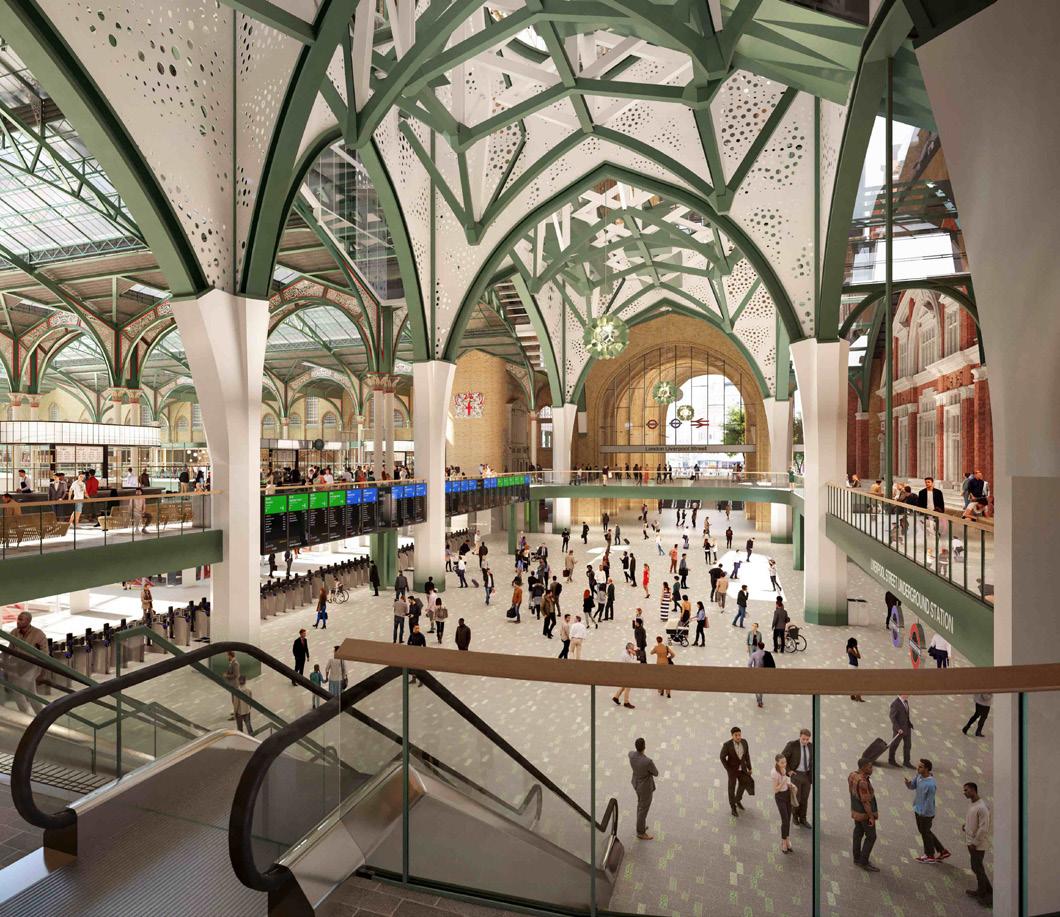
The City of London Planning Committee passed a resolution on 10 February to grant planning permission for a major transformation of Liverpool Street station, the busiest station in Britain. The station currently serves 118 million passengers a year and was last redeveloped in 1991. Annual passenger numbers are forecast to grow 35 per cent to 158 million by 2041, and the approved plans are designed to accommodate more than 200 million passengers in the longer term.
Key changes include a 76 per cent increase in overall concourse capacity, expansion of the lower concourse by 23 per cent, and stepfree access from street level to all platforms — including all London Underground lines — for the first time. The number of lifts will rise from one to eight, and escalators from four to ten. New accessible entrances are planned from Broadgate and Exchange Square, with improved connections to buses, cycle storage and taxis. Toilet facilities will be provided on all levels, including Changing Places provision.
The Victorian trainshed will remain untouched. Network Rail states the scheme will open up new views of the Victorian architecture. The infrastructure works will be part-funded by a new office building above the concourse, which will include a publicly accessible roof garden.
Graham Scanlon Head of Critical National Infrastructure at Atos UK
Graham Scanlon is Head of Critical National Infrastructure at Atos UK, where he leads the company's work across transport, energy, utilities, water, and communications. With a 20-year career in complex IT services and programme delivery, he specialises in the convergence of operational and information technology and the application of data, AI, and systems integration to some of the UK's most demanding infrastructure environments. He leads Atos UK's strategic partnership with HS2 and is a driving force behind the company's new Centre of Excellence, which aims to foster crosssector collaboration and accelerate innovation across critical national infrastructure.


Sam Sherwood-Hale spoke to Graham Scanlon, Head of Critical National Infrastructure at Atos UK, about the company's inclusion on Crown Commercial Service's Transport Technology Framework and how cross-sector innovation is driving a new era of AI-powered, data-led infrastructure management
SSH: Atos has been named as supplier on Crown Commercial Service's Transport Technology Framework. What does this say about Atos' positioning in the transport technology sector?
GS: Atos UK has a deep engineering heritage and domain expertise, particularly across our critical national infrastructure sectors and that very much includes transport and rail. Some of that heritage stems from people who started their careers working for British Rail Business Systems in the Midlands, which in the late 1990s became part of the Atos UK we know today. Across our critical national infrastructure work, we look at transport and rail alongside energy, utilities, water, communications, and mission critical broadcast media networks – the underpinning fabric of society and the economy.
Getting onto the Transport Technology Framework through Crown Commercial Services is a key part of our strategy to deliver that expertise to transport customers across the UK. We were named on six of the eight lots, all six that we bid for, with the remaining two not being relevant to us. It covers the full spectrum from an IT perspective and reflects our commitment to innovation and to helping the rail and transport sector solve real business problems using technologically advanced end-to-end solutions.
SSH: How long in the planning was this? In terms of demonstrating your capability, how far ahead did you prepare?
GS: Atos UK has been delivering to transport and rail for over 30 to 35 years, so there is no single defined point where planning began, it is part of a much longer journey. We were not on the previous framework of its kind, but clients are increasingly orientating themselves towards this as a commercial vehicle going forwards.
Over the last couple of years we have been focusing on how we drive up the value proposition to customers. Getting onto the framework by the end of last year was a real moment of success. But for me it is less about how long we have been planning and more about what it is going to enable us to do next. The Utility Week awards we recently won with National Grid and Scottish Water are examples of our innovation and endto-end capabilities coming to realisation. The framework is a commercial vehicle, but one that gives us the opportunity to deliver real benefit and value to more clients that need it.
SSH: The framework covers an eightyear maximum term. How do you ensure your solutions remain cutting-edge and adaptable as technology evolves over such an extended period?
GS: Through what we have already delivered to clients in rail, we have proven our
‘The convergence of operational technology and information technology has fundamentally changed what is possible, and the ability to be an integrator between those two worlds is one of the key things that distinguishes Atos UK in this space.’
adaptability, and it is about continuing to build on that. We are constantly innovating and investing in our technology solutions, either internally or in collaboration with the client.
We recently announced our new sovereign and agentic AI facilities opening in Birmingham this spring. Sovereignty gives us control over data and systems securely from within the UK which is vital for critical national infrastructure and public sector clients such as the Ministry of Defence. Building on that, we are opening what we call our Agentic Studio, which is about making sure that everything we deliver, to clients and internally, leverages the power of agentic AI. That will be the next big shift in technology over this eight-year horizon.
A big part of that investment is also about investing in our talent. We have a whole cohort of new apprentices on novel career paths that we have developed, designed to interlock with the advances in technology and particularly AI. What we are looking at is how AI and early careers co-exist, and what we do to ensure career pathways see the role developing around the individual – which is why we are calling them career portfolios. Atos UK has got to where it is by building our delivery around our scientists and engineers. It is about getting the environment right for our people and then helping our customers capitalise upon that for the future.
SSH: As a technology company, how close are you to the frontier of what is actually possible, and how does that translate into what you can develop and deploy for clients?
GS: Our focus is on empowering talented individuals and engineers with platform capability. We are not waiting for the next tool to arrive; we are focused on the realworld problems that our clients need to
solve and how we utilise platform capability to address them. We started some of that work two years ago with HS2 through the partnership we have with them, with a particular focus on generative AI.
It is about giving engineers the capability to do things they cannot do today. The Agentic Studio is essentially the fabric we give our people – the ability to forge tools in an applicable way to solve real-world problems. We have been focusing heavily on data and analytics, how you bring data together and provide a rich set of analytics that can be used in real time to process signal information and make quicker and more effective decisions.
SSH: You have recently won two Utility Week Awards with Scottish Water and National Grid, and you are developing a Centre of Excellence to fuse knowledge across CNI sectors. Can you give us a concrete example of where insights from another sector have directly benefited a rail client?
GS: The work we recently announced with National Grid is a good illustration. It is about providing the customer with the ability to simulate the state of the grid. Take that into transport and rail, and you can immediately see how simulating the upgrading of railway infrastructure becomes directly applicable.
Similarly, in the water industry we monitor IoT sensors that track waste and spillage, assimilate that data, and alert operational teams in real time. Whether that data is signalling data, track failure data, or information about the stability of electricity cables, the underlying capability is transferable. That is the principle behind the Centre of Excellence – driving collaboration across adjacent industries and crosspollinating innovation across that landscape.
The Centre will involve roundtables, thought leadership activities, innovation workshops, and bringing people physically together. We are also developing an information portal to provide a clear understanding of available capabilities. As an integrator we bring people together, and we will bring partners into that ecosystem too – what we call a best athlete ecosystem –so that their capabilities are visible through it as well.
SSH: Interoperability is crucial in rail where multiple systems and suppliers must work together. How does Atos approach the challenge of system integration across different legacy platforms, and what is the biggest opportunity now that so much more data can be gathered and fused together?
GS: The data landscape in transport is particularly fragmented, and that remains a significant challenge. Agentic AI has the capability to start bringing data together from those fragmented sources, but you
‘What we are looking at is how AI and early careers co-exist — and what we do to ensure career pathways develop around the individual.’
still face the fundamental problem of access to that data. Once you have it, agentic capabilities allow one agent to work on one element and another on something adjacent, assimilating and understanding data much more quickly to produce actionable outcomes.
Critical national infrastructure is under threat from cybersecurity risks and from environmental pressure stemming from legacy infrastructure that is not meeting current standards. New technologies are creating new data that we can use to manage legacy infrastructure in ways that were previously very difficult. One example in the rail sector involves CCTV being used to monitor transport disruption and manage crowd flow across stations, particularly during large events or demonstrations. That is where AI allows you to manage things in a more modern and efficient way.
If I am honest, no single company or sector has fully cracked this yet. Across critical national infrastructure in the UK, I see pockets of brilliance, but holding one up almost highlights how far behind things are elsewhere. Transport does it relatively well, and there are a number of use cases within the sector where data is being used effectively. In energy, as Tech Market View noted recently, the challenge is that there are lots of individual initiatives but not enough collaboration across the industry.
That is a big part of what the Centre of Excellence is about: collaboration not just across adjacent industries but within them, working across niche technology players, large-scale players like Siemens Mobility, systems integrators, clients, regulators, and government, to make sure that policy is pointed in the right direction.
SSH: You lead Atos' strategic partnership with HS2. What are the unique challenges and opportunities of supporting such a transformational infrastructure project?
GS: Our work with HS2 is really the Centre of Excellence in action. We pulled together a consortium of partners to deliver the skills and expertise that HS2 needs from an IT delivery partner, covering AI, data modelling, digital twinning, digital engineering, and systems integration.
On behalf of HS2, that means horizon scanning and understanding the
technological challenges they will face in delivering a project of that scale, drawing on our long heritage in rail to help them manage the transition from building a railway to operating one. Whether it is asset information modelling, data assimilation, building digital solutions that track sustainability, or the other capabilities we are delivering – those are all examples of the kind of end-to-end work the consortium enables.
SSH: With a 20-year career spanning complex IT services and programme delivery, how has the convergence of OT and IT changed the way rail infrastructure is managed?
GS: The convergence of operational technology and information technology has fundamentally changed what is possible, and the ability to be an integrator between those two worlds is one of the key things that distinguishes Atos UK in this space.
In practice, our teams are just as comfortable managing a mainframe as they are integrating an IoT sensor into a complex data environment and presenting the resulting insights to an operational team in real time. That end-to-end capability across the full continuum is what enables long-lasting client relationships. It is about understanding intrinsically how the rail industry works, what the pressures are, and what good looks like operationally, and then applying the right technology to address that.
SSH: You are passionate about building diverse, high-performing teams. What specific skills and capabilities are most critical for delivering excellence in rail technology projects today?
GS: It comes down to a few interconnected things. First, the ability to work across the full spectrum from legacy infrastructure through to cutting-edge data and AI environments. Second, and equally important, is domain expertise: people who know intrinsically the inner workings of the rail industry, sitting alongside people who are rapidly developing skills in emerging technologies. That pairing is genuinely powerful.
And then there is the integrator mindset. Rail, like all regulated critical national infrastructure, requires someone who can bridge between operational technology and information technology, work across niche specialist suppliers and large-scale platform players, and engage effectively with clients, co-suppliers, and regulators alike.
The reason Atos UK enjoys long-lasting relationships in this sector is because we focus on our people and empower them to innovate alongside our clients. Applying that philosophy to rail, where we have such a strong and enduring track record, is what makes the next eight years on this framework such an exciting prospect.
NEWS IN BRIEF
CAMBRIAN COAST LINE REOPENS
The Cambrian Coast Line has reopened following a nine-day planned closure between Pwllheli and Dovey Junction. Network Rail engineers renewed 1.4 miles of track between 14–22 February, installing 3,660 sleepers and 2,700 tonnes of new ballast, with 105 staff on site daily. Two level crossings were also renewed. Additional work carried out during the closure included track maintenance, level crossing upgrades and bridge inspections to improve long-term reliability and reduce future unplanned disruption.
FIRST TRAINS RETURN AFTER MANCHESTER PICCADILLY TRACK UPGRADES
Network Rail and Central Rail Systems Alliance have completed a £7.9 million, nine-day upgrade to tracks outside Manchester Piccadilly, with services resuming on 23 February. Work across six lines included replacing eleven sets of points, 4,000 timber sleepers with concrete equivalents, 5,500 tonnes of ballast and 9km of signalling and telecoms cabling – updating infrastructure last renewed in the late 1980s. Over 8,900 rail replacement bus services operated during the closure. Follow-up tamping work is scheduled for 1 and 22 March.
NORTHUMBERLAND PARK STATION OPENS
Northumberland Park station opened on 22 February as the fifth new station on the Northumberland Line, which returned to service in December 2024 after a 60-year closure. The station offers a 10-minute journey into Newcastle and serves as an interchange with the Tyne and Wear Metro's 60-station network. Pop Pay As You Go cards are accepted across both services. More than one million journeys have been made on the Northumberland Line to date. The final station on the line, Bedlington, is due to open on 29 March.
Stepping towards a greener journey

At Atos, we support our clients to be ready for a future that is hard to predict. Using our deep engineering heritage, we work end-to-end across the IT landscape - from mainframe and infrastructure to scanning the horizon for emerging technologies. With our own sovereign, award-winning, energy efficient data centres, we can deliver sustainable and secure solutions that are unique for our clients.

THE CHEEK OF IT
by Chris Cheek
Branding – a Suitable Case for Treatment?
Chris Cheek discusses the ongoing debate about branding on the railways – and indeed public transport in general
One of the most controversial announcements in 2025 in rail was the launch in December of a proposed corporate identity for Great British Railways (GBR) by the Department for Transport. This wasn’t the only public transport rebranding of 2025, either – earlier in the year, we had new corporate identities for two of the major bus groups, First Bus and Stagecoach.
Aside from the aesthetics of the GBR design (awful, in my humble opinion, a view in which I’m not alone), there were a number of surprising aspects to this. Firstly, that the choice of brand and promotional strategy should surely be a matter for the board of the newly created organisation. Secondly, there is the practical issue of a single corporate design which only applies to a fraction of the network. And thirdly, the question of how relevant is a network-wide design is anyway.
To take these in turn, the question of authority: surely the whole point of GBR is to have a ‘guiding mind’ for the industry, and to remove the DfT and politicians from day to day decisions – that at least has been the often expressed view of Lord Hendy. Instead, we appear to have a situation when crucial decisions are still being taken by politicians and civil servants (whose design it apparently was), rather than rail managers and their qualified marketing advisers.
Could it just be, as one colleague suggested, that this – alongside the unwarranted and expensive fares freeze – is the government’s only way of pretending that things are really changing, when everybody really knows that renationalisation is largely irrelevant to the issues that the industry is facing?
Second is the issue of where the new identity will be applied. Not, presumably, in London, Merseyside, Scotland or Wales – or indeed, if Andy Burnham has his way – in Greater Manchester either. If, as expected, the Metropolitan Combined Authorities are given a role in their local rail networks, then presumably, we shall see the return of local liveries for the others as well.
Which brings me to the third issue: this is the fundamental point about branding in public transport – and this is addressed as much to First Bus and Stagecoach as it is to whoever is in charge of the railways at the moment. Namely that there is not a universal national public transport product capable of being branded successfully. Public transport, even on the railways, is overwhelmingly a local product. ORR regional rail use statistics for 2024/25 show that 50 per cent of rail demand outside London is for travel within each local region, with another 41 per cent of journeys going to London. In London itself, 76 per cent of patronage travels within the capital.
It has long been argued that the most important brand is the route – whether identified by number, or route brand –whether it be the 49A or the Bakerloo Line.
It is surely no coincidence that amongst the most successful bus operators in the UK are companies which have very strong local branding, including different liveries for different routes or groups of routes. Reading, Nottingham and Brighton are outstanding examples of this. Of the bus groups, only Go-Ahead has resisted the corporatisation of its brand – even back during the run-up to its flotation in the 1990s.
In railway terms, strong local brands such as Chiltern, TransPennine and Anglia
‘You can deliver the nice new logo or the flashy livery, but delivering the quality and consistency of service needed to change perceptions is a much more difficult matter.’
reference their region or locality. More recently, brands such as Great Western Railway (GWR) and London North Western Railway (LNER) have referenced their historic roots as well as their routes. In this most nostalgia-conscious nation, this can also be very powerful.
This is not just a post-privatisation phenomenon either – after all, several of today’s brands such as Gatwick Express, ScotRail and Thameslink all date back to British Rail days. Meanwhile, local brands such as MetroTrain in West Yorkshire and Merseyrail, originally adopted under the old Section 20 agreements between BR and the Passenger Transport Executives, were a powerful means of establishing local networks with a distinct identity –helping to drive patronage growth, often spectacularly (like the 86 per cent in West Yorkshire between 1991/92 and 2003/04).
The Oxford English Dictionary classifies branding as: ‘The application of a trademark or brand to a product; the promotion of consumer awareness of a particular brand of goods or services. Also: distinctive wording or design used to identify a particular brand.’ In other words, giving a company or product a distinctive design or symbol in order to promote products and services.
Thus far, thus simple. The world is full of strong brands and memorable symbols from Coca Cola to Colgate. In our own field, we have several long-established and enduring identities: the Underground roundel in London that dates all the way back to its first use at St James’s Park station in 1908, the white coaches of National Express – a potent identity which dates back to 1972 – and of course the now revived BR ‘double arrow’ logo from 1965.
These days, though, it’s much more complicated than that. As many marketeers recognise, the brand is about more than a logo or identity. The appearance acts as a form of shorthand for the product or service, giving a clear signal of what the customer or stakeholder can expect. Good examples are the values communicated by prestige car marques such as Bentley or Rolls Royce, food products such as Heinz condiments and sauces, or retailers like John Lewis or Marks & Spencer.
Practitioners and consultants emphasise that branding is not a one-off exercise, but has to be continuous. In transport, demographics, expectations and the market are all constantly changing, and brands should evolve to keep pace. Then there is the question of brand design: it is argued that this is about much more than choosing a colour or a logo; it starts with identifying who your stakeholders are, then how you want your brand to communicate with them, and finally managing everything to deliver the values you are trying to get across. Only then should you determine what the brand looks like in terms of the physical elements, but also in the way you run and manage the services. A successful process will then deliver the trust with your customers and improved relationships with stakeholders, in other words achieve the reputation you seek.
When set in the public transport context, this all seems to make a lot of sense. Passenger transport modes, especially since Covid, have suffered from poor public perceptions of such vital matters as reliability and predictability, with a third problem over value for money. Operators have not been helped by a perpetually hostile media or by political comments designed to score points during a time of attempted reform.
It is clear that these issues are paramount in driving the reputations of both bus and rail industries. This is a classic example of where branding can come unstuck – you can deliver the nice new logo or the flashy livery, but delivering the quality and consistency of service needed to change perceptions is a
‘Public transport, even on the railways, is overwhelmingly a local product.’
NEWS IN BRIEF
RAIL INFRASTRUCTURE NETWORKING RETURNS TO LONDON IN MARCH
much more difficult matter. Here’s another area where emphasis on the particular can trump wider perceptions. Frequent or regular customers who have a good experience can tell their friends ‘I know the railways are rotten, but I always have a good journey with [name of local TOC]’ or ‘my local bus, the 652, is always on time’.
It seems to me that, if they’re not careful, the Government is storing up trouble for itself by adopting a new identity for the railways now, without research, without understanding, and importantly without the means yet to deliver a structured branding process. That should be a job for the chief executive and the new board at GBR. Hopefully, if they’re allowed to do it, they might improve on the lamentable quality of the DfT’s design.
The current approach is especially dangerous when they do not yet have the means to make any immediate meaningful improvement in the standards of service.
As for the transport groups – and indeed the franchising authorities now entering this territory – the same process needs to be gone through. For the remaining commercial operations running under Enhanced Partnerships, the identity of their customers and stakeholders is clear. They are local people and the stakeholders are local authorities and local businesses. The brands, the identities and the services need to reflect that – and national identities designed to appeal to shareholders or overseas owners have no place in that mix. To sum up, then: think local everybody, please – that’s the route to success!
The Rail Infrastructure Networking (RIN) series returns to London on Thursday 12 March 2026, with the event taking place at Old Billingsgate Market from 9:30am to 13:30pm.
RIN describes itself as the UK's largest rail infrastructure trade show, bringing together supply chain companies, contractors and procurement professionals from across the sector. The London event is one of four scheduled across 2026, with bookings currently open for all dates. Visitor attendance is free of charge, with registration available online. Both exhibitors and visitors are welcome to bring multiple team members, though all attendees must be individually registered to receive their event badge. A notable feature of the format is the Meet the Buyer programme, which offers exhibitors 15-minute private procurement meetings with senior buyers from major rail organisations. RIN says procurement managers from significant industry buyers attend its events specifically to identify new suppliers.


LAYING DOWN THE LAW
by Martin Fleetwood
Supreme Court Closes
JCT Loophole
Martin looks at clarification of a contractor termination clause under JCT standard form contracts
Within the rail sector a large number of projects are undertaken using JCT Design and Build standard form contracts to provide their basic legal terms. A recent decision by the UK’s Supreme Court in Providence Building Services Limited v Hexagon Housing Association Limited at the beginning of the year has clarified a significant point relating to when a contractor is able to terminate their contract where the employer has repeatedly defaulted in meeting its obligations under the contract. The ability for a contractor to terminate the contract is a crucial lever in ensuring that the employer complies with its obligations under the contract, but it is also important that if an employer corrects a default there are no unintended consequences that the contractor can later exploit.
A need to manage payments on time
Hexagon Housing Association Limited (Employer) and Providence Building Services Limited (Contractor) entered into a building contract using a JCT Design and Build Contract (2016 edition) (Contract) with relatively minor amendments. When the work was being undertaken, the Contractor submitted payment notices in accordance with the terms of the Contract, however on two separate occasions the Employer failed to make the payments within the timeframe set out in the Contract.
As a result, the Contractor terminated the Contract, referring to the provisions of two specific clauses in the Contract. While the parties had made some minor amendments to these clauses, they were immaterial to the way the clauses were used to terminate the Contract.
The key clauses in the Contract related to failure to make payments on time and were as follows.
Clause 8.9.3
‘If a specified default or a specified suspension event continues for 28 days from the receipt of notice under clause 8.9.1 or 8.9.2, the Contractor may on, or within 21 days from, the expiry of that 28 day period by a further notice to the Employer terminate the Contractor’s employment under this Contract.’
Clause 8.9.4
‘If the Contractor for any reason does not give the further notice referred to in clause 8.9.3, but (whether previously repeated or not):
.1 the Employer repeats a specified default; or
.2 a specified suspension event is repeated for any period, such that the regular progress of the Works is or is likely to be materially affected thereby, then, upon or within 28 days after such repetition, the Contractor may by notice to the Employer terminate the Contractor’s employment under this Contract.’
The catastrophic effect of two failures
In December 2022, the Employer failed to make an interim payment by the required date (Initial Default). Accordingly, the Contractor served a notice of specified default using clause 8.9.1 of the Contract. The Employer subsequently made payment within the 28-day cure period specified in clause 8.9.3, meaning the Contractor’s right to terminate, pursuant to clause 8.9.3 (which would have arisen had the Employer’s default persisted beyond 28 days), did not fully materialise.
Martin Fleetwood is a Consultant at Addleshaw Goddard’s Transport practice. The Rail Team has over 30 lawyers who advise clients in both the private and public sectors across a wide range of legal areas. As well as contractual issues, the team advises on operational matters, franchises, concessions, finance, regulatory, property, employment, environmental and procurement issues.
Disclaimer: This article is for informational purposes only and does not constitute legal advice. It is recommended that specific professional advice is sought before acting on any of the information given.
In May 2023, the Employer missed a further interim payment. The Contractor treated this as a repetition of a specified default and issued a Notice of Termination under clause 8.9.4. The Employer challenged the Notice of Termination, arguing that a right to terminate under clause 8.9.3 for the Initial Default must have fully accrued, in other words the default or suspension had to have continued for more than the cure period of 28 days before it became an event that the Contractor could use as the basis for exercising its termination rights under clause 8.9.4 for a repeated default.
In the following adjudication procedure and legal case in the high court, the Adjudicator and the High Court Judge both agreed that to permit the Contractor to terminate the Contract the right must have fully accrued and in both their views the right of the Contractor to terminate had not yet arisen. However, following an appeal of the High Court’s decision, the Court of Appeal reversed the position and concluded that there was a right to terminate under clause 8.9.3 even if the Default had been corrected during the cure period. Part of their reasoning was that to decide otherwise would allow ‘a serial defaulter to escape any meaningful consequences’ if they paid ‘just’ within the cure period. In effect it could be used to provide the Employer with almost an additional month within which to make payments due from it under the Contract.
Decision of the Supreme Court
The issue had a further appeal to the Supreme Court who recently decided unanimously to reject the Court of Appeal’s decision and find that the Contractor did not have the right to terminate the Contract. One reason behind the Supreme Court’s decision was the desire for a more ‘rational’
and ‘commercial’ outcome with an emphasis on the need to interpret industry-wide standard form contracts consistently.
In the Supreme Court’s view, the right of the Contractor under clause 8.9.4 to terminate the Contract specifically required the Contractor’s right to terminate the Contract under clause 8.9.3 to have actually arisen i.e. the 28-day cure period had ended and no payment had been made. A clear concern of the Supreme Court was that the purpose of the ‘cure period’ would be lost and the Court of Appeal’s interpretation could produce an extreme outcome whereby any late payment, provided a relevant notice of default was issued by the Contractor, would put the Employer at risk that a second late payment, even by a couple of days, would entitle the Contractor to terminate the Contract.
While another clause in the Contract required that the termination of a contractor’s employment should not be given unduly or vexatiously, the Supreme Court considered that this would give little comfort to the Employer if a contractual trigger point had been passed. In addition, the Supreme Court noted that the standard form treated contractor defaults differently, using different words to those in clause 8.9.4, and the two clauses did not have the same meaning.
Looking more closely at the Supreme Court’s concerns over interpretation of contractual language, the established approach, based on the objective intention of the contracting parties should still be applied. However, where parties use an industry-wide standard form contract, the courts should also assume that the parties’ intentions should be consistent with (i) the intentions of other parties using the same form and (ii) the intentions of those people responsible for the drafting of the standard form in the first place.
Effects of the Judgement
While the judgement is likely to be welcomed more by employers than contractors – the wording for clauses 8.9.3 and 8.9.4 appears in various editions of the JCT Design and Build contracts, (including the 2024 edition) and the Scottish Building Contract Committee forms which are based on the JCT forms – it makes the position clear to both parties.
From a Contractor’s perspective: There is greater clarity as to the level of default and the amount of duplication of default actions which needs to occur before a right to terminate for a prior default arises. If necessary, the Contractor can look to build in a longer maximum period for

an Employer to settle payments when considering cashflow calculations and the potential cost of such payment delays when pricing a contract.
From an Employer’s perspective: Minor, repeatable, late payments that are promptly cured will not automatically trigger a contractor’s right to terminate the contract. This is particularly important as it avoids one instance of a minor late payment creating a Sword of Damocles hanging over the Employer for the remainder of the contract.
To the extent that the judgement causes issues to the Contractors, for new contracts the parties can look to agree additional late payment fees as a variation to deter Employers from looking to obtain extended credit terms as a result of this judgement. There is also the ability for JCT to amend its terms in a future edition of its standard form contracts.
While this judgement is arguably not the best outcome for contractors, a level of certainty has been provided. When managing contracts, having certainty does itself bring value and should make the life of both the Employer’s and Contractor’s contract managers just that little bit easier.
100,000+


Easy to update and maintain with station changes
Works across multiple digital channels
Integrates with live travel data and digital displays





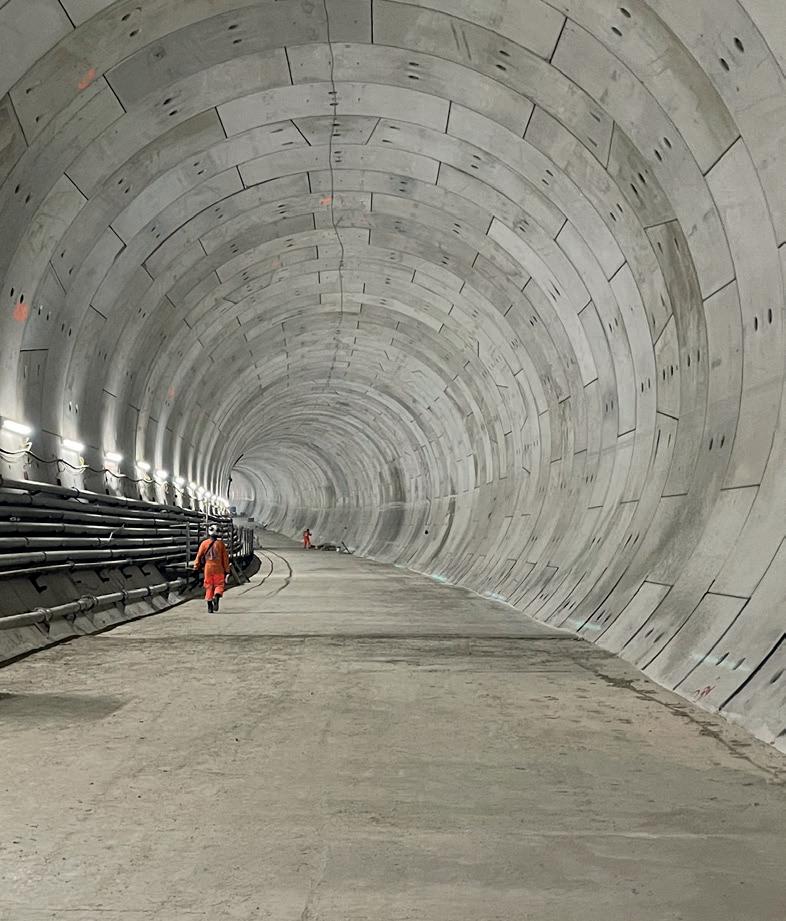

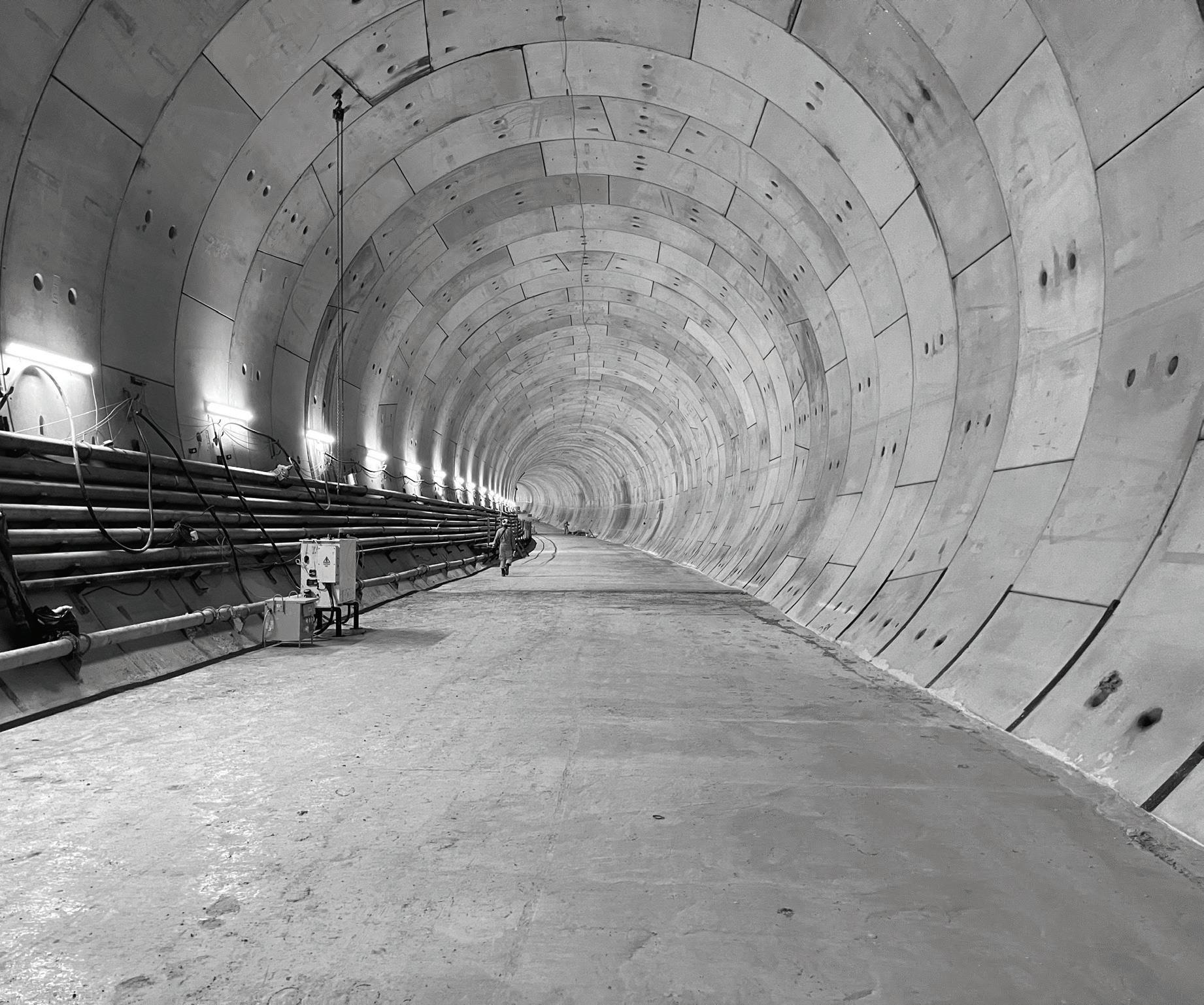








For more than 25 years, Gall Zeidler Consultants has delivered worldclass tunnel consultancy and design services. Our specialists apply state-ofthe-art construction and rehabilitation methods, combining proven technologies with innovative solutions to create exceptional results for our clients.
With more than 580 kilometres of tunnels completed across the globe, we are trusted leaders in our field. We see challenges not as risks, but as opportunities — to innovate, to excel, and to redefine what’s possible underground.






























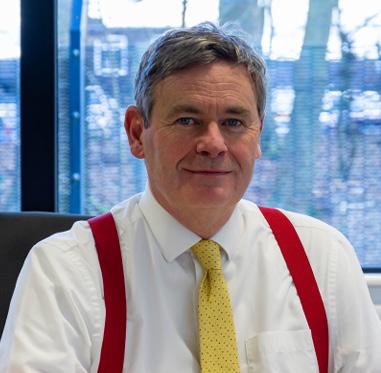
Simon French OBE CMIOSH is a rail safety consultant and longstanding member of IOSH
How to Get Rail Safety Back on Track?
Simon French, a former Chief Inspector of rail accidents, assesses the sadly growing problem of attacks on both staff and passengers on UK railways, then previews a forthcoming series of free and open webinars focused on how to keep rail workers and passengers safe
Back in 1984, I was a young British Rail management trainee in my first appointment in a supervisory role. About 23:00 one evening a platform assistant asked me to help escort two unticketed male passengers off a train that was standing on platform 6, ready to depart for Paddington. With some trepidation I agreed to assist and walked towards the train with my colleague. As expected, we were met with a torrent of abuse. Nevertheless, the young men quickly realised that the train was going nowhere with them onboard, and so they left the train and started walking towards the station exit, with me escorting them. Suddenly, and with no warning I was struck across the head and fell to the ground; some vicious kicks followed. I found myself sprawled across the platform and watched as the yobs walked nonchalantly away, laughing as they went.
I will never forget the fear and pain I felt as I was lying on the ground with someone kicking me hard, and the humiliation I felt when hearing their laughter as they walked away. But most of all I felt angry that I had been attacked for simply doing my job and having the temerity to ask for their tickets.
Growing problem
Work-related violence on the railway is a growing problem. This reflects a wider societal issue, and the challenges playing out across communities are increasingly being felt on the network too. Every day, our colleagues deal with verbal abuse, threats of violence and, at times, far worse.
Consequently, they are left feeling exposed and unappreciated. No-one deserves to feel unsafe, or to be harmed, while serving the public.
British Transport Police crime statistics and recent surveys conducted by the transport union RMT and the Rail Safety and Standards Board (RSSB) tell the same story. The number of incidents in which railway employees are threatened or assaulted is rising. At the same time, the resources that British Transport Police (BTP) are able to deploy to counter the threat are constrained due to financial pressures.
Stark reminders
The tragic death of Jorge Ortega at Ilford Station, in December 2024 and the recent mass stabbing attack on passengers and staff on an express train on the East Coast Main Line, both serve as stark reminders of the worst-case outcomes of such aggression. Nobody suggests that the railway industry is unaware of the problem and there are a range of different initiatives that are intended to better protect staff. However, there is wide agreement that there’s more to be done. It is for that reason that the IOSH Railway Community has teamed up with the Rail Delivery Group (RDG) to host a webinar event focused on work-related violence in the railway industry. Organisations speaking at the event include RDG, BTP, Network Rail, Transport for London, RMT and RSSB –so there will be no shortage of expertise, opinions and views on this important topic.
Online series
This two-part webinar series aims to shed light on the violence and aggression directed at railway workers and to explore practical steps to protect them. It will highlight the very real impact for those on the front-line, what is happening today to counter the threat, and plans to go further in the future. While there is no single solution, we all share the responsibility to work together in addressing violence against rail staff. By collaborating across the industry and with law enforcement partners, we can strive towards a common goal: keeping our people safe.
The webinar series will cover:
• Lived experience on the front-line.
• Policing, what the data tells us, and the importance of reporting.
• Potential changes to legislation.
• Overview of the Work-related Violence Group and its industry-wide aims.
• The industry's strategy to find and implement effective ways of tackling work-related violence.
• The role of body-worn video and launch of the new BTP/industry training videos.
• Guidance on how to encourage reporting.
• Conflict avoidance training and sharing of best practices.
There will also be an opportunity to discuss the issues raised and ask questions of the speakers.
Given the significance of the subject matter and the range of insightful speakers, the webinar will take place in two parts. The first session, on 5 March, will focus on the scale of the problem and the need for improved reporting, as well as provide an outline of the industry’s strategy to improve the situation. The second session, on 13 March, will delve deeper into the measures we can implement now, and in the future, to better protect our people and passengers. Both sessions will be free to attend and open to all. Please join us at this important event.
WORK-RELATED VIOLENCE: PROTECTING OUR PEOPLE
A 2-part webinar series hosted by the IOSH Railway Community, and the Rail Delivery Group, Thursday 5 March and Friday 13 March 2026, 14:00 – 15:30
To enrol for this free, open event, go to:
Part 1
https://event.eu.on24.com/wcc/ r/8000178998/B595C6324 E3818C9C6C6BD58A7226733
Part 2
https://event.eu.on24.com/wcc/ r/8000178999/BA10E1D0A3204366 EB9210700B839BAF

by Jonathan Walker
Railways Bill Should Define Future of Rail Freight
Jonathan Walker, Head of Infrastructure and Planning Policy
at Logistics UK sets out why stronger statutory safeguards are essential if rail freight is to play its full role in the UK's growth and decarbonisation ambitions
The Railways Bill, currently moving through parliament, provides a once-in-a-generation opportunity to create a railway system that supports economic growth, modal shift and national supply chain resilience. Logistics UK supports the provisions in the Bill to create a statutory freight increase target and to compel Great British Railways (GBR) to promote rail freight, with these measures showing that the government recognises the strategic importance of rail freight.
However, there are also elements of the Bill where Logistics UK is seeking amendments to prevent the risk of GBR prioritising its own passenger services over rail freight. If freight is de-prioritised in capacity allocation, planning, charging and investment decisions, it could undermine the government’s growth and decarbonisation objectives for the long-term.
In addition, there are key parts of the new framework that have not yet been published and so are not available for scrutiny. These include the draft Access and Use policy, that is not expected to be published until later this year, and the draft licence for GBR, which could include important details on how it will be held to account, the structure of the organisation and how the different business units will work together to support cross network freight operations.
Importance of rail freight
Rail freight plays a critical role in our wider logistics system, moving 16 billion tonnekm of goods each year, eight per cent of the UK’s freight by tonne-km. It moves essential goods such as consumer products and construction materials, and plays a crucial role in enabling onward movement of containerised freight to and from ports, particularly on the south and east coasts. Rail freight keeps supply chains resilient, reduces road congestion and cuts carbon emissions. Even when diesel-hauled, rail freight produces around 76 per cent lower carbon emissions per tonne-km than road transport.
The logistics sector wants to increase its use of rail to enhance reliability, journey time predictability, efficiency and emissions-reduction across multi-modal supply chains. We therefore support the target of increasing rail freight by 75 per cent by 2050 and the government’s plan to set additional, interim targets prior to the formal establishment of GBR.
Currently the Bill does not include the governance, regulatory or capacity safeguards required to ensure that these growth targets are achievable. Growing rail freight usage requires the private sector to make long-term, capital-intensive investments in terminals, rolling stock and services. The logistics sector will invest if it has confidence that it will be appropriately prioritised in decisions on track capacity,

Logistics UK is one of the UK’s biggest business groups, representing logistics businesses which are vital to keeping the UK trading, and more than seven million people directly employed in the making, selling and moving of goods. With decarbonisation, new technology and other disruptive forces driving change in the way goods move across borders and through the supply chain, logistics has never been more important to UK plc. Logistics UK supports, shapes and stands up for safe and efficient logistics, and is the only business group which represents the whole industry, with members from the road, rail, water and air industries, as well as the buyers of freight services such as retailers and manufacturers whose businesses depend on the efficient movement of goods. For more information about the organisation and its work, please visit logistics.org.uk.
‘Rail freight can deliver cleaner, more reliable and more efficient logistics, and the private sector stands ready to invest at scale — but only if longterm certainty is built into the new framework.’
infrastructure investment and pricing. If the sector cannot plan with confidence, it cannot invest at scale.
Barriers to freight growth
Rail freight has seen only modest growth over the past decade. Ignoring the collapse in coal volumes, it has grown from 14.6 billion to 15.7 billion net tonne kilometres, approximately seven to eight per cent over ten years, or less than one per cent annually.
Capacity constraints on the rail network, particularly on busy passenger-dominated routes like the West Coast Main Line and Ely Junction near Felixstowe, remain one of the biggest barriers to significant rail freight growth. There is also a shortage of rail terminals at key logistics hubs, where slow planning processes and limited network capacity are preventing new facilities from coming online quickly enough. Progress is
also held back by the lack of electrification on freight critical routes, which increases journey times and operating costs while limiting decarbonisation benefits – previous analysis from CILT UK indicates that just 60 miles of targeted in-fill electrification could unlock significant advantages for the whole network. Adding to these pressures, high and unpredictable track access charges, and ongoing uncertainty over the future charging framework, continue to undermine rail’s price competitiveness and discourage long term investment.
Priorities for the Railways Bill
As the Bill moves through parliament, Logistics UK will continue to engage with MPs, to set out our priorities and where we feel the Bill needs to be strengthened:
• Strengthen independent oversight and effective appeals – The Office of Rail and Road (ORR) must be empowered and resourced to proactively monitor access, capacity and charging, and ensure timely, fair resolution of disputes. This change would parallel the Passenger Watchdog function which is being set up for passenger rail.
• Integrate freight into passenger and infrastructure planning – Ministers and
GBR must ensure their decisions are in line with the Infrastructure Capacity Plan and Rail Freight Increase Target.
• Safeguard fair capacity and charging decisions – protect strategic freight corridors, ensure charges are fair and predictable, and provide transparency through annual reporting.
• Establish long-term certainty for investment and protect private infrastructure – enable long-term access agreements, maintain investor confidence, and ensure consultation before extending regulation to private terminals.
• Limit political interference – direction and guidance powers should not require GBR to prioritise passenger services over freight except in emergencies or for safety.
To unlock private investment in new and improved rail infrastructure, rolling stock and services, these challenges need to be addressed. The sector needs long-term certainty over network access, fair treatment in charging and capacity decisions, and safeguards for private investment in terminals and facilities. Legislative measures are therefore needed to ensure freight has guaranteed, fair access to the national
network; that growing freight is part of GBR’s core duties; that the ORR has the powers and capacity to uphold that fairness; and that passenger-service designations, capacity planning and ministerial direction all support, rather than undermine, the rail freight target.
Conclusion
The Railways Bill represents a pivotal chance to build a rail system that genuinely supports national growth, decarbonisation and supply chain resilience. Its commitment to a statutory freight growth target and a duty for Great British Railways to promote rail freight shows that government recognises the sector’s strategic value. But without stronger safeguards on capacity allocation, charging, governance and independent oversight, these ambitions risk being undermined in practice. Rail freight can deliver cleaner, more reliable and more efficient logistics, and the private sector stands ready to invest at scale, but only if long term certainty is built into the new framework. Freight needs to be properly protected within the reformed system and the amendments proposed by Logistics UK show how the government can ensure that the UK develops a railway network that serves businesses and passengers alike.
Carl Kent
Sales Director, GB Railfreight
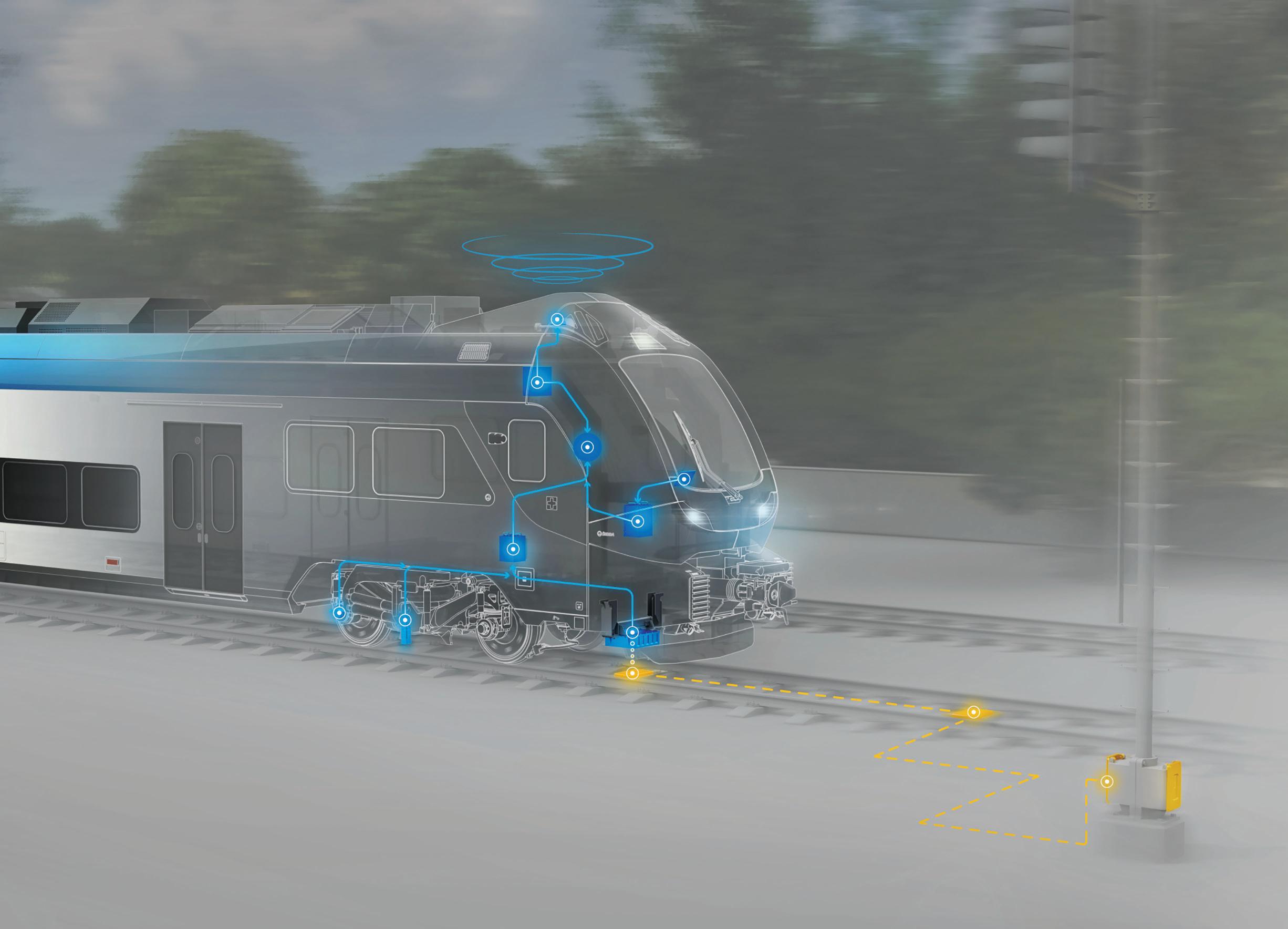
GB Railfreight is overseeing one of the most significant investments in British rail freight history. The £150 million investment in 30 Class 99 bimodal locomotives represents more than just a commitment to decarbonisation; it's a bet that newer technology can unlock capacity and drive growth.
Since Carl moved into business development in 2018, GBRf has more than doubled in size. Growth has come from intermodal services out of ports like London Gateway and Felixstowe, major infrastructure projects including HS2 and Crossrail, and expanded work for Network Rail. ‘We don't tie ourselves to one industry or location’ Kent says. ‘We're a truly national operator.’
The company has had to adapt. ‘We've had to deal with the decline of coal, which was a huge market but is now zero’ Kent notes. GBRf replaced that volume through strategic investment. ‘We went and procured box wagons and flat wagons in advance of having business for it, to be opportunistic. We've been successful, and already our asset base is very stretched.’
But there's a ceiling. ‘You can't just suddenly run ten more trains the next day’ Kent points out.
‘You need drivers, locomotives, wagons, and support functions.’ The next leap forward requires the Class 99s.

Sam Sherwood-Hale spoke to Carl Kent, Sales Director at GB Railfreight (GBRf), about the company's £150 million investment in 30 Class 99 bimodal locomotives, how GBRf has more than doubled in size since 2018, and what infrastructure improvements could unlock the sector's potential
More than just green
‘Right now much of my focus is on our Class 99 locomotives’ Kent says. ‘There's a lot of interest, and not just driven by sustainability. It's driven by what we're telling customers about the actual capability of these locos.’
The performance is compelling. ‘The acceleration on the Class 99 is impressive. Just how it gets from zero to 75 mph versus diesel locomotives is really impressive. Under electric power on long distances, the performance is powerful. The ability to transfer power to the railhead is just far smarter, and they can continue to improve that with software modifications.’
The pitch is clear: ‘We don't just see this as a green solution, but as a more capable loco that can open up more capacity on the network by moving much faster.’
The investment was driven by multiple factors. ‘There are only a finite number
of locos in the market, many now 20, 30, 40 years old’ Kent explains. GBRf had maximised its Class 66 fleet, bringing some from Europe and America. ‘Given that we wanted to order 30 locomotives, you had to look at something new. We took a number of factors into account, not just the sustainability angle, but the power and acceleration these things offer.’
Timing mattered too. ‘At the point we got them, interest levels were lower. The environmental benefits we'll get longer term probably offset the additional cost in the short term. Getting there first puts us ahead of our competition.’
Market response and deployment
Kent is realistic about what's driving customer interest. ‘Yes, sustainability matters, but what really resonates is the actual capability. I think we're a little too far away from emissions targets for every
customer to be willing to pay an enhanced premium for an electric or hybrid loco. We're at the first stage of transforming away from diesel traction.’
GBRf already has firm commitments for eight or nine locomotives funded within customer contracts. ‘Customers won't expect any degradation in performance. Some will want data on mileage and what percentage has been electric, so they can take CO2 or emissions savings data back to use within their own businesses.’
The data will also flow to Network Rail. ‘When these things operate the way we expect, we'll very quickly be saying, 'I can make it through this route section four minutes quicker, so I want to improve my schedule.' That's where you start to generate more capacity because your train is getting out of signal sections quicker.’
Passenger capability has opened unexpected opportunities. The last ten
locomotives have been modified with Electrical Train Supply for charter services. ‘When we ordered the first 30, passenger service wasn't in our thinking’ Kent admits. Belmond has committed to using Class 99s on the Britannic Explorer and Royal Scotsman from 2027. ‘There's interest from non-freight operators. But for us, that would be part of an additional order. We'd have to order more than the initial 30.’
The Class 99s received authorisation in November 2025. ‘The first revenueearning service is expected to run in Spring 2026, likely on the West Coast, potentially container trains or automotive trains’ Kent says. Several major projects are on the horizon. ‘If it's long distance using main lines like the West Coast or East Coast, we're absolutely going to be looking at the Class 99.’
The locomotives have advantages beyond electrification. ‘The engine is EUR 5 compliant. It's already a cleaner diesel engine than other diesel locomotives. If there's demand from major projects where you need to hit sustainability targets, the 99 might become preferable even if it's just operating on diesel for most of the journey.’
GBRf has also been testing HVO fuel. ‘We've not seen a degradation in reliability. The difference between diesel and HVO fuel burn is not very much. With our Class 99s, we can use HVO where appropriate and affordable.’
Infrastructure gaps
Infrastructure remains the limiting factor. ‘You break it down into infill small schemes and large schemes’ Kent explains. Small gaps include Nuneaton to Water Orton, Prowse Junction, and Felixstowe to East Suffolk Junction. ‘If you piece them together, you fully electrify some journeys.’
One example illustrates the potential. ‘Extending the AC lines to the bottom of Mitre Bridge in West London means locomotives use electric when it's flat. It could allow an extra 300 or 400 tonnes on the train because it draws power there rather than on a hill. Most rail freight from the south east uses that artery.’
Larger schemes include the Midland Main Line from Wigston to Sheffield via
‘We don't just see this as a green solution, but as a more capable loco that can open up more capacity on the network by moving much faster.’
Toton and Derby, and Walsall to Water Orton. ‘Finishing Midland Main Line would be really important.’
East-West Rail wasn't electrified despite the Class 99s being capable of 100 mph. ‘Electrification adds significant cost’ Kent notes. ‘In reality, if there's enough usage, you'd expect electrification will help improve capacity because things operate quicker. But I think they took a budget and delivered what they can.’
The Felixstowe to Nuneaton electrification remains a frustration. ‘Felixstowe to Nuneaton has been talked about since I first started in the railway.’
Policy and uncertainty
The Railways Bill offers some support. ‘There are commitments, particularly some potential discounts if we're using sustainable traction’ Kent says. But the economics are challenging. ‘We already know that newer locos are more expensive and electricity per mile is more expensive than red diesel. So we'll be making arguments to help make running these more affordable, not just for us but for all freight operators.’
The industry has been influential despite its size. ‘It's always felt like a small part of the rail network with quite a loud voice’ Kent reflects. ‘Groups like the Rail Freight Group have done very well to get into senior people in at Network Rail in Government to really sell the benefits.’
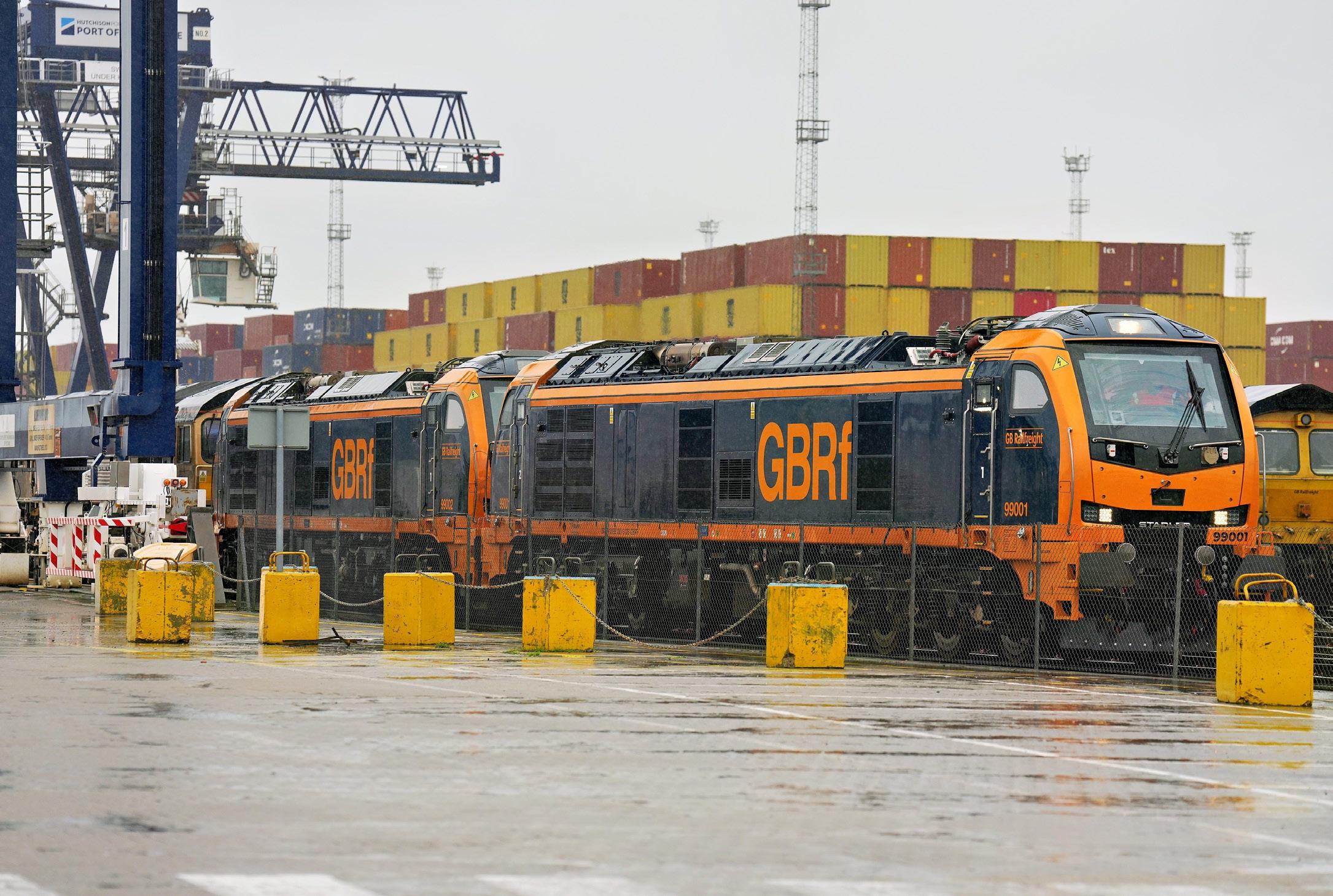
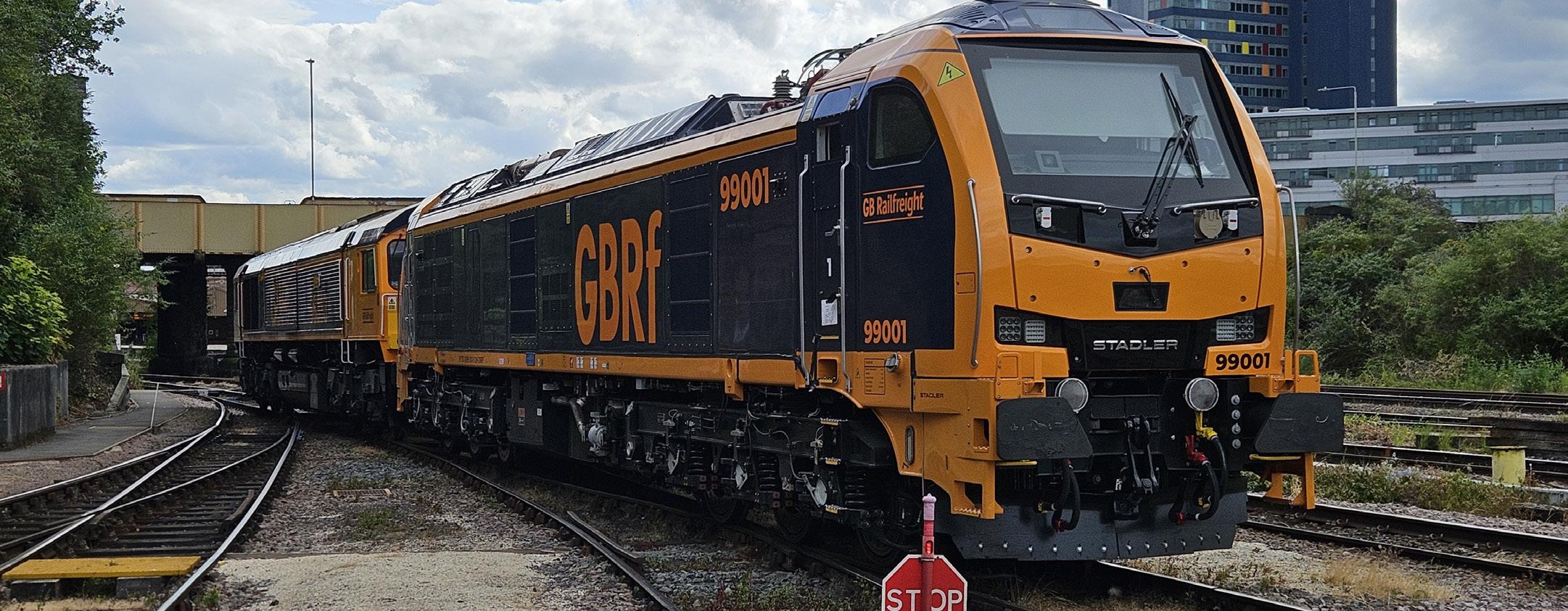
‘Getting there first puts us ahead of our competition’
But the messaging needs to evolve. ‘We've got to find new ways to sell the benefits of rail freight that aren't always just 'we can run longer and heavier trains.' We've got to be smarter on how we share information and really get government to take freight seriously.’
Economic uncertainty is inherent to the sector. ‘Rail freight has always existed with economic uncertainty. As soon as major construction projects stop, that reduces rail freight opportunities. You can see when rail freight is really successful, it's usually because the economy is doing well and we're building things in our country.’
The transition to Great British Railways adds complexity, though Kent expects cooperation. ‘We're uncertain, but we expect
there won't be major changes because there's still an obligation to ensure capacity is protected. The freight operators aren't just users of the network, they're also suppliers to Network Rail in possession work, seasonal work, engineering, and yellow plant trains.’
He's keen that freight retains the benefits of its investments. ‘We don't want to optimise all our paths just to give up that capacity to passenger services. We want some reserved for freight. It's our investment.’
The path forward
Kent is pragmatic about growth. ‘To be honest, there's not ten per cent year-onyear growth of brand new to-rail traffic. Some growth comes from contracts moving between operators. The real growth areas are major projects like Sizewell, HS2 and housebuilding which will deliver additional volume.’
Optimisation also drives growth. ‘Some growth is trying to squeeze additional paths
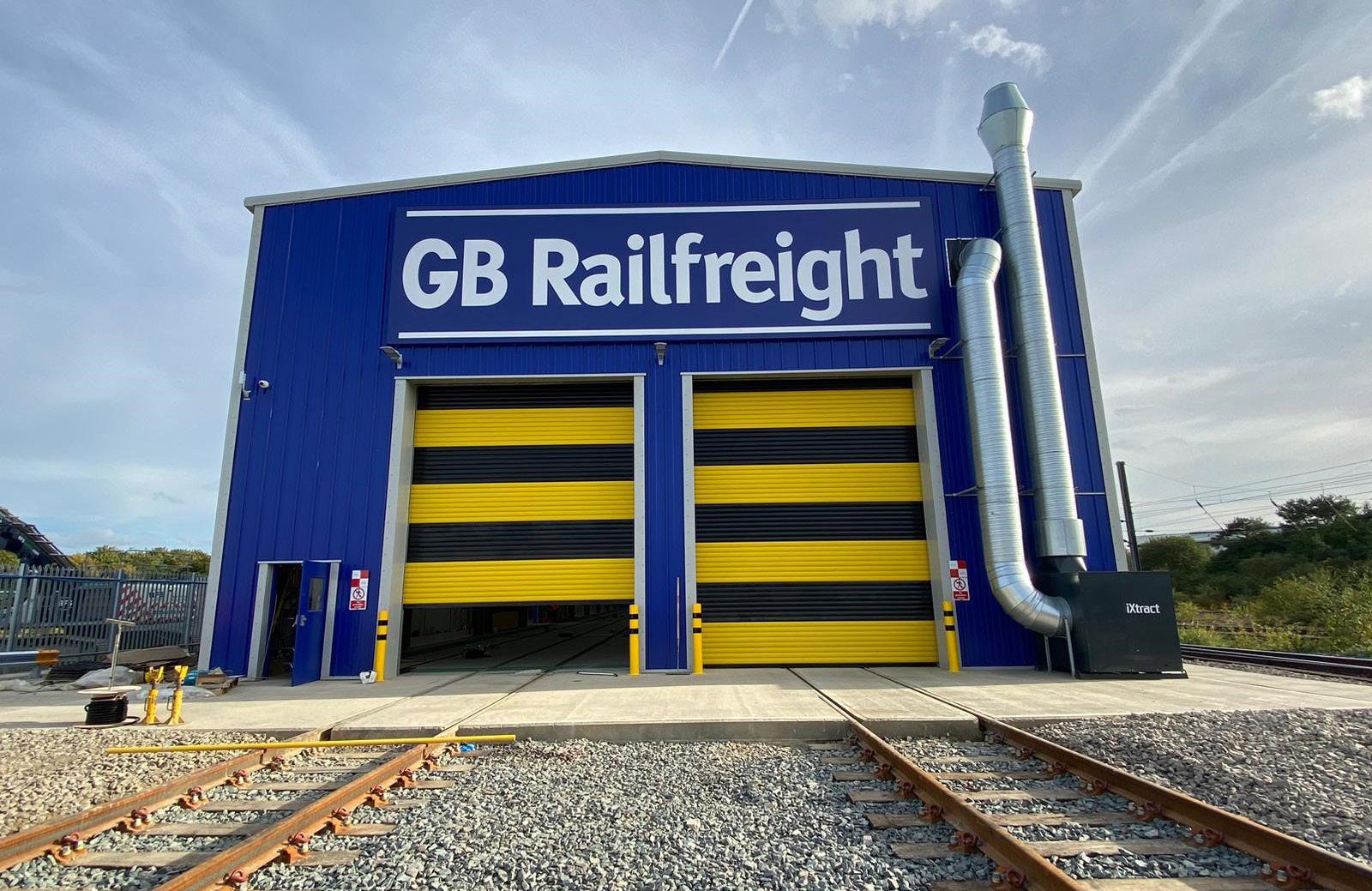
‘You can't stand still and keep hoping something will work forever. You have to be ahead of the game.’
or daily trains or get an extra wagon or two on the back. That is also growth.’
Policy certainty is crucial. ‘You won't attract new interest unless you make it certain that what they've bought in year one will still be there in year five or ten. Some of that's got to be enshrined in policy.’
GBRf is investing in capability. The company has spent several million pounds on a new training school in Peterborough with simulators that have reduced training time by about seven or eight per cent.
With ETCS coming, training demands will intensify. ‘It's going to fundamentally change signalling. You won't have colourlight signals anymore. You'll have in-cab signalling. Tens of thousands of people need to be trained on new technology.’
As the first freight operator to order 30 Class 99 locomotives, GBRf is betting on both financial and environmental sustainability. ‘We can't make these leaps without being a business that can generate profit and make large-scale investments’ Kent says. ‘Once we're operating these for four or five years, we'll be experts at operating with our maintaining partners.’
The environmental business case will strengthen over time. ‘In five to seven years there will be a lot more demand attracted to the emission savings. But that's not the defining thing at this point. We're just very early in the journey.’
Kent's view is straightforward: ‘You've got to make the shift at some point. You can't stand still and keep hoping something will work forever. You have to be ahead of the game.’
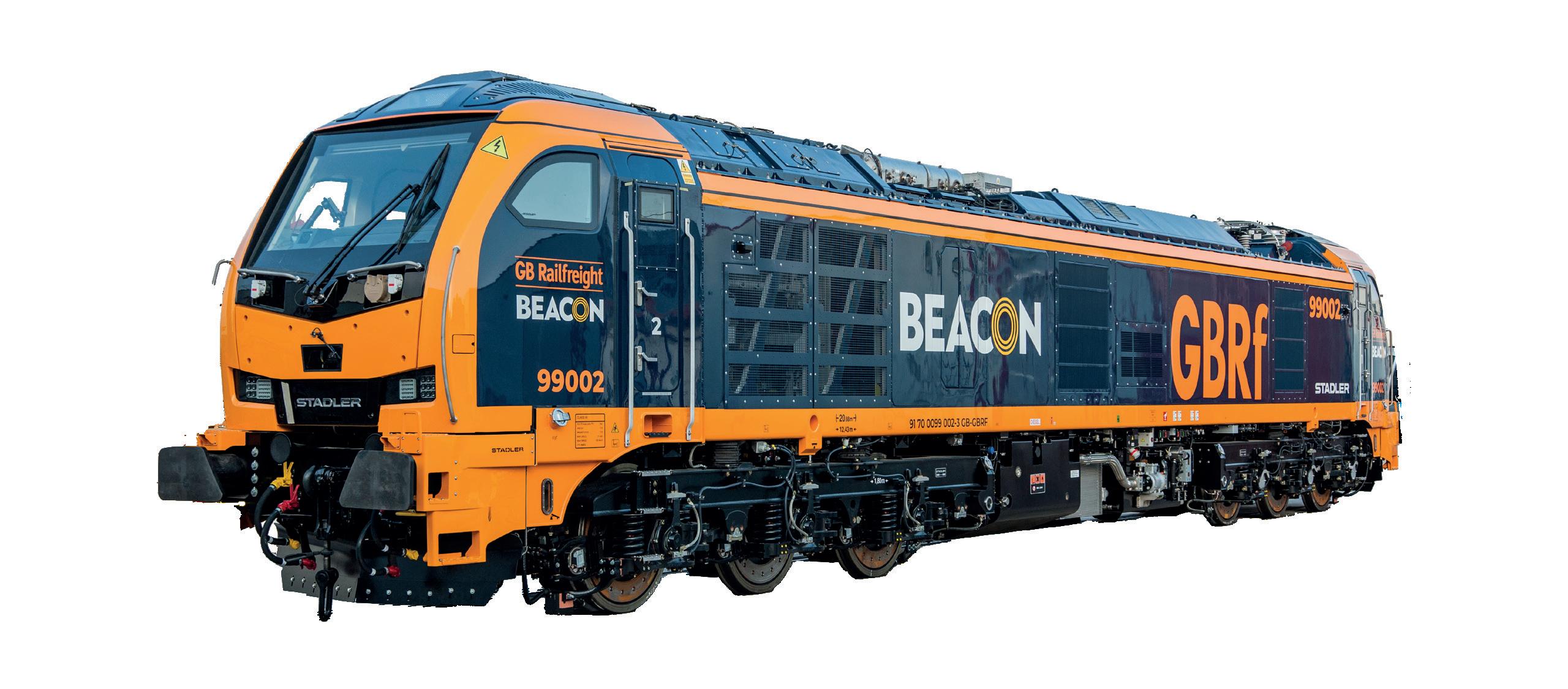
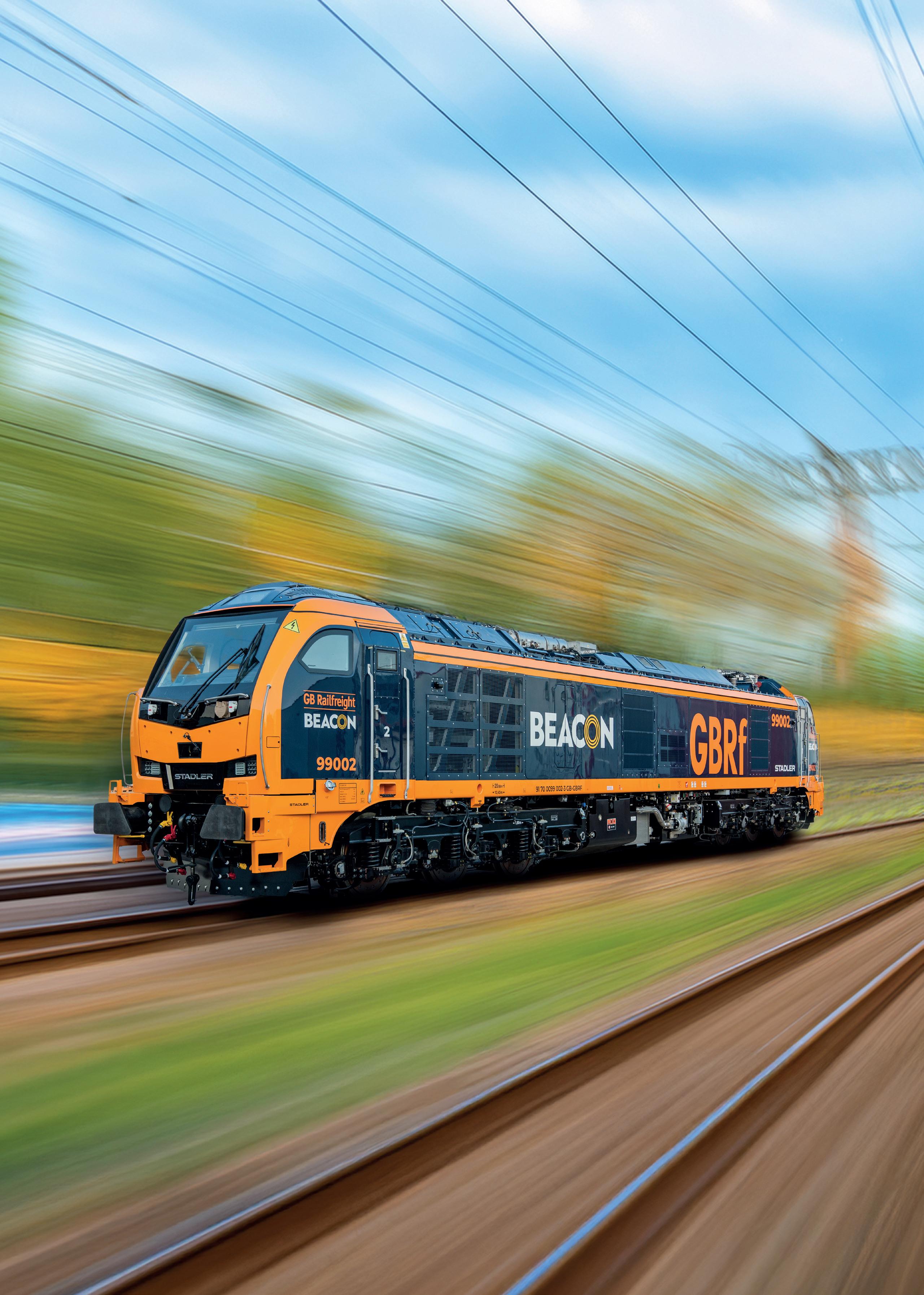
Preventative Maintenance for the Mind and Body
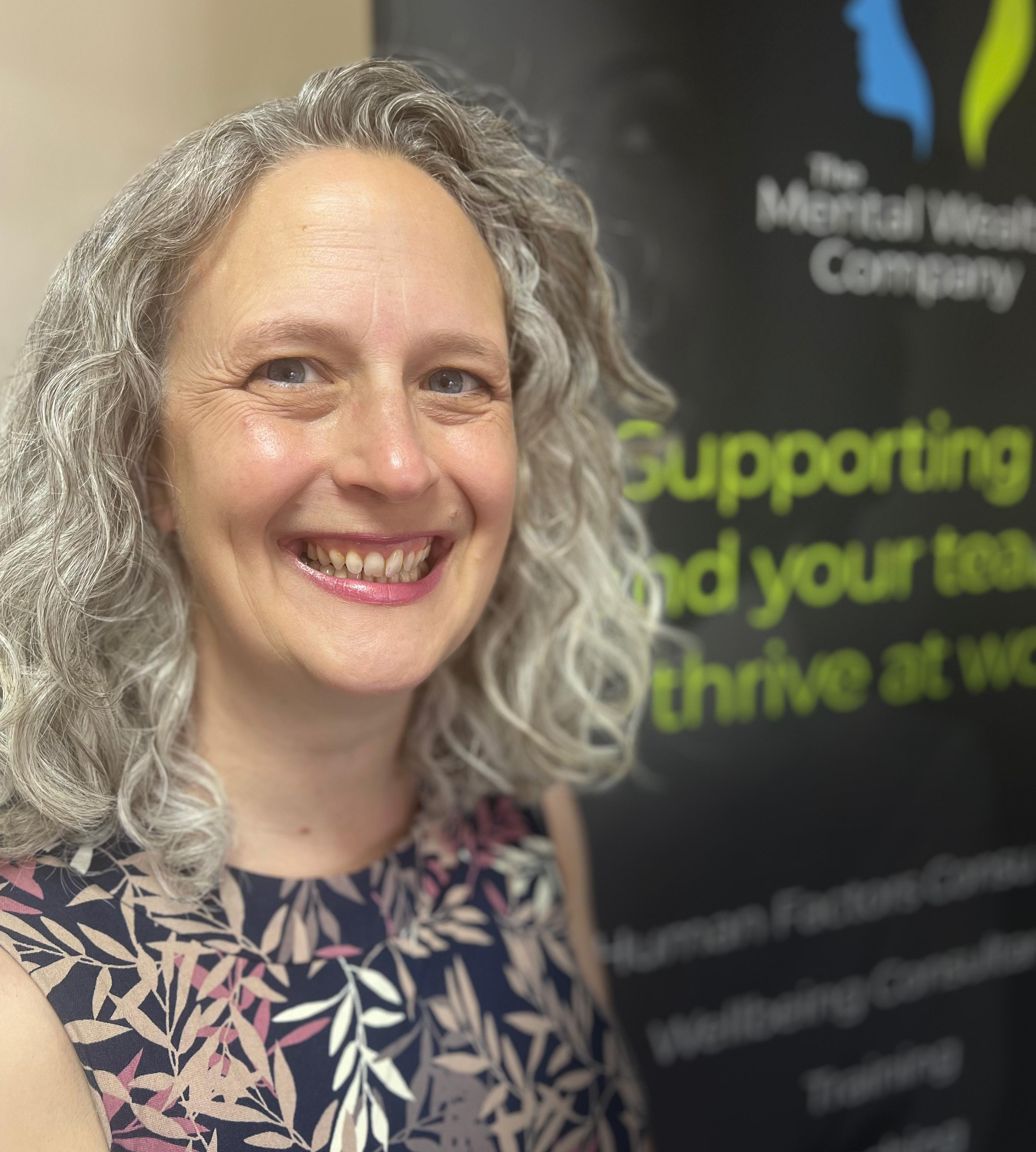
Wendy has worked in off-highway manufacturing and rail engineering consultancy for 25 years, from shop-floor fabrications, engineering design and development through to human factors, assurance and incident investigation. After recovering from her own issues with mental health and burnout, she now works with businesses who want to take action to support their staff to thrive at work. Wendy founded the Mental Wealth Café Event Series in January 2019 to provide a forum for industry to understand, challenge the status quo and action change in the mental health arena.
Sam
Sherwood-Hale spoke to Wendy McCristal, the
Founder and Managing Director of The Mental Wealth Company about burnout, belonging, and why you can't firefight your way to a healthy workforce
SSH: Tell us about The Mental Wealth Company and your role within it.
WMcC: Hi – I’m Wendy McCristal, the Founder and Managing Director of The Mental Wealth Company. We help organisations working in safety critical and high pressure environments look after the people who keep everything moving. We do that through practical wellbeing consultancy, training and coaching – nothing fluffy, nothing theoretical, just real tools that make a real difference. Our focus is simple: when people feel and function at their best, safety improves, performance lifts and engagement follows naturally.
SSH: What was the inspiration behind starting The Mental Wealth Company?
WMcC: Like many people in this field, my journey started with my own experience of poor mental health. I knew what it felt like to be struggling, and I knew how much difference the right support could make. With a background in systems thinking, human factors and rail safety engineering, I could also see a big gap: organisations wanted to support their people, but didn’t always know how to do it in a structured, effective or measurable way.
That’s where the idea for The Mental Wealth Company came from, helping businesses join the dots between wellbeing and real business outcomes. We launched in 2019, and since then we’ve supported rail and non rail organisations alike to design and deliver wellbeing strategies that actually work in the real world.
SSH: When a client comes to you with a particular problem, what’s your process for coming up with a solution, and how closely do you work with clients throughout the projects?
WMcC: Every client is different, so we always start with listening. Lots of organisations experience similar challenges, but the reasons behind them are never identical. Understanding where they are on their wellbeing journey helps us shape solutions that are practical, sustainable and able to deliver results quickly.
A recent example springs to mind. A client came to me about a driver who needed support returning to work. Rather than guessing what might help (which isn’t their speciality) we worked alongside the individual to understand what was really going on for them. From there, we put a simple, bespoke coaching plan in place. Six
weeks later, that driver returned to driving duties feeling more confident, more focused and happier than they’d been in a long time. That’s the thing: the cost of losing safety critical staff is huge, but the support they need is often much simpler than people expect. The challenge for organisations is not knowing what the right type of support is, and why would they? It’s not their day job. That’s where we come in. Our role is to identify what someone genuinely needs to feel like themselves again, and then help them build a practical plan to move forward.
And we stay closely involved throughout. We’re not the kind of company that delivers a workshop and disappears. We walk alongside our clients and their people until things genuinely start to shift.
SSH: What is your Unique Selling Point?
WMcC: All our consultants, trainers and coaches at The Mental Wealth Company bring experience from safety critical, high performance environments, alongside their own lived experiences of poor mental health and wellbeing. This combination means we don’t just understand our clients’ operational realities; we’re relatable to the individuals we support. We speak their language, recognise the pressures they’re under, and know firsthand what it takes to sustain performance in demanding roles.
This authenticity shapes everything we deliver. Because we understand how daunting that first step toward support can feel, we’re able to offer not just guidance, but genuine hope, showing people that even the smallest step forward can lead to meaningful, lasting change.
That’s exactly why, for the past seven years, our on site Mental Wealth Cafés have brought practical, real world tools directly to frontline teams. These quick, interactive sessions, led by our expert facilitators, give staff takeaway strategies they can use the very same day. It’s a powerful way to boost engagement, spark motivation and create immediate, visible impact across an organisation.
SSH: How can we make the rail industry a place people want to work in?
WMcC: The rail industry offers an incredibly wide range of career opportunities—from technical innovation and customer facing roles to operations and major project delivery. But it’s also an industry in constant flux, and that pace of change inevitably contributes to rising stress levels across the workforce.
‘They're not leaving because they want to – they're leaving because they feel they have no choice. And that's heartbreaking.’
Stress is now one of the most significant factors driving sickness absence, reduced performance and weakened operational resilience. While some stressors can be engineered out, many cannot – so we also need to equip people to prevent, manage and recover from stress, whether it originates at work, at home, or simply from the pressures of modern life.
Upskilling people in these areas is essential if rail is to remain a healthy and appealing long term career. Yet these foundational skills (understanding how to manage your own wellbeing, regulate stress, and maintain resilience) are rarely taught in our education system, leaving a gap that many workers carry into adulthood.
This is where our work comes in. We help people understand their minds and bodies more effectively, giving them practical tools to thrive personally and professionally, even in high pressure environments like rail.
SSH: How do you think emerging technologies like artificial intelligence and the Internet of Things will impact the rail sector?
WMcC: Emerging technologies like AI and the Internet of Things have the potential to transform the rail sector – from predictive maintenance and safer operations to smoother customer experiences and smarter workforce planning. We now have more data at our fingertips than ever before, often more than people can realistically process. So the challenge isn’t a lack of insight; it’s cutting through the noise to understand what truly matters.
But amidst all this technological progress, the biggest gap I see isn’t data, it’s human connection. AI can help us spot patterns, optimise schedules, anticipate failures and improve efficiency, but it can’t replace genuine kindness, empathy or care. IoT sensors can tell us when a train needs attention, but they can’t tell us when a person does.
As technology advances, the rail sector has a huge opportunity to use these tools to reduce stress, simplify workloads and create more predictable, safer environments for staff. But we must anchor all of this in what makes workplaces human: meaningful conversations, psychological safety, connection and compassion.
Ultimately, technology should enhance our humanity, not replace it. The organisations that will thrive are the ones that use AI and IoT to support people and not overshadow them.
SSH: How can the industry tackle its skills shortage and how do you recruit/retain/ train your staff?
WMcC: If an organisation is battling high sickness absence, it will almost certainly struggle to recruit and retain talent. You can’t solve a skills shortage while people are burning out or dropping out. The answer lies in tackling wellbeing issues at the root, not patching problems after the damage is done. A healthier workforce is a more stable workforce.
At The Mental Wealth Company, we put this into practice. Every member of our team is trained in Personal Resilience and Mental Health First Aid, giving us practical tools to support ourselves, each other and our clients. Building these skills creates a culture where people feel capable, confident and committed – exactly the foundation any organisation needs to attract and keep great talent.
SSH: What impact does poor employee wellbeing have on a company’s long term performance, and what practical steps can organisations take to build a more sustainable, healthy workforce?
WMcC: The link between wellbeing and performance is already well established. Deloitte’s research shows that well targeted wellbeing initiatives can deliver a return
on investment of between 5:1 and 11:1. The equation is simple: people who feel well make better decisions, perform more consistently and stay with their organisation longer. Poor wellbeing, on the other hand, drives absenteeism, presenteeism, turnover and operational instability which costs businesses far more than many realise.
When it comes to practical steps, the first priority is understanding where the risks actually are. ISO 45003 provides a clear framework for identifying psychosocial hazards, everything from workload and role clarity to team dynamics and organisational change. It’s also important to listen to your people: engaging with your Equality, Diversity and Inclusion teams, staff networks and representatives can reveal blind spots and uncover areas where individuals may not feel psychologically safe. And of course, the more universal stressors, workload, connection, clarity, recognition, still need attention.
Once the risks are understood, the next step is creating a plan to address them. This can be challenging, especially when organisations are under pressure or when leaders’ personal experiences shape their assumptions. But in our experience, the businesses that lean into these conversations openly, honestly and without defensiveness are the ones that grow stronger in the long term. Addressing root causes not only improves wellbeing; it builds trust, strengthens culture and stabilises performance.
SSH: Where do you see companies getting this wrong most often?
WMcC: One of the most common mistakes organisations make is relying almost entirely on reactive wellbeing measures. Mental Health First Aid training, for example, is extremely valuable, but it’s designed to support people once they’re already showing signs of poor mental health. The same goes for Employee Assistance Programmes.
‘We've normalised the idea that being constantly busy equals being successful. We glorify overload, and we make people feel like failure is admitting they can't carry everything at once.’
An EAP is important, but it won’t solve systemic issues if the only time employees use it is when they’re already struggling. You can’t firefight your way to a healthy workforce.
What’s less widely recognised is the importance of the preventative side of wellbeing, and this is where The Mental Wealth Company does a lot of work. Prevention isn’t just about fatigue management or handling difficult passenger interactions. It’s also about the subtler, often overlooked factors: how psychologically safe people feel to raise challenges with their manager, whether there’s enough slack in the system to deal with workload peaks, and whether staff feel able to speak up when something doesn’t seem right.
We call this our preventative maintenance strategy. Just as you would with physical assets, it’s about understanding what’s working, what isn’t, and what people need, before issues escalate. When organisations take this approach seriously, employees stay in better condition, perform more consistently, and feel more supported.
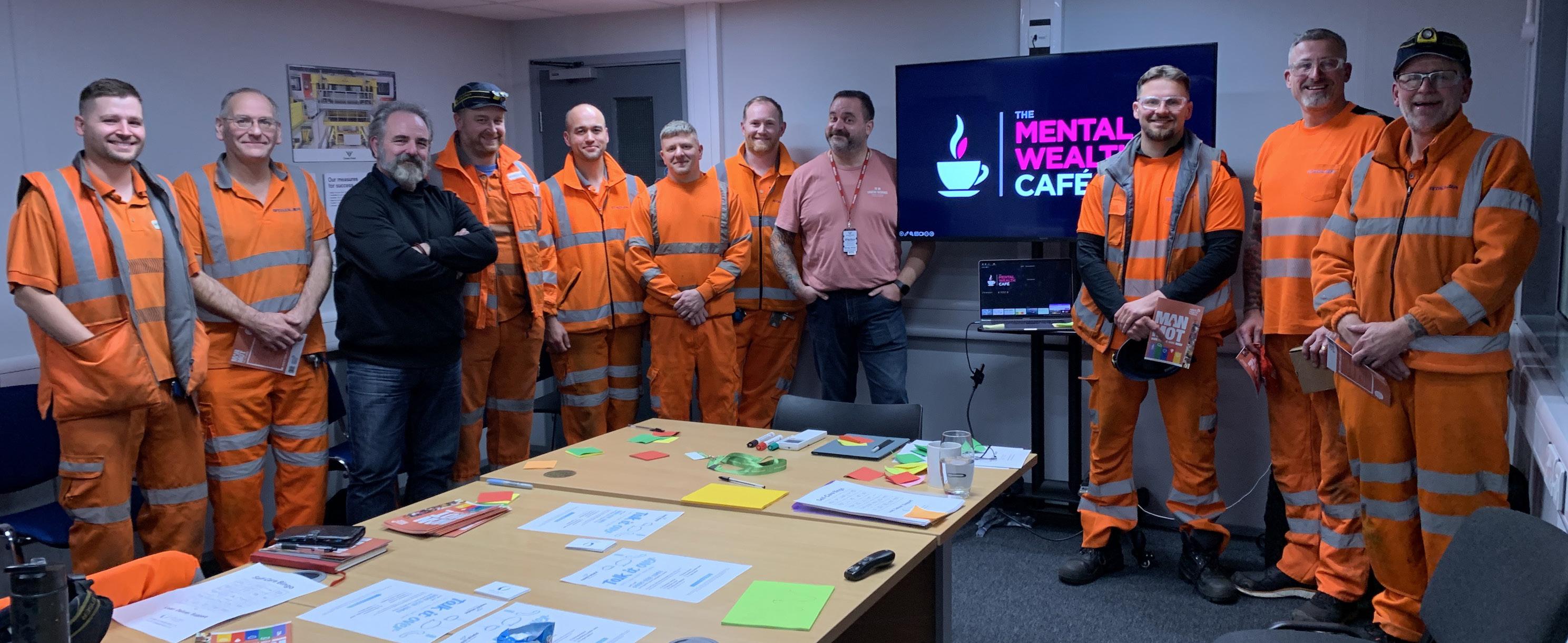
SSH: What are the biggest challenges your sector is facing right now, and which of them do you think are being underestimated?
WMcC: Mental health issues in the rail sector are significantly higher than in the wider workforce. That, coupled with sickness rates that are increasing rapidly, is a real headache for employers at the moment. However, not all of this is directly due to work-related stress. There are many factors contributing to the overall stress of our employees. We need to get better at helping our employees deal with stress whether it comes from work, personal life or wider political and economic pressures.
SSH: What do young adults entering the industry need most to succeed, and how can employers better support them in those early years?
WMcC: I’m being asked this question a lot at the moment, especially with train drivers soon being able to join the industry from age 18. Employers can’t simply assume that what worked for previous generations will work for them. They’re stepping into high pressure roles at a time when the world feels more complex than ever, and their mental health needs are shifting rapidly. They also consistently report the highest levels of loneliness both inside and outside the workplace.
What younger employees need most is a genuine sense of belonging. We have to help them feel part of the rail family quickly by connecting them with peers, mentors and colleagues who can guide, support and champion them as they grow. Creating these networks early on helps them feel grounded, confident and less isolated.
They also need help building the skills that keep them well. Many are moving away from home for the first time or juggling major life transitions alongside demanding roles. Teaching them practical, positive
mental health strategies like how to manage stress, regulate emotions, set boundaries, and look after themselves can make an enormous difference to how they settle and succeed.
In short, if we want young people to build long, healthy careers in rail, we need to give them connection, confidence and the tools to stay well. Those early years are formative and with the right support, they can be incredibly rewarding too.
SSH: What advice would you give to leaders managing younger teams for the first time?
WMcC: Take the time to genuinely get to know your younger team members and create a strong sense of belonging. Foster an open door culture where they feel comfortable asking questions, sharing ideas and constructively challenging you. Encourage meaningful conversations about how they view work, what motivates them, and the challenges they encounter.
Leading Gen Z and emerging generations may require approaches many managers haven’t previously experienced. Be prepared to learn alongside your team. Effective leadership today is not just about guiding others, it’s about staying open, adaptable and willing to evolve.
SSH: Sickness absence is on the rise across many industries. What’s driving this trend, and how much of it is linked to wellbeing rather than illness alone?
WMcC: Sickness absence is complex, there isn’t one single cause. Of course, some absence will always come down to genuine illness. People get flu, pick up infections, or develop medical conditions that are unavoidable. But what we’re seeing more of now is the cumulative impact of stress on both physical and mental health.
Stress is often the common thread. When the body is under prolonged pressure, it
‘So many of us have spent years putting our heads down and pushing through that it can feel awkward, even uncomfortable, to ask for support.’
doesn’t function at its best. The immune system can become compromised, which makes people more susceptible to illness. At the same time, stress disrupts sleep, drains energy and affects how people look after themselves day to day.
Diet and nutrition are part of this picture too. When workloads are high and expectations feel relentless, people skip meals, rely on convenience food, or simply don’t fuel themselves properly. Over time, that lack of balanced nutrition reduces resilience both physically and mentally.
There’s also the mental health impact. Unclear roles, unrealistic workloads and pressure to constantly deliver all add to stress levels. If people feel they can never quite meet expectations, that becomes exhausting, and absence can become the body’s way of forcing a reset. Not all sickness absence is preventable, but a significant portion is influenced by how work is designed and managed. Organisations have more control than they sometimes realise.
By creating realistic workloads, clearer expectations and environments that support wellbeing, including encouraging healthy habits, we can reduce avoidable absence and build stronger, more resilient teams.

SSH: With staffing levels at historic lows, what do you see as root causes and what needs to change to make roles more attractive and sustainable again?
WMcC: When we talk about staffing shortages, we can’t avoid talking about workplace stress and workload levels. I speak to so many people who feel their workload has become completely untenable. They’re not leaving because they want to, they’re leaving because they feel they have no choice. And that’s heartbreaking, because most of them love the work itself.
There’s still a huge stigma around stress and admitting that you’re struggling. I’ve been there myself. Early in my career, I found it incredibly difficult to speak up, not just because I was the only woman at senior level in a very masculine environment, but because we’ve normalised the idea that being constantly busy equals being successful. We glorify overload, and we make people feel like failure is admitting they can’t carry everything at once.
To rebuild healthy, attractive roles, we need to create workplaces where people can be honest about their capacity without fear of judgement. That means reaching out for help when it’s needed, partnering across teams rather than operating in silos, and focusing collectively on the essentials, the things that actually keep our organisations moving.
Of course, that’s easier said than done. So many of us have spent years putting our heads down and pushing through that it can feel awkward, even uncomfortable, to ask for support. But learning to do that – learning how to communicate what you need – is one of the key habits that changed everything for me, and..effective teamwork remains, in my view, one of the strongest foundations for any organisation that wants to perform well and look after its people at the same time.
If we can shift the culture around capacity, collaboration and psychological safety, we won’t just retain more people, we’ll make these roles something people genuinely want to stay in for the long term.
SSH: Do men and women experience wellbeing challenges differently in the workplace, and how should organisations adapt their approach to reflect those differences?
WMcC: Men and women often experience wellbeing challenges differently in the workplace, and organisations need to recognise and respond to these distinctions. Biological, hormonal and neurological differences, combined with varying life stages, mean that employees may face wellbeing pressures at different times and in different ways.
For instance, middle aged men are frequently identified as a higher risk group for suicide, influenced by a complex mix of economic pressures, social isolation,
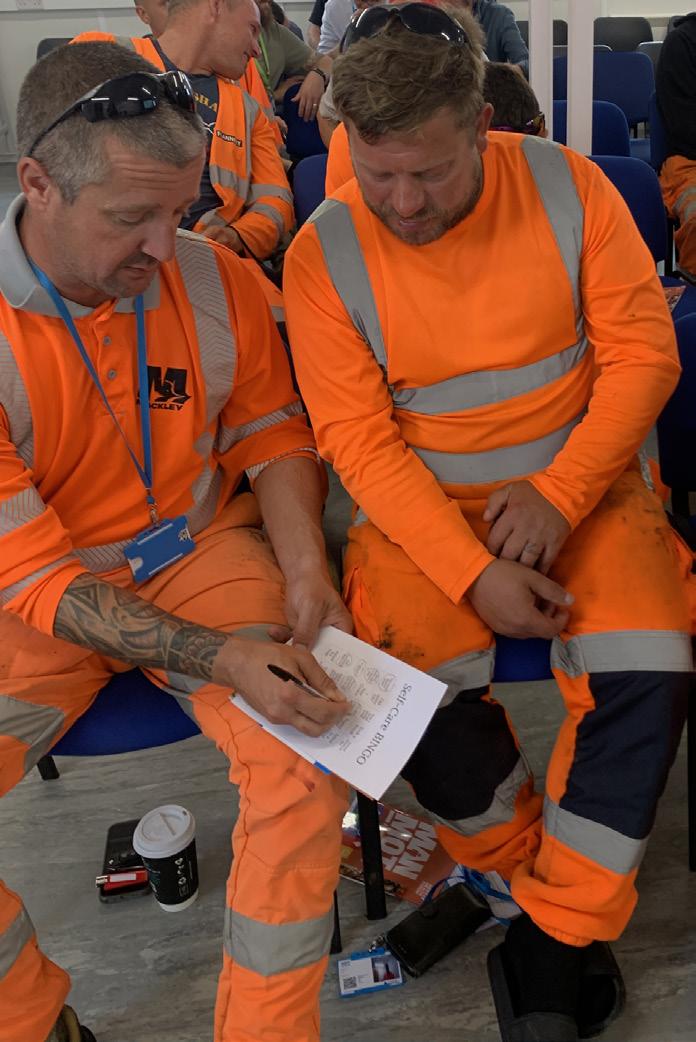
relationship strain, health issues and cultural expectations that discourage help seeking. These factors can converge in mid life and significantly affect mental health.
Women, on the other hand, may experience substantial disruption during perimenopause and menopause. Research shows that seven to ten per cent leave their jobs due to severe symptoms, and up to 30 per cent consider doing so. This represents a major wellbeing and retention challenge that organisations cannot afford to overlook.
Supporting employees effectively requires understanding the typical issues they may face, as well as the more individual needs that inevitably arise. Organisations should aim to provide both broad strategic support and personalised pathways for help, ensuring employees feel informed, safe and able to access assistance without stigma.
This begins with recognising the psychosocial risks present across the workforce and building a business strategy that addresses them – whether that’s through upskilling managers, equipping staff with the language to articulate what they’re experiencing, fostering psychological safety or increasing awareness of available internal and local support.
SSH: Are current wellbeing strategies too ‘one size fits all’?
WMcC: In many organisations, yes. Wellbeing strategies still tend to rely on a one size fits all approach, and that simply doesn’t reflect the diversity of today’s workforce. People experience stress, health challenges and life events differently depending on their age, gender, background, personal circumstances and even their working style. A generic wellbeing offer, whether that’s an EAP, a wellness app or occasional wellbeing days, can only go so far.
‘People who feel well make better decisions, perform more consistently and stay with their organisation longer.’
A more meaningful approach recognises that employees need different kinds of support at different moments in their lives. Early career staff may be navigating financial pressures and job insecurity, while mid life employees could be balancing caring responsibilities or significant hormonal changes. Others may be managing chronic stress, cultural barriers to seeking help or neurodiversity related challenges. Without acknowledging these nuances, organisations risk overlooking the very people who need support the most.
The most effective wellbeing strategies blend universal support with targeted, personalised interventions. This starts with understanding the psychosocial risks across different groups, listening to employees directly about what they need, and equipping managers with the confidence and language to have compassionate, informed conversations. It also means creating a psychologically safe culture where accessing help feels normal, not daunting.
Ultimately, wellbeing isn’t about doing more; it’s about doing what matters, for the people who need it, when they need it.
If you’re wondering how to get started, this is exactly where TMWC thrives— helping you join the dots between the resources you already have and the small, meaningful changes that move you in the right direction. Even the smallest steps can create a long term, positive impact in your team.
Tel: 07305 843993
Email: wendy@thementalwealthcompany.co.uk
Visit: www.thementalwealthcompany.co.uk

Wellbeing that supports safety. Performance that lasts. People who stay.
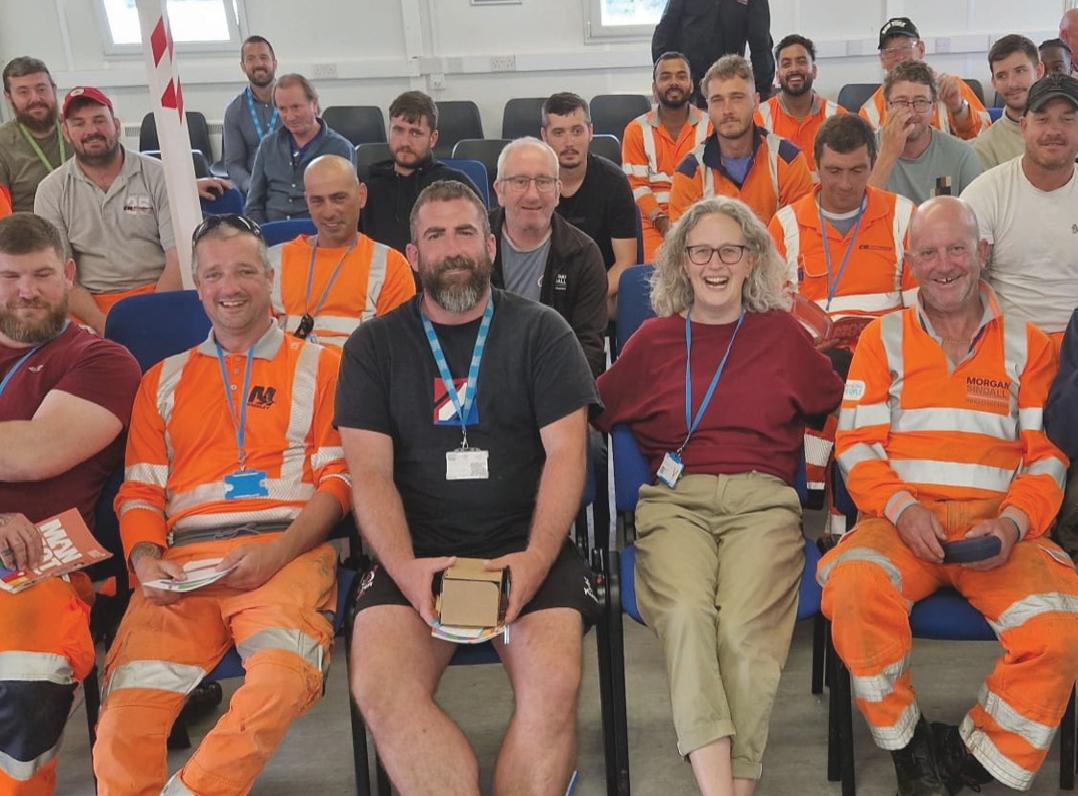
Preventative maintenance for the body and mind
Want to improve employee wellbeing but don't know where to start? We support organisations to curate bespoke practical wellbeing support packages.
Leading Wellbeing
• We help leaders shape safer cultures, supporting better decisions under pressure, confident rule-following, and trust across safety-critical teams.
Delivering Wellbeing
• We design wellbeing into work. Our programmes reduce fatigue risk, help manage cognitive load, and support safer, more sustainable performance.
Supporting Wellbeing
• We provide practical support that helps people manage pressure, stay engaged, and perform safely; improving retention and reducing absence.
“I really want to thank you for putting on some great sessions - the feedback has been superb.”
HR Business Partner - Stadler

Simon Hochhauser
CEO of PiPcall
Simon Hochhauser is Chief Executive Officer of PiPcall, a UK-based provider of SIM-based mobile communications and call recording services. With a background in technology and managed services, Simon has led PiPcall's expansion into regulated industries where call quality, compliance and evidential integrity are operationally critical. Under his leadership, the company has developed proprietary AI tools designed specifically to assess calls against regulatory requirements, including OPS-301, and has built a shared-service model aimed at making compliant call recording accessible and cost-effective for organisations of all sizes. PiPcall is currently working with Network Rail, Tier 1 contractors and other stakeholders across the rail sector as mobile call recording requirements continue to broaden in scope.


Sam Sherwood-Hale spoke to Simon Hochhauser, CEO of PiPcall, about the challenges of entering a complex and safety-critical industry, how carrier-grade call recording and AI-driven assessment can meet and exceed the intent of OPS-301, and why getting the infrastructure right from the outset matters more than chasing the cheapest compliant solution
‘There is no higher priority than the safety of people working on the line.’
SSH: You're relatively new to working directly with the rail sector. What first drew PiPcall to rail, and how has the industry responded to your approach so far?
SH: We are new to rail, and we’re learning fast because it’s a complex industry with its own language and structures. Our introduction came through a large Tier 1 contractor who had come across another product we offer and realised that we also record full carrier-grade mobile calls. That immediately caught their attention because new regulations require not just the mobile recording of calls, but their assessment. For them, quality was critical. They needed mobile call recordings that could be relied upon anywhere, without compromising call clarity. That conversation made us aware not only of the regulatory
requirement, but of the wider safety implications behind it. Since then, we’ve introduced ourselves across the industry –from Network Rail and risk boards to local boards and commercial suppliers. It’s been an education, and it continues to be.
SSH: How different is this to the other sectors that you work in, and what challenges did you face entering rail at this time of change?
SH: Every sector has its own character, but rail is particularly distinctive – it has a long history and layers of governance built up over decades – and when you look closely, those layers exist for one reason: safety.
There are organisations of every size involved – major contractors and very small regulated teams working trackside –and that creates a very specific operating environment. It isn’t easy to enter, but that difficulty applies to everyone. The real task is understanding the purpose behind the bureaucracy. Regulation for its own sake helps no one – regulation tied to a clear safety outcome, delivered at a cost companies can realistically absorb, makes sense.
And cost pressure is real. Companies aren’t being asked to shave off one to two per cent – it’s usually more like 10-15 per cent.
At the same time, though, no one disputes the importance of safety. Incidents over the years have shaped that understanding. The challenge is aligning cost control with meaningful safety improvement.
SSH: What have you learnt about the rail industry's biggest communications challenges, particularly around mobile call recording and the review process that follows?
SH: It’s a mix of technical and cultural challenges. On the one hand, people understand why recording matters. On the other, there’s a natural caution about surveillance. Like most technology, it can feel double-edged.
At the same time, the landscape is shifting quickly. Copper landlines are being phased out, SIM-based solutions are becoming standard, 5G is here and 6G isn’t far away. Alongside that, AI has transformed what can be done with recordings. Today, safety elements can be identified and assessed even before a transcript is produced – and far more comprehensively than traditional sampling. The real issue is confidence. The technology is capable of more than current regulations require, but adoption depends on trust.
SSH: How confident are you that the people setting these regulations fully appreciate what this technology can do?
SH: Technology almost always moves faster than regulation – that’s true everywhere, and regulators are right to be cautious.
OPS/301 currently requires human assessment, which is costly. The technology now exists to assess all safety-related calls consistently and generate detailed reports, rather than relying on manual sampling. In time, regulation will catch up.
We work closely with regulators to show what’s possible, but the goal isn’t box-ticking – it’s safety. And recordings aren’t just for investigations – they’re valuable training tools too, helping reinforce standards before anything goes wrong and providing clear evidence if it does.
SSH: For readers that are unfamiliar with your approach, what makes you different from standard business mobile solutions?
SH: There are really two key differences. Firstly, call quality. We record full carriergrade mobile calls – not data calls over platforms like WhatsApp or Teams. Data calls share bandwidth, so when networks are busy, quality can dip or drop without warning. A carrier-grade call is prioritised for voice, giving you the best possible clarity. In a safety-critical setting, that reliability matters – and we’ve never compromised on it.
Secondly, what happens after the call. We’ve embedded OPS-301 directly into our assessment process. We first determine whether a call is safety-related – if it isn’t, it doesn’t need to be retained or assessed under the regulation, which saves time and cost. If it is, we assess it against the required parameters – identity, clarity, protocol – and can adapt as the rules evolve.
More broadly, we provide a service, not just a mobile product. Rail companies are there to run the railway. Our role is to handle compliant recording and assessment across organisations, spread the cost sensibly, and deliver reporting that regulators and employers can rely on.
SSH: You mentioned the quality of the data that you're getting, but also this ability to sort the data far more effectively. Is that something that's particularly unique about what you do?
SH: I'd say the combination of what we do – carrier-grade call quality, automatic filtering of safety-related calls, and AI assessment built directly around OPS301 – is certainly distinctive. I don’t know about you, but I don’t have the patience to sit through long recordings – and even reading transcripts takes time. For someone whose job is on the line, trained to manage operations or oversee safety-critical work, listening back to hours of calls isn’t the best use of their expertise. It may be required
under regulation, but it’s not what they’re trained for.
What’s changed is the reliability of AI. Instead of managers sampling a handful of calls, the technology can now assess all safety-related calls consistently against the required parameters. Accuracy has improved dramatically, and we’re confident it can match – and often exceed – what manual review can realistically deliver.
Rail workers operate in tunnels and remote sections. How does your approach handle these challenging environments?
SH: No single telecoms solution works everywhere, and it would be unrealistic to suggest otherwise. But there are important differences between the options available.
With data-based calls, quality can degrade quickly in tunnels or remote areas, and you don’t even know at the start of a call whether it will hold or suddenly drop out midway through. In a safety-critical conversation, that’s simply not good enough. Carrier-grade mobile calls are prioritised for voice, so they’re inherently more stable. As networks move from 4G to 5G and beyond, reliability continues to improve, including in tunnels where coverage is expanding.
It’s not flawless – nothing is – but it’s materially stronger than the alternative, and in safety settings that margin matters.
SSH: You've said recordings represent an underused training resource. Are rail companies failing to make full use of what they already have?
SH: They don’t yet have widespread call recording in place, so there hasn’t been much opportunity to use it for training. In that sense, yes – but I don’t fault them. I don’t think the rail industry could be faulted in terms of training. What I’ve seen is that people are hungry for good training, particularly around safety regulation, and unions rightly want to ensure their members are properly prepared.
What’s changing now is the availability of a new tool. Recordings allow constructive review of real situations – not to criticise, but to say: this was a pressured moment, and here’s how it can be handled even better next time. It’s less about failing to use recordings in the past and more about using future access to recordings to train better.
SSH: Network Rail's call recording requirements are evolving, and OPS-301 brings additional roles into scope. How does this improve evidential coverage, and how does the technology help with understanding what happened before an incident?
SH: Expanding the scope simply strengthens the evidence base. The more information investigators have – before, during and after an event – the easier it is to understand
‘Retrofitting is almost always the most expensive way to introduce new technology.’
what actually happened and whether communication played a part.
It also protects individuals. We’ve seen situations where people felt scapegoated; a clear record of who said what, and when, provides fairness.
Importantly, not every call appears safety-critical at the time. A routine operational conversation can later prove central. What was said beforehand? Who requested a line closure, and why? It may have been entirely legitimate at the time –only later becoming relevant.
Recording therefore isn’t just about what happened after the event – it provides context about what led up to it, helping the industry understand causation more clearly and strengthen safety overall.
SSH: What are the main barriers that rail companies face in using the data they collect?
SH: I’d say two things: cost and culture. Firstly, cost. Companies want to know it can be done cost-effectively. The data itself isn’t the issue – storage is now relatively cheap – but implementation has to make financial sense.
Secondly, culture. There’s a natural fear of surveillance. You can’t just say ‘don’t worry, it’s fine.’ You have to demonstrate how the data is used, who can access it, and what it isn’t used for. For example, with our SIMbased model, personal calls on a personal SIM simply cannot be recorded because they never pass through our system. It’s not that we choose not to record them – technically, we can’t. But that distinction has to be understood and trusted.
So ultimately it’s about reassurance, transparency and making the numbers stack up – at user, employer, union and regulator level.
SSH: Is there a possibility that this is not as high on the list of priorities as it should be, or the challenge is perceived as being costlier than it actually is?
SH: Yes, that does happen. Often the assumption is that ‘we’d have to build and manage all of this ourselves’ and if that were true, it would be complex and expensive – so it gets dismissed.
That’s why a shared service model matters. An independent provider can spread central costs across multiple organisations, bringing the per-user cost down significantly.
There’s always a risk that something seen as an ‘extra’ cost is the first thing cut. But people do understand that safety isn’t optional – and it doesn’t come free. The encouraging part is that the costs of communications, recording and AI have all fallen sharply. When organisations look at real examples and actual figures, they’re often genuinely surprised at how affordable it can be.
SSH: As Great British Railways takes shape, what does getting this right look like compared to retrofitting later, and what would be your advice to a rail executive convinced by this case but facing tight budgets and competing priorities?
SH: The simple answer is: build it in early. Retrofitting is almost always the most expensive way to introduce new technology. The rail industry knows that – whether it’s mobile capability, satellite integration or dark fibre for future capacity, putting infrastructure in at the outset saves money and disruption later.
The more this is thought through now, the cheaper and more effective it will be over time. On priorities, I would say this: there is no higher priority than the safety of people working on the line. It’s tempting to think
there are competing pressures, especially with GBR taking shape, but safety underpins everything.
It’s also important not to chase the cheapest possible solution just to satisfy the wording of OPS-301. We’re seeing some tick-box approaches that may technically comply today, but don’t necessarily deliver the intended safety outcome. If the outcome isn’t met, regulations evolve – and suddenly that ‘cheap’ solution becomes expensive because it has to be replaced.
Quality of call, robustness of assessment, long-term infrastructure – these need to be considered properly from the start. The question shouldn’t just be ‘does this meet OPS-301 as written?’ but ‘does this deliver the safety outcome OPS-301 was designed to achieve?’ If you focus on the latter, the cost decisions tend to make much more sense.
SSH: For our readers who would like to engage with you, what's the best way to do that and what kind of questions should they be asking?
SH: We’re easy to reach – through our website, on social media, or simply by phone. The rail section of our website points people in the right direction.
‘Recording isn't just about what happened after the event, it provides context about what led up to it.’
In terms of questions, I’d keep it straightforward. Are you really doing what the regulation requires? How does it actually work in practice? And what does it cost per user? Those are the sensible starting points.
One thing we’re proud of is that we’ve built much of this ourselves. Our AI tools for assessing against OPS-301 aren’t generic products we’ve bolted on – they’ve been developed in-house, specifically for the rail environment.
And ultimately, it should feel like a partnership. The industry’s expertise is in running and maintaining the railway. Ours is in delivering reliable, compliant call recording and assessment. If we can take that responsibility off their shoulders and do it properly, they can focus on what they do best – and that’s exactly how it should work.
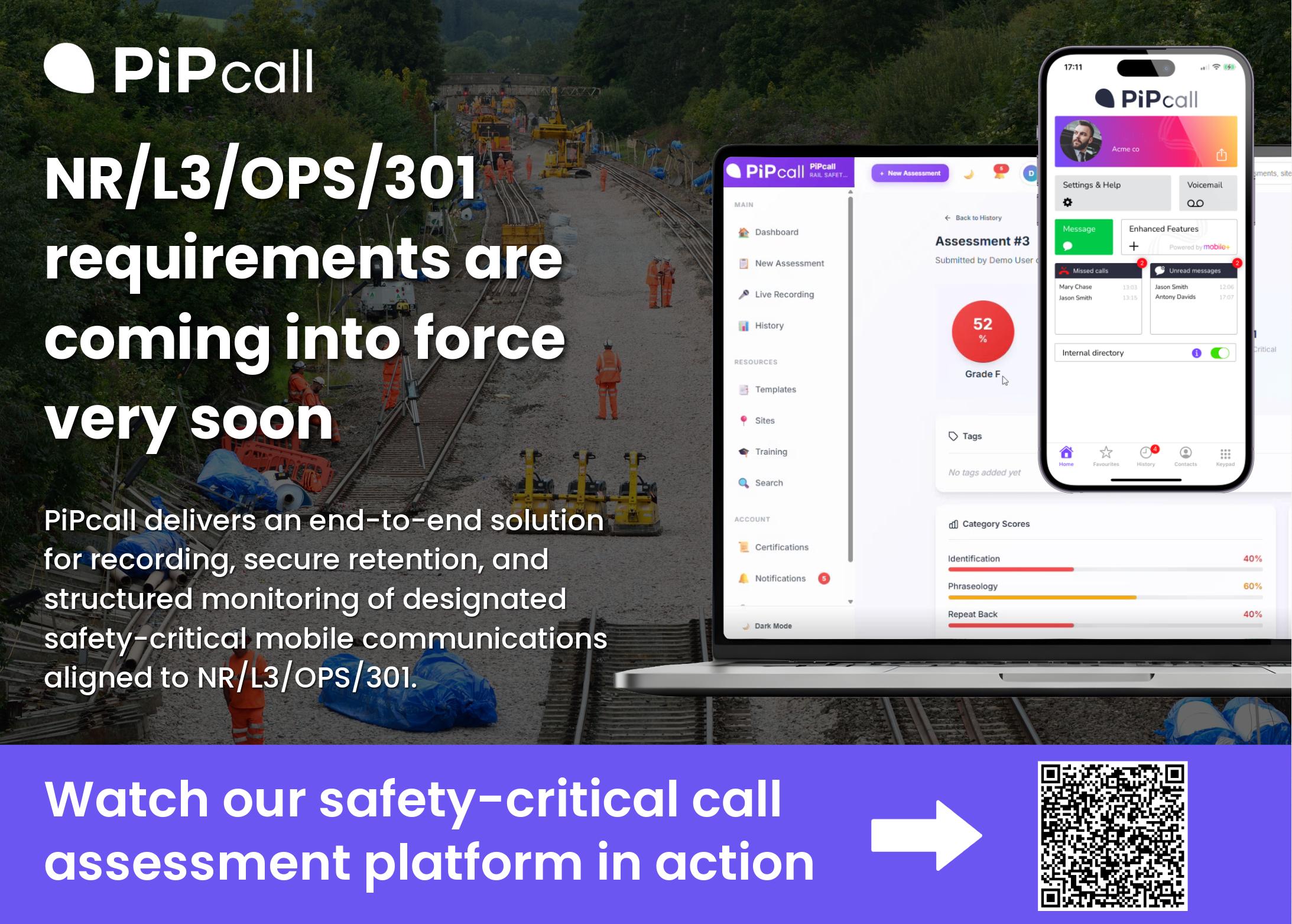
Alliance Delivers 300+ Projects in Seven Years
Seven years into a decade-long transformation of Britain’s rail infrastructure, the Central Rail Systems Alliance has renewed more than 470 kilometres of track
‘What makes CRSA effective is the seamless integration of design, engineering and construction expertise’
The £1.5 billion partnership –formed in 2019 by Network Rail, AtkinsRéalis, Balfour Beatty and TSO – has been modernising strategically important routes across the North-West, North-East and Midlands, spanning from London to the Welsh and Scottish borders. The work ranges from standard track renewals to significant enhancement projects, with AtkinsRéalis serving as the alliance's multidisciplinary design partner, contributing expertise in systems integration and design innovation.
The alliance model is demonstrating the benefits of bringing together expertise across design, engineering, planning and construction under one integrated framework with aligned incentives and shared accountability. This structure allows the partners to move from conception through to construction and handover more efficiently.
Over the first six years, CRSA has delivered a range of 300 projects across the network. In recent months, the Eastern team undertook complex crossover renewals on Berwick-upon-Tweed's Royal Borders Bridge – a Grade I listed structure where heritage preservation was as critical as the infrastructure upgrade itself. A comprehensive bridge monitoring system ensured the integrity of the historic bridge throughout the works, with the renewed crossover handed back at full line speed.
Just prior to this project, the alliance completed a significant programme of works at Macclesfield, including a major signalling and crossing renewal which was delivered
during a carefully planned blockade. Over the Christmas period, the alliance completed a £26 million track replacement at Hanslope Junction on the West Coast Main Line. Between Milton Keynes and Northampton, several hundred workers replaced 130 track panels at the junction – ‘Britain's biggest Christmas jigsaw’ – which is used by up to 500 trains per day.
Most recently, in February 2026, CRSA completed a nine-day, £7.9 million upgrade to the southern approach to Manchester Piccadilly. The work replaced eleven sets of points, 4,000 timber sleepers, 5,500 tonnes of ballast and nine kilometres of signalling and telecoms cabling, renewing infrastructure from the late 1980s. The work is expected to significantly reduce faults on a corridor that carries around 908 passenger services every day.
Major impacts
The alliance’s innovation has extended beyond individual projects to networkwide improvements. In April 2025, following advanced thermal modelling by AtkinsRéalis, CRSA recommended that Network Rail reduce the required standard for points heating systems. This adjustment is expected to deliver considerable cost and carbon reductions across the entire rail network.
A significant project for the alliance was the delivery of major upgrades which supported the Northumberland Line – allowing it to reopen to passenger services in December 2024 after a 60-year closure. CRSA restored 12 miles of track, reconnecting communities and providing access to employment, education and leisure opportunities in Newcastle.
Earlier in the programme, at London's King's Cross station, CRSA delivered the ‘King's Uncrossed’ project, redesigning the track layout on the 1.5-mile approach into the station and reopening a disused tunnel after 44 years to add two additional lines from the north. The work improved
both reliability and capacity at one of the capital's busiest transport hubs. And during the reduced rail traffic of May 2020, CRSA addressed longstanding speed restrictions in Kilsby Tunnel. The team delivered track and drainage renewals within a tight blockade, resulting in faster journeys and reduced maintenance requirements.
Digital and MVP focus
The alliance has also invested in digital tools to improve delivery efficiency. Visualisation tools and graphics of train movements help speed up project delivery and minimise disruption on busy routes, allowing planners to identify potential conflicts before work begins.
Central to the alliance's philosophy is the Minimum Viable Product approach, ensuring that what is specified and designed provides the required output with optimal value for money. The work spans track, signalling, overhead lines, electrical and power systems, civil engineering, environmental management and drainage.
Rich Watts, Managing Director at Balfour Beatty Rail: ‘The alliance model has proven its worth by enabling us to deliver complex infrastructure upgrades more efficiently while maintaining the highest safety standards. We've built a culture where all partners work as one team with shared accountability, and that's reflected in the quality and pace of delivery across our programme.’
Keith Prentice, Director at AtkinsRéalis, added: ‘What makes CRSA effective is the seamless integration of design, engineering and construction expertise. By working collaboratively from the earliest stages, we can develop innovative solutions that deliver genuine value while keeping disruption to passengers to an absolute minimum.’
As CRSA moves into the final years of its programme, the results so far indicate that the collaborative alliance model offers a viable approach for delivering complex rail infrastructure renewal at scale.
Regenerating Railway Stations
EP Architects have spent the past five years working with community rail partnerships to renovate and repurpose redundant station buildings across the South of England, completing over twelve sites to date. Their work with Hampshire Community Rail Partnership has taken in stations from Shawford to Sherborne, with the Shawford scheme winning the Contribution to Society award at the 2024 Network Rail Awards. The practice recently published Regenerating Railway Stations, a book produced in collaboration with HCRP and contractor Avon Construction and distributed free of charge to rail partnerships and senior figures across the industry.
Sam Sherwood-Hale spoke to Gary Wilburn, Managing Director of EP Architects, about the challenge of rescuing neglected Victorian station buildings, the power of community rail partnerships, and why regeneration is the most important architectural cause of our time
EP Architects have spent the past five years working with community rail partnerships to renovate and repurpose redundant station buildings across the South of England, completing over twelve sites to date. Their work with Hampshire Community Rail Partnership has taken in stations from Shawford to Sherborne, with the Shawford scheme winning the Contribution to Society award at the 2024 Network Rail Awards. The practice recently published Regenerating Railway Stations, a book produced in collaboration with HCRP and contractor Avon Construction and distributed free of charge to rail partnerships and senior figures across the industry.
SSH: How did you start working on railway station projects?
GW: It's really only in the last five and a half years since I started EP Architects. I'd had my own practice for 30-odd years before that, but I wanted to focus specifically on sustainable regenerative projects with positive impact. Through a lifelong friend, Nick Farthing, who chairs the Hampshire Community Rail Partnership, I got into this work. When I set up the new practice, he knew we were very sustainably focused and asked if I'd be interested in working with them.
They'd arranged leases on one or two buildings. They've now got leases on about a dozen stations. They're a CIC, so everything they make gets ploughed back in, and most of the leases they negotiate are on peppercorn rents. So, we can be quite creative about the use and allow this to be determined by the community.
Five and a half years ago we had that conversation and here we are. We're on project 12 or 15, not just with them. We're working with Greater Anglia, Blackmoor Vale over in Dorset, and trying to find contacts in Gloucestershire and elsewhere. It's been an absolute joy, an amazing experience, difficult and challenging, but rewarding.
SSH: And how have you found working on railway projects specifically?
GW: I thought I'd seen it all. I've built airports, major retail destinations, but the railways, it's a complex process to go through whatever you're doing at any
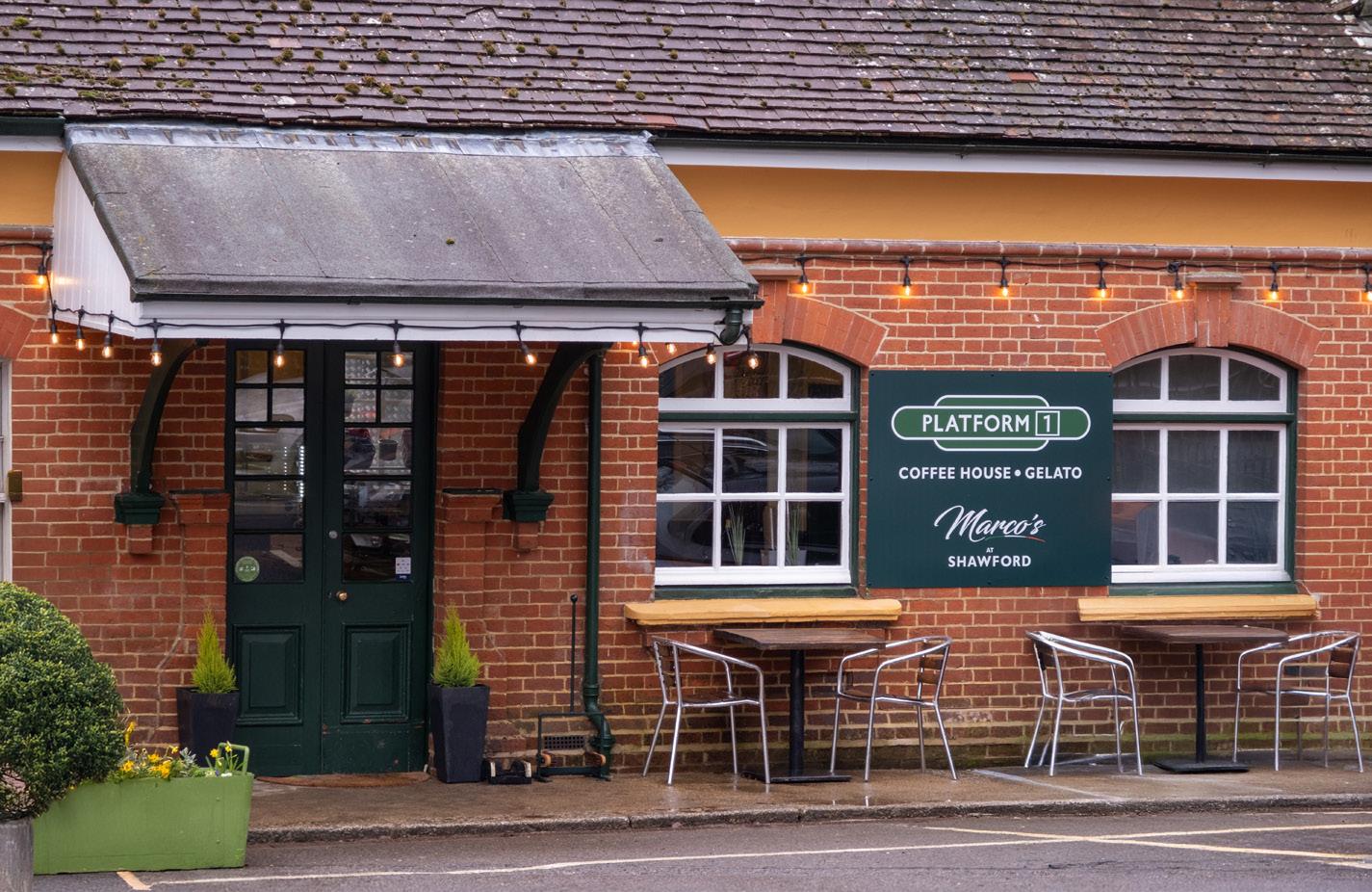
‘Victorian buildings, even if they're neglected, will last 100, 150 years. If they're cared for and maintained, they'll last for 500 years.’
station, whether it's listed or new, because of the insurances and the protocol. You're dealing with life and death. It's serious stuff. In some respects, in terms of process, it's some of the most challenging work I've ever done.
It's about navigating and trying to find out: is there a way to raise funds to do things? Can we bring the populace with us? Hence engagement with the public and the locality is really important. There needs to be a clear purpose.
SSH: Tell me about the community groups you work with.
GW: Most stations around the country have an amazing number of volunteers. We do lots of work with ‘friends of’ groups. We're working with the Friends of Brandon Station up in Norfolk and Suffolk, and the Friends
of New Milton Station in the New Forest.
That's a really interesting one because it was the first building in the town. The town erupted around it after the railway arrived. They built the railway to a town called Milton, and New Milton sprang up because that's where they built the station. The station master's house is literally number one New Milton.
That's wonderful because in terms of graphics and opportunities to promote merchandise and all sorts of things, the team there are being very creative to raise funds to pay our fees. It's different in every single place.
SSH: Can you give me some background on your career before this work?
GW: I've been a practitioner in architecture and design for 40 years this year. I originally studied interior design because I wanted to really focus on people and the use of buildings. I worked in London, then moved to Hampshire 30-odd years ago and formed my own practice in 1990.
I did have a time working with London Underground Limited and worked on a number of underground stations, but I was so young it just sort of passed me by. It's only been in later life and after lots of experience that we've begun focusing on historic buildings. I've got the right team around me now. It's very specific and technically demanding work.
‘With Romsey and Shawford the support is 99 per cent positive – I've never known that level of engagement’
SSH: How common is it in your industry for someone to come to heritage buildings after working in other sectors?
GW: I think I'm an unusual animal. I've come from an overtly commercial background: airports, high street retail for famous brands, visitor centres, hospitality. All these different things, commercial background, developing projects that are going to be resilient but also profitable. In that regard, I suspect I'm unusual in coming into this regenerative area.
I am blessed with a great deal of knowledge and experience in most of the areas we are now repurposing these lovely buildings for. For instance, cafés. I've done hundreds and hundreds. When we come to put a café into somewhere like Shawford, I know how to help them.
SSH: You've written about the concept of ‘regenerative’ work. Can you explain what you mean by that?
GW: ‘Sustainable’ has been overused and I replaced it in my own mind years ago with ‘resilience’ because sustainable became just a fashionable and overused word. This regenerative thing is fascinating. There is a real love, joy, and care, not just from the volunteers at each of these stations but from senior management to the local guys on the local stations. They really love what they do.
I've always had to build and argue the need and the purpose of what we're designing. Well, with stations, there's no argument about them being there. They've just fallen out of favour due to Beeching in the 60s and key cost cutting events over time.
SSH: Can you give me an example of a recent project?
GW: Romsey Station. We just gained planning permission last week for proposals we've been working on for nearly five years. One of the big discussions has been what it should be used for. It's a complex three-anda-half storey building.
To my knowledge, maybe 20-odd years ago somebody raised some money to commission someone like us to do some work. But they thought it was going to be used for accommodation and that was just the wrong purpose. It wasn't going to work for all sorts of reasons.
We've come at it in a different direction, thinking we must achieve access to all the
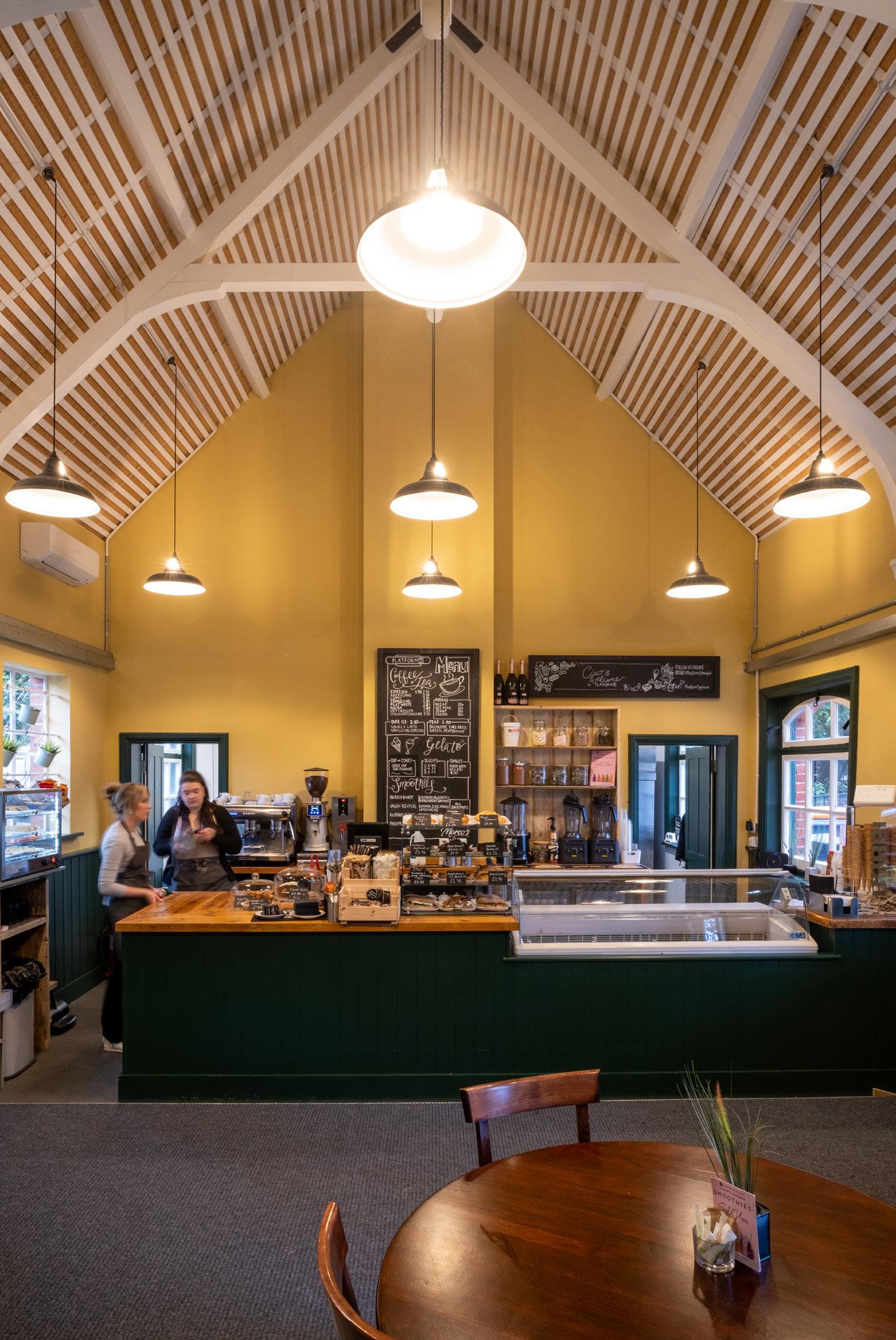
floors of the building, DDA compliance, so everybody can access it. That's just our view. I think it should be made a national requirement when we're regenerating buildings.
SSH: So, access for all is a key priority for you?
GW: If we're to really repurpose a building and use all the levels in an equitable fashion, we want everybody to get some enjoyment from that. That can add cost, but of course you've got the whole building structure there and ready, provided you've managed to get the operator or Network Rail engaged with putting the building back in reasonable order.
There are places I go where the roofs have caved in. They're in a real mess, which need open heart surgery as opposed to a bit of cream applied, so to speak. The serious locations where the place is in very poor condition, many people in the railways just knock them over because it's easier than getting someone to commission my team (or others) to redesign the place, raise loads of money through the community rail partnerships, and go through this long journey of rescuing the building.
As a result, we've got a great relationship with a whole host of organisations including SAVE. I did a little bit of consultation with them on Liverpool Street. I've been involved with large scale development all my professional life. I've probably done
similar things myself where budgets and ROI demand over development. Many of the figures around what were being discussed in terms of costings at Liverpool Street were into the hundreds of millions when actually it was into the tens of millions. Budgets get over inflated and rationale with it.
SSH: Funding seems central to these projects. How does that work?
GW: I don't think most architects do this. Again, this is just due to my commercial background. In the economic situation we find ourselves in, if you don't take action yourself, it doesn't happen. Most development suffers because they look to return their investment in two or three years. Well, if you're going to do that, it's not going to be very sustainable. Whereas if you can look at a 20-year payback, if you can look at patient capital combined with natural capital, the natural environment, we really need partners who can accommodate the return on investment being over a longer period.
We have to tap into all these various streams. The operator may be able to give money towards certain elements of the project. The Railway Heritage Trust, and the wonderful people there, Tim and Anna, they are funded by Network Rail, but I think they get something like two and a half million a year. They've been incredibly supportive. If I'm in the commercial world, I've never had anybody come over and say, ‘Oh, we'll put 40 per cent in at the beginning.’ As long as you comply with the heritage requirements, which we are, we're wanting to bring these places back to life. We research carefully the heritage colours it would have been originally and study the joinery detailing to be true to the building. We don't take the sash windows out and put poor replacements back. We repair them or make new to match the original.
The Railway Heritage Trust is perfect. I hope we're music to their ears because we're doing what they seek to achieve. But they can't fund everything. They can't give 40 per cent on every single project we look at. But they've been incredibly supportive and I would give them a massive shout out.
We might approach philanthropic investment, local wealthy people, local groups and councils. We've had community interest levy funding, Section 106. I think railway buildings, because they contribute to society and community, are a perfect route for some of that investment to come back from councils when they have the money available.
There are all sorts of bids that are made within and outside railway organisations. We've just had a bid turned down on one project. Can't figure out why. But you can't win them all. You've got to spread very wide and deep to find the supporters from a financial point of view. The average cost site to site range between £500,000 to £1.5 million.
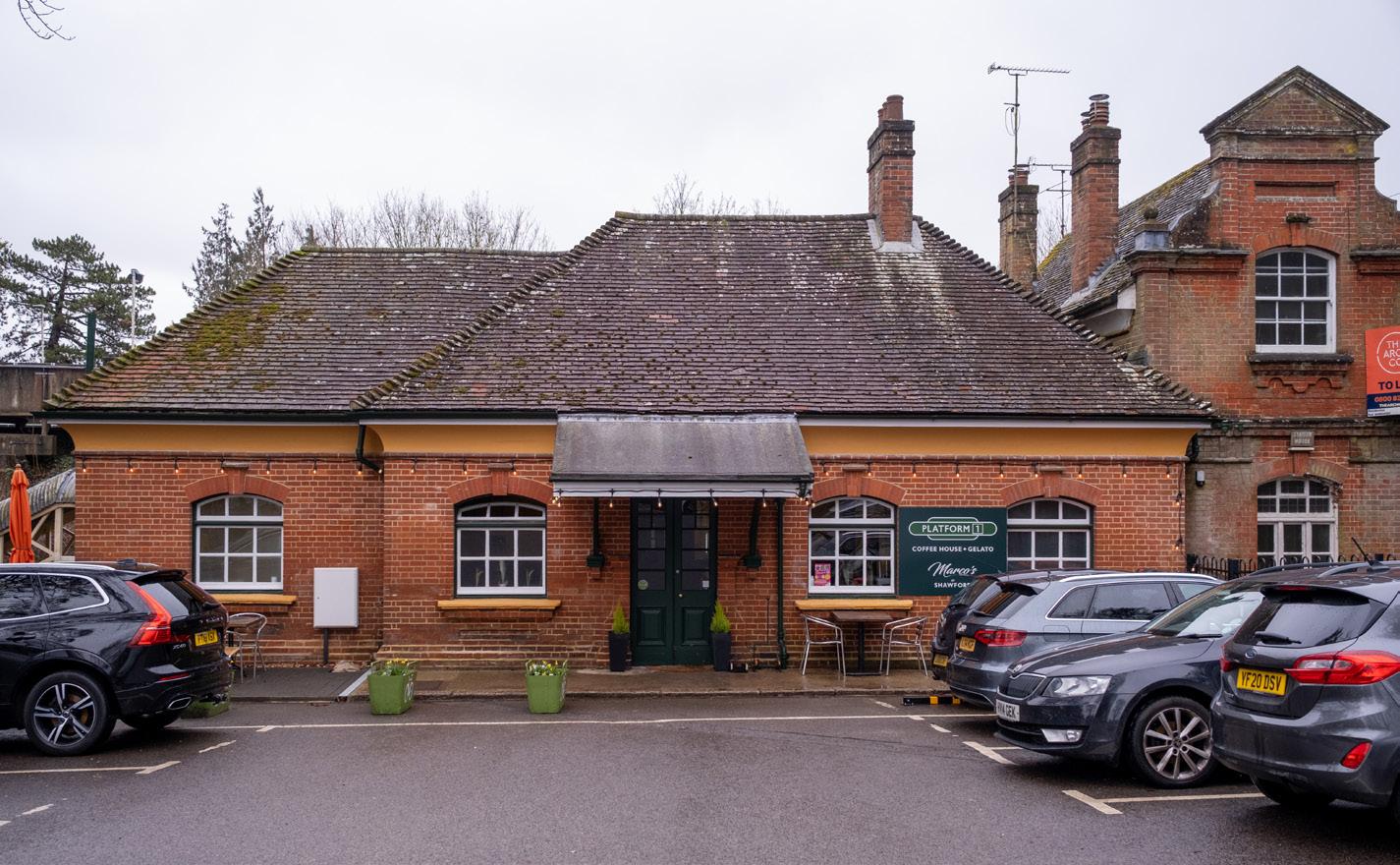
Community rail partnerships seem to be a good place to start as a base because someone has to be assigned the lease. Most of those are set up as CICs, community interest companies, so they've got the structure in place to take a lease on. But Hampshire, for instance, just had to renegotiate a few months ago the leases on all the buildings they've got. They had to pay approximately £4,000 for each one and they've got about a dozen. So out of nowhere they've got to find £48,000. Why? Why not just change the date on the lease?
I'm hoping that at high level we need to raise some serious chunks of money. Ideally, we'll get some research projects prepared so we can go to central government if we have to and say, ‘Right, let's do 20 of these projects or 40, not one or two, not scraping around raising money in each and every case.’ If we could construe a central fund that would allow us to do 10 or 20 or something with real impact, then people would listen.
SSH: Tell me about Regenerating Railway Stations, the book you've published.
GW: We've had universal support for this book that Nick and I and our friends at Avon Construction have published. We haven't put it out for people to buy yet. We printed the first batch and we're handing them out for free to people like yourselves, the 76 community rail partnerships in the country, and to Lord Peter Hendy. Nick handed a copy to him at a recent event, and Peter said, ‘Nick, this is hugely topical, thank you ever so much.’ We hope to continue this conversation and build industry and wider support.
Tim Dunn was very impressed. Anyone we've talked to that's either in the media or in some sort of political position of influence has been impressed. South Western Railway, all the people we've been working with, they all endorsed it and have actually contributed with supportive text.
SSH: What do you hope the impact of Regenerating Railway Stations will be?
GW: I think we're raising awareness. We'll get more copies printed and we'll continue for now to give them out for free. If we charge for that book, we could probably do it on repeat order at Amazon or wherever for about £15 per copy. But what we'll probably aim to do is later this year, we'll do an updated version, a second edition, because there's a lot happening all the time. We would add more case studies and update those already featured.
We want to push this further up the agenda. It might be, without being too presumptuous, why couldn't we broaden the conversation with senior figures in the industry? Most of them are very approachable people and appear supportive.
SSH: How does public consultation work for these projects?
GW: We haven't really covered this in any detail in the book, but it is essential. The result of it is, we get very strong support. I've never known that level of engagement. At the best we've had 60-70 per cent support at best on big projects I've done in the past, but with Romsey and Shawford, for example, the support is 99 per cent positive!
On these projects we work hard at making sure it's what the public want before we even see them, but we get overwhelming support. Then I can write to the planners and say, ‘We've got strong support to do this. There's a demand’. Most people, particularly young people or grandparents with grandkids and teenagers ask, ‘Is there a job for me? Would there be an opportunity to work there?’ Well, yes, there might be.
When we opened Shawford, the sheer response we've had from customers and the people that are working there, there's real pride in it. Everybody puts in more effort than they're paid to do because you just want to see the thing succeed. And that
generates a lot of good feeling. In current economic circumstances, anything that creates some joy and positivity and goodwill has got to be taken seriously.
SSH: And the Community Rail Partnerships do other work as well?
GW: The Hampshire Community Rail Partnership, just to give them a shout out, they do some amazing stuff. Two of their sites, one at Petersfield and one at Swaythling in Southampton, they've got food banks. They've served a tremendous number of meals.
It's very humbling. The Hampshire Community Rail Partnership and their team are there gathering food that's being thrown away at all the local shops and stores and handing it out to the public that are queuing up to feed their families. I'm so proud of what they do. But it’s sad we rely on such fantastic community group work.
When we open in Romsey, when we've raised the money, and also New Milton hopefully will follow on quite quickly, and Sherborne in Dorset, there's many we're working on, but we need to be doing more, and we need the quantum to increase. The restrictor is funding.
We've got to get this up the agenda if we're to touch a significant number of these buildings. But if we don't get our act together, in a few years' time many of the buildings will be lost because they'll just fall down.
SSH: Can you give me an example of the state some of these buildings are in?
GW: If you take Romsey as an example, it's been sat empty for somewhere in the region of 50 years, gathering pigeon droppings. The pigeon waste is a metre deep. We've got to put people in white suits, a bit like removing asbestos. It's toxic waste.
For maybe 20 years to my knowledge, the roof was leaking, so there's damage inside. But more importantly, the pigeons
were getting in and out. It's like a scene from a horror movie when you go in some of these places.
I think you come back to major political issues of funds. In fairness, Network Rail and all the rest, they're up against it every day. They've got to keep the railways rolling. Buildings are not a priority for them. Buildings are not seen, I don't believe, as an asset at all on their books.
The fact that we're allowing these buildings, hence why I'm involved with SAVE, on occasion to get into such a state of disrepair, we're having to get local MPs involved, local press involved, all sorts of people, so that we can try and raise funds to literally save the building. Because if we don't take some action, it will fall down or the operator will turn up and just bulldoze it and stick it in a skip because it's dangerous.
SSH: What makes these Victorian and Edwardian buildings so appealing?
GW: The buildings were built with care, with enormous passion and skill in Victorian and earlier times. I think one of the reasons the public is so engaged, we all love them, they love Georgian and Edwardian houses because of the size of the windows and natural light internally. We believe such principles should still be applied when designing all buildings.
For the younger generation, looking at these lovely railway buildings, there's nothing not to like. The response to them, I think, is really quite primal. It's quite instinctive. You look at the thing, you think, ‘Oh yeah, it's lovely.’
SSH: Just before we finish, can you sum up what sustainability means to you in the context of these railway projects?
GW: I think I've returned to the word environmental because it's more of an honest word. Sustainability is resilience, providing a solution which is good for the planet, good for us, good for humans. That

‘We research carefully the heritage colours it would have been originally and study the joinery detailing to be true to the building. We don't take the sash windows out and put poor replacements back. We repair them or make new to match the original.’
responds to us in our work, play, living, whatever it is, and that we get joy from and that absolutely embodies wellbeing.
This regenerative thing, we use the word regenerative. There's massive debate as to whether we should be building new buildings. Certainly, in our view, in my view, we should be regenerating and repurposing existing buildings before we build anything new. It's so important for your generation and mine. I just became a grandparent in November. What's my grandson looking forward to? We need to be taking more care, whatever you believe.
Any of the modern buildings will decay faster than these lovely things we're talking about. Some of it would last, I don't know, 30, 40, 50 years, whereas Victorian buildings, even if they're neglected, will last 100, 150 years. If they're cared for and maintained, they'll last for 500 years.
It's no different with historic station buildings. You look after them. You clear the gutters of debris. You make sure the pigeons don't get in. You treat it with love and care. And it's going to give back for generations.
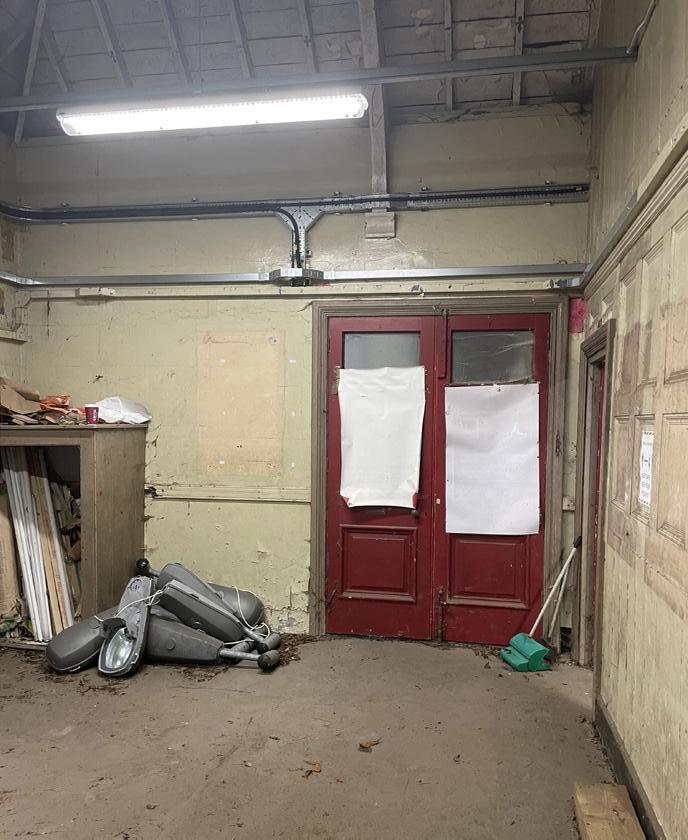

A Resilient Rail Digital Experience
How collaboration, integration and passenger-first design are redefining modern CIS and meeting the demands of today’s rail digital experience
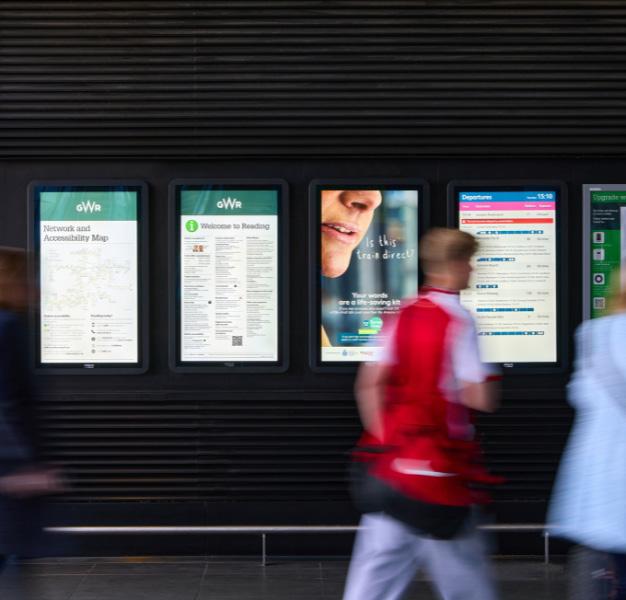
Passenger expectations of the rail network have changed fundamentally. Information is no longer viewed as a static service, delivered through timetables and platform indicators, but as a dynamic, real-time digital experience that supports passengers throughout their entire journey.
Today’s rail digital experience must deliver accurate, timely and accessible information particularly during disruption, while operating reliably across complex, mixed-age infrastructure. Passengers expect clarity, reassurance and consistency, whether they are navigating a major interchange or a local station.
For operators and infrastructure owners, this shift is driven by clear operational pressures. Well-designed customer information systems (CIS) help manage passenger flow, reduce congestion, support accessibility compliance and improve overall safety. For operators, this level of clarity directly reduces passenger anxiety, lowers complaint volumes and eases pressure on frontline staff during both planned and unplanned disruption. As a result, modern CIS has become a critical component of the wider digital rail ecosystem, rather than a standalone technology.
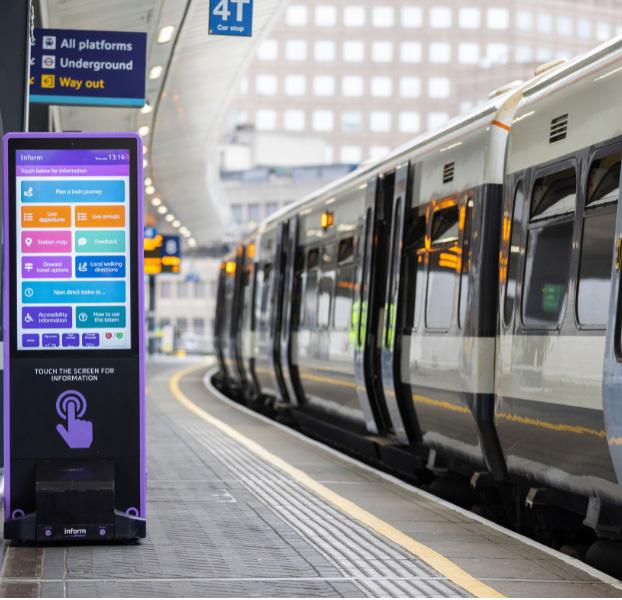
Collaboration as the enabler of modern rail experiences
Delivering this level of digital experience cannot be achieved through technology alone. It requires close collaboration between organisations that understand the physical realities of the railway and those that specialise in intelligent digital systems.
By working in partnership with infrastructure specialists such as L.B. Foster, we combine deep rail-domain knowledge with advanced digital display hardware and customer information software. This joinedup approach ensures modern CIS solutions are engineered for real-world deployment, compliant, resilient and designed to integrate seamlessly with existing station environments.
Engineering expertise designed for the railway environment
Effective customer information systems must operate reliably in some of the most demanding environments in the transport sector. Our technical expertise is rooted in the engineering and integration of rail-ready display and computing platforms designed specifically for long-term deployment across stations, platforms and transport interchanges.
Key areas of expertise include:
• Ruggedised display assemblies engineered for continuous operation, vibration, temperature variation and outdoor exposure.
• High-brightness, sunlight-readable displays ensuring clear visibility in all lighting conditions, including open platforms.
• Optical bonding and enhanced glass technologies to improve contrast, reduce reflections and increase mechanical resilience.
• Integrated PCAP touchscreen solutions, tuned for gloved use and high-frequency public interaction.
• EMI shielding and system protection, supporting reliable operation within electrically noisy rail environments.
• Lifecycle management and long-term availability, aligned with the extended service expectations of rail infrastructure.
This engineering-led approach ensures digital display systems are not only visually effective, but robust, serviceable and compatible with long asset lifecycles.
Addressing customer challenges across the network
The customers served by L.B. Foster, including rail operators, asset owners and transport authorities face a consistent set of challenges:
‘Modern CIS has become a critical component of the wider digital rail ecosystem, rather than a standalone technology.’
• Ageing station infrastructure operating alongside modern digital demands.
• Increasing pressure to deliver clear, realtime information during disruption.
• Accessibility and inclusivity requirements that must be met without adding complexity.
• Limited upgrade windows and constrained capital budgets.
• Rising expectations for system longevity and reduced maintenance intervention.
Meeting these challenges requires passenger information platforms that integrate with legacy systems while remaining scalable and future ready. Crucially, this approach minimises delivery risk and protects long-term investment, allowing upgrades to be phased, planned and aligned with wider asset strategies rather than forcing disruptive, large-scale replacement programmes.
What’s next for the rail digital experience
Looking ahead, the rail digital experience will continue to evolve from static information delivery to a dynamic service layer. Customer information systems will increasingly be expected to respond intelligently to real-time conditions, support personalisation and enable future
enhancements such as AI-driven insights, all while maintaining the robustness required for harsh rail environments.
Through collaboration, engineering-led design and a clear focus on operational reality, partnerships like ours with L.B. Foster are helping rail operators move forward with confidence delivering customer information systems that are resilient today and adaptable for the network of tomorrow.
‘Through collaboration, engineering-led design and a clear focus on operational reality, partnerships like ours with L.B. Foster are helping rail operators deliver customer information systems that are resilient today and adaptable for the network of tomorrow.’
Address: FORTEC TECHNOLOGY UK LIMITED Osprey House, 1 Osprey Court Hinchingbrooke Business Park Huntingdon, PE29 6FN
Tel: +44(0)1480 411600
Email: info@fortec.uk
Visit: www.fortec.uk
www.fortec.uk

PAYG Ticketing Comes to Welsh Railway
Nathan Anstee, Global VP Mass Transit for Gunnebo Entrance Control highlights how the PAYG project has involved accommodating contactless payment alongside existing ticket types, across stations with differing layouts, levels of staffing and passenger volumes
As rail operators look at smarter ways for passengers to pay for travel, ticketing models that simplify the act of payment while supporting more precise fare calculation are being applied more widely.
Pay As You Go (PAYG) contactless travel, supported by account-based ticketing, is one such approach now being used on heavy rail networks as well as urban metros. The introduction of PAYG tap-on, tap-off travel across the Transport for Wales (TfW) rail network provides an example of how this model has been implemented in a regional rail environment. The importance of partnerships and taking a sensitive approach to individual station operations has proven key to success.
From a ticketing perspective, the Welsh deployment emphasised the need to consider payment processing, fare validation, and physical access as connected elements rather than separate systems. Gate lines remain the point at which digital ticketing decisions are enforced, and their design and configuration directly affect how new payment methods operate in day-today service.
Modernising access by integrating multiple fare media
TfWRL faced the challenge of upgrading ticketing across a network where passengers rely on a wide spectrum of fare media. Some continue to use traditional magstripe tickets or ITSO smart cards, while others prefer barcodes or contactless bank cards and mobile devices. Ensuring every passenger could travel without disruption required a system capable of reliably processing all these methods while maintaining operational efficiency.
Stations vary significantly in layout, size and passenger volume, from busy central hubs to smaller regional stops. Some have
constrained or historic structures where any changes to infrastructure must be carefully managed. The new approach needed to accommodate these constraints and ensure any system could blend with its surroundings, while maintaining consistent access control and fare validation across the network.
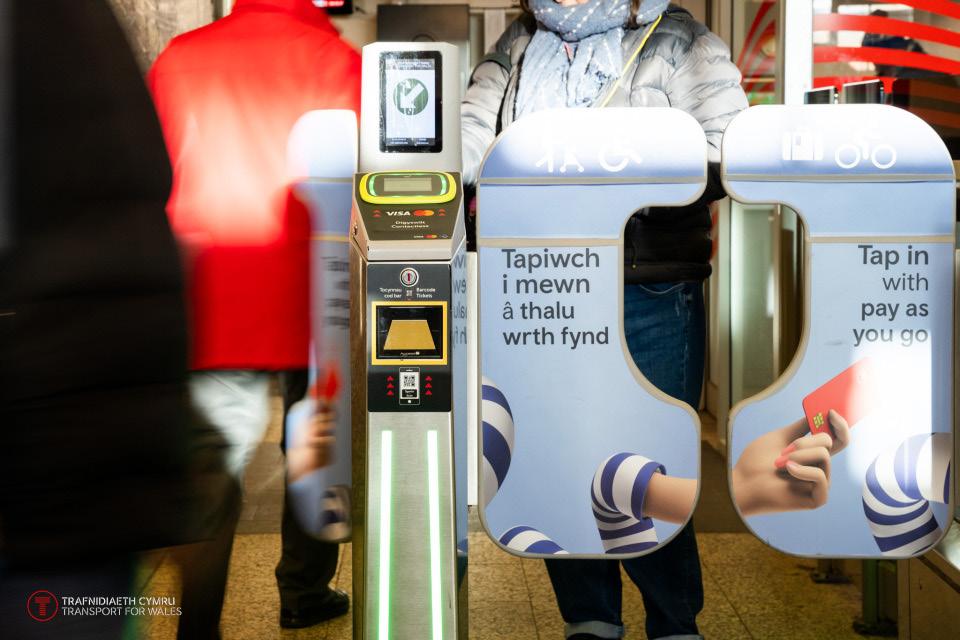
Integration of payment processing and access control was critical. The system had to support real-time processing to enable features such as automatic fare capping for daily and weekly travel, ensuring passengers never paid more than the equivalent of a pass.
Monitoring and management tools needed to operate remotely as well as locally, allowing staff to adjust gate configurations, detect anomalies, and respond to technical issues quickly, without disrupting passenger flow.
Beyond technical performance, the system needed to support operational insight. Collecting accurate, real-time data from multiple stations allowed TfWRL to analyse passenger flows, optimise staffing and gate allocation and detect potential fare anomalies.
This combination of technical capability and operational visibility was essential to creating a reliable, flexible, and scalable ticketing environment. The security was maximised to mitigate issues such as piggybacking and tailgating.
The phased approach allowed for gradual adoption by passengers, giving regular
commuters and occasional travellers alike time to adapt to tap-on, tap-off behaviours. Clear signage, visual prompts, and guidance from staff were introduced at high-traffic locations to reduce confusion and ensure that new digital processes complemented existing ticketing methods.
Operational learning and deployment
The rollout began with a proof-of-concept at Newport and Cardiff Central stations, allowing TfWRL to test gates under realworld conditions.
Early feedback from passengers and staff informed refinements in gate responsiveness, accessibility and interface design. Adjustments included optimising tap-on and tap-off timing, improving recognition of multiple fare media, and calibrating for peak passenger volumes. This iterative process ensured deployment would be reliable, regardless of station size or passenger type.
Following the proof-of-concept, gates were installed across 95 stations, covering major hubs and smaller regional stops. Within the first year, more than two million
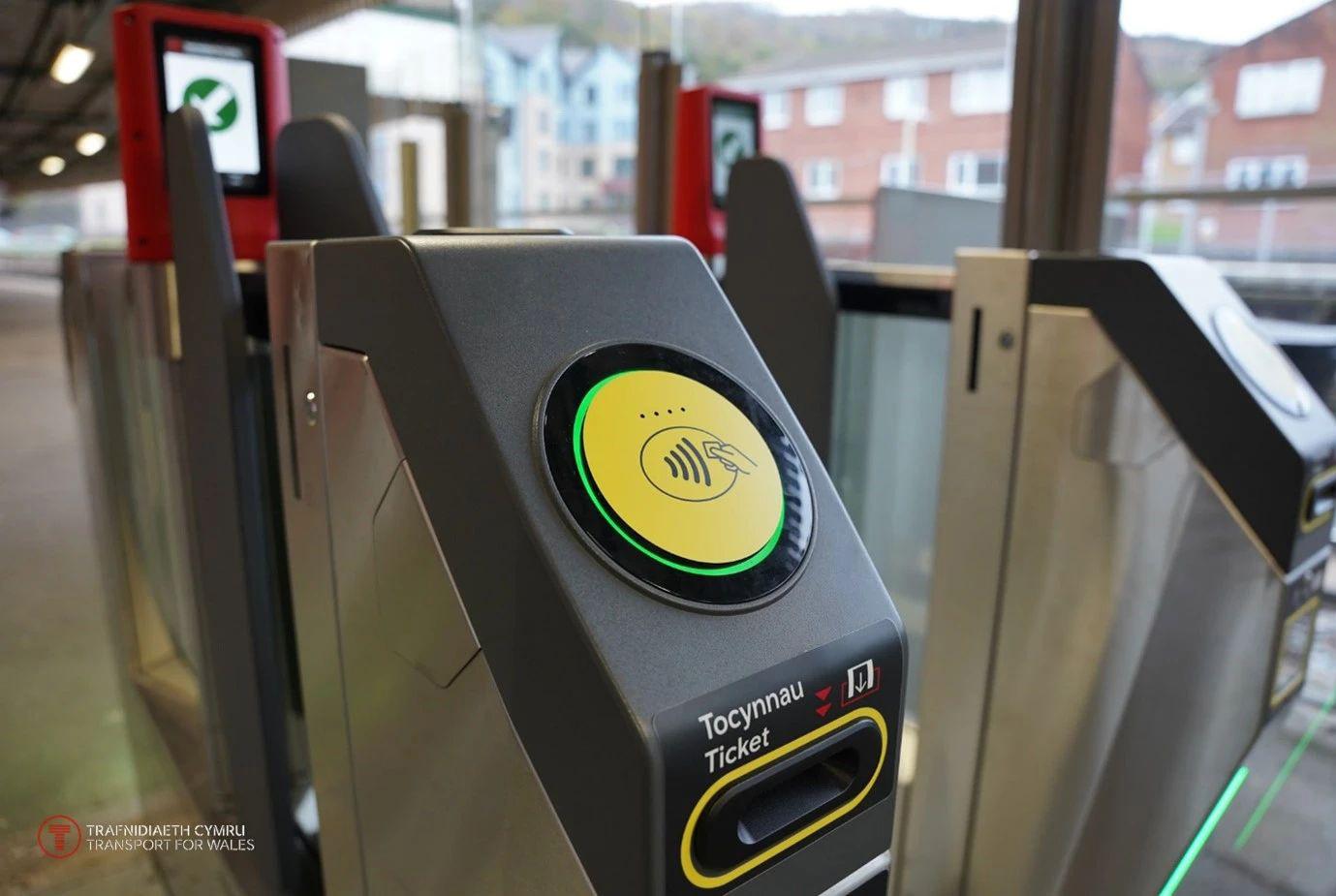
‘TfWRL’s modernisation was made possible by the new ticket gates developed in partnership with Vix Technology and Gunnebo Entrance Control.’
PAYG journeys were recorded, reflecting strong passenger adoption.
Real-time monitoring of gate performance enabled TfWRL to identify issues or security breaches quickly, reducing downtime and maintaining service reliability. Staff could adjust gate performance remotely, detect anomalies and manage scheduling without interrupting passenger journeys.
Operational learning extended to understanding passenger behaviour. Some commuters initially struggled with the distinction between legacy tickets and PAYG tap-on, tap-off, while occasional travellers needed clearer guidance on which payment methods were accepted. Insights gathered during this stage informed training for station staff and refinements to signage, creating a smoother experience across the network.
Stations with constrained or historic layouts required particular attention. Gates had to be positioned to fit narrow concourses or complex architectural layouts while maintaining accessibility standards. At all times, the system needs to handle both traditional tickets and modern contactless methods without slowing
passenger flows or creating bottlenecks. Successfully balancing these demands underlines the importance of designing a flexible system to operate across the entire network rather than a single station type.
Future-proofing the network and passenger experience
Beyond operational efficiency, the project has shown to improve the passenger experience through integration with wider station services.
Video Help Points are being deployed alongside ticket gates to provide remote assistance and real-time travel information, particularly at unmanned stations or locations with limited staffing. This helps passengers navigate new digital processes while reinforcing confidence in PAYG travel.
Partnership approach
TfWRL’s modernisation was made possible by the new ticket gates developed in partnership with Vix Technology and Gunnebo Entrance Control. The gates accept multiple fare media simultaneously, including contactless EMV cards, mobile wallets, ITSO smart cards, 1D and 2D barcodes, while continuing to support magstripe tickets.
Their modular and space-efficient design allowed installation across stations with varying layouts, including constrained or historic sites, reducing infrastructure impact while maintaining accessibility and smooth passenger flow.
Integration with Unicard’s Ticketing Hub and Vix’s cloud-based Cast platform enables real-time payment processing, local and remote gate monitoring, device management, and operational reporting. This combination ensures both fare enforcement and revenue protection while providing operational intelligence to inform staff deployment, platform management, and capacity planning.
‘PAYG now provides passengers with clarity, convenience, and confidence, while operators gain the tools to monitor performance, protect revenue, and adapt as travel patterns and technology evolve.’
Helen Mitchell, Head of Portfolios and Programmes at Transport for Wales, emphasised the strategic significance: ‘This project is a key part of our vision to enhance the passenger experience across the Welsh rail network in a smart and sustainable way. By working with Vix Technology and Gunnebo Entrance Control, we have been able to introduce a flexible and scalable solution that meets the needs of today’s travellers while ensuring future adaptability.’
Michael Hart, CRO at Vix Technology, added: ‘We’re excited to see this solution paving the way for a fully integrated transport ticketing network, combining reliable payment processing with operational intelligence.’
In essence, the collaboration has delivered a robust and flexible ticketing solution that meets current demands and is designed for future advancements.
The Welsh PAYG ticketing rollout demonstrates how modernisation on regional rail networks requires both strategic planning and practical solutions. By integrating infrastructure, software, and operational processes, TfWRL has created a network that is both passenger-friendly and operationally resilient.
PAYG now provides passengers with clarity, convenience, and confidence, while operators gain the tools to monitor performance, protect revenue, and adapt as travel patterns and technology evolve.
NATHAN
ANSTEE is Global VP Mass Transit for Gunnebo Entrance Control.



Precision Noise and Vibration Monitoring
With over 50 years of expertise, designing and manufacturing precision noise measurement instruments since 1970, Cirrus Research plc is a leading UK manufacturer of noise and vibration monitoring instruments
From the introduction of the revolutionary doseBadge in 1995 to the launch of the Quantum cloud platform in 2020, Cirrus has built a track record of innovation underpinned by rigorous quality standards. The company holds ISO 9001:2015 accreditation from the British Standards Institute, demonstrating its commitment to strict quality management principles, strong customer focus, and continual improvement. Cirrus regularly carries out internal audits to ensure it continues to meet the standards this accreditation demands. In 2018, it became one of only five UKAS-accredited acoustic calibration laboratories in the UK, capable of calibrating sound level meters, acoustic calibrators, and octave band filters to the highest internationally recognised standards, an accreditation further recognised through its association with ILAC, the International Laboratory Accreditation Cooperation.
Understanding the risks of noise and ground vibration
In the rail industry, where managing occupational and environmental noise is both a legal obligation and a reputational concern, the consequences of getting it wrong are significant. Excessive ground vibration, whether from construction and infrastructure works, heavy machinery, or trackside operations, can cause cosmetic and structural damage to buildings, including cracks in walls and weakening of foundations. For people living or working nearby, persistent vibration and noise can cause discomfort, stress, and sleep disturbance, which over time can escalate into more serious health problems including chronic fatigue and anxiety. Industries responsible for excessive noise and vibration may also face legal and regulatory consequences, including fines, legal action, and mandatory operational changes.
Environmental noise carries its own well-documented health risks. Research has
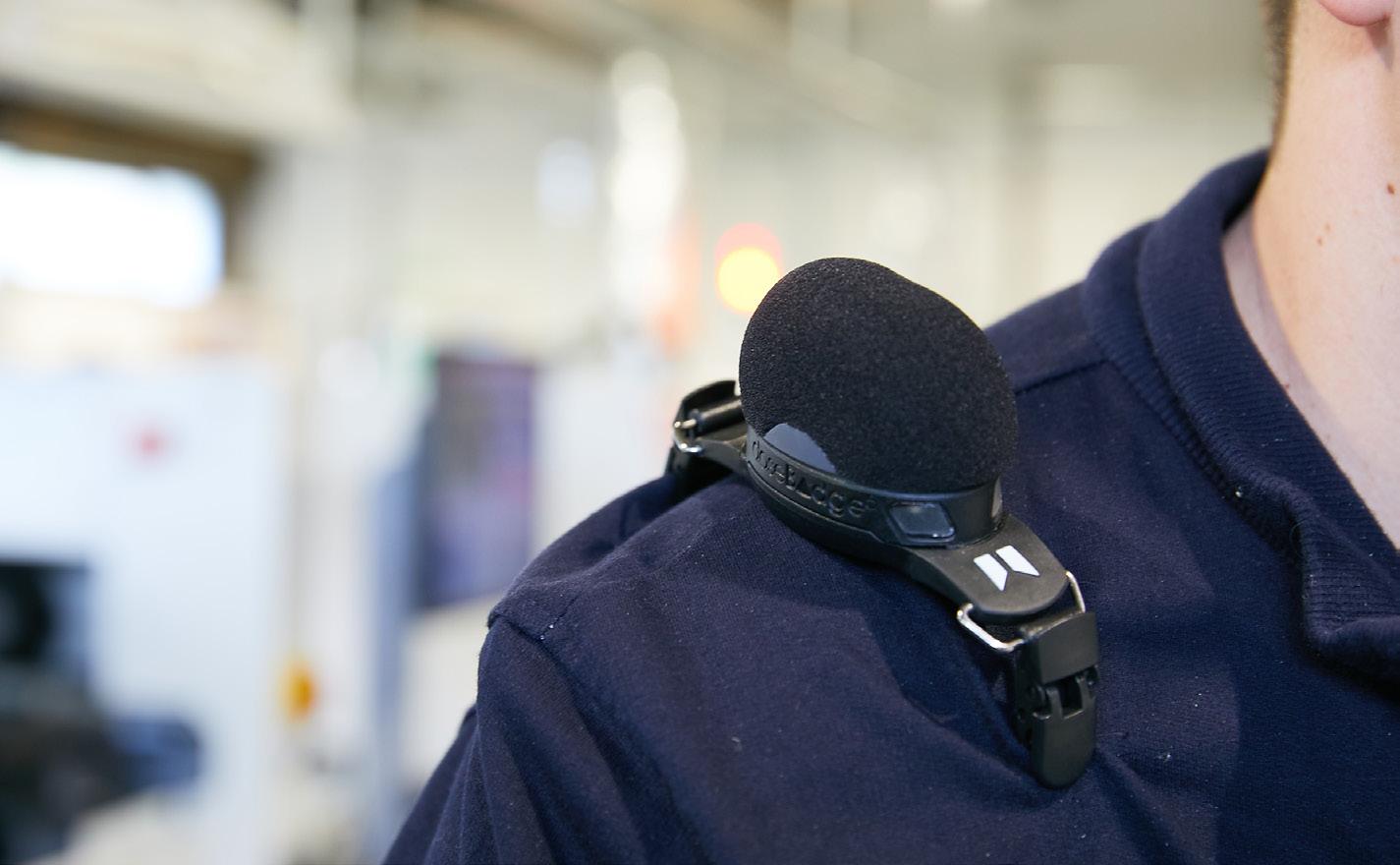
shown that exposure to noise levels above 40 dB(A) during sleep increases the risk of sleep disturbance, with adverse effects on mental well-being, while levels above 55 dB(A) are associated with conditions such as high blood pressure and ischaemic heart disease. Environmental noise assessments typically rely on the LAeq, the equivalent continuous A-weighted sound level, which provides a meaningful energy-average figure across a measurement period and is the parameter most commonly referenced in planning and regulatory frameworks. Managing and monitoring environmental noise is therefore not simply a matter of regulatory compliance; it is a direct matter of public health.
Proven solutions for a demanding industry
For occupational safety teams involved in rail operations, Cirrus Research provides a comprehensive suite of instruments spanning everything from simple sound pressure level measurement through to
precision data logging with real-time octave band filters and in-measurement audio recording.
The company's range of Class 1 and Class 2 handheld sound level meters covers all noise measurement applications, from basic noise assessments to detailed acoustic analysis. This includes straightforward instruments for measuring sound pressure level, integrating-averaging instruments providing LAeq and occupational noise functions, and precision data logging meters with 1:1 and 1:3 real-time octave band filters. The Optimus+ Sound Level Meters, first introduced in 2009, sit within this range, designed for quick, accurate environmental and occupational noise assessments, and are particularly suited to use in depots, near-trackside environments, or public-facing facilities.
The Optimus+ is also the instrument of choice for environmental engineering professionals working beyond the rail sector. Iris Conseil, a French independent engineering company specialising in

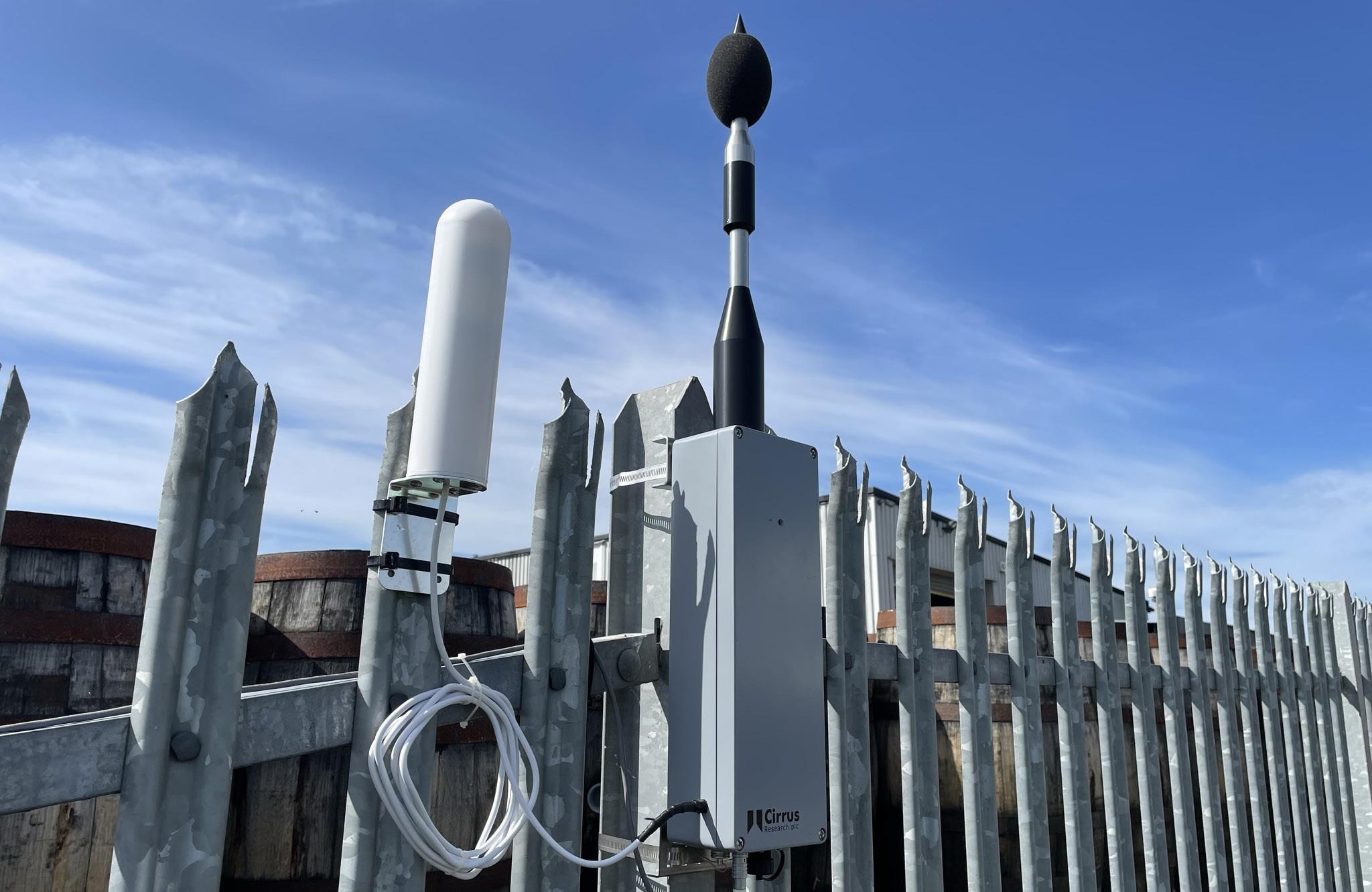
transport infrastructure, urban planning, and environmental projects, has built its in-house acoustics capability around a fleet of Optimus+ Environmental sound level meters, valued for their accuracy, durability, and compatibility with Cirrus's licence-free analysis software, NoiseTools. NoiseTools provides detailed acoustic analysis and simplifies data management, with automated reporting and intuitive data export features that the Iris Conseil team has described as a significant time-saver. The ease of use of both the instrument and the software has also enabled the company to train technicians quickly, including those without prior acoustics experience.
For personal noise exposure monitoring, Cirrus offers the doseBadge, a wireless personal noise dosimeter, also known as a Personal Sound Exposure Meter (PSEM), worn close to the ear to assess individual noise exposure. Occupational noise assessments using the doseBadge are based on A-weighted LAeq measurements, providing an energy-average representation of a worker's noise exposure across a shift.
The doseBadge range includes robust metal-cased dosimeters, intrinsically safe models suitable for use in combustive environments, and top-of-the-range dosimeters with octave band capability for the precise prescription of correct hearing protection levels. This makes the doseBadge particularly well-suited to lone workers or mobile teams exposed to varying noise levels, such as engineers, maintenance crews, or depot staff.
Where vibration risk is a concern, the newly launched Triax Human Vibration Meter is available in three kit configurations: hand-arm, whole-body, or a combined handarm and whole-body solution. Whatever the assessment requirement, the Triax provides accurate, compliant measurements for occupational vibration monitoring in line with the Control of Vibration at Work Regulations.
For longer-term environmental monitoring around major rail projects, stations, or infrastructure upgrades, Cirrus offers three distinct cloud-connected remote noise monitoring solutions,
including the Quantum Outdoor. These unattended remote monitors make longterm, unmanned noise measurement straightforward, delivering the data needed to protect businesses, workers, and the surrounding environment around the clock. The Quantum Outdoor can also be integrated with Cirrus's range of cloudbased environmental monitors, enabling 24/7 remote monitoring of noise, weather, air quality, particulates, gases, and wind speed from a single connected system, giving operators all the data they need, on any device, at any time.
Where noise nuisance complaints require a rapid response, Cirrus instruments are designed to help professionals manage and analyse complaints quickly and with minimum effort. Customers of the company's Trojan monitor also gain exclusive access to the NoiseAid App, designed to help gather data before deploying the monitor in the field, saving time and making resources more effective.
Designed for compliance and simplicity
Cirrus instruments are designed for ease of use in the field and provide the robust, traceable data required for regulatory reporting. Whether adhering to the Control of Noise at Work Regulations 2005, environmental planning requirements, or internal health and safety protocols, Cirrus ensures that data collection is accurate, defensible, and efficient.
Every instrument is backed by an industry-leading 15-year no-quibble warranty, licence-free software, a global network of service and support centres, and ongoing assistance and training after the point of sale. Cirrus was also the first manufacturer to be granted pattern approval, in 2008, reflecting its longstanding commitment to meeting the most exacting industry standards.
UK manufacturing, global reach
Headquartered in North Yorkshire, Cirrus Research designs, manufactures, and supports its full product range in the UK. This end-to-end control over quality is reinforced by the company's BSI accreditation for both quality and environmental management, its UKASaccredited calibration laboratory, and membership of the WeeeCare Compliance Scheme, fulfilling its obligations under The Waste Electrical and Electronic Equipment Regulations 2013.
The company's responsive in-house technical support team and its global reach, serving customers across more than 100 countries, make Cirrus a reliable partner to the rail industry's evolving needs. Whether a project requires short-term noise monitoring or ongoing compliance management across multiple sites, Cirrus Research provides not just the equipment, but the expertise to help rail professionals manage risk, protect health, and build trust with stakeholders.
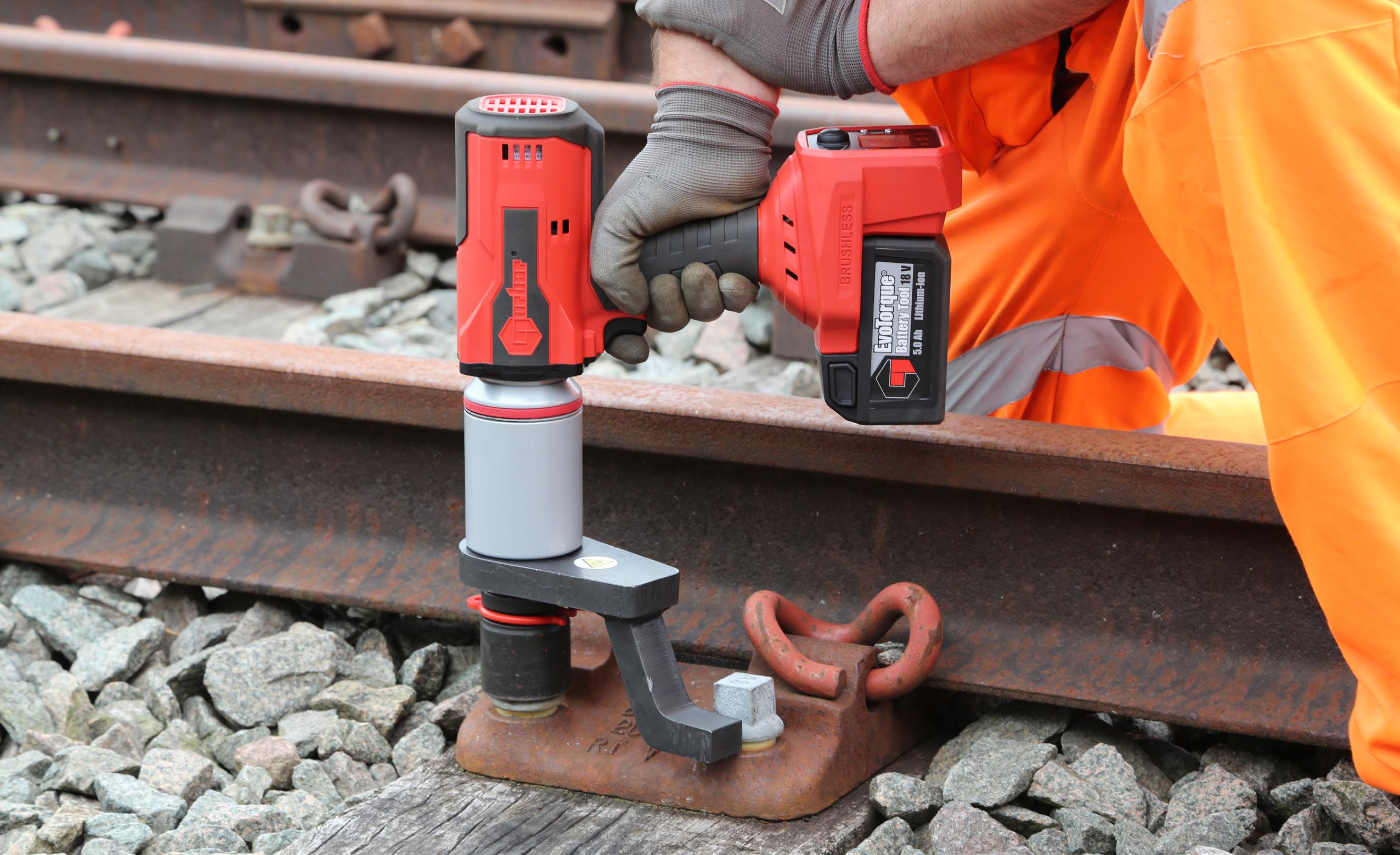
Norbar is a UK manufacturer of battery, electric, pneumatic and manually operated torque multipliers, wrenches, torque measurement equipment and bespoke torque control solutions specially developed for the rail industry Contact Norbar and speak to The Voice of Torque Control
Digital Metro Ambitions Need Critical Connectivity
Metro/urban railways are turning to the wide area network and the transformative role a multi-service WAN can play in making smart rail goals a reality
As more and more of the world’s population gravitates to urban areas, the pressure intensifies to revolutionise the rail experience. Increased numbers of riders, trains and security issues have urban rail operators looking for ways to be more dynamic and reliable, and to keep passengers and rail assets more secure.
One way to satisfy these ambitions is to adopt digital era technologies. Video analytics, predictive maintenance, communications-based train control (CBTC), and AI are all key technologies in this transit revolution.
While connectivity is the reason communications networks exist, it’s also the essential thing that rail operators need to fully and successfully embrace digitalisation.
That is, a smart metro relies on sensors to collect critical data and on a communications network to transmit those billions of bits and bytes in real time for analysis. This requires seamless connectivity, underpinning a constant stream of data between tracks, trains, stations, operations control centres and data centres.
Such connectivity makes a missioncritical wide area network (WAN) crucial to the strategy. Indeed, an Internet Protocol Multi-Protocol Label Switching (IP/MPLS) and segment routing multi-service WAN will deliver ultra-high reliability, performance and security with bandwidth that feels like it will never run out. Plus, the WAN offers the flexibility to support a wide range of applications, both new and legacy, down to each application’s individual operational requirements.
The mission-critical WAN
The primary role of the WAN in a digital urban rail infrastructure is to connect all physical and digital infrastructure elements. It’s a multilayer converged network that deploys IP/MPLS and segment routing over a mix of dark fibre and packet optical transport.
But, what happens when IP-based applications such as CBTC, IoT and CCTV are introduced into the network and must be managed alongside older SCADA and wireless applications, some of which may still operate with legal serial and four-wire analog interfaces?
Multiservice support becomes critical, as these Layer 2 and Layer 3 network services connect the trackside equipment and sensor endpoints, and do so at very high scale. Additionally, IP multicast capabilities must be supported for the point-to-multipoint distribution that optimal video surveillance requires.
Beyond scale and service diversity, resiliency is also critical because no one wants a disruption in the WAN that disrupts train operations as well. IP and segment routing MPLS multi-layer and multi-fault redundancy protection will mitigate the risk, even during extreme weather events or in the event of a deliberate sabotage of the installed fibre.
Flexibility to support strict requirements around latency and lossless networking will also be essential. Deterministic Quality of Service (QoS) down to the application level will help operators constantly meet expectations even when the network is super congested.
Time synchronisation distribution will also matter. As 5G small cells are deployed along tunnels, synchronisation challenges are amplified because timing information must be transmitted across the WAN. That’s why support for a flexible hybrid approach is needed. This will combine Global Navigation Satellite System (GNSS)-derived timing and IEEE 1588 Precision Time Protocol (PTP) with boundary clock capabilities for accurate timing distribution throughout the network.
While this series of capabilities is fundamental to the mission-critical WAN, there are other ways in which an IP and segment routing MPLS-based WAN delivers the bandwidth, availability, flexibility and advanced tools to support a successful digital metro.
One example is segment routing. Fast emerging as the de facto standard in IP networks, segment routing reduces protocol complexity and can simplify operations and support scaling even in networks with hundreds of nodes.
Ethernet virtual private networks (EVPNs) are also key. Amping up efficiency and redundancy, EVPNs provide reliable Layer 2 services that are essential for applications like signalling.
Traffic engineering is also pivotal to safety-critical systems. The blue/red redundancy model enables data routing along separate paths. Even in a situation where a node or link fails, the two channels cannot be affected at the same time.
The OT cloud
In a smart rail system, where intelligent software systems control, manage and monitor infrastructure and operations, one needs seamless connections within data centres. That’s where the operational technology (OT) cloud comes into play.
OT typically sits within a private cloud that is most often on premises, or hosted in a dedicated data centre, purpose-built for rail operations. Other than CBTC, which maintains its own set of dedicated servers to meet safety and certification requirements, there are substantial advantages to running critical smart rail applications in the OT cloud.
One advantage is the opportunity to pool compute, storage and memory resources. So, systems like SCADA, CCTV and passenger information can be hosted more efficiently within the OT cloud with embedded redundancy and improved resource utilisation. There are also smoother upgrade cycles using digital twins, helping operators respond to change without compromising reliability.
While the mission-critical WAN forms the backbone of digital rail, the OT cloud can extend that reliability, flexibility and resilience into the data centre, guaranteeing


ultra-high levels of performance across the network.
Tightened security
Even as digital technologies improve rail operations, they also introduce new threats. Each new application in the OT cloud and every connected sensor in the field increases the attack surface.
An impregnable cyber defence requires a zero-trust approach combined with a multilayer defence-in-depth framework that extends across the infrastructure, networks and applications.
A zero-trust approach authenticates devices as they connect, adapts network behaviour accordingly, and limits the damage any unauthorised access can cause. This enables the network to not only block attacks but also minimise their impact.
Layered protections also add resilience. Working alongside the network defenses, Threat Management Systems and Intrusion Detection Systems can monitor traffic, detect anomalies and ensure that devices run the most recent versions of their firmware.
Compliance requirements such as NIS2 and International Electrotechnical Commission (IEC) standards also help, ensuring that security is embedded into the WAN and OT cloud from day one.
At the same time, when cryptographically relevant quantum computers (CRQCs) become available, some current network encryption techniques will be vulnerable. A multilayer, defence-in-depth strategy, combined with quantum-safe encryption, will be vital to safeguard future metro networks.
Smart partnership
The wide area network has always played an important role in making rail operations work. But as rail operators transition to a digital metro rail, a modernised WAN is required. As rail networks evolve to support OT cloud, AI integration and quantum-safe communications, an IP/ MPLS and segment routing multiservice WAN provides robust, secure connectivity across the rail environment. It connects intelligent trackside equipment and station sensors to smart rail applications, emerging AI workloads in the OT cloud, and operations and control center teams –enhancing service reliability and operational performance end to end.
As metro rail operators continue their transition toward smarter operations, communications networks are becoming a strategic foundation rather than an afterthought. Technology partners with deep networking expertise can help ensure
connectivity supports everything from on-board systems to trackside equipment and station applications, meeting the evolving demands for mission-critical urban transport systems.
BENOÎT LERIDON is the Head of Transportation Business for Network Infrastructure at Nokia where he is responsible for global business development targeting transportation verticals. Benoit has 25 years of telecom pre-sales background covering enterprise and carrier markets for data, and voice solutions, and joined AlcatelLucent in 2010 after holding different pre-sales management positions in companies such as Wellfleet, Bay Networks and Nortel.


RICHARD WRAGG
DIRECTOR,
RJW ENGINEERING LTD
Richard Wragg is the founder and Director of RJW Engineering Ltd, a prototype and innovation specialist he established in 1989. With a background rooted in an engineering apprenticeship at the University of Aston, Richard has spent over three decades guiding the company across sectors including automotive, rail, food, plumbing and highways.

RJW ENGINEERING LTD
Established in 1989 RJW Engineering specialises in prototype manufacturing from 1 off to small batch runs. Working in stainless steel, mild steel, plastics, and associated materials RJW can turn your concept into reality. For over 20 years RJW have been involved in inventing various ideas and taking them to market and have even achieved a place in the Guinness book of records for the largest copper pipe fitting in the world.
Want to know more about RJW Engineering?
Tel: 01384 442852
Email: RJWEng@BTinternet.com
Visit: www.rjwengineering.co
Tell us a little about RJW Engineering and how the company came to be.
RJW Engineering was founded in March 1989, which means we are approaching 37 years in business. The name comes from my own initials. We started out specialising in one-off and small batch prototypes for various industries such as automotive, plumbing, food and highways. As time progressed, we found ourselves getting more involved with reverse engineering existing products, systems and processes with a view to improving them, or inventing something new to meet a client's requirements. That has really become our identity: a one-stop innovation service for whatever industry comes through the door.
Your background is in engineering. How did that shape the way RJW operates today?
I did my engineering apprenticeship at the University of Aston and progressed through machining, fabrication and then prototyping across various industries. That led me into innovation across various industries. The approach we take with clients today reflects that background. We sit down, we listen carefully to what they need, and then we take that away and reverse engineer all aspects of the problem. If we are unable to improve the existing product, system or process, we then look to innovate a new way forward.
You work across a remarkable range of sectors. How has that breadth developed over the years?
It has grown organically. We work across automotive, food, water, plumbing, painting and decorating, highways and rail, amongst others. Some of our standout projects over the years have included prototyping and developing a new pressure relief valve for boilers, which is also the only NHBCapproved fitting of its kind, as well as safety stair rods, a permanent repair patch for copper pipes, and an early warning system for drain flooding. We have also carried out the prototyping through to production of the BMW Mini airbag, wiper blade bracketing for Porsche, and ice cream filling heads for Nestlé.
How passionate are you about sustainability, and how does it influence the products you develop?
As a company we have always strived to maintain a green approach to our working environment. We work with our clients and always look for improvements, sustainability and longevity in all of our products, including the use of recyclable and eco-friendly materials wherever possible. We also offer an exchange system for some products, so customers can return used parts and we dispose of them in an environmentally friendly way rather than them ending up in landfill.
‘If we are unable to improve the existing product, system or process, we then look to innovate a new way forward.’
Health and safety also plays an important role in your work. Can you tell us more about that?
There is a big health and safety element to everything we do. Staying ahead of the changing regulations we find across the various industries we serve is a constant responsibility. In several cases, our products have been developed specifically in response to safety risks we have identified ourselves, which means we are often working ahead of where regulations currently sit.
Collaborative working seems central to your approach. Can you explain how that works in practice?
Collaborative working is how we fully understand our clients, their issues, requirements and what a successful outcome looks like from their perspective. We sit down and listen, then take everything away and reverse engineer all aspects. Whatever solution we arrive at gets presented back and discussed with the client. That process is then repeated until we reach the right resolution together.
Tell us about your Drain Early Warning System and how it benefits the rail network.
Our Drain Early Warning System, or DEWS for short, is a simple device often described as a mobile phone with a float attached to it. You fit it in a high-risk flooding area, give the device a name, a location and a number to contact, and it goes to sleep. If a flooding situation develops, the float rises, wakes the device up, and it immediately sends the name and location to that number, whether that is a landline or a mobile. The idea is that you receive the alert before the situation becomes an issue, giving you time to get a team out and respond properly. That early intervention can prevent line closures, which have significant knock-on consequences for the network.
Your non-conductive road pin has quite a story behind it. How did that product come about?
It was a real surprise to me when I saw Network Rail engineers driving metal road pins into the ground. The rail network is powered by electric cables buried underground carrying 25,000 volts – we have 240 volts in our homes. Even Network Rail's own health and safety video shows
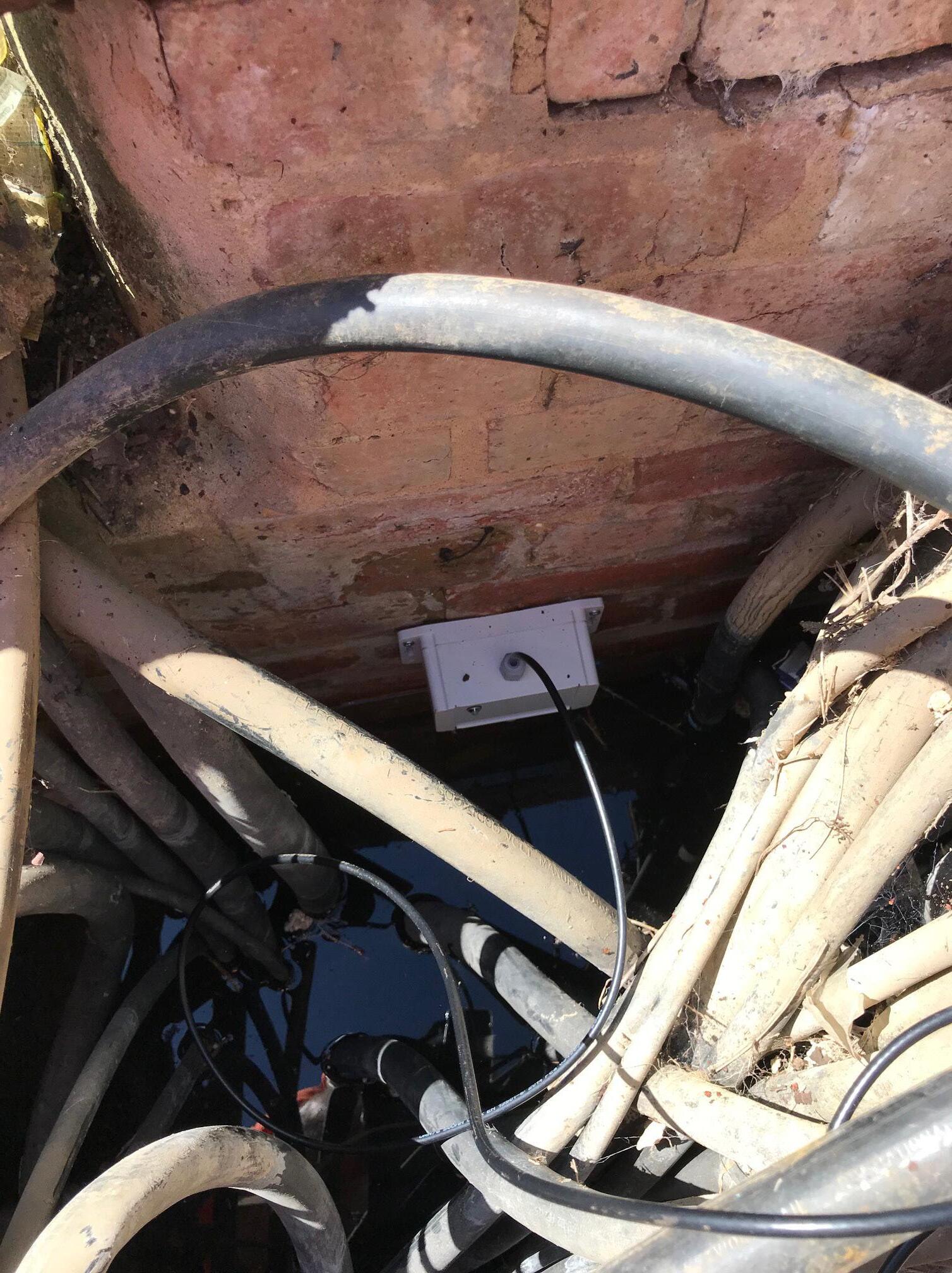
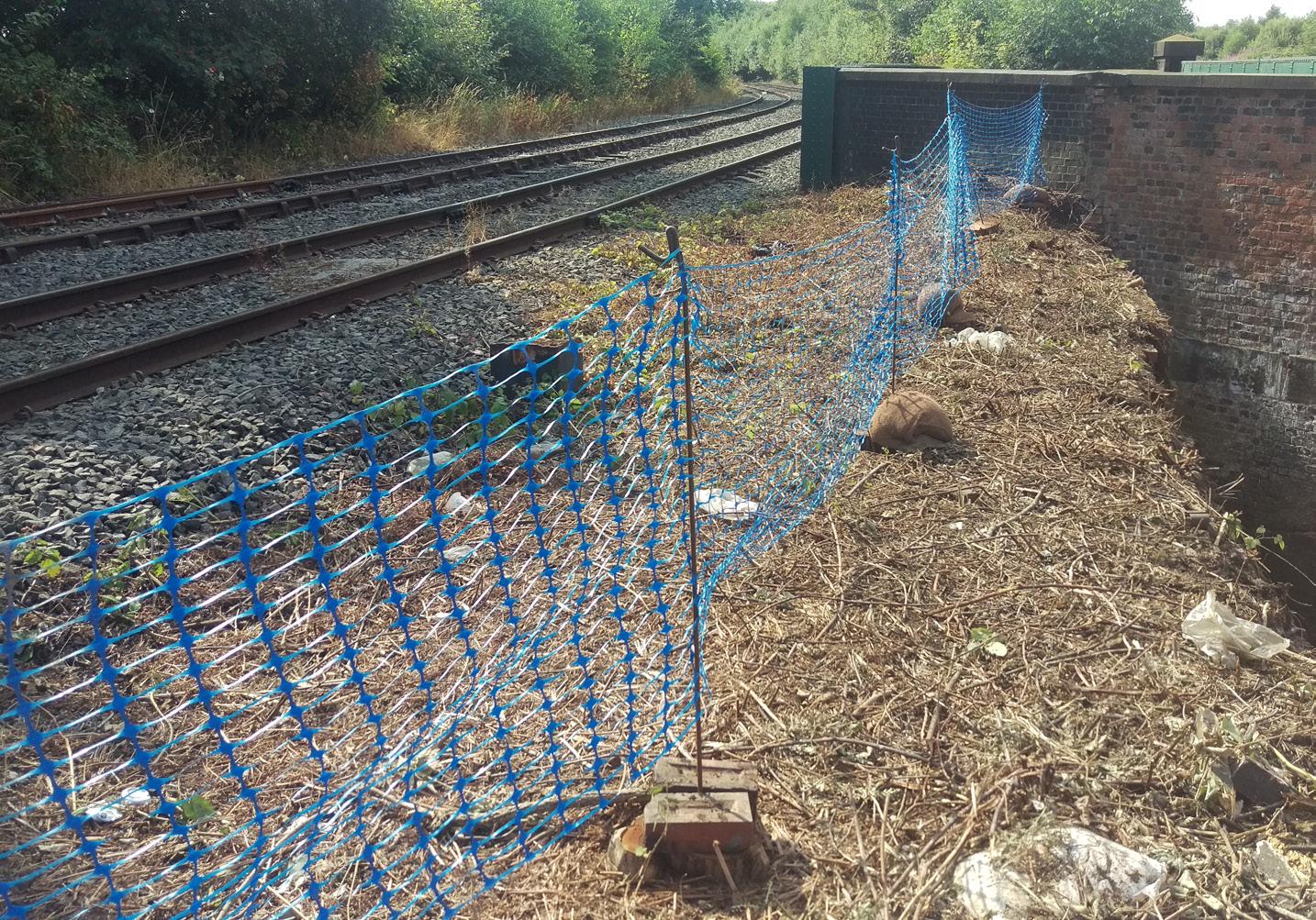
‘We sit down, we listen carefully to what they need — and then we take that away and reverse engineer all aspects of the problem.’
someone being electrocuted. And yet the standard practice was to drive metal pins into the ground, with the CAT scan being the only protection in place – and that has human error attached to it. The numbers of pins being used on site on a daily basis were staggering. To me, it was an accident waiting to happen.
What was your next course of action?
We immediately sat down with the engineers and discussed the application in detail, including where the pins were being deployed and in what volumes, and we carried out a risk assessment covering the human error factor. Our design team got to work and concluded there was no meaningful improvement to be made to the existing metal pin, so a new product was needed. What we developed was a fully nonconductive road pin, eliminating any chance of conducting an electric shock.
We also designed non-conductive bases to remove the need to drive the pins into the ground at all, and built in a crosssection for locating the safety netting, which replaced the old hook method. We produced prototype sets, which generated real interest and direct enquiries, and we subsequently partnered with the University of Birmingham, who work closely with the rail industry and have formally associated themselves with the product.
Has getting the product adopted been straightforward?
In all honesty, it has not. The rail industry is vast and getting to the right people is genuinely one of the biggest challenges. We eventually managed to open an account with the buying team, but by that point we had lost valuable traction. Contacts had moved on, roles had changed, and we encountered that familiar reluctance to change – it has always been done this way. What makes it particularly frustrating is that this is a safety-critical issue, not simply a product improvement. We just hope that nobody has to suffer a 25,000-volt shock before these are taken more seriously.
Finally, what is next for RJW Engineering?
We are currently finalising a new internal pressure relief valve for the plumbing industry, which we are very excited about. Beyond that, as I always say, it is whatever comes through the door.
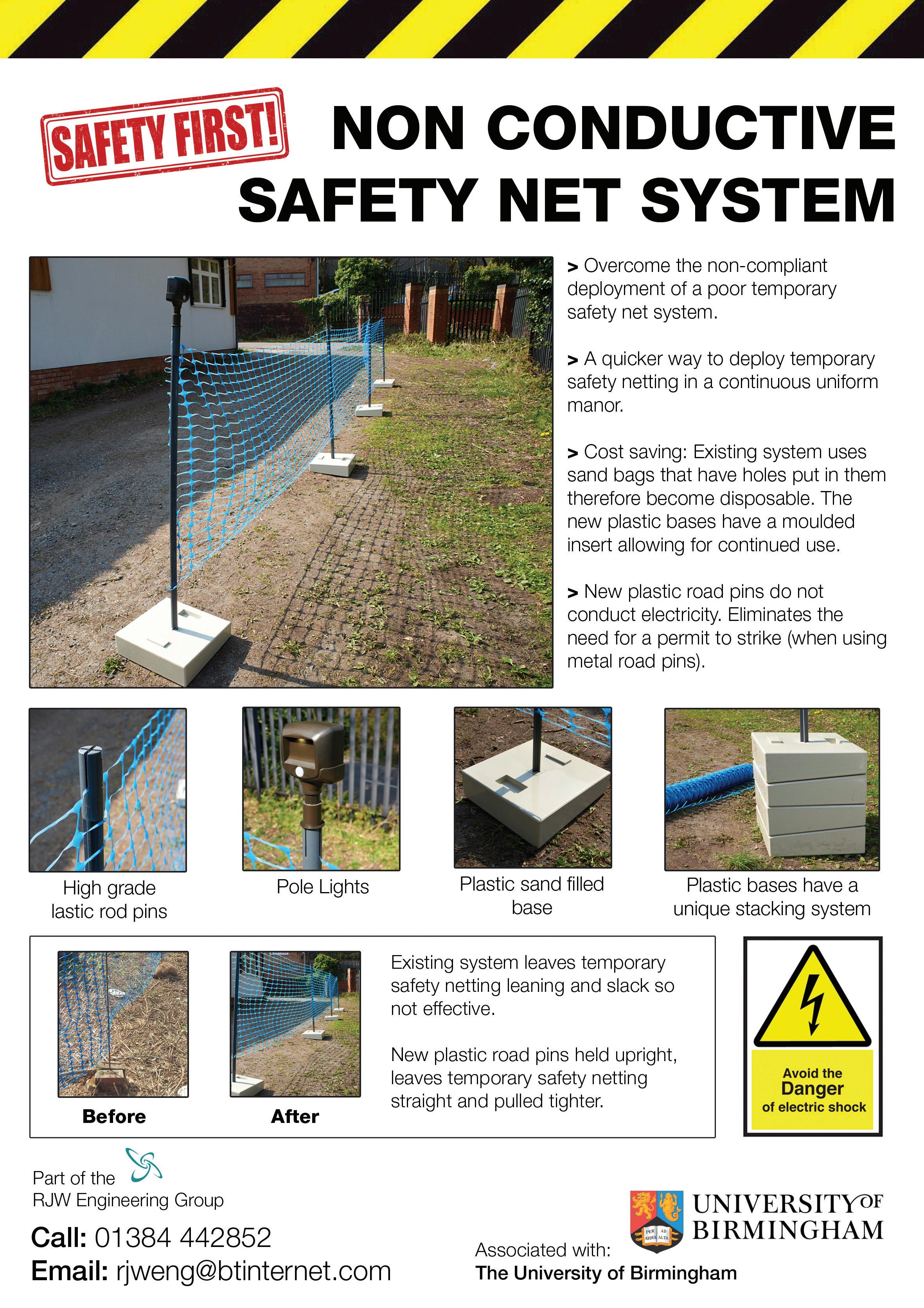

KATE BOYLE GENERAL MANAGER OF ASSESSTECH LTD
Kate Boyle is the General Manager of AssessTech, a leading provider of developmental competence management systems and training solutions for the railway industry. With over 15 years of experience leading teams, Kate is at the forefront of promoting a safety-first culture through effective competence management and continuous professional development.
What was the inspiration behind starting AssessTech?
AssessTech was created to empower railway professionals to take charge of their own competence. By giving them access to clear performance criteria, learning resources, and transparent grading, individuals can see exactly where their strengths and gaps lie. This understanding helps them focus their development, improve performance, and actively participate in preventing incidents. The co-founders of AssessTech (Gabriel Stroud & Jools Enticknap) saw an opportunity for technology to enable a more supportive, coaching-led approach, one that’s about continual development and improvement, rather than simply passing or failing assessments.
Tell us about AssessTech.
AssessTech is a people-first company, with safety at the heart of everything we do. We partner with TOCs to support staff in safety-critical roles and help them build and maintain their competence. We do this through our software platforms, City & Guilds training for assessors and instructors, and specialist consultancy, all of which are designed to help railway organisations manage risk and improve performance through proactive competence ownership and development. Our steadfast commitment to safety excellence ensures our services are aligned with regulatory compliance and best practices.
Tell us about working at AssessTech?
I joined AssessTech in April 2024, and I can honestly say that our ongoing success is due to our genuine commitment to people and safety, an ethos that was established long before my time. Everyone here is fully invested in our purpose: keeping the railway safe. We are all invested in making sure staff and passengers return home safely every day, and we take that responsibility seriously. I’m sure I speak on behalf of the whole team when I say it’s something we’re really proud to be a part of.
What is your Unique Selling Point?
It’s our focus on developmental competence management, ensuring that those working in safety-critical roles in the railway have the confidence to perform their respective roles competently. We’re not just about recording assessments; we’re about helping individuals understand and take ownership of their competence, resulting in increased safety, productivity, and performance, and reduced costs.
What’s next for AssessTech?
We’re focused on continually evolving our developmental competence management services to reflect what our partners need
‘We're not just about recording assessments; we're about helping individuals understand and take ownership of their competence, resulting in increased safety, productivity, and performance.’
and to keep up with industry standards and regulations. Right now, we’re concentrating on closing the loop to fully integrate NTS and Human Factors into competence management. We’re looking forward to continuing to help our partners meet their compliance objectives, support better decision-making, reduce risk, and create a stronger culture of continuous development.
How is your company addressing the increasing importance of cybersecurity in the rail industry?
Security is absolutely central to what we do. As a provider of digital competence management systems, we handle large volumes of sensitive personal data, from assessment records to training history, so protecting that information is a top priority. We're ISO27001:2022 certified, which means we follow a rigorous, internationally recognised approach to information security management. Security is built into our software from day one, right through design, development, and deployment.
In addition, we operate secure hosting environments with extensive data backup, redundancy, and recovery measures. Our clients trust us not only to help them meet their compliance objectives but to safeguard their data every step of the way.
What are some of the biggest challenges your sector currently faces?
One of the challenges the railway has always faced is transitioning from a reactive approach to incidents, accidents, and events to a proactive one. Our software is designed to be proactive. What we now need to do is start harnessing the data we have to become truly proactive. With the changes in the environment at GBR, we need to ensure that data is front and centre, along with how it is interpreted.
What are your thoughts on the balance between automation and human roles in the future of rail operations?
AI (in particular) works in unpredictable ways, and its decisions are based on patterns in data rather than human reasoning. Using AI in safety-critical situations undermines the need for human judgment and open, transparent decision-making, which are essential in such contexts. We believe that in these situations, it’s more important to have reliable, human-centric communication and systems than to process information faster or in larger amounts. The benefits of speed and volume don’t justify the risk of AI making mistakes that are all but impossible to detect in real time.
What do you expect to be the biggest challenges that come from this transformation of the railway industry?
Although there is some standardisation in the industry, each TOC operates in a slightly different way, depending on its operating environment and location. So, the challenge is how to establish agility and best practices across each TOC, ensuring they don’t lose their unique identity, while working towards the common goal of reducing incidents and improving performance on the railway.
Where does AssessTech see itself in the next ten years?
We want to be at the heart of developmental competence across the industry, not just in the UK but globally. Still innovating, still supporting safety and performance, and still putting people first.

ASSESSTECH LTD
AssessTech Ltd is a provider of developmental competence management systems and training solutions for the railway industry.
Founded by Gabriel Stroud and Jools Enticknap, the company works with Train Operating Companies to support staff in safety-critical roles through software platforms, City & Guilds accredited training for assessors and instructors, and specialist consultancy services.
Want to know more about AssessTech?
Tel: 01483 338646
Email: Info@assesstech.com
Visit: www.assesstech.com
Improve performance. Reduce incidents.
Transformative Solutions
Expert-led Training
Competence isn’t just about passing assessments, it’s about continuous growth.
Our training solutions focus on:
• Skills development to close competency gaps
• Engaging, interactive learning experiences for better retention
• Certification & assessment support to maintain compliance
• Upskilling railway professionals for career progression
Our solutions provide railway organisations with real-time visibility of their workforce competence.

Our solutions help organisations to:
• Identify risks before they become issues
• Track and manage compliance
• Optimise workforce training based on data insights
• Improve decision-making with analytics
Tailored Consultancy
Every railway organisation faces unique challenges.
Our consultancy services provide:
• Personalised competence management strategies
• Risk assessments to prevent safety incidents
• Compliance support to navigate evolving regulations
• Change management solutions for digital transformation
Developmental competence management for a safer railway


DANIEL POAD APPLICATIONS ENGINEER AT FUJIKURA EUROPE LTD
Dan completed a four-year engineering apprenticeship with Renishaw and spent nearly a decade with the company working in various sales, development and applications engineering roles before joining Fujikura’s cable engineering team in 2023 to continue delivering intelligent solutions with technically innovative products.
FUJIKURA EUROPE LTD
Fujikura is a Tokyo-based engineering company with over 140 years of history in wire and cable manufacturing. The company employs over 54,000 staff globally and operates across telecommunications, electronics, automotive and medical sectors.
Fujikura's European operations are located south of London. The company is recognized for its research and development capabilities, particularly in optical fibre technology.
Want to know more about Fujikura Europe?
Tel: +44 (0)208 240 2000
Email: sales@fujikura.co.uk Visit: www.fujikura.co.uk
Can you give us some background on Fujikura?
Fujikura is over 140 years old. Its long and established history began with manufacturing wires and since then it has developed technically innovative products for multiple sectors including telecommunications, electronics, automotive and medical. Fujikura even manufactures golf club shafts.
Our global headquarters is in Tokyo and our European base of operations is to the south of London. The company has over 54,000 staff worldwide and is renowned for the quality and reliability of its products. Fujikura is an engineering-led company with R&D at its core and because of a commitment to research and development, has frequently been the first to bring new cutting-edge technology to market, including SpiderWeb Ribbon® – the world’s first intermittently bonded ribbon fibre, in 2016.
When it comes to intermittently bonded optical fibre ribbon cables, we are considered the market leader and our comprehensive portfolio covers multiple designs including pulled, air blown, armoured, and CPR rated. We also manufacture our market leading mass fusion splicers, and Apex splice joints to work alongside the cable, so can offer a complete solution.
Can you tell us a bit about your background and how long you’ve been at Fujikura Europe?
My background is in engineering; I began my career as an apprentice at a world-leading metrology company, where I worked in design, sales, applications engineering. I’ve also worked in technical sales for a supplier of high-quality two-part adhesives, which is what led me into the telecoms sector. I have always been interested in working with highquality, market-leading technologies, hence the appeal of Fujikura.
As an applications engineer working with rail customers, what does a typical day look like for you?
My role is varied and every day is different, but I generally provide training, demonstrations, and technical support to our customers and their contractors who are deploying our ribbon cables. I am also involved with coordinating and supporting new cable designs, such as the recently NRT approved ribbon DISAF (Dual Insulated Shock Absorbing Fibre) for direct laying on ballast.
I also attend various rail events throughout the year covering a host of topics such as compliance, signalling and rail innovations, which is important to keep up to speed with industry topics, and networking with other members of the rail community.
How do you explain the value of Fujikura’s technology to rail customers who may not be familiar with its technical details?
Minimising the time spent on the railway is critical for safety and our technology helps achieve that objective. Our high-capacity Wrapping Tube Cables™ with SpiderWeb Ribbon® can be mass fusion spliced (twelve fibres at a time) with our ribbon splicer, which makes rapid deployment on the railway possible. The design of our cables and fibre plays a key role in making this happen and our Wrapping Tube Cable™ differs from traditional loose tube construction because they are smaller, lighter and contain fibres which are grouped and marked for fast and easy identification to enable fast cable preparation. These design features deliver an initial reduction of deployment time of 75 per cent and enable urgent circuits to be restored quickly in the event of cable strike, which is critical for rail environments.
What kinds of challenges do you face in your work?
Convincing a party to transition away from something that they have used for a long time to new technologies and ideas can present a challenge. Ribbon technology is no different, because traditional loose tube designs have long been the standard for telecoms builders and customers can be uncomfortable changing from this. Thankfully SpiderWeb Ribbon® brings plenty of tangible benefits including faster deployment and lower total cost of ownership, which are hard to ignore.
What technical requirements or constraints tend to shape your customers’ fibre infrastructure decisions?
The railway requires strict compliance versus customer specifications in terms of mechanical properties and practical use given extreme environmental conditions and at times, low light. Being able to manufacture our own fibre is also a big benefit, since we have complete control over the quality and are not reliant on other suppliers. We work closely with our customers to meet their technical
‘Our high-capacity cables deliver an initial reduction of deployment time of 75 per cent and enable urgent circuits to be restored quickly in the event of cable strike.’
‘The railway is, more than ever, heavily reliant on the fibre backbone for operation, safety, and passenger services.’
requirements and our optical fibre ribbon cables are fully certified to the toughest standards, which is why they have been installed in some of the most important transportation networks around the world.
Where do you see SpiderWeb Ribbon® technology making the biggest impact for rail deployments?
It’s the core technology for facilitating and accelerating the digitalisation of railways and mass transit for fibre backbone networks. Digitalisation will improve rail critical applications like signaling and train control, passenger services and will open new revenue streams such as dark fibre leasing, telecoms and premium services.
How important is reliability and long term performance in rail fibre networks, and how does Fujikura address those expectations?
The railway is, more than ever, heavily reliant on the fibre backbone for operation, safety, and passenger services, so a stable, reliable network is hugely important, which is why long-term reliability is a critical directive in the design and manufacture of our railway compliant WTC™.
Is there a rail application which benefits the most from the fibre networks you help deliver?
GSM-R, the current global system for railway communications, will soon be replaced by the new FRMCS (Future Railway Mobile Communication System) based on 5G mobile network technology. The vast volumes of data generated as part of FRMCS will require high-capacity fibre networks to transmit it.
What success have you experienced in the last twelve months and how do you measure success?
As networks are being built in the rail industry, we have seen success with rail and dark fibre providers in Europe as the transition to faster, high-capacity network infrastructure gains pace and our customers put greater focus on building networks that improve their service and unlock new revenue streams.
‘SpiderWeb Ribbon® is the core technology for facilitating and accelerating the digitalisation of railways and mass transit for fibre backbone networks.’
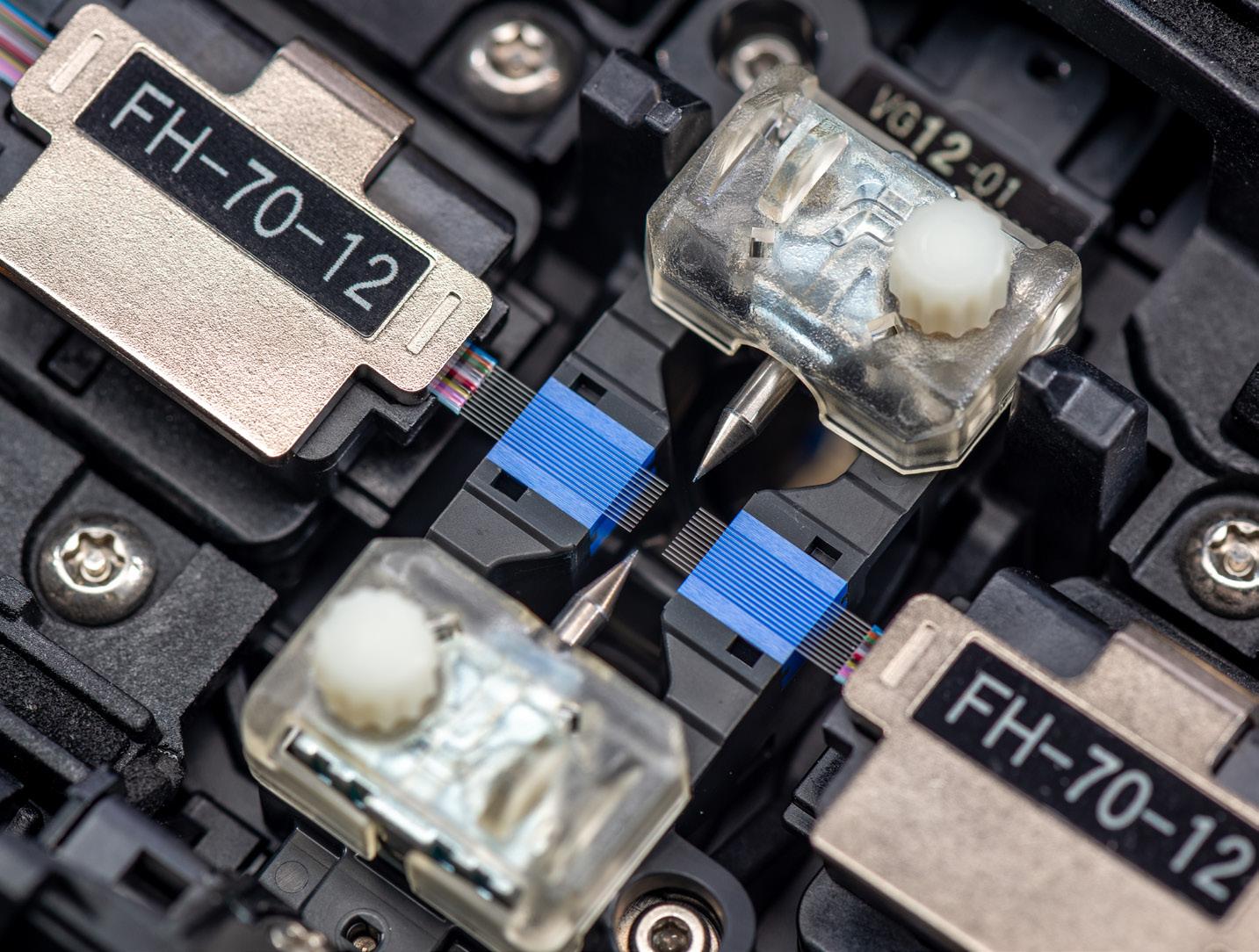
Rail networks are becoming increasingly digital, what trends or technologies do you think will shape the next decade of rail telecoms infrastructure?
As we know, rail telecoms will shift from legacy GSM R to high capacity, low latency 5G based systems such as FRMCS. FRMCS will enable safer, more autonomous, data rich operations that will provide the digital foundation of new functionality and services for passengers and operators.
I think some of the important gains for this will be real time diagnostics, video comms and monitoring and increased automation. I expect the FRMCS system to become integral to functions that support operational efficiency such as timetabling and traffic management, along with systems which monitor trains and flag when they require maintenance, which will contribute to improved safety, a reduction in downtime and ultimately a better experience for passengers.
What does sustainability mean to you?
It means making conscious, practical changes wherever I can like recycling as much as possible, choosing public transport when it’s a realistic option, and being more deliberate about what I buy and why. Fujikura’s overall sustainability strategy comes from the top, but I can make sustainably minded choices in my role such as questioning whether travel is genuinely necessary and looking for lower impact ways to get things done.
I see Fujikura’s work as a meaningful part of the wider sustainability picture. If what I do helps contribute to a more modern, reliable and attractive rail network which encourages more people to choose rail over private transport, then hopefully I’m contributing to something bigger than my day to day tasks.
Has the market grown since the company was established?
The demand for high-capacity fibre is surging and traditional single-fibre cable systems are struggling to keep up. AI, cloud and data centres are generating a huge demand for optical fibre and SpiderWeb Ribbon® is at the forefront of supporting this demand for data services.
‘Minimising the time spent on the railway is critical for safety and our technology helps achieve that objective.’

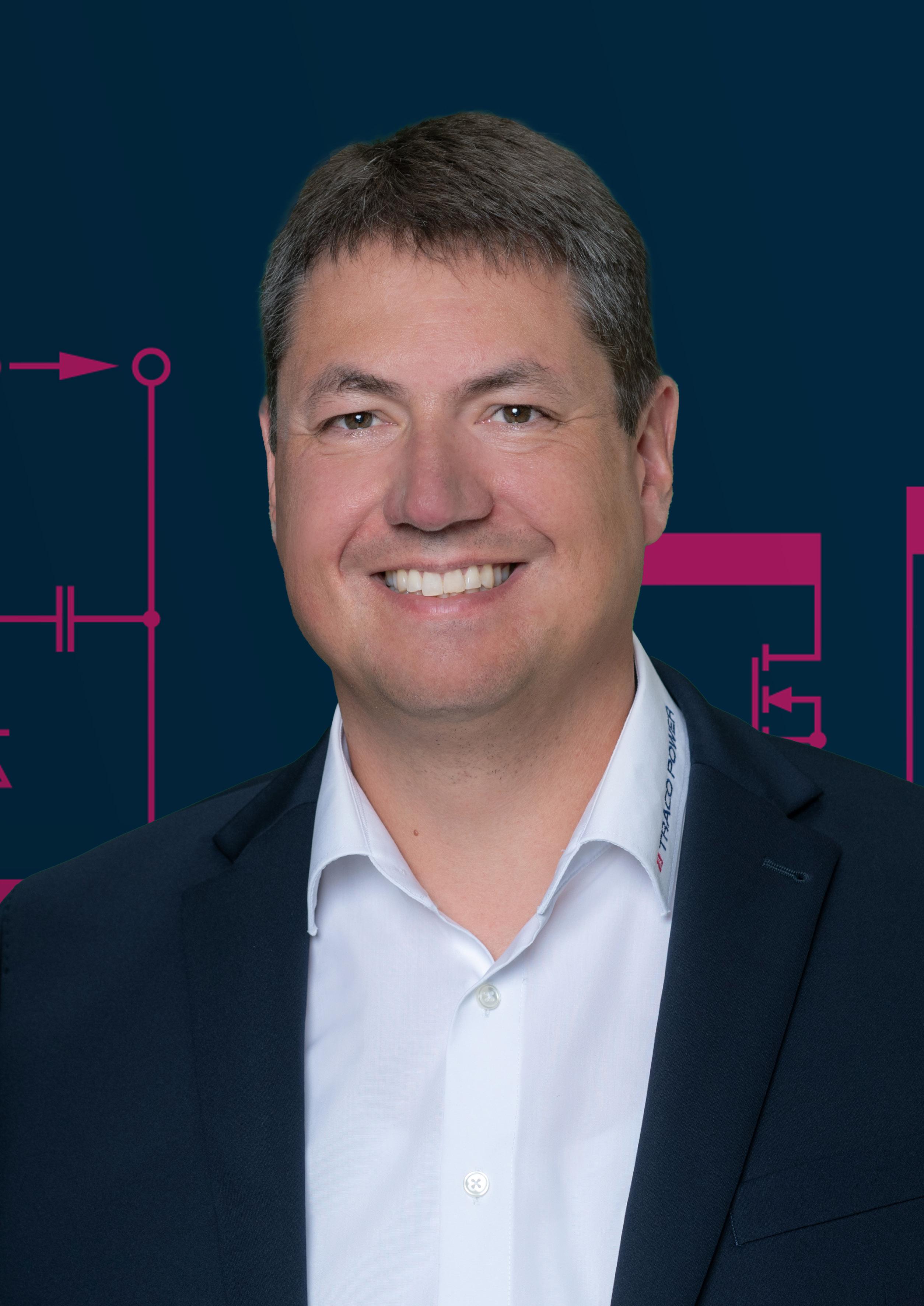
MARTIN TENHUMBERG MANAGING DIRECTOR DACH AT TRACO POWER
Martin Tenhumberg joined Traco Electronic GmbH in 2010 and applies his technical background as an energy electronics technician with advanced engineering studies to support complex power supply projects. He has worked across MSR, railway, medical, and energy applications. Since 2023, he serves as EMEA Railway Expert and Managing Director for the DACH region.
‘One of the major challenges in the railway industry is managing extremely long development cycles and exceptionally long product lifecycles. Railway applications often require power supply solutions to remain available, reliable, and unchanged for decades.’
As a medium sized company focused on long term customer relationships, we are ideally positioned to support these requirements. With our commitment to being Reliable – Available – Now, we provide long term availability, dependable technical support, and stable product roadmaps that fit the unique lifecycle demands of the railway sector. This partnership oriented approach enables us to effectively help our customers navigate these long term challenges and ensure lasting project success.
How long has your company been in business?
TRACO Power has been in business for more than 80 years. The company’s roots go back to 1944, when TRACO Electronic AG was founded in Switzerland. Since then, TRACO Power has evolved into a globally recognised specialist for high quality DC/DC and AC/DC power conversion products.
Over the last decade, we have placed a particularly strong focus on the railway market. This includes expanding our EN 50155 compliant product portfolio, strengthening engineering capabilities for railway applications, and deepening long term customer partnerships. Today, the railway sector represents one of our most important strategic markets worldwide.
Tell us about Traco Power
When did you join the company?
I joined the company in 2010. Since then, I have been working at Traco Electronic GmbH as a Field Sales Engineer and Key Account Manager. With a background as an energy electronics technician, with subsequent studies in electrical engineering, and several years of experience in manufacturing automation, I have successfully supported numerous power supply projects in demanding MSR, railway, medical, and energy applications in close collaboration with our customers.
What is your role within Traco Power?
Since April 2023, I have been serving as the EMEA Railway Expert, and since September 2023, I have taken over the role of Managing Director in Germany, responsible for the DACH market.
What challenges have you faced in the industry?
One of the major challenges in the railway industry is managing extremely long development cycles and exceptionally long product lifecycles. Railway applications often require power supply solutions to remain available, reliable, and unchanged for decades. Ensuring long term product continuity and lifecycle stability is therefore critical.
TRACO Power is a globally active specialist for high quality DC/DC and AC/DC power conversion products, headquartered in Baar, Switzerland. The company operates with a strong international footprint, including dedicated subsidiaries in Europe, North America, and Asia. This global structure enables close customer support, regional engineering expertise, and efficient logistics worldwide.
A key element of TRACO Power’s market presence is its well established international distribution network. We collaborate with a broad range of authorised distributors and sales partners across all major industrial regions, ensuring fast availability, local technical support, and reliable service. Through this global yet lean and flexible setup, TRACO Power is able to provide customers around the world with dependable power supply solutions and long term product continuity.
Which sectors do you work in?
We are active in several key sectors, with the railway industry being one of our most important focus areas. In railway applications, our DC/DC converters are widely used in rolling stock to ensure reliable power conversion under demanding environmental conditions.
Additionally, our AC/DC power supplies are commonly deployed in trackside signaling systems and passenger
information systems, where long term availability and high reliability are essential. Beyond the railway market, our products are also broadly used in industrial electronics, medical technology, and building automation as well as other ruggedised Applications with similar technical demands. Across all these sectors, customers rely on our robust, long lifecycle power supply solutions to support their applications
How have the products and services you offer developed over the years?
Over the years, our products and services have evolved significantly to meet the increasing technical demands of our customers. On the service side, we have continuously expanded our Field Application Engineering team. This allows us to provide even closer support to developers, particularly in areas such as EMI management, system integration, and compliance with railway specific standards. From a product perspective, our development focus has increasingly shifted toward ultra-wide input range solutions. Many of our new railway products feature 12:1 input voltage ranges to ensure maximum flexibility and robust operation in challenging environments. In addition, we implement specialised technologies designed to support extended interruption times, which is a key requirement in modern railway systems.
These advancements reflect our commitment to delivering reliable, future proof power supply solutions that align with the evolving needs of the railway industry and beyond.
What are some major projects you’re currently working on?
We are currently working on several major initiatives that reflect both our product strategy and the evolving needs of the railway market. On the product side, we are developing a new generation of chassis mount DC/DC converters designed specifically for demanding railway applications. These platforms focus on ultrawide input ranges, high robustness, and a fit and forget idea to support next generation system architectures.
In parallel, we are involved in a variety of customer projects across the European railway sector. This includes power supply solutions for ECTS applications, digital interlocking systems, as well as the increasing digitalisation and networking of passenger information systems and driver assistance systems. These projects require highly reliable power conversion and long lifecycle support, areas where our portfolio and engineering expertise provide a strong foundation.
Overall, our current activities combine strategic product development with close customer collaboration to support the ongoing modernisation of the railway industry.
When a client comes to you with a particular problem, what’s your process for coming up with a solution, and how closely do you work with clients throughout the projects?
We follow a highly customer centric approach supported by a strong network of specialised distributors. These partners serve as the first point of contact and provide local expertise to understand the customer’s requirements in detail. Whenever deeper technical clarification is needed, our Field Application Engineering team steps in to support topics such as system integration, compliance, and technical feasibility.
If a standard product is not sufficient to meet all project requirements, we remain the right partner. We offer a broad spectrum of customisation options – from minor modifications to complete new product developments. Throughout the entire process, we work closely with our customers to ensure that the final solution aligns perfectly with their technical, environmental, and lifecycle needs.
This combination of a strong distribution network, direct engineering support, and flexible customisation capabilities ensures that we can guide customers effectively from the first idea to a fully realised solution.
What are some of the biggest challenges your sector currently faces?
One of the biggest challenges in our sector is supporting the rapid growth and modernisation of international rail infrastructure with reliable, efficient power solutions. Railway projects are expanding globally, yet long term planning uncertainty and tight financing often slow down investments in new rolling stock and signaling systems. At the same time, electronics in trains and trackside equipment are becoming more compact, more digital, and more power dense. This increases the demand for highly efficient, robust, and railway certified power supplies. For companies like Traco Power, this creates both opportunity and responsibility: we must provide products that are cutting edge technology while offering long term availability. Aligning innovation cycles with complex, decades long railway planning remains a central challenge in our market.
What are your thoughts on the balance between automation and human roles in the future of rail operations?
I believe the future of rail operations will rely heavily on safe and intelligent automation, and this is both necessary and beneficial. As networks grow more complex and digital systems become standard, automated operations can significantly improve safety, reliability, and efficiency. However, automation does not mean replacing people. Instead, it shifts human roles toward higher value tasks such as system supervision,
‘To stay aligned with global climate goals, the industry must ensure that resources are used effectively.’
Overall, the industry will be more international, more digital, and significantly larger. Rail will become a central pillar of sustainable mobility worldwide, and supply industries will experience robust, long term growth
What role do you see for hydrogen and other alternative fuels in the future of rail transportation?
data analysis, maintenance, and customer focused services. In many cases, automation reduces routine or high risk activities, allowing employees to work in safer and more specialised environments. For the rail sector, the key is to combine robust digitalisation with strong training and upskilling programs. This way, technology enhances operations while employees remain an essential and empowered part of the system.
How have you seen the industry change over the years?
Over the years, I’ve seen the rail industry evolve, but at a noticeably slower pace compared to other technology driven sectors. This is mainly because rail operators rely on highly conservative, proven systems where safety and long term reliability always come first. Product lifecycles of 20 years or more are completely normal, and any change must seamlessly integrate with existing infrastructure. However, the speed of transformation is increasing. Digitalisation, smarter electronics, and modern communication technologies are gaining momentum, driven by the need for higher efficiency, better connectivity, and more sustainable operations. While the industry still moves carefully and methodically, the willingness to adopt innovative solutions is growing. The shift may be gradual, but it is clearly accelerating.
Where do you think the industry will be in the next 10 to 15 years?
The next 10 to 15 years will see the rail industry shaped by significant global growth. In Europe, we will still be addressing a substantial maintenance backlog while simultaneously pushing ahead with the development of a fully integrated pan European rail network. This dual challenge –repairing aging infrastructure while building new, interoperable corridors – will demand enormous investment and innovation.
At the same time, many emerging economies are accelerating their efforts to expand public mobility. Rapid urbanisation and growing populations are driving strong demand for new rail systems, modern rolling stock, and reliable power and signaling technologies.
I see hydrogen and other alternative fuels playing an important but still uncertain role in the future of rail transportation. Today, many diesel powered trains still contribute significantly to the overall CO₂ footprint of the rail sector, and alternative propulsion systems are being explored to reduce these emissions. However, the shift toward hydrogen or other fuels requires very high infrastructure investments, which must be weighed carefully against their long term sustainability and operational efficiency.
To stay aligned with global climate goals, the industry must ensure that resources are used effectively and that any new technology delivers a meaningful reduction in overall emissions. Whether hydrogen will become a long term solution or remain a transitional concept is still unclear. Its future role depends on technological progress, cost efficiency, and system wide feasibility.

TRACO POWER
TRACO Power is a Swiss-headquartered specialist in DC/DC and AC/DC power conversion products with more than 80 years of operating history. Founded in 1944 as TRACO Electronic AG in Switzerland, the company now operates subsidiaries across Europe, North America, and Asia, supported by an established international distribution network.
Want to know more about Traco Power?
Tel: 00 41 43 311 45 11
Email: info@tracopower.com Visit: www.tracopower.com

EN 50155: Isolation and EMC immunity
EN 45545-2: Fire protection
EN 61373: Shock and vibration immunity
Input voltage range: 2:1/4:1/12:1
3-year warranty
For more information, datasheet and certifications please visite our website www.tracopower.com
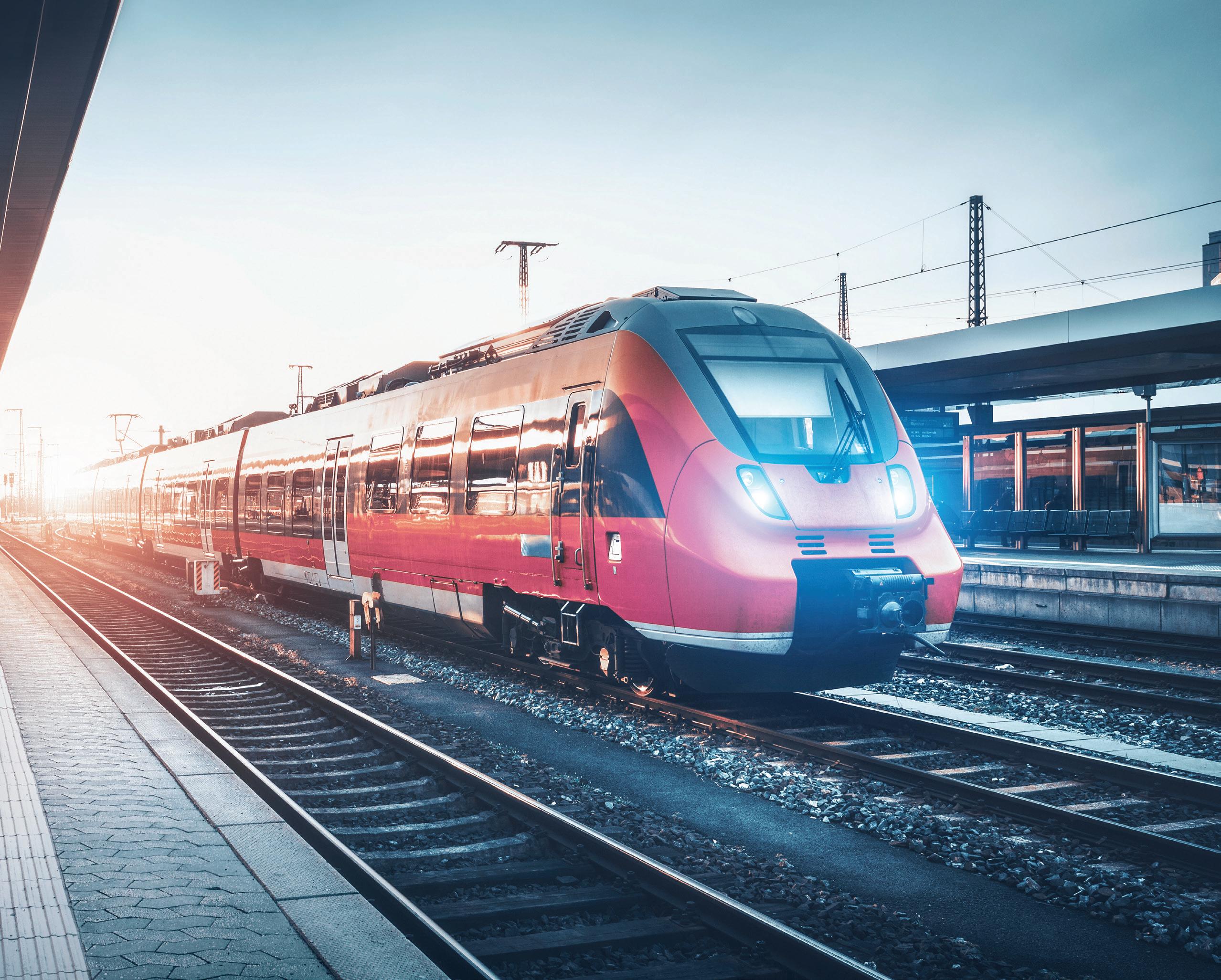
RAILWAY DC/DC CONVERTERS



Off-board



SUBBU BHAT
INTERIM PRESIDENT AND VP OF SOFTWARE ENGINEERING AT TIDEWORKS TECHNOLOGY
Subbu Bhat joined Tideworks in 2025 as Vice President of Engineering. He brings over 20 years of experience developing scalable technology solutions to address complex customer challenges. His expertise spans the design, development, and operation of highly available systems across diverse industries.

TIDEWORKS TECHNOLOGY
Tideworks Technology is a full-service provider of comprehensive software solutions for marine and intermodal rail terminal operations worldwide. Tideworks is now a global technology brand with extensive expertise in cargo transportation operations.
Want to know more about Tideworks Technology?
Tel: (206) 382-4470
Contact: info.tideworks.com/railtos
Visit: Tideworks.com
You joined Tideworks six months ago after two decades in eCommerce and payments at Amazon, Expedia, and GoDaddy. What attracted you to the intermodal rail space, and how does your experience building highly available transaction systems translate to terminal operations software?
What drew me to Tideworks and the rail industry was the opportunity to work on technology with a direct, tangible impact on the global supply chain. The software affects how cargo moves, how people and equipment are coordinated, and ultimately the efficiency and safety of operations. eCommerce focuses on highly available systems, but outcomes are digital. While Tideworks’ platform is a SaaS solution, the results are very much physical. Our customers see real results: more productive moves, on-time delivery, and software that supports day-to-day operations in real time.
My experience building scalable, highaccuracy systems maps directly to terminal operations, where software orchestrates people, equipment, and assets.
IPRO is deployed at over 85 terminals globally, from small conventional facilities to massive automated hubs like BNSF's Logistics Park Kansas City. How do you architect a single platform that scales from minimal to fully automated functionality without becoming bloated or experiencing configuration drift?
IPRO is often associated with fully automated terminals, but it was built to support all rail and intermodal operations. From conventional and semi-automated facilities to large-scale automated hubs like BNSF’s Logistics Park Kansas City, the platform scales through configuration, so the TOS avoids bloat, limits configuration drift, and remains efficient at every level of maturity.
Conventional terminal operators worry that modern TOS will force them into unnecessary workflows that hurt efficiency. IPRO avoids that by preserving existing workflows, roles, and resource models without adding back-office planners. Features are available when they add value and remain out of the way when they do not. For example, outbound loading at conventional terminals often relies on shotgun processes, and IPRO supports that without forcing planning processes designed for larger facilities.
IPRO simplifies what legacy systems make complicated by reducing multiscreen inventory updates to ‘select a container, click where you want it moved’. How do you balance building powerful functionality with maintaining operational simplicity for such diverse user needs?
User interface and usability are among our top priorities. Operators shouldn’t need a
‘Operational simplicity is about removing friction for the people running live terminal operations.’
PhD in computer science to use our systems. Terminals operate in real time, and software has to match that pace rather than forcing operators into multi-step workflows that slow them down. Operational simplicity is about removing friction for the people running live terminal operations.
IPRO is designed around user intent. If an operator needs to move a container, the system makes that action clear and fast. The platform handles the underlying logic. This approach keeps the complexity within the system rather than with the user, supporting a wide range of roles across the terminal, from clerks and equipment operators to supervisors managing the entire operation.
You're building features like blue flag controls that directly impact worker safety. How does developing safety-critical software for physical logistics differ from digital commerce, and what engineering practices ensure the reliability these mission-critical operations demand?
The margin for error is much smaller in physical operations. In digital commerce, a defect might result in a failed transaction or a poor customer experience. In terminal operations, a defect can create dangerous working conditions.
That reality shapes how we design, test, and deploy software. Features like blue flag controls as critical safety systems. We apply strict validation, clear state management, and careful rollout practices to make sure they operate reliably. We also emphasise visibility and transparency so operators and support teams can understand exactly what the system is doing at any moment.
Terminal View takes visibility even further within its interactive 3D renderings of the rail yard. Operators can see where containers, equipment, and personnel are in real time, forecast upcoming activities, and make faster, more confident decisions. With rail yards under increasing pressure to boost throughput, visualisation tools are essential not only for efficiency but for maintaining safety.
Rail networks often run different TOS versions across terminals, making coordination nearly impossible. How are you approaching version consistency and deployment for software controlling physical operations that cannot stop?
Many rail operators come to Tideworks facing this exact challenge. Networks cannot operate effectively if every terminal is running a different version of the TOS. Fragmentation stunts coordination,
‘The biggest improvements will come from building a strong, trusted data foundation, and then applying AI, predictive analytics, and automation.’
support, and innovation, and it can slow operations and create safety risks. With IPRO, the same platform works across fully automated hubs and conventional facilities, allowing operators to simplify operations and keep the network aligned.
We standardise the core platform while making upgrades predictable, incremental, and reversible. Whether a terminal is on premises, in the cloud, or in a hybrid environment, the goal is the same: maintain operational consistency, ensure safety, and keep rail yards running smoothly.
Tideworks’ BUOY solution allows operators to install, configure, and manage software across multiple terminals. BUOY acts like an app store for the TOS,
integrating with tools like Jira to enforce version control and reduce the risk of errors. With BUOY, operators can execute upgrades in hours, while maintaining operational consistency, minimising risk, and keeping rail yards safe.
You're working with major customers like CSX, BNSF, and Canadian National where downtime halts supply chain infrastructure. How does this operational criticality influence your engineering philosophy and team structure?
When downtime stops supply chains, engineering decisions have immense consequences. This reality shapes how we build technology and teams. Our engineering, Professional Services, support teams, and customers work closely. Terminal software must reflect real workflows and cannot be developed in isolation from operations.
We invest in people who understand both technology and the terminal environment. Our focus is on building and supporting systems that are stable, reliable, and maintainable. In large-scale infrastructure, stability and visibility are just as important as speed, because both operators and support teams need software they can
depend on to keep rail terminals safe and running smoothly.
Where do you see the biggest opportunities for technology to transform rail terminal operations over the next three to five years, and what lessons from digital commerce evolution should rail logistics be paying attention to?
The next phase is about intelligence and coordination. Many terminals already have digital systems, but many are fragmented. The biggest improvements will come from building a strong, trusted data foundation, and then applying AI, predictive analytics, and automation. We can automate processes such as planning or gate operations, but those transformations have to be purposeful and guided by the data.
A modern terminal operating system acts as a unified platform. Unlike isolated point solutions, a platform allows terminals to scale operations, integrate AI-driven planning, and expand automation. By investing in a flexible, extensible TOS built on reliable data, terminals can improve efficiency, safety, and decision-making across the rail terminal while remaining ready to adapt as volumes, technology, and operational needs evolve.
INSTANT FIX FOR BLOCKED PUMPS
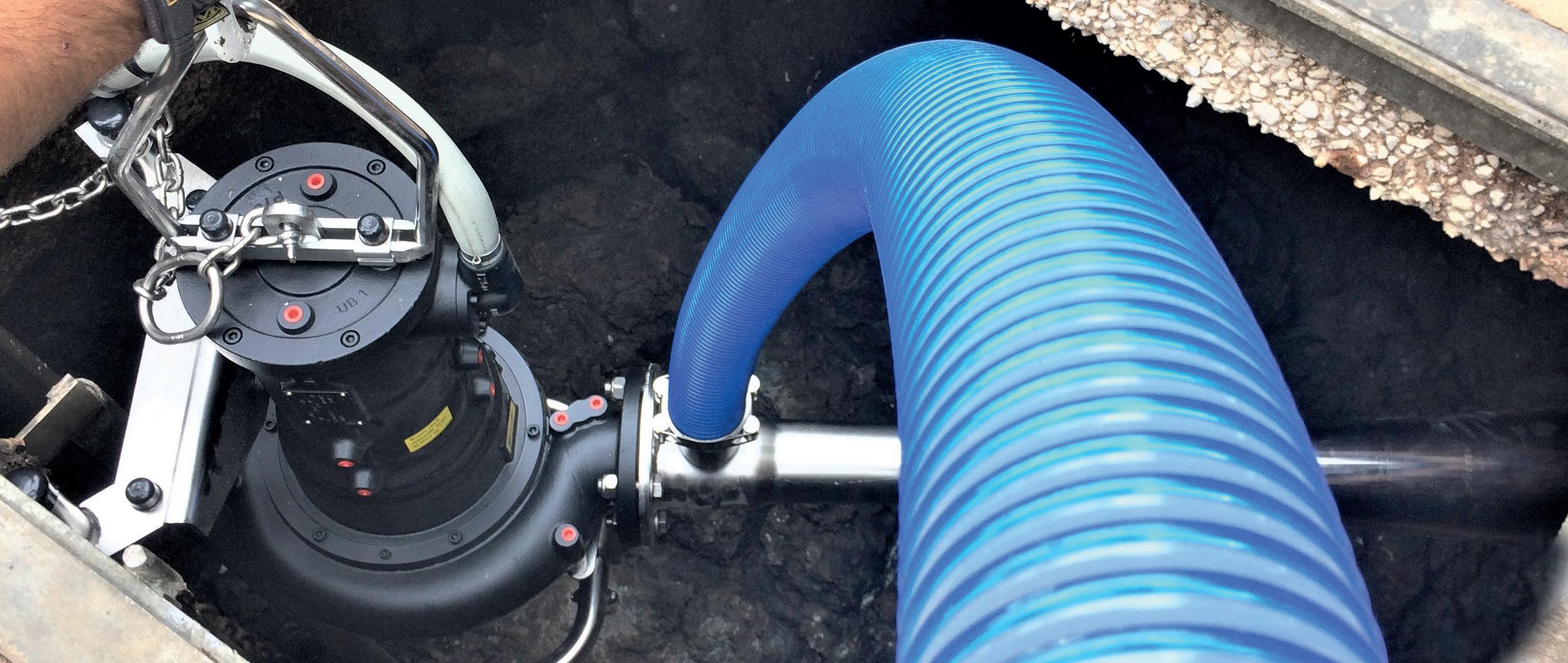
Blockage problems caused by solids at your Pumping Station can now be solved by our plugand-play solution that requires no additional infrastructure.
www.landia.co.uk/case-studies
Landia Reaches Milestone
Towering Landmark for Landia Pumps and Mixers
with 100,000 custom-built units sold

Leading pump and mixer manufacturer Landia has completed the sale of its 100,000th unit.
Established in 1933, the company has earned an enviable reputation for the longevity of its equipment.
From humble beginnings, making slurry pumps for farmers, Landia now designs pumps and mixers for numerous industries, including municipal wastewater treatment, biogas and food – as well as maintaining and growing its near century-old working relationship with the farming community.
In 1950, Landia invented the world’s very first Chopper Pump, and to this day, the design remains simple yet highly effective for dealing with hard to handle effluents and slurries. The proven Landia aeration system

(AirJet) and the Landia GasMix (biogas digester mixing system) have the Chopper Pump design classic as an integral part of their operation.
‘We know that there are some big manufacturers in our industry with very high volumes of sales’ said Liz Robinson, Landia UK’s Operations Executive. ‘But we don’t sell off-the-shelf. We build to order. Every pump and mixer matters, and is traceable back to the individual skilled craftsman who built it. Landia engineers take huge pride in building truly reliable products of top quality.’
She added: ‘Reaching this major milestone in the company’s history with tailor-made solutions for the precise needs of our customers is therefore all the more remarkable. As a company, we continue to grow year-on-year.’
The 100,000th Landia unit, which is a DG-I 80 4.0kW 1500rpm submersible chopper pump, is on its way to a leading fluid handling solutions provider in the Midlands who supplies, installs and maintains pumping systems across the UK.
Landia now sells all over the world with bases in the UK, Germany, China, America, and head office in Denmark.

Tel: 01948 661 200
Email: info@landia.co.uk
Visit: www.landia.co.uk
The Railway Industry Supplier Excellence (RISE) Awards celebrates the talent and achievements of the UK rail supply community.
The ceremony will take place at RIA’s seventh Annual Dinner on 25 June 2026.
Nominations are open!
Deadline for nominations is 13 March 2026

Scan or visit
www.riagb.org.uk/RISE26

The RIA RISE Awards
The Railway Industry Association (RIA)’s imperative is to champion a sustainable, diverse and innovative UK rail supply chain
As the voice of rail suppliers, RIA collaborates with members and key stakeholders to form strong partnerships, as well as deliver excellent outcomes across all areas of the industry.
Throughout RIA’s 150-year history, the organisation has witnessed firsthand the expertise, dedication and creativity which underpins the success of the rail sector. Their Railway Industry Supplier Excellence (RISE) Awards provide the perfect platform to showcase these achievements.
Going the extra mile
A must-attend event in the rail calendar, for both suppliers and the wider industry, the RISE Awards celebrate the best and brightest of the sector, reflecting the ‘going the extra mile’ mentality that embodies the dynamic workforce which keep the railways moving. All winners of the RISE Awards, whether organisations or individuals, exemplify this excellence across the sector and have been recognised for the professionalism and commitment to the advancement of the UK rail supply chain.
Reflecting on the past
RIA’s 2025 RISE Awards, held alongside RIA’s Annual Dinner last summer, celebrated numerous companies across a range of categories, including major infrastructure projects and modern technology to internal practice and partnerships across the sector.
Gloria De Piero hosted the evening, and Sir Andrew Haines OBE, then the Chief Executive of Network Rail, delivered a keynote address, commending the lasting and ongoing constructive partnership between RIA and Network Rail. Attendees then enjoyed a three-course dinner and entertainment, marking an evening that forged industry connections and honoured the achievements of the past year.
Looking to the future
The 2026 RISE Awards will be at the Sheraton Grand London Park Lane on 25 June. Once again, the evening will bring together the rail supply community and honour the proactive and forward-thinking creativity that powers the sector.
Entries for the 2026 Awards are open. The entry deadline is 5pm GMT on Friday 13 March.
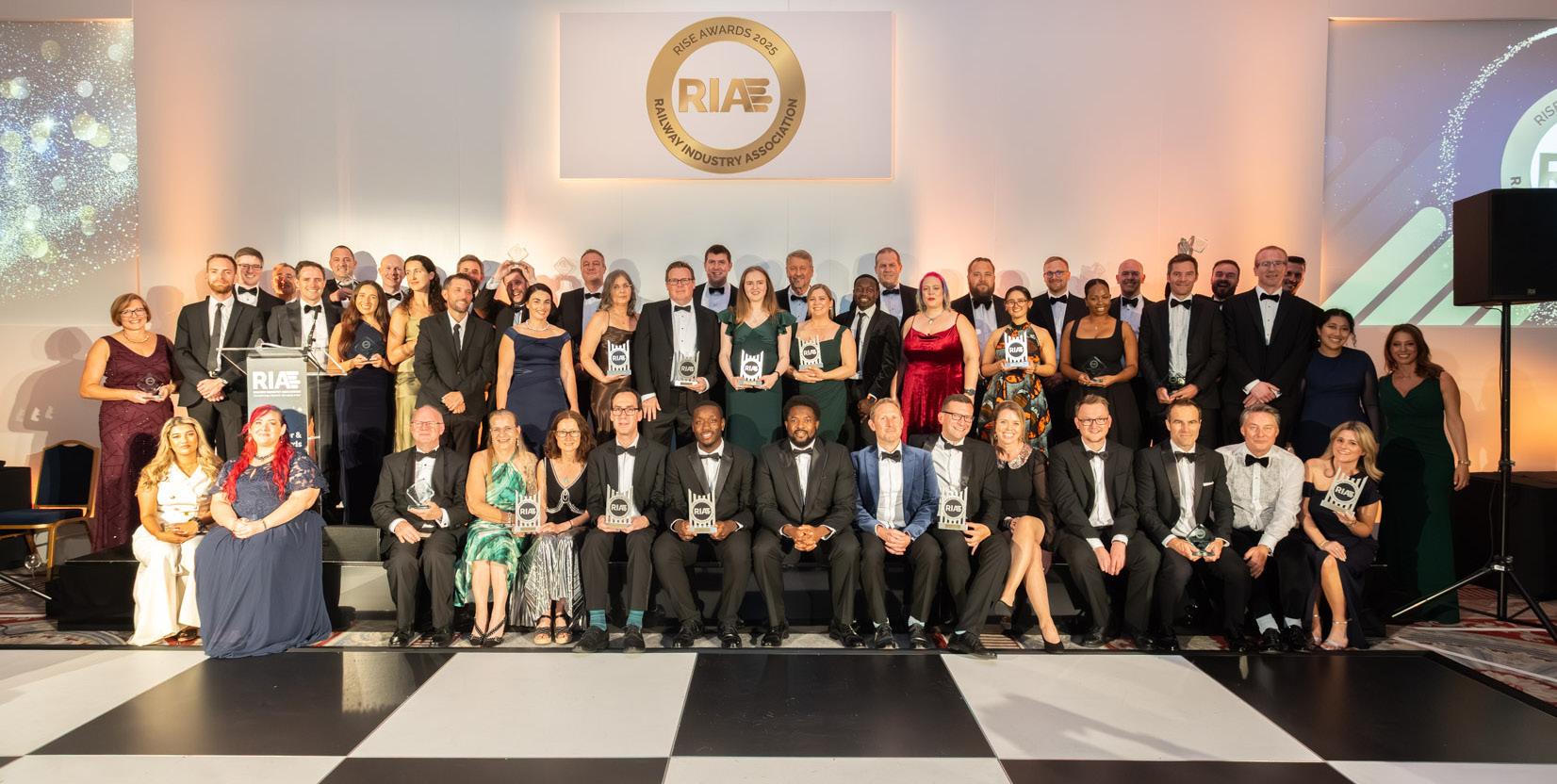
Award categories
The 2026 Awards will recognise excellence across the following categories:
• Application of Digital Technology Award – Recognising the use of digital technology to deliver success for businesses and customers.
• Employer of the Year Award –Celebrating organisations that demonstrate exemplary employment practices benefiting staff and customers.
• Environmental, Social & Governance (ESG) Award – Recognising leadership in environmental responsibility, stakeholder engagement, and corporate governance.
• Equality, Diversity & Inclusion (EDI) Award – Honouring organisations making significant progress in embedding and promoting equality, diversity, and inclusion.
• Innovation Award – Celebrating organisations and individuals advancing innovation within the railway industry.
• Partnership Award – Recognising successful collaborations between suppliers, or between suppliers and clients, that deliver outstanding results.
• Safety Award – Honouring excellence in health and safety achievements or contributions to safer rail operations.
• SME Exporter in Rail Award –Recognising SMEs that have successfully expanded into international markets.
• SME Growth in Rail Award – Celebrating growth in sales, headcount, and profitability within the SME sector.
• Wellbeing Award – Recognising organisations that promote positive mental health and wellbeing in the workplace.
• Individual categories (free to enter):
• Employee of the Year Award –Recognising an individual who demonstrates exceptional contribution and commitment within their role.
• Rising Star Award – Celebrating an emerging professional whose achievements reflect ongoing development and future leadership potential.
How to enter
Full details of the 2026 RISE Awards, including entry criteria and submission guidelines, are available on the RIA website at www.riagb.org.uk/RISE26. For your entry to be considered, please submit by 5pm GMT on Friday 13 March. Organisations interested in sponsoring an award category are invited to contact events@riagb.org.uk for further information.
Tel: 02072 010 777
Email: events@riagb.org.uk
Visit: www.riagb.org.uk
Train Lifting Systems and Jacks
What rail lifting equipment do you need to lift bogies and trains for maintenance and servicing?
Working with heavy-duty vehicles comes with its own challenges. But when you're working in rail, everything is amplified: the weight, the size, and the consequences of any hazards.
If you're running a rail depot that needs to lift rolling stock, you need the strongest and safest rail lifting equipment around. Here's what you need to get started.
Bogie Lifting Platform
Compared to some parts of the train, a railway bogie can be one of the most complex and component-dense parts of a rail system. Between the wheels and axles and suspension, there’s a lot going on – and that means it’s one of the most commonly serviced and maintained parts of a train. That’s why lots of rail depots invest in specialised equipment designed specifically for working on bogies – like the Totalkare Bogie Lifting Platform.
It’s a self-contained mobile unit that runs on rails with a battery-driven motor controlled by a wireless remote, sliding underneath a railway bogie and raising it up on an electrohydraulic lifting system.
With the bogie safely raised above the tracks, your teams can get the access they need to the critical components and systems that need servicing – before safely lowering the bogie back into operation on the tracks.
So how much can it lift?
Our railways bogies come with lifting capacities between 6,000kg and 14,000kg –which means they’re a perfect fit for lifting almost any single railway bogie you’re likely to see in your depot.
Railway Lifting Jacks
If you’ve seen the industry-leading mobile column lifts, you’ll know exactly how the Railway Lifting Jacks work.
Each mobile column gets wheeled into position and attaches to the train carriage to form a set of lifts that work in tandem –safely raising entire carriages (or trains!) to the height your teams need to gain access to its components.

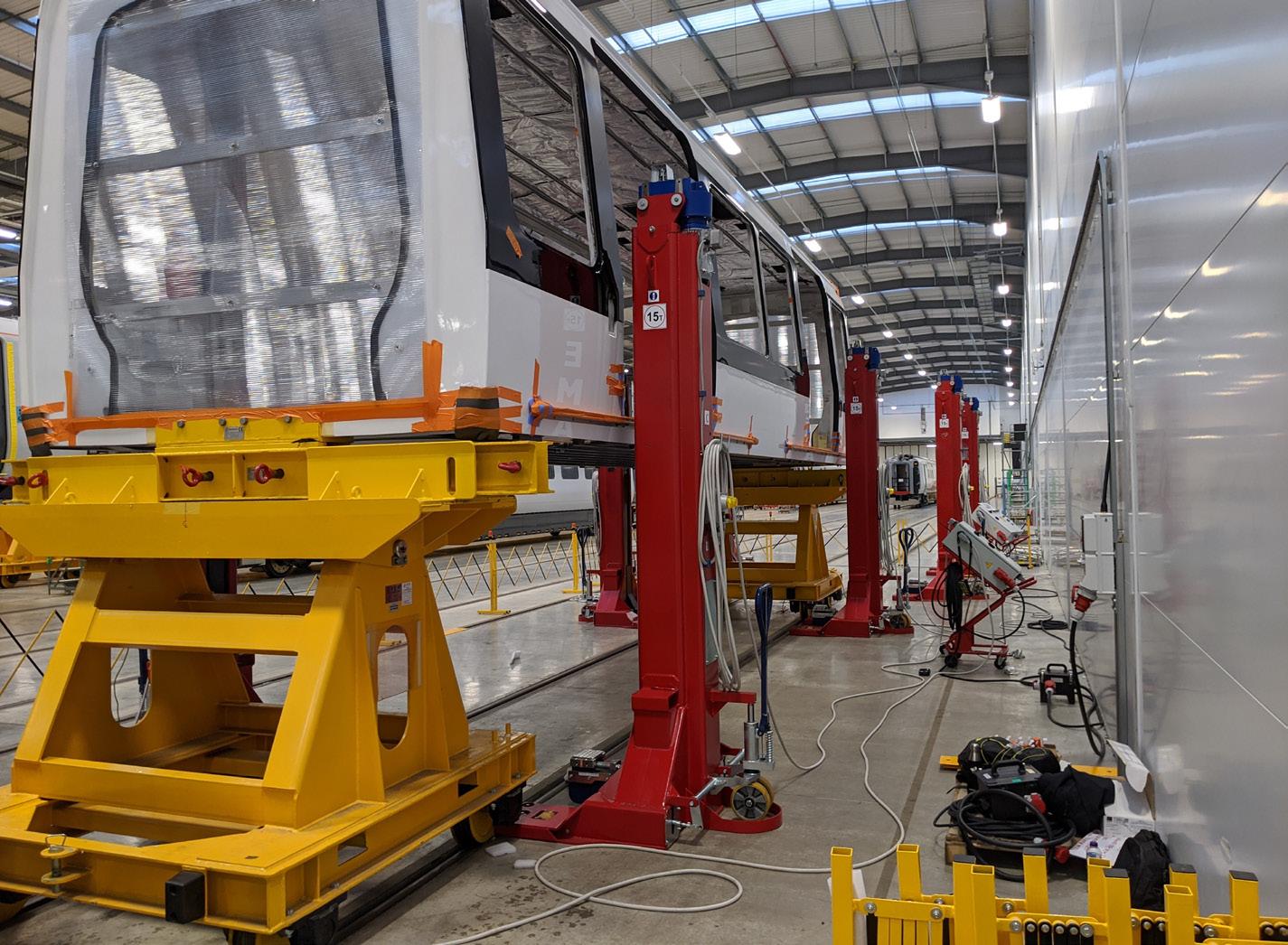
How much can you lift?
Each column in the railway lifting jacks comes with a range of lifting capacities –from 5,500kg up to 50,000kg.
But unlike the vehicle column lifts (which come in sets of up to eight), these railway jacks can be configured in sets as large as 128 columns – giving you a potential total lifting capacity that can be as high as 6.4 million kg!
The below table shows how it works in practice. With enough railway jacks working in tandem, you can lift anything from a single carriage or a series of cars – right up to a full-length train.
So how does it work?
With a computerised control unit (operated with a Wi-Fi remote), you can perfectly synchronise up to 128 columns to lift and lower as a group – with low-tension control and emergency stop buttons for safety.
And the result?
Your teams can safely service some of the biggest trains on the tracks today – without any need to split the carriages apart.
Looking to make some upgrades to your rail depot?
Totalkare is known for its industry-leading equipment designed for heavy-duty vehicles. But the company has also been serving the rail industry for years – taking every innovation and advance from the road industry, and applying that to its equipment and services for rolling stock. So if you’re running a rail depot and you’re looking to lift, take a look at the full range of rail depot equipment – or talk to an expert to help you find what you need.
Tel: 0121 585 2724
Email: sales@totalkare.co.uk
Visit: www.totalkare.co.uk
With 5,500kg columns With 50,000kg columns No. of columns 4 32 128 4 32 128
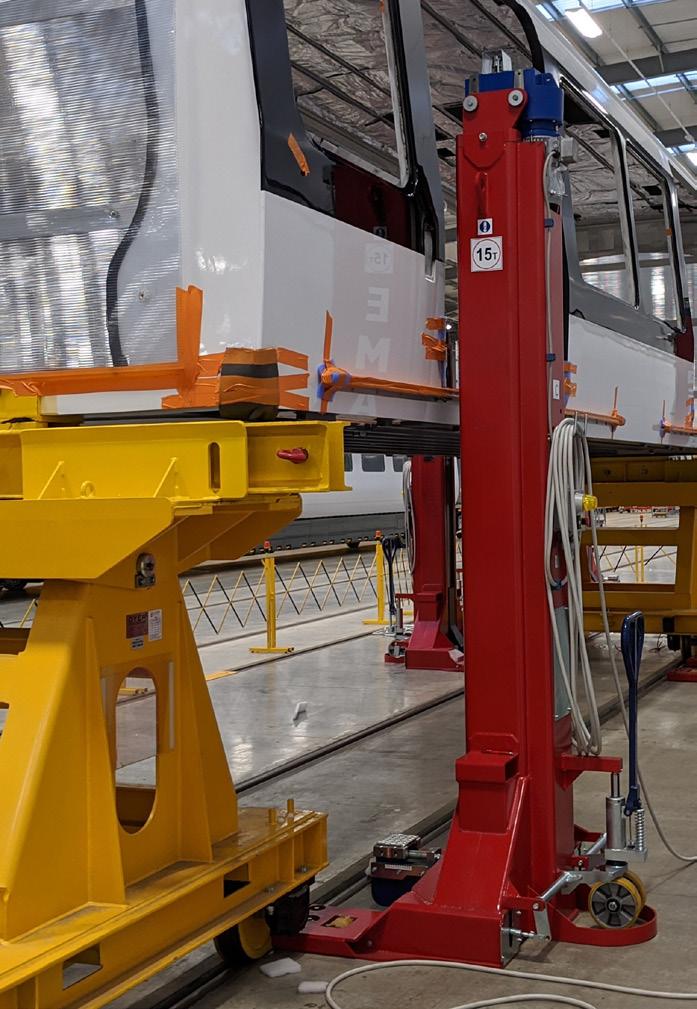
RAIL LIFTING JACKS & PIT EXPERTS
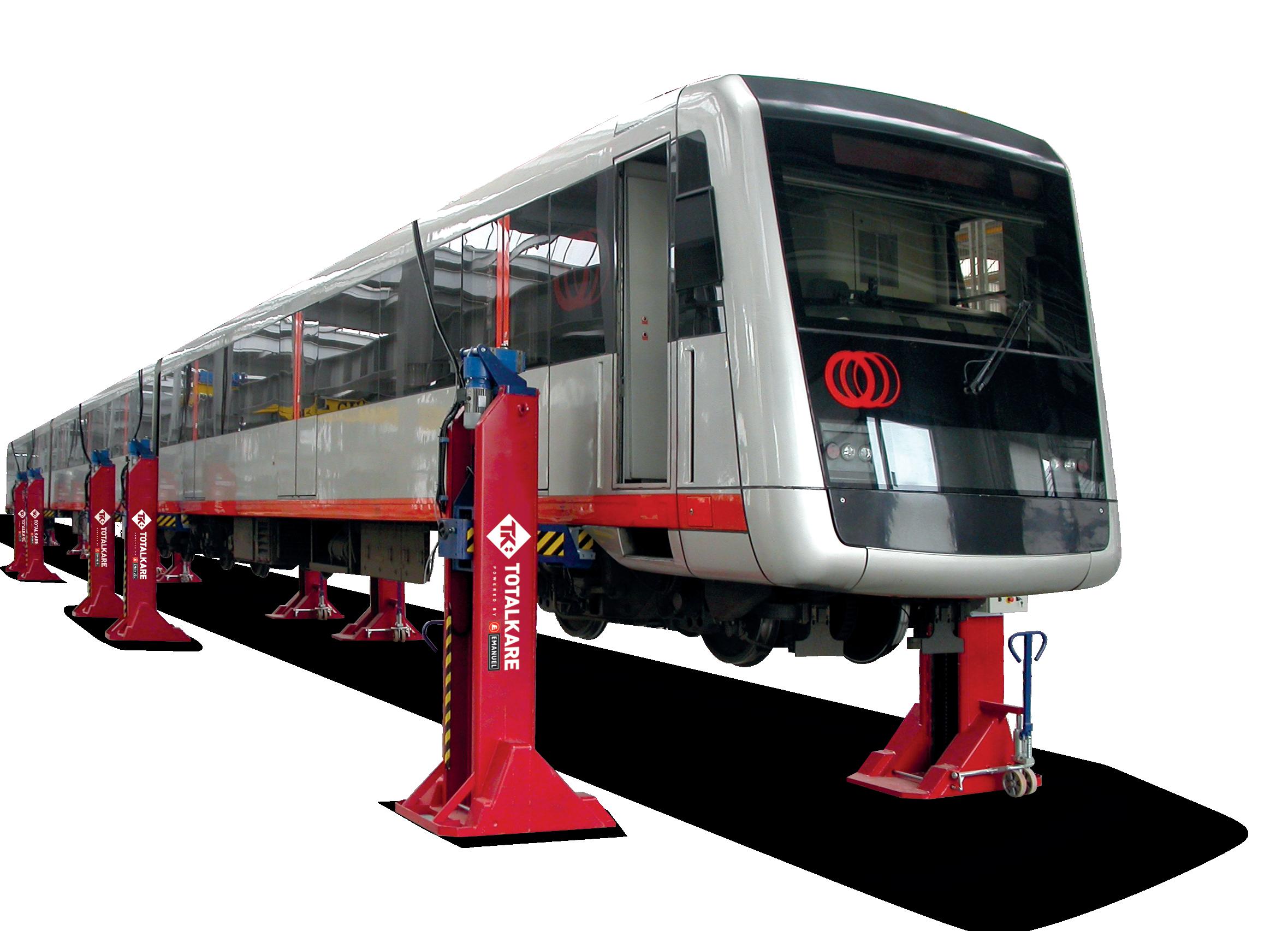

The Chartered Institute of Logistics and Transport has appointed a Chief Executive Officer
The Board of Trustees of The Chartered Institute of Logistics and Transport (UK) has appointed Helen Hardy as Chief Executive Officer, following a successful seven-month period as Interim CEO. During her time as Interim CEO, Helen has worked closely with members, volunteers and staff, ensuring organisational stability while maintaining momentum across the Institute’s strategic priorities.
The Rail Safety and Standards Board
appointed
to the
Board as an Industry Non-executive Director (Suppliers).
Sheena Smith is a founding Director and Technical Director for Assurance of Anturas Consulting, who specialise in programme management and initiation and technical assurance services for complex infrastructure projects, particularly in the rail sector. Sheena has more than 25 years of experience supporting large infrastructure projects and is a Chartered Engineer and Chartered Quality Professional. She is a specialist in rail system safety and contributes to the company's strategic direction in the UK and globally.
Expert in learning and development join LRSSB team
Marlene Pearson-McGrath has joined the Light Rail Safety and Standards Board as Head of Learning and Competence. She joins from Edinburgh Trams, where she previously worked as Training Manager. With more than 20 years’ experience in learning and development, over the past twelve months, Marlene has also helped develop a sector-wide ‘Skills Hub’ during a part-time secondment to the LRSSB. Holding Chartered status with both the Chartered Institute of Personnel and Development (CIPD) and the Chartered Management Institute (CMI), Marlene will be responsible for the further evolution of the sophisticated online platform that aims to standardise competencies across the sector.

Cross-industry working drives better use of data ahead of GBR
A new Head of Integrated Data Strategy has been appointed to work across Greater Anglia and GBRX. Leon Kong’s appointment is part of a wider effort by publicly owned operators and GBRX to share expertise from local delivery and scale proven initiatives across the industry ahead of Great British Railways. Leon brings a strong track record of delivering data driven improvements through his work at Greater Anglia, including recent work to make passenger count data more accessible and usable for customer service and train planning teams.
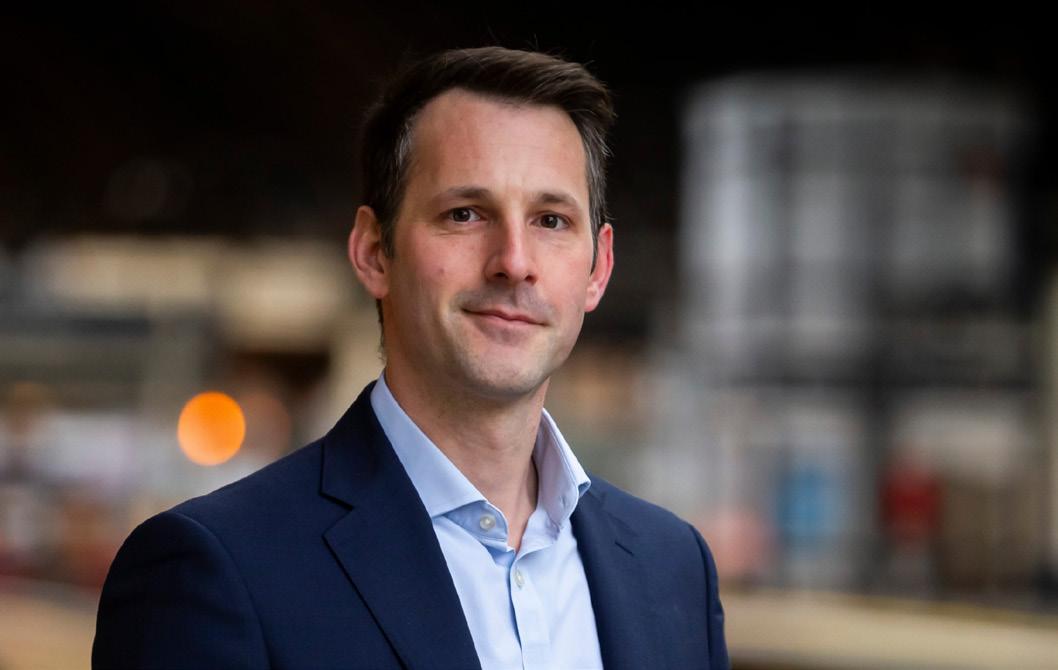
Northern appoints Director of New Rolling Stock Programmes
James Howard has taken charge of Northern’s plan to buy hundreds of new trains having recently been appointed as the train operator’s Director of New Rolling Stock Programmes. James first joined Northern in 2011, as a business analyst and auditor. He moved to Stagecoach in 2016 and spent two years with the company’s rail franchise bid team.
He returned to Northern in 2018 and since 2020, when Northern was brought back under public control, he has been involved in developing the operator's new rolling stock strategy.
RSSB appoints Non-executive Director
(RSSB) has
Sheena Smith
RSSB

STAUFF Line
Air horn systems, Wash wipe systems

Pantograph systems
Inter-car hose assemblies
Waste disposal, Full pneumatic pipework systems
Seating framework, Grab rails and luggage racks
Body to bogie pipework, Levelling valve systems
A comprehensive range of quality products and innovative services, delivered to production line side for rolling stock OEMs.
Presented in kit form, tested and ready for immediate installation, reducing logistic, production and inventory costs.
STAUFF Line
The STAUFF Line process is adopted by global OEMs to successfully achieve cost savings in rolling stock manufacture.
A comprehensive range of quality products and innovative services, delivered to production line side for rolling
Presented in kit form, tested and ready for immediate installation, reducing logistic, production and inventory costs.
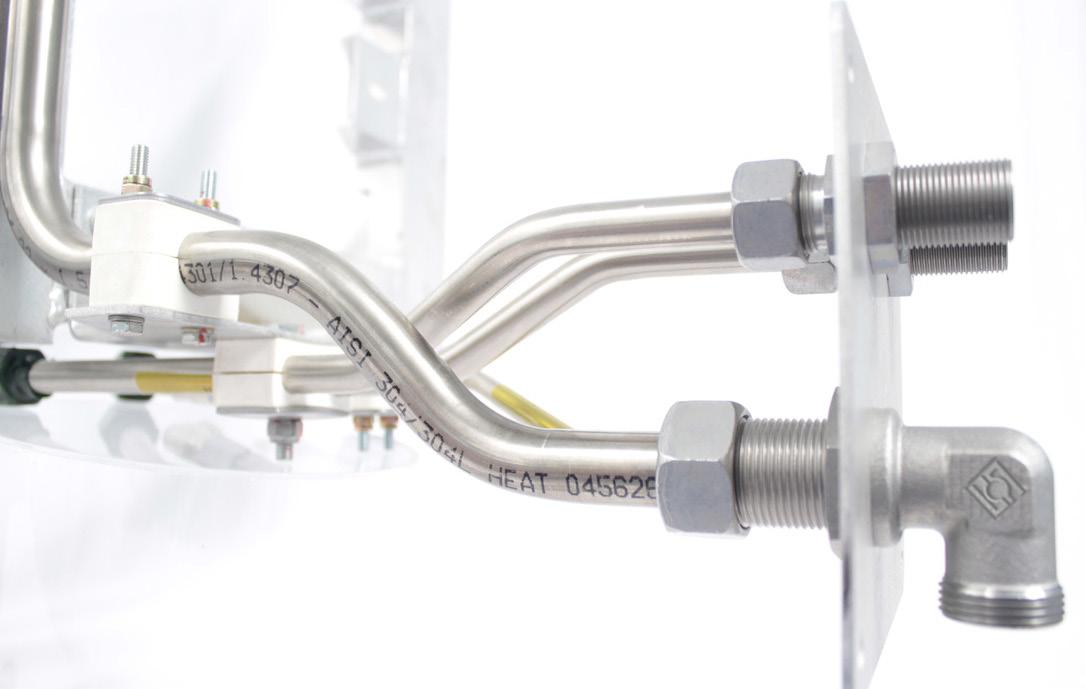
AUFF Line p adopted by global OEMs to successfully achieve cost savings in rolling stock manufacture.

Braking systems, Sanding HOSES
Door operating systems, Door handles