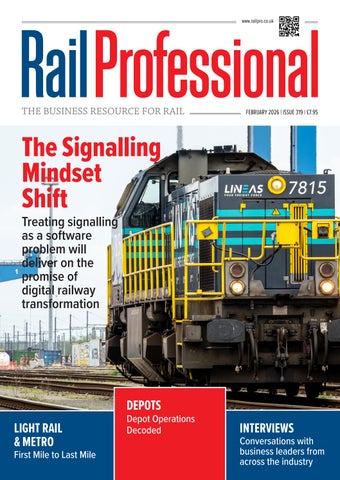
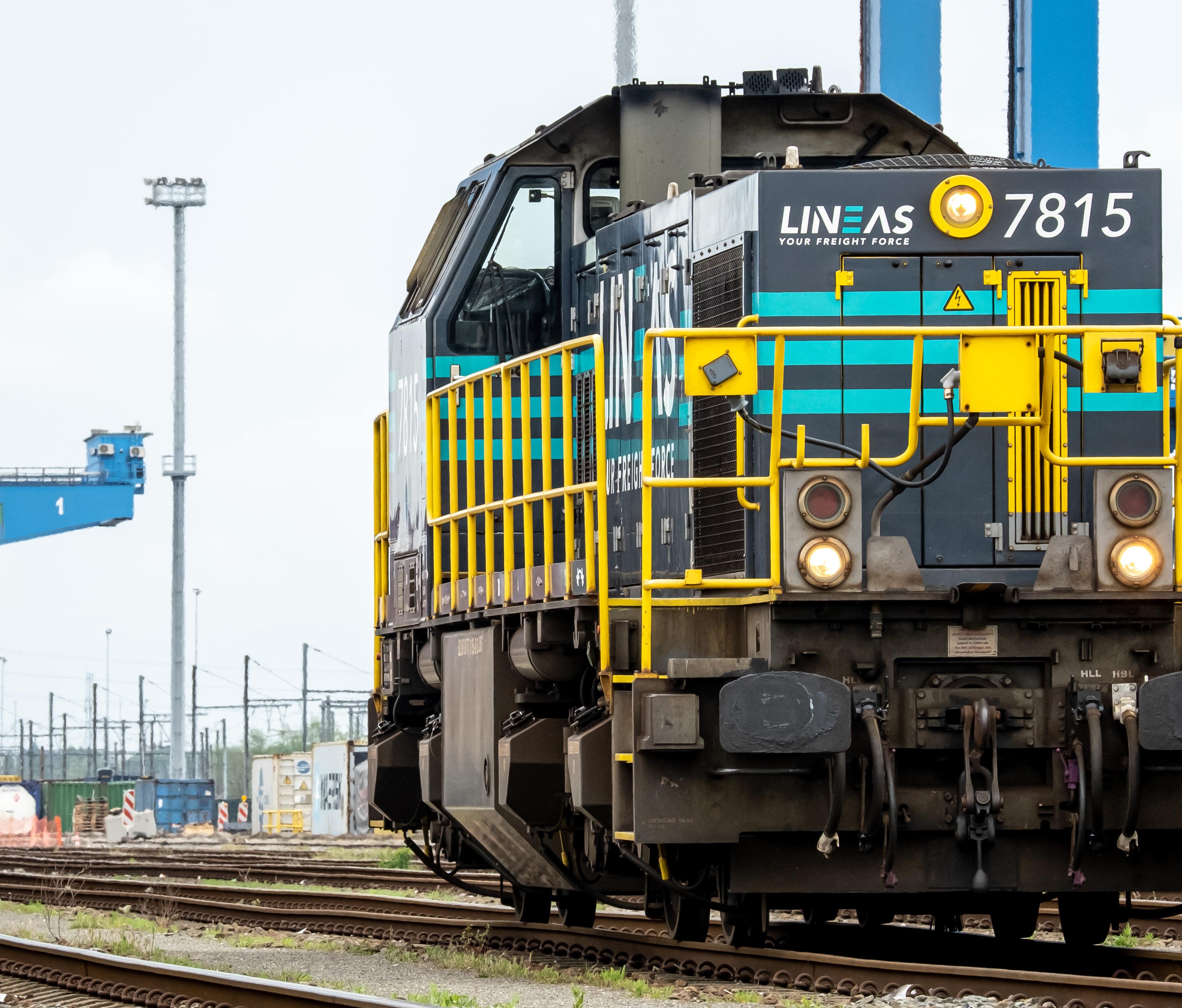
Treating signalling as a software problem will deliver on the promise of digital railway transformation
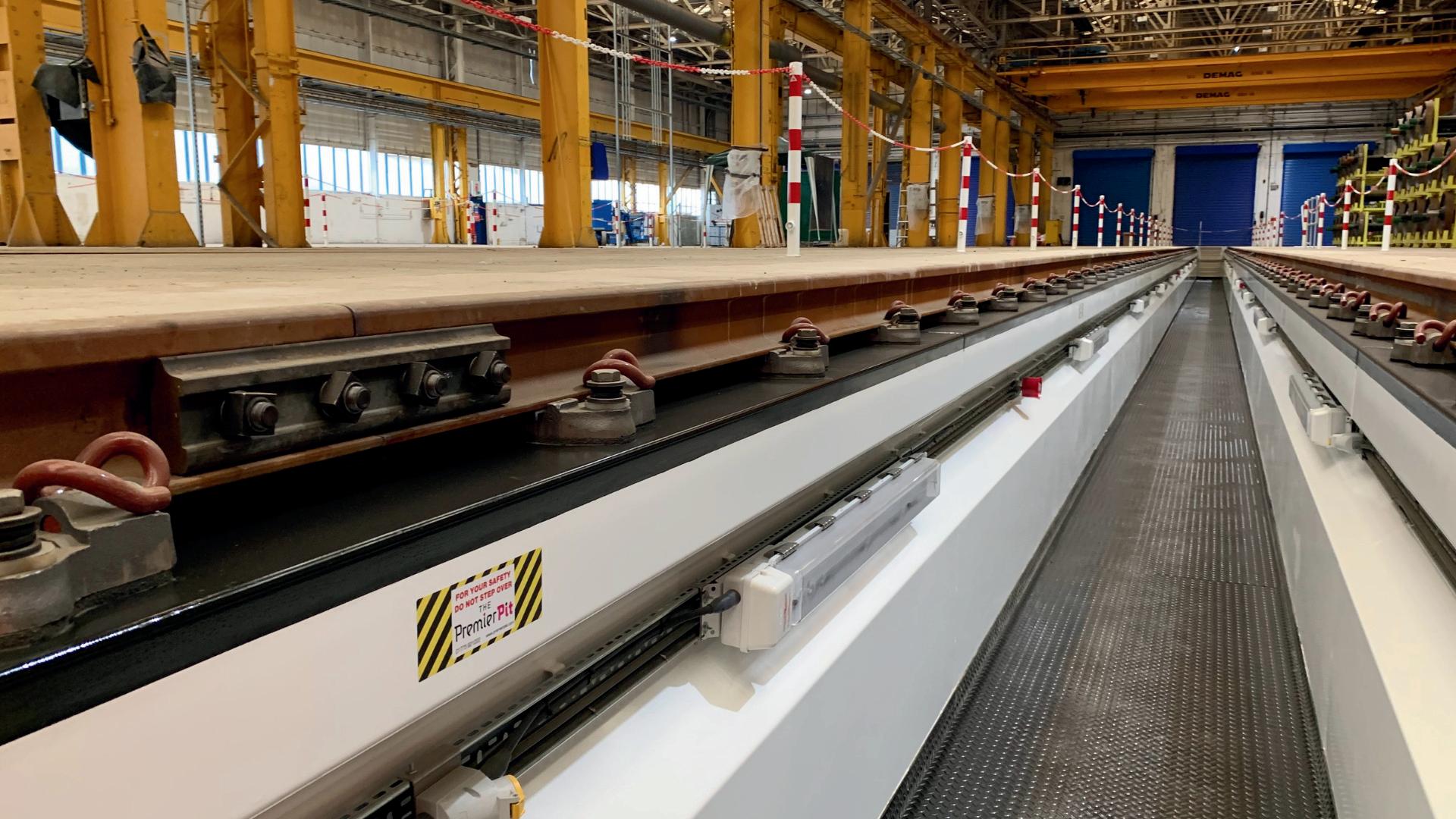
Depot Operations Decoded
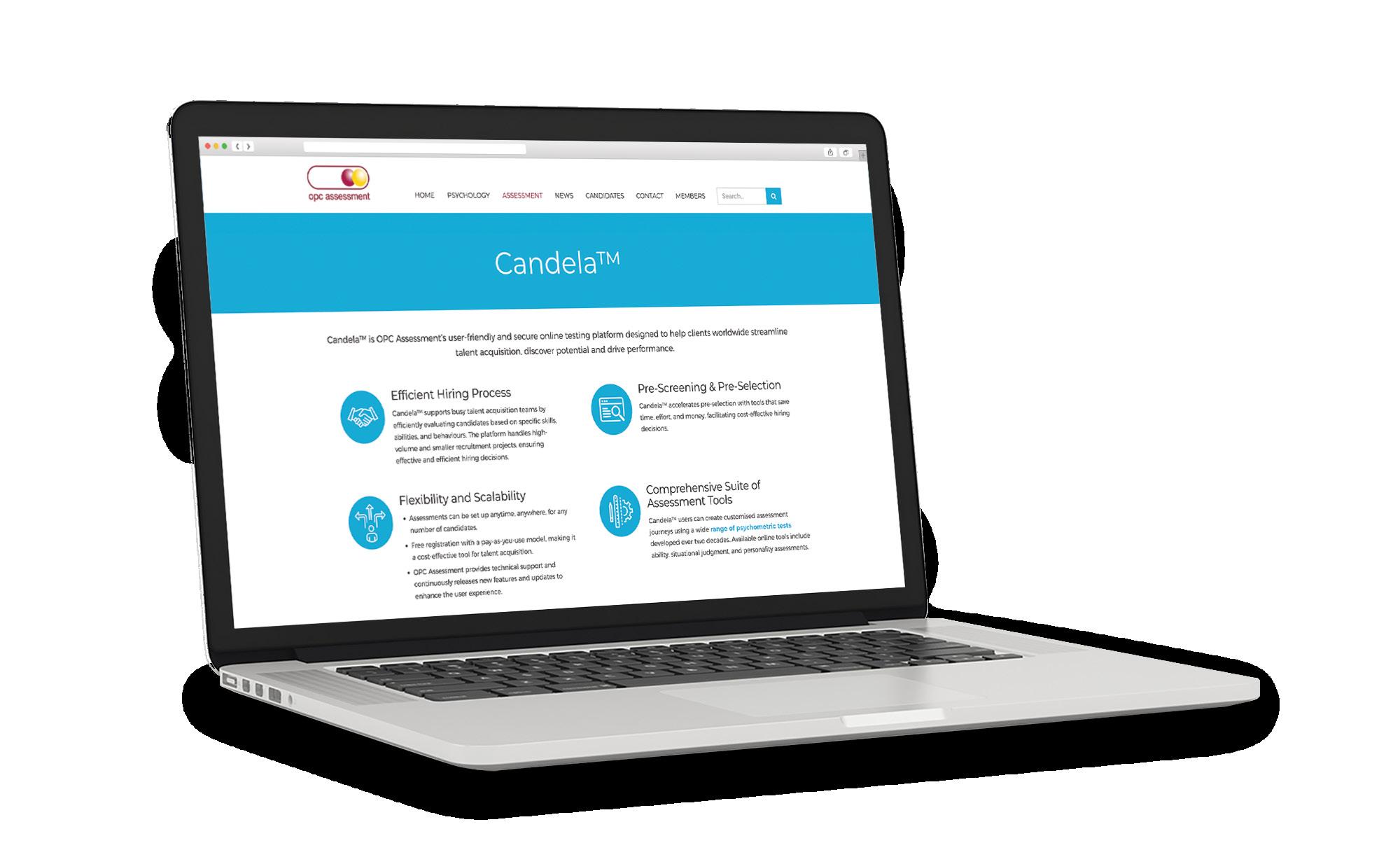
At OPC Assessment, we are more than test publishers; we’re experts in our field with more than 25 years’ experience supporting our global clients in the rail and transport sector, engineering industry and beyond.
Our psychometric tools help to: recruit top-tier talent develop high-performing employees support career-long growth
Hosted on our user-friendly Candela™ platform, clients can explore our extensive range of innovative assessment tools. Guided by our expert psychologists, we can advise on bespoke recruitment solutions tailored to your specific needs.
EDITOR’S NOTE
EDITOR
Sam Sherwood-Hale editor@railpro.co.uk
DISPLAY
Jamie Tregarthen sales@railpro.co.uk
RECRUITMENT ADVERTISING recruitment@railpro.co.uk
SUBSCRIPTIONS subscriptions@railpro.co.uk
ADMINISTRATION
Cherie Nugent info@railpro.co.uk
Lisa Etherington admin@railpro.co.uk
DESIGN &
Saczek production@railpro.co.uk COVER
The government's £45 billion commitment to Northern Powerhouse Rail represents the most significant regional rail investment announcement in a generation. Yet as Transport Secretary Heidi Alexander outlined the three-phase programme to Parliament on 14 January, a more fundamental question emerged from Greengauge 21's timely new report: what are Britain's biggest rail projects actually for?
NPR arrives with explicit economic ambitions – growing the productivity of the North's five largest cities to the national average could add £40 billion annually to the UK economy. The phased approach acknowledges Treasury constraints while maintaining delivery timelines: Phase One prioritising electrification east of the Pennines for the 2030s, Phase Two delivering the Liverpool-Manchester corridor with new stations at Manchester Airport and Warrington, and Phase Three tackling trans-Pennine connectivity in the 2040s. A long-term objective to link Birmingham to Manchester addresses West Coast Main Line capacity, though not as an HS2 Phase 2 revival.
Jim Steer's assertion that ‘major rail projects can only succeed if their purpose is clear from the outset’ reflects concerns voiced across the industry supply chain. The Railway Industry Association welcomed the announcement as ‘a significant declaration of intent’ but called for detailed plans, timescales and committed budgets. The Civil Engineering Contractors Association emphasised the need for clarity on scope and funding to enable industry planning, warning against inefficiencies from stop-start decision-making. Transport for the North stressed that investment must focus on strengthening connectivity between key economic corridors to support jobs, productivity and growth.
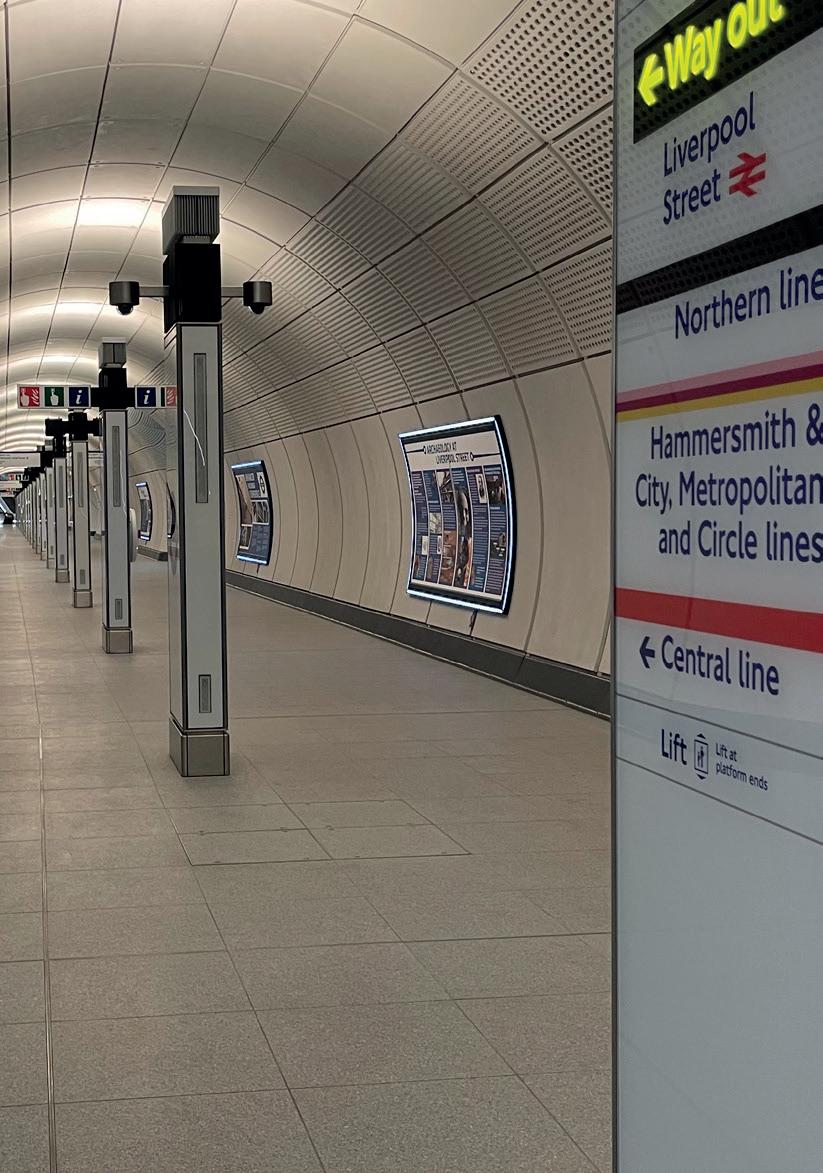
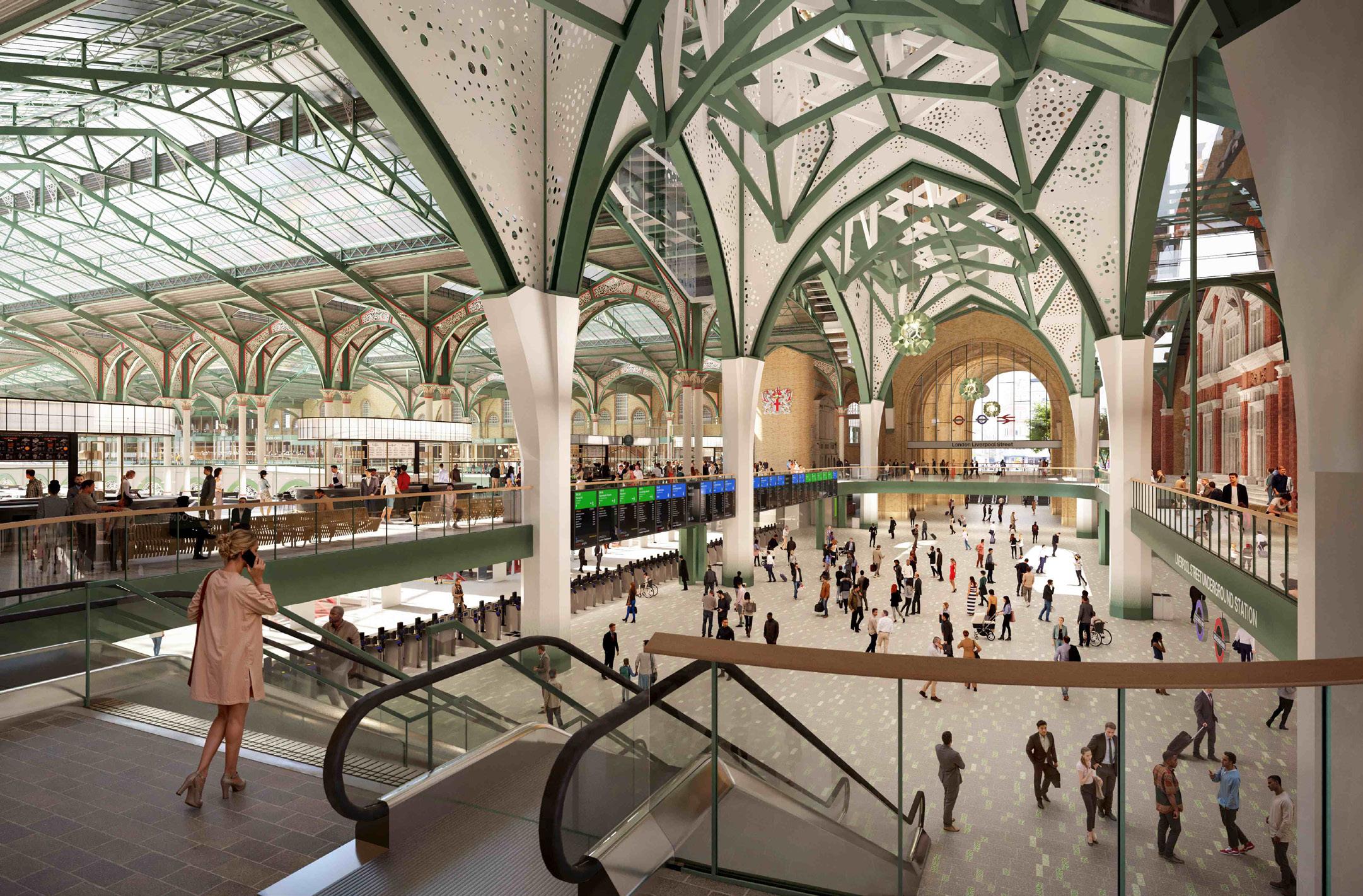
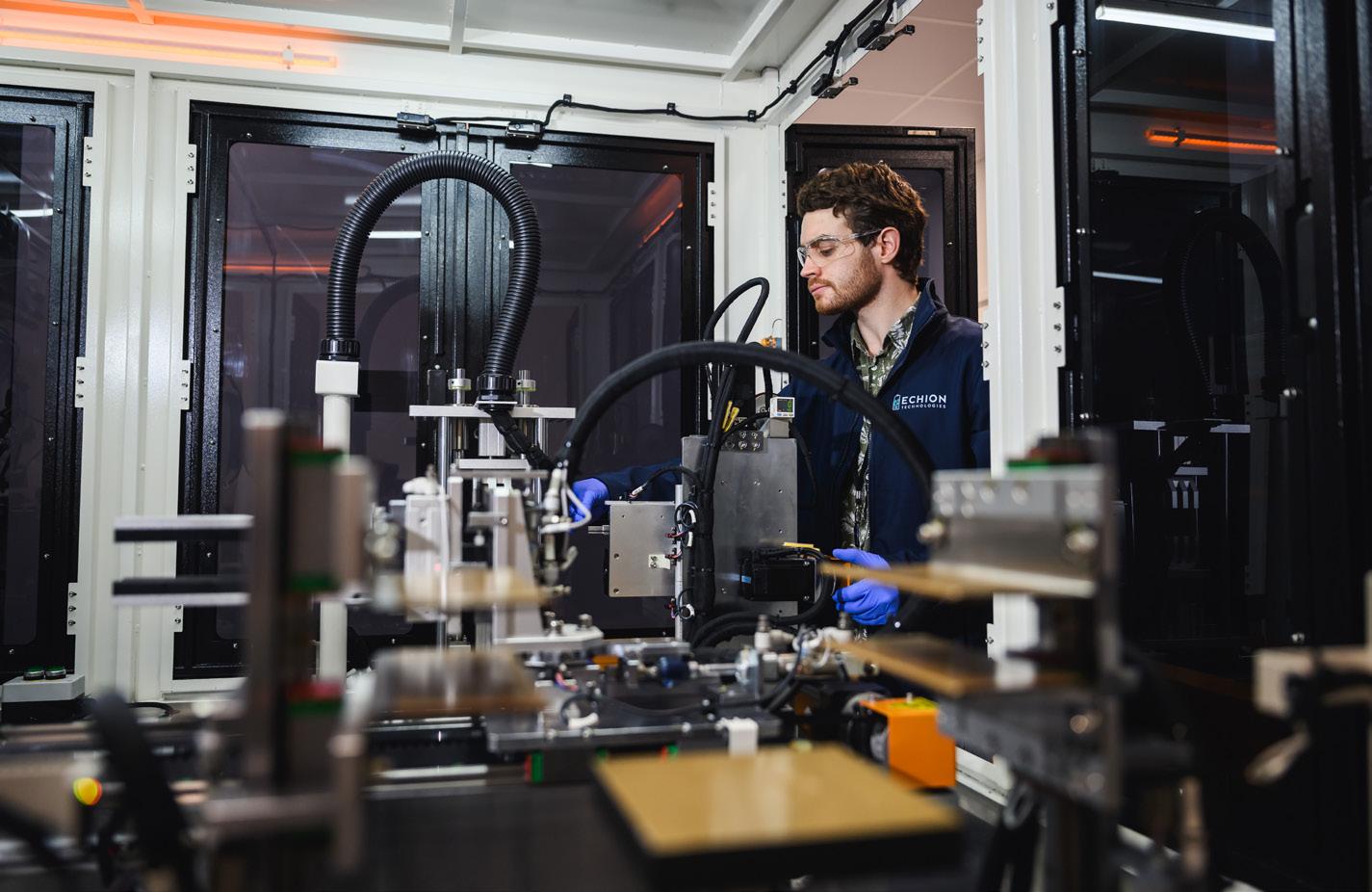
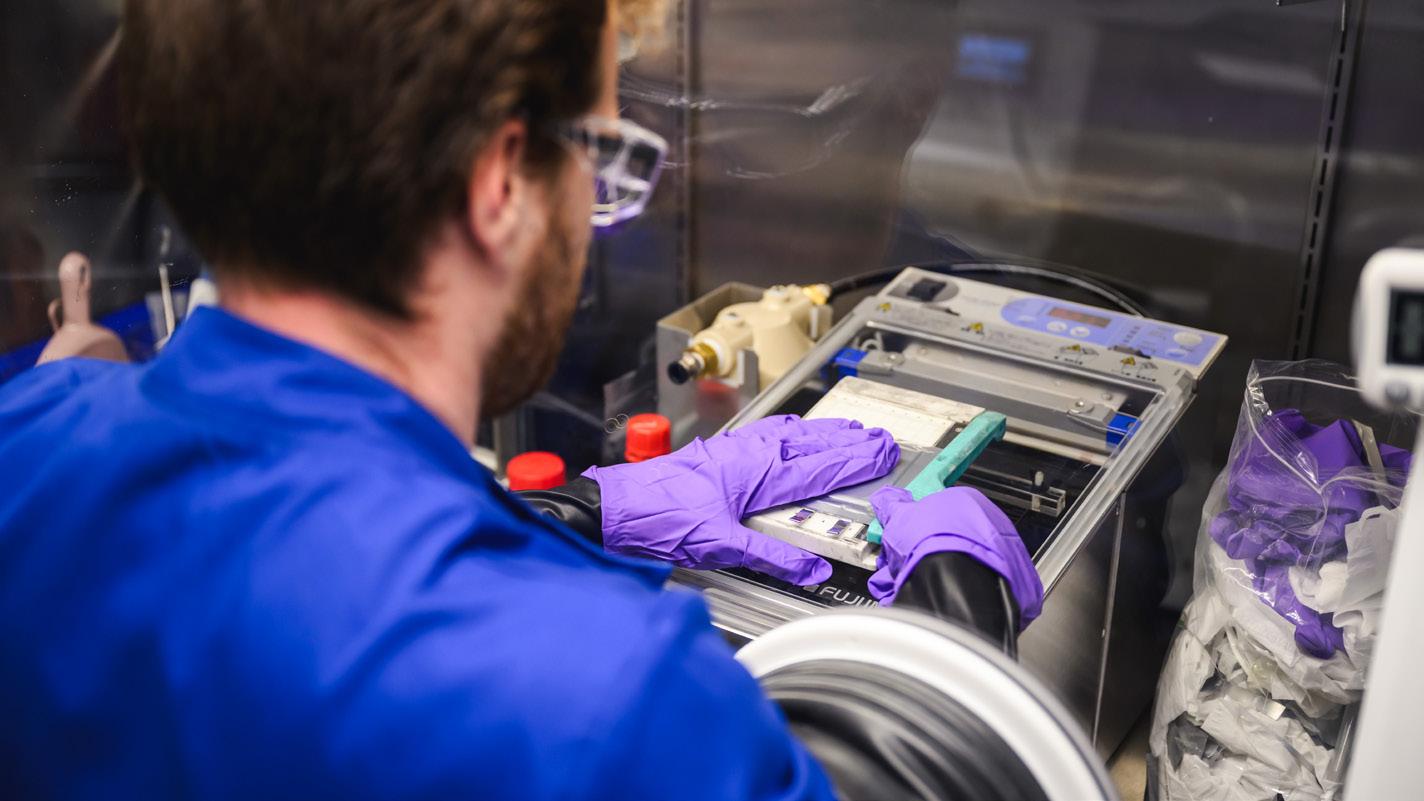
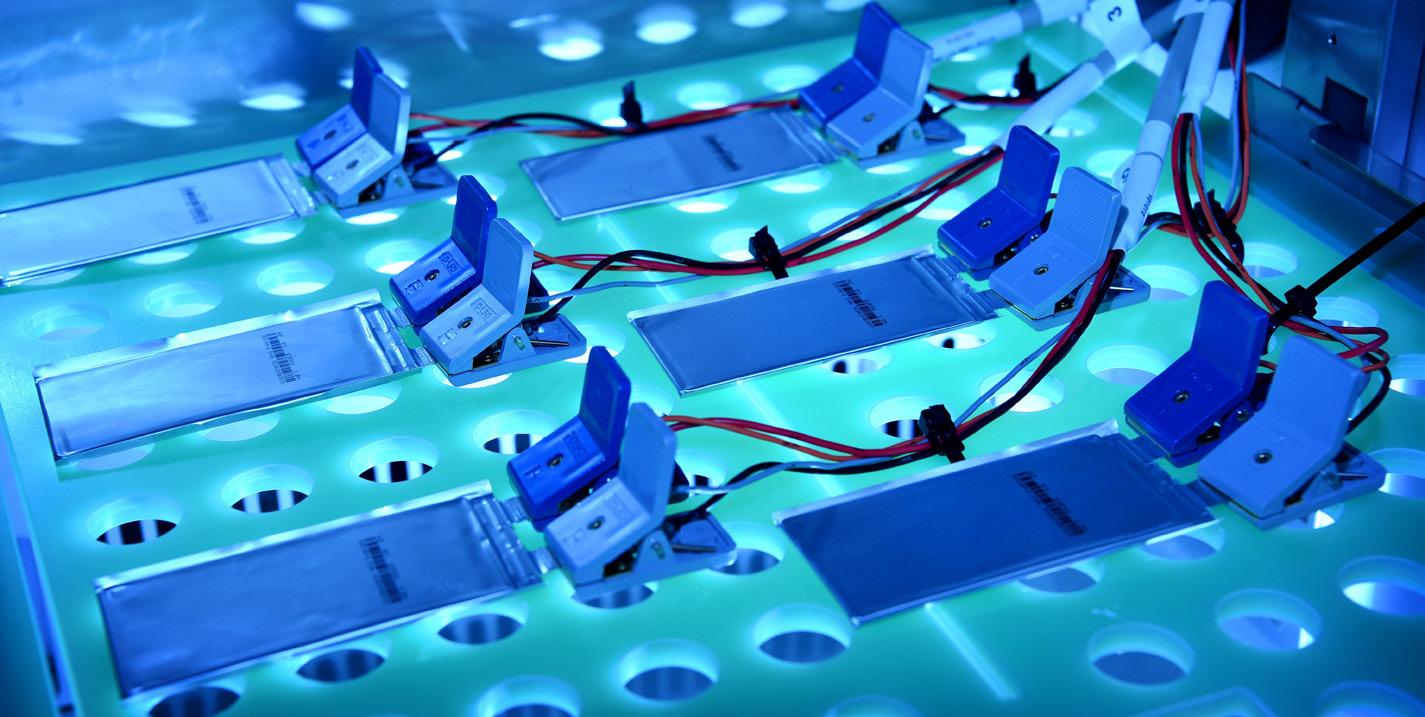
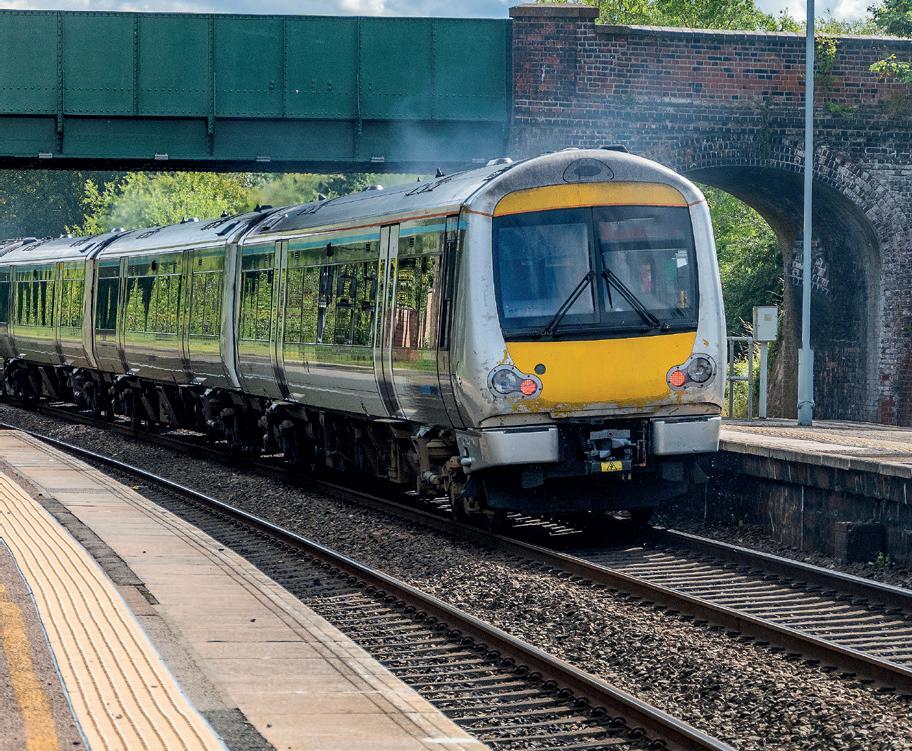
Turning to this month's issue, our coverage explores technologies and approaches reshaping how the industry addresses its most pressing challenges. Our interview with Ben Ting examines how Echion Technologies' niobium-based battery chemistry promises to extend the range and reduce charging times for battery electric multiple units, Bill Price reflects on nearly 40 years transforming London's transport infrastructure, from the Shard to Liverpool Street Station's 200 million passenger upgrade, and Katie Breach's research into depot operations reveals how shared Non-Technical Skills underpin safe performance across roles, with depot drivers, shunters, and panel operators all requiring concentration and communication but at differing proficiency levels.
SAM SHERWOOD-HALE EDITOR
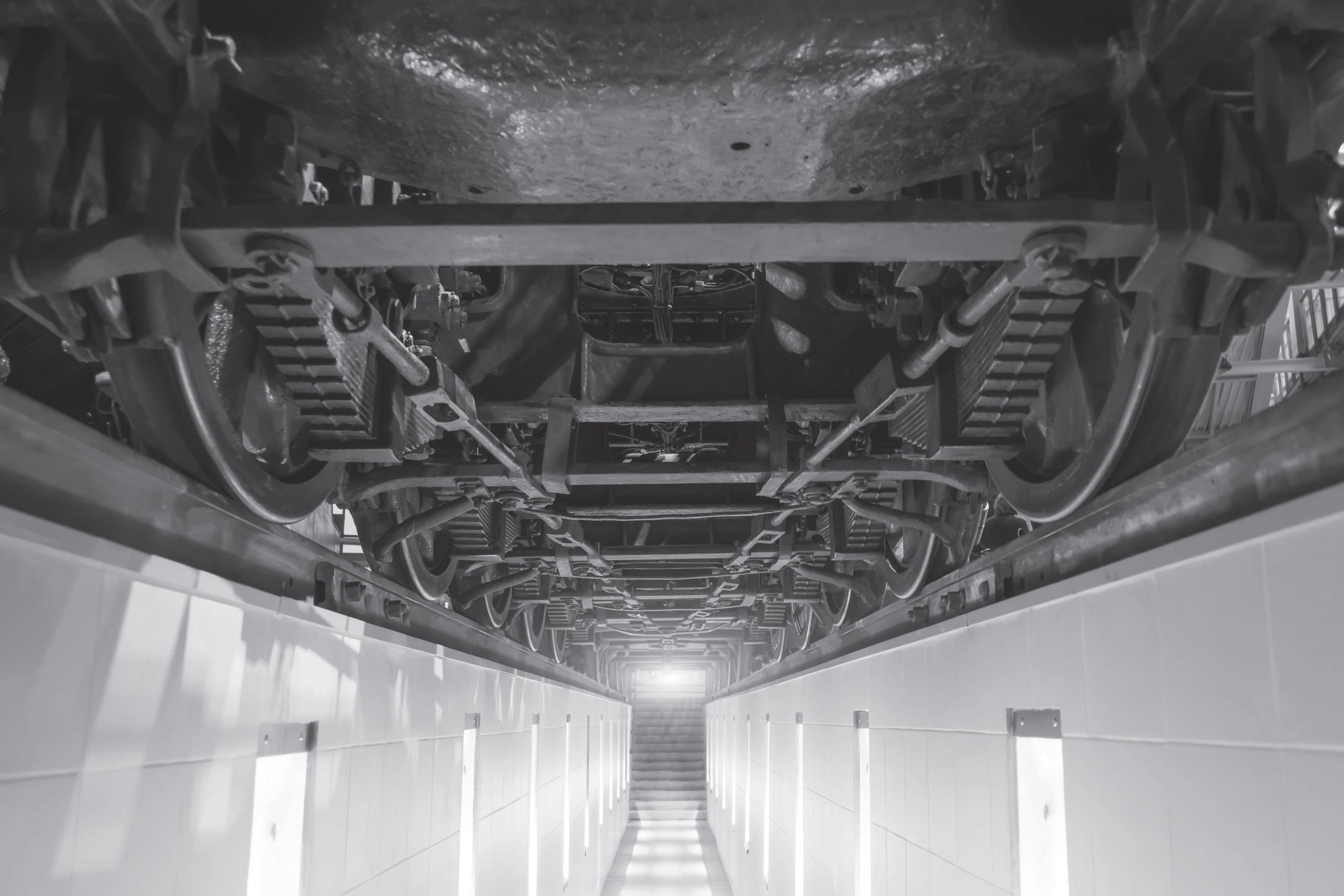
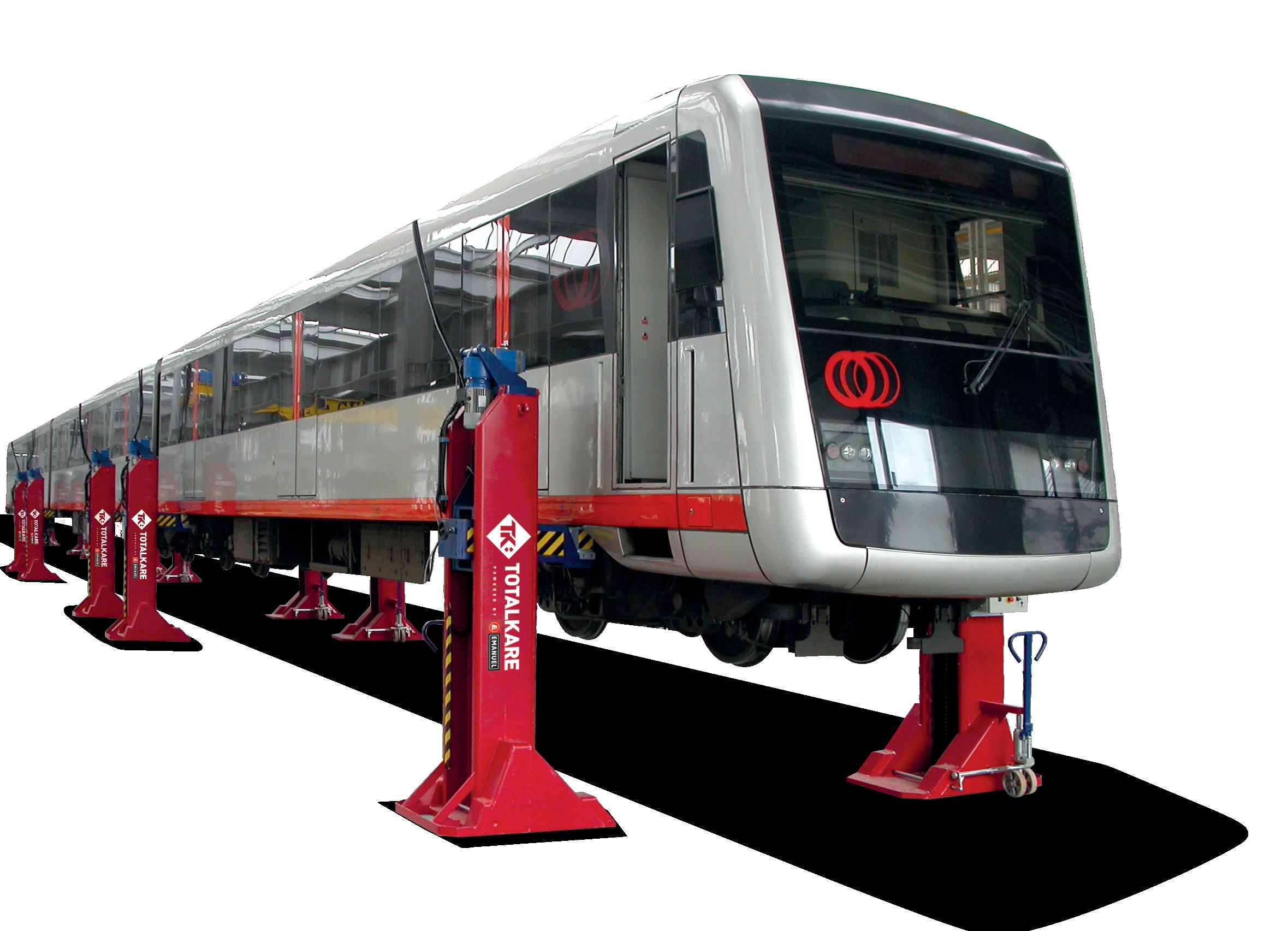
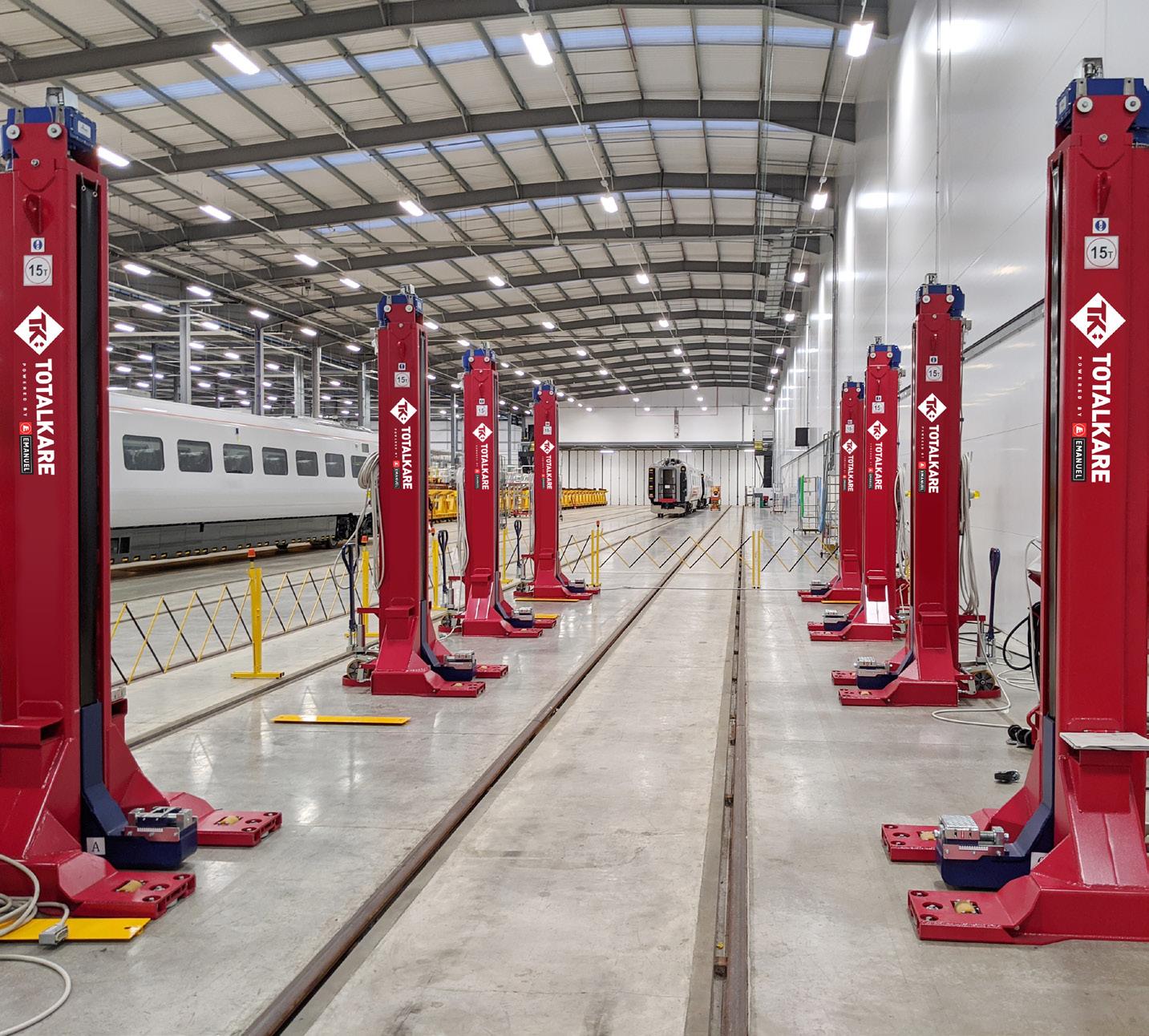
RAIL LIFTING JACKS & PIT EXPERTS
INTERVIEW
52 Paul Evans on Innovation Lab 2026 and how crosssector innovation is shaping the future of the rail industry
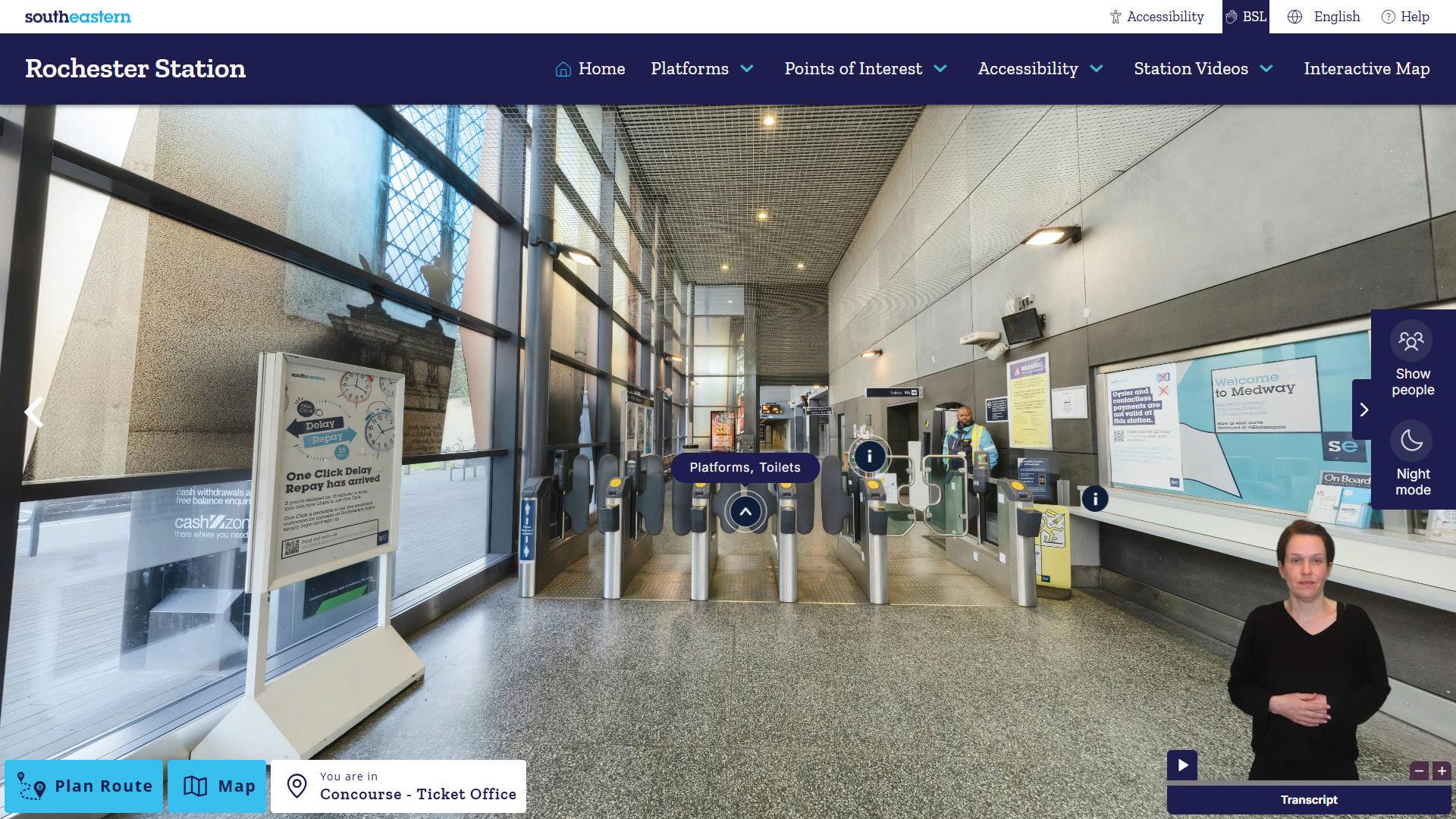
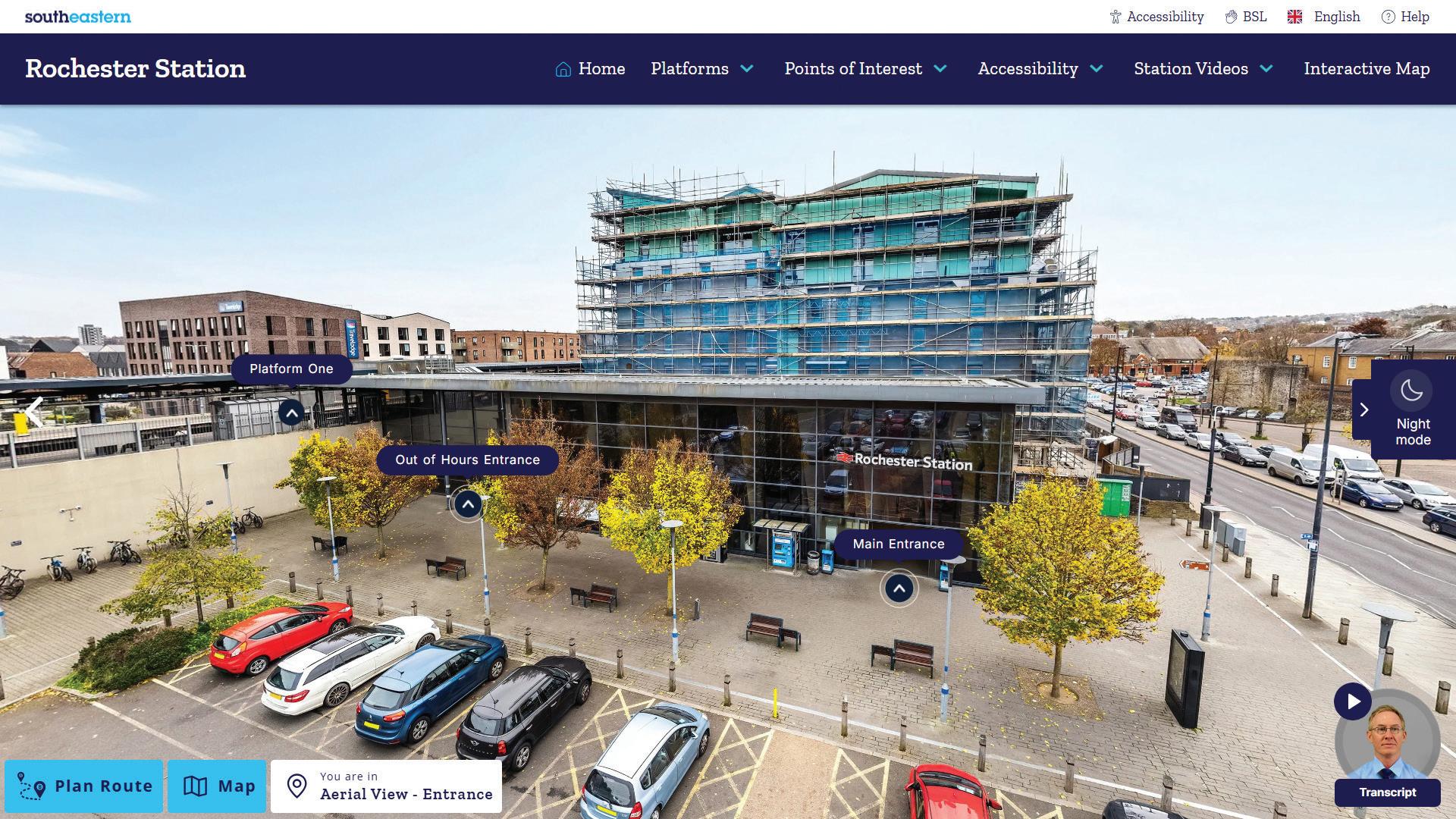
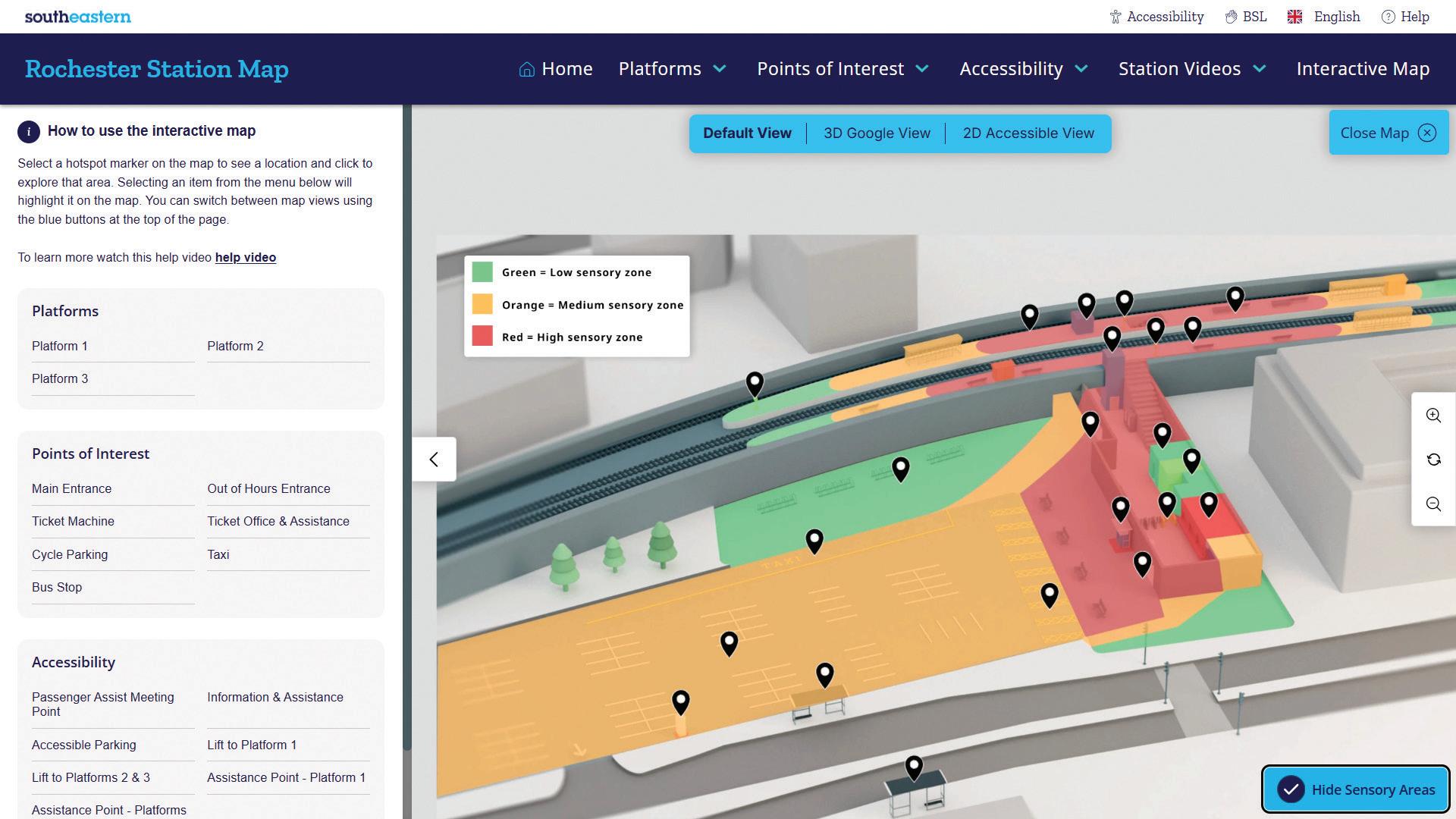
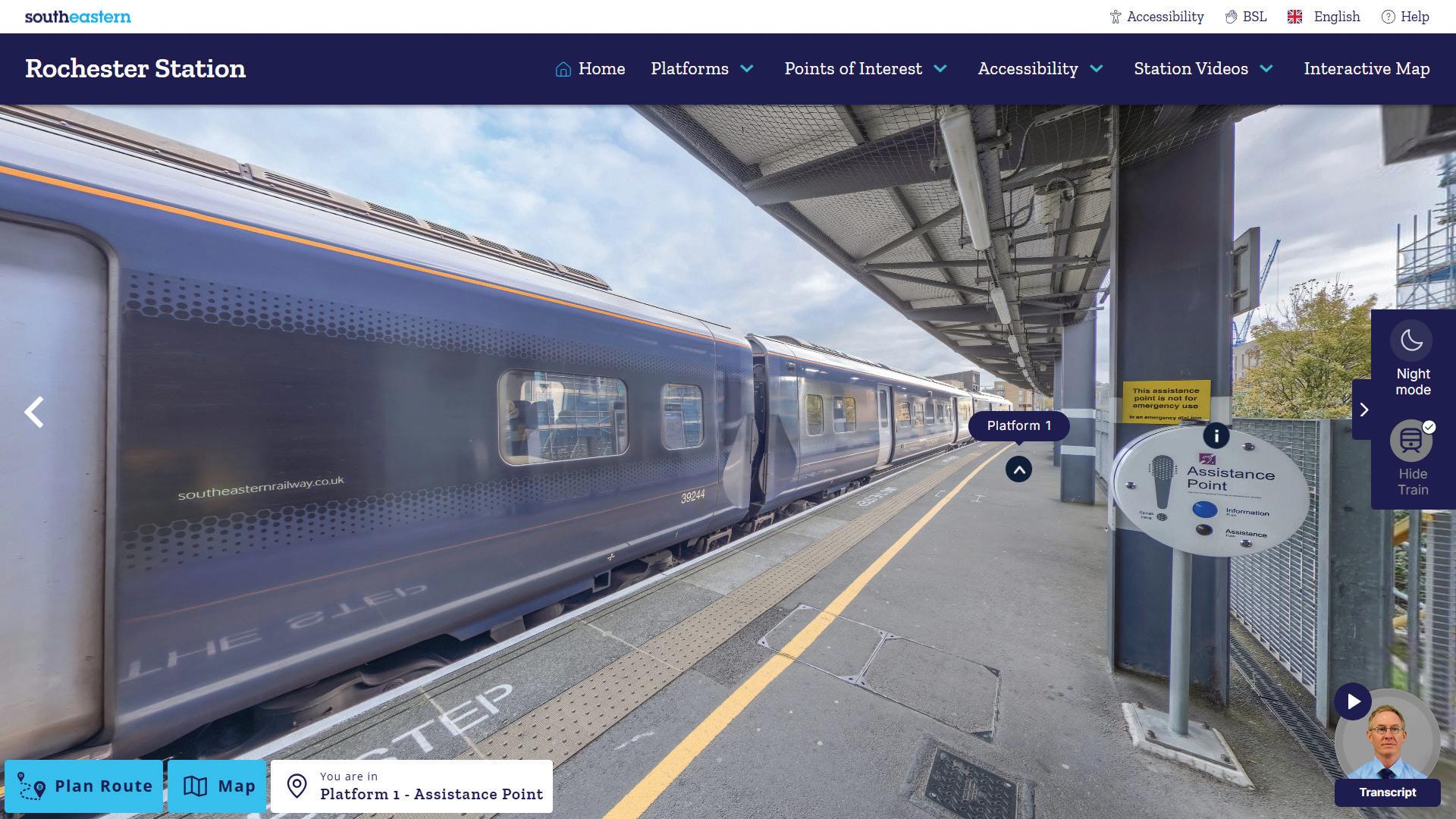
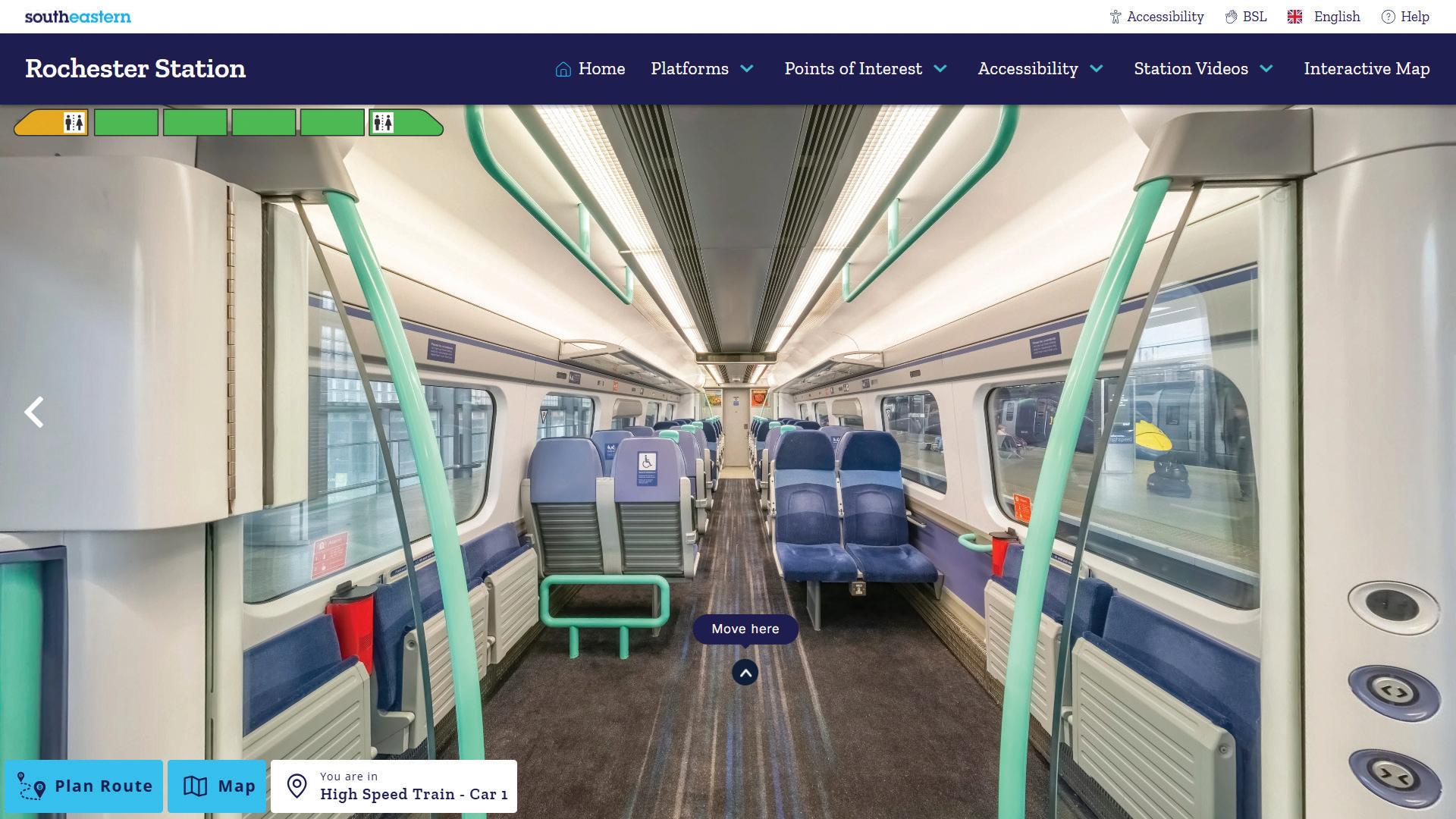
56 Neil Henderson explains how interactive 360° virtual tours are transforming rail accessibility
61 IN CONVERSATION
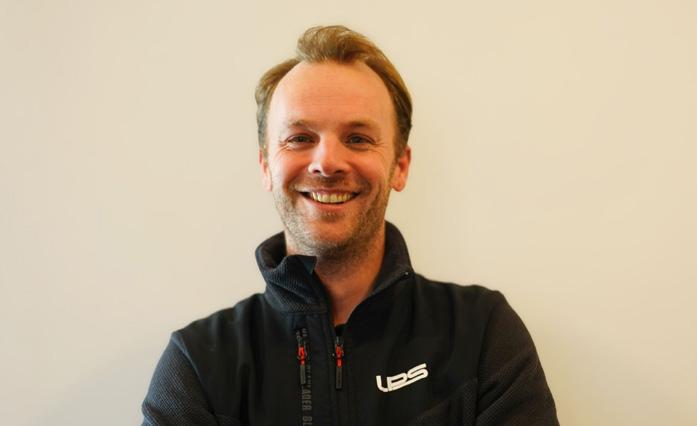
Harm Medendorp, CEO of Laser Precision Solutions
63 DEPOTS
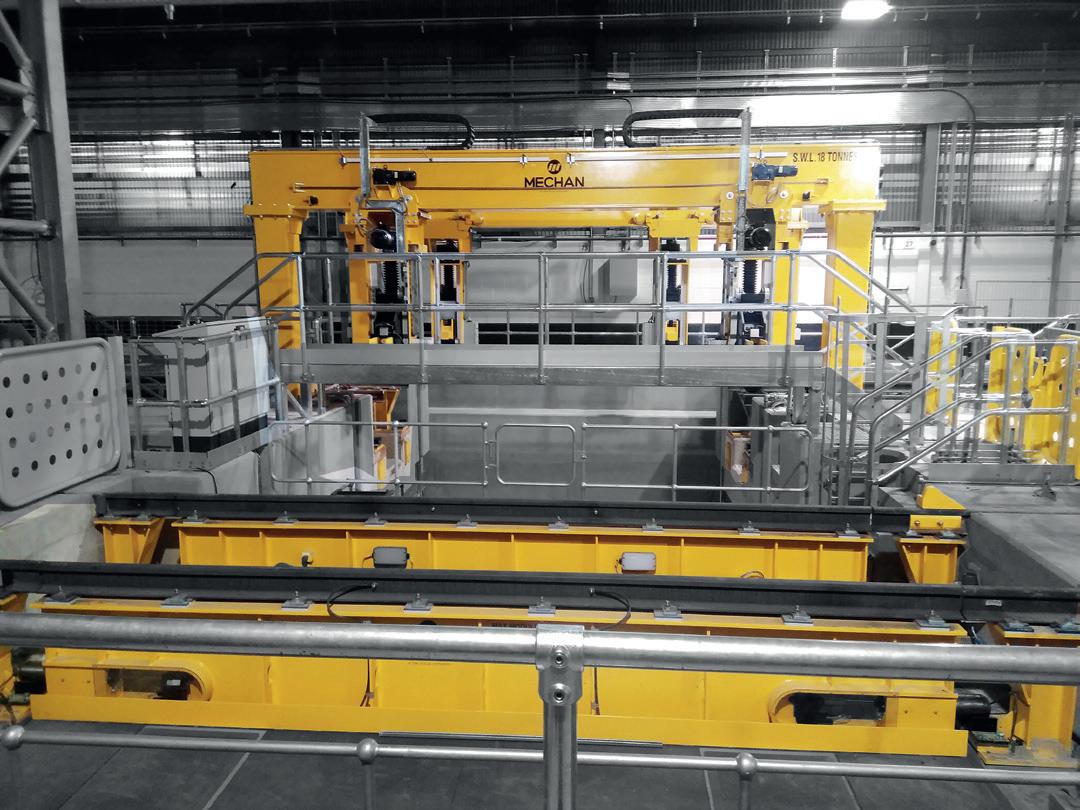
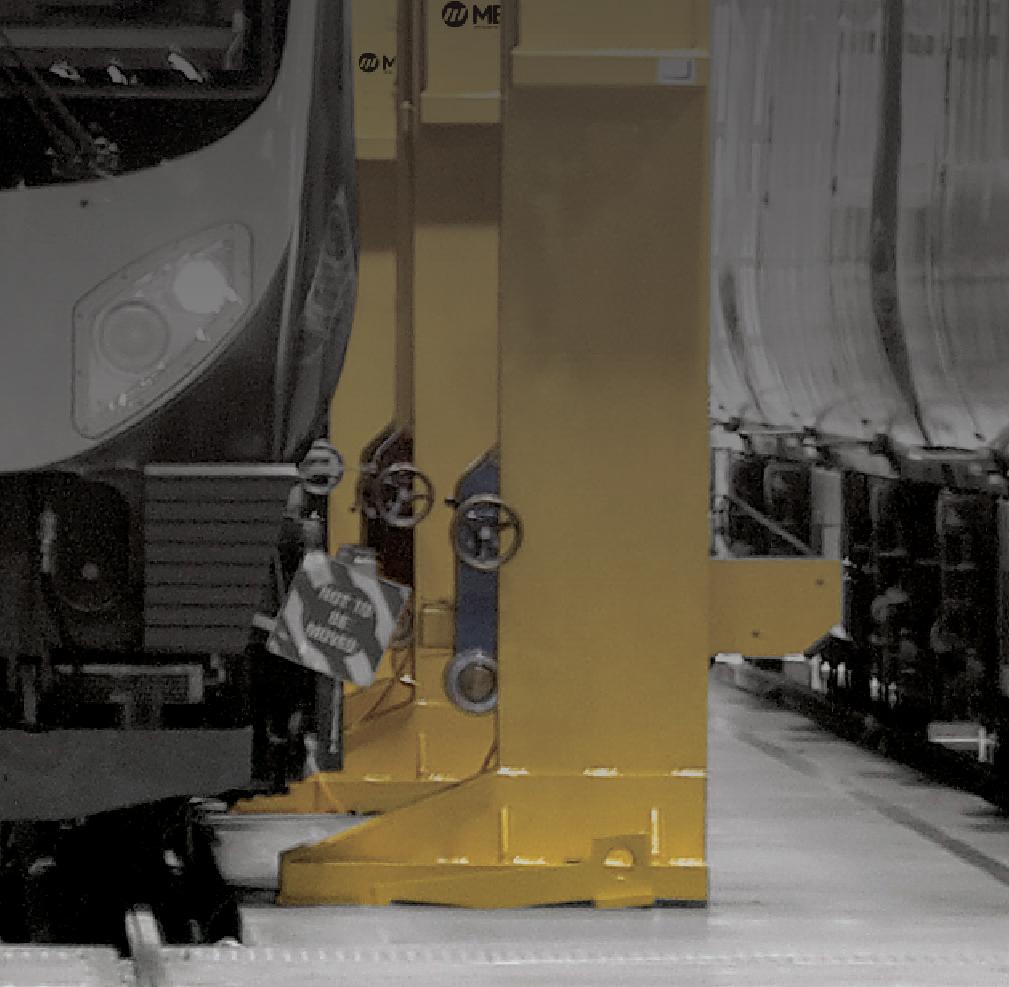
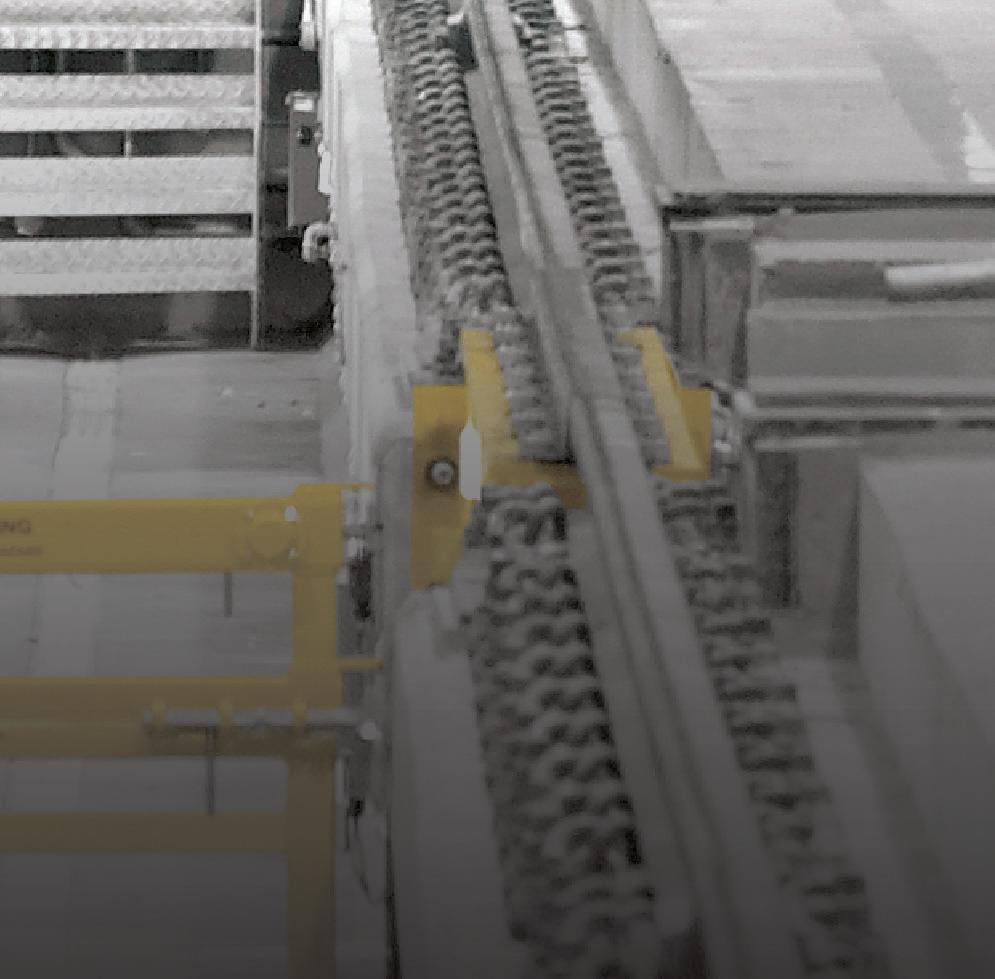
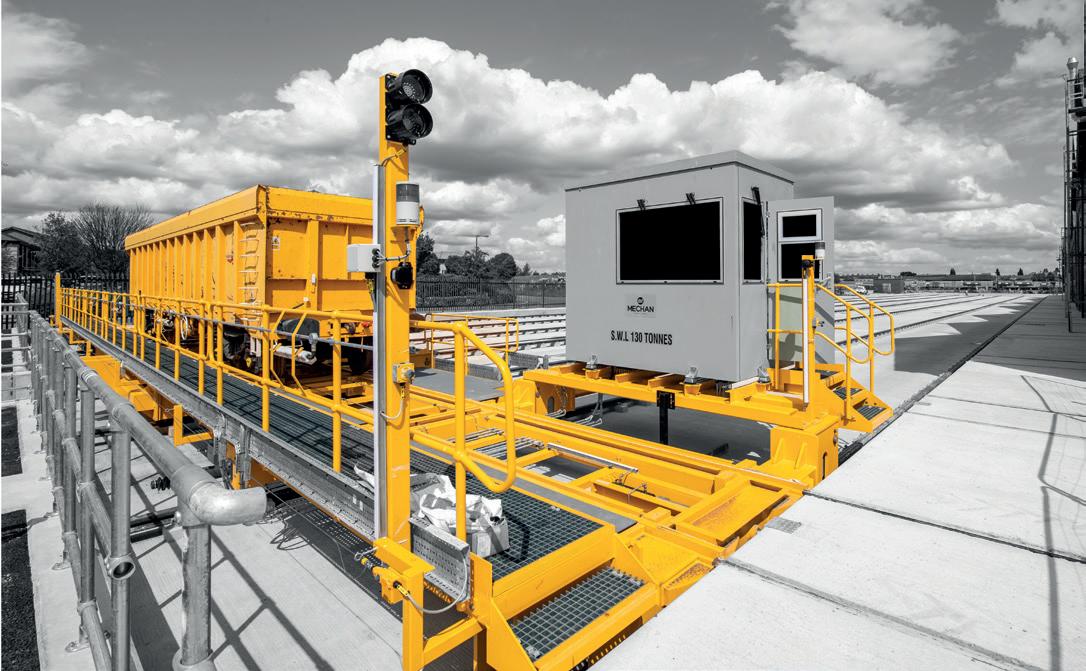
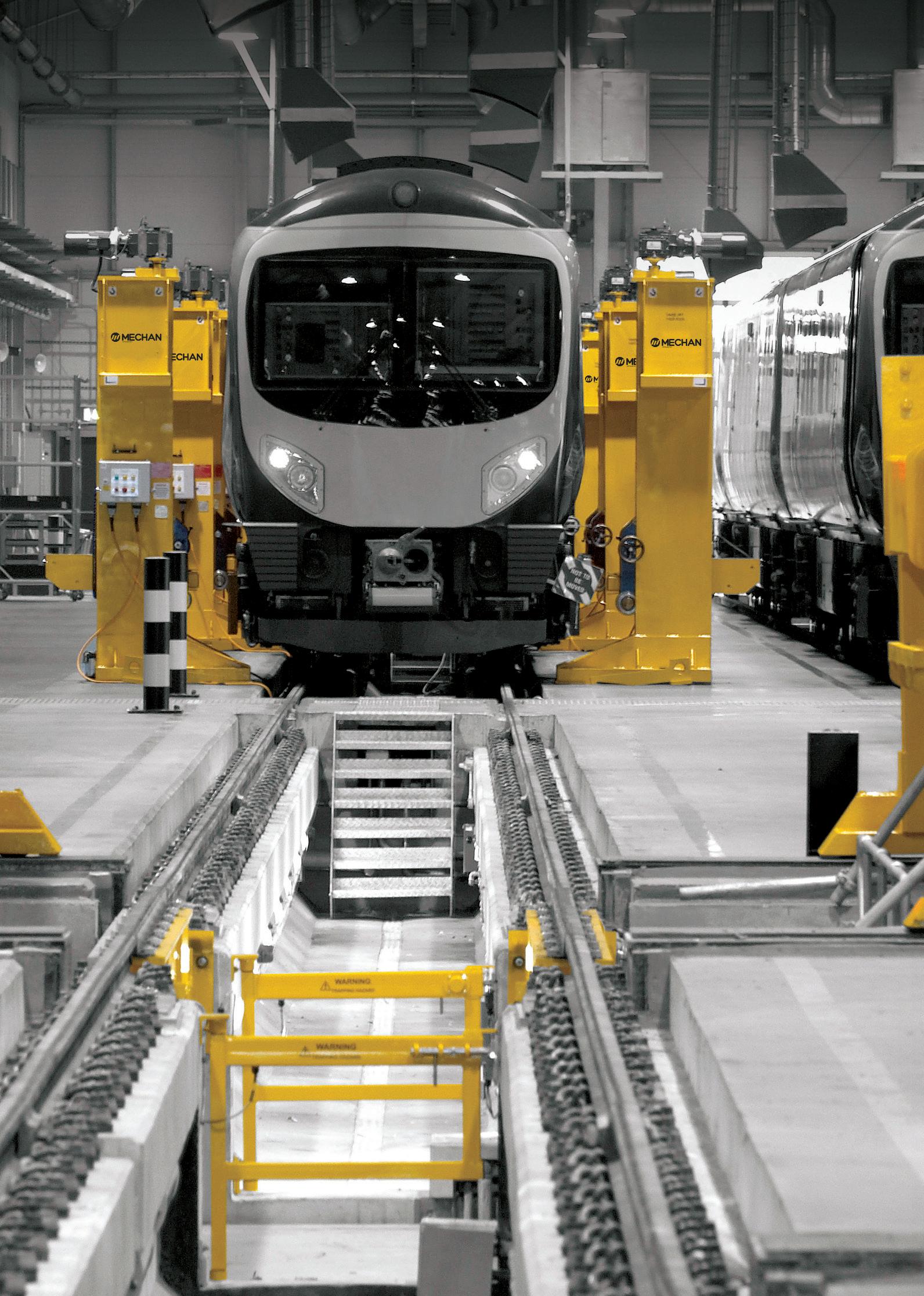
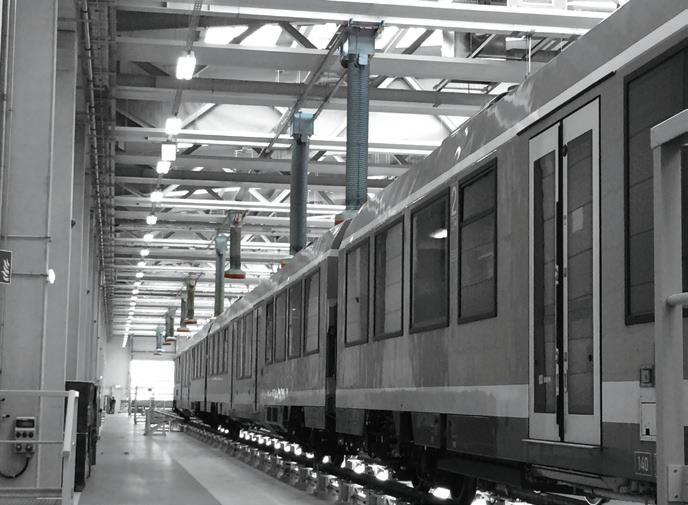
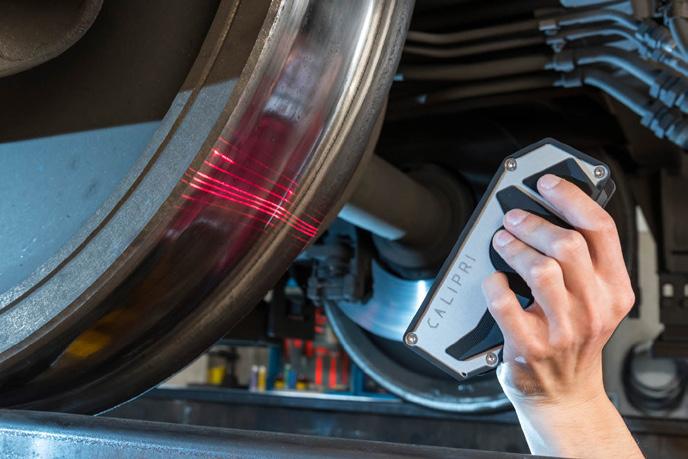
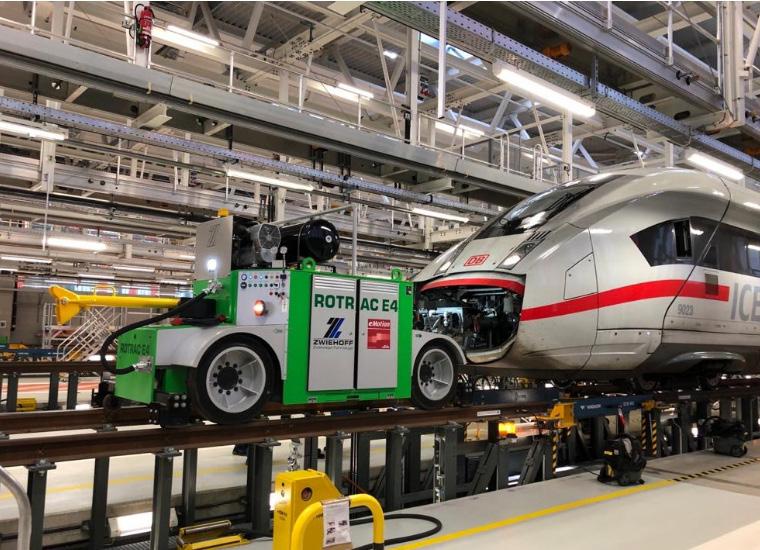
Mechan has built a strong portfolio of European depot equipment through carefully selected partnerships
BUSINESS PROFILES
66 DEPOTS
Katie Breach reveals how common Non-Technical Skills (NTS) across depot roles, applied at differing proficiency levels, can help support safe, efficient operations and stronger, more resilient teams
Urbis Schréder
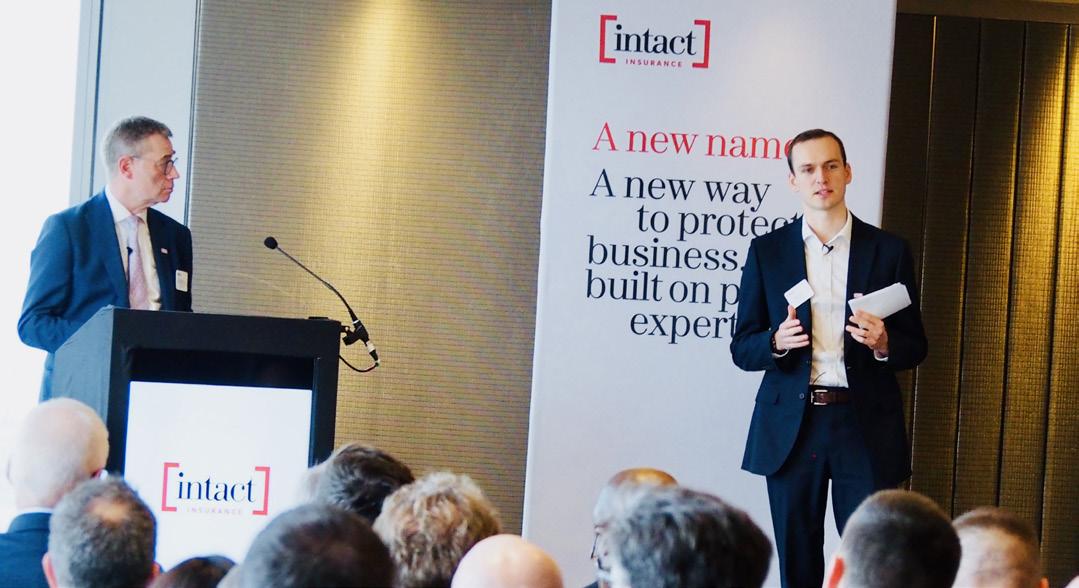
Intact Insurance
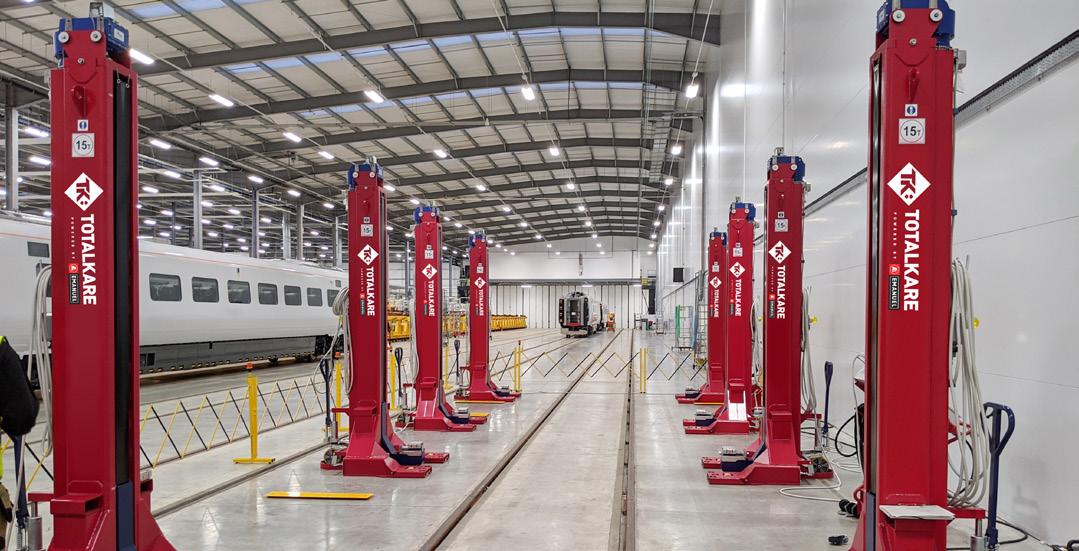
77 Totalkare
78 PEOPLE Chris Burchell, Pete Whipp, Wayne Miller, Mark Robinson, Michael Henshaw, Chris Green, Andrew Pearce, Sara Crosby, Frances Roscoe, Manuela Mai, James Grinnell, Professor Clive Roberts
Supported by Strategic Partners
New Year Honours Recognise Transport Leaders
Three senior figures in the UK transport sector have received honours in the 2026 New Year's Honours List. Vernon Everitt, Transport Commissioner for Greater Manchester and Chair of Transport for Greater Manchester's Executive Board, has been made a Commander of the Order of the British Empire (CBE) for his contribution to public transport. Everitt has overseen the delivery of the Bee Network, Greater Manchester's integrated public transport system combining buses, trams and trains, including the franchising of bus services under local control. Rail integration is scheduled for 2026.
Liam Johnston, Executive Director of the Railway Mission, has been awarded an MBE for services to the rail industry, coinciding with his 25 years as the charity's lead chaplain. The Rugby-based organisation provides pastoral support to rail workers across the UK through a team of 20 regional chaplains operating 24/7. Rail Safety and Standards Board research indicates the charity generates £1.8m in social value annually. Johnston has provided emergency support at major rail incidents and disasters including Grenfell Tower and the Manchester Arena bombing. He also serves as Vice-President of Rail Hope International.
Jane Cole, Managing Director of Blackpool Transport and non-executive director at the Light Rail Safety and Standards Board, has been awarded an OBE for services to public transport and the local community. Cole has led Blackpool Transport since 2014, serving the Fylde Coast's residents and 18 million annual visitors. She was appointed to the LRSSB Board in 2025 and became the first female president of the Confederation of Passenger Transport in 2021. She also serves as a nonexecutive director of the Road Operators Safety Council.
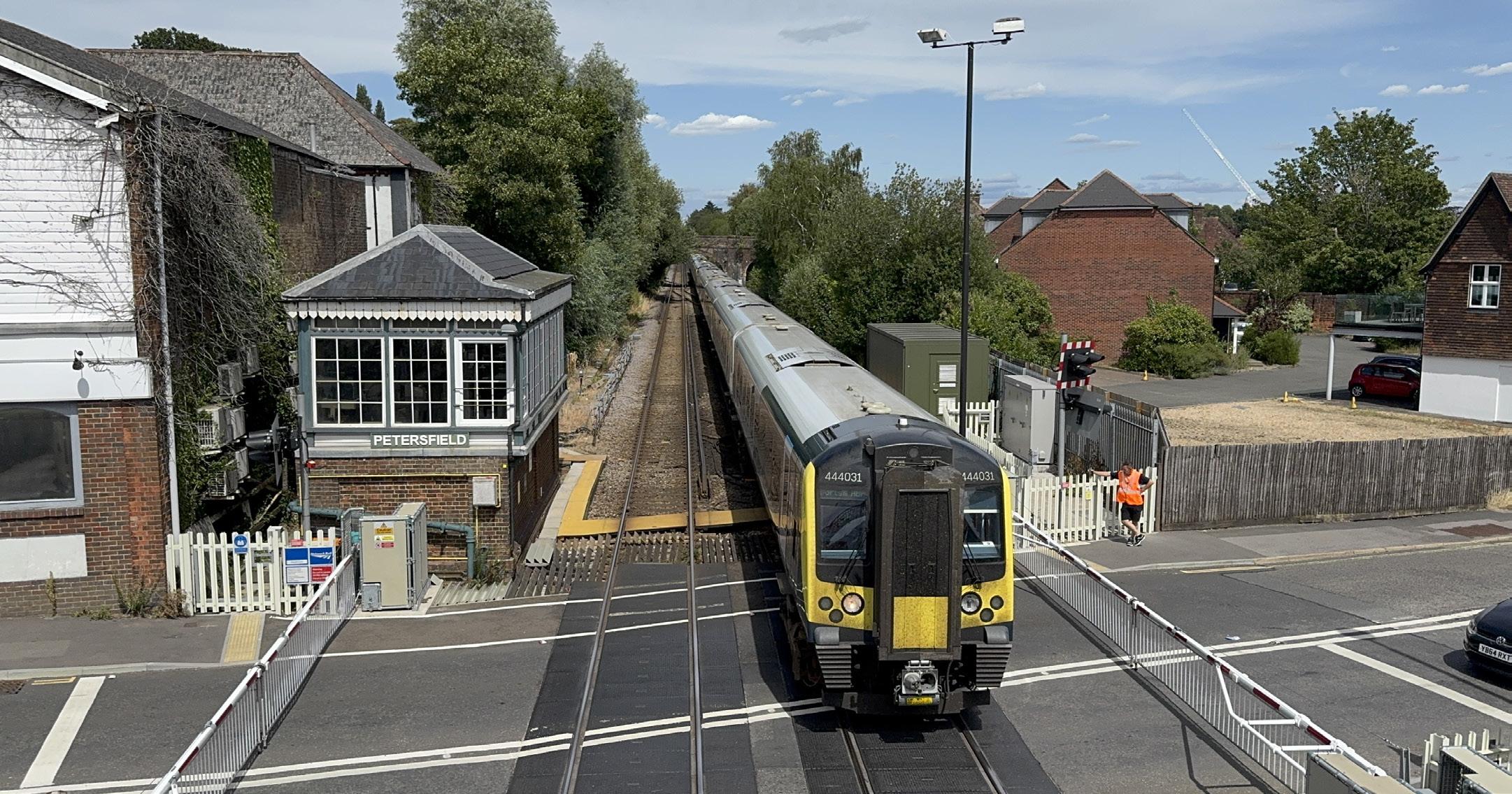
Alstom Completes £49 Million Signalling Contract on Farncombe to Petersfield Rail Line
Alstom has completed a £49 million signalling and level crossing upgrade between Farncombe and Petersfield on the Portsmouth Direct line, forming part of Network Rail's £129 million route modernisation programme.
The project, delivered under the Major Signalling Framework Agreement for the Southern Region, replaced life-expired equipment with digital-ready technology across the 150-year-old railway infrastructure.
Eleven level crossings received safety and reliability upgrades, including obstacle-detection technology on seven crossings and CCTV installations at two sites. Two footpath crossings were fitted with miniature warning stop lights. Control functions transferred
from three local signal boxes to Network Rail's Basingstoke Rail Operating Centre using Alstom's modular remote signalling system.
The installation replaced track circuits with axle counters, delivering a 50 per cent power reduction across the project area whilst improving safety for maintenance staff. Digital interlockings were installed to enhance reliability, performance and capacity.
During a nine-day closure between Guildford and Havant in November 2025, engineers commissioned 90 LED signals, laid over 30 kilometres of cable and brought 17 SmartIO object controllers into operation. The SmartIO system connects trackside equipment directly to central control, eliminating the need for air conditioning, heating and domestic power supplies in equipment housings.
HS2 Completes Civil Engineering on 10-Mile Chiltern Tunnel
HS2 Ltd has completed civil engineering works on the Chiltern tunnel, the longest tunnel on the high-speed railway project, marking the end of construction that began almost five years ago. The completion follows the finishing of works at two vent shafts at Chesham Road and Little Missenden. Once equipped with track and overhead electrical equipment in later project phases, the tunnel will accommodate trains travelling at 200mph, traversing its ten-mile length in three minutes.
Main construction of the twin-bore tunnel commenced in May 2021 with the launch of two 2,000-tonne tunnel boring machines from a site near the M25 at Maple Cross in Hertfordshire. Each bore carries a single track for northbound and southbound services.
Five ventilation and access shafts were sunk to depths of up to 78 metres along the route and completed before the TBMs' arrival. Grimshaw architects designed the headhouses to integrate with the surrounding Chiltern hills landscape.
The machines advanced at an average rate of 16 metres per day before breaking through near Great Missenden, Buckinghamshire, in early 2024. Subsequent works included building porous extensions at the north and south portals, installing internal walkways and fitting out 40 cross passages.
The Chiltern tunnel is the second of HS2's five twin-bore tunnels to reach structural completion, following the one-mile Long Itchington Wood tunnel in Warwickshire last year.
Align JV, a joint venture between Bouygues Travaux Publics, Sir Robert McAlpine and Volker Fitzpatrick, led construction as HS2 Ltd's main works contractor for this section.
The TBMs, named Florence and Cecilia after Florence Nightingale and astronomer Cecilia Payne-Gaposchkin, excavated three million tonnes of chalk during their 33-month operation. The machines received continuous supply of 56,000 eight-tonne tunnel lining segments from a purpose-built factory near the southern portal.
Excavated material has been used to create over 120 hectares of chalk grassland around the southern portal on the Hertfordshire and Buckinghamshire border, expanding Hertfordshire's biologically diverse grassland habitat by nearly one-fifth.
Installation of mechanical, electrical and plumbing equipment will follow, with design work underway and enabling works beginning in 2026. Rail systems including track and overhead electrical equipment will be installed once MEP work is completed.
Porterbrook Acquires Corelink Rolling Stock Fleet
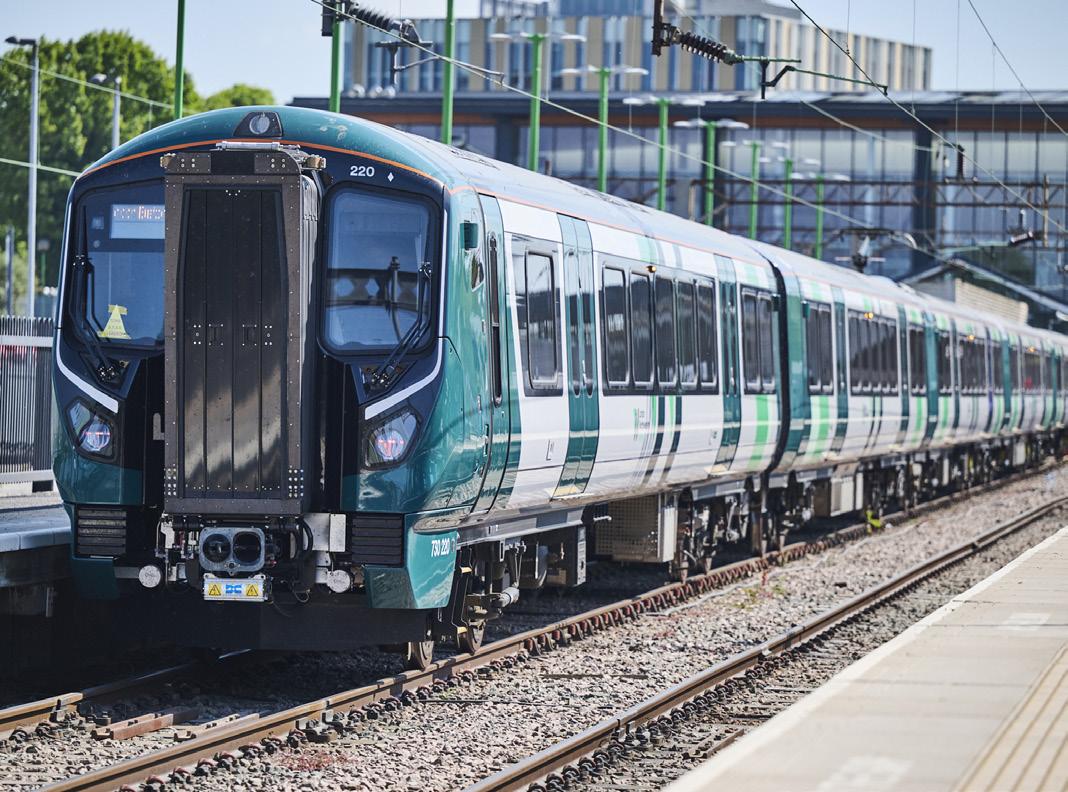
Porterbrook has acquired 404 vehicles from Corelink Rail Infrastructure Limited, comprising 324 Class 730 Aventra electric units and 80 Class 196 diesel units operated by West Midland Trains. The fleet serves regional and long-distance routes between London, Birmingham and Liverpool, representing 60 per cent of WMT's network operations. The transaction forms part of Porterbrook's £1 billion capital deployment programme over the past five years covering new trains, fleet upgrades, traction innovation and rail infrastructure.
The five-car Aventra units will be stabled and maintained at Bletchley Train Maintenance Depot, which received a £66 million upgrade from Porterbrook last year including modern sidings, inspection facilities and new overhead electrified lines.
Corelink is a joint venture between Infracapital and PanEuropean Infrastructure II, a fund managed by DWS Group & GmbH Co KGaA.
Porterbrook was advised by CA-CIB (financial), Freeths (legal) and Deloitte (tax). Infracapital and DWS were advised by DC Advisory (financial) and Eversheds Sutherland (legal).
Balgray Station Footbridge and Lifts Installed
Network Rail has installed the footbridge and lifts at Balgray Station in East Renfrewshire, with the £18.3 million facility scheduled to open in autumn 2026. Construction began in July 2025, with platforms and car park infrastructure now in place. The footbridge provides step-free
access between platforms. Remaining works include cycle parking, a footpath link to Dams to Darnley Country Park, accessible parking spaces and electric vehicle charging points. The station is being delivered through the Glasgow City Region City Deal, with funding from the UK and Scottish
Governments and East Renfrewshire Council. Network Rail is working in partnership with East Renfrewshire Council, Transport Scotland, ScotRail and Story Contracting. The station will serve the Barrhead area and provide connections to Glasgow.
STAUFF Line
Air horn systems, Wash wipe systems
Inter-car hose assemblies Pantograph systems
Waste disposal, Full pneumatic pipework systems
Seating framework, Grab rails and luggage racks
Body to bogie pipework, Levelling valve systems
A
Presented in kit form, tested and ready for immediate installation, reducing logistic, production and inventory costs.
The STAUFF Line process is adopted by global OEMs to successfully achieve cost savings in rolling stock manufacture.
Presented in kit form, tested and ready for immediate installation, reducing logistic, production and inventory
AUFF Line p adopted by global OEMs to successfully achieve cost savings in rolling stock manufacture.
Braking systems, Sanding HOSES
Door operating systems, Door handles
TfGM Begins £6.5 Million Hindley Station Accessibility Upgrade
Transport for Greater Manchester
£6.5 million accessibility upgrade at Hindley station will install two passenger lifts and a new footbridge to provide step-free access to platforms for the first time. The works form part of a rolling programme delivering accessibility improvements at ten Greater Manchester stations over three years – double the number completed in the previous decade. The programme will bring 63 per cent of the city-region's rail stations to step-free status by March 2028.
Step-free access was completed at Daisy Hill and Irlam stations in 2025, with work underway at Bryn. Reddish North and Swinton are scheduled to begin later in 2026, followed by Flowery Field, Newton for Hyde and Levenshulme.
The new footbridge at Hindley will connect the street-level booking hall directly to platforms 1 and 2. TfGM, Network Rail and Northern Trains will upgrade lighting and CCTV at lifts and assistance areas. The station will remain open throughout construction, with no impact on train services.
A proposed Travel Hub will provide over 40 additional parking spaces including EV charging points and blue badge spaces, a new bus layby and pick-up/drop-off area. Improved pedestrian access will be provided beneath Ladies Lane bridge with new help points, lighting and CCTV. Hindley is among 64 Greater Manchester stations scheduled to join the Bee Network by 2028.
West Coast Main Line Reopens Following £200 Million Upgrade Programme
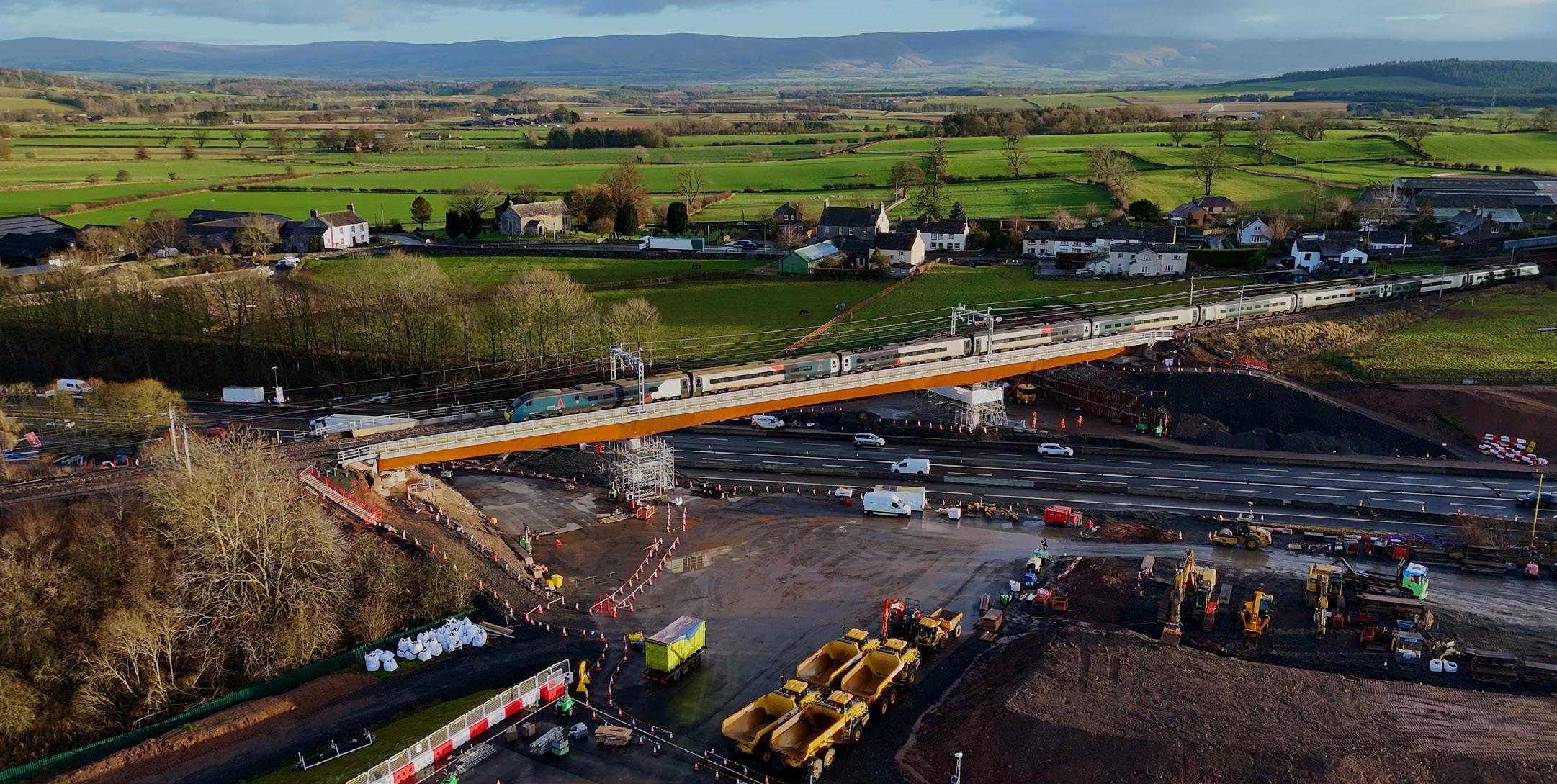
The West Coast Main Line fully reopened on 15 January 2026 following 14 days of upgrades including replacement of a major bridge over the M6 near Penrith. Network Rail and principal contractor Skanska demolished and replaced the 4,200-tonne, 130-metre Clifton railway bridge in a fortnight. The £60 million project required complete closure of the M6 between junctions 39 and 40 over the first two weekends of January.
The closure enabled Network Rail to complete additional works between
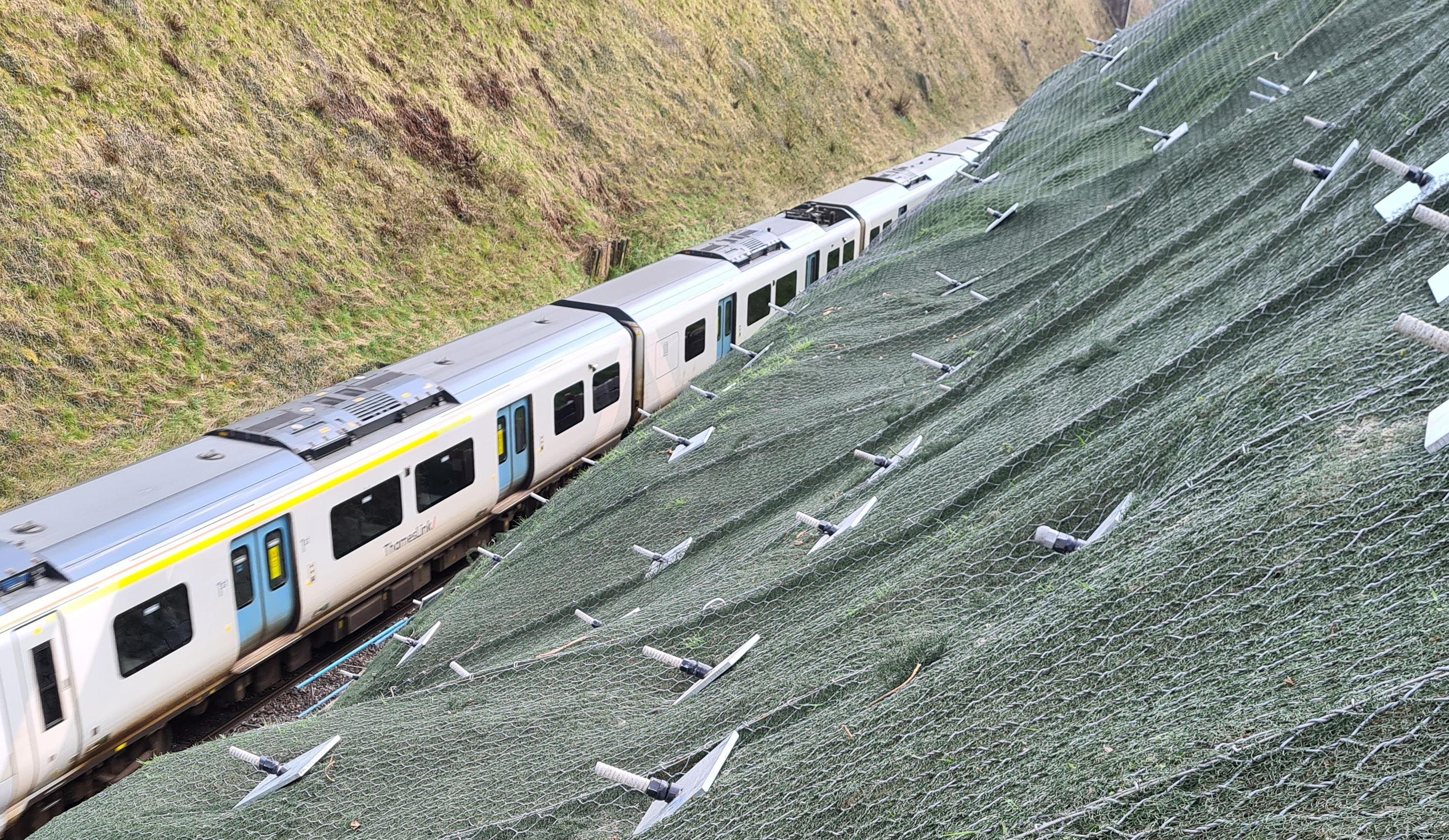
Preston and the Scottish border, including completion of a £61 million signalling modernisation in Carlisle, replacement of nearly 70 kilometres of overhead lines through Shap and Tebay, installation of rockfall protection through Shap cutting, and new signalling gantries and signals at Preston station. More than 60 smaller upgrades were also completed.
During the works, Network Rail and Avanti West Coast operated a shuttle service on the Settle to Carlisle line, the first use of that diversionary route in a decade.
The January works follow multi-million pound investments on the southern section between Northampton and Milton Keynes over Christmas, including a £26 million overhaul of a junction serving up to 500 trains daily, platform upgrades at Milton Keynes and Wolverton stations, a bridge upgrade in Stafford and land stabilisation work in Northamptonshire. Combined Christmas and New Year investment totalled nearly £200 million, forming part of a £400 million investment programme over the next four years.
4G and 5G Coverage Expands
Across London Underground
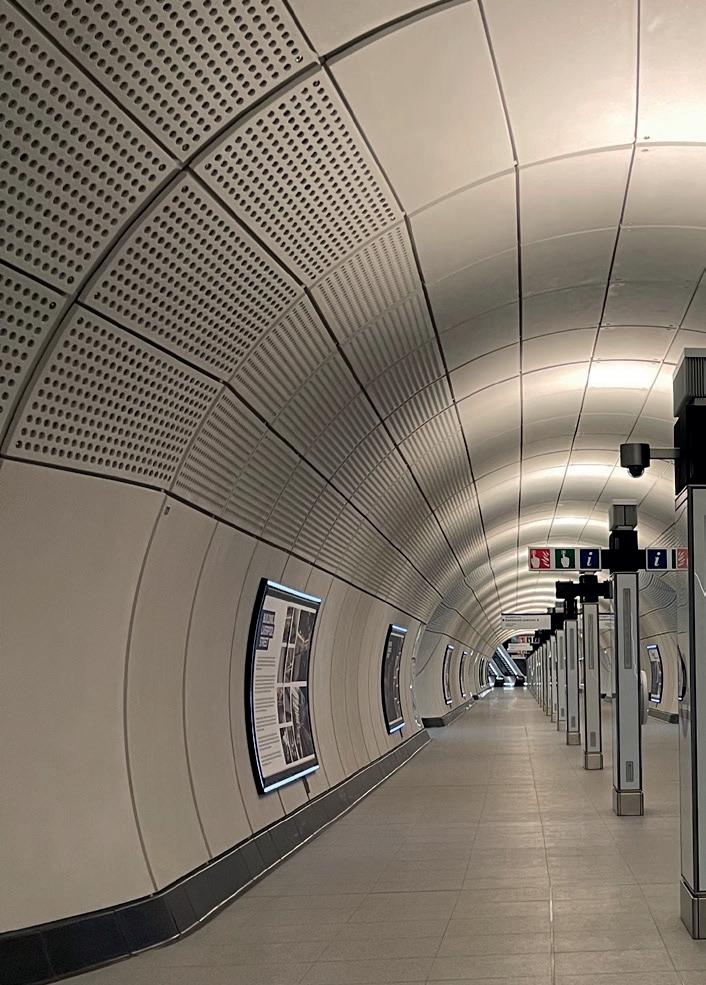
Transport for London and Boldyn Networks have extended high-speed mobile coverage to additional stations and tunnelled sections of the Tube network, including the first sections of the Circle and District lines. Sixty-two of 121 underground Tube stations now have mobile coverage in ticket halls, corridors and platforms, alongside the complete Elizabeth line network. Recent additions include Euston Square, Cannon Street and Battersea Power Station, with King's Cross St Pancras, Gloucester Road, Warwick Avenue and Vauxhall scheduled to go live in the coming months.
The first tunnelled sections of the Circle and District lines between Blackfriars and Cannon Street, and between Notting Hill Gate and Bayswater, are now live. The majority of the Northern and Metropolitan lines are expected to have tunnel coverage by the end of summer 2026.
All four mobile network operators – Three UK, EE, Vodafone and Virgin Media O2 – are participating in the rollout. The expanded
coverage will also host the Emergency Services Network, providing first responders with access to data, images and information during live situations.
Design and testing work is underway on the Windrush line between Highbury & Islington and New Cross and the Docklands Light Railway, with coverage planned for tunnelled sections and stations later in 2026.
Installation work will continue throughout 2026 on sections of the Circle and District lines, Victoria, Jubilee, Bakerloo and Piccadilly lines, with the whole Tube network expected to have mobile coverage by the end of 2026.
Boldyn Networks was awarded a 20-year concession in June 2021 to deliver connectivity across the entire London Underground network. Around 400 engineers regularly work on the project overnight during limited engineering hours.
GB Railfreight Names Locomotive After Branch Line Society
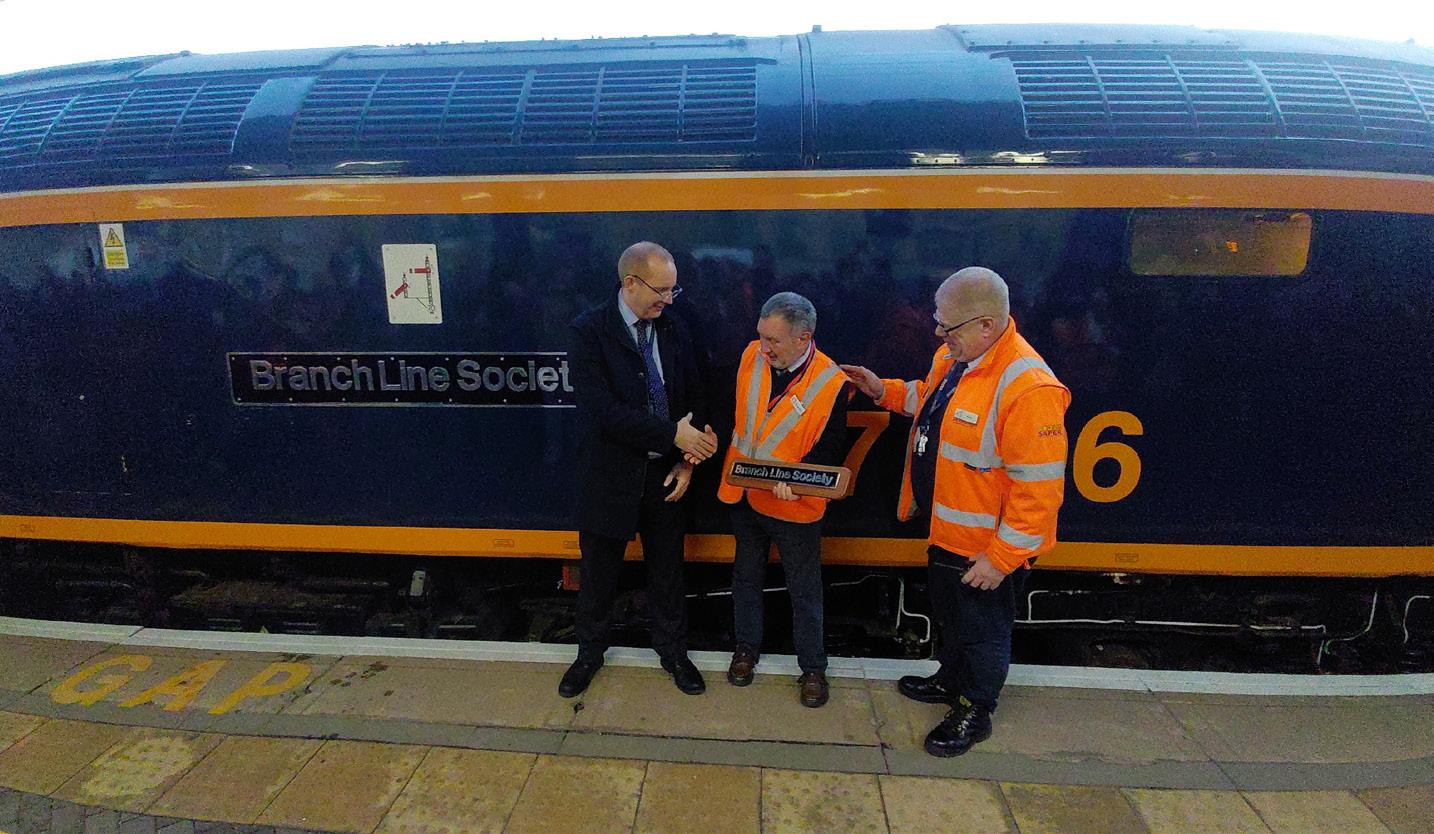
GB Railfreight has named locomotive 57306 'Branch Line Society' at a ceremony at Newcastle station on 19 December 2025. The Branch Line Society, established in 1955, has organised rail tours and charity charters for seven decades. The volunteer organisation has raised £1.5 million since 2015 for charities including Railway Children, Railway Benefit Fund, Martin House Hospice and Great Ormond Street Hospital Charity. The naming ceremony took place during a Christmas charity charter from London King's Cross to Durham and Newcastle, which raised £1,200 for Great Ormond Street Hospital Charity, GB Railfreight's official charity partner. The Branch Line Society recently reached its three-thousandth fixture milestone. The organisation has scheduled further events with GB Railfreight for 2026
Northern Records 98.6
Northern recorded 98.6 million passenger journeys in 2025, representing ten per cent growth on 2024 and an additional 8.8 million journeys. Season ticket journeys increased by ten per cent year-on-year, adding nearly one million commuter journeys. Growth was concentrated on services into major city
Million Journeys in 2025
centres, with Manchester recording twelve per cent growth, Liverpool 19 per cent, Leeds seven per cent and Newcastle 27 per cent compared with December 2024. December 2025 recorded over eight million journeys, a twelve per cent increase on December 2024 and the highest December total since before the pandemic.
The Northumberland Line, which opened in mid-December 2024, contributed 890,000 journeys across the full year, including 37,000 additional journeys into Newcastle during December 2025 alone. Northern operates 2,650 services daily to more than 500 stations across the North of England.
undergroundElevatedthinking,
We are proud on having successfully completed several hundred kilometres of international complex tunnel projects. Quality and commitment to sustainability is integral to all our designs and developments.
Your partner for a fast, comprehensive and cost effective service for the UK railway industry. We overhaul and maintain rolling stock nationwide.
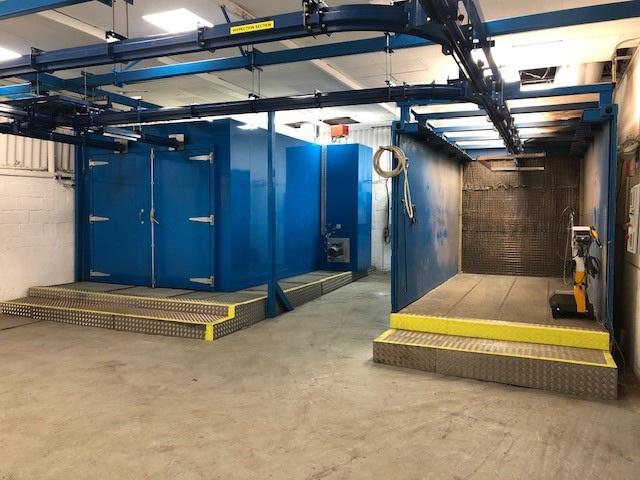
Gordon Services UK Ltd is an Electro- Mechanical engineering company providing a fast, comprehensive and cost effective service for the railway industry. Established in 1993, Gordon Services is now a leading force in the overhauling of components and products from all types of rolling stock throughout the UK. The Company has comprehensive workshop facilities, which comprise both cabinet shot blasting and external pot blasting facilities, (used for cleaning heavily soiled components), spray booth facilities with controlled heat and humidity (for the spraying of various components), a complete state of the art Powder Coating Facility, including a large 6m Oven to facilitate larger components and a cost effective solution for Grab Rails etc for Carriage Interiors.
Gordon Services UK Ltd is the UK partner for
AS Toilet systems, with a full after care maintenance and
for the whole range of SEMVAC products, including toilet systems and C.E.T tanks. They are also the sole UK distributor for all SEMVAC parts.
Skilled Workforce
Our fully skilled workforce consists of engineers, electricians and coded welders who are certificated to BS EN ISO 9606: 1 level for Pressurised Vessels; and the company itself is accredited with ISO 9001 : 2015 Quality Assurance and ISO 1401 : 2015 Environmental Policy to ensure that our procedures are maintained to a recognised standard
Quality Components
All components and products are overhauled to specifi cation, and on safety critical components records are kept to show full traceability to comply with the Railway Group Standards GM/RT2450. All new replacement parts are supplied from accredited suppliers recognised within the railway industry.
Sam Sherwood-Hale spoke to Bill Price about his work on Liverpool Street Station, reimagining London's infrastructure, and his nearly 40 years in engineering
Bill Price
Strategic Growth Director, WSP
Bill Price is Strategic Growth Director at WSP. Bill has led the WSP initiative on oversite development in connection with transport infrastructure and has taken a leading role in the development of projects like the Shard, the Paddington Square redevelopment and the Liverpool Street Station upgrade.
SSH: You have had nearly 40 years in the industry. What drew you to engineering, and how has the profession changed since you started?
BP: As a youngster, I always used to make things. I was quite practical, sewing things, gluing things together, nailing things. At school, maths and physics were my natural comfort areas. Certainly I had some of the lowest marks in French known to the comprehensive school I went to in the north of England. But my dad helped me to meet a couple of people who might inspire me a little, and certainly one of them did. He was a road bridge engineer working for a contractor, and I could suddenly see a path ahead of me. I could see A levels, I could see university, I could see a career that might be of interest.
Another person, interestingly, was my godfather, John Horsman, who was the engineering director for racing car Team Ford Advanced Vehicles and designed the GT40s for Le Mans. Just an amazing connection and a wonderful godfather. How things have changed is significant. There's a far greater blurring of responsibilities and roles across disciplines now. Things seem much more integrated and connected. If you look at relatively recent changes in sustainability, attitudes to demolition, and the whole energy story, that has changed things greatly. People can now devote their careers to that. You don't have to be a civil, structural, mechanical engineer that does a bit of energy on the side. You can be the energy consultant. That never really was the case.
The final thing is the hugely heightened concern about safety in all its forms. That comes with thinking about safety in construction, safety in designing things that can be safely built and erected. The idea that we're thinking far beyond what our end design goal is, but how is somebody else going to actually put this together, realise it, and even use it. Those are a flavour of how things have changed for me in that time.
SSH: Your 2017 'Out of Thin Air' report generated significant interest. What was the lightbulb moment that made you realise London's rail lines could help solve the housing crisis?
BP: I was always interested in finding land for buildings, given my background. The light bulb moment, or opportunity, came when WSP introduced the digital geographical information system service. I asked the team if it was possible for them to measure how much railway track there is in London and they obliged. I said, ‘What I'd really like is all the railway track and tube track, but not where it's under a bridge, in a tunnel, or in a station.’ Again, the team were happy to do this.
I didn't expect it to be straightforward at all. We were able to map all the railway, and not just the two tracks but the extent of the
cutting or the extent of the land taken. They came up with some numbers. However, not all of this track could be utilised, we had to be realistic, accounting for the surroundings be it a church, a river or other constraint, so reduced the number to ten per cent.
We then had to imagine we could only go to ten storeys and we could only have ten per cent of that area. Then I said, ‘Let's take half of that area as a plot ratio,’ and then we'll go to twelve storeys, which ought not to be too contentious in most town planning scenarios. To calculate the homes, we used the old GLA unit of a home, which is 100 square metres. That's a sort of three-bed social provision. If you multiply all that up, you came to my 250,000.
It was as simple as that, but it was all based on an idea and using the tools available to calculate the area. We then worked to make it more sophisticated. The year after the first paper, we did overlays of things like proximity to a station, so that people shouldn’t have to walk for more than 15 minutes to a station, and you shouldn't be in the Saint Paul's viewing corridors, and you should be where the councils have designated opportunity areas, so planning would be encouraged rather than discouraged. All those data sets were then pressed down onto my mapping, and I came up with where those areas were. That was the sequence of light bulb activity.
SSH: Liverpool Street will handle over 200 million passengers annually when complete. Walk me through your involvement with the project and how you approach the tension between capacity, accessibility, heritage preservation, and commercial viability.
BP: The whole district has been the subject of overbuilding and regeneration for 40 years or so, ever since the station was rebuilt and reconfigured in the 1980s. Since the 1980s, there's been hardly any investment in the station itself. The station is dated, it doesn't cope with the flows of people very well, and those flows have all increased significantly.
Two things came together. Conversations with Network Rail were about improving the passenger experience, improving what we call southern permeability, coming out of the station and moving south, which is where all the offices are. That's what many people getting off a train want to do, and even more so now that people want to get onto a different network, either the Central Line or now the Elizabeth Line.
Our thinking was to grade separate the pedestrian flow, so as quickly as you could, get people up onto street level so they could disperse and go south. For this it needed more upper concourse. The other thing was to have access to the hotel and reopen the ballroom and something called the carriage way at street level to let people flow through. What really enabled that to happen was to become connected to the hotel. With the
developer, we came to an arrangement with the Great Eastern, the Andaz Hotel, in which the hotel would close for as long as the job took, let's say four or five years, and then be put back on the roof in a brand new hotel, and enable us to open up that southern permeability. That was the whole basis of the original application: hotel, southern permeability, new hotel eventually on the roof to retain the hotel use.
To pay for all those rail improvements, we also needed an office building which had to have as few columns as possible going through the concourse, to avoid cluttering it up too much for pedestrian flow reasons. We therefore suggested a huge 27-metre cantilever going over towards the west to avoid the Central Line cutting under the corner. Crucially, our plan did not build over the platforms or the trains because we did not want to affect the rail operations or have to change the overhead electrification. We stayed back from that point.
SSH: The Victorian Society and LISSCA campaign are opposing the Network Rail scheme, claiming it would cause 'substantial harm' to the Grade II-listed station. How do you navigate working with heritage groups?
BP: The hotel is Grade II* listed now. It was given a star listing only about three or four years ago, during the work we were doing. When I first dreamt up the idea, it was Grade II. A couple of years in, it was upgraded to II*. I agree it is a fine building, but on the inside it's a slightly tired old Victorian hotel by modern standards. It doesn't really work.
There's quite a bit of evidence that if your proposals do sufficient good and are sufficiently high quality, then you can do quite a lot. What I think some of those bodies sometimes get blamed for is wanting to keep old buildings for the sake of it, and I don't think they do. I think they want things better generally.
We wouldn't be demolishing the facades of the hotel. It would be respectfully restoring, perhaps to what it was in Victorian times. We'd be putting the 1980s roof back underneath. We'd be keeping a shell of 50 Liverpool Street, and ultimately there would be this better station, a new station good for another 40 or 50 years.
SSH: You've spoken about gaining 'visceral connections' with artists. Does that creative mindset help when you're dealing with the hard engineering realities?
BP: I've had a lot to do with artists and sculptors through work. Normally it's because if a project needs some public art, you get to deal with a sculptor. Sometimes artists have a concept. Sometimes pieces of sculpture want to literally fall over or blow over, and so there's a question about how to anchor it. So, we have to ask questions as engineers. If it comes in parts, how do we assemble it, what should the
connections look like? What materials could be used? These are engineering details that sometimes artists think through beautifully and give us a well-thought-through answer. Other times it does become quite a visceral, two-way conversation. We have this special training and knowledge which can enable an artists’ vision. It's usually better if everybody's happy with it.
I can remember a conversation around specific bolts, asking the artist whether we use three large bolts or twelve small ones and, in the end, we went for the large ones because that was part of the aesthetic that the artist wanted. I think this represents a nice metaphor for the creativity of engineers. It's not simply about solving a problem and fitting things together using one answer. There are hundreds of answers, and every project needs to be thought about, discussed, and then calculated.
SSH: Do you encourage hand sketching and drawing at WSP, or has that been overtaken by digital tools?
BP: I wouldn't want anyone imagining that we don't have computers and we don't do anything digital. The whole place is filled with software and analysis. But in terms of sketching, having an idea, we do encourage it. Our architects for example, are usually quite happy to go and talk about their sketching and drawing styles to clients that come in.
‘What makes London fantastic is the richness and diversity of its buildings and facilities. Having great sensitivity to heritage is really important. We don't want to become an ordinary place.’
The London team has a biannual or annual trip abroad to go and sketch things in various cities. They've been to Paris, Valencia, Berlin. The object is to sketch and draw. Some people are extremely good and come back with some brilliant work while in others perhaps the perspective is slightly wrong. But that imperfection is what those trips are all about, they can be talked about and worked through and improved upon. We really place value on it.
My clients respond quite well to me drawing with a pencil in a notebook. I think we have quite a strong culture of drawing things by hand at WSP. Ron Slade, who wrote the original paper with Stuart, is a complete master of conveying information by drawing and still does it to this day.
I think some people are a bit frightened to ask when they don't understand something. I think when sometimes I'm asked by clients or a collaborator, ‘Do you see that thing on that architect's drawing, Bill, what does that mean?’ I will explain it in a very plain way. I wouldn't dream of saying, ‘What, you don't realise what that is?’ or ‘Is that not clear?’ I think that makes me a little bit accessible to being asked about things. And then once they understand it, they may well say, ‘Well, I don't like it. Why can't we do it like this?’ And then you think, actually, that is a better idea. None of that is digital at all. That's just a conversation, really, an informed conversation.
We've always said that if you can't draw it, you can't explain it, or you can't build it. If you think about it, our output, our products, in the limit is what enables a contractor, a builder, to actually buy it and then assemble it. There's quite a lot of people that need to understand what it is. Our designs are so efficient these days, so precise, and locked into multiple models and digital worlds, but earlier on in the process, somebody had to work out what it was.
SSH: The Elizabeth Line turned Liverpool Street into Britain's busiest station overnight. How has that changed your thinking?
BP: I completely love the Elizabeth Line. It's so quiet, comfortable, smooth, and
fast. People are happy to come into town and use it. The ridership is higher than was predicted, considerably higher than predicted.
If you think about the trains coming in from the east, all those trains used to come into the surface station. People used to get off there and then go on to the Central Line. In a way, the Elizabeth Line is like the Central Line through central London. This is more of a personal theory than a piece of documented analysis, but I think people are happier to go out of their way in the east and probably the west to get on the Elizabeth Line, to use it, and then to have a bit of a long walk or journey where the stations don't line up with the Central Line.
For example, people might get off at Farringdon who work at Holborn. They're happy to walk that distance because they've had such a great experience up to that point. Whereas before, they'd have had to change at Liverpool Street, get on the Central Line, and yes, they would have ended up at Holborn which unfortunately, like many stations, lacks step free access.
I think people have changed their expectation and their acceptability of what a journey is, both in town and at the extremities. It might be a very good argument for Crossrail 2 and the improvements that would also make. Projects like this are helping to build density of population at the ends of the lines, further out of towns, and people are creating homes in these newly connected areas. They also strengthen connections with the other stations in the middle of town.
SSH: Looking at your career arc, there seems to be a thread of seeing potential where others see constraints. Whether it's housing above railways, art in transport spaces, or turning a cramped Victorian station into a gateway for 200 million people. Is that how you see your role?
BP: I do feel Liverpool Street is at least half my idea, which I’m proud of. WSP has given me the freedom to imagine and create projects. Recently, I’ve been looking at two tube stations in London that are in poor condition. They've only got one entrance, they've got no step-free access, they're overcrowded, they're very much in need of work.
For both cases, I’ve looked at previous work that's been done in the past, going back between five and ten years in both cases. For these stations, I think there is room for a more modest solution, one that is significantly better than now but need not cost as much as perhaps it was going to cost.
The most important part of any improvements to these stations is the creation of step-free access. You see a lack of this all the time across London. I'm talking about elderly, less mobile people, people with bags and buggies, let alone the difficulties of a true disability. I'm interested in finding solutions of a perhaps more
modest, affordable nature, and WSP gives me a bit of freedom to investigate that. What's important for me is that it's my imagination and my conversation. I'm not turning around to the business and suddenly requiring pages of justification, analysis, drawings. It's more about having a concept and then having the opportunity to begin to get buy-in from the stakeholders. On both those stations, I've presented to TfL and the Underground, and they've listened intently to the points made. Whether I can make that into a project is not important, but we have a bit of responsibility to try and come up with ideas like that, to try and make places better.
SSH: There are two competing planning applications for Liverpool Street right now. What's your position going forward with the project?
BP: The original proposal was created by us at WSP with Herzog and de Meuron, the architects, and Sellar MTR, with the funders. It was submitted for planning, took a good while to be validated, and then the heritage bodies and a few other people were unhappy with various aspects of it. The building, they thought, impacted too much on the hotel.
Whilst our clients were working out what to do, Network Rail decided to step in and do their own version of the development. The crucial thing is that Network Rail originally wanted to safeguard Platform 10, that big broad strip at the back, for potentially another platform. We could not use that for servicing, which caused us to service our building through from Liverpool Street via the disused hotel.
In the meantime, Network Rail decided that they did not need Platform 10, so that could become the servicing point and that simplifies the heritage and the accessibility for the hotel. Network Rail's proposal does not touch the hotel.
However, with any major project like this, it is impossible not to create some effect on the surrounding buildings, especially in central London and at one of the busiest stations. Also, the Network Rail proposals actually do go over the tracks and platforms, certainly at the west side, maybe over platforms one, two, three, and four, necessitating taking more roof off to do the work.
I suspect you probably can't do that work in possessions. You might be lucky to get three or four hours at night. I think you might be into closing half the station for extended periods of time. I don't know if that's feasible, but that was never part of the old WSP proposals.
I'd be really delighted if that project could come back and be something that generated the improvements for the public, for Network Rail, for passengers, which was enabled, a bit like Paddington, with this combination of property value with infrastructure. Network Rail is an important client of ours; they're a crucial stakeholder.
‘We've always said that if you can't draw it, you can't explain it, or you can't build it.’
I think WSP has a lot to offer to solve the problems of that station, and I would love, personally, from a career point of view, to do it.
SSH: What advice would you give to someone starting out in infrastructure today?
BP: I think they need to build up relationships with stakeholders, with coprofessionals, with other people in our world. They need to read about what we're doing, learn, and become interested, or passionate about something.
Being technically brilliant is also necessary, but the world is so complicated now that the development of relationships and the ability to understand not only the technical but the commercial development constraints has real value.
I think at the start of my career, I sawed things, glued things together, nailed things. At the end of it, I can go and see some amazing buildings and feel I've played my part in doing it. I think that is really rewarding. Some colleagues in banking, insurance, and some other sectors may see some benefits in their bank balance, but they perhaps don't see the physical reward and enjoyment of actually an object that's affecting the landscape and the public realm.
SSH: How have attitudes towards heritage and sustainability changed during your career?
BP: I've seen much more care go into heritage during my career. The retention of existing infrastructure has become hugely important. When I was a lot younger, the first thought a client would have about an office building was to knock It down and build anew. Sometimes this would mean a 30-year-old building just gone. Now, to demolish takes a lot of effort, which is a definite positive for sustainability. The sensitivity to heritage is heightened, and I have great regard for Historic England and the 20th Century Society.
But, and I think this might be quoting Richard Rogers, what we want to avoid is allowing London to become a museum. Preserving heritage for its own sake. What makes London fantastic is the richness and diversity of its buildings and facilities and all the rest of it. Having great sensitivity to heritage is really important. We don't want to become an ordinary place. London is extraordinary, and it is caused by the tension between all those factors.
PoliMac®
by Chris Cheek
2024/25 Subsidy Bill Grows Despite Revenue Growth
The pace of growth in demand for rail travel picked up in the spring sunshine, as passenger numbers were more than seven per cent up on the same quarter in 2024
The passenger rail industry’s finances deteriorated in 2024/25, according to figures published recently by the Office of Rail and Road (ORR)*. The result was a widening of the deficit on the passenger business requiring taxpayer support of £4.2 billion. Total passenger income during the year was £11.25 billion, 11.1 per cent ahead of the previous year. A further £692 million (Last Year: £661 million) of other operating income brought the total income to £11.9 billion, 10.7 per cent up. Operating costs during the year totalled £15.8 billion, 8.5 per cent up on the previous year, leaving a £3.82 billion deficit. This was 1.9 per cent higher than in 2023/24.
The government paid £4.18 billion in subsidies to the train operating companies, leaving them an operating profit of £366m, at a margin of 3.1 per cent. This gave the operators a 2.3 per cent uplift on operating costs.
Despite the substantial growth, ticket revenue figures remained below preCovid numbers, though the gap narrowed significantly again. In 2022/23, gap was 35 per cent. Last year, it had narrowed to 19.8 per cent and this year it was down to 10.9 per cent - a shortfall of just under £1.4 billion. Other income remained 44 per cent short of pre-Covid levels, meaning that total revenue remains 13.9 per cent short of full recovery. Costs, meanwhile, were 11.4 per cent higher than before the pandemic.
The figures also give some breakdown of operating costs, enabling us to look at
both their movement and the percentage breakdown.
Highlights include:
• The largest component was staff costs, which, at £4.45 billion, represented 28.2 per cent of the total. This was 8.6 per cent up on 2023/24 and 8.8 per cent higher than in 2018/19.
• Track access charges paid to Network Rail totalled £4.29 billion, accounting for 27.2 per cent of the total. The figure was 7.7 per cent up on the year, and 24.6 per cent higher than pre-Covid.
• Rolling stock charges were the third highest component, at 26.1 per cent, giving a total figure of £4.12 billion. This represented an increase of 23.8 per cent over the previous year and 35.4 per cent over 2018/19. For the first time, ORR gives a breakdown of this spending, into leasing charges (£2.73 billion, 17.3 per cent of total costs), maintenance charges (£1.45 billion, 9.2 per cent) and other (a credit of £61 million).
• Diesel fuel is the smallest component identified separately, accounting for 2.2 per cent of total costs. The £344 million total was 4.6 per cent down on the previous year, and 1.4 per cent down on 2018/19’s figure.
• The balance of costs, comprising 16.2 per cent, covered other operating costs. The total, at £2.55 billion, was 7.5 per cent up on the previous year, and 19.9 per cent below 2018/19.
Looking at sector performance, the InterCity operators saw revenue growth of 10.0 per cent, whilst operating costs rose by 10.1 per cent. The subsidy requirement rose by 11.8 per cent to £555 million, but income remained 15.6 per cent below the 2018/19 total.
London and the South East (excluding the Elizabeth Line) saw higher revenue growth, achieving 11.1 per cent. Operating costs were 8.7 per cent higher, and the subsidy requirement fell by 0.3 per cent to £1.32 billion. Income remained 22.0 per cent below pre-Covid levels. The Elizabeth Line earned revenue of £677 million, against costs of operation of £644 million. Despite this £33 million surplus, a subsidy payment of £106 million was made by TfL.
The regional franchises saw revenue growth of 12.6 per cent, whilst costs rose by 6.2 per cent. The subsidy bill totalled £2.25 billion, up by 2.5 per cent from £2.15 billion a year earlier.
Amongst individual TOCs, the largest subsidy was paid to the state-owned ScotRail, at £777 million. This public support covered 68 per cent of its total operating costs, with the passenger and other income of £369 million covering the operation’s labour costs with £26 million to spare. The subsidy was up from £773 million a year earlier, and from £528 million pre-Covid. The income figure compared with £336 million in 2023/24 but is still 24 per cent short of the £487 million earned in 2018/19.
Also topping the £600 million figure was another state-run business, Northern. Here, total subsidy of £719 million paid for 64 per cent of operating costs. The passenger and other income of £421 million managed to pay for 93 per cent of the wage bill. The subsidy bill was up from £652 million in 2023/24 and compared with the £428 million paid in 2018/19. Income growth of 10.5 per cent was achieved over the previous year’s total of £381 million but still fell eight per cent short of the £457 million received in 2018/19.
At the other end of the scale, two franchises, West Coast Main Line and East Anglia, made premium payments to the DfT. West Coast, run by a FirstGroup/Trenitalia joint venture, remitted £147.3 million to government in 2024/25, up from £67.2 million paid in 2023/24. The turnround came as revenue grew by 10.5 per cent to reach £1.2 billion, outstripping the 2.8 per cent increase in operating costs.
East Anglia, run by Transport UK Group in joint venture with Mitsui until renationalised in October 2025, paid £126 million to DfT. This payment was the third successive one and was more than double the £57.8 million achieved in 2023/24. However, a continuing revenue shortfall of eleven per cent meant that the premium fell well short of the £269 million paid to government in the last pre-Covid year. The company’s £773 million worth of income compared with £687 million in 2023/24, a gain of 12.6 per cent.
The highest proportional revenue growth was the 27.7 per cent achieved by Caledonian Sleeper, reversing the previous year’s 18.7 per cent decline. Next came TransPennine Express on 23.4 per cent – the operating revenue total was £300.4 million, compared with £243.3 million in 2023/24, and 20 per cent ahead of the pre-Covid figure of £249 million. The growth resulted in a 27.5 per cent reduction in subsidy, which fell to £165 million – which is also below pre-pandemic levels.
The only TOC to experience a fall in revenue during the year was Merseyrail, the Serco/Transport UK joint venture, which saw income fall for the second successive year, this time by 6.8 per cent, taking the revenue down to £66.4 million. However, the ORR figures show this was the result of a fall in ‘other income’, whilst income from ticket sales was actually 4.2 per cent ahead at £47.2 million. However, despite the growth, ticket sales remained 22.9 per cent below pre-Covid levels.
Comment
As so often in the past, the ORR’s figures offer much of interest, painting a fascinating picture of the rail industry’s finances. For 2024/25, the picture is of an industry still in recovery from the pandemic of 2020 and its ongoing consequences – still grappling, in other words, with the ongoing falls in commuting and business travel, depriving it of season ticket and premium first class and full price revenue.
As a backdrop, the year saw yet more economic and political turmoil, with a change of government to one that was committed to renationalisation (and meant it this time). One of the Starmer government’s first actions was to pass a law mandating the return of train operating companies to state ownership – a process that will take until 2027 to complete. Meanwhile, inflation was on the rise again, and there were huge pressures on consumers. The other early action by the new government did at least bring an end to the industrial action that had plagued the
industry for several years – even though the root cause of the unrest was not (and still has not been) addressed.
During the year – partly because of the wage increases awarded, the previous downward trajectory of post-Covid revenue support was reversed, as the outlay grew by 3 per cent to £4.18 billion. This ongoing need for huge levels of support is a major concern for the Treasury, especially since they are now permanently on the hook for the totality of the industry’s finances –including paying the huge and growing wage bill and the full measure of revenue risk on the network. Then there is the £7.6 billion bill for Network Rail and other smaller items, taking the total ongoing revenue spending to £11.9 billion. And that’s before the investment bills, which clocked in at £9.5 billion for the year, covering Network Rail enhancements, HS2, the East West rail and the Core Valley lines in South Wales.
With a process of change getting under way this year, and lasting over the next three to five years, observers will be looking for the cost savings promised by the proponents of change. This is to come, they claim, from the ‘simplification’ that the new structure is expected to achieve. Full nationalisation under a revived British Railways organisation is promised to be a part of this process – though these figures illustrate once again the variations in performance across the network and the need for an organisational structure that reflects the widely differing markets that operators currently serve. Meanwhile, the ongoing financial challenges and arguments with the Treasury will certainly not change any time soon.
NEWS IN BRIEF
MAJOR RESTORATION ON WHITLEY BAY METRO STATION FOOTBRIDGE
An historic Metro footbridge in North Tyneside is undergoing major restoration work. The bridge at Whitley Bay Metro station will be restored to its former glory, as part of the Metro Asset Renewal Programme. The work forms part of the multi-million pound renewal scheme at the Grade II Listed station, which has already seen its canopy completely restored in 2025.
EMR COMPLETES BEESTON STATION UPGRADE
East Midlands Railway (EMR), which is operated by Transport UK, has completed a £250,000 project to revamp Beeston station. The improvements, which were supported by the Railway Heritage Trust, included resurfacing and remodelling the forecourt to create more social space for customers – turning an old car park into a fully pedestrianised social space. The building façade was also repaired and redecorated, while a new designated area for the station’s volunteers was created. A new cycle shelter with a green roof, additional seating and improved lighting has also been installed.
*Rail industry finance (UK), April 2024 to March 2025, Office of Road and Rail. Note that previous year figures in this article are as originally published and not adjusted for inflation.
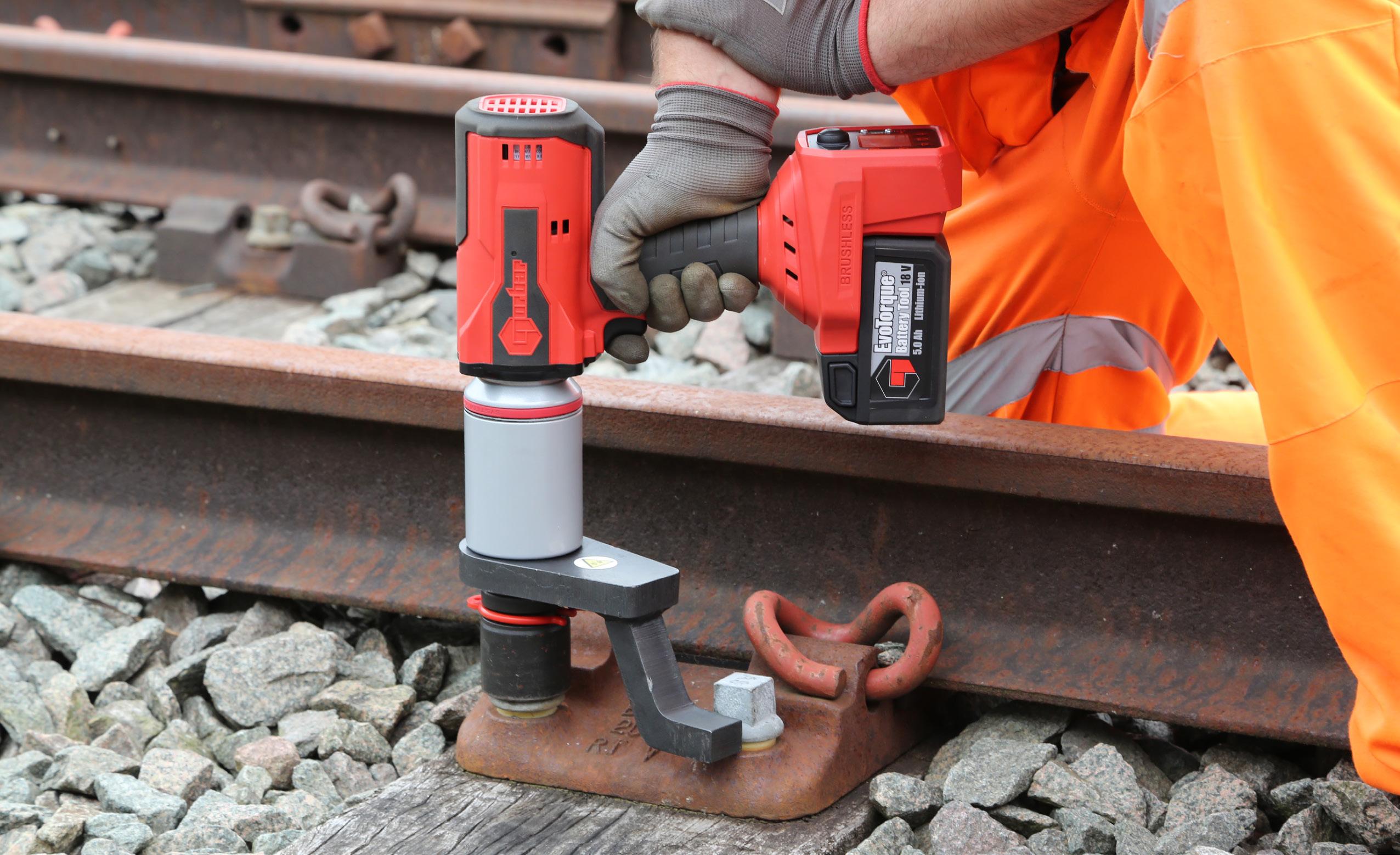
Norbar is a UK manufacturer of battery, electric, pneumatic and manually operated torque multipliers, wrenches, torque measurement equipment and bespoke torque control solutions specially developed for the rail industry
Norbar and speak to The Voice of Torque Control
LAYING DOWN THE LAW
by Martin Fleetwood
The Arrival of the Fair Work Agency
A new way of enforcing employment rights arrives in April 2026 as the Fair Work Agency consolidates fragmented enforcement bodies into a single watchdog with unprecedented powers to penalise non-compliance
While most of the rail industry spent December focussed on the various provisions in the Railways Bill, a new piece of legislation, the Employment Rights Act 2025 (ERA25) quietly became law. It provides a major overhaul of UK employment law, introducing significant worker protections, including stricter rules on ‘fire and re-hire’ practices, guaranteed hours for casual workers, enhanced bereavement leave and changes to unfair dismissal rules. Most of the changes will be introduced on a staggered basis during 2026 and 2027 with some being subject to consultation first.
One of the earlier changes, which will begin in April 2026, is the establishment of the Fair Work Agency (FWA), a new single enforcement body for employment rights. The FWA aims to transform how employment rights are enforced across the UK. It will directly affect employers and employees in the rail sector.
How will the FWA work?
The FWA will provide a single employment enforcement body to replace the current fragmented system that has existed for a number of years. The idea began under the previous government but gained momentum when Labour came to power with its 2024 Plan to Make Work Pay.
The FWA will bring together the work of the Employment Agency Standards Inspectorate, HMRC’s National Minimum Wage Enforcement Team and the Gangmasters and Labour Abuse Authority to become a ‘one-stop-shop’ for enforcing workforce rights. It will be established as an executive agency of the Department for
Business and Trade (DBT), where the FWA’s work will be carried out by enforcement officers and staff appointed by and working within the DBT.
The FWA will be supported by an expert advisory board of representatives from business and trade unions and independent experts. The FWA itself will produce an annual report and will set an enforcement strategy every three years which will set the focus of its efforts.
As the single employment enforcement body, the FWA will bring together the work of existing state enforcement bodies to:
• Oversee compliance with the national minimum wage.
• Provide the regulation of employment agencies.
• Provide licensing standards for gangmasters.
• Enforce unpaid employment tribunal awards.
Along with the creation of new powers to:
• Enforce failure to pay statutory holiday and statutory sick pay.
• Oversee the regulation of umbrella companies (from 2027).
• Take on enforcement of a wider range of employment rights over time.
What powers will the FWA have?
The FWA will have the power to inspect workplaces and to require employers to produce relevant documents and evidence demonstrating compliance with employment law. It will be a criminal offence for employers to knowingly or recklessly produce false documents and information,
Martin Fleetwood is a Consultant at Addleshaw Goddard’s Transport practice. The Rail Team has over 30 lawyers who advise clients in both the private and public sectors across a wide range of legal areas. As well as contractual issues, the team advises on operational matters, franchises, concessions, finance, regulatory, property, employment, environmental and procurement issues.
Disclaimer: This article is for informational purposes only and does not constitute legal advice. It is recommended that specific professional advice is sought before acting on any of the information given.
or to intentionally obstruct enforcement action or fail to comply with an enforcement requirement without reasonable excuse.
A civil penalty regime will allow enforcement officers to issue notices of underpayment (for periods going back up to six years) to employers of any non-payment or underpayment of any statutory payment (this include statutory sick pay, holiday pay or national minimum wage). Payments of the amounts due are required to be made by the employer within 28 days of the payment notice being issued by the FWA. Notices of underpayment or non-payment must include a penalty of 200 per cent (up to a maximum of £20,000 per individual and a minimum of £100) which may be discounted by 50 per cent if the relevant sums due are paid within 14 days of the notice being issued.
Where a worker has a right to bring a claim in the Employment Tribunal, the FWA will be able to bring those proceedings in place of the worker, as well as give legal advice or provide representation in employment, trade union or labour relations cases. This will significantly strengthen the potential for an action to be brought against an employer in businesses where employees do not generally have trade union support.
In addition to recovering unpaid or underpaid amounts due to employees, the FWA will be able to recover state enforcement costs from employers not complying with the law.
Managing holiday pay
Bringing holiday pay within the FWA’s remit is significant for employers. If an employer gets its holiday pay calculations
wrong for its workforce, there could be major cost implications for that employer. Should an employer miscalculate holiday pay or misclassify workers/employees as self-employed, the FWA could issue notices of underpayment of holiday pay for large numbers of workers. With the mandatory 200 per cent penalty (up to a maximum of £20,000 per individual) this would be a very costly mistake for an employer with a large workforce. The penalty is automatic, so even a genuine mistake becomes expensive.
One reason for the strong enforcement powers around holiday pay is the prevalence of withholding such payments. Research by the Resolution Foundation in 2023 estimated that 900,000 UK workers per year have their holiday pay withheld, valued at around £2.1 billion (£2,300 each).
Umbrella companies
An umbrella company acts as an intermediary employer for temporary or contract workers, handling payroll, taxes (PAYE) and National Insurance, while the worker performs services for an agency or end client. It bridges the gap between being self-employed and a permanent employee, often simplifying the administration for all parties, making them popular for short-term projects or new contractors.
While they can be useful in certain situations, there have been reports of non-transparent pay practices, tax noncompliance and fraud in the umbrella company market. To ensure workers get comparable rights and protections when working through an umbrella company as when taken on directly by an employment business, the ERA25 will expand the legal definition of ‘employment business’ to include umbrella companies from 2027. This will then allow the FWA to take enforcement action against any umbrella companies that do not comply with their legal obligations to their employees and to the tax authorities.
What action should employers take now?
Employers should conduct a thorough compliance check ahead of the FWA becoming operational in April 2026. The government has strongly commented on the FWA being used to support workers who do not receive full holiday pay and/or fail to be paid the national minimum wage, so it would seem likely that these two areas may be a particular focus in the FWA’s initial enforcement strategy.
Given the complexity of calculating holiday pay, employers will need to mitigate the increased financial exposure by checking the accuracy of their calculations and
keeping these under review, whilst retaining adequate records to demonstrate compliance with holiday pay and leave to cover a six year period (the FWA’s period of review). This is especially relevant given that the FWA will have the power to investigate and enforce rights to holiday pay without the need for an individual worker to bring a claim.
Employers using umbrella companies will want to conduct a thorough review of their arrangements to ensure the umbrella company is compliant with tax and employment laws and/or introduce safeguards to mitigate potential liability for PAYE ahead of the April 2026 changes. With HMRC data showing that most of the £500 million lost to disguised remuneration tax avoidance schemes in 2022-2023 was facilitated by umbrella companies, this is expected to be another area of focus for the FWA as soon as it falls within its control.
In order to get businesses to focus on the remit of, and financial penalties available to, the FWA, there is the potential for the FWA to look for some high profile ‘wins’ in its first year of operation. As such, employers are encouraged to ensure that their own house is in order before April 2026 arrives.
Shannon Simpson
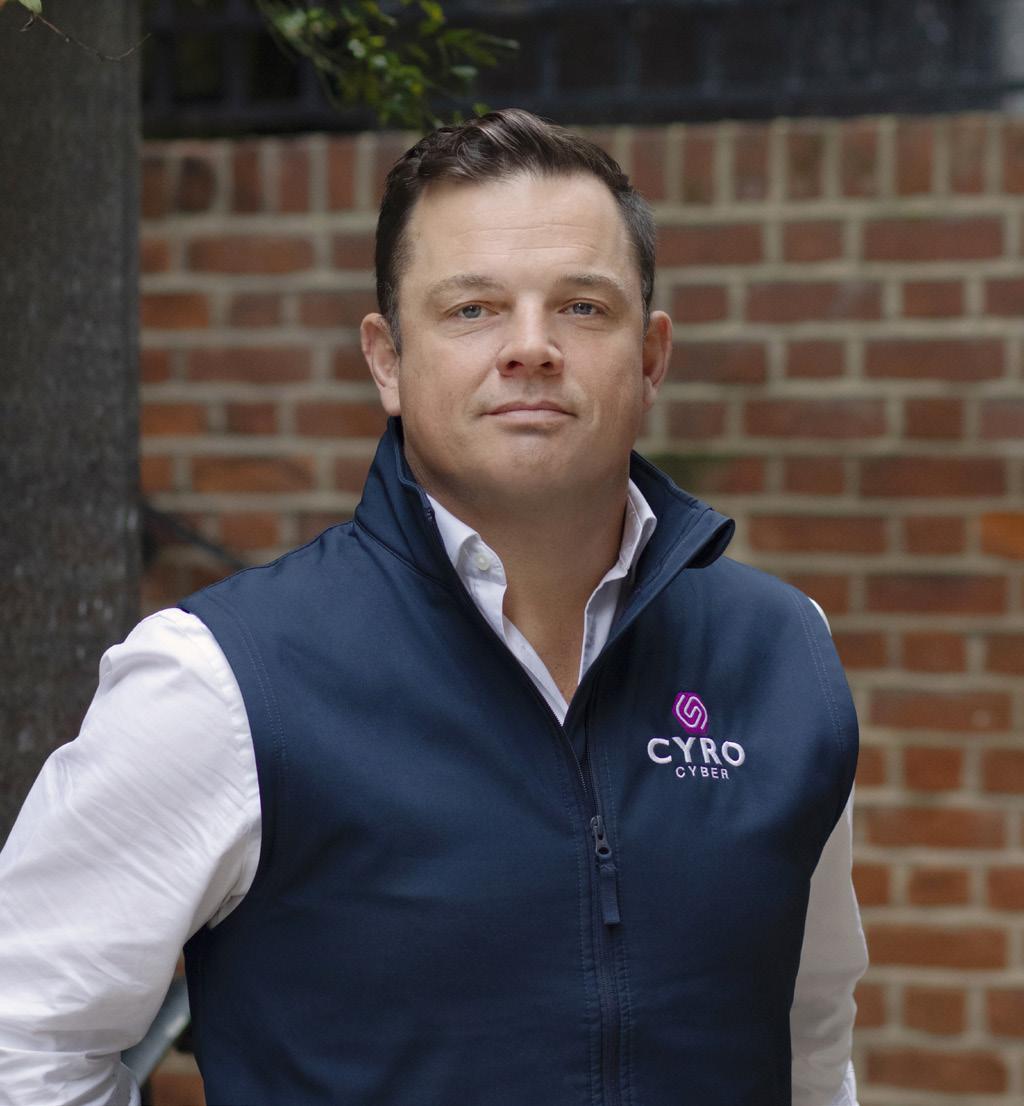
CEO – Cyro Cyber
Shannon Simpson is CEO of Cyro Cyber. He started in the IT industry replacing token-ring with Cat5 cabling. After setting up the IT function of Canon Voice & Data, he helped establish CNS Group, and built the UK’s 1st PSN accredited Managed Security Services function. His entrepreneurial and problem solving nature has led to the creation of several cyber tools including RiskRevelation & CyroSure.
Paul Rose
CISO – Cyro Cyber
Paul Rose is CISO at Cyro Cyber. He cut his teeth within the InfoSec world, post-service, with some well known City finance houses. He brings an immense knowledge of the workings of public and private sector regimes to the InfoSec arena. As a CCP Lead Auditor and Architect Paul has created services that not only protect the network but achieve compliance to any required regulation.
Cyro Cyber is a UK-based cyber security professional and managed security services provider, focused on protecting critical infrastructure, public services and high-impact organisations. With 30+ years of protecting critical IT/OT in military, CNI, central government and private sectors, we keep security professionals in highly regulated organisations safe from evolving cyber threats. Our expertise spans compliance, security assessment, secure system design, and MXDR services backed by a 24/7 UK-based SOC.
Sam Sherwood-Hale spoke to Shannon Simpson and Paul Rose of Cyro Cyber about the UK's Cyber Security and Resilience Bill, what it means for rail operators facing 24-hour incident reporting requirements, and how legacy operational technology can be secured without wholesale replacement
SSH: Congratulations on becoming an NCSC Assured Service Provider in September. Can you start by explaining what this designation actually means and why it's significant for rail operators specifically?
S&P: Thank you. The designation means we’ve been independently validated. Rail operators can be assured that our cyber security services meet the NCSC’s highest standards and have confidence that our practices, processes, and people are fully aligned with national security expectations.
Operators, regulators and stakeholders can have confidence that their critical infrastructure is genuinely secure. As an NCSC Assured Service Provider, Cyro Cyber will ensure that assessments under the Bill are trusted, thorough, and meet national standards.
This is important because the Cyber Security & Resilience Bill will make higher demands of rail operators. They will need to show evidence of a thorough approach to protecting their network and information systems, even down to the dumb end points.
SSH: The Cyber Security and Resilience Bill was introduced to Parliament on 12 November and is currently at second reading. Paul, with your NCSC connections, what are you hearing about enforcement timelines and what this means for rail operators?
S&P: The Bill will progress through Parliament in 2026 and the timeframe for Royal Assent is currently mid-to-late 2026. This will then be followed by phased implementation and grace periods.
Rail operators will certainly fall within its scope, as part of the transport/OES section of the Bill. So they will need to build or review robust incident-response and reporting mechanisms. They will also need to update supplier contracts to allow for clearer allocation of cyber security responsibilities. For example, TPCMS often has a supply chain that’s as long as a crocodile’s tail (Traction Power Centralised
‘Without 24×365 monitoring it's very difficult to achieve the speed the Act will require. To do this, the dumb endpoints will need to be brought into the network, securely.’
Paul Rose
Management System). To meet the requirements of the CS&R Bill, Operators will need to examine responsibilities and vendors need to support the process.
The Bill requires that a significant cyberevent can be flagged within 24 hours and a detailed investigation delivered within 72 hours. This is going to require upgrades to detection, logging, forensic readiness, and incident management.
SSH: The Bill will mandate 24-hour incident reporting to NCSC, with a full report within 72 hours. Can most rail operators even detect an incident within 24 hours, let alone report it, and how does your 24x365 SOC support this requirement?
S&P: Rail Operators are going to need specialist partners like Cyro Cyber to meet these new measures. It can’t be done in isolation. Currently, many operators aren’t in a position to reliably respond within 24 hours. The whole sector is dealing with legacy operational technology (OT), fragmented logging, and a large supplier ecosystem and supply chain, where the security responsibility gets passed down the line, or worked around.
Without 24×365 monitoring it’s very difficult to achieve the speed the Act will require. To do this, the dumb endpoints will need to be brought into the network, securely.
Our service is designed to close that gap. It includes continuous monitoring, threat detection, incident triage and immediate escalation. This means the Rail Operator would have both the detection capability and the evidential record needed to meet notification requirements. We support Operators in producing the detailed 72-hour follow-up report with proper forensics, timelines and mitigation actions.
SSH: Shannon, you've said ‘make Operational Tech as secure as IT’, but rail networks have signals, switches, and sensors that were installed 20 or 30 years ago. How do you apply IT security principles to infrastructure that predates modern cybersecurity?
S&P: This is a big challenge for Rail Operators. When the operational technology (OT) was fitted 30 years ago, it wasn’t expected that it would need to be brought into the critical network. Back then, protecting the end device just meant having a spare part!
What it doesn’t mean is retrofitting every legacy device with the latest updates. OT needs to focus on compensating controls such as; firewalls at the interface, intrusion detection at the network level, or even replacement of high risk components over time. Cybersecurity is as much about visibility, segmentation, and process as it is about software updates. You need to know what you have, fence it off and know what to do when something happens.
You can’t protect what you can’t see. Visibility of the entire network can be a challenge for rail Operators. We recommend starting with knowledge of everything you’re looking to protect, including the dumb end points. We can then not only see what’s happening and respond, but we can also provide evidence of the process, which is what the CS&R Act will require.
SSH: You've mentioned ‘largely unmonitored, dumb endpoints becoming an increasing risk’. For rail specifically, what are we talking about and can your Managed Detection and Response service actually detect threats on these devices?
S&P: In rail, ‘unmonitored, dumb endpoints’ are legacy RTUs, signal controllers, and switches that weren’t built with cybersecurity in mind. For example, signalling traffic is not always designed for internet protocols, so it’s hard to monitor. We can do the equivalent of converting analogue to digital with these systems.
Our Managed Detection and Response service (MDR) doesn’t need agents on every device. Instead, we monitor the networks and protocols they use, so we can spot anomalies or suspicious activity. This approach gives operators actionable alerts and reduces risk, even on legacy infrastructure.
SSH: Walk us through what a Cyber Resilience Audit (CRA) actually involves for a rail network. What are you assessing, and how does it differ from traditional ISO audits or penetration tests?
S&P: For a rail network, an audit is broader than a technical test; it’s an end-to-end assessment of operational resilience. A Cyro Cyber Audit looks at how well the network can withstand, detect, respond to and recover from cyber incidents across both IT and OT. To do this we start by mapping what you have and working out where the bodies are buried. This is a granular approach to make sense of an often patchwork system that has been built up over many years.
We assess areas such as network architecture, supplier dependencies, incident response capability, logging and monitoring, asset visibility, disaster recovery, business continuity, OT segmentation, and how well operators can operate in a degraded mode. It is about assessing and managing for capability. We ask; can the operators continue running safe and reliable operations even when something goes wrong? And if not, how can we improve that.
SSH: The Bill specifically strengthens the role of NCSC's Cyber Assessment Framework. Does this mean CRAs become mandatory for transport, and what are the most common gaps you find when assessing critical infrastructure against CAF?
S&P: The Bill doesn’t make cyber resilience audits automatically mandatory for transport operators. What it does do is make the Cyber Assessment Framework (CAF) central to how regulators will assess readiness. The most common gaps are poor visibility, weak segmentation, and incomplete incident response processes. Robust segmentation is crucial for a secure network. It will secure your most
‘Rail networks should focus on visibility over systems, mapping assets, reviewing or updating incident response processes, and identifying gaps against the Bill’s requirements.’
covers risk obligations and runs incident procedures to meet reporting duties.
‘Making changes stick’ means embedding policies, controls, and training so improvements are permanent, not just a one-off fix. We also look at the company culture around cyber security. If a workaround approach is common, we need to address that with training. Cyro Cyber are not advocates of the repeated tests some users have to take. We believe training needs to be interactive and preventative. So it stops users from moving on and redirects them to a test or explanation before they can continue. We recommend a stop, look, check approach. This method ingrains security procedures across the organisation.
important assets and information inside various rings of security. Without it, it’s like the Titanic’s bulkheads; the segments aren’t watertight, so the intruder (or sea water) can flood in across the whole network. It’s harder to stop the attack and it can do more damage quickly.
SSH: Paul, the Bill cites the 2024 MOD payroll hack via a managed service provider and the Synnovis NHS attack that cost £32.7 million and disrupted 11,000 appointments. With your CNI experience, are rail networks seeing similar supply chain attacks, and where are the vulnerabilities?
S&P: Yes, they are seeing supply-chain-style attacks and third-party compromises. The weakest points are almost always the same; vendors, software or firmware updates, remote-access routes into operational systems, and ageing and unpatched OT, industrial control systems, or passengerfacing services.
This is what the CS&R Bill is designed to cover. Security has to be effective across the whole supply chain. Cyber security attacks on a rail network can be of national significance. Rail networks and operators themselves can be secure, but the Bill aims to address the breaches coming through third-parties. Your supplier now also has to comply with the Act.
SSH: Shannon, you've outlined your methodology as ‘map what you have, work out where the weak points are, run incident management procedures, then make the changes stick’. How does this map to the Bill's specific requirements, and what does ‘making changes stick’ actually mean?
S&P: Our methodology directly aligns with the Bill. It maps assets, addresses visibility requirements, identifies weak points that
SSH: The Bill allows the Technology Secretary to instruct organisations to take specific security actions where there's a national security threat. If that instruction comes tomorrow telling a rail operator to ‘beef up monitoring’ can they respond, or do they need partners like Cyro already in place?
S&P: It’s certainly quicker with a partner already in place! If such an instruction came tomorrow, operators could act faster and more confidently if they’re already working with us. Building full monitoring and response capabilities from scratch takes time. Having the right team and tools ready is what makes rapid compliance realistic. You need a partner who already understands the challenges of the industry and the impact of the coming Act.
SSH: The Bill introduces turnover-based penalties for serious breaches. For a major rail operator, what level of fines are we talking about, and has the cost-benefit calculation changed where security is now cheaper than penalties?
S&P: The turnover-based penalties could cost operators millions of pounds:
• Serious breaches – up to £17 million, or four per cent of a regulated entity’s worldwide turnover, whichever is higher.
• Less serious breaches – up to £10 million, or two per cent of a regulated entity’s worldwide turnover, whichever is higher.
SSH: Investing in cybersecurity now is clearly cheaper than paying those fines later!
SSH: If a rail operator decided to build their own 24x365 SOC instead of using your service, what would that actually cost and require, and what's the realistic timeline compared to when Bill enforcement begins?
S&P: This is a huge undertaking. Building a 24x7 SOC from scratch needs more than just new tech. Operators would need to recruit and train a full team of skilled analysts, invest in monitoring tools,
threat intelligence feeds, and continuous process development. Realistically it would take at least 12 to 18 months to get fully operational. It would also create a separate team, focussed on security, rather than rail. An established Managed Detection and Response service can get you compliant and protected much faster and with far less upfront cost and operational risk.
SSH: A rail operator CEO is reading this thinking ‘we need to do something but don't know where to start’. The Bill is in Parliament now, enforcement is
NEWS IN BRIEF
GWR INVESTS IN PLYMOUTH WITH LANDMARK
Great Western Railway (GWR) has confirmed significant long-term investment in Plymouth after securing a major office building next to the city’s railway station, as part of its wider commitment to rail-led regeneration and growth in the region. The deal represents the largest office letting in Plymouth for a decade and the largest in the region outside of Bristol. The new lease will bring together GWR operational and administrative teams and rail industry partners in a single, modern hub immediately adjoining Plymouth station. The move strengthens the station’s role as a focal point for employment, investment and future development.
Philippe Renon
CRO, Wiremind
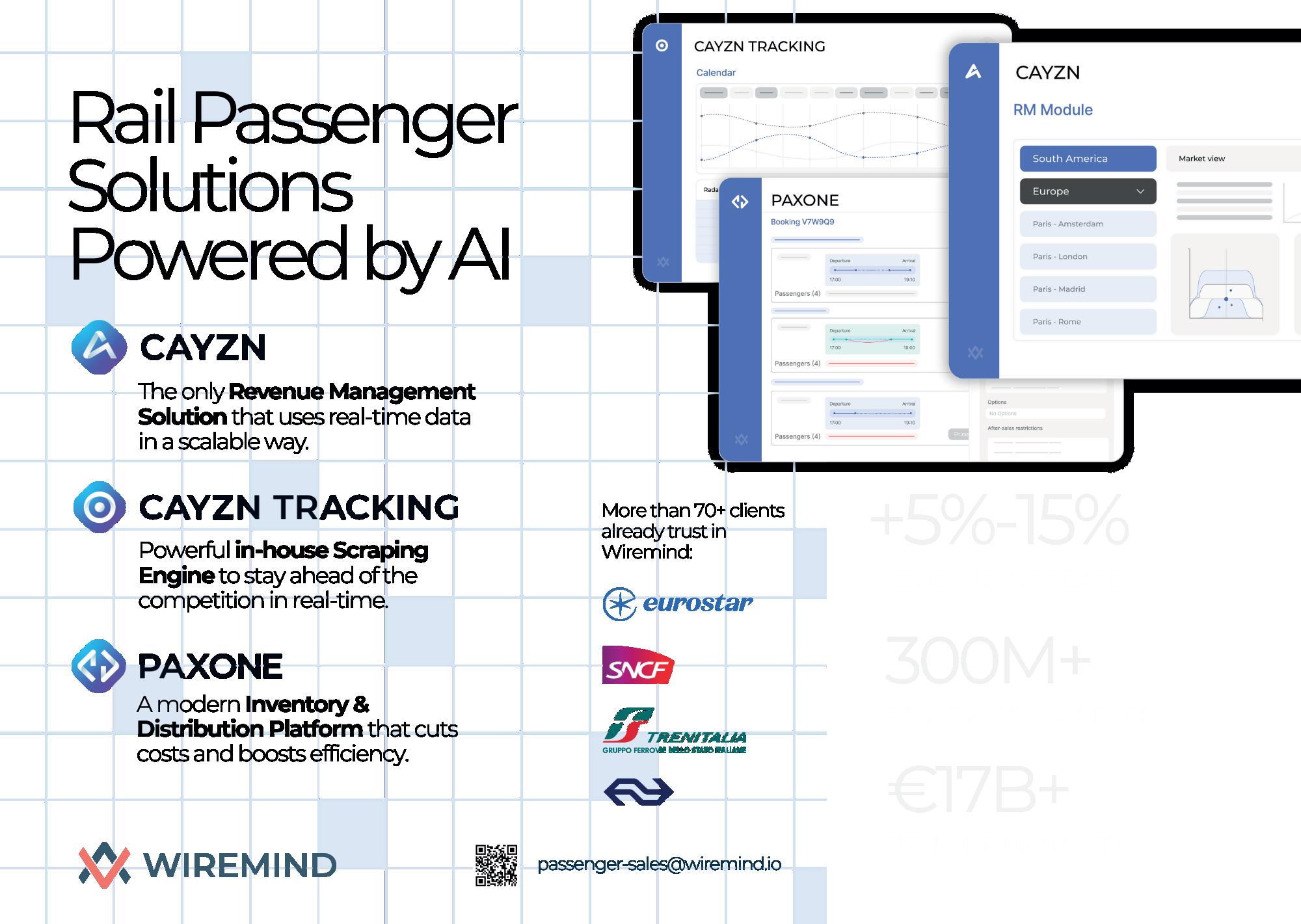
Founded in 2014 and headquartered in Paris, Wiremind offers advanced inventory, distribution, and optimisation solutions for the passenger transportation, air cargo, and sports & events industries. The company leverages AI, machine learning, and cutting-edge software to help drive success for clients such as SNCF, Eurostar, Transavia, PSG or Qatar Airways by simplifying distribution and optimising commercial performance.
Philippe Renon joined Wiremind as Chief Revenue Officer in July 2025, bringing over 25 years of global experience in enterprise software, SaaS, and digital innovation. He held senior leadership positions at BMC Software, Hootsuite, Qubit, and Klaxoon, where he developed expertise in revenue strategy, go-to-market execution, and scaling commercial operations.
Sam Sherwood-Hale spoke to Philippe Renon about Wiremind’s approach to railway revenue management, their expansion across Europe, and opportunities in the UK market
‘Revenue management remains a humandriven activity, but technology can significantly improve consistency and relevance in decisionmaking.’
only solution in the market that can handle large volumes of data in real-time. That comes from a scalable architecture we’ve been building and refining for more than ten years. It allows revenue teams to automate what can be automated and spend more time on decisions that actually move the needle.
SSH: Looking at the UK market specifically, you’ve got traction with CAYZN Tracking across several operators. With Great British Railways on the horizon, what’s your strategy for the UK?
SSH: The UK has undergone significant rail reform discussions. How does this regulatory environment affect operators’ appetite for advanced revenue management solutions?
PR: The regulatory context definitely shapes how operators think about revenue management. There is a strong focus on cost efficiency, on simplifying fare structure, and on alignment across operators and systems. That naturally pushes teams to look for solutions that reduce complexity rather than add to it.
SSH: You’ve called the UK rail market ‘an ideal match for Wiremind’s capabilities’ due to its complexity and diversity. Can you elaborate on what makes the UK market particularly suited to your approach?
PR: Based on our discussions with the UK train operating companies, the market has to manage a wide range of use cases. There is advance purchase and walk-up demand, regional and long-distance services, night trains, reservable and non-reservable capacity, and a mix of flexible and nonflexible products. Demand is also highly peak sensitive, which means forecasting needs to be both accurate and able to react quickly to changes.
That kind of complexity isn’t new for us. We already support these different use cases for a range of clients across France, Italy, and other European markets, so the UK looks very familiar in that sense.
Our role is to help teams navigate the data and reduce time to action, even when the network itself is complex. CAYZN is a rail-first revenue management platform, built by rail revenue experts for rail revenue teams. It was designed from the outset to handle network complexity, including O&D control, capacity constraints, disruptions, advance reservations, and walk-up demand. CAYZN continuously evolves to support new use cases as rail markets and customer behaviour change.
From a technology point of view, the platform is designed to process very large volumes of data in real-time, which is essential in a market like the UK. We’re the
PR: In the UK, our approach is first and foremost about understanding how the market is evolving. We consistently follow what’s happening across the sector, including policy discussions and debates around the future structure of UK rail, because those choices will shape how revenue management needs to work in practice.
We’re in contact with a number of stakeholders, and we’re aware of the roadmap ahead, particularly the transition towards a more centralised model. That kind of change will inevitably require revenue management strategies to be reviewed and refined.
At the same time, our existing work with several train operating companies in the UK using CAYZN Tracking, our competition monitoring tool, has allowed us to build a much deeper understanding of the market. Through those conversations, we’ve been able to identify the variety of use cases and constraints that will need to be taken into account as the system evolves.
In terms of revenue management specifically, we see several high-stakes topics for GBR: cost efficiency and standardisation, revenue growth, and customer loyalty. We believe reshaping revenue management processes with modern tools, centralied procurement, and aligned workflows will significantly help with all of these topics and will create financial margins that can fuel new investments in rail modernisation or customer benefits. It’s a two-way street.
This is where we can play a definite role. With our experience in France, Italy, Sweden, and many other European countries that have gone through significant structural change, we know these transitions take time and careful planning. We’ve been a reliable long-term partner for them, and we are confident in playing the same role for GBR. We can de-risk any transformation or replacement project because we’ve already been there. We know how it works.
The discussions with operators so far have been positive, but they do have their constraints. Each operator has a different level of experience with revenue management. We’re here to help explain the value that they can get from combining modules such as revenue management and competition tracking.
Revenue Management has existed for a long time and is often built on legacy tools, teams, and processes. What we’re bringing is innovation in terms of greater simplicity and performance, and the ability to deliver a stronger ROI within those existing setups.
One key innovation that we bring to the table is real-time capability. This is important for TOCs because they need to react in real time, not through daily batch processes. Things can change quickly, whether in the competitive landscape, the market, or due to external factors like weather. It could be a flood, a strike, or a competitor’s price moving suddenly because of a major event. Our customers value this real-time capability because it allows them to react immediately to these changes.
Since the UK rail industry is undergoing a high-scale transformation, it will need longterm sustainable partnerships that can work along with it. Any time lost in implementing unreliable systems can have a huge impact on reputation and revenue.
At Wiremind, we go beyond simply delivering a system. We have true partnerships with our customers, and work side-by-side with them to build RM processes and features that will shape their future.
SSH: You cite 5-15 per cent revenue increases for CAYZN clients. Can you break down where those gains actually come from?
PR: It really depends on the use cases, but the gains typically come from a combination of actions rather than a single lever. At the
‘Having revenue management, inventory, and distribution designed to work together allows us to deliver new commercial capabilities faster.’
core, a lot of value comes from automation and reactivity. Flexible business rules allow teams to automate actions and alerts, which frees up time and helps them focus on strategic decisions. Real-time AI-based optimisation maximises reactivity to trends and market changes.
Forecast quality is another important driver. Having a strong market forecast is key to taking informed and accurate decisions, be it improving load factors by increasing demand in off-peak periods or reacting to sudden changes in demand.
All of this is supported by an intuitive revenue management workflow which improves analyst productivity and, ultimately, revenue outcomes.
On top of that core, there are additional layers that can generate incremental revenue. Real-time competitor data helps operators stay close to competitors’ moves. Ancillaries revenue management creates additional optimisation opportunities. Schedule optimisation can also contribute by better aligning capacity with demand.
Depending on the starting point and priorities of each operator, these levers contribute differently, which explains why the observed revenue gains fall within a range rather than a single number. The 5-15 per cent increase in revenue comes from a proven informed comparison that we made with other systems in the market.
SSH: The press release mentions managing €15 billion in annual revenue across your clients. What does your European rail footprint look like now?
PR: We are the European leader in rail revenue management. Our client base includes SNCF, Eurostar, Trenitalia, SJ, MTR Express (Sweden), VR (Finalnd), SBB (Switzerland), DSB (Denmark), NS (Netherlands), Ouigo (France and Spain), French Regional Trains TER, and others across Western, Northern, and Southern Europe. We work with both national railways and private operators, and we also extend into the bus sector with renowned operators such as National Express & BlaBlaCar, and the aviation sector with leading European carriers such as Transavia.
Europe is still a field of growth for us. We’re heavily investing in market resources,
with the UK first and foremost, but also in Southern and Eastern Europe. We clearly see an opportunity for market share growth there.
SSH: What’s the technical challenge of scaling CAYZN to handle real-time pricing decisions at that volume?
PR: Real-time pricing is necessary to answer situations where demand can peak suddenly and needs reactivity from the RM system. This can happen during sales openings, promotional campaigns, major events, or with walk-up passengers purchasing tickets close to departure. In those moments, large volumes of pricing decisions need to happen at the same time.
To deal with that, you need pricing decisions to be made in real time, based on what is actually happening in the market, not on data that is already outdated. The real technical challenge is therefore scalability. Being able to absorb sharp peaks in activity without blocking the system or degrading performance.
CAYZN was designed with this in mind. The platform is built to scale horizontally, allowing capacity to grow dynamically as demand increases, without degradation of response times. It is the only solution in the market that operates in real time with continuous data flows between reservation systems and optimisation logic, allowing every booking or change to be taken into account as it happens. The platform is built to scale horizontally, so capacity can grow dynamically when demand increases without impacting response times.
Beyond the technology itself, there is also a strong operational dimension. Our product teams include revenue management specialists with experience from major European transport operators such as SNCF, BlaBlaCar, Ouigo, and Air France. They work closely with customers on a daily basis to ensure adoption, proper use of the tools, and continuous improvement. This combination of software and expertise is very much part of our DNA. All our customers praise this because they feel we’re there for them, and we’re experts in our field, and we understand what they’re doing. Every operator has their own use cases, but we see that one use case can be reused elsewhere. We help them daily – it’s human, not just software.
Finally, scalability also means reliability. We support operations with business continuity and disaster recovery plans, secure data centres, and recognised security certifications such as ISO 27001 and SOC II, to ensure the platform remains robust even under stress.
SSH: Beyond the technology, what does successful implementation require from the operator’s side?
PR: The best projects we see have very strong preparation on the stakeholders' side. That’s absolutely key. Having the
right governance in place, with an internal executive sponsor and clearly identified subject matter experts, makes a real difference from the start.
Process matters as well. All phases of the implementation need to be reviewed upfront, particularly the gap analysis. The goal is to make sure there are no unknown technical or business cases that only appear later in the project and create unnecessary friction.
On the technical side, early access to APIs, data, and business processes is essential. When that information is available from the beginning, it significantly simplifies the implementation.
Finally, and it may sound obvious, respecting project milestones is very important. Keeping a steady meeting cadence and making sure responsibilities are met, especially for QA and UAT, helps projects stay on track. We have long experience implementing RMS, so we know how to anticipate challenges and support customers with change management, project execution, and the learning curve throughout the process.
SSH: With major operators across Europe now in your portfolio, is Wiremind becoming the de facto European standard for rail revenue management?
PR: We are the market leader in Europe, with an expanding footprint in international markets, including North America. What we clearly see across Europe is that operators are at very different stages in their revenue management journey, and their needs reflect that.
Some are looking to move from static to more dynamic pricing. Others want better demand forecasting, more advanced optimisation, or to start introducing AIdriven revenue management. For some, the priority is ancillaries. For others, it’s understanding competitors’ moves. Our strength is having a modular approach, which means we can address one of these needs, several of them, or all of them together, depending on where an operator is starting from.
We work with customers who are taking their first steps in revenue management, often beginning with competition tracking. We also work with more mature teams that want to go further, be it adopting dynamic pricing or moving towards best-inclass optimisation with AI. That flexibility is important in a market as diverse as European rail.
Innovation is a big part of what we bring, and we’re building an ambitious roadmap to shape how revenue management processes evolve over the coming years. Predictive AI is already embedded in our forecasting and optimisation capabilities, helping customers make more accurate decisions ahead of time. At the same time, we’re actively working on Generative AI to support analysts by presenting options and insights when decisions are complex.
‘What matters to us is that innovation stays practical. Much of what we build comes from customer feedback and handson operational experience.’
What matters to us is that innovation stays practical. Much of what we build comes from customer feedback and hands-on operational experience, as many people in our teams come from the rail and transport industry themselves. The goal is to provide tools that genuinely improve productivity, accuracy, and decision-making.
SSH: Wiremind launched PAXONE, an Inventory and Distribution Platform, as an integrated solution. Is there potential for rail operators to adopt PAXONE, or do established operators prefer to keep existing systems and plug in best-of-breed revenue management?
PR: We have a PASSENGER suite, where the three solutions – CAYZN for revenue management, CAYZN Tracking for competitive intelligence, and PAXONE for inventory and distribution – can be combined for maximum value. They are integrated by design with seamless data connections, and at the same time can be used modularly as standalone systems.
What we see today is that CAYZN is our most widely adopted solution. That’s often where the customers start. But once it’s in place, there is growing interest in how the other parts of the suite can help optimise beyond revenue management alone.
Historically, Wiremind focused on revenue management, and we progressively added new products to extend its impact.
CAYZN Tracking was a natural step, as it helps understand competitors’ pricing strategies and also feeds our forecasting and optimisation models.
PAXONE came from a slightly different place. Over time, and through close work with customers, we realised that connecting revenue management to a third-party inventory and distribution system often limits how far innovation can go. Building joint, advanced features across revenue management, inventory, and distribution is much harder when systems are only loosely connected.
By developing PAXONE, the goal was to unlock a much more ambitious innovation roadmap across these areas. Having revenue management, inventory, and distribution designed to work together allows us to
deliver new commercial capabilities faster, at scale, and with a level of agility that is difficult to achieve otherwise. This directly supports operators in improving their commercial processes end-to-end.
PAXONE is built as an open platform, aligned with EU-forward standards such as OSDM, so it can integrate smoothly with existing distribution channels. And when it is combined with CAYZN, it enables advanced use cases like continuous pricing, ancillary optimisation, overbooking, postbooking optimisation, flexible departuretime fares, and schedule optimisation. These are use cases that genuinely require tight coordination between systems.
Having a single provider means coordinated roadmaps between systems, allowing us to implement changes way faster than industry standards. It’s inherently cost-effective with simplified account management, meaning one point of contact for implementation, maintenance, and customer support.
Replacing on-premise systems is no longer rocket science. Legacy systems now have APIs and cloud technology, which makes transitions far easier than they were ten years ago. What we’re seeing today is a natural expansion from our customer base, as operators look at what they can add to generate more value.
SSH: LE TRAIN was your first PAXONE client as a completely new operator. How does your approach differ with a greenfield operation versus an established railway?
PR: It definitely depends. With greenfield operators like LE TRAIN, it’s easier because you don’t have legacy data and systems to deal with when setting things up. LE TRAIN is the first private French rail operator to offer a high-speed service dedicated to regional and inter-regional travel. They’re launching high-speed lines in the GrandOuest region, and they share our goal of innovating within an established market.
That said, we also have experience handling high levels of complexity when replacing systems for established operators. The main difference is really around data migration and system integration. With greenfield projects, we’re building from scratch and can implement innovations from day one.
PAXONE enables several innovations that can generate additional revenue. For example, we optimise prices for connecting trips. Standard inventory systems typically calculate connection prices based only on individual segment prices, whereas PAXONE optimises connecting trip prices to better reflect the willingness to pay for connecting passengers.
We also enable flexible departuretime sales, which helps extend a booking horizon that is often constrained by schedule uncertainty. Once departure times are confirmed, they’re automatically communicated to passengers.
Finally, there’s schedule optimisation. PAXONE applies advanced data analytics and AI to simulate network planning scenarios, forecasting revenue, ridership, and costs. This helps streamline schedules and optimise operations and maintenance, with the objective of improving overall operating margins.
SSH: In France, DGITM selected PAXONE as the unified platform for intercity rail. Can you explain what this means?
PR: DGITM is the French Ministry of Transportation. The ministry selected PAXONE as the unified system for inventory and distribution for the state-subsidised intercity network in France.
This is driven by competition law. Intercity routes in France will progressively open to competition, with a gradual rollout running through to 2030. We’re already in discussions with the first operators for the initial routes expected to go live next year.
What’s significant is that this is a neutral platform. GITE, which is run by DGITM, is used for all state-subsidised intercity train services, and no single operator owns or controls the system. In the French context, this is the first inventory and distribution platform designed to handle multiple operators within a single, unified system.
SSH: Have there been any surprises working with UK operators - any oldfashioned ways of doing things?
PR: Not really, no. But the UK market does have some very specific characteristics. You have a legacy of multiple train operating companies with increasing alignment across the system, a particular regulatory environment, and a strong mix of advanced bookings and walk-up demand. On top of that, fare structures are wide, networks are dense, and customer experience expectations are high.
What’s interesting is that this creates a lot of variety in how revenue management is approached. Some operators are very advanced, others are at an earlier stage, and some are still building revenue management capabilities. What we see quite often is that the most mature operators help set the pace, and that creates a natural dynamic across the market.
For us, that means adapting. Training, support, and even how the tools are used can vary depending on each operator’s level of maturity. That’s something we’re used to, because we see the same pattern across other European markets.
From a use-case perspective, the UK is very much about managing peak-sensitive and walk-up demand. Late bookings, demand spikes, and the need to protect high-yield demand while still optimising availability are central. Those are scenarios CAYZN is designed to handle, and they’re very familiar to us.
SSH: You mentioned real-time capability and AI several times. What AI developments interest or excite you most?
PR: What is clearly mature today is predictive AI. It’s already in production within our forecasting and optimisation capabilities, and it’s used daily by our customers. It supports robust demand forecasts and pricing decisions well ahead of day zero, across complex networks and large volumes.
Where we’re working extensively now is generative AI. We have a very ambitious roadmap, and we’re already seeing concrete value. It helps analysts explore different decision options and understand trade-offs more quickly.
The maturity in predictive AI also enables more advanced use cases. We’re working on better optimisation of bundles, combining tickets and ancillaries in a more consistent and dynamic way. We’re also developing macro-level simulation capabilities, where AI can help teams explore scenarios linked to major market changes, such as new competitors, capacity or schedule shifts, or changes in fare structures.
All of this comes back to productivity and accuracy. Revenue management
remains a human-driven activity, but technology can significantly improve consistency and relevance in decisionmaking, especially for teams managing growing complexity with limited resources.
We build these capabilities in-house, with our data analysts and engineers, and through academic partnerships. The focus is on deploying AI that is reliable, understandable, and genuinely useful in day-to-day operations. We’re unique in bringing this kind of technology to the transportation market at this level.
SSH: Finally, what was the specific problem in the French market that Wiremind was brought in to solve at the beginning?
PR: It really goes to the DNA of the company. Our co-founders are revenue management experts who worked at SNCF. They were using the incumbent revenue management system and felt it wasn’t the best they could do. So they started developing their own solution for SNCF. The real point was to turn complexity into simplicity. They were revenue management experts, so they built what they felt was needed to make the best possible use of their time as analysts.
NEWS IN BRIEF
NETWORK RAIL SEEKING 26 APPRENTICES ACROSS SCOTLAND
The 2026 SCQF Level 7 Engineering Apprenticeship, which starts in August, will offer 26 opportunities in signalling, track and overhead lines. The programme will last three years, with the first being delivered by Network Rail’s training provider, before apprentices move into depot based placements for years two and three.
ONE MILLION JOURNEYS ON THE NORTHUMBERLAND LINE
Passengers have made more than 1,000,000 journeys on the Northumberland Line, just over a year after it opened.
Marc Roberts Director of Industry & Rail CEF
Marc Roberts is Director of Industry & Rail at CEF, a thirdgeneration family business that has grown to over 390 branches across the UK and Ireland since its founding in Coventry in 1951. Marc oversees CEF's work with the rail sector, including tier one contractors, train operators, infrastructure projects, Network Rail, and TfL.
Sam
Sherwood-Hale spoke to Marc Roberts
about CEF's approach to supporting the rail industry's infrastructure investment and decarbonisation goals
SSH: CEF has grown from a single branch in Coventry in 1951 to over 390 branches across the UK. What do you think has been the key to this sustained growth, particularly in the competitive electrical wholesale market?
MR: We're a proud third-generation familyowned business. 2026 will mark our 75th year of trading, and we've remained very much focused around our customers local presence. We have a branch footprint of over 390 locations, which positions us well in UK & Ireland to service our extensive customer base.
Our approach centres on customer service and that local presence – delivering on our promises and being visible with our customers. We're not just about shipping the box, so to speak. We're about adding value and supporting our customers to achieve their goals.
Innovation is crucial to us. We have an industry-leading website, CEF Online, where we list over 44,000 product SKUs, backed by around £50 million worth of stock for same-day and next-day delivery. As a family-owned business, we invest where appropriate and it brings value to our customers. We invest heavily in our teams, ensuring we've got the right people in the right jobs. We invest in resources to make sure branches have the assets, materials and logistics fleets to do the job, and we have an extensive property portfolio that we invest in to meet customer needs.
Finally, I think the bit that's important is we're adaptable and nimble as a business. We're quick to take decisions, we adapt to customer requirements, we understand risk and take action where appropriate. That fits well within our segment because quite often we need to adapt quickly to support our end Rail customer needs.
SSH: Now that you've grown to this size, how are you able to maintain that ability to adapt and react quickly?
MR: Part of it comes down to the familyowned ethos, which runs as a thread through the business. You can feel the culture – we very much understand local geographical areas and the requirements of customers. If it's the right thing to do, then let's go ahead and do it. It's very much driven by customer demand and how we can add value.
SSH: You describe CEF as ‘more than a wholesaler’ and as a partner in the trade. What does that partnership approach look like in practice, especially within the rail sector?
MR: There is a wealth of experience working not only within the electrical industry, but also within the rail segment. The Rail team I'm part of has in the region of over 60 years' experience working in the electrical industry, with well over half of that working with rail customers – tier one contractors,
train operators, infrastructure projects, Network Rail's E&P S&T and works delivery teams, and TfL on the London Underground to name a few.
We hold contracts with a variety of customers operating in the Rail and Infrastructure Segments (Rail, Ports, Airports and Highways). We make sure we're visible – it's key to us to be in front of customers, identifying opportunities to add value. When I talk about adding value, it's not just about identifying where we can support them with, say, a lighting upgrade, its helping with the lighting design and generating payback info that will help inform any CAPEX decision for investment. It's things like toolbox talks with engineers, CPD sessions, demo days with tools, renewable technology upgrades and helping our customers to understand what innovations and products are available in the marketplace.
At Rail Live last year, we had the ‘CEF village’ with around ten different suppliers on stand demonstrating new innovative technologies for engineers. If appropriate, we follow up with conversations on site to make sure they understand the products, and we'll even arrange trials with power tools and such. We're doing the same at Rail Live 2026 – Why not come along and meet the team?
Our industry can be seen as box shifters, but the differentiator is very much around what we do and how we add value, so that when customers have a challenge, they pick
up the phone to us. We believe partnership is a proactive approach – we're not just sat waiting for the phone to ring. We support with trade days, CPD sessions and tech talks throughout the UK on topics like changes to regulations, safe isolation, battery energy storage systems and EV charging requirements.
We also offer extensive project support through our customer fulfilment centres (CFCs). These are in addition to our 390+ branches – we have distribution centres and project offices where we bring stock in and hold it, then project manage delivery onto site to an agreed schedule.
The customer doesn't have stock at risk of getting damaged on site, doesn't have the challenge of lead times because we expedite goods, and in many instances pays for goods when they're delivered to site. This ensures projects go ahead seamlessly. One example is the Beaulieu new station project, where we took specified light fittings in and delivered them to the tier one contractor on site.
SSH: The rail industry has unique challenges around safety, compliance and operational demands. How does CEF's offering differ when serving rail customers compared to other sectors?
MR: The customer base we cover is broad – whilst rail is critical to the division I have responsibility for, we cover a whole array of segments: contractors and installers, nuclear, facilities management, hospitality and social housing to name a few.
Our business is focused on safety. That's important to us – safe working practices, correct procedures and policies, correct training and resource. We have a dedicated Health and Safety Manager, and we regularly update our staff and have online practical guides available to them. Whilst this is very important in the rail segment, because of the nature of the business and the multiple segments we look after, it's critical to us.
On compliance, from the product approval systems (PADS) requirements, we're very much aware that if an item requires a PADS approval code, we will source as necessary. We work with our tier one supply chain to ensure the correct products are being supplied into the UK market, that are compliant and meet appropriate regulations and approvals.
For example, on HS2 sites with some of the tier ones, it's common for us to be asked for certificates of conformity to supply with datasheets on delivery. We have the in-house experience and resource to support these requests.
We also recognise our services may be needed outside normal office hours for breakdowns and planned works, which are often completed out of hours. We understand the challenges of that – time and deliveries are critical. We work with specialist couriers and in-house logistics fleets, and our CFCs come into play here. We understand the challenges of track access,
possessions and implications from material suppliers. I can name multiple projects where we've supplied materials that are very much restricted to when there's track access or a possession to do the install.
SSH: CEF offers over 530 specialist cable types cut to length. Can you walk us through how this bespoke service benefits rail contractors and operators in terms of efficiency and waste reduction?
MR: We've invested in facilities to offer cable cuts. We cut cable at CEF Online for next-day delivery, but we also have a separate facility where we stock a lot of rail-demanded cable – larger power cables, FP600 cable, Prysmian FT L-Sifer and RailSure, to give some examples. These are on the shelf specifically for contractors and can be supplied in cut lengths.
Some of these cables are on extended manufacturing lead times with minimum order quantities (MOQ), often making it difficult to source if only a small quantity is needed. Lead times can be 12+ weeks. If there's a delay in project start or a shortage mid-project, that can put a significant delay on the job. Equally, if there's a breakdown or cable is stolen and it's not available on the shelf, you could have a train standing or an unnecessary delay. We have the capacity, knowledge and experience to support those requirements.
Often cables might be on a minimum order quantity (MOQ) of 1,000+ metres, but contractors or end users only need 200 or 100 metres. If they've got to order 1,000 meters, they're spending far more than they need. For us, we can just deliver what they need, and that surplus stock will be available for others. This reduces wastage and stock standing around at project sites or depots where it could get damaged, both cable and drum.
Some specialist cables can be 5,000 metres or more on an MOQ. If they only need 200 metres, it's a big difference. We pool an inventory of demand from across multiple projects, which allows us to hold additional stock for call-off. It's required significant investment from CEF – the cable cutting machine cost alone is significant. The fleet we've invested in to deliver is also a significant cost to us, but we recognise the requirements of the industry.
These cables support both infrastructure and buildings installations. We'll cut to length and deliver in a timely manner, so they haven't got those lead times. Other benefits: we deliver to point of use when needed, which reduces risk of theft; there's less excess cable being procured and less wastage; potentially smaller drums being delivered reduces logistics costs; and it works very well for responsive repairs where you just need 100 metres to get the track back online.
One other thing I'd add is that CEF has a division within our group called Waste Experts, and they have the capacity
to recycle cable offcuts, drums and components. As it's an in-house part of CEF, we can support not only with the drop of the cable but also remove the old waste if needed.
SSH: Your renewable products range is impressive – covering EV, solar, batteries and more. How is the rail industry embracing renewable technology, and what role does CEF play in that transition?
MR: The rail industry is beginning to embrace renewables. The UK's 2050 net zero target is the overarching driver, but there are specific targets set by the rail industries themselves, such as the removal of dieselonly trains by 2050 in England and Wales and 2035 in Scotland.
To support this, nearly all in the sector have individual targets. Network Rail's environmental sustainability strategy for 2020 to 2050 covers non-traction emissions such as stations and buildings. Energy reductions formed part of this for CP6 and CP7, and this is where CEF plays a crucial role.
We're already seeing a huge uplift in EV charging rollouts. I had a conversation this morning about EV charging rollouts for depots to be supplied through 2026, with even larger ones planned as both rail operator fleets and station car parks move to greener sources of fuel. Similarly, new station specifications are coming through with PV as part of roof designs, and several design packages we've completed for railside sheds now include solar.
Our role is one of wearing many hats: design consultancy, specification, financing, specialist logistics and new technologies such as commercial energy storage. CEF has transcended well beyond simply box moving. We have a dedicated team of 26 in our renewables division covering everything from solar to battery design to recycling.
Rather than simply moving box A to point B, we seek to work hand in glove with all clients to advise and support their journey to net zero. With our new funding models, aggregation revenue services and payback designs, we can turn renewables from a CapEx cost into an OpEx benefit. All our design and consultancy services are free to clients, helping us remove barriers to entry from any prospective customer in the UK rail sector.
SSH: At Rail Live 25, you mentioned having ten suppliers on stand. Were there any particular innovations that generated interest?
MR: We focused very much around products and solutions that were complementary and relevant to both the infrastructure network and rail projects. We had specific cable containment solutions being supplied into new projects (Armorduct), commercial battery storage systems (Ensmart), cable components (Panduit), depot lighting
(Thorlux) and UPS Systems (Schneider). We had bespoke switchgear (Proteus), EV chargers (Rolec) fed from that switchgear, and we even had wind and solar arrays on stand (Etesian).
Finally, we showcased the Vending Solutions we can offer our rail depot customers (Supplypoint). This was important to us as the stand gave the feel of how CEF can support in more than just a product supply.
Subsequently, we're looking at a project currently where we supply what's known as energy hubs onto portacabins for site use. Made of Solar PV and Vertical Axis Wind Turbines, these are under serious consideration as opposed to traditional generators which may be seen as noisy and expensive to run due to the cost of diesel. This solution of solar and wind power can help reduce noise pollution and generate energy from renewable sources for sites where a grid connection may be a challenge. This Energihubs solution is generating a lot of interest currently.
These shows are incredibly important to us – it's visibility, it's being present and helping customers understand that we have a division specifically focused around
rail and transportation. We have advisors operating in that space who've worked on some of the larger projects in the past few years, so they've got an understanding of the challenges being faced and the project support needed.
SSH: The Hinkley Point C case study is obviously in the nuclear sector rather than rail, but both are safety-critical infrastructure environments. What lessons from working with EDF on HPC have translated into how you serve rail customers?
MR: If you ever get a chance to go on Hinkley Point C site, take it. I went recently and it's incredible to see the thousands of engineers and workers building this generational project. An amazing feat of engineering.
There are obvious key things we've learnt that we adapted and introduced to our network. Certificates of conformity and Material acceptance forms – where it's appropriate in rail, we'll supply them; in nuclear, it's a lot more prevalent. Traceability is key – traceability of the product and through the supply chain.
One of the key things is very much around the supply chain, ensuring you're working with the correct suppliers that meet the compliant requirements of the products being asked for.
Everything is specified to a degree on the nuclear site, and deviations from design require significant changes and signoffs. There's no room for alternatives in those instances – you need to go back to the design board if you want to offer alternatives. We take those learnings and drive that message through our network around compliance, ensuring it's the right suppliers and the right product.
SSH: The nuclear project required significant local investment – tripling staff, quadrupling branch size and creating dedicated document control teams. Does CEF take a similar approach to scaling operations for major rail infrastructure projects?
MR: The interesting thing about CEF is where the need is demonstrated, the investment will be made. However, you've got to bear in mind we're already a branch footprint of 390+ locations. We've already got significant presence in the UK – that's just the branches. We've also got the distribution centres (DCs) and CFCs. We've got significant skilled resource and comprehensive in-house training in the network and capacity across the UK. We did recognise there were some additional skills needed for nuclear. Skills that could be transferred across contracts to ensure that our quality assurance processes met the needs of these regulated industries.
With nuclear, it's limited by locations. Hinckley is very much supported by our Bridgwater branch. We also help customers in Cumbria supported by our Carlisle branch. We can focus these specialist branch locations (as needed) – we put the resource locally so that project has what support it needs when needed.
We're flexible in that. For the nuclear business, there's been investment in additional staff with specialisms – document controllers who can also be utilised on other nuclear projects.
There's a lot of knowledge within the existing business, so we'll adapt with what knowledge we've got or identify new resource with new specialisms to bring in. We support sites via CEF Online and the CFCs, and we're managing supply chains because we've already got the resource in place, through our Category Management team. We flex as and when we require, but we're not starting from a low base – we've got quite a significant footprint throughout the UK.
Our ability to consolidate deliveries is important. With Hinkley Point, you've got multiple different deliveries – we can consolidate and take it on once, because it's not that easy to get on site. Alternatively, we use key logistics partners for onward
deliveries to site. We also have the ability through our CFCs to vest projects on the larger schemes we work on, whether rail or nuclear, to help with managing timeframes and stocks within budgetary constraints and periods. Project materials are then delivered to site to an agreed schedule.
SSH: Compliance and documentation were paramount on the HPC project. How does that compare to the compliance requirements you face in rail, and has your experience with nuclear-level rigour strengthened your rail offering?
MR: The certificates of conformity and datasheets on supply are required in nuclear, and we invested in resource dedicated to help around documentation and control, ensuring key project teams are available.
In relation to rail, we're on multiple frameworks, and as part of that we go through significant due diligence to demonstrate and prove our processes and procedures, as well as standard business details as part of getting onto the framework. That's your starting point. From there, you work very much with the engineers to understand their requirements and take guidance on what they're after.
We offer innovative products and solutions and introduce suppliers where we think it's appropriate. It's about visibility – when we're talking to engineers, we understand what the challenges are and pre-empt and introduce manufacturer innovation as and when needed.
Some examples of compliance needed from a customer perspective: we have our own in-house IT function that manages different portals operating on behalf of our customer base, and certainly some of these apply within the rail segment. We're already trading with customers through SAP Ariba, Oracle, and Coupa, to name a few.
As part of the work in nuclear and wider industrial sectors, we recognise requirements for hazardous area equipment, so we have ATEX lines available for call-off from stock to overcome lead time challenges.
SSH: The case study highlights bespoke fabrication services. Does this level of customisation and technical problemsolving extend to your rail work – can you give an example?
MR: I've got a couple of examples. On the TransPennine Route Upgrade, we worked extensively with tier one contractors early on to identify a solution for bespoke junction lighting columns. The benefit was speed of install, because they have track access for a limited amount of time. It's essentially doing work off-site to fabricate something that can be utilised on site.
When we started the project, we identified the need and worked with the manufacturer to identify the components. Initially, we supplied all the components that the contractor built on site, but
that's now progressed to providing it as a completed column solution. Essentially, the contractor takes the column to site, places it in the base plate, levels it, puts the lighting column head on, connects and moves to the next one. It's all about speed of install.
Another example is at King's Cross Station in London. Have you seen the programme The Piano on Channel 4, where they play the piano on the concourse? It's held at different stations throughout the UK, and at King's Cross, they hold it near what's known as the Tree of Life, an architectural design in the station.
We were called in earlier this year because there were nine light fittings – uplighters, architectural fittings in the floor that lit up the Tree of Life – and these were past life, obsolete items. You can't just take them out of the floor because you'd have to do a lot more work on the concourse.
The architectural fittings were no longer available, obsolete. We had restricted space on the concourse. We worked with a custom manufacturer – a specialist manufacturer –to take exact measurements and drawings. We got hold of samples and worked with them to custom design a solution which was manufactured in Italy. Samples were sent out for tests, and they're now in situ, installed on the concourse area where The Piano is filmed. It’s effective.
SSH: That comes back to the point you made at the beginning about being a wholesale partner – the customer came to you with a problem to solve together, not just asking for a specific product.
MR: Exactly. That one took a couple of months to do, but I sat in on that meeting myself. It was quite an interesting one. There are multiple projects we've been involved with, but that one was very pertinent – it's been completed this year and it's relevant because of the TV programme.
One of the things we suffer from – and I say that in a nice way – is because we're the distributor, quite often if there's a case study done, it's done with the manufacturer and the end user. We very rarely get mentioned, even if we've been involved in the original specification, unless we shout ourselves. We're quite often the unsung hero, in the background delivering on many of the projects.
SSH: For readers who may want to get in touch, what's the best way to reach you, and what kinds of projects most fit your services?
MR: The best way is through our National Accounts & Projects team on 01926 350018 or rail@cef.co.uk. Additionally, our branch network if you're not already working with us. You can find your nearest branch at www.cef.co.uk
If you're a national customer, you can reach out to myself directly. We’ll take the decision whether it's something the local
‘Having contacted other suppliers to source replica light fittings, none came back successful. It was CEF that reached out to an overseas supplier and began the process of fabricating a trial light, before ordering 8 further replacements. My team then installed over a period of three shifts. This was a great example of innovation and collaboration between supplier and client.’
Works Delivery Manager Network Rail Kings Cross
branch or group can manage, or if the rail team needs to support. We'll help absolutely wherever we can. Please reach out or come and see us at Rail Live or Rail Link in 2026.
SSH: Looking ahead, what do you see as the biggest opportunities and challenges for electrical wholesalers serving the rail industry in the next three to five years?
MR: For opportunities, it's being visible, understanding what's coming and being relevant to customers delivering these works. I see the opportunities in infrastructure investments across rail –the government commitment to projects including TransPennine Route Upgrade, East West Rail, Midlands Rail Hub, Wales modernisation, station upgrades and HS2 are all critical for UK infrastructure and productivity gains.
The recent announcement of the revival of the Northern Powerhouse Rail is also welcomed, and I hope the major funding (albeit not until 2030 onwards) does follow to realise these much-needed rail connectivity improvements that are needed in the north. Our role in this is to be ready to support the contractors and end users when the funding transpires, to manage the supply chain and ensure materials are ready for install. We will also have a place to support or influence specifications where innovation is available to be considered.
From an electrical wholesaler perspective, if we're visible, we can support and deliver value to those projects. Those would either fall within the rail team or our contractors and installers team. Quite often we have a couple of teams operating on the same major projects – for example, on HS2, we have our contractors and installers team supporting tier ones on site, and from a rail perspective we're supporting the tier ones that fall under our remit.
Decarbonisation and energy reduction is a big opportunity. With solar installations, if surplus is generated, instead of putting it straight into the grid, you can put it into a local battery storage unit and utilise that to continue running electrical systems and meeting energy demands locally, as opposed to buying spare capacity back later. We have advisors that can support with this, and I see renewables being significant for the rail industry going forward.
These major projects are also catalysts for skills development – attracting apprentices into our industry. The industry's had a bit of bad press with the slow start of the new control period and the loss of a lot of experience. It's not just the experience being lost, but the experience that's going to train the apprentices coming through. That generational skill development is vitally important.
From a challenges perspective, the political environment and changing policies are difficult. It makes it hard for us as wholesalers to plan and understand what's coming next. Fortunately, because of the nature of our organisation and the way we're set up, we work very closely on infrastructure, reactive and planned maintenance. Whilst we might not have big peaks of material demand, we still support the day-to-day, which is important.
Rising costs and economic pressures are significant because we can't always absorb those costs – they have to be passed on to projects or maintenance companies. That can be a difficult conversation. Skilled labour availability is another concern. Raw materials – we've seen issues around raw materials in the past. We're seeing significant trends around copper now on cable. We're being asked to hold price on cable, and we can't because of the fluctuation. It's about educating the end customer that they must take the decision, because you could end up paying an extra ten to twenty per cent more. It's critical to talk for our industry and the wholesalers supplying to it.
We look to mitigate these challenges however possible. Getting visibility of work banks is critical for us. If we can be working and visible to engineers and end users, we
can help with the supply chain to make sure we limit those challenges around price and availability. We've done several projects recently for rail customers where timed deliveries were necessary – we've secured stock at a set price for the customer, to mitigate cost increases and ensure price certainty for the project.
That's the kind of service that can really drive customer loyalty, knowing you've got that kind of support available.
RAIL & TRANSPORT SOLUTIONS
In September 2025, The Signalling Company achieved what many in the industry thought impossible, certification of a new ETCS solution in less than six years. The bedrock of this achievement is TSC’s software centric approach to system development. Having already begun rollout of their platform on the Lineas HLD 77 fleet in Belgium, the company, a Škoda Group affiliate, is now setting its sights on other markets, including the UK.
All About the Software!
Sam Sherwood-Hale spoke to Alexandre Bétis, CEO of The Signalling Company (Brussels, Belgium), about achieving ETCS certification in just six years and what it means for the UK rail industry
SSH: What does this certification mean for The Signalling Company and what do you most want the UK rail industry to understand about what you've achieved?
AB: Your question gave me a chuckle because the answer is very simple: it means everything to us. The company was created in 2019 with this very goal in mind. When we started, we were conscious that we were undertaking something entirely new. The idea of software defined ETCS was one thing, but a software defined multi-standard platform was another. In retrospect, taking a platform approach proved ideal. Out of the box, it has put us in a position to address the UK and many other European markets.
It’s also a huge relief. The market has always been encouraging. The feedback was really positive, but we still needed to get past that one BIG question ‘when will it be certified?’. Now it’s a different story. Our credibility is soaring, there’s profound trust in what we do, and our pipeline is surging. We’re getting the respect and reward that we’ve worked so very hard for.
There’s also great pride. Certification within six years is even more impressive when you consider that along the way we had to manage ‘small’ challenges like Covid and an energy crisis.
The main message I’d like to send to the UK rail industry is that we’re here, we’re certified, and we can help you.
SSH: You've described ETCS certification as ‘the Everest of the safety world’. Now that you're at the summit, what's the view like – where does this take TSC and the wider industry?
AB: The first thing that comes to mind is the greater sense of responsibility. We must live up to the expectations we’ve set. We're no longer a promising startup – we are delivering certified safety solutions and we’re scaling up fast. We have a robust and reliable supply chain, we have a factory that is fully operational, we are expanding our roadmap, and we have a fully formed delivery team managing the Lineas fleet homologation and authorisation.
In the context of the wider industry, we’re delivering meaningful innovation. By that I mean we are generating the value we promised, taking big chunks of the pain out of ETCS, as many as we can.
It seems we’ve given the industry a bit of a surprise too. We had one sceptical LinkedIn reaction to our certification: ‘yeah, right, we'll talk about it when
‘In the 21st century, it shouldn't be acceptable to buy a very expensive computer and dedicate it entirely to an ETCS signalling application. That's so expensive and wasteful.’
the locomotives are running’. Then someone replied: ‘but they are running’, and the reaction turned to ‘wow!’. It’s understandable. The industry is right to be conservative, and many have tried and failed in the signalling game.
SSH: We've been covering the East Coast Digital Programme and the industry's push toward digitalisation. Where does TSC's software-defined approach fit into that broader transformation story?
AB: It fits very well. From the outset, together with Stanislas Pinte (co-founder), we framed ETCS and signalling in general as a software problem. The concept of our system, our platform flowed from there. Look, I started out as an electromechanical engineer and finished up as computer scientist, so I’ve been on the digitalisation journey. You must shift mindset, start with the software and let the hardware flow from there, not the other way round. We started by treating signalling and train protection as what it really is: a software problem. So, we ended with a platform that is very simple when you consider the hardware devices; it’s very modular and uses generic off-the-shelf hardware. Say goodbye to expensive ‘systemforklift’ upgrades, say hello to ‘plug-and-play’ devices and software upgrades.
When I look back at the beginning of my career in rail, I was the only software guy in the room, quite alone! The industry was just beginning to migrate to software defined solutions. It started with very basic things like decoders, then moved to interlocking logic – computer-based interlocking was a big thing in the UK with solid-state systems. Then came increasingly complex algorithms,
like onboard computers doing dynamic speed curve calculations, and if you look at traffic management systems in the UK today with automatic conflict resolution – these are very sophisticated software systems.
So, by bringing a software defined signalling platform to the UK market, we feel very much aligned with the UK’s transformation story. For the first time, you have access to a signalling platform that is decoupled from specific hardware and the nightmarish obsolescence burden that this attracts. It delivers better value, and lower risk for every stakeholder in the industry, including the taxpayer. Considering that a locomotive may be in operation for 50 or more years the savings are massive.
SSH: Looking at current ETCS deployments, what conversations do you hope to start with UK operators and rolling stock owners about alternative approaches?
AB: We started the conversation with the UK industry at the ERTMS Business Readiness Conference last summer. The conversation we have is about total cost of ownership. When you buy technology that you'll need to maintain for decades – like a signalling system – you need to make sure its obsolescence proof. That’s why our core technology is key. It decouples our applications from hardware, so we can port them to any safe computing platform and interface with them any odometry or telecom device. GSM-R today, FRMCS tomorrow, we don’t care, it’s a software upgrade. Doppler Sensor today, Optical Sensor tomorrow, we don’t care, it’s a software upgrade… actually we have that one already.
‘You must shift mindset, start with the software and let the hardware flow from there, not the other way round.’
We designed our platform with these fundamental concerns in mind. To convince any type of customer – operators in particular, or fleet owners – we need to have a fruitful discussion that centres on total cost of ownership.
At the end of the day, this is also the main reason why our first customer, Lineas, made the bold decision to invest in us. Their total cost of ownership burden with conventional signalling platforms had become so enormous that it made financial sense to roll the dice and invest in our vision.
SSH: Your platform has now certified both Belgian TBL1+ and ETCS safety standards. What does that multi-system capability unlock that the industry should be thinking about?
AB: It unlocks more value. In the 21st century, it shouldn't be acceptable to buy a very expensive computer and dedicate it entirely to an ETCS signalling application. Then next to it, you have another signalling system and another computer for your national safety standard, because you need to go around Belgium with TBL1+. That’s so expensive and wasteful.
Think of it, nobody buys a smartphone today just to make phone calls. You wouldn't accept having three or four devices in your pocket for the applications that you use. Well, up until now, that's been the state of the signalling industry.
SSH: What surprised you most during the development and certification journey? What did you learn that changed how you think about the problem you're solving?
AB: If I had to list every single thing, this interview would last for hours! But I'll say this: problems never show up where you expect them. Never. But there's always someone you least expect out there who knows exactly how to fix them. Mind you, that person is probably not in your industry at all! They're probably doing something completely different. So, the job is to be open minded and adaptable. When unexpected problems reveal themselves, you need be willing to look beyond the frontiers of your own industry for knowhow and talent.
Here's an example. In many legacy signalling systems, when a driver pushes a button, the system takes forever to react. You push a button, wait, sometimes up to two seconds, then finally get the screen response. People accepted that. We didn't.
One day I said: ‘Guys, we're trying to solve a problem that we’re probably not the best at. We're talking about a graphical user interface, and its responsiveness. What do we need? A video game developer!’
Next thing we’re interviewing a guy who showed up in a Nintendo T-shirt with a huge multi-coloured keyboard and gaming laptop. He walked us through demos, illustrating
how to get the most out of a graphics chip. A few months later, he’d reworked our graphic engine from the ground up and delivered a screen with instant response.
There were many problems like that. The big lesson was to look outside the industry for inspiration and know-how, it can make a huge difference.
SSH: If you could sit down with UK train operators, ROSCOs, or Network Rail tomorrow, what's the one thing you'd want them to know about this technology?
AB: I’d want them to really know that we care about this, that we put a huge effort into understanding the needs of users –the people who must install, commission, operate and maintain these systems.
For example, we took great care of the way our product is designed and packaged (single box) so that the installation burden is minimal. It's a set of modular easy-tomount devices – not a big rack that you need to redesign the cab for before you can even begin installation. You find some space, any space, apply four screws and it's done. And we have a system app that reduces commissioning time from days to hours.
On the maintenance side, we've taken lessons from the aerospace industry. There's very detailed telemetry, self-testing, and diagnostics that make the maintenance much more convenient.
SSH: What questions should we be asking that we haven't thought of yet? What's important about this story that might not be obvious from the outside?
AB: You haven't asked me about our first contract for the HLD77 fleet! Now owned by Beacon Rail and leased back to Lineas – we're not only responsible for the installation and commissioning of our multi-standard platform, we are also responsible for the maintenance for ten years. We’re equipping the first cohort of these locomotives run in Belgium, the second cohort will be equipped to run in Belgium plus Netherlands and Germany.
It's one thing for a company like ours to certify an ETCS solution. But for a company of 60 people with only six years of existence to homologate and obtain the return to service authorisation for a fleet of over 100 locomotives, it’s absolutely unheard of. We're immensely proud of that.
SSH: You've mentioned plans for PZB and KVB certification. What's the bigger vision here – where is TSC heading over the next few years?
AB: Don’t take it from me. I want to quote someone on Linkedin that recently commented on one of our posts with a message that captures it perfectly. He said: ‘We are gradually moving from very specific and therefore very expensive equipment to standard industrial equipment where
software is what will provide all the intelligence and value.’ That's spot on. He continued: ‘Updates can be much more frequent and faster because they're driven by the software. When the hardware becomes insufficient, it will be easily replaceable because it meets industry standards and is therefore relatively inexpensive.’
SSH: How do you see the signalling supplier landscape evolving? What role does TSC want to play in that?
AB: We’re encouraged by the emerging initiatives geared to move our industry to open standards and greater levels of interoperability, especially at the device level. To some degree we’re ahead of the curve in this respect, so we feel we can add a lot of value to these conversations and help pave the way. It’s not a new idea per se, many other tech sectors have trod this path. Telecom comes to mind as the most obvious example.
I believe our market knows that this path is vital over the long term. It’s the path to innovation and value creation, and longterm sustainability in every sense.
‘Problems never show up where you expect them. Never. But there's always someone you least expect out there who knows exactly how to fix them. Mind you, that person is probably not in your industry at all!’
SSH: For UK readers who might be interested in learning more or exploring TSC's solution for their fleets, what's the best next step?
AB: Don’t hesitate to reach out to us. UK readers can drop us a line through the contact form on our website, or call, or better still, come by to see us. We are happy
to walk you through our lab and factory and even take you on board to see an installation in action.
And this month you can meet us at the ETCS Business Readiness Congress (in Brussels), which brings together UK and European operators to talk all things ETCS.
SSH: You’ve achieved something that many people thought impossible in record time. What makes The Signalling Company special?
AB: We have a blend of very unique people. And we hire with the intention of finding unique people, thinkers, driven to challenge the status quo, to ask ‘why?’ a lot! We have a rich mix of backgrounds … mathematicians, physicists, automotive engineers, aerospace engineers, telecom engineers, history majors, …the list goes on. It makes a difference. They bring their unique talents and personalities and stories to the table – it makes it fun and it keeps us on our toes! But crucially, we share similar values and most of all, we really care about what we do. It’s what I believe makes our company special, it fuels us. If you really care, you can do amazing things.
Finlay Grace
Co-founder of QVS
Pro
Finlay Grace is co-founder of QVS Pro, a UK-based provider of automated inventory management systems, specialising in secure vending machines and locker solutions for tools, consumables, and personal protective equipment. The company focuses on industries including aerospace, automotive, power generation, and rail distribution.
Sam Sherwood-Hale spoke with Finlay Grace, joint co-founder of QVS Pro, about the company's innovative smart calibration control locker system and how it's addressing critical inventory management challenges in the rail sector
SSH: What does QVS Pro do and who are your customers?
FG: We've developed a smart calibration control locker system that's primarily used to calibrate tools. We do a lot of work in the nuclear industry, but we've also made significant inroads into rail. About two years ago, we completed a major installation with Direct Rail Services for their four depots that are licensed for nuclear work: Crewe, Carlisle, Sellafield, and Motherwell in Scotland. We've also worked with Northern Rail and Unipart Rail. The nuclear industry can be slow with orders (it's feast or famine), whereas there's tremendous potential within the rail industry, and I'm keen to push our success story there.
SSH: How did you develop this system and what gap were you filling?
FG: I first started looking at this concept about 20 years ago. We were industrial vending machine providers, supplying tools, welding equipment, and PPE through automated systems. But we kept coming across items that were either too big, too heavy, or needed to be returned (basically items too large/too heavy for proprietary vending machines couldn't handle). So we started developing intelligent lockers.
Initially, we used a single blue LED to show whether items were in or out, and we realised we could use that for calibration tracking. Then my electronics specialist said he could make LEDs shine in nine different colours. I asked if he could run it like a traffic light, and he said yes. The idea was almost instant; we suddenly had tri-colour capability that could do so much more.
SSH: Can you explain how the tri-colour LED system works in practice?
FG: It's quite simple, really. We use a tricolour LED on each locker door that works like a traffic light. If it's green, the item is calibrated and good to take. Once the item is removed, we start flashing the LED so you know it's already out of the system. We can set a calibration timer in the background (say, six months for a torque wrench) and then set an alarm. When it gets to perhaps 30 days before expiry, the LED goes to amber. Anyone walking past immediately knows something's coming up for calibration and needs attention. When the item goes out of calibration, the LED turns red, and critically, you can't open that door. It physically prevents uncalibrated equipment from being used. The worst-case scenario would be a flashing red, which means an uncalibrated item is already out on the shop
floor. But you can quickly scan for that item and see exactly who has it (say, Sam was the last person) so you can track it down immediately.
SSH: What specific problems does this solve that traditional systems don't?
FG: In my experience, most Rail Maintenance Facilities generally use a manual Excel type spreadsheet for tracking calibration due dates, in conjunction with open shelving for storage. So because they don't have anywhere secure to keep items, you'd inevitably go looking for something and it wouldn't be there. It would be very hard to determine where it was or who had it last. Our system provides all that accountability. One phrase we got from nuclear customers was, 'this thing polices itself.' Just by walking past and looking at the state of the LEDs, you know exactly the status of every item. Ideally, if everything's green, that's great (everything's calibrated and available). But if you see ambers and reds, you immediately know where to focus your attention.
The system also provides a portal for remote access. With Direct Rail Services, I get a green report, amber report, and red report every morning detailing the status of every item in their system across all four
depots. You can also export the transaction log and calibration data as CSV files. Most rail yards I've visited are a long way off from this sort of technology. Generally, tools are still issued by stores, so there's lots of walking and waiting time, and obviously, no accountability. They have location problems, they can't find the kit or they get the kit and find parts are missing.
SSH: Rail operations present unique challenges – distributed worksites, 24/7 operations, safety-critical equipment. What have you learned from working with rail clients?
FG: With Direct Rail Services, the four depot locations are geographically quite far apart (Crewe, Carlisle, Sellafield, and Motherwell), so they had all sorts of issues trying to track and trace expensive equipment that was being shared between locations. Our system provided good visibility of where those assets were and where they'd been used. They also wanted the ability to track equipment to specific engine numbers, so we built that into the issue process. Everyone has a personal fob: you scan to enter, enter your chosen PIN code, then you enter the vehicle number for whatever train you're working on. Only then can you issue items that are in calibration.
In my experience, most rail yards work quite old-fashioned compared to other parts of industry. Aerospace, nuclear, and precision engineers seem far more advanced. My friend from Rolls-Royce joked, 'there's the right way, the wrong way, and the railway.' They're quite embedded in certain work practices. A lot of facilities will duplicate equipment because they can't find it or don't know where it is. These rail maintenance yards are massive, with 50-plus people working; trying to find an item might take 20 minutes. With our system, it's pointof-use. You know instantly if an item isn't there and who had it last.
SSH: Your system has won awards from the nuclear decommissioning authority. Can you explain what problems it solved to earn that recognition?
FG: We won an innovation award from the Nuclear Decommissioning Authority because, perhaps for the first time, we implemented something that actively stops uncalibrated tools from being used. It's not just tracking, it's prevention. I imagine that's the same challenge in the rail industry. In rail, using uncalibrated tools when servicing trains could literally be life or death if something goes horribly wrong. I'm not aware of anything else at the moment that quite does what we do: physically preventing the use of out-of-calibration equipment. One interesting project we've just won is for Sellafield, controlling their drones and robotics. It's not just torque wrenches and multimeters. It could be other assets on site where they want accountability. They used
to use a very similar system to ours but with coloured magnets. Someone had to manually change the magnet colour to indicate status or removal. When the compliance officer saw our traffic light LED system, she got understood it straight away. She realised it was the next step to replace this manual process, because we automate all of that.
SSH: You mention customers achieving 3040 per cent cost savings with sub-twelvemonth payback periods. What drives those savings beyond the obvious efficiencies?
FG: A lot of that saving comes from eliminating duplication. Equipment gets duplicated because people can't find it. Sometimes that equipment is very expensive. Sellafield has calibration monitors that are £20,000 each. They might have half a dozen when they really only need one to do the job and one as contingency when it's sent away for calibration. You're overbuying by a huge margin just because of poor control.
Once we put systems in, loss of equipment also tends to diminish. Whether that's poor management or possibly theft, I don't know, but what we provide is true accountability of every item that moves within the system. That totally eliminates those losses. And there's the time savings – not walking around massive maintenance yards for 20 minutes trying to find something or figure out who has it.
SSH: You talk about eliminating 'squirrel supplies' of workers keeping personal stashes of tools. How do you change that behaviour?
FG: We find this is the same with vending machines: once people know that equipment is readily available and accessible, they stop hoarding. They know where it is and they know they can get it. That's one of the things we have to be careful about, trying to change someone's mindset. You still see places using coloured tape to indicate calibration periods.
‘Just by walking past and looking at the state of the LEDs, you know exactly the status of every item.’
With our system, people realise they don't need their own stash because the system ensures availability and tracks everything properly.
SSH: How do you handle data security and cloud connectivity, particularly given the sensitive nature of nuclear and rail operations?
FG: Our system works both ways; it's standalone and can be interrogated without being connected to the cloud. In fact, most installations are stand-alone because there's a cost to having the portal, and most people walk past the system every day anyway, so there's no point in remote access. My son actually wrote his dissertation on the security of cloud-based data, so we're very aware of these concerns.
If someone has worries about data being 'out there somewhere,' we hold everything locally. We provide a USB port inside the control tower so you can download information as CSV files and do whatever you want with it. It's not reliant on an internet connection. In the nuclear industry, we're not allowed modems or network cables; you'd probably get shot if you suggested sharing data remotely! The system started off as stand-alone. It's only with Direct Rail Services that they wanted group visibility of what was happening across their four depots, so we put those on the portal. Most rail maintenance yards will probably run stand-alone and let the system police itself.
‘We're not just tracking, it's prevention. We physically prevent uncalibrated equipment from being used.’
SSH: Looking ahead, where do you see your solutions heading in the next 3-5 years?
FG: It's really hard to say because the product has evolved around feedback from users. The next big thing we're introducing this year is a quarantine function. The head of compliance at Sellafield said there was just one thing missing. I thought we'd thought of everything! But he needs proper quarantine capability. Currently, you could just designate a door as quarantine, but that's not sophisticated enough.
We're developing a system where when someone returns faulty equipment (broken screen, missing cable, whatever) they can hit a quarantine button and select from 15 preconfigured options explaining the issue, or 'ask me' for something unusual. This speeds up the process because workers never have time to stand there typing explanations. The item goes into quarantine, the supervisor gets notified, and they have to inspect and release it. At the moment, someone might have faulty equipment, can't find the supervisor, so just chucks it back on the shelf and walks off. Nobody knows until the next person needs it and discovers the cable's missing. Our system will eliminate all that.
We also developed new controllers for Direct Rail Services that include permission groups. With the old system, anyone could take anything; you'd just review reports to see if people took items they shouldn't have. Now, if you're electrical, you can't take
mechanical equipment. We can lock things down much more than before. The system has evolved to a point where I think it ticks all the boxes and does everything we've been asked for.
SSH: What's the implementation journey like for a new customer?
FG: I always say what we do isn't rocket science. We're just capturing what they're probably already doing, putting it within a system that gives them a higher level of control. It takes all the manual processes out. The system is modular; we manufacture everything in the West Midlands, built in towers about a metre wide, so you can daisychain them together to grow as demand dictates. If you have a 50-door system and get another dozen items three months later, we just add towers.
The hardware is very robust. We offer full UK service support, though we have
‘Once people know that equipment is readily available and accessible, they stop hoarding. They know where it is and they know they can get it.’
very few problems. In the nuclear industry, if they had an issue, we couldn't get on-site quickly anyway – it can take five working days just to get a pass. Everything is modular, bolt-in, bolt-out.
Swapping a screen or circuit board takes just minutes. We also provide a twelve-volt backup battery – everything steps down from mains power to below twelve volts now, with just one cable for power, data, and communication. The battery gives about four hours without mains power. At trade shows, I just run it off a motorcycle battery.
SSH: What makes an ideal client for QVS Pro? What conditions lead to the most successful deployments?
FG: Any of the existing rail operators with maintenance facilities would be ideal customers. From what I've seen, most are working quite backward, very old-hat compared to aerospace and nuclear. Our biggest challenge is creating awareness. Every time someone sees one of these systems at an exhibition, once they understand how it works, they all say the same thing: 'What a great idea.' We have a very robust solution after years of development. We just need more opportunities and awareness.
Direct Rail Services at Crewe are quite open to having visitors to see what they've done; they like showing it off. That helps because people can see it in action. What's interesting is that we're now seeing movement of people between companies. Raj Bazi, who was head of engineering at Direct Rail Services, recently moved to Northern Rail as their engineering director. We did an installation with Northern Rail at Allerton near Liverpool years ago, and now I'm in touch with Raj about potentially upgrading or expanding that system.
We're also working to engage with West Midlands Trains and Eastman, but it can be hard going through LinkedIn trying to find the right person. That's why articles like this are so valuable; they reach so many readers. Someone somewhere is going to read this and think, ‘Actually, this looks like a great idea. Can we get these people in?’ The crux of the whole thing is accountability: individual accountability of what someone is taking, but also accountability against whatever they're working on. In the rail industry, that can literally be life or death.
New Year - New Approach
Disciplined maintenance control solutions
Calibration Control Locker Systems
For several years, we have successfully relied on the QVS Pro Lockers to manage our calibrated equipment inventory.
The feedback from our teams has been overwhelmingly positive, especially regarding the LED tra c light system, which is a remarkable innovation that provides a clear, at-a-glance overview and real-time status of our entire inventory.
The “amber” calibration due indicator allows for quick identification of items approaching their calibration deadline, while the “red” lockout feature is particularly valuable, e ectively preventing the use of equipment with expired calibration. Additionally, the group feature enables us to assign specific equipment to di erent departments, ensuring controlled access tailored to each department’s needs. This system has proven to be an exceptional investment, significantly reducing the time and resources required to manage calibrated equipment and monitor its usage. Its modular design o ers the flexibility to expand as our requirements grow. Moreover, it enables us to track and identify underutilised or surplus equipment, allowing us to streamline our inventory and realise substantial savings on calibration costs.
David Tunstall - Team Leader, Disciplined Maintenance
Ben Ting
Chief Commercial Officer Echion Technologies
Echion Technologies supplies its world-leading niobium-based anode material, XNO®, to cell manufacturers looking to build lithium-ion batteries with market-leading safety, cycle-life, and fast-charging capabilities. Batteries powered by XNO® can charge safely in less than ten minutes, achieve high energy densities and a cycle life of more than 10,000 cycles. Their model provides chemistry and a supply chain for manufacturing products, utilising existing global battery factories. In the rail domain, they're engaging widely across operators, system integrators, rolling stock manufacturers, and certifying bodies. Outside of rail, Echion has significant engagements in heavyduty mobility, particularly in mining, where there's considerable crossover in operational requirements between electrifying mining trucks and trains.
Sam Sherwood-Hale spoke to Ben Ting about GWR's record-breaking battery train trial, the current state of battery technology in rail, and what needs to happen for widespread adoption across Britain's railways
SSH: GWR's train travelled 140 miles to break the record, with 22 per cent charge remaining. From a technical standpoint, what does this achievement tell you about where battery train technology is today?
BT: The most important thing this demonstrates is that battery systems for passenger trains are productised today; it's no longer R&D. There are many battery systems certified for rail use that can be adopted quickly onto rolling stock. If you go back five or six years, that wouldn't have been the case. Industry would have said that the timeline to get batteries on board and go through safety checks would be much longer.
GWR ran a retrofit train using off-theshelf, railway-certified battery packs that anyone could realistically buy. They didn't have a battery-specific platform, using a Class 230 train, so it wasn't fully optimised for battery use, but they still achieved good performance, particularly in range. This puts to bed a lot of questions about whether it's even possible. If there's willingness to do the systems engineering work around designing a train for battery systems, you can get wide, meaningful, and relevant performance out of battery-powered trains.
SSH: It sounds like the technology has been ready for some time. Was the more impressive achievement that they actually did it, that they overcame non-technical challenges?
BT: Yes, absolutely. The major breakthrough is implementing what's now called a ‘whole systems approach’, looking at both track and train as a system. Historically, and even today, track and train have been seen as two very different areas. In the UK, with Network Rail focused on infrastructure and operators focused on trains, there hasn't necessarily been the right organisational framework to fully take advantage of this approach. The fact that GWR has been able to bring together the complex number of stakeholders involved, at a technical level, to implement a whole systems approach is very powerful.
And importantly, they've done it in a brownfield environment, which gives a lot of confidence that this could be more widely adopted across British rail. We're dealing with legacy infrastructure everywhere and so the adoption of brownfield is important for any advancement of battery electric trains across the network.
SSH: The GWR fast charging white paper made a significant claim about unlimited range. Can you explain that?
BT: The claim of unlimited range is a nod to the proposed operating model of the train. With its fast-charging capability, using the dwell times at stations and/or opportunistic charging, it could operate equivalent to an EMU operating under OLE. With the fairly conservative performance, in terms of range, that battery electric trains have today, you can achieve comprehensive and cost-
efficient decarbonisation and electrification of routes that aren't electrified today, without needing to roll out overhead lines across the network. This supports industry publications, such as the Rail Industry Association's strategy document around decarbonisation. It described how nationwide electrification could be realised through an integrated network of discontinuous charging islands and fast-charging stations. This network could provide unlimited range to battery trains with fast-charging capability.
SSH: What are the practical considerations of current battery technology?
BT: When you look at battery technology, one thing to understand is that a lithium-ion battery is not just one thing. There are many chemistry components (NMC, LFP, LTO) that can all be lithium-ion batteries; these relate to the cathode or in the case of LTO, the anode chemistry of the battery.
The selection of these chemistries largely dictates the achievable performance at the cell level, which includes energy density (range), power density (how fast you can charge and discharge), thermal characteristics, and operating temperature limits. Once you take it to the battery system level, it becomes a systems engineering challenge. The UK, lacking the temperature extremes of Northern Europe or equatorial regions, provides relatively favourable operating conditions for battery systems.
The first practical consideration is how much of these batteries you can fit on a given train set. If it's a retrofit, the space is more limited, whereas a new class of train provides a much better opportunity to optimise the design.
Ultimately, it comes down to operational environment and concept, whether it is an intercity mainline or commuter route, as well as the differing operational profiles that determine the battery’s power demands and the economic considerations governing its desired service life. Those combined factors lead to the decision on the right cell chemistry, and then it's an iterative design to optimise for a given scenario.
SSH: Many rail operators are looking to replace their diesel fleets over the next seven to ten years. Is that realistic with existing battery technology, or does the industry need new chemistry to make it work?
BT: The opportunity with new chemistry isn't about making it work, it's about making it work more economically. If the same train with better chemistry can go twice the range, the number of charging islands may only need to be halved. The solution still works, but its economic performance improves too.
I certainly believe that timeline is feasible to get the first fleets underway.
With existing off-the-shelf battery systems that have been certified for rail use, homologation would almost certainly happen within that period if there was will to do it.
When new chemistries are brought in, people might say the whole battery needs recertification from scratch which is not necessarily true. You need to look at what actually changes in terms of the safety case. For example, in a very simplified way, NMC-graphite batteries are considered to be less safe than some competitors. In a pack design that can accommodate the safety characteristics of this chemistry, if you substitute that with a new chemistry that's safer at the cell level, you would expect that the battery system design can be carried over because the new cell is safer than what the pack was already designed for, and therefore battery certification ought to be faster in that case.
SSH: How confident are you that the expertise around battery chemistry is widely distributed among those making decisions about rail electrification?
BT: It's hard to make a blanket statement because there is a different spectrum of knowledge across organisations. In European rail, there is a good body of knowledge among experts developing standards, but where knowledge falls down, including within Britain, is understanding beyond the cell level. The industry has evolved so that every player in the supply chain has very demarcated expertise.
That knowledge gap also extends to front-line operations. The GWR white paper touched on how they used the project to carry out change management around those who would be exposed day-to-day to battery electric trains.
If Great British Railways continues to take evidence from wider Europe and other countries regarding their adoption of battery
electric multiple units, the knowledge gap would be smaller. However, when it comes to specific technical expertise about chemistry, there's a bit of a cliff face. Chemistry is where I firmly believe we can challenge assumptions that are baked in today and drive a better economic case for adoption.
SSH: Is this something Britain could be world-leading in?
BT: The real opportunity for battery electrification is in decarbonisation of sub-lines and branch lines, and not the main lines that are probably already fully electrified. Britain has a large number of these routes, and because of the railway’s historical evolution, they extend across parts of the country where constructing a new line with overhead line equipment today would not be economically justifiable.
However, the very existence of the line means that, if it can be decarbonised and operated with new battery powered rolling stock – potentially allowing for more frequent services as costs fall – it offers substantial social and economic benefits.
Britain can be a world-leading example of brownfield railway decarbonisation that raises the economic potential of regions. Across Europe and North America there are similar examples, but because of the more compact nature of the UK and the availability of the full supply chain to implement solutions, it could be worldleading in how to roll out BEMUs in this case.
SSH: Could battery technology help with reversing the Beeching cuts and reopening closed lines?
BT: One of the drivers of the Beeching cuts was that the cost to maintain infrastructure versus the economic activity running on those lines didn't justify itself when factoring in the infrastructure costs of
the track, overhead lines, and signalling. The cost of implementing electrification is quoted around £1-£1.5 million per single track kilometre. If you don't have the economic activity, it's hard to justify reopening. Battery electric trains can provide carbon-free transport on existing lines without overhead infrastructure, which immediately changes the economics.
The move to train-centric signalling systems will also allow these older lines to be signalled far cheaper. It's a combination of cost-effective signalling and carbon-free propulsion via batteries and fast charging stations, and new lightweight rolling stock that means these older lines could have trains running on them without being very costly to upgrade to modern conventional standards.
Running overhead lines under old bridges and tunnels is incredibly expensive and sometimes not even feasible because of clearances. Typically, there are a lot of tunnels and old aqueducts on legacy lines and electric batteries can eliminate issues operating amongst these.
SSH: Current LTO batteries offer fast charging and long cycle life but have lower energy density. How does that translate into practical constraints for rail operators?
BT: The biggest constraint is how much energy you can fit in for a given volume and axle loading, which equates to the effective range. With LTO trains, 60 to 80 miles is typically what you would get. But, right now, they do offer the best off-the-shelf fast charging chemistry in railway-certified packs, and their long cycle life makes them suitable for a 10-to-15-year replacement period, depending on how you operate the battery.
The key constraints are vehicle range and how it is balanced against the availability of charging infrastructure. There will be some areas where the cost makes sense because of the traffic and economic activity on that line but there are others where the economic layer doesn't stack up.
SSH: What performance specifications do battery trains need to match diesel services in terms of range, charging time, and operational lifespan?
BT: First, they need to accelerate and brake at the same rate as other trains running on the network for safety and timetabling. For the battery, this means power output must be equal to the powertrain and motors. If you have a fast-charging chemistry like LTO or XNO® – Echion’s niobium-based anode material – your ability to service that power is much better with a slightly smaller battery than with LFP or NMC batteries.
In the GWR train, they had two megawatts of electrical motor power with a battery around 500 kilowatt-hours. On maximum acceleration, my understanding
is that the battery operates at 4C, meaning it would discharge completely within 15 minutes if kept at that power level. But trains only accelerate at the beginning, then cruise, then brake. Peak power capability and sizing the battery to deliver that power is really important.
For range, if you can fast charge, the systems approach means you could get ‘unlimited range’ for a battery train. In normal operation where you're topping up at every few stations for a couple of minutes, you're on par with or even better than the performance of a diesel service.
For lifecycle, diesel engines may not last the entire 35–40-year life of a train set. Battery electric trains are already better because there are far fewer consumables to replace. If you want your battery to last 1015 years, particularly with LTO and XNO®, you can programme the right operational boundaries on the back end, so it would never hit faster-than-planned degradation, even accounting for unplanned occurrences when the battery may need to be discharged deeper than expected, for example. It's about matching or beating the equivalent diesel lifetime asset cost.
SSH: If a rail operator approached you today wanting to electrify a 200-mile route, what would you recommend in terms of battery technology and charging infrastructure?
BT: I'd recommend that they look at fastcharging chemistries. You want the ability to make the most from a three-minute opportunistic charging scenario and that immediately filters out a lot of other chemistries. Operators should look to LTO if they want it right now, and chemistries like XNO®, which are being commercialised and are prime for adoption. In regard to sizing and weight, with XNO®, you're going to get about 1.5 to 1.8 times more range than LTO battery in a like-for-like volume. So again, it comes down to what delivers the best performance and economic case for your given route.
I would then recommend they then look at the charging infrastructure. Typically, you want battery technology that can absorb at least 50 per cent of its state of charge within a three-minute opportunistic window. For a given size battery, you want power infrastructure to deliver the required power to achieve this, and in some cases, you probably need a lineside buffering battery to shield the grid from these peaks. These are very much off-the-shelf containerised systems that are readily deployable today.
SSH: From a total cost of ownership perspective, what needs to happen for battery trains to compete economically with diesel over a typical 25–30-year service life?
Simply put, it’s just a matter of the industry starting to implement it. Every single study I've seen has put forward a very compelling business case outlining that if you run a battery electric train, even considering infrastructure and OpEx costs to maintain it, you're going to be saving money operating your battery electric train. The key assumptions to consider are the ability to efficiently fast charge, ensuring round-trip energy efficiency (grid to charger, charger to train, to battery charge and discharge) is nominally about 80 per cent or higher, and having a spun-up supply chain to efficiently service these new types of rolling stock. If we ensure the back-end design of the battery is constrained to allow for long life, whether that’s seven, 10, or 15 years, battery electric trains will compete with, or outcompete, a diesel train over that lifetime.
SSH: The automotive industry has driven significant advances in battery technology. Which of those developments are directly applicable to rail, and where does rail need different solutions?
BT: For battery system packaging, the expertise is very similar, but you apply it to a different domain. The operating
environment of trains in terms of shock, vibration, and temperature has some overlap with automotive, but rail has its own requirements, so there needs to be railspecific design input on the mechanical and safety structure of batteries.
Developments in automotive and off-highway battery chemistry can be directly applicable to rail. LTO and XNO® chemistries are used in industrial settings and off-highway vehicles. There are analogies to how those operate because they need to be fast-charging, similar to how a fast-charging train would operate.
The lifetimes expectations of batteries in rail are different to passenger vehicles. Passenger cars have a shorter design span, and their usage is far less. You need to think about obsolescence in battery systems to ensure there's a roadmap for support over the planned 30-odd year lifespan.
This last point is up for debate. Some rail professionals say if I'm buying a battery today, I want to know it can be supported in 30 years. Others say if you design the battery to have a ten-year replacement frequency, in ten years there'll be a better battery to put on board anyway. You just move on to the next one, and if the interface is standardised, you should be fine.
SSH: What's the timeline for niobiumbased battery technology to reach commercial deployment in rail applications? What needs to happen between now and then?
BT: For us at Echion, we're at the stage where we're working with people who have existing certified battery designs for rail. Our strategy is to essentially upgrade the battery cell for a cell that contains our XNO® chemistry so
Battery chemistries are not created equal
There is one that is optimised for rail
It is called XNO® and it delivers:
Full charging in under 6 minutes
that we can benefit from minimal changes that do not require extensive recertification. We're trying to leverage much of the existing development, engineering, and certification strategies that have been done in batteries already today. I'd confidently say two or three years with the right level of engagement across the supply chain is when commercial deployment beyond a simple trial could be made within a rail application.
Superior power density facilitating high energy recovery during braking, leading to improved charge energy per stop, and faster acceleration, or speed on steep inclines
A safe operating voltage that eliminates runaway risks, crucial for passenger-laden vehicles
An excellent low-temperature performance (down to -30°C without significant loss) ensuring reliability in Britain’s inclement weather
Fast track your electrification project
Carlisle's Upcoming Innovation Lab Conference
Paul Evans is Chief Executive Officer of Carlisle Support Services, a leading provider of integrated support services across the UK rail, events, healthcare and wider facilities management sectors. The company works with 14 train operating companies nationwide, delivering cleaning, security, maintenance, and passenger assistance services.
Sam Sherwood-Hale speaks to Paul Evans, CEO of Carlisle Support Services, about Innovation Lab 2026 and how cross-sector innovation is shaping the future of the rail industry
SSH: Tell us about what you've got planned for Innovation Lab 2026.
PE: The Innovation Lab has been running for nearly a decade. It started with six people meeting in a room in Birmingham to share ideas, best practice, and perspectives on common challenges. From those early conversations, new investments followed, bringing innovation and technology into the sector to solve shared problems.
Since then, it has grown to over 700 attendees, with the venues growing alongside the event. This year’s Innovation Lab will showcase a wide range of technologies, from drones and robotics to emerging automation and IoT. We're even exploring the possibility of hosting a humanoid robot.
Crucially, the Lab brings together customers from different sectors. Whether attendees come from hospitality, events or transport, the rail sector benefits enormously from learning what is happening beyond its traditional boundaries.
As we move towards Great British Railways (GBR), there is a definite need to modernise, innovate, and transform operating practices. This year’s event takes place at ACC Liverpool on 5 March. Railway has always represented a significant portion of attendees, so many of the talks and technologies are geared towards the sector, while remaining applicable to the wider industry. As we bring track and train
together, innovations will become more holistic, helping to solve problems at a national GBR level rather than in silos.
SSH: It's interesting you mentioned the issue of silos, is the Innovation Lab about the rail sector looking for ideas from new places?
PE: Absolutely! The day is structured around three core areas. First, suppliers and innovators showcase their latest technologies, allowing the rail industry to see what is being developed and applied elsewhere. Many of these solutions have already addressed challenges in other sectors and can be adapted effectively for rail.
Historically, fragmentation in rail stemmed from Train Operating Companies (TOCs) competing for franchises, which limited collaboration. The Innovation Lab helps break down those barriers by bringing together people from different operators and Network Rail at a tactical level, such as Head of facilities or security, rather than strategic leadership teams who would not typically collaborate in this way.
What we have seen in the last couple of years, under the GBR Transition Team and now with Alex Hynes’ appointment as Chief Executive Officer of DfT Operator, is that the landscape is changing significantly. With Steve White as Regional Managing Director for Southeast, Lawrence Bowman
for Southwest, and Jamie Burles for East, we hope to see appointments for the Midlands, Northeast, and Northwest. This will give us six operating landscapes. The Department for Transport Operator (DFTO) strategy focuses on common procurement and shared approaches to key areas: processes, customer service, cleaning and FM, policing, and integrated security.
SSH: Do you sense that governance and management side, are seeing these opportunities? Is there a demystifying of the technology at the governance level?
PE: Yes, and the Innovation Lab provides a valuable environment to explore this collectively. Everyone attending arrives with a shared purpose around innovation, best practice and leadership. There are no hidden agendas.
As with any change, governance must ensure innovation is implemented for the right reasons. People play a central role. Processes cannot succeed without people and consultations with unions and workforce management groups remain essential.
Technologies that once attracted curiosity are now commonplace. Robotic cleaning machines across train platforms are a good example. In the early days when we put one in ten years ago, it was a social media frenzy with people videoing it. Today it has become second nature. Drone technology is also
transforming inspection regime, reducing significant hours on ballast inspection while improving human safety by keeping people out of risk environments. Data analytics using AI can immediately spot changes to building integrity and fabric maintenance. AI chatbots also enhance passenger journeys by providing information more quickly than finding a human to help.
Recently we saw a strategy document about bringing all asset management together, including CCTV. What's the strategy across CCTV, facial recognition, other concepts that have been trialled elsewhere but are now coming into rail? Facial recognition, automation, and AI are real opportunities for significant change.
Across our work with 14 different train operating companies (TOCs), from Glasgow to Plymouth and Dover and the major cities like London, Birmingham, Manchester – we see innovation is shaping both the national picture and the devolved landscape, particularly with metro mayors driving innovation in communities.
SSH: How do you identify which innovations will actually be adopted?
PE: There will be around 50 exhibitors at ACC Liverpool, including a dedicated Innovation Zone where all exhibitors will showcase their technological capabilities. Exhibitors are selected with a very simple mandate: what are you going to do that will change the sector? Every exhibitor must be able to articulate what they are doing differently.
Sharing some interesting examples – a few years ago we were the first company to bring the robotic dog from Boston Dynamics to UK. What was once a demonstration piece is now living and breathing as an operational technology. The Boston Dynamics dog now patrols the White House lawns for security and surveillance purposes using analytics and AI cameras, spotting movements like a security officer.
There is a quicker journey around some technologies because they are adaptations of what we are already using. But innovation is not solely about hardware – training, upskilling, developing people is equally important, as is learning from best practices across industries.
There is a real opportunity at the Innovation Lab to talk about the national integrated policing and private security model. We launched this a couple of years ago and we're now seeing significant discussions with British Transport Police (BTP) and the Home Office about bringing police and security closer together. Too often it's been fragmented, but we now see a national scheme to bring these bodies together where passengers start to see commonality.
Many passengers don’t care who someone works for. They just want to see a person who can help them. We are having discussions around standard uniforms, standard training, standard kit, and communication
tools. The police have finally come to that discussion, and we've got live pilots running. That all started with a presentation two years ago from our Director of Rail Strategy, Steve Cere.
SSH: Are there non-technical innovations that we will get to see at the upcoming Innovation Lab?
PE: The UK rail sector faces a looming skills gap. According to NSAR's latest survey report, up to 70,000 workers are projected to leave by 2030, with nearly a third of the current workforce already aged 50 or over. Hence, new talent attraction, training and skills development are the critical challenges the sector is facing today. We focus heavily on: how do we bring new talent in? How do we make it exciting? How do we make it a career people want after school or university? The target should be on people as much as it is on tech.
Alongside the innovation zone, the programme includes a full day of thought leadership speakers, who will share the latest trends, shed light on where we are going, and what is working well. These are futurists, AI specialists and leaders shaping people strategies, not speakers delivering generic motivational talks.
We invited a professor a couple of years ago to talk about the future of employment. The questions coming from the 700-person audience during that session showed that people were already thinking ahead – asking what work might look like in four, five or six years’ time.
That is an interesting world in the rail sector where it's going to push some boundaries. Certain unions may not want to modernise as quick as the sector needs to. But if we stifle and become siloed in the rail sector, we miss all this opportunity. The Innovation Lab is all about bringing the entire world together, not just focusing on rail specifically.
‘The rail sector benefits enormously from learning what is happening beyond its traditional boundaries.’
SSH: What proportion of attendees do you expect from the rail industry?
PE: Typically, between 30 and 40 per cent of attendees are from rail. That means a good mix of ideas are brought from other sectors, creating valuable cross-pollination of ideas. It is brilliant timing when there is a real cusp knowing Great British Railways (GBR) is on the horizon. By the end of next year, 80 per cent of train journeys will be operated by government-owned train operating companies inside GBR or DFTO.
Change is coming, and I think of the proverb: ‘the best time to plant a tree was five years ago.’ For the rail sector, the best time is now because in five years we want that tree to have grown. And the Innovation Lab is a platform of leaders who are actively shaping what the future railway will look like.
SSH: How do you stay up to date with emerging technologies?
PE: The event is designed to showcase cutting-edge developments. Companies such as Tesla have publicly stated ambitions to produce a million humanoids by next year and we are in discussions about showcasing this type of technology.
We are also seeing autonomous drones being signed off. The drone technology that
used to require line of sight, has now got the ability to deploy drones as first responders for policing the railway. There are challenges around criminal behaviour where people get onto tracks to steal and cause harm. Drones can immediately fly two or three miles down the line, which would have been a significant cost burden by the time police arrive.
The perpetrators don't know the drone is above them beaming live footage back to control, directing security staff and police. These tools enhance, rather than replace, people. The reality is that those who understand how to use AI and advanced technology effectively will lead the sector forward.
SSH: Do you think the UK legislative environment supports this level of innovation?
PE: We have seen significant progress over the last five years around facial recognition which was once highly controversial and is now being trialledmore widely within clear legal, ethical and governance frameworks, including by BTP. Liverpool has the first trial of facial recognition vans in Merseyside after successful trials in London. While human rights and privacy considerations remain critical, that technology is becoming more commonplace.
Body-worn cameras are now capable of interpreting a foreign language and immediately relay through the headset the English translation. Communication in critical environments can be well understood and relayed back through the body cam.
Passenger mobility and passenger assistance is another area with significant tech advancements. While support is generally straightforward at major stations such as Manchester Piccadilly or London,
delays and disruption present greater challenges. In response, we are exploring technologies that enable the tracking of live movements to provide real-time data, while remaining fully compliant with GDPR requirements and respectful of human rights considerations.
SSH: Do you think we are strong enough in how we share data from customers or passengers?
PE: No, I don’t think we are currently. There is a significant opportunity to move beyond collecting data and instead turn it into actionable insight.
Take revenue protection as an example. By analysing passenger journey data and patterns of fraud, we know that losses from ticketless travel are estimated to exceed £600 million. Systematically sourced data from public and train Wi-Fi can demonstrate that an individual was on a specific train at a particular time. When this is linked with inspection or enforcement data – for example, whether someone was stopped and found without a ticket – it creates a much richer, more reliable picture.
Bringing these datasets together into a single data stream or data lake has the potential to support both policing and evidential processes, improving accuracy, accountability, and outcomes.
Modern CCTV analytics, for example, allow targeted searches that dramatically reduce investigation times. For instance, simply typing, 'find everybody who went through that station with a yellow bag' helps find 20 or 30 different people who had a yellow bag on Friday afternoon within seconds. That is meaningful progress as it significantly speeds up the investigation process.
We have seen real examples of tracing vulnerable individuals, including young children, who have accessed the railway in a distressed state whilst attempting to leave home. The ability to connect data across a journey – from Bristol to Bradford, for example – provides genuinely meaningful insight. This includes routes taken, tickets purchased, gate lines passed through, and points of interaction. This joined-up data enables timely intervention and helps place passenger and staff safety firmly at the forefront of our operations.
There are some rules and nuance around how that data works. Carlisle heavily supports Railway Children and sponsors Rail Safety Week this year, recognising our role as a corporate citizen to be upstanding and to drive forward standards across the rail industry as a whole.
SSH: How is Carlisle leveraging technology to improve service delivery and will this be demonstrated at Innovation Lab?
PE: Technology in action will be a central theme, from robotics and AI to drone technology, predictive analytics and dynamic deployments around policing and security resources using crime data and staff feedback to look at high-risk areas. That links into deployment and tasking. There are probably 20 to 30 different examples you will see at the Innovation Lab of where tech is being used outside of rail but is now being considered for rail.
The Innovation Lab goes beyond a day, followed by a yearlong programme of product-specific webinars and continued collaboration ensuring ideas are developed and embedded rather than forgotten.
SSH: What is Challenge Innovation, how did it come about and what role does it play?
PE: Challenge Innovation is an internal initiative launched by Carlisle. It empowers colleagues at every level across our client portfolio to develop and implement innovative solutions to real-world challenges. Backed by a £50,000 investment, the programme is run in a Dragon’s Den style format, where employees pitch their ideas to a panel of experts. The proposal demonstrating the greatest potential impact and return on investment is awarded the funding to bring the idea to life.
One that won last year is geared towards violence against women and girls, though it applies to anyone feeling vulnerable. This year at the Innovation Lab, we will have new Challenge Innovations and updates on where last year's winners are with their technology.
Challenge Innovation represents a broader cultural shift by empowering people closest to the day-to-day work to lead improvement. The process gives out both the trust and resource to develop their solutions and the visibility to accelerate meaningful change.
SSH: How does safeguarding excellence translate into your day-to-day rail operations?
PE: Recently, Carlisle was recognised with the Lifesaver of the Year award at the Rail Staff Awards. This recognition reflects our integration into railway as a family.
We also invite at least one frontline team member from every single contract. It is quite important for innovation to be embraced from the ground up. Contract champions from across the network provide practical insights, ensuring the solutions on display are actually fit for purpose.
SSH: Will the Innovation Lab address green innovations beyond traditional operational efficiency?
PE: Our focus at the Innovation Lab is about operational practices and sustainability. The Lab operates as a fully carbon-neutral event, showcasing how progress and the planet can thrive together. All aspects of the Lab are delivered with an unwavering commitment to bringing a positive change and setting a benchmark for green innovation within the support services industry.
When it comes to operational efficiency, a strong example is the evolution of hard
‘The Innovation Lab is a platform of leaders who are actively shaping what the future railway will look like.’
PROCESS FOR REGISTRATION
and soft facilities management. By analysing data on trades and maintenance visits across stations, we've seen cases where a single station has up to 40 different tradespeople attending in a week. That means 40 separate journeys, which add pressure to roads and the rail network whilst increasing carbon impact. By taking a more consistent and streamlined approach to supplier management, many of these journeys can be reduced, delivering both operational and environmental benefits.
Remote inspection and live video assessment in rail now allows issues to be resolved remotely. We are definitely seeing this as a way of playing into the ESG agenda and reducing our carbon footprint as we head towards net zero.
The 2026 Innovation Lab is taking place on 5 March at ACC Liverpool. For more information and to register, visit: https://innovationlab. carlislesupportservices.com
Each year, the event continues to grow. We welcomed 700 attendees last year and have capacity for up to 1,000 this year. We’re delighted to see so many returning delegates who have joined us consistently over the past seven years, alongside a growing cohort who recognise the value of getting involved and staying involved.
INNOVATION LAB // 2026
Neil Henderson
Founder of The Virtual Tour Experts
When Greater Anglia launched the UK's first interactive 360° virtual tour of a train station in 2020, it marked a quiet revolution in how passengers (particularly those with accessibility needs) plan their rail journeys. Five years on, The Virtual Tour Experts has created tours for over 60 stations across four major train operating companies, pioneering innovations from real-time data integration to AI-powered navigation. It is currently exploring adding these tours to in-station kiosks to support passengers with more relevant and precise wayfinding and station information.
Sam Sherwood-Hale spoke to Neil Henderson, founder of The Virtual Tour Experts, about how interactive 360° virtual tours are transforming rail accessibility, the company's pioneering work with train operating companies across the UK, and why planning tools are just as important as wayfinding for passengers with accessibility needs
SSH: You started The Virtual Tour Experts to help people access spaces they couldn't physically visit. How did that idea evolve into becoming a go-to provider for UK rail accessibility?
NH: We launched in 2011 as a web marketing and design agency. Virtual tours weren't new, but around six or seven years ago, just before Covid, we noticed something: most tours were just visual walkthroughs with no extra information, no ability to interact or personalise the experience. At the same time, we were approached by several universities who had a common problem. They'd created virtual tours to showcase their campuses, but ironically, those tours weren't digitally accessible. People using screen readers and other assistive technologies couldn't use them. The same barriers people face in the physical world existed in the digital world too.
That's where our product began. My wife works with the BSL community and works with people with additional needs, so accessibility has always been close to home for us. Around five years ago, Greater Anglia reached out. They wanted better ways to prepare their passengers for journeys, give them planning tools, and reduce travel anxiety. They looked at various solutions, created a tender, and we worked with them on what became the first of these virtual tours. The feedback was brilliant, and the product has continually evolved since then.
SSH: For readers who might not be familiar with The Virtual Tour Experts, can you give us the elevator pitch – what you do, where you're based, and the scale you're operating at now?
NH: We're a small UK-based company that creates interactive 360° virtual tours, primarily for transport hubs like train stations and airports, but we also work with universities and corporate clients. What makes our tours different is the focus on accessibility and personalisation. We don't just show you a space; we let you customise the experience according to your needs. British Sign Language interpretation, ambient soundscapes for neurodivergent passengers, day and night modes, embedded help videos. All of it designed to help people plan their journeys at home before they travel.
We've now created tours for over 60 rail stations across Greater Anglia, Southeastern, East Midlands Railway, and West Midlands Railway. We have over 180,000 users, and our surveys show that 97 per cent find the tours an easy way to navigate stations, while 95 per cent say they increase confidence when travelling. We were also the first virtual tour company worldwide to achieve B Corp certification.
SSH: You've worked across four major train operating companies now. What have you learned about scaling these projects across entire networks, and how do you make expansion cost-effective for operators?
NH: The beauty of the technology is that it's very scalable and non-disruptive. We shoot during normal operating hours using a photography technique that removes people afterwards. Train operating companies don't have to change a thing. We just work around everyday foot traffic. That's quite different from traditional station photography that requires closures or controlled environments.
In terms of cost-effectiveness, we recently commissioned a return on investment analysis. The scenario we modelled assumed that one in four people have an accessibility need. If just five per cent of those potential passengers became new users after viewing the tour, with an average repeat factor of
1.5 journeys per year at £10 per fare, the payback period is 9-10 months. So within a year, the increased passenger revenue covers the cost of the tour. That's a clear business case alongside meeting accessibility requirements.
Each time we work with a new operator, their accessibility panel reviews the product and finds iterative improvements. Greater Anglia pioneered it first, East Midlands added the BSL element, and Southeastern has taken customisation even further with features like pulling in real-time platform data. Each operator adds something new, and those improvements benefit everyone.
SSH: Rochester Station was a competitive pilot where Southeastern compared three different virtual tour providers, and yours scored 8.5 out of 10 versus an average of 6.5. What do you think made the difference, and what does winning Gold at BIMA mean for the industry's evolution in accessibility?
NH: I think BIMA recognised innovation and something genuinely new. It wasn't just about looking around a space. It was about the overlays, the personalisation, the way users can adapt the tour to their individual needs. Southeastern's accessibility panel reviewed our product alongside the others, and we had the analytics to back up the success. Those 97 per cent and 95 per cent satisfaction scores I mentioned earlier weren't just subjective feedback. They showed real impact.
What we've learned from Rochester and the other projects is that people want more than just visual walkthroughs. They want context. Many passengers feel anxious not just about navigating from A to B, but about what to do at each stage. What do I do at the ticket machine? How do I use the ramp? So at Rochester, we integrated help videos throughout the experience. You're not just watching a generic YouTube tutorial. You're watching it in the context of standing virtually at that ticket barrier, seeing what's around you, understanding the full picture.
I think winning Gold at BIMA signals that the industry is taking accessibility technology seriously. It's not a nice-to-have anymore; it's becoming an expectation.
SSH: The 'autopilot' feature that generates guided tours from anywhere in the station was first launched on Greater Anglia's tours and is now integrated with real-time train data at Rochester. Can you explain how that innovation came about and how it works technically?
NH: Not everyone wants to click and explore. For some people, it's much easier to be guided. So we created what's almost the equivalent of an interactive video. The navigation tool takes you through your journey from point A to point B, but you have the additional ability to pause at any stage, look around, get the information you need, and then continue. These videos show clean and clear environments that wouldn't be possible using traditional video capture techniques.
At Rochester, we took it further by pulling in real-time platform data. Previously, you'd just choose where to go. Now you can say 'I'm travelling to London,' and the product tells you, ‘Okay, if you're getting there by bus and you're travelling to London, you're probably going to platform 3.’ It personalises the routing based on your actual journey.
The next stage, which we're developing now with another train operating company, is using AI more extensively. Imagine you can interrogate a talking head narrator and just ask, ‘Where are the accessible toilets?’ That narrator could then show you a map, tell you when they're open, tell you how to get the key, take you there on the virtual tour, and show you what those toilets look like in 360°. You'd get the combination of imagery, description, and route, all triggered by a simple question rather than manually navigating menus.
SSH: The sensory overlays showing ambient soundscapes in high-sensory zones and day/night mode options are genuinely innovative for neurodivergent passengers. How did these ideas develop, and what feedback have you received?
NH: 99 per cent of the time, these features are driven by feedback from accessibility panels, whether that's through our direct interviews with networks like RNIB, RNID, and neurodiversity groups, or through the panels from the train operating companies themselves. That's where the real learning happens.
For the very first project, we had to make some assumptions, but with each new accessibility panel, someone picks up on something we hadn't considered. Maybe they're finding the navigation difficult because of a particular keyboard control they use, or they suggest a feature that would be really useful. For example, ambient
soundscapes came from neurodivergent users who wanted to prepare for the sensory experience of the station, not just the visual layout.
The day and night modes similarly came from feedback. Some passengers travel at different times and wanted to know what to expect. Is the ticket office open, are there staff around, what does it feel like? We also shot the entire environment at Southeastern during day and night so people could switch between them.
It's about empowering people to make choices themselves. With a help video or a traditional website, you've already made choices for the user. With a virtual tour, they control the experience. If I'm hearing impaired, I can switch to the British Sign Language version. If I'm neurodiverse, I might want to listen to ambient sounds or adjust the journey according to how I'm arriving (by taxi, bus, or foot) and whether I need to use the disabled access toilets along the way.
SSH: Your LinkedIn post about achieving B-Corp certification was deeply personal, reflecting on achieving things ‘through adversity’. How does that philosophy manifest in your rail industry work, especially when competing in commercial tenders?
NH: Covid was quite transformational for us. It was a time when we focused on what we were really trying to achieve. There was suddenly huge demand for virtual tours because people couldn't travel or get around. Being able to experience places virtually became essential. That helped us grow the product, but it also clarified our purpose. Personally, I've had family members who would have really benefited from virtual tours when travelling. I remember relatives travelling to a station for the first time, and if we could have shown them around that station virtually first, it would have made a huge difference. That drove us. My wife's work with the BSL community also highlighted the enormous gap. The deaf community wasn't getting the content they needed.
When I launched the business, I always wanted to do something that would make a positive difference. B Corp certification is a good way to be accountable. We were the first virtual tour company worldwide to achieve it. But the reason we score well isn't just our internal practices. It's because the product itself supports people with accessibility needs, and it reduces carbon footprint. People can look at things virtually rather than travelling. Think about university open days or corporate tours where executives might fly in. Suddenly they can explore virtually without the environmental impact.
In terms of competing in tenders, yes, price often dominates. But we try to demonstrate the value beyond cost: the ROI from increased passengers, the staff time
saved from fewer assistance requests, the independence it gives travellers.
SSH: Greater Anglia's train fleet tours were described as ‘the first interactive 360° train tour of its kind’ – showcasing their £1.4 billion investment in new rolling stock. What made you realise there was a need to go beyond station infrastructure into the trains themselves, and how does that add commercial value for operators?
NH: It was actually quite a natural extension once we'd proven the concept with stations. Greater Anglia had made this huge investment in new trains, and they wanted to show them off, not just for accessibility reasons, but to build confidence in their service. Passengers with mobility needs or neurodivergent passengers might be anxious about boarding, finding seats, using onboard facilities. Being able to virtually walk through the train before you travel answers all those questions.
From a commercial perspective, it's not just about accessibility compliance.
It's a marketing tool. Train operating companies can showcase their new fleets, highlight features like wheelchair spaces and accessible toilets, and build passenger confidence. And the media we create can be used across their websites, social media, and eventually on major booking platforms like Trainline. That's where we think the real value lies, integrating this content at the point of booking, where it reaches the most people.
SSH: From your vantage point working with multiple TOCs, where is the UK rail industry in terms of digital accessibility maturity? Do you see virtual tours becoming a regulatory requirement rather than a competitive advantage?
NH: I think we're actually ahead of most countries. A lot of the work we did with train operating companies was first-of-a-kind worldwide, not just in the UK. The biggest challenge now isn't the technology. It's standardisation.
Virtual tours are brilliant if you have them at the beginning of your journey, but
ideally you want them at both ends: the departure and arrival stations. Otherwise it's only doing half the job. We also need to standardise the language, iconography, and descriptions across all digital channels. Whether you're looking at our virtual tour, a map, a sign, or a kiosk, everything should be consistent. Right now, every train operating company has slightly different requirements or preferences.
I'm hopeful that Great British Railways will help with that standardisation. The government recently published the Accessible Railways Roadmap, and it was really positive to include a quote from one of our Greater Anglia passengers, a wheelchair user with hearing loss named Georgia Hill-Jones. She said the tour was a game-changer for understanding environments before travelling.
One thing we're trying to educate the sector about is the difference between planning tools and wayfinding tools. There's a lot of confusion. Some people think a virtual tour achieves similar goals to a station navigation product like Google Maps or dedicated wayfinding systems.
But they achieve very different things. Virtual tours are about planning before you travel, reducing anxiety and increasing independence and success when people do decide to travel. They allow users to personalise the experience and find the information they need to complete their journey with better understanding of the station facilities, environment and support options. Wayfinding tools are of great value but these focus on supporting the user navigate the station at the time of travel which is complemented by station staff, signage and other support mechanisms. For us, the next steps are exciting. We're developing AI-powered features that will let passengers ask natural questions and get instant, contextual answers, not just text responses, but visual guidance through the station. We're also working to get our tours integrated with major booking platforms like Trainline and the Network Rail sites, so passengers see this information at the point of booking rather than having to search for it. That would be the real game changer: making it available exactly when people need it.
BY THE NUMBERS
• 60+ rail stations across four UK train operating companies
• 180,000+ users
• 97 per cent of users say virtual tours are an easy way to navigate stations
• 95 per cent say tours increase confidence when travelling
• 9-10 month payback period based on ROI modelling
• First virtual tour company worldwide to achieve B-Corp certification
‘Virtual tours are about planning at home before you travel. Wayfinding tools help you navigate once you're physically at the station. Both are important, but they serve different stages of the journey.’
And there's international interest too. Our product doesn't have boundaries. We already work with clients globally, and there's definitely potential to take what we've learned in UK rail to other countries and transport networks. But for now, the focus is on standardisation here and making sure that passengers with accessibility needs get consistent, reliable information wherever they travel in the UK.
ENHANCED FRICTION LESS TRACK WEAR
Remove railhead contamination fast for optimal adhesion, less flat spot maintenance and reduced costs. Discover LaserTrain.
Signals from a Changing Railway
Laser Precision Solutions' CEO Harm Medendorp discusses the operational and environmental advantages of LaserTrain technology
Boston saw a 60 per cent drop in low-adhesion events in one season. What surprised you most during that deployment, and what operational insights emerged that you hadn't anticipated?
We were most surprised to realise the challenges operators mitigate around crew and equipment availability. Railroads don’t operate with excess crews or spare vehicles, so are often forced to triage; deciding whether to send out a passenger train, a dedicated cleaning vehicle, or even a rescue train to deal with a stalled service.
In Boston, Keolis used the LaserTrain in revenue service, allowing one crew to handle both passenger operations and rail cleaning. They doubled cleaning runs without adding any extra staff or equipment while still delivering passenger service, showing what’s possible when technology and teamwork align.
Your Track Contamination Detector is at Technology Readiness Level 6-7 with field trials underway. What does the path to widespread adoption look like, and what are the biggest scaling hurdles?
Our field trials during the ’24 and ’25 slip seasons went very well! The biggest scaling challenge is making the TCD easy to adopt across all types of rail networks, be it passenger, freight, or subway. Currently we’re focused on turning the data into realtime actionable insights and simplifying setup so it’s user-friendly. We expect the system to reach TRL 9 by the end of this year.
You've highlighted reduced water and fuel consumption. How significant is LaserTrain's environmental impact compared to traditional methods across a full season?
Traditional waterjet trains in the UK use around 140 litres of water per mile – adding up to 140 million litres over a million miles each year, whereas LaserTrain uses just 140
‘We help operators see where and how well cleaning took place, so they can focus on the areas that need it most.’
litres for the same distance. On top of that, the waterjet systems have powerful water pumps, requiring 250 kW each. LaserTrain runs on just 50 kW making it around five times more efficient in energy use.
How are operators using your Customer Dashboard data to reshape their maintenance strategies, and what efficiency gains are they seeing?
The Customer Dashboard allows us to monitor system performance remotely during each shift. Using live train location and post-run data, we help operators see where and how well cleaning took place, so they can focus on the areas that need it most and spot issues before they cause disruptions. This more targeted approach is delivering real results, with customers meeting on-time performance targets and reducing slip-slide incidents and delays by up to 30 per cent year over year.
LaserTrain operates in freezing conditions where water systems must stop. Beyond weather resilience, what other operational advantages have transit partners discovered?
Beyond winter reliability, clients consistently point to LaserTrain’s day-to-day operational efficiency as a key advantage. Because it runs at line speeds, it can be deployed during peak hours and even integrated into revenue service. Cleaning can happen without slowing trains or closing tracks, minimising disruption to passenger service. That operational efficiency has supported stronger on-time performance results.
Consistent laser cleaning improves wheel–rail adhesion for a full day, which clients have linked to fewer delays and fewer cars taken out of service. Improved adhesion also helps to extend wheel life and has been reported to deliver cost savings in maintenance associated with flat spot repairs.
Moving from 12 mph waterjet to 60 mph laser cleaning is dramatic. How does this speed advantage reshape what's possible for maintenance operations across large networks?
Moving from 12 mph waterjet cleaning to 60 mph laser cleaning dramatically improves maintenance at scale. The speed alone allows far more track to be cleaned efficiently – one of our clients increased their total cleaning capacity more than fivefold compared to their best year with waterjets!
Recent upgrades let LaserTrain operate through stations and over switches and crossings, reaching 97 per cent of the rail network (up from 80 per cent). One LaserTrain can replace multiple units and because most costs are fixed upfront, the more track it cleans, the greater the savings; a huge benefit for broad networks.
For more information on Laser Precision Solutions, get in touch via email at Info@lasertribology.com and at www.laserprecisionsolutions.com.
• RAILCAR LIFTING JACKS
• BOGIE/EQUIPMENT DROPS
• TRAVERSERS
• TURNTABLES
• BOGIE WORKSHOP MACHINES
• UNDER CAR EQUIPMENT HANDLING
• LASER MEASURING
• SANDBOX FILLING
• SHUNTERS
• EXHAUST EXTRACTION
• UNDER FLOOR WHEEL LATHES
Shared Innovations Lead to Worldwide Success
Sheffield-based Mechan has built a strong portfolio of European depot equipment through carefully selected partnerships
Mechan is a specialist in the manufacture of bespoke depot lifting and handling equipment and has spent many years sourcing and building strong relationships with complementary European innovations to match their own portfolio. All of which are produced by companies with the same commitment to quality and reliability that reflects the high standards Mechan achieves with its own manufactured products.
Mechan boasts long standing successful partnerships with their partner companies and products, and have introduced the latest addition to their portfolio, the ForceBEE brake force measurement system. This safety increasing and cost reducing conditionbased maintenance product complements Mechan’s values, and product portfolio perfectly.
The technology used ensures maximum effectiveness, measuring up to 40 measuring points at the same time, with a maximum of two people required to use the system. The sensors in use transfer the measured force data directly to the tablet, and all taken measurements can be analysed on the tablet and are directly uploaded to a web cloud.
Thin-film stainless steel foils with a thickness of on only 0.7mm enable a direct measurement of the brake force exactly at the friction interfaces between brake pads and brakes.
The ForceBEE system benefits from minimal set up times and disruption. No tools are required, and there is no requirement to remove the brake pads or open the brake cylinder.
Worldwide reach
The ForceBEE system joins Mechan’s other safety conscious, partner products, all of which have had great success in the UK and Ireland thanks to the long-standing partnerships and ForceBEE already looks to be heading in the same direction.
NEXTSENSE’s CALIPRI non-contact laser scanner records all relevant wear parameters on Wheelsets and tracks quickly,
comfortably and reliably. Using just three simple laser lines, this optoelectronic gauge records geometrical data for any complex shaped object. CALIPRI is more reliable than conventional measurement methods, as the distance and angle of the sensor do not affect the data collection process, eliminating human error and producing faultless, tamper-proof reports.
Blaschke’s exhaust extractions offer an efficient way to capture diesel emissions and
ensure all hazardous gases are disposed of safely. Rail depots can be vast, or they can be confined, either way exhaust gas is heavy and cannot be removed effectively once it is in the air. The only way to control it properly is to capture it at source.
Compared with traditional extraction methods, they are fitted with smaller pipes to guarantee airtight removal of fumes, making your depot cleaner, healthier and safer for the workers in there.
Zwiehoff’s Shunters use innovative technology to give first class performance and on the spot turning, ensuring passenger and freight trains can be moved effortlessly.
The Rotrac E2 has a 250 tonne capacity and a larger version – the Rotrac E4 –was developed to shunt loads of up to 500 tonnes.
Zwiehoff’s energy efficient technology uses only a few battery cells and a small quantity of liquid to provide the necessary drive. Zero emissions are achieved as the shunters are powered electrically and the recovery of energy during operation ensures high energy efficiency.
Klein’s sand systems are alternatives to the traditional time-consuming and labour intensive methods. Their systems allow just one operator to fill sandboxes through an ergonomically designed nozzle, similar to those used to refuel a car.
The sand is stored in an onsite silo and dispensed directly into the sandbox. A dense phase pneumatic pipe is used to transfer the sand under pressure at low velocity, minimising pipe wear, whilst dust is eliminated through a simple exhaust system. Get in touch with the sales team today to find out more information on the equipment via the contact information below.
Tel: 0114 2570563
Email: info@mechan.co.uk
Visit: www.mechan.co.uk
First Mile to Last Mile
The power of a small branch line lies not in grand ambition but in quiet consistency, in a service that does the basics exceptionally well, day after day
After decades of investment based upon mega-projects for all modes of transport, such as trains, planes, motorways and automobiles – and with very little attention being given to developing smaller regional branches – many people tend to overlook the positive aspects of smaller-scale investments. Yet where they do exist, some of the most meaningful improvements to everyday mobility happen not on new high-speed corridors, but on short to medium-length, local lines that serve real communities, every single day.
One of the clearest examples is the Stourbridge Shuttle, a modest 0.8-mile branch line connecting Stourbridge Town and Stourbridge Junction. On paper, it is one of the shortest passenger railways in the world. In practice, it has become a case study in how a local rail service can punch well above its weight.
The Stourbridge Shuttle, operated by Pre Metro Operations Ltd, is often described in technical terms as: a branch line, a selfcontained operation, a short shuttle service. But this technical view does not convey what it means to the community of Stourbridge: it is an essential part of the fabric of the dayto-day lives of residents.
The Shuttle connects residents to the wider national rail network, opening access to employment, education, healthcare, and leisure beyond the town itself. It is a ‘feeder’ service to the wider network. It provides a reliable interchange for commuters that fits naturally into daily routines. It offers education and independence for students and for older residents, and it delivers easy accessibility.
Crucially, it is simple, predictable and human in scale. This means that people understand it and they trust it. That trust turns into consistent use.
Reliability as a community asset
A major contribution that local rail services provide for the community has been their psychological impact. Knowing that a turnup-and-go service will run, connect, and not demand constant contingency planning matters enormously to passengers.
As a passenger develops confidence in their local service, the majority will tend
to ride rail rather than rely on personal vehicles for short journeys; this is one small aspect that contributes significantly to local sustainability goals. In a transport system that has become so complex that it has made it difficult for some of us to use, the Stourbridge Shuttle makes it apparent that providing a reliable and dependable service, along with quality and consistency, is extremely effective.
The Stourbridge Shuttle demonstrates to any community a simple and economic example of what a locally controlled transport system could look like. It has established and maintained a level of resilience and adaptability that has continued to evolve through many periods of change. Sometimes, innovation is about doing the fundamentals exceptionally well –and doing them consistently.
Supporting the local economy, quietly and continuously
The link between transport and economic development is often discussed in terms of major regeneration projects and transformational infrastructure. However, local economies rely on a variety of ordinary travel activities: going to work on time; visiting town centres; seeing friends and family; supporting local businesses, etc.
The Shuttle supports this ordinary travel activity by being a reliable connection between the Stourbridge area and the far wider rail and bus networks, it provides an effective catchment area for Stourbridge. A commuting worker can commute both ways; a visitor can arrive by train or bus without a car; local employers gain access to a wider labour pool. It is a feeder service for other transport infrastructure. These impacts do not receive much media coverage; however, the accumulation of these positive effects result in Greater Economic Resilience.
While the Shuttle’s success lies in its simplicity, it can also play a strategic role in shaping conversations about the future of rail. As the UK and national network continue to grapple with rising costs, decarbonisation targets, and the need to improve local connectivity, small-scale systems like Stourbridge offer valuable lessons.
They demonstrate that not every problem requires a heavy rail system or a large-scale solution. Innovation, in many instances, is not about being the latest and greatest; rather, it is about providing a consistently high level of service over the long term by executing the basics exceptionally well.
In this sense, the Shuttle is not just a service – it is a reference point. A reminder that scalable, sustainable transport can start small and then build further once a greater demand appears.
Community presence beyond the tracks
The Shuttle’s role in Stourbridge also extends beyond transport. Through regular engagement, partnerships, and a visible presence at local events, it has become part of the town’s identity. From supporting community events to working alongside local stakeholders, a service ought to reflect the place it serves.
This visibility is critical. When people see their transport provider as part of the community rather than simply operating within the community, it fosters mutual respect and shared ownership. The railway stops being ‘something that happens to the town’ and becomes something the town actively values.
That sense of shared ownership is increasingly rare – and increasingly important.
A small line leads to a bigger opportunity
As the transportation landscape in the UK continues to develop, the challenge shifts from having ambition to also having a method of implementing it. Rising costs, stretched public finances, and the urgency of decarbonisation demand solutions that are deliverable as well as desirable. These factors combined mean that small-scale rail services, once considered a niche option, are now essential.
The nation still has many railways that were once used heavily but now lie dormant or mothballed, but they are ready for revival and use again. The infrastructure is in place: the lines are still available, and the connection with existing rail systems remains viable. Yet, it is not a lack of opportunity that prevents more local and regional rail services from being a reality;
it is a lack of local or regional confidence in thinking about rail services in smaller, more intelligent, and more localised ways.
The Stourbridge Shuttle demonstrates what can become possible when that confidence is applied. It challenges the idea that any investment into rail must be transformational, large, or complex; it presents an alternative way of developing incremental connectivity that provides a rapid and measurable return on investment.
Conclusion
If replicated thoughtfully, services like the Stourbridge Shuttle could form the backbone of a renewed local rail offer – reconnecting communities, promoting green travel, and unlocking the potential of infrastructure that has sat dormant for decades. These are not speculative ideas; they are practical, proven, and increasingly relevant. The discarded fund for the ‘Restoring your Railway’ projects recognised this and we are all the worse off through its disappearance.
The proposed Dudley Dasher and other similar projects should therefore not be seen as a break from the current local rail service but rather an extension of what is currently being done – creating a local service that meets local needs on a manageable scale. It can form a part of a
fully integrated transport network. Pre Metro Operations Ltd has developed a vision of how a community should be served by a rail company, based on the needs of the local community.
In showing what a small branch line can achieve, the Stourbridge Shuttle does more than serve its community. It points to a future where local rail once again plays a central role in everyday life – quietly, consistently, economically and with purpose.
Tel: 01384 441 325
Email: info@premetro.co.uk
Visit: www.premetro.co.uk
Depot Operations Decoded
Katie Breach, Business Psychologist at OPC Assessment, explains how research reveals common Non-Technical Skills (NTS) across depot roles, applied at differing proficiency levels, and how recognising these nuances can help support safe, efficient operations and stronger, more resilient teams
Depot operations may not be the most visible part of the railway, but they are fundamental to how the industry functions. This is where trains are maintained, prepared, and moved, forming a ‘backbone’ that underpins safety, reliability, and performance across the wider network. Depot teams coordinate multiple activities, often under time pressure, with interdependent roles requiring careful
attention and clear communication. Yet despite their vital contribution, depots can sometimes be overlooked when it comes to deeper analysis of how work is carried out day to day.
For depot leadership, this can create a familiar challenge. On paper, roles may seem clearly defined. In practice, responsibilities can overlap, plans change, and people must consistently coordinate actions with others. Safety and performance depend not
only on technical competence but on how individuals behave, communicate, and make decisions in a fast-moving, safety-critical environment.
Recent analysis by Katie Breach, Business Psychologist at OPC Assessment, focused on unpicking this reality.
‘I reviewed a wide range of depot role profiles alongside historical NTS research, mapping the shared behaviours that drive safe, effective performance. It was complex
work, but we identified the key behaviours that keep teams coordinated and safe. We also spotted common threads across roles. It’s been very rewarding to see how these insights can strengthen team working, maintain safety standards and build resilience.’
The reality of depot work: shared space, shared responsibility
Depot environments vary widely, from large multi-fleet facilities to smaller localised sites. Job titles and responsibilities may differ between operators, and sometimes, even between depots within the same organisation. Yet one thing is consistent: the daily work is highly interconnected. Train movements, maintenance, and train presentation rely on sequencing and clear communication. People often work in close proximity, under pressure, with little margin for error. A decision in one role can immediately affect others, and a missed check or unclear handover can easily create delays or the risk of incidents.
Katie’s desktop analysis, based on in depth and direct observation of depot roles, revealed a key insight: many roles share behavioural foundations that underpin performance.
‘Depot roles rarely operate in isolation. Good performance depends as much on how people interact as on individual skills or procedures. Strong coordination, shared attention to safety, and clear communication are critical to keeping depots running smoothly. Effective leaders understand it’s not just the key tasks that people do, but the NTS that support them that really shapes safe and effective performance every day’ she says.
Shared skills, different demands
While many depot roles rely on core NonTechnical Skills (NTS), the way these skills are applied, and the level of proficiency required, can vary significantly between roles, responsibilities and tasks. Core NTS critical to safe performance include:
• Maintaining attention and concentration, often during repetitive or routine activities.
• Understanding and following rules, especially when under pressure.
• Carrying out careful checks.
• Communicating clearly and accurately.
• Anticipating risk and identifying potential problems.
Same NTS, different proficiency standard
At the same time, the analysis shows that roles differ in how these skills may be applied and in the expertise level required for them.
For example, (see Table 1) in terms of concentration, the Depot Driver requires sustained focus and monitoring surroundings when moving trains from mainline tracks into the depot, or repetitive internal depot movements between locations requiring vigilance over long
periods. The Shunter (ground based) needs short bursts of attention and attention switching quickly between tasks while coupling trains, positioning engines or manually operating points. The Panel/ Control Operator monitors multiple trains and points, coordinating with multiple roles to maintain depot flow and spotting issues in real time.
Regarding decision-making, the Depot Driver may need to make timely, safe, and independent operational decisions and escalate complex issues as needed. The Shunter (ground based) may make short-term decisions in collaboration with colleagues to prevent delays. The Panel/ Control Operator needs advanced, structured and anticipatory decision-making skills for sequencing train movements across team.
In terms of communication, the Depot Driver provides clear verbal (radio) updates and concise fault reports. The Shunter (ground based) uses clear and precise radio, or face-to-face communication. The Panel/ Control Operator issues instructions to multiple team members and may need to provide alternative instructions or summarise incidents quickly at short notice. It can be tempting to assume that if two roles both require ‘concentration’ or ‘decision-making’, they require these skills in the same way. In practice, this is rarely the case. How these skills are applied, and the differing levels of proficiency required, can vary between roles and across operators, reflecting variations in the level of challenge, pace, or risk across different depot environments.
Katie adds: ‘Recognising these nuances matters. It explains why someone who performs well in one role may not suit another, even if tasks seem similar. A ‘one-size-fits-all’ approach to role design, recruitment, training, or performance management can sometimes reduce efficiency and increase the possibility of safety incidents. Understanding the subtle differences can be extremely valuable for depot leaders.’
Seeing the depot as a connected team
Depot performance relies on team interactions as much as individual competence. How employees work together,
communicating clearly, checking, speaking up and challenging assumptions, or aligning actions, can have a direct impact on safety and efficiency. Recognising both the shared and role-specific NTS can help leaders anticipate pressure points, make better operational decisions, and target recruitment and training more effectively.
From insight to action: thinking in layers of capability
One practical implication of the work is to view depot capability in layers. Core NonTechnical Skills (NTS) such as concentration, communication, checking, rules adherence, and risk awareness form the foundation. On top of these sit role-specific requirements, with some roles requiring greater emphasis on areas such as planning and coordination, vigilance, or fault-finding. This perspective helps distinguish shared behavioural expectations vs. where differences may be appropriate without compromising standards.
These insights are already being applied in live depot environments. Reflecting on this from an operational leadership perspective, Andy Richards, Head of Engineering Training at GTR, notes: ‘The research insights resonate with the approach we developed alongside the OPC and successfully used in recruiting our operations teams. It’s now shaping how we think about engineering workshop grade recruitment too, reinforcing its value in practice within a live depot environment.’
Starting with shared competencies could allow a ‘funnel’ approach to recruitment. Candidates could first be pre-selected against the behaviours that are critical across all roles, before drilling down into role-specific competencies, e.g., more complex communication proficiency for panel operators or decision-making under pressure for depot drivers.
Katie explains: ‘By recognising common skills across depot roles, organisations can streamline recruitment without losing precision. Core NTS provide a reliable starting point, role-specific differences help ensure candidates are matched to the right positions. This approach could save time, improve candidate fit, supporting performance.’
SCAAT (Safe Concentration and Attention Test) Train Dispatch Multi-Tasking Test (TDMT)
PPT (Professional Planning Test)
CoreA (Core Skills Abstract Reasoning Test)
RTQ (Risk & Time Focus Questionnaire)
rWce (Railway Written Communication Exercise)
SAFECE (Safe Communication Exercise)
Assessing core NTS: the right tools for the job
OPC Assessment offers a suite of tools designed to evaluate these key NTS and their differing levels of proficiency as both recruitment and development tools (see Table 2 above).
Some tools may be more appropriate for one role vs. another, even when assessing the same competency, meeting different capability requirements. For instance, a shunter may need basic written communication making the rWce appropriate. A panel operator, however, has more complex communication demands, therefore, the SAFECE is more suitable. Both tests measure the same underlying skill, but at different competency levels.
Katie adds: ‘Selecting the right assessment tools isn’t just ticking boxes. It’s about matching the tool to the role and the level of proficiency required. This ensures candidates are assessed fairly and accurately, while helping operational leaders identify people at the required capability level.’
Workforce development and progression
Understanding shared core NTS can also support training and development. Learning programmes such as the OPC’s Non-Technical Skills (NTS) Training can target foundational skills for multiple roles, while role-specific modules can address the unique demands of some positions with an enhanced tailored programme. Once strong core foundational skills have been developed, employees can develop additional
‘Recognising these nuances matters. It explains why someone who performs well in one role may not suit another, even if tasks seem similar.’
Notes on some aspects of the tests
Assesses sustained attention, multi-tasking and attention switching.
Concentrating on more than one task at once.
Planning, and prioritisation skills. Evaluates abstract reasoning ability to find solutions.
Measures proactive risk awareness and fault detection ability.
Assesses comprehension, clarity, and accuracy in written communication.
role-specific capabilities over time, allowing structured progression between roles and building a more flexible, resilient depot workforce.
Depot roles, whether transitional or long-term, require consistent behavioural reliability and professional judgement. Recognising and investing in the expertise within depot teams and using evidencebased insights into shared and role-specific behaviours, can strengthen operational performance while maintaining the integrity of each, individual role.
Summary
Depot work can sometimes be framed around roles, rules, and procedures. This research indicates that beneath this structure lies a shared set of core behaviours; concentration, discipline, communication, checking, and risk awareness, that sustain operations day after day in complex, interdependent environments. These NTS form a common foundation across depot roles, even though how they may be applied and the level of challenge involved can differ from one role to another.
Seeing depot capability through this behavioural lens can offer a fresh perspective on recruitment and development. It shifts attention beyond job titles, highlighting how people perform, interact, and make decisions in real, everyday operational contexts. For depot leaders, this perspective
‘Understanding the shared behaviours and where demands differ gives us a clearer picture of how our teams must function together under pressure.’
Andy Richards
can support the building of resilient, wellcoordinated teams, helping them make more informed selection and development decisions with confidence.
Andy Richards, Head of Engineering Training, GTR reflects: ‘Managing engineering training across various depots and teams means ensuring people have the appropriate skills for the specific role, and that’s not just about covering technical proficiency. Understanding the shared behaviours and where demands differ gives us a clearer picture of how our teams must function together under pressure. The OPC Assessment research provides an additional, practical framework to guide our recruitment and development, helping us build more capable, resilient teams across our depots and the wider network.’
If you think your depot recruitment and development could be sharper, OPC Assessment’s depot-focused insights can help. Get in touch with our friendly team to help you match the right people to the right roles.
Tel: 01923 234646
Email: admin@theopc.co.uk
Visit: www.theopc.co.uk
IST Programme Expands Into the Wales & West Region
CIRO and Network Rail have celebrated another key milestone in the national rollout of the Initial Signaller Training (IST) endorsed programme, now launched in the Wales and West Region. Nadine Schmidt, CIRO’s Head of Awarding Organisation Centres and Quality Assurance, visited Network Rail’s Bristol Training Centre to meet the latest cohort and formally welcome the programme to the region.
This regional introduction marks an important next step in establishing a consistent national standard for signaller training. As signaller recruitment continues to grow in response to workforce demand and future operational needs, the IST programme provides a robust, industry-recognised foundation to ensure new entrants are equipped with the knowledge, confidence, and professional skills required from day one. The rollout into Wales and West further demonstrates Network Rail’s commitment to delivering high-quality
learning environments and supporting its people across all regions.
A Consistent, High-Quality Training Standard
Co-developed by CIRO’s Awarding Organisation and Network Rail’s Operational Capability team, the 10-week IST programme blends theory, simulation, and assessment to provide new signallers with strong underpinning knowledge in signalling regulations, safety, decision-making, and operational communication. The combination of classroom teaching and hands-on simulator experience enables learners to apply their knowledge in realistic operating scenarios, building situational awareness and operational resilience.
Reflecting on the programme’s introduction to the region, Nadine Schmidt said:
“It was a privilege to join colleagues in the Wales and West Region to support the introduction of the IST programme.
Each new rollout highlights the value of a consistent, high-quality approach to signaller training. Seeing the dedication of the learners and the training teams reinforces why this partnership is so important. Together, CIRO and Network Rail are strengthening the capability of the workforce and supporting the safe, reliable operation of the railway.”
Driving Professional Excellence
The IST programme benefits from CIRO’s external quality assurance, ensuring training meets rigorous professional standards and reflects best practice across the industry. This shared commitment to quality is central to Network Rail’s strategy to strengthen operational capability nationally, providing greater consistency, higher levels of assurance, and a professionalised pathway for those entering the signaller role.
Justin Willett (FCIRO), Director of Operational Capability at Network Rail, highlighted this importance:
“The Diploma in Initial Signaller Training (IST) represents an exciting step forward in shaping the future of railway operations.
Our collaboration with the CIRO marks a pivotal moment in the professionalisation of our signaller colleagues. With this endorsement, the programme not only meets the highest industry standards but sets a bold new benchmark for excellence.”
Find out more
“The Diploma in Initial Signaller Training (IST) represents an exciting step forward in shaping the future of railway operations. Our collaboration with the CIRO marks a pivotal moment in the professionalisation of our signaller colleagues”.
Justin Willett (FCIRO), Director of Operational Capability, Network Rail
To learn more about CIRO-endorsed training or to explore how the Awarding Organisation can support your programmes, contact ciroao@ railwayoperators.co.uk or visit www.ciro.org/awardingorganisation/
Leading the Market in Rail Lighting for Over 50 Years
For more than five decades, Urbis Schréder has been at the forefront of rail lighting innovation, shaping safer, more accessible and betterconnected transport environments across the UK and beyond
One of its earliest LED handrail installations – the ALINEA handrail at Jacobs Ladder in Cornwall (2007) – set an early benchmark for integrating lighting directly into infrastructure. At a time when embedded lighting was still emerging, this project demonstrated how thoughtful design could enhance safety, accessibility and visual clarity without compromising architectural intent.
Since then, Urbis Schréder has continued to refine and evolve its rail lighting solutions in response to changing standards, passenger expectations and operational demands. With extensive experience
working within live rail environments, the company understands the importance of durability, compliance and long-term performance. Each solution is developed with a deep understanding of real-world constraints, ensuring lighting that meets strict regulatory requirements while remaining robust, maintainable and visually cohesive.
Rather than adopting a one-sizefits-all approach, Urbis Schréder works collaboratively with engineers, contractors and other rail professionals to deliver tailored lighting solutions that integrate seamlessly into the built environment. This design-led approach ensures lighting
enhances the passenger journey while respecting the character and functionality of each station or transport space.
Enhancing safety, accessibility and design in high-traffic stations
This expertise was demonstrated most recently at Old Street Station, one of London’s busiest transport hubs, located at the heart of the capital’s ‘Silicon Roundabout’. Serving more than six million passengers each year, the station plays a vital role in London’s transport network and required a lighting solution capable of supporting safety, accessibility and ease of movement at all times.
As part of a major station upgrade in 2024, WSP, acting on behalf of Transport for London (TfL), appointed Urbis Schréder to design, manufacture and install a bespoke LED handrail lighting solution. Working closely with WW+P Architects, the project team developed an integrated approach that balanced performance, compliance and architectural quality.
Using the proven ALINEA LED module system, over 350 metres of illuminated handrail were installed across three station entrances – Cowper Street, the Main Entrance and the North Entrance. The warm-to-the-touch handrails significantly improve visibility along stairways and circulation routes, enhancing passenger reassurance and accessibility, particularly during peak hours and low-light conditions.
Engineered for demanding rail environments
Designed specifically for challenging rail applications, the ALINEA modules underwent independent fire assessment to meet TfL’s stringent S1085 fire safety standard, ensuring compliance with subsurface station requirements. Structurally, the handrails were tested beyond standard load requirements, guaranteeing long-term performance in high-traffic areas subject to continuous use.
Offsite fabrication played a key role in the project’s success, enabling efficient installation while minimising disruption within the live station environment. This approach supported programme certainty, reduced on-site risk and ensured consistent build quality – essential considerations for complex transport infrastructure projects.
Beyond the station interior, the forecourt was enhanced with SHUFFLE smart poles, integrating functional lighting, accent illumination and wayfinding features. Finished in sleek black, the poles complement the surrounding architecture while reinforcing identity and creating a welcoming arrival experience. Mid-hinged access enables safe, ground-level maintenance, reducing operational risk and long-term costs.
Enhancing safety and driving footfall
Projects such as Old Street Station highlight the wider role lighting plays in shaping passenger experience. Well-designed lighting improves wayfinding, reduces perceived risk and encourages movement through transport spaces, particularly during evening hours. By effectively lighting stairways, platforms, entrances and surrounding public realm areas, transport operators can improve usability and accessibility while supporting footfall and economic activity.
Lighting also protects long-term infrastructure investment. Thoughtful illumination ensures spaces remain functional, legible and inviting, helping stations adapt to changing patterns of use without requiring extensive physical alteration.
More than just lighting, a fully connected solution
With rising energy costs and increasing pressure on operational efficiency, modern rail infrastructure demands more than illumination alone. Poorly designed lighting systems can waste energy, increase maintenance burdens and fall short of passenger expectations.
Urbis Schréder addresses these challenges through connected, intelligent lighting solutions that combine performance with sustainability. Using platforms such as Schréder’s EXEDRA, lighting assets can be remotely monitored, controlled and optimised across stations, platforms, tunnels and external spaces. Operators can adapt lighting levels to real-time needs and reduce energy consumption by up to 85 per cent – without compromising reliability or design intent.
Beyond efficiency, connected lighting supports emergency response, predictive maintenance and future upgrades, helping rail operators manage assets more effectively over their full lifecycle. By integrating lighting into wider smart infrastructure strategies, Urbis Schréder enables rail environments that are resilient, adaptable and future-ready.
From historic stairways to complex urban transport hubs, Urbis Schréder continues to shape rail environments that are safer, smarter and built to last.
To discuss how Urbis Schréder can help your next project, get in touch via the contact information below.
Tel: 01256 354446
Email: sales@urbis-schreder.com
Visit: www.uk.schreder.com/en
Steve Medhurst leads Intact Insurance’s Global Rail Practice and brings over 25 years of experience in rail insurance. He has been instrumental in shaping Intact's specialist rail proposition, supporting operators, infrastructure providers, and supply chain partners with insight-driven risk strategies. Steve sets the strategic direction for the business’s global transportation portfolio and maintains a longstanding personal connection to the sector through active involvement in heritage railway operations.
Signals from a Changing Railway
The final part of 2025 for Intact Rail was marked by a number of peer-led events across UK and Europe, including Rail Live in Madrid and our biannual Rail Forum in London
While the audiences at these events differed and the conversations were varied, a few common themes consistently came to the fore and have given me pause for thought.
Control systems are no longer just an engineering challenge
Discussions around the UK’s flagship digital signalling programme and European Train Control Systems (ETCS) were detailed and sobering at the Rail Forum. It’s clear that introducing ETCS onto existing railways will require huge levels of coordination between operators, freight companies, rolling stock companies (ROSCOs) and suppliers, and the level of system integration will be significant.
This move from traditional colour-light signals to a system that provides in-cab movement authority and continuous speed supervision is a major step forward for safety and reduces dependence on external signals and human vigilance. It also frees up reliance on trackside equipment and modernises how we protect trains on the network.
While the system has been around for 40 years, this has traditionally been for highspeed lines, but there is now a consensus to use this system on traditional railway lines to maximise efficiency. However, this is still unfamiliar territory for much of the industry. ETCS cuts across the responsibilities that are legally set out under
the Railways and Other Guided Transport Systems Safety Regulations (ROGS), and that creates real uncertainty. Clarity around who is responsible for integrating the trackside and train-borne systems is needed and the consequences of getting it wrong can be fatal.
The lessons from past failures, more recently in Europe, are illustrated starkly with the example of the 2013 Santiago de Compostela derailment in Spain where a transition point between ETCS and legacy signalling placed full reliance on a distracted driver – a backstop which should always be the last line of defence in any safety model.
This year, the success of digital signalling programmes will depend less on the technology itself, and more on clarity of roles, rigorous application of safety methodology, and genuine collaboration between infrastructure managers, operators and suppliers.
Climate risk has shifted decisively from ‘future concern’ to operational reality
At both Rail Live and Rail Forum, climate resilience was front and centre in everyone’s mind, a reality now reshaping our rail operations.
Landslides in the UK have doubled since 2019; in Austria ÖBB halted trains more than 1,000 times last year due to flooding. And while global ambitions remain aligned to 1.5°C, current trajectories point to 3–4°C, demanding a new strategic posture from both railway operators and insurers.
‘As an industry, we are required to work more closely together than at any other time in the history of rail.’
Much of our rail infrastructure in the UK, as remarkable as Victorian engineering is, was never designed for today’s extremes, let alone those projected for the decades ahead as exposures to extreme weather, intense rainfall, and soil instability will only see to increase.
What gives me cautious optimism is the parallel rise in capability. Technologies such as satellite-based ground-movement monitoring are allowing operators to see risk developing far beyond the railway boundary, often months before the failure occurs.
From an insurance perspective, this represents a critical shift away from reacting to losses and towards being a proactive risk manager, identifying exposures before they materialise and finding practical solutions to them. In 2026, resilience will increasingly be defined by how well data, engineering insight and decision making are connected.
Ongoing focus on health and safety
Exposure to traumatic incidents, abuse and high-pressure environments is not new in rail, but there is a greater willingness now to acknowledge the toll it takes on the individuals on the ground keeping this
industry moving. In 2026, organisations that treat wellbeing as a core health and safety issue, not an afterthought, will be better placed to retain a skilled workforce, manage disruption and sustain performance.
An integrated rail industry
What last year’s events and the themes mentioned within them have brought me to conclude, whatever the industry faces this coming year, our successes and our challenges, are much more interconnected. As an industry, we are required to work more closely together than at any other time in the history of rail. Digital systems influence health and safety, climate resilience depends on data, and people are assets in equal measure to technology.
All of this points to the desire for businesses to talk to each other, share information and learnings, so that we can move forward and further strengthen a resilient rail industry across the UK and Europe. Insurance has changed and our customers require us to be a partner to the sectors we serve, constantly looking ahead and helping manage their risk. Being oldfashioned and transactional in this fast paced and complex industry will no longer suffice.
The year ahead will be about integrating innovation, resilience and health and safety, and listening carefully to what the industry is already telling us.
Tel: 07831 853645
Email: steve.z.medhurst@intactinsurance.co.uk
Lifting Bogies and Trains
Working with heavy-duty vehicles comes with its own challenges, but when you're working in rail, everything is amplified
The weight, the size and the consequences of any hazards are all significantly greater. That's why running a rail depot that needs to lift rolling stock requires the strongest and safest rail lifting equipment around. Here's what you need to get started.
Bogie Lifting Platform
Compared to some parts of the train, a railway bogie can be one of the most complex and component-dense parts of a rail system. Between the wheels and axles and suspension, there's a lot going on and that means it's one of the most commonly serviced and maintained parts of a train. That's why lots of rail depots invest in specialised equipment designed specifically for working on bogies like the Totalkare Bogie Lifting Platform.
It's a self-contained mobile unit that runs on rails with a battery-driven motor controlled by a wireless remote, sliding underneath a railway bogie and raising it up on an electrohydraulic lifting system.
With the bogie safely raised above the tracks, your teams can get the access they need to the critical components and systems that need servicing before safely lowering the bogie back into operation on the tracks.
How much can it lift?
Totalkare's railway bogies come with lifting capacities between 6,000kg and 14,000kg, which means they're a perfect fit for lifting almost any single railway bogie you're likely to see in your depot.
Railway Lifting
Jacks
If you've seen Totalkare's industry-leading mobile column lifts, you'll know exactly how the company's Railway Lifting Jacks work. Each mobile column gets wheeled into position and attaches to the train carriage to form a set of lifts that work in tandem, safely raising entire carriages (or trains!) to the height your teams need to gain access to its components.
How much can you lift?
Each column in Totalkare's railway lifting jacks comes with a range of lifting capacities, from 5,500kg up to 50,000kg. But unlike Totalkare's vehicle column lifts (which come in sets of up to 8), the company's railway jacks can be configured in sets as large as 128
columns giving you a potential total lifting capacity that can be as high as 6.4 million kg!
How
it works out in practice
With enough railway jacks working in tandem, you can lift anything from a single carriage or a series of carriages, right up to a full-length train.
How does it work?
With a computerised control unit (operated with a Wi-Fi remote), you can perfectly synchronise up to 128 columns to lift and lower as a group, with low-tension control and emergency stop buttons for safety.
And the result?
Your teams can safely service some of the biggest trains on the tracks today, without any need to split the carriages apart. Looking to make some upgrades to your rail depot?
Totalkare is known for its industry-leading equipment designed for heavy-duty vehicles.
But the company has also been serving the rail industry for years, taking every innovation and advance from the road industry and applying that to its equipment and services for rolling stock.
So, if you're running a rail depot and you're looking to lift, take a look at Totalkare's full range of rail depot equipment or talk to an expert to help you find what you need.
Tel: 0121 585 2724
Email: sales@totalkare.co.uk
Visit: www.totalkare.co.uk
RSSB appoints new Chair
The Rail Safety and Standards Board (RSSB) has appointed Chris Burchell as its Chair. Chris previously had senior leadership roles in rail including as Managing Director of Southern Railway and later Arriva UK Trains.
QTS Group makes first ever HR Director appointment
QTS Group has appointed Sara Crosby as its new HR Director. Sara is the first HR representative appointed to the company’s Board in a move that reinforces QTS Group’s commitment to investing in people. Crosby has moved to QTS Group following a five-year stint at Story Contracting.
The Institute for Systems Engineering announces changes in the IfSE Council
The Institute for Systems Engineering (IfSE) welcomes Michael Henshaw as the new Technical Director and Chris Green as the new Deputy Finance Director. IfSE are also pleased to announce that Andrew Pearce has moved into the position of Finance Director.
DFTO appoints Chief Information Officer
DFTO, the government body bringing all privately-owned train operators into public ownership, has appointed Mark Robinson as Chief Information Officer (CIO). Prior to joining DFTO, Mark served as Director of Technology at the Ministry of Justice and held senior roles at Cubic Corporation, where he managed infrastructure supporting Transport for London’s Oyster and Contactless payment systems.
Dalcour Maclaren appoints Managing Director
Infrastructure consultant, Dalcour Maclaren, has appointed Pete Whipp as its Managing Director. Pete joins from RSK Group, where he spent 15 years in senior leadership roles, including as Managing Director and Ops Director of its environment department.
Railway
Mission Welcomes
New Chaplains for the Northeast and London
The Railway Mission has appointed Frances Roscoe as its new Chaplain for the Northeast of England. Frances joins the Railway Mission with a rich and varied background spanning education, pastoral care and community support. The charity has also appointed Manuela Mai as its new Chaplain for the North London area. Manuela has served with Samaritans as a befriender, team leader, and trainer, and has also volunteered in prison chaplaincy, care homes, homeless outreach, and hospice care.
Independent Chair of RSSB’s Industry Leadership Group appointed The Rail Safety and Standards Board (RSSB) has appointed Professor Clive Roberts, Executive Dean of the Faculty of Science at Durham University, as the Independent Chair of its newly established Industry Leadership Group (ILG). Following an independent review of standards decision making, the Industry Leadership Group has been created to provide strategic oversight and decisive leadership in the development and interpretation of rail standards. The ILG convened for its first meeting in January 2026, marking the start of a new era in rail standards governance, and RSSB’s commitment to transparency, efficiency, and collaboration across the rail sector.
Steer appoints new Chief People and Talent Officer
Steer has announced that James Grinnell has joined as Chief People and Talent Officer. Most recently, James served as Group People Director at Currie & Brown, a global construction and asset management consultancy.
DB Cargo UK appoints Engineering Director
DB Cargo UK has appointed Wayne Miller as Engineering Director, with responsibility for its three major engineering centres at Toton, Stoke and Crewe. Wayne was previously DB’s Head of Service Design.
RSSB’s Expert Edit
Expert Edit is a new app from the Rail Safety and Standards Board, bringing you essential insights, guidance and expertise.
Each edition features a selection of concise and engaging stories by specialists on a range of subjects from across the Rail industry.
Download the Expert Edit app – the smarter way to stay informed.