
July 2026
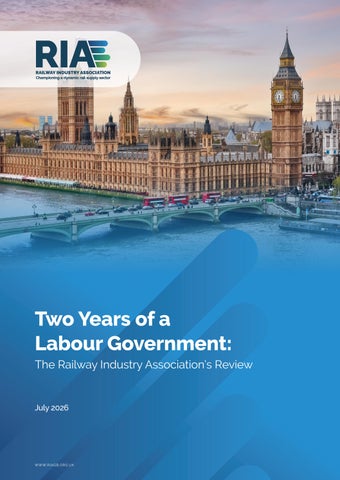
July 2026
The Railway Industry Association (RIA) has reviewed UK rail policy progress every six months since a new Labour Government came to power in July 2024. This latest review, in July 2026, comes at a pivotal moment for UK rail. A government led by new Prime Minister and Makerfield MP Andy Burnham is widely expected to put devolution, regional growth, place-based renewal and skills at the centre of its programme, and rail can be a key driver and enabler of this agenda.
This RIA review argues that UK rail should be a principal delivery tool of the forthcoming Burnham-led Government, and that rail policy under Burnham’s premiership should focus strongly on utilising rail to connect people to opportunities, unlock housing and regeneration, strengthen local economies and play its part in creating high-quality jobs across the country.
This report assesses progress against RIA’s 2024 Manifesto, promoted to all parties ahead of the General Election that year, and shows that there has been progress so far in putting key foundations in place, including legislation for Great British Railways and a commitment to a Long-Term Rail Strategy.1 The task now, however, is delivery: turning rail reform into a practical programme that gives passengers, freight customers, devolved leaders and the supply chain confidence.
For a Government focused on good growth in every postcode, rail – RIA argues – should not be viewed just as a cost to be managed. Rather, it should be considered a valuable asset – critical economic infrastructure which connects communities to education and employment, and creates high-quality manufacturing, engineering, digital, construction and operations jobs, helping those not in employment, education, or training (so-called NEETs) to develop careers in rail.
There is an opportunity to make rail reform a vital driver of any national renewal agenda and boost place-based growth. In RIA’s assessment, this requires five immediate steps.
1. Recognise the full value of rail in public investment decisions. National and devolved decisions should capture rail’s contribution to jobs, productivity, housing, connectivity, decarbonisation and access to opportunities, judging rail by the wider outcomes it enables rather than narrow transport metrics alone.
2. Use place-based investment to unlock growth. Government should create practical models for blending public, private and third-party investment, especially around stations, housing and regeneration. A clear investment playbook and pathfinder projects, building on RIA’s Station Investment Zones proposal, would shift Government from gatekeeper to facilitator.2
3. Establish Great British Railways (GBR) without a hiatus. The Railways Bill and senior rail appointments should progress at pace so decisions on investment do not get delayed. The recent National Infrastructure and Service Transformation Authority (NISTA) assessment of Government major projects, which gives GBR a ‘red’ delivery confidence rating, reinforces the need for intensified momentum. It provides necessary clarity on how GBR will work with devolved authorities and proposes a financial framework that rewards rail customer – both passenger and freight –growth.3
4. Plan now for the future rail capacity the country will need. With rail passenger numbers already in June 2026 surpassing previous annual record levels, forecasts show they are set to grow even further in the years ahead, between 37-97% by 2050.4 Additionally, the Government has set a 75% freight growth target.5 The Government’s Long-Term Rail Strategy therefore must translate clear ambitions for passenger and freight growth, as well as housing, labour markets, intermodal connections, climate resilience and future energy needs into specific plans for capacity in key corridors.
5. Publish a clear investment plan to reduce costs and give businesses confidence to invest. Rail suppliers need to know what work is coming and when – recent uncertainty has already seen sector employment fall. A stable pipeline of infrastructure upgrades and renewals, and rolling stock procurements and refurbishments, will unlock investment in people, facilities and innovation. On electrification, for example, recent RIA research shows that a ‘programme-based’ as opposed to a ‘project-based’ approach can reduce electrification costs by around 30%.6
The assessments in this report show that there has been some progress on RIA’s 2024 Manifesto ‘asks’:
• The Government has put important foundations in place. The Railways Bill currently progressing through Parliament will create GBR, as well as a legal obligation for a Long-Term Rail Strategy, now due in 2027; and
• The Government has taken significant steps to create joint-track and train teams in parts of the railway where train operations have been brought into public ownership; and
• There is welcome work under way on rolling stock and infrastructure planning, including the Department for Transport Operator’s Rolling Stock and Infrastructure Strategy. This needs to give the market a clear view across new build, refurbishment, maintenance, battery charging and electrification work, so businesses can plan future investment and workforce needs.
The gaps are equally clear, though:
• There is still no future rail electrification map or credible pipeline of electrification projects. Indeed, some schemes which were progressing, such as Midland Mainline Electrification, have now been paused or cancelled; and
• The supply chain still needs more detail and certainty to plan ahead and ultimately protect jobs. Proposals being worked up in the Railways Bill for future control periods, now renamed Funding Periods, will be less certain than present – with the Transport Secretary given additional powers to vary down five-year operations, maintenance and renewals budgets. RIA issued a joint letter to the Treasury, coordinated in conjunction with ten other leading trade associations and transport organisations, calling for targeted amendments to the Railways Bill to protect the five-year funding periods and encourage private investment.7
Looking to the third year of the Labour Government, albeit under fresh leadership, this needs to be about implementation. The Government should adopt the recommendations of the recent Competition and Markets Authority (CMA) market study on civil engineering to support longer-term contracting, earlier market engagement and procurement approaches that increase work and pipeline certainty, reduce bid costs, promote UK jobs and encourage collaboration.8
Above all, the next year should give the UK rail supply chain the confidence it needs to invest. Rail cannot deliver better outcomes through stop-start funding, uncertain procurement and short-term decisions. It needs a long-term programme approach, developed with industry, that smooths demand, protects skills and lowers costs.
At this juncture, as the third year of Labour Government and the first year of a new Andy Burnham premiership commences, RIA members stand ready to work with the Government, GBR, devolved authorities, investors, and all relevant stakeholders, to ensure together we can deliver a railway that not only connects the villages, towns, cities and communities of the UK, but one which also drives growth, strengthens ‘places’ and creates high-quality jobs in every part of the country.
Darren Caplan Chief Executive, Railway Industry Association

£41 billion gross
640,000 jobs across the country
£14 billion in tax revenue each year
For every £1 spent in rail, £2.50 of income is generated in the
Labour productivity across the rail supply sector is 29% higher than the national average
For every 1,000 people employed in the rail sector, 4,300 jobs were supported across the UK economy
A rolling programme of electrification can reduce delivery costs by a third
85% of the popluation lives within 5km of a railway station
Rail passenger volumes could grow between 37% and 97% by 2050
This assessment has judged progress using three categories. We have based our assessment on information in the public domain. We have not speculated on activities that may be happening within Government but are not yet visible.


Key Ask fulfilled.
Whilst not yet delivered, there has been visible progress or announcements.
Progress is unclear – there is not yet visible evidence of progress.
The Railway Industry Association (RIA) champions a dynamic UK rail supply sector. We help to grow a sustainable, and high performing railway as well as promoting UK rail expertise and products to international markets. RIA has over 480 companies in membership, active across the whole of railway supply, covering a diverse range of products and services and including both multi-national companies and SMEs.
Start by setting a firm date for developing and finalising a comprehensive long-term strategy for rail
The Government has confirmed that the Long-Term Rail Strategy (LTRS) will be published by the end of 2027, although this is significantly later than many expected. The Department for Transport’s (DfT) recent “Journey to GBR” document timeline states that the final strategy will be published in Autumn 2027.9
Use the Rail Reform Bill to introduce a legal requirement to produce a long-term strategy
The Railways Bill entered Parliament in November 2025 and is now with the House of Lords for further review and scrutiny. RIA welcomed the legal requirement in the Bill for the Secretary of State to produce a Long-Term Rail Strategy. We were also pleased to see in the accompanying documents to the Bill that the LTRS “will set out the strategic objectives for the railway over a 30-year period.”10
Many rail assets last for decades, and a genuinely long-term strategy can help improve clarity over future investment plans for the rail network.
Government publishes a draft long-term strategy, and then engages with the railway industry before finalising
The Government has not yet published a draft strategy but has now committed to publish a discussion paper this Summer on what the LTRS will include in terms of scope and structure. We look forward to engaging with the Government on the proposals.
A long-term strategy must be translated into a prioritised pipeline of projects
In their response to the Transport Select Committee inquiry Rail investment pipelines: ending boom and bust,11 the Government stated that the LTRS will “help to shape and prioritise future pipeline information, by setting a clear long-term direction against which funding settlements, portfolio decisions and pipeline updates can be developed, while not itself being a list of scheme commitments.”12 However, it is not clear that any work is under way to translate the strategy (now delayed until Autumn 2027) into a pipeline of projects, which is what businesses will need to plan investment and workforce needs.
We look forward to seeing the Long Term Rail Strategy (LTRS) Discussion Paper (Summer 2026), setting out the Government’s current plans for the LTRS.
To give businesses confidence to invest in the long-term future of rail, it is now imperative that Government makes sure long-term strategy development is translated into a prioritised pipeline of projects, with substantial clarity in the nearer term and a longer-term outlook.

Develop institutional arrangements to set and monitor progress towards outcomes, so there is independent oversight and accountability for the commitments
DfT recently published a policy paper on the GBR Licence and Accountability Framework.13 This confirms that GBR will respond to the LTRS with a Long-Term Rail Plan. It also confirms that the GBR integrated business plan will act as a “single source of truth…for GBR’s delivery plans, to respond to inputs from various sources”, including the LTRS. The document also confirms that the Office of Rail and Road (ORR) will monitor and scrutinise GBR’s performance in an independent expert advisory role.
End the uncertainty and delays over rail reform by including the Rail Reform Bill in the King’s Speech
The King’s Speech on 17 July 2024 set out significant plans for the railway, which included the Railways Bill to establish Great British Railways, and has been brought forward in Parliament.14 Whilst this progress is welcomed, RIA recently issued a joint letter to the Treasury, in conjunction with ten other leading trade associations and transport organisations, calling for targeted amendments to the Bill to protect the five-year funding periods and encourage private investment.15
Publish a clear and realistic timescale for reform
The Government has committed to publishing a statement on GBR implementation timing in ‘Autumn 2026’, stating that “this will outline the high-level path to establishing GBR. It will detail the implementation stages and target timings needed to ensure GBR can be stood up at pace following Royal Assent of the Railways Bill.”16
Begin open and comprehensive engagement with the industry on a draft licence, operating model and transition plan to establish Great British Railways
In May 2026, the Government published an update on its work to develop the GBR licence and new accountability framework. The Government has committed to a “full consultation on the draft licence” in Autumn 2026, during the passage of the Bill. The consultation will “outline the proposed conditions GBR must meet as part of its operation and the role of the ORR in enforcing these.”17
Move the whole industry to focus on top-line growth, not just bottom-line cost efficiency
One of RIA’s five tests for GBR is ‘ambition’, and a growth-focused mindset is an important element of this.18 The Government’s response to the “A railway fit for Britain’s future” consultation recognises the importance of bringing revenue and cost together into a single organisation, enabling it to take
long-term decisions. Further, the response stat es that “GBR will place a relentless focus on passenger experience… and incentivised to grow its revenue” and states that revenue gains will culminate in “reducing taxpayer subsidy.”19 The financial framework for GBR will be crucial to enabling the railway to focus on ‘top-line’ growth, and we await further details and a collaborative discussion. The Government has indicated it will announce more detailed rail freight growth targets for 2040 this summer.20
Unlock innovation by empowering industry leaders to take whole system, whole life decisions
Whilst still ‘work in progress’, the Government has taken significant steps to create joint-track and train teams in parts of the railway where train operations have been brought into public ownership. Leaders are being asked to take responsibility for a whole system view of the railway, and industry insiders report that practical decision-making is changing inside these integrated teams, which are being established in the run-up to GBR’s launch.
We are strongly supportive of the progress already underway to create joint track and train teams to improve the running of the railway. We look forward to seeing the Government’s detailed timescales for GBR implementation and the draft GBR licence, which should set clear expectations for engaging collaboratively with the supply chain.
As GBR is stood up, it is particularly important that its leaders are empowered to focus on top-line growth and beyond the plans for more detailed freight growth targets, we are yet to see a clear strategy that incentivises leaders to grow rail usage and revenues.
Provide a strategy which sets out an approach to new build, cascaded and refurbished rolling stock
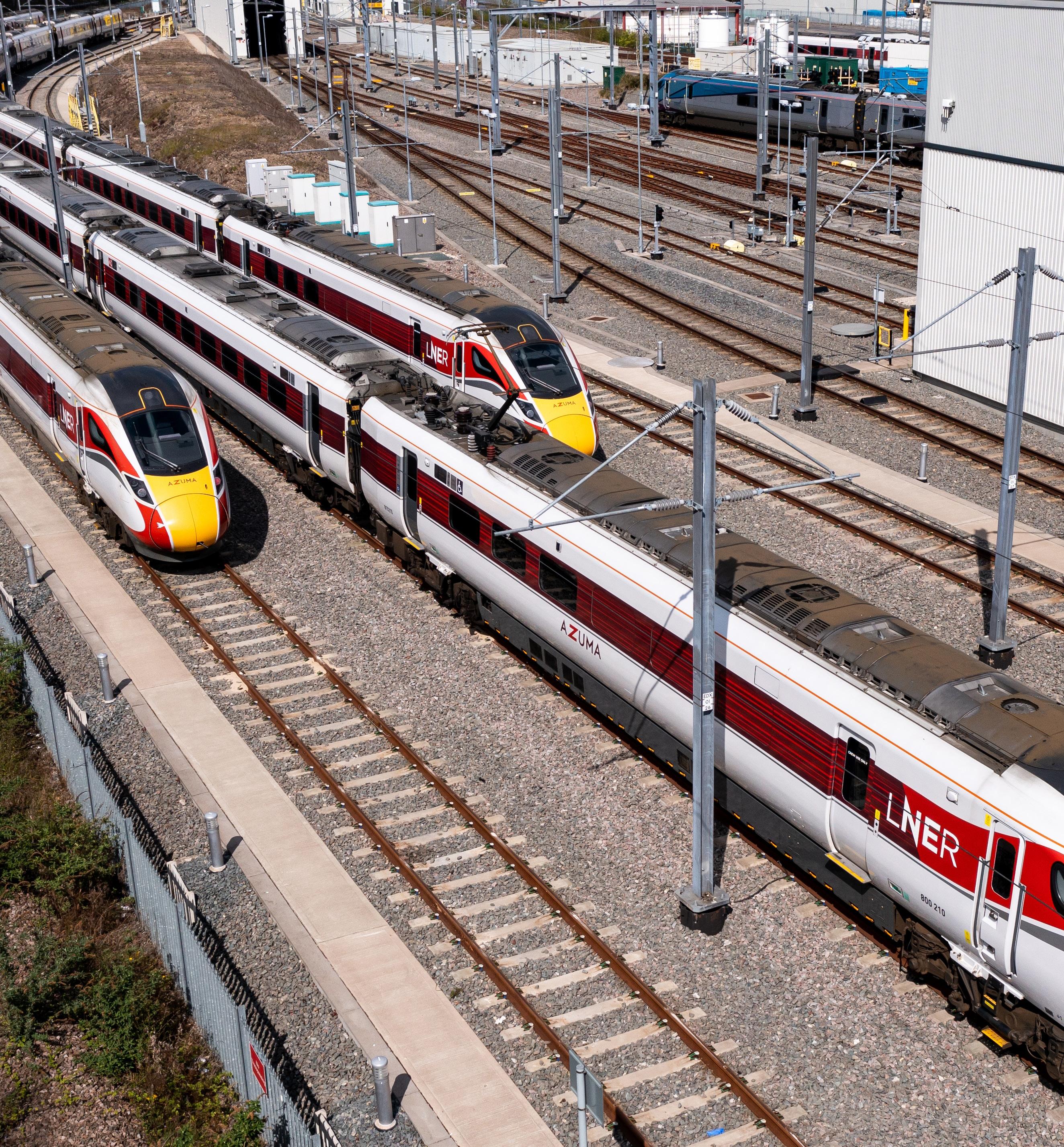
RIA welcomes the ongoing work by the Department for Transport Operator (DFTO) to develop a Rolling Stock and Infrastructure Strategy for publication in Summer 2026.21 If implemented and executed efficiently, a long-term strategy should provide the rolling stock market, across new builds, maintenance and refurbishment, a clear vision of work for the next 25-30 years. Greater clarity around build timelines as well as specifications for rolling stock and associated infrastructure, such as battery charging, is needed to
enable businesses to prepare their investments and workforce.
The DFTO has engaged consistently with RIA members, and we hope to see recommendations reflected in the strategy.
Actively support the development of the cross-industry decarbonisation strategy and creation of a future state rail-map
A clear and agreed rail decarbonisation strategy and accompanying map of future rail network electrification (and deployment of battery technology) is needed to establish an efficient and steady programme of work. Network Rail is developing a “Future Electric Railway Strategy” that Lord Hendy has stated is examining whole life costs and technological capabilities of different options to remove diesel traction in order to set out a realistic, affordable and deliverable approach to a net zero railway.22 The industry must now be engaged to develop the strategy, drawing on insights such as RIA’s recent Electrification Cost Challenge 2.0 report, which demonstrates that a programme-based approach could reduce infrastructure delivery costs by around a third.23
Implement a strategy to smooth the infrastructure and rolling stock pipeline
Government has stated that the Rolling Stock and Infrastructure Strategy will set out how GBR will smooth demand and move towards a steady pipeline of work, including an indicative programme for the manufacture, refurbishment and overhaul of passenger trains.24 This commitment is welcome and reflects RIA’s longstanding calls for a more
stable and predictable market. However, the strategy must translate these ambitions into concrete action; framework orders and longer-term contracting arrangements will be essential to giving the supply chain the confidence to invest in people, facilities and innovation. Delivery of the strategy in Summer 2026 will be an important test.
Progress electrification in line with current plans and the developed rail-map
Two years into this Government, there remains no rail electrification map and no credible pipeline of projects.
The Midland Mainline Electrification programme was paused in July 2025, and we have yet to see an update on this programme since. The Railways Bill includes a requirement for a freight growth target, which is welcome news, but there was no mention of plans for decarbonisation and electrification.
When making decisions on the phasing of investment, balance growth in demand, carbon reduction and a whole life / whole system evaluation of costs and benefits
The reviewed Green Book represents progress on investment appraisal, introducing greater emphasis on whole-life costing, place-based analysis and broader social value.25 These are welcome developments that align with RIA’s longstanding calls for a more rounded evaluation framework. However, the pause of the Midland Mainline Electrification programme illustrates the gap between guidance and practice. A shovel-ready, on-budget scheme with clear energy benefits and strong regional economic credentials was halted on short-term affordability grounds. The tools and guidance for better appraisal exist; the challenge is applying them consistently and with genuine political commitment.
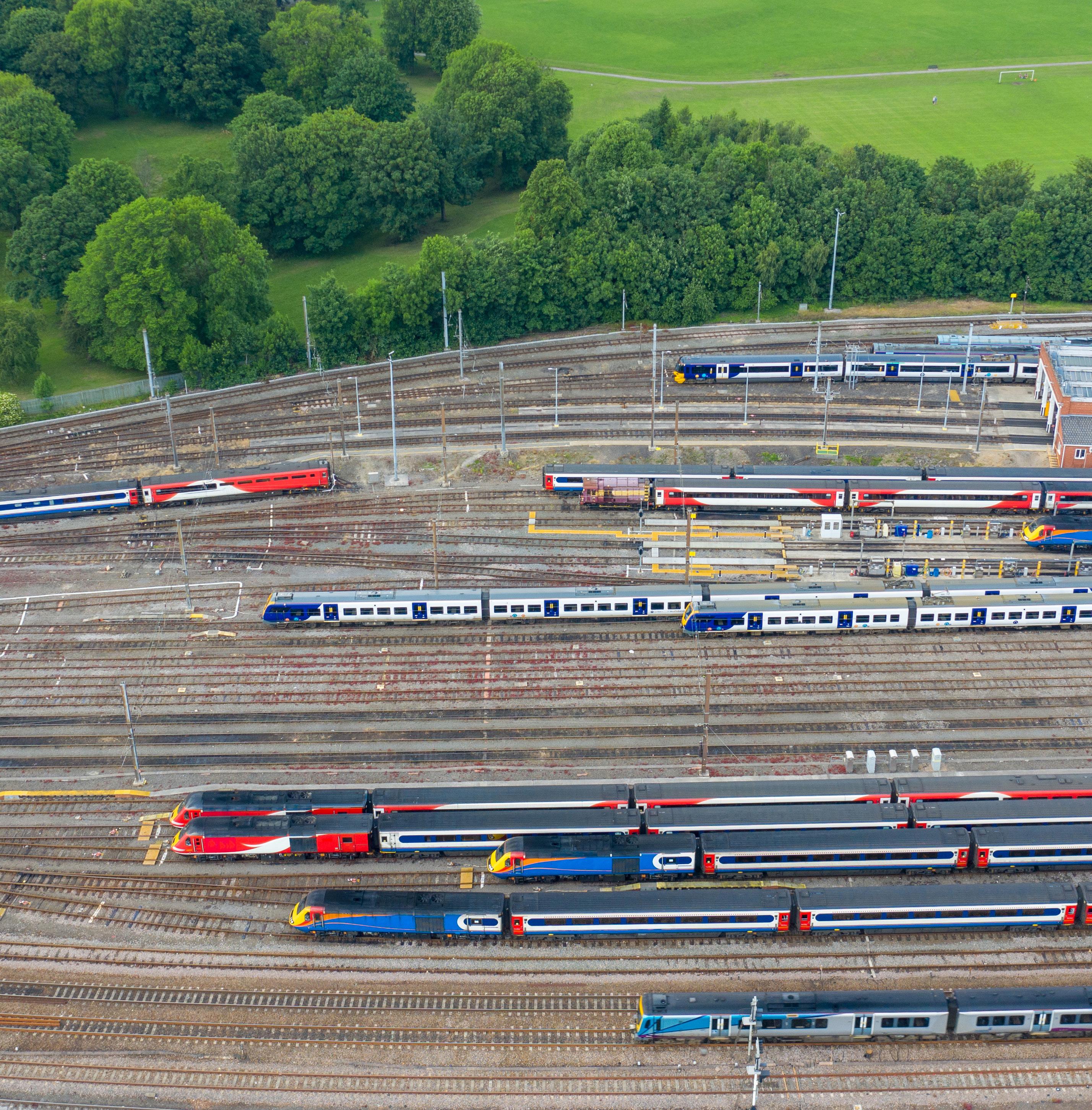
The Rolling Stock and Infrastructure Strategy (Summer 2026) is a huge opportunity for the Government to send a clear market signal about its intentions to invest in new rolling stock and areas such as battery power in the coming years.
The Government has repeatedly committed to set out a clear investment pipeline and we look forward to seeing the strategy swiftly translated into work plans.
We were pleased to see the National Infrastructure and Service Transformation Authority (NISTA) Infrastructure Pipeline tool updated in March 2026, with an increase in the number of rail projects and programmes in the pipeline, from 29 to 48, and projects from local authorities included.26 However, the supply chain needs further clarity around funding allocated to different rail projects. The recent Competition and Markets Authority (CMA) market study into the supply of railway and public road infrastructure by the civil engineering sector concluded that “short-term funding and changing government priorities undermine long-term planning by both procurers and suppliers”, and recommended amongst other recommendations that procuring authorities should commit to contracts that extend beyond budget settlement periods to provide suppliers with increased certainty over a programme of work, reduce bid costs for all parties, and support collaborative and innovative contracting arrangements.27
Introduce firm requirements to publish the pipeline of rail projects at least annually
RIA has long advocated for a clear pipeline of rail schemes, which helps suppliers commit resources, and lowers costs. The Transport Select Committee’s report into rail investment pipelines asks the Government to set out how the UK Infrastructure Pipeline will relate to the Rail Network Enhancements Pipeline (RNEP), the purpose of each, and where industry should look for the latest and most detailed information. The Government’s response highlights the regular iteration of the NISTA Infrastructure Pipeline every six months, but there are only funding details for 14 of the 48 projects, so there remains an information gap.28 Government also indicated that in future it aims to set out a pipeline of potential schemes that are strategically aligned but do not constitute a funding commitment. This has not yet been published.
Implement rolling programmes of work to deliver productivity, value for money, and retention of skills
The creation of GBR is an opportunity to change the way Government procures from a project basis to a programme basis, significantly reducing costs (RIA research shows a 30% cost saving for electrification projects).29 Whilst there are positive signs that the public sector is looking to move to longer-term contracts, there is not yet a plan shared with the industry to minimise the peaks and troughs in work orders which add significant cost to the public sector and deter investment. The CMA market study on civil engineering should be used as a basis to reset the approach to budgeting, planning and procurement as GBR is established.30
Follow best practice whilst designing and running procurement exercises to promote and support a sustainable supply chain
The CMA study highlights the need to adopt best practice, for example, “Government should mandate compliance with the Construction Playbook and its accompanying Guidance Notes… for national procuring authorities.” Procurers must heed this advice and engage in early supply chain engagement, outcome-based specifications, benchmarking, and use delivery model assessments to select structures that enable better outcomes. We encourage the Government to adopt the recommendations.31
Promote skills in rail and transport by celebrating the career opportunities the sector provides
The National Skills Academy for Rail forecasts that the rail workforce could lose up to 90,000 workers through retirement and other forms of attrition from 2025-2030.32 The Government recognised that “strong careers guidance, underpinned by clear accountability, is essential.”33 Government and industry must now work together to develop a clear, coordinated narrative on rail careers – backed by a Rail Skills Mission Board – to promote opportunities consistently and give employers the confidence to invest in the workforce needed for future delivery.34
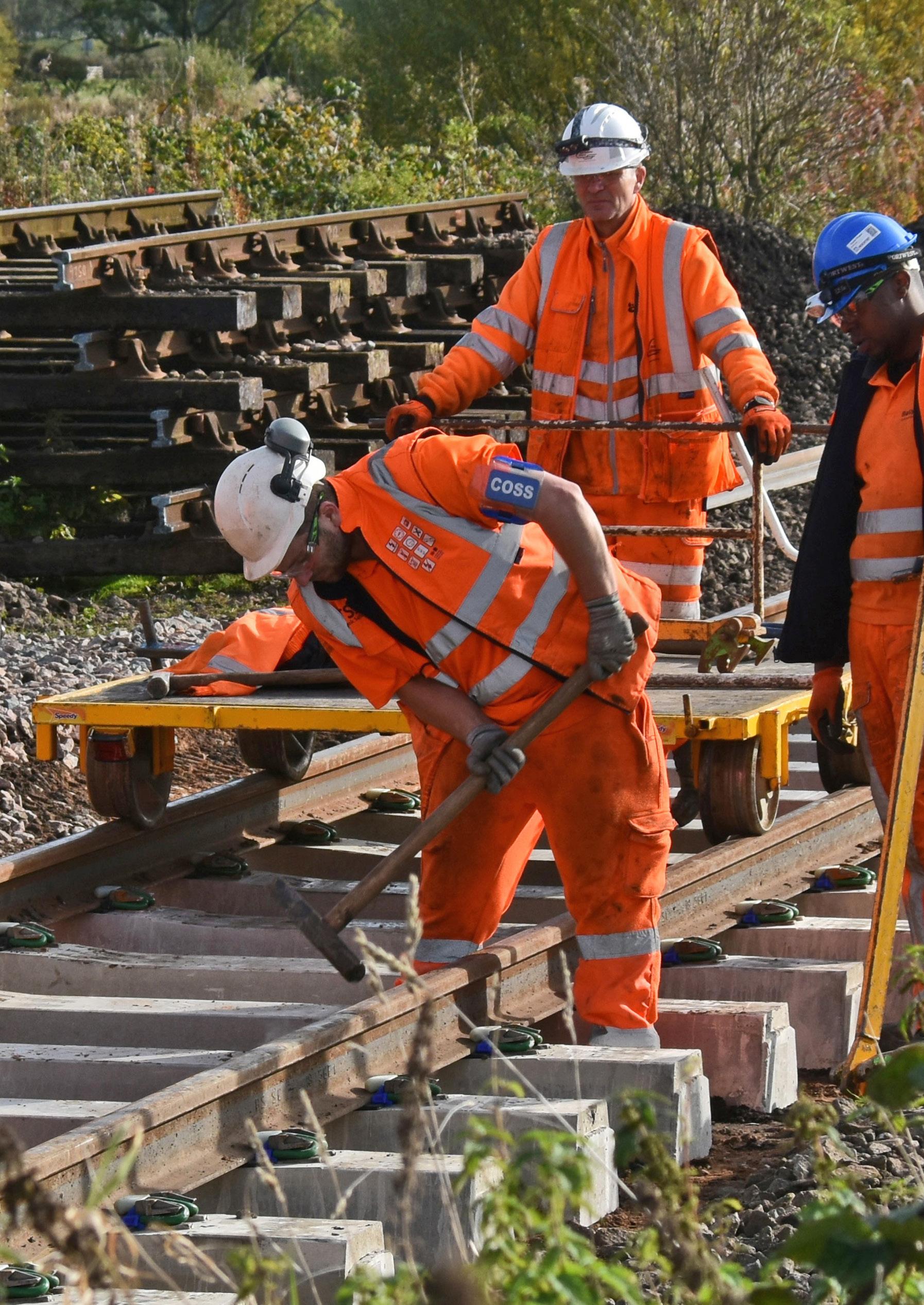
For GBR to support a more efficient railway, Government needs to use this opportunity to overhaul the way information is shared with the supply chain on future projects, publishing sufficiently granular information and reforming planning, budgeting and procurement processes to support efficient, steady investment in jobs and skills.
RIA’s engagement with multiple public sector organisations and Government departments gives cause for optimism, as many have shown interest in developing the potential of private investment in rail. However, we still await a clear policy position. The Government confirmed that it “supports the use of private investment in the rail sector where it delivers clear value for money, transfers risk to the parties best placed to manage it and supports innovation and efficient delivery.”35 Whilst the 10-year Infrastructure Strategy sets clear ambition for increasing private investment, not a single rail project or programme in the March 2026 update of the Infrastructure Pipeline is listed as having the potential to deploy private investment.36
Switch the Government’s role from ‘gatekeeper’ to ‘facilitator’, providing investors and suppliers with a ‘playbook’ and ongoing practical support
In a constrained public financial environment, it is in the Government’s interest to explore means with which private and third-party investment can be effectively and efficiently used in rail, with the positive final outcome of reducing the rail subsidy. The Office of Rail and Road (ORR) has recently published the findings from phase 3 of its review of the rail network Investment Framework, reporting to HM Treasury (HMT) on ways to improve the framework for third-party funding into rail. In its letter to HMT, the ORR recommended that HMT “Create a clear, credible investment model for Rail.” Further, there are encouraging signs of a shift towards a more facilitative model. The ORR has identified opportunities to reduce Network Rail’s risk fees for third-party investors - making the system clearer, fairer and more proportionate.37
The ORR concluded, “the current framework supports third parties who are [already] part way through the investment pathway and does not account for processes or engagement during the early phases of investment.” It is imperative that HM Treasury heed this conclusion and work with the ORR, industry and the investor community to develop what intelligent market engagement looks like in practice.
Bring forward more pathfinder and pilot projects
In response to the Transport Select Committee, the Government said that it will “provide clearer and more credible signalling of suitable opportunities through pipeline publications and structured market engagement.”38 The London Euston element of HS2 is still the only project that has been outlined as one in which the Government is considering the use of a Public Private Partnership (PPP) to deliver a new station. This is a welcome first step, but the supply chain and investor community need to see this claim turned into action, with clear timelines of pipeline publications. RIA’s Station Investment Zone concept has received widespread interest across the public and private sectors; pathfinder/pilot projects should be taken forward by Government.
Rigorous evaluation of the costs and benefits of private finance compared to public borrowing, explicitly assessing the potential benefits
In the updated Green Book, it states that when considering the potential use of private investment for infrastructure projects, “this should consider costs and benefits over the whole life of a project. Decision-makers should select the best value for money risk transfer setting from a range of options, regardless of balance sheet classification.”39 This is a welcome step. However, guidance alone is insufficient; the Government must now demonstrate that this principle is being applied in practice.
There are positive steps that can be quickly built on, with the creation of Platform 4, the ORR’s recommendations on investment, strong support from different organisations for Station Investment Zones, and recent successes such as Project Reach installing telecoms along rail lines. There now needs to be an clear overarching strategy, endorsed by HMT.
1 Railway Industry Association, RIA Manifesto 2024: A fresh start for rail
2 Railway Industry Association, Station Investment Zones: A new model for investment in transport, housing and growth
3 National Infrastructure and Service Transformation Authority, NISTA Major Projects Annual Report 2025/26
4 Railway Industry Association, Government should seize opportunity to grow passenger rail
5 Department for Transport, Railways Bill factsheet: rail freight
6 Railway Industry Association, RIA Electrification Cost Challenge 2.0
7 Railway Industry Association, Industry leaders call on Government to improve Railways Bill to support economic growth & investment
8 Competition and Markets Authority, Civil engineering market study
9 Department for Transport, Journey to Great British Railways: policy publication timetable.
10 Department for Transport, Railways Bill factsheet: the Long-Term Rail Strategy.
11 Transport Select Committee, Rail investment pipelines: ending boom and bust.
12 Transport Select Committee, Rail investment pipelines: ending boom and bust: Government Response.
13 Department for Transport, Great British Railways licence and the accountability framework.
14 UK Parliament, Railways Bill
15 Railway Industry Association, Industry leaders call on Government to improve Railways Bill to support economic growth & investment
16 Department for Transport, Journey to Great British Railways: policy publication timetable.
17 Department for Transport, Journey to Great British Railways: policy publication timetable.
18 RIA’s five tests for GBR can be found here
19 Department for Transport, A railway fit for Britain’s future: government response.
20 Department for Transport, Journey to Great British Railways: policy publication timetable
21 Department for Transport, Journey to Great British Railways: policy publication timetable.
22 UK Parliament, Railways: Electrification, Question for Department for Transport.
23 Railway Industry Association, RIA Electrification Cost Challenge 2.0.
24 Transport Select Committee, Rail investment pipelines: ending boom and bust: Government Response.
25 HM Treasury, The Green Book, UK Government Guidance on Appraisal.
26 National Infrastructure and Services Transformation Authority, Infrastructure Pipeline.
27 Competition and Markets Authority, Civil Engineering Market Study Final Report.
28 National Infrastructure and Services Transformation Authority, Infrastructure Pipeline.
29 Railway Industry Association, RIA Electrification Cost Challenge 2.0
30 Competition and Markets Authority, Civil Engineering Market Study Final Report.
31 Competition and Markets Authority, Civil Engineering Market Study Final Report.
32 National Skills Academy for Rail, Annual Workforce Survey 2025.
33 Transport Select Committee, Engine for growth: securing skills for transport manufacturing: Government Response.
34 Railway Industry Association, Rail skills for efficient delivery: a supply chain perspective.
35 Transport Select Committee, Rail investment pipelines: ending boom and bust: Government Response.
36 National Infrastructure and Services Transformation Authority, Infrastructure Pipeline.
37 Office for Rail and Road, Letter to HM Treasury: Deep dive review of the Rail Network Investment Framework.
38 Transport Select Committee, Rail investment pipelines: ending boom and bust: Government Response.
39 HM Treasury, The Green Book – UK Government Guidance on Appraisal.