Building a greener railway for the next decade and beyond
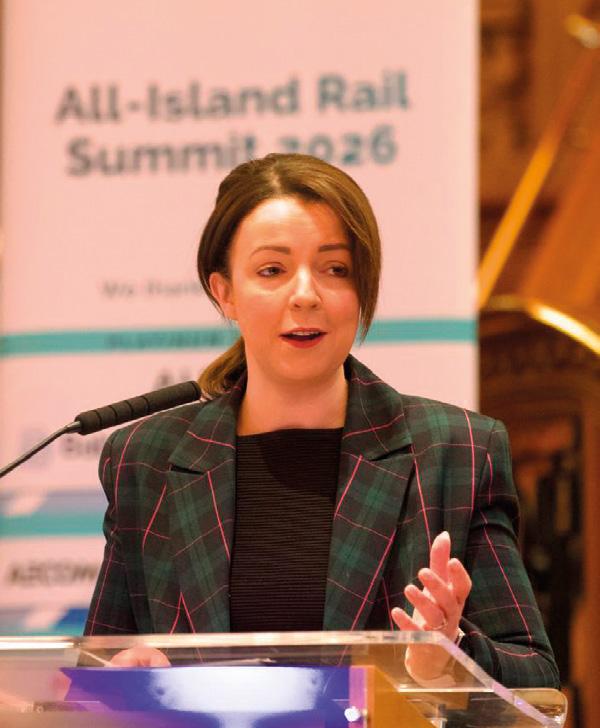
Rachael Everard
Collective action and collaboration
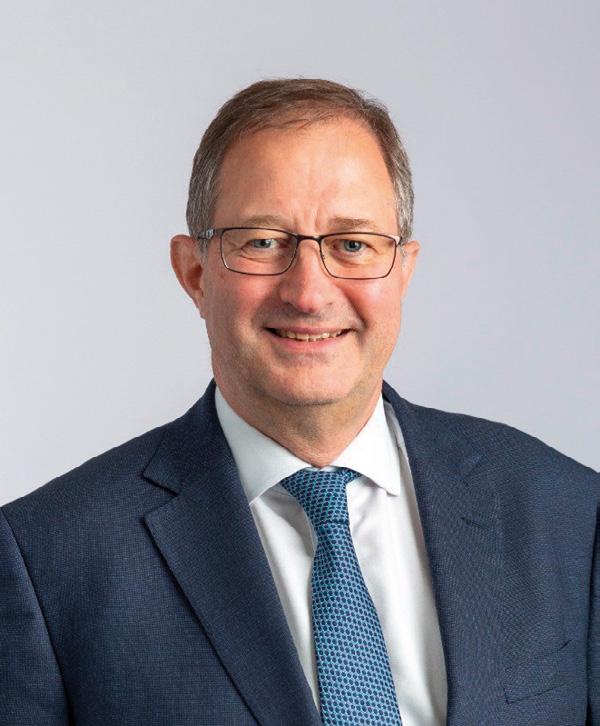
Jo Lewington
The Greener Railway Strategy
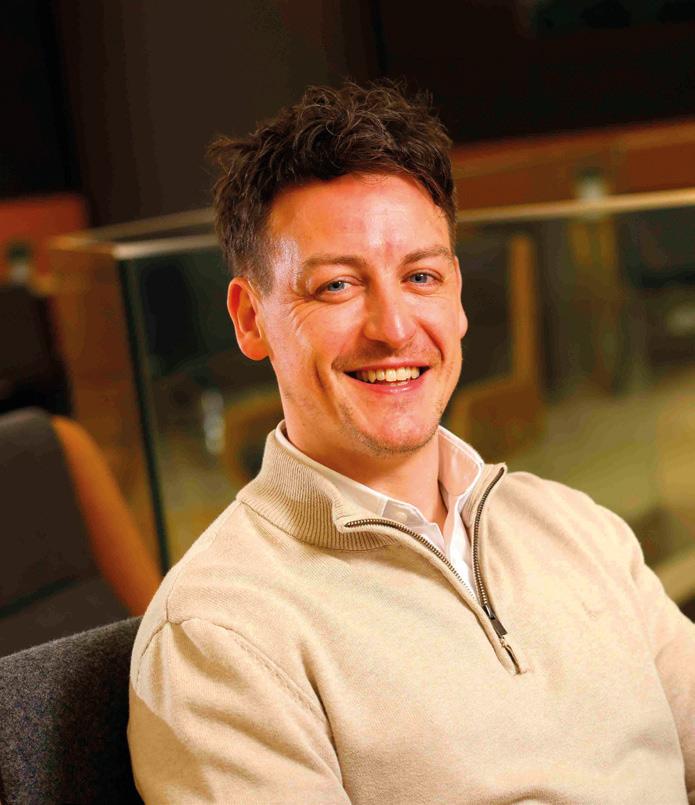
Haydon Bartlett-Tasker Rail in the age of AI agents and AI organisations
March 2026
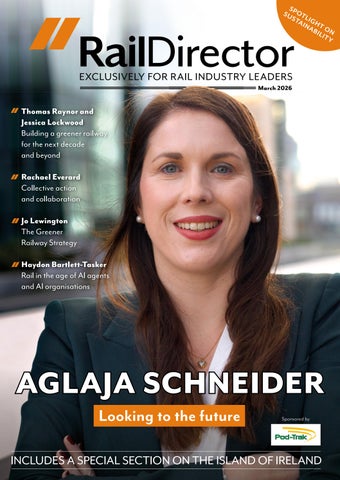
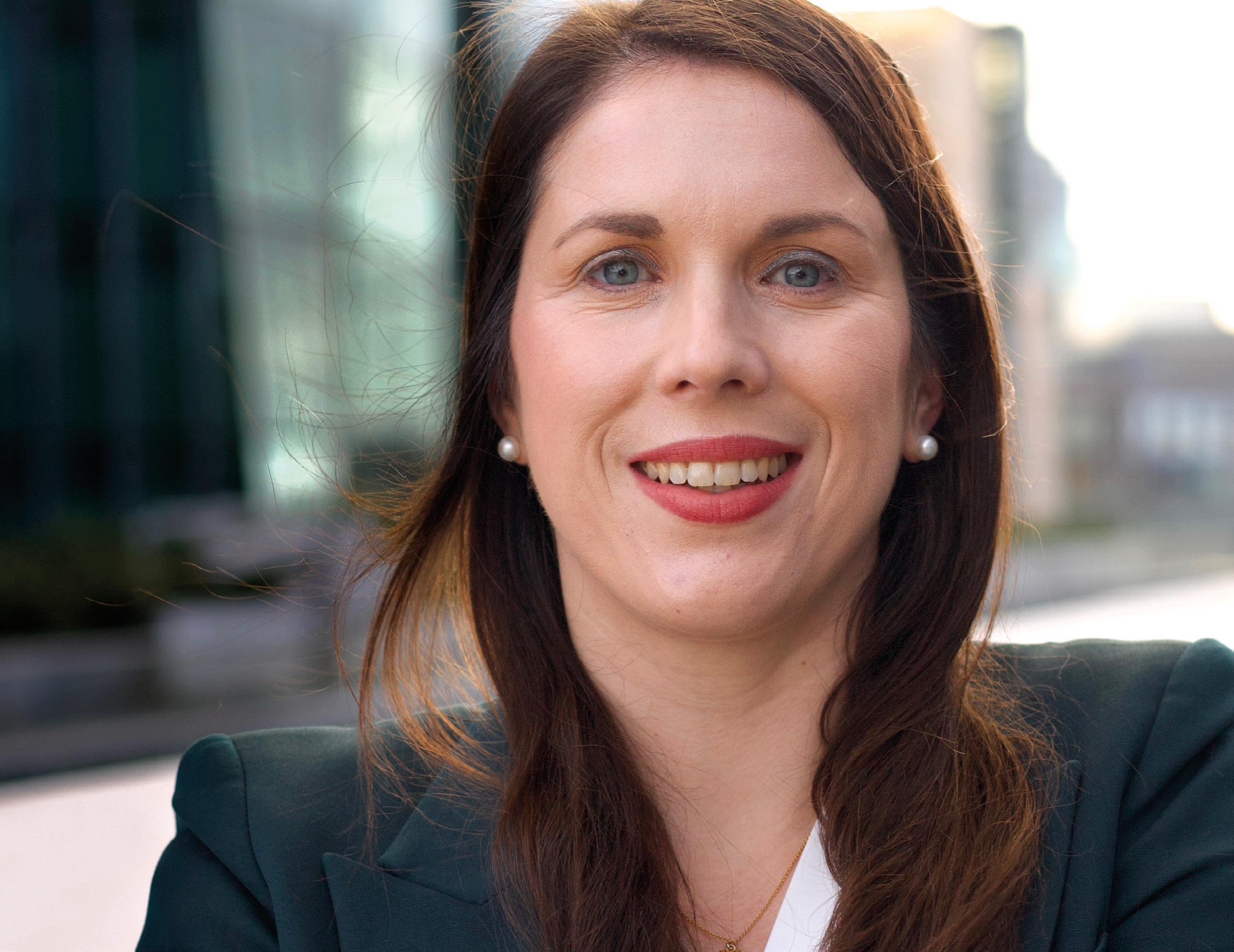
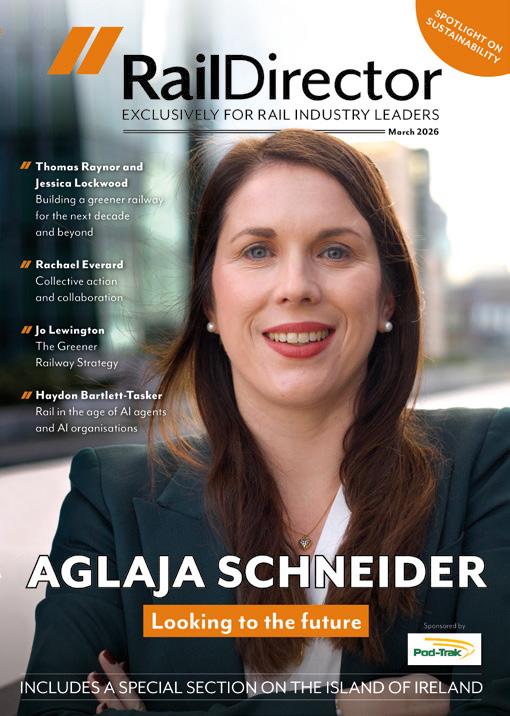
AGLAJA SCHNEIDER
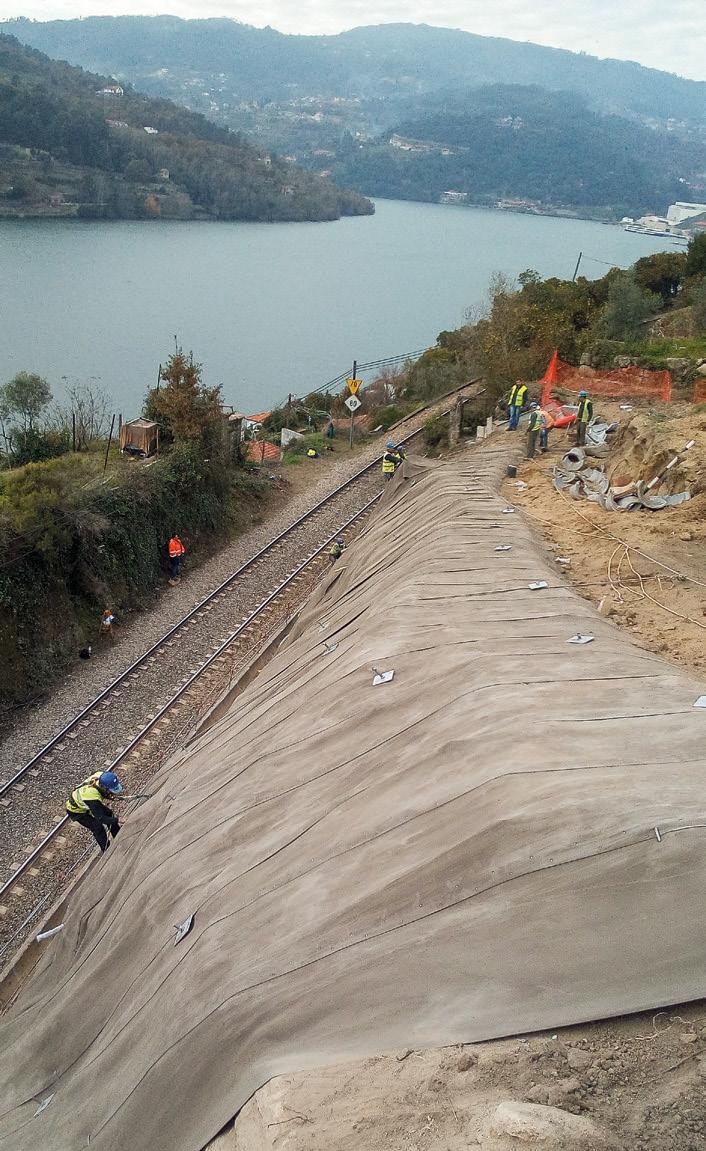
Realising sustainable rail
elcome to the latest edition of Rail Director, which this month is centred on sustainability and the environment.
Rail is already recognised as the greenest form of mass transit, but the sector is constantly looking to innovate and improve. However the full potential can only be achieved if we all pull together, whatever the size of your organisation or your job title.
Great progress has been made, highlighted by the Sustainable Rail Blueprint and Network Rail’s The Greener Railway Strategy. You can read more about both from Jo Lewington, Chief Environment and Sustainability Officer at Network Rail, from page 10; and Rachael Everard, Director of Sustainable Development, from page 20.
Highlighting the importance of the industry coming together, Jo said: “We don’t need an army of sustainability professionals, but we do need to ensure that everybody in our business understands what it is and what role they can play on the journey.”
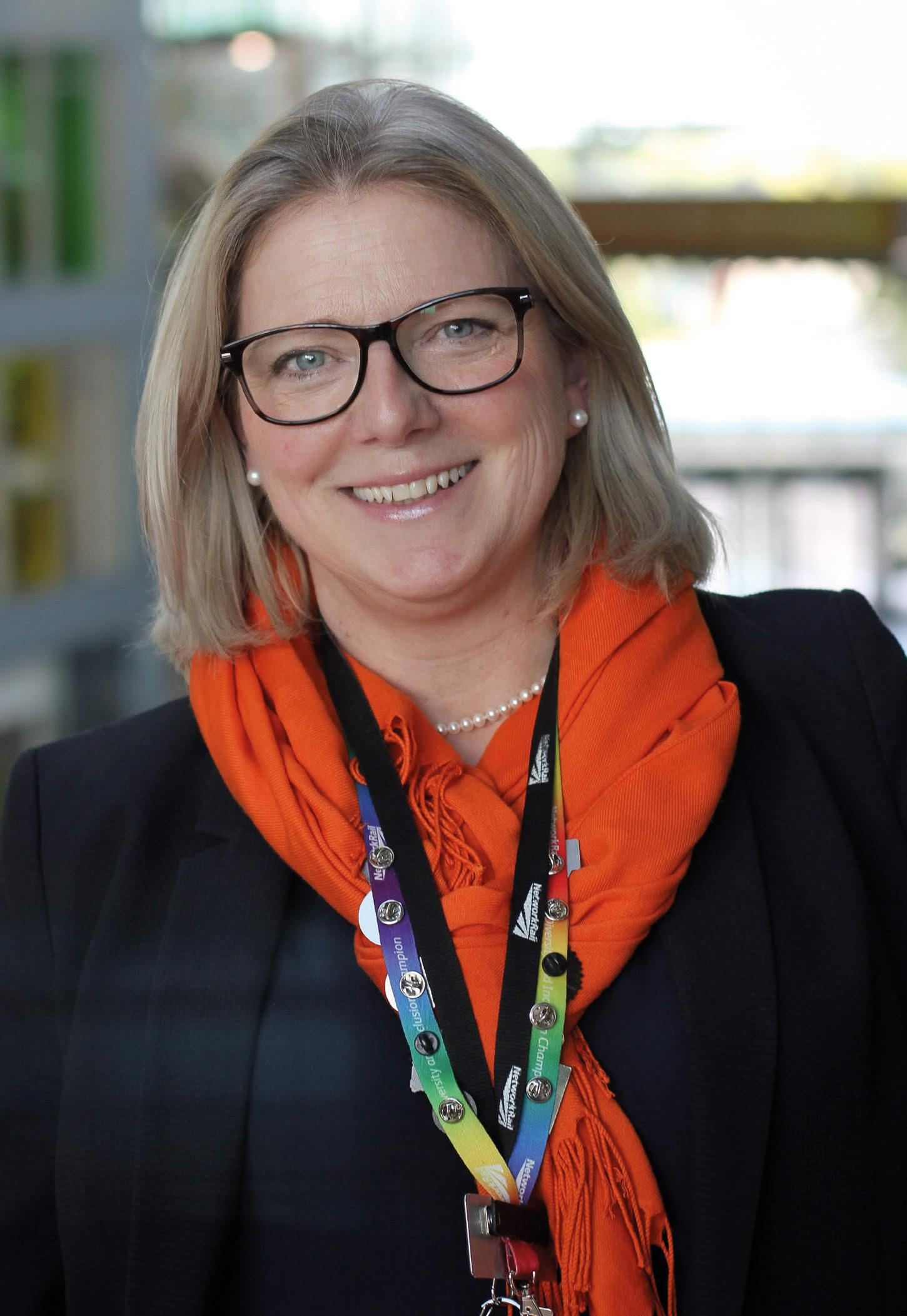
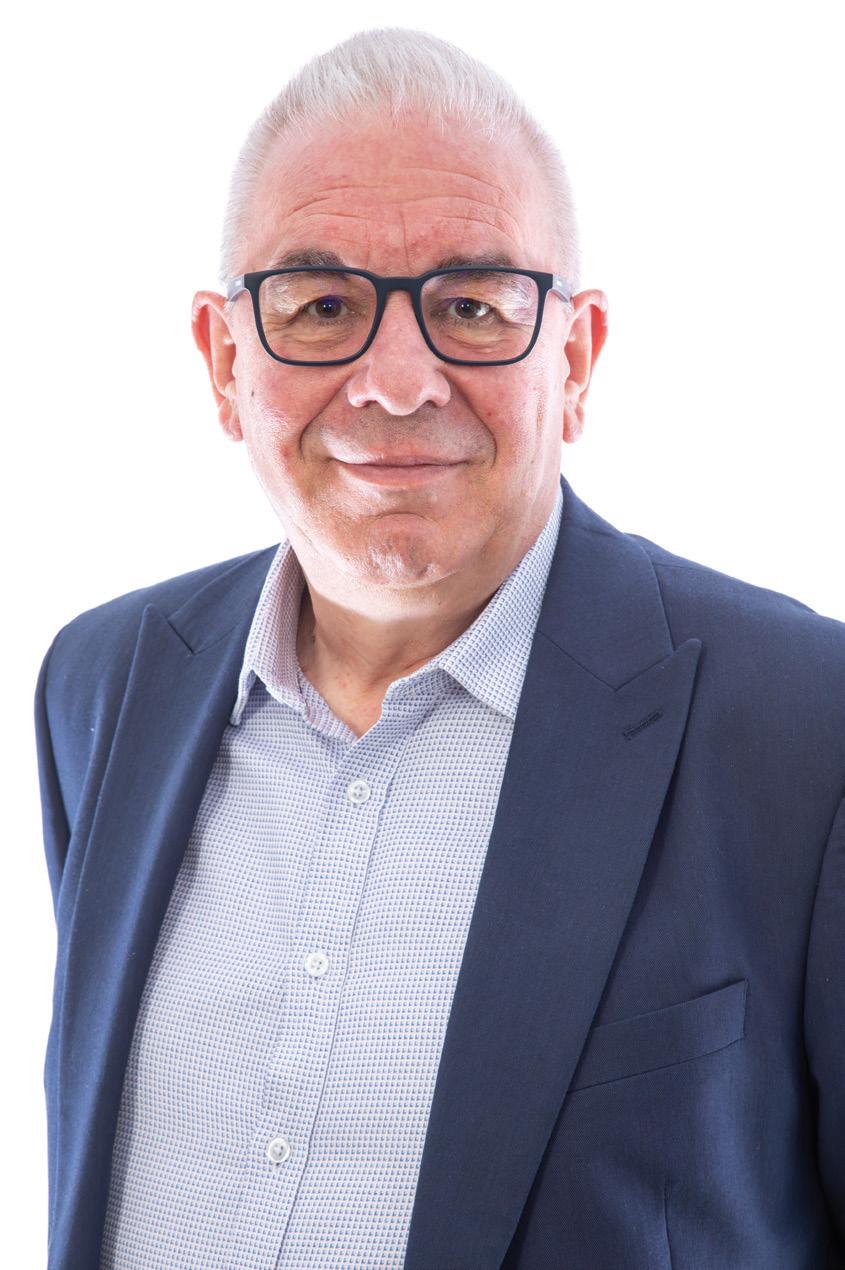
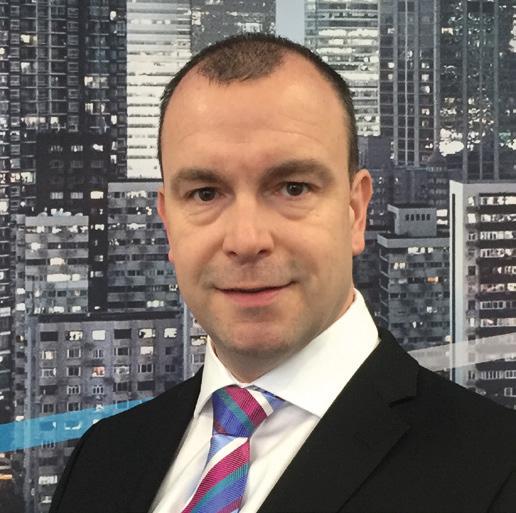
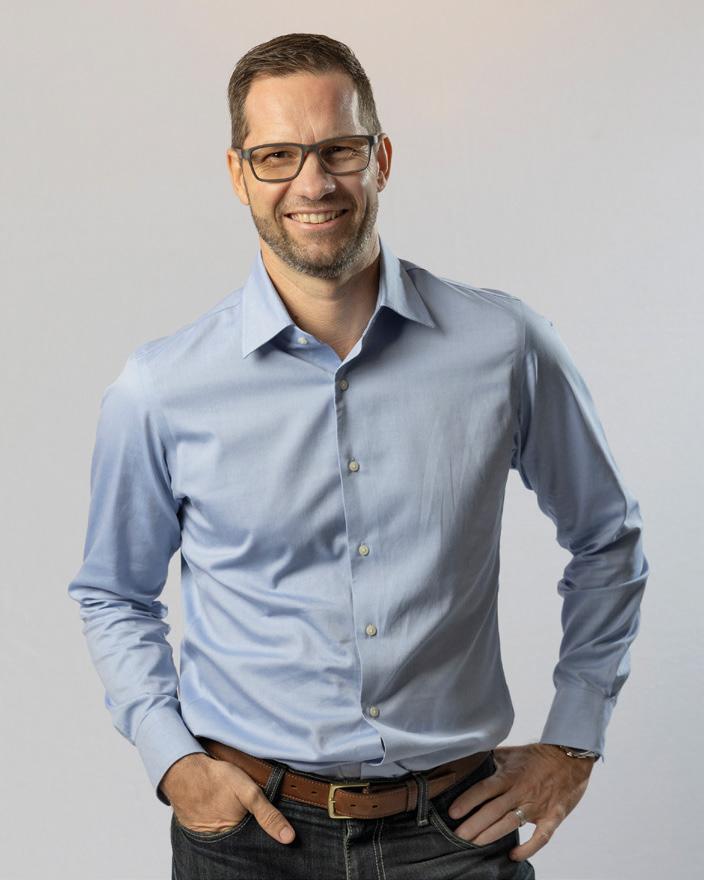
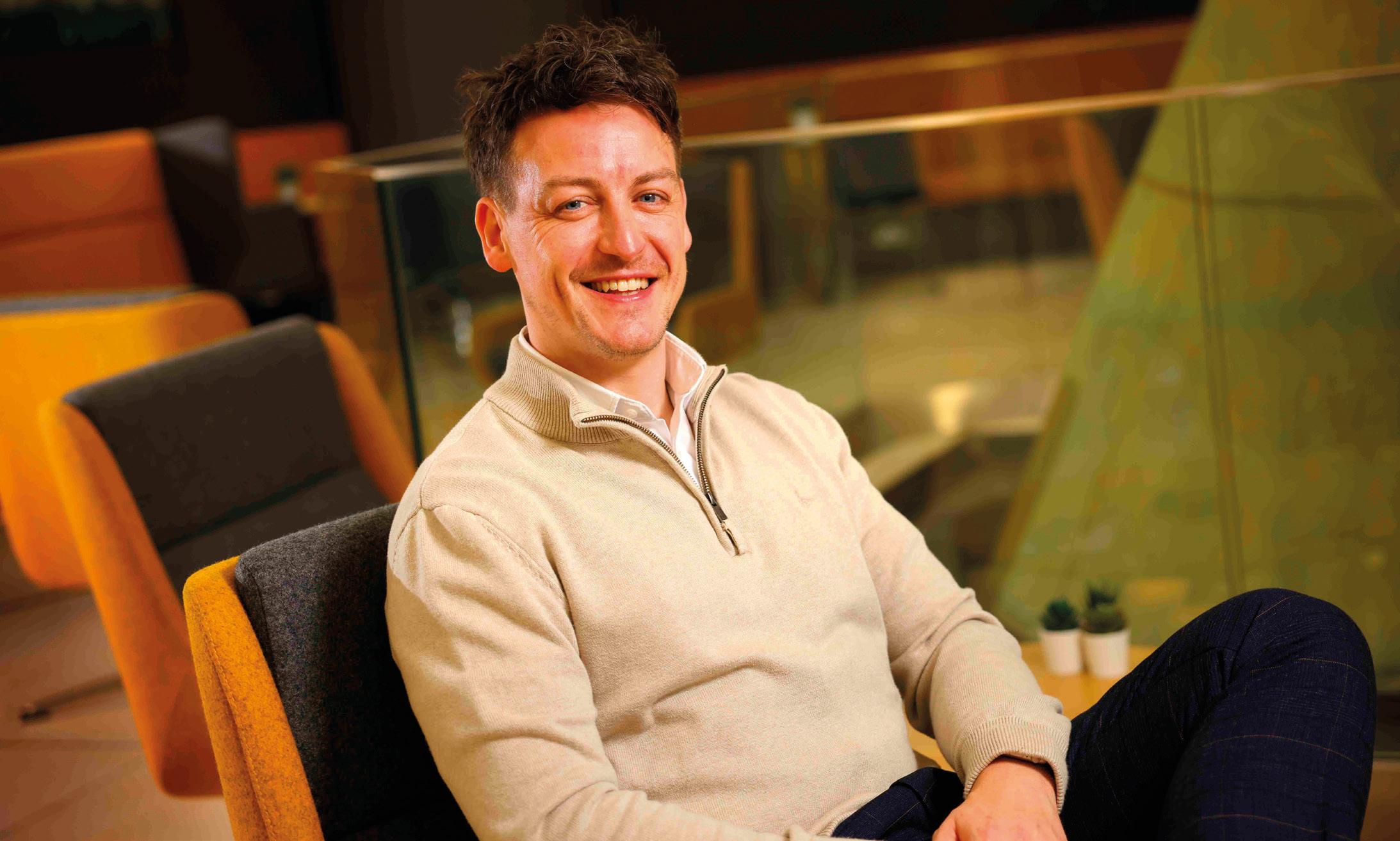
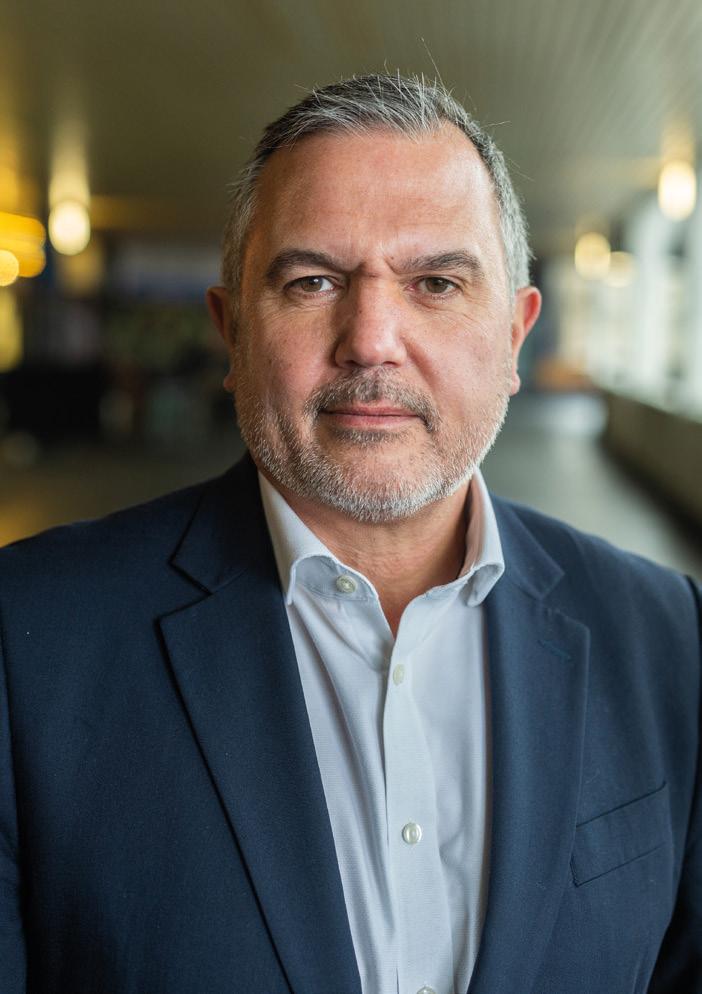
This month I’m delighted to feature Aglaja Schneider on the cover, the new Joint Chief Executive Officer and Managing Director for Rolling Stock and Customer Services at Siemens Mobility UK and Ireland. She took up the post in January, describing the transformation of the railways as a moment that calls for “bold thinking and strong collaboration”. Read more from page 6.
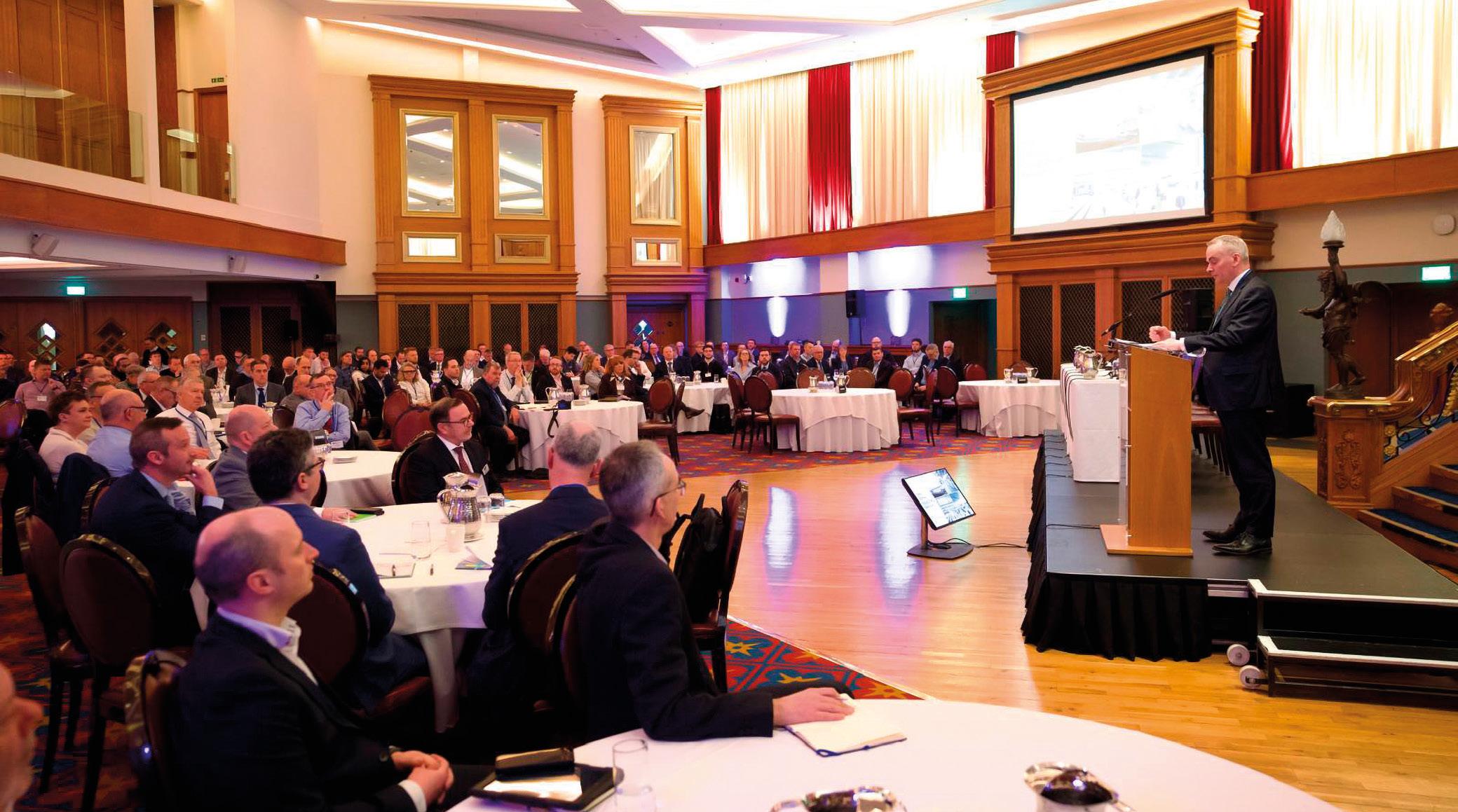
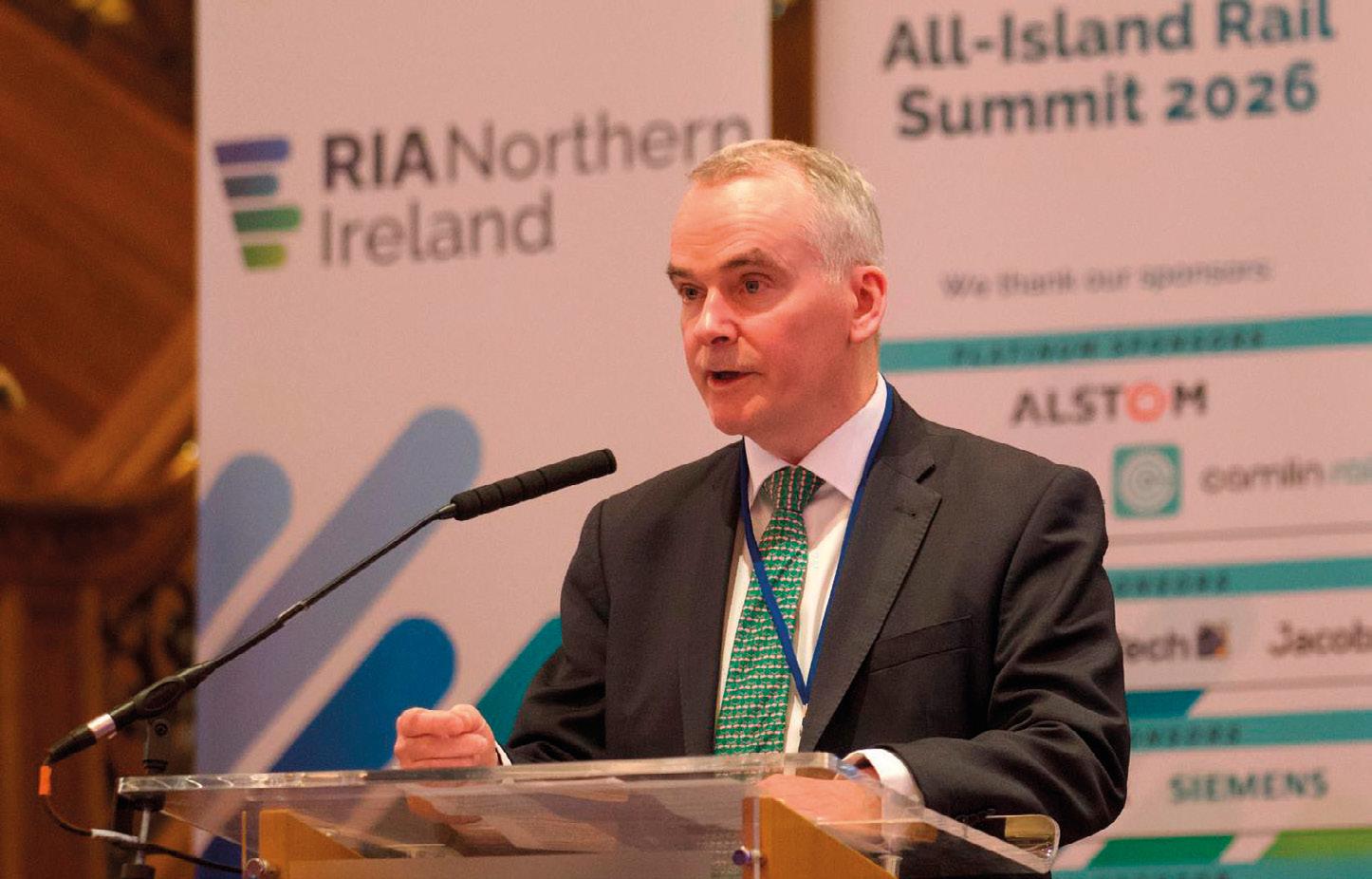
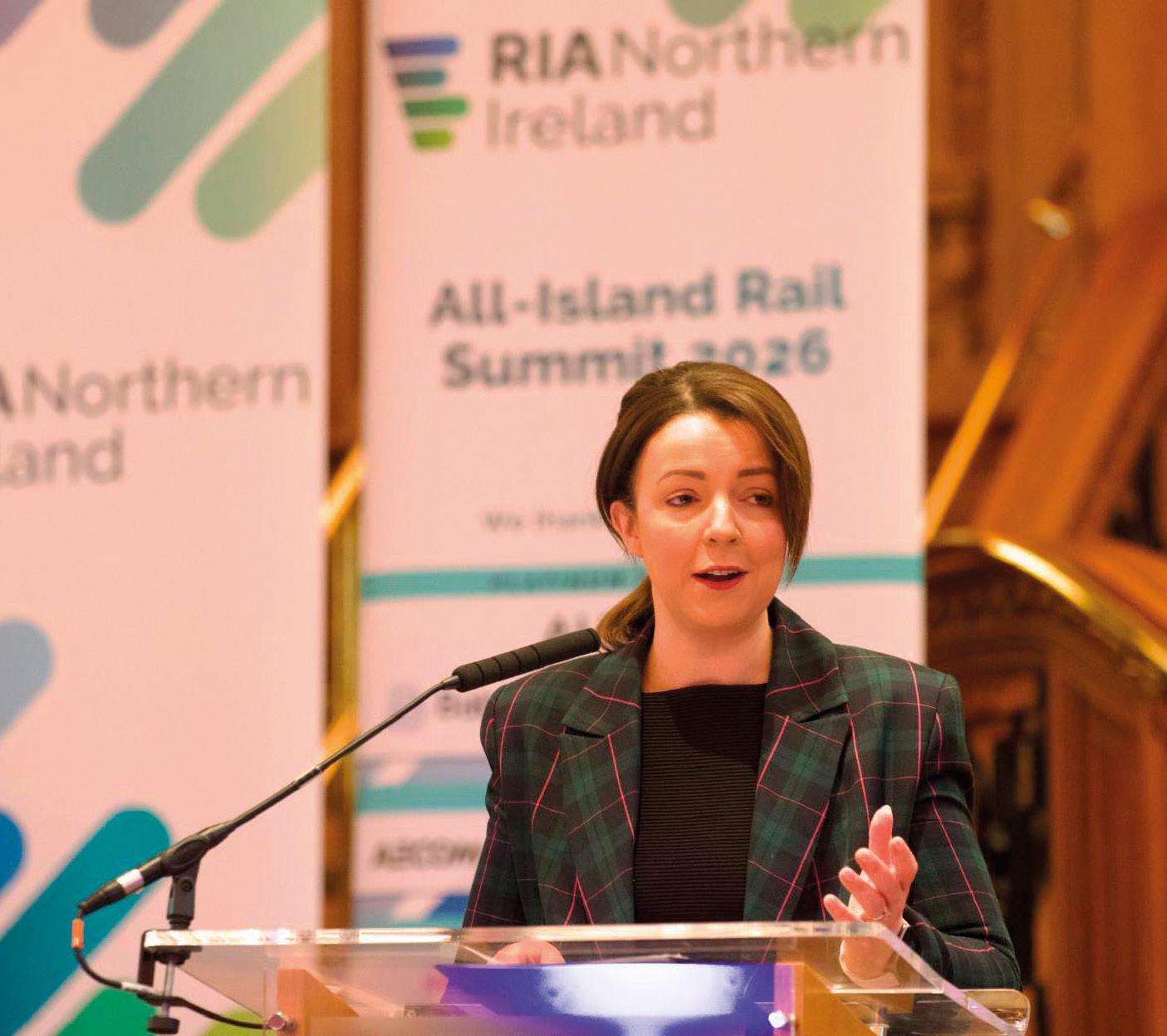
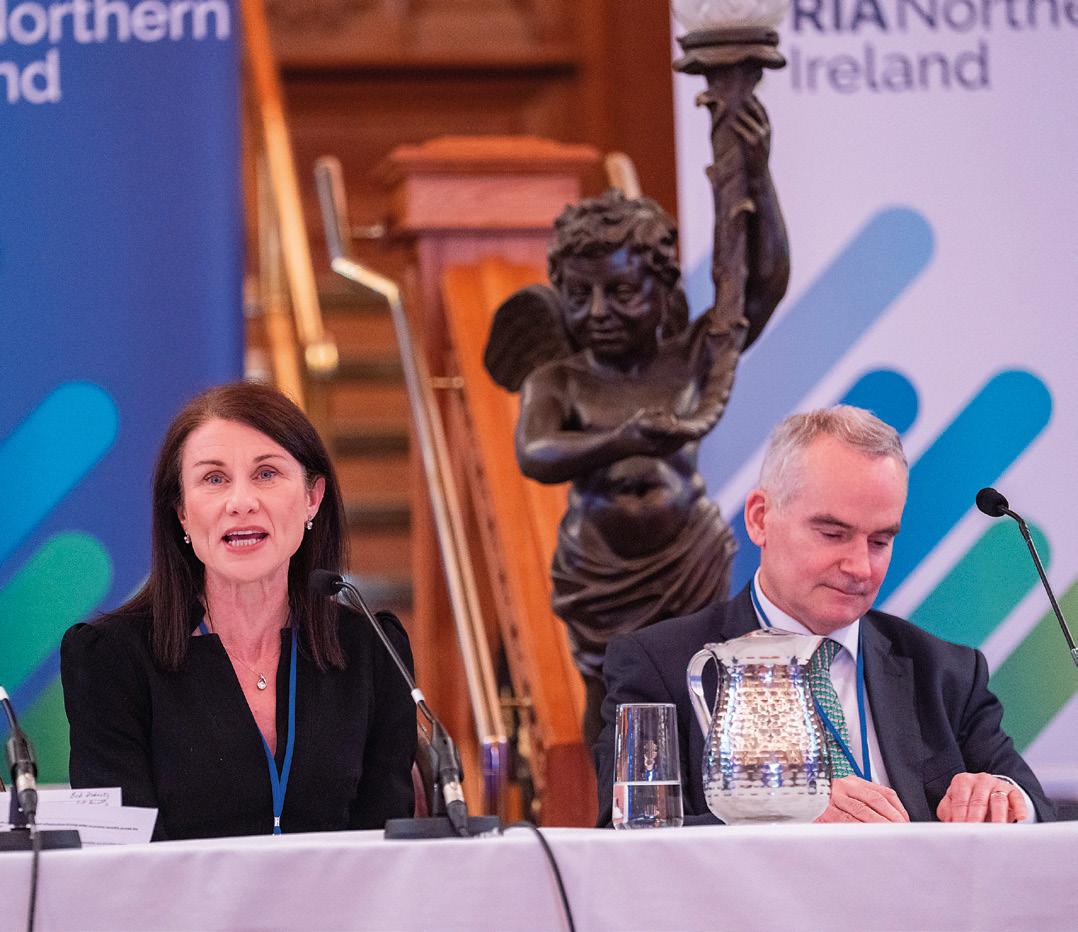
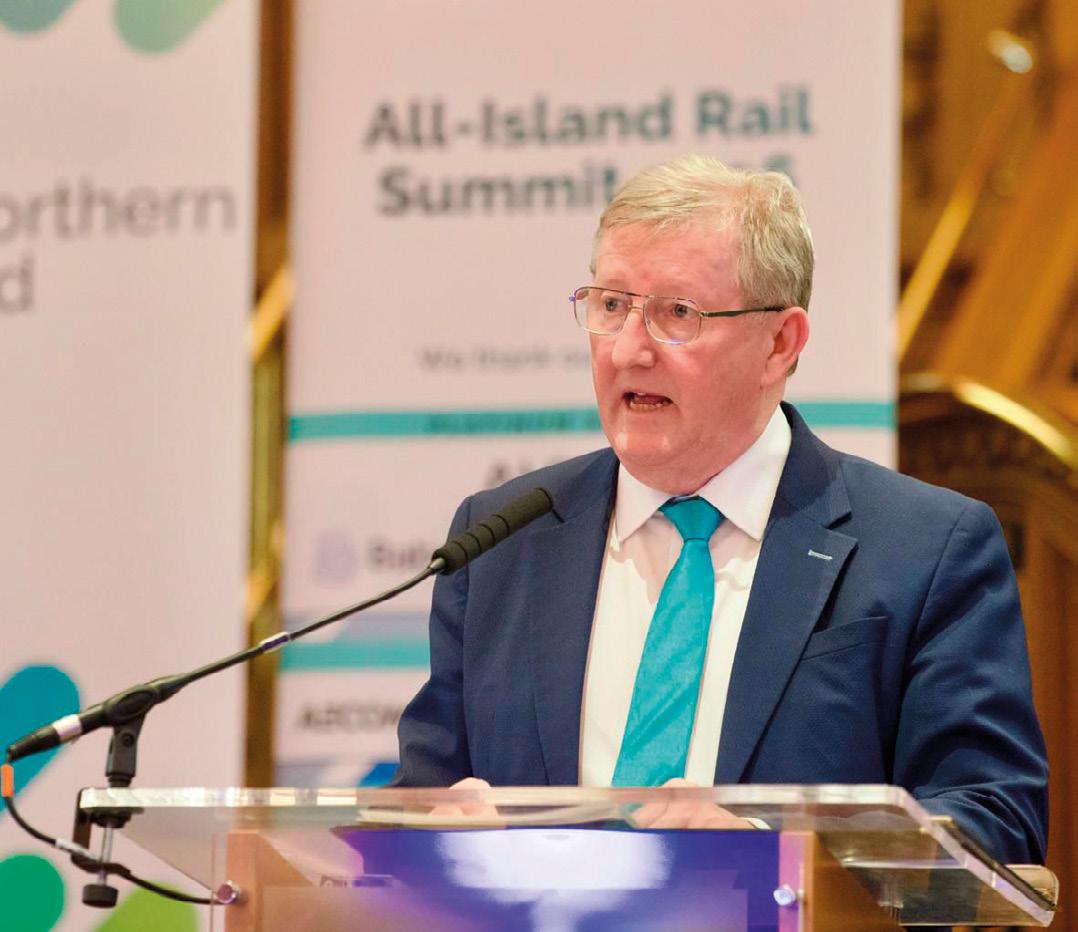
There is also a special section on the opportunities in the island of Ireland, one of the most dynamic and exciting rail markets in the world, from page 28. This includes a look back to the inaugural All Island Rail Summit, which included speeches from Translink’s Chris Conway and Northern Irish Infrastructure Minister Liz Kimmins MLA (from page 34).
Rail Director also caught up with Sarah Jane Crawford, Chris Hobden, Raj Patel and Mark Ferrer, who reflect on the success of the East Coast Digital Programme last year and discuss the journey ahead, from page 44.
Last month we mentioned some of those recognised in the King’s New Year Honours List. This month we’ve managed to catch up with two of the recipients, Jo Field OBE (page 50), and Liam Johnston MBE (page 86), who both speak about the recognition and their passion for the railways.
I’d also like to welcome our new columnist Haydon Bartlett-Tasker, who from page 60 dissects the interaction between new digital technology and its impact on culture.
That’s just a taster of what features this month. I hope you enjoy reading this edition and thanks as always to everyone who has been involved and those who have contributed.
Next month the theme will be light rail, with some fantastic interviews already lined up, and a lot of interest in featuring in the magazine. We’ll also have a review of the Railway Industry Association’s Innovation Conference.
All the best,
Danny Longhorn Editor
However the full potential can only be achieved if we all pull together, whatever the size of your organisation or your job title
Rail Director magazine and Railbusinessdaily.com are assets owned by the Railway Industry Association. Railbusinessdaily.com delivers more than 70 stories a week to +50,000 rail industry professionals in our daily 7am newsletter. If you have not already subscribed, it’s free and it’s easy to do so at www.railbusinessdaily.com, please also encourage your colleagues to do the same. This is the very best way to keep abreast of what is happening on the UK’s railways. There is a digital copy of Rail Director on our website.
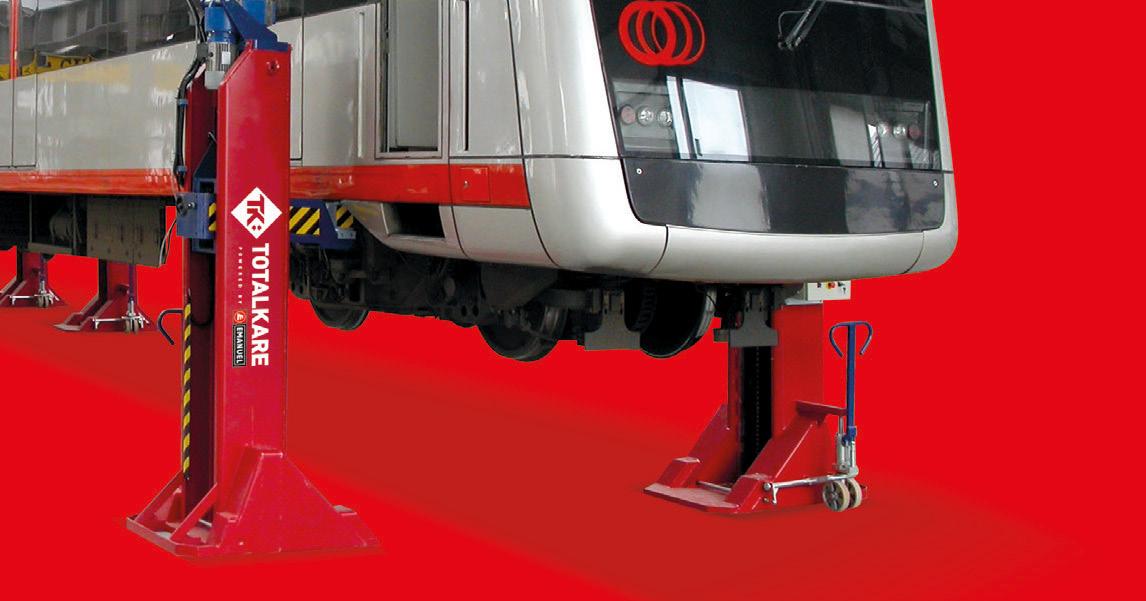
RAIL LIFTING JACKS
With over 40 years’ experience of high quality, heavy duty vehicle lifting, Totalkare combines world
products with
For more information or to request a site visit:
6 Looking to the future
Siemens Mobility, the global manufacturer of both trains and signalling technology, has a new Managing Director in the UK
12 Putting the industry on the right track to a greener railway
Jo Lewington, Chief Environment and Sustainability Officer at Network Rail, discusses The Greener Railway Strategy, and reflects on her own personal journey in the railways
16 Building a greener railway for the next decade and beyond
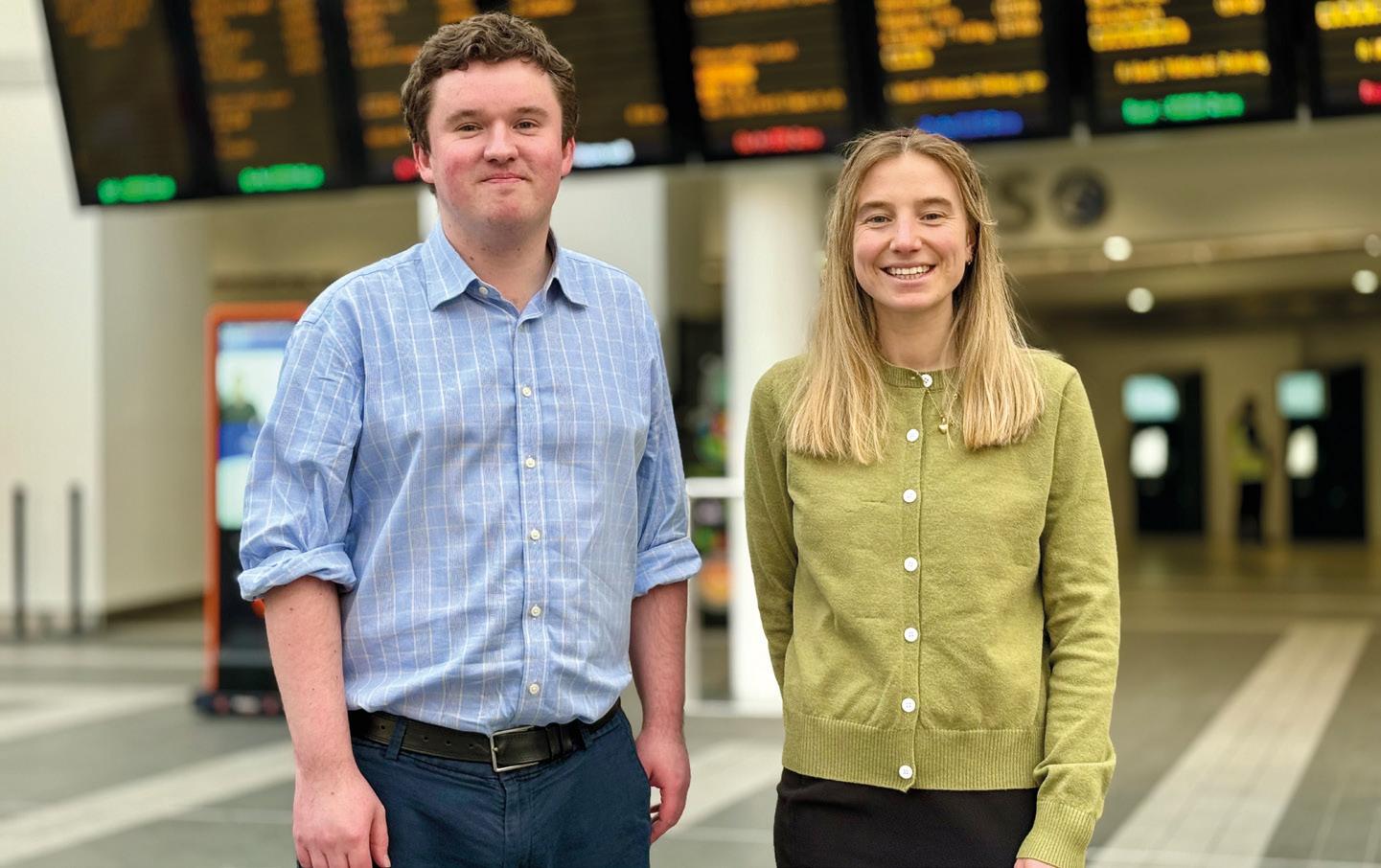
CrossCountry’s Thomas Raynor and Jessica Lockwood discuss the train operator’s 10-year plan to make rail travel more inclusive, resilient and low-carbon
20 Collective action and collaboration
Rachael Everard, Director of Sustainable Development at the RSSB, reflects on her first year in post and the progress of the Sustainable Rail Blueprint
28 Irish opportunities for rail suppliers
Ireland is one of the most dynamic and exciting rail markets in the world. Neil Walker, Exports Director at the Railway Industry Association, writes about the opportunities on the Emerald Isle and how RIA is supporting the transformation
30 Rail Link: Connecting the rail industry
Alan McDonald, Director of Operations at Rail Link, discusses his passion in connecting people with key players in the rail industry and looks ahead to the next event at the Aviva Stadium in Dublin
34 All Island Rail Summit: ‘A coming together of a shared ambition’
Translink’s Chris Conway and Northern Irish Infrastructure Minister Liz Kimmins MLA were among the speakers at the inaugural All Island Rail Summit. Rail Director was among the hundreds of attendees
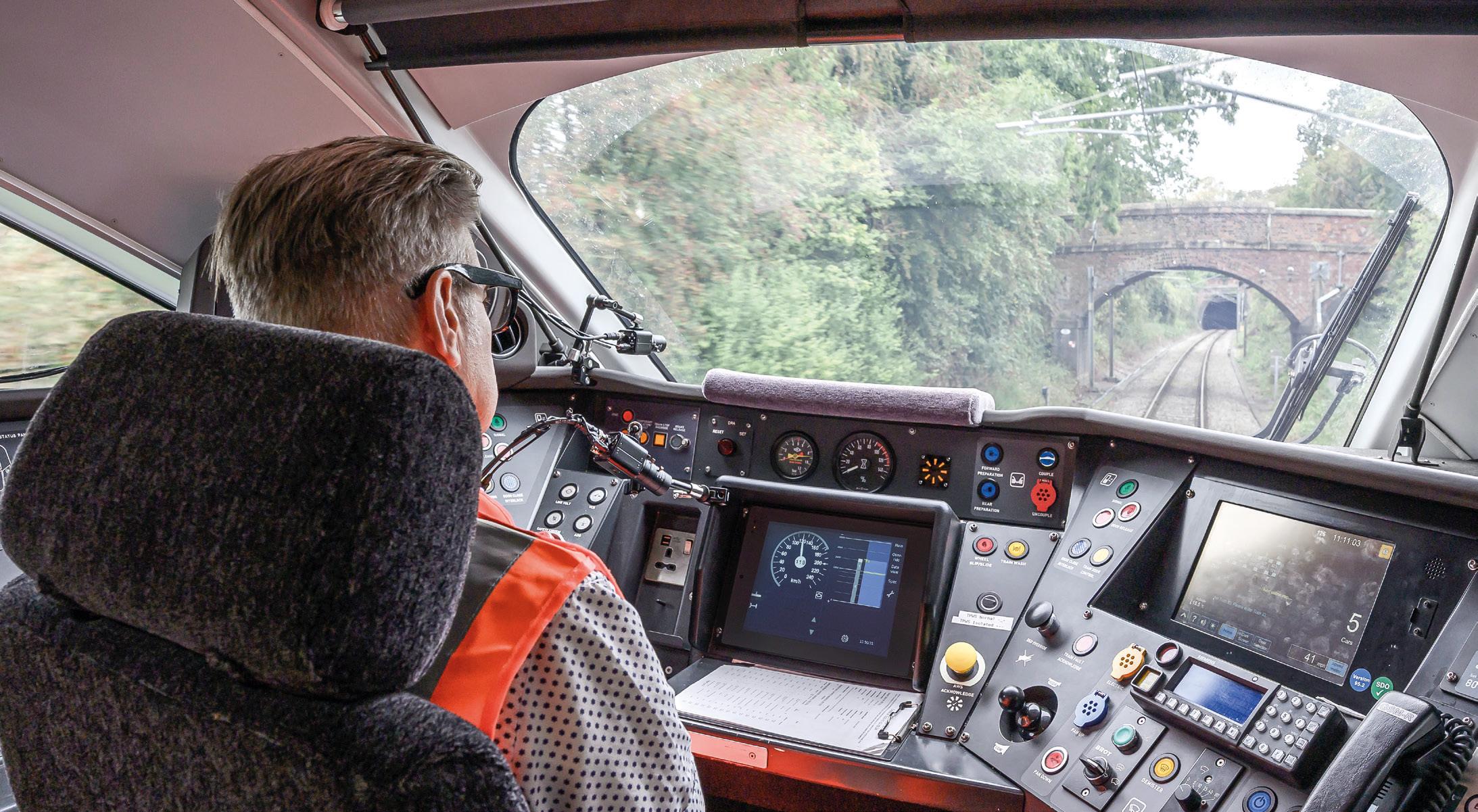
44 Delivering in-cab signalling
Sarah Jane Crawford, Chris Hobden, Raj Patel and Mark Ferrer reflect on the success of the Government-funded East Coast Digital Programme last year, and discuss the journey ahead
50 Unfinished business
Jo Field OBE has been recognised in the King’s New Year Honours for services to diversity and inclusion in transport
60 The stroboscopic future: Rail in the age of AI agents and AI organisations
Haydon Bartlett-Tasker, Founder and Managing Director of CrossTech, is Rail Director’s new columnist, dissecting the interaction between new digital technology and its impact on culture
66 The unseen work behind every safe journey
If passengers never notice safety, it usually means someone has done their job properly. David Hughes, Head of Safety, Security and Sustainability at Lumo and Hull Trains, explains what it takes to keep millions of journeys running smoothly, and why success is often invisible
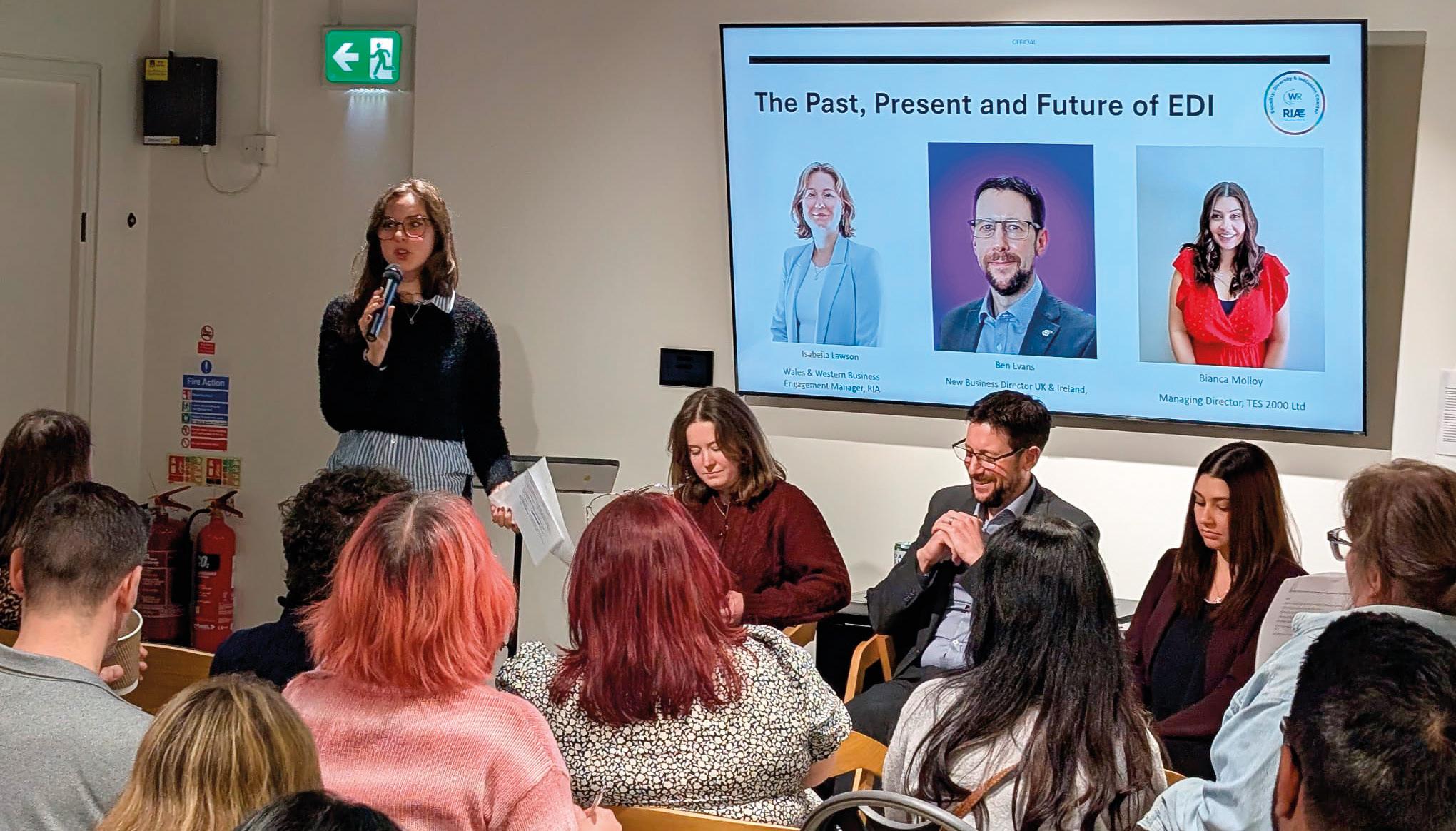
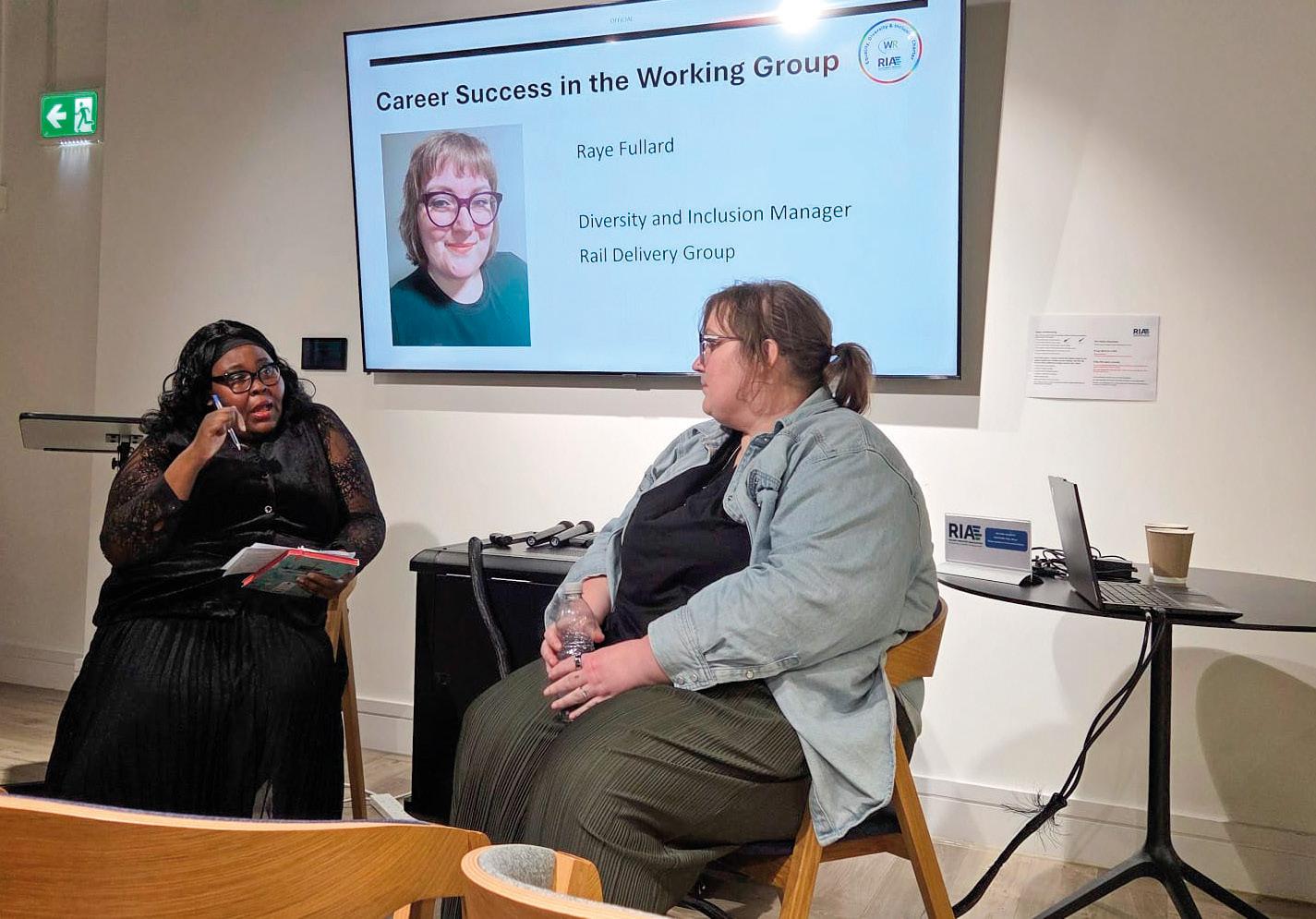
72 EDI Charter for Rail: Ensuring the voice remains loud
The rail industry has come together to celebrate five years of the EDI Charter for Rail, reflecting on its success but also resetting the intentions and setting the direction for what comes next
84 Community Rail on the Far North Line
Alex Kennedy, from the Far North Line Community Rail Partnership, writes about the importance of the group and why the role of Community Rail Partnerships has never been more important
86 Supporting the railway industry
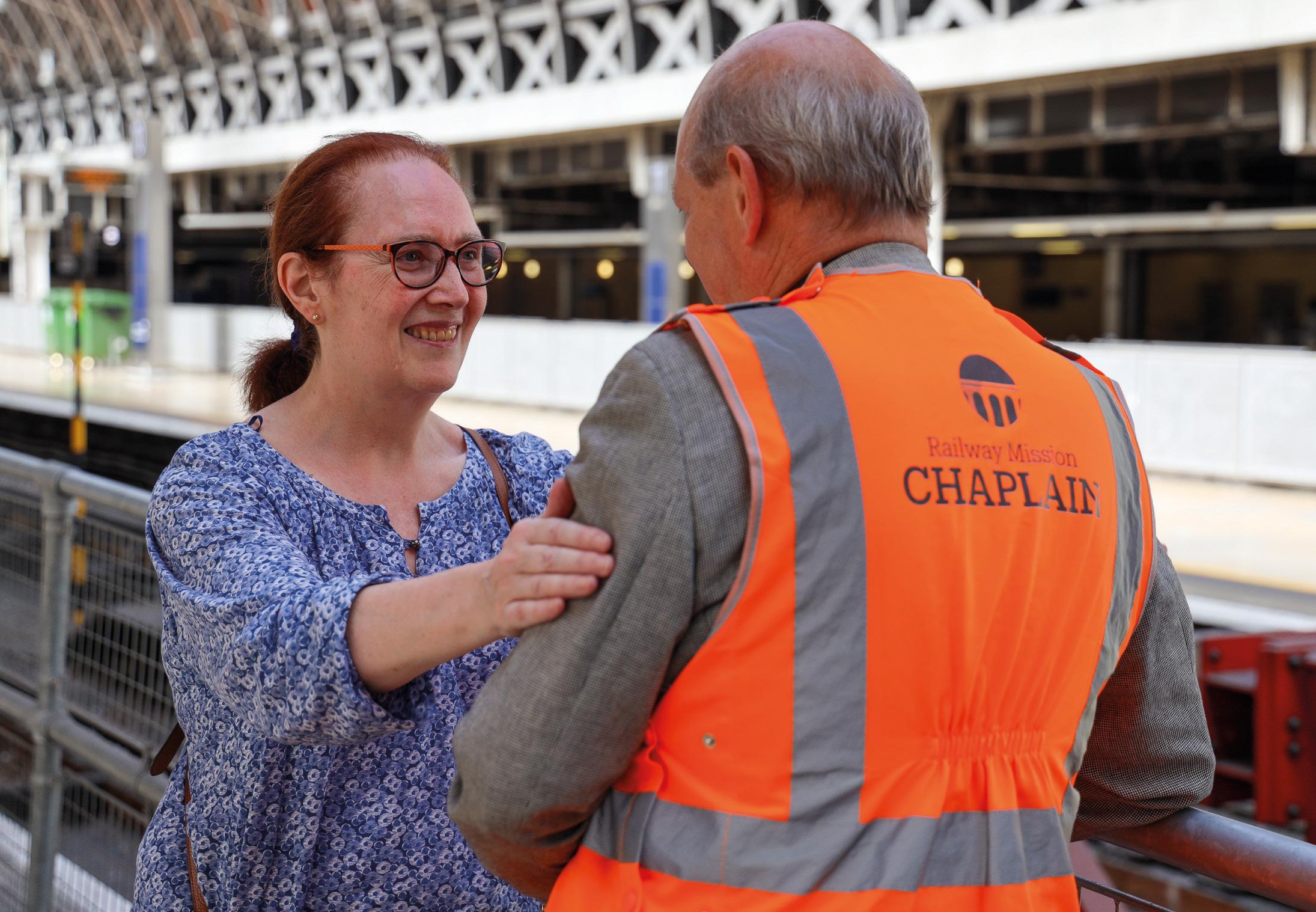
Liam Johnston, Executive Director at the Railway Mission, has been awarded an MBE for services to the rail industry. He reflects on the recognition and 25 years as the organisation’s lead chaplain
96 Supporting members and strengthening professional standards
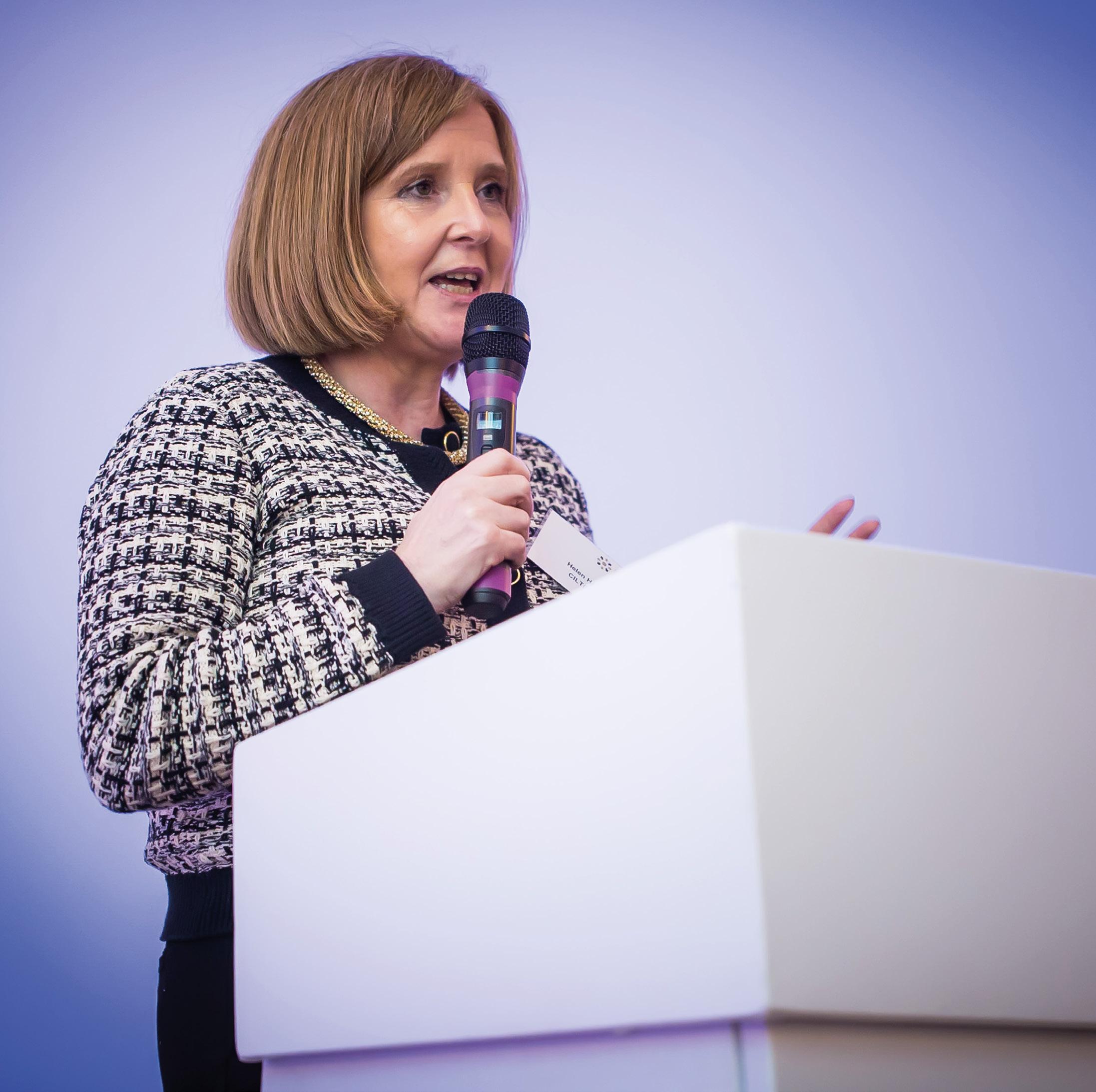
The Board of Trustees of The Chartered Institute of Logistics and Transport (UK) has appointed Helen Hardy as Chief Executive Officer, following a successful seven-month period as Interim CEO. She discusses the journey ahead
102 And Finally
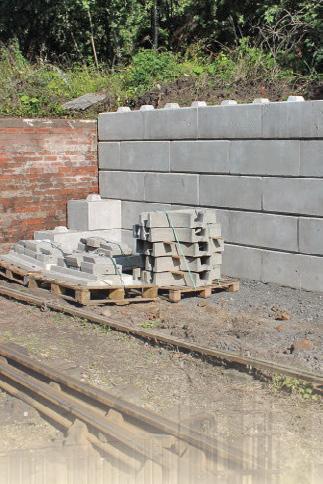
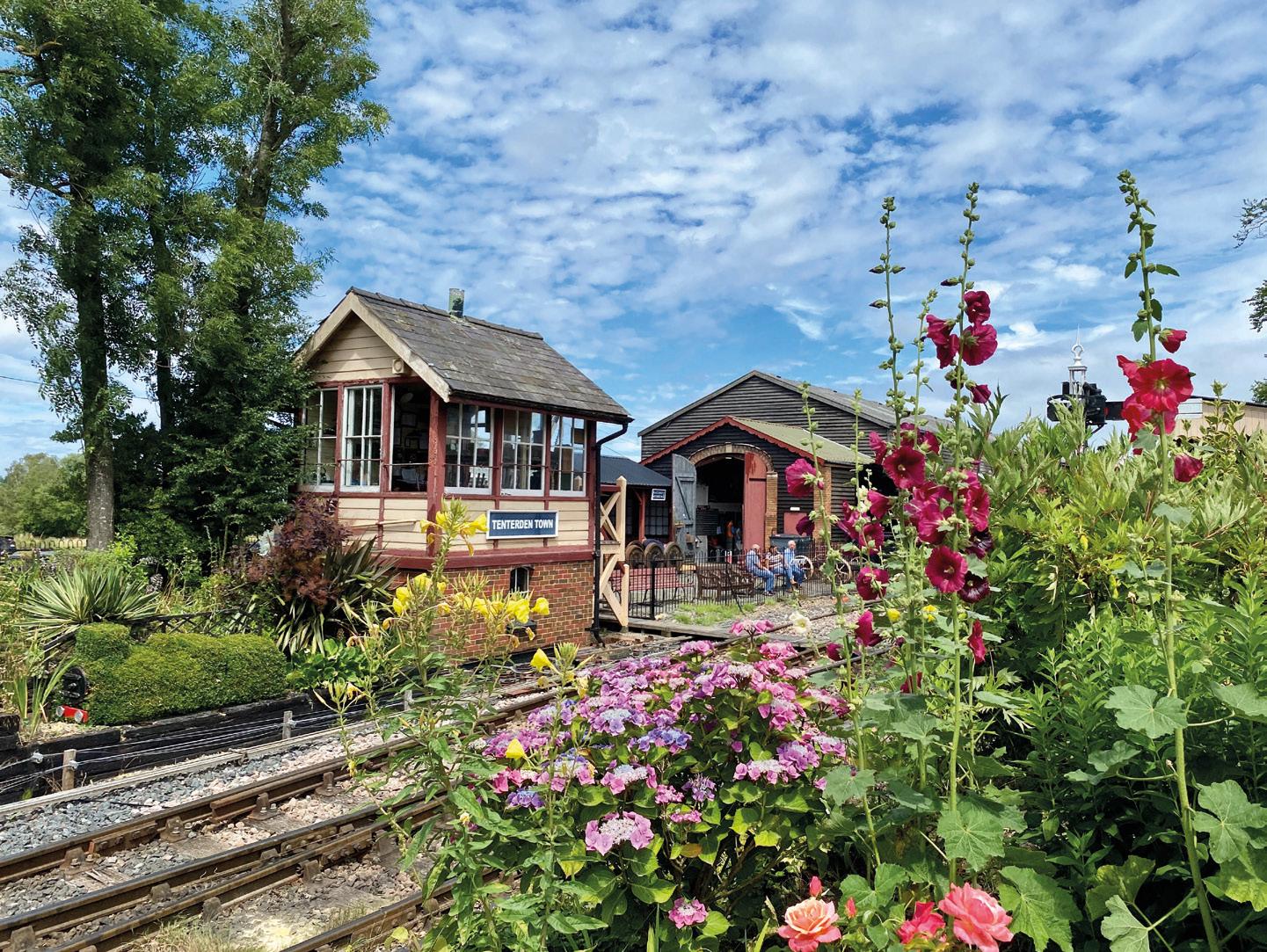
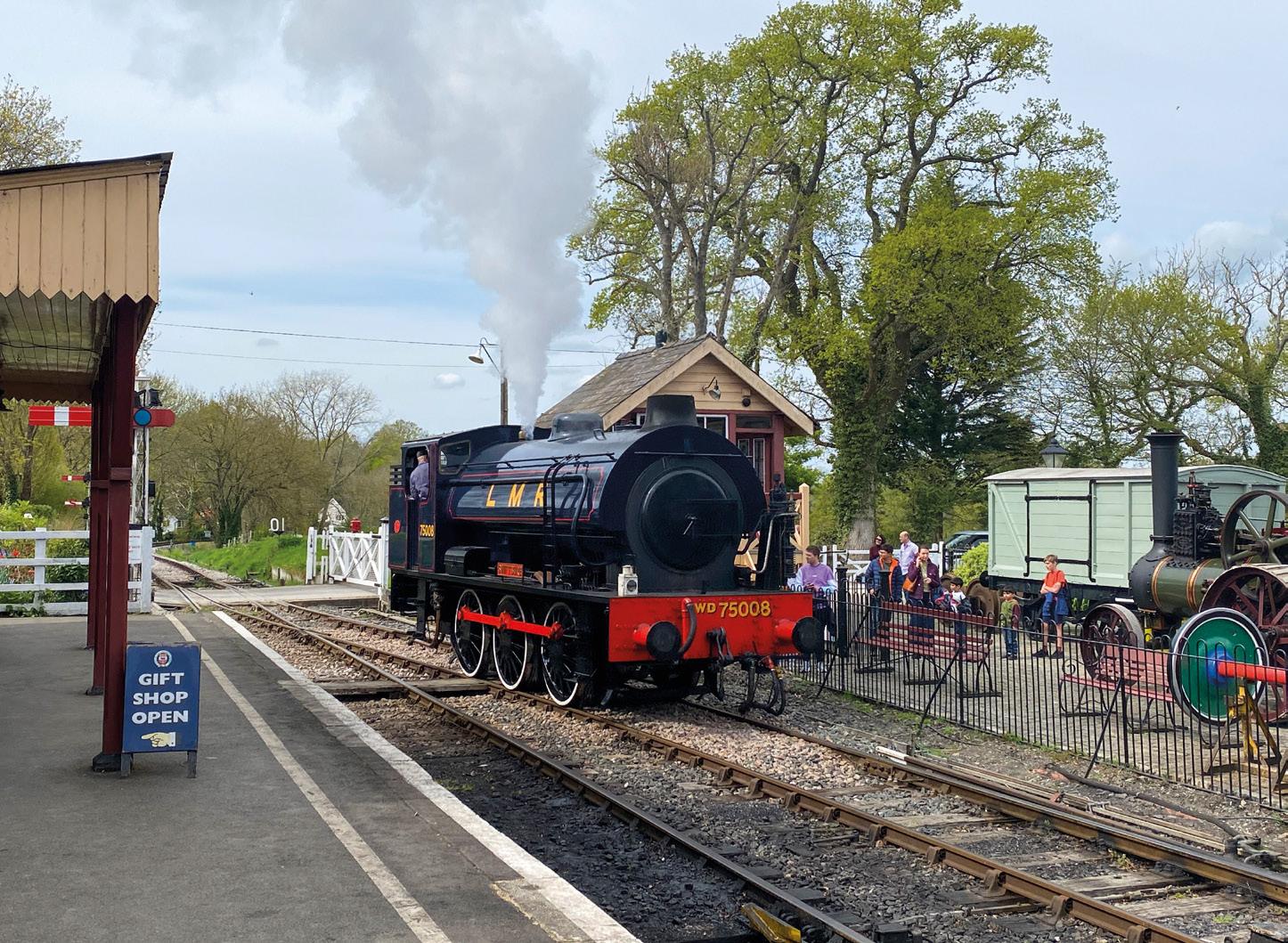
Sustainability goals and a desire to reduce environmental impact are behind the Kent & East Sussex Railway’s latest station upgrade
Tel: 01132 082620
Sales: 07494 529 803
Editor Danny Longhorn
Danny@railbusinessdaily.com
Designer and Production Manager
Debbie Nolan
Writers
Rosie Crampton
Nigel Wordsworth
Advertising Sales
Christian Wiles Chrisw@railbusinessdaily.com
Marketing Sales
Sarah Hopton Sarah@railbusinessdaily.com
Published by Rail Business Daily 2 Bond Court, Leeds, LS1 2JZ
Reproduction of the contents of this magazine in any manner whatsoever is prohibited without prior consent from the publisher. For subscription enquiries and to make sure you get your copy of Rail Director please ring 01132 082620 or email info@railbusinessdaily.com. The views expressed in the articles reflect the author’s opinions and do not necessarily reflect the views of the publisher and editor. The published material, adverts, editorials and all other content is published in good faith.
Image: Siemens Mobility
Siemens Mobility UK has appointed Aglaja Schneider as Managing Director of the Rolling Stock and Services business and Joint CEO. She discusses her thoughts and aspirations for her new role
Looking to the future
Siemens Mobility, the global manufacturer of trains and signalling technology, has a new Joint CEO in the UK.
Aglaja Schneider took over as Managing Director of the Rolling Stock and Customer Services business, and as Joint CEO of Siemens Mobility in the UK, in January 2026.
Aglaja is no newcomer to the UK. She studied for her Masters in London, before leaving to move to China with Bosch to learn more about the South-East Asia market. One year later she was back in London, this time joining Siemens Mobility’s sales team.
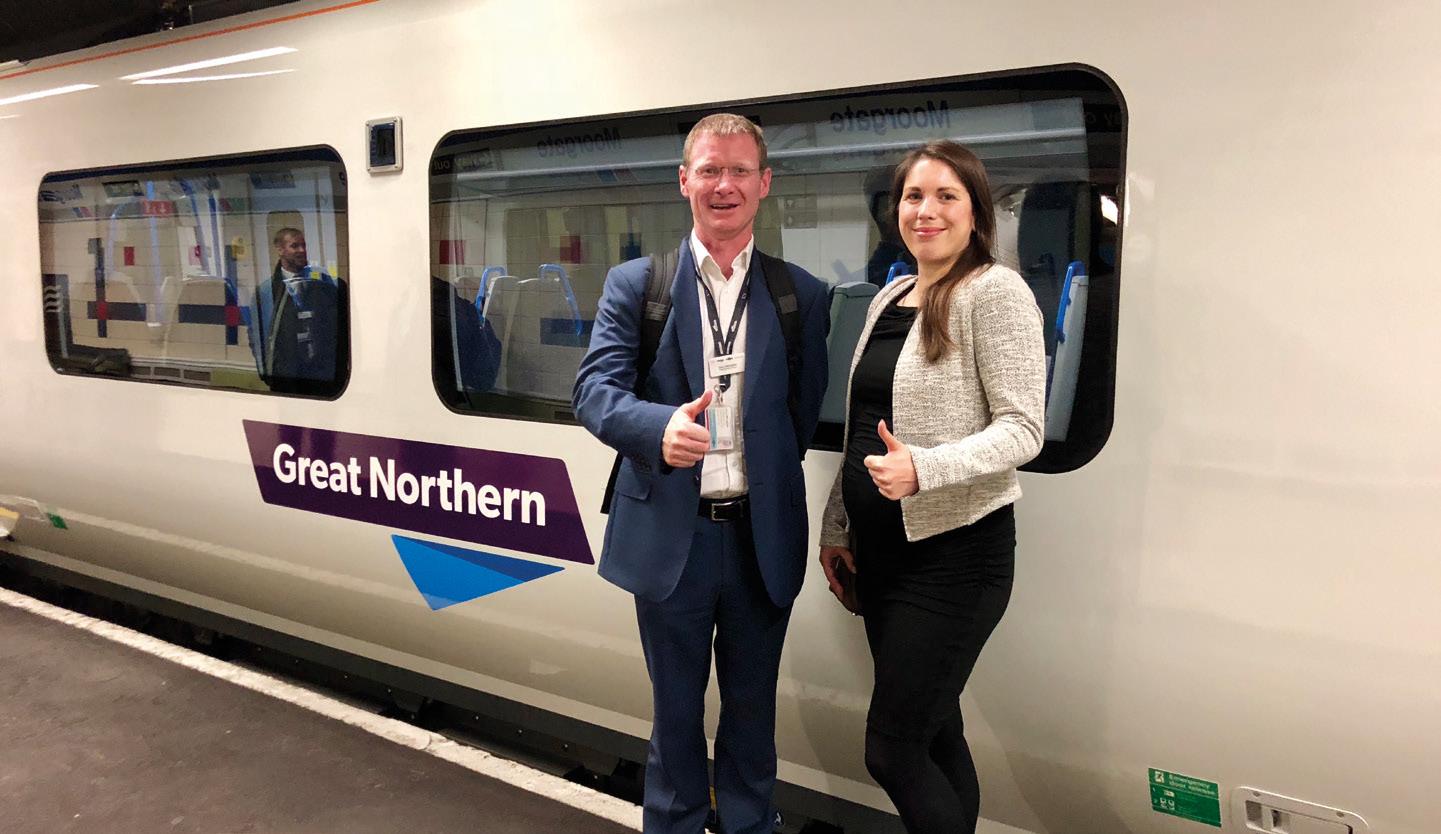
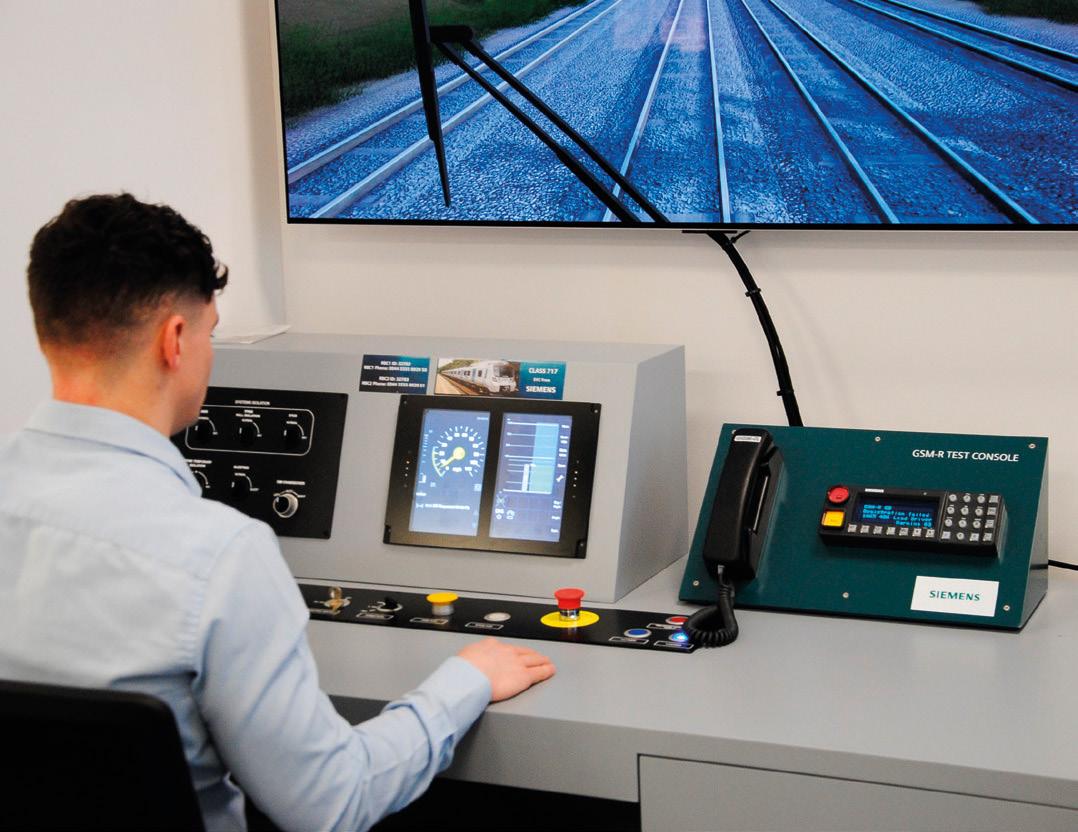
She moved over to project management, first on the Class 717 introduction onto the Great Northern services from Moorgate to Welwyn, then as Senior Lead Project Manager for Rolling Stock on the London Underground Deep Tube Upgrade (DTUP) Programme, where she later became Programme Director.
“I started with Siemens Mobility in the UK as a graduate,” she explained. “Since then, I have been working through different departments and different functions.
“At the beginning I was in the sales team and then I took over some projects. Then I worked my way forward into a more global role and now I’m back in the UK.
“Most recently, I have been leading the Piccadilly line upgrade for Siemens Mobility on a global level. Now I’m really looking forward to seeing all of that come together. It’s always very rewarding to see your projects running on the real-life railway, and riding on a Moorgate train is a great pleasure.”
Going Underground
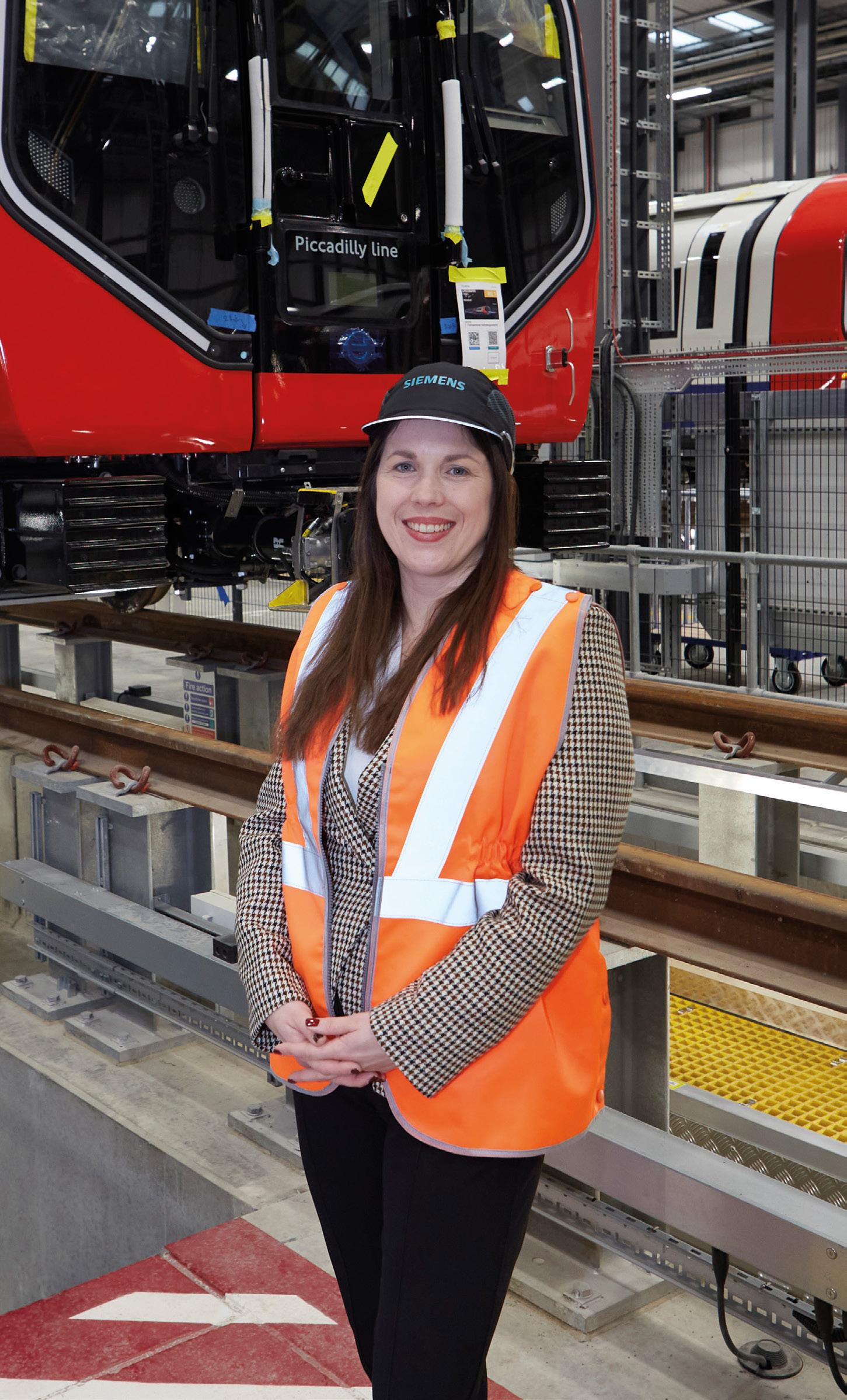
As Managing Director of Rolling Stock and Customer Services in the UK and Ireland, Aglaja is still very much involved in the manufacture and delivery of the new Piccadilly line fleet from the new Siemens Mobility factory at Goole in East Yorkshire. She recently took a delegation from Transport for London (TfL) to see Piccadilly line trains being manufactured.
“It was great to showcase how far we have come in Goole and how busy the plant is now.” Aglaja said.
“We are very confident and very happy with the progress we are making and our global colleagues are as well, so that’s a good foundation. In terms of the Bakerloo line, we are very grateful and pleased that it’s included in TfL’s long-term settlement and that means that we are able, as the Commissioner also said, to start discussions, which is important for the longevity of our business.”
Aglaja Schneider with a Piccadilly line train at the Goole Rail Village in 2026. Images: Siemens Mobility UK
Those discussions must have gone well as insider information from TfL, though not confirmed yet by Siemens, indicates that the Bakerloo line order may be confirmed before the end of 2026.
As manufacture at Goole ramps up, Siemens Mobility is paying close attention to the involvement of the UK supply chain, and an increasing number of components and sub-assemblies are being sourced in the UK.
Customer services
The customer services business is also helping in this. Workshops in the Goole Rail Village, which
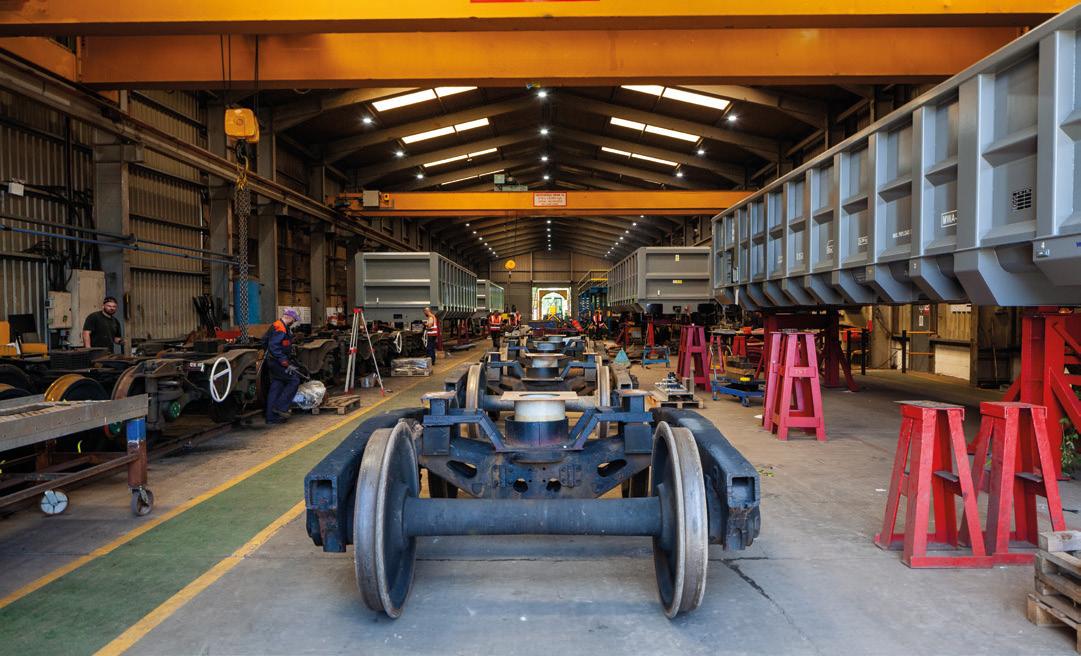
surrounds the main assembly plant, are servicing and maintaining an increasing number of items such as HVAC (heating, ventilation and air-conditioning) units, gearboxes, traction motors and soon bogies, which are currently serviced at Siemens Mobility’s Lincoln Bogie Service Centre.
With a production line that will reassemble bogies after strip-down and repair, it isn’t a large move to use the same facilities to build bogies from new parts and so commence bogie manufacture in the UK.
“In Goole, we now have almost three different parts of the site. One is the assembly hall, and one is the components and drives part of the
business, which is looking at maintenance of those parts for our fleets in the UK,” Aglaja clarified.
“And then the third part will be the new Bogie Assembly and Service Centre opening this year. We have previously been focused primarily on maintaining and overhauling bogies at Lincoln. But we are also looking into whether there is the opportunity for the assembly of bogies in the UK at Goole, future-proofing the business.”
One of Aglaja’s biggest concerns is the pipeline of future orders, or lack of it, and how that could affect the future of the Goole plant.
“What is really important is the certainty
Left: Aglaja joins Gerry McFadden, Engineering Director at GTR, for the launch of Class 717 trains on the Moorgate Branch in March 2019
We really need to challenge ourselves and the industry to think about new skills for apprenticeship schemes
of the market pipeline for new trains, which we unfortunately haven’t had so deeply up until now.
“I mean our focus is on getting some certainty for the future. With more certainty, we would also like to build commuter rail trains here at Goole for the UK. But that is in the future.”
Encouraging skills
With the increase in work being carried out at Goole and elsewhere in the UK, there is obviously a need for staff training, some of which will be highly technical. Ten years ago, in autumn 2015, Siemens Mobility opened its National Training Academy for Rail (NTAR) in Northampton. A £7 million investment developed in conjunction with the National Skills Academy for Rail (NSAR), the Department for Business and Trade and the Department for Transport, more than 21,000 delegates have attended this training facility to up-skill, learn, and retrain on its many practical skills development and educational programmes.
During National Apprenticeship Week, Aglaja visited NTAR to update herself on activities. “I went to meet our apprentices and to talk to them, to understand what’s on their mind and what is important for them,” she said.
“In a way, it comes back to certainty again. We need certainty for our workforce and in the pipeline so that we can keep good talent, especially if there is a scarcity, so I’m really interested in focusing on keeping and developing good people because that’s going to be key for us in the future.”
New technologies such as Artificial Intelligence (AI) are becoming increasingly important, and the 100 apprentices currently going through their Siemens Mobility training at NTAR and elsewhere are being thoroughly schooled in this aspect of railway technology.
“I believe we really need to challenge ourselves and the industry to think about new skills for apprenticeship schemes because, if we really are going into the future in terms of technology, digitalisation, AI and so on, it’s very important that we shape that future with attractive apprenticeship schemes to attract the best people,” Aglaja added.
“I’m quite passionate about that because it is a great industry to be in and it will be more and more digitalised and more and more software driven, so we really need to get this right.
“From digitally connected trains enabling more predictive maintenance, to digital signalling enabling fewer delays, means a smarter, more reliable railway for the end passenger. Being part of that is very exciting and a great opportunity.”
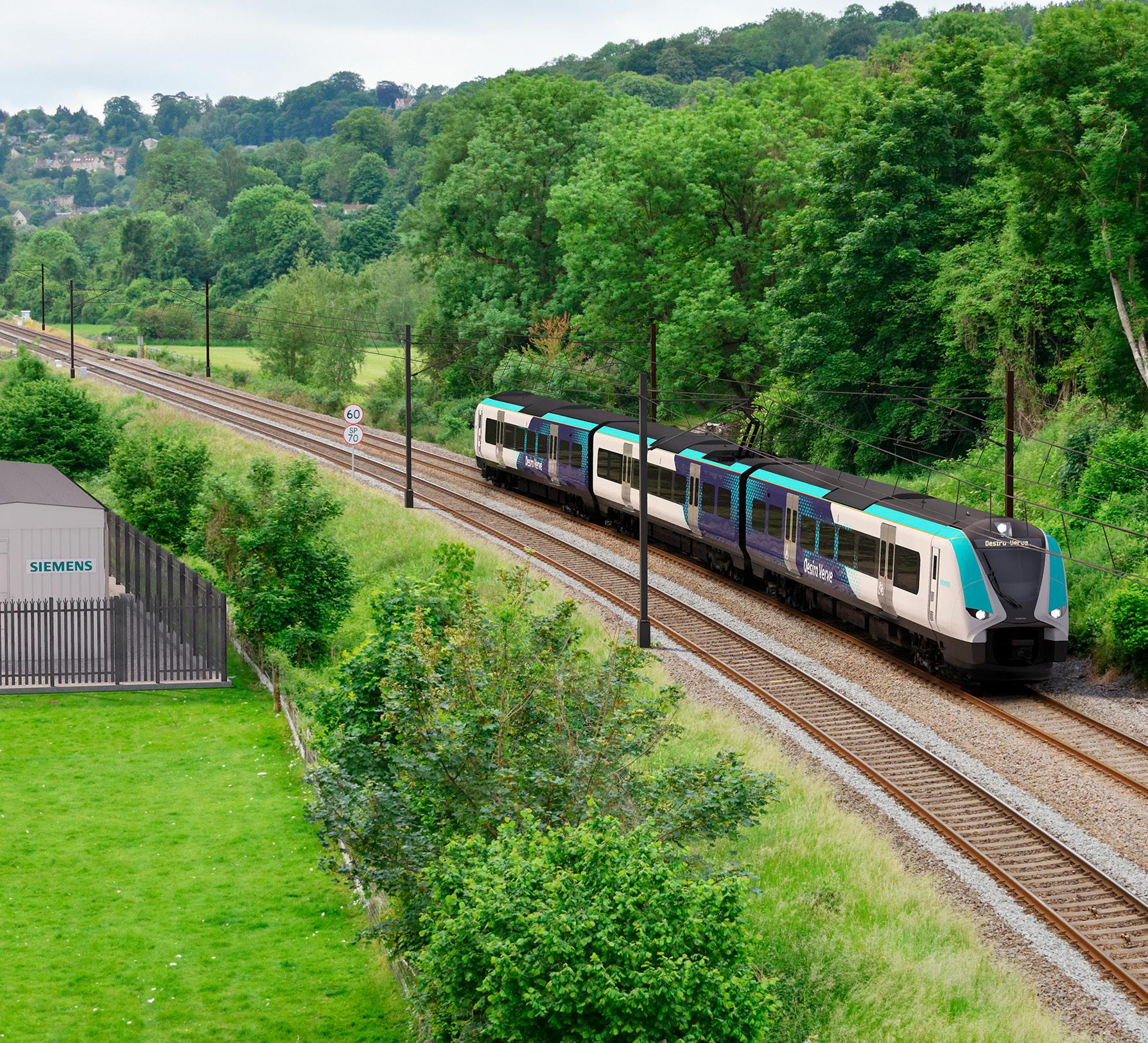
Technology will certainly form a large part of Siemens Mobility’s future. Battery trains are already running on the Continent and are being developed for the UK market. And paired with the company’s Rail Charging Converter (RCC) offering fast-charging at key points on routes supplied from the domestic grid, only small sections of track need to be electrified, removing the need to buy new diesel trains in the future. The use of predictive maintenance, digital twins, AI and digital technologies are all on Aglaja’s radar.
And what of the major changes that will come about with rail reform?
“We have been really focused on this for a long time, to bring track and train together and to see what we really can do as Siemens Mobility with all of our offerings,” Aglaja explained.
“If GBR can get track and train together, they can get more of a unified railway and cut costs where it can be cut. From our point of view, it’s the right thing to move in that direction. We are absolutely set up for that.”
Impression of a Siemens Mobility battery train passing a Rail Charging Converter, which offers fast charging from the domestic electrical grid
Prime Minister announces seven new stations and major rail funding commitment
The Prime Minister has formally endorsed the Transport for Wales (TfW) vision for the future of Welsh rail – agreeing that it should set the framework for its pipeline of projects and committing the UK Government to work with the Welsh Government to deliver this pipeline as quickly as possible.
This investment will see the further transformation of Wales’ rail network, building on the Welsh Government’s £1.1 billion in upgrading and electrifying the Core Valley Lines and £800 million investment in a new rail fleet. Using the almost half a billion pounds promised this Spending Review, seven new stations are set to be built across Wales.
These are: Magor and Undy. Llanwern.
Cardiff East.
Newport West.
Somerton.
Cardiff Parkway.
Deeside industrial park.
Prime Minister Keir Starmer said: “This isn’t tinkering nor sticking plasters. This is investment for the long term – and change communities will feel. This
£50 million funding brought forward to fast-track Mayor’s plans for transport
Funding to kickstart work on a tram line to the new Birmingham City Powerhouse Stadium and upgrade railway stations serving Villa Park has been approved by regional transport chiefs.
Mayor Richard Parker and the West Midlands Combined Authority (WMCA) Board agreed to advance £50 million to accelerate early work such as detailed design, surveys and business cases on several key transport projects, including the flagship scheme to extend the Metro to the Sports Quarter regeneration site in east Birmingham.
The funding will also be used to start work on upgrading the Witton and Aston train stations to support the expansion of Villa Park and to take the development of Very Light Rail in Coventry to the next stage.
is putting Wales on the front foot and getting Britain building again.”
First Minister Eluned Morgan said: “We are now in an unprecedented position to deliver the next chapter of transformation for rail services in Wales. We have secured long-term commitments to key projects and a renewed ambition for our rail network.
“Changes of this scale don’t happen overnight but they do happen when there is vision, determination, and cooperation. We’ve already proved that with the Core Valley Lines, and we are beginning to see the same momentum with Network North Wales. When you have the ambition, the commitment and the will, real progress follows – and we have all three.”
British Steel starts 24-7 rail operations after securing major new high-speed deal for Türkiye
British Steel has secured a new order worth tens of millions of pounds for a major high-speed electric railway in Türkiye.
The eight-figure agreement, supported by UK Export Finance, will see British Steel supply 36,000 tonnes of rail to ERG International Group.
It will help create a 599km line between Ankara and Izmir, significantly reducing carbon emissions by cutting rail travel time between the Turkish capital and port city. The contract has created 23 new roles and seen the business start 24-7 rail manufacturing operations for the first time in more than a decade.
British Steel Chief Commercial Officer Lisa Coulson said: “Securing this prestigious contract – with the support of UK Export Finance – was a major achievement and underlines British Steel’s ability to build the sustainable track systems of the future.
“It also demonstrates the importance of British Steel, the UK’s only manufacturer of rail, to this country’s economy and Britain’s global trading partners.”
Image: TfW
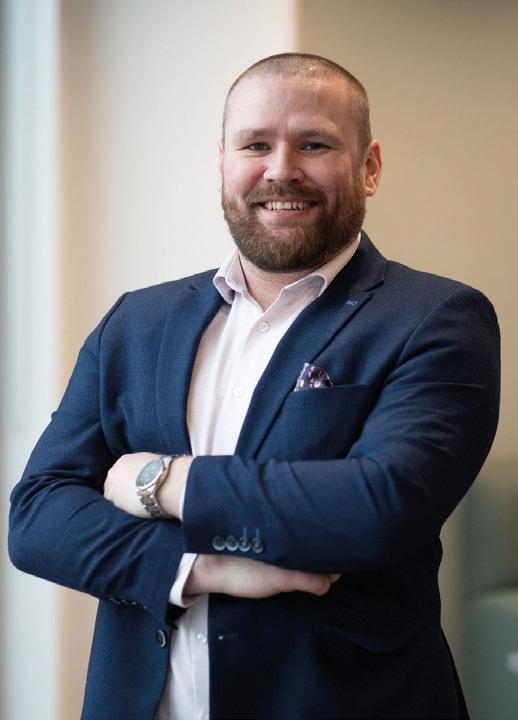
Advice from Sam Palmer, Account Executive, at Jobson James Rail
Is security on your rail business agenda?
ealth and safety, operations, engineering, HR, and IT all have clearly defined leadership, but not security, which too often sits between departments without a single point of ownership.
Despite rising physical and cyber threats, security is too often treated as an operational matter rather than a strategic one. For a sector under increasing pressure to demonstrate resilience, this lack of oversight should be a wake‑up call.
With theft and unauthorised access to depots, compounds, and isolated worksites a recurring issue across the supply chain, arrangements for managing access control, monitoring visitors, verifying contractors, and routinely challenging unfamiliar individuals are informal or inconsistent.
When roles and responsibilities are unclear, exposure inevitably increases, and insurers are increasingly sensitive to these weaknesses. Against the
backdrop of a substantial UK terrorism threat level, with a greater likelihood of low‑sophistication, lone‑actor incidents, it is essential to recognise that any rail site has the potential to be targeted.
Alongside these physical concerns, cyber risks are intensifying. Rail SMEs now rely on an expanding range of digital platforms, from rostering and maintenance systems to remote monitoring tools and signalling interfaces. A cyber incident affecting any of these can halt operations, expose sensitive information or trigger expensive business interruption.
While IT teams play a crucial role in protecting systems, genuine resilience depends on involvement from across the organisation. HR teams influence vetting and leavers’ processes; operations ensures procedures are followed; safety teams understand the interface between digital systems and critical operational assets.
Cyber security can no longer
SPECIALIST INSURANCE FOR RAIL INDUSTRY
be viewed narrowly as a technical issue. It is an organisation‑wide risk that demands leadership attention. Insurers are increasingly focused on the strength of a business’ security governance. They want assurance that physical and digital risks are being managed proactively and consistently.
When governance is weak,
companies may face higher premiums, restrictive terms, or challenges during claims. When governance is strong, businesses improve their defensibility and often secure more favourable outcomes.
This raises an important question: who should own security in a rail SME? The common denominator is clarity. Some organisations appoint a dedicated security lead; others create cross‑functional groups drawing together safety, HR, IT, and operations; and some embed security as a standing part of board or leadership discussions.
The structure matters less than ensuring accountability is clear. Security has become a strategic priority. It protects people, assets, operations, and reputation – and strengthens insurance outcomes. For a sector built on reliability, it is essential that clear ownership of security is established.
Contact the Jobson James Rail team on 07849 835412.
07816 283949
Jo Lewington, Chief Environment and Sustainability Officer at Network Rail, discusses The Greener Railway Strategy, and reflects on her own personal journey in the railways
Putting the industry on the right track to a greener railway
Jo Lewington is passionate to play her part in creating a railway that is fit for the future, that cares for the environment and that helps communities around the network to thrive.
She first joined the industry more than 30 years ago and has been at Network Rail for the past 15 years, the last five as the organisation’s Chief Environment and Sustainability Officer.
“What drives me is the sense of purpose,” she said. “The railway connects communities, supports jobs, shapes local economies, and we’re helping to tackle the climate crisis. Trains are the greenest form of mass transport, but there is so much more we can do.
“If I look back, the last five years have probably been some of the most rewarding in my career. We’ve moved sustainability from ‘what’s all that about’, to talking about it daily, and at board level and executive leadership team. It’s part of our business planning.
“Personally, when I leave the industry I want to have played a role in leaving it in a state that is better than I found it. At the same time, with Great British Railways, there is an opportunity to inspire future generations to come and work in the railway.”
Jo, a Chartered Surveyor, who has a wealth of experience both within the rail industry and in the commercial property sector, explains how both areas link quite neatly.
“My career change within the rail industry from property into environment and sustainability felt at the time a bit odd, but the more I think about it, it was quite a natural transition,” she said.
“The built environment is one that we’re really targeting around decarbonisation so I brought my commercial property experience with me into the role.
“If you think about the railway more broadly, the estate is vast and we’re one of the top landowners by area in the UK with around 54,000 hectares covering thousands of stations – a massive asset base and we have a vast supply chain.
“It can sometimes feel a little daunting, but my starting point in the role is always about having that clear purpose. What we’re trying to do here is not a discipline that sits to one side, it’s something that underpins everything that we do. It’s how we plan, design and operate the railway every day.”
Images: Network Rail
Jo highlights how sustainability is about integration and isn’t something that sits on its own. She explains how her team, which sits within the Technical Authority, are technical specialists with expertise in environment management, carbon, climate adaptation, biodiversity, circular economy and social sustainability.
“There are two aspects to our job,” she explained. “We set standards and governance that make sustainable delivery possible and then we build the confidence and competence of our colleagues in the wider business so that they think about sustainability as second nature.
“We don’t need an army of sustainability professionals, but we do need to ensure that everybody in our business understands what it is and what role they can play on the journey.
“Over recent years there has been an increased focus on sustainability, and rightly so because we’re in our 200th year now as a railway and we need to ensure that the railway is sustainable for future generations and it’s around in another 200 years.
“The company has massively supported us with that, with a dedicated board that holds us to account. Not only that, but it also really supports us on the journey. Even over the last five years in post we’ve massively matured and although there will probably always be improvements that we can make, we have come a long way.”
The Greener Railway Strategy
Last year Network Rail published The Greener
Railway Strategy, which set out a shared vision for environmental and social sustainability across the UK rail industry, building on the Rail Safety and Standards Board’s (RSSB) Sustainable Rail Blueprint.
“When I was first appointed Chief Environment and Sustainability Officer we had just launched our first ever Environmental Sustainability Strategy and the clue was in the title, it was very much focused on environmental aspects,” said Jo.
“Launching The Greener Railway Strategy was more than just a refresh, it was a bit of a reset for us and it demonstrated the maturity, the journey we’ve been on, and for the first time it brought
Trains are the greenest form of mass transport, but there is so much more we can do
together our environmental ambitions with social sustainability.
“It has created this single coherent strategy that runs from now until 2050. Although we know that we’re entering a period of change within the rail sector with rail reform now progressing, regardless of the badge on the bonnet, we’ve still got to get on and decarbonise and we’ve still got to be a sustainable railway.”
Its launch came off the back of good progress that saw Network Rail become the first railway organisation in the world to set science-based carbon emission targets aligning with a 1.5 °C warming scenario.
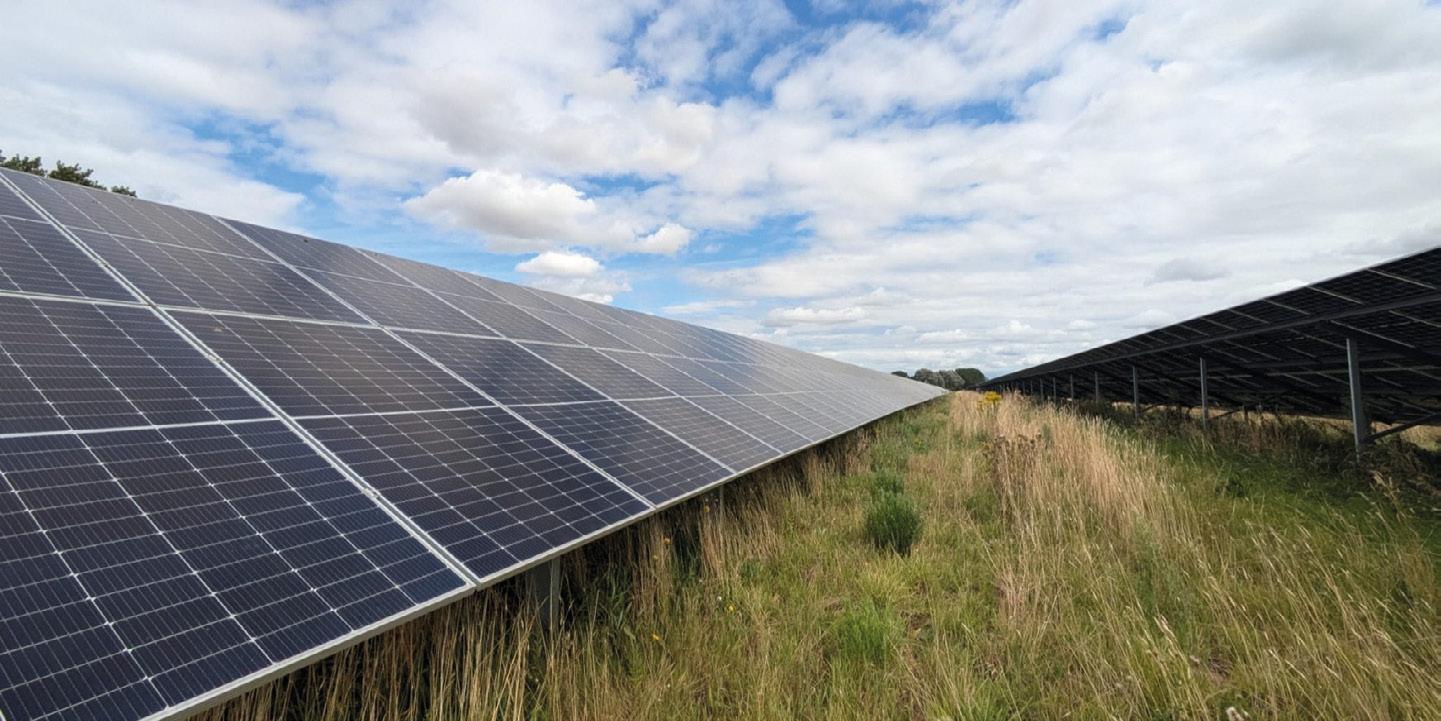
The organisation also achieved zero nonhazardous waste to landfill, began transitioning its road fleet to zero-emission vehicles, and signed an agreement with EDF Renewables UK to produce enough solar energy to power 15 per cent of its electricity supply used in offices, depots and railway stations across the country.
Highlighting the progress made since the launch of The Greener Railway Strategy, Jo said: “The strategy is split into three key ambitions – a railway that is fit for the future; a railway that cares for the environment; and a railway that helps communities thrive. There’s also an underpinning commitment around culture.
“We’re well ahead on our carbon reduction targets having cut our scope one and two emissions by more than a third compared to our baseline, and we have achieved PAS 2080 accreditation (certification for organisations focused on effective carbon management in infrastructure) just before Christmas, which was a big step forward.
“It highlights that we have some really good rigor around what we’re doing and measuring that.
“We’re doing a huge amount of work understanding whole life carbon in our renewals and looking at the technologies that can support decarbonisation, so things like batteries and the circularity of materials are really starting to ramp up.”
National reuse and recycling rates remain high at 97 per cent and more than 99 per cent of nonhazardous waste from landfill diversion.
“It’s really positive, but we can always do more,” Jo said.
“We’ve done some amazing work with the supply chain on ballast. Instead of taking ballast off the network and sending it off as aggregate, we’re bringing it back, cleaning it, and blending it with virgin ballast.
“That is a really big step forward not just in terms of carbon, but cost reduction. There are also benefits because blended ballast isn’t as dusty as virgin ballast, so this is better all round.
“We’re also working on air quality improvement plans at our managed stations, and looking at things like habitat management plans to really focus on biodiversity across the network.”
To achieve the three ambitions, eight priority areas have been identified to focus on, each with their own objectives and targets to achieve:
Supporting the delivery of net zero.
Contributing to a circular economy.
Adapting to a changing climate.
Protecting land, air and water.
Creating an inclusive and accessible railway.
Supporting local economies.
Supporting nature’s recovery.
Improving the wellbeing of communities.
“The long-term vision has always been quite clear, and that’s about a railway that connects people and moves goods for generations to come,” said Jo.
“A railway fit for the future means we create a system that is low in carbon, is resilient to climate change, which is safe, inclusive and fundamentally, thinking about the social sustainability side of things, really connects in with communities that we serve.
“I regularly refer to the railway as being like the arteries of the nation, and it’s true to say that you’re never far from a railway, and therefore there’s a massive opportunity for us to play our part when it comes to the environment, sustainability and communities.
“We’re mindful of the fact that we’ve got industry reform coming along. We’re very much focused on our near-term targets, so up to 2030 we’ve got a robust roadmap of what we’re going to do, and then what we’ve got to continue to focus on.
“We’ve worked on an industry strategy (the Sustainable Rail Blueprint) which was written by industry, for industry. That really helps us look at what we should be focusing on at an industry level as we come together under Great British Railways.”
Answering what is going to be the key in achieving
the strategy, Jo says one word, ‘collaboration’, emphasising that major progress can’t be achieved in isolation.
“If you think about our supply chain and our emissions footprint, roughly 97 per cent of that sits in scope three, which is in the work that our supply chain do for us. Therefore it is really important that we work hand in hand with them on tackling this, so we’re working with technology providers, regulators and also communities,” she said.
“The supply chain, particularly, is critical. Much of our future carbon reduction depends on us unlocking low carbon materials, making sure we’ve got circularity in design and innovative construction methods.
“Some of the supply chain is doing great stuff in this space, so I feel we can learn from our supply chain and we also learn from other sectors. Carbon is carbon so we can look at what highways and aviation are doing, and we can work with them and learn from them together.”
Highlighting how Network Rail is already working with other sectors, Jo explains how the organisation is part of the Infrastructure Client Group, which brings together infrastructure clients to look at the key issues that need to be tackled.
“Collaboration is something that we’re under way with and have done for a number of years,” she said.
“There’s no point in us all going into our silos and trying to crack things independently, there’s power in the collective and that is very much what the Infrastructure Client Group is trying to achieve.”
CrossCountry’s Thomas Raynor and Jessica Lockwood discuss the train operator’s 10-year plan to make rail travel more inclusive, resilient and low-carbon
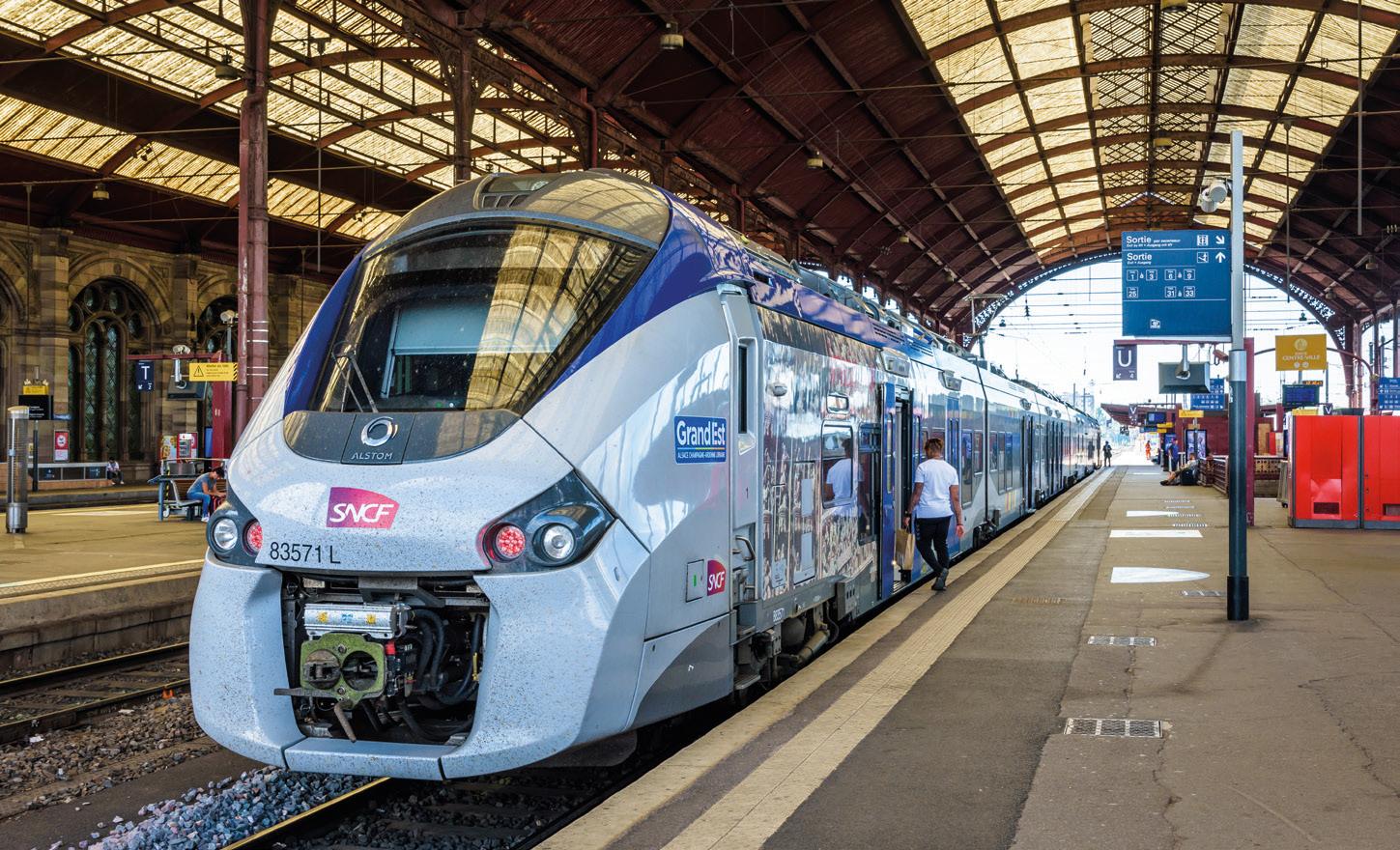
Building a greener railway for the next decade and beyond
Long-distance train operator
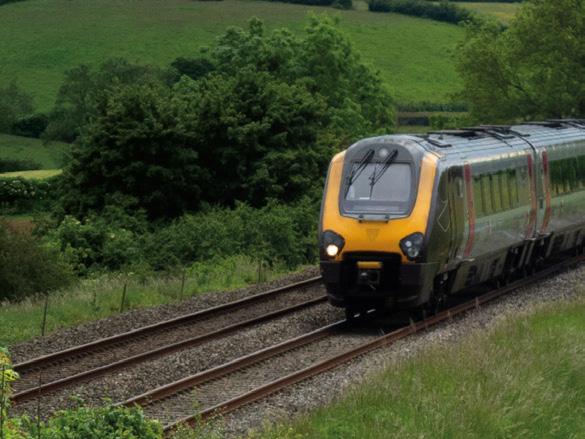
CrossCountry’s vision for sustainability is to give more than it takes away, acting as a catalyst for positive change.
It’s a purpose that goes beyond the running of trains and calling at stations, highlighted by the recent launch of its Sustainability Strategy.
The work outlines a bold 10-year plan that aims to position the operator as a driver of regeneration, inclusion and innovation, reimagining what a railway can deliver for society, doing less harm and more good.
“This isn’t just about safety and the environment, but it is core to our wider strategy across the country,” explained Thomas Raynor, the organisation’s Head of Strategy.
“This is about looking at both the positive and negative impacts that CrossCountry has, looking at
The really powerful stories and activity comes from people in their day
jobs
doing things a little differently
reducing those negative aspects and maximising the positives.”
The strategy is built around three pillars and 11 action-focused modules that define where the operator can make the biggest impact:
People: Equity, diversity and inclusion (ED&I) and wellbeing; social mobility and safeguarding; accessibility.
Places: Air quality; biodiversity; climate change adaptation; sense of place; connected journeys.
Planet: Carbon; waste; water.
“People, places and planet was a key milestone in our strategy development, moving away from traditional views of environmental social governance (ESG), because we felt there’s much activity within the
organisation that didn’t have a natural home within the ESG framework,” explained Jessica Lockwood, Environment & Sustainability Manager.
“Not everything sits perfectly under the three pillars, but we’re able to communicate the work that we’re doing in a much better way and it also aligns with the wider strategic priorities as well.”
The plan is the culmination of years of thinking, which both Thomas and Jessica stress will continue to grow and develop with the help of the wider team at CrossCountry and its supply chain.
“It’s about unlocking that creativity and unlocking that different way of thinking and that’s the exciting part,” said Thomas.
“The strategy is an empowering tool setting out the vision and inspiring the team to make it their own.”
Jessica added that this goes beyond the CrossCountry team: “There’s a huge opportunity within that supply chain to do things differently and to do things more sustainably.
“We make decisions about our supply chain every day, so by taking the procurement team on that journey and empowering the procurement team within the strategy, we can enable them to make decisions that then have a positive impact on our social value reporting and a more positive impact on society as a whole.”
The strategy is underpinned by science-based targets, including a 63 per cent reduction in Scope 1 and 2 emissions by 2035. The operator has laid the foundations in recent years, from strengthening the understanding of emissions and waste, to
embedding social value across its operations and communities.
The operator does face the challenge of having a diesel-only fleet but Jessica highlights how meaningful action will be taken while preparing for future traction decisions by Government, including fuel reduction opportunities and reducing the weight of trains ahead of a potential new fleet in the 2030s.
“There are lots of exciting developments within the technological space,” she said. “New technology rolled out is making us more efficient when it comes
Predict and Prevent Switch & Crossing and other Asset Failures with SWiX
to engine loads. We’re also exploring things like hydrotreated vegetable oil.”
Progress is already being made. Last October the rollout of Intelligent Engine Stop-Start (IESS) was completed on the Voyager fleet, which is driving a reduction in emissions. This is being evolved in response to driver feedback and performance data.
Thomas highlights other initiatives being tried as well.
“The rail industry is incredibly rich in data on many things but there are other things that it’s quite
Image: CrossCountry
Some of the ideas fly, some don’t, but it’s that culture of experimentation and innovation which is proving really exciting
data poor on, so one of the things we’ve been doing across a lot of our estate is installing live electric consumption reading devices that allow us to see in real time what our electricity consumption is,” he said.
“It allows us to make better decisions on how we match them to carbon intensity at particular periods, or look at where equipment’s been left on or is nonoptimal, such as has the heat or lighting been left on overnight, and do we have any non-LED lighting that we can upgrade?
“Then there’s the quirkier and more experimental aspects like 3D printing different rubbish hoops to see whether that works. Some of the ideas fly, some don’t, but it’s that culture of experimentation and innovation which is proving really exciting.”
Illustrating the scale of the opportunities, Jessica highlights new waste legislation last year that has led to simpler recycling, and how as part of that the operator has been rolling out new bins at staff offices to help with recycling.
“Referring back to that system, we are often just one small player within a bigger system and what we’re trying to do is influence and collaborate with partners such as Network Rail to more accurately and effectively manage our waste,” she said.
“An example of this is a trial at Birmingham New Street where all the waste that comes from our service centre goes through a dedicated mixed recycling facility and it is further separated to boost recycling rates.
“We haven’t got the data from that yet, but in
similar models down in London it can go up to 90 per cent recycling rate, which is absolutely fantastic.
“We’re also looking to move this towards onboard waste as well in the future. We’re also doing work on education about what happens when things are put in the wrong bin.”
Thomas added: “Longer term, you then start to think in terms of circular waste economy, turning people’s perceptions of waste being a problem into a resource.”
One thing both Thomas and Jessica have been particularly pleased with is the buy-in from the 2,000 people employed by CrossCountry.
“There’s an electric feeling when you start seeing people trying things and not being scared by the prospect that it might fail,” Thomas said. “Even if it does, the learning from that will enable us to do so much more.
“And this will remain relevant even with Great British Railways (GBR). We see it as highly complementary of a future GBR world, but we don’t see the need to hang around and wait for it before making changes. There’s lots of things we can, and are, doing in the here and now.”
Jessica concluded: “We have a major responsibility here and the potential for impact is huge because we’ve got 2,000 people in this organisation who have a role to play and then the supply chain on top of that.
“The really powerful stories and activity comes from people in their day jobs doing things a little differently.”
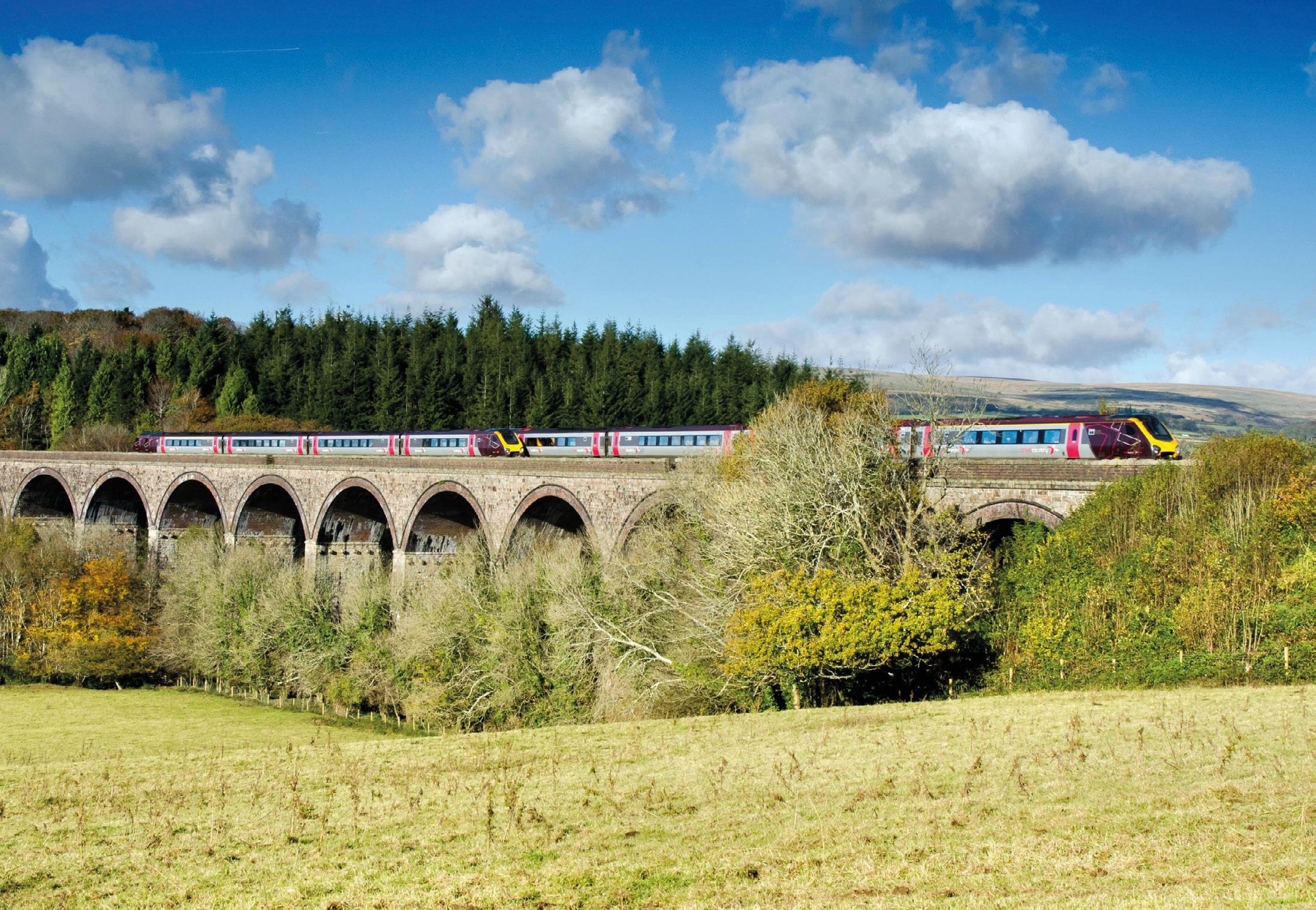
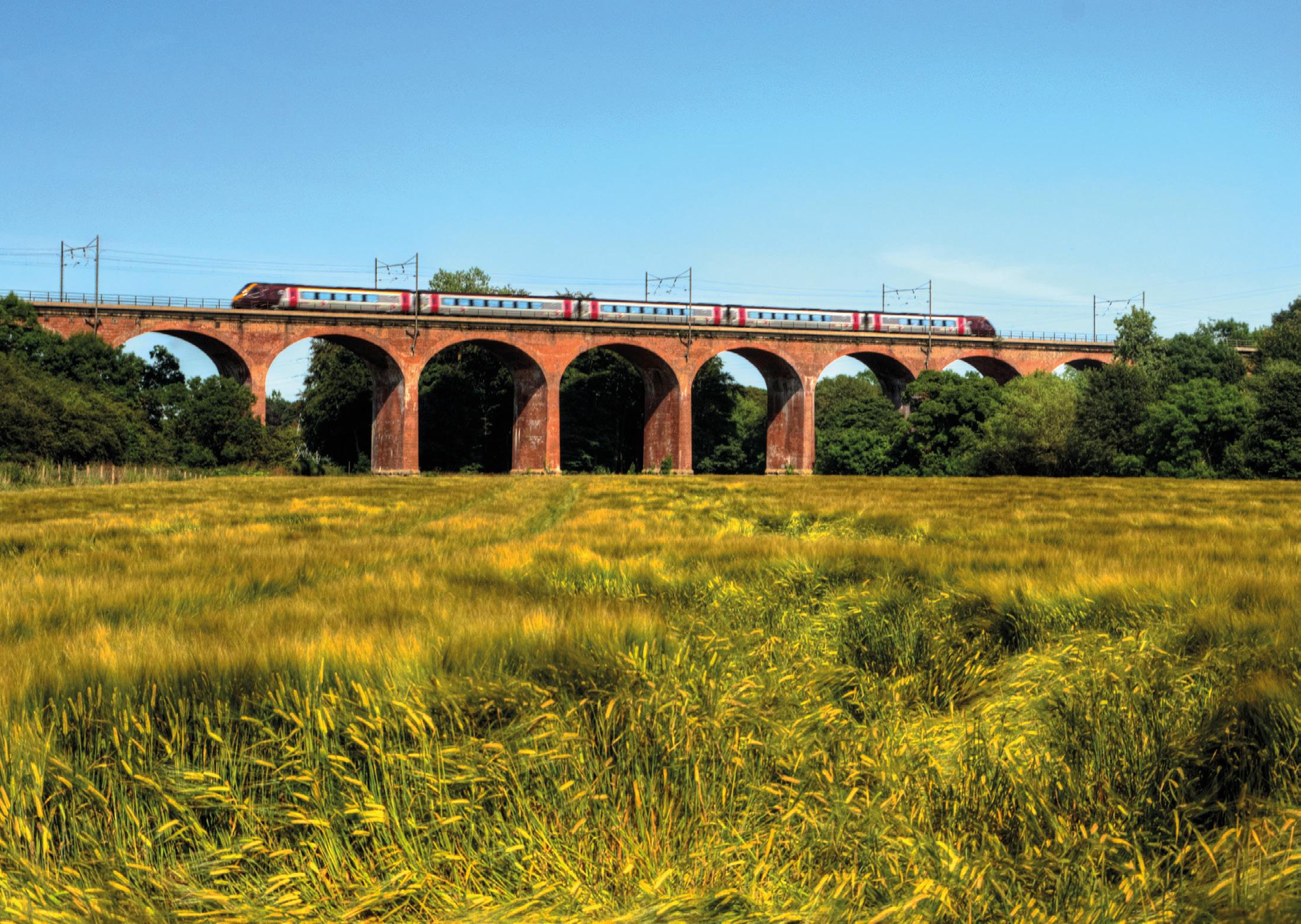
Durham viaduct Voyager. Image: Ian Wright
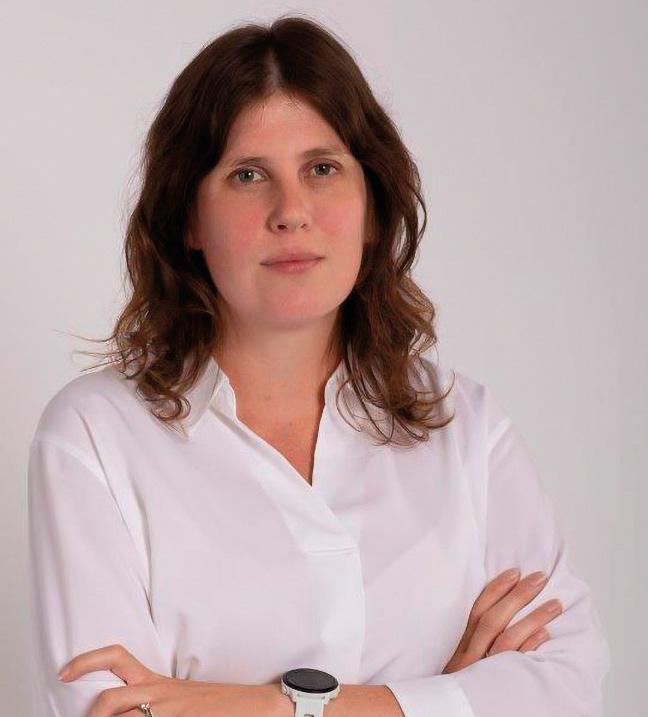
Rachael
Everard,
Director of Sustainable Development at the RSSB, reflects on her first year in post and the progress of the Sustainable Rail Blueprint
Collective action and collaboration
Climate change is happening on our railway and is only going to accelerate.
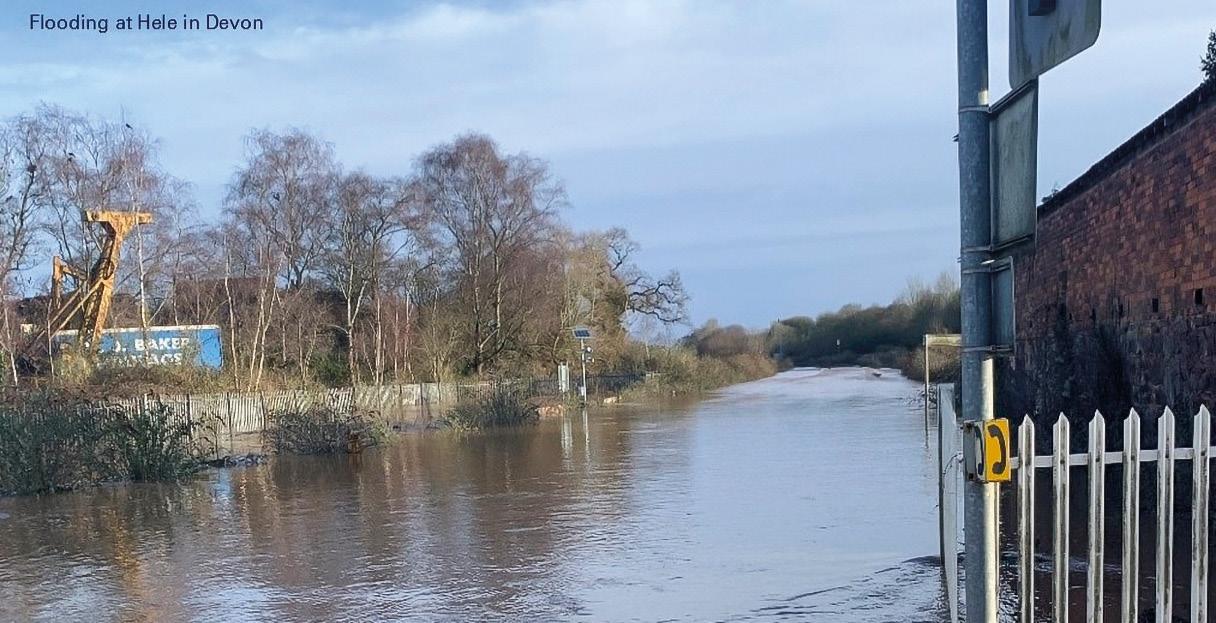
You need only look at the flooding and damage caused by extreme storm weather in Devon and Cornwall earlier this year.
“We’re going to see more and more of this across the railway without the right interventions, without that focus on longer-term resilience and capacity building,” said Rachael Everard, Rail Safety and Standards Board’s (RSSB) Director of Sustainable Development.
“The railways’ fundamental purpose is to connect communities. Our goal is to ensure we are resilient to change so, as an industry, we can survive and even thrive in a rapidly changing climate, and can continue to attract, retain and develop the best and most diverse range of talent and skills – achieving that requires the whole cross-industry and the supply chain to come together.”
The appetite to do that is collectively there, with Rachael pointing to RSSB’s Sustainable Rail Blueprint, an industry-wide framework setting out
rail’s first unified plan as far as 2050, as the platform for essential changes.
“I’ve worked in several different industries and never come across a framework quite of its nature, that has had such a buy-in from such a multitude of different stakeholders, for what a sustainable railway looks like and how to get there,” said Rachael, who was previously Head of Sustainability at Rolls-Royce before joining RSSB a year ago.
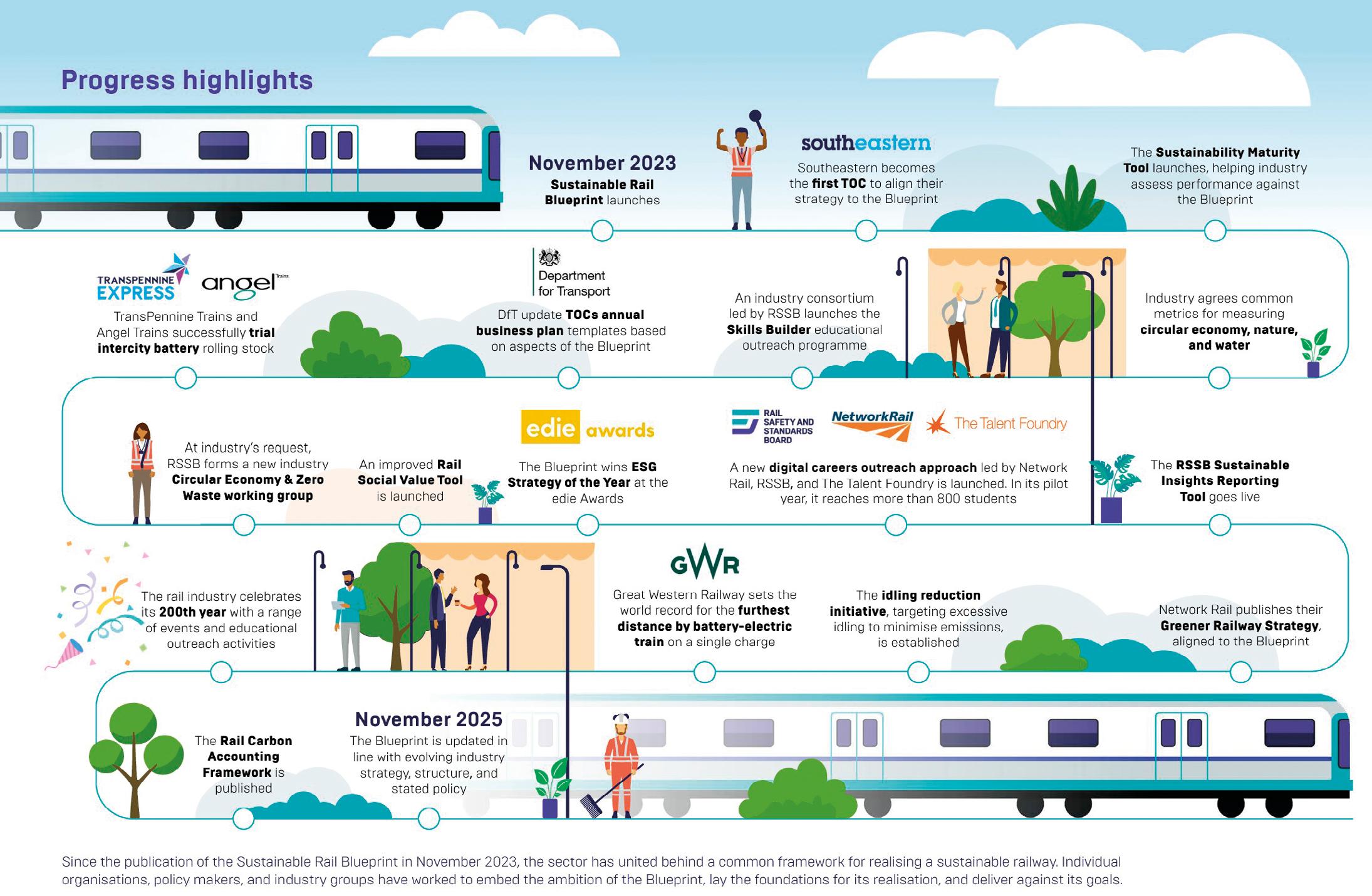
“It’s a heck of a starting point but nothing is perfect. Within the first nine months I took the opportunity to work with the Department for Transport (DfT) and Industry to refresh and update the Blueprint, in particular aligning to Network Rail’s Greener Railway Strategy, but also to changes in some of the DfT policies.
“The Blueprint is at the forefront of what sustainability means for the railway and it’s constantly pushing us all forward. The updated version and accompanying progress report gives a snapshot of where we’ve excelled, what is to come, and also puts a focus on some of the tricker areas where cross-industry
Image: RSSB
collective decision-making and activity is needed.”
The Blueprint was formally launched in November 2023. Since its inception it has been embedded within the rail industry through strategy, policy, training and culture. Among the success includes the RSSB Sustainability Maturity Tool, introduced to help organisations understand their performance against the 11 topics of the blueprint, and last year a Rail Carbon Accounting Framework was also launched.
“We need sustainability to be embedded into every role across the railway industry and that comes from education: understanding what sustainability means on a railway, but also relating it to day-to-day roles, and identifying where the opportunities are to minimise environmental impacts, maximise efficiency, and benefit the local community or society at large,” added the chartered environmentalist.
Rachael emphasises the important role the supply chain has to play: “From a carbon perspective the supply chain is responsible for 75 per cent of the industry’s footprint, so mobilising the supply chain and enabling them to deliver sustainability improvements is going to be fundamental.
“The more we can understand the needs and wants of the supply chain in order to unlock some of those opportunities for them, the better.
“Some of the work RSSB is doing this year will really help with that, for example in terms of simplifying sustainability and carbon reporting, allowing organisations to compare apples and apples rather than apples and pears, and providing tools and functions to industry for free.
“Things like our Carbon Management Tool, which will help drive better and simplified carbon calculations, therefore improving decision-making.
“This year, we will continue building on the foundations laid in previous years, using the Blueprint as the cornerstone for that.”
The updated Blueprint identifies six key priorities for the years ahead: funding and prioritisation; data and metrics; industry simplification; uptake of innovation; supply chain engagement; and awareness culture and leadership.
On the first of these, Rachael appreciates that sustainability can often be seen as only a ‘nice to have’ and that funding is needed for significant improvement. However, she stresses there is a longerterm cost saving if you get it right.
“It can be hard in an industry that is cash constrained and under the operational pressures of the day-to-day running of the railway to sometimes balance the slightly existential and often longer-term risks and pressures that sustainability brings about,” she said.
“The challenge of balancing the two is something we see playing out regularly in the conversations that we’re having, particularly with senior leadership.
“Everybody wants to do the right thing from a sustainability perspective, but if you’re hindered by a lack of cash or a lack of accountability or clear decision-making, then some of that stuff can be hard to overcome.
“Great British Railways (GBR) will help; bringing together a significant part of the railway into one body will help to unlock accountabilities, decisionmaking and ultimately, I hope, capital in a way that can address some of those barriers.
“Right now we have this opportunity to almost from the get-go put sustainability front and centre. The fact we’ve already got the Sustainable Rail Blueprint, which has been adopted by Network Rail and many of the train operators coming under public ownership, shows we’re building on a solid foundation and now there’s an opportunity to get on and deliver.”
An important factor in the sustainability journey continues to be the RSSB-coordinated working groups created with specialists from across industry who are taking forward projects in specific areas.
“Across the Blueprint we’ve got technical working groups that deep dive into individual topics, from air quality, water consumption, to social value, bringing together cross-industry representation to unpick and share learnings,” Rachael said.
“These are safe spaces to explore alignment, opportunities, challenges and identify solutions, providing a unique and collaborative environment that can cut across individual organisational boundaries.
“If we can create commonality across how we think about sustainability and how we measure it, that will help us to accelerate the implementation of the Blueprint.
“Alongside the working groups, we have leadership forums that convene senior leaders from across the industry to think about some of the bigger challenges as well as the culture.
Right now we have this opportunity to almost from the get-go put sustainability front and centre
“Culture comes from everybody, but the tone from the top is so important in setting expectations on how important sustainability is and in ensuring it is treated as a priority.”
With regard to RSSB’s role in the future, Rachael believes the organisation’s independence, objectivity and ability to see across organisational and sectoral boundaries to identify the opportunities and solutions that might not be obvious, or viable to a single entity, highlights the vital role it has to play.
“You might need that combined power to make something a reality and my team are here to support,” she explained.
“We see ourselves as an extension to an organisation’s own in-house sustainability teams and capabilities, with the ability to look across the whole sector.
“I’m very lucky that my team has some of the leading sustainability expertise in the industry, particularly from an emissions perspective, but across the broader portfolio of the Blueprint. We’re here to be a resource and an asset to the whole of the sector.
“A phrase I often hear or paraphrase in the conversations I have with colleagues across the railway is that they ‘can’t see the wood for the trees’, or ‘I’ve got to focus on my immediacy or on my day to day’.
“That is so important in the context of the railway. But from an RSSB perspective, I like to think we can wrap our whole arms around those woods, and help make them flourish and grow.
“I’m speaking in hyperbole but it’s early spring here and the sun is shining, the trees are starting to turn green and there’s lots to look forward to. That’s what we all want for the railway industry as well.”
Image: RSSB
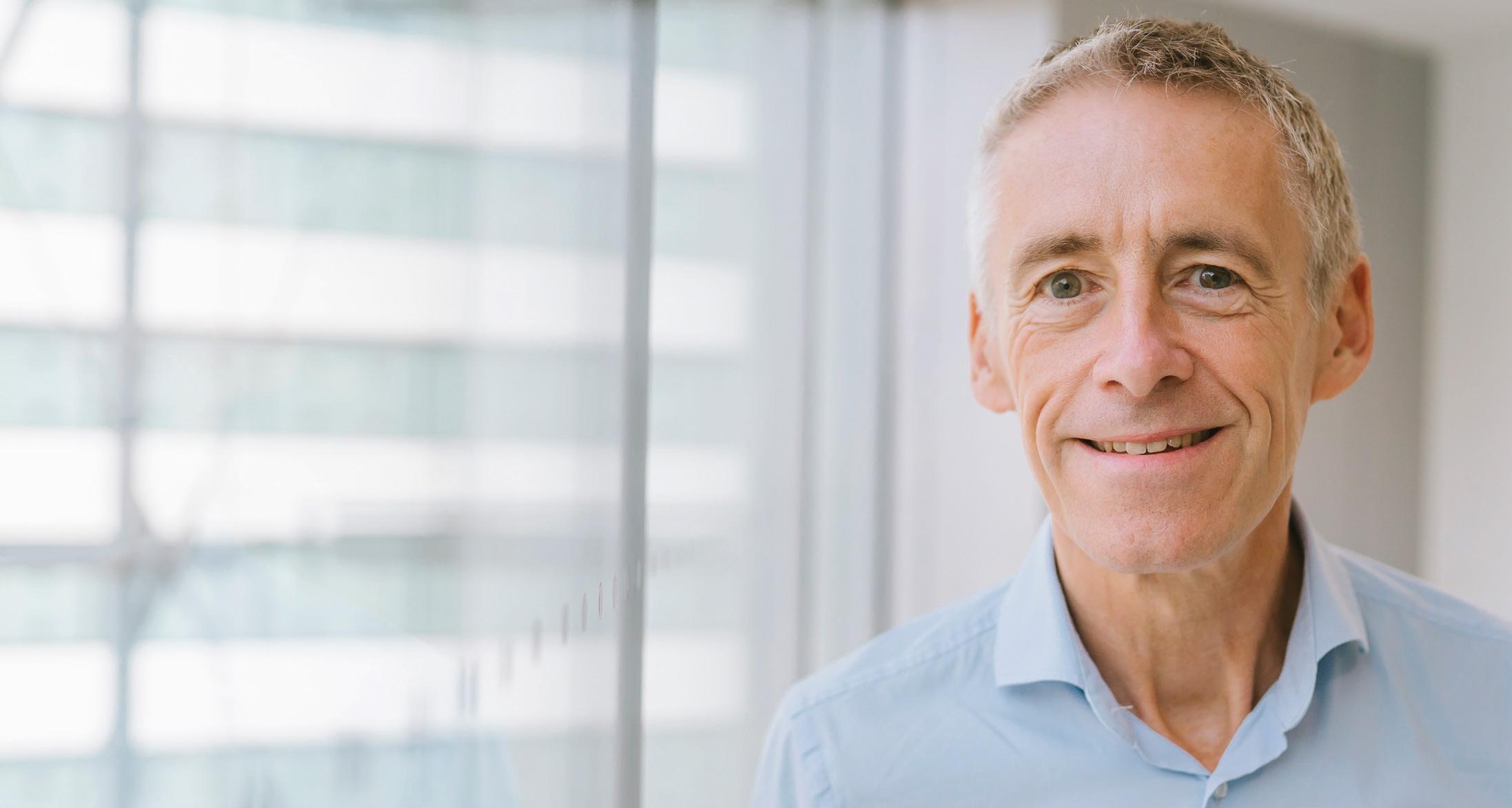
RSSB’s Chief Executive Offi
cer
Mark Phillips writes about making standards gateways, not barriers, for Britain’s rail future
The importance of standards
As Chief Executive of RSSB, I am acutely aware that the future of Britain’s railways hinges on our ability to harness standards as a strategic lever, one capable of driving innovation, opening markets, reducing complexity, improving safety, and ultimately reducing costs across the industry.
Standards are not mere technical checklists; they are strategic instruments that influence how markets develop, which technologies flourish, and how competition takes root. If we get them right, we unlock the full potential of rail reform. If we get them wrong, we risk slowing progress and delaying the adoption of innovation at a time when the sector most needs momentum.
Effective standards help manage costs by providing a common, agreed foundation for industry practice. Simply, they enable things and people to work together. Without them, operators, buyers and suppliers may duplicate efforts, engage additional consultants, and face delays.
Standards, developed collaboratively across the sector, guide projects efficiently and support alignment, ensuring that specialist input is focused where it is most needed.
As Government and industry work together to deliver rail reform through Great British Railways and a new commercial framework, the role of standards will be central to success.
International evidence is clear: standards increasingly function not just as technical guidance but as the scaffolding for industrial policy. They influence market entry, cost structures, and the pace of technological change.
In the British context, as rail reform takes shape, our industry must ensure that standards act as gateways, not barriers, for new suppliers and innovative technologies. The opportunity is there to lower costs, accelerate procurement, improve safety, and foster a more vibrant and competitive sector.
Historically, standards have sometimes been criticised for adding bureaucracy and cost, often referred to as ‘gold plating’, and for protecting incumbent suppliers and established solutions. While that may be the case for some sectors, railway standards are explicitly designed and agreed to be reasonably practicable. This ensures requirements remain proportionate, cost-conscious, and focused on delivering safety and performance without unnecessary over-specification.
Businesses sometimes claim they meet a thicket of overlapping rules and prescriptive engineering standards at national, company, or even project level. These complexities can raise compliance costs and for some, create barriers to entry that make participation in the rail market more difficult than it needs to be.
Standards are not a technical backwater. They are a critical lever that will help determine whether rail reform in Britain fully unlocks innovation and competition
Our role is to reform standards so new suppliers can enter the market more easily and industry can adopt new technologies without compromising safety or increasing risk. We are proactively examining our rules and standards to see if they are aligned to emerging innovations, such as robotics and autonomous systems, to set out the landscape for AI standards to support application in the rail sector.
Rail reform is not simply about new organisation structures. It demands new commercial models that allow the sector to benefit from lower-cost solutions, faster procurement cycles, and adoption of cuttingedge technologies. If standards merely reflect today’s practices without evolving, reform risks progressing more slowly and at higher cost than necessary.
Clear, shared evidence is needed to introduce new technology and practices safely and cost-effectively in the industry. Practical guidance helps manage change across organisations and unfamiliar risks, keeping standards workable.
When standards are updated, we support implementation with industry partners to help organisations adopt innovations and benefit from research-led improvements.
Our primary approach is to support the industry and regulators by convening expertise and stewarding standards, mandating only where justified, principally in safety-critical areas. Our mission is to enable commercial and technological freedom, while ensuring system safety and not necessarily preserving legacy practices.
In conclusion, standards are not a technical backwater. They are a critical lever that will help determine whether rail reform in Britain fully unlocks innovation and competition.
I am committed to ensuring our standards enable the kind of industry transformation that delivers a safer, simpler, sustainable, more competitive, and more innovative railway for Britain’s future.
www.rssb.co.uk
Image: RSSB
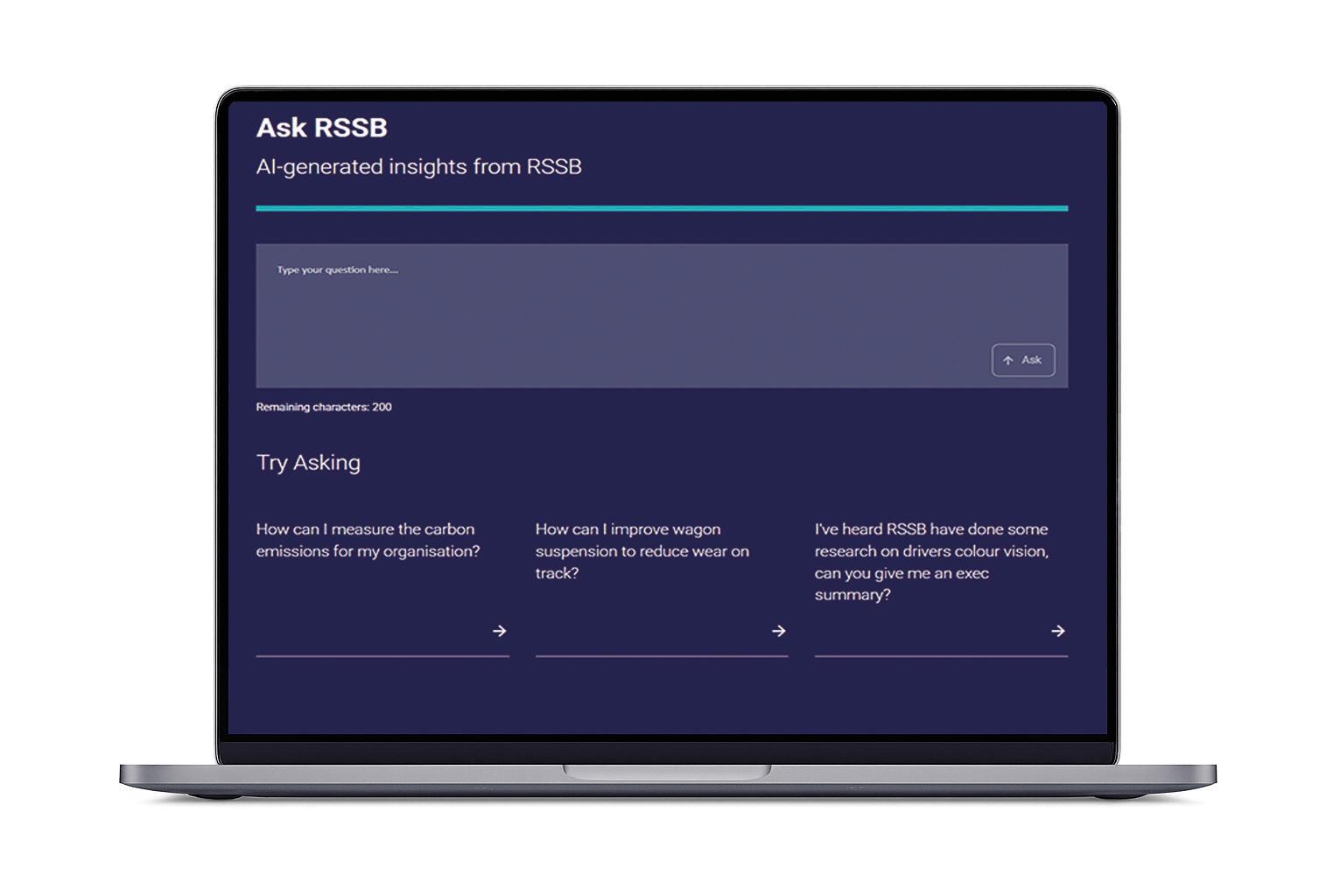
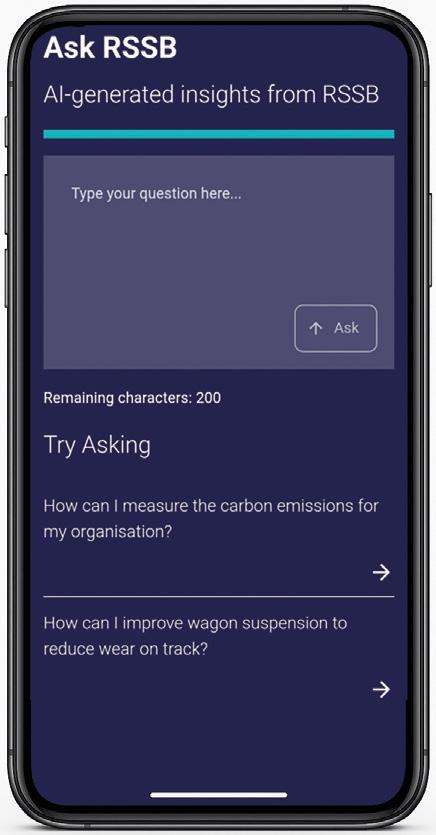
Ask RSSB
Ask RSSB gives you quick, easy access to the wealth of information on the Rail Safety and Standards Board website
One simple question delivers trusted guidance and the tools and services you need to support your role.
Rob Mullen, Managing Director of c2c, discusses life in public ownership and the importance of the Essex Thameside Strategic Advice and the potential for transformation and growth along the Thameside Corridor
A generational opportunity
The Essex Thameside corridor is a major rail route into London on the north Thames, vital for passengers and a nationally important freight route vital to the UK economy, connecting multiple terminals, including the major ports of Tilbury and London Gateway, to inland destinations nationwide.
Its demand and importance from a customer perspective cannot be overstated, with passenger demand expected to grow by around 24.5 per cent by 2033 from a 2023 base, and by up to 80 per cent by 2050. This could increase to 70 million passenger journeys by 2050.
Alongside these numbers, freight growth is expected to double at a minimum, outpacing national targets. Demand is expected to grow up to 154 train paths (two-way total) by 2040 and 198 by 2050, a rise from around 125 paths a day today.
“This railway has to move and it has to invest collectively to get an outcome, otherwise we will miss out on the opportunities,” said Rob Mullen, Managing Director of c2c.
The train operator is one of the organisations
that contributed to the Essex Thameside Strategic Advice, working with Network Rail, the Department for Transport, Transport for London, Transport East, Essex County Council and freight operators, looking at passenger and freight demand over the next 25 years and the current state of the infrastructure.
“Its timing is so important and it is a really big punch in the arm to say this railway has to move and it has to invest collectively to get an outcome, otherwise opportunities will be missed,” said Rob.
“Around 100,000 homes are going to be built in the area, and there is a target to double freight by 2050.
“When it comes to freight, the big ships are coming in but if they can’t move their cargo they’ll go somewhere else, which can’t be the right answer for Essex.
“The railway can’t be holding back the economic development that the county and country clearly needs. We need the deliverable plan that can be effectively financed be it public, private or both.”
This study builds on the findings of the 2020 Essex Thameside Study, published on the eve of
the COVID pandemic. With the previous study’s recommendations now having evolved and been reassessed, the latest version outlines what timetable, rolling stock, station and infrastructure improvements will be required to accommodate demand and facilitate growth, and when they will likely be required.
“There is a generational opportunity to get it right and ensure the railway remains relevant to the region, from the societal benefits to driving economic growth,” said Rob.
“It’s a fantastic piece of work to be involved in, especially in highlighting the opportunities.
“It is a huge piece of work ranging from level crossing removal, a two-track railway into and out of London, getting into the North London line through Barking, but at the same time ensuring the work won’t come at the cost of the excellent punctuality of our services.”
Creating a platform to the potential growth
Accommodating significant numbers of additional freight services is challenging due to the constraints
on the rail network, especially across North London, but the study identifies a phased package of capacity upgrades including signalling headway reductions, junction upgrades and level crossing closures that would provide more capacity for freight services.
Increased cross-country capacity between the Port of Felixstowe and the Midlands could also allow growth in Essex Thameside freight by reducing the number of services to and from Felixstowe that could travel via London.
The work also highlights how the decarbonisation of rail freight will require improvements to the traction power supply on the Essex Thameside corridor and across London to support more electric and bi-mode locomotives. Electrification of the branch line to London Gateway also remains an option.
In simple terms, more freight will equal fewer requirements for dirty diesel lorries and with c2c’s net zero strategy about hardwiring sustainable progress into its operations, delivering these solutions could not be more important.
Rob said: “It’s about thinking collaboratively and working through the things that need to happen to allow that growth and support that growth across the region.”
c2c is consistently rated as one of the best performing operators in the country, recently achieving high customer satisfaction ratings of 89 per cent, supporting thousands of jobs, and driving economic growth from London to Essex.
The Essex Thameside Strategic Advice emphasises the importance of passenger service improvements over the next 25 years, highlighting capacity increases, timetable optimisation, potential train lengthening up to a maximum of 12 cars on the most popular services, and the need for a new fleet by 2040 at the latest.
“Understanding our fleet strategy is something that is active right now and it has to be a priority,” Rob said.
“We’ve done a lot of external painting on our Class 357s and they look fantastic on the outside, but we will get to a place where the internal refresh is really important. The Class 357s don’t have plug sockets at seats and we need to improve our customer information screens.
“We need a strategy to make sure that our customers get a fair service and a product that befits the performance, because as the train gets older the punctuality is likely to deteriorate.”
Growing peak hours demand will necessitate improvements to many of the 26 stations that c2c serves in East London and South Essex. West Ham station in particular has been identified as the highest priority for a major improvement driven by the high volumes of passengers who interchange between c2c and Jubilee Line services in peak hours.
Pedestrian capacity is also likely to become an issue at London Fenchurch Street and Barking in the 2040s, the latter lacking step-free access to all platforms.
“Our Commercial team is working with Greater Anglia and Transport for London on a study in West Ham to get some gating in because it is a revenue issue but also managing flows in and off those platforms is very difficult,” Rob said.
“We need to think about that risk coming forward, but also the opportunity to pull as much money into the industry as possible in the right way.
“With regards to Barking, we’re putting a lot of work in with the second gate lines, and retail units will start going in shortly. There’s a lot more work to do, but with that comes a lot of opportunity.
“And of course with any level of change comes training, particularly on the trains. Factoring in all those things, we need to ensure we don’t take a step back from delivering an excellent product for our customers.
“We want to be the best train operator, driving towards the Government’s clear imperative of performance up, subsidy down.”
Life under public ownership
Little more than six months ago c2c services were brought into public ownership, operated by the Department For Transport Operator (DFTO), joining Northern, TransPennine Express, Southeastern, LNER, South Western, and more recently West Midlands Trains.
The move marked another step forwards towards GBR, which aims to unite track and train under a complete reset.
“We are approaching this new world with open arms,” explained Rob. “From my perspective, the next couple of years as we transition to GBR has to be about learning more about the industry, and not just the bit I grew up in.
“I spent 20-plus years in private sector train operators, but there’s a whole raft of things in Network Rail I’ve never seen.
“c2c’s approach and my colleagues’ approach has been really positive in terms of reaching out to opposite numbers. Stuart Browning is our Operations and Safety Director and has been working very closely with his counterpart at Network Rail, Huw Margetts, to try to get to the bottom of issues we’ve had, and then bringing in Jay Thompson, Train Service Delivery Director from Greater Anglia and considering how collectively can they solve problems.
“I’ve seen a lot of positive behaviours and what
There is a generational opportunity to get it right and ensure the railway remains relevant to the region, from societal benefits to driving economic growth
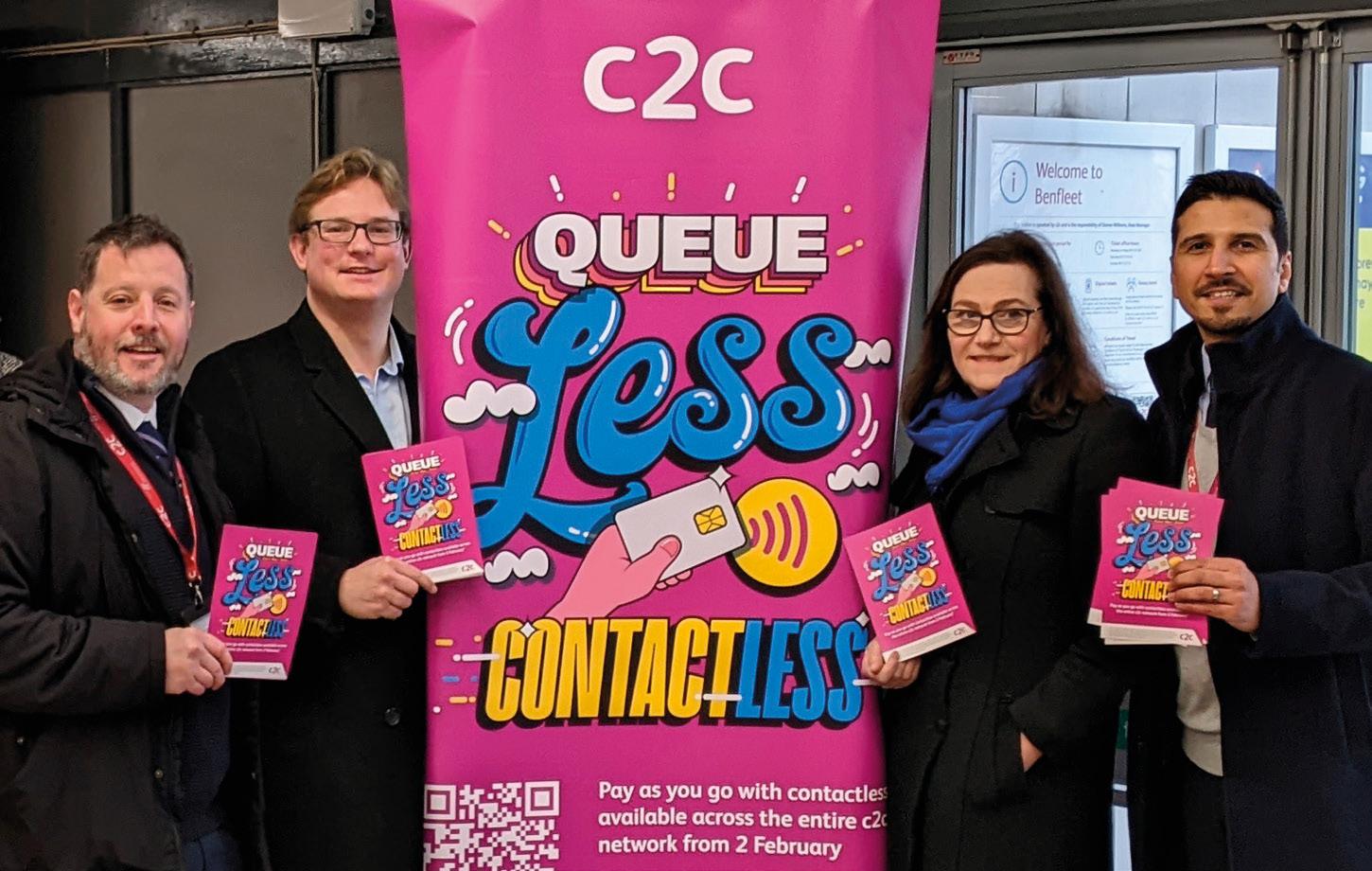
Rebecca Harris MP for Castle Point at the launch of Contactless at Benfleet station, February 2025
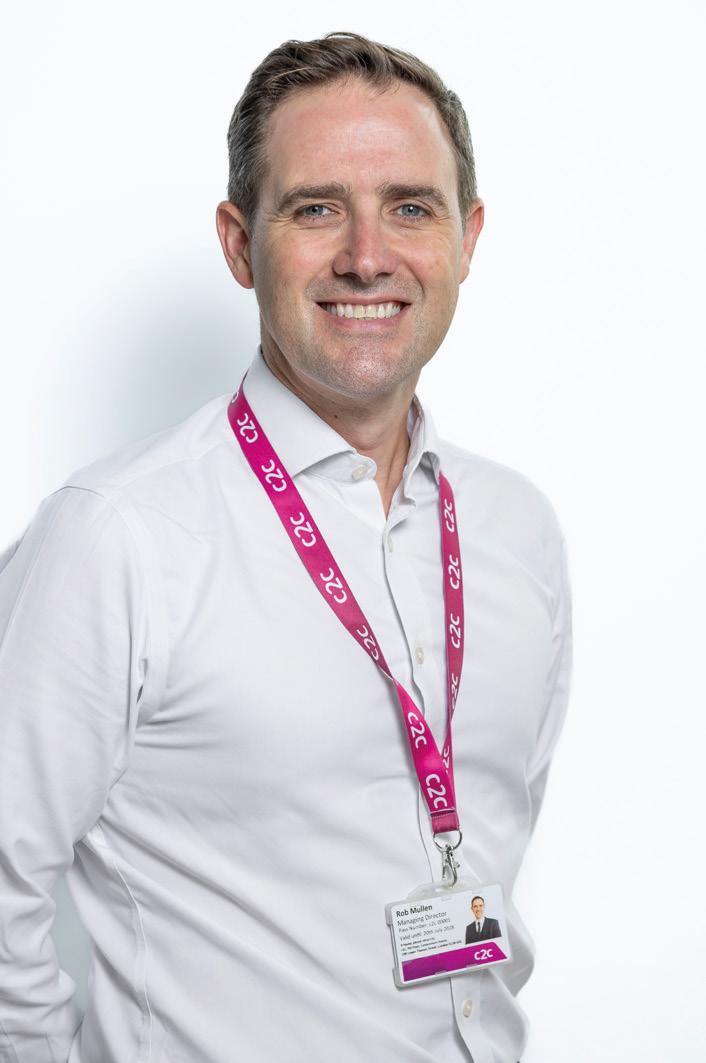
Rob Mullen
we’ve always done is lean in and try to enjoy and embrace this change curve. The opportunity far outweighs any risk here and there are lots of examples across our business of where we are leaning into that change process and trying to make the most out of it, which is great to see.”
Rob believes the operator is already reaping the benefits of collaborating with the wider family of publicly owned operators, sharing its successes and best practice, but also learning from a range of different and diverse operators that have already benefitted from public ownership, to drive even more improvements.
Its customers are also reacting positively to changes, including the launch of contactless journeys, with the company revealing that three million have been made from its Essex stations since first launching in February 2025.
“c2c has always had strong relations with former fellow National Express train operator Greater Anglia and we’re close with Network Rail Anglia colleagues,
It is great to be part of the rejuvenation of a railway, making sure it stays as a top performer, but also grows
building a cohesive team with some clear aspirations for what integration could be,” Rob said.
“Despite always working well with colleagues, 2025 and this year there has been a change in how we think about things, changing how the business operates, a change in how our board runs, but ultimately this is all for the better and we’ll come out stronger as an organisation.
“What is critical is our customers, our communities, our businesses having a stronger relationship and better outcomes with the railway.”
That closer relationship started from day one coming under DFTO, with Rob getting messages from the other operators welcoming him to the team and offering support.
“It’s not that we didn’t collaborate before, but now it’s more pronounced,” he said.
“There are lots of good examples of talking between the organisations such as body-worn cameras and the fact we have access to each other’s information about how we use data is really helpful.
“In another example, our Engineering Director Jeff Baker is spending a lot of time with Greater Anglia’s Ben Parry thinking about our Class 357s, which come off lease in 2029.
“Their focus is how we operate our Class 720s, what is the best use of their capacity, and how can we work a plan together that is sensible.”
A vision for Thameside
There’s no end of ambition from Rob and he is focused on the aspiration and the energy needed to make that generational change.
Rob added: “You think of the things Brunel did and you look at the change the railway made to those cities and towns. Look at what the railway has done for Essex Thameside, developing communities and
the leisure travel into Southend.
“It is great to be part of the rejuvenation of a railway, making sure it stays as a top performer, but also grows. There’s huge economic development with c2c and Greater Anglia with around £1 billion of revenue a year, but the future isn’t about just protecting that, it is also about increasing it.”
Taking inspiration from the international stage
More broadly, Rob takes inspiration from a recent visit to Japan with the Central Japan Railway Company, especially the money generated through retail and hotels above railway stations.
“You look at those models and use them to generate extra income while at the same time turning that passenger experience into something even more fantastic,” he said.
“We know that some of our stations need work and there’s probably hundreds of millions of pounds worth of investment needed to bring them up to standard.
“But I want to go beyond just making the necessary improvements and make them a better proposition that brings customers back and improves the retail proposition.
“At some point Southend Central will need work. There is a lack of parking in Southend, so why couldn’t we have multi-storey parking in there while we redevelop the station?
“One thing for certain is that change will only happen if we all come together to support the generational growth on Thameside. The Essex Thameside Strategic Advice sets a platform for the future and has led to other work and inspired other activity, making sure we are competing for revenue and competing for vital investment, ensuring performance doesn’t deteriorate but improves.”
DFTO visit to Upminster SDC – Wednesday (4 February) c2c’s Managing Director, Rob Mullen and Operations & Safety Director, Stu Browning welcomed the new CEO of DFTO, Alex Hynes and Network Rail’s Deputy Managing Director, Eastern Region, Jamie Burles to Upminster for a special tour of the Service Delivery Centre (SDC)
Ireland is one of the most dynamic and exciting rail markets in the world. Neil Walker, Exports Director at the Railway Industry Association (RIA), writes about the opportunities in Ireland and how RIA is supporting the transformation
Irish opportunities for rail suppliers
The outlook for Great Britain and Northern Ireland rail exports across the globe is strong, with the rail market in Ireland a particularly attractive prospect for UK suppliers at the present time.
That’s one of the reasons why RIA Northern Ireland was established in 2024 to assist our members working in the North, raising the profile of rail and supporting the extensive opportunities across the whole of the Irish rail market, working alongside the RIA Exports team.
A leadership team was established in 2025 with senior industry representation, and the group is continuing to develop broad stakeholder engagement, in Northern Ireland and the South, including parliamentarians and key ministers.
We have been hugely encouraged by the positive response our establishment has received from politicians, civil servants and stakeholders.
In June 2025, RIA Northern Ireland held a reception at Stormont hosted by Peter McReynolds MLA, celebrating the rail sector’s economic and social contribution with Infrastructure Minister Liz Kimmins MLA providing a keynote address.
A technical seminar took place the next day with key partners such as Translink, Alstom, Babcock, and Babcock, and AtkinsRéalis, with innovative discussions, reviewed forward plans and climate change adaptation.
Last month we held the inaugural All Island Rail Summit in Belfast, an event which combined the two workstreams and represented the next phase of our offer to members in engaging with the ambitious rail investment plans across the island of Ireland.
It was well timed given the new Rail Project Prioritisation Strategy for the island, published last December 2025 by the Department of Transport (ROI), the Department for Infrastructure (NI), and assisted by the European Investment Bank (EIB).
There is no doubt that Ireland is currently one of the most dynamic and exciting rail markets in Europe, and the summit was the very first event to provide an all-island approach and perspective, with keynote speeches from the Northern Irish Infrastructure Minister Liz Kimmins MLA and the Minister of State at the Department for Transport in the Republic of Ireland, Seán Canney, TD. There were also contributions from Chris Conway, Group Chief Executive Officer (CEO) of Translink; and Mary Considine, the CEO of Irish Rail.
The political and policy context to the event was the All-Island Strategic Rail Review, which was published in 2024 by the Department of Transport in Ireland and the Department for Infrastructure
in Northern Ireland. This important document sets out a co-ordinated and strategic vision for the development of the rail network across the island of Ireland over the coming decades.
Key ambitions in the report are to ‘deliver an accessible, efficient, safe and sustainable transport system that supports communities, households and businesses’. It also seeks to ‘improve the inter-urban and regional/rural rail system for passengers and communities in Ireland and Northern Ireland over the coming decades’.
Furthermore, it aspires for ‘rail to be a stronger backbone of a high-quality sustainable transport system, through more track capacity, electrification, increased speeds, higher frequencies and new routes’.
A high-level economic appraisal assessed the review’s value for money and estimated that the capital cost of implementing all the recommendations by 2050 would be around €35 to €37 billion/£29 to £31 billion in 2023 prices. It concluded that the economic and societal benefits of the investment would cover the costs.
This strategic ambition is a recognition from both governments that rail not only enables the transportation of people and goods in a particularly sustainable way but encourages ‘greater regional accessibility and balanced regional development.’
December 2025 saw the publication of the Rail Project Prioritisation Strategy by the Department of Transport and the Department for Infrastructure. It provides a detailed pathway for sequencing the recommendations of the All-Island Strategic Rail Review.
RIA and our RIA Northern Ireland leadership team look forward to supporting our members and the wider UK supply chain on opportunities covering the whole of Ireland.
Throughout its history RIA’s primary purpose has always been about supporting rail suppliers in the UK rail market, but this has also included identifying new export markets for members, not least because global rail growth has been so significant over the last century or so.
The island of Ireland is one of the most exciting rail markets in the world and we look forward to supporting members to help play a part in that. If suppliers want to meet in person to chat and learn more, please visit us at Rail Link Dublin, taking place at the Aviva Stadium on 9 April, where RIA Northern Ireland will have its own exhibition stand and is a supporting partner.
northernireland@riagb.org.uk
The island of Ireland is one of the most exciting rail markets in the world and we look forward to supporting members to help play a part in that
RAILWAY ENGINEERING INSTITUTION
MEMBER BENEFITS
COMMUNITY
Grow and enhance your network of like-minded rail professionals, engineers, academics and companies.
SECTION MEETINGS
Local and online meetups for those interested in railway engineering. Learn from industry experts and hear about the work going on in your area.
THE JOURNAL
Quarterly Journal full of technical articles and industry news and updates.
SPECIAL DISCOUNTS
Exclusive Member pricing for industryleading events and textbooks.
RAILWAY
TECHNICAL SEMINARS
KNOWLEDGE HUB
Our popular one-day technical seminars are a great way to learn and be inspired.
Unlimited access to over 1000 technical resources including presentations, videos and articles.
CONTINUING PROFESSIONAL DEVELOPMENT
Multiple opportunities for gaining relevant CPD from technical education courses, Section meetings, and Lunch & Learn events.
www.railei.org
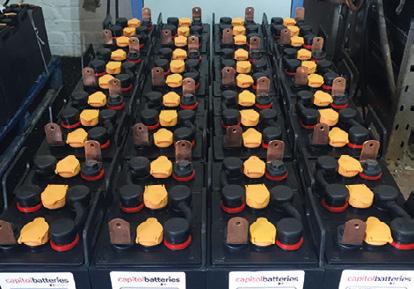
• Full workshop test and overhaul facilities available UK wide
• Battery charger condition based assessments
• Complete site sureys and reporting for charging and ventilation requirements
• Manufacuring and design framework capabilities
• Stock holding facility for contract support
• Nicad replacement and overhaul services
• innovative energy storage system assessments for use on railway depots
• Offer new and replacement batteries for all classes of vehicle
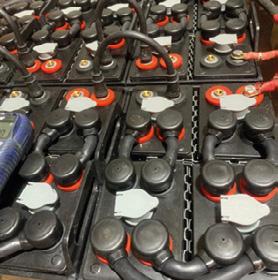
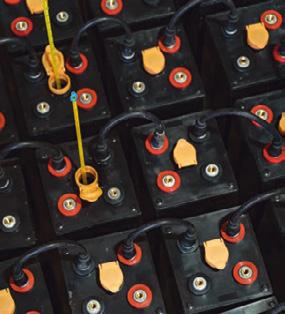
Whether you require railway batteries repaired, overhauled or replaced, Capitol is trusted and relied upon by wide range of companies within the Rail Industry. We deliver on our promises to provide exacting standards of product, service, ongoing technical support and commitment in all aspects of our business.
We are an independent manufacturer with enough strength and flexibility to be able to to support Mainline and Heritage customer equirements through stock availability and technical experience. Capitol is very proud to offer a variety of solutions for the battery industry and applications we service.
Denis McLeod, Capitol Batteries
Alan McDonald, Director of Operations at Rail Link, discusses his passion in connecting people with key players in the rail industry and looks ahead to the next event at the Aviva Stadium in Dublin
Rail Link: Connecting the rail industry
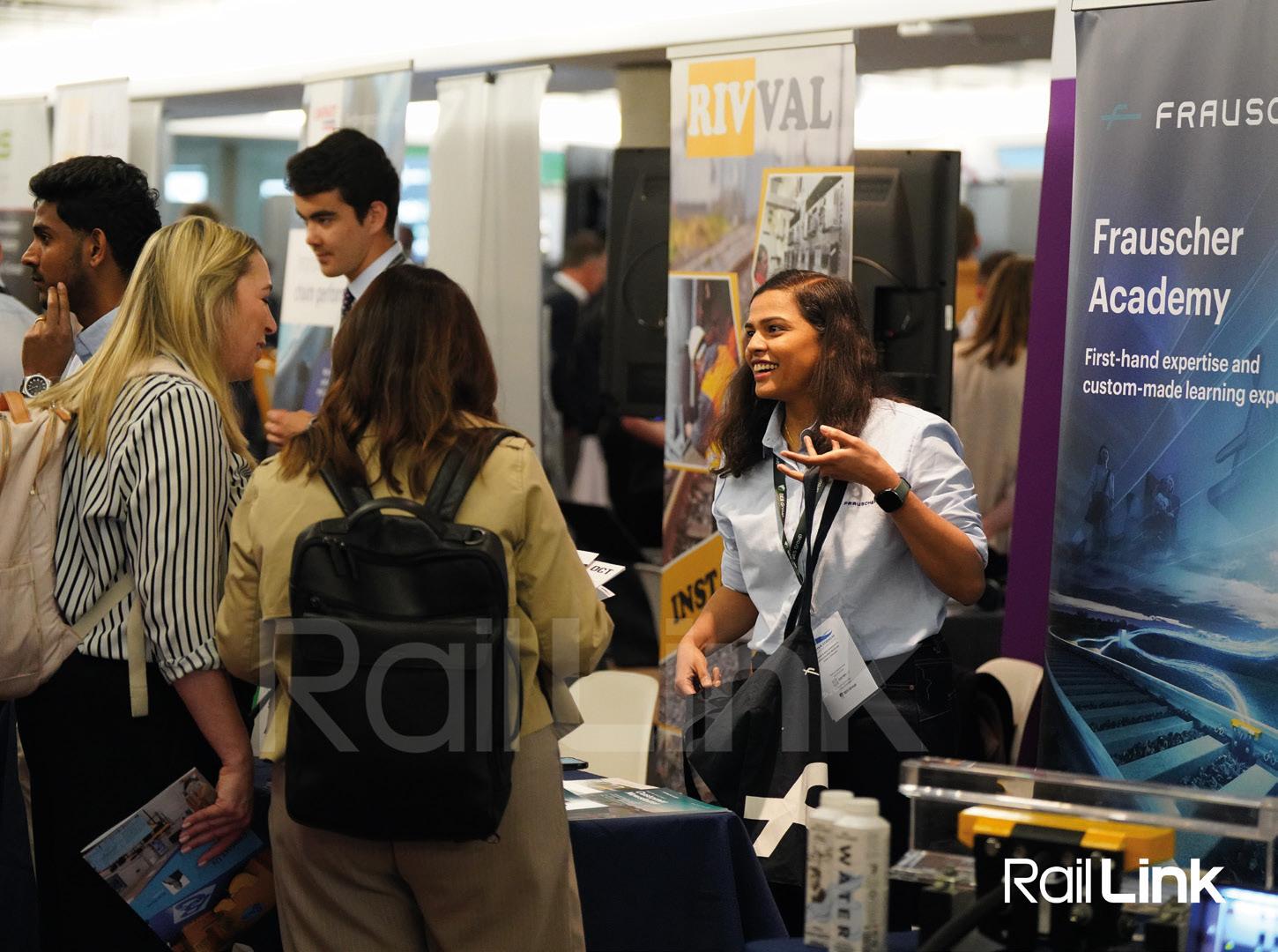
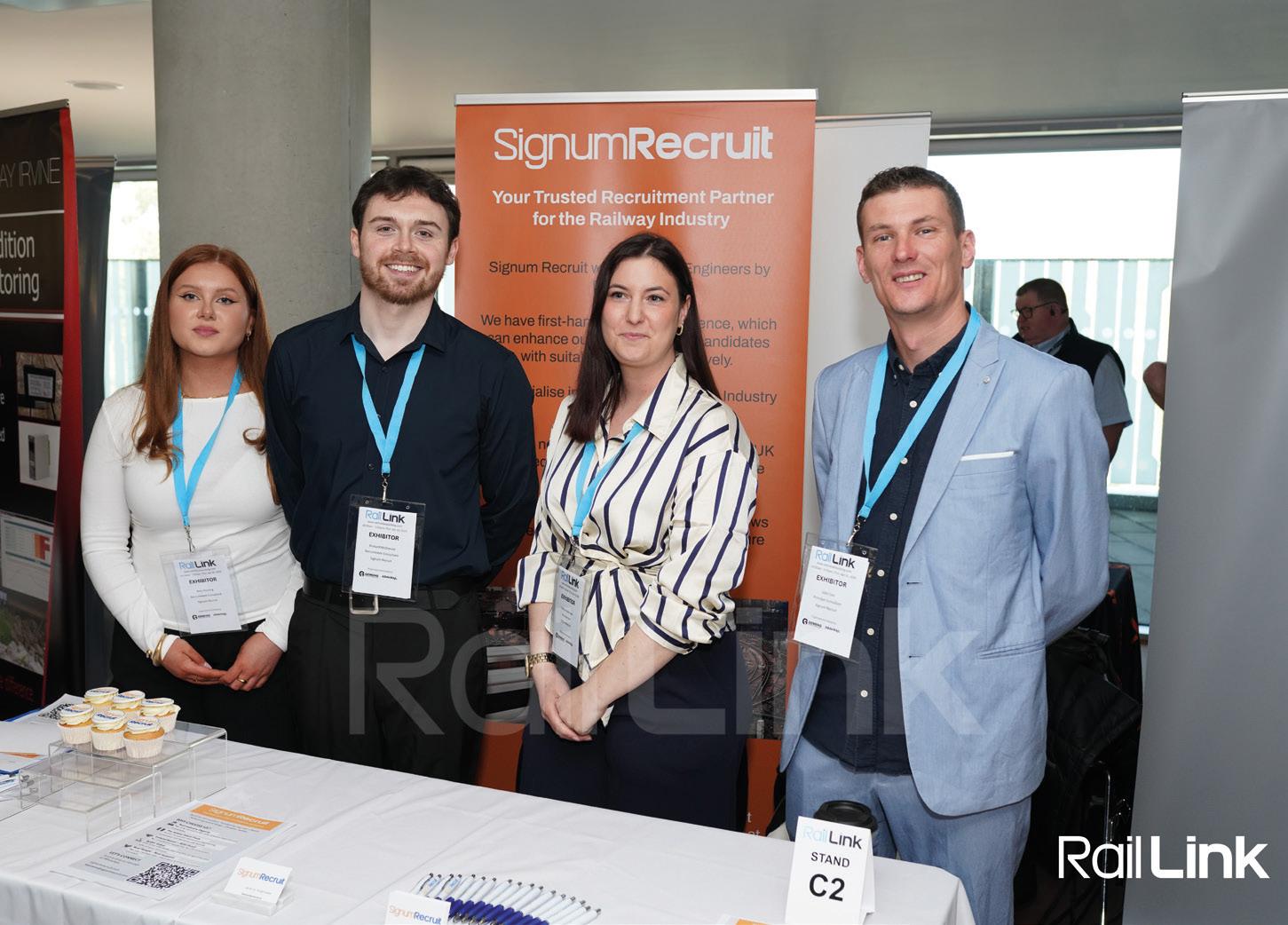
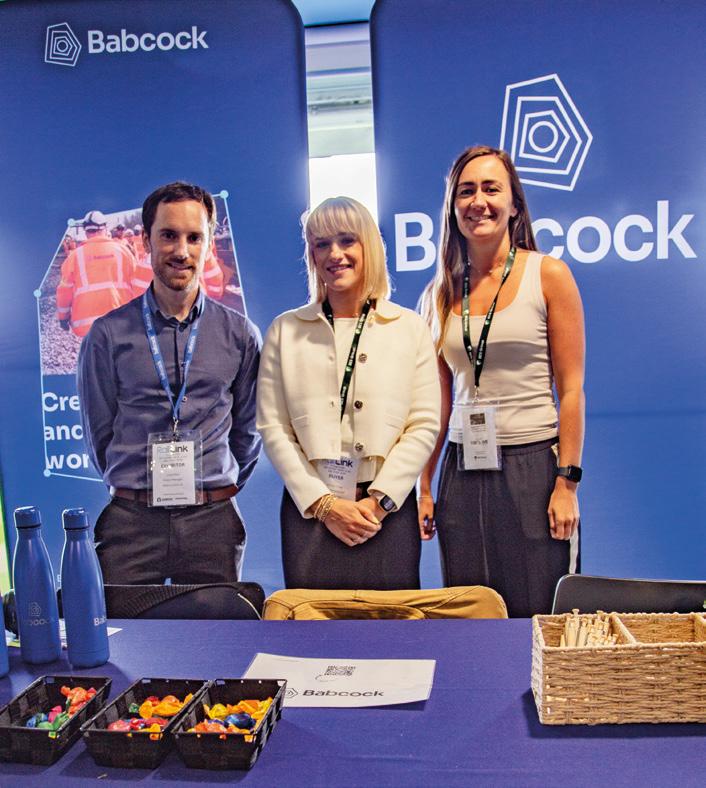
ail Link is going from strength to strength in fostering interactions among key stakeholders in the UK and Irish rail industries, offering environments ideal for networking and providing a platform for connecting with industry peers.
It’s being driven by Alan McDonald, who as a professional working in the industry understands the unique demands of the sector, alongside a passion to ensure the industry thrives, inspired by two generations of his family who have worked in the railways.
“My goal is to use this platform to change the rail industry in Ireland for the better, by bringing top European suppliers directly to the doorstep of our young local engineers, fostering the next generation,” said the Chartered Engineer.
It’s something already being achieved by Rail Link, an international industry platform headquartered in Dublin. It’s evolved into a strategic meeting point for the sector, providing a professional environment where the full rail supply chain – from major design consultancies and manufacturers to specialist regional contractors – can connect and conduct meaningful business.
Excitement is already building for the next network event, which returns for its second year at the Aviva Stadium in Dublin on Thursday, April 9, with exhibitors from the UK, Ireland, and mainland Europe, and support from Middle Eastern sponsors. Attendees will be treated to insights, connections and networking, as part of a commercially valuable platform that supports sustainable sector growth.
“We’re in a very good position,” said Alan looking ahead to the event. “We have managed to plan the event meticulously to ensure it is another huge success. This year, we are delighted to be supported by Siemens Mobility as our headline sponsor. The momentum is exceptionally strong, and we are now fully sold out, which is a fantastic milestone.
“In the background, we are already looking to 2027. While the Aviva is an impressive venue, we recognised that the President’s Area felt restricted for the scale of displays our partners wanted to bring.
“We take all exhibitor feedback seriously, and it became clear that we needed more space. As a result, we are intentionally transitioning away from stadium-style venues; I can’t believe after just over a year that I’m saying this, but demand has simply
outgrown that format.”
The concept for Rail Link developed from Alan’s 10 years as an Electrification and Plant Design Engineer on Network Rail and Irish Rail projects. In 2021, he founded Gemeng, where he continues to deliver professional services ranging from 650V Signalling Power design in the UK to acting as Client PE on major projects like DART+ West, Southwest, and Coastal.
“As Gemeng expanded, I attended numerous UK expos and trade missions to Ireland and noticed a glaring gap: despite the high level of rail activity across Ireland, there was no dedicated, high-calibre annual trade exhibition,” he explained.
“I discussed the vision with a former colleague, Abdul Rehman, and those initial conversations helped shape the concept. From there, I undertook the venue visits in Dublin, developed the Rail Link brand, and established it as a subsidiary of Gemeng.
“Abdul’s early support was key as we both led the team through the development phase approaching our inaugural 2025 event. Since then, he has moved on to new horizons.
“We have since strengthened the Rail Link team
and scaled rapidly, securing formal partnerships with Business International Trading Alliance (BITA), Railway Industry Association (RIA), and Rail Business Daily, along with a significant endorsement from the German Rail Industry Association (VDB), which now represent 20 per cent of our Dublin exhibitors for 2026.”
The success of Rail Link is particularly commendable taking into account Alan combines the organising with his full-time job as Managing Director at Gemeng, but he believes his skills as an engineer help.
“It requires immense discipline and a highly structured approach, but the two businesses, Rail Link and Gemeng, complement each other perfectly,” he said.
“In addition to the Rail Link team we have assembled, I am fortunate to have a high-performing team at Gemeng that provides the technical support and continuity needed to allow both organisations to scale simultaneously.
“The primary driver is the visible impact we are having on the industry triangle of Dublin, Belfast, and Cork. A major highlight this year is the Rail Link
LOOKOUT Awards at the Fota Island Five-Star Resort in Cork on November 5.
“This isn’t just an awards ceremony, it’s a massive black-tie gala dinner with 300 industry leaders and 30 tables of the most influential people in the rail sector.
“We have secured high-profile sponsors from the top rail companies in the UK and Ireland, and our judging panel features senior, well-respected figures from organisations like Irish Rail, BITA, and the wider supply chain.
“The engineering background also helps as it is fundamentally about systems and coordination. Essentially, our events are projects, and the collective series represents a programme. Having worked across the board from junior to senior roles with organisations like Jacobs, Alstom, Siemens, Balfour Beatty, Network Rail, and Irish Rail, I understand the technical needs of the sector at every level.”
Those who miss out on next month’s event in Dublin will have the chance to attend the following Rail Link event at the ICC Belfast on Wednesday, September 2, with registration now open. You can also get tickets for the Rail Link LOOKOUT Awards, Fota Island, Cork, on Thursday, November 5, which will feature an annual gala dinner and awards ceremony to honour the rail industry workforce.
Alan said: “Ireland is currently a strategic focal
point for rail growth. By attending our event at ICC Belfast on September 2, or the LOOKOUT Awards in Cork on November 5, you are in the room with RIA, Transport Infrastructure Ireland, Metrolink, Irish Rail, Translink, BITA, VDB, and global supply chain leaders.
“We accept both British and Irish nominees for our awards as we span both regions. For organisations seeking visibility and partnerships, participation isn’t just beneficial, it is strategic. Be a part of Ireland’s next chapter in rail growth.
“Looking ahead, Dublin 2027 will move to the RDS, Halls 1 & 2, Ballsbridge, a stone’s throw from the Aviva. This significantly increases the scale of the event and positions it to become the largest rail expo of its kind across the UK and Ireland. It will take place on Thursday, April 15, 2027. Pre-orders are being taken with stand prices staying the same and admission remaining free.”
Rail Link is launching a new website on March 31, where exhibitors will be able to create their own company profile and select and purchase stand types online.
Email: info@raillinknetworking.com
Email: exhibit@raillinknetworking.com
Email: alan.mcdonald@gemengelectrice.com
Web: www.raillinknetworking.com
My goal is to use this platform to change the rail industry in Ireland for the better, by bringing top European suppliers directly to the doorstep of our young local engineers, fostering the next generation
W.H. Davis’ Andy Houghton and Carl Baxendell reveal details of 35 wagons the team is working on that will be available to the market from June
Shaping the future of rail wagon design
Images: Matthew Nichol Photography
For more than a century W.H. Davis has been a trusted UK rail engineering partner, delivering dependable, compliant and life-cycle focused wagon solutions for freight and infrastructure operators.
The passion of the team goes beyond reacting to the market needs. It is becoming ever more important in helping shape the sector, and being proactive – an offering so vital in such a fast-paced environment.
That agility is being showcased in the organisation’s current work, alongside several highprofile contracts, in the speculative build of 35 new box wagons that will be available to the market from June.
In addition to supplying high-quality wagons, W. H. Davis provides a strong warranty and dedicated aftercare service, with the expertise to support customers during the introduction of new fleets.
Furthermore, through Buckland Rail, W.H. Davis can deliver whole-life maintenance and overhaul services, ensuring a seamless entry into service alongside excellent reliability and availability.
“Ultimately these are a much stronger, more durable wagon compared to anything else out there on the market,” explained Carl Baxendell, Engineering Manager at W.H. Davis.
This work builds on the success of a recent collaboration with operator Freightliner and rolling stock company Porterbrook, which tasked W.H. Davis with converting coal hoppers into new box wagons.
“We took this as an opportunity to create a completely new design of box wagon product for efficiency, longevity and durability, creating something we think moves the market forward significantly,” added Carl.
Carl says the design changes incorporate feedback from the Freightliner team to ensure a more durable and efficient box wagon. He added: “First we redesigned the frame to ensure there were no welds in the top corners so stress can flow freely around them.
“We also looked at the box’s bottom corners, adding a scalloped solebar to ensure the grab can remove the product smoothly while at the same time minimising the damage to the wagon structure.
“We also removed the sharp edges from the underside of the new design to improve its longevity, and finally fitted an inwards opening door, a feature we believe is safer and more durable. It didn’t come without some design challenges, such as ensuring the load is not transferred through its hinges, damaging or deforming it.
“It was worth the effort though as it should make for a harder-wearing, lower maintenance box wagon.”
The overall project highlights W.H. Davis’ expertise in finding solutions and emphasises how it places the end user as key, working on wagons that are as efficient and durable as possible for decades.
Andy Houghton, the company’s Managing Director, said: “It’s one of several exciting projects that we’re working on. These wagons that are due to come off the production line in June offer many benefits, including longevity of around 40 years in any kind of traffic.
“It is an example of how the team are looking for solutions to common issues, changing the industry for the better.”
Building on a strong order book
The conversion of the coal hoppers into new box wagons is just one of several exciting projects for the W.H. Davis team, with Andy explaining how there is a healthy order book up until 2029.
This includes a contract by Iarnród Éireann to design and manufacture 68 infrastructure maintenance wagons, supporting the long-term resilience and efficiency of Ireland’s rail network.
They are being engineered to meet current and future operational requirements, with the wagons supporting the transport of rails, sleepers, and track panels.
It builds on from the contract for 150-wagon intermodal freight wagons placed under the same framework last April, of which prototype vehicles are currently in production, with deliveries expected to commence from summer next year.
In addition, work is under way on 150 new intermodal wagons for Porterbrook to be operated by Freightliner. The wagons will be based on 40-foot platforms, which is a shift from the more common 60-foot format.
There’s also a further 16 Section Mill wagons for 7 Steel UK, a follow-on order to the 16 Hot Billet wagons completed this year, each fitted with insulated and reflective cartridges on the bed to retain and reflect heat back into the billet; a contract with Datum for Crossrail cabs for Alstom; and a framework agreement that is expected to see 60 specialist containers built this year.
“W.H. Davis has been supporting the rail industry since 1908, and since the company repaired its first wooden-bodied mineral wagon over a century ago, it’s been committed to engineering innovation,” said Carl.
“Today, my team and I are still striving to develop efficient, cost-saving new solutions for customers.”
The current success comes off the back of a tough few years. Only a few years ago the order book had dried up, but it is a different picture now, with renewed confidence and excitement among the team at the UK’s last remaining independent wagon manufacturer.
The team is also buoyed by the expertise offered not just through W.H. Davis, but the wider Buckland Rail group, which it is now part of, which also includes Davis Wagon Services and Yellow Rail.
Between the three organisations the teams can design and build a wagon, maintain that wagon, and then overhaul and support through the life-cycle of the wagon.
“W.H. Davis on its own has got a really good future and being part of Buckland Rail enhances that,” explained Andy.
For Andy, the long-term vision and the longer-term aspiration is to continue the journey in developing the products that knock down some of the barriers on weight, gauge, and on speed.
He said. “We are thinking about the products we can produce to solve the demands of the industry.
“That could be around high-speed freight or a
Ultimately these are a much stronger, more durable wagon compared to anything else out there on the market
wagon product that takes the challenges around intermodal, getting the right deck, and weight that fits in the right gauge.
“The challenge, one we’re excited about solving, is around those design engineering problems, and in offering a product to the market as opposed to sitting and waiting for that demand to come.
“We don’t want to just be reactive to the market’s needs, but help shape it, evidenced by the work we are doing with the new box wagons.”
Email Kelly.Meachin@bucklandrail.co.uk or andy.houghton@whdavis.co.uk for more details on the wagons.
https://whdavis.co.uk/
Seán Canney TD, Minister of State, Department of Transport in Ireland, and Northern Irish Infrastructure Minister Liz Kimmins MLA were among the speakers at the inaugural All Island Rail Summit. Rail Director was among the hundreds of attendees
All Island Rail Summit: ‘A coming together of a shared ambition’
The Railway Industry Association (RIA)
Northern Ireland has launched the inaugural All Island Rail Summit, bringing together member companies of all sizes with clients, influencers and policy makers for a day of informative discussions.
Speaking to the more than 300 attendees at the Titanic Belfast, Chris Conway, Group Chief Executive at Translink, said the sold-out event marks a significant milestone in the collective journey to transform rail transport across the island.
“It’s not merely a collection of different organisations, it’s a coming together of a shared ambition, an ambition for stronger connectivity, for greater sustainability, for economic growth and for the social inclusion that our railways can foster right across this island,” he said.
Chris, who’s been in his current position for more
than a decade, is full of optimism for the direction of travel, buoyed by the All-Island Strategic Rail Review.
He also highlights how across the network they are seeing more than 65 million passenger journeys each year, praising the impact of Belfast Grand Central station which since opening a year ago has supported 10 million passenger journeys.
“We’re meeting at a really important moment,” he added. “Our strategic direction for rail and the publication of the All-Island Strategic Rail Review is more defined than it has been for decades, and the opportunities and challenges that it brings are also substantial.
“The necessity for action and for collaboration both within the industry and across the business and the political spectrum has never been greater.
“As we reflect on the last 10 years we have witnessed what can only be described as a rail
renaissance, a period marked by renewed investment, innovation and resurgence in public confidence of railways, which is real testament to the dedication of everyone present here today.
“But this summit is about taking the next crucial step together, about uniting behind a common vision for the railways, one that must be on collaboration, taking concrete measures that will reinforce our network, drive economic prosperity, and enable people throughout the island to benefit from improved and more sustainable public transport.”
Ireland is currently one of the most dynamic and exciting rail markets in the world and the summit – an event providing an all island approach and perspective – reflects this.
Liz Kimmins MLA, serving as Minister for Infrastructure, says that the fantastic turnout at All Island Rail Summit illustrates the scale of the rail
Images: Brian Morrison
It’s not merely a collection of different organisations, it’s a coming together of a shared ambition, an ambition for stronger connectivity, for greater sustainability, for economic growth and for the social inclusion that our railways can foster right across this island
industry and the potential for the rail network.
She said: “Investing in rail is an investment in people, in places and potential. It strengthens our economy, it creates high-quality long-term jobs, connects communities to opportunity, protects our environment, supports a safer, greener, more inclusive Ireland.
“The Rail Review sets out our vision, the Prioritisation Strategy provides a pathway and NorthSouth collaboration provides the foundation for delivery, ensuring alignment, efficiency and long-term value.
“So here in Titanic Belfast, a symbol of what can be achieved when engineering ambition meets civic purpose, we reaffirm that ambition once again. Together, Government, industry and partners,
North and South, I truly believe that we can deliver a rail network worthy of the next generation, one that serves all our people and secures a prosperous, sustainable future.”
She explains how £340 million has been invested in the construction of the new Belfast Grand Central station; £50 million to support the growth of rail travel in the North West, £27 million in the North West Multimodal Transport Hub, and £17 million in the new York Street station in Belfast.
The industry and residents are already reaping the benefits with the Belfast to Dublin Enterprise Service now carrying more than 40 per cent more passengers; and a similar pattern on the Belfast to Derry line, which has seen a 78 per cent increase in passenger volume since pre-COVID levels.
The Minister also reflects on the Rail Project Prioritisation Strategy, released in December, which translates the ambition of the All-Ireland Strategic Rail Review into a disciplined delivery framework of rail infrastructure projects across the island.
It was published jointly by the Department of Transport in Ireland and the Department for Infrastructure in Northern Ireland with support from the European Investment Bank, focusing on shortterm interventions and long-term major projects to enhance connectivity, capacity and sustainability.
“That joint approach is significant because it means projects are prioritised on the basis of shared evidence, shared appraisal methodologies, and a common understanding of value, not competing national pipelines pulling in different directions,” she said.
“For the North, the strategy recognises historic underinvestment and identifies the key corridors for progression, particularly where rail can address regional imbalance and unbalanced economic opportunity.
“It prioritises the enhancement of existing corridors, including the Belfast to Derry Line, and the Belfast to Dublin corridors, where early interventions can deliver immediate benefits in capacity, frequency and reliability.
“The strategy provides pipeline visibility not just for construction but for design, digital systems,
environmental assessment, early contractor involvement and systems integration.
“One of the most significant projects that is now well advanced is the Enterprise Fleet Replacement Programme, which will deliver eight new trains into service by 2030, enabling 16 services per day between Belfast and Dublin.
“The steps taken to date, including this investment, the publication of the Rail Review and the development of the Rail Project Prioritisation Strategy, mean strong foundations are now in place and we can progress with a clear vision in view and a planned goal implementation.”
Mary Considine, Chief Executive at Irish Rail, joined Chris Conway, Group Chief Executive of Translink for a panel discussion. She discussed rail across Ireland emphasising that she sees rail as central to its long-term transport transformation.
The pair discussed the strategic objectives of both organisations, touching on some of the challenges, and was framed by the extensive collaboration evident from previous presentation on infrastructure and rolling stock.
With “very clear objectives for the next stage of rail development in Ireland,” including her ambition to
I think it’s important that we shout from the rooftops about the opportunities that are there for people and what we can do for generations to come
“secure significant investment each year” over her seven-year term, Mary recognised this investment as essential to modernising the network, increasing capacity, and ensuring rail can meet the needs of a growing population. In the afternoon session, Seán Canney TD, Minister of State, Department of Transport in Ireland, spoke about some of the ongoing major programmes, including the DART+ Programme, which will see the network grow from its current 50km in length to more than 150km.
Giving an update he said most of the infrastructure developments of the programme have now received planning approval, with work progressing on the final key elements of the new train depot for DART+ West. He highlighted how the project will change the city for the better, unlocking tourism and business travel, catalysing housing developments and removing traffic and congestion.
He also talked about the investment in Cork’s public transport, which includes the opening of two new stations at Cork Kent railway station, the first element of the Cork Area Commuter Rail Programme to go live.
It will be followed by twin tracking between Glounthaune and Midleton, and a comprehensive upgrade of signalling and communications systems. Phase 2 focuses on proposals for eight new stations, three station upgrades, a new depot, and full electrification of the Cork rail network.
An area he expresses particular pride in is the progress on the development of the Dublin Belfast Enterprise rail service, adding that a fleet replacement programme is well advanced.
“The new Enterprise trains fleet will support a significant increase in passengers on the Dublin and Belfast route, with annual passenger numbers on the Enterprise service expected to grow from the order of 1.5 million passengers per year present to 2.5 million passengers by 2032,” he said.
He concluded by talking about his excitement for the future of the railways.
“I think it’s important that we shout from the rooftops about the opportunities that are there for people and what we can do for generations to come,” he said. “I’d like to thank RIA for the opportunity to
speak at the summit, it is an honour to be here.
“Today, on behalf of the Government, we’re focused to improve the rail network for passengers and others in society, working with our partners in the Department for Infrastructure, focused on the Rail Review, and with your help we can make it all a reality.”
In the afternoon Dr Seán Sweeney, Programme Director, Metrolink, Dublin’s long-awaited metro system, a proposed 18.8km railway line which is hoped could begin operation in the mid-2030s.
Dr Sweeney said: “Events like these are vital for a transformative programme like MetroLink. It was a pleasure to share the stage with Minister of State Seán Canney, whose insights underscored the strategic importance of our collective work. Furthermore, the opportunity to engage directly with so many dedicated members of the market and supply chain was invaluable.”
The event, which also featured spotlights and panel discussions, was supported by Platinum Sponsors Alstom, Babcock, Camlin Rail; Gold Sponsors AECOM, AssessTech, Jacobs; and Silver Sponsors Hird Rail Development, Rail Link, and Siemens; with the Lunch Sponsor On Track Technicians.
Noel Travers, Chair of RIA, said: “The investment going on across the island of Ireland is a huge opportunity for suppliers across the UK and Ireland. For example, W.H. Davis, one of the businesses within Buckland Rail Group of which I am Chief Executive Officer, last year signed a €140 million Framework Agreement to supply freight wagons to Irish Rail, of which the first two call offs worth in excess of €65 million have been signed and are currently in design.
“Ireland really is one of the most dynamic and exciting rail markets in the world and this summit, the very first event to provide an all-island approach and perspective, has set a fantastic platform for that ambitious vision, bringing together some wonderful speakers and hundreds of attendees all keen to play their part.
“I’m already looking forward to its return next year, this time in Dublin, more details of which will be revealed in the coming months.”
Improve performance. Reduce incidents.
Transformative Solutions
Expert-led Training
Competence isn’t just about passing assessments, it’s about continuous growth.
Our training solutions focus on:
• Skills development to close competency gaps
• Engaging, interactive learning experiences for better retention
• Certification & assessment support to maintain compliance
• Upskilling railway professionals for career progression
Our solutions provide railway organisations with real-time visibility of their workforce competence.
Our solutions help organisations to:
• Identify risks before they become issues
• Track and manage compliance
• Optimise workforce training based on data insights
• Improve decision-making with analytics
Tailored Consultancy
Every railway organisation faces unique challenges.
Our consultancy services provide:
• Personalised competence management strategies
• Risk assessments to prevent safety incidents
• Compliance support to navigate evolving regulations
• Change management solutions for digital transformation
Developmental competence management for a safer railway
Ben Brown, Consultant at Aarvee, refl ects on the growth of Aarvee UK and a challenging rail sector
Delivering complex infrastructure projects
At Aarvee its approach to projects is rooted in efficiency, quality, and a client-centric focus, ensuring every project is completed on time, within budget, and to the highest standard.
In the UK the team has expanded from four people to more than 20, supported by a global workforce of nearly 4,000 directly employed professionals, including substantial engineering capability.
“The organisation operates as an integrated multidisciplinary consultancy, enabling scalable technical delivery across rail and infrastructure markets,” explained Ben Brown, Consultant at Aarvee.
The organisation’s expansion into the UK follows an established track record across multiple sectors, including railways. Founded in India with a focus on technical excellence, practical engineering and innovation, the company now operates in more than 20 countries.
Crossroads
Ben highlights the pressures facing the UK rail sector. Slower investment, combined with supply chain partners moving into adjacent sectors such as energy and water, has created uncertainty.
“While this has sustained market activity in the short term, it risks creating a baseline resource gap
The organisation operates as an integrated multidisciplinary consultancy, enabling scalable technical delivery across rail and infrastructure markets
when rail volumes return,” he said.
“Without proactive engagement, there is a real possibility that key delivery capacity will be committed elsewhere, limiting flexibility, cost-efficiency and programme responsiveness in the rail sector.”
Although Aarvee operates across multiple sectors, Ben stresses the importance of longer-term visibility for rail projects. Greater certainty would give contractors the confidence to mobilise teams and secure supply chains.
“With prolonged delays, organisations begin to pause activity. In an industry already facing a skills gap, that accelerates the problem – people aren’t just retiring, they’re moving into other sectors where workload is more predictable,” he explained.
The UK team’s lean, agile model helps maintain resilience, allowing engineers to support projects overseas when domestic workloads fluctuate. Aarvee works with organisations of all sizes, providing
technical expertise and collaborative support across the rail and infrastructure sectors.
The team prioritises early client engagement to build a clear understanding of delivery processes before construction begins.
“By working through the practicalities upfront, we reduce uncertainty once works commence. It’s about planning properly so we’re not resolving avoidable issues during delivery,” Ben added.
Looking ahead
Despite market uncertainty, Aarvee remains focused on supporting UK rail in a sustainable and pragmatic way. By combining wider in-house technical capability with a core UK team providing local interface and delivery oversight, the company aims to help partners navigate uncertainty while maintaining project momentum.
www.aarvee.co.uk
Jenny Dempsey, Managing Director at Diamond Rail, discusses the launch of Diamond Group, a new chapter driven by an ambition to provide a more unified, efficient and forward-thinking service offering to customers
A new era of engineering excellence
Diamond Rail Services is now operating as part of the newly formed Diamond Group, joining Daedalus Design Services, CTL Seal, and TFL Responsive Engineering as the first four companies rebranded and united under one name. They are now Diamond Design, Diamond Engineering and Diamond Responsive Engineering respectively.
Operating from Diamond Business Park (formerly Ecclesfield Industrial Estate), the rebrand has been a year in the making, with every element designed to create a cohesive, forward-thinking identity with a unifying vision and the promise of ‘engineering the diamond standard’.
From a Diamond Rail Services perspective, the change enables the organisation to streamline
operations, pull from a wider pool of talent and expertise, and offer improved support across every stage of a project – without disruption to ongoing work or relationships.
“Being part of Diamond Group is an exciting new chapter for the team and the next step on our journey,” explained Jenny Dempsey, Managing Director of Diamond Rail Services.
“Combining our specialist expertise with the group’s scale and resources means we can deliver even greater value for our customers.”
Diamond Group provides a comprehensive suite of services to the rail sector, from large-scale upgrades to specific support to plug into an existing programme, carefully tailored to support the full lifecycle of rolling stock refurbishment projects.
From initial planning and design, through to fabrication, installation, and final handover, the Diamond team work as an extension of the Customer team helping to keep projects on track, on time, and on budget.
“Our best projects are with customers who completely understand that and support it right through from procurement to delivery,” explained Jenny.
“We want to know what a client’s headache is and look for innovative solutions to mitigate it. We are helpful, and all our staff have an unmatched drive for customer success.
“Being part of Diamond Group indicates strong backing, knowledge pools, and talent and expertise. So you’ve got the supply chain within your group
Paul David Drabble Photography
that are trusted, linked by values, and working closer together, which makes things far more efficient.”
Strong foundations to build on It is only when you look at the statistics that you see the scale of the impact of Diamond Rail. Last year the team made 15,564 seat covers, replaced 11,875 seat foams, installed 3,895 seat positions for customers, and overhauled 163 drivers’ seats.
When it comes to the rest of the train, powdercoated parts reached 7,491, 70 UAT sinks were replaced, 60 doors modified and 30 doors sealed. There were also floor repairs carried out on 72 vehicles, 74 carpets replaced and 168 lino repairs.
“It was a great year, but this year is going to be a record year for Diamond Rail with Hitachi Rail and Alstom contracts,” Jenny said. “The pipeline from September last year has doubled and we are seeing the opportunities coming through.
“But we’re not taking over or stepping on toes. We are humble and protective of our SME status. We can attract contractors because we our outside IR35, so it is quite an attractive position to be in, so we need to grow to the limit of that but not exceed it.”
Emphasising the pride she feels in being involved in the railways, she added: “Like at my prior role at the train operator Northern (where she was Fleet Refurbishment Project Manager) I love that I have those before and after moments, see the finished article or hear the positive feedback. It’s so motivating seeing the impact.”
Jenny joined Diamond Rail in November 2020 as Business Development Manager, bringing her expertise in customer service and relationshipbuilding to the company to help it stand out in the competitive supplier market, especially during challenging times of the COVID pandemic.
“The journey going forward is to continue what we are doing,” she said. “We don’t want to get too large and want to maintain our SME mentality and values, which is what I think sets us apart.”
Don’t take those comments as a lack of ambition. Now operating as the newly formed Diamond Group, Jenny speaks of an aspiration to attract other businesses into the organisation, including those from other sectors.
“It could be through minority shareholders and supporting businesses, but there’s opportunities for other businesses to join the group and then they would have the strong and recognised brand behind
them and would be able to fish from the pond of expertise,” she explained.
“I’ve always stressed that success depends on getting the experts round the same table, for any project. So it is basically designing that table with skilled and collaborative people and managing it effectively to be Diamond Group.”
While the name and look might have changed under Diamond Group, many aspects of the previous companies remain the same: the ownership, directorship, and the unwavering commitment to quality and customer care.
Bringing all the capabilities together under the Diamond Group banner also allows it to provide customers with what Jenny describes as a ‘trueturnkey solution’ for all engineering needs.
“Diamond’s version of turnkey isn’t just doing all of your scope, we’ll think beyond your scope and about your spares requirement, your fleet in 10 years’ time and the training your staff might need,” she said.
“We offer a different approach, being truly helpful and always solution-finding, and that is how we lead. A good day is solving problems and happy customers, a bad day is a challenge or negative feedback, but we see the latter as an opportunity to be even better, reacting quickly and professionally.”
It’s been an exciting journey for Jenny so far, and after 18 months as Managing Director she predicts it is only going to get better.
“I’ve learned a lot and take more of an observing approach as opposed to me five years ago trying to control everything,” she said. “There’s a real trust in the great team that I’ve got, and I also get to do the bit I love most, which is working with people, whether that be helping customers find the right solution for them or creating training plans that our team can benefit from.
“I got my coaching qualification in 2024 and I bring that into my managing style. We have business goals and strategy sessions regularly, but they’re not really done in the traditional sense, I’d describe it as alternative and I use a lot of AI.
“Overall the strategy is to support further our existing customers. Our best value is realised when we collaborate with already existing Tier 1s. I class us a Tier 1.5, which is a buddy to the Tier 1. That is our strategy and it is already proving successful.”
Diamond Group will be exhibiting at Rolling Stock Networking (RSN) at the Derby Arena in July.
https://diamondgroup.co.uk/
Combining our specialist expertise with the group’s scale and resources means we can deliver even greater value for our customers
The four divisions of Diamond Group
Diamond Design: Details and mechanical design, CAD, metrology, scanning and heatmapping.
Diamond Engineering: Material processing, fabrication and welding, machining and assembly and testing.
Diamond Responsive Engineering: Extensive expertise in site fabrication and welding, steel erection, site and mechanical installation and maintenance and outage support.
Diamond Rail Services: Specialising in turnkey interior and exterior refurbishment for the rail sector and also offering painting and vinyl, kitting, modifications and seat refurbishment.
Sarah Jane Crawford, Chris Hobden, Raj Patel and Mark Ferrer reflect on the success of the Government-funded East Coast Digital Programme last year, and discuss the journey ahead
Delivering in-cab signalling
It is full steam ahead towards the beginning of digitally signalled services using the European Train Control Systems (ETCS) later this year between Welwyn Garden City and Hitchin on the East Coast Main Line, the early stages of what will become the country’s first intercity digital railway.
“Our former CEO Andrew Haines referred to the East Coast Digital Programme (ECDP) as the closest thing to impossible, but we’ve shown that although challenging, it is very fundamentally possible,” said Sarah Jane Crawford, Network Rail’s ECDP Industry Partnership Director.
More than 30 organisations working across a variety of sectors are part of the partnership, which aims to deliver a railway that works better for people through replacing traditional lineside signals with modernised in-cab digital signalling ETCS. The programme involves 40 vehicle types, six onboard systems, more than 3,000 drivers to be trained, 700 signals to be removed and 700 rail vehicles to prepare.
Despite the complexities, it will be worth the effort.
“Efficiency is at the heart of the ‘why now?’ and why we need to put such a concerted effort around it,” said Sarah.
“We need to reduce the renewal and maintenance costs related to signalling and assets, which are requiring a significant amount of work over the next 20 years.
“What we’re implementing is fundamentally more reliable with less access required. There’s less infrastructure lineside, there are fewer points of failure; it gives you improved system capability, reduced carbon emissions and an even safer railway.”
Northern City Line
Sarah is enthused by the success of the past few years, which among other progress saw the introduction of the first ‘no signals’ commuter railway in the country with the completion of the pathfinder phase of the programme on the Northern City Line (NCL) between Finsbury Park and Moorgate.
This short stretch has involved one operator, Great
Northern, which is part of Govia Thameslink Rail (GTR); one train control partner, Siemens Mobility; and one set of trains. It was initially done as an ‘overlay’, meaning trains could be operated either conventionally or with digital signalling, something that is being replicated for Welwyn to Hitchin but not the subsequent phase of the project.
She said: “The biggest success for me has been the partnership that we built. GTR came into this programme as the more competent operator with Thameslink trains already ETCS fitted.
“There was a big part in educating the East Coast route about what it felt like to run an ETCS railway, as well as the programme in how to deliver this successfully, learning lessons from the Thameslink deployment. GTR was fundamental in guiding and shaping that and is at the heart of how the partnership model needs to work.”
Raj Patel, Head of European Rail Traffic Management System (ERTMS) at GTR, echoes Sarah’s comments on the power of the partnership.
“There’s been a real sense of integration and
Image: ECDP
collaboration, not only with Network Rail’s ECDP programme, but also with Siemens Mobility as train control partner,” she said. “From a fleet perspective it was ideal for a pathfinder because it was such a short stretch.”
A key relationship has been the work between the train operator and York Railway Operations Centre (ROC). GTR hired an ex-signaller to explore what was going to be seen from a signaller perspective against what a driver was going to see.
Raj also explained how the organisation has 15 testing and training drivers going out on night shifts as part of the partnership with Network Rail and Siemens Mobility proving and testing the network, leading to a lot of knowledge and learning.
“We’ve had to think about the difference between digital and conventional signalling from a human factors perspective, not just between drivers and signallers, but also our fleet control,” she added.
“The recovery of a train is very different in a digital environment to one with conventional signalling. There’s been a lot of learning that can take the project forward into the next phase.”
Welwyn Garden City to Hitchin
With the pathfinder stage complete, attention now turns to the first use of digital signalling on the East Coast Main Line between Welwyn Garden City and Hitchin, in Hertfordshire. This is also an overlay, enabling all operators on the line to provide conversion training for their drivers in digital signalling without impacting the day-to-day service.
Mark Ferrer, Operations Director, Rail Infrastructure, Siemens Mobility, describes how a new system was engineered at Siemens Mobility’s digital engineering, manufacturing and R&D site in Chippenham, with other suppliers’ technologies as well.
PADS-approved solutions meeting Network Rail requirements, with proven delivery across complex London Underground installations.
+ Proven thyristor-based technology
+ 20+ year operational lifespans
+ Battery tripping units for safe operation
+ Secure substation telecoms & SCADA integration
+ Managed battery replacement & lifecycle support
What we’re achieving would be almost impossible to do without the collaboration and the partnership ethos that we’ve got within the programme
Sarah Jane Crawford
Chris Hobden
Raj Patel
Mark Ferrer
Processes need to be established, but how the people implement that and how confident they are is critical and that was a key learning for us on the NCL and something helping to shape our learning for the rest of the project
“It highlights the power of this partnership in terms of collaboration,” said Mark. “The initial tests we did were really within the signalling system, integrating the interlocking to the radio block centre, integrating the control centre.
“We undertook a lot of testing, data testing and integration testing and then brought in an onboard unit. In the lab environment all the equipment thinks it is actually on a railway, behaving and responding as it would do on the railway, almost like a digital twin.”
Once happy that one onboard system had been integrated into that lab, Siemens Mobility then moved into bringing in all the other onboards, including Alstom, and Hitachi . It was then taken to site for proving.
“We initially did that with GTR’s Class 717s, and then brought in the Grand Central 180s and the Network Rail 43s to do the same, building up the evidence case that it works with all onboards,” Mark said.
“Once we are happy the system is technically operating as we expect, we then go into the operational scenario testing, which is starting to bring the people and the process together with the technology and looking at various scenarios.
“What we’re achieving would be almost impossible to do without the collaboration and the partnership ethos that we’ve got within the programme. As you’d expect, when you get engineers and you put them in a room with a load of technology and you give them a problem, it doesn’t matter who they work for, they just work together to fix the problem.”
One change at a time
New equipment and technology were successfully commissioned for this section of the route in February 2024. To enable digital signalling, overnight test trains have been running over the past year, and the first passenger and freight trains are expected to operate with digital signalling later this year.
Chris Hobden, Programme Delivery Director (ECDP), Network Rail, said: “From a programme delivery perspective, we’ve looked at our future rollout and tried to bring some science to how we do that, and the basic principle here is to manage the level of introduction risk to the railway in an incremental way.
“At the moment with the NCL we have one
onboard, but as we go to the next level we’ll have more onboards with other classes of trains. So, the intention of the ‘railway configuration states’ is to break this down into manageable chunks, and gradually increase the level of change to the railway in a controlled way, while maintaining the risk to the railway and its performance at a low level.”
Explaining the move into Railway Configuration State (RCS) 3 (Welwyn to Hitchin), Chris says that will include the Class 717s, which are already operating in ETCS, so there should be only an extension of where they are operating.
“As part of RSC 3 we will achieve sign-off of the Class 180s and the Class 43s and once we’re confident that the 717s are running we’ll allow the 180s and 43s to run in the overlay section,” he added.
“The whole point of RCS 3 is to bring a section of the railway into an overlay that allows all the classes of the trains that are required to run to be fitted, rolled out onto the railway and drivers trained.
“We’d prefer not to have the overlay, but logistically to get all the fleets enabled and all the operators trained we have to go through this to get to the point that we can do a no signals railway. So, the mantra is without doubt ‘one change at a time’, but one might include a few subsets.”
Fleet fitment
As part of the ECDP there are 40 vehicle types, six onboard systems and more than 700 rail vehicles to prepare. Updating Rail Director on the progress, Raj says all GTR’s Class 717s have been updated with the latest software, and testing is being done to upgrade its largest fleet, the Class 700s.
As for the Electrostar fleets, Alstom is working through some issues with system integration and compatibility.
Commenting on the latter, Raj said: “We’re not resting on our laurels and while that is happening, the equipment is being bought and fitted to the train. That has presented challenges, but the team are working together to resolve them.”
Sarah added that Grand Central’s Class 180 trains are going through system proving, and will be introduced as and when the drivers are ready from July; and LNER’s Azuma trains are having a software upgrade.
Above left and above: Siemens Mobility lab at Chippenham. Images: ECDP
If we create the baseline of how we want to roll it out at scale, it creates the ‘copy and paste’ nature that we want to instil in this delivery model, but it also potentially creates an ability to create incentives to do things more efficiently
Moving onto the freight situation, and this has been described as a “more challenging picture” because of the age, number of the fleets, but also the variants within the class types – there are 44 different types of the Class 66, as an example.
The plan initially was a commercial mechanism via Siemens Mobility, which was a consensus by design. There was a lead freight operator and every single component of the engineering design had to be agreed by each operator before anything could progress.
Having struggled with that consensus, a design freeze was implemented and the decision was taken to get the design right for the Class 66s – the main vehicles required for the East Coast Main Line, and also the ones that are most stable and best understood.
“We’re also setting up a future partnership strategy for the national fitment that focuses on freight operator-led fitment, giving freight operators the accountability for fitting on their trains, both at pace, but also a bit more accountability for the engineering assurance,” explained Sarah.
“This is a commercial agreement that will take some time to procure and it will be extensive because it will cover every other freight vehicle in the country. In the meantime, we’re doing a stock gap for the next two years where we’ve moved to that model in advance of the formal commercial mechanism being set up.
“We have moved mainly with Freightliner, DB Cargo UK and GB Railfreight and on the Class 66s, and then we’ll start to drip feed other classes and other operators once we’ve got a bit more stability of this programme.”
The plan is to have 10 to 15 freight vehicles fitted and APiS authorised by December this year.
“We need to get the vehicle out on the network and test it,” explained Sarah. “It gives us a benchmark and a baseline. What we want to do in the future model is incentivise everyone to say ‘to fit a freight train it takes 100 days to do 100 things for £100’.
“If we create the baseline of how we want to roll it out at scale, it creates the ‘copy and paste’ nature that we want to instil in this delivery model, but it also potentially creates an ability to create incentives to do things more efficiently.
“It is a challenging picture, but we have a really clear recovery plan and once that plan starts to show fruit we will start to transition that to another class type and include smaller operators to again prove that concept before we roll out.”
As to heritage trains and on-track machines, last year saw the successful testing at speed for the world’s first operational steam locomotive to be fitted with ETCS (Tornado), with further tests ongoing this year. Next up, the heritage diesel pathfinder loco Deltic Royal Scots Grey has also been fitted with ETCS and is likely to be undergoing testing soon.
In a bid to quicken up getting to the start line for signals away, Sarah says one potential idea could be around hauling.
“In respect to on-track machines, charter and heritage and freight fundamentally, we are working with the operators to get the minimum viable numbers to run their businesses,” she said.
“Some of the on-track machines are quite old so we’re looking to try to leverage procurement.
“If we can, for example, ringfence them from the main line and keep those ones down south, that might be an opportunity for us to accelerate the delivery of signals away.”
People readiness
Despite the challenges facing the infrastructure, Sarah, Chris, Raj and Mark are in agreement that the most important part of the project is around people readiness, not just implementation, and they are confident they will deliver. Reflecting on NCL, Raj said: “It was important to get our drivers trained so they felt competent and confident. Originally the assumptions around training were 15 training days, but that has been reduced to five days with a blend of classroom and practical learning. The classroom approach uses simulator technology as well as theoretical learning.
“Fleet controllers have specific training courses to understand how to recover, and the integration between the driver and fleet control, as do the competency development managers and the signallers – the latter having been on cab rides to get a first-hand experience of what the driver is seeing.
“It is definitely a continual improvement type initiative and not a one-off.”
Sarah added: “Processes need to be established, but how the people implement that and how confident they are is critical and that was a key learning for us on the NCL and something helping to shape our learning for the rest of the project.
“Overall, we have embraced it and facilitated the investment of multiple new facilities across the country within the freight and passenger operators. They are really well received, technologically advanced, and everyone can feel like they are running the railway. It is about bringing everyone on the journey.”
ECDP involves £1.4 billion of Government enhancement funding. Following the Welwyn to Hitchin stage, the final phases will see digital signalling progressively rolled out across the southern section of the East Coast Main Line between London King’s Cross and Grantham and all conventional lineside signals removed. This is expected to be fully completed by the early 2030s.
Image: ECDP
Image: ECDP
Jo Field OBE has been recognised in the King’s New Year Honours for services to diversity and inclusion in transport. She hopes the recognition will provide a catalyst to create a more inclusive future for everyone in the sector
Unfinished business
For the past 20 years, Women in Transport has been empowering women in the industry to maximise their potential.
Over the years it has evolved, now offering access to monthly networking and in-person/virtual events, professional development programmes and the All Party Parliamentary Group for Women in Transport.
As it embarks on the next 20 years, the organisation will be taken forward with the values of empowerment, equity and advocacy, along with a new mission statement of ‘Women in Transport is a not-for-profit driving empowerment, equity and advocacy for women across our industry’.
Chair Jo Field OBE said: “I’ve been working in the transport sector for almost 20 years and being involved with Women in Transport continues to be among my proudest achievements. I can see the journey we’re on and the difference that we’re making, and that continues.
“The group has grown from a small London focused group to a powerful movement for change. We’re now in nine regions across the UK, we have more than 100 volunteers, more than 1,800 members and more than 70 corporate partners across the transport industry.”
A volunteer Board member of Women in Transport since 2015 and President (now changed to Chair) since 2021, Jo has played a pivotal role in the organisation’s growth, including its evolution from Women’s Transportation Seminar (WTS) London to Women in Transport in 2017, a move which enabled the organisation to expand its reach nationwide.
And as it has expanded, so has its impact, including the launch of the All-Party Parliamentary Group for Women in Transport, now in its ninth year, ensuring sustained parliamentary focus on gender balance.
In another initiative, Jo led influential research into gender perceptions of women working in transport across the UK. This identified challenges and led to Women in Transport establishing schemes to improve gender balance, such as the launch of an intersectionality programme to support ethnic minority women.
“It can be a juggling act volunteering with Women in Transport alongside running a business, but what the organisation is trying to achieve is what inspires me to keep doing it,” she said.
“There’s also an alignment between Women in Transport and my business JFG Comms because I set up the business with a mission to help the transport industry improve its diversity and help it decarbonise.”
Jo arrived in the transport sector at the end of
2007 when she joined Transport for London (TfL), building and leading an award-winning stakeholder engagement team, transforming the organisation’s external relationships and championing inclusion.
Among the initiatives included establishing the organisation’s innovative youth panel, recognised by the United Nations as best practice in a business giving children rights. She also volunteered on TfL’s Women’s Colleague Network Group and was an influential force behind its women in transport programme.
“The inspiration behind the youth panel was a previous role I had in the youth sector and the importance in ensuring young people have a voice,” she said.
I can see the journey we’re on and the difference that we’re making and that continues
Deployed across the UK network, AIVR enables rail professionals to remotely inspect and monitor the rail environment, delivering and – directly supporting a more .
Remote inspection reduces the need for physical site visits, cutting vehicle journeys and their associated carbon emissions across the network Predictive maintenance identifies developing issues early, preventing them from becoming major interventions requiring heavy plant, machinery, or line closures
Early identification of defects and rail wear reduces the need for premature replacement, minimising material waste and associated costs
Intelligent data filtering and ondemand processing, known as Dynamic Demand, reduces energy consumption by analysing only the data it needs
Diversity and inclusion have definitely evolved since I first joined the transport industry
“The panel at TfL has been able to inform the organisation’s policy making and give views on the campaigns.
“The citing by the United Nations is great, but what I’m especially proud of is that 18 years later it is still in existence and is playing a really big role in TfL’s policy making.”
Jo prides herself on building relationships, teams, networks and coalitions, with a proven track record in putting in place structures and processes and finding practical solutions to get things done.
She was awarded the everywoman in Transport and Logistics Industry Champion Award in 2016 for encouraging women and girls to consider transport careers, and has also been recognised among the 100 most influential and inspirational women in Westminster for her public affairs work championing diversity in transport. Last month she was also named Public Affairs Woman of the Year at the PRCA Public Affairs Awards.
“I’m a campaigner by trade I guess,” Jo said. “But what really ignited my interested in diversity and inclusion was when I became more senior at TfL and noticed a lack of women in senior leadership positions.
“One specific moment that sticks out was when I returned to work having had two children, I wasn’t sleeping well, and didn’t feel like I was operating at my best, but couldn’t see any mentors or people to turn to for support in senior leadership positions who could relate to my situation. That’s when the campaigner in me was thinking I need to do something about this.”
She reached out internally and joined the organisation’s Women’s Staff Network Group (now known as the Women’s Colleague Network Group) helping them to drive forward some policies internally. At the same time she heard about WTS (now known as Women in Transport), of which TfL was a founding partner.
“Diversity and inclusion have definitely evolved since I first joined the transport industry,” she said. “When I first got involved with Women in Transport, we were still at a stage where we were having to
explain to people why they should care about diversity and inclusion and that there is a business benefit to it.
“We don’t need to make those arguments anymore with companies wanting and working to tackle diversity. A challenge is how can we get more women into entry level positions as apprentices and how can we get more women in leadership positions. There’s so many examples now of good practice across the industry.
“Moving forward I’d like to see Government initiatives to improve gender balance because then that would ensure that, for example, all young people in schools, all girls in schools, would have access to transport career advice, whereas at the moment it often depends on whether there is a project in close proximity of a school.
“I would like everyone to have transport careers advice on the school curriculum because it’s a fantastic sector to work in and there are lots of opportunities with people coming up to retirement age. We do need to replace those skills.”
From a Women in Transport perspective, Jo would like more companies to get involved with its equity index, set up three years ago to give a benchmark on how the sector is going when it comes to diversity inclusion measures. You can view the latest Equity Index at www.womenintransport.com/equity-index
“We’ve been encouraging employers to sign up to fill in the survey and declare their diversity data, so that we can track progress over time,” she explained.
“In the latest report we got about 100 employers, but we would like every employer in the sector to be involved in this.
“That’s something the Government could endorse and mandate all employers to fill this in so that we can have an accurate picture of the progress. But alongside this it is really important that we engage young people to find out how to inspire them to work in the transport sector.”
After TfL, Jo founded JFG Communications, a public affairs and stakeholder engagement consultancy with a mission to help the transport
industry improve its diversity. It was set up initially as a virtual company to drive forward the Women in Transport agenda and inspire young women to choose transport careers.
This year it will be marking its 10th birthday.
“I’m really proud of what we are achieving with JFG Comms, especially having started it from the ground up and then started to build a small team and brought in trusted independent consultants as well,” Jo said.
“We’ve worked with lots of clients across the sector, and I guess it’s a bit of a passion project as well helping the transport sector to improve its diversity.
“If you can improve communication on transport projects, then you open them up to a wider audience and encourage more women and underrepresented groups to consider transport careers. We have brought in decarbonisation too because that’s important for the sector as well.”
Jo’s efforts haven’t gone unrecognised. She was awarded the Office of the Order of the British Empire (OBE) in the King’s New Year Honours List for services to diversity and inclusion in transport.
“I didn’t quite believe it until I saw it in the announcement, and it only started to sink in when I received congratulations messages and letters,” she said.
“It is humbling and amazing to have this recognition, but of course it’s not all about me, I couldn’t have done this by myself.
“I have colleagues at Women in Transport and also my colleagues at JFG Comms who support me, and there’s lots of people working alongside me to champion diversity and inclusion every day, so this is for all of them.
“I hope that having this honour will help to elevate Women in Transport’s mission. We’ve made significant progress in the last 10 years but there is still more to do in a sector where less than one-third of the workforce are women. I hope this provides a catalyst to create a more inclusive future for everyone in transport.”
Jo Field OBE pictured at the Women in Transport 20th anniversary celebrations
Network rail approved p ortable p
Instagrid GO RAIL
The world’s most advanced 110 V portable power station designed for professionals in the UK’s Rail Industry who need a grid-like supply in remote and off-grid locations. GO RAIL is approved for use on the UK Rail Network (PA05/08057) combining reliable performance with hand portability. Available to hire (via our rental partners) or purchase. To enquire or find out more scan the QR code.
https://instagrid.co/gb/products/go-rail
Sherman Havens and Manoj Gupta from TenBroeke Engineering Company discuss putting major infrastructure projects on the right track for successful delivery
Transforming infrastructure delivery
Sherman Havens and Manoj Gupta sign their emails with the Latin phrase ‘Inveniemus Viam Aut Faciemus’, which translates to ‘We will find a way – or we will make one!’
It’s very fitting for TenBroeke Engineering Company, the independent, international design consultancy focused on the delivery of major infrastructure projects, priding themselves on providing detailed designs and advice that clients can trust.
“I’ve always lived by that phrase,” said Sherman, Founder and Managing Director of TenBroeke Engineering Company. “We’re solution orientated, and we find the right answers.”
Manoj, Managing Director of TenBroeke M Consulting Limited, said: “Where things are going in the wrong direction when it comes to detailed design, we have a proven track record of helping to put it right.”
TenBroeke Engineering Company is focused on system engineering, communications and control, with the majority of work in the railways, as well as aviation, in terminals and data centres.
“We thrive on detailed design,” added Sherman. “Where everybody else wants to run away, we’re the last ones holding the proverbial design liability bag. But that’s fine because we have confidence in our work and our teams.
“Our focus is designing smarter buildings that are more efficient, driven by a strong understanding of sustainability, especially as our environment morphs and changes.
“I’ve always had a saying, ‘there’s no such thing as status quo, you are either moving forward or the world will pass you by’.”
Such has been the organisation’s success that Manoj says they don’t tender for much work, but find the clients come to them for their expertise.
“We’re not looking for transactional relationships, but a long-term collaborative approach to have the maximum impact in contributing to an industry in the best possible manner,” he said.
“It is also important to add the social value aspects as well, training people and helping the local economy, creating the best working environment by treating employees like family.”
Sherman adds that a key to the success is in building on life lessons.
“Understanding what a client needs is critical,” he explained. “We have strong, trusting relationships with lots of suppliers and we go to the right one for the right need.
“We’ve also developed tools that allow us to do things faster, better, smarter, cheaper and safer. We understand the part that people might not want to pay real attention to, the last 100mm of ‘how do I hook this up? How do I get this connector to match to that connector?’
“It’s also key to get out and visit our sites. So, before the first fixings are done, we’re out checking and making sure that it’s being set up correctly before they go into testing and commissioning. It’s all about ensuring being right the first time.
“We can be there with clients at very early stages, stay with them through construction and until operation, even monitoring performance to prove our design, to check we haven’t over-designed something.”
While Sherman has been at the company since it was formed more than seven years ago, Manoj is a newer member, brought on board to set up TenBroeke M Consulting Limited in 2024.
“The intention was in making TenBroeke a onestop shop in terms of governance and engineering,” explained Manoj.
“It’s been fantastic, everyone shares that desire in working on projects and with clients to solve the imminent problems and look at the long term, while at the same time training the next generation of engineers and people who can lead the industry going forward.
“We are very excited for the future of the company because we can offer something which others can’t.” Looking to the future, Sherman highlights the impact of Building Information Management, and efficiently building a digital twin to do predictive maintenance based on actual utilisation, and in tracking an asset’s whole-life cost down to a reasonable level.
“We don’t want to have a person go into a room and say the lights are out – you want to know that because you know the Mean Time Between Failures (MTBF) so you can predict how long that light fixture will last, and how many times it’s been flipped on and off,” he said.
“This is where big data will support the AI side. The more you analyse, the smaller the variables become. Getting that down to one per cent means you’re going to be within one per cent of actual performance.”
The pride both feel in working in the railways is highlighted by Sherman, who got to see Brunel’s drawings and modify them while working on London Paddington Station.
“They were accurate in the day from a human draughtsman but now we’ve gone through the computer-aided design, we’re in the Building Information Management stage with 3D rendering, and now we’re adding the fourth and fifth dimension of time and big data for tracking performance,” he said.
“All of the work that we do in system engineering, communications, and controls, which is building automation, is key towards that long-term sustainability, interoperability, and obsolescence planning, and Pre-Planned Project Improvements (P3I) so that what you build today will still be able to migrate to what’s going to be used in 2050, 2070, 2090.”
www.tenbroekeco.com
Manoj Gupta
Sherman Havens
Zelra’s Managing Director explains how the Driving Advice System technology improves driver safety and addresses train overspeeding while also helping operators achieve sustainability targets
Zelra’s DAS takes a human-centred approach to speed management
Image: Zelra
Zelra’s Driving Advice System (DAS) is a single technology solution that delivers multiple benefits. It enhances driver safety through in-cab decision support, reduces train overspeeding by improving speed management, and helps operators achieve their decarbonisation KPIs through reduced energy use.
Managing Director of Zelra, Michael Zink, says DAS is designed around the realities of operating a train: what drivers can see, and what they need to anticipate.
“Zelra’s human-centred approach ensures DAS can enhance safety, situational awareness, and sustainability for freight and passenger services across complex networks,” he said.
Cutting emissions at SNCF
One of Zelra’s clients, the French state rail operator SNCF, uses Zelra’s DAS as part of a large-scale initiative to decarbonise its rail operations. Traction energy usage accounts for 22 per cent of SNCF’s total emissions, so its drivers are trained in what the operator refers to as ‘eco driving’.
“These driving techniques, including adjusting speed profiles to terrain and lifting off the power earlier, are supported and enhanced at scale by Zelra’s DAS technology,” Michael said.
“The outcome for SNCF has been an impressive 10 per cent reduction in annual traction energy consumption across the national rail network.
“This saves millions of euros in energy costs every year and accelerates SNCF’s progress toward
achieving its target of a 26 per cent reduction in CO2e by 2030. Zelra is proud to play a part in this success.”
SNCF recently renewed its relationship with Zelra, showing its satisfaction with the energy savings and sustainability benefits achieved through our DAS
Improving driver safety
Michael explains that other rail operators using Zelra’s DAS can expect to achieve energy efficiency and fuel cost savings on a similar scale to those realised in France. However, he adds that UK and European operators are increasingly seeing DAS as a valuable tool for improving rail safety through optimised speed management.
“Our DAS is fundamentally a driver aid. It supports drivers’ safety and decision making by placing clear, timely guidance in front of them when they need it,” he said.
“Presenting upcoming restrictions and junction speeds in advance, along with distance and context, helps drivers to pace approaches steadily rather than correcting late.
“The in-cab advice adapts to route conditions, so choosing to follow it improves speed management and consistency by reducing unnecessary braking and acceleration.
“As a result, drivers have greater confidence about
Image: olrat-stock.adobe.com
approaching speed restrictions, signals, and stations at the right time and speed. This decreases the number of red signals and conflicts encountered, in turn reducing instances of hard braking at a signal or speeding up to chase the timetable.”
DAS and speed restrictions
Encountering an unexpected speed restriction is a common cause of overspeeding. The consequences are serious. Incidents frequently attributed to overspeeding include signals passed at danger, station overruns, and missed signals.
DAS reduces this risk by improving drivers’ situational awareness. The technology provides in-cab visibility of upcoming speed restrictions and route context at the right time during each journey.
“As well as creating immediate benefits for current drivers, Zelra’s DAS facilitates better route learning for trainees by providing them with a consistent and reliable source of speed information,” Michael explained.
“The system also improves safety outcomes for track worker sites, level crossings, and during track possessions because train speeds in these areas can be managed more effectively.”
Michael emphasises that DAS is an advisory tool operating within the envelope of safety critical advice provided by ETCS and digital signalling systems.
“DAS is aligned with ETCS to ensure there are no mixed messages regarding speed restrictions or braking curves,” he concluded.
www.zelra.com
Rail’s assurance regime isn’t a barrier to AI adoption. It’s the foundation responsible AI deployment needs. Dr Mike Rustell CEng MICE, Founder and Chief Executive Offi cer at Inframatic Engineering Limited explains more
Your safety culture is an AI advantage – start using it
Rail’s safety case culture is routinely cited as a barrier to AI adoption. Too regulated, too slow, and too much paperwork.
It’s an argument that surfaces repeatedly across the industry with engineers genuinely enthusiastic about AI but who see their sector’s governance architecture as something to work around rather than work with. I think it’s exactly backwards.
Rail’s Common Safety Method and the CENELEC standards require organisations to identify hazards, assess their severity and likelihood, define proportionate controls, and document the evidence that those decisions are defensible.
That framework was designed for a world where experienced engineers make judgement calls under uncertainty, where the consequences of getting things wrong can be severe, and where accountability must be clearly traceable.
That description applies to AI-assisted decisionmaking with uncomfortable precision. Sectors without this discipline are writing AI ethics policies from scratch, inventing review processes, arguing about accountability structures they don’t yet have. Rail already has the bones of this.
The analogy to assurance practice
Consider how checking already works. A checking engineer reviewing a structural design doesn’t verify every calculation from first principles. They apply professional judgement – checking critical load paths, interrogating assumptions, sampling detailed calculations. The framework defines what level of checking is proportionate to the consequence of failure.
AI maps onto this logic, though the mechanics are different and that difference matters. Automation complacency is a real risk when reviewing AI-generated outputs – evidence from aviation and radiology suggests that reviewers scrutinising algorithmically generated work tend toward lower critical engagement over time.
The question for directors isn’t just whether to have human review, but how to design it so it remains genuinely critical rather than becoming a formal step that absorbs liability without catching errors.
The structural principle – matching assurance rigour to consequence of failure – transfers directly. An AI system retrieving and cross-referencing technical requirements to support an engineer’s
decision is analogous to a graduate preparing a design check package: useful, time-saving, reviewed before it carries weight. The conceptual leap to governing AI within your existing assurance structures is far smaller than building governance from nothing.
A concrete illustration
Take a large infrastructure project with hundreds of interface requirements distributed across civil, systems, signalling, and operational documentation. Requirements conflicts – the civil package assumes one clearance envelope, the systems package assumes another – are the kind of error that is costly to find late.
AI can be configured to retrieve and crossreference these requirements systematically, flagging potential conflicts for an engineer to assess. Every flag traces back to the specific document and clause. The engineer makes the judgement call; the AI handles the information processing.
This is what verification by design looks like. The AI reasons over your verified specifications, not its own training data. Its outputs are auditable in the same way that any engineering decision in a safety case is auditable, not because someone reviewed it after the fact but because the trail was built into how the system works.
What needs to be solved
Let’s be clear about what this framing doesn’t resolve. CSM and CENELEC were designed around repeatable, deterministic processes. Current AI
systems are non-deterministic – the same query can produce different responses, and models update in ways that can change behaviour without obvious signals. This sits uncomfortably inside assurance regimes built on repeatability, and guidance from the Rail Safety and Standards Board and the Office of Rail and Road on AI in safety-critical applications is still developing.
This is solvable, but it requires deliberate design: managing AI as a versioned system, with change control, regression testing, and documented behaviour baselines. There is also a data infrastructure question that governance readiness alone doesn’t answer. Having the right frameworks means little if engineering records are fragmented or locked in legacy systems. Governance maturity and data accessibility need to be developed together.
Navigating a fast-moving market
These challenges – non-determinism, version control, data infrastructure – are solvable, but they require genuine depth in both AI and engineering. And this is where a practical question emerges for anyone looking to adopt AI in rail: the current generation of development tools has lowered the barrier to building a convincing prototype so dramatically that it has become genuinely difficult to distinguish surface capability from deep capability. A polished demo is no longer evidence of either.
That doesn’t mean directors should be sceptical of AI: the opportunity is real, and the organisations engaging with it now will be better positioned than those waiting. But it does mean that the same evidence-based discipline rail applies to engineering decisions is worth applying to supplier evaluation.
Look for depth that can be demonstrated, not just described. The market is young enough that long track records in rail AI don’t exist yet. But the underlying expertise, the kind that takes years to develop and can’t be assembled over a weekend, is either there or it isn’t.
Rail’s safety case culture is an asset here too. The same mindset that requires proportionate, evidencebased control of risk can help organisations navigate a market where confidence is easy to project and capability is harder to verify. That’s not a reason to slow down. It’s a reason to engage – carefully, proportionately, and with the same rigour the industry applies to everything else that matters.
www.inframatic.ai/
Pre-fabricated Rail Pits
Transforming Rolling Stock Maintenance and Inspection.
MAINTENANCE PITS
WASHDOWN & ASH COLLECTION PITS
SAFETY COVERS
PIT ACCESSORIES
• Welded construction to ensure a water tight finish
• Quicker installation time compared to precast concrete
• High quality finish
• All internal service ducts fitted prior to installation
• Easy to clean
• Rail attachments fitted prior to installation
Premier Pits has led the way in pit manufacturing for over 35 years, supplying workshops worldwide. From inspection and maintenance to ATF, rail, and wash pits, we don’t just manufacture - our experienced Installations Teams handle the complete fitment, ensuring your pit is installed safely, efficiently, and with total peace of mind.
Mike
Weston, Chief Associate and Founder of EJS Consulting, discusses three key areas of change, the opportunity in the railways and how the organisation’s team of experts are helping in planning and delivery
Rail devolution, collaboration and a single guiding mind
– how EJS Consulting is driving change
Mike Weston, Chief Associate and Founder of EJS Consulting, prides himself on being a problem solver.
As a transformation specialist, EJS Consulting has an outstanding track record for delivering success in some of the most challenging situations and environments within the rail industry.
With major changes currently facing the rail sector, Mike believes there is no better industry in which to make a positive impact. The company’s primary focus is helping railway organisations find the right track to success.
“The challenges facing the rail industry are significant, but so too are the opportunities,” he explained. “Devolution, innovation and collaboration are not just buzzwords – they are the pillars on which a modern, passenger-centric railway can be built.”
Network Rail and the wider industry are making the right moves by engaging SMEs and experts both locally and regionally. Ensuring it has the expertise to help, EJS Consulting has built a robust network of professionals, all driven by a passion to transform the UK rail sector.
“We’ve got an excellent network of people motivated to play a role in the transformation of the UK rail industry,” said Mike.
EJS Consulting supports rail organisations in delivering safer, more reliable, and future-focused services. By working closely with teams, it creates bespoke programmes with end-to-end deliverables and a thorough understanding of sector benefits, challenges, and standards. From operational improvement to large-scale transformation, the team helps rail networks optimise performance, enhance customer experience, and stay ahead of regulatory demands.
“For rail business leaders, the path forward is clear,” Mike added. “Champion unity, harness the strengths of SMEs and experts, empower your teams to deliver Britain’s best railway, and shape a future defined by excellence, resilience, and progress.”
The company’s vast expertise includes exciting collaborations on station navigation for improved accessibility, clarity, brand consistency, and alignment with long-term passenger experience strategies.
“We have expertise in everything from rail asset management and facilities maintenance, on-time planning, performance, onboarding new fleets, through to engineering processes, methodology,
Devolution, innovation and collaboration are not just buzzwords – they are the pillars on which a modern, passengercentric railway can be built
planning, resourcing, and onboard performance,” Mike said, drawing on his experience as Executive Director, Projects at Avanti West Coast and Programme Director at Virgin Trains.
As a dynamic and agile consultancy, EJS Consulting boasts strong relationships with credible industry figures, enabling them to swiftly solve problems, set organisations up for success, and prepare them for new challenges and opportunities.
“It would be such a waste if, while waiting for parliamentary approval for Great British Railways (GBR), we don’t act as an industry and move forward. Often, people know what needs to be done but lack
the headspace to do it – we help them overcome that,” said Mike.
Mike is one of the founders of EJS Consulting, recognising a gap in how transformation and change were delivered, and seeing true value often lost amid complexity. The journey continues as the organisation strives to close that gap, emphasising that change should not be about complexity, but about clarity, focus, and doing what’s right for the people served.
Three key areas of opportunity
Mike identifies three major areas of opportunity in the railways:
Rail devolution plans.
A single guiding mind.
Collaboration.
Rail devolution plans
Devolution is a significant area of growth, with the emerging Railways Bill considering a new statutory role for mayoral strategic authorities. This could empower mayors to govern, plan, and develop local rail, co-designing offerings and integrating rail with other transport modes.
“Rather than just being part of a performance metric, it will be solving real challenges locally, shaping service patterns, and linking more to labour markets, education, and healthcare access,” Mike explained.
There’s also an opportunity to use stations and surrounding land as anchors for housing, town centre renewal, and employment spaces, creating a fully integrated system where value is transparent.
“We have this great national opportunity to bring things together while using SMEs and retaining that local, regional feel,” he said.
“With GBR providing a national spine, mayors and local leaders can decide how that spine supports real communities. Our role is to help design structures and programmes, and station-led interventions, turning rail reform theory into integrated, placebased transport systems that work for passengers, communities, and the wider economy.”
A single guiding mind
The arrival of GBR aims to create a single guiding mind, integrating decision-making across the system
with clear accountability. Currently, property and stations are fragmented with multi-ownership, leading to practical challenges around surveys, design work, asset responsibilities, overlapping relationships, and inconsistent customer experiences.
“With GBR in the future, a single estate strategy and balance sheet can remove duplication and friction,” explained Mike. “There are benefits in a common station typology and standardised wayfinding across the national estate, which we’re working on with Govia Thameslink Railway.”
Repeatable designs for accessibility and safety interventions make sense, optimising for customers and taxpayers, viewing the estate as a single portfolio, and directing capital and revenue spend where it most improves reliability.
“The single guiding mind links across devolution, allowing big thinking to be shaped by local small business opportunities, creating massive national impact from regional businesses,” he added.
Collaboration
Mike is keen to stress that the future-proofing of the railway hinges on collaboration, fostering closer engagement with local businesses, SMEs, and communities.
“SMEs bring fresh perspectives, specialised expertise, rapid innovation, and flexible problem solving. When business leaders partner with industry experts and smaller enterprises, the results are more resilient,” he said.
“We’re excited about bringing agile thinking, technology, digital transformation capability, and focusing on people change and culture aspects in the coming years.”
Central to successful transformation is empowering rail professionals. EJS Consulting supports bridging gaps caused by reducing operator headcounts and rising delivery challenges, alongside longer-term strategic plans.
“People want to do strategic thinking, but they can’t – that’s got to change. Success in these key growth areas will drive the art of the possible, utilising local thinking and local businesses to create big solutions,” Mike said.
“Successful transformation is about equipping staff to develop new skills, embrace innovation, take ownership of outcomes, and motivating teams so they stay in the industry and feel empowered to influence change.”
The long-term success of UK rail depends on its ability to remain resilient, customer-focused, and innovative. Devolution and collaboration are crucial enablers, laying the groundwork for a railway that meets today’s passenger needs and adapts to future demands.
“Uniting expertise across the sector, embracing new technologies, nurturing talent, and enabling rail leaders to build a network that endures for generations – that is what will make the sector responsive, robust, and ready for whatever comes next,” concluded Mike.
For more information, visit www.ejsconsulting.co.uk
Haydon Bartlett-Tasker, Founder and Managing Director of CrossTech, is Rail Director’s new columnist, dissecting the interaction
new digital technology and its impact on culture
between
The stroboscopic future: Rail in the age of AI agents and AI organisations
The stroboscopic effect is an optical illusion in which a spinning wheel appears to slow, stand still, or even turn backwards, despite rotating at speed. It feels like an appropriate metaphor for the moment we are living through.
Artificial intelligence (AI) is advancing so rapidly that the lens through which we observe it makes the change feel incremental. In reality, the wheel is spinning far faster than we can comfortably perceive. And that is why I feel beyond the AI slop flooding LinkedIn on a daily basis, a question that can sound philosophical, even clichéd, has become intensely practical and appropriate to ask:
What does the future of humanity look like and what does that mean for the industries that serve it?
I ask it because the way humans organise themselves around shared goals – how we collaborate, decide, build and operate – is beginning to rapidly shift. When that changes, everything downstream changes too: the economy, cities, labour patterns and mobility flows.
Given the rail sector is an enabler of how society functions, when society evolves, rail must evolve with it. The choice is whether we lead that evolution or simply react to it. To understand what may be coming, I think of the pending change in phases.
Phase one: AI as a Tool – largely a phase of augmentation
We interact with AI through screens and voice. It drafts reports. It analyses datasets. It recommends actions. It predicts failure points but the human remains firmly at the centre. We ask. It responds. We decide. This is what most of us are doing now.
In rail, the applications are already clear: predictive maintenance modelling, timetable optimisation, safety analytics, customer information systems, disruption scenario modelling, automated reporting and document summarisation. In most cases, this isn’t about replacing roles; it is about freeing us up –accelerating tasks that were once manual, repetitive or data-heavy.
Engineers spend less time formatting spreadsheets and more time interpreting what matters. Planners explore more scenarios in hours than previously possible in days. Safety teams surface patterns earlier. Control teams gain better decision support. The overall effect is not displacement, but amplification.
This phase improves productivity and reduces friction. It also lowers the barrier to sophisticated analysis: tasks that once required specialist skills become accessible to a wider group of competent professionals.
Phase one is only the on-ramp.
Phase two: AI agents and machine-tomachine coordination
The more consequential shift arrives when AI systems move from passive tools to active agents.
The foundations are happening right now, for those following X (formally Twitter) you will see
Engineering Excellence, Global Impact.
For over 35 years, Aarvee has been at the forefront of delivering top-quality railway infrastructure consultancy worldwide. Our expertise encompasses a wide range of rail formats, including High-Speed, Freight, Heavy Haul, Passenger Rail, Metro Rail, and Light Rail. We are passionate about leveraging technology and engineering to create innovative, cost-effective designs that are easy to construct and simple to execute.
Aarvee.co.uk
Photo
Jack Bowley
the breakout of excitement about OpenClaw. For me, the best way to describe OpenClaw or AI agents is as little spiders that live on your computer, interpret instructions, coordinate systems, retrieve information, trigger workflows and adapt as conditions change.
Crucially, it can interact with other agents and applications. Whether the agents are friendly or scary spiders depends on your instructions, protocols and security controls (but this is a whole topic in itself and definitely needs discussion).
Hence, the future is not just humans speaking to machines. It is machines coordinating with machines autonomously without humans having to build APIs. Much of this will happen invisibly – in data centres and digital infrastructure far removed from public view.
Imagine planning systems that continuously test timetable resilience against live demand and infrastructure constraints, adjusting parameters dynamically within defined safety envelopes. Imagine depot systems that anticipate parts shortages before they occur, triggering procurement and logistics workflows while alerting engineering teams to alternative interventions. We have all imagined these but now the technology and the wider cultural awareness around high data quality is here to make it happen, cost effectively.
Over time, these agents will not remain confined to our desktop, laptop or mobile software. They will be embedded in robotics in the workplace and at home. Some robots will be humanoids, others will look like the appliances we normally use.
This is not science fiction. The capital, talent and competitive intensity being directed toward AI-first systems make continued acceleration highly probable. The question is not whether agent-based coordination emerges, but how deliberately we shape its integration for rail.
Phase three: AI organisations (AI-orgs)
Once agents can coordinate at scale, a larger structural question emerges.
What happens when organisations themselves become significantly agent-driven?
These would not be human-free enterprises. Rather, they would be organisations in which digital agents handle a meaningful proportion of monitoring, optimisation, workflow management and operational execution, while humans focus on direction, accountability, engineering judgement, stakeholder engagement and safety oversight.
In such organisations, information flows more cleanly. Feedback loops tighten. Decisions propagate faster within clearly defined governance frameworks. Execution becomes more consistent. The organisation develops a kind of operational flexibility, able to sense emerging issues and coordinate responses without waiting for multiple layers of manual escalation in a traditional human-based command and control structure.
Every major technological shift in rail – from mechanical signalling to digital control systems –has altered the nature of work without removing the need for skilled professionals. AI is likely to follow a similar pattern. Certain repetitive or coordinationheavy activities will become automated. At the same time, demand will increase for system-level thinking,
assurance expertise, integration skills, deployment of physical components and systems on the actual Earth and safety governance.
If AI-orgs begin to emerge meaningfully – and early versions are already visible in other sectors – the wider economy will evolve accordingly. Some business models will scale rapidly. New forms of enterprise will appear. That will affect how people live, where they work, and how supply chains are organised.
Travel demand and freight patterns may shift in response. Not collapse, but reconfigure. Rail, as a foundational utility, will feel those shifts. More importantly, we have the chance to influence how they unfold and the opportunity must not wait, we must grab it.
Preparing to benefit and a human future
It is important to state clearly: this is not a vision of a machine-dominated rail sector or doomsday society.
If rail is to benefit from this transition, preparation must be deliberate and start now. Personally, the future is not human or machine. It is human with machine, and if we think about it rail has always been that. But these machines will have much greater autonomy than we have known.
Our task as industry leaders is to shape that partnership deliberately, embedding AI in ways that strengthen safety, improve reliability and elevate skilled roles, rather than diminish them. That means investing in assurance frameworks, data quality, governance models and training pipelines now, rather than retrofitting them under pressure later and doing this with the right skillset of digital expertise. And a
clue, this is not using the same approach and with companies as we have done in the past.
The stroboscopic wheel may appear to pause. It may even appear to turn backwards at moments of regulatory debate or hesitation. But the underlying motion continues. Progress rarely waits for perfect comfort. And to be successful with our preparation we have to look outside of rail at the wider society –these changes are going to happen far sooner than we realise. Yes we can be closed to them but that will not help us long term; we must be open to this outside influence on our human and our AI-customers (AI agents and AI-orgs).
To close, yes there is a lot of AI hype and a lot of AI slop, and there will be lots of AI failures between now and phase three. However, the path has been set and people are walking down it and fast. Even if you give the future we discuss above a 20 per cent likelihood that it will emerge, that should put the implications of this up to the top of every single board agenda today. Given this, it is very important to discuss and hear other views and have debate so we can plot the correct course.
If you would like to join this interest group, please get in touch haydon@crosstech.co.uk and I will connect you into the community.
About: Haydon Bartlett-Tasker is the Founder and Managing Director of CrossTech, a pioneer in automated AI infrastructure inspection, applying AI to detect issues across railways, highways, and industrial assets from video and LiDAR data.
Image: Markus Spiske
Proactive underwater engineering for asset resilience.
Our specialist teams maintain and protect submerged rail structures. Kaymac’s scour protection and civil engineering expertise ensure long‑term stability and prevent costly failures.
Ĺ Safeguard your infrastructure with Kaymac’s trusted expertise.
Gavin Adams, Concrete Canvas® Head of UK Sales, reflects on the success of the company’s lower carbon alternative to concrete and discusses the exciting plans
From a university start-up over 20 years ago, to a manufacturing powerhouse
“Growth, growth, growth” is the message from Gavin Adams, Head of UK Sales at Concrete Canvas®. It’s said with good reason. Last year the pioneers of Geosynthetic Cementitious Composite Mat (GCCM) marked its 20th year with its best year of global sales.
“We’re in a really strong position and that is purely down to the hard work and passion of everyone involved with Concrete Canvas®,” Gavin added. “For an SME from South Wales with over 80 staff, nearly 90 per cent of what we manufactured last year was exported globally.
“The projects we’re involved with are getting bigger and bigger, and we are busy building a factory in Central Asia, which is due to come online in the next
two years. The company is growing and we are firmly becoming the go-to choice for hard armoured erosion control in a number of applications.”
Less time, less waste and lower carbon, Concrete Canvas® products are the original GCCMs, started with a single idea as a university start-up by engineers Peter Brewin MBE and William Crawford MBE, who wanted to create a deployable shelter for disaster relief. That concept evolved into the company’s core product – a flexible concrete filled fabric that hardens on hydration.
“Essentially it is concrete on a roll and typically 10 times faster to install than conventional concrete, which is particularly important in the rail industry if you’ve got a line possession,” explained Gavin.
“There’s also its adaptability on site. Whereas with other conventional concrete solutions such as sprayed concrete, you have very minimal waste with Concrete Canvas® and as you’re progressing down through your asset, whether it’s a channel, or slope, the material can conform very closely to the ground it is laid on, and be adapted very quickly to onsite conditions.”
Maintaining rail infrastructure presents unique challenges, such as operating on remote sites requiring effective drainage to ensure slope stability and weed suppression to ensure clear lines of sight.
Traditional concrete methods often require extensive machinery that can be slow to install, which can increase costs and risk. Gavin explains
how Concrete Canvas® products offer a faster, safer, smarter alternative that meets regulatory standards while minimising disruption to rail operations.
“A lot of the work during Control Period 7 has been slope stabilisation, but now we’re seeing the focus is switching over to drainage, and Concrete Canvas® is a critical part of that infrastructure,” he said.
“A key to our success is that this is not just a case of having a product that we sell, we’ve got a long list of data, guides and reports to back up what we sell. The company ethos is solid and we’ve got 20 years of research into the GCCM products that we manufacture. We know how the material performs over time.
“From a customer point of view, we offer a great knowledgeable service, which is integral to the customer decision-making process. We want to know everything we can about the project so we can make sure we are providing the right information to the right people at the right time, ensuring that they have the right product and solution on their site.”
Concrete Canvas® Ltd is committed to driving the transition to more sustainable manufacturing with a focus on reducing lifecycle CO2 emissions, waste and pollution. Last year it achieved its Environmental Product Declaration (EPD) certificate for its T-Series product range, which quantifies environmental information about the life cycles of a product.
It is also working hard to deliver its carbon reduction plan, using it to find ways to lower carbon going forward. This goes beyond monitoring the mandatory Scope 1, 2 and 3 emissions, including the purchase of raw materials.
It is an ongoing journey, but progress is being made with a 30 per cent reduction in life-cycle carbon emissions and coating polymer use through product and material innovation; 50 per cent of factory energy is powered by an on-site solar array; 70 per cent of company vehicles are now electric; and the company is ISO 14001 Certified for environmental management and compliance.
“The EPD certificate proves that we take our environmental impact very seriously,” Gavin said. “We utilise a very good concrete and have very good embodied carbon characteristics, but it’s still concrete, so we are conscious of how we can lower our environmental impact.
“One example is in looking at what we do with our waste and using it more efficiently, for example overrun material. The sales team has more access to our short roll stock to see if there are any opportunities
for it to be used.”
As Concrete Canvas® has recently celebrated its 20th birthday, Gavin has marked a decade at the company. Looking back on his time and the growth of the company, he reflects on when the company moved into its current factory in Wales in 2019.
“Our previous factory was just under 30,000 square feet and the current factory is over 90,000 square feet,” he said. “I remember walking in there when we just moved in thinking that there is no way we will ever fill this place.
“Fast-forward to the present and it is full. The warehouse team and production team have been superb in manufacturing the material and getting it produced and stocked safely and securely, and the logistics team are phenomenal at getting it out through the door.”
The container rate has gone through the roof in recent years, increasing by 170 per cent in a 12-month period. It’s why the new factory currently being built in Central Asia is instrumental in the company’s growth.
“Having a manufacturing base overseas will mean we’re going to be able to respond faster to projects, while freeing up capacity at our HQ in Wales, so we can continue to expand our growth strategy for the factory there,” he said.
Looking to the future, rail will continue to be a priority for the company.
“Concrete Canvas® is a critical product for key drainage infrastructure within the rail sector,” Gavin said. “Looking at crest drainage, we are ideally placed to continue to support the industry with its drainage requirement and its overall water management strategy of moving that water away from their critical infrastructures – their slopes, their crests.
“As well as rail, we’ve also got very established markets in road, petrochemical and public sector works, and in the UK we want to grow these. We’re doing lots now in security fence detail, and in the future we’re looking at other markets such as defence, and then the sustainability sector such as solar panels and windfarms. There’s plenty of opportunities out there for us.”
Earlier this year the company launched a new website, built to make it faster and easier to find the solutions, technical guidance and project inspiration: www.concretecanvas.com
The company will also be hosting a special technical webinar in May explaining how it supports time-critical rail infrastructure works. Visit the website for further details.
Royal recognition
Concrete Canvas® Ltd’s Directors and Co-Founders, Peter Eric Brewin and William Campbell Crawford, have recently been awarded Members of the Order of the British Empire (MBE) in recognition of their services to engineering materials innovation.
Peter has been recognised for his contributions to engineering materials innovation, reflecting his
role in the invention and technical development of Concrete Canvas®.
William Campbell Crawford has been awarded an MBE for services to engineering materials innovation and to export, recognising his leadership in growing Concrete Canvas® into a globally exported British engineering solution, now used in more than 100 countries.
The company is growing and we are firmly becoming the go-to choice for hard armoured erosion control in a number of applications
We carry out thorough analysis of components before providing a full report detailing the necessary repairs. From welding to replacement parts to corrosion prevention, your components will be returned to full working order complete with certi<cates of conformity.
If passengers never notice safety, it usually means someone has done their job properly. David Hughes, Head of Safety, Security and Sustainability at Lumo and Hull Trains, explains what it takes to keep millions of journeys running smoothly, and why success is often invisible
Our investigation and repair services include components
The unseen work behind every safe journey
very day, thousands of people step onto trains expecting to arrive safely, without thinking twice about it. Making that assumption hold day after day, at speed, across the UK is David Hughes’ job. And if he’s done it well, you won’t even notice him.
While hordes of passengers board their trains each day, coffees in hand, headphones on, eyes fixed on departure boards, the newly promoted Head of Safety, Security and Sustainability at Lumo and Hull Trains is already several moves ahead.
What happens if a protest spills onto a platform, if a fault escalates, if a decision made miles away ripples through a network at speed? David’s job is to make sure none of that is felt.
He said: “When I’m explaining it to audiences at events in the region I tell them, ‘I keep people safe. I keep people secure.’”
It’s an understated line for a role that carries enormous pressure. David is responsible for keeping around 1.5 million passengers a year moving safely
up and down the UK at high speed, across dozens of stations, alongside roughly 500 staff working across Lumo, Hull Trains and a new West Coast operation launching this spring. The margins for error are small. The consequences, if something slips, are not.
“If you’re doing your job how you want to do it,” he said, “you don’t want anyone on the outside to see any of the joins.”
That quiet perfectionism, the idea that success looks like nothing happening at all, shapes how David thinks, works and leads. The best day for him is the one where nobody ever knows his name.
It’s a paradox that sits at the heart of modern rail safety. David operates in an environment defined by motion, speed and human unpredictability, yet his work only registers when something goes wrong. Until then, it’s a constant exercise in anticipation, spotting risk early, smoothing pressure points, designing systems that hold when things are stretched.
“It is a big responsibility,” he admitted. And it’s an understatement.
David was promoted earlier this year after eight months in the role on an interim basis. It’s a formal step up, but also recognition of how central his thinking has become as the business evolves, particularly in an open access world where pace, accountability and culture matter as much as process.
David joined Lumo in May 2023 as Safety Governance Manager in the team he now leads. Before that he was Business Resilience Manager at LNER. “It grew my skills quite a lot in a very short space of time,” he recalled.
Even earlier, he worked in operations and control environments, alongside a long stretch in customerfacing management. It’s a varied career path, which has set him up for the complexities of the current role.
For David, safety is a lot more than paperwork. It’s people, behaviour, and the reality of what happens when you put hundreds of strangers into a highhazard environment.
“It’s not just about investigating when something’s gone wrong,” he said. “We’re out there being as
Images: Lumo
Our
Tecforce
preparation, inspection, non-destructive testing and quality assurance. This ensures repairs are not only compliant on the day, but reliable for long-term service.
Whether
or responding to in-service issues, Tecforce Limited delivers welding expertise with confidence and consistency.
When performance, safety and durability matter, precision matters - Tecforce Limited delivers it.
proactive as we can to identify risk.”
In many businesses, safety, security and sustainability sit in different teams, with different reporting lines. Like much of what Lumo has pioneered, David is doing the opposite, bringing them together through what he calls “three lenses (but) one framework.”
“It’s all risk management,” he said.
He gives a simple example. Political unrest and climate change lead to protests. Protests create security risks. Security risks become safety risks. And when safety is compromised, the knock-on effects can damage the long-term sustainability of the business through disruption, absence, financial cost and reputational impact.
“It all then rolls back,” he said, “because we start having financial costs associated with dealing with all of that.”
It’s a worldview shaped by years of asking what could go wrong, and what needs to be done now so it doesn’t.
As David puts it, he’s a problem solver who likes “to get in the thick of a problem and find solutions for it… not a problem that’s necessarily happened, but a problem that could.”
The open access difference
There’s another reason this role matters at Lumo and it goes beyond the scale of the network – it’s embedded in the culture.
David said: “One of the big things that stand out for me is within open access, because we’re very flat with our culture and our hierarchy. When we want to do something, there’s nothing holding us up or getting in the way.”
The non-negotiables remain non-negotiable. Risk assessments, safe methods of work and governance still matter. But the layers are reduced to what’s needed to maximise outcomes and speed of delivery.
We monitor what are we consuming in our offices. What water are we using. What waste do we produce. That’s the planet side. But then there’s the people side. Recruitment practices, apprenticeships, people development
“I don’t want unnecessary layers,” he said. “If I need to find something out, I know I can go and talk to a frontline member of staff. We have that conversation like we’re just two human beings.”
Less politics. More pace. More ownership. And in a commercial open access world, there’s a shared urgency underpinning it all. “We have a common goal,” he added.
Sustainability, people, planet and profit For David, sustainability goes far beyond running electric trains, although Lumo does operate a 100 per cent electric fleet on the East Coast. His definition is broader, and more human.
“We monitor what are we consuming in our offices. What water are we using. What waste do we produce,” he said. “That’s the planet side. But then there’s the people side. Recruitment practices, apprenticeships, people development.”
There’s also the financial strand, where procurement, local supply chains and community relationships become part of sustainability too. Economic resilience matters to the places Lumo serves. That thinking becomes more complex as Lumo expands to the West Coast, with a new operation launching this spring connecting Stirling to London via Preston.
It’s a technical challenge and a reputational one, given how strongly Lumo has built its name on the East Coast. David sees it as an opportunity to apply the same ethos of learning quickly, building strong local partnerships and pushing constant improvement.
Powered by care – driven by purpose
If David’s professional world is built around risks, frameworks and controls, the most revealing parts of his story sit outside the day job.
He’s deeply involved in the North East charity sector, including serving as a trustee for a cancer charity focused on respite support for teenagers and families. He talks about it matter-of-factly, as something that just needs doing, but it clearly shapes how he thinks about leadership.
“It’s all about improving outcomes,” he said.
That instinct feeds directly into Lumo’s community
work through Daft as a Brush Cancer Patient Care, the Newcastle-based charity that transports cancer patients to and from chemotherapy and radiotherapy free of charge, supported by hundreds of volunteers and a fleet of ambulances.
For David, this is where Lumo’s sustainability work becomes tangible.
“Daft as a Brush don’t have all the skills and expertise in their organisation to work towards sustainability reporting and emissions requirements,” he explained. “So I’m supporting them with that. Helping them develop reporting, metrics, systems and policies.”
It’s skills-based volunteering in action. He’s also helping connect the charity to more visible, everyday opportunities for passengers to support the cause, including enabling donations through Delay Repay and exploring tangible fundraising goals people can understand and get behind.
“I always use the church roof fund example,” he said, describing the classic thermometer-style fundraising tracker. “Let’s get some of that on our website. Let’s show how much has been done here.”
That desire to make impact visible, to connect systems to people, mirrors his approach to safety. It’s even captured in an internal message he’s created for Lumo’s safety culture, ‘safer today than yesterday,’ with a strapline that sums up how he thinks.
“I thrive under pressure,” he said. “It’s fast paced and that’s what I like.”
He has two young children. He travels frequently. He volunteers. He’s involved in community roles. He still finds time for the gym, often at 4.30am.
And when he does switch off, it’s rarely by slowing down. He’s a skier, and it’s fast becoming a family tradition, even for his three and four-year-old children who have just returned from their first ski trips.
It all fits. He’s someone who likes motion, momentum and systems that work.
Because whether he’s thinking about protests, passenger behaviour, supply chains or community partnerships, David keeps coming back to the same underlying goal. Making things better… before they break.
And if he does that well, most passengers will never know his name. Which is exactly the point.
Great British Railways is bringing track and train closer together. To do so, Olivier André, Partner at Netcompany, says it’s vital that rail’s digital infrastructure is better connected
Orchestrating the railway through responsible digitalisation
The proposed transformation of the UK railways intends to bring track and train closer together.
From an operational perspective, Olivier André, Partner at Netcompany, strongly believes this doesn’t have to involve better systems in isolation but better orchestration between those currently in use, with operational databases, collaborative decisionmaking, and planning running as one.
Netcompany has a proven track record in doing just that for the likes of Copenhagen and Munich Airports, and the Danish state railway, as well as being recently selected as Heathrow Airport’s primary digital operations partner.
Now, Olivier has said the company is ready to help the UK railway in its biggest transformation in 30 years.
“The gist of what needs to be done is around orchestration, which is not replacing anything that works but putting the oil between the cogs, where you’ve got different things that don’t talk to each other, and you make them communicate for a greater benefit,” he explained.
“What we offer is very timely with what is happening with the UK railway bringing track and train together. They have been run independently for the last 30 years and have grown very differently.
“Now they’re being put together, which is a great
opportunity to improve efficiency and reliability.”
Netcompany is driven by a core belief that technology can make a real and positive difference to societies, businesses, the environment and the common future – if done right.
Explaining the benefits orchestration could bring to the railways, Olivier describes how, for example, connecting different systems allows rail operators to combine historical data with machine learning insights.
By bringing this intelligence together in one interface, the platform can support staff decisionmaking, automatically document their actions, and free them to focus on resolving issues rather than
Image: AdobeStock
chasing information.
“The system doesn’t force them to make a decision – it will make suggestions, but the operators will always be responsible for actioning any decision,” he added. “It means they are left to focus on solving problems rather than doing the reporting.
“Everyone benefits because it’s cheaper to operate, you capture specialist staff knowledge, passengers will be happier because the system will be more reliable, so there isn’t really any downside to it.
“There’s a lot of little nuggets of solutions, but they need to be stitched together for it to operationally make sense.”
Illustrating this point, Olivier reflects on a landslip that caused a train derailment in Shap, Cumbria, last November.
“Sensors detected movement four hours before the Shap landslip, but it was below the 10mm threshold for even a green alert, according to the findings of the Rail Accident Investigation Branch,” he explained.
“When the landslip hit at 4.30am, it moved so fast the sensors were tipped over and subsumed before they could transmit alerts. Even if they’d been operational, they likely wouldn’t have helped.
“To me, it revealed two system orchestration gaps. The first was a correlation gap – data exists but isn’t being cross-referenced – the why. The sensors worked as designed, but they weren’t designed for something this fast.
“What if movement data had been correlated with weather patterns, drainage flow rates, and historical trends? Machine learning could have flagged that two hours of sub-10 mm movement during heavy rainfall was significant.
“The second was a deployment gap – technology exists but isn’t operationalised – the when. The sensors at Shap were installed but hadn’t formally entered operational use. There were months between installation and integration.
“The lesson is that monitoring systems need a platform that ensures they’re operational from day one, where data cross-correlates automatically and patterns invisible to single sensors become visible. When one system is overwhelmed, the wider network should know why.”
Olivier added that Netcompany can help when it comes to knowledge management. Time and time again he hears how train operators rely on people who know stuff and have spent years piecing together how things work and solutions to undocumented problems.
But what happens if that person can’t be contacted, or has left the company? There’s a broad concern in the industry about a “knowledge cliff”, as a generation of experts approach retirement and the sector risks losing decades of experience.
“A benefit of orchestration linking systems is you can document decisions that have been made and you can replicate what has been done successfully. Alternatively, you can learn from mistakes so you don’t make them again,” Olivier said.
“There is AI, as in machine learning, where you get lots of historical data and then you can predict trends,” he added. “You can record the incident,
look through the history and consequences of what happened, and the machine will ingest that data and predict what will happen depending on the decisions you make.
“The other aspect is generative AI (Gen AI). Once you’ve made a decision and the system knows what is going on, it can use that to draft a message for the passengers that will explain in their terms what is being done and the impact to them, for example.
“Gen AI is very good at doing that because you give it all the context and then it produces text in the right style for distribution. The messages can also be used to brief executives about incidents, enabling the operator to focus on solving another problem rather than reporting on the past.”
Going in the right direction Olivier was initially attracted to Netcompany just over a year ago for its solutions and desire to make a positive difference. He was appointed Partner to lead growth across infrastructure and transport sectors, focusing on digital transformation and market expansion in the UK and beyond.
Alongside UK proof of concept projects in road and rail, Netcompany is making its mark with recent announcements, including building on its existing HMRC partnership to deliver the next phase of the Trader Support Service, which helps businesses conducting trade between Great Britain and Northern Ireland with the facilitation of goods movement. The contract has a total potential value of more than £245 million over seven years.
Just last month it was announced that the company had been selected to be Heathrow Airport’s primary digital operations partner, developing its new digital operational backbone.
Already powering some of Europe’s leading airports, the digital solution AIRHART unifies all operational systems and real-time data in one platform. In short, orchestration leading to greater situational awareness, smarter AI-driven decision support, and streamlined operations – ensuring Heathrow runs efficiently and reliably.
“The UK business is growing extremely well, and the key is in ensuring that what we do continues to benefit our customers,” Olivier explained. “With the likes of HMRC and Heathrow Airport trusting in what we do and the impact it can have, I am confident we can play an important role in rail.
“We are seeing track and train teams coming closer together but in many cases they continue to use different tools and systems. It is vital that the systems are joined together, without ripping everything out and replacing with new, which could be dangerous, costly, and time consuming.
“What we offer is a platform that helps systems talk to each other so everyone has the same information at the same time and can make the right decisions for the customers.
“It’s a solution borne out of the work we do across the European aviation, energy, transport and supply chain industries. It applies extremely well in rail, especially in the UK, at this time of great change.”
https://netcompany.com/
There’s a lot of little nuggets of solutions, but they need to be stitched together for it to operationally make sense
The rail industry has come together to celebrate five years of the EDI Charter for Rail, reflecting on its success but also resetting the intentions and setting the direction for what comes next
EDI Charter for Rail: Ensuring the voice remains loud
The rail industry has reached a defining point. After a year that tested momentum, confidence and commitment around EDI, there is a powerful opportunity to reset intentions, recommit to progress and come together with purpose.
That’s the message from Mandeep Singh, Chair of the EDI Charter for Rail, speaking on its fifth anniversary and calling the milestone a moment to pause, reflect and then look ahead with renewed clarity. “It is a chance to set collective resolutions for the next five years of EDI in rail, together,” he said.
The EDI Charter for Rail has a strong platform to build on. Since being launched by Women in Rail and the Railway Industry Association it has reached more than 240 signatories, covering organisations of all sizes and disciplines across rail, including Government bodies, major clients, operators, suppliers and SMEs from around the sector.
It’s very important that people can be authentic within the workplace
The Charter involves several key commitments, including appointing a member of the senior leadership team as an EDI Champion; agree an action plan; monitor and report on progress made; provide opportunities for training and education of employees; and support the progression of diverse individuals into senior roles to improve diverse
representation at senior and executive level of the UK railway industry.
To mark its fifth anniversary, an event was held in London – the first dedicated EDI event of its kind for the industry, and a statement of where the future of the industry is heading.
Mandeep added: “The event was about filling the room with people who care. Leaders, advocates, allies, and change-makers who believe that EDI is not a side conversation, but central to the success, sustainability, and credibility of rail.”
Among the speakers was Raye Fullard, a former Chair of the Charter, and Diversity and Inclusion Manager at the Rail Delivery Group (RDG), who first got involved after being put forward as someone who could make a difference.
“I’m passionate about what I do, love talking about what I do, I love talking to people and hearing about what makes them them,” they said.
02087338888
If you can be authentic at work, the sky’s the limit and you can fulfil your complete potential
“My time as Chair gave me confidence speaking in public, and also more knowledge, hearing about experiences, which has exposed me to a more diverse perspective.
“I have a passion for EDI and a hyperfocus and neurodiversity to sit and drill down into something I might not understand and work out a way to fix it, work out a solution, and bring people together.
“It appeals to my sense of wanting people to be happy. If I can do something to help someone have a better day, then I’m always going to do it.
“It’s very important that people can be authentic within the workplace. I feel open about my mental health issues, my autism, about being non-binary at RDG. Having that freedom to be who you are means you’re not wasting mental energy on trying to mask it, hide it, or pretend to be someone you’re not.
“If you can be authentic at work, the sky’s the limit and you can fulfil your complete potential.”
Raye was among a host of presentations, keynotes and discussions on a variety of topics. Ian Watson and Lucas Whitehead from Andy’s Man Club delivered a presentation on Mental Health and Masculinity in Rail, and Bianca Molloy gave an overview of the Railway Industry Neuroinclusive
Committee (RINC) and the
work it does.
There was also a fireside chat with Cat O’Brien, Founder of the Railway Industry Bereavement Support Group, who highlighted the importance of navigating emotions, not just characteristics, in EDI and wellbeing.
“The value from a corporate and commercial aspect of EDI aside from the moral obligation to treat people as people, is in their psychological safety,” she said.
“If you have to hide something at work – mental health, sorrow, grief, gender, sexuality – you’re not psychologically safe. If you can’t be open about who you are, then you can’t get to a point where you are safely able to say ‘I don’t feel safe to do this because something is not right’.”
Cat shared how the Railway Industry Bereavement Support Group came about when her own world fell apart in the blink of an eye, following the sudden loss of her partner Jon Morrey, aged 46.
“I’ll never forget the phone call from the consultant saying something catastrophic had happened,” she said. “The first Christmas I spent on my own (during COVID) I realised there must be so many other people in the same situation.
“When I came back to work I needed to do something to honour Jon. He said he was there to be a helper, and during his time as a PCSO at British Transport Police he was one of the first people on scene on the night of the Manchester Arena bombing.
“I was never going to run a marathon, but I can talk and if other people can talk about their grief it might help. Saying it out loud helped me to believe it actually happened. Grief is different for everyone.”
The Railway Industry Bereavement Support Group started with online sessions, something that has continued five years later. They now take place every two weeks during office hours.
“Some days it’s two people, some days 22 people, it’s whoever wants to show up,” Cat said. “I’m always honoured when someone rings me after not being there for a while and says they are in a good place.
“In terms of the group’s future, I am currently working through the paperwork to make it a registered charity, which will help to not just support those in the industry, but their families as well.
“I’d also like to come to more businesses to talk about things like grief allyship and empathetic leadership.”
Email info@edicharter.co.uk for more details.
Powering the journey…
Visit Worldline at Transport Ticketing Global 2026 Stand C50 | 17–18 March | Olympia London
Travel should be seamless. Connected. Effortless.
At TTG 2026, discover how Worldline is enabling frictionless mobility through open payments, smart ticketing and intelligent back-office solutions that help operators modernise retail and put customers first. Head to Stand C50 to experience the technology first-hand with live demos from the Worldline team.
Meet Our Speakers
Connect with the team shaping tomorrow’s transport at TTG 2026. Scan the QR code to secure your ticket. Visit Worldline at Stand C50.
James Bain Chief Operating Officer
A leading voice in transport retail transformation, sharing insight on building smarter, passenger-focused networks.
Paul Drummond Settlement & Specialist
Services Director,
Transport & Mobility, UK & Ireland
Bringing 25+ years of expertise in fare collection, revenue settlement and payment innovation cutting through the AI hype to what truly works.
SYSTRA selected for India’s first high-speed rail line
SYSTRA has been selected by the National High Speed Rail Corporation (NHSRCL) to carry out, in partnership with DB, the Project Management Consultancy (PMC) contract for the systems of the Mumbai–Ahmedabad high-speed rail line.
The SYSTRA and DB Engineering & Consulting joint venture will carry out a PMC assignment for the deployment of railway systems on India’s first high-speed rail line, which will be 508km long. It will serve the main business and residential centres of Maharashtra and Gujarat.
This line will enable trains to connect Mumbai to Ahmedabad at an average speed of 250km/h and a maximum speed of 320km/h. Journey times will be reduced from six hours to two hours and seven minutes.
Hitachi Rail invests C$30 million in new Canadian headquarters
Hitachi Rail is investing almost C$30 million in a new state-of-the art Canadian headquarters in Toronto, Ontario.
The new HQ hosts Hitachi Rail’s Global Communications-Based Train Control (CBTC) Competence Centre, which provides engineering and technical expertise around the world. This new announcement builds on a C$100 million commitment to develop SelTrac™ G9, the next generation of cutting-edge rail signalling technology from this new office.
The new headquarters spans 125,000sq ft across 5.5 floors and will be the base for 1,100 Hitachi Rail employees and 100 paid interns. The office is located in Consilium Place in Toronto’s Scarborough district and is due to open officially in summer 2026.
Arnaud Besse, Chief Operating Officer, Hitachi Rail Canada, said: “This C$30m investment reinforces our commitment to Ontario and builds on our rail technology leadership in Canada.
“Our new state-of-the-art office will attract the next generation of new tech talent to Hitachi Rail. It will also be the hub for the next generation signalling technology that will increase capacity, improve reliability and reduce costs for transit systems around the world.”
India’s fi rst Regional Rapid Transit System connecting Delhi-Ghaziabad-Meerut and the Meerut Metro
Alstom has celebrated the commencement of commercial operations of the balance stretch of the Namo Bharat corridor, India’s first Regional Rapid Transit System (RRTS).
It connects Delhi-Ghaziabad-Meerut and the Meerut Metro, an urban Mass Rapid Transit System (MRTS) for the city of Meerut, powered by Alstom’s India-made trainsets and advanced ETCS Hybrid Level 3 over Long-Term Evolution (LTE) 4G signalling solutions.
The inauguration of the balance section of the Delhi-Ghaziabad-Meerut Namo Bharat Corridor includes sections connecting New Ashok Nagar to Sarai Kale Khan (5.5km) and Meerut South to Modipuram (21km) along with the Meerut Metro section (21km).
This milestone, spearheaded by the National Capital Region Transport Corporation (NCRTC), has been described as a significant step in enhancing urban mobility in the National Capital Region and intra-city commute for the residents of Meerut.
Knorr-Bremse drives
This also makes Meerut Metro India’s first metro system to be powered by the European Train Control System (ETCS) Hybrid Level 3 signalling over LTE 4G, a significant technological leap promising enhanced safety, efficiency, and operational flexibility.
Olivier Loison, Managing Director, Alstom India said: “NCRTC created a breakthrough with RRTS and now Meerut Metro and we are proud to be their preferred partner in this journey.
“The opening of the complete corridor for RRTS and commencement of revenue service for Meerut Metro will unlock inter and intra city growth opportunities through this advanced urban rail network. It will be our endeavour to support NCRTC in this feat in every possible way.”
Designed at Alstom’s Hyderabad engineering centre and manufactured at Savli (Gujarat), these trains are 100 per cent made in India, in line with the Government’s ‘Make-in-India’ and Aatmanirbhar Bharat ambition. The propulsion systems and electricals have been manufactured at Alstom’s facility in Maneja (Gujarat).
AI transformation with Amazon Web Services
Knorr-Bremse is driving forward its comprehensive AI transformation with Amazon Web Services (AWS).
This strategic decision is changing not only the speed of development, but also working methods, processes and organisational structures at Knorr-Bremse in order to position
itself as an AI pioneer in the manufacturing industry.
Marc Llistosella, Chief Executive Officer of KnorrBremse AG, said: “With AWS on board, we are reaching the next milestone in becoming a pioneer in artificial intelligence in the manufacturing industry.
“For us as a market and
technology leader, AWS, with its AI expertise, is an important lever for our AI transformation.
“The AWS infrastructure takes our business and operational processes to a new level, makes them more efficient and sets new standards for how manufacturing companies can use AI.”
Image: Alstom
Image: Hitachi Rail
RIA Training Services has come a long way over the past 12 months. Celebrating the milestone, Member Relations Manager and Training Programme Lead Fiona Broomfi eld refl ects on the success
Railway Industry Association (RIA) Training Services turns one
Learn. Connect. Grow.
NSAR-endorsed training courses that are tailor made to support the railway supply chain.
Introduction to the UK Railway Industry and Supply Chain
This is your gateway to understanding the UK rail industry. A comprehensive overview of the industry, its history, governance, finance, organisations, operations, rail reform, and more.
Ideal for inducting trainees, apprentices, and new entrants from other sectors.
Work Winning in the UK Railway Industry
Expert-led work winning, intelligence, strategies and tactics all in one course. Take a deep dive into how to win more work in rail and come away with fresh tactics.
Perfect for business owners, business development and sales teams and anyone involved in work winning roles.
Courses available in London, Leeds, and get in touch to discuss bespoke group course delivery on site.
Ruth Tank, Director at Epion Consulting Limited, discusses the importance of people being empowered and ready to deliver sustainability
From strategy to adoption: Making sustainability business as usual in rail
’d love to use sustainable materials on my project, but who’s going to pay for them?” It’s a question we hear often from rail suppliers navigating tighter budgets and rising expectations.
Challenges
There’s never been more pressure to do more, better, faster… and for less. In that context, sustainability can feel like a noble ambition that doesn’t quite survive contact with commercial reality.
Yet sustainability isn’t optional. And it won’t be delivered by technology or policy alone. It will be delivered by people – empowered, engaged and aligned – who make it part of everyday decisionmaking. For leaders, the real question isn’t whether rail should be sustainable. It’s how sustainability becomes business as usual.
Most large organisations already have ambitious sustainability strategies. Social value is embedded in public procurement – the intent is certainly there. But rail has one of the most complex stakeholder landscapes of any industry. Sustainability cuts across every function: operations, procurement, engineering, safety, finance, train services and stations. Beyond organisational boundaries, supply chains stretch to thousands of businesses, from global engineering firms to niche SMEs, arm’s-length bodies and Government departments, each with different drivers and constraints.
Even well-resourced teams can make the transition harder than it needs to be. Technical language –carbon accounting, life-cycle assessments, double
materiality – can be disorientating for the best of us. And when sustainability itself means different things to different people, it becomes difficult to distinguish meaningful action from well-intentioned noise.
It would be naïve to suggest there aren’t deep technical challenges. But we also see some surprising own goals that make the transition harder. In many cases, the strategy (the ‘what’) is in place. However, ‘how’ is where we get stuck.
Of course, this challenge isn’t unique to sustainability. Across rail projects, leaders tend to know what needs to change but struggle with the adoption of new behaviours, technologies and processes.
Solutions
This is ‘how’ – how to get new ways of working adopted – is where Epion is uniquely equipped to help. We’ve got the sector experience, decades of it, which earns us a thorough understanding of making complex change work. At the same time, sustainability is our passion: our people are committed personally and professionally.
So that’s why we say we’re unique. We collaborate with technical experts with sustainability in mind and long-term adoption as our goal.
What does this mean? Three examples:
1. Cost vs value – Effective change strategies spotlight value rather than virtue. Demonstrating quick wins, integrating sustainability into procurement criteria and showcasing success stories shifts the narrative from cost burden to opportunity,
whether that’s lowering lifetime costs, managing risk or strengthening brand.
2. Meeting diverse needs – Human-centred change goes beyond standard impact assessments. It seeks to understand what else may be shaping behaviour for those directly impacted, such as operational pressures or cultural norms. Let’s remember this is a human process, so engagement works best when it’s tailored to role, context and culture.
3. Simplifying the complex – Clear language accelerates adoption. When it’s less technical, people find it easier to ‘hear’ messages and take them on board. Explaining why it matters, and building confidence through appropriate upskilling, empowers everyone involved to contribute.
Why does this matter?
Rail has a vital role in the UK’s sustainability and economic future. Remember that while transport accounts for over a quarter of UK greenhouse gas emissions, rail is the mode offering some of the lowest per-passenger emissions. The opportunity is significant.
But sustainability needs more than policy or technology. To be delivered, it needs people who are empowered and ready.
For rail leaders, the challenge is not simply to design sustainable strategies, but to ensure they are adopted in practice.
Epion works with rail leaders to answer that challenge with change that lasts.
www.epion.co.uk
Dave Kelly, Head of Projects and Operations at Yellow Rail, reflects on the company’s move to Litchurch Lane and why now is the right time to move back into the passenger market
New site, new projects, and the same unstoppable energy
Yellow Rail is back in the passenger rail market and as the industry goes through its biggest transformation in decades, the company has invested to ensure it can play an important role.
The company’s portfolio was traditionally focused on providing safety critical, remote field services to the UK passenger market, but in recent years its expertise has been predominantly called upon in the freight sector. However, following recent successful projects of its first light rail bogies from Croydon Tram, and its first HVAC upgrade to the Siemens’ Class 350s for Siemens and West Midlands Trains, Yellow Rail is returning back where it started, and Dave Kelly, Head of Projects and Operations, is excited about the track ahead.
“The ambition is to maintain our status as a major player in the freight industry and we want to get back to becoming a major player in the passenger sector as well, showcasing what our abilities are and how we’ve improved over the years,” Dave said.
Yellow Rail has some fantastic credentials in the rail passenger market, having delivered some of the biggest projects in the past 10 years. Giving a few examples, Dave starts with the delivery of the
first remote refresh overhaul on a depot that were nine car sets, and the Class 350 refresh and system installation programme for Siemens during COVID.
He adds that Yellow Rail also delivered the digital train system installation on the whole of the Northern Trains fleet over a five-year period, working on five different sites at one point with 150 contractors; and the installation of the first European Train Control System (ETCS) on a Class 43 for Network Rail.
“There’s not a lot we’ve not done to be fair and those examples are something that have had their different challenges, but we’ve managed to overcome them and deliver,” he said.
“We should be proud of what we’ve achieved to date and use it as inspiration for what more we can do.
“We’ve done full refreshes, from stripping out saloons, carpets, floorboards, curtains, ceiling panels, taking out heater grills, giving it a deep clean and then refitting overhauled or new components to replace them.
“That could be laying carpets as well, overhauling toilets from putting in new vanity units and new lino, to then doing system installations, passenger information screens and a host of other things that we’ve delivered from a systems point of view.”
Alongside that proven track record, Yellow Rail now has a new home at Litchurch Lane in Derby, the historic heartland of British rail engineering. It’s enabled the company to more than double its current workshop space, is rail-connected to the Midland Main Line, and is fully equipped with two 24-tonne overhead cranes, two 90-metre roads, full pit access, and stabling for up to 20 vehicles.
“Prior to the move we were doing all of our work on third-party sites operating all over England, Scotland and Wales, but now we can bring rail vehicles to us meaning we’ve got more control and less risk,” Dave said.
“The site has got a lot of history and a lot of people have worked here, so it feels like we’re part of that history now operating on the site.
“The beauty of what we do is that there’s not much that we won’t do, especially taking into account we can work on both passenger and freight wagons doing everything from system installations to modifications to refreshes, overhauls to maintenance activities.”
Dave is well at home in the passenger market, in fact one of his first jobs when he joined Yellow Rail more than 10 years ago was the MKIV interior refresh scope of works at Bounds Green depot as part of Virgin Trains Project 21.
Working from a specially erected platform each nine-car set refurbishment was completed over a 10-day period, and in addition to undertaking the interior refresh, the contract was extended to include a package of electrical and mechanical technical modifications across the fleet.
“We were predominantly passenger stock when I joined Yellow Rail,” he said. “Project 21 for Virgin was a massive one, and a very enjoyable one as well in which we had such a good relationship with the customers and suppliers.
“Everything just seemed to run so smoothly and we delivered.”
From that first project, it’s been a job he has thoroughly enjoyed, admitting that the variety of the work and a fantastic team have been key factors in him still being at the company.
“There are different challenges every day, and I’m always meeting new people, new customers, new suppliers and growing a better networking relationship,” he said.
“I love the challenge of what each project brings and overcoming the obstacles and delivering successful projects.”
The move to Litchurch Lane is the fourth that Dave has done with Yellow Rail, in which time the team has grown from six (when he was based at the RTC building off London Road in Derby) to now nearly 60, including engineering, procurement, QHSE (Quality, Health, Safety, and Environment), and finance departments.
Taking a moment to reflect on what has changed since working on Project 21, he says everything is more process-driven in the industry, something Yellow Rail has continued to adapt to, to make sure it meets all the engineering and quality standards and requirements.
“Recently we’ve had audits for Railway Industry Supplier Approval Scheme certification, and our ISO
We should be proud of what we’ve achieved to date, and use it as inspiration for what more we can do
audits have just been renewed as well,” he said.
“Another change has been the systems, not just the new facility, but what we’re introducing through portals to keep up with the requirements to give our customers reassurance that we’ve got everything we need to deliver safely, from a quality perspective and within budget.”
There has also been the joining of forces with W.H. Davis and Davis Wagon Services to form Buckland Rail. That collaboration is already paying dividends in increasing its capabilities and service offering to passengers and freight customers.
“We’re in a much better position than we’ve been in the past, from having our own facility, but by also being part of Buckland Rail,” Dave said.
“We’ve got the support of the wider group, meaning we’ve got larger capabilities to deliver scopes of work from the fact we can reach out to our two sister companies, and we have the financial backing from Buckland Rail as well.
“So overall the future is exciting with a great team, a good team bond, and we’re forever learning and growing.
“There’s not a day that goes by that I don’t learn something new, so I just hope I continue to grow with Yellow Rail and the wider Buckland Rail group and we share that path together.”
www.yellow-group.com
Alex Kennedy, from the Far North Line Community Rail Partnership, writes about the importance of the group and why the role of Community Rail Partnerships has never been more important
Community Rail on the Far North Line: Strengthening rural connectivity, sustainability and local economies
Stretching over 160 miles from Inverness to Wick and Thurso, the Far North Line is one of Britain’s most remote and distinctive railway routes.
Serving small towns, villages and widely dispersed rural communities across the Scottish Highlands, the line is far more than a scenic journey. It is a vital transport link that underpins social inclusion, economic resilience and sustainable travel in some of the country’s most sparsely populated areas.
The Far North Line Community Rail Partnership (FNLCRP) works to maximise the social, economic and environmental value of this important route. Through collaboration with rail industry partners, local authorities, community groups and national organisations, the partnership supports projects that strengthen the role of rail in rural life while aligning with wider transport, climate and tourism objectives.
A lifeline for rural communities
For many communities along the Far North Line, rail provides essential access to employment, education, healthcare and services that would otherwise be difficult to reach. Limited bus services and long distances mean that reliable rail connectivity plays a crucial role in tackling rural isolation and reducing transport inequality.
FNLCRP works closely with local stakeholders to ensure that community needs are reflected in how the railway is promoted and used. This includes improving station environments, increasing awareness of rail travel options, and encouraging greater use of the line for everyday journeys as well as leisure travel.
Community-led station improvements
One of the partnership’s core activities is supporting community-led station projects. These initiatives help transform stations from purely functional spaces into welcoming gateways that reflect local identity and pride.
Projects have included planting schemes, artwork, interpretation panels, heritage displays and improved signage linking stations to nearby walking routes, settlements and visitor attractions. By empowering local volunteers and organisations to shape their stations, FNLCRP helps foster a stronger sense of ownership and connection to the railway.
These improvements not only enhance the passenger experience but also contribute to perceptions of safety, accessibility and care, all factors that influence people’s willingness to choose rail.
This approach demonstrates how rural rail can support national climate targets while balancing conservation priorities with community and visitor needs
Enabling sustainable, car-free access to sensitive landscapes
The Far North Line passes through some of the UK’s most environmentally significant landscapes, including the Flow Country, a UNESCO World Heritage Site recognised for its vast blanket bog peatlands and their role in carbon storage and biodiversity.
Stations such as Forsinard provide direct, carfree access to these fragile environments, offering a practical example of how rail can support sustainable tourism while reducing pressure from private vehicles. FNLCRP works with conservation bodies and destination partners to promote responsible access by train, ensuring visitors can experience these landscapes without contributing to habitat degradation or increased traffic.
This approach demonstrates how rural rail can
support national climate targets while balancing conservation priorities with community and visitor needs.
Supporting tourism and local economies
Tourism is a vital part of the Highland economy, but unmanaged growth can place strain on infrastructure and communities. FNLCRP promotes a more sustainable tourism model by encouraging visitors to travel by train, stay longer, and explore destinations beyond traditional hotspots.
By improving information at stations, highlighting attractions accessible on foot or by local transport, and working with tourism organisations, the partnership helps spread economic benefits more evenly along the route. This supports local accommodation providers, cafés, shops and visitor attractions, while reinforcing the railway’s role as a driver of inclusive economic development.
Importantly, this model supports year-round travel rather than seasonal peaks, helping businesses build resilience in remote areas.
Partnership working at the heart of community rail
Collaboration is central to the success of the Far North Line Community Rail Partnership. The partnership works alongside ScotRail, local authorities, regional transport bodies, conservation organisations and community groups to deliver projects that are locally grounded but strategically aligned.
This joined-up approach allows community priorities to feed into wider transport and sustainability agendas, ensuring that rural rail is recognised not just as a cost, but as a longterm investment in social value, environmental responsibility and regional connectivity.
Looking to the future
As rural transport networks face increasing pressures from climate change, demographic shifts and funding constraints, the role of community rail partnerships has never been more important.
FNLCRP will continue to champion the Far North Line as a sustainable, inclusive and communityfocused railway, demonstrating how rural routes can deliver far-reaching benefits when supported through partnership working and local engagement.
In doing so, the partnership highlights the critical role that community rail can play in shaping a more balanced, low-carbon transport future for rural Britain.
Liam Johnston, Executive Director at the Railway Mission, has been awarded an MBE for services to the rail industry. He reflects on the recognition and 25 years as the organisation’s lead chaplain
Supporting the railway industry
It takes a special kind of person to work for the Railway Mission. Since 1881, the charity has been a constant, reassuring presence on the ever-changing UK rail network, offering workers support in strengthening their mental, emotional and spiritual health.
It’s a 24/7 service, with chaplains frequently called to provide specialist care whenever changing incidents or traumatic emergencies occur on or around rail infrastructure. It’s a task that for the last quarter-century has been led by its Executive Director, Liam Johnston.
His work has included providing urgent care at some of the most significant incidents across the UK railway network. Beyond the rails, he was present to support British Transport Police at major disasters
such as the Grenfell Tower fire and Manchester Arena bombing.
“Each year we support thousands of people who trust us to open up about the difficulties they are going through, which is a tremendous privilege,” he said. “There are times we are told information that the individuals haven’t even shared with their own families.
“Although in the grand scheme of things some of these issues might feel small, to that one person, it is major in their lives, so it is important that we are there to support somebody going through a difficult time at work, or at home. Our help can bring real benefits to that individual, their family and their friends.”
Across England, Scotland and Wales, the team of 20 chaplains continue to help people through hard
times, including loneliness, stress, workplace change, depression, relationship breakdowns, financial worries, bereavement and illness. Railway Mission is confidential, independent and impartial.
“It is almost like when you cut yourself and you apply a bandage to avoid it getting any worse or infected,” said Liam. “That is kind of what we aim to do, intervene at those early stages to prevent far more trauma, far more relationship break-ups, far more hurt going forward into the future.”
Liam’s services to the rail industry have recently been recognised with the award of an MBE in the New Year Honours.
“When I received the letter, I saw the postmark and I thought it was going to be a tax bill or something, so it ended up being a nice surprise,” he described.
Each year we support thousands of people who trust us to open up about the difficulties they are going through, which is a tremendous privilege
“It is humbling and a tremendous honour, but while my name may be on the citation, this recognition belongs to all of us at Railway Mission; to every chaplain and colleague who quietly shows up day after day for railway people, a tribute to the compassion, professionalism and commitment that underpins our work.
“I’ve steered and driven things and been involved with various major incidents, but at the end of the day, what is important is what we do every day and what the chaplains do every day, in supporting thousands of people who are in real desperate need.”
The MBE has also given Liam a moment to reflect on his 25 years as Executive Director and the journey the charity has been on since his arrival. He was initially chaplain for the West Midlands before taking a punt when a vacancy came up to lead the organisation.
He was successful, despite later finding out he was
only given an interview because the board felt they had to. But they were won over with his vision and understanding of where the organisation needed to go and what it needed to do.
As a new Executive Director, he was given three years to turn around a £70,000 deficit, otherwise the organisation would cease to exist. It was a challenge he managed to overcome in 18 months by devising a short, medium and long-term strategy and by increasing supporters, including major donors.
“Right from the start I’ve always had a vision of taking it from what felt like a hobby to some people, and making it a professional organisation that brings real support to the railway people and beyond,” he said.
The lightbulb moment of what more could be achieved came when Liam was chaplain in the West Midlands, following a tragic incident in which two girls were killed on the railway.
ACHIEVING MORE
ECS Group's one seamless delivery model. Unlocking efficiency. Driving performance.
• OLE installation, foundations, vegetation management and specialist labour.
• HV/LV and integrated energy solutions that boost efficiency and cut carbon impact.
• ESG driven, sustainable delivery for stronger, future ready infrastructure.
The Railway Mission
The Railway Mission, established in 1881, is a specialised chaplaincy service that operates within the railway industry, catering to the diverse needs of its workforce.
The chaplains are individuals with a strong understanding of the railway industry and its challenges, offering a listening ear, guidance, and pastoral care to railway workers and their families.
They provide support in times of crisis, loss, or personal difficulties, offering a safe space for individuals to express their emotions and find solace.
A Christian organisation, Railway Mission provides its services without discrimination to railway workers of all faiths and none.• Another crucial aspect of The Railway Mission’s work is its involvement in promoting wellbeing and mental health awareness within the industry.
Chaplains work alongside railway management, human resources teams, and other support services to create and implement programmes that address mental health issues, stress management, and achieve wholesome work-life balance.
By organising workshops, training sessions, and being involved with awareness campaigns, they contribute to the development of a healthy and supportive work culture, reducing the stigma associated with mental health problems and encouraging individuals to seek help when needed.
“The families wanted a memorial put in place and I was brought on to liaise with the families and organisations and get them all together for a memorial,” he said.
“We did it and at that point I realised the Railway Mission could be far more than what it had been viewed as in the past. There was an opportunity here to be able to involve chaplaincy to bring support and to help.
“It has and continues to be a real privilege to be in a position to do that. It is tremendously sad that such things have to happen for people to realise the value, but they do happen and if we can help in some small way, then we will.”
Asked about how the charity has changed since then, he reflects on a recent conversation with one of his chaplains, Alan Thorpe.
“Alan has served longer than me and we talked about how the Railway Mission has changed tremendously,” Liam said.
“When I started with the Railway Mission, we didn’t routinely follow up after fatalities, we didn’t really engage with the police, Network Rail or train or freight operators after such incidents.
“There’s been changes to the way we do things, and certainly an increase in the amount we do and the way we are written into policy and procedures within the industry.
“As an organisation, I do think we are punching above our weight. We are a tiny organisation and no more than a pin prick in the grand scheme of the railway, but as anybody knows who has
stood on a pin, pins hurt.
“A pin will make the whole body move, and that is what we’re doing, we’re having that effect on the industry so often and things are changing for the better.”
An important part of the success in recent years has been the increase in the reputational value of the services provided. In 2019, Liam negotiated a contractual agreement between Network Rail and the Railway Mission, taking the organisation from being regarded as a charity to being a professional supplier, ensuring a substantial income stream for the charity.
Liam and the team still face challenges, particularly around the fact that the Railway Mission is explicitly a Christian charity, although it does deliver the work in a secular environment and is there to support everyone regardless of faith and background.
“There is still that perception from some that we are a bunch of Bible bashers and they can be reluctant to talk to us,” he said.
“Religion is about rules and Christianity is about relationship and an ongoing challenge is breaking down those barriers and stereotypes.
“We are here to support people regardless of their faith, regardless of their background, regardless of their sexuality, regardless of their position in the company.
“We are there to support them because, at the end of the day, people are important.”
This year, the Railway Mission will be marking 145 years of supporting the industry, continuing to build strong relationships and goodwill within
Sometimes, just getting a message from a chaplain saying ‘I know you’re going through this, I just want you to know you are in my thoughts’, is all it takes for somebody to feel they can cope
the railway family. The chaplains will continue spending extensive time physically travelling the rail network on their patch, getting to know people and understanding the many diverse roles on the railway.
Liam is also keen that the charity continues to move with the times and understands the unique challenges that modern life and modern railways bring, making pastoral care, mental health awareness, and resilience development integral components of rail’s organisational culture.
Late last year, it launched Paideia Coaching, its professional training arm, developed in partnership with CIRO. The programme is designed to equip rail professionals with the mindset and tools to thrive under pressure, adapt to change, and lead empathy. It provides structured, evidence-based resilience training that bridges leadership development with mental wellbeing.
“The resilience training is important but from a chaplaincy perspective I would like to see more chaplains because it not only gives us the opportunity to support more railway people, it also reduces the pressure on those that we have, because looking after my people is important.
“Another important area we need to look at is around our avenues of support. Some people are now quite often working remotely, which makes supporting them harder, because unlike in the past you can’t just go into an office and find it full.
“We need to develop how to support these people. Other mechanisms, such as the resilience training, or through videos, could be options.
“Something else we need to work on is offering more support to places where they might be a bit more sheltered from us. Some places can be quite challenging because of security etc, so we need to work to break those barriers down to get people to understand that we are still part of the industry even though we might not have the company ID.”
Liam is excited by the prospect of Great British Railways and the transformation of the industry but has stressed the importance of chaplains being included when new policies and procedures are put into place.
“We are busier than we’ve ever been, and what is interesting is there continues to be a steady increase in the number of referrals coming from managers,” he said.
“Whereas it used to be just us going in and visiting offices and signalling centres and stations, we now have an ever-increasing number of managers asking us to talk to this person or this team. It shows they trust us.
“Overall, my message to the industry is that everybody’s got problems, everybody’s got issues, and everybody at some point needs some support, and that support can come in the form of a chaplain. Sometimes it is as simple as acknowledging that you are going through a difficulty.
“Sometimes, just getting a message from a chaplain saying ‘I know you’re going through this, I just want you to know you are in my thoughts’, is all it takes for somebody to feel they can cope.”
Visit https://www.railwaymission.org/
TAPI Bus Information
TAPI Bus Fares
TAPI Places Data available
TAPI Journey Planner
TAPI Bus Performance
TAPI Bus Disruption
TAPI Rail Information
TAPI Rail Performance
TAPI Bus Information
TAPI Bus Fares
TAPI Places Data available
TAPI Journey Planner
TAPI Bus Performance
TAPI Bus Disruption
TAPI Rail Information
TAPI Rail Performance
Discover organisations that you want to do more business with. Find new rail suppliers, buyers, partners, and investment opportunities
A specialist in rail depots and compressed air systems, Airquick Newark Limited delivers a range of products and services to rail organisations across the UK.
The UK market leader in insurance solutions for railway companies. Jobson James Rail has a rail client base, currently at 1000+, growing month by month.
For over 40 years, Diamond Rail Services has powered progress in the rail industry — and we’re just getting started. We specialise in providing a comprehensive range of services, tailored to meet the needs of your rolling stock.
We solve your energy challenges through innovative solutions, delivery resilience, cost efficiency and sustainability to deliver a bright energy future.
The Board of Trustees of The Chartered Institute of Logistics and Transport (UK) has appointed Helen Hardy as Chief Executive Officer, following a successful seven-month period as Interim CEO
Supporting members and strengthening professional standards
Congratulations on your permanent appointment, what are your aims and aspirations?
My aim is to continue delivering our strategy, fulfilling our charitable objectives and increasing our impact.
As the chartered body for professionals who move goods and people, we exist to advance standards, education and CPD and best practice across transport, logistics and supply chain networks. Our vision is a profession recognised and celebrated for its quality, expertise and value.
I aspire to inspire talent across the organisation and the wider profession. I come from a working-class background – my dad was a welder who made curtain-sider lorries – and being the first in my family to go to university has shaped my drive and work ethic.
I’m also a part-qualified counsellor and very human-centred in my approach. My purpose is to help people become the best version of themselves, and a professional body is the ideal place to
I aspire to inspire talent across the organisation and the wider profession
Mark Robinson appointed CIO of DfT Operator
Mark Robinson has been appointed Chief Information Officer (CIO) of Department for Transport Operator (DFTO) – the Government body bringing all privately owned train operators into public ownership.
He will lead DFTO’s digital, data and cybersecurity strategy and provide a strategic overview across all train operators in public ownership.
Mark brings more than two decades of experience delivering large-scale digital transformation projects across complex public and private sector organisations.
He said: “I’m excited to have joined DFTO at such a transformative time for the rail industry. My focus will be on creating a secure, data-driven and future-ready technology environment that supports the public ownership programme as the journey towards Great British Railway accelerates in 2026.”
support lifelong learning and development.
The next stage is to continue our digitalisation programme and ensure we deliver tangible value to members, stakeholders and the wider professional community.
What are the key challenges facing CILT(UK), and how will you overcome them?
Our main challenge is remaining essential in a rapidly evolving profession. To achieve this, we must evolve beyond being solely a standards body and deliver solutions that strengthen performance, skills and leadership capability within the future workforce.
How do you hope your previous experience across different sectors will support you in this role?
Every stage of my career has led me to this point. After studying law, I spent 15 years in recruitment outsourcing – a fast-paced, demanding environment where results mattered. It built my resilience, commercial acumen and relationship-building skills.
I later moved into the charity sector, leading UK telephone fundraising for a major organisation. This gave me deep experience of purpose-driven work, which is highly relevant to my current role. My first period at CILT(UK), as Director of Membership &
Pete Whipp joins Dalcour Maclaren as Managing Director
Leading infrastructure consultant Dalcour Maclaren, has appointed Pete Whipp MISEP as its new Managing Director.
He joined from RSK Group, bringing nearly 20 years’ experience in environmental consultancy, managing multidisciplinary environmental teams to deliver solutions for clients.
He said: “Having spent most of my career working alongside developers, engineers and planners on complex infrastructure projects, I know how important it is to balance delivery, environmental responsibility, and stakeholder expectations.
“Dalcour Maclaren has a strong reputation for doing exactly that, and I’m looking forward to building on this alongside a highly experienced team, while continuing to put clients and landowners at the heart of everything we do.”
Engagement, strengthened my understanding of our community and its needs.
To broaden my sector knowledge, I joined a large UK 3PL, gaining valuable frontline operational insight. When the business was acquired, I returned to CILT(UK) to lead partnerships and marketing before being appointed interim CEO, and now CEO.
Are you excited about the journey ahead and the impact CILT(UK) can have?
Absolutely. I’m ready to bring together everything I’ve learned, continue my own development, and harness the incredible talent and experience of our staff, members and stakeholders. Together, we can increase our impact and transform the organisation for the future.
About CILT
The Chartered Institute of Logistics and Transport (CILT) is the membership organisation for professionals leading supply chain operations for the movement of goods and people.
Members of the Institute are involved in the management and design of infrastructure, systems, processes and information flows, and in the creation, management and continuous improvement of effective organisations.
Laing O’Rourke appoints Chief People Officer
Wayne Davies has joined Laing O’Rourke as Chief People Officer.
In this group-wide role, Wayne will lead Laing O’Rourke’s global people strategy focused on strengthening capability, building the talent pipeline, accelerating inclusion and transformation and ensuring the business continues to put people at the heart of its operations.
Wayne said: “Throughout my career I’ve been driven by the belief that empowered, well-supported people are the foundation of exceptional performance.
“I have long admired the innovative DNA, entrepreneurial spirit and values-based leadership that is synonymous with Laing O’Rourke.
“I look forward to partnering with colleagues across the organisation to build our capability, strengthen our culture, and help ensure that our teams continue to deliver outstanding outcomes.”
Image: Laing O’Rourke
Image: DFTO
Image: Dalcour Maclaren
DB Cargo UK provides specialist locomotive maintenance and engineering support for rail operators. Our capabilities support freight and passenger fleets across the UK network.
MAINTENANCE FACILITIES & EQUIPMENT
• Heavy locomotive maintenance including bogie and engine overhauls
• Extensive depot facilities with pitted maintenance roads, wheel lathes and lifting equipment
• Field technicians, breakdown and recovery support across the UK
• Additional specialist maintenance and engineering support available
Head of Integrated Data Strategy appointed to work across Greater Anglia and GBRX
Anew Head of Integrated Data Strategy has been appointed to work across Greater Anglia and GBRX. The crosscutting role will bring together fragmented data sets and make them usable so operators can deliver more improvements for their customers.
Leon Kong’s appointment is part of a wider effort by publicly owned operators and GBRX to share expertise from local delivery and scale proven initiatives across the industry ahead of Great British Railways (GBR).
The appointment supports GBRX’s ongoing work with project teams across the group of publicly owned operators, which includes collaboration with experts from LNER, South Eastern Railway and SWR to share and scale technological advancements that benefit both performance and customer experience.
Leon said: “By working across both an operator and GBRX, the aim is to help strong local delivery scale across the industry, sharing and rolling out best practices rather than reinventing approaches at a local level.”
“This work will benefit operators in the short term, enabling them to use previously fragmented data sets to deliver direct improvements for their customers, and looking ahead put GBR in position to make the best possible use of the vast amount of data it will hold.
Kier’s new Sustainability Director
Kier has appointed Tracey Collins as its new Sustainability Director, giving her the lead on the group’s commitment to operate as a sustainable, responsible business.
Tracey will take responsibility for Kier’s environmental and social sustainability commitments, set out in its Building for a Sustainable World framework.
Tracey said: “At Kier, our mission is to shape the future of infrastructure by building with purpose. A commitment to sustainability is at the heart of this – the future we build has to adapt to and protect against changing conditions, as well as creating jobs, infrastructure and opportunities that bring the most value to people across the UK.”
“My role focuses on tackling the structural blockers that arise from fragmentation across organisations, systems, and data.
“In practice, that often means improving the discoverability of data held across multiple stakeholders, untangling the commercial and data ownership constraints, and enabling teams to use practical approaches to improve data quality. This includes the use of AI tools that can refine
Porterbrook appoints Chief Business Officer
Porterbrook has appointed Bruno Muller as Chief Business Officer, leading a new services team incorporating strategy, sustainability, procurement, IT and PMO.
Porterbrook CEO Mary Grant said: “Bruno has been an invaluable member of the team over the last eight years, and I’m delighted that he is taking on this enhanced role.”
Bruno was previously Director of Strategy and Sustainability, and before joining Porterbrook he was at Eurostar, latterly as Programme Manager.
Bruno said: “It is a privilege to take on the Chief Business Officer position. I’m excited to bring together these strong teams to ensure we are best placed to support our customers and the wider rail network.”
unstructured, text-based operational information into decision-ready structured data.
“To truly unlock the potential of AI and to deploy it widely across the railway, we must quickly understand whether the underlying data is usable in practise. Closer working, sharing resources and best practices across organisations will enable us to scale up important initiatives that benefit the passenger and taxpayer quickly and efficiently.”
Vp announces new CEO
Vp, the specialist equipment rental group, has confirmed that Alice Woodwark has assumed the role of Chief Executive Officer (CEO), following Anna Bielby’s decision to step down as CEO.
Anna will remain with the group in an advisory capacity until the end of March 2026, to allow a seamless and orderly transition.
Jeremy Pilkington, Executive Chair of Vp, said: “I am very pleased to welcome Alice to Vp.
“Our strategy to deliver growth through operational excellence, greater group-wide collaboration and a focus on specialist, higher return markets remains clear.
“I look forward to working with Alice and our exceptional team to continue the momentum we have built under Anna’s leadership.”
Image: Vp
Image: Kier
Image: Porterbrook
Image: DFTO
Sustainability goals and a desire to reduce environmental impact are behind the Kent & East Sussex Railway’s latest station upgrade
Heritage railway harnesses solar energy
An array of panels has been installed on the roof of the 2012 extension to the Carriage and Wagon Shed at Kent & East Sussex Railway (K&ESR).
The award-winning heritage railway has received a Rural Energy Transition grant of £14,740 from Ashford Borough Council to help with the cost of installing solar panels at Tenterden Town station. This follows a successful application to the Government’s Rural England Prosperity Fund.
Their design and location have been selected to ensure that they do not detract from the authenticity and setting of the station buildings themselves.
The electricity generated by the solar panels will provide power to the Carriage and Wagon workshop, where preservation projects and maintenance of the railway’s heritage rolling stock takes place, as well as the visitor buffet and the station’s historic signal box.
Any excess electricity will be fed back to the National Grid. The railway believes that the investment in the solar panels will be repaid within the next 18 months, subsequently reducing its electricity bill by about £7,000 per annum.
K&ESR Chairman Derrick Bilsby said: “We are very grateful to Ashford Borough Council for this Government-funded grant, which has enabled us to use green technology to reduce both our energy costs and our carbon footprint.
“Every heritage business is facing these dual challenges at the moment, and we are no exception particularly as there is still no viable alternative to coal for running steam trains.
“We couple our passion for keeping authentic transport heritage alive and accessible to visitors with a desire to operate in as sustainable a way as possible, with consideration for the environment around us.
“This project, to harness renewable energy, is just one of many initiatives that we are undertaking to reduce our environmental impact.
“These include our work with local wildlife groups and specialists in habitat management, which helps us to ensure that we maintain the line in a way that also encourages biodiversity and vital flora and fauna to thrive, both along the line and at our stations.”
The K&ESR is custodian to a 10.5-mile exceptional nature corridor that supports a significant number of endangered species from nightingales and yellow hammers to bats and the rare ruderal bumble bee –all identified in a two-year nature survey conducted with the Kent Wildlife Trust’s consultancy arm and the Bumble Bee Conservation Trust.
The railway’s forestry and environment team has also planted some 3,000 trees on railway land in recent years, including disease-resistant elms. Its
most recent work has been to regenerate a pond at Rolvenden, which is already attracting increased wildlife visitors, including goldfinches.
Image: Caroline Warne
Image: Alison Miles
Delivering a sustainable future for high speed rail
We are dedicated to leading our clients towards a Net Zero future, championing greener initiatives in the rail industry.
Our team of experienced professionals are equipped with the knowledge and expertise to tailor our innovative solutions to your unique needs and objectives.
Together, let’s make a difference and build a better, more sustainable tomorrow.