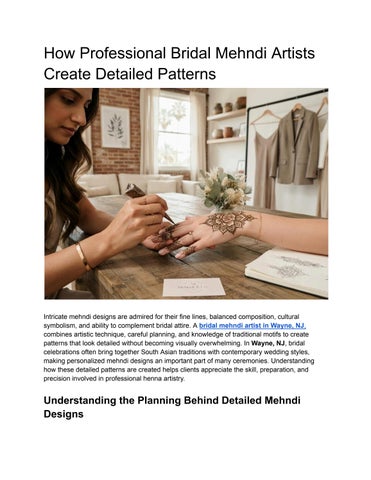
How Professional Bridal Mehndi Artists Create Detailed Patterns
Intricate mehndi designs are admired for their fine lines, balanced composition, cultural symbolism, and ability to complement bridal attire. A bridal mehndi artist in Wayne, NJ, combines artistic technique, careful planning, and knowledge of traditional motifs to create patterns that look detailed without becoming visually overwhelming. In Wayne, NJ, bridal celebrations often bring together South Asian traditions with contemporary wedding styles, making personalized mehndi designs an important part of many ceremonies. Understanding how these detailed patterns are created helps clients appreciate the skill, preparation, and precision involved in professional henna artistry.
Understanding the Planning Behind Detailed Mehndi Designs
Creating an elaborate bridal design begins long before henna is applied to the skin. A professional artist typically considers the bride's outfit, jewelry, wedding theme, preferred motifs, available application time, and the amount of coverage desired. A professional henna artist may first discuss whether the bride prefers traditional Indian, Pakistani, Arabic, Moroccan, or fusion-inspired patterns. This consultation helps establish the overall visual direction. Design planning commonly includes: ● ● ● ● ● ●
Selecting a central motif for the hands or feet Determining how densely the pattern should be filled Creating connections between individual motifs Balancing negative space with detailed linework Coordinating patterns between both hands Considering how the design will appear alongside bridal jewelry
In Wayne, NJ, where wedding celebrations can incorporate multiple cultural traditions, customization allows mehndi patterns to reflect both heritage and contemporary preferences. A carefully planned design also reduces inconsistencies during application because the artist has already established the major visual elements. Pro Tip: Brides can make the consultation more productive by collecting a few examples of patterns they like while identifying specific motifs, coverage levels, or styles they want to avoid.
Techniques Used to Build Fine and Intricate Patterns Detailed mehndi is created by combining numerous small techniques rather than relying on one complicated drawing method. The henna cone must be controlled carefully to produce consistent lines, dots, curves, leaves, petals, and geometric elements. An experienced henna designer commonly builds the pattern from larger forms toward smaller decorative details. For example, a floral centerpiece may be surrounded by vines before smaller petals, dots, curls, and latticework are added.
Common Elements in Bridal Mehndi Professional designs frequently include: ● ● ● ● ●
Floral arrangements and paisleys Fine vines and leaves Mandala-inspired circular patterns Geometric grids and latticework Decorative fingertips
● Repeated borders and bands ● Peacock or bird motifs ● Cultural symbols and personalized imagery Line thickness is especially important. Heavy outlines can define major elements, while thinner strokes create texture and visual depth. Repetition also contributes to consistency, allowing similar motifs to appear across different sections without making the design look mechanically copied. The artist's cone pressure, hand movement, and angle all influence the final appearance. Small variations can affect symmetry, making steady application an essential part of detailed bridal work.
How Composition and Symmetry Improve the Finished Design A complex mehndi pattern is not simply a collection of decorative elements. Each component must work with the surrounding artwork. Professional artists use composition to guide the viewer's eye naturally across the hands, wrists, arms, feet, or legs. A skilled bridal henna specialist may use larger motifs as focal points and smaller patterns as transitions. This creates visual hierarchy and prevents every section from competing for attention. Symmetry can also be approached in different ways. Some designs mirror both hands closely, while others use complementary patterns that differ slightly but maintain the same visual weight. For example, one hand might feature a prominent paisley while the opposite hand uses a floral centerpiece. Similar borders and filler patterns can connect the two compositions without making them identical. Did You Know: Negative space is an important design element in mehndi. Leaving selected areas uncovered can make surrounding details appear sharper and prevent an intricate pattern from becoming visually crowded. For weddings in Wayne, NJ, seasonal considerations can also influence practical planning. Summer celebrations may require attention to drying conditions and scheduling, while colder weather can affect how comfortable the bride is during a lengthy application session. These practical factors can influence the timing and arrangement of the design process.
Selecting Henna, Preparing the Skin, and Developing the Stain
The quality of the final result depends not only on artistic skill but also on preparation and aftercare. A bridal henna specialist typically works with fresh henna paste that has the appropriate consistency for controlled application. Before application, the skin should generally be clean and free from products such as heavy lotions or oils. This provides a suitable surface for the paste and helps the artist maintain consistent lines. After application, the henna must remain on the skin for an appropriate period. As the paste dries and releases its dye, the stain develops progressively. The initial color is usually lighter and can deepen over the following hours. Good aftercare may involve: ● ● ● ● ●
Allowing the paste to remain undisturbed Avoiding unnecessary contact with water immediately after removal Keeping the area warm when practical Following the artist's specific aftercare instructions Allowing time for the stain to mature naturally
A traditional mehndi artist may also incorporate cultural motifs whose meanings are associated with prosperity, love, fertility, celebration, or good fortune. These elements can add personal and cultural significance beyond their decorative appearance. Did You Know: Natural henna does not instantly produce its darkest stain. The color generally develops gradually after the dried paste is removed, making patience an important part of the process.
Personalization, Detail, and Modern Bridal Trends Modern bridal mehndi increasingly combines traditional patterns with personalized artwork. A custom bridal henna artist may incorporate initials, wedding dates, portraits, meaningful symbols, favorite flowers, or references to the couple's story. Personalization does not necessarily require filling every available area. In fact, selective detailing can make meaningful elements easier to recognize. The artist may use borders, negative space, and repeated motifs to integrate personal details into the larger composition. Another growing preference is the combination of different regional styles. Floral Arabic-inspired elements may be paired with Indian-style filling, while geometric patterns can complement traditional paisleys and mandalas. In Wayne, NJ, diverse wedding communities create opportunities for couples to combine cultural traditions in ways that reflect their individual backgrounds. This makes adaptability an
important artistic skill, particularly when clients want a design that feels traditional while still looking contemporary. A bridal mehndi specialist also needs to consider practical timing. Highly detailed designs require considerably more application time than minimal patterns. Discussing the desired coverage and wedding-day schedule beforehand helps establish realistic expectations.
Frequently Asked Questions 1. What does a professional bridal mehndi artist do differently? A bridal mehndi artist focuses on detailed composition, consistent linework, customized motifs, balanced coverage, and careful application. The process usually includes consultation, design planning, skin preparation, precise cone work, and aftercare guidance. The goal is to create a cohesive design rather than simply filling the skin with individual decorative elements.
2. How long does detailed bridal mehndi application take? The duration depends on the design's complexity, coverage, and the number of body areas being decorated. Simple hand designs may take considerably less time, while full bridal coverage involving hands, arms, feet, and legs can require several hours or multiple sessions.
3. What makes bridal mehndi patterns look more detailed? Fine linework, layered motifs, controlled spacing, repeated borders, floral elements, paisleys, dots, and geometric fillers contribute to visual detail. Professional artists also use varying line thickness and negative space to maintain clarity.
4. How should the skin be prepared before mehndi application? Clean, dry skin is generally preferred. Heavy creams, oils, or lotions can interfere with application and should be avoided immediately before the session unless the artist recommends otherwise. Specific preparation instructions may vary depending on the artist and the products being used.
5. Why does natural henna change color after application? Natural henna stain develops gradually. After the paste is removed, the stain can initially appear orange or light brown before becoming deeper over the next several hours. The final appearance can vary based on skin characteristics, body warmth, application technique, paste quality, and aftercare.
Achieve beautifully detailed bridal mehndi with intricate patterns crafted by skilled professional artists. Contact us today to book your bridal mehndi session and bring your dream design to life!