Through GapOnly®, policyholders help support PetSafetyNet for eligible pet carers doing it tough.<
with <PetSafetyNet™ and GapOnly® are trademarks owned by PetSure(Australia) Pty Ltd ABN 95 075 949 923 AFSL 420183 (PetSure). Eligibility for access to PetSafetyNet™ applies. Visit http://petsafetynet.com.au/safetynet-terms-of-service/ for terms of service. http://Petinsurance.com.au policies entered into for the first time on or after 07/11/2023 and subsequent renewals of those policies are issued by PetSure and promoted and distributed by PetSure’s Authorised Representatives (AR) Pet Insurance Pty Ltd ABN 38 607 160 930, AR 1234944 (PIPL) and The Royal Automobile Club of Tasmania
http://Petinsurance.com.au policies
We acknowledge the ancient history of the Traditional Owners of Lutruwita, and their continuing connection to family, community, and the land, sea, and waterways. We pay our deepest respects to those who have passed before us and acknowledge today’s Tasmanian Aboriginal people, and their enduring connection to this island. We stand for a future that profoundly respects and acknowledges Aboriginal perspectives, culture, language and history.
ract.com.au
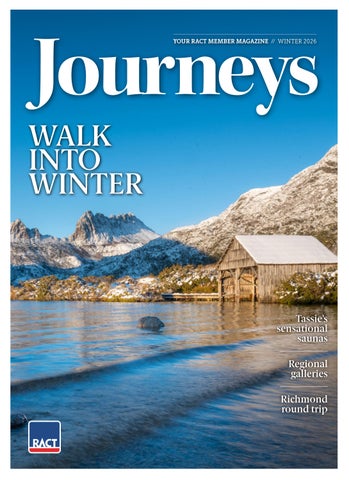
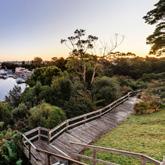
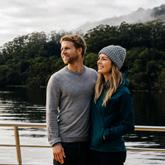
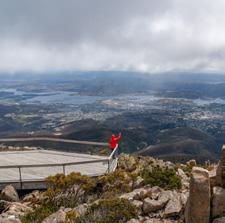
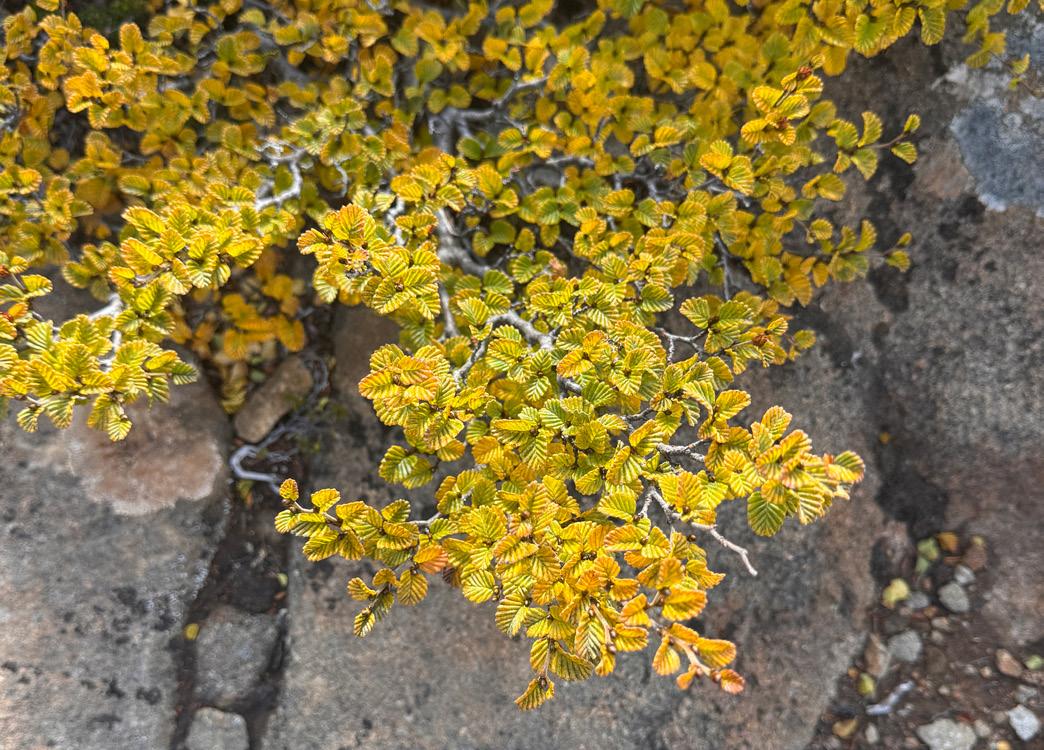
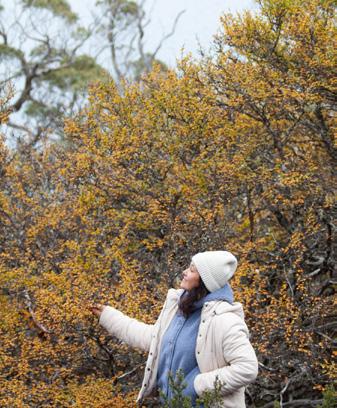
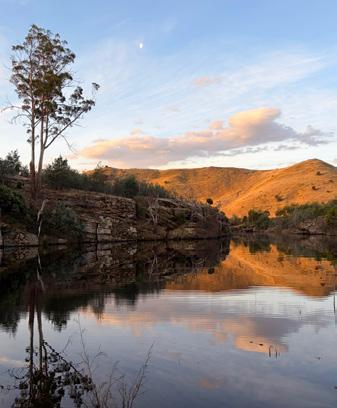
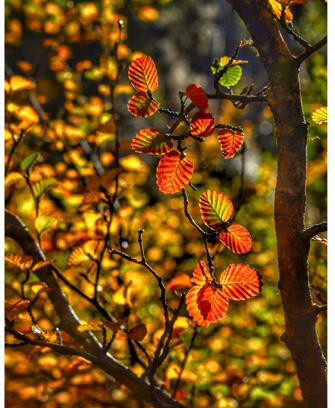
Tasmania’s best short winter walks
to explore the Apple Isle on foot
When Tasmania happens.
welcome.
A word from our GCEO
Earlier this year, more than 11,000 of you took part in our member survey, one of the biggest responses we have ever received. Your voice matters deeply to us, and it shapes everything we do.
That willingness to engage reflects something I am incredibly proud of at RACT: we are a community that looks out for each other. And right now, that spirit is needed more than ever.
We have recently shone the light on National Road Safety Week, and the reality remains confronting. Sadly, 43 people lost their lives on Tasmania’s roads last year; the highest toll since 2022. Last year alone, 13 young Tasmanians under the age of 30 didn’t make it home. On average, that’s one every four weeks.
These are not just statistics. They are family members, friends, classmates, colleagues, and their loss is felt deeply across our communities.
At RACT, we refuse to accept that road trauma is inevitable. Through our Youth Road Safety Project – an $8 million, five-year partnership with the Tasmanian Government – we are investing in longterm change. The program supports young people in schools, equips parents and supervisors with practical driver-support
tools, and works with communities to build safer driving environments. Everything in this project has been shaped with the young Tasmanians it is designed for.
Beyond road safety, we are focused on helping Tasmanians prepare for the challenges ahead, from natural disasters to rising insurance costs. Your survey responses are helping us advocate for fairer, more sustainable solutions and invest in research that builds community resilience.
Whether it’s on the road, in a crisis, or navigating life’s uncertainties, RACT is here. A shoulder to lean on and a voice when it matters most.
Following this issue, you will see Journeys evolve. From Spring 2026, we are reimagining how we bring you stories and value – more connection, more relevance and a stronger reflection of the community we serve together.
Thank you for being part of this journey.
Mark Mugnaioni // RACT Group CEO
Keryn Nylander
Gillespie
Tony Coleman, Alex Costabile, Craig Ellis, Natasha Fenech, Pieter Kolkert, Tracy Matthews, Alex McKenzie
GROUP CEO Mark Mugnaioni
Murnaghan
hardiegrant.com
8 / WHAT’S ON
10 / TOP 5 REGIONAL GALLERIES
lifestyle
12 / WHEN THE SIREN SOUNDS
Dark Mofo
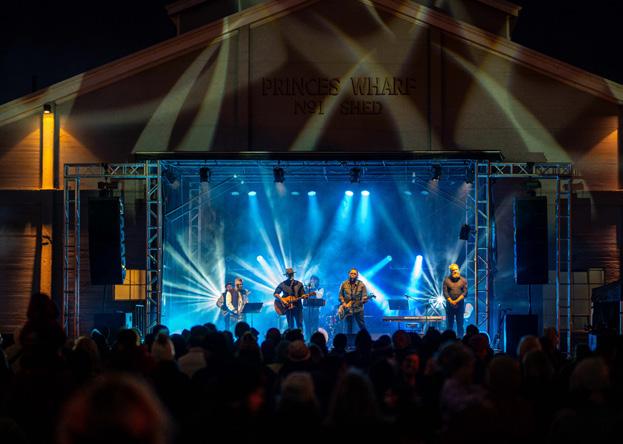
Embrace the cold for a packed program of art, performance, live music, movies and more as Hobart’s premiere winter festival returns. Annual rites such as Night Mass, Ogoh-Ogoh and the skin-tightening Nude Solstice Swim are on the program as well as once-in-alifetime installations – don’t miss Spiritof Tasmania V, a 48,000-tonne ship moored in Dark Park. Crowd favourite Winter Feast will once again take over Princes Wharf and Salamanca Lawns, this year welcoming guest chef Floriano Pellegrino, who runs Michelinstarred restaurant Bros’ in Italy, in partnership with Roberto Mele of MAMA Artisanal Bakery. For more, visit darkmofo.net.au
what’s on.
Out
and about this winter in Tasmania
16 AUGUST
WINTER CHALLENGE
Fly solo or put a team together for Orford’s annual multisport race, where competitors kayak, road bike, mountain bike and trail run to the finish line. There’s also the Australian Egg and Spoon Racing National Championships, raising money for the local nippers club. winterchallengestas.com
6-17 AUGUST
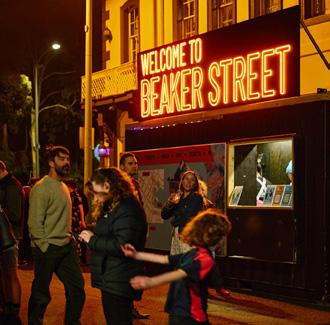
Beaker Street Festival
This two-week celebration of science, art and culture celebrates its 10th season with interactive exhibits, field trips and workshops at Hobart City Hall, TMAG and Rosny Farm, among others. Lock in for late-night events, immersive performances, live music, food and more. beakerstreet.com.au
2-4 JULY
Canada vs USA Ice Hockey Classic 2026
Yes, you read that headline right. Over three nights, the Ice Hockey Classic sees teams from the USA and Canada clash at MyState Bank Arena. Expect back-to-back thrillers with fast plays, fierce checks and heart-stopping goals. mystatebankarena.com.au
WINTER WORKSHOPS
10AM–3PM DAILY, ON DEMAND
Phoenix Creations
Wooden Spoon Carving Workshops
Spend a day in Cygnet learning how to make wooden spoons. Materials and morning tea is provided.
22-23 AUGUST
Eco Dyeing & Wet Felting with Esther, Riverview at Ross
Learn the art of wet felting and create your very own piece to take home at this two-day workshop, which includes materials and accommodation.
SATURDAYS (FORTNIGHTLY)
Hands-On Paper Making
In Wynyard, Creative Paper’s papermaking workshops are suitable for all ages. Try creative techniques like embossing patterns and embedding flowers as you make paper from scratch.
Want to tell us about your event or product? Reach us on journeys@ract.com.au
27 JUNE-25 JULY
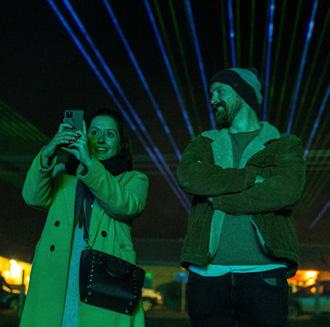
Bicheno Beams
This family-friendly laser show lights up Bicheno every night at 6.30pm for a month during winter. No bookings required, just head to Bicheno Lions Park via the Burgess Street entrance at sunset. BYO picnic blankets, chairs and warm (non-alcoholic) drinks. bichenobeams.com
13-23 AUGUST
Unwind
Launceston’s winter wellness festival invites you to slow down and warm up (or cold plunge!). Discover bite-sized workshops and introductory offers designed to help you reset, with saunas, yoga, meditation, nourishing food, beauty rituals and nature experiences on offer. launcestoncentral.com.au/unwind
3-12 JULY
Festival of Voices
This year’s program is on song, with almost 100 events across the state over two weeks. Sing along on a Magical Mystery Tour, stop by St David’s Cathedral for free lunchtime concerts, and belt out old favourites at the Country Pub Chorus with the Wolfe Brothers in Longley or St Helens. festivalofvoices.com
31 JULY
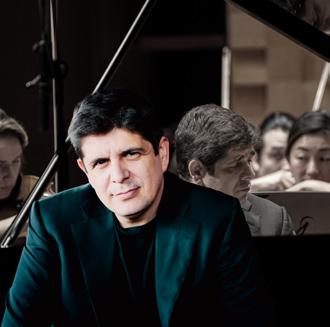
Brahms, Mozart and Beethoven
The TSO reunites with Spanish pianist Javier Perianes at Federation Concert Hall for a performance, conducted by Eivind Aadland, featuring Mozart’s Piano Concerto No 23, Beethoven’s Symphony No 4 and Brahms’ Schicksalslied (Song of Destiny). tso.com.au
REGIONAL ART GALLERIES
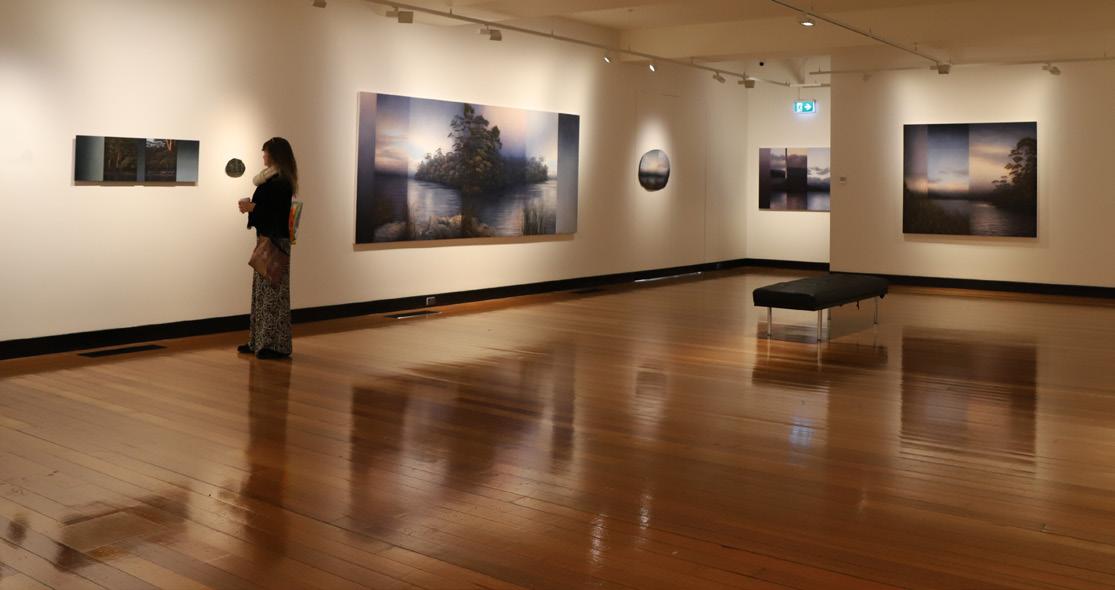
Mona may have put Tassie on the map for arts tourism, but there’s plenty more to discover around the state, too. Nola James rounds up five galleries across our state that are proudly shaped by their surroundings.
1 Devonport Regional Gallery, Devonport
This council-funded space champions the work of contemporary Tasmanian artists across three modern exhibition spaces. With a focus on art, craft and design, a yearly emerging artists program supports the work of early career artists, while the gallery also functions as a hub for community activities, with a range of hands-on creative programs. paranapleartscentre.com.au/ devonport-regional-gallery
2 Moonah Arts Centre (MAC), Moonah
This gallery/performance space knows how to party. Free, family-friendly live music sessions are held on the second Saturday of each month, while the exhibition program highlights the work of a diverse artist base from Tasmania and abroad. During school holidays, there’s age-appropriate workshops ranging from singing to pottery, printmaking and circus skills. moonahartscentre.org.au
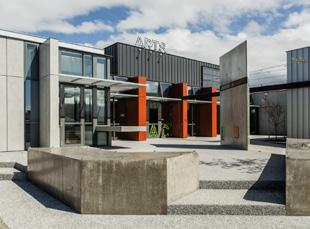
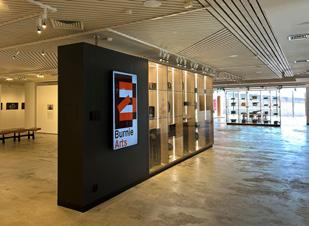
3 Burnie Arts, Burnie
This sprawling public gallery space and multi-purpose arts centre, re-opened in late 2025 after a $20 million renovation – an impressive turnaround considering the local council closed it down in 2022. Thankfully, federal funding provided a
much-needed boost for the cultural hub, with works by Julie Gough, Ernest Albert Winter and Rodney Pople on show alongside touring exhibitions. burniearts.net
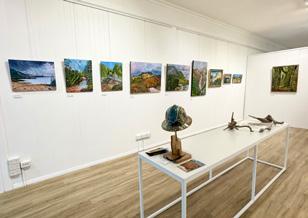
4 Soggy Brolly, Queenstown
Located in an old shopfront on Orr Street, this independent gallery is largely focused on makers from the West Coast and those who celebrate the region’s rugged beauty and cando spirit. Think photography (Frankie Munro) to painting and printmaking (Raymond Arnold), jewellery (Yvania Bartholomeusz) and sculpture (Mal Gotjes). With works for sale at reasonable prices, you can pick up original works for a song.
facebook.com/soggybrolly
5 Wilderness Gallery, Cradle Mountain
Sporting nine exhibition rooms, an outdoor garden, and a movie theatre that screens the documentary Wilderness, which tells the story of Olegas Truchanas and Peter Dombrovskis, two of Tasmania’s (and Australia’s) greatest wilderness photographers, this gallery is open seven days a week with free entry. It’s the perfect place to warm up after a day of bushwalking, and the gift shop is stocked with Tassie-made merch. cradlemountainhotel.com.au/ explore/wilderness-gallery
2 3 1 4 5
Photos:
Burnie
Arts;
Soggy
Brolly;
Brogan
Mancell
“Local clubs are often the heart of our towns, bringing together families, volunteers, coaches, sponsors and supporters every weekend.”
the warmth of
winter
sport
Beanies, thermoses and early starts… inside Tasmania’s winter sports ritual. Words
Nina Hendy Photography Rosie Hastie
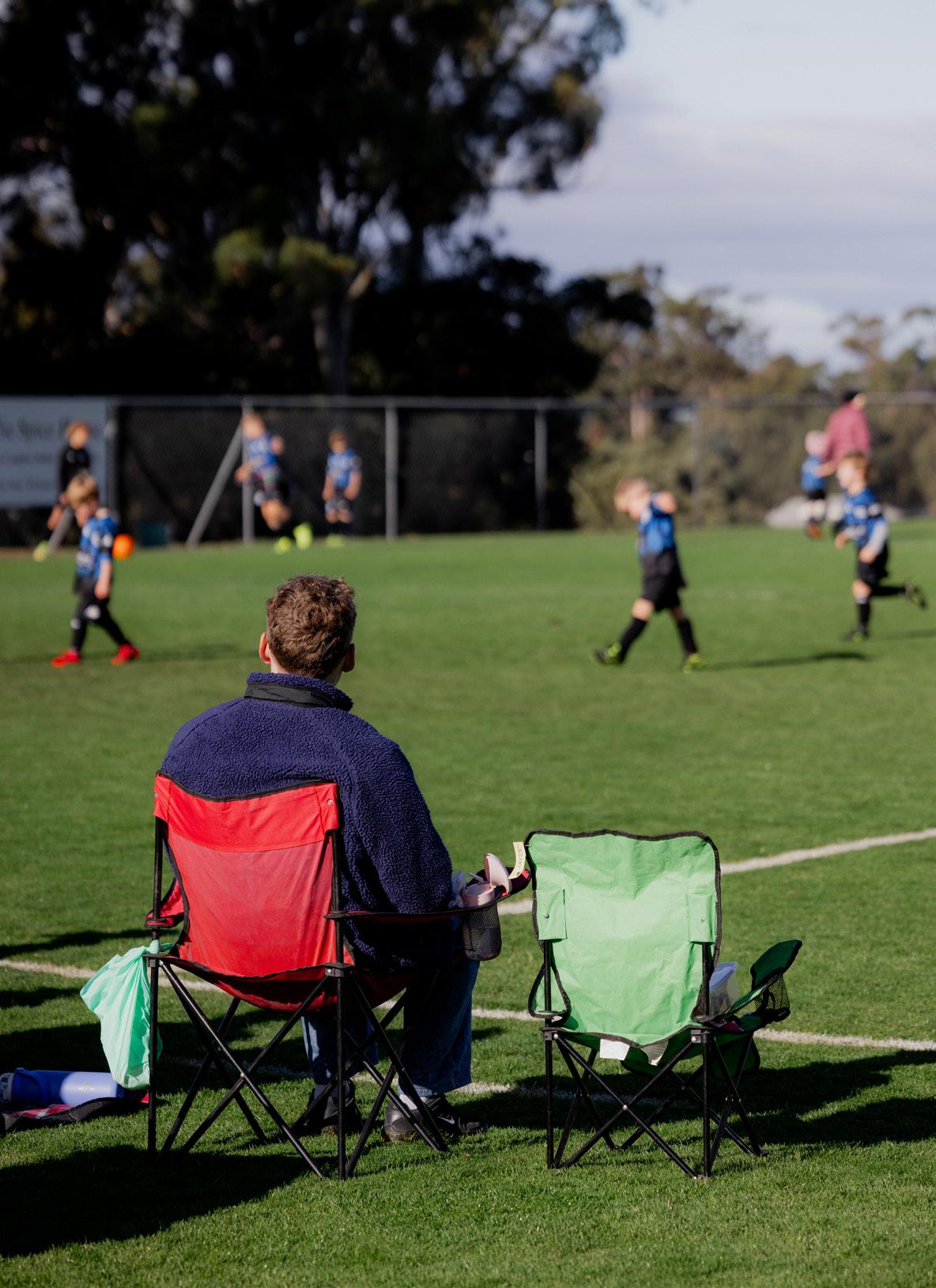
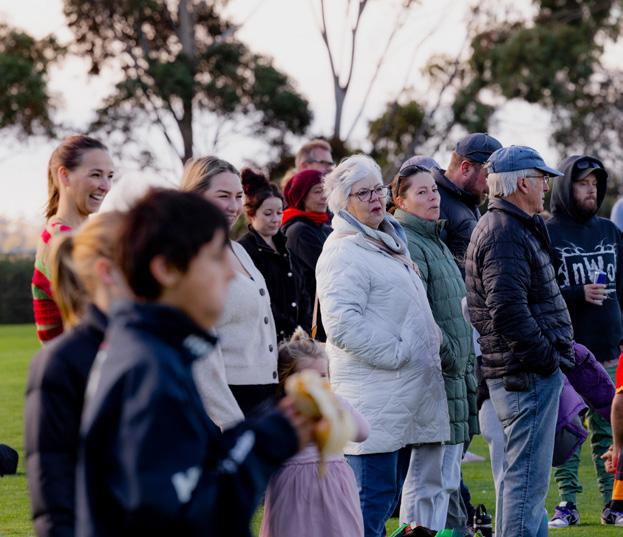
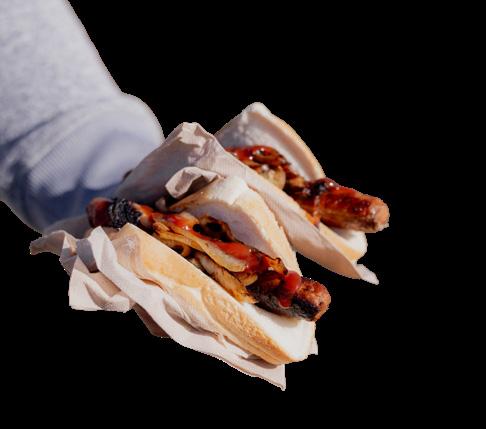
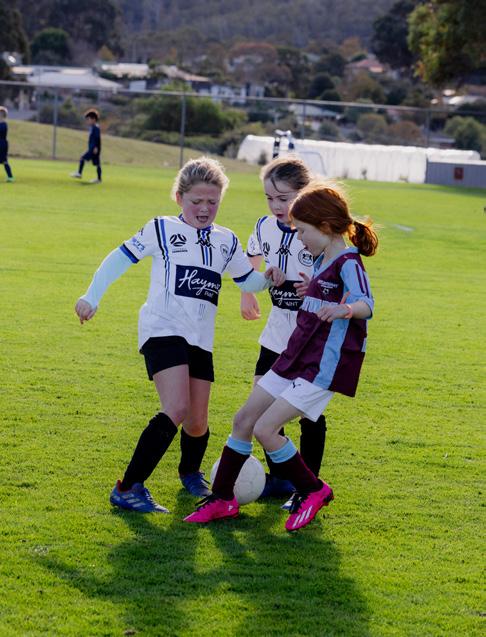
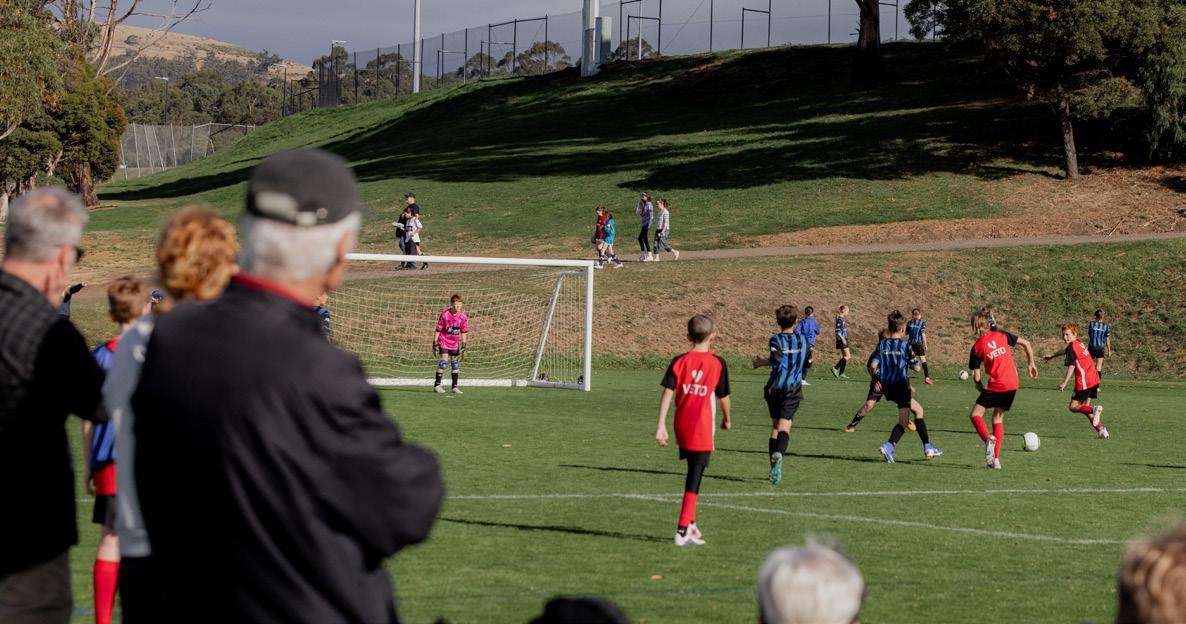
On a winter morning in Tasmania, the sidelines fill early. Parents arrive in layers with beanies pulled low, hands wrapped around takeaway coffees or bacon-and-egg rolls. Some stay in their cars, engines idling, watching through fogging windscreens. Others huddle in camp chairs and blankets, waiting for the whistle.
Every weekend, across the state, this scene plays out. From netball and soccer to football, basketball, yachting and even underwater hockey played in community pools, families show up, through rain, frost or biting wind, to get their children to training and games.
It’s easy to see why. Team sport teaches the importance of discipline and commitment. There’s a sense of belonging, inclusion and socialisation that just attending school doesn’t offer.
“Sports are an incredibly important part of our community,” says Wynyard’s Deputy Mayor Celisa Edwards. “Getting people out to play and watch community sports over the winter months creates a sense of belonging and socialisation.”
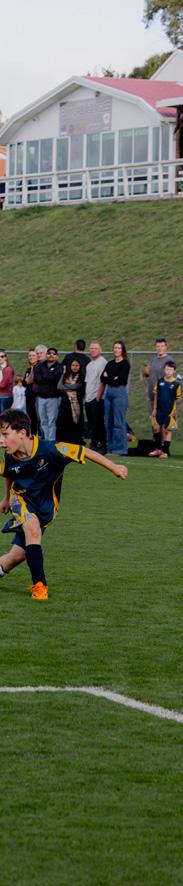
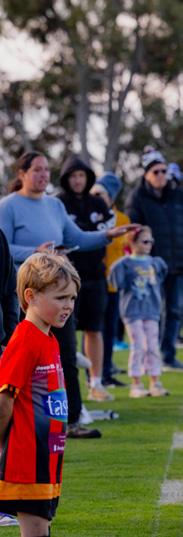
Clockwise from top left The Kingborough Lions in Kingston; netball in action; there’s nothing like a sausage sandwich on a cold morning; spectators staying warm in Kingston.
On the sidelines
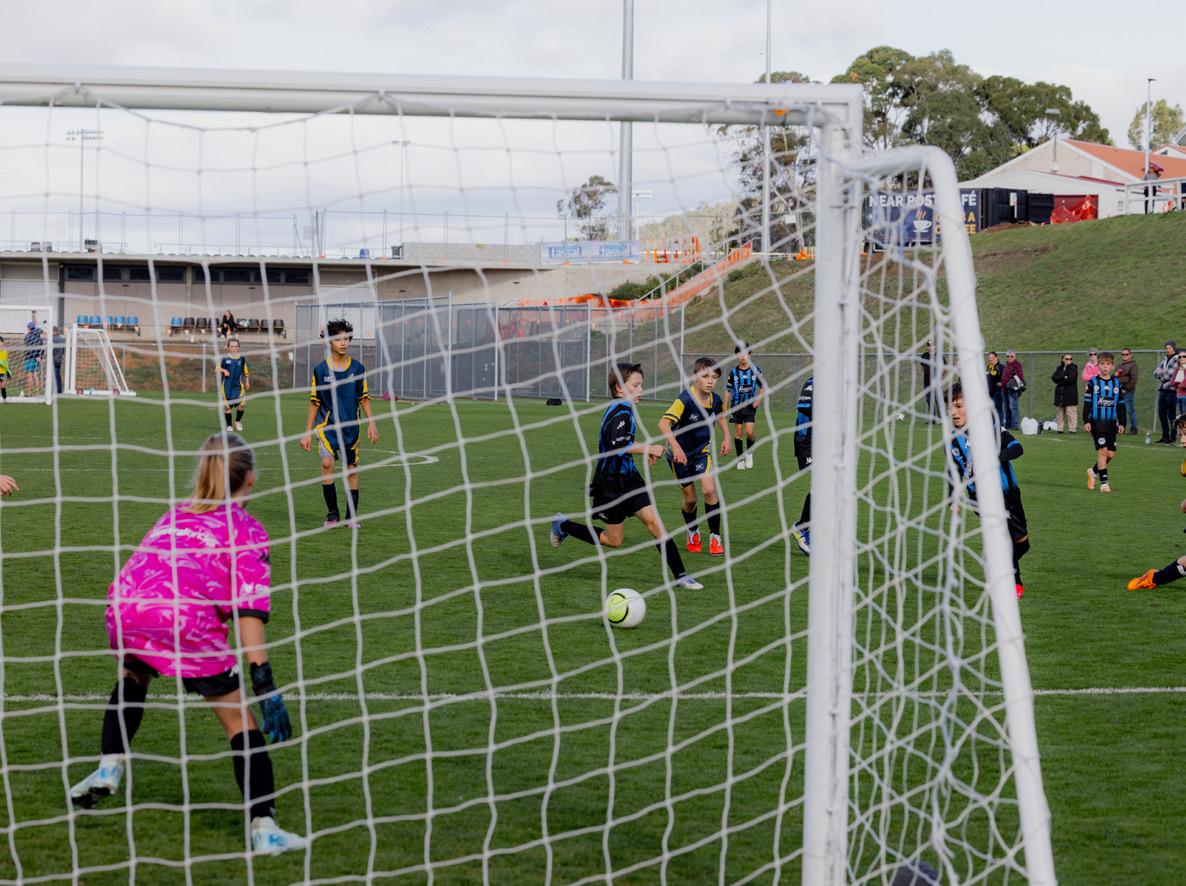
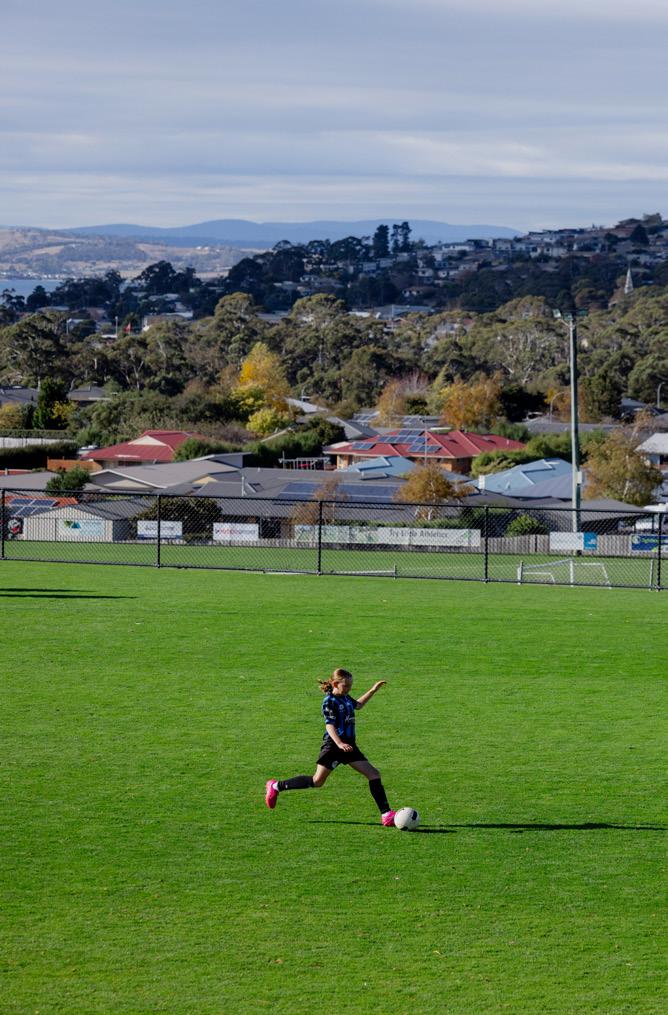
In the south of the state, the Kingborough Lions, a community-based club in Kingston, is developing the soccer skills of players of all ages. Parents travel an hour or two to games held as far south as Dover, Cygnet or Woodbridge.
Coach Tim Dale says local soccer games are extremely important in regional townships: “The soccer games reflect the existence of sporting clubs, which play a critical role in local towns. They foster community identity, cohesion and pride, while promoting physical and mental wellbeing.”
Run on the back of hardworking volunteers and community spirit, soccer games serve as a focal point for all members of the community, young and old.
On the sidelines, spectators do whatever it takes to stay warm. Parking spots closest to the action are always taken first so that parents can stay in the car to watch the game.
Tim says he’s seen plenty of spectators clutching a hot thermos of coffee wearing hand warmers. Scarves, beanies and a warm coat are also a must. Others bring along a camp chair and a blanket, huddling on the sidelines in the winter sunshine to cheer on their team.
It’s a familiar scene, repeated across towns and fields, with the same routines, the same sideline spots, the same people turning up week after week.
Community spirit
The Tasmanian Government has focused on increasing youth participation in sport by reducing membership or registration costs for children, offering two vouchers worth up to $100 each to help with the costs. The initiative opens extracurricular sport opportunities up to families who otherwise may not be able to afford it.
Minister for Education, Jo Palmer, says school sports courts are an essential part of every school, offering students a safe place to be active, develop skills and have fun with friends.
To help more young people get involved in community sport, the state government has been opening school gates after hours to give students and local communities access to modern playgrounds, ovals, and indoor and outdoor sports courts.
“School playgrounds are also important to our local communities. We know that many families enjoy visiting school playgrounds outside of school hours for fun and fitness,” Ms Palmer says. “We also know there is strong demand for sports courts across the state, and schools are playing an important role in increasing access to facilities for Tasmanians.”
Community and recreation groups have been eligible for grants of up to $2,000 to deliver projects that support community initiatives and enhance social and cultural wellbeing.
Developing resilience
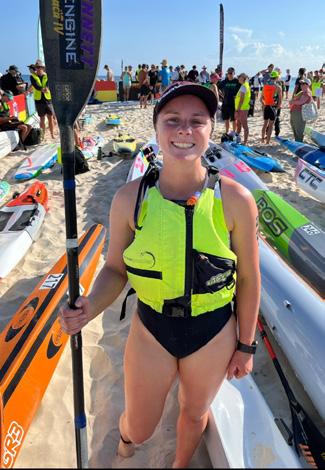
Across the state, Tasmanian surf life savers also train several times a week in the winter months. Clifton Beach head senior coach Courtney Beswick delivers sessions across ski paddling, board paddling and iron person disciplines, supported by a team of assistant coaches.
Having coached surf sports for the past four seasons, her dedication to volunteering supports athletes across all aspects of their development and competition preparation, which includes winter long distance paddling to ensure surf life savers maintain their fitness.
Courtney says that training through the colder, more challenging conditions helps create a tightknit group of athletes who develop resilience and camaraderie, which ultimately translates into strong success through the summer competition season.
“Coaching surf sports during the winter months is extremely important at our club because it plays a key role in building both baseline conditioning and a strong team culture,” she says.
Ski paddling sessions can be held during the evenings, often in dark and very cold conditions, while the morning session can be frosty. The typical paddling outfit consists of head torches, beanies, windproof jackets and paddling booties.
“The winter period also provides an ideal opportunity to focus on refining technique, reinforcing good habits and building a solid aerobic and strength base. Athletes who commit during these more demanding months tend to see the greatest improvements in both performance and consistency,” Courtney says.
Clockwise from top left Soccer on a crisp Kingston morning; Tassie surf lifesavers train several times a week in winter.
On the ball
The Australian Football League is a major drawcard in the Huon Valley during the winter months, with two major teams battling hard for state championships. The region has also experienced robust growth in its participation rates for women and juniors.
It’s not just about the game. It’s about showing up, for your team, for your kids, for your community.
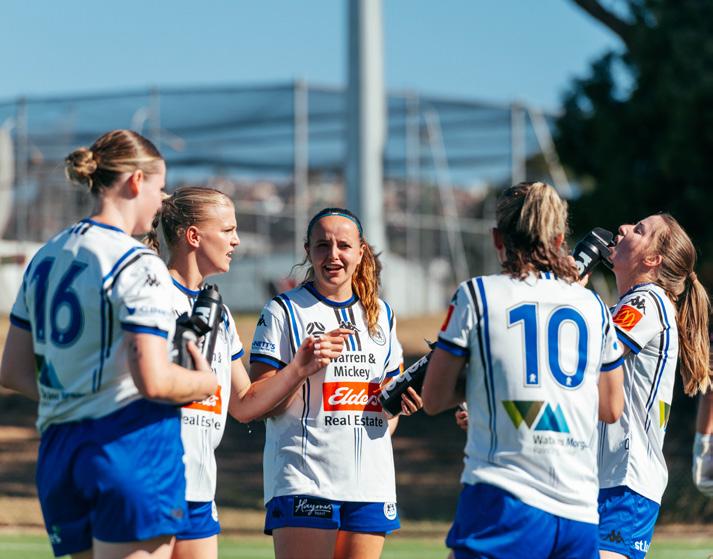
Soccer has seen significant growth in the Valley, too. “Off the back of a strong off-season, player drive and an energetic new committee and president, player registrations are up more than 30 per cent,” says Huon Valley Mayor Sally Doyle. “We’re also excited to see more opportunities for women, including the addition of a new women’s team, the Dover Devils, based in Franklin.”
Winter sport is a strong sign of a healthy community. Sport helps build connection, belonging and pride, creating positive pathways for young people through teamwork, confidence, fitness and leadership.
For Mayor Doyle, the appeal goes beyond the game itself: “Local clubs are often the heart of our towns, bringing together families, volunteers, coaches, sponsors and supporters every weekend. Clubs do a great job of creating a warm, welcoming atmosphere through canteens and volunteers, whether it’s a hot drink, a bowl of soup or a hearty meal. That sense of club spirit and community is often what keeps people coming back, even on the coldest winter days.”
Winter sport in Tasmania isn’t always comfortable; it can mean early starts, cold hands, long drives and standing on the sidelines in the wind. But it can also include winter sunshine, shared moments and new friendships. It’s not just about the game. It’s about showing up, for your team, for your kids, for your community. And that’s what keeps people coming back, week after week, year after year.
drive
Spot the leopard
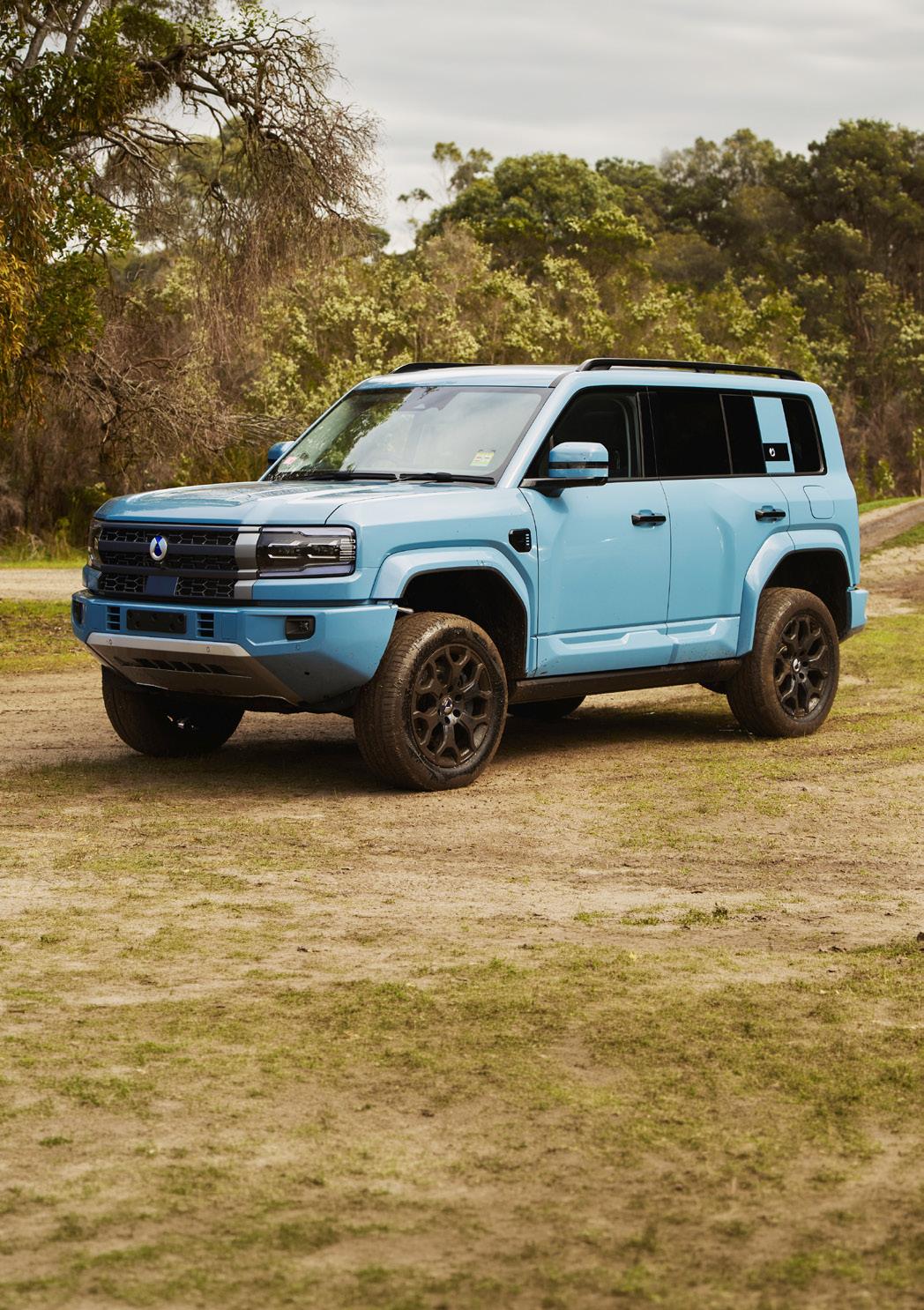
Sales of Chinese vehicles in Australia have been booming, accounting for roughly one in five new cars sold last year. BYD has been one of the big movers, cementing itself in the national Top 10 bestsellers and thus emboldened to launch a new luxury offshoot, Denza. Position-wise, Denza is to BYD as Lexus is to Toyota, with the brand’s Australian assault spearheaded by two ruggedlooking off-roaders dubbed the B5 and B8. The former is a five-seater and predicted to be more popular, while the B8 seats six or seven, depending on configuration.
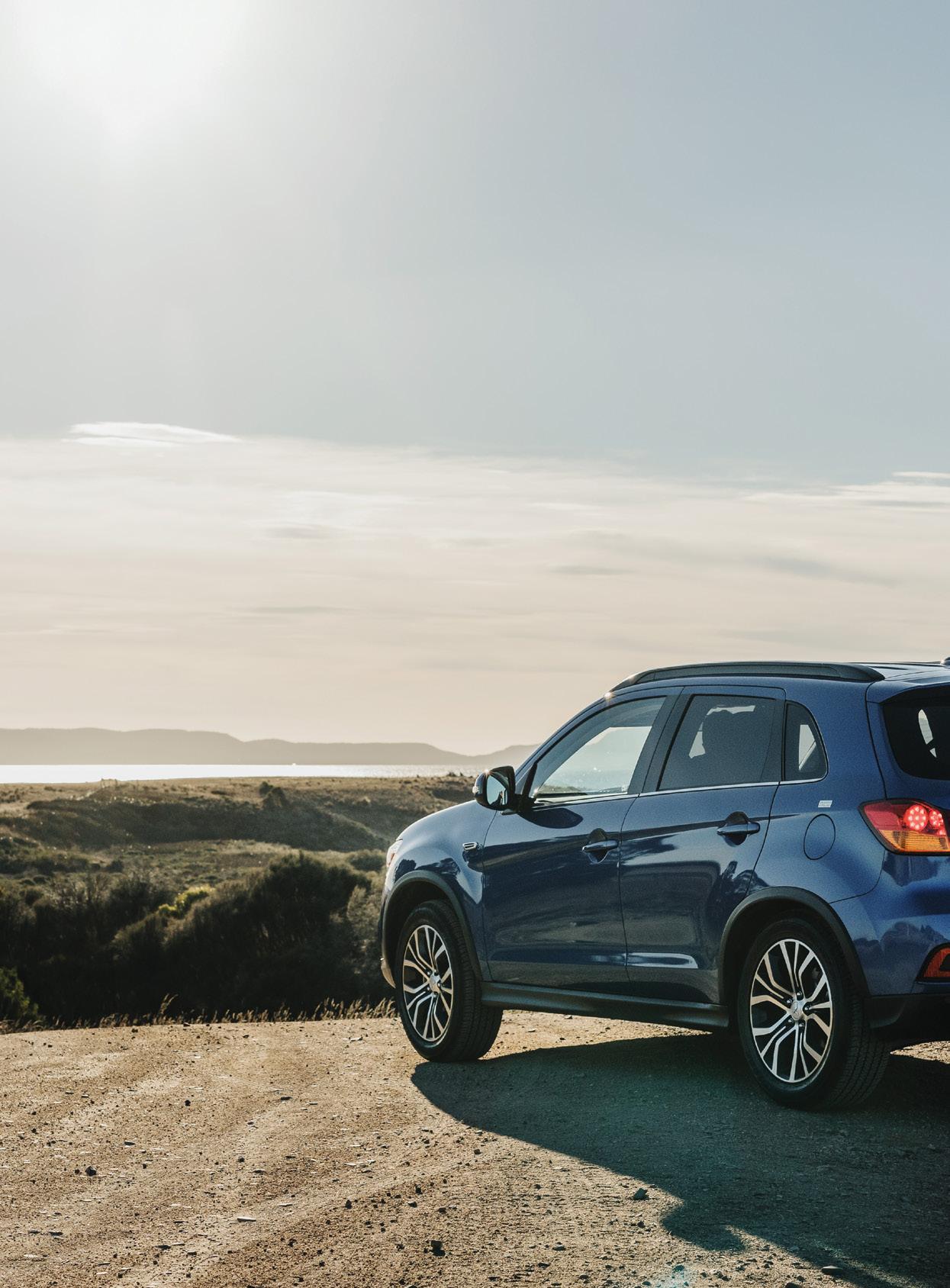
The B5 might look utilitarian with its Prado-like dimensions, bluff-grille and slab-sided styling, but inside the cabin it features a luxury fit-out that rivals European SUVs. Offered in two trim levels, the entry level B5 rides on 18-inch alloy wheels and costs $74,990, while the top-spec Leopard sports 20-inch alloys, hydraulic adaptive suspension and a $79,990 price tag. Both feature a plug-in
20/ AUTO NEWS
22/ 0-100: KIA EV4
25/ IN REVERSE: LAMBORGHINI MIURA
26/ ROAD TEST: VOLKSWAGEN GOLF STYLE
hybrid electric (PHEV) powertrain comprising a turbocharged 1.5-litre four-cylinder petrol engine, twin electric motors and a 31.8kWh lithium iron phosphate (LFP) battery. Combined outputs are an impressive 400kW/760Nm, which is enough to propel the 3007kg wagon from 0-100km/h in 4.8 seconds, with a pure electric range of 90km (WLTC) and combined petrol-electric range of 850km (WLTC). Fuel consumption is a thrifty 3.9L/100km (WLTC) with a fully charged battery, rising to 10.9L/100km (WLTC) once the battery is depleted.
The absence of a high-low range transfer case might suggest the B5 Leopard isn’t up to their off-road chops either, but fitment of front and rear electrically-actuated diff locks, along with adjustable ride height, plus good approach, departure and ramp over angles, ensures impressive all-terrain ability. For more, visit denza.com/au
auto news.
The
Stretching the Point
Australia’s bestselling EV, the Tesla Model Y, is set to gain a third row of seats and a longer wheelbase in a bid to capture more of the family SUV market. The Model Y has topped the EV sales charts here for the past three years, but the brand has lacked a seven-seat option since the demise of the Model X in 2023. The new Tesla Model Y L, due later this year, won’t quite stretch to seven pews, with the new variant set to include three rows of two seats packaged into a vehicle with overall length stretched by 177mm.
Available in a single Premium Long Range AWD trim, the Model Y L is priced from $74,900, plus onroad costs, which is a premium of around $6000 over the equivalent five-seat Long Range AWD variant. The extra coin brings stylish second-row captain’s chairs with armrests and those crucial two extra seats in the third row. The rearmost seats feature power recline function, one-touch folding and vented climate control, with secondrow passengers gaining an 8.0-inch touchscreen, four-way power seat
adjustment, power flat seat folding, seat heating and ventilation, and power-operated armrests.
The new Model Y variant also includes a host of other detail changes compared to the fiveseater, including a slightly larger 88.2kWh battery, which enables a 681km driving range, and Tesla’s first local use of vehicle-to-load technology, allowing owners to power external electrical devices at up to 3.3kW.
TAKE ME TO YOUR HUMAN
Videos of humanoid-like robots suffering epic fails have become one of the internet’s hottest trending topics in recent times, presumably as we actual humans become increasingly aware and, in some cases, worried by their rapidly expanding capabilities. German car maker BMW will be hoping the robots it’s deploying at its manufacturing plant in Leipzig, Germany, avoid making it onto any such social media clips, maintaining good decorum alongside their highly unionised human colleagues.
The Leipzig move follows a successful pilot deployment of humanoid robots in 2025 at the company’s plant in Spartanburg, USA. That pilot saw the robot dubbed ‘Figure 02’ support the production of more than 30,000 BMW X3 SUVs, working 10-hour daily shifts from Monday to Friday.
BMW says the subsequent Leipzig project aims to integrate humanoid robotics into existing series production
of cars and to explore further applications in the production of batteries and components. The company sees humanoid robots as a value adding complement to existing automation, demonstrating potential in monotonous, ergonomically demanding, or safety critical tasks. In the US, Figure 02 handled the precise removal and positioning of sheet metal parts for the welding process – a task that is particularly demanding in terms of speed and accuracy, while also being physically exhausting.
The company said the deployment in Leipzig is focusing on testing a multifunctional application using its technology partner Hexagon’s AEON robot. The AEON robot’s human like body is claimed to allow a wide range of hand and gripper elements or scanning tools to be flexibly attached, with the robot to be used in the assembly of high voltage batteries and in component manufacturing.
PLAYING IT SAFE
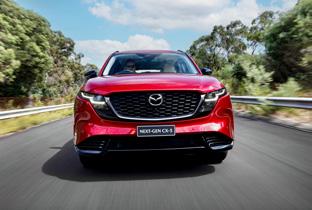
Spare a thought for automotive product planners right now. Consumer tastes are shifting rapidly thanks to an avalanche of new brands and powertrain choices, yet Mazda has taken a notably cautious approach with the thirdgeneration CX-5.
The updated medium SUV arrives with fresh exterior and interior styling, but under the bonnet sits the same 2.5-litre four-cylinder petrol engine producing 132kW and 242Nm. That may prove a gamble as more Australian buyers look towards hybrids, plug-in hybrids and EVs. A hybrid CX-5 is reportedly on the way, but not until 2027.
For now, Mazda is banking on sharp styling, generous equipment lists and the CX-5’s proven reputation to maintain momentum. The five-variant all-wheel-drive range starts at $39,990 for the Pure and tops out at $54,990 for the Akera.
Drive to the conditions
0–100 review
Plugging the gap
Slowly but surely, Kia is plugging the alpha-numeric gaps in its electric vehicle range
Story
Harry Weller
In a range that includes the EV9, EV6, EV5 and EV3, Kia has added the missing link with the EV4. This stylish mediumsedan is a notable departure from Kia’s unrelenting SUV assault, distinguished by its Kardashian-like derriere. The aero-oriented design includes a smooth underbody, integrated spoiler, flush door handles and aero wheels that combine to deliver a slippery drag coefficient of 0.23Cd.
While the EV4 has a similar exterior footprint to its rivals – the Tesla Model 3 and BYD Seal – Kia claims it has more interior space than the benchmark Tesla, although its 490-litre (VDA) luggage capacity is notably smaller. Recommended retail price for the three-variant collection starts from $49,990 for the entry level EV4 Air Standard Range with smaller 58.3kWh battery, rising to $59,190 for the EV4 Earth Long Range and topping out with the EV4 GT-Line Long Range at $64,690.
As the ‘Long Range’ designation suggests, both the Earth and GT-Line are equipped with a larger 81.4kWh battery, enabling a range of 612km (WLTP) on a full charge, the longest yet for a Kia EV. The adoption of 400V electrical architecture instead of the 800V system used on other electric Kias means DC charging time isn’t as quick, however, with the battery charging from 10 to 80 per cent in approximately 30 minutes at the maximum DC charge rate of 128kW.
All three EV4 variants feature the same single, front-mounted electric motor, sending 150kW/283Nm to the front wheels. Inside, the EV4 boasts a clean, modern interior design with familiar features seen on stablemates the EV3 and EV5, including an integrated panoramic screen display comprising two 12.3-inch digital screens either side of a 5.0inch climate control screen. It’s a mostly digital interface, but Kia has thankfully retained some physical buttons for frequently used features.
The carmaker’s Connected Car Navigation Cockpit (ccNC) brings in-house telematic features, plus app-enabled remote services. Drivers can remotely set the car’s climate control functions to heat or cool the interior before departure and schedule battery charging to take advantage of off-peak rates.
The EV4 also features OTA (Over the Air) update capability and both internal and external V2L (Vehicle to Load) socket points for powering external devices.
Kia’s local ride and handling input has delivered an impressively polished dynamics package. The ride is pleasingly compliant on most surfaces, with high grip levels from 19inch alloy wheels clad with 215/50 rubber, and the handling balance is pleasingly neutral. EV4 isn’t positioned as a particularly sporty machine, but when pressed it has sufficient acceleration and responsive-enough handling to satisfy most drivers.
In this SUV-obsessed era it’s rare to see a carmaker launch a new sedan, let alone a battery-electric one, so Kia is to be applauded for offering its customers an alternative body style, albeit one with some polarising styling attributes.
THE SPECS
MAKE/MODEL Kia EV4 Earth
BODY STYLE Medium sedan
RETAIL PRICE $59,190 (RRP)
WARRANTY 7 Years/Unlimited km (vehicle), 8 Years/160,000 km (battery)
SEATING 5
ANCAP SAFETY RATING 5-Star (2025)
DRIVETRAIN Front-mounted electric motor (150kW/283Nm), front-wheel drive, 81.4kWh battery
TRANSMISSION Single speed automatic
KERB WEIGHT 1912kg
ENERGY CONSUMPTION
14.9kWh/100km (combined cycle)
RANGE 612km
0-100KM/H 7.8 secs (estimate) For more, visit: kia.com.au
Photos: supplied
Overseas model shown.
Timeless Beauty
Named after a legendary Spanish fighting bull breeder, the Lamborghini Miura isn’t just beautiful, it was also ferociously fast for its era and the first vehicle to be termed a “Supercar”.
WORDS Harry Weller
Revealed at the 1966 Geneva Motor Show, the Lamborghini Miura’s long, low and sensuous shape was the work of renowned Italian designer Marcello Gandini in his capacity as chief designer at Carrozzeria Bertone. The coach building specialist had been commissioned by marque founder Ferruccio Lamborghini to create a supercar that could rival those of his Modenese cross-town rival Enzo Ferrari.
A successful industrialist in his own right, Signor Lamborghini had made his fortune manufacturing tractors and owned a string of high-end cars, including Ferraris, some of which left him disappointed. He set his newly founded car company the goal of creating “a GT car without faults… a perfect car” and signalled the seriousness of his intent with the Lamborghini 350 GT of 1964, an elegant V12-powered coupe that was praised for its sophisticated engineering, high-quality construction and excellent performance.
The closely related 400 GT followed in 1966, improving on its predecessor by way of a larger capacity engine, superior Lamborghinimade gearbox and more practical 2+2 seating configuration. But it was the debut of the Miura in 1966 that really put the fighting-bull brand on the map, establishing Lamborghini as a serious competitor to Ferrari.
THE SPECS
CLAIM TO FAME 2026 marks the 60th anniversary of the car regarded by many as the most beautiful ever created and the granddaddy of the modern supercar, the Lamborghini Miura.
MODEL Lamborghini P400 Miura
PRODUCED 1966 to 1973
NUMBER BUILT 753 (including P400, P400 S, P400 SV)
ENGINE TYPE 60 degrees 4.0-litre V12, DOHC per bank
POWER 261kW@7000 rpm
TORQUE 407Nm@5500 rpm
TOP SPEED 280km/h (0-100km/h in 6.7 seconds)
0-100 KM/H 6.7 seconds
The lightweight, V12-powered coupe was soon recognised as the fastest production car in the world, capable of a top speed of 280km/h and 0-100km/h acceleration in 6.7 seconds. While Gandini’s wonderful styling, including headlights surrounded by the car’s famous ‘eyelashes’ provided the showstopper, the Miura was also technically radical. Beneath its aluminium bodyshell was an innovative lightweight tubular steel structure that provided the blueprint for many roadgoing sports cars that followed, and it was the first production road car to feature a rear mid-engine, rear-wheel-drive layout.
It wasn’t just any engine either, with the Miura powered by an all-alloy, 60-degree quad-cam 4.0-litre V12 nestled behind the cockpit and ahead of the rear wheels. Designed by Former Ferrari engineer Giotto Bizzarrini, the transversely-mounted V12 allowed engineers to keep the wheelbase short, which helped give the 110cm tall Miura its stunning proportions.
Globetrotting classic car enthusiasts wanting to trace the story of this timeless classic should pencil in a visit to Automobili Lamborghini’s Born Incomparable 60th anniversary celebration of the Miura at its Sant’Agata Bolognese museum in Italy, running now until January 2027.
1971 Lamborghini Miura
ROAD test
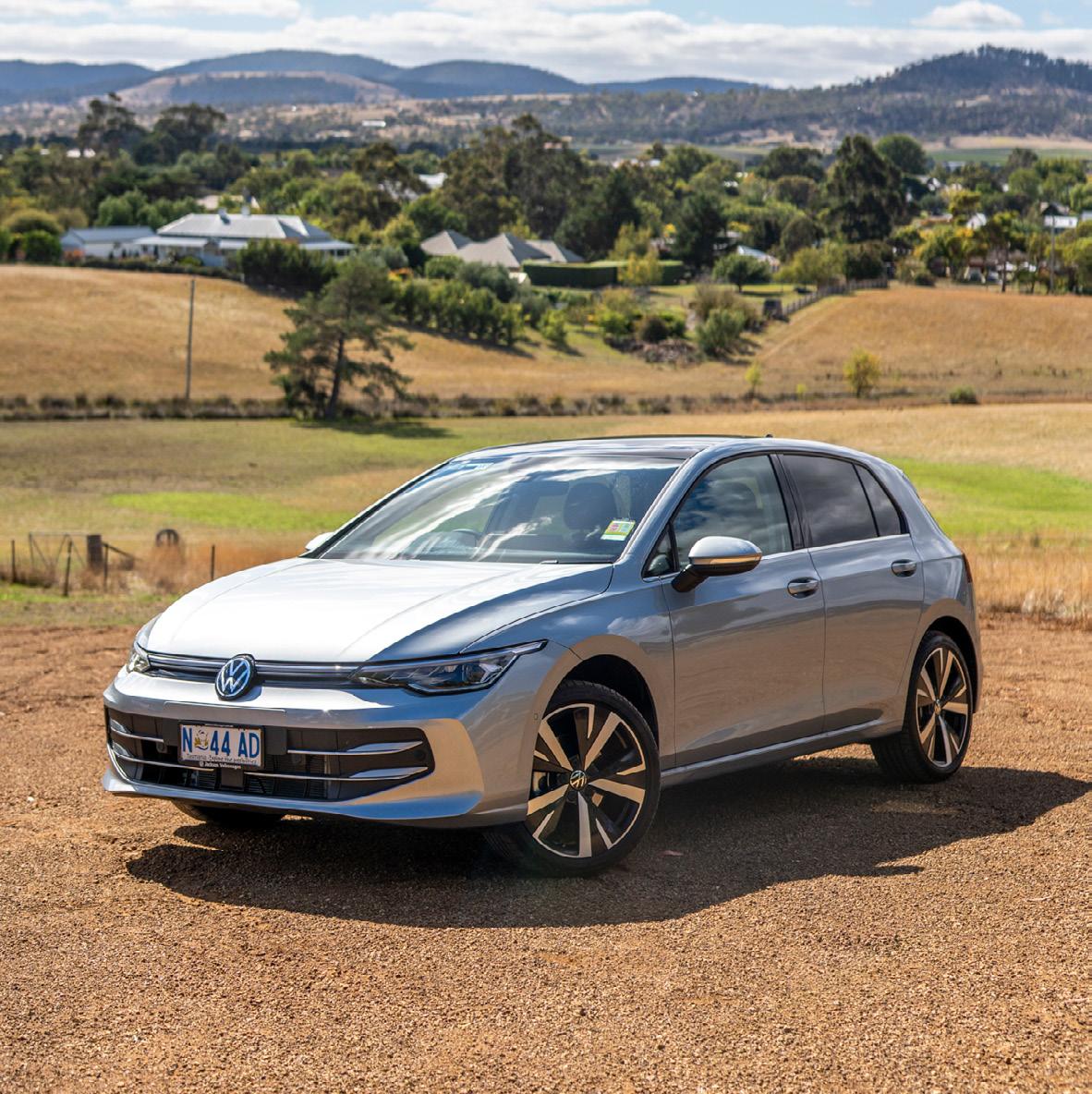
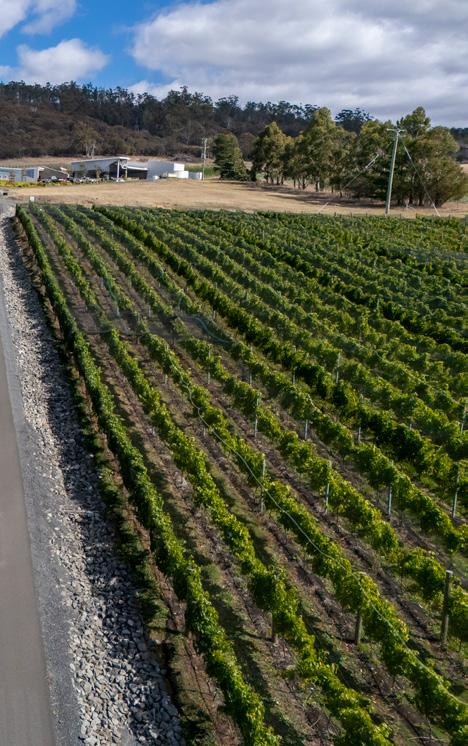
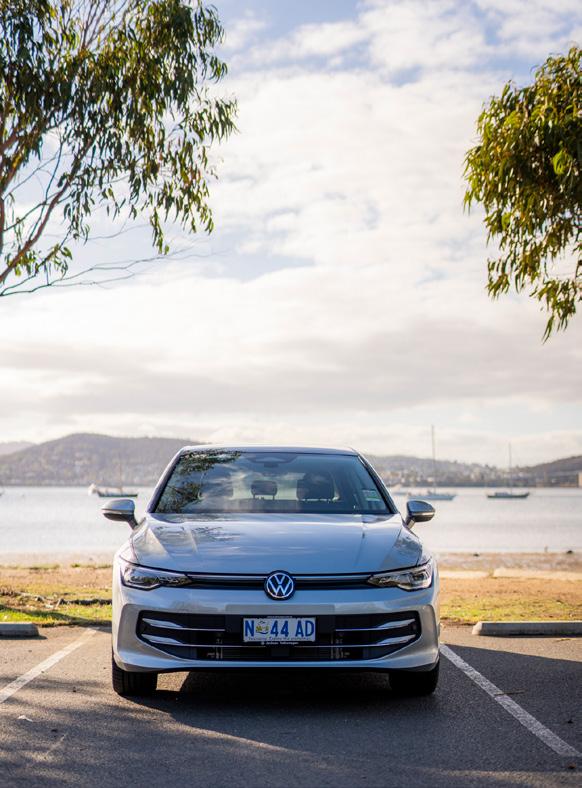
Looping through Richmond and the Coal River Valley in the Volkswagen Golf Style delivers wine, produce and an easy sense of escape, without the long haul.
Words Nina Hendy Photos Prime Perspectives
crossing the Tasman Bridge with Hobart city in the rear-view mirror always feels like I’m going somewhere special. The east coast is a family favourite for holidays, but today, I’m going on a solo day out closer to home, something simple, unhurried and near enough to make it feel easy.
First on the list is Richmond, with plans to dip into a few favourite stores before the day unfolds. The beauty of this drive is that it’s such a relaxed trip from Hobart. In under thirty minutes, the pace shifts, the scenery softens and it already feels like I’ve gone somewhere.
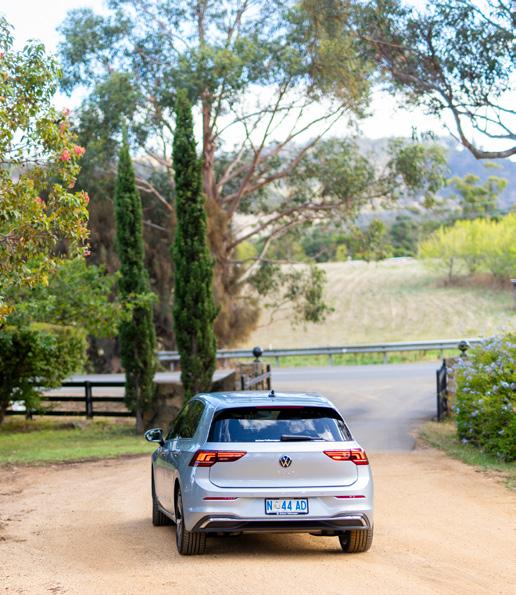
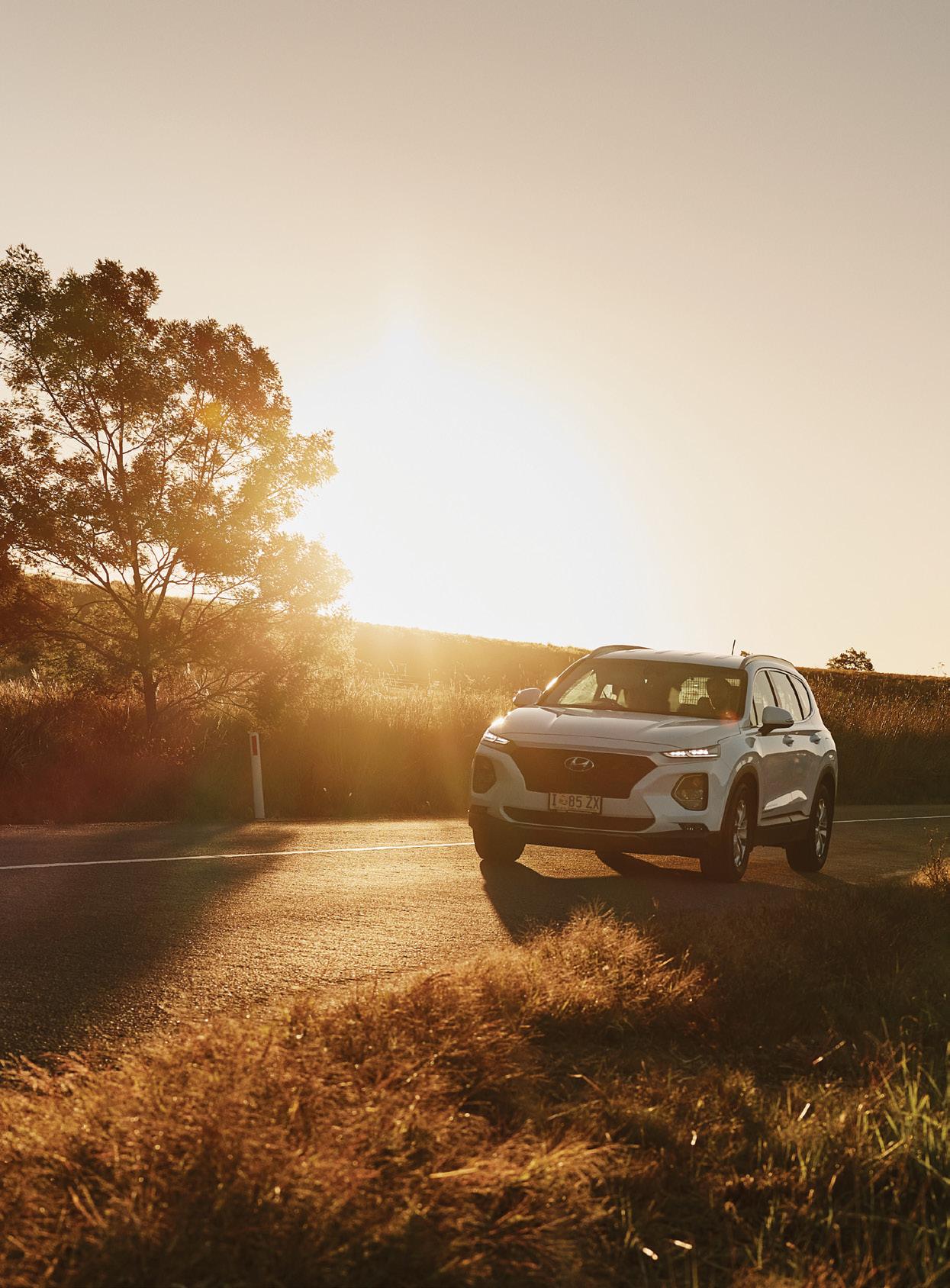
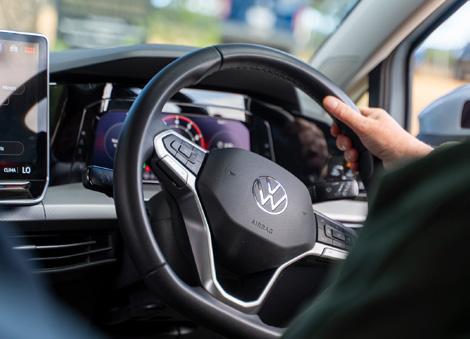
I’m behind the wheel of the new Volkswagen Golf Style hatch, a familiar name that’s been reworked with a fresh look and a more refined feel. It’s compact enough to handle city streets with ease, but once the road opens up, it settles into a smooth, comfortable drive. A quick play with the infotainment screen, adjusting the lighting and getting everything set just so, and I’m ready to go.
As the morning traffic thins and the road begins to wind gently through the outskirts, the Golf finds its rhythm. The steering feels responsive without being overly sensitive, and there’s a steadiness to the drive that makes it easy to relax. It’s not showy, just quietly capable, which suits this kind of day trip perfectly.
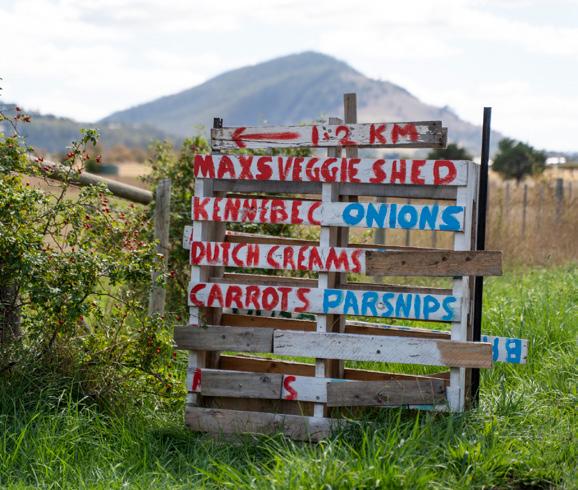
A few minutes down the road there’s Coal River Farm, which features chocolate, cheese and gourmet pantry items and condiments. It’s worth stopping in to peruse through the finer things in life, even if it’s just to pick up something small to take home. It’s hard to leave without a bag in hand.
Back in the car, everything feels intuitive. The cabin is comfortable, the controls are simple and within a few clicks I’m back underway. It’s the kind of car that fades into the background in the best possible way, letting the drive take centre stage.
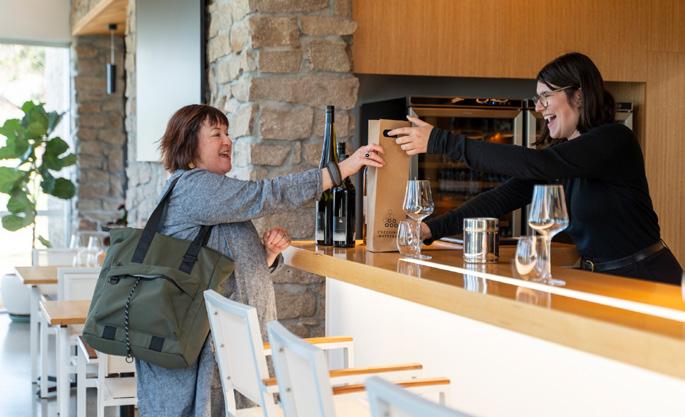
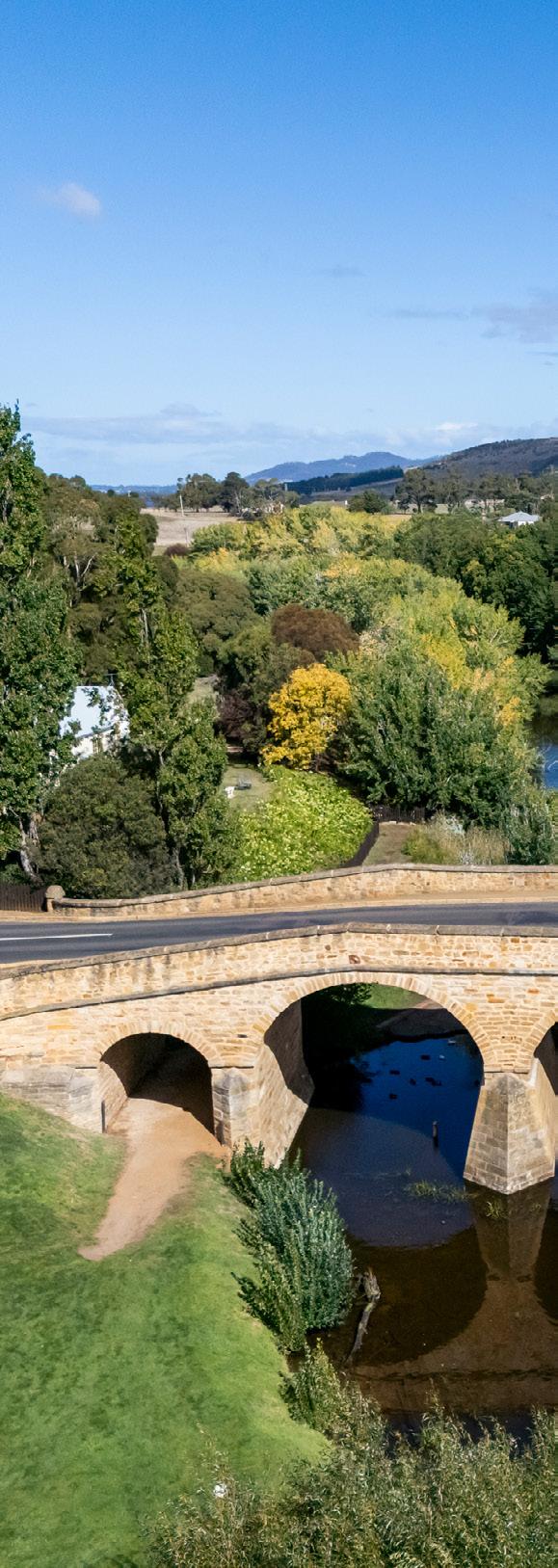
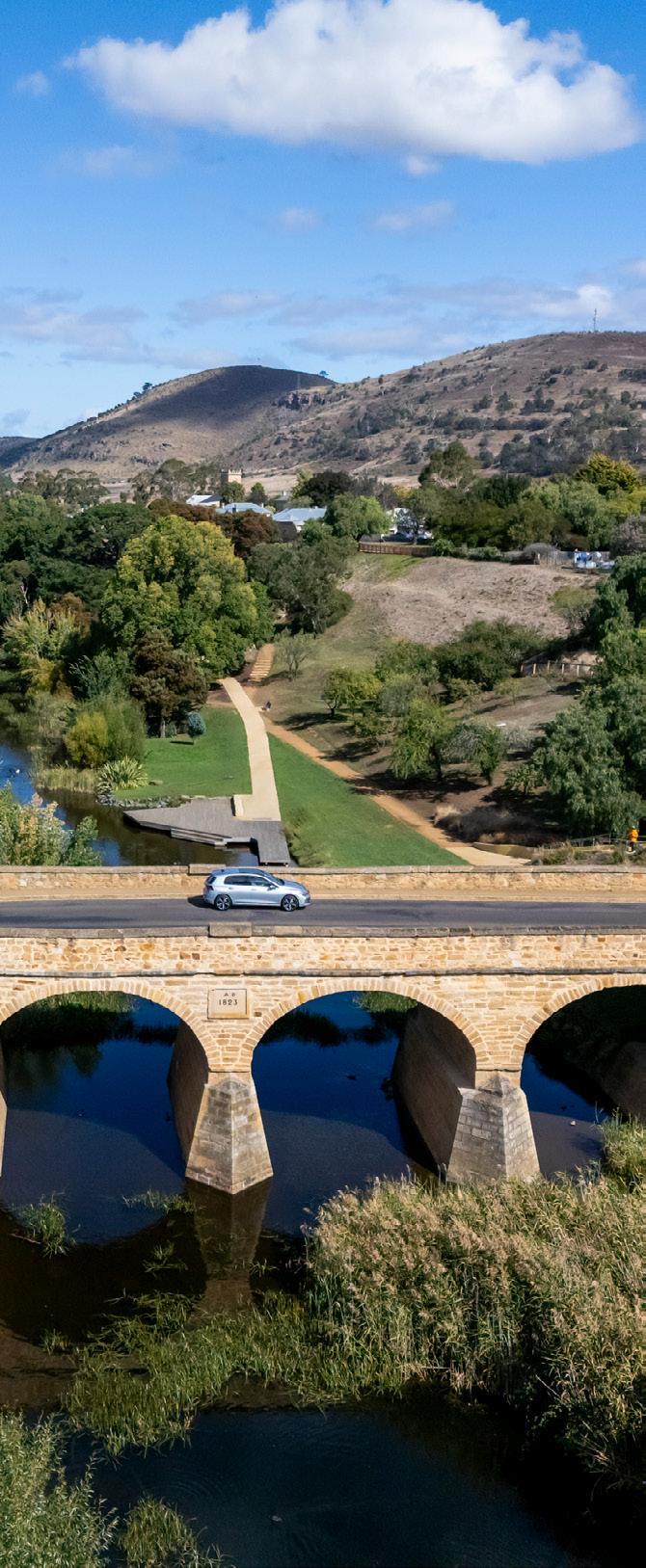
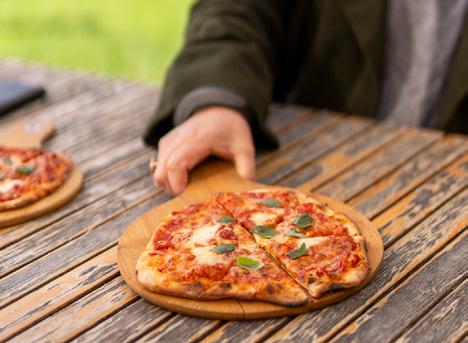
Clockwise from far left Pressing Matters; Richmond Bridge; wood-fired pizzas at Pooley Wines; responsive steering.
There’s a steadiness to the drive that makes it easy to relax. It’s not showy, just quietly capable.
On the way, I pass Frogmore Creek Cellar, nestled in the Coal River Valley wine region. The vineyard stretches across rolling hills, creating a backdrop that you can’t drive past without at least slowing down. At Freshfield Grove, I stop to stock up on olives and extra virgin olive oil, one of those quick detours that inevitably turns into a small haul of pantry staples.
Don’t blink as you leave Coal River Farm or you’ll miss the tiny hamlet of Dulcot, though it’s worth pulling into Puddleduck Vineyard on Richmond Road. The deck overlooks a dam where ducks drift lazily across the water and, in winter, it feels especially warm, cosy and inviting. If the sun’s out, it’s just as easy to sit outside and take it all in, with the ducks occasionally waddling over as if they’re part of the welcome.
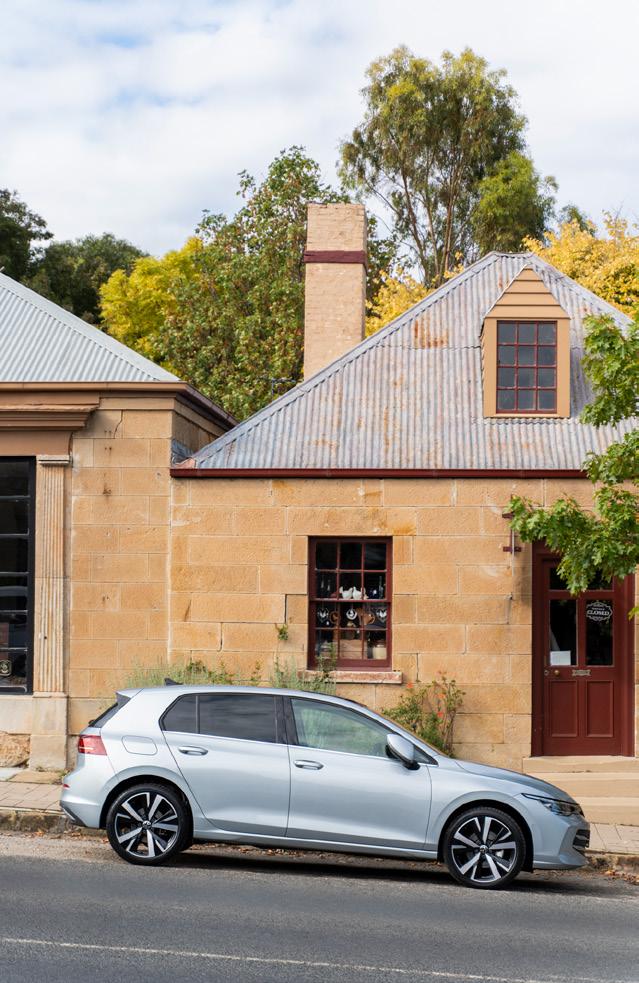
I arrive in Richmond in under thirty minutes, pulling into one of the first cafes for a cuppa and a stretch of the legs. Sipping on coffee, I wander down the main street, dipping in and out of gift stores, galleries and speciality shops that give the town its charm.
COMPARABLES
Priced from $50,990
• sportier styling; sharper performance; more distinctive, premium interior
• loud engine; rear headroom limiting for tall passengers; hard plastic door panels feel cheap
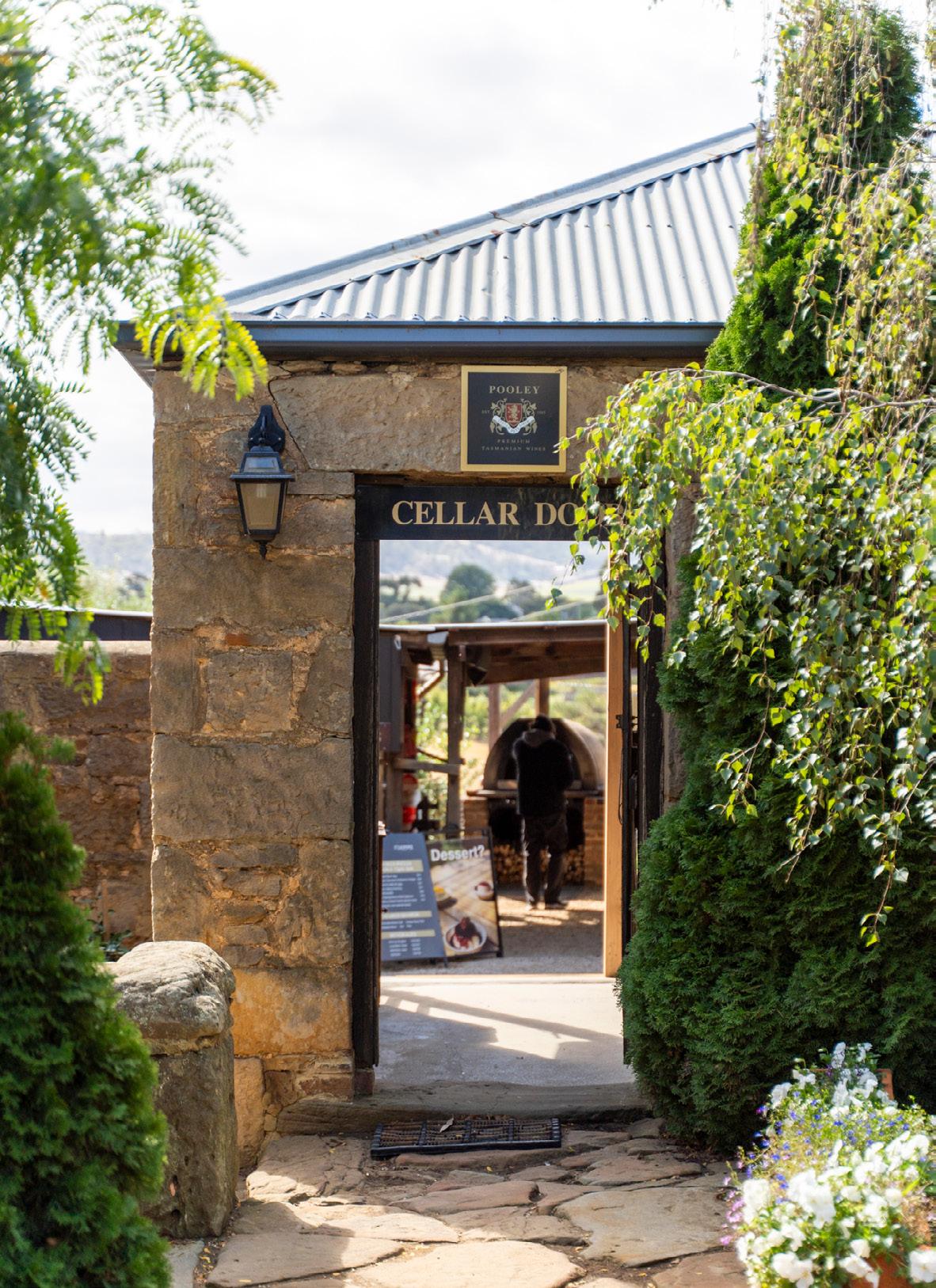
For lunch, I call into Pooley Wines, drawn in by the sandstone entrance and the wood-fired oven crackling away. The welcome is immediate, and it’s not long before I’m sitting down with a margherita pizza, a glass of wine and a view across the valley. It’s the kind of place where time stretches a little and there’s no real reason to rush.
Inside the cellar door, tastings are offered and I pick up a bottle of rosé to take home, earmarked for friends visiting next weekend. Nearby, a group appears to be solving the world’s problems over glasses of riesling and chardonnay, leaning back in their chairs and settling in for the afternoon. I feel like I could do the same.
There’s time for one last wander. I step into Walter & Co, where antiques, art and rare objects line the shelves. After marvelling at an early 18th century Chinese tea canister and an English folk art model car, I briefly consider whether a French art nouveau glass vase from circa 1905 could make the perfect wedding gift. I decide to sleep on it. Richmond isn’t far, and there’s always another day.
Next stop is the Richmond lolly shop, Sweets and Treats, where tall glass jars line the walls, filled with every kind of sweet imaginable. I leave with a bag of dark chocolate liquorice bullets – a nonnegotiable – and head back to the car.
From here, the loop continues out towards Campania and Tea Tree, where the landscape opens up and the drive becomes the focus again. This
CUPRA Leon S
Kia K4 Hatch GT-Line
THE SPECS
PRICING from $44,990
BODY STYLE Hatchback
SEATING 5 seats
FUEL CONSUMPTION 6.3L per 110km
SAFETY 5-star ANCAP
ENGINE TYPE Petrol
TRANSMISSION Automatic
DRIVE TYPE Front-wheel drive
MAX. POWER 110kW
MAX. TORQUE 250Nm
0–100 KM/H 8.6 seconds)
is where the Golf feels at its best, steady through gentle bends, responsive when needed and easy to trust on the road. It makes for a peaceful kind of driving, the sort where you can properly take in the surroundings.
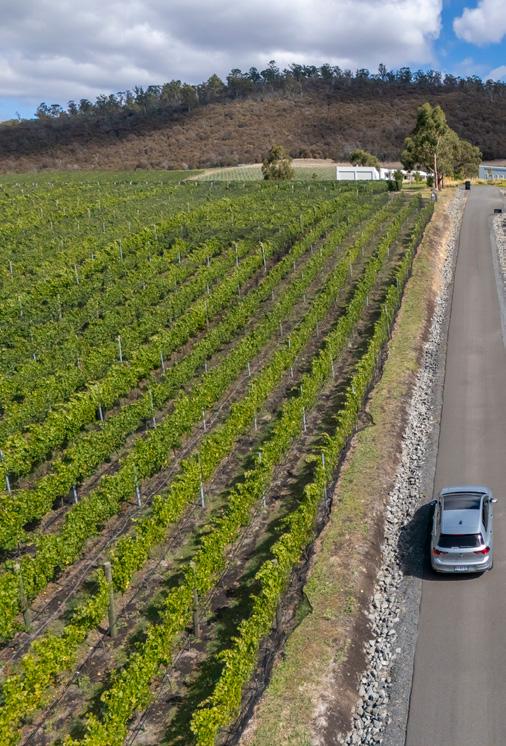
The valley stretches out in soft greens and vineyards – Domaine A, Nocton, Wobbly Boot –each one a reminder to come back another day. I don’t have time to stop at all of them, but I can’t resist pulling into Pressing Matters. At the top of the driveway, the cellar door sits among the vines, with long glass windows framing the view.
Inside, a table of friends enjoys the afternoon, platters spread, glasses half full. I smile, tempted to join them, but I’m only halfway through the loop. With a couple of bottles of wine in the boot, local olives and my liquorice bullets, I make my way back towards Hobart. The late afternoon light softens the landscape, and the car settles into a quiet, comfortable cruise as the city slowly comes back into view.
It’s the kind of day that doesn’t try too hard. It’s close to home, simple in its pleasures and just far enough away to feel like a reset. And with a car that makes the drive feel this tranquil, it’s one worth repeating.
With thanks to Jackson Motor Company in Hobart for the test drive. For more, visit jmc.com.au
Clockwise from far left The sandstone joy of Richmond; the irresistible entrance to Pressing Matters; pit stops and detours are a necessity in this loop of the Coal River Valley.
An orchard escape
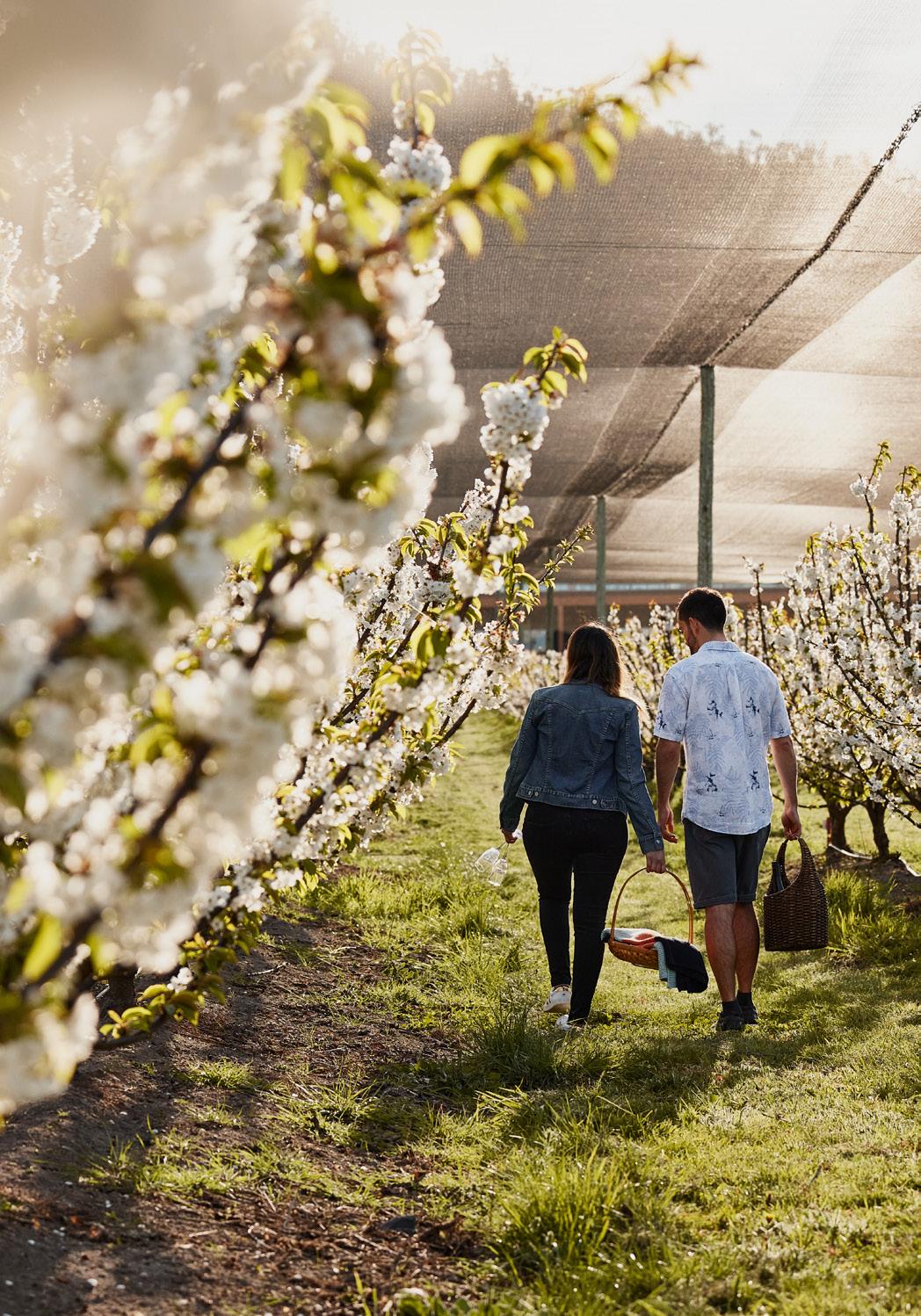
Just outside Sorell, Iron Creek Bay Estate pairs vineyard stays with sweeping views across Pitt Water and Orielton Lagoon. Accommodation ranges from spacious threebedroom pavilion suites to compact “pods”, with cherry trees framing the landscape. The setting feels quietly removed, despite being less than 30 minutes from Hobart. At the centre of the estate is Orani restaurant, where head chef Jesse Allardyce draws on experience from One&Only Wolgan Valley in NSW and remote wilderness lodges in Canada. His refined farmhouse-style menu leans heavily on Tasmanian produce, with dishes such as Scottsdale pork rack with chutney and carrots, and Cape Grim beef cheek with beetroot and macadamia. The estate also produces its own cool-climate wines, making it an easy place to settle in for a long lunch or overnight stay. For more, visit ironcreekbay.com.au
/
travel news.
Explore our state with Nola James
FLAVOURS OF HONG KONG
New eatery Lil Hong Kong brings the vibrant flavours of cha chaan tengs –Hong Kong-style ‘tea restaurants’ – to Launceston’s York Street. Offering a nostalgic blend of Western comfort food and Cantonese flair, a must-order is the baked pork chop rice. @lilhongkong.tas
WINE BY THE SEA
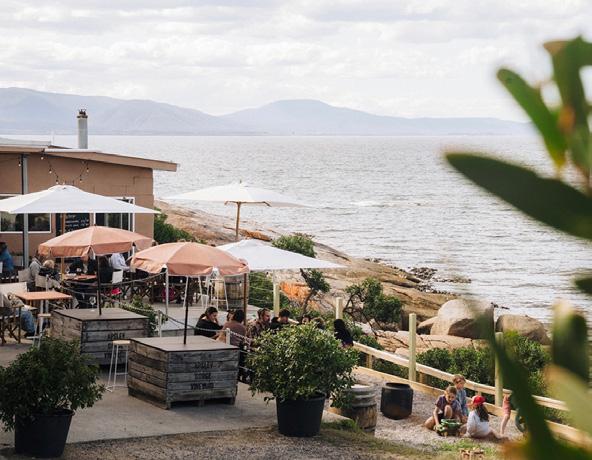
A new Bicheno wine bar, named Le Gulch after the natural breakwater it overlooks, has set up shop in the old Blue Waters seafood factory. Visitors can sip Apsley Gorge wines (co-owner Myles Franklin is the son of Apsley Gorge winemaker Brian Franklin, who previously used the building as a winery) and snack on local cheese, oysters and charcuterie on the outdoor deck from Wednesday to Sunday, with the occasional “pizza and spritz” pop-up thrown in for good measure. legulch.com
A NEW ERA FOR RISBY COVE
Boutique Strahan hotel Risby Cove has reopened after a multimillion-dollar refurb, with 12 designled suites featuring curated Tasmanian artworks and rare local timbers, eco fireplaces and private decks with harbour and rainforest outlooks. Among the new offering is the Storyteller’s Suite, which features a personalised cinema experience complete with popcorn and choc tops. Signature restaurant Risby’s, open to guests and visitors alike (bookings are essential), remains focused on ethically raised meats, organic vegetables and fresh seafood. risbycove.com.au
In the swim
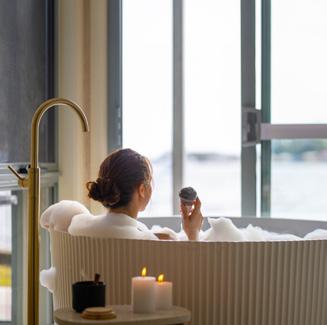
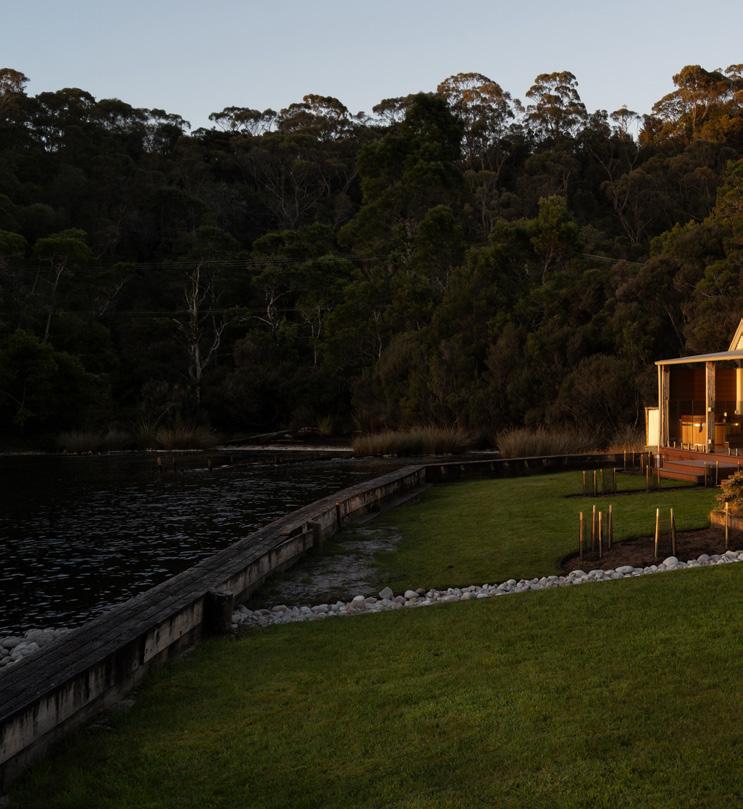
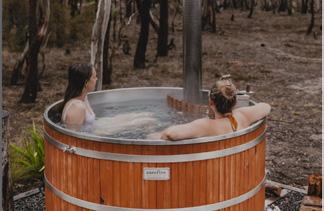
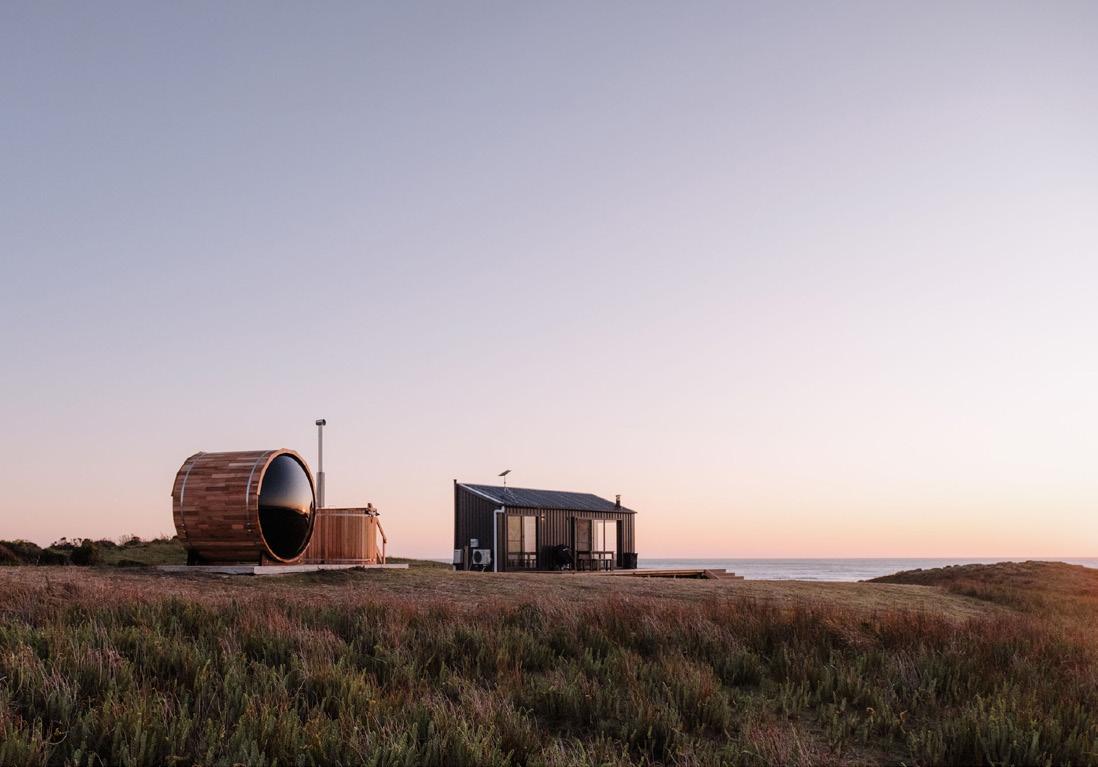
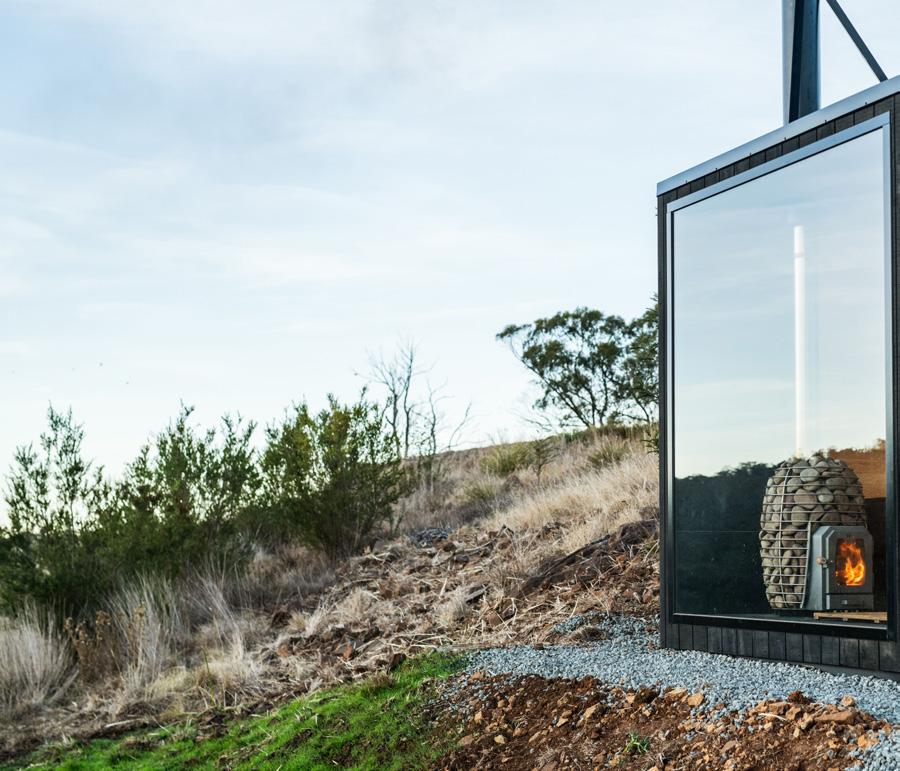
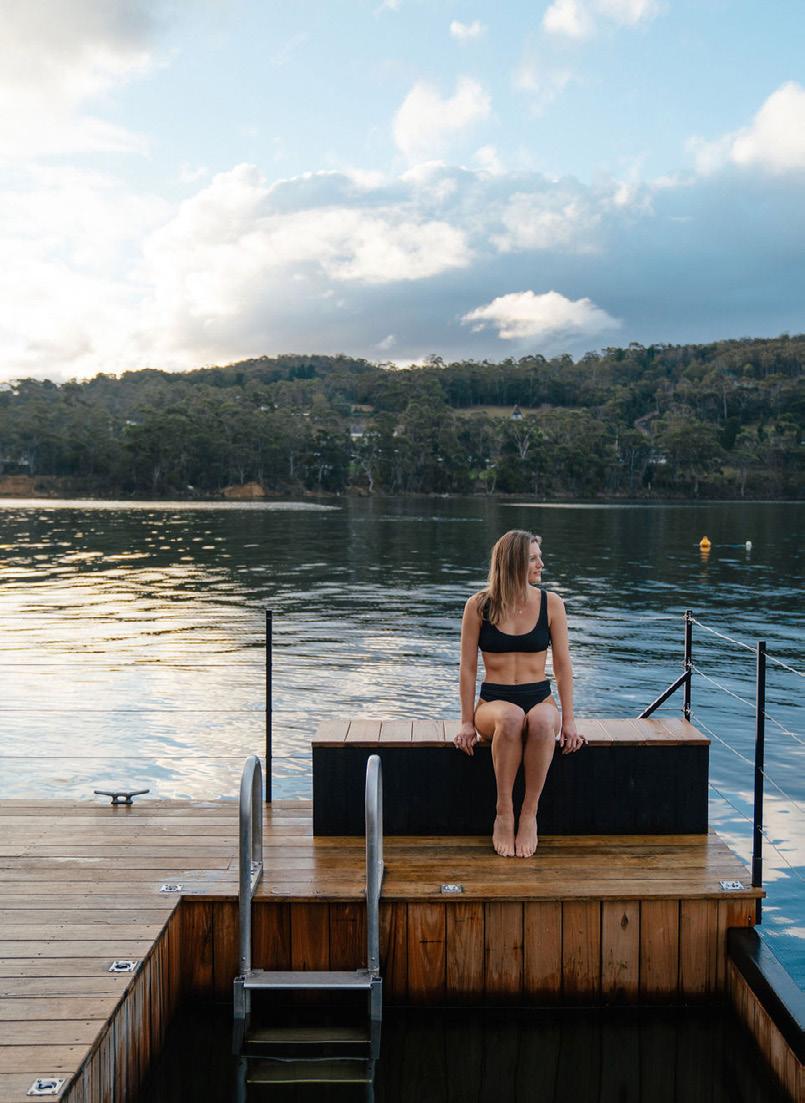
Spend an afternoon (or the night) at Arden Bathhouse, a private bathing experience in bushland just outside Richmond. This four-hour self-guided ritual is part wood-fired sauna, part cold plunge, part outdoor hot tub, with exclusive use of the secluded space for up to six guests. The bathhouse can be booked as a standalone experience or paired with an overnight stay at The Croft at Arden Retreat, a luxury two-bedroom blue gum-clad cabin featuring an open-plan kitchen and modern bathroom with deep soaking tub. ardenretreat.com.au
Bird in Hand Kiosk, Hobart
A takeaway spot from the team behind the South Australian winery, this kiosk is part of a new offering at the Royal Tasmanian Botanical Gardens.
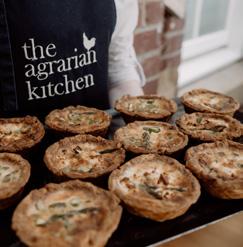
Agrarian Kitchen, New Norfolk
This casual space offers house-made pastries, cakes, sandwiches and salads all made according to Agrarian’s exacting standards.
Small Grain, Launceston
Perfectly positioned opposite Princes Square, Small Grain does Japanese-inspired rice bowls and banh mi plus dumplings and karaage chicken to go.
Beauty Point
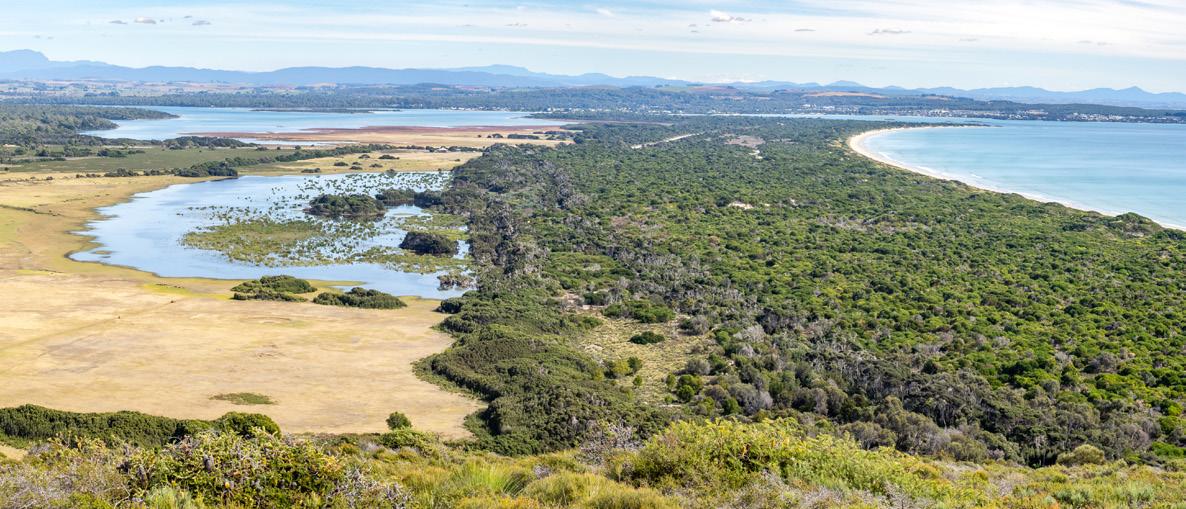
The name doesn’t lie. Beauty Point commands a gorgeous position near the mouth of the River Tamar. Some of Australia’s most curious creatures are its major calling card, but there are so many reasons to like this river town, writes Andrew Bain
EAT
True to its name, the licensed River Cafe, open daily for breakfast and lunch, peers directly over the waters of the River Tamar. Seek it out for a localised menu featuring the likes of wild-caught seafood and Tamar Valley wines.
SEE
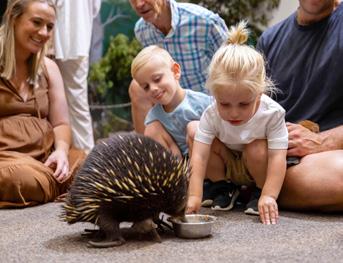
Choose your critter. Sitting side by side atop Beauty Point’s large wharf, Platypus House and Seahorse World provide a glimpse into the little-seen domains of platypus (including Big Jupiter, said to be the largest platypus in captivity) and seahorses. For good measure, Platypus House also has cute feeding sessions with the other great monotremes – echidnas –while Seahorse World is the only place you’ll likely ever see the unique and endangered red and spotted handfish.
DO
The eastern reaches of wildliferich Narawntapu National Park are just to Beauty Point’s north. Take in the sandy view from Badger Beach Lookout, or set out on foot on the coastal traverse, which can lead you as far as Bakers Beach, 21 kilometres away.
DRINK
Head a few minutes out of town to discover brewing alchemy at Miners Gold, inside the former chief engineer’s house beside the Beaconsfield gold mine. Settle into the historic setting and sample from Miners Gold’s Ocho beer range or stick around for a vertical skewer or pub-style fare for dinner.
STAY
Looking over a 19th-century homestead to the River Tamar, the garden setting for the two guest cottages at Beauty Point Cottages is hard to beat. Wander the gardens, which are filled with lupins, peonies and hellebores set beneath a magnificent white brittle gum and then find the trail down to a private slice of riverbank.
ESSENTIAL STOPS
• River Cafe
• Platypus House
• Seahorse World
• Narawntapu National Park
• Miners Gold Brewery
• Beauty Point Cottages
The PIT STOP
BEAUTY POINT
steam &sea
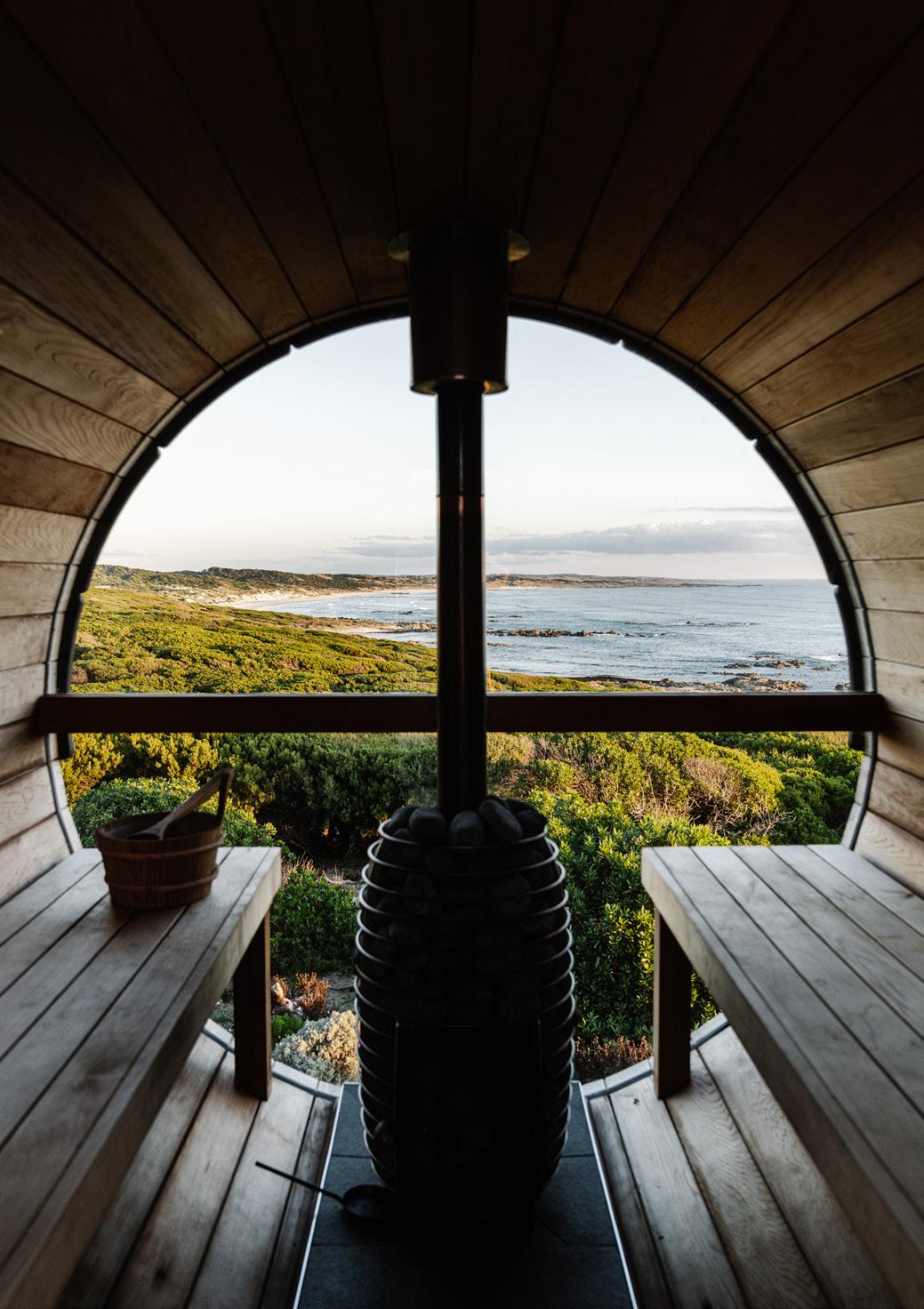
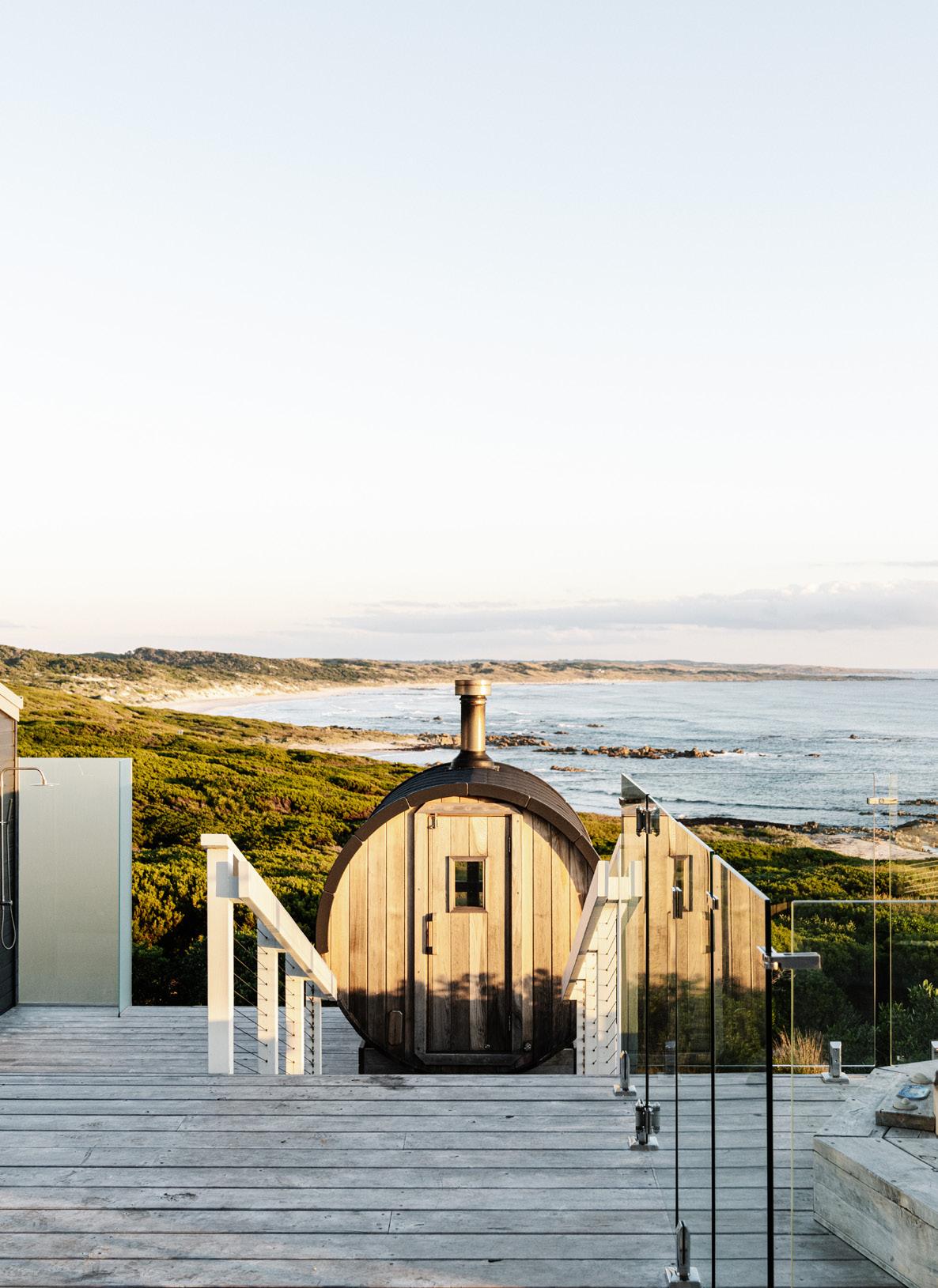
From Hobart to Bruny, here’s where to try Tasmania’s hottest winter ritual: wood-fired saunas, sauna boats and icy ocean plunges.
By Alice Hansen
Photos: Bass Lodge/Marnie Hawson
II step into the heat, then plunge into the sea. Back on Drip Beach, an hour south of Hobart, I sink down, salty southern waters dripping from my hair. A tiny fossil catches my attention, a quiet trace of time on this secluded stretch of coast. Nearby, sauna smoke rises through tall gums, a reminder of how naturally sauna culture fits with nature and has done for some 10,000 years.
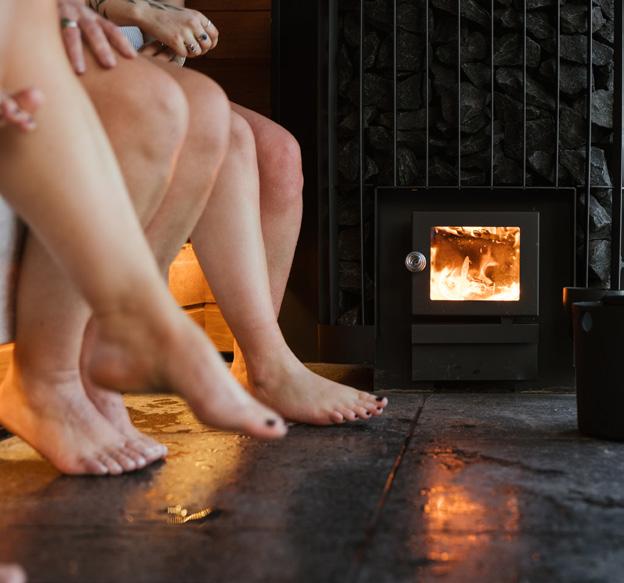
It may be a lifestyle trend sweeping Tasmania with saunas seemingly popping up in a flurry of Insta-worthy wellness, but there’s something appealing about a fad that’s thousands of years old. As the handcrafted hotbox I’m sitting in nears 90 degrees, its heat feels grounded in generational wisdom and long-proven benefits.
Early European saunas began as humble stone pits heated by campfire. From Estonian smoke
saunas to Finnish underground pits, Native American sweat lodges and Japanese caves, saunas have been used for cooking, prayer, laundry and even giving birth.
Today, my only task is to sit and breathe.
Once a niche practice, saunas are now found in ample numbers across Tasmania, with a strong seaside presence ranging from hand-crafted huts to high-tech cocoons. In winter, these intimate spaces feed the urge to move between deep heat and bracing water.
But there’s more to sauna than the sciencebacked benefits. Alongside improved circulation and reduced inflammation is something less tangible, a growing desire for connection, shared ritual and simple, restorative calm.
Elsewhere Sauna, Drip Beach & Taroona Beach
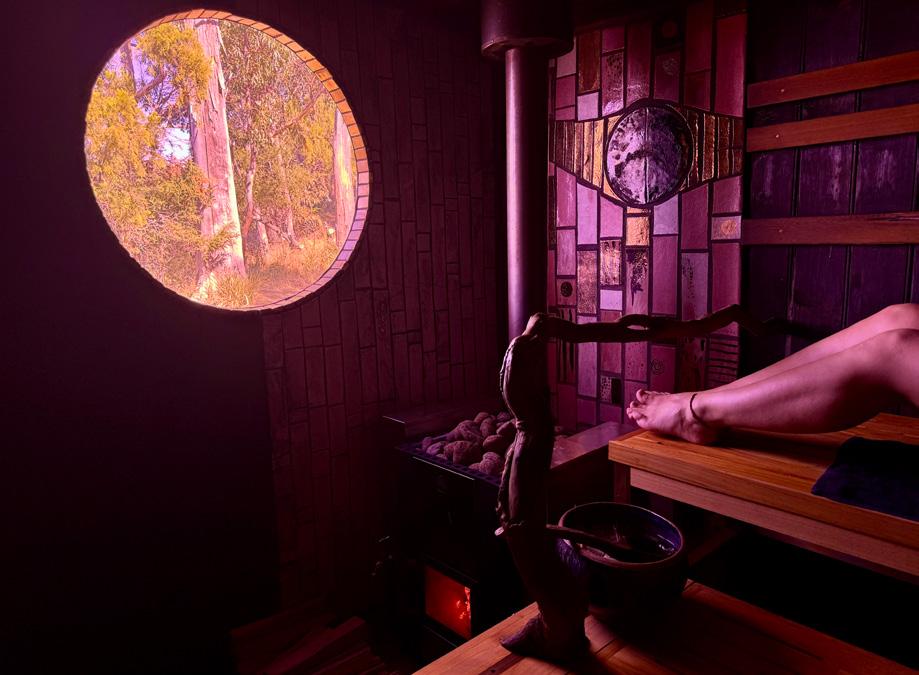
What once was a 1950s trailer housing a council mess room is now a hand-built sauna of intricate detail. Crafted by interdisciplinary artist Selena de Carvalho and Finnish master ceramicist Nanna Bayer, the gold-flecked handmade tiles and rosehued porthole invite transportation to another realm.
“The joy for me is seeing people come together,” Selena reflects as she lines up botanical-infused waters. “People are seeking spaces of connection beyond the typical bar or gathering place. There’s a reverence and natural closeness that comes with sauna.”
As we step out of the sauna and scoop Selena’s body polish and face scrub from abalone shells, the sound of cool waters ripples into our awareness. Plunging into the frigid waters, we’re now suitably comfy to stand dressed in blindingly-white winter tans as laughter erupts among us. It’s this shift from two strangers to jovial sauna-goers that reminds me that collective wellness is a hoot.
“I see community building; farmers who come regularly and this morning’s group of women who haven’t missed a week since the sauna’s inception. I sit outdoors in Tasmania’s ever-changing moods and see the collective thrill of going from steam to sea – I never tire of witnessing this,” Selena says.
Where: Drip Beach and Taroona Beach, Hobart
Opening hours: Friday to Sunday, 9am-4pm
Sauna capacity: five Price: $50 per person for one hour elsewheresauna.com
Those who receive most from the age-old sauna tradition are those who regularly return.
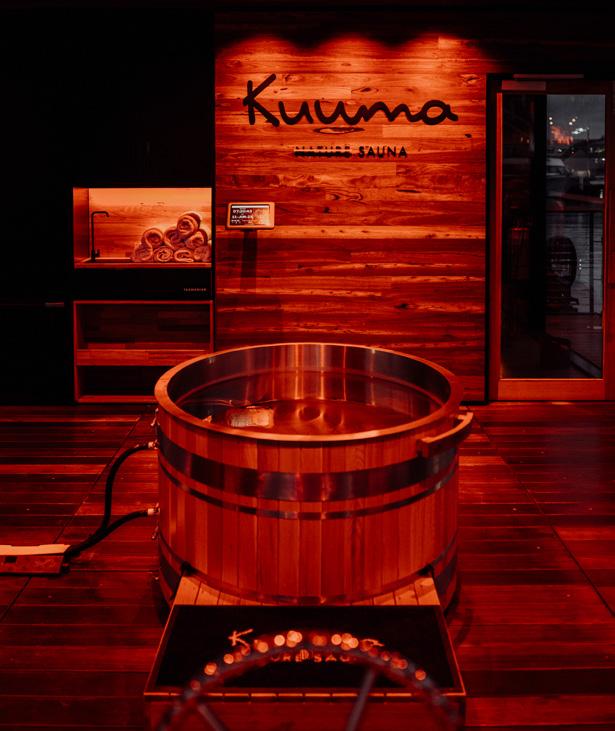
Kuuma Sauna, Margate Marina
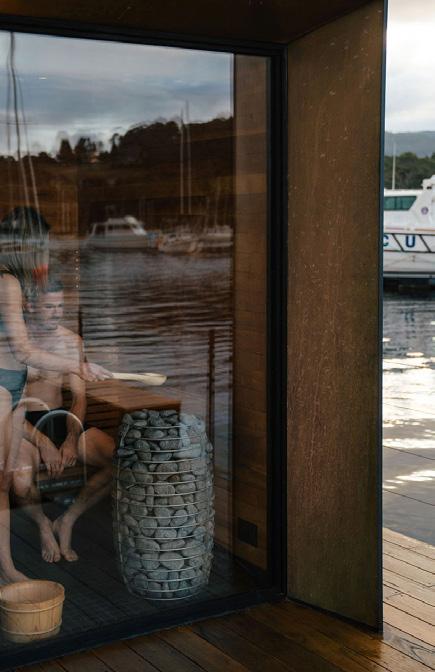
As we step onto Australia’s first sauna boat, there’s a novel sense of adventure. This isn’t just a sauna experience, but a mini-voyage only 20 minutes’ drive from Hobart. With a grin from the skipper and a stoke of the sauna fire from his first mate, there’s a feel we’re cruising into wellness of a different kind. Nathan Gore isn’t the skipper alone, but also the owner who spent a year building the sauna boat with French partner, Chloe.
Though it’s raining sideways as we move into the D’Entrecasteaux Channel, the mood quickly shifts. Stepping into the sauna, floor to ceiling glass reveals a wintry scene as we’re enveloped in warmth. Someone leans forward with the ladle and seconds later steam billows around us as I exchange a smile with pink-cheeked sauna mates.
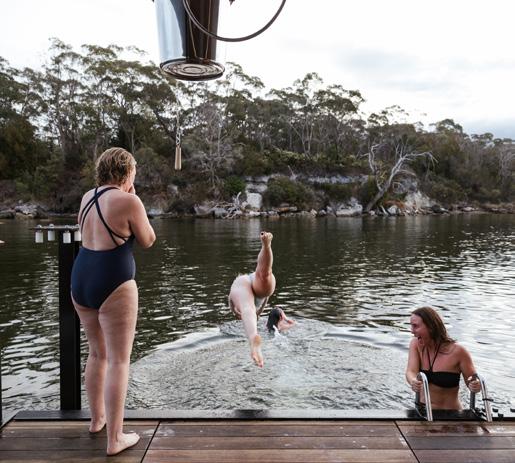
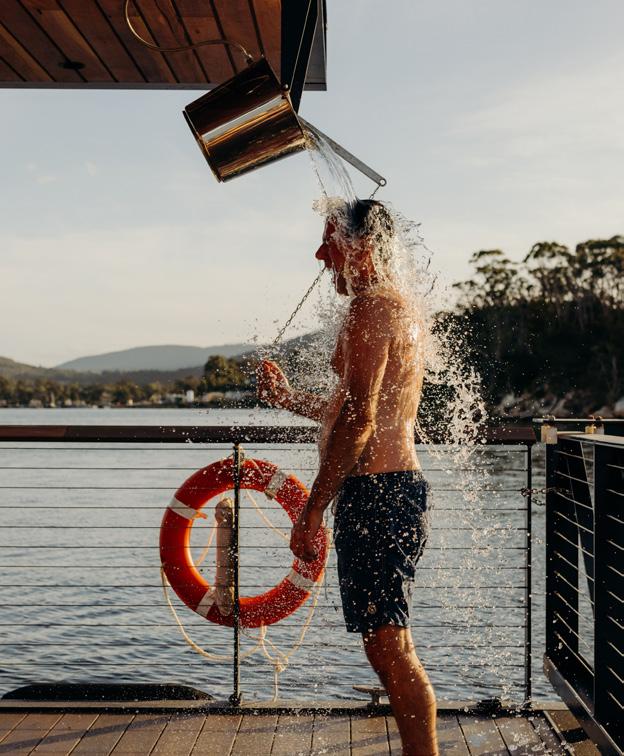
The best part though? Leaping off the boat’s end with childlike abandon, I tread water as kunanyi/ Mount Wellington peaks through the clouds. This exhilaration is matched only by climbing back aboard and bravely pulling the chain on a silver bucket that delivers a wallop of fresh water from above. The hot-cold ritual then becomes urgent and we scurry back to the near 90-degree sauna heat.
Where: 40 Marina Dr, Barretta
Opening hours: Friday to Monday
Sauna capacity: eight Price: from $90 per person for 90 minutes kuuma.com.au
Sweaty Penguins, statewide
Dotted across six Tassie locations by the sea, Sweaty Penguins makes it easy to get steamy and follow it up with a penguin plunge into the ocean. These 55-minute sauna sessions play out across Sandy Bay, Kingston, Launceston, Penguin, Turners Beach and Burnie.
Clockwise from top left Kuuma is Australia’s first sauna boat; leaping off the boat; a cold shower; the 90-degree sauna heat; Red Rock Hut on King Island.
The high-tech set-up means this sauna is entirely self-driven and private. An easy booking process is followed by seamless digital entry into the Kingston sauna, about 15 minutes’ drive from central Hobart.
Instantly, we’re met with the anticipated temp; a consistent 85-degrees. This is courtesy of the patented air-blending technology that allows for balanced steam delivery.
“I’m a nurse, so sauna felt like a natural extension of health and wellbeing,” explains Sweaty Penguins’ owner, Emma Martin. “It began with our own sauna in Penguin, then we scouted locations for beachside saunas to share the steam and sea experience more widely. It’s about offering that slow, mindful space to pause, reset and reconnect in today’s busy world. Add to this Tasmania’s coastal beauty and it’s a rare blend of ancient tradition and nature’s therapy.”
Where: Sandy Bay, Kingston, Launceston, Penguin, Turners Beach & Burnie
Opening hours: 365 days, 6am-10pm
Sauna capacity: four
Price: from $80 for two people for 55 mins sweatypenguins.com.au
Sauna Boat Tasmania, Kettering Marina
Moored among the bobbing boats of Kettering Marina, the sauna boat is an ideal stop before or after a trip to Bruny Island. Located right by the island’s ferry terminal, the boat is bookable across the weekends with enough room for four. Our highlight is sinking into the boat’s Scandinavianstyle inbuilt plunge area, rippling with invigorating winter waters.
Around half an hour from Hobart’s CBD, Sauna Boat Tasmania is a sweet landing pad for a mind and body reset in Oyster Cove.
Where: Kettering
Opening hours: Saturday to Sunday, 7am-6pm
Sauna capacity: four
Price: from $55 per person for 1 hour saunaboattasmania.com.au
HOT TIPS FOR COLD WATER
Start slowly
Even just six to eight minutes of sauna time will let your body get used to the heat. (No more than 15 minutes is encouraged). Increase this time while listening to your body’s limits.
Personalise it
Individuals respond differently to the hot-cold contrast, particularly with water temps dipping below five degrees.
Stay hydrated
Drink plenty of water and ease into the transition between steam and sea.
Safety first
No Tassie beaches have lifeguards during winter months, so stay within your swimming capability, too.
A pillow and side of sauna
So many accommodation providers have saunas, some served up with ultra-special views. From Bass Lodge and Red Rock Hut on King Island to the new sauna and ice barrel Outscape experience on Flinders Island, saunas are a growing must-have.
Fresh in 2026 is the woodfired hot tub and sauna at Coal River Valley’s Arden Retreat, while sauna hunters enjoy Swan River Sanctuary’s riverside stillness; cosy courtyard time at The Bond Store in Stanley; calming feels at Woodland Bay Retreat; and uninterrupted ocean views at Bicheno’s Cooinda On The Beach. And those looking to install their
own locally-built high-end model have options like Wilderness Saunas Tasmania.
The Apple Isle may be dialling up the heat on saunas, but this isn’t about a novel one-off stop. Those who receive most from the age-old sauna tradition are those who regularly return. For them, it’s a life ritual; a moment to pause so precious it must be consistently repeated.
So, breathe deep and pull open that thick door this winter. Tasmania’s chill has teamed with a steaming hot seaside trend.
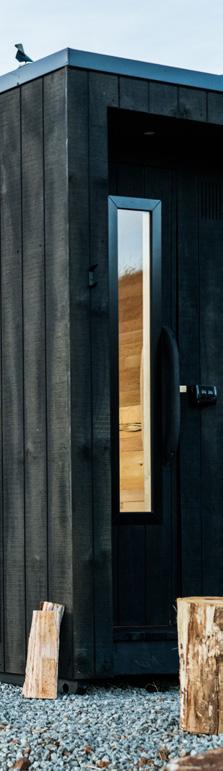
Clockwise from top left Elsewhere Sauna; Sauna Boat inside and out; Swan River Sanctuary
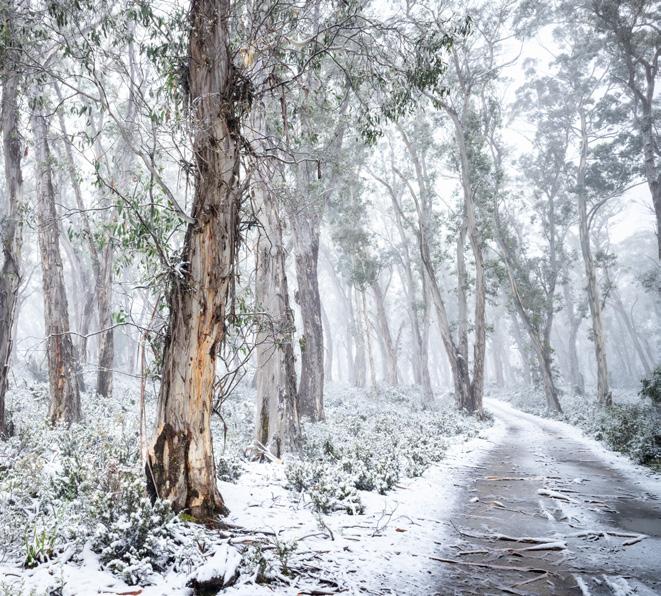
There is something extra special about seeing Tassie wilderness draped in wintry white after a good snowfall. Sarah Aitken finds snow, the easy(ish) way.
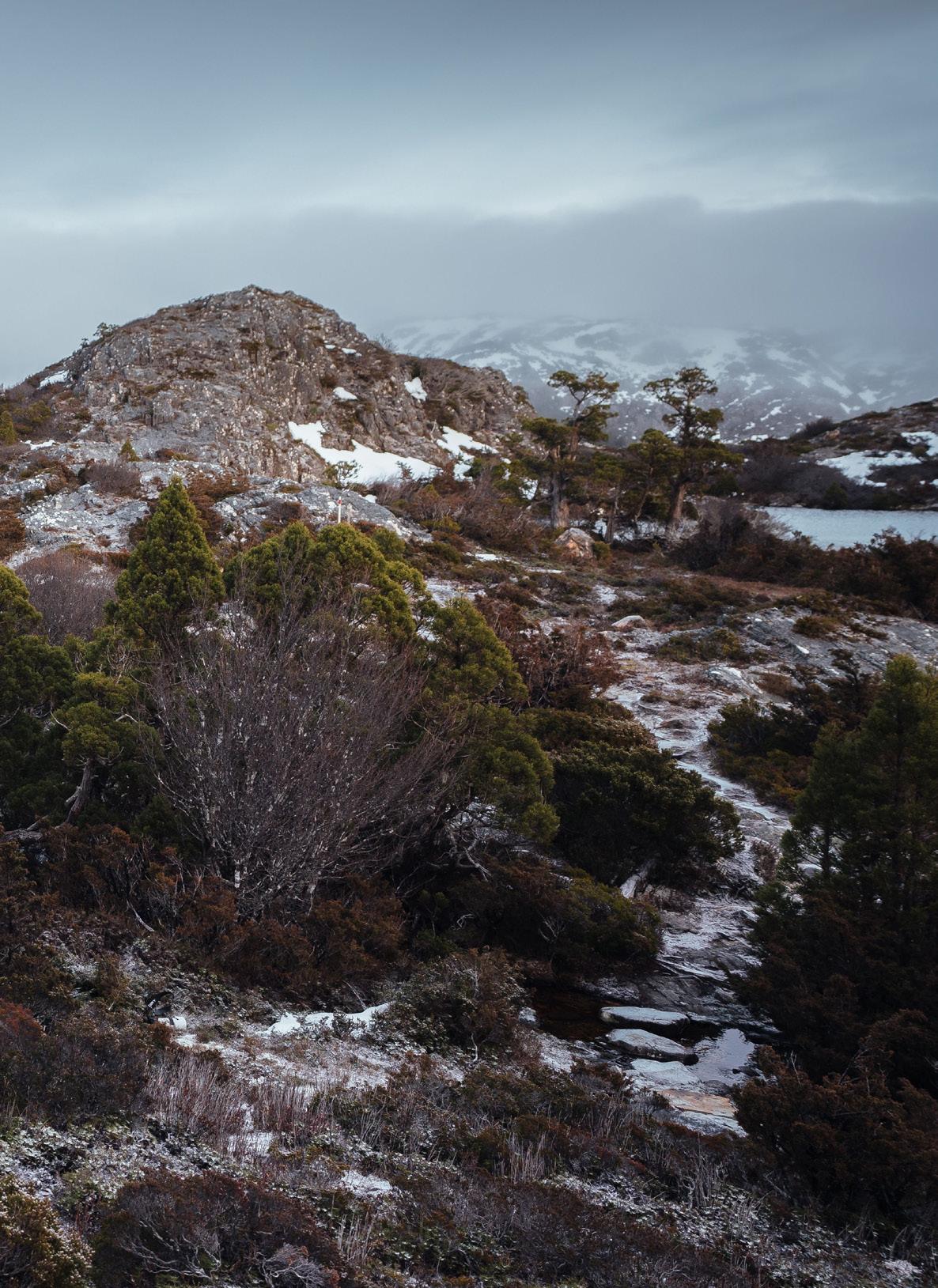
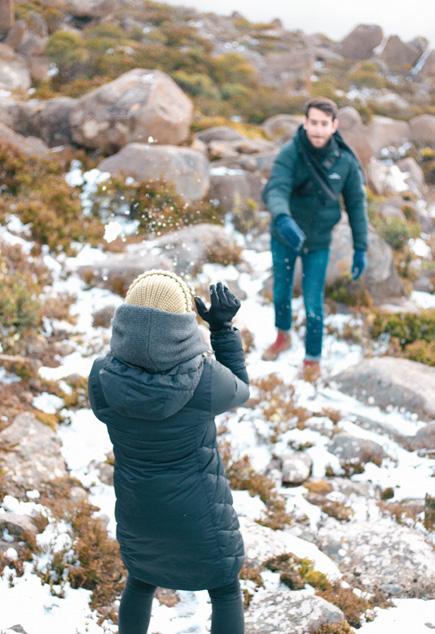
Snow transforms Tasmania’s landscape, softening tracks, quietening forests and turning familiar places into something entirely different. While alpine trekking generally isn’t for amateurs, there are plenty of ways to experience the magic of snow without venturing too far or pushing your limits.
Yes, there are serious safety concerns to consider, but there are some places across Tasmania where you can dip into the snowy scenes without getting too extreme.
With the right timing and a little planning, Tasmania’s winter wonderland is more accessible than it seems, no ice axe required.
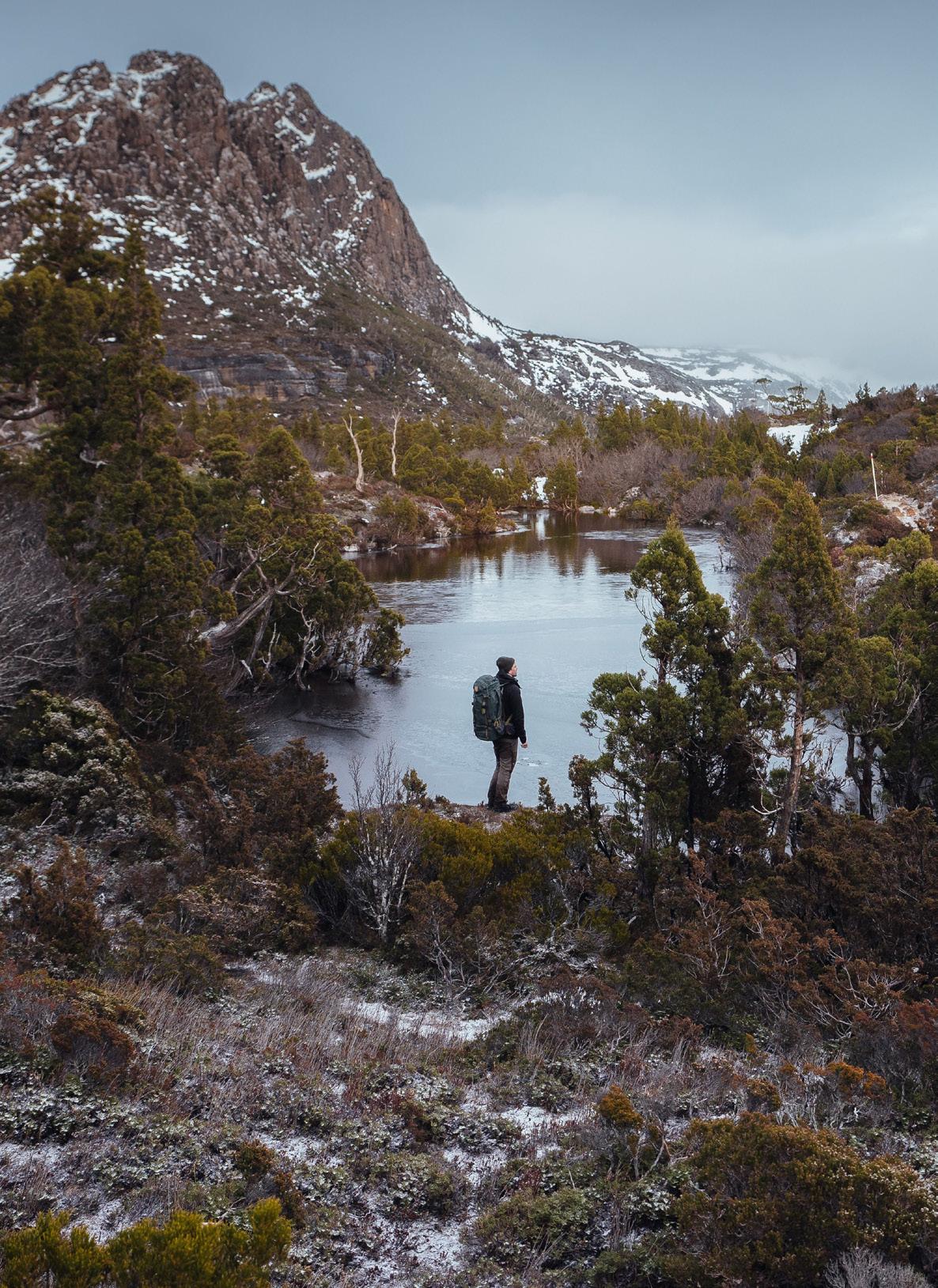
Wilderness photographer Cam Blake spends a lot of his time in the Tasmanian bush and loves the extra level of spectacle that snow brings. Whether it’s for his own photography or guiding a tour of other photographers with various levels of skill, he knows where to go to get the shot.
Cradle Mountain-Lake St Clair National Park travel
Mount Field National Park
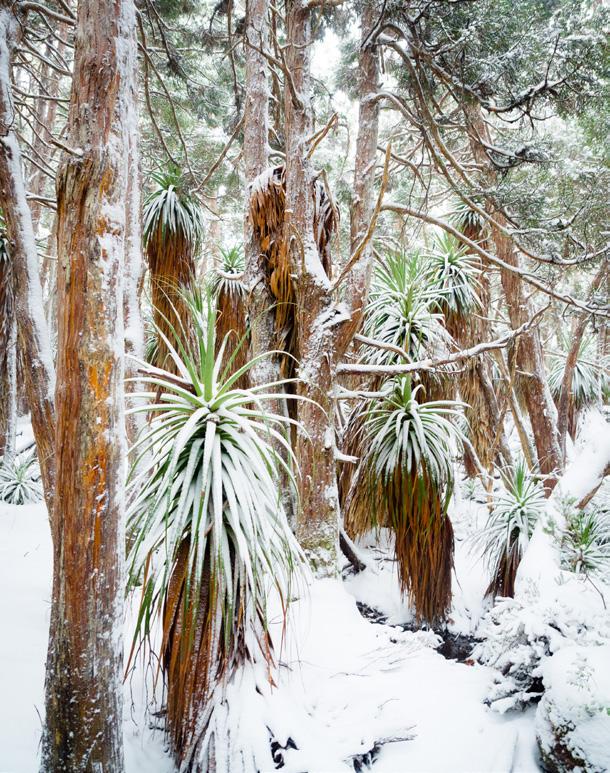
“Some of the easiest, most accessible snow locations are at Mount Field,” Cam says. “Depending on how low the snowfall is, you can get up to Lake Dobson and do the little Pandani Grove walk, which is fantastic in the snow. There’s a big car park up there and you’ll find on heavy snow days, they’ll generally plough that road up to the top from the visitor centre.
“The Pandani Grove is a fantastic one when the snow’s all sitting in the pandanis and there’s some very good snow gums for photographs on the way up, near Lake Fenton and that way.
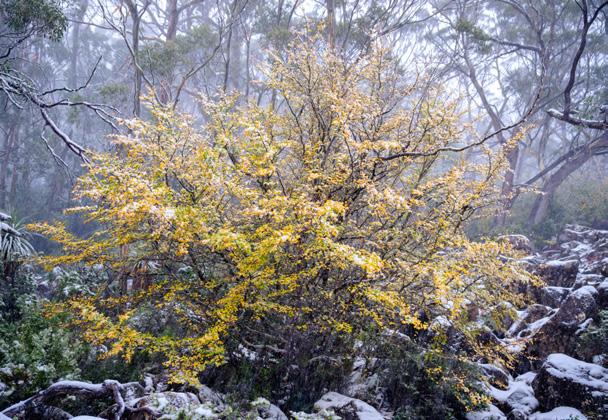
“If you get lucky, with the right timing, you can also get snow on the Fagus tree and some great shots of that as well.”
PANDANI GROVE
30-40 minute circuit, 1.5km
Grade 2: Suitable for most ages. The track has a hardened or compacted surface that may have gentle hill sections and occasional steps.
Cradle Mountain-Lake St Clair National Park
Cradle Mountain is likely the first place people picture in their minds when they think of a snowy walk in Tasmania. And for good reason.
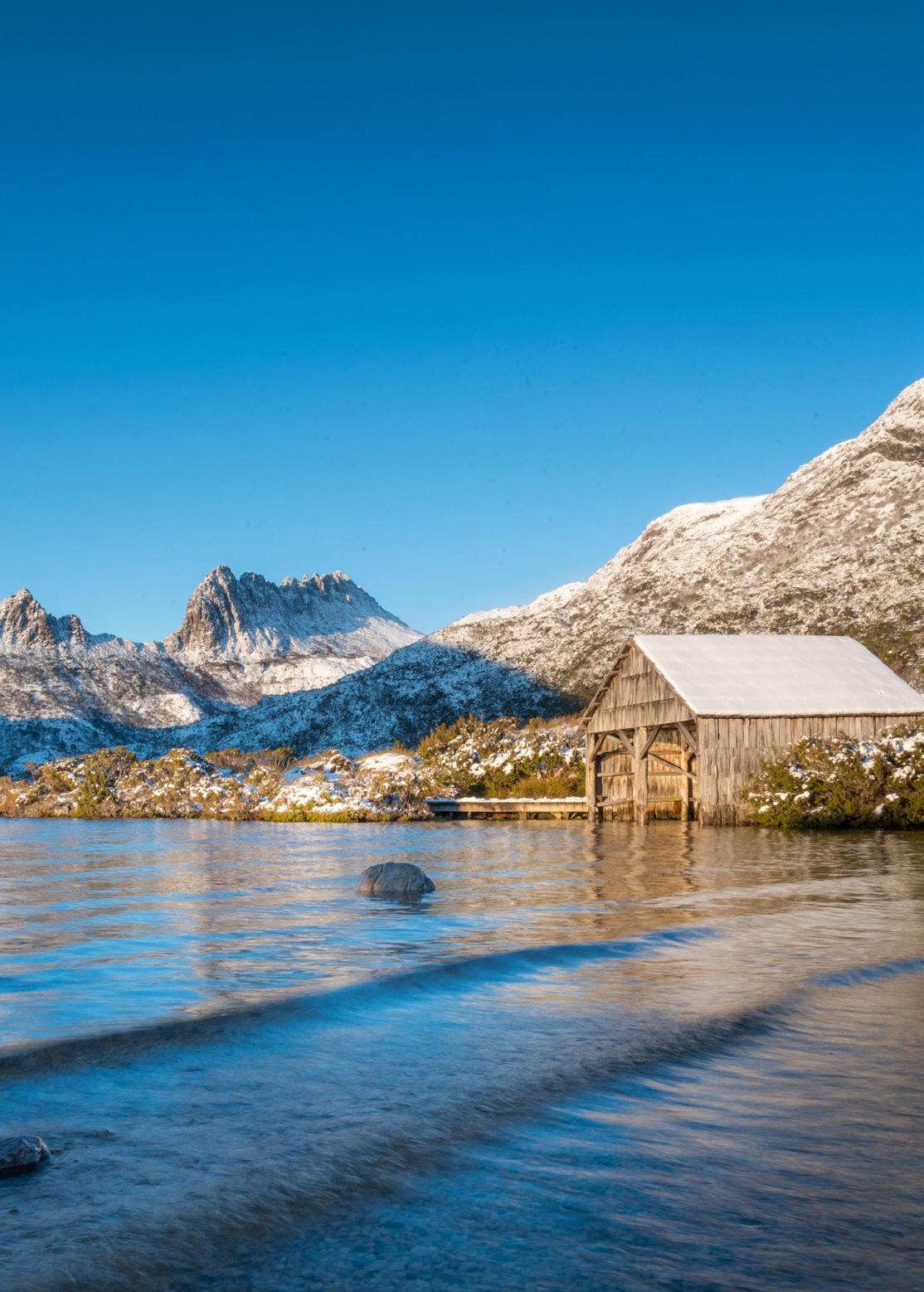
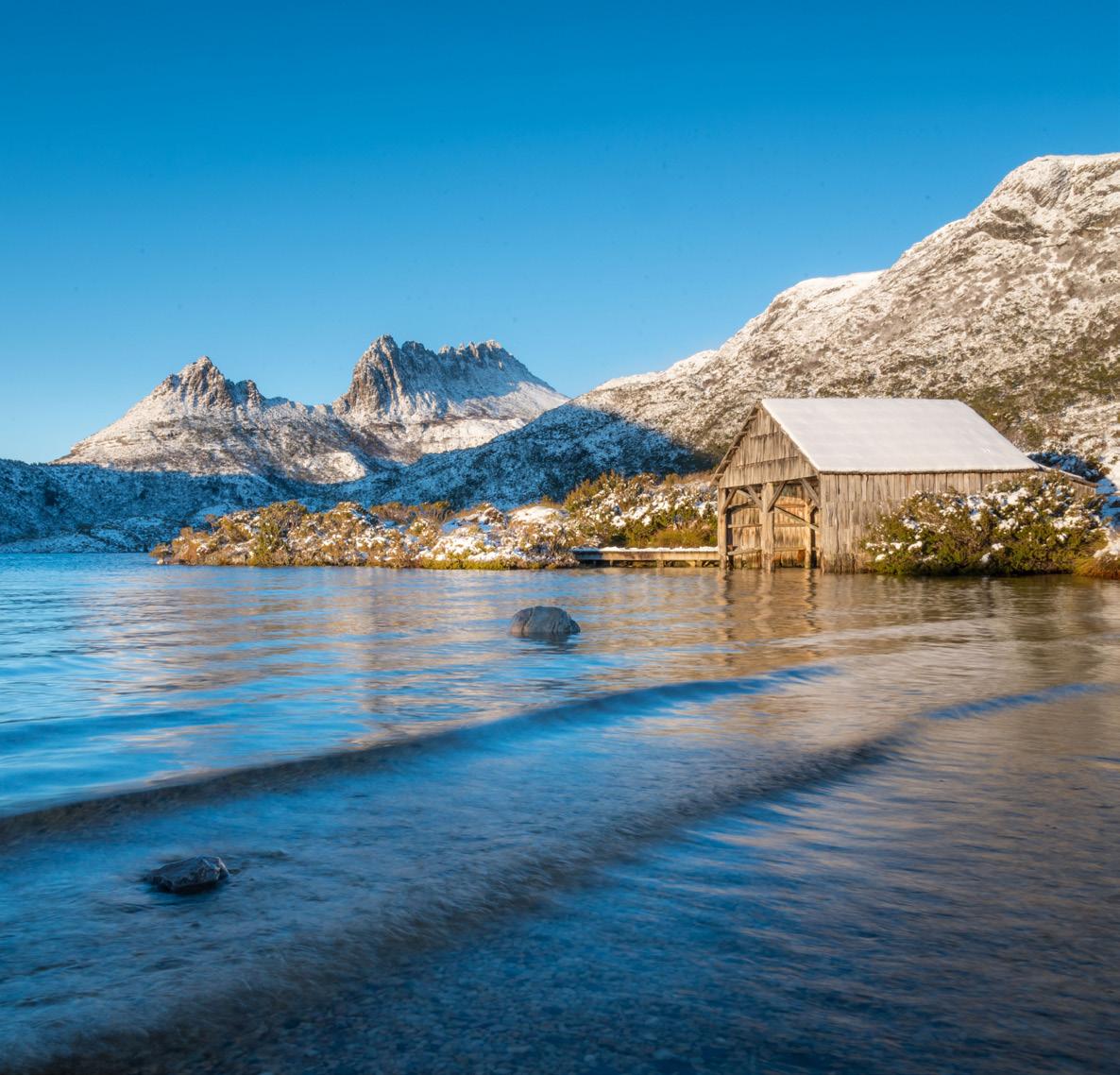
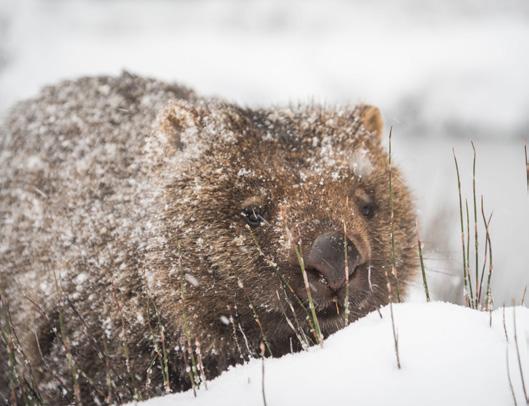
“It’s a no-brainer,” Cam laughs. “Cradle’s a great spot and, being a popular tourist attraction, that road is open after most snowfalls to run the buses in.” Cam suggests Dove Lake for beginners, plus Ronny Creek for spotting wombats and the Wombat Pool Track for a little bit more adventure.
“Ronny Creek is a great one under snow, and like clockwork, anywhere from three to four o’clock in the afternoon onwards, the wombats are generally making their way down there to feed up.
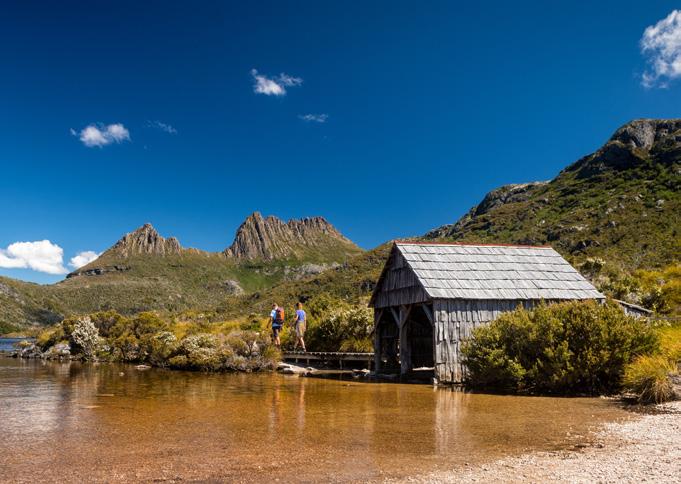
“Dove Lake’s a pretty easygoing walk, even with a bit of snow, whether you do the half lap or the full lap. Or go up the Wombat Pool Track, which is a little further around from the Dove Lake Boathouse. That’s got some lovely pencil pine trees around it and in snow they look amazing.”
Cam adds that for all of Cradle’s magnificence, we shouldn’t neglect Lake St Clair at the other end of the Overland Track. “Lake St Clair’s got some beautiful walks,” he says. “There’s a couple of nice interpretive walks up there that are quite short, about an hour to an hour-and-a-half to do, and one [the Larmairremener tabelti walk] has been set up by Tasmania’s Aboriginal people – it’s a lovely walk to do.”
DOVE LAKE CIRCUIT
2-3 hour circuit, 6km circuit
Grade 3: Some bushwalking experience recommended. Tracks may have short steep hill sections, a rough surface and many steps. Supervise children. Beware of flowing water. Subject to severe weather conditions—weather may change quickly.
LAKE ST CLAIR WALKS
45 mins-1.5 hours, 4.7km circuit. Depending on your choice of tracks: Watersmeet Track Grade 2; Platypus Bay and Larmairremener tabelti, Grade 3
Clockwise from top left Pandani Grove; Dove Lake Boathouse, Cradle Mountain; Mount Field.
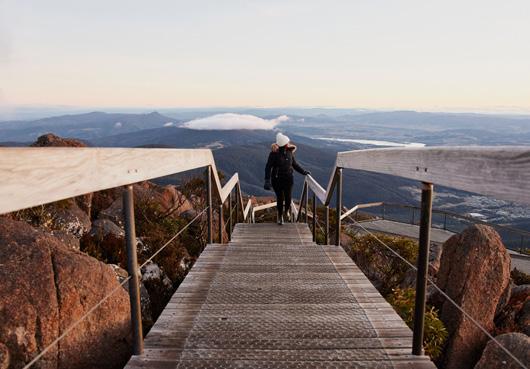
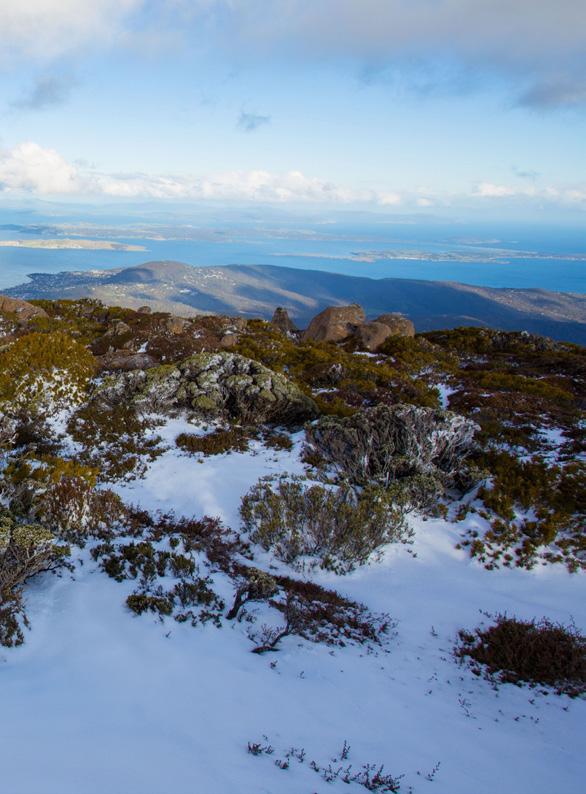
Mount Wellington/Kunanyi
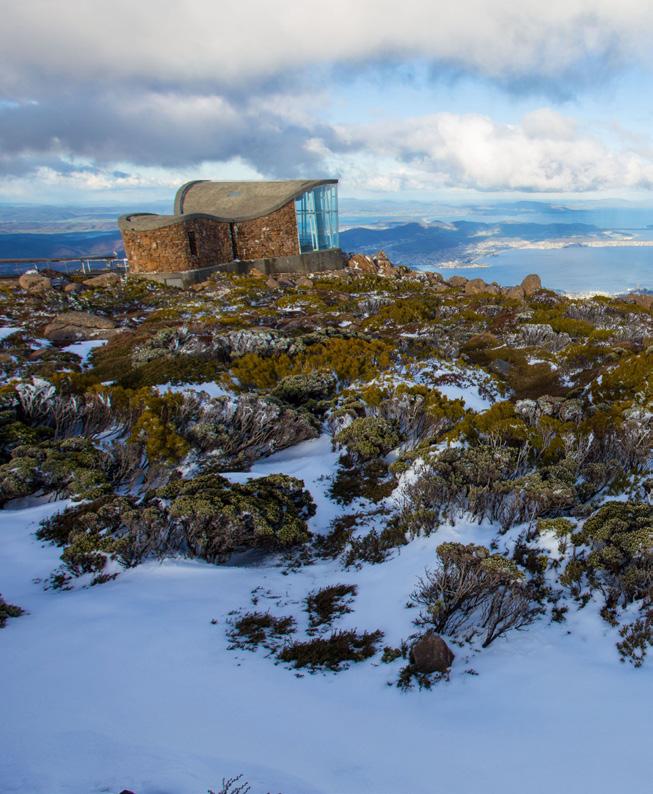
Bill Roe is a guide with the Tasmanian Walking Co and has been a keen bushwalker for many years. He loves to take people of all skill levels out on Tasmanian tracks. Whilst Mount Wellington/ kunanyi can get wildly busy on snow days, Bill says you can’t beat it for the variety of accessible tracks it offers.
His tip? Leave the car behind. “You can park your car anywhere, just walk up the mountain and within half an hour or so you can be in the snow.”
He says you have lots of options if you can get yourself to The Springs. “You can get quite a lot of snow at The Springs in the right conditions and walk some of the little tracks around there, or you can go up the Zig Zag track or the Organ Pipes track and get up to the summit.
“Winter is such a lovely time. The snow is nice, but the air is so clear. As soon as you get a little bit of elevation, you can see for miles.”
ORGAN PIPES TRACK
3 hours return, 7.4km return
Grade 3: Some bushwalking experience recommended. Tracks may have short steep hill sections, a rough surface and many steps. Supervise children. Tracks are subject to severe weather conditions.
The Highlands
Cam also recommends heading up into the highland lakes region. “They get big dumps of snow up there. It’s a completely different sort of landscape to the mountains and forests you get at Mount Field and Cradle, but you get the giant lakes. There’s a very cool little place I call Little Pencil Pine Walk, it’s probably a 15-minute walk along flat boardwalk with pencil pines and tarns. It’s nice up there.”
PINE LAKE
30-minute return, 800m return
Grade 1: No bushwalking experience required. Flat even surface with no steps or steep sections. Suitable for wheelchair users who have someone to assist them.
HOW TO TAKE EPIC SNOWY PHOTOS
Keep it dry
Have your camera bag or cleaning/drying cloth ready so that if you get water droplets or snow droplets on your lens, you can clean them off.
Overexpose
Sometimes you need to overexpose a bit in snow, because with such a big white scene, the camera generally underexposes to what it thinks is the right exposure, which can sometimes render the snow looking grey and gloomy.
Include extras
If you can find some lovely old trees, like pencil pines or the Pandanis up at Mount Field, when they’re covered in snow they really take another dimension to them. And look at the tarns; sometimes you’ll get little icicles forming from the outside of the tarns and they can make lovely abstract shots.
Supporting characters
Getting someone in the photo is good, particularly in bright clothing: a blue jacket or a red hat works for contrast with the white landscape. Animals in the snow (wallabies, wombats, paddymelons) makes for a great shot.
Hartz Mountain
South of Hobart, Hartz Mountains is another gateway to wilderness and gorgeous walks in the snow. “It probably involves a little bit more walking, but you seem to get more guaranteed snow when there is a dump that comes through down there,” Cam says. “I wouldn’t recommend going up to the top of Hartz Peak in snow unless you’re extremely experienced in climbing and ice climbing, but the start of that track is pretty easy from the visitor centre there. You can walk up that boardwalk and it’s all fairly flat, and there are some great little tarns that sometimes freeze over.”
HARTZ PASS
3.5 hours return, 6km return
Grade 3: Some bushwalking experience recommended. Tracks may have short steep hill sections, a rough surface and many steps. The sections of raised boardwalk on this trail can become extremely slippery when covered in ice or snow. Exercise caution and supervise children.
Clockwise from top left Mount Wellington/ Kunanyi; snowy wombats; Hartz Mountain; views for miles at Mount Wellington/Kunanyi; head for the Highlands.
Wilderness photographer Cam Blake shares his top tips.
Dive into more stories and inspiration online. Whether you’re planning your next getaway, curious about Tasmania’s food scene or looking for ways to explore the island in every season, we’ve got fresh content waiting for you.
57/
58/
60/
61/ REAR VIEW
community
Tasmania
is changing.
Are we ready?
Members have expressed concerns about how they can be better prepared for a future with a changing climate.
In January we asked Tasmanians how they are thinking about resilience. More than 11,000 members and non-members responded to our survey with a clear message: people are concerned, and they want practical help.
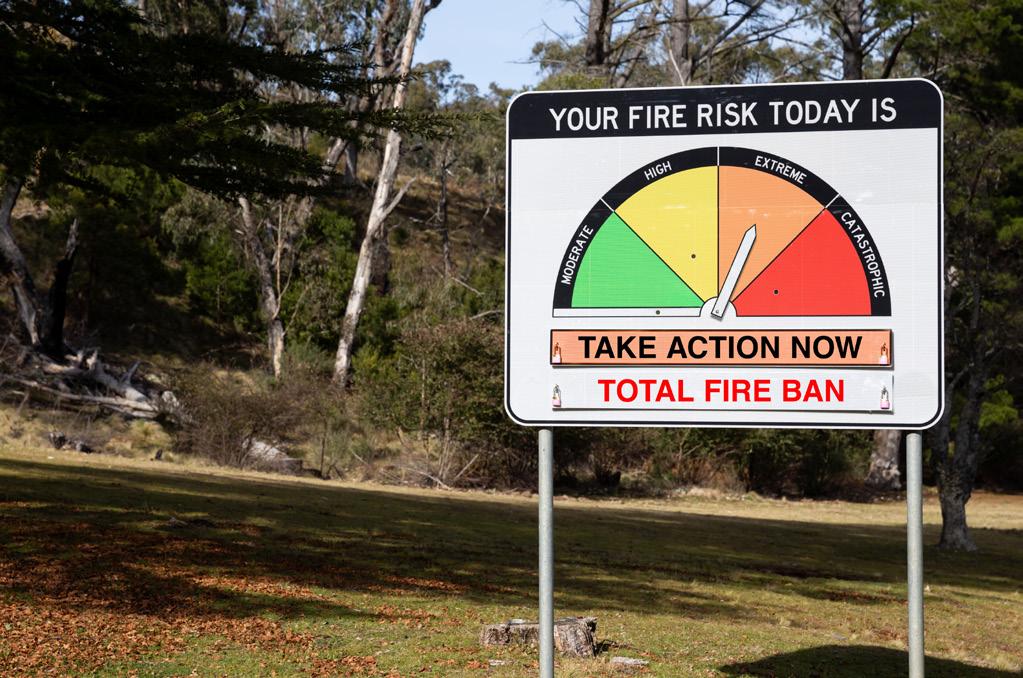
Most respondents believe Tasmania will face more bushfires, floods and storms over the next five to 10 years. More than half are worried about the impact of natural disasters on insurance costs, and many recognise the link between rising risk and rising premiums.
Interestingly, many people see these risks as more likely to affect others than themselves. But when it comes to protecting their communities, there’s strong, shared support for doing more.
What Tasmanians are asking for is simple: clear advice, practical support and stronger action to reduce risk. That includes fuel reduction, better vegetation
management, building standards, improved flood infrastructure and clearer emergency communication. There’s also strong support for targeted incentives to help households and businesses prepare before disaster strikes.
What we have learnt is that RACT can’t just focus on recovery after events happen. Investing more in prevention and preparedness is what is needed now.
RACT is committed to playing its part, including a $1.2 million partnership with the University of Tasmania Fire Centre to support world-leading bushfire research.
We can’t prevent every disaster. But together, we can be better prepared and build a safer, more resilient Tasmania.
For more, visit ract.com.au/community/news-and-media
the latest .
GET SHORTY
RACT is proud to once again be the official supporter of Speak Up! Stay ChatTY Shorts Day, backing a movement that continues to make a meaningful difference in the lives ofTasmanians.
Shorts Day is more than a moment on the calendar, it’s a powerful reminder of the importance of starting conversations about mental health and making it easier for people to reach out when they need support. At RACT, we believe (and have seen firsthand) that real change begins when people feel safe to speak up.
Whether in the workplace or out in the community, creating environments
where people feel comfortable to talk openly is essential. Psychological safety sits at the heart of this. It means knowing you can ask for help, share how you’re feeling, or raise a concern without fear of judgement or negative consequences.
When people feel psychologically safe, they feel more connected. They’re more likely to check in with each other, have honest conversations and seek support early. While this is often discussed in workplace settings, it’s just as important across the broader community. When we create safe, supportive environments in everyday life, those conversations become easier and more natural.
There are simple ways we can all contribute, by listening without judgement, encouraging open dialogue, showing respect and making
it clear that it’s okay to ask for help. At RACT, we’ve supported this approach through initiatives such as our Mental Health First Aid and psychosocial training programs, equipping our people with practical skills to support colleagues and members. We’re also proud to have been recognised as finalists in the 2026 Tasmanian LiFE Awards for Best Practice in a Workplace.
Imagine how much stronger and more connected our community could be if we all took one small step to speak up and support each other, every day.
If you would like to learn more, you can visit shortsday.com.au/
SLEEPING ROUGH FOR A CAUSE
SAFER ROADS, TOGETHER
National Road Safety Week was a powerful reminder that road safety is a shared responsibility. At RACT, it’s something we work on every day.
From 17 to 24 May we delivered a coordinated program of activities across Tasmania to help raise awareness and encourage safer behaviour on our roads.
Held each year, National Road Safety Week brings communities together with a shared goal: reducing road trauma and working towards zero fatalities and serious injuries.
On Thursday 18 June, Group CEO Mark Mugnaioni will be swapping his warm bed for a cardboard mat as part of the 2026 Vinnies CEO Sleepout.
It’s one uncomfortable night that highlights the harsh reality that more than 2700 Tasmanians face every single night. No bed to sleep in, no warm home to return to each day.
The statistic that really hits home is that one in four people accessing homelessness services in Tasmania is a young person.
There is also a growing number of women experiencing homelessness. Many have escaped unsafe situations with nothing but the clothes they’re wearing, only to encounter a housing system that has little to offer. Tasmania’s rental vacancy rate sits below 1%, and more than 5000 Tasmanians are on the social housing waitlist, waiting an average of 82 weeks for a home,
when they need it today. Seven years – for people who need help today. At these critical moments, the St Vincent de Paul Society is always there. Providing emergency accommodation, food, clothing, outreach and, just as importantly, ongoing connection to help people find a path forward. Vinnies does extraordinary work with limited resources and does it without judgment.
“My one night outside will be cold and uncomfortable, but it will be nothing compared to the reality faced by thousands of Tasmanians who don’t have a choice,” says Mark. You can follow Mark’s fundraising goal here, with every dollar going directly to Vinnies’ work supporting people in our community.
For more, visit ceosleepout.org.au/ fundraisers/markmugnaioni/tasmania
Throughout the week, we worked alongside key partners including the Tasmanian Government, MAIB, Tasmania Police, Safer Australian Roads and Highways (SARAH) and road safety organisations to deliver events, education programs and community activations. From lighting up RACT locations in yellow, to offering ribbons and stickers through our stores and fuel partners, these moments were designed to spark conversations and encourage people to reflect on their role in keeping our roads safe.
Across the week, daily themes guided activity, from remembering those we’ve lost, to making a personal pledge, showing kindness on the road, and refreshing knowledge of road rules. Schools, community groups and local events also hosted education sessions to help build knowledge and confidence behind the wheel.
National Road Safety Week is an annual reminder that road safety is a shared responsibility. By working together, as drivers, passengers, cyclists and pedestrians, we can help make every journey safer.
For more, visit ract.com.au/membership/ member-rewards/activities-and-experiences
the latest .
Connecting across generations
RACT is strengthening its support for older Tasmanians through a new partnership with the Council on the Ageing (COTA) Tasmania, helping people stay safe, connected and confident on the road and in the community.
For many members, RACT has been part of their life for decades. This partnership recognises that longstanding connection and builds on the work already underway through our Community Education team, who deliver road safety and awareness sessions to hundreds of experienced drivers each year.
The partnership is already making an impact. During the recent Generations Connect Fun Day in Hobart, more than 1100 people came together to share in a day designed for all ages.
The RACT Community team spoke with hundreds of attendees, many of whom proudly shared stories about their history with RACT.
Moments like these show the value of bringing generations together.
Seeing young people, families and older Tasmanians connecting in the same space, learning from each other and simply enjoying time together reminds us that community is strongest when it’s shared.
COTA Tasmania plays a vital role in advocating for older people, and this partnership allows RACT to better understand what matters most at every stage of life. It also strengthens our focus on positive ageing and safer transport outcomes across Tasmania.
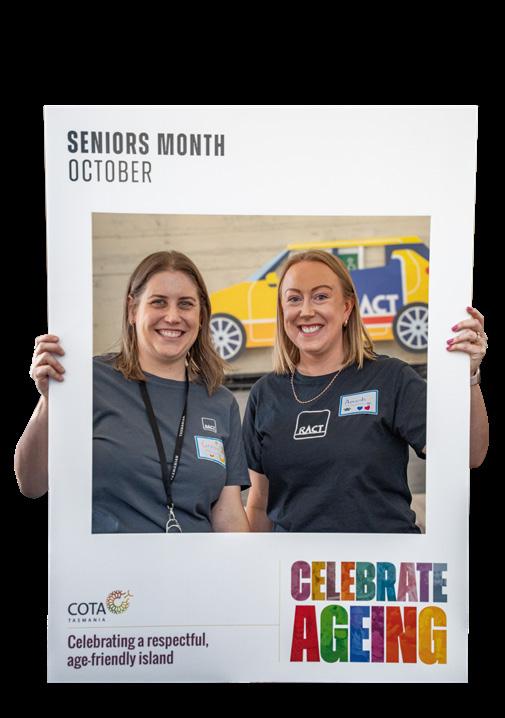
Looking ahead, RACT will continue working with COTA, including supporting Celebrate Ageing Seniors Month this October, an opportunity to recognise the contributions older Tasmanians make every day.
The Seniors Month program guides will be in all RACT stores across Tasmania from late August.
“As
Tasmania’s only locally owned insurer and a member organisation with deep roots in the community, we have a responsibility to help support conversations and actions that improve resilience across the state.
— Mark Mugnaioni, Group Chief Executive Officer, RACT
The Mercury on 7 May 2026.
RACT’S SPRING FARM VILLAGE STORE IS NOW OPEN
We recently opened our brand-new store at Kingston’s Spring Farm Village, and we celebrated in style with a big party.
The new store has been designed with you in mind and caters to the vibrant, growing community of Kingston and the surrounding areas of the Huon Valley, the Channel and the southern suburbs of Hobart. In store you’ll meet familiar faces
and newer staff members, all of whom are ready to greet you and help you out with membership, insurance, roadside, driver training or whatever you need from RACT.
It’s a fresh, friendly and convenient space, with plenty of parking, and is within an easy-to-navigate shopping centre that is a real one-stop shop. When you visit us, you can also visit the new Coles supermarket, bakery, pharmacy, medical centre, hair and beauty, and various other specialty stores in the one place.
If you live in the area and haven’t yet visited the Spring Farm Village RACT store, we encourage you to pop in or book an appointment at a time that suits you.
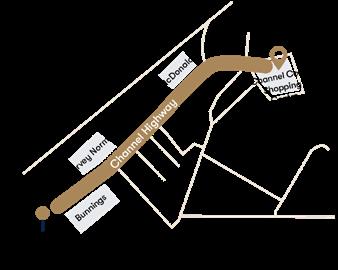
RACT Kingston, Spring Farm Village, 200 Channel Highway.
Open Monday-Friday, 9am-5pm; Saturday, 9am-12pm.
Drive to the conditions
Changing gears
Teaching teens to drive, without the stress
A new Tasmanian pilot program is helping learners, supervisors and young drivers build confidence behind the wheel, writes Mel
Percival, RACT GM Advocacy and Government Relations
Do you remember learning to drive? Or perhaps you‘re currently teaching someone?
It‘s often a stressful experience – nervous learners, overconfident first-timers and supervising drivers doing their best to stay calm. When we asked what would make this journey easier, the answer was consistent: we need more support.
In Tasmania, young people are overrepresented in crash statistics. Sixteento 25-year-olds account for 22 per cent of fatalities, despite making up only 13 per cent of licensed drivers. Teaching a young person to drive is one of the
most important – and most challenging – responsibilities a parent or supervisor takes on. Research shows that quality driving instruction is strongly linked to young people becoming safer drivers.
For the past ten months, we‘ve been meeting with Tasmanian supervisors and their learners to understand the challenges and develop practical solutions to help.
One initiative is a smartphone app being designed and developed by our sister club RAC in Western Australia. The app will give learners and supervisors timely, clear guidance through a staged approach to learning, covering everything
from basic to more complex skills. It will include short instructional videos aimed at supervisors to help them support their learner.
To make sure we get it right, we‘ve been speaking directly with Tasmanian learners and supervisors to explore how it can be adapted to best suit Tasmanians. While every experience is different, some themes came up again and again:
• “The road rules are confusing, and things have changed since I learned to drive.“
• “How do I plan the learning journey?“
• “It‘s hard to know if we‘re making real progress or just clocking hours.“
• “I want this to be about becoming a safe driver, not just hitting the hours target.“
• “It gets emotional and stressful in the car.“
• “I know how to drive, I just need help knowing how to teach.“
We‘re looking for a small group of learners and supervisors to be part of a pilot to test and provide us with feedback on the app. This is one of several projects underway as part of the Youth Road Safety Project, a partnership between RACT and the Tasmanian Government.
If you‘re teaching or learning to drive, or will be soon and want to be involved, sign up here: ract.com.au/community/youth-road-safety/ youth-road-safety-program/ract-youth-roadsafety-project-in-person-sessions
State growth
The road ahead for Tasmania’s safety strategy
With serious injuries and fatalities still too high, a new approach to road safety is taking shape. By Scott Tilyard, Chair of the Road Safety Advisory Council.
As Chair of the Road Safety Advisory Council, I want to share an important update about the future of road safety in Tasmania. We are working collaboratively with the Tasmanian Government on the development of a new road safety strategy, which will take effect at the end of this year, when the current Towards Zero – Tasmanian Road Safety Strategy 2017-2026 concludes.
When the current strategy was launched, we set ourselves a target of reducing serious road trauma from 300 serious casualties a year to fewer than 200 by 2026. It was a goal based on evidence and driven by a clear belief that no death or serious injury on our roads is acceptable.
Sadly, we are not on track to reach that target. In 2025, 43 people were killed on Tasmanian roads, and more than 270 were seriously injured. Each of these numbers represents a person, someone’s loved one, friend, colleague or neighbour. The impact on families, communities and first responders is significant and longlasting.
While we have made progress in some areas, we have not yet achieved the transformational change we had hoped for. Over the same period the number of licensed drivers in Tasmania has increased by 17 per cent and registered
IN 2025, 43 PEOPLE WERE KILLED ON TASMANIAN ROADS, AND MORE THAN
WERE SERIOUSLY
INJURED
vehicles by 23 per cent meaning there is a lot more use of the road network. Road safety is complex, and history tells us that meaningful and sustained reductions in trauma require a longterm commitment and consistent investment. We know it is not a quick fix, and it is not something that government or experts can solve alone. Every road user has a role to play.
As we develop the new strategy, we are taking a clear look at what has worked under the current strategy, what needs strengthening, and where we need to do things differently. This is not about starting again. It is about building on what we know, adapting to emerging challenges, and learning from the best available evidence.
To support this, we are working with an independent research body to conduct detailed crash analysis and modelling. This work will help us identify the areas where effort will have the greatest impact, whether that is safer roads and roadsides, improved enforcement, better support for vulnerable road users, safer vehicles or addressing the behaviours that continue to place Tasmanians at risk.
Once this analysis is complete and priority areas are identified, community feedback will play an important role in shaping the final strategy. We want to hear from people across Tasmania, drivers, riders, pedestrians, local councils, community groups, industry and families. Your experiences, concerns and ideas matter.
Our goal remains simple: fewer families devastated by road trauma and more Tasmanians getting home safely every single day. With a refreshed strategy, strong evidence, and your input, I’m confident we can move closer to that goal.
Let’s work together for a safer Tasmania.
Updates and information about consultation opportunities are available at transport.tas.gov.au/road_safety_and_ rules/tasmanias-next-road-safety-strategy
Save on winter activities
10%
ESCAPE TO CRADLE MOUNTAIN
Cradle Mountain Hotel
Chase the winter wild. Head to Cradle Mountain for rugged up hikes, cosy evenings by the fire and the possible chance of snow. A winter wonderland awaits, right here in your own backyard.
Save 10% on stays at Cradle Mountain Hotel.* Go to ract.com.au/cradle-mountain-hotel
ROAD TRIP AT HOME
Apollo
Explore your backyard with a selfcontained motorhome from Apollo. It’s the perfect opportunity to create your own adventure and stop where you want for as long as you want.
Save 10% off the daily rental rate.*
Go to ract.com.au/apollo
SAVE 10%
SAVE ON DIY
Wattyl Paints
Get started on your DIY ideas around the house and save with Wattyl Paints.
Save 10% off paints, stains and accessories.*
Go to ract.com.au/wattyl-paints
ENJOY A WINTER ESCAPE
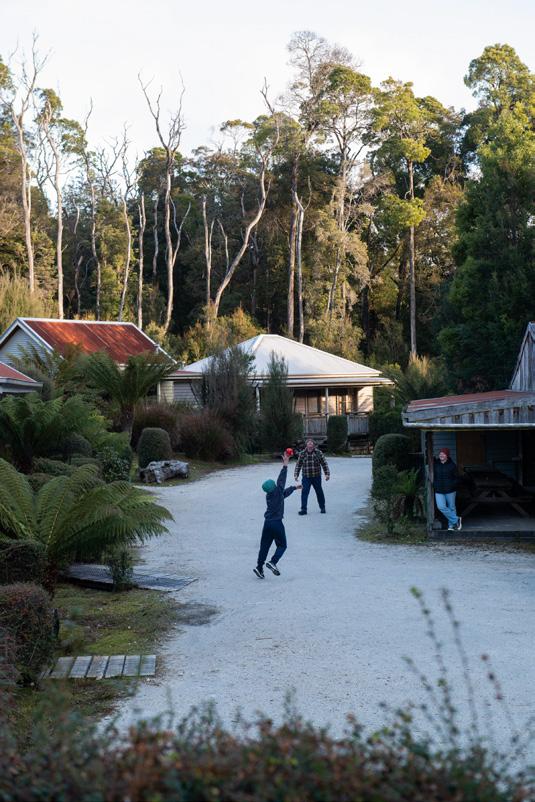
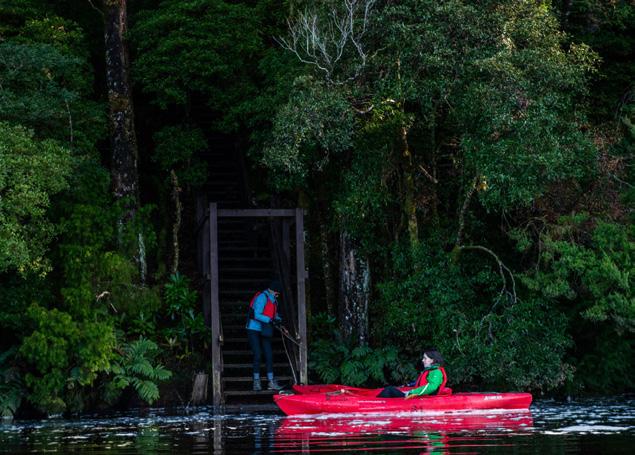
Strahan Village
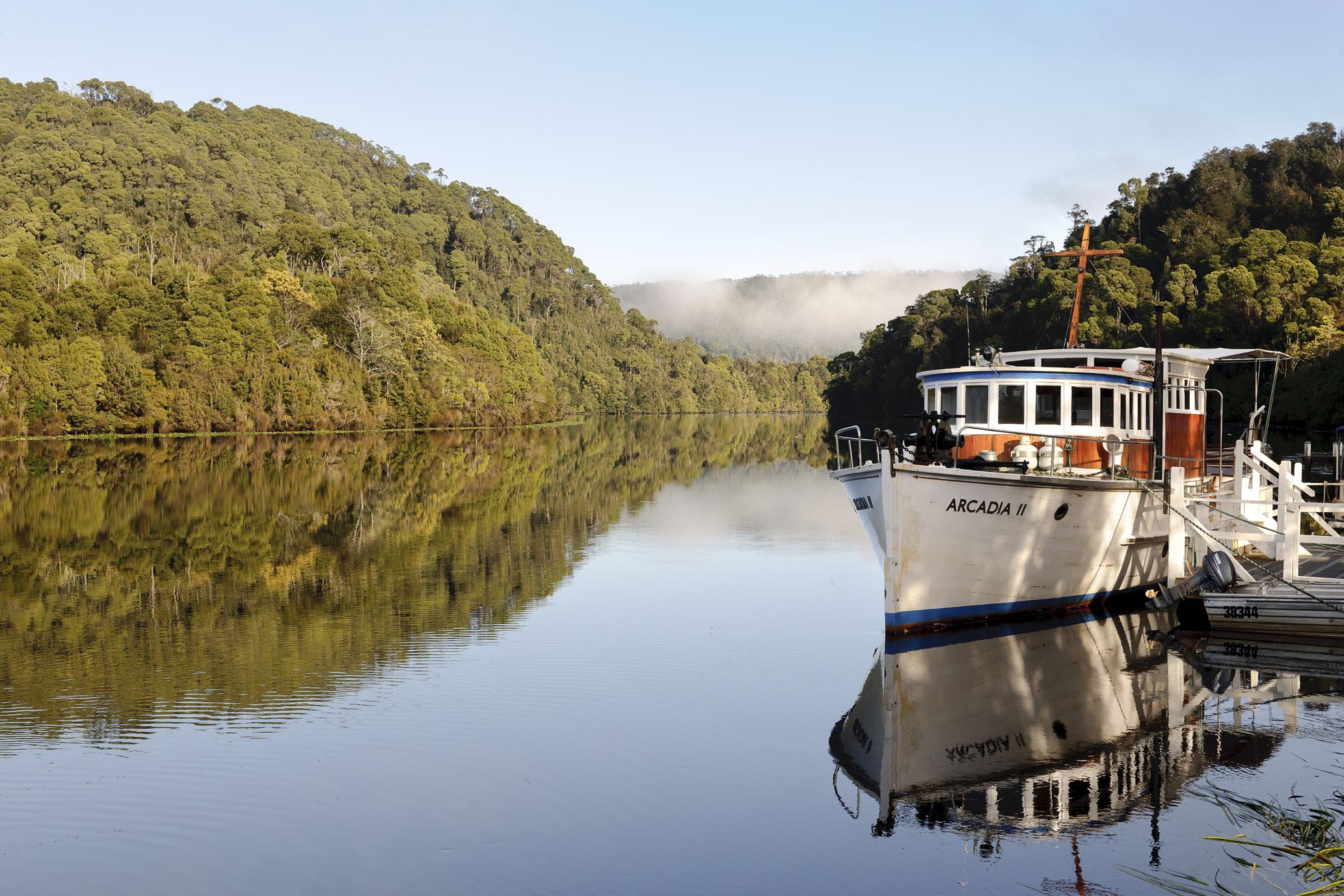
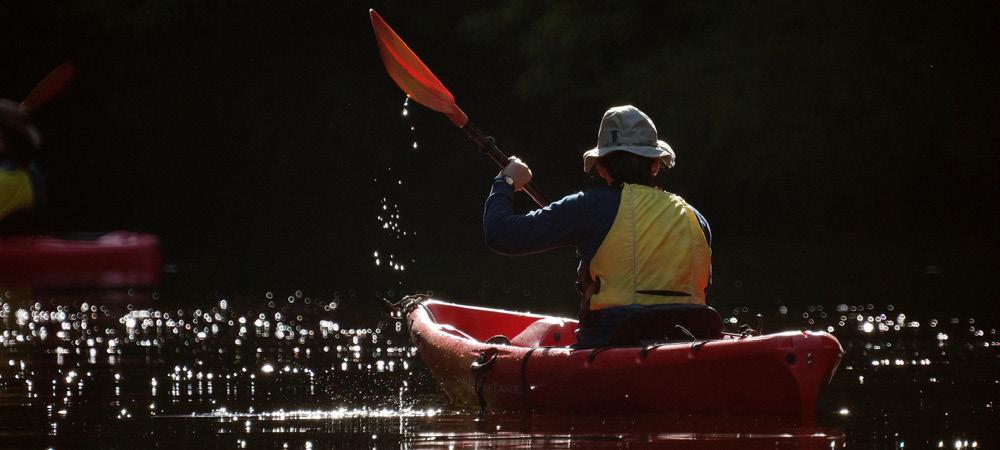
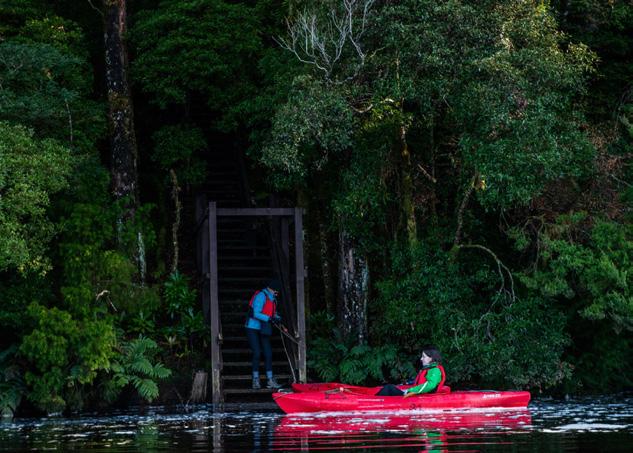
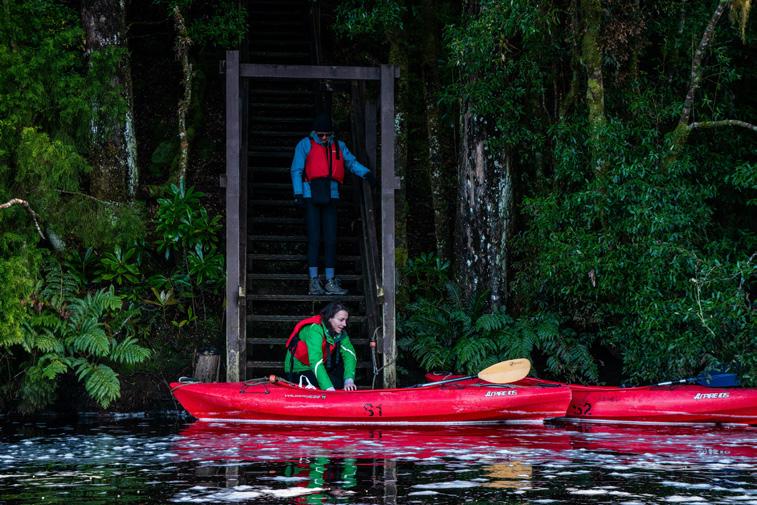
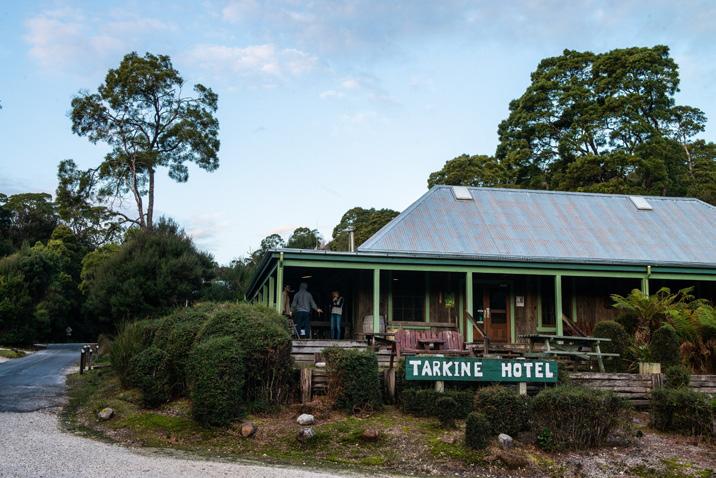
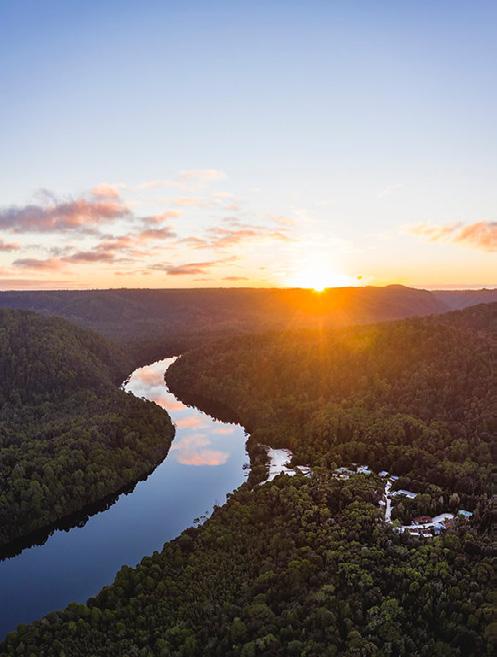
Head west this winter and explore ancient rainforests, riveting history and mesmerising reflections on the Gordon River. This is a stay that will ignite your sense of adventure and warm your soul.
Save 10% on stays at Strahan Village.*
Go to ract.com.au /strahan-village
15% SAVE 10%
CRUISE IN STRAHAN
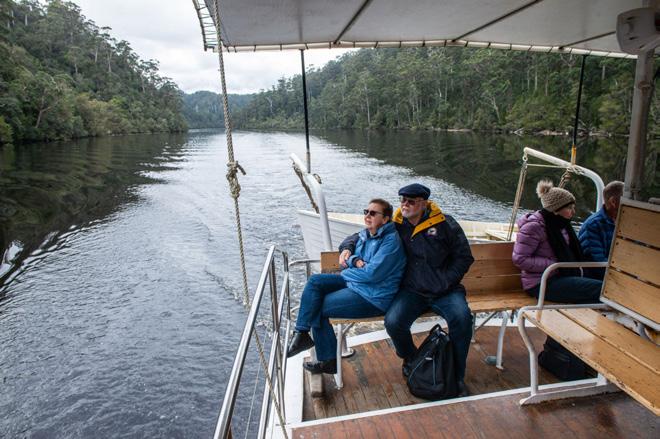
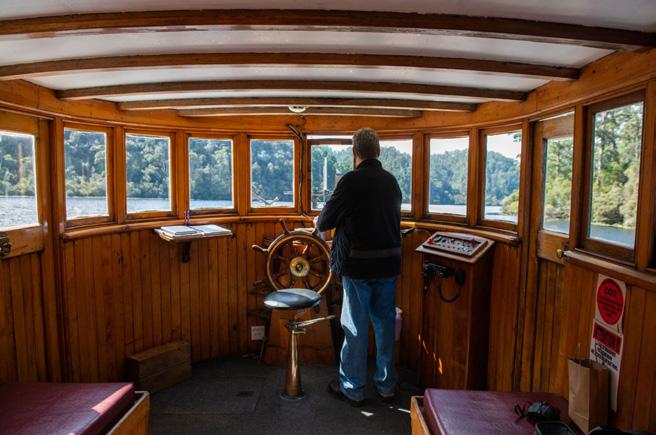
Gordon River Cruises
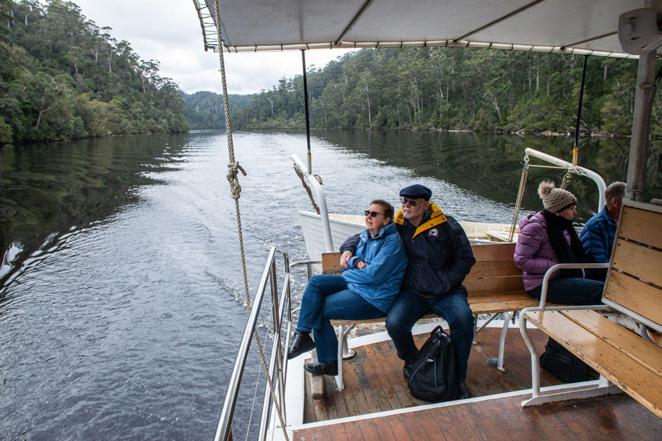
Head to Strahan and enjoy a cruise through the Wilderness with Gordon River Cruises.
Save 15% off select cruises.*
Go to ract.com.au/ gordon-rivercruises
10%
STAY CHARGED THIS WINTER
RACT Batteries
If it’s time for a replacement, our roadside team are here to help.
Members enjoy a $30 discount off the retail price of any battery purchase.
Available at select fuel site locations.
and Refrigeration Centre
Keep your family warm all winter by regularly servicing your heat pump.
Save 10% on heat pump servicing.*
Go to ract.com.au/parrs-heatpump-centre
10%
SOLAR I Want Energy
Thinking about switching to solar? I Want Energy can help with all your solar and renewable energy questions.
Get 10% off the installation rate when you purchase a new solar and/or battery system.*
Go to ract.com.au/i-want-energy
Go to ract.com.au/batteries GROCERY SAVINGS
STAY WARM 1st Energy
Stay warm this winter with exclusive members savings from 1st Energy.
Go to ract.com.au/1st-energy
Woolworths Group eGift Cards
Save more on your shopping with Woolworths Group Gift Cards. Choose from Everyday WISH, Woolworths Supermarket, BIG W. Save up to 5%.*
Go to ract.com.au/woolworthsgroup-egift-cards
24 Powered flying vehicle with fixed wings (9)
Across
1 Waterproof hooded jacket (6)
1 Feeling of excited or anxious uncertainty about what may happen (8)
4 Type of cybercrime scam (8)
10 Considered the national dish of Ireland (5,4)
11 Showing no skill; clumsy (5)
12 Years of a person’s age from 13 to 19 (5)
13 Have a specified beginning (9)
2 Based on logic or good sense (8)
14 Sniff slightly or repeatedly due to a cold (7)
16 Very strong wind (4)
3 Large deciduous tree with smooth grey bark (5)
19 Self-righteously moralistic person (4)
21 Types of materials of which animals or plants are made (7)
5 Transmission setting for steep hills (3,4)
1 Australian landscape painter Arthur Streeton was one of the founders of which group of artists?
2 Mt Wellington/Kunanyi is the imposing backdrop to Hobart. How high is it?
3 Which island in the Indian Ocean became a territory of Australia in 1958?
4 What bank was formerly known as The Bank of NSW?
5 Which rivers are most closely associated with Launceston in Australia?
6 Area of snow used for skiing (3,6)
25 Dough extruded into various shapes and cooked in boiling water (5)
26 A quilt, stuffed with down or a synthetic material (5)
27 Viral respiratory infection (9)
20 Specialist in a particular branch of study (7)
7 Polar region of a planet (3,3)
8 Assemble or accumulate (6)
9 Past tense of the verb strive (6)
15 Grate or hearth at the base of a chimney (9)
28 Yarn made of three strands (5-3)
29 Remove or obliterate (6)
Down
7 Tall, fastgrowing narrow tree with yellow leaves in Autumn (6) 8 Person who investigates crimes; a detective (6) 9 Difficult or annoying; hard to endure (6) 15 Anyone who chooses to take part in an activity (3-6)
21 Protection granted to a political refugee (6)
17 Person or thing causing inconvenience or annoyance (8)
18 Become more intense or serious (8)
20 Relating to ice, especially in the form of glaciers (7)
22 Sphere flattened at the poles (6)
1 Conclusive test of the success or value of something (4,4)
25 Long, soft feather or arrangement of feathers (5)
6 Which Australian capital city has the least daylight on the shortest day of the year?
7 Who wrote the classic 1888 bushranger novel Robbery Under Arms?
8 A skink is a type of what?
9 What does the expression “yonks” mean?
10 Recorded in Charlotte Pass in 1994, what is Australia’s lowest recorded temperature?
Want to find out how you did? Find the answers online at ract.com.au/puzzles
CLOCKWISE FROM TOP // Fagus at Mt Field by Jennifer in West Hobart; Fagus by reader Will, Lake Meadowbank in Autumn light by Charlie in West Hobart, at the turning of the Fagus by Simon Cripps.