2.0 / too-point-oh / — adjective
Evolutionary; the next stage of development.
The Racine Art Museum (RAM) is committed to evolving—continually reimagining how we connect with our community, support artists, and inspire audiences, while creating the future of what a museum can and should be.
Museums are more than repositories of objects; they are centers of curiosity, creativity, and critical thinking that foster discovery, learning, and a deeper understanding of the human experience. By nurturing engagement, RAM strengthens the vitality of our community and uplifts the stories that shape us.
Today, the museum field is undergoing a global transformation. Emerging technologies, shifting social dynamics, and new economic models are redefining how cultural institutions operate, communicate, and create value. To navigate this landscape, RAM embraces three guiding forces:
• Change as the spark for forward momentum.
• Innovation as the bridge between ideas and action.
• Sustainability as the result of deliberate planning.
These principles shape our pursuit of meaningful institutional impact. Our evolution honors nearly a century of legacy while encouraging us to rethink approaches and broaden our offerings. In doing so, we continue to support ambitious exhibitions and artist-centered practices that fuel continued growth.
RAM 2.0, our 2026–30 strategic plan, positions the museum for a new era—shifting from a collecting-focused past to a community-rooted, interdisciplinary future. Guided by the five P’s—People, Programs, Profile, Practices, and Place—the plan advances both campuses as dynamic cultural hubs and strengthens RAM’s role as a leading Midwest arts destination.
Developed through close board and staff collaboration, the plan reflects diverse perspectives, clarifies priorities, and imagines what is possible. I am deeply grateful to all who contributed insight and optimism. As we enter this next stage—our own version 2.0—RAM will provide artists and audiences an inspiring platform to explore, create, and find meaning in the space between.
The Racine Art Museum is pleased to introduce RAM 2.0, a strategic plan for 2026–30 that will serve as a roadmap for our organization’s continued growth over the next five years. The culmination of a six-month process that began in mid-2025, it builds on past plans while responding to current conditions and positions the museum for long-term, ongoing success.
Titled RAM 2.0: Creating the Future, this plan reflects our enduring commitment to artists whose practices sit within and between contemporary art, craft, design, and community making. It outlines how the museum can support creators as they adapt, foster spaces for exploration, care for place, and sustain continuity through change—while strengthening RAM’s role as a resource for audiences, partners, and the broader public.
Building on lessons from both our institutional successes and setbacks, the plan continues efforts to uphold and enhance excellence in collections, exhibitions, learning, engagement, and service. It also introduces new initiatives to deepen our impact on individual lives, promote community wellbeing, and advance equity through access and inclusion. At the same time, it aims to strengthen RAM’s financial and operational foundation, grow our base of support, and reinforce our staff and governance.
Like all strategic plans, ours aligns ambitions and resources. It seeks to balance aspirational programming with fiscal sustainability and prioritizes experimentation with new models of engagement and growth. Each of RAM’s new goals has a series of measurable objectives built around different approaches and tasks, all designed to be integrated across the organization for seamless interdepartmental collaboration. Some actions have begun; some are continuations of ongoing work; others are in the planning phases; and still others are geared for the future.
RAM 2.0 is a living document, designed to be flexible and allow for agility. Each year, we will return to the plan to evaluate our progress and use that assessment to develop annual work plans and budgets for board approval. While this plan will inform and guide our work, we will also remain nimble to take advantage of new opportunities and changing conditions.
The launch of this strategic planning initiative coincided with a significant transition at RAM, as Bruce W. Pepich concluded his five-decade leadership tenure and Robb Woulfe assumed the role of Executive Director in early 2025. This moment of change provided a timely opportunity to honor RAM’s legacy, reassess institutional priorities, and envision a bold path forward.
To guide this work, a Strategic Planning Committee was established under the direction of RAM’s Board of Directors, with representation from board members, staff, and the broader community. The committee met regularly to share findings, discuss and debate recommendations, and summarize results.
The committee included Tricia Blasko, John Crimmings, Laura D’Amato, Ben Flegel, Clair Holland, Debra Karp, Joyce Koker, Denise Roberts McKee, Julia Oas, Tyler Potter, Cindy Sellers, Lena Vigna, and Robb Woulfe. It drew on best practices in strategic planning from both non-profit and for-profit environments and regularly provided updates to—and sought feedback from—the full board and staff. Going forward, the committee will review the five-year plan annually to identify improvements or necessary revisions.
During the first phase of planning, the committee discussed critical issues for RAM, taking into consideration the internal and external environments, industry and societal trends, consumer behavior, changing demographics, and the distinctive attributes of the organization to assess and leverage the museum’s competitive advantages. We reviewed RAM’s existing planning documents along with notes, studies, survey data, and other input material from previous strategy sessions and reports and agreed on definitions for each step of the planning process.
In approaching the second half of its work, the committee worked to identify institutional priorities and discuss practical considerations to ensure strong leadership, artistic and operational excellence, and growth of the organization. Specific topics that shaped the group’s thinking included: the dominance of technology and media in mainstream culture; increased competition for leisure time; the importance of the museum’s relevance to the community; evolving approaches to institutional collecting; changes in philanthropic giving; and the need for more sustainable financial models.
The key deliverables of this process included: providing an overall situation analysis; clarifying and sharpening RAM’s vision and mission; articulating institutional core values; identifying priorities; defining goals, objectives, and critical success factors; developing strategies and action plans; and establishing measures to track progress.
RAM’s Board of Directors approved and adopted this new strategic plan in January 2026.
Our vision is to be a vibrant hub where art sparks imagination and inspires possibility, which is realized through a mission to connect people through creative exploration and lifelong learning while contributing to the vitality of our community. Furthermore, RAM embraces five core values: 1) belonging and engagement; 2) collaboration and partnership; 3) innovation and experimentation; 4) integrity and accountability; and 5) joy and wonder.
Building on these foundational statements, the plan is organized around five strategic pillars— People, Programs, Profile, Practices, and Place.
• Each pillar is supported by aligned priorities that provide direction and intent.
• These priorities are translated into broad goals and critical success factors that sharpen focus.
• Goals are further broken down into specific objectives, strategies, and actions that define how the work will be carried out.
• Implementation is guided by defined performance indicators, timelines, targets, and responsible parties to ensure accountability and progress.
At every level—from overarching priorities to tactical actions—the plan reflects the insights and ideas shared by stakeholders throughout the engagement and planning process.
RAM will pursue these values-based priorities, which establish key areas of focus and connect our current identity with the future we aspire to achieve:
• We are open and inviting
• We are dynamic and compelling
• We are visible and known
• We are responsible and mindful
• We are integral to community well-being
In support of our priorities, RAM will undertake these major goals:
• Increase access, audience diversity, and guest satisfaction
To create an exceptional visitor experience by equipping staff with intentional hospitality training and enhancing facilities and technology to ensure comfort, safety, accessibility, and service excellence.
• Deliver engaging and relevant content across platforms
To position the museum as a lively cultural hub by stewarding collections, curating inclusive artistic programs, and fostering creative development through experimentation, interdisciplinary practice, and community engagement.
• Strengthen public awareness and institutional cohesion
To elevate the museum’s standing as a leading cultural destination by expanding its marketing reach and digital presence while shaping a cohesive cross-campus identity through shared programs and unified communications.
• Build organizational capacity and financial sustainability
To fortify the organization’s long-term resilience by diversifying revenue, developing an empowered workforce, and bolstering institutional capacity through effective leadership, planning, and fundraising.
• Champion the museum as a vital economic and cultural asset
To advance the museum’s role in regional life by cultivating partnerships that broaden access, encourage creative investment, strengthen community connections, and enrich the local quality of life.
To drive progress towards our goals, RAM will emphasize these critical success factors:
• Welcoming environment —accessible, inclusive, and visitor-centered.
• Meaningful experiences —enriching, educational, and inspiring.
• Trusted brand —credible, respected, and distinctive.
• Robust infrastructure —financially sound, efficient, and well-managed.
• Regional leadership —connected, influential, and collaborative.
This graphic illustrates the plan’s nesting hierarchy—linking strategic pillars, priorities, goals, and critical success factors. Each layer builds on the next, showing how all elements work together to underpin and advance the organization’s mission.
Mission: To connect people through creative exploration and lifelong learning while contributing to the vitality of our community.
Priorities
We are open and inviting
We are dynamic and compelling
We are visible and known
Goals
Increase access, audience diversity, and guest satisfaction
Deliver engaging and relevant content across platforms Strengthen public awareness and institutional cohesion
We are responsible and mindful
We are integral to community well-being
Building organizational capacity and financial sustainability Champion the museum as a vital economic and cultural asset
Critical Success Factors Welcoming environment Meaningful experiences Trusted brand Robust infrastructure Regional leadership
To implement the plan, RAM will invest in new programs and initiatives by reallocating existing resources, securing additional funding through gifts, grants, and appropriations, expanding reserves, and building the endowment to sustain future operations. RAM expects the annual budget to increase 20 percent over the plan’s life (FY26–FY30), based on revenue forecasts and expense projections. This growth will be supported by gains across all revenue streams while decreasing withdrawals from the investment portfolio. By 2030, the museum aims to double earned revenue, increase contributed revenue by 40 percent, and significantly reduce reliance on investment income—reaching a $3 million operating budget.
In addition to introducing a robust revenue growth plan, RAM will revise its budget over the coming years to allocate a greater percentage of resources to some critical areas, including creation and content development, promoting revenue-generating activities, and prioritizing initiatives that support efficient operations. We have already begun shifting into a strategy that focuses more on the goods and services needed for quality program delivery, marketing impact, and infrastructure improvements, and we will continue to scale these to new operating budgets aligned to industry benchmarks.
As RAM launches its new five-year strategic path, it does so from a position of solid financial footing, with the capacity to sustain core operations while pursuing new opportunities. The plan will strengthen the museum’s business model by better balancing earned and contributed revenue, improving cash flow, broadening support, and catalyzing improvement through capital investments and endowment growth.
By adapting to economic conditions and evolving audience behaviors, RAM will ensure long-term financial sustainability and success.
This graphic shows RAM’s fiscal glidepath over the next five years, projecting a 20 percent total increase in the operating budget to $3 million by 2030. The model reflects a strategic rebalancing of revenue, emphasizing growth in earned and contributed income and a reduced reliance on investment withdrawals to strengthen long-term financial sustainability.
As with any forward-thinking initiative, success depends on certain assumptions and careful management of potential risks. Our plan assumes strong audience engagement, staff adoption of training, effective technology and facilities upgrades, and active collaboration with partners. Risks include project delays, slower visitor adoption, revenue shortfalls, staff turnover, and underperforming initiatives. Managing these factors will be critical to achieving the museum’s goals and long-term impact.
RAM 2.0 is focused on strengthening our ties with the diverse communities we serve—meeting people where they are, removing barriers to participation, and becoming a public “living room” for residents and visitors alike. We aim to foster engagement that is inspiring, accessible, and lasting while ensuring the organization’s resilience. By leveraging RAM’s key areas of impact— place and identity, culture and connection, health and sustainability, and innovation and enterprise —we will deepen community bonds, promote well-being, support creative industry, and reflect the city’s distinctive character.
By 2030, we envision a more sustainable and dynamic institution—one that brings pioneering artists into dialogue with today’s makers, centers its work on audiences, and is enriched by meaningful community relationships. This plan is designed to build momentum and usher RAM into its next era. We invite you to join us on this journey.
Terms and Concepts
This plan uses a set of key terms to create clarity and shared understanding. The definitions below outline how our aspirations translate into focus, action, and measurable progress.
Vision—Our Aspiration
What we want to become and achieve in the future.
Mission—Our Purpose
Why we exist and the difference we seek to make.
Values—Our Beliefs
The principles that guide our choices and behaviors.
Pillars—Our Foundations
The core domains that uphold our vision, mission, and values.
Priorities—Our Focus
The major areas of emphasis that strengthen our pillars.
Goals—Our Aims
The outcomes we strive to accomplish through our priorities.
Objectives—Our Targets
The measurable results that define success for our goals.
Critical Success Factors—Our Enablers
The essential conditions needed to meet our objectives.
Strategies—Our Approach
The methods we take to support our goals and success factors.
Actions—Our Steps
The concrete tasks we carry out to implement our strategies.
Metrics/Milestones—Our Measures
The indicators, timelines, and targets that track progress on actions.
Vision
To be a vibrant hub where art sparks imagination and inspires possibility.
Mission
To connect people through creative exploration and lifelong learning while contributing to the vitality of our community.
Values
To achieve our vision and mission, we are guided by the following values:
• Belonging and Engagement
We foster inclusive spaces, invite diverse voices, and cultivate authentic connections that inspire shared ownership, active participation, and lasting community bonds.
• Collaboration and Partnership
We forge transformative relationships, share knowledge, and work across sectors to amplify impact, expand reach, and achieve collective success.
• Innovation and Experimentation
We challenge assumptions, explore various perspectives, and test new ideas to create experiences that are bold, unconventional, and thought-provoking.
• Integrity and Accountability
We act with honesty, transparency, and responsibility, caring for our resources and relationships in ways that build trust and uphold our standards.
• Joy and Wonder
We delight in curiosity, embrace the unexpected, and create experiences that surprise, inspire, and fill people with a sense of awe and discovery.
Goal #1: Increase access, audience diversity, and guest satisfaction
Objective 1A: Intentional Hospitality
Deliver staff training and service protocols that boost satisfaction, foster repeat visits, and attract new and diverse audiences.
• Strategy 1Ai: Elevate staff training and performance standards
o Develop and deliver a comprehensive, front-of-house hospitality training program that enhances the guest experience, tailored to each functional area as needed.
o Empower staff to resolve guest concerns with empathy and flexibility, ensuring every visitor feels welcomed and valued.
• Strategy 1Aii: Provide high-touch and personalized experiences
o Establish consistent service protocols emphasizing warmth, inclusion, and responsiveness.
o Offer relationship-based experiences (e.g., personal tours, customized services, concierge programs) to foster memorable visits.
o Optimize hours and amenities to match visitor patterns and community needs.
• Strategy 1Aiii: Enhance membership and retail customer loyalty
o Offer exclusive member experiences (e.g., special events, private access) that deepen value and belonging.
o Introduce flexible membership models (e.g., discounted multi-year, auto-renewal, digital membership cards) and a customer rewards program (e.g., retail incentives).
o Collect and act on visitor feedback to enhance the guest experience.
• Strategy 1Aiv: Leverage community advocates to drive engagement
o Collaborate with local artists and entities to co-create onsite activities to encourage ownership, shared value, and participation.
o Develop guided experiences led by docents or interns that provide diverse perspectives.
o Offer scholarships, tuition assistance, and targeted initiatives to increase access for new and underserved audiences.
o Pursue underwriting to support a free or discounted admission program for residents, complementing the library pass initiative.
Objective 1B: Facilities and Infrastructure
Enhance facilities, systems, and technology to improve efficiency, safety, accessibility, and overall visitor experience.
• Strategy 1Bi: Strengthen facilities planning
o Perform a facilities assessment on all relevant (MEP) systems to guide maintenance, lifecycle planning, and capital investments.
o Assess the need for a dual-campus master plan to guide future program, storage, and space planning.
o Restore and optimize ancillary meeting spaces to maximize availability, usability, and rental potential.
• Strategy 1Bii: Improve spatial utilization and functionality
o Conduct a visitor study to assess dwell times, traffic flow, and utilization across campuses.
o Redesign entry areas to create more welcoming and visually engaging arrivals.
o Improve accessibility, navigability, and wayfinding across buildings and grounds.
o Incorporate inviting design elements and expanded amenities—such as food and beverage options— to enhance the overall visit.
• Strategy 1Biii: Modernize systems and integrate technology
o Establish a cross-departmental task force to evaluate integrated technology solutions aligned with City-provided infrastructure.
o Upgrade POS, CRM, and collections management systems for seamless data integration and efficiency.
o Deploy interactive digital tools (e.g., audio guides, AI chatbots, virtual tours) to expand learning and engagement.
o Integrate immersive and advanced media technologies to enhance gallery experiences.
Measures for increasing access, audience diversity, and guest satisfaction: Key Performance Indicators (KPIs) focus on service, staff readiness, access, membership, and facility and operational improvements, ensuring every visitor feels valued, welcomed, and seen throughout their museum experience.
Hospitality and Service Excellence
• Percentage of frontline staff completing hospitality training
• Net Promoter Score (NPS)
• Percentage of visitors satisfied with overall experience
Repeat Engagement and Membership
• Annual membership renewal rate
• Percentage of members satisfied with benefits and value
• Percentage of members using perks and attending activities
Community Access and Inclusion
• Percentage of participation by new audiences
• Percentage of annual utilization of access-support programs (free days, passes, scholarships, comps, tours)
• Status of underwriting secured to sustain access initiatives
Facilities and Planning
• Status of facility assessment
• Status of development of a dual-campus master plan (if pursued)
• Status of upgraded and integrated POS, e-commerce, accounting, and inventory tools
Facility Experience
• Percentage of visitors rating comfort, accessibility, and wayfinding positively
• Percentage increase in average visitor dwell time or use of improved spaces
• Percentage of visitors engaging with digital tools (apps, guides, interactive media)
Preserve, interpret, and share the museum’s extensive collection as a resource for scholarship, creativity, and public benefit.
• Strategy 2Ai. Preserve and strengthen the collection
o Review and update the Collections Management Policy to ensure flexibility and best practice alignment.
o Implement a modern data-management system and migrate all collections data.
o Routinely evaluate collections storage facilities and investigate new storage sites if/as needed.
o Prepare for and secure AAM re-accreditation.
• Strategy 2Aii: Refine and diversify the collection
o Prioritize out-of-scope materials for removal.
o Identify targeted acquisitions to fill gaps, prioritizing quality, relevance, and diversity.
o Conduct comprehensive collection reviews, addressing conservation needs arising from storage conditions and recent estate gifts.
o Establish new strategies for articulating collection content, including revising how the collection is defined.
• Strategy 2Aiii: Broaden visibility and interpretation
o Advance digitization to expand online access and educational use.
o Establish a database of study materials, images, and touch samples to activate the collection in exhibitions and learning programs.
o Collaborate with schools to animate the collection through hands-on, curriculum-linked, and sustainability-focused programs (e.g., Zero Waste).
o Amplify collections-based education programs through engaging public programming both on-site and in the community.
o Expand opportunities for outgoing loans and explore a touring program for self-curated exhibitions.
Curate inclusive, interdisciplinary work that expands narratives, sparks bold experimentation, and connects diverse communities.
• Strategy 2Bi: Activate spaces and enhance experiences
o Reinvigorate galleries and underutilized areas (e.g., patios, gardens) with interdisciplinary projects and site-responsive installations.
o Encourage innovative exhibition design that invites engagement, participation, and dialogue across disciplines while supporting artistic content.
o Present experimental installations, pop-ups, and public art that extend the museum experience beyond its walls.
o Launch citywide artistic initiatives that amplify existing activities and reframe local narratives.
o Provide bilingual content and interpretation, along with alternative, accessible publication formats (print and digital).
• Strategy 2Bii: Foster bold and interdisciplinary practice
o Support creation and presentation of new, site-specific, and multi/interdisciplinary works.
o Increase the number and diversity of curators to support pluralistic perspectives.
o Pursue thematic and cross-departmental collaborations that link art, craft, design, performance, and social practice.
o Recalibrate exhibition schedules to balance collection strengths with commissioned, co-created, and loaned work.
Expand educational and process-driven initiatives that deepen learning, foster collaboration, and broaden participation.
• Strategy 2Ci: Expand studio arts programs
o Highlight historic techniques, contemporary trends, and regional traditions to inspire public engagement.
o Introduce new opportunities, flexible spaces, and resources that support creative growth and revenue generation.
• Strategy 2Cii: Cultivate skill-building pathways
o Offer labs and professional development programs emphasizing experiential learning for artists, educators, and creative practitioners.
o Provide mentorship and entrepreneurship training, including business-skills development and incubation.
o Partner with universities, schools, and cultural institutions to co-create research initiatives, programs, and exchanges.
o Develop cross-sector residencies with local manufacturers, small businesses, and industry partners to connect art with regional innovation and sustainability.
o Collaborate with health, environmental, and social service organizations to design creative initiatives that support healing, resilience, and community well-being.
• Strategy 2Ciii: Broaden cognitive and sensory engagement initiatives
o Promote and scale SPARK! as a regional and national model for sensory engagement and inclusion.
o Train and support new institutions in the SPARK! model to extend regional and national reach.
o Develop multi-sensory curriculum, programs, and interactive exhibits that engage diverse learning styles and abilities, in partnership with community organizations.
o Integrate technology and tactile materials to enhance accessibility and experiential learning.
Measures for delivering engaging and relevant content across platforms: KPIs focus on collections, exhibitions, education, and participatory experiences, ensuring audiences access diverse, relevant programming while supporting scholarship, creativity, and community engagement.
• Percentage of collection assessed and conserved annually
• Status of reaccreditation progress
• Status of upgraded and integrated collections database
• Status of refining collection focus and narrative
• Percentage of the collection digitized/professionally photographed
• Number of loan inquiries received or exhibitions toured
• Number of exhibitions or programs incorporating immersive media or interactive digital tools
• Number of exhibitions or programs integrating participatory or multisensory elements
• Percentage of exhibition schedule balanced between collection and other work
• Number of interdisciplinary or experimental projects produced/commissioned
• Percentage increase in classes/workshops offered annually
• Percentage of participants engaged in studio programs
• Number of skill-building programs supporting artistic development
• Percentage of participants reporting enhanced resilience, well-being, or applied skills
• Number of programs supporting sensory, cognitive, and adaptive needs
• Percentage of visitors engaging with digital tools (apps, guides, interactive media)
Enhance the museum’s reputation, marketing reach, and digital presence to assert its role as a leading cultural destination.
• Strategy 3Ai: Strengthen brand identity and communications
o Refresh brand identity, narratives, and collateral to reflect the museum’s evolution and competitive positioning.
o Expand public relations and media partnerships to grow earned media.
o Align with key sponsors, funders, influencers, and cultural partners to extend regional and tourist reach.
o Standardize messaging and stakeholder communications to ensure consistency and clarity.
• Strategy 3Aii: Optimize digital marketing and media investment
o Increase and strategically allocate marketing budgets to maximize ROI across digital channels.
o Boost content quality with more video, animation, and interactive elements.
o Improve campaign tracking and reporting to guide continuous optimization.
• Strategy 3Aiii: Modernize website and online platforms
o Redesign website to enhance usability, storytelling, and accessibility for diverse audiences.
o Conduct user research and testing to inform functionality and content priorities
o Strengthen tools supporting visit planning, program discovery, and collection access.
• Strategy 3Aiv: Grow audience insights and engagement
o Implement a comprehensive marketing and audience development plan centered on growth, participation, and satisfaction.
o Expand market research capabilities to capture richer demographic and behavioral data.
o Improve data integration and reporting to support segmentation, retention, and loyalty strategies.
Strengthen cross-campus identity through shared programs and coordinated communications to promote unity and interconnectedness.
• Strategy 3Bi: Integrate programs and exhibitions
o Develop and rotate shared exhibition content, artists, and interpretive elements between campuses.
o Curate paired exhibitions and programs that intentionally blur the line between “local vs. national” by showcasing dialogue across artistic communities.
o Launch signature cross-campus experiences that activate both sites through timed events or progressive visits.
o Collaborate on educational initiatives and public programs designed to draw visitors into both spaces as part of one connected journey.
• Strategy 3Bii: Align communications and branding
o Use unified messaging and visual cues that frame the campuses as complementary expressions of the same institution.
o Promote cross-campus stories and collaborative initiatives through digital campaigns, newsletters, and onsite storytelling moments.
o Build consistent cross-site calls-to-action into guest communications to encourage continuation of the experience at the partner campus.
o Strengthen internal communications so staff regularly see, celebrate, and share joint projects and institutional unity.
Measures for strengthening public awareness and institutional cohesion:
KPIs focus on brand visibility, marketing effectiveness, digital initiatives, audience engagement, and cross-campus integration, ensuring that communications are consistent, compelling, and insight-driven.
Brand Recognition and Messaging
• Status of brand identity refresh
• Number of annual earned media mentions
• Social media engagement rate
• Percentage of social media content featuring video
• Percentage of audience perceiving institutional cohesion across campuses
Digital Marketing and Audience Engagement
• Status of redesigned website and integrated tools
• Average minutes of website engagement per session
• Percentage of audience data classified as segment-ready
• Number of targeted campaigns delivered to distinct audience segments
Cross-Campus Integration and Participation
• Number of shared cross-campus exhibitions/programs
• Percentage of visitors attending both campuses
• Number of cross-campus marketing campaigns
• Percentage of audience perceiving institutional cohesion across campuses
Objective 4A: Financial Resilience
Diversify earned revenue, strengthen fiscal discipline, and optimize investments to secure long-term stability.
• Strategy 4Ai: Expand and diversify earned income
o Develop multi-year plans to grow paid visitation and retail operations.
o Introduce or expand ticketed programs, tours, facility rentals, hospitality services, and other fee-based experiences.
o Review pricing structures, value propositions, and market positioning to maximize participation and return.
• Strategy 4Aii: Strengthen financial planning and management
o Benchmark revenue and expense allocations against peer institutions; refine annual budgets accordingly.
o Build a five-year pro forma projecting future income and expenses, grounded in past performance and growth goals.
o Improve internal controls, reporting tools, and cross-departmental budgeting processes to enhance transparency and accountability.
• Strategy 4Aiii: Optimize and protect long-term resources
o Review and update investment strategies with advisors to align with institutional priorities.
o Grow endowment and operating reserves through disciplined management and reinvestment.
o Establish shared financial literacy and terminology across teams to ensure alignment in planning and decision-making.
Objective 4B: People and Culture
Foster an empowered workforce through supportive structures, equitable practices, and professional growth opportunities.
• Strategy 4Bi: Enhance staff structure and support
o Identify institution’s talent and competency needs.
o Update job descriptions; benchmark pay and benefits to ensure alignment with responsibilities.
o Clarify compensation structures, performance expectations, and growth pathways through transparent communication and annual reviews.
o Assess opportunities to outsource non-core functions for greater efficiency.
• Strategy 4Bii: Cultivate professional growth and engagement
o Provide funding and time for training, cross-training, and employee skill development.
o Strengthen internal communication and feedback loops to build trust and collaboration.
o Prioritize well-being and work-life balance through supportive policies and resources.
Objective 4C: Leadership and Fundraising
Advance institutional capacity through governance excellence, leadership development, and philanthropic growth.
• Strategy 4Ci: Strengthen board governance and leadership capacity
o Refresh board recruitment, nominations, and onboarding.
o Enhance mentoring and ambassadorial roles for trustees.
o Refine governance policies to streamline decision-making and clarify board/staff roles.
o Invest in leadership development for board, executive, and departmental leaders.
• Strategy 4Cii: Advance development infrastructure
o Consolidate all fundraising functions into one unified department
o Hire and onboard a Director of Development; engage contract support (supplementary grant writer/researcher, feasibility studies, campaign counsel) as needed.
o Adopt modern digital tools for CRM, fundraising, and grant management.
• Strategy 4Ciii: Broaden contributed revenue streams
o Reimagine fundraising events to align scale with capacity, leverage/monetize existing activities, and boost ROI.
o Revamp the sponsorship program by identifying, valuing, packaging, and activating opportunities.
o Revitalize the membership program with enhanced benefits, social experiences, and tiered engagement opportunities.
o Build a robust grants pipeline with public and private funders.
• Strategy 4Civ: Expand philanthropic engagement and giving
o Build and diversify the donor portfolio across annual, major, and planned giving, while engaging new and next-generation supporters.
o Develop and promote emerging forms of giving (crowdfunding, micro-donations, impact investing).
o Enhance stewardship and recognition programs to deepen loyalty and long-term commitment.
o Prepare for a potential capital campaign through feasibility analysis, case development, and early donor cultivation.
Measures for building organizational capacity and financial sustainability: KPIs focus on revenue growth, financial management, staff development, and philanthropic capacity, ensuring the museum operates efficiently, invests in talent, and sustains long-term organizational health.
• Percentage increase in earned revenue
• Status of development of a five-year financial model
• Percentage variance between budgeted and actual revenue/expenses
• Percentage increase in endowment and reserves
• Status of updated investment strategy
Workforce and Culture
• Percentage of positions with updated job descriptions and benchmarked compensation
• Percentage of staff participating in professional development or training
• Percentage of staff satisfied with culture, leadership, and work-life balance
Board and Governance
• Status of board composition reflecting needed skills, diversity, and capacity
• Status of board engagement in governance, philanthropy, and ambassadorship
Development and Philanthropy
• Status of unified development department
• Status of upgraded and integrated CRM
• Percentage increase in contributed revenue
• Percentage increase in institutional (non-individual) funders
• Number of active donors across annual, major, and planned giving
• Status of preparedness for capital campaign (if pursued)
Goal #5: Champion the museum as a vital economic and cultural asset
Objective 5A: Partnerships
Forge strategic partnerships to amplify impact, expand reach, and strengthen local connections.
• Strategy 5Ai: Strengthen and optimize partnerships
o Create and use a partner evaluation tool to assess current collaborations.
o Prioritize and grow high-value partnerships across the region and field.
o Develop and annually update a comprehensive partnership plan.
• Strategy 5Aii: Expand community and regional alliances
o Convene regular partner forums to spark collaboration across Wisconsin.
o Launch joint exhibitions, programs, and cross-promotional campaigns with regional institutions.
o Forge alliances with local chambers of commerce, tourism boards, and economic development agencies to align cultural programming with regional growth.
o Develop cross-sector partnerships that integrate arts into workforce development, placemaking, talent attraction/retention, and city planning.
o Form inclusive partnerships that elevate underrepresented voices and broaden community participation.
Objective 5B: Cultural Vibrancy
Establish the museum as a catalyst for community cohesion, civic pride, and creative investment.
• Strategy 5Bi: Champion civic leadership and investment
o Advocate for public investment in arts, culture, and education.
o Conduct and share research demonstrating the museum’s civic, cultural, and economic impact.
o Engage in policy advocacy to influence cultural priorities and funding.
o Cultivate partnerships and investment tied to civic revitalization and cultural vibrancy.
o Serve as a visible anchor institution for downtown Racine by driving foot traffic, economic activity, and placemaking initiatives.
o Participate via representation on civic/governmental commissions and boards.
• Strategy 5Bii: Drive engagement and creative growth
o Design programs that foster civic pride, cultural identity, and community cohesion
o Promote the region as a national epicenter for craft, design, and contemporary makers.
o Strengthen the creative workforce through training, apprenticeships, and talent development.
o Develop entrepreneurial opportunities supporting creative industries (e.g., incubators, maker spaces, artisan markets).
o Activate museum and public spaces for civic engagement, events, festivals, and community exchange.
Measures for championing the museum as a vital economic and cultural asset: KPIs focus on partnerships, collaborative initiatives, and measurable civic, cultural, and economic impact, ensuring the museum strengthens local connections, regional influence, and creative workforce development.
Partnerships and Collaboration
• Status of development and rollout of a partnership evaluation tool
• Percentage of high-value strategic partnerships established
• Percentage of active regional and cross-sector partnerships
• Number of programs co-created with institutional or community partners
Community and Civic Impact
• Status of documented civic, cultural, and economic impact (via studies or dashboards)
• Status of civic engagement (board representation, planning participation)
• Number of programs that strengthen creative workforce (training, apprenticeships)
As part of this planning process, a series of stakeholder feedback opportunities—including donor listening sessions, board and staff questionnaires, member and non-member surveys, and visitor intercepts— provided a comprehensive view of how RAM’s programs, operations, identity, and impact are experienced and perceived.
Across 195 respondents, a clear picture emerged: RAM and Wustum are widely valued as cultural and economic assets with significant potential to deepen their relevance and reach. The feedback highlights both strengths and areas for improvement, pointing to opportunities to increase visibility, expand access, strengthen connections, enhance internal alignment, and bolster financial resilience. These themes reflect the key priorities stakeholders most want our museum to pursue and have informed the strategic direction of this plan.
1. A more welcoming, inclusive, and community-connected museum
Respondents emphasized the importance of strengthening ties with diverse audiences, neighborhoods, schools, artists, and community organizations. Stakeholders noted: Desire for broader representation, more inclusive programming, and stronger outreach to groups not currently engaged. Representative quotes: “RAM feels disconnected from the community,” “Further engage local residents,” “I wish there was a more diverse group of people coming.”
2. Expanded hours and better access to exhibitions and classes
Access is a barrier for many, especially working adults and families. Stakeholders noted: Requests for evening hours, Sunday hours, expanded weekend programming, and more daytime classes. Representative quotes: “One night a week until 8 PM,” “Open on Sundays and evenings.”
3. Enhanced stewardship and activation of the permanent collection
Stakeholders want greater visibility into the collection and a thoughtful approach to acquisitions.
Stakeholders noted: Interest in collection-based exhibitions, interdisciplinary content, improved digital access, and a temporary pause on new acquisitions. Representative quotes: “Use the collection to emphasize who we are,” “Activate the collection,” “Pause acquisitions until we stabilize.”
4. More dynamic, diverse, and accessible programming
Members and nonmembers want more ways to engage—indoors, outdoors, and socially.
Stakeholders noted: Interest in public art installations, concerts, literary/film events, emerging artist exhibitions, young-adult engagement, and more interactive experiences.
Representative quotes: “Exhibit emerging artists,” “More interaction between artists and visitors,” “Keep experimenting with new activities.”
5. Greater visibility and a clearer identity across both campuses
Stakeholders value RAM’s reputation for high-quality art but want more visibility—physically, digitally, and in the community.
Stakeholders noted: Confusion around admission, limited signage, inconsistent messaging, and a perception that RAM and Wustum operate separately.
Representative quotes: “People don’t know what’s happening at RAM,” “Each campus feels like its own organization.”
6. Optimized internal cohesion, staffing support, and operational excellence
Staff and board participants highlighted structural challenges affecting visitor experience and sustainability.
Stakeholders noted: Overextended teams, need for improved pay and retention, more unified processes, and outdated systems.
Representative quotes: “We are overstretched,” “Implement a cross-campus computer system,” “Stop doing things just because we always have.”
7. Strengthened financial sustainability and long-term stability
Stakeholders emphasized the need for clearer financial strategies and diversified revenue streams. Stakeholders noted: Concerns about deficit spending, desire for more strategic budgeting, and the need to align resources with staffing, exhibitions, and operations.
Representative quotes: “Decrease reliance on endowments,” “Direct more budget to exhibitions,” “Explore new revenue streams.”
8. Elevated cultural leadership and regional vitality
Respondents see opportunities for RAM to deepen its civic role and broaden its cultural and economic impact. Stakeholders noted: Interest in more visible partnerships, expanded cultural events, a stronger downtown presence, and leveraging both campuses as creative anchors.
Representative quotes: “RAM should be a downtown leader,” “Spread the word across the Midwest,” “RAM and Wustum are part of Racine’s identity.”
Summary
Stakeholders overwhelmingly value RAM and Wustum and express strong support for their future. They want a museum that is:
• More approachable and easier to navigate
• More vibrant and engaging across programs
• More recognizable and present in the community
• More thoughtful in operations and stewardship
• More connected through relationships and local impact
Together, these themes highlight opportunities to strengthen RAM’s identity, deepen its community footprint, and build a forward-looking, cohesive institutional culture.
As part of the discovery phase, the Strategic Planning Committee conducted an environmental scan to understand both external trends and internal realities. It combines a PEST analysis —examining Political, Economic, Social, and Technological factors—with a SWOT analysis—assessing the museum’s Strengths, Weaknesses, Opportunities, and Threats. Together, they provide a clear view of the forces shaping RAM’s future growth.
Category Highlights
Political External
Economic External
Social External
Technological External
Strengths
Internal
Weaknesses Internal
Opportunities
Internal + External
+ Rising state arts funding, favorable estate tax
– Reduced federal funding, leadership shifts, political polarization
+ Growth in tourism, creative economy, regional business
– Volatile economy, inflation, income inequility, housing, and labor pressures
+ Vibrant arts/culture scene; diverse population; craft/making interest
– Aging population, education disparities, language barriers, elitism perception, online competition
+ Enhanced IT support/infrastructure; growing tech sector; demand for human connection
– Digital divide, cybersecurity risks, AI challenges/opportunities
+ Community programs; two distinctive facilities; national collection; financial stability; skilled staff; committed board; new leadership; long legacy
– Limited financial/staff capacity; aging donors; fragmented identity; facility/collection constraints; brand perception; weak fundraising systems
+ New leadership; growing craft interest; downtown growth; partnerships with schools, colleges, arts orgs, businesses; digital/AI engagement; national visibility and tourism; engage younger audiences and retirees
Diversify funding; strengthen advocacy; remain adaptable
Threats
Internal + External
– Cuts in government/philanthropic funding; political/economic uncertainty; aging donors; changing social norms; competition for free time; city constraints
Build financial resilience; expand access; leverage partnerships
Deepen community engagement; broaden access; deliver inclusive programming
Invest in digital tools responsibly; strengthen staff capacity; enhance human connection
Leverage programs/facilities/collection; activate leadership; expand trust and reach
Strengthen finances/fundraising; unify identity; modernize facilities; enhance brand relevance
Expand partnerships and digital reach; broaden audiences; diversify funding; enhance relevance
Build revenue and donor resilience; strengthen advocacy; adapt programs; manage city-related risks
To complement the environmental scan, the Strategic Planning Committee reviewed a set of national peer and aspirational institutions to see how RAM compares and where it can grow.
Benchmarking these 20 organizations—a mix of museums, multidisciplinary art spaces, and craft schools— highlighted effective financial models, staffing, programs, and audience engagement strategies. Together, these insights offer a broader view of RAM’s landscape and reveal opportunities to strengthen operations, programs, and organizational capacity.
Financial Models
• Most peers rely heavily on contributed revenue (60–90%).
• Earned revenue varies; top performers diversify through workshops, classes, retail.
• Strong endowments and donor networks enhance stability.
• Staff costs average 40–60% of budgets.
• Expand diversified revenue streams (classes, events, retail).
• Strengthen donor pipeline and endowment.
• Refine financial targets to address structural deficits.
• Rebuild staffing to align with peers.
Staffing + Capacity
Marketing + Visibility
Programs + Instruction
Audience Engagement
• Blended models of full-time, part-time, seasonal, and volunteers are common.
• Key roles: development, marketing, education.
• Marketing averages 5% of expenses.
• Digital-first strategies dominate: web, social media, SEO, storytelling.
• Branding emphasizes experience and identity, not just program listings.
• High demand: ceramics, textiles, metals, painting.
• Visiting artists broaden talent and audiences.
• Flexible, multi-use studios outperform single-use spaces.
• Draw both local and national participants.
• Wide skill range and demographics.
• “Behind-the-scenes” experiences increase engagement.
• Invest in development, marketing, and volunteer management.
• Leverage volunteers strategically.
• Elevate digital storytelling to shift perceptions.
• Modernize brand identity and communications.
• Increase marketing investment.
• Prioritize high-demand mediums.
• Bring in visiting artists to raise profile.
• Create flexible, future-ready studios.
Facilities + Campus Models
• Peers operate in distinctive, historic, or retreat-like settings.
• Attractive spaces enhance participation.
• Proximity to amenities supports visitation.
• Develop participatory experiences.
• Strengthen intergenerational and multicultural engagement.
• Leverage the character of both campuses.
• Prioritize accessibility, aesthetics, and visitor experience.
• Frame Wustum as a creative campus and RAM as a nationally recognized exhibition hub.
The abbreviations below indicate which teams and roles are accountable for implementing the actions in this plan and for monitoring progress on each KPI.
ADM/DEV
Administrative and Development Department, which includes Deputy Director and Chief Development Officer, Business and Membership Manager, and HR Specialist.
BOD
Board of Directors, which includes officers, board members, and standing committees.
City of Racine, owner of Wustum Museum and provider of IT and infrastructure support to both campuses; key departments include Finance, the Mayor’s Office, MIS, and Parks, Recreation & Cultural Services.
Office of the Director, which includes the Executive Director and Executive Assistant.
EDU/CMT
Education and Community Engagement Department, which includes the Director of Education and Community Engagement, Education Operations Coordinator, School and Family Programs Coordinator, Program Facilitators, Lead Receptionist, and General Museum Assistants.
EXH/COL
Exhibitions and Collections Department, which includes the Director of Exhibitions and Collections, Assistant Curator, Registrar/Collections Manager, Collections Support Specialist, Chief Exhibitions Preparator and Designer, Exhibitions Preparator, Exhibition Support and Production Assistant, and Registrar Assistant.
FAC
Facilities Department, which includes the Facilities Manager and Facilities Assistant.
MRK/COM
Marketing and Communication Department, which includes the Marketing and Communications Specialist and Digital Media and Marketing Coordinator.
Retail and Guest Services Department, which includes the Retail and Guest Services Manager, Receptionists, and Store Associates.
*Board committees are also aligned with the departments responsible for each action item.
Intentional
Hospitality
Elevate staff training and performance standards
Provide hightouch and personalized experiences
Percentage of frontline staff completing hospitality training
Enhance membership and retail customer loyalty
Leverage community advocates to drive engagement
Percentage of members using perks and attending activities
of participation by new audiences
Percentage of annual utilization of access-support programs (free days, passes, scholarships, comps, tours)
Status of underwriting secured to sustain access initiatives
registration
1B.
Facilities and Infrastructure Strengthen facilities planning
Improve spatial utilization and functionality
Status of facility assessment Planning initiated
Status of development of a dual-campus master plan (if pursued)
Percentage of visitors rating comfort, accessibility, and wayfinding positively
Percentage increase in average visitors dwell time or use of improved spaces
assessment
Modernize systems and integrate technology
Status of upgraded and integrated POS, e-commerce, accounting, and inventory tools
Percentage of visitors engaging with digital tools (apps, guides, interactive media)
Existing systems reviewed; initial upgrades implemented
ADM/ DEV, CTY
EXH/ COL, CTY
2A.
Collections Stewardship
Percentage of collection assessed and conserved annually
Preserve and strengthen the collection
Status of reaccreditation progress
Status of upgraded and integrated collections database
Refine and diversify the collection
Status of refining collection focus and narrative
Best practices reviewed
Existing system reviewed
Current holdings and statement reviewed
Planning initiated; policies updated; selfstudy begins
Site visit prep; full reaccreditation achieved (2027)
Platform selected; migration plan developed Phased migration begins
Identify / articulate strengths and range
60%+ assessed and continuing; 2% conserved
Maintain standards
Measurement Source Responsible Party
Collection database; Registrar reports EXH/COL
Accreditation timeline; AAM correspondence
Full transition; website integration; staff training complete IT + Registrar migration reports
Further refine holdings and statement
Streamlined collection with clarified focus
Broaden visibility and interpretation
2B. Artistic Program Activate spaces and enhance experiences
Percentage of the collection digitized/ professionally photographed 40% digitized/ 5% photographed 50% digitized/ 7% photographed 65% digitized/ 12% photographed 80–90% digitized/ 15–20% photographed
Number of loan inquiries received or exhibitions toured 1–2 annual loan inquiries/ no exhibition tours 2–3 3–4
Status of facility assessment Planning initiated 100% complete
Status of development of a dual-campus master plan (if pursued)
Monitor plan
Early-stage assessment Eartly-stage assessment
Sustained growth; touring program planning initiated
Monitor plan
Consultant identified; planning initiated 100% complete
Percentage of exhibition schedule balanced between collection and other work 25% balanced (primarily collections only) 50% balanced 75% balanced Fully balanced
Collections statement; collections database; website content
Collections database; image database.
EXH/COL, DIR
EXH/COL, ADM/DEV, CTY
EXH/COL, DIR
EXH/COL, MRK
Collections database; digitization logs; website analytics EXH/COL, MRK
Facilities reports FAC, DIR
Master planning documents DIR, FAC, CTY
Curatorial planning calendars
EXH/COL, DIR
Foster bold and interdisciplinary practice
Number of interdisciplinary or experimental projects produced/ commissioned 0–2 projects 4 5–6 6–7
Project records; Curatorial reports EXH/COL, EDU/CMT, DIR
2C. Creative Development
Expand studio arts program
Cultivate skillbuilding pathways
increase in classes/workshops offered annually
Expand studio arts program
Maintain 20%; evaluate capacity Education program logs EDU/CMT
Maintain 20%; assess resources Registration/ CRM data EDU/CMT, MRK
Sustained progression + increased artist outcomes Enrollment data; participant surveys; program tracking
Broaden cognitive and sensory engagement initiatives
Percentage of participants reporting enhanced resilience, well-being, or applied skills
Number of programs supporting sensory, cognitive, and adaptive needs 2 (SPARK! and SPARK! on the Road )
SPARK! sites; +1 training; +1 cohosted conference;
SPARK! sites; +1 sensory/ cognitive program Sustain programs and expansion Program reports EDU/CMT
3A. Brand Influence
Status of brand identity refresh
Strengthen brand identity and communications
Modernize website and online platforms
Grow audience insights and engagement
Status of redesigned website and integrated tools
brand guidelines in use; RFP issued Brand refresh completed
Number of targeted campaigns delivered to distinct audience segments
website + tools reviewed; RFP issued
3B. Campus Alignment Integrate programs and exhibitions
4A.
4B.
Strengthen financial planning and management
Cultivate professional growth and engagement
4C.
Leadership and Fundraising
Strengthen board governance and leadership capacity
Advance development structure
Status of board composition reflecting needed skills, diversity, and capacity
Status of board engagement in governance, philanthropy, and ambassadorship
Status of unified development department
Status of upgraded and integrated CRM
Broaden contributed revenue streams Percentage
Gaps identified
Engagement varies
Fragmented
Recruitment and onboarding improved Targeted gaps filled Fully aligned; regular cycles
Mentoring and clear expectations established
Noticeable increase in participation
Director hired; teams integrated Fully operational with new CRM
Highly engaged, strong pipeline
Highfunctioning department
Board rosters; governance committee reports DIR, BRD
Attendance logs; giving reports; evaluations DIR, BRD
HR records; CRM analytics DIR, ADM/DEV
Existing system reviewed New system identified New system installed; 50% staff proficiency 100% proficiency + optimization CRM/ training logs DIR, ADM/DEV, BRD
CRM / Development revenue dashboards DIR, BRD, ADM/DEV, EXH/COL, EDU/CMT
Expand philanthropic engagement and giving
Percent increase in institutional (nonindividual) funders 58
Number of active donors (noninstitutional) across annual, major, and planned giving 774
Build systematic grants pipeline +25% growth in new or lapsed funders
+5%; launch outreach +10–15% cumulative
Status of preparedness for capital campaign (if pursued) No readiness Feasibility analysis
Balanced portfolio CRM / donor data DIR, ADM/DEV
+20–25% and maintain strong retention CRM / donor data DIR, ADM/DEV
Lead supporters identified; campaign announced Campaign completed
Campaign feasibility studies; consultant reports DIR, ADM/DEV, BRD
5A. Partnerships
Strengthen and optimize partnerships
Expand community and regional alliances
Status of development and rollout of a partnership evaluation tool No system Tool designed; piloted Integrated into planning Embedded
Percentage of high-value strategic partnerships established TBD Establish baseline +10% partners +20% partners; strong ecosystem
Percentage of active regional and cross-sector partnerships TBD Establish baseline +20% +25–30%
Number of programs co-created with institutional or community partners TBD Establish baseline +3–5 regional collaborations Steady cadence
Measurement Source Responsible Party
Partnership database; annual review DIR, EXH/COL, EDU/CMT
Partnership plan; partner impact analysis TBD
Partnership logs; attendance records; MOUs EXH/COL, EDU/CMT, DIR
Program calendars; marketing analytics; partner reports EXH/COL, EDU/CMT
5B. Cultural Vibrancy
Champion civic leadership and investment
Status of documented civic, cultural, and economic impact (via studies or dashboards) Outdated 2013 report
Drive engagement and creative growth
Conduct baseline impact assessment Publish findings every 2–3 years Recognized anchor Impact studies; visitor/ economic data DIR, EDU/CMT
Status of civic engagement (board representation, planning participation) TBD Establish baseline Expand representation Trusted voice
Number of programs that strengthen creative workforce (training, apprenticeships) TBD
Establish baseline Expand to multitiered Established pipeline
Board rosters; civic participation tracking DIR, BRD, EDU/CMT
Program enrollment; workforce tracking; community feedback EDU/CMT
We want to recognize and express our appreciation to the Strategic Planning Committee, chaired by RAM’s Board President Debra Karp, who provided thoughtful leadership and encouraged a truly collaborative, inclusive process. We are grateful to all the individuals who participated.
It is through the generous support of members, corporate sponsors, foundations, and government partners that RAM is able to be a community resource and economic asset. To learn more about how to get involved with the institution’s work, please visit RAM’s website to see our various engagement and philanthropic opportunities. We thank our donors, volunteers, and collaborators for their tremendous support, and look forward to working with new friends as we continue to pursue new horizons.
Debra Karp, President
Clair Holland, Vice President
Toby Simpkins, Secretary
John Crimmings, Treasurer
Linea Anthony
Zaida Puy Arena
Nichole Elcano
Carl Hipp
Mark Janiuk
Kim Jankowski
Molly Lofquist Johnson
Joyce Koker
Tony May
Denise Roberts McKee
Laura Million
Julia Oas
Missy Madden Peterson
Vincent Venegas
Nancy Wheeler
Dale Zierten
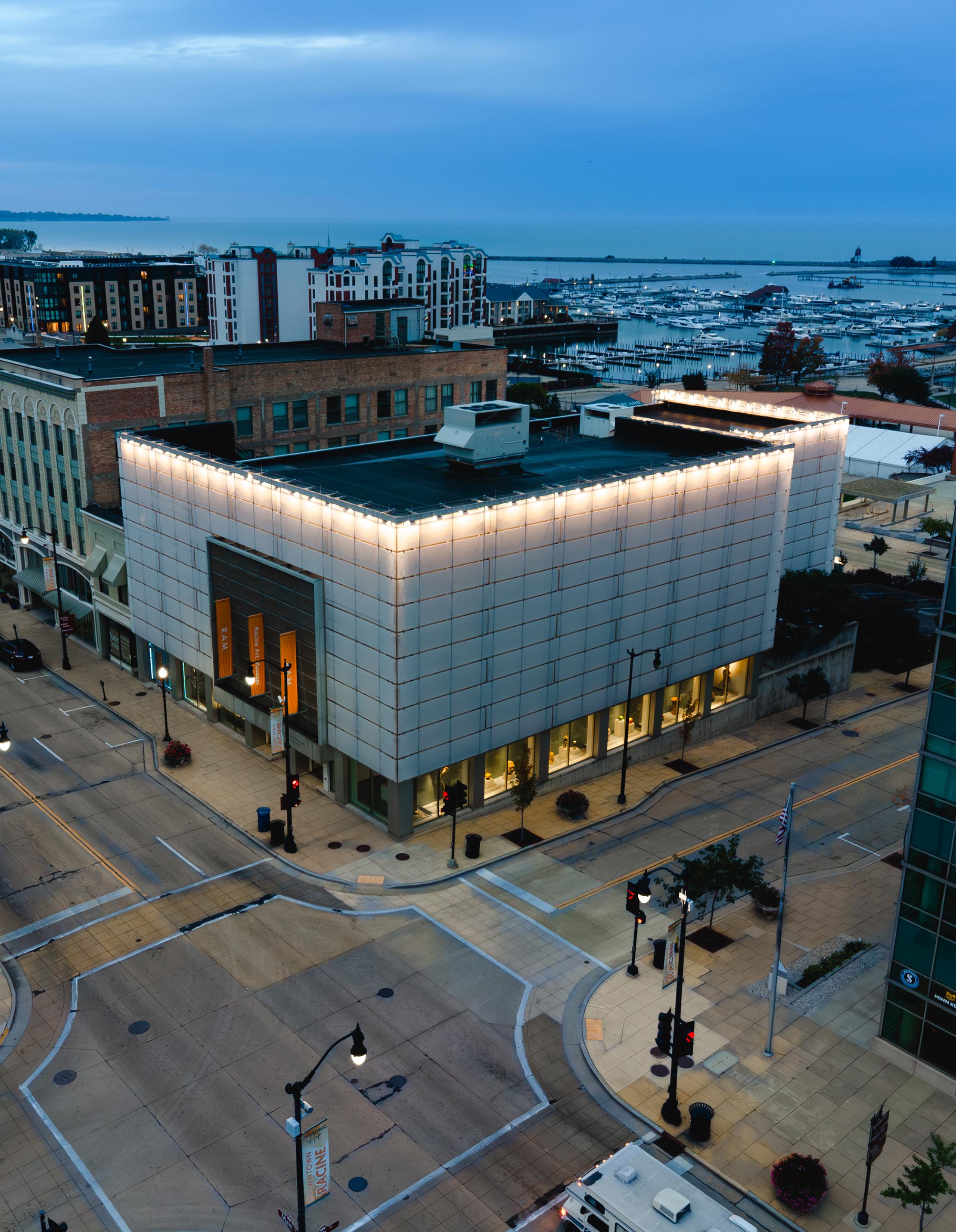
(front cover) Aerial view of RAM in Downtown Racine, 2025
Photography: Jarvis Lawson
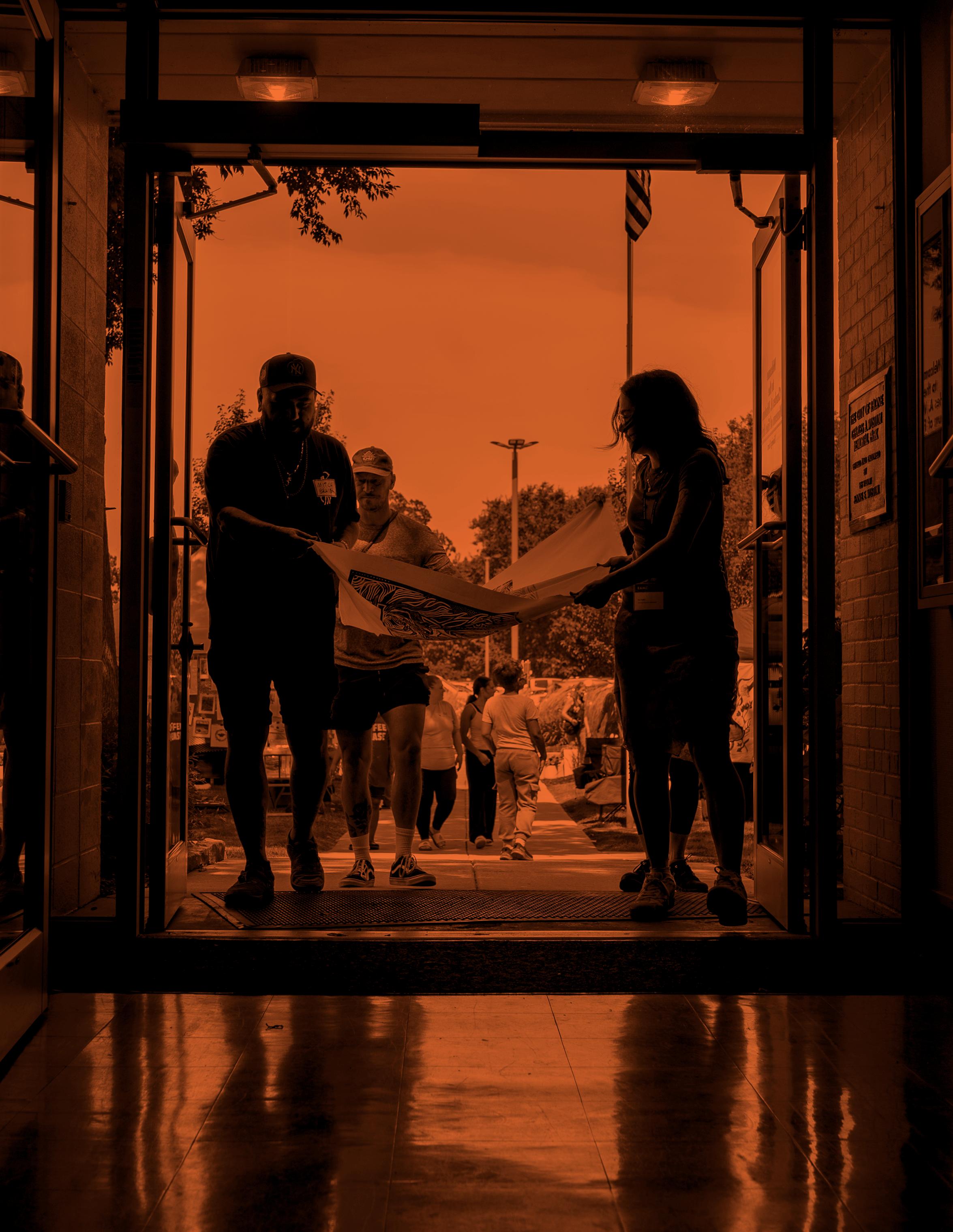
(Contents) Artists transporting prints during Full Steam Ahead at Wustum, 2025
Photography: LaTasha Lux
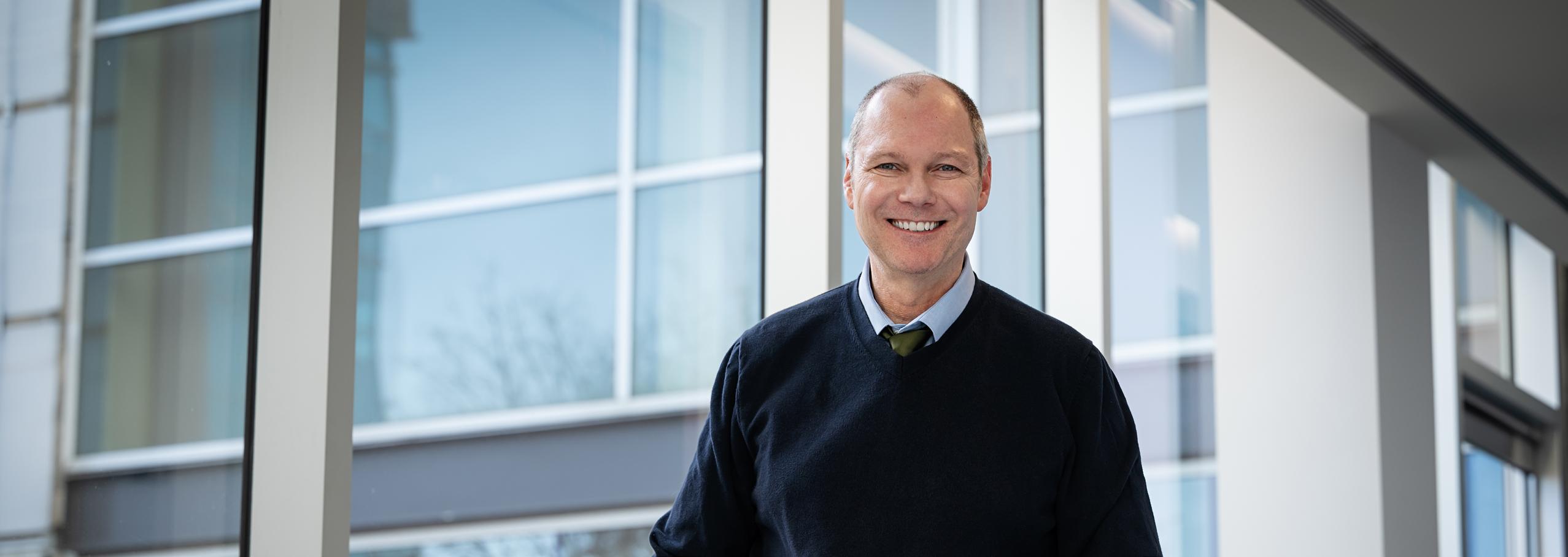
(page 01) RAM Executive Director Robb Woulfe
Photography: Camela Langendorf, Varitay Studios
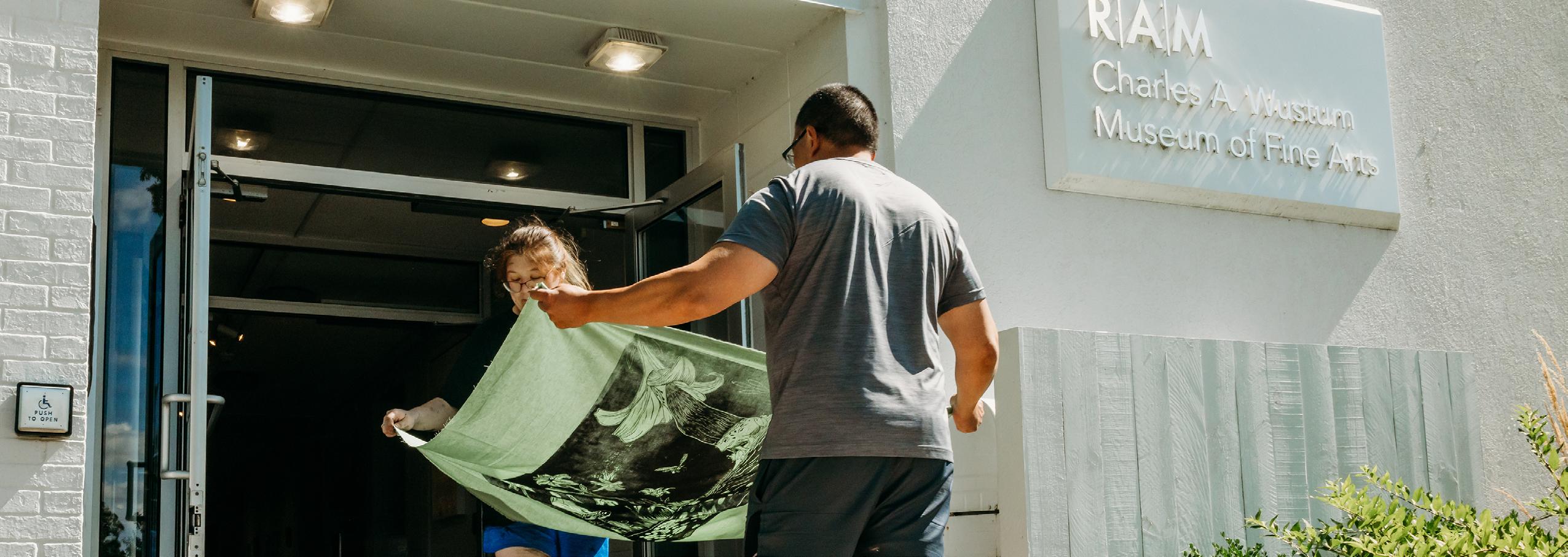
(page 02) Artists transporting prints during Full Steam Ahead at Wustum, 2024
Photography: LaTasha Lux
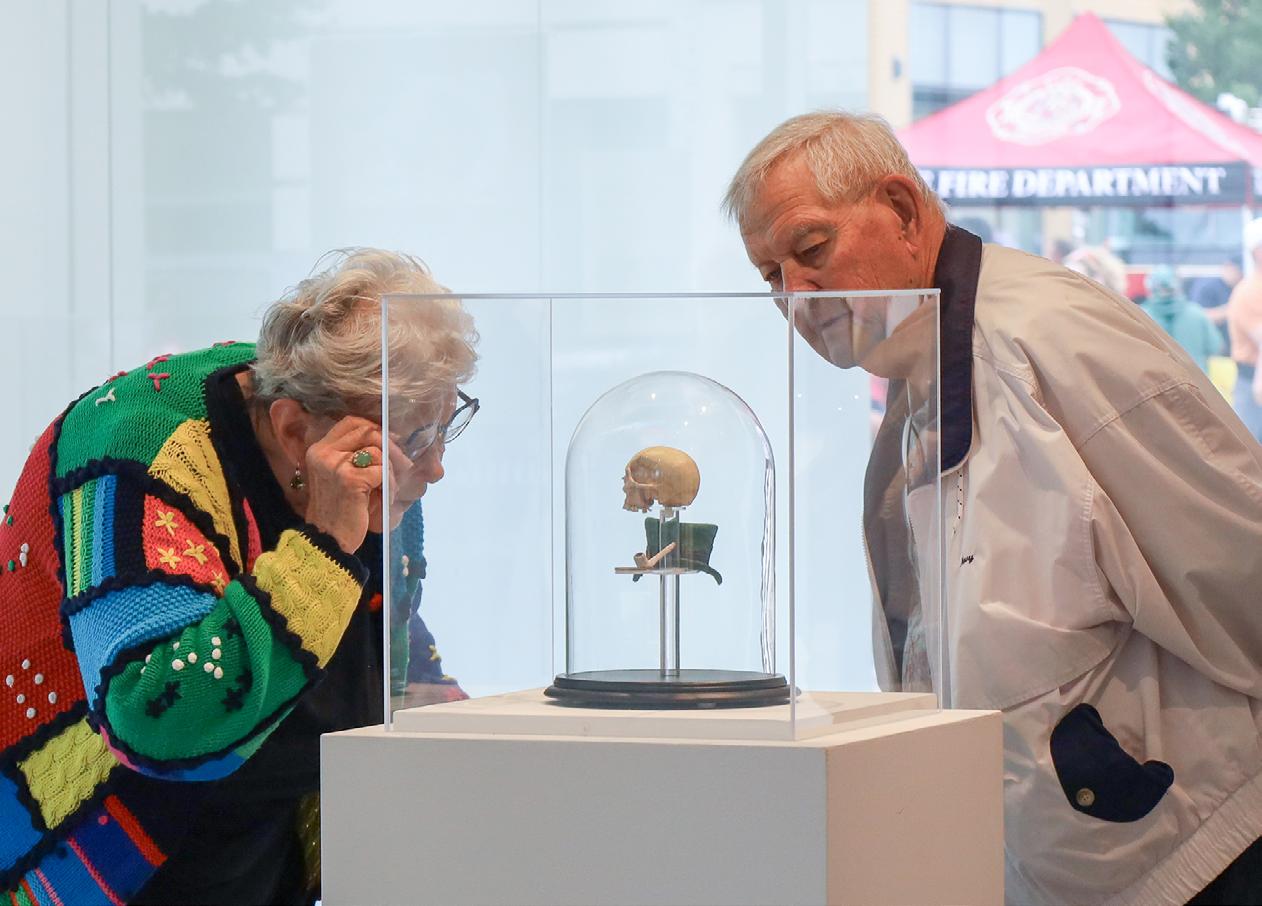
(page 04, left) RAM visitors viewing work during Downtown Racine’s Party on the Pavement, 2025
Photography: RAM Staff
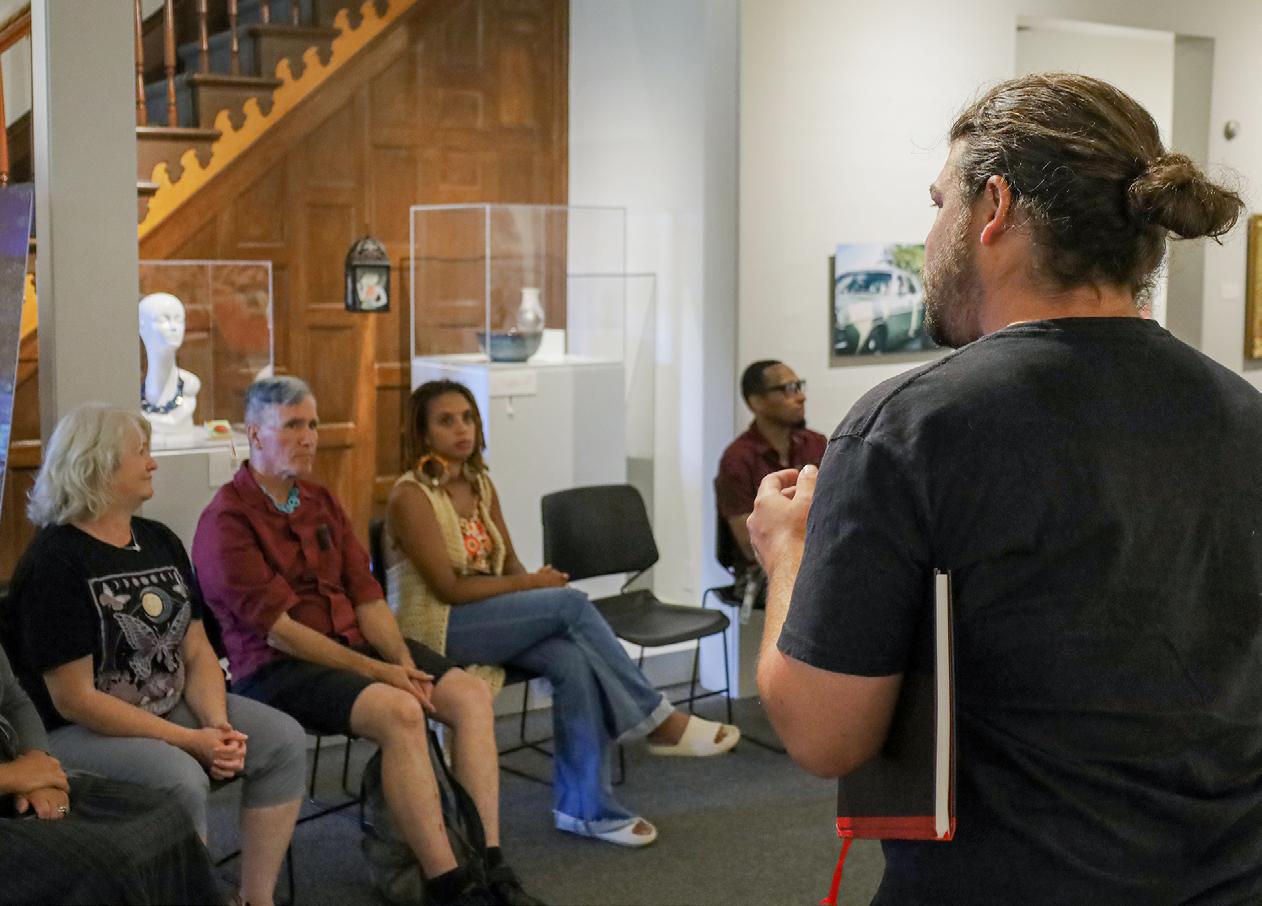
(page 04, right) Poetry Night: Cultural Reflections at Wustum, 2022
Photography: RAM Staff
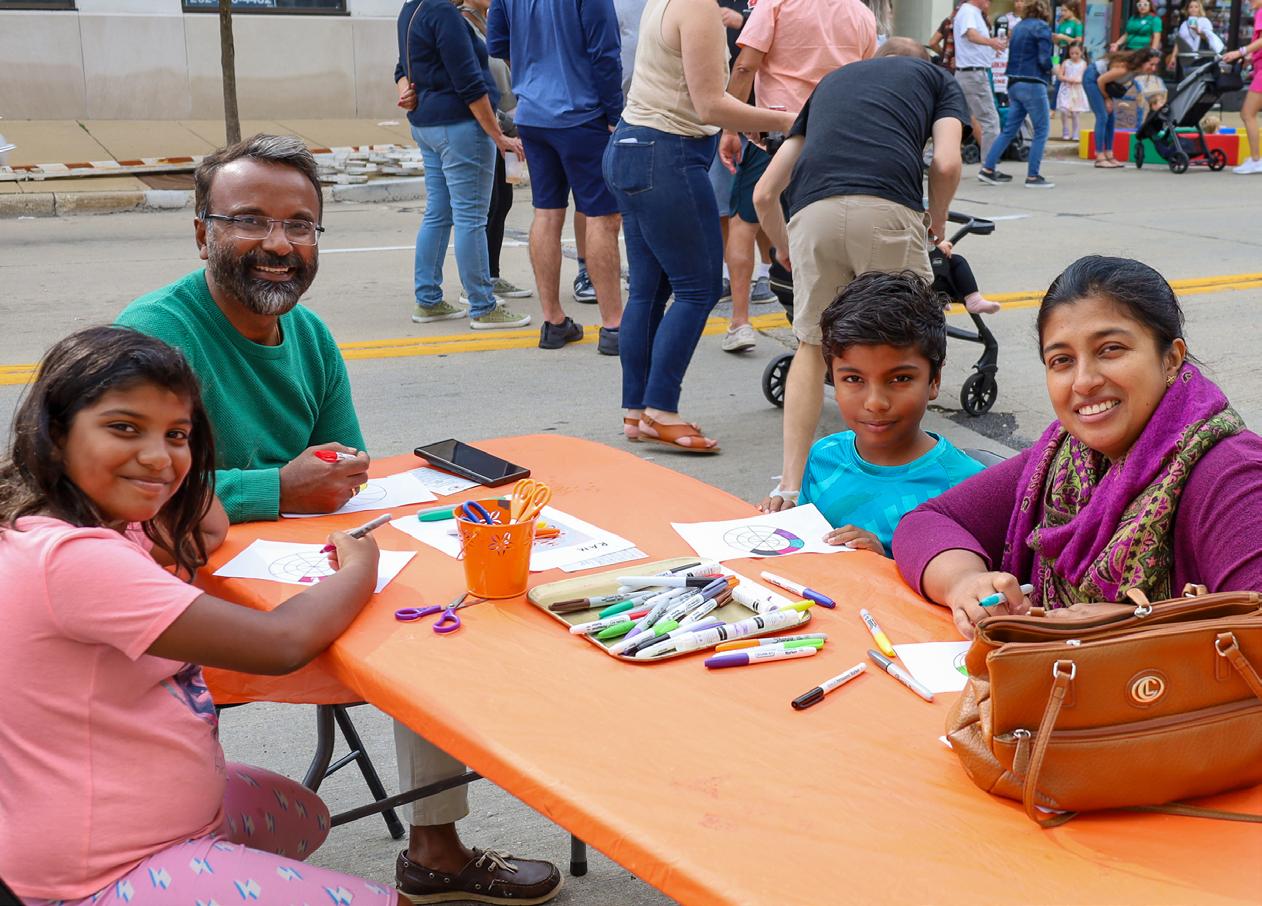
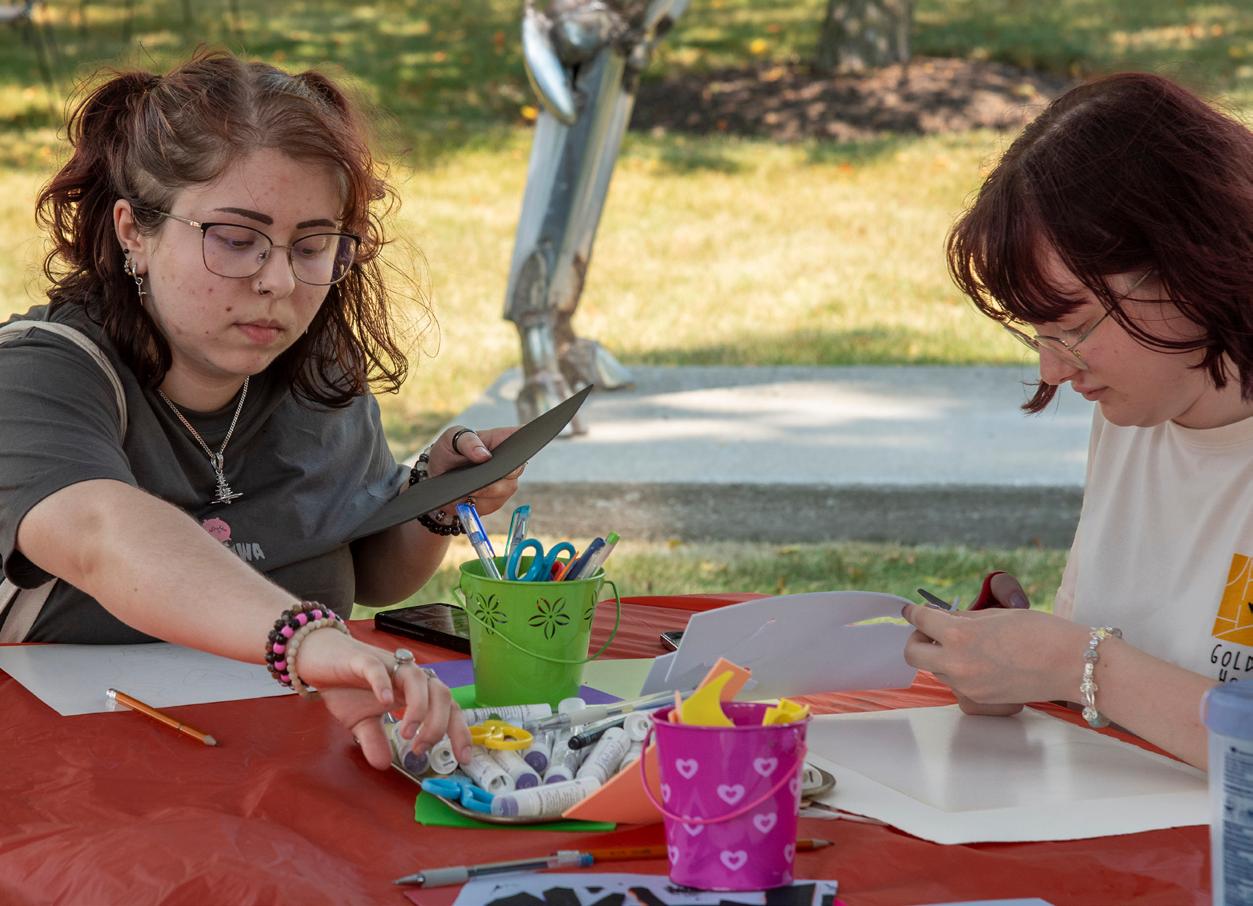
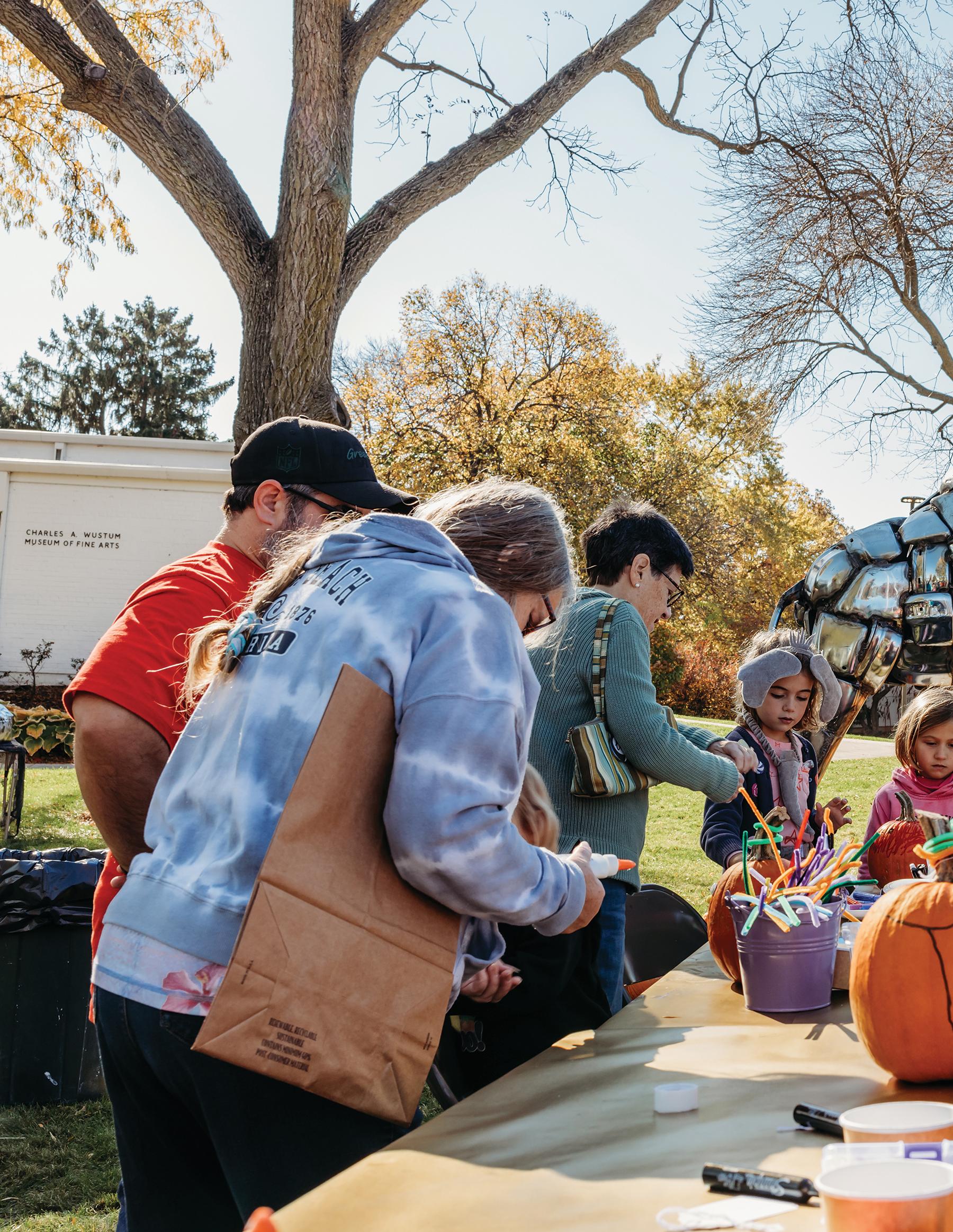
(page 05, left) Hands-on art activities during Downtown Racine’s Party on the Pavement, 2023
Photography: RAM Staff
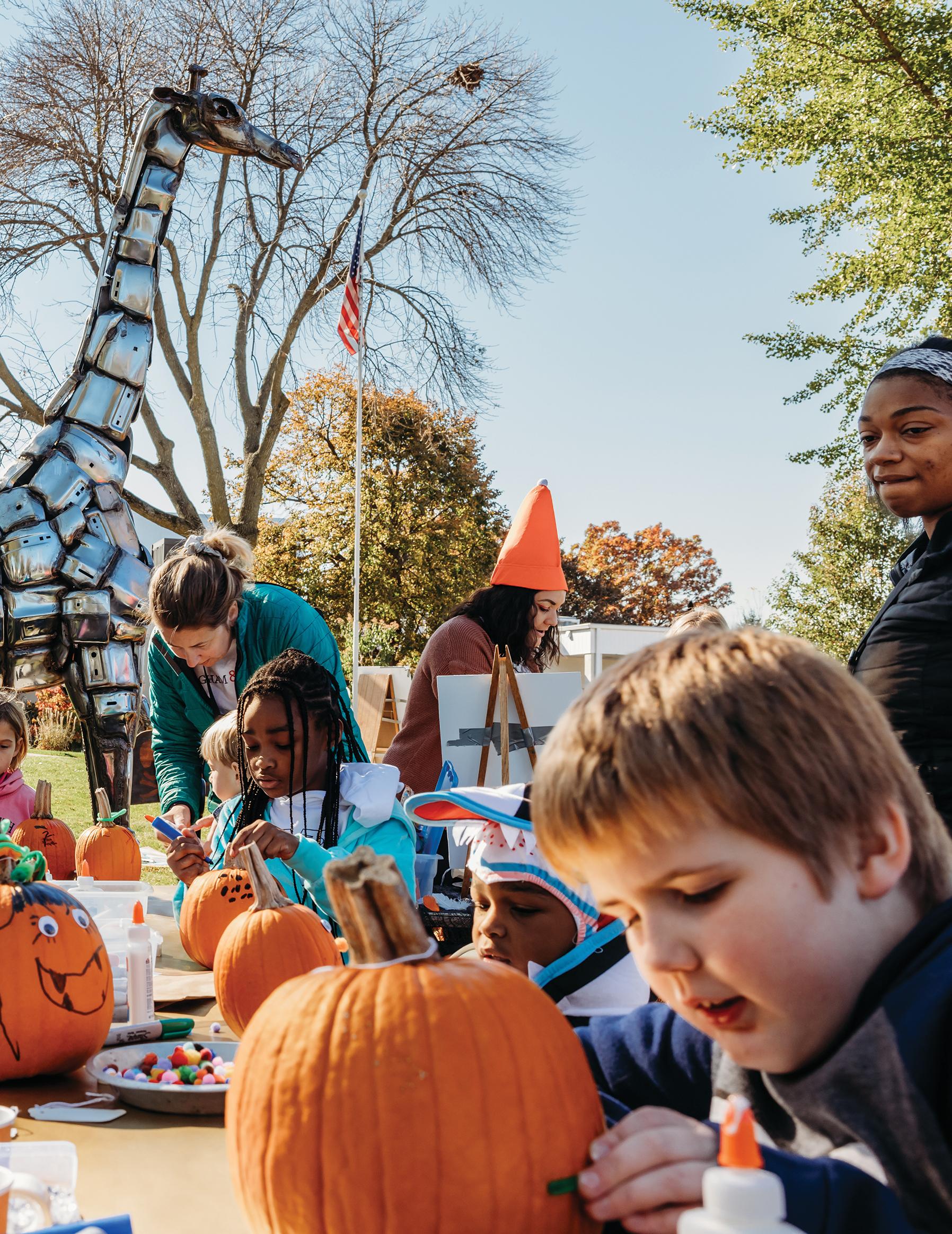
(page 05, right) Hands-on art activities during Full Steam Ahead at Wustum, 2025
Photography: LaTasha Lux
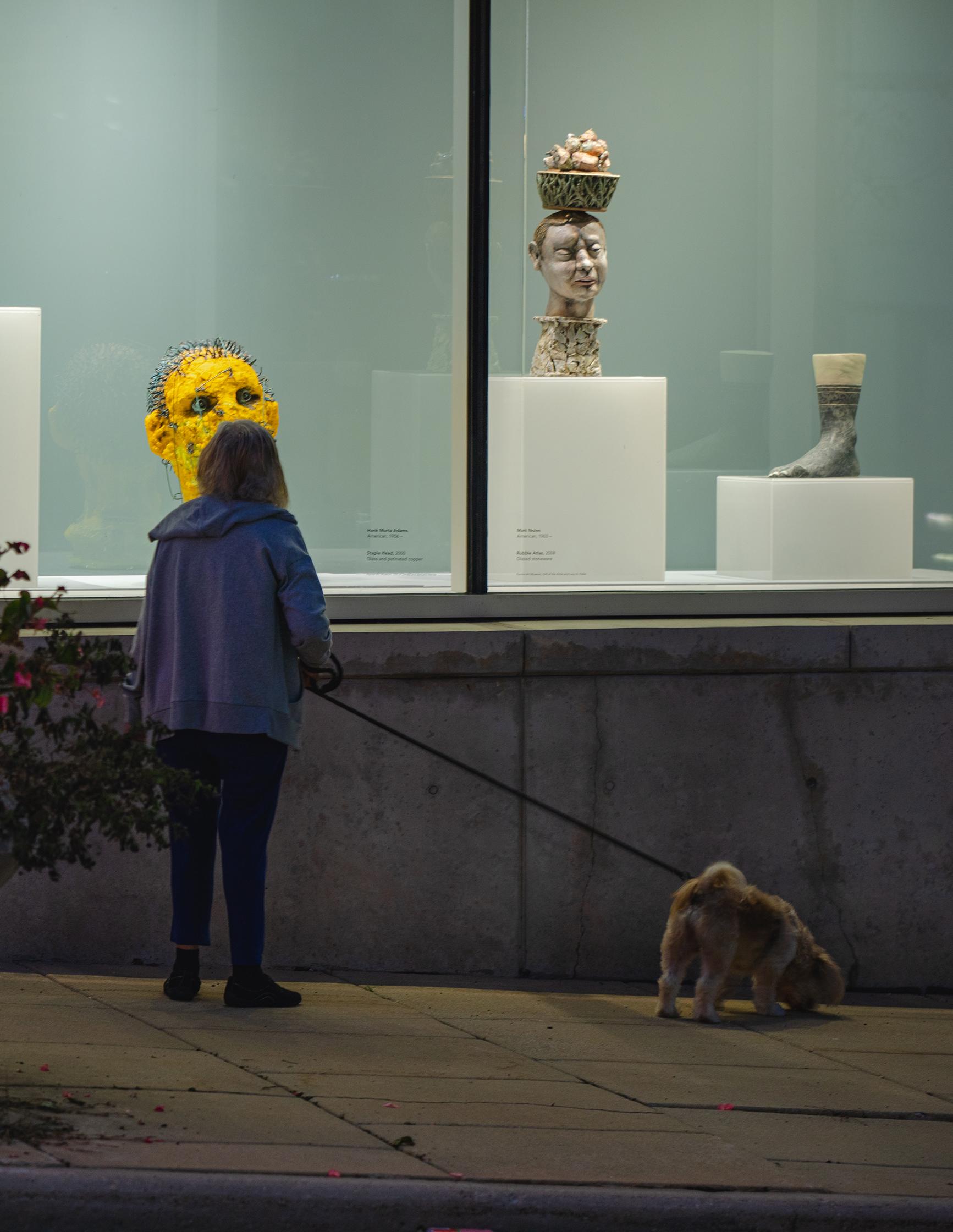
(page 06) Passerby viewing work in RAM’s Windows on Fifth Gallery, 2025
Photography: Jarvis Lawson
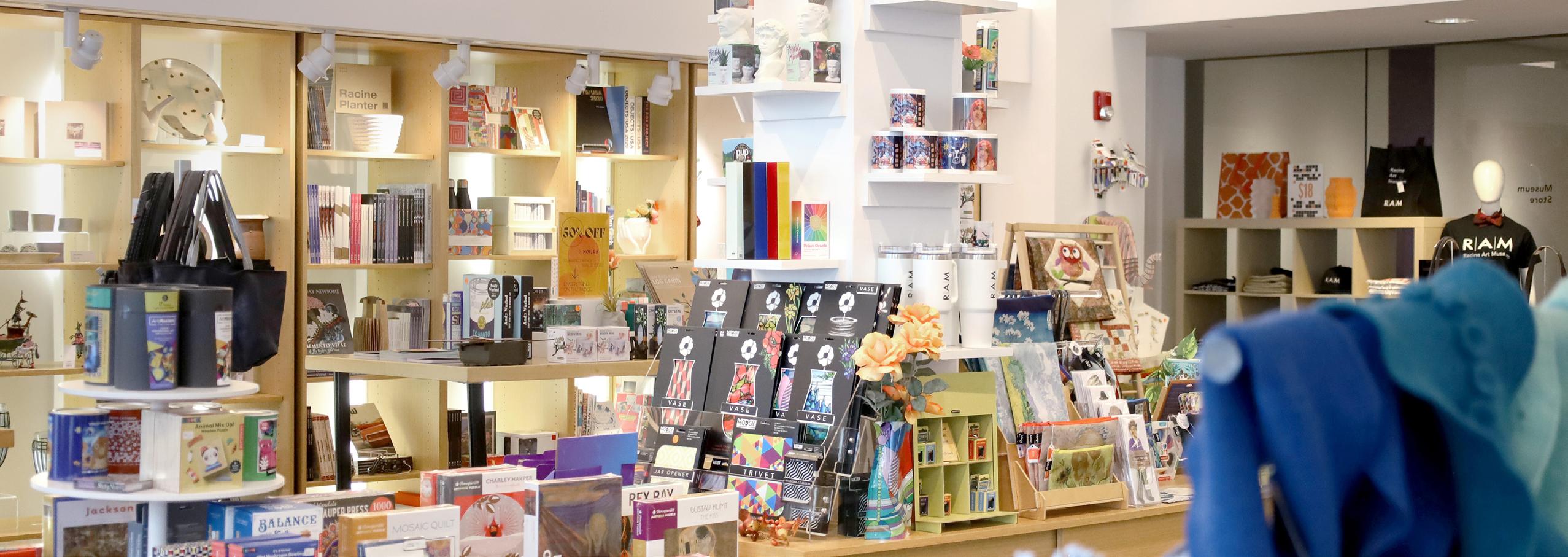
(page 08) RAM Museum Store, 2025
Photography: RAM Staff
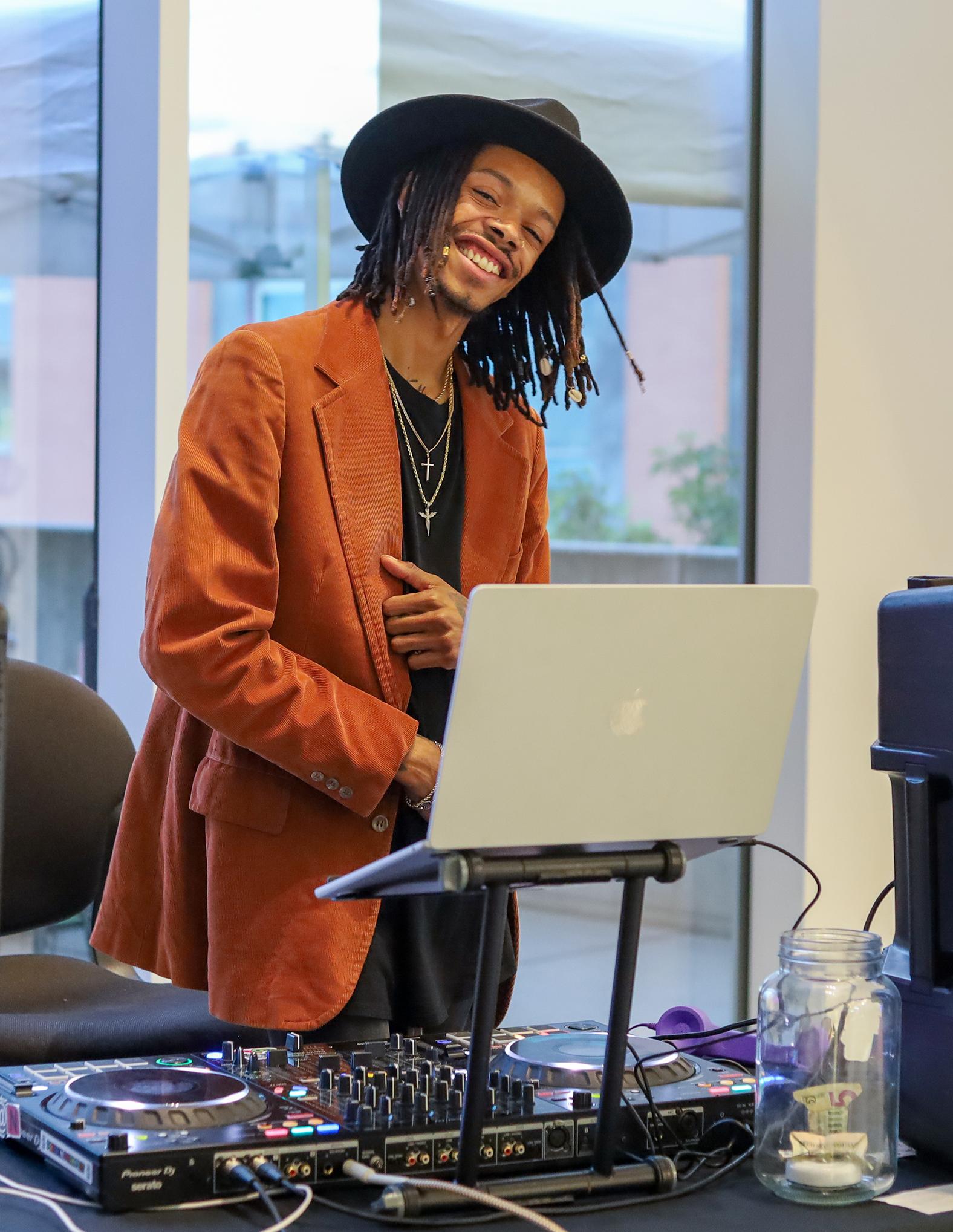
(page 11) DJ Julian Gross performing at RAM during Free First Friday, 2025
Photography: RAM Staff
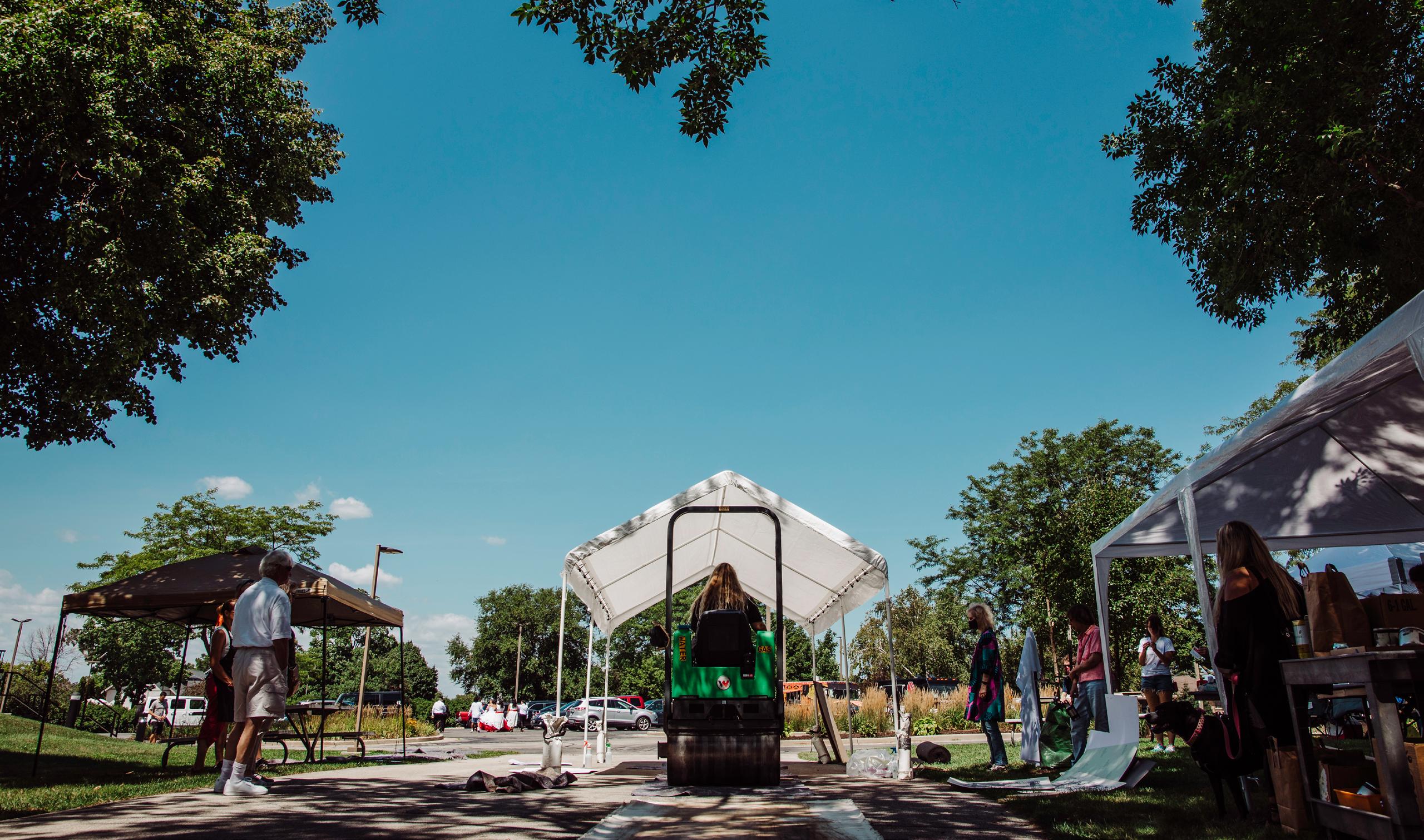
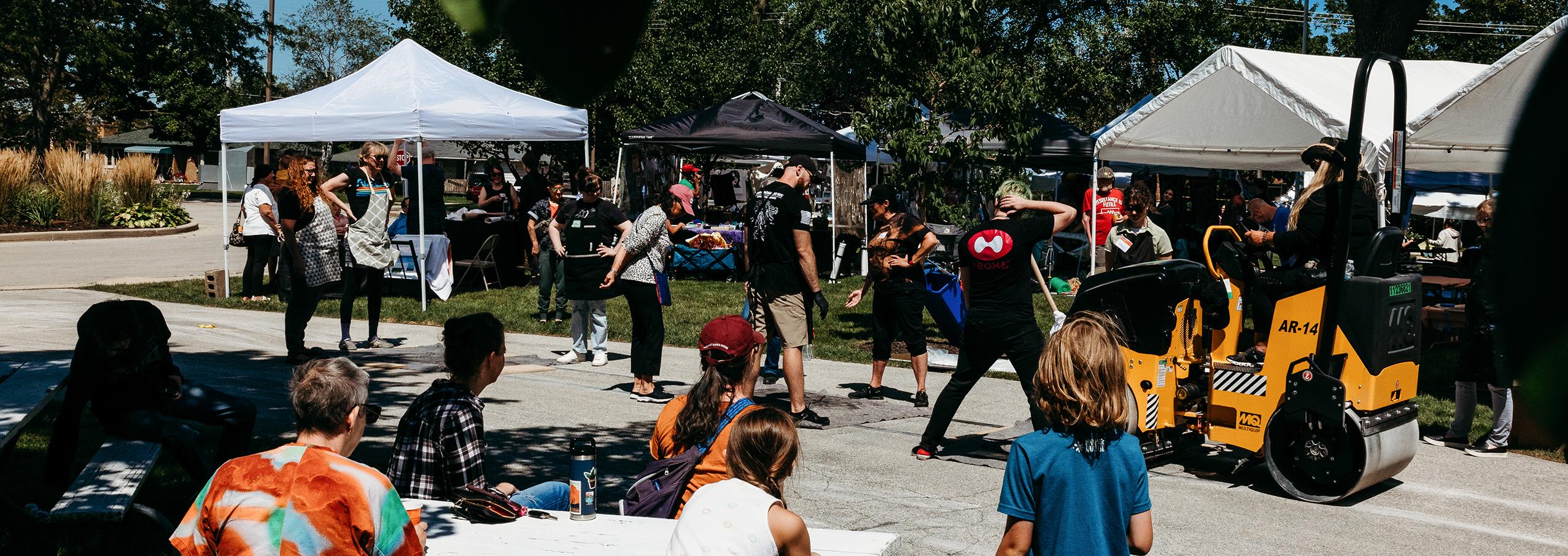
(page 12) Prints being produced with a steamroller during Full Steam Ahead at Wustum, 2024
Photography: Azure Mahara Photography
(pages 14 + 15) Hands-on art activities during Free Fall Family Fun Fest at Wustum, 2024
Photography: Azure Mahara Photography
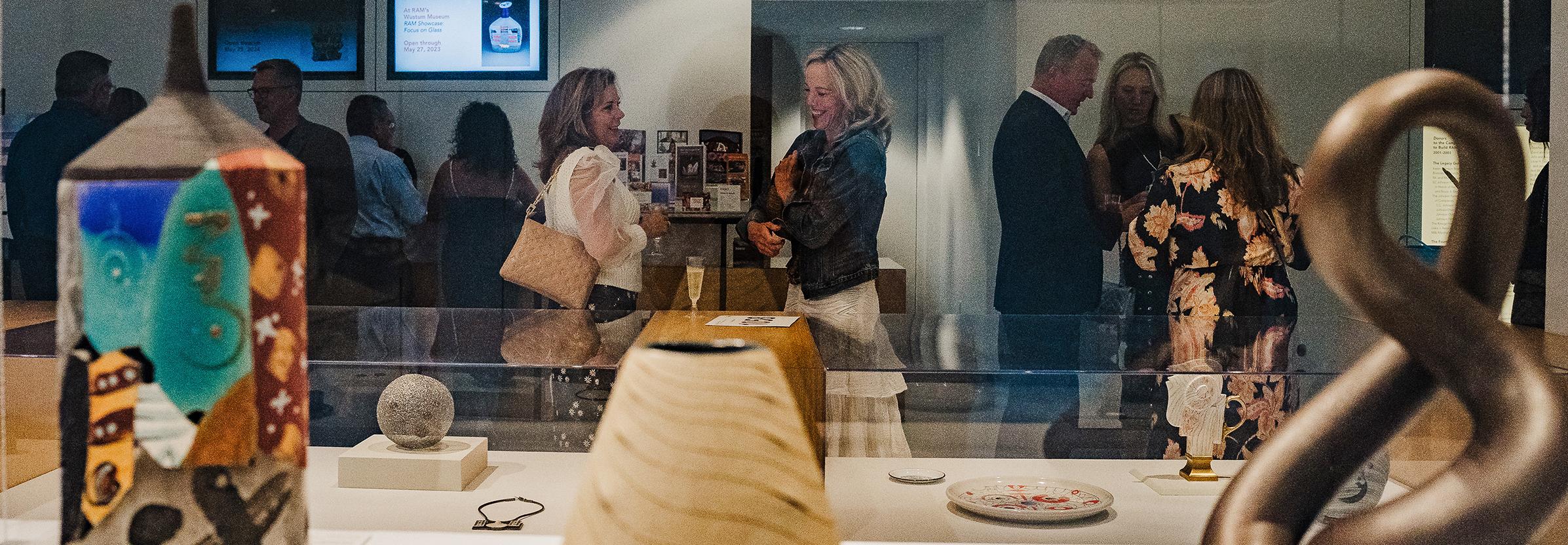
(page 16) SAVOURing RAM @ 20 fundraiser gala at RAM, 2023
Photography: Lori Potrykus
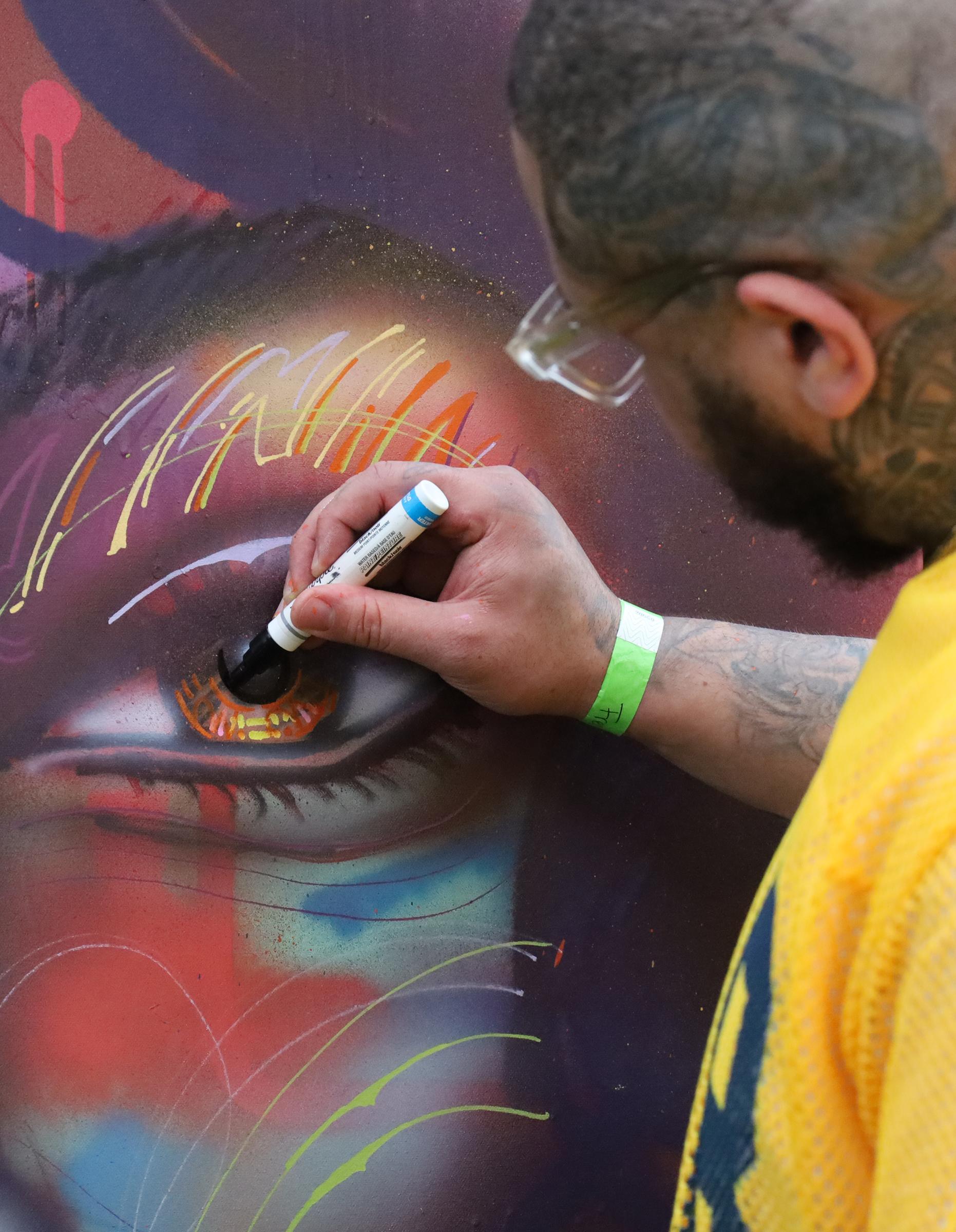
(page 25) Artist Dee Hutch live painting during Groovin’ in the Garden at Wustum, 2025
Photography: RAM Staff
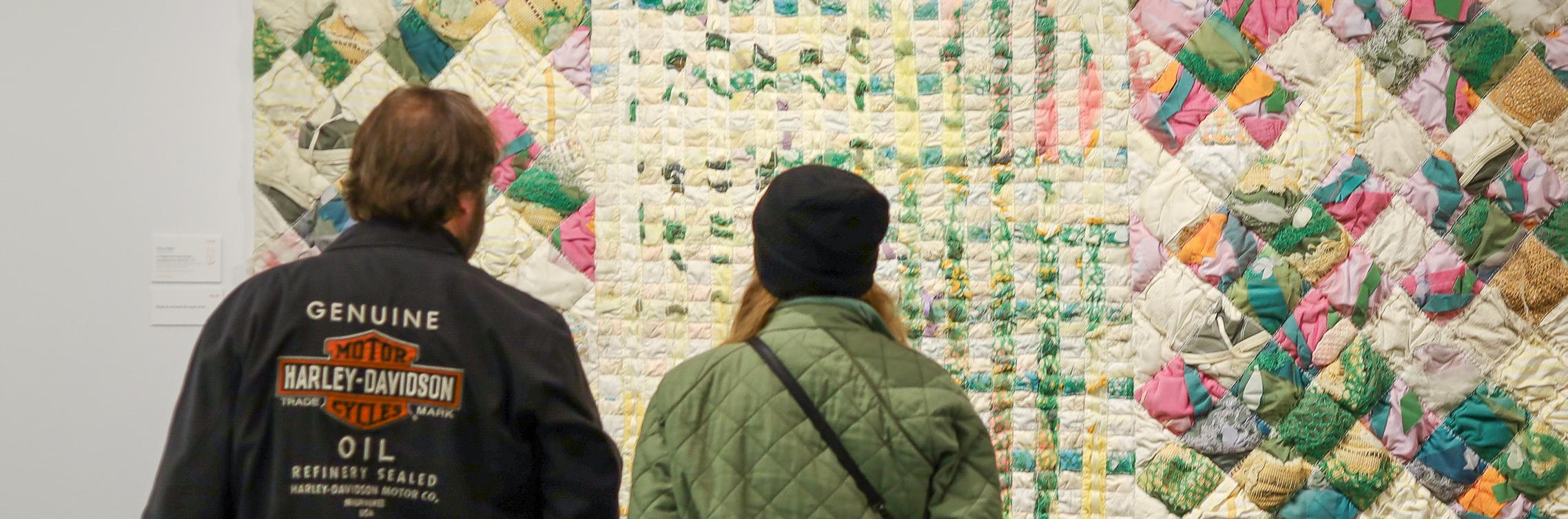
(page 26) RAM visitors viewing work during Free First Friday, 2025
Photography: RAM Staff
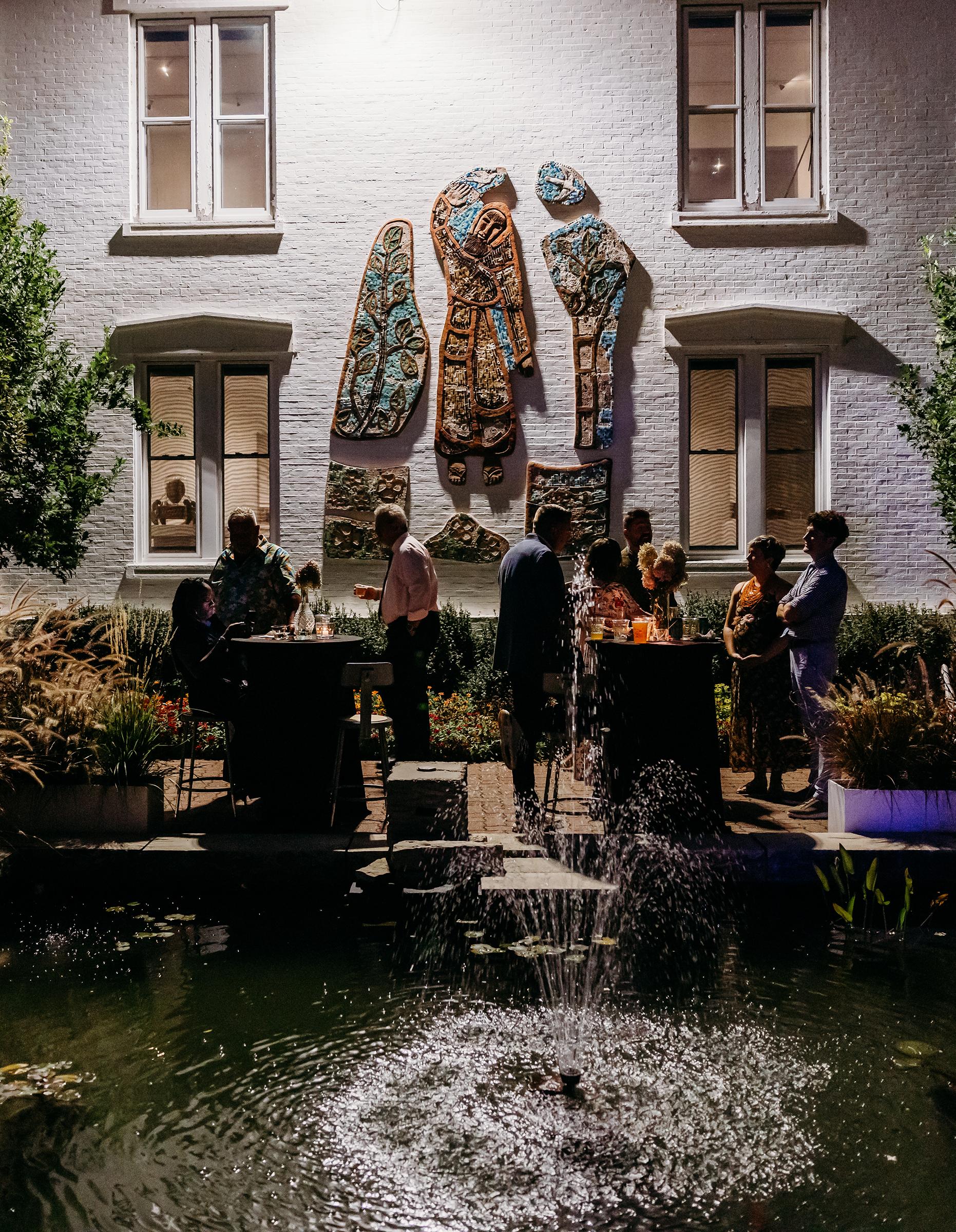
(page 28) SAVOUR fundraiser gala at Wustum, 2025
Photography: Azure Mahara Photography
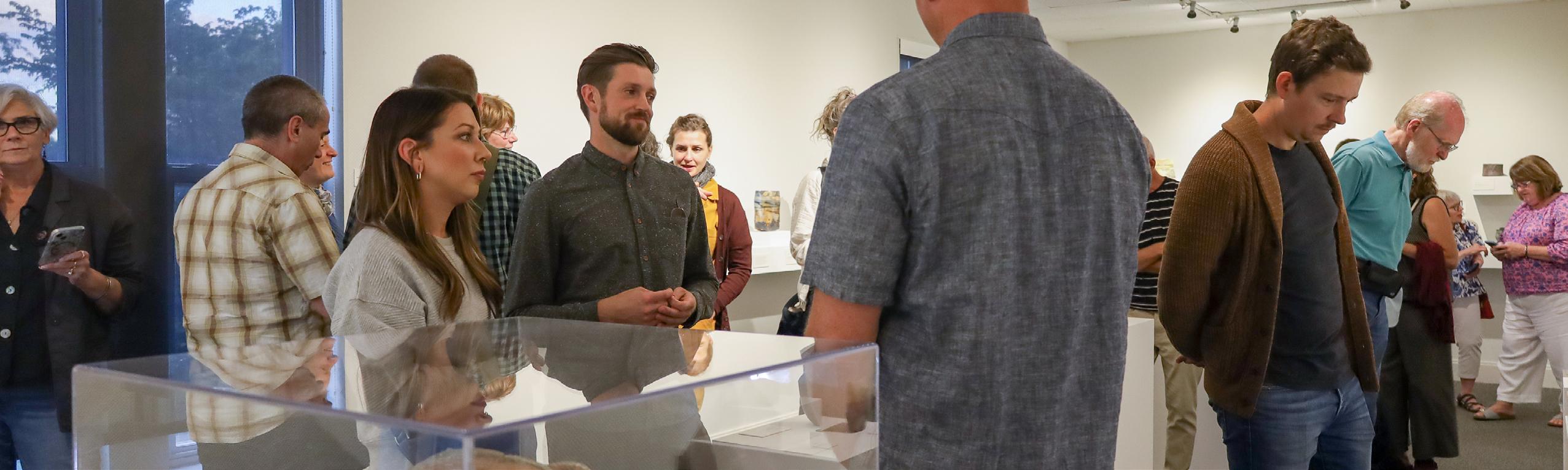
(page 31) Wustum visitors viewing work during the RAM Artist Fellowship and Emerging Artist Exhibition 2025
Opening Reception
Photography: RAM Staff
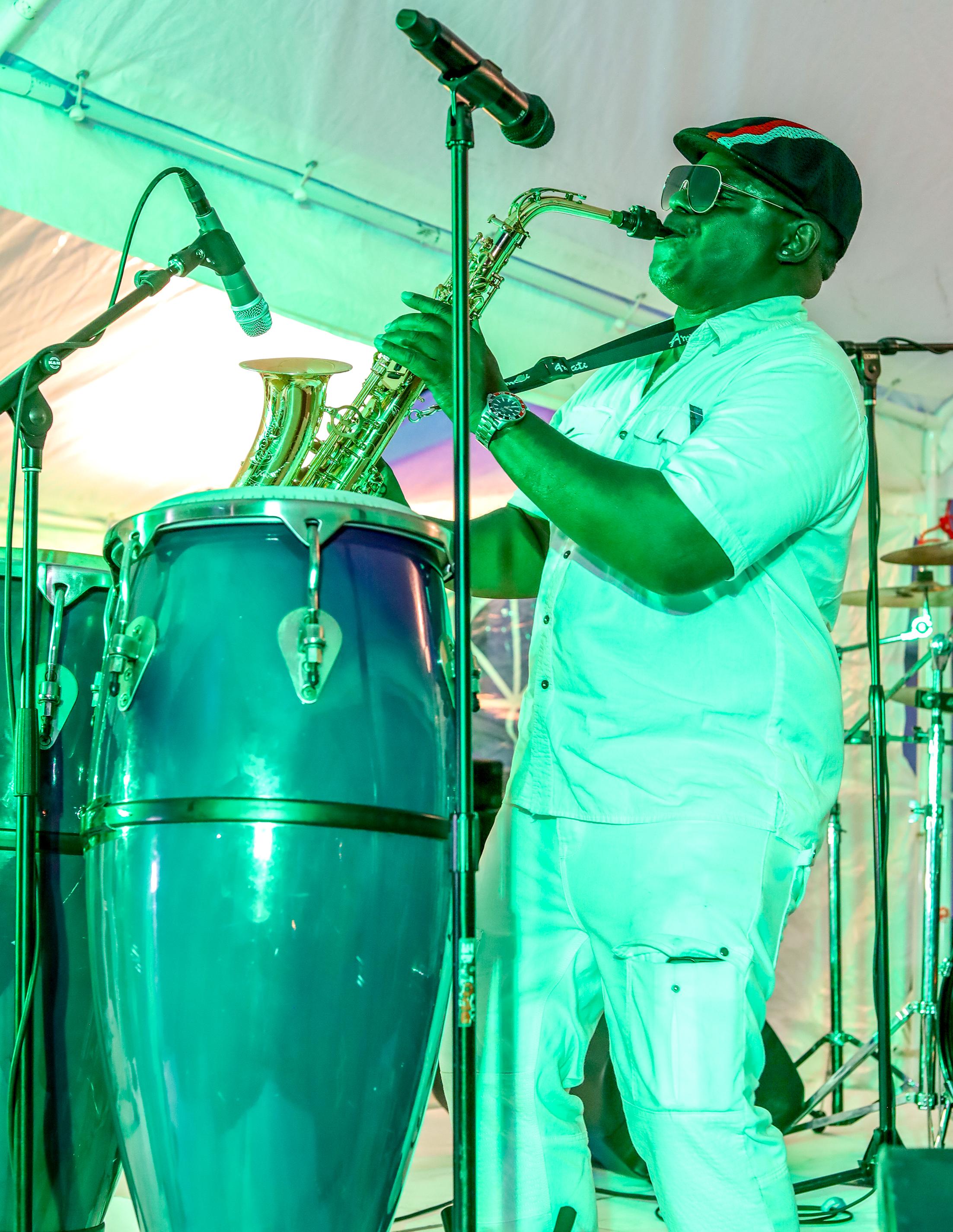
(page 41) Stone Jam Band performing during Groov’n in the Garden at Wustum, 2025
Photography: RAM Staff
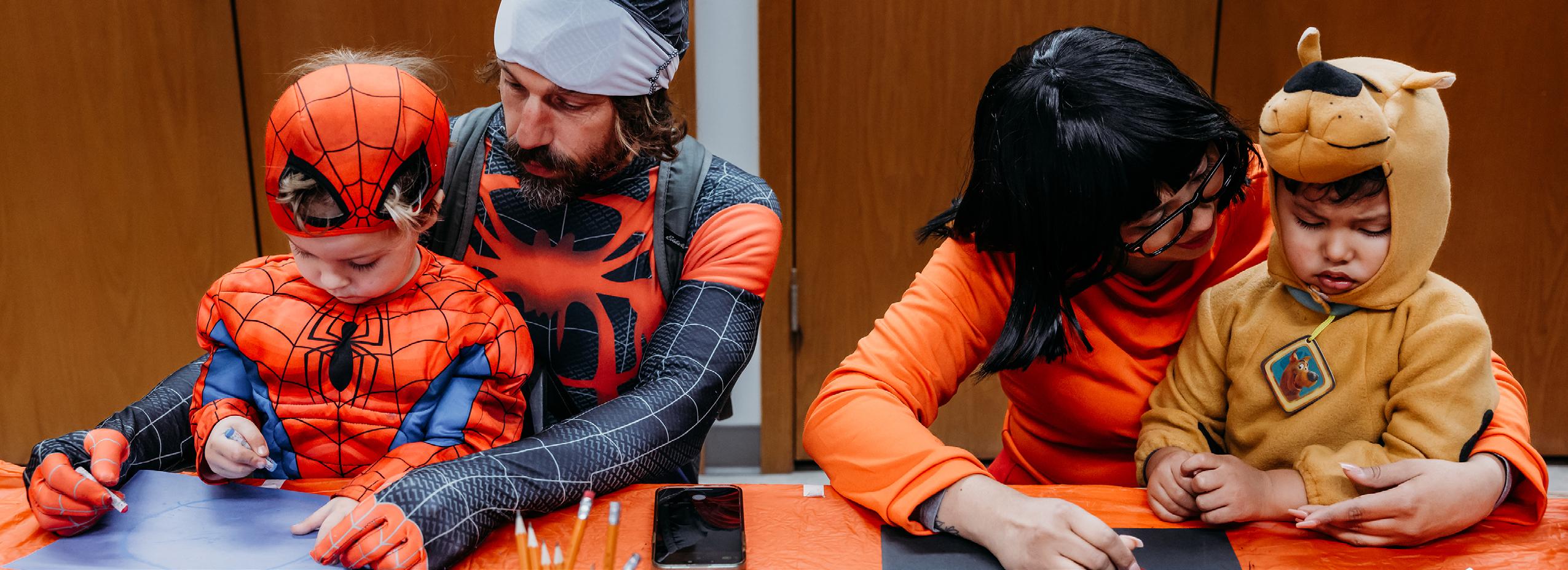
(page 42) Hands-on art activities during Free Fall Family Fun Fest at Wustum, 2025
Photography: Azure Mahara Photography
(back cover) Full Steam Ahead at Wustum, 2021
Photography: Azure Mahara Photography
Racine Art Museum Association
441 Main Street, Box 187
Racine, Wisconsin 53401-0187
262.638.8300
RAM’s Charles A. Wustum Museum of Fine Arts
2519 Northwestern Avenue
262.636.9177
ramart.org
Visit the Museums
Current Hours
Wednesday – Saturday
10:00 am – 4:00 pm
Closed Sundays, Mondays, Tuesdays, and federal holidays