Read about what the church looks like in different regions of the world, local congregations around the globe, ways to be praying and more inside.
“ the obedience of faith for the sake of his name among all the nations.
INTRODUCTION
Healthy churches that glorify God as they gather together to worship, make Christ known through their evangelistic witness in their communities, and raise up elders to send out to plant churches in other communities. That’s the goal. I often get asked what I’m seeing the Lord do around the world that is particularly encouraging. Most often, I reply with the stories I’m hearing of healthy local congregations that have been planted and strengthened through the ministry of Reaching & Teaching’s global workers, whom we steward on behalf of their sending churches. Ultimately, it’s the story of multiplication. Sending churches raising up missionaries and sending them to places of need around the world to plant and strengthen churches. In a world driven by numbers that prioritize the speed of multiplication, we’re instead driven by our conviction that healthy congregations who follow God’s design to propagate and protect the gospel will bear lasting, multiplying fruit in the long run.
I’m particularly thankful for this issue of the RTIM Review because of its focus on
what the Lord is doing through healthy churches throughout the world. Each one of our Regional Leaders has written an article that outlines what they’re seeing on the ground in their region. While there are various contextual differences that are worth noting, I hope you also see that our strategy doesn’t change region-to-region. Ecclesiology shapes missiology. Not the other way around. Even if you don’t agree with that statement, I want to challenge you to read of God’s faithfulness in each of the articles prepared by one of our global workers as they describe how God is moving in their local church. Be encouraged! The Lord is at work!
Over the past couple of months, I’ve been studying God’s particular care for the protection and promotion of His name. In January, I preached on Romans 1:5 at the Trails Church in Celina, Texas and was struck by the phrase “the obedience of faith for the sake of his name among all the nations.” Throughout the Scriptures, we see God’s passion for the promotion and protection of his name. We long to see congregations gathered around the
world who are committed to glorifying God and making much of His name. I’ve been reminded of the importance of asking God to move amongst the nations, specifically amongst the churches that we see planted and strengthened through the missionaries we all support together, for the sake of His name. Not for the sake of a congregation’s name or a missionary’s name or an agency’s name, but for the sake of HIS name. The name that is above every name. God glorify yourself through the co-operation of churches and supporters to see your name known throughout this world!
For the sake of His name,
Ryan Robertson President
RYAN ROBERTSON
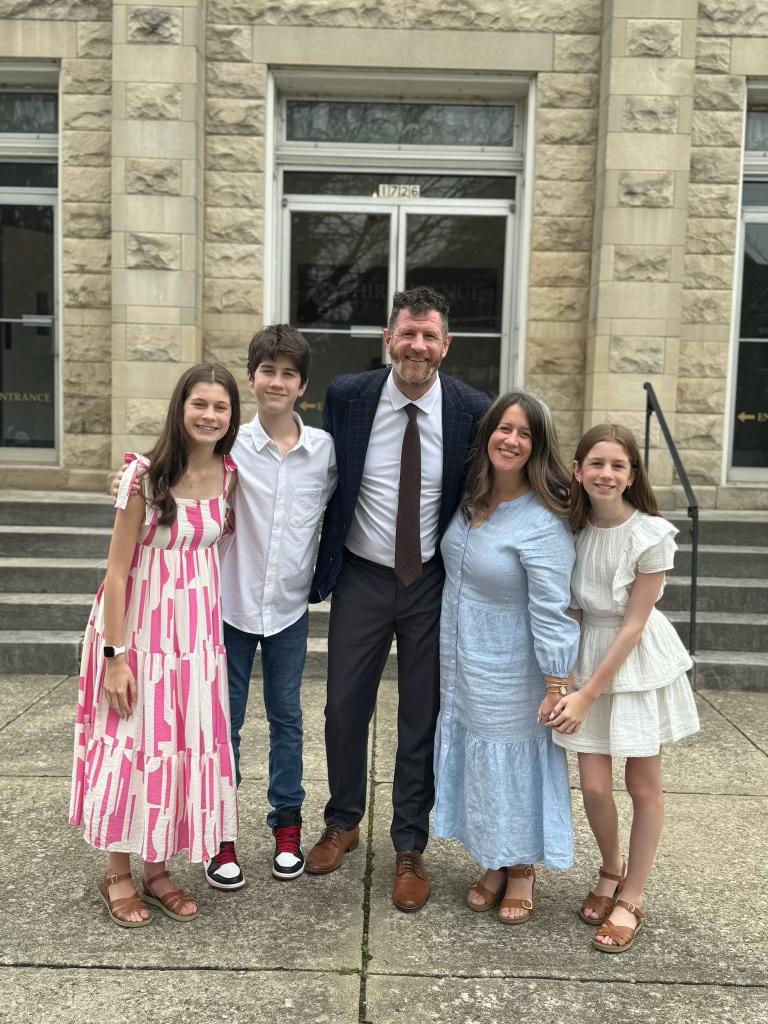
Ryan Robertson serves as the President of Reaching & Teaching. Robertson has previously served in executive leadership positions for public companies and other non-profit organizations and has been a board member of several different charities. In 2014, he obtained his CPA from the State of Massachusetts. Robertson is currently enrolled in the Doctor of Missiology program at The Southern Baptist Theological Seminary. Ryan and his wife Erin have three children and are members of Third Avenue Baptist Church in Louisville, KY, where Ryan serves as an elder.
THE LOCAL CHURCH:
The Means and Ends of God’s Mission to Glorify Himself
Matt Bennett
Director of Long-Term
If you are around Reaching and Teaching folks for more than a few minutes you are likely to hear someone say, “the local church is the means and ends of missions.” This is not to occlude the fact that ultimately, God’s mission is to glorify himself. Rather, it is shorthand to note that as God directs history to the point where the knowledge of the glory of God will cover the earth as the water covers the seas (Hab 2:14), he has ordained to accomplish this through healthy local churches of mature believers being equipped to do the work of the ministry everywhere.
We base this confident assertion in passages like Ephesians 3:7–21. There, Paul celebrates the fact that God’s purposes—though hidden throughout the ages past—have been revealed in Christ and the church he has purchased by his blood. In fact, verse 10 specifically states that, “through the church the manifold wisdom of God might now be made known.” The church is the means by which God is unveiling his manifold wisdom.
In addition to this, the section ends with Paul’s prayer that God would receive glory in Christ Jesus and the church throughout the ages. As Christ and his gospel restore believers to be able to glorify God, their gathering together in local churches of diversely-
gifted brothers and sisters is a visible display of the unifying work of common faith. Again, the church in various local expressions around the world is testifying to the goodness of God and his glory is manifest to the ends of the earth as churches are established and disciples are matured and local leaders are trained to guard doctrine and equip the saints.
Of course Ephesians 3 is not the only place where we ground our confidence that God intends to glorify himself through local churches. Paul tells Timothy that the local church is the household of the living God, and a pillar
of receiving an unfading crown of glory when Christ appears (1 Pet 5:1–4).
In the light of all of this and more, we at Reaching and Teaching are convinced that if we are to align our missionary labor with the mission of God in his world, it will be church-shaped. For that reason, we are dedicated to serving local churches as they raise up and commission sent ones from within their midst. We are also committed to encouraging those sent ones to integrate their labors with the establishment and strengthening of local churches in their field of ministry. We believe that God’s plan for his world is local churches prefiguring the
Why You Should Come
Whether you are considering long-term missions or want to mobilize your church, our Preview Day is a great place to start! What you can expect from the day:
Grow in a biblical understanding of missions
Discover RTIM’S DNA
Connect with like-minded Christians
Learn how you can partner with us
Minnetonka, MN
Friday, April 10, 2026
Redeemer Bible Church
Nashville, TN
Thursday, April 16, 2026
Edgefield Church
Birmingham, AL
Friday, April 24, 2026
The Church at Brook Hills
Washington, DC
Friday, May 29, 2026
Capitol Hill Baptist Church
Louisville, KY
Monday, June 22, 2026
Hunsinger Lane Baptist Church
Time: 9am - 4pm
Price per Individual: $50
ON THE GROUND - CENTRAL ASIA
Striving for Healthy Churches in Central Asia
Elliot Clark
Regional Leader - Central Asia
The vast majority of the population in Central Asia is not Christian. In fact, the overwhelming majority have never even met a Christian or heard the gospel. In such a region, it would be easy to assume that the focus of our missionary efforts should be on initial engagement and evangelism. However, a missions strategy focused almost exclusively on evangelism would be a mistake. If we don’t simultaneously work to start and strengthen healthy local churches
and to train faithful locals leaders to shepherd those churches, we won’t be addressing some of the most significant needs in Central Asia.
For the last few decades, missionaries have recognized the extreme lostness in Central Asia and have worked hard to sow gospel seed broadly. We can be thankful for that foundational work. Yet it hasn’t always been accompanied by an emphasis on establishing local
churches and their leaders on that gospel foundation. And this approach threatens the long-term viability of the church — and thus a faithful gospel witness — in the region.
In a country like Türkiye, where the population of evangelical Christians has more than tripled in the last twenty years, local churches still show significant signs of poor health. Pastors often lack adequate training. Churches
“Christ did not come only to save sinners; he promised to build his church. Thus, the missionary task must include the strengthening of churches and their leaders, even in the least-reached corners of world.”
are sometimes divided by power struggles or suffer from a lack of unity. In recent years, Pentecostalism and egalitarianism have gained a foothold in many congregations, and a pragmatic approach to ministry is simply assumed — inherited from many Western missionaries.
In Iran, a country where the gospel is spreading rapidly despite persecution, churches are in an even more desperate state. Many lack qualified shepherds. Some Iranian pastors have been imprisoned or killed, and many more have fled the country as refugees. Meanwhile, those who are left are often influenced by popular Christian teachers online, leading to poor theology and practice. Recently, I spoke with someone familiar with the church in Iran. He asserted that Iran’s desperate need is faithful pastors who can rightly handle God’s word.
If we turn to a country like Afghanistan, the story is similar. Persecution has ravaged the church. Trained and qualified leaders are hard to come by, and churches are suffering because of it. This is why our partners with the Central Asia Network and the Persia Pastor Pipeline are working hard to equip and resource pastors and church leaders in Iran and Afghanistan, as well as the Farsiand Dari-speaking diaspora around the world. We’re also encouraged to see growing opportunities for pastoral
internships, modular training, and theological education in regional cities like Istanbul, Erbil, and Baku.
When we look at the heart of Central Asia in the Stans — countries like Uzbekistan, Kazakhstan, Kyrgyzstan, and Tajikistan — the state of the church is much the same. Many within those nations have yet to hear the gospel. Thus, there remains much work to be done in the way of evangelism. However, to be beneficial, that good work must be married to a vision of establishing and strengthening local churches, discipling believers to maturity, and equipping local leaders to continue faithful ministry long after the missionaries have gone.
In Uzbekistan, churches are often anemic because of poor teaching and poor ecclesiology. Leaders can be territorial or authoritarian, taking advantage of their position and not serving the flock. Again, the broad spectrum of Pentecostalism and prosperity teaching is also present, and egalitarianism is increasingly common. That’s not to say there aren’t faithful, gospel-preaching churches and leaders in the region. But many are poorly trained and inadequately resourced. They don’t have the tools to feed the sheep or fend off wolves. This is why we’re working with our partners in Central Asia, not simply to reach the unreached, but to plant churches and involve locals in pastoral training programs.
Why are the churches of Central Asia in poor health? There are many reasons. Persecution is one of them. Poor teaching and a lack of adequate pastoral training is another. But a significant factor is that, in the last few decades, missionaries and mission agencies have rarely prioritized church health. Initial evangelism has been the primary focus, occurring through radio and television broadcasts, through widespread literature distribution and written correspondence, and increasingly through online ads and social media campaigns.
We don’t necessarily need to stop those efforts. But if the goal of missions is bigger than reaching the unreached — if our goal is healthy churches everywhere — then we need a more comprehensive approach. We need to understand that Christ did not come only to save sinners; he promised to build his church. Thus, the missionary task must include the strengthening of churches and their leaders, even in the least-reached corners of world.
Learn
YOUR CHURCH - CENTRAL ASIA
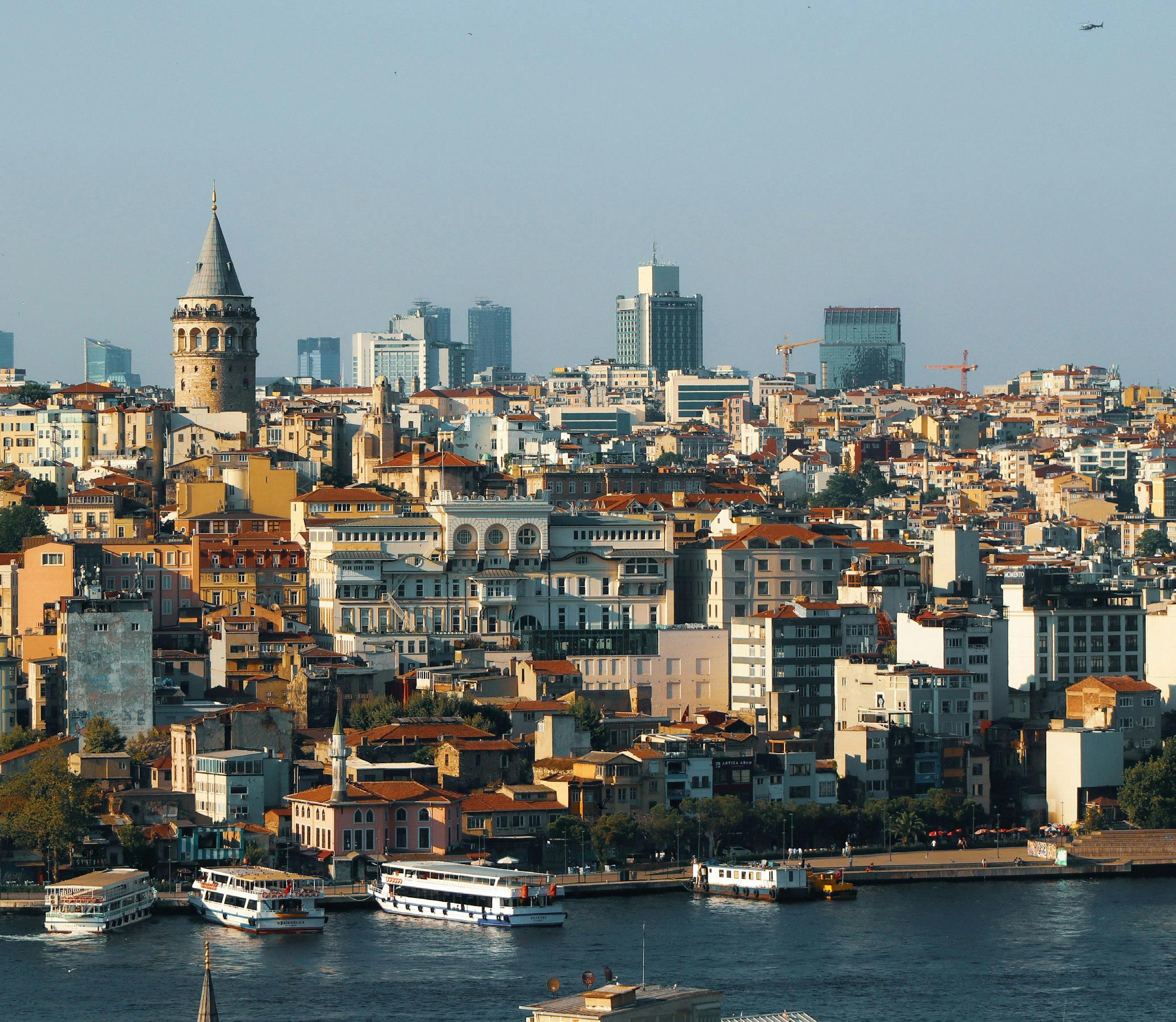
A Sunday in Istanbul
Scott Logsdon
Global Worker in Central Asia
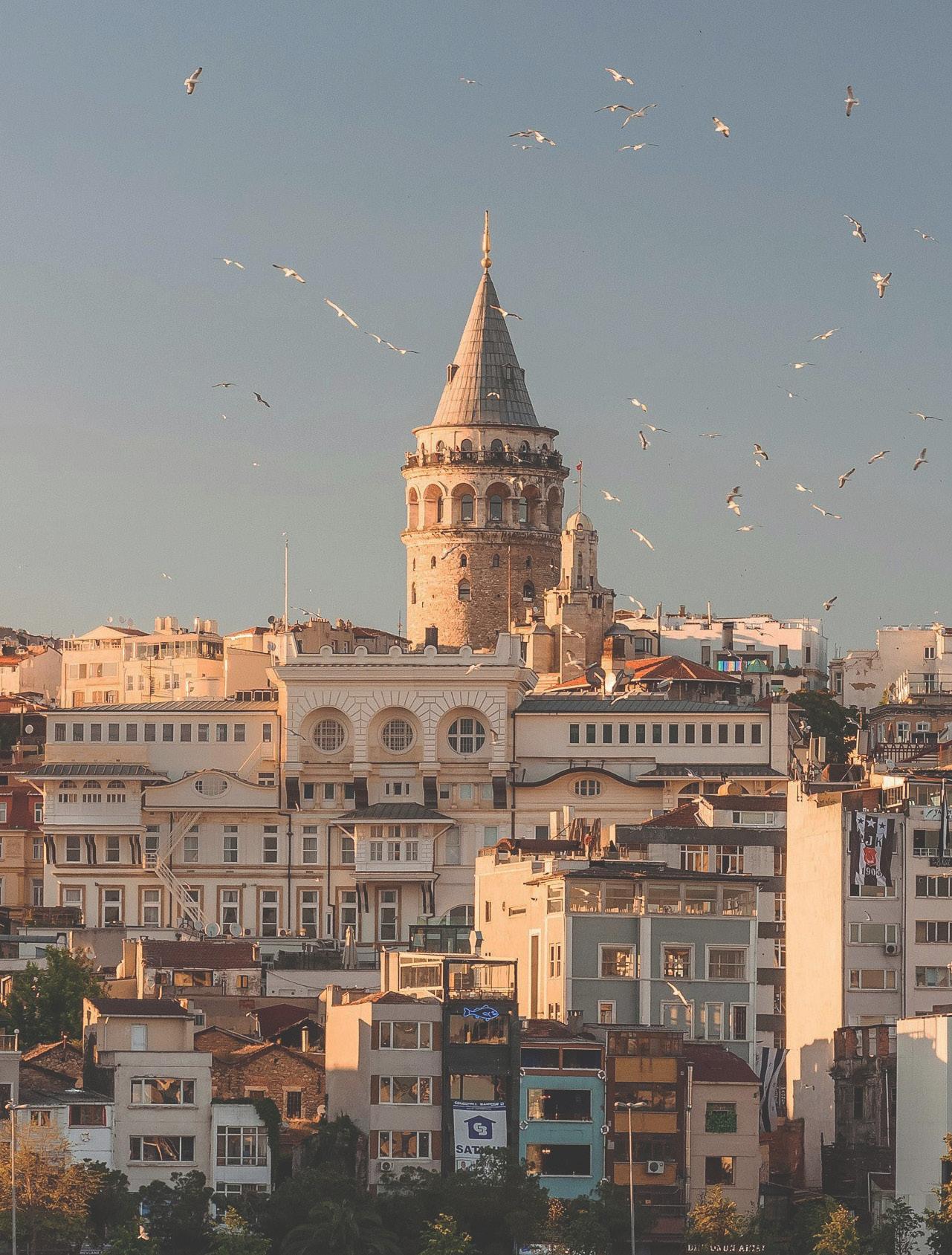
A small chapel sits tucked behind walls on a narrow street in Istanbul. This stone building has been hosting Christian worship since at least 1857. Our church gathers for worship that is classic and unhurried. Our focus is on Christ—who he is and what he has done. The order of worship is shaped by his gospel. A call to worship invites us together. We sing a hymn of praise to God. Then we confess our sins, not because it’s comfortable, but because truth is our foundation and forgiveness in Christ is promised. We sing again—this time about the gospel—because we want everyone present, visitor or longtime member, to understand it clearly. Then we pray for our church, for other churches in the city, and the spread of Christ’s fame around the world. Our central act of worship is to meditate on God’s Word as it is read, explained, and applied.
That’s what a Sunday today looks like. But we are standing on the faithfulness of past generations. The history of our congregation begins when faithful, expatriate Christian men and women first sailed into this city in the 1830s. The Ottoman Empire had been a dominant world power for six centuries. Their Christian witness demanded even more conviction and courage than it does today. One of our founding members, Cyrus Hamlin, established Robert College—the oldest American educational institution in continuous operation outside the
United States. He, William Goodall, and others believed that translating the Bible and proclaiming Christ to the nations gathered in this city was worth their lives. And there were great risks. Epidemics moved regularly through Istanbul, and multiplied the graves of their children, spouses, and closest friends. Though death on foreign soil seemed likely, they stayed anyway.
Thanks be to God, they also believed that establishing an ordered, worshipping church was not secondary to their proclamation and translation work. What began as a small meeting in the 1830s progressed to a regular gathering as a church in the chapel in 1857. God has sustained the congregations of this church through the fall of empires, two world wars, outbreaks of disease, major earthquakes, and political upheavals.
For most of its history, this church has worshipped God as an expatriate community in a city that draws people from everywhere. Istanbul—the capital of two empires for over 1,000 years— is home today to almost 20 million people. It has always been a crossroads for the nations and a place where the world’s business gets done. The church reflects that. The congregation represents a wide scattering of nations and mother tongues who gather as one body, under one Lord.
The greatest joy comes from the people themselves.
Leyla was baptized last year. She’s a regular presence at our outreach ministries. Watching her grow in faith and confidence has encouraged us all. Deb serves before anyone asks
her to. She loves the Bible and wants to understand it more. Her faithfulness holds a congregation together.
Recently, a young man came to me after a long, difficult season of struggling against sin. Finally, at long last, something had broken open in him. His grief over sin turned into a profound joy that Jesus would forgive him, and his gratitude for God’s grace was already changing how he treated the people around him. That kind of thing can’t happen on a schedule. When it does, you rejoice at the Lord’s work and remember why you’re here.
The hard things are real. Gospel ministry in a city like Istanbul comes with unique burdens and obstacles. Growth—in maturity, in willingness to invest—happens slowly. But God is gracious and the joy of seeing others worship God through Jesus makes each Sunday worth it.
Please pray for us specifically:
• That God would enable our congregation to be a faithful light for Christ in this city.
• That God would increase the number of Christians in Istanbul— both through expats willing to relocate and serve and through genuine conversion growth.
• That the national church would grow in maturity and depth.
• That God would raise up faithful national pastors who can lead strong local congregations.
• That our own congregation would grow in devotion—to God, to his Word, and to one another.
“ God has sustained the congregations of this church through the fall of empires, two world wars, outbreaks of disease, major earthquakes, and political upheavals.
ON THE GROUND - LATIN AMERICA
Striving for Healthy Churches in Latin America
AJ Gibson Regional Leader - Latin America & Sub-Saharan Africa
In Colossians 1:3–8, Paul describes the gospel as a powerful seed that’s spreading all over the world. It’s being brought to cities like Colossae by faithful messengers like Epaphras. And once it’s planted, it bears fruit and grows. This powerful “word of truth” leaves people gloriously transformed.
Today, 2000 years later, the gospel seed continues to spread, grow, and increase. This can be seen in places like Sub-Saharan Africa and Latin America. As I write, I’ve just returned home from a missions conference in Córdoba, Argentina where believers gathered from around Latin America (and the US and Spain!) to consider the needs of the nations. These believers come from churches that are eager to launch their own home-grown gospel ministers into the global harvest. There’s much to be encouraged by.
And yet, there’s still much to be done. As those who work in these regions know, the pockets of gospel and ecclesial health pale in comparison to the pockets of false doctrine and false churches. There’s a devastating “global theological famine” that leaves churches weak and unhealthy. This is “not a famine of bread, nor a thirst for water, but of hearing the words of the Lord” (Amos 8:11).
There are many reasons for these deficiencies, but perhaps the primary cause is the emphasis on evangelistic breadth over discipleship depth. In some cases, evangelism gets practiced without disciplemaking. In other cases, churches have been planted but the missionaries didn’t stay to proclaim the whole counsel of God (Acts 20:27) and grow people to full maturity in Christ (Col. 1:28). In these cases, church multiplication takes precedence over church strength and health. As a result, professing believers are “tossed to and fro by the waves and carried about by every wind of doctrine, by human cunning, by craftiness in deceitful schemes” (Eph. 4:14). And sometimes church leaders haven’t been taught sufficiently. They haven’t been trained “to give instruction in sound doctrine and also to rebuke those who contradict it” (Titus 1:9). Without leaders who are able to shepherd the flock and reproduce themselves by training up the next generation, long-term church health is unlikely.
But that’s only half of the story. In the face of these challenges, God is at work to raise up healthy churches in the Global South. These churches, strengthened and matured by the gospel they proclaim, are the best chance for fighting the global theological famine.
I think, for example of Brackenhurst Baptist Church in Johannesburg, South Africa. Led by Pastor Doug Van Meter, Brackenhurst is being used by God to strengthen churches throughout the African continent. An annual 9Marks weekender provides African pastors with an up-close view of the inner workings of a healthy church. Through a robust internship program, men are given careful instruction in pastoral ministry. The ministry of Imprint, led by Brackehnurst pastor Tommie van der Walt, provides excellent resources and ongoing pastoral training for pastors around Africa.
I also think of Iglesia Biblica Bautista Crecer in Córdoba, Argentina. Led by Pastor Sam Masters, Crecer is the hub of over 30 Argentine churches striving for health in South America’s cone. It would be hard to overstate the impact of Iglesia Crecer in the Spanishspeaking world. Their Seminario William Carey provides over 600 Spanish speaking pastors, future pastors, and church leaders from around the world with excellent theological ministry training. An ACBC certified counseling center provides local counseling for individuals and counseling training for local churches around Argentina.
Igreja Batista Jardim Minesota in Campinas, Brazil also comes to mind. After just a few years, under the
“And yet, there’s still much to be done. As those who work in these regions know, the pockets of gospel and ecclesial health pale in comparison to the pockets of false doctrine and false churches.”
leadership of Pastor Alex Daher, this revitalization project has grown from just a handful of members to 235 members today (with 350 attending). Through an effective pastoral internship program, IBJM has raised up several of their own elders and hope to eventually send out elders to plant other churches. What each of these churches have in common is a solid commitment to expository preaching, meaningful membership and discipline, theological fidelity, and biblical leadership. They’re also committed to leveraging their health to send out leaders to the nations and plant healthy churches elsewhere.
These are just a few examples among many. How can we be praying for the advance of the gospel in Latin America and Sub-Saharan Africa?
Here are a few requests:
• Please pray for the health of the church, especially in the region’s mis-reached and under-reached areas.
• Please pray that God would raise up more national church planters willing to play the long game of planting healthy churches.
• Please pray that God would raise up more missionaries willing to go to Sub-Saharan Africa and Latin America to strengthen the church.
YOUR CHURCH - LATIN AMERICA
Gospel Joy in Campinas, Brazil
James Taylor
Global Worker in Brazil
Psalm 67:4 states, “Let the nations be glad and sing for joy.”
This is a response to God’s “saving power among all nations” (v.2). I can personally attest to this gladness and joy in the city of Campinas, Brazil, where I gather each Sunday with my brothers and sisters at Igreja Batista Jardim Minesota (Minesota Garden Baptist Church). Let me try to describe for you a typical Sunday in the life of my church.
Even before I set foot inside the church building, I am greeted by parking attendants who joyfully guide me to my parking space with greetings and warm smiles. My family and I then walk in and are greeted with bear hugs (between men) and hugs and kisses (between women). As we make our way to our Sunday School class, we hear the music team practicing; already, our hearts are warmed.
Our church uses Sunday School as one of the main pillars of discipleship. Our people choose between four tracts which are taught by men who love God’s Word and God’s people. Sunday School allows us to give future leaders opportunities to grow in their skills as teachers. Recently, I was overjoyed as one of the younger men taught with such clarity and joy! Our teachers love their people; they patiently allow their classes to interact, maybe even more than he should! Thankfully, those present are hungry to learn from God’s Word. As the
class wraps up, one member shares how this particular class, “The Gospel in your Workplace,” has helped him understand God’s purposes in work. Another shares how she has become convicted that her work is an idol, that she’s realizing how she didn’t trust God to provide.
Once the bell rings, Sunday School time is over and it’s time for our coffee break. This is one of my favorite parts of our Sundays—and that’s not just because I love Brazilian coffee. It’s beautiful to see brothers and sisters welcoming newcomers, praying for one another, and encouraging one another to persevere in their faith in Christ. Discipleship happens both in and out of the classroom!
I start to hear the first song, which is a cue that the service is about to begin. So I make my way to sit down. It takes me awhile because I’m consistently stopped by warm greetings.
If I can borrow a term from John Piper, our gathering as a church is marked by “serious joy.” As our service begins, we are led in Scripture and prayer and then 300+ voices join in heartfelt singing about our great God and Savior. Some people raise their hands; others look upward; and a few of us—myself included—look around at the glory of God’s people gathered once again to proclaim His greatness.
After singing, the most important element of our gathering takes place— the preaching of God’s Word. You can hear the pages of the Bible turning and see lap after lap filled with open Bibles. It does not matter if the preaching is 40 minutes or 1 hour and 23 minutes. They
remain captive to the Word. Our service usually ends around noon, and you would think that everyone would be in a hurry to head home for lunch—but not at our church. Many people stick around for an hour or more to fellowship. My conversations after the service are among the most edifying of my week. We’ll talk about the sermon and share ways to pray for each other.
Fourteen years ago, our church was barely surviving with only 10–15 members. A few Sundays ago, we received 18 new members, which brings us to just over 200. Sometimes it seems like we can’t keep up with all the new people. We hope and pray that our church will continue to develop a culture of discipleship, in which every member is committed to help each other follow Jesus.
While we are grateful and in awe of what God has been doing in our church, we are also praying for specific needs related to this growth.
• First, we are praying that God would raise up more leaders to share the load of caring well for His people.
• Second, we are praying for a new and more permanent location for us to meet, where we can receive more people.
• Lastly, we are praying that, in God’s time, we could plant another local church. We desire that this growth would overflow into a new congregation in another part of our state that needs to hear the saving works of God so that they may be glad in the Lord and praise Him for his glorious grace.
“ Let the nations be glad and sing for joy.
How we can be praying for Europe & MENA
• Spiritual Awakening & Open Hearts
Years of secular thinking have made the spiritual soil hard and dry in Europe. Pray for the Lord to open hearts to the need of Christ.
• More Laborers for Gospel Work
The work in Europe is long, slow, and hard. Pray for the Lord to raise up workers to faithfully do the work of the gospel in local churches.
• Visa Access
Acquiring visas for long-term ministry in Europe can be a challenge. Sponsorship can be difficult to obtain and sustain.
• Church-Centered Equipping of Local Leaders
We’re encouraged by a seemingly renewed vision for training elders and future church leaders in the context of the local church. Pray for steadfastness and growth in the area.
• Steadfastness for Pastors and Global Workers
The work can be an uphill slog. Pray that pastors and workers will find their hope and encouragement in Christ and His Word.
ON THE GROUNDEUROPE & MENA
Peter Brock
Regional
Leader
- Europe and
MENA
Western Europe presents a complex ministry landscape shaped by centuries of state churches and an increasingly secular presence. Historic religious ties remain embedded in national identities, yet modern secularism, skepticism, and cultural indifference are pervasive. This region is often described as “postChristian”; faith is familiar, but distant and frequently disengaged from daily life.
REALITIES AND CHALLENGES
In Western Europe, religious truth claims are often viewed as outdated or irrelevant. Weekly church attendance hovers around 10 percent. A growing portion of the population identifies as religiously unaffiliated—atheist, agnostic, or simply “none.” While many Europeans identify as “Christian” by baptism, family tradition, or national heritage, that doesn’t mean they ever attend church. This creates a difficult barrier to the gospel: individuals believe they already have what you’re trying to give them.
Cultural norms surrounding privacy further shape ministry engagement. Many European societies place a high value on personal boundaries. In the average European’s mind, religion is a private matter. In countries such as Norway, open discussions about personal faith can be considered intrusive or inappropriate in public settings. This requires patient,
relational approaches to evangelism and discipleship in the church.
In addition, the historic connection between church and state continues to influence public perception. Many nations maintain state-supported or historically established churches—such as the Church of England, the Church of Scotland, various Lutheran state churches, and the Roman Catholic Church in parts of Southern Europe. In this context, independent evangelical churches may be perceived as foreign, irrelevant, or even suspicious. They’re often dismissed as sectarian or culturally disruptive.
Economic and logistical pressures also weigh heavily on ministry efforts. Western Europe’s high cost of living and substantial tax structures make supportraising particularly challenging for global workers. Local congregations, especially smaller ones, often struggle to finance a full-time pastor. As a result, bi-vocational ministry is common. A relatively high percentage of churches are pastored by a lone senior pastor who is often stretched to the limit. These thin margins often result in limited discipleship and leadership development.
Evangelical churches throughout the region are frequently small and geographically scattered. This fragmentation can contribute to a sense of isolation among pastors
and a “minority complex” among believers who feel culturally marginal. Without regular fellowship, leaders lack encouragement and opportunities for collaboration.
RTIM’S ROLE - WHERE WE SERVE
How does RTIM seek to strengthen and establish churches in Europe? The work requires patience, cultural sensitivity, theological clarity, and long-term commitment.
WHERE WE SEE HOPE
We are encouraged to see what God is doing throughout RTIM global workers. A church revitalization in Paris. Two international church plants in Warsaw, Poland and Novi Sad, Serbia. A church plant in Marseille, France. The growth of churches in Exeter, England and Rotterdam, Holland. We have so many reasons to rejoice in the work of churches throughout the continent. Faithful, steady commitment to expository preaching and a reliance on the ordinary means of grace are reaping fruit in this hard spiritual climate.
YOUR CHURCH - EUROPE
A Sunday in Poland
Tanner Ripley
Global Worker in Poland
OUR SENDING CHURCH
Years ago, while pastoring at our sending church, I came to a sad but simple realization. As our church grew, my pastoral capacities narrowed; I simply stopped getting to the threshold of the front doors every Sunday. I couldn’t see brothers and sisters cross into the loveliest gathering on earth—a holy, healthy, and hospitable church where God is esteemed and the spiritual family is cherished.
Years later and half a world away, I often find myself back at those doors— only this time in Poland, greeting with an American smile and a cowboy handshake: “Witamy serdecznie!” (“We warmly welcome you!”)
Imagine stepping into Kościół Chrześcijański Pojednanie alongside Maciek, our warm-hearted 65-yearold deacon, one of the original three families who helped establish the church some 19 years ago. For its first decade, it gathered in a home; now we’re knocking out walls in the second story of a rented building and having meetings in the rented apartment spaces above it.
At the geographical center of Europe, where the evangelical population is only ~0.2%, a land of spiritual opportunity lies before us. The Reformation never meaningfully made it here. So Protestantism is not only mere
statistical noise, but largely regarded as a sect outnumbered by even Jehovah’s Witnesses.
OUR GROWING CHURCH
In the last few years, our church has become one of the larger and more influential churches in the nation, with just over 100 gathering on a Sunday. Our rarest quality, and greatest attraction, is not our church’s size, but its stability, health, and convictions. It shares and spreads principles about the gospel and church here that most of us in America take for granted— convictions that a growing number of families deem valuable enough to drive three hours one way every Sunday until more churches are planted. Still, one of our greatest limitations is our location. We sit on the outer rim of a metro area of a little over 3 million souls, many of whom would not even notice us on a map. Half of our church commutes from the city, some 40–90 minutes away, depending on metro factors.
After being greeted at the front door, you climb the 27-step “stairway to heaven”—as an elder affectionately calls it—to a remodeled business space that used to be a pet store. It’s packed wall-to-wall with every demographic and, on many Sundays, new ethnicities. What happens in the next two hours will strike you as both ordinary and wonderfully extraordinary.
It’s ordinary in that visitors from the States almost always note the feeling of familiarity and continuity with their home churches. It’s extraordinary in that God is using the same ordinary means he has since Acts to bring maturity, stability, wider influence, and a desire to send out some of us for the sake of the Name (3 John 4) by planting.
CHRIST’S NEW CHURCH
Our last ten years of pastoral ministry tell the story of two churches that labored across an ocean to start a third. The number of foreigners has grown to between 1/4 and 1/3 of the church in the last couple of years. Around 70% of the church already speaks conversational English, standard for this metro area. This new contingent, along with a group of Poles, hopes to plant a new church in the center of Warsaw so that they don’t have to continue to commute. This is something we’ve wanted to do for some time, though none of us foresaw the partnership forming this deeply or quickly.
Some of us even pray and dream of another partnership between Pojednanie and this new tradelanguage church, which together can plant another native-language church in the city—where half of our church travels from every Sunday. For now, there’s more than enough just to keep our heads above water in church-planting meetings, government
registration, and seeing a new spiritual family slowly form.
Now that you’ve visited our church, would you pray for her? The current one, the new one, and our family as we put our hands to the plow in faith. Maybe next time, you can stick around for our church plant meeting after the main gathering.
PRAY FOR:
• Character: Strength of character, integrity, humility, and love in my life and in our home.
• Stability: Continued stability and unity in our family as we minister and raise our children.
• Help: Another leader to share the burden—specifically, a pastorally minded, gifted musician and a spiritually minded deacon who can help to bear the organizational load in starting a new church.
Learn more about our vision by connecting with a Mobilizer at rtim.org.
Partner
with
Reaching
&
Teaching through the Global Fund
Your financial support ensures Reaching & Teaching is equipped to make mature disciples, establish healthy churches, and train local leaders around the world.
As RTIM grows, your partnership in the gospel provides strategic care and resources for our team of global workers and global training efforts for the years ahead.
Supporting the work of establishing healthy churches in around the world. 51
YOUR CHURCH - MENA
A Sunday in MENA
MENA H
Global Worker in MENA
Come gather with us! Marhaban bik! Please take off your shoes at the door. I will introduce you to everyone.
Let’s start here on the right and make our way around. Don’t feel strange, though, our brothers will want to greet you with a holy kiss. Please, have a seat right here on the couch next to Mohammed. He can translate everything for you as we worship.
We planted the church three years ago in our home after gathering regularly with a small group as an evangelistic bible study for two years. This is how most churches gather in our country since it’s illegal to register a church with locals. We are congregational, so the members chose the name, Kanisa Hajara Zawiya. It means “Cornerstone Church.” Jesus Christ is the cornerstone of our faith, the foundation on which we build our lives. So the name seemed fitting. We chose to covenant together around a common confession of the truth and committed ourselves to carry out the one another’s of the New Testament. At that time, we were 7 locals and 7 foreigners. They appointed me (AW) as the pastor and under-shepherd to our Great Shepherd, the Lord Jesus.
Along the way, we have grown and we have lost. There are many among us who have suffered great trials for their faith because it comes with a price to leave the major religion here. But by the Word of God and the ordinances and His Holy Spirit, we have been sustained to this day. We are currently preaching through Romans. We have experienced
firsthand that the gospel truly is the power of God for us who believe (Romans 1:16). It has the power to change dead religious people into living stones fixed in the Temple of the Lord Jesus. We have seen many new births and baptisms over these three years. We have seen the planting of another church, the development of a pastoral internship, the growth of a network of shepherds across the country, the training of preachers, and the translation and publication of resources into the local dialect of Arabic.
We’ve also taken some losses. Some have moved away, some have rejected the faith, and some have been disciplined out of membership because of unrepentant sin. Some members have lost their parents, their spouses, their jobs, theirs friendships, even their homes. But we continue by God’s grace. Sometimes hurting but never disheartened. Sometimes weak but never destroyed. The Lord is good and is working among us for His glory.
What has been most encouraging is seeing men grow in their ability to handle the Word of God. I’ve walked with brothers from being a new believer to serving as a leader in the church. It’s a long process, but it’s one of the sweetest gifts a pastor-missionary can have. “Lazarus” is one of these men. We saw the Lord radically convert him two years ago. He went from culturally Muslim to a saint in Christ Jesus. Our church discipled him and his hunger for God’s Word grew and grew. He boldly shared the gospel with family and neighbors and sought regular opportunities to teach in our local church. We invited him into the pastoral internship last year. He continued to grow profoundly,
preaching and evangelizing with patience and clarity. In the fall of this last year, he went off with some other members to help lead a new church plant. He now shares the preaching load and aspires to pastor there one day.
Another young brother is a deep encouragement to us. Let’s call him “the Factory Worker.” Very soon after his baptism, his wife left him and took their 2-year-old son to another city. Despite these losses, he persisted in faith, looking to Christ for help and comfort. Truly, his patience and endurance and prayers and teaching have been an encouragement to us all. This year he is in the pastoral internship and seems like a promising candidate to be appointed as another elder in our church in the near future.
There are many more stories of faithfulness and fruitfulness that I could share with you—reconciled relationships, confessions of sin, growth in godliness, and hunger for God and His Word. But there’s not enough time at the moment.
Before worship each Sunday we gather for corporate prayer. Here are some ways you can pray for us.
• Pray that the Lord would provide more elders and deacons for our church.
• Pray that the Lord would embolden our evangelism and save more souls to be added to the membership of our church.
• Pray for us to find our stability and our firm foundation in Christ alone amidst our church’s often changing circumstances.
ON THE GROUND - ASIA
Current Church and Spiritual Landscape
Chris C
Regional Leader - Asia
When a global worker goes through a difficult trial, they learn some aspects of our Lord’s attributes in new and deeper ways. These trials are never easy, but they are always for their good. In Ephesians 3:13–19, Paul declares how the Lord uses suffering:
I ask you not to lose heart over what I am suffering for you . . . that according to the riches of His glory He may grant you to be strengthened with power through His Spirit in your inner being, so that Christ may dwell in your hearts through faith—that you, being rooted and grounded in love, may have strength to comprehend with all the saints what is the breadth and length and height and depth, and to know the love of Christ that surpasses knowledge, that you may be filled with all the fullness of God.
What a surprising lesson! Paul is suffering so that the church will be filled with the fullness of God. Notice the progression: Ephesians 3:13 begins with Paul’s suffering, which enables the church to comprehend a stronger love for the Savior, and ends with
Christ being glorified in the church. As Paul’s trials strengthened the church in Ephesus, so the Lord uses the trials of our global workers to establish and strengthen churches across Asia. Affliction is never arbitrary; it’s a servant in the hands of the One who “is able to do far more abundantly than all that we ask or think.” May our global workers have the strength to comprehend this!
TRENDS AND REALITIES SHAPING MINISTRY
Earlier this year, the fourth annual Healthy Churches Asia (HCA) conference gathered nearly 70 churches from across the region. What makes this gathering especially encouraging is that it is led and organized by local churches who care deeply about church health and meaningful membership—it’s a conference for healthy local churches, led by healthy local churches.
Jamie Dunlop was the main speaker for this year. He taught from Ephesians and his book Compelling Community Through sermons, breakout sessions, and fellowship pastors and members were strengthened in their commitment
to mature, Christ-exalting churches. Ephesians 3:10 came to life as we studied the Word together. The trials our workers face are not obstacles to Christ making His name known amongst the nations. In fact the opposite is true.
One of our families received a very serious medical diagnosis the day after the conference ended. In God’s providence, many leaders were still nearby when the news came. They carried the news of this burden back to their churches. What followed was a beautiful display of Christ’s love. Churches across the region and throughout the world gave generously. Every financial need for treatment and recovery was met. Through this hardship, the love of Christ became visible and tangible. As a result of this family’s suffering, these churches were strengthened through the encouragement they received as the family received their support and has testified to doctors, nurses, and fellow patients of the Lord’s provision. The gospel has gone forward in ways none of us could have planned or imagined. To Him be glory in the church and in Christ Jesus throughout all generations, forever and ever. Amen!
“As Paul’s trials strengthened the church in Ephesus, so the Lord uses the trials of our global workers to establish and strengthen churches across Asia”
PRAYER REQUESTS
1. Please pray as Paul prayed in these verses, that our global workers would have the strength to comprehend the love of Christ as they go through difficult circumstances. Pray that such hardships would lead to Christ being glorified in the churches they serve.
2. Please pray that the churches in the region would continue to pursue church health. May they not fall victim to pragmatic strategies but prioritize the exaltation of Christ through the health of the church.
Many members do not come from backgrounds where meaningful membership is integrated into the life of the church.
3. Please pray for the churches who sent members to the most recent HCA conference. Many of the churches are trying to implement change that is not always easy or readily received by all the members. May the pastors have the fortitude to persevere even when it is hard and complex. May they be faithful in preaching God’s Word, and may it convict the hearts of those resistant to change.
Learn more about Long-term opportunities by connecting with a Mobilizer at rtim.org.
YOUR CHURCH - ASIA
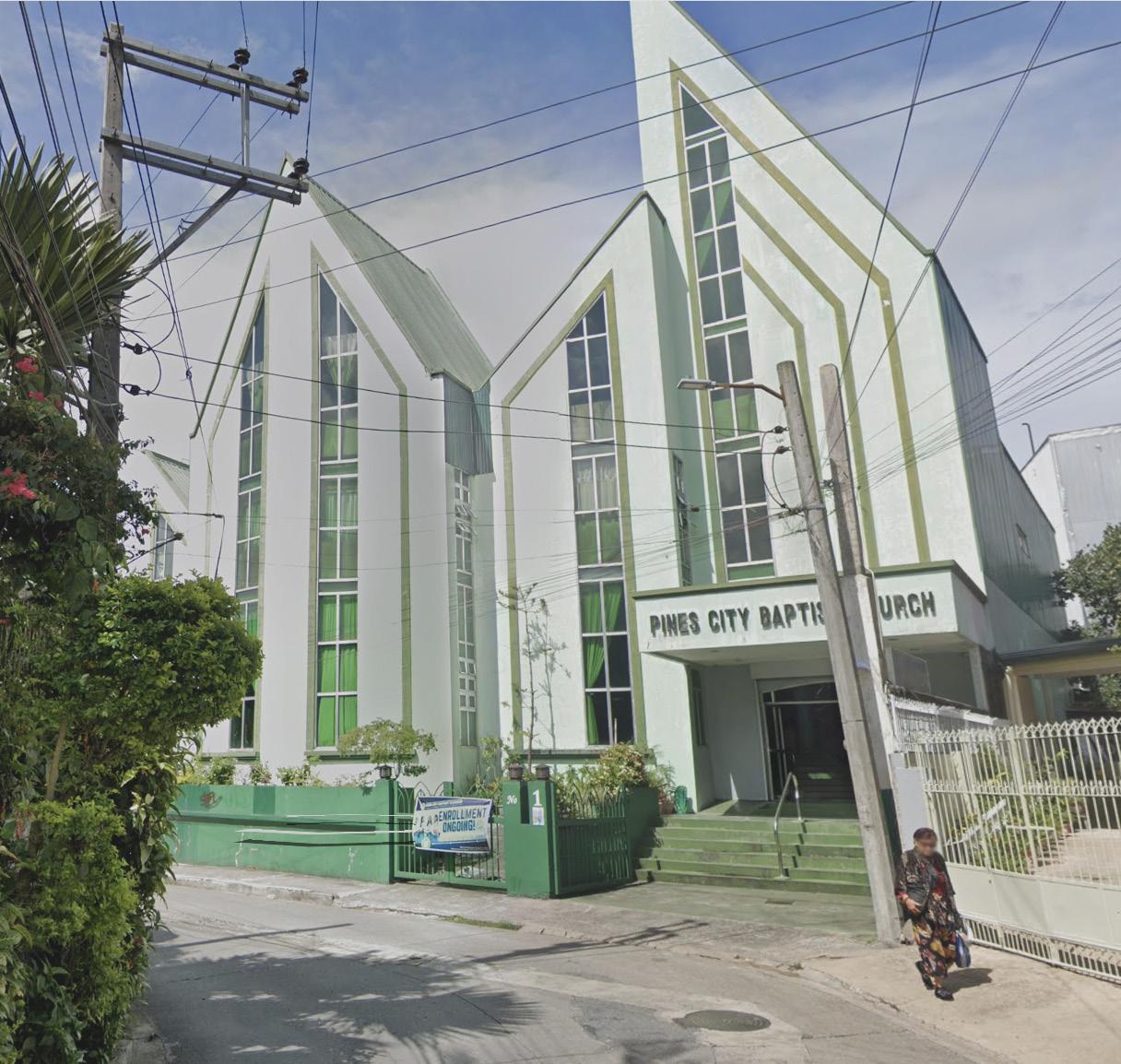
A Sunday at Pines City Baptist Church, Philippines
Jared Garcia
Global Worker in the Philippines
Pines City Baptist Church was planted in 1959 by American missionaries in Baguio City, Philippines. Baguio is called the City of Pines because despite its location in a tropical country, this densely populated city sits cradled high in the mountains where pine trees, not palm trees, dominate the landscape. Our church, Pines, has gone through varying stages of health over 67 years. But by God’s grace, Pines has not lost the gospel and only continues to grow healthier.
THE LORD’S DAY
On a typical Sunday, the church fills with men, women, college students from the nearby universities, and children of all ages. Some walk to church, some drive, and others catch a jeepney or other public transportation. At 9 AM, different groups meet for Bible class. In the auditorium, you will hear a lesson being taught in Ilocano, the regional language. Walk upstairs, and you’ll hear a membership class carried out in Taglish (a mix of Tagalog and English). You will hear mostly English coming from the kids’ class.
At 10 AM, everyone gathers in the auditorium in a swirl of chatter in all three languages. The worship service is primarily in English (Bible readings, hymns). But you will also hear some Taglish during the sermon, prayers, and greeting song. The order of worship
probably looks much like the one in your church: following announcements and greeting, worship begins with a moment of silence, followed by a leader reading a passage calling us to worship. The service includes a pastoral prayer of supplication and other leader-led congregational prayers of adoration, confession, lament, or thanksgiving. Songs are thoughtfully chosen to complement the sermon. We sing with a piano and some other instrumentalists, all led by a music leader.
Sermons are expositional sermons on a particular passage. I, Jared, typically preach through a particular book of the Bible, such as my current sermon series on Mark’s Gospel. We end with a hymn of response and benediction. Many will return at 5 PM for the evening service to hear testimonies from members, to have an occasional members’ meeting, and to celebrate the Lord’s Supper monthly.
GROWTH AND MATURITY
In the last decade, Pines has grown in its appetite for expositional preaching. In the last couple years, we have also seen growth in organic evangelism and discipleship. Several small groups have initiated Bible studies or book studies. One brother testified that prior to his conversion he hated books. Now, God has given him a hunger for the Bible and theological books.
We also have grown in our understanding of the gospel and conversion. Last month, a member confessed to finally understanding the gospel despite being a member for more than two decades. Previously, he prayed a prayer and was immediately “baptized” and added to membership. By God’s providence, I was reading Romans with this member’s collegeaged son at the time. First the son, and then the father, professed real faith in Christ for the first time. Lord willing, both father and son will be baptized as believers soon.
Finally, Pines has grown in its understanding of church leadership. Last year, we unanimously voted to amend our constitution into an eldersled congregationalism polity. Soon after, Pines voted in its first biblically defined elders and deacons in its 66 years of existence. One of our deacons set a remarkable example. When we recognized him as the deacon of parking, he took the initiative to clear our small city lot of obstacles to form new parking spaces, painted poles and other hazards, and even purchased a rain jacket and large umbrella so he could walk people to the door (with his big smile) in any weather.
JOYS AND CHALLENGES
It is my great joy to preach the Word weekly to a teachable congregation,
hungry for God’s Word. It is a joy to see gospel transformation in the lives of many. Related to this is the joy of having a deep bench of expositional preachers. Six men have shown real competence in handling God’s Word--thanks to Charles Simeon Trust preaching workshops. These men have gone through two official CST workshops and/or three unofficial, inhouse workshops.
While Pines embraces the idea of meaningful membership, the practice of quick reconciliation and church discipline can be challenging. Direct and difficult conversations and confronting sin are very countercultural.
PRAYER
I love serving the Lord at Pines. We want the Lord to continue giving grace. Pray that the Lord would . . .
1. Grow our elders in loving and caring for the church.
2. Help us guard our unity by loving and forgiving one another.
3. Provide more opportunities to evangelize.
4. Raise up more elders and deacons.
“
By God’s grace, Pines has not lost the gospel and only continues to grow healthier.