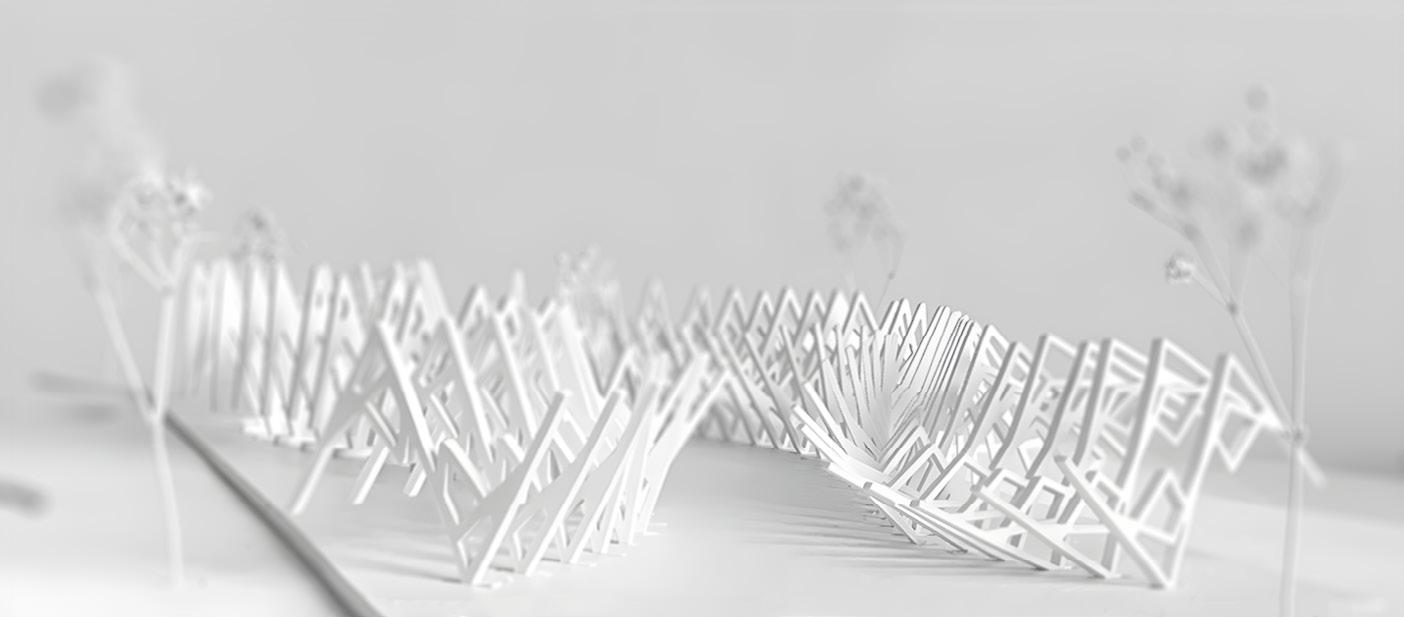
FUTUREGREENWAY
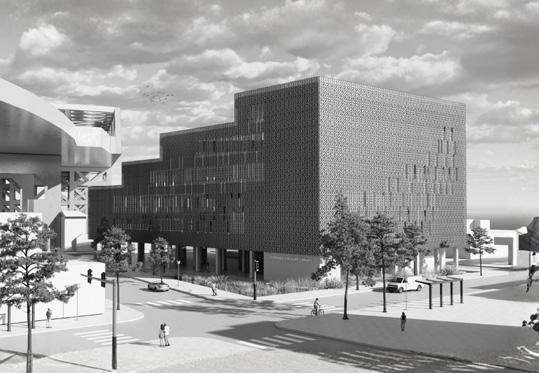
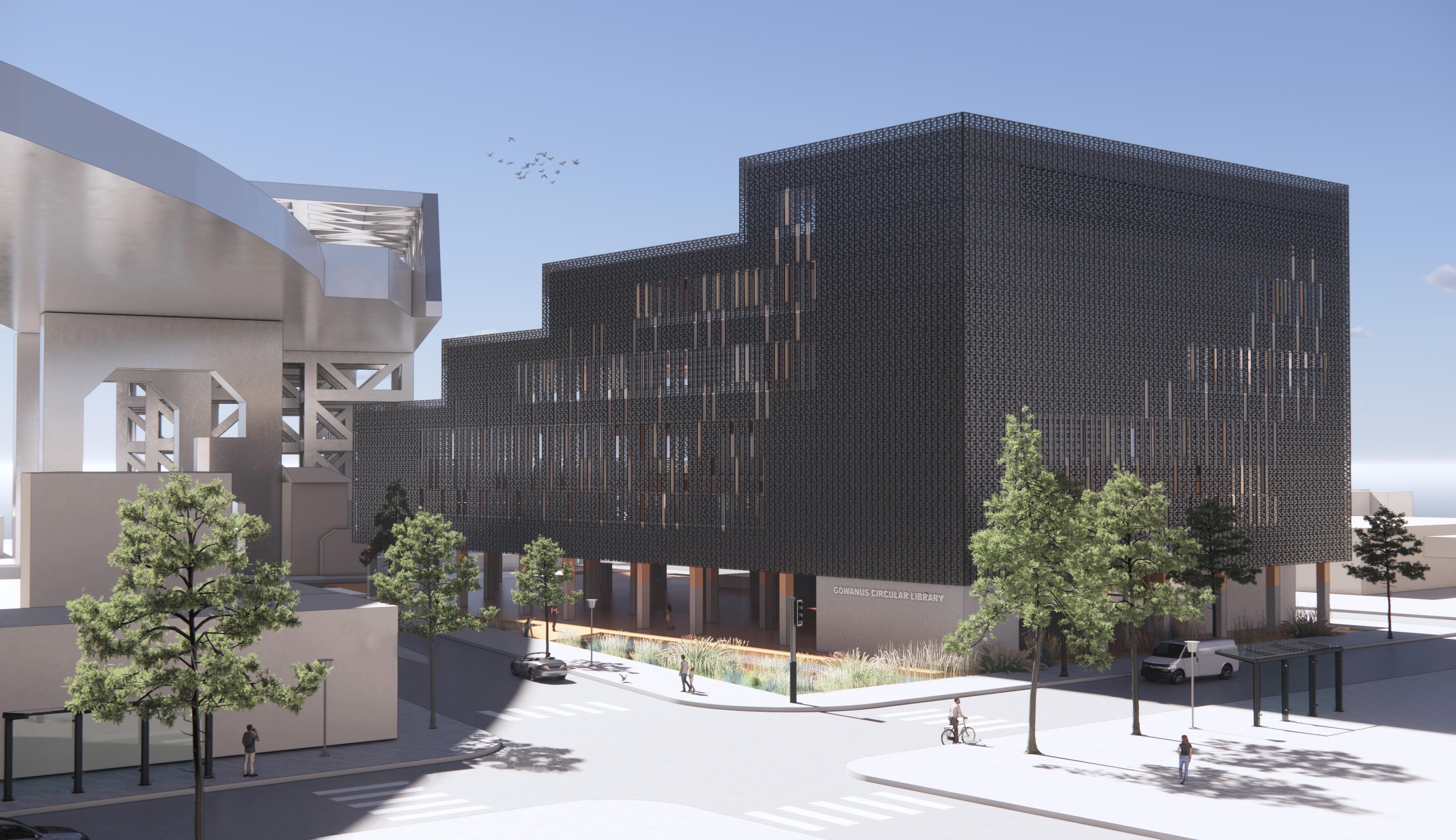
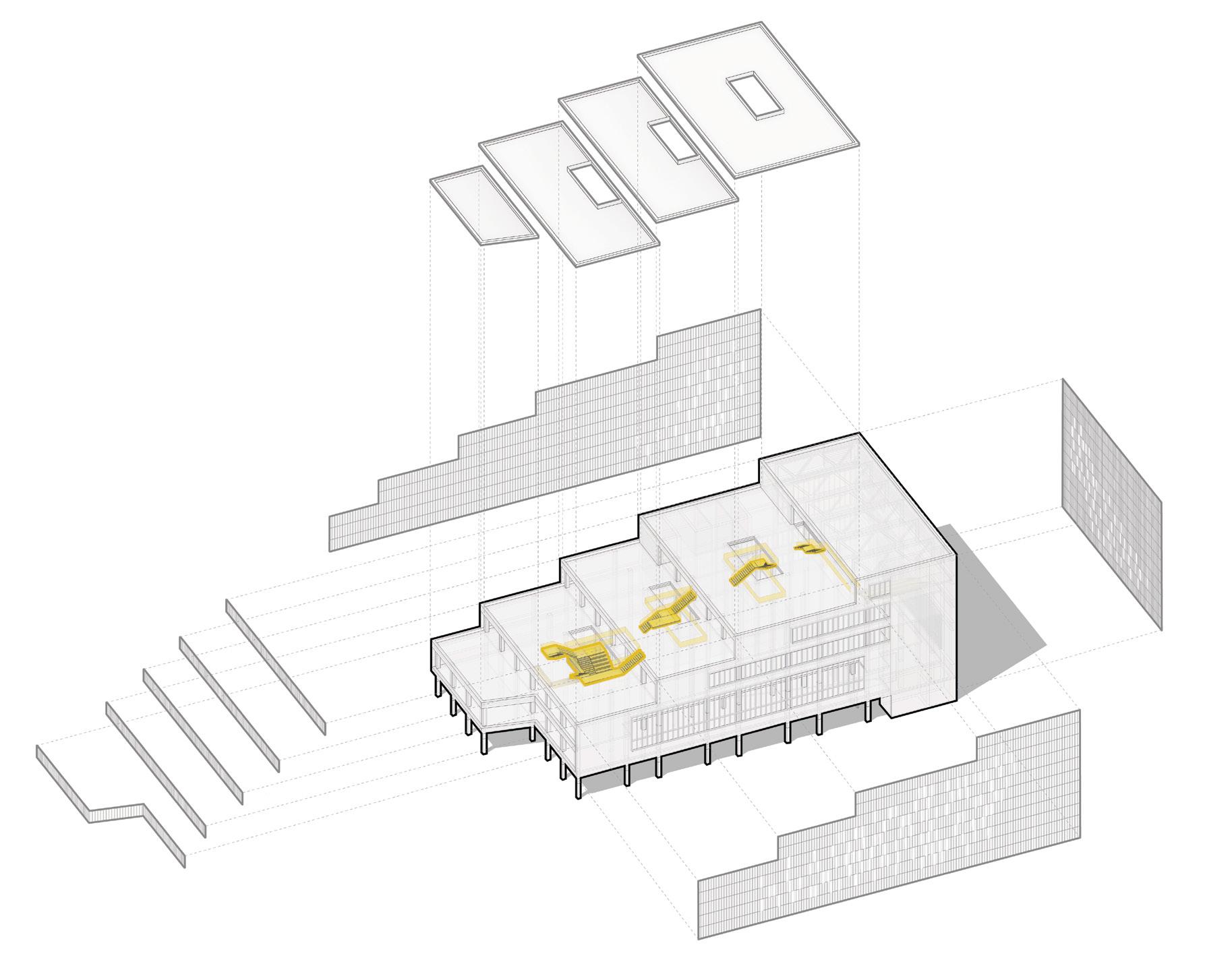
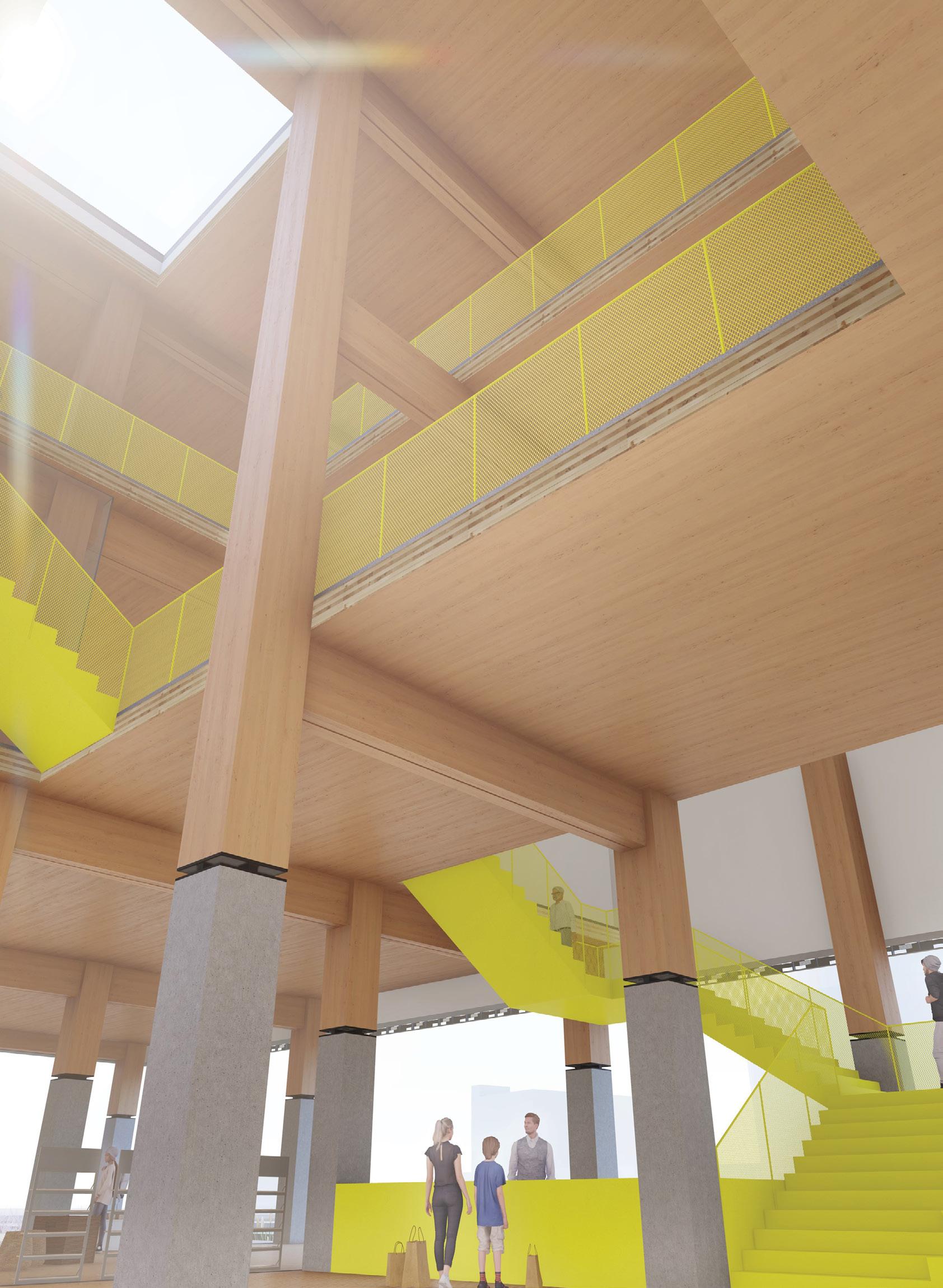
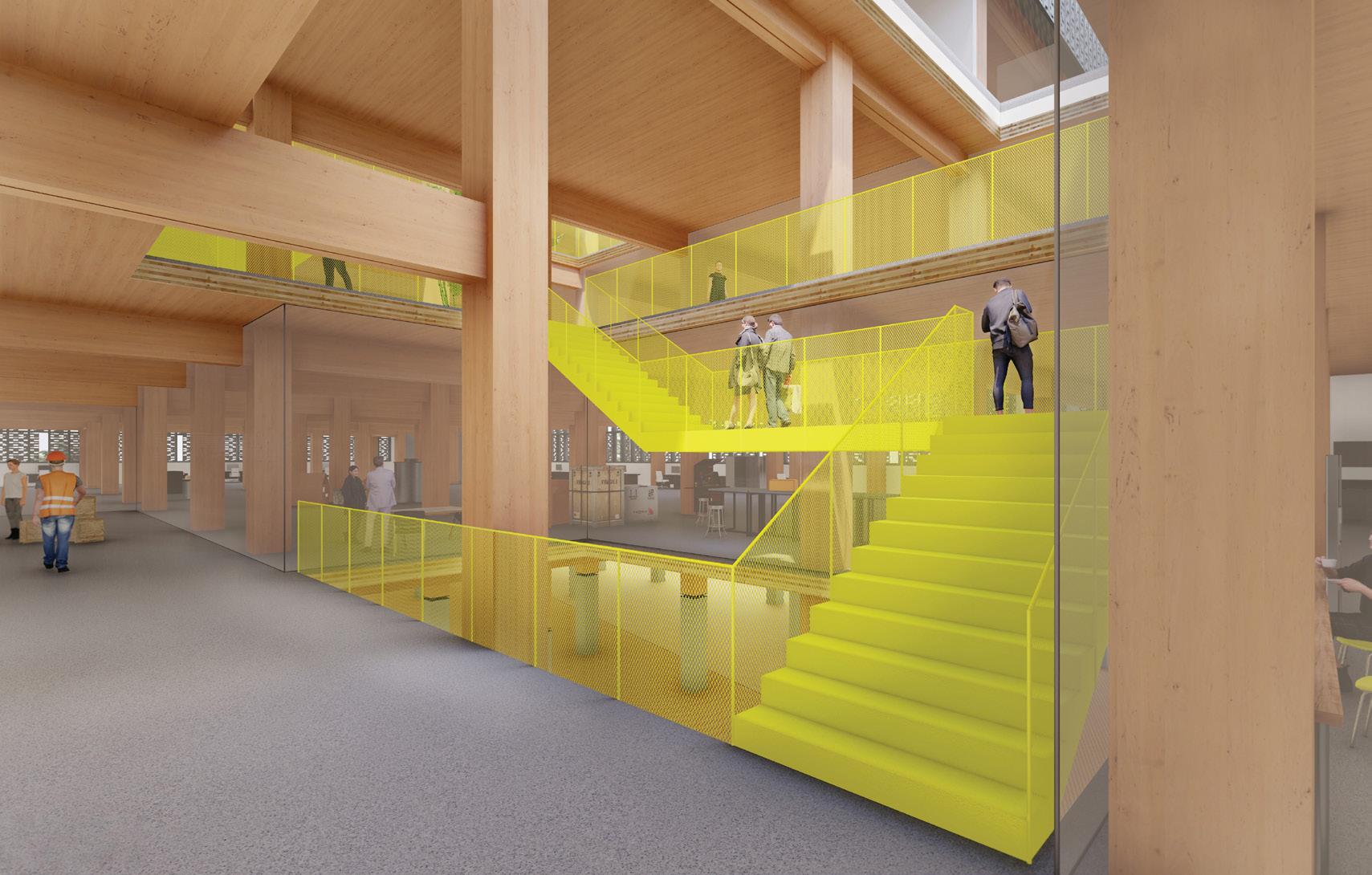
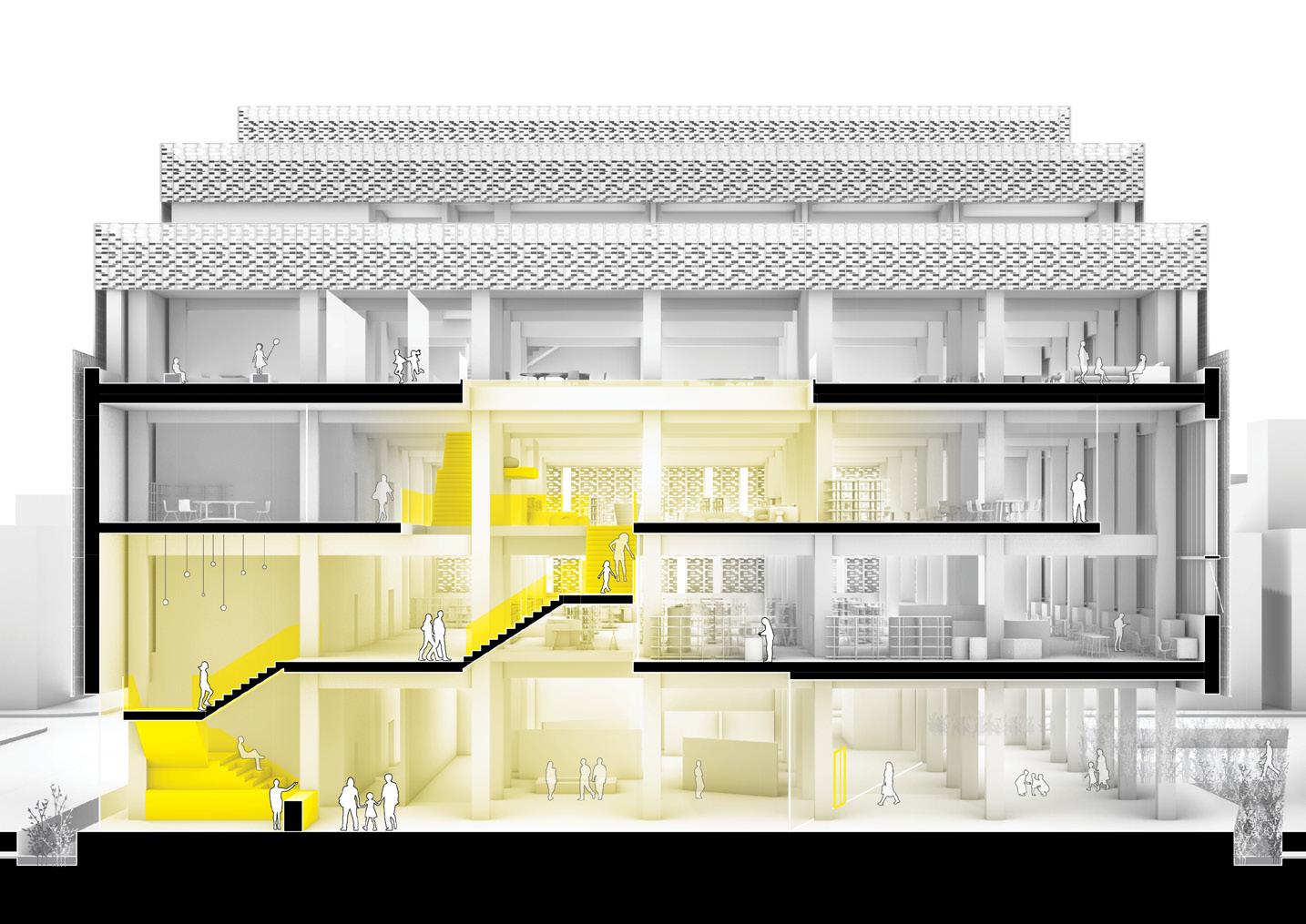
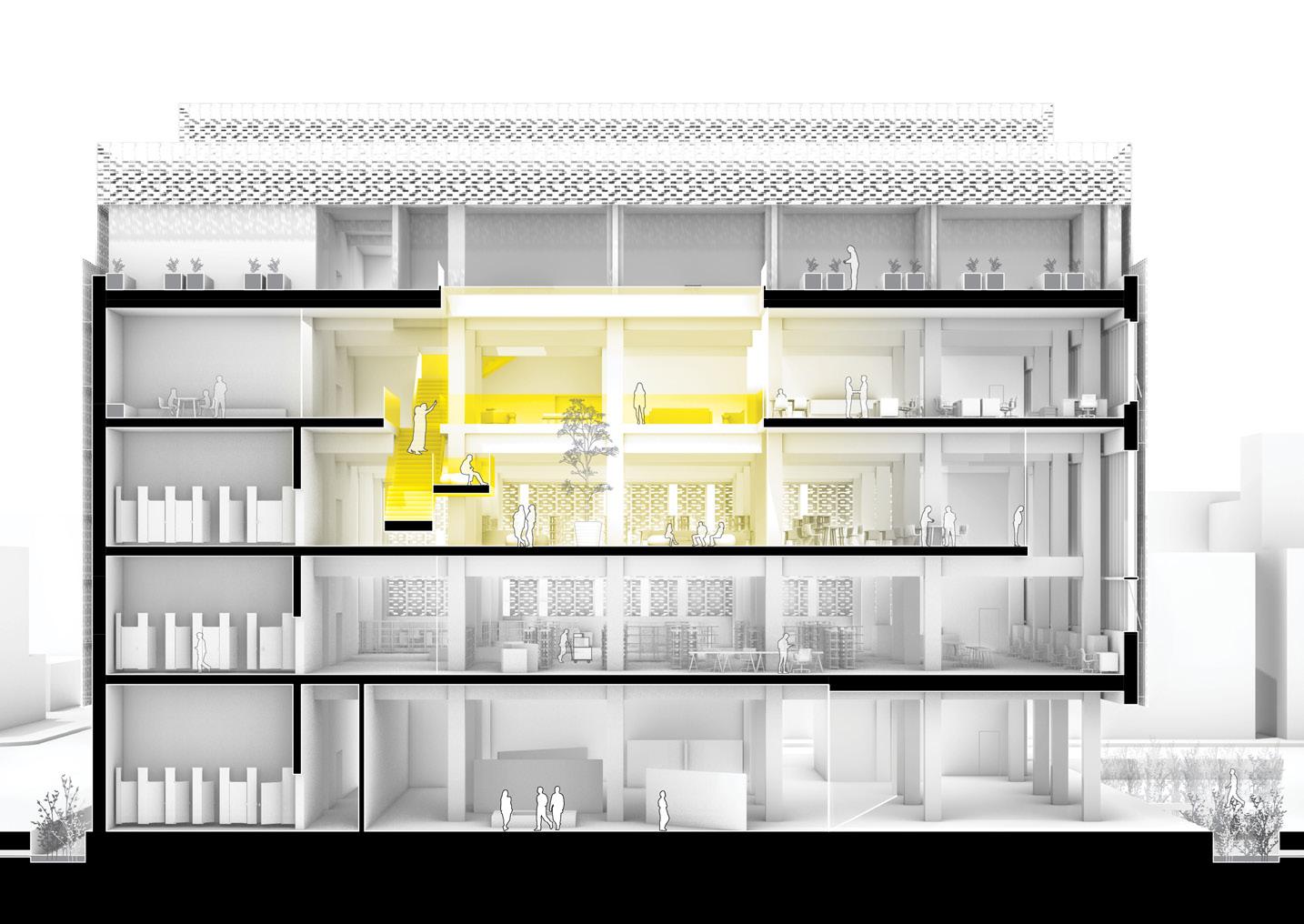
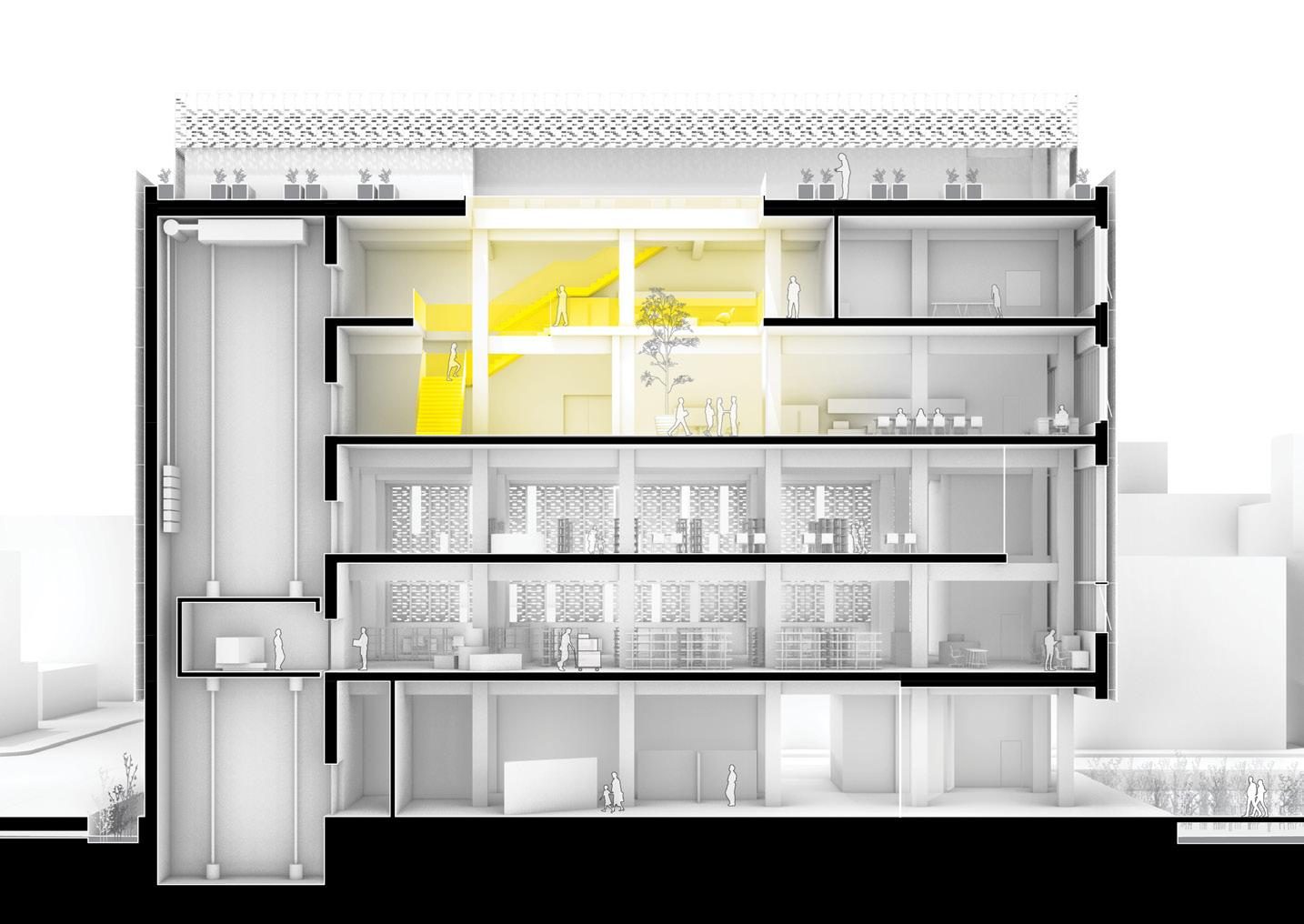
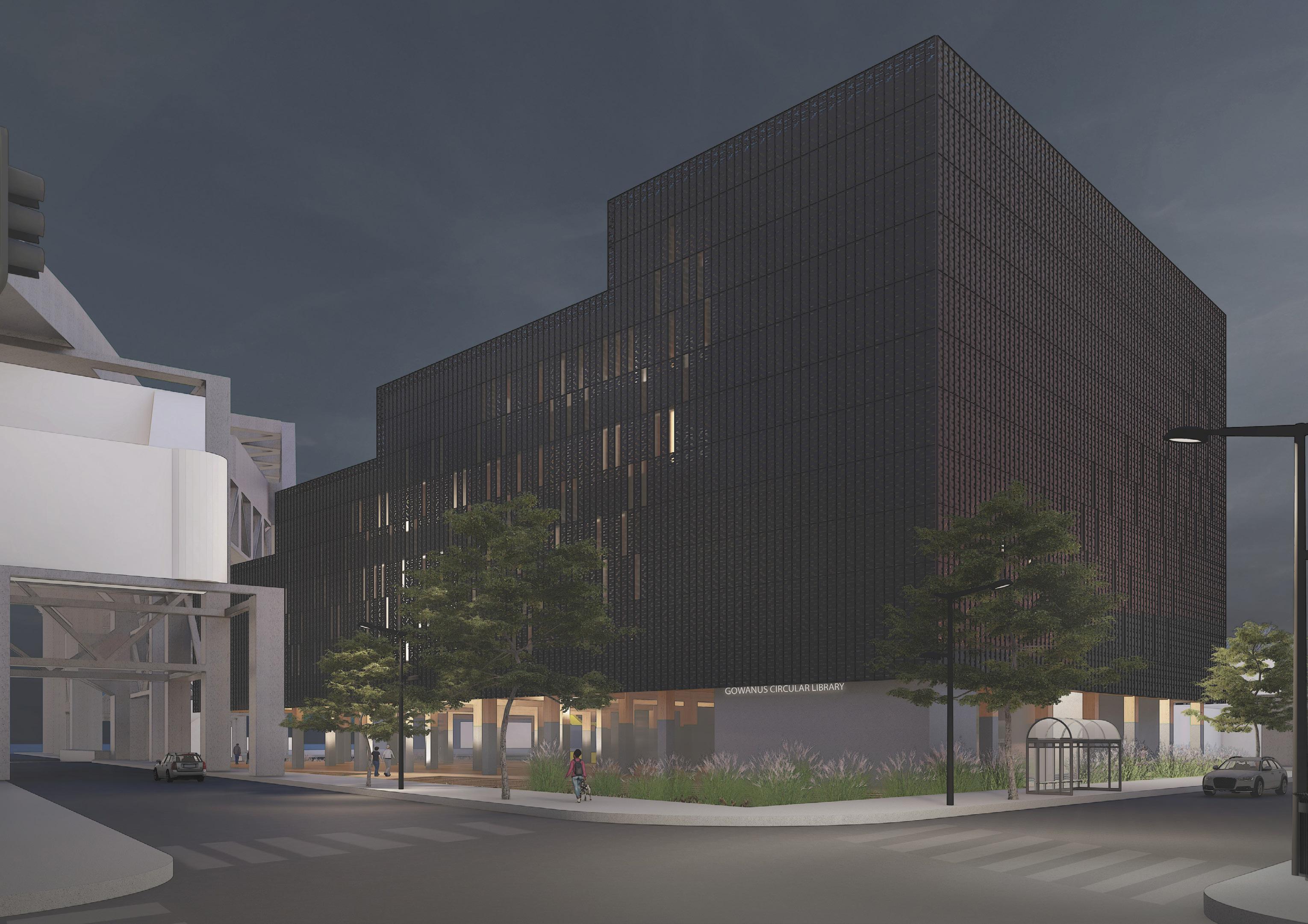
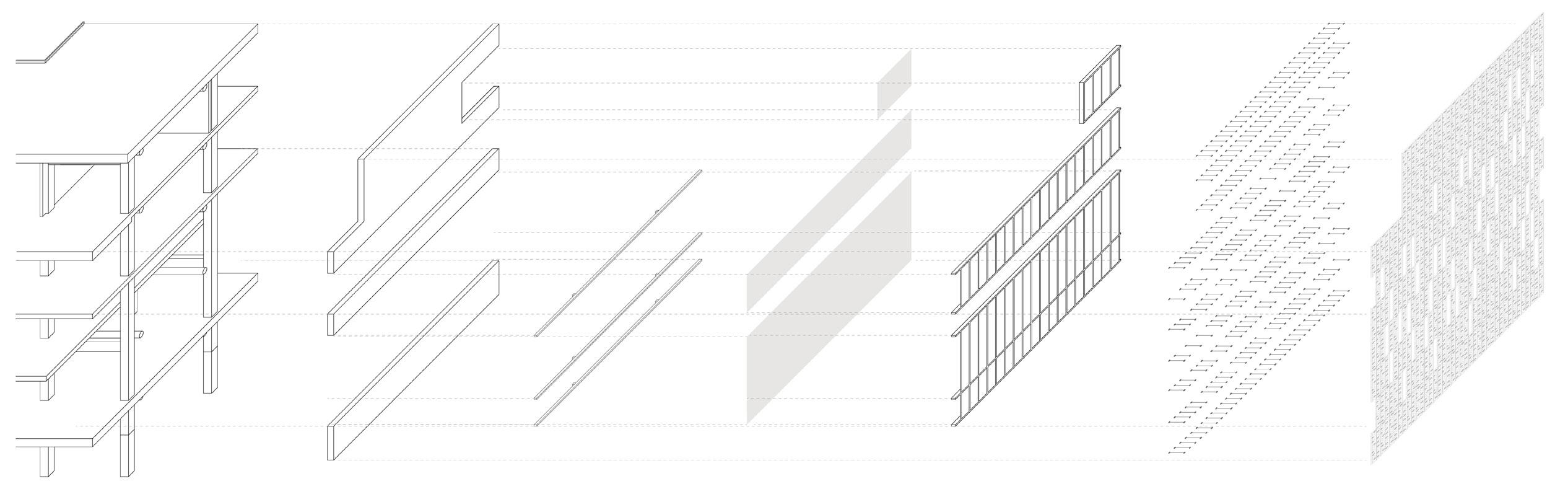
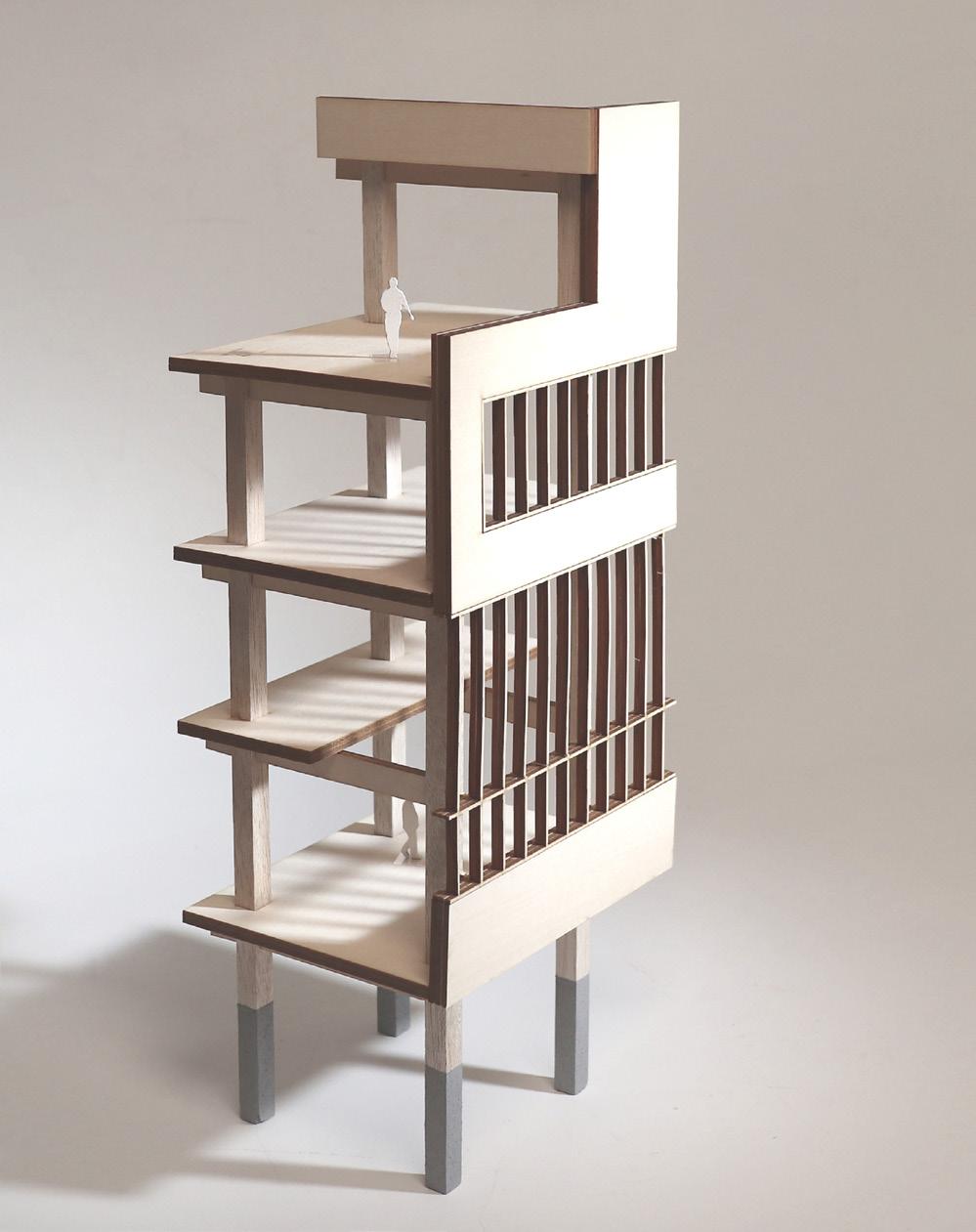
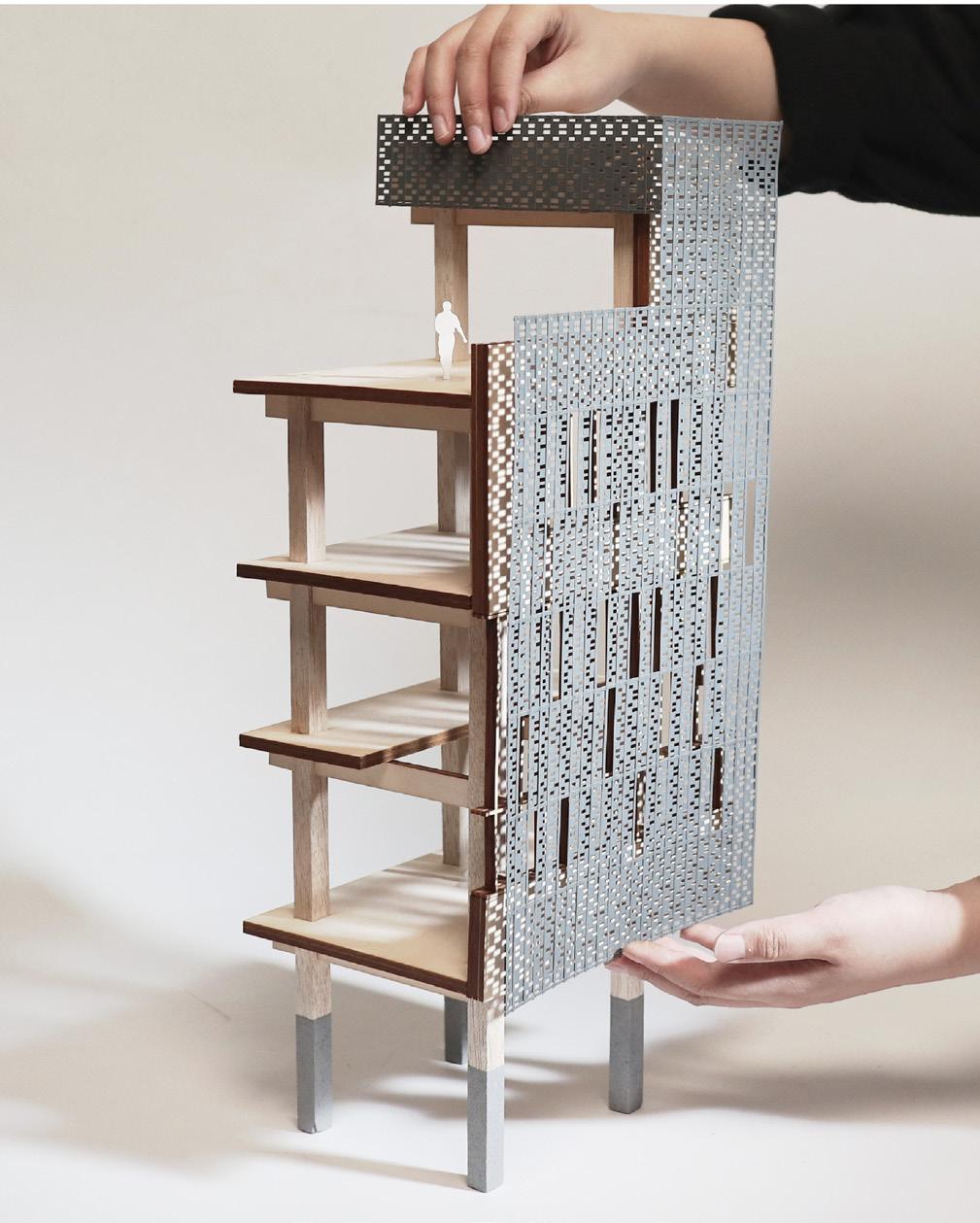
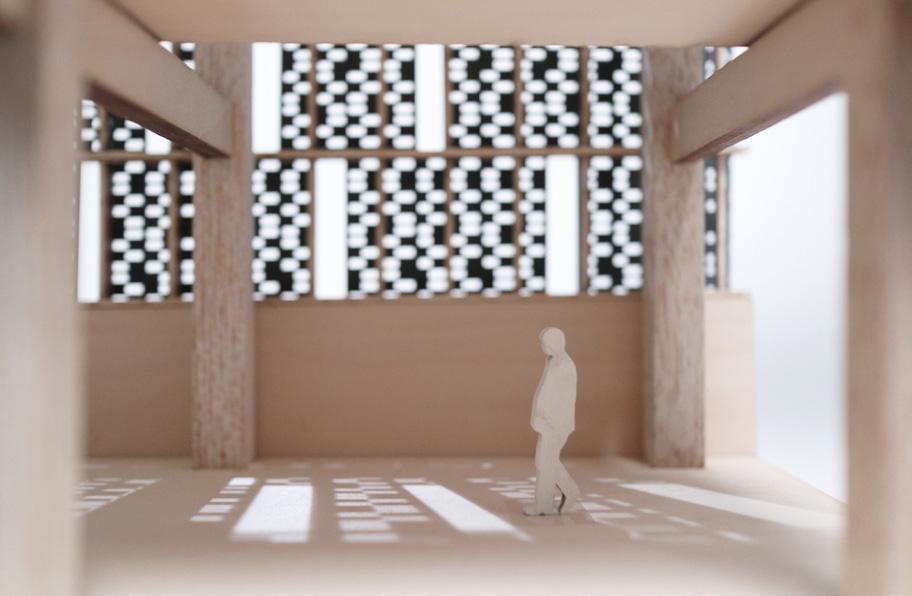
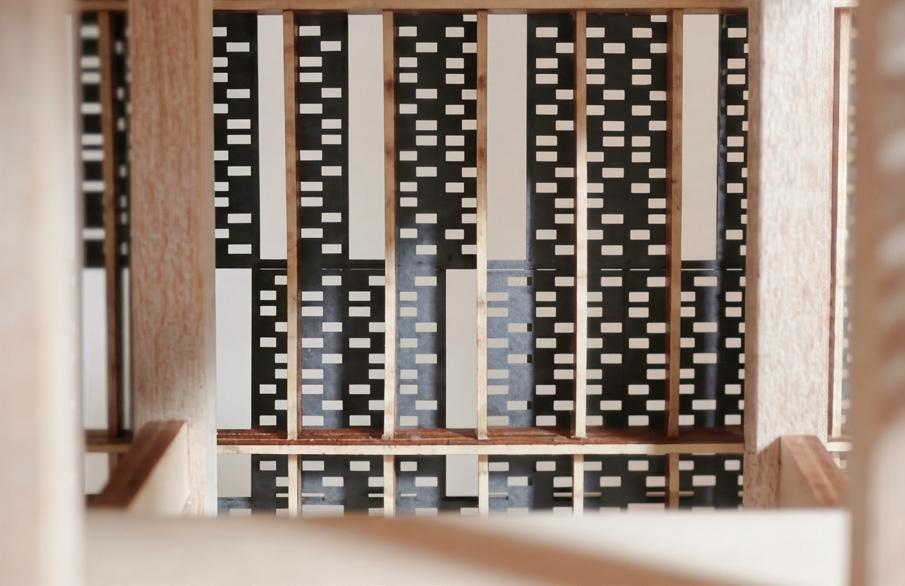
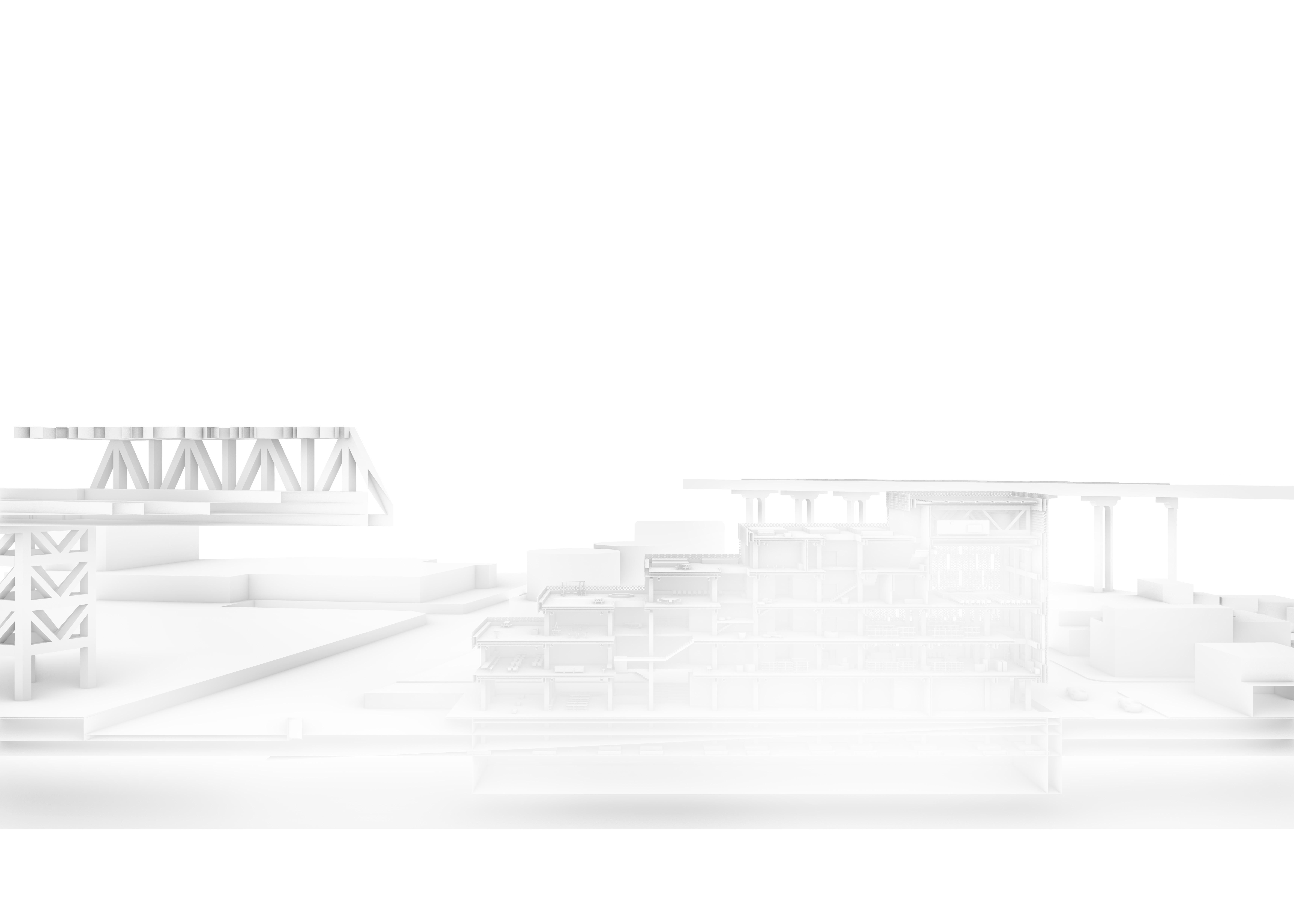
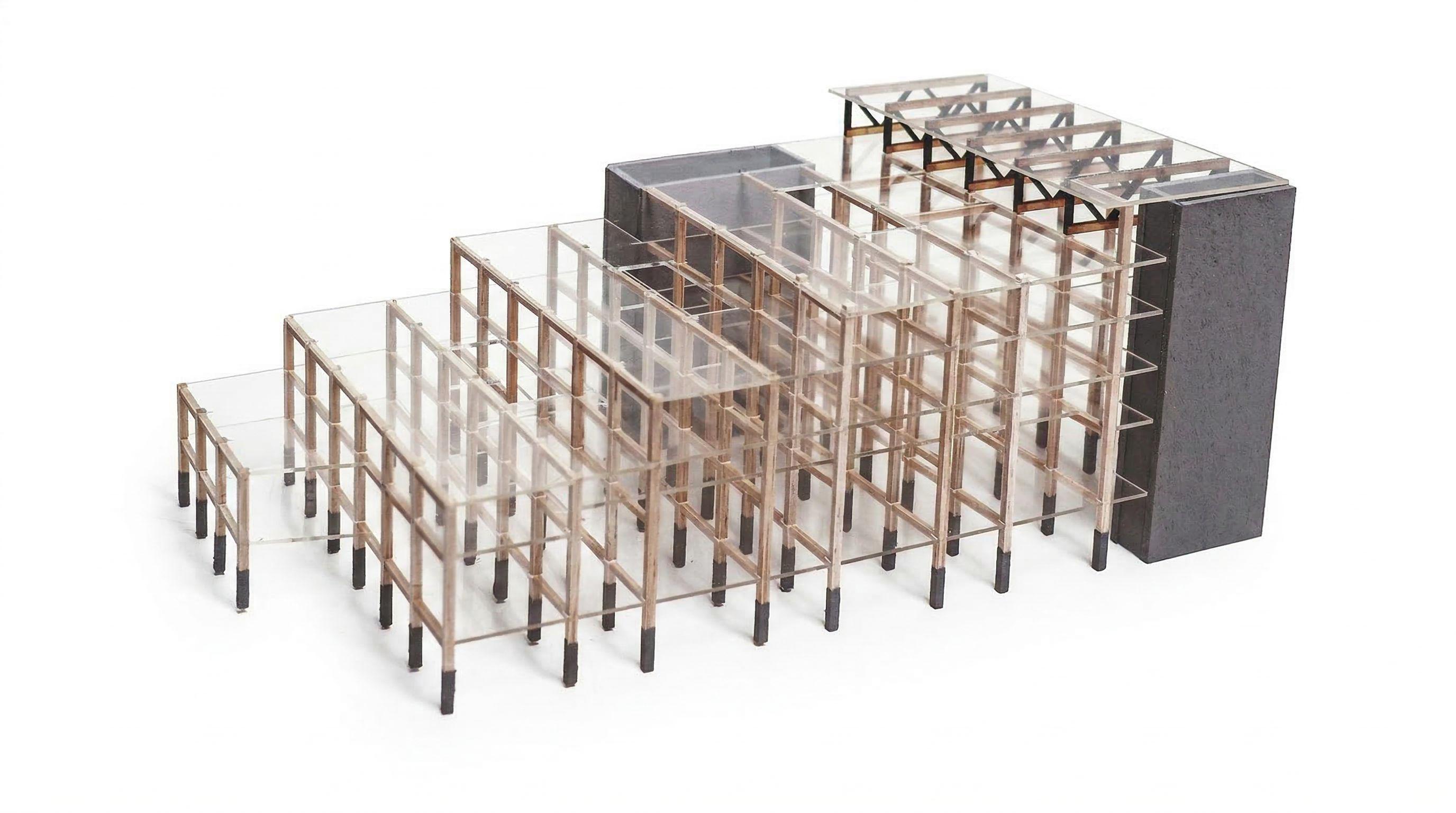
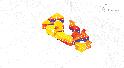
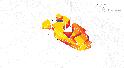
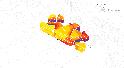
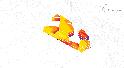
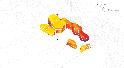
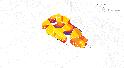
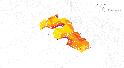
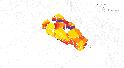
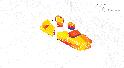
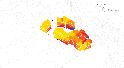
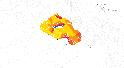
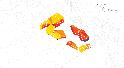
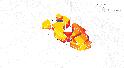
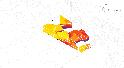
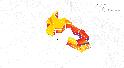
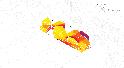
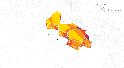
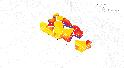
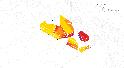
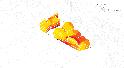
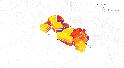
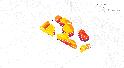
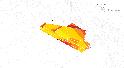
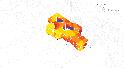
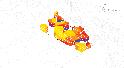
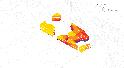
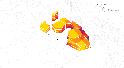
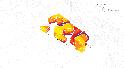
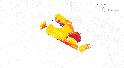
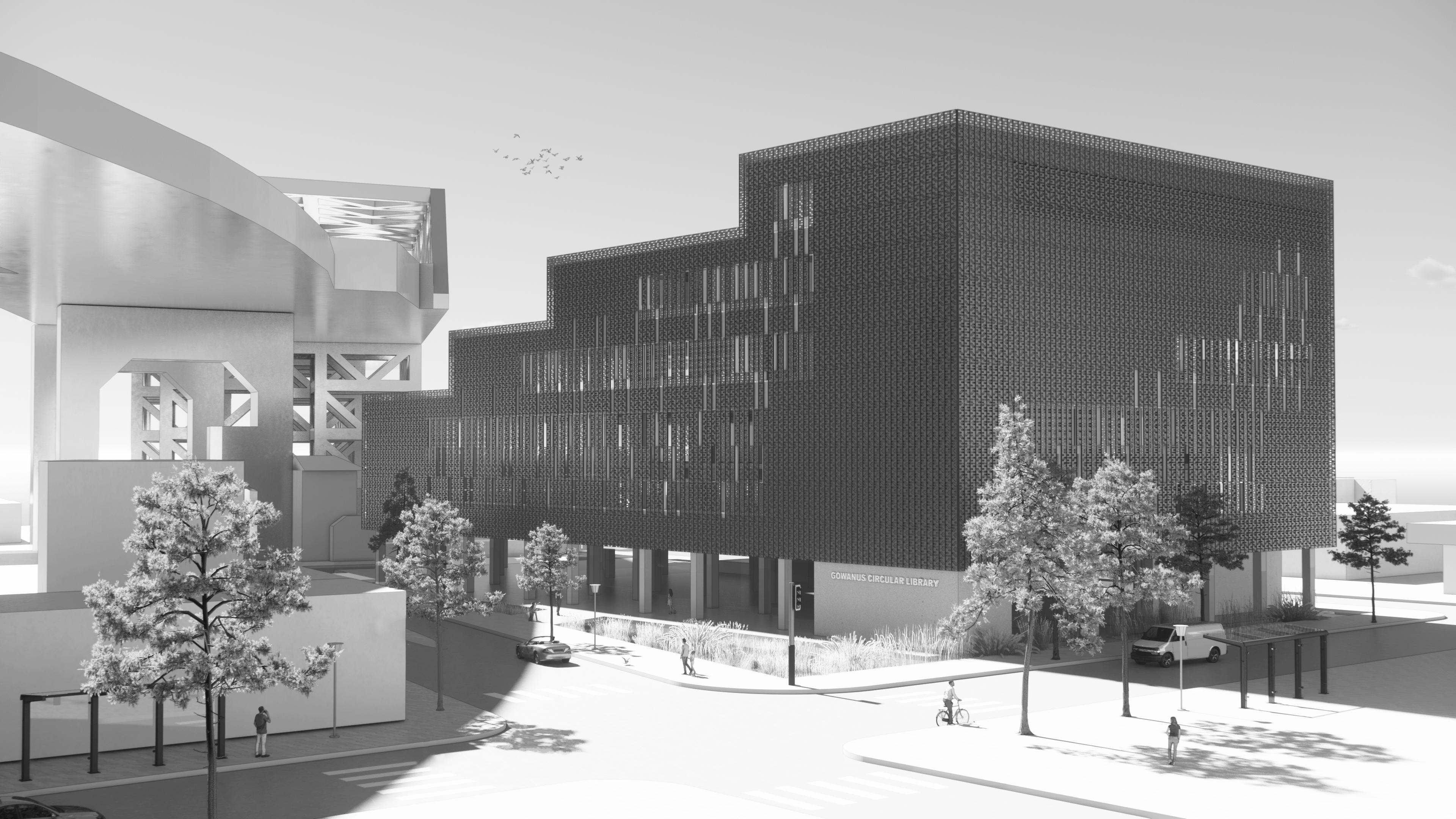
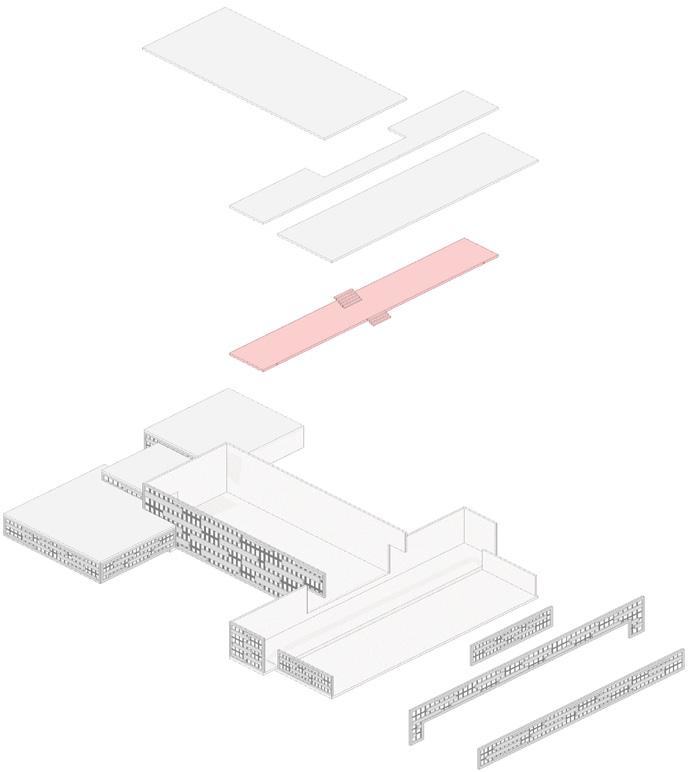
This project is envisioned not only as a flexible container for an unconventional mix of programs, but more importantly, as a social condenser that fosters spontaneous exploration and unexpected encounters. It is structured around three elements: a regular mass timber frame, a vivid yellow circulation system embedded within it, and a muted perforated zinc façade wrapping the volume.
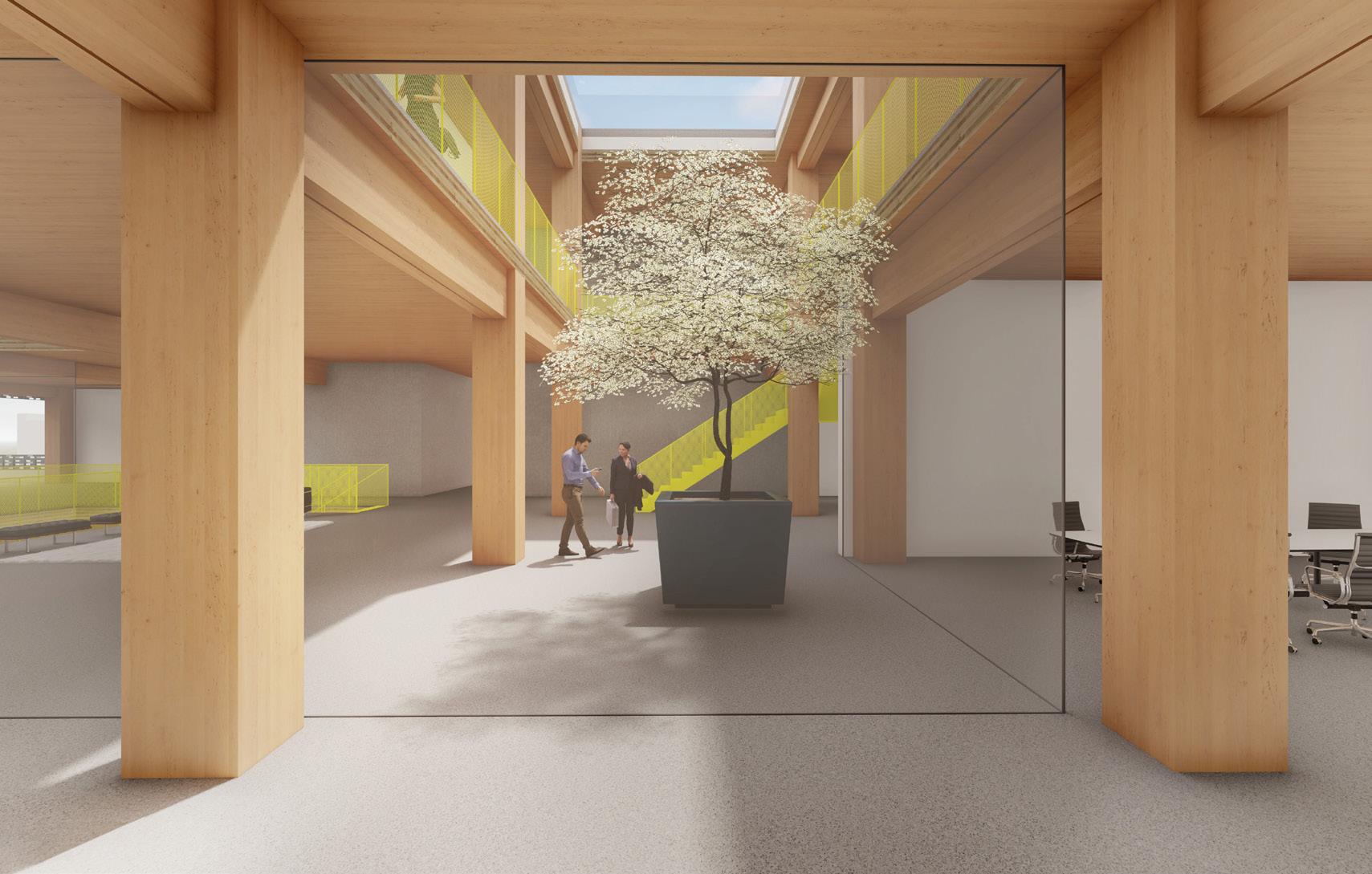
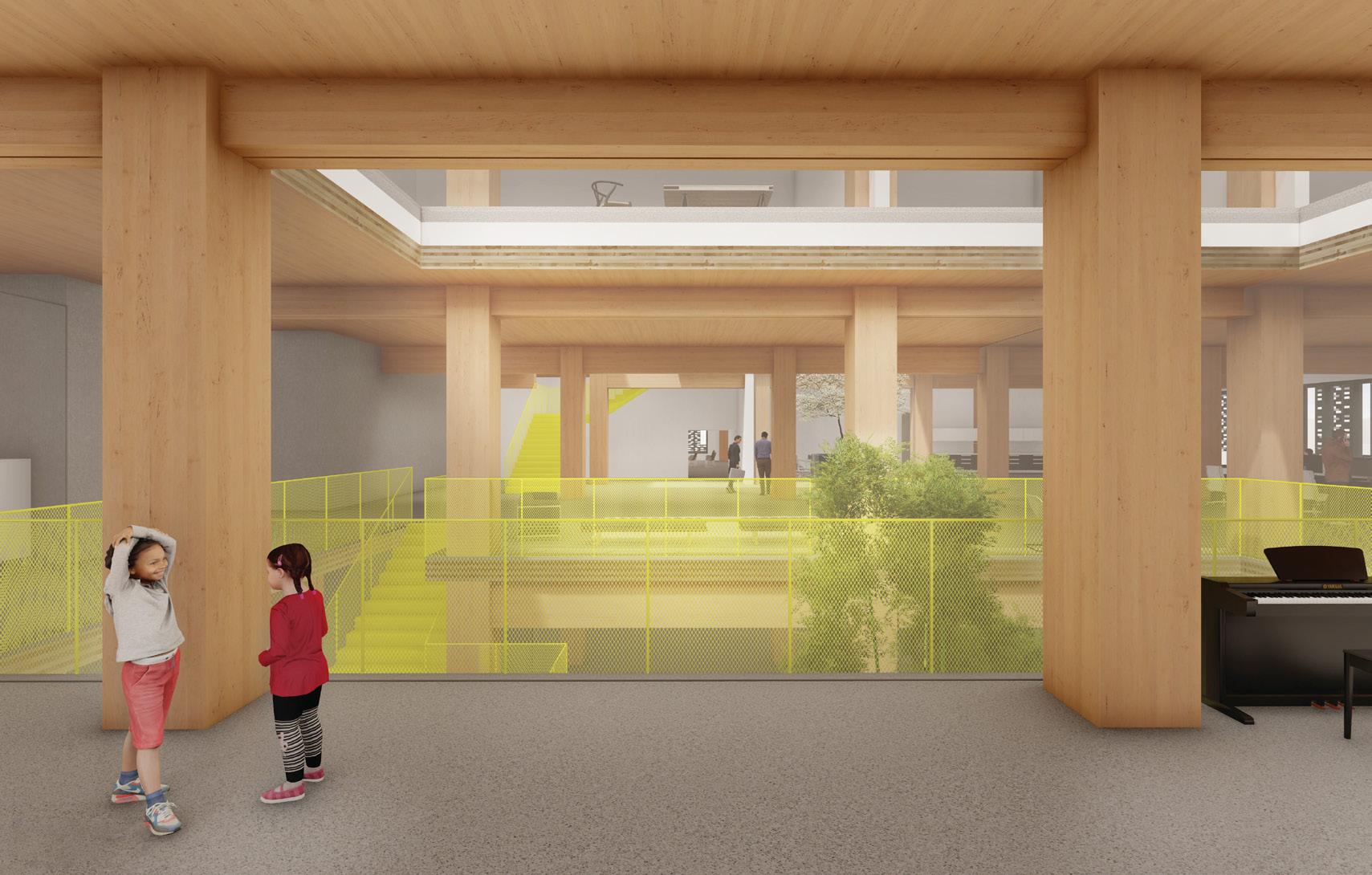
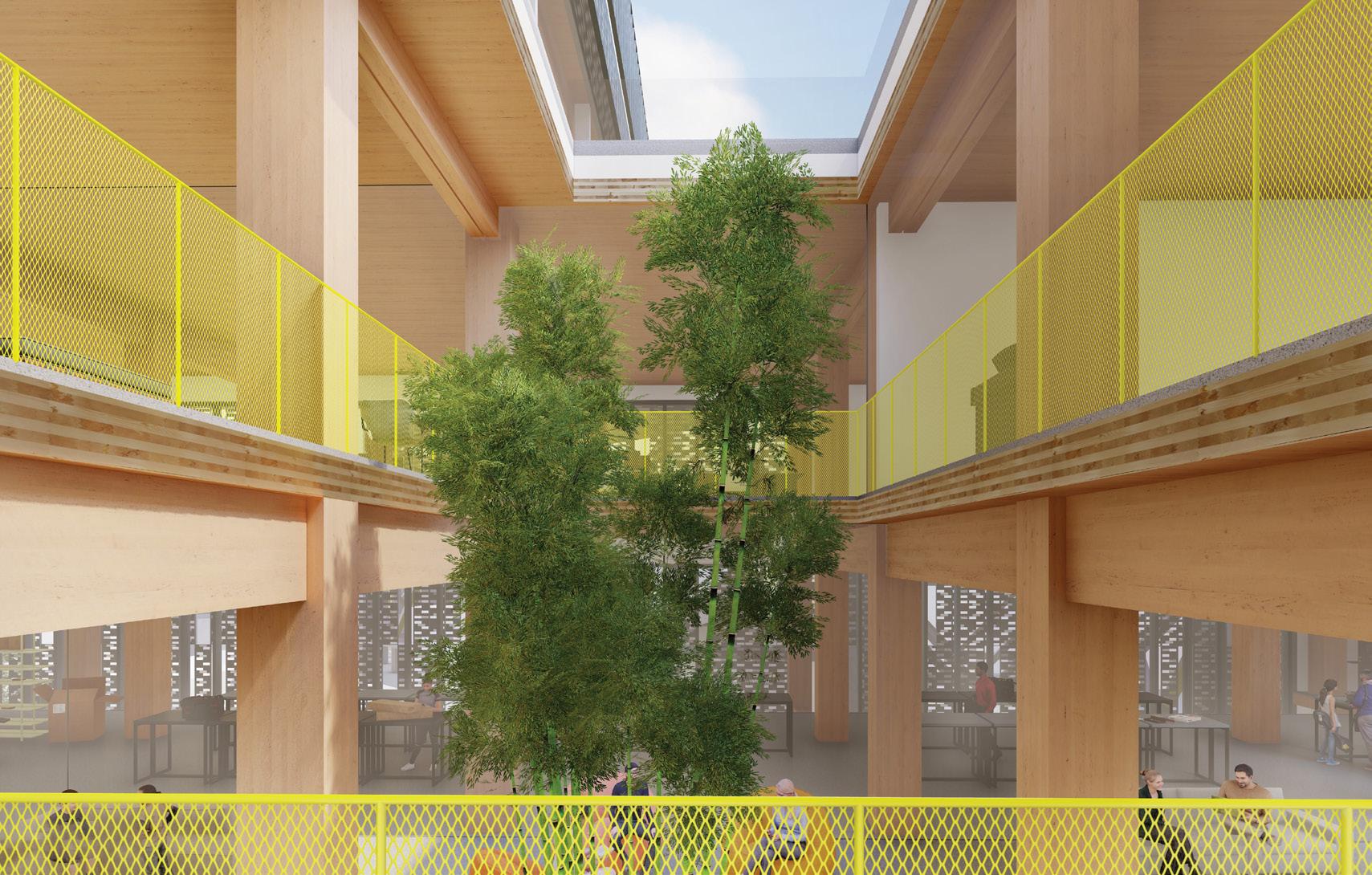
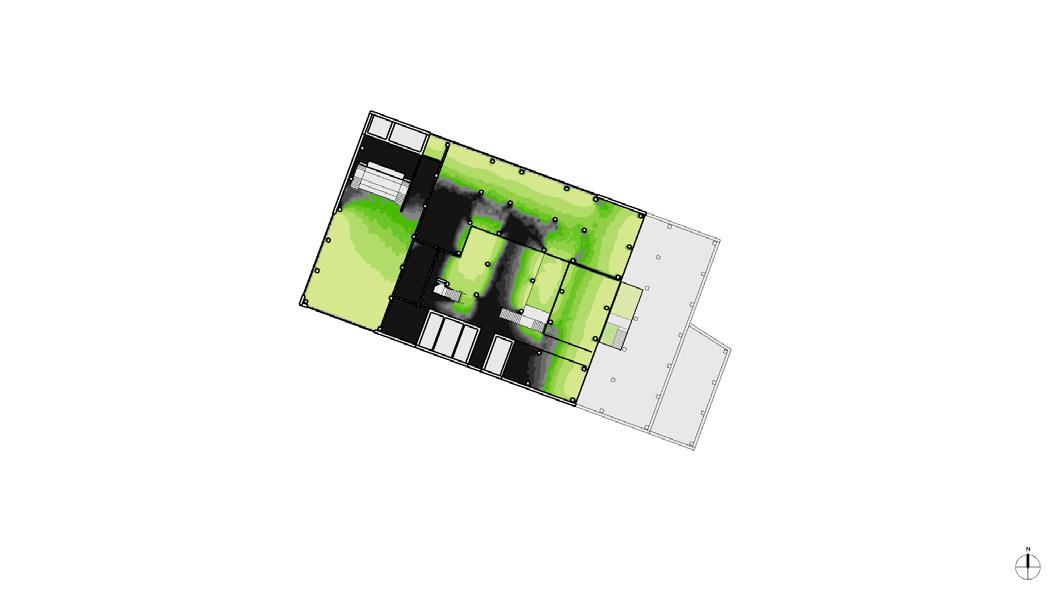
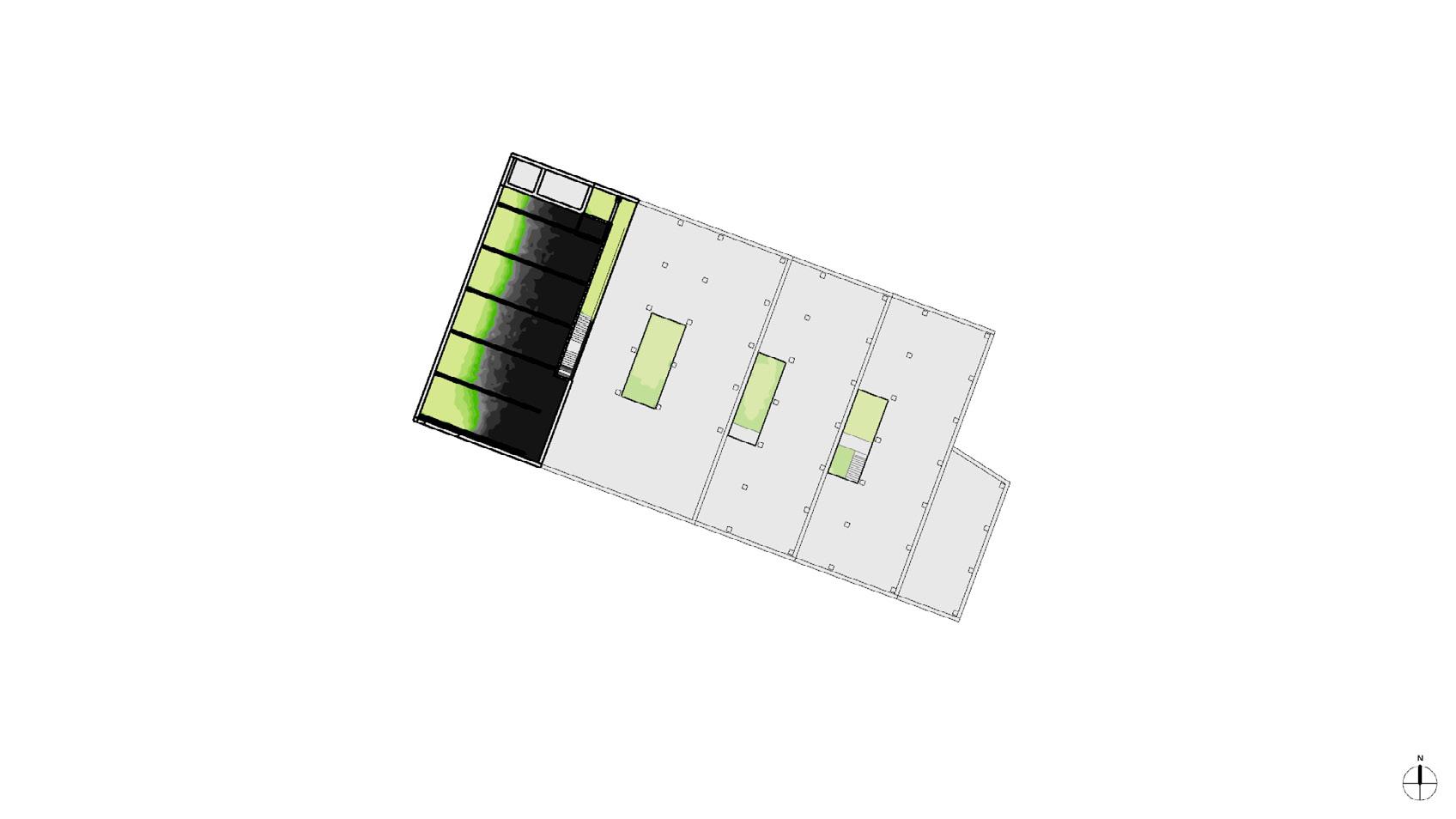
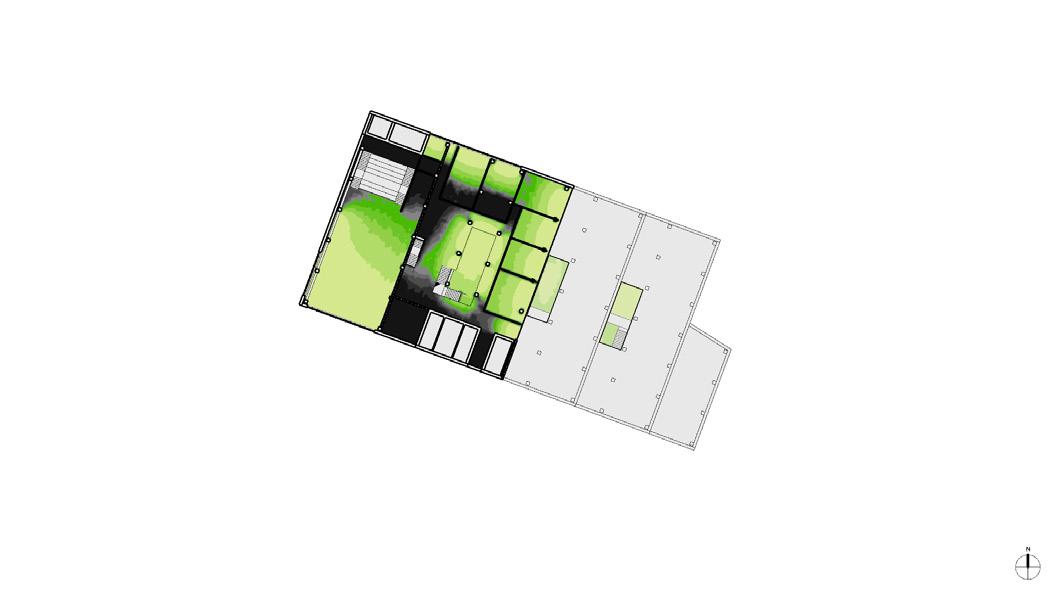
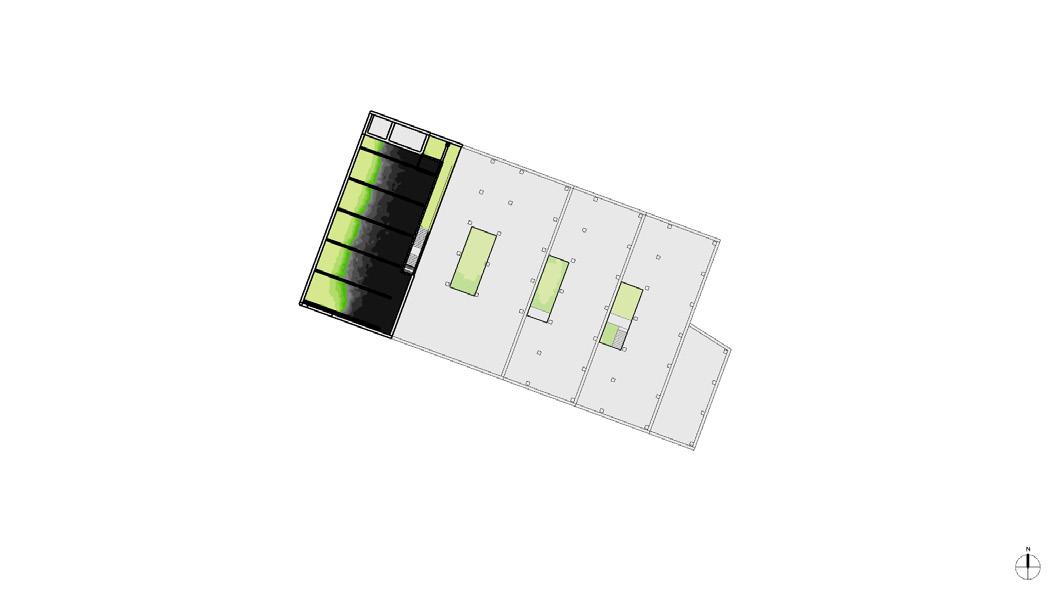
Each atrium anchors a different spatial moment and reflects its surrounding program. The first atrium, located near the entrance, spans two stories and is enclosed by three sides of glass walls. It creates a strong sense of openness, directly connecting the building interior with the street and canal. As the circulation moves upward to Level 2, the atrium continues, separating the café and workshop zones through a more transparent and soft-edged boundary. By Level 4, the third atrium is defined by increased enclosure as surrounding programs require more privacy and controlled access.
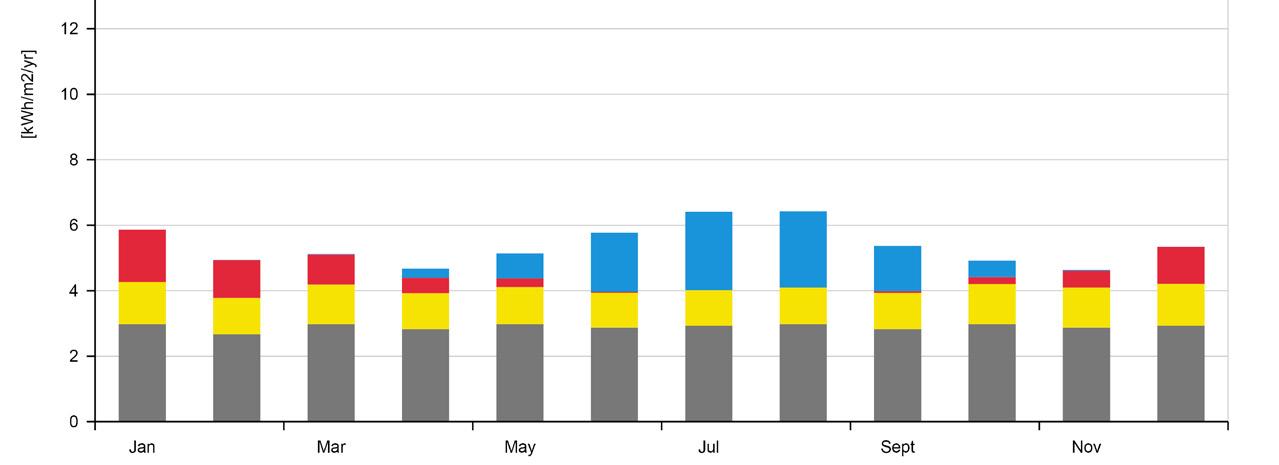
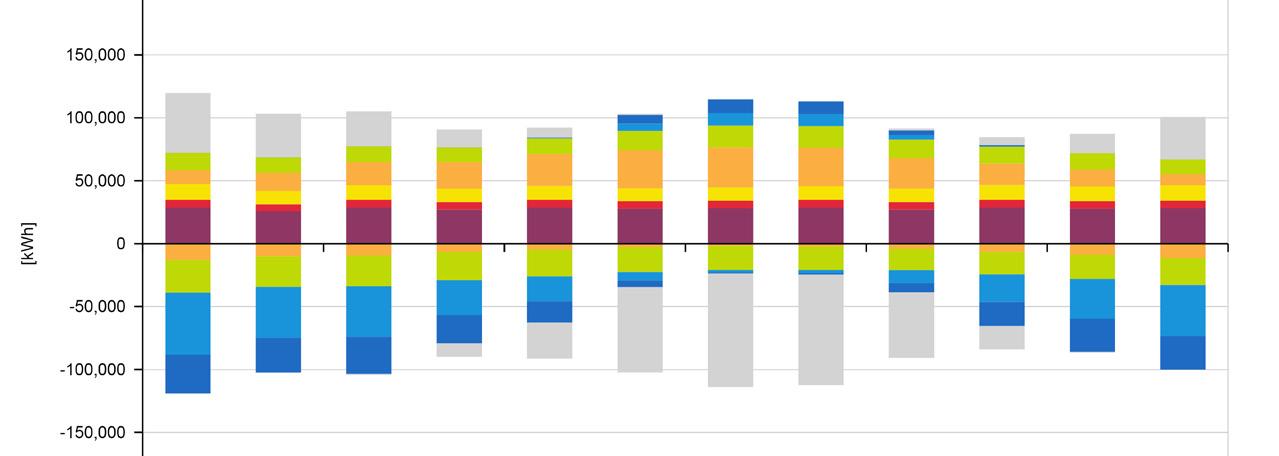
Monthly Heat Flow
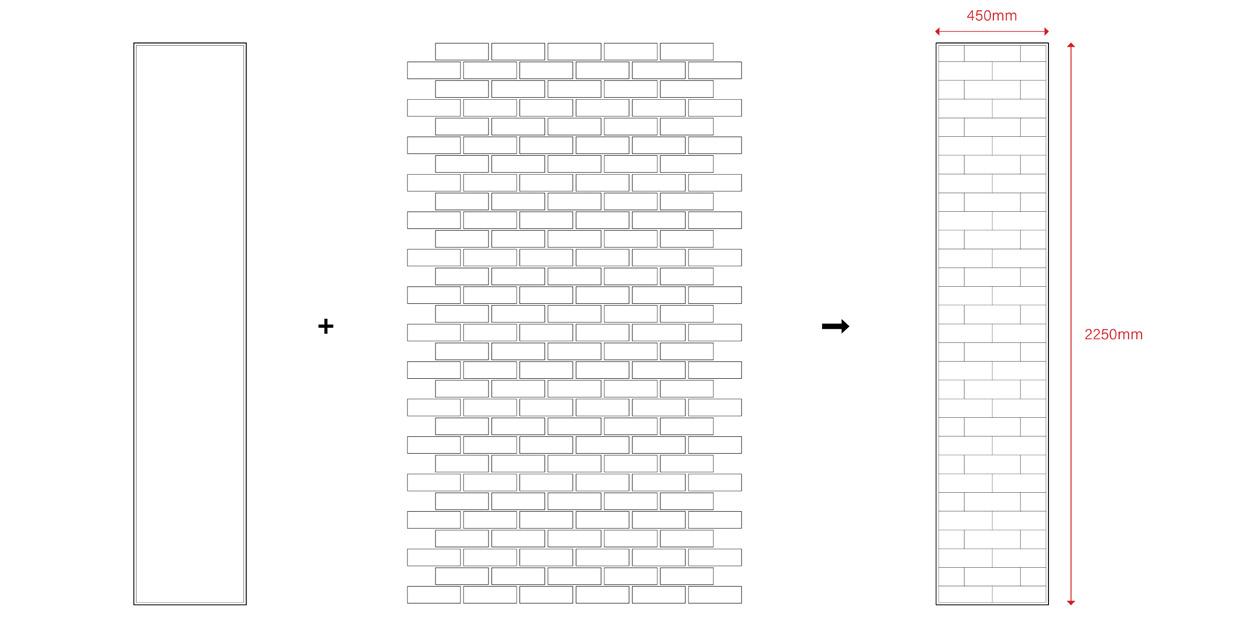
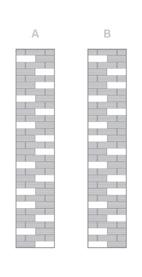
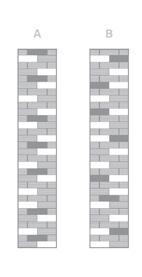
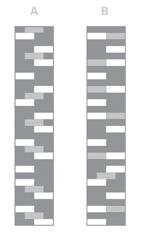
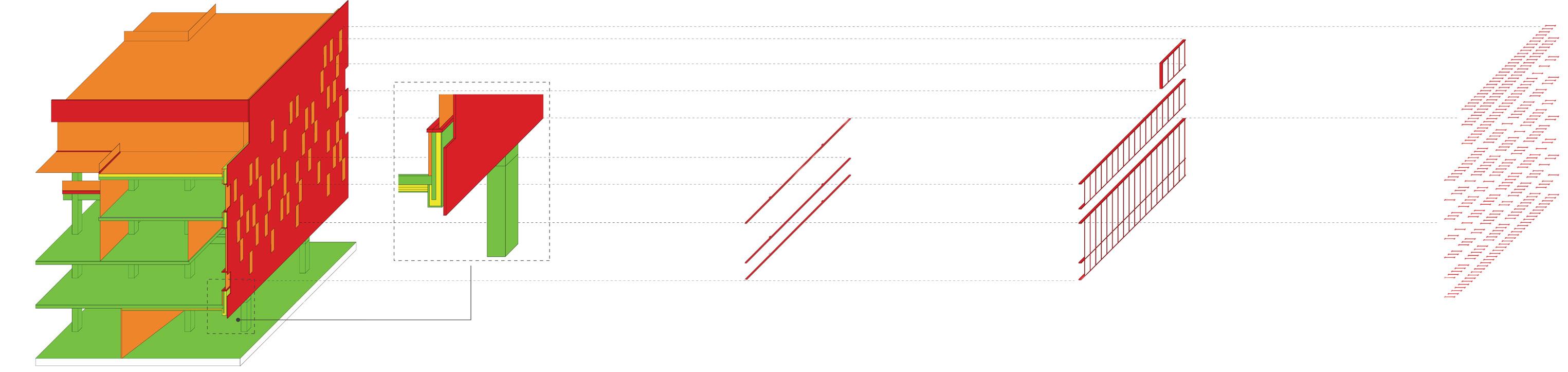
The embodied carbon diagram reveals that the façade contributes significantly to the building’s overall carbon footprint. However, zinc was selected for its high durability, resistance to corrosion in the canal’s humid environment, and minimal long-term maintenance needs. Many of the materials used, including zinc, mass timber, and stone wool insulation, are recyclable or renewable, reducing the building’s lifecycle impact.
Cooling peaks in summer and heating in winter, but overall demand stays steady. Internal heat gains offset winter heating needs, while passive strategies like spring/fall ventilation and skylight daylighting reduce cooling and lighting demands, leading to lower overall system loads.
Flood-Resistant Column Base
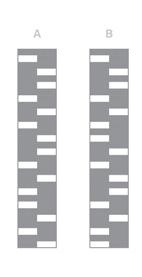
Each column base is encased in concrete to improve stability and durability. This detail also suggests protection against future flooding or surface water exposure, grounding the lightweight frame in a more resilient base.
Beams Running in a Single Direction
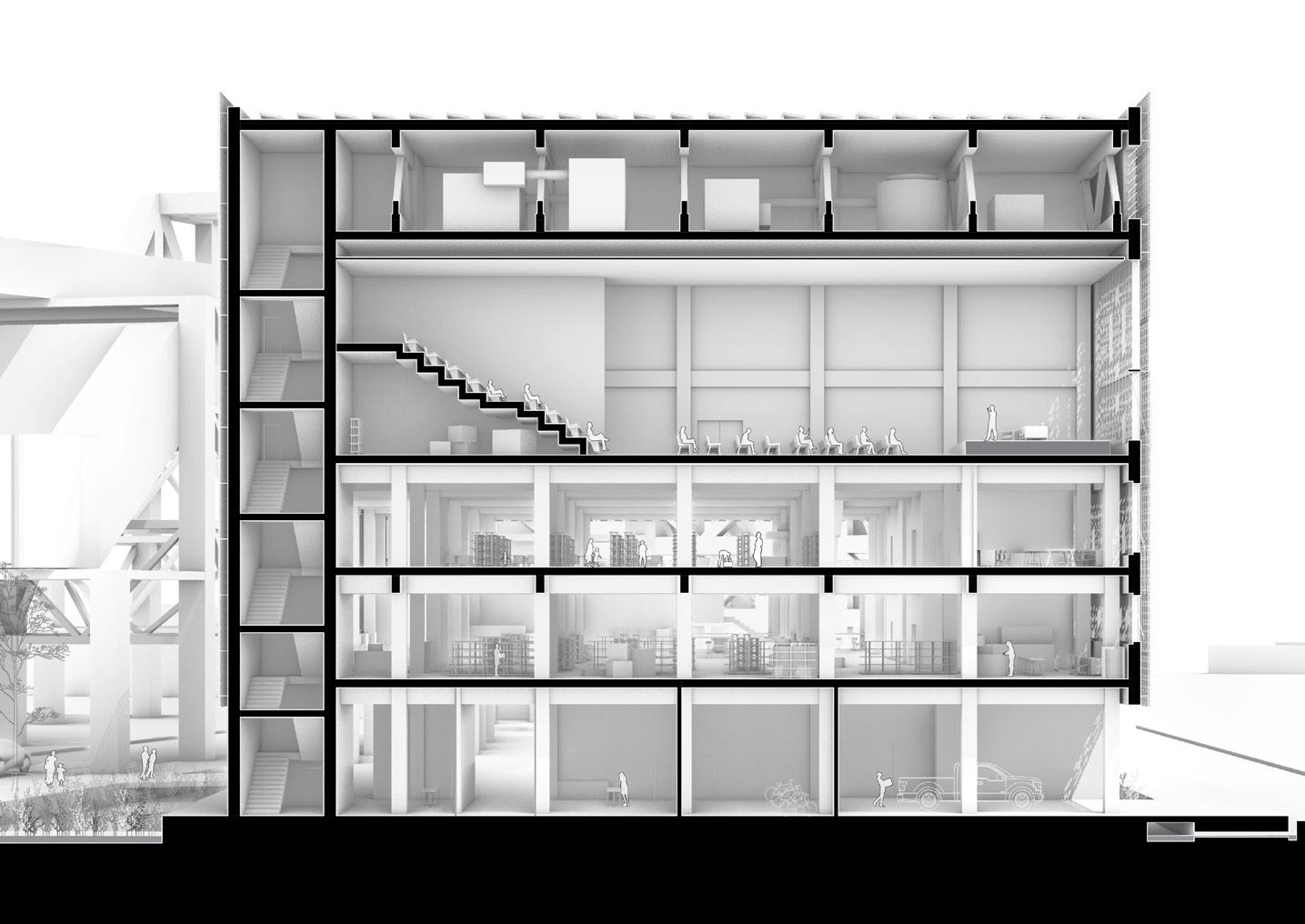
This layout was developed after calculating optimal beam spans and cross-sections, ensuring structural integrity while preserving generous floor heights. It also supports skylight integration at each floor, allowing natural light to reach deep into the interior.
Regular Structural Grid
A regular grid of columns establishes a clear structural order and supports an open, flexible layout. Its repetitive logic allows the building to adapt over time while reinforcing a modular spatial system.
Steel-Reinforced MEP Structure
Steel joists are used only at the MEP room to support heavier equipment loads and larger spans. This localized reinforcement distinguishes the service zone from the lighter structural system used throughout the rest of the building. Concrete Core The
and
and
It also provides lateral stability and anchors the
Cube Village
Project Type: Community Renewal
Focus: Community Activation|Adaptive Reuse|Space Typology
Tool: Rhino|Sketch Up|AutoCAD|Grasshopper|Enscape
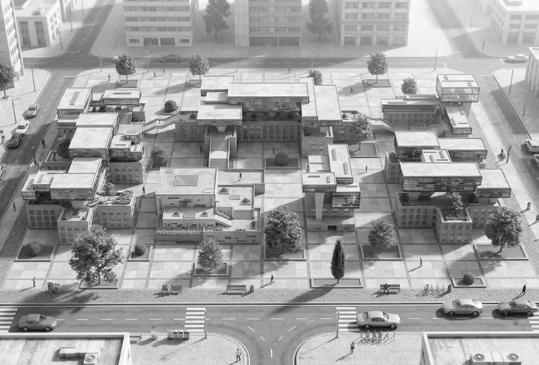
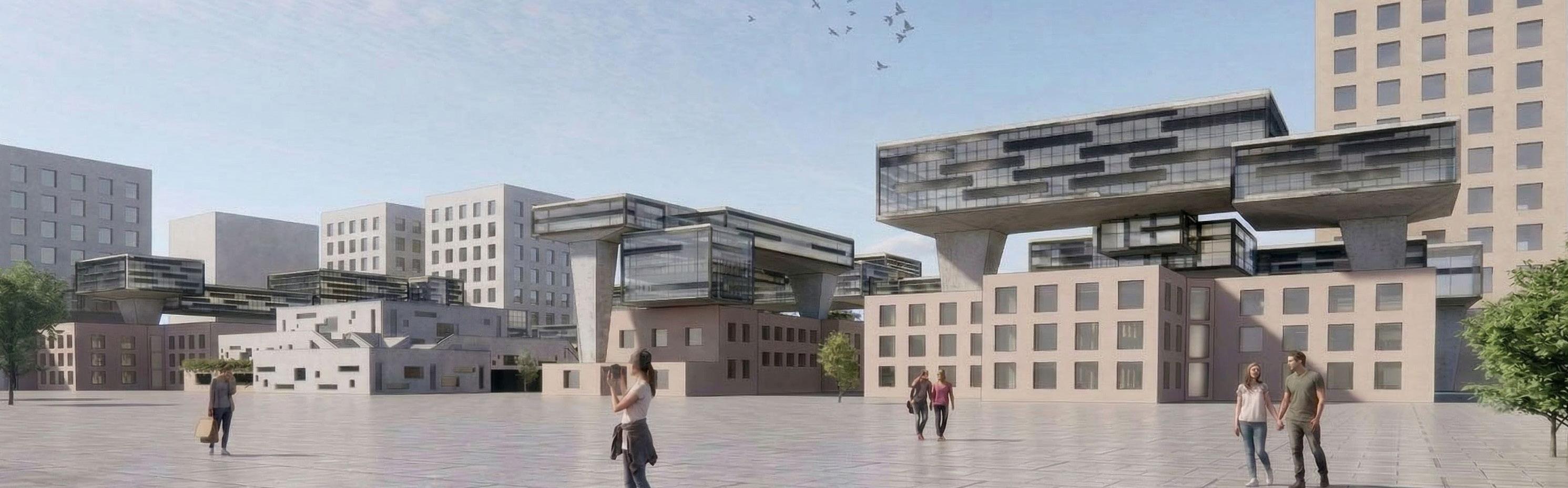
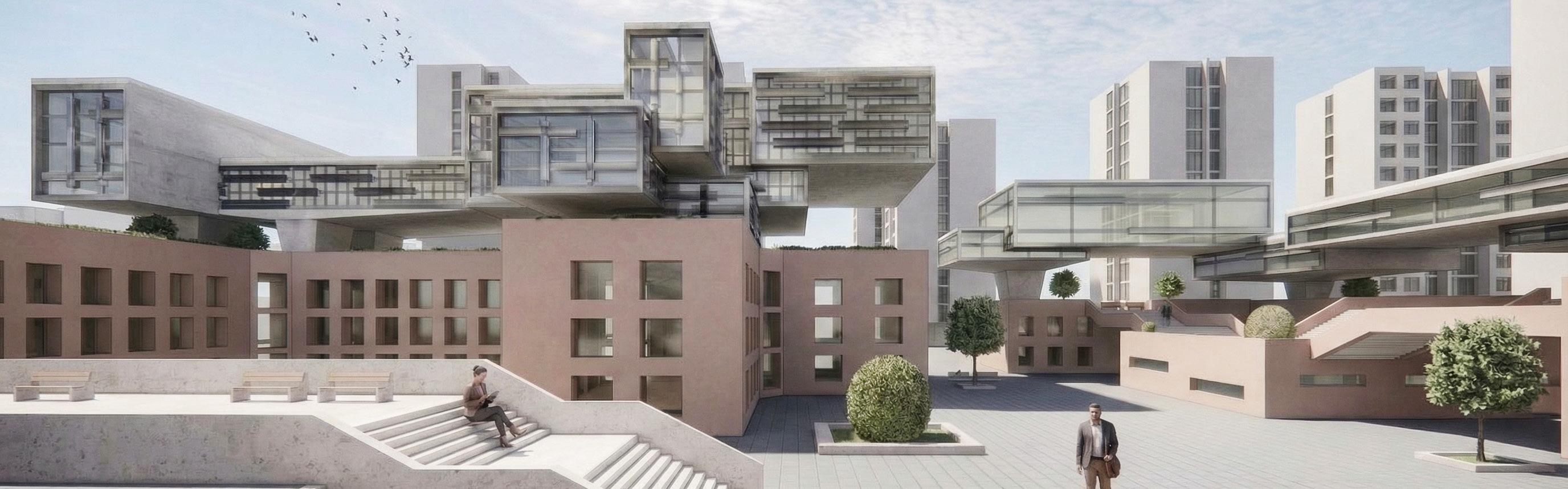
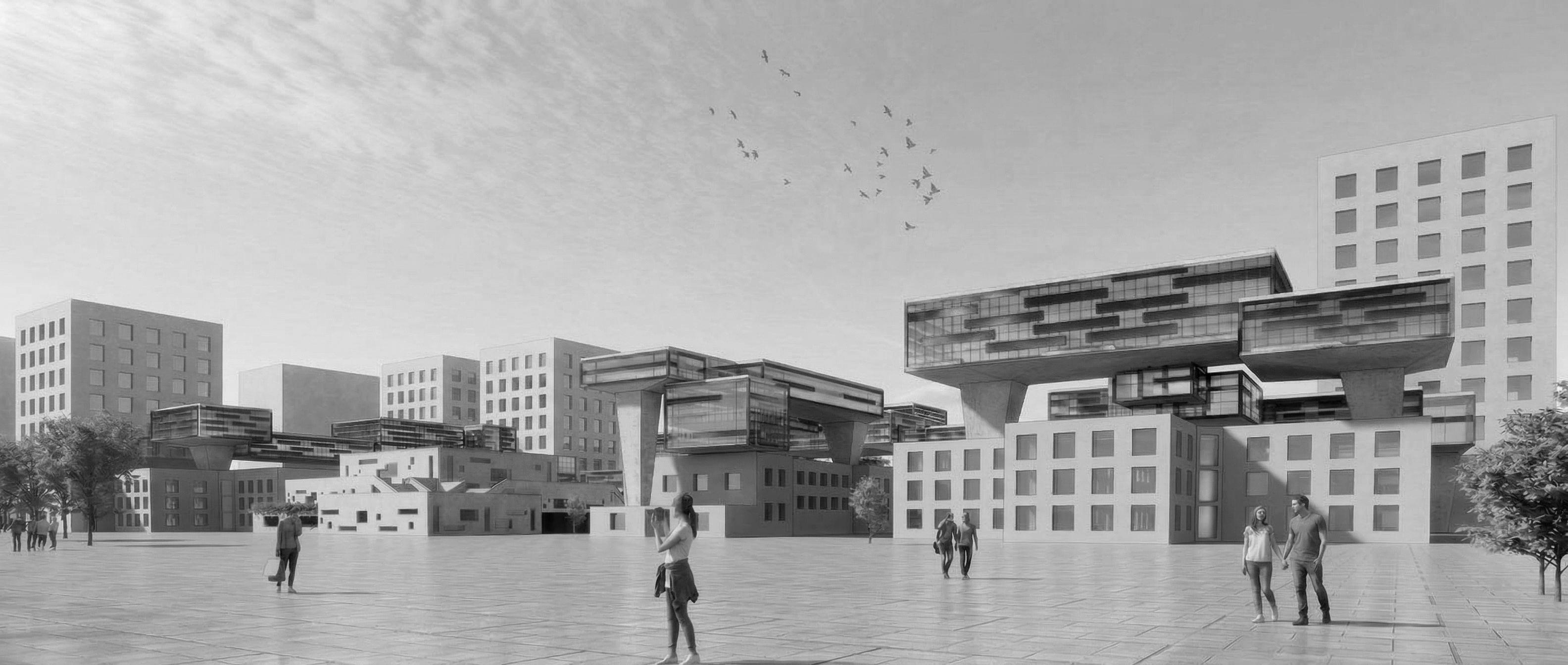
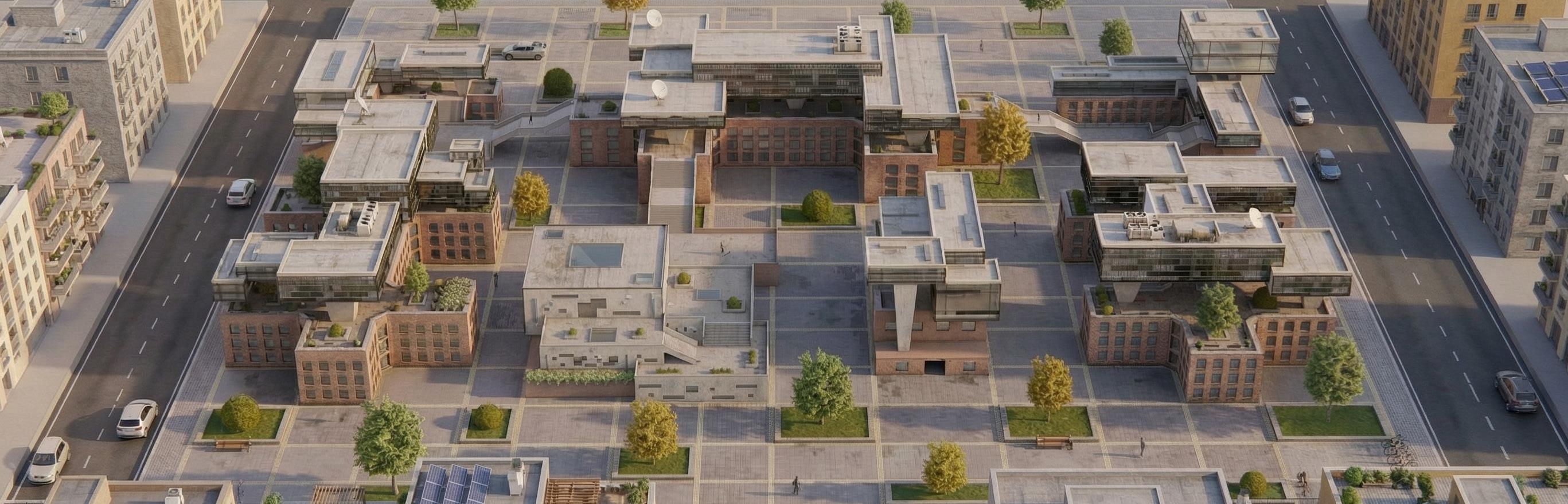
Regent Park, Toronto’s largest and oldest social housing community, has long been home to a diverse population while facing persistent challenges of crime and social fragmentation. Guided by the City’s vision for renewal, this project introduces lightweight, modular structures atop existing buildings, aiming to rejuvenate the neighborhood while respecting its architectural fabric. New mixed-use volumes activate the community with social and commercial opportunities, while open spaces and transitional zones foster interaction and public life. A structural support system integrates circulation and connectivity, enabling a flexible and adaptive model for modular urban infill and community regeneration.
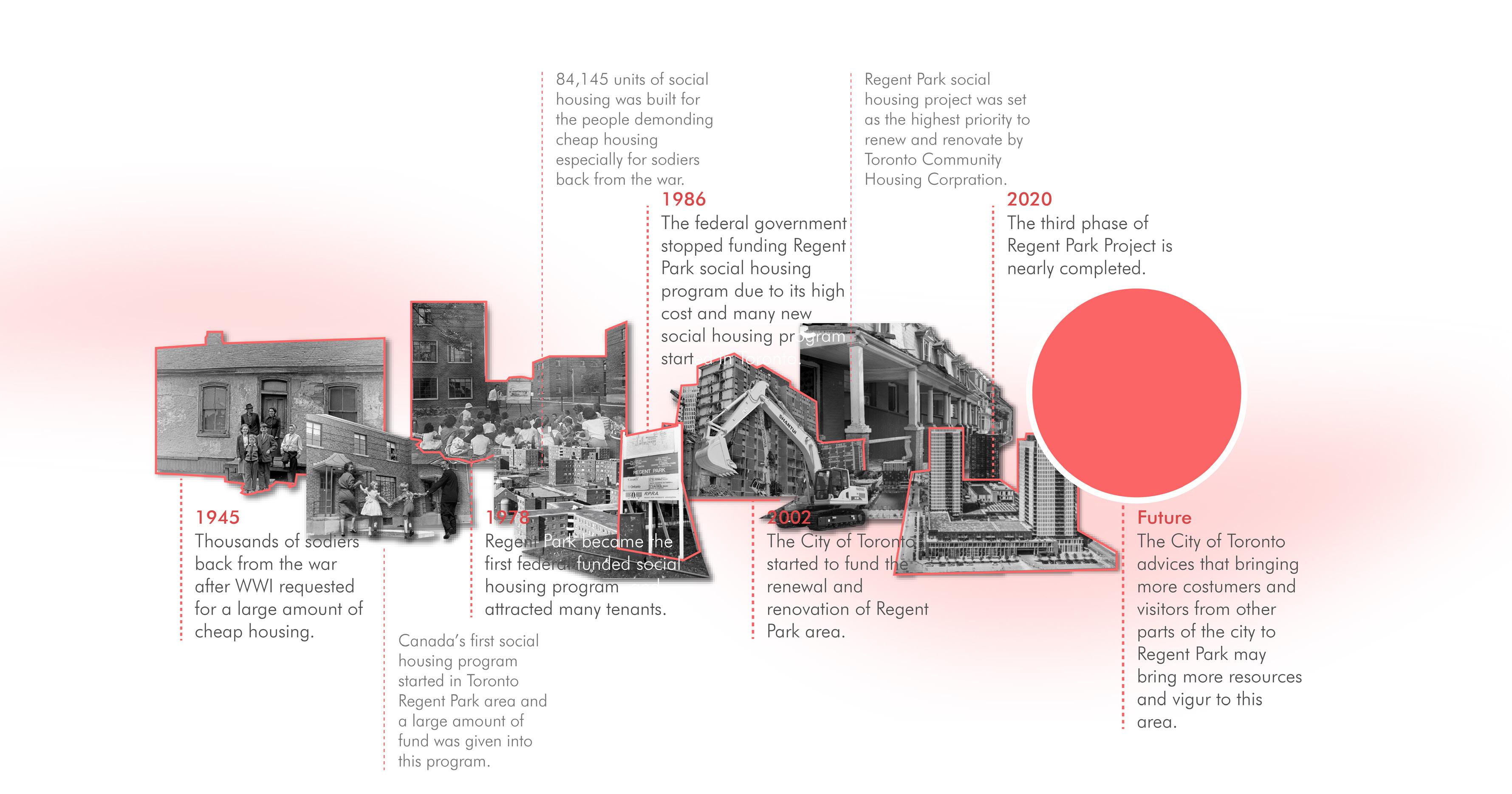
Located in downtown Toronto, Regent Park is the city’s oldest social housing community and has undergone decades of redevelopment to address its historical isolation and socio-economic challenges. The neighborhood is home to many children, seniors, and individuals living alone, with high rates of disability and social disconnection. These conditions highlight the need for flexible housing and shared spaces, guiding the project’s focus on inclusion, connectivity, and community-oriented design. Site analysis reveals an uneven distribution of services in Regent Park. While restaurants are common, healthcare facilities, gyms, and daycare spaces are scarce, despite high proportions of residents with disabilities, mental health needs, and a large youth population. Most amenities cluster along the southern edge, leaving the north under-served. In response, the project focuses on this area, introducing programs based on existing urban patterns. Commercial spaces are placed near transit hubs, while larger community facilities are located near parking areas to improve accessibility and community well-being.
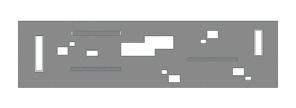
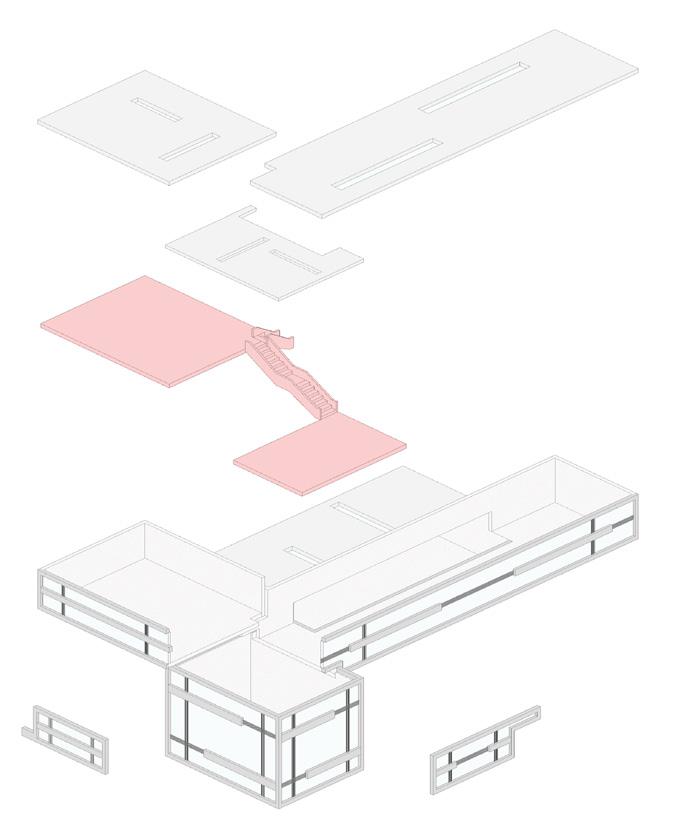
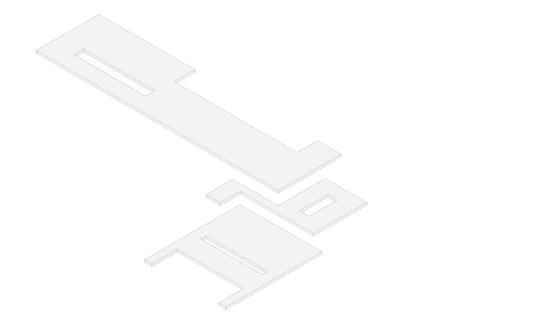
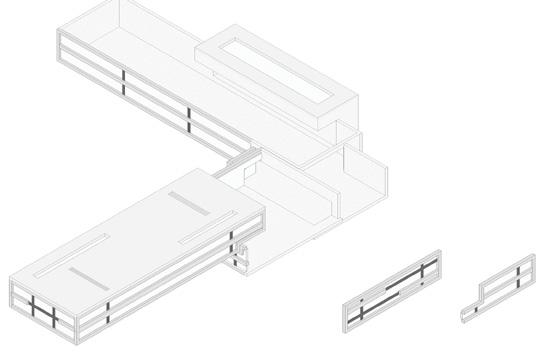
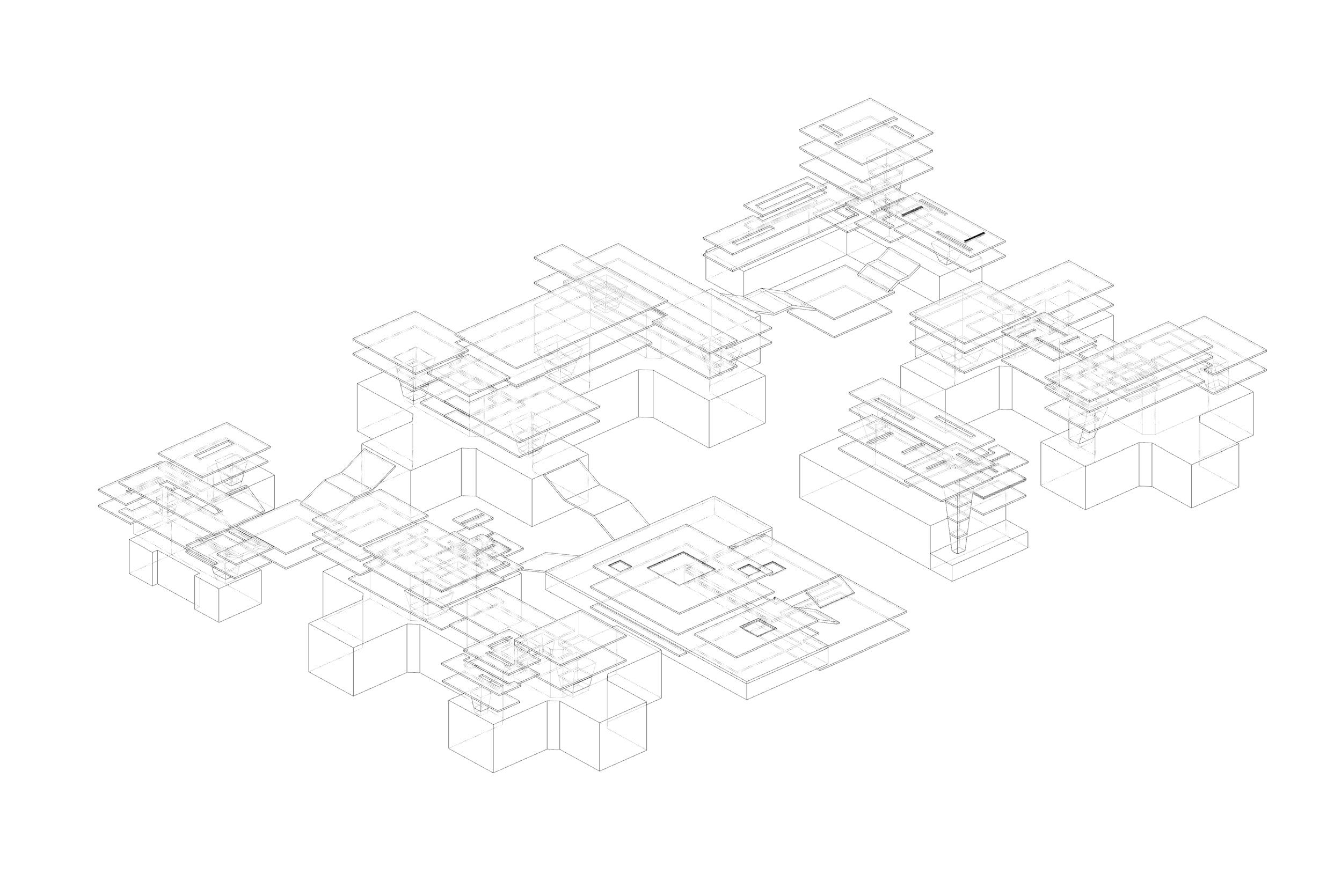
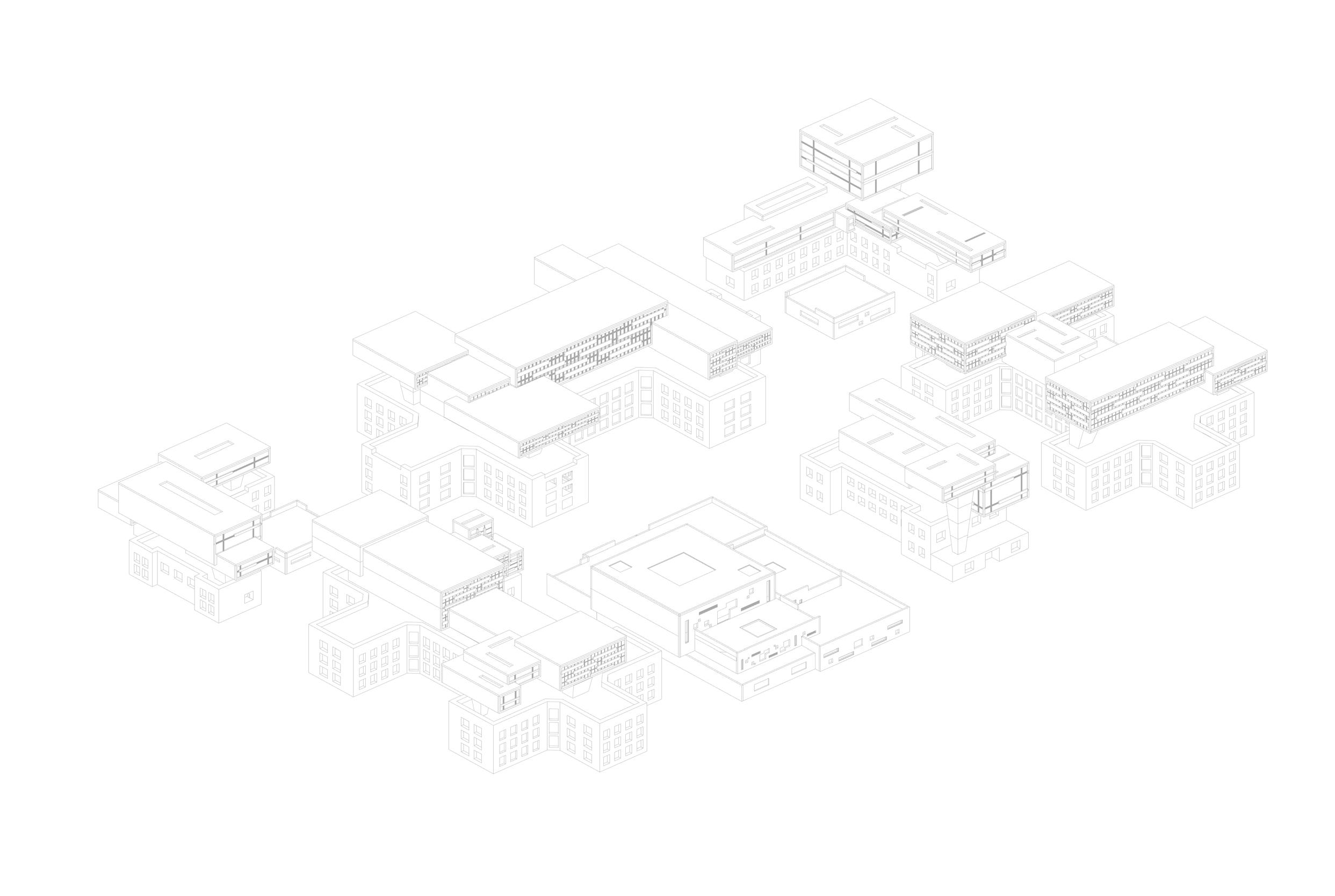
Circulation is organized for four user groups: local residents, non-local customers, visitors, and office staff. Each follows a distinct path to reduce conflict and improve efficiency. Nonlocal users remain near the perimeter, where commercial programs are located close to bus stops.
Local residents have direct access to private gardens and shared amenities. Offices are positioned near the transport hub, allowing staff to reach workspaces quickly without disrupting other users.
Civic Sail
Project Type: High-Rise Architecture|Civic Landmark
Focus: Mixed-Use Vertical Community|Programmatic Integration|Democratic Space|Cultrual Narrative
Tool: Rhino|AutoCAD|Grasshopper|Enscape|Twinmotion
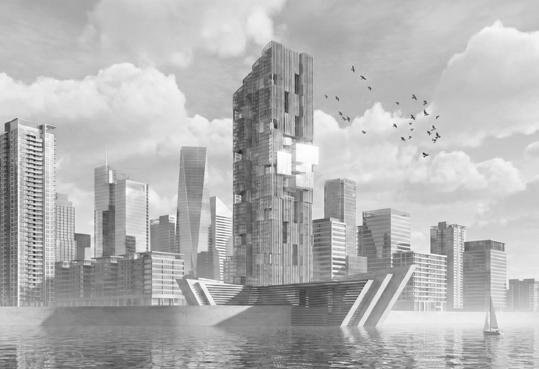
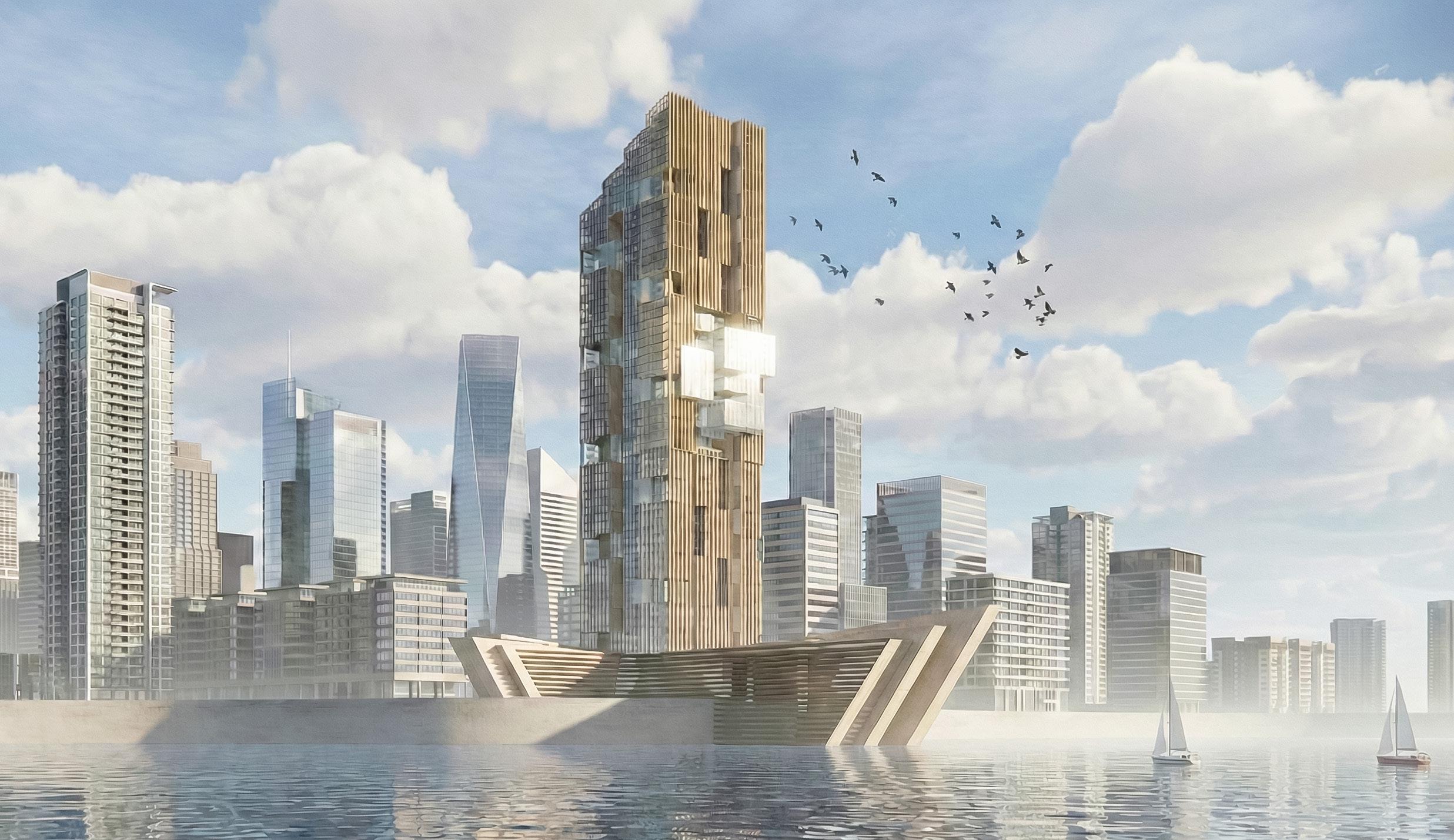
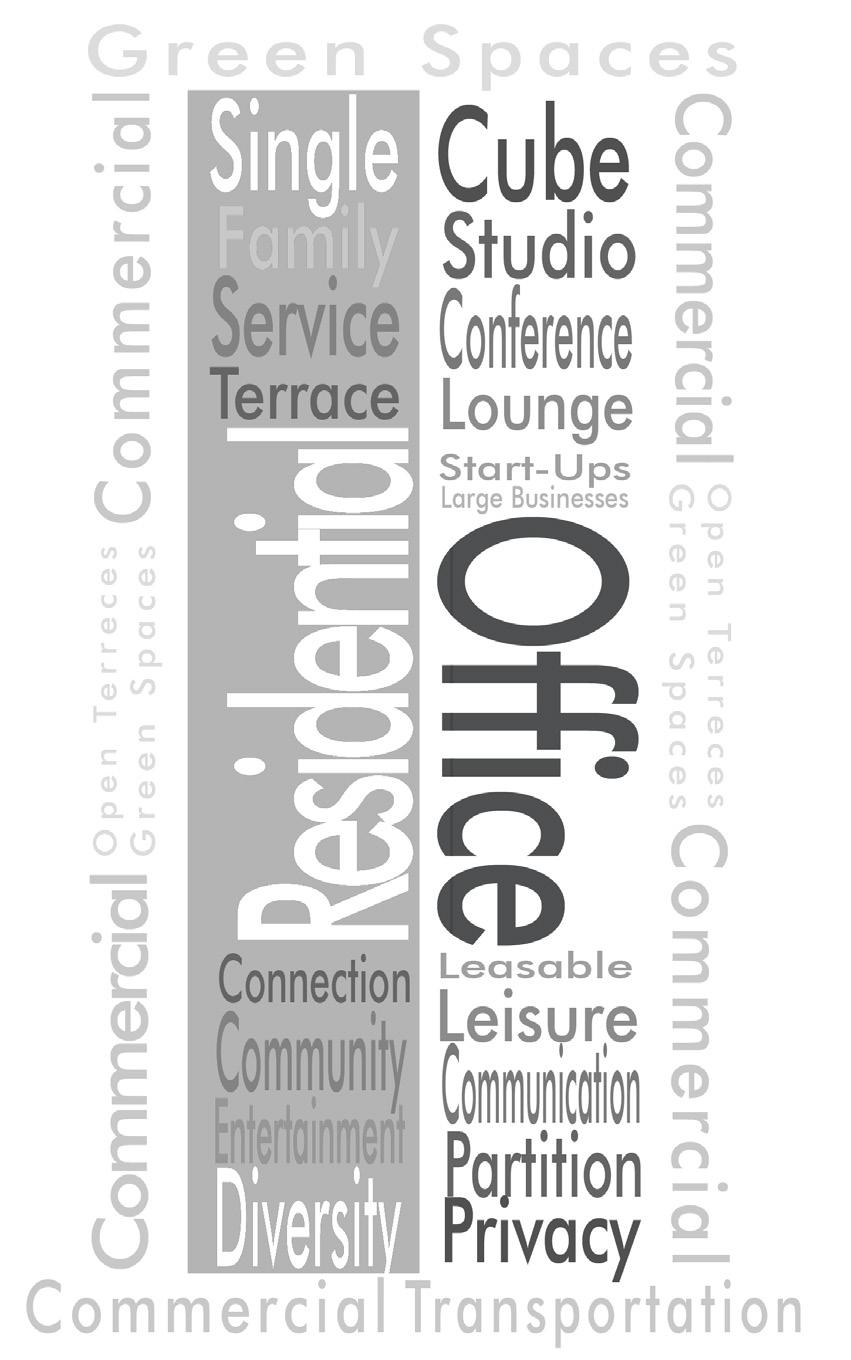
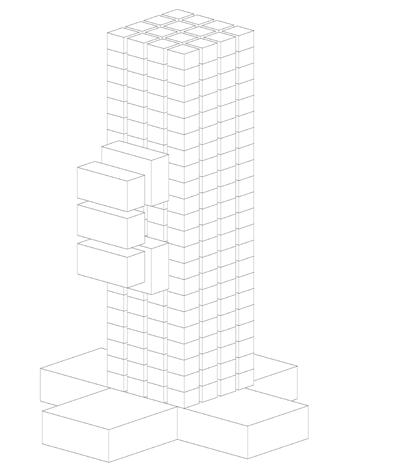
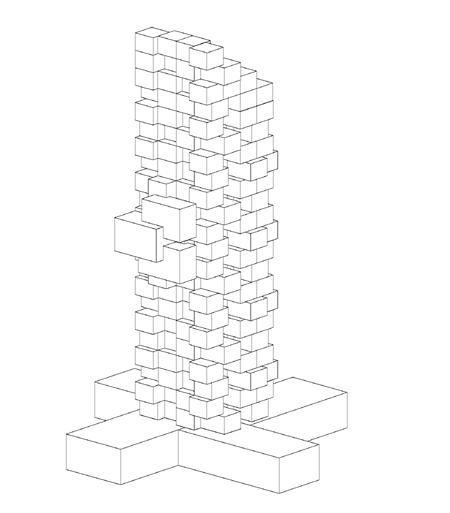
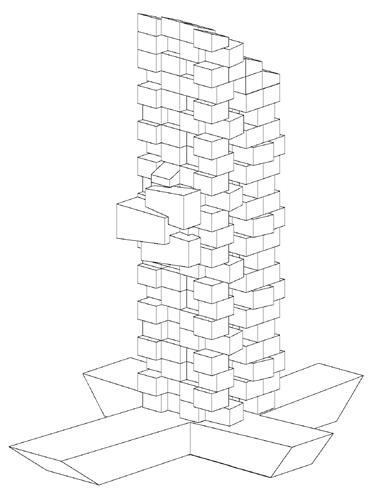
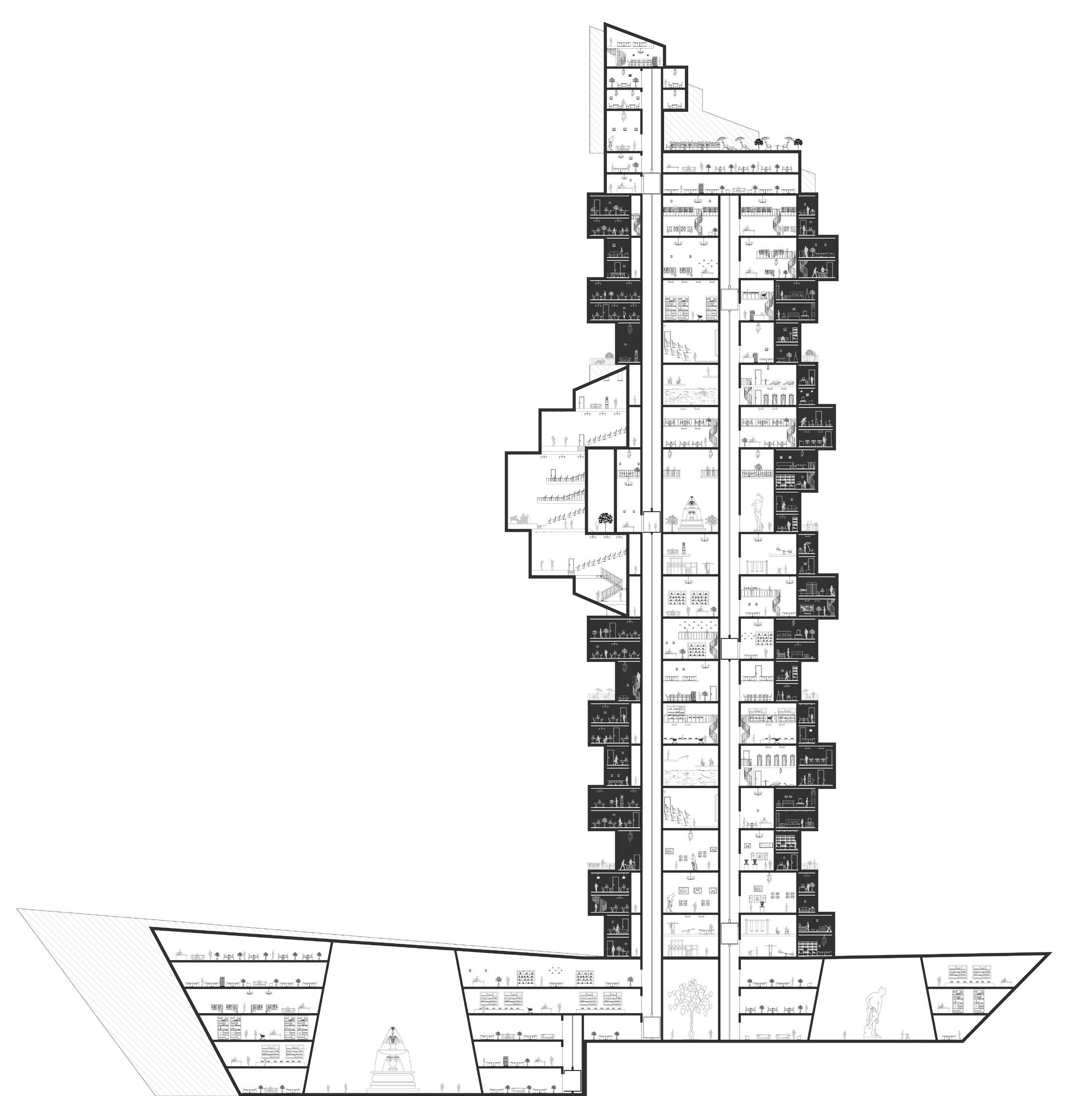
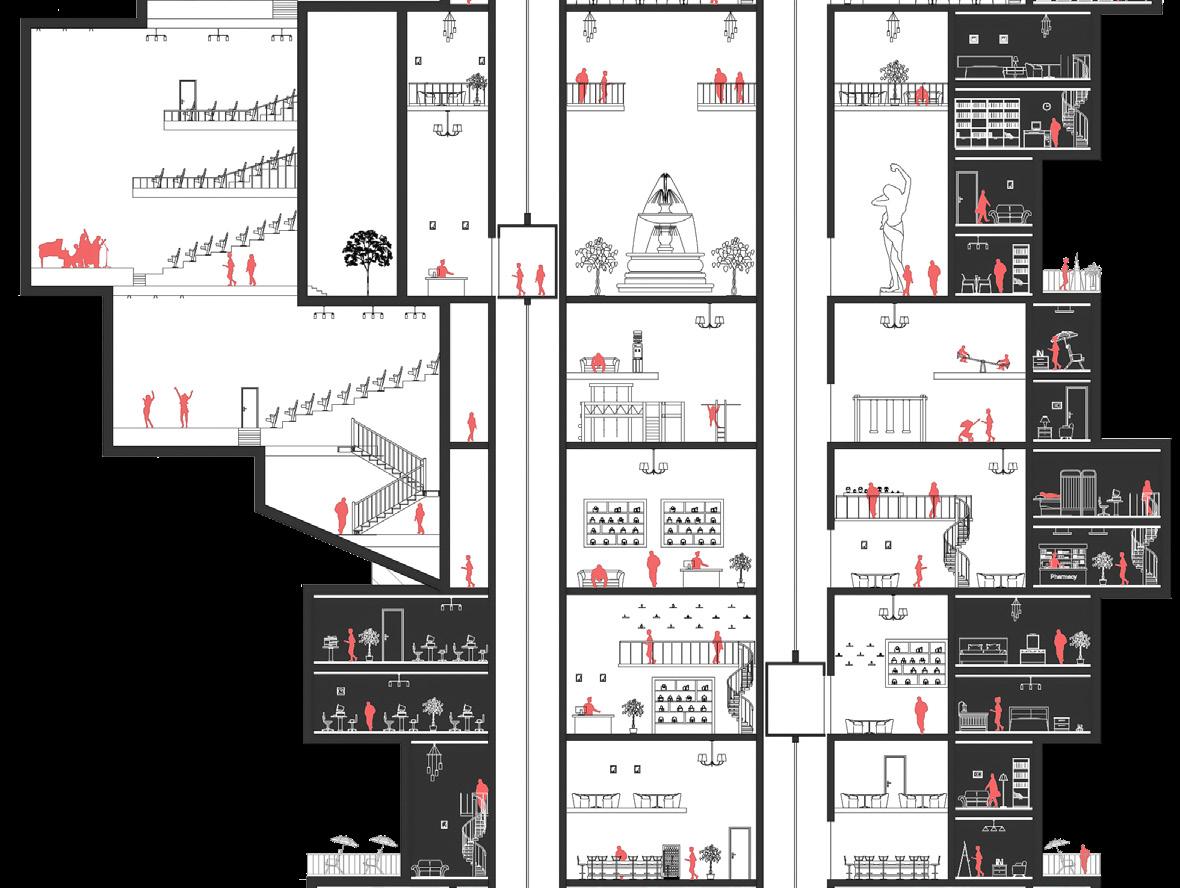
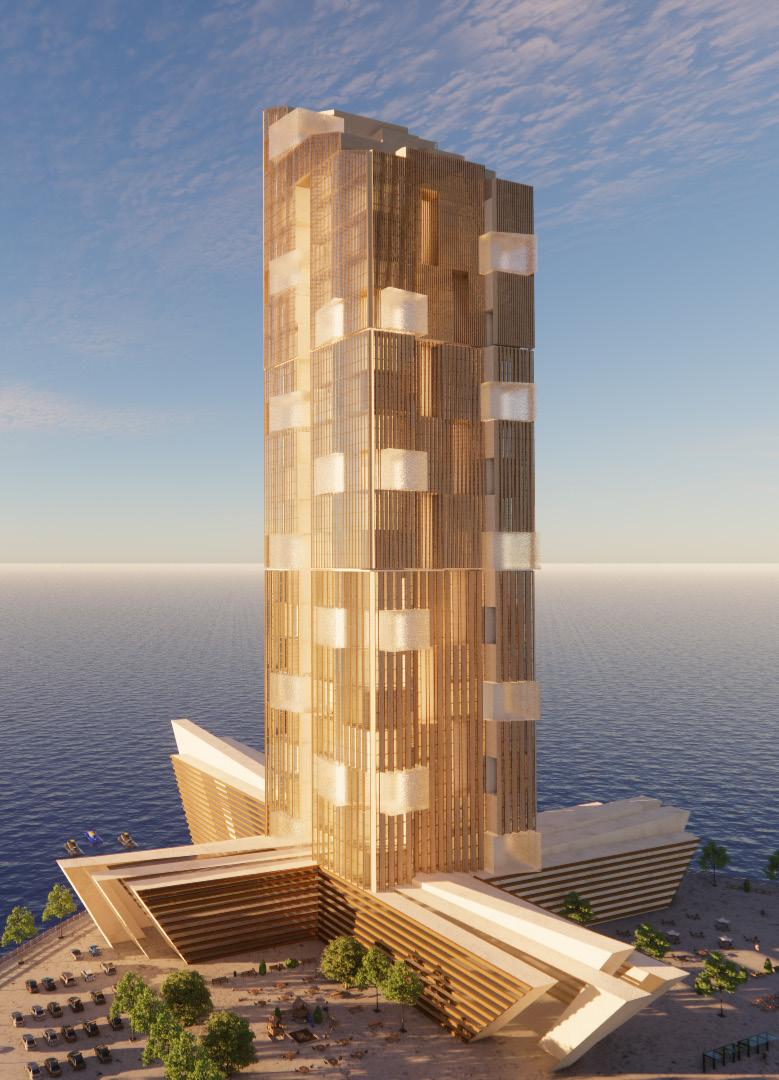
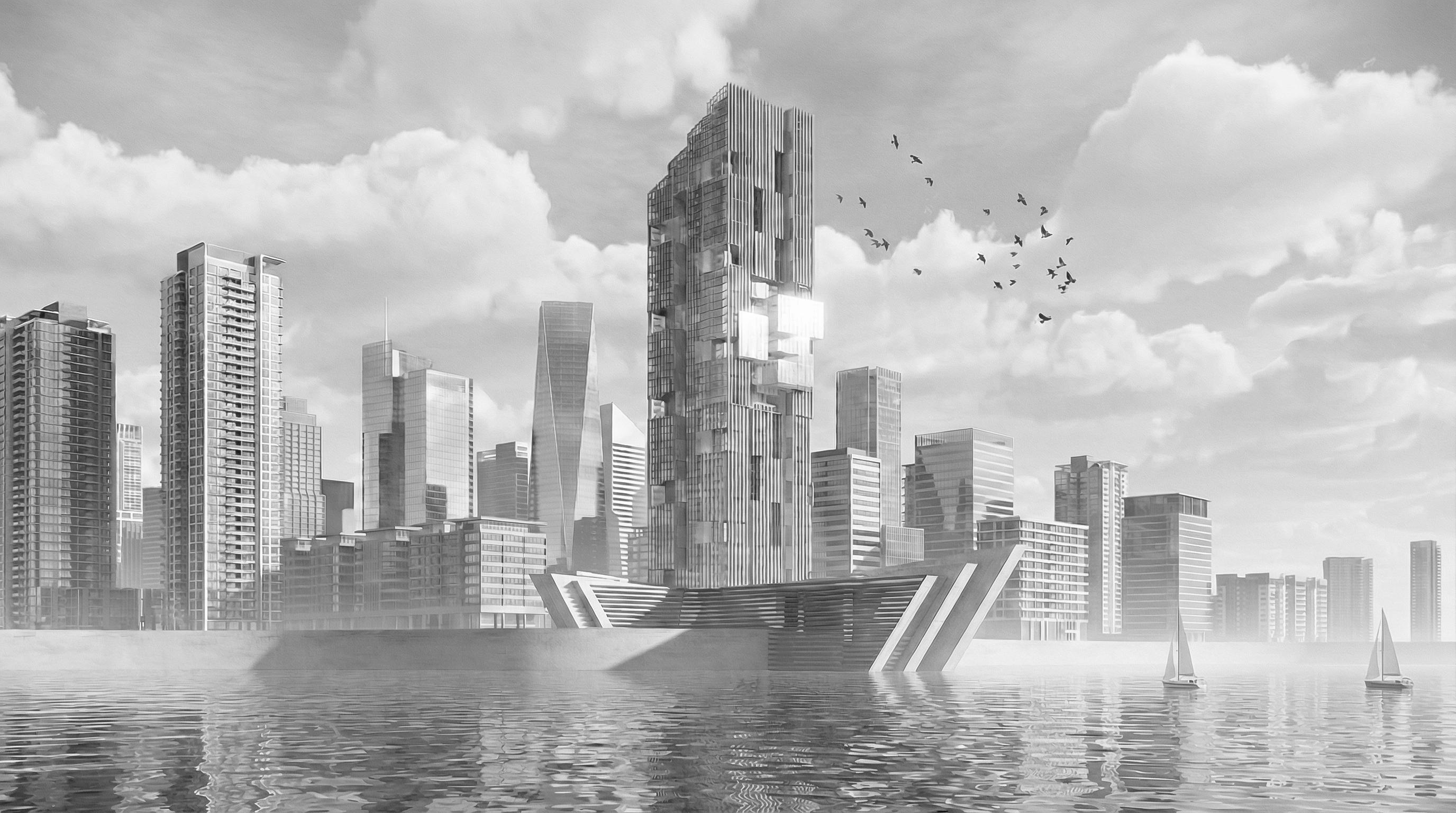
The Civic Sail is a high-rise design for Qingdao’s waterfront, conceived as a new civic landmark that reclaims the city’s skyline from colonial architectural symbols. Historically, the city’s most prominent landmark was St. Michael’s Cathedral, a relic of German colonial occupation. This project proposes a contemporary counterpoint, a dynamic tower shaped like a sail, celebrating Qingdao’s maritime culture while adding a new civic identity. The design compresses diverse urban functions within a single vertical structure, challenging traditional skyscraper hierarchies. Instead of vertically segregated programs, the tower distributes functions horizontally and spatially across its structure, promoting accessibility and public engagement throughout. This strategy transforms the high-rise into a truly democratic space where citizens can engage with the building at every level.
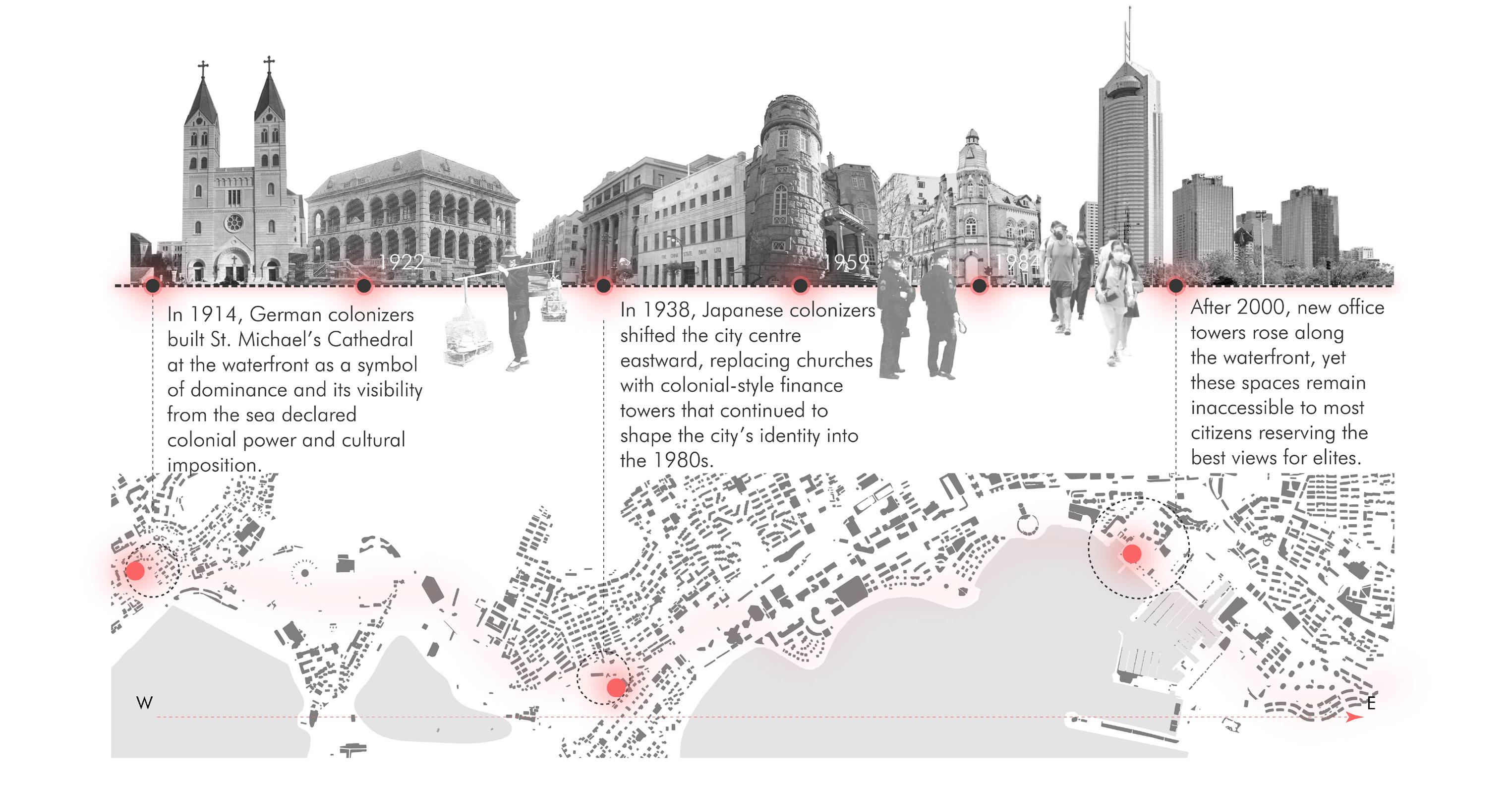
Qingdao is a major tourist destination in China, yet its most iconic landmark remains the German-built cathedral, a reminder of how the city’s image is still shaped by its colonial past. This project proposes a new civic landmark: an architecture of democracy that challenges colonial spatial dominance and eclaims public identity through shared space.
FUTUREGREENWAY SUBWAYSTATION
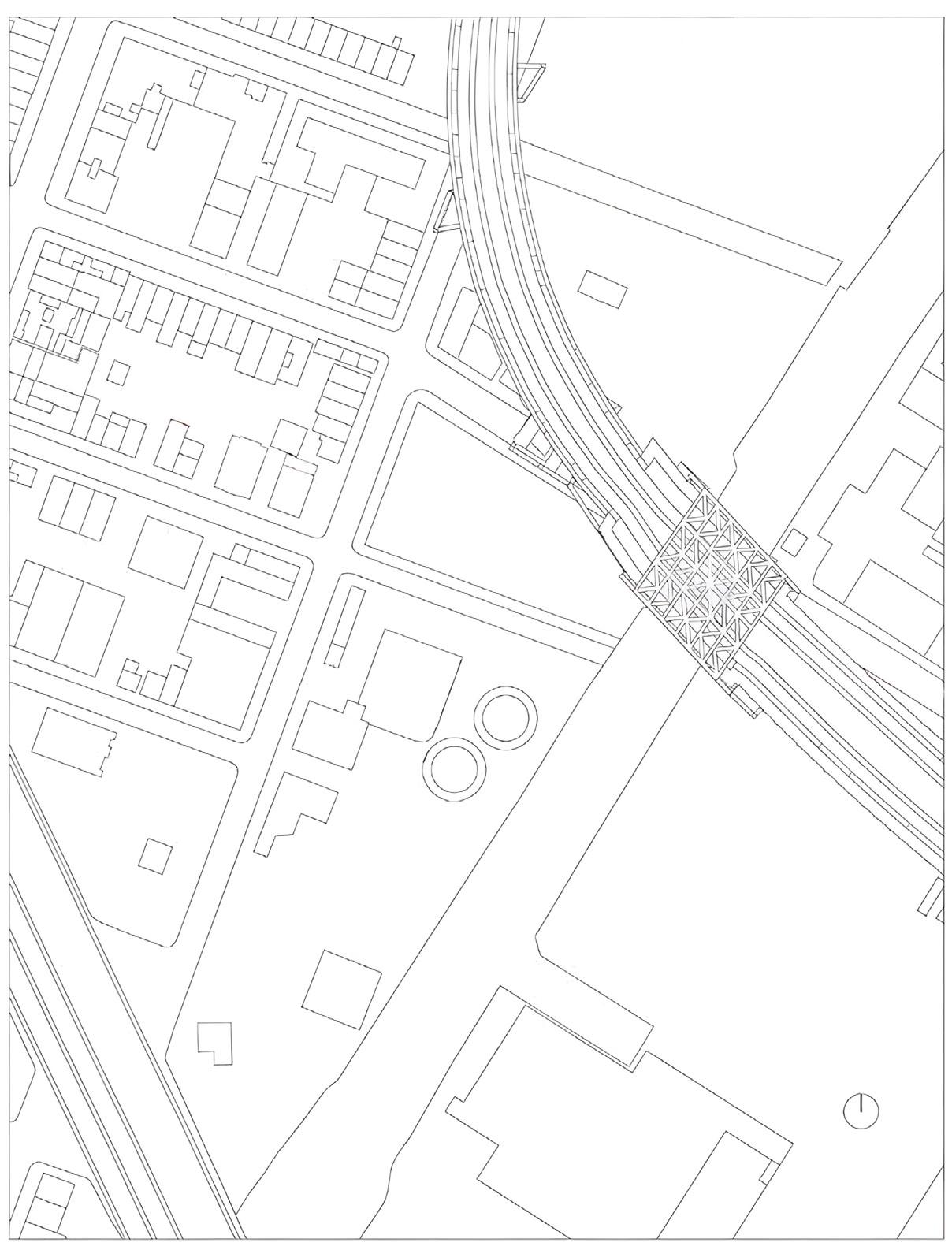
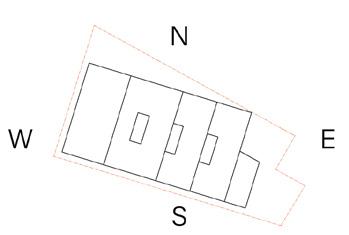
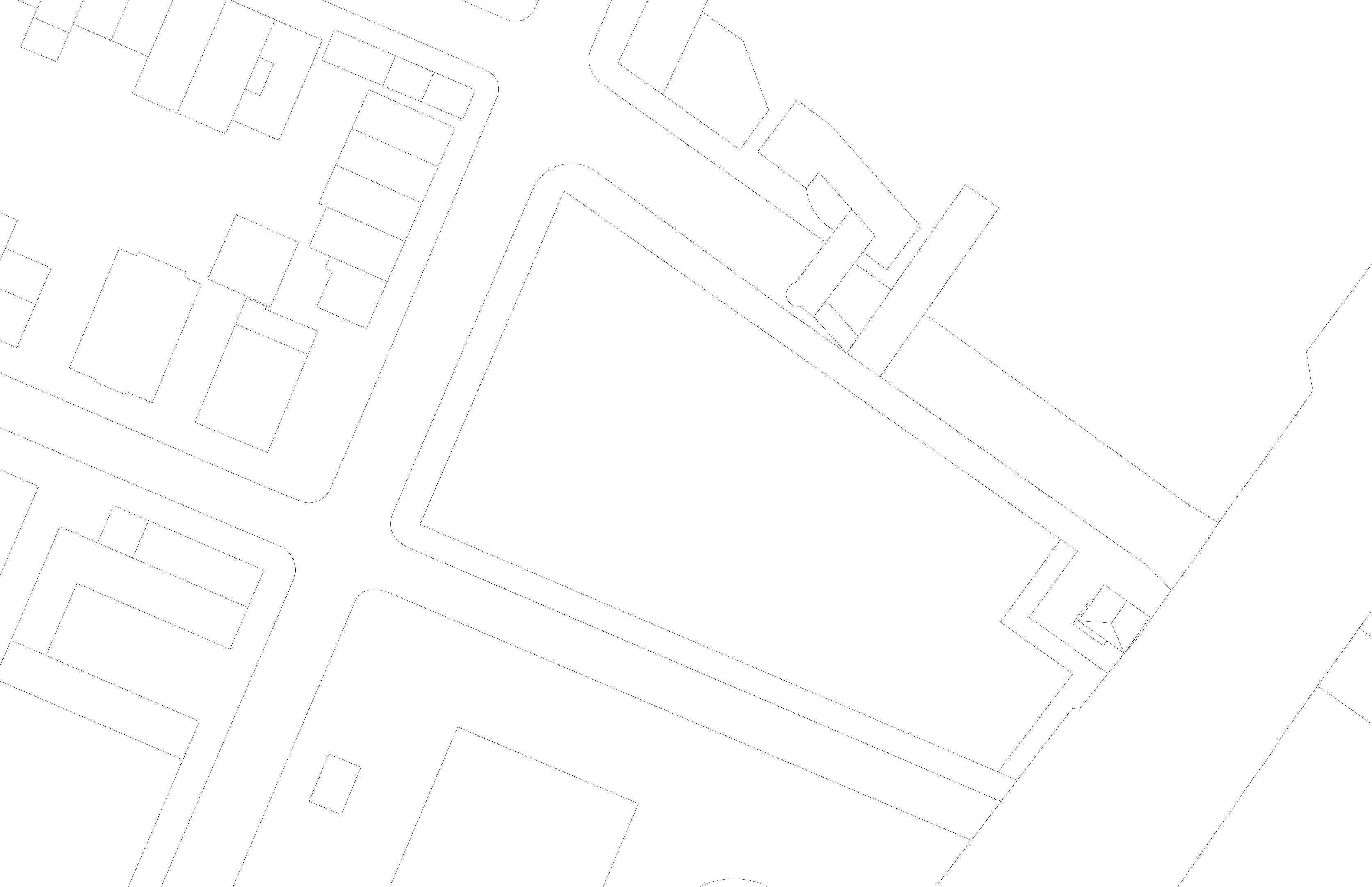
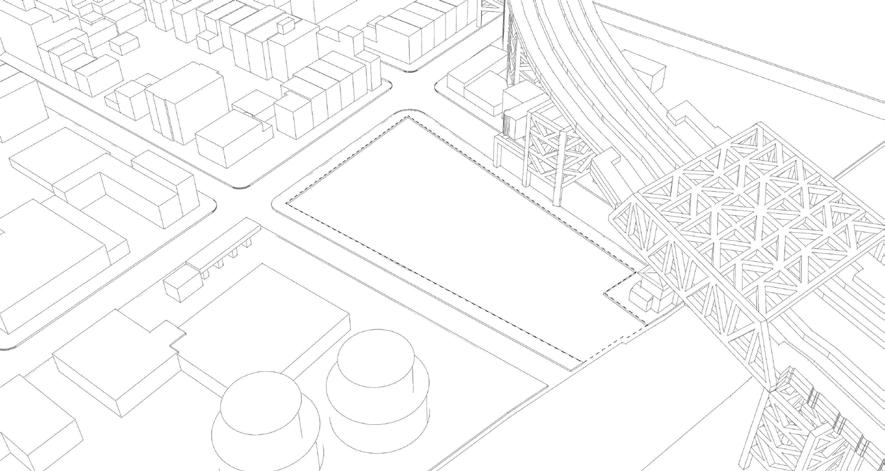
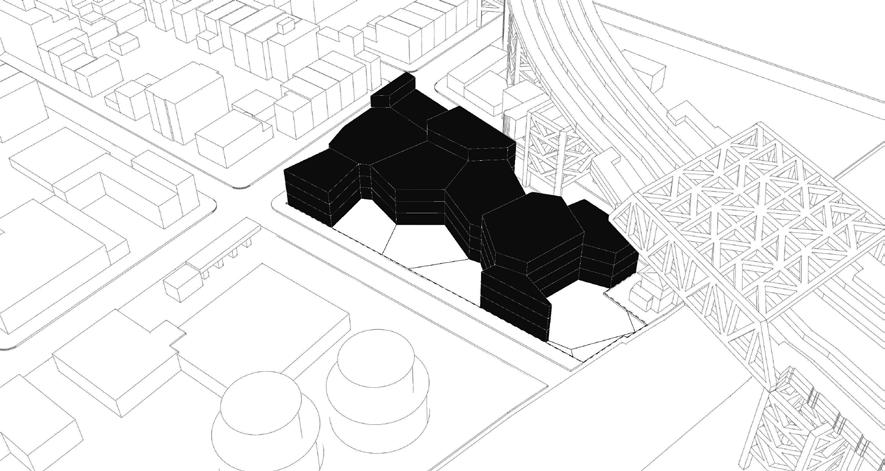
The site sits along the Gowanus Canal in Brooklyn, surrounded by residential areas, light industry, a future greenway, and a subway station, attracting diverse users from families to artists and visitors.
To address these varied needs, the project applies a multiobjective optimization approach. Stakeholder analysis identified three key groups - families with children, local artists, and social visitors, whose spatial and functional preferences informed the design goals and key spatial decisions.
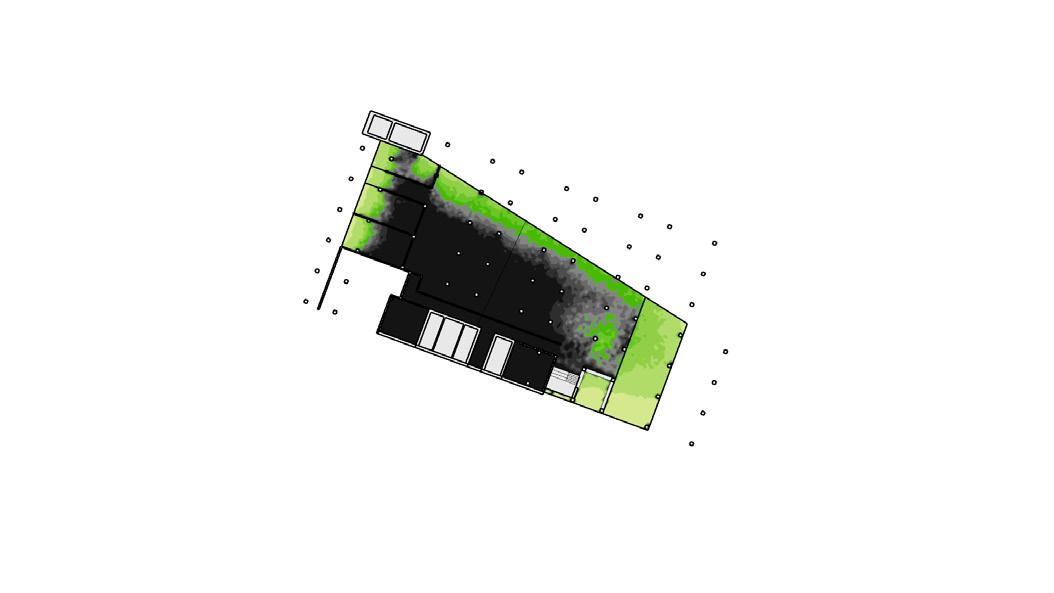
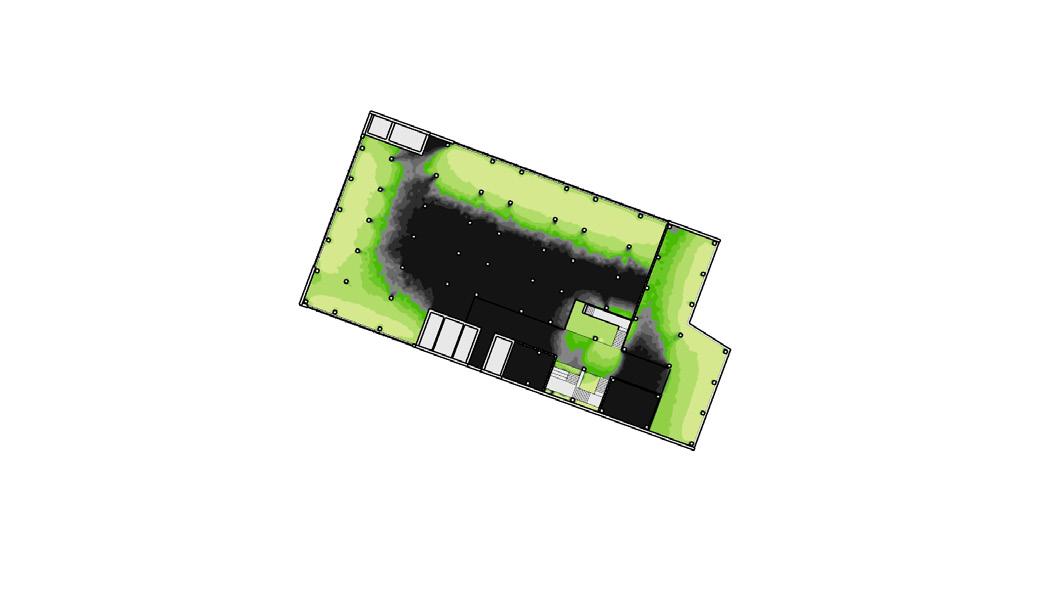
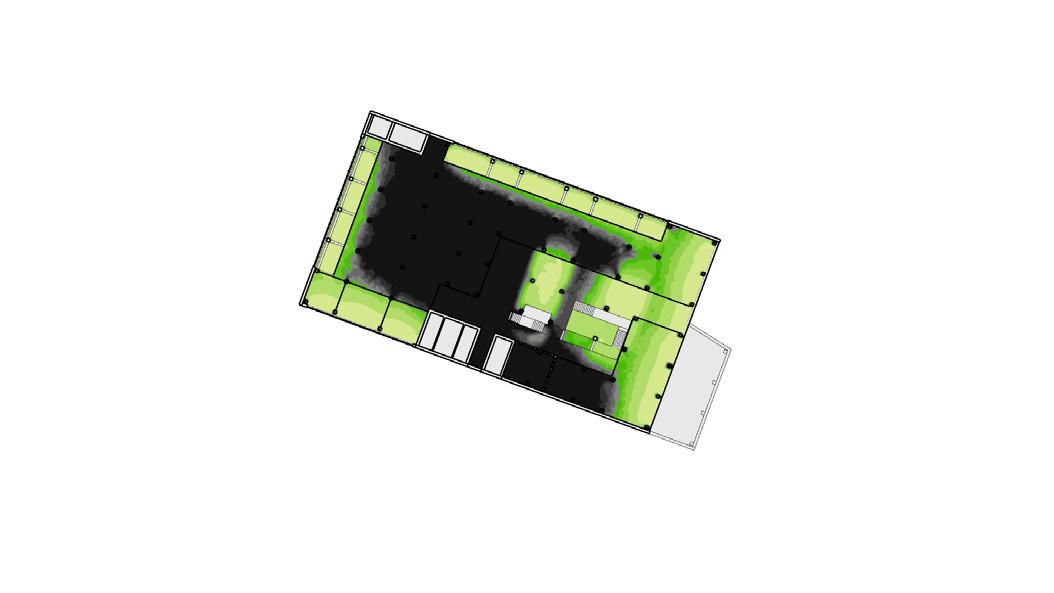
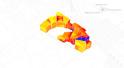
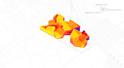
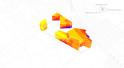
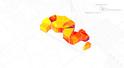
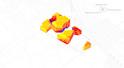
To address stakeholder needs, three goals were defined: maximizing floor area, increasing sunlight exposure, and enhancing spatial diversity. These were translated into measurable parameters - usable floor area, sunlight duration, and perimeter complexity - and embedded into the computational workflow.
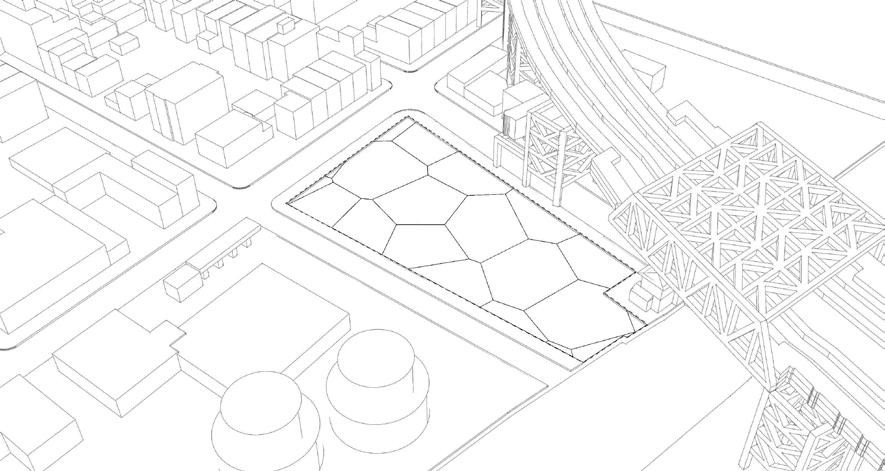
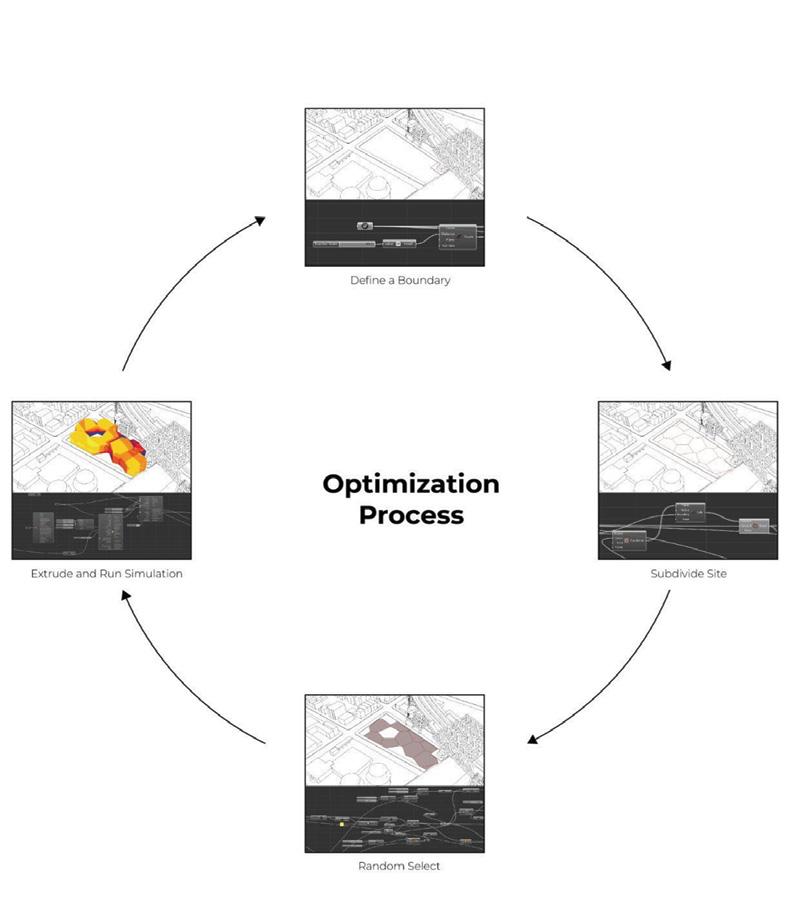
Using Grasshopper, the site is subdivided into parametric cells to generate multiple building volumes. Each iteration is evaluated through simulations, including Ladybug for environmental analysis. Results are then processed by the optimization tool Discover, which identifies high-performing solutions through multi-objective evaluation. Iterations evolve across generations, using top results to refine subsequent designs.
Over
options were generated across 21
with
and
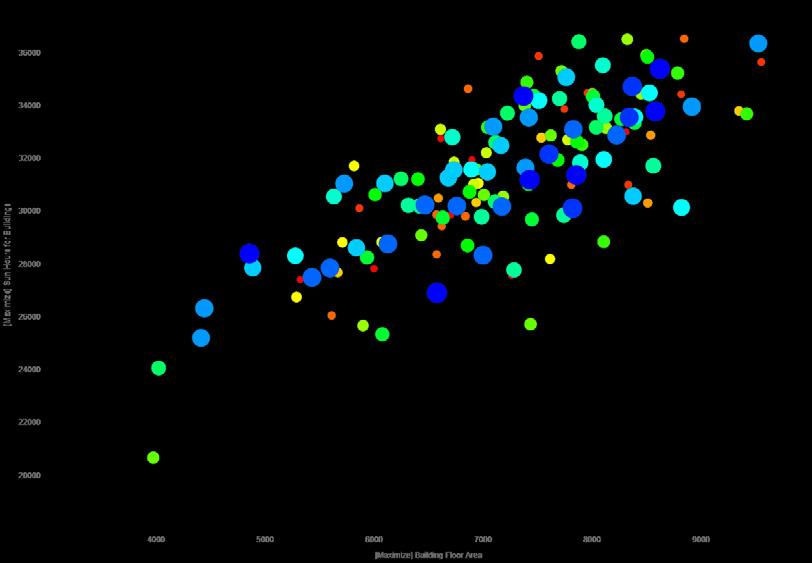
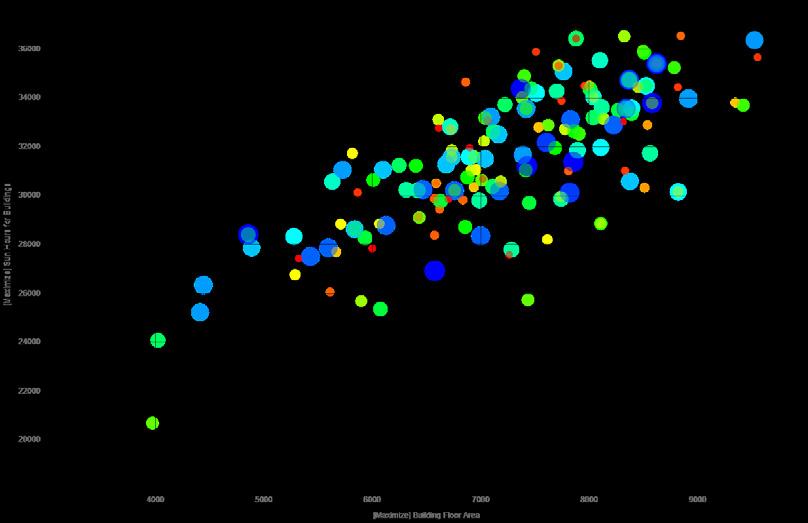
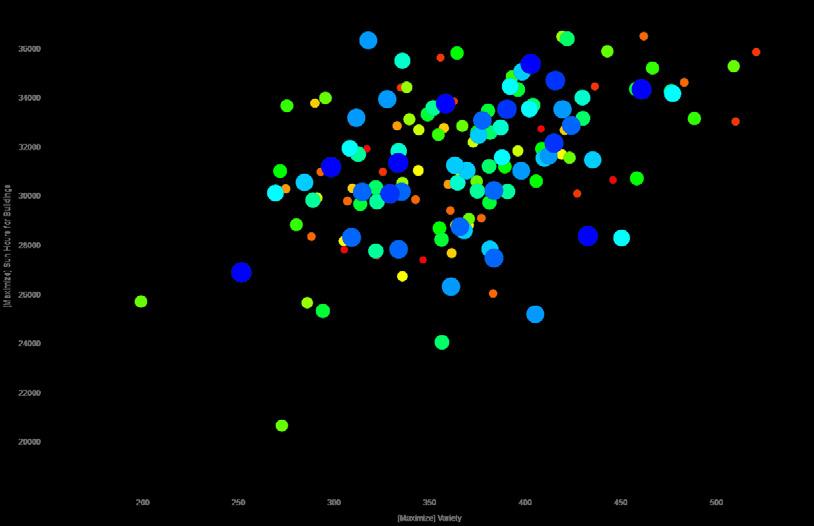
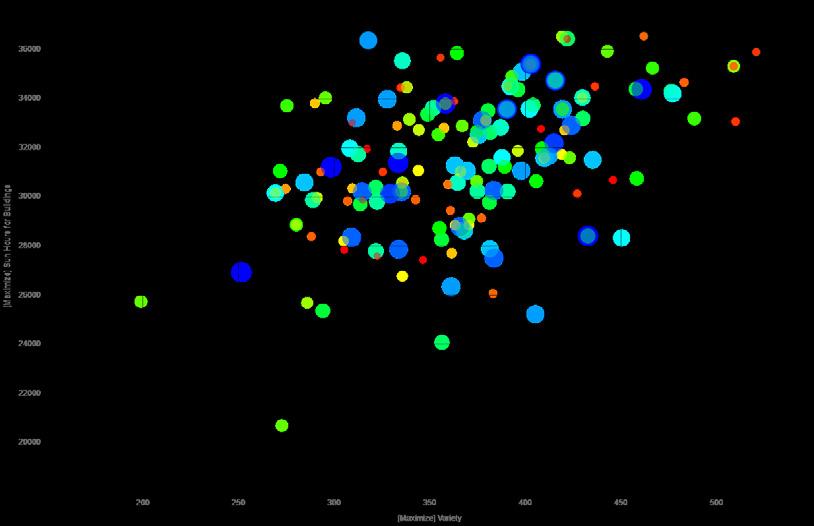
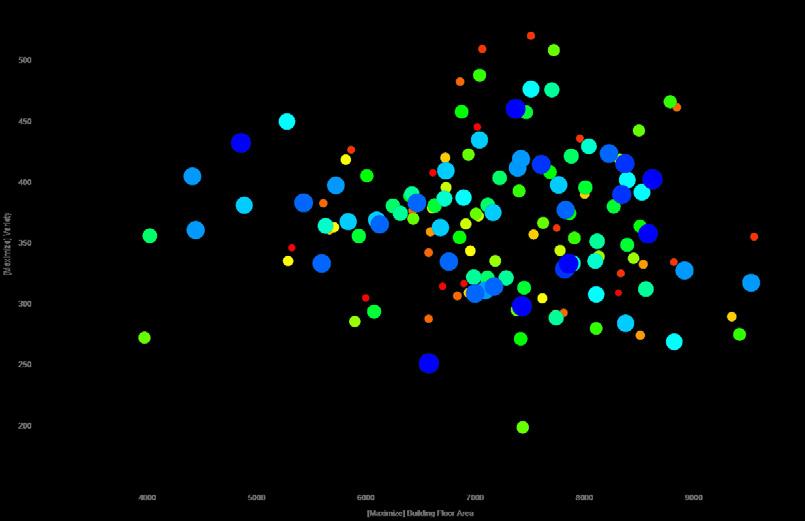
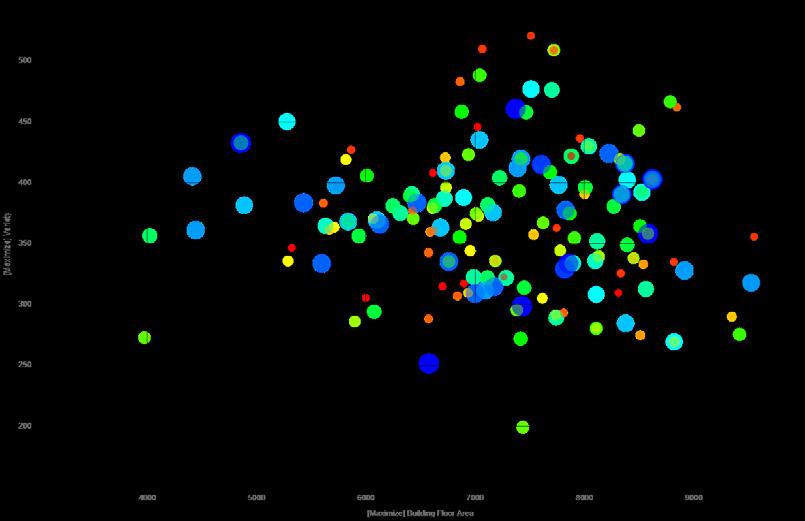
rate. Scatter plots compare performance across three goals: floor area, sunlight hours, and spatial diversity.
Each graph maps different metric combinations, revealing trade-offs between design options. As generations evolve, results cluster around stronger solutions, showing how the optimization process progressively identifies higherperforming outcomes based on spatial quality and environmental performance.
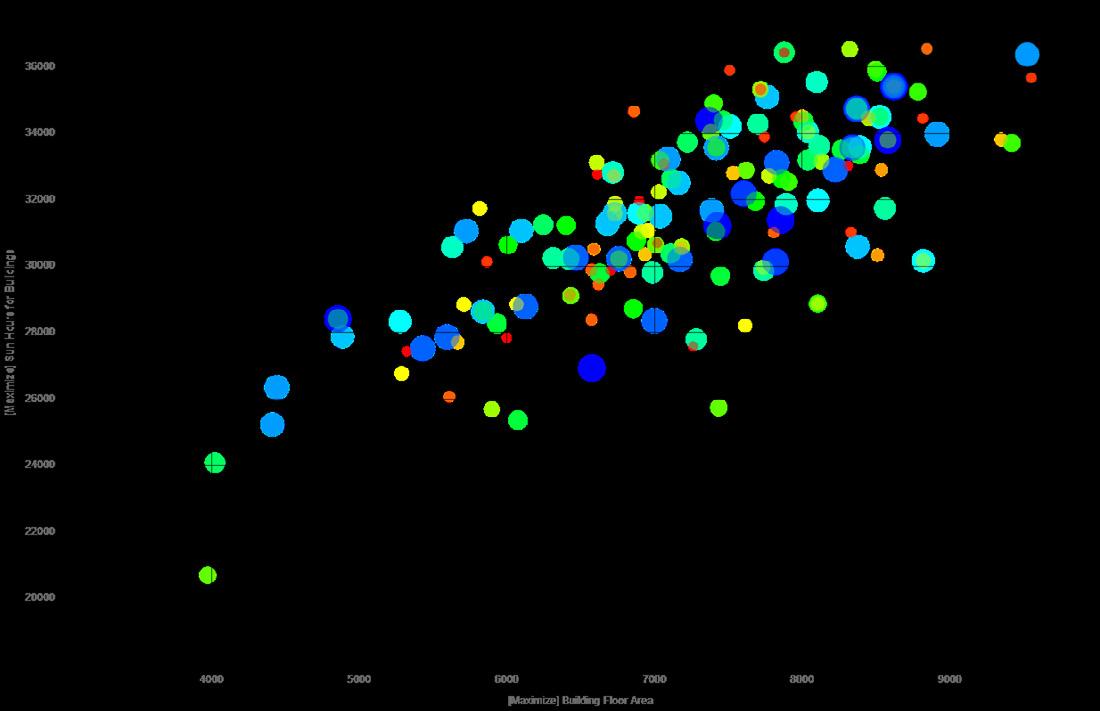
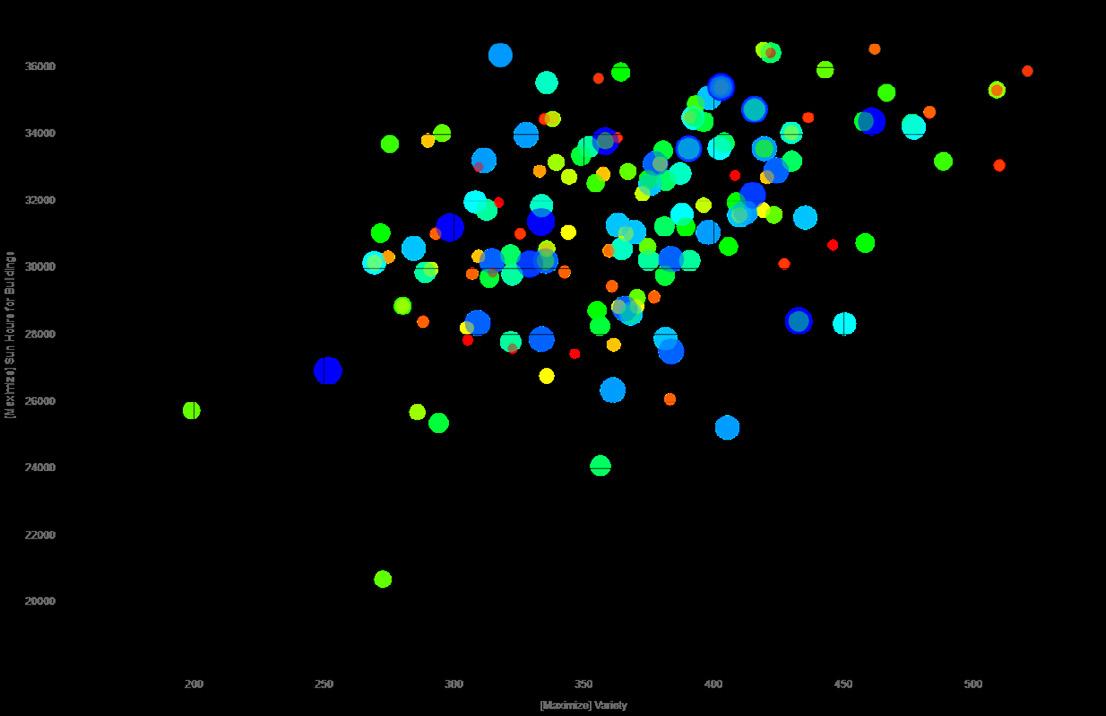
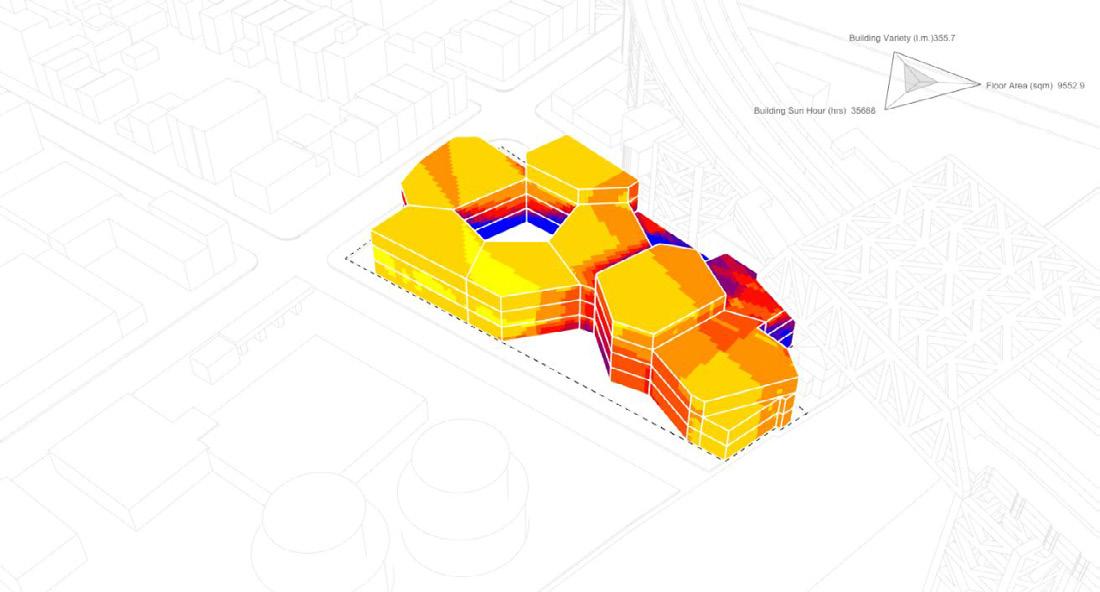
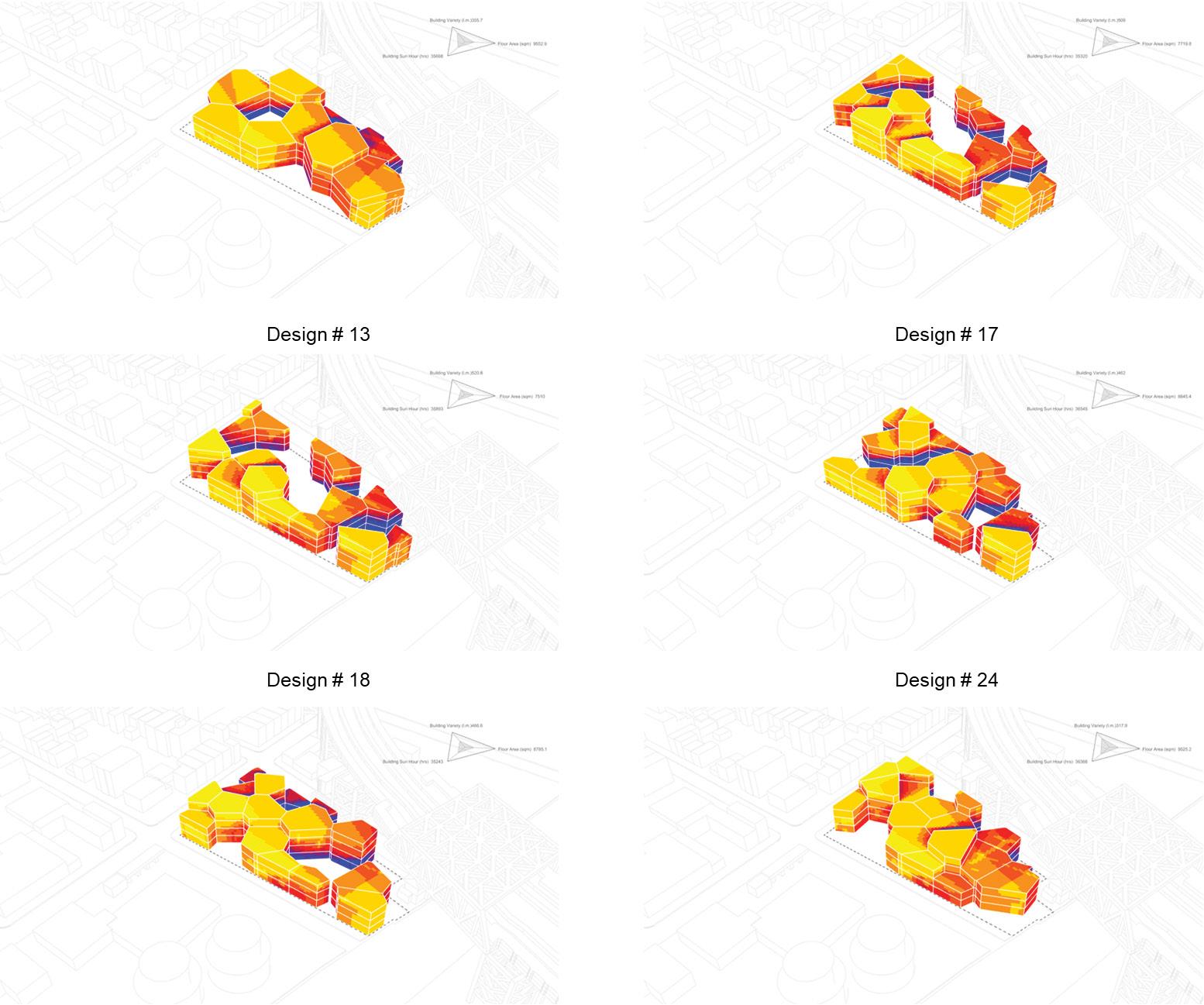
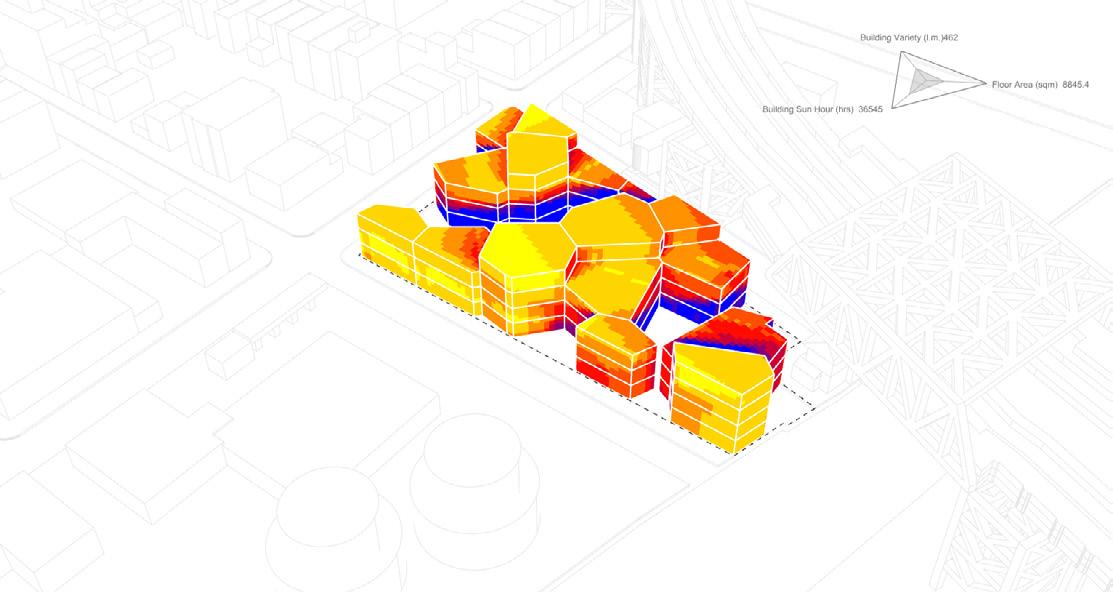
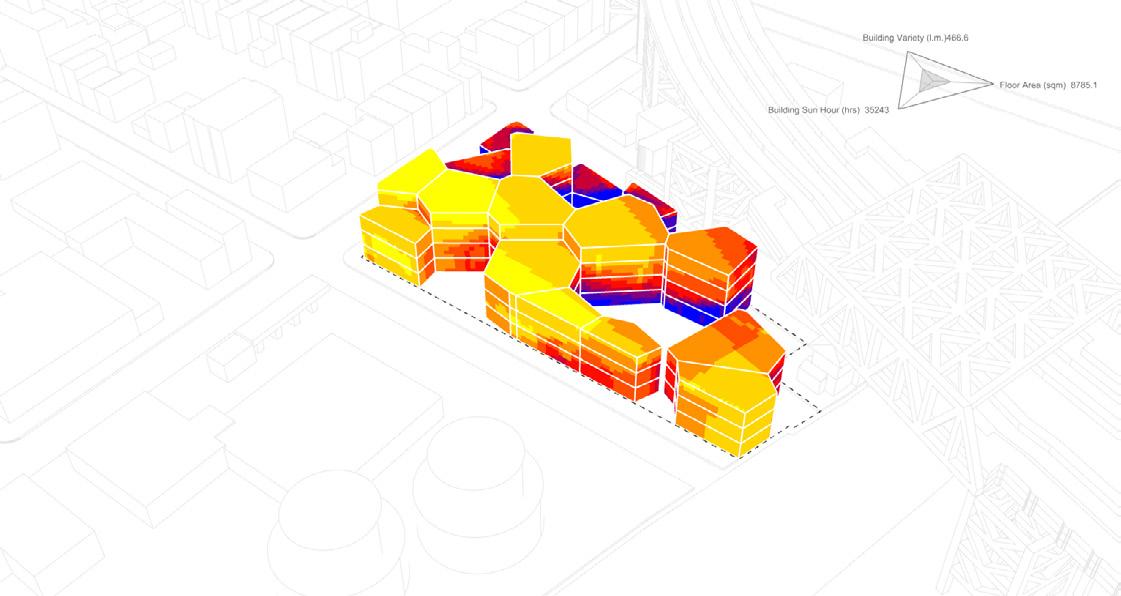
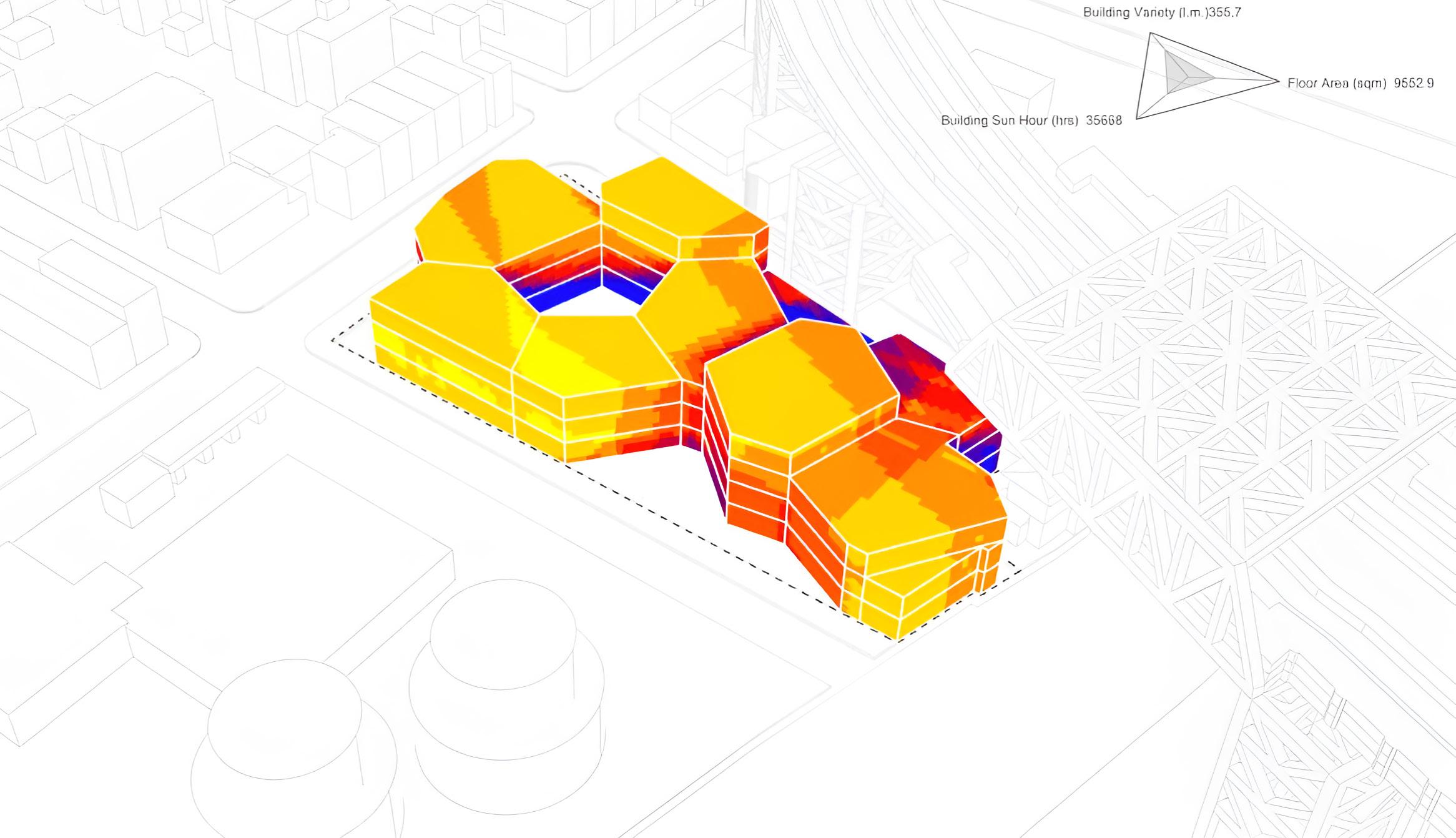
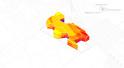
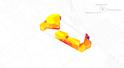
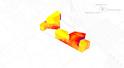
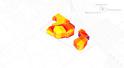
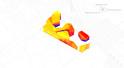
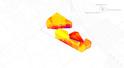
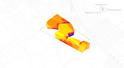
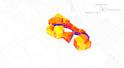
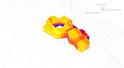
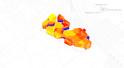
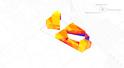
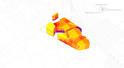
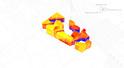
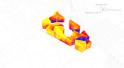
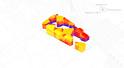
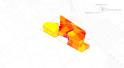
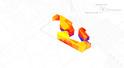
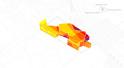
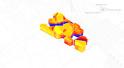
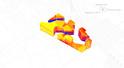
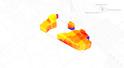
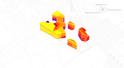
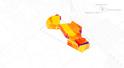
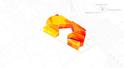
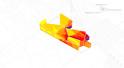
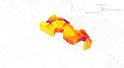
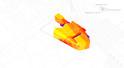
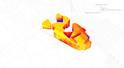
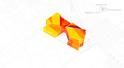
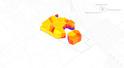
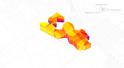
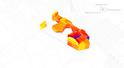
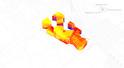
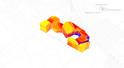
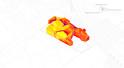
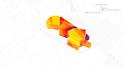
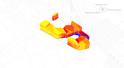
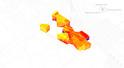
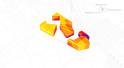
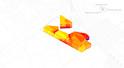
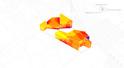
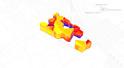
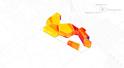
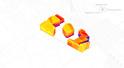
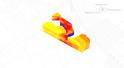
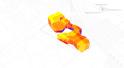
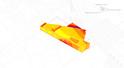
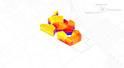
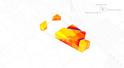
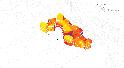
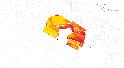
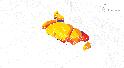
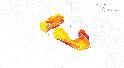
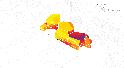
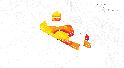
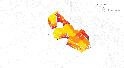
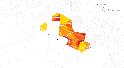
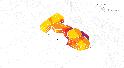
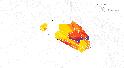
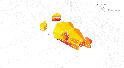
Among the 210 generated iterations, six designs emerged as optimal when evaluated across all three performance goals: floor area, sunlight hours, and spatial variety. The scatter plots on the left illustrate how these options perform relative to one another under different metric combinations. From this group, three representative designs - #13, #24, and #99 - were selected for closer comparison, based on their balanced performance and distinct spatial strategies. Each 3D diagram is paired with a sunlight analysis to visualize façade exposure and guide refinement. While all three offer strong quantitative outcomes, the final selection was informed by architectural judgment. Design #13 was ultimately chosen for its overall clarity and spatial potential. Its central courtyard enhances daylight and airflow, provides a clear organizational core, and creates a welcoming open space within the dense urban fabric. The overall massing supports both visual continuity and future flexibility, making it a compelling foundation for further development.
Design #13
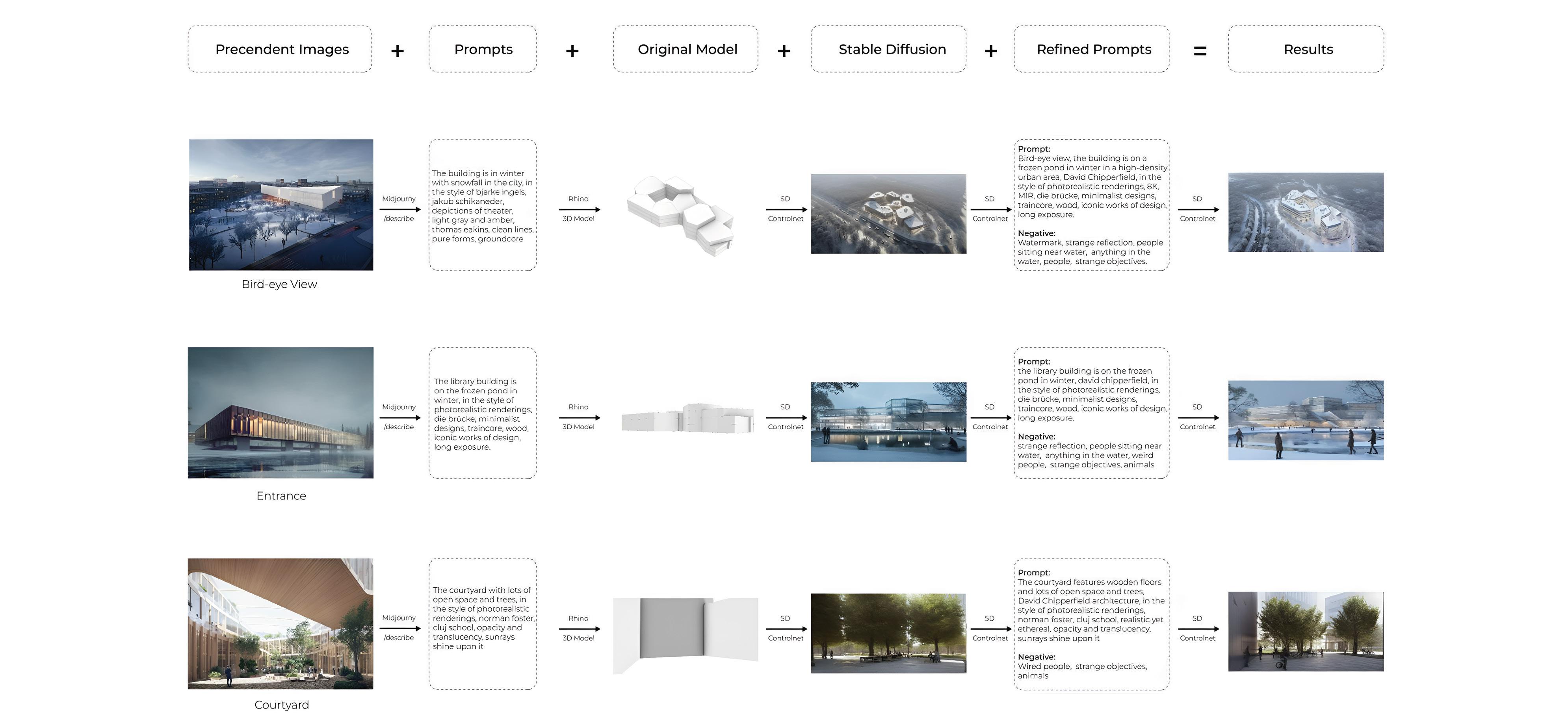
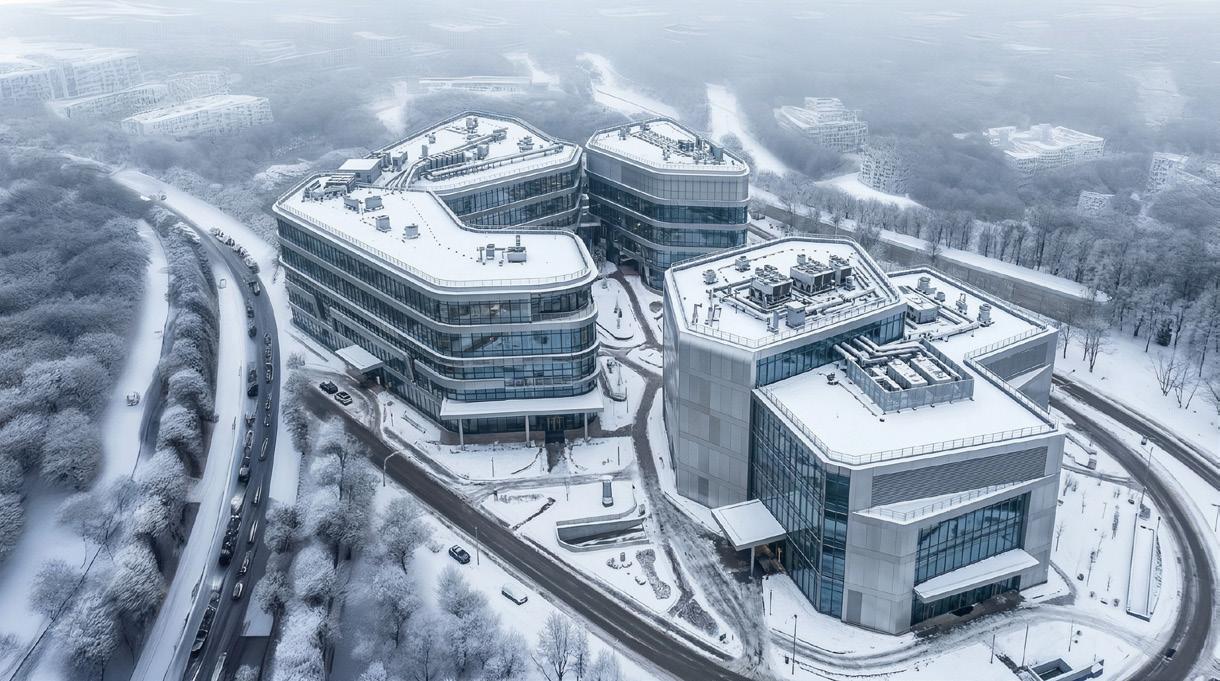
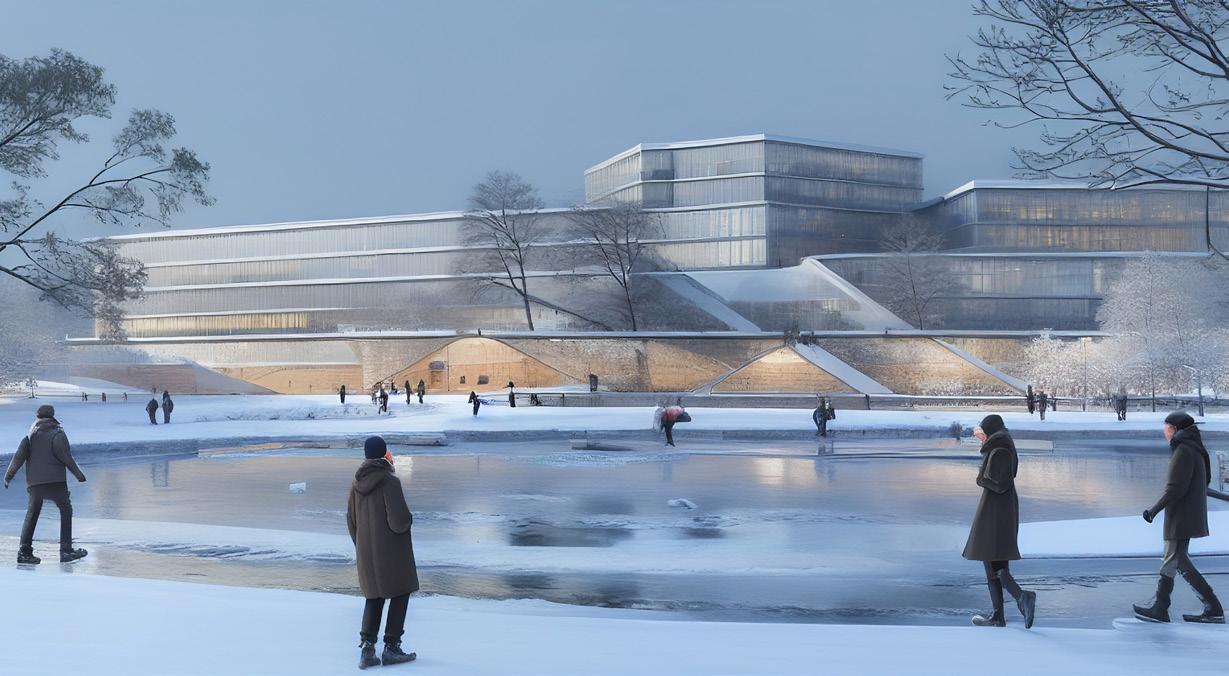
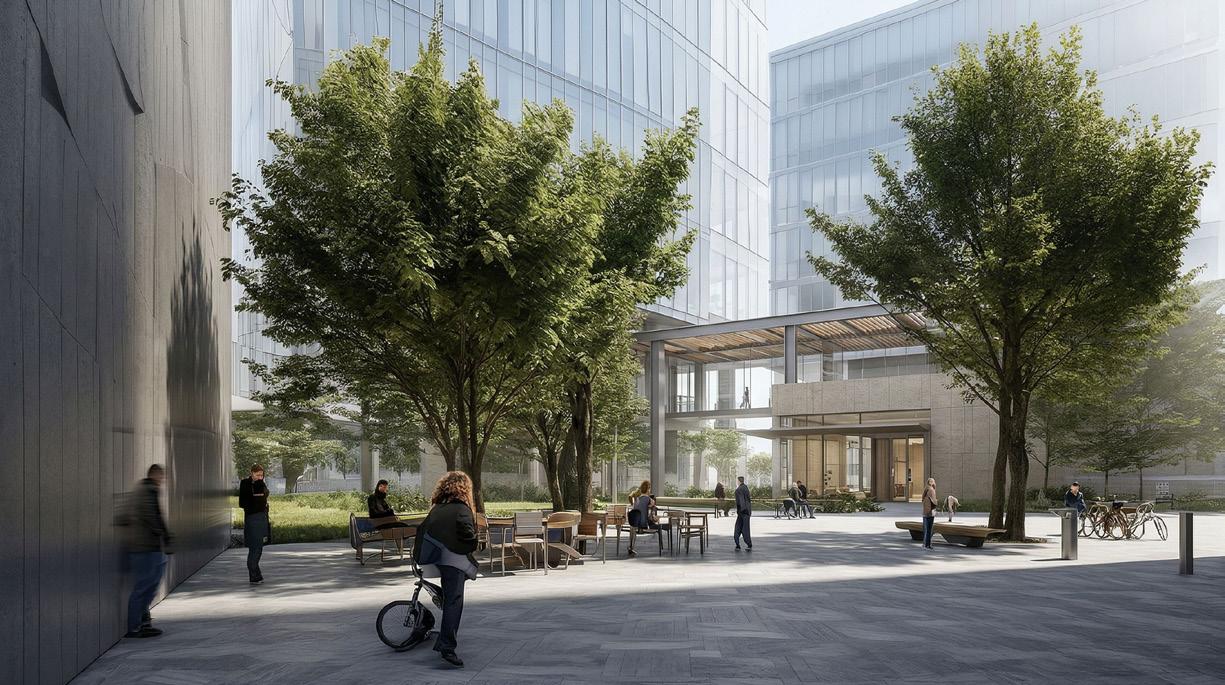
Midjourney
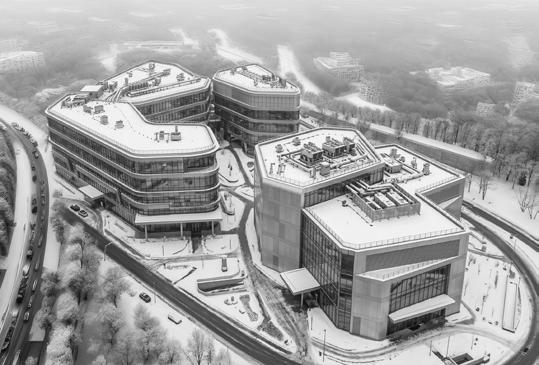
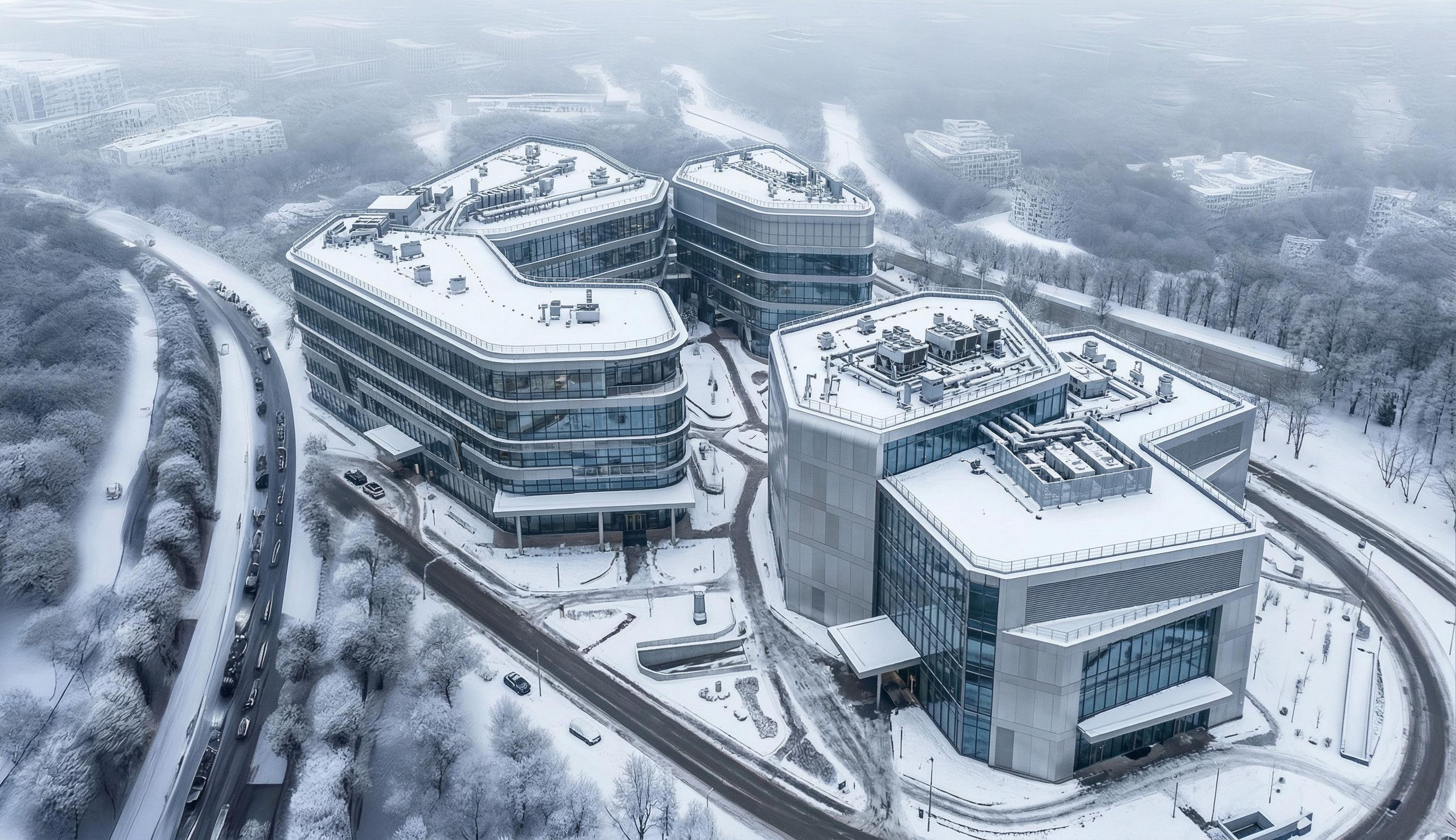
The building is in the winter with snowfall in the large city context, in the style of Bjarke Ingels and Jakub Schikaneder, depictions of theater, light gray and amber, Thomas Eakins, clean lines and pure forms, groundcore.
The library is on the frozen pond in winter, in the style of photorealistic renderings, die brucke, minimalist designs, traincore, wood, iconic works of design, long exposure. /describe
/describe Midjourney /describe
The courtyard with lots of open space and trees, in the style of photorealistic renderings, Norman Foster, Cluj School, opacity and translucency, sunrays shine upon it.
Prompt: Bird-eye view, the building is on a frozen pond in winter in a high-density urban area, David Chipperfield, in the style of photorealistic renderings, 8k, MIR, die brucke, minimalist designs, traincore, wood, iconic works of design, long exposure. Negative: Watermark, strange reflection, people sitting near water, anything in the water, strange objectives, people
Prompt: the building is on the frozen pond in the winter, David Chipperfield, in the style of photorealistic renderings, die brucke, minimalist designs, traincore, wood, iconic works of design, long exposure. Negative: strange reflection, people sitting near water, anything in the water, weird people, strange objectives, animals
Prompt: the courtyard features wooden floors and lots of open space and trees, David Chipperfield architecture, in the style of photorealistic renderings, Norman Foster, Cluj school, realistic yet ethereal, opacity and translucency, sunrays shine upon it
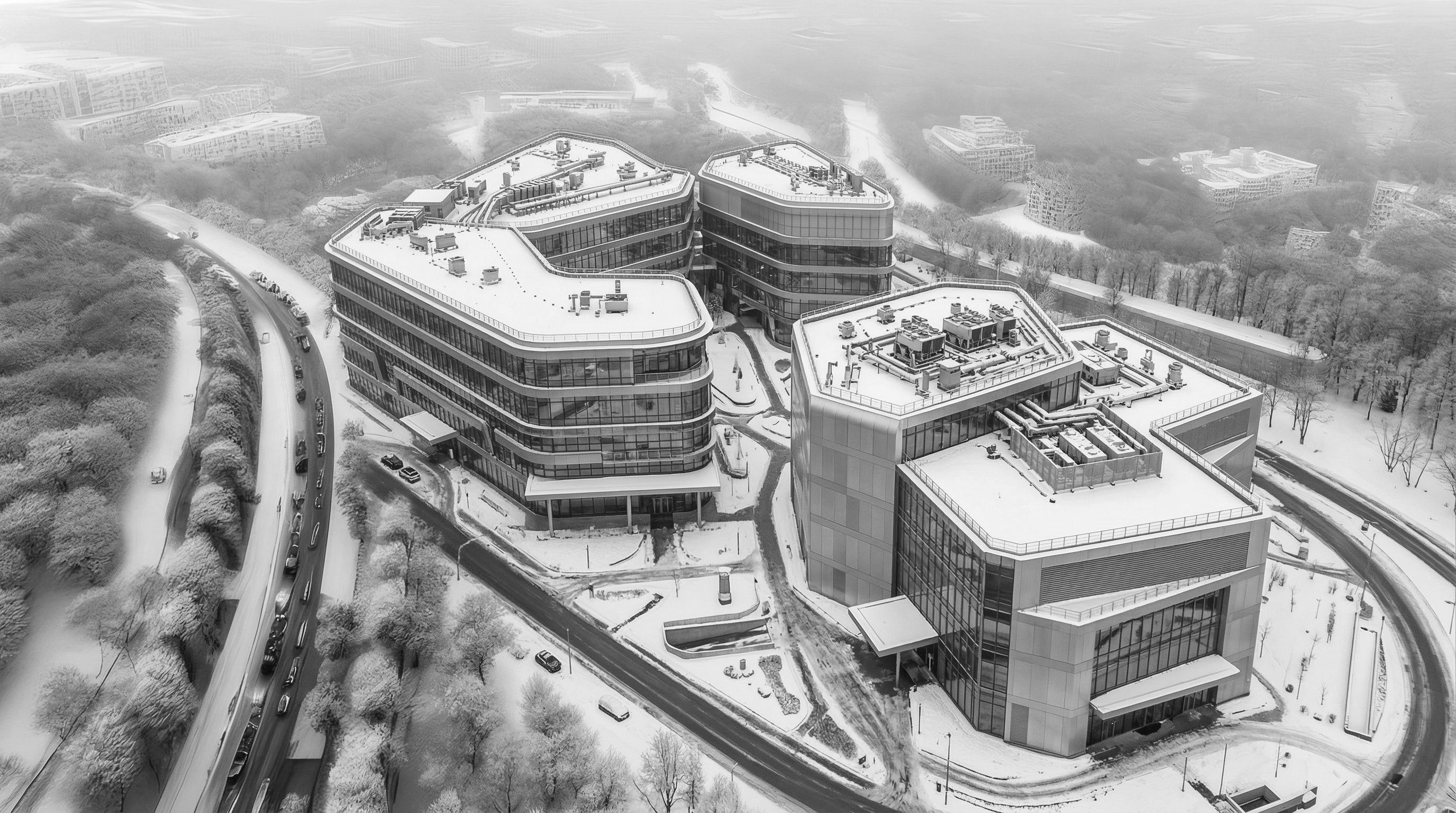
A hybrid visualization workflow combines parametric 3D modeling with AI image generation to support early exploration of massing and landscape design. Rather than detailing interiors, the process tests how large-scale forms interact with surrounding environments, seasons, and public spatial atmospheres. Precedent images first establish visual tone, materiality, and environmental character, informing prompt templates paired with Rhino massing models. Using ControlNet with Stable Diffusion, base geometry guides the AI generation process, maintaining spatial consistency. Through iterative prompt adjustments - refining lighting, weather, vegetation, and atmosphere over 200 visualizations were produced. The matrix illustrates three scenarios: aerial views, winter plazas, and a central courtyard. These generative renderings function as a design feedback tool, helping evaluate massing, spatial edges, and landscape integration during early conceptual development.
The Umbrellas
Project Type: Kinetic Architecture|Responsive Pavilion
Focus: Movement Manchnism|Parametric Design|Modular Assembly|Flexible Space Programming
Tool: Rhino|Grasshopper|Ladybug|Kangaroo|Karamba|Enscape
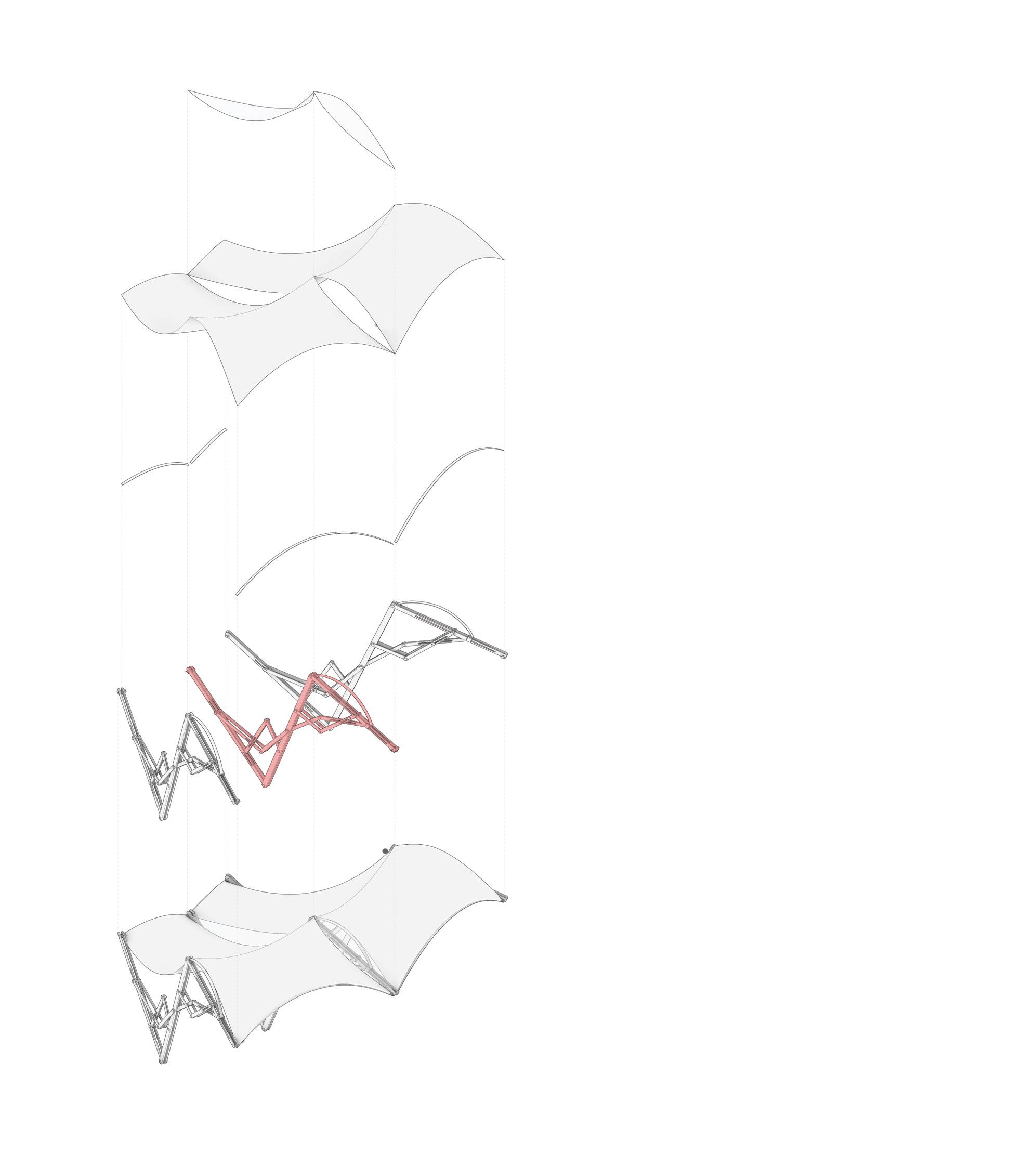
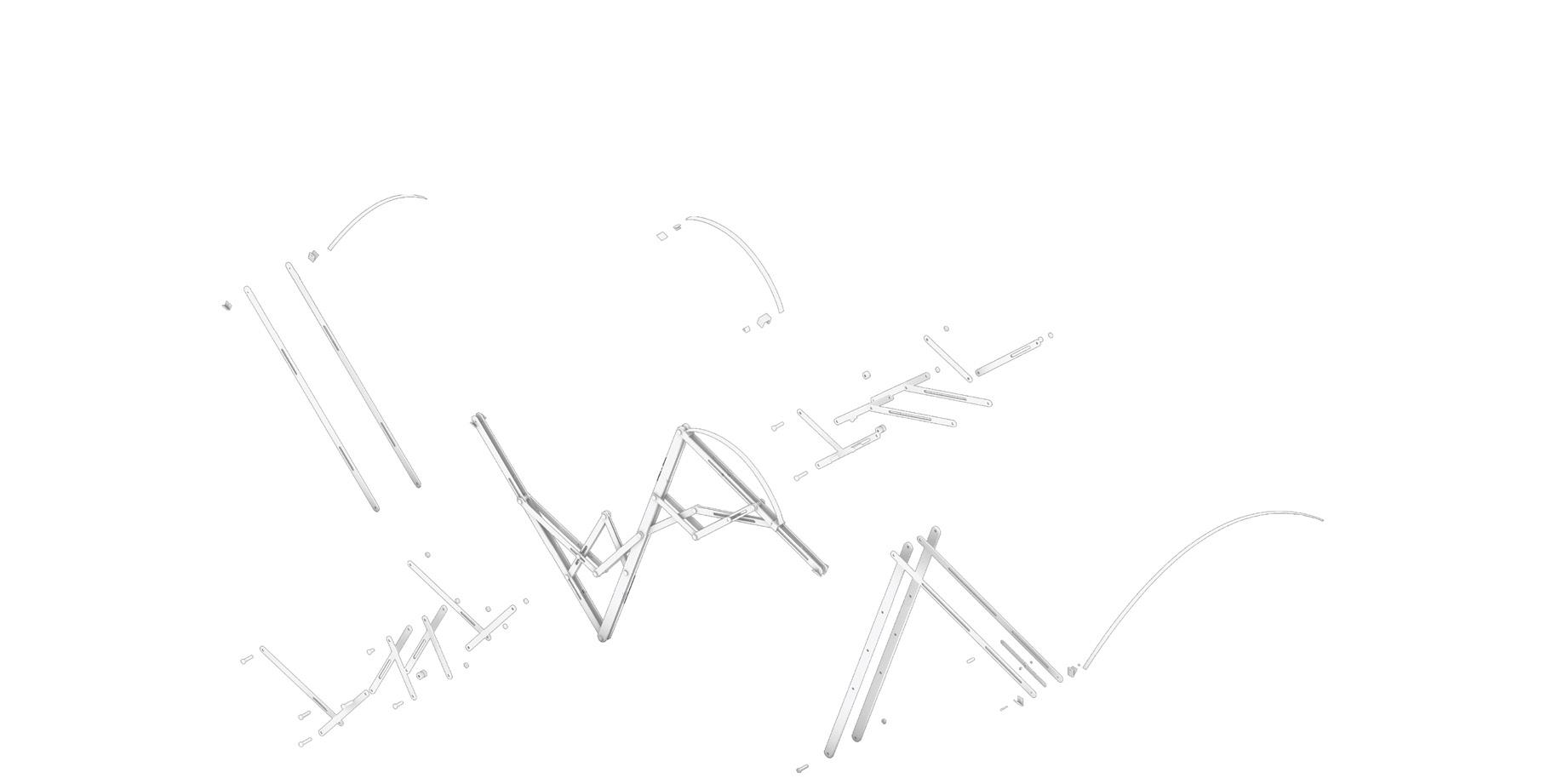
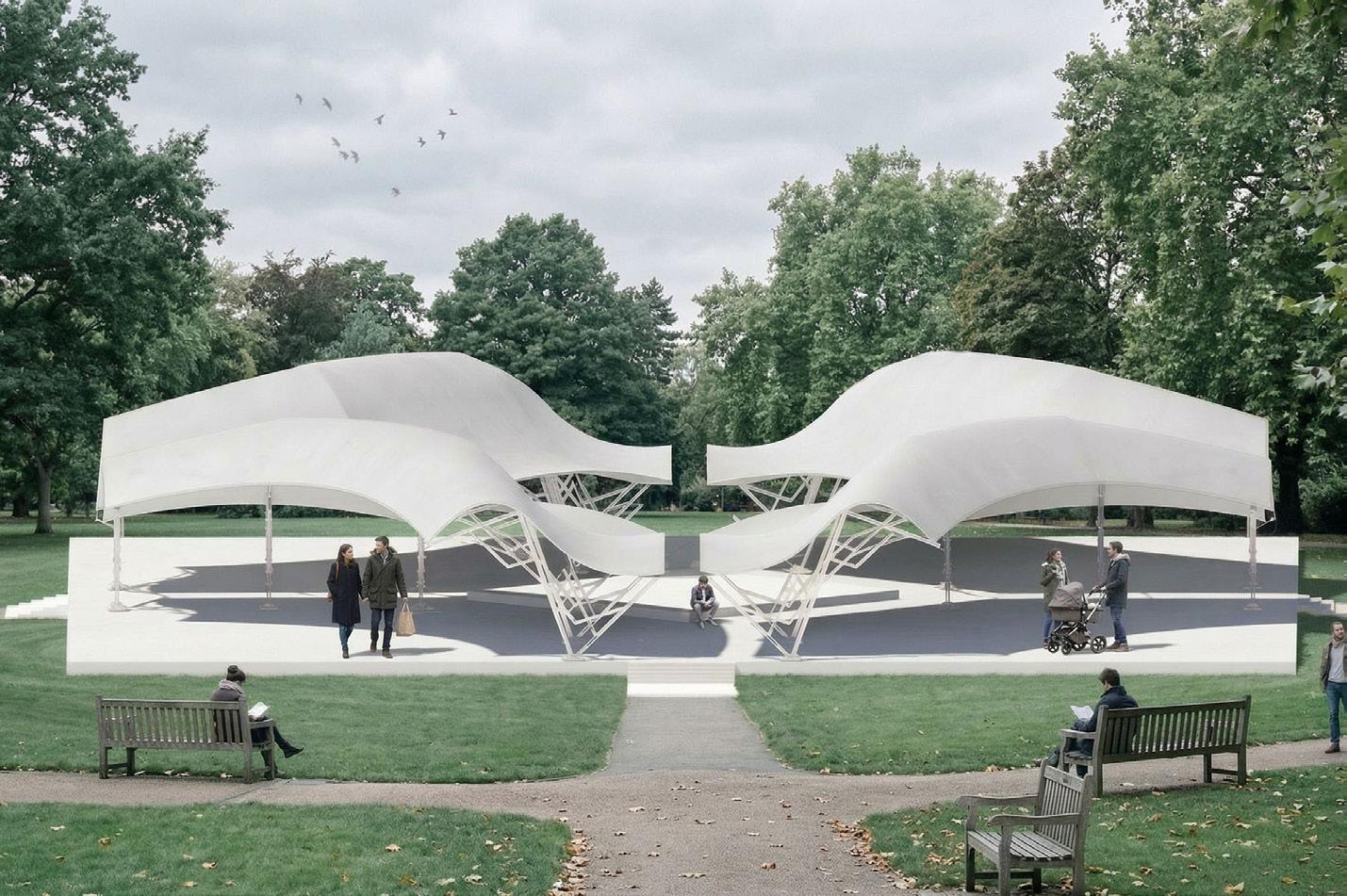
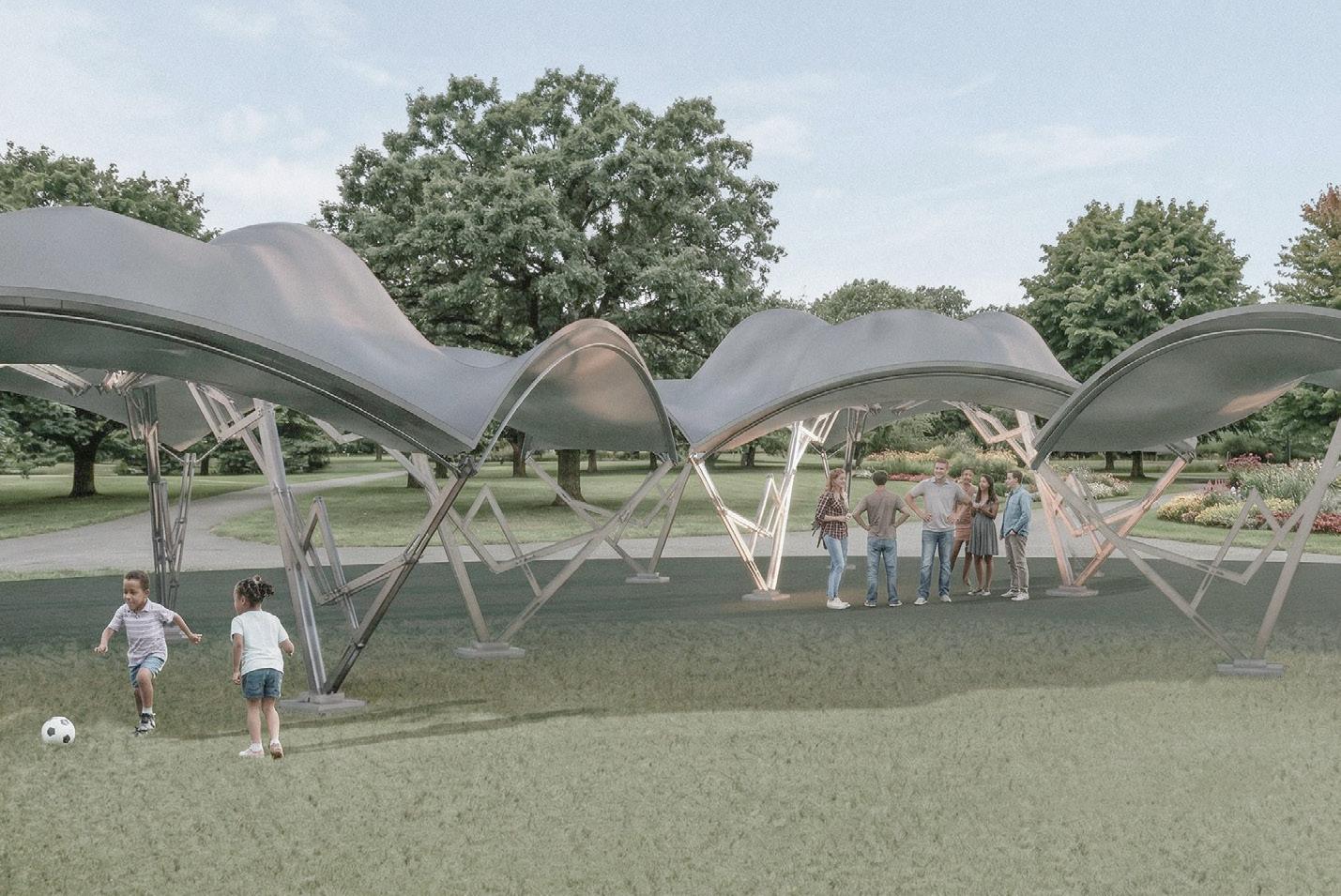
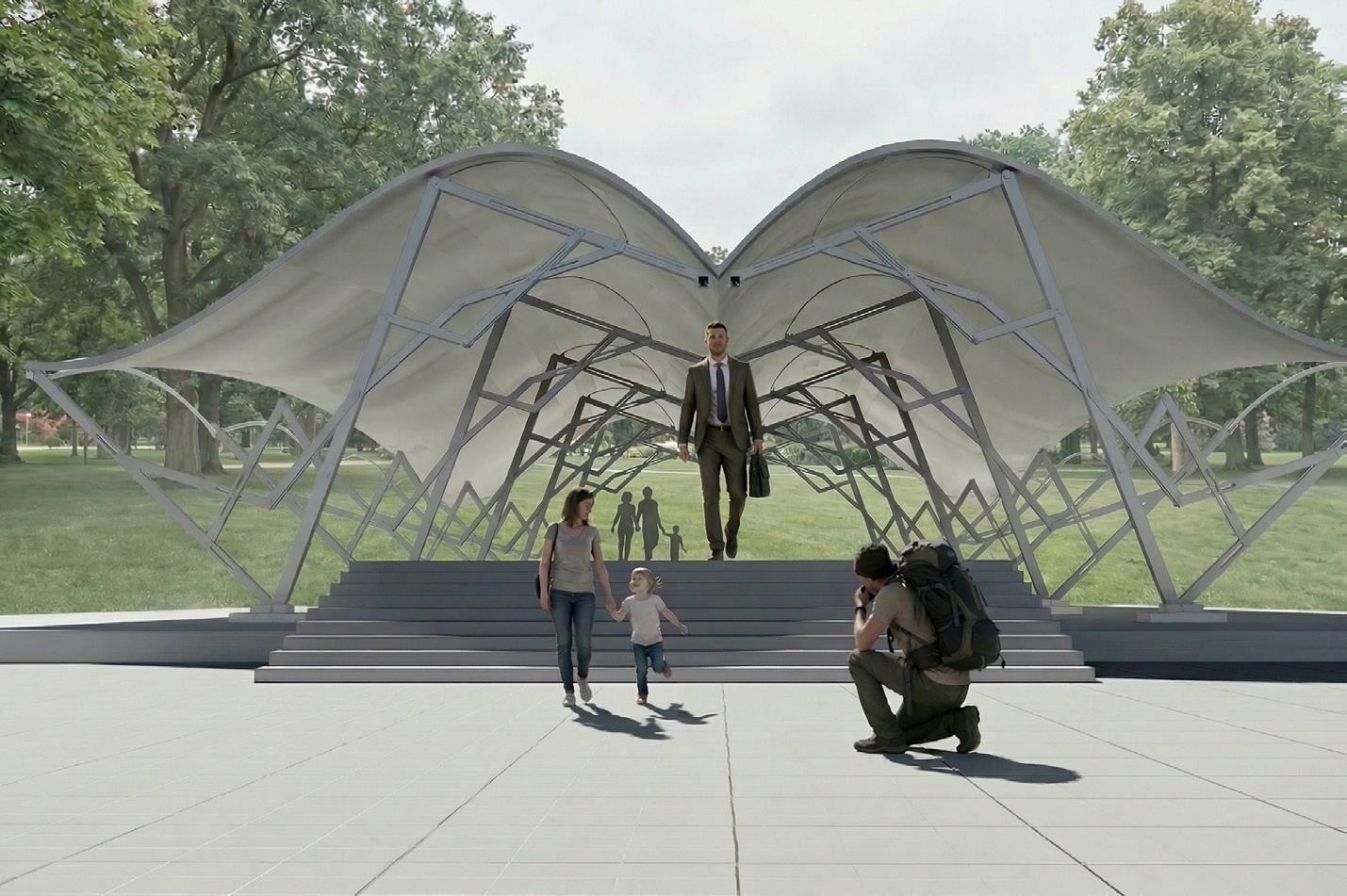
This project builds on the movement and mechanism principles of the Medina umbrella, developing a new modular unit capable of creating dynamic shading and adaptable space. The system uses simple operable mechanisms combined with parametric design to enable various spatial configurations which are flexible in size, density, and form. Designed for temporary urban events, the modules can be quickly reassembled to host different programs, from conference spaces and markets to exhibitions and performances. Through this adaptable system, the project explores how kinetic structure and parametric control can bring responsiveness and versatility to public space.
In the Medina courtyard of the Prophet’s Mosque, large retractable umbrellas provide shade for the open plaza through a sophisticated folding structural system. The frame movement is driven by an electronic motor inside the central pole, allowing rings to move vertically and trigger the folding and unfolding of the structure. Inspired by this mechanism, the project studies its kinetic logic and adapts it into a prototype.
The design explores a kinetic shading structure formed by hinged and supporting arms connected to fixed points along a central pole. Vertical movement along the pole is converted into rotational motion, allowing the canopy frame to fold and unfold in a coordinated sequence while maintaining structural stability. The canopy consists of tensile fabric panels supported by a lightweight metal frame. An electric motor inside the mast drives a threaded shaft that moves a sliding ring vertically, activating the hinged arms and deploying the canopy. This mechanism enables the structure to transform between a compact closed state and a fully extended shading system for adaptable outdoor use.
Arms with 8 Upper and 8 Lower Support Members
Arms are covered by glass fibre epoxy resin laminate, providing high tensional stiffness
Operable Suspension
Membrane Structure
0.6mm thickness
Each umbrella structure spans an area of 650 square metres, protecting worshippers from sun and rain and preventing slipping or falling.
The Lower Support Member rotates around its joints with the pole. The joint does not move on the pole.
Transparent Fabric
Allows natural lightings through canopy.
Operable Tensile Fabric
Thin, high durability to sustain under different weather conditions, creating a soft roof for the venue.
Three fixed points on the pole
Hinges
Two static hinges control the opening of the inward canopy.
Passive Arms
Hinged at the outer end of arms, defining the opening shape of the canopy.
The Inner Arm, or the primary member, slightly moves up on the pole to promoting the unfolding of the umbrella; it simultaneously rotates outwards (clockwise) around the joint.
To open, the Upper Support Member moves down on the pole and simultaneously rotates slightly outwards (counterclockwise) around the joint. The Outer Arm do not move spontaneously. Its motion follows the movement of the Lower Support Members and the Inner Arm; it opens when the Lower Support Member opens, and rotates around the linkage with the Inner Arm.
Structure
Opens both sides, the motion of each arm is defined by a total of four sliding and rotating units.
Since the opening angles are different, the inward supporting arms feature different lengths of sliders.
Connection Point
Passive Arms
Hinged at the outer end of arms, defining the opening shape of canopy.
Supporting Arms
Four supporting arms defining the motion of the structure. Two units move along the sliders on the primary arm, and the other two are fixed on the pole.
Allows the two sliding units to move together.
Fixed Point
Closed Position Open Position
F xed Point
Motion Converter Converts the linear motion of the sliding unit to the rotary motion of hinges.
1 The Circle
Type 3 The Concentric Circles
This configuration centers around a main performance area surrounded by multiple rings of audience space. It is ideal for music festivals, cultural ceremonies, or open-air cinemas, events that benefit from immersive viewing and large, flexible crowd capacities. After the event, the structure can be transformed into a ceremonial space or an outdoor amphitheater.
The visitor areas are outside the main activity area to provide visitors a glance of the performance.
The audience areas are all around the stage to provide people the best view of the performance.
Small passages are made between audience areas.
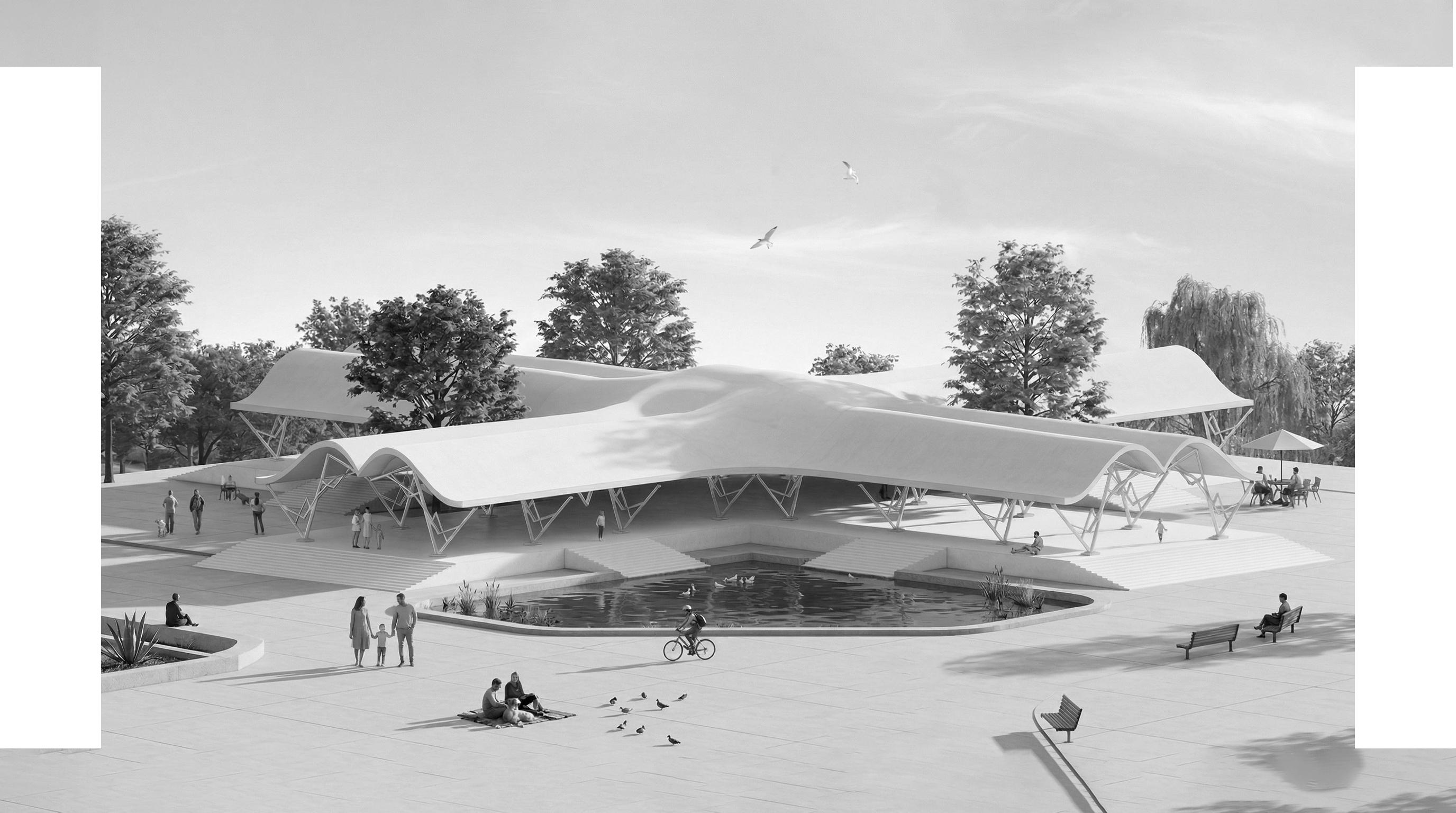
4 The Cross
This configuration suits exhibitions, cultural fairs, and service-oriented programs. The central area hosts the main event, while four extending wings accommodate dining, or lounging. Its open, symmetrical layout supports movement between zones. After the event, the structure can be repurposed as a multi-purpose pavilion.
Areas with different functions are made on the four corners of the main activity area.
The ‘interior’ space is fully covered to provide a large-scale exhibition and shading area.
Four entrances are located on four directions to guide people from differnt places to enter the main activity area easily.
The circular configuration creates an open yet enclosed space suited for meetings and small gatherings. Its compact form encourages conversation and informal interaction. It can function as a rest station, outdoor classroom, or community market, and later transform into an operable shading structure for various outdoor activities. After the event, the structure can be transformed into a space for various outdoor activities.
Defined by a linear layout with a central axis, this form suits forums, street performances, public talks, or product launches. The audience area is divided into two parts by the main stage. The clear separation between stage and audience allows for structured programming while remaining open to passersby. After the event, it can be transformed to a place for outdoor performances.
This structure could be placed at any locations and work as a place for small-scale gathering activities.
The umbrellas are arranged to form a continuous circular space.
The ‘interior’ space is fully covered to provide shading for people inside and has no particular entrances.
This structure is made for circumstances such as news conferences and presentations.
The umbrellas are arranged to form a rectangular space with a large presentation area in the middle and audience area on both sides.
The ‘interior’ space is fully covered when the umbrellas are fully open to provide shading for both audience and presenters and two entrances to the middle presentation area are located on both sides of the structure.
Type
Type
Type 2 The Rectangle
Thank you for viewing. Looking forward to the opportunity to collaborate and grow.