As we enter exam season every term, a familiar dread washes over me. Part of it is in vague anticipation of long hours spent studying at my desk, having never been of a particularly robust constitution.The rest is more concrete in nature: I have chronic tendinitis in one of my wrists, which I first developed at the age of fourteen. It is often exacerbated by computer use. I can still recall with clarity the frustration I felt in 1L when my wrist called it a day, three-quarters of the way into finalizing my Constitutional Law outline.
I understand that many of us ambitious and overachieving law students, though we may excel in other areas of life, are inclined to put self-care to the side in achieving our goals. But after over a decade of negotiating, arguing, pleading, and bargaining with my body, I really must exhort you to take your own discomfort seriously. While I may never be the Olympic champion of resting when I need to, I like to think I’ve gotten better at working with, not against, myself. I wear a brace; I decrease the time I
spend playing my instruments; I am beginning to, after years of resisting, consider more interventionist treatment. The world has not fallen apart simply because I have learned to give myself more grace. However, I cannot stress enough how much I would have liked better not to have to extend that grace at all.
A previous Quid Editor-in-Chief, Anna McAllister, wrote in recent years about her diagnosis with keratoconus, an eye condition—I encourage you to look it up. She contributed excellent, thought-provoking articles that I think about almost every time I am moved to rub my eyes or squint at a screen. I can only hope that this piece will similarly motivate some of you to take restful breaks, do some gentle hand and arm stretches, and advocate for yourself to a doctor if necessary. This all can, as I know from firsthand experience, be tremendously exhausting in times that are already exhausting enough. Important things, though, are worth working for without delay, and there is nothing more important than one’s health. Just like a Constitutional Law outline, it’s best to give it your all and get started early.
See e.g. Anna McAllister, “Letter from the Editor: World Keratoconus Day! Reflecting on Health Care Accessibility” (2024) 46:6 Quid Novi 1 at 1.
Cette semaine
9 | LAW AND DIVERSITY NIGHT 2025 10 | THE TWILIGHT OF THE LAW 11 | CHRONOMIA AND THE HANDS OF LAW A Legacy of Non-Verbal Communication
QUIDLAW
D Q ear uid
Heeva Chavoshi Nejad | 2L
Confessions of a Jaded 2L
Dear Quid,
My first law school exam season is coming up, and I feel like I’m spiraling. I’ve kept up as best I can this semester, but now that midterms are staring me down, I’m realizing how much I don’t fully understand. My notes feel messy, my readings feel scattered, and when I think about answering fact patterns, I want to cry.
Everyone around me keeps talking about their study plans and attack sheets, and I’m barely sure where to begin. I’m scared I’m going to walk into the exam room and blank on everything, or realize too late that I didn’t study the right way.
I still enjoy what I’m learning, but right now, the stress is drowning out the excitement. How am I supposed to be a successful lawyer if this is how I feel in 1L?
Sincerely, Newbie in Need
Dearest Newbie,
Here’s a little secret a professor told me last year: you’re not supposed to be able to do it all.You’re not supposed to understand everything.
Law school isn’t training you to recite every ratio on command (shocker, but you probably won’t be citing Donoghue as a litigator…or maybe you are…how would I know?). Law school is training you to tackle mountains of text, use the resources available to you (yes, even PubDocs), and pull out the essentials.These soft skills will serve you in the legal profession more than understanding a singular ratio from 1L.
As for the upcoming exams, treat them as a practice run for your finals in April. Yes, I know some of the exams do count toward your final grade. But, at the end of the day, it is your grade on your final exam that has the biggest pull on your transcript.The point of the December exams for 1Ls is to introduce you to what law school testing is like—you’re not supposed to master it at this point.
It’s okay if course concepts feel disjointed right now.Your understanding will come together much easier at the end of the course when you have the full picture and are able to zoom out. And if it doesn’t come together? You’ll probably get a B anyway.
For now, just try your best and go through the motions. Facing and overcoming these struggles, the internal and academic ones, are more valuable than you know. Sooner than you realize, you will be a jaded upper-year like the rest of us, telling 1Ls to take it easy.
Don’t forget to keep taking care of yourself. Don’t forget to rest. Don’t forget to look behind you every once in a while to see how far you’ve already come.
Jadedly, Quid
Climate Content: Podcast and Video Recs for the Winter Break
DearClimateCornerreaders,
For our last issue of the semester, we leave you with some approachable (and dare we say… fun?) video and podcast recommendationsonclimatechange and its political, scientific, and social implications.These resources have helped us dispel myths and think more clearly about the problems facing us without cringingawayinfear.We’vetriedto include a variety of perspectives to make it easier to talk about climate change with your colleagues, friends, family, and strangers on the bus. We have also compiled all of thepodcastepisodeslistedbelow into a Spotify playlist, which you cansavebyfollowingthislink:
The YouTube channel “Climate Town” pulls off the impossible: comedy videos about climate change. They present wellresearched, in-depth climate issues in ways that are informative yet easy to digest, and provide ways to take meaningful action. They are also genuinely pretty funny. If you look up only one of our recommendations, we think that it should be this YouTube channel. Here are some good episodes to get started:
Drilled is a wealth of investigative journalism that bills itself as “a true crime podcast about climate change.” They unpack how corporations and other vested interests shape narratives around climate and hinder meaningful action.
Recommendedepisodes:
“TheCorruptionof COP”
“TheMassiveClimateCasethat Shell Both Won and Lost, and What It Means for the Future of GlobalClimateLitigation” “Denial to Delay: How FossilFunded University Research LaystheFoundationforFossilFriendlyPolicy”
Ever found yourself stuck in conversation with a wayward, conspiracy-pilledrelativeaboutclimate change, where you were too emotionally invested to disengage but toobaffledtoadequatelyrespond?The ClimateDenier’sPlaybookmighthelp.
“From the minds that brought you ClimateTown,comes…apodcastthat’s suspiciously similar to Climate Town.
Benjamin Foster and Adele Wechsler | 3L
Rollie Williams (Climate Town) and Nicole Conlan (The Daily Show) are two comedians with Master’s Degrees in Climate Science & Policy and Urban Planning. But don’t get too excited, because they’re here to examine the pervasive myths and misinformation campaigns that are making it obnoxiously difficult to address the looming climate crisis you’ve probably heard about.”1
Four scholars discuss philosophy, social movements, and politics from a leftist perspective. They often have excellent guests and in our recommended episodes, they delve into the philosophical, economic, political, and epistemological origins of the climate crisis.
Recommended episodes:
“Ecological Materialism and Logistical Strategy (with Dr. Jeff Diamanti)”
“The Politics of Left-Wing Climate Realism (with Dr. Ajar Singh Chaudhary)”
Rev Left Radio tackles political philosophy, current events, and activism. We recommend their episodes on organizing resistance in the context of corporate and state inaction to the climate crisis.
Recommended episodes:
“Climate Vanguard: Organizing Toward a Livable Future”
“Climate Change as Class War: Building Socialism on a Warming Planet”
Whether or not you are about the revolution, you cannot talk seriously about climate change without considering how capitalist structures have enabled the crisis and work to obstruct any real solutions. Marxists have been talking about radically restructuring the capitalist system for a long time, and they have some ideas about what it might take to bring about the systemic changes needed to address the climate crisis.
Recommended episode:
“System Change, not Climate Change: Marxism and the Environment”
SustainabilitySpotlights:aPodcast by the McGill Journal of Sustainable Development Law (MJSDL)
We do have to plug our own MJSDL podcast. If you’re looking for relevant, super-local (local to McGill Law) climate talk, this is the place to be!
Recommended episode:
“Les principes juridiques sur les vagues marines avec Prof. Géraud de Lassus St-Geniès”
Thank you for reading Climate Corner this year! We hope that we have made it a little easier to digest climate news, cases, and stories.A big thank you to the Quid for giving us space to talk about these issues.
Adele & Ben
For the McGill Journal of Sustainable Development Law
The Gift of Grandparents
And The Gift of a New Perspective
Maddie Adams Alexander | 2L
My grandmother got her first iPhone this past week. My mom had gotten a new one, and she decided to give her old phone to my grandmother. My grandmother has long loved to send Facebook messages to me and my sister, and since she doesn’t drive and my grandfather already has a cellphone, she didn’t really see a need to have a cellphone of her own.
My mom created an iMessage group chat with me, my sister, my grandmother, and herself to introduce Nan to the iPhone world. With my sister in Fredericton, my mom in Barnesville, my grandmother in Saint John, and me in Montreal, the four of us had the most decadent of opportunities to be together, at least digitally. We got to giggle to ourselves as we showed Nan the ropes and she sent us hilarious replies commenting on the learning curve she was actively facing. Most of Nan’s texts were composed using voice to text, as well, and the few mistranslations only added to the gleeful comedy of it all.At first, Nan did not even realize we were in a group chat, and when I responded to a message she had sent, she said“I meant to send that to your mother.”When we explained the group chat concept, she said “glad to know I’m in a group chat, I thought I was losing my mind.”
Toward the end of our window of rapid replies to each other, my mom promised to show Nan how to send emojis during their next iMessage education session. I responded that we could at least send Nan some emojis in the meantime, until she learns to send them back, and I sent her approximately 20 different kinds of heart emojis, just to be silly and fun. A particularly juvenile looking sort of text, not very profound, but what my Nan said next felt shockingly profound due to what it made me consider.
In response to the bombardment of hearts I had sent her, my Nan simply replied “Oh, beautiful.” Knowing her and her way of speaking I knew that she meant this
genuinely, as though she was stunned by the beauty of a few minimally rendered digital hearts.
It made me realize that, yes, emojis probably are very beautiful if you’ve not ever been able to communicate with them before. When little things become mundane and we lose our awareness of them, we are so quick to forget how joyful those little things can be. It feels annoyingly cliché to speak of taking things for granted, but it feels quite significant to actually catch yourself taking something for granted.
I’ve previously worked as a nanny, at a daycare, and as a literacy tutor. I often used to be asked why I enjoyed working with children, or sometimes how I even tolerated working with children. There was more than one reason, but one of the most significant was that I loved the way working with children often forces you to vacate your own mind for a while. Children ground you in reality, because they are often so observant and expressive, and there is always something to be observed and commented on when you are experiencing pretty much everything for the first time. Children’s comments are often hilarious for the same reason they are profound; because they make us remember experiences that were once new to us, too, but that we have either long forgotten, or long since grown unconscious of.
In recent months, spending time with my grandparents has brought on many of those same moments of being re-introduced to just how special the world is. Sometimes, watching them experience different novelties as they age makes me want to cry. I don’t mean to patronize them or sound condescending in any way, because it’s not as though I feel seeing them have new experiences is in some way “adorable.”It makes me feel emotional because it makes me realize just how lucky I am to have all the things and all the experiences I do, when I’m prone to forgetting. And what makes it feel even more significant is that I would never have had so many of those things or experiences if it weren’t for my grandparents to begin with. I have so much of what I take for granted in my life because my grandparents never really got to take anything for granted themselves.
If you’re lucky enough to still have and know your grandparents, or any other lovely older person in your life, I recommend seeing them or calling them during this notoriously soul-sucking period of exams. The beauty and joy they find in the small things might just be contagious enough to bring you back to life.
Spinach Dip
CULINARY
BRIEFS
Holiday Hacks
Caroline Homet | 2L
We are SO CLOSE to the end of the semester, the holidays, and especially, a well-deserved celebratory break. Yet, if, like me, you have an aversion to all-nighters and studying 8 days a week, you’ve found the right column for study break ideas. It’s never too early to start celebrating. However, it would also be unrealistic to celebrate with a three-course dinner party before finals are actually over. May I propose a compromise?
My favourite friends-giving style holiday party was an appetizer-anddessert party hosted in a basement apartment in Lennoxville, Quebec. The concept put an elegant-cocktail twist on our traditional brokestudent potluck. Like any good-old potluck, however, the main advantage is that no one had to spend hours cooking and cleaning up dishes because everyone brought a little something and shared the work. Appetizers and desserts usually being the most interesting part of dinners, the formula brings a little extra treat to the reward for a grueling study session.
Because this is my last column of the semester, it’s a two-for-one recipe edition! I’m treating you to both my mother’s epic spinach dip and my grandma’s family recipe for chocolate pudding chômeur There’s a little something for everyone, whether you’ve been salty or sweet this year ;)
Ingredients:
2 cups sour cream
1/4 cup mayonnaise
10 oz (a little over 250g) frozen spinach, thawed, squeezed, and chopped
1 envelope of Knorr brand leek soup mix (onion or vegetable are almost as good)
1/2 minced red pepper
Instructions:
Combine all ingredients in a bowl. Cover and refrigerate 3 hours before serving. The dip is best served in a bread bowl: take a whole loaf of bread, cut a rectangle top off, then empty with your hands. Transfer the dip into the hollowed
Batter
1 cup flour
Chocolate pudding chômeur
2 tsp baking powder
1/2 tsp salt
3/4 cup sugar
2 tsp cocoa powder
1/2 cup milk
1 tsp vanilla extract
2 tsp melted butter
1 egg
Instructions:
Sauce
3/4 cup brown sugar, packed 1/4 cup cocoa powder
1 3/4 cup hot water
In a large bowl, mix butter and sugar, then add the cocoa and egg. In a medium bowl, mix the flour, baking power and salt. Add to the butter mix, alternating with the milk and vanilla. Spread the batter into a greased 9-inch pan. Sprinkle the brown sugar and cocoa powder on top of the batter. Pour the hot water over the mix last; this will create an unctuous sauce in the bottom while cooking. Bake at 350 F for 40 minutes. o
The Itch You can’t Scratch
On Being a Woman in Male Dominated Spaces
Naomi Kaitlin Yao | 1L
Have you ever had this…inexplicable feeling? It’s subtle yet chronic. It’s the feeling of eyes that might be there, watching, measuring, even when you can’t see them. It’s that small tightening in your shoulders, the instinct to correct your posture when you enter a space that was never designed with you in mind.
As a woman who’s moved through historically maledominated spaces (martial arts, finance, and now the law) I’ve carried the same persistent feeling everywhere I go. All throughout my life, I’ve felt the same chronic itch. It’s that split second before I raise my hand to speak. It’s the way I ask myself,“I hope I’m not the only girl in tonight’s muay thai class.” It’s when I wonder how my words will be received…even now as I am writing this article, I doubt myself. Is this good enough?
Deathbyamillion…internalpapercuts? Now I ask myself: who am I really fighting? Yes, a system that disincentivizes minorities from stepping into spaces that were never built for them. But over time, I’ve realized that the system isn’t just external. It has also seeped into me–into the way I think. It shows in the way I hesitate, and the way I stop myself from trying because I fear having to represent my whole community.
While more AFAB presences are evening the playing field, entering law, sports, and academia, I still feel like I am only allowed to live and express myself within hegemonic structures. You see, that imbalance doesn’t only exist in numbers. It seeps into culture, into who feels entitled to take up space, to speak without hesitation and to fail without judgment. When I used to coach martial arts, I constantly felt like competence had to be earned twice over just to be seen as equal to my male peers. Online, I’d scroll through comments under videos of female fighters and see the same comments along the lines of: “A girl
cantry,butshe’llneverbeataman.”It served as a reminder that women’s presence in these spaces is still treated as an exception. Even if the gym itself was extremely supportive of me being a leader in these spaces, I realized that I had internalized this cultural norm.
People often tell me to just ignore the comments; they’ll always have something to say.And yeah, maybe they’re right. But after years of being subjected to these paper cuts, I now see how these microaggressions shape how I have allowed myself to move through the world. In martial arts, I’ve held back from asking for fights, convinced I wasn’t good enough, even as I watch my male peers overestimate their abilities without a second thought. The same thing happens in law. Whether I raise my hand in class, walk through the Palais de Justice, or speak to lawyers and students, I feel like I have to fighttoothandnailjusttostandinmyownskin.
From the ring to the legal world, I’ve learned that fighting isn’t always about aggression. Sometimes it’s about persistence. I’m learning, (painfully) slowly, to hype myself up. And yeah, the itch remains. Yet I remind myself that every time I try to take up space, advocate for myself, raise my hand, or step into the ring, I carve away a little more of the silence that used to hold me. Maybe that’s how change really begins: by choosing to show up, even when the shame wizard tries to freeze you in place.
McGill Law was my dream, so why do I hate it so much
Marissa Simoes | 4L
This essay was originally drafted in the fall of my 2L year. Now, in my final semester, I can look back with a bit more clarity.
I was sitting in a Five Guys in Ottawa in 2019, halfway through my first real internship, when Wayne, an old family friend hosting me that summer, asked what I wanted to do with my future. I told him I planned to get into McGill Law. He raised an eyebrow. Even with great grades, he warned, “it’s really, really hard to get into McGill Law.”
He was right. I’d already been rejected once out of CEGEP, and according to the Access to Information request I later
made on my file, one reviewer wrote:“Rationaleforstudyat McGill Law is insufficiently specific. Refuse.” Insufficient rationalebedamned,Igotin.
The younger version of me sitting in that Five Guys was certain admission would be the culmination of everything I’d worked for. So standing at the top of that mountain, why doestheviewfeelsobleak?
I didn’t realize how much of my identity depended on being one of the top students in every class. I didn’t anticipate the ego death I would experience getting Bs. It sounds silly to admit, but anyone who knows the feeling knows it wasn’t about the letter itself. It was realizing how much of my selfworthhadbeenbuiltonacademicvalidation.
Law school forces you to confront the uncomfortable truth that you are no longer exceptional by default. At McGill, everyone was “the smart one” somewhere else. Suddenly, you’re indistinguishable. Your defining feature vanishes overnight.
If I wasn’t the A-student anymore, who was I? What did I offer?Whatwasleftof thecertaintythatusedtoguideme?
My time at McGill was not glamorous. Behind the LinkedIn posts were too many anxious days, too many nights selfmedicating, too many tears I can no longer trace back to their cause. But worst of all, there was apathy. Apathy toward myself, my classmates, and the institution that at somepointinmyliferepresentedadream.
Working so hard for something only to feel nothing when you finally achieve it is disorienting. It makes you feel detached from your own life.And yet, apathy played its role. It forced me to stop pretending I was fine. It made me confront the gap between who I imagined I’d become in law school and who I actually was. It pushed me to be honest about the ways I was struggling and the ways I had lost myself alongtheway.
Looking back now, my time at McGill was spent rebuilding myself into someone who knows she is capable. Someone who no longer needs to be exceptional to believe she belongs. Someonelearningtoanchorherworthinthingsthatcan’tbe takenawaybyalettergrade.
Maybe that’s the real lesson–one I never wanted but probably needed.The uncomplicated confidence I had before arriving fell away, and what’s emerging in its place is something deeper.
Andjustliketheerosionof thatself thatgotmeintoMcGill Law, I hope I am now better equipped to handle the erosions that will inevitably come over the course of my career and my life. Because the question is not whether these challenges will happen. The question is when, and how, and who you decidetobecomeintheiraftermath.
Looking back, it turns out I didn’t actually hate McGill Law. I hated how it made me feel inadequate, and I hated that my reaction to that feeling was apathy.The person I am today is more resilient, and she can look back and be grateful for the hard times.They pushed me to seek out help.They forced me to confront the way I spoke to myself and realize how pointless and unfair it is to hate yourself for struggling in anenvironmentdesignedtochallengeyou.
Growth rarely feels good while it’s happening. McGill didn’t shape me in the ways I expected, but it shaped me in the ways Ineeded.
And if you’re reading this as a 2L feeling lost, numb, or disappointed in yourself like I was when I first drafted this, I hope you know that you are not alone, and you are not failing.Youareintheprocessof becoming.
QUARTIER LATIN
Catherine Zhang | 3L
Nota bene: Off-topic, but has anyone else seen the stills from Christopher Nolan’s adaptation of The Odyssey? I understand that I am a hater with irrational expectations and there are maybe three other people on the planet who care about this, but seriously, what is up with those costumes? Besides, Emily Wilson’s translation has already perfected the modern Odyssey in book form. Anyway, rant over. This week we’re looking at Resipsaloquitur and Forumnonconveniens
1
Res ispa loquitur
| Usually translated as“the thing speaks for itself.”A tort law doctrine allowing courts to infer negligence from circumstantial evidence only, based on the very accident itself. Also used to describe extremely clear-cut situations. This tripped me and my rusty Latin up a lot earlier in law school until I remembered that loquor,“to speak,”is a deponent verb, meaning it is active in meaning despite being passive in appearance. Although it is functionally abandoned in Canada, I somehow still see this phrase often. It might therefore be helpful to remember some derivatives: “loquacious” is the most impressive (read: pretentious), but more common words include“eloquent,”“colloquial,”and“soliloquy.” 2
1
Homer, The Odyssey, translated by Emily Wilson (New York: WW Norton&Company,2018).
2
See Fontaine v British Columbia (Official Administrator), 1998 CanLII 814(SCC).
Forum non conveniens
| Literally“unfitting forum,” this is another common law doctrine. It permits courts to stay a civil action even when they have jurisdiction, where a more appropriate alternative forum exists. Unlike English, the Latin forum referred to an actual public plaza.Those who have been to Italy may even have visited the historical site of the Roman Forum (mentioned in another article this issue!). Conveniens, a present participle, is also quite easy to remember. So easy that, despite knowing Latin, every time I read this phrase my brain still spits out “Forum not convenient”! Like my opinions on the Odyssey stills, though, I understand I’m probably the only one.
Law and Diversity Night 2025
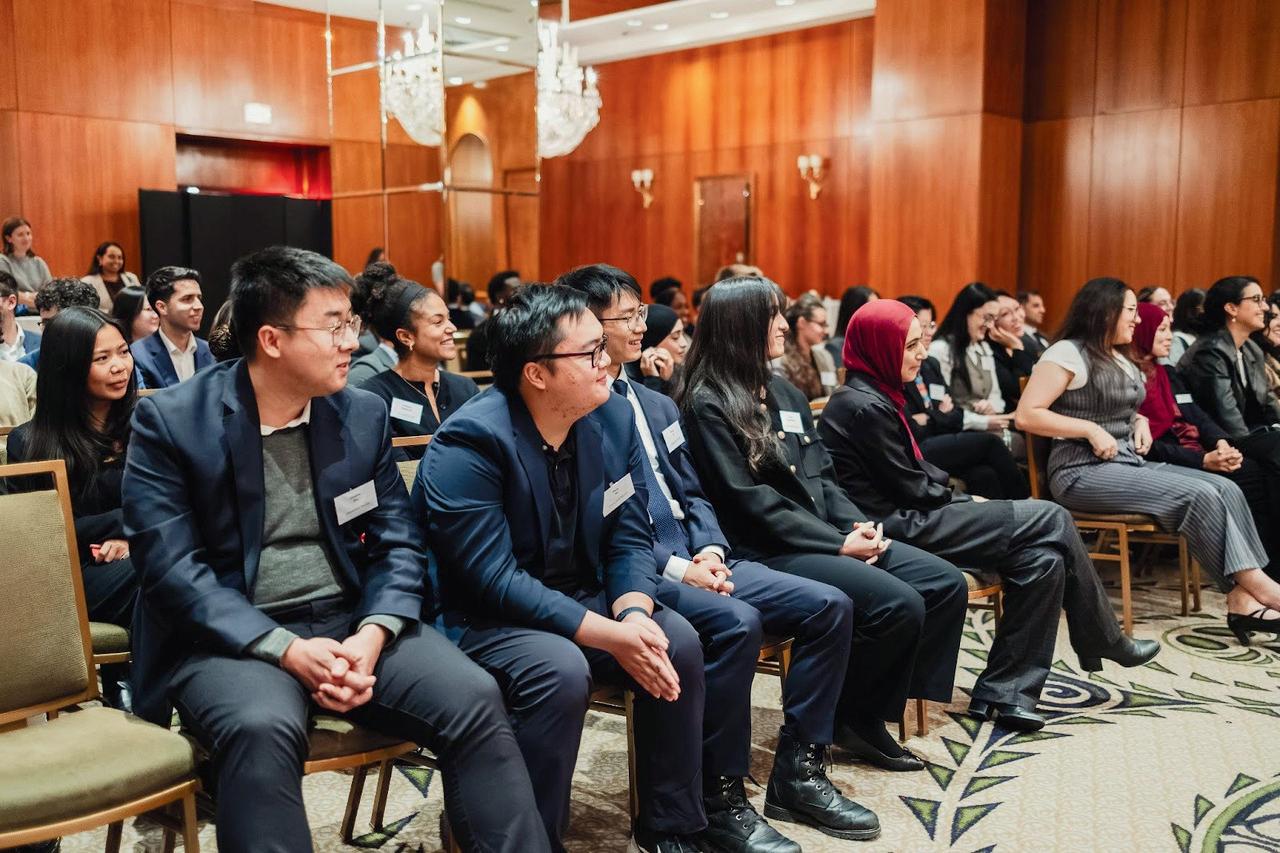
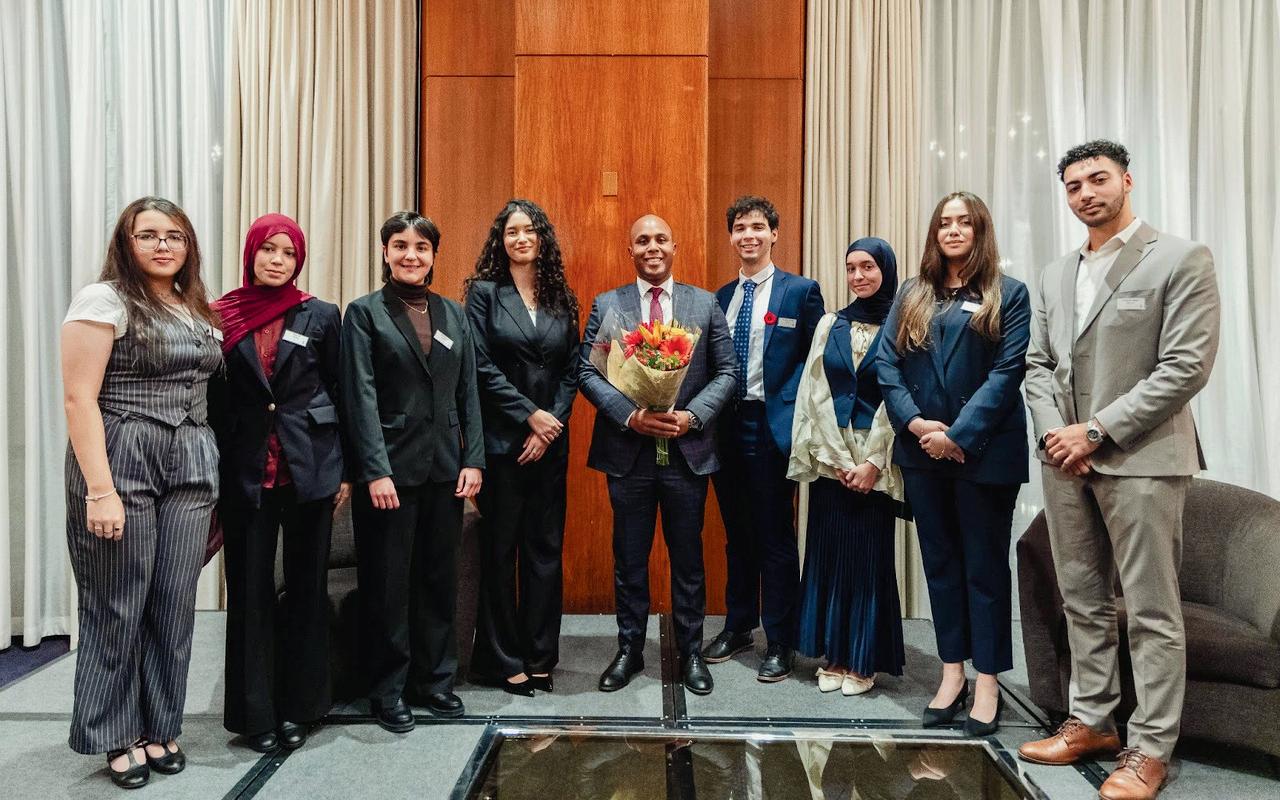
OnTuesday the 11th of November, the NorthAfrican Law StudentAssociation hosted the 3rd iteration of the Law and Diversity Night at Omni Hotel.This evening included great cocktails, sparkling conversations, and good company. The highlight of the night was our panel discussion with Justice Bien-Aimé, whose insightful reflections enriched th andinspiredourattendees.
Thank you to all of our sponsors: the firms, the Dean’s Discretionary Fund and the Alumni Student Engagement Fund. Thank you to everyone who attended and made this evening special. We look forward to seeing you there nextyear!
North African Law Student Association (NALSA)
The Twilight of the Law
...or
the Law in Twilight
Erin Porter | 2L
While the season of the supernatural has seemingly passed (if the mountains of hyper-consumerist Christmas decorations in Winners doesn’t make that clear enough), I have found myself increasingly drawn into how the law is represented in vampire fiction. Perhaps the crushing burden of exam preparation has made me nostalgic for the preternatural stories that transport us (or maybe I just want to procrastinate), but I wanted to return to this favourite topic of mine by exploring another piece of vampire media.
As I discussed a few editions ago, the vampire has long occupied a curious position in our cultural imagination: it is a creature defined by transgression yet persistently entangled with questions of law, governance, and social order. In Bram Stoker’s Dracula, with its cataloging of legal documents and property transfers, toAnne Rice’s vampire trials, the undead seem obsessed with maintaining a rules-based social order despite their own flaunting of nature’s laws.
Perhaps the pairing of vampire and law speaks to our deeper human anxieties. Vampires represent the ultimate outsider: immortal, predatory, operating beyond human morality (and mortality). Yet, modern fiction consistently depicts them as creators and subjects of legal systems, and I find this especially interesting where it manifests in media that follows a sympathetic vampire. The prevalence of the law may suggest that, in fiction, law itself may be understood as the boundary marker between human and monster—and that even our darkest fantasies cannot imagine existence without some form of social contract.
Stephenie Meyer’s Twilight series, despite its myriad flaws, participates in this tradition, offering another look into vampire law.TheVolturi, who make an appearance in the 3rd and 4th film (I’ve never read the books—Twilight lore experts direct your complaints to the Quid, please and thanks), are essentially vampire royalty who are in charge of meting out justice in the vampire world. Upon rewatching, I found that vampires embody something close to the tyrannical leaders explained in Hobbes’s Leviathan: an absolute sovereign power established to prevent the war of all against all. They enforce a small set of fundamental vampire laws, most critically (to the film's plot, anyway) the prohibition against revealing vampire existence to humans and the ban on creating immortal children.
This structure suggests a particular anxiety about the nature of vampirism itself. Vampires in Meyer’s universe possess extraordinary power, eternal life, and an inherent predatory relationship with humanity. Without law, they represent pure appetite—the Hobbesian state of nature incarnate.
TheVolturi emerged as the response to this chaos, a centralized power that channels vampiric violence into structured forms. I findthisespeciallyinteresting,astheVolturicameintopowerin response to the brutalities of previous covens, who ruled over humans directly. Now, their carefully enforced legal regime is focused almost exclusively on managing the vampire-human boundary: keep the secret, and don’t create uncontrollable and immortal children. In this sense, vampire law is entirely reactive, structured around the fundamental fear that these powerful, immortal outsiders have of retaliation from human society.
The representation of the Volturi’s rule reveals a deep human anxiety about what exists beyond the law’s reach. Vampires literalize the fear of those who operate outside social constraints—immortal, powerful, predatory, and fundamentally other. Yet the series insists that even these creatures require law, cannot exist in pure anarchy, and develop elaborate social hierarchies.This impulse to impose legal order onto supernatural beings perhaps reflects a broader cultural anxiety about lawlessness and the monsters we imagine thriving inlaw'sabsence.
When returning to Twilight for this piece, I found that it was curious how Meyer wrote a treaty into the fundamental relationship between the Cullens and the Quileute, a werewolf clan, living in Forks. There is no shortage of articulate critiques of Meyer’s representations of Indigenous peoples through the Quileute—it is replete with stereotypes—and I find it interesting how even a violated treaty makes it into the Twilight legaluniverse.
The Cullens and the Quileute negotiated a treaty in the 1930s with the goal of coexisting on the Quileute’s traditional territory. In these negotiations, the Quileute require the Cullens to give up feeding on humans or sharing their vampiric gift with anyone, as it is antithetical to their moral philosophy. The agreement establishes territorial boundaries and behavioural constraints, and the story frames this treaty as conferring legitimacy on the Cullens’ presence in the region. Nevertheless, it doesn’t escape fully from the history of treaty-making that we may be familiar with in law school; the Quileute still assert their sovereignty and agency in being an active negotiator, and both parties’ mutual engagement in upholding the treaty is essential. The breakdown we witness in the narrative stems from the fact that earlier generations failed to fully respect this treaty. However, this is certainly undercut by Meyer’s shallow and unthoughtful engagement with her Indigenous characters. I can’t really chalk the treaty-making up to anything more than a coincidence. Twilight transforms the Quileute into mystical shapeshifters, collapsing any serious engagement with Indigenous identity into supernatural tropes.
In doing so, Meyer does not raise a challenge in any way to the colonial structures that the Cullens benefit from and are complicitinupholding.
In summary, Twilight seems to reproduce some of the same anxieties about monsters and the law that other stories do, including Dracula (if you’re interested, read my last article!). In our stories, the vampires’need for structure mirrors our own, suggesting that their heightened and monstrous capacityforviolencerequiresthelawtoconstrainit.
Chironomia and The
Meyer’s vampires, for all their superhuman abilities, cannot escape this fundamentally human need for enforceable rules. In this way, the vampire becomes a mirror (although it may not reflect them), reflecting our deepest fears not about what exists beyond the law’s reach, but about what we ourselves might become without it.
Hands of Law
A Legacy of Non-Verbal Communication
Nicholas Bailey | 3L
Law is decidedly a realm ruled by language. Whether documented in writing or spoken in courts, words predominate legal logic and discourse. Yet, the nature of human communication is hardly so easily captured. In the Ancient World, this was not only understood, but embraced.
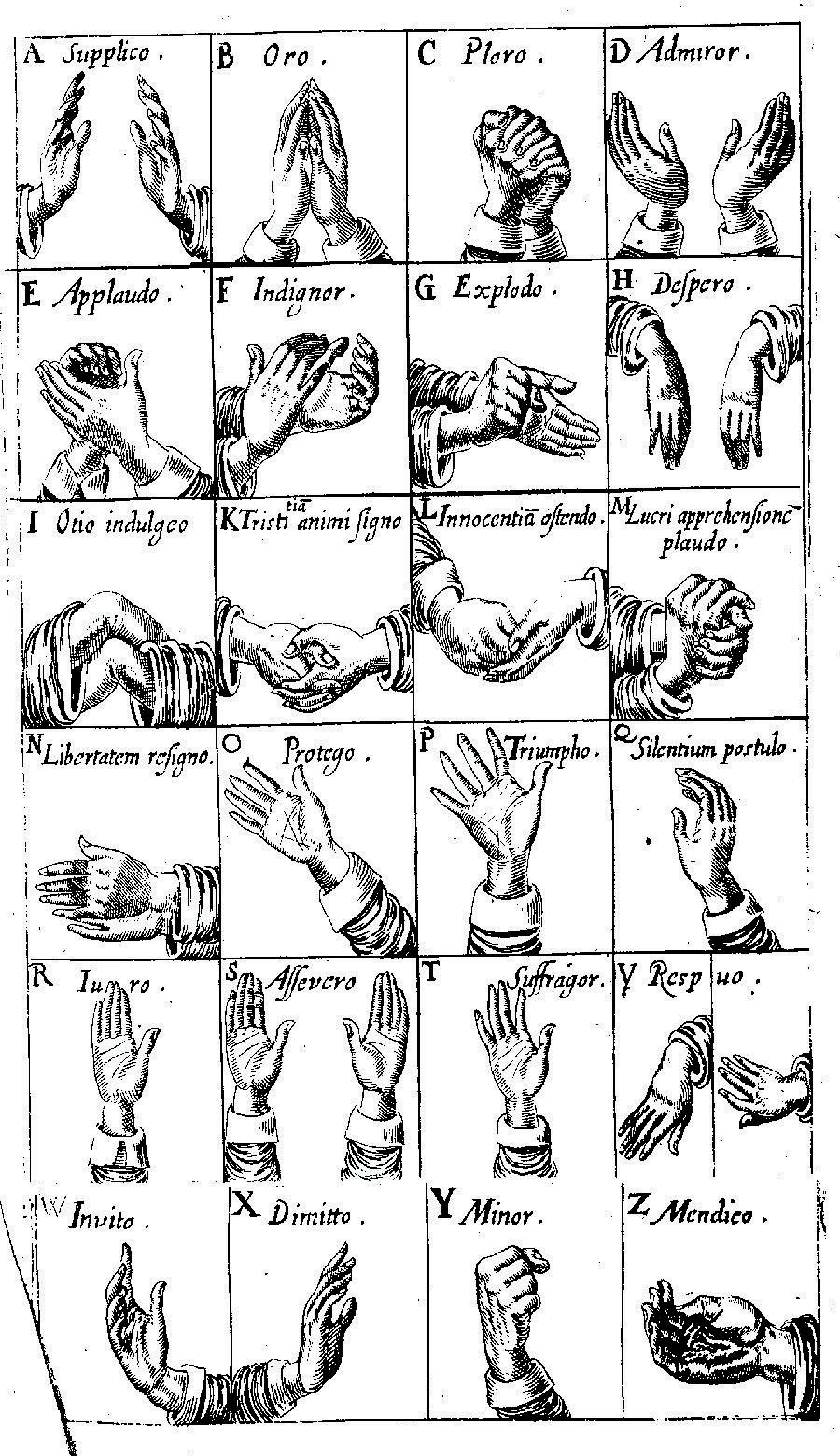
Imagine, it is 70 BCE, and you stand in Rome’s Forum. Before you, Marcus Tullius Cicero prosecutes Gaius Verres, governorof Sicily,accusedof corruption and extortion. Cicero’s legal acumen is palpable, but he does not rely on language alone, for his hands are instruments of persuasion. He raises his right wide open, signaling sincerity. He points sharply at witnesses and accused alike; gestures punctuating precise accusations. In describing victims’ suffering, his movements shift: hands tremble slightly, then sweep toward the heavens,evokingthegravityof injustice. Cicero’smasteryovervoiceandbodyturn a trial into a powerful spectacle of law and morality. This courtroom drama, however, is the culmination of choices crafted not just through logic, but as an expressionof chironomia.
InAncient Rome, the deliberate and disciplined use of hand gestures was essential not just to oratory, but fundamental to legal practice.
Practitioners like Cicero, Rome’s master orator, made law a stage where hand gestures carried rhetorical, emotional, and juridical weight. His treatise, De Oratore, for example, teaches that gestures such as open palms signal honesty, while pointed fingers may denote accusation or emphasis. More than a century later, Quintilian, in Institutio Oratoria, significantly elaborates on the subject (indeed, he may be the literary source of the word chironomia), stressing the natural and purposeful variation of gestures to persuade and move an audienceeffectively.
Cicero’s legal speeches offer examples across his celebrated cases. In his prosecution of Gaius Verres, Cicero’s open right hand conveyed sincerity to onlookers. By contrast, his pointed finger underscored his accusations of corruption, a mirror of the formal legal act of stipulatio wherein a pointed finger sealed an obligation. In the later defense of Marcus Caelius Rufus (Pro Caelio) against charges of vis (political violence), Cicero lifted and lowered his arms to dramatize innocence and to contrast his client with the morally suspect accuser, Clodia, engaging audience emotions
through bodily cues. Similarly, in defending Titus Annius Milo (Pro Milone), Cicero’s strategic lowering of his hand called for restraint in retaliation, his gestures synchronizing with appeals to justice and reason.
For his part, Quintilian narrates a compelling scene where a grieving woman, holding the portrait of her murdered husband, unintentionally reinforces the emotional impact of her advocate’s speech. Though not a formal orator, her sustained action was a silent but powerful testimony that shaped the courtroom atmosphere, highlighting how not only trained speech, but the human body’s expressive power could inhabit law’s performative space.
Even Julius Caesar, in political and legal contexts, is described as using gestures and costume cues during trials and public discourse to influence public and audience perceptions, or assert authority, signaling how nonverbal communication was inseparable from law and politics in Rome. Cicero himself made use of such tactics during the Catilinarian Conspiracy, wearing a suit of armor as he made his way through the pomerium into the Senate, as a public denunciation of his attempted assassination (OrationsagainstCatiline).
The intricate choreography of voice and body was no accident. Roman education, rooted in the teachings of Greek philosophy, considered rhetoric as a core concern, and pronuntiatio (delivery) one of its canons, ensuring that any notable orator had been trained in persuasive speech and controlled gesture since childhood. The continuity of this tradition into medieval Europe, where rhetoric remained a central Liberal Art and prerequisite education of juridical training, ensured that law retained its performative and embodied character well into modern times.
Chironomia itself originates from classical rhetoric, denoting the disciplined use of the hands and body in speech. In Roman law, however, gestures moved beyond purely rhetorical impact to carry binding consequences in transactions and trials. Consider the ritual of mancipatio, wherein ownership of res mancipi (certain lands, chattels or slaves) was transferred not merely by words, but through a choreographed sequence of gestures and objects (striking a bronze piece against scales, in the presence of a certain number of witnesses, and exchanging objects symbolic of the property exchanged). Other gestures, such as pointing a finger during a contract (stipulatio) or laying hands on a debtor (manus iniectio) were not decorous additions, but acts of law, laden with tradition. The Mos Maiorum, the unwritten yet intrinsic ancestral customs of Rome, framed these gestures as essential legacies, ensuring that law was, beyond text or speech alone, a performance inheriting authority from the past.
Although transformed by changing times and context, this legacy crossed the centuries, profoundly influencing medieval legal ritual. For example, medieval courts adopted the Roman practice of physical oath-taking through gestures. The raising of the right hand to show an unmarked palm, touching relics or Gospels for divine
witness, and participating in handclasp ceremonies to symbolize fealty and agreement all reflect more ancient customs. Manuscripts, such as the Sachsenspiegel (13th century) visually document such solemn rites, underscoring how touch and bodily gestures solemnized promises in a world where orality and public performance dominated. These gestures made law visible and palpable, connecting the litigant, the
community, and the divine in a shared ritual space: an echo of ritual acts sanctifiedunderRome’s Mos Maiorum
In Roman lands, formal legal gestures of more ancient times continued in Justinian’s Corpus Juris Civilis. Although transformed or amended, practices such as stipulatio and symbolic delivery remained essential, with gesture and ritual preserved in codified language. Canon Law too
From John Bulwer’s Chirologia (1644).
inherited and adapted these traditions, blending Roman gestures with Christian sacraments and ecclesiastical rites, ensuring that physical acts remainedcentraltolaw.
Within the realm of oaths and truthclaims, the raising of the right hand has transcended eras. Originating in ancient Roman courts to signify honesty and openness, this gesture carried an association with strength and authority. Into 17th-century England, however, the ritual also served a pragmatic purpose: The raised hand was inspected for branding marks indicating prior convictions that might influence sentencing and credibility in court. Adapting ritual gestures to circumstances, even symbolic economies developed around oaths. For example, in parts of northern Europe, until the 13th century, if sacred texts were unavailable, litigants swore oaths by placing a hand on a doorframe or door ring. Furthermore, in 13th-century German courts, witnesses sometimes extended two fingers as a gestural shorthandfortouchingasacredrelic.
The practices of sealing agreements and endorsing representation also relied heavily on gesture. For example, in medieval Germany, witnesses would grasp another party’s arm to signify endorsement, while 13th-century English litigants acknowledged their attorneys by raising their hands. Conversely, gestures like crossing hands, as documented in early medieval German law, served as a clear, nonverbal indication of refusal or incapacity within legal proceedings.As such practices demonstrate, gestures were explicit acts of legal intent, not mere accessories to words.
A less conscious practice for several centuries, the tradition of chironomia was kept alive, renewed or consolidated. Notable efforts include John Bulwer’s 17th-century Chirologia and Chironomia thatemphasizedthehandas universal language and Gilbert Austin’s Chironomia;or,ATreatiseonRhetorical Delivery (1806), which codified hand andbodygesturesfororators.
Although rarely acknowledged, since formal practice fell out of favour in the 19th century, many modern legal acts still echo their descent from ancient chironomia. Whether the handshake that seals a case, the poised stance of litigants before a judge, or the ceremonial swearing of an oath, the gestures, movements, and formalities familiar to any courtroom may now be normalized, but more than just practices, each is a living echo of a performance. Just as a Roman’s pointed finger might formalize a contract, so today does a signature, biometricscan,oraffixingof aseal: all are acts that render intention visible. In so doing, they remain symbols of authority rooted in the same traditions as their bodily predecessors. Indeed, every legal document filed may, in principle, be the descendant of a practice influencedbythe Mos Maiorum
While we may take the gravity of gestures or emotions in court for granted, it is all the more significant to remember that preeminent orators and jurists saw in these controlled actions the very essence of making the persuasive elementsof lawvisibleandreal.
Appreciating this legacy reveals that law’s voice is not a mere echo of text, but a living performance. Gestures remainapowerfulmeansof conferring legitimacy and captivating attention. More than formality or procedural necessity, such acts remind us of the deeply human presence at the heart of legal practice, one that legal paperwork and spoken pleadings alone can never fully convey.To study law is to inherit more than statutes, jurisprudence, or doctrine; it is to inherit a living language of gestures transmitting authority and sincerity, passed down by those who pursued justicebeforeus.
Please note: Some poetic license has been taken to describe specific gestures in this text, as precise reconstruction
generally remains inconclusive due to limited extant source material.
Recommended Readings:
Austin, Gilbert. Chironomia; or, A Treatise on Rhetorical Delivery. London, T. Cadell and W. Davies, 1806.
Bulwer, John. Chirologia: Or the Natural Language of the Hand. London,Thomas Harper, 1644.
Bulwer, John. Chironomia:OrtheArt of Manual Rhetoric. London, Thomas Harper, 1644.
Cicero. De Oratore. Translated by E.W. Sutton and H. Rackham. Loeb Classical Library, Harvard UP, 1942.
Cicero. The Orations of Marcus Tullius Cicero. Translated by C.D. Yonge. London, G. Bell and Sons, 1913-21. 4 vols.
Hall, Jon.“Cicero and Quintilian on the Oratorical Use of Hand Gestures.” The Classical Quarterly, vol. 54, no. 1, 2004, pp. 143–160.
Hibbitts, Bernard J. “Making Motions:The Embodiment of Law in Gestures.” Journal of Contemporary LegalIssues, vol. 6, 1995, pp. 51–70.
Thismonth,youarebusy.Go-modeis onfullspeedatthebeginningof the month.Don’tneglectyourme-time. Delegatingcanalsobebeneficialfor yourwell-being.Bytheendof the month,you’llberewardedforyour hardwork,andyourlovelifewillbe thriving.Youaresodeserving,Cancer!
The Faculty's holiday doordecorating contest has begun! Head up to Professor Adamski's office (NCDH 519) for a look at the Tiny Tax Band's visual rendition of Wiebe Door Services Ltd. v. M.N.R., 1986 CanLII 6775 (FCA) and Royal Winnipeg Ballet v. M.N.R., 2006 FCA 87. Happy holidays!
Pubdocs
Holidays
Property
Snails
Closed book
Piano
CROSS
Finals Season
Clues
Across
[2] Time to find out where you put it before your civil law exam