Ah yes, winter Seasonal sadness Vitamin D Frantic and half-devout rewatching of the “My cousin Oskaar” video on YouTube All these things come into my life, and likely yours too, dear reader, at this most wonderful time of year Well, okay, maybe the Oskaar video is just a me thing
1
I wanted for this letter to bring you a moment of sunshine in the darkness, or even just a silver lining to the clouds This goal made me think back to a few years before law school, when I spent eight months working in urban forestry I learned a great deal about the identification, care, and pruning of trees (and driving of pickup trucks). Those lessons armed me well for my future endeavours. For example, nothing since has felt quite as real as shuttling branches into the starved maw of an industrial wood chipper As nerve-racking as law school can be, at least I no longer need accidental death and dismemberment insurance!
But I digress By far the most valuable gain I derived from that job has been a mental catalogue of my favourite urban winter trees Though these city mainstays are not your classic beauties of spring magnolia or summer elm, they have brought me consistent joy through the long, snowy winters. In fact, some of them have a unique beauty that only the cold reveals Unhidden by leaves, the smooth bark and red shoots of young silver maples really shine, and a fluffy cap of snow is the best decoration nature can give to boughs of blue spruce
If you ’ ve read up to this point, you can probably tell that I really like trees. As you’ll see from the articles in this issue, I’m not even the only one! I do sincerely love them, and I hope that some of you will take more note of your friendly neighbourhood flora the next time you commute to campus or run an errand. But anyone can make their own list of the small joys in life, even especially the inconspicuous ones It’s my humble opinion that such an exercise is good for the soul. Happy discovering, McGill Law. And stay warm!
Oskaar&Dave,“My cousin Oskaar”(19 March 2009), online (video): <youtube.com/watch?v=q5q77MQzU2Q>.
Cette semaine
I write this from the Nahum Gelber Library. I am accompanied by two different caffeinated beverages and a “Calming Instrumental Study Playlist ” I can feel the stress from my classmates in the air around me unless that’s just the caffeine kicking in
As I look over my various article ideas and half-written drafts, an increasingly familiar thought creeps into my head
Just using ChatGPT would be so much quicker
This, I’m sure, is not an uncommon thought. Wherever you stand in the ongoing debate, most people I’ve spoken to have used LLMs to speed up some aspect of their lives: generating ideas, troubleshooting tech issues, fixing grammar, or even producing written work As we near the final weeks before exams, convenience and efficiency push their way to the top of our priorities Every minute can be maximized and we beat ourselves up for anything that feels like wasted time. In light of this, the middleground stance I and many others have taken on AI use is:
I’ll use it to get the tedious work out of the way and free myself up for more important things
Yet despite this boundary, I felt the AI reflex when writing a Quid Novi article What “important things”am I saving my time for if what I’m pushing away is my extra-curricular creative endeavours? What’s the point of signing up for such opportunities if only to skip through them as quickly as possible?
For the record, I did not seriously consider getting ChatGPT to write my article for me. But the fact that this instinct was triggered in the first
place was shocking When did deferring to ChatGPT become a heuristic for me? Now that the power of generative AI is a click away, my brain itches to shut down any time it feels an inkling of struggle.
The class of 2025 everyone like me who has just graduated from their Bachelor’s is the last cohort of students who started university before ChatGPT’s release In my interactions with current undergraduate students, I’ve found a dramatic decrease in the ability and willingness to dive headfirst into a problem Anytime a task seems daunting or complex, the immediate instinct of many is to get ChatGPT to start the work for them I am embarrassed to say the mindset of these students is close to my own:
I just don’t like looking at an empty page If ChatGPT gets it started for me, then I can do the actual work of shaping it
The only difference is where we place the goalposts of what work counts as “important enough” for people to give their time to In the years ahead, as the kids using ChatGPT today grow up, I worry about where these goalposts will ultimately land
But I wonder if attempting to delineate meaningful and nonmeaningful work is really the most fdffff
useful way to frame our relationship with LLMs. A common argument against AI use is that people, especially in an academic context, should be process-oriented rather than outcome-oriented. That although generative AI can sometimes produce the intended result, we ultimately do ourselves a disservice by skipping the work of putting that result together If that’s the case, rather than judge AI use based on what we ’ re asking it to do, it may be more meaningful to reflect on when it is we feel inclined to turn to it This brings me to my biggest concern about AI: that it is making us incapable of facing struggle.
For two summers in my Bachelor’s, I worked as a tree planter If you haven’t heard of tree planting before, please dispel the peaceful images of gardening and treehugging in your mind It’s a physically demanding job with long hours in all weather conditions, and you ’ re paid about 12 cents for every tree planted One day, after earning only $75 from 8 hours of plowing through thorns and wasp nests under a blazing sun, I asked an experienced planter for advice. Surely, I thought, there must be some trick I don’t know. I asked how to plant more trees He shrugged and said:
Plant more trees.
In the moment, that advice was infuriating. The next day, a few hours into my shift, I got to a point where I felt like I couldn’t plant anymore It was pouring rain, I was cold and muddy, and I wanted an easy way out. Perhaps out of spite, I decided to take his advice I kept putting trees in the ground, one after the other, moving so slowly that it felt like it wouldn’t make any difference But I made more than $75
that day. As the days went on, I put my head down and planted trees without stopping for the wasps or the thorns Slowly but surely, my numbers started to go up
Being uncomfortable is, by definition, not easy. We live in a world where there are so many ways to not only avoid struggle, but to justify avoiding struggle When we ’ re stressed about exams and jobs, it’s easy to feel like taking the shortcut is the right thing to do. But when we wear down our tolerance for struggle, we limit ourselves Pushing through tedious or frustrating work is a skill in itself. We will all face moments in our lives where our usual shortcuts don’t work, and the only way to succeed is truly to go shovel-first into a wasp ’ s nest and deal with whatever happens next
So when that AI reflex hits, I urge you to consider taking the hard route And rather than weighing whether the task at hand is“important”enough for your attention, ask whether you ’ re using it to replace the cognitive work of persevering through a complex idea. In the same light, if you ’ re banging your head against the desk trying to figure out your Torts outline, know that what you ’ re doing as slow and unproductive as it may feel is a very good use of your time.
Entre deux pas
Une paire en cuir, une paire qui sourit Une paire élégante, une paire qui claque
Aux talons nerveux battant l’impatience, on me dit choisis. Je reste pieds nus, ma peau exposée à la lumière crue
La radio déverse morceau après morceau, je suis happée par la cadence, épousant les pas des danseurs avant moi, jusqu’à en perdre les miens
Qu’en penses-tu?
Je tousse Réponds-moi s’il te plait!
Je m’étouffe.
Mentons à la main
Main à la hanche
Hanche qui balance
Balance qui penche
Féconde de la nuance, je persiste dans l’itinérance.
Je marche sans camp, jusqu’à la fin des temps
Ayant chaussé toutes les paires de souliers, je ne peux honorer qu ’ un seul collier.
Ce serait condamner les reflets, Qui n ’ont pas encore parlé.
Piste de danse le jour, Ombre dansante la nuit
Il s ’agit d’un faux pas.
Éteins la radio. Insère ton disque. Choisis ta danse
COP30 in Brazil: Did they really cut down 10 000 trees?
The annual Conference of the Parties (COP) convened in the Amazonian city of Belém, Brazil on November 10th, and will close on November 21st On the agenda: climate finance, global Indigenous stewardship, missed deadlines, the growing resistance of rich countries to meet their agreed-upon temperature targets, and much more. Before COP began though, the streets of Belém were packed with protestors for days singing classical Brazilian songs, Indigenous chants, and calling for environmental justice The event was also foregrounded by local controversy: BBC ran a news article claiming that the Brazilian government had cut down 10 000 trees in the Amazon rainforest to build a 4-lane highway to Belém that would accommodate the COP dignitaries While the highway itself was planned long before COP, the viral headline attracted retweets from skeptics across the political spectrum, including Donald Trump Global sarcasm about COP is telling: after the US pulled out of the Paris Agreement, and rich countries (including Canada!) continue to eschew their climate goals, there is a building cultural skepticism regarding the COP and its impacts Let’s unpack it
What is COP?
The international regime created to tackle climate change is one of the most complicated and nebulous there is
Even after taking two classes on the subject (Climate Change Law and Public International Law) I am still confused about the nature of each and every treaty, covenant, regime, organization, authority… yikes! For those uninitiated, here is a brief overview of the most essential acronyms that underlie COP
UNFCCC: The UN Framework Convention on Climate Change This framework is technically a treaty, signed in 1992 by 154 states (now 198, making it nearly universally ratified) The treaty declares its goal as being“to achieve the stabilization of greenhouse gas concentrations in the atmosphere at a level that would prevent dangerous anthropogenic interference with the climate system.” (Article 2). However, the UNFCCC itself does not specify how to achieve this goal It essentially brought all interested parties to the table, created a bunch of administrative bodies, and left the rest for later The two big ideas to come out of the UNFCCC are:
Common but Differentiated Responsibilities (CBDR): the idea that countries with different levels of resources should have different commitments to tackle climate change
The Conference of the Parties (COP) which will meet annually to hold actors accountable
The Kyoto Protocol (1997): This treaty closely followed the creation of
of the UNFCCC and began to articulate climate targets and means by which states could achieve them I won’t discuss it much because it was superseded by the Paris Agreement in 2015.
The Paris Agreement (2015): This is the most significant and specific treaty that outlines what states should actually do to stop climate change, adopted at the 21st COP in 2015 As per Article 2, the overarching goal of the treaty is to limit temperature rise by 1 5 degrees celsius from preindustrial levels (this can vary, but it means anytime before the beginning of the industrial revolution around the late 1700s) It also describes a five-year cycle, beginning in 2020, wherein every 5 years the parties must commit to increasingly ambitious climate goals. These take the form of Nationally Determined Contributions (NDCs) NDCs are essentially reports where countries outline their plan to tackle climate change in their own jurisdiction, through policies targeting specific sectors, law, and budgeting. Ideally, countries would submit their NDC, get recommendations rom experts at COP, and then follow through. All the NDCs submitted are maintained on a public UNFCCC website, to encourage accountability However, shifting political landscapes means the promises made in the NDCs are often broken. For example, Canada’s original NDC, which we submitted in 2017, promised that we would reduce our GHG emissions by 30% below 2005 levels by 2030. This goal was updated in 2021 and more recently, 2025, in accordance with the “ratcheting up ” model in the PA. The most recent NDC says we will reduce our emissions by 40-50% below 2005 levels However, there is broad consensus from climate scientists (including the Canadian Climate Institute) that Canada will miss this target by a wide margin Our policies ss 1
See the Climate Action Tracker, which pulls data from the Canadian Climate Institute (Climate Action Tracker, “Canada” (3 November2025),online: 1 <climateactiontrackerorg/countries/canada>
2
don’t adequately tackle the fossil fuel industry, which account for 31% of national emissions. What’s more, emissions from oil and gas are actually on the rise in Canada
The Global Stocktake (GST): The Global Stocktake is the Paris Agreement’s tool that, in 5-year cycles, assesses progress in achieving the 1.5 degree goal and national progress on NDCs. The first global stocktake (GST-1) was done in 2021 at COP28 (it should have been in 2020, but was delayed due to COVID). The results of the data were firm in that the world is not on track to meet its 1 5 degree target
Sustainable Development Goals (SDGs): Increasingly, mainstream politics are recognizing climate change as a social and economic issue In 2015, the UN passed a resolution outlining 17 Sustainable Development Goals which should guide UN policy. These are very ambitious and are explicitly nonbinding: for example, SDG 1 is “eliminate all poverty, in all its forms by 2030.” The SDGs are supposed to guide climate policy, and present an aspirational vision of a just society
Are any of these instruments “legally binding”?
If you Google “is the Paris Agreement legally binding,” AI will give you a resounding “ yes ” However, the climate change regime, like all International Law, by nature does not have any enforcement mechanisms There are no “climate police” coming to arrest noncompliant leaders, nor are there any international sanctions or fines associated with falling short Compliance is based on ideals of disclosure, transparency, and also the “ name and shame” technique. dddd
See Rick Smith, “Canada Won’t Meet Its 2030 Climate Target Now What?”, Canadian Climate Institute (23 September 2025), online: 2 <climateinstitute ca/canada-wont-meetits2030-climate-target-now-what>
Lots of academic ink has been spilled over whether some provisions in the Paris Agreement are more binding than others (for example, procedural provisions that contain the word “shall”) If we look at the facts, however, we can clearly see that there have been no serious and direct political consequences for leaders who ignore or miss their treaty commitments.
This doesn’t mean that instruments like the Paris Agreement are without effect. Beyond solidifying an international movement for climate justice, the 1 5 degrees celsius standard is significant in that it provides more solid ground for regional judges and lawyers involved in climate litigation In my opinion, while classifying such treaties as ‘legally binding’ is purely aspirational, they have the potential to be ‘legally inspiring’; they provide essential discursive and scientific substance to bodies that do enforce national climate policies. As more groundbreaking climate cases begin to reach the superior courts, we’ll begin to see the impact of instruments like the PA in a different way.
Why are there so many acronyms but very little action?
The development of each of these bodies and instruments was a social and contextual matter, rife with controversies, some corruption, and plenty of compromises Basically, it would be impossible to gain the consensus of the world’s most powerful nations if the commitments in these treaties were considered to be too legally or politically hazardous For an in-depth history of how we ended up where we are in terms of policy infrastructure, I would highly recommend Jessica Green’s book Existential Politics: Why Global Climate Institutions are Failing and How to Fix Them Her principle argument is that governments have misdiagnosed the political problem of climate change, focusing on trading and disclosing emissions instead of tackling the environmental crisis as a a political issue that will result in winners and losers.
Who attends COP and how does it work?
The COP is technically the primary decision-making instrument of the UNFCCC At the end of the Conference, parties are supposed to reach a “binding agreement” about climate action (re: my above discussion of ‘bindingness’) For example, the Paris Agreement is the agreement reached at the end of COP in 2015 Each signatory nation is expected to send a representative to report on national progress, reaffirm commitments, and take part in negotiations on new global goals Principle events include high level speeches on key issues, scientific reports, and typically culminates with negotiations and a final statement about a collective action plan. COP also provides a forum for leaders, climate experts, and activists to come together and speak about climate progress, successes, and failures. At COP, there is a “blue zone, ” mediated by the UN, for official representatives, and a “ green zone ” for members of the public, where typically anyone can enter and visit information pavilions “Official representatives” in the blue zone aren’t just official delegates of the state; it can also include business representatives, lobbyists, activists, and NGOs who have been invited to take part as ‘stakeholders’. These include Indigenous groups and land stewards from affected areas, but also corporate lobbyists At COP30, more than 1600 fossil fuel lobbyists have been granted access to negotiations, significantly outnumbering every single country’s delegation apart from Brazil. The exposure of industry participation in COP has grown in recent years, leading to protests both outside COP and in the public“green zone. ” 3
Nina Lakhani, “Fossil Fuel Lobbyists Outnumber All COP30 Delegations Except Brazil, Report Says”, The Guardian (14 November 2025), online: <theguardian com/environment/2025/nov /14/fossil-fuel-lobbyists-cop30> 3
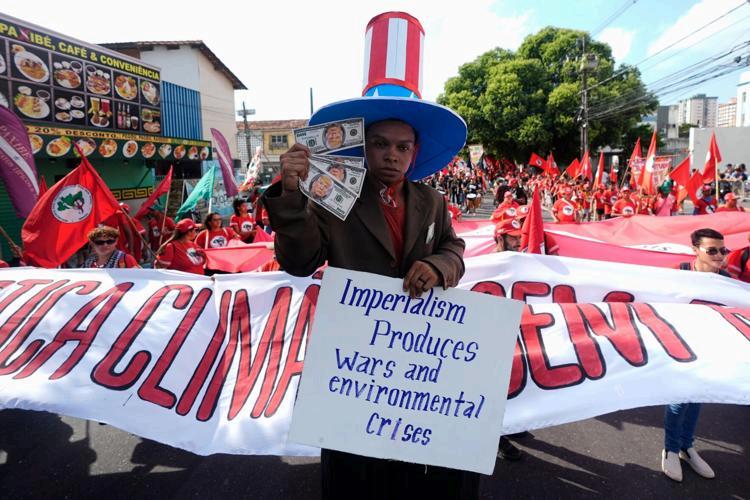
Climate protests in Belém PHOTO FROM WBOC News at wboc.com/news/international/demonstrators-take-to-streets-of-Belém-at-halfway-pointof-un-climate-talks/article 3e15a110-f814-5184-97be-2aef045ae305.html.
What has happened at COP so far?
As of this writing, COP30 is not yet over, and the official agreement has yet to be released. There are a million things to talk about, and hundreds of ideologically loaded and selfcongratulatory speeches ripe for analysis. However, important statements have been made that reflect a shift in the attitudes of nations towards climate commitments, and a changing understanding of the nature of COP itself Here are some of my key takeaways from monitoring the COP’s progress:
There is record-level participation and attendance at this year’s COP
Despite initial concerns about under-participation, more than 56 000 delegates registered for COP30, making it the secondlargest COP ever. Even more importantly, thousands protested in the streets outside: this is the first time mass protests have ever been allowed outside a COP venue.
There is an unprecedented number of Indigenous representatives who have been approved to speak 3000 Indigenous representatives have been approved to attend and participate in negotiations This is the largest Indigenous delegate in the conference’s history There are keynote speeches planned in the blue zone on how Indigenous land rights can be essential in the fight against climate change
Major negotiation challenges include finalizing the Belém-Baku Roadmap, a plan for climate finance flowing from the first world to‘developing’countries COP29 in Azerbaijan ended on bitter divides on the issue of richer countries providing climate “reparations” to poorer nations Ultimately, it was decided that developing nations most impacted by climate change should receive $1 3 trillion USD per year by 2030 from richer nations How this will be achieved has been a sssss
serious sticking point in negotiations at COP30 However, the UN has put forward a plan with 50 recommendations called the “Belém-Baku Roadmap to 1 3T” The recommendations include levies on frequent fliers and other high carbon activities As of this writing, no agreement has been reached on this plan
Rich countries avoid the fact that many of them have failed at their NDCs
Most major countries waited right until the deadline to submit their NDCs to the COP. However, the UN’s climate experts have largely agreed that most of these plans would cut greenhouse gas emissions by about 10% by 2035 –nowhere near the 60% cuts needed by that date to have a reasonable chance of staying within 1.5 degrees celsius. At present, the combination of all NDCs would result in temperature rises of about 2.5 degrees celsius. The ddddd
failure of the NDC system has put COP in a place of existential crisis, and there have been several talks that mention the need to reform the PA’s framework
New reckoning with a“transition away from fossil fuels”
At COP28, for the first time in the conference’s history, a ‘transition away from fossil fuels’ was included in the final agreement However, as usual, there was no concrete plan for how this would be done. There certainly won’t be an answer in two weeks, and oilrich countries have been quick to deny the “bindingness” of this solution in particular. On
Why do we have COP? Does it even do anything?
The reticence of participating countries on essential issues (like fossil fuels), and most notably the resounding failure of NDCs, gives good cause for skepticism about COP For all their fancy acronyms, “roadmaps,”“action plans,” blah blah blah, it’s hard to take these talks seriously This COP was also overshadowed by the US’s decision under Trump to ignore all their previous climate commitments, and instead disseminate climate-denial rhetoric If the world’s richest economy and second-largest emitter isn’t playing along, then what’s the point? Maybe
To me, the most exciting thing about this COP is not what happened inside, but outside. Mass protests by Indigenous groups and the people of Brazil outside the COP venue attracted arguably more press than the redundant negotiations inside Reporters describe the scene in the streets of Belém as a “clamour,”with people in costume, playing music, and overall taking part in joyful and enthusiastic protest Impactful change comes from the bottom up, and COP30 has been valuable in illustrating the widening chasm between the demands of the people, and the actions of the elite. The protests say what the politicians will
Dear Quid,
This is my first year in university I’m so lost and I feel like I have no idea what I’m doing There’s so many readings and I try to do most of them, but I just can’t keep up Sometimes I read the same thing over and over, and still don’t understand what’s going on I heavily rely on PubDocs to understand the cases and I’m scared I’m not cut out for this. I do enjoy what I'm learning, but people seem to understand 100 per cent of the material and I think I only understand 60–70 per cent of it Is this normal?
Sincerely, A Studious 1L
Dear Studious 1L, This is normal
Right off that bat, I have good news: No one understands 100 per cent of the material, no matter how much they pretend to do so + how much they raise their hand. And yes, how you ’ re feeling is beyond normal Whether it’s your first year out of CEGEP, you have a bachelor’s or even did a master’s, etc., the concepts you learn in 1L are those that not even a pre-law student will fully grasp (I can confirm as a former pre-law student).
1
DEAR QUID...
GOT A BURNING
QUESTION ABOUT LAW
SCHOOL? EXISTENTIAL DREAD? NEED
REASSURANCE,
OR JUST SOMEONE TO SAY “SAME” ?
Doing a double-take while reading more than once is expected Cold winter evenings in 1L spent in the library, hours studying more than I’d like, with maybe half the readings actually interesting, only to return home and ask myself: fffffff
1
For a good piece on the etiquette of hand raising, see Debbie Yeboah, “Please Don’t MANopolize the Class Time: Rules for Respectful Participation in Class”, Contours 7 (2019) 34
What did I even do today? But I cannot stress enough: Understanding the 60–70 per cent is arguably better than settling for zero per cent a tempting option not worth giving in to.
PubDocs can help as a guide, but never mistake it for scripture When I was lost in 1L, I took the opportunity to go to the office hours of some professors and most of the time, they are kinder than you’d expect. Ask them the same question, and they will reassure you you ’ re not the first, or even the hundredth student to feel lost, and they will hopefully help you out.
Do not let midterms override you with anxiety Don’t let any sort of “impostor syndrome” drag you down And any upper-year reading this has probably thought the same question as you They survived, and I promise you will too. ☺
Best of luck, Quid
SUBMIT TO QUID NOVI’S ANONYMOUS ADVICE COLUMN, TO GET ANSWERS FROM UPPER YEARS
Montreal Mob LawYers
Montreal has a long-standing relationship with organized crime. Be it the eternally incomplete construction projects or the perpetually patronless 24-h souvlaki restaurant, the past and present of the city’s history with the mafia are there for those who know where to look. One place you might not have expected to look, however, is under the Barreau du Québec’s “Find a Lawyer”tab
In June of 2025, a multi-jurisdictional police collaboration known as Project Alliance resulted in the arrest of 11 individuals, one of whom is the alleged leader of Montreal’s most infamous mafia family, Leonardo Rizzuto, formerly Maître Leonardo Rizzuto. Despite his less-than-spotless criminal record, M Rizzuto was admitted to the bar in 1999 and up until July of this summer, has remained a Barreau-accredited lawyer. His area of expertise? Criminal law.
Though it has been some time since M Rizzuto was actively practicing, it was in large part thanks to his position as a lawyer that he was acquitted of various charges related to gangsterism and drug trafficking in 2015 The operation known as “Projet Magot” used wiretaps to surveil a series of conversations between M. Rizzuto, an alleged member of the Hells Angels, the late Greg Woolley, another alleged mafia boss Stefano Sollecito, and M Rizzuto’s lawyer, Loris Cavaliere The conversations were captured in the offices of Cavaliere et Associés, which Loris Cavaliere was using to facilitate meetings between the three gang leaders The resulting case hinged on attorney-client privilege, but not that of M. Rizzuto and his lawyer; instead, the case was decided on the rationale that M. Rizzuto’s status as a lawyer meant that the conversation with M Sollecito was subject to the protections afforded by attorney-client privilege. Counsel for M. Rizzuto successfully argued that these recordings, therefore, constituted an unjustifiable infringement of Charter rights and so must be excluded from evidence Without these communications, the prosecutors didn’t have enough to make the charges stick, and both M. Rizzuto and M. Sollecito were acquitted
“La présence de [M. Rizzuto et M. Sollecito] dans le cabinet doit être présumée légitime en ce que Rizzuto y exerce à titre d’avocat ”1
What is perhaps even more surprising is that M. Rizzuto’s lawyer, M. Cavaliere, did not find his own ssssssss
Rizzuto v R, 2018 QCCS 582 at para 325. 1
admission to the bar nearly as helpful Instead, on top of being sentenced to 34 months in prison for gangsterism and possession of a firearm, M. Cavaliere was permanently disbarred for hosting meetings between leaders of organized crime groups in his professional offices.
Despite these events, M Rizzuto maintained his status as a lawyer accredited with the Barreau He was put on provisional suspension in July of this year, a decision which is subject to change pending the results of his current criminal trial, which is set to take place in a few months’time
The facts, the characters, the sloppy police work these events seem as if they were pulled from Mario Puzo’s lesser known sequel about the Corleones’ Sicilian-Canadian cousins. Loris Cavaliere as the mobster adoptee turned consigliere. Leonardo Rizzuto the son of a legend trying desperately to end the mob war his father’s death started The SPVM and the GRC as the clumsy cops whose inattention to the Charter let a mafia mastermind walk away clean. Yet the character with the most intrigue may be the Barreau With motives unknown, it retains M Rizzuto’s status despite having arguably sufficient cause to call his membership into question decades ago. Unlike the criminal charges which M Rizzuto has thus far managed to elude, disciplinary action and disbarment does not require proof beyond a reasonable doubt. On a balance of probabilities, it seems likely that M Rizzuto’s very public and life-long involvement with organized crime could shore up enough proof of a deontological offence.
“A lawyer must support respect for the rule of law” 2
Considering that, in 2024, 84 lawyers were stricken from the bar for failing to pay their annual fees, it is hard to imagine the reasoning behind the Barreau’s stick-to-itiveness when it comes to M Rizzuto’s status as a lawyer. Only a mafia-minded true-crime junkie could hope that the Barreau’s true motives are as fantastic as the other characters in this epic, instead of the unsexy oversight some have criticized it to be 3
And just as M Rizzuto’s current suspension is provisional, his future remains equally unstable as he and his counsel prepare for trial over the coming months. Time will soon tell if this is the end of M. Rizzuto’s era, or if the saga continues
2
Code of Professional Conduct of Lawyers, CQLR c B-1, r 3 1, s 12
3
Barreau du Québec,“Avis de radiation”(2 May 2024), online (pdf): <barreau qc ca/media/otiprb5a/avis-radiation-defautia-cotisations-2024.pdf>.
A Review of the All’s Fair Pilot
1236611069/
I’ve seen my fair share of Ryan Murphy shows, from Glee to American Horror Story, to Scream Queens, and I’ve come to love his campy, colourful, over-thetop storytelling that doesn’t take itself too seriously That's why I was genuinely excited when I heard he was creating a legal drama starring Kim Kardashian, future lawyer herselfwhat could be campier than that?
Unfortunately, All’s Fair fell completely flat for me, which is ironic given the height of the stars’heels It's not that I went into the viewing thinking the show was going to be high art; I guess I should acknowledge that my standards are pretty low to begin with If I’m entertained, I can pretty much get on board with anything, and given Murphy’s history, I was at least expecting to have fun
Much to my disappointment, All’s Fair was undeniably, astoundingly, and abysmally boring. I originally intended to binge the entire series for this review, but I couldn’t get past episode 1, so we can consider this a review of the pilot only. And don’t worry, I’ll keep things spoiler-free in case you decide, in an act of self-hatred, to ignore my warnings ss
and watch for yourself
The plot centers around a law firm comprised solely of exorbitantly wealthy women who exclusively handle divorces for other exorbitantly wealthy women. (I’m pretty sure they’re not legally allowed to only accept women as clients, but hey, I’m glad they left the door open for an uno-reverse gender discrimination lawsuit, RBG style.)
Kim Kardashian is Allura Grant, one of the head lawyers of the all-woman firm, and, given how star-studded the cast is (Sarah Paulson, Niecy Nash, Naomi Watts), I was expecting her acting to be terrible in comparison It definitely wasn’t good, but it wasn’t as unwatchable as I thought, and I think Kim’s usual monotone, vocal fry delivery works in this setting She is basically playing herself, after all. The other actors were fine, too, which is impressive given the confused material they were working with.
That leads me to my main gripe with the show: it struggled to commit to its tone, making it feel strangely tepid and uninteresting. I couldn't tell if it was trying to be sincere or comedic, sss
critically feminist or willfully ignorant, and ultimately, the show failed to convey anything meaningful or entertaining
While watching, I was initially trying to give it too much credit, assuming, or maybe hoping, that the feminist takes were supposed to be incredibly bad to the point of ironic criticism, because who can expect millionaire lawyers to be good feminists, right? If that is the case, though, they didn’t sell it, and the show seemed to endorse an unaware, off-pulse girl-boss feminism instead of rejecting it or offering a new perspective.
To be fair, I don’t expect a Ryan Murphy show to have nuanced feminist characters; in fact, I think he’s at his best when he lets his characters be terrible women - think Emma Roberts as Chanel Oberlin in Scream Queens A more entertaining and confident angle would have been to lean into the lack of awareness that sometimes accompanies wealth Just let these millionaire lawyer women be intolerable, it's okay. We don’t need to try to garner audience sympathy for them with some halfbaked, dated, capitalist feminism.
Maybe that's my real problem with the show - I don’t want to sympathize with Kim K, or her trophy wife clients. I want to laugh at them. Does that make me the bad feminist? Maybe But all I’m saying is that the show could stand to be a bit more self-aware. It rings empty, directionless, underdeveloped, and worst of all, dreadfully boring because it can’t commit to the bit I don’t think it's a stretch to assume that Kardashian being credited as a producer might explain the show’s hesitancy to paint the characters in any kind of overtly negative light…
To cap things off on a nicer note, I’ll briefly share what is by far the best part of the show - the costumes. The women ’ s suits are unapologetically sssssss
Promo art for All’s Fair. Source: Deadline, “‘All’s Fair’ Logs Biggest Hulu Originals Scripted Debut in 3 Years as Star Kim Kardashian Claps Back at Negative Reviews’” (Deadline, 7 Nov 2025) Courtesy of Hulu deadline.com/2025/11/alls-fair-biggest-hulu-debut-kim-kardashian-bad-reviews-
impractical, colourful, outrageous, and maybe the only part of the show that fully delivers in terms of campy fun. To illustrate this point, I present to you this image: a settlement meeting featuring Kim K in thong trousers Outstanding
Prof: “Loblaws is so greedy.”
Prof: “How many of you are going to go work in a law firm? In servitude to the 1%?”
Prof: *Throws marker on the floor*
“Sorry that wasTrump-y of me ”
Unfortunately, the Kardashianized business attire is not enough to save the lack of substance or unclear direction, and unlike the clothing, the plot leaves much to be desired.
Final Verdict: On a McGill Law B curve, this show bottoms so badly that someone is finally allowed to get an A+ Or, in other words, it's about as successful as Kim’s recent attempt to pass the California bar.
Prof: “You sold your brother on Facebook marketplace?”
Submit
to the Quid Overheards
or their infinitives dare and habere respectively, mean “to give” and “to have.” We can think of words such as “donation,”“endow,”“habitat,”“prohibit,” and even another popular Latin legal phrase: habeas corpus!
Nota bene: My deepest apologies for this column’s absence from the last Quid issue I know that all of us are busy and therefore “I’m busy” is a poor excuse, but truly, two weeks ago my life decided to become a series of explosions Hopefully you missed me, but either way, brace yourselves for this week’s Latin lesson: Nemo dat quod non habet and Ius cogens.
Nemodatquodnonhabet
Still from All’s Fair Source: Amy Odell, “‘All’s Fair’ Fashion Review: A Thong Business Suit and Gloves in the Ladies Room’” in Back Row (Substack, 13 Nov 2025). amyodell substack com/p/alls-fair-fashion-review-a-thong | I first heard this maxim, “No one gives what they do not have,”in Property class last year It means that no person may transfer ownership rights to someone else without themself having rightful ownership. Grammatically, it’s quite simple, so we’ll explore etymology instead Nemo is“no one ” or “nobody” easy to remember if you ’ ve seen a certain popular Disney movie! Dat and habet, sss
Ius cogens
| Also known as peremptory norms, and sometimes spelled Jus cogens (I personally hate this, but eheu, the world often does things I hate). Ius is“law,”and cogens is the present active participle of cogere, “to collect”or“to compel ”Therefore, as literally“compelling law,” it refers to mandatory norms recognized by the international community of states: see Article 53 of the 1969 Vienna Convention I could expound further, but in this thankful case, the existence of an English equivalent renders such an exercise moot. Just please, don’t spell it with the J! It’s not“compelling juice”! 1
1
Vienna Convention on the Law of Treaties, 23 May 1969, 1155 UNTS 331,art53(enteredintoforce27January1980)
LEGAL LORE
A Conversation with a Legal Aid Criminal Defence Lawyer
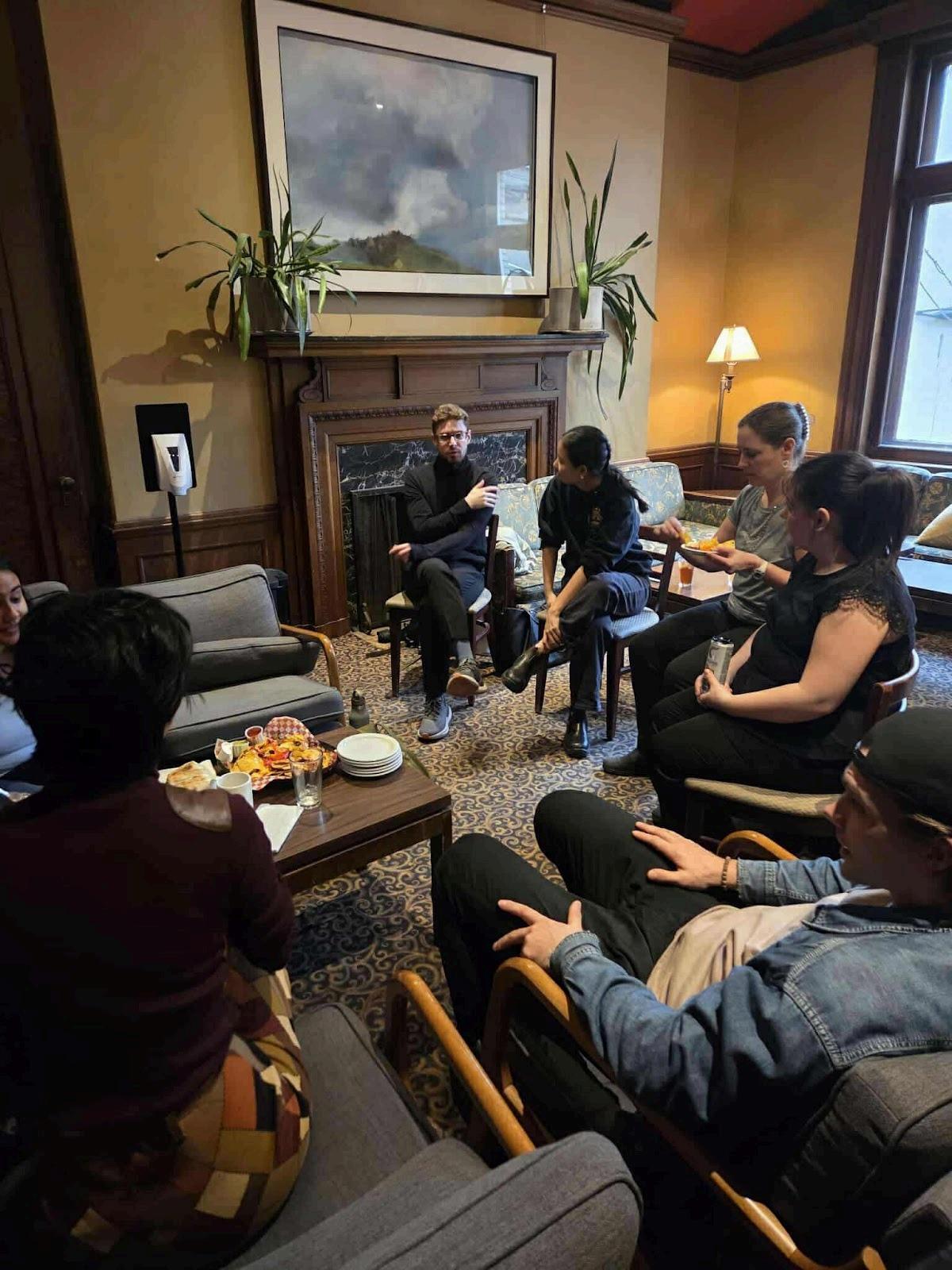
At the start of this year, I began working at the Montreal Courthouse as an inaudience clerk for the Criminal and Penal Chamber of the Court of Quebec I talk about my job constantly, not just because I love watching courtroom procedures unfold, but because I get to see truly remarkable lawyers make a real difference in the lives of people moving through the criminal justice system Me Alexandra Olshefsky is one of them Every time I have the privilege of encountering her in a courtroom, she walks in with this humble, but confident poise She is always well-spoken and inviting So when she graciously agreed to speak with me (and even took the time to reply to my email while on vacation), I was grateful I finally had the chance to ask all the questions I never get to ask during the brief moments our paths cross in court.
On a Wednesday morning, I headed to the Legal Aid office building (“I've got a rare office day tomorrow,” she wrote to me the day before) She met me with a big smile and a cheerful hello, then brought me to her office, where the sun was pouring in and views of Montreal unfolded beyond the window
So I came to know you because I am a clerk, and you are a criminal defence lawyer, obviously. Every time I see you, you go out of your way to assist people who don’t have lawyers in the room, and I think that’s very admirable. I thought, if I speak to a criminal defence lawyer, I have to talk to her. I want to talk about where that comes from, that active will to assist others, but first I want to talk about how you got here.What has your path been?
I used to work a lot in community development. I worked at Dans la rue for a number of years, at SaintJames and at the Old Brewery Mission. I worked in different capacities, so I was doing whatever people needed help with while I was in CEGEP My undergrad was in Communications Studies at Concordia, and then I went back and did a DESS in Community and Economic Development That’s when I applied to law school. I went travelling for the year, and got into McGill I really didn’t know if I wanted to practice law, but I saw the study of law as a good way to keep my options open, I guess. I had my first criminal law class with Justice Healy, who was then a judge at the Court of Quebec, and is now a judge
at the Court of Appeal I completely fell in love with criminal law and I saw law school as a way to continue doing the work I was already doing before, but in a different capacity
In Communications, I focused a lot on participatory documentaries, so documentary work where you ’ re working with the subject matter to produce the film. I was working with two individuals who had previously been homeless youth, and who were now peer intervention workers. I gave them cameras, I had a camera, and we were all filming together We went through the editing and narrative process together to tell their story. I also did a short film on a Zapatista collective, which is an Indigenous collective, who had a boot factory in Oaxaca.
Anyway, I wanted to be able to tell people’s stories and give people a voice. This feels like an extension of that. People think law and communications are two separate streams, but most of the work I do in law is translating and telling stories. Explaining the situation to a client in a way that is breaking through the legalese and helping them navigate the system is an example, as well as tra
translating the story and the realities of the clientele to the Crown prosecutors or the judges so that they have a holistic portrait of the person that is in front of them as opposed to only an accusation.
What drew you towards criminal law, specifically here at Legal Aid?
I knew that if I wanted to do criminal law, Legal Aid was the place to do it, because I didn’t have to worry about billables, or about chasing after clients for funds or money It was also about the population I wanted to work with. I was less interested in white collar crime, and more interested in dealing with people’s everyday interaction with the criminal justice system. There’s plenty of very excellent, reputable, wonderful lawyers that do that type of work I just wanted to keep working with the clientele I had worked with in the past, and Legal Aid was a way to do it where I could really focus on the law and the person, and take money out of the equation
It feels more like a vocation than a career choice. Most of my colleagues treat it as such as well, especially folks that have been here for 20, 30 years This is their passion As burnt out as people can get and frustrated with the process, every now and then there is a case or a person that draws you in and reminds you why you love the work you ’ re doing and that you are, in some very small way, making a contribution
You mentioned that the process can be frustrating, and that it is a lot of work. What about it makes it that?
The criminal justice system is like a secondary safety net because the public safety net is broken If individuals had access to adequate healthcare, social services, mental health services, addiction homes, housing and front-line services, it would cut maybe 50% of the files we are dealing with. And then you couple that with institutionalized racism
racism and the overrepresentation of marginalized populations, specifically Indigenous populations, people of colour and queer people, in the criminal justice system. It’s symptomatic of the fact that we don’t take care of each other as a community People fall through the cracks and end up in the criminal justice system. It can be anybody. That part can be frustrating, because it feels like it’s one step forward, two steps back
What we ’ re dealing with is often not law-related It's finding people the right services, like addiction treatment, or community social workers This can help mitigate through trial and sentencing If the Crown already has their evidence in a file, and they feel like they can make their case beyond a reasonable doubt, then what we ’ re doing is working with the client to mitigate sentencing factors and a lot of that is trying, as much as we can, to break the cycle I try not to be paternalistic, because it will only happen when people are ready. It can be difficult, because I’m not a social worker; I’m a lawyer, but you wear many hats when you work at Legal Aid
Yes, I was going to ask you about that. Your work, I imagine, is very multidisciplinary, especially here at Legal Aid. The threshold of eligibility is so low, that committing a criminal offence is probably oftentimes the least of someone’s worries when they are busy surviving.
Oh yeah And there’s such a variety too in terms of clientele. Sure, the vast majority is going through issues with homelessness, addiction and mental health But there’s also students, people who lost their jobs, or people that have newly arrived in Canada. Another intersection of our work is with immigration law, because you want to avoid any type of infraction that will trigger article 36 of the Immigration and Refugee Protection Act, which can lead to expulsion
We have this conceptualization of criminals as being bad, but realistically,
realistically, the vast majority of the people we represent are both victims and accused It’s not so black and white, and it touches all aspects of society, even beyond gender, race and socioeconomic class It touches everybody
You spoke about having that collaboration with community organizations and social workers. How do you get to a point where you have this network?
That’s how I like to work, because I feel like it is mutually beneficial and ultimately, it’s in the best interest of the client When I meet somebody, I get a very small portrait of them But if I can get in touch with someone who has known that person for years, or has seen them through crisis or sobriety periods, they can paint more of an accurate portrait, and that’s huge. And then being able to point clients to resources that are available is so valuable, which is why having that sort of informal network is important.
It is also important to ensure that people in those social services have access to more streamlined legal information, as opposed to a client having to go through the process of calling the reception and making an appointment that is six weeks down the line Are they gonna show up in six weeks? Are they going to remember their appointment? Are xxx
they going to be able to get here and get here on time? All of that is another barrier to entry Streamlined information means that if someone is in front of me now and they could use information now, I can give them my cell number, they can call me and I can give them the information they need It’ll take me 30 seconds, or if it takes me longer, I can call them back later The idea is to facilitate their navigation of the criminal justice system
Okay. What does a day in your life look like?
I get up way too early and I cuddle my toddler because he comes and wakes me up He’s two and a half I’m in mom mode in the morning I get the kids ready for school and do breakfast I walk my daughter to school, and then I bring my son to daycare, which is right by the Palais de justice. Then I take off that hat and put on my lawyer hat
90% of the time, we ’ re in court. I get to court at 8:30, and then I sort of run around all day Best case scenario, I finish all of my files in the morning and then I can come back to the office in the afternoon and do prep work If that’s not a possibility, because files often continue on in the afternoon, I’ll stay. I carry my computer around with me everywhere I’ll come back to the office to drop off or pick up some files, and then I’ll head home.
I’ll do the mom stuff again, like dinner, PJs, bath time and bedtime If I still have some work to do, I’ll continue working in the evening as well. I give myself a hard stop as much as I can, because I think it’s really important to have work-life balance. My children are still young, so that’s my priority. I’m very lucky because, at Legal Aid, we are unionized and we have the option, after parental leave, to come back at a reduced caseload. So I’m back at four days a week instead of five, which is super helpful in terms of keeping my head on straight. I hope I make my career at Legal Aid for life, so it’s important for me to maintain equilibrium as much as I can for the benefit of myself, my family and my clients as well.
I try to keep up with hobbies and friends. I used to play rugby and now I ref. I play touch. Stuff like that.
How long have you been at LegalAid?
It will be 10 years. In the spring it will be 10 years since I was called to the Bar, so yes, 10 years
That’s awesome. So you’ve been here since the beginning of your career, really.
Yes I did my articling in private practice, and then I was immediately hired on by Legal Aid, around a month after I finished my articling. Honestly, Legal Aid was my dream job and I feel really lucky to have the opportunity to do this It really feels like an immense privilege to work with the populations we work with, have access to such incredible, passionate and brilliant colleagues and support staff, be in court everyday, and work with Crown prosecutors who are also very passionate and brilliant in the work they do
Do you feel like the work you do alongside Crown prosecutors is collaborative?
Each person has their style I tend to have a more collaborative style The l
legal community is small and if myself and a Crown prosecutor disagree on something, there is a very well-remunerated third party who will ultimately decide on the issue at bar.
I think Crown prosecutors have an incredibly difficult role. At Legal Aid, you have independence. No one is looking over your shoulder, you don’t have directives, and you don’t need to justify the decisions you make to anyone. Because the Crown is an entity, a whole, there are specific directives to follow Young prosecutors are often contractually hired, so they have to work really hard to stay, when they’ve already worked hard to get there They have a huge workload, and there’s budget cuts in the government, so if someone leaves, they have to take on that workload The work they do is exceptionally difficult and done in exceptionally difficult circumstances. Those conditions can easily create burnout amongst a very young and well-deserving cohort. I think it’s pro
problematic and it is not beneficial to the justice system as a whole.
Yes. And the work they do affects everybody.
Yes People think a lot of our work is adversarial and in theory, the process is adversarial. But we see each other every day, and we work alongside each other every day
You negotiate.
We negotiate 90% of our files are treated through negotiation and about 80% are settled, and so, there are a lot of discussions Different people have different ways of working Some people bully their way through situations I don’t think that’s useful It creates unnecessary stress I respect the people that are in front of me, and the work they are doing. At the end of day, if everybody has done their job, from police officers, to lawyers, to judges, the right decision, legally ccccc
speaking, will be taken. Because we rely so much on our reputation as well, I hope that the people that I work with trust me when I tell them “Listen, I really believe in this person or this case, ”and“I really think this is what we should be looking at on sentencing,” or “I really think we should modify the accusations in this way ” I try to make it as easy as possible for them to justify their decisions to their bosses by giving them all the information they need, whether it be letters from doctors or social workers, pre-sentencing reports, Gladue reports.
Most prosecutors are quite reasonable as well In Montreal, we are quite lucky to have prosecutors who are open to hear things out, which makes negotiation possible
Cool. What is a quality you think that someone who does your job absolutely needs to have?
I think empathy. Curiosity. To be intellectually curious, and also curious about the person that is in front of you. Having a non-judgmental approach. Rigour. And the ability to deal with volume, meaning an ability to manage stress and a never-ending complex workload.
At this moment, Me Olshefsky’s phone starts to ring She asks me for a second and takes the phone call from a Crown prosecutor They discuss one of Me Olshefsky’s clients’ files, after nicely greeting each other
So see, that’s an example of discussions I have with Crown prosecutors I have a client who appeared detained in two separate files for missing one of her court dates, so on a bench warrant She likely would not show up to court again. I read the evidence and both files’ accusations are for personal possession of drugs If we didn’t have discussions with Crown prosecutors, and if they weren’t open, they would just say“Well, too bad, if she doesn’t show up next time, there’ll be ddddddd
another bench warrant,” and she’ll just continually keep getting arrested for these files But, I was able to make an appointment to negotiate the file and say that she is a user. The DPCP has new directives which indicate that in instances where the accused is using or consuming drugs, Crown prosecutors can be more open towards evaluating the possibility to pursue charges In this case they did authorize the charges However, since her co-accused, who were people who were selling, had already settled the case, I asked to re-evaluate the possibility to pursue charges against my client, and the Crown prosecutor said yes. So at the next court date, the charges are going to drop
Now realistically, she shouldn’t have been arrested in the first place, that is neither here nor there But being able to do work like that, we are avoiding her getting picked up and detained next time the police are around her That’s why I am happy to be here at Legal Aid I may never see this person again, but I was able to help them in a very small way.
That's awesome. I love that we got to see a live example.
Yeah And you got to hear my side of it We were just talking about my relationship with the Crown prosecutors, and, you see, she took the time to ask me how I was doing, and how it was coming back from vacation. And then we got into the work stuff. But we talk with these people every single day
So you have to have a good sense of camaraderie.
Yes And we do the exact same work, but on different spectrums. Life is too short to be in constant fight or flight mode This is a community, and we need to be kind and treat people with kindness and respect. I fight for my clients with that kindness and respect. If we go to trial, it’s also important not to take things personally Crown prosecutors have a job to do, which is to tear you apart, the same way my job is to poke holes in their evidence At the
end of the day, you shake hands and you thank them for the work they are doing, because we ’ re all doing the same thing and we ’ re all trying our best
What are the most challenging and the most rewarding parts of your job?
Staying locked in and not losing that empathy and love for what you do is challenging, because when you start to burn out, it’s hard not to feel frustrated and annoyed by the work. That’s why balance is important
Then you get to give each person the individualized care and attention they deserve, as opposed to brushing things off and saying, “Whatever, I know what’s best here ”
Another challenging part is that there were a lot of deaths this summer due to the opioid epidemic, drug use, and suicides as well. That was really hard. Like you said, for some people, the legal aspect is sometimes so secondary to what is actually happening in their lives, and that can be really heavy.
The rewarding part is just our daily interactions with the clients and seeing somebody doing better, being in a better place and watching them make the decision to change their life That feels like an immense privilege
We have our favourites and our chouchous, and I have clients that I love to see and that make me so happy
The most rewarding work is in the alternative courts as well. I don’t go there much anymore because I am at the Court of Quebec, but the Municipal Court has the PAJ-SM, PAJ-A and the PAJ-IC, which are the Programme d’accompagnement justice for mental health, Indigenous people and people who are unhoused. The Court of Quebec also has a mental health and an addiction program Those were often the tribunals and the files I loved doing, especially with an Indigenous clientele. The whole process is different Lawyers and sometimes judges take off their robes. There’s coffee and muffins. They would have an opening from an elder sometimes It’s very different to
see adaptation in the system, but that adaptation is necessary. The criminal justice system is such a slow-moving ship, it’s so difficult to steer. Seeing the work done, resulting in the partnership and collaboration between all parties involved, is very gratifying
I would love to see that one day. If you had one piece of advice for law students who want to end up where you are right now, what would you tell them?
It’s so cliché, but really focus on doing what you love and care about, and don’t worry so much about what an employer is looking for from you Doing what you love and care about will ultimately lead you to the career path you are supposed to be in, and it will help you build the career path you want It's also just as important to know what you don’t want in life, than to know what you do want
It’s okay to not know exactly what you want to do. It’s okay if you didn’t do Course aux stages and it’s okay if you did do Course aux stages and you realized “Oh, I don’t know about this.” It takes strength and resolve to say no to things and to say“Hey, I don’t like that ”
I didn’t do Course aux stages and I knew I was not interested in corporate law Both the culture and the subject matter didn’t appeal to me. Now, 10 years in, I especially know that there’s no point in working so hard to do something you don’t love. So whatever you end up doing, create a life for yourself that is meaningful And that could be working endless hours in corporate law because you love it and you love mergers and acquisitions and you ’ re on a partner track and good on you That’s amazing. I have friends that do that and they are very passionate about what they do
Amazing. Okay, I have some rapidfire questions to finish off. Are you ready?
Find something that makes you happy and that you feel passionate about, and just go for it
Go for it.
Best coffee spot in the city?
I like Café Saint-Henri.
Describe your job in three words.
Rewarding, challenging and meaningful
Favorite class you took at McGill Law?
Criminal Law with Justice Healy
What’s one item you always have in your bag in court?
My agenda, always Paper agenda I have an electronic agenda, I don’t want to scare off Gen Z I do, I swear But I like having a paper agenda I have a highlighter system and everything. Paper agenda, all the way
I have a paper agenda too, it’s amazing. If law wasn’t an option, what would you be doing?
Probably community work or social work.
How do you decompress after a busy day?
I spend time with my kids Or I do something active, like hiking or running.
That was it. Thank you so much.
It was truly a pleasure to speak with someone so passionate about their work and so deeply engaged in their community I left Me Olshefsky’s office feeling motivated and hopeful; likely the way anyone who’s lucky enough to cross paths with her feels
25-11-2025 NO
EDITORIAL NOTE
AlexanderGinnetti&EvelineLiu
Welcome back to the city, everyone! Now, let's get to slandering. A friendly reminder: Canada has anti-SLAPP legislation, so if you try to sue us, in the name of Pierre Elliott Trudeau, just watch me!
FACTS
Two weeks ago, Eveline and I hit up Tsukuyomi Ramen - Mile End for some delicious ramen, crispy karaage, and overall good vibes On the way, we took a Lyft with Eleftherios (our Greek king), also known as “Terry ” We talked about our future baby names Would you name your triplets Michelangelo, Belladonna, and Donnatella? That’s what we thought Anyway, Terry assumed we ’ re all pregnant. Terry, be so for real. We’re not; we are just unhinged.
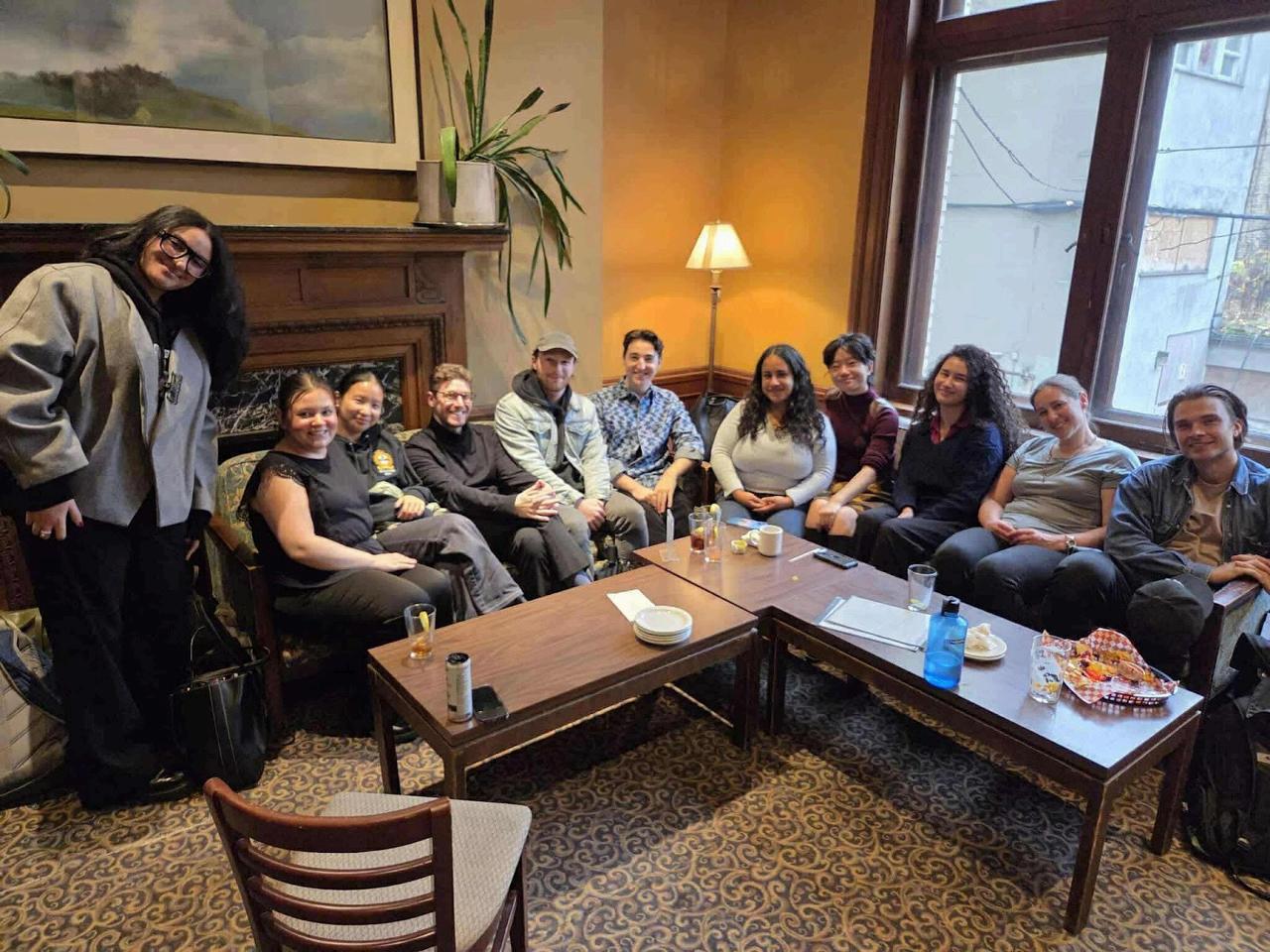
After warming up, we caught Anatomy of a Fall with the MALA, MSELA and Actus Reus clubs Shoutout to them it was a great event! The six-hour JICP midterm had us crying in the car like Sandra IYKYK Like, we get it, @Sandra, you have a criminal trial, but we had plans that weekend too.
We were joined by the 21st-century Martha Stewart herself, Anika of @anika eatz, a Lifestyle Guru who reviews restaurants; Magali, VP Finance of MBLA; and Maddie, Innocence McGill Caseworker and fellow Quid Contributor
APPLICABLE TEST
We put this hotspot through our rigorous (and completely subjective) Slander and the City Scoring System, which evaluates the food, value, service, setting, and the “ring by spring” factor.
ANALYSIS
Food: flavour and texture (50/60): The broth is rich and flavorful, and not overly salty. Noodles are perfect, and the Japanese fried chicken has a crunchy outside and a moist inside I am still dreaming about it
Value (8/10): Fair price for the quality and portion size (approx. CA$10–$40). Anika absolutely won the night with the $35, 3-course table d'hôte (soup, sashimi, and ramen)!
Service and Setting (4/5): Quick, efficient, and, most importantly, friendly! They expertly helped us pick the best options, including vegan ramen, karaage, and the salmon zuke don (marinated salmon sashimi on rice).
Ring by Spring Factor (3/5): The spot is cozy and well-curated, with a window wine bar perfect for people-watching However, it's not quite the place for a super special date It’s definitely a lively spot for friends
FOR THESE REASONS, MAY IT PLEASE THE COURT TO:
APPROVE the cumulative score of 65/80
RECOMMEND for:
Dinner with friends
A quick bite before the movies (Cinema Moderne is a 3-minute walk!)
Warming up on a cold night with hot ramen soup.
ORDER all McGill Law students to visit via the green/orange lines of the STM
Ginnetti Liu LLP Contributors | 2Ls
A Month in the Life.
A Photography Corner
DearQuidreaders,
I must say, I was delighted to open our submission box and find so manyphotos!
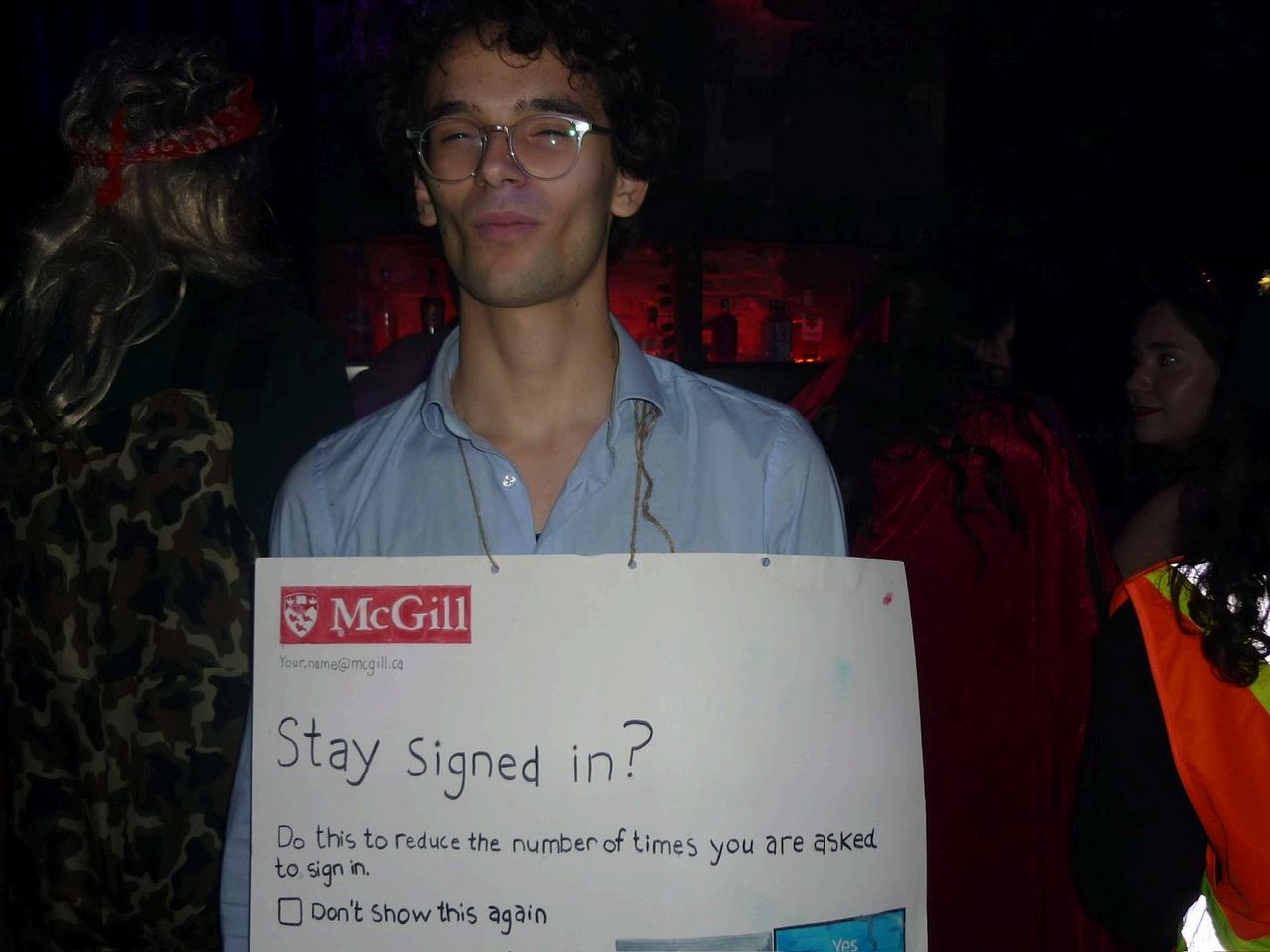
This month, our community kept busy. From Med/Law, to the Quid Novi Social, and a trip to Old Port to celebrate Trafalgar Day, it is safe to say that the Faculty had a fabulous late October/earlyNovember
As I mentioned last time, if you would like to be featured in our next issue (in the new year!), please share your pictures through the linkinourInstagrambio
The LSA/Men In Black: our beloved Med/Law organizers! (Marie-CyrielleAgbo)
Immortal Memory: Nelson's Column at the Old Port, Trafalgar Day 2025 (Jacob McConville)
The Little Red Riding Hood and Coraline! (Marie-CyrielleAgbo)
CROSS
The scariest costume of the night! (MarieCyrielleAgbo)
Both Sides of the Law
Clues
Down
[1] one in the action; socializing [2] legal claim on profits; curiosity [3] exchange for value; what’s taken into account [4] unsatisfied judgement; attractive [6] what a judge holds; pursuing [8] accusation; cost [10] aim of agreement; force behind actions [13] guarantee; what a seller stands behind [15] ownership; where a novel begins
Across
[3] mental ability; legal competency [5] could cost years; where grammar begins [7] carrying out; putting to death [9] entitlement; something morally just [11] lawyers club; drinks or rod
[12] judge’s job; use your ears
[14] honest conduct; contractual obligation [16] bring the case forward; move
Every item appearing in the Quid Novi is an opinion piece that reflects only the views of the person(s) submitting the item. Neither the Quid Novi, the LSA, nor the Faculty of Law endorse any of the material or views contained therein Given the nature of the publication and its limited resources, the Quid will not undertake to evaluate the factual accuracy of submissions Submissions are presumptively publishable unless they do not conform to the guidelines contained in the Quid constitution.
EDITORS-IN-CHIEF RÉDACTRICES EN CHEF
Catherine Zhang
Faith Dehghan
SOCIAL MEDIA DIRECTOR
DIRECTRICE DES RÉSEAUX SOCIAUX
AnyaAbbes
ART DIRECTOR
DIRECTRICE ARTISTIQUE
SouangWu
LAYOUT EDITORS
ÉDITEURICES DE MISE EN PAGE
Eveline Liu
KatyaTavitian
COPY EDITORS
SECRÉTAIRES DE RÉDACTION
Angel Drouin
Meera Khanna
Qi Rong Chen
COLUMNISTS CHRONIQUEUR.EUSES
Alexander Ginnetti
Catherine Zhang
Eveline Liu
Gillian Hunnisett
Heidi Zahiri
Lydia Etherington
Lysette Umwali
Manal Elhaoua
Paige Hanic
Sébastien Offredo
CONTRIBUTORS
CONTRIBUTEUR.ICES
AdeleWechsler for the MJSDL
Special thanks to RaeAquino and SouangWu for designing the layout.
Envoyez vos commentaires ou articles avant mercredi 17h00 à quid law@mcgill ca Toute contribution doit indiquer le nom de l’auteur, son année d’étude ainsi qu ’ un titre et un sous -titre pour l’article L’article ne sera publié qu’à la discrétion du comité de rédaction, qui basera sa décision sur la politique de rédaction disponible sur notre Instagram @quidlaw.