
LETTER FROM THE EDITOR
One Last Hurrah!
Faith Dehghan | 3L
I blinked and now it’s somehow the end of 3L and I’m writing my final Letter from the Editor. I cannot believe time has gone by so quickly. It feels like it was just yesterday when I entered the faculty as a 1L, with absolutely no idea what I was doing. Things have changed since then! I know what I am doing about 25% of the time (the other 75% of the time is me winging it and hoping for the best).
Law school has been a whirlwind of the good, the bad, the amazing, and the surprising. Law school strips you down and makes you question everything, or at least that's how I felt coming into a field that I honestly was unsure about, surrounded by people who were living out their lifelong dream. I grappled with what it is I actually wanted and who I wanted to be at the end of this all. I am so lucky to have met some of the most wonderful friends, who supported me unconditionally through my lows (shoutout to my incredibly bad luck in the first semester of 1L) and celebrated my wins with me. It is such a gift to be surrounded by people who you can share the ups and downs of life with so freely. Most of all, I appreciate how they reminded me of who I was before law school, and allowed me to not lose sight of that girl. As some of my friends love to say: “Maybe law school is the friends we made along the way.”

The Quid has been a creative outlet in an environment where I sometimes felt there was no room for anything but the law. Prior to law school, I was considering a career in digital media or publishing. I loved to write, edit, and consume media, and I still do! Art in any form gives colour to life itself. In a world of case briefs and fact patterns, it has remained a shining light for me.
I am ever so grateful for stumbling across the Quid booth during Clubs Day and for being trusted to head the publication this year, truly a full-circle moment. I would not have been able to do it without the wisdom, dedication, and brilliance of my partner-in-crime, Catherine Zhang. And to our fantastic team and occasional contributors, thank you for bringing the Quid to life this year! I am very proud to have led such a rich and interesting publication that provides a platform for the diverse voices in the faculty.
I’m writing all of this as if it’s a goodbye forever…it kind of is in a way. While I am not one of the brave souls who was able to lock in and complete the program in 3 years, this is still my last semester at McGill and my last month in Montreal. I was lucky to make it out of the exchange fiasco this year and will be spending my final semester abroad! Don’t get me wrong, I am very excited—going on exchange in my final semester was quite literally the only aspiration I had in 1L—but the finality of it all is a very weird feeling. Montreal is a city that has truly felt like home and now I’ll be starting over once again. As one season of life ends, another begins, and I am truly excited to see what comes next!

16 | SURVIVING FINALS
How to not let stress get the best of you
20 | LEGAL LORE
A Law School Day From Hell
21 | (MUSICAL) PAUSEASA TEACHER
21 | SKIT NITE 2026 REVIEW
2 |A WORD OF THANKS FROM THE NORTHAFRICAN LAW STUDENTS’ASSOCIATION (NALSA)
3 | THE MEDLAW IFTAR 2026
A Collaboration with the MLSA x WOCC x MMAC
6 | SKIT NITE 2026
A ThankYou to Our Community
15 | JUSTICE ROWE: THE DECLINE OF INTERNATIONAL LAW
Reflecting on my time at mcgill law
Julius Grippo | 4L
“You don’t write like a lawyer.”
These were the first words a peer ever offered me about my academic work at McGill Law—delivered during Integration, no less, when we were still being gently initiated into the mythos of legal education. We had been asked to write reflections on our first week of classes. I remember taking the metro home and crying to my best friend Jodie, convinced that if my peers—older, more seasoned, already fluent in the quiet grammar of belonging—could see how out of place I was, then surely my professors could too.
Another comment followed shortly thereafter: “Seeing you here—I mean, coming from CEGEP—I don’t feel like I had to achieve as much as I did to get in.” It was said lightly, almost generously, as though I had been cast as a reassuring baseline. These comments were not overtly cruel. That is almost the point. They were casual, ambient, the kind of remarks that scar not because of their malice, but because of their plausibility.
To this day, when I submit an assignment or raise my hand in class, I still hear them:“You don’t write like a lawyer.” “You have something to prove.”
But what I have come to realize over my time here is that not everyone around me is my“peer”—and I do not mean this in the pejorative sense that law school so carefully trains us to detect and punish. We share classrooms, yes. We read the same cases, gesture toward the same interests, rehearse the same anxieties about articling recruitment. But we are not, in any meaningful sense, oriented toward the same ends.
What draws me to the law is not what draws you.
And that is fine—clarifying, even.
As I prepare to graduate, I can say with some certainty that the people closest to me here are, in fact, my peers. Not because of grades, or CV lines, but because of something both more banal and more demanding: moral conviction. The kind that does not require constant education.The kind that precedes, rather than follows, intellectual interest.
At McGill, I have encountered no shortage of students animated by “human rights”—as a field, a discourse, a specialization to be curated. It is an object of study, a site of professional possibility. But too often, these commitments remain safely abstracted from the self. They are articulated with precision, defended with sophistication, and, when necessary, abandoned with remarkable efficiency.
Movements, however progressive in their self-description, can operate much the same way. They invoke the language of liberation while quietly disciplining those who threaten their coherence—particularly when those individuals are inconvenient, unpalatable, or insufficiently legible within the movement’s preferred narrative. When principles become contingent in this way, applied selectively or strategically, what remains is a careful dance around morality, but never its final bow.
This is to say—perhaps unfashionably—that such positions are not merely inconsistent.They are unmoored from the self, from our humanity.
My own commitments have not always been comfortable, nor have they been especially strategic. They do not shift to accommodate the room. But they are mine, and they endure outside of Chancellor Day. The same is true of those I am proud to call my peers.
Four years later, I have learned a great deal about the law. More importantly, I have learned how little legal education matters in the absence of something steadier beneath it. If law school has taught me anything, it is this: whether you “write like a lawyer” doesn’t really matter. What matters is whether you can live with the person you have become in learning how.
A word of thanks from the North African Law Students’ Association (NALSA)
Asma Amari | 3L & Rita Slaoui | 2L (NALSA CO-VP-EVENTS)
NALSA’s Iftar Night brought together students for an evening of food, film, and community. Attendees shared a meal and watched Amussu, sparking meaningful discussion and connection. We sincerely thank the Arts Student Employment Fund (ASEF) for their generous support, which made this event possible and enjoyable for all students. This Iftar Night also brought to a close a vibrant year of NALSA initiatives; from our annual Law and Diversity Night and Coffee House to the Interfaculty Evening in collaboration with Université de Montréal, and a panel featuring jurists from North Africa, where students came together to learn, celebrate, network, and foster community.
The MedLaw Iftar 2026
In Collaboration with the MLSA x WOCC x MMAC
The Muslim Law Student Association
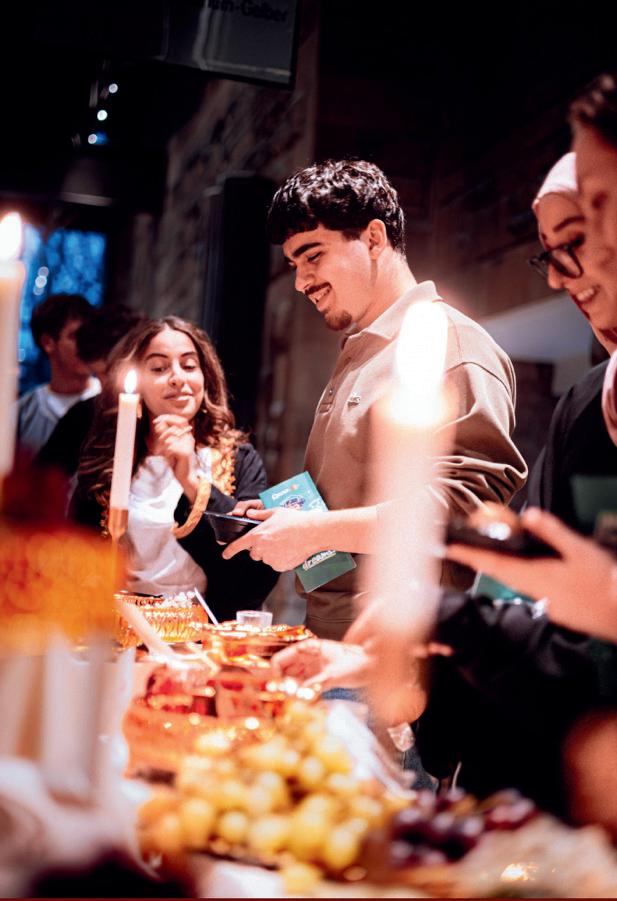
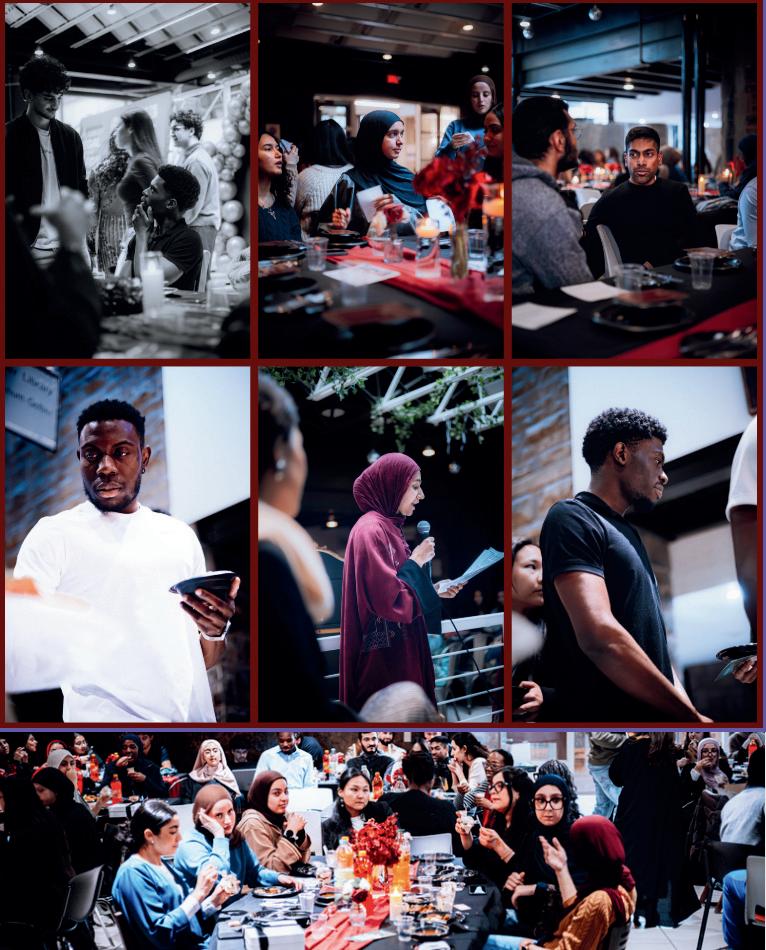
On Friday, March 13th, three clubs came together to organize an Iftar: the Muslim Law Student Association, the Women of Colour Collective, and the Medical Muslim Association of Canada. This is a dinner where people of Muslim faith break their fast and reflect upon themselves, their values, and their community. We wanted to welcome students across the Law and Medical faculties at McGill and beyond to take part in this beautiful tradition.
We were able to raise $3,340.50 for IDRF throughout the evening, with the proceeds contributing to IDRF’s emergency efforts to help more than 230 people during a whole month, victims of war in both Gaza and Lebanon. We’re sincerely grateful to everyone who showed up at our Iftar and contributed!
This event would not have been possible without the generosity of our sponsors: Alumni Student Engagement Fund, Dean Piper’s discretionary fund, the McGill Muslim Alumni Society, EQRAZ Inc., and individual donations.



Adele Wechsler, 3L

What are Prefigurative Politics?
Dear readers of Climate Corner—this will be the last column I write for the Quid! A big thank you to any readers who have followed the column through both the political and the personal (and the personal politics). Writing Climate Corner has sparked both interesting conversations and meaningful critique (of my own mistakes!). Thank you to the Quid for making this space available, and letting me write on topics that I feel are often invisibilized in our classrooms.
As my cohort nears the end of their time at McGill, myself and my peers are entering the “real world” of lawyering. Many of us have been emotionally brutalized by various organized recruits, and are just happy to have grasped a raft of stability in this tumultuous job market. Many of us have also compromised on values (those values we wrote about in our personal statements, and in the 30% weighted essay portions of exams) for power, prestige, and prosperity. I’m not judging—I’m one of those people! We can’t all work for Ecojustice, nor should we all want to. But there is a certain tragedy in seeing my peers, who are so intelligent and adept at critiquing the status quo, take jobs for institutions that are mandated to support it. Personally, I blame the institution itself, and the career options it makes available to us. Though professors at McGill often encourage us to think about climate change, and its deep interconnectedness with capitalism, racism, and colonialism, when the rubber hits the ground, the school does not inform us of career paths that might be (more) coherent with these lessons. Leftleaning lawyers who are also McGill alumni have expressed a similar feeling to me; that upon graduating, they didn’t know their career path (often in progressive, movement-oriented private practice) was an option. We deserve to be informed of these possibilities from the outset, so that interested students can create the networks of support and solidarity that a school environment is so excellent at fostering.
Sameer M. Ashar, “Pedagogy of Prefiguration”(2023) Yale Law Journal Forum at 891. 1 Ibid at 893. 2
We’re early in our careers, and there’s a powerful argument to be made for accruing as much social and economic capital as possible to then be able to pivot later to more progressive practice. Maybe our voices will be more valuable, better able to support those in need, when we’ve already got NRF or a clerkship on our resume. I’m sure this is true. But I want to present an alternative argument, one based on a concept called prefigurative politics.
It may sound annoying and new-wave, but prefigurative politics essentially means “walking the talk”. It means envisioning a utopian version of the future (‘utopia’ here is used loosely—not meaning perfect, but rather, better in ways that might seem unrealistic to our current political and economic situation) and embodying it through our decisions, relationships, and culture. Examples can be seen locally in community land trusts, SSMU free lunches, vegetarian cooking, and bike co-ops with free workshops. They can be seen historically in movements like the Zapatistas and the Black Panthers. The word “prefigurative” refers to establishing political forms and lives, no matter how small or imperfect, that “prefigure” a more egalitarian society. In other words, it’s an argument that living by these ideals now, even in a personal capacity, is more effective and strategic than waiting until later.
How can this apply to law students and legal practice? Is it possible to practice a prefigurative legality? In a paper on this subject published in the Yale Law Forum, the author makes several recommendations for law schools to encourage utopian imagination and prefigurative practice. He recognizes that“I myself have found that it is challenging, as a neoliberal subject and as a lawyer, to maintain my imaginative capacity in the face of economic and social pressure.” He focuses on the possibilities afforded by clinic work in law schools to help people on the ground. He argues for seeing clinical legal practice as an end in itself (not just preparation for a post-graduate career) and suggests it is possible to build lawyer-client relationships that embrace pluralism, indeterminacy, and generativity. After all, the law is an important promise of equality and hope, and people continue to practice legal thinking even with a deep skepticism about liberal legal frameworks. He argues that the legal clinic could be a small-scale experiment in what the university and legal practice may become. These suggestions are narrow and pragmatic, but they got me thinking about how I could practice prefigurative and utopian thinking in a legal context. Even if it generates imperfect solutions, it may also generate community, trust, and hope. I think that working on utopian imagination could be a step towards climate action that is both personally fulfilling and politically meaningful. Thank you for reading! 1 2
https://www.quidmail.ca/draft-if-all-else-fails-rely-on-nepotism
Subject: From: ATTN: Dewey Cheethame & Howe 2028 Articling Position (v.1)
Lexi McLawchlin
Me Ivanna Cheethame, Head of University Recruitment
Dewey
Cheethame & Howe S.E.N.C.R.L.
1234 Loophole Lane
Montreal, QC L4W J0B
Dear Me Cheethame,
I am pleased to be presenting my 100% AI-generated cover letter and accompanying application materials for a 2028 articling position at Dewey Cheethame & Howe. I am an overworked upper-year law student with an expected graduation to be confirmed based on whether or not you give me this job. My track record of masochism and sticktoitiveness— despite my psychologist’s strong recommendation that I take a break—as well as my background in the same legal research as all 200 of your other applicants, makes me the ideal candidate to learn from and contribute to your esteemed team of lawyers.
I am proud to be the president and founder of six different clubs at the faculty, none of which have hosted an event since their inception. Similarly, I am an active and engaged member of my community outside of school. My extensive volunteer experience includes walking out to the street to meet my Uber Eats driver, and placing my orders in French—but only when I’m on a coffee chat.
Despite the difficulties in gaining practical legal experience at the McGill Faculty, I am adept at finding creative solutions for civil litigants, particularly those related to jurisdictional boundaries. To date, I have successfully avoided paying 63 parking tickets owing to the fact that my car is still registered in Ontario. As such, I am committed to creating a long and fulfilling career in Quebec, even though I’m going to miss lower sales tax, having more than three options when buying edibles, and being able to speak freely about how racist Bill 63 is.
Finally, the conversation I had with the tall dark and handsome M&A partner at the only networking event I attended all year has stimulated my desire to further develop my passion for thousand-dollar suits. It is only at DCH that I will have the means to dress the way I’d like to if I weren’t buried in out-of-province student debt. Despite undergoing a period of adjustment in my first year, you’ll note that my grades have improved exponentially since developing new strategies for legal research and writing —namely, the advent of Lexis Protégé™.
I am confident that the familial pressure I am under, as well as my two-digit credit score, make me want this more than any of the other candidates, and as such, will make me an asset to DCH’s legal practice. If you think otherwise, expect a call from my mother.
Sincerely,

Lexi McLawchlin
Skit Nite 2026
A Thank You to Our Community
Léah
Climie & Jordan Ames-Sinclair | 2L
Dear Skit Nite spectators,
On behalf of Jordan, myself, and the entire Skit Nite team, thank you so much to everyone who came to Skit Nite!
We hope you experienced the same feelings we did in that room: joy, laughter, pride, and a true sense of community.
Law school is a challenging journey, filled with ups and downs that can either bring us closer together or push us apart. This past semester has been particularly stressful for many of us on this front.
That’s why the Skit Nite team dedicated so much time, effort, and love to creating the show.
What came to life on Tuesday night was the result of long hours, late nights, and an enormous collective effort. We ran quite a tight ship this year. We wanted as many students and professors as possible to be part of the show, and that made for a very strict schedule and flow. Every second and every minute was thoroughly planned. Our animateurs worked with each of the acts, on top of preparing their own. We are incredibly grateful to all the students and professors who brought theirA-game to the stage!
The show would not have been nearly as incredible without our wonderful musicians (Aria Lucyk, Ben Shaw Cannabrava, Katya Tavitian, Lydia Etherington, Nancy Tang Chen and Serena Piercey), all of whom were law students except for one, though he is now an honorary McGill Law student in our eyes. They rehearsed for hours to put on such a spectacular performance, and we feel a deep sense of gratitude for their hard work and immense talent.
Our animateurs, Ariella Ruby, Catherine Shi, Chloé Desjardins, David Mickelson, Javin-Ames Sinclair, and Sidney Signer, are the ultimate superstars! Words cannot express how proud Jordan and I are to have seen them grow into their characters and into such strong performers. Their dedication to their craft made the show. As I spoke with attendees throughout the evening, the coups de coeur were none other than The Semester I Turned Chopped and SNAIL Hunters. I encourage you all to stop these animateurs in the hallways of the faculty and let them know which skit was your favourite.They deserve all the flowers they can get!
I also want to thankAnaïs Rezaigue, Emily Payne, andYashvi Patel (our future Skit Nite Co-Director) for their unwavering support. Their attention to detail and inspiring energy from the show's creation to the last bow highlighted just how important they were to our success.
The beautiful programs that I hope you all kept as souvenirs were designed by Andrew Jiaxin Chen, whose creative vision brought the pamphlet to life.
Although he is not a student in our faculty, we would like to express our gratitude to our videographer, Nicholas Kong, for taking the time to film the entire show and create the videos (coming soon!).
Blaine Hail, thank you immensely as well for taking behindthe-scenes photos. We are so happy to have these souvenirs to hold on to those moments.
J’aimerais également prendre le temps de remercier les organisations qui ont supporté les coûts de la production: LCM, Emond Harnden, ASEF, SSMU, et LSA-AÉD. De plus, Café SAT a caféiné l’équipe à 9h le matin avant le début de notre grosse journée. Ensuite, Poulet Rouge a non seulement offert un prix pour le tirage, mais a aussi nourri toute notre équipe avant le spectacle! Spa Scandinave du Vieux-Montréal et Ski Bromont ont également été très généreux en offrant des passes aux gagnants du tirage.
Cette année, nous avons également invité les ancien.ne.s de McGill Law à se joindre à nous pour Skit Nite et à soutenir la production par des dons supplémentaires Leur générosité, tout comme leur présence en grand nombre dans la salle, nous a énormément touchés. Je voudrais donc remercier sincèrement ceux et celles qui ont contribué à la production, ainsi que ceux et celles qui sont venus assister au spectacle. J’espère que le spectacle a été aussi mémorable que dans vos souvenirs.
Un grand merci aux exécutifs de l’AÉD pour avoir pris le temps de préparer la salle, d’accueillir les spectateurs, et de rappeler à Jordan et moi de manger!
Finalement, nous sommes heureux d’avoir amassé 8335,21 $ pour la Clinique de la justice migrante. Ceci n’aurait pas été possible sans toutes les personnes mentionnées cidessus, ni sans vous qui êtes venus au spectacle. Nous remercions énormément la clinique d’avoir collaboré avec nous pour cet événement.
If you saw my stressed face and tense shoulders before the show, let’s just say I had a bit of backstage fright. If you saw my stressed face and tense shoulders double during intermission, it was because we were already behind schedule. And if you did not know, every extra minute after 10:00 PM increases the bill. That is part of the reality of putting on a show like this. So much of it depends on precision, timing, and an enormous amount of work behind the scenes. Somehow, by some miracle, the miracle being our team, the show ended with a whole minute to spare. I have been racking my brain trying to understand how this was possible, especially given that Act II was supposed to be longer thanAct I...but hey, success.The Skit Nite team made the impossible possible.
THANKYOUALL!
A Month in the Life.
A Photography Corner
Lysette Umwali | 2L
Dear Quid readers,
The final countdown is on!
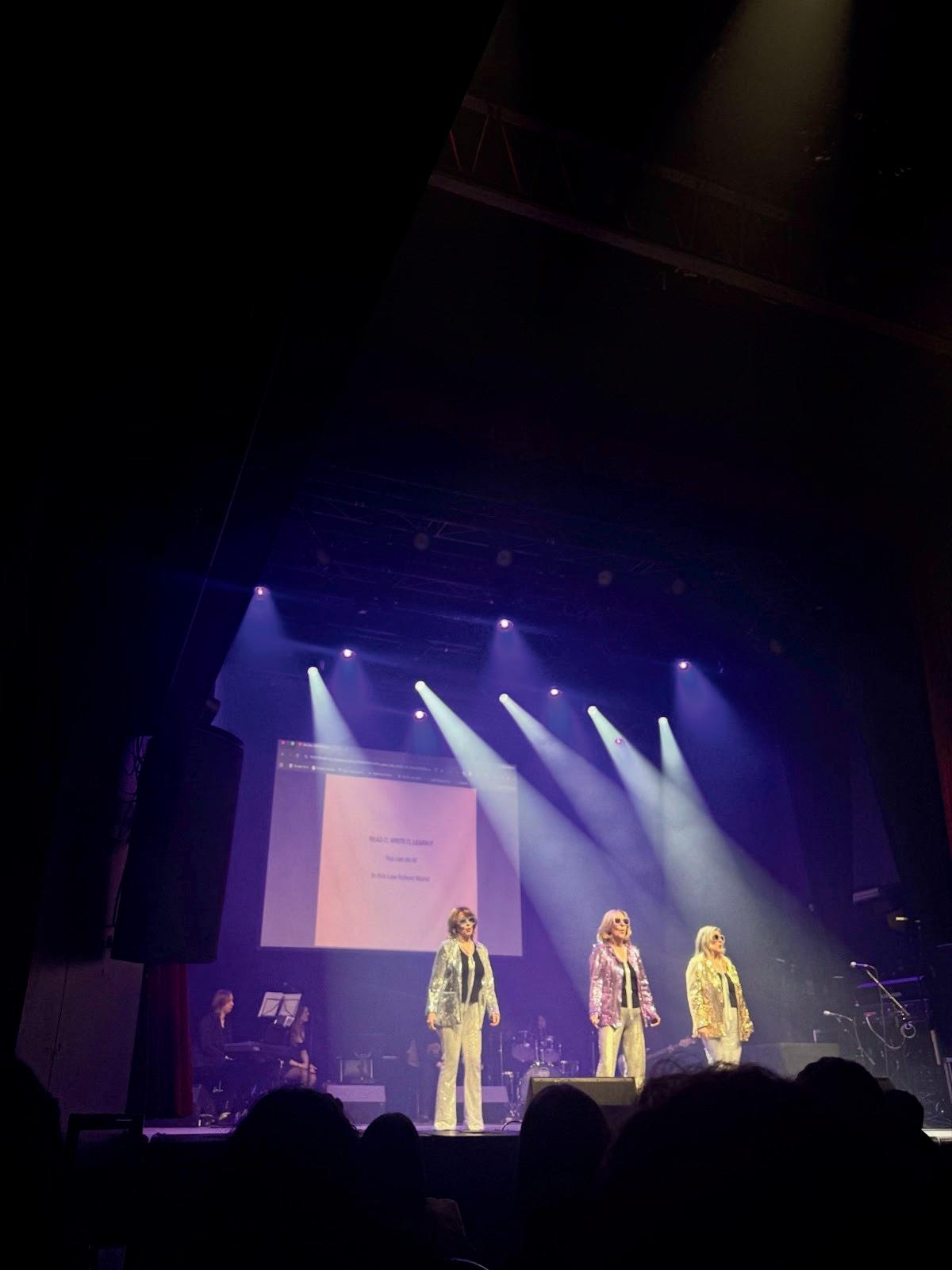
After countless walks up Peel and endless Pubdocs summaries, the end of the year is in sight. There is no better way of celebrating that than with the annual Skit Nite, held last Tuesday, where students across year levels came together for one of McGill Law’s funniest nights. Throughout the evening, talented students and professors had us laughing, singing, and dancing. It was a wonderful reminder of the importance of community and finding pockets of joy during an otherwise busy time.
As we head into exams, I hope you can all look back fondly on Skit Nite and the year we have shared together.Thank you to everyone who submitted photos and followed this column, I hope it brought you a sense of connection along the way.
Take good care this exam season, and know that even better days are ahead.
Until next time, Lysette





The Quid’s dynamic duo and Co-Editors-inChief,FaithandCatherine!(Diana Ebadi)
French or should I say, Québecois, musical stylingsfromProfessorsAnker,Janda,andJBB!
ABBA but with a twist from Professors Jukier, Klein,andPoirier!
The Quid’s very own superstar singer, Maddie Alexander!

07-04-2026 NO
Judgement Rendered: Benjamin
EDITORIAL NOTE
COURT OF QUID NOVI
Alexander Ginnetti & Eveline Liu Plaintiff v. Benjamin Defendant
First, Eveline and I would like to extend our heartfelt congratulations to everyone who participated in la Course aux stages Shoutout to our Chief Medical Officer, Catherine Waked, for matching (medical residency joke) with McCarthy Tétrault! I call Catherine our CMO because she literally performed surgery on me in moot court during the 1L Integration Workshop. To be honest, it was a papercut, and she just applied Polysporin and a Band-Aid, but it really felt like I was in a scene of Grey's Anatomy…too bad it wasn’t Dr. Karev. Second, we want to extend a round of applause for everyone who helped make SkitNite a memorable evening, including our best friend, Maddie Adams Alexander, incoming Co-Editor-in-Chief for the rest of y’all…Now, let’s get to slandering!
FACTS
Before coming back to school from March “Break”, I decided to try out the Gray Collection’s new restaurant, Benjamin. Located on De Maisonneuve Ouest, the restaurant will be the refurbished Metcalfe Hotel's crown jewel. I ordered from the lunch menu, which included an appetizer and a main dish.
APPLICABLE TEST
We put this hotspot through our rigorous (and completely subjective) Slander and the City Scoring System, which evaluates the food, value, service, setting, and the “ring by spring” factor.
ANALYSIS
Food: flavour and texture (55/60):As my appetizer, I ordered the roasted fennel salad, which included Granny Smith apples, orange slices, cucumber and celery. To top it all off was a delicious honey vinaigrette. This appetizer was truly amazing, it would make an amazing summer salad for how refreshing it was! For the main, I ordered the bavette, served with fries. Once again, the chef cooked the steak perfectly (medium-rare), and it melted in my mouth. The only problem was that it came with a bit too much pepper sauce. Friendly tip: ask for the sauce on the side so you can control the pepperiness!
Value (8/10): Fair price for the quality and portion size. My lunch came to $46, excluding tax and tip.
Service and Setting (5/5): Every staff member at the restaurant was truly amazing, from the hostess to the bartender, to the waitstaff, and even the chef! Service was efficient and friendly, and I was in and out within an hour and a half. The restaurant is on two floors, with the first floor feeling very much like a Parisian steakhouse and feeling more intimate than the second floor.
Ring by Spring Factor (4/5): While the setting is beautiful, it was also packed with office workers because it is close to so many corporate offices, so I don’t think it's the best place for an intimate conversation, especially at lunch.
FOR THESE REASONS, MAY IT PLEASE THE COURT TO:
APPROVE the cumulative score of 72/80.
RECOMMEND for:
Lunch with mentors; Dinner and drinks with friends;
ORDER all McGill Law students to walk over from the faculty.
Ginnetti Liu LLP Contributors | 2Ls
The Slow-Moving Heartbreak of Preparing for Goodbye
Rae Aquino | 3L
(Author’s Note: I always get sentimental about endings: end of the school year, end of my time as Quid Art Director… I’ve been wanting to do the layout for my own article, at least once, so I hope you’ll indulge me this last wish.)
And just like that, another school year comes to an end. Already in my third year of law school (and seventh of post-secondary), I’ve gone through this many times before.
All this to say that I know what the signs of the end of the year are. I know the semester’s almost up. Doesn’t make facing the end any easier.
It’s not like I’m not coming backI have another semester left, I’m not free of this place just yet. But it won’t be the same, not with some of my friends graduating and others leaving the city, moving onto the next stage of their lives.
Not when I’ll have the pressure of soon doing the same hanging over my head throughout that final semester. Not when it feels like I’ve finally gotten into the rhythm of balancing school, friends, and my health, but I’ll have to uproot and change cities again, for the fourth time in as many years.
I’m familiar with the way the energy at the faculty turns a little frantic, as everyone comes to the collective realization of exactly just how much time we have left before finals. I’m familiar with the way the tables in the atrium and the library start to seem permanently full, and yet I check anyways because I can’t be buying another overpriced, mid matcha latte again this week just so I can study for a few hours at a cafe.
I love the life I’ve built here. I love the easy routines and the quiet joys of my everyday, every minute I’ve lingered a little longer just to enjoy the moment one beat more.
I’m always sad to be reminded that my time in Montreal is only temporary, to see my mental count tick down another mark. But holding tighter to what I have doesn’t mean I won’t have to let it go at some point.
I’m very familiar with the lingering feeling of guilt I get when I choose not to study in favour of going on a walk in the sunshine that’s finally started making a regular appearance these days. (Should I be taking a three-hour walk instead of writing my 5000-word paper that’s currently just an emptyWord document? Probably not, but I’m doing it anyway. One of my 2026 resolutions was to choose joy more often, and I’m not one to break a promiseespecially not one to myself.)

Though it does mean I’ll have memories to look back on as I move away and move forward from here.
To all my friends:
Thank you for the past three years. Here’s to half a year left, and even more time together in the future. Not exactly the same as it was (not like anything ever is) but beloved all the same.


The returning home ALIEN’S
Eunice Yong | 3L
There is a quiet tension that runs through both BTS’ Arirang 2026 albumandmyexperienceinlegaleducation.Itisthetension between who you are and who you are asked to become, between rootednessandreinvention,betweensurvivalandauthenticity.
1 Listening to the album, especially before my final winter semester and the completion of this degree in December 2026, I have come to understand my time in law school not just as an academic journey, but as a prolonged negotiation of agency.
Arirang ( ), Korea’s most famous traditional folk song, is, at its core, about return—a return to cultural memory, to language, to rhythm, to stories that predate globalization and professionalization. The title itself evokes something deeply embedded in Korean identity: a shared emotional vocabulary of longing, grief, resilience, and above all, hope.
For diasporic individuals, Arirang is not just a song; it is a bridge between who you were, who you are, and who you are becoming.As a second-generation Korean-Canadian woman, one might expect that this bridge would be short—perhaps even shallow. Yet, in every facet of my educational journey, I was reminded of my“otherness,”revealing that this distance is far greater than it seems.
This idea of “coming back home” resonates with me more than I expected. When I entered law school, I did so with a strong sense of purpose and self: I wanted to advocate, to build a meaningful career grounded in helping people. But somewhere along the way, that clarity became complicated.
The structure of legal education and its emphasis on performance, competition, and conformity, subtly reshaped how I understood myself. There were moments when I felt distanced from the very values that brought me here, as if the profession demanded a version of me that was more, for lack of a better term, polished.
In that sense, law school both took away and gave back my sense of self. It stripped me down, challenged my confidence, my voice, and my instincts, but in doing so, it also forced me to confront what parts of myself were essential. What remained after the pressure and the expectations, was a clearer understanding of what I refuse to lose.
This is where agency comes in. Agency is not something I fully grasped at the beginning of my legal education. At first, it felt like something external—something granted by institutions, measured by achievements, validated by others.
But over time, it has become something far more internal and deliberate. Agency now feels like the ability to choose myself even within systems that encourage assimilation. It is the act of holding onto my values, my voice, and my identity, even when it would be easier not to.
BTS’ track Aliens captures this feeling in a way that is both subtle and powerful. By incorporating traditional jungmori rhythm and referencing figures like Kim Gu , the song situates itself firmly within Korean history and cultural resistance.Yet, the title itself—“Aliens”—suggests displacement, otherness, and the feeling of not fully belonging. This duality mirrors the experience of navigating professional spaces that often feel culturally and emotionally distant. You are present, you are performing, but a part of you remains outside, observing. 2 3
As I approach graduation, I feel that same duality. There is excitement—an eagerness to step into a career I have worked so hard for, to finally“begin.”But there is also a sense of loss, or perhaps more accurately, a sense of transformation.
Law school has changed me in ways I am still trying to understand. It has made me more disciplined, more analytical, more resilient. But it has also made me more aware of the importance of returning to myself.
Like Arirang, this moment feels bittersweet. It is a transition marked by both endings and beginnings.And perhaps that is why the idea of “coming home” feels so significant right now. Home is not necessarily a place, but a state of alignment. A feeling of being grounded in who you are, even as you move forward.
If law school has been, in many ways, a departure from that sense of home, then this next chapter feels like a return. Not a return to who I was before, but to a version of myself that is more intentional, more self-aware, and more committed to authenticity. I am not leaving law school as the same person who entered it—and that is not a loss. It is, in its own way, a kind of reclamation.
Listening to Arirang at midnight on March 21, 2026, I was struck by how music can articulate what we struggle to put into words.The album does not resolve the tension between past and present, between self and system. Instead, it holds that tension, honours it, and transforms it into something meaningful.
That is what I hope to do as I step into the legal profession: to hold the complexity of my experiences: my ambitions, my doubts, my cultural identity, my desire to help others, and to shape them into a practice that feels true to who I am. To resist the pressure to become someone I am not. To choose, again and again, to return to myself–the Alien.
1
BTS, ARIRANG (Seoul: Big Hit Music, 2026).
2 Ibid. 3
BTS,“Aliens”, ARIRANG (Seoul: Big Hit Music, 2026).
5
HARROCHE ET AL. v. MCGILL LAW STUDENTS’ ASSOCIATION & LS4PM, 2026 QCCS 1058
Case Brief by: Law Students 4 Palestine at McGill (LS4PM)
CASE
BRIEF: Harroche v. Law Students’ Association of McGill University (2026)
Jurisdiction
Court & Judge
Facts
The Referendum
Superior Court of Quebec (Civil Division), District of Montreal, presided by the Honourable Luc Morin, S.C.J.
The Plaintiff and Impleaded Parties
In March of 2026, the McGill Law Students’Association (LSA) held a democratic and student-initiated referendum, the “Referendum Regarding the Academic and Cultural Boycott of Israel to Preserve Academic Freedom” written and advanced by Defendant Law Students 4 Palestine at McGill (LS4PM). The Referendum was approved by the LSA membership with 57.3% of electors voting in favour with a turnout of 67.3% (437 of 649 electors).
1 2
The Referendum proposed two modifications to the LSA’s By-Laws: the addition of By-Law 15 (endorses the academic boycott of Israel and creates a mandate for LSA representatives to advocate for the same) and the modification of By-Law 9 (creating a consultation and organizing committee to apply By-Law 15). The text of the academic boycott provision in By-Law 15 explicitly targets institutional agreements, not individual Israeli academics. 3 4
Plaintiff is Rachel Harroche, a Jewish law student of Israeli national origin [2]. Harroche is also a member of Impleaded Party Jewish Law Students’ Association (JLSA) since 2024 [40].5
1 SSMU,“LSA Referendum on theAcademic and Cultural Boycott of Israel — Results” (21 March 2026), online: <ssmu.simplyvoting.com/voting/guest/elections/286239/results>.
LS4PM,“Referendum Regarding theAcademic and Cultural Boycott of Israel to PreserveAcademic Freedom”(16 February 2026), online: <ls4pm.wordpress.com/2026/02/16/ls4pm-referendum-question-regarding-the-academic-and-cultural-boycott-of-israel-to-preserve-mcgill-lawsacademic-freedom/>.
2 The specific framework endorsed by By-Law 15 is the Palestinian Campaign for theAcademic and Cultural Boycott of Israel (PACBI) (see BDS Movement,“PACBI Guidelines for the InternationalAcademic Boycott of Israel”, online: <bdsmovement.net/pacbi/academic-boycott-guidelines>).
3 LSA, Referendum Regarding theAcademic and Cultural Boycott of Israel to PreserveAcademic Freedom, By-Law 15, s2 (“[i]n adherence with the Guiding Principles of the LSA Constitution and PACBI guidelines, By-law15 shall apply only to McGill’s institutional partnerships and bilateral academic agreements, not individual Israeli academics”).
4 Notably, Harroche was also a named Plaintiff in the Levkovsky litigation, where pro-Israel and Zionist organizations unsuccessfully attempted to stop the implementation of the SSMU PolicyAgainstAntisemitism (PAAS) along with Impleaded Party JLSA. See Levkovsky et al v Students’Society of McGill University,2025 QCCS 1118.
Tina Piper and Angela Campbell’s Interventions
Deep Saini’s ExtraJudicial Intervention
Procedural History
Legal & Internal Action
Plaintiff claimed, inter alia that:
1) the incorrect voting threshold was applied: 50% + N | Simple Majority Standard of By-Law Amendment vs.
2/3 + N | Super Majority Standard of Constitutional Amendment
2) her rights under the Charter, the LSA Constitution, and the SSMU Equity Policy are infringed by the By-Law amendments thereby subjecting her to a “discriminatory framework for the remainder of her legal studies at McGill” [6]; and 3) she will lose access to Israeli exchange programs due to the Referendum’s implementation.
On March 19 , 2026, approximately 10 minutes before Referendum ballots opened, Tina Piper, the Dean of McGill’s Law Faculty and McGill Provost and ExecutiveVice-President (Academic)Angela Campbell sent a joint letter to all law students and professors at the Faculty. The administrators alleged — without evidence — that “Jewish faculty ... [are] concern[ed] about their safety,” the proposed By-Laws are“objectionable,” “exclusionary,”and “discriminatory,”and that such issues make it inappropriate “to treat the referendum as a contest between two equally valid positions”.
On March 24 , 2026, while proceedings were already before the Court, McGill administrator and university President Deep Saini intervened via a Faculty-wide email which in turn was forwarded to each McGill Alumni — opposing the Referendum and threatening to place the LSA in default of its Memorandum of Agreement (MoA) and withhold student money if the democratic vote was upheld [104-105]. Notably, however, President Saini’s email of March 24, 2026 explicitly acknowledged that the LSA is “an independent student association over which the University does not exercise direct authority,” while simultaneously asserting that the referendum’s “effects are antisemitic”.
st
Following the LSA membership’s approval of the Referendum on March 21 , 2026 at 5:00 PM, Plaintiff and Impleaded Party JLSA filed a procedural complaint before the SSMU Judicial Board, a copy of which was included in Plaintiff’s submissions [39]. Shortly thereafter, Plaintiff initiated an application for provisional injunctive relief from the Superior Court to immediately halt the boycott’s implementation [1]. McGill University was also named by Plaintiff as Impleaded Party and filed submissions supporting the Plaintiff’s position [40].
Legal Issues
1. Constitutional Threshold Did the Referendum require a two-thirds (2/3) supermajority (as a constitutional amendment) or a simple majority (as a By-Law adoption) [4-5]?
2. Québec Charter, LSA Guiding Principles, & SSMU Equity Policy Discrimination Claims
3. Does the Elevated Association étudiante Standard Apply?
Does the Referendum, its proposed By-Laws 9 & 15, and their implementation violate the Québec Charter, the LSA’s Guiding Principles, and the SSMU Equity Policy?
Is an institutional academic boycott a manifestation of protected political expression, thereby triggering the elevated threshold for injunctions established by the Quebec Court of Appeal in Association étudiante de l’Université McGill c X [18-21]?
7
4. Is the Elevated Standard Met?
Holding
Decision
Core Legal Principle
If yes, are the Referendum and the measures to be implemented pursuant to it so clearly defamatory or impossible to justify as to warrant the Court’s immediate intervention at the provisional stage? [24]
APPLICATION DISMISSED. Plaintiff’s Application for provisional injunctive relief is denied [14, 109].
1. Not resolved at this stage. The constitutional threshold question — whether a two-thirds supermajority or simple majority was required — involves “conflicting views and interpretations” that could not be resolved at the provisional stage. The Court declined to allow this procedural dispute to obscure the broader freedom-of-expression question [97–101]
2. No. Plaintiff failed to provide any evidence substantiating imminent harm or discrimination arising from the Referendum. The Court explicitly declined to rule on the SSMU Equity Policy and Charter claims on the merits at this stage [75–78].
3. Yes. The elevated threshold established by the Court of Appeal in Association étudiante applies [62.1–62.4]. Plaintiff was unable to meet any of the four conditions of provisional injunctive relief: urgency, appearance of right, irreparable harm, and balance of inconvenience.
4.No. It is a protected form of freedom of expression [62.2].
Ratio Association étudiante de l’Université McGill c X,2025 QCCA 475, [Association étudiante].
Freedom of expression applies to the entire expressive process — from the formation of ideas to their implementation through concrete measures [55–60]. A democratically adopted political boycott represents the final chapter of a viewpoint and triggers the elevated test of Association étudiante de l’Université McGill c X [61]. Injunctions against student democracy should only be granted in the rarest cases where the expression is manifestly defamatory or impossible to justify [19, 24].
Reasoning
The Association étudiante de l’Université McGill c X Test & Freedom of Expression
Justice Morin anchored his ruling in the appellate precedent set by Association étudiante de l’Université McGill c X, 2025 QCCA 475. Crucially, that case dealt with the SSMU’s Policy Against Genocide in Palestine (PAGIP), which, like LS4PM’s Referendum, also mandated a McGill student association — via a student petition-initiated referendum — to call on McGill to end ties with all Israeli institutions complicit in, interalia, apartheid and genocide. 6 7
In their unanimous decision, the Court of Appeal dismissed the interlocutory injunction preventing the implementation of the PAGIP, holding that it unduly restricted the freedom of expression of the SSMU’s membership. In so doing, the Court established a precedent such that where an injunction seeks to limit freedom of expression, an elevated test applies: the injunction should only be granted in the clearest of cases where the expression is “manifestly defamatory or impossible to justify” [24, 62.4]. Justice Morin held that this elevated test applies to the Referendum and its proposed By-Law modifications, rejecting the Plaintiff’s attempt to frame the boycott as merely a contractual or procedural dispute — as was also attempted in Association étudiante de l’Université McGill c X — because constitutional protection covers the implementation of political expression [56–60].
6 Maria Cholakova,“McGill Student SocietyWins Palestine Policy Injunction in Court”, The Link (21 March 2025), online: <thelinknewspaper.ca/article/mcgill-student-society-wins-palestine-policy-injunction-in-court>.
Applying the Test (1): Urgency
The Court held that urgency was not established by the Plaintiff at the provisional stage. Provisional injunctive relief is only granted in “extremely urgent”, 9-1-1 type situations akin to “requiring a blood transfusion”, or “a wall on the brink of being destroyed by a wrecking ball” [28–29]. No such “immediate and apparent” urgency was substantiated by Plaintiff [30].
The Court noted that the impetus of the proceedings appeared predominantly political rather than legal in nature, and that internal recourse procedures had been engaged, but not necessarily exhausted [34, 39–41]. The Court further observed that neither Plaintiff nor Defendants were able to articulate what concrete harm was expected to materialize within the next 10 days [32–33].
Notably, Plaintiff was in fact not at any real risk of losing access to the Tel Aviv University exchange program due to its being on hold due to governmental travel restrictions. As such, the Court concluded that the elevated standard of restraint provided by Association étudiante de l’Université McGill c X applied, and that Plaintiff failed to establish urgency [42].
Applying the Test (2): Appearance of Right
Applying the Test (3): Irreparable Harm
Under the elevated Association étudiante de l’Université McGill c X appellate test, the Plaintiff failed to establish an appearance of right. As the Court of Appeal held, the “serious issue to be tried” condition of the traditional test for provisional injunctive relief must be applied with heightened scrutiny where a request for such relief imposes a limitation on freedom of expression [44–48].
The Court dismissed claims of a universally hostile or discriminatory environment, emphasizing a lack of grounding in “factual elements of sufficient substance … and not arbitrary approximations” [46]. Justice Morin highlighted the pluralism of Jewish politicalthought,notingthattwoJewishstudentssubmittedaffidavitsactivelysupporting the Referendum and the boycott measures against Israeli institutions [53]. As such, the Referendum’sexpressionwasnotfound prima facie indefensibleordiscriminatory.
The Court rejected all grounds of alleged irreparable harm [70]. Regarding the supposed loss of academic opportunities, there was no live application for an exchange program, and the specific exchange with Tel Aviv University was already suspended due to governmental travel restrictions [72–74].
Claims of reputational harm diminishing the value of the Plaintiff’s future McGill law degree were dismissed by the Court as “far fetched and completely unfounded” [83]. On the alleged permanence of the measures, the Court found that a subsequent referendum could reverse any measure adopted, and that the merits judge would likewise retain the ability to revisit what had been done [92–93].
Applying the Test (4): Balance of Inconvenience
The SSMU Equity Policy and Discrimination Issue
9 The McGill Critique (Legal vs. PR)
Association étudiante, supra note 6 at paras 44–8.
The balance of inconvenience favoured Defendants LSA and LS4PM. Granting the injunction would deprive the members who voted in favour of the ability to advance their criticisms and demands — representing the primary expression of their social and political ideas — whereas denying it simply allows the democratic process to continue functioning [89–90].
The Plaintiff alleged that the Referendum and its proposed By-Laws violated the Québec Charter, the SSMU Equity Policy, and the LSA’s Guiding Principles. The Court did not rule on these matters on the merits at the provisional stage, finding the evidence insufficienttoestablishimminentandconcreteviolationsoffundamentalrights[75–78].
Justice Morin issued a pointed critique of the McGill University administration, drawing a sharp distinction between public-relations imperatives and the legal standards that guide the Court [104–108]. The timing of President Saini’s March 24 email — issued while proceedings were already before the Court, without any
8 SSMU, Equity Policy (Montreal: Students’ Society of McGill University, 2021), online (pdf): <ssmu.ca/wp-content/uploads/2023/06/EquityPolicy-2021-05-13.pdf>.
supporting affidavit, and making sweeping legal and moral assertions, including that the referendum’s effects are “antisemitic” — was noted by the Court as “probably not ideal” [105].
The Court signalled that McGill must intervene at the interlocutory stage with a formal legal position supported by a detailed affidavit, rather than relying on administrative declarations from outside the courtroom [108]. McGill’s legal position was neither accepted nor rejected on the merits at this stage.
Specific Quotes to Remember
On Freedom of Expression
On Jewish Support for the Boycott
On the Lack of Evidence
On Reputational “Harm”
The Rebuke of McGill’s Administration
On the Unresolved Threshold Question
“Freedom of expression is a core value in our democratic society… [granting the injunction means] denying protection to the final chapter of an opinion or viewpoint and would render impossible any concrete measures implementing it.” [55].
“[The Court received] five detailed affidavits — including two from Jewish students who support the Referendum and the boycott measures against Israeli institutions.” [53].
“Concrete and precise evidence is required when dealing with alleged violations to fundamental rights… [such demonstration is] simply absent from the Plaintiff’s Application.” [77].
“To suggest that the value of the law degree the Plaintiff may one day obtain would be diminished simply because the Court does not issue an injunction is far fetched and completely unfounded.” [83].
“[Public-relations considerations] respond to imperatives quite distinct from those that guide the Court in adjudicating the legal issues between the parties… Hopefully McGill will intervene in this debate at the interlocutory stage and take a formal position supported by a detailed affidavit articulating the University’s legal stance.” [108].
“The question of what voting threshold was required for the Referendum to be valid is the subject of conflicting views and interpretations… [T]his point of contention between the partiesshouldnotbeallowedtoobscurethebroaderpicture.” [97,100].
Justice Rowe: The Decline of International Law
Timothy Boudoumit | 2L
We extend our sincere thanks to Justice Malcolm Rowe for visiting McGill’s Faculty of Law and engaging so thoughtfully with students on the evolving state of international law. His reflections on what he characterized as a contemporary “decline” in internationallegalorderwerebothsoberinganddeeplyinstructive.
Justice Rowe’s remarks situated current challenges within a broader historical arc, drawing important parallels to the post–Second World War moment that gave rise to much of today’s international legal architecture. By revisiting the foundational ambitions of that period (cooperation, institutionalism, and the rule of law beyond borders), he invited us to critically assess whether those commitments are being sustained, reshaped, or quietly eroded in the present day.
Particularly valuable was his emphasis on the tension between formal legal frameworks and geopolitical realities. His perspective underscoredthatinternationallawhasneveroperatedinavacuum,
but rather in constant dialogue with power, politics, and shifting global priorities. For students of law, this serves as a reminder that legal doctrine must always be understood alongside its historical and institutional context.
The discussion leaves us with an important takeaway that periods of perceived decline may also be moments of reconfiguration.The lessons of the post-war era, both its successes and its limitations, offer a critical lens through which to evaluate and potentially reimagine today’s international legal framework.
We are grateful as well to the Alumni Student Engagement Fund (ASEF) for their generous support in making this event possible. Their continued commitment to fostering meaningful academic dialogue enriches the intellectual life of our community.
Events such as this not only deepen our understanding of complex legal systems, but also reinforce the importance of sustained, critical engagement with the ideas that shape them.
Surviving Finals
How
to not let stress get the best of you
Leyla Bilgi-Bérard | 1L
With the finals quickly approaching and the atmosphere growing tense, I’ve been hearing a lot about people’s coping strategies. Stress management will be paramount as we face our fact patterns and essays over the next few weeks. With the hope that it might help us all arrive on the other side safe, sane, and sound, I thought I might share a few pieces of wisdom I’ve picked up along the way.
Being exposed to the military and the critical care worlds gave me a pretty good appreciation for managing stress in high-stakes situations. I would never claim to have the ultimate secret; I am a lifelong disciple, but the following concepts helped me a lot and might help you too. I divide them into two broad categories: Building resilience and performing under pressure.
For me, the learning curves for both have been steep, and there are still times when the struggle is oh-so-very real. However, I’ve come to realize that performing under stress is a skill that can be developed, and that most people can improve with practice. Stress and pressure will always be there, but it’s up to each of us to develop strategies on how to deal with them.
Before going further, I believe it’s important to acknowledge that we don’t all react to stress in the same way. Some people are naturally more perceptive, and so, they tend to react earlier or more strongly to stressors. This is not a flaw; it’s simply a feature. In many groups, those who are more attuned to their surroundings often act as early warning systems for the others. Canaries in the mine, if you will. That sensitivity has value, even if, in today’s fast-paced, sometimes overstimulating world, it can feel like a burden.
There is nothing wrong with recognizing that stress affects us more deeply. It can even be somewhat empowering to consider this a sharper threat detector. And, like many other behavioural responses, this sensitivity can be worked on and ultimately calibrated to meet the demands of a specific environment, such as exam season.
So let’s get into it.
Part 1: Building Resilience
Resilience is how we bend without breaking and return to our initial state once the pressure is over (is it ever?). Think of resilience as long-term, built over months and years, capacity to handle stress. Because of its complex and individual nature, building this stress endurance is not usually accomplished with an easy, quick, magic to-do checklist. But, there are a few things that work almost universally.
a. Having a fit mind in a fit body
TL;DR: Training mentally and physically will make you more resilient to stress
I know this is nothing new, but I really can’t skip it.
Why is it so important?
Let’s start with physical fitness. While being active won’t make stress disappear, it does significantly impact how we respond to it.1
First, when we train regularly, our baseline cortisol (our stress hormone) levels drop, giving us more margin in the day-to-day before we feel overwhelmed. Second, exercising helps with mood regulation and decreases anxiety by producing endorphins and other neurotransmitters. Think of cortisol reduction as a way to raise your threshold for feeling stressed, and of endorphins and their friends as active enhancers of your emotional well-being.
In the long run (haha), we also get better cardiovascular performance, which means more perfusion and blood flow to our big, beautiful brains.
Beyond biology, doing hard physical things builds familiarity with discomfort. When we regularly push our limits, fatigue and stress stop feeling like threats and become things we know how to handle That familiarity builds confidence and trains our stress response to adapt better over time, whether physical or mental.
But do not despair if you are not a fan of machines and free weights. Building physical fitness can be so much more than sweating in a gym or running laps around your neighbourhood.There are so many ways to stay active! Go play outside, find a movement community, and have fun. It doesn’t have to be complicated.
Alongside physical fitness, we can’t overlook mental fitness. Just as our bodies adapt and grow stronger through exercise, our brains rewire themselves through neuroplasticity, the ability to form and organize neural connections.
Neuroplasticity develops when we challenge our brains to learn new skills. I am not here talking about different law courses or memorizing case law, but about 'cross-training' new and different cognitive skills. It could be learning a new language or playing a new musical instrument. I personally just picked up juggling, and can’t wait to use it as a party trick or to nonchalantly mention it during an interview
1
Razia Sultana,“Exercise as a Mechanism for Mental Resilience” in Sushma Bala, Pranay Pandey & Ambica Kumari, eds, MindBody Connection: Insight into Mental Health and Resilience (Sweden, Redshine Publication, 2025) at ch 20.
Improving our mental agility helps us switch gears cognitively, focus better, and gives us more chances to navigate Professor Janda’s fact pattern curveballs.
b. The value of failure
TL; DR: Failure = Feedback
Once upon a time, I was part of the CMERT, or Canadian Medical Emergency Response Team, a small tactical air-evac team. During a training mission, we were performing a scenario, and one of our patients (a simulated patient) suddenly decompensated and, despite our overzealous efforts, died on our flight back.
Even after our landing and during our mission debrief, we kept coming back to it, haunted by this unknown mistake, trying to put our finger on what went wrong. We couldn’t let it go and were deeply upset. It didn’t matter that it wasn’t a real casualty; our defeat was.
Eventually, our controller–the person running the scenario–ended up telling us that we had been set up to fail. The patient was never meant to survive, no matter what we would have done. We had poured so many of our precious–and limited–resources into that patient, in a desperate attempt to tip the scales. As it turned out, it had been a lost cause from the start, and we had compromised the care of other patients by overallocating resources.
The training goal had always been about failure–about moving on and accepting that we wouldn’t always win. Which we failed at. We were a team of experienced individuals, but we had never failed together, so our expectation had become that we couldn’t. This was an incredible lesson about resource management, ego and humility.
Failure is so valuable when we are willing to learn from it. Instead of considering it as a setback, I now always try to see it as feedback. Using failure, not to define ourselves but to better understand, is a great way to turn every experience into a learning opportunity.
Failure is also a great way to learn not to take things personally and move on. I strongly suggest increasing exposure to low-stakes failure. For example, in optional exercises, GAs sessions, and practice settings.Think of it as exposure therapy for rejection. It gives us the opportunity not only to learn more about the expectations, but also to gradually become more comfortable with disappointment and to recover more quickly after a failed attempt. Potentially, the more at peace we become with things not necessarily going our way, the more confident and creative we can allow ourselves to be Disappointment is not the end of the world.
In your preparation and even during your finals, don’t let a tricky fact pattern drag you down or make you believe all is over. Learn to fail gracefully, adjust accordingly and get back up.
c.Anticipate the problems
TL; DR:Try to account for your weaknesses in advance.
Since we’ve all received some kind of feedback from our professors (and from life in general), we all know we have weaknesses. Even despite our best efforts.
The good news is that getting feedback is great for revealing our own blind spots. And once we can identify a weakness, we can address it.
Do you tend to spot the wrong issue? Misread the question? Realize 15 minutes before the end that you haven’t started the essay question yet?These patterns that are ruining our chances at getting As won’t magically disappear from one test to another.They won’t change until they're deliberately addressed.
That’s why anticipating problems is so valuable. Instead of hoping to perform perfectly, let’s just assume that our usual tendencies will show up, and build safeguards around them. Maybe you need to develop an automatism to read the problem twice, or to check the time every time you check your Code.
I also want to add that issues might not arise just about the execution, but also sometimes about the content itself.There might be subjects or cases that trigger you in a way that clouds your judgment or emotionally overinvests you. These, too, can be accounted for in advance to give yourself the best chance on test day.
Weaknesses or blind spots don’t disappear overnight, but anticipating them will make it less costly. Preparation is not only aboutmanagingthematerial,butalsoaboutmanagingourselves.
d.Train as you fight
TL; DR: Practice in settings as identical as possible to the test.
If you want to run a marathon but only train by running 3 to 5 km,chancesareyouwon'thavethebesttimeduringsaidmarathon.
The same principle applies to how you prepare for any kind of challenge. There aren’t a thousand ways to get better at something. Practice, practice, practice. But you must also come to a point where you prepare under the same conditions as those in which your test will take place. Try using the same resources you plan to use – outlines, attack sheets, books – and set a time limit.The closer you can come to the exact conditions of the examination, the more at ease you will be once you get there.
e. Optimize your environment
TL; DR: Surround yourself with what supports you.
Building resilience comes mostly from within, but our environment also plays a significant role in shaping our behaviours and patterns.A supportive environment won’t do the work for us, but it will help ease our path.
Most of our professors have encouraged us to connect with peers, mentors, and study groups, and for good reason. A strong and supportive community can anchor us when our motivation is on the low, and give us that little extra push when we need it. Being around people who are working toward similar goals, or who have already achieved the goals we aspire to, can normalize the struggles and give us a sense of belonging. Especially in law school, when everything can feel competitive and intense.
It doesn’t mean that study groups are for everyone; some of us focus better in the quiet. Optimizing your environment means identifying and being honest about what serves us best. Study in silence or with background noise?At home?At the library?There is no universal correct way to do it, but we need to find and stick to what works for us.
Digital environment also matters. For example, I can attest that some people–me–can’t take notes on a laptop in class without getting caught in rabbit holes of distraction. So I try to avoid it. Other people leave their phones in their bags or turn off their notifications.Whatever works to help you focus.
There are no expectations that we can have perfect control over everything around us. But the more our environment aligns with ourwaysandourgoals,theeasieritwillbetofollowthrough.
Part 2: Performing under Pressure
Pressure, in law school or in the professional world, is inevitable, but panic isn’t. Learning to perform under pressure is about handling those high-stakes moments. It’s using our resilience and other short-term strategies to perform at our best, even when intensity ramps up.
a. Discipline as an expression of Self-love
TL; DR: Discipline serves your long-term interests best
When we imagine self-care, we often think of comforting things, like sweet treats and bubble baths. Of course, those things bring us joy and have their places. But in high-stress periods, self-care is often more about making our lives easier, not necessarily softer.
It can be hard to reconcile discipline with self-love. We tend to view discipline as something rather rigid or negative. In reality, it can serve as a tool for delayed gratification, as we choose, ahead of time, what matters most. Discipline helps us stick to our goals and dreams, even when inconvenient in the present.
It can look like going to bed instead of doomscrolling; starting outlines even when it is so nice outside (spring, ladies and gentlemen); or closing our laptop when our brain can no longer process anything. In short, it’s a kind of self-parenting. Because while having a thriving inner child is great, exam season might not be the best time to let them run the show.
It’s true that it’s often not very glamorous in the moment. But all the little choices we make under discipline are acts of selfrespect and a step towards our goals. It’s not about being perfect, but consistent and nurturing. Because, as it turns out, the kindest things we can do for ourselves when we are under pressure are usually not the most immediately enjoyable.
b. Reduce your cognitive load
TL; DR: Cut out distractions
This is definitely one of my favourite pieces of advice, and, of course, probably the one I struggle with the most.
Like many others, I love to learn new things and explore new areas. My curiosity is never quenched, and I’ve spent my life seeking adventures and challenges. So, I guess routine is not exactly my thing. Where are the spices? The excitement?
But, in a high-pressure context, dull and boring is our friend. Because a particular challenge is not just about what we know, but also how our brain can handle that task at that precise moment. The more unnecessary decisions or stimuli we introduce into the equation, the less bandwidth we have to actually perform.
This is where routine, habits and codes come into play. Boring, bland and nerdy, I know. But it’s precisely because it isn’t exciting that it is useful. If all trivial things can be as predictable as possible, all our attention can go where it belongs. I have no worries that our nervous system will be riled up enough on test day.
We reap the full benefit of reducing our cognitive load on the exam, but it actually requires a little planning in advance. Things like limiting our data intake on social media, preparing meals and snacks in advance, having all our things ready the day before (even an outfit if that helps), colour-coding our notes to spot different sections quickly, having a paper copy of our outlines, and arriving early for our assessment. Those are all small, accessible choices, but together, they remove friction.
Don’t worry, excitement will find its way back to you later. But for now, reducing our cognitive load will improve our focus and let us use the best of our mental capacities toward our tests.
c. Establish boundaries
TL; DR: Emotional energy counts too
You can be a good friend, partner, family member, or classmate, and still have boundaries. Especially in stressful times, people who care about you and want you to succeed will understand if you tell them you can’t hang out or have limited availability.
The hardest part is usually just saying it.We all feel this pressure to be available, informed, and caring. Community is such an important aspect of our lives. But if, for a couple of days, you choose to reserve your energy and attention for something that matters deeply to you, you are not being a bad person.
Establishing boundaries is not about shutting the world out; it’s about being intentional with what you let in. It can look like responding to messages at set times, limiting distractions, or stepping back from interactions that drain you.
Emotional energy preservation also applies inward. It can mean not letting yourself spiral after a disappointment or avoiding hours of dissociation on social media. Personally, I keep firm boundaries with the news and the state of the world when I need to focus my energy on something specific. There will always be something to process, but not every moment is the right time to carry it.
We all have different needs and capacities, but being intentional about where your energy goes, both outward and inward, can make a significant difference when it matters.
d.Treat your body as a temple
TL; DR: Sleep > caffeine
I know this might be a hard blow for some, and I wish I could soften it: Caffeine doesn’t actually give real energy.
What does give real energy is food and rest. Caffeine only masks fatigue.2
When our batteries are low, caffeine lets us bypass the signals our brains are sending us. A good way to think about this is to consider the good old food-and-rest combo as our energy income, and caffeine as a line of credit. If we spend energy on our line of credit, we will eventually have to pay it back. Caffeine postpones the energy payment.
Is caffeine great? Sure. Does it perform little miracles? Absolutely. But know that it is not a replacement for sleeping.
Speaking of sleep, the military loves training its troops while they are sleep-deprived. Why? Because it’s one of the fastest and cheapest ways to stress the body and overwhelm the mind.
While this can simulate harsh conditions, improving performance under sleep deprivation is notoriously difficult. More importantly, it significantly impairs cognitive abilities, like attention, memory, and decision-making. There is a reason why sleep-deprived driving is considered dangerous. If it is considered to impair our driving ability, it seems pretty safe to say it might affect our ability on a test.
So why voluntarily put ourselves in that state during exam season? No amount of extra studying is worth compromising our most valuable asset: our great minds.
Our sleep schedule should be part of our exam strategy, not time taken away from it. Cutting sleep to study more is often
counterproductive, and while we may gain reviewing hours, we’ll pay for them in clarity and ability to recall information.
Lastly, don’t take the risk of becoming hangry: eat! This is not the right time to go on a diet. Pack snacks, meal-prep, and set alarms for mealtime. Our brains are doing a lot of heavy lifting and need fuel. The same goes for hydration: Water keeps the blood flowing and your brain, which is mostly also water, happy.
e.TheAltered Mind Palace
TL; DR: In case of emergency → happy place.
You might have heard of the mind palace, an old memorization technique for organizing and retrieving information.This is the trick Benedict Cumberbatch’s Sherlock Holmes supposedly used to store his vast knowledge. If you are interested in exploring this technique, I encourage you to look into it. It is not, however, exactly what I am referring to here.
Instead of building a vast mental filing system, I keep a much smaller, more intentional space. Let’s say just a wing of the palace.Onereservedexclusivelyforpositive,groundingmemories.
I generally believe it’s better to fully process our emotions rather than suppress them. However, sometimes we can find ourselves in a situation where it’s neither the place nor the time to start unravelling. In the middle of an exam would be a good example.When anxiety, doubts or panic start to creep in, the altered mind palace helps regain our focus. It can act as a safety feature in our stress management toolbox.
Think of it as a mental refuge that you can access whenever and wherever you want; a place where you store vivid and positive memories.They can be about joy, peace, calm or safety. What matters is the feelings of wholeness and grounding they evoke.The more specific and detailed, the better.
In my altered mind palace, one of my memories is of picking lilac in the yard with my grandmother. I am just a child, but I can sense my quiet delight; the distinctive aroma of the flowers; the warmth of the May sun on my skin; the joy of holding something precious.
When I feel my focus slipping away, I take a few seconds and retreat into that space. I move through those memories like beads on a rosary, methodically, one after the other, until I feel like I have regained my balance.The goal is obviously not to linger in escape from reality, but to reset your thoughts.
Those few minutes can be enough to bring you back to clarity and re-engage more efficiently with the challenge in front of you.
2
Andrea M Spaeth, Namni Goel & David F Dinges,“The Cumulative Neurobehavioral and Physiological Effects of Chronic Caffeine Intake : Individual Differences and Implications for the Use of Caffeinated Energy Products” (2014) 72:1 Nutrition Rev 34.
Conclusion:
This was a lot! Before concluding, I cannot emphasize enough that if at any point you feel like you are drowning, you should pause and disengage. Do not wait until you break before reaching out to a resource or an ally. Our minds can play tricks on us, and despite what they might tell us, we are not alone, nothing is forever, and there are always people who can help.
Law school can sometimes feel like a battlefield, but it is not. You are not here just to survive it.You are here to learn, to grow, and, hopefully, to thrive. Pressure is simply part of the process.
Take care of yourself, trust your preparation, and remember you don’t need to eliminate stress to perform well; you just need to know how to work with it. On that note, I will myself stop procrastinating and get back to my preparation.
You got this!
LEGAL LORE
A Law School Day From Hell
Heidi Zahiri | 3L
Dear reader, can you believe this is this year’s last edition of the Quid? When you read this final edition of Legal Lore, I will officially have moved to Berlin for the summer. As I am writing this, it is the day before my flight, and the chaos of packing has inspired me to write what I’ll call A Law School Day From Hell. I hope this humorous, unfortunate series of events reminds you that things aren’t so bad after all. And if they are (it is, admittedly, finals season), they’re about to get much better. Have a safe and fun time this summer. It's been an absolute pleasure writing for you.
It’s Monday. You wake up late for your 8:30 AM class. Your professor takes attendance and you already missed class last week because you got the flu that’s going around.
You get to class late and out of breath from going up Peel. You’re “on call” today, and you luckily did your readings in advance. You open your laptop to find your notes, but your laptop is dead.You forgot to charge it last night. No outlets in your classroom. When the prof calls on you, you freestyle and sound like you have no idea what you’re talking about. Your prof looks confused, but moves on.You spend the rest of class aggressively nodding like you understand anything. Huge flop.
You have ten minutes to get to your non-law class across campus. It’s in the basement of the physics building, a 200-person room with white-turned-yellow walls. It’s a class about the socioeconomic symbolism of pigeons in urban infrastructure. You’re
just taking it because it’s an easy A. The people next to you are either asleep or aggressively chomping on their lunch. The 19-year-old girl you usually sit with has been calling you Unc ever since she found out you were 25. Fun!
Lunch.You sit down with your friends. Everyone pretends they understood the readings. You all nod at each other, complicit in a shared delusion. Someone says,“It’s actually not that bad once you get it,”and no one asks any follow-up questions.
You check your email. Your midterm essay grade is out. You open it.
There is red everywhere. You try to read the almost undecipherable feedback your prof left, like“unclear,”“expand,” and the occasional, threatening “awkward.” At the bottom: “Please come see me.”You will not be going to see them.
You have a seminar class in the afternoon. Participation is 30% of your grade. You say one thing and immediately regret it. The professor says, “Can you elaborate?” You cannot. Someone else jumps in and says exactly what you meant to say, but smarter and clearer. Nice.
You go to the library. All you’ve done is scroll on TikTok because starting to study for finals is too dreadful. By the time you look at the clock, it’s 8:30 PM. You’ve been on campus for twelve hours. You pack up to go home, telling yourself you’ll be more productive there.
You get home. You lay on your bed “for five minutes.”You wake up an hour later, fully dressed, lights on, laptop still dead. You plug it in. You open your readings. You read one sentence three times. Still don’t get it.You check the syllabus. You’ve been reading the wrong case.
It’s midnight. You set your alarm for 6:30 AM, as an act of pure delusion. It’s still Monday.
(Musical) Pause as a Teacher
Anonymous
Instruments, when it comes to the first struggles, are the most ruthless.
The first struggle with the instrument itself.The first struggle with a piece you’ve heard somewhere.The first struggle with a piece played by a maestro you admire. The first struggle with expressing yourself and eventually being able to hold space for yourself through the language of music…
I rarely watch myself in a video, particularly any video of myself in action doing what I love. I find these moments extremely personal, and thus, feel the need to keep them to myself. At the same time, I often do not feel great about the quality of work I would produce out of my hobbies, knowing what greatness can look and sound like (which I admire) so I would save these personal moments from potential embarrassment.
Then I randomly decided to film myself playing a piece I have wanted to play for so long, early on in my learning phase. I ramble, I slip through notes, I take good time to look at the notes to position my fingers better, I misplace some of them and make a terrible cacophony, but then I get the hang of it for some parts, I don’t for some other parts…
Three weeks later, after a long day, disappointed by the silence of my romantic interest, I decided to play the video. I initially meant to delete it out of shame. It was a visceral response- it did not go through my conscience at all. Right away, my mind went:“I don’t like it because it’s not perfect.” So I paused, “Why not? Let’s try it.” I watched it without speedrunning. I sat down with it and paid attention to it.
Every single stop I’d make, to some listeners, would be annoying, even irritating. Wanting to get to the entire piece on time, they would sigh when I reached my fifth pit stop, mid phrase.
But in between the sounds, the pauses brought me to notice my attention back then. I was paying so much attention to the score just so I could play the right sound.This headspace didn’t sound fun or enjoyable, but I see my-then-self trying, putting effort into something that she wants to hear, to listen to, to create.The“due diligence.”The care.
Why have I beaten myself up even when playing an instrument I like? Why did I not allow myself to just be in this space as who I was at the time?
Why did I put myself up against another but“better” version of myself just because she can do some tricks on the piano? How do I even know she is indeed a better version of myself? How can we allow ourselves to be who we truly are, away from
social constructs, deconstructs, and all kinds of stuff that make us be and feel in ways to which we do not necessarily agree?
Why do we want to be wanted? Why do we care? Why do we want to be taken care of? Do all answers lie right here within? Maybe. All I can be for myself. Everything. So amongst anything I can be for myself, I wanna be my cheerleader, number one fan. I support whatever I wanna be, who I am, what I do… what I dream of… and I know for sure my dream is not about someone else but just about myself, for myself! Only then I can extend this same grace to others one day, I hope.
So I let go of all the burdens I have been putting onto myself. So I can let myself be. I cannot let myself use degrading language toward myself just because I’m struggling to play my favourite instrument as well as I would wish, or because some dude decided to goAWOL unlike what he had said!


Skit Nite 2026 Review
After three years, I have finally done what every McGill Law student is expected to do at some point: attend a Skit Nite. I had never gone (nor cared about it) before, but the huge line outside of Club Soda—followed by a mandatory, paid coat check—made for a promising entrance. This year’s theme was Law Island, where Chief Justice Swagner (Javin AmesSinclair) had a half-dozen contestants compete to be the next Supreme Court Justice.
Contestants ranged from a Gen-Z’er rocking a Labubu (Sidney Singer) to another who mistakenly believed she was on Love Island (Catherine Shi). Scotty McWestmount (David Mickelson), a Quebec separatist who only spoke English, was my personal favorite among the already exceptional cast. Skit Nite was split into two acts, with other performances serving as Law Island’s commercial breaks.
Sébastien Offredo | 3L
Some highlights of the show: Two musical numbers, one by Ian Marcoux and the other by Maddie Adams Alexander, had the audience waving their phone flashlights and quickly scramblingto learn the lyrics from the hastilyprepared PowerPoint slides on the projector. Raiha Shareef and Jagnoor Saran’s “Pls Come to Our Speake Series”about the shame and challenges of running a club event garnered the loudest cheers and whistles. I am evidently biased, but the Quid Novi Co-Editors-in-Chief, Faith and Cath, delivered the Quid Quick Quips perfectly



I have long been told about Professor Jukier et al.’s annual ABBA performance, and my already high expectations were exceeded by an AI-themed rendition of “Money, Money, Money,”complemented by sparkly accessories.“Introduction à la culture québécoise” had many law students exposed to French for the first time since graduating from their immersion schools. And with the amount of times he was featured, I can’t help but wonder if Skit Nite is actually just a front to soft launch Professor Boulanger-Bonnelly’s Supreme Court career?
Other acts received mixed reception. A joke about no one reading the ILT syllabus fell flat, and a zombie-themed skit about accommodations was confusing enough that it seemed the animateurs were instead making fun of students who need them. These skits were certainly made in good faith, but I believe a sensitivity check might be beneficial for future years.
There are many more acts that I wish I had the space to praise. I recommend Skit Nite for those looking to laugh, drink, and clap along with their peers and professors. A big thanks to the animateurs, performers, and co-directors Jordan Ames-Sinclair and Léah Climie for organizing such a wonderful night!
Crossword Answers



SUDOKU!







Fill in the puzzle so that every row across, every column down and every 9 by 9 box contains the numbers 1 to 9.














CROSS


Cle
Down
[1] World-famous music festival


[4] EDM festival that takes over Parc Jean-Drapeau
[6] Sweet fried pastry named after a Canadian animal
[7] Historic waterfront area bustling in the summer
[8] Public transit system, most appreciated when fully running
[12] Arena where the Canadiens will be playing playoff games.
[13] Island park that hosts many of the city’s biggest festivals
[15] Popular way to explore the city (and a favourite of former mayor Plante)
[16] Canada’s biggest summer music festival held at Parc Jean-Drapeau


Across
[2] Nickname for the first Canadian NHL team to have clinched a playoff spot this year
[3] Classic summer activity in parks like Jeanne-Mance Park
[5] Classic Québécois comfort food after a long day/night out
[9] Neighbourhood where performative men grab matchas before heading to a park to read with their wired headphones.
[10] Iconic park overlooking the city
[11] Weekly shows from the L'International des Feux LotoQuébec
[14] Circuit ___, home of Montréal’s F1 race
[17] Outdoor patio dining, a summer essential in Montréal
[18] Montréal’s PWHL team headed to playoffs.

The Quid Novi is published bi-weekly by the students of the Faculty of Law at McGill University. Production is made possible through the direct support of students and the McGill Law Students’ Association of McGill University (LSA). All contents copyright © 2026 Quid Novi.
Every item appearing in the Quid Novi is an opinion piece that reflects only the views of the person(s) submitting the item. Neither the Quid Novi, the LSA, nor the Faculty of Law endorse any of the material or views contained therein. Given the nature of the publication and its limited resources, the Quid will not undertake to evaluate the factual accuracy of submissions. Submissions are presumptively publishable unless they do not conform to the guidelines contained in the Quid constitution
EDITORS-IN-CHIEF RÉDACTRICES EN CHEF
Faith Dehghan
Catherine Zhang
SOCIAL MEDIA DIRECTOR DIRECTRICE DES RÉSEAUX SOCIAUX
AnyaAbbes
ART DIRECTOR
DIRECTRICE ARTISTIQUE
RaeAquino
LAYOUT EDITORS
ÉDITEUR.ICES DE MISE EN PAGE
Eveline Liu
KatyaTavitian
COPY EDITORS
SECRÉTAIRES DE RÉDACTION
Qi Rong Chen
Angel Drouin
Meera Khanna
COLUMNISTS CHRONIQUEUR.EUSES
Alexander Ginnetti
Eveline Liu
Sébastien Offredo
Lysette Umwali
Heidi Zahiri
CONTRIBUTORS
CONTRIBUTEUR.ICES
AsmaAmari
RaeAquino
Leyla Bilgi-Bérard
Timothy Boudoumit
Léah Climie
Julius Grippo
Lexi McLawchlin
JordanAmes-Sinclair
Rita Slaoui
AdeleWechsler
EuniceYong
Law Students 4 Palestine at McGill (LS4PM)
The Muslim Law StudentAssociation
Special thanks to RaeAquino and SouangWu for designing the layout.
Envoyez vos commentaires ou articles avant mercredi 17h00 à quid.law@mcgill.ca .Toute contribution doit indiquer le nom de l’auteur, son année d’étude ainsi qu’un titre et un sous -titre pour l’article. L’article ne sera publié qu’à la discrétion du comité de rédaction, qui basera sa décision sur la politique de rédaction disponible sur notre Instagram @quidlaw.