
LETTER FROM THE EDITOR
Con te partirò
Catherine Zhang |
3L
In this penultimate tenth issue of the forty-seventh volume of the Quid Novi, it’s time for me to say goodbye. Not to law school as a whole—no, you’ll still be able to see me loitering in various places around the faculty in the fall, should you be interested—but to this journal. Faith and I will be moving on as your Co-Editors-in-Chief after this school year ends, which means that this is my final letter from the editor.
Although I’m obviously not winning any awards for writing this, I do still want to treat the occasion with the appropriate gravitas. Thanks are owed to our fantastic editorial team, my loved ones, my giant Ikea Blåhaj, my cat, and everyone else who has heard me rant and rave over the Quid this past year. It’s a herculean feat to keep this humble little student journal running, and I couldn’t have done it without you all.

In my first letter, I mentioned how the Quid keeps me in tune with myself. I think it’s a sentiment that has held up well. From the feedback I’ve received, people are reading and discussing the Quid in greater numbers this year—so whether you’re a first-time reader or a dedicated devotee, gratitude is owed to you as well. Some might scan these pages for their horoscope; others, for input on Serious and Important Topics; and still others just for a coffee break read. It’s thanks to the multitude and the diversity of our voices that we can all find what we’re looking for.
Sometimes I joke that I can’t remember who I was before I started law school, but when I flip open a new issue (or tab open the online PDF), I know that’s not true. And more importantly, I know there’s a little nugget of something inside me that has remained unchanged. I’m not saying change is bad, but there is comfort in certain things staying the same: the Quid every otherTuesday; the Peel Street hill; and who you and I are, deep down inside.This place can be joyous, nasty, exhilarating, corrosive, and uplifting all at the same time, but wherever we go we take ourselves with us, for good or for ill. And wherever I go from here, I certainly will be taking the Quid with me. Goodbye for now. It’s been a true pleasure. I hope from the bottom of my heart that you enjoy this issue.

Cette semaine
INSIGHTS
8 |A NOTE OF GRATITUDE ASEF Support Behind the Success of the 2026 MJLH Colloquium

Dynamics of Hope
Leyla Bilgi-Bérard | 1L
Hope and Power
Hope is often mistaken for being soft and naïve, when in fact it is one of the most powerful forces in human society. It can inspire revolutions, drive entire civilizations, and make individuals committhemostreckless,irrationalacts.
What is it about this feeling of expectation, of longing, for something that isn’t but could be, that makes it so potent? Hope ignites the human soul, bringing out our dreams and our rage. For dignity, for happiness, or simply for something better, hope is a seed of life from which our actions bloom.
But hope, in some circumstances, can be perverted. It can become ravenous, dangerous.
You might have heard that someone who has nothing to lose is dangerous. That is partly true.The reality is that hope is still necessary to create volatility. For being hopeless is being without a driving force; a person becomes desperate when they have hope, but limited ways to express it. It’s the tension between strong wants and limited options that puts a person’s back against the wall and creates explosiveness.
As powerful as hope is, it can also be tamed and domesticated. Unfortunately, hope can be used as a mass manipulation tool.
Powers, such as institutions, governments, or influential actors capable of shaping collective narratives, usually understand this very well. People without hope tend to become inert, almost useless. But a
population with a carefully crafted sense of hope is predictable, obedient even. If those in power are successful in cultivating the manipulated dream properly, it becomes irrelevant that the promises they made in exchange are never fulfilled. The people will catalyze the induced aspirations, and look toward the horizon of hope indefinitely, waiting. They will be forgiving of the price to pay in the process, and the jumps and tricks powers ask of them. A population with implanted, manipulated hope is more useful to powers than a hopeless nation, orworse,apeoplehopingforthemselves.
To further reflect on the conceptualization of inherent versus manufactured hope, I invite you to reflect on your own life. Your short and long-term aspirations, your dreams. Is what is driving you daily truly emerging from you? What is genuinely yours, and what has been planted to become part of a collective? I, for one, despite trying to be intentional in how I set myself into motion, know very well that many of my behaviours are deeply rooted in constructed ideals.The extent to which I consume goods, how I envision the world, and how I occupy my time are politically influenced in ways that are still unfolding. While this is not inherently wrong, I try to stay aware and question my own beliefs and aspirations. Hope, being a social endeavour, never belongs only to its beholder. But since it will grow where it is fed, we all need to acknowledge that not everything we get proposed as food for thought has pure motives. Discernment then becomes part of the responsibility of hoping.
The Management of Hope
Since beliefs and expectations are, in some cases, easier to implement than coercion, hope becomes an extremely powerful societal tool of control. Even more, it can be engineered into almost any political narrative.
If this sounds too abstract, there is no need to look very far to observe powers in their full management of hope: cultivating it, redirecting it, or, when it pleases, destroying it. All to serve geopolitical strategies and agendas.
The cultivation of hope is, from my perspective, the easiest to understand. The most common method is through the construction of collective narratives of identity. Nations, cultures, religions, and political movements often define themselves through carefully crafted ideals that people are encouraged to aspire to. A notion of identity that rallies communities and gives their leader power and influence. However, this rally often comes at the expense of excluding the other. The other is not like us. And so, the hopes and aspirations also imply a distinction. A divide. To draw a line between them and us.
But where does this line fall? The answer often depends less on real history or facts than on who is defining the distinction in the present. By shaping the narrative of who“we” are supposed to be, leaders can cultivate a collective hope for what the nation might or should become.Who is allowed, or expected, to be part of the collective, and who is not. Distinct communities demanding recognition are good examples of groups that are particularly vulnerable to narratives about identity that fuel political strategies. They often are asked to compromise or support different powers in exchange for recognition or protection. It is not to say that there isn’t validity to those types of claims. But powers tend to use those aspirations to give momentum to their political schemes, selectively amplifying certain grievances while muting others.
At other times, redirecting hope might be the best strategy. In the current era of geopolitical instability and conflicts, some narratives have framed and justified the multiplication of human rights and international law violations as part of divine prophecies or economic salvations.This manufactured hope of redemption draws the people's attention and displaces it from the real, current human suffering. The catastrophic state of our relations becomes part of the narrative of absolution, perverting hope towards an unlikely divine destiny or an uncertain economic success, postponing any real accountability in the present.
Finally, sometimes powers simply crush hope, as doing so can make a subsequent challenge easier to manage. For example, throughout history, migrants and refugees have risked their lives crossing deserts, seas, and borders. They were driven by this fragile but persistent belief that their destination might offer them dignity, safety, or, one could even contemplate, opportunity. No certainty was offered, but hope alone was sufficient to ignite action and take risks.
When a power does not want to deal with migration, destroying the dream is much easier than physically preventing individuals from entering its claimed land. People driven by hope are many, resourceful, and smart. They are difficult to control directly. By extinguishing the belief that crossing will lead to a better life, through aggressive enforcement, uncomfortable detention, swift deportation, and public, heartbreaking displays of these, the message becomes clear: there is no hope on the other side. Once the dream disappears, the risks no longer appear worth taking, and people stop seeking refuge. Not because their situation is
any better, but because there is simply nothing to hope for. This dynamic is currently illustrated in the shifting migration patterns in the United States.1
These examples are very different, yet they follow the same logic. Whether cultivated, redirected, or destroyed, powers understand that shaping the direction of people’s hopes is often more effective than directly controlling their actions.
Reclaiming Hope
Hope is an igniter, calling us and enticing us forward. As mentioned, I consider hope to be a seed of life from which our actions bloom. It is living in each of us, and it is our individual duty to nurture it.To make it grow strong, so we can, in turn, be strong. But since hope is alive, since it evolves and changes, it should never be left unattended. It should never be for someone else to cultivate.
Hope must always be carefully tended to and grow, like a vine, wrapping itself around immovable pillars. As hope is ever adapting, people need to tutor their hope around strong pillars that cannot be easily corrupted or divisive. Pillars such as love, humanity, and dignity. Pillars so foundational to the human experience, that they connect us across the world, regardless of our backgrounds and personal traits.
When hope develops from foundational concepts of life rather than from narratives crafted to sustain powers, people stop being pawns and can reclaim their sense of solidarity and freedom. Grown from our shared humanity, love, and dignity, hope becomes something that cannot be manufactured, redirected, or destroyed. Or, at the very least, something that can
resist easy capture. That is not to say that there will be no influence or no consultation from powers. But the tension and dialogue between different versions of hope must be sustained by strong, inherent, shared beliefs. There is a need to question our actions and aspirations dynamically, and to resist easy explanations or placating discourses. Awareness of collective narratives is essential. Reclaiming hope is not about purity, but negotiating better communities and shared living experiences, a process that is necessarily imperfect and ongoing. Because shaping our shared human hope is shaping our collective power.
1
Homeland Security, Press Release, “Border Crossings Once Again at a Record Low in November 2025”(4 December 2025), online: <dhs.gov/news/2025/12/04/border-crossingsonce-again-record-low-november-2025>.
As the 2025-26 school year comes to a close, so too does volume 47 of the Quid Novi. The next issue is your last chance to have your submission published before the Quid goes on summer break!
In the past, we’ve had submissions in the form of poems, articles, short stories, cartoons, announcements, lyrics, photographs, and the list goes on. Whether you want your submission to be serious, inspiring, or comical - the freedom lies with you!
Send in your submissions to quid.law@mcgill.ca by 5:00 pm Wednesday, April 1 in order to be featured in the final issue of the year. st



Heeva Chavoshi | 2L


DearQuid,
I’m a 1L and exam season is starting to feel… very real. I go to class, take notes, and try to keep up with readings. But, based on how the midterms went, I feel like I might have missed the mark on how finals are actually supposed to work.

As for actually preparing for exams, there’s no one-sizefits-all answer. Yes, for some people the key lies in drilling fact patterns. For others, it’s the process of creating an attack sheet. The best thing you can do is talk to upper years, see what options are out there, and figure out what works best for you in each class.
Some of my friends already have started outlines. Others say outlines are useless and that you should only do practice fact patterns. All upper years seem weirdly nonchalant, which makes me suspect they secretly know something I don’t.
So, I guess my questions are: How should a normal, reasonably organized 1L actually prepare for exams? What should I be doing right now versus two weeks from now? And how do you stop yourself from spiralling into the belief that you’re the only one who doesn’t know what’s going on?
Sincerely, 1Lost
Dear 1Lost,
Boy, oh boy, do I remember being in your shoes. Entering finals season as a 1L is ridiculously overwhelming, and, to be honest, April will probably be a very dire month. But the good news is that the worst-case scenario is likely just that your grades will be painfully average. In other words, the hard part is not the outcome but navigating the long, turbulent journey of your first law school finals season.
My biggest advice is to ration your energy wisely. I remember studying for a week straight before my first exam (Crim) and being so burnt out after writing it only to have four other monstrous exams to prepare for. It’s cliché and overstated, but prioritize your wellbeing, especially during April. If not for yourself, then for the fact that it will allow you to show up as a more present, efficient, and diligent studier.
Right now, focus on getting through these last few weeks of lectures. Personally (and others may disagree), I wouldn’t worry about prepping for finals yet—especially if you’re already feeling some burnout. Instead, shift your energy toward keeping up with your readings and notes, which will inevitably make exam preparation easier, and make sure your self-care habits stay as strong as possible while energy and motivation are low. It is not worth losing yourself, your health, or your sanity over understanding any case, piece of legislation, or doctrine.
As for the self-doubt spiral: been there, done that Unfortunately, just as it’s hard to really internalize the encouragement of upper years when they say finals season will go just fine, nothing anyone says will completely fix that feeling of doubt. You have to go through the experience yourself, come out on the other end relatively unscathed, and pat yourself on the back for doing it. No one else can do it for you, and constantly comparing yourself to how well others supposedly seem to be doing is a fruitless endeavor.
TL;DR:Try not to get existential, talk to upper years, and prioritize yourself and your health through it all.
If you’ve made it this far, I have no doubt you can cross the finish line. Keep putting one foot in front of the other. Sooner than you think, you’ll be the nonchalant upper year offering this cliché yet veracious advice to the next batch of 1Ls.
Nonchalantly, Quid





Wanting To Be Alone Is When You Need People The Most
Maddie Adams Alexander | 2L
The end of March and pretty much the entirety of April is an extremely difficult time for law students (arguably for any students). It is the point in the year where I find myself contemplating cancelling plans the most, despite how excited I may have once been for those plans. I tend to isolate myself around this time because I can end up feeling overwhelmed and I am somehow convinced that staying locked in my room or at a desk in the library is the only way to ensure that everything gets done.
What I erroneously take for granted every time I slip back into that habit is that it is automatically true that as long as I am physically “at work”my brain will also, naturally, be “at work”. But if I’m being honest with myself, this is not true at all. I’ve noticed lately that the more I try to manually override the executive dysfunction I may be experiencing by trying to manipulate my brain via my environment, the more restless I actually become, not more productive.
I got tickets to the Habs game on March 17th, completely by chance, and when they were first offered to me I contemplated declining them. They were free tickets! For a game on St. Patrick’s day, too! But accepting them meant that I would have to skip a class in the evening and likely feel the ever-looming guilt of just generally not being as productive as I could be so close to exams. I did say yes, though, and I also invited a friend I do not regularly get to see.
The day of the game I told myself I can feel as guilty as I want for having missed a class and for having lost a few hours of possible productivity after the game, but I was not going to entertain the guilty thoughts or the doubt about my choice for even a single second before or during the game. So, I did just that, and I had the kind of fabulous evening that makes you remember that you were a person before you ever started law school and that you will be a person long after law school ends, too.
I got to be temporarily invested in something outside of myself. I got to be reminded just how funny my friend is
as I laughed harder than I have in a little while. I walked home on my own and actually observed my surroundings, rather than passively keeping my head down while walking my usual same route every day. When I got back home, no deadlines had been missed and the world hadn’t ended. If I had stayed home, any task I would have attempted probably would have gotten interrupted multiple times by me inevitably encountering some sort of distraction, anyway.
If you have been feeling overwhelmed recently, I’m not necessarily telling you to run away from all of your obligations, but I would like to remind you that sometimes the only way to work ourselves out of blips of being exhausted and overwhelmed is to walk away for a moment.You can’t replenish yourself from the exhaustion of overworking by working even more. You can’t reconnect with the person that you are outside of being a law student by isolating yourself from all the non-law school parts of your life. Sometimes when we feel we are the least deserving of fun, and the least in the mood to be around people, that is precisely when we need to have some fun and to be around other people the most.
So, go be around people today! Or have some sort of indulgent fun tomorrow! Sure, exams won’t wait for you, but then again, neither will life.

“How could I monetize holding a baby lamb?”

3L:
La Honte Comme Autoportrait
Les fragments d’une existence calculée
Naomi Yao | 1L
“I felt, Dorian, that I had told too much, that I had put too much of myself into it.”
Basil Hallward, The Picture of Dorian Gray
Toute ma vie, je me contentais de me déplacer en mode incognito. Sois positive, négative, ou neutre, j’ai toujours eu des réserves à propos du fait d’être perçue. Être dans la norme, c’est pouvoir se cacher à l’intérieur d’elle. C’est porter un bouclier contre les jugements et les regards insistants. Cette carapace détermine comment je bouge dans le monde, et surtout ce que je choisis de révéler, ou de taire. Je ne corrige pas quand on me demande ou bien présume que j’ai un copain. Je dis“partenaire”afin d’éviter les barrages et bombardements de questions trop intrusives.
Oui, tout le monde nous dit constamment d’être authentique. C’est facile d’être toi-même quand votre authenticité rentre parfaitement dans les contours de ce qui est jugé normal. Mais au-delà de cette norme, chaque révélation ressemble à une autorisation donnée aux autres comme la permission de poser des questions intrusives.
Avec du recul, je me suis rendue compte qu’être perçu comme hors-norme, c’est souvent donner aux autres l’impression qu’ils ont accès à ton intimité.
DE L’OMBRE À PEAU
Le mois dernier, j’ai reçu une offre de stage dans un organisme de défense des droits LGBTQ+. En l’acceptant, j’ai compris que cette expérience allait me forcer à quitter ma zone de confort. Travailler dans un domaine qui défend explicitement les réalités queer, sera d’accepter que les murs de ma fortresse allaient naturellement s'écrouler. Le défi de me forcer à rendre mon existence moins négociable. Il m’obligera à affronter quelque chose que j’ai longtemps voulu garder enfoui : la honte. La honte intériorisée d’être hors-norme. La honte dont je suis imbibée, qui m’imprègne jusque dans les replis les plus silencieux de moi-même. La honte qui ne vient pas de moi, mais qui vit quand même en moi.
En travaillant avec ma communauté, je sais que je vais affronter la distance que je maintiens entre moi et les parties de moi encore marquées par la honte. Comme si, pour continuer à bénéficier du confort de la norme, je devais garder cette partie de moi sous contrôle.
Je comprends Basil. Quand son art devient visible, il craint qu’on y voie trop de lui-même.
Je me demande si mon pas vers ce chemin fera la même chose pour moi. S’il exposera trop, s’il mettra à nu l’angoisse tapie sous la surface. Mais peut-être est-ce exactement ce qu’il faut.
ENTRE DEUX MONDES
À présent, je suis entre deux mondes. Un monde de cachecache où la conformité offre des privilèges matériels : sécurité, facilité, absence de confrontation. Et un monde de quitte ou double qui comporte le risque du mépris, de l’exclusion, du rejet. Peut-être que cette transition ne se terminera jamais. Je sais que le bouclier d’incognito me protégerait, mais il m’effacerait aussi.
Je ne sais pas si, un jour, la honte disparaîtra complètement. Elle est peut-être trop tissée dans mon identité pour que je puisse m’en détacher entièrement. Peut-être fera-t-elle toujours partie de moi. Mais je tente de ne plus la porter comme condamnation et j’apprends à accepter et à vivre avec.
Mais en regardant le chemin et la montagne que j’ai déjà gravée, je sais que les versions antécédentes de moi seraient fières. Même si la honte est encore là, je continue.
Et peut-être que, pour l’instant, c’est suffisant.
Oil Dependency and the US-Israel Attack on Iran
The first question, in my opinion, is about our language: who wins when we call this a“war”? While the definition of war may be said to encapsulate any “open state of armed conflict between states or nations,” the meaning of the word has been shaped by popular culture (much of it emanating from the United States) to imply a kind of moral necessity, reciprocal threat, or ethical mission. If “Operation Epic Fury” is any indication, the US is adamant about branding their attacks as necessary to “crush Iran’s terror regime.” Meanwhile, the Trumpappointed counter-terrorism chief recently resigned, stating“Iran posed no imminent threat to our nation, and it is clear that we started this war due to pressure from Israel and its powerful American lobby.” There is no ethical, legal, or ideological grounding for the US-Iran “war.”Even a liberal concept of American imperialism does not hold water: sources show there is no coherent plan to effect regime change in Iran. Racism drives the international community’s response to this naked show of force. It is ever more apparent how the West’s commitment to international law crumbles when the suffering occurs in a racialized country. International reactions have been muted compared to those concerning the sovereignty of Greenland or Ukraine.Though the US and Israel maximize
media coverage of Israeli and American casualties, it is apparent that the cost of human life is borne disproportionately by Iranian citizens. Referring to the indiscriminate killing of Iranians as a “war” concedes to US propaganda that these actions are in some way justified or fit within existing geopolitical rationale. I question if we even possess the political language for this kind of absurd imperialist violence. 5
9
8
5
4
Merriam-Webster,“War”(last visited 18 March 2025), online: <merriam-webster.com/dictionary/war>.
1 TheWhite House,“Operation Epic Fury: DecisiveAmerican Power to Crush Iran’sTerror Regime”(2026), online: <www.whitehouse.gov/articles/2026/03/operation-epic-fury-decisive-american-power-to-crush-irans-terror-regime/>.
2 X post, cited in“Trump’s Iran war has no ethical or legal grounds”, The Guardian (17 March 2026), online: <theguardian.com/world/2026/mar/17/trumps-iran-war-has-no-ethical-or-legal-grounds>.
8 9
The Iranian regime’s closure of the Strait of Hormuz, responsible for 20% of the world’s oil supply, has led energy policy bodies to take wildly different stances on how to secure energy stability in an unstable global environment. The impacts of the cut-off were felt immediately; gas prices in the European Union have gone up 50% since the crisis began. The UN climate secretary insists this is a warning to nations to speed up the transition away from fossil fuels, and instead invest in local renewable energies like solar and wind. However, countries such as Italy and Hungary are lobbying the EU to roll back climate restrictions to provide temporary relief to fuel economies; for example, by burning coal. Canada’s Minister of Energy has chosen to double down on oil and gas production, taking the stance that Canada could“fill the gap”in global oil supply by subsidizing the market and increasing production. Experts say that this
3 Ibid;“Joe Kent Resigns as Director of National Counterterrorism Center”, The Guardian (17 March 2026), online: <theguardian.com/usnews/2026/mar/17/joe-kent-resigns-director-national-counterterrorism-center>.
“US-Israel Attacks on Iran: Death Toll and Injuries Live Tracker”, Al Jazeera (1 March 2026), online: <aljazeera.com/news/2026/3/1/us-israelattacks-on-iran-death-toll-and-injuries-live-tracker>.
6 Ibid.
“IranWar an‘Abject Lesson’in Fossil Furl Dependence, UN Climate Chirf Says”, Reuters (16 March 2026), online: <reuters.com/sustainability/cop/iran-war-an-abject-lesson-fossil-fuel-dependence-un-climate-chief-says-2026-03-16>.
7 Ibid.
“Canada Oil Stockpile PledgeAmid IranTensions Rattles Markets”, National Observer (12 March 2026), online: <nationalobserver.com/2026/03/12/news/canada-oil-stockpile-pledge-iran-markets>.
Adele Wechsler | 3L
Oil Dependency and the AttackUS-Israel on Iran
is a fundamental misunderstanding of global oil markets. The Strait of Hormuz is responsible for 20 million barrels of oil per day, and the minimal dent that Canada could make in this dearth would have no impact on the consumer at the pump. These approaches delay the transition to renewable energy systems and are ultimately destructive in the long term, however, they clearly hold political sway as a quick fix for consumers. This isn’t the first time environmental policy makers have gotten hot and bothered about disruptions in the oil supply chain. When Russia invaded Ukraine in 2022, the EU accelerated its transition to clean energy sources, investing €110 billion in renewable energy projects in 2023, mostly solar and wind. While this means energy may be produced more locally in the future, it created a new geopolitical dependency on Chinese-built solar panels and wind turbines. China still dominates renewable energy technology, and any Canadian investment in renewable systems would mean a stronger relationship with Chinese solar manufacturers, which are in a precarious position due to overcapacity. In times of energy crises, there is often renewed focus on clean energy, but a short-term approach can create a newly unstable system.
10
“Will Conflict with Iran Speed Shift to Renewables?”, CBC (2026), online: <cbc.ca/listen/live-radio/1-429-what-onearth/clip/16203121-will-conflict-iran-speed-shift-renewables>.
11
“Europe’s Energy Transition: Renewable Energy”, European Investment Bank, online: <eib.org/en/essays/europe-energytransition-renewable>.
12
Alicia García-Herrero & Haoxin Mu,“China Can Decarbonise the World – But Even That Won’t Fix Its Overcapacity Problem” (24 September 2025), online: <bruegel.org/analysis/china-candecarbonise-world-even-wont-fix-its-overcapacity-problem>.
13
“Toxic Pollution from Iran War Will Spread, Last for Decades”, Los AngelesTimes (17 March 2026), online: <latimes.com/environment/story/2026-03-17/toxic-pollutionfrom-iran-war-will-spread-last-for-decades>.
A Note of Gratitude: ASEF Support Behind the Success of the 2026 MJLH Colloquium
McGill Journal of Law and Health (MJLH)
Regardless of the policy response, the Iranian crisis is not a positive for planetary health. Toxic black rain is falling in Iran as drones strike oil depots and refineries directly, burning oil and exposing those in Tehran to severe respiratory issues. The environmental effects of these strikes will be felt on Iranian land for decades, as water and soil are contaminated by heavy metals and other pollutants. While energy security is a central issue of this crisis, the media’s focus on oil prices instead of the loss of Iranian life and health is a heavy reminder of the cruelties of the global oil economy, which continues to devalue lives and cultures.
Now that the dust has settled on our Colloquium When Care Becomes Control: Who Decides for the Children?, the McGill Journal of Law and Health would like to thank the Alumni Student Engagement Fund (ASEF) for their generous support of our event.
Their contribution was instrumental in making our event a resounding and record-breaking success. The committee’s recognition of the academic value of this event allowed us to host distinguished scholars and professionals from across Canada, increase our attendance cap, and encourage a level of dialogue that would have been unattainable otherwise.
This event provided a forum for students and healthcare professionals to come together to critically examine the current limitations in pediatric healthcare access, while navigating the ethicalandlegalframeworksthatdefinethesefields.
Thank you again for your generosity and for your commitment tosupportingstudent-ledinitiativesattheFacultyof Law.
CULINARY BRIEFS
C’est l’temps des sucres!
Caroline Homet | 2L
Alas! We almost fell for fake spring, then got blown off of Peel hill when winter roared back to remind us we were still in its clutches. As the weather teases us, yo-yoing around the freezing point, it also tickles the maple trees awake. More scientifically, when the temperature hovers above zero during the day but still freezes at night, water starts to flow through maple trees. C’est le temps des sucres! It’ll last until the buds on the trees start to open, at which point the maple water will become cloudy and no good for syrup anymore.
To celebrate this magical season of almost-spring, I’ve dug out the oldest recipe in my cookbook: my greatgrandmother’s mousse à l’érable. Well, it wasn’t difficult to dig out. As my Dad’s favourite dessert, it stays on top of the pile year-round.
This recipe is special for me because it reminds me of family, both blood and chosen. Making mousse means that I’ll call my Mamie “à l’aide!” I call her every time. Even though I’ve seen her make it countless times, there is always a little detail that I forget. Did she beat the eggs before or after cooking the syrup? (After.) Tell me again what the syrup should look like when it’s ready? (I still don’t think I really know.) It’s one of those recipes that has become part of my embodied knowledge. I can tell by smell when the syrup is just almost ready. It was a learning process, however. The good news about that is that you’ll have to make it more than once to get it just right!
As a yearly ordinary miracle, harvesting maple water is tied to many special memories for me. I was haute comme trois pommes when I learned that maple water didn’t taste
at all like maple syrup. Following in my great-uncle’s fourwheeler tracks, my aunt and I checked if the metal buckets hanging on the tapped trees were ready to be emptied. He let me take a sip straight from the bucket. When my greatuncle would send us the prized cans of syrup—our stash for the year—my Mom would bring my brother and me outside to collect fresh snow while my Mamie boiled the syrup down for taffy. Years later, my sweet treat evolved when my roommate at Bishop’s made us maple cocktails by carbonating extra maple water we had helped harvest at the educational farm. The farm organizers showed us how to tell when the trees were ready to give water, and when it was time for them to keep it for themselves, by looking up to the buds. That’s around the same time that I learned from Robin Wall Kimmerer’s Braiding Sweetgrass that a maple syrup production framework that boils water with felled maple trees as an energy source is a circular, carbonneutral production system. And even cooler than that, I learned that if you let maple water freeze overnight, the top layer will be pure water. This freezing method comes from the traditional knowledge of Indigenous peoples living in Maple Nation. You can save yourself a lot of boiling time and energy by removing it and keeping the concentrated water underneath. Did you know that it takes 40L of water to make 1L of syrup!1
I share these little stories with the hope that in this stressful time of the semester, you will be reminded that just outside the Faculty, March can be a truly wonderful time of year. Go outside for a weekend, maybe touch a tree. And if you can’t get away, then maybe you can invite friends in to share a moment of sweetness.
RobinWall Kimmerer,“Maple Sugar Moon” in Braiding Sweetgrass (Minneapolis, Minnesota: Milkweed Editions, 2013) 68-75.
Mousse à l’érable de grand-maman Laurette

Ingredients:
2 blancs d’oeufs en neige
1 Tasse de sirop d’érable
Instructions:
Cuire le sirop jusqu’à l’obtention d’une boule molle dans l’eau froide. Thermomètre à bonbon → 230 degrés. Verser peu à peu le sirop sur les oeufs battus en neige en fouettant ferme pour bien mélanger.
Notes
My notes from FaceTiming my Mamie every time I make the mousse:
To reach the ideal fluffiness of mousse, it is important that your eggs be room temperature before beating them until they form stiff peaks. Very stiff. But don’t overbeat either.
It’s easier to incorporate the cooked syrup and the beaten egg whites as a twoperson team. Chef Mamie is a one-woman culinary show, so she cooks her syrup before beating her egg whites. I usually find a helper in my dad or a roommate to start beating the eggs when the syrup reaches 200 degrees on the candy thermometer. It also helps to have an extra pair of hands to dribble in the syrup while beating constantly.
The consistency of the cooked syrup is difficult to explain if you’ve never seen someone make maple taffy (la tire d’érable) from scratch, so it might help to find a YouTube video of someone showing the soft-ball-in-cold-water method. The candy thermometer is a good gauge, but the water trick is foolproof to make sure that the syrup is cooked enough. Whatever you do, it’ll taste amazing. The mark of an expert is getting a really fluffy texture rather than that of a melted marshmallow.
LegalWord Scramble
Erin Porter | 2L
OITRA CEDIIDNED
STELLAR STATUTES
Your April Predictions
Céleste Star | 3L
ARIES
Thismonthfeelslikemomentum. Thingsarepickingup,andyou'renot waitingaroundanymore.You'reacting, deciding,choosingyourself inrealtime. Thebeginningof themonthpushesyou tospeakupandtakeinitiative,evenif youfindithard.Bymid-month, somethingwillclick.Youwillrealize you’veoutgrownanoldversionof yourself.Letitgowithoutoverthinking it.You’regrowingstronger,Aries!
TAURUS GEMINI
This month is quieter, but not in a boring way.You're processing, reflecting, and figuring out what actually matters to you.The beginning of the month might feel slow or uncertain, but trust that something is shifting behind the scenes. By the end of the month, you’ll feel more grounded and clear. Protect your energy and don’t rush your timing. You’re recalibrating,Taurus!
This month is busy in the best (and slightly chaotic) way.Your social life is active, your ideas are flowing, and people want your input.The beginning of the month highlights friendships and connections. Say yes to plans, even last minute ones. Mid-month, you might have to re-evaluate a goal or direction. Don’t panic, just adjust. Not everything needs to be figured out right now. Stay flexible, Gemini!
CANCER LEO VIRGO
Thismonthputsyouinapositionwhere youcan’thidefromyourpotential anymore.You’rebeingnoticed,especially inworkorschoolsettings.The beginningof themonthmightfeellike pressure,butuseitasopportunity.By mid-month,you’rebeingaskedtostep upinawaythatfeelsunfamiliar.You’re morereadythanyouthink.You’re buildingsomethingreal,Cancer!
Thismonthisexpandingyourperspective. You’rethinkingbigger,dreaming differently,andquestioningwhatyou mighthavesettledfor.Thebeginningof themonthbringsadesiretoescapeyour routine.Bytheendof themonth, somethingshiftsinhowyouseeyour future.Youdon’tneedtohaveallthe answers,justthecouragetokeepgoing. You’regrowingoutof oldlimits,Leo!
LIBRA SCORPIO
Thismonthisrelationship-focused,but notinasurface-levelway.You’reseeing peopleclearly.Whoisshowingupfor you?Thebeginningof themonth bringsimportantconversationsor realizations.Bytheendof themonth, you’remakingdecisionsthatprioritize yourpeace.Noteverythingneedstobe balancedif it’scostingyoutoomuch. Chooseyourself more,Libra!
CAPRICORN
Thismonthbringsyourattentioninward, especiallytowardhome,family,oryour emotions.Youmightfeelpulledbetween responsibilitiesandyourneedfor comfort.Thebeginningof themonthasks youtoslowdownandcheckinwith yourself.Bymid-month,something becomescleareraboutwhatyouneedto feelsecure.Youdon’talwayshavetopush through.Restup,Capricorn!
This month is about your routines, your habits, and how you’re showing up daily. Small changes matter more than big ones right now.The beginning of the month pushes you to get organized or take better care of yourself. By midmonth, you might feel overwhelmed. That’s your cue to simplify, not shut down. Consistency is your power this month. Keep going, Scorpio!
Thismonthgoesdeeperthanyouexpected. You’reconfrontingthingsyouusuallykeep controlled,whetheritisemotions, attachments,andmaybeevenfearsaround change.Thebeginningof themonthasks youtobehonestwithyourself about what’sdrainingyou.Bymid-month,there’s anopportunitytoreleasesomethingheavy. Letithappenwithoutcontrollingthe outcome.You’renotalone,Virgo!
SAGITTARIUS
Thismonthbringsyoursparkback.You’re feelingmorelikeyourself again.You’re creative,playfulandalittlereckless(ina funway).Thebeginningof themonthis perfectforexpressingyourself,whether that’sthroughart,flirting,orjustbeing moreopen.Bytheendof themonth, somethingremindsyouwhyyoulovewhat youlove.Don’toverthinkyourjoy.Just followit,Sagittarius!
AQUARIUS PISCES
Thismonthisfast-movingandmentally stimulating.Conversations,ideas,and plansarecomingatyouquickly.The beginningof themonthhighlights communication.Saywhatyoumean, evenif itfeelsbold.Bytheendof the month,youmightneedtoslowdown andregroup.Noteverythoughtneeds actionimmediately.Focusonwhat actuallymatters.Staysharp,Aquarius!
Most likely to . . .
Thismonthisaboutvalue.You’re becomingmoreawareof whereyou’ve beenovergivingorundervaluingyourself. Thebeginningof themonthbrings attentiontomoneyorresources.Bymidmonth,there’sanopportunitytomakea decisionthatbenefitsyourlong-term stability.Trustyourself enoughtochoose better.Youdeservemorethanthebare minimum.Yougo,Pisces!
Impulse book a trip and leave the hour after their last exam:Aries, Sagittarius, Gemini
Disappear for“me time”during exams and actually mean it:Taurus, Cancer, Capricorn
Accidentally start a deep life conversation with their exam invigilator: Scorpio, Pisces,Virgo
Show up to their first exam with an entirely new hair colour:Aquarius, Leo, Libra




Nom: Gillian Hunnisett
Year of Study: 2L
Position: Columnist
Briefly, what drew you to the Quid:

Nom: Lydia Etherington Year of Study: 1L
Position: Columnist
Briefly, what drew you to the Quid:
I wanted to have a creative outlet amidst all the academic writing during law school. It's been quite fun to have a moment each month to reflect and yap about my opinions! Qu'aimes-tu faire quand tu n'étudies pas?:
A school newspaper is a great way to contribute to, and comment on, faculty culture!
Qu'aimes-tu faire quand tu n'étudies pas?:
Pendant mon temps libre, j'adore faire des mots croisés, jouer au volleyball et explorer la ville.
Give us a rec for your favourite Montréal café, resto, metro station, or hidden gem. Pas de gatekeeping!:
Si vous voudriez quitter le McGill bubble, essayez Café Orr pour profiter d'une ambiance unique et chaleureuse!
You guys have time where you n'étudies pas? Jokes aside, I love the arts - particularly theatre and music. Recently I've been trying to re-learn the piano after being away from it for many years.
Give us a rec for your favourite Montréal café, resto, metro station, or hidden gem. Pas de gatekeeping!:
Not exactly a hidden gem, but the Columbus Cafe near the McGill metro is open late and a nice change of scene from the library if you're looking for a study spot. They also make one of the best London Fogs I've ever had!
Nom: Qi Rong Chen
Year of Study: 3L
Position: Copy Editor
Briefly, what drew you to the Quid:
I think it is a good opportunity to stand at the crossroads of ideas and conversation. The role appeals to my curiosity to see what people write, how they structure an argument, or how they express themselves through their observations and daily lives.
Qu'aimes-tu faire quand tu n'étudies pas?:
Lire, jouer aux jeux de société (ou cartes, échecs, toutes sortes de jeu de table), natation.
Give us a rec for your favourite Montréal café, resto, metro station, or hidden gem. Pas de gatekeeping!:
If you are interested in board games,Valet de Coeur.
Nom: Angel Drouin Year of Study: 1L
Position: Copy Editor
Briefly, what drew you to the Quid: The fact it is all student led.
Qu'aimes-tu faire quand tu n'étudies pas?: Lire, écouter des films et passer du temps avec mes chats.
Give us a rec for your favourite Montréal café, resto, metro station, or hidden gem. Pas de gatekeeping!:
Resto: Bossa (best sandwich in Montreal), Escondite (Mexican fusion), Gregoire (meilleure poutine), Rita (Italian),Welldun (pizza).
Nom: Alexander Ginnetti
Year of Study: 2L
Position: Columnist
Briefly, what drew you to the Quid: My friend, Maddie!
Qu'aimes-tu faire quand tu n'étudies pas?:
Travelling and volunteering at my local CHSLD.
Give us a rec for your favourite Montréal café, resto, metro station, or hidden gem. Pas de gatekeeping!: Le Filet.

Nom: Paige Hanic
Year of Study: 2L
Position: Columnist
Briefly, what drew you to the Quid:
I love writing about silly things, and needed a deadline to force myself to do it for fun!
Qu'aimes-tu faire quand tu n'étudies pas?:
I like to dance, and am taking heels classes most recently
Give us a rec for your favourite Montréal café, resto, metro station, or hidden gem. Pas de gatekeeping!:
SushiTsuki on Pine.
Nom: Manal Elhaoua
Year of Study: 1L
Position: Columnist
Briefly, what drew you to the Quid:
Ma passion pour l’écriture et mon amour grandissant pour la poésie m’ont incitée à partager mon travail et à rejoindre une communauté qui valorise l’écriture.
Qu'aimes-tu faire quand tu n'étudies pas?:
Step outside the law matrix and explore McGill’s nonlaw events.
Give us a rec for your favourite Montréal café, resto, metro station, or hidden gem. Pas de gatekeeping!:
SoLIT Café, feels like an enchanted forest.
SUDOKU! Who says law students are bad with numbers?

1 3 9 8 1 8 1 4 6 5 1 3 7 5 7 6 3 4 4 8 9 2 5 3 5 2 1 8 6 9 1 7
DIFFICULTY:
Fill in the puzzle so that every row across, every column down and every 9 by 9 box contains the numbers 1 to 9.
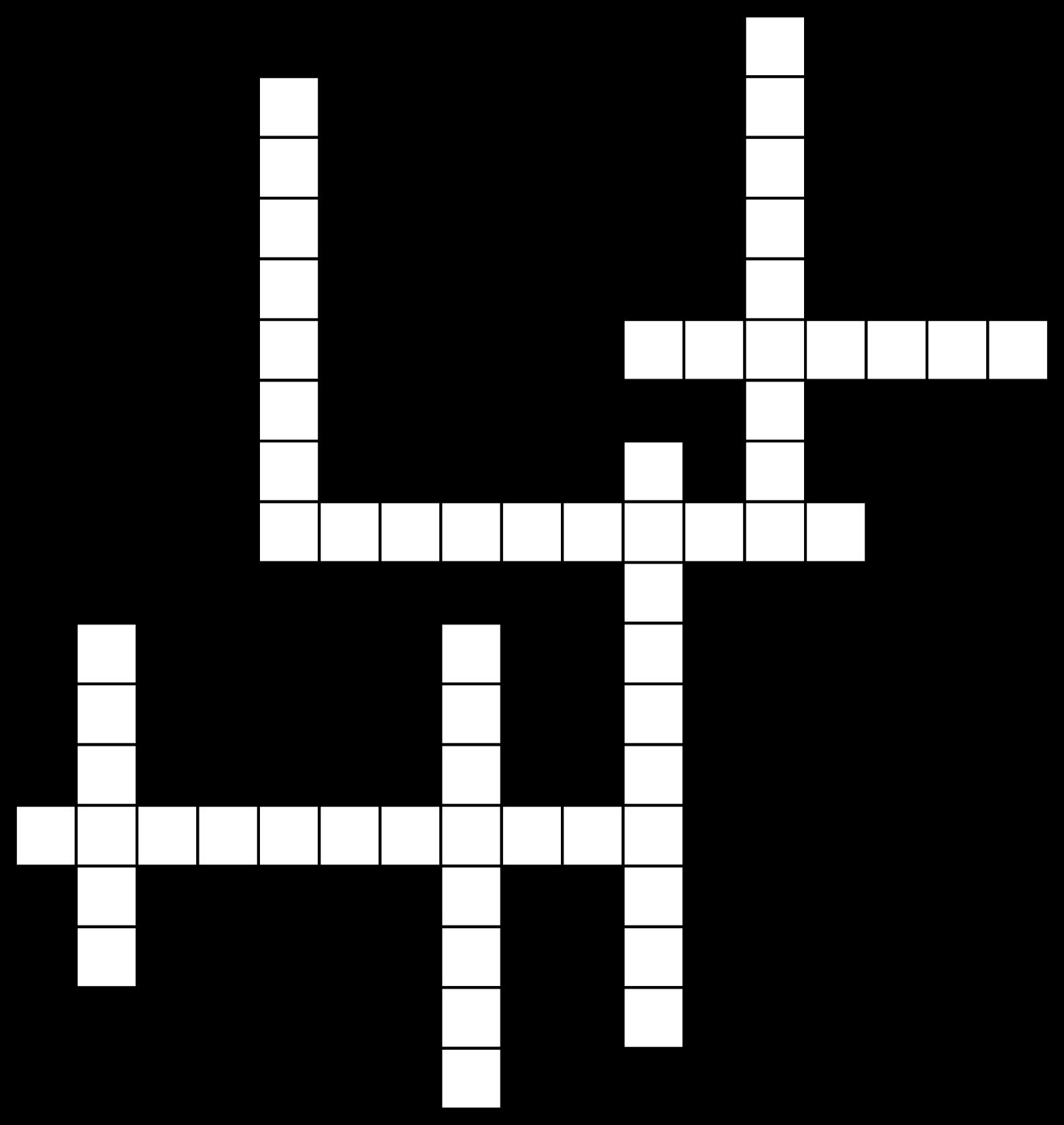
CROSS
Down
To| La Red
[1] Wild coincidence to be suing someone for defamation with the same surname as you
[2] The spiritual successor to Donoghue v Stevens (hint: flies in the water)
[4] Two hunters meet in a forest, to the detriment of another (hint: material contribution to risk; "____ v ____")
[6] Tragedy at the soccer stadium - doubly so when the court refuses to compensate for relational loss.
[7] Beware of bringing fireworks to the train station! (hint: Cardozo and Andrews JJ showdown)
Across
[3] Drinking and tubing is a bad combination (hint: volenti non fit injuria)
[5] Canadian test for determining whether a duty of care exists ("___-____" - you shouldn't need a hint for this one!)
[8] Don't use work privileges to snoop on others’ personal info (hint: intrusion upon seclusion; "____ v ____")





The Quid Novi is published bi-weekly by the students of the Faculty of Law at McGill University. Production is made possible through the direct support of students and the McGill Law Students’ Association of McGill University (LSA). All contents copyright © 2026 Quid Novi.
Every item appearing in the Quid Novi is an opinion piece that reflects only the views of the person(s) submitting the item. Neither the Quid Novi, the LSA, nor the Faculty of Law endorse any of the material or views contained therein. Given the nature of the publication and its limited resources, the Quid will not undertake to evaluate the factual accuracy of submissions. Submissions are presumptively publishable unless they do not conform to the guidelines contained in the Quid constitution
EDITORS-IN-CHIEF RÉDACTRICES EN CHEF
Catherine Zhang
Faith Dehghan
SOCIAL MEDIA DIRECTOR
DIRECTRICE DES RÉSEAUX SOCIAUX
AnyaAbbes
ART DIRECTOR
DIRECTRICE ARTISTIQUE
RaeAquino
LAYOUT EDITOR
ÉDITRICE DE MISE EN PAGE
Carina Cutillo
Isabella Drzemczewska Hodson
COPY EDITORS
SECRÉTAIRES DE RÉDACTION
Liam Hunt
Jerod Miksza
Jagnoor Saran
COLUMNISTS
CHRONIQUEUR.EUSES
MaddieAdamsAlexander
Heeva Chavoshi
Caroline Homet
Erin Porter
Céleste Star
NaomiYao
CONTRIBUTORS
CONTRIBUTEUR.ICES
Leyla Bilgi-Bérard
McGill Journal of Law and Health (MJLH) AdeleWechsler for the MJSDL
Special thanks to RaeAquino and SouangWu for designing the layout.
Envoyez vos commentaires ou articles avant mercredi 17h00 à quid.law@mcgill.ca .Toute contribution doit indiquer le nom de l’auteur, son année d’étude ainsi qu’un titre et un sous -titre pour l’article. L’article ne sera publié qu’à la discrétion du comité de rédaction, qui basera sa décision sur la politique de rédaction disponible sur notre Instagram @quidlaw