
THE JOURNAL
Queen’s University — Vol. 154, Issue 2 — Monday, June 29, 2026 — Since 1873
Kingston Pride 2026: ‘We
are resilience and liberation in action’
Thousands celebrate Kingston’s 37th annual Pride Parade
Chloe Nunes Senior Arts & Culture Editor
Thousands of people united downtown to celebrate Kingston’s 37th annual Pride Parade.
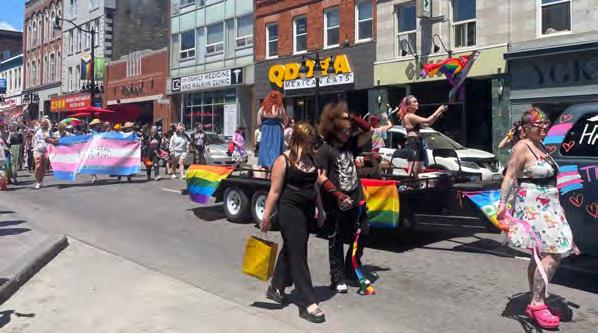
At 12:00 p.m. on June 13, the parade departed from the Memorial Centre and began their march to Confederation Basin in front of City Hall. Those who marched alongside Kingston Pride included community organizations like ReelOut Film Festival, the Frontenac Paramedics, and Kingston Roller Derby. As the parade marched down Princess St., pride flags soared through streets, smiles lit up from sidewalks, and loud cheers signaled the start of a proud day for Kingston.
Queen’s parade participants included the Gender and Sexualities Alliance (GSA), who carried their Faculty of Education banner, and Queen’s University Association
Finding queer community at queen’s, then and now
Alumni and students reflect on how belonging has changed across generations
Emmet Paradis Senior News Editor
To better understand queer life at Queen’s across generations, The Journal spoke with current and former students about their experiences finding community on campus.
Then
When Stacy Kelly, president of Queen’s University Association for Queer Employees (QUAQE), first started looking for queer community at Queen’s, visibility carried a different kind of risk.
Kelly, ArtSci ’96 sat down with The Journal to speak about his

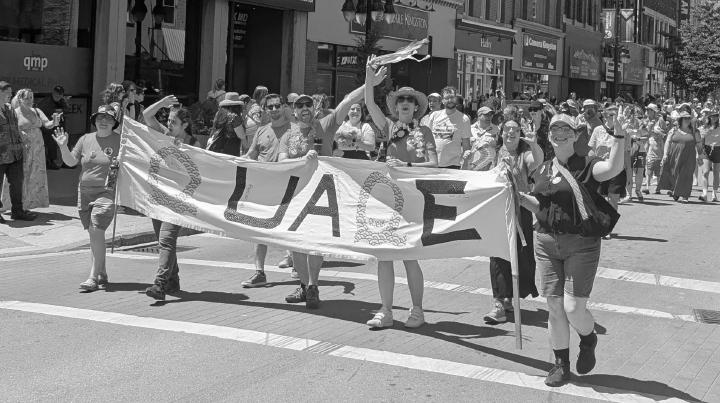
for Queer Employees (QUAQE), a group who holds a historic legacy at Kingston Pride by marching with the same hand stitched banner that won “Best Banner” 20 years ago when QUAQE marched in the Kingston Pride Parade for the first time.
“[Marching in the parade] really makes you reflect on all the work our predecessors did to create spaces for us, to carry the same banner that their hands carried down the same street, 20 years ago.” QUAQE wrote in a statement to The Journal. Kingston Trolley Tours drove down the road with a trolley decked out in Pride flags, with Kingston Transit’s Pride bus trailing behind as “Happy Pride” flashed on its destination display
After the Pride parade, speeches were delivered by Josie Vallier, the parade marshal, and Bee Dupuis, the chair of Kingston Pride to thank supporters, organizers, and volunteers, and to speak on this year’s theme, “Resilience and Liberation in Action.”
“Whether this is your thirtyseventh Kingston Pride festival, your first parade, or anything in between, let me say something very clearly: you belong here. You belong in this community. You belong in this city. And you belong
experiences.
As co-founder of QUAQE, Kelly said the queer community existed during his time at Queen’s, but wasn’t always easy to find.
He remembers being scared to enter queer spaces on campus, including one formerly located in the Yellow House Centre for Student Equity and Inclusion on what’s now Bader Lane. “It was a very special magical place once I got the courage,” Kelly said.
Years later, Kelly said the visibility of the queer community at Queen’s and in Kingston has changed significantly. At this year’s Kingston Pride march, he walked with QUAQE and noticed Queen’s groups around him, such as the AMS.
For Kelly, marching in Kingston has always carried particular significance because of the city’s size. Unlike larger cities, where people may feel more anonymous, he said being visibly queer in Kingston can mean being seen by colleagues, neighbours, and community members.
“It was brave for people to be like, you can now find me if you need to,” he said.
Indigo Bunting, ArtSci ’13 and member of QUAQE, said in an interview with The Journal that their queer experience as a student differed from their experience as a staff member.
Bunting said they identified as bisexual while studying at Queen’s
— and are loved — exactly as you are. You make us possible — and we are resilience and liberation in action,” Vallier stated in her speech.
Vallier was nominated by the community to serve as the parade marshal for her work with TransFamily Kingston, a community organization for gender diverse people and their loved ones.
“It is one of the biggest honours of my life. To be able to represent our community as chosen by the community to lead us in our march means the world to me,” Vallier shared in an interview with The Journal For Vallier, “resilience and
but didn’t become deeply involved in the queer community at the time.
“I don’t know if I didn’t know where to find it, or if it wasn’t obvious and clear,” they said.
Bunting said the Yellow House didn’t exist when they were a student, and they didn’t know of a consistent physical hub for queer students. Today, they see the Yellow House as an important gathering space.
As a staff member, Bunting said they feel safer and more confident being queer at Queen’s. They came out as non-binary in 2021 while working at the University , adopting a new name and pronouns.
“It was generally, overall, a very supportive process,” Bunting said. “I felt safe to do that.”
Still, Bunting believes we have more work to do. “With Queen’s being such a historical institution, one of the big things that we can do to change is always question the ‘we’ve always done it that way’ mentality,” they said.
Now
Comm ’27 student Haydon Barta said Queen’s reputation impacted his expectations before arriving.
“Queen’s has historically had a reputation of being an institution predominantly populated with straight white males,” Barta said in a statement to The Journal. “As
decision to exclude elected oFFicials From Pride march PromP ts debate
Kingston Pride keeps march non-political for a second year.
Kavina Sathiyanarayana Assistant News Editor
liberation in action” is a reminder that Pride wasn’t always a celebration.
“Pride started as a protest. It was one brick and we have come from there. We haven’t stopped being a protest and people tend to forget that. They see the party, they see the celebration, and they see the dancing. They forget that we couldn’t do this 15, 20, 30 years ago. The very fact that we are doing it is a protest,” Vallier explained.
See Pride on page 12
a commerce student, that reputation was intensified, so it definitely affected my expectations as a queer student.”
Barta said that, from a safety perspective, the reputation only shaped his perception “in a minor way,” adding he felt undergraduate students can choose who they surround themselves with.
His experience at Queen’s has been “pretty spot on” compared to what he expected. He said queer life at Queen’s is present, but not always immediately obvious.
“It’s there if you look for it, otherwise it’s really not that noticeable, whether that’s moving towards normalcy or not, I’m not too sure,” Barta said.
He pointed to the Yellow House and Q+, a club under the Commerce Society geared towards community and allyship for queer students, as examples of visible queer spaces and organizations on campus. While he hasn’t used the Yellow House personally, he said knowing it exists still matters.
In an interview with The Journal, Adelaide Somoza, ArtSci ’28, said she entered Queen’s with neutral expectations about queer life on campus. Coming from a small town, Somoza said Queen’s and Kingston have felt more open-minded.
Somoza said queer spaces are visible, but she hasn’t felt the need to rely on formal queer supports
No elected officials walked in Kingston’s Pride parade on June 13, following a decision by the Kingston Pride board to keep the event non-political.
Kingston and the Islands MP Mark Gerretsen commented on the decision in a social media post. Gerretsen said he was disappointed that elected officials were not included in an official capacity this year.
While he respects the decision, he clarified the distinction between a political party and an elected official. “A party speaks for itself. An MP or any elected official represents everyone in the community. My intention was to only walk in that role,” he said in the post.
“I felt a responsibility to share this publicly, as many people would wonder why I wasn’t participating in the parade in an official capacity. It was important to me to be transparent about that, while also being clear in my continued support for Pride and the 2SLGBTQIA+ community in Kingston,” Gerretsen said in a statement to The Journal
In a statement shared with The Journal, Bee Dupuis, chair of Kingston Pride, clarified that this decision reflects community feedback. While elected officials were not allowed to “register to walk” in the parade, they emphasized that all were welcome to join as community members.
See Elected Officials on page 3
because she’s found community through friends. She said Kingston lacks some more specific queer spaces such as lesbian-focused events, but she credited students with helping create community. “It’s there and it’s meaningful, but it is limited,” she said. “You won’t find things like you’d find in Toronto.”
For Kelly, the changes he sees now are part of a longer history of queer people at Queen’s and in Kingston building community for one another.
He said Queen’s is a flawed institution, but one that has been “trying to do better.”
Kingston Pride’s float leads the parade with TransFamily Kingston close behind.
PHOTO BY CHLOE NUNES
June highlights the role universities play in both celebrating and teaching Indigenous histories
LoLa Hustins AssistAnt news editor
At Queen’s University, National Indigenous History Month is being marked by encouraging students and community members to engage with Indigenous knowledge and its role in present-day society.
According to the Government of Canada, June serves as a time to recognize and reflect on the histories, cultures, traditions, and contributions of First Nations, Inuit, and Métis peoples in Canada. The month also celebrates National
Faculty association pushes compensation, workload reForms in
bargaining
Negotiations set to continue into July as current agreement nears expiry
EmmEt Paradis Senior News Editor
The Queen’s University Faculty Association (QUFA) has entered a new round of collective bargaining with Queen’s, outlining priorities including fairness in the workplace, workload, job and employment stability, information technology and privacy, and merit reform.
QUFA President Karen Rudie, professor of electrical and computer engineering, said bargaining is the process where QUFA and the University negotiate changes to their collective agreement.
The bargaining process comes ahead of the expiry of the Current Collective Agreement on June 30, following a one-year renewal.
In an interview with The Journal , Rudie said that if an agreement isn’t reached by June 30, the parties can agree to continue under the current collective agreement while bargaining proceeds.
She said a strike or lockout would require additional steps, and would involve faculty members withholding their labour.
“At the moment, the University and our bargaining team have
Queen’s celebrates National Indigenous History Month with a focus on learning
Indigenous Peoples Day on June 21, coinciding with the summer solstice, which holds cultural and spiritual significance for many Indigenous communities.
Queen’s, situated on the traditional territories of the Anishinaabe and Haudenosaunee peoples, marks the month through events and initiatives that celebrate Indigenous cultures.
In a statement to The Journal, the Queen’s Office of Indigenous Initiatives (OII) explained they provided learning opportunities throughout the month, aimed at helping students and community members expand their knowledge of Indigenous histories and cultures.
On June 22, the OII’s Instagram account posted a list of reading and podcast recommendations, highlighting works by Indigenous authors including Anishinaabe writers Waubgeshig Rice and Mazina Giizhik.
The post also featured podcasts
such as The Aunties Dandelion , hosted by Kahstoserakwathe Paulette Moore, a Mohawk woman whose conversations draw on Haudenosaunee ways of knowing.
Programming throughout the month included events like the Community Fire for Peace and the Good Mind on June 24, which aimed to bring community members together to learn from one another in a shared space.
The OII, in partnership with Queen’s Thrive 365, also held Raccooning Walk Talks on June 18 and 23. The walks were designed to encourage participants to engage with the natural environment and deepen their relationships with the land.
Both events began at Tsi Yakwanahstahsontéhrha, also known as Queen’s Outdoor Indigenous Gathering Space, a curved structure near the south end of Tindell Field.
Nicole Parsons, ArtSci ’29, is an Inuk student at Queen’s. Born
set bargaining dates to continue into July,” Rudie said. “If bargaining is proceeding well, I don’t think either side tends to strike over a minor word choice.”
According to QUFA Bargaining Alert #1, released May 12, the parties began negotiations on May 4 and had completed four days of bargaining by that point.
Members approved the association’s Collective Bargaining Mandate and Principles 2026 on April 13 following consultations, surveys, and town halls held earlier this year.
QUFA stated that its initial proposals addressed issues including discrimination and accommodation, grievance procedures, discipline, employment equity, and working conditions.
Workload is one of the key concerns in bargaining.
“With the austerity position the University has had, people are [dealing with] class sizes increasing, fewer resources, fewer teaching assistant hours, fewer staff people in a department,” Rudie said. “All of that leads to increased workload for faculty members.”
Rudie said those working conditions also affect students. “It’s overwork for us, but it’s also not good for you.”
Merit compensation is also expected to be a topic during negotiations.
In May, QUFA members voted 60 per cent in favour of recommendations developed by the LOA#6 Joint Compensation Working
in Iqaluit with family roots in Kinngait, Nunavut, Parsons comes from a lineage connected to Inuit whaling and traditional ways of life.
In a statement to The Journal, Parsons said she felt a deep connection to her middle name, Miali, inspired by Inuk artist Mialia Jaw. She said the name serves as a constant reminder of the importance of community and storytelling.
Parsons said she aspires to pursue a career in “Aboriginal law,” and recognized that Queen’s has made efforts to incorporate Indigenous perspectives into class discussions.
She added that the University has room to improve Indigenous representation and strengthen relationships with local Indigenous communities and the lands on which it is situated.
“This month provides us an opportunity to learn about Indigenous achievements
and acknowledge the impacts of colonization. But we must also show up and take a stand to show that we are here,” Parsons said.
Jacqueline Davies, an adjunct associate professor of philosophy and gender studies at Queen’s, said in a statement to The Journal that it is important to understand the impact of European and Canadian settlement on Indigenous peoples and the land.
She said she makes it a personal goal to challenge her assumptions derived from Western academic traditions and encourages her students to continue learning about Indigenous traditions and philosophy.
“I encourage my students to commit to lifelong learning, respect, and relationship-building as fellow ‘lovers of wisdom.’ Indigenous History Month is another opportunity for this; it’s also something we can and should do year-round,” Davies said.
kingston sees steady rent growth as ontario markets cool
Group , which reviewed the University’s merit system.
According to the rent report, members expressed concerns that the current process was cumbersome, unpredictable, and demotivating.
Rudie said the current merit system can create equity concerns because merit increases are added to base salary. This means an increase earned early in a career affects every future year of pay, since later cost-of-living increases are calculated from that higher salary.
Rudie added the current system can also make merit dependent on the performance of other faculty members within a department. She said if several faculty members produce major work in the same year, individual achievements may appear less impressive.
The QUFA Bargaining Alert #2, released May 26, said parties had completed six days of negotiations.
QUFA Chief Negotiator and Professor in the Faculty of Arts and Science, Jordan Morelli, described discussions as “collegial and collaborative.”
The update states that QUFA and Queens have exchanged most initial proposals on nonmonetary issues. QUFA said its proposals have been organized into five broad categories: fairness in the workplace, workload, job stability, information technology and privacy, and compensation.
Rudie said QUFA is mindful of the University’s financial constraints during bargaining.
Reports suggest Kingston continues to foster one of Canada’s most competitive rental markets
LoLa Hustins Assistant News Editor
Kingston is being deemed Ontario’s “outlier” with increasing rent growth amid declines in other municipal markets, according to a Canadian Rent Report.
The report, posted by the rental marketplace platform Zumper, showed that while rents declined across nine of Ontario's largest rental markets, Kingston has continued to climb the ranks. It’s now the sixth most expensive rental market in Canada as of May 2026, up from seventh in 2025.
Additionally, the city is seeing increased renter engagement, rising eight positions to rank third nationally in the first quarter of 2026, according to a Canada Renter Interest Report published by the property management platform, RentCafe.
RentCafe’s report also ranked Kingston third among the 25 largest Canadian cities attracting the most attention to their rental markets with rankings based on indicators such as available listings, listing views, favourited apartments, and saved personalized searches made through their website.
Demand for rental spaces in Kingston continues to be supported by steady enrolment at Queen’s, stable public-sector jobs, and relative affordability compared to larger centres such as Ottawa and Toronto, according to RentCafe’s report.
The city saw one-bedroom units settle at a median of $1,920 and two-bedroom units at $2,410, demonstrating an average monthly increase of 1.6 per cent and an 11 per cent year-over-year increase for one-bedroom units.
According to the Zumper report, Kingston, Québec City, and Montréal led the country in rent growth, with Kingston posting the highest year-over-year increase at 11 per cent, ahead of Montréal at 7.6 per cent and Québec City at 5.7 per cent.
Zumper’s report attributes Kingston’s resilience in part to its geographic insulation from the “immigration decline that is weighing on overall Ontario and B.C.” Statistics Canada reported that Canada’s population declined by 0.1 per cent in the first quarter of 2026, reflecting, in part, a result of lower levels of immigration. A 2026 CTV News article also noted that Ontario “saw fewer permanent immigrants move there than the number of temporary foreign workers and students leaving,” underscoring the demographic shifts affecting rental demand across the province.
Continued online at www.queensjournal.ca
CORRECTIONS
Queen’s approves 2026-27 budget, projects $8.5 million deficit
A previous version of this story incorrectly reported that Queen’s operating budget was projected to finish the year in a surplus.
Additionally, a previous version incorrectly reported that the Faculty of Arts and Science was projecting an $8.5 million deficit. In fact, Queen’s overall operating budget is projecting an $8.5 million deficit.
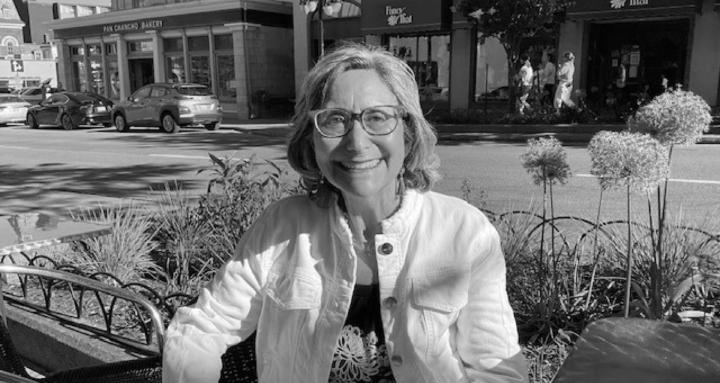
Karen Rudie, president of QUFA. PHOTO SUPPLIED BY KAREN RUDIE
How QUAQE became a home for queer employees at Queen’s
Employee resource group began as a social network before being formally recognized
EmmEt Paradis Senior News Editor
The Queen’s University Association for Queer Employees (QUAQE) began as a social network for Queer employees in 2005.
The group was originally created to serve as a professional social network for Queer faculty and staff before employee resource groups were formally supported by the University, according to QUAQE organizing committee member Indigo Bunting.
In interviews with The Journal , Bunting explained the group held social events in its early years and created an email list and website, both of which continue to connect members today. Stacy Kelly, cofounder of QUAQE,said the group was created in a different campus climate, when being publicly visible as a Queer employee could feel more difficult.
According to Bunting, the original group became less active after some of its main organizers left Queen’s or moved on from the institution. By the time Bunting returned to Queen’s as a staff member in 2017, QUAQE had gone dormant.
However, in 2019, Bunting began working to restart the group.
“I thought, I’d really like to get a Queer employee resource group up and running,” they said.
Bunting reached out to the Human Rights and Equity Office and helped organize lunchtime events for employees interested in seeing QUAQE return.
a new
After those conversations, organisers applied for formal employee resource group recognition and funding from the University.
QUAQE became a formally recognized employee resource group in 2020.
Since then, Bunting said they have focused on building community among Queer employees, especially during the COVID-19 pandemic, when the group’s early programming took place virtually.
The group continues to hold regular social events, including monthly happy hours and in-person gatherings. Bunting said QUAQE has also publishes a monthly newsletter highlighting both its own events and broader Queer community programming.
QUAQE’s mandate includes faculty, staff, and students who have an employment relationship with Queen’s. The group’s Microsoft Teams space is for Queer employees, while its email list is open more broadly, including allies.
While the group began with a social focus, Bunting said formal recognition has allowed QUAQE to take on
more advocacy work. The group has a seat on the Principal’s Action Group for Gender and Sexual Diversity (PAGGAS), which gives the group a direct line to raise concerns affecting Queer staff and faculty.
“Having a representative on PAGGAS has been really great for us to be able to advocate for issues that we’re seeing with staff around gender and sexual diversity,” Bunting said.
One issue QUAQE previously advocated for was Queen’s name-change process. Bunting said employees who changed their names could still be required to log in using NetIDs based on their initials tied to their previous name.
“That can be traumatizing,” Bunting said.
QUAQE advocated for changes to the process, and NetIDs are now assigned as random combinations of letters and numbers.
Beyond policy issues, one of the main reasons people join QUAQE is the sense of connection it provides across a large and sometimes siloed institution, according to Bunting.
“Sometimes you can only work within your own team, and there might not be any other Queer
people on your team,” they said.
That emphasis on connection has stayed central to the organization.
Although he is no longer involved in QUAQE’s day-today leadership, Kelly said seeing QUAQE continue today is meaningful because the group served an important purpose when it was founded.
“They’re carrying the baton, or torch, in a great way,” he said.
QUAQE’s upcoming programming includes Queer and Ally Song Circle: Singing for Connection and Wellbeing, a Thrive 365 program open to students and employees.
“Queer voice can be silenced so often, either by ourselves or by others,” Bunting said. “Having a space where you can come and bring your voice in a safe way […] is a really important piece.”
Looking ahead, Bunting said they hope to continue building community while exploring mentorship, intersectional programming with other employee resource groups, and more events open to allies.
tradition takes Flight as Queen’s holds First-ever ceremony celebrating the raise oF the pride Flag
Pride flag raised in front of a nearly 200-person crowd
Jacob KranJac Business Manager
For years, Queen’s has raised a Pride flag. This year, the University held a ceremony to celebrate that tradition.
Kicking off Pride Month at Queen’s on June 1, the IntersexInclusive Progress Pride Flag, the most inclusive Pride flag to date representing all groups under the 2SLGBTQIA+, was raised in front of a crowd of around 200 onlookers.
The flag has been raised for several years now, but Vice-Principal, Culture, Equity, and Inclusion (CEI) Stephanie Simpson identified a
gap in which the progress the University has made with Pride was going unrecognized and as such, dedicated a ceremony to the flag’s raising.
During her speech, Simpson, said the flag acts as a “reminder of the work that has been done, that continues to be done, and the work that needs to be done.” All of this, Simpson said, is to ensure people thrive at the University.
AMS Vice-President (University Affairs) Edward Sy also gave a speech reflecting on their experience as a queer and gender-diverse student, accessing Yellow House services for the first time and finding community within those yellow walls.
Sy called for action saying “for everyone that walks by this pole, I ask that you see this Pride flag as a promise, rather than a performance, to invest in our future leaders of
society, who will then continue the fight for those who come after.”
In an interview with The Journal , Simpson said protecting queer spaces comes down to avoiding complacency, instead arguing the University should strive for more inclusivity and progress.
Alexandra Pedersen, co-chair for the Principal's Action Group for Gender and Sexual Diversity (PAGGAS), said the raising of the flag is a “great success for visibility at Queen’s.” She described Queen’s as a space where you can be your authentic self, and that is a kind of joy she hopes to share.
Pedersen also sees the gaps Queen’s still must fill; she said the aim of PAGGAS is to “bridge the gaps to make sure people are included in working and learning spaces.”
As both a current staff member
elected oFFicials
...continued from front page
“The Board of Kingston Pride is disappointed this situation has developed into a false narrative that insinuates we banned any politicians or elected officials from participating in Kingston Pride events. We want to make one thing extremely clear: No one is ever banned from Kingston Pride,” they said.
This is the second year elected officials have not been included.
“Last year, we laid out the same conditions, and several elected officials joined us in an unofficial capacity with no issues,” Dupuis said.
“The community has expressed to us that they do not want elected officials registered in the parade or community fair, as they wish to see their advocacy beyond the month of Pride in this difficult political climate,” Dupuis said.
Speaking to The Journal , Sydenham District Councillor Conny Glenn, whose ward encompasses Queen’s main campus, said she understood the decision.
“Unfortunately, when something like this gets politicized, it takes away from th e primary message,” Glenn said.
While she hopes politicians will be included again, she emphasized this was “a decision that the community makes together.”
“I really think it's important that we continue to have these conversations and that we continue to move the needle forward,” Glenn said. “Oftentimes, I think, we believe that things have been fixed or taken care of when they haven't.”
In a statement to The Journal, Kingston and the Islands MPP Ted Hsu said he did not march in his official capacity this year.
“I do think it’s important, especially at this time, for elected officials to stand with those facing threats to their right to live and love authentically,” he said. “While I missed being able to, once again, join our local 2SLGBTQIA+ community, I respect the decision of organizers to do what they think is best and to keep the event non-political.”
and alumnus, Pedersen describes Queen’s as a place that has taken both “steps forward and steps backward,” acknowledging the people in the past that have pushed for change while also noting the pushback change has received.
Simpson described Queen’s as being on a “forward path with [diversity, equity, and inclusion], and it matters to so many people in the community that we’re present and we’re standing up for [their] rights.”
Pedersen credits the Simpson’s office as part of why the University is in a season of embracing visibility, describing Simpson as a person in her corner to support this kind of change.
Pedersen also warns that “without an office to ensure equity and inclusion we could see more backsliding like we see across the country.”
Kingston Mayor Bryan Paterson told The Journal while he was disappointed, he chose to celebrate Pride in other ways.
Kingston Pride, however, remains concerned about where the public conversation has been centred.
“We are disappointed the narrative seemed to be focused on the personal feelings of these elected officials, rather than focusing on the impact they can have on the futures of the 2SLGBTQIA+ community,” Dupuis said.
“To focus on themselves has done harm to the unpaid volunteers of the board.”
Kingston Pride remains committed to its long-term goals and grassroots origins.
“Our plans for next year and beyond remain the same. To listen and engage with our community, who make Kingston Pride special,” Dupuis said.
Members carried their original Pride banner at this year’s march.
PHOTO SUPPLIED BY QUAQE
FEATURES
Kingston’s only dedicated gay bar closes after six months, citing unsustainable turnout
Bottoms
Up has gone bottoms down,” owner says
Aaliyah Signoretti Features Editor
Kingston’s sole dedicated gay bar, Bottoms Up, has closed its doors after only six short months.
Since the early 1970s, Kingston has seen a number of gay bars come and go. Bottoms Up was the first dedicated gay bar in Kingston in nearly 20 years, with many establishments long preceding it. After six months, the bar has closed for good this pride month, on June 18.
Before closing, the bar hosted its first and final Pride After Party, marking a bittersweet end of an era that brought in over 100 guests. It was the venue’s busiest night since opening in January.
Paul Fortier, co-owner of Jessup Food & Heritage and founder of Bottoms Ups, told The Journal his bar, Bottoms Up, has gone “bottoms down.”
The bar hosted a Kingston Economic Business Mixer on June 18 as its final official event.
For Fortier and his partner, the venture was inspired by a mission to create a dedicated 2SLGBTQ+ space in Kingston after witnessing the city’s queer nightlife scene dissipate over the years.
“As we have grown older, we were saddened by the fact that there had been no dedicated ‘gay’ establishment in Kingston for the last 20 years; particularly when many clamoured for one,” Fortier said in an interview with The Journal
Motivated by nostalgia and a sense of community, they made the decision to rebrand their under-utilized venue, the University Tavern, into a dedicated gay bar this January.
The University Tavern, located on the lower level of the Renaissance building, served the city well as a popular hub for university students. After the failure of Bottoms Up, Fortier noted the venue will be reverting back to the well-known University Tavern, remaining part of Kingston’s nightlife scene.
As Bottoms Up’s journey comes to an end, The Journal took the time to reflect on the elusive history of queer nightlife in Kingston.
The secretive era of “gaytolerant” spaces
The rapid rise and fall of Bottoms Up follows a long history of queer spaces in Kingston.
Before the concept of dedicated, openly gay bars existed in Kingston, the city’s 2SLGBTQIA+ community built social networks within mainstream establishments. From the 1950s through the 1970s, local patrons subtly
that housed the Plaza.
The Office represented a shift from the secretive spaces of earlier eras, allowing local patrons to socialize openly. Over the next 15 years, the building at 46 Montreal St became a revolving home for various queer spaces, culminating in Dreammakers, a dedicated lesbian bar that operated until 1997.
place,” Fortier said.
For previous generations, gay bars were an essential community hub. They served as the primary physical space where individuals could feel safe expressing interest in someone of the same sex. Apps effectively distributed that role into the digital world.
venue stemmed directly from watching the city’s nightlife options shrink. But upon opening, Fortier and his partner “realized it was a long reach to success.”
“Twenty years without a gay bar is telling,” he said.
negotiated space in “straight” drinking establishments.
These early environments were shaped by a delicate balance: venues needed to be recognizable enough for queer people to find each other, while remaining low-profile enough to blend into the crowd.
Historically, Kingston served as a geographic anchor.
“Kingston, since the 70s and into 2010 had a reputation of meeting in the middle,” Fortier told The Journal
“For those in the LGBTQ community who wanted to socialize and not travel to Ottawa, Montreal or Syracuse, Kingston was a viable option and drew from the regional community,” he stated.
During the 1950s and 1960s, the list of “gay-tolerant” bars in Kingston included local establishments such as the Elbow Room, the Cat’s Meow, the Indian Room, the Wagon Wheel, The Grand, Chez Piggy, and the Black Sheep Inn.
One of the most popular hubs for gay men during the 1960s and 1970s was the Cat’s Meow, situated off the lobby of the LaSalle Hotel on Princess St. It was designed as a long, narrow room with entrances at both ends, allowing customers to casually enter from Princess St, scan the room, and leave through the back lobby. The bar sat approximately 18 people.
Campus catalysts and the first dedicated LGBTQ+ spaces
A critical turning point toward public visibility occurred on October 2, 1973, when a letter signed by “Three Campus Homophiles” was published in The Queen’s Journal
The letter was written in response to a piece titled “Fred Fudpucker” that had run in the engineering student paper, Golden Words. The student authors pointed out Queen’s is one of the few universities left in North America which still does not have its own homophile association.
By late October of 1973, the Queen’s Homophile Association (QHA) was officially born, and by 1977, the QHA was successfully organizing licensed dances in the basement of the Queen’s Law School.
These events regularly drew crowds of upwards of 150 people, at least half of whom were women, and many others who travelled from the broader Kingston community and surrounding rural towns.
This growing desire for open socialization paved the way for Kingston’s first dedicated gay bar. In the early 1980s, The Office opened its doors on the corner of Montreal St and Queen St. It operated in the upstairs section of 46 Montreal St– the building
Following the initial success of The Office, the 1990s brought an expanded commercial queer nightlife scene to Kingston.
“Robert’s Club Vogue then 477 was a popular bar and club in the 90s,” Fortier recalled. “Then came Wally’s in the west end and later Shay Foo Foo on Princess Street downstairs from the former Don Cherry’s.”
Yet, beneath the busy weekend crowds lay a challenging financial reality.
“While they were well attended on Fridays and Saturdays, they all struggled financially,” Fortier explained. “It is difficult to survive with one or two busy nights a week, and those nights would last for 3 or 4 hours of strong business.”
By 2009, Shay Foo Foo closed its doors for good. The wellknown gay bar disappeared from Kingston’s nightlife scene, leaving a multi-decade gap.
In its absence, the community turned to pop-up events. As Fortier noted, there was Beers for Queers over the last ten years, hosted by Monte’s at Tir Nan Og on most Saturday nights.
“While the kick off was strong with great DJs and lots of dancing, this too faded in popularity and proved to be not viable,” Fortier said.
How technology and mainstream integration changed nightlife habits
The decline of dedicated queer bars in Kingston is not unique to the city; it mirrors a broader cultural shift influenced by technology and changing social norms.
“With the introduction of Grindr in 2009, the gay male community separated, finding that social media provided a more effective and discreet way to connect with like-minded individuals,” Fortier observed.
“Clearly the rise of dating apps and increased mainstream acceptance of our lifestyle has had an impact and there is no longer that need for a community meeting
At the same time, a broader socio-cultural shift toward mainstream acceptance began altering nightlife habits. There was “a greater acceptance and integration of members of the LGBTQ community into mainstream bars and clubs,” Fortier explained. “I remember earlier days when two men dancing together in a club would lead to their eviction. These days have passed.”
Reports cite this intersection of digital dating, soaring commercial real estate costs, and inflation has made running a niche identity-based venue an incredibly risky business venture across Canada. When community members can connect from home and socialize comfortably in general establishments, the economic incentive to sustain a dedicated gay bar decreases.
“Today, I know that there are many members of the LGBTQ community in Kingston that wish to live a very discreet life and would never be seen out in public at any gay affiliated event or establishment despite their orientation,” Fortier said.
“Still, members of the LGBTQ community call for a dedicated bar.”
The final curtain for Bottoms Up
It was against this complex historical background that Paul Fortier and his partner, Denis Leblanc, attempted to bring back a dedicated space for the community.
Fortier trusted his decades of experience operating different venues around Kingston, mentioning to The Journal that Jessup Food & Heritage has been operating restaurants in Kingston since 1994.”
“We were first to hold pride events, drag shows and fly the pride flag on our establishments. While we never hosted a ‘gay’ bar per se, our venues were widely frequented by members of the LGBTQ+ community as it evolved over the years.”
The decision to rebrand their
As the initial excitement of opening Bottoms Up gradually slowed down, Fortier and his partner ran into the same financial walls that faced venues decades prior.
“Since opening attendance has dwindled to a hand-full of customers who come and go on the Saturday night which is the only night open,” Fortier explained. “With few customers, we covered the costs of staff, DJ, go-go [dancer], overhead and product. It was unsustainable.”
The venture was also met with varied community feedback, highlighting different ideological perspectives within Kingston’s modern 2SLGBTQ+ community.
“Bottoms Up was met with a variety of reviews,” Fortier said. “The typical my porridge is too hot, and my porridge is too cold and the anticipated nastiness of segmented radical elements in our community that are against anything that smells of commercialism.”
The era of Bottoms Up came to a close on June 18, following a well-attended event that served as a closing celebration. “While our recent Pride After Party saw more than 100 guests, we realized that this would be a bangup ending for our failed attempt,” Fortier said.
Despite the struggles and ultimate closure, Fortier maintained a positive outlook, emphasizing “nothing ventured; nothing gained!”
Upon reflection, Fortier hopes the experience of Bottoms Up is “telling to those who advocated for opening a local gay bar and a warning to those who may consider it in the future.”
With the space now set to be used “for other purposes,” Kingston is once again without a dedicated gay bar.
Want to contribute to The Journal? Email journal_editors@ams.queensu.ca
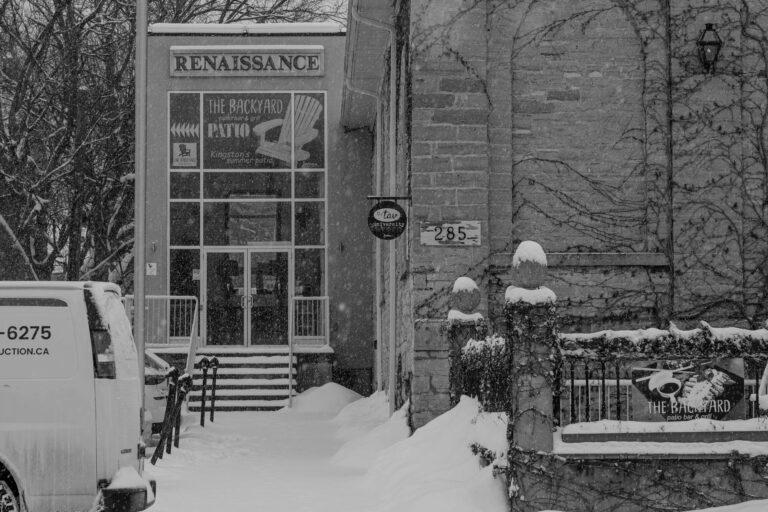
Bottom’s Up old venue, located at 285 Queen Street.
PHOTO BY JOURNAL FILE PHOTO
EDITORIALS The Journal’s Perspective
Gender
non-conformity is nothing new, and my culture proves it
Daniel Gill-Sitoski
QTBIPOC Advisory Board
The growing push to enforce a strict gender binary ignores not only the lived realities of transgender and non-binary people today, but also the long history of Indigenous gender diversity on Turtle Island.
On U.S. President Donald Trump’s second day in office last year, he signed Executive Order 14168, which prohibited the federal government from recognizing the gender identity of transgender people. The order required the American federal government to replace the term “gender” with “sex,” which is defined as an immutable male-female binary determined “at conception”. It also disallowed gender selfidentification on federal documents, and ended federal funding for gender-affirming care and the promotion of what it called “gender ideology.”
While it’s tempting for Canadians to watch this from across the border and file it as
an American political issue, Canadians themselves are far from united on questions of gender identity. According to a 2023 survey conducted by the Angus Reid Institute, 56 per cent of Canadians believed people should identify only as male or female, while only 36 per cent believed the binary is too limiting and 10 per cent abstained from answering.
The growing popularity of these views can make it easy to assume the gender binary is universal, timeless, or rooted in historical fact. However, it is not.
Long before Canada and the United States ever existed, many Indigenous groups across Turtle Island recognized forms of gender diversity that existed outside the categories of man and woman. While Indigenous cultures are not monolithic, and gender systems varied significantly among nations, many communities recognized people who occupied social, ceremonial, and spiritual roles beyond those assigned to their gender at birth.
Today, many Indigenous people and cultures use the term Two Spirit to describe some of these identities and traditions. The term was adopted in 1990 as a pan-Indigenous umbrella term to describe pre-colonial gender identities in English, though the specific meanings and roles associated with gender diversity differ between nations and individuals.
At least 150 Indigenous groups have documented words or terms describing identities that extend beyond male and female. In Ojibwe communities, ikwekaazo referred to men who fulfilled women’s roles, while ininiikaazo referred to women who fulfilled men’s roles. Both were often viewed as spiritually gifted and honoured within their communities.
Similar concepts existed in Cree, where înahpîkasoht referred to a woman who dressed, lived, and was accepted as a man, while ayahkwêw referred to a man who dressed, lived and was accepted as a woman.
Much of this history has been
lost or obscured by of colonization. European settlers and Christian missionaries actively suppressed Indigenous gender systems, imposing rigid understandings of gender and sexuality that reflected European social norms rather than Indigenous traditions
Yet, despite centuries of suppression, gender diversity remains a poignant part of contemporary Canadian society. Statistics Canada reported that in 2021, 1.3 million Canadians aged 15 and older identified as part of the 2SLGBTQ+ community, and more than 100,000 Canadians identified as transgender or nonbinary, a number that is growing at a faster rate than any time in modern Canadian history.
Debates about gender tend to cast gender-diverse people as a new phenomenon challenging long-established traditions. In reality, the opposite is often true.
Denying the existence of gender diversity does not simply invalidate the identities of transgender, non-binary, and Two Spirit people living today, It also erases cultural traditions and histories that have existed on Turtle Island for generations.
At a time when both anti-Indigenous racism and hate crimes targeting LGBTQ+ communities continue to rise across Canada, understanding this history is more important than ever. Not just during Pride Month and Indigenous History Month, but during every day of every month.
Bill C-36 finally regulates your data, but it doesn’t go far enough
After 25 years, Ottawa has finally caught up to the data economy, but not yet to the companies running it.
On June 15, the federal government tabled Bill C-36, the first overhaul of Canada’s privacy law in more than 25 years. The statute it replaces, Personal Information Protection and Electronic Documents Act, is older than the technology it now has to govern, written for a web of static pages and dial-up commerce, not targeted advertising and machines that make decisions about people on their own.
For years, corporations have had almost unimpeded access to collect, buy, bargain, and sell the data of unsuspecting Canadians, unchecked by law. That access has bought them an unprecedented, intimate understanding of our shopping habits, our daily routines, our search histories, cross-referenced and resold until the firms holding it know us more completely than we know ourselves.
To say this arrangement is unacceptable is an understatement, and federal regulation protecting Canadians’ private data is years overdue.
Yet, as the old saying goes, better late than never.
Make no mistake, the provisions of Bill C-36 reflect tangible progress. Two provisions in particular, the first being that companies are required to treat the data of Canadians under the age of 18 as sensitive by default, and the second being that Canadians now
possess the legal right to demand companies delete their data records upon request — will materially provide more protection to Canadians, especially those least equipped to protect themselves.
Bill C-36 is also a pointed assertion of Canadian sovereignty.
The companies that are the target of Bill C-36 are almost exclusively US-based corporations, with many of their executives openly courting Donald Trump’s circle. In an age where Trump is all too willing to wage economic warfare on Canada, the case for American appeasement, which has traditionally been the stopgap for like-minded legislation in the past, simply doesn’t hold as much weight anymore.
The last time Ottawa moved against American tech, over the digital services tax, Trump called it a “direct and blatant attack,” tore up trade talks, and Canada folded within days. Asserting sovereignty is the easy part, but holding it under pressure is the test, and Canada has failed it once already. Bill C-36 is a notable, and positive, deviation from this trend.
Yet, for all it gets right, Bill C-36 regulates how corporations gather and store our data, not whether that data should be harvested in the first place. The systemic engine, an economy built on extracting and reselling the details of people’s lives, is left running untouched. A bill that polices the terms of collection can only do so much when collection itself is the problem.
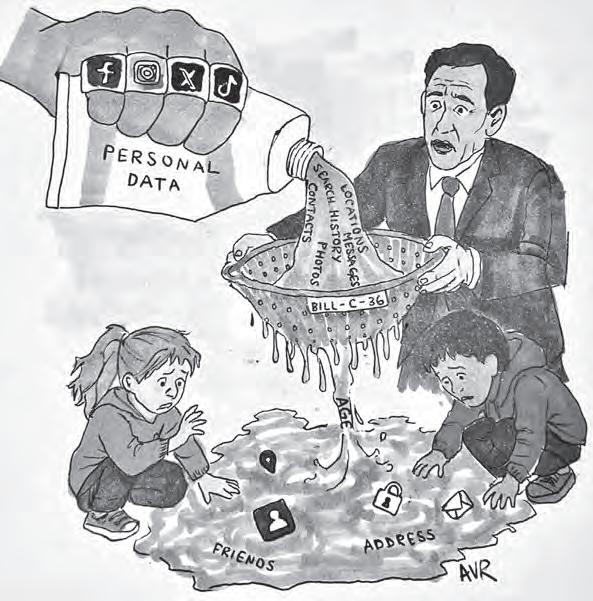
Surveillance pricing, where a company quietly charges you more based on what it knows about you, goes effectively unaddressed, and the price gouging that data enables is barely slowed. No single piece of legislation was ever going to close every gap, and that is the point. C-36 is a start, and the work of protecting Canadians demands far more regulation than this.
The firms on the other side of this legislation are some of the largest on earth, with budgets that dwarf most provinces and infrastructure sitting in the pocket of nearly every Canadian. Against opponents that size, the bill’s penalties barely register. A fine of $10
million or three per cent of global revenue is a figure the biggest of them will pay without blinking, a rounding error weighed against what the data itself is worth. These are companies that have spent decades treating the law as an obstacle to route around rather than a limit to respect, and a single bill does not reverse a power gradient that steep. So, support the bill and pass it without delay. But see it for what it is, a first concession from an industry that gave up nothing for decades, and a floor to build on rather than a finish to settle for.
– Journal Editorial Board

ILLUSTRATION BY ANNA VAN RAALTE
OPINIONS Your Perspective
How Kingston Catholic hospitals quietly restrict trans healthcare
In the operating room, your identity should never dictate what care you can access
Contributor
As medical students, we are taught that patient-centered care, health equity, and accessibility are the foundational pillars of our future profession. The Queen’s MD Program explicitly aims to train physicians who are prepared to champion the needs of equity-deserving groups, while promising a community where equity, diversity, and inclusion are embedded in everything we do.
Yet, as a second-year medical student spending more time within the walls of our local healthcare system, I have quickly learned about a hidden curriculum — a set of unspoken forces and administrative constraints that dictate what type of healthcare is accessible, who is allowed to receive it, and who is allowed to speak about it.
Here in Kingston, we have three operational hospitals, but two of them — Hotel Dieu Hospital (HDH) and Providence Care Hospital (PCH) — are Catholic-affiliated organizations. Despite being publicly funded, these institutions are legally permitted to limit access to essential forms of healthcare that do not align with Catholic religious principles.
While these limitations are often seen as historic anomalies, their modern applications actively undermine patient autonomy and health equity. Catholic affiliated hospitals utilize their religious principles to selectively and disproportionately affect transgender patients. These Catholic ethical guidelines, while initially appearing to affect only a marginalized community, in reality complicate hospital logistics, which compromises medical access for the broader Kingston community.
The most problematic aspect of these Catholic guidelines is not that the surgeries are technically complex or unavailable, but that the restriction is based purely on the identity and medical motivation of the patient.
The gynecologic portion of gender-affirming surgery for individuals assigned female at birth typically involves a total laparoscopic hysterectomy and bilateral salpingo-oophorectomy. This is an OHIP-funded, medically necessary intervention that yields documented, significant improvements in quality of life, body image, and mental health for trans patients.
These exact operations are performed routinely every single week at HDH for indications such as abnormal uterine bleeding,
fibroids, and early-stage cancers. Yet, they are explicitly prohibited if the indication is gender affirmation. This manifests as an unwritten administrative rule: if a surgeon writes "fibroids" on an HDH operating room referral form, the surgery proceeds without issue; if "gender-affirmation" is written, the surgery is silently flagged and canceled.
A parallel injustice occurs with reproductive care. Procedures like bilateral salpingectomies and intrauterine device (IUD) insertions are routinely blocked at HDH if performed for the purpose of contraception, despite being freely permitted for cancer prevention or other noncontraceptive indications. These practices directly mirrors institutional mandates outlined in the Catholic Health Alliance of Canada's Health Ethics Guide.
This is a clear contradiction of the Canadian Human Rights Act of 1985, which mandates that all individuals should have an equal opportunity to have their needs accommodated without being hindered by discriminatory practices based on gender identity or expression. By offering identical anatomical procedures for cisgender indications while banning them for transgender indications, Kingston Health Sciences Centre (KHSC) is passing moral judgment on the worthiness of a patient's medical needs.
Transgender individuals are already among the most vulnerable in our society, facing disproportionate rates of discrimination and violence. Denying them equal access to a medically necessary procedure at a publicly funded facility only perpetuates this systemic violence.
A common misconception is that faith-based medical restrictions only impact patients seeking niche or highly specific religiousconfronting care. In reality, institutional religious mandates disrupt the efficiency of the entire municipal health infrastructure.
In Kingston, HDH holds roughly 60 percent of the city’s gynecological operating room space. Because general gynecology is allocated six times more operating room time at HDH compared to the secular Kingston General Hospital (KGH), routine operations are designed to be cleared through HDH. However,
because HDH restricts procedures tied to contraception and gender-affirmation, these routine operations are forced onto KGH's operating tables.
KGH’s limited operating room space is traditionally reserved for complex, highly comorbid patients and cancer cases. When straightforward, day-surgery procedures are systematically offloaded onto KGH due to religious policies at HDH, it creates an artificial bottleneck. Patients requiring complex gynecological surgeries, who are already facing extensive wait times, are forced to wait even longer as KGH absorbs the routine surgeries turned away by HDH.
Faith-based restrictions do not exist in a vacuum; they strain secular institutions and compromise systemic care for every resident in communities where catholic hospitals are dominant healthcare providers.
Unfortunately, Kingston’s struggles are part of a broader, systemic issue across Canada where the 2013 Catholic Health Alliance of Canada’s Health Ethics Guide continues to cast an ambiguous, unwritten shadow over public hospital policy. The consequences of these institutional barriers are perhaps most visible, and tragic, in end-of-life care.
Because PCH operates under Catholic principles, it completely bars Medical Assistance in Dying (MAID) on its premises. Terminally ill, fragile patients must be heavily sedated and transferred via ambulance to KGH simply to exercise their legal right to a dignified death — a logistical hurdle that causes immense, documented distress to families and providers alike.
This institutional obstruction is finally facing legal action. In the British Columbia Supreme Court, a landmark lawsuit brought by the family of 34-yearold Samantha O’Neill, alongside Dying With Dignity Canada, is challenging the right of publicly funded, faith-based hospitals like Vancouver's St. Paul’s Hospital to enforce "forced transfers" for MAID. O’Neill, suffering from stage four cervical cancer, endured a traumatic and agonizing transfer in her final hours due to institutional religious policies.
Her family's Charter challenge argues that public funds should
DIGEST: COnvOCaTIOn’S CaSE fOR humanIT y
Why speeches are still focused on what only people can do
Niki Boytchuk-Hale Staff Writer
demand public compliance with federal healthcare rights. A success in this B.C. trial is expected to create a legal domino effect, emboldening Ontario physicians and patients to challenge these archaic regulations.
KHSC’s website proudly states: “We treat each person with respect and dignity... by caring for the whole person, when and where they need it most.” Yet, the current reality of surgical access for contraception and genderaffirming care stands in stark opposition to the organization's professed values. Institutional religious restrictions on genderaffirming and reproductive care directly discriminate against transgender patients while creating systemic bottlenecks that compromise healthcare access for everyone.
As medical trainees, we are entering a profession with a historically troubled legacy regarding the mistreatment of marginalized groups, particularly patients of colour and queer individuals. Frontline physicians speaking out on these injustices often operate under a professional spotlight, taking turns in their advocacy to shield themselves from administrative backlash or professional consequences from the hospitals they are employed at.
This leaves medical students and trainees with a unique responsibility. Because we sit outside the administrative hierarchy, we have the distinct freedom to name these injustices loudly.
Advocacy around this issue stands on the foundational work of Dr. Chris Vicenza and Dr. Emma Denison. Hospital administrators often rely on the short memory of medical training, expecting advocacy to fade as leaders move on in their careers to new institutions.
As a second-year medical student inheriting this torch, I wish to not let these systemic injustices be forgotten.
I hope that by highlighting this issue during Pride Month, we can reflect on which members of the 2SLGBTQIA+ community KHSC, and subsequently Queen’s University, deem acceptable to celebrate as they promote their allyship this June.
Zi Han (Henry) Li is a secondyear medical student.
If you’re worried about the future of the humanities — or humanity in general — in this age of generative AI, go to a Queen’s graduation and you’ll walk away with renewed hope.
I’ve presided over 47 ceremonies now. That adds up to over 20,000 handshakes (plus a couple hundred hugs) and roughly 35 hours of speeches that have everything to do with purely human capacities and nothing to do with artificial intelligence. I learn a lot about people, and life, while listening and watching from centre stage.
First, an observation from the handshake line: I had no idea how many people are double-jointed. My unscientific estimate is 15 per cent of Queen’s graduates who extend their hand out to me present with a double-jointed thumb. This is absolutely unrelated to the point of this piece, but I have always wanted to share it.
Now, back to humanity.
Aside from a brief few minutes I get at the podium, mostly, I listen. It’s fascinating to hear what the few who are privileged with a direct line to graduands choose to say. I tend to think that what these very successful people spend their time conveying in front of people on the threshold of a new life says a whole lot about who they are and what they think matters in life.
In all of the serious, funny, reflective speeches I’ve sat through from writers, lawyers, artists, scientists, politicians, and business folks alike, there were none that did not focus on values and principles for bettering the world around us.
Just this week alone, Smith Engineering Dean Kevin Deluzio emphasized the importance of engineering for humanity. Principal Patrick Deane said the most eminent faculty we have is imagination — to be able to imagine a better future for ourselves and society at large. Vice-Provost Fahim Quadir urged that we spend our lives making our communities equitable for all.
The first Honorary degree recipient, Monique Frize, explained the necessary skills heading into the workforce are “being able to think outside of the box and an ability to incorporate the social, political, and economic context into your work.”
Continued online at
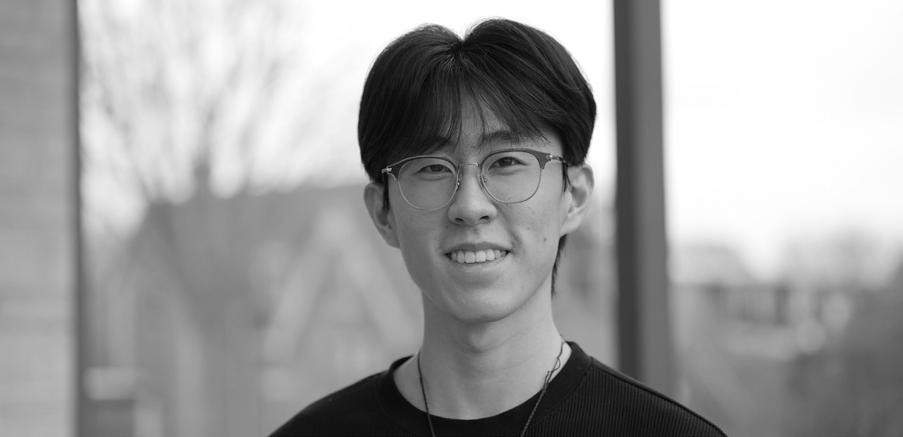
Li reflects on of trans healthcare in Kingston Catholic hospitals.
IMAGE SUPPLIED BY ZI HAN LI
Zi Han Li
<BIZ-SCI-TECH>
Queen’s PhD student’s lake photo wins global science competition
A leftover drone battery and years of research on a lake local to Kingston led to international recognition
Murray Halpin
Business, Science, and Technology Editor
The lakes north of Kingston don’t exactly look like the site of an international science story. But for Queen’s PhD student Haolun (Allen) Tian, that was the point.
Taken on Dog Lake in 2021, Tian’s drone photograph was named one of the top five winners of the “Scientists at Work” category in Nature’s international photo competition, announced June 10.
The image depicts a small boat gliding across a lake, covered with layers of thick bright green algae.
On the boat, Queen’s master’s
student, Kelly Estrada Piedrahita, is collecting water samples.
For Tian, who is defending his PhD in the Queen’s Department of Biology in late June, the photo wasn’t originally meant to be world renowned art. His drone’s original purpose was to survey the bodies of water he was researching, while taking environmental DNA, or eDNA, sampling. He would then study algae blooms, but specifically why they are an environmental concern and a growing problem along the Rideau Canal corridor from Kingston to Ottawa.
“Algae blooms are an emerging issue on freshwater small lakes,” Tian said in an interview with The Journal. “They’ve only started appearing regularly in the last 15 to 20 years, and we weren’t exactly sure why.”
The usual cause of runoff pollution from sources like phosphate detergents, do not explain what he has been seeing. “Our lakes are fairly not disturbed, we don’t have that many people,” Tian said. “So, my research was to find out why.”
The blooms can have dangerous consequences once they die
Kingston’s first transgender health clinic closes following physician’s retirement
Dr. Ashley Waddington, a Queen’s OB/ GYN who helped open the clinic, is retiring this month.
uroosa iMtiaz
Business, Science, and Technology Editor
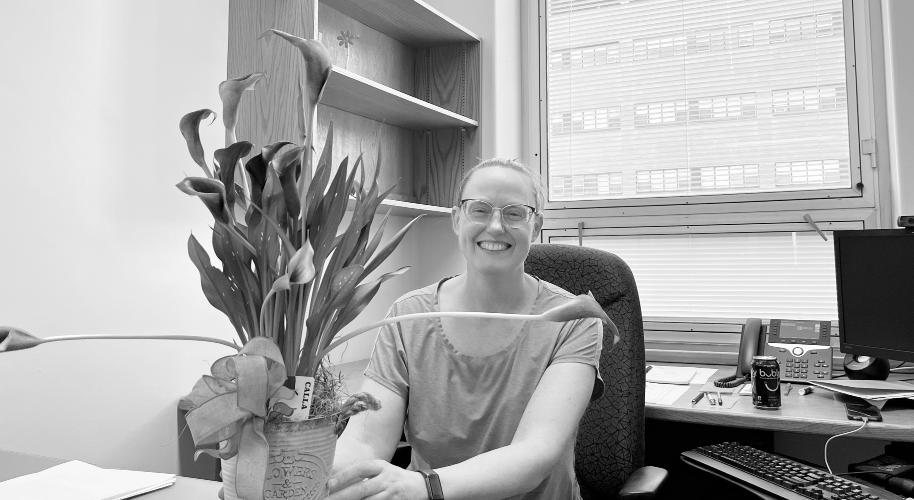
Dr. Ashley Waddington, MPA ’13 is a Queen’s OB/GYN who helped open Kingston’s first Transgender Health Clinic and is retiring this month.
Waddington began offering gender-affirming care in 2017, operating a monthly transgender health clinic and connecting other physicians with resources to provide gender-affirming care within their own practices.
The clinic provided hormonereplacement therapy (HRT), approvals for surgery, and postoperative care. While the clinic will close in June after nine years, other services Waddington helped establish remain.
Waddington, who has played a key role in efforts to expand access to gender-affirming care in Kingston, said the clinic’s closure will have a “relatively limited” impact on the community in an interview with The Journal “I never set out to be a gender affirming care expert. It was more so that I started to see a need in my practice, [providing] contraceptive care,” Waddington said.
off and rot. “This rotting takes away oxygen from the water, which suffocates all the fish,” he said. “They also produce toxins, which can hurt drinking water supplies, and cause dogs and local wildlife to suffer.” The photo itself came out of leftover battery life after a long day of surveying and sampling. “After each survey, I would just begin flying around with whatever battery life I had left, and then just randomly taking photos,” Tian said.
When he showed his images to fellow students and professors, they were extremely impressed and encouraged him to continue pursuing photography and to submit his photos into competitions. He then won the Queen’s Art of Research photography contest and used the prize money to purchase an actual camera.
What stands out to him about winning the competition isn’t the algae, but the photo’s relationship with his research. “I really like this photo because it shows the sense of scale between the environment and us,” Tian said. “The environment is so much bigger than us. We’re only one part of the food web.”
This idea is the reason why Tian became so passionate about capturing his research through photography. “Fieldwork is a huge appeal of ecology to me,”

he said. “This photo to me shows my workspace.”
These experiences have helped shape what Tian wants to do after he finishes his PhD. He plans to launch a startup business aimed at making eDNA sampling more accessible to the same communities he has been studying for years. “What I want to do is empower individuals and empower communities to do their own monitoring,” Tian said. He described the goal as building “a lab in a suitcase,” which would be simple enough for landowners to test for invasive species and toxic algae themselves.
“For us to do something impactful and meaningful, we don’t have to go out to another country or somewhere remote,” he said.
“There’s many issues impacting our local communities, and one of the ways that we as researchers, as students, can do the best is the work in our local communities.”
For Tian, his startup is the next step in the project that began by accident on a dock in Dog Lake. As he finishes up his PhD this month, the algae bloom he set out to understand years ago have led him many places from an enriching master’s project to winning an international photo competition, and will soon lead him to a business of his own. It all started with something as simple as looking at a toxic algae mat that most people would have driven right past, not knowing the hours of research and significance behind it.
Gradually, she began seeing more patients referred to her for menstrual suppression related to gender dysphoria.
Around the same time, a colleague who had quietly been providing gender-affirming care to a small number of patients within his reproductive endocrinology practice was retiring and looking for someone to take over their care.
Waddington completed training through Rainbow Health Ontario, an organization that supports LGBTQIA+ health equity through health-care provider training, educational resources, research, and policy work.
Waddington opened Kingston’s first Transgender Health Clinic in 2017 alongside two colleagues.
A lot of the work was already familiar to Waddington due to her work as a gynecologist. “I prescribe tons of reproductive hormones for a variety of reasons, so for me it was just a different indication to prescribe hormones for,” she said.
The clinic ran once a month and quickly received an overwhelming number of referrals, with a yearlong waitlist forming within a few months.
Waddington was part of a group called Trans Health Connectors, an informal group of local physicians and social workers that began discussing the possibility of a transgender health clinic at Kingston Community Health Centres (KCHC).
One of the group’s goals was to “normalize [gender-affirming care] being part of primary care” which made KCHC a “logical place”
for the clinic, Waddington said.
“The more that people were coming to me as a specialist in the hospital, the more that was kind of making it seem like this care is too extra, […] like it’s not something that a family doctor or a nurse practitioner could do,” she explained.
The KCHC transgender clinic opened in 2019 with a full-time nurse practitioner, social worker, and administrative staff member.
“As the community health centre started doing more of the hormone prescribing, my practice started to have a little bit more focus in surgical care,” Waddington said.
Patients primarily came to her for help navigating the process of accessing gender-affirming surgery and for post-operative care. However, patients still had to travel to Ottawa or Toronto for surgery.
“Throughout all of this time, in an effort to normalize this care and make it seem less daunting, a lot of our efforts were also going towards education, so I’ve done
a lot of teaching,” Waddington added.
She taught residents in obstetrics and gynecology and family medicine, as well as primary care providers, about providing gender-affirming care, often referring them to Rainbow Health Ontario’s clinical guidelines and resources.
Her work educating physicians led to her appointment as assistant dean (professional development) in the Queen’s Faculty of Health Sciences in 2024.
Despite these efforts, gaps in access to gender-affirming care remain.
Waddington said the biggest barriers for her patients include the primary care crisis and a shortage of primary care providers offering gender-affirming care, which can force patients to seek referrals to specialists.
In her experience, many providers’ reluctance to offer gender-affirming care comes down to a lack of training rather than transphobia.
She also pointed to long surgical wait times, the need to travel
for care, and lack of OHIP coverage for medications and procedures such as chest contouring, which can be needed to achieve a patient’s desired result after top surgery.
Although the clinic’s closure will reduce access, Waddington mentioned the impact will be modest, as she has not been taking new referrals for some time and her current patients have either been referred to colleagues or have care plans in place.
She added that Kingston’s gender-diverse community is a major force behind improvements in local care.
“A lot of the credit for any improvements we’ve made goes to the community for advocating for themselves,” Waddington said. “We’re lucky because we live in a centre where we have a very active and engaged gender-diverse population, and that kind of drives the system forward.”
Dr. Ashley Waddington is retiring in June after 13 years at Queen’s.
Tian’s winning photo of Dog Lake.
PHOTO BY ALLEN TIAN
PHOTO BY UROOSA IMTIAZ
Men’s Volleyball setter leading by example
‘I appreciate that I can be a role model for other student athletes,’ player says
Noah Cyr Senior Sports Editor
Chris Zimmerman, ArtSci ’27, is making an impact on and off the court.
Zimmerman, a setter on the Queen’s Men’s Volleyball team has been a big reason for their oncourt success. However, not only does he lead by example when
Queen’s
the bright lights of the ARC are on him, but he also shines even when nobody is watching.
Throughout high school, Zimmerman was always heavily involved in equity, diversity and inclusion (EDI) work, making his community a better place, and that continued when he arrived at Queens. His impact in Kingston has been immeasurable through his commitment to the Varsity and Leadership Council (VLC), where he now serves as copresident. The VLC is a group of seven student-athletes who aim to support student-athlete culture, advise Athletics & Recreation using their insights, and promote community engagement.
With continued guidance from Zimmerman, the VLC has worked to support the 2SLGBTQ+ community in Kingston, while also contributing to initiatives focused on Truth and Reconciliation and mental health. In recognition of his commitment to equity, diversity, and inclusion, Zimmerman received the OUA EDI Award, which honours student-athletes who demonstrate leadership in these areas.
Zimmerman sat down with The Journal to discuss his commitment to Queens and Kingston communities. He explained how moving from British Columbia allowed him to be who he wanted to be.
“Coming to Queen’s was a great opportunity, and that opportunity
was a really big catalyst for me,” Zimmerman said. “I felt really comfortable to be who I am, which I attribute to our environment and culture [on our team].”
Off the court, his EDI work has always been something that has shaped his life and, Queen’s gave him a lot of opportunities that continued that line of work.
“[EDI work] just got to a higher level. I started off doing it with the VLC in my second year, and more opportunities just kept falling in my lap,” Zimmerman explained. “It’s pretty cool to have such an impact, and I really do appreciate that I can be a role model for other student athletes.”
Both Gaels men’s and women’s volleyball teams hosted a pride night during one of their home games in early January, which Zimmerman proposed and accepted with open arms. Zimmerman admitted that he had seen the University of British Columbia do them and have big success. He thought to himself “man, we gotta do one of these.”
“My teammates and coaches were super supportive and really into it, which was really cool to do with those guys.”
Going into his fifth and final season, Zimmerman is excited about the opportunity to focus on volleyball and “pass the torch to the next student athletes.”
Moving into the season, the men’s volleyball will look for its third straight OUA championship, with Zimmerman being an essential part of that daunting feat.
Sailing rookie Anna Powick wins multiple national
Sailor claims the awards would not have been possible “without the people I had around”
Jacksen MacLean, Assistant Sports Editor
In a season full of strong winds for the Queen’s Varsity Sailing Team, it was a rookie sailor that made the biggest splash.
Queen’s sailing member Anna Powick, Sci ’29, was awarded both the 2025 Canadian Intercollegiate Sailing Association (CICSA) Rookie of the Year Female and the 2025 CICSA Female Crew of the Year awards.
In an interview with The Journal, Powick expressed that she was “super honoured” to be given both awards.
“I’m really flattered that people voted me for [the awards], but I wasn’t expecting that at all. The league is very competitive, and there’s a lot of really good people who were nominated who were also very deserving of the awards,” Powick stated.
The awards come after an already successful year for Powick and her teammates. In October the team hosted and won the CICSA Team Racing National Championships, as well as winning the Women’s Fleet Racing Event in Montreal. They followed that up with a second place finish a month later at the Fleet Race Nationals in Halifax, losing only to Dalhousie University. In
March, the team finished second at the Match Racing National Championship in Vancouver, losing again to Dalhousie.
Powick credited a lot of her individual and team’s success to the group’s inviting and supportive environment.
“It’s definitely competitive, but I just always felt like there was a very big emphasis that we all grow together as a team.”
Despite being a rookie, Powick was able to get along with the other sailors right away, even using their experience to help her own sailing.
“I was definitely nervous going into it but once I kind of met everyone, I never felt like anyone was ever gatekeeping or anything. People were always super willing to talk through what made them fast, or how they had success” Powick said.
While Powick states that her teammates are her biggest supporters, she also gives credit to the team’s coach Danielle Boyd, as well as her parents, for helping her throughput her sailing career.
Powick also made sure to
awards
emphasize that her awards reflected the team’s accomplishments, and not just her own personal success.
“I was happy that it brought recognition to the team” Powick noted. “Yeah, I ended up with [the awards] or whatever, but none of that could have been possible without the people I had around me.”
Despite school being out, Powick still trains and coaches with the Kingston Yacht Club over the summer and travels across Canada with the club to keep her sailing skills sharp.
Powick is optimistic about what the next season holds for the Queen’s Varsity Sailing Team.
“I know for certain that next year the team is going to continue to push to do well and be really competitive in the fleet. Our presidents this year have a really strong plan for us moving forward [to continue] representing Queen’s,” Powick said.
She’s hopeful for more smooth sailing for both her and the team as next season approaches.
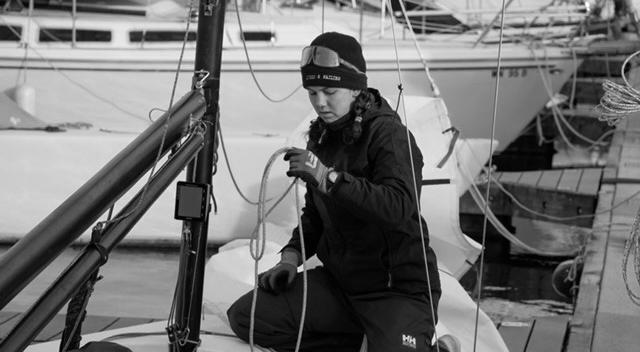

The sport will enter as a pilot sport ahead of its Olympic debut
Malek Benameur, Assistant Sports Editor
Women’s flag football is getting a bigger stage in Canadian university sport.
U SPORTS announced June 3 that women’s flag football will become a pilot sport beginning in the 2027-28 season. The move gives the sport a clearer place within the national university system and adds another championship opportunity for women student-athletes across Canada.
For Queen’s, the announcement comes at a time when its women’s flag football program has already built a strong competitive record.
At the 2025 OWIFA 5v5 Provincial Championships, Queen’s Gaels won the provincial title, while Queen’s Blue finished fourth. The team is divided in half during the 5v5 season to keep their entire squad involved, expanding back to 11 in the winter. Both Queen’s teams reached the semifinals, giving the program one of the strongest showings in Ontario.
The program has also carried that success beyond the province. Queen’s finished fourth at the 2026 Canadian Collegiate Flag Football Championship, placing the Gaels among the top teams in the country.
For Brooke Macaulay, ArtSci ’27 and corner on the Queen’s Women’s Flag Football team, the sport has become one of the most meaningful parts of her university experience.
“Before coming to Queen’s, I didn’t even know women’s flag football existed. Now, I can’t imagine my life without it,” Macaulay said in an interview with The Journal
Macaulay said the team has given her friendships, confidence, and a place where she feels supported. She described the program as something built through years of work from players, coaches, and supporters who believed in where the sport could go.
Women’s flag football has already had a national collegiate structure through Football Canada, which has hosted the Canadian Collegiate Flag Football Championship since 2022. The sport has also had a varsity presence in Quebec’s RSEQ since 2021.
Now, U SPORTS recognition could help move the sport into a new phase.
The pilot sport designation gives emerging sports a chance to develop within the U SPORTS structure before becoming permanent fixtures. Women’s flag football will hold that status for five seasons while U SPORTS works with member schools, conferences, and Football Canada to decide competition standards and championship requirements. Macaulay said the announcement feels like recognition for the work already being done in the sport, but not the end of that work.
“One phrase [Women’s Football] Coach Lib has always said is, ‘Keep laying the bricks, one brick at a time,’” Macaulay said. “To me, that means trusting the process and believing that every challenge, every season, and every small step forward contributes to something much bigger than yourself.”
For Queen’s, that process has already been visible. The program has grown into a two-team structure, competed at the top of the province, and pushed onto the national stage. U SPORTS recognition could give that momentum more visibility on campus and beyond.
As U SPORTS grows into the woman’s game, recognition could also bring greater visibility to women’s flag football at Queen’s. While football on campus is often connected to the varsity tackle program, women’s flag football has created its own culture and identity, which Macaulay calls ‘a sisterhood.’
Flag football is also set to make its Olympic debut at the 2028 Los Angeles Games, giving the sport more attention than ever before.
The details are still being worked out, as U SPORTS has not yet announced which schools will take part, how teams will qualify, or where the first Football Canada or U SPORTS Women’s Flag Football Championship will be held.
Still, the announcement gives women’s flag football a direction it has not had before in Canadian university sport.
Want to contribute? Contact journal_sports@ams.queensu.ca
Anna Powick prepares her boat for sail at Keelboat Nationals.
PHOTO SUPPLIED BY ANNA POWICK
Queen’s Women’s Football has already seen provincial and national success ahead of U Sports recognition.
GRAPHIC BY CLAIRK BAK
DIVERSIONS
As Summer continues, so does your Summer horoscope
Capricorn (Dec. 22 – Jan. 19)
For you, this summer means ghosts of situationships past might return to haunt you. Exes, old friends, the guy who ghosted you after two weeks, they may all show up in your life for a return feature. But you can take it and roll with the punches. With Cancer season starting mid-month, your body may react negatively to stress. Take a spa day, go out to bottomless brunch, hang out with your friends at a patio! Focus on yourself, ignore the noise of the past, and the universe will reward you.

Scorpio (Oct. 23 – Nov. 21)
Summer’s heat. July’s sun. Your passion. What do the three have in common? They are all unyielding. Take this time with your long-distance besties to form a true soul to soul connection. Don’t let your summer love drag you down. You think you know them, but you don’t. You will easily fall into obsession if you let yourself slip. When you find out they’re cheating, don’t be too jealous, they’re just doing them and you should just do you!
Pisces (Feb. 19 – March 20)
You spent a fair amount of time at the pier soaking up the sunshine, but that isn’t the only thing that you soaked up. Pisces, you have been absorbing the energy around you all year and you only have two months left to rest and recover before the emotional turbulence of the year ahead. Don’t feel guilty for needing to escape. Do it. Run. Make a decision and stick to it for the rest of the summer. It may be tough but you can go with the flow and use your unparalleled imagination.
Aries (March 21 – April 19)
Right now, your friends are down bad for their summer flings, and you already know you hate their partners. Don’t be apologetic for your true self. You may be blunt and insensitive, but that’s just a part of your spunk! You are probably staring at your lovey dovey friends in envy, but fear not, you can run your own show. Don’t forget the mantra: “You’re you!”

Virgo (Aug. 23 – Sept. 22)

Libra (Sept. 23 – Oct. 22)
These energy shifts are making you think ahead. Your summer started with a toxic situationship but don’t worry, it happens to the best of us. There are two paths before you. One is letting go, becoming the hot girl summer needs you to be. The other is locking in and figuring out a solution to whatever mess you have been stuck in. There is a secret third option for Libra’s who strike a balance in every situation. You could continue this casual arrangement, but watch out for heart breakers — whether that’s you or your lover.
Taurus (April 20 - May 20)
Let’s be for real, not much has changed for you this summer, but stability is a virtue. Enjoy a carefree life and prioritize the simple luxuries in life. Downtown strolls. Late night ice cream. Take some time to relax before the school year starts, because things may start to tip the opposite way come September.
Entering into July you need to lower your standards. There’s only two months of summer left and you do not want to enter into September alone. Use your ability to notice anything and everything as your superpower. Notice that a girl likes flowers or that a boy likes chocolate croissants to attract the most positive of energy.
Aquarius (Jan. 20 – Feb. 18)
You had a vision for the summer; it may or may not be going to plan. But this Canada Day stare up at the bright flashing fireworks and dream! Gather your friend group and get those plans out of the group chat. Europe. Mexico. FIFA fan events. Go wild! While you’re out there thrifting, pick up that hat that your friends say think twice about. There’s no such thing as too many feathers.

Sagittarius (Nov. 22 – Dec. 21)
Going into July, Sagittarius is going to have a month as fiery as their personality. For those in a committed relationship, expect to have a boost in your passion this month, matching the burning energy of the hottest month of the year. Make sure to keep your communication open and honest, but watch out for trouble when Mercury goes into retrograde. If you’re single starting this month, someone new is entering your life, specifically when you’re in a new environment! They may seem blunt, but their intentions are genuine, so keep an open mind.
Gemini (May 21 – June 20) Gemini, this is the summer to get things together! You’re used to being the type B friend but now it’s time to lock in. Clean your room, the warm weather is begging you to come out of your hibernation and get a fresh start. So pick up the rogue socks off your floor and bring those mugs down to your kitchen sink, it’s time to buy a planner.
Cancer (June 21 – July 22)
Mercury is in retrograde again, but I’m sure you already know. Your sensitive heart has experienced far too many emotional shifts. Maybe a first date didn’t go to plan, or you’ve run out of Hinge likes for the day. As you stay strong during these desperate times, remember that retrograde inspires us to reflect to prepare for positive changes. So, slow down, take a deep breath, and have a sweet treat — love awaits us all until we are truly ready to accept it.
Leo (July 23 – Aug. 22)
Currently, Venus is in Leo. The planet of love is in alignment with your confidence, manifesting your deepest desires and pleasures. This summer, dramatically display your love through grand gestures. Take the ride of your dreams by hopping on a fairytale horse carriage to find your happily ever after. Surprise them with a romantic getaway. Or, plagiarize Shakespeare’s greatest sonnets and pretend you wrote them to woo your boo — “Shall I compare thee to a summer’s day?” Don’t worry about these actions giving Obsession, Leo’s are known for their passion, and that’s nothing to be ashamed about!
ARTS & CULTURE
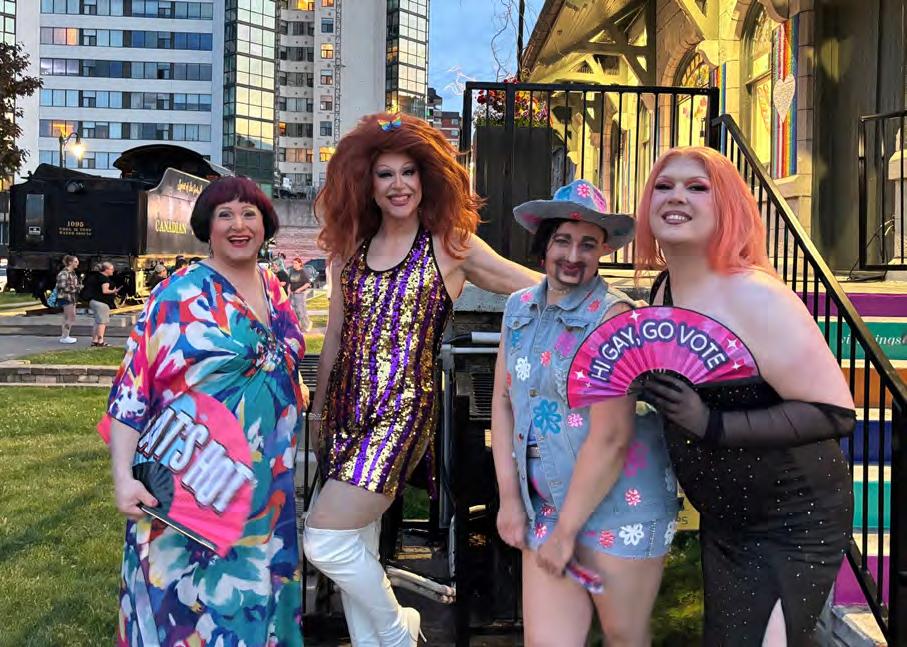
Performers serve both looks and the community at Drag in the Park
Confederation
Park hosts six local drag artists
Mayah Ricketts
Assistant Arts & Culture Editor
On June 9 at 7:00 p.m., Kingston hosted its 6th annual Drag in the Park.
Open to people of all ages, Drag in the Park platforms queer identified local artists by bringing two hours of music, colour, and joy to Confederation Park.
Members of the Kingston community came together behind the Visit Kingston building with lawn chairs, picnic blankets, and lots
of cash, ready for a night full of remarkable performances and high energy. Needless to say, they weren’t disappointed.
The show featured six performers, including the two hostesses, Tyffanie Morgan and Rowena Whey. The pair have been hosting Drag in the Park since their first show on a friend’s back deck six years ago. But their commitment to the drag scene didn’t start there; Tyffanie Morgan has been performing in Kingston for 25 years and is considered a drag mother to many.
The annual performance is in support of Trellis HIV and Community Care. Established in 1988, Trellis is a local organization that supports and provides harm reduction services for people living with, at risk of, or
‘Stop! that! train!’ iS a Stormaganza of fun and controverSy
Two train stewardesses go off the rails
Claire Bak Senior Photos Editor
Does Stop! That! Train! get cute? Or is it drop dead gorgeous.
On June 12, Stop! That! Train! became the first film from the RuPaul’s Drag Race universe to hit theatres across North America. The action-comedy-disaster film was highly anticipated by fans of the cult-classic reality competition television series, myself included. I walked out of the theatre still laughing at the Queen’s jokes and thought about the film’s zinging one liners for the rest of the day.
As a long-time fan of the show, I wondered if the feature film would be as good as its promotions were or if it would end up feeling like a “Drag Race” acting challenge that has run on too long. While sitting in the theatre at a matinee screening, I realized it was sure to be a success.
Stop! That! Train! had all the
foundations to create something that would gag its audience.
Directed by Hairspray’s Adam Shankman and chock-full of past Drag Race competitors and celebrity cameos, Stop! That! Train! is set to become a time capsule of 2020s queer culture.
The movie follows budget train stewardesses, DeeDee and Tess, played by RuPaul’s Drag Race alums, Jujubee and Ginger Minj, as they work their first shifts on the Glamazonian Express, which boasts “opulence, excess, and hot people.”
Whilst aboard the high-speed train, DeeDee and Tess navigate working with elitist stewardesses, eclectic passengers, and even finding love, all while driving through a fictitious natural disaster, dubbed a stormaganza, that threatens everyone aboard the Glamazonian Express. Throughout the screening, it was clear how well the creators of the film knew their audience.
performers, including Yuni-Verse, Sundae Mourning, Whiplash, and Street Meat. Each performer brought something new to the stage and with a wide range of artists, there was truly something for everyone to enjoy.
“Our drag community is so diverse and special in its performers,” Yuni-Verse wrote to The Journal. “We’re a rarity in Ontario and it’s something people should seek out.”
Despite having a stage, the performers all maneuvered through the crowd, giving almost every audience member a great view. They lip-synched and danced skillfully to popular hits, even acknowledging that a drag show wouldn’t be complete without The Weather Girls, “It’s Raining Men.”
Halfway through the show, the hosts introduced Amanda Girling, the executive director of Trellis Community Care. Calling Drag in the Park Trellis’s biggest fundraiser by far, Girling told the audience that it has raised over $25,000 for the organization since they started six years ago.
“I can’t believe we are Trellis’s largest fundraiser, thanks to the generosity of the many spectators out there willing to give and experience a lively drag show,” Morgan told The Journal
Kingston Pride Parade
... continued from front page
After the speeches, thousands arrived at the Basin by 1:00 p.m. to carry celebrations over to the Community Fair, where everyone gathered to connect with the community.
Gay pop boomed on the speakers, Chappell Roan’s “HOT TO GO!” and Hayley Kiyoko’s “Girls Like Girls” pumped everyone up as they all coursed through crowded alleys. Booths stretched from Springer Market Square all the way to the Waterfront Pathway, offering attendees everything from sweet treats to prideful art to community resources.
At the Sexual Health Resource Centre (SHRC) booth, passionate volunteers distributed free condoms, pins, and informative pamphlets about the resources their centre offers.
affected by HIV/AIDS and other Sexually Transmitted and BloodBorne Infections (STBBIs).
“I not only get to financially support underserved members of the community, [but] I also get to share a message of love and support for the queer community,” Whey wrote in a statement to The Journal Volunteers from Trellis were present throughout the show to collect donations from audience members. The drag performers themselves also collected cash tips and immediately deposited them into Trellis’ red collection buckets. Every dollar raised was donated to the charity.
The hosts emphasized the diversity that comes with drag performances and proved it with appearances from a variety of
Instead of expanding viewership by generalizing humor, Stop! That! Train! retains its fanbase by focusing on 2SLGBTQIA+ centred comedy, self-referentiality, and a lack of self-seriousness, preserving quintessential aspects of the cult-classic television show.
The benefits of Stop! That! Train! preserving Drag Race’s humor allows fans to feel in on the story, often referencing gags and bits that they’ve seen on the show previously. For instance, the iconic ‘tell it to me straight, now tell it to me gay’ joke is employed a handful of times throughout the film. While the joke is played out several times, the response lines are changed, creating a piece of self-referential humor where audiences feel in on the joke.
Although Stop! That! Train! received many positive reviews from fans, there have been multiple controversies surrounding the film.
Since its release, fans have speculated online that visual effects and landscape shots seen in the film were created with generative AI. In response, Shankman took to Instagram, writing that, “there are a sum total of ZERO shots conceived by AI in the movie.” Despite Shankman’s
The night was stacked with everything from outfit changes to somersaults, to coordinated dance routines to ABBA’s greatest hits. Each performer invited the audience to sing, dance, and celebrate along with them.
When the show ended at 9:00 p.m., the audience lined up for pictures. Despite being tired from their show, the drag performers posed fabulously for each one.
With performances like these it’s clear that Drag in the Park has a long future ahead of it.
What started off as an intimate gathering of friends six years ago has evolved into an annual experience which draws in massive crowds every year and spreads awareness for Trellis and the 2SLGBTQIA+ community.
statement, some fans are not convinced, critiquing his post’s specific wording.
User ‘gloriamoonchild’ commented under Shankman’s post, “are you able to state that ZERO generative AI was used in ANY shots in this film?” Despite further inquiries from fans, Shankman has not made any other statements on the AI use in the film.
Beyond the AI scandal, there have been controversies within the Drag Race community surrounding lead actress Minj.
The tenured contestant on RuPaul’s Drag Race has been accused of lying about other queens, as well as lying about aspects of her life during her media tour after her win on RuPaul’s Drag Race All Stars season ten. While on the Kelly Mantle Show, Minj commented on her close friendship with fellow All Stars competitor, Mistress Isabelle Brooks, which was later denied by Brooks in a YouTube video titled, “Dear Ginger Minj, Please Stop Lying,” spilling the tea only a month after the announcement of Stop! That! Train!
However, as a long-time fan of the franchise, I believe Stop! That! Train! is a hit despite the controversies. It’s fun, campy, and
“We are an open space so people can come up and talk to us and literally ask anything. We make sure we are accessible to everybody, especially the Pride community,” SHRC’s Events Coordinator and former Internal Educator Olivia McPherson, ArtSci ’27, said in an interview with The Journal A few booths down, the Yellow House Student Centre for Equity and Inclusion invited attendees to interact with their collaborative community mural and receive face paint to commemorate their experiences at Pride.
Along the fair’s artist alley, artisan vendors tended the booths, as they celebrated Pride by selling art to raise donations.
Queer Collage Collective, a queer-led, anti-oppressive arts collective sold colourful Pride themed prints and re-imagined vintage buttons, raising a total of $300 dollars to support Palestinian refugee families in Lebanon.
After an eventful afternoon, crowds dispersed around 5:00 p.m. to continue their Pride elsewhere, with some lingering around the Basin for Kingston Pride’s fundraising cruise to watch drag and burlesque along the St. Lawrence River.
As proven by Saturday’s turn out, standing together as a community is how Kingston uses resilience to create liberation. The crowd’s countless displays of camaraderie is why thirty-seven years of Kingston Pride and counting has been made possible.
doesn’t take itself too seriously. I mean, how many feature films are in theatres right now with multiple choreographed dance numbers? Stop! That! Train! has drama, humor, and Sarah Michelle Gellar, making it the perfect movie for Pride Month.
Follow @queensjournalnow on Instgram to stay up to date on The Queen’s Journal
Four of the night’s performers (from left to right): Tyffanie Morgan, Rowena Whey, Street Meat, and Yuni-Verse.
PHOTO BY MAYAH RICKETTS
POSTSCRIPT
You’re right, being gay is my whole personality
I love myself out loud to liberate myself from respectability
Chloe Nunes Senior Arts and Culture Editor
I’ve been told that I talk about being gay every five minutes. Well, I overheard a friend saying it about me behind my back.
Although I consider myself confident in who I am, sometimes I slip up. After hearing that comment, for the first time in years, I worried about how others perceived my identity. Since I am not confrontational, I stayed up that night writing in my journal, questioning whether being gay really is my whole personality.
I concluded that my personality is queer.
I unapologetically talk about being gay all the time, and I am a better person for loving myself out loud.
My queer identity influences why I hold certain values, what hobbies I have, how I dress, and who I love. My sexuality forms these characteristics, and in turn, composes elements of my personality. Although there are other components that shape who I am, a defining aspect of the unique qualities that characterize me as an individual is that I am “a” lesbian.
If people have a problem with how my personhood developed, they view my queerness as a character flaw: an unrespectable quality that an acceptable individual must overcome.
Our heteronormative world functions on the idea that there are respectable ways of being queer. The framework of respectability politics relies on us conforming to socially respectable versions of ourselves, annihilating any unacceptable aspects of our identities through assimilation.
Respectable queerness falls on the condition that one silences their true selves to perform queerness in “acceptable” ways, submitting to homonormativity by complying with heteronormative ideals to achieve social acceptance.
In the process, we disrespect who we are to be accepted by those who do not respect us. Leave carabiners at home, turn backwards caps around, and love out loud only the parts of yourself that society deems lovable.
Before I accepted myself, I tried to be respectable. I kept
crushes to myself instead of gushing about them at sleepovers. There where nights when I went to bed, hoping I wouldn’t wake up as a lesbian again. That day never came.
Adhering to society is the most straightforward way to forget who you are. My personality can’t be too gay if I don’t have one at all.
Looking for a respectable version of myself was like chasing the end of a rainbow.
I never found it. No matter how much I repressed myself, I could not assimilate without being perceived as different. Under the structure of our world, achieving respectability is always a losing battle.
Now I love myself out loud to liberate myself from respectability.
One of the ways I achieve this is by clipping a carabiner around my belt loop. Last year, I vowed to never take it off and keep it as a visible marker of my lesbian identity.
I promised this to myself when a classmate, who I had never spoken to, came up to me after class, sharing how she knows whenever I enter a room because of the music my keys make.
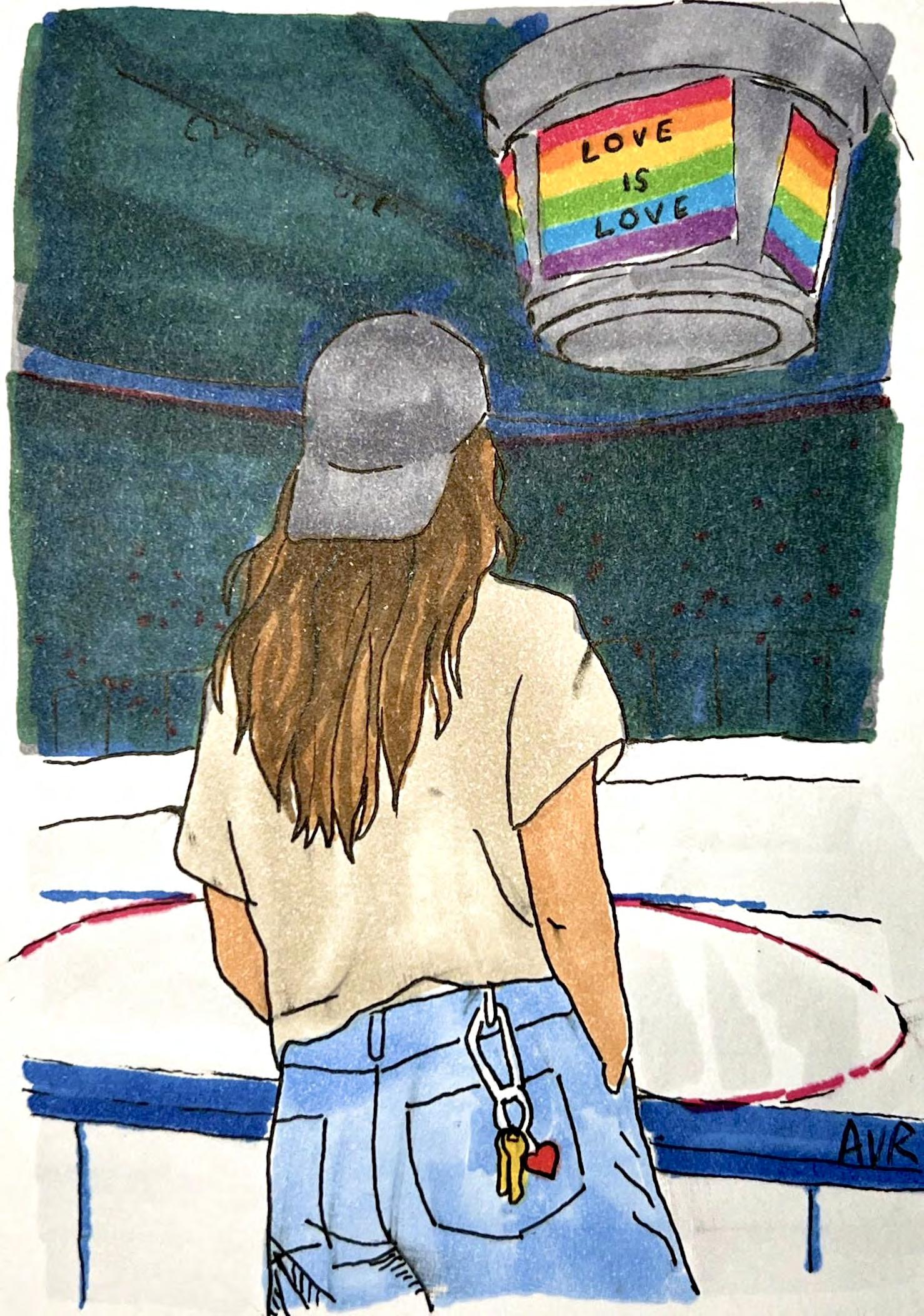
Mulholland Drive is in my top four films.
In that moment, I realized that my carabiner is my leitmotif — my recurring musical phrase that shows how my identity and personality are entangled like a complex arrangement of notes that sound best when played together.
As liberating as it is to live openly, letting identity affect your individuality comes with challenges because it outs you as different.
I never have to bring up my sexuality to receive the comment that my queerness is my “whole personality.” When I discuss aspects of myself that happen to be coded as queer, I contribute to the idea that my whole selfhood is my queerness without having to say the word “lesbian.”
For example: I love watching women’s hockey. Arts and crafts nights are everything to me.
Even common topics of conversation turn “gay” when I discuss my girlfriend, my favourite movies, or songs I love. While we might discuss the same topics, my fear is that my contributions to a conversation are deemed unrelatable, unacceptable, and unrespectable.
When I have been told that I am making my identity my “whole personality,” those harmful comments don’t always come from straight people policing queer expression.
I have met queer people who internalize these heteronormative ideals, then direct their fears onto others who embody traits they repressed within themselves. Those who hope they’re not like “other” gays by performing respectable queerness and unaccepting their community in the process.
Their pick-me problem stems from being afraid of anyone who
has accepted their identities. In that sense, we have all been “other” gays.
I have been “baby gay who came out in middle school,” whose lexicon consisted of telling the world who I was — a problem for those who wish I could have stayed quiet like them. I have been “blue hair and pronouns.” While my hair is back to brown, I still use they/them — a problem for those who act like gender neutral pronouns aren’t in the dictionary.
My lived experiences are not dictated by respect. They are controlled by acceptance for whoever I am and have been, which is why my personality being gay isn’t all that bad.
If we perceive queerness affecting our personalities as character flaws, we risk perpetuating our own social exclusion by discriminating against members of our own communities.
Although I can attest that
my lesbian identity does not make up my entire personality, it would be wrong to say that my queerness does not shape my character. Through my process of self-acceptance, I have become confident, resilient, and compassionate.
When anyone complains about my personality being too gay, I see that comment as a sign that I am not silencing who I am. There’s nothing wrong with being proud of who you are and choosing to be loud about it. I am privileged for not having to be accepted by everyone around me. I am lucky that my queerness does not require respect. I am reminded that pride is a celebration of our differences, not a call to painstakingly assimilate.
Queerness is a virtue, not a vice.
ILLUSTRATION BY ANNA VAN RAALTE