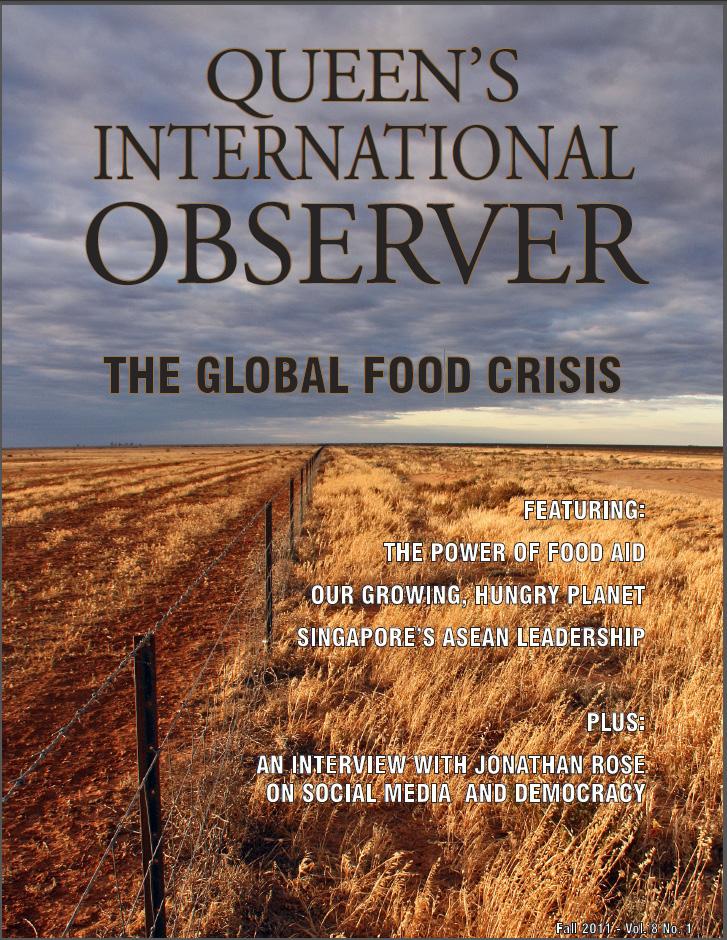
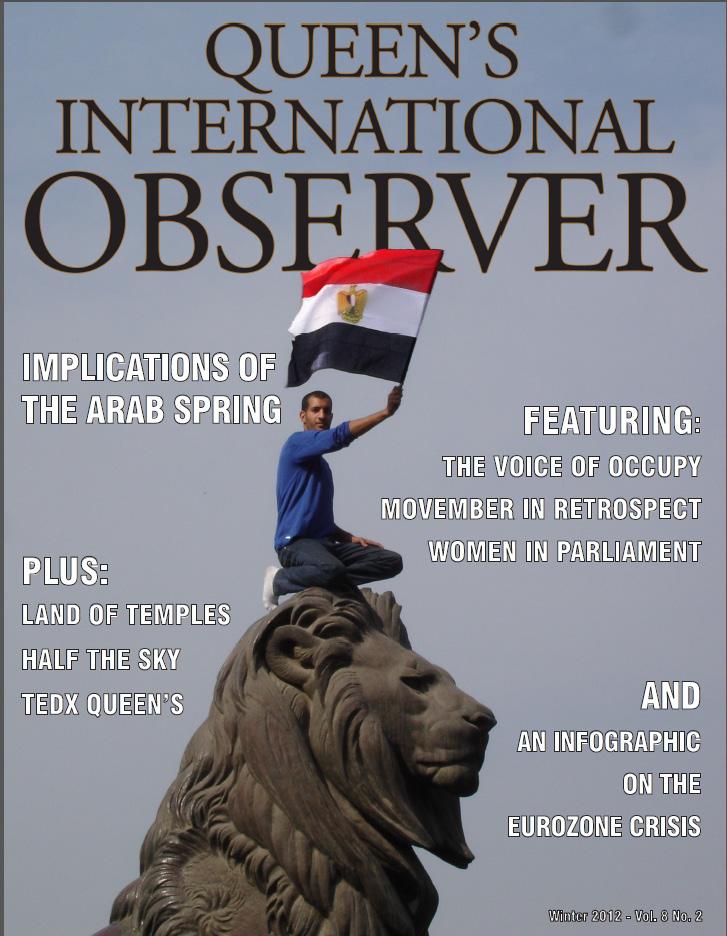
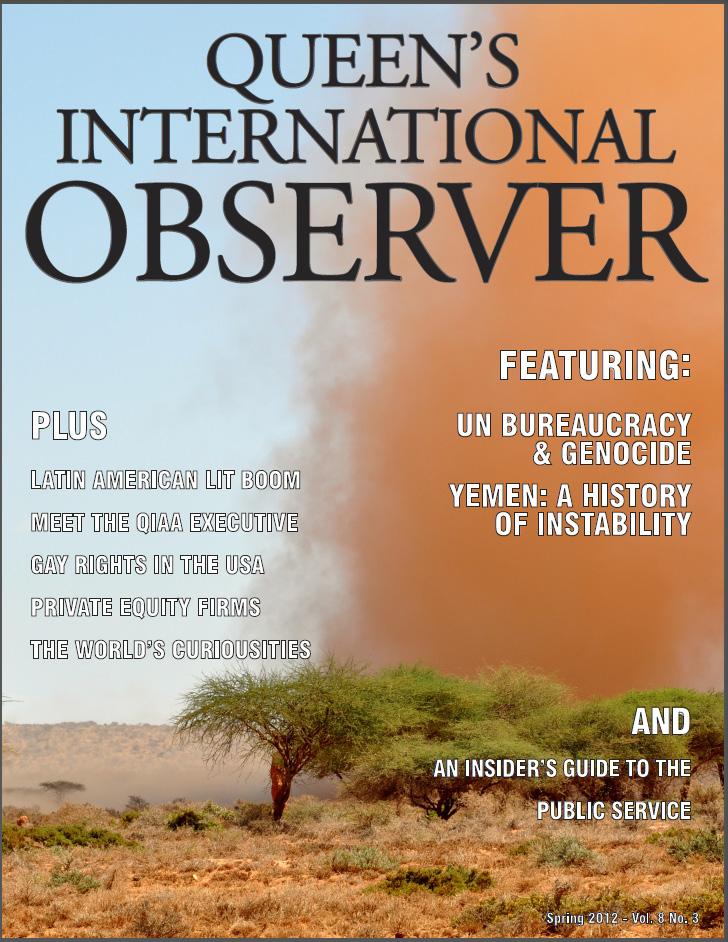
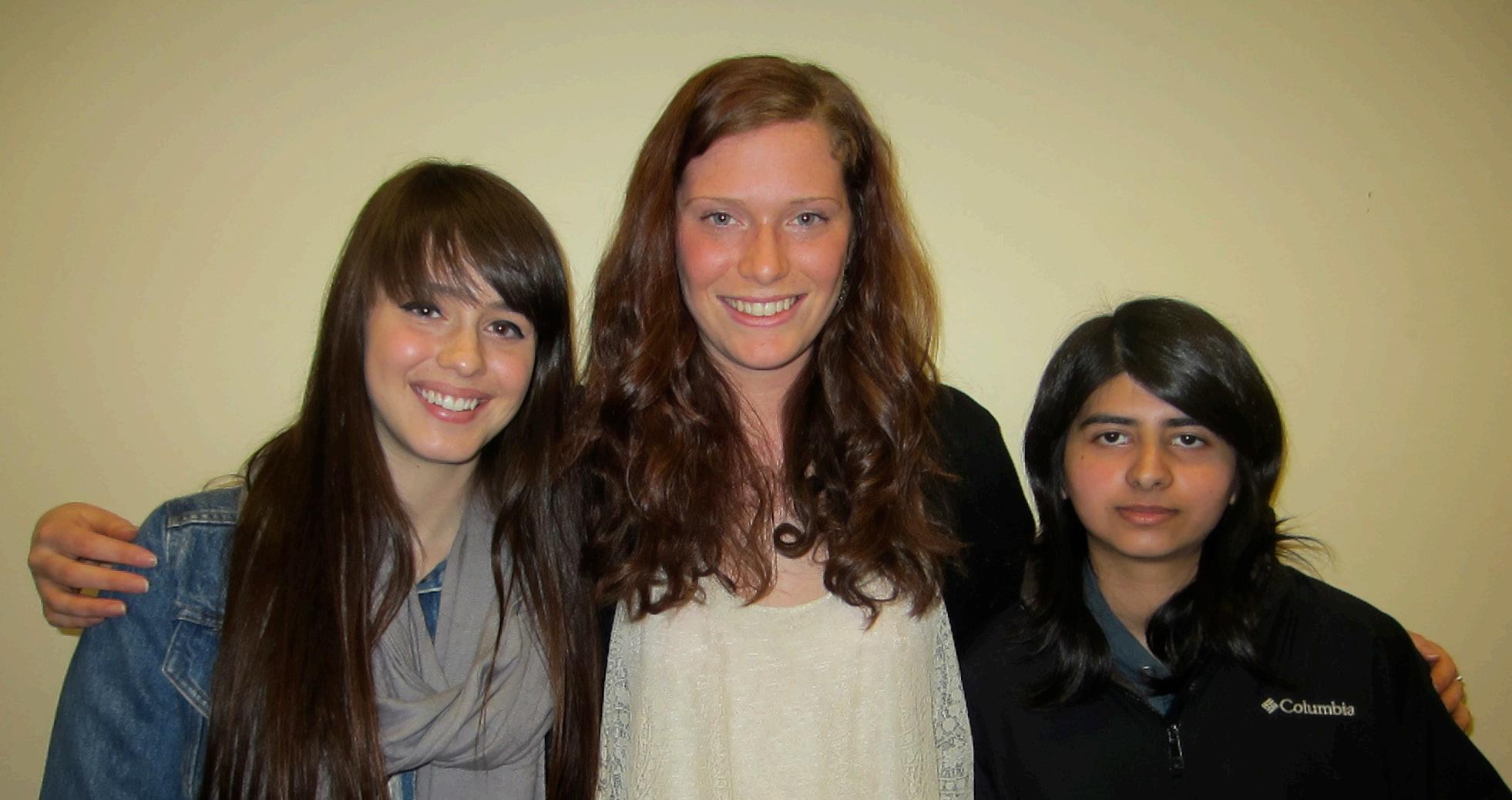
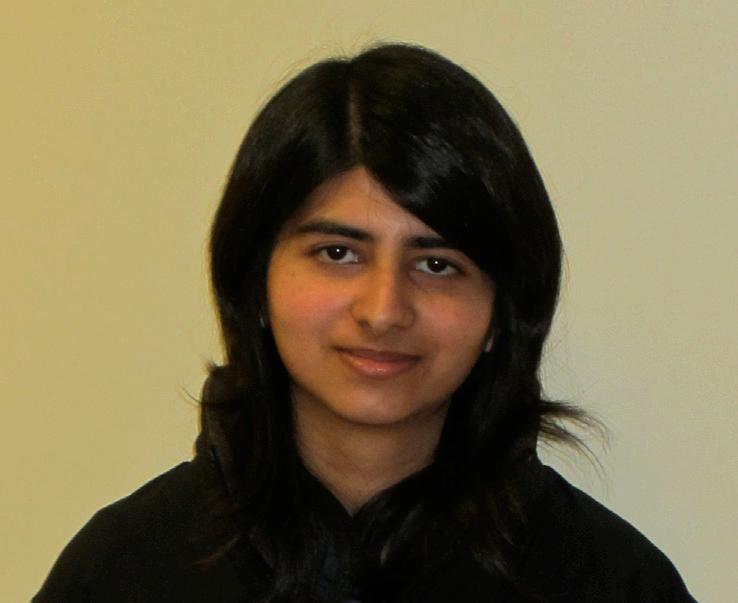
It is with a tremendous amount of honour and excitement that we accept our positions as the incoming editors for the Queen’s International Observer, 2012-2013 edition. As students of political studies, we are thrilled to nd a place at Queen’s to channel our passion for all things media and foreign a airs related. Above all, we want to be able to provide Queen’s students with the opportunity to see their editorials, essays and photographs published in a dynamic and growing campuswide publication.
During the transitional summer months, we’ll be cooking up unique and engaging ways to continue doing what QIO does best - that is, to create campus-wide dialogue about foreign a airs! We will be working hard to inform ourselves on the ever-changing environment of international politics, and arming ourselves with fresh new ideas for strengthening the magazine’s presence on campus.
So, whether this is your rst time reading QIO, or if you are a regular contributor, we invite you to continue to build this magazine with us! ere are so many ways to get involved. Did you attend an inspiring guest lecture or conference on campus? Consider sending us an editorial to be published in our Campus Forum. Are you bursting with opinions about the latest developments in the American presidential race? Have them published as an op-ed piece in our current events section. Did you write an essay worthy of a wider audience than just your TA? Send it to us as a feature article! Do you love QIO so much that you want to join our team of amazing reporters, writers, editors, Tweeters, graphic designers and all around political junkies? We are hiring right now! Email your resume and cover letter to queensuobserver@gmail.com, and let’s talk.
Have a blissful summer and we’ll see you next fall!
Stephanie Rudyk, Editor-in-Chief Vol. 9
Brenna Owen and Natasha Mukhtar, Assistant Editors Vol. 9
Joanna Plucinska
Editor-in-Chief
Idrees Ali
Assistant Editor, Content
Tristan DiFrancesco
Assistant Editor, Layout
Alexandra Petre
Marketing Director
Malvika Dasani
Solicitor of Submissions
Wenhan Chen
Public Relations Director
Maria Rodriguez
Sponsorship Director
Daniel Hershkop
Discussion Coordinator
Miriam Bart
Staff Reporter
Taylor Anderson
Staff Reporter
WILL ISRAEL ATTACK?
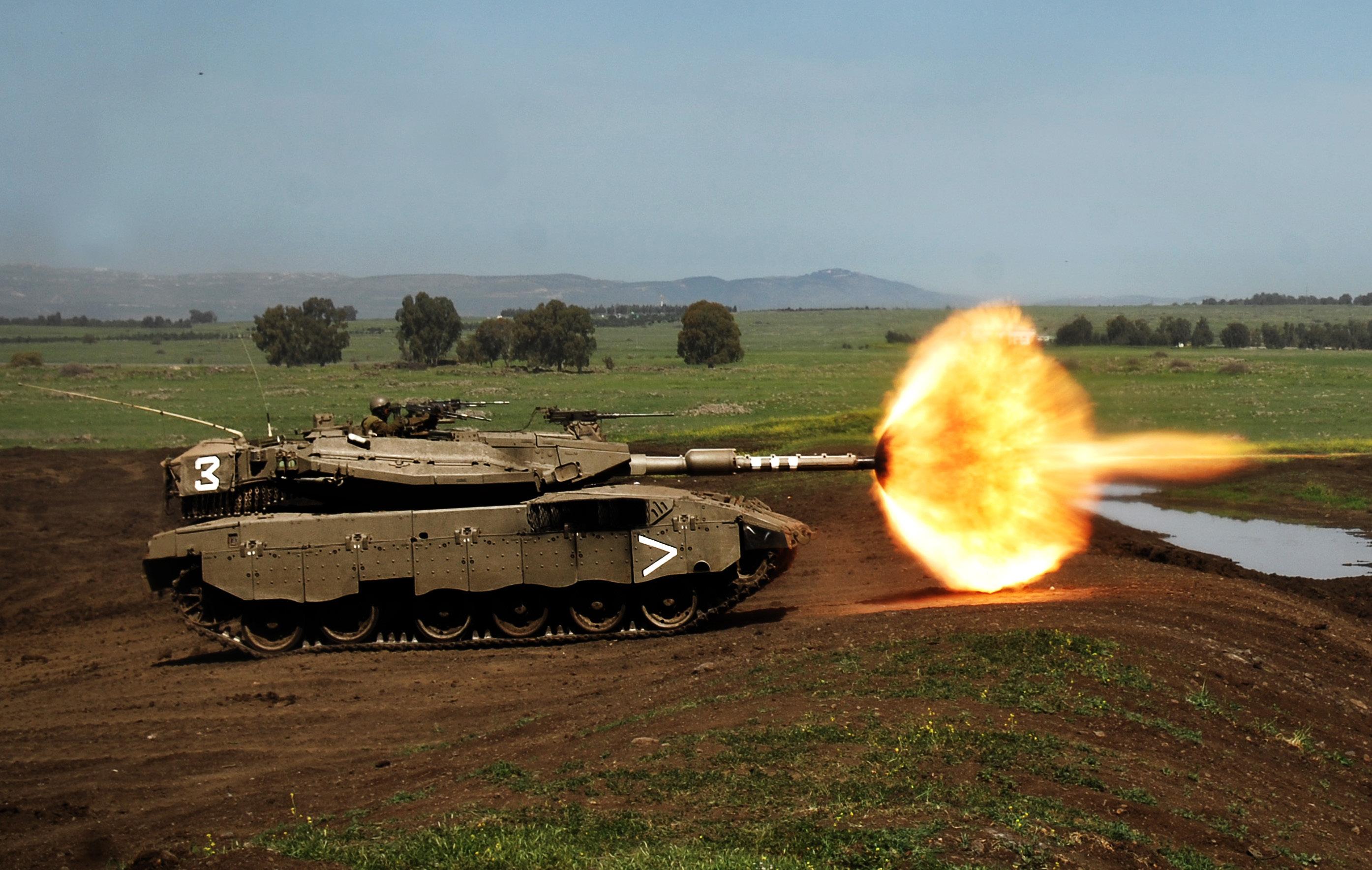
“ ere is a strong likelihood that Israel might attack Iran before June.” Once the Director of the CIA believes an attack is imminent, it is hard to deny that the threat is real. Washington-Tel Aviv plane routes have been clogged for weeks with highranking Israeli and American o cials. e Americans are presumably saying, “Yeah, we got this”. e Israelis are not so sure. Obama says that preventing Iran from getting a nuclear weapon “is profoundly in the security interests of the United States”. Regardless of what those on the far right might claim, he has backed those words up with harsh action. He has steadily hardened the sanctions regime over the past three years. He has also expanded its international backing, gaining commitments from the European Union and other rich-world nations while slowly pushing others to play along. e sanctions are taking their toll, with the Iranian economy su ering from trade and nancial problems. A urry of aggressive ges-
tures, including international threats and attacks on Israelis, proves that the regime has been a ected and is trying responding. Still, Obama has not ruled out military intervention. His accomplishments over the past three years seem to prove he is serious.
Yet to the United States, this is only a strategic problem. To Israel, it’s existential. By June, many believe that Iran will have moved enough materials to facilities deep underground, so that only the US will have the capability to attack. While America is Israel’s closest and most powerful ally, Netanyahu cannot be complacent. Israel was founded on the premise that the world’s persecuted Jewry cannot leave its fate in the hands of others. is ethos clearly weighs heavily on the Prime Minister. Indeed, the apocalyptic visions of a third world war may be exaggerated. Many Israeli o cials claim Iran is a paper tiger. It has only limited capability to directly attack Israel. Its control over Hezbollah and Hamas has weakened since the Arab Spring. Iran
will want to avoid drawing America into a war, keeping well away from American targets. Oil prices may soar dramatically, but this won’t last for long as the Saudi’s can increase their output. In the end, the world may thank Israel for solving a problem they did not have the guts to face head on.
I personally doubt many of these predictions. If attacked, the unpopular Iranian regime will certainly respond likewise to avoid appearing weak and inept. Iran has a solid arsenal of long-range missiles, and Hezbollah hasn’t shied away from attacking Israel before. Indeed, it might be the perfect distraction from the troubles of the Arab Spring. And any attack on Israel will be seen as an attack on an American target. Certainly in an election year with pressure from the right, Obama will be forced to play his hand.
An Israeli strike could end badly. But as Israeli Defence Minister Ehud Barak remarked, “Whoever says ‘later’ may nd that later is too late.”
(IN CONTEXT)
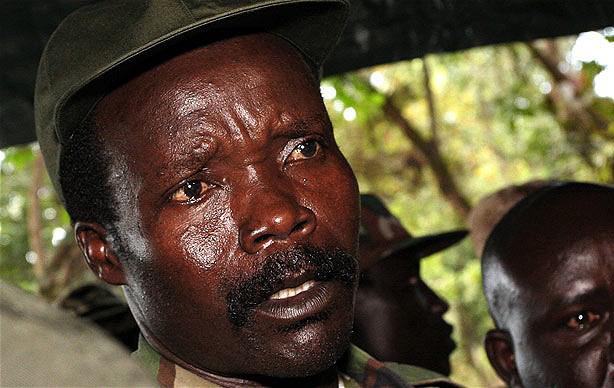
On March 6th, 2012, something extraordinary happened: the biggest social media campaign in history was launched. e issue? Joseph Kony. e organizers? Invisible Children. In just 24 hours, there was not one person with a Facebook or Twitter account that wasn’t getting their feed bombarded with people practically begging them to watch a 30-minute documentary entitled “Kony 2012”. Now, a month a er the campaign started, the video has over 85 million views. To put that into perspective: if the viewers of the Kony 2012 video were to start their own country, the population would be between Ethiopia and Vietnam, and it would be the 14th most populated country in the world. is kind of awareness has not been matched by any other campaign of any other charity, period.
On March 13th, a week a er Kony 2012 exploded, another video was posted. is one was titled “Kony screening provokes anger in Uganda’, and it was released by Al Jazeera. e video is two minutes and forty seconds long, and documents how a crowd of Ugandans practically rioted a er watching the thirty-minute documentary, saying things like “We wanted to see our local people who were killed. ese white men, these old white men, are di erent from northern Ugandans.” e views on that video? About 550,000. If viewers of this video were to populate a country, it would be 168th on Wikipedia’s most populated countries’ list. e Kony 2012 campaign has come under signi cant re, even in the West, since it has been posted. Articles claiming that Invisible Children are propagating the ‘White Man’s Burden”, or are solely interested in military intervention, rose up in droves a er Kony 2012 exploded. Even more criticize the documentary’s simpli cation of the issue, or plain misstatement of the facts. One of the most informational articles about the entire issue of the LRA and the countries it has a ected came in the form of a International Crisis Group document, which was written in November of last year. Even then, the writers of the document were calling for swi and immediate action to bring down the LRA. is leads to an interesting question—how long has this been going on? e LRA formed in the 1980s, as a rebel group against the government and Uganda’s leader, Yoweri Museveni. When they were forced out of Uganda, they became a proxy army for the Khartoum government in the Sudanese civil
YKONykonykonykonyKONYKONy
war. When that con ict ended, the LRA negotiated with Kampala for the end of the Ugandan con ict. But neither sides fully committed, and Joseph Kony never showed up to sign the dra agreement.
Now, the LRA is a dangerous, causeless, lethal band of soldiers just trying to stay alive. e reasons that the group, and Kony himself, have not been brought to justice are complicated, but result mostly from a lack of political initiative from governments of Southern Sudan, the Central African Republic (CAR), or the Democratic Republic of Congo (DRA). Since the LRA operates on the outskirts of all of these countries, their leaders see no reason to concern themselves with the group, especially since Kony is so di cult to capture. e most dedicated attempt was Operation Lightning under, initiated in 2008 by the Ugandan government. Using U.S. intelligence, they launched a ground and air strike against LRA camps in the DRA, but their e orts were in vain. Four years later, and Kony still isn’t captured. In October of 2011, Obama sent one hundred combatready troops to try and capture him, due to the e orts of Invisible Children and other NGO’s to raise awareness
of the issues in that area. Indeed, although the Kony 2012 campaign strives to ‘make Joseph Kony famous’, in many ways he already is. e e orts to stop him have been half-hearted thus far, but there is hope for the future. e U.S. military now knows the strengths and weaknesses of the Ugandan army, the most capable army in that region to take down the LRA. Strengthening evidence of Joseph Kony’s whereabouts is beginning to come to light as well. e e orts to nd and kill Joseph Kony are ongoing—the US government is assisting, the Ugandan government is putting in its e orts—but the issue at home is, what was the e ectiveness of the Kony 2012 campaign? Although the organization behind it is anything but trustworthy, the movement in itself has been an e ective one to say the least. Without it, countless people would live their lives without knowing of Joseph Kony’s deeds. If you need a more reliable charity to donate to that is guaranteed to help the e orts to stop Kony, look to Africare, Children of the Nations, or the African Medical and Research Foundation. Alternatively, you can look to CharityNavigator.org to help you nd reliable charities to donate to.
Perhaps the most pivotal event of the year was when Tunisian street vendor Mohamed Bouazizi set himself on fire and sparked the Arab Spring.
”
HEGEMONY &THESEcuritycouncil
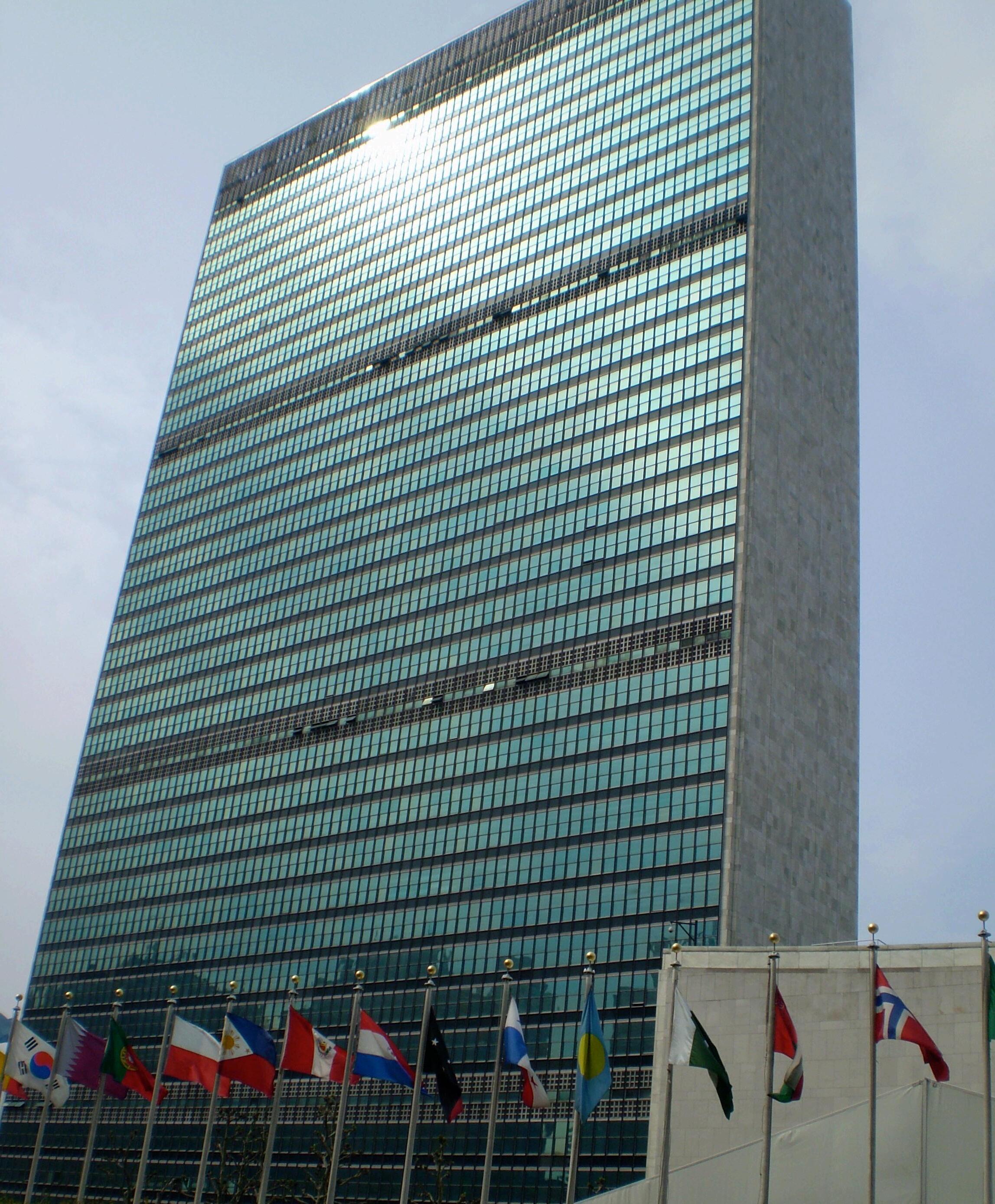
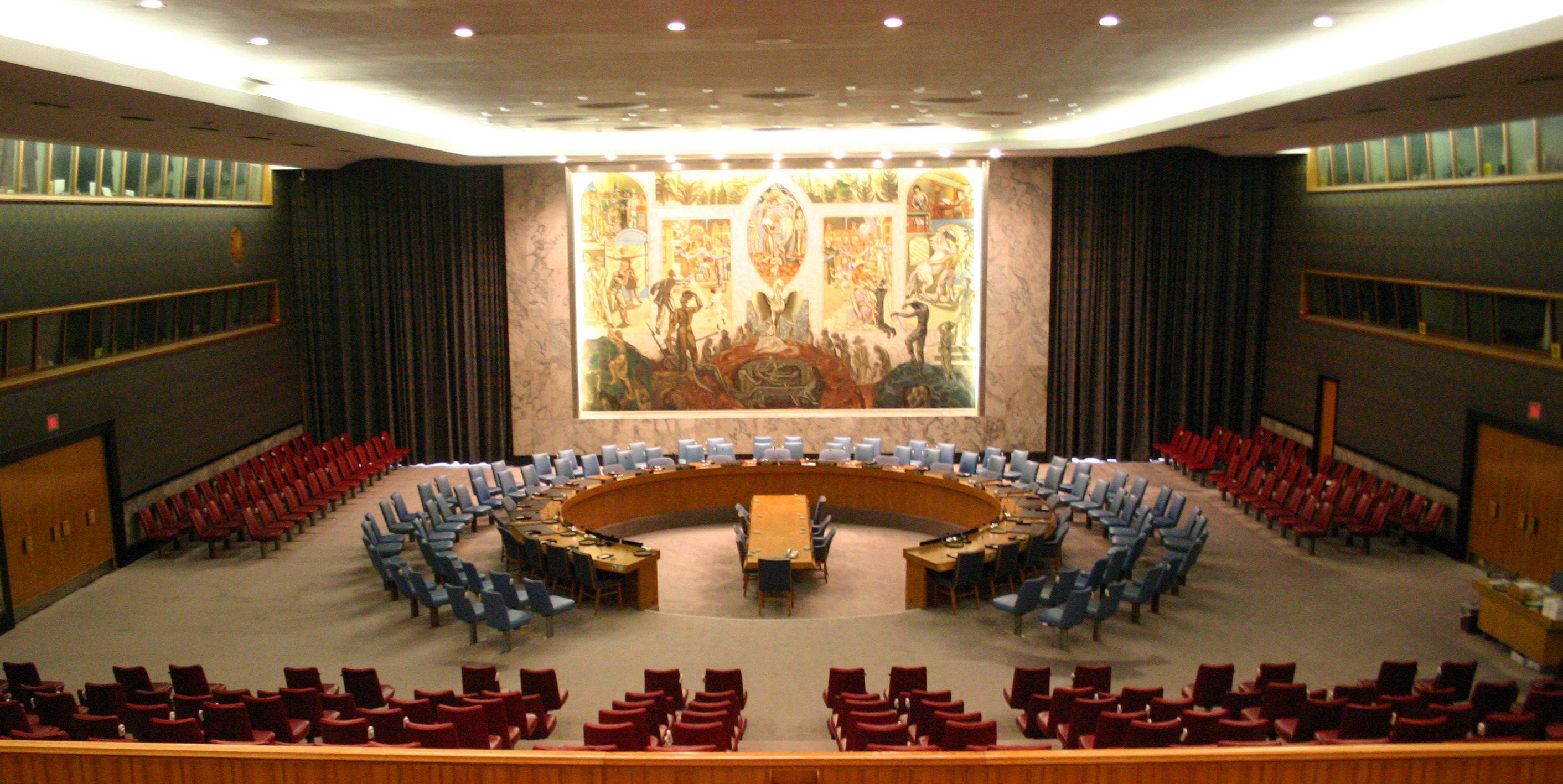
e United Nations Security Council is perceived as a universal international entity that undertakes “primary responsibility for the maintenance of international peace and security.” Operating under the assumption that the UN is a neutral, peacekeeping body, the role of the “Big Five” for determining the agenda and decisions of the Security Council, and the UN at large, is o en neglected in theories surrounding international institutions. Despite the UN’s priority shi towards resolving the Israel-Palestinian con ict, it is clear that the US’ use of the Security Council for the pursuit of state interests has played a fundamental role in supporting and protecting the control regime in Israel. is is important to the study of managing treatment of minorities, as it evaluates the realist claim that rationality of states cannot be curbed by the international system. With a focus on the case of Israel and the UN goals in Resolution 242, I will argue that the United Nations Security Council is a mechanism through which
the United States pursues their self-interest. As such, the Security Council has o en become a supporter and protector for control regimes. e chronological actions of the United States in the Security Council will be followed, which are rooted in the eras of bipolarity, unipolarity, and the beginnings of multipolarity as characteristics of the international system. First, it will discuss the Cold War era where a bipolar international order characterized the actions of the Reagan administration as well as the beginnings of George H.W. Bush’s administration. Second, the actions of the H.W. Bush and Clinton administrations in the context of a unipolar international system will be discussed. Finally, the role of the George W. Bush and the Obama administrations in Security Council resolutions in a transition towards multilateralism will be discussed.
THE ISRAEL-PALESTINE CONFLICT: e Israel- Palestine con ict has been at the centre of international rela-
RETROSPECTIVE a year in review
I think the most signi cant part of the school year was when the United States declared the end of the War in Iraq. is has been an ongoing war for several years and with it nally coming to an end, hopefully peace in the Middle East is something that the United States can contribute to.
”
tions debates for decades. With origins in the Zionist project of the 1920’s and 1930’s, con ict and security threats on both the Israel and Palestinian sides have resulted in perpetual unrest in the Jewish and Arab communities. e original goal of the Zionist-Israeli’s was the creation of the state of Israel as a Jewish state and the “liberation” of the Palestinian peoples within what they believe to be rightful Israel territory. In 1916, under the covert Sykes-Picot Agreement, Britain and France divided the region and furthered existing tensions under the Balfour Declaration in 1917, when Britain’s Foreign Minister dedicated Britain’s work to “the establishment in Palestine of a national home for the Jewish people.” A er the British rule of Palestine was handed over to the UN in 1947 in order to deal with con ict between Israel-Arab peoples, the UN split the territory into separate Israel and Palestine states. e uneven split of territory meant the solution was only supported by the Israeli side. e problematic relationship of the UN with this con ict therefore begins at its origins. To further the issue, Israel’s admission to the UN in 1949 as a “peace-loving state” under UN General Assembly Resolution 69 arrived. With constant con ict between the two sides and numerous attempts at a solution, the UN released a de ning resolution for the Israel-Palestinian con ict in 1967: Resolution 242. Resolution 242 came in response to the SixDay war between Israel and a handful of Arab states that resulted in Israel seizing the Golan Heights from Syria, as well as Gaza and Sinai from Egypt. e resolution was titled, “ e Situation in the
Middle East” and become the reference point for peaceful goals of the UN’s role in the con ict. Six years later in 1973, the Yom Kippur War, the UN implemented resolution 242 and demanded compliance, in addition to the passing of Resolution 338 under which the US, Soviet Union, and the UN called for ceasere for “a just and durable peace in the Middle East”. In 1987, mass uprisings against Israel’s occupation of Gaza lead to the proposal of a “two state” solution by the Palestinian National Council and a Palestinian goal of settlement based on UN Resolutions 242 and 338.
UN PARALYZED IN A BILATERAL WORLD:
As Sarsar argues, the bilateral world order of the Cold War “turned the UN into a pawn in the game of superpower politics.” As he discusses, during the Cold War era, the US took on de facto responsibility for the promotion of a liberal ideology and the functionality of a free world. Under the Reagan administration during the Cold War, the US strived to assert its ideological dominance over the Soviet Union and thus, consensus among the ve permanent members of the Security Council was rendered unattainable. During this critical period and the shaping of a new world order, the Reagan administrations common label as the most proIsrael presidency within the US set the precedent for US-Israel relations henceforth. Under Ronald Reagan and George Shultz, the US invoked their veto in the Security Council a total of 18 times to protect Israel. Of these vetoes, half put an end to attempts to condemn Israel’s invasion of Lebanon as well as refusal to surrender territory in Lebanon. he other nine vetoes protected Israel from international criticism for individual acts. Notably, in the majority of these cases, the voter count was 14-1, meaning the US was the sole state responsible for the resolution’s failure. One example of this is the US veto on Feb. 1, 1988 for a Resolution that “Called on Israel to abandon its policies against the Palestinian uprising that violate the rights of the occupied Palestinians…” as well as to “abide by the Fourth Geneva Convention.”Such blatant disregard for the protection of human rights exposes the self-interested motivations of US decisions within the Security Council. US demographics, popular opinion in support of a pro-Is-
rael government in Washington, as well as funding and support provided by Jewish and Protestant interest groups that identify more closely with a Jewish state. From an international relations perspective, the United States also bene ts from the military and economic dependency of Israel. As such, the US can be said to have abused their veto power within the Security Council for the maintenance of US-Israeli relations, and notably at the expense of human rights protection and con ict resolution. US decisions within the Security Council during bilateralism in the Cold War era were pivotal for the in uence of the US on Middle Eastern decisions for the future. By providing a set of narrow options to the Soviet Union, the US e ectively called for a reduction of power within the Security Council, unless they gave Israeli
support. Evidently, both options would result in contradictions and failures for the Soviet Union; thus the United States emerged as the central voice within the Security Council.
UNIPOLARITY & DECISIONS:
A er the collapse of the Soviet Union in 1991, United States’ interest and agenda became a central concern for all international actors. With the emergence of a unipolar international order in the post-Cold War era, Glennon argues that the Security Council’s credibility was “gradually eroded” as the US rose to become a hegemonic power. I argue this has implications for the function of the Security Council as a mechanism for furthering state interest as US goals and interests- through the use of the veto- inhibited the e ectiveness of the Council.
Under the H.W. Bush administration, the veto was used four times in order to insulate Israel’s control regime from international pressures as a result of its heinous human rights abuses against the Palestinians. In total, 68 of 100 resolutions condemning Israel passed, and it became obvious that the UN in a postCold War world could not be e ective if states chose to make reckless use of veto power. erefore a er 1990, the US became more cautious of using the veto; thus, other powerful means of supporting Israel were adopted.
In this regard, it is clear that the Security Council is a forum designed for debate and resolution in the best interest of states, and does not provide limitations for the promotion of a dominant state interest in a unipolar international order. rough an examination of the US’ main goals under H.W. Bush and the Clinton administrations, it is clear that a partiality towards the newly elected Labour coalition in 1992, in conjunction with a US foreign policy of moral interference, prompted a focus on reaching a peace agreement between the Israeli Jews and Palestinian Arabs. is is especially prevalent in the actions taken by the Clinton administration with a reestablishment of dialogue with the PLO and the signing of the “Interim Agreement” between Israel and Palestine. Interestingly, Clinton was “less vocal about the Palestinians when Vice President Al
RETROSPECTIVE a year in review
In my opinion, some of the most prevalent news in the past year has been the ousting of long-time standing political dictators. This includes Tunisia, Egypt, Libya and most recently Yemen. All of these countries have seen transitions into a more democratic nations and in the case of Tunisia especially there is great optimism for the country’s move towards democracy.
Gore ran for the presidency.”In addition to a large contribution of military and economic aid to Israelduring his term, Clinton mediated talks between the two parties in Washington, but later announced the failure of this endeavor. Nonetheless, these actions by the US administration are indicative of a unipolar world order, and the US mentality that their government, as opposed to the Security Council, was the most e ective forum for peaceful negotiations and a solution to the Israel-Palestine con ict.
TRANSITION TO MULTIPOLARITY:
e transition of the international system from unipolarity to multipolarity is hotly debated among IR scholars today. is debate becomes
relevant in the examination of the US’ role within the UN Security Council on the topic of Israel. In many ways we see this transformation taking place in the dynamics between the ve permanent members. Because the US has existed as a hegemonic power for so long, it is clear that their foreign policy strategies still re ect their place in a unipolar world. Under the Obama administration, it has been argued that US-Israel relations are deteriorating as the US struggles to justify their biased support of the Netanyahu government’s human rights violations against the Palestinians. Striving to maintain its hegemonic superiority in the international system, the United States found itself in a fragile situation with regards to a recent Security Coun-
cil resolution against new Israel settlements. Use of the veto power against this resolution would have negative affects for US- Palestine relations that past administrations have focused on repairing, whereas abstaining from voting would anger Israel. Within the debate on this issue, the Obama administration also faces “criticism from Democratic and Republican supporters of Israel in Congress for trying to avoid a veto.” e Obama administration’s enactment of the veto against all other permanent member states’ condemnation of Israeli settlements is a primary example of the use of the Council as a mechanism for pursuit of state interest. With individual state interests placed before the common goals of peacekeeping and security under the Council, it is clear that the decisions made are not necessarily those that are the most e ective for the collective international system. Rather, decisions are based on what is best for the individual permanent members. In a unipolar world, the interests of the United States are central. However, information suggests that the US may be required to yield this central power and a lack of consideration for others actors in an emerging multipolar system. Arguably, this shi is already occurring as China (notably a permanent member of the Security Council) is becoming a leading economic power. is is reected within the Security Council itself with China and Russia leading an initiative to combat piracy in Somalia and its joint initiative with France and Russia to oppose the Gada regime. It is clear that with an increased presence on the economic world stage, China is being granted a more central role within the Security Council. Indeed, this is highly problematic given the ongoing human rights abuses within China today as Tibet, Taiwan, and minority groups such as the Zhuang, Manchu, and Uyghur minorities face human rights abuses and vertical accountability within governance is largely absent. According to Freedom House, “ e Chinese government is hoping to enjoy the bene ts of the global economy without jeopardizing its political control.” Interestingly enough, this issue rarely appears on the agenda of the UN Security Council. Within a global context that is arguably moving towards multipolarity this is unsurprising. It is clear that amongst the Security Council’s ve permanent mem-
bers, the importance of state relations with China as a leading economic actor are too precious to push for serious action against human rights violations by the Security Council.
EFFECTIVENESS OF A REALIST APPROACH
A central criticism to these arguments is that a realist explanation of a state-centric international order where states have security as their principle interest, doesn’t account for the signicant role of sub-state actors in shaping foreign policy decisions regarding Israel and Palestine and China. Critics of realism o en use Israel as an example of a state where a realist explanation is insufcient due to the religious dynamic of the con ict taking place. Upon an examination of the domestic factors such as interest group support for pro-Israel policies in the US, this paper has begun to address anti-realist concerns over a state-centric theoretical framework for the study of international relations. Unfortunately, addressing all factors that shape US foreign policy is not possible within the parameters of this essay. As such, this paper will discuss in greater detail, a more general criticism surrounding the analysis of the Security Council.
WHY THE SECURITY COUNCIL?
e authority and applicability of the UN amongst a changing international order is o en questioned by state and non-state actors due to a lack of fore-
seeable accountability within UN legal structures and codi cations. In the case of Israel, UN resolutions have o en been non-binding, or simply disregarded by Israel with no visible consequences to follow. With this in mind, one may speculate as to the relevance of a discussion surrounding the UN Security Council as an e ective institution for moderating the Israel-Palestine con ict. Regardless of the lack of practical power and in uence of the UN Security Council, however, this paper has argued that the UN as an international body is signi cant for the study of international relations within various international orders. Additionally, because of the power of the ve permanent members, the UN Security Council has proven an ideal body in which to examine support or condemnation of an international con ict by key state actors in the international system. To this e ect, it has been argued that the Security Council di ers from other UN organizations as its decisions “focus on political considerations” as opposed to international law. It is important to note that the UN Security Council has the distinct ability to in uence the actions of the UN at large because all members of the UN are entitled to carrying out the decisions made by the Security Council. is means that the veto power of the ve permanent members carries critical weight for the decisions made by the UN, and its support or denunciation of individual states. It is for these reasons, that the Security Council is exemplary for the demonstration of the UN’s par-
RETROSPECTIVE
a year in review
“
The most important issue facing the world today is global migration, along with the psychological impact of globalization. The inability of sovereign states to regulate and integrate the number of newcomers each year, paired with the increasing desired of people to move for the purpose of human security or economic gain, represents the most powerful demographic time-bomb we currently face. The shifting discourse around the idea of “home” and what that means, as redefined by a new group of digital nomads and existential migrants, is bound to challenge the idea of national borders even further.
tiality as a forum through which states pursue their self-interest.
UNDERSTANDING
INTERNATIONAL GROUPS:
Within the chronological discussion on the role of the Security Council for the promotion of US interests, the UN’s lack of applicability in a changing world order becomes a key issue. It would seem that the collective goals of peacekeeping and security that the Council is designed to uphold are naïve in a unipolar international order. e power of US politics and ideology in relation to other states has, as seen in the case of Israel, warped the impartiality Security Council decisions, as states abuse their veto power in order to ensure international support for their allies and interests. e applicability of this issue extends beyond the United Nations, however, and brings the func-
tionality of international institutions at large into question. erefore a greater signi cance must be placed on states as opposed to international bodies in an analysis of the international system. As such, the role of the United States in the maintenance or denunciation of control regimes has implications for the way in which power is allocated in the study of international relations. As previously acknowledged, state-centric analysis of international relations risks neglecting fundamental sub-state actors that play a signi cant role in shaping foreign policy. With a focus on the case of Israel and the UN goals in Resolution 242, I have argued that the United Nations Security Council is a mechanism through which the United States pursues their self-interest. As such, the Security Council has o en become a supporter and protector for control regimes. is paper
has discussed the decisions of the United States, and the ve permanent members of Security Council through the chronological progression of a changing international order. rough the actions of the Reagan, H.W. Bush administrations and a bilateral Cold War period, the UN became a paralyzed international entity. During the Clinton administration, in a unipolar world order, the interests of the United States played a signi cant role in determining the priorities of the Security Council. Finally, this essay has explained the criticisms of the Obama administrations treatment of Security Council resolutions viewed as unipolar which multi-polarized of the international system. is is signi cant not only for an analysis of the UN’s response to the treatment of minorities, but also to provide a framework of analysis of international institutions at large.
Canada & OAS
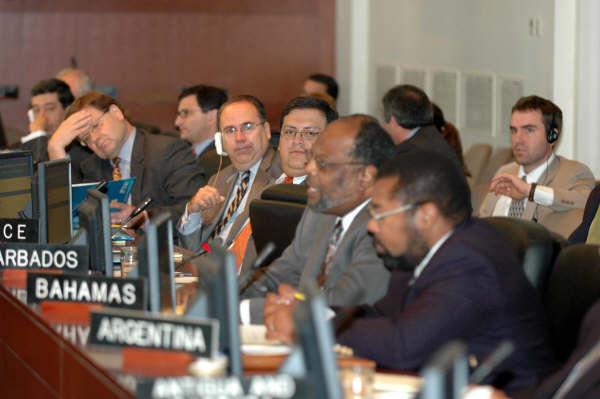
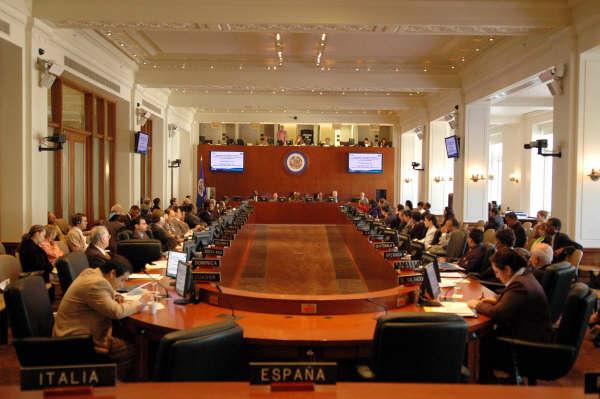
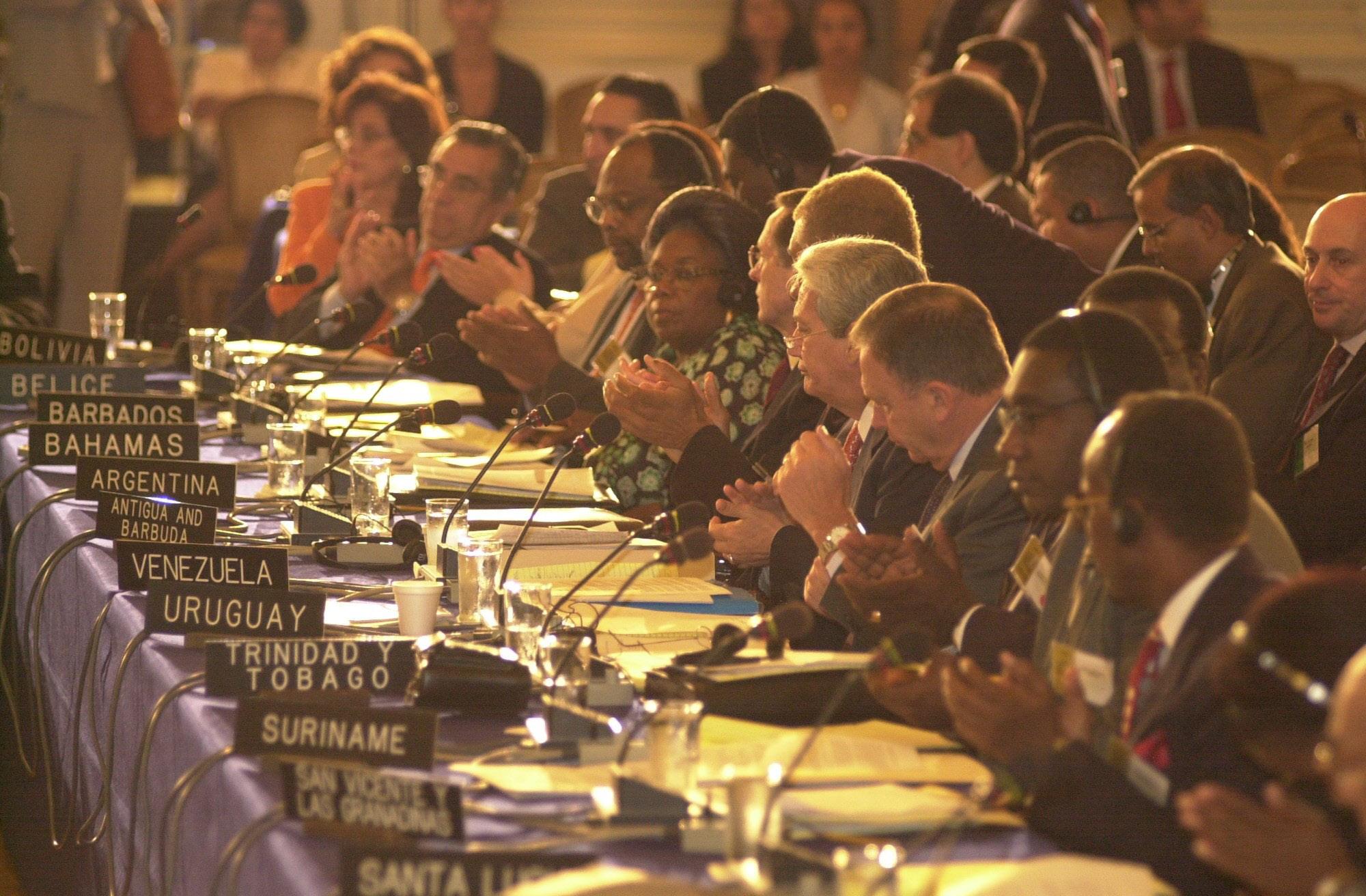
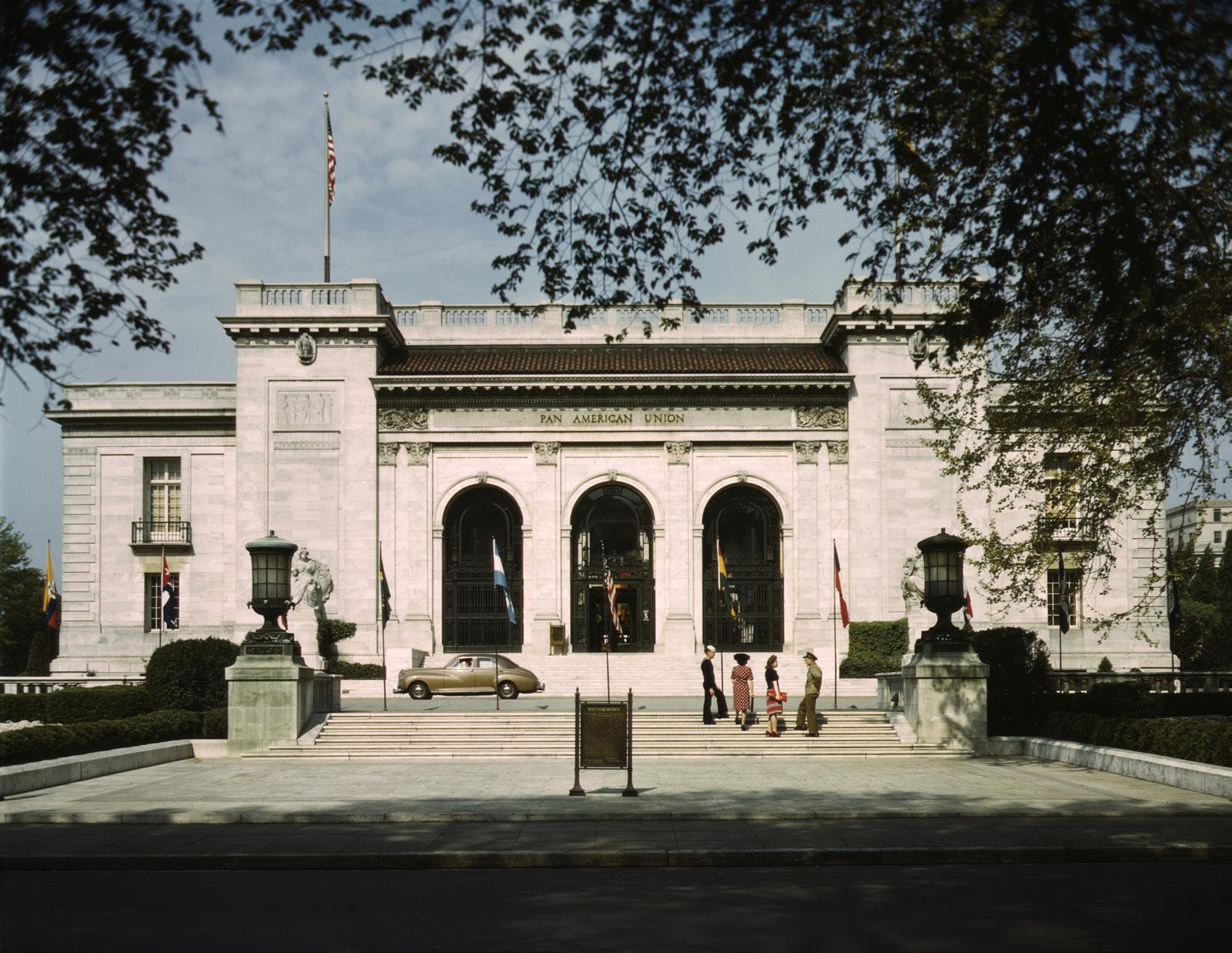
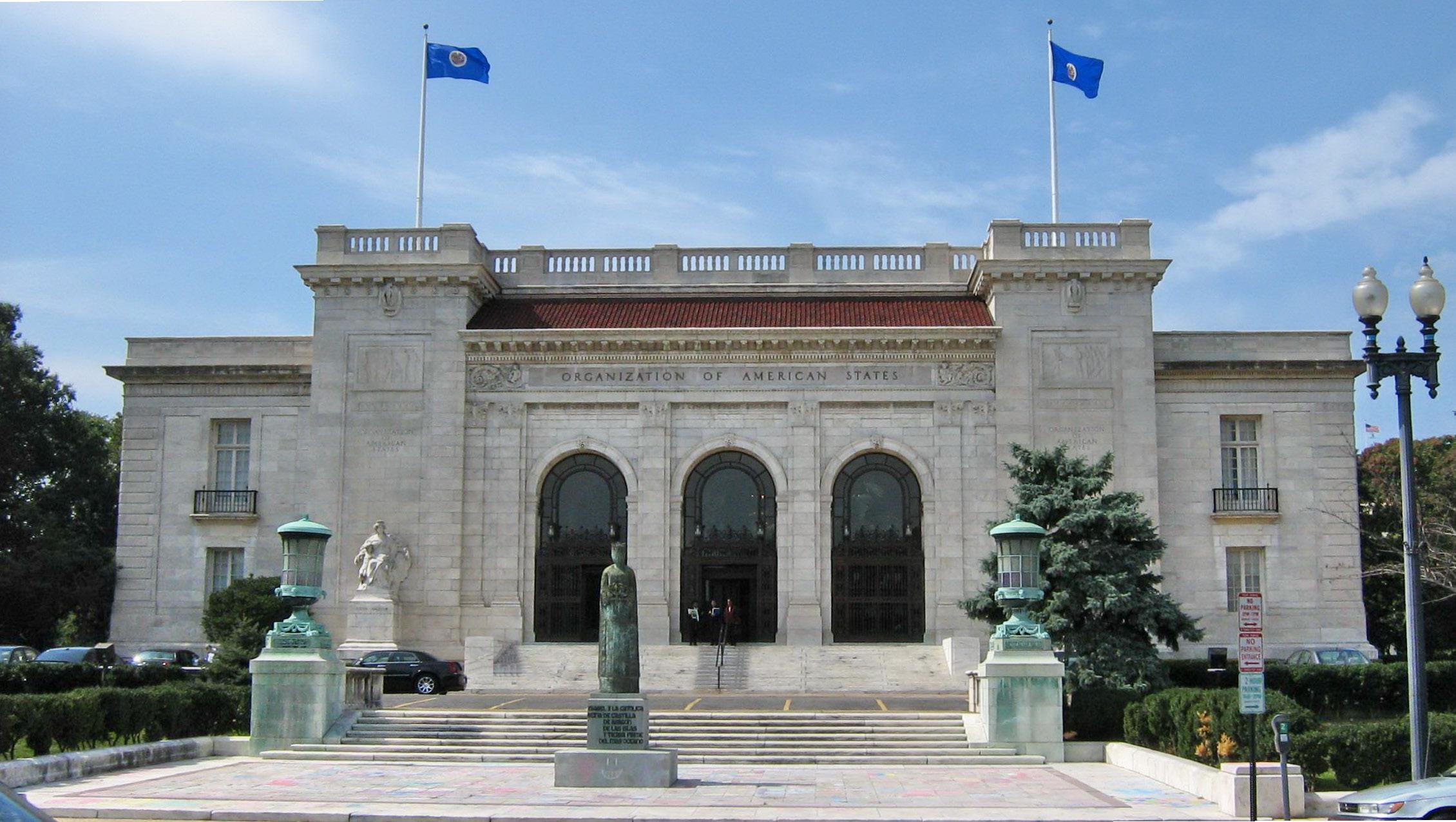
e Organization of American States (OAS) is basically the Western Hemisphere’s version of the EU. Little known to Canadians outside of economists and policy makers concerned with Latin American issues, the OAS has, since its inception in the immediate wake of World War II, stood as the main forum for multilateral negotiation between the thirty- ve countries comprising the world on this side of the Atlantic. e in uence of the OAS on all sociopolitical matters in the Americas has increased dramatically in the last two decades – that is, when Canada the ‘middle power’, a er years of reluctance to formally join the OAS family, nally sat down to the OAS table in 1990 as a fulledged OAS member. Over the course of the Cold War, Canada oriented itself largely toward European and Asian alliances; unwilling, according to outsiders, to put itself in the position of opposing Washington on particular Latin America issues or else become a U.S. puppet. Yet the close of the eighties saw the fall of a number of dictatorships and the stabilization of economies south of the Rio Grande. is ultimately prompt-
ed Prime Minister Brian Mulroney to search for new horizons for Canada by placing priority on enhancing Canada’s relations with its hemispheric neighbours. e enormity of Canada’s contribution to the OAS in its rst twenty years of formal participation is not surprising given Canada’s position as one of the only two countries in the Americas with G8 status. But Canada has endured its share of OAS-related criticism too. Particularly in the context of the signicant changes to the world order since 9-11 (heightened international security, increased globalization, shi s in the balance of global socio-political power, etc.), this criticism demands re ection on Canada’s potential future OAS role.
CONTRIBUTION TO OAS
From the moment it joined, Canada has been largely successful in getting the OAS to respond to Ottawa’s priorities (Torres 2007; GoC 2006). e most immediate of these was OAS administrative, scal and technical reform. Under the stewardship of Jean-Paul Hubert, Canada’s rst ambassador to the OAS, Canada demanded that existing
OAS member-states pay any outstanding membership dues; the goal being enhancement of OAS credibility on the world stage (Belanger and Mace 1999: 168). With this done, Canada then pushed OAS members to shore up the organization’s capacity to respond to potential hemispheric crises, social, economic or otherwise. e result was the revitalization of OAS structures initially set up to provide non-governmental organizations with a more formal role within the OAS, and indeed Canada working closely with Chile and Mexico to implement via the Managua Protocol a new ‘Inter-American Council for Integral Development’ (Tittemore 1995), an OAS body concerned with economic development and poverty reduction throughout the Americas.
It was Canada’s early moves in support of OAS mechanisms for safeguarding democracy through multilateral diplomacy, however, that have had the most lasting impact (Major 2007; Gosselin and erian 1999; McKenna 1995; Mackenzie 1994; Tittemore 1995). Not only did Canada back all key OAS resolutions and declarations, including
1991’s Resolution 1080, part of what has come to be called the “Santiago Commitment”i, but it was also instrumental in the development of working groups within the OAS mandated to ensure Santiago deliverables, a standout example being the OAS’s Unit for the Promotion of Democracy (UPD). Between 1994 and 2004, headed by Canadian Elizabeth Spehar, the UPD sent sixty observation missions throughout the Americas to ensure electoral fairness and transparency (CRS 2005: 4). e efcacy of the UPD was indeed strengthened via resolutions proposed by Canada at the OAS’s 30th General Assembly in Windsor, Ontario, leading to the OAS’s Special Fund for Strengthening Democracy – a kind of UPD nancial reserve (GoC 2007a).ii And a year a er Windsor, when political scandal struck the Fujimori government in Peru, Canadian diplomats successfully worked to make the April 2001 ird Summit of the Americas in Québec City a “democracy summit” (Major 2007: 85). e Inter-American Democratic Charter found much of its structure in Québec City deliberations (GoC 2007b: 2). Together with the UPD, it has now made free elections more or less a regional norm.
One upshot of increased political stability throughout the Americas was the freeing up of OAS technical and administrative resources, subsequently allowing Canada to help the OAS create energy, bio-diversity, and pollution “action plans” at various ministerial
a year in review
“
The most relevant news piece for the 20112012 school year for me was the death of Kim Jong Il in December. He had been so dominant in the Korean theatre for so long, it was hard to really grasp that this powerful figure was gone. He was an enigma: feared, reviled, mocked… but a political figure nonetheless. There is much uncertainty in the wake of his death, and I think the world may have lost a thorn in its side that it had grown accustomed to, and had given up trying to take out. The question now is: where will the DPRK go?
meetings, including the Summit of the Americas, Miami, 1994, the Pan American Summit on Sustainable Development, Santa Cruz, Bolivia, 1996, and Santa Cruz + 10 in 2006. Former permanent representative of Canada to the OAS, Brian Dickson, chaired the OAS’s working group on the environment, and Ottawa’s current Environment Commissioner, Scott Vaughan, served as the organization’s Director of the Department of Sustainable Development from 2003 to 2008. In turn, another upshot has been greater OAS focus on human security and capacity-building, which Canada now partitions a growing proportion of its total annual $11 million OAS contributions to.iv Canada’s 1997 signing of the Ottawa Convention against landmines, coupled with a series
”
of annual Canadian aid dollars totaling $7.6 million, has helped see Costa Rica, Honduras, Guatemala and Suriname declare their territories free of the impact of mines and unexploded ordinance. $2 million grants by the Canadian government in each of 2006 and 2007 likewise supported OAS programs related to disaster management, e-government, journalism and access to information. e overall package of OAS initiatives in these areas “constitutes a programmatic approach which responds to a number of commitments in the context of the Summits of the Americas process”, noted former Canadian Ambassador to the OAS, Graeme C. Clark (OAS 2007). For OAS Secretary-General, José Miguel Insulza, Canada’s contribution is “clear evidence that development policies promoted by the OAS share the perspective of the Canadian government” (OAS 2007).
CRITICISMS OF MEMBERSHIP
But to what extent does this apparent micro-management, if not the disproportionate nancial resources poured into the OAS by Canada, actually embody hegemonic institutional control? Despite McKenna’s (1999) the claim that there is very little evidence for Canada’s membership in the organization having eroded or compromised the OAS’s policymaking sovereignty or independence, others see di erently. Daudelin and Dosman (1998) argue that Ottawa’s Department of Foreign A airs and International Trade has tended to exaggerate Canadian in uence on the OAS while simultaneously underestimating the damage caused by evident political appointments. In fact,
they note, other OAS member-states are o en surprised at Canada’s use of the OAS as a building-block for norm generation at regional level to project issues globally at the United Nations or other forums – “a use not all in keeping with Latin Americans and Caribbean’s typical concept of the institution” (p.4).
Canada’s e ectiveness in terms of the defense of human rights is another point of concern, further suggesting that nations of the Global North, Canada included, see t to play by a di erent set of rules than a Global South they are putatively ‘assisting’. Canada consistently presents itself as a strong supporter of democracy promotion in the region yet refuses to adhere to certain inter-American instruments established to protect human rights. Despite being vocally critical of the human rights records of El Salvador, Peru, Colombia and Nicaragua, Canada, like the United States, has itself yet to even ratify the American Convention on Human Rights or agree to accept the jurisdiction of the InterAmerican Court of Human Rights. is re ects a clear lack of political leadership in Canada given that it is possible for the government to ratify the Convention without, contrary to Ottawa’s insistence, contradicting the constitutional powers of the Canadian federation ( ede 2005). Indeed a 2003 independent study carried out by a Canadian government appointed Standing Senate Committee
on Human Rights found that “there are in fact no compelling reasons for Canada not to ratify” (GoC 2003).
For former Canadian Ambassador to the OAS, Paul Durand, has stated that “…Canada is seen at the OAS as a balanced participant, a “reasonable player” not driven by the agenda of any country or region” (GoC 2006: 8). Others aren’t so sure. Rodriguez (2006) expresses concern that Latin America may perceive Canada as too dependent on the U.S. and thus vulnerable to pressure from Washington. And there may be some merit to this fear. Some observ-
ers see Ottawa’s foreign policy as aligned more closely with that of Washington today than in any other point since Canada took up full membership in the OAS and signed NAFTA. Neufeld (1999) for example argues that the U.S. depends on second-tier core states like Canada ful lling their functions as legitimizers; not to mention taking a lead role in contexts where U.S. activism would do more harm than good. Major (2007), in turn, contends that national interests (domestic, regional and bilateral, notably vis-a-vis the U.S.) are indeed at play when Canada choses to take a front role in bilateral or multilateral initiatives to defend, restore or strengthen democracy in the region.
CANADA’S FUTURE IN OAS
Multilateral government institutions around the world became more complex places in the a ermath of 9/11.
e OAS currently faces massive pressures over the future of Haiti, growing concerns about social unrest in countries such as Bolivia, Ecuador, Colombia and Venezuela, and of course the instability of Central American countries, particularly Mexico, as a result of drug warfare. ere is also the long-standing question of Cuba, which recently rejected an invitation by the OAS to at long-last join the OAS family. In all this Canada is more than a bystander. It can help tackle these and other challenges while playing a more e ective role in the OAS in the future.
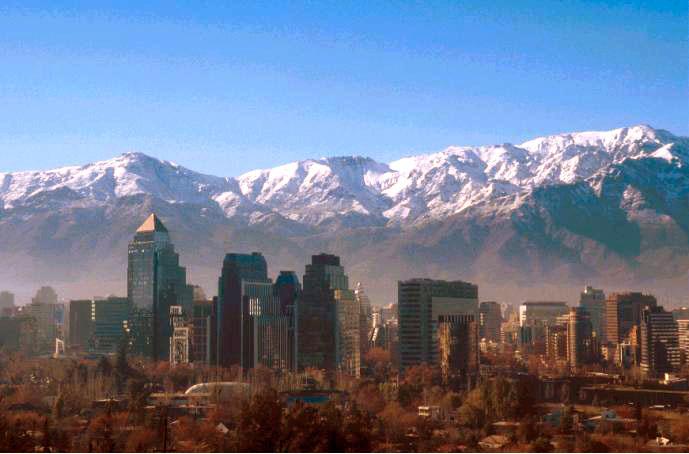
Canada’s current engagement in the Americas, as announced by Prime
Minister Stephen Harper in Santiago, Chili, July 2007, is based on three key objectives: promoting and enhancing (i) prosperity, (ii) security, and (iii) the fundamental values of freedom, democracy, human rights and the rule of law (GoC 2007c). But, as érèrse Bouchard (2008) of the Center for International Studies and Cooperation, Montréal, says, Canada needs to be especially attentive to social justice given its privileged situation; not necessarily exercising the most power or having the strongest voice, but simply supporting national initiatives – whether those of Brazil or other countries – to ght poverty and exclusion. at Canada actually backed out of negotiations on the Dra American Declaration of the Rights of Indigenous Peoples in 2008, a documented supported by Canada’s own First Nations peoples, brings Bouchard’s concerns into sharp relief.v e environment remains another hemispheric priority to which Canada can make a more signi cant contribution. Groups such as the Sierra Club have expressed concern that the eagerness of OAS member-states to pursue economic prosperity too o en sees the organization direct all its political and technical energy towards trade liberalization at the expense of rigorous en-
“
As evidenced by the article I wrote for this issue of the QIO, I believe Kony 2012 was the most captivating story to emerge in the 2011-2012 year. The huge amount of support and attention it received through social media was nothing short of astonishing. It almost acted as a case study of how to make a successful social media campaign.
”
vironmental impact analyses. McGill’s Philip Oxhorn (2008) is optimistic that Canada can help deal with the environmental impacts that go hand-in-hand with the regional search for economic prosperity, pointing toward Canada’s efforts to deal with the oil issue as something it can share and invest in vis-a-vis Latin America. But, it must be said, ‘greening the economy’ has in the past decade not been an evident strength of either the Canadian or U.S. Government.
As the U.S. makes moves to reinforce its battered nancial infrastructure, Canada, the largest of the potential
regional counter balances to U.S. power, can pressure Washington to make more assertive environmental moves in the Americas, not to mention halting the southward ow of guns and laundered money to Central America. Canada can also place itself at the forefront of collective e orts deployed to protect democracy when a governance crises erupts in a member state of the OAS, as it did in Honduras in 2009, where a Congress and Supreme Court-backed military coup overthrew the Presidency of Manuel Zalaya; provoking the OAS to suspend the country from the organization until order in Honduras is restored.
CAMPUSFORUM
Volume Eight of the QIO is drawing to a close, but next year’s team is already in place; we’re all excited to hand the magazine over to an extremely capable group. As you may have noticed, we have scattered our thoughts on the most critical events of the past publishing year. This issue of campus forum presents the incoming editorial staff and their thoughts on past year in international affairs. Don’t hesitate to the new QIO staff, as always, at queensuobserver@gmail.com
RETROSPECTIVE a year in review
I think the robo-call scandal of the 2011 Canadian federal elections is one of the most important stories this year. While technically not in the realm of 'foreign affairs', this attempted sabotage of Canadians' right to participate in free and fair elections has wider implications. Canada cannot be an example of democracy for other countries if it can not meet democracy's most basic tenets itself.
”
“
I am particularly interested in the rise of Rick Santorum as a popular candidate for the Republican nomination. That Santorum’s unwaveringly socially conservative and often controversial values have garnered support indicates Barack Obama will face a frustrated and changed electorate in November 2012.
”
The world watched when citizens in Egypt of different socio-economic statuses, backgrounds, and religions united in protests against an undemocratic government at Tahrir square. The protest was partly organized using prominent social networking sites. The revolution is part of the Arab Spring, a series of events among the biggest international news stories of the year. Though Egyptian President Mubarak and his regime have been overthrown, it remains unclear in which direction the state is headed. The Egyptian revolution opens important questions about transitions to democratic regimes and the stability of other repressive governments in the region. The waves of protest have also spread to Tunisia, Libya and Syria among other countries. On a lighter note, it’s also the mark of a new era when individuals can decide whether or not they are attending a revolution by joining an event on Facebook.”
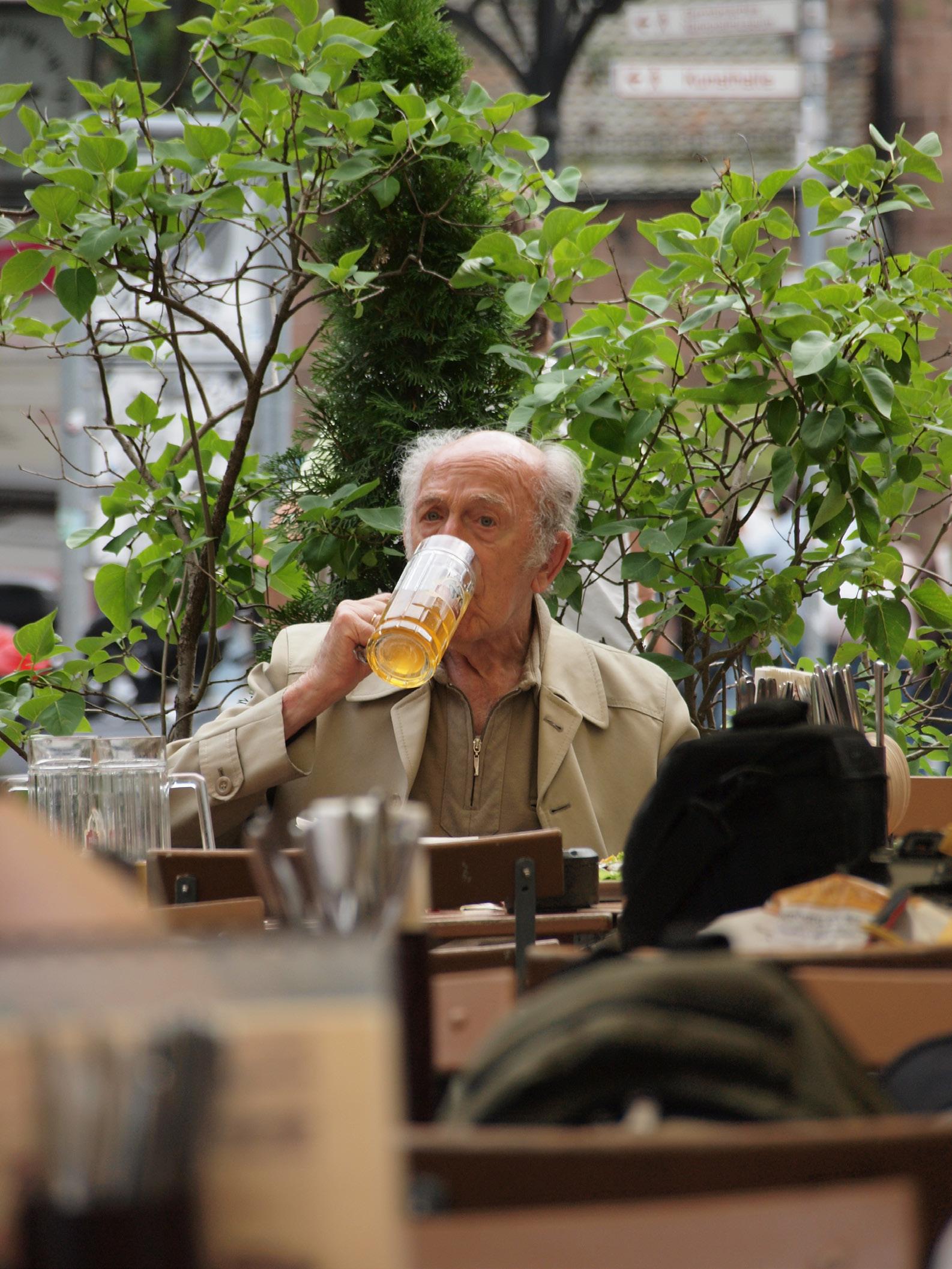
Nowhere is so quintessentially German as a Biergarten on a sunny afternoon. The place is worn, handsome and immortal,but everywhere, new life works its way through the cracks of age. Cold beer is brewed just inside, and has been for six centuries; for a dime less than water, why not have three with lunch?
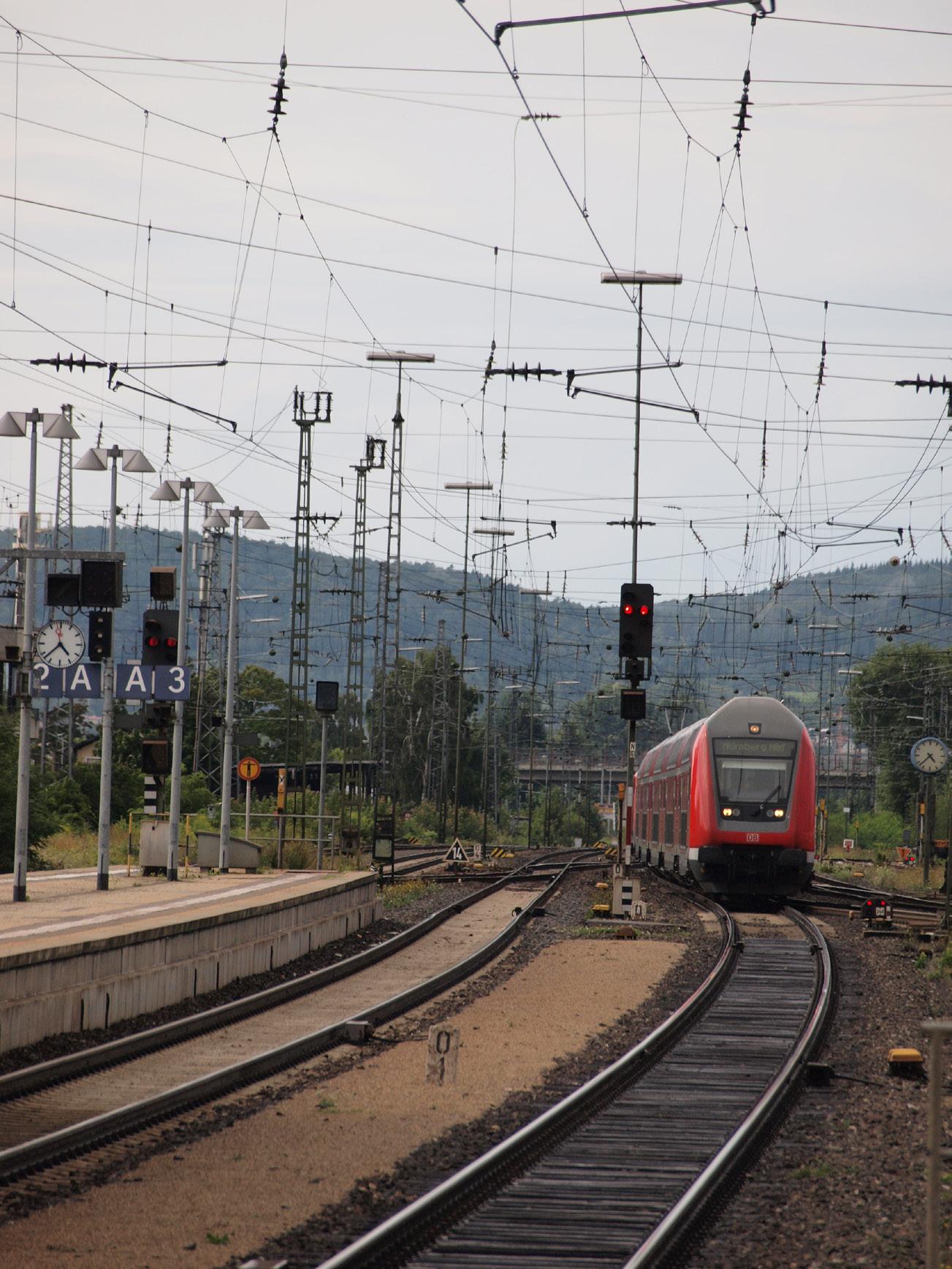
TLeaving the state of Rhineland-Palatinate, a train travels along the rails that played a pivotal role in shaping Germany. Since unification and the economic integration that rail systems in the Zollverien facilitated, this has remained the most affordable and comprehensive transportation.
Lovers and loners alike embrace the juxtaposed natural and architectural beauty of Nurnberg, a modern city that has overflown medieval walls. The castle keep once held the Imperial crown jewels and other riches, but following the destruction of the city and the Allied occupation, many of Nurnberg’s treasures were lost.
Wind power in Oberfranken, as in the rest of Germany, is growing. Alternative energy will continue to grow as the entire German nuclear programme was halted following the Fukishima meltdown. While the northern coast is best suited for wind ventures, solar, geothermal, and hydroelectric resources are being harnessed everywhere.
The infamous speed and danger of the Autobahn is out of sight and mind as kilometres of highway stand still at rush hour. Constantly under repair, and consistently busy, the core of European infrastructure is undeniably hindered by such an inefficient system, not to mention the environmental burden of thousands of idling engines.
MONSANTO SOILS THE CANADIAN WHEAT ECONOMY
Due to the death date of CWB’s single desk authority in August 2012, the National Farmers Union is trying to prepare to ght for what they, and the majority of Canadian farmers want. Dianne Dowling is the president of NFU Local 316 which covers Kingston and the surrounding area. Dowling spoke at a rst year global development lecture to discuss the crisis at hand for local farmers, such as those that take part in the farmers market held outside of the John Deutsch University Centre every Wednesday. Dowling shared her personal a liation with the NFU and projected a message not only for the sake of the NFU, but for the best interest of people that will be a ected by Monsanto getting involved with local business. Dowling outlined that farmers who are members of the National Farmers Union of Canada must ght against the assaultive American multinational corporation, Monsanto. Monsanto is aggressively escalating up the chain of ruthless
MNC capitalists in a way that will have lasting e ects on Canadian farms. ey are going to eradicate original and organic seeds that Canadian farmers have developed and bred over decades to give Canada a thriving crop economy. e freedom of these farmers will be lost if they buy Monsanto’s seeds. e National Farmers Union of Canada continuously has vehement support of the Canadian Wheat Board because it is a monopoly; the country’s only buyer of wheat and barley.
In October 2011, the conservative government under Prime Minister Stephen Harper and Agriculture Minister Gerry Ritz proposed Bill C-18: “An Act to reorganize the Canadian Wheat Board and to make consequential and related amendments to certain Acts.” It gives grain farmers marketing freedom to choose to use the Canadian Wheat Board or other multinational grain companies. A group that supports the Cana-
dian Wheat Board went to court to ght the introduction of this Bill. Ritz, however, disobeyed the law due to the exclusion of grain from being sold through the CWB.
Bill C-18 came into e ect as of December 2011 and in August 2012, the Canadian market will open up for any buyers and conducting business with the CWB will be optional.
Canadian farmers have voiced their message to the government yet no progress has been made. e Canadian farmers advocate their stance on the issue: “We will not sit back and watch this government steamroll over farmers. We are going to stand our ground and ght for farmers.”
e chair of the CWB’s farmercontrolled board of directors clearly stated, “For months, Minister Ritz has been claiming that the recent federal election was a mandate for the government to dismantle the CWB. Now we know otherwise. ere is no mandate from farmers to strip away their marketing power.”
e National Farmers Union says that farmers should decide the fate
of the grain marketing agency; not the MPs. e CWB inquired amongst farmers and proved that a clear majority support the single desk it holds.
e National Farmer’s Union outlines ten speci c reasons why they do not want Monsanto’s geneticallymodi ed wheat.
1. Market loss. International customers buy 82% of Canada’s wheat. ey have said they will not be buying Canadian GM wheat.
2. e end of organic agriculture. GM wheat threatens organic agriculture prominence in Canada. As can be seen in GM canola, it is impossible for organic farmers to grow that crop due to seed supply contamination and pollen dri mean that organic farmers cannot ensure their crops be free of GM seeds. GM wheat and the subsequent GM crops will reduce organic farmers and reduce crops.
3. Lower prices for farmers. GM wheat will decrease current Canadian demands for wheat. GM-free, high-quality, organic Canadian wheat, on the other hand, could result in a competitive advantage.
4. Health Concerns. People around the world question the safety of GM foods, so why risk it? Health regulations could
I wouldn’t say its the most important, but one of the most underreported news stories has been Myanmar’s fast and peaceful transition to democracy. People understandably doubted the military junta’s sincerity when they announced a transition to civilian government. But, over the year, Myanmar has genuinely changed. What a positive story to come out of so much terrible news.
be enforced but the Canadian government promotes the GM food industry.
5. Environmental damage. GM presence in the environment lasts forever, it cannot be recalled, contained, or controlled. GM canola cross-pollinates with non GM-canola. ere are no known longterm ecosystem e ects of geneticallymodifying the planet’s food crops.
6. Agronomic costs. GM Roundup Ready ensures that weeds die and wheat survives. Farmers will need to use extra chemicals to control the maintenance of this and the estimated annual weed control cost accumulates to $400 million.
7.Segregation won’t work. Monsanto thinks the solution lies in keeping GM and non-GM wheat separate from eld to customer. However, segregation
”
would fail because GM varieties will contaminate wheat seed supplies.
8. Labelling. Monsanto and the Canadian government oppose labelling to hide that customers are eating GM food. Companies believe GM foods should be le to the market. e NFU disagrees, and nd it illegitimate to introduce new GM foods without labeling and informing the public about what they are buying and consuming.
9. Corporate control. Transnationals, such as Monsanto, are gaining more control, through patents and courts, of the food supply; not only through seeds, but through their building blocks, genes. 10. We don’t need it. Wheat farmers do not need GM wheat to grow it. Consumers will see no bene t from GM wheat; thus is seems to create problems rather than solve them.
We aren’t going anywhere.
But you are. The Queen’s International Observer will continue to solicit submissions all year. The summer is a time to experience new things outside your “comfort zone”. Why not share that experience with others? Whether through images or words, we hope to constantly receive stories
from around the world; we hope you will stay in touch at home or abroad. If a headline makes an impact, triggers a reaction, or somehow compels you to delve deeper, you have felt the call of journalism. Don’t resist it. Find your story and we will help you share it.
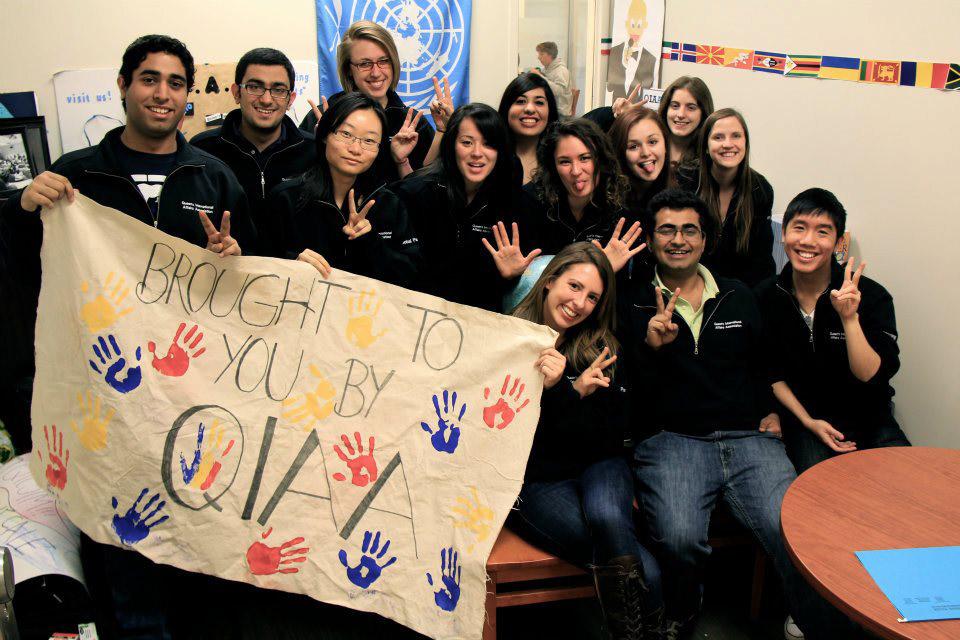
you for a great year! - Queen’s International Affairs Association Executive, 2011-2012
Passionate about news?
Want to try your hand at working at a radio station? CFRC's news collective is looking for members for this summer! Join of an amazing experience! For more info, you can contact this summer's News Coordinator, Joanna Plucinska at joannaplucinska8@gmail.com