






































by Kristen Guglielmo Editor
Every day as commuters ride the 7 train through a tunnel named for a German piano maker, they pass through a piece of history they likely don’t think twice about.
But the Steinway Tunnel — and the factory it was built to serve — is as Queens as it gets.
For more than 150 years, the world’s most storied piano manufacturer has called the borough home, building the instruments one meticulous piece at a time while the neighborhood around it has grown and changed.
“Sometimes people will call our area of Astoria the Steinway or the Steinway-Ditmars area of Astoria,” said Anthony Gilroy, Steinway’s vice president of marketing and communications. “That’s a huge amount of land that they owned.”
Heinrich Steinweg — who later anglicized his name to Henry Steinway — emigrated from Germany to New York in 1850 at age 53, arriving in a city with more than 100 competing piano makers.
from what the European companies were making.”
In the early 1870s, the Steinway family — who already had outgrown a Manhattan factory at 53rd Street and Park Avenue — set their sights on Queens.
There were draft riots, labor strikes and an atmosphere of turbulence that made controlling one’s destiny in Manhattan difficult. The family bought land so vast that what is now LaGuardia Airport was once Steinway property.
To house workers making the trek from Manhattan before the subway existed, the Steinways built an entire community — homes, a library, a kindergarten.
“They built homes because they now had workers there that were commuting from Manhattan to Queens, and it wasn’t so easy back then,” Gilroy said. “No subway, so you’re walking or taking a boat across the river.”
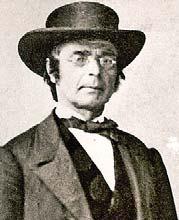
The instrument was, in Gilroy’s words, “the center of every home” before phonographs or radio existed.
Steinway & Sons was founded in 1853 in Manhattan, and by 1867, the company had won a gold medal at the Paris Exposition, putting the brand on the map globally, as it used high-quality parts and innovation to create an instrument unlike the rest.
“Steinway very quickly started to stand out by innovating and doing things a little bit better than what the other people were doing,” Gilroy said. “It really sounded different
The subway would come eventually, and Steinway would help bring it.
William Steinway, son of founder Henry, chaired the commission that planned New York City’s subway system.
The original routes didn’t extend far into Queens, but William pushed for more.
“He had the foresight to know that he’d seen uptown Manhattan go from farmland to really congested, and Queens was headed the same way,” Gilroy said.
The Steinway tunnel, carrying the 7 line under the East River, bears his name to this day.
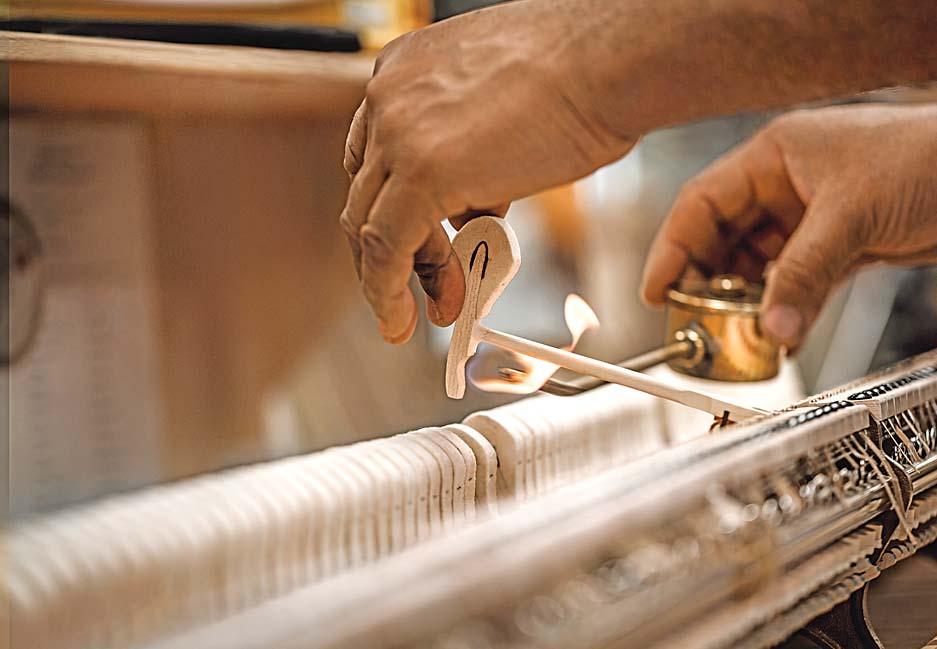
The factory that still stands in Astoria produces four pianos a day, an 11-month process involving 200
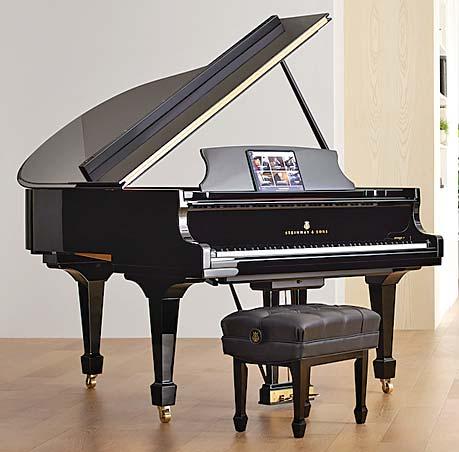
with a legacy that’s never flat, but always sharp
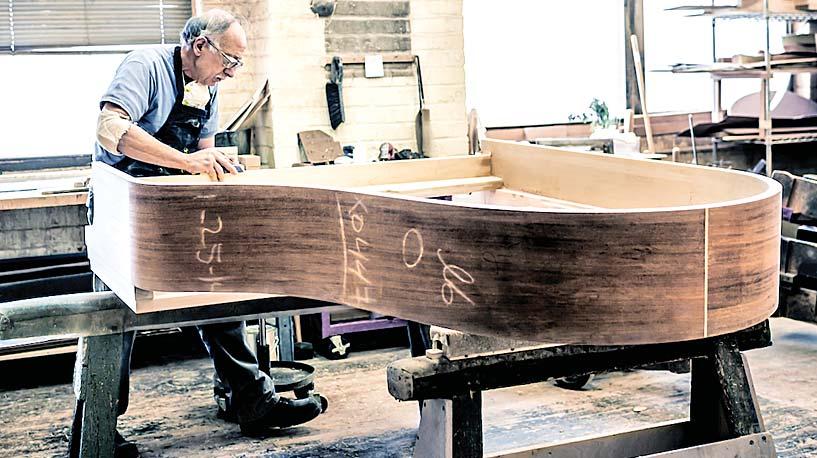
A craftsman at work on a Steinway piano, which takes just about 11 months to complete and consists of more than 10,000 parts painstakingly put together.
workers and more than 10,000 individual parts.
“We’re not mass producing these by any stretch,” Gilroy said.
The process begins with raw materials, including planks of hard rock maple bent around a rim press to form the curved shape of a grand piano.
From there, each instrument moves through a series of departments.
A soundboard of Alaskan Sitka spruce — acoustically essential — is fitted inside.
“It’s a very, very expensive, but very musical and important part of the process,” Gilroy explained.
A cast iron plate arrives from a Steinway-owned foundry in Springfield, Ohio. Strings go on. Then comes “the action.”
“The action is everything from the key that you hit to the hammers
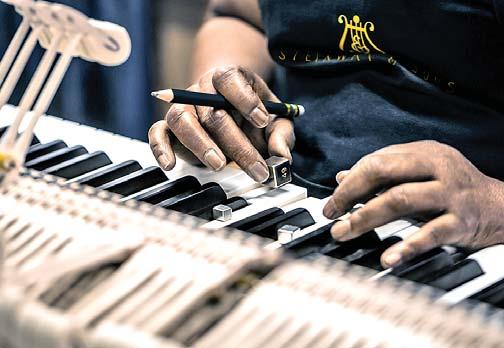
that hit the strings and 50-plus parts in between those two things for each key,” Gilroy said. “So you’re talking thousands of parts just in what we call the action of the piano.”
After the action is set, the piano moves into tuning and tone regulation.
“We make sure it’s an even tone — a lot of time goes into that,” Gilroy said. “We individually weigh off all the keys, so that it’s what we call an even touch across the keyboard.”
Eventually, the 11-month process begins to wrap up.
“It will go into shipping, the legs come off, it gets boxed up and it gets shipped out to a dealer, or sometimes directly to a customer, depending on the situation,” Gilroy said.
Every piano travels with a control card — now computerized, but paired with a physical card that must be signed.
where someone can use a lesser quality,” Gilroy said. “We’re not about building to a price point. We’re about building to a quality standard.”
The workforce building each piano reflects the borough itself. Gilroy said more than half of the factory’s employees are immigrants.
“We’ve always had access to an immigrant workforce who wants to learn a craft,” Gilroy said.
Workers often stay for decades. Some have logged more than 50 years on the factory floor, many having started sweeping sawdust before working their way into skilled positions.
Meanwhile, the same forward-thinking that once pushed Queens subway lines outward still animates the company today.
“We like the physical John Hancock and the responsibility involved with that,” Gilroy said. “Every foreman in every department is personally looking and signing off on every piano to make sure that all the things that were supposed to happen in that department were done, and done to a Steinway level.”
This year, the company added a dedicated quality control position at the end of the line — one person whose only job is to inspect the finished instrument before it ships.
“There’s over 10,000 parts in a grand piano — that’s 10,000 places
In 2016, Steinway launched Spirio, a high-resolution player piano with electronic components built in — capable of recording performances, enabling remote classes and streaming music via iPad.
“I think Henry Steinway would be completely on board with that,” Gilroy said. “It’s totally his concept of looking to innovate the piano every chance he got.”
To this day, the tunnel named for William Steinway still sends straphangers back and forth beneath the East River. The factory still finishes four pianos a day. And the borough that gave the Steinways room to build is still where the music starts. Q





by Kristen Guglielmo Editor
Across the borough, maker spaces are changing what it means to create, build and learn in New York City’s most diverse county, putting tools in the hands of anyone willing to show up.
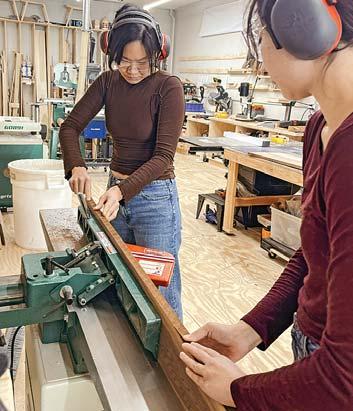
The Astoria Woodworkers Collective was born in the summer of 2020, when a group of neighbors noticed that the entire northwestern corner of Queens had nowhere to pick up a hand plane. The 501(c)(3) nonprofit at 12-10 Astoria Blvd. is staffed entirely by volunteers and runs on dues: $200 annually, plus $13 per hour of booked shop time, as per its website, astoriawoodworkers.org.
“Beginners are welcome,” said founder and President John Bohlmeyer. “We’re a community woodshop with a mission to expand access to space and equipment for folks to explore the craft.”
The equipment list reads like a dedicated woodworker’s wish list: a SawStop 30-inch professional cabinet table saw, a Powermatic drill press, a Jet lathe, a Festool track saw, a drum sander, a mortiser and a lineup of hand tools.
The shop tries to host a round of classes at least four times a year, but that varies based on the all-volunteer team’s schedule. The courses are geared toward beginner and intermediate woodworkers, covering projects from picture frames and serving boards to Danish cord stools. They range from about $200 for a single session to $800 for a six-week course.
kits share space with programs such as Adobe Creative Suite, Audacity and Scratch.
Open Monday, Wednesday and Thursday from noon to 8 p.m. and Saturday from 10 a.m. to 5 p.m., the lab is free to use for Queens residents. The first Saturday of each month, an open house invites anyone to drop in, try the tools and figure out what they might want to make next.
Multilingual workshops in Spanish and Chinese extend the lab’s reach further. Among its most popular programs are a 3D printing series; CRAFT — Creating Relationships and Forging Traditions — which gathers community members around sewing, jewelry making and crochet; and a beginner to certified Microsoft Office specialist certification program.
Tech workshops also cover audio and video editing, robotics, web development and programming in Python and JavaScript.
The lab also operates as a literacy zone in partnership with the Adult Literacy Center at the Long Island City Library, connecting residents with limited literacy or English language skills to case management and coordinated services.
More information can be found at queenslibrary.org.
Tech Lab Digital Inclusion Site Coordinator Lakishia Jeremiah in a statement said the goal is to create more than just a place where people can access technology or attend a class, but a space where everyone feels comfortable, supported and connected.
creativity, and engage with others.”
At 47-01 111 St. in Corona, the New York Hall of Science’s Maker Space is a sight to see. Its home, the Design Lab, has five activity areas — including the Maker Space — that host an array of activities. It bills itself as the largest public venue for informal design engineering education in the country.
In Long Island City, the Queens Public Library’s Queensbridge Tech Lab at 10-43 41 Ave. is less about wood and more about gigabytes, though it covers both ends of the making spectrum.
Sewing machines, Arduino microcontrollers, 3D printers and Little Bits electronics
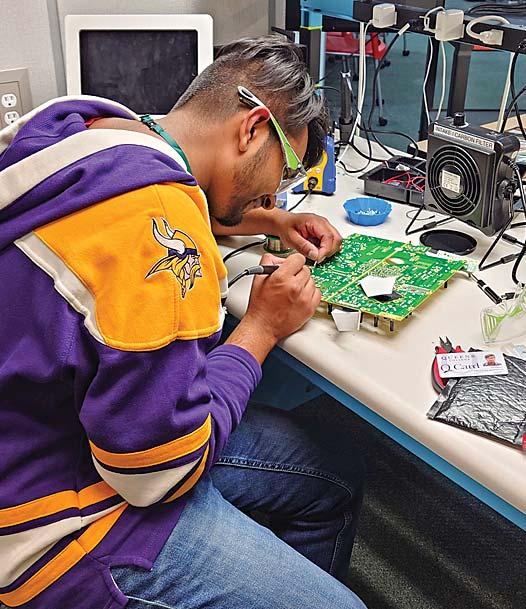
“Many of our participants become regular visitors because they know they can walk in, use the equipment they need, ask questions without hesitation, and receive personalized guidance from staff who genuinely care about their success,” Jeremiah said. “Over time, many come to see the Lab as more than a program site — it serves as a community hub where they can build new skills, explore their
Every museum visitor is welcome to walk in, define a challenge and start building, with NYSCI’s trained Explainers on hand to guide the process. The space also doubles as an active research site, studying how hands-on making builds the critical thinking and selfefficacy that carry students into science and engineering.
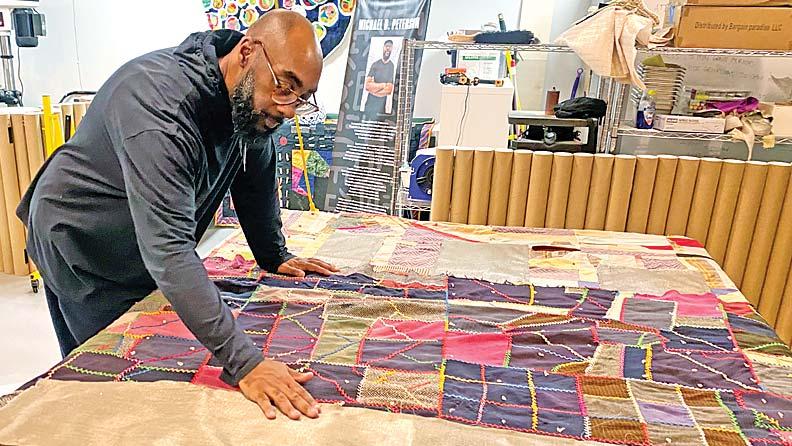
Programming there has ranged from a weeklong camp at which middle schoolers built electroencephalogram headsets to interact with their own brain activity, to multiweek family programs that guided participants through defining a problem and building a solution, to a maker residency with artist Michael Peterson, who invited visitors into his process as he created five large-scale quilted works, one for each borough. For more information, one may visit nysci.org.
“Design Lab challenges visitors to draw on their creativity through experimentation, critical thinking, and collaboration,” said Katie Culp, NYSCI’s chief learning officer. “It is a celebration of NYSCI’s innovative work in science education and a reflection of our belief that science should be explored and experienced. The Maker Space is an integral part of our Design Lab, and it continues to evolve with the contributions of our staff, external partners, and most of all our visitors.”
At the Benjamin S. Rosenthal Library at Queens College in Flushing, the campus Makerspace is open only to QC students, staff and faculty. But within those walls, it has found its way into nearly every discipline.
Zones for 3D printing, fashion, electronics prototyping, pen plotting and hand and power tools share the floor with a co-working area, a
3D scanner and a photo booth for documenting finished work. More details can be found online qc.cuny.edu/library/makerspace.
Core users include artists, designers and computer scientists, but Nick Normal, the head of QC Makerspace and a college laboratory technician, said the site supports anthropologists, economists, English majors — anyone who can connect making to their pursuits.
“We love beginners,” Normal said. We call it ‘making makers’ — turning users new to these disciplines into makers in their own right. It’s awesome to see the face of a student light up when they realize what they can do here.”
In an era of information overload, Normal sees the Makerspace as a place where students slow down, use their hands and confront what they don’t yet know.
“Having a facility like the QC Makerspace provides our users with a place to work with their hands — which I would argue is its own reward — and also explore ways to turn that information into reality,” Normal said. “It also forces us to work with others and even to admit what we don’t know in front of people we might not know. This is part of life’s journey and what is required to become a lifelong learner.”
This past spring, Queens College anthropology professor Alexander Bauer and art professor Malcolm McDougall guided students through an Archaeology of Metals course in which they studied pre-Columbian objects from the campus’s Godwin-Ternbach Museum, conducted 3D scans and cast bronze reproductions. Seven finished pieces will enter the museum’s permanent collection ahead of an exhibition opening in spring 2027.
“One of the special things about this course is the collaboration between people with different perspectives and approaches to material object,” Bauer said. “The students really benefit from that interaction and collaboration in ways that art students or archaeology students wouldn’t normally get.”




by Michael Gannon Senior News Editor
While Queens owes no one any apologies for its modern manufacturing footprint and fingerprints, a lot of things from the gum in your pocket to the stapler on your desk used to be made right in the borough.
And some companies with locations and clients around the world started or even remain here.
Long Island City and its border regions, much like today, are Queens’ industrial center. Looking for food? Queens had it.
Just before the turn of the 20th century, a young Italian immigrant named Emanuele Ronzoni was a partner in the Atlantic Macaroni Co. In 1915, according to the Ronzoni website, he struck out on his own with a factory on Vernon Boulevard. Now part of Richardson Food & Ingredients, Ronzoni continued production in LIC until 1993.
ER Durkee began packaging and selling spices and seasonings in 1857 in Buffalo. By 1917 it had a four-story factory plant in Elmhurst at 45-10 94 St., where it employed more than 300 people.
The company has changed ownership numerous times since Durkee’s death in 1926, but you can still buy the same spices, marinades and just about everything else Durkee — except for its famed mayonaise-mustard-vinegar white sauce, which its parent company, B&G Foods, discontinued last year.
ner-Lambert in 1962, but the factory kept operating. An explosion in 1976 killed six workers and injured more than 40.
The factory was closed at the end of 1981.
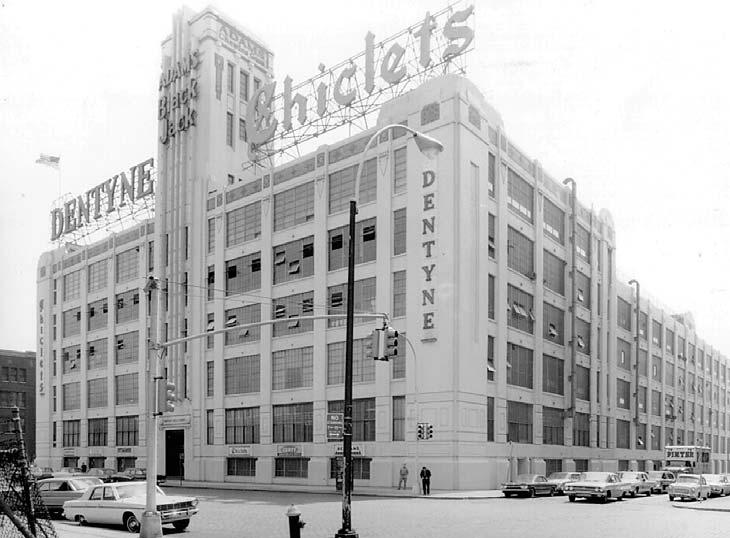
Chiclets and Dentyne now belong to Perfetti Van Melle, an Italian-Dutch candy company. The structure at 30-30 Thomson Avenue now serves as headquarters for the city’s Department of Design and Construction.
Floor space now occupied by the Chronicle at the Shops at Atlas Park in Glendale served the textile industry 100 years ago when the site was Atlas Terminals, and today’s 71-19 80 St. was home to Walter J. Vogt and Co.
The website Aarts-Archives.com says the company manufactured silk braids, fringes, chenilles and trimmings in the structure that now also houses Home Goods. It says the company was founded in 1888, but does not have exact information on how long it was at Atlas. It does have two photos from 1929. The 1929 figures say Vogt employed 400 braiders, 40 knitters and 60 electrical employees, among others.
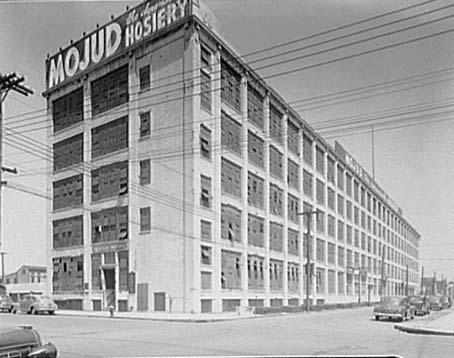
North Carolina-based Mojud Hosiery, which ran from 1927 to 1972, manufactured women’s stockings at 36-20 33 St. The Chronicle could not find the dates of its operation, but the Library of Congress has a photo of the five-story building from May 1945. Real estate listings today describe the building, which looks much as it did then, as a commercial property.
The factory was renovated in 2007 and serves as the city’s Elmhurst Educational Campus, housing three high schools: Pan American International High School, the Civic Leadership Academy and Voyages Preparatory High School.
And if you need to freshen your breath after a spicy meal, just about any store has multiple flavors of Chiclets or Dentyne chewing gum. Thomas Adams’ American Chicle Co. started selling gum in 1871. Sources differ as to when his company bought Chiclets, but it acquired Dentyne in 1916.
A factory opened at 30-30 Thomson Ave. in LIC in 1920. The company was sold to Wari-
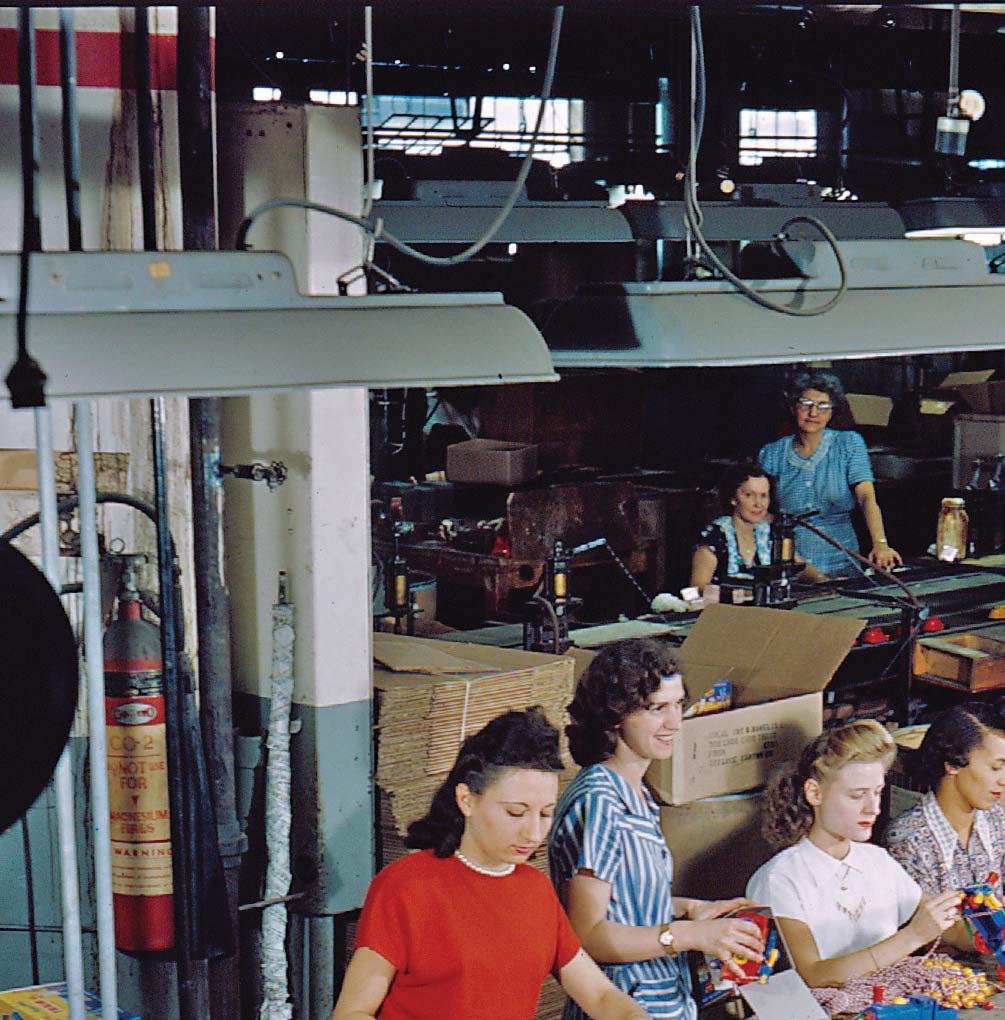
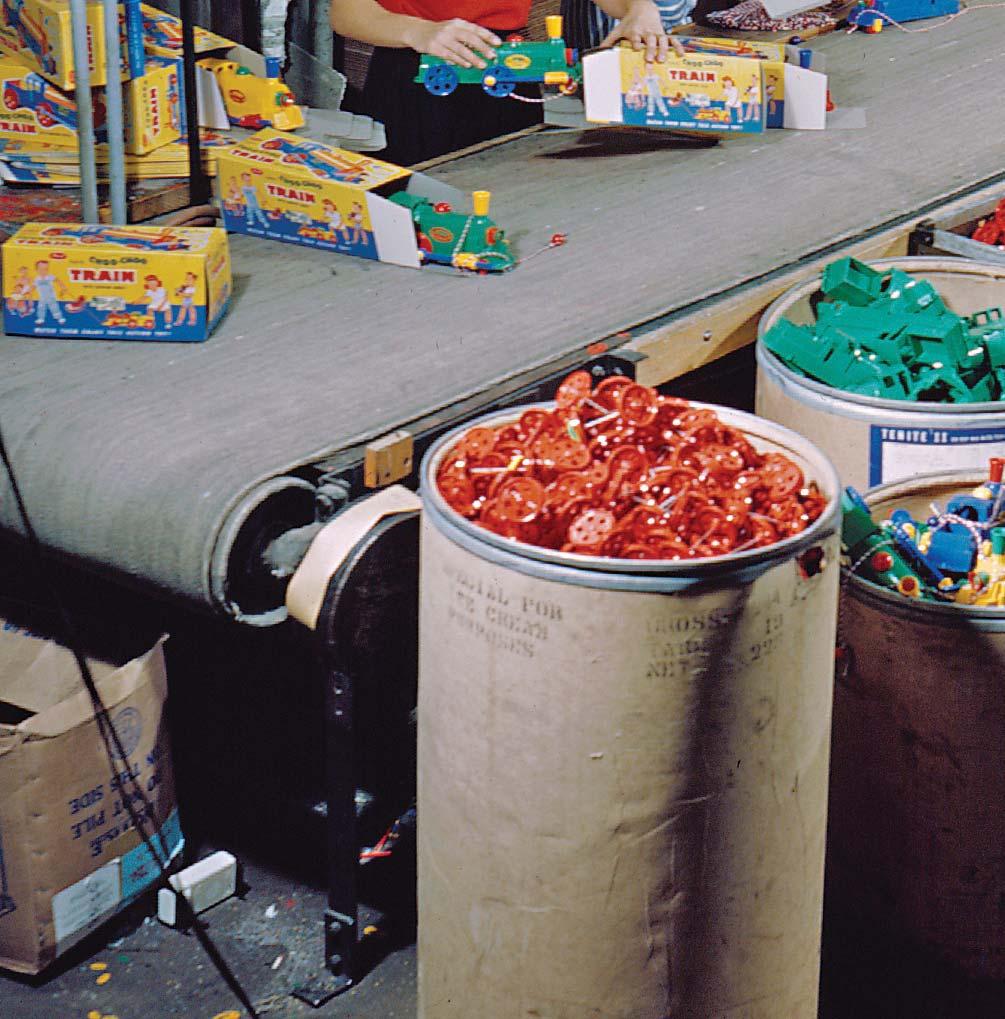
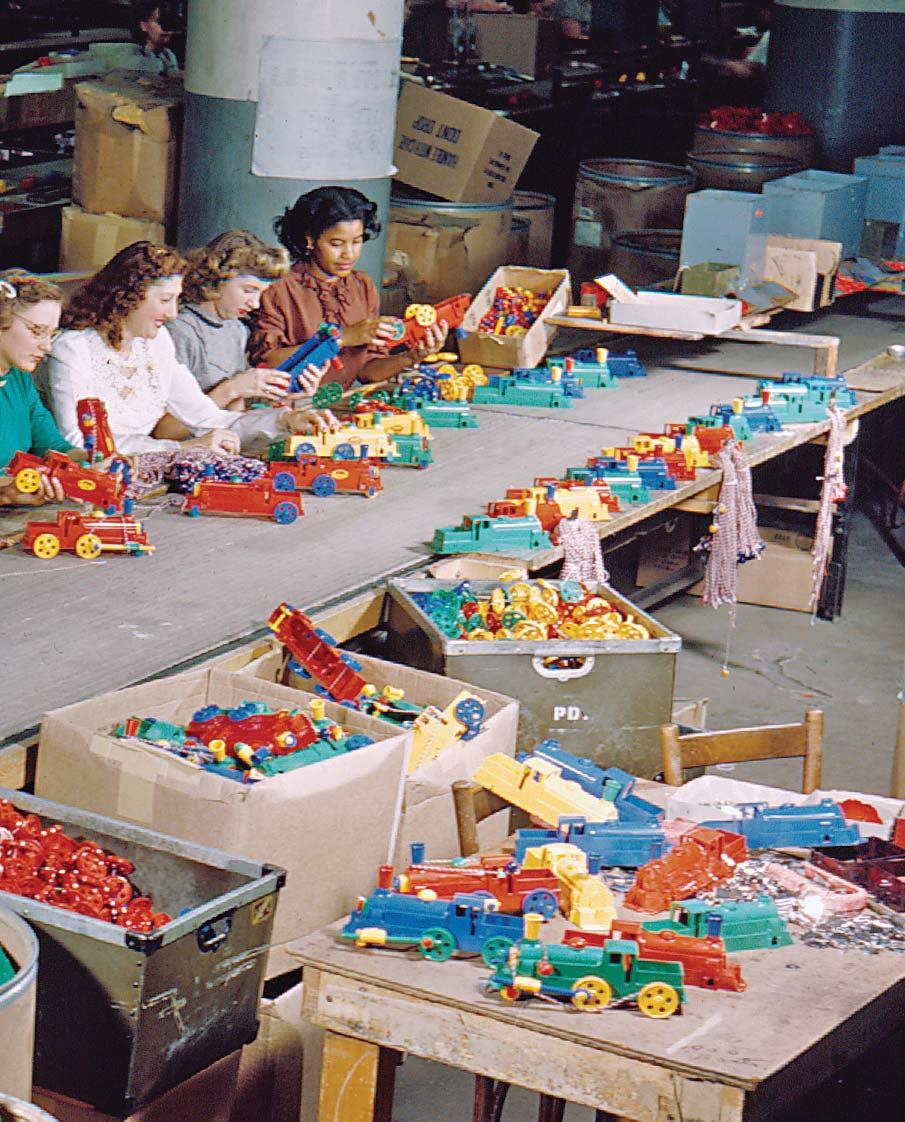
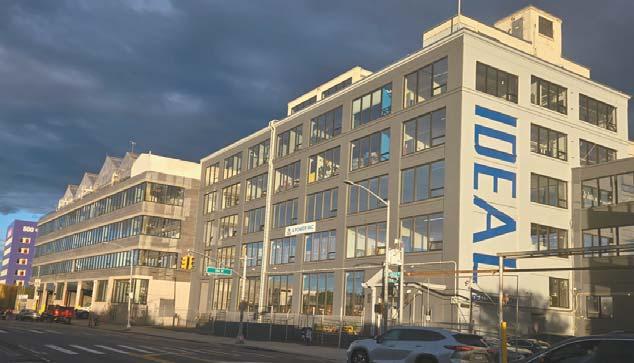
The Ideal Toy Co., with roots going back to Brooklyn, had been a success for 40 years when it moved to 184-10 Jamaica Ave. in Hollis. And while it moved to New Jersey in 1984, and was swallowed up by the first of many corporate sales in 1997, the lintel above the main doorway for the massive structure still says “IDEAL BUILDING.”
The word also adorns the western exterior wall in blue capital letters.
The company that invented Teddy bears — the first President Roosevelt was delighted that they asked to use his name — made dolls of actresses Judy Garland and Shirley Temple, daredevil Evel Knievel and Olympic skater Dorothy Hamill; and baby dolls that wriggled, tumbled and wet themselves.
Board games included Battling Tops, Hands Down, both Sure Shot Baseball and Hockey, and Hang on, Harvey! The company also made Slinkys and licensed Rubik’s Cube.
The building today houses businesses including movers, furniture assembly, a fashion boutique, and shipping and logistics businesses.
In the 1960s Ideal manufactured toys based on Jim Henson’s Muppets. Henson’s Creature Shop, however, has crafted the real things in Long Island City 37-10 Northern Blvd. since 2004 in part of a blocks-long structure that has been known as the Standard Motor Products building since 1921.
It still serves as SMP’s world headquarters.
The company started out making wire and cable, but began experimenting with auto
parts as Henry Ford continued to make motor vehicles more accessible to more people.
Today SMP manufactures replacement automobile parts and offers engineering for vehicle control and thermal management. It has offices and production facilities in North America, Europe and Asia.
Laminated Shim was established in a loft in Manhattan in 1913, manufacturing standardized automotive rod shims used by mechanics to maintain wheel alignment in the early automobile era.
By 1921 the company had relocated to Long Island City, though an exact address could not be determined. The company, still family-run, would eventually expand into Connecticut before relocating to California in 1984.
The company that got in on the ground floor of the auto industry now provides shims and engineering that cater to commercial and military aviation.
But no matter how technical and demanding
Laminated Shim’s products and manufacturing are, its office probably still needs staplers, and what now is Swingline began in Manhattan 100 years ago before Jacob Linsky’s Parrot Speed Fastener Co. moved to LIC in 1931. It, too, was in the SMP building, address 37-18 Northern Blvd., before moving to new digs at 32-01 Queens Blvd. in 1951 and adopting the name Swingline, eventually erecting a sign that graced the Western Queens skyline for decades. Sold in 1970, the factory closed in 1999. Swingline now is part of ACCO Brands. The property has numerous tenants.
An ornate, boarded-up building at 42-14 Vernon Blvd. looks out of place on the East River, just south of the Ed Koch Queensboro Bridge. But between 1892 and 1929, the nowcity landmark was the office and best advertisement for the sprawling New York Architectural Terra Cotta Works; followed by the Eastern Terra Cotta Co. from 1931 to the mid1940s. The factory was demolished in 1968.
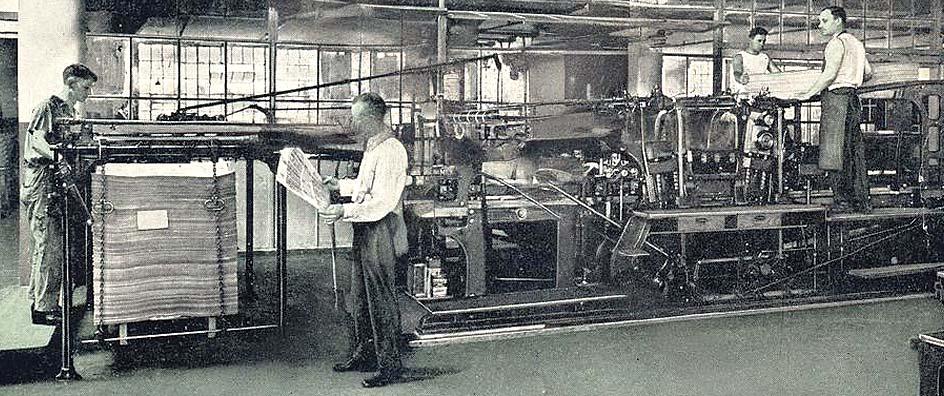
by Stephanie G. Meditz Editor
Whether or not you’re a film buff, it’s always exciting to see your very own hometown on the big screen.
New Yorkers have no shortage of opportunities to do so. It’s easy to feel just a bit glamorous — and more than a bit stressed — watching Anne Hathaway schlep around Manhattan in “The Devil Wears Prada” and its recent sequel.
Queens residents are never far from the magic. Not only was production on both of those films based here, but the diner featured in Martin Scorsese’s “GoodFellas” was in Maspeth, and the flying saucers from “Men in Black” are actually the historic New York State Pavilion in Flushing Meadows Corona Park.
Those and many other spots are certainly landmarks of the silver screen. Queens’ production studios deserve that title, too.
top-notch New York studio.
“The best acting talent was Broadway and vaudeville,” Kaufman Astoria President and CEO Hal Rosenbluth told the Chronicle.
Part of what drew Zukor and Lasky to Queens was easy access to it via the 59th Street Bridge, Rosenbluth explained. The pair spent more than $2 million — a large sum back then — to build the studio, which produced silent films featuring the likes of Gloria Swanson and Rudolph Valentino.
“Talkies” entered the scene at the end of the 1920s. The Marx Brothers filmed “The Cocoanuts” at the studio as they performed in “Animal Crackers” on Broadway at night.
Kaufman Astoria Studios, known originally as the Astoria Studio, sits on what was once farmland. Adolph Zukor and Jesse Lasky of the Famous Players-Lasky Corp., later Paramount Pictures, bought the land in the early 20th century, with plans to build a
From the early 1930s to 1940, Zukor ran Paramount from California while an independent group rented out the Astoria stages, Rosenbluth said. Come World War II, the studio became the Army Pictorial Center, where training videos, entertainment for soldiers and propaganda films were made.
“Every movie image that the Armed Forces saw between 1942 and 1970 was either done here or controlled out of here,” Rosenbluth said. The space eventually fell into disuse until 1977, when the Astoria Motion Picture and Television
Center Foundation was founded. It facilitated the studio’s revival, along with the New York State Council on the Arts. Sidney Lumet made his 1978 film “The Wiz” there, and the original studio was designated a national landmark.
But during what Rosenbluth called the “vandalized” period, when the buildings were empty and kids rather enjoyed playing in them, there was a “disconnect” from the studio, he said.
“One of the jobs we undertook was not only rebuilding the studio back to its more wellknown form as a great facility, but to reconnect with the community at large,” he said. “I think
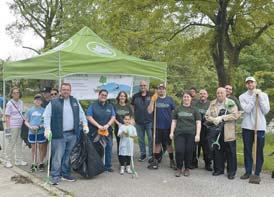



Since 1904, Cord Meyer Development has helped shape the growth of Queens. From Elmhurst, Woodside, and Forest Hills to Bayside, Bay Terrace, and beyond, the communities we developed continue to thrive and stand the test of time.
As we look ahead to the future, Cord Meyer is excited to introduce new projects that will help meet the borough’s evolving needs. While much has changed since 1904, our commitment to Queens remains as strong today as the day we were founded.
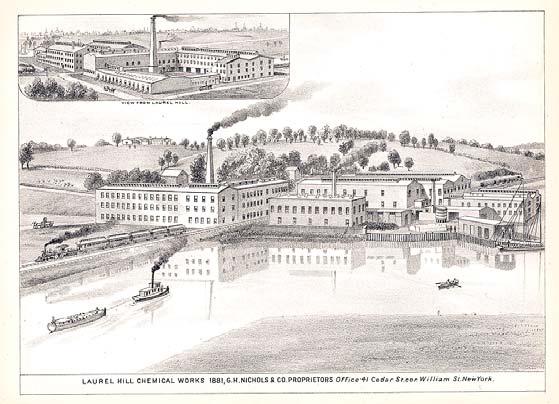
The Laurel Hill Chemical Works, above, seen in 1881, was owned by G.H. Nichols and Co. It sat on Newtown Creek, with Laurel Hill, now West Maspeth, rising behind it in the main view here. IMAGE FROM “HISTORY OF QUEENS COUNTY,” VIA WIKIPEDIA
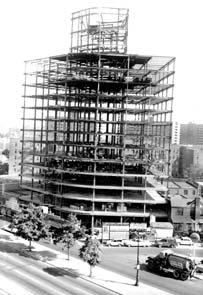
The office building known as Mid-City Center or Lefrak Tower, now residential and called the Contour, is seen going up in June 1960 at 97-45 Queens Blvd. in Rego Park PHOTO COURTESY RON MARZLOCK
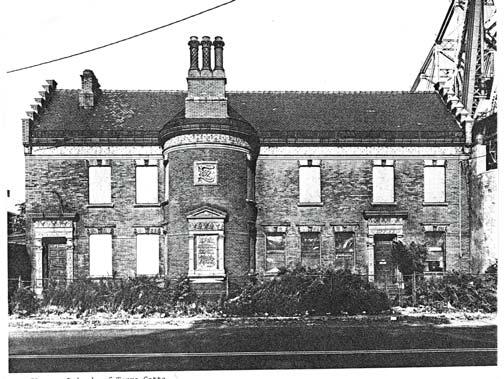
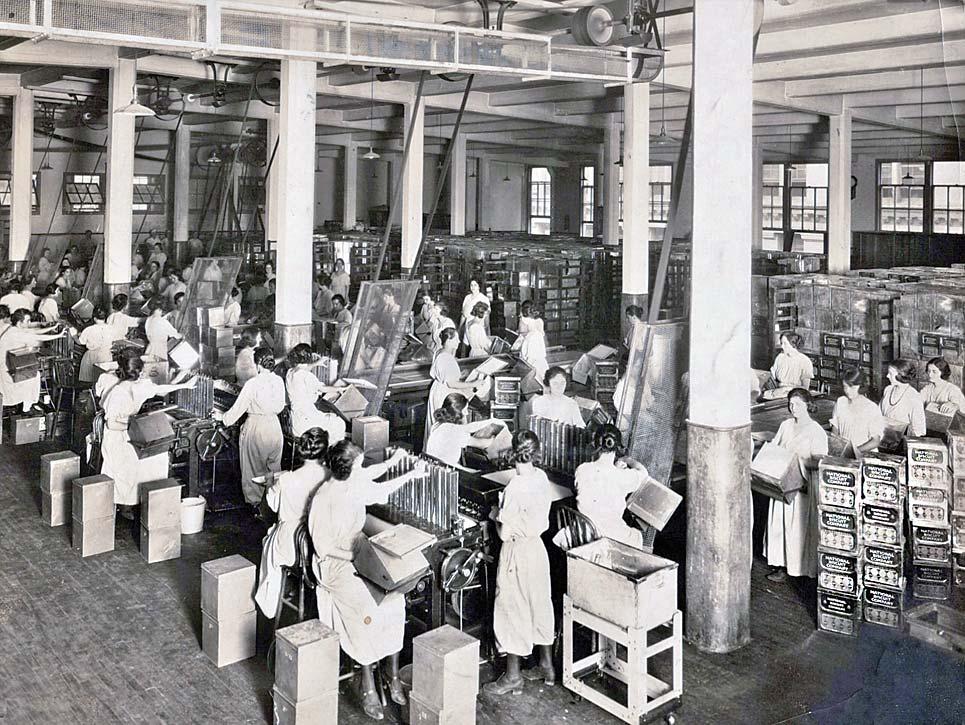
The New York Architectural Works Terra Cotta building, seen as it appeared in Landmarks Preservation Commission records from 1982, was built in 1892 and designated historic in 1984. It remains, while the factories once behind it are gone. FRIENDS OF TERRA COTTA PHOTO VIA NYC LPC
Mojud Hosiery operated at 36-20 33 St. in Long Island City. The building is still there. PHOTO FROM THE GOTTSCHO-SCHLEISNER COLLECTION / LIBRARY OF CONGRESS
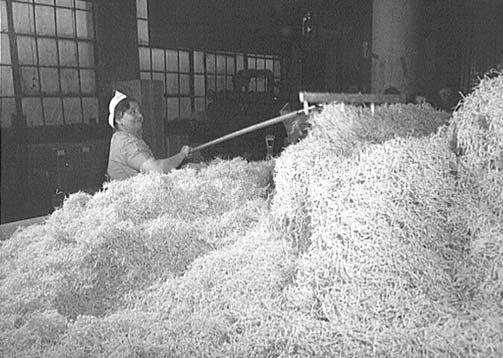
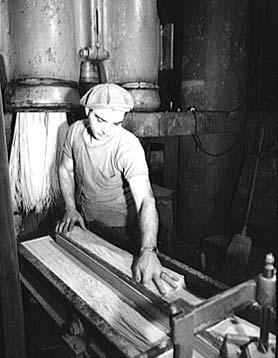
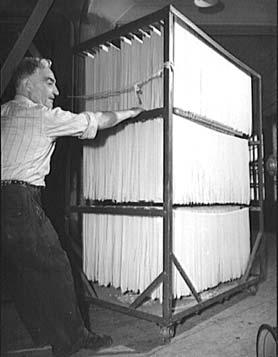
At Atlantic Macaroni Co. in Long Island City, which made Caruso brand products and was co-founded by Emanuele Ronzoni, three views of the process: feeding spaghetti, still moist, into a trimming machine, left; drying the spaghetti on racks; and raking finished macaroni as it comes down a chute. That was done to prevent it from piling up and clogging the flow. The photos were taken in February 1943.
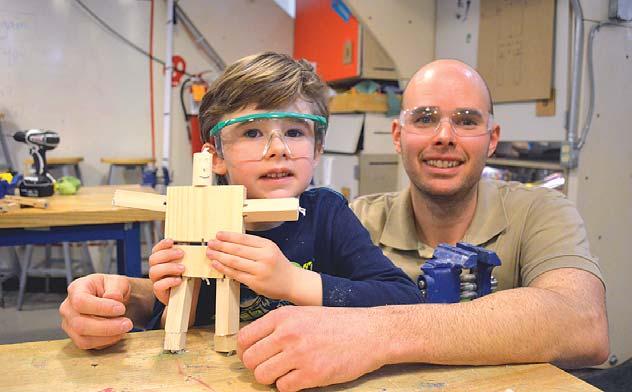
In 2018, Caden Kmiotek of Floral Park, then 4 1/2, and his father, Jared, had a fine day in the maker space at the New York Hall of Science in Flushing Meadows Corona Park.

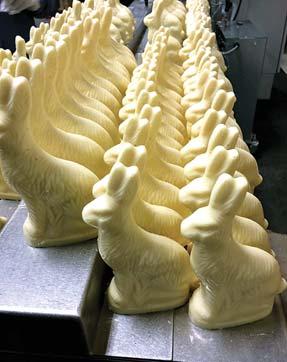
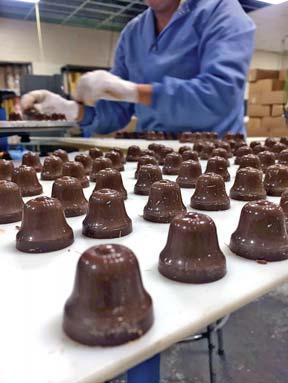
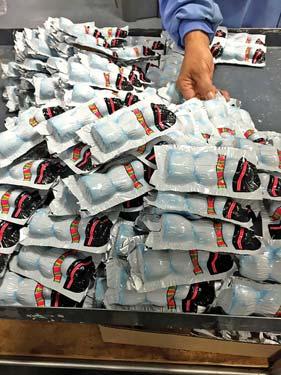
At The Madelaine Chocolate Co. in Rockaway, Christmas bells, left, snowmen and white rabbits, but not the one that Alice saw.
continued from page 9
we did a really good job of that through the years.”
George Kaufman won the right to develop the site in 1980, and it has been known as Kaufman Astoria Studios since 1982.
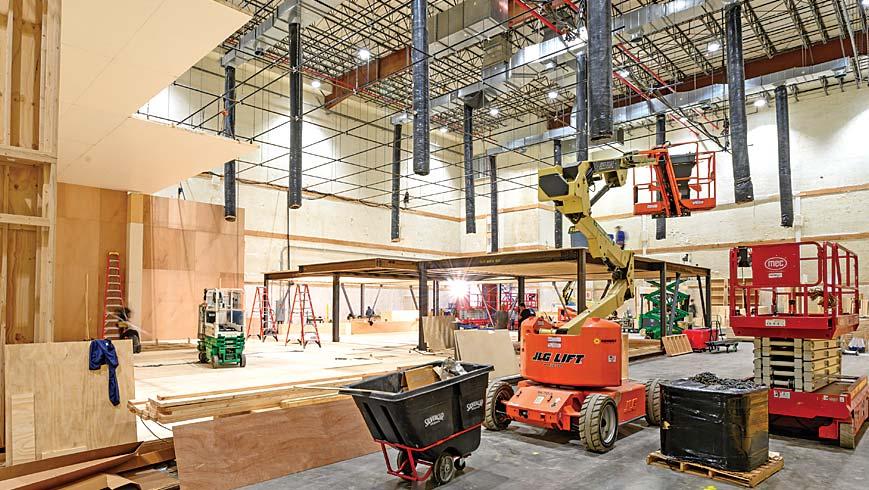
The studio struggled in its early years, Rosenbluth said, though it was home to movies by New York directors such as Lumet, Woody Allen and Alan Pakula. It was “blessed” to land “The Cosby Show” in the mid 1980s — not only was it a smash success, he said, but it led to growth in the TV world.
“New York had news shows, talk shows, but scripted shows were not something that was New York-based for a long time,” he said. Among the other TV giants filmed at Kaufman Astoria are “Sesame Street,”
“American Horror Story” and “Orange is the New Black” — scenes in the latter series that show prisoners going into and out of a van were filmed on a demapped street at Kaufman, Rosenbluth said. “The Devil Wears Prada 2” is among the recent movie hits to be shot there.
Joining Queens’ production scene in 1983 was Silvercup Studios, which was opened at the site of Long Island City’s old Silvercup
Bread Bakery by brothers Alan and Stuart Suna and their father, Harry.
“Everyone who has lived in Queens for many years still fondly remembers the smell of the bread being baked if you drove across the Queensboro Bridge,” said Zoe Match Suna, Silvercup’s director of marketing and strategic initiatives, and Stuart Suna’s daughter. The plan was to turn the building into a sheet metal factory, but it was slowly converted into stages, and Suna said “it’s always a debate” how that came to be.
Silvercup started out with shortterm projects such as music videos and commercials — Suna said the first thing shot there was a Cool Whip ad featuring Betty White. Now, it is home primarily to TV shows, including past hits “The Sopranos,” “Sex and the City” and “Gossip Girl.”
Movies are less common in what Suna said is “really a TV town,” but beloved pictures such as “The Devil Wears Prada” and “When Harry Met Sally” were filmed at Silvercup.
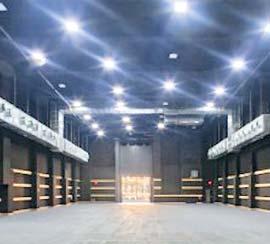
The studio offers 23 stages across its three facilities, two in Long Island City and one in the Bronx. Kaufman Astoria has 11 total stages, which Rosenbluth described as

“a huge quiet Home Depot without columns.” Both studios also have office space, dressing rooms and more.
When folks in the industry look to make a movie or TV show, they start by calling around and inquiring about various studios’ availability. Once they negotiate a deal with a facility, it provides space for production teams to work their magic.
The timing varies, but Kris Bagwell, Silvercup’s executive vice president and general manager, said a movie could take three months to make, and TV shows may take anywhere from eight to 12. Rosenbluth placed production times for TV series and feature films at six to nine months.
“There’s this line down the middle, and on one side is the creative,” Rosenbluth said. “The other side is all the stuff you need to make the creative happen ... we’re supplying the equipment, the facility, the offices, the this, the that.”
Not only that, but both studios have worked to maintain connections with the local community. Kaufman Astoria was an anchor to revitalize the general area, Rosenbluth said — following its rebirth came the addition of lucrative businesses such as Regal UA Kaufman Astoria, Pizzeria Uno, Applebee’s and Starbucks.
series in 2020, showing films shot in the borough from “A Bronx Tale” to “Coming to America.”
Bagwell also described his studio as an anchor institution for the area. Suna said Silvercup has always valued community involvement — the studio works to hire locally, she said, and it has long been involved with the Long Island City Partnership. Her uncle sits on the Queens Museum board, and her father did so for MoMI and Socrates Sculpture Park.
When Tony Bennett called, wanting to build an arts school — now the Frank Sinatra School of the Arts — by the studio, Rosenbluth and Kaufman knew it fit their vision to create an art hub in Astoria. Rosenbluth added that he is working with the Museum of the Moving Image to expand the Kaufman Arts District. Per the museum’s website, the Astoria Motion Picture and Television Center Foundation reorganized as MoMI, which opened next door to Kaufman Astoria in 1988. It describes itself as the only museum in the country that “explores the central technology of the present moment,” namely moving images found in film, television, video games and other digital media. It launched a “Queens on the Screen”
Silvercup also partners with area high schools and colleges to give tours, internships and equipment to film students.
“A big part is getting young people exposed to the business,” Bagwell said. “People know how to go contact Target to get a job at Target, but how do you get a job at a film studio or on a production, right?”
The Mayor’s Office of Media and Entertainment and city Department of Small Business Services last week announced a new “Made in NY” Media Academy at several CUNY schools, including Queensborough Community and Hunter colleges. It offers residents free training in fields such as audio production, graphic design and digital content creation.
So the list of iconic titles made in Queens is very much ongoing. Q











































31 J U LY JULY 6 PM 1 A U G AUG 11 AM - 6 PM
F E S T IVAL FESTIVAL

RUFUS KING PARK
JA M S U N D E R T H E S TAR S JAMS UNDER THE STARS
Join us for an unforgettable evening of jazz and R&B in the heart of the park!
Bring your blankets, chairs, and favorite snacks as you relax under the open sky, surrounded by the smooth sounds of live music. Whether you’re coming with friends, family or solo, it’s the perfect setting to unwind and enjoy the rhythm of the night. Enjoy soulful performances good company, and the magic of music in a serene natural setting.
JAMAICA AVE. BETWEEN PARSONS BLVD. & 169TH ST.
JA M S F E S T I VA L JAMS FESTIVAL
JAMS is a vibrant, 10-block event held annually in downtown Jamaica, Queens. Drawing over 150,000 visitors, this family friendly festival celebrates the rich cultural heritage of Southeast Queens through live jazz, R&B performances, art displays and local cuisine by supporting local artists and small businesses.
F E AT U R E S: FEATURES:
• 164th St. Main Stage Concert
• 450 Stores & Multicultural Ven- dors
• Kids Pavilion (Rides, STEM, Rock Climbing Wall, Games, Face Painting & More)
• Health & Wellness
50 Plus CLUB





• Antique Cars




Interested in vending? Email us: ccjdigitalmedia@gmail. com

Limited Space Available


your Visa® debit card tomakepurchases andpay bills
• $5monthly servicecharge
• BankOn-certified forsafety,affordability, andfunctionality
Thisdebitcardisissued byFlagstarBank pursuant to a licensefrom Visa U.S.A. Inc.












Everyone deserves a simple way to manage money. Flagstar One Checking1 lets you spend only the money you have available, so you don’t have to worry about overdraft fees.



















































by Mark Lord Chronicle Contributor
While the exact date on which chocolate was first consumed remains a mystery, it is believed that the cacao tree, whose seeds are used to make the popular treat, was domesticated in South America as long ago as 5,000 years.
While none of the chocolate-making shops in the borough have been around nearly that long, at least one of them did come into existence almost a century ago.
That would be Aigner Chocolates, a Forest Hills institution that was established in 1930. Opening much more recently, in 2016, is Ridgewood Chocolate, a very different type of shop with an interesting story all its own.
Down in Rockaway is The Madelaine Chocolate Co.; see images from it in our separate photo spread, “Queens has had an industrial heart that beats across the borough still.”
Aigner Chocolates opened its doors as Krause’s Candy Kitchen. In the 1960s, the Aigner family took over the business and ran the shop for three generations.
Today, the owner is Rachel Kellner, who also happens to be a licensed clinical social worker. Not surprisingly, she sees a direct connection between chocolate and a good therapy session, each capable of providing comfort, connection and healing.
“Food is therapy,” Kellner said. “During the pandemic, food was therapy transformed into reality. People came here for comfort. Chocolate makes us feel good.”
Chocolate, she pointed out, “works much faster” than therapy! And, she added, “I get to help more people this way.”
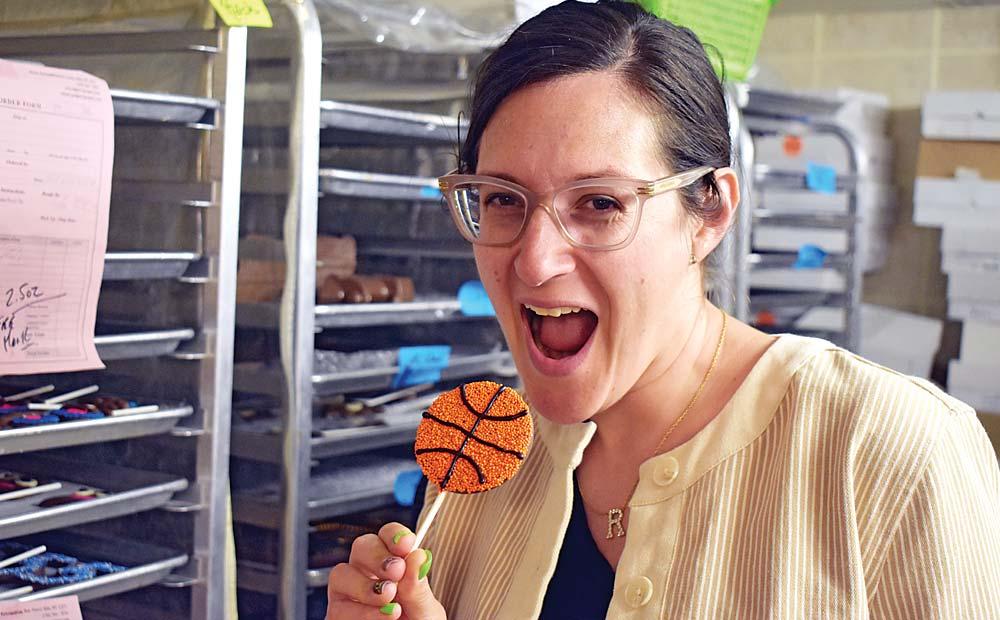
While owning many of the traditional recipes that won the store’s earlier incarnations a loyal following, Kellner has updated many of the offerings to the 21st century, including, as of late, chocolate basketballs that just happen to call to mind New York City’s favorite hometown team of the moment.
“We try to stay up with the trends,” Kellner said, while emphasizing that nostalgia continues to play an important role in the production process.
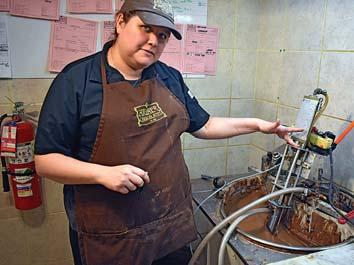
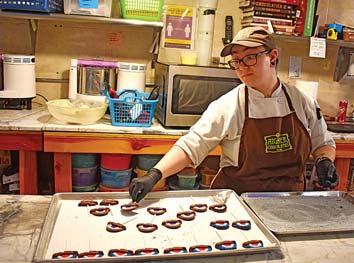
Working diligently to keep the showcases filled with such delectables as caramels, almond buttercrunch, nonpareils, pistachio marzipan and Vienna truffles is a staff of six full-time employees, with an additional dozen or so part-timers who lend a hand during busy holiday seasons.
The business is woman-owned and operated, with an almost-all female staff.
“It’s a coincidence,” Kellner insists, “but a coincidence I like.”
Most of the production takes place down below, a few hard-to-navigate wooden steps leading to a rather claustrophobic area where, on one recent visit, Amanda, the chocolatier, and Anna, the back of house manager, were plying their craft.
Amanda was putting the finishing touches on basketball pops, while Anna was preparing pops specially designed for Pride Month.
“Everything is touched by [gloved] human hands,” Kellner said.
And, yes, there is a conveyor belt, much
like the one seen in a popular episode of “I Love Lucy,” that helps with the process.
Also being readied that same day was a batch of finely detailed chocolate trumpets, about to be sent off as a donation to the Louis Armstrong House Museum in Corona.
“We believe in paying forward. There are so many different ways to involve ourselves with the neighborhood,” Kellner said. “I’d be a better businesswoman if I didn’t give away the profits.”
Business must be pretty good, though, as the company will soon be expanding. “We used to serve New Yorkers,” Kellner said. “Now we’ll have the opportunity to serve the world,” with a store set to open in October at Terminal 6 at JFK Airport.
The process is “painstaking,” according to Constantine, as he is known to seemingly everyone.
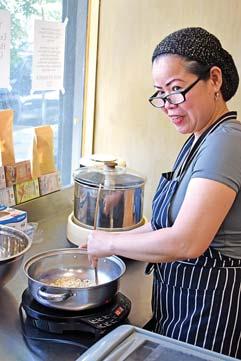
He and Rubi sort the beans and roast them whole at home (sometimes working until 4 a.m.) one pound at a time.
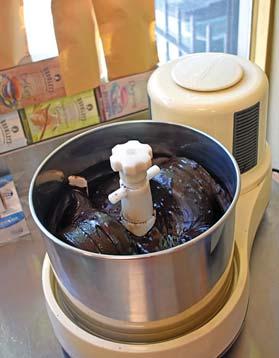
They then engage in a rare method of production — shelling the beans by hand, unlike most modern machine production. It is seen as the only way to create chocolate in its purest form, resulting in chocolate that is rich and smooth and truer to the cocoa bean’s natural profile, according to the store’s website.
In addition to a wide variety of chocolate goodies, including the popular Heritage Specialties, taken from old Aigner recipes, the store also offers hot and cold brews and assorted flavors of ice cream.
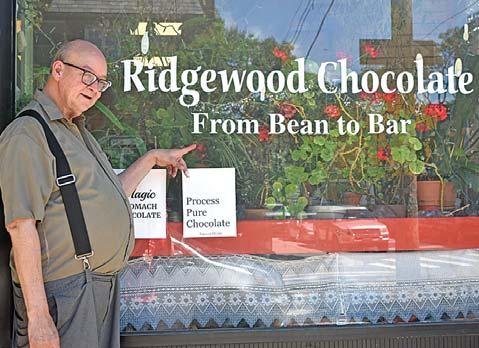
Meanwhile, over at Ridgewood Chocolates, visitors can enjoy not only specially processed bars of many different varieties but also highly personalized service from the owners, a passionate storyteller named Constantine Kalpaxis and his wife, Rubi, who was the inspiration behind the company.
Sometimes referred to as the neighborhood’s best kept secret, the store is little more than a hole-in-the-wall, one that still bears the awning of its prior occupant, a houseware vendor.
While Aigner, like most chocolatiers, takes chocolate and turns it into gorgeous handcrafted works of art, Ridgewood actually transforms raw cacao beans into chocolate, in what is known as a “bean to bar process.”
The beans come from as far away as Ecuador and the Philippines, Rubi’s native country.
In fact, Constantine claims to be “the only one in the world that regularly manufactures handshelled chocolate.” He takes pride in “going back to the human scale of making things in a little store.”
Many other steps are involved in the production of chocolate, including a complicated one of heating and cooling to exact temperatures. The chocolate is finally poured into molds to form the finished bar shape.
The end result is what Constantine calls “magic stomach chocolate,” which, he claims, if eaten properly (one small amount at a sitting), can help reduce stress, reduce stomach pain, establish regularity and “put the kibosh on hunger pangs.”
So, how did the couple come to be in the chocolate business in the first place? When Rubi immigrated to the United States, she expected to find the same quality chocolate that she enjoyed back home. Alas, she was disappointed to discover that most choices here involved highly refined sugary treats. She purchased a pound of beans from an online company and proceeded to make chocolate using traditional techniques. Thus, the idea for a new business was born. Q










by Stephanie G. Meditz Editor
Queens is a borough of movers and shakers. Among them are visionaries whose artistry keeps other people going, giving them the tools to carry all that they need to get through the day and walk wherever the road may lead.
Those visionaries are fashion designers. Some iconic looks and brands in the industry have roots here, specifically in Western Queens. The designers’ legacy lives on, both in the hearts of the public and on the shelves.
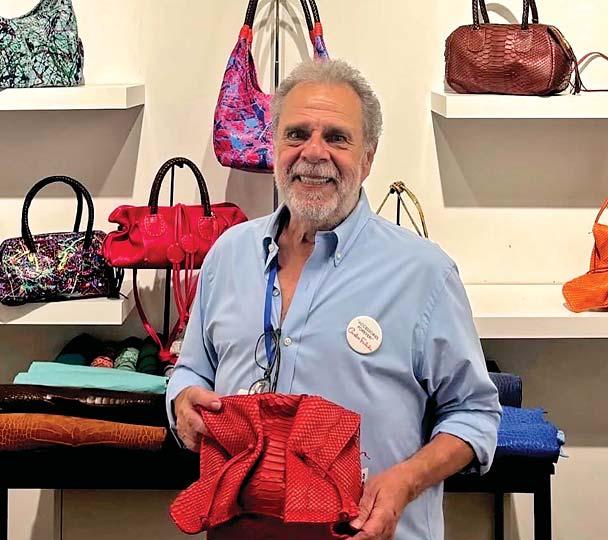
Among those designers is the late Carlos Falchi, a Brazilian-born craftsman who died of cancer in 2015. The company went on a hiatus after his passing, but it was revived in 2024 by his younger brother, Marcos Falchi, and David Mamiye, the brand’s president and CEO.
Falchi’s vibrant, buttery soft handbags — including the iconic Butterfly Bag, which The New York Times recognized last year as one of 25 handbag and shoe designs that transformed fashion over the last century — are no longer made in Queens. But the brand’s factory was once housed inside what is still called the Falchi Building, at 31-00 47 Ave. in Long Island City. The site was first developed in 1922, and served as a warehouse for Gimbels department store.
then two floors, then three floors.
“It became impossible to work back and forth in the elevators all day, and we were very fortunate to be able to buy the Falchi Building,” he continued. “We grew a lot there. We really loved it.”
He later added that the company was based in Queens when its number of employees jumped from a few dozen to a few hundred.
Marcos Falchi said his brother learned to sew by assisting their mother, a dressmaker. He himself worked in management and was doing a postgrad in Paris when the elder Falchi started making handbags in New York.
Marcos Falchi said his mother suggested he move to the states and help his brother, who needed “someone with the business sense.”
“We were still working in restaurants and this bag thing was part-time,” Falchi said. “Little by little, we moved on to be just the handbags, 100 percent.”
During the brand’s early stages in the ’70s, it was wellknown for its clutches, he explained. Carlos Falchi also was the first designer to make a highend canvas bag — it sold for more than $1,000, enough for a used car back then.
Marcos Falchi said he parted ways with the company for a while, after he was bought out by partners whose ideas for it differed from his own. But in 2024, after Carlos’ passing, he and Mamiye repurchased the company. Their work to revive it is ongoing.
“Before, we were at home doing it in our bedrooms and bathrooms,” Marcos Falchi told the Chronicle. “Eventually, we had a little factory at the Flatiron Building, and then we had a factory, half a floor at 65 West 23 St., then a whole floor,
Falchi bags made their department store debut after Geraldine Stutz, who was president of the former Henri Bendel, discovered them on the streets of Manhattan. Stutz provided temporary space in her store, which then became permanent, and the bags later came to other high-end retailers such as Bergdorf Goodman and Neiman Marcus.
Most Falchi bags are made by hand — the brand purchases and cuts the needed materials, including top-line leather, and skillful employees take the work home for stitching.
The bags then come back to the studio, where machines add the finishing touches. Today, Falchi bags are made in Brazil, and the brand has a studio in Harlem.
“One thing that we always were very conscious of was the quality
of our products, the quality of our raw material, the quality of our workmanship,” Falchi said.
The company will “probably” move back to Queens as it continues to grow, given the borough’s high volume of artisans, he said. It still has Queens-based leather suppliers and tanneries.
“A lot of our parts and inspiration definitely come out of that borough,” Mamiye said. He later explained that there is a conscious effort to produce bags that Carlos Falchi himself would be proud of, and they still include the last lining that he ever designed.
“He never liked heavy, gaudy hardware. He never really wanted his logo emblazoned on a giant python bag, except for one tote bag that he created,” Mamiye said.
“Everything we’re doing really is in light of what Carlos believed in, and Marcos is adding his ingenuity to it.”
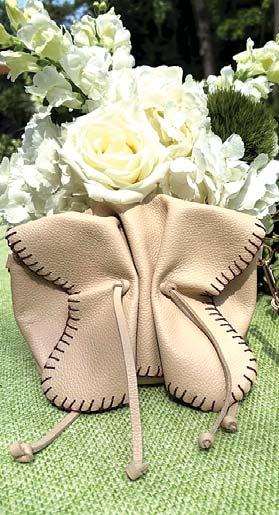
Butterfly Bags are still a flagship look, and customers can style them as clutches, wristlets, shoulder or cross-body bags. Butterfly cell phone bags also bring modern flair to the iconic look.
The duo will once again bring Carlos Falchi bags to the Hamptons Fine Art Fair in July. The company’s Instagram includes photos from the event in 2024 and 2025, along with plenty of images of the brand’s historic designs.
Shoes also were made for walking in Queens — and lots of it.
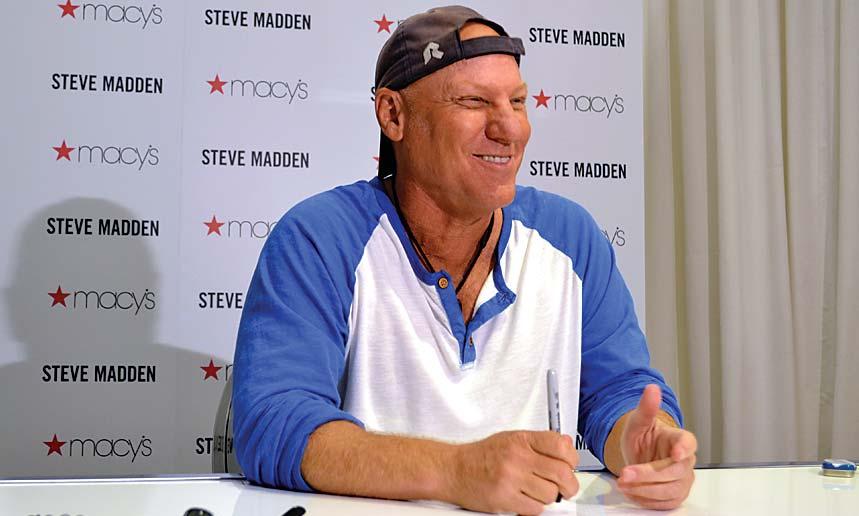
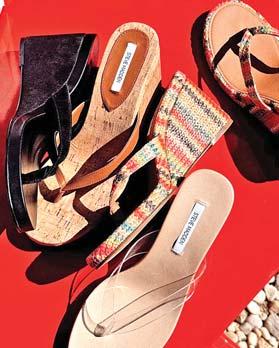
Steve Madden, who was born in Far Rockaway and raised in Nassau County on Long Island, founded his namesake brand in 1990 and opened his first store in 1993. The company has since gone global and is sold in more than 80 countries, according to its website.
Madden began his enterprise by selling shoes to New York City retailers out of the trunk of his car, his Britannica biography states. His first big hit was the Mary Lou, his chunkier take on women’s classic Mary Janes.
“From a factory in Queens, Steve Madden set out to disrupt the shoe game, blending bold design with a sharp instinct for what people want to wear,” the brand’s website states. “Rooted in New York and inspired by music and street culture, his vision has always been about individuality.”
The brand’s corporate offices are headquartered in Sunnyside. Madden was incarcerated in the early 2000s for securities fraud and money laundering, and he resigned as CEO but maintained his creative purview.
Today, the brand is not just shoes — it has expanded into apparel, handbags, fragrance and more. Among the summer trends listed on the brand’s website are nostalgic jelly shoes, wedge sandals and various tortoiseshell printed accessories. Photos of those and other styles are featured on the brand’s vibrant social media pages. Q

• Five-Star Nursing & Rehabilitation Facility awarded by the Centers for Medicare and Medicaid Services.
• Administrator member of American College of Health Administrators
• Administrator recipient of CMS Outstanding Achievement award for Reducing Hospitalizations



• Administrator is 2016 Recipient of Lily Leadership Award










provide places to live, and jobs for those who construct them
by Andrew Karpan Chronicle Contributor
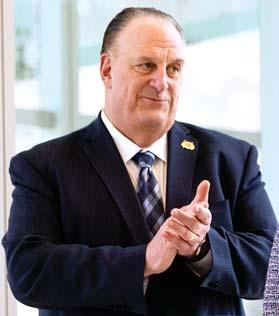
“It’s been years and years and years and only now we’re really getting to a place where we can see the fruits of our collective efforts,” said Frank Monterisi, a vice president at Related Companies, one of the city’s major developers and one of the forces behind the enormous neighborhood of 2,500 affordable rate apartments now being built at Willets Point.
It is a massive undertaking that aims to turn the back roads of body shops near Citi Field into something entirely different and, in doing so, transform the city’s housing stock. Monterisi, a native of Whitestone, told the Chronicle that Willets Point was the culmination of Related’s long project of transforming the residential landscape of Queens through affordable housing deals to construct massive apartment buildings.
“Most people know us for building things like Hudson Yards, but the reality is that our business started in affordable housing and we have a bent toward doing affordable deals,” said Monterisi.
“I lived a few blocks away when we were building it,” Monterisi said. “It’s a really great community that we helped to start and now is a thriving place to live.”
Since then, the company has moved prodigiously through the changing neighborhoods of Queens; The firm has backed the smallerscale Marine Terrace in Astoria and the Harriet Tubman Building, a rent-stabilized tower it is building in Far Rockaway.
Willets is the developer’s biggest move in Queens yet, using the construction of apartment buildings to anchor the creation of a new neighborhood, what Monterisi imagines will be thousands of new homes for the middle-class, in walking distance of the 7 train.
“It’s a reimagination of an underutilized area that was left behind from modern New York,” he said.
In imagining the new neighborhood, the architect John Clifford told the Chronicle that his firm, S9 Architecture, had the ambitious idea to build something that would evoke, conceptually, the history of building housing in Queens writ large.
In building housing in Queens, Clifford said, he’s become an expert on transplanting the language of each neighborhood into new developments, studying deeply the long history of local window fenestrations and the hidden language of brick coloration. It was a study in the way Queens always had been developed, neighborhood by neighborhood.
“At one point, Jackson Heights was a speculative suburban real estate development,” he said. “If you go to Jackson Heights and you really start looking at all the buildings, they’re very similar. The gardens are what makes Jackson Heights special.”
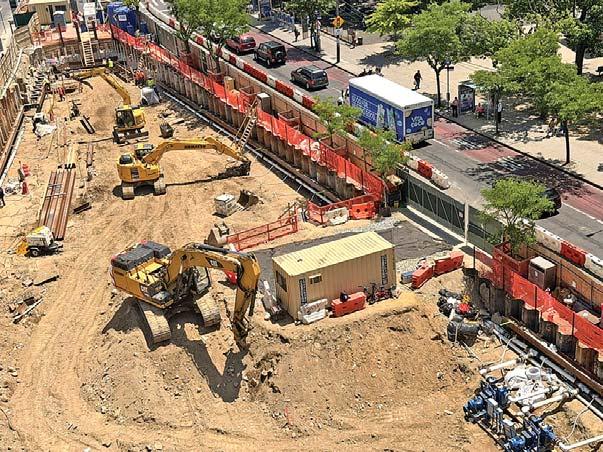
“We expect some of the largerscale projects are going to be creating a lot of employment for us,” said Gary LaBarbera, longtime president of the Building and Construction Trades Council of Greater New York.
“We were big supporters of the city’s strategy to redevelop the Long Island City waterfront into a middle-income neighborhood.”
One of Monterisi’s first projects at Related, in fact, was supervising the building of Hunter’s Point South Commons and HPS Crossing, two modernistic rent-stabilized towers that remade the area’s waterfront a decade ago.
“Normally we look at the context and we look at the neighborhood character and, other than Citi Field, there wasn’t a lot of neighborhood character,” said Clifford. “Instead, we went to greater Queens and looked at the different neighborhoods that were there, like Woodside and Jackson Heights and how they were developed. There are vernaculars in all those neighborhoods.”
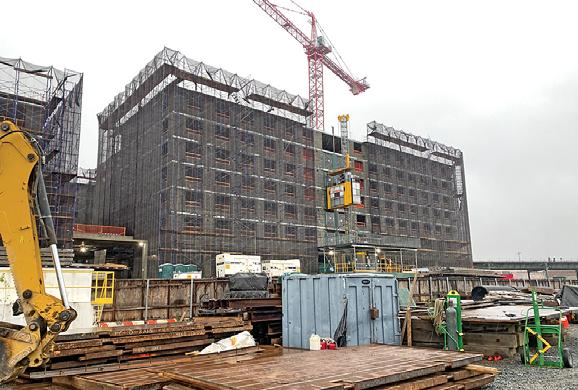
Besides Willets, Clifford has been involved in the building of Jasper, a series of towers in Long Island City, which he said he designed with the ideal of leveraging “all the good things that were happening in that neighborhood.”
“People choose neighborhoods before they choose what they want to live in,” said Clifford.
What’s changed, developers say, is not the style of new housing, but the general direction toward which it is built. Upwards.
“There’s more density to Queens, there certainly more verticality than there was 50 years ago,” said Monterisi. “There are tall buildings all over Queens that didn’t exist 50 years ago. There are certain parts of Queens that are full of high-rises now, and that’s because of mass transit — and zoning supported it and the economics of those projects worked.”
Political winds from the city have been pointing in the direction of more and taller housing. Last year, then-Mayor Adams steered through his “City of Yes” rezoning plan, which the City Council then added to, and which already has had an impact on the size and development of some projects.
That means jobs.
“I think we’re going to be seeing more housing and more development in general,” he added.
Danielle Molaison, an executive working with the prominent and venerable Queens developer Cord Meyer, based in Forest Hills, told the Chronicle that the Adams-led rezoning effort already had added a floor to a pair of apartment buildings the firm is putting up in Bayside, developed around the Bay Terrace Shopping Center. About 20 percent, or 30 of the 145 apartments the firm is building there will be marketed at affordable rates.
“We actually got a decent bump,” from the new zoning language, said Molaison. “We were able to add an additional floor, so we went from four stories to five stories.”
That is in line with the firm’s larger mission, she said: “We really want to build housing, to make the best use of the property.”
More than any developer that’s still operating in Queens, Cord Meyer has a unique history in building up the borough. The company’s namesake, Cord Meyer Jr., bought 131 acres in what was once Newtown in 1893, turned it into a web of single-family subdivisions and renamed the area Elmhurst. In the early 1900s, Meyer bought an
even larger quadrant of Queens, 600 acres of farmland, part of a town called Whitepot and near a new railway station. He renamed it Forest Hills.
“We’re in growth mode, we just want to build quality housing,” said Molaison, who told the Chronicle that the Bay Terrace development is part of a new wave of buildings the firm has been fashioning in Queens in recent years. Last year, the company broke ground on its latest endeavor in Elmhurst, a seven-story triangular tower located on Queens Boulevard, built on the site of an auto center that closed several years ago.
“We were able to find property that was not being used to its best purpose,” said Joe Forgione, a Cord Meyer executive who worked on both the Queens Boulevard project and the new building in Bay Terrace, which is being built atop a parking lot.
“We love to turn a one- or twostory commercial building into a mulitstory residential building, because it’s only going to increase housing supply in the city,” said Molaison.
All across Queens, despite some misgivings over density, towers are being built; they are the solution elected leaders and those who put them in office seem to have agreed on to respond to the housing crisis.
“The borough is busy,” said LaBarbera, the labor union leader. “Queens is a busy borough right now.” Q
LI
LI
Q U EEN S M US EU M QUEENS MUSEUM
Q U EEN S PU B LI C LI B R A RY QUEENS PUBLIC LIBRARY


3T MRI • MRA • 1.2 OPEN MRI
LOW DOSE CT • CTA • FLUOROSCOPY
DAT SCAN • NUCLEAR MEDICINE
PET/CT SCAN • ULTRASOUND • DEXA
X-RAY • INTERVENTIONAL RADIOLOGY
CORONARY CT ANGIOGRAPHY CALCIUM SCORING
ECHOCARDIOGRAM • LIVER BIOPSY THYROID BIOPSY
PEDIATRIC RADIOLOGY
WOMEN'S IMAGING
3D DIGITAL MAMMOGRAPHY BREAST ULTRASOUND
MRI BREAST
STEREOTACTIC BREAST BIOPSY
ULTRASOUND GUIDED CORE BIOPSY
MRI GUIDED BIOPSY