Absorbable Gut Plain Suture
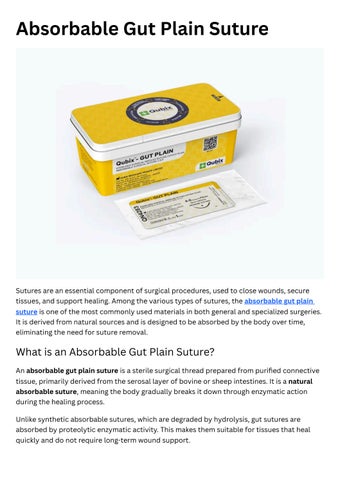
Sutures are an essential component of surgical procedures, used to close wounds, secure tissues, and support healing. Among the various types of sutures, the absorbable gut plain suture is one of the most commonly used materials in both general and specialized surgeries It is derived from natural sources and is designed to be absorbed by the body over time, eliminating the need for suture removal.
What is an Absorbable Gut Plain Suture?
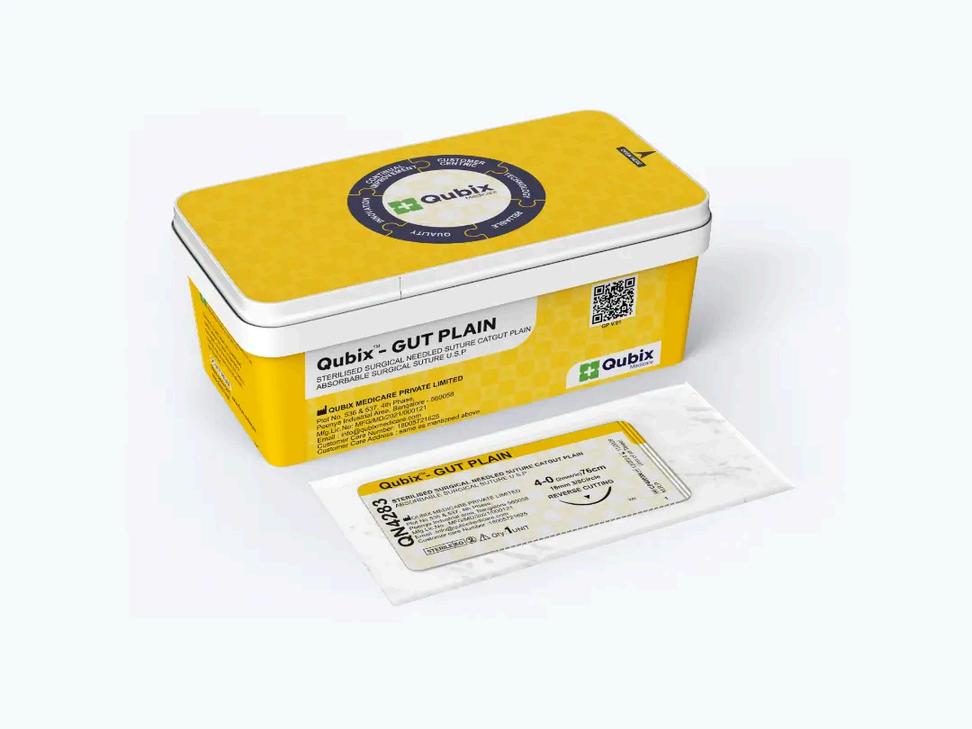
An absorbable gut plain suture is a sterile surgical thread prepared from purified connective tissue, primarily derived from the serosal layer of bovine or sheep intestines. It is a natural absorbable suture, meaning the body gradually breaks it down through enzymatic action during the healing process
Unlike synthetic absorbable sutures, which are degraded by hydrolysis, gut sutures are absorbed by proteolytic enzymatic activity. This makes them suitable for tissues that heal quickly and do not require long-term wound support
Key Features of Absorbable Gut Plain Suture
1. Natural Origin
Made from purified collagen from animal intestines, offering compatibility with biological tissues
2. Absorbable Nature
The suture is broken down by the body’s enzymes and absorbed naturally, removing the need for manual removal.
3 Flexible and Smooth
The plain gut suture is smooth and easy to handle, allowing for effortless passage through tissues with minimal trauma.
4 Good Knot Security
Provides moderate knot strength, ensuring wound closure remains stable during the healing phase
5. Biocompatibility
As a naturally derived material, it is well tolerated by most tissues, though minor inflammatory responses may occur as part of the absorption process.
Absorption Profile
The absorption time of plain gut sutures typically ranges between 7 to 10 days, depending on factors such as:
The patient’s age and tissue condition. The site of the wound and its vascular supply. Presence of infection or inflammation.
In general, plain gut sutures lose most of their tensile strength within 3 to 5 days and are completely absorbed by 70 days. This makes them suitable for internal tissues that heal quickly and do not require extended wound support.
Indications for Use
Absorbable gut plain sutures are widely used in a variety of medical and surgical applications, including:
1. General Soft Tissue Approximation
Ideal for closing soft tissues where short-term wound support is sufficient
2. Mucosal and Subcutaneous Closure
Commonly used in oral, dental, and gynecological surgeries where sutures need to be absorbed naturally
3. Ophthalmic Procedures
Sometimes used in eye surgeries that require delicate tissue handling.
4. Obstetrics and Gynecology
Suitable for perineal repair, vaginal mucosa closure, and similar procedures
5. Gastrointestinal Surgery
Used in procedures involving internal organs where sutures must be absorbed without
removal.
However, they are not recommended for tissues requiring long-term tensile strength, such as cardiovascular or orthopedic applications.
Advantages of Absorbable Gut Plain Sutures
No Need for Removal: As they are absorbed by the body, patients are spared the discomfort of suture removal
Ease of Use: Flexible and easy to handle, offering smooth tissue passage with minimal trauma.
Natural Material: Derived from biological sources, offering good compatibility with living tissues.
Time-Efficient Healing: Suitable for fast-healing tissues, such as mucous membranes and subcutaneous layers.
Reduced Risk of Long-Term Complications: Since the material dissolves naturally, there’s less risk of suture-related irritation over time.
Limitations and Precautions
While absorbable gut plain sutures are beneficial, they also have certain limitations:
1. Short-Term Tensile Strength
They lose strength rapidly and may not provide sufficient wound support for slowhealing tissues.
2. Inflammatory Reaction
Being a natural material, they can occasionally cause mild tissue reactions during the absorption process.
3 Unpredictable Absorption Rate
Absorption time may vary depending on the patient’s physiology and the surgical site.
4 Not Suitable for Critical Tissues
Should not be used in cardiovascular, neurological, or long-term closure procedures.
5 Storage Sensitivity
They require proper storage conditions to maintain sterility and flexibility, as exposure to moisture or heat can affect performance.
Handling and Sterilization
Plain gut sutures are sterilized using approved methods such as ethylene oxide or irradiation. They are usually supplied in sterile, sealed pouches and should be handled using aseptic techniques to avoid contamination.
Before use:
Avoid excessive handling or stretching of the suture.
Do not re-sterilize once the package is opened.
Store at room temperature away from direct sunlight.
Comparison with Other Suture Types
Feature Plain Gut Suture
Chromic Gut Suture
Origin Natural (collagen)
Absorption Mechanism
Enzymatic
Tensile Strength Duration 3–5 days
Tissue Reaction Mild to moderate
Natural (treated with chromium salts)
Synthetic Absorbable Suture
Synthetic (e g., polyglycolic acid)
Enzymatic (slower) Hydrolysis
Best Used For Fast-healing tissues
Conclusion
10–14 days
Varies (weeks to months)
Reduced due to treatment Minimal
Moderate-healing tissues
Long-term wound support
The absorbable gut plain suture remains an important tool in surgical practice due to its natural origin, biocompatibility, and ease of use. Its rapid absorption makes it ideal for soft tissue approximation, mucosal closures, and other short-term applications
While it may not offer the extended strength of synthetic sutures, it provides an effective and safe solution for procedures where natural absorption is desired. By understanding its properties, indications, and limitations, healthcare professionals can choose the right suture material to promote optimal healing and patient comfort.
Know More At:- Surgical Devices for Hernia Repair & Wound Closure