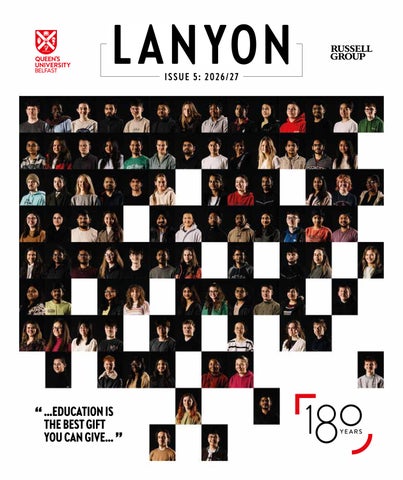

LANYON
ISSUE 5: 2026/27
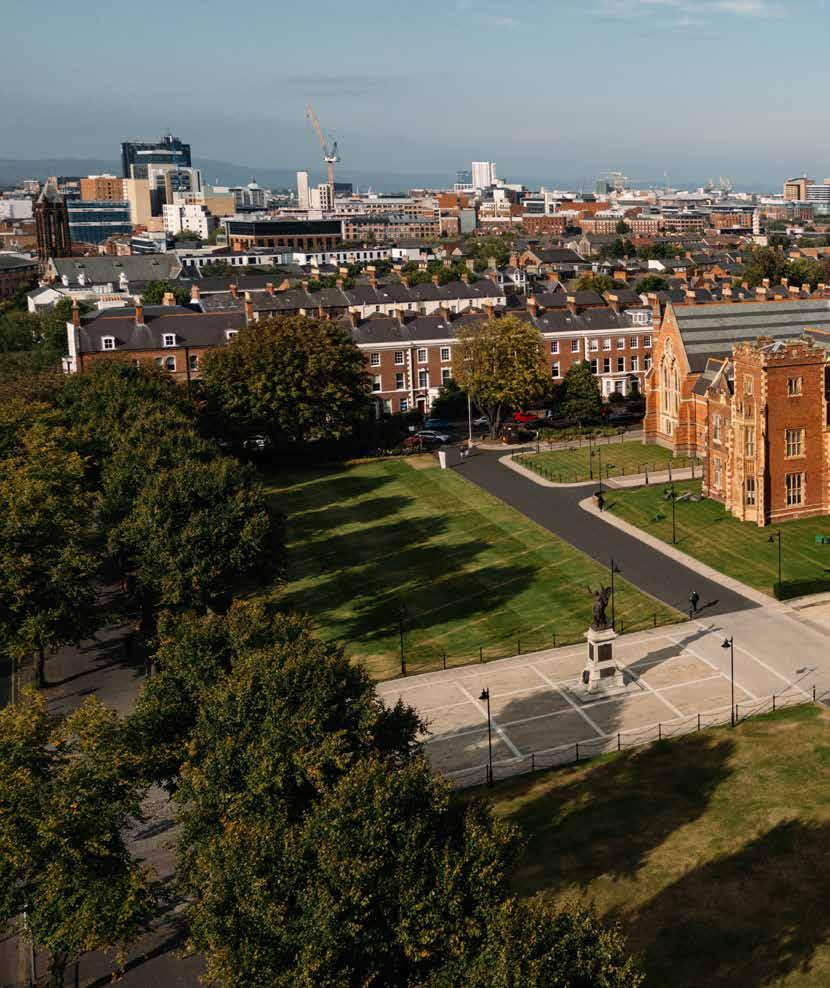
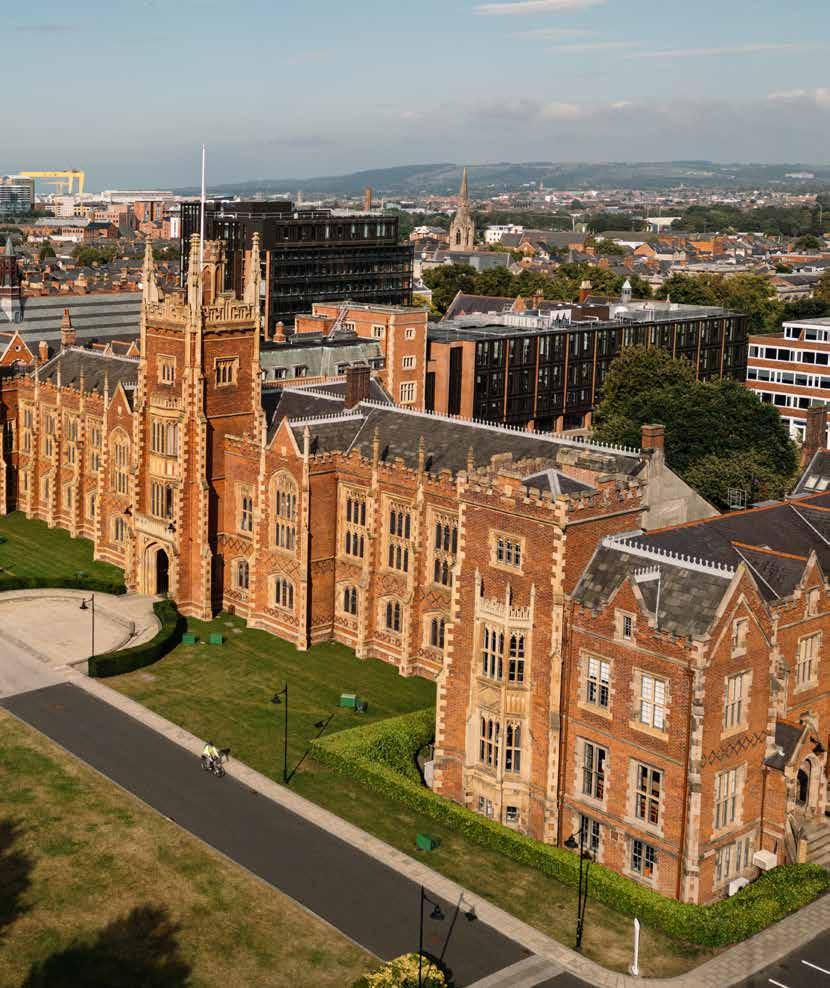
YOUR GUIDE TO THE GOOD STUFF



GOT A STORY?
We’d love to hear your thoughts on any of the
Let us know at editor@qub.ac.uk

Lanyon Magazine is produced by Queen's University.
Editor: Ciara O Neill; Design team: Sarah Ferguson, Dan Smyth, Rachel McCrickard, Paul Wilson; Contributors: Una Bradley, Sian Devlin, Andrea Glendinning, Alice Hawthorne, Liana MacIntyre, Conor McCullough, Mark Rocks, Salim Usman

Find out how you can get involved in being the voice of Queen's grads by clicking here or visiting qub.ac.uk/alumni/
The story of medicine at Queen's
"Life didn’t seem as expensive then as it does now."
“Be
finds her pathway to law
VIEW FROM QUEEN'S
Welcome to our annual Lanyon Magazine, keeping our graduates, supporters and friends connected to Queen’s.

We have had an incredibly memorable year, with a series of events and engagements celebrating 180 years of Queen’s, culminating with a celebration in the Whitla Hall which brought together some of our very talented alumni with current and future stars.
In this edition, we look at some of the stories and impacts during those 180 years. They include the invention of equipment that has saved the lives of thousands, including a Queen’s graduate running the Belfast marathon and the delivery of lifesaving clinical trials which helped
a Bishop survive a cancer diagnosis. There is also coverage of research into cutting edge treatments to lift the limits of diseases.
This year, we have been connecting with an increasing number of graduates across the world, growing our alumni networks across North America, China, India and closer to home in Belfast, London and Dublin. We have plans to continue to extend that reach.
We were also delighted to launch our Alumni and Friends Groups in the Northern Ireland Assembly
and Westminster, illustrating the connections of Queen’s, and reinforcing the University’s role as a key driver across a range of sectors. Plans are underway to create a similar group in the Oireachtas.
We continue to engage with our Queen’s global community to keep you connected to Queen’s and benefit from the networking, mentoring and support of the University and your fellow graduates.
Professor Sir Ian Greer Queen’s President and Vice-Chancellor
NEWS IN BRIEF
QUEEN’S FIRST TO TRAIN STUDENTS ON SPOTTING SIGNS OF DOMESTIC ABUSE
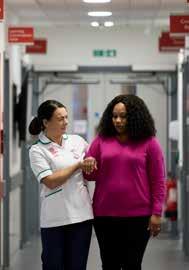
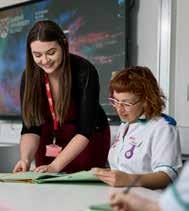
Nursing students at Queen’s will be the first in the UK to receive specialist training on domestic abuse and violence against women and girls as part of their degree.
The groundbreaking Unlock Safety Initiative, in collaboration with Women’s Aid Federation NI, the Royal College of Nursing, the End Violence Against Women and Girls Change Fund at The Executive Office, and the School of Nursing and Midwifery at Queen’s, aims to equip over 600 future nurses each year with the skills to recognise abuse, respond effectively to disclosures, and connect patients with support services. (Catch up with how Queen’s research is impacting on Violence Against Women and Girls on page 34).
MAKING LINKS
Queen’s has announced a partnership with the Dundalk Institute of Technology (DkIT) which establishes the Institute as a University College of Queen’s. The University College will be fully operational for the 2026/27 academic year with students graduating with a Queen’s degree or postgraduate qualification.
QUEEN’S ON THE RISE
Queen’s continues to rise up the global and UK rankings. The QS World University Rankings 2027 placed Queen's at 174th in the world. In the recent 2026 QS World University Rankings by Subject, Queen’s had 24 subjects ranked in the top 200 in the world. Pharmacy was Queen’s strongest subject area at 19th in the world and Nursing also entered in the top 50. The University was also ranked 23rd in the UK in the Complete University Guide 2027. Queen's continues to be on the up!
THE NUMBERS
UNIVERSITY OF THE YEAR 2026
Students have voted us the No.1 University and Students' Union in the UK.
(WhatUni? Student Choice Awards 2026)
QUEEN'S IS RANKED IN THE TOP 175 IN THE WORLD
Top 12% of universities worldwide.
(QS World University Rankings 2027)
PHARMACY AND PHARMACOLOGY RANKED 19TH IN THE WORLD
(QS World University Rankings by Subject 2027)

FANCY A £100 VOUCHER?
Well, be our guest. All you need to do is sign up so we can keep you up to date with all that’s happening at Queen’s and we’ll throw in a £100 voucher for one lucky person.
LOUISE KENNEDY:
“I JUST WANTED TO KEEP WRITING”
We talk to author Louise Kennedy about writing through a cancer diagnosis, getting up at the crack of dawn to study at Queen’s and how she convinced Gillian Anderson to act in the TV adaptation of her novel Trespasses.
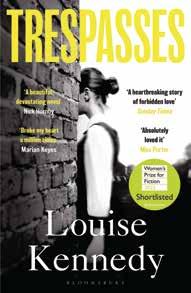
Writing a successful first novel and getting it turned into a BAFTA winning TV series starring Gillian Anderson wasn’t exactly on Louise Kennedy’s to-do list.
In fact, for most of her working life, Louise was more likely to be found in a restaurant kitchen than at a writing desk. For more than three decades she worked as a chef and restauranteur – a career she says prepared her for writing in ways she never expected.
“Working in kitchens probably did help,” she says. “You learn discipline, you learn how to keep going even when things are difficult. In that sense it prepared me for writing.”
Like many people in the 1980s, she took off for London where the job opportunities were much more abundant. And she hated it.
“I ended up in London, and I had a horrible job in a merchant bank in the City, putting information into alphabetical order using microfiche. It was a way of storing a huge amount of information in a very efficient way before computers, which is kind of terrifying, because it's a world away from where we are now.”
But the upside of life in London was
access to great food and ingredients and, having been raised by a great cook, Louise decided to return home and borrow the money to complete a cordon bleu cookery course. And for the next 30 years, she cooked and ran restaurants.
WRITING THE FUTURE
By the time Louise joined a writing group in 2014, she had been running a restaurant with her husband for several years, through the depths of Ireland’s financial crisis. “They very gently called it the downturn,” she says. “My God – a wild word for a terrible thing. It affected us and affected a lot of people. It was a really difficult time, and we kept the restaurant limping along for years.”
Despite being a lifelong reader, it took the persistence of a friend to make Louise join a writing group. “She sent me messages all day, and then finally turned up at my house and kind of bundled me into her car and said: ‘right, you're going.’ I grabbed a notebook that I used to write prep lists and menus and rosters in and stuff like that, and went along, and it was really embarrassing, because there were about ten people in the room, and everybody else
seemed to have been involved in some kind of creative practice. I certainly didn't think that what I'd been doing counted. I don't necessarily think that anymore.”
Even though she describes the first meeting as “excruciating”, she agreed to write a short story, a form that felt natural to her. She said: “I went home and started working on it that night, and I don't know if I even really knew what the short story was. But actually, I think Irish people have a relationship with a short story that other people don't have. I think as a reader you take in more than story, you take in form and structure even if you don't know you're taking that in. So, I think, maybe I had some idea of how that sort of thing worked.
“Within a few sentences of trying to write that story, I just figured that I didn't actually care if the business folded, or if the house fell down around me, as long as I could find a way to keep writing.”
By late summer 2014, their family restaurant had collapsed, and Louise and her husband found themselves jobless. She says: “My husband figured out that we were entitled to funding for higher education. So, that's how I went to Queen’s. I did the MA, and then the following year, I stayed on to do a PhD.”
With young children at home in Sligo, it wasn’t easy, so she travelled up early in the morning and stayed with her aunt one night a week.
TRESPASS AGAINST US
An early draft of Trespasses emerged during another challenging time in Louise’s life. After receiving a cancer diagnosis and undergoing surgery and treatment, she began writing as a way to cope.
“I wrote about a thousand words a
day for twelve weeks,” she says. “It was really just to stop myself going around the bend.”
She describes her first attempt as “a complete word vomit.”
“I thought all the work was done, then I opened the document later and realised it was terrible. It probably took eight drafts to fix it.”
The story is set in 1975 during the Troubles, a period Kennedy remembers vividly from childhood.
“I do think that maybe the fact that I was sick and couldn't presume that I had infinite time, probably influenced what I chose to write about.”
Louise’s family ran a pub in Holywood, County Down, which was targeted by bomb attacks.
“I think after two attempts, it was fairly clear that we weren't really welcome anymore around the place. So, a decision was made to leave.”
Many of the scenes in the novel are based on real life experience and shape the atmosphere of the novel.
“You didn't have to run away from soldiers or get pulled out of your bed to be traumatised. I think just that level of simmering anxiety for years and years is really bad for you.”
ON THE BIG SCREEN
Louise had no plans to bring the book to TV – like many authors, she assumed any film or TV chat was just that.
“Most things that are optioned never get made,” she says. “I know lots of writers who’ve had things optioned that never went anywhere.”
But at the book launch, she got into a conversation with
Gillian Anderson, bonding over a good laugh about a story Louise was telling.
“She said that she'd read the book, she loved it and especially loved the character of Gina. And I had a drink on me and thought it was completely reasonable to ask her to be in it. I woke up in the morning and thought – ‘oh my God, what have you done?!’
But her regret didn’t last long –Gillian did agree and it was a huge hit: “I think her Gina was brilliant, she has such good comic timing.”
Whilst groundbreaking writers have always, and continue to, come out of Northern Ireland, Louise pays particular tribute to Milkman writer Anna Burns for opening doors for other local writers. She says: “At the moment, I think the rest of us are reaping the rewards of the success of Milkman.
“I think the success of Milkman has meant that every time a manuscript by somebody from the North lands on an editor’s desk, they will read it.”
Louise is now working on her second novel set in a small, unexciting town in the Irish Midlands and follows the friendship of Róisín and Red through their teens and into their forties. “They have one of those very intense but unsustainable friendships that you can have in your teens. But it doesn't mean that they don't linger and that they don't affect you in some way for the rest of your life.”
Looking back, Louise still finds it difficult to believe how her writing journey began – with a reluctant trip to a writing group and a borrowed notebook from the kitchen.
“I never imagined any of this,” she says. “I just wanted to keep writing.”
180 YEARS OF QUEEN’S; GENERATIONS OF REAL-LIFE IMPACT
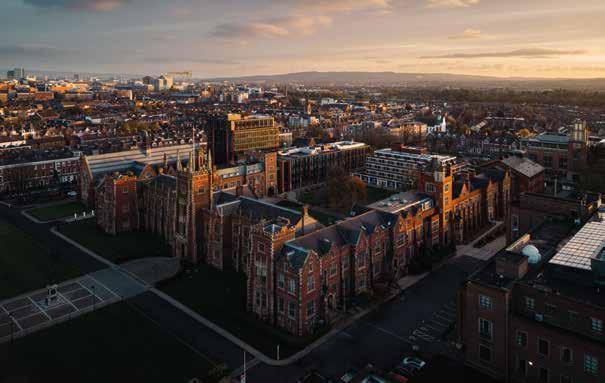
Since 1845, Queen’s University has provided a world class education and student experience. But, more than that, the University has had an enormous impact on people’s lives through research, cutting edge treatments, innovation and community partnerships.
ALAN'S STORY OF HOPE, HISTORY AND FAITH OVER FEAR
For 180 years, Queen’s has shaped a better world with research, innovation, collaboration and education. But one man’s experience with the University changed the course of his life forever.
Bishop Alan Abernethy studied History and Politics at Queen’s from 1975 to 1978. It was at Queen’s where he thrived, forming long-lasting friendships that transcended traditions and backgrounds against the backdrop of The Troubles. It was also at Queen’s where he found his calling: ordained ministry. A few years after graduating, he returned to Queen’s in 1985 to study theology part-time.
The influence and impact of Queen’s on Alan’s life didn’t stop there. In 2018, he was faced with

an advanced cancer diagnosis: stage 4 prostate cancer. The prognosis was serious. The disease had already spread to his lymph nodes, pelvic bones and ribs.
Alan began treatment at the Cancer Centre in Belfast with six rounds of chemotherapy and twenty sessions of radiotherapy. During this process, his consultant, Professor Joe O’Sullivan, asked to speak with him about joining a clinical trial.
For Alan, there was no hesitation: “When your back is against the wall, you say yes to anything that gives you hope. I trusted Joe and the team with my life.”
The treatment was intense with thirty-seven sessions of radiotherapy, six nuclear injections, and hormone therapy that left him emotionally and physically drained. But it all led to a moment that changed everything. Alan said: “Joe brought us in, showed us the scan.
And the cancer was gone. Completely gone. My wife, Liz, who’s a retired medical doctor, asked to see it again because we could hardly believe it.”
Alan has been in remission ever since.
He continues to work with Professor O’Sullivan and frequently speaks at events to raise awareness around prostate cancer and the importance of clinical trials.
Alan’s story is a powerful example of what Queen’s has been doing for 180 years, bringing knowledge and compassion together to change lives: “The people at Queen’s didn’t just treat the disease. They treated the person. Every nurse, every radiologist, every administrator made me feel seen. They were all pulling together, full of hope and purpose.”
“I shouldn’t be here,” he says. “But I am. Because of Queen’s.”
“I SHOULDN’T BE HERE, BUT I AM, BECAUSE OF QUEEN’S.”
BISHOP ALAN ABERNETHY

“THAT IS THE LEGACY WE CARRY FORWARD. THAT IS HOPE AND HISTORY THERE.”
JOHN DEERY
A LIFE-CHANGING LEGACY
Queen’s graduate John Deery experienced firsthand the impact and legacy Queen’s has woven into lives across the world. On a fresh May morning in 2024, John set out on the Belfast Marathon, surrounded by friends and familiar with every turn of the course. But thirteen miles in, at the Finaghy crossroads, he slowed, leaned against a barrier, and suddenly collapsed.
John remembers none of it. His heart had stopped completely.
A cardiac nurse ran to his side, placed him in the recovery position, and found no pulse. A police officer called 999. Spectators formed a protective cordon. A man driving through Finaghy by chance, who had withdrawn from the marathon earlier due to injury, recognised what was happening, retrieved a defibrillator from his car, and began
CPR. One shock restarted John’s heart. For more than six minutes, there had been no heartbeat at all. It was one of Queen’s most remarkable figures who made all the difference. Long before that day, Queen’s physician Professor Frank Pantridge transformed global emergency medicine by inventing the first portable defibrillator. His idea was simple but revolutionary: lifesaving intervention should begin on the roadside, in a home, or in any public space, wherever seconds matter most.
Reflecting on Pantridge’s legacy
John said: “That is what the defibrillator does, it gives hope. Frank Pantridge invented the defibrillator in this city. He trained at Queen’s. And all these years later, that invention saved me on a Belfast road. That is the legacy we carry forward. That is hope and history there.”
BREATHING LIFE BACK: HOW QUEEN’S RESEARCH CHANGED FUTURES
For over more than a decade, Queen’s researchers have been at the forefront of developing and testing therapies that improve the function of the defective CFTR protein, the root cause of cystic fibrosis (CF). This research made first hand impact on Nicole Adams, who lived with an unspoken sense that time might be limited.
Diagnosed with cystic fibrosis as a child, Nicole grew up navigating a world where every infection and hospital visit felt like a reminder of her fragility. CF is a progressive, lifelimiting genetic disease that causes persistent lung infections, digestive problems, and life-threatening complications. Worldwide, more than 80,000 people live with CF; in the UK alone, there are over 10,500 people affected.
In late 2019, Nicole became critically ill. A severe flu infection combined with Burkholderia cepacia, a dangerous bacterium for people with CF, caused her lung function to plummet to just 11%. She was admitted to intensive care, struggling to breathe.
At that time, a new class of drugs called CFTR modulators existed, therapies designed to treat the genetic root cause of CF rather than simply manage symptoms. But they were not yet widely approved for standard care and access was limited.
Behind the scenes, Professor Damian Downey, a clinician, and leading CF researcher at Queen’s Wellcome-Wolfson Institute for Experimental Medicine, was among those pushing relentlessly for access to these promising treatments.
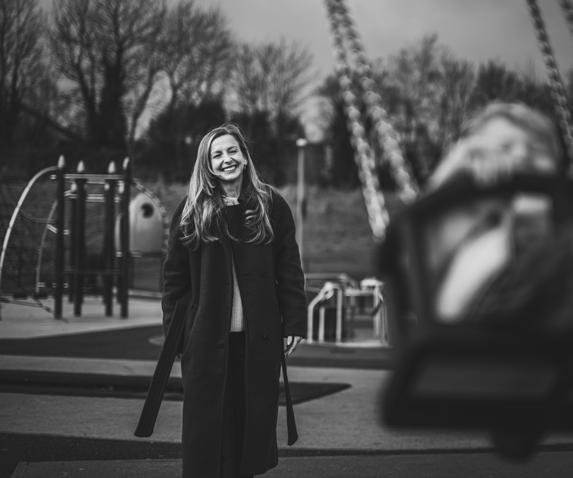
“I’M ALIVE BECAUSE OF THAT RESEARCH. I WOULDN’T BE HERE WITHOUT QUEEN’S. THEY TOOK A CHANCE ON ME BECAUSE THE EVIDENCE WAS THERE.”
NICOLE ADAMS

Nicole said: “Damian fought for us. He pushed so hard for the CF community to get access to these drugs. He never gave up on us.” And that dedication made a difference.
The breakthrough drug, Kaftrio (known as Trikafta in the US), a triple therapy combining three modulators, was shown in international trials to address the underlying cause of CF for up to 90% of people living with the condition. It significantly improved lung function, reduced chest infections, and transformed quality of life. Because of that research and clinical expertise, Nicole was offered a chance that few in her position had ever received.
She said: “I’m alive because of that research. I wouldn’t be here without Queen’s. They took a chance on me because the evidence was there.”
Nicole and her partner Ciaran can now take holidays, enjoy family time, and build a life that once felt impossible. But perhaps the most powerful symbol of this transformation is Nicole’s child.
Nicole said: “For most of my life, I never thought I’d be able to have a baby. Women with CF weren’t expected to live long enough, never mind be well enough. I have my child because of research. That’s something I never take for granted.”
180 YEARS OF STORIES
CLICK HERE TO READ
Click here to read more stories about Queen’s impact in people lives or visit qub.ac.uk/about/ civic-engagement/180
MORE THAN JUST MUSIC HOW THE K-POP PHENOMENON IS THRIVING AT QUEEN’S
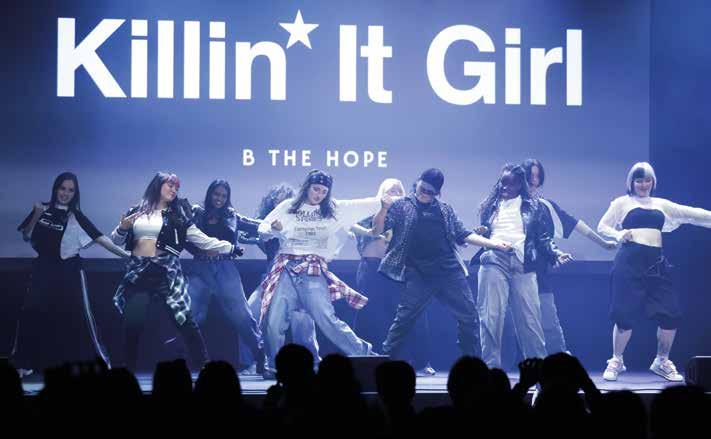
K-pop is having a moment. The Korean fusion of rock, hip-hop, R&B, electronic and dance has been around since the 1990s but has gone stratospheric in recent years thanks to the popularity of global superstars BlackPink, BTS and the Oscar-winning KPop Demon Hunters. And it’s thriving at Queen’s.
Performing in One Elmwood at Queen’s are (from l-r): Bochao Chen, Jasmine Lau, Lauren L'estrange, Chip Barr, Lucy Austin, Tejal Sathe, Ciara Ryan, Leah Smyth, Emily Smyth and Rachel Power.
WHETHER YOU KNOW ONE SONG OR YOU’RE A DIEHARD FAN, YOU’LL FIND YOUR PEOPLE HERE.
When student Jasmine Lau arrived at Queen’s in 2019, she spotted a K-pop shaped hole in student life. Along with Nikola Fok and Cara Power, she founded a society that has since grown into one of the most energetic and inclusive groups on campus, bringing together performers and friends from all backgrounds – whether they know every BTS lyric or are new to the genre.
Current Secretary, Ven Angelo Dairo, says that the society attracts all kinds of interest, beyond just K-pop superfans.
“There’s this idea that you have to be a huge K-pop fan to join us, but that’s far from the truth,” he says. “Whether you know one song or you’re a diehard fan, you’ll find your people here.”
“I joined expecting to learn routines and take part in a few
events; instead, I met people who’ve become my best friends.”
For members, the society is about far more than music. Alongside weekly dance classes, members host quiz nights, watch parties and game nights, catering to an ever-growing K-pop community in Belfast. They choreograph original routines and compete nationally, recently taking first place in the Commercial Category and Intermediate Choreography category at the Go Hard or Go Home competition in Nottingham.
And the popularity of KPop Demon Hunters has boosted visibility for the society: “We’ve noticed more interest and new members joining, particularly in dance classes. We’re really grateful for the movie as it helped promote K-pop on a global scale and became a stepping stone for many new fans.”
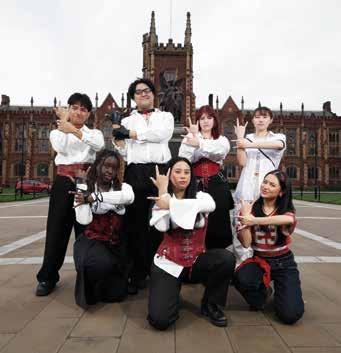
Society member Alexandra says the experience has been lifechanging: “It has truly given me some of my best friends to this day; people I can count on forever.
They’ve given me the confidence to compete internationally, become Secretary and President, and host the society’s first ever showcase, which raised £800 for mental health charities.
“The K-pop Society has shaped my entire university experience. It has made the long nights in McClay Library, deadline season and all the assignments more bearable.”
Pictured on campus are K-Pop Society members (from l-r): Alexandra Villadolid, Ven Angelo Dairo, Ronce Ruiz, Veronica Cassama, Jyle Nunez, Cris Vidal and Selena Ng.
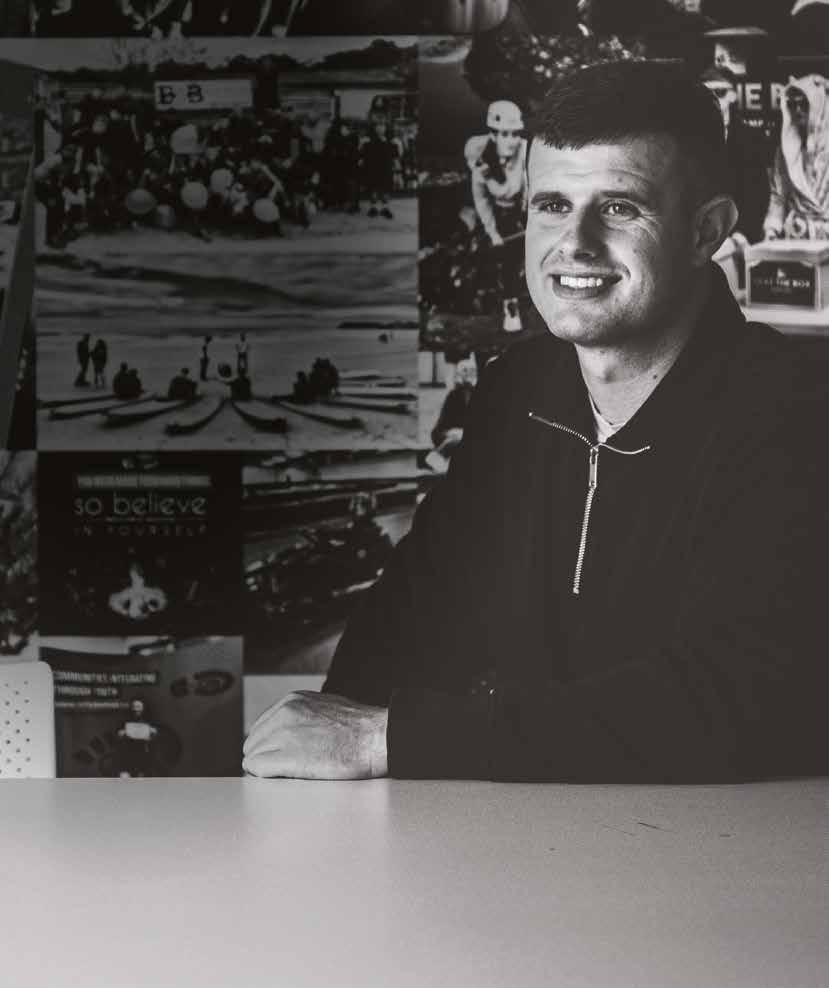
Pierce McConnell

THE £8M PATHWAY TO THE FUTURE
Queen’s is committed to investing in its students, particularly those who have the skills and talents but not always the opportunity to undertake a degree.
The Pathway Opportunity Programme and the Pathway Bursary Fund are key ways the University supports young people to access higher education. To secure their future, Queen’s has an ambitious plan to match funds raised through philanthropy up to £4m by 2028, to create an £8m endowment fund.
Speaking about the plan, launched to mark the University’s 180th anniversary, Queen’s Chancellor, Secretary Hillary Rodham Clinton said: “The Pathway Opportunity Programme and the Pathway Bursary Fund exist to ensure that students who are most able, but least likely to access higher education, are given the opportunity and support to do so.
“Since 2018, thanks to the generosity of Kilwaughter Minerals, the Kilwaughter Foundation and nearly 500 donors, the Pathway Bursary Fund has opened doors for hundreds of students by providing bursaries that ease the financial burden and allow them to focus on their studies.
“These bursaries are not just financial support – they reflect our investment in
the talent, ambition and future of young people.”
Vice-Chancellor of Queen’s, Professor Sir Ian Greer, emphasised that this commitment helps ensure that talented young people are not prevented from accessing higher education because of financial barriers.
“The University is incredibly proud of our commitment to ensuring that our talented young people do not miss out on educational opportunities because of financial barriers. We have been inspired by the generosity of donors who have made this fund a reality from its inception and those who have pledged their support in the future.
“To ensure its continued success, we have agreed a bold vision to secure annual bursaries through an endowed fund. This forms part of our long-term investment in widening participation and our commitment to ensuring that Queen’s reflects the society it serves.
“This is the first step in securing the future of the Pathway Bursary Fund and, together, we can ensure that it continues to transform lives and open doors for students for generations to come.”
To find out more about how you can support the Pathway Bursary Fund into the future, contact Helen Carrick at h.carrick@qub.ac.uk
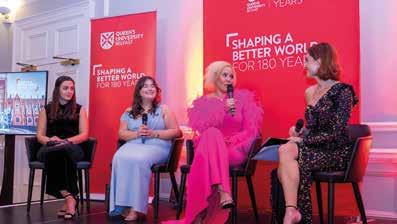
Queen’s Lecturer and Researcher Dr Victoria Dunne, Pathway Opportunity Programme student Ellie-Jo Taylor, businessperson Belinda Brown and journalist and broadcaster Orla Chennaoui.
NOW YOU’RE TALKING –DR PRAGYA SHARMA
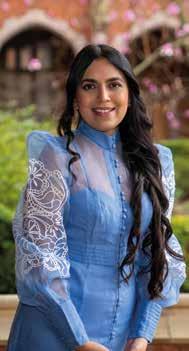
We catch up with PhD Graduate Dr Pragya Sharma on life after graduation and founding her own Grandmother inspired dermatology business.
What is your favourite thing about Queen's? Honestly?
The people. Without a doubt. Queen's is where I met my PhD colleague, Veronika Toth, who has become one of my dearest friends. I came to Queen’s for the research, but it's actually the friendships and collaborations that have shaped my whole experience. That's what I'll carry with me.
Where's the best study spot in Belfast during exam season?
As a PhD student, we don't really have exams in the traditional sense. But when I need to just breathe and reset, there's this green sofa tucked away in the School of Biological Sciences corridor. It's nothing fancy, but there's something about it that just calms me down. It's like this little hidden corner of campus that not everyone knows about, and I love that.
What do you like to do to chill and relax in Belfast?
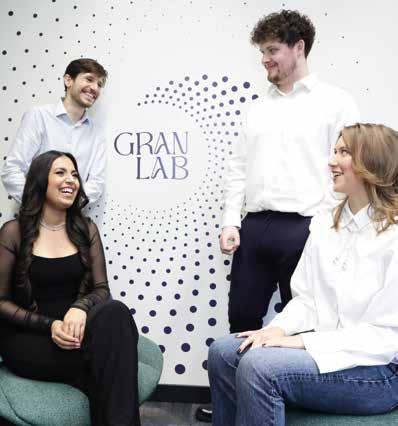
I'll walk into the city centre and grab a coffee in my office space. Granlab is based opposite Ulster Hall on Bedford Street — our mega office in the city centre with glowy light. It sounds like such a small thing, but it means the world to me. I still remember being a student in Belfast and having days where I genuinely couldn't afford a coffee. So now,
sitting in that space with a cup in my hand, there's this quiet feeling of… look how far you've come.
And I just love having a space that's mine, you know? Even when random people tap on the window and peek in – which absolutely does happen – it makes me laugh. It's a little chaotic, but it's my chaos. Being able to call a place your own is something I'll never take for granted.
Could you tell us a bit more about your dermatology company?
Granlab is my Belfast-based dermatology and biotech company, and the reason it exists is personal. My grandmother suffered with psoriasis for years, and long-term steroid use took a serious toll on her health.
I developed a steroid-free formulation using my research background. Within months, she saw significant improvement and has maintained that progress for over five years. I named the company after her, and that formulation became the foundation for SkinSettle™, our debut range for sensitive, psoriasis-prone and eczema-prone skin.
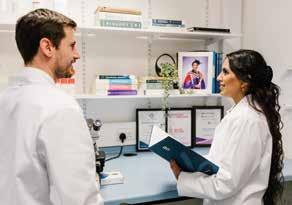
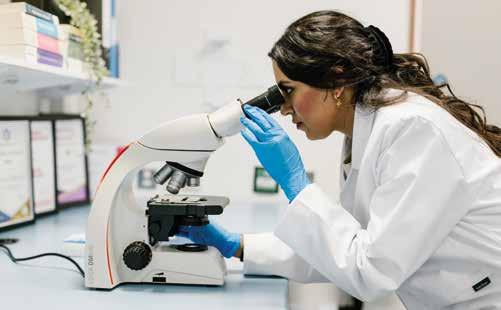
We do our R&D in-house at a facility within Queen's and we've already completed independent safety testing and filed patents – which still feels surreal to say out loud. We're also gearing up to launch our sensitive skincare series, SkinSettle, this autumn and I'm absolutely delighted about that.
What motivated you to start your own business?
It came from a really personal place. I saw first-hand how limited and harsh the options were for my grandmother – mostly steroids
that you couldn't use long-term or on sensitive areas. I just kept thinking, there has to be something better. That feeling never left me. Over time it grew into Granlab –a company built around creating effective, inclusive, steroidfree alternatives for people who deserve better options.
How has Queen's supported you with your business/ideas?
Queen's has been brilliant, in really practical ways. Granlab's R&D is actually based within Queen's facilities at the Medical Biological Centre, which has been huge for us.
I've also had support through the wider Queen's innovation ecosystem, including QUBIS –things like enterprise support, pitching opportunities, and people genuinely encouraging me as a student founder.
Those experiences gave me confidence and visibility early on, and that kind of momentum matters more than people realise.
ELITE ATHLETE UNDER THE MICROSCOPE: LIFE AS AN
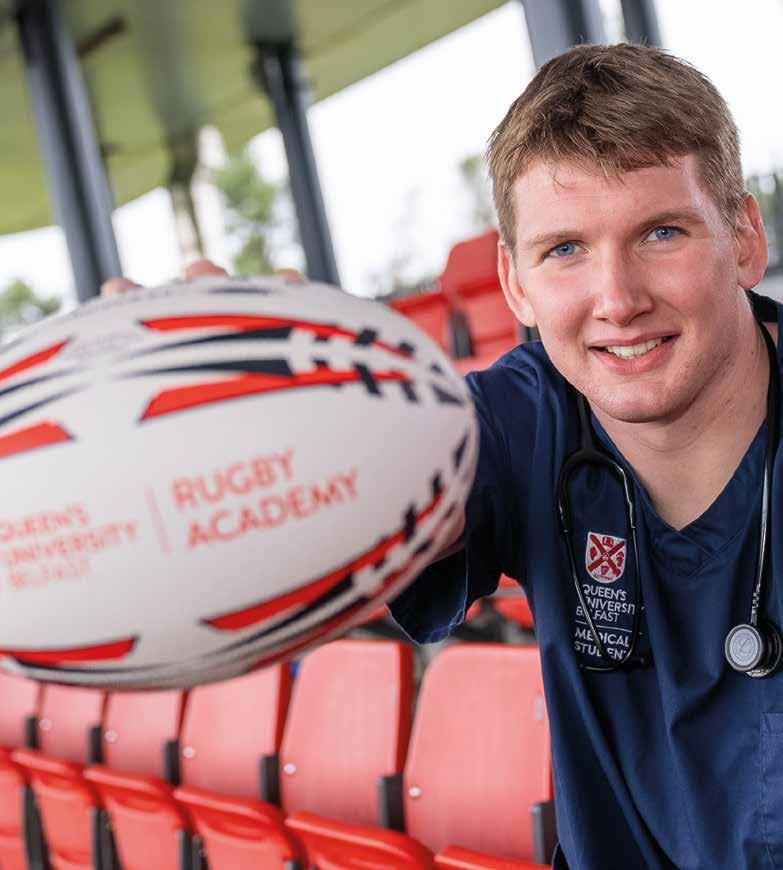

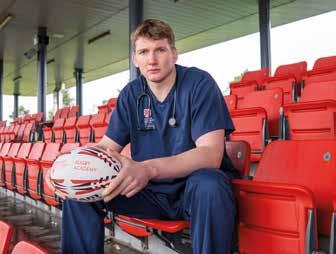
Ward rounds, lineouts and lectures: not your typical Tuesday morning, but all in a day’s work for Queen’s Elite Athlete, Charlie Irvine.
Balancing a career in medicine with aspirations to compete at the highest levels of rugby would be daunting for many, but Charlie takes it all in his 6ft 8in long stride.
The 23-year-old, fourth-year medical student is one of Queen’s Elite Athletes. He grew up dreaming of becoming a professional rugby player, but he knows that life off the pitch needs to be prioritised as well.
He says: “I was always quite inquisitive growing up and preferred the more science-based subjects in school. I naturally had an attraction to studying medicine through that and I suppose it was what I always wanted to do. My mum is a doctor, so it was always quite close to home for me, and I felt I knew what I was getting into – to a certain extent!”
Dr Irvine is certainly a nice title, but his real ambitions relate to the oval ball and that’s where things are really progressing at pace for the Lisburn man.
Charlie’s love of the sport grew from a young age, starting off at
mini rugby with Lisburn Rugby Club and then schoolboy rugby at Wallace High School.
And when he arrived at Queen’s to study medicine, it was a natural step to join the University’s rugby club. Although injury initially halted his time on the pitch, he soon pulled on the famous blue jersey for Queen’s and, from there, the opportunities have just kept coming.
Charlie explains: “During my first year I didn’t play a lot of rugby due to an injury, but I was back for the end of the season when we won the Ulster Senior Cup. That summer I was involved in the U20 Summer Series Tournament with the Irish U20 team, and the following year, I made the squad for the U20 World Cup final match against France. I joined the Ulster Academy and made my professional debut against the Bulls in South Africa in 2024.
I was also Queen’s captain for that season. The following season I signed my first professional contract with Ulster Rugby.”
He’s had quite the journey and, as Charlie explains, none of it would
have been possible without the support he received from Queen’s.
Striking the right balance between academic life and sport is a difficult juggling act, but the mix of study, placement work and training is one he enjoys – and one Queen’s supports him with: “My weeks tend to be quite busy. I’m now in my fourth year of medicine at Queen’s so all my time is spent in placement, both in hospital and general practice.
“With the help of Queen’s Sport and Queen’s Medicine, I’ve been able to continue my studies as a part-time student. This has been vital for me as otherwise I wouldn’t have been able to continue my studies while playing professional sport.
“My weekly schedule tends to chop and change so the added
flexibility that Queen’s has given me has been extremely helpful. The support of the staff around the programme has allowed me to find a new level of planning, preparation and performance which built on my own knowledge.”
With the demands of highlevel sport and on-the-job GP training, Charlie knows the importance of recharging the batteries – so what does a rest day look like for an elite athlete?
Charlie says: "Sunday is my main rest day. I usually like to have a lie in and then have something nice to eat and go for a walk. I enjoy getting outdoors and find it’s good to help clear my head and get a bit of a reset. I’m also a fan of a sauna and usually try to get a couple of sessions each week."
THE SUPPORT OF THE STAFF AROUND THE PROGRAMME HAS ALLOWED ME TO FIND A NEW LEVEL OF PLANNING, PREPARATION AND PERFORMANCE
JACK KYLE FOUNDATION
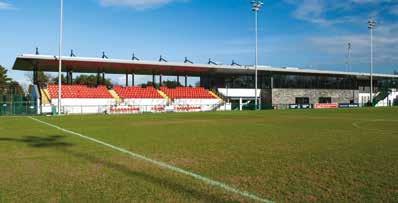
Another major supporting factor in Charlie’s journey has been the Jack Kyle Foundation. A former Queen’s, Ireland and British and Irish Lion great, the Foundation created in Jack’s honour invests in athletes, coaching and infrastructure to help Queen’s Rugby Club perform at the highest level.
For more information click below or visit qubrugby. com/jack-kyle-foundation
Queen’s Medical student and Elite Athlete, Charlie Irvine
THE AI ERA AT QUEEN'S
AI: Helpful pocket assistant or sign of doom for individual thought? We talk to Queen’s experts about the use of Artificial Intelligence at the University.
If you’ve received an unusually detailed holiday itinerary from your normally unprepared friend, or questioned whether the latest social media video you’ve seen actually happened, there’s a fair chance you’ve asked yourself this question recently: “Is this AI?”
Artificial Intelligence is everywhere, especially since the release of a range of free AI platforms which mimic human responses to everyday questions by mining pre-existing information.
What may have initially seemed like a fun internet-novelty has transformed into an increasingly accurate and relied-upon tool for many people – both in their working and personal lives. Everyone is either using it and talking about it, or using it and not talking about it. Unsurprisingly, it’s become a hot-button topic at universities as questions arise about over-reliance on
generative AI, plagiarism and ethical use in academia.
We spoke to expert, Professor Phil Hanna, the Dean of Education for the Faculty of Engineering and Physical Sciences, an early advocate of the ethical use of Artificial Intelligence.
He says: "When free generative AI tools first launched, it was clear, even with all the flaws, that this could reshape how we work and interact with technology. And the pace of progress since then has made one thing almost certain: AI’s transformative impact isn’t a matter of if, but when and how.”
So, with AI tools and eager-tohelp AI assistants at the touch of a button, will AI essentially prevent students from learning?
Phil says: “Blame isn't helpful here. We need to own the situation.
“Students need to understand that using AI as a shortcut limits their learning, and ultimately their future success. Our goal isn't to stop them using AI. It's to help them use it in ways that genuinely enrich and deepen their learning."
Just as AI is transforming our work across research, data interpretation and to better understand major world challenges like climate change, it is also changing how students learn. Today’s students have access to AI tools that can help them write, programme, research and analyse much more effectively. But, rather than treating these tools as a threat to education, the goal at Queen’s is to help students understand how to use them thoughtfully and effectively.
Queen’s has developed a guide on how to get the best out of AI, spelling out where and when use is appropriate, like summarising
Professor Phil Hanna

“THE WAY WE SPEAK, WRITE AND SIGN IS INTRINSICALLY LINKED TO OUR IDENTITIES. IT REFLECTS PARTS OF OUR BACKGROUNDS, OUR EXPERIENCES AND OUR INSIGHTS INTO THE WORLD. THIS CAN’T BE REPLACED BY LLMS OR AI.”
course materials, explaining complex concepts or providing revision questions. But it does stress its limitations, potential inaccuracies and the academic repercussions of misuse.
But is AI dictating how we write by serving up content in its own particular style?
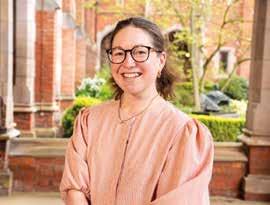
Whilst Queen’s Research Fellow, Dr Emma Humphries, acknowledges the emerging language trends in AI driven Large Language Models (LLMs), it’s unlikely to translate to everyday language.
She says: “There seem to be some trends in how LLMs ‘write’: em dashes, the rule of threes like the good, the bad and the ugly and contrast framing such as not just X, but Y too. This has sparked some debate and controversy.”
Moral panics around potential language change are nothing new, says Emma: “Language is evolving and changing all the time. It’s a constant. A constant that goes along with this change is moral panic around change. In reality, long term changes to language happen very slowly and it’s far too soon to know if large language models like ChatGPT are actually going to impact how we use language.”
What is clear, however, is that AI can’t deliver as creatively as humans. She explains: “LLMs create writing which lacks depth, critical insight and originality, using language which appears
polished but is often repetitive and usually lacking in nuance.
“This is because LLMs can follow rules, they can use rhetorical devices and can apply editorial style guidelines, but they can’t be human. Language is so much more than sets of rules or a tool for communication. The way we speak, write and sign is intrinsically linked to our identities. It reflects parts of our backgrounds, our experiences and our insights into the world. This can’t be replaced by LLMs or AI.”
As Phil emphasises, it's up to the individual how we use AI in our lives and work: "The immediate concern is how people choose to use these tools. Whether AI leads to good outcomes or bad ones comes down to human decisions, shaped by regulation, governance, employer practices, and what society expects."
Dr Emma Humphries
DR EMMA HUMPHRIES
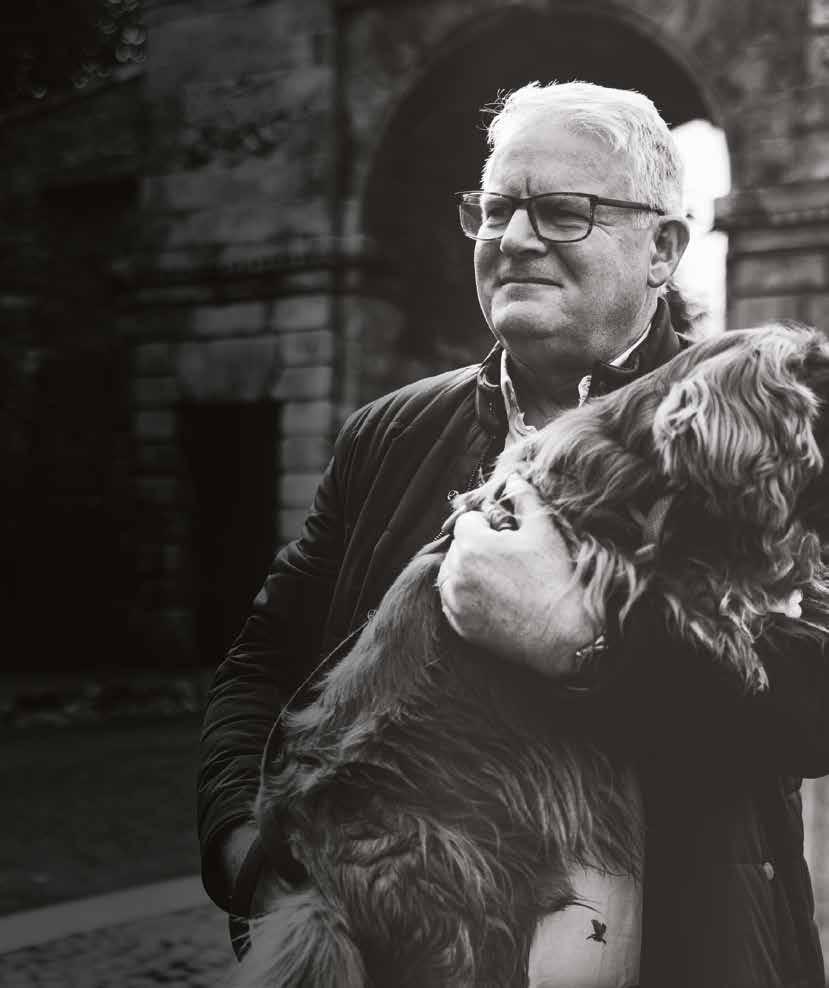
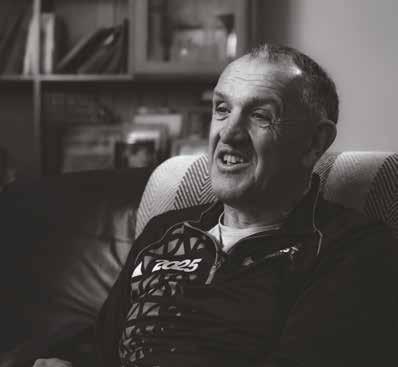
In Northern Ireland, trauma runs deep. For so long I thought recovery wasn’t possible. But with the right help, you can find light again — I’m living proof of that. Without Queen’s involvement, I wouldn’t be here today.
Ken Brown
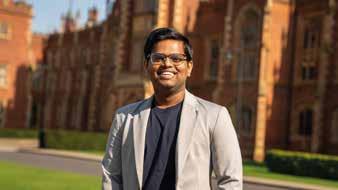
DATA IN ACTION: BRIDGING ACADEMIA AND INDUSTRY
When Suriya Subbiah Perumal left Tamil Nadu, India, to study for a MSc in Business Analytics at Queen's Business School, he knew he wanted to use data to solve real business challenges. Today he is doing exactly that: as a Knowledge Transfer Partnership (KTP) Associate, his work bridges the gap between academic expertise and every day industry needs.
Suriya explains that the programme he undertook at Queen’s had a firm focus on practical applications: “Rather than only learning the theory, we were often encouraged to work with real datasets and think about how analytical insights could support decision-making in an organisational context.
“That experience helped me develop technical skills as well as the ability to translate data into insights that people can actually use. This mindset has been very important in my current role, where the goal is to apply analytics in ways that support real operational challenges within the business.”
Suriya is part of the multi award-winning Knowledge Transfer Partnership (KTP) programme at Queen’s, which helps graduates transition into industry while bringing cuttingedge expertise into businesses.
For nearly 40 years, Queen’s has delivered these partnerships between universities and
companies, contributing an estimated £300 million to the UK economy, creating opportunities across sectors including manufacturing, construction, healthcare and technology.
Suriya is working with IPC Mouldings Ltd, supported by the Advanced Manufacturing Innovation Centre (AMIC) at Queen's, part of the Belfast Region City Deal, helping the company become more datadriven. He says: “Manufacturing operations generate a large amount of data across different systems, and part of my work focuses on bringing that information together so it can be used more effectively. The aim is to help teams access clearer insights from the data that already exists and support day-to-day decision-making.
“In practice, this involves developing automated data processes, building dashboards, and creating analytical tools that help teams better understand areas such as production planning,
order demand, and forecasting. By organising the data in a clearer way, it becomes easier for teams to view important information and use it to support operational planning.”
One of the bonuses of the programme is access to the Global Talent Visa, an important consideration for international students who want to build long-term careers in the UK, particularly those who have made a home in Belfast.
Suriya says: “Queen’s has a very diverse international student community, and being surrounded by people from so many different countries made it easy to form friendships and share experiences. As an international student arriving in a new place, that sense of community was very important.
“Moving to a new country can feel like a big step, but Belfast is a welcoming and supportive place for international students. Looking back, taking that step was one of the most rewarding decisions I’ve made.”
KTP Associate, Suriya Subbiah Perumal
REBUILDING LIVES
Scholarships are all about investing in people and their communities, providing access to opportunities that aren’t otherwise available. Since 2020, the Copty Scholarship at Queen’s has been awarded to seven students from Palestine to study postgraduate degrees.
Given the ongoing conflict and destruction in Gaza and the West bank, providing these young people with a chance to increase their skills and knowledge is particularly poignant, especially when each of them is committed to using those skills to rebuild their homeland.
We spoke to some of the recipients about how the scholarship has changed their lives.
When Queen’s graduates Georgina Copty and Chris McDowell set up the Copty Scholarship in 2020, their aim was to make higher education a reality for Palestinian
students. The programme, matched with investment from Queen’s, has so far brought seven students from Palestine to study at the University.
EDUCATION
IS THE BEST GIFT YOU CAN GIVE
provide for others one day. She says: “Our vision behind the Copty Scholarship is to empower the students to take the skills they learn at Queen’s and make a real difference in the world around them. It is hard to put into words the immense pride we feel when we see the impact our students have already made.
Jerusalem-born Georgina and her siblings benefitted from scholarships and it was an opportunity she hoped she could
“The academic foundation they received at Queen’s has given them the necessary tools to drive progress and make a meaningful impact.”
Mohammed Sammour was the very first person to receive a
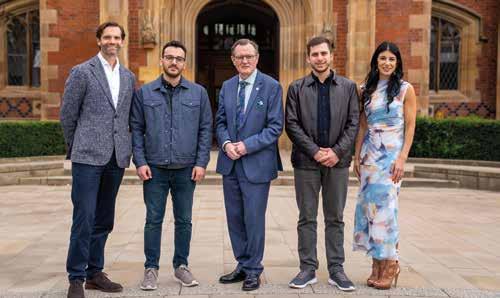
Chris McDowell (l) and Georgina Copy (r) pictured with Vice-Chancellor Professor Sir Ian Greer and two of the 2026 Copty Scholars, Ibrahim Mahdi and Alaa Ahmad.
Copty Scholarship, arriving from Gaza in 2021 to study for a Master’s in Public Health.
He says: “Since taking my first steps from Gaza to Belfast, I knew that everything in my life was about to change.
“This journey has broadened my perspective in ways I never expected. I began to see the world through different lenses, questioning assumptions and thinking more openly. I have become more resilient, adaptable and self-motivated.
“The first time I truly felt freedom was unforgettable. I realised I could take international exams without unnecessary delays, go to the library and read and study whenever I wanted, and explore new places on my own.
“For the first time, I felt the power of choice and independence. The sense that I could do whatever I wanted, without limitations, was an amazing feeling.”
It was this freedom and newfound sense of possibility that propelled Mohammed through his studies and eventually to his graduation, one of his proudest achievements.
Once he graduated, Mohammed was faced with two options: continue working as a doctor in the clinical field or pursue a PhD in Health Economics. He decided to do both and enrolled in a Health Economics PhD programme in Dublin, while looking for work as a doctor.
He says: “This approach allows me to combine my clinical experience with research, creating a pathway where I can contribute to individual patient care and improve healthcare systems on a broader scale.”
Mohammed adds: “To me, being a Copty Scholar is both a privilege and a commitment. In the future, I see myself returning to Gaza to help rebuild and develop it after the vast destruction it has faced. I believe that every qualification I earn will be an important asset when the time comes to make a meaningful contribution.”
Much like Mohammed, Yousef Albaba arrived at Queen’s in September 2024 from Gaza to pursue a Master’s degree in Public Health.
He says: “Receiving this scholarship was deeply meaningful for me. Coming from Gaza, where access to opportunities can be extremely limited, the Copty Scholarship represented both recognition and possibility. It felt like a door opening at a time when many doors seemed closed.”
Yousef has since graduated with distinction and was chosen to represent Palestine at a summer school organised by the World Health Organisation.
Yousef now works at the Centre for Public Health at Queen’s and is focused on finding solutions to major health challenges. But his ultimate goal is to bring his knowledge and skills to Palestine and beyond. He says: “I would like
to use research and public health practice to support rebuilding and strengthening the health system in my home country of Palestine, while also contributing to public health initiatives internationally.”
Daniella Dukmak was 26 years old when she travelled from Bethlehem to study for a Master’s in Public Health at Queen’s in September 2024. She says it felt like she’d won the lottery when she was awarded the Copty Scholarship as it allowed her dream of studying abroad to become a reality. She says: “One of the most meaningful moments for me was meeting Georgina and Chris in person. Until then, the scholarship felt like an opportunity on paper, but meeting the people behind it made it real. It reminded me that there are individuals who genuinely believe in investing in students’ potential.”
She says the experience of studying at Queen’s has significantly shaped the way she sees public health on a global scale: “This experience broadened my perspective globally.
Studying in Belfast exposed me to different health systems and public health challenges, which helped me compare and reflect on my own country’s context more critically and strategically.
“In the future, I hope to make an impact that is both measurable and sustainable, particularly within my home community. I hope to improve awareness, access and equity, ensuring that vulnerable populations are not left behind.
“To me, the Copty Scholarship is not only support but an investment in our potential to create impact.”
In the words of Georgina, “Education is the best gift you can give to anyone.”
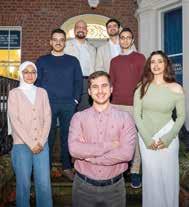
Ala Ahmad, Ibrahim Mahdi, Bilal Zedan, Alaa Murtaja, Yousef Albaba, Mohammed Sammour and Daniella Dukmak.
IN THE SPOTLIGHT
Researching colonial artefacts; fighting for the rights of Chilean miners; treating injuries on the sidelines when the Pittsburgh Steelers take on Minnesota Vikings –Queen’s alumni have always made their mark across the world.
We shine a spotlight on just a handful of Queen’s graduates whose work is shaping communities, industries and ideas.
WHERE POETRY RUNS DEEP
“To call yourself a poet in Ireland, where poetry runs deep in the soil, I needed to make my mark in academia, in writing circles and the local and international writing communities.”
Nandi Jola is a South Africanborn poet, storyteller and playwright who completed her MA Poetry at Queen’s in 2021.
“I have an urge to write, and I write well, when I observe things, so I will go for a walk, get on the train, eavesdrop on other people’s conversations in cafés or listen to my favourite playlist. My process does involve tears as well. But once I visit my library on the Ormeau Road and read a poem I love, I get back to the craft – a new pen and a beautiful notebook help, too.
“My MA at Queen’s was a oncein-a-lifetime opportunity to launch my career as an author.”
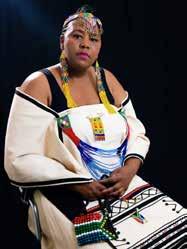
In 2010, she founded the ‘NandiJProject’ with the vision of tackling the trafficking of women and sexual exploitation. Nandi also wrote a one-woman monologue called The Journey, paying homage to the South African woman Sarah Baartman, who was trafficked and exploited in Ireland.
“The NandiJProject was a personal project and drew from
the experiences of women who have endured similar circumstances. As a survivor of domestic violence, I wanted to offer a safe space for women from the global majority.”
In 2025, she was offered a fellowship residency at the Ulster Museum following years of research on the colonial artefacts brought to Ireland from South Africa in 1873. But what she discovered was much more than just objects: “At the end of that residency, I made disturbing discoveries of human remains, and called for them to be repatriated. The short film Migrant Women: Seen and Heard follows my journey with museums on the island of Ireland as I make discoveries, connections and call on institutions not to ignore the genocides and suffering of Black people.”
Nandi Jola
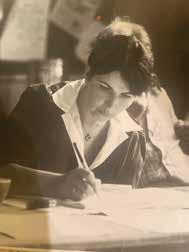
INSPIRATIONAL CAMPAIGNER
When Queen’s graduate Chris Browne’s big sister Ann went to Queen’s, it opened her eyes to the world beyond their hometown of Strabane.
Chris, former Managing Director of Thomson Airways and pioneer in the global leisure travel industry, who was awarded an Honorary Degree by Queen’s for services to business and commerce, explained. “As a child growing up in the 60s, Ann opened my eyes to the fact that there was a way out, that there were different opportunities, especially for women. She always, always challenged the status quo and listened to everyone’s points of view.”
After graduating from Queen’s, Ann completed an MA at London's Institute of Latin American Studies before joining the Joint Working Group for Refugees from Latin America (JWGRLA). This inspired her to campaign for the rights of Latin
American workers, developing education programmes for trade unionists and miners' wives, helping many to escape harsh conditions.
“She met a lot of influential politicians in her day and had to gain their trust, but it was much more important to be at a grassroots level trying to make a difference where it really mattered, especially in the mines in Chile.
“Women were giving birth down the mines because if they went above, the regime would probably, at best, imprison them, at worst, they'd be murdered. So, she helped save thousands of Chilean lives. There's no doubt about it.”
SPLITTING SIDES
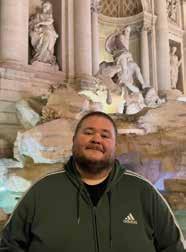
From library bookshelves to the bright lights of the Grand Opera House, comedian and podcaster Ciarán Bartlett has come a long way since his days as a student at Queen’s University Belfast.
Ciarán completed his MA in Ancient History at Queen’s in 2009, a course he describes as “really tough but totally worth it”.
“My favourite memory is hanging out with my buddy Owen and staying in the big old tower block library like a loner on floors 10 and 11 where they kept ancient
history, classics, and philosophy stuff. Owen passed away recently, and I have such fond memories of laughing about totally niche ancient history banter with him in those times. It was always cold, so we both invested in long johns so we didn't freeze.”
When it comes to public speaking, Ciarán’s advice is as sharp as his comedy: “Get in the water and swim like the rest of us. There is nothing to fear. At least 80% of the battle is showing up and at least being able to pretend like you're meant to be there. Know vaguely what you are going to say and take your shot. The worst thing that can happen is that you bomb. And sure, if that happens, you've got a great story to break the ice in your next speech.”
Ann Browne
Ciarán Bartlett
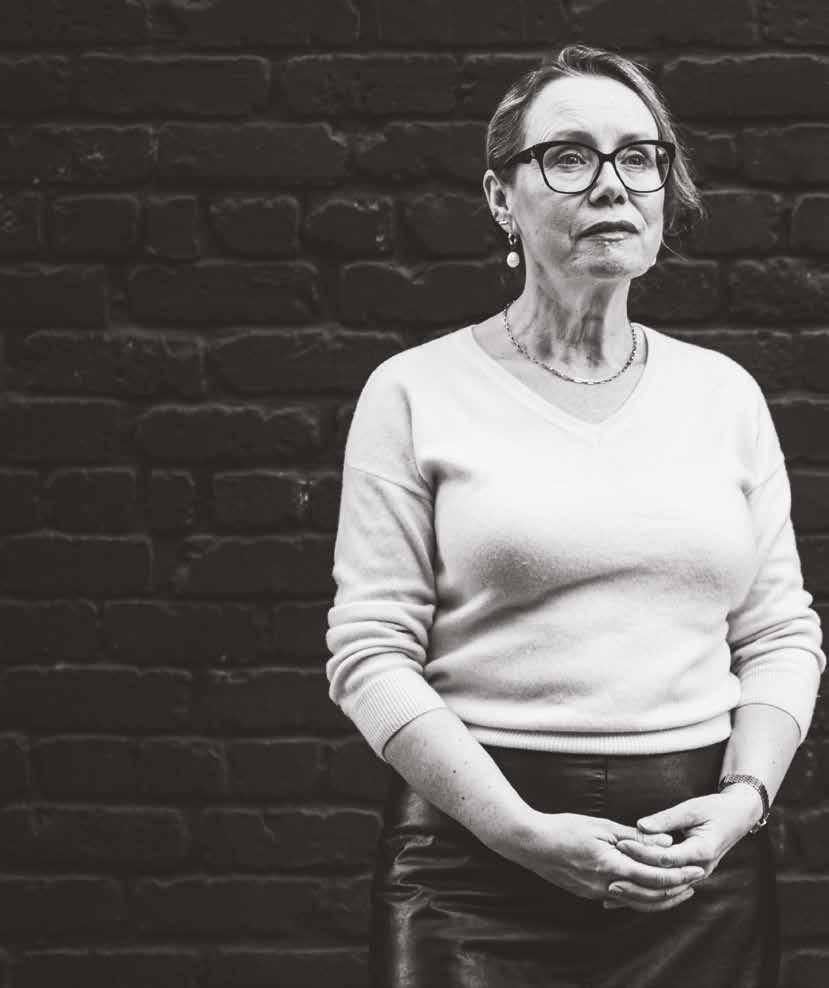
Fiona Ryan Commissioner for Survivors
ADVANCING WOMEN’S HEALTH
Queen’s graduate Dr Beidi Wang founded Guangzhou Beth Biotechnology, which operates women's health clinics while researching, developing and producing women's health products. Her work focuses on disease prevention, health maintenance and rehabilitation, with the aim of improving women’s medical environments and services while advancing reproductive healthcare.
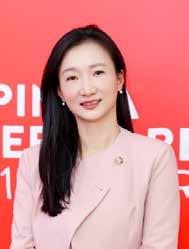
She says: “The philosophy of our clinic is to incorporate the essence of many British-style services. We place greater emphasis on disease prevention, health maintenance and rehabilitation.
“I’ll continue to help more women alleviate the distress caused by various illnesses and gain access to better medical services.”
Recently named a Queen’s Leader 18-45, she says: “I am proud to be a member of Queen’s Leaders 18-45, and this recognition means a great deal to me. This is tremendous encouragement for me after three years of entrepreneurship, and it is also an acknowledgement of my achievements in advancing women’s health.”
ON THE PITCH
Dr Ciaran Cosgrave graduated in Medicine from Queen’s in 2004 and is now Director of UPMC Sports Medicine and UPMC Institute for Health, Ireland. He provides pitch-side medical cover at big games and was the go-to for the Pittsburgh Steelers and Minnesota Vikings during their historic NFL game in Dublin last year.
“Most people see us only during the 80 minutes on the pitch, running on when a player goes down. But that’s actually a very small part of the role. The real work happens during the week – managing all aspects of injury and illness for players and staff, covering training sessions, liaising constantly with coaches and clubs, organising scans and specialist reviews, and performing procedures like injections.
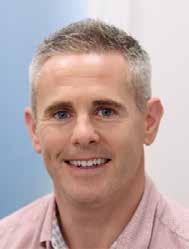
“The aim is always to make sure the team arrives at the weekend in the best possible condition to perform.”
Reflecting on his time at Queen’s, he says: “My five years at Queen’s were truly formative. The education was world-class and gave me the foundation to pursue a career that has taken me around the world with international teams. Queen’s also brought me friendships that have lasted a lifetime, and a sense of belonging to a proud tradition. It was the place I always knew I wanted to study, and it exceeded all expectations.”
Dr Beidi Wang
Dr Ciaran Cosgrave
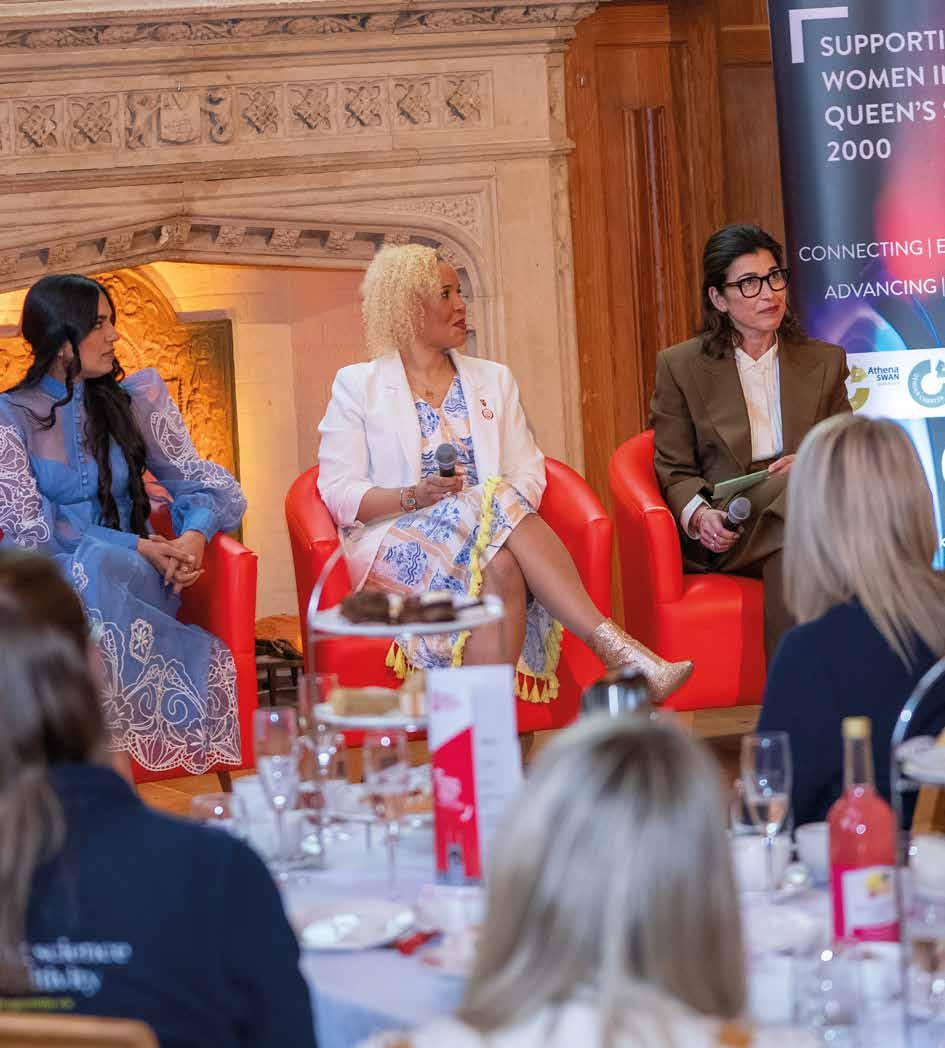
WOMEN OF QUEEN'S REFLECTION AND HOPE
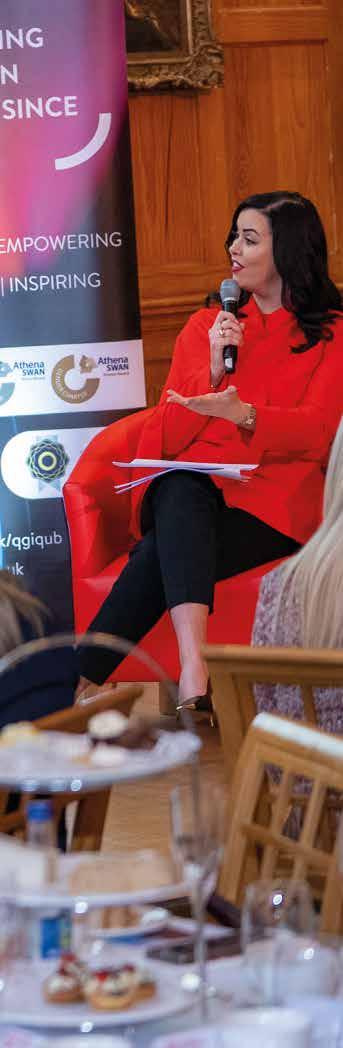
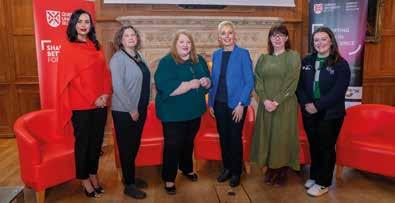
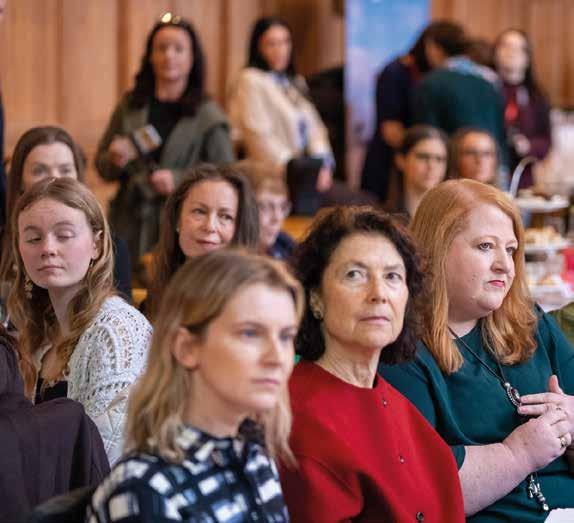
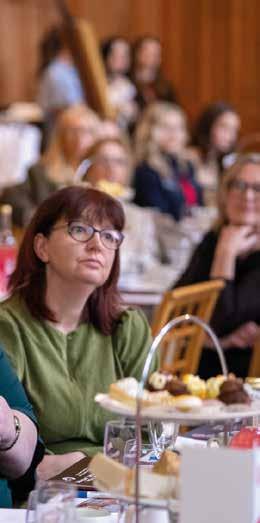
More than 100 women from across the Queen’s community gathered on campus to mark this year’s International Women’s Day, transforming the Great Hall into a vibrant hub of dialogue, reflection and hope.
REFLECTION HOPE
Bringing together a powerhouse collective of global business leaders, academics, activists and entrepreneurs, is all in a day's work for the Women of Queen's, alongside inspring the next generation and confronting some of the most urgent crises facing women today.
Speaking at the event, ProVice-Chancellor Professor Margaret Topping said: "Today is a reminder that when women educate, when women support one another, and when women inspire action, institutions transform and societies follow."
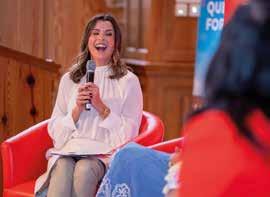
Joining a panel discussion were Senior Business Leader Belinda Brown, structural biochemist and biotech entrepreneur Dr Pragya Sharma, Barrister turned restoration expert, Ciara Denvir and Co-founder of Finnebrogue Artisan Food Company, Dr Christine Lynn, who shared their experiences of leadership, innovation, resilience and advocacy.
Among the speakers was 19-yearold Cara Linden, one of the first Sir Van Morrison Scholars, who spoke about the importance of investing in students and providing support for young women. She said: “I feel it is important to shed light on the experience of womanhood through celebration of the strength, achievements and legacy of women within the Queen’s community.”
Dr Susan Clarke, Academic Lead for Gender Equality and Director of the Queen’s Gender Initiative highlighted the importance of collective action, saying: “The women of Queen’s give freely of their time to support colleagues, to inspire students and to drive change.
“They are unafraid to tackle inequalities for women and girls at home and abroad through our education and research, giving others the tools to make a difference.
“They are leading across all sectors of life with authenticity and passion.”
Pictured are (from l-r): Rebecca McKinney, Dr Siobhán McAlister, Justice Minister, Naomi Long MLA, Professor Margaret Topping, Dr Susan Clarke and Amy Smith.
Panellists Dr Pragya Sharma, Belinda Brown and Christine Lynn with host Rebecca McKinney
HOW QUEEN’S DRIVES REAL-WORLD RESPONSES TO VIOLENCE AGAINST WOMEN AND GIRLS
A key focus of the event was the impact of Queen’s research in tackling violence against women and girls in Northern Ireland. Through the All-Ireland Network on Sexual Violence Research and wider strategic frameworks, the University is combining academic rigor with grassroots engagement to inform government policy and create safer digital and physical environments.
Dr Siobhán McAlister plays an integral role in this research. A Reader in Criminology and a member of the Centre for Children’s Rights, her work focuses on issues such as violence and victimisation. Her research has been used to inform the Northern Ireland Strategic Framework to End Violence Against Women and Girls (EVAWG) advocate for the protection of children’s rights through participatory approaches and develop an Economic and Social Research Council (ESRC)–funded project exploring youth informed concepts of respect. She said: “Research is crucial in understanding the scale and experience of violence against women and girls and exposing how everyday violence becomes normalised. But it’s not the whole story. Our research is
designed to translate what we learn about the realities for young women and girls into real-life action, and none of this can be achieved in isolation.
“A huge amount of work is now taking place in partnership across universities, government and public bodies, with all of us having a responsibility to drive and deliver a real-world response.”
Also speaking at the event was Minister of Justice, Naomi Long MLA, who highlighted ongoing challenges. She said: “As Justice Minister, I am painfully aware that domestic and sexual abuse remains one of the most
pervasive harms affecting people across Northern Ireland. These crimes disproportionately affect women and girls.
“The justice response to violence against women and girls has continued to evolve through legislative reform, strengthened victim support and clearer accountability for perpetrators.
“One of the most transformative ways that a justice system can protect victims is by having effective legal measures in place and, as Justice Minister, I have sought to bring forward legislation that equips police and the courts to respond to abuse and violence."
“TODAY IS A REMINDER THAT WHEN WOMEN EDUCATE, WHEN WOMEN SUPPORT ONE ANOTHER, AND WHEN WOMEN INSPIRE ACTION, INSTITUTIONS TRANSFORM AND SOCIETIES FOLLOW.”
PRO-VICE-CHANCELLOR PROFESSOR MARGARET TOPPING
Queen's graduate, Ciara Denvir
CAN YOU DIG IT?
HOW GETTING YOUR
HANDS DIRTY
IS GOOD FOR THE COMMUNITY
From surveying graveyards to hands-on community digs, getting involved in archaeology is not as out-of-reach as you might think.
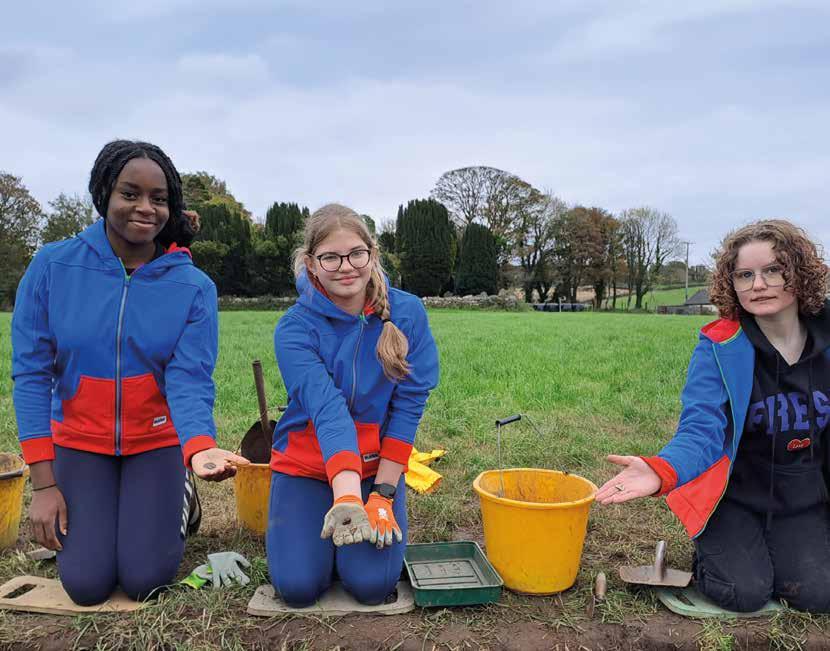
Monea Girl Guides, Co. Fermanagh

Through a series of events across Northern Ireland, the Centre for Community Archaeology (CCA) at Queen’s is helping people connect with each other and their local heritage.
According to one budding archaeologist: “I've made firm friends and I feel 'at home' digging dirt and learning new things, so my feelings of isolation and anxiety have completely gone.”
With funding from the National Lottery Heritage Fund, the Community Archaeology Programme NI (CAPNI) brings together people of all ages and abilities through community excavations, field surveys, school hubs, archaeological festivals and historic tours.
Talking about the programme, Professor Eileen Murphy, CCA Co-Director said: “We believe Archaeology is for everyone and are lucky to have had the chance to work with communities right across Northern Ireland to help them explore and appreciate NI’s special archaeological sites."
CCA Co Director, Dr Colm Donnolly, added: “Thanks to the support of the National Lottery Heritage Fund, over the past two years, CAPNI has reached over 26,000 people including 4,000 children and young people.”
While the programme engages hundreds of primary school pupils, a key focus has been reaching people with poor physical or mental health, including people living with cancer or depression, and those experiencing social isolation. It also works closely with disadvantaged urban and rural communities across Northern Ireland.
And it’s having an impact.
One participant, who was undergoing cancer treatment while caring for her wife, explained how the programme helped her feel part of something. She said: “As it got closer to my joining the dig, I began to experience a lot of anxiety. I worried if I could meet new people, if I'd feel welcome and if I'd be any good at digging given that I was still recovering from all the treatment; I was still bald under my hat!
“I needn't have worried at all – the team were so warm and welcoming. They explained why we were digging there and what we were looking for, and I began to relax for the first time in months. The act of trowelling was such a welcome distraction for my anxious brain, and I was excited about something again.
“During my time at the dig, I learned so much, reconnected with life and started to make friends.
“I don't think I can measure just
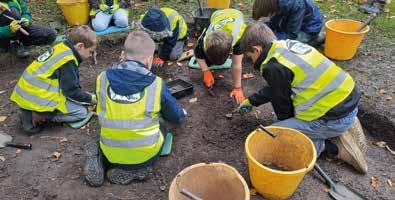
how much it meant to me; I got myself back a bit on that dig and it continued from there.”
Another participant, currently unemployed, is now on the path to a new career: “Since starting this course, another world has opened to me, and a pathway to a career that I had longed for. The open learning course has inspired me to undertake the Archaeology degree course at Queen’s University which I felt was out of my league. But because of the quality of teaching and delivery from the whole Archaeology team, it gave me the confidence to excel beyond my wildest dreams.”
Queen’s student Jamie Galbraith, who helps out at the digs, describes archaeology as “the history you can touch” and stresses the value of engaging with people. He explained: “One of the main benefits for me is gaining experience in what I want to do – museum work.
“And this kind of engagement is what museum work is about. I've always loved history from a young age, and I think that has blossomed because archaeology is the history you can actually touch.”
COMMUNITY ARCHAEOLOGY
This project is funded by philanthropy. Find out how to support the project by clicking below or visiting qub.ac.uk/sites/ communityarchaeology
THE GIFT OF EDUCATION
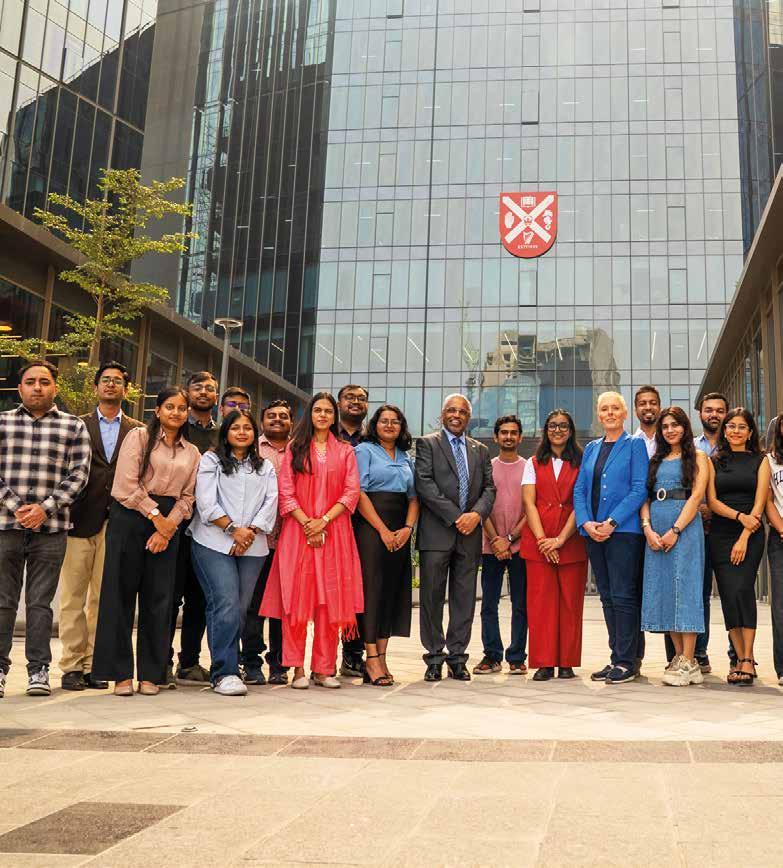
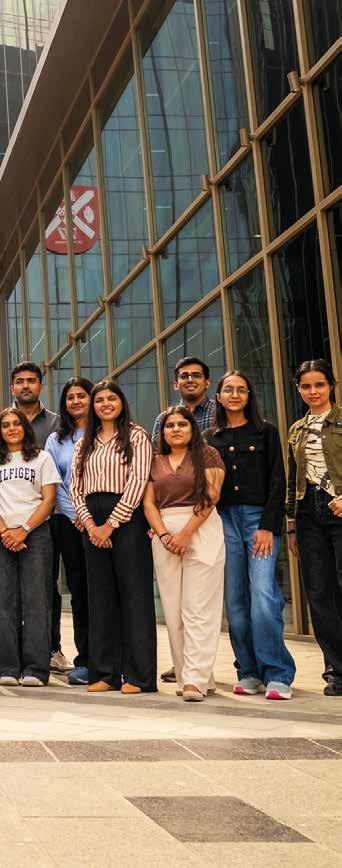
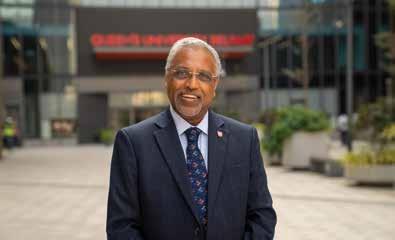
Our new GIFT City campus has opened its doors – but what does it offer Indian students, and can it really feel like Queen’s without the iconic Lanyon building?
Professor Margaret Topping, Pro Vice Chancellor for Global Engagement, thinks it is possible. "Queen's is a very strong civic university; we are very much rooted in our community in Northern Ireland. But we also have massive global impact and our relationship with India is absolutely critical to that."
Queen’s University is the first Russell Group institution to establish a campus at GIFT City, bringing its tradition of world-class research, academic excellence and industry engagement directly into India’s leading financial and technology hub.
With India’s student population projected to grow significantly by 2047, the new campus will build on existing strong academic collaborations in the country, placing Queen’s at the heart of one of the fastest growing educational landscapes.
For students across India, this means direct access to a Russell Group education, equipping them with globally recognised qualifications and in-demand skills, while also creating a platform for Indian academics to collaborate on research with worldwide impact.
Leading the new campus is Dean, Professor M Satish Kumar, who views it as a key milestone in the University’s global engagement strategy.
Professor Kumar, who has been with Queen’s for 25 years, says: “At GIFT City, Queen’s University brings a distinctive value into the heart of India’s most dynamic innovation hub, making us not just another foreign campus, but a university with proven global leadership in research, teaching, and impact.
“I
see the GIFT City campus as a transformative space for
Dean, Professor M Satish Kumar and Queen’s Pro-Vice-Chancellor
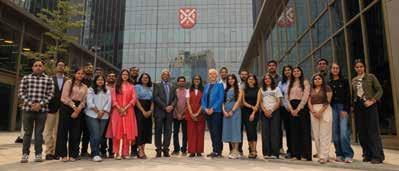
Professor Margaret Topping with the first ever Queen’s GIFT City students
Dean, Professor M Satish Kumar
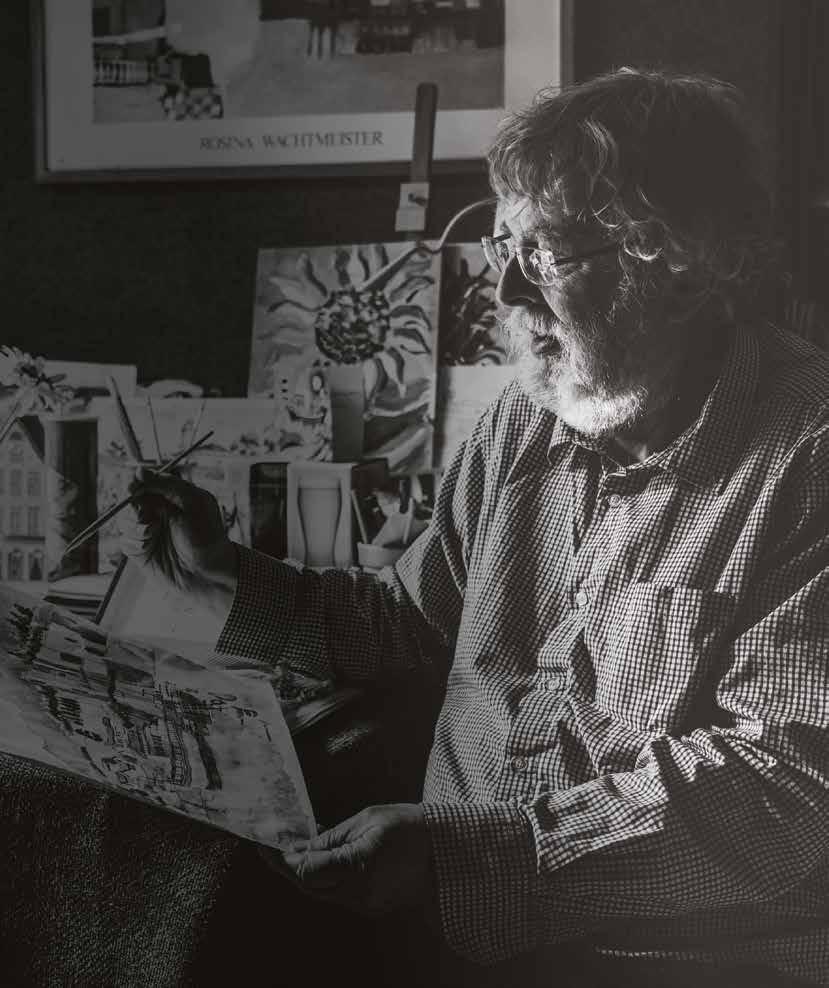
That one extra test, and the clinical trial at Queen's University, gave me hope when I needed it most. That care let me keep living my life. Three years on, I’m still here and profoundly grateful.
Robin Bigger
transnational education. It is not just about bringing a UK degree to India but about co-creating a new model of education that blends international academic excellence with the unique needs and opportunities of India’s rapidly evolving economy.”
Drawing on his experience, Professor Kumar emphasises the importance of balancing global perspective with local relevance. He explains: “At GIFT City, we want to create a hub where students, academics, and industry cocreate solutions for the future.”
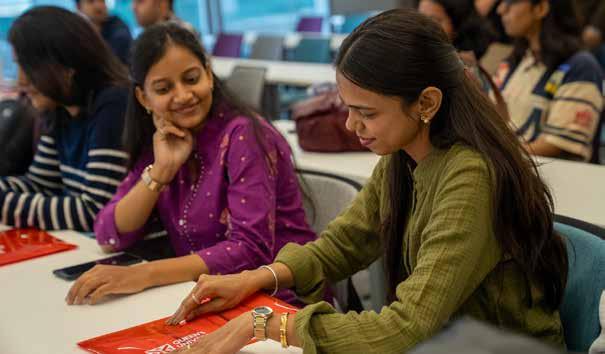
Kicking off a brand-new term in February 2026, over 100 students enrolled in postgraduate programmes designed to equip them for high-demand roles in finance, technology and business analytics while, getting the full Queen’s experience.
MSc Business Analytics student, Suvidha Agarwal, is focused on the opportunities
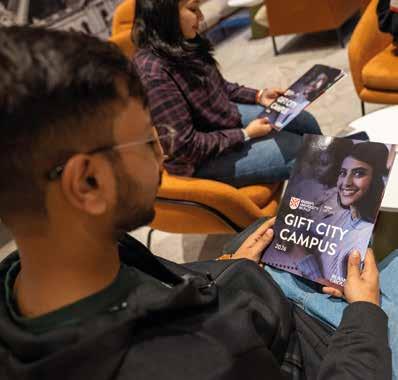
the GIFT City campus provides. She said: “It makes it easily accessible for people to have a global education, get their hands on the best teachers and
world class companies. Being in this environment gives us a complete overall holistic development, both for our studies as well as for our future.”
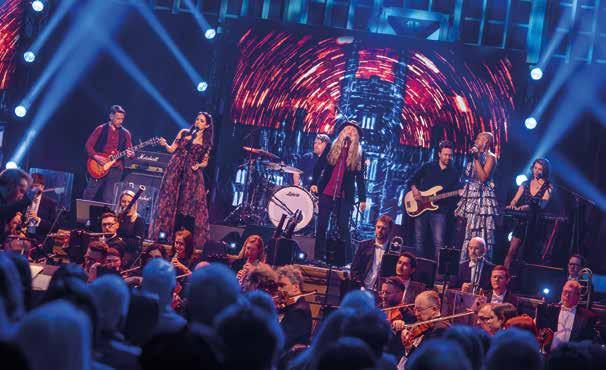
STORY AND SONG
From Jimi Hendrix to Radiohead, Stiff Little Fingers to Public Enemy, U2 to the Ulster Orchestra, Queen’s has set the stage for generations of music lovers.
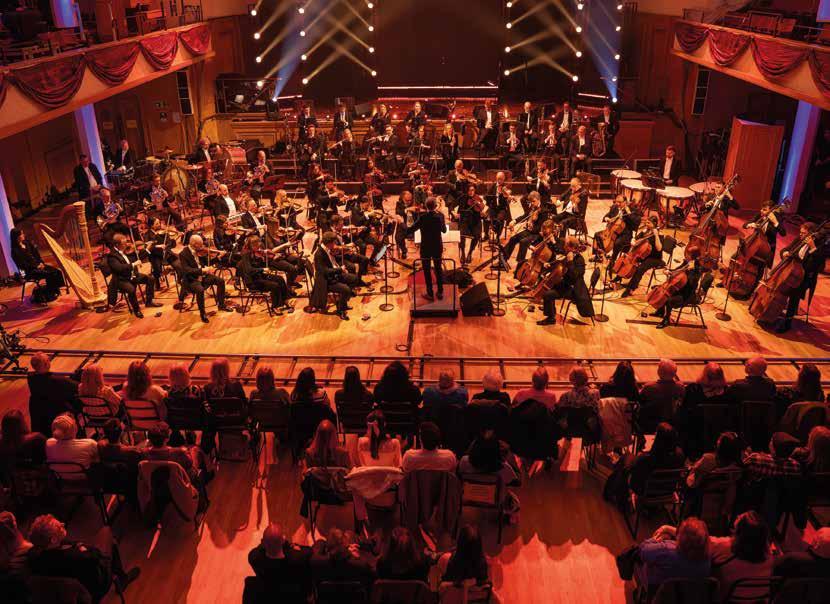
That legacy took centre stage at a BBC concert celebrating 180 years of the University alongside 60 years of the Ulster Orchestra.
The gig brought Queen’s rich musical and cultural history to life with various alumni in the lineup against the backdrop of a 58-piece strong Ulster Orchestra.
Highlights included performances from Co Down rock band, The Answer, which features a selection of Queen’s graduates; singersongwriter, SOAK; Sir Van Morrison Scholarship recipient, Cara Linden; and West End and Broadway star, Alfie Boe.
English and Ethnomusicology graduate Cormac Neeson, who
has headed up bands The Answer and California Irish, explained how Queen's helped shape his career path. He said: “I feel like I have a strong connection with the University. I learned how to look at music from many different perspectives. It stuck with me to this day. I’ve been lucky enough to have had a career in Music. Having that alternative way of looking at things has helped. If a songwriter has anything going for them it's that they have the ability to look at things a little bit differently.”
We also heard from headline act, Alfie Boe on why Belfast is such a unique place to perform. He said: “It's an honour to be
invited and to celebrate Queen’s 180th anniversary. I love Belfast – it's a home from home for me. Without a doubt, it's the people that make Belfast so specialthe best audiences no matter what type of music you bring!”
A HOMECOMING
Robocobra Quartet, formed in 2014 at Queen’s own Sonic Arts Research Centre (SARC), have come a long way since their student days. We’re talking appearances at Montreux Jazz Festival and Glastonbury, plus a Northern Ireland Music Prize win for their album Living Isn’t Easy. Not bad for a group that started out experimenting in university studios.
Jolene O'Hara, Cormac Neeson and Dana Masters perform at the Whitla Hall
Drummer and vocalist Chris Ryan, a Queen’s Music graduate, described the night as a ‘homecoming’ – after all, it’s not every day you get to team up with an orchestra and perform alongside friends from your student days.
Chris says: “It's always a joy to do something different – why not take the opportunity to make music with the Ulster Orchestra and SOAK?
“Over the years, the folks at SARC have been nice enough to let me use the various studios and recording set-ups for projects I am producing so I have always felt quite connected to the place even though it has been over a decade since graduating.”
WATCH THIS SPACE
One of the first Sir Van Morrison Scholars, Cara Linden, has big ambitions to perform on the West End. Ahead of her performance,
she explained what drew her to study Music at Queen’s: “Belfast’s growing arts scene is full of homegrown talent and opportunity, and Queen’s reputation for nurturing musicians and performers makes it the ideal place to further develop my voice, artistry and musical direction.”
So, whether you’re in it for the nostalgia or the music, this is one worth tuning in for on BBC sounds and BBC iPlayer.
CLICK HERE TO WATCH
“IT'S THE PEOPLE THAT MAKE BELFAST SO SPECIAL –THE BEST AUDIENCES NO MATTER WHAT TYPE OF MUSIC YOU BRING!”
ALFIE BOE
‘Story and Song: 180 Years of Queen’s’ was filmed at Queen's Whitla Hall
SWAPPING NOTES WITH DECLAN LAWN AND MAEBH FLEMING
The path to a creative career is rarely a straight line. For BAFTA-winning writer and director Declan Lawn, the journey to the hit series Blue Lights included a stint as a mature law student at Queen’s University Belfast and years spent in the high-pressure world of journalism. For Maebh Fleming, a first-year Film Studies and Production student at Queen’s, the journey is just beginning.
Declan called by Queen’s in the middle of filming series four of the drama to compare notes with Maebh on turning a hobby into a career, baring your soul to your audience and dealing with imposter syndrome.
Passion often starts early, but life has a habit of getting in the way.
Six-year-old Declan liked the idea of being a writer but the urge left him as a teenager. "I started losing confidence, thinking it wasn’t really a viable thing to do," he says. It wasn't until his mid30s that he decided to try again, eventually seeing his first show commissioned when he was 43.
Maebh’s spark was ignited in secondary school through Moving Image Arts, and while she enjoys the frantic pace of a film set, she finds herself drawn to the same quiet space Declan inhabits: the writer’s desk.
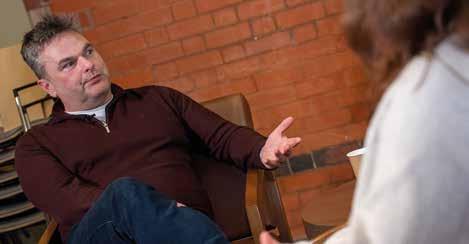
"I work with a creative partner, Adam," Declan explains. "He loves being on set; he thinks visually. I love the bit where I’m sitting in my office writing the script. Being on set? I can take it or leave it, to be honest."
The pair quickly bond over the "strange job" of being a writer – a role that requires
reaching inside yourself and putting the results on display.
"If you're doing it right, you’re putting your soul on a page," says Declan. "But the price you pay for that is people are going to judge you on some of the most intimate things you can ever put out into the world."
Declan Lawn
For many creatives, that judgment leads to a real sense of imposter syndrome. Even with a hit series under his belt, Declan isn't immune. "I’m writing season four of Blue Lights now, and I genuinely think to myself: 'God, what if I can only write Blue Lights? What if I write something else and it’s crap?' That’s just the price of what we do."
"You're rooting for them, and then they do something that frustrates you, but ultimately you can always relate to them."
young. It was so on the nose, but I hadn't even picked it up. That’s what I was writing about."
As Maebh looks toward a future in the industry, Declan’s advice is rooted in authenticity and grit.
“JUST BE BRAVE ENOUGH
TO TELL STORIES
THAT ONLY YOU CAN TELL”
Maebh recognizes the feeling from her very first university projects. "Everyone was so nervous... they just wanted to make it as perfect as they could. You have to let yourself try your hardest and not think about what other people are going to think."
"You’re learning lessons now that I learned in my 40s," Declan tells her. "That singular vision versus a collaborative industry - I’m still learning that to this very day."
When it comes to what makes a great screenplay, both agree that a story is only as good as the people inhabiting it. While some writers use meticulous beat sheets to map out every plot point, Declan and Maebh prefer to let the characters lead the way.
"My favourite characters always have to have a flaw," Maebh says.
DECLAN LAWN
Declan too is drawn to a flawed character citing Mad Men’s Don Draper as a “magnetic character with a dark past and a chaotic life. I think I could watch Don Draper and Mad Men every night for the rest of my life. He's amazing.”
For Declan, knowing a character deeply allows him to "jump into their heads" during dialogue. However, he admits that sometimes the characters reveal things about the writer that even he didn't realize.
"There’s a character in Blue Lights called Jerry. He dies in series one and his absence casts a long shadow. It was only about two years ago I realized: my father was called Jerry, and he died very
"Just be brave enough to tell stories that only you can tell. There is a real sense of vulnerability when you put it out into the world, but the payoff is worth it."
For Maebh, the takeaway is clear: while the "creative panic" might never fully go away, if the voice is authentic, the rest will follow.
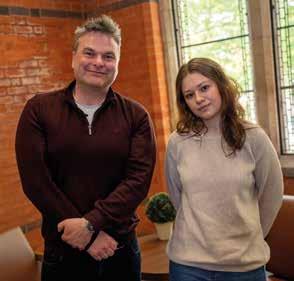
Declan Lawn and Maebh Fleming
FROM A WORLD OF POETRY
TO CURING CANCER
How one Queen’s Professor is boosting survival rates.
Professor Dan Longley is Director of the Johnston Cancer Research Centre (JCRC) at Queen’s. His father was the well-known poet Michael Longley and his mother is Queen’s Professor Emerita and literary critic Edna Longley, both Honorary Graduates of Queen's. He speaks to Lanyon about his parents’ New Year’s Eve parties, increasing cancer survival rates and his hopes for the future.
Professor Longley, you're from a very artistic family – your father a poet, your mother a Professor of English Literature, with one sister an artist and another sister in finance. Where did your scientific genes come from?
“The genes are there but they skipped a generation! My maternal grandfather Stan Broderick studied maths at University College Cork and then at Trinity College Dublin, where he subsequently became a professor. He advised Eamon de Valera on maths and worked with the famous German physicist, Erwin Schrödinger at The Institute for Advanced Studies in Dublin.
“My maternal grandmother Agnes McDiarmid also studied maths, at the University of Glasgow and then Girton College, Cambridge. She was a Scottish
Presbyterian, my grandfather was raised an Irish Catholic. Neither of their families was keen on the relationship but they basically eloped and got married anyway!”
What about the next generation of Longleys?
“My wife is a science teacher and our children are a mix – Jacob (22) is studying engineering in Glasgow, Conor (20) is studying politics in Edinburgh, while Katie (17), who’s still at school, recently did some work experience at JCRC and loved it so much that she is hoping to follow in my footsteps and study biochemistry at Brasenose College, Oxford.”
What was your childhood like?
“We lived in the Stranmillis area of Belfast, and the house was always a swirl of activity. My parents had been involved in civil rights marches with Seamus and Marie Heaney so there was always plenty of political discussion. The annual New Year’s Eve party was a ‘who’s who’ of the Belfast literati, with guests including Seamus Heaney, Derek Mahon, Paul Muldoon, Jimmy Simmons and David Hammond.
“My grandmother looked after me and my sisters after school while mum and dad were at work.
She used to give us simultaneous equations to solve – the fun we had before iPhones!
“As a child, I enjoyed creative writing and art but also loved maths. I was much older when chemistry clicked for me at Belfast’s Methodist College. I went on to study chemistry at Brasenose, Oxford, and fell in love with molecular biology and biochemistry. In my final year I got to work on how HIV replicates itself – this was my first realisation that research could have a direct impact on the lives of patients.”
Your background is like a coming together of all the religious, cultural and national identities of these islands – is that important to you?
“Yes. Take my grandmother –Scottish Presbyterian, married
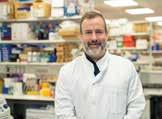
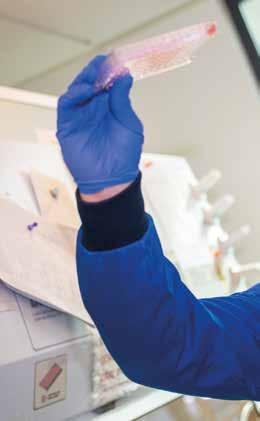
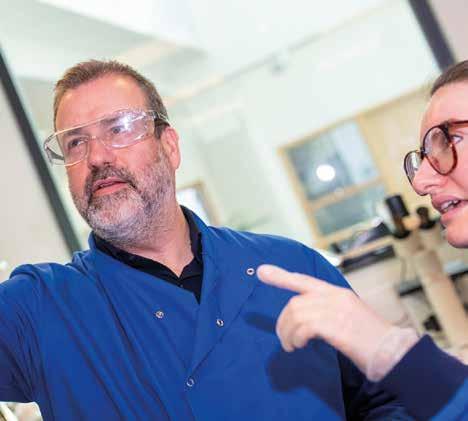
Professor Dan Longley in the lab
to an Irish Catholic and they raised their children in Dublin.
“My dad, on the other hand, was the son of two Londoners, who relocated to Belfast between the World Wars. My paternal grandfather Richard Longley fought in the First World War, surviving the battles of Somme and Passchendaele. He subsequently raised money for the War Memorial in Belfast. When my dad received the Gold Medal for Poetry from Queen Elizabeth, he asked to be shown the place where my grandfather received the military cross for gallantry from King George V.
“So, my grandparents came from across these islands and I feel both Irish and British.”
After a PhD at Trinity College Dublin, you came to Queen’s to join the research group of the late
Professor Patrick Johnston, who later became Vice-Chancellor of Queen’s and founder of JCRC. How did this work develop?
“When I first joined Paddy’s lab, more than 20 years ago, Northern Ireland had the worst outcomes for cancer in both the UK and island of Ireland. That was something that Paddy made his personal mission to change. Since then, there has been a 13% increase in survival rates for cancer in NI. For our research specialisms here at JCRC – breast, colorectal and prostate cancers – that increase is even higher, around 20% for prostate cancer.
“My own personal research involves investigating the mechanisms by which cancer cells die, for example I have done a lot of work on a protein called FLIP.
One of the best moments of my career was when I demonstrated that if you dialled this protein down in cancer cells, they died, whereas normal healthy cells were fine. We are now trying to develop the first cancer drugs that target FLIP and are getting close to testing them in patients.
“Our approach at JCRC is about translating research findings into new drugs and improving outcomes and quality-of-life for cancer patients. It doesn’t matter if you have the best research in the world if you can’t get it out of the lab and into treatments.
“Obviously, in my role as Director, I can’t concentrate on my own research as much. I’m leading a large centre – around 300 staff and students, with 40 Principal Investigators (PIs) each leading a research group. A quarter of these PIs are clinical joint appointments, spending half their time treating patients – this means patients’ needs are at the heart of our research.”
How big a role did Prof Patrick Johnston play?
“Paddy was a force of nature. Without him, we wouldn’t have JCRC and our sister research Centres – the Wellcome Wolfson Institute for Experimental Medicine and the Centre for Public Health. We also wouldn’t have the NI Biobank, one of the best repositories of cancer samples in the UK. Being able to access and analyse these samples has allowed JCRC researchers to make major breakthroughs.
“Paddy also championed radiotherapy research and we now have a world-leading radiotherapy research team.
“There are thousands of people alive today locally and globally because of the work Paddy started. Next year will mark 10 years since his untimely death. We’re planning a major symposium to celebrate his vision and mark the 20th anniversary of the Centre which he established.”
How important is industry support to cancer research?
“Industry partnership is often crucial, particularly in new drug discovery – it is very difficult for an academic group to move this sort of research into a clinical setting. To help this process, senior colleagues and I led the creation of the Future Medicines Institute at Queen’s, an industry–academic innovation hub to accelerate the development of new drugs and diagnostics for cancer and other diseases.
“We have also created a number of ‘spin-out’ companies – small
companies taking academic findings and turning them into real-world commercial products – as well as attracting companies to Queen’s, including Californian company CV6, which selected JCRC because of our scientific expertise and is now treating cancer patients with a new cancer drug they developed right here in Belfast.”
What about the role of philanthropy?
“Philanthropy has a major part to play. We recently received a £1 Million legacy from a single individual that has allowed us to do cutting-edge research in lung and rectal cancer, which we will extend to other cancers in due course.
“One of our early-career researchers, Dr Victoria Dunne, was supported by the LFT Charitable Trust, allowing her to spend six months at Oslo University Hospital, learning from world-leading experts in
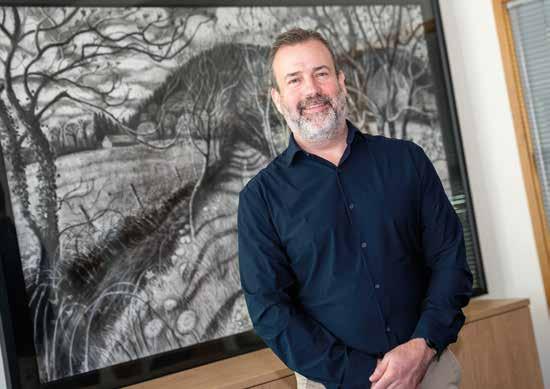
DONATE TO CANCER RESEARCH
To donate to cancer research that will directly benefit patients in NI, please click below or visit this link qub.ac.uk/researchcentres/cancer-research
CLICK HERE TO DONATE
new radiotherapy approaches for late-stage prostate cancer. She has now brought this expertise back to Belfast, where she is building a research programme in molecular radiotherapy at JCRC.
“So philanthropic donations are essential. But you don’t need to be a billionaire to donate –although we definitely welcome them! Anyone can give a few pounds, and all donations will directly help cancer patients in Northern Ireland.”
Outside of work, have you any exciting plans for the future?
“Before he died, Dad had completed a book of poems that has yet to be published. The Night Before Spring will be published next year, and there will be a conference in his honour at Queen’s with lectures, papers, art, and poetry readings. So that is something very special to look forward to.”
Professor Dan Longley in front of a painting by his sister, Sarah Longley
BREAKING BARRIERS AND CREATING LEGACIES THE STORY OF MEDICINE AT QUEEN'S
For nearly two centuries, science and medicine have transformed beyond recognition. Breakthroughs in technology, chemistry and biology have changed how we understand and care for human life.
Breakthroughs in technology, chemistry and biology have changed how we understand and care for human life.
Throughout, Queen’s University Belfast’s Medical School has been part of that journey with a proud legacy of educating and fostering generations of doctors, researchers and healthcare leaders.
This year, we celebrate 190 years of the School’s contribution to this remarkable era of progress. It is a milestone that not only honours its lengthy history of excellence in education and research but also recognises the vital role staff and students have played - and continue to play –in shaping modern medicine.
HISTORY HAS HAPPENED HERE
For nearly 200 years, the Medical School has stood at the forefront of learning, discovery, and care, shaping generations and advancing the practice of medicine.
The knowledge, skills and values fostered at Queen’s have extended far beyond Belfast, influencing patient care and medical innovation across the world.
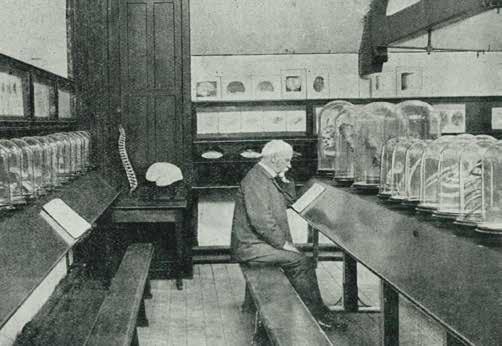
The journey began in 1836, when the Belfast Medical School opened in a small, brick building on the grounds of the Royal Belfast Academical Institution.
In those early days, the school welcomed just thirty male students, marking the quiet beginning of what would become a significant chapter in medical education.
The School integrated with Queen’s in 1847, two years after the University was officially founded by Royal Charter.
Since then, the School has taught over 17,000 students, educating generations of medical leaders to the highest quality from across Northern Ireland and beyond.
The Anatomy lab at Queen's
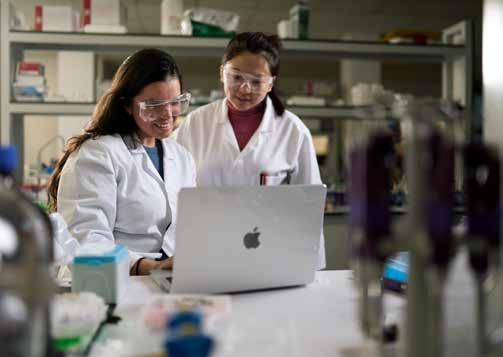
BREAKING BARRIERS TO SCIENTIFIC REVOLUTION
In 1893, Queen’s first female medical student, Dr Elizabeth Bell, graduated, becoming one of the first female medical graduates in Ireland.
Dr Bell became a pioneer who overcame gender barriers to become the first female general practitioner and gynaecologist to practice in Ulster, later serving as a suffragist and wartime medic. Her achievements marked more than a personal milestone; they signalled the beginning of lasting change within the profession, and her legacy continues to inspire, emphasising the importance of widening access and opportunity in medicine.
Today, that commitment remains central, as the School continues to champion gender equity across education, research and clinical practice.
From Sir William Whitla’s formulary published in 1901 to the present day, Queen’s Medical School has been at the forefront for modern medical care and innovation.
Throughout its history, students and teachers from the School have made significant global advances in science and medicine. These have come from alumni and staff such as Professor Frank Pantridge’s lifesaving portable defibrillator; Professor Mollie McGeown’s pioneering treatment to prevent kidney transplant rejection; Professor Ingrid Allen’s significant advances in neuropathology; and Dr George Blair’s titanium plate treating hundreds of victims of the Northern Ireland 'Troubles'.
These examples are among the thousands of our alumni whose efforts, accumulated over nearly two centuries, have built an enduring legacy of lifesaving innovation and social impact.
ROOTED IN HERITAGE, DRIVEN BY THE FUTURE
Professor Alan Smyth, Dean and Head of the School of Medicine, Dentistry and Biomedical Sciences at Queen’s University Belfast explains that Queen’s is fully committed to continuing to shape the future of medicine for generations to come.
He said: “Queen’s has a long tradition of excellence in medical education and it is an honour as current Dean and Head of School to be a part of this unique history.
“This special anniversary is a fantastic opportunity for us to reflect on students, both past and present, and celebrate the key milestones we have achieved together over the past 190 years.
“These achievements have created great momentum for us to excel in our mission to continue excellence in medical teaching into our next century and beyond.”
You can help support current and future medical students at Queen's.
CLICK HERE TO FIND OUT MORE
Scan here to find out more about some of the key objects used in medical education at Queen's over its 190-year history.
CLICK HERE TO FIND OUT MORE
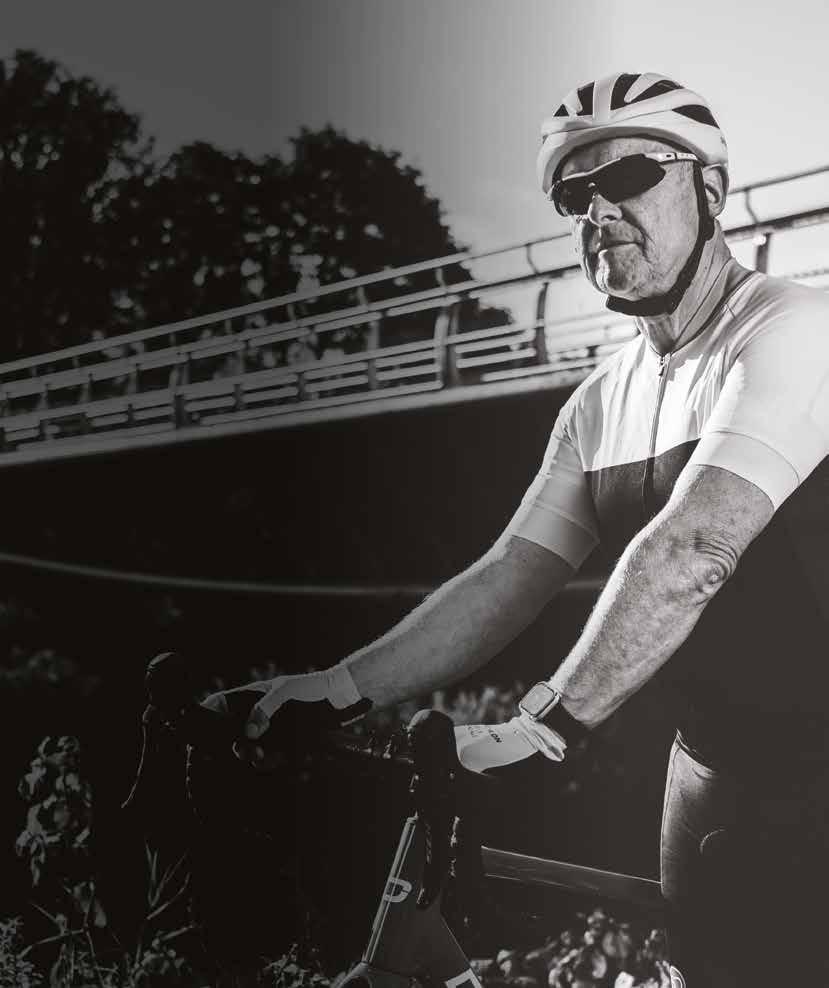
The treatment I had was only possible because of Queen's research carried out before me. I feel a responsibility to carry that forward – so the next generation has even better options.
Ken McBride
MY GENERATION
JOANNE O’FLANNAGAN GRADUATED FROM QUEEN’S WITH A DEGREE IN RUSSIAN AND POLITICS IN 1995.
She enjoyed it so much she came back to study for a Master’s in Psychology 24 years later. Her niece Róise McQuillan from North Belfast is in her first year of Politics, Philosophy and Economics (PPE). They talk to us about nights out, getting free food and staying up all night for election results.
JOANNE
Why did you want to go to Queen’s?
When I was 16, my father bought me a biography of Lenin which sparked my fascination with Russia. I became really interested in Russian history, culture and politics. My best friend and I also studied politics at the tech after school but, when I finished my A levels, my interest in Russian won and I headed to Trinity. But I really missed politics so I decided to come back to Belfast and go to Queen’s.
How did you decide what to study?
Queen’s was perfect because I was able to study Russian language and culture, literature and history, and in the politics part of my degree, we looked at the politics of divided societies, which included the Soviet Union and Russia. But it was funny, because all of this was around
the time that the communist system was starting to fall apart, and you had the collapse of communist regimes across Eastern Europe in 1989 and then the fall of the Soviet Union in 1991 so it was a really interesting and exciting time politically in that part of the world.
What was your first impression of Queen’s?
When I was doing my A Levels, I lived close to Queen’s so was able to study in the library which made me feel very grown up. So, when I went there, I felt I knew it a bit.
Where did you live?
I lived at home some of the time and shared a house in the Holylands with my friends from school. I also spent a year out in Russia.
Where did you hang out?
The Union, the Crescent, Laverys. We did a lot of dancing and drank a few pints!
Do you remember your best gig?
The Waterboys in the Whitla Hall and Stiff Little Fingers in the Ulster Hall –they opened with Roots, Radical, Rockers and Reggae and were absolutely brilliant.
What’s your best memory of Queen’s?
Staying up all night of the 1992 general election and hoping to see a Labour win after years of Thatcher. It was disappointing but very memorable.
What was your favourite thing about Queen’s?
I just loved it. The Russian department was really small and tucked away in those beautiful old buildings on University Square. Then the politics lectures had 200-300 people, spilling out of the chairs and out of the doors - it felt really exciting. It felt like we were the centre
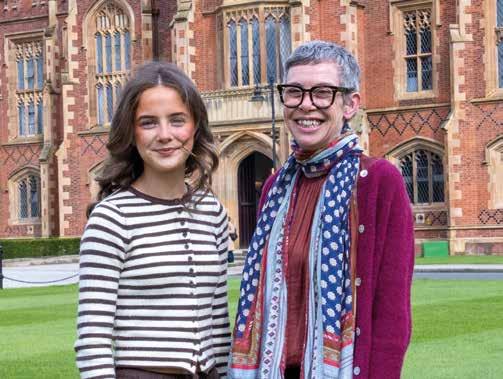
“THE POLITICS LECTURES HAD 200-300 PEOPLE, SPILLING OUT OF THE CHAIRS AND OUT OF THE DOORS – IT FELT REALLY EXCITING. IT FELT LIKE WE WERE THE CENTRE OF THE WORLD, BECAUSE POLITICS IN NORTHERN IRELAND FELT REALLY IMPORTANT AT THAT TIME.”
JOANNE O'FLANNAGAN
of the world, because politics in Northern Ireland felt really important at that time.
And we had these brilliant people teaching us – the head of the politics department, Bob Eccleshall who wrote the definitive textbook Political Ideologies and Russian lecturer, Professor Marcus Wheeler, the author of the Oxford Russian/ English dictionary. And we were lucky enough to be being taught by them. It was amazing.
Did you find it hard to get by as a student?
I had two jobs, one in a restaurant, one in a bar. The restaurant was Belfast’s first wine bar – if you were lucky, there would be some food left over at the end of lunch service, so it was a nice bonus having confit duck for lunch as a student.
I also worked in the pub in the city centre famous for traditional music. On a slow Tuesday night, I’d light the old fashioned gas lights and the fire and study until the customers come in. I loved both jobs and it made it possible to survive. Life didn’t seem as expensive then as it does now.
RÓISE
Why did you want to go to Queen’s?
I’ve loved growing up in Belfast and couldn’t see myself leaving just yet, and so having the option of a university with a strong reputation on my doorstep was so nice. I’m studying exactly what I want while not leaving my family and friends.
How did you decide what to study?
During A-level politics, my teacher had us research PPE as part of an exercise on learning the background of the UK cabinet at the time. Before this, I was pretty undecided on what to choose, and I realised then that it was something I loved the idea of and could see myself doing.
What was your first impression of Queen’s?
Having grown up in Belfast, it's hard to pinpoint my exact first impression, but it's always been ‘the place to go’. Joanne, as well as some of my other aunties and uncles, studied at Queen’s, and two of my older siblings do; so it was always spoken of so highly by them.
Where do you live?
At home in North Belfast.
Where do you hang out?
I love sitting in Botanic when the weather's good between lectures
or for a study break. When my friends and I are going out, sometimes we’ll go to the SU bar before we go to whatever student night is on, usually the Limelight.
Have you been to any good gigs?
Gigs in the Oh Yeah centre in general are always brilliant, it's such a good venue. I saw Nell Mescal and Holly Humberstone there, and they were unreal.
What’s your best memory of Queen’s?
Freshers' week was so much fun. There were lots of activities going on and societies to join, meeting new people and exploring campus was so exciting, and the nights out were the best.
What is your favourite thing about Queen’s?
All the clubs and societies and opportunities for socialising through them. Getting to train and play with Queen’s camogie is the best. I’ve made so many new friends and had so much fun with all the girls. Plus, it means getting to play camogie in the off-season, which is always great.
Do you find it hard to get by as a student?
I definitely have it easier living at home, so I’m very lucky not to struggle with this as much, though there have definitely been times when I’ve treated myself to lunch when it's not the most sensible thing to be doing!
BOUNCE BACK, SPRING FORWARD
We dusted off a huge amount of brilliant Queen's photographs from weddings on campus to a questionable lookalike of Back to the Future's Doc but, this year, one image jumped out at us.
All we know about the image is that these two super flexible students were part of the Queen’s Trampoline Club in the 1980s. If it’s you, you took the photo or you recognise the faces, let us know!
To bring this pose back to action, we tracked down some equally enthusiastic members of the current Trampoline Club. Thanks to Niall and Logan for being such good sports and helping us bounce back into the past!
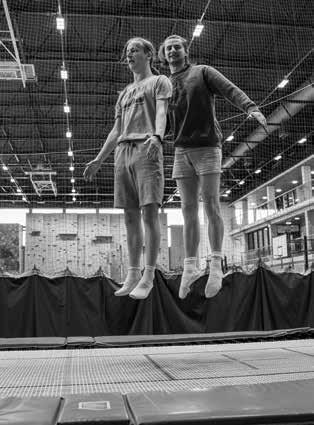
Left: Logan Duffy, 2nd Year Chemistry Right: Niall Nugent, 2nd Year Maths and Computer Science
ELLIE-JO FINDS HER PATHWAY TO LAW
Ellie-Jo Taylor, 21, spent much of her childhood visiting her father in prison. She attended a school in Derry where 60% of pupils received free school meals and university was not on her radar –until she heard about Queen’s Pathway Opportunity Programme.
The programme set Ellie-Jo on the path to studying Law and, in 2025, she graduated with a 2:1 in Law with Politics.
Ellie-Jo says: “Growing up, I had a parent in prison for six years of my childhood. My first experience of law and justice was stress, confusion and frustration. I was too young to understand the processes around me, but I could feel their impact. For me, studying law was about more than breaking the cycle of poverty. It was about relating to people on a one-on-one basis and bringing dignity to the practice of law.
“As the child of a prisoner, you feel you lose the right to have a voice about what you experience, from 4am house raids to constant stop-and-searches. I wish I had someone to speak up for me, so I decided to become that person for the children who come after me.”
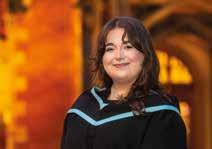
The Pathway Opportunity Programme works with schools across Northern
Ireland to support talented young people who face additional barriers in accessing a university education. It offers tailored support, grade reductions based on performance and an introduction to university life.
“I joined Pathway at 16 while doing my GCSEs – and what an incredible story it has become for me since then,” says Ellie-Jo.
“My grade boundary reduction based on my performance in Pathway secured my place at Queen’s and I graduated alongside my peers, with a 2:1 degree in Law with Politics. Pathway highlights the inequality of opportunity that exists. For the first time, I had the same opportunities as my peers - and I proved I could perform just as well.”
At Queen’s, Ellie-Jo received financial support from the Pathway Bursary Fund, allowing her to focus on her studies:
“Not only did I receive a £1,000 Pathway bursary each year, I was awarded the £15,000 Jubilee Scholarship in recognition of my community work, representing 42,000 young
people across Northern Ireland as a student officer and achieving £2m in funding for schools after Covid. Without this support, I doubt I would have achieved what I have.”
The funding allowed Ellie-Jo to take on an unpaid internship in an MLA’s office, an opportunity that might otherwise have been out of reach. She also spent the summer interning in the US Congress with Congressman Richard E. Neal.
Ellie-Jo works as a Parliamentary Assistant to a Member of Parliament in Belfast and hopes to qualify as a lawyer specialising in criminal law or judicial review. She says: “I see my background as an empowering tool. It helps me connect with clients, communicate clearly and make the justice system feel more human.
“It isn’t typical for someone with my background to graduate from a Russell Group university. It is not typical for someone who grew up visiting prisons to go on to work in the US Congress. But today, it feels more possible for the next generation.”
Ellie-Jo Taylor
HELP CHANGE A STUDENT'S LIFE TODAY
The Pathway Opportunity Programme, delivered by Queen’s, unlocks access to higher education for young people who are first in their family to attend university, have a disability, a caring responsibility and/or face financial restrictions.
The Pathway Bursary Fund provides targeted financial assistance to help ease the pressure and meet the cost of studying today, enabling students to fully engage with university life.
As the programme has grown, the need for philanthropic support has too.
And, as part of Queen's commitment to the Pathway Bursary Endowment, donations are currently being matched by the University. Your help can provide students like Peter with financial support throughout their studies and help make a positive impact in young peoples’ lives.
"Whenever I was younger, I wasn't sure whether I would go to university. My dad was one of the smartest people I knew, and he never got the opportunity to go to university and make the most of his intelligence. The Pathway programme gave me the chance to do what he never got to do, and it felt really promising and exciting."
Peter Corvan, Math Graduate, 2026
“THE PATHWAY PROGRAMME GAVE ME THE CHANCE TO DO WHAT HE NEVER GOT TO DO...”
CLICK HERE TO DONATE

Update your details to hear about events, news and exclusive alumni offers!
We want to keep you informed and involved –whether that’s letting you know about events and updates or you telling us about your career development.
You are also entitled to receive copies of our newsletters and updates. If you aren’t currently receiving them, that’s probably because we don’t have a valid email address for you! To update your information, please click below or visit go.qub.ac.uk/alumni-login
CLICK HERE TO MANAGE YOUR PROFILE
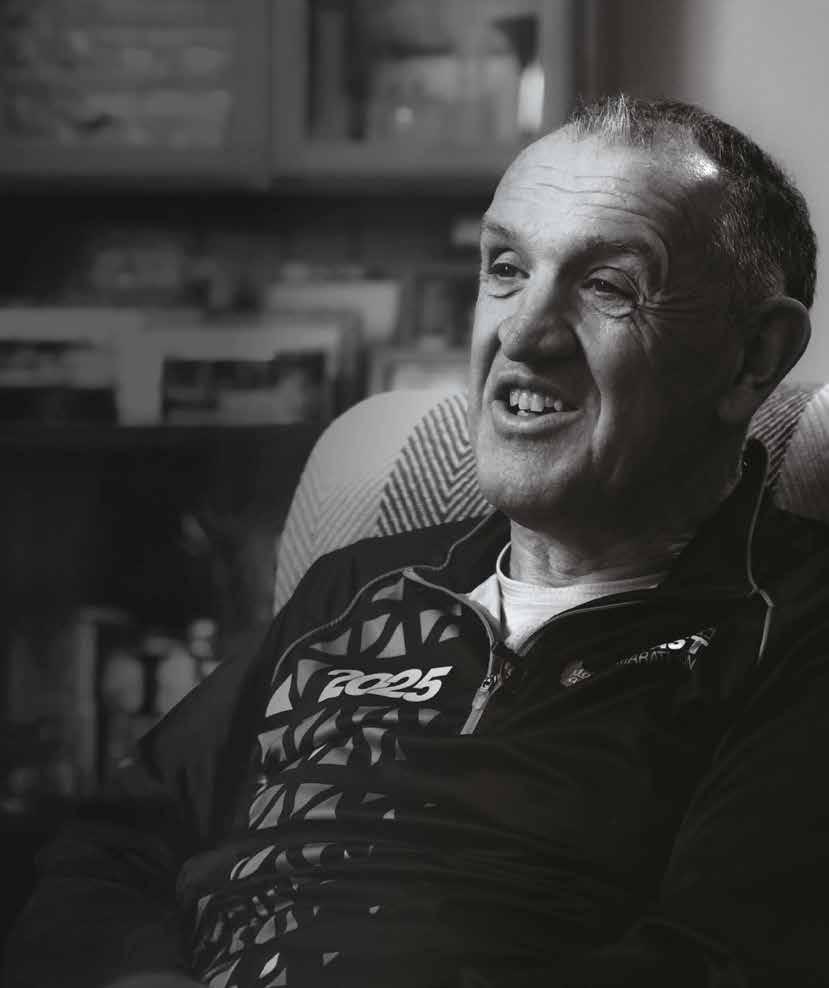
Frank Pantridge invented the defibrillator in this city. He trained at Queen’s. And all these years later, that invention saved me on a Belfast road. That is the legacy we carry forward.
John Deery