
















































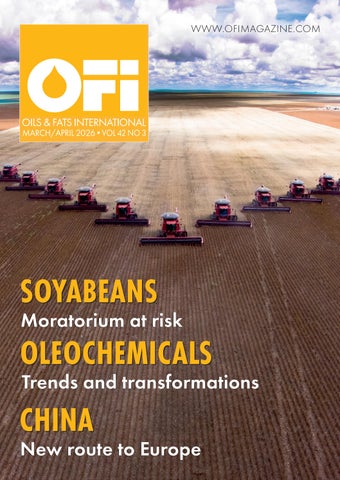
20 Moratorium at risk
The departure of major international grain and oilseed traders from the Amazon Soy Moratorium has raised concerns about future deforestation in the region
24 Global round-up of news OFI reports on some of the latest projects, technology and process news and developments around the world
28 Trends and transformations
The global oleochemicals market is impacted by factors relating to raw materials, regulations on safety, sustainability and the environment, and government policies

32 A new deal
After 25 years of negotiation, the new EU-Mercosur partnership agreement has been signed although issues remain with its ratification. But what are the benefits and issues for oils and fats?
34 New route to Europe

A new China to Europe Arctic expressway is being planned following a maiden voyage through the Russian Arctic to Europe last year

crisis effects
Upward pressure on edible oil prices from Iran conflict
EU moves to phase out palm, soya-based biofuels by 2030
12 Leaf Bio’s plastic for packaging approved
CKHH loses control of Panama
Trump issues order to raise production of glyphosate
events listing
VOL 42 NO 3 MARCH/ APRIL 2026
EDITORIAL:
Editor: Serena Lim serenalim@quartzltd.com +44 1737 855066
Assistant Editor: Gill Langham gilllangham@quartzltd.com +44 1737 855157
ADVERTISING: Mark Winthrop-Wallace markww@quartzltd.com +44 1737 855114
PRODUCTION:
Production Editor: Carol Baird carolbaird@quartzltd.com
CORPORATE:
Managing Director: Tony Crinion tonycrinion@quartzltd.com +44 1737 855164
SUBSCRIPTIONS: Jack Homewood subscriptions@quartzltd.com +44 1737 855028
Subscriptions, Quartz House, 20 Clarendon Road, Redhill, Surrey RH1 1QX, UK
SUBSCRIPTION RATES:
Print & digital: Single issue – £45
1 year – £182 (UK), £210 (overseas)
2 years – £328 (UK), £377 (overseas)
3 years – £383 (UK), £440 (overseas)
Digital only: Single issue – £29
1 year – £170
2 years – £272
3 years – £357

© 2026, Quartz Business Media ISSN 0267-8853
WWW.OFIMAGAZINE.COM

A member of FOSFA
Oils & Fats International (USPS No: 020747) is published eight times/year by Quartz Business Media Ltd and distributed in the USA by DSW, 75 Aberdeen Road, Emigsville PA 17318-0437. Periodicals postage paid at Emigsville, PA. POSTMASTER: Send address changes to Oils & Fats c/o PO Box 437, Emigsville, PA 17318-0437
Published by Quartz Business Media Ltd Quartz House, 20 Clarendon Road, Redhill, Surrey RH1 1QX, UK oilsandfats@quartzltd.com +44 1737 855000
Printed by Stephens & George Print Group, Merthyr Tydfil, Wales

The ongoing Gulf conflict between the US and Israel against Iran is putting upward pressure on vegetable oil prices, while threatening supply chains and agricultural inputs.
With Iran threatening to attack any vessel linked to the USA, Israel or their allies in the critical Strait of Hormuz, crude and gas oil prices have been highly volatile, surging from some US$67/barrel before the conflict to as high as US$120/barrel, and was fluctuating around the US$100/barrel mark as we went to press.
The strait carries around 20% of global oil trade and is effectively shut since US military strikes on Iran began on 28 February, with around 200 tankers anchored or waiting in the Gulf and some 1,000 vessels unable to transit, according to media reports.
The effects of higher energy prices are wide-ranging, raising operational and transport costs for manufacturing and inflationary pressure.
For vegetable oils, the link between energy and prices is also well established. Higher crude oil prices increase the attractiveness of biodiesel, boosting demand for feedstocks such as soyabean, palm and rapeseed oils.
Chicago Board of Trade (CBOT) soyabean oil futures prices rose to their highest level in more than two years at around 68c/lb, a 5-10% rise since the Gulf crisis began, and Bursa Malaysia crude palm oil futures prices have risen around 10%, trading at around RM4,450-4,570/ (US$1,132-1,163)/tonne currently.
While not as critical for global oils and fats trade, the Strait of Hormuz is used for vegetable oil and oilseed cargoes destined for Gulf countries and imports into the region could see a dip.
“Vessels heading to the Middle East are avoiding those routes or demanding higher freight rates, which could increase vegetable oil prices for Gulf Cooperation Council nations and affect trade flows into the region,” Mayur Toshniwal, president and head of trading at Emami Agrotech, an Indian vegetable oil processor and biodiesel maker, was quoted by Bloomberg as saying.
More importantly, the conflict has raised concerns about disruptions in fertiliser supply for oil palm and ahead of the coming planting season for oilseeds in the northern hemisphere. Around one-third of the world’s fertiliser trade normally passes through the Strait of Hormuz and the Gulf region is a major hub for natural gas production, which is the key feedstock for nitrogen fertilisers like urea and ammonia.
When the world’s largest LNG plant owned by QatarEnergy halted production on 2 March, some 20% of the world’s liquefied natural gas (LNG) supply was removed from the market and a prolonged conflict threatens fertiliser production and exports, which will push up prices.
The biggest question is when will the current crisis end? Early comments by US President Donald Trump suggested that he hoped the conflict might last “four to five weeks,” but analysts warn it could be months and there is a real risk it could extend significantly if diplomacy does not advance quickly.
For the oils and fats industry, the immediate outlook is therefore one of heightened volatility. Energy markets are setting the tone, and a prolonged conflict could quickly translate into further price spikes for oilseeds and vegetable oils.
Serena Lim,
OFI Editor, serenalim@quartzltd.com

The ongoing Gulf conflict between the US and Israel against Iran has driven up crude oil prices and threatens to disrupt supply chains for commodities including soyabeans, corn and fertiliser.
Since US military strikes on Iran began on 28 February, Brent crude oil prices have reached as high as US$120/ barrel against pre-conflict prices of around US$67/barrel, due to the effective closure of the Strait of Hormuz, a route that normally carries about 20% of global oil trade.
An Islamic Revolutionary Guard Corps spokesperson said on 11 March that any vessel linked to the USA, Israel or their allies would be targeted in the strait, the BBC reported the following day.
Brent crude oil was trading at around US$96-100/barrel on
12 March despite the International Energy Agency releasing a record 400M barrels of oil the day before to stabilise prices.
Agriculture markets, led by edible oils, have also risen – as biofuels derived from agricultural feedstocks such as soyabeans and corn, have become more attractive, according to a 2 March InfoMoney report.
Soyabean oil prices rose by 3.9% to a two-and-a-half year high on 2 March, the report said. "It's kind of a perfect storm for soyabean oil, with rising oil prices increasing demand for biofuels,” Arlan Suderman, chief commodity economist at StoneX, said in the InfoMoney report.
Soyabean exporters in Brazil and the USA could also see a dip in exports, according to traders in both countries quoted in a 2 March S&P Global report.
“The overall volume is very
small. But a long-term war will impact some shipments over the next few weeks at least,” a trader based in the USA said.
According to data from Brazil’s Secretariat of Foreign Trade, Iran imported 1.4M tonnes of soyabeans from Brazil in 2025.
Brazil also exported 581,478 tonnes of soyabean meal in 2025 to Iran; 53,615 tonnes of soyabean meal to Saudi Arabia; and 48,571 tonnes to Iraq.
In 2024/25, the USA exported 144,000 tonnes of soyabeans to Saudi Arabia and 140,000 tonnes to Iraq, according to US Department of Agriculture data.
S&P Global Commodities at Sea added that around 260,900 tonnes of Brazilian soyabeans were in transit to the United Arab Emirates and Iraq at the start of March and 22,100 tonnes of US soyabeans were enroute to Saudi Arabia.
As the Gulf region is also home to some of the world's largest production plants for natural gas – used to produce ammonia and nitrogen for fertiliser – the conflict in Iran could also disrupt global fertiliser production and supply.
Hong Leong Investment Bank said in a 6 March New Straits Times report that at least one-third of global fertiliser trade passed through the Strait of Hormuz and disruptions to supplies could pose a cost risk to Malaysia’s plantation sector.
EU: The EU's proposed zero-tolerance limit for non-approved pesticides could impact imports of US soyabeans and other products, according to a US Department of Agriculture (USDA) Foreign Agricultural Service (FAS) report.
On 16 December 2025, the European Commission (EC) published its draft Food & Feed Omnibus proposal amending, among others, Regulation (EC) No 396/2005 on maximum residue levels (MRLs).
Described as “a package of measures to streamline and simplify EU food and feed safety legislation,” the proposed regulations could reduce some MRLs for nonEU-approved pesticides to “limit of quantification” levels, effectively a zero-tolerance level, the USDA said.
The proposal could impact US exports of soyabeans, corn, tree nuts and other products that make up over US$5.4bn/year of exports to the EU, the 24 February report said.
“US industry has significant concerns, as do industry contacts in other major EU trading partners –including countries the EU recently signed free trade agreements with.”
The European Parliament and the Council of the EU would need to approve the proposals before it could become EU law, the USDA said.
Ukraine has retained its position as the leading sunflower oil supplier to the European Union (EU), according to European Commission (EC) data reported by Germany’s Union for the Promotion of Plants and Protein (UFOP).
From 1 July 2025 to 1 February 2026, the EU-27 imported just under 1.04M tonnes of sunflower oil, down from 1.28M tonnes during the same period the previous year, the 12 February report said. Of this total, Ukraine delivered 0.95M tonnes
of sunflower oil to the EU.
According to research by Agrarmarkt Informations-Gesellschaft, this represented a market share of almost 92%. However, the volume was significantly below the previous year’s level of 1.2M tonnes, due to tighter domestic feedstock supply.
Ukraine’s year-on-year sunflowerseed harvest was estimated to have fallen, from 13M tonnes in 2024 to 10.5M tonnes in 2025, with the smaller crop reducing processing volumes and limiting the country’s
export potential for sunflower oil.
In addition, Russia’s attacks on infrastructure and port facilities had put pressure on logistics, although market reports indicated export flows had stabilised. Moldova and Serbia were the second and third most important suppliers of sunflower oil to the EU, with market shares of 5% and just under 2%, respectively. While Moldova’s year-on-year deliveries expanded, Serbia’s shipments remained well below the previous year’s level.
CHINA: The General Administration of Customs of China (GACC) has lowered the import value-added tax (VAT) on 16 agricultural products including refined sunflower oil, crude sunflower oil and refined rapeseed oil, according to a 9 February report by the US Department of Agriculture (USDA).
Effective 2 February, the VAT on most of the products had been reduced from 13% to 9%. For example, a new 10-digit tariff line (1512190010) was created for “refined sunflower oil”, which was now subject to a 9% VAT during customs clearance.
The product had previously been classified under HS code 15121900 and had been subject to a 13% VAT, the report said.
Other products included in the new VAT ruling include crude sunflower oil; rice bran, fennel, walnut, peppercorn, apricot seed, grapeseed and peony seed oils; and shortenings made of vegetable fats and oils, and microbial fats and oils.
The US administration has opened a new set of trade investigations targeting 16 trading partners – including Mexico and China – over alleged unfair trade practices that it claims is undermining American manufacturing, FreightWaves reports.
Announced by the Office of the United States Trade Representative (USTR) on 11 March, the investigations were being conducted under Section 301 of the 1974 Trade Act, which allowed the US government to impose tariffs or other trade penalties if foreign policies were found to harm domestic commerce, the 12 March report said.
The probes would examine if the 16 economies were producing more goods than their domestic markets could absorb and exporting the surplus to the USA – potentially suppressing wages, distorting prices and discouraging investment in US factories. The 16 trading partners are Bangladesh; Cambodia; China; the EU; India; Indonesia; Japan; Malaysia; Mexico; Norway; Singapore: South Korea; Switzerland; Tawian; Thailand and Vietnam.
On 11 March, the USA also launched investigations against 60 of its top trading partners relating to failure to take action against forced labour.
The probes follow a Supreme Court decision on 20 February striking down the sweeping global levies introduced by Trump last year under the International Emergency Economic Powers Act.
After the ruling, the Trump administration imposed new temporary 10% trade penalties on US trading partners under Section 301, scheduled to expire after 150 days unless extended,
the FreightWaves report said.
A public comment period on the investigations was due to open on 17 March, with hearings set to begin on 5 May and conclusions expected within around 150 days.
Meanwhile, a coalition of 24 US states have filed lawsuits against the Trump administration's new temporary 10% tariffs, FreightWaves reported on 9 March. The 24 states were claiming that the US administration had unlawfully imposed the broad tariffs, beginning on 24 February, without congressional authorisation. More than 1,000 companies were allso seeking refunds for tariffs that had been collected, the report said.
China said it was “conducting a comprehensive assessment of [the] content and impact” of the new tariff, the BBC reported on 23 February.
Major palm oil producers Indonesia and Malaysia were also monitoring developments.
Indonesia – which signed a trade pact with the USA on 19 February securing tariff exemptions for palm oil, coffee and cocoa – said the agreement was still in force, a 21 February Reuters report quoted Indonesia’s chief negotiator for US tariffs, Airlangga Hartarto as saying.
Malaysia, which also signed a trade deal with the USA in October exempting tariffs on 1,711 products including palm oil, was now closely monitoring legal and policy developments in the USA, a 21 February The Star report quoted the Investment, Trade and Industry Minister Johari Ghani as saying.
Global agribusiness COFCO International delivered its first shipment of sustainable soyabeans from Brazil to Bangladesh on 13 February.
The 40,000 tonne shipment – certified under the company’s independent COFCO International Responsible Agriculture Standard – was delivered to the country’s largest agribusiness, Meghna Group of Industries, the company said on 24 February.
On 18 February, COFCO also made its first delivery of sustainable soyabeans from Argentina to Vietnam (pictured) for a leading animal feed
4

ingredients provider. The cargo was shipped to Phu My Port, near Ho Chi Minh City, and followed other certified COFCO deliveries to Asia, including China and Thailand.
The company has also made
shipments to the EU.
COFCO said it expected to expand its portfolio of sustainable-certified South American soyabeans and corn this year.
The company’s certification programme uses product trace-
ability, satellite imagery monitoring, on-site inspections and independent audits, to ensure farming practices comply with legal, environmental and human rights requirements, with a particular focus on preventing deforestation and conversion.
COFCO International is the overseas agriculture business platform for COFCO Corporation, China’s largest food and agriculture company.
COFCO International is active in global grains, oilseeds, sugar and cotton supply chains and handled over 108M tonnes of commodities in 2024 with revenues of US$38.5bn.
www.ofimagazine.com




Secure your competitive advantage with CPM|Crown’s continuous process Liquids Pilot Plant.
Innovate and optimize your oils and fats processing by partnering with Crown. Our Global Innovation Center and first-of-its-kind Liquids Pilot Plant offer renewable fuel (renewable diesel/ HVO, SAF and biodiesel pretreatment), edible oil and oleochemical companies access to a continuous process for testing, validating, scaling and commercializing any feedstock into highvalue products. The Liquids Pilot Plant is backed by Crown’s unmatched expertise, technology and Lifecycle360™ single-source support services. Conduct real-world testing on traditional oilseeds, emerging oilseeds and waste oils in a confidential, risk-free environment. Lead the liquids processing industry with total confidence in your investment.



US multinational food company Kraft Heinz has halted plans to split the company, Reuters reported on 11 February.
New CEO Steve Cahillane said the move was necessary due to current market conditions in the food industry, adding the challenges were “fixable and within our control”.
Formed by the merger of Kraft Foods Group and the HJ Heinz Company in 2015, Kraft Heinz’s portfolio includes leading brands such as Heinz ketchup and Philadelphia cream cheese.
Many Kraft Heinz products contain oils and fats, either as core ingredients or for texture, flavour and shelf stability.
When first announcing plans on 2 September to split into two separate compa-
nies – one focused on sauces and spreads and the other on grocery staples and ready-to-eat meals – the company said the move was aimed at maximising its capabilities and brands while reducing complexity.
However, market conditions had worsened since the decision to split last summer, the report said.
“We are confident that our decision to pause the work related to the separation and fully focusing our resources in [the] service of growth is the right move at this time,” said John Cahill, chair of Kraft Heinz’s board.
While not ruling out the possibility of a split in the future, Cahillane said there was no end date for the pause, which was
expected to save the company US$300M in costs in 2026.
Cahillane said Kraft Heinz would focus on marketing and research with a US$600M investment to drive recovery in its US business. The company would also be increasing investments in R&D by around 20% in 2026 compared to 2025.
Kraft Heinz, like other packaged foods companies, has been struggling with weak demand for its condiments and other product staples as consumers look for cheaper options, according to Reuters
In its full year 2025 results published on 11 February, Kraft Heinz reported a 3.5% drop in net sales in 2025 to US$24.9bn compared to US$25.8bn the previous year.
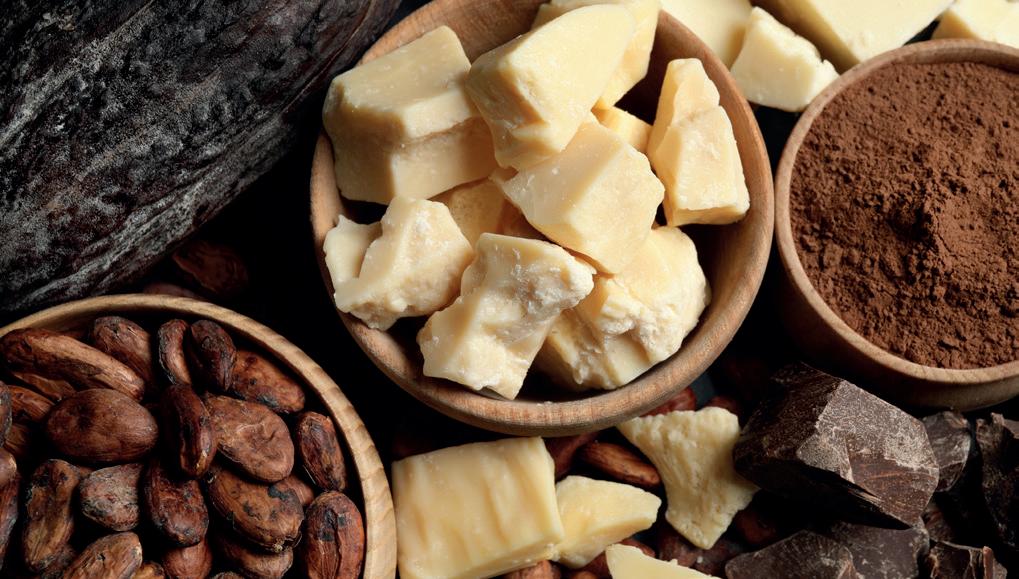
Cocoa prices have fallen to three-year lows and a global cocoa bean surplus of 400,000-500,000 tonnes is expected in 2025/2026, according to a 4 March Lipsa report.
A 9 March Cocoa Intel report said the 26 March New York cocoa contract stood at around US$3,230/tonne, compared with the highs of US$10,000/ tonne in 2024.
The price drop was due to a strong global harvest coinciding with weaker demand from manufacturers making smaller chocolate bars and using less cocoa in response to previously higher prices, The Guardian wrote on 11 March.
With much of the world’s cocoa produced in Ghana
and Ivory Coast, where state regulators set prices a year in advance, cocoa beans were around 40% more expensive than international traders were willing to pay, the BBC wrote on 9 March.
Meanwhile, cocoa butter prices had also dropped, according to the Lipsa report.
The current price for cocoa butter is around US$8,500$10,000/tonne compared with highs of US$11,000-$12,000/ tonne in 2024, according to market reports.
The drop in cocoa butter prices had led manufacturers to reformulate their products, switching away from cocoa
butter equivalents (CBEs) –which had previously substituted expensive cocoa butter. Lipsa wrote.
The rapid decline in cocoa butter prices had also made it difficult for shea stearin (used to produce CBEs) to compete with cocoa butter, as shea nuts remained expensive and production costs were still high, the report said. According to Lipsa, shea nuts were around US$900/tonne in Ghana and US$650 in Burkina Faso.
Although a potential decrease in shea stearin prices was most likely to occur with the start of the new season (May-June), the situation was expected to persist for the remainder of the season, Lipsa wrote.
India, the world’s top edible oil importer, has cancelled more soyabean oil cargoes due to the sharp increase in prices for the oilseed compared with alternatives, according to a 4 March Financial Post report quoting Bloomberg.
At the time of the report, cancelled orders included shipments of around 25,000 tonnes from Russia and 6,000-8,000 tonnes from South America, according to Aashish Acharya, vice president at Patanjali
Foods, one of India’s top buyers.
The Russian cargoes had been scheduled to arrive in India by late March or early April, while the South American shipments had been due in the April to July period.
In the week before the report, India had also cancelled about 70,000 tonnes of South American soyabean oil and had backed out of at least 35,000 tonnes in January as the rupee’s slump had increased the cost of imports, the Financial Post wrote.
In addition, buyers had cancelled or delayed more than 100,000 tonnes of Argentinian shipments in December.
Soyabean oil has been trading at a premium to palm oil since 2023, according to the report.
“Palm oil is a cheaper option for buyers,” Acharya said. “We can see more Indian purchases of palm oil … as nearby shipments of palm oil are around US$60US$70 cheaper compared to soyabean oil.”





The government will prioritise the development of the country’s coconut industry this year, as government projections show the sector could generate up to US$3bn in export revenues in 2026, the Daily Tribune wrote on 10 February.
Citing the industry as a key pillar of the president’s agricultural agenda, Presidential Communications Office undersecretary Claire Castro was quoted as saying that the administration was committed to boosting coconut production and improving the welfare of farmers nationwide.
On 10 February, the President had approved 21 priority bills, including a proposal to amend the Coconut Farmers and Industry Trust Fund Act, the report on the same day said.
“The president emphasised that the government should help the coconut farmers because we are a large exporter of the product globally,” Castro said.
With production of 14.77M tonnes in 2024, the Philippines is the world’s second-largest coconut producer, behind Indonesia, according to the report.
Data from the Philippine Statistics Authority showed that coconut exports reached US$2.66bn in 2024, up 71.7% from US$1.55bn the previous year.
Coconut oil remained the country’s top export, accounting for more than twothirds, or about US$2.2bn, of total coconut export earnings.
Further development of the coconut industry was expected to raise farmers’ incomes while strengthening the Philippines’ position in the global agricultural market, Castro added.
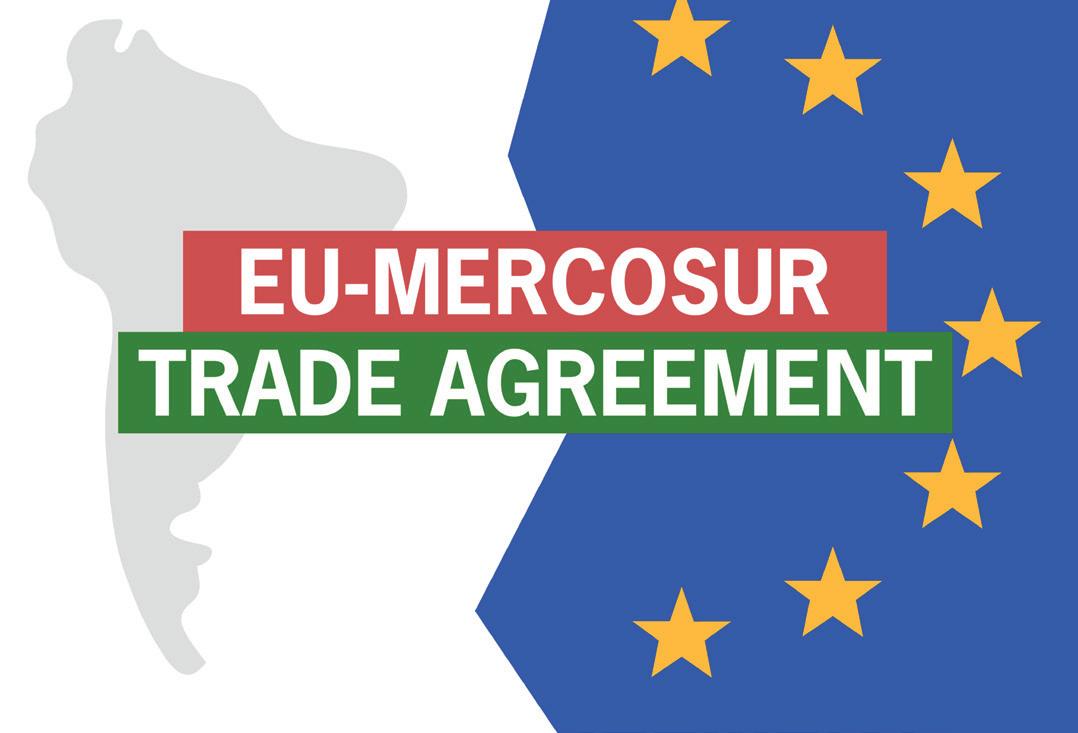
The European Commission (EC) has provisonally approved the free trade agreement between the EU and the South American bloc of Mercosur states – Argentina, Brazil, Paraguay and Uruguay – despite a pending review by the European Court of Justice (ECJ), Deutschland reported on 28 February.
Concluded in January after 25 years of negotiations, the EU-Mercosur deal could remove around €4bn (US$4.7bn)
of duties on EU exports, making it the bloc’s biggest ever free trade agreement in terms of potential tariff reductions, Reuters wrote on 27 February.
The EC said on 27 February that the EU would provisionally apply the agreement, one day after Argentina and Uruguay ratified the deal, with Brazil and Paraguay expected to follow soon, Reuters wrote.
The deal was signed on 17 January by the EC and EU Council of Ministers but, four
days later, members of the European Parliament (EP) opposing the agreement secured a majority vote in the EP to refer it to the ECJ for a legal review, which had the potential to delay its full implementation by two years, Reuters wrote.
However, the decision to provisionally apply the agreement meant the EU and Mercosur could begin reducing tariffs and applying other trade aspects of the agreement prior to ultimate approval.
France – the EU’s largest agricultural producer – had been the most vocal opponent of the Mercosur deal, saying it would sharply increase imports of cheap beef, sugar and poultry and undercut domestic farmers, who had staged repeated protests, Reuters said.
In the grains and oilseeds sector, Mercosur countries would export more crops, such as soyabeans, to the EU, increasing competition for European farmers, World Grain wrote on 20 January.
See 'A new deal', p32
Palm oil output in Sabah – one of Malaysia’s key producing states – was set for a sharp decline due to heavy rainfall and flooding at plantations, The Edge Malaysia wrote on 27 February.
February production could fall by 15%-17% compared to the previous month, said Prakash Arumugam, the chairman of the Malaysian Palm Oil Association's Sabah branch.
The association estimated that national output had fallen 12% in the first 20 days of February compared to the previous month led by double-digit percentage drops in Sabah and Sarawak.
Malaysia is the world’s second largest palm oil producer and Sabah and Sarawak – both located on the island of Borneo – are the country’s top two producing states, each accounting for about 22% of national output.
Meanwhile, a Malaysian Palm Oil Coun-
cil (MPOC) report on 24 February said that palm oil prices were projected to consolidate within the range of MYR4,000–MYR4,300 (US$1,012-US$1,088)/tonne in March, supported by stronger Malaysian exports. Additionally, Indonesia’s front-loading of shipments ahead of its 1 March crude palm oil export levy hike from 10% to 12.5% was projected to lower palm oil stocks in both countries.
The MPOC said Malaysian palm oil exports rose to 1.48M tonnes in January, up 11.4% from December, mainly driven by stronger demand from India and Egypt. India was again likely to increase its palm oil consumption due to improved price competitiveness since late 2025.
“Palm oil consumption in India is forecast to rise by 800,000 tonnes in 2026, while soyabean and sunflower oil consumption is expected to decline by 400,000 tonnes,” the MPOC said.

INDONESIA: Higher palm oil export levies – mainly used to fund biodiesel subsidies and stabilise the domestic palm oil sector –came into effect on 1 March.
The crude palm oil (CPO) export levy is now 12.5% compared with 10%, while levies for refined products have increased by 2.5% from its previous 4.74-9.5% rate, according to previous Reuters information.
Meanwhile, on 2 February, President Prabowo Subianto announced the continuation of the country’s ban on crude palm oil mill effluent (POME) and used cooking oil (UCO) exports, introduced in January 2025, saying that palm oil-based residues should be prioritised for domestic use, Fastmarkets wrote on 23 February.
FINLAND: Renewable fuels producer Neste reported increased renewable diesel and sustainable aviation fuel (SAF) volumes in its 2025 fourth quarter results, announced on 5 February.
In the fourth quarter, Neste produced 726,000 tonnes of renewable diesel and 100,000 tonnes of SAF compared with 602,000 tonnes of renewable diesel and 72,000 tonnes of SAF in the same 2024 period.
Neste said the market environment for renewables had improved and record SAF sales had supported profitability.
The European Commission (EC) has launched a public consultation on a draft amendment proposing the gradual exclusion of biofuels derived from palm and soyabean oils by 2030, Biofuels International wrote on 9 February.
Under the proposed amendment to Delegated Regulation (EU) 2019/807, companies subject to EU renewable energy quotas would no longer be permitted to count biofuels produced from these feedstocks towards their obligations after that date, the report said.
The draft regulation outlined a phased reduction in the eligibility of palm- and soya-based biofuels from 2025 onwards, with intermediate thresholds set at 71.4% in 2025, 42.8% in 2027 and 14.3% in 2029, measured as a share of gross final energy consumption.
From 2030, rapeseed oil would become the only cultivated biomass oil source eligible for quota compliance.
Several EU member states – including France, the Netherlands and Germany – had already moved ahead of the timeline by excluding palm oil-based biofuels from their national schemes since 2023, Biofuels International wrote.
The proposed exclusion of soyabean oil was based on findings published on 20 January by the EC in its report to the European Parliament and Council on the global expansion of food and feed crop production.
Prepared by consultancy Guidehouse, the report concluded that palm oil and soyabeans were raw materials associated with a high risk of indirect land-use change (iLUC).
Indonesia has requested authorisation from the World Trade Organization (WTO) to suspend trade concessions towards the EU after the bloc failed to comply with a WTO ruling related to restrictions on palm oil-based biofuels, the Jakarta Globe wrote on 7 March.
Trade Minister Budi Santoso said the request had been sent to the WTO’s Dispute Settlement
Body following the EU’s failure to meet the 24 February deadline to adjust its policies in accordance with the ruling in the DS593: EU–Palm Oil dispute. Indonesia’s move would allow it to seek approval to impose retaliatory measures.
The dispute stemmed from the EU’s Renewable Energy Directive (RED), which classified palm oil as a ‘high-risk’ biofuel feedstock for indirect land use change (ILUC), which must be phased out from counting towards EU renewable energy targets in transport by 2030.
In January 2025, a WTO panel had found that elements of the EU’s policy were inconsistent with international trade rules as they singled out palm oil as high-risk, while allowing competing biofuels to continue benefiting from the bloc’s renewable energy policies.
The panel also determined that certain national measures, including tax incentives in France that favoured biofuels derived from rapeseed and soyabeans, rather than palm oil, were discriminatory.
The US Department of Treasury and Internal Revenue Service released proposed rules for the 45Z clean fuel production tax credit on 3 February, Biodiesel Magazine reported on the same day.
The 45Z income tax credit was for clean fuel produced domestically after 31 December 2024 and sold by 31 December
2029. For fuel produced on or before 31 December 2025, the credit started at 20¢/ gallon for non-aviation fuels and 35¢/gallon for sustainable aviation fuel.
The proposals said that to qualify for the credit, firms would have to produce a transportation fuel that met requirements for sustainability, emissions rate, co-processing
and prevention of double crediting; produce the fuel at a qualifying facility in the USA; and sell the fuel to an unrelated person in a qualified sale during the taxable year.
Transportation fuel produced after 31 December 2025 would have to be exclusively derived from a feedstock produced or grown in the USA, Mexico or Canada.
www.ofimagazine.com 21-23 September 2026, Amsterdam, the Netherlands www.ofimagazine.com/ofi-international-2026


























Plant-based material producer Leaf Bio’s bio-based plastic has been approved for use in food packaging applications in China, World Bio Market Insights wrote on 6 February.
The company’s polyethylene furanoate (PEF) material had completed China’s national food contact safety evaluation, the report said.
Leaf Bio uses technology to break down
ASIA: A research team in China has found that waste from the Himalayan Prinsepia utilis Royle oilseed plant can be repurposed as a stabiliser for use in cosmetic applications, Cosmetics Design Asia wrote on 11 February.
A deciduous shrub that thrives at high altitudes in the Himalayan region, Prinsepia utilis Royle has been widely used in Chinese and Indian folk medicines to treat ailments such as skin diseases, rheumatic pain and and inflammation, while its oil can be used for cooking or to make laundry soap.
However, the oil extraction process typically left behind a substantial amount of discarded solid residue.
The scientists converted the raw seed residue via micronisation technology into a fine, spherical powder capable of stabilising a Pickering solution, a type of emulsion that is stabilised by solid particles creating a physical barrier at the interface between the oil and water phases. This was in contrast to traditional creams which often used synthetic surfactants to prevent oil and water from separating, which could cause skin irritation or environmental concerns.
The chemical-free powder was also rich in polyphenols and polysaccharides, which had an antioxidant function.
plant materials – including agricultural waste and recycled textiles – to release natural sugars, such as glucose, its website says. Using proprietary catalysts and chemical reactions, the sugars are converted into 2,5-Furandicarboxylic acid (FDCA), which is then combined with biobased glycol to create PEF, a next generation polyester.
Leaf Bio’s PEF can be used as an alternative to petroleum-based plastics, and is
suitable for use in packaging, textiles and other applications.
China’s food-contact material regulations are among the strictest globally, and as consumer demand for environmentally-conscious packaging grows, regulatory approvals in major markets like China are essential for scaling production and commercial adoption, according to the World Bio Markets Insights report.

Scottish biotech company MiAlgae has announced breaking ground on a new facility to produce omega-3 rich microalgae fed with leftover barley grains from whisky distillation.
Although fish oil is the traditional source of omega-3s, fish do not produce omega-3 but acquire them from eating algae and smaller fish that contain
Engineering company Inovapro is planning to develop a data centre in Croatia that will use waste from the olive oil industry for power generation.
Olive pomace is a solid byproduct left after olives are crushed and pressed to extract olive oil. It contains olive skins, pulp, pit fragments, water and residual oil and is difficult to handle due to its acidity and toxicity.
The €20M (US$23.6M) AI
these essential nutrients.
MiAlgae said it had used the leftover barley grains that would normally be discarded to feed algae in its fermentation tanks, generating an algal product that was dehydrated and processed into large quantities of plant-based omega-3.
The company broke ground on a new production facility
in Grangemouth, Scotland on 12 December. The plant was scheduled to open in the second quarter of this year and was expected to recycle 36.1M litres of whisky byproducts, leading to a 10-fold increase in production capacity.
Located close to key raw material suppliers and major customers, MiAlgae said the facility was designed with modular scalability, allowing it to meet growing demand from pet food and aquaculture brands.
MiAlgae currently produces two products – MiAlgaeFish for aquaculture feed and MiAlgaePet for pet food supplementation.
The company said its goal was to produce 53,000 tonnes/year of marine omega-3 microalgae, reducing global dependence on fish oil by 10%.
data centre facility in Čaporice, about 48km northeast of Split, was scheduled for completion in the first half of 2027 and would be integrated with an energy park, the 12 February report said.
Heat generated by the data centre would be redirected to help dry the olive pomace at the energy park, which was expected to have the capacity to process up to 12,900 tonnes/ year of bio-waste, the report
21-23 September 2026, Amsterdam, the Netherlands www.ofimagazine.com/ofi-international-2026
said. The energy park would supply the data centre with biomass power generated from the pomace and waste from Croatia’s tourism and hospitality sectors.
Inovapro – which specialises in rooftop solar systems, heating and cooling installations and other energy-related projects – was seeking co-financing from EU funds to support the development, World Bio Market Insights wrote.
www.ofimagazine.com
















CANADA: Global agribusiness giant Bunge divested its grain elevator in Valparaiso, Saskatchewan, to Cargill on 23 January – the final sale of six facilities as part of the company’s agreement with the Canadian government to receive regulatory approval for its merger with Glencore’s agriculture division Viterra.
The Valparaiso facility had been held separately from the rest of Bunge’s business and, since 2 July, had been run by an independent Hold Separate Manager.
Divestment of Bunge’s five other Western Canada grain elevators was announced by the company on 7 November 2025.
World Grain said on 26 January that local companies had acquired the five facilities.
Separate from its commitment to the government, Bunge had also divested its Eyebrow grain elevator in Saskatchewan to FW Cobs, the report said.
The US$8.2bn Bunge-Viterra merger, which was completed in July 2025 after more than two years of negotiations, created one of the world’s largest agribusiness firms, moving it closer in size and scope to Cargill and ADM, World Grain wrote at the time.
Following the merger, Missouri-based Bunge Global has a presence in more than 50 countries, operates more than 300 grain storage facilities, has more than 40 port terminals, and over 155 processing, refining and packaging facilities, according to the 26 January World Grain report.
According to Sosland Publishing’s 2026 Grain & Milling Annual, Bunge operates 80 grain facilities with 293M bushels of storage.
Panama took over operations of two container terminals at either end of the Panama Canal on 23 February, ending more than three decades of management by Hong Kong-based CK Hutchison Holdings (CKHH), FreightWaves reports.
The takeover followed a ruling on 29 January by Panama’s Supreme Court that CKHH’s concession through its Panama Ports Company (PPC) subsidiary was unconstitutional.
Maersk’s APM Terminals unit had been put in temporary charge of operations at the Pacific terminal of Balboa while the country’s port authority prepared to bid a long-term contract, the 24 February FreightWaves report said. Mediterranean Shipping Co’s terminal unit was also part of new management, operating Cristobal’s Atlantic facility, according to published reports.
The Panama Canal is a critical route for merchant and military vessels moving between the Atlantic and Pacific oceans and for US grain and soyabean exports to Asia. It has become highly
politicised, with US President Donald Trump saying the USA should take back control of the canal, and that China’s presence there threatened US security.
Last year, CKHH announced that a consortium – including US investment firm BlackRock and the Mediterranean Shipping Co – was buying a 90% stake in PPC and an 80% interest in its other subsidiaries and associated companies operating at 43 ports in 23 countries.
The US$22.8bn sale had stalled due to China’s State Administration for Market Regulation (SAMR) conducting a review into the deal “to protect fair market competition and public interest”, a Berliner Tageblatt report quoted a SAMR spokesperson as saying last year.
CKHH said it was considering its legal options.
“The takeover of the two terminals reflects the culmination of a campaign by the Panama state against PPC and the concession contract over the past year.”
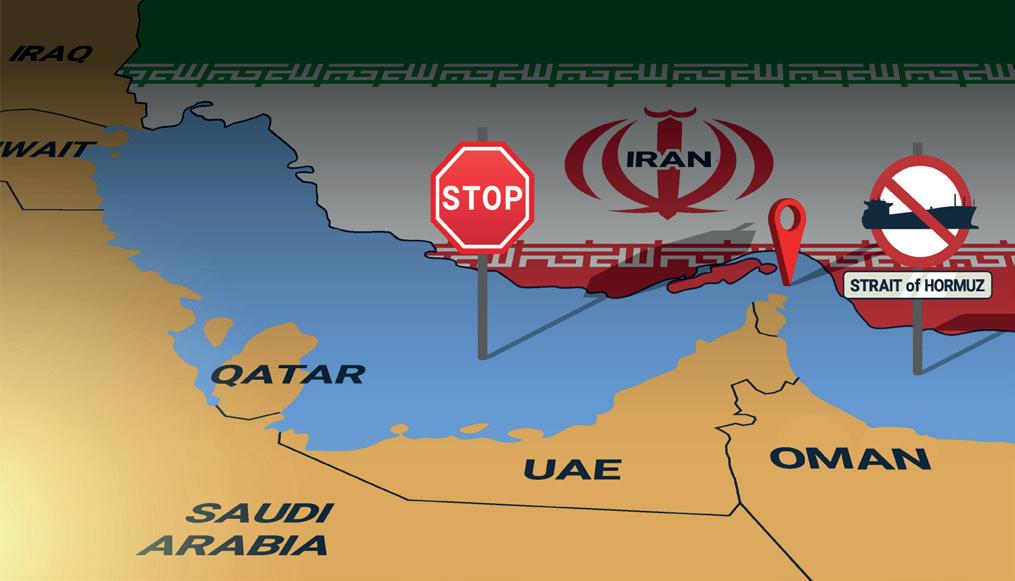
The vital Strait of Hormuz shipping route is effectively closed as a result of the escalating US-Israeli conflict against Iran.
At least 150 vessels were stranded in and around the strait, through which about 20% of the world’s oil supply passes, after the USA and Israel began intense airstrikes on Iran on 28 February, The Guardian wrote on 3 March.
In a Reuters report citing Iranian media, an Iranian Revolutionary Guards senior official was quoted as saying
that the Strait of Hormuz was closed and Iran would fire on any ship trying to pass.
Against this backdrop, the International Maritime Organization (IMO) has urged ships to avoid the Strait of Hormuz.
Several leading marine insurers, including Norway’s Gard and Skuld and New York-based American Club, said they were cancelling war risk cover for ships operating in Iranian, as well as Gulf and adjacent waters, with effect from 5 March, The Guardian wrote.
Danish shipping company
AP Moller-Maersk said it would be re-routing some sailings away from Middle East waterways via the Cape of Good Hope, FreightWaves reported on 27 February.
The company had just announced returning to some Red Sea-Suez Canal routes a few weeks before the Iran conflict began, following the end of Houthi attacks on commercial shipping in the Red Sea.
Mediterranean Shipping Co also announced on 3 March that it was diverting all cargo destined for the Arabian Gulf region to safe ports and levying a US$800 charge per container on all affected shipments, to cover deviation costs, FreightWaves said in a 9 March report.
The Strait of Hormuz is used for vegetable oil and oilseed cargoes destined for Gulf countries but is not a critical global market chokepoint in the same way as it is for crude oil.
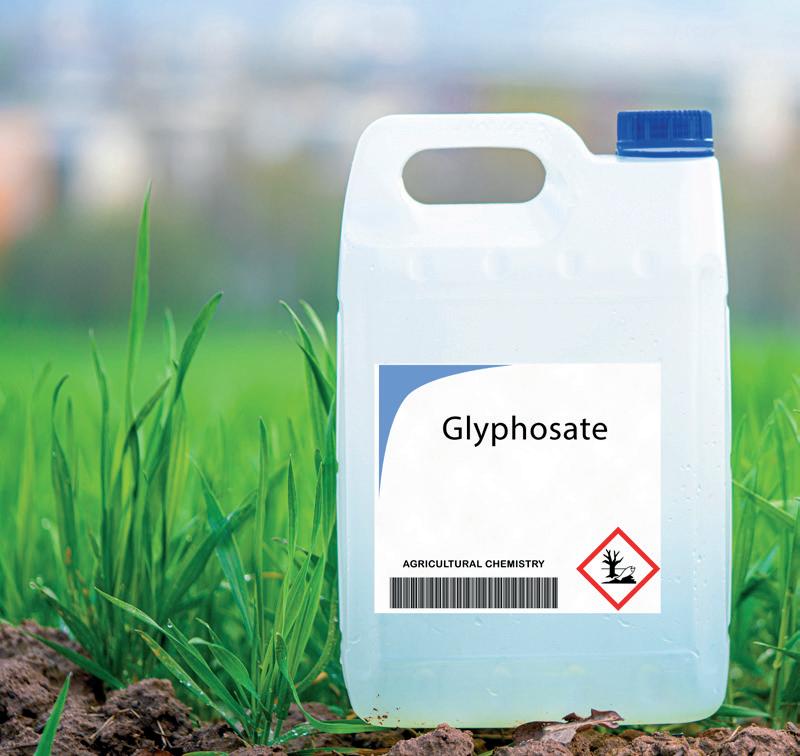
US President Donald Trump issued an executive order on 18 February to increase glyphosate production, one day after German chemical giant Bayer proposed a class settlement worth up to US$7.25bn to resolve current and future cancer lawsuits involving its glyphosate-based Roundup weedkiller, The Legal Examiner reports.
Trump invoked the Defense Production Act to boost domestic production of glyphosate and elemental phosphorous, designating them as critical to national defense and food security. At the time of the 20 February report, Bayer was the only domestic producer of both.
Bayer has faced years of legal claims linked to its Roundup herbicide, which it inherited as part of its US$63bn acquisition of US agrochemical company Monsanto in 2018.
Its proposed class settlement was filed on 17 February and follows a decision by the US Supreme Court on 16 January to grant a review of the Durnell case, which revolves around whether state claims based on failure-to-warn theories
are pre-empted by federal law.
“The proposed class settlement agreement, together with the Supreme Court [review], provides an essential path out of litigation uncertainty,” said Bayer CEO Bill Anderson.
The new proposal would cover plaintiffs who alleged exposure to Roundup prior to 17 February 2026, and:
• had a medical diagnosis of Non-Hodgkin lymphoma (NHL), or
• had received a medical diagnosis of NHL before the end of a 16-year period following final approval of the agreement.
If approved, Monsanto would make declining capped annual payments for up to 21 years, totalling up to US$7.25bn.
Bayer said the new proposal was markedly different from the class settlement it put forward in 2020 – a four-year programme with future litigation beyond four years subject to decisions by an expert science panel. The new proposed settlement was a long-term compensation programme, with funding for up to 21 years, with current and future claimants managed by a professional claims administrator.
While agriculture groups have welcomed Trump’s order, environmental and health advocates – including the Make America Healthy Again (MAHA) coalition formerly aligned with Trump – have described it as prioritising corporate interests over public wellbeing.
Bayer said leading regulators including the US Environmental Protection Agency and EU regulatory bodies continued to conclude that glyphosate-based herbicides were not carcinogenic.
Glyphosate is widely used on many genetically modified (GM) crops, engineered to tolerate it including soyabeans, corn, cotton and canola.
INDIA: Researchers from Junagadh Agricultural and Jouf universities have used the CRISPR/Cas9 gene editing technique to alter the fatty acid desaturase-2 (FAD2) gene in an Indian soyabean variety to increase its oleic acid content, Natural Science News wrote on 16 February.
Conventional soya varieties contained a high proportion of linoleic acid, making the oil prone to oxidation, while oleic acid was a healthier, more stable monounsaturated fat, the study said.
Previous research had identified two versions of the FAD2 gene, FAD2-1A and FAD2-1B, as crucial regulators of oleic acid content in soyabean seeds.
In the latest study, the researchers designed a guide RNA (sgRNA) to target the FAD2 gene in the Gujarat Junagadh Soybean-3 (GJS-3) variety.
Editing the FAD2 gene increased the oleic acid content from 22% to 33-34% and reduced linoleic acid levels from 54% to 30-32%.
The Cas9 gene and the sgRNA sequence were completely removed from the genome, meaning that edited lines did not contain any foreign DNA, an important consideration for regulatory approval and consumer acceptance of genetically modified (GM) crops.
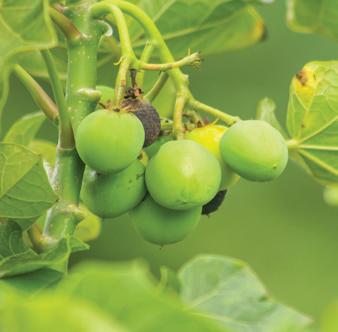
A research team in China has discovered a key japtropha gene that can boost seed yields and oil content, Phys.org wrote on 2 February.
Jatropha has potential as a biodiesel and bio-jet fuel feedstock due to its high oil content, high biomass productivity, adaptability to marginal lands under a variety of agro-climatic conditions and lack of competition with food production, the researchers said.
However, this potential was limited by its low seed production.
In a study published in Plant Biotechnology Journal on 23 January, researchers
from the Chinese Academy of Sciences’ Xishuangbanna Tropical Botanical Garden (XTBG) highlighted the important role of the JcSPL9 gene, the Phys.org report said.
The gene acted as a master switch, controlling when the japtropha plant shifted from growing leaves to producing flowers and seeds.
In addition, changes were found in the types of fatty acids produced in the seeds, indicating that the genetic mechanism affected oil composition.
Experiments showed that plants engineered to overexpress a modified form of JcSPL9 (called rJcSPL9) produced 80.76%
more seeds and had 12.6% higher oil content compared to normal plants.
In contrast, boosting a related molecule called JcmiR156a led to a 51.67% drop in seed yield and an 8.28% decrease in oil content.
The dual effect on seed yield and oil content made SPL9 a promising target for molecular breeding, the researchers said.
“JcSPL9 represents a promising tool for increasing seed yield, oil productivity and quality in jatropha, with potential applications in other oilseed crops,” said XTBG’s Tang Mingyong, one of the study’s authors.
13-15 April 2026
Argus Biofuels and Feedstocks Asia Conference Singapore www.argusmedia.com/en/events/ conferences/biofuels-and-feedstocksasia-conference
22-23 April 2026
24th International Conference Black Sea Grain Kyiv
Kyiv, Ukraine
https://ukragroconsult.com/en/ conference/black-sea-grain-kyiv-2026/
23-24 April 2026
Euro Grain Exchange Bucharest, Romania https://eurograinevents.com/
28-30 April 2026
Argus Green Marine Fuels Europe Conference Antwerp, Belgium
https://www.argusmedia.com/en/ events/conferences/green-marine-fuelsconference
2-3 May 2026
Biobased Surfactants
New Orleans, Louisiana, USA
https://annualmeeting.aocs.org/shortcourses/biobased-surfactants/?utm_ source=smartbrief&utm_ medium=email&utm_campaign=sc26recruitment
3-6 May 2026
AOCS Annual Meeting & Expo Hyatt Regency New Orleans, USA www.aocs.org/event/2026-aocs-annualmeeting-expo/
6-7 May 2026
16th ICIS World Surfactants Conference
The Westin Jersey City New Jersey, USA
https://events.icis.com/website/8544/
6-7 May 2026
Palmex Jakarta 2026
Jakarta International Expo, Indonesia https://palmex-indo.com/
11-13 May 2026
GrainCom26
Geneva, Switzerland
https://graincomevents.com/
27-30 May 2026
24th European Fat Processors and Renderers Association (EFPRA) Congress Tenerife, Spain https://efpra.eu/events/
2-4 June 2026
4th International Conference Lipid droplets & Oleosomes Montpellier, France
https://4thldocongress.seminaire.inrae.fr/
9-10 June 2026
International Grains Conference (IGC) IET London, UK
https://www.igc.int/en/conference/ confhome.aspx
10-11 June 2026
Oleofuels 2026
Seville, Spain www.wplgroup.com/aci/event/oleofuels
15-17 June 2026
Argus Biofuels & Feedstocks Latin America Conference
São Paulo, Brazil
www.argusmedia.com/en/events/ conferences/latin-america-biofuels
15-17 June 2026
Sustainable Aviation Futures Congress Amsterdam, the Netherlands www.safcongress.com
18-19 June 2026
International Symposium on Deep Frying Hamburg, Germany
https://veranstaltungen.gdch.de/ microsite/index.cfm?l=11921&sp_id=2
2-3 July 2026
Food Lipids and Lipidomics for Health, Nutrition and Sustainability Aveiro, Portugal
https://veranstaltungen.gdch.de/ microsite/index.cfm?l=11918&modus=
5-10 July 2026
27th International Symposium on Plant Lipids - ISPL Málaga 2026
Málaga, Spain
https://www.neo.emma.events/ISPL2026
15-17 September 2026
Argus North American Biofuels, LCFS & Carbon Markets Summit Monterey, California, USA www.argusmedia.com/en/events/ conferences/north-american-biofuelslcfs-carbon-markets-summit
21-23 September 2026
OFI International 2026
Amsterdam Congress Centre @ Park Inn by Radisson, the Netherlands www.ofimagazine.com/ ofi-international-2026
28-30 September 2026

3rd Berlin Symposium on Structured Lipid Phases Berlin, Germany https://eurofedlipid.org/3rd-berlinsymposium-on-structured-lipid-phases/ 12-14 October 2026
6th International Symposium on Lipid Oxidation and Antioxidants Wageningen, the Netherlands https://eurofedlipid.org/6th-internationalsymposium-on-lipid-oxidation-andantioxidants/
13-14 October 2026
OFIC 2026
Kuala Lumpur Convention Centre, Malaysia https://mosta.org.my/
20-22 October 2026
Argus Biofuels Europe Conference London, UK www.argusmedia.com/en/events/ conferences/biofuels-europe-conferenceand-exhibition
20-25 October 2026
2026 North American Renderers Association (NARA) Annual Convention Tucson, Arizona, USA https://nara.org/about-us/events/
4-6 November 2026
Sustainable Aviation Futures North America Marriott Marquis, Houston, USA https://www.safcongressna.com
5-6 November 2026
European Commodities Exchange Rotterdam, the Netherlands www.ece-rotterdam2026.eu
More Chinese imports of US soyabeans, growing biofuel consumption and record
US crush has pushed up soyabean prices, in turn helping to support prices of palm and soft oils
John Buckley
Even before the latest turmoil in the Middle East, vegetable oil markets were revving up on renewed bullish input from the energy sector.
Amid growing biofuel consumption, revived Chinese demand for US soyabeans and record US crushing, soya has led the field, showing a startling 30% rally in Chicago Board of Trade (CBOT) futures in the opening months of 2026, with near delivery prices passing US$62c/ lb for the first time since September 2023.
Soya’s jump has helped support prices of other soft oils and palm oil. A mixed bag of market factors and the new Iranian risk of crude oil market disruption suggest more volatility ahead.
Soyabean oil consumption was already slated to get a further significant boost from the biofuel industry. The US Department of Agriculture (USDA)’s recent Outlook Forum estimated 2025/26 biofuel consumption of soyabean oil in the sector at 6.71M tonnes – a near 26% increase on the year. At 51% of total offtake, this would exceed food use for the time.
For 2026/27, prospects for US soyabean oil demand for biofuels are stronger still, with the USDA projecting a rise to 7.85M tonnes.
Proposals are also going to the White House to use more domesticallysourced biofuel feedstock, while the US Environmental Protection Agency proposal for total biofuel blending is for 24.46bn lbs (11.1M tonnes) in 2027, against 22.33bn lbs (10.13M tonnes) in 2025.
Analysts also expect demand for soyabean and other vegetable oils to get a lift from the most recent proposals to shift half of previously-waived biofuel obligations (under US small refinery exemptions) to larger oil refineries.
US soyabean oil exports
In contrast, US soyabean oil exports,
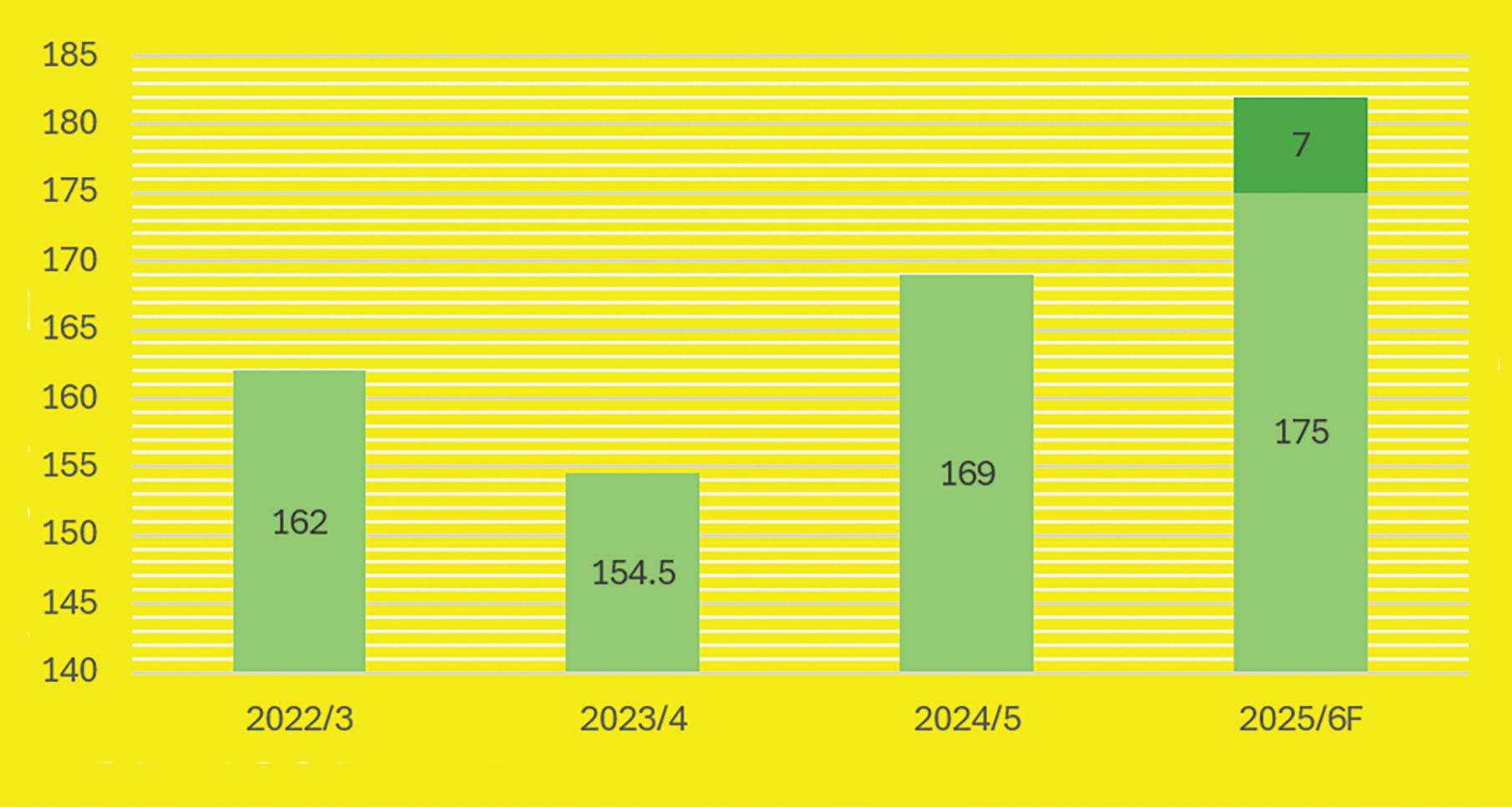
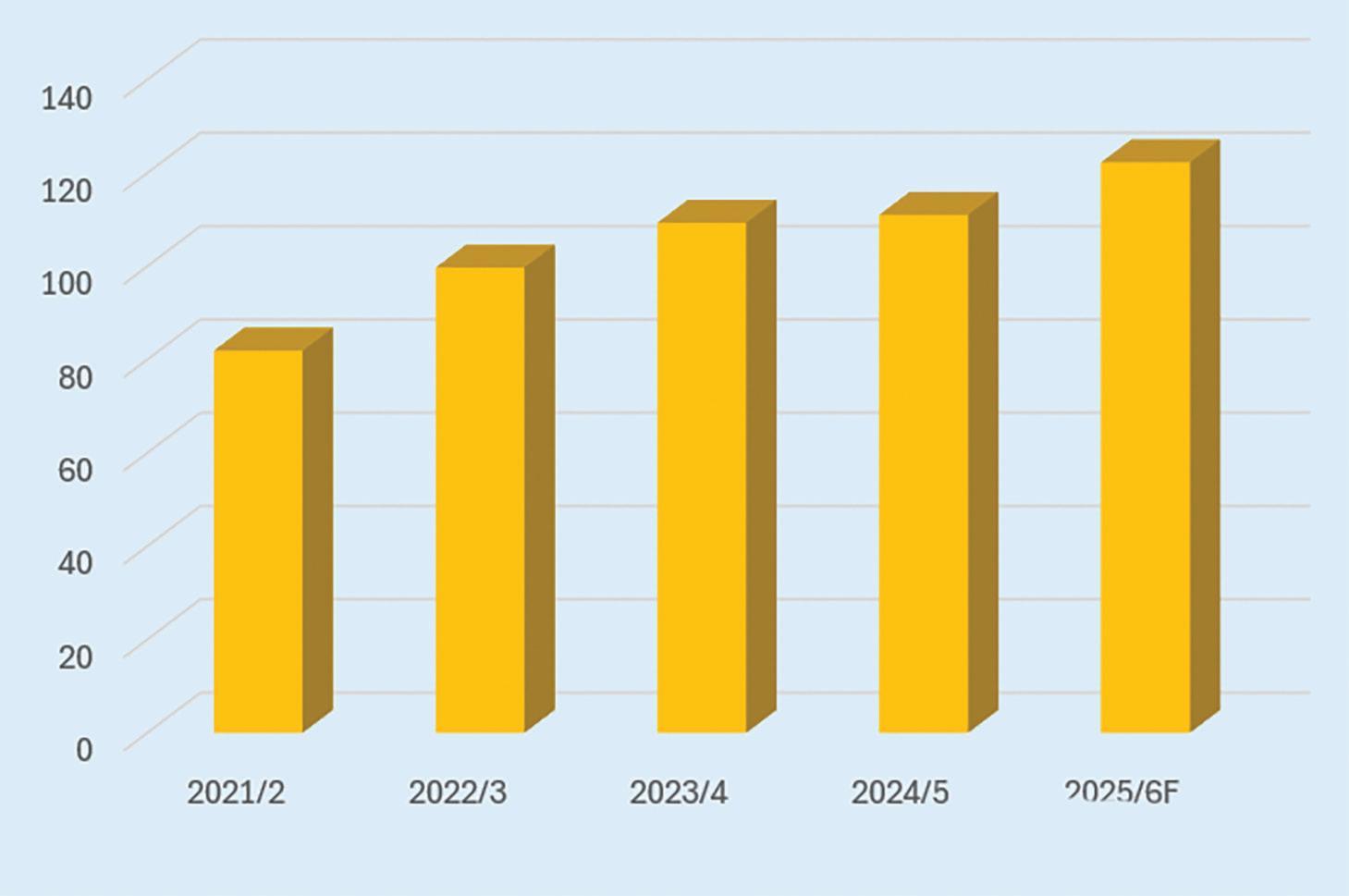
which rose last season by 851,000 tonnes to 1.3M tonnes (the best figure for some years), are expected to be down this season to 544,000 tonnes.
This moderates the impact on total US soyabean oil use but the USDA is still forecasting a jump in the seasonal average price of soyabean oil to 53c/lb compared with the average 47.4c/lb of the previous two seasons.
It is also possible that the USA will export more than this as key customer India may import more under a new reciprocal trade deal announced on 6 February.
More bearishly, the USDA’s recent Annual Agricultural Outlook Forum on 1920 February expects a 3.8M acre (1.54M ha) rise in the US soyabean planted area to 85M acres (34.4M ha) for 2026/27.
Based on a yield of 53 bushels/acre, this
would produce a 4.45bn bushel (+121M tonne) crop versus this season’s 116M tonnes.
As well as bumper US soyabean supplies for 2026/27, the forum also estimated strong US crushing – up 85M bushels (2.31M tonnes) to 2.655bn bushels (72.26M tonnes) – amid brisk demand for oil and meal.
Although the season’s average meal price stays flat at US$300/short ton amid ample global supplies, the soyabean oil average price was seen jumping again to 58c/lb.
The main potential restraint on US and global prices of soyabeans and its products remains large Latin American supplies, expanded by this year’s large Brazilian crop. Recent estimates for this have hardened to 178-180M tonnes, against last year’s 171.5M tonnes and u
Source: John Buckley
seizures by the government’s forestry task force.
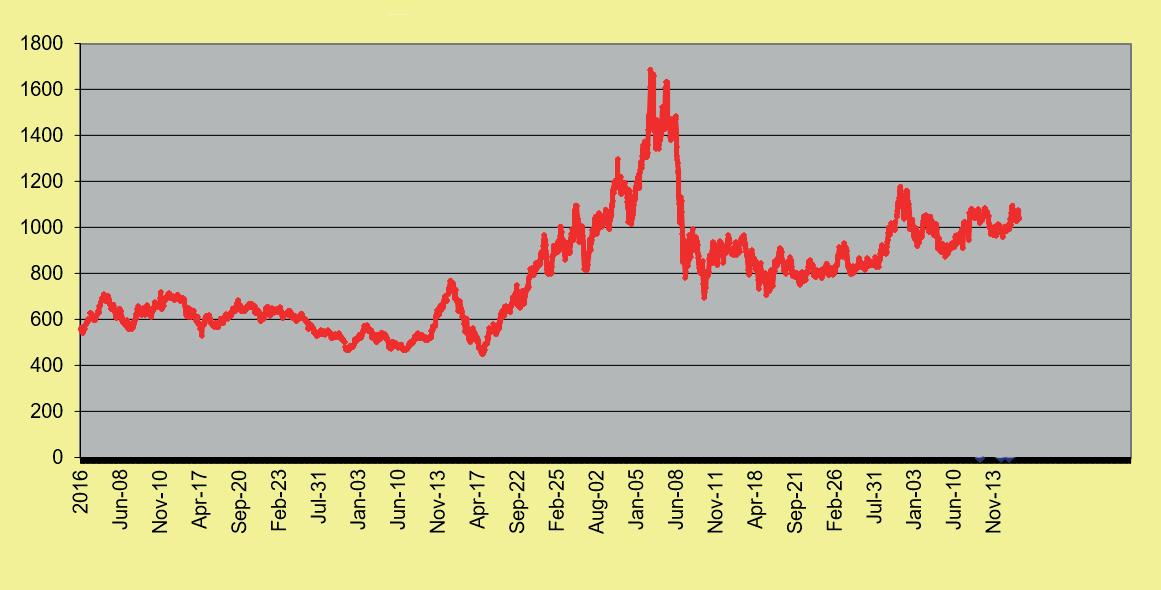
Indonesian palm oil association GAPKI recently forecast production in the country rising by 2-3% this year, adding about 600,000 tonnes to 2025’s output of 51.98M tonnes, while USDA forecasts suggest a bigger increase. Malaysia’s production – which stalled in 2024/25 –was expected by the USDA to increase by about 4%, although some analysts think it may remain stuck under 20M tonnes.
Currency will also play a part in palm oil’s attractiveness to importers, with the Malaysian ringgit recently at its strongest since April 2018 against the US dollar.
Higher export taxes to fund the domestic biofuel sector could also shave competitiveness off Indonesian export prices.
Source: John Buckley
Top vegetable oil consumers like China, India and the EU have shown more willingness to switch to soft oils in recent months when these offer attractive discounts.
the previous three-year average of just 149M tonnes. This is a potential on-year rise of 1.5-1.9M tonnes in soyabean oil equivalent.
Argentina, which had a large 2024/25 crop in excess of 51M tonnes, is currently forecast to produce another larger than usual 48.5M tonnes for 2025/26, possibly more as a recent hot, dry spell ends with some needed rain relief.
While the USA may still manage a moderate 3.4M tonne increase in 2026/27 soyabean exports, its market share will still continue its long-term contraction against Brazil.
The US season average price for soyabeans is expected to creep up only slightly to US$10.30/bu, remaining well down from 2023/24’s US$12.40/bu and below 2022/23’s US$14.20/bu.
Big ‘unknowns’ as we go to press are led by US trade politics. US President Donald Trump recently said he expected China to buy an additional 8M tonnes of US soyabeans, after reaching an earlier (2025/26) seasonal target of 12M tonnes.
However, within days of that annoucement, the US Supreme Court ruled on 20 February that the entire initial Trump tariff programme introduced last year under the International Emergency Economic Powers Act should have received congressional approval and the president had exceeded his authority (see p4).
Amid all the risk on the demand side, the large Latin American supply and probable US crop revival seems likely to prevent any shortages of soyabean oil for the time being.
Palm oil has recently looked less bullish for the first half of this year.
For the moment, the market is more focused on production’s seasonal emergence from always lower winter yields, despite the Indonesian government crackdown on illegal/eco-damaging plantations, and ageing plantations in Malaysia producing lower yields.
Indonesian palm exports rose by just over 9% in 2025 and – despite the government pull-back from a B50 blending goal – have maintained some growth in early 2026.
However, markets need to remember that Indonesian domestic palm oil consumption (for all purposes) has rocketed by around 5M tonnes in the past four years alone. The country’s projected 2025/26 exports of 23.5M tonnes remain relatively low compared with its peak year of 2022/23, when it shipped out over 28M tonnes, making it the largest single country source of vegetable oil exports.
Indonesian palm seed sales in 2025 have implied that planting remains substantial despite disruption from land
Rapeseed is enjoying a banner year in terms of supply, with recent estimates showing a 9M tonne (10.5%) crop increase for 2026. This is led by the EU (+3.4M tonnes at 20.25M tonnes), Canada (+2.26M tonnes at 22M tonnes), Russia (+1M tonne at 5.6M tonnes) and Australia (+800,000 tonnes at 7.2M tonnes).
Despite the production surge, Canadian canola prices have recovered strongly, recently nudging C$700/tonne after hitting a nine-month low of C$581.60/ tonne in mid-December last year.
The rally has been led by Canada and its former top canola customer, China, smoothing their trade arrangements.
Beijing has dropped the Chinese import tariff on Canadian canola to just 15% from the punitive 84% applied in response to Canada’s earlier clampdown on imports of Chinese electric vehicles.
At this stage, Canada’s total canola exports are forecast at 8.2M tonnes, only slightly down on the year against earlier expectations of a far bigger drop.
Canadian stocks are still expected to accumulate over the season at 2.76M tonnes by the end of July – up 73% against last year’s 1.6M tonnes and 39% over the five-year average.
However, seasonal crush is seen rising to 12M tonnes, boosted by strong demand for biodiesel, including a firmer outlook for sales of canola and rapeseed oil to southern neighbour USA, with Canada and Mexico both now enjoying favoured status as feedstock suppliers.
Statistics Canada recently reported
January crushings of over 1M tonnes for the fifth month running, bringing the seasonal gain to 3.1% over the first half of the marketing year.
Abundant supplies and capacity expansion will help sustain the average 10% annual growth rate of the past three years. The Canadian Oilseed Processors Association expects crush capacity to reach 15M tonnes this year including Cargill’s new plant at Regina able to add an extra 1M tonnes/year when it starts this spring.
EU rapeseed oil prices have also drawn support from buoyant biodiesel demand and stable food oil offtake.
Sunflower oil prices peaked at three-year highs near US$1,540/tonne in late 2025, as tightening Black Sea supplies met strong world demand amid Russian export restrictions and duty changes.
One-time key supplier Argentina has been cashing in, using its bigger crop to crush more and doubling its exports in January, helping to ease supply as prices softened toward US$1,515/tonne in February.
The USDA recently forecast Argentina’s total 2025/26 sunflower oil exports close to last season’s 1.6M tonnes, against just 1.2M tonnes in 2023/24. Argentina has helped fill some of the gap left by lower Ukrainian crush (down a third from 2023/24 to 2025/26) and a corresponding drop in oil exports.
The estimate for this season’s global sunflower crop was recently slashed by the USDA to 51M tonnes, similar to last year, after cuts to Russian and Ukrainian crops. Meanwhile, global sunflower oil exports are seen at only about 2.5M tonnes or 16% lower this season than in 2023/24.
The UN Food & Agriculture Organisation (FAO)’s Food Price Index average for vegetable oils softened to 164.6 points in December, a six-month low led by soyabean, rapeseed and sunflower oils, more than offsetting higher palm oil costs.
This still left the vegetable oil index average at 161.6 points, up 17.1% onyear and a three-year high. Prices turned again in January, rising 2.1% to 168.6 points to stand 10.2% higher than a year earlier, as firmer palm, soyabean and sunflower oils more than offset cheaper rapeseed oil.
Palm oil was underpinned by seasonal production slowdowns and global import demand. Soyabean’s gain was attributed to tightening old crop export availability from South America and strong US biofuel
use. Sunflower oil also appeared to be refocusing on continued supply tightness in the Black Sea region, where farmer selling was drying up. In contrast, rapeseed oil prices eased on ample EU supplies.
Crude mineral oil prices – increasingly influential on the food and industrial vegetable oil sectors – had experienced a big drop before the US-Israel-Iran conflict injected a much firmer tone into the market in early March.
Geopolitical upheavals, such as the Russia/Ukraine war, the Middle East, Venezuela and Greenland, are ‘outside’
factors that are set to continue shaking up commodity – and broader economic –trends in the year ahead. Will constant talk of conflict risk spook more import-dependent consumers into stocking? The mood could also feed speculative interest – from funds and other investors – into rebuilding ‘long’ positions in food raw materials as ‘safe havens,’ especially as oilseeds and grains are now arguably cheaper than usual (especially taking into account broader world inflation trends). The recent meteoric rise in the price of gold shows how easily such trends can get carried away. ●
John Buckley is OFI’s market correspondent

Oilseed preparation performance is driven by consistency, control, and how effectively equipment responds to variability in materials and operating conditions. French designs cracking, flaking, conditioning, and pressing systems with a focus on mechanical durability, stable and dependable operation, and long term serviceability, where uptime, maintenance access, and energy use directly influence plant performance.
Across food and industrial applications, French preparation equipment provides uniform material quality through each step of the preparation process, controlled thermal exposure, and reliable operation under changing seed or other oil bearing material conditions. This balanced approach helps protect oil and cake quality while supporting efficient and stable downstream processes.
At the French Innovation Center, processors evaluate preparation approaches using their own oilseeds. Working with experienced engineers, trials help refine operating conditions, manage variability, and reduce unnecessary heat and energy input before scale up, supporting informed preparation decisions as processes and expectations evolve.




The departure of major international grain and oilseed traders from the Amazon Soy Moratorium has raised concerns about future deforestation in the region Andreia Nogueira
Global grain and oilseed traders could be abandoning a long-standing Amazon protection pact, leaving international retailers and environmentalists concerned about potential deforestation caused by soyabean production in Brazil.
Under the Amazon Soy Moratorium (ASM), companies had agreed not to purchase soyabeans from land deforested in the Amazon biome since July 2008.
“The initiative is the most successful example in the world of reconciling the development of large-scale agricultural production with environmental sustainability," a note on ASM’s website says. "[It] did not halt the growth of soya but rather incentivised the use of land opened prior to the moratorium, mitigating its expansion on new deforestation.”
The Brazilian Association of Vegetable Oil Industries (Abiove) says the moratorium “fulfilled its historical role over nearly two decades, leaving an undeniable legacy that consolidated Brazil as a global benchmark in sustainable production.”
Despite this, Abiove announced
negotiations to exit the ASM on 26 January, saying it trusts that Brazilian legislation will control deforestation, notably tougher rules for securing ‘vegetation suppression’ permits published in September 2025. This establishes technical criteria, validity conditions, transparency, integration and disclosure requirements related to issuing ‘Authorisations for Suppression of Vegetation (ASVs) on rural landholdings. This strengthens the Brazilian Forest Code, which dictates rules to protect natural vegetation since 2012.
Abiove argues that the legacy and expertise of monitoring will not be lost: “Individually, the rigorous demands of global markets will be met… so that the international commitments undertaken by Brazil are kept, as well as the safety and credibility of the Brazilian product.”
When approached by OFI for comment, some major agribusinesses – such as USbased food trading major Cargill and US headquartered food multinational Bunge, referred responses to Abiove, which did not add more comments or mention that the companies had or were considering leaving the pact.
However, logos of 15 companies have been removed from the ASM’s website, including of multinationals such as another USA food multinational ADM, Bunge, Cargill and Netherlands-based Louis Dreyfus Company, according to environmental campaigner Greenpeace, which is part of the ASM. There are now only six business partners mentioned on the ASM website including Agro
Amazônia, Aliança Agrícola do Cerrado, CJ International Brazil, Cutrale, Olam Agri and Brazilian firm Caramuru, which referred OFI for comments to the Brazilian National Association of Grain Exporters (ANEC).
In a note to OFI, ANEC says it respects Abiove and its members’ position, adding it is under pressure due to environmental regulations imposed in Mato Grosso, the Brazilian state with the most soyabean production, but is also home to significant tracts of Amazonian rainforest.
The Matto Grosso regulation (article 2 of Law No 12709/2024) came into effect on 1 January and removes state tax benefits and public land purchase rights from firms that participate in agreements that restrict agricultural expansion over what is controlled by Brazilian legislation, a 30 December state government note says.
The state's department of finance considers the ASM a commercial boycott, saying in a note to OFI: “Criteria that go beyond the Forest Code… create a ‘parallel law’ that punishes producers who comply with Brazilian legislation, which is one of the most restrictive in the world. The tax benefit is a public resource intended to foster the local economy. It is not consistent for the state to subsidise firms that restrict the market for producers operating within Brazilian legislation.”
According to a preliminary report by state auditors released in April 2025, grain trading companies benefited from tax incentives of about BRL4.7bn (US$900M) between 2019 and 2024.

ANEC stresses that Brazil's Supreme Federal Court is reviewing the legality of Matto Grosso’s actions.
Meanwhile, the Mato Grosso Soybean and Corn Producers Association (Aprosoja MT) said on 5 January that the withdrawal of major agricultural trading companies from the moratorium "is a victory for soyabean producers who, for so many years, have been harmed by a private and illegal agreement that is incompatible with national legislation, asymmetrical in its application, and unfair to those who comply with the Brazilian Forest Code.”
Leandro Leão, a soyabean oil expert at Brazil-based Aboissa Commodity Brokers, explains that when companies voluntarily adhere to private commitments, such as the ASM, they create additional criteria that excludes some suppliers.
“This can artificially reduce the supplier base, increase costs and alter competitive dynamics, favouring companies with greater financial capacity and traceability… Hence the political interpretation of ‘unfair competition’" and the belief that the government should not subsidise rules that are more restrictive than current laws.
Other companies have remained in the moratorium because international market incentives are stronger than state tax incentives, especially for heavily exportoriented companies, Leão says. Large global buyers, including food industries and biofuels firms, demand deforestationfree soya and the moratorium reduces reputational, legal and financial risks.
“Furthermore, many firms have already internalised these criteria in their business models and supply chains – exiting the moratorium would imply reconfiguring contracts, control systems and relationships with international clients.”
This is particularly important given that international buyers are demanding more environmental guarantees, especially since the passage of the EU Deforestation Regulation (EUDR) in 2023, which is scheduled to come into force in December 2026 for large and medium operators and in June 2027 for smaller companies. As a result, international buyers are asking for guarantees that include geolocation data, satellite monitoring, independent audits and certified data chains, says Leão.
While the moratorium applies to soyabeans, it also has an indirect effect on soyabean oil since it facilitates access and keeps premiums for markets with demanding sustainability requirements, such as the EU, the UK and parts of Asia. However, for less demanding markets, it may represent an additional cost without immediate return, notes Leão.
“Overall, the moratorium did not
structurally penalise soyabean oil sales but it created market segmentation: traceable oil with environmental guarantees versus ‘conventional’ oil, with distinct destinations and prices.”
The withdrawal of major firms from the ASM might therefore stimulate soya planting and raise output in the short term.
“[However], more volume does not automatically mean more exported value,” Leão warns. This is because the additional soyabeans may not meet the environmental criteria required by premium markets, and there may be price discounts or redirection to less demanding markets.
Although the Matto Grosso regulation is at state level, it might increase the perception of risk regarding Brazilian soyabeans as a whole, says Leão. “In the short term, Brazil is unlikely to lose its leading role, given its scale. In the medium term, however, confidence can become a differentiating factor, affecting prices, deadlines and contracted volumes.”
More contractual and audit requirements for Brazilian soyabeans may result, pressuring buyers to diversify supply and switch from Brazil to suppliers such as the USA, Argentina and Paraguay, where rainforest degradation is a lesser concern.
The US Soybean Export Council has, for example, been promoting US soya as the world’s most sustainable, with a competitive carbon footprint to suppliers in Brazil and Argentina.
Paraguay, however, poses environmental risk as the home of the Gran Chaco biome, which also extends into Argentina, Bolivia and Brazil.
According to a World Economic Forum report published in March 2025, the Gran Chaco is the second-largest forest in South America but has endured decades of deforestation, especially driven by unsustainable agricultural expansion.
“In the past two decades alone, more than 13M hectares of forest have been lost… Soyabean cultivation expanded significantly, with Argentina increasing production area by 30% between 2001 and 2022 and Paraguay achieving a 16fold increase from 2012 to 2022.”
To Leão, the Gran Chaco shows what might happen when soya expansion occurs with less international pressure: “International market governance is as crucial as national legislation in curbing deforestation associated with soya.”
International sensitivity to the environmental importance of the Gran Chaco is only just emerging, he stresses.
For now, the potential collapse of the moratorium is likely to keep global
attention on Amazonia. Greenpeace says the moratorium is widely considered one of the most successful zero-deforestation agreements in history, warning that without it, the Amazon could see a 30% surge in deforestation by 2045, even with the Brazilian Forest Code, which allows producers to clear forest from 20% of their land – or more in some cases.
“Between 2009 and 2022, deforestation fell by 69% in the monitored municipalities, while the planted area in the biome grew by 344%. Today, only 3.4% of the soya produced in the Amazon is outside the rules of the agreement.”
Unsurprisingly, some buyers are already concerned. In January 2026, the Retail Soy Group – which includes major European firms such as supermarkets chains Aldi and Morrisons – sent a letter to ADM, Bunge, Cargill, Louis Dreyfus and China-based food major Cofco stressing it was “deeply disappointed” to see they and Abiove had left the ASM, saying they expect "your business to continue to supply soya from the biome free from deforestation".
The group asked the companies if they would independently re-join the ASM and to describe their procurement controls to ensure their soya is legally deforestationfree. "Your prompt response by 16 February is appreciated so we may assess whether your business complies with our individual sourcing requirements and determine future sourcing decisions."
Retail Soy Group representative Will Schreiber tells OFI that the ASM has been widely credited as being a successful example of a multi-stakeholder partnership that prevented new soya production in the Amazon biome, an area critical for planetary environmental health.
“How companies respond to this new heightened ... risk [of deforestation] is unclear and will inevitably lead to niche supply chains being developed. Some mitigations that companies will likely explore include avoiding sourcing from certain areas or moving to supply chains that have better control systems in place. However, the most important thing to focus on will be a new market-level instrument that ensures the entire biome remains incentivised for protection.”
Without it, Schreiber warns that while “companies may be able to make credible individual claims regarding their own supply chains being free from deforestation, the impacts of deforestation may still continue, putting the whole production system at risk.” ● Andreia Nogueira writes for International News Services, UK






































International reports on some of the latest projects, technology and process news and developments around the world
CHINA: Renewable fuel company Tangshan Jinlihai Biotechnology has selected process technology specialist Topsoe Hydroflex to provide technology for its planned sustainable aviation fuel (SAF) facility in China.
Located in the Caofeidian Petrochemical Industry Base in Tangshan, Hebei province, construction of the US$210M facility was expected to start in the second half of this year, with operations due to start in the second half of 2028, the company said on 23 January.
The plant would use waste oil as feedstock to produce SAF, Aijun Li, chairman of Tangshan Jinlihai, said.
At full capacity, Topsoe’s technology was expected to reduce CO2 emissions from the plant by around 700,000 tonnes, the company said.
The HydroFlex technology converts fats, oils and greases into drop-in renewable jet fuel and can be used in both grassroots units and revamps for co-processing or fully renewable applications.

Hong Kong-based biofuels company EcoCeres has officially launched its renewable fuel facility in Pasir Gudang, Johor, Malaysia (pictured). The plant was the country’s
first sustainable aviation fuel (SAF) plant, the company said on 26 January. In addition to SAF, the facility would also produce hydrotreated vegetable oil (HVO) and renewable
naphtha, with a combined maximum production capacity of 420,000 tonnes/year, EcoCeres said.
“The Johor plant is a major step forward for EcoCeres’ regional platform and for Malaysia’s renewable fuel industry,” said Matti Lievonen, CEO of EcoCeres.
After developing its proprietary waste-to-fuel processes in Hong Kong, EcoCeres scaled them through its first facility in Zhangjiagang, China.
The Zhangjiagang facility also produces SAF and HVO, bringing EcoCeres’ combined maximum global renewable fuels capacity to approximately 770,000 tonnes/year.
The Greenstock pre-treatment (GPF) facility project in Amsterdam led by energy storage and infrastructure company VTTI and renewable feedstocks trader Connex has entered the frontend engineering design (FEED) phase.
Scheduled to become operational in 2029, the facility at VTTI’s terminal in Amsterdam would have a processing capacity of over 400,000 tonnes/year of renewable feedstocks, enabling sustainable fuel production, including hydro-treated vegetable oil (HVO) and sustainable aviation fuel (SAF) from both standalone and co-processing units, the companies said on 10 December.
The facility would provide customers in Europe with aggregation, blending and pre-treatment capabilities for waste and residue-based
feedstocks, including animal fats category 1, 2 and 3, used cooking oil (UCO) and advanced oils and fats, the companies said.
The companies said the FEED phase marked a critical milestone in the project’s progression towards construction and commissioning.
During this phase, the project team would develop the basic engineering of the assets, further refining the facility’s technical design, equipment specifications and construction strategy.
The companies said they would focus on working closely with local authorities, partnering with technology providers and engineering companies, securing contracts with customers and ensuring compliance with all environmental requirements.
Portuguese petroleum company Galp Energia’s hydrotreated vegetable oil (HVO)/ sustainable aviation fuel (SAF) refinery in Sines is expected to be operational this year, according to an Inspenet report.
The new plant would utilise used cooking oil (UCO), animal fats and other biological waste as feedstocks, combined with green
hydrogen generated at Galp’s H₂ Park, the 28 December report said.
Once operational, the €400m (US$467M) project would reduce greenhouse gas emissions (GHG) by up to 88% and prevent the discharge of approximately 800,000 tonnes of CO₂/year, Inspenet wrote.
The complex would be integrated into the
existing infrastructure of the Sines refinery and on land in the Sines Industrial and Logistics Zone (ZILS), covering more than 9ha and three operational areas: feedstock pretreatment, production unit and auxiliary systems, the report said. In addition to HVO and SAF, the plant would also produce bionaphtha, biopropane and renewable gas.




THE NETHERLANDS: Dutch sustainable aviation fuel (SAF) company SkyNRG has started construction of its first SAF plant in the Netherlands at the Delfzijl chemical park in the north of the country.
The DSL-01 production facility would produce 100,000 tonnes/year of SAF, once operational, and 35,000 tonnes of sustainable by-products including biobased propane, butane and naphtha, the company said on 12 February. Startup was expected in mid2028.
SkyNRG said the plant would use the hydroprocessed esters and fatty acids (HEFA) pathway, enabled by Topsoe’s HydroFlex technology.
KLM – Royal Dutch Airlines would be the primary off-taker for SAF produced at the facility.
MIDDLE EAST: Dubai-based sustainable aviation fuel (SAF) provider SAF One announced new partners for its SAF project in an undisclosed location in the Middle East.
SAFFA Fund – an investment fund managed by Burnham Sterling Asset Management – had pledged a total of US$30M in the project, with US$10M funding made to date, SAF One said on 15 January. Under the investment terms, SAFFA could scale its investment as the project progressed.
SAF One said it expected its facility, which would convert used cooking oil (UCO) and other waste oils and fats into SAF, to break ground this year and be operational by the end of 2028.
“SAF One is delighted to partner with SAFFA and its stakeholders in the funding of our first project that we believe will be the first to deliver SAF out of the Middle East region,” said Mounir Kuzbari, co-founder and executive chair of SAF One.
US refining company CVR Energy has ceased renewable diesel production at its Oklahoma refinery and reverted back to hydrocarbon processing, Biodiesel Magazine wrote on 28 January.
Completed in December 2025, the reversion of the plant in Wynnewood had reduced US renewable diesel production by approximately 100M gallons (379M litres)/year, the 28 January report said.
When first announcing plans to halt renewable diesel production in October 2025, CVR cited unfavourable economics in the renewable sector and the opportunity to optimise feedstock and relieve logistical constraints within its refining business, Biodiesel Magazine wrote.
At that time, the company said the facility was expected to maintain the option to switch back to renewable diesel production in the future.
During a third quarter 2025 earnings call, CVR president and CEO David Lamp was quoted as saying the loss of the US blenders tax credit and a significant increase in soyabean prices this year had weighed on the profitability of the company’s renewables business.
Although the company planned to mothball its feedstock pre-treatment unit, Lamp said it would be able to bring it back online should things change in the renewables sector.
The Texas-headquartered company had previously said it was considering plans to convert the Wynnewood renewable diesel unit to sustainable aviation fuel (SAF) production and develop additional SAF capacity at its Coffeyville refinery in Kansas. However, CVR had paused both proposed SAF projects in early 2025 citing a lack of regulatory and tax credit clarity, the report said.
Malaysian biomass fuel product manufacturer and trader
Elridge Energy Holdings has signed a one-year agreement with Thailand-based Berkana Power Company, The Edge
Malaysia wrote on 21 January. Under the deal, Elridge’s wholly-owned Bio Eneco company would deliver an estimated 100,000 tonnes/ year of palm kernel shells
(PKS) to Berkana Power in 10 shipments, with an automatic renewal option, subject to mutually agreed terms.
Elridge Energy CEO Oliver Yeo said the agreement would support Bio Eneco’s ability to provide regular, high-volume biomass fuel deliveries for regional power generation.
Elridge Energy manufactures and trades in biomass fuel products, particularly PKS and wood pellets. Its customers are mainly biomass fuel trading companies that sell to end users such as industrial manufacturers and biomass power plant operators.
Italian oil and gas company Eni announced a major strategic investment by Q8 Italy – the international arm of Kuwait Petroleum Corporation – in its ongoing construction of a new biorefinery in Priolo, Sicily.
Following Q8’s official binding offer, the plan for the Versalis site in Priolo was formally approved by Eni and Kuwait Petroleum Corporation’s board of directors, Eni said on 3 February.
The Priolo biorefinery would have a capacity of 500,000 tonnes/year and would offer operational flexibility for the production of hydrotreated vegetable oil (HVO) and sustainable aviation fuel (SAF). It would use Eni’s Ecofining technology –
developed in conjunction with Honeywell UOP – to convert waste, residues and vegetable oils into biofuels.
“The joint project between Eni and Q8 Italy for the construction and industrial operation of the plant further strengthens the 30-year partnership between the two companies, which began with [Eni’s] Milazzo refinery in 1996,” Eni said.
The engineering phase on the project had been completed and preparations for awarding procurement and construction contracts had begun. Completion of the required authorisations and finalisation of contracts was expected by the end of 2028, the company said.
Global agribusiness giant Louis Dreyfus Co (LDC) has added a specialised processing line to its complex in Timbúes, Argentina to increase its capacity to process oilseeds with a high oil content, the company said on 29 January.
LDC said the investment would enable the plant in Santa Fe province to process a wider range of oilseed crops – such as camelina, carinata, canola and sunflower –in addition to the site’s existing soyabean crushing capabilities.
The additional oilseeds would be processed into meal and oil, with the meal used in animal feed and the oil used in the production of advanced biofuels such as sustainable aviation fuel (SAF) and hydrotreated vegetable oils (HVO), LDC said.
“The addition of these new processing capabilities in Timbúes allows us to integrate a wider range of crops into our regional operations,” said Fernando Correa, LDC’s regional head of oilseeds for South & West Latin America.
The addition of the new crushing line and equipment would enable the plant to process up to 3,000 tonnes/day of additional oilseeds during periods of lower seasonal activity, alternating with the usual capacity to crush 7,000 tonnes/day of soyabeans during the rest of the year, LDC said. The investment included equipment specifically designed for processing high-oil-content seeds, including five specialised presses, one rotary cooker, three vertical cookers, two impurity separators and two decanters.
Vietnam Agribusiness (VAL) – a joint venture between Bunge Global and Singapore’s Wilmar International – has inaugurated its second soyabean crushing line, World Grain wrote.
The US$100M project at Phu My 1 Industrial Park added 4,000 tonnes/day to the company’s processing capacity, the 23 December report said.
Combined with the first soyabean crushing line, which had
been in operation since 2011, the company’s total crushing capacity now totalled 7,800 tonnes/day.
“The inauguration of our second soyabean crushing line marks a pivotal milestone in VAL’s long-term strategy to expand production capacity in order to meet growing demand in both domestic and international markets,” said Nguyen Minh Vi, general director of VAL.
Featuring eight high-capacity storage silos totalling 120,000 tonnes, the facility integrates a waste-heat recovery and reuse system for reduced energy consumption, and a closed-loop water circulation system.
At full capacity, both crushing lines would be able to process up to 2.6M tonnes/year of soyabeans, producing nearly 2M tonnes of soyabean meal to meet about 30% of Vietnam’s
domestic animal feed demand, VAL said.
Vietnam’s livestock industry has consistently grown at an annual rate of 3%-5% over the past two decades, according to the report.
The plant would also produce more than 500,000 tonnes/ year of crude soyabean oil for domestic consumption and export markets, the company said.




































The global oleochemicals market is impacted by factors relating to raw materials; regulations on safety, sustainability and the environment; and government policies
Norman Ellard

Oleochemicals are chemicals derived from natural fats and oils and are key ingredients for soaps, detergents and personal care products, as well as in industrial lubricants, greases, plastics and bio-polymers.
Soap and candles were the original oleochemical products, dominating the industry for several thousand years.
The need for better quality products generated the fatty acid and glycerine industry, with detergents and bar soaps acting as the backbone of the consumer business in the 1960s and 1970s.
The invention of detergents based on coconut oil and tallow improved laundry performance, with long chain C16-18 fatty acids becoming the most commonly ingredients used for cleaning.
In the 1960s-1980s, cleaning products shifted toward lower cost petroleumderived synthetic alcohols. The huge growth of the palm oil industry in the 1980s marked the expansion of oleochemicals in Southeast Asia and the advent of palm kernel oil (PKO) as a major source of supply for detergent alcohols. Meanwhile, tallow availability in the North America, Europe and Latin America maintained the oleochemical business in these regions.
As palm and coconut oils continue to grow in Southeast Asia, these raw materials have enabled the growth of the oleochemicals market and its applications in many diverse areas.
The global oleochemicals market has been
estimated to be worth approximately US$25.81bn in 2024 and projected to reach around US$52.88bn by 2034, growing at a CAGR of about 7.35% between 2025 and 2034.
The growth of the market is driven by several factors including increasing demand for green and biodegradable products, favourable government policies promoting sustainability, and growing demand for personal care products, especially in developing countries and Asia.
Oleochemicals are derived from natural sources like plant oils and animal fats, making them a popular choice for organic and natural beauty products.
In addition, as environmental awareness increases, the demand for bio-based skincare products is rising, alongside a drive towards simpler, natural ingredients.
Various issues face the current oleochemicals market relating to raw materials; sustainability/environmental/ safety factors; and government policies.
Raw materials account for a high proportion of the cost for oleochemicals.
Palm oil is the leading plant-based oil globally, accounting for around 80M tonnes/year or production, ahead of some 65M tonnes/year of soyabean oil.
It is the most efficiently-produced oil, at around 3-4M tonnes/ha, and is a source of PKO. Palm oil is a major industry in Southeast Asia, particularly in leading
producers Indonesia and Malaysia. Despite being the first major vegetable oil to seriously institutionalise sustainability at a global scale through the Roundtable on Sustainable Palm Oil (RSPO), and despite over 90% of palm oil consumed in Europe being RSPO-certified, the oil is still a much maligned product.
Global production is also slowing due to labour constraints and limits on expansion.
Lauric oils: PKO and coconut oil are the only two commercially significant lauric oils, with their medium-chain fatty acids enabling efficient production of highperformance fatty acids and fatty alcohols.
Together, their production amounts to around 13.2M tonnes/year against growing demand of about 12M tonnes/ year for oleochemicals and 2M tonnes/ year for other uses. Production of lauric oils are seen as flat for the next few years.
PKO is a highly desirable lauric oil and is the ideal feedstock for fatty alcohols. However, it is only a co-product of palm oil production as no oil palm tree is ever planted to produce PKO. While research aimed at increasing the yield of the oil palm crop is always ongoing, this does not increase the size of the palm kernel, which only comprises 10-11% of the palm fruit.
Meanwhile, global production of coconut oil is stagnant as smallholder farmers who mostly produce the crop deal with ageing trees, with limited capital to replant.
The Philippines, Indonesia and India are major producers of coconut oil and have

For all sponsorship and exhibition enquiries, please contact Mark Winthrop-Wallace
Director, OFI Portfolio +44 1737 855114
markww@quartzltd.com
For any other enquiries, please contact Valerie Amegatcher
ValerieAmegatcher@quartzltd.com



















experienced droughts (especially during El Niño events), typhoons and cyclones, which have impacted production.
Environmental and land-use restrictions, along with competition from other more profitable crops or urbanisation, have also constrained coconut plantation expansion.
Tallow: Outside of Asia, tallow is a wellestablished, traditional oleochemical feedstock but is now playing a lesser role as it is increasingly used in renewable diesel production, turning the USA - for example - into an importer of tallow.
Regulations and interventions
Government policies and interventions shape the availability, price and supply of oleochemical feedstocks.
Biofuel mandates such as Indonesia’s high domestic biodiesel blend (B40 and moving towards B50) can divert palm oil away from oleochemicals into fuel, tightening feedstock supply while raising prices and increasing volatility for fatty acid and fatty alcohol producers.
In addition, anti-dumping investigations have led to fines and duties in the past.
One of the clearest examples was the EU’s imposition of anti-dumping duties on certain fatty alcohols and their blends imported from India, Indonesia and Malaysia in 2011 after determining that dumped imports were harming its industry.
India imposed countervailing duties in 2023 on saturated fatty alcohol imports from Indonesia, Malaysia and Thailand after finding they were subsidised and causing injury to domestic producers.
In 2023, the European Commission also imposed anti-dumping duties of 15.2% to 46.4% on fatty acids from Indonesia to protect EU producers.
Government interventions and tariffs have recently taken on a political role, creating uncertainty which has had a major impact on businesses.
Regulations concerning the safety, environmental impact and sustainability of oleochemical products are also becoming increasingly stringent. The EU Deforestation Regulation (EUDR), for example, will have a major impact on the oleochemicals industry.
Designed to stop the import and sale in the EU of seven commodities linked to deforestation – including palm oil –companies must prove that their products are deforestation-free and not linked to forest degradation. This requires extensive due diligence, including the geolocation of the palm oil’s origin, and verifying compliance with the producing country's legislation. A due diligence statement is mandatory for all palm oil products to be
placed on the EU market.
The EUDR’s implementation has been delayed until 30 December 2026 and its requirements are likely to increase compliance costs and the administrative burden for palm oil-based oleochemicals and could encourage substitution with tallow or synthetic alternatives.
Regulations relating to ethoxylates, previously regarded as the ‘gentle ingredient’ also exist in various parts of the world. Ethoxylates are chemicals made by reacting phenols or fatty alcohols with ethylene oxide. Many alkylphenol ethoxylates (APEs) degrade slowly in the environment and are toxic to aquatic life.
APEs (especially nonylphenol ethoxylates or NPEs) are banned or restricted in the EU, USA and some Asian countries.
The EU's Registration, Evaluation, Authorization and Restriction of Chemicals (REACH) regulation bans or limits NPE concentrations in various applications and in textiles. The US Environmental Protection Agency (EPA) requires manufacturers to notify it before significant new uses of NPEs.
Fatty alcohol ethoxylates are encouraged as safer alternatives while formulators are also looking for looking for non-ethoxylate materials for gentleness.
The oleochemicals market comprises fatty acids, fatty alcohols and glycerine.
Fatty acids are most commonly produced via hydrolysis (fat splitting) of an oil or fat’s three fatty acid chains from its glycerol backbone, with glycerine as a co-product.
Fatty acids can only be produced from oils and fats while fatty alcohols can be produced from fatty acids by hydrogenation or from petrochemicals.
Fatty acids are a bigger market than fatty alcohols and global demand for fatty acids has remained relatively flat at about 12M tonnes/year.
Malaysia and Indonesia account for about 10M tonnes of production while output in the USA and EU has declined rapidly due to rising demand for domestic tallow as a renewable diesel feedstock.
Fatty acids are a very diverse feedstock for many different industries including:
• Consumer cleaning – bar soaps, detergents, body wash and many personal care products.
• Lubricants such as stearates and greases.
• Pharmaceuticals as emulsifying agents or drug carriers and food additives.
Since the fatty acids are a divese and relatively large market, they are usually well insulated against major economic swings.
Fatty alcohols are a smaller market compared with fatty acids, at about 4M tonnes/year of production. Since much of this goes into the detergents and personal care, the market is dominated by the five large ‘soapers’ – major fast moving consumer good (FMCG) companies producing household cleaning and personal care products.
To be successful, a company needs to have a reasonable business with at least one of these companies.
Glycerine is a co-product of all oleochemical reactions, including biodiesel, with applications in personal care, food, pharmaceuticals and industrial chemistry.
Its moisturising, humectant and emollient properties gives it applications in skin creams, lotions, toothpaste and hair care.
As a solvent, stabiliser and sweetener, it has pharmaceutical and medical uses in cough syrups, capsules and topical medicines.
In food and beverages, it is used as a sugar substitute in low-fat or sugar-free products, as well as confectionery.
It also has industrial and technical applications as a solvent, anti-freeze and plasticiser, and in paints and coatings.
Demand for glycerine is growing but the industry will only expand as fast as its availability as no company makes glycerine on demand any more. It used to be made from propylene by petrochemical companies but the rise of biodiesel production and glycerine as a co-product has put an end to this.
Now the same reaction in reverse turns glycerine into epichlorohydrin (ECG), a key chemical intermediate used by China for epoxy resins (coatings, adhesives, composites); electronic materials; wind turbine blades; and construction and automotive materials.
Capacity in the oleochemical industry tends to come in waves and the current market has experienced a substantial rise in fatty acid and fatty alcohol capacities.
Speaking at the 21st International Oil Palm Conference in Colombia last year, Dr Caroline Midgley of Global Data said global fatty acid capacity was expected to reach 18.1M tonnes by 2027, with most expansion occurring in Indonesia and China (see Figure 1, following page).
Global fatty alcohol capacity was forecast by Midgley to surpass 6M tonnes by 2027, with 1.1M tonnes of new capacity entering the market between 2024 and 2027 (see Figure 2, following page).
The lauric oil market may not be able to expand as fast as needed to supply these
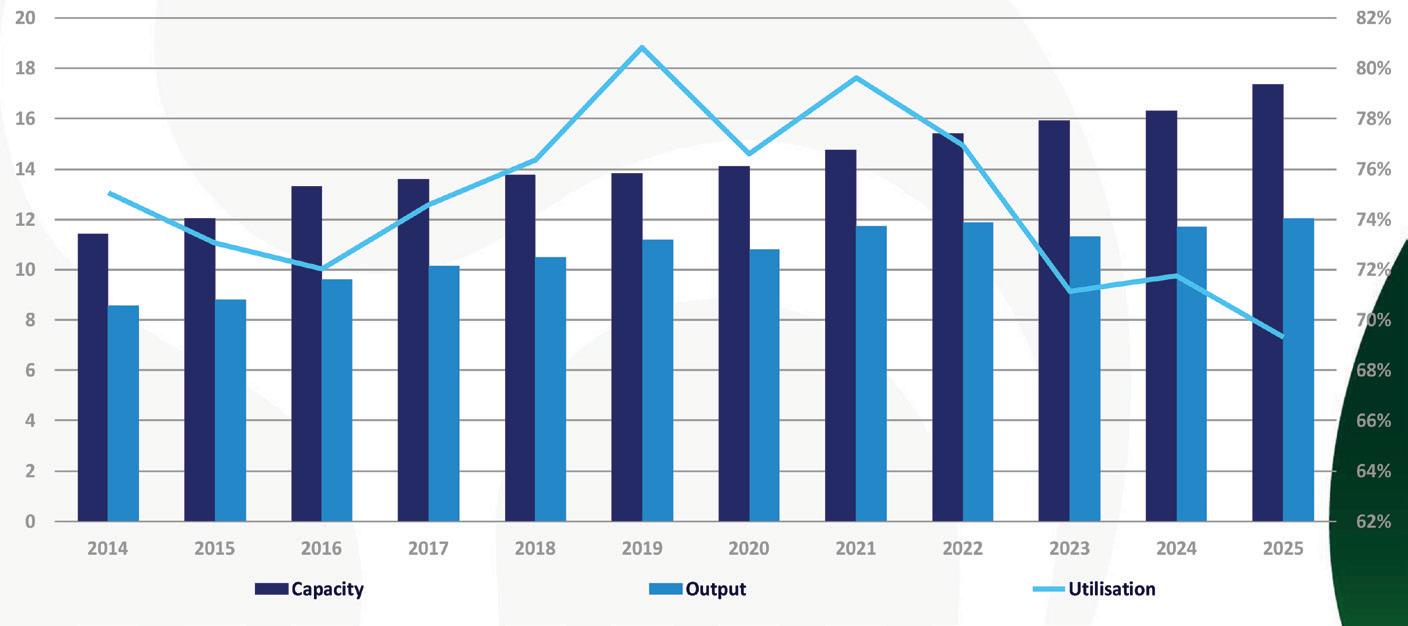
However, many of the firms involved in these developments require more capital and consumer companies have become sceptical on cost operations and will not invest without a proof of concept both in terms of performance and cost.
Numerous other surfactants on the market are also being used in products.
Sarcosinates are a well-tried older surfactant, betaines are a long-term staple and isethionates have been popular for years, especially in bar soap.
Alkyl glyceryl sulphonate (AGS) made from natural fatty alcohols or glycerine has continued to grow.
Source:
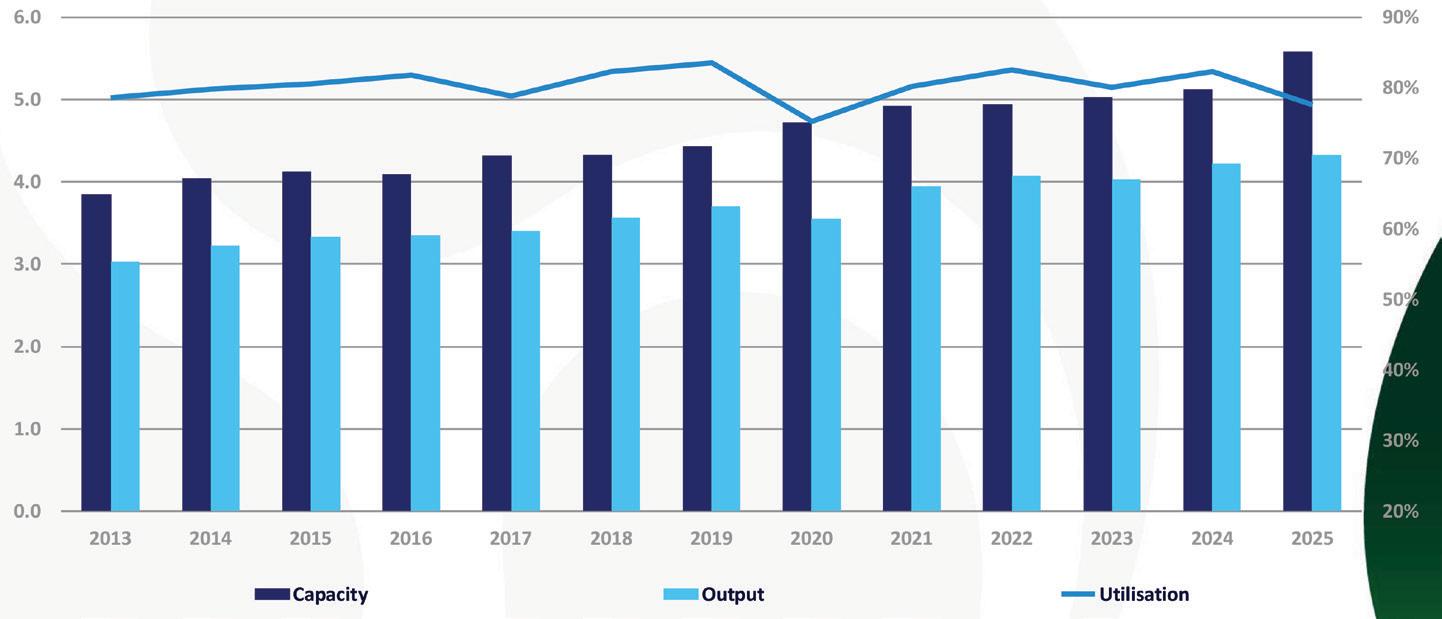
u plants. At the same time, 2025 saw a slight rise in synthetic alcohol capacity utilisation while the International Energy Agency has forecast excess crude oil supply of 4M barrels/day for this year resulting from greater US and OPEC production.
With demand slowing and existing inventories close to a four-year high, synthetics are now a low cost route to some oleochemicals, potentially impacting alcohols.
Synthetic alcohols are EUDR- compliant and an old synthetic surfactant has also come back to life – alpha olefin sulphonate (AOS). This was predominately used in India as a competitor to linear alkylbenzene sulphonate (LAS) but AOS is expanding beyond this niche as current supply is
relatively ample and it can be labelled as ‘sulphate-free’, which consumers prefer.
However, natural alcohols will still be needed – despite their higher cost – as many surfactants rely on them, and regulatory and sustainability pressures favour bio-based feedstocks.
The development of biosurfactants via fermentation has come to the fore in recent years. The process involves feeding yeast strains with carbon sources such as sugars, plant oils or waste streams for fermentation in bio-reactors.
The two most commercially advanced biosurfactants are rhamnolipids and sophorolipids.
EdenSurf represents a new generation of natural surfactants that can deliver the performance of traditional petrochemical surfactants while helping brands meet consumer demand for eco-friendly, mild, sulphate-and EO-free personal care products. It has been developed by Integrity BioChem as a naturally-derived alternative to traditional surfactants like sodium lauryl sulfate (SLS) for use in personal care and household formulations.
These developments all hold promise for the future. However, almost all are focused on the C12-C14 chains and most require fatty acids as a base. This puts pressure on availability of PKO and coconut oil for their valuable chain lengths.
The consumer continues to be at the forefront of the oleochemicals business with several noticeable trends.
In an era of increasing costs, brand loyalty is taking secondary place due to higher prices, while generics or house brands are playing a bigger role in conventional markets.
Source:
Companies are putting a lot of effort into formula simplification due to cost and the consumer appears to be embracing simplification as a positive move, similar to reactions against ‘ultra processed foods’. This will have an impact on the oleochemical market with lower use of traditional surfactants, such as sulphates and ethoxylates.
New biosurfactants are expected to grow and newer surfactant formulations are expected to rely more on fatty acids than fatty alcohols due to the demand for more biodegradable, sustainable and milder products.
Norman Ellard is Global Director of Oleochemical Development and Innovation at Intercontinental Oils and Fats (ICOF) America, part of Indonesia’s Musim Mas Group. This article is based on a presentation he made at the PIPOC 2025 International Palm Oil Conference and Exhibition in November 2025

After
25 years of negotiation, the new EU-Mercosur partnership agreement has been signed although issues remain with its ratification. But what are the benefits and issues for oils and fats?
Liz Newmark, Andreia Nogueira
Oils and fats producers are still assessing how much benefit the new EU-Mercosur partnership agreement (EMPA) will bring, even as its permanent future is uncertain.
The deal was signed in Paraguay on 17 January by the European Commission (EC) and EU Council of Ministers but, just four days later, the European Parliament (EP) referred it to the European Court of Justice (ECJ) for a legal review.
That may take more than a year and EP members (MEPs) will not formally ratify the trade portion (such as tariffs and quotas) in the meantime. National parliaments will also need to ratify the sections relating to domestic policy, such as regulatory harmonisation.
MEPs have asked judges to rule on whether the splitting of the agreement between trade and regulatory elements is legal. They also want judgement on a ‘rebalancing mechanism’ that would
enable Mercosur countries to impose trade restrictions if the EU damages EU/Mercosur commerce with future regulatory changes.
The signing of the EMPA had already been delayed by the EC’s October 2025 proposal for 'safeguard clauses', which were written into the deal. These enable the EU to impose protection if the deal prompts swift increases in imports of agricultural products. They mean the EU might erect tariffs or quotas within 21 days for certain sensitive lines, such as biodiesel, if import prices undercut EU products by 5%, for example.
The agreement will impact the large consumer populations of the EU's 450M people and the 270M population of Argentina, Brazil, Paraguay and Uruguay – full Mercosur members. New member Bolivia will not immediately benefit from the deal.
Current oils and fats trades between the two regional blocs include €134.26M’s worth of EU soyabean oil imports from the Mercosur in 2024 and a substantial €2.9bn's worth of soyabeans imports, the vast majority from Brazil, according to data from EU statistical agency Eurostat.
The EU also exported €595M’s worth of olive oil to the Mercosur, mostly to Brazil; while importing nearly €57M’s
worth of olive oil from the Mercosur, predominantly from Argentina.
Trade benefits for the EU oils and fats industry include the removal of the current high Mercosur tariffs levied on exported EU dairy products (28%), olive oil (10%) and refined soyabean oil (9.6%), over the next 10 years.
Mercosur tariffs charged on EU exports of biodiesel of 6.5% are also set to be removed in 11 equal annual stages, becoming completely duty-free on 1 January of year 10 of the agreement.
Despite these gains, the legal uncertainty of the deal has generated caution within the EU industry.
EU Vegetable Oil and Proteinmeal Industry Association (FEDIOL) director general Nathalie Lecocq says its “members are not ready with their assessment,” over potential benefits, especially for the soyabean and olive oil sectors.
Laurens van Delft, director trade and economics at the European Dairy Association (EDA) says getting the agreement swiftly ratified and effectively implemented was a priority for the European dairy industry, “with an emphasis on market access, tariff reduction and regulatory cooperation”.
He told OFI that the European dairy sector, which includes dairy fats, has “long supported the agreement to preserve competitiveness and diversify export
markets”, with resulting legal certainty, reduced tariffs and non-tariff barriers enabling long-term commercial planning.
Van Delft adds that the safeguards adopted by the EC “do not apply to dairy products including dairy fats”.
He does not expect significant increases in EU sales of butter and related products as residual Mercosur tariffs applied to imported butter products outside predefined quota categories remain high, even if certain in-quota butter tariffs will fall by 30% upon implementation.
“Any benefits for dairy fats are therefore indirect ... while improved access and reduced tariffs for cheese and dairy powders will support overall milk valorisation, helping stabilise butter fat balances within the EU dairy sector.”
Jukka Likitalo, secretary general of European dairy trade association Eucolait, says that while cheese concessions are significant, with a Mercosur duty-free tariff rate quota of 30,000 tonnes being rolled out over 10 years, concessions for dairy fats were limited and reciprocal, with butter oil excluded from tariff preferences altogether.
Other European oils and fats sectors are more hostile to the deal. EU renewable ethanol organisation ePURE argued in December that there are intrinsic conflicts of interests. Noting how talks on the agreement actually started in 1999, it says: “If a trade deal takes 25 years to negotiate and still is not right, perhaps that is a sign it should be scrapped.”
Even with the "cobbled together" safeguards, the deal includes complex procedures, high thresholds and slow reaction times and could mean Mercosur doubling its annual ethanol exports, ePURE argues.
Copa-Cogeca, representing farmers and agri-cooperatives in the EU, has gone further. On 7 January, it said a 18 December demonstration against the deal – that caused chaos in Brussels, with farmers blocking streets with tractors – highlighted how the agreement “would damage the competitiveness of EU agriculture and threaten the very foundations of its production model”.
"EU farmers cannot support agreements, as with Mercosur or Morocco, that show largely divergent production standards that compromise fairness, competitiveness and the longterm resilience of European agriculture,” it added on 21 January.
Across the Atlantic, the Mercosur has been more positive, with its secretariat noting on 17 January that the deal
“significantly expands Mercosur’s access to the European market, improves trade conditions and strengthens the competitiveness of companies in the region. It also establishes cooperation mechanisms in strategic areas”.
During the signature ceremony, Argentina President Javier Milei, requested that “the spirit of what was negotiated be preserved during the implementation phase”.
Brazil’s Minister of Foreign Affairs Mauro Vieira also said he foresees “more jobs, more investment, greater productive integration, expanded access to quality goods and services, technological innovation and economic growth with social inclusion.”
While EC president Ursula von der Leyen underlined the strategic importance of the agreement as “a rules-based partnership to grow commerce and investment between our two proud regions”, there are obvious benefits for Mercosur oils and fats sector exporters.
According to the US Department of Agriculture (USDA), in 2025, Brazil – the world’s largest producer of soyabeans –exported US$52.9bn worth of soyabean products. Just US$6.7bn of that (1.36M tonnes) was sold to the EU, says Brazilian Association of Vegetable Oil Industries (Abiove).
Abiove president André Nassar hopes that Brazil will gain EU oilseeds market share over other competitors, such as the USA, because of the EMPA deal.
Looking forward, Nassar highlights a remaining regulatory barrier unaddressed by the agreement – the EU Deforestation Regulation (EUDR), which aims to ensure that seven commodities sold in or exported from the EU do not contribute to deforestation. This includes soyabean products.
“The regulatory issues surrounding deforestation need to be approached with great caution to ensure this doesn't contribute to market loss," Nassar says.
“The greatest risk we identified is not [zero] deforestation itself, but rather the difficulty in proving compliance in the specific manner required by Europeans, such as segregation of the supply chain.
“The sector argues that Brazil should define its own environmental verification procedures so that the European Commission recognises them, preventing external requirements from becoming technical barriers”.
Nassar also fears the EU safeguard clauses might harm the market although he says these are “preferable to unilateral
decisions – such as those adopted by the US administration – which completely violate World Trade Organization rules". His view is echoed by the Argentine Edible Oil Association and the Centre for Cereal Exporters (CIARA/CEC).
“The safeguard measure is not part of the agreement, as it is a rule being drafted separately, but it will have enormous impacts because it affects 25 products, including … biodiesel, oils and bioethanol," says CIARA/CEC president Gustavo Idígoras. "Mercosur must demand a rebalancing of the concessions made in light of this safeguard measure.”
Idígoras stresses that the agreement does not generate short-term trade benefits for sales of Argentina’s bio-based oils and fats, with certain products seeing significant tariffs reductions only in seven or 10 years, but “it at least allows Mercosur to continue its international negotiations with other countries and blocs”.
“At this moment, the priority is to close agreements in 2026 with Indonesia and Vietnam, which are very important markets for us, and to resume negotiations with India. We export 68% of sales of harina [flour] and soyabean oil to southeast Asia,” he tells OFI.
Idígoras also sees other benefits in the long term. “Increased European investment in Argentina's food and beverage sector is expected because competitive conditions in Europe are lacking and agriculture is declining. Argentina has the potential to continue growing and exporting.”
He is also confident that Argentine products will meet EU environmental requirements: “Argentina has a deforestation-free soya platform [VISEC], recognised by the EC and several EU member states as one of the best traceability and certification systems for agricultural products that are free from deforestation and comply with regulations regarding rural and child labour, respect for indigenous communities and human rights.”
Unlike the European Parliament, Mercosur’s countries are keen to quickly ratify the new deal. For instance, Paraguay President Santiago Peña announced procedural steps in January enabling Paraguay to be the first ratifier.
If the EU implements the agreement – even on a provisional basis – and the Mercosur nations and their respective congresses approve it and begin applying its provisions, oils and fats traders and producers from both sides will look for potential benefits. ●
Liz Newmark and Andreia Nogueira write for International News Services, UK
A new China to Europe Arctic expressway is being planned following a maiden voyage through the Russian Arctic to Europe last year
Liz Newmark, Bernadette Lee, Andreia Nogueira, Keith Nuthall
A pioneering Arctic shipping route launched last year has the potential to cut shipping times from China to Europe.
Singapore-based Sea Legend Line's Chinese container ship 'Istanbul Bridge' completed a maiden journey in October 2025 through the Russian Arctic to Felixstowe, UK, and onwards to Rotterdam, Hamburg and Gdansk, Poland.
Departing from Ningbo-Zhoushan Port, eastern China, and carrying about 4,000 twenty-foot equivalent units (TEUs) of cargo, the journey took 20 days, sailing 7,500 nautical miles. This compares to 40 days on a 10,500 nautical mile journey to Felixstowe via the Suez Canal and 50 days via the Cape of Good Hope, Xinhua news agency reported on 14 October. It also avoided the risks previously posed by Houthi attacks in the Red Sea and potential violence from Somali pirates.
'Istanbul Bridge' was carrying lithium batteries and photo-voltaic cells but this route could carry and oils and fats in the future between China and Europe, and potentially other east Asian exporters, such as Japan and South Korea.
Describing the voyage as a maritime groundbreaking initiative, Andy Thorne, chief executive of Kestrel Liner Agencies, which handled logistics for the trip, says the ship arrived in “the fastest transit time”.
The alternative Cape and Red Sea routes are longer and more dangerous, he stresses. “That’s increased transit time, increased cost, more fuel, more pressure on the environment and more people holding global trade to ransom. Coming across a place that is neutral, from China to Europe, is going to reduce those impacts, and eventually be better for consumers ... we will be able to reduce costs for consumers and that’s got to be good for global trade,” he said after the maiden voyage to China Global Television Network
It had taken Sea Legend two years of planning to get 'Istanbul Bridge' up and running.
Company chief executive Marshall Feng, told Chinese government Xinhua News agency that the new route offers immense value to customers’ supply chain due to the shorter distance and transit time.
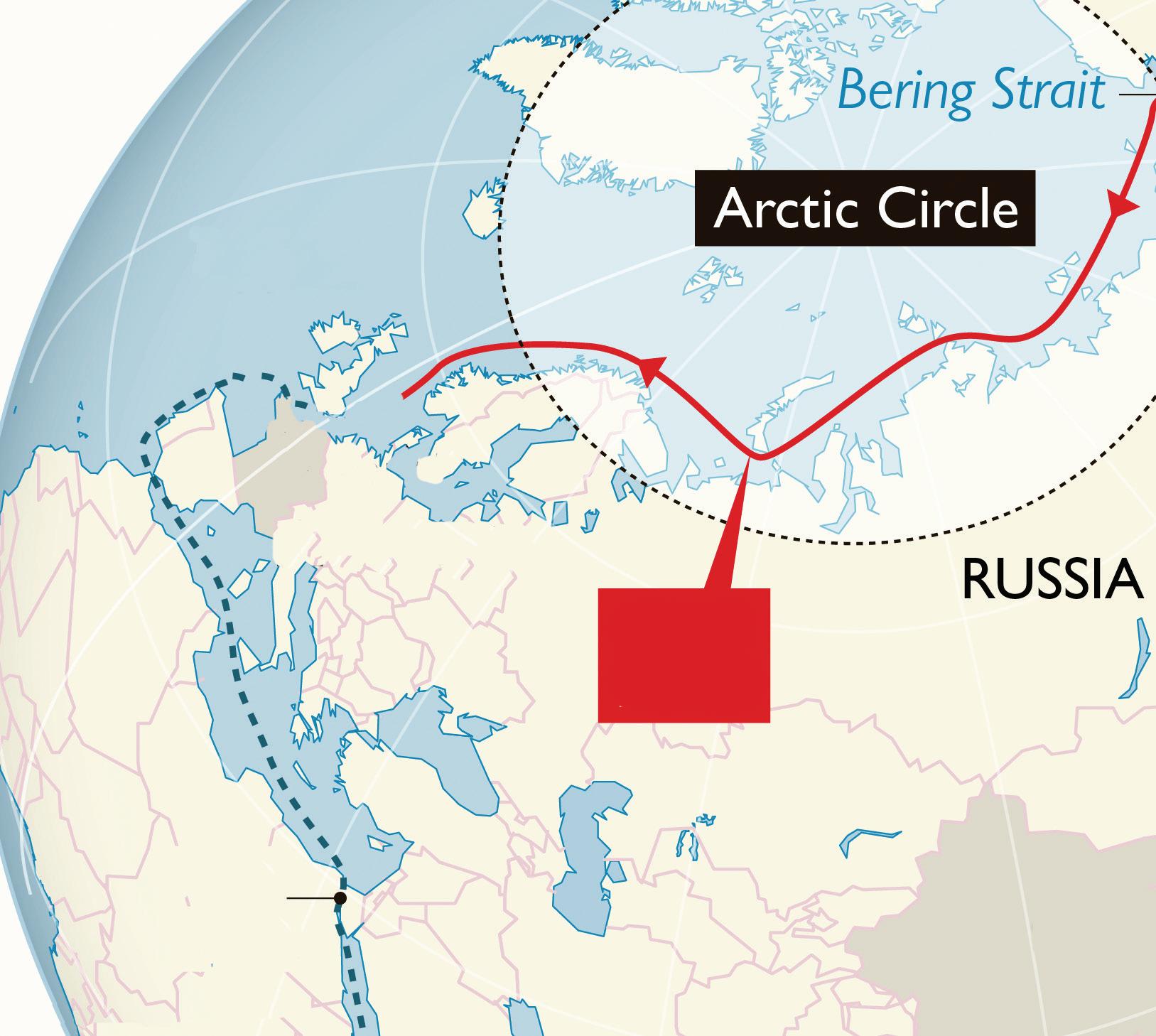
Felixstow Rotterdam
Gdansk Hamburg
'Istanbul Bridge' route
Sea Legend plans to open a 'China to Europe Arctic expressway' and run cargo ships from May to October. That could be extended to the entire year if the Arctic Ocean becomes mostly ice-free, which the European Space Agency has predicted may happen by 2050.
Indeed, long-standing analysis from the Norway-based thinktank, the Arctic Council, has supported the potential of routing Chinese shipping to northern Europe via the Arctic: “Trans-Arctic shipping is most viable where it offers a significant shortcut in comparison to traditional trade routes. In the case of China, this applies only to its trade with Europe, especially Central and Northern Europe,” it has said.
Speaking to Oils and Fats International (OFI), Kesih van den Berg-Dominicus, senior business manager of bulk cargo and shipping at Europe’s busiest maritime goods terminal, the Port of Rotterdam, is cautious on commenting to what extent the route could reduce shipping costs.
“Obviously, as sailing times are not as long, transport costs logically would be lower, although this will depend on how different markets develop.”
So the new route could have a positive effect on pricing”. But she adds “it is mainly supply and demand that dictate the
market”.
Key oils and fats exported to Europe from east Asia include used cooking oil (UCO), hydrotreated vegetable oil (HVO), sustainable aviation fuel (SAF) and fatty acid methyl esters (FAME) – important for the renewable fuels sector, Van den Berg-Dominicus says. Rotterdam is the European hub for these types of products, she notes, adding that UCO is also shipped in containers from China to Rotterdam.
At the nearby Belgian port of AntwerpBruges, however, spokesperson Lennart Verstappen says it would take time before the Russian Arctic route was ready to accommodate regular maritime flows: “The route is not available the whole year; there is a lack of infrastructure and supporting services; geographical tensions on the route exist; and the dimensions of vessels that can be used are limited, with a maximum 5,300 TEUs ARC [American RollOn Roll-Off Carrier] ship. Vessel sizes are limited because navigation on the route is hazardous, for example, due to shifting ice."
Verstappen is sceptical about shipping costs, determined by scientific models such as the Chain Cost Model of the University of Antwerp’s Transport and Regional Economics department. This enables the cost for the whole transport chain to be calculated, especially containers.
Verstappen says that this model indicates that currently, the conditions of
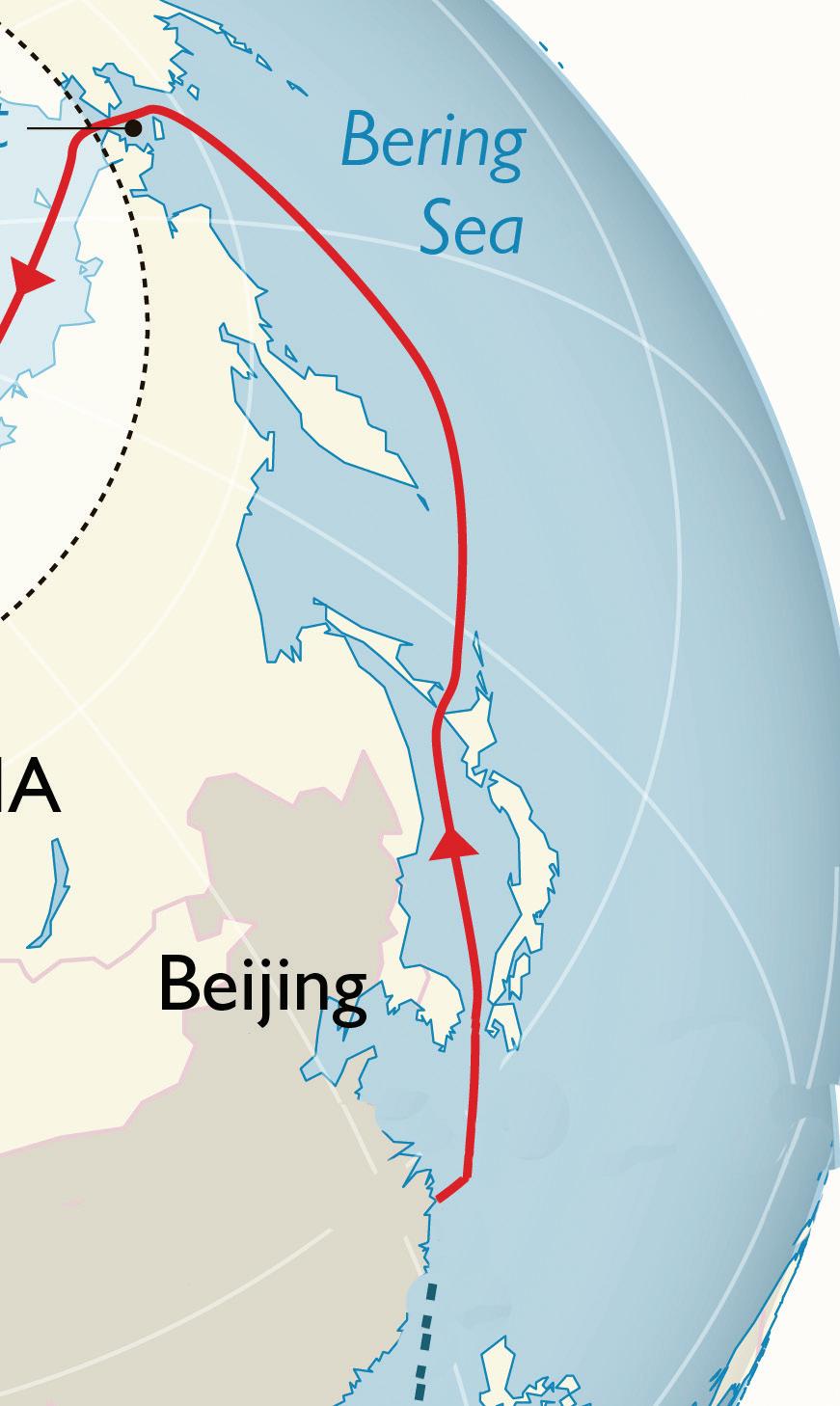
the Russian Arctic route prevent it from being a valuable alternative to the Suez Canal, “as the ice prevents it from being faster, more dependable and more cost effective”.
He says weather challenges mean the new route would actually be slower than regular routes (+2 days for small ships of 5,300 TEU and +5 days for larger vessels as speed is limited to 7 knots) and less economical: at some €120/TEU more than regular shipping routes: 5% more for smaller vessels and even €250/TEU or 12% more for large vessels:
“So, it cannot be stated that shipping costs will decrease when using the North Sea [Russian Arctic] route.”
Meanwhile, EU experts in Brussels have not reached a position on the impact of this new line.
EU vegetable oil and protein meal industry association (FEDIOL) director general Nathalie Lecoq tells OFI that the route has yet to be raised and discussed within FEDIOL, “as it does not seem to have linkages with EU [European Union] policy and its implications”.
Niels van Velde, communication and media manager at the European Biodiesel Board (EBB), says that while shipping procedures and routes are not the EBB’s core concern, he would be “interested to see the potential effect of the line on the impact of bio trade flows and pricing”.
Looking at countries potentially impacted by the new east Asia-Europe shipping line, for 2024, China was the EU’s biggest trading partner for animal or vegetable fats and oils and related products, followed by Japan and South Korea.
According to EU statistical agency Eurostat, the EU imported 500,000 tonnes (with a value of €492.24M) of animal or vegetable fats and oils from China in 2024, while exporting only 697.3 tonnes (€3.05M) to that market.
In addition, the EU imported €696.05 million’s worth of FAME (fatty acid methyl ester) from China in 2024, while exporting just €68,750 of this commodity to this Asian market.
For biodiesel and biodiesel mixtures, the Port of Antwerp-Bruges gave figures showing that South Korea is the main import partner (15,523 tonnes) supplying Belgium and Luxembourg in 2024, followed by China (1,935 tonnes). The data also stated Belgium and Luxembourg exported most biodiesel to Japan (11.4 tonnes), followed by China (2.28 tonnes) –again with export flows being dwarfed by import flows.
There was more optimism about the route by Dr Barry Prentice, professor and director of the University of Manitoba Transport Institute in Canada, and an Arctic transport expert.
“Going north of Russia makes a lot of sense for the Chinese. And of course, they are good friends with [Russian President Vladmir] Putin.
“The [Arctic Northeast Passage] route has the advantage of ports, fuelling and other services …” he says. However, fees charged by the Russians for accessing their Arctic territorial waters are expected to be significant, and given Moscow’s hostile relations with the rest of Europe over its ongoing Ukraine invasion, European importers and shipping companies may not accept this route: “The Chinese are Russian allies, so the situation is uncertain," he tells OFI.
Another concern – at least in the shorter term – is economic, given the technical challenges of moving goods ships through the icy waters of the Russian Arctic –the country’s northern coast, which has 24,150km of coastline, according to the Arctic Council.
To cross the Northeast Passage, ships may have to be ice-strengthened and designed to navigate through sea ice, adding: “Presumably, such ships are fewer in number and more expensive.”
This could increase shipping costs but because the route is shorter than using the Suez Canal or Cape of Good Hope routes, it could still remain competitive.
For example, if ships sailed to Hamburg –closer to China by the northern route than Rotterdam – they would sail just 15,000 km through the Russian Arctic, compared to 21,000km from Shanghai to Hamburg, Germany, via the Suez Canal, according to Vienna-based logistics service provider cargo-partner.
In addition, the decline of sea ice in the Arctic is matching harvest and production patterns for oils and fats. Research involving the Chinese Antarctic Centre of Surveying and Mapping at Wuhan University – based on data collected between 2002 and 2021 – has shown that sea ice extent and thickness in the Russian Arctic has already decreased annually.
It has shown that ice has begun to melt in early July to freeze at the end of October, with the best conditions to cross the passage in mid- or late September. This may aid oils and fats trade since many crops, including European olive oil and sunflower oil, are harvested in this season.
Meanwhile, the Chinese government has been investing in building icebreakers, which may open the way to navigate icecovered waters throughout the year.
Looking ahead, Chinese exporters, especially to north America, could also have an alternative route via the Northwest Passage through the Canadian Arctic towards the Arctic Ocean north of Alaska, which could give shippers access to Europe as well, without the Russian political complications.
There are two main options for routes. with the Canadian government also financing new icebreakers. Dr Prentice explains that the route from the Bering Strait – which separates Asia and North America at their closest point and is controlled by the USA and Russia – to the Atlantic Ocean and Canada, is technically open part of the year.
However, with icebreakers, vessels could sail more easily and quickly via a more northerly route from the Bering Strait through Canadian waters, via the Parry Channel to Baffin Bay, north of Banks Island and Victoria Island, which is typically ice bound. However, he adds the first option is not ready yet, without facilities such as fuel centres and ports to assist ships. “At this time, [it] is really not very feasible for the Chinese compared to going across Russia,” although the Canadian government is currently assessing the viability of new Arctic routes. ● Liz Newmark in Brussels; Bernadette Lee in Singapore; Andreia Nogueira; and Keith Nuthall write for International News Services, UK
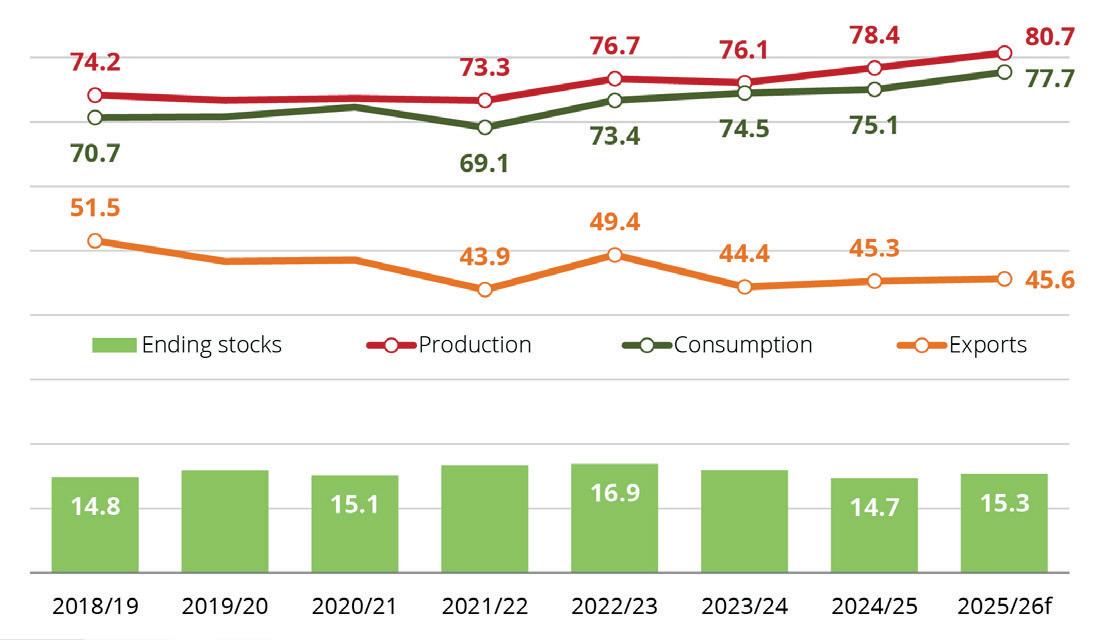
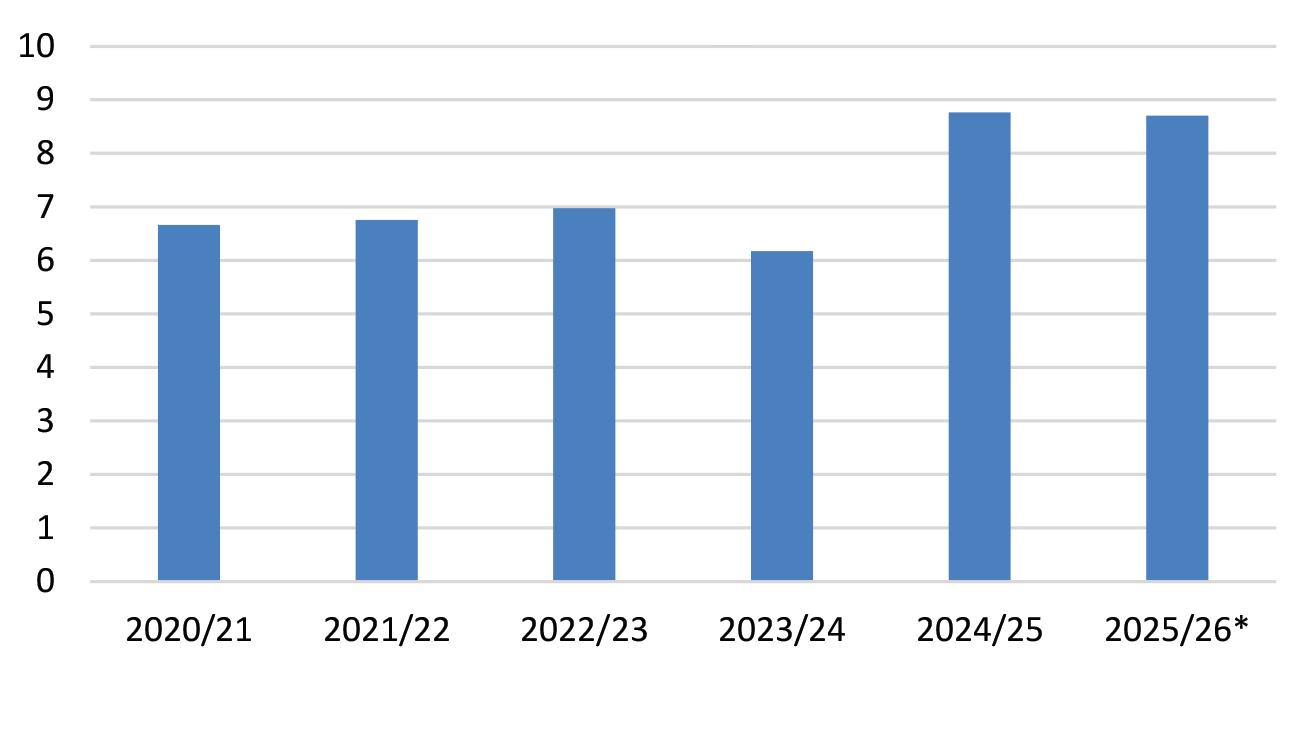
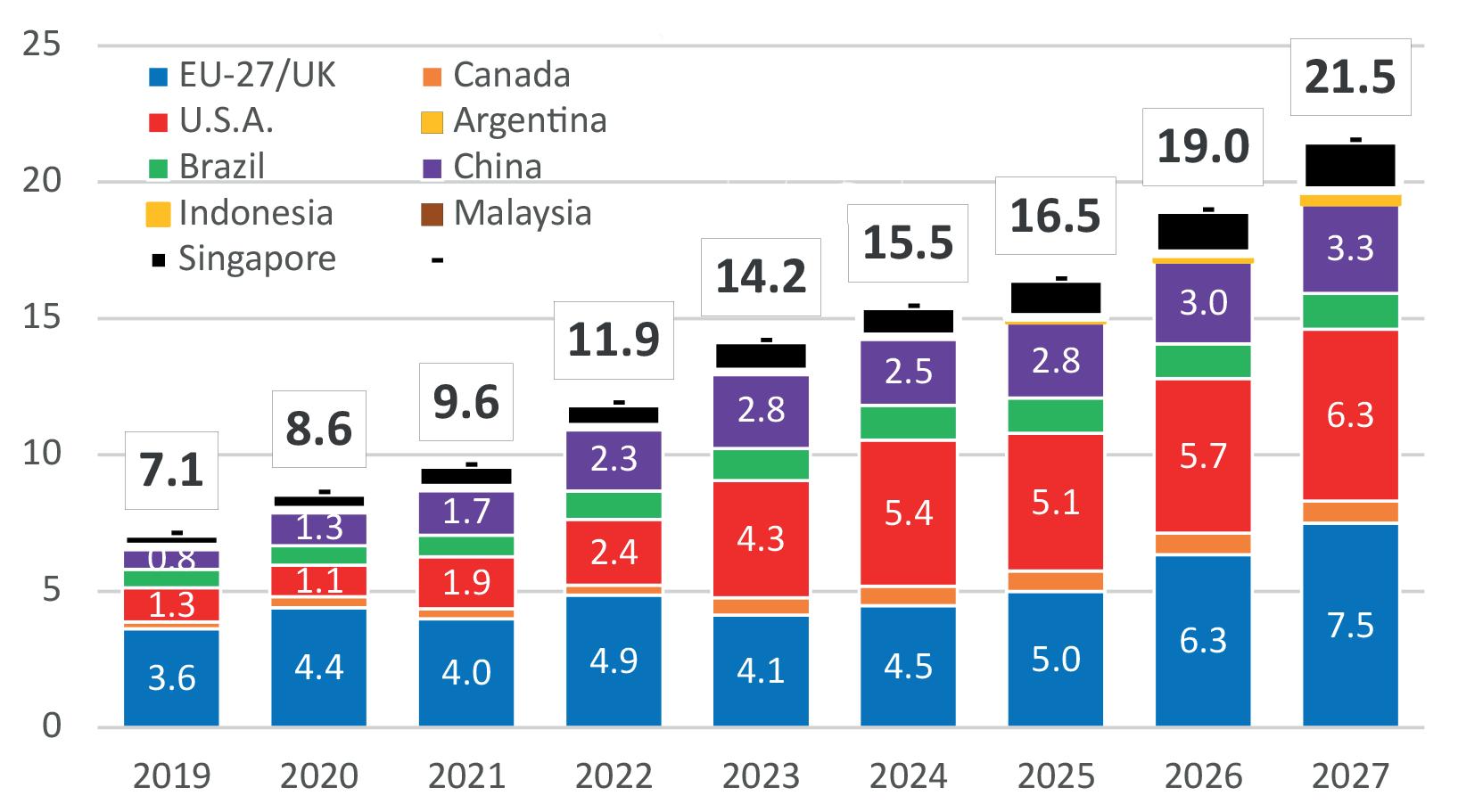
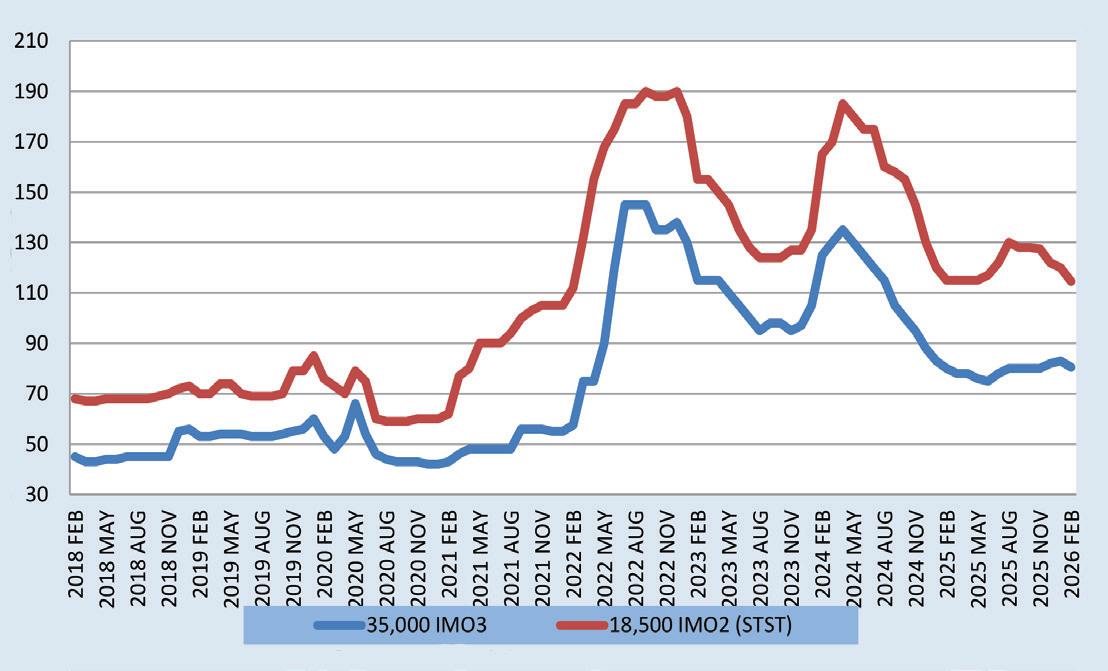
Global palm oil production in 2025/26 is expected to rise to a record 80.7M tonnes, a 3% year-on-year increase, due to higher production in Malaysia and Indonesia, according to forecasts by the US Department of Agriculture (USDA) reported by Germany’s Union for the Promotion of Plants and Protein (UFOP) on 18 February.
Malaysian production is projected at 20.2M tonnes, a year-on-year increase of 820,000 tonnes. Indonesia is expected to increase its production by 1.2M tonnes, compared to the previous year’s total of 46.7M tonnes.
Trade in palm oil has also increased, with 45.6M tonnes likely to be shipped worldwide in 2025/26, compared with 45.3M tonnes the previous year. the report said. Global consumption in 2025/26 is expected to rise around 4% compared to the previous season, reaching 77.7M tonnes.
The US Department of Agriculture (USDA) has raised its forecast for 2025/26 soyabean meal imports into the EU by 1M tonnes to total 19.5M tonnes, moving closer to the previous season’s decade high level of 20.6M tonnes.
The EU’s large volume of soyabean meal imports in 2024/25 was on top of strong soyabean imports, enabling the highest soyabean meal consumption since 2008/2009, the USDA said in its February ‘Oilseeds: World Markets and Trade’ report. Increased soyabean meal usage rose partly to offset reduced availability of rapeseed and sunflowerseed meals as well as feed wheat, due to below average production of these crops in 2024/25.
Global soyabean meal prices were expected to remain low as record harvests in South America enabled further crushing and soyabean meal exports, the report said.
Global used and waste oils demand has continued to grow, reaching 16.5M tonnes in 2025, Artem Hammerschmidt, head of vegetable oils and biofuels research at Ceras Analytics, told the Palm and Lauric Oils Price Outlook Conference & Exhibition (POC) on 9-11 February in Malaysia. Policy-driven demand was now outpacing collection, with a 0.5M tonne deficit in 2026, widening to 1M tonne in 2027, implying prices must rise to unlock new supply, he said.
Against a backdrop of medium range, J25 and coated newbuild vessels being delivered from Asian shipyards, palm oil freight rates have remained relatively firm, contrary to market expectations, according to Riverside Tanker Chartering’s February market report.
Many of these newbuilds had so far been absorbed into Far East/Arabian Gulf regional trades, and were therefore not adding a huge degree of downward pressure on the Malacca Straits-Europe long haul palm oil freight market, the report said. This market has been relatively balanced, with a slight degree of downward pressure, but both full palm oil and parcels of biofuels and feedstocks continue to be quoted regularly, according to the report.