


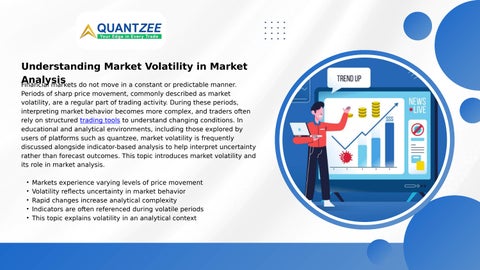
Financial markets do not move in a constant or predictable manner. Periods of sharp price movement, commonly described as market volatility, are a regular part of trading activity. During these periods, interpreting market behavior becomes more complex, and traders often rely on structured trading tools to understand changing conditions. In educational and analytical environments, including those explored by users of platforms such as quantzee, market volatility is frequently discussed alongside indicator-based analysis to help interpret uncertainty rather than forecast outcomes. This topic introduces market volatility and its role in market analysis.
• Markets experience varying levels of price movement
• Volatility reflects uncertainty in market behavior
• Rapid changes increase analytical complexity
• Indicators are often referenced during volatile periods
• This topic explains volatility in an analytical context

Market volatility is relevant because it affects how traders interpret risk, price movement, and market structure. Volatile conditions can arise from economic events, news releases, or shifts in market sentiment. Understanding volatility helps traders adjust their analysis and expectations when markets behave differently from stable conditions.
• Volatility occurs across all asset classes
• Often triggered by news or macro events
• Increases uncertainty and price swings
• Influences analytical and risk perspectives
• Common focus in trading education
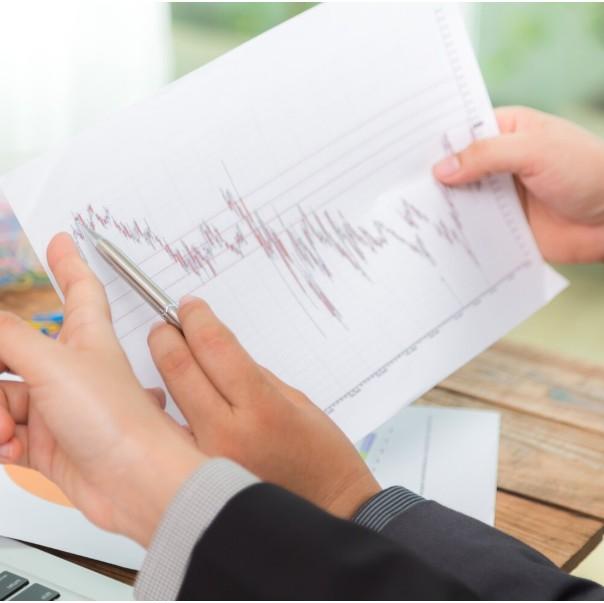
Market volatility refers to the degree and speed of price fluctuations over a given period. Higher volatility indicates larger and more frequent price movements, while lower volatility reflects more stable conditions. Volatility itself does not indicate market direction but describes how much prices vary, which directly affects how traders interpret market behavior.
• Measures intensity of price movement
• Can increase or decrease over time
• Does not indicate upward or downward direction
• Affects risk and analysis approaches
• Influences how indicators behave


During volatile market conditions, indicators are often used to help interpret rapid changes in price behavior. Traders may use indicators to observe momentum shifts, assess trend stability, or understand the scale of price movement. These tools are generally applied alongside broader market context rather than as standalone decision drivers.
• Monitoring momentum and price acceleration
• Assessing trend strength or breakdown
• Observing expanded price ranges
• Filtering short-term market noise
• Supporting structured analysis during uncertainty

Volatility-focused analysis is commonly used by traders and analysts who operate in fast-moving or uncertain market environments. It is also relevant in educational and research settings where understanding market behavior under stress is important. This type of analysis is generally suited for users who need structured methods to interpret unstable conditions.
• Traders active during volatile markets
• Analysts monitoring changing risk conditions
• Educators explaining uncertainty in markets
• Research teams studying price behavior
• Individuals adapting analysis to market shifts
For more information, you can explore this topic further here https://quantzee.com/
