
SUSTAINABILITY REPORT 2025

2025 at a Glance
$1.89B in sales
100+ countries served
35 projects implemented to reduce our energy consumption
Named as one of America’s Most Responsible Companies, by Newsweek and Statista
30 technology sites
15K+ customers 13% increase in renewable electricity, compared to 2024
36 manufacturing sites
4,700 colleagues2
0.33
Total Recordable Incident Rate (TRIR) well below the average TRIR of 1.6 for Chemical Manufacturing (2024), as cited by the U.S. Bureau of Labor Statistics3

75% of direct spend is sourced by suppliers who meet, or exceed, our Sustainability performance threshold
9% decrease in water intensity, compared to 2024
3% above volunteering participation goal
0 material cyber incidents
22,000 metric tons of waste avoided at our customer FLUIDCARE™ partner locations
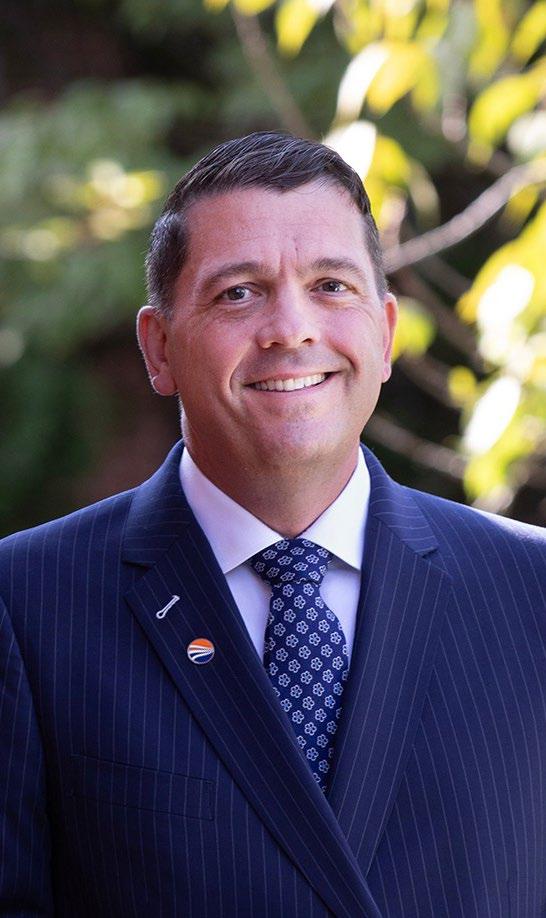
Message from the CEO
In a world defined by rapid change and uncertainty, Quaker Houghton remains focused on what matters most: driving meaningful progress for our customers, our communities, and our Company�
In 2025, we delivered sustainability results that reflect both our ambition and our discipline. Among the highlights:
• 13% increase in renewable electricity use
• 10% more employees reporting process safety observations
• 22% reduction of Carcinogenic, Mutagenic, or Reprotoxic (CMR) Cat 1A/B labeled finished goods, effectively replacing them from 33 active formulations in our portfolio
These actions are resonating outside our walls as well� Our progress continues to earn recognition from customers and respected third-party organizations, including EcoVadis, Newsweek, and Statista� Our actions are making a difference�
Building on our 2024 double materiality assessment, we’ve strengthened the insights shaping our strategy� In this report, you’ll see how those learnings informed our new goal framework, how we will measure success, and the concrete actions underway to achieve our ambitions�
We are driven by a meaningful purpose — to be the trusted partner to the world’s leading manufacturers who rely on our process fluid solutions to advance the world safely and sustainability�
Thank you for your interest in Quaker Houghton� We invite you to explore our 2025 Sustainability Report to see our progress, our transparency, and our commitments in action�
Joseph Berquist
Joseph Berquist Chief Executive Officer and President
Who we are and how we manage sustainability
Company Overview

Quaker Houghton is the global leader in industrial process fluids. With a robust presence around the world, including serving over 100 countries, our customers include thousands of the world’s most advanced and specialized steel, aluminum, automotive, aerospace, offshore, can, mining, and metalworking companies� Our high-performing, innovative, and sustainable solutions are backed by best-in-class technology, deep process knowledge, and customized services� With approximately 4,700 colleagues, including chemists, engineers, and industry experts, we partner with the world’s leading manufacturing companies who rely on our process fluid solutions to advance the world safely and sustainably.
How We Manage Sustainability
At Quaker Houghton we strive to integrate sustainable business practices across our operations and to continually develop sustainable solutions that meet evolving customer needs� Accordingly, our sustainability strategy is critical to our long-term business objectives and strong governance structures, and management approaches are essential in supporting the achievement of our sustainability vision� Our governing processes create accountability, support consistent communication, and drive progress�
BOARD AND EXECUTIVE LEVEL GOVERNANCE
Our Board Sustainability Committee (BSC), established in 2020, assists the Board of Directors in its assessment and evaluation of Quaker Houghton’s sustainability programs pertaining to our business, operations, and colleagues� The Committee’s responsibilities include integrating sustainability initiatives into our business planning strategy, risk management, processes, and culture, while assessing and responding to risks connected with sustainability matters� They engage in the development and implementation of the organization’s sustainability progress� The BSC met four times this year, but traditionally no less than twice annually� Additional information on sustainability management and reporting responsibilities is available in the BSC Charter� Details on the BSC members’ knowledge and expertise are available in our most recent Proxy Statement� Beyond the BSC, our full Board of Directors receives sustainability updates from the Executive Leadership Team (ELT) via quarterly reports and periodic presentations� The ELT has operational leadership and responsibility for sustainability management�
FUNCTIONAL AND DISCLOSURE LEADERSHIP
The Director of Corporate Sustainability partners with leaders across business functions to advance our existing sustainability activities and to develop and execute new initiatives� The sustainability team works with functional leaders as well as marketing, corporate communications, legal, and investor relations to accurately and efficiently share information with all our stakeholders� In early 2026, the team launched a Sustainability Council which aligns key decision makers for sustainability strategy, implementation, and reporting and includes Executive Sponsors, functional leaders, as well as the Corporate Sustainability and ESG Controllership teams�
Materiality
Relevant Topics
Quaker Houghton completed a materiality assessment in 2020 to identify the Sustainability topics most significant to our company and stakeholders.
In late 2024, we completed our first double materiality assessment which combined financial and impact materiality to determine which environmental, social, or governance impacts, risks, or opportunities (IROs) are material to Quaker Houghton�
The list of IROs was identified via extensive research and benchmarking of the industry landscape as well as in-depth stakeholder engagement� They were then mapped across our value chain to determine where they were most relevant in the business�
Stakeholder Engagement
The double materiality assessment process involved substantial engagement with internal stakeholders, including interviews with leaders across key business functions� These leaders are closely connected to our key external stakeholders (primarily investors, customers, suppliers, and communities) and were well positioned to represent the expressed needs of our external stakeholders in their interviews� Functional leaders across the organization then scored the IROs against the criteria of magnitude, severity, and likelihood to prioritize the topics� We further engaged our ELT and BSC to validate the prioritized material topics (see figure to right for the final list).
Water Stewardship
Preserve local communities through responsible water stewardship
Solutions with Sustainable Value
Expand offering of innovative and safer solutions which optimize sustainable value for our customers and the planet
GHG Emissions
Prioritize actions and technologies which minimize GHG emissions

WE SEE BEYOND™ AND WILL GO BEYOND TO:

Talent Management and Culture
Cultivate a culture that retains, develops, and attracts top talent to create long-term value for our customers and communities
Responsible Suppliers
Partner with suppliers that meet or exceed our corporate sustainability standards


Safety, Environmental, and Cyber Incidents
Empower our colleagues to live safe and minimize cyber, environmental, and safety incidents

Application
Our results were well aligned with our material topics from the 2020 assessment and as a result our Sustainability strategy remains unchanged with this updated view of materiality� However, the final list of material topics did vary slightly and as a result we adjusted how we will measure success in the future� In 2025, we focused on establishing a new goal setting framework based on refreshed material topics, determined an execution strategy to manage current topics and topics no longer explicitly listed in the results, and made progress against the material IROs identified. We plan to re-engage key internal stakeholders responsible for our material topics to review our approach, programs, and progress in 2026�
Our Corporate Vision
To be the trusted partner to the world’s leading manufacturers who rely on our solutions to advance the world safely and sustainably�
Our Corporate Sustainability Vision
Through uniting our people, expertise, and resources, we will deliver contributions that result in a better, safer world and make a positive difference in the lives and organizations we touch�
Our Strategic Pillars
• Innovating Together for a Better Tomorrow
• Protecting Our Planet
• Empowering Our Colleagues and Communities
• Sourcing Our Materials Responsibly
2025 Progress on Material Impacts, Risks, and Opportunities
Theme Material IROs
• Innovative products and services reducing environmental impact
Solutions with Sustainable Value
UNSDG: 3,12,14

Talent Management and Culture
UNSDG: 4,5,8,9,10,16
• Product and service offerings that reduce customer water consumption and discharges leading to improved financial performanceO
• Longer-lasting products that produce less waste leading to improved financial performanceO
• Longer-lasting products that produce less waste leading to customer cost savings and reduced environmental waste
• Products positively impacting the health and safety of workers in the value chainI,O
• Training and skills development resulting in a more knowledgeable, capable, and satisfied workforce
• Retirement of aging workforce leading to loss of critical knowledgeR
• Difficulty to attract and retain talent may lead to the inability to maintain business continuityO
• Strong and transparent corporate culture increasing employee engagement and morale, worker productivity, and business performanceO
2025 Progress
• 22% reduction of Carcinogenic, Mutagenic, or Reprotoxic (CMR) Cat 1A/B labeled finished goods, effectively replacing them from 33 active formulations in our portfolio
• Developed and began implementation of 20 roadmaps which reduce virgin mineral oil usage, water consumption and related water waste, reducing sludge production and improving recycling of products at customer location, either in the finished goods or in the in-use phase, improving part quality and fluid life.
• Eliminated 22,000 metric tons additional savings at QH FLUIDCARE™ partner locations
• Launched the adapted Green Chemistry Guidelines, and added four new translations into local languages
• Introduced the sustainability scorecard into the innovation product development tool
• Added new sustainable innovations to our portfolio
• Launched a global engagement survey with 76% employee participation
• Established community partnerships in three of our regional/global headquarters: Conshohocken, USA; Uithoorn, Netherlands; and Pune, India — providing long term philanthropic and volunteer support
• Outperformed the three year rolling industry standard of volunteering engagement percentage
• Introduced a leadership competency model and development tools designed to support individual growth, enhance performance, and strengthen leadership impact at every level of the organization
• Invested in a new human capital management system seeking to reduce complexity and drive greater efficiencies across Quaker Houghton
• Expanded opportunities for learning, development, engagement, and total rewards offerings for our colleagues
• Fostered a growth-oriented environment for our colleagues by offering leadership development opportunities to all leaders
Theme Material IROs
• Adequately training employees to consider IT security in the discussion of workplace safety may ensure business continuityO

Safety, Environmental, and Cyber Incidents
UNSDG: 6,8,9,13,14
• Exposure to heavy machinery, harmful substances and other workplacerelated hazards leading to safety risks and potential injuries
• Water contamination leading to adverse impacts on environment and human health
• Environmental impacts adversely affecting the health and well-being of community members
2025 Progress
• Achieved a 10% increase in employee participation in reporting a safety leading indicator
• Achieved a 0�33 TRIR3, well below the average TRIR of 1�6 for Chemical Manufacturing (2024), as cited by the U�S� Bureau of Labor Statistics
• Held world safety week with 93% employee engagement
• Launched global Process Hazards Analysis process
• 0 Tier 1 & 2 Process Safety Events
• Expanded RC 14001 and ISO 14001 certifications, now 86% of our manufacturing locations are certified to an environmental standard.
• Expanded RC 14001 and ISO 45001 certifications, now 80% of our manufacturing locations are certified to a safety standard
• Rolled out, or modified, 12 policies by the global EHS team focused on topics such as personal protective equipment, driver safety, and powered industrial trucks
• Achieved zero material cybersecurity incidents
• Achieved 96% quarterly cybersecurity training completion rate for applicable employees

Responsible Suppliers
UNSDG: 13,14
• Air emissions leading to adverse impacts on environment and human health
• Supplier due diligence mitigating negative human rights impacts on workers in the upstream value chain relating to health and safety
• Raw materials suppliers leading to adverse environmental and social impacts that affect communities and can contribute to human rights violations
• Raw materials sourcing leading to adverse environmental impact
• Supply chain business discontinuity adversely affecting Quaker Houghton’s operations and financial performanceR
• Maximized sourcing of fully segregated Palm Oil and derivatives through the RSPO where feasible� For all other sources invest in Book and Claim through the Rainforest Alliance and ensure sustainable practices are confirmed by suppliers.
• Expanded our Supplier Code of Conduct and integrated compliance in our standard Terms and Conditions
• We continued to onboard suppliers on EcoVadis as supply shifted
• Achieved 75% of total direct spend with suppliers who met, or exceeded our minimum performance threshold
• Met with suppliers who did not meet our minimum performance threshold, and discussed expectations and a path forward
Theme Material IROs
GHG Emissions
UNSDG: 9,12,13
Water Stewardship
UNSDG: 12,14
• GHG emissions (Scope 1, 2, and 3) contributing to global warming
2025 Progress
• Completed a Scope 3 GHG emissions assessment
• Reduced GHG emissions intensity4 by 10%
• Increased renewable electricity by 13%
• Developed roadmaps for the largest GHG emission intensive sites
• Include 35 new projects around the globe with focused on energy reductions in our operations
• Implemented natural gas submetering at five locations
• Water scarcity leading to a higher risk of operational disruptionR
• Over-consumption of water leading to adverse impacts on the environment and human healthI
• Include 17 new projects around the globe with focused on water reductions in our operations
• Reduce water consumption intensity by 9%, compared to 2024
• Implemented five water submetering systems
• Conducted water usage internal audits at five of our top consuming sites
Quaker Houghton’s Goal Framework
We have long-term directional goals that focus on each material impact, risk, and opportunity identified through the double materiality assessment� We will disclose standard key performance indicators (KPIs) annually to drive transparency and demonstrate progress towards those directional goals� Finally, each year we will set specific, measurable, achievable and relevant targets that outline tangible actions to be taken in the next year to help us achieve our directional goals�
Water Stewardship
Preserve local communities through responsible water stewardship
Prioritize actions and technologies which minimize GHG emissions

Responsible Suppliers
Partner with suppliers that meet or exceed our corporate sustainability standards


Solutions with Sustainable Value
Expand offering of innovative and safer solutions which optimize sustainable value for our customers and the planet

Talent Management and Culture
Cultivate a culture that retains, develops, and attracts top talent to create long-term value for our customers and communities
Safety, Environmental, and Cyber Incidents
Empower our colleagues to live safe and minimize cyber, environmental, and safety incidents

Directional Goals

We See Beyond™ and will go beyond to:
Expand offering of innovative and safer solutions which optimize sustainable value for our customers and the planet
We will measure success by tracking:
• Number of completed projects using Green Chemistry Guidelines
• Number of completed and positive Sustainability Scorecards for new innovation projects
• Metric tons of waste avoided at QH FLUIDCARE™ customer sites
• Percentage of new finished goods labeled as CMR Cat 1A (excluding ingestion hazard)
We See Beyond™ and
will go beyond to:
Expand offering of innovative and safer solutions which optimize sustainable value for our customers and the planet
Our Approach
Across global markets, customers continue to rely on Quaker Houghton as a trusted partner, reflecting our commitment to advancing sustainability both within our own operations and through the solutions we deliver to our customers� Customer engagement underscores a pragmatic, value driven approach to adoption, with sustainability initiatives gaining momentum where there is a clear and compelling business case tied to performance, efficiency, and other business outcomes� Customer feedback plays a critical role in shaping our innovation priorities and ensures our solutions align with both our sustainability objectives and the evolving needs of our customers� The governance of this topic can be found here�
Our portfolio is largely non-hazardous and is typically comprised of a mix of virgin fossil mineral oils, synthetic, bio-based, and reclaimed or recycled raw materials� At the core of our business, we partner with our customers in their transition toward becoming more sustainable by working together to reduce human health hazards5 as well as product consumption, waste, water, and energy� Many of our solutions provide one or more of those benefits. Our See Beyond™ portfolio, launched in 2024,
highlights products that provide the most significant sustainable benefit to customers.
A cross-functional team spanning R&D, Product Stewardship, Strategy, Commercial, and Finance works collaboratively to meet our annual sustainability targets� R&D teams routinely assess raw materials with Product Stewardship support to minimize hazards while maintaining product efficacy. Chemists apply Green Chemistry Guidelines and use a preferred raw material list to prioritize renewability and human and environmental safety, partnering with suppliers to replace hazardous materials where needed� Upon completion, formulations are evaluated using the Sustainability Scorecard—integrated into our innovation process in 2025 and broadly deployed in 2026—before being trialed with customers and added to the portfolio�
In addition to our product portfolio, our QH FLUIDCARE™ and QH FLUID INTELLIGENCE™ business lines provide sustainable and affordable technical and engineering solutions that help our customers achieve waste elimination or avoidance—which in turn contributes to Scope 3 emissions reductions and the lowest total cost of ownership�

HIGHLIGHT STORY
Quaker Houghton India was recognized at the Rosefield Conference for Lubricants and Fuels, held in Mumbai, India, where it received a trophy within the Technology Advancement category� At the heart of this achievement is our groundbreaking Cr(VI)-free technology which is applied in surface treatment� This innovative solution addresses the hazardous properties of Hexavalent chromium or Cr(VI), classified as a CMR Category 1 substance with the potential to cause cancer, genetic mutations, and reproductive health issues� By eliminating Cr(VI) from our products, we help advance the environment, health and safety� Our Cr(VI)-free technology enables our customers to operate more sustainably without compromising on operational performance�
The award, presented by Rosefield Energy Tech, highlights our continued commitment to sustainability and innovation in this space�
We See Beyond™ and will go beyond to:
Expand offering of innovative and safer solutions which optimize sustainable value for our customers and the planet
2025 Progress
In 2025, we committed ourselves to the following actions to support the achievement of our directional goals:
• 22% reduction of Carcinogenic, Mutagenic, or Reprotoxic (CMR) Cat 1A/B labeled finished goods, effectively replacing them from 33 active formulations in our portfolio
• Developed and began implementation of 20 roadmaps which reduce virgin mineral oil usage, water consumption and related water waste, reducing sludge production and improving recycling of products at customer location, either in the finished goods or in the in-use phase, improving part quality and fluid life
• Eliminated 22,000 metric tons additional savings at QH FLUIDCARE™ partner locations
• Launched the adapted Green Chemistry Guidelines, and added four new translations into local languages
• Introduced the sustainability scorecard into the innovation product development tool
• Added new sustainable innovations to our portfolio
Our 2026 Targets
• Increase the number of projects reviewed using Green Chemistry Guidelines by 10% compared to 2025
• Complete Sustainability Scorecards for 100% of innovation projects and set the baseline
• Support our QH FLUIDCARE™ customers to reduce/avoid 10,000 tons of waste
22,000
metric tons of waste avoided at our QH FLUIDCARE™ customer locations

We See Beyond™ and will go beyond to:
Cultivate a culture that retains, develops, and attracts top talent to create long-term value for our customers and communities
We will measure success by tracking:
• Learning and development (factor) score from prior year engagement survey
• Overall attrition rate
• Time-to-fill professional roles and operations roles
• Engagement score from prior year engagement survey
• Belonging (factor) score from prior year engagement survey

We
See Beyond™ and
will go beyond to:
Cultivate a culture that retains, develops, and attracts top talent to create long-term value for our customers and communities
Our Approach
Our core values embody who we are as a company, guide our decisions, and inspire us� Our commitment to these values, in words and actions, builds a safer, stronger Quaker Houghton� They are the fundamental beliefs that guide our conduct� We maintain an unwavering commitment to our colleagues’ engagement and professional development, and to cultivating a culture where everyone belongs� This goes beyond positively impacting our colleagues’ lives, to also benefit our business and the communities where we live and work� The governance of this topic can be found here�
Our colleagues are our most significant differentiators� To ensure our success, we prioritize supporting and investing in the skills, talents, and expertise of our colleagues� Our Talent Management team works with our broader HR team and the business to implement this strategy� Our global performance management framework, learning and development programs, and organizational talent assessment process are core elements of our talent investment efforts� The performance management process provides a standardized approach and
cadence for evaluating colleague performance and identifying learning goals, action plans, and opportunities for professional development that are aligned with our overarching enterprise strategy� Through our learning and development programs we place importance on developing our leaders at all levels whether a colleague is leading themselves or others and providing them with opportunities to enhance their effectiveness� Our organizational talent review works to build a strong pipeline of ready leaders and ensures talent decisions support sustained performance and growth�
We prioritize efforts and investments around wellness and wellbeing� To further support colleague wellbeing, we launched a new Global Employee Assistance Program (EAP) through Lyra, which provides all colleagues and their eligible dependents access to local, in-country one-on-one support with licensed therapists and certified mental health coaches, 24/7 care navigation, digital selfcare tools, and mobile app access� In addition, we continued our partnership with Carrot Fertility and offer a voluntary benefit with Care�com providing unlimited access to the world’s leading online network for finding

HIGHLIGHT STORY
As Quaker Houghton strives to make significant positive impact in the places where we live and work, we encourage colleagues around the world to utilize their 16 hours of paid time off to give back to their communities� In April and November, we hosted two Global Months of Giving, which focused on driving colleague volunteerism� Our colleagues jumped into action and participated in hundreds of hours of volunteer work both through company organized group events or individually� Activities included teaching local school children about safety in Brazil, collecting and organizing personal care items for veterans in the United States, collecting donations and volunteering at a school in Thailand, collecting donations and volunteering at a lifesaving charity in the U�K�, and organizing a library in China� We are proud of the outcomes of our Global Months of Giving and look forward to continuing this tradition in 2026�
We See Beyond™ and will go beyond to:
Cultivate a culture that retains, develops, and attracts top talent to create long-term value for our customers and communities
short- or long-term care for children, seniors, and pets� To recognize mental health day, we launched a global step challenge where colleagues competed for number of steps and received various prizes in recognition of the achievements� In the United States, our Paid Parental Leave program includes birthing and non-birthing parents, and we offer the Calm Health App for guided meditations, mindfulness programs, sleep stories, breathing exercises and stress management tools�
We value doing great things together, in a way that celebrates collaboration, and creating an environment where everyone belongs, leading to talent retention and productivity� Our Colleague Experience team works with the business and our Culture and Engagement Taskforce to cultivate this environment� In 2025, we launched a global engagement survey for all colleagues and 76% of our employee base completed the survey� We found that 73% of our colleagues are engaged, exceeding the industry average by 4%� These responses provide us with insights into what we are doing well, where we can improve, and help us build action plans accordingly� We utilize our Colleague Resource Groups (CRGs) to increase opportunities for our colleagues to feel a sense of belonging� Our global CRGs (NextGen Professionals, Women’s Inclusion Network, Veteran, and
PRIDE) were active during the year and hosted a variety of events focused on colleague development and building inclusivity�
Our teams also continue to build our sense of culture by working together to give back to our communities� The Global Philanthropy Committee, along with our local volunteering site coordinators, partnered with colleagues and nonprofit organizations worldwide to make a positive impact in the communities where we live and work� We exceeded industry three-year rolling benchmarks for volunteer participation, achieving over 7% of colleagues globally involved in our volunteer program� Through two successful grant cycles, the organization positively impacted 37 nonprofits worldwide and the donation matching program amplified the impact of colleagues’ generosity while supporting causes important to them�

2025 Progress
In 2025, we committed ourselves to the following actions to support the achievement of our directional goals:
• Launched a global engagement survey with 76% employee participation
• Established community partnerships in three of our regional/global headquarters: Conshohocken, USA; Uithoorn, Netherlands; and Pune, India providing long term philanthropic and volunteer support
• Surpassed our company goal of 4% volunteering engagement by over 3%
• Introduced a leadership competency model and development tools designed to support individual growth, enhance performance, and strengthen leadership impact at every level of the organization
• Communicated the expansion of our benefits to include a Global EAP and Calm Health App access to all colleagues
• Invested in a new human capital management system seeking to reduce complexity and drive greater efficiencies across Quaker Houghton
Our 2026 Targets
• Launch a minimum of five new leadership development experiences tied to the results of the 2025 engagement survey
• Provide quarterly learning for colleagues
• Establish knowledge transfer plans for 100% of retirement eligible incumbents in critical roles
• Plan contingency coverage for 100% of enterprise critical roles
• Achieve a year-over-year improvement in average Time-to-Fill across all roles
• Implement enterprise and department engagement action plans, demonstrating documented progress
89% of our colleagues understand how their daily work supports Quaker Houghton’s success

We See Beyond™ and will go beyond to:
Empower our colleagues to live safe and minimize cyber, environmental, and safety incidents
We will measure success by tracking:
CYBER:
• Cybersecurity training completion rate percentage
• Number of material cybersecurity incidents
ENVIRONMENT AND SAFETY:
• Total Recordable Incident Rate (TRIR)
• Total Process Hazards Analysis (PHA) completed
• Number of Major spills (LOPC events >100 kgs)
• EHS Compliance audits and on-time implementation of Compliance Corrective and Preventive Actions (CAPAs)
• Employee participation in safety activities

We See Beyond™ and will go beyond to:
Empower our colleagues to live safe and minimize cyber, environmental, and safety incidents
Our Approach on Safety
Safety is critical to the Quaker Houghton culture: we believe everyone has a role to play in protecting themselves and those around us. In our offices, laboratories, manufacturing sites, and customer facilities, we tailor our programs, policies, and systems to promote positive safety behaviors and identify potential risks before they happen�
At Quaker Houghton, safety is not only seen as a matter of compliance, but as a business enabler and differentiator� For employees, feeling safe and valued in the workplace boosts morale, job satisfaction, and trust, leading to higher engagement and a more stable and efficient operation. Led by our EHS organization and senior management teams, with regular oversight by the Board of Directors, the BSC, and the ELT, we are deeply committed to providing the resources and facilitating the engagement needed to make our organization, infrastructure, and equipment as safe as possible� Further, each manufacturing site has an assigned EHS partner responsible for measuring its safety performance and driving safety programs, including training, risk assessments, and applying our Lifesaving Rules�
Our key safety programs—Lifesaving Rules, Stop Work Authority, Incident Management and Reporting Policy, and Global EHS Policy manual—work together to help ensure safe conditions at our own sites as well as our customer sites� We utilize a digital platform to track and report on global EHS metrics and performance, including risk assessments, and leading indicators
that help us to identify, understand, correct, and avoid accidents�
We engage with our most critical stakeholders, our colleagues, in a variety of ways including town halls, safety councils, hazard assessments and integrate their feedback into action plans�
As part of the proactive safety participation program, colleagues are encouraged to submit reports in the EHS management system any observations of hazardous conditions, near misses, and inspections along with reporting actions where Stop Work Authority has been exercised. Third-party certifications are yet another important element of our approach to upholding health and safety best practices� We maintain ISO 45001 certification and/or RC 14001 certifications in 83% of our locations� ISO 45001 is an internationally recognized framework for managing occupational health and safety risks, and RC14001 is a standard for meeting the American Chemistry Council’s (ACC) Responsible Care®6 (RC) management system requirements. Both certifications speak to the robustness of our approach to occupational health and safety management� In addition to upholding these standards, we also implement compliance audits on a three-year cycle in partnership with a third-party EHS consulting firm to support our compliance with the complexity and variations of global EHS regulations�
Our approach and performance in this space is often recognized by our customers and other third parties, such as local officials, and we are proud of our team’s embodiment of Live Safe daily�

HIGHLIGHT STORY
At Quaker Houghton, safety isn’t just a priority—it’s part of who we are� Our colleagues Live Safe as they look out for each other, stay alert, and make the right choices day-in and day-out� In 2025 our team in Turin, Italy celebrated ten years without a safety recordable incident, a major achievement and a clear reflection of the focus, responsibility, and care the team brings to work every single day�
This milestone is even more impressive as the team has maintained a strong commitment to safety while working with demanding materials and through significant changes.
We See Beyond™ and will go beyond to:
Empower our colleagues to live safe and minimize cyber, environmental, and safety incidents
Our Approach on Environmental Impact
It is Quaker Houghton’s responsibility to ensure that it conducts its business in an ethical and responsible manner which results in minimizing environmental impact on the world around us� We continue to invest in process and engineering improvements at our operations to reduce the environmental impact of our business� As detailed in the Solutions with Sustainable Value section of this report, R&D is responsible for developing chemistry that reduces potential harm to the environment, local communities, and ultimately the end user�
The EHS team then ensures the chemistry is manufactured in accordance with all applicable regulations, wastes are legally disposed of, and personnel handling the materials involved, are properly trained in the hazards, along with the administrative and engineering controls to minimize the risks of injury and spills� Product Stewardship is responsible for ensuring that product hazards are documented in Safety Data Sheets (SDSs) in accordance with the local regulations where the products are sold� Process safety is the management of hazards and risks associated with processes that involve hazardous substances and energy
to prevent accidents like explosions, fires, and toxic releases� It involves a blend of engineering and management practices to protect people, property, and the environment, and it is often guided by regulations like OSHA’s Process Safety Management and the European Union Seveso Directive�
In 2025, we implemented a global standard for conducting Process Hazards Analysis (PHA) of these processes� A PHA is a methodical examination of a process to identify potential hazards, the consequences of those hazards, and whether sufficient safeguards are in place� We also take a standard approach to Management of Change across the globe on processes using highly hazardous chemicals to prevent accidents� This formal process, managed in our EHS management system, involves identifying the change, analyzing its potential safety and health impacts, implementing safeguards, and verifying safe operations�
Our Approach to Cybersecurity
Quaker Houghton is subject to various cybersecurity risks that could adversely affect our business, financial condition, and results of operations, including intellectual property theft; fraud; extortion; harm to employees or customers; violation of privacy laws and other litigation and legal risk; and reputational risks� In response to these risks, we have implemented cybersecurity processes, technologies, and controls detailed below to aid in our efforts to assess, identify, and manage cybersecurity risks�
We have a dedicated Global Cybersecurity team led by the Senior Director, Cybersecurity and Compliance that is responsible for identifying, assessing, monitoring, managing and communicating cybersecurity risks and mitigation plans� The topic is integrated into the quarterly Audit Board Committee meetings and ultimately the Board of Directors is accountable� Feedback from our key stakeholders is typically received through customer questionnaires and employee training and is integrated into action planning for the following year�

Our team, along with certain third parties, operate several global cybersecurity operations centers, which provide 24/7 monitoring and incident response capabilities� In the event of an alert, our cybersecurity operations centers coordinate the investigation and remediation of such alerts� Cybersecurity training is required for all employees with a computer several times a year� Follow-up for incomplete training is conducted on an on-going basis until the training modules are completed�
We See Beyond™ and will go beyond to: Empower our colleagues to live safe and minimize cyber, environmental, and safety incidents

2025 Progress
In 2025, we committed ourselves to the following actions to support the achievement of our directional goals:
• Achieved a 10% increase in employee participation in reporting a safety leading indicator
• Achieved a 0�33 TRIR, well below the average TRIR of 1�6 for Chemical Manufacturing (2024), as cited by the U�S� Bureau of Labor Statistics
• Held World Safety Week with 93% targeted employee engagement, representing 81% of the employee population
• Launched the Global Process Hazards Analysis
• Achieved zero tier 1 & 2 process safety events
• Expanded RC 14001 and ISO 14001 certifications, now 86% of our manufacturing locations are certified to an environmental standard
• Expanded RC 14001 and ISO 45001 certifications, now 80% of our manufacturing locations are certified to a safety standard
• Rolled out, or modified, 12 policies by the global EHS team focused on topics such as personal protective equipment, driver safety, and powered industrial trucks
• Achieved zero material cybersecurity incidents
• Achieved 96% quarterly cybersecurity training completion rate for applicable employees
Our 2026 Targets
CYBER:
• Achieve zero material cybersecurity incidents
• Achieve >95% quarterly cybersecurity training completion rate for applicable employees
ENVIRONMENT AND SAFETY:
• Achieve zero tier 1 or 2 Process Safety Events (PSE)
• Reduce major spills (Loss of Primary Containment (LOPC events) >100 kgs) by 10% compared to 2025
• Achieve 90% on-time implementation of EHS Compliance Corrective and Preventive Actions (CAPAs)
• Improve total hazardous identification and near miss reporting by 10% compared to 2025
• Improve employee participation in safety activities by 5% compared to 2025
0
.33 TRIR,
well below the average TRIR of 1�6� for Chemical Manufacturing (2024), as cited by the U�S� Bureau of Labor Statistics

We See Beyond™ and will go beyond to:
Partner with suppliers that meet, or exceed, our corporate sustainability standards
We will measure success by tracking:
• Percentage of spend with direct suppliers who achieve an EcoVadis score indicating low risk
• Number of suppliers we collaborated with to improve their sustainability performance

We See Beyond™ and will go beyond to: Partner with suppliers
that meet, or exceed, our corporate sustainability standards
Our Approach
Quaker Houghton is committed to conducting our business ethically and sustainably to serve the best interests of our company, colleagues, communities, customers, suppliers, and the planet� Our customers directly communicate their expectations of us to act as a responsible partner through a variety of channels including code of conduct compliance, customer questionnaires, and requests for new business discussions� As a global organization with our own suppliers who operate in regions with varying regulatory requirements, we integrate customer requirements into the high standards we set across our supply chain� While the environment on this topic has not changed significantly in the past year, our approach to responsible supply chain management is continually maturing alongside societal and stakeholder expectations� These efforts are managed by our global procurement team with oversight at the ELT and Board of Directors levels� Our EMEA Procurement Director and Senior Analyst for Supplier Sustainability drive progress with the Procurement team and across the organization�
We hold our suppliers and subcontractors to high standards, which are outlined in our Supplier Code of Conduct and the Quaker Houghton Code of Conduct� New partners must commit to the Supplier Code of Conduct when they are approved� We maintain external partnerships to assess their performance and have used EcoVadis since 2022 to assess the sustainability performance of our direct suppliers with over 100k USD spend� Our suppliers’ sustainability performance is now integrated into our selection dashboard, and as a result, in 2026, their sustainability standing can be more widely used for vendor selection� We expect that all suppliers maintain a minimum score of “low risk” in the tool� We also use Supplier IO, an intelligence platform, to monitor businesses in our U�S� supply chain and which are owned by people with varying backgrounds and experiences�
We also have high expectations of our own workforce and incorporate topics like vendor selection due diligence as part of our annual ethics and compliance program�

HIGHLIGHT STORY
Our Supplier Code of Conduct was initially drafted in 2020, and as standard operating practice, we required that all direct suppliers with over 100k spend provide confirmation that they align and comply with those standards. In 2025, our procurement team identified several opportunities to improve our expectations of suppliers and worked with legal and marketing to update the document and process to determine compliance� The new Supplier Code of Conduct now expands expectations focused on topics such as human rights, alignment with global standards (such as UNGC, UNDR, and OECD), responsibly sourced palm oil, and modern slavery and has added topics such as security and data privacy and conflict minerals. To streamline compliance, new suppliers must now confirm that they comply with our expectations as a part of our general terms and conditions�
We See Beyond™ and will go beyond to:
Partner with suppliers that meet, or exceed, our corporate sustainability standards

Our teams in Uithoorn, the Netherlands, and Santa Perpetua, Spain are proud to hold a Supply Chain Certification from the Roundtable on Sustainable Palm Oil (RSPO)� This certification assures our customers that the palm oil we use in products manufactured in those locations is 100% responsibly sourced�
2025 Progress
In 2025, we committed ourselves to the following actions to support the achievement of our directional goals:
• Updated our Supplier Code of Conduct and integrated compliance in our standard Terms and Conditions
• Continued to onboard suppliers on EcoVadis as supply shifted
• Achieved 75% of total direct spend with suppliers who met, or exceeded, our minimum performance threshold
• Met with suppliers who did not meet our minimum performance threshold, and discussed expectations and a path forward
Our 2026 Targets
• Develop and implement a process to identify supplier negative findings identified through EcoVadis 360 and use them to determine which should be mitigated before continuing supply
• Achieve 75% of total direct spend with suppliers scored as having low risk in EcoVadis
• Collaborate with targeted suppliers to improve their sustainability performance
75% of total direct spend is with suppliers scored as having low risk in EcoVadis

We See Beyond™ and will go beyond to:
Prioritize actions and technologies which minimize GHG emissions
We will measure success by tracking:
• GHG emissions Scope 1, 2
• GHG emissions Scope 3
• Percentage of kWh sourced by renewable energy
• Total energy consumed
• Total self-generated electricity
We See Beyond™ and will go beyond to: Prioritize actions and technologies which
minimize GHG emissions
Our Approach
Reducing GHG emissions is integral to Quaker Houghton’s commitment to the environment, to meet the needs of our customers, and to our overall business success� Our company completed a physical and transition climate impact assessment and understands both the potential impact of climate change on our business, and our business’ impact on climate change� Our approach today is to prioritize our efforts in areas where we can directly make a difference and will make the largest impact� The governance of this topic can be found here�
We track and report Scope 1, 2, and 3 GHG emissions according to the GHG Protocol guidelines� A cross-functional team comprised of delegates from Engineering, EHS, and local operations work together to implement the appropriate actions within their functions to achieve our targets each year� Our GHG Emissions Manager works with the local sites, the Sustainability team, Procurement, and
Strategy teams to track and report Scope 1, 2, and 3 emissions according to the GHG Protocol guidelines� The team uses our global data management platform, Power BI, and global playbooks to track energy sources and usage, emissions, and projects which reduce usage and emissions� Over the past few years, we have also invested in electricity and fuel submetering and monitoring systems at multiple locations to better understand usage�
Reducing GHG emissions first begins with maximizing the sourcing of energy from renewable sources� We utilize electricity from the grid which includes renewable sources, invest in renewable energy credits or contracts, and also invest in on-site solar generation at many of our locations� Each site has a responsibility to submit projects which create efficiencies and reduce usage through our site champion program� Additional funds are set aside to fund these projects� In addition, our GHG Emissions Manager and

HIGHLIGHT STORY
As a part of our energy sourcing strategy, we seek to increase renewable energy, decrease energy costs, self-generate electricity where possible, and reduce dependency on the local grid� In 2025, we installed new solar systems at locations in Spain (generating approximately 30% of total usage) and Thailand (generating approximately 60% of total usage) One of our sites in Mexico now self generates approximately 70% of total usage� These three sites led to a renewable energy increase from solar by approximately 1�5%� Now six of our 35 manufacturing locations utilize self-generated solar electricity, and we are seeking additional ways to increase self-generated solar energy across the enterprise�
We See Beyond™ and will go beyond to:
Prioritize actions and technologies which minimize GHG emissions

Engineering team worked to do energy audits of our highest emissions intensive sites to identify projects with the biggest impact and integrate into the capital expenditure budget for the next year� Examples of investments made in 2025 include upgrading inefficient equipment, installing electric-vehicle (EV) charging stations to support and expand our EV fleet, updating hot-room procedures to reduce energy use, and adding new variable frequency drive equipped compressors�
Quaker Houghton tracked and reported Scope 3 GHG emissions for the first time in 2025 which can be found in the index of this report. The first year’s data will inform where we can focus efforts in the future to reduce GHG emissions along the value chain�
2025 Progress
In 2025, we committed ourselves to the following actions to support the achievement of our directional goals:
• Completed a Scope 3 GHG emissions assessment
• Reduced GHG emissions intensity by 10%
• Increased renewable energy by 13%
• Developed roadmaps for the largest GHG emission intensive sites
• Implemented 35 projects around the globe with focus on energy reductions in our operations
Our 2026 Targets
• Implement energy improvement projects at three sites reviewed during the 2025 energy assessment
• Create and implement operational energy saving best practices
• Conduct three additional energy assessments
• Increase renewable electricity sourcing percentage, compared to 2025
• Disclose inaugural Scope 3 reporting for 2025
• Install additional energy monitoring systems
13%
increase of renewable energy, compared to 2024� Now 80% of our electricity is sourced from renewable or zero carbon sources�

We See Beyond™ and will go beyond to:
Preserve local communities through responsible water stewardship
We will measure success by tracking:
• Percentage of water withdrawal from sites identified as having high/very high water stress
• Number of incidents where “on time in full” is negatively impacted due to inability to insource water as a raw material
• Total water consumed
• Total wastewater generated
We See Beyond™ and will go beyond to: Preserve local communities through responsible water stewardship
Our Approach
Water is a critical resource within Quaker Houghton’s operations, for our customers, and in our communities� Our company completed a physical and transition climate impact assessment and understands both the potential impact of climate change on our business, and our businesses’ impact on climate change� Our approach today is to prioritize our efforts in areas where we can directly make a difference and will make the largest impact� The governance of this topic can be found here�
In turn, responsible water use is beneficial for our business and our stakeholders for several reasons—including a lower cost burden of purchasing water, treatment of less wastewater, and reduced compliance risks� Our cross-functional Protecting Our Planet team oversees our efforts to conserve water, improve water-use efficiency, and increase the safety and recyclability of potential effluents. These initiatives are advanced at the site level by Site Champions who track our progress and performance via our global data management platform� Across our business we have global guidelines outlining legal requirements regarding wastewater
and local site playbooks to guide water and wastewater management� In addition to these global and local policies and procedures, external certification of our environmental management system is important to our approach to managing our water responsibly�
To further drive progress across our footprint, each site has a responsibility to submit projects which create efficiencies and reduce usage through our Site Champion program� Additional funds are set aside to fund these projects� This program results in strong employee engagement, a variety of creative ideas, and effective implementation� In addition, our Center of Excellence Engineering team worked to do water audits of our highest consumption intensive sites to identify projects with the biggest impact and integrate into the capital expenditure budget for the next year� Examples of projects implemented in 2025 include installing an internet of things (IoT) solution to monitor and control our water consumption in real time and the development of scheduling management program minimizing consumption by reusing it in our products as a raw material�
HIGHLIGHT STORY
At our location in Santa Perpetua, Spain the main production process is an esterification process which serves as a base of a wide range of hydraulic fluid products. This year a cross functional team at the site proposed and implemented a new process to treat the ester’s condensate water resulting in water which can be used for other manufacturing processes� This change resulted in approximately 95% of the process water being reused, equivalent to ~400 T annually� Once treated, the water is used to clean the blending tanks needed to finish the final product. In addition to the water reduction, 400T of waste is also eliminated from the hazardous waste stream�
We See Beyond™ and will go beyond to:
Preserve
local communities through responsible water stewardship

2025 Progress
In 2025, we committed ourselves to the following actions to support the achievement of our directional goals:
• Included 17 new projects around the globe which focused on water reductions in our operations
• Reduced water consumption intensity by 9%, compared to 2024
• Implemented five water submetering systems
• Conducted water usage internal audits at five of our top consuming sites
Our 2026 Targets
• Rollout the Task Force on Climate-related Financial Disclosure (TCFD) water stress results to the supply chain team and develop risk management plans�
• Implement water improvement projects at sites reviewed during the 2025 water assessment program
• Create and implement operational water saving best practices
• Conduct three to five additional water assessments
• Increase water reusage percentage, compared to 2025
• Install additional water monitoring systems
9%
reduction of water consumption, compared to 2024
Appendix
About This Report
Reporting Frameworks
Quaker Houghton has reported the information cited in the GRI content index with reference to the Global Reporting Initiative (GRI) Standards� Additionally, our SASB Index provides information, or the location of information, pertaining to the Sustainability Accounting Standards Board (SASB) Standards for the Chemicals industry� We report against all the standards which are material to Quaker Houghton�
In 2025, Quaker Houghton continued to disclose climate related risks and opportunities aligned with the Task Force on Climate-Related Financial Disclosures (TCFD)� Please see our TCFD Index for more information�
Report Scope
Quaker Houghton reports on our management of sustainability topics as determined by the double materiality assessment conducted in late 2024� The information in our report focuses on activities from January 1, 2025, to December 31, 2025� The data tables in the appendix of the report also include fiscal years 2024 and 2023.
Forward-Looking Statements

This report contains “forward-looking statements” that fall under the safe harbor provisions of the Private Securities Litigation Reform Act of 1995 and the Securities Act of 1933, as amended� These statements can be identified by the fact that they do not relate strictly to historical or current facts� We have based these forward-looking statements on assumptions, projections and expectations about future events that we believe are reasonable based on currently available information, including statements regarding the potential effects of economic downturns; tariffs, including the uncertainty surrounding changes in tariffs; inflation and global supply chain constraints on the Company’s business, results of operations, and financial condition; our expectation that we will maintain sufficient liquidity and remain in compliance with the terms of the Company’s credit facility; expectations about future demand and raw material costs; and statements regarding the impact of increased raw material costs and pricing initiatives� These forward-looking statements
include statements with respect to our beliefs, plans, objectives, goals, expectations, anticipations, intentions, financial condition, results of operations, future performance, and business, which may differ materially from our actual results, including but not limited to the potential benefits or uncertainties of acquisitions and divestitures, the impacts on our business as a result of global supply chain constraints, and our current and future results and plans and statements that include the words “may,” “could,” “should,” “would,” “believe,” “expect,” “anticipate,” “estimate,” “intend,” “outlook, “target”, “possible”, “potential”, “plan” or similar expressions� Such statements include information relating to current and future business activities, operational matters, capital spending, and financing sources. A major risk is that demand for the Company’s products and services is largely derived from the demand for our customers’ products, which subjects the Company to uncertainties related to downturns in a customer’s business and unanticipated customer production slowdowns and shutdowns� Other major risks and uncertainties include, but are not limited to inflationary pressures, including increases in raw material costs; supply chain constraints and the impacts of economic downturns; customer financial instability; high interest rates and their impact on our and our customers’ business operations; the impacts from acts of war, terrorism and military conflicts, including those in Ukraine and the Middle East as well as economic, political and governmental actions taken by various governments and governmental organizations in response; economic and political disruptions particularly in light of numerous elections globally and the possibility of regime changes; the possibility of economic recession; legislative and regulatory developments including changes to existing laws and regulations, or the way they are interpreted, applied or enforced; tariffs, retaliatory tariffs, “trade wars” and trade restrictions, and the economic and other sanctions imposed by other nations on Russia and Belarus and/or other government organizations; suspensions of activities in Russia by many multinational companies; foreign currency fluctuations; significant changes in applicable tax rates and regulations and the potential impacts therefrom, including those arising from H�R�1, commonly known
as the “One Big Beautiful Bill Act”; future terrorist attacks and other acts of violence; the impacts of consolidation in our industry, including loss or consolidation of a major customer; the effects of climate change, fires or other natural disasters; the potential occurrence of cyber-security breaches, cybersecurity attacks and other technology outages and security incidents; and U�S� political conditions and legislative and regulatory activity (or inactivity), including adoption of (or failure to adopt) new laws, regulations and executive orders, changes in existing laws, regulations and executive orders or the way they are interpreted or applied, and adoption of laws, regulations or executive orders that conflict among jurisdictions in which we operate� Furthermore, the Company is subject to the same business cycles as those experienced by our customers in the steel, automotive, aerospace, industrial equipment, aluminum and durable goods industries� Our forward-looking statements are subject to risks, uncertainties and assumptions about the Company and its operations that are subject to change based on various important factors, some of which are beyond our control� These risks, uncertainties, and possible inaccurate assumptions relevant to our business could cause our actual results to differ materially from expected and historical results� All forward-looking statements included in this report, including expectations about business conditions during 2026 and future periods, are based upon information available to the Company as of the date of this report, which may change� Therefore, we caution you not to place undue reliance on our forward-looking statements� For more information regarding these risks and uncertainties as well as certain additional risks that we face, refer to the Risk Factors section, which appears in Item 1A of our Annual Report on Form 10-K for the year ended December 31, 2025, and in subsequent reports filed from time to time with the Securities and Exchange Commission� We do not intend to, and we disclaim any duty or obligation to, update or revise any forward-looking statements to reflect new information or future events or for any other reason� This discussion is provided as permitted by the Private Securities Litigation Reform Act of 1995�
GRI and SASB Content Index
REPORTING STANDARD DISCLOSURE
DISCLOSURES
2-1 Organizational Details
2-2 Entities included in the organization's sustainability reporting
2-3 Reporting period, frequency, and contact point
Quaker Chemical Corporation D/B/A Quaker Houghton 901 East Hector Street, Conshohocken, PA, USA
Please see additional details in our 2025 10-K�
Please see our 2025 10-K
The 2025 Sustainability Report was published on June 2nd, 2026, covers the 2025 calendar year, and is updated annually� For questions about the 2025 Sustainability Report information, please contact Sarah Briggs; Director, Corporate Sustainability: sustainability@quakerhoughton.com�
Restatements to our 2024 Sustainability Report:
In the 2024 highlights section, we report a 7% reduction in our Scope 2 Greenhouse gas (GHG) emissions� In our 2024 progress on material topics table on page 8 of the 2024 Sustainability Report, it indicated an inaccuracy that there was a 9% reduction, the 7% reduction figure is correct.
GRI 2 General Disclosures 2021
2-4 Restatements of Information
2-5 External assurance
2-6 Activities, value chain, and other business relationships
2-7 Employees
2-8 Workers who are not employees
In GRI 2-7 Employees, an incorrect figure was listed for one of our colleague data points for 2023 due to a data transfer error� GRI 404-3 Percentage of employees receiving regular performance and career development reviews, FY24’s overall percentage changed from 95% to 100%� There was an error in the calculation� Employees excluded from the performance process were included in the total count (denominator) Percentages by job level were calculated correctly� These errors were corrected and are indicated in the 2025 Data Tables by two asterisks (**). Additionally, to match GRI definitions, we calculated turnover rate as (Terminations / Avg Headcount)� In previous years it was not calculated this way� In previous years it was calculated as [Regional Terminations / Global Terminations], we were unable to update past year data with the new calculation� Since 2024, there have been several changes to the data structure; with the launch of Workday and increased data visibility the data has been refined and improved.
Quaker Houghton's sustainability reporting has not been externally assured�
Please see our 2025 10-K
Please see the 2025 Data Tables included in this report�
We do not track the proportion of organizational activities performed by workers who are not classified as employees globally in the HR system of record.
2-9 Governance structure and composition
2-10 Nomination and selection of the highest governance body
2-11 Chair of the highest governance body
2-12 Role of the highest governance bodyin overseeing the management impacts
2-13 Delegation of responsibility for managing impacts
2-14 Role of the highest governance body in sustainability reporting
2-15 Conflicts of interest
2-16 Communication of critical concerns
2-17 Collective knowledge of the highest governance body
2-18 Evaluation of the performance of the highest governance body
2-19 Remuneration policies
2-20 Process to determine remuneration
2-21 Annual total compensation ratio
2-22 Statement on sustainable development strategy
2-23 Policy commitments
2-24 Embedding policy commitments
2-25 Processes to remediate negative impacts
Please see the Who We Are and How We Manage Sustainability section of this report� Please also see our 2026 Proxy Statement�
Please see our 2026 Proxy Statement�
Please see our 2026 Proxy Statement�
Please see the Who We Are and How We Manage Sustainability section of this report, Please also see our 2026 Proxy Statement
Please see the Who We Are and How We Manage Sustainability section of this report
Please see the Who We Are and How We Manage Sustainability section of this report
Please see our 2026 Proxy Statement�
Please see our 2026 Proxy Statement
Each Board Sustainability Committee member has experience in overseeing environmental, social and governance matters� In addition, Committee members are provided materials at each Committee meeting which support additional knowledge and skill development in this evolving landscape
The Board of Directors conducts an annual self-evaluation each year�
Please see our 2026 Proxy Statement�
Please see our 2026 Proxy Statement�
Please see our 2026 Proxy Statement
Please see the CEO Letter section of this report�
Quaker Houghton’s Code of Conduct requires adherence and compliance with all laws and regulations on human rights and all topics/matters globally�
The Legal Department works with all groups on all material policy commitments, but they are not housed in one place or controlled by the legal department
The Corporate Compliance Program, as well as the Global Trade Department's trainings and communications, include varied and broad topics, including such areas as human rights�
The Legal Department works with all groups on all material policy commitments, but they are not controlled by the legal department�
Please see our Code of Conduct�
REPORTING STANDARD DISCLOSURE
2-26 Mechanisms for seeking advice and raising concerns
2-27 Compliance with laws and regulations
2 General Disclosures 2021
MATERIAL TOPICS
GRI 3: Material Topics 2021
WATER STEWARDSHIP
2-28 Membership associations
2-29 Approach to stakeholder engagement
LOCATION OR DIRECT RESPONSE
Please see our Code of Conduct�
Quaker Houghton is fulfilling its compliance obligations.
Quaker Houghton participates in many industry associations�
Please see the Our Materiality Results section of this report�
2-30 Collective bargaining agreements 38% of Quaker Houghton employees are covered by union/collective bargaining agreement�
3-1 Process to determine material topics
3-2 List of material topics
GRI 3: Material Topics 2021 3-3 Management of material topics
303-1 Interactions with water as a shared resource
GRI 303: Water and Effluents
SASB Water Management
303-2 Management of water discharge-related impacts
303-3 Water withdrawal
303-5 Water Consumption
RT-CH-140a�1 Total water withdrawn, and percentage in regions with High or Extremely High Baseline Water Stress; Total water consumed
RT-CH-140a�2 Number of incidents of noncompliance associated with water quality permits, standards, and regulations
RT-CH-140a�3 Description of water management risks and discussion of strategies and practices to mitigate those risks
GHG EMISSIONS
GRI 3: Material Topics 2021 3-3 Management of material topics
GRI 201: Economic Performance 2016
201-2 Financial implications and other risks and opportunities due to climate change
Please see the Our Materiality Results section of this report�
Please see the Our Materiality Results section of this report�
Please see the Water Stewardship section of this report�
Please see the Water Stewardship section of this report�
Please see the Water Stewardship section of this report�
Please see the 2025 Data Tables included in this report�
Please see the 2025 Data Tables included in this report�
Please see the 2025 Data Tables included in this report�
Please see the 2025 Data Tables included in this report�
Please see the Water Stewardship section of this report�
Please see the GHG Emissions section of this report�
Please see TCFD Index included in this report�
REPORTING STANDARD DISCLOSURE
302-1 Energy consumption within the organization
LOCATION OR DIRECT RESPONSE
Please see the 2025 Data Tables included in this report�
GRI 302: Energy 2016
302-3 Energy Intensity
305-1 Direct (Scope 1) GHG emissions
305-2 Energy indirect (Scope 2) GHG emissions
GRI 305: Emissions 2016
SASB Greenhouse Gas Emissions
305-4 GHG emissions intensity
305-5 Reduction of GHG emissions
SASB Energy Management
RT-CH-110a�1 Gross global Scope 1 emissions
RT-CH-110a�2 Discussion of long-term and short-term strategy or plan to manage Scope 1 emissions reduction targets, and an analysis of performance against those targets
RT-CH-130a�1 Energy consumption within the organization
SAFETY, ENVIRONMENTAL AND CYBER INCIDENTS
306-1 Waste generation and significant waste-related impacts
GRI 306: Waste 2020
SASB Hazardous Waste Management
GRI 403: Occupational Health and Safety 2018
306-3 Waste generated
306-4 Waste diverted from disposal
RT-CH-150a�1 Amount of hazardous waste generate, percentage recycled
403-1 Occupational health and safety management system
403-1 Occupational health and safety management system
Please see the 2025 Data Tables included in this report�
Please see the 2025 Data Tables included in this report�
GWP source used is IEA Emissions Factors: Database Documentation 2023 edition GHG Protocol is the standard used and followed for methodologies and calculations We account for CO2, CH4, N2O in our calculations and then convert those to total CO2e We calculated emissions on operational control of assets�
Please see the 2025 Data Tables included in this report�
Please see the 2025 Data Tables included in this report
Quaker Houghton follows GHG Protocol standards for calculating Scopes 1,2 and 3 emissions We created an internal calculation tool to carry out our methodology� This tool is reviewed by a third party to ensure proper conversion factors, methodologies, calculations, and processes were used in calculating total emissions Conversion and emission factor sources include the following globally recognized organizations: International Energy Agency (IEA), Environmental Protection Agency (EPA)�
Please see the 2025 Data Tables included in this report�
Please see the GHG Emissions section of this report�
Please see the 2025 Data Tables included in this report�
Please see the 2025 Data Tables included in this report�
Please see the 2025 Data Tables included in this report�
Please see the 2025 Data Tables included in this report�
Please see the 2025 Data Tables included in this report�
Please see the Safety, Environmental, and Cyber Incidents section of this report�
Please see the Safety, Environmental, and Cyber Incidents section of this report�
GRI
403: Occupational Health and Safety 2018
403-2 Hazard identification, risk assessment, and incident investigation
LOCATION OR DIRECT RESPONSE
There are multiple processes we follow to identify work-related hazards and assess risks on a routine and non-routine basis These include:
• Job Task Risk Assessment
• Stop work authority
• Incident management system
• Last minute risk assessment
• Audit process
• Inspection of equipment, processes, or work procedures to determine if operating conditions are within acceptable limits
• Observation via formal, in-person evaluation of a job task or work procedure while it's being performed in its entirety; assess behaviors, conditions, and overall work processes to determine compliance with regulatory requirements or other defined parameters
We ensure the quality of these processes and the competency of the individuals through internal audit and performance reviews of EHS trained staff�
We tie the results to KPIs which are connected to a monthly compensation report
Potential hazards and hazard situations are reported by all workers through our leading indicators of Hazard ID, Near Misses, and observations in the new platform, DevonWay Devonway was implemented to improve the end-user experience for reporting, but also the tracking of hazards and hazard situations This will help to optimize communication across regions, avoid similar hazards, and reduce the closure time�
If a hazard does occur, the reporting individual is empowered by the CEO and the rest of the organization to stop work under the Stop Work Authority Program� The company also has an Incident Management Policy in place which describes the process for workers to remove themselves from work situations they believe could cause injury or ill health� There is public recognition for colleagues who identify and stop potential hazards from occurring, as health and safety leadership routinely communicates these hazards identified through intercompany communications.
The dedicated EHS staff, who are screened and trained professionals, are accountable for the implementation of EHS processes and programs, including occupational health services� The EHS staff track leading indicators which are accessible in our EHSQ management system to ensure the quality of these services� We have implemented Job Task Risk Assessments (JTRA) for tasks performed on a routine basis, and Last Minute Risk Assessments (LMRA) for non-routine tasks. The purpose of these procedures is to define the methods and guidelines for assessing and addressing Safety, Environmental and Security risks at Quaker Houghton facilities
403-3 Occupational health services
Federal, state and local legislation, as well as international standards that Quaker Houghton subscribes to, require that Safety, Environmental and Security risks be evaluated and appropriate risk mitigation actions be initiated to prevent safety, environmental and security incidents� Typically, this is performed using a risk assessment� Employees are trained on each JTRA and LMRA when they have to perform related tasks�
Quaker Houghton has implemented an EHS compliance audit program which contracts a 3rd party EHS consulting firm, GHD, to verify the quality of the occupational health services and programs for eliminating hazards and mitigating risks in the work environment� Critical Quaker Houghton locations are generally audited on a 3 year cycle�
REPORTING STANDARD DISCLOSURE
403-4 Worker participation, consultation, and communication on occupational health and safety
LOCATION OR DIRECT RESPONSE
Supporting ISO 45001 requirements for site Safety Committees, CORP-P-EHS-0015 defines protocols for sites to implement Safety Committees. Furthermore, there are several EHS policies defining worker participation and consultation, examples are: CORP-P-EHS-0004 defines incident management & reporting, CORP-P-EHS-0005 defines workers authorization for Stop Work action, and CORP-PEHS-0026 defines works responsibilities and participation in completing hazardous work permitting.
GRI 403: Occupational Health and Safety 2018
SASB Workforce Health and Safety
403-5 Worker training on occupational health and safety
SASB Operational Safety, Emergency Preparedness and Response
403-7 Prevention and mitigation of occupational health and safety impacts directly linked by business relationships
403-8 Workers covered by an occupational health and safety management system
RT-CH-320a�1 (1) Total recordable incident rate (TRIR) and (2) fatality rate for (a) direct employees and (b) contract employees
RT-CH-320a 2 Description of efforts to assess, monitor, and reduce exposure of employees and contract workers to long-term (chronic) health risks
RT-CH-540a�1 Process Safety Incidents Count (PSIC), Process Safety Total Incident Rate (PSTIR), and Process Safety Incident Severity Rate (PSISR)
RT-CH-540a�2 Number of transport incidents
Our learning management system is used to train our colleagues globally� It includes training on generic and specific work-related hazards, hazardous activities, or hazardous situations. These trainings are often job specific but include topics such as: Disaster Planning and Response, Fire Safety, Ergonomics, Accessing Medical Reports, etc Training is also provided via SABA� We also host Global Safety Week, during which several events and training sessions took place to increase safety awareness and engagement�
For workers who are not employees of Quaker Houghton, training is left to the discretion of their employer, but is required to align with our standards
Our organization has placed focus on monitoring leading indicators and implementing audit programs that ensure we uphold an effective EHS program that mitigates negative occupational health and safety impacts. Setting KPIs and goals around the leading indicators we monitor helps us to address specific items, and to identify and manage larger, more systemic issues before they become an incident�
All sites operate under an occupational health and safety management system, and 100% of employees and workers are covered by that system� Some of our sites are audited by a third party. In addition, a majority of our sites are ISO45001 or RC14001 certified.
Please see the 2025 Data Tables included in this report. Sites maintain site-specific contractor management systems, including visitor/contractor safety training� DevonWay incident reporting module provides a system for reporting and tracking contractor injuries�
At Quaker Houghton we perform several assessments to prevent long term (chronic) health risks, such as chemical risk evaluations and controls of water (legionella), air quality or noise levels� All our employees and operators wear personal protective equipment as recommended in the JTRA and LMRA�
We are taking action to implement low risk solutions, prevent access to potentially hazardous environments, and organize our work to reduce exposure to hazards as much as possible�
Please see the 2025 Data Tables included in this report�
Please see the 2025 Data Tables included in this report� TALENT MANAGEMENT AND CULTURE
REPORTING STANDARD DISCLOSURE
404-1 Average hours of training per year per employee
GRI 404: Training and Education 2016
GRI 405: Equal Opportunity
GRI 413: Local Communities 2016
404-2 Programs for upgrading employee skills and transition assistance programs
404-3 Percentage of new employees receiving regular performance and career development reviews
405-1 Breakdown of governance bodies and employees
413-1 Operations with local community engagement, impact, assessments and development programs
SASB Community Relations
SUPPLIERS ACTING RESPONSIBLY
RT-CH-210a�1 Discussion of engagement processes to manage risks and opportunities associated with community interests
GRI 3: Material Topics 2021 3-3 Management of material topics
GRI 308: Supplier Environmental Assessment 2016
GRI 414: Supplier Social Assessment 2016
SOLUTIONS WITH SUSTAINABLE VALUE
308-1 New suppliers that were screened using environmental criteria
308-2 Negative environmental impacts in the supply chain and actions taken
414-1 New suppliers that were screened using social criteria
GRI 3: Material Topics 2021 3-3 Management of material topics
LOCATION OR DIRECT RESPONSE
Please see the 2025 Data Tables included in this report�
Please see the Talent Management and Culture section of this report�
Please see the 2025 Data Tables included in this report�
Please see the 2025 Data Tables included in this report�
While the infrastructure for global tracking and consolidation is still under development, progress was achieved in tracking local volunteering efforts in 2024� We anticipate enhancing our capabilities to provide reporting on local community engagement, impact assessments, and development programs within the next year�
In 2025, the Global Philanthropy Committee, along with our local volunteering site coordinators, partnered with colleagues and nonprofit organizations worldwide to make a positive impact in the communities where we live and work� We utilize a global volunteering approach to manage opportunities associated with these community interests
Please see the Responsible Suppliers section of this report�
Please see the 2025 Data Tables included in this report�
Please see the 2025 Data Tables included in this report�
Please see the 2025 Data Tables included in this report�
GRI 416: Customer Health and Safety 2016
416-1 Assessment of the health and safety impacts of product and service categories
Please see the Solutions with Sustainable Value section of this report�
Product Stewardship evaluates all Quaker Houghton finished goods and creates Globally Harmonized System of Classification and Labelling of Chemicals (GHS) compliant Safety Data Sheets (SDS) for all of our products globally� These customer facing documents ensure customers understand the potential hazards and mitigate the risk of misusing our products� Should a customer have questions or concerns relating to our product, our product stewardship team is available to consult and help our customers make the best product choices for their needs and understand proper use and disposal
Please also see the 2025 Data Tables in this report
REPORTING STANDARD DISCLOSURE
SASB Safety & Environmental Stewardship of Chemicals
RT-CH-410b a (1) Percentage of products that contain Globally Harmonized System of Classification and Labeling of Chemicals (GHS) Category 1 and 2 Health and Environmental Hazardous Substances, (2) percentage of such products that have undergone a hazard impact
RT-CH-410b 2 Discussion of strategy to (1) manage chemicals of concern and (2) develop alternatives with reduced human and/or environmental impact
LOCATION OR DIRECT RESPONSE
Please see the 2025 Data Tables included in this report
GRI 301: Materials 2016
OTHER RELEVANT SASB INDICATORS
301-2 Recycled input materials used
Please see the Solutions with Sustainable Value section of this report�
Please see the 2025 Data Tables included in this report�
SASB Air Quality
SASB Management of the Legal & Regulatory Environment
RT-CH-120a�1 Air emissions of the following pollutants: (1) NOX (Excluding N2O, (2) SOX, (3) volatile organic compounds (VOCs), and (4) hazardous air pollutants (HAPs)
RT-CH-530a�1 Discussion of corporate positions related to government regulations and/or policy proposals that address environmental and social factors affecting the industry
CERTIFICATIONS AND OTHER GOVERNANCE TOPICS
QMS Certifications
EMS Certifications
Bribery and Corruption Policy
Percentage of QMS Certifications
Percentage of EMS Certifications
Commitments made to mitigate risks posed by bribery and corruption
Corporate Governance Independent Board Chair
Remuneration of members of the executive management team
Integration of sustainability performance objectives into the variable remuneration of members of the executive management team
Quaker Houghton does not report criteria pollutants from operations as the volumes are immaterial� This is due to the relative low emissions of VOCs and HAPs in the materials in Quaker Houghton’s manufacturing processes & products�
Although our organization supports the mitigation of climate change and environmental protection, we do not take any formal corporate positions on government regulations�
Please see the 2025 Data Tables included in this report�
Please see the 2025 Data Tables included in this report�
Our policies on bribery and corruption, and specifically our compliance with the Foreign Corrupt Practices Act, are set forth in our Code of Conduct, which is published on our website� Quaker Houghton also has a Gift & Entertainment Policy�
Please see our 2026 Proxy Statement�
Please see our 2026 Proxy Statement�
TCFD Index
REPORTING STANDARD DISCLOSURE
GOVERNANCE
Disclose the organization’s governance around climate-related risks and opportunities Describe the board’s oversight of climaterelated risks and opportunities� Describe management’s role in assessing and managing climaterelated risks and opportunities�
The Sustainability Committee of the Quaker Houghton Board of Directors has oversight of our sustainability strategy, which includes Innovating Together for a Better Tomorrow, Protecting Our Planet, Empowering Our Colleagues and Communities, and Sourcing Our Materials Responsibly� Initiatives to responsibly manage water, energy, and emissions at our local sites are implemented by the Protecting Our Planet team, handled locally by the operations team at each Quaker Houghton site, and supported by Quaker Houghton’s various functional teams� Initiatives to responsibly reduce the environmental and social impact of our product portfolio are managed by the Innovating Together for a Better Tomorrow and strategy teams� Initiatives to responsibly partner with suppliers to better understand impact on the climate is managed by our procurement team� Beyond the Board Sustainability Committee, Quaker Houghton’s full Board of Directors receive sustainability updates, which can include climate-related issues, from the ELT via quarterly reports and periodic presentations� Quaker Houghton completed a TCFD-aligned scenario analysis, and the outputs of this exercise were shared with the Committee� The Chair of the Board Sustainability Committee is responsible for updating the Board on sustainability topics, including climate risks and opportunities� We are currently developing the strategy for addressing and mitigating material risks and opportunities with our leadership teams�
Board and Executive Level Governance: Our Board Sustainability Committee (BSC), established in 2020, assists the Board of Directors in its assessment and evaluation of Quaker Houghton’s sustainability programs pertaining to our business, operations, and colleagues� The Committee’s responsibilities include integrating sustainability initiatives into our business planning strategy, risk management, processes, and culture, while assessing and responding to risks connected with sustainability matters� They engage in the development and implementation of the organization’s sustainability progress� The BSC met four times this year, but traditionally no less than twice annually� Additional information on sustainability management and reporting responsibilities is available in the BSC Charter� Details on the BSC members’ knowledge and expertise are available in our most recent Proxy Statement� Beyond the BSC, our full Board of Directors receives sustainability updates from the Executive Leadership Team (ELT) via quarterly reports and periodic presentations� The ELT has operational leadership and responsibility for sustainability management�
Functional and Disclosure Leadership: The Director of Corporate Sustainability partners with leaders across business functions to advance our existing sustainability activities and to develop and execute new initiatives� The sustainability team works with functional leaders as well as marketing, corporate communications, legal, and investor relations to accurately and efficiently share information with all our stakeholders.
In early 2026, the team launched a Sustainability Council which aligns key decision makers for sustainability strategy, implementation, and reporting and includes Executive Sponsors, functional leaders, as well as the Corporate Sustainability and ESG Controllership teams�
REPORTING STANDARD DISCLOSURE
Disclose the organization’s governance around climate-related risks and opportunities Describe the board’s oversight of climaterelated risks and opportunities� Describe management’s role in assessing and managing climaterelated risks and opportunities�
STRATEGY
Disclose the actual and potential impacts of climate-related risks and opportunities on the organization’s businesses, strategy, and financial planning where such information is material� Describe the climaterelated risks and opportunities the organization has identified over the short-, medium-, and long-term� Describe the impact of climaterelated risks and opportunities on the organization’s businesses, strategy, and financial planning. Describe the resilience of the organization’s strategy, taking into consideration different climate-related scenarios, including a 2°C or lower scenario
Governance processes include:
• Regular sustainability reviews by senior management
• Integration of environmental risks, such as climate, into enterprise risk management (ERM)
• Alignment with global ESG reporting standards
• Engagement with external stakeholders, including investors and regulators
Quaker Houghton is committed to enhancing transparency and accountability in climate governance and will continue to evolve its oversight structures in response to regulatory developments and stakeholder expectations
Quaker Houghton’s global operations expose it to a diverse set of climate-related risks and opportunities� We operate in over 25 countries, with manufacturing and distribution facilities located in climate-sensitive regions� As such, both physical and transition risks are material to the company’s long-term strategy, but were not found to be financially material, or in excess of any financial thresholds. We are making intentional investments in our business to reduce complexity in our operations and manufacturing to better serve customers and align with those that share our vision for making progress on our sustainability mission
We recognize that both physical and transitional climate-related risks and opportunities may impact and influence our business. We conducted a scenario analysis to identify climate-related risks and opportunities over three different future time horizons. We defined short-term as 0 to 2 years, medium-term as 5 to 15 years, long-term as 20 years, and very long term as 50+ years�
Physical Risks
As climate change exacerbates the frequency and severity of acute hazards, such as hurricanes and flooding, it could pose a direct threat to Quaker Houghton’s infrastructure, operations, and personnel safety Weather-related events may lead to costs in the form of physical damage to facilities, or business interruptions to our manufacturing process (“down time”) Severe weather events could create unsafe working conditions which may result in work stoppages� Changes in chronic hazards, such as extreme heat and drought, could put a strain on access to electricity and water, potentially leading to increased operating costs� Physical climate risks in regions where our suppliers operate can disrupt the supply chain, affecting the availability and costs of raw materials�
Transition Risks and opportunities
Policy and legal risk, such as carbon pricing schemes enacted in countries where Quaker Houghton produces, and market risks, like volatility in raw material pricing, were identified as the most pertinent transition risks for our operations. These risks could impact our operating expenses, revenues, capital expenses and financing options. Identified opportunities include but are not limited to increased demand for our products in developing markets, such as supporting the transition from internal combustion engine (ICE) vehicles to electric vehicles, and improving our processes to be more energy and water efficient.
REPORTING STANDARD DISCLOSURE
Disclose the actual and potential impacts of climate-related risks and opportunities on the organization’s businesses, strategy, and financial planning where such information is material� Describe the climaterelated risks and opportunities the organization has identified over the short-, medium-, and long-term� Describe the impact of climaterelated risks and opportunities on the organization’s businesses, strategy, and financial planning. Describe the resilience of the organization’s strategy, taking into consideration different climate-related scenarios, including a 2°C or lower scenario�
Scenario Analysis
As part of the scenario analysis, physical and transition risks were assessed to determine our exposure to climate-related risks� In line with TCFD recommendations, potential acute and chronic hazards were reviewed to identify physical risks that could impact our operations� Indicators within each hazard were then examined to evaluate the potential effect of the given climate risk� The evaluation considered each site’s potential exposure (likelihood) to the climate hazard as well the magnitude of impact on Quaker Houghton’s operations� For example, an indicator that can be used to evaluate the potential impact of extreme temperatures is the projected number of days per year contributing to six or more consecutive days experiencing a maximum temperature over the 90th percentile of the region� Following the evaluation, we conducted follow-up discussions with facility staff at many of the sites to communicate the results and explore the adaptive capacity and preparedness the sites had in place or were planning to implement�
The physical risk analysis was conducted using two warming scenarios issued by the Intergovernmental Panel on Climate Change (“IPCC”)� The low warming scenario, referred to as SSP1- 2�6, assumes mean global temperature rise remains below a 2°C increase by the end of the century� In contrast, the higher warming scenario, SSP3 - 7�0, depicts a trajectory in which the global temperature rises 4°C and climate impacts are heightened� For physical climate-related risks, we used a tiered scoring system (minimal, low, moderate, high, and very high risk) to determine overall vulnerability of each location, meaning the tendency to be adversely affected by climaterelated risks as well as the location’s sensitivity to climate impacts� The physical risk assessment screened 51 global facilities owned by Quaker Houghton including 21 sites in Europe, 20 sites in North America, six sites in Asia, and two sites in each of the Australia and South America regions� Acute physical hazards considered in the analysis include hurricanes, flooding, wildfires, and landslides. Chronic hazards considered in the analysis include extreme heat, drought, and increased rainfall. The analysis concluded that majority of locations were at minimal to low risk in both scenarios� The remaining population was deemed to be at a moderate risk level, with no locations at high or very high risk in either scenario� Following the assessment, we conducted follow-up discussions by location to understand and communicate results and explore mitigation strategies� While no locations were deemed to be at high risk, the scenario analysis indicated that the risk level generally increases by 2050 when compared to the baseline (present-day)� While the risk level is not elevated, there are several possible adverse impacts from climate-related risks such as utilities disruption, damage to Quaker Houghton sites and assets, and personnel safety risks� These impacts may result in increased operating costs, manufacturing downtime, and lost productivity�
Risks pertaining to policy, legal, market, technology, and reputational matters were assessed to identify climate-related transition risks and opportunities in accordance with the TCFD framework The transition risk analysis was conducted with two scenarios from the International Energy Agency’s (“IEA”) World Energy Outlook� The Stated Policies Scenario (STEPS) results in an expected temperature rise of around 2 5°C, and the Announced Pledges Scenario (APS) results in an expected temperature rise of around 1�7°C� We considered the likelihood and magnitude of impact for each transition risk and opportunity under each scenario and time horizon. For transition climate-related risks and opportunities, we used a tiered scoring system (limited, minimal, moderate, and significant) to determine overall risk/ opportunity and magnitude of impact (moderate, major, and severe), meaning the tendency to be adversely affected by climate-related risks or benefit from climate-related opportunities� Transition risks assessed in the analysis include increased competition for raw materials in the low carbon economy, decreased demand for products in aerospace and ICE automotive industries, exposure to water policy and pricing signals from direct use, carbon pricing exposure from direct fuel consumption, and increasing grid energy costs from carbon pricing� The assessment of Quaker Houghton’s global operations concluded that only carbon pricing exposure from direct fuel consumption was deemed to be moderate to significant risk, while all other transition risks were deemed to be limited to minimal risk.
Physical Climate Risk Summary
As climate change exacerbates the frequency and severity of acute hazards, such as hurricanes and flooding, it could pose a direct threat to Quaker Houghton’s infrastructure, operations, and personnel safety� Weather- related events may lead to costs in the form of physical damage to facilities, as well as business interruptions to our manufacturing process� Severe weather events could create unsafe working conditions, and in response, there may be increased work stoppages Changes in chronic hazards, such as extreme heat and drought, could put a strain on access to electricity and water, potentially leading to increased operating costs� Physical climate risks in regions where our suppliers operate can disrupt the supply chain, affecting the availability and costs of raw materials�
REPORTING STANDARD DISCLOSURE
Disclose the actual and potential impacts of climate-related risks and opportunities on the organization’s businesses, strategy, and financial planning where such information is material� Describe the climaterelated risks and opportunities the organization has identified over the short-, medium-, and long-term� Describe the impact of climaterelated risks and opportunities on the organization’s businesses, strategy, and financial planning. Describe the resilience of the organization’s strategy, taking into consideration different climate-related scenarios, including a 2°C or lower scenario�
RISK MANAGEMENT
Disclose how the organization identifies, assesses, and manages climate-related risks� Describe the organization’s processes for managing climate-related risks Describe how processes for identifying, assessing, and managing climate-related risks are integrated into the organization’s overall risk management�
Organizational Resilience
The scenario analysis has enabled us to assess different scenarios and outcomes of climate change related risks and their impact on Quaker Houghton� Our global portfolio of products helps mitigate risks from any single risk factor� Additionally, we continue to enhance organizational resilience through our progress toward (and ongoing updates to) our sustainability goals, Green Chemistry Guidelines, and continued investments in sustainability practices across the organization� The insights from the scenario analysis enable us to better implement climate considerations into our planning, operations, risk management, and strategy�
Climate considerations are increasingly influencing capital allocation, product development, and supply chain management. The company is investing in energyefficient technologies, renewable energy sourcing, and environmentally friendly product lines to further strengthen organizational resilience to climate impacts.
Quaker Houghton Management is responsible for the identification and assessment of climate-related risks through its enterprise risk management (ERM) framework, with Board-level oversight to ensure the ERM process is robust and operating effectively The Corporate Sustainability team collaborates with operational units to evaluate risks across facilities, supply chains, logistics, and other aspects of our business� Environmental risks, such as climate, are included in our enterprise risk management process� Annually, Quaker Houghton’s Risk Manager engages with our leaders and the heads of our businesses to identify what they consider to be our company’s key risks. They further quantify how severe those risks are and prioritize them. Climate-specific impacts have been identified as part of this process� Risk assessments consider both acute and chronic physical risks, as well as transition risks arising from policy changes, market dynamics, and reputational factors� Overseeing risk is an important component of the Board’s engagement on strategic planning The Board’s approach to overseeing risk management leverages the Board’s leadership structure and ensures the Board oversees risk through both a Company-wide approach and specific areas of competency.
Quaker Houghton has a long history of implementing programs and processes to reduce the environmental impact of our solutions, as well as manage our GHG emissions, water use, and waste, which are closely related to the risks and opportunities identified during the scenario analysis� Please read more about these efforts in our 2024 Sustainability Report� Following the outputs of the risk assessments and scenario analysis, our next steps include planning our corporate approach for programs that may address specific climate-related risks.
Physical Risk Management: The company monitors climate-related hazards in its operating regions and incorporates resilience planning into facility management
Transition Risk Management: Transition risks are managed through regulatory monitoring, stakeholder engagement, and strategic planning� The company tracks developments in climate policy and integrates ESG considerations into product innovation and customer engagement�
Reputational and Legal Risk Management: Quaker Houghton recognizes the importance of maintaining stakeholder trust through transparent climate disclosures� Failure to comply with emerging regulations or meet stakeholder expectations could result in reputational damage, legal penalties, and loss of market share�
REPORTING
METRICS AND TARGETS
Disclose the metrics and targets used to assess and manage relevant climate-related risks and opportunities where such information is material Disclose the metrics used by the organization to assess climate-related risks and opportunities in line with its strategy and risk management process� Disclose Scope 1, Scope 2 and, if appropriate, Scope 3 greenhouse gas (GHG) emissions and the related risks Describe the targets used by the organization to manage climaterelated risks and opportunities and performance against targets�
Quaker Houghton’s Scope 1, 2 and 3 GHG emissions, can be found in the data tables of this Sustainability Report, as well as other relevant environmental metrics related to water use, and energy intensity for 2025 are included in this section We monitor these metrics as indicators of our overall environmental performance, and as indicators of our ability to mitigate our contributions to climate change (emissions) and the physical impacts of climate change (water, etc ) We aim to disclose our GHG emissions assessment and results of our double materiality assessment and sustainability assessment in 2026 and anticipate this information to be available in the 2025 sustainability report�
Quaker Houghton tracks key climate-related metrics to monitor performance and progress in sustainability These include:
• Scope 1 emissions: Direct emissions from owned or controlled sources
• Scope 2 emissions: Indirect emissions from purchased electricity
• Water usage: Total water withdrawn from all areas
The key metrics included in this report represent the latest available data for the year ending 2025
2025 Data Tables
WATER STEWARDSHIP
SASB RT-CH-140a�1 Water management
GRI 303-3 Water Withdrawal
SASB RT-CH-140a�2 Water management
GHG EMISSIONS
GRI 302-1 Energy consumption within the organization
RT-CH-130a�1 Energy consumption within the organization
E1 3 GHG emissions (Scope 1,2, and 3) contributing to global warming
Number of incidents of non-compliance associated with water quality permits, standards, and regulations
Total fuel consumption within the organization from non-renewable sources (MJ)4
GRI 302-3 Energy Intensity
GRI 305-1 Direct (Scope 1) GHG emissions
SASB RT-CH110a�1 Gross global Scope 1 emissions
E1 3 GHG emissions (Scope 1,2, and 3) contributing to global warming
GRI 305-2 Energy indirect (Scope 2) GHG emissions
E1 3 GHG emissions (Scope 1,2, and 3) contributing to global warming
Energy Intensity Ratio (Energy within the company per $1000 revenue)
Gases included in calculation
Gross location based indirect (Scope 2) GHG emissions (CO2 equivalents)
Gases included in calculation
2. We do not currently track the breakdown of water withdrawal by source type. 3. Percentage of water withdrawal in regions with high or extremely high water stress per the WRI Aqueduct Water Risk Atlas. 4. Fuel types include diesel, liquified petrolium gas, natural gas. We do not currently track fuel from renewable sources. 5. Scope 1 emissions account for 2.7% of total emissions. 6. Factors impacting this increase include acquisitions into our scope and an increase in emission factors for some countries, according to (EPA and IEA), which in turn increase emissions for plants located in those countries.
GRI 305-3 Other indirect (Scope 3) GHG emissions
E1 3 GHG emissions (Scope 1,2, and 3) contributing to global warming
E1 3 GHG emissions (Scope 1,2, and 3) contributing
GRI 306-4 Waste diverted from disposal8
SASB RT-CH-150a�1 Hazardous waste management
GRI 416-1 Assessment of the health and safety impacts of product and service categories Percentage of significant product and service categories for which health and safety impacts are assessed for improvement9
SASB RT-CH-410b�1 Safety and environmental stewardship of chemicals
Percentage of finished goods that contain Globally Harmonized System of Classification and Labelling of Chemicals (GHS) Category 1A/B Health and Environmental Hazardous Substances10
Percentage of such products that have undergone a hazard assessment11
GRI 301-2 Recycled input materials used Percentage of recycled input materials used to manufacture the organization’s primary products and services12
S2�4 Products positively impacting the health and safety of workers in the value chain
E1 1
E3 9 Product and service offerings that reduce customer water consumption and discharges leading to improved financial performance
E5 13 Longer-lasting products that produce less waste leading to improved financial performance
E5 14 Longer-lasting products that produce less waste leading to customer cost savings and reduced environmental waste Metric tons of waste avoided/eliminated at
8. Quaker Houghton tracks hazardous waste generated, hazardous waste recycled, and waste to landfill. This data was requested from each site with the guidance to follow their local legislation’s definition of hazardous waste. At this time, we do not track waste diverted from disposal. This data is rounded. 9. Product Stewardship classifies 100% of Quaker Houghton finished goods using GHS (Globally Harmonized System of Classification and Labelling of Chemicals). Depending on the classification, projects are defined to either rationalize those finished goods, reformulate them, or ensure that EHS precautions can be taken by our customers and at our own plant sites. 10. These figures represent the volume of finished goods newly classified for category 1 A/B (Not including Category 2 and Carcinogens, Mutagens, and Reproductive Hazards in category 1 A/B that were tested by oral route of exposure) introduced in the calendar year that are applicable for professional or industrial applications. Based on Volume (Total Quaker Houghton Revenue excludes data from IKV, Sifco, Sutai, Norman Hay). 11. 100% of all Quaker Houghton products (including GHS category 1 and 2 Hazardous Substances) have undergone a hazard assessment as part of the Quaker Houghton product stewardship program when we generate safety data sheets. Once a new formula is introduced, revised, or if new relevant information is received, we will update all hazard assessments. 12. Data represents global usage of reclaimed or re-refined oil. This percentage indicates the amount of recycled mineral oil. 13. Not all countries have Category 1A & 1B, they default to Category 1.
SAFETY, ENVIRONMENTAL AND CYBER INCIDENTS
SASB RT-CH-320a�1 Workforce health and safety Total recordable incident rate (TRIR) for direct and contract employees
SASB RT-CH-540a 1 Operational safety, emergency preparedness and response14
RT-CH-540a�2 Operational safety, emergency preparedness and response14
S1�1 Exposure to heavy machinery, harmful substances and other workplace related hazards leading to safety risks and potential injuries
IC 8 Adequately training employees to consider IT security in the discussion of workplace safety may ensure business continuity Cybersecurity training completion rate
GRI 404-3 Percentage of employees receiving regular performance and career development reviews20
GRI 405-1 Breakdown of governance bodies and employees21
Percentage of individuals within the organization’s governance bodies in each of the following diversity categories:
G1�12 Strong and transparent corporate culture increasing
SUPPLIERS ACTING RESPONSIBLY
GRI 414-1 New suppliers that were screened using social criteria
GRI 414-2 Negative social impacts in the supply chain and actions taken
GRI 308-1 New suppliers that were screened using environmental criteria
GRI 308-2 Negative environmental impacts in the supply chain and actions taken
S2�1 Supplier due diligence mitigating negative human rights impacts on workers in the upstream value chainrelating to health and safety
S3�4 Raw materials suppliers leading to adverse environmental and social impacts that affect communities and can contribute to human rights violations
of new suppliers that were screened using social criteria
Number of suppliers identified as having significant actual and potential negative social impacts
Number of suppliers identified as having significant actual and potential negative environmental impacts
G1�22 Supply chain business discontinuity adversely affecting Quaker Houghton's operations and financial performance Percentage of spend with direct suppliers who achieve an EcoVadis score indicating
Number of suppliers we collaborated with to improve their Sustainability performance
VOLUNTARY DISCLOSURES
Quaker Houghton