mornings I open my news feeds and have to set my phone face down on the desk and just breathe.
I know you recognize that feeling. The bills, the headlines, the legislation — it accumulates. It is designed to accumulate. Exhaustion is not a side effect of these attacks on our community; it is often the point. And yet.
And yet, somewhere in this very red state, right now, someone is planning a parade. Someone is ordering more folding chairs because more people showed up to game night than expected. Someone is texting their teammates about Saturday’s game. Someone is planting tomatoes next to a neighbor they met at a community dinner three months ago, and now cannot imagine life without.
That is the story I want to tell this Pride Month.
Utah is not what people outside it imagine. Across this state — from Logan to St. George, from Moab to Ogden — there are roughly 20 local Pride festivals flying their flags in communities that the national narrative would have you believe are hostile and barren. They are not. They are complicated, yes. But they are ours, and we have built something incredible inside them.
And in Salt Lake City alone, the infrastructure of queer life is genuinely stunning. There are dozens of active organizations, from LGBTQ+ sports leagues to hiking clubs, gardening circles, naturist groups, book clubs, line dancing groups, dinner clubs, lunch gatherings, professional networks, and spiritual communities. People who simply want to sit across a table from someone who sees them fully and says: I’m glad you’re here.
This is not small. This is everything.
Politics moves like a pendulum. We know this because we have lived through its arc before — through decades that felt like free fall — and we watched it slow, stop, and begin its return. The pendulum has swung hard against us in recent years. Legislation in this state and across the country has targeted our families and friends, our healthcare, and our presence in public life. It is real, and it is painful, and I will not minimize it by wrapping it in a tidy bow. But pendulums do not stop mid-swing. They come back.
What sustains us until they do is each other. Not the idea of each other — the actual, physical, loud, laughing, grieving, gardening, bowling, pot-lucking reality of each other.
Pride month is a beautiful, vital, joyful amplification of that reality. But the reality itself does not require a month. It does not require a stage or a parade permit. It requires only that we keep showing up — to the dinner, the game, the meeting, the garden bed, the book group, the barstool next to a stranger who might become a friend, and yes, most definitely to Pride.
The community is not waiting to be built. It is already here. Come find it. Come be it.
We are so glad you exist. Q
staffbox
publisher/editor Michael Aaron
designer Christian Allred
sales Michael Aaron, 801-997-9763 x1 sales@qsaltlake.com
contributors Joshua Adamson Pickett, Diane Anderson-Minshall, Chris Azzopardi, Paul Berge, Jeff Berry, Paul Campbell, Laurie Bennett-Cook, Roger Cox, Stephen Dark, Jennifer Dobner, Jack Fertig, Greg Fox, Ian Giles, Oriol Gutierrez Jr., Tony Hobday, Blake Howell, Ashley Hoyle, Joshua Jones, Christopher Katis, Alpha Mercury, Sam Kelly-Mills, Craig Ogan, Peter Reynolds, Mikey Rox, Terri Schlichenmeyer, Mark Segal, Gregg Shapiro, Petunia Pap Smear, Steven Petrow, Ed Sikov, Justin Utley, JoSelle Vanderhooft, Ed Walsh, Ben Williams, D’Anne Witkowski distribution Roger Cox publisher Q Media Group
222 S Main St, Ste 500 (by appt. only) Salt Lake City, Utah 84101
The top national and world news since last issue you should know
BY CRAIG OGAN
Infusion treatment for HIV+ therapy
Scientists may be inching closer to a long-lasting HIV treatment which could replace “endless” pharmaceutical protocols. University of California, San Francisco researchers report that two people in a new trial saw their HIV levels drop to undetectable after receiving a single infusion of engineered immune cells — an approach long used in blood-cancer treatment. Full results will be presented to the American Society of Gene and Cell Therapy, but early data offer a striking proof of concept. Participants stopped antiretroviral therapy yet remained undetectable, some for two years. Researchers say the technique, adapted from cancer breakthroughs, could eventually reshape HIV treatment and bring long-term care meaningfully closer.
Barney Frank in Hospice
Former U.S. Rep. Barney Frank, a longtime, now retired, member of Congress who voluntarily came out as gay when it was revealed that his roommate was a sex worker, has returned to the spotlight after announcing he has entered home hospice care. He is also preparing to release a new book. He represented Massachusetts
from 1981 to 2013 and told the Washington Blade that his forthcoming book, “The Hard Path to Unity,” argues that Democrats must be more strategic in advancing progressive goals if they hope to regain control of Congress. Frank points to the early gay rights movement as an example of effective sequencing: winning support for ending the military ban and securing employment protections before tackling the more controversial fight for marriage equality. He notes that while Congress still hasn’t passed a national nondiscrimination law, Supreme Court rulings in Obergefell and Bostock have secured marriage rights and workplace protections nationwide. He acknowledges concerns about rights under the current administration but believes Republicans in Congress are unlikely to roll back existing protections. Frank says transgender rights remain the movement’s most vulnerable frontier, cautioning that debates over trans participation in sports risk overshadowing broader consensus on equality. Now 86, Frank is living in Ogunquit, Maine, with his husband. He was a strong advocate for gay and lesbians when it wasn’t politically convenient to be strong.
Last little gay bar in Texas
Robert’s Lafitte — the oldest gay bar in Texas, which was named after the pirate who helped at the Battle of New Orleans and used Galveston as a pirate HQ in the early 1800s — is fighting for its life, just as gay and lesbian bars across the country continue to shutter at alarming rates. Staff says the 61-year-old institution is only days away
from last call unless it can cover a backlog of costly repairs and code-compliance issues. Regulars have rallied through fundraisers, a benefit drag show, and online fundraising. Nearly $20,000 has already been raised, with another $15,000 coming in online (at press time). But the bar’s future remains uncertain after a health department complaint triggered a cascade of inspections. For generations, Robert’s Lafitte has been a rare mixed-crowd refuge — gay, straight, bi, trans — a defiantly scruffy landmark with history in every corner. Losing it would mean losing another piece of gay and lesbian Texas culture at a moment when such spaces are disappearing nationwide.
Marriage equality is once again in the crosshairs
Forty-seven- anti-marriage-equality groups launched “Greater Than,” a coordinated campaign urging the Supreme Court to overturn Obergefell v. Hodges. The branding is deliberate: a claim that straight married relationships are superior to gay and lesbian married relationships, and a signal that the movement sees an opening in the Court’s post-Roe landscape. The Seattle Times has traced the campaign to a familiar funder: Hobby Lobby and the “Servant Foundation,” the company’s founding family, have funneled donations that have led the charge against marriage equality. Greater Than founder, Katy Faust, has spent more than a decade arguing that same-sex couples should not be allowed to marry or adopt. After the Roe decision and
Justice Thomas’s encouraging dissent, Faust saw a strategic opening. Donations to Greater Than surged from under $50,000 annually to nearly $1 million in 2024. The group’s message leans heavily on a revived “groomer” rhetoric, attempting to recast marriage equality as a threat to children. It’s a calculated effort to shift public opinion — and to lay groundwork for a future Court willing to revisit Obergefell.
Colorado takes another bite at the therapy apple Colorado lawmakers moved quickly to salvage the state’s protections for gay and lesbian youth after the U.S. Supreme Court struck down its previous conversion-therapy ban in Chiles v. Salazar. The Court ruled Colorado’s earlier law regulated therapists’ speech based on viewpoint. The justices didn’t endorse conversion therapy; instead, they concluded the state had unconstitutionally barred therapists from expressing one ideological position while permitting the opposite. The new law flips the framework. Rather than prohibiting counseling that steers minors away from becoming comfortable with being gay or lesbian, the new law bans any attempt to impose a “predetermined outcome” about a young person’s sexual orientation or gender identity. Supporters say the shift transforms the statute from a viewpoint-based speech restriction into a regulation of coercive professional conduct, aligning it with the Court’s guidance. The bill also expands accountability. Survivors of conversion therapy will now have additional years
— sometimes decades — to bring malpractice claims, reflecting research showing that many do not recognize the trauma until adulthood. Utah banned conversion therapy at about the same time, but with “viewpoint-neutral” provisions, which pass Court muster.
Key West fence white wash challenged
Coley Sohn and Linda Bagley-Sohn never expected that painting 12 fence pickets would ignite a citywide protest. The married, lesbian couple’s Old Town home sits inside Key West’s Historic District, where fences must be white or natural wood. But after the City Commission voted 4–2 to comply with Florida law, removing the rainbow sidewalks. The
couple responded with a small act of dissent: rainbow stripes on their fence. More than 50 other homeowners followed. Then came the code complaints. Key West cited the couple and threatened to fine them $250 per day unless they repainted the fence white. Sohn, a filmmaker whose work has screened at Sundance, said the colors were a protest against the erasure of their visibility.
“No one should lose their right to speak out simply because those in power disagree with the message.” The couple repainted the fence to avoid escalating fines.
The ACLU of Florida has filed a suit noting that many homes display non-compliant colors without consequence — suggesting it was the unmistakable rainbow
pattern, not the paint itself, that drew enforcement. “This wave of forced removals reveals the threat Florida leaders have unleashed on free expression,” said ACLU attorney Samantha Past.
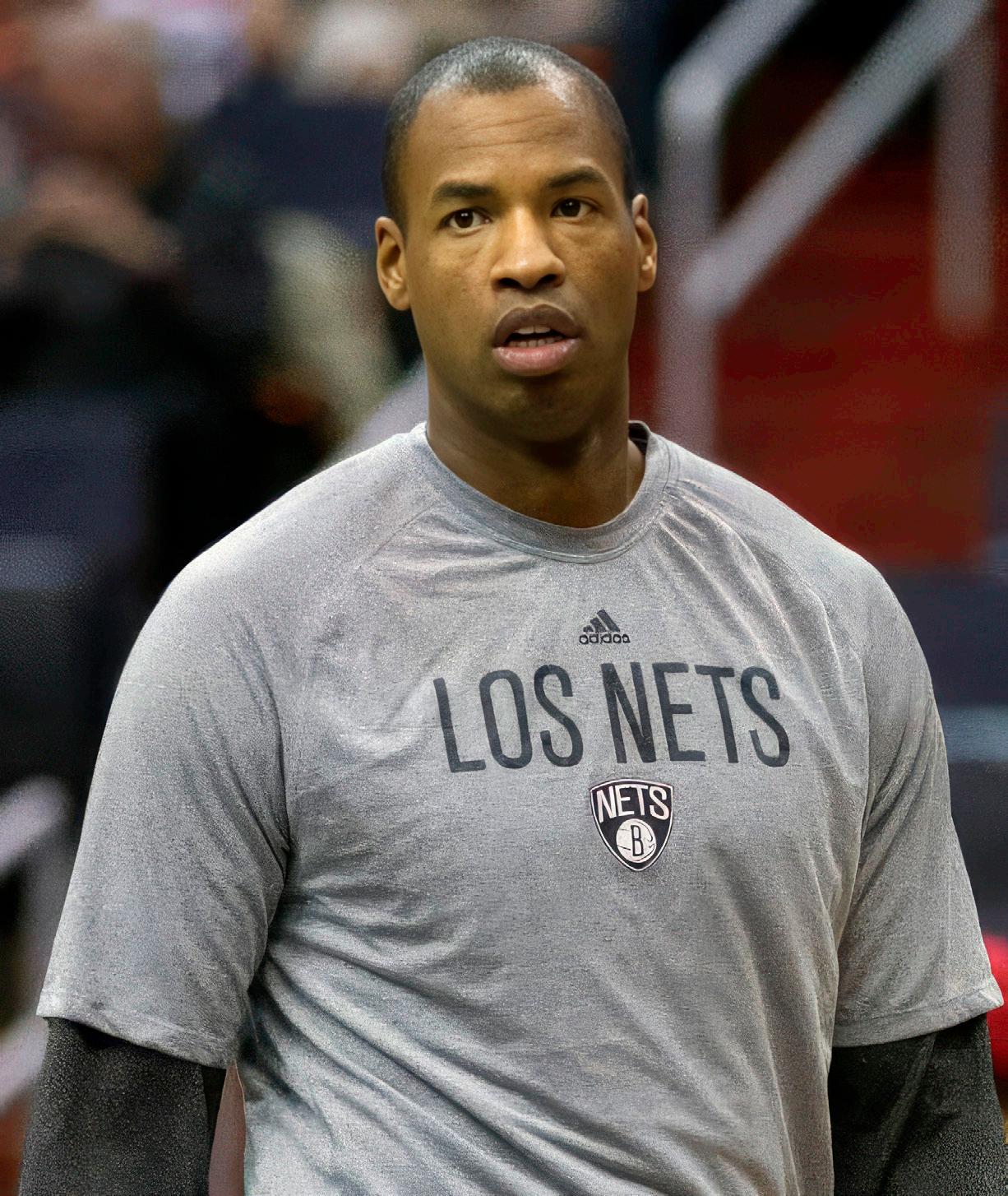
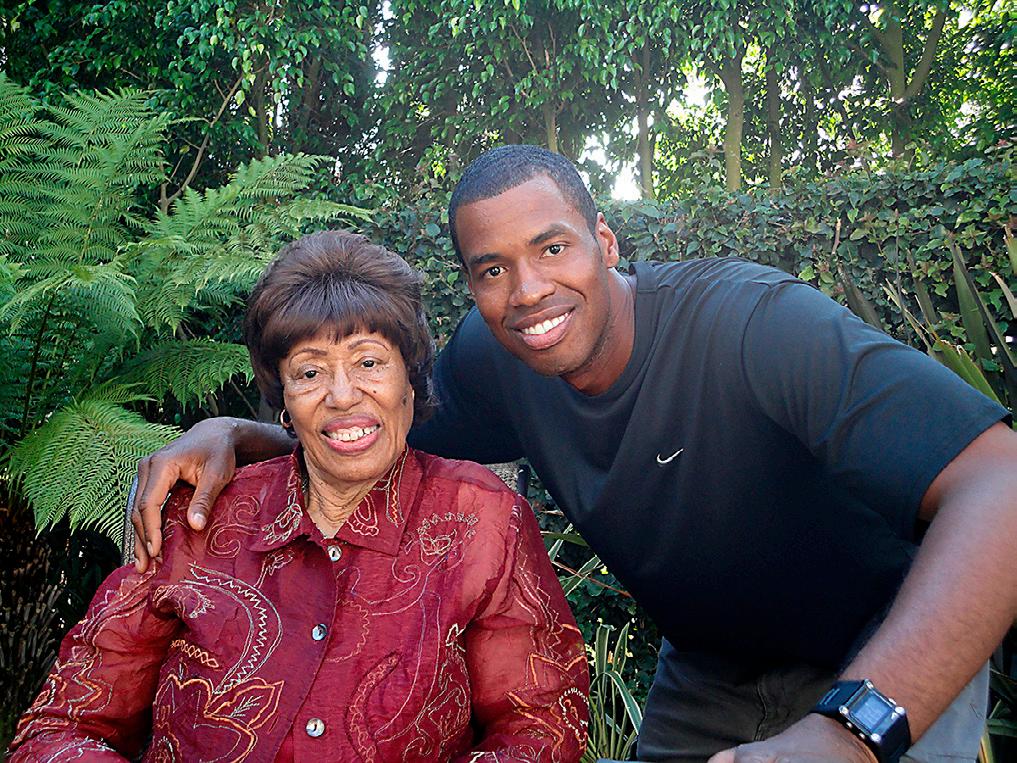
RIP: Jason Collins, NBA player
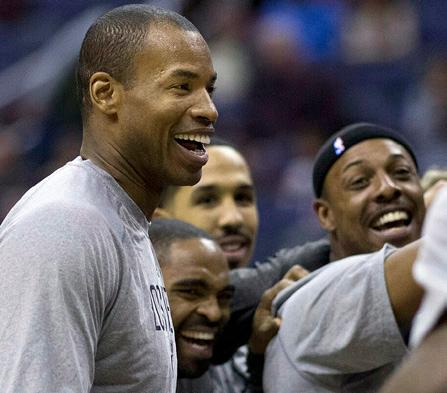
Former NBA player Jason Collins, who became the first openly gay active male athlete in North America’s four major sports in 2013, has died. The cause of death was glioblastoma, a severe form of brain cancer. He was 47 years old. Collins announced his Stage 4 glioblastoma diagnosis in December 2025. He said in the December interview that he wanted to tell his own story when it came to revealing his diagnosis, the same as when he came out as
gay. In 2013, Collins came out as gay in a Sports Illustrated cover story. “I can honestly say, the past 12 years have been the best of my life. Your life is so much better when you just show up as your true self, unafraid to be your true self, in public or private. This is me. This is what I’m dealing with.” He was a first-round draft pick in 2001 and an All-Pac-10 player at Stanford. Collins was drafted by the Houston Rockets and then traded to the New Jersey Nets. He was on the latter’s two NBA Finals teams in 2002 and 2003. Q
Shots Fired: A Marmalade neighbor’s alleged years-long campaign of hate reaches a dangerous new level
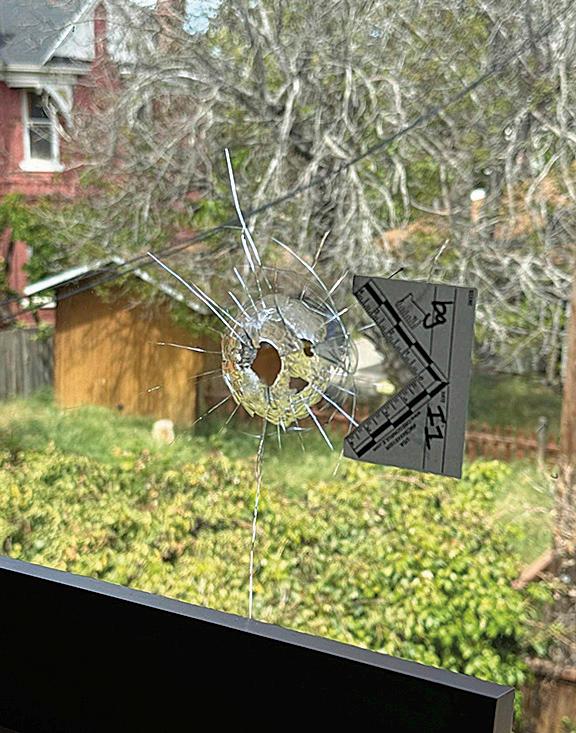
A Salt Lake City woman is now facing criminal charges after allegedly shooting a pellet gun through the window of a gay couple’s home during a party — but for those who know the history of this block, the only surprise is that it took this long.
On the evening of May 2, Kyle Betit and Christian Castro were doing what neighbors do in the Marmalade District in spring — hosting friends in their backyard for an annual Cinco de Mayo party. The Marmalade District, tucked into the foothills just north of Capitol Hill, is one of Utah’s most recognizable LGBTQ+ communities, its streets dotted with rainbow flags and the easy familiarity of a tight-knit neighborhood. It was supposed to be a celebration.
Then their guests heard the crack of something hitting glass.
“We go upstairs to see what’s going on,” Castro recalled, “and we can see the person who shot
the window, just sitting there.”
A pellet had been fired from a neighbor’s backyard, punching clean through the double-paned window of the home office where Betit works remotely. People were inside that room when it happened.
“I never anticipated that it might be a vulnerable position,” Betit said. Witnesses at the party reported seeing the neighbor — a 40-yearold woman whose name QSaltLake chooses not to release due to evidence of mental health circumstances — place what appeared to be a rifle into a bag. Officers were called, and the woman was arrested on suspicion of property damage, reckless endangerment, discharging a firearm, and interfering with a peace officer. She has since been released.
The charges carry a maximum combined penalty of $7,000 in fines and up to three years in jail. Betit and Castro are pushing for something more: a hate crime enhancement. And if you know the full history of this street, it’s hard to argue they don’t have a case.
‘Fast-Forward Four Years’
In a social media post published May 9th, Betit connected the dots explicitly, sharing a 2022 KSL News story about anti-gay harassment in the Marmalade District and writing: “Fast-forward from this KSL 5 TV news article four years ago… The woman who was harassing the young men in this article has chosen us as her latest victims.”
Four years ago, Cole Yates and two male roommates — none of them gay, though they lived in a predominantly LGBTQ+ stretch of the neighborhood — began experiencing what would become a months-long campaign of targeted harassment. In the first incident, Yates walked out to his car and caught a neighbor in the act of slashing his tire. The next day, another
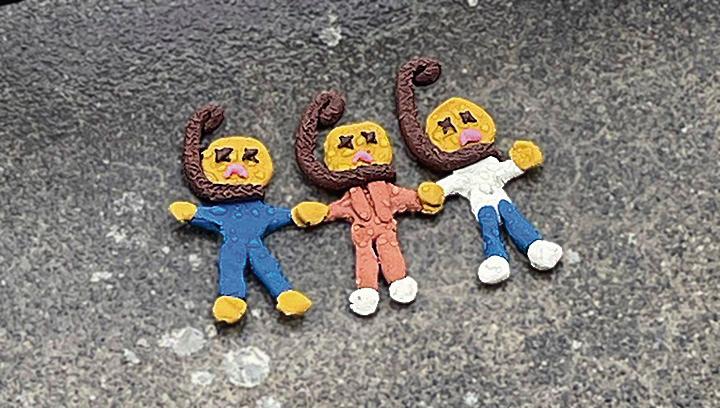
roommate’s tire was destroyed. Then came something more sinister: three Play-Doh figurines left on the doorstep, modeled as men holding hands, X’s for eyes, nooses around their necks.
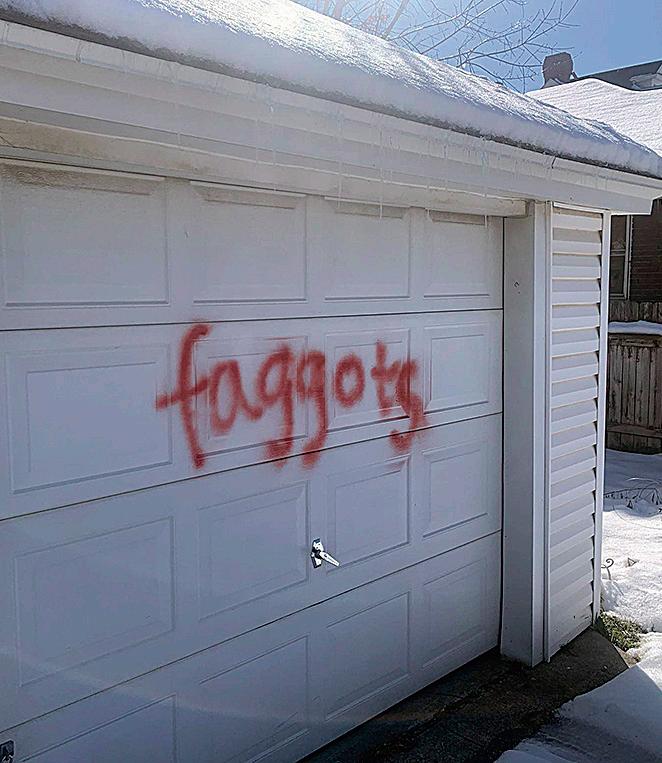
After that, gay slurs were spray-painted on the garage door. Then, on the car. Then, on the mailbox, even after Yates had filed a protective order against the neighbor.
“You drive around, and there are rainbow flags on lots of these houses,” Yates said at the time. “I’m sure people walk around, and it’s offensive.”
Salt Lake City Police Detective Michael Ruff confirmed officers were aware of multiple incidents, yet said at the time that evidence was insufficient to make an arrest. Cameras that the landlord installed weren’t enough. The harassment continued regardless.
That neighbor, according to Betit and current SLCPD Sgt. Greg Wilkin, is the same woman now charged in the 2026 pellet gun incident. Q
Dan Rodriguez, Agent
2120 W 12600 S Ste A2 Riverton, UT 84065 Bus: 801-254-4441 dan.rodriguez.pmkr@statefarm.com
I’m right here in Salt Lake City, ready to help all of my neighbors. Let’s talk about planning ahead and protecting what matters most. Call me today
St. George ordered to pay over $350k in drag show case
A federal judge has ordered the city of St. George to pay more than $350,000 in attorneys’ fees in a high-profile drag show case, marking the latest development in a years-long legal battle over free speech, LGBTQ expression, and local government authority.
In a ruling issued Friday, U.S. District Judge David Nuffer found that a settlement agreement between the city and Southern Utah Drag Stars is binding and that the plaintiffs qualify as the “prevailing party” — a key legal designation that allows them to recover attorneys’ fees under federal civil rights law.
The lawsuit, filed in 2023 with support from the American Civil Liberties Union, challenged the city’s denial of a permit for a drag performance on city-owned property. The group’s CEO, Mitski Avalox, argued the decision violated their First Amendment rights.
Nuffer ultimately agreed, ordering the city in 2023 to allow the performance to proceed — a decision first reported by QSaltLake when the show was moved to the Dixie SunBowl after the city revoked the first permit. That revocation came amid a temporary moratorium on new events and claims the group had violated advertising rules, as previously detailed in the magazine’s coverage of the lawsuit and earlier tensions between drag organizers and city officials.
The June 30, 2023, “Allies and Community Drag Show” went forward under court order.
The case formally concluded in 2025 with a settlement that included compensation, policy changes, and a public apology from the city. However, the agreement left unresolved whether the plaintiffs qualified as the prevailing party — a dispute that led to the current ruling.
City officials had argued that a recent Lackey v. Stinnie decision should prevent the plaintiffs from recovering fees, claiming the earlier court order was only temporary. Nuffer rejected that argument, stressing that the case was resolved through a binding settlement that
clearly established the plaintiffs’ success.
“The plain language of this provision is clear and unambiguous,” the court wrote. “Plaintiffs are the prevailing party in this case and are entitled to recover their reasonable attorneys’ fees and costs.”
The court awarded $350,216.50 in attorneys’ fees and an additional $902 in costs, finding the amounts reasonable given the case’s complexity, urgency, and outcome.
“These are excellent results in relation to the relief sought,” Nuffer wrote, pointing to the successful staging of the drag show and subsequent changes to city ordinances.
The dispute is part of a longer history of friction in St. George over drag events. QSaltLake previously reported that tensions surrounding drag show approvals contributed to the 2022 departure of a city manager, underscoring how cultural debates over LGBTQ expression have affected local governance.
The ruling also arrives amid renewed legislative scrutiny of drag performances in Utah, including a 2026 bill targeting public drag shows — a measure that crit-
ics say echoes the same constitutional concerns raised in the St. George case. With the fee dispute resolved, the parties have been directed to file final documents within 28 days, formally closing a case that has become a defining legal battle over drag, free speech, and LGBTQ rights in southern Utah. Q
Weber Co. school responds after trans creator speaks to students
A Weber County school found itself navigating parental complaints after inviting Utah-based transgender TikTok creator Briel Adams-Wheatley to speak to students about overcoming adversity.
Adams-Wheatley, who was born without limbs and has built a following of hundreds of thousands on social media under the handle “nolimbs,” was brought in to address perseverance and resilience. District administrators issued a statement after concerns from some parents about the appropriateness of the visit.
“While Briel Adams-Wheatley’s presentation at a career day event last week did not include age-inappropriate content, we intend to strengthen our vetting process, including a review of any materials that may encourage students to view online content introduced by an outside presenter.”
Adams-Wheatley addressed the fallout on her social media platforms following the visit. “Some days the internet makes me question everything about myself,” she wrote. “Then I remember that the people who matter see my heart, my resilience, and my truth. My worth was never in the hands of strangers.”
She also acknowledged ongoing criticism from detractors directly. “Remember every hate comment — no matter how rude, ableist, transphobic or homophobic — keeps my bills paid and shows how truly sad and miserable some of you are,” she posted.
Adams-Wheatley, a Utah native, has become a prominent voice in both disability advocacy and LGBTQ visibility. She is currently engaged and planning her upcoming wedding. Q
Briel Adams-Wheatley can be followed at linktr.ee/nolimbs
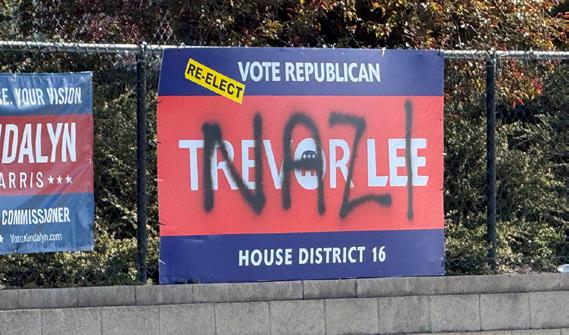
‘Nazi’ spray-painted
Rep. Trevor Lee’s campaign signs have been defaced across Davis County. His outrage on social media is generating a far less sympathetic response than he’d hoped.
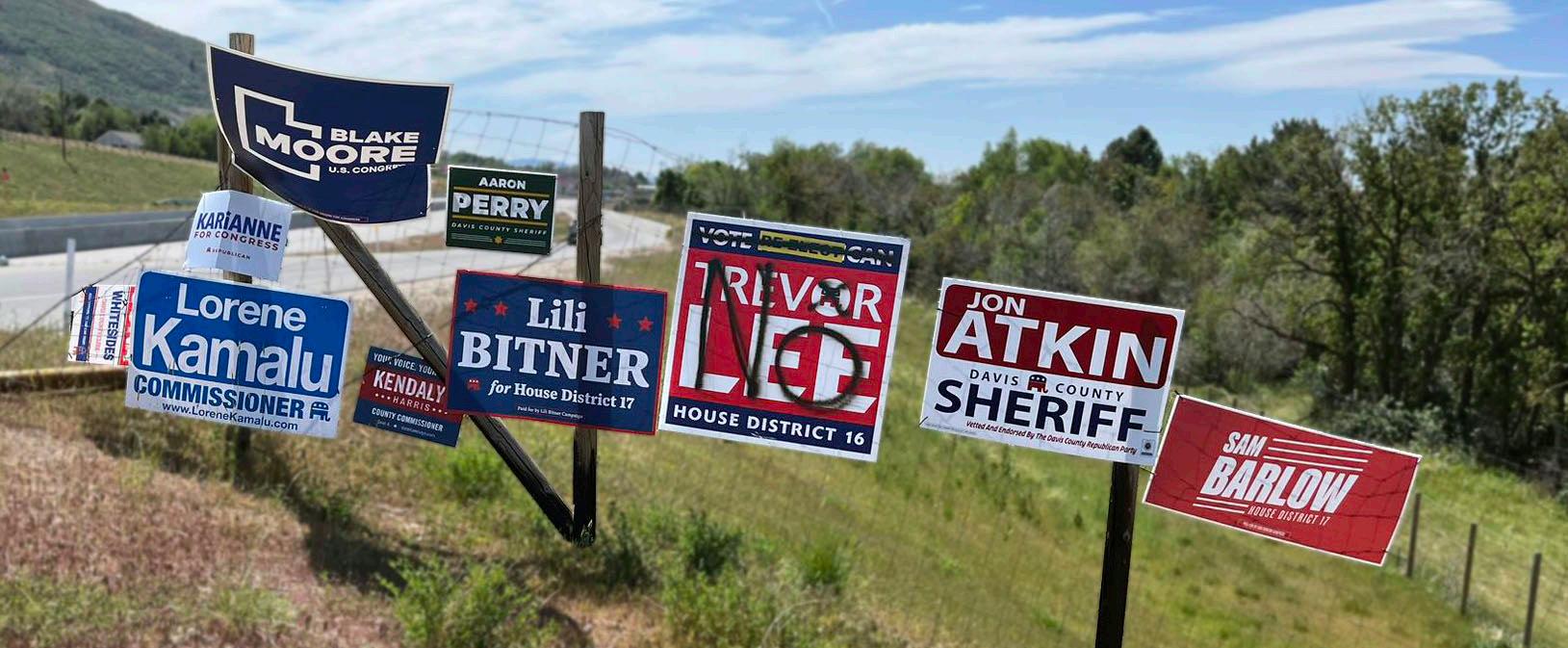
Campaign signs for Rep. Trevor Lee (R-Layton) are popping up across Davis County — and so, apparently, are spray cans. The incumbent state representative for House District 16, one of Utah’s most aggressive sponsors of anti-LGBTQ+ legislation, reported this month that 22 of his campaign signs have been vandalized. Some were tagged with bold black X’s, others had “NO!” scribbled across them in large letters, and several bore perhaps the most loaded word in the vandal’s vocabulary: “NAZI.”
Lee was not amused. On April 30, he took to X to cast himself as a martyr.
“The ‘tolerant left’ strikes again,” he posted. “They can’t win on policy, so they resort to violence, vandalism, and personal attacks to keep us out of the debate. My House District 16 signs have been repeatedly defaced and spray-painted. This is only a very small fraction of what I deal with every day because I speak out on the important issues. We will NOT be silenced.”
The post racked up 628 likes and 96 retweets — though the comment section told a different story. A user named Dallin, posting as @DrWumbology, fired back: “Oh boohoo Trevor. You say the most vile and racist bullshit, do your best to put that into public policy, and then
on Lee signs ahead of June 23 primary
try to play the victim. You are such an enormous loser.” Another commenter, Tyler (@tc91585), offered a partial concession before pivoting: “The vandalism isn’t okay. But you deal with this because you’re a dickhead, not because you ‘speak out on the important issues.’ Speaking of policy, how many of your bills were passed last session… seems nobody likes your policy.” Supportive voices weren’t absent — @Manhattva declared “Destruction and violence is what the Left knows” — but the ratio suggested the sympathy wasn’t exactly flooding in.
The irony of “NAZI” being spray-painted on Lee’s signs is difficult to ignore. This is, after all, the same legislator who sponsored HB77 — a bill that bans Pride flags in Utah schools while explicitly permitting Nazi and Confederate flags to remain on display for “educational purposes.” He also filed HB183 this past legislative session, described by Equality Utah as among the most harmful anti-transgender bills the organization has ever seen. The legislation would replace “gender” with “sex” throughout state law, ban changes to birth certificates for transgender individuals, restrict trans people from working in schools, and allow courts to use a parent’s support of a transgender child against them in custody proceedings. For good measure, Lee also proposed renaming Harvey Milk Boulevard in Salt Lake City — named for the slain gay rights icon — after
right-wing commentator Charlie Kirk.
Despite that legislative record, Lee has managed to stay in the race. At the Davis County Republican Convention on April 18, delegates rejected him — Bob Stevenson, a Davis County Commissioner, beat Lee 55% to 45%. But Lee isn’t going anywhere. Because he pursued the convention-only route rather than gathering petition signatures, Utah Republican Party rules only required him to clear 30% of the delegate vote to qualify for the June primary ballot. The signature-gathering pathway — designed to broaden access to the ballot — paradoxically lowered the convention threshold, giving convention-only candidates like Lee a softer landing even when their own party’s delegates reject them.
The winner of that June 23 Republican primary will face Democrat Abigail Treasure in November. Treasure, an aerospace engineer, former educator, and longtime Layton resident, has filed to represent House District 16 in what could shape up to be the race’s most consequential contest in years.
Utah’s primary election is June 23, 2026. Voter registration by mail closes June 12; in-person registration is available through Election Day. Q
A note on the vandalism: Defacing campaign signs is illegal under Utah law, regardless of who the candidate is or what they stand for. Nothing in this story should be read as endorsing property destruction. Our community’s most effective tool remains the ballot.
Two Utah school districts force the removal of LGBTQ+ books statewide
Two Utah school districts force the removal of LGBTQ+ books statewide They are stories about gay teenagers surviving the AIDS epidemic, nonbinary youth searching for language to describe themselves, bisexual kids growing up in the wreckage of addiction, and queer homeless teens forced into survival sex. They are stories that many LGBTQ+ young people say saved their lives — and Utah school districts are pulling them off shelves.
Driven primarily by Davis School District north of Salt Lake City and Washington County School District in Utah’s southwest corner, a series of book challenges has triggered the state’s 2024 sensitive materials law, banning multiple LGBTQ+-themed and LGBTQ+-inclusive titles from every public school in Utah. Under House Bill 29, once three school districts remove a title, it is stripped from libraries statewide — and must be physically destroyed.
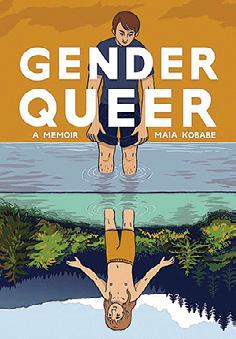
GENDER QUEER: A MEMOIR — MAIA KOBABE (2019)
BANNED BY: ALPINE, CANYONS, SALT LAKE CITY, WASHINGTON COUNTY, DAVIS (STATEWIDE)
The most-banned book in the United States for multiple consecutive years, “Gender Queer” is a graphic memoir chronicling Kobabe’s journey to understanding eir identity as nonbinary and asexual. The memoir traces Kobabe’s adolescence with painful honesty: the discomfort of a body that never felt right, confusion about attraction and desire, and the struggle to find words for a gender identity outside any available category. It depicts explicit sexual imagery in an autobiographical, educational context — the content districts have cited as justification for removal. For nonbinary and asexual readers who rarely see their experiences reflected anywhere, the removal is deeply personal. “This book put language to something I had felt my whole life,” one Utah student said. “Taking it away doesn’t make those feelings go away.”
Any parent, student, or staff member may file a written complaint against a school library book, alleging it contains “objective sensitive material.” A district review committee then evaluates the title and votes on removal. Once three or more districts remove the same book, Utah law automatically bans it from every public school in the state — and requires its “legal disposal.”
Data from the Salt Lake Tribune shows that Davis School District alone initiated 33 of Utah’s 34 statewide bans. Washington County School District drove 29. A small number of organized parent activists, using shared tools to identify and report titles en masse, have effectively set reading policy for the state’s roughly 700,000 public school students.
The books below represent a cross-section of some of the most celebrated queer literature of the past half-century — award-winning, widely taught, and, to many readers, intensely personal.
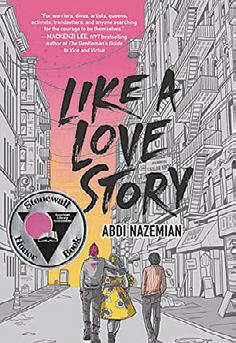
LIKE A LOVE STORY — ABDI NAZEMIAN (2019)
BANNED BY: DAVIS, JORDAN, WASHINGTON COUNTY (STATEWIDE)
Winner of the Stonewall Book Award and the Lambda Literary Award, Like a Love Story is set in New York City in 1989, at the height of the AIDS crisis. It follows three teenagers: Reza, a closeted gay Iranian-American boy terrified of AIDS and discovery; Art, his openly gay best friend who photographs ACT UP protests; and Judy, whose uncle is dying of AIDS while fighting for his community’s dignity. At its center is a tender, stolen love story between Reza and Art, set against real political activism and collective grief. The book does not shy from depicting what it meant to be gay in that era — the fear, the shame imposed from outside, and the deep beauty of community forged in crisis.
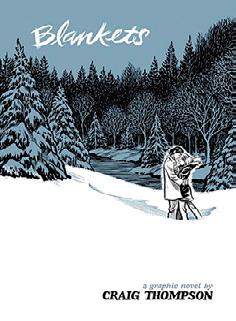
BLANKETS — CRAIG THOMPSON (2003)
BANNED BY: DAVIS, NEBO, WASHINGTON COUNTY (STATEWIDE)
Craig Thompson’s landmark graphic memoir is primarily a heterosexual coming-of-age story — a lyrical account of first love, evangelical Christian upbringing, and the slow loss of faith. But it has been challenged for its frank depictions of adolescent sexuality, including moments of gay curiosity and identity questioning that Thompson portrays as an unremarkable part of growing up. The book’s dense, flowing ink drawings render these instances of sexual uncertainty with an intimacy that LGBTQ+ advocates argue makes it valuable: it depicts same-sex feeling as a natural, human part of adolescence rather than something shameful. For LGBTQ+ teens raised in conservative religious households, many describe Blankets as a mirror for their own hidden experiences.
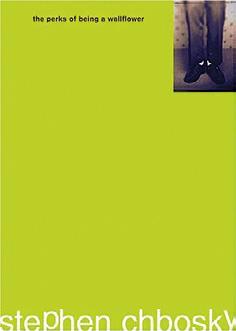
THE PERKS OF BEING A WALLFLOWER — STEPHEN CHBOSKY (1999)
BANNED BY DAVIS, TOOELE, WASHINGTON COUNTY
Few books have meant more to generations of LGBTQ+ teenagers than this slim epistolary novel. The story follows Charlie, a socially isolated freshman who finds belonging with older students — including Patrick, one of fiction’s most beloved gay characters. Patrick is funny, bold, and secretly in a relationship with Brad, a popular closeted football player. When Brad’s father discovers them, the fallout is brutal: Patrick is publicly humiliated and Brad turns on him to protect himself. Chbosky writes Patrick’s pain without sentimentality — the lesson is not that things get better overnight, but that love and friendship can be a lifeline while you wait. For closeted gay teenagers, the novel has functioned almost as a survival guide.
A family-friendly celebration of nature & community
Friday, June 12, 12–7pm
Floral installations by local artists, immersive activities, self-guided walks
Tickets on sale now!
MILK AND HONEY — RUPI KAUR (2014)
BANNED BY: DAVIS, JORDAN, WASHINGTON COUNTY (STATEWIDE)
Rupi Kaur’s debut poetry collection has sold over ten million copies worldwide and introduced a generation to the possibility that poetry could speak to their actual lives. Moving through four chapters — the hurting, the loving, the breaking, the healing — it addresses sexual trauma, the female body, desire, and survival with striking directness. While not exclusively LGBTQ+-themed, the collection depicts love and longing between women with the same unflinching simplicity it brings to everything else — not as a statement, but as a fact of emotional life. Critics note that the verses most frequently cited by parent activists tend to be precisely those depicting female desire and non-heteronormative love.
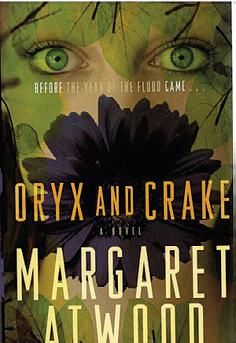
ORYX AND CRAKE — MARGARET ATWOOD (2003)
BANNED BY: DAVIS, JORDAN, WASHINGTON COUNTY (STATEWIDE)
Margaret Atwood’s dystopian masterwork imagines a near-future world in which genetic engineering has run amok, corporations have replaced governments, and human sexuality has been thoroughly commodified. The novel presents a world where sexual fluidity is unremarkable — queer relationships appear throughout without fanfare, simply part of the texture of a transformed society. The book also depicts child exploitation via internet pornography as part of Atwood’s critique of unregulated corporate power — the content districts have cited for removal. But Atwood’s portrait of queer sexuality as normal and unremarkable is precisely what LGBTQ+ advocates say makes it valuable in a school setting. Atwood has had multiple works targeted by Utah’s banning movement.
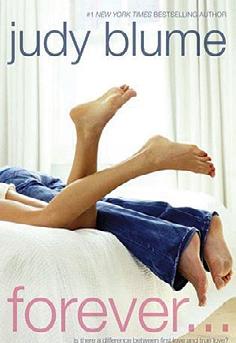
FOREVER — JUDY BLUME (1975)
BANNED BY: DAVIS, NEBO, WASHINGTON COUNTY (STATEWIDE)
Judy Blume wrote Forever in 1975 in direct response to requests from teenagers for a book that treated their sexuality honestly and without punishment. The novel’s central relationship is heterosexual, but it appears here because its removal reflects a broader pattern of erasing frank, affirming portrayals of adolescent sexuality from school libraries — a campaign that disproportionately targets LGBTQ+ content. It includes Artie, a secondary character struggling with his sexual identity, whose confusion Blume handles with characteristic compassion. For teenagers navigating their own sexuality, Artie’s storyline has offered a point of recognition. Blume has spent five decades defending young people’s right to read honestly about their lives. Her inclusion on Utah’s banned list prompted the Authors Guild to formally condemn the state’s approach.
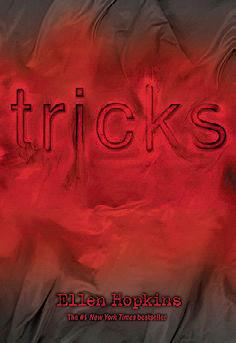
TRICKS — ELLEN HOPKINS (2009)
BANNED BY: DAVIS, TOOELE COUNTY, WASHINGTON COUNTY (STATEWIDE)
Ellen Hopkins writes in verse about teenagers in crisis, and Tricks is among her most devastating. It follows five teenagers from different backgrounds who all end up surviving through sex work. One is Seth, a gay teenager from a deeply religious family who is thrown out after being discovered with another boy, and who ends up homeless and exploited on the streets of Las Vegas. Seth’s fate is not presented as a consequence of his gayness — it is a consequence of a society that rejects gay teenagers, leaving them without shelter or options. His chapters are among the book’s most wrenching because his fate is so entirely preventable: LGBTQ+ youth make up an estimated 40% of homeless youth in the United States, a crisis directly tied to family rejection.
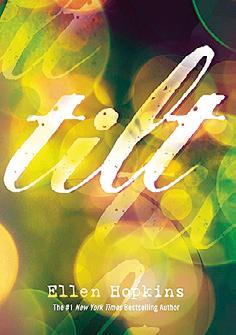
TILT — ELLEN HOPKINS (2012)
BANNED BY: DAVIS, TOOELE COUNTY, WASHINGTON COUNTY (STATEWIDE)
A companion novel to Tricks, Tilt follows three teenagers navigating unexpected pregnancies, addiction, and fractured families. Among them is Mikayla, whose storyline threads a queer relationship through her experience of crisis and self-realization. Hopkins treats Mikayla’s attraction to another girl not as her defining characteristic or her problem, but as one part of a fully realized young person dealing with extraordinary circumstances. Like all of Hopkins’ work, Tilt is written for teenagers actually living these lives — not sanitized versions of adolescence, but the complicated, often painful reality of young people navigating sexuality and family dysfunction without adequate support. For queer teens in Utah who recognized themselves in Mikayla’s chapters, their removal represents a targeted erasure.
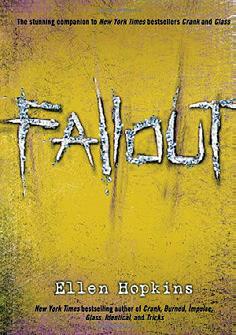
FALLOUT — ELLEN HOPKINS (2010)
BANNED BY: ALPINE, DAVIS, WASHINGTON COUNTY (STATEWIDE)
The concluding volume in Hopkins’ Crank trilogy follows three adult children of “Kristina” — the meth-addicted protagonist of the earlier books — as they grow up in the long shadow of a mother they barely know. One of them, Hunter, is bisexual, and the novel addresses his identity with the same honesty Hopkins brings to addiction, trauma, and survival throughout the trilogy. Hunter’s bisexuality is not presented as a source of drama — it simply exists alongside every other dimension of who he is. For bisexual teenagers, who are often told their identity is not real or not enough, that straightforward representation carries significant weight. Hopkins has had more books removed in Utah than nearly any other author.
‘The Books Don’t Create These Experiences — They Reflect Them.’ The American Civil Liberties Union of Utah, the Authors Guild, and the coalition Let Utah Read have all condemned the state’s removal process, arguing it is functioning as a targeted campaign against LGBTQ+ literature rather than a content-neutral policy about age-appropriate material.
“Every single one of these books exists because a young person somewhere is living that experience — being gay, being nonbinary, being bisexual, being thrown out by their family,” said one Utah librarian, who asked not to be named for fear of professional repercussions. “Removing them doesn’t protect students. It just makes sure the students who need them most can’t find them.”Q
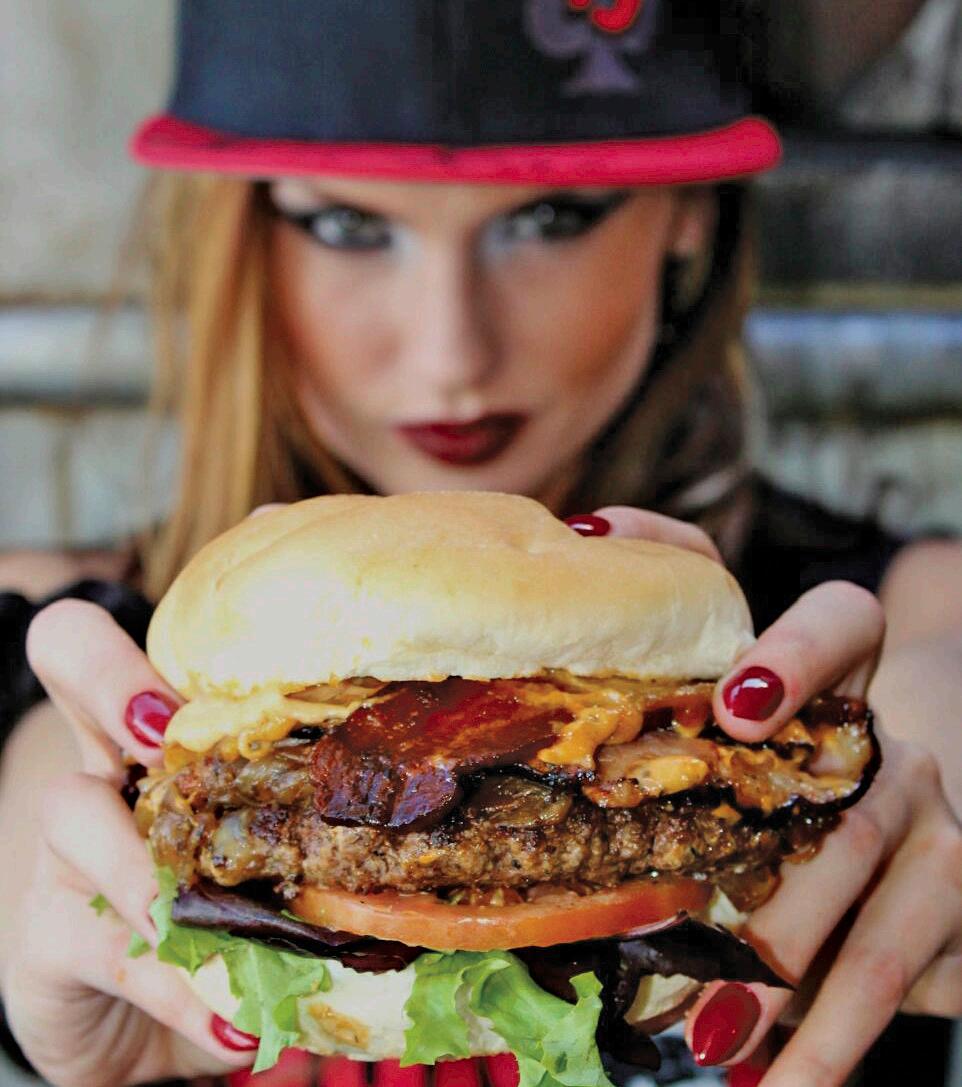
UTAH’S BEST BURGER
views quotes
“Exist, Resist, Have Audacity!”
— LGBTQ activist Ryan Bos unveiled the slogan as the official theme for the 2026 Capital Pride celebration
“We are here. We belong. And we will continue to rise.”
— Utah Pride announcing the 2026 Utah Pride theme, “Pride Elevated”
“Pride Month is a time to celebrate the LGBTQ+ community’s history, achievements, and ongoing fight for equality.”
— Park City’s official Pride Month proclamation, approved unanimously by the City Council
“The Spurs acknowledged his courage and the impact of his authenticity.”
—San Antonio Spurs honoring former NBA player Jason Collins , the leagues first openly gay active player, following news of his death
“There is a ‘chill wind’ blowing from the east and west.”
— Former Irish Prime Minister Leo Varadkar about rising hostility toward LGBTQ people globally
“We have the power to define what LGBTQ means in Utah.”
— Equality Utah’s Will Terry encouraging queer Utahns to shape their own communities, identities, and representation rather than allowing outsiders or political leaders to define them.
“There’s no right or wrong way to be gay.”
— Utah fashion designer and Fab 5 personality Tan France encouraging LGBTQ people to reject stereotypes and embrace individuality without pressure to fit a particular image or expectation.
What a sitcom character taught me about Pride
BY CHRISTOPHER KATIS
Just before I turned 12, a new sitcom aired on TV, Three’s Company. The plot was pretty simple: facing the high costs of Santa Monica rents, a guy named Jack Tripper moves into an apartment with two female roommates. But the old-fashioned landlord didn’t approve of men and women living together, for fear of hanky-panky happening. To alleviate any concerns, and thus get to live in the apartment, Jack pretends he’s gay.
There was something very appealing about that show, even though I couldn’t quite put my finger on it. For some reason, I found the character of Jack very relatable.
Even though the first Pride celebration had happened seven years before this sitcom aired, a character like Jack Tripper served as an inspiration for budding queers across the country. We weren’t seeing bankers, military vets, teachers, or LGBTQ+ parents marching as they were in the streets of big cities like San Francisco and New York. We experienced invisibility.
Sure, privately, we read between the lines. A neighbor might have a son living in Chicago with a long-term “roommate.”
A family friend’s daughter traveled extensively, always in the company of the same female companion. Questions about whom they were dating or when they were going to settle down and start a family, asked with a faux level of ignorance by bitchy people, were batted away by uncomfortable parents.
There was no gay pride in Middle America because there was nothing for which to be proud.
But on television, there was Three’s Company and its main character, Jack Tripper. In a time well before Heartstopper or Heated Rivalry won well-deserved accolades for their positive depictions of queer men, a popular ABC sitcom was discreetly telling us all to be proud.
The crazy reality is that the character of Jack wasn’t even gay. He was a raving heterosexual, always looking for a girl. He was forced to pretend to be gay to protect himself. It was a very subtle reversal for gay men and lesbian women who had spent their lives hiding out as straight.
Of course, whenever Jack acted “gay,” he camped it up by fluttering his eyelids, smiling coyly, and exaggerating his hand gestures. In any other situation, it would
have been seen as an offensive stereotype, but therein lies the brilliance. He only acted that way when dealing with the landlord — first Mr. Roper, then Mr. Furley. This feigned behavior wasn’t reality; it’s how the antagonists perceived gay people. The joke was on them. There wasn’t anything wrong with being gay; there was something wrong with being bigoted and narrow-minded. Viewers weren’t laughing at the gay guy; they were laughing at the homophobes.
That message was planted in the psyche of tens of thousands of young queer viewers around the country. We didn’t have anything to be ashamed of; they did. And an absence of shame is the first step to being proud. Being proud in who you are, proud of whom you love, proud of the family you make. Without saying it, the message was loud and clear: be whomever you’re supposed to be, out and happy and proud — as a queer person, as someone’s child, as a parent.
Today, that message is more important than ever. Increasingly, the LGBTQ+ community is under attack. Our legal rights are being threatened. Alarmingly, hate crimes — especially against trans people — are on the rise. Somehow, it’s OK to be homophobic again.
So, this Pride season, remember the lessons learned from a long-gone sitcom character pretending to be gay: You’re not the problem, you never were. Stand up and be proud!
Happy Pride, everyone. Q
When buying or selling real estate, you don’t want a part-time agent working a side hustle, but a professional who’s versed in winning multiple offer battles, marketing strategies to get the best price, knowing LGBTQ vendors and allies for mortgages, inspections, attorneys, etc. With four decades as a full-time agent/broker and the first ‘out’ REALTOR® in Utah, I’d love to help you with this huge financial decision. I sell downtown condos in Salt Lake, homes with casitas in St. George, homes of those who have passed, and 1031 exchanges on income or commercial properties. Text or call anytime.
Babs De Lay, Urban Utah Homes and Estates 801.201.8824
Conservative Extremists
BY D’ANNE WITKOWSKI
My teenage son has been watching the show “Ted” lately. A couple of years ago, I watched the first “Ted” movie with him at his request. It was, um, not to my taste. I’m not a huge fan of blue humor, especially when it comes from a sentient teddy bear.
He showed me a clip of the family sitting around the table. Gayness comes up as a subject, and the mother character chimes in that the father character always says, “College makes you gay.” My son thought this was very funny. And it honestly was.
It reminded me of one of my favorite movies, “But I’m a Cheerleader,” where the head of a conversion therapy camp, played by Cathy Moriarty, tells the parents of Megan (Natasha Lyonne), a teenage cheerleader suspected of being gay, “You almost lost her to college.”
That movie, with the premise that conversion therapy is stupid and abusive, came out in 1999. Here we are in 2026, and conservatives are still claiming that it’s possible for LGBTQ+ people, especially kids, to “pray the gay away.” And the extremist U.S. Supreme Court is siding with the bigots.
So does college make people gay? No, of course not. But it’s funny to joke about because there are people who actually believe this. Right-wing extremists have been sounding the alarm about higher education for decades, claiming that colleges and universities are too liberal, putting funny ideas in the heads of young people about equality and social justice.
This has accelerated under the Trump administration as exceedingly extremist ideas are being taken mainstream. Because education is a threat to extremist ideology. The more educated a person is, the harder it is to convince them that transgender people are a
threat, that racism doesn’t exist, that Donald Trump is a good president, or that vaccines are bad and measles is good, actually.
So it’s not surprising that conservative extremists are going all out to make college less “woke,” going to great lengths to stifle free speech. And, yes, these are the same conservatives who threw a fit over free speech when students protested right-wing extremists holding events on their campuses. Remember when Elon Musk bought Twitter to make it a bastion of free speech? And now it’s a Nazi free-for-all? That’s the kind of free speech they like.
Recently, two different institutions of higher education made news for shutting down free speech, specifically free speech about LGBTQ+ ideas.
The first school is Texas Tech University, which “has implemented a sweeping new policy that blocks discussions of LGBTQ+ issues in classrooms and student assignments,” according to The Advocate.
“Instruction must not endorse fluid gender identity as an empirical biological reality that supersedes the two-sex requirement,” a memo detailing the new policy reads. “Nor may programs compel students to personally affirm gender ideology.”
In other words, teachers need to treat transgender people like UFOs, as if there’s no hard evidence confirming their existence and everyone who believes in them is part of the lunatic fringe.
Now, you might be asking yourself, “This school’s chancellor sounds like some sort of former Republican state senator who led the state’s ban on diversity, equity, and inclusion in higher education or something.”
And you would be right. That is
exactly who he is. Living his dream.
Then there’s Pensacola State College preventing student journalists from publishing LGBTQ-related stories “because their LGBTQ+ content could violate Florida’s Stop WOKE Act.”
The stories in question were “a profile of a local drag queen, a piece on a queer bookstore, and a story about a community poetry club,” reports journalist Erin Reed. Downright shocking subject matter.
“The move to censor students from writing about LGBTQ+ people breaks with both recent and longstanding precedent, and the cited justification doesn’t even hold up,” Reed writes. “Florida’s Stop WOKE Act, signed by Gov. Ron DeSantis in 2022, prohibits public colleges from funding ‘advocacy’ for diversity, equity, and inclusion and establishes a sort of Don’t Say Gay protocol that applies to colleges. But a federal judge blocked the law’s provisions, calling them ‘positively dystopian’ [and the] 11th Circuit affirmed that injunction in 2024, describing the law as ‘the latest attempt to control speech by recharacterizing it as conduct’ and calling viewpoint-based restrictions ‘the greatest First Amendment sin.’ The law remains enjoined to this day; PSC is censoring students to comply with a law it is not even legally required to follow.”
In other words, the Stop WOKE Act isn’t even legally enforceable. Which means the stated reason for the censorship is either a lie or comes from a person who doesn’t understand the law.
So, who knows? Maybe it’s part of the ongoing attack on higher education, or maybe it’s all just some silly li’l old misunderstanding. Q
D’Anne Witkowski is a writer living with her wife and son. She has been writing about LGBTQ+ politics for nearly two decades. Follow her on X @MamaDWitkowski.
Park City declares June 2026 as Pride Month with Main Street, transit pride displays
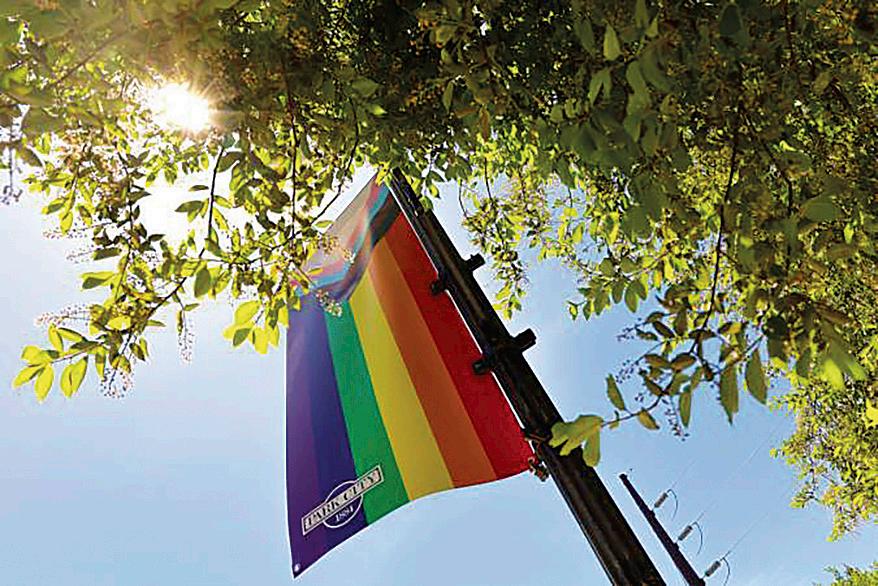
The Park City Council unanimously approved a resolution on May 7 proclaiming June 2026 as Pride Month in Park City, reaffirming the city’s support for LGBTQ+ residents and visitors through a series of visible community activations and inclusion initiatives.
As part of the declaration, Pride banners will line Main Street light poles throughout June, and transit vehicles will again feature “Ride with Pride” decals. City officials said the transit decal design will remain consistent with last year’s theme.
The resolution states that the displays are intended to demonstrate Park City’s “commitment to inclusion of LGBTQ+ residents” while promoting policies and programs that oppose discrimination and support equality for all community members.
The proclamation was adopted during a regular meeting of the City Council after being introduced through a
staff report prepared by City Recorder Michelle Kellogg.
“Pride Month is a time to celebrate the LGBTQ+ community’s history, achievements, and ongoing fight for equality, while also acknowledging the struggles and injustices faced by LGBTQ+ individuals,” the resolution states. “It serves as a platform for education, awareness, and advocacy, promoting acceptance and understanding of the diverse LGBTQ+ community.”
visitors, allies, friends, and families, and described Pride Month as a reminder that efforts toward equality and inclusion must continue.
The declaration also acknowledges Utah’s LGBTQ+ history, noting that Utah Pride began in 1974 as a small, informal gathering of Salt Lake City’s LGBTQ+ community.
City leaders emphasized that Park City welcomes LGBTQ+ residents,
“Park City welcomes residents and visitors from the LGBTQ+ community, their friends and family members, and straight allies who show their support,” the resolution reads. “Pride Month is a reminder that we should never let up in our efforts to ensure full equality, inclusion, and empowerment for our LGBTQ+ community.” Q
Queer favorites and queer films all Summer from Utah Film Center
The Utah Film Center is bringing queer favorites, beloved cult classics, and queer cinema experiences back to Salt Lake City this summer with the return of its 2026 Summer Outdoor Film Series and the ongoing UQFF YearRound screening program.
2026 SUMMER OUTDOOR FILM SERIES
This year’s outdoor screenings move to Pioneer Park, where audiences can enjoy music-filled films and iconic movie moments beneath the stars.
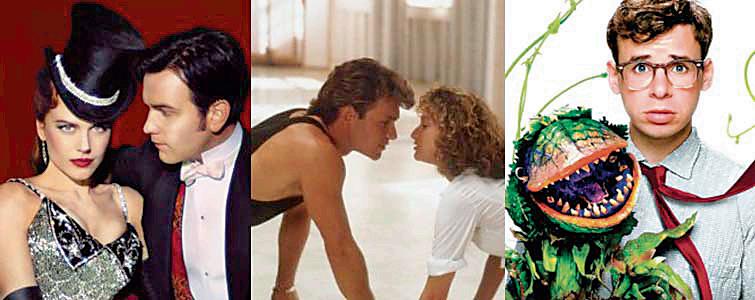
Among the season’s highlights is MOULIN ROUGE! , screening Saturday, June 13 at 8 p.m. at Pioneer Park. Directed by Baz Luhrmann, the dazzling jukebox musical celebrates its 25th anniversary in 2026. The film follows young poet Christian as he
falls for Satine, the glamorous star of the Moulin Rouge cabaret in Paris.
The series continues Saturday, July 11, with the 39th anniversary (?!?!) of DIRTY DANCING , the beloved dance romance starring Patrick Swayze and Jennifer Grey. Set during a summer vacation in the Catskills, the film’s unforgettable soundtrack and iconic dance scenes have made it a longtime queer and pop culture favorite.
On Saturday, August 8, audiences can enjoy the 40th anniversary of the deliciously campy LITTLE SHOP OF HORRORS at Pioneer Park.
Directed by Frank Oz, the horror-comedy musical follows a flower shop employee whose discovery of a man-eating plant leads to increasingly
outrageous consequences.
UTAH QUEER FILM FESTIVAL YEAR-ROUND
Meanwhile, the UQFF Year-Round screening series continues throughout the summer at the Utah Film Center’s downtown venue at 375 W. 400 N.
The acclaimed coming-ofage drama MOONLIGHT screens on Wednesday, June 17 at 7 p.m. Written and directed by Barry Jenkins, the Academy Award-winning film explores identity, masculinity, and sexuality through three defining stages in its main character’s life.
On Wednesday, July 15, audiences can experience
COME SEE ME IN THE GOOD LIGHT, an intimate and moving documentary following poets Andrea Gibson and Megan Falley as they navigate love, creativity, and a terminal cancer diagnosis with humor and fortitude.
Closing out the summer screenings on Wednesday, August 19, is WE ARE PAT, a documentary revisiting the infamous androgynous Saturday Night Live character Pat. The film explores how queer and nonbinary audiences are reclaiming the once-controversial character as a symbol of empowerment rather than ridicule. More info at utahfilmcenter.org
Red Butte Garden’s ‘Blooming with Pride’ set for June 12
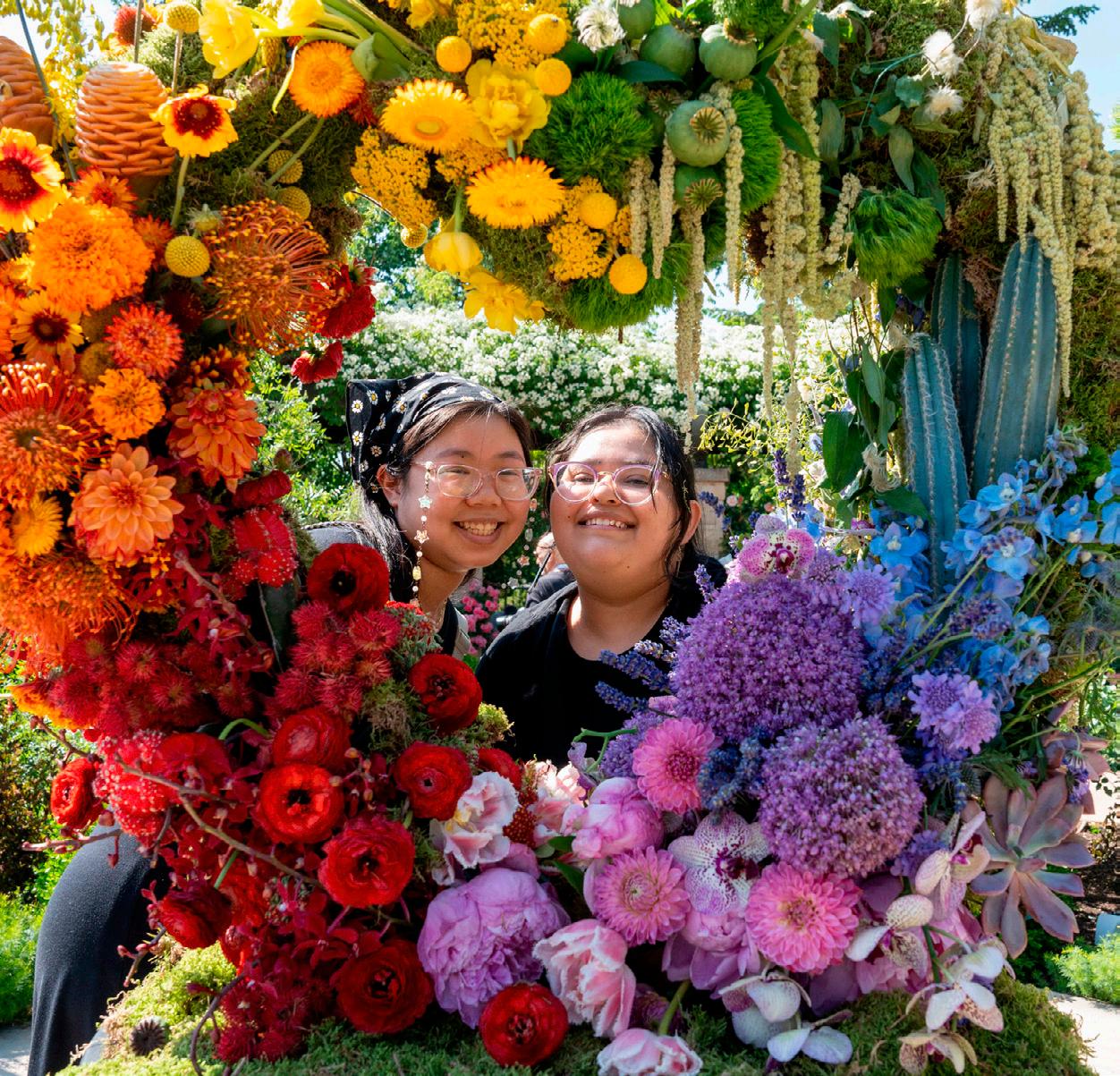
A burst of color, creativity, and community will return to Red Butte Garden and Arboretum this June as the botanical landmark hosts its third annual Blooming with Pride celebration.
Set for Friday, June 12, from noon to 7 p.m., the event invites guests to spend the day immersed in nature while celebrating LGBTQIA+ identity, creativity, and connection. Timed-entry tickets are on sale now, with free admission for Garden members (registration required) and regular admission pricing for the public.
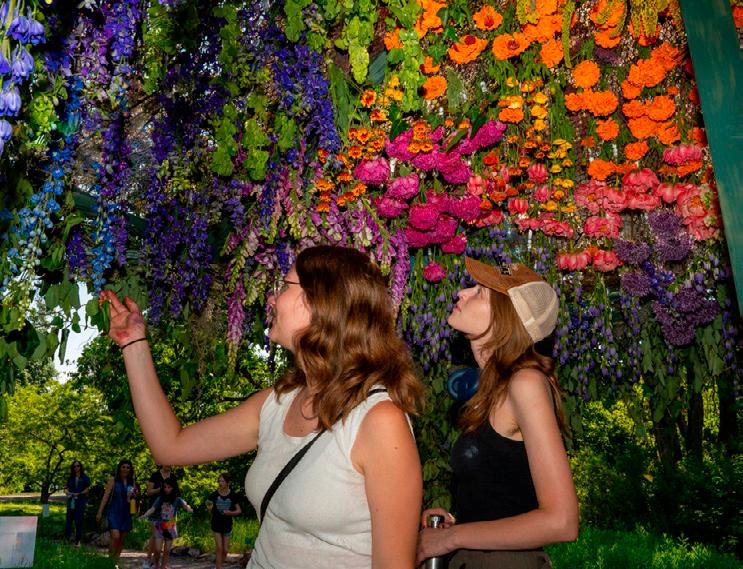
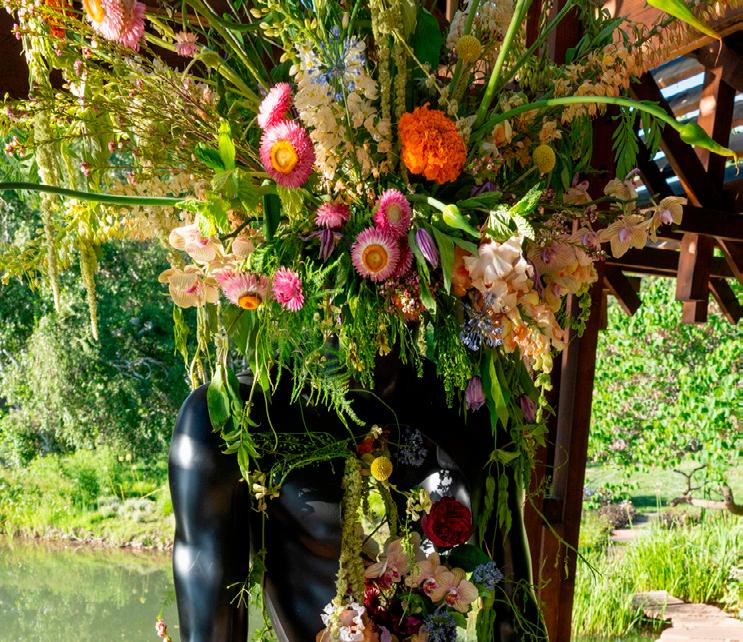
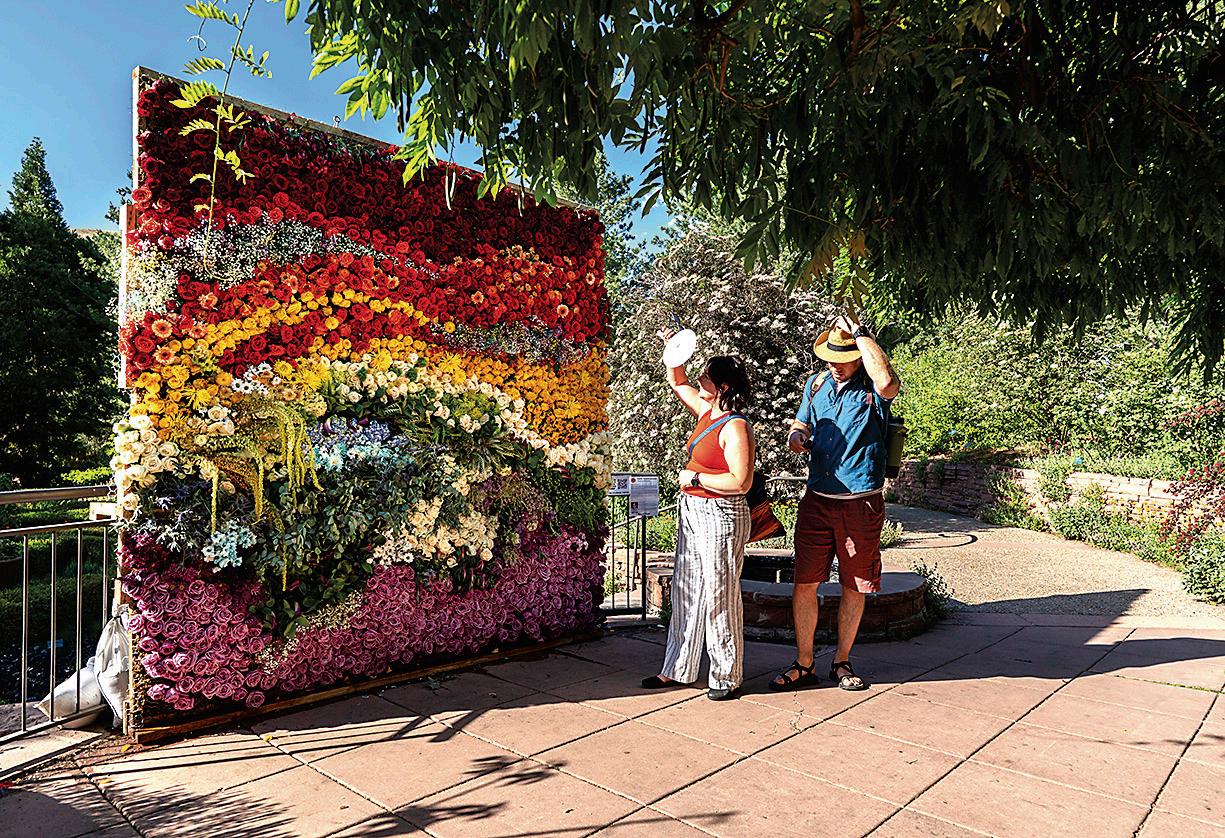
This year’s theme, “Rooted Together,” compares thriving ecosystems and resilient communities. Organizers say the concept comes to life through a centerpiece Pride Garden Showcase: an openair gallery of living floral installations created by local artists, florists, and horticulturists across the Garden’s grounds. Featured artists and installations include RYAN FERRE ’s Held, Becoming: Rooted in Support, Growth, and Connection in the Rose Garden; BECCA JOHNSON ’s Entrenched, a botanically inspired dance collective performing in the Orangerie; SAM MORENO ’s Woven As One near the Visitor Center; KAT NIX , whose work will be located in the Fragrance Garden; WANDERBLOSSOM CO.’s Remedy at the Water Pavilion; BRANDEE WATTERS ’ As Soft As Earth at Martin Overlook; and MEL WISE ’s Beyond Blood: A Propagated Family Tree in the Herb Garden. A collaborative installation by Red Butte Garden staff will also be featured on the Lower Garden Lawn.
Beyond the installations, Blooming with Pride offers a full slate of interactive, family-friendly programming. Guests can take part in hands-on crafts and nature-based activities, contribute to a collaborative community art project that will grow throughout the day, and explore a self-guided nature walk highlighting plants that thrive together, echoing the event’s central message.
The Garden’s courtyard will trans-
form into a “Unity Hub,” bringing together LGBTQ+ organizations, local businesses, and community groups from across Utah. The space is designed to connect attendees with resources, showcase ongoing community work, and offer opportunities for involvement in a welcoming setting.
As one of the largest botanical gardens in the Intermountain West,
Red Butte Garden spans more than 100 acres and serves as a center for conservation, education, and cultural programming. Blooming with Pride has quickly established itself as a signature regional event, blending environmental appreciation with a celebration of queer identity and community. Q More information and tickets are available at redbuttegarden.org
Unity in the Community: North Salt Lake Pride June 1
The city of North Salt Lake will launch its 2026 “Unity in the Community” series with a Pride celebration on Monday, June 1, marking the start of Pride Month with an evening focused on inclusion, visibility, and neighborhood connection.
The event will run from 5 to 8 p.m. at Legacy Park, where attendees will find food trucks, a live DJ, music, and photo opportunities. Organizers say the event is designed to create a welcoming space for LGBTQ residents and allies while inviting broader community participation.
Pride night will also coincide with the opening of the North Salt Lake Vendor Fair, which will operate during Unity in the Community events throughout the season. Local vendors will be set up during the Pride celebration, adding a marketplace element to the evening’s festivities.
City leaders say the Unity in the Community initiative expresses North
Salt Lake’s continued growth and its effort to encourage a sense of inclusion among residents of all backgrounds. Pride is the first in a series of events planned for 2026, followed by an America 250 patriotic celebration on June 8 and a Juneteenth observance on June 15. Additional gatherings later in the year will include a back-to-school event in August, the Bolder Way Forward initiative in September, and a Latino celebration rounding out the series.
All events will be held alongside the city’s regular Monday Night Food Trucks at Legacy Park, building a consistent weekly gathering space for residents.
By centering Pride at the start of the series, North Salt Lake signals an ongoing pledge to visibility and inclusion, laying the tone for a summer of community-focused events. Q
PHOTO BY STEVE GRIFFIN
Regional Prides
Utah’s 2025 Pride season is brimming with vibrant celebrations across the state. Here’s a chronological guide to the regional Pride events, each offering unique experiences and opportunities
to support the LGBTQ+ community.
MAY 31, PARK CITY PRIDE
The second-annual Park City Pride at City Park from 5:30–8:30 p.m. is a free, family-friendly kickoff to Pride Month featuring live music, drag performers, local food vendors, and community partners.
JUNE 1, NORTH SALT LAKE PRIDE
North Salt Lake launches its 2026 “Unity in the Community” series with a Pride celebration on Monday, June 1, 5–8 p.m. at Legacy Park. Kick off Pride Month with food trucks, a live DJ, local vendors, photo ops, and a welcoming space for LGBTQ+ residents and allies.
JUNE 12 , BLOOMING WITH PRIDE (SLC)
Red Butte Garden hosts “Blooming with Pride” from noon to 7 p.m., celebrating the resilience and diversity of the LGBTQ+ community through nature and art. Attendees can enjoy botanical art exhibits, hands-on activities, self-guided garden tours, and contribute to a collaborative community art piece. It’s a day where joy blooms, and everyone is welcome. Organizers say this year’s theme, ROOTED TOGETHER , reminds us that gardens are strongest when many plants share the same soil, each with its own color, shape, and story. REDBUTTEGARDEN.ORG
JUNE 12–14, KANAB/FREDONIA PRIDE WEEKEND, FREDONIA, AZ
Two days of DJs, live music, drag, food trucks, vendors, games, and drinks at Buckskin Tavern, plus an outdoor drag show Saturday and a first-ever Drag Brunch Sunday. Weekend pass $20, single day $15. THEBUCKSKINTAVERN.COM
JUNE
13,
WEST VALLEY CITY PRIDE
West Valley City is planning to hold its second annual Pride event at the Utah Cultural Celebration Center, 1355 W. 3100 South in West Valley City on June 13 from noon to 6 p.m. This free celebration includes live performances, local vendors, interactive art experiences, and a reflection of the city’s diverse and dynamic community. It’s a historic moment honoring pride, progress, and unity. CULTURALCELEBRATION.ORG
JUNE 14, DAYBREAK PRIDE, S. JORDAN
Daybreak Pride returns on Sunday, June 14, 2026, from 11am to 5pm at Highland Park North Fields, 6050 W Lake Ave, South Jordan,
Utah. This vibrant, community-focused event invites everyone to celebrate in a welcoming and inclusive space. This year, you can sponsor the Daybreak Pride Pinwheel Path. The event is sponsored by Daybreak for Inclusion and Diversity with the motto “Love All Where You Live.” LOVEALLWHEREYOULIVE.ORG
JUNE 20, MILLCREEK PRIDE
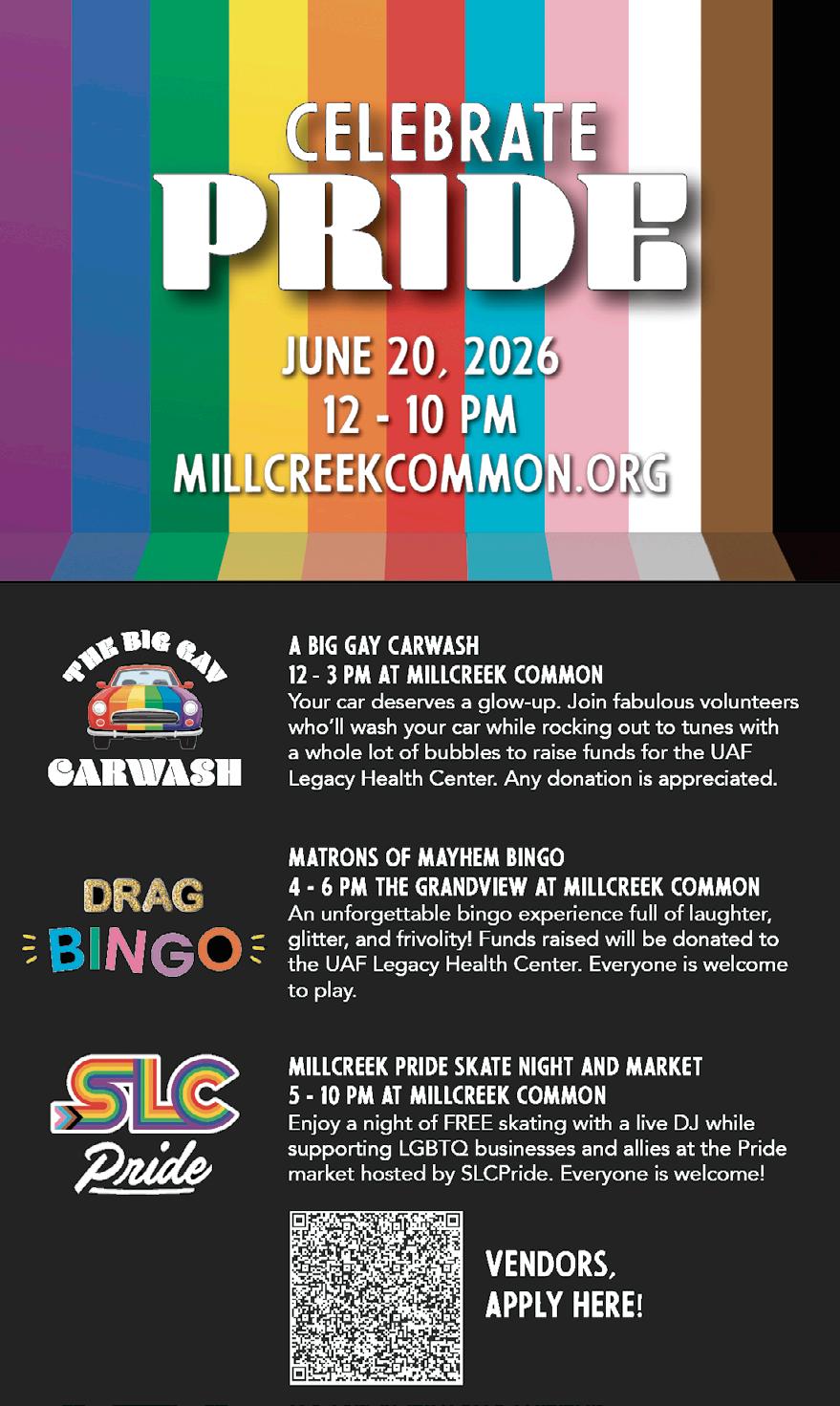
Millcreek Pride takes over Millcreek Common from noon to 10 p.m. with a full day of fun. Kick off with a Big Gay Carwash from noon to 3, then Matrons of Mayhem Bingo from 4 to 6pm, both benefiting UAF Legacy Health Center. A free Pride Skate Night & Market with a live DJ follows from 5pm on. Everyone welcome! MILLCREEKCOMMON.ORG
JUNE 20, GATE CITY PRIDE, POCATELLO, ID
Pocatello’s Gate City Pride is “Rooted in Pride, Growing Community!” a family-friendly celebration featuring live entertainment, resources, and year-round programs including a Teen Book Club, Queer Tabletop RPG Club, and The Closet, a free clothing space for trans and gender-expansive individuals. GATECITYPRIDE.ORG
JUNE 21, DEER VALLEY PRIDE
JUNE 21, PRIDE WITHOUT PEACE
JUNE 27-28, SLC PRIDE FESTIVAL,
SLC Pride returns to The Gateway in downtown Salt Lake City for its third annual festival, celebrating the LGBTQIA+ community with a weekend full of joy, inclusivity, and empowerment. Plans for the event are not yet available, so stay tuned. SLC-PRIDE.ORG
JUNE 28, TOOELE PRIDE
Celebrate community and visibility from 11 a.m. to 5 p.m. at Tooele Marketplace, 140 E. 200 S., with a day of food trucks, vendor and resource booths, open mic performances, live entertainment, face painting, and a raffle.
SEPT. 19, LOGAN PRIDE FESTIVAL
Logan Pride is scheduled for September 19, 2026, on Federal Avenue in Logan, Utah. Since 2016, Logan Pride has served the Cache Valley community as a non-profit organization dedicated to celebrating diversity while promoting LGBTQIA+ visibility, acceptance, and support in the region. “While we host many projects and activities throughout the year, our hallmark event is our annual Pride Festival that occurs each September,” organizers said. “This single-day event has notably generated the largest reach and impact in and for our community, and it is only made possible by supporters like you.” LOGANPRIDE.ORG
SEPT. 9–12, DURANGO PRIDE
The Four Corners area Prides up in the Fall. Last year’s festivities included a downtown Pride Parade, Drag Trivia at the Starlight Lounge, a Pride Dance, and a full-day Buckley Park Festival. THEALLIANCE.GAY/PRIDE
SEPT. 26, PRIDE OF SOUTHERN UTAH, ST. GEORGE
Pride in the Park is Southern Utah’s biggest LGBTQ+ pride festival and is held at JC Snow Park in St. George from 11am to 5pm. It is a free all-ages community event with live performances, food trucks, and local vendors. No ticket is required to attend. Bag check and metal detectors will be used to help keep this event safe for everyone. PRIDEOFSOUTHERNUTAH.ORG
OCT. 2-4, OGDEN PRIDE
FESTIVAL
Celebrating its 12th year, the Ogden Pride Festival has moved! The new schedule is the first weekend of October. “Our community resoundingly said the first weekend in October was the move, so starting in 2026, Ogden, dust off your glitter and pull out those cozy pride sweaters, because the festival is making the jump to October!” Organizers call it the fiercest way to kick off LGBTQ+ History Month and keep the pride alive. OGDENPRIDE.ORG
Idaho Pride Calendar
JUNE 6, SO. IDAHO PRIDE, TWIN FALLS in the Magic Valley region of southern Idaho. SOUTHERNIDAHOPRIDE.ORG
JUNE 6, NORTH IDAHO PRIDE ALLIANCE, COEUR D’ALENE in the beautiful North Idaho Panhandle. NIPRIDEALLIANCE.COM
JUNE 14, CANYON COUNTY PRIDE, NAMPA community pride in the Treasure Valley’s Canyon County. CANYONCOUNTYPRIDE.COM
JUNE 20, GATE CITY PRIDE, POCATELLO LGBTQ+ community spirit in the Gate City of southeastern Idaho. GATECITYPRIDE.ORG
JUNE 20, REXBURG PRIDE, REXBURG Building LGBTQ+ community in eastern Idaho. REXBURGPRIDE.ORG
JUNE 27, IDAHO FALLS PRIDE, IDAHO FALLS LGBTQ+ community along the Snake River. IDAHOFALLSPRIDE.COM
AUGUST 28–30, PALOUSE PRIDE, MOSCOW
A 3-day celebration embracing LGBTQ+ culture, arts, and community. INLANDOASIS.ORG
SEPTEMBER 18–20, BOISE PRIDE, BOISE The 37th year of Idaho’s largest LGBTQ+ festival, in the capital city. BOISEPRIDEFEST.ORG
2026 UTAH PR!DE What’s new this year:
With new events, returning programs, and a theme borrowed from the state itself, the 2026 Utah Pride Celebration promises a weekend — and a week — that reaches higher in every direction.
There is something quietly defiant about borrowing Utah’s own tourism slogan to name a Pride celebration. “Life Elevated” has long been the state’s invitation to the world — come for the mountains, the red rock, the powder snow. This June, Utah Pride is turning that phrase back on itself, and on the community it serves, with a theme that feels both playful and pointed: Pride Elevated.
“This year’s festival is about elevation in every sense,” said CHAD CALL , executive director of Utah Pride and the Utah Pride Center. “We’re elevating community voices, elevating experiences, and elevating opportunities for connection across generations, identities, and organizations.”
It’s a theme well-suited to a moment that feels, for many LGBTQ+ Utahns, like one demanding both resilience and resolve. Against a national backdrop of
legislative pressure and cultural friction, Utah Pride 2026 is leaning into joy — not as an escape from the fight, but as an expression of it. And the programming lineup this year reflects that intention with unusual ambition: new events, returning staples, expanded partnerships, and a calendar that stretches across an entire week in downtown Salt Lake City.
The celebration officially runs June 3–7, with the two-day festival anchoring the weekend of June 6 and 7. For the LGBTQ+ community in Utah — and for the tens of thousands of visitors, allies, and supporters expected to attend — it represents the state’s largest and longest-running Pride event once again rising to meet the moment.
A Week That Builds
Utah Pride has always been anchored by its Saturday rally and march, its two-day festival at Washington Square, and the beloved Sunday parade through downtown Salt Lake City.
But in 2026, the celebration is more deliberately structured as a full week of programming, with each day carrying its own purpose and energy.
It begins Wednesday, June 3, with the PRIDE FLAG RAISING CEREMONY at Washington Square at 6 p.m., a free, public tradition hosted by the Salt Lake City Mayor’s Office that now formally opens Pride week with the raising of the Sego Belonging flag. It’s a ritual that has become a reliable touchstone: a public, civic affirmation that this community exists, belongs, and is welcome here.
One hour later, one block away, the tone shifts to something more intimate.
THE DIRECTORS’ RECEPTION: A NEW KIND OF GALA
Making its debut this year, the Utah Pride Directors’ Reception takes place Wednesday evening at 7 p.m. on the rooftop of the Salt Lake Main Library — a venue that, on a June evening, offers a view of the city that feels almost intentionally symbolic. The event is
designed to bring together community leaders, VIPs, and supporters in an atmosphere that blends celebration with philanthropic purpose.
At $100 per ticket, the Directors’ Reception is a deliberate rethinking of the traditional gala format. The price point is accessible enough to widen the circle of those who show up, while still functioning as a meaningful fundraiser for the Utah Pride Center’s long-term sustainability and programming mission. It’s a distinction worth noting: this isn’t a black-tie affair for major donors only. It’s an invitation for community members who want to celebrate meaningfully and invest in what comes next.
The evening will feature curated hospitality, community connection, and the announcement of the 2026 DR. KRISTEN RIES COMMUNITY SERVICE AWARD, which honors leadership, advocacy, and impact within Utah’s LGBTQ+ community. The Ries Award has long been one of Utah Pride’s most meaningful traditions, recogniz-
ing those who do the quiet, consistent work of building community infrastructure.
But 2026 introduces three additional honors that expand the scope of that recognition. The UTAH PRIDE VOLUNTEER OF THE YEAR award acknowledges the individuals whose unpaid labor keeps events like this possible. The COMMUNITY ORGANIZATION OF THE YEAR honors an organization demonstrating outstanding service to Utah’s LGBTQ+ community. And in a particularly significant moment, the inaugural BRUCE BASTIAN LEGACY AWARD will be presented posthumously to its namesake.
Bastian, co-founder of WordPerfect Corporation and one of the most significant philanthropic voices of Utah’s LGBTQ+ community, leaves behind a legacy measured not just in dollars donated but in doors opened and in organizations sustained. That the award bearing his name recognizes of a lifetime of transformative impact.
OPENING NIGHT FOAM PARTY: FRIDAY FINDS ITS MOMENT
For years, Pride weekends have had a structural imbalance: Saturday and Sunday carry nearly all the weight, while Friday functions as a kind of prolonged arrival. Utah Pride is addressing that in 2026 with what may be the most talked-about new addition to the schedule.
The Opening Night Foam Party, launching Friday, June 5 from 8 p.m. to 1 p.m. at Washington Square, is exactly what it sounds like, and that’s the point. A 21-and-over event featuring local DJs, high energy, and, yes, foam, the party is designed to give Pride weekend a genuine opening night: a moment where the celebration begins not with a quiet gathering but with dancing, movement, and the particular joy of being surrounded by your people.
Tickets are $30 and include one complimentary beverage, alcoholic or non-alcoholic. The event is framed as Utah Pride’s signature nightlife offering — a recurring tradition in the making, if the debut lands the way
organizers are clearly hoping it will.
For an organization whose mission is to create spaces where LGBTQ+ Utahns can fully be themselves, a foam party on a Friday night at Washington Square is not a frivolous addition. It is, in its own way, a statement.
THE YOUTH ZONE IS BACK — AND IT BROUGHT A PARTNER
Perhaps the most emotionally significant return of 2026 is quieter than a foam cannon and costs considerably less than a gala ticket. The Youth Zone, a dedicated, affirming space for LGBTQ+ youth and families during festival weekend, is back after a two-year hiatus.
The pause was practical: staffing constraints and resource limitations had made it impossible to sustain. Its absence was felt. At a moment when LGBTQ+ youth in Utah face particular pressures — at home, at school, in the broader political climate — a visible, dedicated space for young people during the state’s largest Pride event is not a programming luxury. It’s a statement about who Pride is for.
The Youth Zone’s return in 2026 is powered by a new partnership with DAVIS COUNTY PRIDE , which is providing programming support for the space. The collaboration is a clear example of Utah Pride’s stated commitment to community partnership — larger organizations reaching out to smaller ones, sharing resources rather than competing for them.
“We’re proud to partner with Utah Pride to help bring back the Youth Zone and create intentional, affirming space for LGBTQIA+ youth and families during festival weekend,” said JAKE BOYLE , Board Chair and Executive Director of Davis County Pride. “Being invited into the programming of this space reflects what true community partnership looks like — organizations working together, sharing expertise, and showing up for youth in meaningful ways. When we collaborate like this, we expand what’s possible for our community and ensure more people feel seen, supported, and celebrated.”
The Youth Dance also returns for 2026,
upgraded in format and accessibility. Previously a standalone Friday night event, it moves this year to Saturday evening, June 6, at 8:00 PM inside the festival grounds — located within the Youth Zone itself, making it part of the larger festival experience. Designed for LGBTQ+ teens ages 13–17, the dance now comes included with the purchase of a Festival Youth Ticket, eliminating the barrier of a separate purchase. For families watching their budgets, that’s not a small thing.
REMEMBRANCE ALONGSIDE CELEBRATION
In partnership with THE GLITTER FOUNDATION , Utah Pride 2026 will host the Transgender Day of Remembrance Memorial Installation during festival weekend — a powerful counterweight to the celebration surrounding it, and a necessary one.
The installation offers attendees space for reflection, remembrance, and the honoring of transgender individuals lost to anti-trans violence. Its presence in the middle of a festival is intentional: to be LGBTQ+ is to
hold grief and joy in the same hands, sometimes in the same afternoon.
“The opportunity to share this installation during Utah Pride helps ensure the stories and lives represented here are honored, remembered, and witnessed by thousands of community members and allies,” said DALLAS RIVAS , cofounder of The Glitter Foundation. “We’re grateful to Utah Pride for inviting us to bring this memorial into such a visible and affirming community space.”
In a year when anti-trans legislation has continued its march across state legislatures nationwide, the presence of this memorial at Utah’s largest LGBTQ+ gathering is a reminder that visibility is not only a celebration — it is also an act of witness.
The Traditions That Anchor It All
Against the backdrop of new programming, Utah Pride’s signature events return unchanged in their essential character, because some things work precisely because they have always worked.
The UTAH PRIDE RALLY & MARCH
steps off Saturday morning, June 6, at 10 a.m. from the south steps of the Utah State Capitol Building. It remains one of the most powerful images Pride weekend produces every year: thousands of people on the steps of state government, in full view of the building where laws affecting their lives are made, insisting on their own visibility. This year’s rally will feature speakers including ESSIE GONZEN , the new executive director of Equality Utah, and CHRISTOPHER EVERETT, executive director of UAF Legacy Health, alongside other community leaders and advocates.
BY ROMY COLVIN
PHOTO
You’ve known us since 1988 as the premier ‘Independent’ dealer alternative for Mercedes and BMW repair.
We are excited to announce we’ve expanded our service department and now service all European cars
• Service, Repair, Parts, Tires
• Complete Pre-Owned Sales Dept.
• Professional Detailing
• Family Owned and Operated
• Best Warranty in Town: 3 year / 36,000 miles on most repairs
THE UTAH PRIDE FESTIVAL transforms Washington Square into the state’s largest LGBTQ+ gathering space across Saturday from 11 a.m. to 11 p.m. and Sunday from noon to 7 p.m. Live local performers, exhibitors, food vendors, community organizations, and family programming fill the park with the particular energy of a community gathering that has nowhere else to be and every reason to stay.
Festival tickets run $20 for adults, $10 for youth ages 13–17, and $5 for children 12 and under, $17 for seniors and military/veterans. Two-day passes are available for $35.
and national performers. The parade remains, year after year, the most visible part of what Utah Pride is — a public, joyful, unhesitating declaration that this community exists and is not going anywhere.
Elevation as Practice
“Pride Elevated” is a clever theme, and it was clearly chosen with both warmth and wit. Beneath the wordplay is something genuine. To elevate a community means to take it seriously — to invest in its youth, honor its elders, remember its losses, celebrate its joy, and build the infrastructure that makes all of
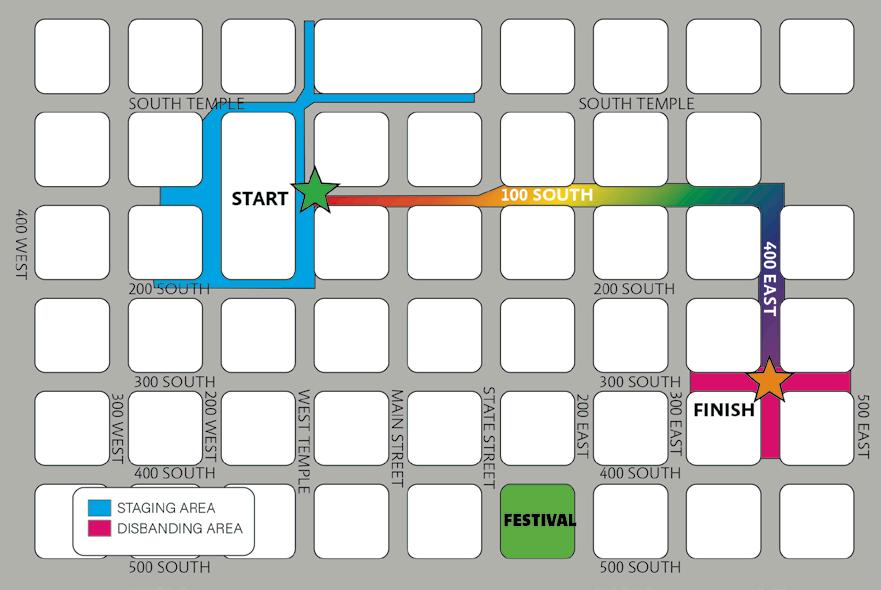
And on Sunday morning, June 7 at 10 a.m., the UTAH PRIDE PARADE takes over downtown Salt Lake City, moving east along 100 South from the Temple Square area, turning south at 400 East, and finishing at 300 South and 400 East. At the end, ‘bikes’ head off in different directions, floats disembark, walkers head to the Festival, and some head for a nap before dancing the rest of Sunday away in front of stages with local
that possible year after year.
Utah Pride 2026 is doing all of those things simultaneously. New events exist alongside returning ones. Young people have a space. Those who have been lost are remembered. And on a Friday night in June, a lot of people are going to dance in foam at Washington Square, which is — in the fullest sense of the word — a form of resistance.
The full schedule runs June 3–7. For tickets, volunteer opportunities, and more information, visit utahpride.org.
Utah Pride Festival 2026 — Entertainment
“Pride Elevated” comes to life at Washington and Library Square in Salt Lake City on June 6–7, 2026, as the Utah Pride Festival returns for another landmark celebration. Featuring over 35 local performers across two days, this year’s stage entertainment spotlights an extraordinary range of local and regional LGBTQ+ artists and allies, from queer hip-hop to indie folk, from electronic DJs to heartfelt singer-songwriters. Here’s a look at the artists performing across the weekend.
Saturday, June 6
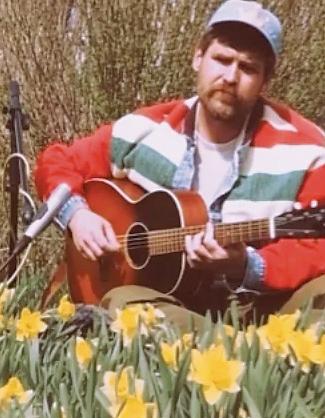
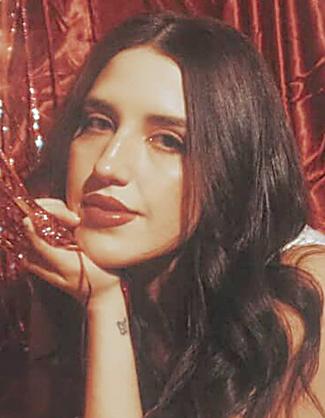
PUR XTC is the genre-blurring project of Kansas City-based artist Taylor Hughes, who fuses raw, confessional lyricism with bold, dance-forward production and layered fuzzy guitars. Performing as a duo with drummer Blaire Geenens, pure xtc has shared stages with Dashboard Confessional, Big Freedia, Jenny Lewis, and Fletcher, and their music video for “Drive” was an official selection at the 29 Queer Film Festival in 2025. Their debut full-length album arrives in July 2026.
EJ MICHELS is a gay, ex-LDS singer-songwriter from Draper, Utah, who earned national attention after competing on NBC’s The Voice on Team Blake Shelton in 2023. He has since released the deeply personal debut album Michigan Avenue — a record exploring love, shame, and self-acceptance as a gay man raised in the Latter-day Saint faith — and followed it with the album Strange World. Known for his emotionally raw voice and candid songwriting, he uses music to connect with “sensitive hearts.”
LEO CODY is a singer-songwriter based in Salt Lake City, Utah. Active in the local and regional music
scene, Leo brings heartfelt original material to stages across the area, writing in a style that resonates with the personal and community-centered values of the Utah LGBTQ+ scene. He is a familiar presence at Pride and local live music events in Salt Lake City.
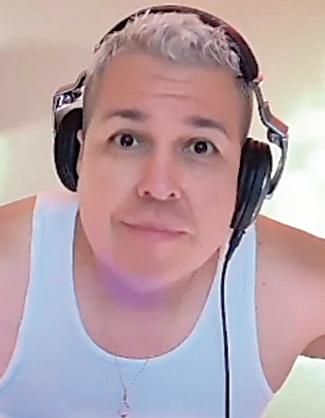
PINK PRISM is a trans artist and DJ based in Salt Lake City, Utah. A rising voice in the city’s queer underground music scene, Pink Prism brings electronic energy and genre-blending creativity to the stage and DJ booth, having performed at venues including the International Lounge in SLC and at SLC Pride. Pink Prism has become a recognizable presence in local queer music and nightlife communities.
CARE is an all-trans band that cannot be bound in a single genre. They have gone punk, rock, folk, pop, metal, you name it! Frontman Care writes all of the songs from a place of deep hurt, often seeking community through shared experiences. They tackle hard topics such as mental health and abuse, but also their deep connection with their spouse (the drummer). It’s a band full of love. :).
JEREMY DION is a Boulder, Colorado-based musician and songwriter who has performed at key regional venues, including Kilby Court in Salt Lake City and Park City’s songwriter showcases. Active in Utah’s indie singer-songwriter
community, he has also appeared on bills with national touring artists and brought his original work to festival stages across the Mountain West and Pacific Northwest.
PFSMUSIC is a Salt Lake City–based multi-genre artist, DJ, producer.
ARDY is a Utah-based indie pop artist whose dreamy, emotionally rich music blends artpop, Americana, and storytelling. A bilingual singer and
visual artist, she has collaborated with Kaskade and creates intimate songs inspired by love, loss, fantasy, and her experiences living abroad in France.
LINI LEREMIA, known also as MsWonders is a Southern Utah singer-songwriter whose music blends heartfelt island reggae influences with soulful vocals and personal storytelling. Her debut EP Ms. Wonder features original songs including “Shadows” and “Slow Wind,” and she describes her performances as a bridge between pain and healing,
between strangers and family. Based in Southern Utah, she has performed across the region and brings powerful, community-centered energy to every show.
T3 MUSIC is a Salt Lake City-based entertainment group featuring live drums, a DJ, and an MC, specializing in high-energy performances for bars, clubs, weddings, and corporate events. They are known for performances at venues like The Boiler Room, where they frequently feature R&B, hip-hop, and Latin rhythms.
JESSE BLAKE RUNDLE is an out queer folk singer-songwriter originally from Kansas who is based in Boise, Idaho. After coming out, leaving the church, starting his first same-sex relationship, and achieving sobriety, Rundle channeled those seismic personal changes
into his critically praised LP Next Town’s Trees. Influenced by Radiohead, Wilco, and poets like Wallace Stevens, his work blends experimen-
tal textures with poetic storytelling. His latest album, WAIT, SKY, expands into alt-rock territory.
GRACE WAWRO
is a singer-songwriter from Salt Lake City, Utah, whose love of music began at age six. A former member of BYU’s all-female a cappella group Noteworthy, Grace pivoted to original songwriting and released her debut EP DREAMHOUSE in 2025 — a project
Kevin Petersen A
Schedule Coffee/Tea with me for a no-pressure, no-judgement conversation.
exploring self-actualization, complex relationships, and emotional authenticity. She writes what she describes as “sparkly, fun pop music” layered with self-love and vulnerability. Her latest single, “Gossamer,” was released in 2026.
THE DISCO PAPI
is a Salt Lake City–based DJ, recording artist, and house music curator deeply embedded in the local queer community. Known for Planet Papi — his ongoing series of high-energy live DJ sets mixing disco, tech house, and underground dance music — The Disco Papi has become a beloved figure in SLC’s LGBTQ+ nightlife. He is passionate about the intersection of Salt Lake City house music history and queer identity, and returns to Utah Pride as a fan favorite.
Sunday, June 7
PAUL MCGREW is a Utah singer-songwriter known for his powerhouse voice and candid songwriting. An active performer on the Utah live music circuit — including songwriter showcases and theater productions — Paul brings a theatrical sensibility and authentic storytelling to the stage. A regular at venues like Mountain West Cider and Utah theaters, he is recognized as a compelling and emotionally engaging live performer.
ICKY ROGERS is an emerging queer hip-hop artist from Salt Lake City who has been active in the local scene since 2013. Known for his cosmic layered rap style, distinctive
fashion, and funky musicality, Icky draws influences from André 3000, Frank Ocean, Amy Winehouse, and jazz giants like Miles Davis. He has opened for legendary acts including Nipsey Hussle, Big Freedia, and The Pharcyde, and has become a staple of Salt Lake City’s music community. His album Chasing Saturday explores themes of cosmic romance and street culture.
DJ ROCKSTAR
AARON is a Denver-based DJ known for high-energy dance, house, and open-format sets that blend pop, hip-hop, and electronic music. He has performed at major festivals, Pride events, and iconic clubs, sharing stages with artists including Katy Perry and Ariana Grande.
WHITE CHOCOLATE & LAVENDER are a performing duo bringing their combined artistry to the Utah Pride Festival stage.
RYAN CALL is a Utah-based indie/chamber pop singer-songwriter whose atmospheric chamber pop explores themes of religion, nostalgia, and queer identity. Influenced by a wide range of musical traditions, his sound has earned him recognition on Utah’s indie music circuit, including performances at Velour Live Music Gallery and Fork Fest. His forthcoming album All Your Septembers, released in May 2026, continues his introspective and emotionally layered songwriting.
YEZZZ is a Utahbased DJ and returning Utah Pride performer. Known for bringing energy and presence to the festival atmosphere, YEZZZ is part of the local LGBTQ+ performance community that makes the Utah Pride Festival stage one of the most vibrant in the Mountain West.
THE SALT LICK is a weekly queer country dance experience based in Salt Lake City, Utah. Bringing the community together through music, movement, and celebration, The Salt Lick has carved out a joyful space in SLC’s LGBTQ+ social fabric. As a performer and collective presence at Utah Pride, The Salt Lick embodies the festival’s spirit of visibility, belonging, and community-centered celebration.
MENDED
HEARTS CLUB is a queer indie folk duo from Southern Utah consisting of Aiden Barrick (he/him) and Judith Rognli (she/ they). Described as Southern Utah’s favorite queer band, they released their debut album Nobody’s Favorite in November 2025 — an eleven-track record featuring a Trans anthem, political commentary, and deeply personal storytelling delivered with theatrical flair. Their music bridges community, activism, and intimate emotional connection.
AWAKENING AUTUMN is a Utahbased band and local music staple featured on the Fishboat Podcast, a
platform dedicated to showcasing Utah’s music scene. A general rock act active in the Provo and broader Utah music community, Awakening Autumn brings original songwriting and live-band energy to their performances, appearing regularly at venues across the state. Their presence at Utah Pride reflects the festival’s broad embrace of Utah’s local music talent.
PHOENIX
SAMUEL is a transgender singer and recording artist whose music reflects personal identity, resilience, and advocacy. Known for songs including “The Call,” “Impossible Dream,” and a single recorded in Nashville, Phoenix Samuel creates music that resonates with themes of trans visibility and personal transformation. A growing voice in the LGBTQ+ music community, Phoenix Samuel continues to build a catalog of original work that speaks to lived experience with honesty and courage.
LIAM LARS is an independent indie-pop singer, songwriter, and contemporary countertenor based in Utah. A headlining performer at Davis County Pride and a regular at Velour Live Music Gallery, Liam Lars creates emotionally resonant music exploring themes of identity, queer experience, and personal growth. With an active recording and podcast presence, he has released original work, including songs like “Persephone (I love you)” and continues to build a dedicated fanbase across Utah’s LGBTQ+ music community. Q Tickets available at utahpride.org
After Everything, Melissa Etheridge Is Still Rising
On her first album in seven years, the lesbian rock legend finds clarity after loss — and has a powerful message for her community
BY CHRIS AZZOPARDI
It doesn’t take long for Melissa Etheridge to feel like an old friend. Seconds into our latest conversation, she’s already asking what I think of her new album — “ Rise,” her first in seven years — and within moments we’re deep into the kind of conversation that makes you forget you’re supposed to be conducting an interview. That’s always been our history. Seven years is a long time. Long enough to grieve, to rebuild, to sit with loss until it becomes something you can sing about. For Etheridge, “Rise”
is that album — the one that had to wait until she had the words. And the words, it turns out, arrived with a kind of hard-won clarity: about the radical power of controlling your own mind and what it means to keep living after the unthinkable.
We’ve talked at so many different moments in her life — most recently in 2025, when the Southern California wildfires forced her from her home. In 2023, she spoke to me about the death of her son, Beckett Cypher, who died from opioid addiction in 2020 at age 21. Since
then, Melissa Etheridge’s “Rise” has been through more of the kind of things that either break you or reshape you. She sounds, unmistakably, like the latter.
We spoke ahead of Pride Month — when the stakes for our community feel as high as they’ve felt in years — and I wanted to know what she’s carrying into it. What she’d say to people who are tired or scared. What it felt like to finally get that Rock and Roll Hall of Fame nomination
And what, after all this time, does she want us to take from this album?
Her answer, like the record itself, keeps coming back to the same thing: We’re going to fall to the earth sometimes. But our natural state is rising. What feels most different about the Melissa Etheridge who made “Rise”? Let me say that the song “Rise” was very much inspired by the fires, because I was feeling for my city and, good God, the Palisades. It was just really breaking my heart. But I knew that we would rise from the ashes. And God, just the last few years have just been really rough on us.
And then, of course, what you’ve gone through on your own. Yes, some great loss, of course, and people can absolutely understand that. Because of everything I’ve been through — cancer and [being] gay and seeing how things play out — I don’t get depressed. I know the basic human nature is joy. And really, we are meant to be happy. Things happen. But I’ve lived long enough now to really understand that. I felt very inspired to speak and sing this message: You’re going to fall to the earth, you’re going to taste the dirt, but then you’re going to rise. And why is it so easy to make it so hard?
Sometimes it’s so hard to understand that we are supposed to be happy.
We’re not supposed to feel guilty because someone else is not happy. We are in charge of our own happiness. When I realized that I don’t need someone
else to change to make me happy, that was a big one. And I was trying to really put that in the song when I said, “There’s a hope I dare not speak/ frustrating, most people find,” because we want them to change so that we’ll feel safe. But that’s not how it works. You don’t need to change to set me free because I’m always free to change my mind. I can think differently of MAGA, I can think differently of people who are afraid of themselves. It’s up to us how we feel about it. We are in control of our response. And I think once I got that, my life really became easier and more joyful.
I love it when I get on a call with you, and we immediately get this deep. That really is our history. That’s what we do.
So then, how do these learned perspectives play into the new music? Over the years, I have truly come to understand the connectivity of all of us, of the human race. And to see that we all just want to be loved. We all want to feel safe. We all want our family, our immediate loves to feel safe, all of us. And it looks different to everyone. And I wanted to write an album that was accessible. I had done a lot of writing in the last 15 years that was me going, “Oh, I want to do whatever I want. I want to express myself and try this and try that,” because I just got off the record label. When I sat down with this a couple of years ago, I sat down to say, “OK, I really
want to think this through. I don’t want to just write some songs and put them out. I want to craft songs this time, songs that people want to not just listen to, but that affect them and that they can relate to — simple but powerful.” So there was a lot of editing. It was a lot of finding the shortest, most powerful way to express this emotion.
“Call You” feels like, to me, the emotional center of the record, this idea of reaching for someone who is no longer there. How did writing that song change what the rest of the album could be? It was the first song I wrote. I needed to create a song where I could sing over and over, “I will not stop living, even though I can’t call you anymore.” That’s for me. That’s for me to go, “Yes, I feel this. I’ve got your picture, and I’m holding it here. That physical part of you is over, but I still feel connected. I’m connected to you when I garden, and I put my fingers in the dirt. I’m connected when I’m out in the world. And I just let the thought of you be there with me.”
I couldn’t get preachy about it, I just had to present it so simply with, “Yes, this is an unbearable pain, yet I can set it free and let it go through me and I’m grateful I loved someone so much that I had a child that I loved so much for the time I had him, and I’m going to keep living and have our foundation and know that his life was not in vain.”
Because you recorded that
song first, how did it change every song that came after it? Well, it enabled me to then walk in a space of emotion that was heavy. So I could then sing “Rise” and go, “Yeah, you’re going to fall to the earth, but you’re going to rise.” I could sing “Being Alive.” I could say, “This is going to
break me. This is going to bleed for a while, but hours turn to days.” And I think the whole album is me going, you move on. Life changes every moment. Every breath, there’s something different and it’s never over.
This past year, you received your first Rock
and Roll Hall of Fame nomination. I feel like I’m in the room. You had said that your friends have been asking for years why it hadn’t happened before. What did it mean to you to both get the nomination and then to learn what the actual results were when you didn’t make it in this year? It’s very nebulous. I didn’t do my career thinking, “Oh, I want to be in the Rock Hall.” It’s something that is there that is subjective in rock and roll. It’s impossible to define, and they’re trying to, and I think they’re playing catch up. And again, I’m just happy to have been in the conversation. I imagine that someday it will happen. I hope I’m still alive. That’s just where I’m at, because I want to get up and be at that party, that’s all. I just want to play that night. That’s what I’m looking forward to. But I’m doing OK. I don’t need this, but it’s fun.
Maybe your fans care more than you do? My wife definitely does!
What does it mean to you to be called an icon at this point in your career? I don’t know what it means, but I do understand.
Somebody very important and influential. Well, there you go. That I’ve been around long enough. I’ve certainly done some really cool stuff. And if I can be inspirational to people, if they can look at an icon of something that represents somebody who has been through it, somebody important that has made the choices that they can identify with, then fantastic. I’m all for it.
What does holding the line mean to you right now during Pride season? And what would you say to people in this community who are tired or scared? Again, I would go to their own personal experience. The best thing you can do for the community is to do for you. Make sure you are thinking enough joyful things. Make sure you’re reading enough, because you can bury yourself in doomscrolling. And you also want to know that there are amazing things happening: families changing and beautiful stories happening every day, just as, yes, there is some negative stuff. But make sure you give yourself a break from negativity and then you will see more positivity. You’ll be surrounded. You’ll bring more positive people toward you. It all starts with you. And it’s not about going and making somebody else change. It’s
being such an amazing, loving community and knowing that people change just because they experience you and see you.
You can’t take care of other people unless you take care of yourself. Simple, simple, simple, simple. Let’s all do that.
What do you hope someone carries with them when they hear these songs on “Rise” during Pride season? That you can create that certainty inside yourself. All of us are so much more powerful than we know. And that coming out and being out and being who you are is the best thing you can do for yourself and for your community. I’ve seen decades of change come from people going, “Oh, well, that guy I work with, oh, he’s gay and I like him. Oh, that person down the street, they’re gay. Maybe that’s not so bad.” That’s what changes the world. And we have changed it. And believe me, I’ve seen so much change. We’re doing OK.
You experienced this all in a really personal way when you came out on a major platform. It was very, very frightening.
Well, that means a lot hearing that from somebody who just told me there’s less uncertainty in your mind. Clearly you’ve come a long way. Yes. I’ve seen it and I’ve seen people change. I remember when in the late ’80s, early ’90s, we didn’t even dare mention gay marriage. That wasn’t even a thing. We didn’t even know what we would ever call it. We were just trying not to get killed and lose our jobs and get thrown in jail. And so I’m married, and my daughter’s married to a woman. We have that right. And yes, stay alert, stay awake and find your joy.
Let people see how loving and joyful you are. And believe in the goodness of people and that we are always moving up, accelerating and becoming more respectful of our differences. Q
Chris Azzopardi is the editorial director of Pride Source Media Group and Q Syndicate. He has interviewed a multitude of superstars, including Cher, Meryl Streep, Mariah Carey and Beyoncé. His work has also appeared in “The New York Times,” “Vanity Fair,” “GQ,” and “Billboard.” Reach him via X @chrisazzopardi.
From Classroom Chaos to New Dad Life, JOE DOMBROWSKI
Levels Up
The breakout comedian pivots from viral teacher humor to raising a newborn — and discovering he didn’t know kids quite as well as he thought
BY KELLI DUNHAM
Duringa recent interview with comedian Joe Dombrowski about his upcoming special “Dad on Arrival,” he was, fittingly, in the middle of it all — juggling new fatherhood in real time. At one point, the conversation turned into a kind of live demonstration: Could Dombrowski feed a highly kinetic infant while delivering funny, thoughtful answers? The answer, unequivocally, was yes. Raised in Michigan and now based in Seattle, Dombrowski first broke out online with comedy rooted in his life as an elementary school teacher, spinning classroom stories into cathartic, laugh-out-loud moments for educators everywhere — the kind that make you briefly forget about grading backlogs, that mysterious smell in the back of the room and the latest email from the superintendent about cell phone policy. His profile got a major boost after Ellen DeGeneres invited him on her show following his viral spelling-bee prank, but he’s been building a follow-
ing with both teacher and non-teacher material for more than a decade. His debut 2023 special, “Don’t Eat the Crayons,” leaned fully into classroom chaos and the strange anthropology of parent-teacher conferences.
“Dad on Arrival,” available now on YouTube, marks a shift.
He’s still talking about school. Still talking about students, parents and the general absurdity of being responsible for other human beings. The difference now: that he’s one of the parents — and a brand-new one at that. The material opens up accordingly, moving easily from fertility clinics to colonoscopies to Midwest food cravings to the cultural whiplash of relocating from Michigan to Seattle. Like the best comics, Dombrowski delivers big laughs while sneaking in something deeper: a perspective shaped in real time, somewhere between the classroom and the nursery.
Of course I know better, but when I watched your appearance on “The Late Show with Stephen Colbert” on You-
Tube ahead of this interview, I couldn’t stop myself from taking a peek at the comments. There were so many lovely ones, including from your frat brothers! One after another saying you were the same person they knew back then. It felt like your entire life was showing up there. I guess I’m just a mystical gay charmer. [Laughs.] Yeah, the frat. My frat brothers really did pop their heads in on that one, which was funny. They were all on a golf outing the day that aired. Overall, the comments were really positive. I was surprised! There were some loser comments mixed in, but I mean, let the trash take itself out.
Some people just don’t have enough to do. Exactly.
I was also struck by how many people from different parts of your life were chiming in. I know, I love that. If you meet somebody who knows me, they say I’m the same person that you see on stage, off stage. I’m the same person that I’ve always been. And I take pride in that. It’s not a persona, this is just what I do.
One of the things about my comedy is that when you come to my show, no matter who you are, you’re never out of the joke. My show is gay because I am. I’m just talking to you about life. It happens to be through the lens of a gay guy. And when you look out in the audience, it’s a very diverse mix of people. Even with a newborn, you’re still touring — that’s impressive! How are you doing it? Yeah. I don’t know how. God bless the grandmas, who are coming in to save the day when I go on the road.
What’s the biggest difference between “Don’t Eat the Crayons” and “Dad on Arrival”? The evolution from teacher to parent is really unique. I thought I understood kids as a teacher. Now I’m a parent [gulps]. It’s funny when I watch “Don’t Eat the Crayons,” I’m like, “Oh, you really thought you knew, didn’t you?”
I was thinking about that while watching the bit about parent-teacher conferences. I wondered if you’re going to be a different
parent in that room than the parents you used to deal with. Oh, for sure. Because being a teacher was such an eye-opening experience — you see people for who they are at all walks of life. You have these parents come in who are a little jaded, who have a chip on their shoulder.
But now, having to go into parent-teacher conferences — we’re already doing that, interviewing preschools that he’s gonna end up going to — I have to catch myself and be like, “Oh hey, you are that asshole now. Do you remember how those assholes used to talk to you when you were getting paid $25,000 a year?” And now, as a parent, I’m like, they just want the absolute best for their child. It’s the most important thing in the world. Before the baby arrived, what were you most excited about? And now that the baby is here, what’s been the most exciting — or terrifying — part? I think that I had rose-colored glasses on more than I ever should have. I didn’t really focus on just how hard it was gonna be. You know all these people who are parents, and you have your own parents, and you’re like, “Well, they survived.”
But holy shit, I’m dying. I’ve never been this tired in my life, and I was not expecting that. You quite literally stop everything. There’s nothing else you can do during that time that they’re awake except be their parent. And it took a quick adjustment. But once you succumb to that, it’s beautiful. And then, it’s really cool to just ignore everything else that’s going on in the world — especially now when there’s such craziness happening — and just focus on your family. Some of the funniest parts of the special are straight out of the fertility clinic waiting room. What surprised you most about this process for your family? We found that even in Seattle, the system is clearly built for straight couples. You are quickly reminded you’re living in somebody else’s world. My husband’s name is Morgan and people would
say, “Oh well, when she gets here…” I’d be like “Oh yeah, her and her huge clit will be here in just a second.”
You start to realize so many
different nuances of being a gay parent: being billed twice on accident because we’re both men and they don’t know who’s the dad. So they’re billing both of the people.
For the most part, people are curious, and we don’t make anyone feel stupid for asking questions. But you are very quickly reminded that we as LGBTQ+ people are out of the loop most of the time, and you just have to navigate that. In my case, it made for hilarious stories that went into the special.
What joke in the special gets the most unexpected but consistent laugh? There’s one from the first special where I talk about moving to Seattle from Michigan, and I say, “My husband and I were very liberal, we’re very open-minded, but when we moved to Seattle, we looked at each other and said, “Are we Republicans?” That never fails. And from the current special, when I tell people I had to get a colonoscopy and the doctor said, “Hey Joe, this might hurt a little,” and I said, “I think we’re fine.” Never fails. You’ve also released two crowd-work specials. How did you get good at crowd work? I’m an extrovert who’s riddled
with ADHD. But also, people categorize comedians as crowd-work comics, and that’s not really a thing. If you’re a comedian and you can’t do crowd work, you’re not a comedian. We’re live performers, and anything could happen in the room at any moment. If someone volleys at you, you volley it back.
Being a teacher helped because you never know what’s going to happen in the classroom, and you just have to roll with the punches. My students were basically little drunk adults, and comedy clubs are drunk adults who act like 5 year olds.
You talk in the special about your dad encountering Seattle culture for the first time. Have those conversations with your parents changed over time? We’ve been here almost nine years now. In the beginning, it was pretty much like walking them around and saying, “Hey, we’re not in a zoo. Just keep to yourself.” But the thing I never thought I’d hear both my parents say is that now that they have their first grandbaby, they realize we are in the best place for us and for our family. As weird as Seattle might be to them, they know that for the vast majority of people, my baby living with two dads is generally accepted.
What do you miss most about the Midwest? Jet’s Pizza with ranch dressing, more than anything. Oh my god, that used to run through my veins. Also, the food in general. We don’t have Arabic food over here in Seattle, which is crazy. My mom’s from Dearborn — I grew up on that.
Lastly, if a young gay kid watches your special, what do you hope they take away from it? It’s so cliche, but it’s so true: If you want to do something, you can. You’re going to get a lot of no’s along the way. But you will find a way to get a yes if you want to get a yes. So the only person who can ultimately tell you a final no is you. So you might as well keep hustling, sister. Q
Twelve years later, Jason Collins was still the only active NBA player to have come Out.
There are currently zero openly gay or bisexual men in the four major American sporting leagues.
This STORY was first published by UNCLOSETED MEDIA. BY SPENCER MACNAUGHTON, BENJAMIN LAND, AND E. E. OLIVER
In April
2013, JASON COLLINS made NBA history as the first active player to come out as openly gay. He penned an article in Sports Illustrated that immediately went viral, making international headlines. Many in the sporting world, including the late KOBE BRYANT and NBA Commissioner DAVID STERN , praised the two-time NBA finalist’s courage. Collins also received praise from presidents BARACK OBAMA and BILL CLINTON , as well as OPRAH WINFREY and First Lady MICHELLE OBAMA
Many believed Collins’ admission would lead to a snowball effect of other men feeling confident enough to come out in sports. But 12 years later, that hasn’t happened. Today, out of the nearly 4,000 players in the NBA, NFL, MLB and NHL, there are currently zero openly gay or bi players. This stat is even more remarkable when you take into consideration that nearly 30 percent of Gen Z adults identify as LGBTQ.
PHOTO: KEITH ALLISON
So what’s taking so long? And what can be done to make it easier for young men and boys to feel confident coming out in sports? We called up Collins on April 26, 2025 to get his take. Collins died peacefully at his Los Angeles home on May 12, 2026, at the age of 47. His passing followed an eight-month battle with Stage 4 glioblastoma, an aggressive and deadly form of brain cancer.
SPENCER MACNAUGHTON: Hi everyone! I’m here with Jason Collins, former NBA basketball star who played 13 seasons, including in two finals. He also happens to be the first and still the only openly gay player to come out while still actively in the NBA. Jason, thank you so much for speaking with me and Uncloseted Media today.
JASON COLLINS : Thank you for having me.
So I definitely want to talk a lot about current-day stuff, but I’d be remiss not to rewind. You come out in 2013 as the first openly gay player in the NBA. You have former President Barack Obama [calling you] and Oprah [calling you]. You were all over national news, international news. Tell me about the pros and cons of having made the decision to do that. How has it transformed your life? Wow. By not having to hide who I am, just being able to live an authentic life. There’s something powerful about being the one to out yourself and step forward and speak your truth. There’s no greater feeling. And you spoke a lot after you came out about having sleepless nights, about experiencing depression, about just wanting to go back in your room and not hang out with the other team members. Can you kind of articulate a little bit more about what those nights were like? I think everyone can relate to having lots of stress in your life. So it is like that. Having extreme stress, you are dealing with something that when you’re in the closet, the stress that comes along with that, the energy in your gut, it can make you actually physically so nervous and anxious, and you’re devoting energy that you have in the day towards combating
that versus towards accomplishing your goals and accomplishing whatever it is that you want to do. But again, when you do step forward, that’s why people talk about a weight being lifted off your shoulders. Because you’re no longer devoting that energy that you were expending to keeping the secret and hiding and like, “Oh, am I saying it this way?” All of that is gone, and you can focus on what is truly important in your life, which is accomplishing your goals
One of the reasons I started this publication that keeps me up at night is that 41 percent of LGBTQ kids in the U.S. seriously considered suicide in [2023]. Did it ever get that bad for you? It definitely got to very dark, lonely places because I felt like I was going through this alone. When I was younger, I was constantly looking for those role models, of people who have sort of been down this path. And in male sports, there really wasn’t an active player. Now you can look at my example, you can look at Robbie Rogers in Major League Soccer, Carl Nassib in the NFL. There are now, with regards to male athletes, people who have stepped forward and still been able to go out there and do their job as professional athletes and have found inspiration from Billie Jean King, Martina Navratilova, you name it, of those other female athletes. But when I was younger, I was looking for those male athletes. Mm-hmm. Me too. And even today, there’s obviously been so much progress. Over one-fifth of Gen Z adults identify as LGBTQ. But currently in the NFL, MLB, NBA and NHL, of the roughly 3,600 players, there is not one openly gay or bi man right now. I would call that a crisis. Why do you think that is still the case in 2025? It’s still the case because there are people who have fear to step forward and speak their truth. You need to continue to push the sports leagues in the sports franchises to celebrate the LGBTQ+ community, whether it’s participating in pride parades, marches or hosting pride games. And in this climate that we’re in, where there’s such an attack on DEI, it’s import-
ant to speak to your values and speak to your community of people who support your franchises, your athletes. I remember reading that article in 2013 and I had just finished playing varsity tennis in college. I grew up an athlete and always wanted mentors like you to come out and say, “Hey, I’m gay and I’m playing in sports.” So that was really meaningful for me. And I remember thinking, “There’s going to be a snowball effect now, more and more men are going
“It’s still the case because there are people who have fear to step forward and speak their truth. You need to continue to push the sports leagues in the sports franchises to celebrate the LGBTQ+ community, whether it’s participating in pride parades, marches or hosting pride games.”
—Jason Collins
to come out.” But we’re now in 2025, 12 years later, why specifically do you think that’s still not really happening? Yeah, there’s still a lot of homophobia. There’s a lot of homophobia in our society. There is a lot of homophobia still in sports, in particular, male sports. And we still have a lot of work to do as far as creating those environments that those athletes do feel comfortable to step forward [in] and share who they are. It’s about education and letting them know it’s okay to say, “I am gay,” “I am bisexual.” You know, you name it, but it’s okay. It’s okay to speak your truth. What other things systemically do you think can happen inside the locker rooms or on the fields or on the courts? Are there other examples of things that we’re not necessarily seeing in the mainstream that you think would make a difference? Well, I think a lot of the work that happens is in those day-to-day, person-to-person connections that we have. Or even in
a team environment. It’s important to empower people to speak up when they hear something that isn’t in line with an accepting environment; you need to say something. You never know who’s in the locker room. You never know whether it’s a player, a teammate of yours, a coach, an owner. But when you do have and hear homophobic language, it’s important to speak [up], call it out, pull someone aside and say, “Hey, I heard what you were saying earlier, and I need to talk to you about this language that you’re using.” That is what allyship looks like, being in those spaces and then using your voice in those moments and saying, “Hey, let’s not use that language.” Yeah, I also think masculinity plays into this so much. I remember in grade eight, I was playing basketball and tennis and had to decide which one to play. And I chose tennis because I didn’t wanna deal with the homophobia in the locker room or seeing other naked people in the locker room and all the complications that it comes with. How much does masculinity play into this? And what can be done to have straight guys holding other straight guys accountable for hate, which is what homophobia is? You need to have these conversations. You need to bring in people who are experts or just have more information to help. Because maybe you do want to have that environment, but you just don’t know how to go about it. If you’re a coach or if you’re an athletic director or even a headmaster out of school, you have to seek out help. You have to bring other organizations who have expertise. And it can be as simple as a 30- to 60-minute conversation, but at least you’re laying the groundwork down for educating those players, educating those athletes. These are the values that we talk about with regards to our team: accountability, teamwork, hard work, hustle, creating that great team environment. And then when someone does step out of line, you say, “Okay, when you use those words, that language, you did not step up to our principle of teamwork, of creating an environment where everyone feels accept-
ed,” and you’re getting everyone to focus on the main goal, which is that winning, which is then going out there and playing your best. And I keep going back to that number, zero openly gay or bi right now, right? And I think about the talent drain that this is probably having on sports like basketball. But the number of kids who just said, “I don’t wanna deal with that, so I’m gonna push myself out of the sport.” How big do you think the talent drain or talent loss is by having these closeted guys just saying, “No, not for me. I don’t wanna deal with the potential pain of homophobia.” There are ways that you can improve yourself as an athlete, whether it be with just learning fundamentals, to watching tape, to going into the weight room, to the track, but all that takes energy and focus. And when you’re diverting that energy and focus into trying to hide who you are, it takes away from the best possible product. A best possible version of yourself that you’re bringing to the table, that you’re bringing to your team, to your sport. And as a coach, I want my players to bring the best versions of themselves to our team, to our court, to our field. So just from a standpoint of, “I want the best version of my team, of my players.” This is very important for coaches, for those people in leadership positions, to think about as far as, “How do I get the best possible version of my athlete?” And this is one way you do that is by creating a team environment where everyone feels safe. That’s really interesting. So it’s almost two-pronged. Like the next Jason Collins or Kobe or LeBron, you want to create a safe space so they have the opportunity to perform at their best. But also a safe place so they don’t just quit full stop and never see what could have been possible. Exactly.
I know you grew up in quite a religious environment and I wonder, what can we do in a lot of these Bible Belt towns where the next LeBron could be training right now, but is in an extremely homophobic environment. How can we intervene in circles where the coaches and the teachers are people who believe that homosexuality is a sin? Is there any way we can make those experiences a bit better for kids in those environments? A lot of it goes back to leadership. I was very fortunate because one of the elders in our church was my grandmother. My grandfather was a deacon in the church. And for my grandmother, everything was about love. Jesus was about love. Usually religions are supposed to bring people together and are a way for people to come together. And usually it’s through love. Jesus was about love and acceptance. And we saw that even with Pope Francis. One of his last messages before leaving was about accepting and showing love and compassion to others. And then for me, that was my grandmother. We need those people who are in position, who have that sort of seniority or voice or platform within the church, to use that platform of love and acceptance to help create environments and then speak to those who maybe have a different perspective and try to bring them around to, which I believe should be a common thread, which is that with regards to Christianity is that, it’s about love. Love and acceptance. So let’s start there. How do we bring more
people to the table and serve others? Because that was what Jesus was about, He was about serving others, which goes back to team sports, creating those environments of love and acceptance and, again, safe spaces. So there are common themes in religion that can translate to team sports. There are currently 42 openly LGBTQ women in the WNBA right now. Anything else on why that gender divide is so much? What’s taking men so much longer to come out? And some people call it the last closet. I think you touched on it before as far as the macho-masculinity component with regards to it, that goes sort of hand in hand with homophobia. In our society, it’s one of those issues where women, with regards to sports, are able to step forward. If a player were to come out tomorrow in Major League Baseball, there’s going to be media fanfare and media attention. I will say that on good teams, when you do step forward and speak your truth, the good teams will come and rally around you like Robbie’s did with him, Carl’s did with him and then also my teammates did with me. It brought us together, and if anything it isn’t a distraction in a negative way, it’s a positive thing on those good teams. Because then like they all come together and like I got to support my brother and then we’re going to go out there and take it out on, you know, the next opponent. And in my opinion, it’s a positive thing because it will bring the team closer, especially on those good teams.
What’s your message to guys right now who are closeted? Because of course there are guys who are closeted right now in these leagues who are living in Trump’s America, which is very aggressive towards the LGBTQ community, but are thinking, “Maybe I wanna come out.” What’s your
Collins and his grandmother.
PHOTO COURTESY OF COLLINS.
message to them 12 years after you’ve done just that? My message to them is A: You can do it, but B: You have to have a plan. You have to have that support system in place. Be strategic. When I did make my announcement, I made sure that every interview that I did was in the realm of sports. If I did interviews, it was usually with Disney, ABC, ESPN, because that’s who the NBA had their contract with. But there were a lot of other things that we said no to. We said no to a documentary crew. We said no to certain interviews because it just wasn’t in the realm of like sports. And also know that you don’t have to go through this alone. There’s a network. I was very fortunate that I was able to reach out to Billie Jean King, Martina Navratilova, my friend, Billy Bean, who unfortunately recently passed away from Major League Baseball. And you can take bits and pieces from our story and see how our experiences can then help you navigate this world and continue to live your life. Take advantage of those resources that are out there and those people and create that sort of safety net. There’s obviously so many closeted gay and bi boys. What would your message be to the gay high school footballer in Louisiana, you know the gay hockey player in Canada and so on on the basketball court as well. What would your message be to the countless young boys out there who are getting into sports and who might really be afraid to take it to the next level, because
they know they’re living with this secret with this skeleton in their closet? Hey, don’t look at it as a skeleton in your closet! It’s not, it’s who you are! I will say that your life is so much better when you celebrate everything that makes you unique and embrace who you are. This is one of the positives of social media. There are resources available that you can connect to in a semi-anonymous way if you want to. Whether it be reaching out to an organization like Athlete Ally, like A Call to Men, my biggest piece of advice is don’t feel like you have to go through this journey alone. There are many resources available and please reach out. And if you do so anonymously, or you know, semi-[anonymously], there are so many people who know how to keep a secret out there and will protect you and help you so that you get to a point where you feel safe enough. And you have resources in place so that you can step forward and speak your truth and live your life. And again, there’s no greater feeling than after the game is over and having your significant other alongside everyone else’s in the family room or waiting for you after the game and just being a normal athlete, which is what you are.
Jason Collins, such an important conversation. Thank you so much for speaking with me and Uncloseted Media today. Thank you so much for having me. And I wish everyone out there love and acceptance and a safe space to thrive in life. Q
YAEGER
Like a big bear hug
A good mix of western medicine and the forgotten healing modalities of old
pain management, functionality and mobility, and deep relaxation
What to read this summer
If you are looking for something to do while coyly avoiding local Pride Celebrations in June, Graham Gremore, the editor-in-chief at Queerty, in the May 11, 2026, online edition has provided a review of 15 new books of interest. All books are just at the publisher and will be available by the Summer Solstice, so none will have had time to be banned by the Davis County School District. Here’s a shortened version of his reviews:
BELOVED DISCIPLES — MARIO ELIAS.
A grieving Simón clings to memories of his lost love, Albi, until those memories feel more real than life itself. He must choose between holding on and rebuilding a future without him.
MIGHTY REAL: A HISTORY OF LGBTQ MUSIC, 1969–2000 — BARRY WALTERS
Walters traces queer music’s evolution from underground scenes to global influence, showing how artists like Bowie, Grace Jones, and Prince challenged norms and reshaped culture through sound, style, and resistance.
THE HOUSE OF NOW AND THEN — EDWARD UNDERHILL
A trans man retreats to a Cape Cod cottage, where magical visitations from his past force him to confront old wounds and open himself to unexpected new love.
THE
TUXEDO
SOCIETY — PAUL RUDNICK
A struggling actor joins a glamorous queer spy organization, teaming with a Navy SEAL for globe-trotting missions, outrageous gadgets, and a conspiracy stretching from the White House to the Vatican.
THE LESBIAN BAR CHRONICLES — RACHEL KARP
Karp travels the country documenting vibrant lesbian bars, replacing the “extinction” myth
with lively, heartfelt stories from the communities keeping sapphic nightlife and chosen-family culture alive.
THE OPEN ERA — EDWARD
SCHMIT
A rising tennis star becomes the first out gay Grand Slam contender, only to fall for his rival, forcing him to choose between history and unexpected romance.
THERE’S
ONLY ONE SIN IN HOLLYWOOD — RASHEED NEWSOM
A queer noir about a 1950s Black movie star’s mysterious death and the studio fixer who, decades later, risks everything to expose the truth.
ADVICE NO ONE ASKED FOR — JENNY HAGEL
Hagel delivers sharp, hilarious essays on life, work, love, travel, and questionable choices, blending personal stories with delightfully unsolicited wisdom.
25
DAYS IN ATHENS — JACK STRANGE
Will travels to Greece for his ex’s wedding and confronts old feelings, new temptations, and the question of whether he’s chasing closure or a second chance.
SLASHER SUMMER — E.L. CHEN
A reunion at a cult-horror filming site turns deadly when a masked killer appears, forcing old friends to survive by rewriting the genre’s tropes.
HEARTSTOPPER #6 — ALICE OSEMAN
Nick and Charlie face adulthood, college decisions, and the bittersweet challenge of growing together while growing up in the series’ heartfelt final volume.
FABULOUS BODIES — CHUCK TINGLE
A fashion influencer who moonlights as a corpse thief botches a celebrity body heist, plunging her into a neon-soaked, camp-horror chase across the desert.
REVIEW BY TERRI SCHLICHENMEYER
Book: ‘Devout: Losing My Faith to Find Myself’ by
David Archuleta
C.2026,
GALLERY BOOKS, $29, 290 PAGES
So just make up your mind already. The decision is very much in your control – or, at least that’s how it’s supposed to be. It’ll be your future, your path, and seizing it may not just be necessary, but mandatory. It’s your life, and no one can live it for you. As in the new memoir “Devout” by David Archuleta, that goes for career and for love, too. Born to parents who both had musical careers before they wed, David Archuleta remembers an early childhood growing up in a Hispanic Mormon community in Florida, where kin were always nearby. He was six when his parents moved the immediate family to Utah; the first thing he remembers about that is the snow, and how it was so cold, it burned. Because music was in his blood,
q scopes
JUNE
BY SAM KELLEY-MILLS
ARIES March 20–April 19
This month invites you to lead with your truth, not just your fire. There’s courage in being seen exactly as you are. Let authenticity guide you, and you’ll find inspiration that doesn’t ask you to compromise.
TAURUS Apr 20–May 20
Your sense of belonging deepens in calm and powerful ways. The spaces you choose matter more than ever. Surround yourself with those who honor your softness, and you’ll feel both grounded and celebrated.
GEMINI May 21–June 20
Your voice carries clarity and power now. Speak your
the bookworm sez
Archuleta grew up singing and dancing, often with his mother, whom he calls “my rock.” It was his father, however, who encouraged him to perform; first, with a gentle push, then a shove toward a career Archuleta didn’t really want.
But he did want to make his father happy, so he went along with the contests, embarrassing meet-and-greets with stars, and uncomfortable introductions. Slowly, though, performing became more fun, and Archuleta made friends. Meanwhile, back home, everything was breaking apart. A “family friend” whom Archuleta refuses to name accused his father of abuse. He was exonerated, but it affected the family’s closeness, and they stopped being affectionate. That was a painful backdrop to Archuleta’s soaring career, his appearances on Star Search, friendships with other rising stars, his runner-up spot on American Idol, tours, and recording contracts. His father kept pushing him.
But there was one thing missing. Since he was a boy, Archuleta had known that he was attracted to men, but his Mormon faith taught him that that was unacceptable. Kissing, his abuelita said, was wrong. He tried hard to date girls in the most
truth, even if it feels vulnerable. The right people will meet you in that honesty, turning conversation into something real.
CANCER June 21–July 22
You’re learning to embrace yourself without hesitation. There is strength in your sensitivity. Let others see the full emotional range, and they will feel safe, not overwhelmed.
LEO July 23–August 22
You’re stepping into a more authentic spotlight. It’s not about attention, it’s about alignment. Let yourself shine without performance, and you’ll attract those who truly see you.
VIRGO August 23–Sep 2
Release the need to define everything. This month is about experiencing connection as it comes. There’s beauty in fluidity,
chaste way. Anything past that was against God – and anything at all with a man was unthinkable…
Though it absolutely favors his personal life and dwells on it a bit too much, “Devout” strikes an otherwise nice balance between that, author David Archuleta’s career, his sexuality, and his faith. The latter two are loaded with controversy.
You don’t need to be Mormon to fully understand the faith part; Archuleta offers non-Mormons a brief education, so readers can see the importance of the Church’s teachings in his life and why he felt the need to abandon it as his understanding of his bisexuality grew. It’s emotionally raw and honest, but also so respectful that it almost bears re-reading. Such candor and the heart-on-his-sleeve tone you’ll sense are features in the entire book, alongside Archuleta’s family’s struggles and his learning to strike out alone.
It’s harmonious in more ways than one, and fans will be happy.
So, too, will anyone who wants a unique memoir with a dose of faith, or someone who’s an American Idol watcher. Find “Devout” and be sure to share. You won’t mind Q
especially when you allow yourself to feel without overthinking.
LIBRA Sept 23–October 22
Balance comes from self-honoring choices now. You’re learning that harmony doesn’t mean compromise. Choose what reflects your truth, and your connection will feel more genuine.
SCORPIO Oct 23–Nov 21
There’s a quiet confidence in your vulnerability this month. You don’t need to guard every part of yourself. Let someone see beyond the surface, and trust what unfolds.
SAGITTARIUS
Nov 22–December 20
Exploration turns inward in a meaningful way. You’re discovering new layers of yourself. Embrace that journey, and you’ll find a connection that feels both freeing and real.
CAPRICORN
Dec 21–Jan 19
Structure softens into something more expressive. You’re allowing yourself to feel without needing control. Let the connection exist without definition, and it will grow naturally.
AQUARIUS Jan 20–Feb 18
Authenticity remains your compass. You’re drawn to spaces that celebrate individuality. Lean into that energy, and the connection will feel effortless and affirming.
PISCES Feb 19–Mar 19
Your intuition guides you toward what feels true. You’re connecting beyond words now. Trust that inner voice, and let it lead you to something meaningful... Q
Kyle’s Bed & Breakfast by
Greg Fox
Decrees of Edward II
Channel control
Appendages
of
portrayer
“Guilty” for Leopold and Loeb
Currency on the Continent
“Move your butt!”
More of the quote that starts in the
Ward of “Once and Again”
Up to this point
Biweekly tide
Wilde land
End of the quote
Russian river to the Caspian
Something to think about
Socrates’ market
Fence part
Etta of old comics
Snooty animal
Cousin of Jethro and Jethrine
Kind of replay
Like beverages from the wine cellar
11 Interstate rumbler
12 Part of, as a plot
13 Emulated Rufus Wainwright
21 Profits
22 Submissive
25 Nash of funny verses
26 Where many El Grecos hang
27 Barbary Coast city
29 Use a rubber
31 Southpaw
32 He wrote about Friday
33 H gar’s dog
35 Polite gay guy?
36 Starter’s words
37 It may cream your face when you bite it
39 Parcel out work
Verlaine or Rimbaud
Stand next to O’Keeffe
Justin Suarez of “Ugly Betty,” for one
Invite from bottoms to tops?
43 “Kiss of the ___ Woman”
46 What you tell annoying people to take
48 Rope at a gay rodeo
49 Samantha not of “Bewitched”
50 “You bet!”
catching my breath
Between a hummingbird and a bull lizard
BY SEBASTIAN FORTINO
Two summers ago, while spending a pleasant afternoon at Farmington Lake, I began to sketch out a column. It was a lovely column. I was most likely stoned and feeling extra. It began with something about the clouds overhead being pregnant with rain, and how the seagulls that follow the river to the lake transported me, with my eyes closed, to the Jersey Shore.
I intended to pull that column up – as it was never published – and use it for this month’s entry. Apparently, I didn’t save it in my iNotes or Google Drive. So, the following is not as poetic.
June is, of course, Pride Month; even if the federal government isn’t honoring it this year, we and our allies certainly are celebrating. Fight, fight, fight. But, it’s also the month in which we celebrate Father’s Day, and my parents’ wedding anniversary. If you’re following my columns, my maternal grandparents adopted me.
Next year: Their June 21st wedding date means they would have been married for 80 years, as they married in 1947. They made it to 52 years, but even in 1998, my father’s death at 74 was considered far too young.
I find it curious that Gay Pride often falls – in some communities – on Father’s Day. Was this intentional? Did Father’s Day coincide with Pride celebrations so that queer people would have something to celebrate if they were cut out of their fathers’ lives? I don’t think it’s too far-fetched an idea. Also, I know it relates to the Stonewall Uprising, but … and that’s it, but.
In the early days of Pride events, I can just hear a gay man scream to his friends over cocktails, “If dad doesn’t want me at Father’s Day or in his life, hell yeah, I’m gonna party my ass off at the Pride parade! And, I’ll be wearing not much more than a Speedo and a smile! I’ll even find a daddy for the day…and night!”
However, for my generation, in which many of us are more accepted by family, it may mean deciding whether to skip the parade or time with dad. Of course, today, some dads do go to Pride with their kids. So, that’s a win-win for some families.
At the office the next day, “What
did you do for Father’s Day?”
“It was Gay Pride. I went to the festival with my son and his husband. Two-dollar beers and three-dollar vodka sodas. A drag performance where the queen told me I was cute. And the burgers at the gay bar? Made with local beef and hand-cut fries. We had a blast!”
“Damn, nice! I wish my son were gay. I grilled burgers, and I got another tie. I don’t even wear ties anymore. My youngest does cook and likes musical theatre, and … so I’m hoping. He made the burger mix. He added a roasted garlic confit to it. Genius!”
But, I digress. A few days before this gathering of some of my husband’s colleagues at the lake, I was at work. It was June 21st, the solstice, of course. A Navajo man came in to shop with me. He didn’t buy anything. But I was very taken with his jewelry. On the right side of his blazer lapel, there were two brooches. OK, he may have called them “pins,” but when you have been around antiques and vintage goodies as long as I have, they were brooches.
One was a hummingbird. The other was a horned toad. He would explain its meaning. In retail, a good icebreaker is to discuss what a customer is wearing.
“Your pins* are beautiful,” I said. “I think the hummingbird means grandmother.”
(*I decided not to call them brooches in the wild.)
He explained to me that the hummingbird is considered to be a messenger in Navajo culture, related to a deceased grandmother or mother figure. I did not know the meaning of the bull toad symbol.
“And this one, the bull toad, represents my grandfather.”
The word in Navajo for the bull toad is “Cheii.” I learned early on in New Mexico that a common sobriquet for grandfather is “Cheii.” THAT is easy for me to remember. In the Sicilian dialect of my maternal side, when someone is pulling your leg, they say, “Che,” like, “What? Really, are you serious?”
My late father was one to spin the occasional tall tale. My mother would roll her eyes and say, “Che,” pronounced more like “cheeeh.” A universally fun fact about grandfathers, from Rome to Rio de Janeiro, from New York to Naples, and lastly from Philly to New
Mexico, is that they love joking around with what we might call “dad jokes,” just elevated to “granddad humor.”
For instance, Daddy once told me about his exploits in the army during WWII in the European theater. To which my mother said, “Che, don’t lie to the boy. You were stationed at Virginia Beach. The closest thing you saw to the enemy was Nazi submarines. And that was through binoculars.”
Meeting this would-be customer with his beautiful brooches on my parents’ wedding anniversary was pure validation — that my grandfather-father watches over me, that my grandmother-mother checks in on me. Mommy and I loved old movies and foreign films. When I’m watching a classic or foreign film, she’s with me spiritually. She laughs and says, “Oh, I love this!”
Daddy’s way of spiritually saying hello is different. He doesn’t watch movies with me. His favorite number was 417. It was the address of the house in New Jersey where he and Mom moved after her father bought the house as a wedding gift. Many times a week, my eyes fall upon the clock at 4:17. My cousin’s house at the Jersey Shore? The address is 417. The local gas station we frequent? It’s also 417. It reminds me how unconditionally I was – and still am – loved from the afterlife.
As I am now an orphan, with no living mother and father of the spiritual sort – my biological parents are still alive – having gay Pride on Father’s Day makes perfect sense to me. The hummingbirds in our garden recall my mother, who was perhaps as feisty as one of these small, strong, busy beauties.
And, well, daddy loved a good joke, pulling legs, and entertaining at the dinner table. He also loved the time he spent in the Southwest when he was a (lied about his age) member of the CCCs, or Civilian Conservation Corps.
Did he ever see a horned toad? I don’t know. But, certainly, he would have renamed it a “horny toad.” I can hear my mother saying, “Che,” and shaking her head in a smiling, mock-disapproving way.
Happy Pride, everyone. And, Happy Heavenly Anniversary to my Cheii and my Hummingbird. Q
bricks & rainbows of marmalade
Ep. 5: Protected Class, Unprotected Nerves
BY CHRISTOPHER SNOW
The shattered glass turned out to be a cheap picture frame in the upstairs hallway — Eli’s college graduation photo, knocked off the wall by a sudden slam of the door that no one would admit to causing. Still, it felt symbolic. Something fragile had broken, and none of them were convinced it was accidental.
By morning, adrenaline had hardened into resolve.
Paige stood at the head of the dining table like a general. “We need to be clear about something,” she said. “Grant Whitaker is not just a bad landlord. He’s skirting housing discrimination laws.”
Jonah nodded, laptop open. “The Utah Fair Housing Act explicitly prohibits discrimination based on sexual orientation and gender identity. That’s state law. Add federal Fair Housing protections, and he’s in dangerous territory.”
Mateo smirked. “So he picked the wrong house full of gays.”
“Very wrong,” Nora said.
The fire department inspection happened at ten. Two firefighters, polite and visibly confused, walked through the house while Grant hovered like a proud tour guide.
“No major violations,” one of them finally said. “Remove the wind chimes from the fire escape, but that’s it.”
Grant’s smile tightened. “And the occupancy?”
The firefighter frowned. “Seven adults in a single-family rental isn’t illegal.”
Grant said nothing.
Paige said everything.
“Just to be clear,” she said calmly, “we’re documenting selective enforcement and repeated comments about our relationships and ‘conduct.’ Under Utah law, that’s harassment.”
The second firefighter raised an eyebrow.
Grant closed his portfolio. “This isn’t harassment. It’s property management.”
“Then put everything in writing,” Paige replied.
Grant’s jaw twitched.
That afternoon, Paige’s Legal Aid friend connected them with a fair housing advocate. The advocate’s voice crackled through the speakerphone, sharp and confident.
“If he’s treating you differently because you’re queer, that’s illegal. Patterns matter. Comments matter. Text messages definitely matter.”
Eli glanced at his phone. He had so many messages.
“Do not move out voluntarily,” the advocate continued. “And do not sign anything.”
Alex exhaled. “I love a professional who tells me to stand my ground.”
By evening, the house felt different—still anxious, but focused. Mateo made pasta. Jonah poured wine. Nora drafted a timeline. Eli started a journal titled Marmalade Diaries, just in case.
Then the letter arrived.
Not seven envelopes this time. One.
NOTICE OF LEASE MODIFICATION PROPOSAL Paige read aloud. “Rent increase effective in thirty
days. Household cap of five residents. Overnight guest restrictions. ‘Decorum clause.’”
Mateo laughed, sharp and humorless. “He can’t do that mid-lease.”
“No,” Paige said slowly. “But he wants us to panic and leave.”
Alex squinted at the fine print. “There’s an exception.”
“Exception to what?” Eli asked.
“To the household cap,” Alex said. “If two residents vacate voluntarily.”
The room went quiet. Grant’s strategy
snapped into focus.
“Which two?” Jonah asked softly.
As if summoned, Eli’s phone buzzed.
“Eli, you seem reasonable. Perhaps we should talk privately. —G”
Across the room, Mateo’s phone lit up.
“Short-term leases can be freeing. Think about it. —G” Nora stood. “Absolutely not.”
But the damage was done. Grant wasn’t evicting them. He was dividing them. And it was working. Q
Thethe perils of petunia pap smear
A tale of this side of the rainbow
BY PETUNIA PAP SMEAR
road
to over the rainbow is fraught with danger and excitement.
Continuing last month’s story about my trip to Las Vegas. This adventure proved that nothing is ever simple in the world of Petunia Pap Smear. The day had finally come to attend the “Wizard of Oz” at The Sphere, and excitement was bubbling over faster than a glitter bomb at Pride. We decided to take the Hogwarts Express, er, I mean the Las Vegas Monorail, because what could possibly be more fabulous than zooming above the Strip in a sleek, air-conditioned tube filled with tourists and neon lights?
The monorail adventure quickly proved to be an odyssey fit for Dorothy and her loyal companions. While the rest of my entourage simply strolled up the stairs, I was faced with a far more complicated quest. Mounted on Queerteeny, my trusty scooter, I had to conquer not one, not two, but four, count them, four separate elevators before I could even reach the platform. Each elevator posed its own unique challenge: the first was discreetly tucked behind a decorative palm tree. The second elevator seemed to demand some kind of secret handshake — suspiciously similar to one from the Mormon temple ceremony — before it would open its doors. The third elevator only traveled part of the way, leaving me stranded and searching for another lift to finish the journey, and to add insult to injury, my left breasticle got pinched in the closing door. Finally, the fourth elevator was overseen by a security guard who acted as if he were ushering me into the celestial room of the temple. By the time I arrived at the monorail platform, I felt less like a tourist on vacation and more like a queen in “Untucked” — sweaty, slightly traumatized, and ready to lip-sync for my life in a backstage challenge called “Elevator Madness.” Before boarding, we strutted along the platform like it was the runway at RuPaul’s Drag Race, fanning
ourselves with our Sphere tickets as if they were secret votes for Miss Congeniality. Of course, I had to fix my lashes one last time, just in case a paparazzi — or a nosy bachelorette party — spotted us gliding by.
When we finally arrived at the turnstile, another round of challenges awaited us. All our rail passes were conveniently loaded onto a single phone, which meant we had to coordinate our entry like runners at the start of a race. Each time the code was entered for a ticket, one member of our group would dash through the gate before it closed, creating a scene that was equal parts frantic and comical, like Harry Potter and Ron Weasley trying to get onto Platform 9¾. I surprised myself when my turn came. I pulled the throttle on Queerteeny so hard that the tires squealed, and I’m pretty sure I left a bit of rubber behind. Who knew a scooter could be so powerful? In the midst of all the excitement, I ended up rear-ending Michael Aaron — oops! He squealed! I couldn’t tell if it was from pain or delight.
The ride itself was a blast — if you ignore the fact that we never quite knew which direction we were going and ended up in the wrong station twice. Then, as if the universe wanted to keep the joke going, getting off the monorail required another four elevators. I swear, we did more vertical traveling than horizontal. By the end, Queerteeny was dizzy, and yours truly was convinced I’d burned off at least two slices of cheesecake just from elevator anxiety alone.
As we approached The Sphere, we couldn’t believe the visions projected on the exterior of the building. It shimmered more than my closet full of breasticles. It was like stepping into a technicolor fever dream — think drag queen bingo, but with fewer sequins and way more LED panels.
Naturally, it was rather unclear what entrance we would need to use with Queerteeny in the mix — after all, not every venue is ready for the arrival of
a scooter with the sequins, breasticles, beehive hair, and moi. While most guests could simply breeze through the main doors, my situation called for a bit more finesse. I had to scout for accessible entrances, scanning for that elusive ramp or elevator that would welcome both me and my dazzling set of wheels. I felt that Queerteeny herself deserved a red carpet rolled out in her honor, but instead, we got a scavenger hunt for ADA signs and the occasional side-eye from security. Each moment was a reminder that traveling in style sometimes means taking the scenic — and circuitous — route, especially when your ride is as fabulous as mine. We finally found the correct entrance for scooters near some gigantic ruby slippers, an homage so fabulous that even Dorothy would have stopped mid-tornado for a photo op. Of course, we had to channel our inner Dorothy Gale and pose with the slippers. Just as we finished, a group of tourists asked if we were part of a drag troupe performing at The Sphere. I replied, “Baby, I don’t just drive into a venue — I glide in like I own the whole damn yellow brick road… and yes, the shoes are absolutely in my size: XXX.” To be continued… Of course, this story leaves us with several essential questions:
1. If you need eight elevators for one monorail ride, does that mean you’re officially traveling in 3D?
2. If I wore some ruby slippers and clicked them three times, could I have skipped the elevators entirely?
3. Is it possible to do a death drop in a moving elevator, or is that strictly a ground-level stunt?
4. Would navigating the elevators on the return trip have been easier if I had left a trail of breasticles as beacons to mark the path?
These, and other eternal questions, will be explored in the next thrilling installment of The Perils of Petunia Pap Smear. Q
91 W 200 S, Provo, 190 S 100 E, St. George 331 S 600 E, SLC 81 E Center, Heber City Gay-Straight Alliance Network
GSANETWORK.ORG OUT Foundation BYU
THEOUT.FOUNDATION
fb.me/theOUTfoundation Salt Lake Community College LGBTQ+
SLCC.EDU/LGBTQ/ UofU Student Pride Ctr Q UOFUPRIDE USGA at BYU
USGABYU.COM
FB.ME/USGAATBYU Utah Valley Univ Spectrum
LINKTR.EE/SPECTRUMQSA
uvu.edu/lgbtq/ * lgbt@uvu.edu
801-863-8885
Liberal Arts, Rm 126
Youth Discord Virtual Hangout
6p Wednesdays
Open to all youth 14-20. Email jay@ utahpridecenter.org to get access
June at the Utah Pride Center
MONDAY, JUNE 1
2–4 pm Utah Seniors Elevated (offsite)
3–5 pm After-School Quiet Study
TUESDAY, JUNE 2
3–5 pm After-School Quiet Study
6:30–8:30 pm Gay Men’s Peer Support Group
7–8 pm Pride In Recovery (LGBTQ+ N.A. Meeting)
WEDNESDAY, JUNE 3
12–1 pm Gay Men’s Sack Lunch
3–5 pm After-School Quiet Study
5–6 pm Transgender & NonBinary Support Group
THURSDAY, JUNE 4
3–5 pm After-School Quiet Study
7:30–9:30 pm Voice: Your Questions Answered
FRIDAY, JUNE 5
3–5 pm After-School Quiet Study
MONDAY, JUNE 8
2–4 pm Utah Seniors Elevated (offsite)
3–5 pm After-School Quiet Study 6–8 pm Sit & Stitch
TUESDAY, JUNE 10
3–5 pm After-School Quiet Study
6:30–8:30 pm Gay Men’s Peer Support Group
7–8 pm Pride In Recovery (LGBTQ+ N.A. Meeting)
WEDNESDAY, JUNE 11
12–1 pm Gay Men’s Sack Lunch
3–5 pm After-School Quiet Study 6–8 pm Game Night
THURSDAY, JUNE 12
3–5 pm After-School Quiet Study
FRIDAY, JUNE 13
3–5 pm After-School Quiet Study
5–11 pm Horror Movie Social Club
MONDAY, JUNE 16
2–4 pm Utah Seniors Elevated (offsite)
3–5 pm After-School Study
TUESDAY, JUNE 17
3–5 pm After-School Study
6:30–8:30 pm Gay Men’s Peer Support Group
7–8 pm Pride In Recovery (LGBTQ+ N.A. Meeting)
WEDNESDAY, JUNE 18
12–1 pm Gay Men’s Sack Lunch
3–5 pm After-School Study
THURSDAY, JUNE 19
3–5 pm After-School Quiet Study 6–7 pm Courageous Conversations for Queer Utahns
7:30–9:30 pm Voice: Your Questions Answered
FRIDAY, JUNE 20
3–5 pm After-School Study
MONDAY, JUNE 23
2–4 pm Utah Seniors Elevated (offsite)
3–5 pm After-School Quiet Study
6–8 pm Sit & Stitch
TUESDAY, JUNE 24
3–5 pm After-School Quiet Study
6:30–8:30 pm Gay Men’s Peer Support Group
7–8 pm Pride In Recovery (LGBTQ+ N.A. Meeting)
WEDNESDAY, JUNE 25
12–1 pm Gay Men’s Sack Lunch
3–5 pm After-School Quiet Study
6–8 pm Blood on the Clocktower
THURSDAY, JUNE 26
3–5pm After-School Study
6:30 pm - 08 pm Religious Trauma Support Group
FRIDAY, JUNE 27
3–5 pm After-School Quiet Study
MONDAY, JUNE 30
2–4 pm Utah Seniors Elevated (offsite)
3–5 pm After-School Quiet Study
6–8 pm Sit & Stitch
For more iinformation on these events, go to UTAHPRIDECENTER.ORG/CALENDAR
Vision is to reduce social isolation and loneliness, improve the health and well-being of older adults and to empower them to lead meaningful and connected lives in which they are engaged and participating in the community. Our Mission is to reimagine aging by empowering older adults to live life to the fullest potential guided by these five pillars:
Cherish the Journey
Encourage the Body
events:
Pot Luck & Dance, Movie Night, Walking Groups, Theater groups