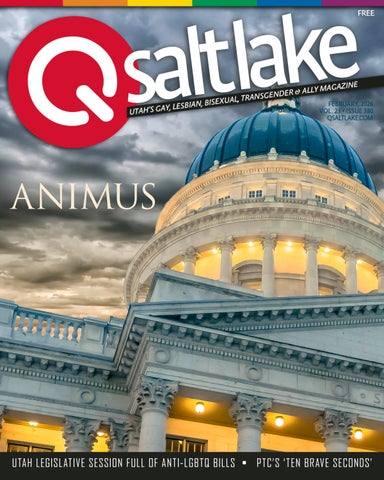
constitutional law, animus refers to a government action motivated by hostility, prejudice, or dislike toward a particular class of people rather than a legitimate public interest. In equal-protection jurisprudence, the Supreme Court has repeatedly recognized that laws born of animus — laws that single out a group to disadvantage them — are inherently unconstitutional.
The landmark case Romer v. Evans (1996) illustrates this principle. There, the Court struck down Colorado’s Amendment 2, which barred state and local protections for LGBTQ people, because it “impose[d] a broad disability upon those persons alone” and “raise[d] the inevitable inference that it is born of animosity toward the class that it affects.” Laws that inflict a disadvantage on a group based on who they are, not what they do, cannot survive even rational-basis review when motivated by animus.
In United States v. Windsor, the Supreme Court struck down part of the federal Defense of Marriage Act because its purpose and effect were to demean and disadvantage same-sex couples, a classic example of animus in legislative form. Justice Kennedy’s opinion made clear that DOMA “demean[ed]” same-sex relationships and relegated married same-sex couples to second-class status under federal law.
Also in 2013, U.S. District Judge Robert J. Shelby ruled in Kitchen v. Herbert that Utah’s constitutional ban and legislation on same-sex marriage violated the Fourteenth Amendment’s guarantees of equal protection and due process. The state failed to show any rational connection between denying marriage licenses to same-sex couples and any legitimate government interest. Shelby found that excluding same-sex couples
demeaned their dignity for no rational reason, a legal judgment grounded in the Constitution’s prohibition on unjustified discrimination.
These rulings point to a simple truth: laws rooted in bias or animosity toward LGBTQ people are unconstitutional. Yet in Utah and across the country, the last several legislative sessions have seen bills targeting transgender youth, the LGBTQ community, and healthcare, driven less by evidence and more by animus. Whether restricting gender-affirming care, erasing LGBTQ protections, or enshrining unequal treatment, these proposals reflect more than policy disagreements; they reflect an underlying hostility to queer and trans lives.
The constitutional problem, as the Supreme Court recognized long ago, is not just that a law burdens a group; it’s why it does so. A bare desire to harm or stigmatize a class of people cannot constitute a legitimate state interest. But courts only step in after a law is passed. That means our civil liberties depend on litigation to vindicate them. Every time a legislature passes a bill on the basis of animosity as opposed to evidence, it invites costly legal efforts that divert community resources and create uncertainty for LGBTQ+ people. This season, call your legislators. Ask them whether they are voting with animus or with respect for constitutional rights and the dignity of all Utahns. Ask them to justify how each bill serves a legitimate public interest, rather than simply scoring political points. Democracy is not a free pass to codify prejudice. If lawmakers refuse to govern fairly, we must be ready and willing to take those laws to court. The Constitution demands nothing less. Q
publisher/editor Michael Aaron
designer Christian Allred
sales Michael Aaron, 801-997-9763 x1 sales@qsaltlake.com
contributors Joshua Adamson Pickett, Diane Anderson-Minshall, Chris Azzopardi, Paul Berge, Jeff Berry, Paul Campbell, Laurie Bennett-Cook, Roger Cox, Stephen Dark, Jennifer Dobner, Jack Fertig, Greg Fox, Ian Giles, Oriol Gutierrez Jr., Tony Hobday, Blake Howell, Ashley Hoyle, Joshua Jones, Christopher Katis, Alpha Mercury, Sam Kelly-Mills, Craig Ogan, Peter Reynolds, Mikey Rox, Terri Schlichenmeyer, Mark Segal, Gregg Shapiro, Petunia Pap Smear, Steven Petrow, Ed Sikov, Justin Utley, JoSelle Vanderhooft, Ed Walsh, Ben Williams, D’Anne Witkowski distribution Roger Cox publisher Q Media Group
222 S Main St, Ste 500 (by appt. only) Salt Lake City, Utah 84101
Billionaire philanthropist MacKenzie Scott has donated $45 million to the Trevor Project. Scott’s philanthropy derived from an eye-watering $36 billion divorce settlement with Amazon founder, Jeff Bezos. This is the largest single gift in the organization’s history, arriving at a moment of financial strain. The nation’s leading crisis-intervention service for LGBT youth lost federal support last July, when Health and Human Services cut funding for LGBT-specific services in its anti-DEI rage. The need for the Trevor Project’s work remains stark. A 2024 CDC study found that 41 percent of LGBT youth had seriously considered suicide in the previous year, and one in five had attempted it. The charity had been in some distress before HHS policy changed, with major layoffs in 2023 and depleted reserves. The group is operating leaner and more deliberately. Scott’s unrestricted gift is designed for “long-term impact” and could help stabilize the organization. Scott had donated $6 million to the charity in its earlier, troubled times.
Transgender law at SCOTUS
There’s been a lot of talk about laws affecting transgender people in the U. S. Supreme Court lately, and there’s more to come. The latest case, Little v Hecox, debated the Idaho law banning transgender girls from participating in female sports teams. The arguments seem to revolve around whether the non-discrimination law, Title IX of the U.S. Education Act, protects “gender” and around determining “what’s a woman.” Lower courts blocked the law; Idaho appealed. SCOTUS combined Hecox with West Virginia v BPJ as the two cases are similar. “BJP” is a transgender girl who has already competed after a lower court injunction against the ban was announced. These two cases were heard together and represent the Court’s first major foray into transgender participation in sports. Questioning by the six Justices appointed by conservative Presidents suggests the Court appears inclined to uphold the bans. Questions by the justices appointed by liberal Presidents suggest those three know the game is up. The Utah transgender ban, as well as similar bans in 12 other states, will be affected by the decision in these combined cases. There is nothing on the SCOTUS docket on gender-affirming medical care bans, bathroom access, school pronoun policies, or employment discrimination. There are cases in lower courts on those issues that are heading to the Supreme Court.
Euro gays trending ‘’Islamophobic’’
A growing share of gay voters in Europe is drifting from traditional left-wing parties toward nationalist movements promising tougher immigration controls. In France, Germany, and Spain, LGBT voters are increasingly receptive to parties emphasizing border security and cultural cohesion, Spiked Online’s Albie Amankona reported. “Among my own gay friends, more and more are now openly right-wing,” he wrote, noting that casual support for Reform UK no longer sparks controversy. Germany illustrates the shift most starkly. Alice Weidel, a lesbian in a civil partnership, leads the far-right Alternative for Germany. A poll of more than 60,000 users on the gay dating app Romeo found AfD was the top choice at nearly 28 percent, followed by the Greens at about 20 percent and the center-left SPD at just 12.5 percent. In France, the National Rally sent an estimated 20–25 openly gay MPs to parliament in 2022—more than any other party — signaling a broader political realignment now reaching the UK as well. Doesn’t take an expert to understand that threatening to throw gay men off of buildings or 50 lashes motivates Euro-gays to look for allies in strange places.
Woke mob tramples podcasters
Even if you are a gay comedian, even a person of color, you’ve still got to watch your mouth. Two Gay-boys, Matt Rogers and Bowen Yang, got smashed by the Woke Mob after comments on their podcast, Las Culturistas, criticiz-
ing Democratic Rep. Jasmine Crockett’s Senate bid. Rogers urged listeners not to support the Texas congresswoman, calling her “too well-defined” to win and suggesting a lesser-known candidate might appeal more to moderates. Yang agreed. The remarks drew swift criticism, with many noting the hosts are neither Texans nor political analysts, and questioning their decision to single out a Black woman candidate. Rogers later apologized on Instagram, acknowledging his “phrasing was not right,” and Yang echoed the mea culpa, pledging to use his platform more responsibly. Sheesh.
Trump married to a Lesbian Mary Trump, a lesbian who frequently criticizes her uncle, who is the current president, revealed her marriage in her Substack column. All 15 subscribers were mystified by the headline, “Reader, I Married Her,” until it was explained that it was lesbian humor and a play on the line “Reader, I married him” from Charlotte Brontë’s novel Jane Eyre. Trump did not identify her wife by name but said they were married in October “in front of a small group of some of our family and closest friends.” Probably not at Mar-a-Lago. One reader, E Jean Carroll, who has sued Mary’s uncle for defamation, posted a comment on the column, “MARY! MARY! AMERICA
NEEDED SOME JOY!
And you and Ronda are giving it to us!!!” All very strange, but that sums up 2025. Footballer kicks former club
Aussie footballer Josh Cavallo has accused Adelaide United FC of “homophobia” and internal “politics,” saying he even saw “a group chat of teammates mocking a picture of me and my partner,” which “only added to this heartache.” Cavallo, who came out in 2021, spent most of his career with the club but was benched with injuries the entire 2024–25 season before departing in May 2025. In a new statement, he said decisions “had nothing to do with football” and were made by “people in power” who blocked his opportunities. Adelaide United denies discrimination, citing injuries and routine selection choices. Now playing for Stamford AFC in England, Cavallo says the move has helped him “breathe again” and rediscover his love for the sport. Hint to Aussie Ballers, “post no gay selfies.”
Heated Rivalry, the next shiny thing
Heated Rivalry, the Canadian gay-boy sports romance, hit HBO with sharp intensity. The series follows rival hockey stars Shane Hollander and Ilya Rozanov, whose fierce on-ice battles mask a secret, slow-burning romance that challenges their careers and the sport’s rigid expectations. Being the next
shiny thing in gaydom, the series’ cultural impact now stretches beyond the screen: Minnesota-born hockey player Jesse Korteum (pictured) says the show helped spark his decision to publicly share his own journey as a gay athlete. After years of navigating fear, masculinity, and the pressure to conform, he found community in LGBT hockey leagues across North America and, finally, a sense of belonging. As Korteum puts it, there is room for everyone on the ice.
In Russia, where the government objects to LGBT expression almost as much as the U. S. Department of Health and Human Services, the rise of Heated Rivalry has become a quiet sensation inside the country. Russian authorities charged executives at streaming services with violating “propaganda” laws when the series got an 8.6 rating on Russia’s top review platform — higher than Game of Thrones or Breaking Bad. Yet the show is banned from legal distribution. Despite that, thousands of gay Russians have found ways to watch it on pirate sites. The Canadian Professional Women’s Hockey League looks at Heated Rivalry and says, “Hold My Beer.” PWHL stars Anna Kjellbin and Ronja Savolainen are engaged despite playing for opposing teams — Kjellbin with Toronto and Savolainen with Ottawa — and preparing to face each other at the 2026 Olympics. Two-time Olympian Savolainen plays for Finland, and Kjellbin plays for Sweden. The pair, together for five years and engaged since 2024, insist love won’t soften their play. “On the ice, she’s my enemy,” Savolainen
told the Ottawa Citizen.
LGBT Visitor Center Opens in Philly
The “City of Brotherly Love” is now more than a double entendre in Philadelphia. The city’s tourist bureau has opened one of the nation’s first LGBT visitors’ centers, and it’s not in a bus station men’s room but in the city’s LGBT neighborhood of Midtown Village. Publicity said the opening coincides with the 250th anniversary of the founding of the United States. “We don’t just welcome diversi-
ty — we celebrate it,” said Kathryn Ott Lovell, CEO of the Philadelphia Visitor Center Corporation. “Our hope is that the Philly Pride Visitors Center becomes a place where LGBTQ+ visitors feel they belong from the moment they arrive.” Philadelphia has a large LGBT population — about 198,000 residents, according to a 2021 Williams Institute brief. Beyond its role as the birthplace of American democracy, the city also has a rich gay history dating back to at least the winter of 1776. Then, the gay Prussian, Baron von Steuben, volunteered to help General Washington write the nation’s first manual of arms. He professionalized the green recruits through constant drilling during the harsh Winter at Valley Forge, near Philadelphia. Q
Utah’s HB183 would ‘erase transgender people from existence’
When the Utah Legislature reconvenes each January, there’s an undercurrent that, over the past several years, has grown unmistakably louder: efforts by some lawmakers to roll back protections for transgender people and challenge the recognition of gender identity under state law. In early 2026, one bill in particular has invigorated advocates — and alarmed LGBTQ+ Utahns — more than almost anything we’ve seen in the last decade: House Bill 183, sponsored by Rep. Trevor Lee (R-Layton).
At first glance, HB183’s title — Sex Designation Amendments — sounds technical, like the kind of legislative housekeeping bill that no one outside of a lawyer’s inbox would read. But examine the bill’s provisions, and it becomes clear that what’s at stake is far from technical. Instead, the proposal threatens to dismantle critical legal recognition of transgender Utahns, erase protections from discrimination, and codify a worldview that many advocates say is both harmful and out of step with lived reality.
What HB183 Would Change
HB183 is nominally about the way Utah law refers to “gender” and “sex.” But in practice, the shifts it proposes would have sweeping real-world effects on transgender residents. Among its key components:
• Replacing the word “gender” with “sex” in many parts of state law, including anti-discrimination provisions affecting housing, employment, and protections for crime victims.
• Banning changes to the sex designation field on birth certificates, virtually blocking transgender people from updating the legal record to match their gender.
• Requiring state agencies to refer only to “biological sex” in administrative rules.
• Prohibiting certain roles for transgender employees in schools or in institutions licensed by the Department of Health and Human Services if their presence would involve interacting with children.
• In child custody disputes, instructing courts to view parental support of a child’s gender identity as a factor against that parent.
• Removing “gender identity” from protections against disparaging personalized license plates, even while allowing disparaging language. Taken together, these changes would remove legal recognition of transgender people from state law and undo years of progress toward equal protection. Lee is no stranger to controversial bills. Over the past several legislative sessions, he has sponsored a string of legislation aimed at restricting symbols and rights valued by LGBTQ+ communities — from attempts to ban Pride flags in schools to other statutes critics describe as hostile to LGBTQ+ visibility. His rhetoric of dismissing gender identity as a “made-up term” and asserting that “there’s male and female” and “nothing in between” is at odds with the lived experience of transgender Utahns. This bill, he says, is about “getting back to basic biology,” and “no more changing birth certificates” because such changes are “confusing.”
To many LGBTQ+ advocates, Lee’s proposals represent more than a difference of opinion. They signal a legislative effort that would nullify existing protections and codify a worldview that invalidates transgender identity.
For transgender Utahns, legal recognition isn’t abstract. It’s tied to dignity, safety, and access to everyday life. They say a driver license that matches one’s gender appearance, a professional opportunity free from discrimination, a court system that treats supportive parenting as a positive factor are not privileges; they are the basics of living openly and safely. HB183 threatens that foundation.
Marina Lowe, policy director for Equality Utah, has been one of the loudest voices condemning the bill. In interviews, she has called HB183 “by far the most harmful and outrageous piece of legislation” she’s seen in years, warning that it would essentially “erase transgender people from existence under state law.”
This isn’t hyperbole. When gender identity is removed from non-discrimination measures, it leaves people vulnerable in housing, employment, and public life. When courts are encouraged to punish supportive parents, it places families with transgender children in legal jeopardy. And when state agencies are restricted from acknowledging gender identity, even basic administrative processes can become tools of exclusion.
The Fifth Year of Attacks
This is the fifth consecutive year of legislative sessions in which multiple bills have targeted LGBTQ+ rights. The laws aimed to limit access to gender-affirming care, restrict the presence of Pride flags in public spaces, and ban transgender girls from competing in school sports.
In recent years, the legislature has pushed anti-LGBTQ+ legislation through in the first days of the session with little opportunity for public discourse.
HB183 stands out not only for its breadth but for its potential to roll back protections that were hard-won in the so-called 2015 Utah Compromise — a law which balanced anti-discrimination protections with religious freedom in a way that many saw as a model for other states.
That compromise was the result of years of negotiation and cooperative engagement between LGBTQ+ advocates, religious leaders, and Republican legislators. Now, advocates worry, HB183 may dismantle elements of that agreement by stripping gender identity out of anti-discrimination law altogether.
How far the bill will go and whether it will be amended or defeated is yet to be determined. Some legislative leaders, including Senate President
Stuart Adams (R-Layton), have expressed reluctance to tamper with the existing anti-discrimination code.
“There were a lot of commitments made, and it was artfully crafted and balanced,” Adams told the Utah News Dispatch. “I would be very, very hesitant to try to undo that balance.”
Equality Utah leaders echoed those thoughts.
“For over a decade, Equality Utah has worked with the legislature to find common ground and careful compromise on some of the most contentious and challenging issues of our day,” they said in a statement. “With [this bill], Trevor Lee seeks to bulldoze these painstakingly negotiated policies in one fell swoop.”
The statement noted that most bills are written to “expand rights and create opportunities for people to thrive and better themselves and their communities” and HB183 does the opposite.
“Notably, HB 183 would leave transgender Utahns unprotected from the ability to have gainful employment and a roof over their heads,” they continued.
Attorney Leslie A. Farber says that the pattern of presenting anti-LGBTQ+ bills matters.
“For a fifth straight year, transgender Utahns are bracing themselves as lawmakers debate whether they can be protected from discrimination, work in schools or health-care settings, access gender-affirming care, or even see their identities recognized on basic documents,” Farber wrote on Facebook. “Legislation that singles out a small, already vulnerable group for fewer rights and fewer protections does not ‘restore common sense’; it raises serious concerns about equal protection, due process, and the state’s duty not to encourage hostility toward any class of people.”
As shown in a decade of history, as the legislative session unfolds, LGBTQ+ Utahns and allies will continue to show up at the Capitol steps, in committee rooms, on social media, and in conversations with lawmakers to push back against erasure and stand up for a Utah in which every person is recognized and respected. Q
Rep. Lee’s HB196 attempts to rename Harvey Milk Blvd for Charlie Kirk
A bill filed by Rep. Trevor Lee, R-Layton, that would rename Salt Lake City’s Harvey Milk Boulevard after conservative activist Charlie Kirk has reopened Utah’s culture-war politics and drawn swift pushback from LGBTQ+ advocates and city leaders.
HB 196 proposes to change the name of the downtown street honoring Harvey Milk, the slain gay rights pioneer and one of the first openly gay elected officials in the United States. The street, renamed a decade ago, has become a symbolic and literal hub of LGBTQ+ life in Salt Lake City, home to queer-owned businesses, nightlife, and community spaces.
Critics say the bill represents a broader attempt by state lawmakers to override local decisions and provoke political backlash.
Utah Gov. Spencer Cox, speaking on the Utah Legislative Session’s opening day with Utah News Dispatch, declined to stake out a firm position on Lee’s more controversial proposals, including HB 196. “But I will just say that the Legislature is not that one person,” Cox said. “We’re going to be working very closely with the Legislature to get this right, to still show the respect that every citizen of our state deserves, our transgender citizens who live here, our immigrants who are here.”
Cox appeared skeptical of the effort to rename Harvey Milk Boulevard, saying he expects lawmakers to respect decisions made at the municipal level and should show respect to “people in local municipalities who are making their own decisions, even
if they’re decisions I disagree with.”
“If people want to get involved in municipal politics, they should run for municipal office,” Cox said.
Equality Utah responded to HB 196 with a sharply worded statement defending the street’s name and the history behind it. The organization noted that a decade ago, advocates worked to rename 20 blocks of downtown Salt Lake City after Milk, placing the boulevard alongside streets honoring Martin Luther King Jr., Rosa Parks, and Cesar Chavez.
“Today, Harvey Milk Blvd is a beloved gayborhood — home to two gay clubs (one literally called Milk+), LGBTQ-owned businesses, and a whole lot of joy,” the statement read. “It’s proudly the gayest street in Utah… which makes it a curious choice to rename after Charlie Kirk.”
The group accused Lee of pursuing
outrage rather than policy solutions.
“As for Trevor Lee — well, he enjoys stirring the pot. Outrage is his love language,” Equality Utah said, adding that Milk’s legacy has endured because of its meaning to the community. “Some things just endure.”
Equality Utah also rejected the framing of the bill as a zero-sum comparison between Milk and Kirk, arguing that if a conservative community wants to memorialize Kirk, it should do so locally. “We are not going to pit Charlie against Harvey,” the statement said, suggesting both figures would have relished spirited debate.
Latter-Gay Stories posted a story about Lee’s bill.
“So when Lee targets Harvey Milk — a gay man assassinated for serving openly and fighting for dignity — it doesn’t read as neutral policy. It reads as ideological payback,” the post read. “Rename the street. Rewrite the legacy. Signal who belongs and who doesn’t.”
“HB 196 isn’t about uniform signage or procedure. It’s about control. And this rename push isn’t about honoring anyone — it’s about reminding LGBTQ Utahns that their history can still be put up for debate,” it continued.
“Harvey Milk earned his place in history,” Equality Utah Executive Director Troy Williams said. “Trevor Lee, despite his yearning for our attention, isn’t destined for the history books. Frankly, he couldn’t even land his name on a cul-de-sac.” Q
Tooele lawmaker reintroduces two gender-related bills
Tooele Republican Rep. Nicholeen P. Peck has sponsored two bills in the 2026 Utah Legislature aimed at restricting public funding for transgender medical care and limiting employer discipline over gender-related language.
HB 193: Transgender Medical Procedures Amendments would bar the use of public funds for specified transgender medical treatments and procedures, including hormone therapy and surgical interventions. If enacted, the bill would prohibit public insurance programs — including Medicaid and state employee plans — from covering gender-affirming care. The proposal follows a similar
measure introduced last year that did not receive a committee hearing and failed to advance in the 2025 session.
HB 95: Public Employee Gender-specific Language Requirements seeks to restrict disciplinary actions by public employers against employees for using gender-specific language in certain circumstances. The introduced version is designed to prevent public employers from penalizing workers, including teachers, for using language based on biological sex or an employee’s sincerely held beliefs, and would require employers that mandate gender-specific language to provide exemptions under specified conditions. Q
So. Utah lawmaker revives anti-drag bill with felony penalties
and
mandatory jail time
A Cedar City Republican lawmaker is once again advancing legislation that would expand Utah’s criminal penalties for certain public performances, reviving a proposal that failed to receive even a committee hearing during the 2025 legislative session.
Rep. Colin Jack has introduced H.B. 114, titled Adult-oriented Performance and Material Amendments, which builds on a bill he pushed last year to restrict adultthemed performances in public spaces. The earlier version stalled without a hearing amid criticism from LGBTQ+ advocates, artists, and civil liberties groups who argued it could be used to criminalize drag shows and other expressive performances.
As reported previously by QSaltLake, Jack’s 2025 proposal was part of a national trend targeting drag and adult-oriented performances, commonly framed as efforts to protect public decency and minors. Opponents warned that the bill’s language was overly broad and relied on subjective standards that could chill constitutionally protected expression.
H.B. 114 relies on Utah’s existing statutory definition of pornography, which classifies material or performances as “pornographic” if the average person, applying contemporary community standards, finds that the work appeals to prurient interest in sex, is patently offensive in its depiction of nudity or sexual conduct, and lacks serious literary, artistic, political, or scientific value.
The bill creates or expands two distinct criminal offenses.
The first is “unlawful pornographic performance.” Under the bill, an actor commits this offense if they knowingly present, direct, or participate in a pornographic performance in a public place or a location exposed to public view. If the performer is 18 or older, the
offense would be classified as a third-degree felony, carrying a mandatory minimum fine of $1,000 and at least 30 days of incarceration. The bill explicitly states that the jail term may not be suspended, removing judicial discretion to waive incarceration. Performers aged 16 or 17 would face a class A misdemeanor, while those younger than 16 would face a class B misdemeanor.
The second offense created by H.B. 114 is “engaging in a performance that is harmful to minors while in the presence of a minor.” Under this provision, an actor commits the offense if they intentionally produce, perform, direct, or participate in a performance deemed harmful to minors while knowingly in the presence of a minor, believing a minor is present, or acting recklessly as to whether a minor is present and able to view the performance.
Penalties for this offense escalate sharply based on age and prior convictions. For adults 18 and older with a prior conviction, the offense would be a second-degree felony, carrying a minimum mandatory fine of $5,000 and at least one year of incarceration, which also cannot be suspended. For first-time adult offenders, the crime would generally be a third-degree felony, punishable by a minimum $1,000 fine and at least 14 days in jail, again with no option to suspend the sentence.
The bill includes additional grading based on the age difference between the actor and the minor, with some circumstances reducing the offense to a class A misdemeanor. Minors who violate the provision could also face misdemeanor charges, depending on age and prior adjudications.
H.B. 114 does include an affirmative defense stating that no violation occurs if the performance takes place in an area from which minors are physically excluded and cannot view the performance from permitted areas.
LGBTQ advocates aregue that the bill’s reliance on subjective standards such as what is “harmful to minors” or “patently offensive” could place performers, event organizers, and venue owners at risk of serious criminal lia-
bility, including felony convictions and mandatory jail time. LGBTQ+ advocates have warned that drag performances, pride events, theatrical productions, and certain forms of dance could be targeted even when not intended for minors.
Mandatory incarceration provisions have drawn particular concern from criminal justice and civil liberties advocates, who say eliminating judicial discretion could lead to disproportionate punishment for expressive conduct that falls into legal ambiguous areas.
It remains unclear whether H.B. 114 will advance further than its 2025 predecessor. However, advocacy groups say they are carefully watching the bill, citing the increased severity of penalties and the possible consequences for free expression and LGBTQ+ visibility in Utah’s public spaces. Q
Campaign Kickoff: Evan Done for Utah State Senate (District 13)
On Tuesday, January 28 at 5:30 p.m. at Sugar House Coffee is the official kickoff of Evan Done’s campaign for Utah State Senate District 13. This is your chance to meet Evan, hear his vision for a more inclusive and progressive Utah, and learn how you can help build a campaign rooted in real representation and community-driven change.
Evan Done is running because the people of District 13 deserve a senator with lived experience who will stand up to the extreme rhetoric dominating the Utah Legislature. As an openly gay man and a person in long-term recovery, Evan brings a deeply personal understanding of the challenges facing working families and our most vulnerable communities and a tireless commitment to fighting for them.
This event is free and open to the public. Those who are able are encouraged to make a donation to support the campaign. Every contribution helps build the momentum needed to elect a senator who is committed to progressive Democratic values and to making Utah work for everyone.
Sugar House Coffee,2011 S 1100 East SECURE.ACTBLUE.COM/DONATE/EVAN-DONE-KICKOFF
Rep. Colin Jack
So. Utah lawmaker pushes bill to end transgender care exceptions for minors
Among the slate of bills targeted at the Transgender community, an ultra-conservative lawmaker from Cedar City wants to ignore the findings of a state-commissioned study on transgender care for youth and tighten a law passed last year aimed to restrict such care.
According to the ACLU of Utah, House Bill 174, titled Sex Characteristic Change Treatment Amendments, was introduced by Republican Rep. Rex Shipp of Cedar City and builds on the 2023 bill SB16, which largely banned gender-affirming care for minors. HB174 would eliminate the exceptions created in SB16, which allowed individuals to continue the care they were already receiving, and instead require them to end their ongoing care within months. The bill also removes the requirement in SB16 that the state continue to review medical evidence regarding gender-affirming care, effectively closing the door on the topic.
The bill’s introduction comes amid a wider slate of measures this session related to transgender and reproductive issues. Other bills filed by GOP lawmakers would
address topics ranging from anti-discrimination law changes to public funding restrictions for transgender healthcare.
Proponents of HB174 argue that tighter controls are necessary to clarify the state’s medical policy regarding minors and sex-characteristic treatments. Opponents, including LGBTQ+ and civil rights advocates, characterize this and similar proposals as part of a series of legislative actions they view as targeting transgender people’s rights and access to care. According to reports from advocacy groups, the combined effect of multiple filed bills would represent continued restrictions on transgender Utahns in areas spanning healthcare, employment, and legal recognition.
HB174’s advancement also follows a lengthy state-commissioned review of gender-affirming care practices conducted by the Utah Department of Health and Human Services. Over two years, the Utah Department of Health and Human Services reviewed gender-affirming care practices and research to develop guidelines for the state on medical transitions for minors, including puberty blockers and hormone treatments. The analysis ran more than 1,000 pages, and nine pediatric medical professionals reviewed it. It examined data from more than 28,000 cases of young transgender people from around the world and used that to design a
framework for Utah to administer gender-affirming care to those who qualified.
The Utah review concluded that “the treatments are safe in terms of changes to bone density, cardiovascular risk factors, metabolic changes, and cancer.” It also said “the consensus of the evidence supports that the treatments are effective in terms of mental health [and] psychosocial outcomes.”
Shipp believes it is biased.
“The members of the committee were only those that had been treating these kids with affirming care,” he said, describing the report as “just a compilation of opinions.”
Part of Shipp’s research for his bill involved a 12-page report released by the ultra-conservative think tank Do No Harm, a medical think tank that opposes “youth-focused gender ideology.” The report, released in December 2025, claimed to debunk the state’s review and conclusions. A disclaimer on their website, however, states that the information available through their site “should not be interpreted as medical or professional advice.”
Do No Harm is a U.S.-based medical advocacy group founded in 2022 that opposes identity politics, diversity, equity, and inclusion initiatives, and gender-affirming care for minors in medicine, working to keep ideology out of healthcare to protect patients from what it calls “radical” ideologies, supporting colorblind and non-gender-ideological practices, and actively lobbying against gender-affirming care legislation for youth and challenging DEI in medical institutions. Q
Rep. Rex Shipp
Democrat Rep. Andew Stoddard introduces bill to limit flag restrictions to schools, eliminate fines
A Utah legislator is working to scale back a controversial law that banned most flags from government buildings, a measure that LGBTQ advocates say was designed to target Pride flags and other symbols of inclusion.
Rep. Andrew Stoddard (D-Midvale/Murray) has introduced HB 81, the Flag Display Modifications bill, which would restrict the flag ban to schools only and remove it from other governmental buildings. The legislation would also eliminate the $500-per-day, per-violation fine that currently applies under the existing law.
The original legislation, HB 77, was sponsored by Rep. Trevor Lee (R-Layton)
and passed during last year’s legislative session under contentious circumstances. Initially focused on schools, the bill was dramatically expanded just one day before its first committee hearing to include all state government buildings.
After appearing to stall in the Senate, HB 77 was rushed through under suspension of the rules in a vote on the second-to-final day of the legislative session. The bill became law without Governor Spencer Cox’s signature, allowing it to take effect while the governor avoided taking a public position on the controversial measure.
Under the current law, only a limited number of flags may be displayed in schools and government buildings, including the U.S. flag, Utah state flag, and flags of sovereign nations. The restrictions effectively prohibit Pride flags, Black Lives Matter flags, and other
symbols that many communities use to signal support for marginalized groups.
LGBTQ advocates have criticized the law as discriminatory, arguing that it prevents schools and government offices from creating welcoming environments for LGBTQ students, employees, and community members. The hefty daily fines have created additional concerns about enforcement and the potential financial burden on institutions.
Stoddard’s HB 81 represents an attempt to find a middle ground by maintaining restrictions in school environments while allowing other government buildings more flexibility in their flag displays. The removal of the daily fine structure would also reduce the law’s punitive nature.
The bill’s prospects in the Republican-controlled legislature remain uncertain. Utah has seen increasing tension in recent years over LGBTQ issues, with lawmakers advancing multiple bills affecting transgender youth and LGBTQ rights. Q
Rep. Andrew Stoddard
Two candidates have filed to replace firebrand Trevor Lee in Utah House 16
Republican Rep. Trevor Lee, a firebrand legislator known for stoking disagreement and culture-war debates at the Utah Capitol, has filed to run for re-election in House District 16 in 2026. Lee, who represents Layton, was first elected in 2022 and has quickly built a reputation as one of the Legislature’s most confrontational voices on social issues, particularly those affecting LGBTQ Utahns. Lee has repeatedly sponsored or supported legislation that LGBTQ advocates say singles out queer and transgender people. In 2025, he sponsored legislation restricting the display of flags in public schools and some government buildings, a move widely understood as targeting Pride flags. Critics argued the bill erased LGBTQ visibility under the
guise of political “neutrality,” while Lee framed it as a way to reduce ideological conflict — a claim opponents say contradicted the bill’s actual outcome.
In 2026, Lee went further, filing sweeping legislation aimed at removing the concept of gender identity from Utah law altogether. The proposal sought to replace references to “gender” with “sex,” roll back existing protections, limit changes to identity documents, and impose new restrictions on transgender people working with or around children. Civil rights groups warned the bill would dismantle hard-won protections and invite discrimination, while Lee positioned himself as a defender of what he called
biological definitions.
Lee has also faced controversy over his own rhetoric. During his first campaign, he acknowledged operating a now-deleted social media account that attacked LGBTQ people and other political targets, prompting rebukes from Republican leadership. The episode strengthened his image as a provocateur willing to inflame divisions, even within his own party.
Challenging Lee from the Democratic side is Abigail Treasure, a science educator and mechanical engineer. Treasure, who has stressed her background in public education and STEM, is running on a platform centered on strong schools, practical problem-solving, and inclusive representation. A former
educator and working parent, Treasure has positioned herself as a community-minded alternative to Lee’s polarizing style. Supporters can donate to her campaign at https://secure.actblue.com/ donate/abigail-treasure-1.
Lee also faces a Republican challenger, Bob J. Stevenson, a Davis County Commissioner and longtime Layton resident. Stevenson brings decades of local government experience, including service as Layton’s mayor and on the city council, as well as a background in the construction business, education, and volunteer service. His candidacy offers GOP voters a choice between Lee’s confrontational legislative approach and Stevenson’s more traditional, local-government résumé. Q
Trevor Lee
Abigail Treasure
Bob J. Stevenson
Assembly, Presented by Utah Film Center
Join Utah Film Center for a special Best of Fest screening of Assembly, winner of the 2025 Utah Queer Film Festival Grand Jury Prize for Best Feature: Documentary. The evening will include a post-screening Q&A moderated by the Utah Queer Film Festival team.
Directed by and centered on internationally acclaimed artist Rashaad Newsome, Assembly documents the creation of his most ambitious work to date: a monumental multimedia exhibition and performance at New York City’s historic Park Avenue Armory. Once a symbol of white military power, the Armory is radically reimagined as a living, immersive celebration of Black and queer culture.
Through stunning video projections, holograms, sculpture, collage, music, dance, and African fractal patterns, Newsome transforms the space into a site of resistance, beauty, and collective power. Assembly challenges colonial structures while honoring the depth, complexity, and resilience of Black experience—inviting audiences to reconsider history, identity, and who gets to shape cultural institutions.
Date & Time: Wednesday, February 18, 2026 at 7:00 PM
Location: Utah Film Center, 375 W 400 N, Salt Lake City Admission: Free
This event is presented by Utah Film Center.
For more information: INFO@ UTAHFILMCENTER.ORG
MKP Presents: She Kills Monsters
Mad King Productions brings the beloved drama-comedy She Kills Monsters by Qui Nguyen to MadKing’s Fellowship Theater for a limited run, directed by James Naylor.
This heartfelt and action-packed play follows Agnes Evans, a young woman grieving
the sudden loss of her parents and her teenage sister, Tilly. Estranged from Tilly during her life, Agnes discovers a Dungeons & Dragons module her sister created and embarks on an unexpected journey through Tilly’s fantasy world. As the story shifts between 1990s reality and an imaginative realm of monsters, warriors, and magic, Agnes uncovers the depth of her sister’s inner life—including Tilly’s identity as a closeted lesbian—and learns to process grief, love, and connection in ways she never anticipated.
Blending humor, nostalgia, geek culture, and emotional depth, She Kills Monsters is a powerful celebration of imagination, chosen family, and self-discovery, with moments that are both laugh-out-loud funny and deeply moving. February 19 – March 8 7:30 PM evening performances; 3:30 PM Sunday matinees
MadKing’s Fellowship Theater, 167 S Rio Grande, Salt Lake City Contact: madkingproductionsslc@gmail.com
More information and tickets: MADKINGPRODUCTIONSLC. COM
Utah Sage 2.0 Weekly Monday Luncheons
Looking for a simple, welcoming way to socialize?
This newly renamed social group (formerly Silver Pride) meets every Monday from 2–4 PM in the north room at La Puente Restaurant, 3205 S State Street. This independent, no-membership, no-fundraising gathering is open to everyone, especially LGBTQIA+ seniors, who want to share a meal, connect, and enjoy good company.
Just drop in whenever you can, pay for your own food, and bring your best behavior. For more information email Becky: BECKYAMOSS@GMAIL.COM
Utah Male Naturists celebrates its 25th anniversary
BY MICHAEL AARON
In the late 1970s, a group called Utah Men Enjoying Naturism, more commonly known as UMEN, was formed. It continued, with varying degrees of success, until late 1999. By the late 1990s, the group had become increasingly sexualized, featuring a playroom and largely ignoring overt sexual activity during events. It was also widely understood that shortly after the official end time, gatherings routinely shifted into explicitly sexual territory.
According to former members, newer and younger attendees were often pressured by older participants to enter the playroom. Many of those younger men eventually stopped coming, and once they were gone, participation from older members declined as well.
I rarely attended events myself, but I served as the group’s self-appointed webmaster after purchasing the domain name umen.org.
In the spring of 2001, I decided to revive the group following a year-long absence. I intentionally waited to create distance between the former incarnation and what I wanted to build anew. Because I already owned the website, I kept it and renamed the organization Utah Male Naturists, still maintaining the acronym “UMeN,” explaining that the “e” was borrowed from the word male. It may be a bit silly, but I went with it.
My goal was to create a genuinely nonsexual naturist group—one rooted in what I consider the long-established principles of naturism. I organized a naked lunch and clearly outlined my expectations for anyone interested in participating. I also made it clear that those seeking a group centered on sexual activity were free to start their own. My belief was that there were already plenty of sex-focused groups in the valley, but no true nonsexual naturist option.
Sixteen people attended that first event, which felt like a strong showing for a midweek afternoon. From there, the group grew into what it is today, soon to celebrate its 25th anniversary. Today, the group has grown to more than 200 active members and 900 other lurkers. I am deeply thankful to each of them for helping create such an incredible community organization— one that celebrates naturism, mutual respect, and a sense of belonging for all.
What Naturism means to me:
Utah Male Naturists celebrates a lifestyle of social nudity, promoting body positivity, self-acceptance, health (physical and mental), and a closer connection to nature by removing clothing barriers to foster naturism, freedom, and community in a non-sexualized environment. It emphasizes harmony with nature, stress relief, and equality,
removing social distinctions often highlighted by clothes, and is linked to environmental awareness and healthy living.
Key Celebrated Aspects:
BODY POSITIVITY & ACCEPTANCE : Embraces all body types, sizes, and shapes, combating unrealistic beauty standards.
FREEDOM & AUTHENTICITY: Offers freedom from societal expectations and the stigma of nudity, fostering genuine self-expression.
CONNECTION TO NATURE : Promotes living in harmony with the natural world, often alongside healthy habits like exercise and fresh air.
MENTAL & PHYSICAL WELLBEING : Believes social nudity reduces stress, improves self-esteem, and promotes overall relaxation. Community & Equality: Creates inclusive environments where social barriers (like class) diminish, fostering connection.
SIMPLICITY: A return to natural simplicity, rejecting materialism and artificiality often associated with clothing. Thank you to those who participate, and I hope those rading this will consider joining. I look forward to another 25 years. Q
More info at UMEN.ORG and FB.ME/UTAHMALENATURISTS.
Former Utahn Gage Ryder Wins Mr.
Mid-Atlantic Leather 2026
SPECIAL TO QSALTLAKE FROM QBURGH
Gage Ryder took home the title of Mr. Mid-Atlantic Leather 2026 this past weekend during the iconic Mid-Atlantic Leather Weekend, held annually in Washington, D.C. Ryder currently holds the title of Mr. Pittsburgh Leather Fetish 2026, which he earned last fall. His victory at MAL marks a significant achievement for Pittsburgh’s leather community, as he now steps into a prominent regional role representing leather, kink, and fetish communities across the Mid-Atlantic.
Originally from Utah, Ryder has lived in Pittsburgh for the past 12 years with his husband, building deep roots in the local leather community. Known for blending astrological introspection (he’s a Gemini) with a serious love of gear, Gage is a connector, a servant leader, and a
boundary-pusher in all the best ways. He’s passionate about community, togetherness, and inviting everyone to have a seat at the table. His presence in the scene is both grounding and expansive, and this win is a testament to the work he’s done and continues to do to uplift and ignite queer leather culture.
“Competing in the Mr. Mid-Atlantic Leather contest was an incredible experience. Just a few years ago, I couldn’t have even dreamed of taking that stage,” Gage said. “I’d like to thank the community, the whole spectrum: leather, kink, drag, pet, fetish, and everything in between, for lifting me up, helping me to learn, to grow, and to evolve into the person I am today.”
Mid-Atlantic Leather Weekend, which kicked
off Thursday, January 15, is a three-day celebration of leather, kink, and LGBTQ+ life. Hosted annually in D.C., MAL features dance parties, vendor expos, and the famed leather contests that bring out community members from across the country.
Highlights this year included the opening night event at the Hyatt Capitol and the late-night Kinetic Dance Party at District Eagle.
“I’m proud to bring the win home to Pittsburgh! Always remember that our community is great because of the sum of its parts, and each of you matter; you
belong here, and you will always have a seat at my table.”
As Mr. Mid-Atlantic Leather 2026, Gage will represent the region at national events, fostering deeper connections among leather communities and continuing the work he’s long been committed to: service, transformation, and unapologetic queer joy.
“My hope for my title year is that if even one person sees me and goes from ‘I wish I belonged’ to ‘I know I belong,’ I will call that more than a win.” Q
This story was first published in QBURGH and is used with permission.
Gage Ryder, center, after winning Mr. Mid-Atlantic Leather 2026.
views quotes
Fab Five on the final season of Queer Eye
“Season 10, the final season. We are so excited to bring this finale to you, and excited for what’s next”
—Jonathan Van Ness on Instagram
“First day of the FINAL season of Queer Eye. It’s been a long, beautiful journey we’ve been on, and I truly appreciate all of the love and support for our little show that changed my life in ways I never thought possible… Thank you!”
— Tan France wrote on Instagram.
“Let’s make our last one count.”
— Antoni Porowski on Instagram
“Endings are never really endings. They’re gratitude with a pulse. They’re lessons that linger. Thank you for teaching us how to care… out loud, unapologetically, and with love.”
— Jeremiah Brent.
“What a journey! Thank you to our Fanily and crew who made this journey so very special… The end to an incredible life-changing journey,”
— Bobbie Berk
“I just want to say thank you to all the fans who supported us and rocked with us for 10 seasons. This new season is going to be amazing. You’re going to love every minute of it… Thank you for having me for 10 seasons.”
— Karamo Brown
WhenOne year of winning under Trump
BY DANIEL E. INNIS, LOG CABIN REPUBLICANS
President Trump was elected last year, the LGBT community was warned that a wave of unprecedented hate and discrimination was around the corner. Those of us who voted for him were told that we were betraying our own community and that we would be targeted or erased.
One year into Donald Trump’s presidency, all the fear-mongering predictions peddled by those who opposed him simply haven’t come true. The first year of the Trump administration has lived up to what LGBT conservatives were promised: a progrowth, America First agenda that is delivering real results for LGBT Americans and respecting our community instead of pandering to us with cheap gimmicks.
Take the Supreme Court. Despite dire predictions from leading Democrats that marriage equality could be dismantled in a second Trump presidency, the Court’s conservative majority – which includes three Justices appointed by President Trump – recently declined to even hear a legal challenge to Obergefell v. Hodges. Under President Trump, marriage equality remains the law of the land.
There were warnings that the Trump Administration would take an axe to the U.S.’ public health approach to the HIV/AIDS epidemic – his critics were again proven wrong. President Trump has kept the U.S. commitment to PEPFAR intact and reaffirmed America’s leadership in fighting HIV/AIDS worldwide. In September, his Administration announced a historic initiative to distribute the breakthrough PrEP drug Lenacapavir around the world, saving hundreds of thousands of lives.
The president has also taken a clear stand in defense of women’s sports and against irreversible medical interventions for children, two issues which LGBT conservatives strongly support him on. We have long believed that respect and dignity for transgender Americans must not come
at the expense of fairness for women or involve irreversible harm to minors. Until recently, these views were mainstream and grounded in both science and common sense. The fact that the radical LGBT Left now treats unquestioning adherence to gender ideology as a political litmus test does not make dissent “anti-LGBT.”
On the economy, the administration has focused on lowering costs, promoting growth, and putting money back in every American’s pocket. The ‘Big Beautiful Bill’ passed by Republicans last summer permanently codified lower income tax rates for all Americans and created new provisions designed to help hard-working Americans – including LGBT Americans – to keep more of their money. That U.S. Treasury Secretary Scott Bessent, a gay American, is the chief architect behind President Trump’s economic strategy makes it even more incredible.
The Trump Administration recognizes that LGBT Americans, just like everyone else, earn paychecks, run businesses, raise families, make mortgage or rent payments, and pay taxes. They understand that we, like everyone else, want to live in safe communities. President Trump doesn’t treat LGBT Americans as a protected class that needs special political pandering, nor as a monolith that thinks and votes a certain way. LGBT Americans are included in his Administration and his agenda. President Trump’s message in the first year of his presidency has been clear: he’s fighting for all Americans, full stop. It may be frustrating for Leftist activists and organizations that thrive on peddling fear and grievances. For LGBT conservatives, the past year has been a refreshing form of political respect.
IICE
BY D’ANNE WITKOWSKI
have been dreading writing this column all week. There are so many things I’d rather be doing: laundry, taxes, prepping for a colonoscopy. I just really don’t want to write. Not this, anyway. Not right now. And yet, I have a deadline and an obligation. So here goes.
Let me start off by saying that we need to abolish ICE. I’m hearing lots of chatter about how ICE needs more, better training. No, they do not. The issue with ICE killing people isn’t one of training any more than the issue of the Gestapo killing people was one of training. The purpose of ICE, much like that of the Gestapo, is to terrorize, imprison, and murder citizens who have been deemed less than human by a bloodthirsty regime.
What is it people imagine would happen if ICE officers had more training? With more training, they could, what? Terrorize, imprison, and murder more effectively?
Gosh, if only Jonathan Ross had gotten the proper training, he would never have murdered Renee Good. Too bad they set an inexperienced newbie loose with a gun in Minnesota.
Except Ross was hardly some untrained rube. Ross was “a veteran deportation officer in ICE’s Enforcement and Removal Operations division,” Wired reports. “A member of a Special Response Team, ICE’s version of a SWAT team, he’s had duties as a firearms trainer and led teams drawn from multiple federal agencies, including the FBI.”
See? Not exactly his first day on the job. We’re looking at a welltrained, fully professional murderer.
Furthermore, the Department of Homeland Security told Wired that Ross “acted according to his training.”
Except, Mother Jones reports, “For decades, cops have been trained not to
shoot at moving vehicles.” And yet ICE keeps doing it.
“At least nine people across the country who have been shot by immigration agents since September,” according to Mother Jones, “were in a vehicle at the time of the shooting.”
nie helpfully posted on Bluesky.
Wow, what a very strange coincidence.
As I write this, ICE agents are still terrorizing citizens in Minnesota. They still have the full support of Trump, Dalmatian aficionado Cruella de Noem (who some Democrats are moving to impeach, but with a Republican controlled House that is unlikely to go very far) and the majority of Republicans.
Any Democrat demanding anything other than abolishing ICE and pursuing criminal charges is fucking weak and is helping to prop up fascism.
As Andrew Lawrence, Deputy Director of rapid response at Media Matters, so helpfully pointed out on Bluesky, “They abolished the department of education, we do not need a trojan horse to abolish ICE, we can just do it.”
The Department of Education was created in 1979. And the Trump Administration just got rid of it.
ICE, on the other hand, on top of actually being a real and present danger to the country, is much, much younger. It was established in 2003 by the same federal government that lied to the country to start a war in Iraq.
It’s actually not hard to imagine life before ICE for the majority of Americans.
“When you are asked to imagine a world without ICE, you’re basically being asked to remember where you were when Lilo & Stitch came out,” author Madiba Den-
ICE, we were told in 2003, would keep us safe. I don’t know about you, but when I see videos of ICE terrorizing people across the country, I don’t feel safe. I don’t feel safe at all.
There exist many videos of Renee Good being executed by Jonathan Ross. One of them is from Ross’s own cell phone camera. In that video, we hear Good say, “I’m not mad at you” shortly before Ross fires three times just inches away from her head. Afterwards, he can be heard saying, “Fucking bitch.” I do not recommend watching that video. Or any of the videos. They are all stomach-turning. But don’t turn away from the fact that this happened. And that it will happen again and again.
President Trump, Vice President Vance, everyone at DHS, right-wing commentators — they all want you to believe that Renee Good had it coming. They are literally calling her a domestic terrorist. Claiming she tried to run over Ross with her car. There’s more than enough video evidence to show that is not at all what happened.
Renee Good was a mom. She was a wife. She was a poet. She had a dog. She saw ICE as a threat to her neighbors. She was standing up for something she believed in. She was not there to harm anyone.
To Ross she was a “fucking bitch” and someone he had every right to kill. It could have been any one of us. It will be again. Q
D’Anne Witkowski is a writer living with her wife and son. She has been writing about LGBTQ+ politics for nearly two decades. Follow her on X @MamaDWitkowski.
AlmostEnds of the Earth
BY CHRISTOPHER KATIS
all of my columns have been laser-focused on parenting. This one is a little different. A couple of months ago, I lost someone with whom I was super close, my cousin. I’m not exactly sure what number cousins we are beyond her grandfather and my grandmother being siblings.
She was the oldest of the second-generation Americans in our family, and I am the youngest. Maybe that’s why we were friends, which is far more important than how exactly we’re related. She also adored Kelly, referring to him as her favorite cousin, and she was the biggest cheerleader and champion of our sons.
I reached out to Jerry Buie, MSW, LCSW, to discuss the best ways to deal with grief, including within my role as a gay dad. Interestingly, he notes that whereas LGBTQ+ people are no more or less empathetic than others in society, research shows we might be more resilient because of the challenges we’ve faced as sexual or gender minorities. We also often choose family, and they can prove incredibly supportive as we process grief and loss on our own terms.
“Grief is a deeply individualized process, and while there is no universally ‘right’ or ‘wrong’ way to grieve, it is crucial to recognize that certain coping mechanisms can be healthier than others,” he advised. Those mechanisms should include giving yourself permission to have a wide range of emotions, from sadness to relief. Buie also suggests embracing healthy coping strategies, such as “expressing emotions, seeking support, engaging in rituals, caring for yourself, and allowing time to heal.”
It’s also important to remember that I’m not alone in my grief. Her husband, kids, grandkids, sisters, and countless others — like Kelly and our boys — are right there with me. Buie advises we should remember that everyone’s
process is different. He says being a “compassionate witness” is the best way to support others. Encouraging fellow grievers to express their feelings and actively listening to them without judging or offering unrequested advice can be invaluable. “Your empathetic listening can help them feel validated and supported while they learn to adapt to their new reality without the loved one they have lost,” he says.
And that advice goes for my sons, too. Buie says, “it’s crucial for parents to actively support their children in navigating the grieving process. This begins with modeling their own feelings of grief, demonstrating that it’s normal to feel a range of emotions. Also, open communication is key to validating the child’s emotions.”
However, communication can also come with regrets. Too often, we fixate on the negative aspects, such as disagreements, ignored calls, or ill words. Buie counsels, “When addressing regrets during grief, it’s important to step back and consider the broader context of your relationship with the deceased. While isolated moments — like arguments or unreturned calls — can weigh heavily on our minds, they often don’t define the entirety of the relationship. Focusing on the bigger picture can help release some of the burden of regret and allows for honoring the memory of your loved one in a more holistic way.”
Although I’m still grieving, I’m extraordinarily grateful that my last substantive text with my cousin was simply to remind her that I love her to the ends of the Earth. In her reply, she assured me that it is mutual. That will always be enough for me. Q
A big thank you to Jerry Buie for his insights. You can contact him at 801-557-9203 or pridecounseling.tv. Speaking of gratitude, I’m humbled that you once again selected me as Best Columnist in this year’s FABBY Awards. Yvonne would be very proud of me.
InThe CDC Lost a Queer Icon in Dr. Demetre Daskalakis
BY CHRIS AZZOPARDI
the world of queer health advocacy, few figures are as instantly recognizable — or as unapologetically committed — as Dr. Demetre Daskalakis. Whether he’s shaping public health policy, calling out institutional failures, or guiding the LGBTQ+ community through the mpox outbreak, Daskalakis leads with both expertise and authenticity. He doesn’t just understand that who you are is inseparable from how you serve — he’s been living it.
“I am what I am, and you get what you get,” he says with a smirk. “And I happen to be a really good infectious disease doctor and a really good public health person. If you don’t like that I am married to a man and know how to pull a look, then too bad.”
That kind of bold, take-it-or-leave-it honesty has made the infectious disease physician and gay health activist a hero to many in both LGBTQ+ and medical communities — and why his very public resignation from the CDC last year sent shockwaves. Following President Trump’s firing of CDC Director Susan Monarez, Daskalakis, who served as director of the National Center for Immunization and Respiratory Diseases at the Centers of Disease Control and Prevention for two years, was one of three top agency leaders who resigned in August 2025, alongside Debra Houry, deputy director and chief medical officer, and Daniel Jernigan, director of the National Center for Emerging and Zoonotic Infectious Diseases.
“Having worked in local and national public health for years, I have never experienced such radical non-transparency, nor have I seen such unskilled manipulation of data to achieve a political end rather than the good of the American people,” Daskalakis wrote in his resignation letter.
Daskalakis didn’t leave quietly. His letter was a mic drop in a career full of them — a direct challenge to what he calls ideological interference and attacks on science from outside the institution.
“I had two versions of the letter,” he says. “I had the very quick, ‘Thanks, this is awful, I resign’ version. And I had
the ‘Let me tell you why’ version.”
He sent the latter. The final letter, which included the phrase “enough is enough,” quickly went viral. The reaction, Daskalakis says, has been overwhelming — in both uplifting and terrifying ways.
“I had to file a police report because of threats, and I had to meet with Homeland Security,” he says. “There’s definitely folks who want to see this ‘Make America Healthier Again’ sort of vision come to fruition, even though it’s a wolf in sheep’s clothing.”
Still, for all the conservative backlash, there’s been an equal — and far more powerful — wave of gratitude.
“People [whose opinions] I care about right now are actually being very supportive,” he says. “The people who don’t want to have anything to do with anything that I want to do with, they’re already not very supportive, so I’m not surprised that I have attacks from folks who have that baseline and axe to grind because of who I am and what I’ve done.”
‘No’ as a public health strategy
One of the most profound ideas Daskalakis brings up is the concept of saying “no” — not as retreat, but as rebellion.
“The most American thing to do is to quit — and make it big — and say, ‘I dissent,’” he says. “Also, I’m Greek. There was a little group of Greek guys, and they just said, ‘Οχι,’ which is the word for no. And that was the way they did it.”
His “no” echoed that same legacy — a refusal to stay complicit.
“I gotta be punk rock about this one,” he adds. “If I’m leaving, I’m leaving and telling truth to power.”
Daskalakis is quick to make one thing clear: The problem isn’t the scientists at the CDC. It’s the political forces constraining them. “The scientists are being held hostage there,” he says. “They’re not able to do their work in a fully realized way, because the ideology is holding them captive.”
During his time at the CDC, Daskalakis distributed yellow enamel ribbons to the leadership team — a gesture of
solidarity and a recognition of how his medical colleagues were, in his view, hostages within their own institution. He explains that political leadership during the Trump administration — particularly those appointed to health agencies — “are really trying to make every day that they go to work traumatic and everything that they do in science difficult,” he says. “People need to know that.”
Behind the scenes, he says he was seeing “crazy stuff” with the flu vaccine and thimerosal, a key ingredient that health organizations said is safe. Ultimately, the U.S. Department of Health and Human Services (HHS), under the supervision of RFK Jr., removed the preservative from the vaccine.
“What we’ve seen these last couple of days, and some of the actions over the last several weeks, is a deliberate effort to distract from the facts and instill fear about vaccines,” said Sean T. O’Leary, chair of the AAP Committee on Infectious Diseases (COID). “The strategy relies on cherry-picked data and junk science to confuse the public and erode trust in immunizations.” Daskalakis emphasized those thoughts, adding that HHS forced the change “just because they wanted to do it, and it was an axe they were grinding for 20 years.”
And then came that very public Sept. 22 press conference — Trump, on camera, pushing a false link between Tylenol use and autism. To Daskalakis, it was surreal, but also predictable.
“I got asked by media, like, what do you think about this Tylenol thing?” he recalls, laughing. “And I was like, please see my letter — I told you so a couple of weeks ago.”
Though the Tylenol claim was well outside his direct purview, the way it unfolded was eerily familiar: “You have people who’ve had an axe to grind for 25 to 30 years,” he says, “and now they’re using that ideology to change health policy.”
To Daskalakis, this was a moment when science wasn’t just being ignored — it was being rewritten. “The FDA letter that went out to providers, in effect, was a nothingburger. It said nothing,” he adds. “It was like, ‘Use Tylenol judiciously.’ And you’re like, ‘You mean like people have been for the last 40 years?’”
“When you see Trump talking about Tylenol, and then that preview of vaccine stuff, where he went over all the completely incorrect stuff around vaccines — that’s how he’s being briefed by RFK Jr.,” he says.
“It’s Orwellian. It’s right out of ‘1984.’” Cherry-picked data. Soundbites posing as policy. A refusal to share internal data even with top CDC officials. “I asked for it,” he says. “I was like, ‘You’re going to change COVID vaccine recommendations — where are the data?’ And they said, ‘We’re not going to give it to you.’”
That moment, he says, affirmed his decision to leave. The Tylenol press conference — where Trump mispronounced acetaminophen while pushing a scientifically debunked autism link — only reinforced it.
“Ta-da!” he says. “I mean, if anyone read my letter and then saw that press conference, they’d go, ‘Yeah. That’s what he meant.’”
Leaving to lead
Daskalakis isn’t done leading — he’s simply shifting where and how he does it. His departure from the CDC wasn’t a flippant decision; it was about preserving integrity in a system that, to him, no longer felt salvageable from the inside. It followed months of watching science lose ground in political fights and seeing firsthand how that loss affects real people’s health.
“One of the things that’s great about being an infectious disease doctor and a public health person is that you can take a stand,” he says. “There’s this line of humans who are interested in doing this work that is starting to diminish. Why would I go into public health or infectious diseases when it’s ignored at best, vilified at worst?”
His resignation was as much a protest against systemic dysfunction as it was a call to action for the next generation. “That’s the legacy,” he says. His commitment to showing up — not just in policy discussions, but in clinics, queer spaces, and even for this
interview — is central to who he is.
“So much of what led me to public health had to do with seeing what happened when a system didn’t support the health of people and how their health was compromised,” he says. “Being a part of communities that have had their health compromised, it was a pretty important mission for me to make sure that I brought my whole authentic self to the table.”
His path toward medicine and public health began in college, driven by concern for how HIV was impacting gay and queer men, including friends who died of AIDS. In 1991, while living in New York, then a major epicenter of the epidemic, he experienced the crisis up close. “You definitely saw some death and destruction,” he says. Later, as an undergrad at Columbia University, he helped create a student-made AIDS memorial quilt.
“I wanted to do medicine, but didn’t know what that meant until I was in college and started to do work in the HIV space,” he says. He recalls people coming in “crying and mourning” those they had lost. When the memorial quilt was finally displayed, he remembers watching individuals who seemed barely strong enough to stand making the effort to see it. While at Columbia, he had a moment of clarity: “I want to make sure that whatever I do is in medicine. I don’t want people to get infectious diseases or suffer from them. And at that point, it was all about HIV, but then my career has gone all sorts of places, where I’ve been able to have impacted HIV, but also a couple of other really important infectious diseases.”
In 2022, Daskalakis was widely praised by the LGBTQ+ community for his leadership as White House National Monkeypox Response Deputy Coordinator. Before that, in 2020, he joined the CDC’s Division of HIV/AIDS Prevention at the onset of the COVID-19 pandemic.
Now, he’s deeply aware of how his visibility in public health affects queer and trans medical students and early-career professionals — many of whom have long felt out of place in the system. “I don’t know any other way but to be myself,” he says. “And I don’t really apologize for it.”
And people notice. “When I meet a med student and they’re like, ‘I’ve been following your career,’ I’m like, ‘Really?’” he says, laughing. “It doesn’t really dawn on me that the things I’ve had the privilege of doing, both outside and inside government, have been impactful to people.”
Writing the next chapter
After leaving the CDC, Daskalakis began writing — documenting the behind-the-scenes of his time in public health, from HIV and mpox to the White House and the CDC. He says the memoir might be “depressing in the middle, but it gets good at the end.” And for someone who’s lived through the darkest moments of the AIDS crisis and helped lead the charge against mpox, he knows how essential the ending is.
“The light is always brightest in the darkest places, right?” he says.
What gives him hope, even now, is the people — the community stepping up where institutions are falling short. “When you lose science, and there’s no political will, the only thing left is community,” he says. “And we’ve been here before.”
He’s witnessed some alliances taking shape that give him hope: LGBTQ+ advocates, immigrant rights groups, mainstream medical associations — even insurance companies — uniting to push back against ideology-driven science policy.
“I have a lot of faith that we’re only in a temporary state,” he says. “And I believe that spark is there — that spark that’s going to create the brightest light and get rid of the dark. But we’re not there yet.”
Now, in this in-between moment — no longer inside the institution, not yet fully settled into what’s next — Daskalakis is still doing the work. And he’s even finding moments of humor in it all: “I’m the busiest unemployed person that you’ll meet,” he says.
But come February, he’ll have a new title to match the pace: chief medical officer at Callen-Lorde Community Health Center in New York City. It’s a homecoming of sorts — Callen-Lorde is where Daskalakis began his public health career providing affirming care for the LGBTQ+ community. The organization calls his return “a new era,” one that promises to deepen their work on health equity.
“At Callen-Lorde, I learned the true meaning of service: to uplift and protect the very community I hold most dear,” he noted in the statement. “I witnessed a safe space based in science, a mission lifted by and for community.” Q
Chris Azzopardi is the editorial director of Pride Source Media Group and Q Syndicate. He has interviewed a multitude of superstars, including Cher, Meryl Streep, Mariah Carey and Beyoncé. His work has also appeared in The New York Times, Vanity Fair, GQ and Billboard. Reach him via X @chrisazzopardi.
The teacher who saw me: A playwright reflects on learning, survival, in Plan-B’s DUMBED DOWN
DUMBED DOWN reflects on and is inspired by the playwright’s 25-year career as a high school teacher.
BY DARRYL STAMP
Icome from a family of high school graduates.
None of my immediate family members earned a college degree, so I didn’t have an empowering educational support system. I attended elementary, junior high, and high school in Brooklyn, New York. Each of these schools were teeming with students from diverse ethnic, cultural, and religious backgrounds.
Only one teacher — an English teacher in junior high school — saw any potential in me. In seventh grade, I wrote a story about a show I had watched on television. I titled it, “The Elevator.” This was before I knew anything about plagiarism, and there was no capability to record and save programs. My English teacher gave me an A and wrote at the top of it, “Excellent! You could be a writer someday.” He obviously hadn’t seen that T.V. show!
I didn’t realize until decades later that I had a grasp of syntax and diction as a seventh grader. I still have that essay. It’s the only thing I wrote before some poetry about racism for a literary magazine at a college I failed to graduate from.
Mr. Cooper was the only teacher in elementary, middle school, and high school to see any potential in me.
Without a bachelor’s degree, I worked as a line cook, waiter, insurance investigator, stand-up comedian, a Kansas Department of Corrections halfway house employee, and an actor.
Eventually, I earned a graduate degree in education and became a teacher myself.
I spent my first four years teaching at an inner-city high school. The faculty was mostly Caucasian. My first year was especially difficult, and I was ready to quit by Halloween. Our student body was about 55 percent African American, 35 percent Latino, and 10 percent Caucasian. But being well trained, innovative, patient, having a sense of humor, and seeing a bit of myself in my students, I was able to relate to them and help them realize their potential. In four years, my students went from saying, “Yo! Mr. Stamp, you so stupid!” to “Yo bro, I see what you
did there, that was a sarcasm joint!”
That initial eye-opening teaching experience, coupled with meeting folks who became my mentors at Weber State University after I moved to Utah, solidified my desire to continue teaching. I found myself fortunate enough to work with another diverse student body at Hunter High School, from which I retired in 2019.
My teaching experiences reinforced my belief that if you create an interesting and relevant curriculum and genuinely care about students, success is possible. Especially if you’re a competent male teacher of color (which is highly underrepresented in the field of education).
My play DUMBED DOWN is not about me. And yet, my experiences as a student, my work in the field of criminal justice, and my work with students to help them achieve academic success, career success, and societal readiness are all in it.
I think Mr. Cooper would like it too. Q
Darryl Stamp has previously premiered his plays GO HOME COME BACK, “American Survival Story” (as part of FULL COLOR), and “Roar” (as part of … OF COLOR) at Plan-B Theatre. His latest, DUMBED DOWN, premieres February 12-March 1. Details at PLANBTHEATRE.ORG/DUMBEDDOWN
“Dumbed Down” cast Alex Smith, Chad Brown, Danor Gerald, Jacob Barnes
PHOTO COURTESY OF PLAN-B THEATRE CO.
LA’s
‘Mayor of Queerville’ Niecy
Nash-Betts in Hulu’s ‘All’s Fair’
BY CHRIS AZZOPARDI
Ifthere’s one thing Niecy Nash-Betts knows how to do, it’s turn a moment into a metaphor. So it feels almost too perfect — borderline sitcom-ironic — that before our conversation even begins, I realize she’s literally sitting in a closet. Because if Nash-Betts’ recent years have taught us anything, it’s that the closet is the last place she’s ever lived metaphorically. After decades of being embraced as an ally and only later discovering love with her “hersband,” Jessica Betts, whom she married in 2020, Nash-Betts has become one of Hollywood’s most joyful examples of what it looks like to live loudly, proudly and entirely on your own terms. And yet here we are, surrounded by shelves and a large shoe collection, talking about her latest bold move: playing Emerald Greene — and executive
producing — Ryan Murphy’s new queer fever dream, Hulu’s “All’s Fair,” which also stars Glenn Close, Sarah Paulson, Kim Kardashian, and Naomi Watts. It’s a role she signed onto before she ever even saw a script, a leap of faith that has since rewarded her with anal-stimulator PowerPoints, “Dynasty”-level melodrama, and a whole lot of queer adoration.
From being crowned “mayor of Queerville” on the streets of L.A. to laughing about how fast lesbians seem to nest (she now personally knows!), Nash-Betts enters our chat with the same mixture of candor, comedy, and sincerity that has made her an icon — Out100-certified, even. And as she talks about love, visibility, and why she said yes to a show she knew nothing about, the irony of starting this interview in a closet doesn’t go unnoticed: Nash-Betts may be physically in one, but figuratively speaking,
she’s never been further from it.
You get some fun lines on this show. Was it easy to say yes to this script? Well, to be honest with you, I didn’t have a script when I said yes. None of us did. I signed on because I love Ryan Murphy, and I trust him. He calls, you say yes, and then you figure out what you said yes to later.
Did you feel good about what you said yes to? Oh yeah.
How did you feel when you learned that your introduction in the very first episode would involve presenting an anal stimulator on a PowerPoint slide? I wasn’t shocked, because it’s Ryan. I was like, “Oh, we’re doing it.” OK! Here’s the thing with Ryan: You don’t know what to expect, but you do know to expect the unexpected. You never know how his mind works. You can’t figure it out. As soon as you think you got it figured out, he hits you with some-
thing that you did not see coming.
With a show like this, how do you keep the comedy grounded while staying true to your character? Well, I feel like everyday life gives you so much comedy, you know what I mean? And I just think that the goal, in most cases, is to not play it for the comedy. That’s how you keep the comedy grounded.
Queer viewers have so many reasons to tune into this show, and I’m sure the gay men around you tell you that all the time. I lovingly say about “All’s Fair,” it’s for the thems, the theys, and the gays. And it is for people who grew up on “Dynasty” and “Knots Landing,” and who had to run home because they wanted to find out what happened with Luke and Laura on “General Hospital.” It’s like, if you don’t know that life, it’s not for you.
Are you saying that you’re in that club? You grew up on those shows? Oh yeah! “Dallas,” all of them. All of the nighttime soap operas. But the daytime soap operas, like “The Young and the Restless,” I had been watching that with my grandmother since I was 5. So if you grew up in that era, then you get this show.
There seems to be a consensus on gay social media that this show is made for queer audiences, with many comments suggesting that people who aren’t queer might not fully get it. Are you noticing that queer viewers are responding to the show in ways that other audiences aren’t? Am I? I’m a walking hero! I go outside, and I’m the mayor of Queerville. I mean, I’m basically the queer of the year when I step out into these L.A. streets. They are on me! [They’re like] “Ah, I gotta tell you,” and I’m like, I know, I know. Another reason for gay people to love this show: Sarah Paulson. What was it like working with a fellow queer person, and what else did you bond over beyond “Carol”? [Laughs.] Sarah and I had done the series “Mrs. America” together. That was
where we first worked together. And we both bond over the love of my spouse. We both love my spouse a lot. Yeah, she’s obsessed with my spouse. [Laughs.] And it’s so funny because her partner, Holland [Taylor], is obsessed with me. So, it’s a lot of love that goes around that circle. That’s a dinner party that a lot of gay people would want to come to, let me tell ya. Come on, come on!
Thinking about you and Sarah on this show, and your history of being involved in projects with queer representation, how significant is it now — after coming out in the last few years — for you to pay attention to that when deciding on a role? You know, I think it’s very important. And let me just clear something up, for me, because language is important. I don’t feel like, for me, I had anywhere to come out of, because I wasn’t living a sexually repressed life. I wasn’t hiding a life or keeping my life from the public. The minute that I fell in love with JB, I was like, let’s sing it from the hiiiills! Because it was just another iteration of love. So, as soon as I could make it public, I did. I didn’t
right at the beginning, because I didn’t know if it was gonna work. So if it didn’t work, like, what was the point? But I found out what I did not know: that lesbians nest very quickly. I didn’t know that. And the next thing I know, I turned around three times and was married, and I said, “Oh shit, I guess we better tell the folks we married!” So, I definitely am a person who just, no matter where I am in life, I live it out loud. When it showed up for me, I didn’t see it coming, but I welcomed it with open arms, among other things. And I love showing up in places, on set specifically, because the community needs to see itself — on the TV, big screen, small screen, here, there and everywhere. That’s one. But there’s also the other layer where you get to lean in and play characters that are in the community, which is also delicious. You know, which was what I was able to do on “The Rookie: Feds.” I was an equal opportunity lover on that show and was able to have my spouse as my first lover that was introduced on that show. Now, with regards to “All’s Fair,” Emerald had a tough go of it the first season. So, as she’s looking for love, I don’t know where she’s gonna land. But [in the second season] I wouldn’t be mad if she took a walk on all sides of the thing!
How much of a say do you have in her sexuality as that character develops? All of the ladies are executive producers on the show. So, that gives you a voice, and Ryan is a wonderful collaborative partner. And so, we’re gonna chit and chat and see what his thoughts are about Emerald for Season 2 and see what we’re thinking is gonna happen for her. But, you know, I definitely want her to move beyond sex toys in the drawer.
Congratulations on being named an Out100 Icon of the Year in 2025. You’ve been such an important figure for representation in our community, and you’ve
spoken about how publicly loving Jessica and living authentically matters not just to you, but to the many people who see you both together. With your visibility continuing to grow, especially among queer youth of color, what kind of impact do you hope to have? Thank you. Oh my goodness, you know, that’s a very good question, because in terms of celebrity, and people that you could look to, they don’t see a lot of Black on Black love. So, I’m very, very grateful to stand in those stilettos. And with my hersband, what you see is what you get. And it’s not a fake life for social media or anything. And it’s so funny because a lot of my glam [team] have said that people they know will say, “What are they like when you go over there? Are they like the way they seem on Instagram?” To which my glam always says, “Oh my god, they’re sickening. She can’t even be in there getting her makeup done without JB coming in there being like, ‘Y’all alright?’ And Niecy’ll be like, ‘You didn’t kiss me yet!’” And so, I’m just happy that young, queer, Black people can see that you define how you want your relationship to be, and what you want it to look like, and that you can still go out in the world, and be successful, chart your own path and create the life that you want. Being honored as an Out100 Icon, does that bring any pressure or change how
you think about your responsibility as a representative figure in the community? No pressure at all. It just means keep living and loving, because that’s all I’m doing. And I’m unapologetic about it. I had tears in my eyes when I couldn’t go to accept my award because I ended up booking a job that crossed over into the night of the show, but that was one of the greatest things that I’ve ever received. And I’m so grateful to be seen in that way. It’s delicious because it’s a part of my life that I never saw coming. It’s one thing to be an ally, and it’s a totally different thing to be a card-carrying member.
Since you’ve been both, can you talk about that shift from ally to member? Well, I’ve always been an ally. I’ve always had many friends in the community whom I advocated for and helped raise money for different organizations and projects. But when you stand in it, it’s a little bit different, because the stories that you hear, the pain that people show up with, those experiences… they give them to you in a different way when you’re “one of us.” It’s different, you know? [Laughs.] But I love that for me.
I bet there were people who were wanting to claim you long before you knew that you were part of this community. Let me tell you something, I had no idea. But I got so many DMs where people
were saying, “I didn’t know I had a chance!” Simmer down! [Laughs.]
Because you were with Jessica when you got those DMs, right? Right, it was too late! They were like, I didn’t know I had a chance, and I’m like, well, I still don’t know that you would have had a chance. Because, for me, I lovingly call myself “Jess-sexual,” because that’s the only woman that does it for me.
Regarding this project you mentioned — I’m curious if it might be a film, especially since 2026 seems like the year you’re set to make a big splash as a film star, because that’s what you want. Because that’s what I want, baby! But no, it’s not a film, but it is something I’m so excited about. And in February, you’ll know about it. But I am very much in the trenches of scripts, trying to figure out what the next thing is I’m going to do and how to fit it into my schedule. And also maybe taking a twirl in the podcast world.
Lastly, how has your relationship with Jessica shaped your activism and the way you show up publicly? Well, you know, love makes you courageous. It makes you bold, and you definitely don’t want anyone you love or have romantic love for to experience anything on your watch that’s unfair, that’s unkind, that’s hurtful, that’s mean. So when things are happening, she can definitely take care of herself. She’s very much like, I got this, I’ve been doing this a long time. I’m like, OK, well, I just got here, and I’m letting you know. So I just think that love is such a powerful force in so many mediums that it changes you, it grows you, it’s the thing that will stretch you and ultimately make you a better person — if you let it. Q
Chris Azzopardi is the editorial director of Pride Source Media Group and Q Syndicate. He has interviewed a multitude of superstars, including Cher, Meryl Streep, Mariah Carey, and Beyoncé. His work has also appeared in The New York Times, Vanity Fair, GQ, and Billboard. Reach him via Twitter @chrisazzopardi.
Spartacus Gay Travel Index 2025 maps the world’s safest and most dangerous places for queer travelers
The Spartacus Gay Travel Index 2025 offers a detailed look at how safe — or dangerous — the world remains for LGBTQIA+ travelers and residents. Published annually since 2012, the index evaluates the legal situation and living conditions for queer people in countries across the globe, serving as both a travel guide and a human rights barometer.
This year’s index assesses countries using 18 categories, ranging from marriage equality and adoption rights to anti-discrimination protections, censorship, and the most severe penalties, including the death penalty for homosexuality. Each country is color-coded, with dark green representing the most liberal and queer-friendly
destinations, while red marks countries considered the most dangerous places for people belonging to sexual and/ or gender minorities to live or visit.
Spartacus organizers emphasize that the index is not intended to simply reward “safe” destinations and shame others. Instead, it seeks to balance the rights and realities of local LGBTQIA+ communities with the needs and motivations of queer travelers. Safety remains a central concern, but the index also aims to increase visibility of human rights abuses and spark informed discussion.
“We are convinced that there are holidaymakers who choose countries where the community is an accepted and loved part of society,” the index
notes. “But there are also vacationers who consciously want to travel to a country in order to enter into a dialogue with the oppressed local queer community.” The rankings are designed to give both groups a factual basis for making those decisions.
A SEPARATE LENS ON THE UNITED STATES
Because the legal landscape for queer people varies dramatically within the United States, Spartacus once again released a dedicated USA Index, evaluating all 50 states individually. Since 2020, this state-by-state approach has become increasingly relevant as political polarization deepens.
For roughly 15 years, the index notes, a culture war over social liberalism has intensified in the U.S. What began largely with anti-transgender legislation has expanded into broad censorship efforts, particularly during and following Donald Trump’s first administration. In response, Spartacus added a censorship category specific to the U.S., reflecting laws in many Republican-led states that prohibit teaching or even discussing sexual orientation and gender identity in schools.
Several other categories are also tailored specifically to the American context, including hate crime laws, the continued use of the “gay and trans panic” defense, and the strength of queer infrastructure. These categories highlight how deeply experiences can differ from one state to another.
BEYOND LAWS: COMMUNITY AND VIOLENCE
To balance legal analysis with lived experience, the index includes a queer infrastructure category that looks at whether states have multiple cities with Pride events, queer venues, and LGBTQIA+ community spaces. While this may disadvantage smaller states, it acknowledges that even places with regressive laws can still have cities with vibrant queer life.
Under the hostility category, Spartacus primarily tracks murders of LGBTQIA+ people over the past year, using other physical or verbal assaults when necessary to clarify rankings. The index stresses that harassment and violence can occur anywhere — even in states or countries that otherwise score well. Q
Pioneer Theatre Company’s worldpremiere musical ‘Ten Brave Seconds’ tackles a teen’s coming-out story
BY SCOTT C. MORGAN
Comingout of the closet is a major hinge point in the life of any LGBTQ+ person. For teenagers who are also dealing with the pressures of high school and the frightening prospect of outright family rejection, the emotional stakes of coming out are especially heightened.
This dramatic situation is what drives “Ten Brave Seconds,” a new musical receiving its world premiere at Pioneer Theatre Company. It’s co-written by composer and lyricist Will Van Dyke and playwright and co-lyricist Jeff Talbott, two longtime collaborators with many past PTC credits.
“I’ve always been super interested in coming out stories in general and how they are portrayed on stage,” said Van Dyke, who previously scored incidental music for PTC productions like “The Lehman Trilogy,” “Ass,” and “The Messenger.”
“We’ve never seen this told in a musical like this,” said Talbott, whose PTC credits include acting in “Oslo,” “Doubt” and as the author of “The Messenger.”
As gay men who are respectively in their 40s and 60s, Van Dyke and Talbott have often discussed the commonalities and differences of the coming-out process. The generational levels of tolerance and acceptance from society at large are a major factor.
“In culture in general, the coming out story is often freighted with great trauma for the coming out itself — a shameful thing that becomes a
non-shameful thing,” Talbott said.
“Ten Brave Seconds” is set in June 2015 and follows a dramatic day in the life of a high school student named Mike [Carson Stewart, a veteran of the 2024 Broadway musical “The Notebook”]. Mike is driven and conflicted about the best way to share his truth with friends and loved ones, while also dealing with his ongoing family grief from the unexpected death of his estranged mother.
“The reason that the musical is called ‘Ten Brave Seconds’ is that there is an assertion in the writing that if you have something scary to say to somebody that you love, it’s easy to shy away from saying it,” Talbott said.
Van Dyke and Talbott are of the mind that honesty is always a road for things getting better, even if the immediate aftermath of those “Ten Brave Seconds” could be complicated and fraught.
“An interesting idea to grapple with is that once you say something to someone else, you have to accept that they get to respond and lovingly figure out that response together,” Talbott said. “It is about taking responsibility for your words once you say them.”
The script of “Ten Brave Seconds” also changed much following a crucial onenight-only reading held by PTC this past September. It allowed the entire creative team, including director Ellie Heyman, choreographer Reed Luplau, and music supervisor Patrick Sulken, to gauge the material in front of a live audience.
Van Dyke and Talbott found the September reading to be invaluable, and Van
Dyke said that they’re both still working through rehearsals to find “the truth of every lyric, every line, every song — everything so that it is as authentic and true to the story we’re trying to tell.”
The September reading also cemented Van Dyke and Talbott’s decision to keep Carson Stewart in the role of Mike for the musical’s full production.
“We all felt that [Carson Stewart] was the only person that we could do this show with,” Talbott said. “What he brought to the table was so explosively special.”
Broadway veteran John Cariani (“The Band’s Visit,” “Something Rotten!”) has been with “Ten Brave Seconds” from the beginning of the writing process to play Mike’s history teacher Mr. G. Cariani also starred last year in Talbott and Van Dyke’s new puppet-filled musical “fuzzy” at Barrington Stage Company in Massachusetts, which was also directed by Heyman and musically supervised by Sulken.
“In rapid succession, two theaters said yes to us for two musicals of ours,” Talbott said. “We feel very grateful to (Pioneer Theatre Company artistic director Karen Azenberg) for really taking a chance on us because this is not a small musical. This is a 14-person big musical with dance and a complex, nuanced story.”
“Ten Brave Seconds” was programmed for PTC by Azenberg in the fall of 2024. Since then, the entire production team has also been navigating how the musical might play in light of the country’s current political climate, which has veered sharply to the right.
“It’s wild to write something that starts to meet the political moment in a way that you didn’t intend when you’re writing it,” Talbott said. “But also to understand your responsibility as a writer to make sure that you’re meeting that moment in a way that is compassionate and reaches all audience members and has as a goal in bringing everyone together.” Q
Pioneer Theatre Company’s world-premiere production of “Ten Brave Seconds” plays from Jan. 30 to Feb. 14 at the Simmons Pioneer Memorial Theatre, 300 S. 1400 East, Salt Lake City. Curtain times are 7 p.m. Monday to Thursday, 7:30 p.m. Friday and Saturday, with 2 p.m. Saturday matinees. Tickets are $57-$83 with select discounts available. Call 801-581-6961 or visit PIONEERTHEATRE.ORG
REVIEW BY TERRI SCHLICHENMEYER
‘Are
You There Spirit?
It’s Me, Travis: Life Lessons from the Other Side’ by Travis Holp
C.2025, SPIEGEL AND GRAU, $28, 240 PAGES
Your dad sent you a penny the other day, minted in his birth year. They say pennies from heaven are a sign of some sort, and that makes sense: you’ve been thinking about him a lot lately. Some might scoff, but the idea that a lost loved one is trying to tell you he’s okay is comforting. So read the new book “Are You There, Spirit? It’s Me, Travis” by Travis Holp, and keep your eyes open.
Ever since he was a young boy growing up just outside Dayton, Ohio, Travis Holp wanted to be a writer. He also wanted to say that he was gay, but his conservative parents believed his gayness was some sort of phase. That, and bullying, made him hide who he was.
FEBRUARY
BY SAM KELLEY-MILLS
ARIES March 20–April 19
Desire sharpens your love instincts this month, urging you to trust your whims without need for apology. Engage others with authenticity instead of force. When you act from truth, attraction follows effortlessly.
TAURUS Apr 20–May 20
Comfort and indulgence intertwine, but you’re craving more than routine pleasures. Experience intimacy, light touches, and raw honesty as your love language. Let someone savor these pleasures fully.
GEMINI May 21–June 20
February stirs your curiosity in unexpected directions.
the bookworm
He also had to hide his nascent ability to communicate with people who had died, through an entity he calls “Spirit.” Eventually, though it left him with psychological scars and a drinking problem he’s since overcome, Holp was finally able to talk about his gayness and reveal his otherworldly ability.
Getting some people to believe that he speaks to the dead is still a tall order, but whatever, Holp indicates. Spirit helps naysayers, as well as Holp himself.
Spirit, he says, isn’t a person or an essence; Spirit is love. Spirit is a conduit of healing and energy, speaking through Holp in symbolic messages, feelings, and through synchronistic events. For example, Holp says coincidences are not coincidental; they’re ways for loved ones to convey messages of healing and energy.
To tap into your own healing Spirit, Holp says to trust yourself when you think you’ve received a healing message. Ignore your ego, but listen to your inner voice. Remember that Spirit won’t work on any fixed timeline, and its only purpose is to exist.
And keep in mind that “anything is possible because you
Conversations spark chemistry, and flirtation turns meaningful when you listen as much as you speak. The connection you seek begins with mutual wonder.
CANCER June 21–July 22
Your heart feels open, even luminous, and others sense it immediately. Don’t retreat out of fear of being seen. Emotional courage is your most magnetic quality right now.
LEO July 23–August 22
Romance thrives when you let yourself be adored without performing for it. This month invites genuine connections, not simple applause. Shine as the lover you are, and the right eyes will stay fixed on you.
VIRGO August 23–Sep 2
You’re learning that perfection isn’t intimacy. Let
are an unlimited being.”
You’re going to want very much to like “Are You There, Spirit? It’s Me, Travis.” The cover photo of author Travis Holp will make you smile. Alas, what you’ll find in here is hard to read, not due to content but for lack of focus.
What’s inside this book is scattered and quite repetitious. Love, energy, healing, faith, and fear are words that are used often – so often, in fact, that many pages feel like they’ve been recycled, or like you’ve entered a time warp that moves you backward, pagewise. Yes, there are uplifting accounts of readings that Holp has done with clients here, and they’re exciting, but there are too few of them. When you find them, you’ll love them. They may make you cry. They’re exactly what you need if you grieve. Just not enough.
This isn’t a terrible book, but its audience might be narrow. It absolutely needs more stories, less sentiment; more tales, less transcendence, and if that’s your aim, go elsewhere. But if your soul cries for comfort after loss, “Are You There, Spirit? It’s Me, Travis” might still make cents. Q
go of overthinking and allow moments to unfold naturally. There’s beauty in imperfection, and pleasure waiting there too.
LIBRA Sept 23–October 22
Connection feels balanced yet electric, like harmony with a pulse. Trust your sense of timing in love and desire. When you stop second-guessing, things fall gracefully into place.
SCORPIO Oct 23–Nov 21
Intensity softens into intimacy this month. You’re not losing power, you’re sharing it. Let closeness replace control, and watch desire deepen into something transformative.
SAGITTARIUS
Nov 22–December 20
Restlessness fades as presence becomes more rewarding than pursuit. You don’t need to run to feel
alive. Stay where the spark is mutual, and passion will keep pace with you.
CAPRICORN
Dec 21–Jan 19
Love asks you to loosen structure and lean into feeling. Vulnerability isn’t inefficiency, but connection. Trust that opening up won’t trip you up, it will ground you!
AQUARIUS Jan 20–Feb 18
Your originality will attract people who see beyond labels and expectations. One connection feels especially affirming this month. Let it evolve organically, as authenticity is your strongest bond.
PISCES Feb 19–Mar 19
Romance feels fluid and intuitive, like a shared dream you don’t want to wake from. Pay attention to emotional cues; they’re guiding you toward something tender and real. Follow the feeling.. Q
Kyle’s Bed & Breakfast
by Greg Fox
Word on a ticket
Captain Hook’s sidekick
Company that makes coolers
Response to “Whoa, Nellie,” perhaps
O’Hara plantation
Glen Burke, for one
Gershwin and Levin
Start of a line from a poem
“Nick at ___” 22 Flat contracts
End of the line 25 Foot w/ three parts
Moby Dick chaser
“___ the end of my rope!” 34 Christina of “Monster”
Woman killed by ICE in Minneapolis, and author of the poetry lines in this puzzle
Aunt in _Bambi_
Type of stimulation
45 Gets harder to climb 48 How a male stripper makes a living?
50 Publisher of samesex couples’ legal guide
51 Pt. of SSN 52 Voice in a loft 55 Start of another line from a poem
End of the line 63 Unpleasant experience in bed 64 Main dish 65 Capital after Rio
Fri. 7p Stonewall Group, Mt Tabor Lutheran, 175 S 700 E Crystal Meth Anon
crystalmeth.org
USARA, 180 E 2100 S Clean, Sober & Proud Sun. 1:30pm
Leather Fetish & Kink Fri. 8pm
Genderbands
genderbands.org EQ @genderbands
LifeRing Secular Recovery
801-608-8146
liferingutah.org
Weds. 7pm, Sat. 11am
How was your week?
First Baptist, 777 S 1300 E
LGBTQ+ Affirmative Therapists Guild
lgbtqtherapists.com
* robin@lgbtqtherapists.com
YOUTH/COLLEGE
Encircle LGBTQ Family and Youth Resource Ctr
encircletogether.org
EQ @encircletogether
91 W 200 S, Provo, 190 S 100 E, St. George 331 S 600 E, SLC 81 E Center, Heber City Gay-Straight Alliance Network
gsanetwork.org
OUT Foundation BYU
theout.foundation
fb.me/theOUTfoundation Salt Lake Community College LGBTQ+
slcc.edu/lgbtq/ UofU Student Pride Ctr Q uofupride
USGA at BYU
usgabyu.com
fb.me/UsgaAtByu Utah Valley Univ Spectrum
linktr.ee/spectrumqsa
uvu.edu/lgbtq/ * lgbt@uvu.edu
801-863-8885
Liberal Arts, Rm 126
Youth Discord Virtual Hangout
6p Wednesdays
Open to all youth 14-20. Email jay@ utahpridecenter.org to get access
Utah Pride Center
Weekly Programming
Monday through Friday 3-5PM
AFTER-SCHOOL / QUIET STUDY
Students of all ages are invited! Get access to free Wi-Fi, computers, printers, and snacks.
Mondays
QUEER WOMEN’S PEER SUPPORT GROUP, 7-8pm
Peer-led support group for queer women and fem-identifying people 18+.
Tuesdays
GAY MEN’S PEER SUPPORT GROUP, 6:30-8pm
Open to men ages 18+ who identify as gay, bisexual, or questioning. It is a peer-led support group with discussions guided by volunteer facilitators.
PRIDE IN RECOVERY, 7-8pm
Weekly Narcotics Anonymous recovery meeting for LGBTQ+ adults 18+.
Wednesdays
GAY MEN’S SACK LUNCH, 12-1pm
Bring your lunch and enjoy lively conversations with other guys in the community. Open to gay men 18+.
YOUTH ONLINE PROGRAMS, 6-8pm
A welcoming, virtual space where LGBTQ+ youth can come together to talk, share experiences, and support each other. Open to youth 14-20. Email Jay at jay@utahpridecenter.org to get access to the UPC Youth DiSCORD.
Thursdays
YOUTH IN PERSON DROP IN HOURS, 4-8pm
The UPC History Library is a place to curl up with a good book. Check out. The Computer Lab is a good place to catch up on some homework. Welcoming ages 14–20 to join for fun, connection, and support
Reoccurring
Programming:
SIT & STITCH, 6-8pm 1st & 3rd Mondays
Get your stitch on with friends! Bring your knitting, crochet, cross-stitch, or any other craft you’re working on. Meet new people, give/ receive crafting tips, and enjoy snacks, movies, and music in a safe, welcoming space.
GET CONNECTED TO HEALTH INSURANCE, 4-6pmfirst Tuesdays Utah Health Policy Project will help get you connected to an affordable health insurance plan no matter your current economic situation. Open to queer folx and allies. No appointment required.
RELIGIOUS TRAUMA SUPPORT GROUP, 6-8pm, 1st & 3rd
Tuesdays
Religious trauma among the LGBTQ+ community looms large and has left deep wounds for many. Right now in the world (and in Utah particularly), the religious culture can make coming out and becoming one’s true self a difficult and costly process. Often it means losing family, losing community, and losing faith. UPC is proud to offer a monthly support group for those with Religious Trauma to help understand what it is, how it affects us, and how to begin to heal. Our dear friends Pastor Curtis and LCSW Candace Peterson will be there to
A home for bears and their admirers
We are a social/service group for those that identify as men, organized to support and promote diversity, inclusion, foster positive involvement in our community, and provide opportunities which enhance the personal growth of our members, the Bear community, and the LGBT community as a whole.
UtahBears.com
utahbearsinc@gmail.com E @utahbears c @utahbears2011
loneliness, improve the health and well-being of older adults and to empower them to lead meaningful and connected lives in which they are engaged and participating in the community. Our Mission is to reimagine aging by empowering older adults to live life to the fullest potential guided by these five pillars:
• Cherish the Journey
• Encourage the Body
• Inspire the Mind
• Nurture the Spirit
• Empower the Future Find us at SeniorsOutAndProudUtah.org and Facebook.com/SOAPUtah
help facilitate the discussion. More info at
Recent events: Snowshoeing, Bingo, Valentines Pot Luck & Dance, Movie Night, Walking Groups, Theater groups
Reflections on Andrew Christian: When
did you first discover
sexy underwear?
BY SEBASTIAN FORTINO
Formany
of us, perhaps the first awakening to our sexuality was standing in the men’s section looking at packages — double entendre, noted — of Calvin Klein models wearing simple white briefs. “Tighty whities,” as many recalled on IG.
Other guys I spoke to on social media recalled their mothers being there, shopping back-to-school. All clandestine flush faces, or other states … of arousal.
A bit further back on the timeline, it was the JCPenney circular. Others said it was a Sears catalogue, a staple in many communities where mail-order was a necessity. Not an indulgence. Before the Internet was a literal shopping destination, others said it was the International Male catalogue. International Male is long gone. However, if you type the name into a browser, you’re redirected to InternationalJock.com. So many brands there now, Stud. CellBlock13. Emporio Armani and Nasty Pig. BikeAthletic.com, the historic producer of the practical, functional, athletic jockstrap, has quietly, seemingly pivoted to a gay market.
Pride jockstraps. Mesh. Yellow. Pink. Royal blue. One can even personalize them with “Zaddy, Loverboy, Bear, Bike Boy.” Or playful patches like a red apple saying New York City, or a Pride rainbow.
These are not your grandfather’s locker room editions.
For my former college roommate, Kevin Williams, it was the Rocky Horror Picture Show that led to his awakening about “skimpier underwear.”
“That, coupled with photos or videos of European guys in Speedos, definitely got me excited about seeing guys almost naked,” he shared via Instagram. But, for him, it was Andrew Christian. “I didn’t venture into trying out jockstraps, thongs, or tiny briefs until Andrew Christian exploded onto the scene. Even watching porn, the standby was Calvin Klein, but then it was all about Andrew Christian.”
He promptly ordered online.
As a young college lad in pre-September 11th, NY, I remember seeing the adult shops in Chelsea. The underwear in the window was sexy but … not something you could wear every day. Imagine being at your first internship, being asked who was leaving blue sequins in the bathroom?
My first pair of sexy underwear came from Bloomingdale’s. A tiny Calvin Klein brief with no labels or fly. They reminded me of something an artist’s model might wear. Then a Playboy thong. I struggled
with the Playboy product at first: Why would a gay man purchase from Hugh Hefner’s empire? Until I separated the words and found the allure. The brand became a command. Slyly issued with a raised eyebrow, “Play, boy.”
The garments in Chelsea, however, were showpieces, play pieces. Older, wiser, more experienced, or just savvier guys would often have multiple choices in a nightstand. After meeting someone in the East Village, a few hours later, my eyes were aglow at pleather shorts or bejeweled jockstraps.
When I relocated to Wilton Manors, FL, to be one of the senior editors with the now-shuttered South Florida Gay News, suddenly … it was everywhere. Or I should say, he was everywhere. The Shoppes of Wilton Manors on Wilton Drive boasted at least two spots catering to the gay aesthetic. Upon venturing into one for the first time, the voice of an elderly Jewish grandmother popped into my head, “You’re gonna pay $25 for that? There’s no back!” I ignored her: I spent nearly 100 bucks on a few jockstraps and thongs emblazoned with the name Andrew Christian.
Which came with the Trophy Boys.
…and the posters.
…and the stickers.
…and calendars.
…and how they felt.
Naughty, but suitable for the office. No sequins dropping onto bathroom tiles. A jockstrap lifted and separated.
Like “Play, boy”, the ACs felt naughty but practical. Was it my Catholic guilt? How could something so sexy bear the name Christian?
Momentum seemed to pick up. In the days of Google Chat, that little box that chimed in when you were supposed to be working on … work. I was in a long-term chat with my friend Wes. I would not call him a prude; he was a gogo dancer in his DC college days. But, wasn’t chatty about his escapades. Until underwear came up … or down.
To my surprise, he said, “There is nothing better than a sexy pair of manties on a guy.”
It was validating. For every new pair
of “manties” I bought, a pair of my “normal underwear” vanished into the dumpster.
Oddly, the adoption of sexy underwear for men has, in one particular case, had an opposite effect. At nude beaches, clothing optional pool parties, or resorts like Island House, Key West, the guy in the backless number somehow looks more naked than the guy next to him wearing only sunglasses and a smile. The former looks more vulnerable, willing. The latter, just hanging out.
My first roommate in Florida worked at an adult bookstore. When things went on sale, he’d come home with pairs for both of us. We ran with a little pack
of guys our age, all with Italian surnames. When the sun went down at our mostly gay-occupied apartment complex, sometimes we’d saunter to the pool in our AC gear. Then languidly lounge in wet jockstraps, eating pizza, drinking wine under palm trees. The pizza delivery guy never scandalized, it was Wilton Manors. Besides, he showed us that he was wearing a pair of ACs too. Q
Sebastian Fortino is a writer & editor based in the Four Corners of New Mexico. He’s originally from Philadelphia and is a graduate of Fordham University, Lincoln Center. His work has appeared in multiple LGBTQ+ publications such as the South Florida Gay News, Metrosource, Philadelphia Gay News, and others in the Portland, Ore. area. He is still navigating life in the desert. Thankfully, he has yet to see a snake. Sadly, he has not seen a prairie dog.
Thethe perils of petunia pap smear
The tale of the Potluck of Peril
BY PETUNIA PAP SMEAR
road
to the church potluck dinner is fraught with danger and excitement.
I’ve always prided myself on being a respectable queen — or at least respectable adjacent. I have a new giant bottle of glitter, a purse full of coupons that expired in 1997, and a reputation for always bringing the best tater-tot casserole to the church potlucks. But one recent Sunday morning, disaster struck. I arrived early for the monthly potluck dinner. I strutted into the church hall proudly carrying my prize-winning tater tot casserole, feeling a little bit superior to the others. But fate and technology had other plans.
I placed my casserole in the prime position, between Persuasia Klein’s Orange Jello Salad with the shredded carrots (I hate this combination, but at least it wasn’t green Jello with celery. That’s even worse) and Contasia Von Clapp’s pigs in a blanket, or as I like to call them, “find the wiener.” After delivering my contribution, I sat alone in the corner waiting for the festivities to begin. I thought I might use this time to place a phone call to my favorite beauty salon and make an appointment to give my yellow beehive wig its 55,000mile wash and set, accompanied by a complete change of high-mileage Aqua Net.
My phone simply would not work. I ran a diagnostic on it, and the report said my storage was full. So, I opened my photo gallery to find a folder I did not remember creating titled: “Spicy Recipes: DO NOT OPEN.” I tapped the folder with the caution of someone applying glitter eyeliner. Inside were more than 37,000 questionable photos of very hot men being very enthusiastic about physical fitness, stretching their limits, and engaging in vigorous cardio without proper hydration. I gasped so loudly that Adora Belle heard me all the way from Davis County. My jaw dropped so far it nearly got caught in my breasticles. Like a whore in church, I guiltily peered around to make sure there were no witnesses.
Then I began. Delete. Delete. Delete.
The phone would not let me just delete the whole folder all at once. It required me to select each image, in batches of 99 at a time. Therefore,
My finger began flying across the screen like a hummingbird on espresso. All the while, looking over my shoulder to make sure no one could peek and see what I was doing.
I was a queen on a mission. So focused on cleaning the phone that I neglected to eat the potluck with everyone else, and you know what a supreme sacrifice that was for this queen who is never late for a meal.
But the photos kept coming. Every time I scrolled, there were more men bending, twisting, lifting, lowering, and performing activities that would require me to sign a medical waiver. At one point, I heard myself mutter, “Good heavens, that man needs a chiropractor.”
It was at this precise moment that I heard the church organ begin to wheeze ominously, sending a shiver down my spine and distracting me from my digital dilemma. The clatter of serving spoons and the scent of warming casseroles filled the air, creating a tapestry of both anticipation and mild panic.
Just when I thought I’d conquered the mountain of “athletic enthusiasm,” my phone cheerfully announced: “Items moved to recently deleted.” I froze. “There’s a second location?!” I dove in again, deleting the same photos like I was fighting off a hydra. Delete one, two more appear, all of them doing suspiciously flexible things. My fingers were flying fast enough to be able to whip cream with my bare hand.
But just as my finger began to ache and my patience started to wane, I realized that I’d become the main event at the potluck — unintentionally, of course. A few curious glances drifted my way, no doubt wondering why I was hunching over my phone with such
intensity and not defending my casserole’s honor. It occurred to me that in this moment, my reputation for culinary excellence was being overshadowed by my frantic digital housekeeping.
As beads of sweat gathered under my beehive wig — not from the church’s questionable air conditioning, but from the sheer adrenaline of my covert operation — I wondered if anyone else had ever fought such a valiant battle with their own photo gallery. It felt like a rite of passage, a secret test of modern resilience that no etiquette class ever prepared me for.
I had finally restored peace to my digital life. My phone was clean. My church group trusted me again. My casserole reputation has recovered.
I was safe. I had survived the Great Digital Purge of 37,000 “athletic enthusiasm” photos, but I knew the battle wasn’t over. My phone was acting suspiciously warm, like it had seen too much and needed therapy.
As I tucked my phone back into my purse, I tried to compose myself and focus on the rest of the day. There’s nothing quite like a harrowing bout with technology to make you appreciate the simple joys of baked cheese, juicy gossip, and the reassuring presence of sensible shoes. I reminded myself that, in the grand tradition of queens everywhere, dignity is less about what happens to you and more about how gracefully you pretend it never happened at all.
This story leaves us with several important questions:
1. If I proudly bring a prize-winning casserole to the potluck and no one sees me do it, can I still feel superior?
2. Should I begin giving superiority lessons to young princesses in training in Sunday School?
3. How dodgy does it look for a queen of my supreme stature of style and elegance to sit alone in the corner staring at her phone?
4. Were people negligent when they witnessed me skipping the meal and didn’t call an ambulance?
These and other eternal questions will be answered in future chapters of The Perils of Petunia Pap Smear. Q
bricks & rainbows of marmalade
Brick, Booze, & Bad Decisions
BY CHRISTOPHER SNOW
The Marmalade
District always smelled like wet brick, old money, and regret — especially in the spring, when the snowmelt mixed with spilled beer and whatever mystery fluid was leaking from the alley behind the coffee shop. That was how Eli described it, anyway, standing on the creaky front porch of their Victorian rental with a mug of cold brew and exactly zero pants.
“Pants are a social construct,” Mateo said from inside, where he and his boyfriend Jonah were arguing loudly about whose turn it was to buy toilet paper.
“It was your turn last time,” Jonah shot back. “You bought artisanal olive-oil soap instead.”
“It was on sale.”
Behind them, Alex was sitting cross-legged on the living room floor, attempting to sage the house again despite repeated warnings from the lesbians that incense set off the smoke detector. Nora and Paige, who had been together since sophomore year at the U, watched from the couch like parents at a school play they didn’t approve of.
The household consisted of seven roommates, none of whom had intended to live with this many people, and all of whom secretly loved it. Eli, the unofficial narrator of the house, worked at a nonprofit by day and overshared by night. Mateo bartended downtown and flirted for sport. Jonah was finishing grad school and pretending he wasn’t terrified of adulthood. Alex claimed to be “between jobs,” which everyone knew meant “selling tarot readings on Instagram.”
Then there were Nora and Paige, the only stable couple in the house, which made them deeply suspicious.
The problem began when a manila envelope appeared taped to the front door.
Eli was the one who opened it. “Uh,” he said, scanning the page. “Guys?”
Mateo leaned over his shoulder. “If that’s another HOA com-
plaint about noise, I swear…”
“It’s a notice,” Eli said slowly. “About the house.”
Nora stood up. “What kind of notice?”
“The kind,” Eli said, “that uses the phrase ‘change in ownership.’”
The room went silent.
Paige took the paper and read it twice. “The landlord sold the house.”
“What?” Jonah said. “He can’t do that. We just re-signed.”
Mateo grabbed his phone. “I’m calling him.”
Alex stopped saging. “Wait. Change in ownership can mean anything.”
Eli pointed to the bottom of the page. “There’s a meeting. Tomorrow night. With the new owner.”
Outside, a black SUV rolled slowly past the house, then stopped.
The driver’s window slid down.
And the man inside smiled like he already knew all of them. Q
The Bricks and Rainbows of
When buying or selling real estate, you don’t want a part-time agent working a side hustle, but a professional who’s versed in winning multiple offer battles, marketing strategies to get the best price, knowing LGBTQ vendors and allies for mortgages, inspections, attorneys, etc. With four decades as a full-time agent/broker and the first ‘out’ REALTOR® in Utah, I’d love to help you with this huge financial decision. I sell downtown condos in Salt Lake, homes with casitas in St. George, homes of those who have passed, and 1031 exchanges on income or commercial properties. Text or call anytime. exchanges on income or commercial properties. Text or call anytime. Babs De Lay, Urban Utah Homes and Estates 801.201.8824
the Marmalade is a 12-part serial by Christopher Snow.