7 Social Media Strategies for Food & Hospitality Brands to Achieve 'Internet FameAchieve 'Internet Fame.'
Introduction: Why Virality in Hospitality Isn't a Fluke
Imagine the feeling: You hit 'post' on a simple 15-second video showcasing your chef finishing a dish, or a time-lapse of the sunset from your hotel’s rooftop bar. Then, an hour later, your notification feed is a blur, your phone is practically vibrating off the table, and suddenly you see it Your booking system has crashed Not because of a technical error, but because of a massive surge of interest. That, my friend, is the intoxicating thrill of seeing a post go genuinely viral It’s the ultimate validation that your passion for hospitality has found its audience on a global stage
We know the digital space is beyond crowded You might have the most incredible farm-to-table menu or the most luxurious resort property in the world, but if the internet doesn't know about it, does it really exist? Simply posting pretty pictures of your food or lobby is the digital equivalent of putting a tiny, unlit sign on a dark road nobody will see it To succeed today, you must not just market your brand; you must bring the very spirit of genuine hospitality online We need to transition from being silent observers to being active, enthusiastic digital hosts something a strong Digital Marketing Agency like Qortechno helps hospitality brands achieve This requires a strong foundation in Digital Marketing.
The secret to going viral the core of all effective social media management services for hospitality isn't luck, a cheap trick, or a massive ad budget It's a function of a focused, consistent content strategy for hospitality brands that champions authenticity and human connection, delivered by an experienced social media management agency and SMM company like Qortechno. This article will serve as your blueprint, moving us beyond basic food photography to a strategic masterclass. Our journey to digital stardom hinges on four key pillars: Content, Video, Community, and Data
Pillar 1: The Content Foundation—Building a 'Must-Follow' Brand
If your social media feed is just a continuous stream of promotional announcements “Come eat this!” “Book now!” you're missing the point. Your goal isn't to be a megaphone; it's to be a magnet Virality in the food and hospitality industry starts with providing value before you ask for a booking or a purchase.
Beyond the 80/20 Rule: Embracing a Consistent Content Strategy
Let's talk about content ratios, because consistency is the lifeblood of your online presence. You may have heard of rules like the 5 5 5 rule for social media (5 pieces of content you create, 5 pieces of content you curate, and 5 pieces of promotional content) Or perhaps the 5 3 2 rule for social media (5 pieces of non-promotional content, 3 pieces of content about others, and 2 pieces of promotional content)
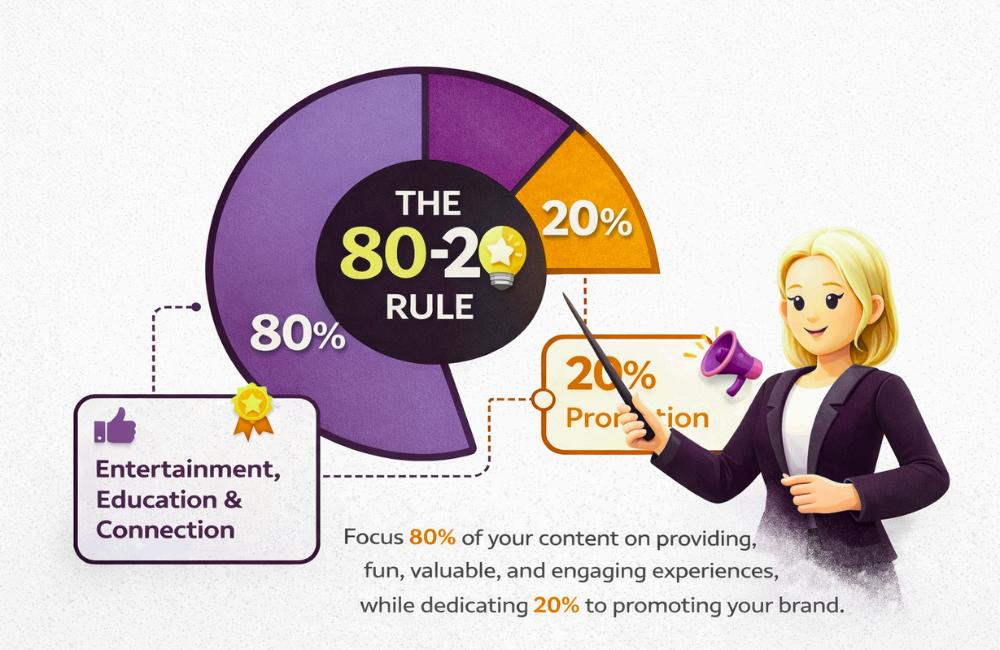
While these ratios offer a good starting framework, for genuine hospitality brands where the experience is everything we need to lean heavily on the non-promotional side. I recommend a generous 80/20 split: 80% Entertainment, Education, and Connection; 20% Promotion
● 80% Value: This is where you tell the story of your passion Introduce your incredible dishwasher, show the local farm where your produce comes from, or offer a quick tip on pairing wine with your latest dish This is your consistent content strategy for hospitality brands It builds trust
● 20% Promotion: Now you can confidently ask for the booking or the order, because you've earned the attention
Your content strategy should move people emotionally Are you making them hungry? Making them feel luxurious? Making them laugh? That emotional response is what people share that's how you go viral
The Power of Place and Purpose
Your local community isn't just a market; it's your biggest cheerleader. We need to be surgical in how we reach local audiences on social media
● Geo-Tagging is Mandatory: Every post, story, and Reel must be tagged with your location and nearby local landmarks This ensures your content enters the feeds of people physically in your area, who are actively looking for things to do or places to eat
● Local Collaborations: Partner with a local artist to design a signature menu item, or team up with a neighboring boutique for a joint giveaway Tagging them exposes your brand to their local audience
● Community Conversations: Don't just post; listen. Jump into local Facebook groups, monitor local hashtags, and respond directly to questions about the best spot for brunch or a romantic dinner. Show that your restaurants or hotel are an active, caring part of the neighborhood. This genuine interaction amplifies your social media reach exponentially
within your target geographic zone For detailed strategy implementation, you might engage a specialized Digital Marketing Agency like Qortechno.
Pillar 2: The Visual Edge Where Food Photography Meets TikTok Energy
Visuals are the non-negotiable handshake of the food and hospitality industry online A customer will judge your entire establishment the service, the cleanliness, the taste based on a single picture or video they see
Crafting Irresistible Visuals for Restaurant Marketing
The fundamental challenge is this: we need to move past simply documenting the food to celebrating the experience of the food. Food photography for static platforms like Instagram still matters, but it needs to be elevated
● Static (The Instagram Shot): Focus on the texture, the steam, the melt. Use natural light. Don't just show the dish; show a hand reaching for it, a fork cutting into it, or the waiter presenting it The goal is to make the viewer taste, smell, and feel the experience through the screen. We are aiming to craft irresistible visuals for restaurant marketing.
● Motion (The Video Shot): This is where we show the "before" and "after" The flour on the chef's hands, the sizzle on the grill, the bartender vigorously shaking a cocktail This behind-the-scenes realism is what hooks the modern consumer. The truth is, it’s not just the plate, it's the story of the plate That story is what people share, and sharing is the first step toward going viral Short-Form Video: The Engine for Going Viral
If you are not heavily invested in video marketing, particularly short-form video to boost bookings on platforms like TikTok and Instagram Reels, you are missing the biggest opportunity in social media today Why? Because the algorithms on these platforms are designed to reward novelty, energy, and rapid engagement, all of which are perfectly suited for hospitality storytelling
Think of a 15-second Reel as a mini-commercial that doesn’t sell a product, but sells the feeling of being there. Is it the sound of laughter at a table? The meticulous way the housekeeper folds a towel? The chef's secret ingredient reveal? This raw, fast-paced content is the jet fuel for going viral
This focus on raw video is directly tied to What is the Gen Z trend in food? Gen Z, the demographic now setting many of the viral food trends and who are the most active on these platforms, demands authenticity and transparency. They prefer a shaky, vertical video of a dish being prepared over a highly polished, overly edited ad They want to see the mess, the process, and the people This craving for genuine content is why your casual, quick-hit short-form video to boost bookings will often outperform your expensive, high-production commercial
Pillar 3: The Community Effect—Igniting User-Generated Virality
Virality is never a solo act It’s a group chorus We need to actively encourage our customers to become our most passionate and free marketing team. Turning Diners into Digital Storytellers with UGC
The most powerful content isn't created by you; it’s created about you We're talking about UGC (User-Generated Content), and its value is immeasurable. When a customer posts about your restaurant or hotel, that content carries far more weight and trust than anything your brand could say about itself.
How does social media promote food trends? It’s simple: UGC and authentic influencer content act as the wildfire that spreads trends instantly When hundreds of people are posting about the 'Spicy Rigatoni' or the 'Lavender Latte,' it creates an undeniable social proof that drives immediate foot traffic and bookings
To actively solicit restaurant user-generated content:
● Create 'Instagrammable' Moments: Designate a specific, beautifully lit spot, a quirky neon sign, or a unique mural Make it easy and obvious for guests to take a great photo or video
● Signature Presentation: Go over the top with one element a smoking cocktail, a dessert presented on dry ice, or a theatrical tableside preparation These are designed to be filmed.
● Run Contests: Host a weekly 'Best Photo Tagged @[YourBrand]' contest, offering a small prize (a free appetizer, 10% off the next stay) This provides a direct, measurable incentive for your customers to become your content creators. Working with Influencers in the Hospitality Industry
Forget the celebrities with millions of followers When it comes to influencer marketing in the hospitality industry, you should be focused on the power of the niche the micro- and nano-influencers
The key to working with influencers in the hospitality industry is authenticity It’s not about follower count; it’s about alignment with your brand experience. A local food blogger with 5,000 highly engaged, local followers will drive more real bookings for your restaurants than a global celebrity whose audience is irrelevant.
● Prioritize the Experience: Treat the influencer like a true guest Don't demand a post or give them a script Offer them a genuinely amazing experience, and let them share their authentic reaction.
● Set Clear Goals: Are you aiming for a specific number of reservations, increased followers, or a boost in visibility for a new cocktail? Define success before the collaboration, and track it with unique codes or referral links. This is part of leveraging effective Digital Marketing Services
Pillar 4: The Strategy Behind the Success—Metrics and Mindset
A content strategy without data is just a hobby To achieve viral success, we must treat social media as the serious business driver it is, focusing on the metrics that matter most.
Knowing What Works: Metrics Hospitality Brands Must Track
It's time to move beyond the vanity metrics A "Like" is nice, but it doesn't pay the rent So, what metrics should hospitality brands track on social? We need to focus on actions that directly lead to revenue
Vanity Metric Actionable Metric Why It Matters
Likes/Hearts Saves
Follower Count Shares/Forwards
Impressions Link Clicks & Direct Messages (DMs)
A Save means the content was so valuable that the user wants to refer back to it High save rate signals virality potential
A Share is a direct referral to a friend or group This is the definition of organic reach and is the key to going viral
This is the hard conversion A DM asking for a booking or a click to your reservation page is a measurable step toward revenue
Your restaurant social media marketing strategies should prioritize maximizing the "Share" and "Save" buttons, because those are the actions the platform algorithms reward with wider distribution, leading to the viral lift you're after
The Broader Impact: Social Media and Consumer Behavior
Social media's influence on the purchasing cycle of your potential customers is profound. How did social media influence the consumer behavior of the hospitality and tourism industry? And what are the four ways social media influences consumer behavior?
● Discovery: It’s the primary way new places are found Customers aren't using traditional search as much; they are scrolling through feeds What social media is used in the food industry? Primarily Instagram, TikTok, and YouTube/Reels.
● Validation: Before booking a hotel or walking into a restaurant, customers check the social profile and the reviews (a form of UGC) to validate their choice
● Decision-Making: The visual quality and the narrative on your feed act as the final deciding factor
● Sharing/e-WOM (Electronic Word-of-Mouth): Post-visit, customers immediately share their experience, perpetuating the cycle. This is the social media loop that feeds on itself to drive a consistent content strategy for hospitality brands
A quick word on kitchen transparency: You might also encounter the 30/30/30/10 rule for restaurants, which suggests a content split 30% food, 30% staff/culture, 30% behind-the-scenes/kitchen, and 10% promotion This is a great model for building trust, as showing the "making of" is a powerful way to leverage the demand for authenticity and counter the common concern over kitchen hygiene and freshness This ties into the integrity that a great Digital Marketing Company helps build
Addressing the Core Philosophy of Hospitality Online
At the end of the day, a successful social media strategy for a hospitality brand is simply an extension of excellent, personalized service We must translate the fundamental philosophies of our industry into the digital realm.
Let’s connect the classic business tenets to our modern digital strategy:
● What are the 5 P's of the hospitality industry? (Product, Price, Place, Promotion, People). Your social media feeds are the Promotion (digital window shopping), which showcases your Product (food/rooms), the vibe of your Place (location/atmosphere), the value of your Price, and the warmth of your People (staff). Social media is the all-in-one digital brochure for the 5 P's.
● What are the 7 pillars of hospitality? (Service, Efficiency, Atmosphere, Pricing, Product, Place, and People). Social media executes these digitally. Excellent Service becomes a rapid, helpful response to DMs Atmosphere is conveyed through high-quality video Efficiency is demonstrated by a clear link to an easy-to-use booking engine
● What are the 3 C's of hospitality? (Care, Consideration, and Communication). These are executed entirely on social media Care is shown through personalized replies Consideration is demonstrated by posting content that is valuable to the user (entertaining or educational). Communication is your daily content output and crisis management
Finally, remember what the current trends are in the hospitality industry? They include personalization, wellness tourism, and sustainable practices Your social media is the perfect place to demonstrate your commitment to these trends, using them as fodder for your video content and community discussions. This is also how you learn how to use social media to promote tourism by showcasing not just your property, but the entire authentic, sustainable, and personalized experience of the surrounding area To maximize reach for these initiatives, you could consult a Digital Marketing Agency.
Conclusion: Your Next Steps to Going Viral
Viral marketing success in restaurants and hospitality is not a lottery ticket; it is the inevitable outcome of a strategic, sincere, and consistent focus on the audience's experience You have the heart of hospitality in your business; now, you have the roadmap to inject that genuine human spirit into your digital presence.
Stop thinking about posting pictures Start thinking about creating connections, encouraging your guests to become storytellers, and tracking the metrics that drive real-world bookings Because the very best social media strategies for hospitality aren't tricks or hacks they are just good, modern hospitality, amplified by the power of the internet
How Qortechno Can Help
Qortechno helps food and hospitality brands amplify their social media presence with data-driven strategies, engaging content, and targeted campaigns. We optimize posts for maximum reach, create shareable visuals and videos, manage community engagement, and track performance to ensure every campaign drives followers, engagement, and bookings By combining social media expertise with SEO and brand storytelling, Qortechno turns your online presence into a platform for visibility, credibility, and ‘internet fame,’ with our result-Driven digital marketing services
FAQs
How long does it take to see results from social media marketing?
Most brands start seeing engagement growth in 30–60 days Viral traction and booking impact usually follow consistent posting and data-driven optimization
Do hospitality brands need professional social media management?
While some brands manage it in-house, professional social media management services ensure consistency, creativity, analytics tracking, and faster results especially in competitive markets.
Can small restaurants and cafes also go viral?
Absolutely Many viral food brands started small With the right content strategy, storytelling, and consistency, even local cafes can achieve massive reach without a big advertising budget.
Is social media marketing better than traditional marketing for restaurants?
Yes. Social media marketing is cost-effective, measurable, and allows direct interaction with customers It also creates long-term brand visibility and word-of-mouth promotion
How can a digital marketing agency help hospitality brands grow?
A Digital Marketing Agency provides:
● Professional social media management
● Content strategy & video marketing
● Influencer collaborations
● Performance tracking & optimization This helps brands scale faster and achieve consistent growth
Which social media platforms are best for the food and hospitality industry?
The most effective platforms are:
● Instagram (Reels, Stories, Posts)
● TikTok (viral short-form videos)
● YouTube Shorts
These platforms are highly visual and ideal for showcasing food, ambiance, and experiences.
What type of social media content works best for restaurants and hotels?
Short-form videos, behind-the-scenes content, staff stories, customer experiences, and user-generated content perform best. Content that feels authentic, emotional, and experience-driven is more likely to be shared and saved