Nurses, midwives & carers proudly shaping our future of care annual conference
WE’RE WORTH IT: ANNUAL
Acknowledgement of Country
The QNMU would like to acknowledge the traditional custodians of the lands on which we work and live, particularly the Jagera and Turrbal people whose history is woven into Meanjin where we gather for this year’s Annual Conference – and we pay respect to their continued guardianship and deep cultural connections to this land Kurilpa, on the banks of the sacred Maiwar.
We also pay our deepest respects to all elders past and present, and acknowledge their sovereignty and unbroken connection to this land.
We extend this respect to all Aboriginal and Torres Strait Islander Peoples present at our Annual Conference and reaffirm the QNMU’s commitment to the principles and spirit of the Uluru Statement from the Heart including the journey towards Voice, Treaty and Truth.
WHY IS THE QNMU’S ANNUAL CONFERENCE IMPORTANT?
At the heart of everything we do as a union is the voice of our members, and nowhere is that voice more powerful than at Annual Conference.
Annual Conference is the QNMU’s highest policy-making forum.
The decisions made by delegates at Conference help shape our union’s future activities and set the agenda for the year ahead.
Our democratic structure ensures all members, through their Local Branches, have the opportunity to influence and contribute to the union’s priorities, which includes informing and considering the motions agenda presented to the Conference floor.
Conference empowers you, as delegates, to represent your branch’s view through the motions debates, and the vote you cast on behalf of your nurse and midwife colleagues over the next few days will determine the policies and priorities that drive our union’s work into the future.
The resolutions endorsed at Conference are then referred to QNMU Council for ratification and implementation.
It is this member-led process that defines who we are: a union driven by the collective strength, insight and leadership of nurses, midwives and carers across Queensland.
SAFE, RESPECTFUL AND INCLUSIVE CONFERENCE PARTICIPATION
QNMU Statement of Safety and Respect
The QNMU is committed to ensuring all its gatherings, including meetings, functions and events are free from all forms of harassment, discrimination and racism.
Attendees have the right to be safe and respected and ask that all attendees act in accordance with these values.
If you have any concerns, please raise them with the Convenor of the meeting, function, or event.
QNMU Member Code of Conduct
The QNMU Member Code of Conduct sets out the behaviours members might expect from one another to continue to advance the industrial and professional standing of our union.
As a democratic union that works collectively with members to achieve the best outcomes for nurses and midwives, it’s important we undertake our vital work in the spirit of our shared nursing, midwifery and union values.
Scan the QR Code to read the Code of Conduct in full.
Welcome to the QNMU’s 2026 Annual Conference.
Welcome to this year’s Annual Conference, the most important democratic forum of our union.
Our 2026 theme, We’re Worth It: Nurses, Midwives & Carers Proudly Shaping Our Future of Care, recognises a simple but powerful truth. The work nurses, midwives and carers do - the work we do - matters.
Our professions matter.
Our expertise matters.
And our voices deserve to be heard wherever decisions are made about health care, aged care and our working lives.
Annual Conference is where those voices come together and help shape the future of our union.
As elected representatives of your Local Branches, you play a vital role in shaping the QNMU’s direction and priorities for the year ahead.
Over the next three days, we will debate motions, share ideas and experiences, and make decisions that help guide our union’s advocacy, campaigns and industrial work.
We also have an opportunity to take stock, to reflect on the year that has been and the progress we have made together.
And when we look back over the past 12 months, there is plenty to be proud of.
Across every sector, members have continued to stand together to improve wages, conditions, professional standards and patient care.
We secured EB12 with Queensland Health following protected industrial action, advanced bargaining campaigns with Mater, Regis and Ramsay, and continued progressing our Multi Enterprise Supported Bargaining (MESBA) application to allow multiple aged care workplaces to negotiate collectively.
We also continued our advocacy for safer care and safer workplaces as we celebrated 10 years of Ratios, saw our Count the Babies campaign become reality as maternity ratios rolled out, launched our Resident Safety Concern Reporting Form for aged care and continued pushing for the implementation of Respect@Work reforms.
Of course, we can’t tackle the issues facing members if we don’t know what matters to them, so we spent time too checking in through initiatives such as our Grow Your Voice survey, the ANMF Aged Care Pulse Check and our Member Summits.
But, frankly, that’s only scratching the surface.
As we look ahead, there are already several issues emerging loud and clear – new battles over reproductive rights, Federal work values case hearings, and the ongoing fight to stop the LNP attacking safety provisions in the WHS Act.
The work ahead will require determination and collective strength.
Fortunately, those are qualities our union has never lacked. They are reflected in the commitment of our delegates, the strength of our branches and the willingness of members to stand together when it matters most.
Whether you are attending Conference for the first time or returning as an experienced delegate, thank you for the role you play in our union.
Your voice, and the voices of the members you represent, are central to our strength.
Together, let’s build a future where nurses, midwives and carers are respected, valued, heard and empowered to shape the care our communities deserve.
In solidarity,
Simon Mitchell Sarah Beaman QNMU President QNMU Secretary
PROGRAM
WEDNESDAY 5 AUGUST 2026
9.00am Opening remarks
Simon Mitchell – QNMU President
9.05am Welcome to Country
9.10am Secretary’s Report
QNMU Secretary Sarah Beaman
10.10am Guest speaker address
10.25am Sponsor address
10.30am Morning Tea Nominations open for QNMU Policy Committee (QPC)
10.50am QNMU Policy Committee Report
Jo Konings - Chair, QNMU Policy Committee
11.30am Notices of Motions for debate
12.25pm Sponsor address
12.30pm Lunch
1.15pm Notices of Motions for debate
2.50pm Guest speaker address
3.00pm Afternoon tea
3.20pm Notices of Motions for debate
4.30pm Day 1 concludes Nominations close for QNMU Policy Committee (QPC)
THURSDAY 6 AUGUST 2026
9.00am Opening remarks
Simon Mitchell – QNMU President
Ballots open for QNMU Policy Committee (QPC) if required
9.05am Welcome to Country
9.10am Assistant Secretary Nursing’s Report
Grant Burton – QNMU Assistant Secretary Nursing
9.40am Sponsor address
9.45am Toolbox Talks:
P1: Financial Wellbeing for Nurses & Midwives. Presented by Great Southern Bank
P2: Understanding Insurance - Support when it matters most. Presented by QSuper
P3: Face your Future with Confidence: Understanding how lifestyle changes impact your superannuation. Presented by Hesta
10.30am Morning Tea
10.50am Notices of Motions for debate
12.30pm Lunch
1.15pm Notices of Motions for debate
2.30pm Assistant Secretary Midwifery’s Report
Fridae King – QNMU Assistant Secretary Midwifery
3.00pm Afternoon Tea
3.20pm Mindfulness and meditation session QNMU Wellbeing Team
3.30pm Guest Speaker Address
Hon Mark Bailey MP, Shadow Minister for Health and Ambulance Services & Shadow Minister for Mental Health
3.40pm ANMF Federal Office Report
Annie Butler – ANMF Federal Secretary & Alana Ginnivan –ANMF Assistant to the Federal Secretary
4.00pm Notices of Motions for debate
4.30pm Day 2 concludes
Ballots close for QNMU Policy Committee (QPC) if required
QNMU Nursing and Midwifery Excellence Awards Gala & Conference Dinner - The Greek Club
6.30pm Arrival and networking
7.00pm Dinner
PROGRAM
FRIDAY 7 AUGUST 2026
9.00am Opening remarks
Simon Mitchell – QNMU President
9.05am Welcome to Country
9.10am Recognising the power of humanitarian care
Ruth Jebb - Registered Nurse, Princess Alexandra & Australian Red Cross
9.30am Call to action: Grow Your Voice Survey
Carol Windsor – Queensland University of Technology
9.50am Nursing in Trump’s America
Puneet Maharaj, Executive Director - California Nurses Association
10.10am Growing Deadly Families
Melina Connors, First Nations Midwifery Director - Office of the Chief Midwife
10.30am Morning Tea
10.50am Guest Speaker Address
11.00am Toolbox Talks:
P1: Neurodiversity in the workplace
P2: Nursing and the ageing population
P3: What happens if a complaint is made against me?
P3: QNMU Law: Clinical Documentation
11.40am Toolbox Talks continue:
P1: Neurodiversity in the workplace
P2: Nursing and the ageing population
P3: What happens if a complaint is made against me?
P3: QNMU Law: Clinical Documentation
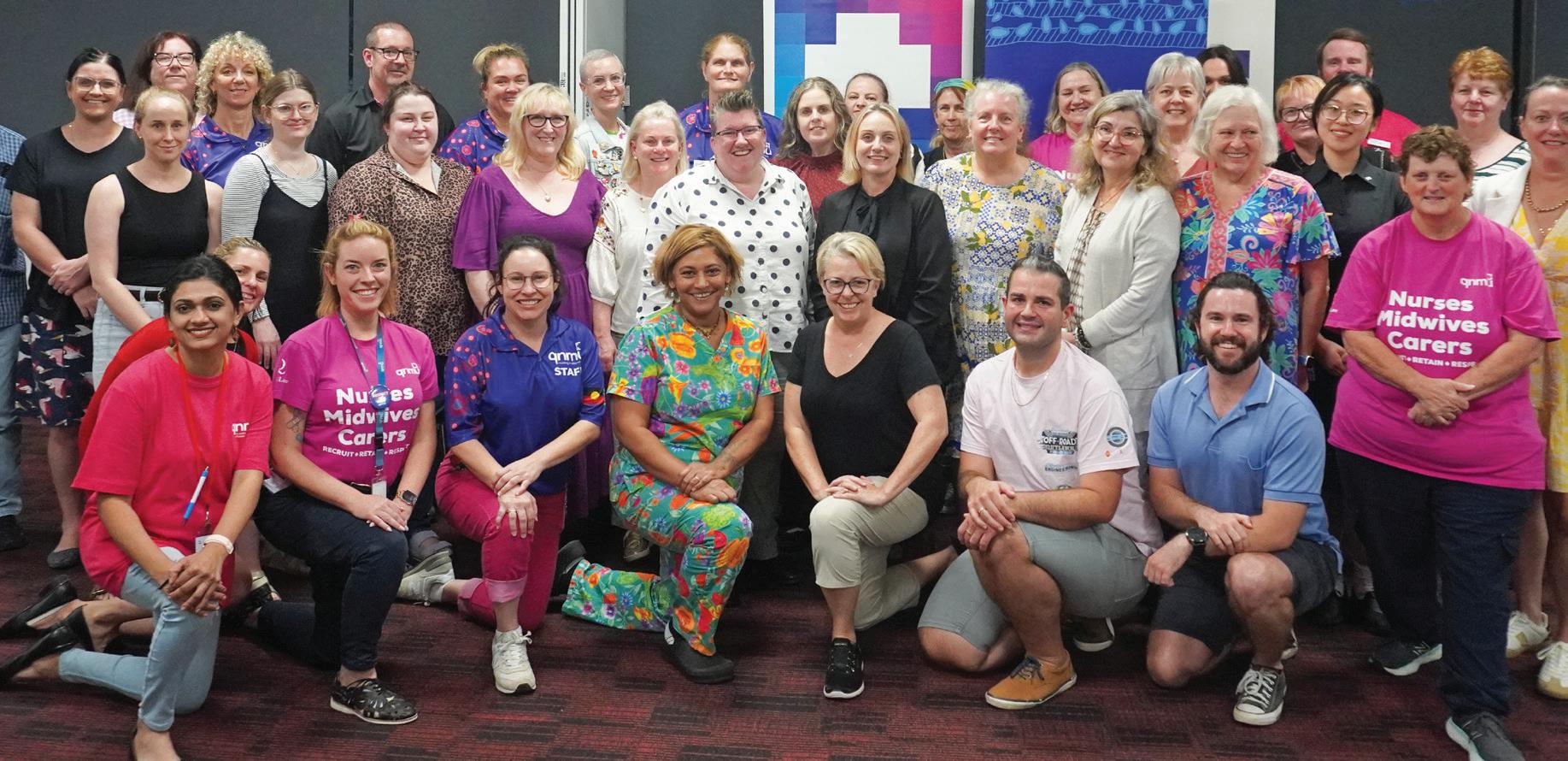
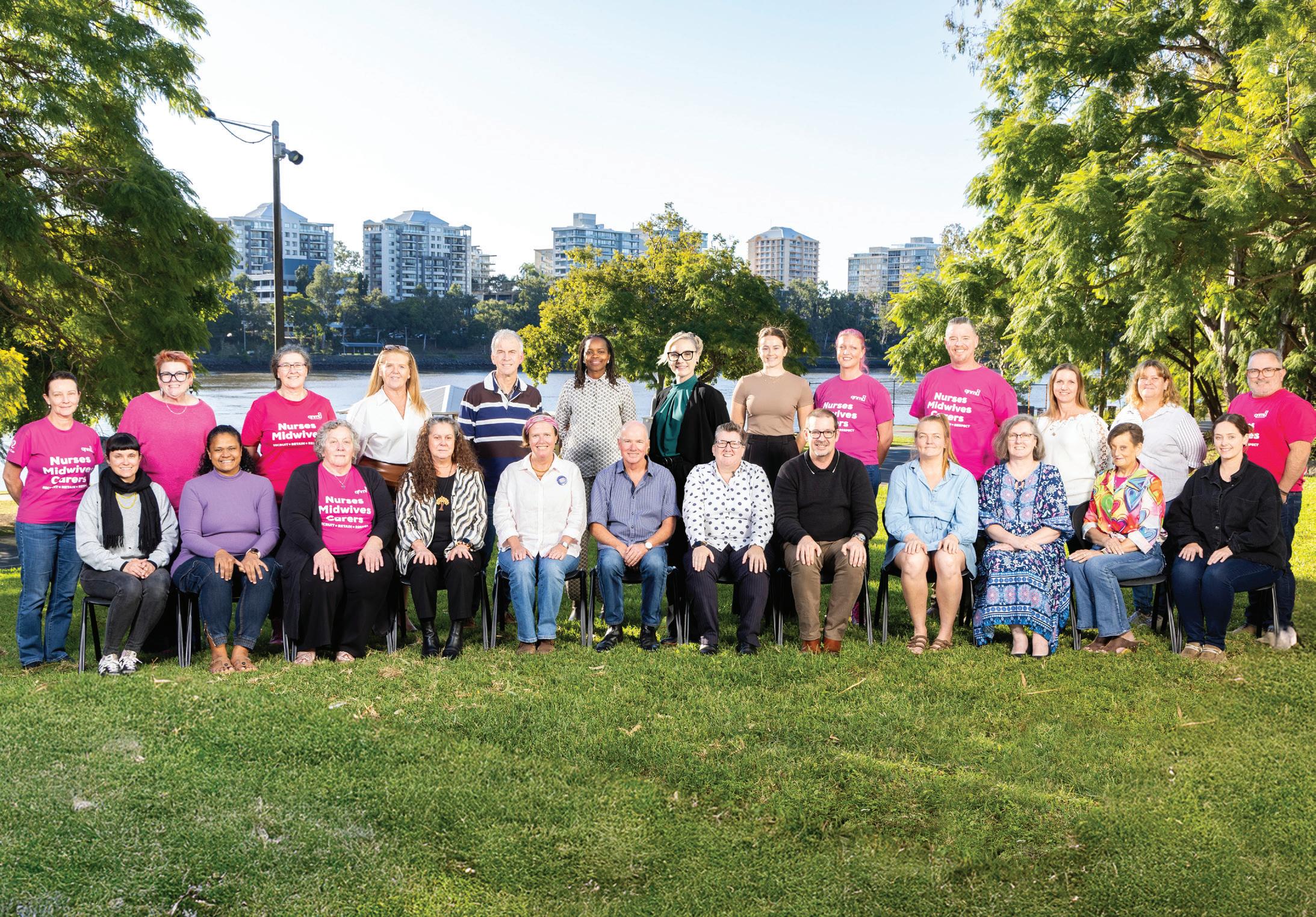
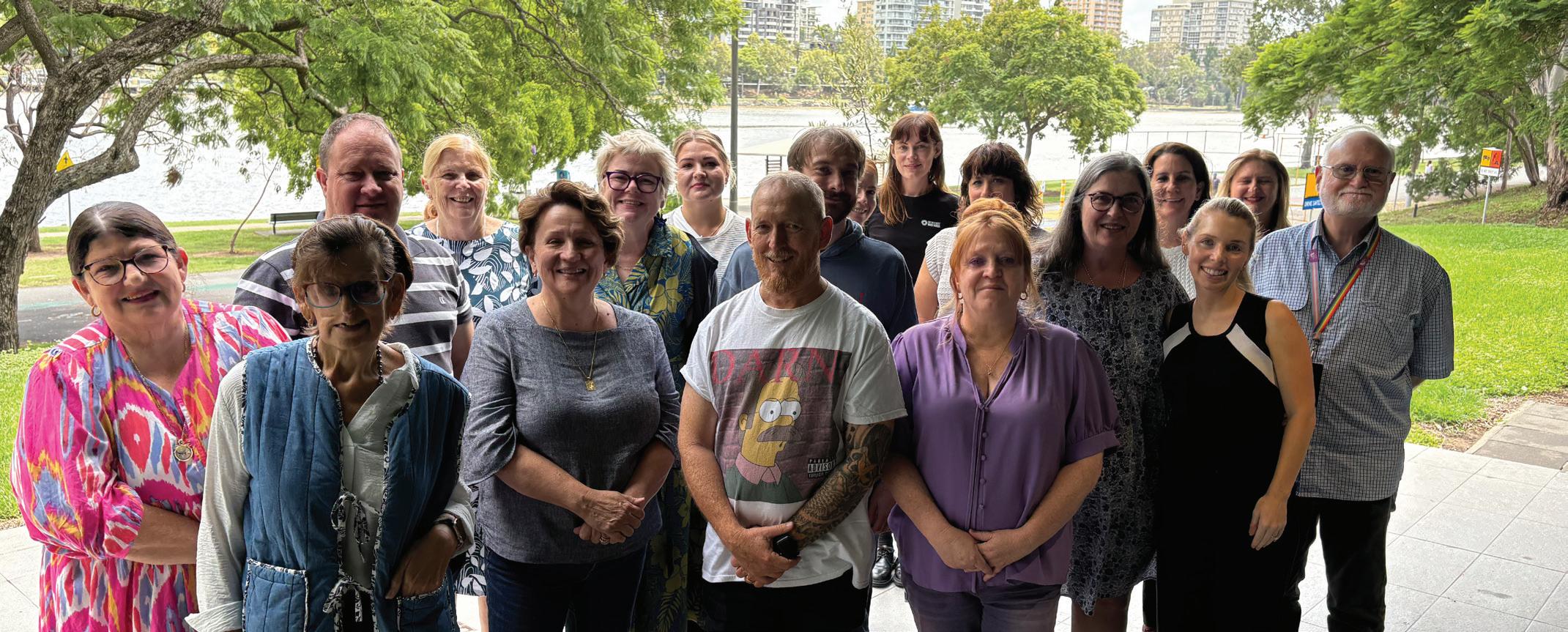
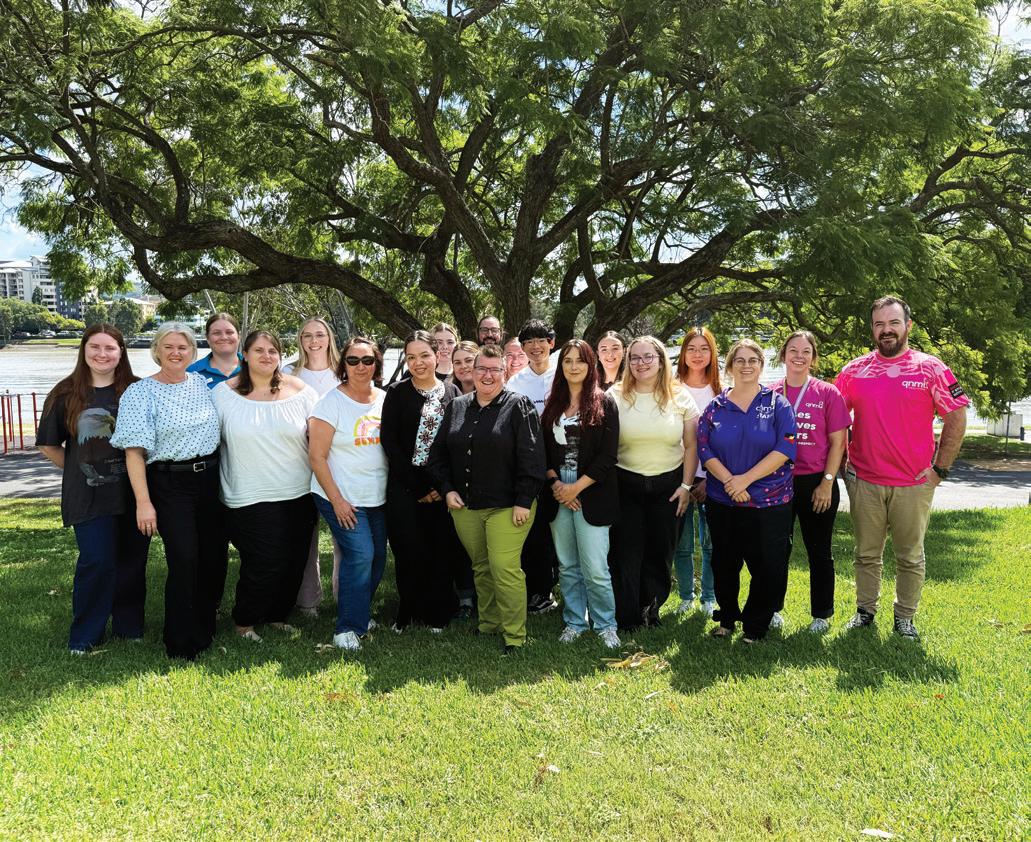
12.10pm Group photo
12.30pm Lunch
1.30pm Panel Discussion: Talkin’ bout your Generation
2.10pm Digital health & technology - What will change for you in the future?
Angela Ryan, Non-executive Director, Australasian Institute of Digital Health
Scan the QR code for a detailed program and the speaker bios online
QNMU COUNCIL
The QNMU Council provides strategic leadership and governance for our union, and oversees the implementation of Annual Conference decisions.
Since 2025, Council has consisted of the President, Vice President, Secretary, Assistant Secretary (Nursing), Assistant Secretary (Midwifery), 22 Branch Councillors, and two First Nations Branch Councillors representing North Queensland and South Queensland.
Together, these 29 representatives are democratically elected by QNMU members to represent the interests and priorities of the membership.
Supporting Council is the nine-member QNMU Executive, made up of the President, Vice President, Secretary, Assistant Secretaries and four Branch Councillors.
Council meets at least six times each year to guide the union’s work, while the Executive meets between Council meetings to oversee ongoing business and respond to emerging matters.
LEADERSHIP
Simon Mitchell President Townsville Offender Health Branch
Lucynda Maskell Vice President Torres and Cape York South Branch
Grant Burton Assistant Secretary (Nursing) QNMU
Sarah Beaman Secretary QNMU
Fridae King Assistant Secretary (Midwifery) QNMU
QNMU COUNCIL
COUNCILLORS
Megan Briffa Statewide First Nations Branch
Karen Cooke South Burnett South Branch
Fiona Henderson Cairns Hospital Branch
Julia Brownlie Queensland Nurse Practitioner Branch
Kellie Dwyer Health Consumers Queensland
Natasha Eggleston Biggenden Hospital Branch
Suri Hobday Cairns Mental Health Branch
Kim Cass Statewide Aged Care Enrolled Nurse Branch
Raquel How Queensland Nurse Practitioner Branch
Yanna Klaassen Bundaberg Hospital Branch
Jo Konings Townsville University Hospital Branch
Damien Lawson Gold Coast University Hospital Branch
COUNCILLORS
David Lewis Princess Alexandra Hospital Branch
Lillian Muchiri Sunshine Coast Community Mental Health Branch
Michelle Mcinness Villa Vincent Aged Care Townsville Branch
Jason Moloney Queensland Nurse Practitioner Branch
Genoveva Phillips Coorparoo Community Care Unit
Fauziah Mosby (First Nations North), First Nations North Queensland Branch
Dallas Isabel Robinson South Burnett North Branch
Emma Murphy Mater Hospitals Branch
Janelle Taylor The Prince Charles Hospital Branch
Jennifer Wilson Sunshine Coast University Hospital Branch
Samantha Woodhouse Princess Alexandra Hospital Burke Street Branch
Jojoe Tesiram (First Nations South), Statewide First Nations Branch
AGENDA
QNMU POLICY COMMITTEE REPORT AND RECOMMENDATIONS
The QPC is made up of delegates elected each year at Annual Conference and is assembled to discuss and develop official policy or position statements on matters of key interest to the union.
The position and policy documents developed by the QPC play a crucial role in advocating for the nursing and midwifery professions, using evidence to shape public discourse and influence legislative, professional and regulatory decision-making.
The QPC’s work is also supported by several QNMU Officials.
Recommendations
QPC recommends that Annual Conference agree to seek QNMU Council ratification of the following discussion paper, information sheet and position statements.
The draft documents developed by the QPC in 20252026 were:
■ Advanced practice nurse discussion paper.
■ Workplace support for early pregnancy loss position statement.
■ Labour Day information sheet.
■ Midwife-led models of care position statement.
■ Public Private partnerships in health care position statement.
To learn more, visit the QPC page on the QNMU website.
The 2025-26 Committee
Eighteen (18) Delegates were elected to the QNMU Policy Committee (QPC) at the QNMU’s Annual Conference 2025.
The QNMU thanks the following QPC members for their valued work and contribution:
■ Cathleen (Cathie) Nesvadba
■ Clare Bourke
■ Damien Lawson*
■ Fiona Henderson
■ Florentina Beres
■ Jason Moloney
■ Juanita (Jo) Konings (Chair)
■ Katimarie Hannah
■ Kieran Sturgeon
■ Luke Mathews
■ Lynne Ray
■ Natalee Gleadhill
■ Nicholas (Nick) Coleman-Hicks
■ Rebecca Clark*
■ Samantha Ley
■ Shaun Cram*
■ Victoria Haratsis
■ Wendy Smyth *resigned during term
HOW NOTICES OF MOTIONS MAKE IT TO THE CONFERENCE FLOOR
Debating notices of motion is one of the most significant parts of Annual Conference and central to how we collectively shape the priorities and future direction of our union.
Therefore, it is important that motions coming to the Conference floor are clear, well drafted and focused on matters of collective significance so delegates can engage in productive and informed discussion and decision-making.
At the 2016 QNMU Annual Conference, delegates endorsed a QPC policy which outlined appropriate protocols for the handling and vetting of Annual Conference notices of motions submitted by Local Branches.
Over time, these processes have evolved and now include an online submissions system to streamline and improve motions management.
As outlined in Administration Regulation 10. Notices of Motions – Annual Conference, the QNMU’s Conference Motions Committee (CMC) is tasked with reviewing all notices of motion submitted by Local Branches by the cut-off date before Conference each year.
The committee is comprised of up to three representatives from QNMU Council, an Industrial Officer, a Professional Officer, an Organiser, an Organising Team Leader, a Research and Policy Officer, a representative from the Communications and Campaigning Directorate and the Administrative Services Manager (or role with specialist governance knowledge).
This group is responsible for identifying duplications within the current or previous five years’ submissions,
identifying notices of motion unsuited to or outside Conference scope (such as local matters or compliance issues), and working with Branches to ensure the motions presented to delegates are clear, comprehensible and suitable for effective debate and decision-making.
Notices of motion previously endorsed by Conference are not revisited but remain logged as actionable matters for the QNMU, particularly where they relate to ongoing enterprise bargaining or campaigning priorities.
This year in accordance with the process, the CMC reviewed 242 notices of motion submitted for the 2026 Conference and, following the vetting process, including the amalgamation of duplicate motions where appropriate, finalised 160 motions for the Conference floor. [LR1.1]
The goal of the process, as always, is to support delegates to focus on the issues that matter most to members and to develop resolutions that can effectively guide the QNMU’s future policy and advocacy work.
As a result of this process, Branches may notice some original notices of motion have been reworded, combined with similar motions or excluded where necessary.
Branches seeking clarification regarding these changes are encouraged to contact their organiser.
The CMC extends its thanks to every Branch for their contributions, and for their engagement and commitment to working collectively and democratically to advance our collective goals.
AGENDA
1.01 Toowoomba Acute Mental Health
That the QNMU requests Queensland Health develop and engage openly with nurses, midwives, and other relevant parties on plans to provide free or subsidised parking at all facilities currently being upgraded, renovated, expanded, or under construction, ensuring parking needs are considered and embedded before development is finalised.
Background
This Conference notes that motions regarding the tax deductibility of parking fees have already been tabled and recognises that the opportunity to address parking affordability is most effectively seized prior to the completion of facility upgrades. With the current construction of the new Toowoomba hospital, now is the time to ensure staff will be able to access parking, in particular on-site, unlike current options for the Toowoomba base hospital.
1.02 Statewide Aged Care Enrolled Nurse
That the QNMU lobby the Federal Government and the Department of Health and Aged Care to amend the current care minutes framework to require that a minimum of 10 per cent of the total mandated care minutes be allocated specifically to Enrolled Nurses (ENs), rather than the current optional 10 per cent allocation of the Registered Nurses (RNs) minutes. This amendment would recognise ENs as essential clinical staff contributing to safe and high-quality aged care and ensure federal funding and staffing models reflect their critical role. (10 per cent = 20 mins per resident per day, up from an optional 4.4 minutes).
Background
Nursing homes need more nurses, not fewer. Enrolled Nurses are educated, qualified and registered health professionals regulated by AHPRA. They are essential clinical staff who provide direct nursing care to residents and support safe, high-quality care delivery.
Under the current care minutes framework, Enrolled Nurse time is not protected as a distinct minimum requirement. Instead, Enrolled Nurse minutes can be treated as optional or absorbed within broader staffing models. This risks diluting clinical skill mix, reducing the Enrolled Nurse workforce in aged care, and replacing nursing care with less clinically qualified roles.
Requiring a minimum of 10 per cent of total mandated care minutes to be allocated specifically to Enrolled Nurses would help protect the Enrolled Nurse workforce, strengthen clinical staffing in nursing homes, and ensure residents receive care from appropriately educated and regulated nursing staff.
1.03 Statewide Aged Care Enrolled Nurse
That the QNMU lobby both the Queensland and Federal Government to:
■ support the introduction of legislation across all Australian jurisdictions that limits the administration of prescription and controlled medications in aged care to registered nurses, enrolled nurses, and other appropriate AHPRA qualified health professionals
■ advocate for nationally consistent aged care medication administration standards that prioritise resident safety and align with the recommendations of the Aged Care Royal Commission
POLITICAL
■ ensure adequate workforce planning and funding to recruit and retain sufficient qualified nursing staff to meet these standards, including the expansion of education and training opportunities for Enrolled Nurses
■ protect and promote medication administration as a core element of nursing practice, enabling nurses to work to their full scope across all aged care settings.
Background
Medication administration is a core nursing responsibility and must remain within the scope of appropriately qualified health professionals. Ensuring residents receive the right medication, at the right time, from the right person is fundamental to safe, accountable and high-quality aged care.
Victoria’s recent reform to restrict prescription and controlled medication administration in aged care to nurses and other qualified health professionals is a welcome step in safeguarding residents. From July 2026, non-clinical staff such as personal care assistants will be prohibited from undertaking this critical task.
In contrast, some Queensland providers, most recently BlueCare, have moved to erode the Enrolled Nurse role, reducing clinical care for residents and increasing pressure on remaining Registered Nurses and care staff. Other providers have followed similar models, replacing qualified nursing staff with lower-cost, less-qualified labour.
This shift compromises medication safety increases risk to residents and undermines the aged care nursing workforce. National reform is needed to ensure consistent standards, protect nursing scope of practice, and ensure medication decisions are driven by care and safety, not cost.
1.04
Bundaberg Mental Health
That the QNMU lobbies Federal Government to implement occupational health protections for metabolic risks associated with shift work.
Background
It is widely recognised that chronic circadian disruption from mandated shift work increases nurses’ and midwives’ risk of metabolic health issues, including obesity, prediabetes, diabetes, and other metabolic syndrome indicators.
Early identification and management of metabolic imbalance through health programs and screening can prevent progression to Type 2 diabetes and cardiovascular disease, improving workforce health and sustainability.
Equitable access to evidence- based interventions, including lifestyle support and pharmacotherapy where clinically appropriate not only protects staff health but also reduces long term healthcare costs associated with treating established diabetes or CVD.
This motion calls on the QNMU to advocate for preventative metabolic health programs and government support for broader access to interventions for shift workers at high metabolic risk.
This includes equitable PBS access to evidence-based interventions that reduce obesity and metabolic risk in shift workers, including those at elevated risk of developing Type 2 diabetes or other metabolic diseases. The goal is to support prevention before disease progression occurs.
The motion also calls for structured occupational metabolic health programs for shift-working nurses and midwives, incorporating early warning biomarkers
of metabolic imbalance where clinically appropriate and for voluntary engagement by clinicians.
1.05 Royal Brisbane and Women’s Hospital (RBWH) Nurses
That the QNMU undertakes a campaign to address the disadvantages nurses/midwives face compared to other professions regarding sickness levels and provisions, seeking to redress this imbalance.
Background
Nurses and midwives face a significantly higher burden on their sick leave balances compared to other professions, both within and outside the health care sector. This is driven by strict infection control protocols, high exposure to illness, and the emotional and physical demands of the job, not to mention the increased levels of occupational violence.
They consistently show higher absenteeism than the national average across industries.
■ In some hospitals, annual absenteeism rates exceed 10 per cent compared to general workforce average 4–6 per cent.
■ Nurses and midwives are required to stay home at the first sign of illness to protect vulnerable patients.
■ Health care facilities enforce exclusion policies that prohibit working while symptomatic, even with mild conditions.
■ The are exposed to infectious diseases due to direct patient care leading to more frequent short-term absences (1–3 days) than in other professions.
■ They experience long hours, emotional labour, and high patient loads that contribute to burnout.
■ Burnout is a major driver of absenteeism, more so than other sectors.
■ Understaffing increases workload and stress, leading to more sick leave, creating a cycle of absenteeism and strain on remaining staff.
■ Absenteeism rates can be 30–50% higher than those in other sectors.
These elevated rates lead to faster depletion of sick leave balances and increased emotional and financial strain.
1.06
Statewide Aged Care Enrolled Nurse
That QNMU campaign at all opportunities for:
■ the Queensland State Government to commit to establishing state-run residential aged care facilities in areas of need, particularly in regional, rural and remote communities where private providers are unable or unwilling to meet community need.
■ the Queensland State Government to develop a plan for the de-privatisation of residential aged care services in Queensland, to ensure taxpayer funding is used to provide safe, high quality care to residents, not to generate profits for private operators, investors or investment funds.
Background
Aged care in Queensland is run by various entities, including large corporations and investment funds that make significant profits each year. This is money
the Statewide Aged Care EN Branch believes should be put into providing quality care for elderly residents.
The current market-based aged care system was substantially shaped by the Howard Coalition Government’s reforms, including the Aged Care Act 1997, which expanded the role of private and nongovernment providers in residential aged care. The federal Labor Government’s attempts to “fix” aged care have not gone far enough to address ongoing failures in staffing, care quality, accountability and transparency.
Given this failure, this motion asks that QNMU campaign for the Queensland State Government to establish state-run aged care facilities in areas of need and develop a plan for the de-privatisation of residential aged care services in Queensland. Public operation would ensure taxpayer funding is used for resident care, staffing, quality services and consistent standards, not private profit.
1.07 Statewide Aged Care Enrolled Nurse
That QNMU advocate directly, and through the national ANMF Office, for a review of the care minutes reporting process to:
■ require aged care providers to make all calculations for reported care minutes publicly available for each facility
■ require aged care providers to clearly identify direct care and non-direct care worked by nurses and care workers, to reduce the capacity for inaccurate reporting of actual care minutes provided.
Background
Members are extremely concerned that aged care providers may not be accurately reporting care minutes provided to nursing home residents.
The current process for calculating direct care minutes is opaque, making it difficult for workers, residents, families and unions to verify the accuracy of reporting or assess whether providers are complying with the care minutes guidelines.
Requiring providers to clearly report direct care, non-direct care, and the processes used to calculate this data would make care minutes reporting more transparent. It would also reduce the ability of providers to manipulate or misreport compliance and better ensure taxpayer funding is directed to direct resident care.
1.08 Sunshine Coast University Hospital
That the QNMU through ANMF, lobby Federal Government to fund facial and dental prosthetics for head and neck cancer patients.
Background
Medicare does not generally provide funding for medical prosthetics, with the exception of breast prosthesis for patients who have had a full or partial mastectomy, including replacement if required at two yearly intervals. Head and neck cancer patients often suffer significant debilitating side effects from radiation treatment that may require removal of their jaw and teeth. An inability to consume food orally contributes to malnourishment and other health
AGENDA
issues, in addition to facial disfigurement. Provision of funding for prosthetics for this small percentage of the population will notably improve their quality of life and reduce inequity. Surviving cancer shouldn’t mean patients may have to live without teeth.
1.09 The Prince Charles
That the QNMU lobby Queensland Health to investigate the Queensland Government and Queensland Health’s practice of car parking development, construction and subsequent fees charged. These charges are passed onto staff and some of the most vulnerable people in our community without sustainable or viable alternatives (such as regular and reliable public transport and infrastructure). People attending health care facilities need not be charged supplementary fees for seeking healthcare, nor staff surcharged for providing said service.
Background
The practice of private entities/companies constructing pay-for-use structures on public sites and then passing these charges on to people who have limited, or no practicable, choice but to use them is predatory and exploitative. The price for poor infrastructure and planning on behalf of the Government should not be borne by people who have the misfortune to require health care nor by the staff that provide health care.
1.10
St Stephens HospitalHervey Bay
That the QNMU requests Queensland Health prioritise support for long-stay patients awaiting nursing home placement by expanding government owned and managed residential aged care facilities (RACFs). Such measures would help alleviate accreditation challenges, preserve hospital bed availability, and ensure more seamless transitions from hospitals to appropriate long-term care settings.
Background
In Hervey Bay and the broader Wide Bay region, hospitals are observing a rise in patients with dementia who remain in acute wards while awaiting placement in aged care facilities. These settings often fail to provide for their unique needs, as they commonly lack safe outdoor spaces, proper supervision, and opportunities for engaging activities. Insufficient support can lead to heightened confusion, agitation, and diminished health outcomes for patients, while staff encounter increased safety concerns and workplace stress. It is essential for Queensland Health to implement targeted strategies to provide more appropriate care options and facilitate improved patient transitions into long-term residential care.
1.11 Townsville University Hospital
That the QNMU lobby the Queensland Government on behalf of healthcare consumers to increase the Patient Travel Subsidy Scheme (PTSS), ensuring it provides financially viable reimbursement for travel
and accommodation costs. Some consumers, through no fault of their own, must travel significant distances to access specialised care, and the current subsidy levels do not adequately reflect the actual financial cost of doing so.
Background
The current PTSS provides subsidies for travel and accommodation for eligible patients and escorts; however, the reimbursement levels fall far short of the actual costs faced by families. While the provision of air and rail travel may be included if criteria is met, the private vehicle subsidy of 15–34c per kilometre and the $70 per night accommodation allowance leave most families significantly out of pocket. At a time when these households are already under financial strain, further gaps create additional stress at the very moment families can least afford it.
For these consumers, the financial burden results in reduced family support during treatment; for others, it leads to delayed or avoided healthcare altogether. This is particularly concerning for regional, rural, and remote Queenslanders who have no choice but to travel long distances for specialised care. Strengthening the PTSS is essential to reducing financial hardship, improving equity of access, and ensuring that all Queenslanders can obtain the healthcare they need without undue burden.
1.12 Sunshine Coast University Hospital
That the QNMU through ANMF lobby the federal government to remove the GST from wigs for patients with medical conditions such as cancer and alopecia.
Background
Medical prosthetics categorised as medical aids or appliances are exempt from GST. Because wigs are also purchases by people without a medical condition, one of the three requirements for GST exemption cannot be not met and therefore all wigs incur GST. This motion is to allow for GST exemption for people with medical related hair loss to purchase wigs GST free as is the case for other medical prosthetics and sanitary products.
1.13 Qld Health Contact Centre
That the QNMU advocate to both the Queensland and Federal Governments for the strengthening and effective enforcement of laws addressing hate speech, vilification, and targeted harassment, with a specific focus on ensuring robust protections for nurses, midwives, and healthcare workers in all workplace and work-related settings.
Background
Nurses, midwives, and healthcare workers are increasingly exposed to verbal abuse, discrimination, and harassment in the course of their professional duties. This includes behaviour linked to race, religion, gender, and other protected attributes, which contributes to psychosocial harm and impacts workforce wellbeing and retention. These behaviours are not limited to clinical settings and may also occur in broader public environments where healthcare workers are identifiable as members of the profession, including during community engagement or attendance at public events. Exposure to hate-based abuse in any work-related context presents a psychosocial hazard and contributes to cumulative
AGENDA
stress, burnout, and workforce attrition. Conference recognises the importance of strong legal protections, clear reporting pathways, and preventative measures to ensure healthcare workers are safe from targeted harassment and vilification in all contexts connected to their work.
1.14 Royal Brisbane and Women’s Hospital (RBWH) Nurses
That the QNMU lobbies the Queensland Government to deliver a minimum of 14 weeks parental leave to each parent who is a Queensland Government employee.
Background
The EB11 gender pay equity report made the recommendation to have parental leave accrued for each employee for each distinct event (e.g., birth/ adoption/etc.).
Currently, if your spouse works for a non-government organisation, you can take the full (14 weeks) paid parental leave.
However, if your spouse work for the Queensland Government, you have to share the (14 weeks) paid parental leave entitlement, e.g., if your spouse takes 14 weeks paid parental leave, you cannot take any paid parental leave.
To align with private, full parental leave entitlements are not to be contingent on who the spouse works for. Additionally, the parental leave policy should enable both QLD Government employees to complete the paid parental leave balance unused by the other parent.
1.15
Cairns Hospital
That the QNMU negotiates Queensland Health in the EB negotiations that nursing and midwifery staff working on the 26th of January and/or 25th of April when it falls on a Saturday receive additional penalties to increase remuneration to double time and a half.
Background
In 2026, Anzac Day falls on a Saturday where penalty rates apply. Nurses and midwives working on this day therefore receive no additional compensation for the public holiday. Typically, when either of these days falls on a Saturday, there is no additional gazette public holiday and, as neither holiday is considered a special public holiday, there is to additional recognition for working on these days.
1.16
Gold Coast University Hospital
That QNMU urgently lobby Queensland Health and the current Queensland Government to reintroduce the Workforce Attraction Incentive Scheme to increase the recruitment and retention of nurses and midwives across Queensland. This workforce initiative was ceased by the Crisafulli government.
Background
We need to do more to attract nurses and midwives to all hospitals and health care facilities across the state.
1.17 Gold Coast University Hospital
That the QNMU advocate for the ANMF to lobby all relevant parties to implement a National Aged Care Workforce Attraction Incentive Scheme to increase recruitment and retention of all levels of nurses in all aged and disability care facilities throughout Australia. This is to be paid to nurses directly and not through aged and disability care providers.
Background
We need to do more to attract nurse to all aged and disability care facilities throughout Australia.
1.18 South Burnett South
That the QNMU asks the ANMF to lobby the federal government to investigate changes to the ACAT (Aged Care Assessment Team) however known, assessment and outcome decision process that came about after the new Aged Care Act. Specifically, around the ability for ACAT clinicians to override an outcome decision made by the new AI tool.
Background
ACAT Nurses assess clients then enter the data into the new system, this then generates the recommended home support for the client based on an algorithm.
ACAT Nurses have reported that there is no ability to override a decision made by the AI generated system.
When training for the new system was given, they were informed there would be the capacity to override a decision if their clinical judgment differed from the generated outcome.
In reality, despite there being an override ability, nurses have been instructed by the Minister for Aged Care that they are not to override the system.
This is forcing nurses to sign off on assessments and outcomes they do not believe to be accurate, or appropriate.
As expected, this is causing both an ethical and moral dilemma for these nurses - some have even felt it necessary to leave the positions.
Not only does this have the potential to remove clinical decision-making from the entire process, making it unnecessary for a nurse to complete the assessment, but this is also heading towards being another Robo Debt situation where a machine decides what a person needs, leaving our most vulnerable citizens without appropriate or safe care.
1.19 Bundaberg Mental Health
That the QNMU campaigns the State Government to introduce substantially subsidised private health cover for long serving (>10yrs) shift working nurses and midwives.
Background
Nurses and midwives are the backbone of Australia’s health care system. Long term shift work is widely recognised as leading to chronic circadian disruption, which is associated with fatigue, metabolic disorders, cardiovascular risk, and other long term health impacts.
Other sectors such as the Australian Defence Force recognise long term service by offering subsidised private health insurance for current and ex-service personnel, covering hospital and extras service.
AGENDA
Whilst this is not a universal government entitlement for nurses, it provides a model for recognition of occupational health risk and long-term contribution. Currently no structured system exists to provide similar recognition for nurses and midwives, despite their critical role and exposure to occupational health risks.
Introducing substantially subsidised private health cover of at least 50 per cent (hospital plus extras) for long serving shift-working nurses and midwives would reward dedication and long term commitment to public healthcare, mitigate the cumulative health risks of prolonged shift-work, encourage retention of experienced nurses, support workforce sustainability and patient safety, reduce costs associated with recruitment, training, and occupational health.
1.20 Royal Brisbane and Women’s Hospital (RBWH) Nurses
That the QNMU lobbies the Queensland Government to expand the current definition of work-related bullying from: “repeated and unreasonable behaviour directed towards a worker or a group of workers that creates a risk to health and safety’ to: “repeated and unreasonable behaviour directed towards a worker(s), either individually or collectively, singularly or on multiple occasions, demonstrating a pattern of behaviour that creates a risk to health and safety either directly or through a harmful culture”.
Background
There are many examples of repeated unacceptable behaviour by a staff member where the recipient may only experience this once but there are many who
have been exposed to this same unacceptable behaviour.
This loophole means that bullying behaviour is under-reported and under-managed.
Equally, staff who witness this unacceptable behaviour, particularly if directed to different staff members on different occasions fear when their turn will come, negatively impacting their psychosocial wellbeing and clinical performance.
The requirement for there to be repeated incidents directed at a single recipient is deterring staff from raising issues and thus denies the organisation the opportunity to address harmful workplace cultures at an earlier stage, reducing the impact on the work groups clinical effectiveness.
1.21 Qld Health Contact Centre
That the QNMU conduct a public campaign exposing the risks to patient safety, service quality, accessibility and outline the impacts to nursing jobs arising from the replacement of 13HEALTH services with outsourcing private models under 1800MEDICARE.
Background
13HEALTH has provided Queenslanders with safe, high-quality nurse-led triage services for more than 20 years. Federal Government changes and the expansion of 1800MEDICARE have accelerated the outsourcing and privatisation of health advice and triage services to private providers with inferior wages and conditions. Queensland Health has indicated the existing virtual care triage service will cease, with workers and the public given little transparency regarding implementation, workforce impacts, or future service arrangements. Conference rejects the
privatisation of essential public health services and affirms that Queenslanders deserve accessible, publicly accountable healthcare delivered by appropriately paid and qualified nurses.
1.22 Qld Health Contact Centre
That the QNMU seek to ensure that legislative and regulatory frameworks recognise and respond to the psychosocial risks associated with hate-based abuse directed at healthcare workers, including incidents occurring within healthcare facilities, services and in work-related public environments.
Background
Nurses, midwives, and healthcare workers are increasingly exposed to verbal abuse, discrimination, and harassment in the course of their professional duties. This includes behaviour linked to race, religion, gender, and other protected attributes, which contributes to psychosocial harm and impacts workforce wellbeing and retention.
These behaviours are not limited to clinical settings and may also occur in broader public environments where healthcare workers are identifiable as members of the profession, including during community engagement or attendance at public events.
Exposure to hate-based abuse in any work-related context presents a psychosocial hazard and contributes to cumulative stress, burnout, and workforce attrition. Conference recognises the importance of strong legal protections, clear reporting pathways, and preventative measures to ensure healthcare workers are safe from targeted harassment and vilification in all contexts connected to their work.
1.23 Qld Health Contact Centre
That the QNMU engage with relevant stakeholders regarding the safety of healthcare workers participating in or present at public rallies, demonstrations, or community events in a professional or representative capacity, with the aim of ensuring appropriate protections are in place to minimise exposure to harassment, vilification, or violence. Consideration should be given to the QPC developing a QNMU position statement.
Background
Nurses, midwives, and healthcare workers are increasingly exposed to verbal abuse, discrimination, and harassment in the course of their professional duties.
This includes behaviour linked to race, religion, gender, and other protected attributes, which contributes to psychosocial harm and impacts workforce wellbeing and retention.
These behaviours are not limited to clinical settings and may also occur in broader public environments where healthcare workers are identifiable as members of the profession, including during community engagement or attendance at public events.
Exposure to hate-based abuse in any work-related context presents a psychosocial hazard and contributes to cumulative stress, burnout, and workforce attrition.
Conference recognises the importance of strong legal protections, clear reporting pathways, and preventative measures to ensure healthcare workers are safe from targeted harassment and vilification in all contexts connected to their work.
AGENDA
2.01 Statewide First Nations Branch
That the QNMU Policy Committee (QPC) develop a single “QNMU Health Equity and Aboriginal & Torres Strait Islander Anti-Racism Policy” that integrates the principles of the QNMU Health Equity Statement, developed by the QNMU First Nations Statewide Branch and the AHPRA Aboriginal and Torres Strait Islander Anti-Racism Policy.
And that the Policy Committee co-design the draft in genuine partnership with the QNMU First Nations Statewide Branch and any other First Nation members or Branches as required, with appropriate resourcing, protections for First Nations members, and timeframes for reporting back to Executive, Council, the FN Statewide Branch and conference.
Background
■ The QNMU reaffirms its commitment to health equity for Aboriginal and Torres Strait Islander (First Nations) people and to eliminating institutionalised racism across the Union and member workplaces.
■ The QNMU First Nations Statewide Branch has developed a Health Equity Statement (Draft) for consideration; the principles of this statement should be combined with operational mechanisms from the AHPRA Anti-Racism Policy to form a single, actionable QNMU policy by QPC.
■ The policy developed by the QNMU Policy Committee must be co-designed and led by consultation with First Nations members, include cultural governance, person-centred reporting (anonymous/confidential/identified), rapid
assessment and investigation pathways, culturally appropriate supports, protections against victimisation, workforce priorities (recruitment, retention, career pathways, wage parity), mandatory cultural safety/anti-racism training, and regular de-identified reporting.
2.02 Qld Health Contact Centre
That the QNMU develop, in partnership with appropriate organisations, a recognition and wellbeing card for nurses, midwives, and care workers that provides subsidised or discounted access to cultural, recreational, health, and wellbeing activities.
Background
Nurses, midwives, and care workers continue to experience increasing rates of workplace injury, occupational violence, psychological harm, burnout, and workforce fatigue. These ongoing pressures negatively impact worker wellbeing, work-life balance, retention, and workforce sustainability.
Despite their essential contribution to the health system and the community, healthcare workers receive limited formal recognition for the demands and risks associated with their work.
Comparable workforce groups, including members of the Australian Defence Force, are recognised through concession and benefits programs that provide subsidised access to cinemas, museums, events, and recreational activities.
Conference recognises that meaningful recognition initiatives and improved access to wellbeing activities may contribute positively to worker morale, wellbeing, retention, and workforce sustainability.
2.03 Qld Health Contact Centre
That the that the QNMU pursue partnerships with government, industry, and community organisations to establish and expand discount and recognition programs acknowledging the significant contribution of healthcare workers to the Queensland community.
Background
Nurses, midwives, and care workers continue to experience increasing rates of workplace injury, occupational violence, psychological harm, burnout, and workforce fatigue. These ongoing pressures negatively impact worker wellbeing, work-life balance, retention, and workforce sustainability.
Despite their essential contribution to the health system and the community, healthcare workers receive limited formal recognition for the demands and risks associated with their work. Comparable workforce groups, including members of the Australian Defence Force, are recognised through concession and benefits programs that provide subsidised access to cinemas, museums, events, and recreational activities.
Conference recognises that meaningful recognition initiatives and improved access to wellbeing activities may contribute positively to worker morale, wellbeing, retention, and workforce sustainability.
AGENDA
3.01 Royal Brisbane and Women’s Hospital (RBWH) Nurses
That the QNMU implement a change to the current Workplace Representative term of two years to five years whilst retaining the employer they had when elected.
Background
It is recognised that the position is endorsed by the membership of that workplace and therefore may not be appropriate to carry over to another employer, however given the membership endorsement, there is no foreseeable value in allowing it to lapse.
Workplace Representatives are not always notified when their tenure is coming to an end, and we recognise that to implement this administrative burden would be an ineffectual utilisation of QNMU office resources and membership fees.
3.02 Royal Brisbane and Women’s Hospital (RBWH) Nurses
That the QNMU seeks to amend QNMU branch rules to enable preconference voting
Background
The annual conference presents an excellent opportunity to debate, present and develop new campaign ideas however the current model leaves little time for this. Motions are a vital part of the democratic process and opportunity to raise local issues and have the voice of members heard however this could be managed more effectively.
It is proposed that all motions are voted on preconference and all motions, for example, with 75% or greater (open for discussion) endorsement are not required to be debated at conference. Those motions with a lower endorsement rate (level to be agreed) will go to conference with an opportunity for greater debate.
The freed time could then be put to debating wider issues affecting the profession and an opportunity for branches to present on matters of interest, including proposals for future campaigns, etc.
The concept is to increase engagement, debate and the promotion and betterment of the profession.
3.03 Logan Hospital Nurses & Midwives
That the QNMU develop and deliver a Conference presentation and an accompanying InScope article outlining the history of the ANMF/QNU/QNMU, including how the union has shaped the professional, industrial and workplace rights of nurses and midwives, and how those gains were achieved through collective action.
Background
Many nurses and midwives entering the profession today have limited exposure to the history and function of their union. As a result, there is a growing perception that improvements to wages, conditions, and professional standards are granted by employers rather than won through collective organisation, advocacy, and industrial action by generations of nurses and midwives.
Understanding the history of the ANMF/QNU/QNMU - where the union came from, the struggles it faced,
DEMOCRATIC
and the achievements secured - is essential to building informed, engaged and active members. Knowledge of past campaigns, sacrifices, and collective efforts helps newer members understand union democracy, industrial bargaining, and the role they themselves play in shaping future outcomes.
A Conference presentation and InScope article chronicling the union’s history would strengthen professional identity, foster respect for those who came before us, and support a culture of participation and solidarity within the nursing and midwifery workforce. This initiative would ensure the union’s legacy is shared across generations and that members recognise their role in continuing to protect and advance the profession.
AGENDA
WORK HEALTH AND SAFETY
4.01 Wacol Youth Detention Centres
That the QNMU negotiates with Queensland Health to supply a weatherproof jacket, as part of core compulsory uniforms, to each and every individual nurse and midwife employed at Wacol Youth Detention centre.
Background
Nurses specifically working within the youth detention centre are regularly required to move throughout the facility to attend medication rounds, respond to medical emergencies, and review young people in care.
In doing so, they are exposed to a range of environmental conditions, including rain, wind, and cold temperatures.
Provision of suitable waterproof and weatherproof jackets by Queensland Health would support workplace health and safety by ensuring nurses are equipped with appropriate protective clothing for varying weather conditions.
Additionally, issuing individual jackets to each staff member would promote hygiene standards and maintain a consistent and professional uniform across the nursing team.
4.02 Royal Brisbane and Women’s Hospital (RBWH) Nurses
That the QNMU advocate for Queensland Health to explicitly recognise coercive control as a workplace behaviour and psychosocial hazard within relevant workplace conduct, ethics, bullying, and psychosocial
risk management policies, including consideration of amendments to Human Resources Policy E1 Workplace Conduct and Ethics and associated frameworks.
Background
The use of coercive control is being identified as a form of bullying utilised to intimidate staff and manipulate them into undertaking, for example, paid/ unpaid overtime or not completing/reporting patient safety and workforce risks and issues.
A common approach is to have a meeting/verbal communication with a junior member of staff which then devolves into the staff member feeling they must submit to the request out of fear and/or intimidation or coercion.
The objective is to give more clarity and substance to the concept of what is ‘reasonable management action’.
4.03 Royal Brisbane and Women’s Hospital (RBWH) Nurses
That the QPC develop a position statement on coercive control in the workplace context, which recognises the systematic pattern of domination, manipulation and intimidation that is used to create an environment of fear, dependency and helplessness.
Background
The use of coercive control is being identified as a form of bullying utilised to intimidate staff and manipulate them into undertaking, for example, overtime or not completing/reporting patient safety and workforce risks and issues.
WORK HEALTH AND SAFETY
A common approach is to have a meeting with a junior member of staff which then devolves into the staff member feeling obliged to submit due to fear and/or intimidation or coercion.
The objective is to give more clarity and substance to the concept of what is ‘reasonable management action’.
We request a position statement that will support the QNMU in the lobbying of not only Queensland Health, but also Workplace Health and Safety and related legislative bodies.
4.04 Bundaberg Mental Health
That the QNMU requests Queensland Health introduce compulsory anonymous burnout surveys to support nurse and midwife wellbeing.
Background
It is widely recognised that burnout is a significant risk to the health, safety, and professional engagement of nurses and midwives, driven by high workloads, shift-work, emotional demands, and workplace stressors. It negatively impacts staff wellbeing, retention, workplace morale, and patient care outcomes. Despite recognition of burnout as a critical workforce issue, there is limited systematic, organisation wide monitoring of burnout levels among staff in Queensland Health. Anonymous burnout surveys provide a safe and reliable method to capture staff experiences, identify trends, and highlight areas requiring intervention without fear of reprisal. Regular compulsory surveys can inform evidence-based strategies to address fatigue, stress, and emotional exhaustion, supporting equitable workload allocation, targeted wellbeing initiatives, and workforce retention.
Monitoring burnout systematically benefits nurses and midwives by validating their experiences and informing support programs; hospitals by improving staff engagement, reducing absenteeism, and preventing turnout; and the health system by mitigating costs associated with recruitment, retraining, and workforce attrition.
4.05 Bundaberg Mental Health
That the QNMU advocates for Queensland Health to implement staff wellness facilities for all areas where nurses and midwives are required to ‘remain on premises’ during their breaks.
Background
Nurses and midwives working in wards or facilities where they are required to remain on premises (i.e., not leave the ward) during breaks face unique challenges in maintaining physical health and managing stress. Limited access to exercise and restorative spaces can contribute to fatigue, musculoskeletal issues, and overall burnout. Evidence demonstrates that providing accessible exercise opportunities and dedicated wellness spaces during breaks improves staff wellbeing, reduces stress, and can enhance focus and patient care.
Beyond staff wellbeing, healthier and more engaged nurses and midwives have been linked to improved patient safety, reduced absenteeism, and lower staff turnover. Providing these facilities aligns with Queensland Health’s commitment to a safe, supportive, and sustainable workplace and demonstrates recognition of the physical and emotional demands placed on the nursing workforce.
AGENDA
WORK HEALTH AND SAFETY
4.06 Torres and Cape North
That the QNMU pursues Queensland Health to deliver effective mandatory psychosocial hazard training for all staff, regardless of professional level.
Background
Psychosocial risks—including workplace stress, burnout, occupational violence, and fatigue—are significant hazards that impact staff wellbeing, safety, and patient care. Providing consistent and comprehensive training will equip staff and managers with the knowledge and skills to identify, manage, and mitigate these risks.
Currently, inconsistencies exist between the training provided to non-leadership and leadership staff. While it is essential that managers comprehensively understand their responsibilities and reporting systems, it is equally important they understand what constitutes psychosocial hazards and the effect they can have on both staff and patients. It is imperative they recognise AND respond effectively. Education and discussions must be actioned for true improvements to be realised.
It is therefore requested that all levels of staff receive the same standard training to ensure consistent and effective approaches are understood and implemented regarding psychosocial risk management across the workplace. The implementation of professional mentoring, with protected time off to seek assistance and counselling would further benefit all nurses and midwives, especially those in the remote sector.
4.07 Ipswich Hospital Nurses & Midwives
That the QNMU lobbies Queensland Health to enforce tobacco and vaping laws within hospital grounds.
Background
Currently, there is smoking and vaping occurring on Hospital grounds within areas that are prohibited with nil actions taken against these individuals.
4.08 The Prince Charles
That the QNMU lobbies the State Government to implement smoke-free theatre environments, especially Queensland Health facilities with operating theatres that uses diathermy.
Background
Many surgeons are aware of the risks posed by surgical diathermy. Apart from containing numerous chemicals, surgical smoke had been shown to harbour intact bacterial and virus particles. Many chemical and biological particles have been found in surgical smoke. Surgical smoke carries full virus particles such as, but not limited to, COVID-19 virus, Hepatitis C, and airborne viruses. It was strongly recommended to minimise or avoid electrocautery during the COVID-19 outbreak. It is highly recommended to follow the standard guidelines for surgical smoke safety. Surgical smoke exposure can cause significant impact on the health and safety of everyone in the operating theatre (Karuppel et al. 2020, Merajikhah et al. 2022). Long-term effects of surgical smoke and exposure cause harmful effects on the body including physical injury, chemical and mutagenic effects.
WORK HEALTH AND SAFETY
4.09 Royal Brisbane and Women’s Hospital (RBWH) Nurses
That the QNMU campaigns Queensland Health to establish a Workplace Health and Safety App.
Background
We know the Workload App improved engagement and reporting and propose a similar app is developed for workplace health and safety reporting. This is in the interest of both parties, ensuring timely and accurate reporting that will support continuous improvement, reduce incidents and associated costs.
The WHS Act 2011 is an underutilised tool that we as members could better make use of for the protection of both staff and patients, and physical and mental wellbeing. We have seen apps, and in particular mobile apps, improve uptake.
Improved reporting will also support the organisation’s legislative reporting and accreditation requirements.
4.10 Royal Brisbane and Women’s Hospital (RBWH) Nurses
That the QNMU campaigns Queensland Health to implement a Riskman/Cams/Incident reporting mobile app.
Background
The Workload App demonstrated improved engagement and reporting activity for workloads. It is proposed a similar app is provided for incident reporting, whether that is Riskman/Cams or another
incident reporting system currently in use in Queensland Health. This is of particular importance as these systems capture incidents of psychosocial hazards. There is a mutual benefit to this approach, as improved reporting facilitates earlier risk management and response, reducing the incidence of events and the impact when they occur.
4.11 Ipswich Hospital Nurses & Midwives
That the QNMU pursues Queensland Health to provide safe, habitable accommodation for nurses on call and required to stay within 30 minutes of the workplace.
Background
The on-call room available for nurses on-call at Ipswich Hospital is not fit for purpose and not maintained. Theatre on-call staff are currently resting in areas not fit for purpose with some paying out-ofpocket for their own hotel accommodation because the hospital facilities are not acceptable. Doctors are being provided hotel accommodation when on call. Nurses require equitable treatment.
4.12 Innisfail Hospital
That the QNMU advocates for Queensland Health to take action to better support long-stay wandering dementia inpatients awaiting Nursing Home placements with access to better outdoor facilities and supported activities.
Background
With the ageing population and more wandering dementia patients being admitted to acute wards, there are minimal facilities in place to facilitate their
WORK HEALTH AND SAFETY
needs such as outdoor spaces and supervised activities. These patients should not be expected to stay in bed all day and have no fresh air and mental stimulation to keep them engaged. Lack of such activities lead to worsening behaviours, aggression and poorer health outcomes. For the health and safety of the patients and health care staff, further actions must be considered by Queensland Health.
4.13 Royal Brisbane and Women’s Hospital (RBWH) Nurses
That the QNMU negotiates with Queensland Health to have all work units and locations risk assessed and provide a psychological safety rating along with remediation/management plan reflecting the outcome.
Background
Suggested activities:
Undertake assessments and provide a score to reflect the psychological safety risks.
Assessment framework should be designed in partnership with QNMU and include tools such as (list not exhaustive):
■ Staff surveys.
■ Staff and patient complaints.
■ Incidents.
■ Health & Safety assessment.
■ Accreditation Score.
■ Transparency.
■ Fatigue levels.
■ Sickness levels.
■ Overtime rates.
■ Missed breaks.
■ Nature of the work.
In terms of plans to manage, this can include:
■ Free psychology treatments unlimited.
■ Limited time working in high-risk areas to avoid long-term mental and emotional impact e.g., for those working in highly distressing areas.
■ Improved protections.
■ Improved training and preparation to work in those areas.
■ Guaranteed reassignment at no loss of pay of position when requested by the employee.
■ Provision of compensation to reflect remaining balance of working life if impacted to the extent they can no longer work.
The process will create the foundations of a framework that will undoubtedly require refinement and regular review to improve the ability to address the risks. It should be noted that in other countries you are capped at, for example, five years in a workplace because it is a high-risk environment, equally staff at the start of a shift negotiate which patients they will have based on how well they interact with them.
4.14
Royal Brisbane and Women’s Hospital (RBWH) Nurses
That the QNMU advocate for Queensland Health, the Minister for Health, and the Director-General of Queensland Health to establish a state-wide, free, confidential psychology service for nurses and midwives, including direct access to trauma-informed
WORK HEALTH AND SAFETY
psychologists, clinical psychologists, and mental health clinicians experienced in occupational trauma.
Background
1. Provision direct access to trauma-informed psychologists, clinical psychologists, and mental health clinicians experienced in occupational trauma.
2. Guarantee timely access to care, such as initial assessment within seven days and follow-up within 14 days, for those experiencing vicarious trauma, moral distress, workplace violence, cumulative emotional fatigue, or other workrelated psychological impacts.
3. Implement a dedicated trauma-informed care pathway tailored to nurses and midwives, utilising evidence-based psychological interventions such as trauma-focused Cognitive Behavioural Therapy (CBT), Eye Movement Desensitisation and Reprocessing (EMDR), prolonged exposure therapy, and structured peer-support frameworks.
4. Fund ongoing research, data collection and wellbeing audits on vicarious trauma, moral injury, and burnout among Queensland nurses and midwives, with results embedded into workforce planning and wellbeing strategies.
5. Ensure the service is independent from managerial and nursing/midwifery professional regulatory oversight, with strong protections around confidentiality, clear information on mandatory reporting boundaries, and mechanisms to support psychological safety and prevent stigma.
6. Treatment provision is not limited and remains free at the point of delivery.
AGENDA
5.01 Bundaberg Mental Health
That the QNMU requests Queensland Health implement mandatory, evidence-informed training for all nursing and midwifery staff on ADHD and autism, including practical strategies to support communication, sensory needs, pain tolerance, and engagement, with ongoing evaluation and support to ensure this training translates into safer, more effective, and person-centred care for patients with ADHD or autism.
Background
ADHD and autism are increasingly recognised in the community across all age groups. These conditions can influence how patients communicate, process information, and engage with care. This can affect triage, consent, and the overall presentation of the patient, whilst differences in communication, sensory processing, and pain tolerance may impact care delivery, patient comfort, and safety.
Currently nursing staff receive limited formal training on how to recognise or respond to the needs of patients with ADHD or autism, leaving gaps in care and increasing the risk of misunderstandings, patient distress, or safety incidents. Mandatory, evidence informed training across Queensland Health would equip nurses and midwives with practical strategies to enhance communication, support sensory needs, and tailor care approaches to ensure patient centred, safe and affective healthcare for this population.
5.02 Bundaberg Mental Health
That the QNMU advocates for Queensland Health to create specialised care areas for acutely unwell mental health patients with concurrent acute medical or surgical needs.
Background
Acutely unwell mental health patients who also require medical or surgical care present complex challenges for Queensland Health facilities. When managed in medical or surgical wards there are safety concerns due to the need for specialised mental health nursing care, often requiring 1:1 support, and low stimuli environments, and at times requiring limiting community access.
Conversely managing these patients in mental health inpatient units carries risks because these environments may not be designed to safely manage acute medical or surgical needs, including ligature and other environmental safety hazards arising from the equipment needed to treat the medical/surgical concerns.
Without dedicated areas or structured care plans, patient safety is compromised, and nursing staff face significant professional and workload pressures.
We would call on Queensland Health to develop a viable, evidence-informed plan in all existing hospitals to safety manage these patients ensuring appropriate staffing, expertise, and environmental safety; and for all new hospital developments to include dedicated specialised areas, ensuring appropriate expertise is available. These steps will support both patient safety and nursing workforce effectiveness.
5.03 Statewide Aged Care Enrolled Nurse
That QNMU actively lobby the Queensland Government, AHPRA and other relevant regulatory bodies to strengthen protections for the Enrolled Nurse title, including through changes to the Health Practitioner Regulation National Law, and ensure that
PROFESSIONAL
employers cannot replace, obscure or dilute the Enrolled Nurse role through branded, generic or misleading titles.
Background
Enrolled Nurses are educated, qualified and registered health professionals regulated by AHPRA under the Health Practitioner Regulation National Law. They have a defined scope of practice, professional standards, registration obligations and professional accountability.
The use of branded, generic or misleading titles risks confusing residents, patients, families, workers and the public about who is providing nursing care and what level of accountability applies.
Titles such as Care Partner, Care Companion, Care Associate, Care Team Partner, Resident Partner, Wellbeing Partner, Lifestyle & Care Partner, Care Experience Partner, or similar, may blur the distinction between regulated nurses and unregulated care workers.
These practices undermine safe skill mix, weaken recognition of nursing work, and place downward pressure on wages, conditions, classifications and career structures.
Enrolled Nurses must be clearly identified by their protected professional title in rosters, position descriptions, contracts, name badges, resident and patient communication, and workforce planning documents.
5.04 Townsville University Hospital
That the QNMU actively pursue during Queensland Health EB13 negotiations the implementation of
available, fit for purpose accommodation facilities for nursing and midwifery staff. Establishing accessible and affordable accommodation for nurses and midwives must be recognised as a barrier to nurses/ midwives relocating to alternative cities for employment. The ability to offer accommodation options for relocating nurses/midwives would be an effective workforce strategy in attracting and supporting clinicians in every region of the state.
Background
All areas are facing growing workforce pressures, with health services increasingly relying on every available avenue to fill staffing deficits across nursing and midwifery — from graduates through to experienced clinicians and those working in specialised fields. Yet the broader economic and social environment is making it harder to attract and retain a stable, permanent workforce.
Rising living costs and the severe shortage of affordable rental properties, diminish the feasibility of nurses/midwives relocating for work. The once easy option of “living in the nurses quarters” is now gone. With rental properties scarce or beyond budgets, the inability for nurses/midwives to find accommodation options prevents their movement to other locations of employment. These challenges are even more pronounced in rural and regional communities, where the lack of viable, accessible accommodation options for nurses/midwives creates a significant barrier to securing and sustaining any type of nursing or midwifery workforce.
Unless these issues are addressed— particularly housing availability and affordability —health services will continue to struggle to build and maintain a consistent workforce, placing ongoing strain on service delivery and staff wellbeing.
AGENDA
5.05 Townsville University Hospital
That QNMU actively engage with NaMIG, OCNO/ OCMO and Queensland Health to develop a userfriendly app for completing workload management forms on personal phones.
Background
While it is not ideal — and the Branch is certainly not suggesting that members “take work home” —nurses and midwives report that accessing a computer to complete workload forms is becoming increasingly difficult. TUH members consistently advise that having an app on their phone would allow them to complete a five-minute task quickly and efficiently during natural pauses in their workflow.
Currently, when staff request overtime to complete a workload form, they told to “do it tomorrow,” only for the same cycle to repeat and the completion of a form is lost to the busy cycle of workloads. Nurses want to complete workload forms at work, but the growing occupation of nurse stations by doctors and allied health staff frequently removes access to the equipment required to document promptly in the electronic system. Improving accessibility — including through mobile options — is essential to ensuring workload forms are completed, in real time, and without placing additional burden on already stretched staff.
5.06 Townsville University Hospital
That QNMU actively engage with NaMIG, OCNO/ OCMO and Queensland Health to re- develop the
Workload Reporting Form and remove the word RESOLVED.
Background
Managers currently tick the RESOLVED box on completed Workload Forms once seen, investigated, and acknowledged. However, members frequently receive forms marked as RESOLVED even when the same staffing and workload issues have occurred for multiple consecutive shifts — and are to continue for an unknown period. This practice leaves members disheartened and undermines confidence in the process, as the term suggests a problem is fixed when, nothing has changed.
The TUH Branch therefore advocates replacing the term RESOLVED with ACKNOWLEDGED. This wording more accurately reflects the current intent of the response — that noting of the issue has occurred — without implying that it has been addressed or rectified. This change is essential to restoring transparency, accuracy, and trust in the workload reporting process.
5.07 Townsville University Hospital
That the QNMU Policy Committee (QPC) develop a position statement that clearly outlines and explains the legislated Award entitlement to Industrial Relations Education Leave (IREL), and considers how this entitlement is applied across facilities that receive it — including, but not limited to, the recognition of reasonable travel time required for members to undertake Industrial Relations Education training.
Background
A clear position from the QPC could assist with future changes to Awards/Agreements/Employer Policy and
PROFESSIONAL
may support members, managers, and educators by outlining what the entitlement includes, how it should be accessed, and what constitutes reasonable support for attendance. And recognition that for our regional, rural, and remote members, travel time can be a significant barrier to participating in face-to-face industrial education. Recognising this within the position statement promotes equity and ensures all members can access high-quality industrial training regardless of location.
5.08 Townsville University Hospital
That the QNMU Policy Committee (QPC) develop a position statement that clearly outlines and explains the legislated industrial frameworks that govern nurses’ and midwives’ working conditions — including Awards, Enterprise Bargaining Agreements (EBs), and Agreements.
Background
Many nurses and midwives do not come from union backgrounds and may have limited understanding of the power of collective action, particularly during negotiations that shape their working conditions. A dedicated position statement would play a crucial role in building this knowledge. By clearly outlining members’ rights, entitlements, and the legislated frameworks that govern Awards, EBs, and other industrial instruments, the QPC can equip members with the confidence and clarity needed to advocate for themselves and each other. Strengthening this understanding is essential to reinforcing the QNMU’s collective power and ensuring nurses and midwives are actively engaged in shaping fair, safe, and sustainable working conditions.
5.09 Townsville University Hospital
That the QNMU Policy Committee (QPC) develop a position statement on the union’s position of perioperative unit staff wearing false eyelashes in operating theatres.
Background
False eyelashes present a potential and preventable risk within the perioperative environment. Operating theatres require strict adherence to infection prevention and control principles, including minimising the risk of foreign-body contamination. False eyelashes—whether magnetic, adhesive, or extensionbased—can loosen or detach during procedures, creating a hazard to the sterile field and compromising patient safety. Currently, there is inconsistency across Queensland Health facilities regarding expectations for the wearing of false eyelashes in perioperative settings. Members note that previously Australian College of Perioperative Nurses (ACORN) had a position statement that determined them inappropriate however with release of new ACORN standards their position on this topic is not clear.
A formal QPC position statement would provide state-wide clarity, support consistent practice, and ensure alignment with perioperative safety standards. It would also assist managers and clinicians in applying a fair, transparent approach to personal appearance requirements that prioritise patient safety while respecting staff.
AGENDA
PROFESSIONAL
5.10 South Burnett South
That the QNMU request the Queensland Health establish a formal graduate program for Enrolled Nurses across Queensland Health and other health sectors. This could be like the current Registered Nurse Graduate portal.
Background
Enrolled Nurses represent a vital component of the nursing workforce, yet they currently lack consistent access to dedicated new graduate programs.
The transition from student to practicing Enrolled Nurse can be challenging without structured support, mentorship and professional development opportunities.
A formal Enrolled Nurse new graduate program would enhance clinical confidence, retention and workforce sustainability – especially in rural, regional and aged care settings.
Such programs would align with QNMU’s ongoing commitment to equitable professional development opportunities and the safe, supported transition of all nurses into practice.
5.11 Logan Hospital Nurses & Midwives
That the QNMU requests Queensland Health, through the next nurses and midwives log of claims and all ongoing negotiations, to implement strengthened workload management mechanisms that reinforce the mandatory and consistent application of the Business Planning Framework (BPF), while retaining the existing BPF framework and formulae.
Background
The Business Planning Framework (BPF) is Queensland Health’s primary workforce planning tool for determining nursing and midwifery staffing requirements. While the BPF framework and formulae are well established, nurses and midwives continue to experience inconsistent and discretionary implementation of BPF outcomes at local levels, resulting in ongoing workload pressures and unsafe staffing conditions.
This motion does not seek to replace or weaken the BPF. Instead, it calls for Queensland Health to strengthen how the BPF is applied in practice, ensuring staffing calculations and outcomes are implemented in a mandatory, consistent, and enforceable manner across services.
Where BPF outcomes are treated as advisory rather than binding, workload pressures persist despite clear evidence of staffing need. Reinforcing the authority and application of the BPF through strengthened workload management mechanisms would improve transparency and accountability, support safer workloads, and ensure staffing decisions are driven by agreed workforce planning frameworks rather than discretionary or budget driven variation.
5.12 The Prince Charles
That the QNMU advocates for Queensland Health to incorporate comparisons of additional hours worked (i.e. part-time extra, overtime, casual and agency staff) against facility/ward position vacancies as part of the regular Local Consultative Forum (LCF) agenda to ensure transparent BPF compliance.
PROFESSIONAL
Background
There has been an increasing demand on members to meet roster shortfalls or surges in activity with additional hours beyond those contracted. This increase in additional hours is indicative of a failure to adequately plan for ward/unit/facility activity (or worse, that the BPF is not being complied with). By having transparency in the reporting of additional hours required in the LCF and comparing this against position vacancies, it will become evident Queensland Health is taking appropriate measures to plan and deliver health care in line with the BPF. By collaborative monitoring and discussion with QH, it is believed a more sustainable approach to workload management can be achieved.
5.13 Toowoomba Acute Mental Health
That the QNMU advocates for the ANMF to engage with the Nursing and Midwifery Board of Australia to ensure mental health clinical placements remain a compulsory component of undergraduate nursing education accreditation standards nationally, in response to universities moving to make mental health vocational placements voluntary.
Background
Mental health clinical placements in undergraduate nursing programs provide students with foundational exposure to mental health nursing practice, consumer engagement, and the legislative framework governing mental health care in Australia. The University of Southern Queensland has advised that mental health vocational placements will no longer be compulsory from 2027, with participation becoming voluntary. Where students opt not to undertake a mental health placement, newly registered nurses will enter the
workforce without direct clinical experience in mental health settings, which is invaluable knowledge that spreads into all areas of nursing. Given existing workforce shortages in mental health nursing, removing the compulsory placement requirement risks further diminishing the pipeline of nurses entering the specialty with foundational competency. Accreditation standards set by the Nursing and Midwifery Board of Australia govern the minimum requirements for nursing degree programs nationally — ensuring mental health placement remains a compulsory accreditation requirement is the most effective mechanism for protecting this workforce pipeline across all universities.
5.14 Princess Alexandra Hospital
The PAH Branch request that the QNMU be at the design, implementation and evaluation stages of AI that impacts on nursing, midwifery and healthcare services.
Background
In a rapidly evolving world of technology, Artificial Intelligence is presenting nurses and midwives with an ever-increasing uncertain future. Will it improve health outcomes for patients? Will the work of nurses and midwives become easier or more difficult? We understand there will be huge opportunities for clinicians, but we need assurance that we have active and ongoing input, in education, implementation and evaluation of all AI tools.
5.15 Princess Alexandra Hospital
That the PAH branch of the QNMU request that the QNMU/ANMF campaign to vehemently oppose the erosion and substitution of nursing and midwifery roles/positions at the workplace.
AGENDA
Background
We are seeing there is a constant undercurrent theme of introducing allied health positions that would take on what are normally nursing and midwifery roles and responsibilities. For example, HP1 positions are described in a way to say they would take on some of the roles of nurses so “nurses can get on with nursing work”. This action effectively undermines and devalues the role of nurses and midwives and shifts control of nursing and midwifery into the allied health space.
5.16 Toowoomba Base Hospital
That the QNMU in collaboration with the ANMF continue to influence and strengthen the policy, commitments and related regulation of aged care service providers to reverse the downward trend in Enrolled Nurse employment in residential aged care.
Background
There is an immediate and continuing need for recognising and supporting the indispensable role and contribution of Enrolled Nurses in our aged care services. Enrolled Nurses are a vital component of the direct care aged care workforce yet little detailed direction has come from the recommendations of the Royal Commission into Aged Care Quality and Safety (2021). This oversight has led to several employers actively eroding a valuable resource.
Without Enrolled Nurses, many tasks and activities cannot be carried out safely or legally by unregulated workers, especially after hours when staffing levels and skills mix are lowest (ANMF, 2019).
The regulated workforce substitution with personal care workers must be overturned by all efforts –where employers choose workers who are cheaper to employ, less educated and with no regulatory
standards and oversight at a time of increasing demand for skilled nursing in this sector.
5.17
Toowoomba Base Hospital
That the QNMU in collaboration with the ANMF continue to influence the strengthening of relevant provisions in the Aged Care Act 2024 Workforce Quality Indicators and the Aged Care Quality and Safety Standards for ensuring appropriate staffing and skill mix regulation, compliance and reporting.
Background
Nursing homes need the right number of staff with the right education and skills to provide for older people with diverse clinical needs and preferences. This demands that nurses should make up at least half of the direct care workforce with 30 per cent Registered Nurses and 20 per cent Enrolled Nurses supported by no more than 50 per cent Personal Care Workers (ANMF, 2023).
There remains an urgent need to protect critical, safe staffing standards – transparent and effective monitoring of staffing and skill mix with allocation of care minutes across a roster and reporting to the regulators (Aged Care Safety and Quality Commission at 2.8 Workforce Obligations - Workforce Planning).
5.18
Toowoomba Base Hospital
That the QNMU in consultation with the QPC develop a best practice model for new graduate nurse and midwife supernumerary periods for partnered transition to practice for future inclusion in enterprise bargaining with all relevant employers.
Background
Supernumerary periods vary with our experience
PROFESSIONAL
being 1-2 days. The Branch recommends two weeks/10 shifts minimum. That new graduates face significant challenges transitioning to safe and competent practice is well known, with Marlene Kramer’s “Reality Shock” first published in 1974. Still, transition programs vary and graduates can experience limited support with known risks. Benefits for graduates and the professions generally will be more consistently regulated with a formal policy position on supernumerary time that can be included in future EBs.
5.19 Statewide Researchers
That the QNMU and the Australian Nursing and Midwifery Federation advocate to the Australian Health Practitioner Regulation Agency (AHPRA) for registered nurses and midwives who hold a Doctor of Philosophy (PhD) to be able to record and display the academic post-nominal “PhD” on the public register as part of their annual registration.
Background
Nurses and midwives with PhDs contribute advanced expertise to research, education, clinical governance, health services innovation, and workforce leadership across Queensland Health, universities, and the private sector.
AHPRA appropriately restricts the use of the title “Dr” to prevent public confusion with regulated medical titles; however, the academic qualification “PhD” is distinct from a clinical title and is widely recognised across professional and academic settings.
At present, registered nurses and midwives are unable to formally record or display their PhD qualification on the AHPRA register, limiting transparency and visibility of advanced capability within the nursing and midwifery workforce.
The absence of formal recognition of doctoral qualifications undermines workforce attraction, retention, and career progression for clinician-researchers and academic nurses and midwives, particularly within public health systems.
Recording the PhD post-nominal would not imply clinical specialty or scope but would provide appropriate recognition of advanced education, consistent with QNMU advocacy for qualifications recognition, research career pathways, and workforce capability development.
This reform would support equity across professions, strengthen nursing and midwifery research career structures, and complement existing industrial claims relating to education allowances, advanced practice, and professional recognition.
5.20 Statewide Researchers
That the QNMU advocate to the Office of the Chief Nurse and Office of the Chief Midwife to work with key stakeholders e.g., Digital Health, to standardise integrated electronic medical record (ieMR) processes across Queensland Health to support consistent documentation, governance, and reporting of patient participation in clinical research and clinical trials.
Background
Nurses and midwives play a critical role in screening, recruiting, consenting, and caring for patients involved in clinical research and clinical trials across Queensland Health.
Current practices for documenting research participation within the integrated electronic medical record (ieMR) are inconsistent across Hospital and Health Services, clinical specialties, and research
AGENDA
teams, resulting in fragmented data capture and variable clinical workflows.
Inconsistent use of the ieMR PowerTrials module limits the ability to generate reliable metrics related to screening activity, recruitment, consent documentation, protocol deviations, and research-related clinical care and safety.
The National Clinical Trials Governance Framework requires health services to demonstrate effective oversight, documentation, and monitoring of clinical trial activity to ensure patient safety, quality, and accountability. Similarly, Good Clinical Practice (GCP) principles emphasise accurate, contemporaneous, and verifiable documentation to support participant safety, protocol compliance, and data integrity.
Lack of standardised ieMR processes increases administrative burden, creates governance risk, and reduces visibility of nursing and midwifery contributions to research activity. Standardisation would strengthen governance, improve patient safety, and enable meaningful research metrics to support workforce planning, service evaluation, and resourcing across Queensland Health.
5.21 Mater Hospitals
That the QNMU will access all available avenues, and prompt all Private Hospital employers in Queensland, to ensure they provide comprehensive education to novice registrants at the start of employment, around professional culpability as directed by current NMBA standards, codes of practice and the DMF (decision making framework).
Background
Novice registrants require more practical support in understanding and therefore navigating their practice
NOTES
in reference to their professional practice culpability.
The ANSAT and ENSAT tools used to grade registrants during their courses and are based on their performance as a nursing student with 1:1 preceptor support. Novice registrants who are often from diverse cultural and linguistic backgrounds, are reliant on their hospital graduate program educators to guide them in terms of understanding professional culpability as they begin caring for patients without preceptor support. Every health organisation has its own established culture which comes with varying practice standards. Therefore, this education is suggested to support and empower novice registrants with the confidence and knowledge to identify any sub-standard practices which risk patient safety and their own ongoing registration. This motion is based on multiple professional observations around novice registrants not understanding why they need their own indemnity insurance, and in observing registrants follow the set culture within their employment, without critically evaluating whether practice directions provided, meet their registration obligations.
5.22 The Prince Charles
That the QNMU seeks to have Queensland Health incorporate flexible leave entitlements such as, but not limited to, Professional Development Leave (PDL), Study Education, Research, Trust Account (SERTA), into all ward/unit’s Business Planning Frameworks to ensure members are able to access all relevant entitlements.
Background
There has been anecdotal commentary from members of variation in BPF construction and application across Queensland Health’s Hospital and Health Services. This inconsistency has inhibited NUMs
PROFESSIONAL
from being able to develop and enact properly costed and budgeted BPFs. This in turn has led to an increased propensity for wards to go over-budget to accommodate staff entitlements. To ensure consistency in practice across the state, members need assurance BPF development and application is the same both locally and across the state.
5.23 Royal Brisbane and Women’s Hospital (RBWH) Nurses
That the QNMU negotiates with Queensland Health to include in EB13, that a shift clinical handover of 30 minutes minimum be compulsorily factored into the EB in the form of a compulsory rostering requirement.
Background
Best practice recommends a minimum of 20-30 minutes of clinical handover.
Clinical handover is the time when mistakes can be made and present a clinical risk for the patient. It is essential to ensure staff have adequate time to obtain a full handover so continuity of care and patient clinical safety can be maintained.
It is anticipated this requires the full shift to be available simultaneously and as such requires necessary rostering to support this activity.
Many shift team leaders are working for free to ensure adequate clinical handover.
(Ref: Evaluation of Nurses’ Shift Handover, International Journal of Caring Sciences, Jan-Apr 2023, Vol 16, Issue 1, Pg 43 4.cakir.pdf
Ref: Clinical handover and handoff in healthcare: a systematic review of systematic reviews, International
Journal for Quality in Health Care, Vol 33, Issue 1, 2021, Clinical handover and handoff in healthcare: a systematic review of systematic reviews | International Journal for Quality in Health Care | Oxford Academic
Ref: Impact of Structured Clinical Handover Protocol on Communication and Patient Satisfaction, Journal of Patient Experience, Impact of Structured Clinical Handover Protocol on Communication and Patient Satisfaction.)
5.24 Royal Brisbane and Women’s Hospital (RBWH) Nurses
That the Queensland Nurses and Midwives’ Union (QNMU):
1. Commissions or advocates for an independent study into the prevalence, risk factors, and contributing workplace conditions associated with suicide in nursing and midwifery in Queensland, in order to achieve a comprehensive understanding of suicide rates and contributing factors in nursing and midwifery.
2. Prioritise consultation with affected members, families, and experts in mental health and occupational health to ensure lived experiences inform the research.
3. Utilise study findings to develop evidence-based recommendations and campaigns aimed at improving mental health support, safe staffing, and prevention strategies within nursing and midwifery. Stronger advocacy position for QNMU in lobbying for systemic change.
4. Lobby relevant government departments and health services to adopt and fund the recommendations from the study.
PROFESSIONAL
Background
Nurses and midwives face unique occupational stressors including high workloads, shift work, repeated trauma exposure, workplace violence, and moral injury, all of which contribute to increased psychological distress, burnout, and mental ill-health.
International evidence indicates nurses experience significantly higher suicide risk than the general population. A 2021 meta-analysis by Davis et al. found suicide rates among nurses were 1.58 times higher than population averages. Australian research, including the 2019 Beyond Blue mental health survey, similarly identified elevated levels of psychological distress and suicidality among nurses, often exceeding those reported by medical practitioners.
Despite these concerns, recent AHPRA and Queensland workforce data do not provide comprehensive suicide-specific statistics for nurses and midwives, highlighting a significant evidence gap. There is a clear need for targeted Queensland-based research to better understand the prevalence, contributing factors, and occupational drivers associated with suicide and severe psychological distress within the profession.
Commissioning or advocating for a Queenslandspecific study would provide critical evidence to inform prevention strategies, workforce wellbeing initiatives, policy advocacy, and systemic reform aimed at protecting the mental health and safety of nurses and midwives.
5.25 Toowoomba Acute Mental Health
That the QNMU to advocate for mental health nursing staff by pursuing Queensland Health to review and
address the impact of increased documentation requirements on nursing workload in inpatient settings, and ensure ratios reflect the actual clinical, therapeutic, and administrative demands of mental health nursing.
Background
This Conference notes the significant and increasing documentation requirements placed on nurses and midwives in inpatient settings (e.g., risk screening tools, care plans, involuntary patient summaries from scratch), without corresponding adjustments to staffing ratios. It further notes that mental health nursing requires substantial dedicated one-on-one time with consumers to address their concerns in an effective, safe, and culturally appropriate manner — time that is directly compromised by escalating administrative burdens. We believe that increasing documentation requirements without ratio review undermines both the safe provision of care and the therapeutic relationships essential to quality mental health nursing practice.
5.26 Gold Coast University Hospital
That QNMU seeks to have Queensland Health implement additional changes in the current Nursing and Midwifery Workloads Concerns electronic process and format, as soon as possible, to include additional steps or processes to ensure genuine consultation and closure by agreement.
Background
Changes that:
■ enable the recording and time stamping of when and how feedback was provided to ensure genuine
PROFESSIONAL
consultation and feedback is provided to the nurse or midwife that lodged the concern
■ capture that there is collaborative agreement between Line Manager and Nurse/Midwife to allow the closure of the workload concern
■ include a function to appeal to a higher level, by either party, if agreement to close the workload concern does not address the concern or is considered unreasonable.
Currently, there is poor feedback and consultation with nurses or midwives that have lodged Workload Concerns by Line Managers. Line Managers can currently close off the electronic Workload Concern form without communicating this to the initiator of the form and indicate that the Workload Form is complete.
Adding these additional steps would ensure the nurse or midwife initiator of the Workload Concern is satisfied that genuine consultation has occurred and that the workload concern has been addressed.
The ability for nurse/ midwife managers to unilaterally close a workload concern without due feedback being provided to the reporter undermines the entire purpose of the workload concern reporting tool.
5.27 Gold Coast University Hospital
That the QNMU urgently advocates for Queensland Health to include a link to Ratio Compliance Reporting predominately displayed on the main page of each hospital’s intranet or webpage(s), and allows a function for nurses and midwives to report
discrepancies that may by identified (on a shift-by -shift basis) and allows nurses (and soon to be midwives) to lodge a grievance process for any discrepancy that may be identified.
Background
This will allow a transparent platform for all nurses and midwives to review the reporting data that HHSs are presenting for Ratio Compliance each shift for prescribed wards. This will also allow a formal process for nurses and midwives to dispute any variance that may be reported.
5.28 Gold Coast University Hospital
That QNMU seek in EB13 negotiations with Queensland Health the implementation of a state-wide initiative to bolster the Positive Practice Environment Standards and Framework within each Hospital and Health Service, through the employment of a Nursing/ Midwifery Director in each HHS to embed this framework within the healthcare system. This would be a similar initiative to when BPF nurses were implemented across Queensland HHSs.
Background
PPES are a vital component of our agreement that needs to be consistently implemented across each HHS to achieve the initial desired objectives and outcomes.
5.29 Statewide Researchers
That the QNMU advocate fo0r Queensland Health to conduct a state-wide review of the Study and Research Assistance Scheme (SARAS) to improve transparency, governance, and equitable access for nurses and midwives.
AGENDA
PROFESSIONAL
Background
The Study and Research Assistance Scheme (SARAS) is intended to support professional development, research capability, and workforce sustainability across Queensland Health.
In practice, Directors of Nursing and Midwifery are rarely allocated dedicated budget to support SARAS leave, resulting in a high proportion of nursing and midwifery applications being declined, regardless of merit or service alignment.
There is currently limited transparency regarding how SARAS funding is allocated annually, which professions access the scheme, or how funding decisions differ across Hospital and Health Services (HHSs).
The absence of consistent governance, reporting, and accountability mechanisms creates inequitable access to SARAS leave for nurses and midwives and undermines confidence in the scheme.
Lack of access to SARAS leave negatively impacts workforce attraction, retention, and capability development, particularly for nurses and midwives undertaking research, postgraduate education, and advanced practice training.
A statewide review of SARAS allocations, utilisation, and decision-making would enable identification of inequities, inform budget planning, and support fair and effective workforce development strategies.
Improved governance and transparency of SARAS leave aligns with QNMU advocacy for equitable professional development opportunities, recognition of education and research activity, and sustainable career pathways for nurses and midwives across Queensland Health.
5.30 Gold Coast University Hospital
That the QNMU urgently seek changes to legislated Ratio Compliance Reporting within Queensland Health that reflects staffing ratios compliance across the entirety of the shift, and not just at the required census times each day.
Background
Currently, Hospital and Health Service (HHS) reporting does not actually reflect on a shift-by-shift basis, whether ward staffing ratios are compliant with the legislative requirements across the whole shift. Through Queensland Health, HHSs are only required to record their ratio compliance at three mandated snapshots times throughout the day. Therefore, HHS can be 100 per cent compliant at these prescribed times, but not throughout the entirety of the shift.
The Hospital and Health Boards Act 2011 (s. 138B) and, Hospital and Health Boards Regulation 2023 (40) provide context as to what these ratios should be.
6.01 Wacol Youth Detention Centres
That the QNMU negotiate with Queensland Health in EB13 to formally recognise and appropriately remunerate the work and clinical responsibilities undertaken by nurses employed across Youth Detention Centres (YDCs) with a Pharmacy Allowance currently not received by Youth Detention but is paid in Correctional Health and Hospital Services.
Background
Within Youth Detention Centres, there is no permanent on-site pharmacy service, with pharmacist support typically limited to periodic visits. As a result, nurses are required to assume significant medication management responsibilities to ensure continuity of care.
This expanded scope places additional clinical, legal, and professional accountability on nursing staff, without corresponding compensation or workforce recognition. The expectation that nurses perform these duties without remuneration undervalues their expertise and contributes to workload pressures.
This arrangement is inconsistent with comparable healthcare settings across Prison Health services.
6.02 Torres and Cape North
That the QNMU campaigns Queensland Health to implement additional recreation leave for nurses and midwives working in very remote and isolated locations, including the introduction of paid pro rata travel leave and increased leave, travel allowance and equitable access to RANIP entitlements that reflect remoteness/isolation.
Torres and Cape North branch requests:
■ In addition to the current two supported flights, two additional flights out of community per annum, enabling nurses to reset and refresh by accessing leave every three months.
■ Option to cash out for airfares (current policy limits this entitlement only to nurses who can drive out of community).
■ Allowance for up to two paid travel days either side of recreational leave from community.
Background
Nurses and midwives working in the most remote and isolated areas face significant barriers in accessing their recreation leave due to long travel distances, high costs and limited transport options. For many, travel to and from leave can take multiple days, which is deducted from the accrued leave, reducing the actual time available for rest and recovery.
While current Queensland Health provisions recognise remoteness through ‘dated’ RANIP entitlements, they do not adequately account for the impact of travel time and expenses, in very isolated communities. As a result, those working in the most geographically isolated and professionally demanding environments receive less practical benefit from RANIP and the standard entitlement leave than remote, regional and metropolitan counterparts.
This inequity contributes to fatigue, burnout, and workforce attrition in areas already experiencing critical shortages. Ensuring that recreation leave is accessible and equitable is essential to supporting staff wellbeing, retention, and the delivery of safe, sustainable healthcare in remote communities.
AGENDA
The provision of enhanced entitlements, indexed to reflect further isolation within specific locations within Monash Modified Model 7 (MM7) areas, will bring Queensland closer to best practice nationally and ensure that nurses and midwives in remote and isolated areas are not disadvantaged.
6.03 Torres and Cape North
That the QNMU campaigns for Queensland Health to implement additional Industrial Relations Education Leave (IREL) for nurses and midwives working in remote and isolated locations. Additionally, specific leave entitlement for delegates to attend QNMU Annual Conference.
Background
Nurses and midwives working in remote and isolated areas face significant barriers in accessing IREL due to long travel distances, high costs and limited transport options. For many, travel to and from leave can take multiple days. The current IREL provision for five days IREL is not sufficient to ensure remote and isolated nurses and midwives have equitable access to this fundamental training.
Once the five days has been exhausted, it is up to the discretion of the employer to decide if they will grant additional days. Requesting union leave, specifically extra days, can cause unnecessary stress, highlight power dynamics between employee and employer and can mean QNMU members either use their own leave or miss union education and/or activities, such as Conference.
Stipulating that Conference Leave may be accessed for QNMU Delegates to attend the annual QNMU conference would further ensure seamless leave applications and approvals.
6.04 Nambour District
That the QNMU campaigns Queensland Health for a full review and change the Best Practice Rostering Guidelines 2018 to align with modern employment practices that include, but are not limited to, selfrostering and are fully inclusive of current state-wide policies including: flexible work arrangements, transition to retirement and work-life balance, leave entitlements, and also to accommodate caring responsibilities and the multiple demands and responsibilities of nursing employees.
Background
As noted by the Bundaberg MH branch, the current Best Practice Rostering Guidelines are no longer fit for purpose across a profession with very diverse employment needs. Long-term trends in nurse shortages are now actual and increasing shortages. The older cohort are transitioning to retirement and the generations replacing them are facing increasingly complex issues which must be addressed with greater rostering flexibility and innovation. One-size-fits-all no longer fits many of our nurses. Many of the Australian population have been able to take advantage of evolving work-from-home options which have provided multiple benefits in cost savings for transport, parking, childcare, parental care, and travel time. Nurses are not able to take advantage of this flexibility and are still commonly referred to as resources in BPF discussions at executive level. It is now a necessity as part of the Recruit, Retain, Respect campaign to review and change BPRG to align with the needs of a contemporary and changing workforce to ensure nurses are retained and respected in their working life and career choices, and have greater control and choice of their working arrangements.
6.05 Royal Brisbane and Women’s Hospital (RBWH) Nurses
That the QNMU negotiates with Queensland Health during EB13 negotiations to count on call/recall overtime as cumulative for subsequent recall blocks.
Background
Nurses receive 1.5 times their normal pay rate for recalls in three-hour blocks. If a single recall lasts for a continuous period of three hours or more, the overtime rate changes from 1.5 times the normal pay rate to two times the normal pay rate from the third hour onwards. However, if recalled for a second three-hour block in the same shift, the overtime rate resets to 1.5 times the normal pay rate, even if the break between recall blocks was less than one hour. Nurses may spend their “rest break” travelling to and from their place of work, which is currently (EB12) unpaid.
This motion aims to make recall blocks after the first, paid at an overtime rate of two times the normal rate of pay.
6.06 The Prince Charles
That the QNMU engage with Queensland Health to develop sustainable activity-surge plans and activities that are to be undertaken by healthcare facilities when activity demand exceeds resources.
Background
The phenomenon of surges in health care facility activity has resulted in Tier 2 or 3 bed capacity strategies (and other similar monikers), the use of over-capacity, over-census, or unfunded beds has been occurring with increasing frequency along with
the expectation ongoing service still be provided in addition to ‘business-as-usual.’ The increasing frequency in surge activities is an indication that a health service’s resources have not be adequately resourced or planned for, and is indicative of an administrative failure. By collaborating with Queensland Health on behalf of members, it is hoped the QNMU can facilitate sustainable contingency plans compliant with relevant legislation.
6.07 Royal Brisbane and Women’s Hospital (RBWH) Nurses
That the QNMU undertakes a campaign to both educate and encourage the cessation of the eighthour agreement for several reasons.
Background
1. We are leaving money on the table. This sends the message that we are earning enough, making future EB negotiations challenging.
2. Staffing levels and shift times are not being properly catered for, relies instead on staff compromising their wellbeing.
3. Fatigue management. To ensure staff are not being coerced into agreeing due to management wording that includes, ‘everyone else has signed it’.
There is a history of staff being cajoled, coerced and manipulated into signing the eight-hour agreement which results in: increased fatigue that can risk professional performance and ultimately registration; loss of earnings as time worked at fatigue rates attracts double time; and poor staffing, handover and roster practices that all negatively impact clinical patient care.
6.08 Laidley Aged Care Services
That the QNMU seek urgent action with the assistance of the ANMF, regarding the lack of transparency and accountability of how many Direct Care Minutes are delivered to every resident.
Separating the Direct Care Minutes to non-direct care minutes. Including yearly audits that are made public for transparency and accountability.
Background
When staffing is not adequate in other areas such as kitchen, laundry or cleaning, Care Staff (AIN, PCW) are taken off the floor to deliver these services. This cause distress to residents at having delayed cares and missed cares or reduced supervision. It also puts more stress on care staff to complete cares appropriately and in a timely manner.
6.09 St Vincent’s Private Hospital Toowoomba
That the QNMU requests St Vincent’s Hospital complete a workplace workload investigation and review of workloads, with a view to providing a workload reporting app or equivalent for ease of reporting workload concerns and to increase nurse staffing levels within the wards of St Vincent’s Hospital.
Background
The request is for St Vincent’s to perform a comprehensive annual review of the workplace, utilising a staff survey such as the current annual survey ‘Insync’.
This survey, conducted annually by St Vincent’s, currently does not specifically ask about nurse
workloads. The focus of questions relates to patient safety and the prioritisation of patient safety, however not one specifically speaks to nurse workloads and patient safety.
The QNMU workload management policy outlines that unsustainable nurse workloads ‘cannot deliver the standard of care they aspire to’, leading to job dissatisfaction and the internal conflict of nurses not being able to perform their duties to their desired level of care - ultimately resulting in them leaving the workplace and or profession.
The focus on patient safety is significant within this survey, however more is needed, as workloads are not included as a defined patient safety issue.
Workload reporting is critically under-reported, due to limited availability of/access to workload reporting forms and the distinct failure to address workloads as a specific patient safety factor within St Vincent’s own employee satisfaction survey.
This shows a need for a direct process for reporting workloads and ease of access to a reporting tool.
That QNMU review for inclusion in future Enterprise Bargaining negotiations additional pay points to the existing Enrolled Nurse classification scale at Nurse Grade 3 from 3.6 to 3.8.
Background
Adding pay points provides a structural incentive for retention for those nurses who do not wish to transition to an Enrolled Nurse Advanced Skills
(ENAS/Grade 4) role or where positions are unavailable. Experienced ENs have limited recognition under the current classification.
The proposed 3.6-3.8 increment is designed to sit between the current 3.5 rate and the entry-level ENAS 4.1 rate. This offers a pathway for ENs while preserving financial incentives for those able to access Grade 4 ENAS or Grade 5 (RN) pathways.
Extending the Grade 3 scale to 3.6-3.8 is a simple adjustment to the existing 13-grade structure established in 2016, with minimal complexity for the current Payroll/Human Resources framework.
Based on April 2025 rates:
Current Grade 3.5: $39.27 / hour
Proposed Grade 3.6: $39.51 / hour
Proposed Grade 3.7: $39.74 / hour
Proposed Grade 3.8: $39.98 / hour
Current Grade 4.1 ENAS: $40.44 / hour.
6.11
Royal Brisbane and Women’s Hospital (RBWH) Midwives
That the QNMU pursues Queensland Health to formulate an automatic recalculation method that is applied to caseload midwives’ loading in all future enterprise bargaining.
Background
Caseload midwives in QLD work under a Local Agreement and are paid an annualised salary comprising of their ordinary rate of pay plus an all-purpose loading of 35% to compensate them for:
■ Public holiday penalty rates
■ Saturday shift penalty rates
■ Sunday shift penalty rates
■ Afternoon shift penalty rates
■ Night shift penalty rates
■ Meal allowances related to overtime
■ Overtime payments
■ On call allowance
■ Annual leave loading on 6 weeks annual leave.
The 35% loading was calculated and came into effect in April 2016 under the EB9. Since then, penalty rates for shift workers have significantly increased as have on call allowances and overtime payments, yet the midwives all-purpose loading has not.
If midwives had received pay increases equivalent to shift workers; they would now be receiving a 43% loading on their base pay. Caseload midwifery is a demanding model of care requiring on call availability, irregular hours, weekend and public holiday work, and significant overtime. There is a clear need for the EB negotiation process to include an automatic review and recalculation mechanism for caseload midwives all-purpose loading to ensure ongoing fairness and industrial equity.
6.12
Royal Brisbane and Women’s Hospital (RBWH) Nurses
The RBWH Branch calls on the QNMU to negotiate with Queensland Health to ensure all staff who submit workload forms are invited to their Nursing and Midwifery Consultative Forum to discuss their workload concern, which enables direct consultation,
transparency and meaningful participation in the workload concern process. Education to be undertaken at the branch and organiser level to advise members of their rights.
Background
Staff are already entitled to attend the NaMCF meetings, but there is limited uptake partly due to the lack of visibility. In the email that is sent with details of the submitted workload concern, there is potential to use this already automated system to share information about the workers’ local NaMCF meetings, including the purpose, entitlement to attend, and the contact details for arranging attendance.
6.13 Royal Brisbane and Women’s Hospital (RBWH) Nurses
That the QNMU negotiates with Queensland Health in EB13 to have all existing HR policies regarding any benefits, including all forms of leave, embedded in all future EB agreements.
Background
To ensure the continued provision of all existing hard-won benefits and reduce the risk of future governments reneging on these entitlements, it is proposed they are all included in the EB agreement going forward.
6.14 Wacol Youth Detention Centres
That the QNMU negotiates with Queensland Health to deliver safe staffing ratios in Youth Detention Centres, specifically mandating a minimum of two nurses rostered on all night shifts.
Background
Youth Detention Centres accommodate young people with complex and high-acuity needs, including mental health conditions, substance use and withdrawal, acute behavioural disturbances, chronic illnesses, and an elevated risk of suicide and self-harm compared to the general population. A single nurse cannot safely manage simultaneous clinical events such as seizures, self-harm incidents, or multiple deteriorating patients requiring continuous observation, nor provide timely emergency interventions and medication administration.
Safe nursing ratios are essential to ensure:
■ timely recognition and escalation of patient deterioration
■ delivery of safe, high-quality emergency nursing care
■ reduction in preventable adverse patient outcomes
■ protection of staff wellbeing, including psychological safety
■ reduction of burnout and moral distress among nursing staff.
6.15 West Moreton Community Health
That QNMU negotiate with QLD Health to pay all health care professionals that are International Board-Certified Lactation Consultants, a separate/ extra education allowance to that of their other educational allowance that respects the initial & ongoing costs to gain & maintain their certification.
Background
All healthcare professional applicants for the IBCLC examination must complete a minimum of 90 hours
lactation specific education & 5 hours of communications skills education for a total of 95 hours of education as well as 1000 hours of relevant clinical experience & adherence to the Code of Professional Conduct for IBCLCs as well as that of their own healthcare profession. The IBCLC examination consists of 175 multiple choice questions which is of four hours duration.
IBCLCs pay $695 USD (exchange rate approximately between $900-$1000 AUS) for initial costs to sit the examination. Recertification costs are $495 USD ($600-$700 AUS) to recertify every five years. To recertify the IBCLC must complete a self-assessment tool & the education topics identified as well as 250 practical hours specific to lactation. These costs are on top of the initial & ongoing education costs of educational programs, seminars, conferences, workshops etc to become an IBCLC that can be in the thousands.
No other healthcare profession has such specific requirements. Nurses & midwives become IBCLCs without compensation, yet other educational accomplishments are financially recognised.
IBCLCs support all breastfeeding families at a vulnerable time in their lives & therefore are often supporting more than breastfeeding.
6.16 North West Queensland
That the QNMU negotiates with Queensland Health to change the Remote Area Nursing Incentive Package (RANIP) so payments from the third year onwards are no less than the second-year payment.
Background
Decreasing payments over time undermines retention of experienced staff. Maintaining incentive levels
supports workforce stability and reduces reliance on agency staffing.
6.17 North West Queensland
That the QNMU negotiate with Queensland Health to amend and implement Sunday penalty rates for the entirety of the shift, including hours worked after midnight into Monday.
Background
“The current arrangement creates inequity through an artificial midnight cut-off. Adoption of this provision aligns with interstate practice and supports improved attendance, reduced unplanned leave, and continuity of care.
Proposed clause:
“An employee who commences work prior to 2400hrs on a Sunday and continues to work after 2400 will continue to receive the applicable Sunday loading on ordinary hours worked up to 0730hrs on the following Monday.”
6.18 Gold Coast University Hospital
That the QNMU negotiates with Queensland Health to introduce a penalty payment of two times the ordinary rate for all instances where a member is required to be recalled from any form of leave (ADO, ARL, Educational Leave, PDL) and commence work.
Background
The current system provides inadequate compensation for this intrusion on personal time, often leaving nurses feeling pressured to accept recalls despite prearranged commitments. A two-times penalty rate
aligns with overtime rates and reflects the inconvenience and potential financial losses incurred by being forced to cancel or reschedule personal plans. While a higher rate could be considered, two times provides a reasonable balance between member compensation and QH’s operational needs. This provision will acknowledge the value of members’ time off and encourage fairer scheduling practices.
6.19 Gold Coast University Hospital
That the QNMU negotiates with Queensland Health to have sick leave paid as regular remuneration, encompassing ordinary salary including work-related allowances and payments based on projected rostered hours where applicable, but excluding overtime.
Background
The current system often leaves nurses struggling to meet their obligations while recovering from illness. Paying sick leave as regular remuneration ensures nurses receive the full financial support they need during periods of absence, promoting a quicker return to work and reducing stress levels. The inclusion of projected rostered hours acknowledges the impact on income for those with complex or shift-based schedules.
6.20 Bundaberg Mental Health
That the QNMU requests Queensland Health implement compulsory and regular rostering surveys to support staff wellbeing and workforce sustainability.
Background
Effective rostering is critical to the health, safety and engagement of nurses and midwives. Poorly designed rosters can contribute to fatigue, burnout, disrupted
work-life balance, and long-term health consequences, including metabolic and mental health risks. Despite the Recruit, Retain, Respect campaign, there is currently limited systematic evaluation of how rostering practices impact staff wellbeing.
Recognising the importance of staff input in evaluating the impact of rostering practices through structured roster surveys, provides vital insight into workloads, shift equity, and the real-world impact of rostering decisions. Surveys allow organisations to identify issues, inform adjustments, and ensure rostering practices are evidence-informed, equitable, and aligned with best practice guidelines.
Implementing compulsory, ongoing roster surveys can support staff wellbeing, reduce absenteeism and turnover, improve workforce morale, and enhance patient care, while also providing cost savings for hospitals and the wider health system by preventing workforce attrition and associated training and recruitment expenses.
6.21 Bundaberg Mental Health
That the QNMU requests Queensland Health implement mandatory best practice rostering education for all staff responsible for nursing and midwifery rosters.
Background
“Shift work is a fundamental aspect of nursing and midwifery, yet poorly designed rosters can have significant long-term effects on staff health, wellbeing, and work-life balance. Chronic circadian disruption from irregular or inequitable shift patterns increases the risks for fatigue, metabolic health issues, mental health strain, and burnout. These consequences not only affect the nurse or midwife and their relationships, but also compromises patient care,
INDUSTRIAL
workplace safety, and the sustainability of the health workforce.
The QNMU’s Recruit, Retain, Respect campaign emphasises the importance of equitable rostering, staff wellbeing, and strategies that support retention. Evidence shows that adherence to best practice rostering guidelines such as predictable shift patterns, adequate recovery time, and consideration of individual staff needs, reduces absenteeism, improves staff engagement, and enhances workforce sustainability.
Not all staff tasked with planning the rosters are familiar with shift work, or nursing.
Mandatory evidence-informed training for all staff responsible for rostering would equip them to understand the long-term health impacts of shift work, the personal and professional implications for staff, and equitable rostering practices, which would support the Recruit, Retain, Respect campaign.”
6.22 Royal Brisbane and Women’s Hospital (RBWH) Nurses
That the QNMU develop and pursue claims in EB13 to ensure that preceptorship, supervision, teaching, and assessment responsibilities do not routinely exceed 20% of a nurse or midwife’s clinical workload unless dedicated workload relief, backfill, or other agreed workload adjustments are provided.
Background
“Preceptorship, supervision, teaching, and assessment of students, graduates, and transitioning staff are essential professional responsibilities that contribute to workforce capability, patient safety, and succession planning.
These responsibilities require significant clinical oversight, professional judgement, teaching, documentation, feedback, and assessment activities in addition to direct patient care. When undertaken without appropriate workload recognition, there is a risk that both patient care and the quality of supervision may be compromised.
The Nursing and Midwifery Board of Australia places responsibilities on nurses and midwives to provide appropriate supervision, support learning, and maintain safe practice. These obligations require sufficient time and capacity to be undertaken effectively.
Formal recognition of these activities within workload management arrangements would assist in ensuring nurses and midwives can safely meet their professional obligations, while maintaining high standards of patient care and workforce development.”
6.23 Royal Brisbane and Women’s Hospital (RBWH) Nurses
That the QNMU negotiates with Queensland Health for EB13 to have additional costs for redeployment activity met by Queensland Health.
Background
“The redeployment of staff is undertaken to ensure staff shortages are addressed and patient safety maintained across a Hospital and Health Service. This is often on a shift-by-shift basis but also established on a longer-term basis.
This motion pertains specifically to redeployment directed by QH.
AGENDA
Many staff apply for a position with a clearly defined location, e.g., a specific hospital. However, we increasingly see staff being informed they work for the HHS and can be redirected to any location, with that staff member bearing additional costs, including but not limited to, increased travel time (adding hours each way in some cases), parking costs, fuel costs, transport costs, and childcare costs.
We seek to ensure that all additional time is either paid as overtime or undertaken within normal travel and working hours, subject to staff member agreement, and all other additional costs are borne by QH.
There are EB sections that cover elements of this, but the vagueness and incomplete nature of the current agreement have added to staff stress and negatively impacted them financially. We seek to close the loopholes.
We also seek to have this model extended to cover permanent redeployment initiated by QH for the first two years of that deployment.”
6.24 Cairns Hospital
That the QNMU negotiates with Queensland Health for an additional hourly payment for nurses and midwives who work in advanced roles within a clinical space in the next EB13 agreement.
Background
Currently there is no financial incentive for nurses and midwives to work in advanced roles, and it is up to the individual to decide if they would like to take on this additional responsibility. Examples include chemotherapy administration trained nurses (oncology) or triage trained nurses (ED). As a result,
many nurses and midwives are declining to complete advanced training or undertake these roles because of the additional responsibility required. Workplace training and competency assessments are required for these roles, and an hourly payment will encourage staff to engage in learning opportunities and develop the advanced skills required for these important roles.
6.25 Cairns Hospital
That the QNMU lobby for a maximum shift length (including overtime) of 12.5 hours in the next EB agreement.
Background
Nurses and midwives are under increasing pressure to work double shifts (16 -18 hours in one stretch) to cover emergent leave. Research has proven that safe clinical decision-making and productivity are significantly compromised beyond 10 hours of continuous work. Nurses and midwives have the right to work overtime if required to top up wages etc, but the extraordinarily long “double shift” poses a risk to both staff and patients and this is not supported in other industries such as aviation, transport etc. We propose the total shift time (including overtime) should be limited to 12.5 hours in any single stretch to protect staff welfare and patient safety.
6.26 Townsville University Hospital
That the QNMU negotiate with employers across the public and private sectors to ensure that nurses and midwives receive free blood pathology analysis specifically required to maintain their personal annual AHPRA registration for Exposure-Prone Procedures (EPP), where an Exposure-Prone Procedure (EPP) is
undertaken as part of their role description and the duties of their employed position.
Background
“Nurses and midwives who perform Exposure-Prone Procedures (EPP) are required to maintain specific pathology testing to uphold their professional AHPRA registration and meet national regulatory standards. These tests are not optional; they are mandatory conditions of practice for clinicians whose duties involve EPP-related tasks. Despite this, many nurses and midwives are currently expected to personally fund these tests, even when EPP activities form an inherent part of their role description and are undertaken to meet the operational needs of their employer. This costshifting places an unfair financial burden on individual clinicians and creates inequity across workplaces and sectors.
Providing free EPP-related pathology testing is a reasonable and necessary employer responsibility. It ensures compliance with regulatory requirements, supports workforce retention, and removes a financial barrier that disproportionately affects frontline clinicians. It also aligns with established principles that mandatory employment-related health assessments should not be borne by the employee.”
6.27 Townsville University Hospital
That the QNMU lobbies Queensland Health in EB13 negotiations and BPF revisions that all nursing positions (including CNC/NUM) be 100% backfilled for purposes of scheduled leave (e.g., SARAS/Long Service Leave/ Annual Leave).
Background
“Many areas budget appropriately for backfill, yet
staffing replacement is calculated using multipliers that cover only 50% of leave. This creates a significant inequity when services aim to “grow our own” workforce through succession planning. When a senior nurse is on extended leave, the stepped-up staffing model frequently results in a net reduction in frontline numbers. For example, if a CNC backfills a NUM’s six-week annual leave, a CN may step up to learn the CNC role, and an RN steps up to the CN role. The RN workforce is left short, roster deficits emerge, and — due to ongoing workforce shortages — these gaps are then left unfilled. The result is a cascading reduction in staffing that undermines both safe care and genuine succession development.
If we are serious about “growing our own” we must recognise the unique value that nursing and midwifery provide at every level and the interdependence between those levels. Succession planning cannot come at the cost of safe staffing; it requires a staffing model that fully replaces the substantive position, not just a fraction of it or just a fraction of the time.”
6.28 Townsville University Hospital
That the QNMU negotiate with Queensland Health in EB13 negotiations to ensure that backpay payslips include a complete and itemised record of all discrepancies, including dates and times, for the full duration of the backpay period.
Background
Without this information, nurses and midwives are unable to verify whether backpay accurately reflects monies owed to them, or conversely, any amounts Queensland Health claims are owed by members.
AGENDA
6.29 Royal Brisbane and Women’s Hospital (RBWH) Nurses
That the QNMU negotiate with Queensland Health, as part of EB13, to include clear and consistent definitions within the flexible working arrangements clause to recognise that any work arrangement involving the accrual of additional hours—whether through longer daily shifts or compressed working patterns—to enable a reduced working day or a day off, constitutes accrued time off.
Further, that any such accrued time off, including but not limited to arrangements such as a 9-day fortnight or other compressed working schedules, be formally recognised and treated as an Accrued Day Off (ADO) for the purposes of public holiday entitlements.
Background
Currently any hours accumulated in, for example, a flexible-working arrangement with a fixed day off, e.g., a 9-day fortnight, that the additional time worked to get the 10th day off is not recognised as accrued/ banked time and the accumulated hours day off is not covered under the ADO arrangement for PHs. We seek to have this clarified and included as the accrued hours to gain the day off in essence meets the ADO definition.
6.30 Royal Brisbane and Women’s Hospital (RBWH) Nurses
That the QNMU negotiates with Queensland Health to change the definition of an ADO in EB13 to: “Accrued Day Off (ADO)” means a day, or part of a day, accrued as a result of working additional ordinary hours for the
purpose of taking that time off at a later date. This includes arrangements where time is accrued through flexible or compressed working patterns and may be taken as rostered or ad hoc leave. An employee may accrue and access one or more such days within a roster cycle.
Background
“Compressed hours are not considered accrued time and are therefore excluded from the ADO rules, thus even though a staff member may work the exact same number of hours as a colleague, the staff member who works the time over e.g., Monday – Friday, working 5 days per week will be able to access all PH leave however those with a rostered day off as part of e.g., a FWA with compressed hours, will lose access to some of these days due to them falling on a rostered day off.
The current ADO definition under the 2015 award, Part 1, Section 3 is: accrued day off (ADO) means a day accrued as a result of the method of working ordinary hours where employees are rostered off on various days of the week during a particular work cycle. An employee may have one or more days off during that cycle.
The current RDO definition under 2015 State Award, Part 1, section 3, is: rostered day off means a day free of duty: for an employee whose ordinary hours of duty are Monday to Friday regardless of the rostered pattern Saturday and Sunday for an employee whose ordinary hours of duty include a Saturday and/or Sunday: one of the two days each week, or four days each fortnight, that the employee is not rostered for duty in accordance with clause 15.1. Depending on the working arrangements, a Saturday and/or Sunday may also be a rostered day off.”
6.31 Toowoomba Acute Mental Health
That the QNMU advocates for Queensland Health to establish a clear policy to ensure staffing ratios in mental health inpatient settings reflect all consumers present on the ward, including those on overnight leave, ECT and review patients.
Background
“This Conference notes that unlike medical inpatient units, mental health units regularly have consumers return from overnight leave who are, for all intents and purposes, active inpatients — in addition to consumers attending for ECT, and scheduled reviews.
This Conference believes current ratio policy fails to adequately account for these consumers, creating unsafe staffing conditions.”
6.32 St Stephens HospitalHervey Bay
That the QNMU negotiates with UCH to develop a retention bonus for nurses and midwives, supporting workforce stability, improving retention, and acknowledging commitment to patient care.
Background
Private hospitals face staff shortages and high turnover, especially in regional areas like Hervey Bay, making it hard to attract and retain skilled nurses and midwives. Retaining experienced staff is vital for patient safety, continuity, and team culture. A retention bonus would reward loyalty, encourage staff to stay, and promote workforce stability, which is more sustainable than ongoing recruitment and benefits both staff and patients.
6.33 Qld Health Contact Centre
That the QNMU pursue negotiations with Queensland Health to secure an additional one week of paid mental health leave per year for nurses, midwives, and care workers, separate from existing personal and sick leave entitlements, in recognition of the increasing psychosocial hazards associated with frontline health care work.
Background
“Queensland’s health care system continues to operate under significant pressure, with increasing demand, workforce shortages, and limited resources impacting both staff and patient outcomes.
Nurses, midwives, and care workers are increasingly required to manage complex psychosocial presentations, occupational violence, aggression, and emotional distress in the workplace.
Community frustration regarding delays in accessing health care services is frequently directed toward frontline health care workers, resulting in unnecessary verbal abuse, aggression, and psychological harm.
These ongoing workplace pressures are contributing to burnout, fatigue, mental injury, and workforce attrition across the profession.
Conference recognises that dedicated mental health leave would:
■ acknowledge the psychological impact of frontline health care work
■ support worker wellbeing and recovery
■ reduce burnout and workforce attrition, and
■ promote safer and more sustainable workplaces for nurses, midwives, and care workers.”
INDUSTRIAL
6.34 Qld Health Contact Centre
That the QNMU pursue negotiations with Queensland Health to implement a mandatory recovery sleep day following the completion of night duty, such that this day is recognised as a fatigue recovery provision and is not counted as a rostered day off or part of ordinary rostered hours.
Background
“The health, safety, and wellbeing impacts of night shift work are well established, with extensive evidence linking night duty to increased fatigue, impaired cognitive performance, and elevated risk of workplace error and injury.
In many nursing rosters, a significant proportion of hours worked on night shift extend into the following calendar day, effectively consuming a full day without adequate recovery time. Despite this, the subsequent day is often treated operationally as a rostered day off.
This practice fails to adequately recognise the physiological and psychological burden of night work and does not align with contemporary fatigue risk management principles used in other high-risk, 24-hour industries.
Conference asserts that a mandated sleep or recovery day following night duty is a necessary measure to protect patient safety, reduce fatigue-related risk, and support the health and sustainability of the nursing and midwifery workforce.”
6.35 West Moreton Community Health
That QNMU negotiates with QLD Health at EB13 to provide formal recognition of International Board-
Certified Lactation Consultants (IBCLCs) as a vital part of the health care system in Child Health, Maternity Services, Paediatric Services & anywhere else they are employed throughout QLD Health.
Background
“All healthcare professional applicants for the IBCLC examination must complete a minimum of 90 hours lactation specific education & 5 hours of communications skills education for a total of 95 hours of education as well as 1000 hours of relevant clinical experience & adherence to the Code of Professional Conduct for IBCLCs as well as that of their own healthcare profession. The IBCLC examination consists of 175 multiple choice questions which is of four hours duration.
IBCLCs pay $695 USD (exchange rate approximately between $900-$1000 AUS) for initial costs to sit the examination. Recertification costs are $495 USD ($600-$700 AUS) to recertify every five years. To recertify the IBCLC must complete a self-assessment tool & the education topics identified as well as 250 practical hours specific to lactation. These costs are on top of the initial & ongoing education costs of educational programs, seminars, conferences, workshops etc to become an IBCLC that can be in the thousands.
No other healthcare profession has such specific requirements. Nurses & midwives become IBCLCs without compensation, yet other educational accomplishments are financially recognised.
IBCLCs support all breastfeeding families at a vulnerable time in their lives & therefore are often supporting more than breastfeeding.”
6.36 Royal Brisbane and Women’s Hospital (RBWH) Nurses
That QNMU negotiates with QH to 1. implement mandatory four (4) week minimum roster notice period for nursing and midwifery staff, regardless of employment type or roster composition. 2. seek amendment to current interpretation in EB 12 provisions that allows only two weeks’ notice in units where no full-time employees are present. 3. align local rostering practices with strengthened EB12 rostering obligations. 4. Requests QNMU include a universal four-week roster notice period as a formal bargaining claim in future EBA negotiations.
Background
“EB12 requires predictable and safe rostering EB13 strengthens the employer’s duties around fatigue mitigation, predictable work patterns, and fair rostering. A two-week roster notice period is inconsistent with the intent and wording of EB12 Clauses 20, 25.1 and 25.2.
Under current practice, units without full-time staff receive only two weeks’ notice of rosters.
This creates:
■ inconsistent treatment across units
■ increased difficulties for staff with childcare, elder care, travel, and study commitments
■ heightened fatigue risk due to inadequate planning time.
Four-weeks is industry standard. Many interstate public health services (NSW, VIC, ACT) already use 4-6-week roster notice periods. We are lagging behind contemporary rostering practices, impacting
satisfaction and retention.
A four-week roster notice period supports:
■ staff retention
■ reduced unplanned leave
■ predictable shift patterns
■ reduced last-minute shift changes and coercive additional hours
■ alignment with Metro North values of safety, wellbeing and sustainability.
Action Requested that the QNMU:
1. Advocate for the immediate adoption of a fourweek roster notice standard
2. Include the amendment in future EB13 implementation consultation to ensure consistent interpretation across Queensland Health.”
6.37
Royal Brisbane and Women’s Hospital (RBWH) Midwives
That the QNMU pursues Queensland Health to recognise and pay the Endorsed Midwives allowance to all Endorsed Midwives working in Queensland Health Hospitals and Health Facilities.
Background
“Endorsed Midwives represent a highly skilled, safetycritical workforce within Queensland maternity services. They undertake significant postgraduate education and maintain ongoing competence in prescribing and clinical decision-making. These skills reduce delays in care, improve continuity, and support evidence-based practice.
AGENDA
Providing the allowance to all Endorsed Midwives formally acknowledges this expanded scope and responsibility. Supporting payment of the Endorsed Midwife allowance to all Endorsed Midwives who are practising to their scope is a practical, evidenceinformed step. It recognises advanced capability, strengthens workforce sustainability, and enhances care delivery for women and families across Queensland.
The introduction of the Endorsed Midwife allowance under the Queensland Health Nursing and Midwifery EB12 agreement has given Health Services an option to recognise and pay Endorsed Midwives appropriately. However, in practice, this only serves to allow Health Services to choose to cost save and limit the scope of practice of Midwives in their employment by choosing not to recognise their qualifications and endorsement.
A consistent, proactive approach will ensure Queensland Health fully realises the benefits of its endorsed midwifery workforce—both now and into the future.”
6.38 South Burnett South
“That the QNMU include in the next round of bargaining with Queensland Health that a Licenced Rural X-ray Operator allowance be established, to reflect the extended scope of practice, increased responsibilities, extra workload and ongoing training requirements to maintain the licence.
We propose a 3.5% per hourly rate (based on the current Grad Cert qualification allowance) paid pro-rata to staff who are eligible for the allowance.”
Background
■ Currently there is no specific Licenced Rural X Ray Operator allowance. They are currently paid the X Ray allowance which was intended for Nurses who are required to wear a lead apron in the course of their jobs
■ X-Ray operators provide a critical service in rural and remote facilities, often performing essential imaging duties in the absence of radiographers
■ This additional skill set requires training, certification and ongoing yearly competency assessment, which entails professional responsibility and radiation safety accountability
■ A Licenced Rural X Ray Operator allowance would recognise this advanced skill and support recruitment and retention of skilled nurses in regional and rural Queensland and be an incentive for current licenced operators to maintain their licence.”
6.39 North West Queensland
That QNMU negotiate with Queensland Health to include at the next EB, review and reform of the RANIP model to move beyond sole reliance on the Modified Monash Model (MMM), and or introduce an additional targeted “very remote” incentive payment.
Background
The current MMM classification does not adequately differentiate between levels of remoteness. Communities experiencing extreme isolation, limited services, and prolonged seasonal inaccessibility require additional recognition and incentive, RANIP may no longer reflect the true cost and hardship of remote living. Review is required to ensure the
INDUSTRIAL
allowance remains fit for purpose and supports recruitment and retention outcomes.
6.40 North West Queensland
That the QNMU negotiate with Queensland Health to introduce one additional week of annual leave per annum, and an additional financial incentive payment for employees working in designated very remote locations.
Background
Very remote work is associated with significant isolation, limited access to services, and increased occupational strain. Enhanced leave and financial recognition are essential to support workforce wellbeing and retention.
6.41 North West Queensland
The QNMU in the next EB, negotiates with Queensland Health to change the first-year Remote Area Nursing Incentive Package (RANIP) to a minimum of $7,500, indexed annually in line with CPI.
Background
The current payment is insufficient to attract and retain staff in remote areas and does not adequately reflect relocation pressures and the realities of remote living.
6.42 Bundaberg Hospital
“That the QNMU negotiates with Queensland Health and private employers to introduce an allowance for nurses required to wear PPE continuously for two hours or longer.
PPE allowance is to be paid when an employee wears full PPE, defined as the full combination of face mask, eye protection, gown and gloves.
Consideration should be made to pay an hourly allowance in addition to their hourly rate for each timeframe the employee is required to wear PPE for two hours or more, such as $1.00-$1.20.”
Background
Studies have shown that continuous wearing of full PPE for extended periods of time is detrimental to both the physical and mental wellbeing of the employee.
6.43 Bundaberg Hospital
“That the QNMU negotiates with Queensland Health to introduce an allowance for nurses required to be in a confined space for longer than two hours. Confined space is defined by the inability to leave a patient’s bedspace or room; or in pandemic and/or epidemic situation in a ward isolated from the remainder of the hospital. Generally, the employee is confined to the space due to higher risk situations such as infection and/or maintaining patient safety due to risk of them harming themselves (patient).
Consideration should be made to pay an hourly allowance for any time great than one hour and 59 minutes of $1.00 - $1.20 in addition to the employee’s hourly rate.”
Background
Isolating staff with a patient in a confined bed space or enclosed room has been found to cause psychosocial risks for the staff member and increased risk to the staff member’s physical safety.
6.44 Royal Brisbane and Women’s Hospital (RBWH) Nurses
The RBWH Nurses Branch move that the QNMU, in co-ordination with other public sector unions lobby the Queensland Government to amend the Industrial Relations Act so that part-time workers and workers on flexible work arrangements (FWA) and compressed hours are not disadvantaged when a public holiday falls on their rostered day off.
Background
“Currently, even if working full time, if you have a FWA or compressed hours arrangement and your rostered day off falls on a public holiday, that public holiday is lost as the rostered day off cannot be moved. This disadvantages these workers and breaches fairness and equity of access. This approach also means the employer gains additional unpaid work time from an employee that another employee working the same hours is not required to provide.
The concept of FWA, including part-time hours, is to improve recruitment, retention, work life balance and the health and well-being of staff. The current ruling contravenes this principle.”
6.45 Royal Brisbane and Women’s Hospital (RBWH) Nurses
That the QNMU negotiates with Queensland Health in EB13, a family care clause that reimburses expenses arising from additional family care arrangements made necessary when there is a requirement to work at an alternate location, or additional hours are worked outside of contracted hours of work.
Background
“As we see a move to have increased staff flexibility, which includes a staff member being relocated to any HHS location on short or even no notice, we seek to have the cost implications addressed.
If, for example, being redirected to another location incurs costs and additional travel time, then we seek the additional costs are covered, including:
1. mileage, taxi, parking etc.
2. any family care costs, including the cost for extended childcare
3. the cost of additional time from travel, also covered in the form of, for example, rate per hour/overtime as relevant.
All costs either direct or indirect are to be covered by QH as these costs would not otherwise have been incurred.”
6.46 Logan District Addiction & Mental Health Nurses
That the QNMU negotiates with Queensland Health to make a change to the nine-day fortnight, to allow that if a planned day off falls on a public holiday, the staff member should be entitled to an extra day off in lieu.
Background
“We submit that when a staff member is working a nine-day fortnight (compressed hours) arrangement, and their regular planned day off falls on a public holiday, they should be entitled to an extra day off in lieu.
The staff member has worked extra hours across the fortnight to accrue this day off; they should not be unfairly penalised by losing the opportunity to have an extra day off when there is a public holiday.
Currently this accounts for the staff member working an extra four hours across that fortnight, with no perceived benefit. Staff should be able to access the same entitlements to paid public holidays off, even if they choose to work compressed hours.
Other staff who also work a nine-day fortnight but does not have their day off fall on the public holiday, will have two days off in that same fortnight. Therefore, this directive causes unfairness within the same work arrangement.
There have been situations where staff have missed out on three or more days off in a year, due to their day off landing on multiple Monday public holidays.”
6.47 Ipswich Hospital Nurses & Midwives
That the QNMU lobbies Queensland Health to increase the Clinical Nurse pay incrementation scale.
Background
Currently NRG6 only has increments to level 4. This has not been updated in many years. By increasing the banding from level 4 onwards, this would fall in line with other nurse grade bands (such as NRG5) that have recently added an extra pay increment to reflect relevant experience.
6.48 Royal Brisbane and Women’s Hospital (RBWH) Nurses
“That the QNMU negotiates with Queensland Health include in EB13, NAIDOC Leave:
1. Aboriginal and Torres Strait Islander employees may access up to one day of paid leave per
calendar year to participate in NAIDOC week activities
2. NAIDOC leave can be taken in part days.
This day is to be provisioned in addition to all other leave forms.”
Background
We would like to see a NAIDOC leave day introduced, as seen in the Australian Public Service, to more appropriately reflect the cultural significance of this event for our community. We see it as time that recognition was provided in actual practical opportunities that will aid the closing the gap in health equity.
6.49 Royal Brisbane and Women’s Hospital (RBWH) Midwives
That the QNMU negotiates with Queensland Health to prioritise an increase of the reimbursement for work-related use of personal vehicles.
Background
“Current rates (99 cents per kilometre) no longer reflect the real cost of fuel, maintenance, insurance, registration, and depreciation. Nurses, midwives and carers across metropolitan, regional, and rural services rely on their own vehicles to deliver essential care in homes, community settings, and across large geographic catchments, often at short notice and outside ordinary hours.
The failure to adequately reimburse these costs effectively shifts a growing financial burden onto the workforce. This is inequitable and unsustainable.
AGENDA
INDUSTRIAL
Without immediate action, Queensland Health risks workforce fatigue, reduced capacity for communitybased services, and increasing difficulty recruiting and retaining staff in roles requiring travel. This directly impacts access to safe, timely care for the communities we serve.
We call for:
1. an immediate increase to the per-kilometre rate in line with actual costs; and
2. ongoing indexation to ensure rates keep pace with cost increases.
Fair reimbursement is essential to protect staff, sustain services, and ensure equitable healthcare delivery across Queensland.”
6.50 Townsville University Hospital
That the QNMU engage and negotiate with Queensland Health for the provision of suitable accommodation (including bathroom and tea/coffee facilities), located at or near the hospital, for nurses and midwives who are required to be on call for their duties but reside in flood-prone areas during periods of flooding.
Background
“Queensland’s diverse geography means many nurses and midwives live and work in regions that are floodprone or geographically distant from their workplace, often more than 10 km away.
During flooding events, these members face significant barriers to safely reaching their workplace while remaining available for on-call duties. This creates unacceptable risks to both staff safety and service continuity.
Ensuring access to safe, reliable accommodation at or near the hospital during such events is essential. It supports the wellbeing of nurses and midwives, enables them to meet their on-call obligations without compromising personal safety, and ensures that critical services remain staffed during natural disasters. Providing appropriate accommodation is a practical, equitable measure that recognises the realities of Queensland’s geography and the essential role of nurses and midwives in maintaining healthcare delivery during emergencies.”
6.51 Townsville University Hospital
That the QNMU lobby Queensland Health for the inclusion and implementation of a statewide policy across all Queensland Health facilities governing the photography of patients, clinical areas, and staff by patients, visitors and the public.
Background
“A clear, statewide photography policy is essential to protect patient privacy, staff safety, and clinical integrity across Queensland Health. Unauthorised images can breach confidentiality, compromise staff wellbeing, expose sensitive clinical environments, and create legal and ethical risks under the Information Privacy Act, WHS obligations, and professional standards. A consistent policy would set uniform expectations, define consent requirements, establish clear boundaries around clinical areas and equipment, and ensure reliable enforcement and reporting pathways. This protects patients’ dignity, safeguards staff, reduces organisational risk, and provides the clarity and consistency needed across all facilities.
INDUSTRIAL
We recognise Queensland Health also has residential care facilities, and this is the resident’s home to enjoy with their family/friends, however a notation in this potential policy for these specific areas could be noted and still addressed accordingly to maintain the wellbeing of nurses and carers.”
6.52 Royal Brisbane and Women’s Hospital (RBWH) Nurses
“That the QNMU negotiates with Queensland Health to include in EB13 a clause for Aboriginal and Torres Strait Islander ceremonial leave:
1. Access up to six days of paid leave over two calendar years to participate in significant activities associated with their culture or to fulfil ceremonial obligations
2. Approve additional leave for cultural or ceremonial purposes as miscellaneous leave, with pay.
3. Ceremonial leave can be taken as part days
4. Ceremonial leave is in addition to compassionate and bereavement leave and any other discretionary leave.”
Background
We seek to make this leave more definitive and to provide paid leave, so it is more accessible, driving a system that, practically supports our Aboriginal and Torres Strait Islander communities as this aids closing the gap.
6.53 Royal Brisbane and Women’s Hospital (RBWH) Nurses
“That the QNMU negotiates with Queensland Health to include in EB13, a clause for public holiday substitution.
The original public holiday would be treated as an ordinary working day paid at ordinary rates.”
Background
“The inclusion of a public holiday substitution clause in the enterprise agreement recognises the diversity of our multicultural workforce and supports people through substitution to observe days of personal, cultural, religious or ethical significance, where a public holiday is not already gazetted.
It also acknowledges that some public holidays may not hold significance for all workers such as religious holidays or may be viewed negatively by some people or communities, such as Australia Day.
As a multi-cultural society, it is long overdue that this is more appropriately recognised. If we truly want to recognise, respect and embrace the diversity of cultures in our workplaces then we need to provide meaningful leave that recognises that diversity and the evolution of this country.”
6.54 Logan Hospital Nurses & Midwives
That the QNMU calls on Queensland Health, through the next Nurses and Midwives Log of Claims and other negotiations, to recognise and address inequities for business hours clinical services that are required to provide continuous on-call and after -hours coverage,
AGENDA
such as Endoscopy - including consideration of additional leave or alternative compensation arrangements comparable to those provided in the private sector.
Background
“Certain Queensland Health services operate predominantly during standard Monday to Friday business hours and do not attract shift penalties or loadings. Despite this, these services are required to maintain continuous on-call and after-hours coverage to support emergency and unscheduled patient care. Procedural areas such as Endoscopy are examples where staff are expected to remain continuously available outside ordinary hours as part of routine service delivery.
Queensland Health provides on-call and recall payments for staff formally rostered on-call. While these payments compensate availability and hours worked when recall occurs, they do not address the cumulative impacts of continuous availability, including disrupted rest, reduced ability to disengage from work, restricted personal time, and fatigue. For business-hours services that do not receive shift-work benefits, these impacts are not structurally recognised or mitigated.
In contrast, private hospital providers in Queensland recognise similar service models through enhanced on call arrangements, guaranteed recovery time, higher role based remuneration, and in some cohorts, additional leave or fatigue management provisions.
This motion seeks recognition of this structural inequity and calls on Queensland Health to address the gap through appropriate and comparable compensatory mechanisms that support fairness, sustainability, and retention.”
NOTES
6.55 Logan Hospital Nurses & Midwives
That the QNMU calls on Queensland Health, through the next nurses and midwives log of claims and other negotiations, to recognise and address the impact of service models that rely on ongoing on-call arrangements, including consideration of appropriate compensatory mechanisms — such as additional leave, enhanced on call and recall allowances, guaranteed recovery or stand down time, or other comparable arrangements — for nurses and midwives providing continuous on-call and after-hours services, including in areas such as operating theatres.
Background
“Certain clinical services, including operating theatres, operate on a 24/7 basis and rely on nurses and midwives being routinely available on call to support emergency and unscheduled care. For many staff, this on-call requirement is not occasional but an ongoing and inherent component of the role.
Despite the critical nature of these services, the impacts of continuous on call availability — including fatigue, disruption to personal and family life, reduced predictability of time away from work, and cumulative stress — are not consistently or adequately recognised within current arrangements. This differs from traditional shift-based models and from service settings where on-call is intermittent.
This motion does not seek to revisit previously carried resolutions relating to workload thresholds or universal entitlements. Instead, it highlights a structural workforce issue affecting nurses and midwives working in service models where continuous on call is fundamental to service delivery. Addressing this through appropriate and sustainable compensatory measures would promote fairness,
INDUSTRIAL
workforce wellbeing, and retention in critical 24/7 clinical services.”
6.56 STARS Nurses
That the QNMU negotiates with Queensland Health for EB13 to include that where the employer requests that a nurse/midwife change a shift in the published roster (for example to meet organisational needs), and the affected staff member agrees, a shift change allowance is paid.
Background
“Once rosters are published, healthcare staff organise personal, family, and caring responsibilities around their allocated shifts. Changes made after roster allocation whether due to operational requirements, short staffing, or sick leave can cause significant disruption and hardship for employees.
Currently, there is no consistent financial recognition or penalty applied when shifts are altered after the roster has been finalised. This creates inequity across facilities and fails to acknowledge the impact of late roster changes on staff work-life balance, morale, and retention.
Introducing a penalty payment where Queensland Health changes a published roster after allocation will:
■ Promote improved roster planning and management accountability
■ Provide fair compensation for disruption to employees’ personal commitments
■ Support staff wellbeing, morale, and workforce retention.
This provision should be standardised across Queensland Health facilities and included in the next
Enterprise Bargaining (EB) Agreement to ensure consistency and fairness for all affected staff.”
6.57 Hervey Bay
That QNMU pursue and advocate for the establishment of an Emergency Duty entitlement whereby employees required to attend work outside their ordinary rostered hours due to sudden, urgent, and unforeseen circumstances receive a minimum engagement and payment of four (4) hours for each call-out, with payment at 200% of the employee’s ordinary rate or the applicable penalty rate for the day (including public holiday rates and any higher penalty rates or allowances), whichever is greater, with the 200% rate to operate as a minimum floor to ensure employees are not financially disadvantaged, and that such payment is not displaced, reduced, or substituted by any other penalty, allowance, overtime, or public holiday entitlement.
Background
“Nurses and midwives are increasingly being contacted while off duty to address unplanned staffing shortfalls, despite not being on formal on-call arrangements. These requests are often made at short notice and rely heavily on professional obligation and goodwill, resulting in disruption to personal commitments, fatigue management, and work-life balance.
Current remuneration structures do not consistently reflect the emergent and unscheduled nature of this work, nor do they adequately compensate for the imposition placed on staff. Establishing a minimum payment of 200% with a guaranteed minimum engagement period would appropriately recognise this burden and reduce reliance on informal workforce practices.
AGENDA
INDUSTRIAL
Further, ensuring that staff receive the highest applicable rate, particularly in circumstances such as public holidays, prevents inadvertent financial disadvantage and aligns with principles of fair compensation. This reform would support workforce sustainability, improve staff retention, and encourage more robust and proactive staffing models across Queensland Health services.”
6.58 Gold Coast University Hospital
That the QNMU engage with Queensland Health to establish a clear, consistent, and enforceable definition of “time worked” in relation to physical recall arrangements.
Background
“At present, the wording within EB12 creates ambiguity and conflicting interpretation regarding physical recall arrangements. The agreement states that payment for recall applies “from the time the employee starts work”, while also stating that “the entitlement to receive the minimum payment arises when an employee receives the instruction that they are recalled to work”.
At the same time, travel time is expressly excluded, with the exception of NG1 employees, who cannot be considered to be working within scope without direct supervision. These provisions create inconsistency regarding when the work engagement is considered to commence and conclude.
This lack of clarity is particularly significant in emergency recall situations, where nurses are required to immediately cease personal activities and make themselves available to respond to urgent clinical demands. The obligation extends beyond
physical attendance at the workplace and continues until the nurse can reasonably return to normal activities of daily living.
The QNMU therefore advocates for a clear and comprehensive definition of “time worked” that reflects the operational realities and professional obligations associated with emergency physical recall, ensuring fair remuneration, reducing industrial ambiguity, and aligning nursing entitlements more closely with other Queensland Health and interstate EBA provisions.”
6.59 Gold Coast University Hospital
The QNMU seeks to negotiate with Queensland Health to introduce a Nuclear Medicine allowance in EB13. This allowance aims to adequately compensate employees for the risks of cancer due to radiation exposure during direct patient care where a lead apron cannot be worn.
Background
“Occupationally exposed medical radiation workers, particularly those in nuclear medicine providing direct care to patients injected with radioisotopes, face potential radiation-related risks due to consistent low doses. Lead aprons, commonly used for protection, offer inadequate defence against higher energy photons and are unsuitable for radionuclides like gallium-67, iodine-131, or positron emitters.
Healthcare workers exposed to FDG cannot utilise protective equipment like lead aprons due to the increased radiation absorption resulting from the interaction between high-energy radiation (511 keV) and metal.
Despite the small radiation-related risk, ongoing vigilant monitoring is essential. It’s crucial to recognise the stress stemming from this occupational hazard. Introducing an allowance for this category of nurses would acknowledge the inherent risks they face and provide appropriate support. This allowance would demonstrate a commitment to the wellbeing of health care professionals and ensure their needs are addressed in light of occupational hazards.”
6.60 Royal Brisbane and Women’s Hospital (RBWH) Nurses
That the QNMU negotiates with Queensland Health to include in EB13, the requirement for quarterly Study and Research Assistance Scheme (SARAS) reporting via the NaMCF to include the number of approved SARAS, the number of declined SARAS and the type of SARAS supported, e.g., funding and/ or leave. This information is to be sufficiently detailed to identify the grade(s) of the nurses/midwives who either did or did not attain SARAS.
Background
“We are currently unable to get details beyond the number of nurses/midwives who attained SARAS, and despite the number totalling only 20 for the last financial year we cannot obtain details of how many per NG grade were successful and how many applied without success.
As SARAS is a benefit we can access we should be able to obtain a report on activity as this is essential to ensure equity of access, ensure public sector financial governance requirements are met and assist in improving visibility of this benefit.”
6.61 Royal Brisbane and Women’s Hospital (RBWH) Nurses
That the QNMU negotiates with Queensland Health in the course of reviewing and renegotiating clause 50 of EB12 Nurses and Midwives in multi-disciplinary teams, to remove the reference in clause 44.1 of EB11 which requires a nurse or midwife to work side-byside, in the same team, performing the same role, as this excludes single posts where the role is the same and can be filled by a nurse/midwife or a health practitioner.
Background
In a legal context, natural justice, encompasses the right to be free from bias. Clause 44.3 creates a bias for nurses undertaking a role that could be filled by a higher paid HP colleague entirely on the basis that there is not another HP working with them. In effect the sole nurse in a NG/HP position has been prejudiced against with this current clause.
6.62 Gold Coast University Hospital
“That the QNMU campaign for Queensland Health to introduce enforceable paid bereavement and compassionate leave provisions providing:
1. not less than 6 weeks’ paid bereavement leave where an employee’s spouse or child dies;
2. not less than 2 weeks’ paid bereavement leave where another member of the employee’s immediate family dies; and
3. not less than 4 weeks’ paid compassionate leave where a member of the employee’s immediate
AGENDA
family or household sustains a personal injury or illness posing a serious threat to life.
Such provisions should recognise the significant emotional harm, trauma, caregiving burden, and family disruption arising from bereavement and life-threatening injury or illness.”
Background
“The loss of a spouse or child is one of the most traumatic experiences a person can endure. Nurses and midwives, despite working in high-pressure environments and carrying significant responsibility for patient safety, are deeply affected by such personal loss. Under current QLD Health HR Policy C11, only two days of compassionate leave are provided, which is insufficient to support emotional recovery and grieving.
Bereavement leave provisions should be expanded to provide up to six weeks leave following the death of a spouse or child, and two weeks’ leave for the loss of another immediate family member.
In addition, employees should have access to up to four weeks’ compassionate leave where an immediate family or household member suffers a life-threatening injury or illness and they require close cares by the employee.
Returning to work prematurely after significant personal trauma can affect staff wellbeing, mental health, and the delivery of safe patient care. Extended leave would allow employees time to grieve, access support services, and return to work safely, reducing the risk of burnout and emotional exhaustion.
Expanding these provisions would demonstrate Queensland Health’s commitment to staff wellbeing, retention, and high-quality patient care.”
6.63 Gold Coast University Hospital
That the QNMU negotiates with Queensland Health to introduce a penalty rate of double time the ordinary rate or double time and half on public holidays, when a member is required to work after any form of leave had been previously confirmed (RDO, ADO, Annual Leave, PDL).
Background
“There is limited recognition of the additional impact where approved leave is cancelled or interrupted. Extending enhanced penalties in these circumstances would recognise the inconvenience, support workforce retention, promote fair compensation principles, and align with Queensland Health’s commitment to staff wellbeing and safe, sustainable staffing practices. (QH-POL-100 outlines the annual leave entitlements and arrangements for Queensland Health employees.)”
6.64 Gold Coast University Hospital
That the QNMU negotiate with Queensland Health the clarification and specification within EB13 of the conditions relating to the provision of a 10-hour consecutive rest break, without loss of ordinary pay, following onsite recall, to ensure employees are provided with adequate opportunity for recovery prior to returning to duty.
Background
“The rest period should be calculated from the time the employee is reasonably able to return to activities of daily living, ensuring adequate opportunity for recovery.
The clause should specifically recognise that the break between shifts must provide:
1. A minimum uninterrupted eight-hour sleep opportunity,
2. A genuine break from professional responsibilities, and
3. Sufficient time to undertake activities of daily living.
Ambiguity currently persists about when an employee is considered to have returned to an off-duty state following emergency recall, particularly in relation to fatigue management and recovery obligations.
This position aligns with the contemporary understanding of psychosocial hazards and the principle that off-duty status reasonably recommences upon return to the employee’s residence or resumption of normal activities of daily living.”
6.65 St Stephens HospitalHervey Bay
That the QNMU negotiates with UnitingCare Health (UCH) to implement a dirty linen handling allowance for nurses and midwives who are regularly required to handle soiled or contaminated linen as part of their clinical duties.
Background
“Nurses and midwives who regularly handle soiled or contaminated linen face additional physical demands, infection control risks and unpleasant working conditions. This work is essential to maintaining safe clinical environments and quality patient care.
A dirty linen handling allowance would support fairness and recognise the additional responsibilities involved in maintaining hygiene, safety and patient dignity.”
6.66 Gold Coast University Hospital
That the QNMU negotiate with Queensland Health to introduce enforceable provisions entitling an employee to an additional week of annual leave where the employee has worked at least 50 hours between 9:00 pm and 5:00 am in a single 48-week period, in recognition of the fatigue, adverse health effects, and personal and social disruption associated with continuous shift work and night duty arrangements.
Background
“There is increasing recognition that night work and disrupted circadian rhythms contribute to cumulative fatigue, impaired recovery, psychological strain, and adverse long-term health outcomes. Employees undertaking substantial after-hours and overnight work, including on-call recall duties, are exposed to similar physiological and psychosocial impacts experienced by continuous shift workers, despite not always meeting the current industrial classification for shift work entitlements.
The current framework does not adequately recognise the cumulative burden associated with repeated overnight disruption, interrupted sleep, and reduced recovery opportunities. Providing access to additional annual leave would support workforce wellbeing, fatigue management, retention, and safer clinical practice, while aligning entitlements more closely with the operational realities of modern healthcare services.”
AGENDA
6.67 St Stephens HospitalHervey Bay
That the QNMU negotiates with UnitingCare Health (UCH) to implement a redeployment allowance when nurses and midwives are required by management to relocate to another clinical area due to staffing requirements.
Background
“Redeployment to unfamiliar clinical areas creates added stress and cognitive dissonance for nurses and midwives, particularly when working outside usual routines, teams, and workflows. This can increase anxiety, reduce confidence, and impact staff wellbeing and patient safety.
When redeployment is required to meet staffing demands, it places extra responsibility and professional risk on the individual nurse.
A redeployment allowance recognises this burden and supports fairness for the flexibility staff provide.”
6.68 Gold Coast University Hospital
That the QNMU actively seek in the next round of EB negotiations to further strengthen Clause 47.4 Fatigue Management of EB12 to minimise fatigue on all shifts. Nursing and midwifery fatigue management must be a standing agenda item on each NaMCF meeting. Each Hospital and Health Service (HHS) must provide their implemented fatigue initiatives and strategies for nurses and midwives quarterly at NaMCF and furthermore provide these initiative and strategies as part of the six-monthly NaMCF reporting to NaMIG.
Background
We need to do more to address the ever-increasing fatigue that is affecting our professions.
6.69 Gold Coast University Hospital
That the QNMU seek in all future EB negotiations, with all employers, that all entitled nursing and midwifery allowances (however so titled) attract increases at the same rate of wage increases (as a minimum) and CPI bonus payments (however so titled).
Background
In both EB11 and EB12, not all entitled allowances for nurses and midwives attracted increases to the rates of payment.
6.70 Royal Brisbane and Women’s Hospital (RBWH) Nurses
That the QNMU negotiates with Queensland Health to introduce the reporting of Professional Leave that supports easier identification of reasons for PDL and reasons PDL is declined if not approved. This report is to be presented to the NaMCF monthly, ideally pulled from an electronic system as this improves data quality (as seen in workload management), recognising that it may assist for an electronic system, e.g., MyHR, to be upgraded to assist in this process.
Background
“In addition to limited uptake and approval of PDL, we currently are unable to see what it is being used for which is vital to ascertain as historically this has been utilised for e.g., mandatory training. We equally note
that PDL is often declined and many staff have given up applying for this.
By gaining improved oversight we can assist in educating staff, along with Queensland Health, to improve utilisation and equally identify patterns that support future training course development.”
6.71 Royal Brisbane and Women’s Hospital (RBWH) Nurses
That the QNMU advocates for the reduction of punitive “show cause” disciplinary processes across healthcare settings and promotes the implementation of Just Culture and restorative approaches to performance management and incident review.
Background
QNMU Actions:
1. Advocates at state and organisational levels for the adoption of Just Culture principles in all healthcare workplaces
2. Opposes the overuse or inappropriate use of punitive “show cause” processes where supportive or developmental approaches are more appropriate
3. Develops policy guidance and resources for members on fair, supportive, and evidence-based performance management practices
4. Engages with Queensland Health and other employers to embed restorative and systemsfocused approaches into disciplinary and incident review frameworks
5. Promotes education for managers and clinicians on contemporary, non-punitive approaches to workforce management and patient safety.
“Show cause” processes, while intended to ensure procedural fairness, are often experienced by nurses and midwives as punitive and psychologically distressing. Evidence suggests these approaches can increase workplace stress and psychosocial risk, potentially contributing to workers’ compensation and psychological injury claims, discourage incident reporting and open disclosure, reinforce blame cultures, and undermine patient safety by reducing transparency and reflective practice. Research indicates disciplinary processes may function as punishment rather than improvement mechanisms (Cooke, 2006), while healthcare regulation literature supports fair, balanced, learning-oriented responses (Chiarella et al., 2014). Contemporary Just Culture frameworks prioritise system improvement, psychological safety, staff engagement, and workforce retention.”
6.72 St Stephens HospitalHervey Bay
That the QNMU negotiates with UnitingCare Health (UCH) to implement best practice rostering guidelines across all clinical areas, including a minimum of 48 hours from the cessation of night shift before a morning shift can be rostered.
Background
Inadequate rostering leads to fatigue, burnout, and decreased wellbeing for nurses and midwives. Short intervals between night and morning shifts heighten exhaustion, affecting staff and patient safety. A minimum 48-hour recovery after night shifts improves roster safety, reduces fatigue, boosts retention, and promotes workforce sustainability. Clear rostering standards in the Enterprise Agreement ensure fairness and consistency across UCH facilities.
AGENDA
6.73 St Stephens HospitalHervey Bay
That the QNMU pursues UnitingCare Health (UCH) an amendment to the existing Enterprise Bargaining Agreement, to increase the minimum roster publication timeframe from two to four weeks before the start of each roster period.
Background
Giving members more notice of their rosters improves work-life balance, reduces stress, and supports better planning for family responsibilities, appointments, and personal commitments. Extending the publication timeframe supports UnitingCare Health’s dedication to managing fatigue by giving nurses more time to rest and recover. The current notice period often results in last-minute changes and unnecessary anxiety for staff.
6.74 Sunshine Coast Community Mental Health
That the QNMU negotiates with Queensland Health to develop an additional allowance for Nurse Managers who are also required to undertake Facility Manager responsibilities, particularly in community-based facilities that operate separately from main hospital campuses within Hospital and Health Services (HHS).
Background
“Across Queensland Health and Hospital and Health Services (HHS), many community-based facilities operate separately from main hospital campuses. These sites often rely on a single Nurse Manager who is required to perform dual roles:
1. Nurse Manager, responsible for clinical leadership, staffing, safety, and patient care; and
2. Facility Manager, responsible for building operations, maintenance, security, compliance, and administrative oversight.
Despite carrying two distinct sets of responsibilities, these Nurse Managers receive no additional allowance for the expanded workload and accountability.
The Problem: Dual Roles Without RecognitionNurse Managers in standalone community facilities often manage:
■ Building maintenance and repairs
■ Security and emergency procedures
■ Contractor coordination
■ Workplace health and safety compliance
■ Asset management
■ Environmental and cleaning oversight
■ Administrative and operational duties normally handled by a Facility Manager.
These responsibilities are not part of the standard Nurse Manager role description, yet they are routinely expected.”
6.75 Sunshine Coast Community Mental Health
That the QNMU advocates that Queensland Health implements in the EB13 for the uniform allowances across all HHS’S to be standardised; ensuring that all community-based services where nurses are required to work in an environment where their clothing is at risk of becoming damaged or soiled – all receive uniform allowances regardless of service model or geographic location.
INDUSTRIAL
Background
“Uniform entitlements across HHSs have developed unevenly over time, often influenced by local decisions, legacy arrangements, or inconsistent interpretations of award provisions. Community based services— including community nursing, child health, mental health, and outreach programs—require staff to travel, work in varied environments, and maintain a visible professional presence.
Despite these shared requirements, uniform allowances differ significantly between HHSs, leaving some staff fully supported while others must self-fund essential uniform items.
Including this issue in EB13 provides a clear mechanism to address the disparity. Standardising uniform allowances would ensure that all communitybased staff receive fair and consistent entitlements regardless of location or service model, supporting equity and professional practice across Queensland.”
6.76 Princess Alexandra Hospital
That the QNMU explore, across future EB’s the reduction of the standard working week for nurses and midwives.
Background
“To address work-life balance, staff wellbeing and assist in retaining skilled clinicians, a review of both national and international working week may provide direction in achieving a shorter working week without the loss of pay and no increase to unpaid breaks.
For example, the NHS Fife (Scotland) has been proactively reducing the hours of the working week since 2024. From April 2026 the new working week will be 36hrs. Implementation plans have been
submitted setting out how services will maintain safe staffing levels. This includes the increased recruitment of nurses and midwives and offering increased hours to part-time staff to meet service demands.
Staff on parttime hours will benefit from a pro rata proportionate to full-time staff and there will be no loss of earnings as the hourly rate of pay will increase accordingly.”
6.77 Princess Alexandra Hospital
The branches of RBWH and PAH request that the QNMU, at the next QH EB, modernise and restructure the Nurses and Midwives pay scale/spine to reflect the true value of the skills, duties, responsibilities, qualifications, and professional acumen of all Nurse and Midwife positions appropriately and respectfully.
Background
“As a result of previous EB’s the pay scale gaps have been narrowed between the grades and rates of pay of nurses and midwives. A future review of the pay spine would enable future leeway to ensure rates of pay that reflect the differing grades.
The current pay scale, through previous EB negotiations, has narrowed and impacts the ability to acknowledge our professions effectively and completely.”
6.78 Princess Alexandra Hospital
That the QNMU pursue Queensland Health to ensure the newly introduced Reproductive leave become part of the service profile budget build.
Background
As with every other leave entitlement (Annual leave, Sick leave etc), Reproductive leave (as a part of good
AGENDA
business acumen), should be included in the service profile budget build.
6.79 Sunshine Coast University Hospital
That the QNMU negotiates with the State Government to implement paid non-clinical time for Clinical Nurse Consultants (CNC) performing direct case management.
Background
Clinical Nurse Consultants (CNC’s) who perform direct patient care (case management), specialised clinical procedures, in addition to procedural documentation do not currently receive any offline time. Whilst Nurse Practitioners are allocated non-clinical time to assist them to perform their role, our CNC counterparts are not allocated this provision.
6.80 Sunshine Coast University Hospital
QNMU lobbies Queensland Health in EB13 for Sunday night duty shift penalty rate to be double time for the entire shift.
Background
EB12 provides for work performed on a Sunday to be paid at a rate of double time from July 2027. However, this penalty rates ceases at midnight, and the remaining majority of the Sunday night duty shift reduces to the 25% Sunday night duty shift allowance. Managers frequently report high rates of sick leave and challenges replacing Sunday night duty shifts due to the limited incentive payment. This motion is aimed at incentivising staff to work this weekend night duty shift as occurs with the Friday and Saturday night shifts.
6.81 Sunshine Coast University Hospital
That the QNMU lobbies Queensland Health in EB13 for overtime worked on Sundays to be paid at a rate of triple time.
Background
EB12 specifies that all overtime including overtime worked on Sundays will be paid at double time however this rate will be the standard Sunday rate as of July 2027. There is therefore no overtime allowance payable on Sundays as there is for all other days of the week.
6.82 Mackay Hospital
That the QNMU negotiates with Queensland Health to develop standardised fatigue management provisions for nurses and midwives undertaking on-call and telephone recall offsite duties within services such as Hospital in the Home (HITH), including minimum safe rest periods following overnight recall prior to the commencement of rostered shifts.
Background
Queensland Health currently applies fatigue management provisions across a number of clinical and operational service areas where employees undertake on-call and recall duties. However, nurses and midwives working within services such as Hospital in the Home (HITH) may continue to experience overnight offsite telephone recall, and under current policy, be required to attend the workplace without equivalent fatigue management protections or adequate recovery periods prior to commencing rostered shifts. Fatigue associated with insufficient recovery time may impact employee wellbeing,
cognitive performance, workplace safety, and patient care outcomes.
This motion seeks more consistent and equitable fatigue management provisions across all nursing and midwifery services undertaking recall and on-call responsibilities, particularly pertaining to recall offsite.
6.83 Mackay Hospital
That the QNMU negotiates with Queensland Health to recognise prior service for Assistant in Nursing (AIN) employees transitioning into undergraduate nursing programs and undergraduate student in nursing (SIN) employment, ensuring that career transition pathways do not result in unintended financial disadvantage compared to undergraduate student in nursing (SIN) positions.
Background
“Many experienced Assistant in Nursing (AIN) employees undertake undergraduate nursing studies to transition into Registered Nurse roles after extended periods of service within the health system. However, under current arrangements, individuals may experience a reduction in income when moving into undergraduate student in nursing (SIN) employment, despite significant prior health service experience, knowledge, and contribution.
This motion seeks to ensure that workforce transition pathways into undergraduate student in nursing (SIN) recognises prior service and experience, and that experienced health service employees are not financially disadvantaged when progressing into higher classification roles within nursing.”
6.84 Mackay Hospital
That the QNMU negotiates with Queensland Health to change nursing career structures, role clarity, and advancement pathways within multidisciplinary based services, inclusive of community-based services such as mental health, ensuring nursing roles are clearly defined, appropriately classified, and supported across all levels of practice.
Background
“Nursing roles within multidisciplinary communitybased services, including Community Mental Health and Alcohol and Other Drugs services, Clinical Measurement services, and similar multidisciplinary clinical environments, are increasingly impacted by unclear role delineation and limited career progression structures.
In some services, experienced Clinical Nurses with postgraduate qualifications and advanced clinical expertise report limited differentiation in role scope and career progression pathways compared to less experienced clinicians from other disciplines entering similar multidisciplinary positions. This can contribute to reduced nursing retention and a loss of clearly defined nursing leadership within community-based models of care.
This motion seeks to ensure that nursing roles within multidisciplinary services are clearly defined, appropriately classified, and supported by structured and protected career pathways that recognise and retain specialist nursing expertise across all clinical areas, including but not limited to Mental Health and Clinical Measurement services.”
AGENDA
6.85 St Stephens HospitalHervey Bay
That the QNMU pursues an allowance from UnitingCare Health for preceptor responsibilities, including staff orientation and student supervision, in future enterprise agreement negotiations with UCH.
Background
Preceptors take on extra work and responsibility by orienting new staff and supervising student nurses, in addition to their usual clinical duties. Providing an allowance would acknowledge these added tasks, promote fairness, and encourage experienced staff to support workforce development.
6.86 Gold Coast University Hospital
That the QNMU negotiates with Queensland Health to strengthen the right to disconnect in the next Enterprise Agreement, including a clear definition of “working hours” that excludes reasonable after-hours communication expectations and a policy requiring managers to obtain explicit consent before contacting employees outside of working hours, except in genuine emergencies.
Background
The current right to disconnect provisions are vague and often ignored, leading to blurred boundaries between work and personal life. Strengthening fatigue management requires more than just existing policies; it demands proactive measures like mandatory risk assessments in high-stress areas (e.g., ED, ICU, IR, CTC, HNC/ After Hours). The proposed enhancements will provide clarity for both employees and managers, reduce stress levels, improve sleep quality, and
ultimately enhance patient safety by ensuring nurses are well-rested and able to perform their duties effectively. We believe this is crucial for retaining experienced staff and attracting new recruits.
6.87 Gold Coast University Hospital
“That the QNMU negotiates with Queensland Health for stronger fatigue provisions in the next Enterprise Agreement, including:
1. Increased minimum rest breaks between shifts and during long shifts,
2. Mandatory fatigue risk assessments for high-risk roles and departments.”
Background
Strengthening fatigue management requires more than just existing policies; it demands proactive measures like mandatory risk assessments in high-stress areas (e.g., ED, ICU, IR, CTC, HNC/ After Hours). The proposed enhancements will provide clarity for both employees and managers, reduce stress levels, improve sleep quality, and ultimately enhance patient safety by ensuring nurses are well-rested and able to perform their duties effectively. We believe this is crucial for retaining experienced staff and attracting new recruits.
OUR VALUES GUIDE OUR WORK
Our nursing and midwifery values
Caring: Caring is central to our identity as nurses and midwives.
Advocacy: We help keep our health system safe.
Holism: We help keep the system human.
Professionalism: We are accountable to the community.
Our union values
Fairness: We are committed to a fair society.
Collectivism: We are stronger when we work together.
Equality: We believe all people should be treated equally and have the same rights under the law.
Equity: We seek to ensure all people have access to the support, resources, treatment and opportunities they individually need to succeed.
Opportunity: We seek to improve the quality of life of all Australians.