A state school like no other

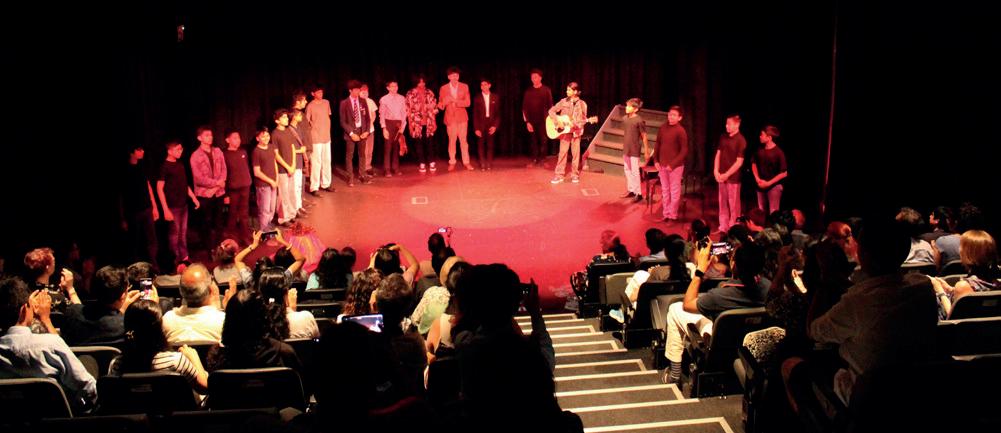
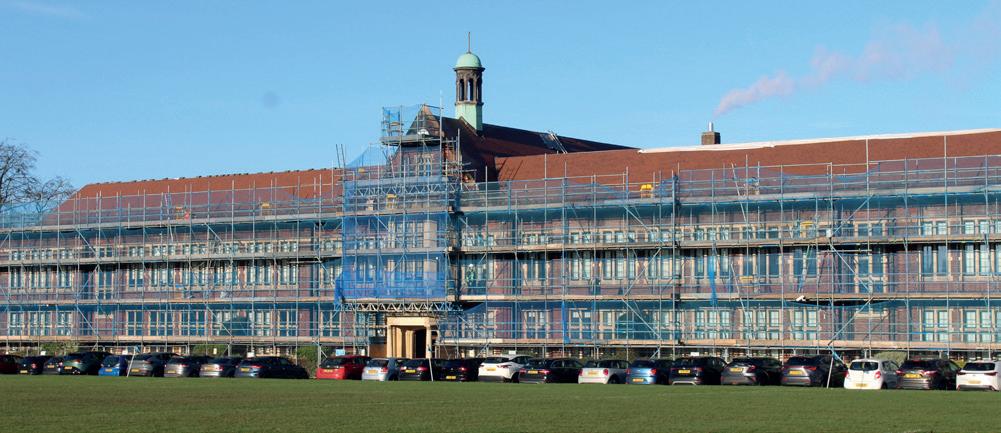
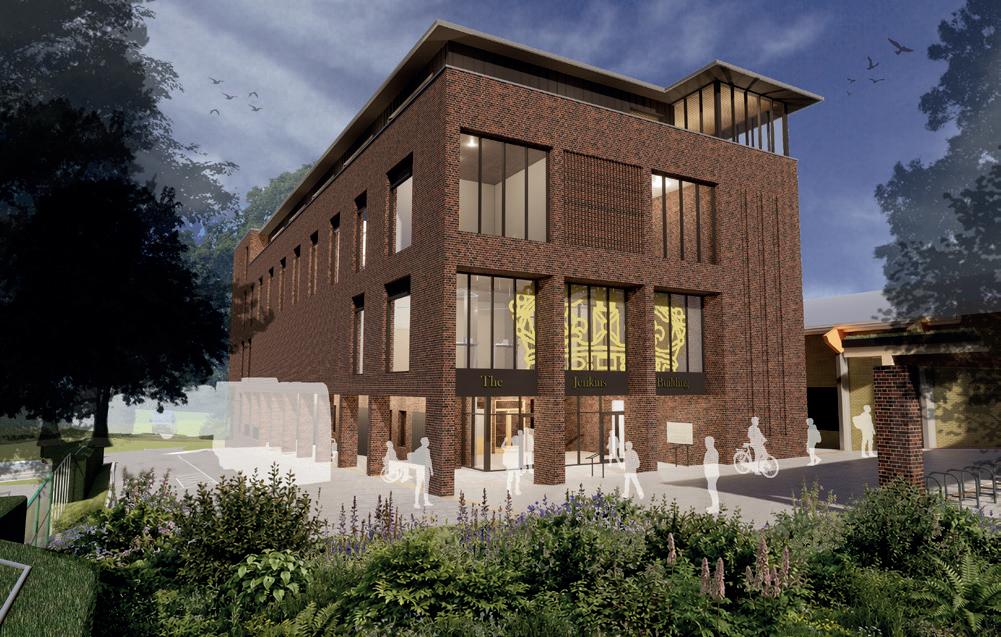
Queen Elizabeth’s School’s newest facility, opened in 2024–25, is The Robert Dudley Studio – a 200-seat theatre created through extensive works towards the rear of our Main Building. In a separate project, during 2025–2026, the Main Building itself has been undergoing its biggest upgrade since the 1950s, including new roofs, solar panels, repairs, and extensive redecoration. Work to refurbish all the School’s Biology laboratories begins in summer 2026.
Looking ahead, our new Estates Strategy takes QE through to 2035. Plans for an ambitious new Sports Hall, as well as new outdoor cricket nets and Fives courts, have been published.
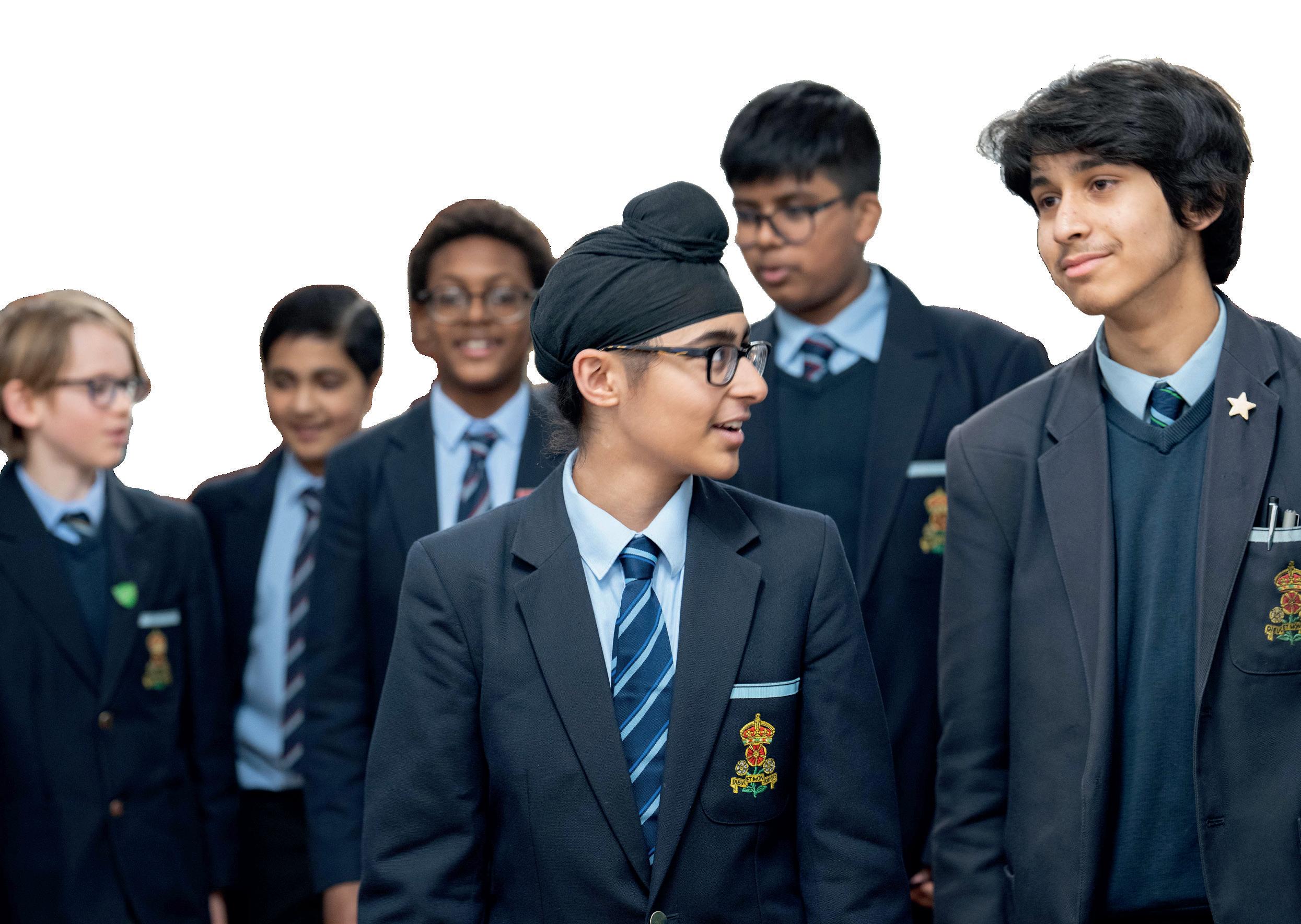
A traditional, well-organised state school, where all expectations are high...A unique and unashamed meritocracy in which clever, hardworking boys who like a challenge will thrive.
Our mission is to produce young men who are confident, able and responsible.
For 450 years, successive generations of boys have benefited from an education at Queen Elizabeth’s School. In this brochure, you will be able to read about how we continue to fulfil our mission to produce young men who are ‘confident, able and responsible’.
I would like to highlight two matters at the outset. Firstly, QE is a meritocracy. As a selective, non-denominational and non-fee-paying School, we offer opportunities equally, admitting and educating boys irrespective of parental income, residential location or religious affiliation.
Secondly, the School delivers a richly faceted, holistic education, and we expect parents to support us in this, undertaking that their sons will participate fully in the wider life of the School, much of which takes place outside the normal timetable.
We are committed to the pursuit of academic development at the highest level among our boys. We unashamedly celebrate intellectual accomplishment, including our outstanding examination results; we also endeavour to nurture scholarly curiosity through a programme of academic enrichment that takes pupils well beyond the constraints of the GCSE and A-level curriculum.
Our extensive range of exciting and worthwhile extra-curricular activities broadens boys’ horizons and helps them acquire new skills. Through our meticulously developed pastoral arrangements, we inculcate attributes such as confidence, resilience and perseverance. We also emphasise service and philanthropy, encouraging Elizabethans to look beyond purely personal success and to seek ways to contribute to society.
We draw strength from our 453-year history, focus on the present, and plan for the future. In 2025, we launched our new School plan, Boundless, with its vision to help pupils achieve remarkable success in a rapidly changing world. Over the past four years, Elizabethans have received 202 offers from Oxford & Cambridge and won hundreds of places at other world-class UK and US universities, with some securing sought-after degree apprenticeships. QE won no fewer than five Sunday Times awards for 2026, including State Secondary School of the Year.
Our overall approach, combined with our excellent facilities and our distinguished history, ensures that an education at QE is truly a state school experience like no other.
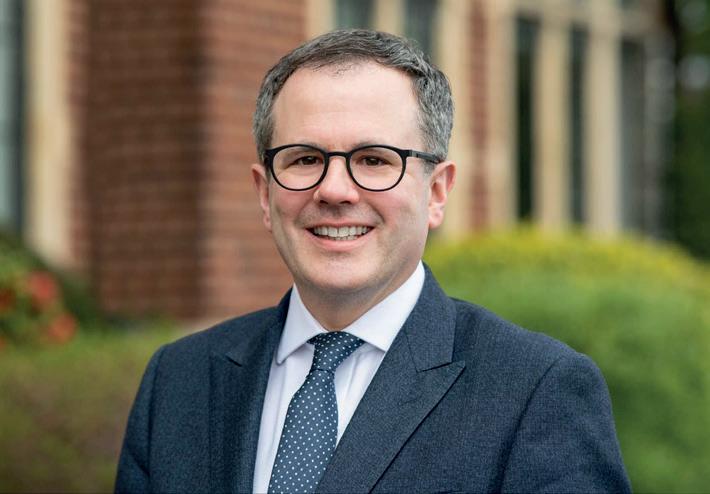
Neil Enright Headmaster, Queen Elizabeth’s School
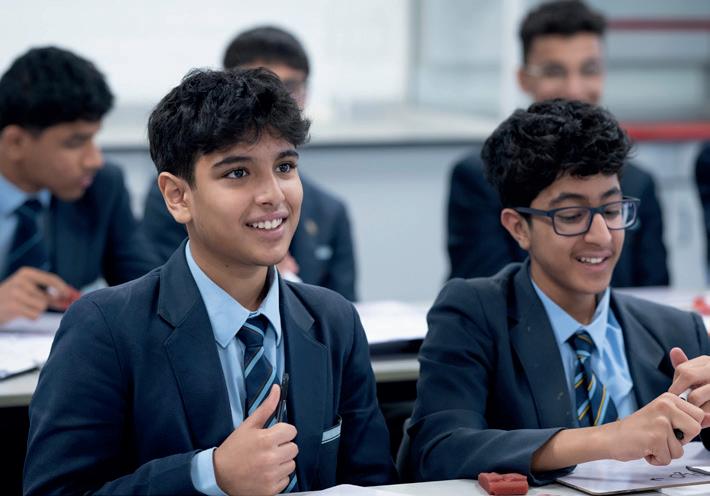
Queen Elizabeth’s School offers an intellectually rigorous academic programme that includes traditional approaches and ‘hard’ subjects, yet is also exciting and embraces worthwhile innovation.
Our results in examinations at GCSE and A-level are exceptional by the standards of both the state and independent sectors; QE is now recognised as one of the most outstanding schools in the country.
However, impressive as this is, our ambitions for our pupils go much further: not only should QE boys gain a thorough mastery of the curriculum, but we also seek to cultivate in them effective habits of independent learning and of deep academic curiosity. In short, we are committed to free-thinking scholarship.
This is achieved in the first place through excellent teaching by staff who are themselves highly academically accomplished and are well-trained in the best pedagogic practice. QE’s culture of excellence has been built on the bedrock of very many years of experience in educating boys and young men.
With unstinting commitment to the pupils in their charge, staff stay up-to-date with technology. Our impressive eQE virtual learning platform has been further developed since the pandemic, while the 1:1 devices now introduced throughout the School bring exciting new possibilities for enhancing learning.
Secondly, it is achieved through our programme of academic enrichment activities extending through all year groups. These are tailored to further boys’ understanding beyond the confines of the day-to-day curriculum, inspiring them to stretch themselves, to collaborate in exploring new areas, and to dig deeper into topics that interest and stimulate them intellectually, while also helping them understand their place both in our long history and in the world today.
Our growing partnership work with other schools includes regular collaboration with leading London girls’ schools in areas such as academic symposia and debating.
Our aim is that, by the time they leave the School, QE pupils will be ambitious thinkers possessed of a substantial measure of intellectual poise. They will be ‘young men who are confident, able and responsible’, as our mission statement has it. Moreover, they will be equipped to flourish at the best universities, to excel in interesting and rewarding careers, and to thrive in life generally.
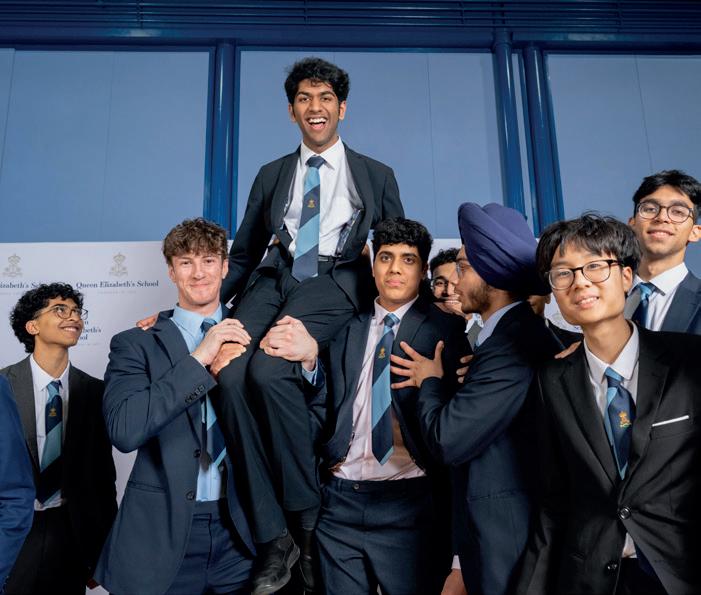
Shouldering all the responsibilities that come with being School Captain has done nothing to slow Tunishq Mitra down. Since taking on the role at the turn of the year, the Year 12 pupil has found time to be part of the four-man team that achieved QE’s highest-ever position at Senior Team Maths Challenge national final and to join a prestigious Model United Nations event, where he won a Distinguished Delegate title. Before that, his ability as a performer was on display in drama productions and music ensembles (Tunishq plays the electric guitar). He has been a peer mentor, one of the editors of The Econobethan – (QE’s pupil-run Economics publication) and has been involved in VEX robotics, including qualifying with his team for the World Championships.
Deputy Head (Pastoral) David Ryan said his talents, like those of his Senior Vice-Captains, Peter Atanasov and Vu-Lam Le-Nguyen, have been “obvious from their first year with us”.
I think one of the best things is definitely the learning atmosphere – it is really open and collaborative. There are a lot of opportunities to take what you learn in the classroom and apply it.
Ashwin Sridhar, 2023 leaver, when asked what a QE education meant for him. Ashwin is now reading Engineering at Cambridge.
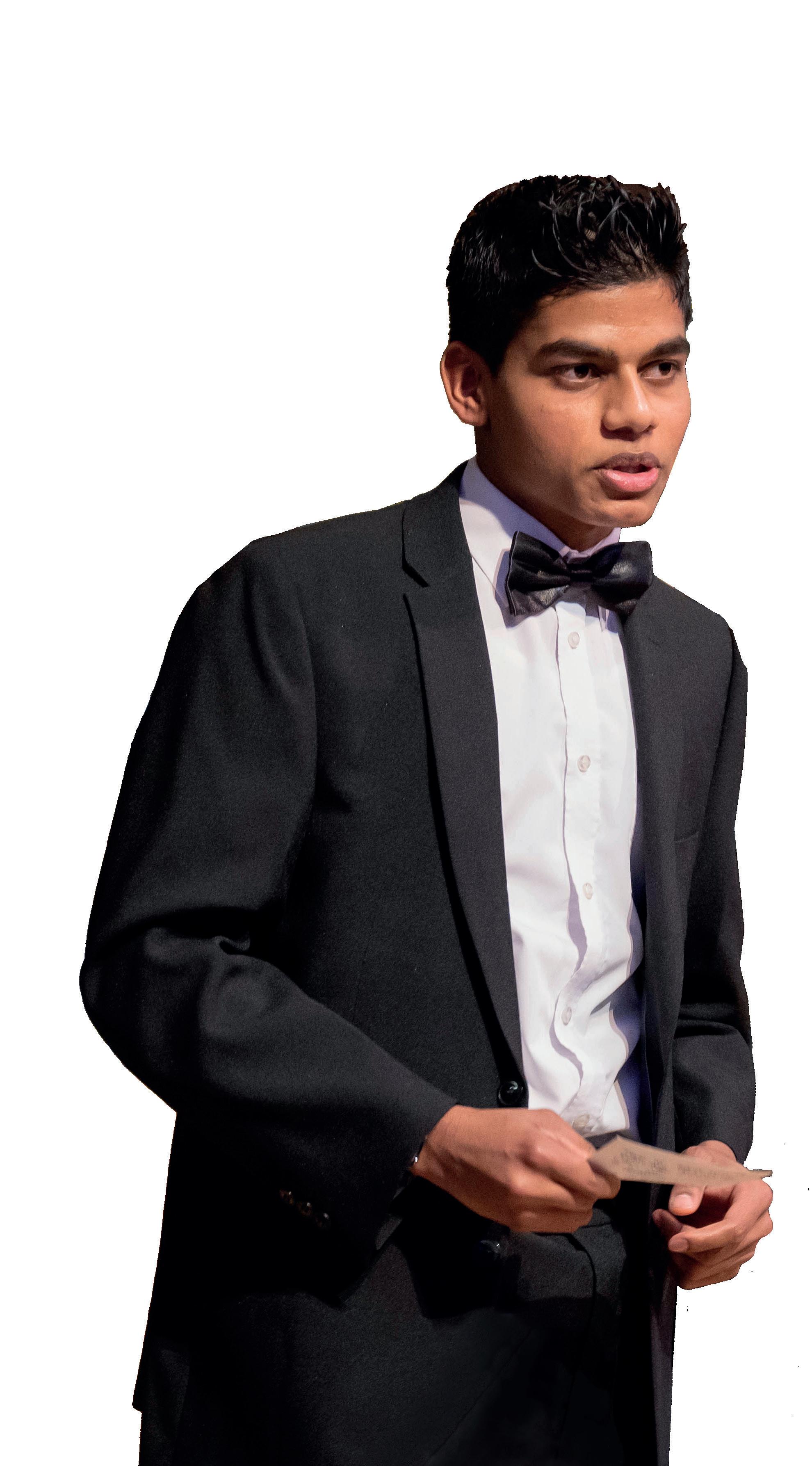
Flourish, our enrichment programme, comprises all that is done outside of lessons. It is carefully curated across four areas: Create, Compete, Challenge and Care. Through Flourish, we strongly encourage our pupils to spend their recreational time in ways that are both fun and constructive. The programme encompasses clubs and societies suitable for all tastes and talents, as well as inter-House competitions, academic enrichment activities, sport and games and the performing arts.
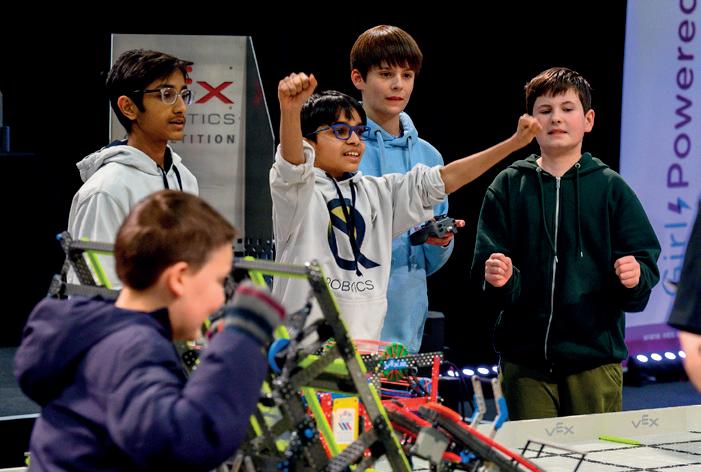
Thus, while some areas of Flourish enable boys to explore entirely new pursuits, others are directly related to curriculum subjects. There are, for example, extensive enrichment opportunities in the STEM subjects (Science, Technology, Engineering and Mathematics). Very many boys take part in the UK Mathematics Trust’s individual and team challenges, with the best going on to the British Maths Olympiad. Similarly, QE regularly achieves national-level success in the various science Olympiads and has excelled in space design competitions, reaching international finals hosted by NASA. The School is prominent in the exciting field of robotics, winning national and even global titles.
The arts & humanities are by no means neglected: for example, our Palaeography Society – believed to be the first of its kind in the country – sees A-level History students learning the skills necessary to study historic manuscripts, including the School’s Tudor records.
Chess club is perennially popular, the game enhancing concentration, memory and patience. And while its studious hush presents a contrast to the verbal cut-and-thrust of the many competitive debates in which QE is involved (including foreign-language competitions), the two activities have this in common: they put bright boys on their mettle, requiring them to think quickly as well as strategically. Our Combined Cadet Force develops personal responsibility, leadership and self-discipline. Established in 1992, it remains one of relatively few CCFs to be based in a state school.
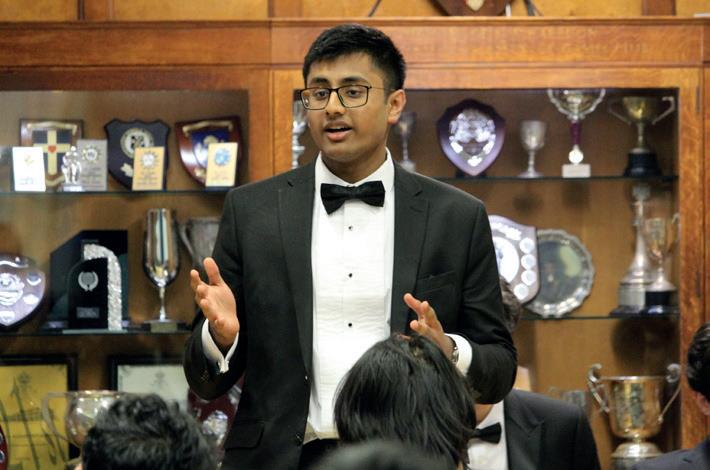
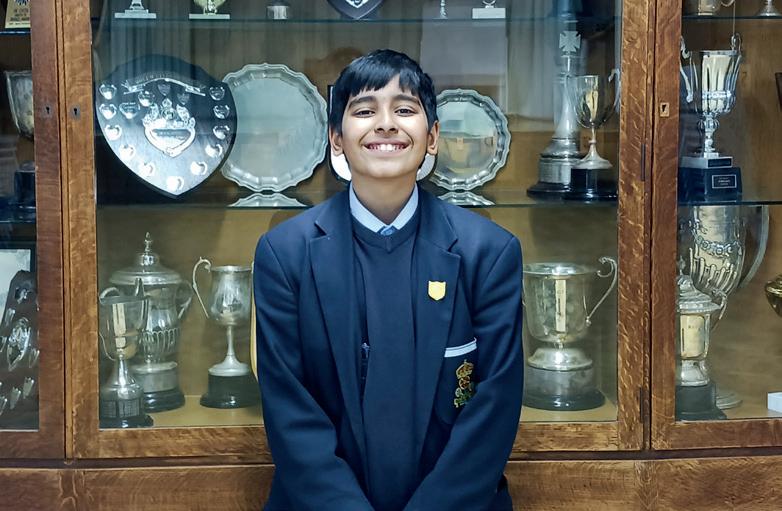
Kush Thakore was “honoured” to be the only Year 7 pupil chosen to deliver a TEDx talk and to speak at the induction day for incoming Year 7s. He has developed his oracy skills at QE’s Elizabethan Union debating society and through the inter-House debating competition. A young man of action as well as words, he helps at the new School allotment; plays the trumpet with Junior Winds and Junior Brass (only a few months after taking up the instrument); enjoys chess club, and was elected Form Captain. “Sport plays a significant role in my life,” he adds. Kush competes in national-level table tennis tournaments and represents QE in what is a rising sport here, while supporting sessions for children with Down Syndrome at Barnet Table Tennis Centre, for which he won a London regional award. “I have represented the School in rugby and athletics, and recently joined the high jump B team. I enjoy speed-cubing and compete at WCA events, also taking part in lane-swimming and Lifesavers Club. Balancing these commitments requires strong time management: I use a weekly planner to help maintain a healthy balance!”
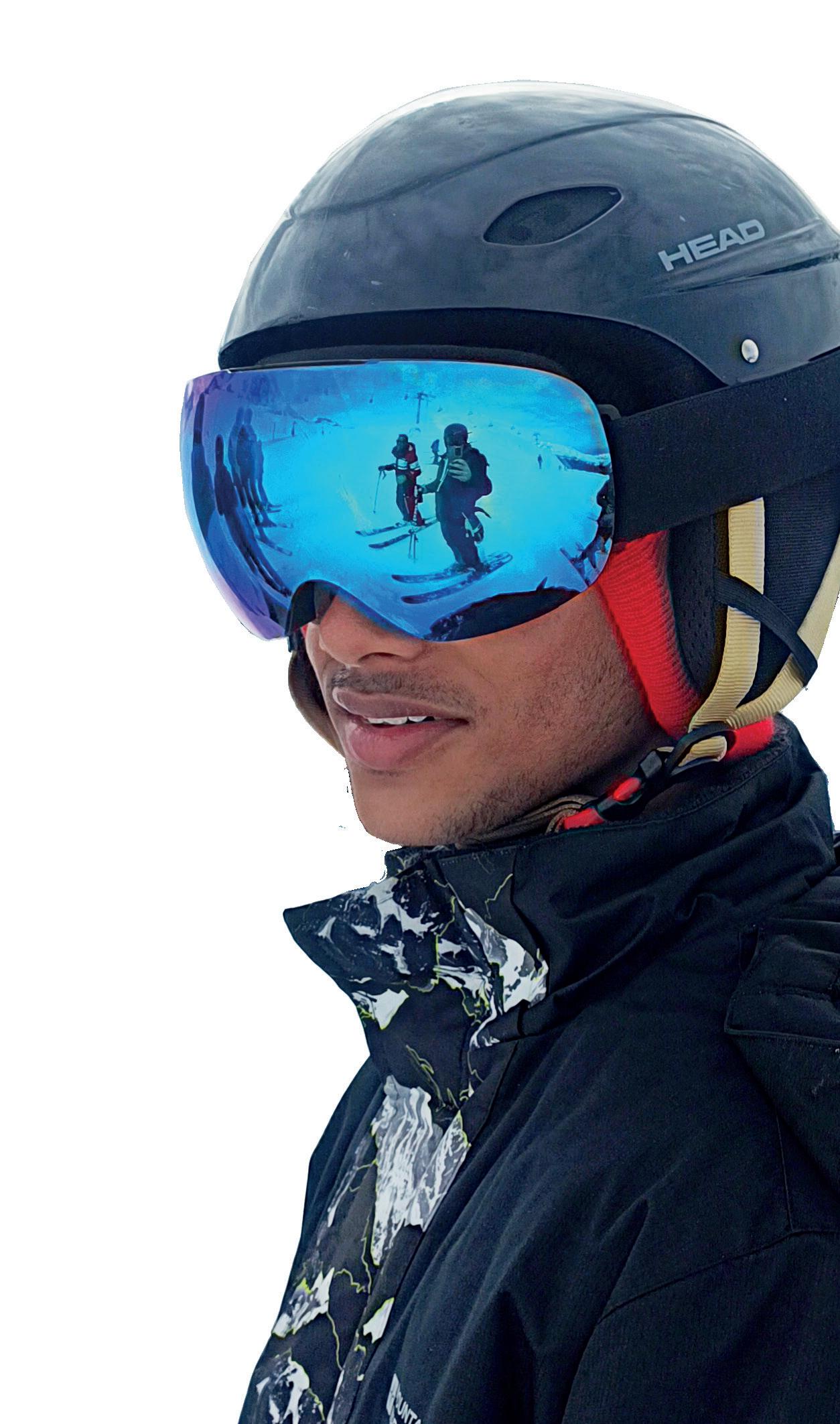
On top of the world
Pictured here is a skiing trip to the French alps, one of the many overseas travel opportunities offered to our boys.

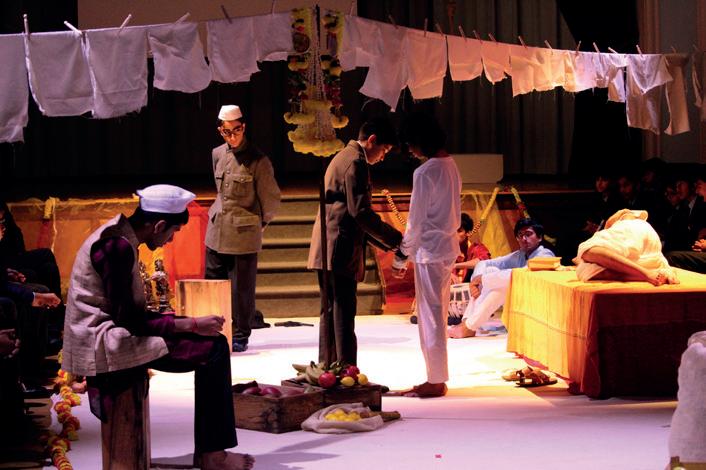
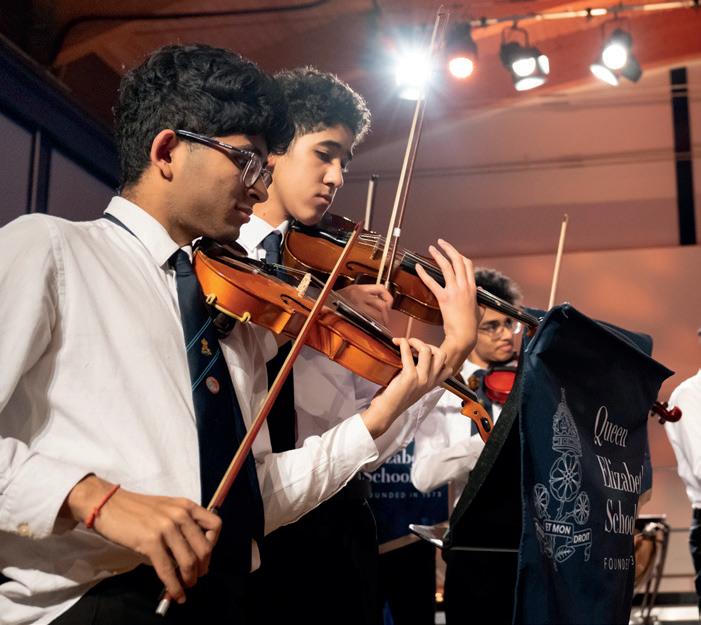
Dramatic productions and music concerts contribute immeasurably to the life of our School community.
Our extensive concert programme and other musical performance opportunities bind together musicians and audiences in enjoyment of some of the most sublime products of human creativity. Similarly, QE’s acclaimed Drama productions give our young actors the chance to explore great works of literature while presenting a rich visual spectacle.
Our extensive concert programme and other musical performance opportunities bind together musicians and audiences in enjoyment of sublime products of human creativity. Similarly, QE’s acclaimed Drama productions give young actors the chance to explore great works of literature while presenting a rich visual spectacle. Dance is a recent addition, with popular weekly sessions, workshops and performance opportunities. For performers, the shared experience of appearing on stage often draws out more technically accomplished and creative performances, simultaneously building confidence and maturity. In addition, boys benefit from the discipline required to prepare for events and develop sought-after attributes such as teamwork. This applies equally to the dedicated pupils providing technical support in areas such as sound and lighting.
The School Play, a colourful highlight of our calendar, is a full-length production involving large numbers of pupils, while the popular drama club builds the boys’ skills and confidence.
QE has more than 30 regularly rehearsing ensembles of all sizes and covering all genres of music. There are frequent performance opportunities both inside and outside School, including overseas Music department tours. Our Chamber Choir has in recent years sung Evensong at St George’s Chapel, Windsor; King’s College, Cambridge; and Christ Church, Oxford. We run an organ scholarship scheme jointly with St John the Baptist Church in Barnet, while QE leavers regularly secure choral scholarships at Oxford and Cambridge.
We had many rehearsals of our hip-hop dance showcase routine, and each session was extremely fun!
Logan Le, Year 7
Before, we rehearsed plays in classrooms. Now, we can rehearse in the space we are actually performing in, with stage direction and lighting.
Bharath Jayakumar, Year 10
Both boys enjoy using QE’s flexible Robert Dudley Studio, opened in 2024–2025.
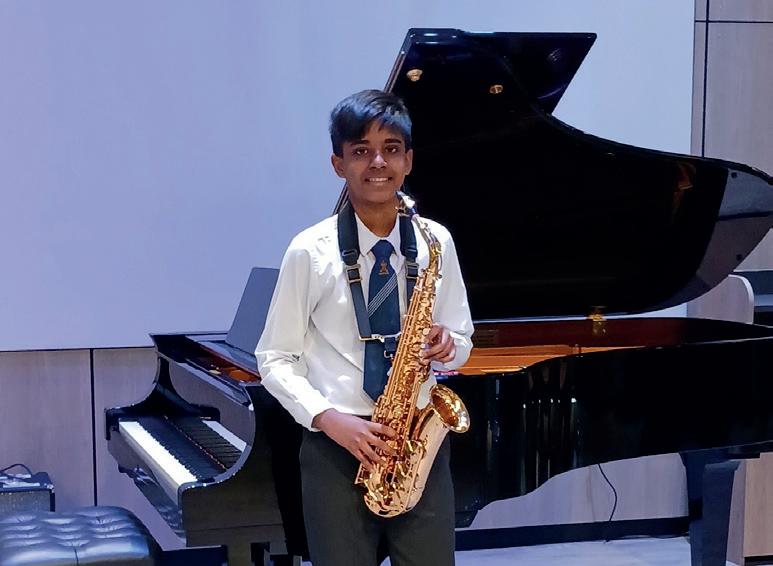
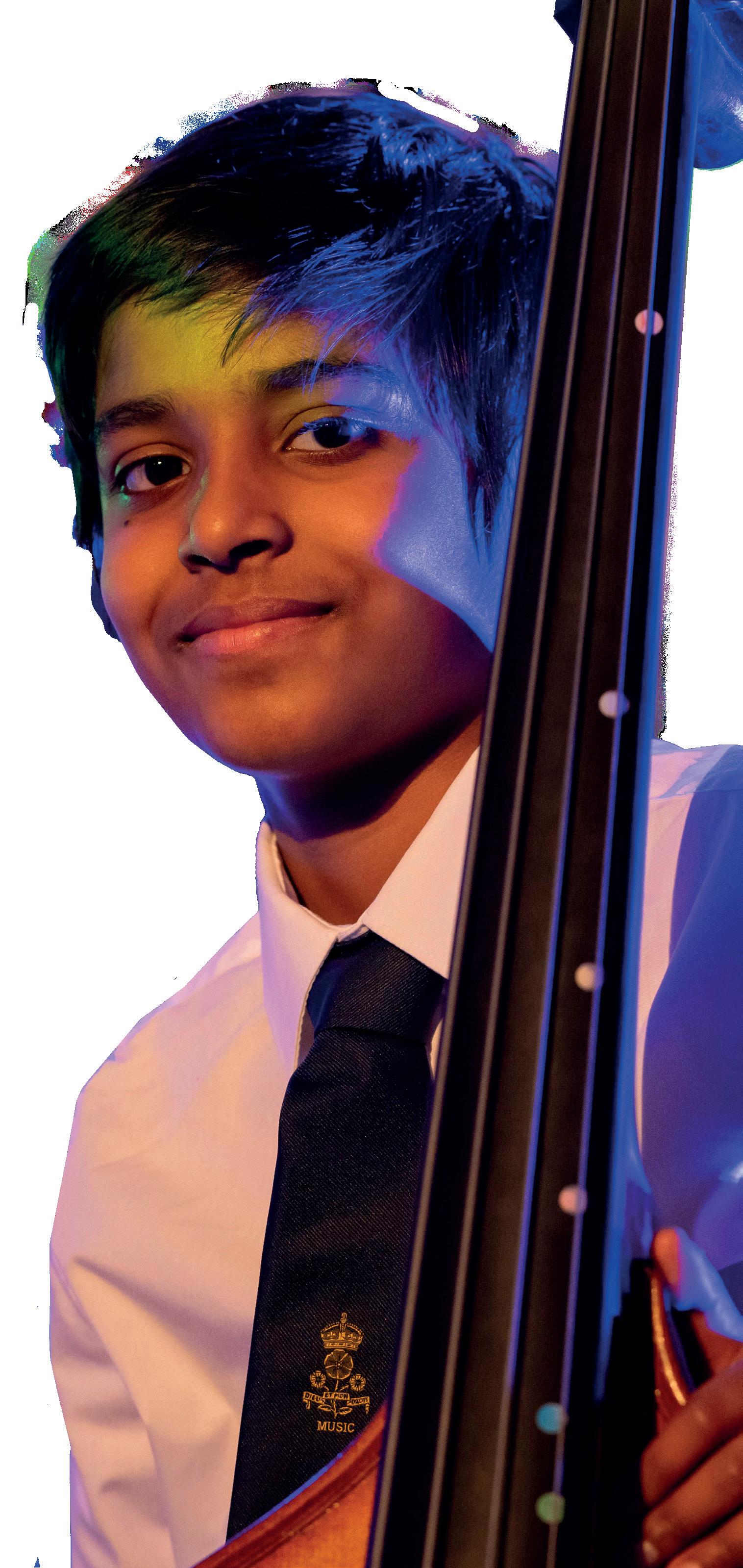
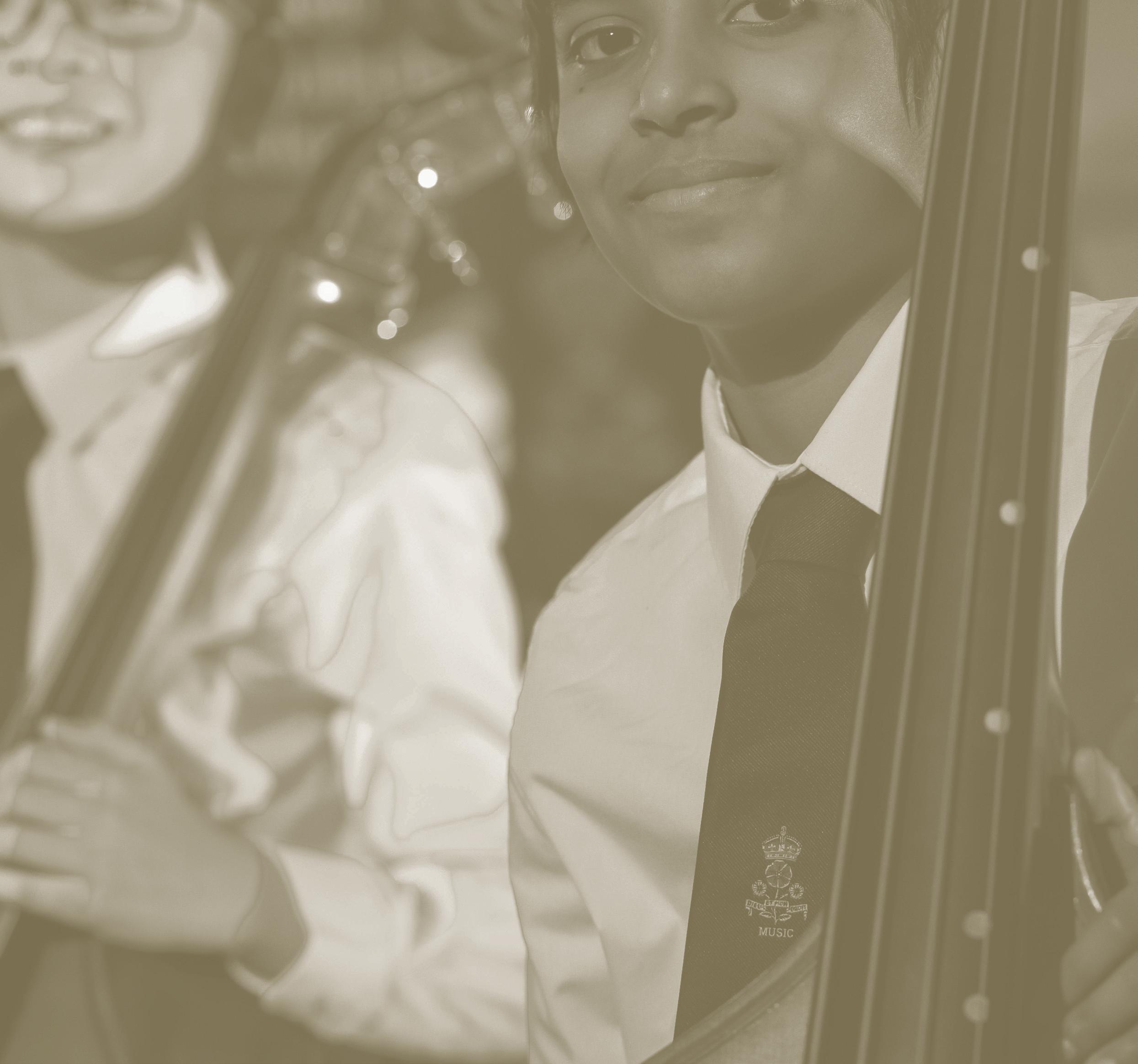
Year 8’s Ivan Zachariah is making the most of everything the Music department has to offer, including the Friends’ Recital Hall and Music Rooms, opened in 2022. He plays saxophone (working towards Grade 5) and double bass (working towards Grade 6).
“I am in the department every single day. On the saxophone, I’m part of Junior Winds, Junior Jazz and the Saxophone Chamber Ensemble. On double bass, I play in the School Orchestra, Junior Strings and the Lower Strings Chamber Ensemble. I also sing in Junior Choir and the School’s Chamber Choir.”
The new Music facilities have quickly become vibrant hubs, where pupils can develop their talents, collaborate, and perform with confidence. Ivan can frequently be found in the Friends’ Recital Hall, relishing the opportunity “to perform and practise in a state-of-the-art venue”. He adds: “The Music department is amazing in allowing every student at QE to enjoy this space. No matter a boy’s skill or experience, there is an opportunity to flourish through the wide range of ensembles available.”
Our talented young sportsmen benefit from opportunities to achieve House, School, county, divisional and national honours, while the School seeks to nurture the enjoyment of sport and to lay strong foundations of physical fitness in all our pupils.
The combination of high-quality teaching in PE lessons, expert extra-curricular coaching and our impressive facilities ensures that we quickly identify talent and then nurture it to a very high level. Boys participate in external sporting competitions in our main summer and winter games of cricket and rugby, as well as in athletics, basketball, cross-country, Eton Fives, swimming, tennis and water-polo. We have recently started offering additional opportunities in gymnastics and fencing through partnerships with local specialists.
Fundamental movement skills are taught in lessons for Years 7–9. Alongside this, we seek to develop communication skills and, through team and individual sports, to nurture leadership and resilience. In an increasingly sedentary society, the ancient maxim of mens sana in corpore sano (a healthy mind in a healthy body) rings truer than ever.
We firmly believe in competition. Our extensive fixture programme provides opportunities not only at élite level, but also for those of lesser ability who nevertheless enjoy their sport. A full
programme of inter-House matches gives many further opportunities. Among recent successes, our U15 cricketers were crowned Middlesex County Champions, while the U13s and U12s were also county finalists. Prior to that, QE’s U15 water polo side won the National Bowl, and we took the Eton Fives Association’s Team of the Year Award. We expect commitment from all boys representing the School, including mid-week and Saturday involvement.
There are regular national and international rugby and cricket tours to destinations such as Sri Lanka, Canada and Holland, together with trips such as the annual Year 7 excursion to the Varsity Match at Twickenham. Every February half-term, we run a skiing trip. In 2026, we celebrated 50 years of the annual QE Sevens Tournament, which attracts leading rugby schools from across the country.
QE’s own extensive list of clubs includes fencing, table tennis, karate, volleyball, strength and conditioning, and both beginners’ and élite swimming groups, while we enjoy close links with sports associations in the local area.
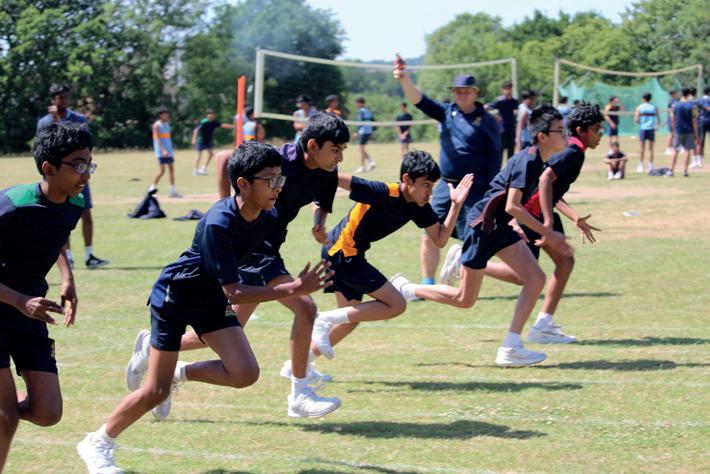
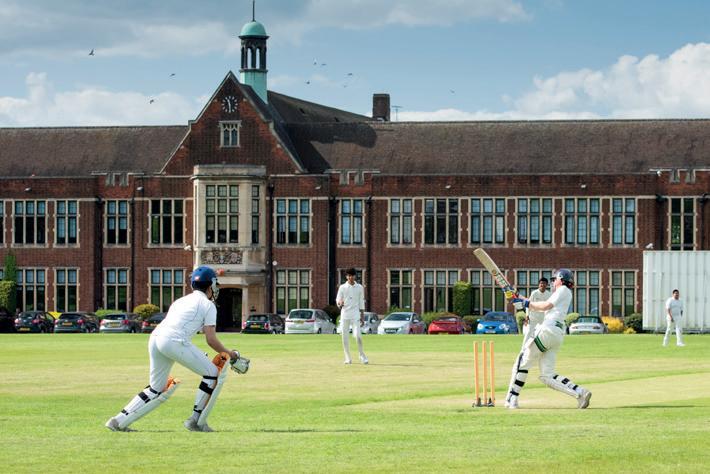
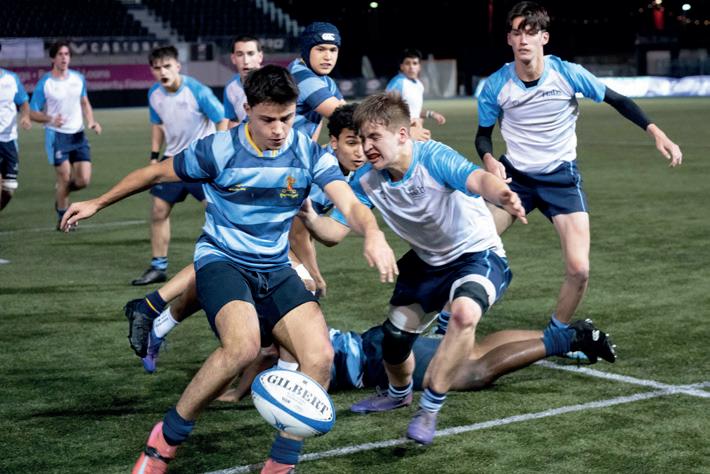
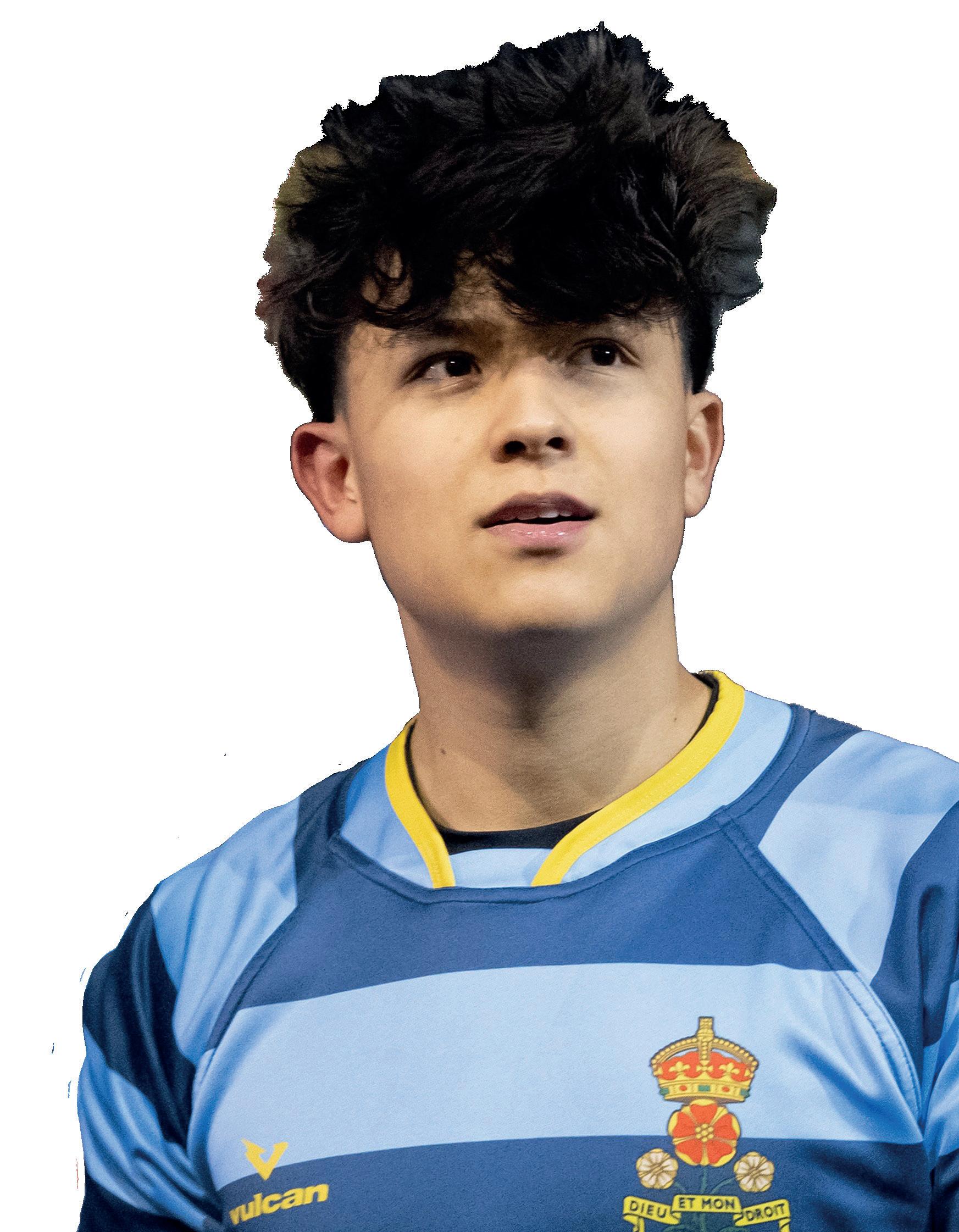
Having never played rugby before I came to this School, I can’t believe how much impact the game has had on my life. Not only has it kept me active, it has taught me responsibility and invaluable leadership skills.
OXBRIDGE OFFERS
In 2026, 69% of Year 13 received offers from a university in the World Top Ten QS rankings (from Harvard, Imperial, Oxford, Cambridge & UCL) and 98% had at least one offer from a Russell Group university.
453 YEARS SINCE QE WAS FOUNDED
2025 was the 20th consecutive year in which our benchmark A*–B figure exceeded 95%. Over half of all grades (53.35%) were at A*, with 29% of what was QE’s biggest-ever Year 13 cohort achieving straight A*s.
63.6%
GCSEs AWARDED GRADE 9
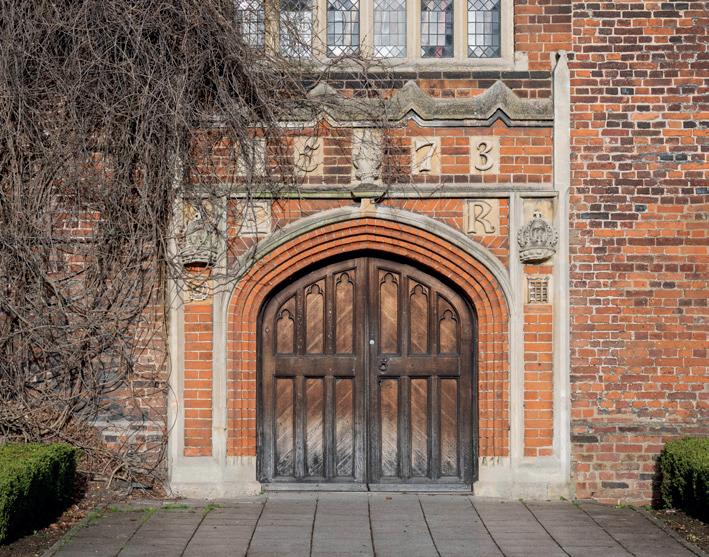
Queen Elizabeth I granted a charter on 24th March 1573 to establish a ‘Free Grammar School’ in Barnet ‘for the education, bringing up and instruction of boys in Grammar and other learning and the same to continue for ever’. TOP UNIVERSITY DESTINATIONS
Year 11 performed strongly across the board in 2025, with 95.7% of GCSEs graded level 7–9. All 171 Chemistry candidates achieved level 9 (160) or 8 (11), while for Maths, 151 pupils earned level 9.
QE offers a very extensive range of worthwhile leisure-time activities throughout the year groups to cater for all tastes and talents, including clubs, sports, societies and musical ensembles.
QE has a stellar record in Vex Robotics, having been crowned World Champions in 2018 and UK Champions again in 2026. As in previous years, multiple teams qualified for the 2026 World Championships, in St Louis, Missouri.
9.4k 30+
HOURS OF LOCAL VOLUNTARY SERVICE
All Year 12 boys complete 40 hours of voluntary service to the community over the course of the year, with many opting to keep contributing in Year 13. In addition, boys throughout the School raise money for local, national and international charities.
QE’s musicians play in a wide variety of ensembles, from chamber groups to the orchestra, from jazz bands to choirs, and from guitar groups to Indian music ensembles. Some 320 individual music lessons are delivered each week – and rising!
Queen Elizabeth’s School has a long and proud history, and in 2023, we celebrated our 450th anniversary. Of course, much has changed since our founding in 1573, and the School continues to evolve as we seek to provide for our pupils the best that modern education has to offer. Yet QE is today still underpinned by the values enshrined in our original Charter.
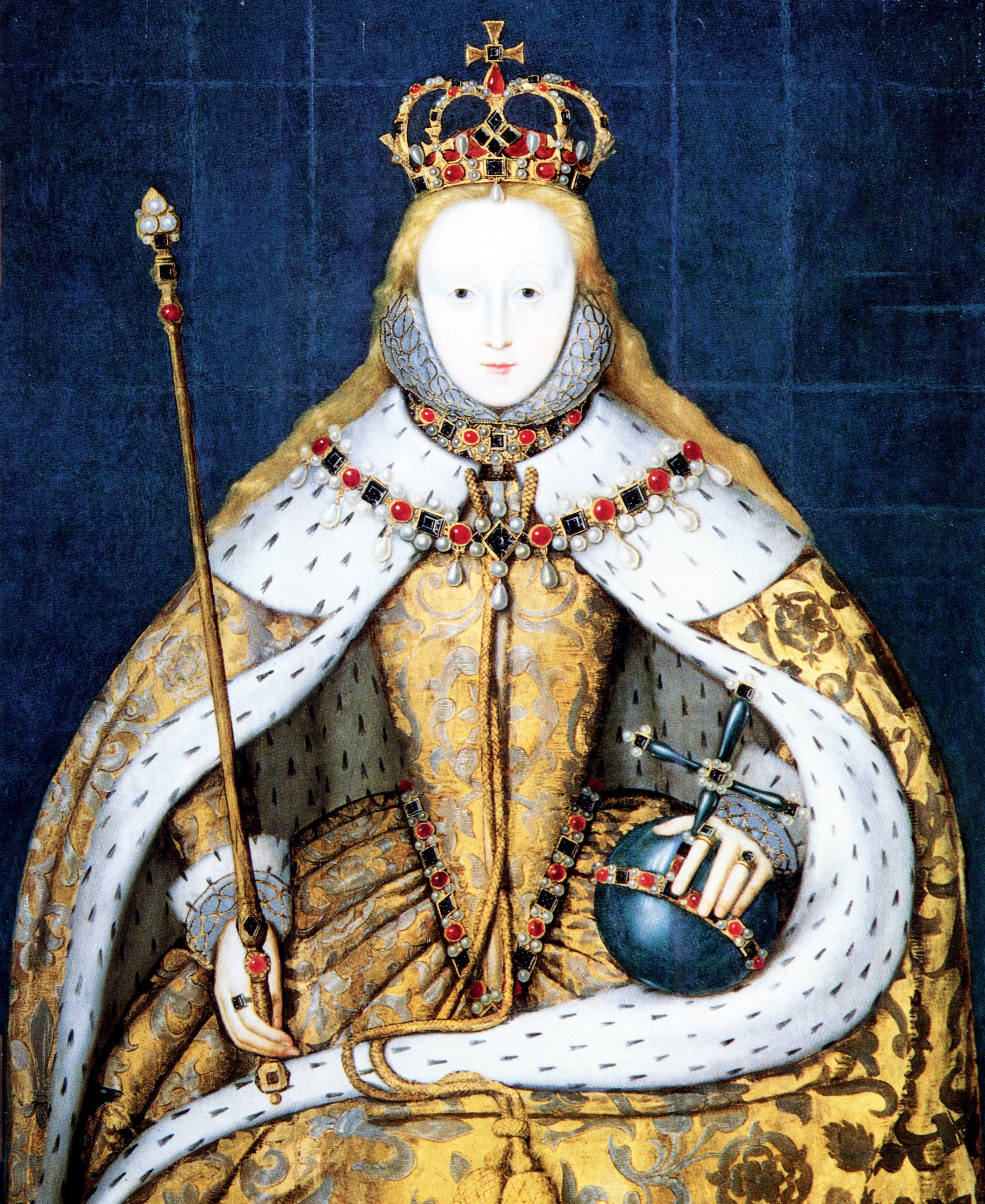
Granted by Queen Elizabeth I at the request of Robert Dudley, Earl of Leicester, the Charter sanctioned the founding of “one Common Grammar School… for the education, bringing up, and instruction of boys and youth… and the same to continue forever”.
We continue to draw extensively on those Tudor ideals to this day, applying and re-interpreting them to inform all that the School does. Our Elizabethan forebears recognised that a truly successful school not only delivers outstanding academic outcomes, but also promotes the development of character in its pupils and encourages them to go on to make a worthwhile contribution to society. As the pages of this brochure make clear, we devote considerable time, expertise and resources to these priorities, which are encapsulated in our mission to “produce young men who are confident, able and responsible”.
The Charter set out the need for continuity and a long-term approach. Furthermore, it enshrined arrangements to make this possible, ensuring that the Governors could “more plentifully and decently maintain the Free School”.
QE’s first building, Tudor Hall, in Wood Street, served us well: it was to remain our home for nearly 350 years. During those long centuries, QE’s values supported it even as its fortunes fluctuated through such epoch-making events as the plague, the English Civil War and the great educational reforms of the Victorian era.
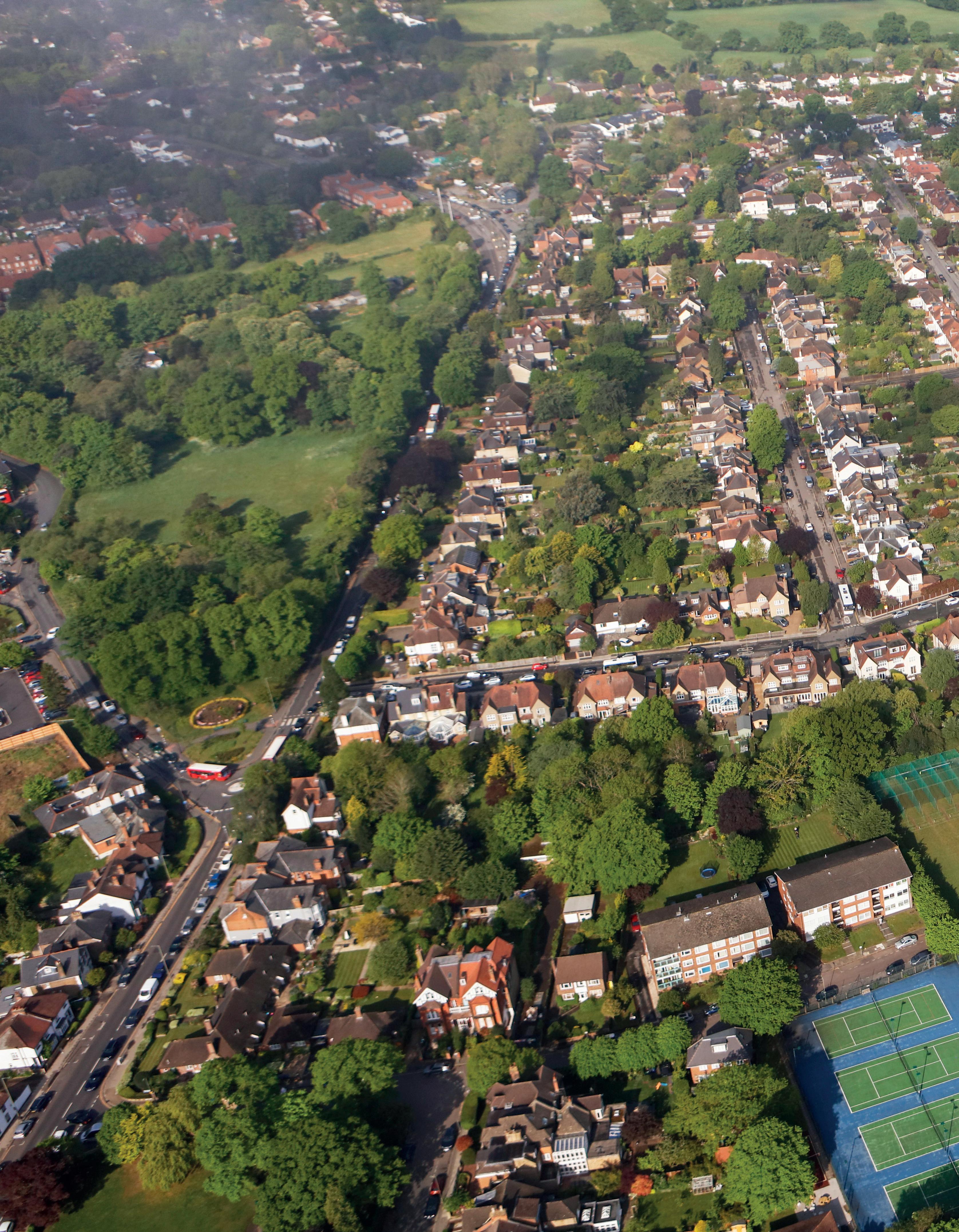
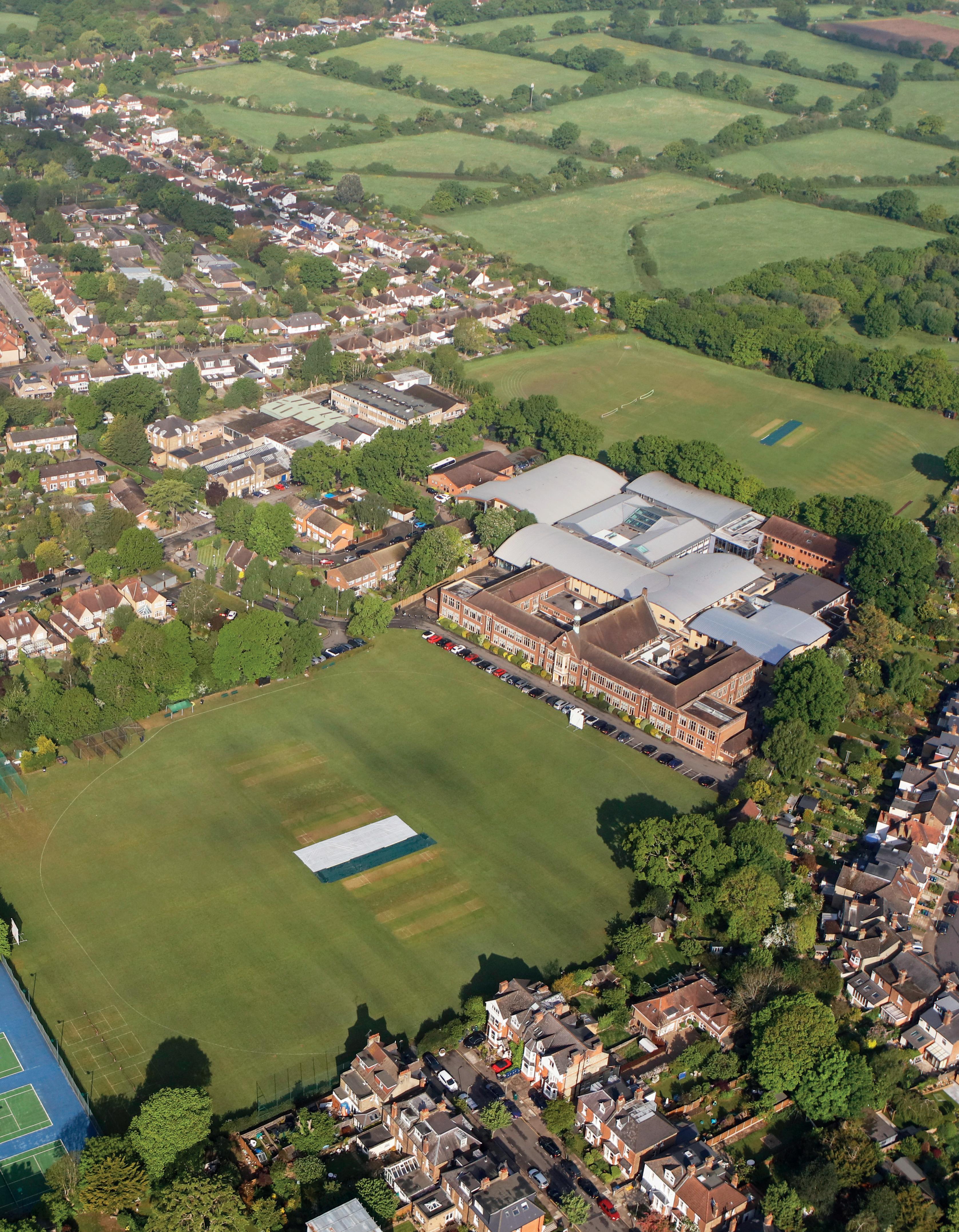
Since the School moved to our current Queen’s Road site in 1932, new traditions have emerged, such as the reading of the School Chronicle after the Founder’s Day service, as well as our annual Rugby Sevens Tournament. Recent decades have seen substantial changes to the campus as the Governors have made major investments to ensure our School continues to support both current and future generations.
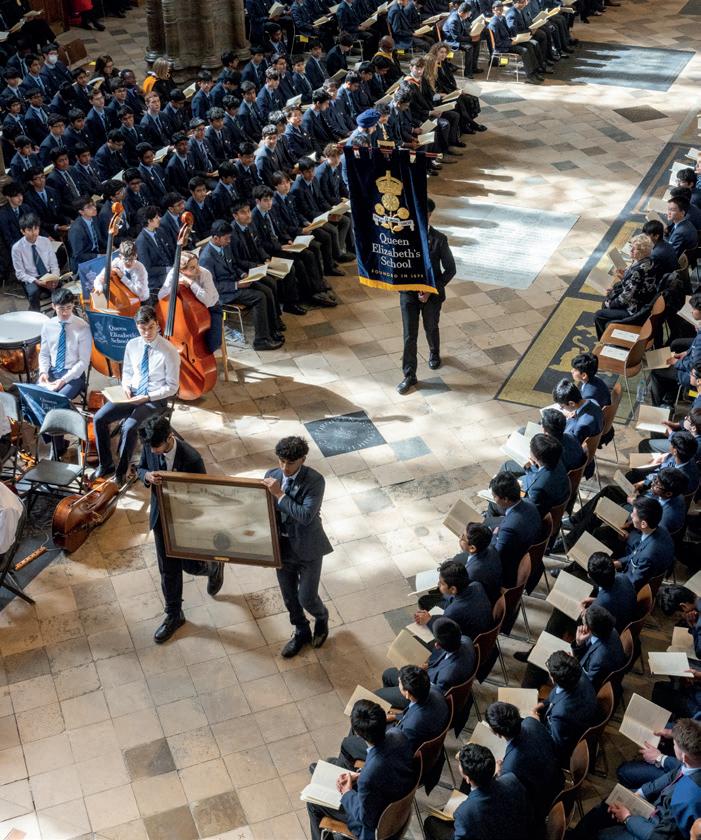
Through all this, Queen Elizabeth’s School has been guided by the tenets of its original Charter, which was proudly displayed when the whole School gathered for a thanksgiving service in Westminster Abbey on the actual day of the 450th anniversary in 2023. By remaining true to the Charter’s values, QE has emerged as one of the most outstanding schools of the 21st century.
A Grammar School for the education, bringing up, and instruction of boys… and the same to continue forever.
From
Queen Elizabeth’s is truly a 21st-century school built on 16th-century foundations. Proud as we are of our long history and of its role in informing the School’s values, we are also focused on the future and on facilitating the continued progress of the School by creating a superb physical and digital learning environment.
Our state-of-the-art Martin Swimming Pool, used by all QE boys, has hosted events including the National Senior Schools Water Polo Finals. The Shearly Hall has excellent acoustics and is used for concerts and recording, as well as drama, sport, examinations and social occasions. The transformation of our campus continued with the completion of: The Queen’s Library and dining complex; a new base for the English department; and a robotics suite.
2022 saw the opening of a complex housing The Friends’ Recital Hall and Music Rooms, a covered atrium and a café. Following the 2023 refitting of two Chemistry laboratories, in summer 2026 and 2027 the Biology department is being completely refurbished. One recent major project is The Robert Dudley Studio – a 200-seat drama and lecture facility created within our historic Main Building. Bigger still is the £2.3m overhaul of Main Building itself, involving new roofs, repairs & redecoration, and extensive environmental upgrades. All these developments have required substantial financial backing from The Friends of Queen Elizabeth’s.
As a result of our growing partnerships, our facilities are increasingly popular in the community. We host visits from local primary schools; the pool is used for swimming lessons, and the new
Music building quickly became a venue for the High Barnet Chamber Music Festival.
Our new estates strategy looks ahead to the next 15–20 years. One major objective is the construction of a new sports hall. We are also planning an additional dining venue, the Fern Café. In the online world, our digital strategy is enhancing education at QE, while ensuring our pupils are fully equipped for careers in a fast-moving global market. Our 1:1 programme, rolled out following a major upgrade to our WiFi network, offers each pupil a personal tablet computer. The programme is already creating exciting opportunities in teaching & learning, both inside and outside the classroom.
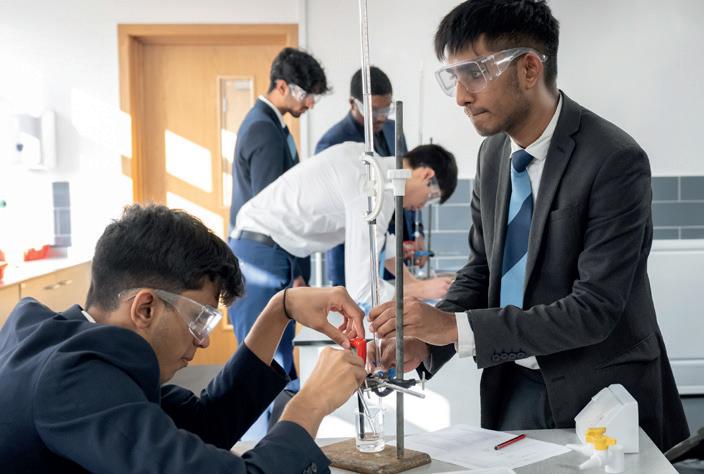
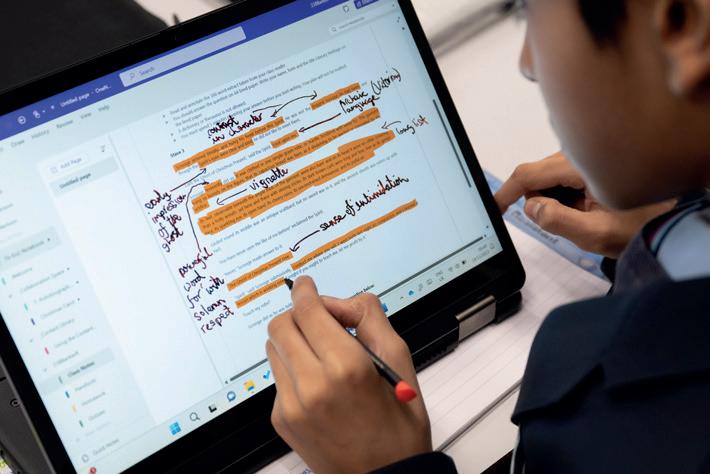
Boys are encouraged to be ambitious in their own learning, to go on a voyage of discovery – ‘confidently, independently, collaboratively’… Everything inside is spick and span.
Good Schools Guide review of QE, 2025.
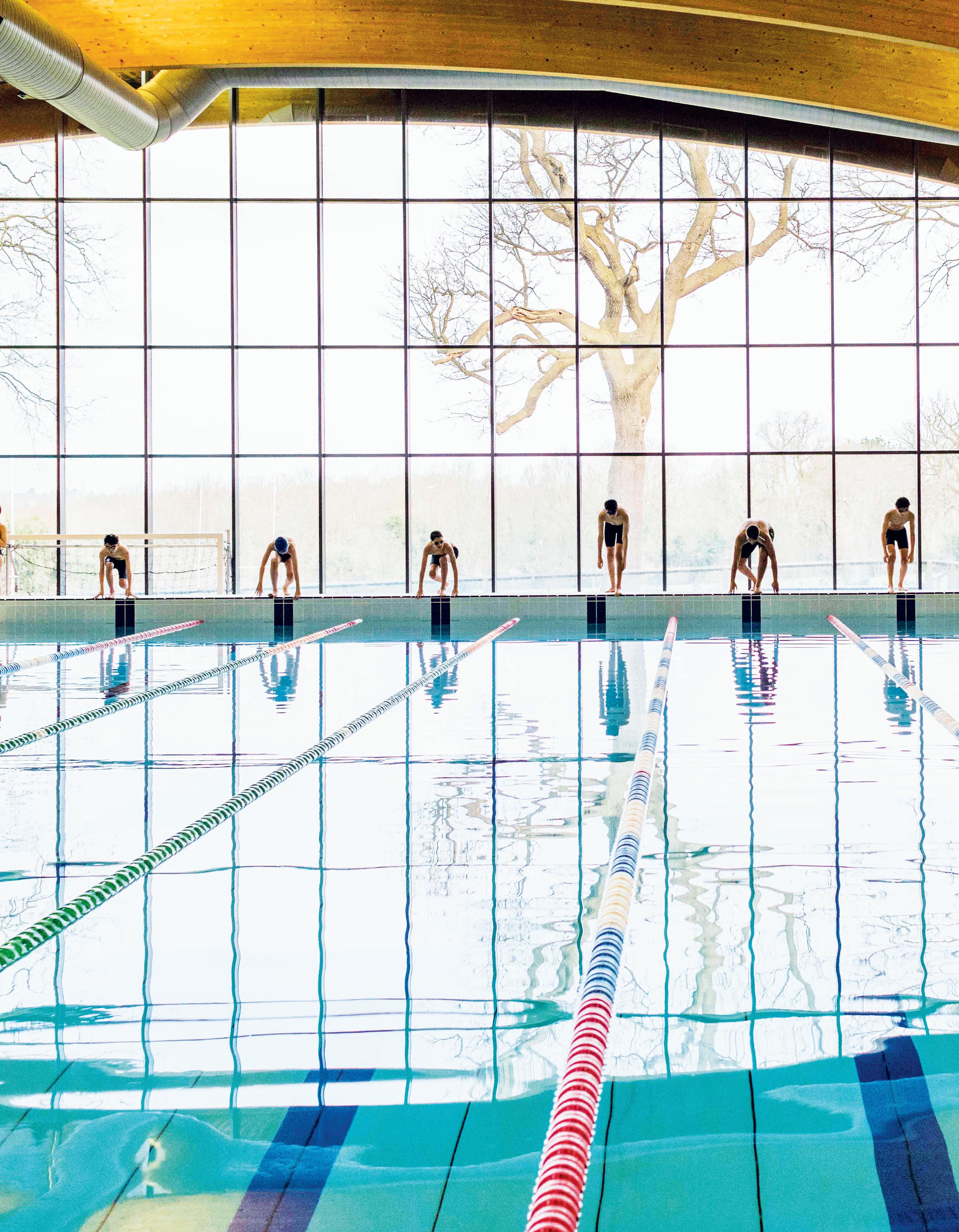
The
swimming pool is a fantastic place to enjoy yourself and learn additional skills. I have loved experiencing new activities like water polo.
Year 12’s Keeyan
part of the QE U15 water polo squad that won the National Bowl, has won individual recognition in the sport at regional and national level.
Pastoral care is central to what we do at Queen Elizabeth’s: we want our pupils to be happy and resilient, and to go on to successful lives and careers.
Recognising that there is no ‘typical QE boy’, we adopt a bespoke approach that prioritises pastoral support alongside areas such as academic monitoring, nurturing free-thinking scholarship, and co-curricular development. Our personalised, tailored system develops through the years to support all pupils’ happiness, involvement, achievement, and preparedness for university and beyond. It is delivered through: weekly Personal Development Time sessions; one-to-one meetings with tutors and senior staff; peer mentoring; our Equality, Diversity & Inclusion Ambassadors; and co-curricular activities. Digital tools help us monitor pupils’ wellbeing and keep them safe in the physical and online worlds. If pupils do experience difficulties, extensive support is available from staff, older boys and, if necessary, professional counselling and other specialist help. Again, this is offered on an individual basis and delivered with great care and sensitivity.
Our aim is to enable boys to thrive in the modern world, where they contend with pressures that older generations did not have to face. The QE pupils of today are exceptionally individual, and we therefore focus on knowing each boy individually and on meeting his needs. We seek to help every Elizabethan become the happiest and best version of himself, progressively realising his Boundless potential.
A similar approach is taken in providing academic support. Each year, boys are set personalised targets in every subject and are given individual support to ensure they progress. Many tools are employed to help them reach their full potential, including bespoke interventions, differentiation and additional one-to-one work in subject clinics.
Our new QE Futures programme helps boys throughout the School consider and plan their future pathways into higher education and top-level careers. Activities include our Year 11 Careers Convention, special workshops and talks by inspirational speakers. QE Futures incorporates our established University Support Programme, which includes tailored support for Oxbridge and Ivy League applicants.
More generally, an atmosphere of positivity is created by a culture of celebrating success. Boys are praised for their efforts, service and achievements, whether through merits, good notes, commendations or, more publicly, through our Junior and Senior Awards evenings. We thus motivate pupils, spurring them on to still greater success and creating a virtuous circle in which success becomes a habit.
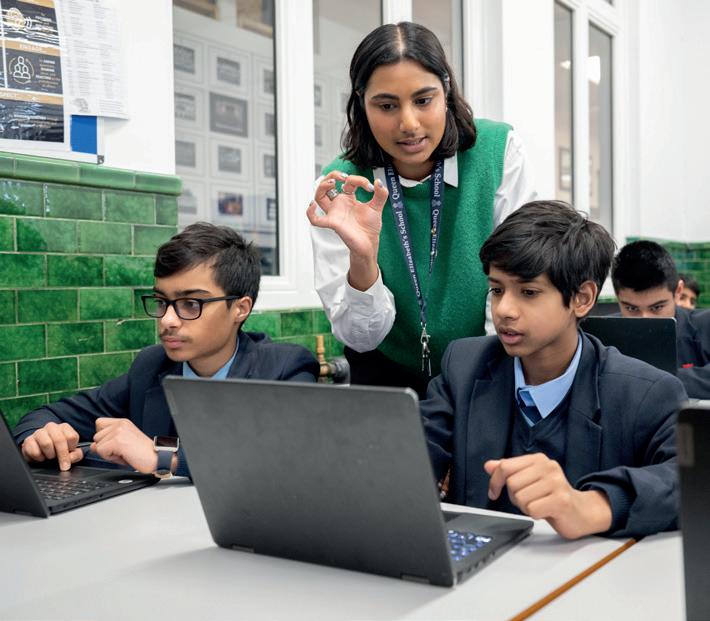
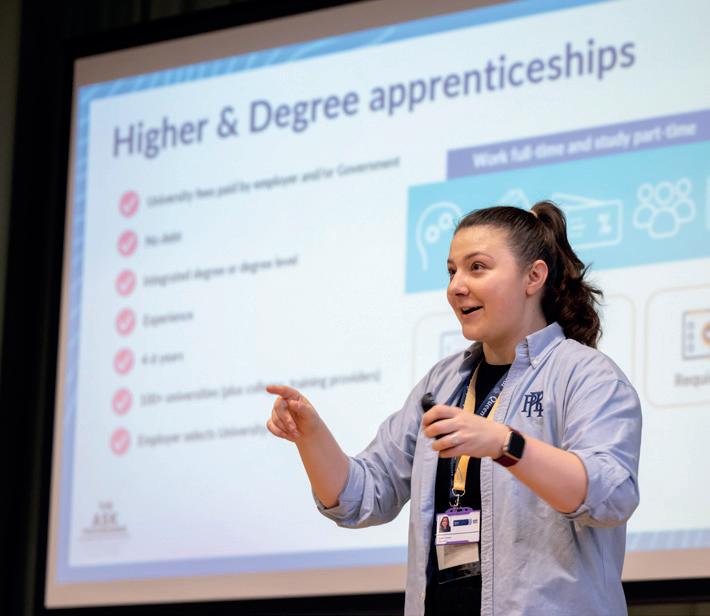
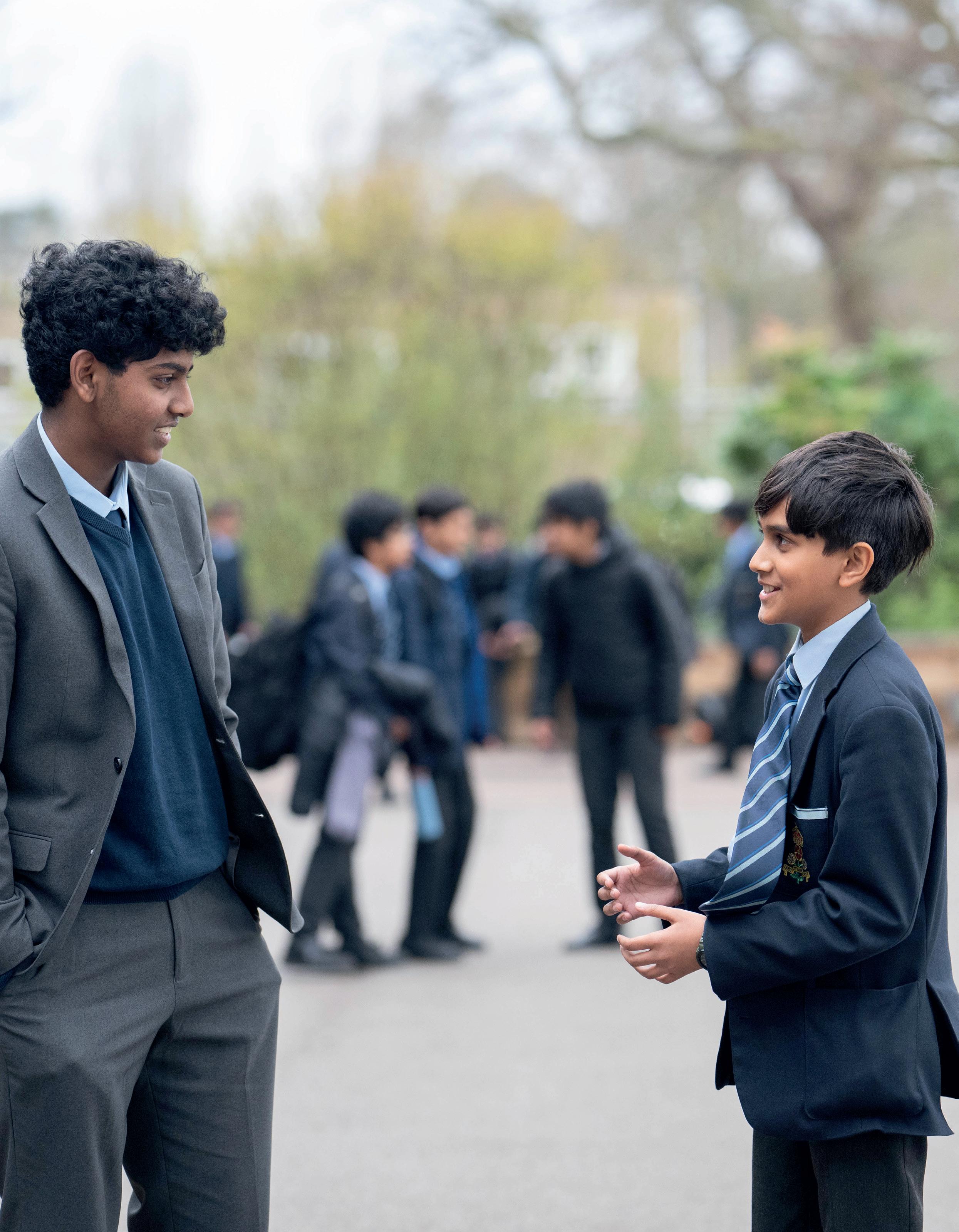
Pupils are happy and safe… Leaders place great importance on pupils’ personal development. Staff… prioritise teaching about mental health, managing stress and online safety.
From the day they join our ranks in Year 7, pupils become part of a unique community which includes not only their peers, but those who have gone before and those who will come after, as well as parents, staff, Governors and many other supporters of the School.
Our home-school partnership sets out the essential role that parents have in supporting their sons. We are acutely aware of the part parents play in the success of the School. That our current pupils are able to enjoy the fantastic learning environment on offer here is due in very large part to the generosity of parents. Since the mid-1990s the fabric of the School has been transformed by regular parental giving through the Friends of Queen Elizabeth’s. A registered charity, FQE offers parents the opportunity to get involved in fund-raising through a calendar of enjoyable social events, which reaches its summer climax with our annual Founder’s Day Fete.
Through our Valediction Ceremony, introduced in 2022, we say a fond farewell to Year 13, but also welcome them into the ranks of the Old Elizabethans. The overwhelming majority of our leavers go on to Russell Group and other top universities in the UK and beyond. After university, they follow a very diverse range of careers. Large numbers enter the professions, including medicine, law and accountancy, and many others find fulfilment in entrepreneurship and commerce, in the creative arts, in academia or in science and engineering.
At every stage, our alumni support the School in the extensive work we do to prepare pupils for their futures, often liaising with us through our thriving QE Connect online network. This support ranges from inspirational talks given by Old Elizabethan speakers who have excelled in their careers, to mock university interviews and mentoring. Alumni facilitate work experience programmes and internships, helping boys gain that vital first foothold in highly competitive professional careers.
QE Connect also serves the alumni themselves, making it easy for them to connect with other Old Elizabethans online, whether purely for friendship or to advance their careers. In the physical world, the School facilitates such connections by hosting occasions catering especially for alumni – such as the Old Elizabethans Annual Reunion Dinner and our Elizabethan Union Dinner Debate, which pits old boys against current Year 13 debaters – and by welcoming them to many of our major calendar events.
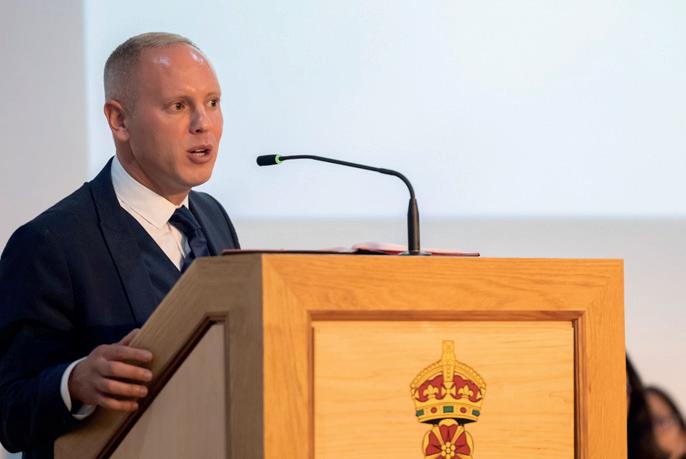
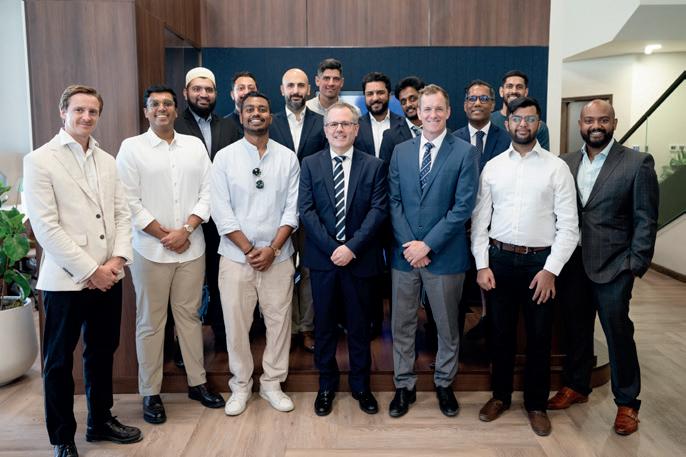
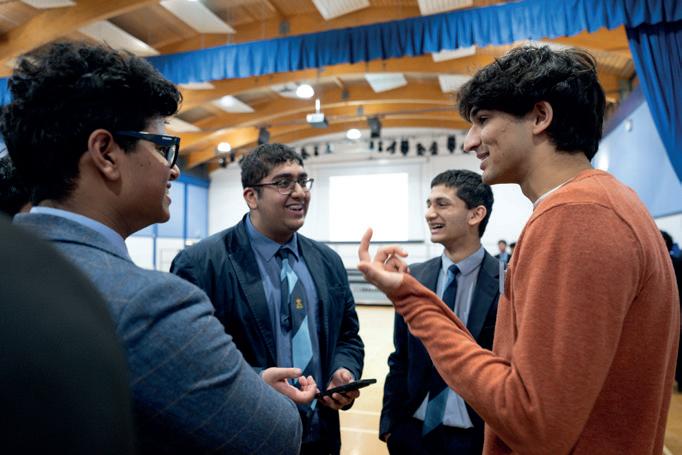
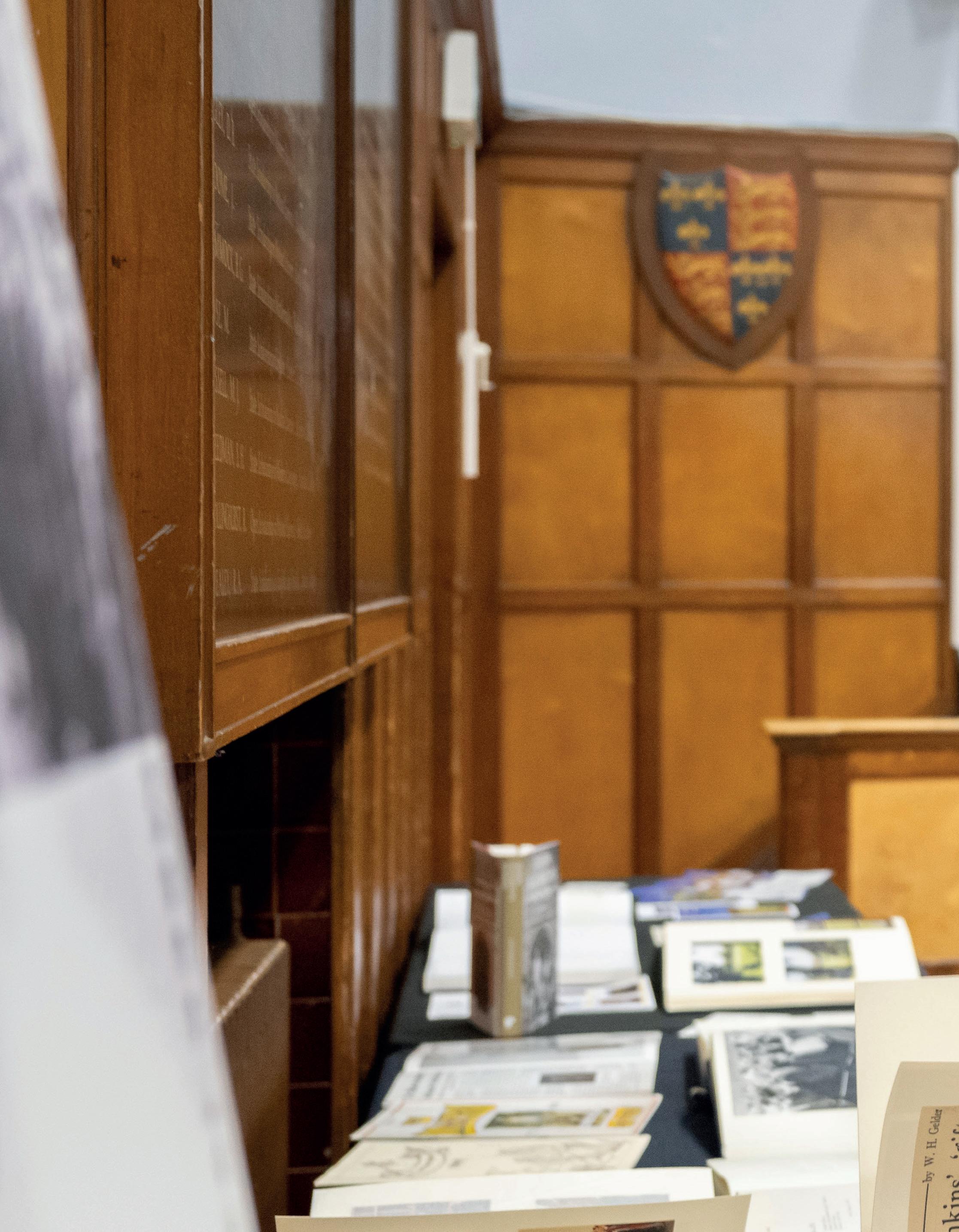
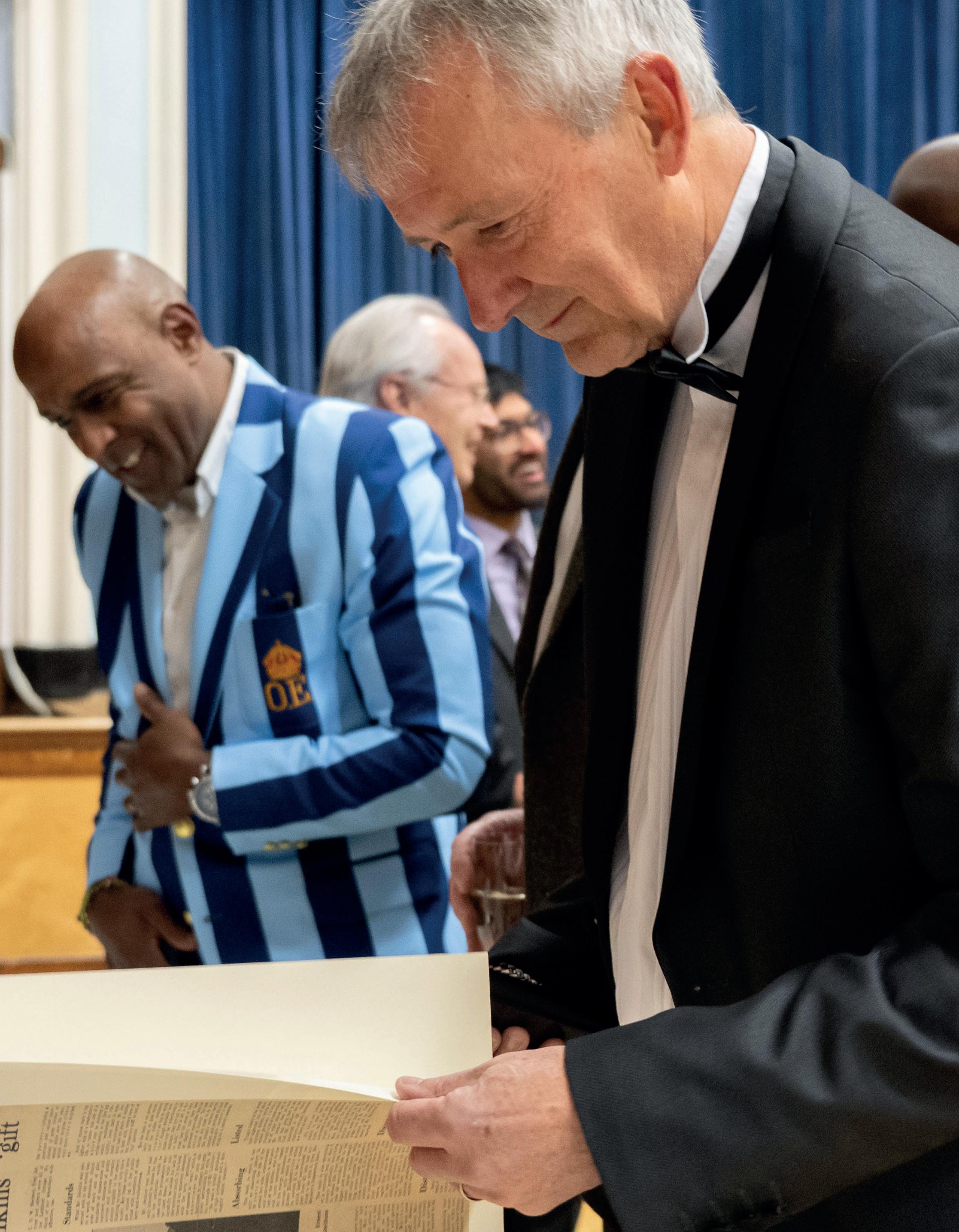
Pictured here (background) is the Old Elizabethans’ Annual Reunion Dinner.
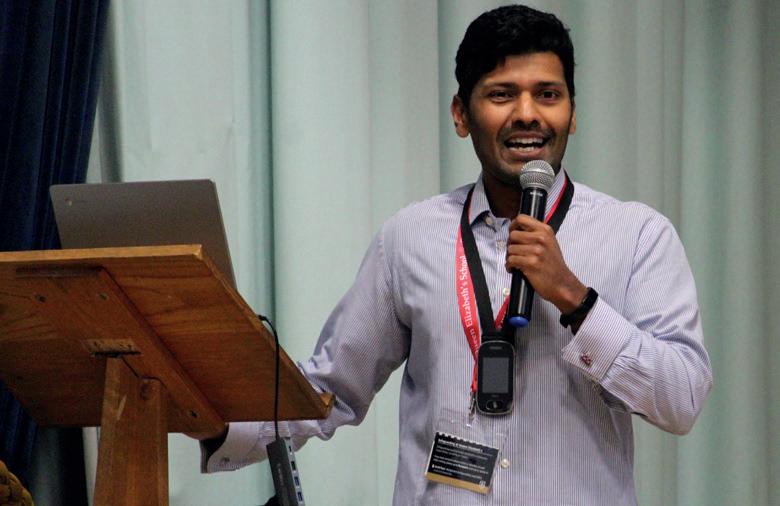
AI entrepreneur and Old Elizabethan Amar Shah is engaging with the QE Futures programme, inspiring today’s pupils to prepare for a future where the job roles they will take up do not yet even exist.
Amar (1999–2006) co-founded the UK-based autonomous driving technology firm, Wayve, which in 2024 raised $1.05 billion in a Series C investment funding round, attracting praise from then-Prime Minister, Rishi Sunak.
His own career journey has taken him from reading Mathematics at Cambridge to positions at Goldman Sachs and NASA, and to a PhD in Machine Learning.
Amar has now moved on from Wayve to investing in and building other businesses. Having already worked with AI-designed medicines, he is focusing on a project to ‘democratise’ the MRI scanner to help the developing world – making the hardware cheaper to purchase, so it is more accessible, and using AI to mitigate the loss of functionality.
He urged boys to build transferable skills and never to stop learning across a broad spectrum: “Every subject will impact your life.” Amar concluded his presentation with these words: “I still don’t know what I want to be when I grow up.”
N.J. Enright MA (St John’s College, Oxford), MBA (UCL Institute of Education, London), NPQH, FRSA
SENIOR LEADERSHIP TEAM
A.H. Macdonald MA (Robinson College, Cambridge), Deputy Head (Academic)
T.W. O’Reilly BEng (Southampton), Deputy Head (Operations)
D.J. Ryan BA (Warwick), MEd (Open), Deputy Head (Pastoral)
J.N. Kane BA (The London School of Economics and Political Science), MA (Buckingham), NPQH, Deputy Head (Staff)
C.D. Bonham-Carter MA (St Andrews), NPQH, Assistant Head (Co-curricular & Partnerships)
R.J. Hyland MA (Trinity College, Oxford), MA (Canterbury Christ Church), EdD (Canterbury Christ Church), Assistant Head (Destinations & Progress)
S.L. Westcott BSc (Exeter), MA (Middlesex), PhD (University College, London), NPQH, Assistant Head (Inclusion & Wellbeing)
M.T. Noonan BEd (Limerick, Ireland), NPQSL, Head of Digital Teaching & Learning
R. Pandya BEng (Nottingham), FCA, Head of Finance / CFO
M.T. Rose MA (Clare College, Cambridge), Head of External Relations
ART
C.S. Wheatley BA (University of Wales Institute Cardiff), MA (Royal College of Art), Head of Art
L.C. Mitchell BA (Bath Spa), MA (Wimbledon College of Arts)
J.M. Nicodemus BA (Chelsea College of Arts)
K.H. Shah BSc (Manchester), ACA, Head of Economics
A.D. Diallo BSc (City, London)
J.N. Kane BA (The London School of Economics and Political Science), MA (Buckingham), NPQH
K.P. Patel BA (Warwick), MA (King’s College, London)
C.T. Wallace BSc (West Indies), MSc (West Indies), PhD (Sheffield), Head of Year 11
M.D. King BA (Southampton), MA (Canterbury Christ Church), NPQSL, Head of English
V.A. Maule BA (Central England), Assistant Head of English
C.D. Bonham-Carter MA (St Andrews)
L.S. Crofts MA (St John’s College, Oxford), Head of Year 8
L. Emes BA (King’s College, London)
R.J. Hyland MA (Trinity College, Oxford), MA (Canterbury Christ Church), EdD (Canterbury Christ Church)
J. Illan BA (Southampton), MA (King’s College, London)
M.D. King BA (Southampton), MA (Canterbury Christ Church), Head of Year 12
P. Menelaou BA (Westminster)
E.S. O’Donnell LLB (Bristol), MA (King’s College, London)
D.J. Ryan BA (Warwick), MEd (Open)
K.R. Shah MA (The Queen’s College, Oxford), MPhil (Darwin College, Cambridge), Head of Year 9
S. Snowdon BA (Liverpool), MLitt (St. Andrews), MA (Middlesex)
GEOGRAPHY
C.A. Butler BSc (Leeds), Head of Geography
T.F. Bartlett BA (St John’s College, Durham), MRes (Royal Holloway, London)
N.J. Enright MA (St John’s College, Oxford), MBA (UCL Institute of Education, London), NPQH, FRSA
E.M. Hopley MA (Jesus College, Oxford), MPhil (Jesus College, Oxford), LLB (The University of Law)
J.N. Kane BA (The London School of Economics and Political Science), MA (Buckingham), NPQH
A.H. Macdonald MA (Robinson College, Cambridge)
H.I. Piggott MA (Brasenose College, Oxford), MA (The London School of Economics and Political Science)
H.F. Steepe BA (Van Mildert College, Durham)
A.J. McLarin MA (Magdalen College, Oxford), MA (Oxford Brookes), Head of History & Politics
J.A. Collier BA (Sheffield), MA (Butler, USA), MA (Purdue, USA)
H.C. Edmunds BA (Bristol), MA (Middlesex)
A.A. Gohil BA (Warwick), Senior Year Head (Upper School)
J.P. Haswell BA (Newcastle), Head of Year 12
S.J. Neagus BA (Sheffield), ), MEd (Buckingham), Head of Year 7
H. Shephard BA (London School of Theology), MA (St Hugh’s College, Oxford), PhD (London School of Theology), Head of Languages
L. Garzone BA (Bari, Italy), MA (Bari, Italy), Assistant Head of Languages (Modern)
D. Kaur MA (Somerville College, Oxford), Assistant Head of Languages (Classics)
E.L. Evans BA (Warwick)
S.I. Hodge BA (Royal Holloway, London)
F.M. McAndrew MA (Edinburgh)
E. Perra BA (Warwick)
G.A. Ross MA (St Andrews)
K.R. Shah MA (The Queen’s College, Oxford), MPhil (Darwin College, Cambridge), Head of Year 9
J. Blackford MA (Keble College, Oxford), MA (Leicester), Head of Library Services
C.M. Illingworth MBBS (Free University, Berlin, Germany), PhD (Humboldt, Berlin, Germany)
J.H. Steer MMathPhil (St Hilda’s College, Oxford), MEd (King’s College, London), Head of Mathematics
K. Shah BSc (Warwick), MSc (Bayes Business School, City, London), Assistant Head of Mathematics
P.A. Brady BSc (Grey College, Durham)
B.F. Eastley MSci (Imperial College, London), MA (Royal Conservatoire, The Hague, Netherlands), MSc (Birkbeck College, London)
W. Fung BSc (Imperial College, London), Head of Academic Administration
N.R. Kydd MA (Edinburgh), MSc (King’s College, London)
D. Mahdmina BSc (University College, London), MSc (Loughborough), PhD (University College, London)
M.A. Miedziolka BSc (Nottingham)
G.K. Roberts BA (Sheffield)
S.L. Smith MA (Clare College, Cambridge)
N. Swatch BSc (Birmingham), MSc (Cranfield)
M. Szebelledi MA (Pembroke College, Cambridge), MMath (Pembroke College, Cambridge)
M.E. Tricker MMath (Warwick)
Y. Zhu BSc (The London School of Economics and Political Science)
R.F. Partington BMus (Manchester), PGDip, PPRNCM (Royal Northern College of Music), Director of Music
C.E. Grint MA (Murray Edwards College, Cambridge), Assistant Director of Music
J.T. Hutchinson-Bazely BMus (Royal Northern College of Music), MMus (Conservatorium van Amsterdam, The Netherlands), Assistant Director of Music
Assisted by visiting teachers:
T. Bordes BMus, MA, Bassoon
H.E. Brown DipRCM, ARCM, Violin
H.J. Brown BMus, MMus, MPerf, Piano
J. Carneiro BMus, Piano
G. Cheung BMus, PPRNCM, Organ & Piano
F. Garcia de Paredes BMus, Guitar
G. Giannopoulos MMus, DipRAM, Piano
E. Gokalp BA, MA, Classical Guitar
T. Herford MA (Cantab), MMus, Voice
A. Hope BMus, MA, ARCO, AFHEA, LLCM, Organ, Piano & Voice
T. Imai DipRAM, ARAM, Junior Fellow RAM, Piano
F.M. Jimeno Yepes BA, MMus, PhD, Violin
C.Y. Lai BMus, MPerf, Oboe
M. Lamelas BMus, MMus, Viola
D. Margulis BMus, Double Bass
M. Miller MMus, LRAM, Classical Guitar
E.L. Morgan BMus, MPerf, French Horn
L. Payne BMus, Clarinet
M.L. Payne BMus, Saxophone
V. Rakitzis DipRAM, MMus, DMA, Piano
D. Robinson BMus, LRAM, Cello
J.N. Rowland AGSM, Drum Kit & Percussion
C. Stevenson BA, Flute & Piano
N.S. Tompkins DipHE, Popular Acoustic Guitar & Electric Guitar
J. Tsui BA, MA, Piano
P. Yarde Martin MA, MComp, Trumpet
PHILOSOPHY, RELIGION & SOCIETY
J.G. Robertson BA (Nottingham), NPQSL Head of Philosophy, Religion & Society
B.J. Farron BA (Warwick), MA (University College, London)
N.M. Mayer MA (King’s College, Cambridge)
PHYSICAL EDUCATION & GAMES
J.R. Hart BSc (Wales), MA (Middlesex), NPQSL, Director of Sport
G.W. Ashby BA (Southampton Solent), Head of Cricket
O.P. Di-Lieto BSc (Birmingham), Head of Rugby
R.J. Scally BSc (Glamorgan), Head of Aquatics & CCF Contingent Commander
N.D. Langley-Pope BA (Collingwood College, Durham)
S.L. Marks BEd (Brighton), Head of Year 10
SCIENCES
G.F. Ridge BSc (Dundee), PhD (Dundee) Head of Biology
A.R. Irvine BSc (Manchester), MA (Sheffield), PhD (Sheffield), Head of Chemistry
J.E. Brooke MA (Downing College, Cambridge), BSc (Open), Head of Physics
S.J. Acors BSc (Imperial College, London), PhD (King’s College, London)
P.A. Collington MA (Somerville College, Oxford)
D.S. Crouch BSc (Hertfordshire), MSc (Imperial College, London), PhD (Imperial College, London)
P.S. Gilbert BSc (Manchester), MSc (Manchester), PhD (Manchester)
D.L. Goffin BSc (Bristol), PhD (University College, London)
C. Ioannidou BSc (Ioannina, Greece)
V. Jurgaityte BSc (University College, London)
G.C. Martin MEng (Imperial College, London)
T.R. Panis BSc (Warwick)
B. Sanders BSc (Southampton), BSc
(Royal Holloway, London), MSc (Bath), PhD (Cardiff)
H. Shah BSc (Queen Mary, London)
M.S. Suleman MSci (University College, London), PhD (University College, London)
S.L. Westcott BSc (Exeter), MA (Middlesex), PhD, NPQH (University College, London)
X.Xu BSc (Imperial College, London), MRes (Imperial College, London)
B. Khan BA (Ravensbourne, London), Head of Technology
L.C. Adams BSc (Loughborough)
F.P. Chillingworth BA (Loughborough)
T.A. Green BA (Middlesex)
M.T. Noonan BEd (Limerick, Ireland)
A.N. Gaskell ACA, Chair
N. Raval BA, DipArch, ARB, Vice-Chair
E. Aghdiran MBA
D. Burton FCA, BA
K. Dewnani MEng, GMICE, MAPM
J. Dhanak BArch
N. J. Enright MA, MBA, NPQH, FRSA Headmaster
D. Farrer MA, QC
J. Ferguson
E. Houston BA
D. T. Lowen MA, FRSA
A. Nadhavajhala BCom
C.W. Price BA, PGDipEdLaw, NPQH
T.W. O’Reilly BEng, Company Secretary
M.T. Rose MA, Clerk
Queen Elizabeth’s School
Queen’s Road, Barnet
Hertfordshire EN5 4DQ
020 8441 4646
admissions@qebarnet.co.uk