QatarEnergy LNG is building the world’s most advanced LNG carrier fleet through the NFXP Shipping initiative. From efficient 174,000 m³ vessels to record-breaking 271,000 m³ QC-Max carriers, the project strengthens global energy delivery with cutting-edge technology, superior safety and long-term sustainability, future-proofing Qatar’s leadership in LNG shipping.
QatarEnergy LNG Corporate Scorecard
YEAR TO DATE OCTOBER 2025
Contents
> 03
CEO Message
THE MAGAZINE OF QATARENERGY LNG
Editorial Team
Editor in Chief: Ivan Giesbrecht
Editor: Thajudeen V. Aliar
Associate Editor: Eiman Fakhroo
Arabic Editor: AlaAldin AlNajjar
Published by
The Public Relations Department QatarEnergy LNG
QatarEnergy LNG
P.O. Box 22666
Doha, Qatar
Tel: +974 4452 3224
Fax: +974 4473 6628
Email: media@qatarenergylng.qa
(C) Copyright @ QatarEnergy LNG.
All Rights Reserved. No part of this publication may be reproduced, stored in a retrieval system or transmitted in any form or by any means, electronic, mechanical, photocopying or otherwise without the prior permission of the Public Relations Department, QatarEnergy LNG.
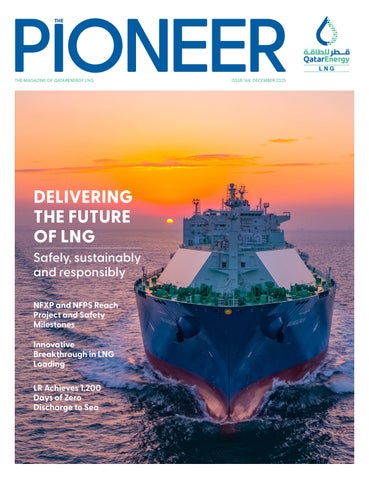
Delivering the future of LNG – Safely, sustainably and responsibly.
> 04 - 07
NFXP Shipping Project
Building the LNG fleet of the future through operational flexibility and fuel efficiency.
> 08
Successful Delivery of 32 LNG Vessels
Delivery of these state-of-theart LNG carriers marks major progress for NFXP Shipping project.
> 09
Innovative Breakthrough in LNG Loading Operations
> 10-14
Engineering Milestones Drive NFXP Progress
Several notable projects achieved onshore and offshore in 2025, including successful introduction of lean gas into NFE EPC-1.
> 15-17
Key Milestones Achieved for NFPS
North Field Production Sustainability EPCOL (Offshore & Pipelines) Project completes the installation of all major facilities.
> 18-19
19th QatarEnergy LNG Engineering Conference
Industry professionals, academics and partners come together to exchange ideas, technologies and strengthen bonds.
> 20
Environmental Legacy of the NFE Project
QatarEnergy LNG takes a decisive step toward environmental sustainability with the successful delivery of a Wastewater Treatment Plant at NFE EPC-1.
QR CODE TO VISIT OUR WEBSITE
Follow QatarEnergy LNG on social media:
New approach results in substantial reduction in flaring during LNG loading operations using warm vaporised LNG, rather than cold liquid LNG.
> 21
1,200 Days of Zero Discharge to Sea
Major environmental milestone achieved by Laffan Refineries (LR) Zero Liquid Discharge (ZLD) facility.
> 22
Digital Solutions to Enhance Waste Management
New electronic waste transfer system embeds digital innovation and circular economy principles into every stage of the waste journey.
DELIVERING THE FUTURE OF LNG – SAFELY, SUSTAINABLY AND RESPONSIBLY
2025 has been a banner year of milestones for QatarEnergy LNG. Every achievement reflects not only the company’s strategic aims but also the precision with which we execute our major projects. As we continue to deliver across our North Field Expansion (NFXP) and North Field Production Sustainability (NFPS) projects, we are consistently raising the benchmark for the global energy industry.
In this issue of The Pioneer, we are proud to feature our 'Fleet of the Future' and how these vessels are part of our commitment to a sustainable and reliable global energy supply. The NFXP Shipping Project marks a defining achievement with the delivery of 32 new LNG vessels to date, including a record four vessels arriving in a single month in July. More than 70 additional carriers will be added to this fleet, each of them representing the highest standards of innovative design and environmental sustainability.
Complementing this success, our LNG Storage and Loading Asset team achieved a world-first breakthrough in LNG loading operations by performing gassing-up before cooldown. This innovation resulted in a substantial reduction in flaring and significant cost savings, proving that environmental responsibility and operational efficiency can go hand in hand.
Onshore and offshore progress also continues at a rapid pace. The safe introduction of lean gas into NFE EPC-1 inlets, the sail away and installation of the first NFQ19 topsides, and major equipment deliveries for the NFS Onshore Project all highlight disciplined execution across complex, interlinked operations. Together, these advancements bring us closer to expanding production capacity as planned and securing long-term energy reliability.
Equally important is our unwavering commitment to safety. This year, NFPS Compression projects recorded more than 28 million combined Lost Time Incident (LTI)-free manhours. This is a remarkable testament to our shared safety culture and the dedication of every individual involved.
Major environmental milestones, such as the successful delivery of the NFE Wastewater Treatment Plant and the achievement of 1,200 days of zero discharge to sea at Laffan Refineries, reaffirm that sustainability is not merely an aspiration but the operational standard for QatarEnergy LNG. We are dedicated to minimising our environmental footprint while meeting global energy demand.
As we look ahead, we remain focused on continuous improvement, collaboration, and innovation. We are delivering energy the world can rely on, safely, sustainably, and responsibly, contributing to the fulfillment of the Qatar National Vision 2030.
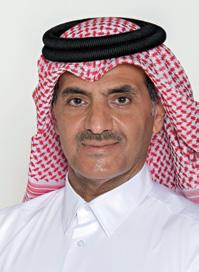
Khalid bin Khalifa Al Thani Chief Executive Officer QatarEnergy LNG
Qatar’s LNG Ambition: Building the Fleet of the Future
The State of Qatar aims to expand its production of liquefied natural gas (LNG) to power millions of homes and industries worldwide annually. As the demand for cleaner energy increases, LNG remains central to the global energy transition. Meeting these increased production targets require more than just expansion of facilities, it relies upon the coordinated efforts of a highly specialised workforce to build and deploy the world’s largest and most advanced fleet of LNG carriers: the North Field Expansion Project (NFXP) Shipping Project.
For Qatar, already the world’s leading LNG exporter, this is more than an opportunity, it is a call to action. Producing more LNG is only part of the challenge. Delivering LNG safely, efficiently and sustainably across the globe requires a new generation of LNG carriers: floating feats of engineering capable of delivering cargoes at cryogenic temperatures, navigating shifting trade routes whilst meeting increasingly stringent environmental regulations.
This need laid the foundation for the NFXP Shipping initiative. In 2019, His
Excellency, Mr. Saad Sherida Al-Kaabi, Minister of State for Energy Affairs and QatarEnergy Chief Executive Officer (CEO), directed QatarEnergy LNG, under the leadership of its CEO Khalid bin Khalifa Al Thani, to develop a coordinated plan to create the largest and most advanced LNG carrier fleet ever assembled.
Since then, a multidisciplinary team of elite professionals, including project managers, business managers, commercial analysts, safety experts, naval architects and technical experts,
has worked together to design and construct a new generation of LNG carriers. But the NFXP Shipping Project is not simply about adding more vessels, it is about future-proofing Qatar’s LNG supply chain.
The new fleet has been designed to transport cargoes to customers globally and offer enhanced efficiency, greater reliability and much-improved environmental performance.
Engineering the Next Generation of LNG Carriers
Building an LNG carrier is a highly complex undertaking far beyond any other shipbuilding project. These vessels are precision-engineered to maintain LNG at -163°C whilst navigating some of the world’s most demanding maritime routes.
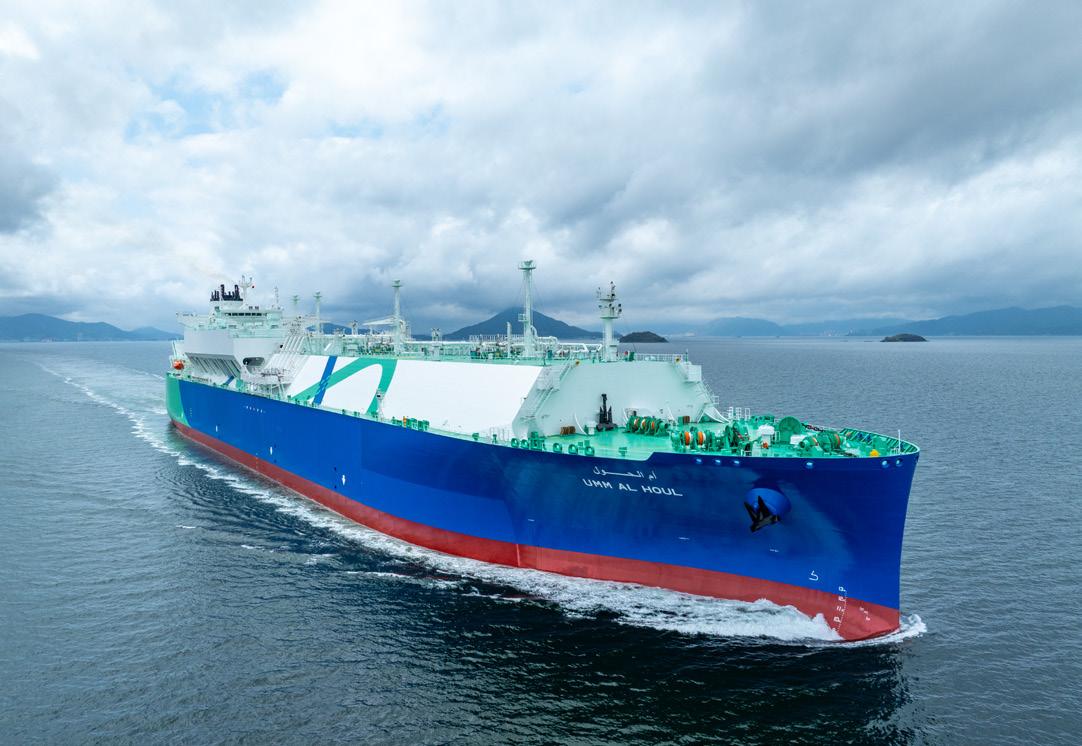
The majority of the NFXP fleet is based on a 174,000 cubic metre (m³) conventional size design, powered by twin slow-speed, gas-burning diesel engines selected for their operational flexibility and fuel efficiency. A distinctive key advantage of the design is its adaptability: the vessel design can be scaled to accommodate larger
capacities, ensuring that Qatar remains responsive to future increases in trade demands.
As global LNG demand continued to rise, the QC-Max carrier was conceived to further increase shipping capacity. Built by China’s Hudong-Zhonghua Shipbuilding (Group) Co., Ltd., the QC-Max LNG carriers will each boast a capacity of 271,000 m³ and will be delivered between 2028 and 2031.
Measuring 344 metres (m) in length, 53.6 m in width, and with a draft of 12 m, the QC-Max LNG carriers will be the largest LNG carriers ever constructed. Each vessel will feature WinGD dualfuel propulsion, a reliquefaction system,
an air lubrication system and GTT’s NO96 Super+ membrane containment technology. Each vessel will be equipped with five storage tanks.
A Foundation of Safety and Compliance
From shipyard to sea, safety is fundamental to the NFXP Shipping Project. A dedicated project safety team has been established to ensure that QatarEnergy LNG’s safety protocols are implemented throughout the design and construction process.
The NFXP Shipping Project is not simply about adding more vessels; it is about future-proofing Qatar's LNG supply chain. The NFXP fleet is powered by twin slow-speed, gas-burning diesel engines, selected for their operational flexibility and fuel efficiency.
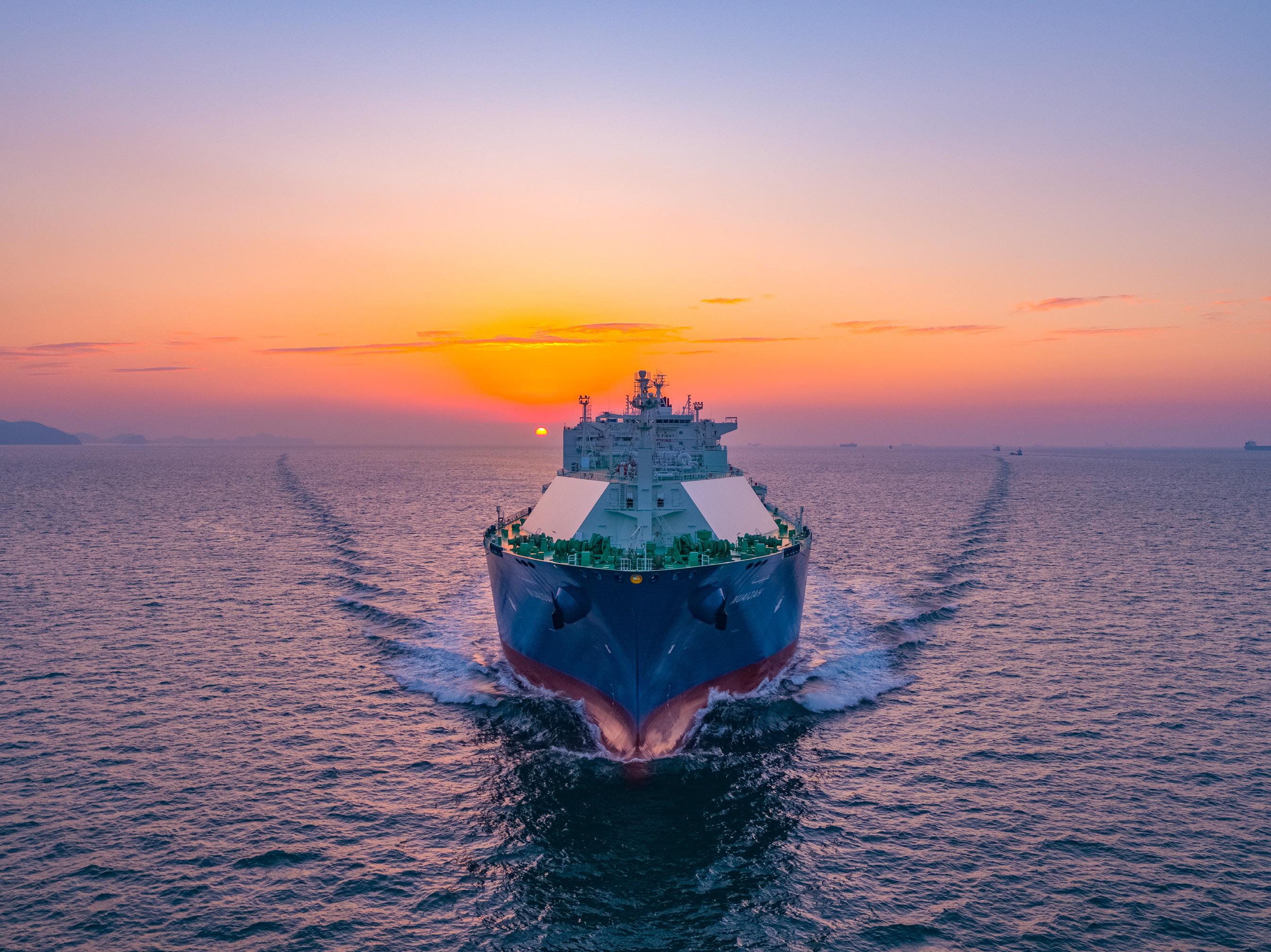
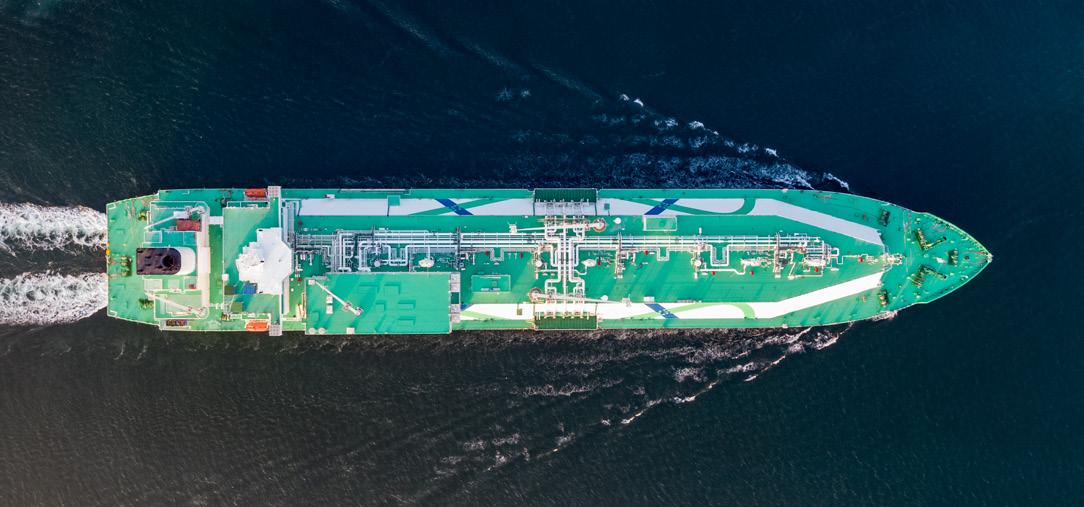
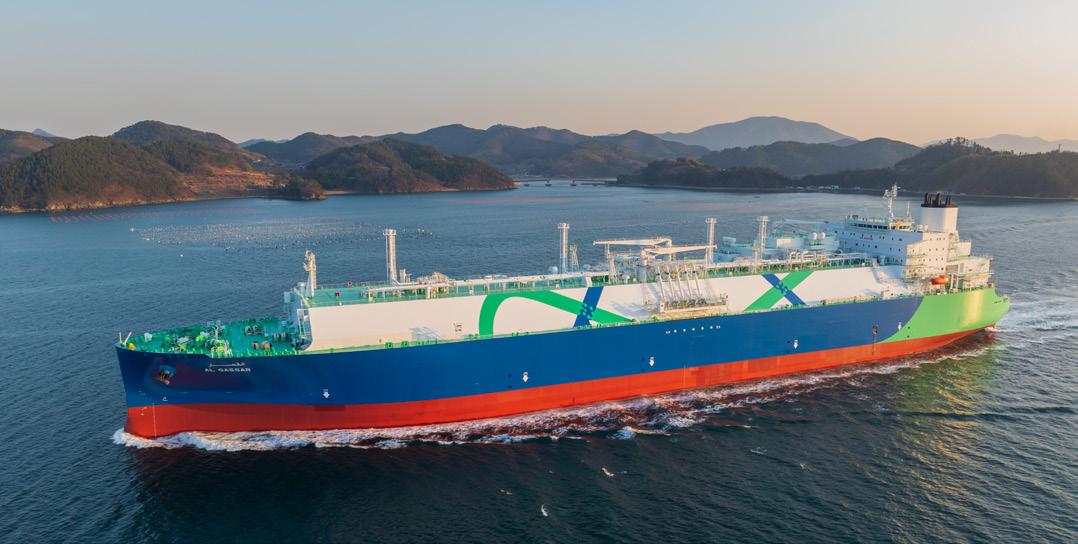
‘Al Qassar’, a 174,000 m3 conventional size LNG Carrier, delivered on 17 March 2025.
Shipbuilding Partners and Processes
To deliver a fleet of this scale and complexity, QatarEnergy has partnered with four leading global shipyards, which have been collectively responsible for the majority of the world’s LNG carrier construction over the past decade. These valued partners are selected not only for their capacity but also for their commitment to precision, quality control and safety.
Each vessel’s construction follows a well-defined sequence which begins with steel cutting: the initial phase
where the first plates are shaped. This is followed by keel laying which is the step of laying the vessel’s structural foundation. Once the hull is complete, the vessel undergoes launching which marks the vessel’s first float-out into water. The next phase is sea trials and gas trials, during which engineers will rigorously test the vessel’s systems and performance. Finally, the process concludes with the vessel delivery: the official handover that releases the vessel for entry into service.
A Fleet Built for a Changing World
The NFXP Shipping Project is guided by experienced leadership and supported by a cross-functional team of subject matter experts across engineering, safety, commercial and operational domains. Their combined efforts are shaping a fleet designed not only for scale but for resilience, efficiency and long-term sustainability.
The NFXP Fleet Shipbuilding Process
Each LNG carrier’s construction follows a well-defined sequence of five stages:
1. Steel Cutting – the initial phase, where the first plates are shaped
2. Keel Laying – the laying of the ship’s structural foundation
3. Launching – the first float-out of the hull
4. Sea Trials and Gas Trials – the critical testing phase to verify performance
5. Delivery – the official handover, readying the ship for service
NFXP Fleet by the Numbers
Conventional Size
LNG carrier:
174,000 m³
Cargo capacity
QC-Max LNG carrier:
271,000 m³
Cargo Capacity, the largest ships of their kind in the world
344 m – Length
53.6 m – Beam (width)
12 m – Draft
Delivery of 32 LNG Vessels Marks Major Progress for NFXP Shipping Project
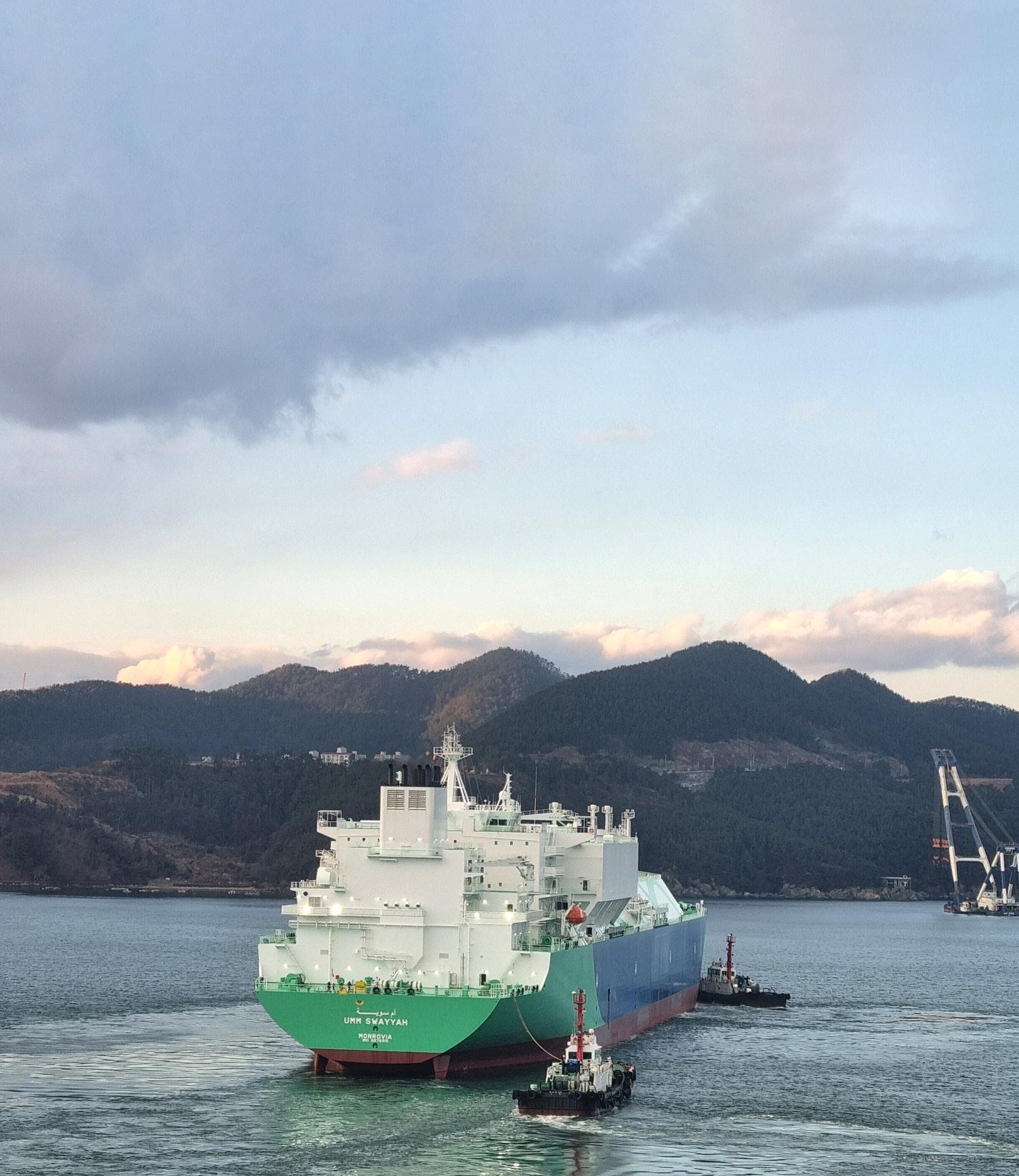
The North Field Expansion Project (NFXP) Shipping Project has achieved a significant milestone with the successful delivery of 32 liquefied natural gas (LNG) vessels, representing 25% of the total project fleet. These vessels are vital additions to the LNG fleets chartered by QatarEnergy LNG Marketing (QELM) and QatarEnergy Trading (QET), reinforcing Qatar’s global leadership in LNG shipping capacity.
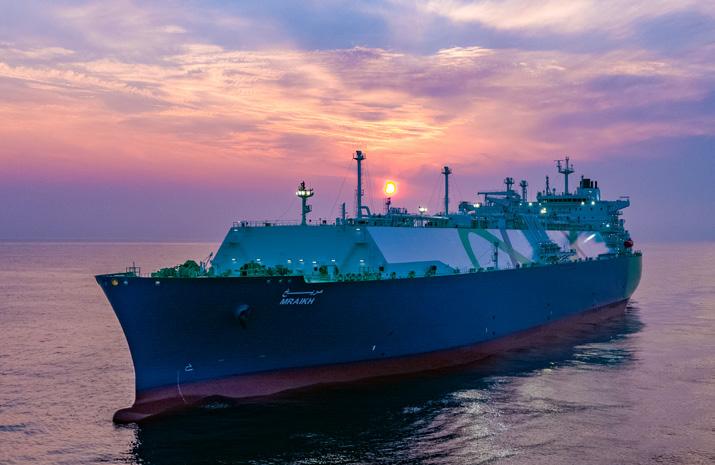
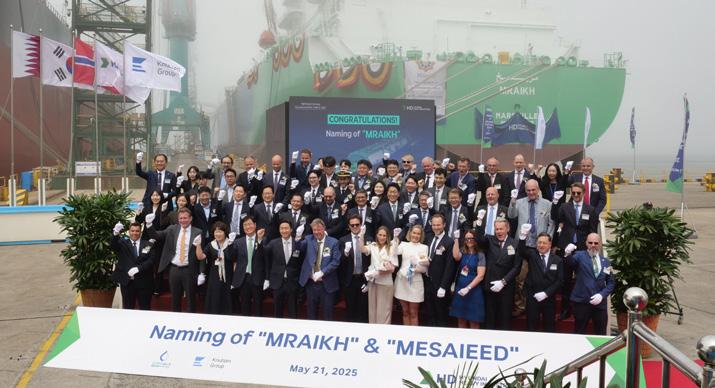
In June 2025, the project celebrated the delivery of 'Mraikh’, the first LNG vessel constructed by HD Hyundai Heavy Industries (HHI) under the QatarEnergy LNG Shipping Expansion Programme. This milestone marked the delivery of vessels from all four participating shipyards under the programme –HHI, Samsung Heavy Industries (SHI), Hanwha Ocean, and Hudong-Zhonghua Shipbuilding (Group) Co., Ltd.
The momentum continued in July, when the project achieved a record-breaking month with the delivery of at least one vessel from each shipyard, the highest number of monthly deliveries since the project’s inception.
Each of these state-of-the-art LNG carriers incorporates cutting-edge
maritime technologies and meets the latest environmental sustainability standards, featuring enhanced fuel efficiency, reduced emissions and improved operational reliability. These advances directly support Qatar’s longterm vision for sustainable LNG growth.
This success reflects the coordinated effort and expertise of the Shipping Projects team, working in close
4
Number of shipyards (HHI, SHI, Hanwha Ocean, Hudong-Zhonghua) from which vessels have now been successfully delivered.
collaboration with Supply, Legal and Finance functions, under the strategic guidance of QatarEnergy LNG and QatarEnergy leadership. Their dedication and teamwork have been instrumental in achieving this historic milestone.
As QatarEnergy LNG celebrates this achievement, the company reaffirms its commitment to excellence, innovation, and sustainability as it continues the execution of this historic shipping expansion programme, ensuring the continued growth and reliability of the State of Qatar's LNG fleet.
The naming ceremony in June of ‘Mraikh’ and ‘Mesaieed’ the first LNG vessels constructed by HD Hyundai Heavy Industries (HHI) under the landmark QatarEnergy LNG Shipping Expansion Programme.
LNG Loading Operation Achieves Breakthrough in Emissions and Cost Reductions
QatarEnergy LNG has achieved a significant operational enhancement during the loading of the new LNG carrier ‘Imsaikah’.
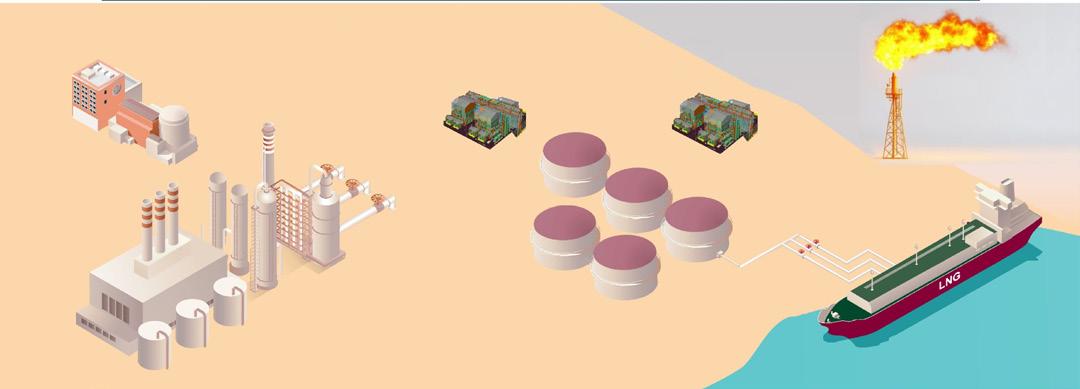
Some of the newly built liquefied natural gas (LNG) carriers now come equipped with nitrogen-inerted tanks. Traditionally, these vessels have proceeded directly to cargo tank cooldown, a process that has prevented Jetty Boil-Off Gas (JBOG) recovery and requires continuous flaring until loading is complete.
This has long presented a challenge due to the nitrogen specifications required for downstream fuel gas systems.
To overcome this obstacle, the LNG Storage and Loading Asset introduced a revised operational approach: performing gassing-up before cooldown. This allows nitrogen to be displaced using warm vaporised LNG, rather than cold liquid LNG, which cannot displace nitrogen as efficiently.
The result is a substantial reduction in flaring during LNG loading operations, with the potential to further reduce the flaring from LNG berths as more nitrogen-inerted vessels are introduced in the future. The benefits of this innovation are clear. Each vessel achieves a reduction of around 500 tonnes of flaring, avoiding approximately 1,375 tonnes of carbon dioxide (CO2) emissions, which has direct environmental and financial benefits
With three new LNG carriers of this class expected to arrive this year, projected savings include 2,000 tonnes of flaring reduction, 5,500 tonnes of CO2 emissions avoided, carbon tax savings and other direct financial benefits. The long-term impact will be even greater as more vessels of this class enter service in the years ahead.
This landmark accomplishment reflects QatarEnergy LNG’s culture of innovation,
The LNG Storage and Loading Asset introduced a revised operational approach: performing gassing-up before cooldown. This allows nitrogen to be displaced using warm vaporised LNG.
By the Numbers
500 tonnes –flaring reduction per nitrogen-inerted vessel
1,375 tonnes –CO2 emissions avoided per vessel
5,500 tonnes –projected CO2 emissions avoided across three vessels in 2025
collaboration, and technical excellence. It sets a new benchmark for operational efficiency and environmental responsibility, underscoring the company’s alignment with the Qatar National Vision 2030 and its commitment to sustainability.
QatarEnergy LNG extends its appreciation to everyone who contributed to this success. This achievement marks only the beginning of even greater progress to come.
Overview - LNG Storage and Loading and JBOG Recovery
NFXP Update: Engineering Milestones Drive Progress Onshore and Offshore
North Field Expansion Project (NFXP) continues to advance on schedule with several notable milestones achieved throughout 2025, including the first steel cutting for offshore structures, to the successful introduction of lean gas into NFE EPC-1, the delivery of critical equipment from seven countries, completion of a propane tank roof lift and the first offshore topsides sailaway and installation, all achieved with world-class safety standards, a focus on worker welfare and rigorous environmental compliance.
NFXP
Offshore Celebrates
Sailaway and First Topside Installation at North Field East
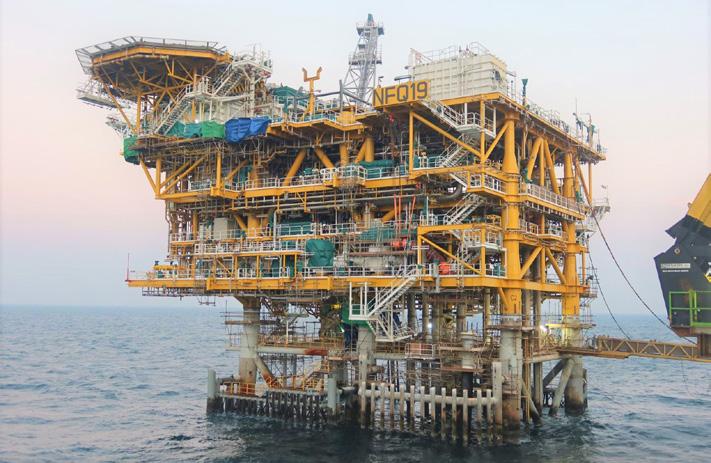
The North Field Expansion Project (NFXP) Offshore team has achieved two major milestones in the delivery of the North Field East (NFE) development – the successful sailaway and installation of its first wellhead platform topside, NFQ19.
The NFQ19 topside departed
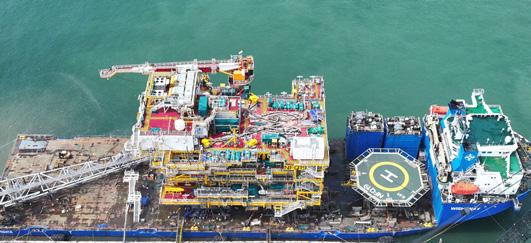
McDermott’s fabrication yard in Batam, Indonesia, on September 11, marking the first topside sailaway under the NFXP Offshore scope. The structure was loaded out using self-propelled modular transporters (SPMTs) onto the fast transport vessel ‘Wish Way’, beginning a 7,400-kilometre, 15-day voyage to NFE.
Following its safe arrival, the topside installation was completed on 10 October 2025, representing the first of eight topsides planned for the NFXP Offshore sequence and a key step
3,500 tonnes
The weight of NFQ19 topside.
toward Handover Area 1 (HA-1).
Weighing 3,500 tonnes, the NFQ19 topside – including production manifold, integrated control and safety system (ICSS), wellhead control panel, flare boom and helideck – was precisely mated with its 978-tonne jacket in 20.7 metres of water depth.
NFQ19, an unmanned wellhead platform, will supply gas to NFE Onshore LNG Train 8. The second topside, NFQ18, is scheduled to follow in November 2025. Designed under the ‘Design One Build Many (D1BM)’ principle, the remaining seven platforms are currently under fabrication – five in Batam and two at QFAB in Qatar.
“The excellent project management collaboration between QatarEnergy LNG and McDermott made this technically challenging installation of topsides a success.” – Abdulaziz Al-Naimi, NFXP Offshore Senior Project Manager
The topside NFQ19 installation completed at NFE Offshore.
Commenting on this significant achievement, Abdulaziz Al-Naimi, NFXP Offshore Senior Project Manager, stated: “The excellent project management collaboration between QatarEnergy LNG and McDermott made this technically challenging installation of topsides a success. It was the result of meticulous planning and coordination, and we are proud to support the North Field Expansion Project in its goal of increasing LNG production from 77 MTPA to 142 MTPA.”
The successful installation of NFQ19 is the first tangible step towards HA-1 and demonstrates QatarEnergy LNG’s capability to safely execute complex offshore installations at NFE. Coordination across fabrication, transport and offshore execution teams highlights the project’s readiness to scale operations for future topsides and associated infrastructure.
Together, the sailaway and installation of NFQ19 stand as testaments to QatarEnergy LNG’s culture of safety, precision, and partnership, demonstrating the company’s capability to execute complex offshore installations efficiently and flawlessly.
Lean Gas Introduced
Successfully Into NFE EPC-1 Inlets
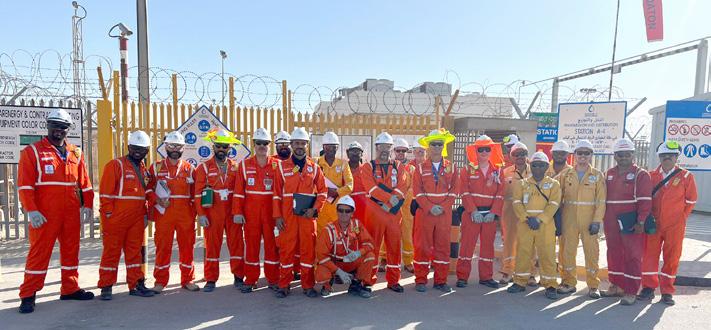
The EPC-3 and EPC-1 projects successfully introduced lean gas at 66 bar gauge (barg) on July 10 to the Lean Gas Station in Lot W2/W3. This was safely achieved via a new 5-km, 36-inch pipeline installed by Tecnicas Reunidas. The line runs from QatarEnergy Station A-4 into the North Field East (NFE) Project, EPC-1 Lot W2/W3 Inlets area.
The pipeline, combined with associated facilities at Station A-4 and Lot W2/ W3, supplies fuel gas to the NFE Onshore Plant utilities system for precommissioning and commissioning activities, providing reliable supply for boiler firing, steam generation and
“By achieving this milestone, we are one step closer towards meeting our target of Train 8 ready for start-up in May 2026.”– Nafez Bseiso, Chief Major Projects Officer, QatarEnergy LNG
systems testing as the plant transitions from construction to commissioning.
“By achieving this milestone, we are one step closer towards meeting our target of Train 8 ready for start-up in May 2026,” said Nafez Bseiso, Chief Major Projects Officer, QatarEnergy LNG.
A key feature of the new pipeline is its bi-directional design, enabling Operations to either feed lean gas into Qatar’s domestic grid or receive gas from the Barzan Gas Diversion Project for liquefaction.
Execution demanded tight integration between EPC-3 and EPC-1 project teams and their contractors. EPC-1 contractor
CTJV installed about 2 km of temporary 10-inch fuel-gas piping to route gas from the inlet receiving station to the utilities fuel-gas module, ensuring reliable fuelgas supply during commissioning.
CTJV’s scope included a 26.4-metre (m) flare stack and a 10.1-m blowdown/ overpressure relief system to safely manage excess gas during commissioning. The temporary fuel gas piping system connects to the
permanent fuel-gas header at 19.5-m, initially supplying two 240-tonneper-hour steam boilers packaged by MACCHI.
A total of six MACCHI utility boilers will be utilised initially for pre-commissioning and commissioning activities, providing high-high pressure steam (62 barg at 440°C) for process operations across the four NFE liquefied natural gas (LNG) trains.
The EPC-3 and EPC-1 projects successfully introduced lean gas at 66 barg to the Lean Gas Station in Lot W2/W3.
The successful introduction of lean gas into NFE EPC-1 inlets involved months of planning and coordination between all parties involved.
All tie-ins and routing were thoroughly walked down, with punches identified and cleared. A-ITRs and B-ITRs and commissioning certificates were completed from the Station A-4 lean gas pipeline pig launcher/receiver to the Lot W2/W3 lean gas pig receiver/launcher, including the temporary and permanent flare lines, utility boilers and the fuel gas module unit for Trains 8 and 9.
QatarEnergy Operations and Distribution in Station A-4 and Operations Expansion and Start-up in Lot W2/W3 were integral parts of the process, which ensured full system connectivity and readiness for subsequent commissioning activities. Building on this success, lean gas was safely introduced into EPC-1 inlets, offsites and utilities on July 31, marking another critical step.
NFXP Marks Major Success with Propane Tank Roof Raise
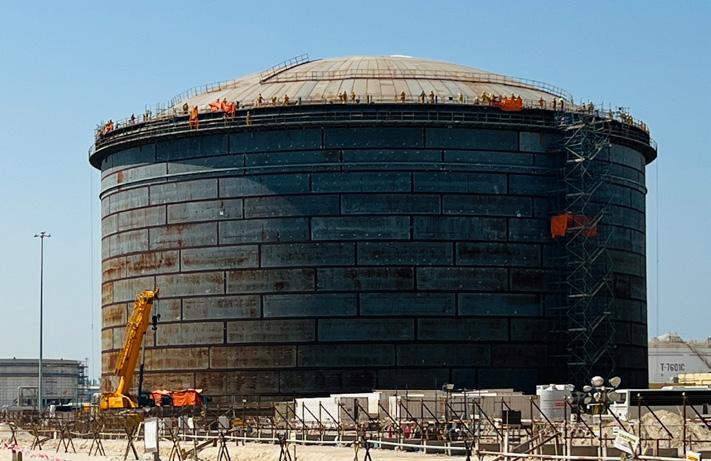
The North Field Expansion Project (NFXP) has reached another milestone with the successful roof raise of the first Propane storage tank (171P-T201) at Ras Laffan Terminal Operations, part of the North Field East (NFE) Offplot scope of work.
This achievement stands as a testament to QatarEnergy LNG’s disciplined project management and its contractors’ commitment to delivering worldclass results under challenging conditions.
The roof raise was a remarkable feat of coordination, safety, and engineering precision. Executed by EPC-3 Contractor Tecnicas Reunidas and sub-contractor Vito, the 900-tonne, 73-metre domed roof was lifted 35 metres using highvolume, low-pressure air.
Completed in just three and a half hours, the lift involved a 98-person crew working in extreme heat. Following the air-raising phase, 56 craft labourers conducted pinning and welding in rotating shifts, supported by additional personnel who ensured hydration and rest periods were properly managed. Meticulous safety planning, including shaded shelters, cooled vests and nightshift operations, kept the proceedings incident-free.
The operation forms part of the Common LPG Storage and Loading facilities, a shared infrastructure serving both the NFE and North Field South
900 tonnes
The weight of the propane tank roof successfully raised at Ras Laffan Terminal Operations.
(NFS) projects. Once completed, this area will house two 125,000 cubic metre (m³) propane tanks and one 110,000 m³ butane tank, expanding QatarEnergy LNG’s storage and export capacity to meet growing global demand.
Construction of the first tank began in April 2023 with extensive ground preparation, including 877 stone columns and base plates. The roof raise marks 91 weeks of continuous work, a period defined by precision scheduling and strong collaboration across multiple teams.
First Steel Cut for NFS Offshore Subsea Structures
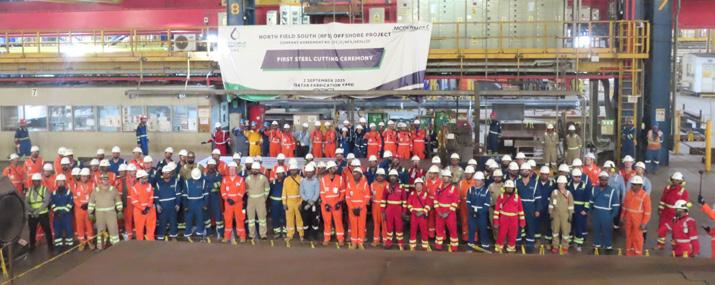
A major milestone was achieved in September with the First Steel Cutting ceremony for the North Field South (NFS) Offshore Pipelines Project subsea structures, held at the QFAB yard in Ras Laffan. The event marked a significant step forward in the NFS Offshore Project, reinforcing QatarEnergy LNG’s commitment to excellence in offshore execution and delivery.
The subsea structures slated for fabrication include four bridges, six risers, 44 spools, four Wye skid assemblies, two Tee skid assemblies and more than 270 subsea sleepers.
The ceremony brought together key stakeholders from the North Field Expansion (NFXP) Offshore Project Programme Management Team, McDermott senior management, and the QFAB team.
This achievement highlights QFAB’s growing capabilities and signals a robust path forward for the NFXP Offshore Project. By drawing on lessons learned from the North Field East (NFE) Offshore Pipelines Project, the team is positioned to execute with precision and deliver subsea structures that meet the highest standards of safety and quality, on schedule.
272 sleepers
More than 272 sleepers are to be fabricated for the NFS Offshore Pipelines Project.
Global Equipment Deliveries Drive NFS Onshore Progress
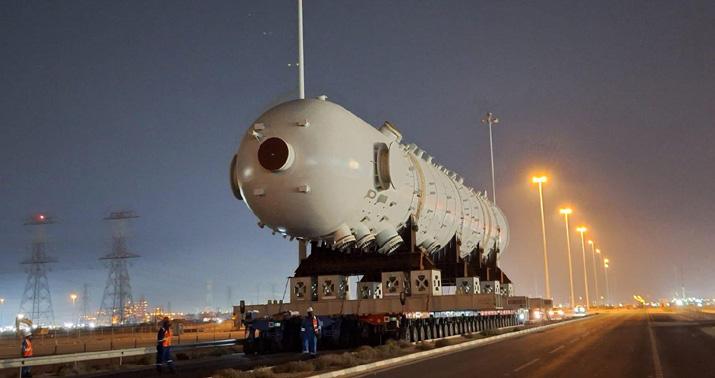
The North Field South (NFS) Onshore LNG Project has entered a decisive new phase with the successful delivery of critical long-lead equipment between April and September 2025, marking the transition from foundation works to major installations. These deliveries unlock new work fronts at the W8 and W9 sites in Ras Laffan Industrial City (RLIC) and signal the start of three years of intensive construction activity.
Following extensive site preparation and infrastructure works, the timely arrival of key components demonstrates
Seven countries contributed key equipment to the NFS Onshore Project.
exceptional global coordination and logistics. Major shipments included steam turbine generators from Japan, boilers from China, an acid gas removal absorber from South Korea and thermal oxidisers and air-cooled heat exchangers from China and South Korea. Additional deliveries featured main refrigerant compressors from Italy and 220kV switchgear for Trains 12 and 13 from South Korea.
Each delivery represented a complex logistics operation of heavy-lift shipments, specialised port handling and synchronised transport to the project sites, all executed safely and on schedule.
The ceremony brought together key stakeholders from the North Field Expansion (NFXP) Offshore Project Programme Management Team, McDermott senior management, and the QFAB team.
Following extensive site preparation and infrastructure works, the timely arrival of key components demonstrated exceptional global coordination and logistics.
Each delivery represented a complex logistics operation of heavy-lift shipments, specialised port handling and synchronised transport to the project sites.
The NFS Onshore Project Execution Team, in close collaboration with the main engineering, procurement and construction (EPC) contractor, T.ENCCC, is spearheading this critical phase of the project.
This important milestone highlights the strength of international collaboration that underpins QatarEnergy LNG’s success. With advanced technology and engineering contributions from across the globe, the NFS Onshore Project continues to accelerate toward execution, advancing and reinforcing Qatar’s position as a global leader in liquefied natural gas (LNG) production and project delivery.
Building a Culture of Wellbeing at Major Projects
At QatarEnergy LNG’s major onshore projects – the North Field East (NFE) and North Field South (NFS) – success is not only measured not in engineering milestones, but also in how people are cared for, ensuring that wellbeing, respect and dignity are at the core of every operation.
Leadership in Action
Project leaders champion welfare,
conduct regular camp visits, participate in welfare checks and engage directly with workers to understand their needs. This strong visible leadership presence reinforces a culture where wellbeing is everyone’s responsibility, not just a policy.
The Welfare Operations Centre (WOC) is dedicated to ensuring every worker’s voice is heard 24 hours a day. Staffed by over 70 trained Welfare Counsellors across both projects, each WOC provides professional and confidential support through dedicated toll-free helplines.
Moreover, through the Village Hero Programme, over 700 trained workers serve as the first point of support for their peers. These ‘village heroes’ form a strong bridge between workers and welfare teams, helping to resolve concerns quickly while fostering empathy and unity.
Life Beyond Work
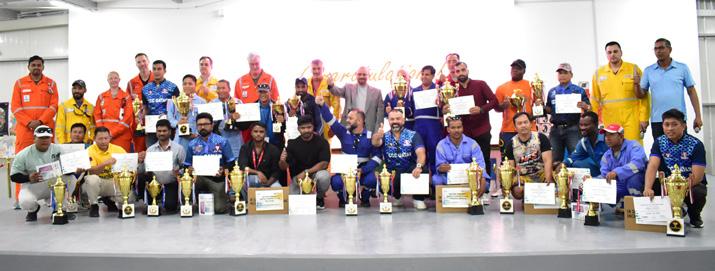
Recognising that wellbeing extends beyond physical safety, the projects organise a range of recreational and social activities.
Sports tournaments, cultural evenings and talent shows bring colour and
70 & 700
More than 70 Welfare Counsellors and 700 Village Heroes ensure every worker’s voice is heard, every concern addressed and every life valued.
camaraderie. Modern gym facilities, quiet zones and communal lounges provide workers with opportunities to relax, recharge and connect after long shifts, transforming camps into vibrant, supportive communities.
Through the Wellbeing and Mental Health Initiative, workers are encouraged to prioritise physical and emotional health. Awareness workshops, stress-management sessions and counselling promote resilience and conversations around mental wellbeing. Recognising early signs of stress and encouraging proactive care helps maintain a healthy and positive workforce.
Setting the Standard
Standardised camp committees ensure consistent quality across all locations. This coordinated approach guarantees that every worker experiences the same level of comfort, safety and respect.
By investing in welfare, the NFXP and NFS Onshore Projects demonstrate that caring beyond construction is not just an aspiration – it’s a way of life. Because when our people thrive, our projects, our company and our communities thrive too.
Leaders meet workers during a regular camp visit, reinforcing QatarEnergy LNG’s people-first approach.
Key Milestones Achieved for North Field Production Sustainability Project
QatarEnergy LNG’s North Field Production Sustainability (NFPS) project continues to deliver on multiple fronts, with the EPCOL (Offshore and Pipelines) Project now having completed the installation of all major facilities, marking key progress toward sustainable long-term gas production for the State of Qatar. The startup of the final EPCOL Project facilities in 2026 will mark the completion of the first two investment phases, drilling and pipeline looping, of the NFPS investment programme.
These huge investments, which have involved the construction and installation of six new wellhead platforms, more than 40 new wells, three new looping export pipelines, as well as eight riser platforms and onshore and offshore brownfield tie-ins, have taken 6 years to complete and consumed over 150 million manhours, now pave the way for the third massive investment phase NFPS compression which is already well underway.
Successful Completion of EPCOL Project Offshore Installation Campaign
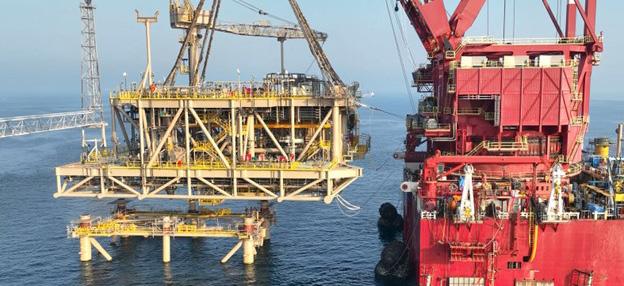
The NFPS EPCOL (Offshore and Pipelines) Project has reached a defining milestone with the completion of the offshore facility installation campaign, with the last three topsides, RP8S, RP11S and WHP13S successfully and safely lifted into place on their jackets in July through to August 2025.
This marks the culmination of an extensive offshore installation campaign for the EPCOL Project that began in 2023 and has now safely delivered 10 jackets, 12 topsides, 10 bridges, eight intra-field pipelines, three trunklines connecting offshore facilities to shore (PL610L, PL1N, PL1L), four subsea cables, and multiple brownfield tie-ins offshore and onshore.
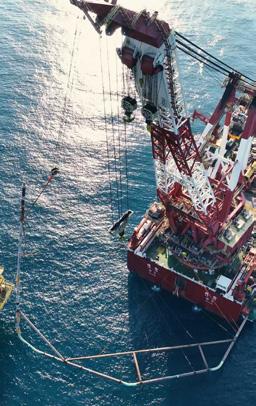
EPCOL’s heavy-lift campaign was executed with precision and without a single Lost Time Incident (LTI). Using Saipem’s heavy-lift DP3 vessel ‘DE HE’ and ZPMC-OTL Marine’s ‘Zhen Hua
30’, the team completed 12 topside installations in six phases, with lift weights ranging between 1,900 to 3,500 metric tonnes for the jackets, and 2,600 to 5,500 tonnes for the topsides.
The ‘DE HE’, with a lift capacity on its main crane of 5,000 metric tonnes, executed the majority of the installation campaign, briefly supplemented by
“This installation phase demonstrates the exceptional teamwork and innovation that define QatarEnergy LNG’s offshore execution — ensuring production sustainability and delivery on national energy commitments.”
–
Robert
Norman Faulds, NFPS Venture Manager
ZPMC-OTL Marine’s heavy-lift DP2 vessel ‘Zhen Hua 30’. This vessel boasts the world’s largest single main crane, with a lift rating of 12,000 metric tonnes, and was used for the heaviest lifts for RP Topsides for RP4S, RP6S and RP7S in December 2024.
Robert Norman Faulds, NFPS Venture Manager, credited the accomplishment to the team’s technical excellence, discipline, and seamless coordination among project teams and contractors, remarking that: “This installation phase demonstrates the exceptional teamwork and innovation that define QatarEnergy LNG’s offshore execution, ensuring production sustainability and delivery on national energy commitments.”
The final topside installation in July 2025 marks the completion of all offshore facilities under the NFPS EPCOL (Offshore & Pipelines) Project, a defining milestone in QatarEnergy LNG’s sustainability journey.
With offshore hook-up and commissioning activities now over 75% complete, the final steps toward Ready for Start-Up (RFSU) are progressing steadily. The remaining scope includes the completions and commissioning of the looping pipeline PL1S and SC1S onshore slug catcher facilities tie-in (November 2025), Riser Platforms RP8S & RP11S and associated intra-field pipelines (March 2026), and looping pipeline PL1N, Slugcatcher SC1N onshore slug catcher facilities tie-in and looping Pipeline PL1N onshore/offshore facilities (May 2026).
With this milestone achieved, QatarEnergy LNG is completing its largest offshore campaign to date, combining innovation, technical excellence, and a “One Team” approach that exemplifies the company’s commitment to safety, sustainability and performance.
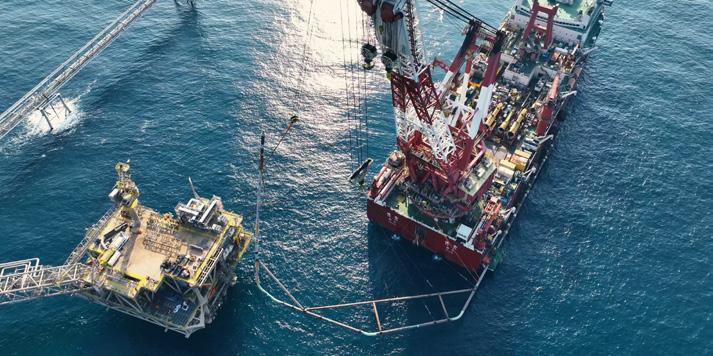
QatarEnergy LNG’s Offshore and Pipelines (EPCOL) Project marked a major milestone on 14 July 2025, with the successful installation of the final stalkon riser of the PL11LS pipeline on the RP8S riser platform jacket, using Saipem’s installation vessel ‘DE HE’.
The RP8S riser connects the subsea
“This installation confirms the choice of stalk-on risers as the preferred method to reduce installation times, simplify operations and offer higher integrity of our subsea equipment by reducing potential leak paths.”
- Yvon Rannou, EPCOL Project Manager
intra-field CRA pipeline to the recently installed EPCOL riser platforms RP11S and RP8S.
The offshore campaigns installed all of EPCOL Project 19 stalk-on risers in 18 months using ‘DE HE’. All risers were fabricated at QCON’s Marine Fabrication Yard in Mesaieed, the final assemblies completed on cargo barges, customised to suit each riser's size and eccentric configuration, for onward transportation to the offshore site.
Initially EPCOL's execution plan called for all risers to be installed by ‘DE HE’ in ‘anchored’ mode. However, after a feasibility study, EPCOL’s PMT team and Saipem executed the stalk-on riser installations with ‘DE HE’ in ‘dynamic positioning’ (DP) mode, an innovative method untried by QatarEnergy LNG. This reduced installation time per riser from 12 days to five while maintaining exceptional safety and quality despite challenging weather conditions.
Saipem/EPCOL Teams achieved near perfect success in a highly complex cycle of operations, with zero weld
repairs on the above water tie-in welds, setting a new standard in project execution for QatarEnergy LNG.
“This installation confirms the choice of stalk-on risers as the preferred method to reduce installation times, simplify operations and offer higher integrity of our subsea equipment by reducing potential leak paths,” said EPCOL Project Manager Yvon Rannou.
Start-up of the First Looped Export Trunkline to Shore
The NFPS EPCOL Project, together with the Offshore Expansion, Sustainability, and Startup (OESS) teams, recently achieved another major milestone with the start-up of QatarEnergy LNG's first looped export trunkline, PL610L. This new looping 38-inch pipeline, the first of three in the field, is installed in parallel to the existing 38-inch PL610 pipeline, which exports gas from WHP6S, WHP10S and WHP14S to shore. The new looping pipeline significantly reduces the back pressure on the wells, thereby enabling production to be sustained at current levels.
First gas via the PL610L line commenced on 13 September 2025, following RFSU acceptance on 2 August. Pipeline pressurisation began on 18 August, and inline inspection pigging completed on 13 September.
The PL610L pipeline start up was conducted with careful regard for safety and continued operation of existing onshore utilities, with measures designed to minimise disruption to operating assets and LNG plant operations.
The PL610L pipeline doubles export capacity from the gas processing facilities of QE LNG’s S3 and AKG ventures, ensuring sustained production at lower pressures and strengthening the overall North Field export network.
PL610L Looping facilities were constructed over a three-year period with construction spread over separate offshore and onshore phases.
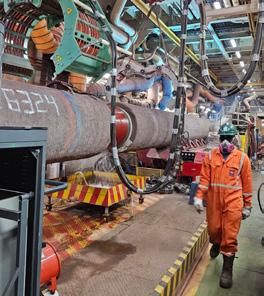
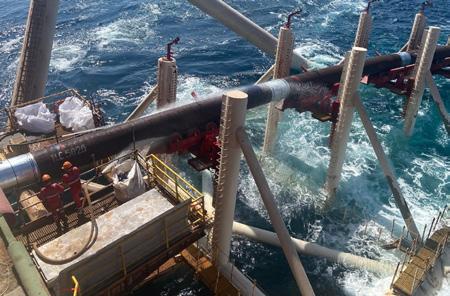
The offshore phase kicked off with the subsea installation of 380 concrete sleepers and mattresses along the offshore pipeline corridor. The pipeline corridor approaches RLIC require the dredging a 2 km trench leading to the shore line to ensure the nearshore portion of the pipeline could be buried and protected. Following the preparation of the pipeline corridor, Saipem’s installation vessels DE HE and Endeavour installed 99 km of 38-inch concrete coated pipeline connecting RLIC to EPCOL’s newly installed platform RP6S.
The onshore phase consisted of 5 km onshore pipeline commencing at the shoreline offshore pipeline terminus and extending through RLIC to finally connect to S3 Ventures existing slug catcher. The onshore pipeline
infrastructure included building of a new LER and Beach Valve station near the shoreline, 5km of trenching for the pipeline corridor and extensive new facilities plus upgrades to S3 Venture’s slug catcher infrastructure. The onshore construction phase of PL610L looping posed significant challenges necessitating precise coordination due to the dense utility network within the Ras Laffan Industrial City area with the pipeline corridor alone requiring 16 utility crossings and five micro-tunnels under roadways. Within the SC3S plant area,
EPCOL teams safely tied in new pig launchers and receivers, process piping, and control systems, while ensuring liquefied natural gas (LNG) operations continued without interruptions.
Chief Offshore, Terminals and Refining Officer, Fahad Mohammed Al-Khater, commended the achievement, stating: “Only with a ‘One Team’ approach are such consecutive safe startups possible, enabling sustained production and delivery on global commitments.”
Stated Robert Norman Faulds, NFPS Venture Manager: “This achievement underscores the NFPS project’s commitment to long-term production security, reliability, and efficiency through well-planned, cross-functional collaboration between the EPC contractor Saipem, the QELNG Project Team, Medgulf, and the NFPS EPCOL coordination group.”
The QatarEnergy LNG Operations Leadership Team expressed its ongoing gratitude to all those who contributed to the success of first gas production from the PL610L pipeline.
What’s Next: NFPS Compression 2026–2031
With the completion of the EPCOL Offshore and Pipelines Project, QatarEnergy LNG’s focus now shifts to the third phase in the North Field Production Sustainability (NFPS) journey: NFPS Compression.
This upcoming phase will further strengthen the country’s gas production network through the installation of seven massive offshore compression complexes between 2026 and 2031, employing some of the most advanced technology to maintain long-term gas deliverability from the North Field, representing another major investment in sustaining Qatar’s global LNG leadership.
Building on EPCOL’s legacy of safety, precision, and collaboration, the compression phase will bring together global expertise and local excellence — ensuring continued reliability, efficiency, and sustainability for decades to come.
“Only with a ‘One Team’ approach are such consecutive safe startups possible, enabling sustained production
and delivery on global commitments.”
– Fahad Mohammed Al-Khater, Chief Offshore, Terminals and Refining Officer
A key milestone as the new PL610L line begins operations.
19th QatarEnergy LNG Engineering Conference Drives Innovation and Knowledge
QatarEnergy LNG hosted the 19th Engineering Conference on 23rd and 24th September at the Qatar National Convention Centre, bringing together industry professionals, academics and partners to exchange ideas, technologies and to strengthen bonds across the oil and gas sector.
The two-day event provided a premier platform for the exchange of technical knowledge and innovative technologies, while offering valuable opportunities for professional networking and cross-sector collaboration.
Attendees included experts from QatarEnergy LNG, QatarEnergy and its subsidiaries, shareholders, local and international companies and leading universities, enabling productive dialogue and potential partnerships that contribute to the sustainable growth of Qatar’s energy sector.
emphasised that engineering excellence, innovation, and operational resilience are central to the company’s continued progress.
The CEO thanked QatarEnergy LNG’s Engineering Conference Committee for organising the gathering, noting that the event was “about more than sharing knowledge — it is about aligning, challenging, and inspiring one another.”
The conference focused on four key themes shaping the future of the liquefied natural gas (LNG) sector and wider energy industry: digitalisation, cyber security and artificial intelligence (AI); decarbonisation initiatives; aging facilities and asset life extension; and energy efficiency and yield improvement.
Opening the conference, Sheikh Khalid bin Khalifa Al Thani, QatarEnergy LNG Chief Executive Officer (CEO),
Sheikh Khalid bin Abdullah Al-Thani, QatarEnergy LNG Chief Engineering and Projects Officer and Haytham Abdulaziz Al Meer, QatarEnergy LNG Chief Subsurface Officer, welcomed participants on both days and announced the event’s transition from an annual forum to a biennial conference, enabling deeper technical engagement and broader participation during the event, to allow for richer insights, showcase more meaningful milestones and engage in forwardlooking discussions that reflect the rapid evolution of our industry.
Across the two days, participants engaged in a variety of technical sessions, panel discussions,
Six panel discussions featuring top leaders and managers as panelists took place throughout the twoday event.
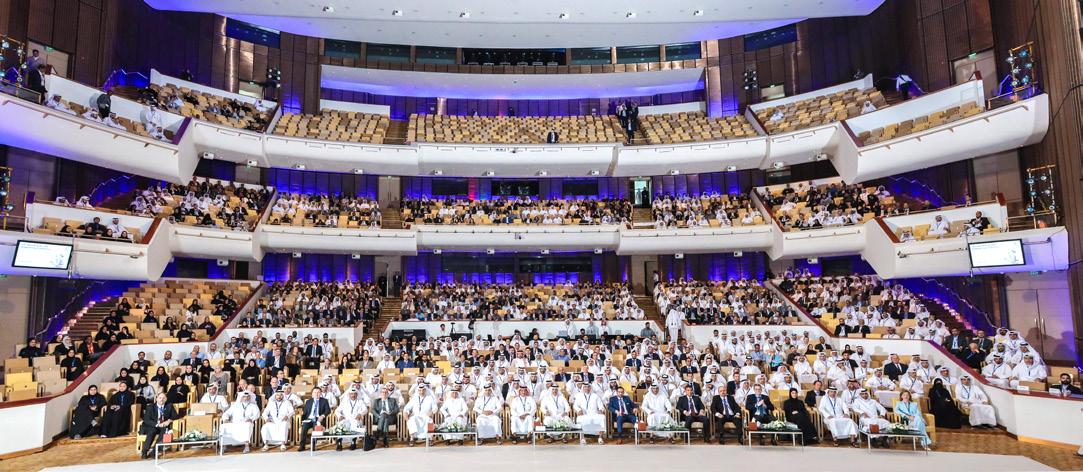
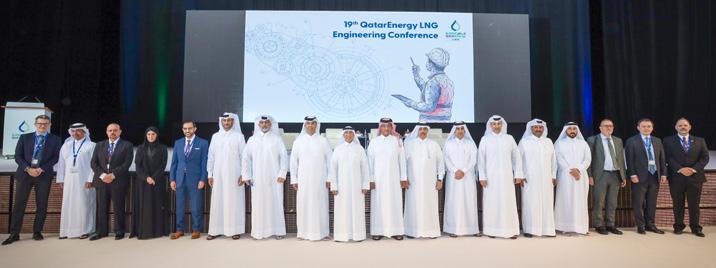
Day one Group photo, Qatar National Convention Centre.
“The QatarEnergy LNG Engineering Conference is about more than sharing knowledge – it is about aligning, challenging and inspiring one another.” – Khalid bin Khalifa Al Thani, QatarEnergy LNG CEO
poster presentations, and exhibits, exploring solutions in predictive emissions monitoring, digital twins, AI-enabled reservoir management, energy efficiency and sustainable decarbonisation technologies.
Six panel discussions took place throughout the two-day event with discussions that tackled a range of different topics. On the first day these included the management panel
Four Conference Themes
The QatarEnergy LNG 19th Annual Engineering Conference focus on the following four themes:
Digitalisation, cyber security and artificial intelligence (AI)
Decarbonisation initiatives
Aging facilities and asset life extension
Energy efficiency and yield improvement.
discussion titled ‘Expansion and Sustainability: Enabling QatarEnergy LNG’s Future’ moderated by Mehsin Al-Qadil, ‘Engineering and Projects Business Manager, which featured as panelists Nafez Bseiso, Chief Major Projects Officer, Ahmad Helal Al-Mohannadi, Chief Onshore Operations and Support Officer and Fahad Mohammed Al-Khater Chief Offshore, Terminals and Refining Officer. The discussion focused on QatarEnergy LNG's commissioning and operational integration of expansion projects as the panelists shared insights into the company's future plans and strategies.
On the second day the Main Technical panel discussion moderated by Ibrahim Bawazir Facilities and
Disciplines Eng. Manager titled Life Cycle Management, in which Abdulla Al-Hajri RLTO and Refining Manager, Abdulla Al-Subaey, Maintenance Manager, Chad Rasmussen, Upstream Reliability and maintenance Manager from ExxonMobil and Noora Al-Derham Integrated Planning Division Manager participated as panelists.
Four technical panel discussions were also conducted throughout the event, covering advances in asset integrity, hydrogen integration and reliability improvements, supported by AI-driven predictive maintenance.
A vibrant poster and exhibitors programme complemented the discussions, showcasing projects and research from QatarEnergy LNG, QatarEnergy and its subsidiaries, shareholders, local and international companies and leading universities. These displays reinforced the event’s goal of bridging practical industry experience with academic innovation.
The 19th Engineering Conference underscored QatarEnergy LNG’s commitment to innovation, collaboration, and sustainable operations, strengthening Qatar’s position as a leader in the global LNG and energy sectors while supporting the goals of Qatar National Vision 2030.
Attendees included QatarEnergy LNG, QatarEnergy and subsidiaries, shareholders, local and international companies, and leading universities.
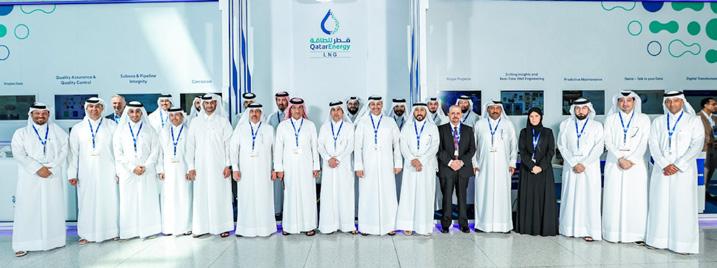
QatarEnergy LNG MLT with Engineering Conference Steering Committee and QatarEnergy LNG booth representatives.
Beyond Construction: The Environmental Legacy of the NFE Project
QatarEnergy LNG has taken a decisive step toward environmental sustainability with the successful delivery of a Wastewater Treatment Plant (WWTP) as part of the North Field East (NFE) Onshore EPC-1 Project. The initiative reflects QatarEnergy LNG’s commitment to promote sustainable development and resource conservation in close alignment with the Qatar National Vision 2030.
Developed by EPC-1 contractor CTJV, the plant is designed to treat and repurpose wastewater generated by construction camps supporting EPC-1, EPC-2, EPC-3/4, and North Field South (NFS). With a capacity of 15,830 cubic metres per day, the WWTP provides safe treatment for the daily sewage needs of approximately 54,600 personnel, equivalent to 290 litres per person.
The treated sewage effluent (TSE) produced by the facility is repurposed for irrigation and dust suppression. By reducing reliance on freshwater resources, curbing groundwater extraction and recycling nutrients
naturally found in wastewater, the project minimises environmental impact while reducing the need for chemical fertilisers. The initiative also ensures untreated wastewater does not enter natural water bodies, supporting Qatar’s commitments under the Paris Agreement on Climate Change.
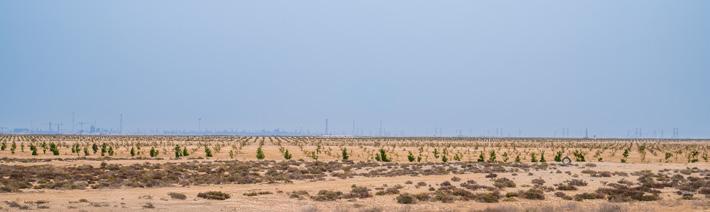
In addition to treating wastewater, QatarEnergy LNG further reinforced its environmental contribution by supporting the One Million Tree Initiative of His Highness Sheikh Tamim bin Hamad Al Thani, the Amir of the State of Qatar. A precision drip irrigation system has been installed for 127,000 trees, within 2.6 million square metres of total irrigation area project developed jointly by QatarEnergy Surface Development and Sustainability, Ras Laffan Industrial City, NFE onshore EPC-1 Project, and CTJV.
The system delivers treated water directly to root zones with at least 80% efficiency, even during the hottest summer months. By preventing salinity build-up and allowing easy inspection, the system enhances tree survival and
Reducing reliance on freshwater, curbing groundwater extraction and recycling nutrients naturally found in wastewater, the Wastewater Treatment Plant minimises environmental impact.
growth, and directly contributes to increasing Qatar’s green cover and combating desertification.
The WWTP and irrigation programme underline QatarEnergy LNG’s vision of building projects that deliver long-term value for the State of Qatar. Beyond supporting construction activity, these initiatives provide a lasting environmental legacy that will endure well beyond the construction phase of the NFE Project.
The State of Qatar launched the One Million Tree Planting Initiative to further its efforts in the field of mitigating the effects of climate change and environmental sustainability. This initiative aims to plant 10 million trees by 2030. The initiative is in line with the State of Qatar's commitment to the international commitments made during the Paris Agreement on reducing carbon emissions and considering the special importance of trees in the ecosystem and their implications on human health and quality of life.
WWTP by the Numbers
15,830 m³/day – wastewater treatment capacity of the WWTP
54,600 people – daily sewage needs supported
290 litres/person –
wastewater treated on average per day
2.6 million square metres total irrigation area
127,000 trees – irrigated through drip irrigation system
80% – root zone coverage achieved with water-efficient irrigation
In addition to the Wastewater Treatment Plant, QatarEnergy LNG installed a precision drip irrigation system for 127,000 trees in support of His Highness the Amir Sheikh Tamim bin Hamad Al Thani’s One Million Tree Initiative, ensuring the permanent environmental legacy of the NFE Project.
Sustaining Excellence: 1,200 Days of Zero Discharge to Sea from Laffan Refineries
QatarEnergy LNG marked a major environmental milestone in 2025 by reaching 1,200 consecutive days of zero wastewater discharge to sea from the Laffan Refineries (LR) Zero Liquid Discharge (ZLD) facility. This is the first achievement of its kind in the company’s operational history.
Successfully handed over for operations to the LR asset in February 2018, the LR ZLD facility reflects QatarEnergy LNG’s commitment to the environmental pillar of Qatar National Vision 2030.
Using advanced ultrafiltration and reverse osmosis technology, the ZLD facility recycles more than 70% of wastewater for reuse as desalinated water. The remaining treated wastewater is sent for irrigation within the refinery and Ras Laffan Industrial City (RLIC). This process reduces reliance on externally sourced desalinated water by almost 30%.
Technical challenges such as membrane fouling and pipeline leaks were successfully addressed through proactive operational and maintenance programmes. A stringent environmental
surveillance programme and detailed standard environmental operating procedures were also developed to ensure full ZLD unit availability.
To date the LR ZLD facility has recycled 2.9 million cubic metres of treated wastewater as desalinated water for in-plant re-use and for irrigation at the LR site and within the wider RLIC area. This equates to an average annual recovery rate of 370,000 cubic metres of desalinated water, enough to meet the yearly water needs of over 2,000 people or fill 148 Olympic-size swimming pools.
“Since August 2022, Laffan Refineries Operations have worked seamlessly with Engineering, Maintenance and Environment teams to ensure 100% availability of the ZLD facility, resulting in three consecutive years of zero wastewater discharge to sea.” – Fahad Al-Khater, Chief Offshore, Terminals and Refining Officer
Khalifa Ahmed Al-Sulaiti, Chief HSEQ Officer, said: “This impressive achievement by Laffan Refinery represents an early success of our company’s Environmental Strategy and is a key enabler for QatarEnergy LNG to meet its target to achieve near zero liquid discharge to sea from all its facilities by 2030.”
ZLD by the Numbers
1,200 days - Zero liquid discharge to sea maintained since August 2022 — a first for Laffan Refineries
70% - Average wastewater recovery rate achieved through advanced ultrafiltration and reverse osmosis technologies
2.9 billion litres treated wastewater recycled for internal plant use and for irrigation within LR and Ras Laffan Industrial City since ZLD commissioning
30% reduction - In reliance on externally sourced desalinated water, supporting sustainable resource use
25,000 m3 - Highest ever monthly desalinated water recovery was achieved in October 2025
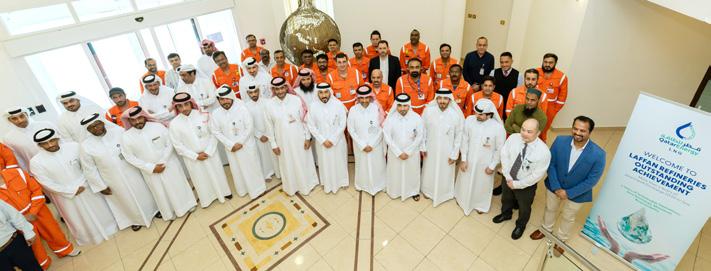
QatarEnergy LNG recently celebrated a major environmental milestone of reaching 1,200 consecutive days of zero wastewater discharge to sea from the Laffan Refineries (LR) Zero Liquid Discharge (ZLD) facility.
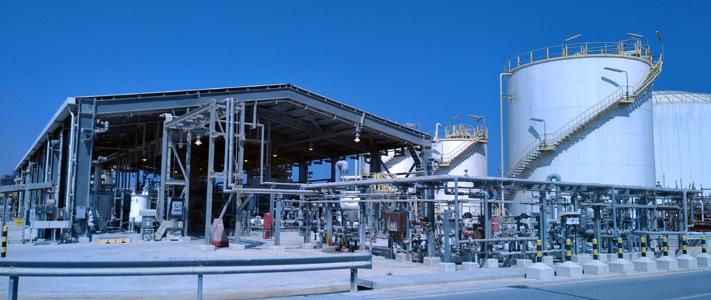
The Zero Liquid Discharge (ZLD) facility at Laffan Refineries
Implementing Advanced Digital Solutions to Enhance Circular Economy Practices
system enables seamless collaboration between Waste Generators, the Waste Management team and contractors through live inventory updates and streamlined digital workflows.
e-IWTF 2.0 enhances operational safety by minimising potential Health, Safety and Environment (HSE) risks such as spills, leaks, and fires. It also strengthens compliance by ensuring the traceability of waste movements from collection to final Ministry of Environment and Climate Change (MoECC)-approved disposal destinations.
Key Features of e-IWTF 2.0:
• New Industrial Waste Transfer Workflow: Digitalisation of internal and external waste cycles, including collection, storage, inventory tracking and disposal.
• Inventory Management and Live Dashboard: Enhanced monitoring of waste inventories at site level, enabling stronger performance oversight and operational control.
• Admin and Compliance Module: Maintains auditable records aligned with MoECC requirements and corporate sustainability targets.
In line with the company’s long-term Environmental Strategy and its 2030 objectives, QatarEnergy LNG’s Waste Management team continues to align operational excellence with environmental responsibility by embedding digital innovation and circular economy principles into every stage of its waste journey.
The new electronic-Industrial Waste Transfer Form (e-IWTF) system digitalises waste workflows and strengthens reporting, forming the backbone of a circular waste management model that closes the loop from generation to reuse.
This digital system enables more accurate segregation of recyclable materials, better tracking of waste
flows and transparent reporting of recovery and reuse rates. Integrating inventory data with disposal and recycling processes, the system ensures that valuable resources are managed effectively and redirected into productive use.
This enhanced traceability supports QatarEnergy LNG’s target of achieving 70% recycling by 2030 while reducing dependency on landfills.
Commissioned in 2014, e-IWTF was among the company’s first in-house digital workflows. Recognising the need for modernisation, the e-IWTF 2.0 upgrade was launched in 2022, with a target rollout in 2025. The new
• Automated Reporting: Integrates with internal and external reporting systems, including submissions to MoECC, Sustainability Reports, benchmarking and shareholder updates.
• Paperless Operations: Transition from manual, paper-based systems to fully electronic, auditable processes supporting the company’s digital transformation goals.
Together, these features create a unified, “cradle-to-grave” waste management system that improves efficiency, safety and environmental performance across QatarEnergy LNG’s operations.
e-IWTF 2.0 reinforces QatarEnergy LNG’s commitment to digital sustainability and a circular economy, supporting a safer, smarter, and more sustainable future.