


Each year, approximately 25 Pymble staff welcome a new child into their family – and they are in good company. Around half of our staff have some form of carer responsibilities for babies, toddlers or school-aged children outside of their working hours. As a community dedicated to educating and nurturing young people, we are about as child friendly as you can get!
Whether you’re expecting your first baby, welcoming a new child through adoption or fostering, or adding to your growing family, one thing is certain – you’re about to experience a major life change. Our aim is to support you through this journey, after all, we are your Pymble family and caring for one another is what families do best.
This book has been created to share practical information, tips and links to a wide range of resources to help you navigate this next stage of life, whatever shape and size of your family.
It also coincides with the commencement of the new Cooperative Multi-Enterprise Agreement (CMEA) 2025-2027 introducing improved parental leave benefits for staff. I’m proud to say Pymble also offers additional benefits beyond those outlined in the CMEA as part of our ongoing care and support for staff with new and young families.
We hope you find this information useful. And remember, for any other information or advice about transitioning to and from parental leave, please speak to your manager or contact our Human Resources team, who are all here to help.
Enjoy this special time in your life.

DR KATE HADWEN PRINCIPAL

Informing your manager and colleagues you are going to have a baby is a very personal thing. There is no ‘right way’ to do this; it’s entirely up to you and when you feel ready.
How and when you share your big news is your choice. You may prefer to first tell your manager about your or your partner’s pregnancy or you could confide in a few close colleagues initially and tell your manager at a later date. It’s equally appropriate to tell each individual in your team or make your announcement at a team meeting.
Some people only feel comfortable making their news public after the first 12-15 weeks, while others prefer to wait until the pregnancy is further advanced – again, the choice is yours.
If you are in a teaching role, you can tell your students and parents when you feel ready to do so and in a way that is relevant to the ages of the students in your class or classes. Whether you teach in our Junior School or Secondary School, be prepared for excitement, curiosity and plenty of questions!
Your manager will support you in drafting and approving an email to parents to let them know you will be taking parental leave and what the plans are for covering your classes and responsibilities during this time.
• Pick your moment If you announce your news at the start of a lesson, you might not get much else done for the rest of the class. You might also want to pick a time when you can talk to all your students within a couple of days.
• Talk to your colleagues Research how other teachers have told their classes – feel free to make it fun!
• Don’t be shocked by students’ self-interest Even when you have good relationships within the class, your students may focus on the impact of your news on them. It will give them some comfort if you can share how the class will be covered during your leave.
“I was really surprised to find a student I didn’t think would care was probably the most affected by the news.”
TEACHER (MUM)
“With my first baby, we were studying ultrasounds, so I put up our most recent ultrasound. One of the students noticed my surname on the corner. It was a fun way to share the news.”
TEACHER (DAD)
“I read my Year 1 class a picture book that’s intended for big sisters finding out that a new baby will be joining their family. Then I showed them sonographs of my baby and they shared their own stories of being big sisters. It was lovely.”
TEACHER (MUM)

Undertaking fertility treatment is an important time in your life when you may need extra flexibility and support at work.
In-vitro Fertilisation (IVF) and similar fertility treatments can be a stressful process, often described as a physical and emotional ‘rollercoaster ride’. Managing medical appointments alongside your teaching responsibilities or your usual work and home-life demands can be tricky. Here are some things to consider as you embark on this journey.
Support from your manager: We warmly encourage you to speak with your manager so you can work on a plan for covering your classes and having time off or flexible work arrangements (if applicable to your role) when beginning a treatment cycle.
Being upfront and open about what you need can help you and your manager find and plan the best solutions for your situation and for your students or team.
Support from your colleagues: Your colleagues may ask questions about your treatment or why you’re having time off. It’s a good idea to have a plan to manage these questions so that you are not put in an uncomfortable position. Thinking through what you are happy to share, who you are happy to share with, and coming up with standard responses can be a useful way to prepare for their questions of concern or interest.

Then again, you may choose not to share your fertility treatment journey with your colleagues at all. This is totally up to you.
If you have confided in a colleague (or colleagues), consider setting boundaries from the start. Let them know that you will update them when you have news or need their support and kindly ask them to give you space during this time.
Planning and taking leave: Each individual will have different needs and responses to treatment. You may find it helpful to take leave at certain times during your treatment cycle or you may decide to maintain a normal work pattern.
Sticking to your routine can give you a sense of normalcy and help preserve your emotional health and wellbeing. It’s also worth noting that taking leave may make you feel like you have too much time on your hands, causing you to ruminate on your treatment.
On the other hand, if you find that work is exacerbating your distress about your fertility journey, it’s worth considering a few days of planned leave or working from home during the more stressful periods of your treatment cycle. Your clinic or doctor will be able to provide a medical certificate if you require leave to manage your treatment.
Self-care at work: Some staff find their energy levels fluctuate and they feel less ‘switched on’ while undertaking fertility treatment. It’s important to remember that medications and the potential stress of fertility issues can affect how you function at work. You may also find that some of your energy and concentration is absorbed by the practical and emotional demands of your treatment.
It can take time to adjust to these new feelings, so be mindful of the pressure you place on yourself at work. Consider speaking with your manager if you have any concerns or are struggling to function at your normal capacity.
You may find that telling a trusted colleague about your treatment provides emotional support and practical help when dealing with these feelings. Leaving your desk for a walk, practising mindfulness or breathing exercises, talking to your support person or a friend, or even leaving work early can also help during stressful periods.
Most fertility clinics provide counselling services or you can access Pymble’s EAP provider, Telus Health for free counselling in person, over the phone or via text (see page 36 for details).
Becoming a parent through adoption, fostering or surrogacy brings its own unique set of rewards and challenges to work around, too.
Your manager can support you in balancing your duties and time off for appointments, helping you plan for parental leave and offering flexible work solutions as required.

“My husband and I have been fostering for several years. We’re now in the process of trying to adopt our foster son who is about to turn five.
Fostering is amazing, but it can also be very trying and emotionally exhausting. What’s helped is how supportive Pymble has been.
Initially, I found it hard to transition from a fast-paced role at Pymble to not working. But I was able to stay connected to the College, firstly through a belated baby shower my team arranged and then by working on the formal Keeping in Touch days.”
• Look after your own emotional needs
IVF, fostering or adoption can be long and complex processes taking months or even years, so self-care during this time is important.
• Discuss your plans with your manager early This gives time for your manager to put plans in place to cover your classes or the responsibilities of your role when the time comes for you to take leave.
• Take advantage of flexible work options where possible
See page 32 for our Flexible Work Arrangements Policy.
Wrapping up and handing over your work responsibilities before you go on leave is a great feeling as you prepare for your new arrival.
Depending on the time of year you are going on leave, we will ask you to:
• Provide handover notes for your classes (if midyear), including observation notes and data.
• Meet with the teacher who will be taking your classes (if there’s a crossover).
• Write your reports (if your leave starts at the back end of Term 2 or 4).
• Make sure all student workbooks are up-todate with marking, programs are annotated and worked samples are complete (Junior School).
For teachers taking two weeks’ parental leave, we also ask you to submit cover lessons. If we have found a replacement teacher, you will need to include an outline of what needs to be covered. If we are using casual teachers to provide the cover, you will need to detail the work for that period.
“I was fortunate because I took leave a little earlier so that the new teacher could take over at the beginning of the semester. We did the Learning Discussions together, which meant parents could chat with me about first semester and meet the teacher taking over. That gave us all consistency in terms of our understanding of where each girl was in her learning journey.”
“My first baby arrived eight weeks early – five weeks before I was due to take parental leave. So, when I was having my second baby, I started getting ready early. It was lucky I did because he came four weeks early. As I had prepared for things not going to plan, it was a much less stressful experience.”
Your manager will ask you to provide handover notes for your role, including:
• A list of your key contacts and stakeholders (internal and external).
• Regular meetings that are part of your role.
• Outline of work in progress, upcoming projects and deadlines.
• You will also be asked to create an out-of-office email message with details of who to contact in your absence.
Before you go on parental leave, our HR team will be in touch to arrange for you to:
• Return any College property (e.g. name badge, ID card, keys and laptop) to the relevant departments (this usually does not apply to people taking two weeks of parental leave).
• Return a completed and signed Property Return Agreement.
• Update your NESA records if you are a teacher.
• Handover any emergency procedure responsibilities you have (e.g. if you are a warden).
• Plan early, including talking about your return-to-work options with your line manager and HR.
• Speak with your manager about what you need to do in your role before you go on leave.
• Speak with HR about other administrative requirements.
• Start to research and plan your childcare arrangements early –even before you go on leave.
• Discuss different options with colleagues or friends who have young children to help you decide what might be best for you.
“I think preparing great handover notes is the most important thing you can do. I wrote thorough notes to ensure every part of my job was addressed in written documents, which included screenshots. I then shared the notes with my co-ordinator and Head of School and met with the teachers I co-teach with and did a handover with the teacher taking over my role. I think this made the transition painless for everyone. It also meant I felt I had covered everything and hadn’t left any loose ends. It felt like putting a bow on a gift.”
Top tips for all staff
Each individual and couple will experience pregnancy differently, however your health and the health of your growing baby is priority for us all.
Most people can continue working while they or their partner are pregnant, with very few issues impacting their work. Others may experience health challenges or complications such as severe morning sickness, high blood pressure or gestational diabetes, which can have an impact on your work and wellbeing..
The College will support your specific needs during your pregnancy, including:
• making sure you get the time off you need for medical appointments (or to accompany your partner/spouse to medical appointments);
• making sure you are doing a job that is safe for you;
• working with you as you plan for parental leave; and
• being flexible about other pregnancy-related work requirements you may have.
It is not uncommon for a first pregnancy to be similar or different to the second or additional pregnancies – just ask around! Other parents in your team can be a great source of practical advice and support when navigating your pregnancy.
“I spoke to my manager who helped me with the first steps, including letting the school know. I then got in touch with the HR team, who were supportive and very helpful. I felt like I could ask questions and not feel silly because I didn’t know what to expect.”
PROFESSIONAL SERVICES LEADER (MUM)
“Every pregnancy is different. With my son, I had some medical issues so I had to go on leave earlier than I would have liked. With my daughter, the pregnancy was much better second time around so working while I was pregnant was a breeze by comparison.”
TEACHER (MUM)
• Carry a water bottle to stay hydrated and snacks in case you need a boost.
• Don’t skip lunch!
• Wear comfortable clothes and shoes, especially in hot weather.
• Ask friends if you can borrow some maternity clothes – this is a great way to minimise the cost of a short-term wardrobe change.
• Avoid standing all day.
• Talk with your manager about any health issues related to your pregnancy so they can provide support and help you manage your workload.
• Speak with the HR team who can also provide advice and support.
• Schedule medical appointments and time off in advance, where possible.
• If you have any concerns about your health, contact your doctor.

There’s a lot to juggle when you bring another child into your family. While you might feel more confident as the parent of a baby this time around, parenting a toddler or older children at the same time takes a lot of patience, organisation and energy. It’s hard to say if it will be easier or not – it will just be different. We will support you by making sure you get the time off you need for medical appointments, working with you as you plan for parental leave and considering flexible working arrangements that may help.
“In the last few months of my pregnancy I didn’t have a great range of maternity clothes. I spoke to my manager about it as I needed to be comfortable but didn’t want to spend a fortune. She was very flexible about agreeing what would be appropriate at work.”
“Second time around, I found I got really tired with my newborn and three-year-old at home. I just didn’t get the downtime I had with my first. But I quickly got used to the new norm. My advice is don’t try and do everything. If you need a rest, have a rest.”
Top tips for introducing your child to a new baby
• Share the news
Talk to your older child about the new baby in an age-appropriate way and let them know they will be a ‘big brother’ or ‘big sister’.
• Read books Snuggle up with picture books that celebrate the new role of an older sibling and help them understand what to expect when the baby comes home.
• Practise and play Let your older child practise caring for a baby with a doll.
• Involve them in preparations Encourage your older child to help with babyrelated tasks, like picking out clothes or helping with chores.
• Reassure them Encourage questions and reassure your older child if they express any anxieties or worries about the new baby.
• Gifts from baby A small gift from the new baby may help the older sibling to feel included and appreciated.
• Let them touch and feel Allow your older child to touch and feel the new baby to help them build a bond.
Life can be unpredictable and, sadly, pregnancies and birth don’t always go to plan. Please know, we are here for members of our Pymble family in difficult times, too.
Although miscarriages are common, they can be traumatic and heartbreaking for women and their partners. A miscarriage is the loss of a pregnancy before week 20, whereas a loss of a pregnancy from 20 weeks’ gestation is defined as a stillbirth. The sad facts are that one in four pregnancies ends before week 20, with most of those losses occurring in the first 12 weeks.
Some miscarriages occur without women even knowing the pregnancy existed, while others occur well after a pregnancy test has confirmed they are expecting. There is often nothing that can be done to prevent a miscarriage, and most
women go on to have other healthy pregnancies. However, for many parents there is a strong desire to understand the cause, and they can feel sad, frustrated and depleted by unsuccessful attempts to find answers.
Miscarriage can have a significant impact both psychologically and physically, which is not always recognised or understood by family, friends or colleagues. It can also be a lonely and isolating time for women who may not have shared their pregnancy news with loved ones.
The grief and loss experienced following a miscarriage differs from one person to the next.

Some will mourn the absence of a memorial service or mementos of their loss, while others will struggle with a lack of medical explanation, or feelings they are somehow at fault. Some may find that the people close to them fail to understand the importance of their miscarriage. Finding the right support is important in the grieving process.
If the miscarriage is experienced as traumatic, symptoms of post-traumatic stress, anxiety and depression can continue to develop for several months afterwards so it’s important to reach out for support.
• Shock, feeling empty, irritable, guilty, angry or withdrawn.
• Fatigue, sleep disturbance, sadness, anxiety, overwhelm, hopelessness.
• Significant emotional changes due to plunges in oestrogen and progesterone.
• Mixed emotions, including jealousy towards others who are pregnant.
• Worries and fears about future pregnancies.
• Physical concerns such as headaches, cramping and losing trust in their body.
• Difficulty making sense of what happened.
• Indecision about how the loss should be commemorated and honoured.
• Concern about the effect of the loss on other children in the family.
Partners and support people can also be deeply affected by miscarriage. As well as their own grief and loss, they may have witnessed a loved one go through pain, trauma and medical treatment, which can be upsetting. They may feel helpless and unable to make sense of what happened.
It is important for couples to try and be open with each other; to continue to allow each other to process their experience of the loss and support each other as best they can. Bear in mind, sometimes it is hard for two people to fully understand what the other went through.
Seeking professional help can offer much needed support. If multiple miscarriages occur, the grief experience may be more intense, and parents may need more extensive support. Seeking help from a professional who is experienced with grief and loss can be helpful during the adjustment period and in future.
• There is no easy path to grief, so allow time and space to grieve.
• Choose healthy food and take rest and gentle exercise.
• Talk to your spouse/partner and other support people about your experience.
• Write a journal.
• Create a ritual to honour the lost pregnancy.
• Talk to your GP about how to manage sleep if you are not sleeping well.
• Be mindful of alcohol or other substance use.
• Talk to your manager about taking some time off if that would be helpful.
• Find support groups where you can connect with others who have been through a similar experience.
Mums who are experiencing concerning symptoms or are worried about their pregnancy at any time should reach out to their treating health professional or go to the closest emergency department. Some helpful resources are included at the back of this book.
The loss of a baby during pregnancy or soon after birth is a traumatic experience for parents and the people closest to them. Please know the College is committed to supporting staff who experience this terrible loss with a range of resources, including:
• Up to 14 weeks of Paid Parental Leave for staff who experience a miscarriage or stillbirth after 20 weeks of pregnancy and within 20 weeks before the anticipated date of birth.
• Up to two weeks of Paid Parental Leave for staff whose spouse or partner experiences a miscarriage or stillbirth.
• Personal/Carer’s Leave for staff who experience a miscarriage or whose spouse or partner experiences a miscarriage before 20 weeks of pregnancy.
• You can also contact your line manager, the Director of Staff, the Chief People and Culture Officer or the HR team for a confidential discussion about additional support Pymble may be able to provide.
We appreciate that our Pymble family is not the only one in the lives of our staff, and that families come in all shapes and sizes. So, we ‘walk the talk’ when it comes to providing family-friendly policies to meet the diverse needs of our staff.
The design of our policies and processes is guided by our Pymble values, enterprise agreements and laws and regulations relevant to the Independent education sector.
All staff except casual staff are able to take Paid Parental Leave if they have, or will have, responsibility for the care of a child and have worked for the College for at least 12 months. Staff who do not meet the eligibility criteria can take leave without pay for up to 12 months.
Paid Parental Leave (primary carer) 14 weeks plus superannuation
Paid Parental Leave (secondary carer) 14 weeks
Eligibility
Pymble aims to provide staff (both primary and secondary carers) with market-leading parental leave benefits, which are summarised in the table below. For more information, please see our Policy on page 27.
In addition to Paid Parental Leave provided under the Cooperative Multi-Enterprise Agreement (CMEA) and Pymble’s enhanced parental leave benefits, staff may be eligible to access parental leave pay from the government. The Services Australia website will help you find out if you meet the eligibility criteria for the government payment.
14 weeks or 28 weeks’ half pay (not including the first nonterm time period during the Parental Leave for teachers)
14 weeks or 28 weeks’ half pay (not including the first non-term time period during the Parental Leave for teachers) plus superannuation
After completion of 12 months’ service After completion of 6 months’ service
Paid Fostering Care Leave x
Paid Fertility Treatment Leave x
14 weeks for employees who are fostering a child with the intent to adopt.
10 days per year (pro rata for part-time staff) to provide care for a foster child on an emergency, temporary or respite basis. Does not accrue from year to year.
5 days per year (pro rata for part-time staff) to attend appointments and procedures related to fertility treatment. Does not accrue from year to year.
You will need to notify your line manager about a pregnancy or expected arrival of a child and your anticipated dates of the parental leave. How and when you speak to your manager is up to you.
Once you know the dates of your planned leave and whether you want to take the leave at full or half pay, make a time to meet with your HR business partner to discuss the options available to you. You will need to provide an email/written confirmation of pregnancy and expected date of childbirth. You can get the letter or email from your midwife, doctor or placement agency.
If you are pregnant and you want to work in the six weeks before your due date, the College may request a medical certificate confirming that you can continue to work and it is safe for you to do your normal job.
You can request to extend your unpaid parental leave for a further continuous period of up to 12 months. In this instance, please make your request in writing to the College as soon as possible (not less than six weeks before your original return to work date).
You can request to shorten your leave and return to work earlier than the scheduled date. In this instance, please make your request in writing to the College as soon as possible (not less than six weeks before your requested date of return).

Our gift to you
Pymble provides Baby Bags to staff who are becoming parents. This is full of practical goodies, including vouchers, nappies, wipes, information and resources to support you in your first few days and weeks after welcoming your new child to your family.

We would love to stay in touch with you while you are on parental leave. Here’s how we can help make this happen...
Each year we host a morning tea for staff on parental leave. These pram- and toddler-friendly events are a wonderful way to catch up with colleagues and Pymble news and to introduce your new baby to your Pymble family.
The College does not expect you to monitor your emails while you are on parental leave. However, some people choose to do this as it helps keep them connected to their teams and Pymble news. If you would like to access your emails remotely while you are on parental leave, contact IT for assistance.
“The morning tea was so nice once I was there. My husband came with me and he really enjoyed seeing where I work.”
PROFESSIONAL SERVICES STAFF (MUM)
Pymble provides 10 paid Keeping in Touch Days to help you stay up-to-date with professional development, maintain team relationships and departmental networks, and keep across changes at the College. You may spend these days attending planning days, training and other learning opportunities.
To use your Keeping in Touch Days, please talk with your line manager to agree on the purpose and seek their approval in advance of working these days.
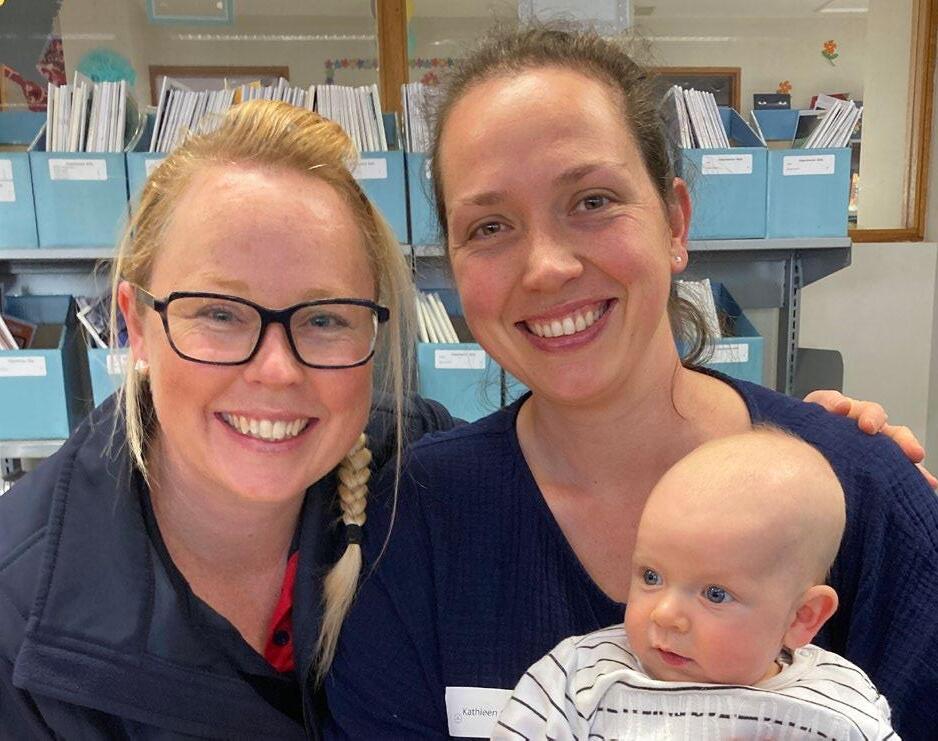
“I’ve felt very supported to take care of my wife and children. As long as my call gets logged early, I’ve never had anything but support when I’ve needed to take a day when it is family-related.”
“Both times I took parental leave I felt very supported by my team and the handover was easy. There was no pressure when I was on leave as I didn’t have to think about work too much.”
PROFESSIONAL SERVICES STAFF (DAD)
Top tips for all staff
• Make the most of the paid Keeping in Touch Days.
• Attend the morning tea for staff on parental leave if you can.
• Log on to the Pymble Staff Health & Wellbeing microsite to access helpful resources.
• Arrange a social catch-up with your colleagues.
• Follow Pymble on social media to stay up-to-date with our news.
• Read the weekly Newsletter if you’d like to keep an eye on what’s going on at Pymble while you’re on leave.
There are many things to consider when planning your return to work after parental leave, including your family’s needs and the needs of your team.
We recommend contacting your manager or supervisor at least 6 to 8 weeks prior to your scheduled return to discuss and agree on your plans. The Director of Staff and the HR team can also help with suggestions for a smooth transition back to work. Pymble has several facilities and policies to support your return to work, in addition to the Keeping in Touch program.
Pymble promotes creative thinking and collaborative approaches to exploring flexible working arrangements. Our Flexible Work Arrangements Policy details the various types of arrangements available to staff, and the factors we consider when assessing requests, including:
• your role and responsibilities;
• timetabling of classes for your subjects (for teachers);
• composition of your team; and
• opportunities to work part-time, from home or in a job-share arrangement.
“Returning to work can be harder when you have to deal with all of the illnesses your child gets at day care. Pymble has been really supportive of those times. I’ve also really enjoyed being back at work – it actually feels like a bit of respite where I get to enjoy intellectual challenges and professional growth opportunities.”
See our Flexible Work Arrangements Policy on page 32 or the Staff Portal for more details.
If you plan to continue breastfeeding when you return to work, we offer a private and comfortable space where you can feed your baby or express milk. There is also refrigeration for your expressed milk to be stored while you’re at work.
There are many ways to keep breastfeeding when returning to work. What works for you will depend on your working arrangements, child-care arrangements and the baby’s age.
For example, you might be able to keep breastfeeding without changing your routine by having your baby brought to you for breastfeeds or by working flexible hours. Alternatively, you might be able to adjust your routine and do a mix of breastfeeding at home and giving your baby expressed breastmilk or infant formula when you’re at work.


Securing the right care arrangements for your little one can feel overwhelming at first. With time, research and planning, you will find the option that works best for your family.
There are many childcare options available and often families find a combination of these can work really well. The main choices are:
• home-based care;
• centre-based care;
• family daycare;
• employer-provided creches; and
• outside school hours care.
Home-based care is when a friend, relative, babysitter or nanny cares for your child in your own home. You might choose to organise home-based childcare because other childcare options aren’t available on the days you require or they don’t meet your needs. Many families use informal home-based care, for example, grandparents or other relatives look after their children, either regularly or occasionally. Other families make more formal arrangements, through babysitters or nannies.
You might be able to use the Australian Government’s In Home Care program to help with the cost of home-based childcare by an educator who meets minimum qualification requirements. To be eligible, you must work non-standard or variable hours, be geographically isolated, or have complex or challenging family needs.

Centre-based care includes long-day care, occasional care, preschools and kindergartens. Long-day care at a childcare centre suits many families who work regular weekdays. Some centres offer occasional care for families who need someone to look after their children every now and then. You can express your interest in occasional care days and go on a waiting list for when other children are away.
Preschools or kindergartens operating from stand-alone centres offer education and care programs for children aged 3-5 years. Some preschools also offer occasional care days if other children are away. Centre-based care is reliable, has qualified early childhood educators, offers a learning and development program with structure and routine, and gives children opportunities to play and socialise with many other children.
Family daycare is when your child is looked after by an approved educator in the educator’s home. A home-based environment offers a learning and development program, opportunities for children to play and socialise with other children, and a quieter environment, which some children prefer or need. On the other hand, this may be less reliable than centrebased care if you have to find back-up care at times when your carer gets sick.
If you’re interested in family daycare or centre-based childcare, it’s a good idea to visit a few options so you can get a feel for different services.
Some employers offer informal childcare in creches. These businesses might charge a fee or build a fee into the overall cost of membership or the price of their products or services. A creche can be convenient if you need support for a brief period or want your children to play and socialise with other children. It can also prepare children for more formalised childcare in the future.
Creches don’t have to meet the same requirements for educator-child ratios or education quality as centre-based care or family daycare. So they won’t help your child learn and develop in the same way as a quality early childhood education and care service
Outside school hours care (OSHC) is centrebased childcare for families who need care for primary school-age children before or after school, on student-free days and during the school holidays.
Educators in centre-based childcare services, family daycare and OSHC must be qualified in early childhood education. They have the skills and training to support your child’s learning, which is a key part of the childcare experience.
When you’re trying to decide which type of childcare is right for your family, you might want to consider the following questions:
• How many hours of care do you need each week?
• What are the options in your area, and how much do they cost?
• Do you want your child educated and cared for at home or at a childcare centre?
• Are you looking for care that matches your family’s interests, lifestyle or values – for example, food choices, musical interests and so on?
• Do you want your child to experience different styles of learning and mix with children from a wide range of social and family backgrounds?
• Are you looking for care that’s similar to or different from learning and care at home?
• What are the quality ratings of the options you’re interested in? You can check quality ratings of child care services at the Australian government’s website, Starting Blocks
Did you know…?
You may be eligible to receive Australian Government assistance to help with child care costs if you meet certain criteria, such as using an approved childcare service.
It’s a good idea to register with any services that you’re interested in, even while you are still deciding. And don’t worry – it’s perfectly acceptable to put your child on more than one waiting list. This is because you might not get all the days you need from one service alone, or a service might not have a vacancy when you need it.
“Trust yourself. You know more than you think you do.”
DR BENJAMIN SPOCK

Asking the following questions can help you compare how different services will care for your child – and lead you towards the right decision for your family.
Daily routines
• Is there a chance for quiet time or rest during the day?
• Do toileting, nappy changing and rest times meet individual needs?
Educators and their relationships with children
• Is there an appropriate ratio of educators per number of children?
• How often do you see educators engaging with children?
• Do educators encourage, respect and care for children?
• Do the educators seem relaxed when they interact with children?
• How do educators guide children’s behaviour?
• Is every child treated like an individual?
Facilities and setting
• Does the centre or home have a relaxed and happy atmosphere?
• Is the environment stimulating enough?
• Is the setting safe? For example, is there active supervision of children at all times, appropriate fencing and regular equipment cleaning?
• Does the centre or home seem interesting, with plenty of light, toys and activities?
• Is there plenty of room and outdoor equipment for your child to enjoy?
• Are noise levels low enough for your child to hear clearly?
• What are the service fees?
• What fees are payable for days you don’t attend? For example, what do you pay when you’re on holidays or it’s a public holiday?
• Can you get government assistance for childcare? If you can, you’ll pay less than the quoted price.
• Does the service supply meals and snacks, or do you need to send food with your child?
If the service provides meals and snacks
• Does the service offer a healthy selection of meals, snacks and drinks?
• Do snacks and meals meet children’s individual needs?
• Does the service follow Australian dietary guidelines for children? Can the service show you its menu and nutrition policy?
• In what ways can parents get involved? For example, do you have a say in the curriculum or can you help with working bees?
• Do you feel welcome to discuss issues with educators?
• Can you and your child do an orientation program?
• Can you drop in at any time to visit and observe your child in the environment?
• Are family members encouraged to get involved in activities?
• What does the service do to help your child learn and develop? Does the service display its learning and development program?
• Are there plenty of opportunities for your child to play outdoors?
• Will your child have the chance to explore and create?
• Will childcare educators report on your child’s week?
• What is the service’s policy on enrolling children who aren’t up to date with immunisations?
• Is there easy-to-access information about the service’s policies, level of staff training, hygiene and discipline procedures?
• What happens if your child is sick?
• What happens if you’re late for a pick-up?
• Who else can pick up your child?
• What should you pack for your child?
• Does the service offer occasional daycare for children who are enrolled part time?
If you’re choosing childcare services for children with disability or children with other additional needs, there might be extra things to consider, like staff training and the service’s approach to inclusion.
From 2026, Pymble will be operating a beautiful new Early Years School. This is in addition to our existing OSHC services, which staff can use to care for their children after school and during school holidays.
Located in our brand-new Grey House Precinct at Pymble, our new 90-place Early Years School is scheduled to open for business in mid 2026. It will be:
• Available for children aged from three months to six years.
• Open for 48 weeks a year (closing from mid-December through to mid-January).
• Offering flexible enrolment pathways for two, three, four or five days a week, depending on availability and individual circumstances.
• Operating from 7.00am to 6.30pm Monday to Friday.
As Pymble is an approved provider, parents and guardians of children attending the Early Years School may be eligible for Federal Government childcare benefits and rebates. Staff discounts may also be available to eligible staff members.
Our Early Years School will feature a welcoming, natural play environment for exploration and discovery. Using a play-based curriculum, our educators will work to expand the interests and curiosities of children by observing play interactions, conversations and investigations inspired by the daily activities. The design of the centre also promotes community connections for families, as children and families are welcomed in the central piazza before heading to one of the six age-specific rooms. A nutritional menu will be provided for enrolled students and includes breakfast, morning tea, lunch and afternoon tea.
For more information about the Early Years School, email kahearn@pymblelc.nsw.edu.au.
“We see the addition of our Early Years School as an opportunity to grow together as a Pymble family, holding the hands of each child and supporting our staff in their experiences of parenthood.”
MRS KAREN AHEARN, HEAD OF EARLY YEARS SCHOOL
“Play is the highest form of research.”
ALBERT EINSTEIN

Staff can access Pymble’s OSHC program for after-school care. The OSHC Centre is located on campus and provides childcare services for Pymble students in Kindergarten to Year 6.
• After-school care is available until 6.30pm during school terms and includes afternoon tea.
• Pre-co-curricular care for Years 3 to 6 (3.00pm to 4.00pm) is available at reduced cost and includes afternoon tea.
• For information about Pymble’s OSHC program contact the program manager on +61 2 9855 7741 or at oshcadmin@pymble.nsw.edu.au
During non-term time, staff can access our OSHC Holiday Program for your children or children you care for. The programs provide safe, fun and entertaining activities for school-aged children. If you are eligible for the Child Care Subsidy this will be applied.
• Bookings are open to girls in Kindergarten to Year 6, boys in Kindergarten to Year 2 and, for the January program, children due to commence Kindergarten at Pymble the following year.
• Excursions are available to Pymble students exclusively.
• For more information about the OSHC Holiday Program or to enrol, visit the website or contact the program manager on +61 2 9855 7741 or at oshcadmin@pymble.nsw.edu.au
Payroll issues, including parental leave payments and accessing payslips
Return-to-work plans
Wellbeing issues
- Linda Jin +61 2 9855 7412
payroll@pymblelc.nsw.edu.au
manager
+61 2 9497 7874
1300 360 364
Arranging to visit the College while on leave Your team Contact your manager
IT support, including getting remote access to emails and staff portal
2 9855 7771

“The best thing to spend on your children is your time.”
DR LOUISE HART
1.1 People are at the heart of Pymble Ladies’ College (College). That’s why every staff member is valued for being the person they are, for the quality of their work, and for their contributions.
We appreciate that our Pymble family is not the only family in the lives of our staff, and that families come in all shapes and sizes, each with their own unique challenges. As such, the College provides family friendly policies to meet the diverse needs of our staff.
1.2 Pymble staff are entitled to take parental leave in accordance with the Fair Work Act 2009 (Cth) and any applicable industrial instrument.
1.3 The purpose of this policy is to explain employees’ entitlements to paid and unpaid parental leave. It also sets out the notification requirements for staff wishing to take parental leave.
2.1 This policy applies to all full-time and parttime employees of the College.
2.2 This policy must be read in conjunction with any applicable industrial instrument.
2.3 This policy is not intended to be contractual in nature and does not form part of any employee’s contract of employment with the College.
The College has five core values which guide our behaviour and interactions with one another and affirm our commitment to the Christian heritage of the College and our identity as a school of the Uniting Church in Australia. All roles, policies and
procedures are underpinned by these values, and the expectation that students, staff and the wider College community aspire to live our values every day.
Care – I am kind to myself and others
Courage – I am open to new experiences to learn and grow
Responsibility – I take ownership of my actions
Respect – I value diversity, my worth and the worth of others
Integrity – I do the right thing, even when no one is watching
4.1 In this document:
Primary Carer is a full-time or part-time employee who:
• has completed six (6) months’ continuous service at the College at the time of the birth of their child (including via surrogacy) or date of placement of the child in the case of adoption; and
• will be the primary person responsible for the care of the child from the child’s date of birth (including via surrogacy) or the child’s date of placement, in the case of adoption.
Secondary Carer is a full-time or part-time employee who:
• has completed six (6) months’ continuous service at the time of the birth of their child (including via surrogacy) or date of placement of the child in the case of adoption; and
• was not the initial primary carer but who subsequently becomes the primary person responsible for the care of the child because the initial primary carer has returned to work or studies.
5.1 Paid Parental Leave
5.1.1 Both Primary Carers and Secondary Carers are entitled to 14 weeks of paid parental leave (excluding non-term time for teachers for a maximum of one non-term time period), or 28 weeks of paid parental leave at half pay (excluding non-term time for the first non-term time period during the parental leave only) (Paid Parental Leave). For Secondary Carers Paid Parental Leave is inclusive of and not in addition to the two weeks paid leave referred to in clause 5.1.2.
5.1.2 An employee who is not the Primary Carer is entitled to two weeks of paid leave commencing on the date of birth of the child (including via surrogacy) or the day it comes into placement for a child for adoption, or on the day the mother comes out of hospital.
5.1.3 Secondary carers must take their Paid Parental Leave within the 12-month period commencing from the date of the birth of the child (including via surrogacy) or placement of the child for adoption.
5.1.4 Paid Parental Leave is calculated at the rate of pay the Employee received at the time of commencing Paid Parental Leave, including any allowance.
5.1.5 Employees may choose to have Paid Parental Leave paid to them either • in a lump sum; or • in fortnightly pay cycles.
5.1.6 The College will make superannuation contributions on Paid Parental Leave into an Employee’s chosen fund in accordance with the Superannuation Guarantee (Administration) Act 1992 (Cth) and any applicable industrial instrument.
5.1.7 Paid Parental Leave includes, and is not in addition to, any entitlement to paid parental leave that an employee may have under an applicable industrial instrument.
5.1.8 Employees who take consecutive periods of parental leave are required to return to
work for a period of at least six (6) months before commencing the second period of Paid Parental Leave.
5.2.1 Employees may also be eligible to access Parental Leave Pay from the Government in addition to Paid Parental Leave from the College. Information about eligibility and how to apply for Parental Leave Pay can be found via: https://www.servicesaustralia. gov.au/parental-leave-pay
5.3.1 Employees are entitled to up to 12 months’ unpaid parental leave in connection with the birth of a child (including via surrogacy) or placement of a child under the age of 16 for adoption (Unpaid Parental Leave).
5.3.2 Unpaid Parental Leave can be taken as a single continuous period, flexibly as set out in clause 5.4, or a combination of both.
5.3.3 Both parents can take Unpaid Parental Leave at any time during the 24-month period starting on the date of birth (including via surrogacy) or day of placement of the child through adoption. Pregnant Employees can start Unpaid Parental Leave up to 6 weeks before the anticipated date of birth of their child.
5.3.4 Employees can take annual leave at the same time as Unpaid Parental Leave.
5.4.1 Employees may take up to 130 days of flexible unpaid parental leave during the 24-month period starting on the date of birth (including via surrogacy) or date of placement of the child for adoption (Flexible Unpaid Parental Leave). Flexible Unpaid Parental Leave is included in, and is not in addition to, Unpaid Parental Leave.
5.4.2 Employees can take Flexible Unpaid Parental Leave as a single continuous period of one or more days or separate periods of one or more days.
5.4.3 Pregnant Employees can access Flexible Unpaid Parental Leave up to 6 weeks before the anticipated date of birth of their child.
5.4.4 Part-time employees are entitled to Flexible Unpaid Parental Leave in full, not on a pro rata basis.
5.5.1 Employees are entitled to five (5) days’ paid leave per year to attend appointments, procedures, and recovery related to fertility treatments such as in vitro fertilisation and other assisted reproductive treatments (Fertility Treatment Leave).
5.5.2 Unused Fertility Treatment Leave does not accrue from year to year.
5.5.3 Fertility Treatment Leave is in addition to paid personal/carer’s leave.
5.5.4 Part-time employees are entitled to Fertility Treatment Leave on a pro rata basis.
5.6.1 The College acknowledges that miscarriage and the loss of a baby during pregnancy or soon after birth is a traumatic and emotional life experience for parents and the people closest to them. The College is committed to supporting employees during this challenging period with a range of resources, including paid leave.
5.6.2 Employees who lose a baby after 20 weeks of pregnancy or soon after the birth of the baby, will be entitled to Paid Parental Leave.
5.6.3 Employees who experience miscarriage and the loss of a baby, or whose partner experiences this, before 20 weeks of pregnancy may access paid personal/ carer’s leave.
5.6.4 The College understands individual circumstances may require different types of support. Please contact your manager or the Human Resources Team for a confidential discussion about any additional support the College may be able to provide.
5.7.1 Employees who are fostering a child under the age of 5 years on a long-term basis with the intent to adopt are eligible for Paid Parental Leave.
5.7.2 Employees who foster a child with the intent to adopt are not entitled to an additional period of Paid Parental Leave if they later adopt the same child.
5.8.1 Employees who provide foster care on an emergency, temporary or respite basis are entitled to ten (10) days’ leave per year to allow them to care for a foster child (Foster Care Leave).
5.8.2 Unused Foster Care Leave does not accrue from year to year.
5.8.3 Part-time employees are entitled to Foster Care Leave on a pro rata basis.
6.1 Employees wishing to take a period of parental leave should notify their manager and the Human Resources team about the pregnancy, or expected arrival of a child, and the anticipated dates of the parental leave.
6.2 If practicable, at least 10 weeks before the commencement of the parental leave, employees should send an email to the Human Resources team at humanresources@pymblelc.nsw.edu.au advising:
• the start and end dates for their Parental Leave; and
• whether they wish to take Paid Parental leave at full or half pay.
Employees should also attach to this email/ written confirmation of the pregnancy and the expected date of birth or placement of a child, such as a letter from their medical practitioner or adoption or fostering agency.
6.3 Employees should notify the Human Resources team at least 4 weeks before they intend to take a day of Flexible Unpaid Parental Leave, or as soon as practicable.
7.1 Employees may request to extend a period of Unpaid Parental Leave for a further continuous period of up to 12 months. The request is to be made in writing to the College as soon as possible, but not less than six weeks, prior to the original return to work date.
7.2 Employees may also request to return to work earlier than planned.
7.3 For teachers and other academic or student-facing roles, the College will consider the request taking into consideration the impact on student learning outcomes and experience, timetables requirements and department/ school teaching staff capacity and the inherent requirements of the position.
7.4 For professional services staff, the College will consider the request taking into consideration the impact on service delivery, team capacity, business requirements and the inherent requirements of the position.
8.1 A Primary Carer is entitled to up to 10 paid Keeping in Touch days whilst on parental leave (Keeping in Touch Days).
8.2 The purpose of Keeping in Touch Days is to enable staff members on parental leave to stay up to date with professional development, maintain team relationships and departmental networks, and remain abreast of key changes in the workplace. Examples of how Keeping in Touch Days may be used include:
• attendance at / participation in a team/ department planning day
• attendance at training, staff days, or to
complete approved professional learning
• complete mandatory compliance training (including completion of online training from home).
8.3 Keeping in Touch Days can be worked as a part day, a day at a time, a few days at a time, or all at once. Any day worked for an hour or more will be considered a Keeping in Touch Day.
8.4 Employees are unable to access Keeping in Touch Days within the first 14 days of the child’s birth or date of placement.
8.5 Staff members receive their normal salary and superannuation and accumulate leave entitlements for each Keeping in Touch Day.
8.6 Staff wishing to utilise their Keeping in Touch Days should gain approval from their manager, and agree the purpose/usage of the day, prior to using the day. Staff members should complete a timesheet with the hours worked, have it approved by their manager and email it to payroll@ pymblelc.nsw.edu.au to arrange payment. Staff can access a timesheet via HERO.
8.7 The College’s ‘Keeping in Touch’ morning tea events for mums, dads, and bubs, are voluntary and are not considered Keeping in Touch Days for the purpose of this clause.
9.1 The College understands that staff may require flexibility when returning to work following a period of parental leave. Please refer to the Flexible Work Arrangements Policy for further information regarding the flexibility options available and the process for requesting temporary or permanent flexible working arrangements.
9.2 For staff needing or wanting to continue breastfeeding on their return to work, support is through access to a private and comfortable room in which to express, and refrigeration for expressed milk to be stored while at work. Access to these supports is arranged through the Boarding Administration Co-ordinator. Staff can
contact the Human Resources team or the Director of Boarding to make initial arrangements.
9.3 The College will provide a buddy to staff to assist them with a successful return to work after parental leave.
9.4 Staff are eligible to utilise the College’s Holiday Program for girls in Kindergarten to Year 6, boys in Kindergarten to Year 2 and, for the January program, children due to commence kindergarten at Pymble the following year, when the service has capacity. Excursions are available to Pymble students exclusively.
10.1 The College provides a range of other support to parents. For further information about these supports, please refer to We Are Family: Your Guide to Parental Leave at Pymble or speak to a member of the Human Resources team.
10.2 The College provides Baby Bags to staff becoming parents which include a range of products and resources to support parents in their first few days and weeks as they welcome their new child to the family. The Baby Bags are issued to staff by the Staff Wellbeing Committee as part of their care for our staff’s wellbeing at this special time.
11.1 There are other College policies that relate to the Parental Leave Policy including but not limited to the following:
• Flexible Work Arrangements Policy which sets out both the formal and informal flexibility arrangements available to staff and outlines the approach to designing and implementing effective flexible working arrangements.
• Anti-Discrimination, Anti-Harassment and Anti-Bullying Policy which summarises obligations in relation to unlawful discrimination, harassment and bullying, especially regarding pregnancy, potential to become pregnant, parental status, and carers responsibilities.
11.2 This policy must be read in conjunction with the applicable Industrial Instrument governing employment at the College.
• Independent Schools (Teachers) Cooperative Multi-Enterprise Agreement 2025
• Independent Schools NSW (Professional and Operational Staff) Cooperative Multi-Enterprise Agreement 2025
• Educational Services (Schools) General Staff Award 2020
This document is uncontrolled if printed. Please refer to the Portal for the most current version.
1.1 People are at the heart of Pymble Ladies’ College (College). That’s why every staff member is valued for being the person they are, for the quality of their work, and for their contributions.
We appreciate that our Pymble family is not the only family in the lives of our staff, and that families come in all shapes and sizes, each with their own unique challenges. As such, the College provides family friendly policies to meet the diverse needs of our staff.
1.2 Pymble staff may request a flexible work arrangement in accordance with the Fair Work Act 2009 (Cth) and any applicable industrial instrument.
1.3 The purpose of this policy is to explain our flexible work arrangements and to set out the process for staff wishing to apply for flexible work arrangements.
2.1 This policy applies to all full-time and parttime employees of the College.
2.2 This policy must be read in conjunction with any applicable industrial instrument.
The College has five core values which guide our behaviour and interactions with one another and affirm our commitment to the Christian heritage of the College and our identity as a school of the Uniting Church in Australia. All roles, policies and procedures are underpinned by these values, and the expectation that students, staff and the wider College community aspire to live our values every day.
Care – I am kind to myself and others
Courage – I am open to new experiences to learn and grow
Responsibility – I take ownership of my actions
Respect – I value diversity, my worth and the worth of others
Integrity – I do the right thing, even when no one is watching
Pymble’s Flexible Work Arrangements Policy recognises the importance of aiming to achieve a fair balance between work and family responsibilities. Different flexible working arrangements may be considered depending on the degree of flexibility necessary to best accommodate the needs of our students and staff.
The Fair Work Act 2009 (Cth) provides that certain employees (referred to in this policy as “eligible employees”) are entitled to make a written request for flexible working. Eligible employees may make a request to change their working arrangements, such as working part-time, flexible hours, job sharing, and work redesign.
The College will consider such requests, discuss with the staff member and their manager and provide a written response.
This policy exists to assist Pymble staff and managers to understand the process for requesting flexible work arrangement and the basis upon which decisions are made to enable all parties to comply with the law.
To the extent that this policy describes benefits and entitlements, they are discretionary in nature and are not intended to be contractual. The terms and conditions of employment that are intended to be contractual are set out a staff member’s written employment contract.
Employees must satisfy the following before making a permissible request for flexible working:
Permanent employees: must have been continuously employed by Pymble for at least 12 months before making their request;
Casual employees: must have been employed by Pymble on a regular and systematic basis for at least 12 months before making their request AND must have a reasonable expectation of continuing employment with the College on a regular and systematic basis moving forward.
In addition to the minimum service requirements set out above, to be an “eligible employee” under this policy, the employee must satisfy at least one of the following circumstances, and the request for flexible working must be because of those circumstances:
• The employee is pregnant;
• The employee is the parent, or has responsibility for the care, of a child who is of school age or younger (i.e. the age at which the child is required by the applicable State or Territory law to start attending school); or
• The employee is a carer within the meaning of the Carer Recognition Act 2010;
• The employee has a disability;
• The employee is 55 years of age or older;
• The employee is experiencing violence from a member of the employee’s family; or
• The employee provides care or support to a member of the employee’s immediate family or a member of the employee’s household, who requires care or support because the member is experiencing violence from the member’s family.
A member of staff who believes they are eligible to make a request for flexible working and considers that a change to their working arrangements would have a positive impact upon their ability to balance their work and family responsibilities should discuss with their manager in the first instance, and then confirm the details of their request in writing/via email to their manager.
In order for the College to properly consider the staff member’s request, it will be helpful if as much detail as possible is included.
For example, the request should include the following:
• The type of flexible working arrangement that is requested, or different options of
• flexible working that could benefit the staff member;
• How a new working arrangement would benefit the staff member in their day to day life;
• A proposed start date and if relevant, an end date;
• Suggestions as to how the proposed flexible working arrangement could impact students, faculty colleagues, and the provision of educational services and how this could be overcome
• Suggestions as to how the proposed flexible work arrangements could impact other members of the team/department or provision of other services to the College and how this could be overcome.
• Any other relevant information.
Once the manager receives the staff member’s written request to change their working arrangements they will consider the request, taking into account the proposals and their impact upon the College’s ability to continue to meet the needs of our students and staff.
A member of the HR team will meet with the manager and their staff member to discuss and assist with assessing the request. A written/email response will be provided to the staff member, as soon as practicable and within 21 days of the College receiving the request.
The response will set out whether the staff member’s request is granted, partially granted (for instance, it may be granted with conditions or for a fixed period of time) or refused. In making its decision, the College will take into consideration some or all of the following factors:
• For teachers and other academic staff or those in student-facing roles – the impact on students, student learning outcomes and wellbeing.
• For teachers and other academic staff –the timetabling implications for classes and subjects, impact on the faculty/ department workloads.
• For professional services staff – impact on team workload and capacity, technical skills, customer needs, operations, output and productivity, workplace health and safety.
• The specific circumstances of the employee.
The College will take into account several factors in assessing the request for flexible work arrangements across four key areas:
• Impact on our students, student learning outcomes and wellbeing.
• Practicalities – for example timetables and class allocations, the cadence of the school year, College programs.
• Capacity – for example impact on teams, departments/faculty workloads.
• Impact on the provision of education services and customer service such as cost (additional recruitment, casual covers) or inefficiency.
If a staff member’s request for flexible working is agreed in full, then the start date of the new arrangement will need to be agreed, a review date decided and the relevant change to the employee’s terms and conditions will be documented in a Flexible Working Arrangement Record.
If the employee’s request for flexible working is partially agreed, further discussion will then take place between the staff member and their manager (supported by HR) to come to a mutually convenient arrangement.
If the request is refused, the manager (supported by HR) will explain in their response in a discussion with the employee and provide a letter/email outlining the reasonable grounds that led to the decision to refuse the arrangement.
Reasonable grounds for refusal may include (but are not limited to):
• The effect on the workplace and the College of approving the request, including the provision of teaching and education services to our students, student learning outcomes and wellbeing.
• The inability to organise work among existing staff including teachers or staff due to classes and timetable requirements and student needs.
• The inability to recruit a replacement a staff member or the practicality or otherwise of the arrangements that may need to be put in place to accommodate the request.
• The effect the arrangements will have on other staff.
• The arrangements that will be required to enable the staff member to fulfil their parental or carer responsibilities.
• The timing of the request. For example, how quickly do the new arrangements need to begin and how long do they need to stay in place for; how they fit with the cadence and requirements of the school year, the student cohort (such as Year 11 or Year 12).
• What effect of not having the flexible work arrangement may have on the staff member.
• Whether other legal obligations will be breached by modifying the work arrangements, for example, workplace health and safety laws, child protection laws.
• The effect on the workplace and the College of approving the request, including the financial impact and the impact on delivery of classes and educational services to our students, efficiency, productivity and customer service.
This Policy must be read in conjunction with the applicable Industrial Instrument governing employment at the College.
• Independent Schools (Teachers) Cooperative Multi-Enterprise Agreement 2025
• Independent Schools NSW (Professional and Operational Staff) Cooperative Multi-Enterprise Agreement 2025
• Educational Services (Schools) General Staff Award 2020
This document is uncontrolled if printed. Please refer to the Portal for the most current version.
We’ve curated a selection of parenting resources you might find useful.
A wide range of information and resources can also be found on the Pymble Staff Health and Wellbeing microsite. It is accessible via the icon on the My Pymble Portal or directly via HERO. Staff Health and Wellbeing Microsite.
Pymble EAP service
1300 360 364
Contact Pymble’s EAP provider Telus Health for confidential telephone counselling, advice and support at any time.
Tresillian Parent Helpline
1300 272 736 (1300 2Parent), 7 days 7.00am to 11.00pm
Education and support for parents of infants.
Australian Breastfeeding Association
1800 MUM 2 MUM (or 1800 686 268), 24 hours/7 days
Australia’s leading authority on breastfeeding.
Beyondblue
1300 224 636
A national depression and anxiety initiative that provides a support service to talk with a health professional over the phone, email or chat support services.
Karitane Careline
1300 227 464
Education and support for parents of infants.

Parent Line NSW
1300 1300 52
Mon to Fri 9.00am to 9.00pm
Weekends 4.00pm to 9.00pm
Help, support and counselling services for parents and carers.
Perinatal Anxiety and Depression Australia (PANDA)
1300 726 306
Monday to Friday 9.00am to 7.30pm AEST
Support for post and antenatal depression and anxiety.
Relationships Australia
1300 364 277
Relationship support for couples and families.
Lifeline
13 11 14, 24 hours/7 days
Crisis support and suicide prevention.
MensLine
1300 78 99 78, 24 hours/7 days
Telephone and online support for men.
Red Nose (formerly SIDS and Kids)
Offers a 24-hour grief and loss support line (1300 308 307) and resources for parents who have experienced the loss of a pregnancy, baby or child. They also include members and resources from the former Stillbirths and Neonatal Deaths Support Service (SANDS).
The Pink Elephants Support Network
A not-for-profit charity that supports women and their partners through miscarriage, pregnancy loss and beyond, offering information, peer support and resources.
Stillbirth Foundation Australia
Provides information and resources for families affected by stillbirth.
Pregnancy, Birth and Baby
A government website with information and resources about pregnancy, birth and baby care, including a section on what to expect after a miscarriage.
Miscarriage Australia
Provides resources about what to expect physically and emotionally after miscarriage.
COPE: Centre of Perinatal Excellence
Offers support and resources for families dealing with pregnancy loss.
ABC Family
https://www.abc.net.au/everyday/family
A collection of the ABC’s stories, articles and advice about families.
Australian Breastfeeding Association
https://www.breastfeeding.asn.au/ Australia’s leading authority on breastfeeding.
Parent and carers toolkit (nsw.gov.au)
https://education.nsw.gov.au/parents-andcarers/parent-and-carers-toolkit
To support parents and carers the NSW Government has created an ‘essentials’ toolkit with self-care tips and handy lists.
Parents@work
https://www.parentsatwork.com/resources
A collection of useful links, articles and resources.
Parenting ideas
https://www.parentingideas.com.au/parentresources/
A collection of parenting education and support materials.
Playgroup Australia
https://playgroupaustralia.org.au/
There are thousands of local playgroups around Australia and joining one can be a helpful way to build new friendships and support networks.
Pregnancy birth and baby
https://www.pregnancybirthbaby.org.au/
This website supports parents on the journey from pregnancy to baby and preschool.
Rainbow Families
rainbowfamilies.com.au
Supporting LGBTQI+ families in Australia.
Raising Children Network raisingchildren.net.au
This is an Australian Government resource providing independent, up-to-date information to help families thrive and grow.
SBS Family
https://www.sbs.com.au/topics/voices/family
A collection of SBS’s stories, articles and advice about families.
Perinatal Anxiety & Depression Australia (PANDA)
https://panda.org.au/
Panda is dedicated to supporting mental health and wellbeing of expecting, new and growing families.
Babytalk - ABC
www.abc.net.au/listen/programs/babytalk
“We know babies don’t come with instruction manuals.” This podcast series shares medical, social, emotional, economic and educational insights from parents and professionals.
Dadpod with Charlie Clausen and Osher Günsberg
https://podtail.com/en/podcast/dadpodwith-charlie-clausen-and-osher-gunsberg
This weekly podcast shares some honest and hilarious new dad experiences.
Happy families
https://happyfamilies.com.au/podcast
This podcast series by Dr Justin Coulson is for time-poor parents who want quick answers to their pressing questions.
Parental as Anything (ABC)
https://www.abc.net.au/listen/programs/ parental-as-anything-with-maggie-dent Maggie Dent, a leading Australian author and educator, offers tips and answers to real-world parenting dilemmas.
Available on the App Store and Google Play.
Bright Parenting
This app gives parents of children aged 2-10 strategies to deal with difficult behaviour.
Child 360 app
This app helps you support your child’s emotional and social wellbeing.
Day by Day
This app includes a collection of fun activities that you can do with your child around the home.
Family5
This app is for parents of children aged 1 to 12. It has educational activities to do together and tips for developing positive parenting habits.
Baby Love by Robin Barker
This book offers expert advice for the first 12 months of every baby’s life, including information on nutrition, food allergy and intolerance, safe sleeping, breastfeeding, reflux and immunisation.
Babies & Toddlers by Kaz Cooke
Fun, practical and updated every year, this book has everything you need to know about looking after babies and toddlers.
10 Things Every Parent Needs to Know by Dr Justin Coulson
This book shares tips on raising children in positive ways and making parenting easier.

“Sometimes the littlest things take up the most room in your heart.”