Strong foundations and creative endeavours in Academics





Strong foundations and creative endeavours in Academics
“We
educate women because it is smart. We educate women because it changes the world.”
– Drew Gilpin Faust, American historian, who was the 28th president of Harvard University, and the first woman to serve in that role.
These words capture, with clarity and conviction, the enduring purpose of education at Pymble. They speak not only to the power of learning, but to the responsibility that accompanies it – the responsibility to cultivate intellect to achieve something greater than individual success. This belief underpins Academic Intelligence as one of the four pillars of teaching and learning at Pymble, and a cornerstone of our Watch Us Change the World strategy.
At a time when knowledge is more accessible than ever, Academic Intelligence invites us to go deeper: to think critically, question rigorously and apply learning with intention. It is not simply about the accumulation of knowledge, but about how that knowledge is used – with curiosity, discernment and purpose – to shape futures and contribute meaningfully to our rapidly changing world.
Academic Intelligence is defined at Pymble as knowledge for a better world:
“Learning at Pymble inspires students to explore what matters to them and see themselves in futures they may not have imagined. Our girls develop a curiosity and hunger for learning. In developing the enduring virtues of intellectual tenacity and rigorous scholarship, our learners think critically, creatively and collaboratively, with commitment to decisive action. Inspired by openended learning experiences, Pymble girls invest in their own learning, think beyond the immediate and accept the challenge to change their world.”
This edition of Illuminate proudly celebrates Academic Intelligence in action. It gives voice to excellence
by taking the time to record, reflect upon and share the findings, thinking and professional experience of our educators. In doing so, we affirm our collective commitment to building a better world through rigorous educational practice and by pausing to understand what’s working well, what could be “even better if…”, and what comes next.
What is especially powerful about the papers within this edition is their spirit of inquiry and innovation. They demonstrate our passion for pushing boundaries, asking new questions and seeking more effective, meaningful and future-focused ways of teaching and learning.
This edition also highlights the deeply collaborative nature of our professional culture. Many of the papers are co-written, reflecting our belief in the strength that comes from diversity of thought, shared expertise and intellectual generosity. Through collaboration, our educators model for students what it means to learn with and from others, and how collective endeavour strengthens outcomes for all.
Congratulations to our featured authors and to Dr Sarah Loch for her continued leadership and advocacy in championing research, reflective practice and academic excellence at Pymble Illuminate Edition 12 is a powerful testament to what becomes possible when educators commit to learning with the same passion and rigour they seek to inspire in our students.
DR KATE HADWEN PhD, MEd, BTeach, MNTCW PRINCIPAL, PYMBLE LADIES’ COLLEGE

Strong foundations and creative endeavours in the Academic Intelligence Strategic Pillar emerge as the themes for this edition of our journal. The two are intertwined as authors use their vantage points to reach deeply into the academic heart of the College’s mission to provide an education to prepare students to be influential and compassionate members of their communities.
We hope readers enjoy the twelfth edition as it is rich in papers which consider foundations: foundations in teaching and learning, foundations in research and foundations in relationships. The fifteen authors examine a wide range of topics and apply their own academic skills to explore creative questions which have caught their attention as researchers and reflective practitioners.
A key paper by way of foundations is Deputy Principal Academic (K-12) Christine Kenny’s articulation of the development of the College’s Teaching and Learning framework. This is supported by a literature review I conducted with Dr Joshua McDermott and is further strengthened by Kerryl Howarth’s article on teacher accreditation and professional learning.
The theme of academic foundations expands into creativity with different perspectives on reading and writing from different contexts. Four authors bring deeply insightful contexts to the fore. Josephine Laretive is a specialist Kindergarten to Year 2 Teacher Librarian and her paper takes us into the magical space of the K-2 Library in Pymble’s Junior School to appreciate how a learning program using the Children’s Book Council Awards evolves. Stepping into Years 5 to 6, Martha Itzcovitz, our Years 3-6 Teacher Librarian specialist, examines the initiative she crafted with the help of a professional learning grant to invite children’s author, Kate Temple, to the Junior School library to work on highly impactful ways to build students’ writing skills.
At the other end of the age range, Senior English teacher, Jo Howe, focuses on Year 11 and 12 and considers the impact of a writer-in-residence program on Higher School Certificate English students. Jo’s work with author Emily Maguire was also supported by a professional learning grant and her findings reveal the extensive impact Emily had on teachers’ pedagogical approaches, as well as student knowledge. Edward Zhou, an Honours student studying at the University of Sydney, writes about teaching writing with Generative Artificial Intelligence in a research project that was supported by the Pymble English Department.
Continuing the creative theme, Lucy Eaton’s postgraduate work shares her Masters research into contemporary dance pedagogies. Understanding how different teachers teach fundamental dance skills is an under-researched area and we are excited to showcase this excerpt by way of modelling the importance of scholarship in this popular field of co-curricular activities.
The edition concludes with insights into communication and relationships, especially from a Junior School context. Heidi Lynch and Kate Giles report on a student-centred change that evolved in the first year of the Pymble Wise Phone Initiative – the decision to incorporate a music app – as they track the process that led to students’ having the opportunity to shape the policy framework of the Pymble Wise Phone.
Centrality of relationships and communication also sits at the heart of the collaborative writing process undertaken by six Junior School teachers and leaders who reflect on their newly-formed, staff orientation program. Coming together from their roles in the program as new staff, early career teachers and College leaders, this writing team exemplifies the importance of working together to create a strong voice about ways of building culture and community.
Whilst their papers have been completed and are showcased in this exciting edition, the commitment to learning behind every single project is continuing. The authors and I hope readers enjoy the many insights into contemporary education that Illuminate: Research and Innovation offers and find their own foundations strengthened by sharing in these stories.
DR SARAH LOCH PhD, MEdSt (Middle Years), MTeach, BA, HFTGN DIRECTOR – PYMBLE INSTITUTE, PYMBLE LADIES’ COLLEGE

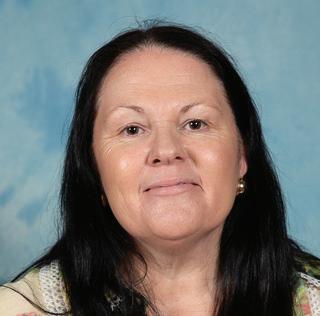

Annie Bala has been an educator for eighteen years, including eight years as an Assistant Principal. Throughout her career, Annie has been passionate about STEM education and she is committed to ensuring that every student can access meaningful and engaging STEM learning experiences suited to their individual needs. She actively integrates STEM activities across different learning areas, helping students make authentic connections between disciplines. Since joining Pymble Ladies’ College in 2025 as a classroom teacher, Annie has undertaken acting leadership roles, such as Co-Head of STEM K - 6 and Junior School Grade Co-ordinator Year 5. Her approach to teaching centres on fostering curiosity, creativity and confidence, empowering students to explore, innovate and find joy in discovery.
Lara Bird has been an educator at Pymble since 2014, where she has taught across Kindergarten to Year 6. Throughout her career, she has held a range of leadership positions including Curriculum Coordinator in English, History and Geography. She attained the Mini-COGE (Certificate of Gifted Education) through the University of New South Wales to support her work with gifted and talented students. Lara’s approach to teaching and learning places the student at the centre. She believes in providing explicit instruction alongside opportunities for students to investigate, inquire and discover through purposeful inquiry cycles. By incorporating concrete materials, hands on activities and designing learning experiences that extend every student at their point of challenge, she fosters confidence, curiosity and a genuine love of learning in her classroom.

Darcy Bornstein has been passionate about working with children for several years, beginning with five years in the childcare sector before transitioning to formal teaching. During this time, he developed strong insights into how to connect with children and foster positive, meaningful relationships. While studying, Darcy also worked in the healthcare sector, gaining an appreciation for the importance of being prompt, organised and attentive, qualities he brings into his classroom practice. As an early-careers teacher, he is eager to continually learn and improve, striving to be the best educator he can for his students, peers and himself. Darcy approaches his career with humility, curiosity and a focus on achieving the bigger picture, always ready to ask questions and embrace new challenges in the pursuit of excellent teaching.


Kate Brown, Head of Junior School, has been teaching across Kindergarten to Year 8 for more than sixteen years, since changing careers from law to education. In her career as an educator, Kate has been a class teacher, Year Co-ordinator, K-6 Literacy Co-ordinator, Deputy Head of Learning and Head of Student Wellbeing K-6. Her approach to teaching and learning centres around the philosophy that creating a culture of kindness provides an environment in which each student and teacher feels happy to be who they are and, therefore, ready to embrace challenge, as well as continuous learning. This enables Kate to inspire Pymble students and staff to be kind, not only to themselves, but to then share their ideas with others and positively impact their community and the world.
Lucy Eaton has built her career in Dance education, comprised of extensive industry and educational experiences. Alongside directing her dance company, Lucy has worked in performing arts, co-curricular dance and Stage 6 dance in a number of Sydney schools. Her passion for Dance Education is reflected in her students’ achievement of multiple HSC State Rankings in the last five years. She holds a Bachelor of Dance Education and Master of Arts in Education (Dance Teaching) from the Royal Academy of Dance (RAD), where she also served as a Faculty of Education Ambassador.

Kate Giles
Kate Giles is the Head of Wellbeing K-6 at Pymble Ladies’ College. With a background in Primary teaching and Law, Kate has worked in both Government and Independent schools, predominantly in girls’ education. Prior to moving to Education, Kate practised as a Professional Indemnity Litigator in Health law. She also holds qualifications in Psychology and has recently graduated from a Graduate Diploma of Education in Student Wellbeing. Kate has held a variety of different middle leadership roles in schools, including House Leader and Grade Coordinator. Kate is passionate about equipping girls with key social and emotional skills to build confidence, connection and empower them to learn and to live healthy and happy lives.


Kerryl Howarth is an experienced educator with a long-standing career in educational leadership in K to 12 settings in Australia and Singapore. Most recently, Kerryl holds the role of Director of Professional Learning and Development at Pymble Ladies College. She believes that students should be at the centre of all professional learning and hopes to engage teachers in professional learning and development systems and processes which prioritise teacher agency, career progression and impact on student learning.
Jo Howe is a Senior English teacher and Lead Teacher of Excellence for Stage 6 English at Pymble Ladies’ College. She has a tertiary background in linguistics, and has worked in Melbourne, Newcastle and Sydney co-educational and girls’ schools. Jo is passionate about helping students become skilled writers, to love words and language, and to embrace reading and writing as central to their life’s joy.


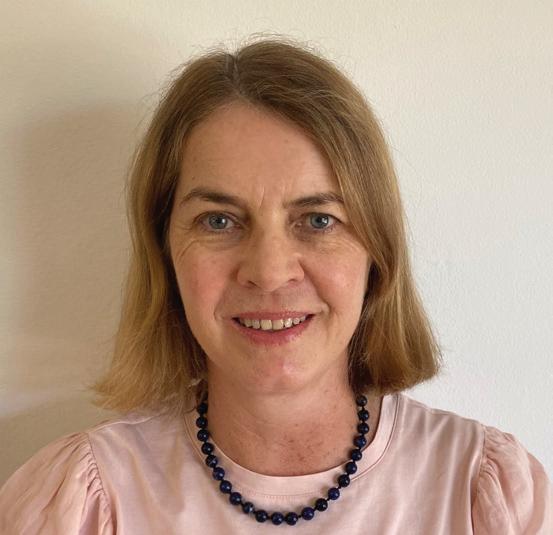
Martha Itzcovitz is the Junior School 3-6 Teacher Librarian. Over the last fifteen years, she has been a Teacher Librarian in both secondary and primary school libraries, across both girls’ and boys’ schools. She is dedicated to fostering lifelong reading engagement and creating a dynamic and inclusive reading culture in the Junior School. Martha has volunteered as a Director on the Board of the School Library Association since 2021, stepping into the role of Vice President in 2022 and President in 2023. She is a passionate advocate for authentic representation of diversity in literature, particularly for children. Martha is also a judge in the Young Adult category of the Aurealis Speculative Fiction Awards.
Christine Kenny is the Deputy Principal – Academic (K-12) at Pymble Ladies’ College. Committed to equipping girls to be tomorrow’s change makers, she leads the pursuit of currency and excellence in teaching and learning by offering innovative subjects and clear pathways for students to develop their skills. Christine values researched-based and future-focused professional learning and encourages students to engage with global issues through international, academic partnerships.
Josephine Laretive is the Junior School K–2 Teacher Librarian at Pymble Ladies’ College. With a background as an Information Specialist for McKinsey & Company, and in education, she has worked as a Teacher Librarian in both coeducational and girls’ schools across Kindergarten to Year 6. In 2019, she was awarded the State Library of New South Wales Jean Arnot Memorial Fellowship for her paper Information Literacy: Young Learners and the Role of the Teacher Librarian From 2017 to 2024, she served as Secretary of the Children’s Book Council of Australia, NSW, Eastern Suburbs Sub-branch. Josephine is passionate about fostering a deep appreciation of literature, promoting reading engagement and reading for pleasure, and supporting the development of information literacy in young learners.
Kylie Latham has been teaching across Years 5 to 9 for over twenty-two years. Her teaching career commenced in Hobart, after switching from accounting to education, and brought her to Sydney where she has taught in several all-girls’ independent schools. During her time as an educator, Kylie has been a class teacher and held a variety of leadership roles including the positions of Stage Coordinator, Curriculum Coordinator and Deputy Head of Junior School. Her passion for contributing to the wider educational sector is evident in her previous roles with ACARA, IPSHA and most recently as NESA Teacher Expert during the period of New South Wales curriculum reform. As a passionate supporter of girls’ education, Kylie fosters courage, confidence, and a love of learning through an evidence-based, inquirydriven approach.


Dr Sarah Loch is the founding Director of the Pymble Institute at Pymble Ladies’ College which is the school’s hub of researchrelated activities. She works with students, staff and alumni, along with academics and partners from external organisations, to create opportunities for research. Sarah gained her PhD in Education with a thesis examining ways young adolescent girls select school subjects and plan for their futures. She teaches History where she loves helping her students develop a passion for scholarship. She leads the College’s Social Intelligence strategic pillar and is responsible for the College Libraries, Social Impact and Careers programs.
Heidi Lynch is a passionate educator at Pymble Ladies’ College. She is deeply committed to student wellbeing and takes a strength focused approach to learning, helping every child recognise and grow their unique capabilities. Heidi prioritises connection and student voice, ensuring girls feel supported to take positive risks in their learning. She is dedicated to embedding wellbeing into daily practice, empowering students to develop resilience, healthy relationships and a strong sense of identity both in and beyond the classroom.



Dr Joshua McDermott has been teaching History and English for more than fifteen years for a diverse range of students in Korea, Melbourne, London, and Sydney. His postgraduate journey in research began at Macquarie University with a Master of Arts and a Master of Research before he completed his Doctorate summa cum laude in Ancient History at the University of Sydney, where he continues to work in a research capacity. He currently teaches History and performs research at Pymble Ladies’ College, a place which nurtures students’ individual learning journeys. Joshua believes that academic success happens most effectively when students are positively engaged, feel supported, and find an authentic love of learning.
Katelyn Ormes is a beginning teacher who has recently commenced her career as a Kindergarten teacher. In this role, she demonstrates a strong passion for fostering the growth and development of young learners, with a particular commitment to empowering girls to reach their full potential. She is dedicated to creating a supportive and inclusive learning environment where all students feel valued, confident, and inspired to explore a range of interests. Katelyn believes in the importance of nurturing curiosity through hands-on, exploratory learning. She encourages students to ask questions, investigate ideas, and develop a genuine love for discovery. Through her teaching, Katelyn aims to inspire Pymble students by cultivating a strong foundation of skills, confidence, and a positive learning mindset.
Edward Zhao is completing a combined Bachelor of Education and Bachelor of Arts (Honours) at the University of Sydney, where he has been recognised on the Dean’s List of Academic Excellence every year since 2021. He was awarded the GS Caird Scholarship for academic achievement in his second year and is also a recipient of the NSW Teacher Education Scholarship. Since 2021, Edward has worked as a teacher at a private tuition company, supporting secondary students in English and Humanities. Edward’s Honours research explores the intersection of artificial intelligence and pedagogy, with a focus on how generative AI can support creative and analytical writing in secondary English classrooms.
Christine Kenny, Deputy Principal-Academic (K-12), Pymble Ladies’ College
Great teachers have always strived to foster an intrinsic love of learning. They still do! But increasingly, questions are being asked about how students are equipped to thrive in a rapidly changing world. The World Economic Forum suggests that the ‘Fourth Industrial Revolution represents a fundamental change in the way we live, work and relate to one another.’1 Similarly, the OECD warns that ‘we are facing unprecedented challenges – social, economic and environmental –driven by accelerating globalisation and a faster rate of technological developments.’2 Additionally, the University of Sydney’s 2025 Skills Horizon Report3 claims that we are living in a decade of disorientation
that requires not only critical thinking, creativity, communication and problem solving skills, but also AI fluency, quantum literacy and humanities thinking to thrive in uncertainty.
With this demanding list of skills required to equip our students for the future, Pymble began the process of searching for and adopting a teaching and learning model anchored in research.
OUR STARTING
Pymble has long been known as offering a genuinely holistic education with a strong academic record. At the start of our process, Pymble had impressive Higher
School Certificate results over a wide range of subjects, strong NAPLAN scores and a culture that valued teaching and learning. Learning Walks revealed great teaching practice with teachers using a range of high-impact strategies. Teachers also referred to professional learning in evidence-based pedagogies, including Visible Thinking and Deep Learning. Despite these strengths, we needed the common language and unified purpose that an updated Teaching and Learning Framework would provide. Nikki Mandell (2008) identifies the strength of a framework in keeping teachers focused on agreed priorities. She argues that ‘amidst the challenges of constructing engaging and



1.2 We are clear about how our students benefit from learning in a research intensive environment
•
Students are actively engaged when leanring
• Sensing, thinking and memory
Readiness for learning
Self-regulation
and belonging
meaningful lessons it is easy to lose sight of the larger questions that should also shape … education.’4
Given the strength of our starting point, we decided to capture our current practice and thinking through teaching and learning belief statements. In small groups, faculties and individual teachers were given opportunities to respond to provocative statements, which included the samples seen in Figure 1.
From these prompts, we developed a shared philosophy of education statement to articulate our common understanding and help guide our selection of a model. The Learning Philosophy Statement (see Figure 4), was collaboratively. was collaboratively developed and shared amongst staff.
At the same time, History teacher and researcher, Dr Joshua McDermott and Dr Sarah Loch, Director of the Pymble Institute, conducted a literature review into research on current issues in teaching and learning, relevant to the selection of a framework. They identified the following topics as pivotal in the research:
• AI in Education
Key Findings – ‘The overwhelming volume of scholarship in the field anticipates AI’s impact be substantial and disruptive. Many papers urge a significant redesign of the curriculum with AI integrated throughout, requiring significant training.’
• Explicit teaching/Direct instruction
Key Findings – ‘Research literature indicates that Explicit Teaching
can have positive results for many students, allowing teachers to be actively involved in student progress. However, the literature is far from unanimous in its support of Explicit Teaching over other pedagogies in all contexts.’
• Self-regulated learning
Key Findings - ‘Strategies for metacognition have been found to be more measurably successful: students who engage in consciously reflecting on their learning have been shown to have significant academic success.’
• Reading for pleasure
Key Findings – ‘The research suggests that students who approach reading for pleasure not only develop their literacy skills but develop skills which are applicable across a range of disciplines.’
These findings suggested that Pymble’s teaching and learning model needed to be broad in scope and able to accommodate the tensions identified by the literature review.
The working party considered the following models as possibilities for Pymble.
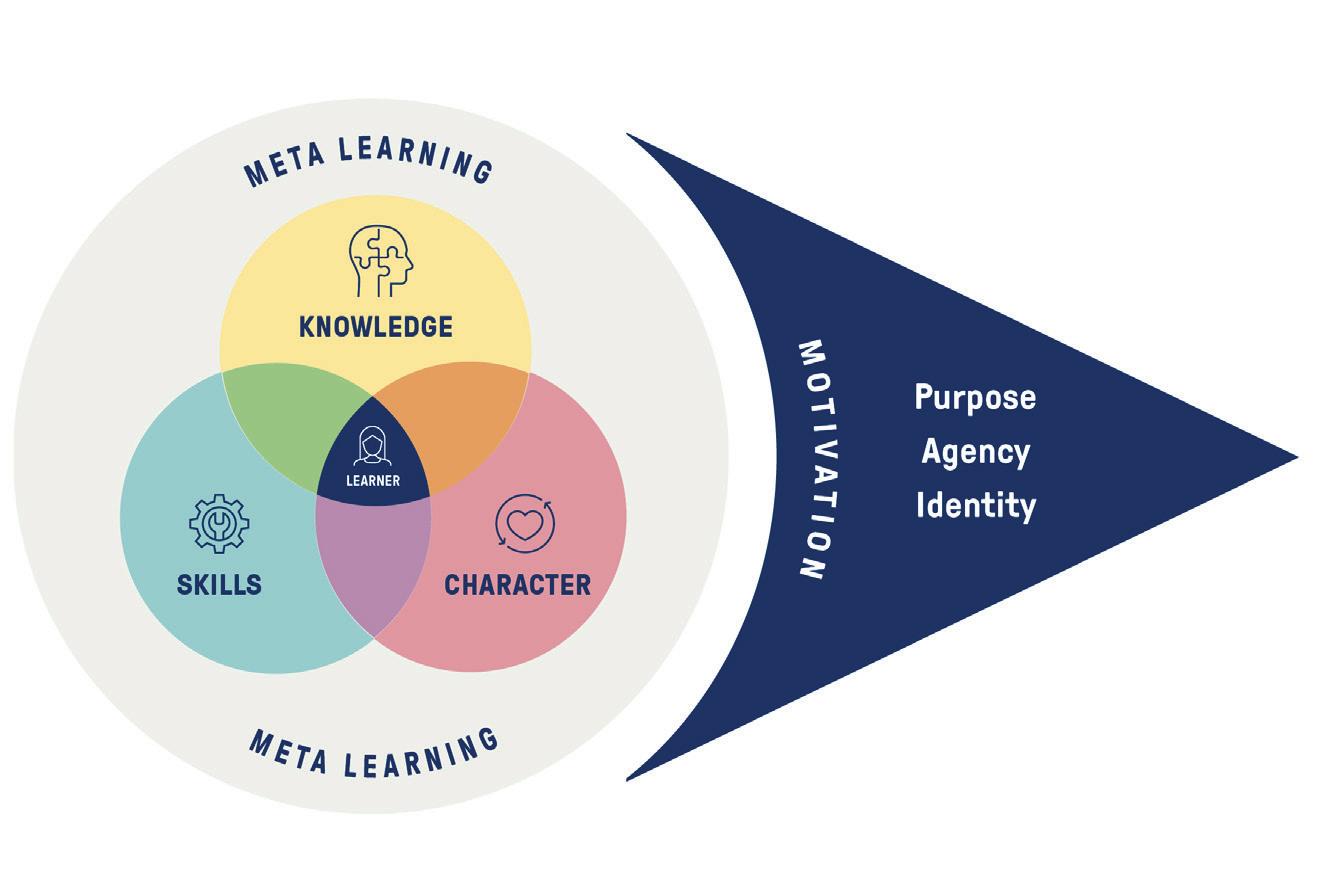
1. 4D model – (Center for Curriculum Redesign, see Figure 2) is valuable for its global research and synthesis. The Center’s research is ongoing and the model is updated as required. It is one of the few models to engage with the potential of Generative AI.
2. The Australian National University (ANU) Learning and Teaching Strategy takes a different approach by making clear connections to the ANU Strategic Plan and establishing twelve goals and associated actions to achieve its Guiding Principles, as shown in Table 1.5 The Learning and Teaching Strategy also offers a timeframe of when the goals are expected to be achieved.
3. The Australian Education Research Organisation (AERO) identifies how students learn and provides teaching strategies that promote learning, as seen in the following parts of the learning and teaching model in Table 2.6
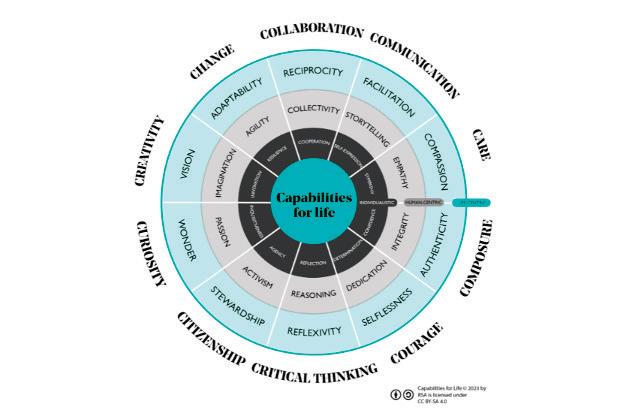
4. The Royal Society for Arts, Manufactures and Commerce (RSA) Capabilities for Life Framework (see Figure 3) does not emerge from an education setting but proposes capabilities
that extend beyond skills and knowledge. RSA claims that progress through these capabilities demonstrates growth and prepares us to navigate complexity.7 With its focus on lifelong development, this was an interesting framework for us to consider.
The working party selected the 4D Model from the Center of Curriculum Redesign as the best fit for Pymble because of its evidence base, strong connections to education and future focus. The Center for Curriculum Redesign has since written a Stage 5 (Year 9 and 10) course for Pymble in Biotechnology which brings the model to life in terms of specific knowledge, skills, character and metacognitive strategies. The course demonstrates ways to develop the capabilities that underpin the model.
The 4D Model, along with the Learning Philosophy Statement and Literature Review (refreshed regularly to keep the College at the forefront of research), form Pymble’s Teaching and Learning Framework – a dynamic document that will be periodically reviewed to ensure currency.

Pymble Ladies’ College aims to nurture the development of compassionate and influential young women with the capacity and confidence to change the world.
Our Strategic Vision (2021-2030) recognises the importance of a holistic education in partnership with parents and the community which focuses on four key intelligences; Academic, Digital, Emotional and Social. Specifically, our Strategic Vision identifies a ‘robust’ approach to academics to equip students with the skills to flourish in a rapidly changing world.
Our Teaching and Learning Framework is shaped by the College values of care, courage, integrity, respect and responsibility and identifies the following tenets at the core of our practice:
Through our strong Christian foundations as a Uniting Church school, we acknowledge the intrinsic worth of each individual. We believe that all students can thrive as learners, and teachers differentiate and offer open-ended learning experiences to cater for a range of diverse learning needs. While we measure and monitor student achievement, we highly value, encourage and celebrate personal progress for each student. We recognise the importance of student agency and look for opportunities to foster student voice.
We believe that students need to develop a body of content knowledge as a base to evaluate new information. While facts may change and the type of information that students require may evolve, we see the need for deep disciplinary knowledge and understanding. Authentic real-world problem solving also requires students to see connections across a variety of disciplines. Additionally, deep understanding allows students to transfer their learning into new contexts, which is essential in a fast-changing world.
The Australian Curriculum, Assessment and Reporting Authority’s (ACARA) General Capabilities indicate that apart from skills in literacy and numeracy, students need to develop capabilities in Information and Communication Technology (ICT), critical and creative thinking, as well as personal and social, ethical and intercultural understanding. We also value the visionary skills associated with entrepreneurship and encourage our students to pursue their passions. We recognise that critical and creative thinking are higher order skills necessary to discern truth and generate new material, vital in this age of AI. Challenging, collaborative tasks encourage the development of transferable listening and cooperative skills. A focus on reflection and metacognitive skills assists students to evaluate and learn from each experience.
Accompanying the belief that every child can thrive is a pervasive positivity and kindness in our classrooms. We understand the importance of wellbeing, and know our students need to feel valued if they are to function well in lessons. Our growth mindset drives our understanding that we can all learn new skills even though we may not all attain the same level of mastery. At Pymble we recognise the importance of curiosity as a challenge to our thinking and encourage student questions and wonder. We engage in feedback loops that move the learner forward and inform the teachers and parents of the next step, requiring honesty, openness and trust. Learning is not always linear and supporting students to persist through challenges is a priority for us. We want students to understand where they are in their learning and take responsibility, together with their teachers, for making progress.
1 https://reports.weforum.org/docs/WEF_Future_of_Jobs_ Report_2025.pdf.
2 Mogas, J., Palau, R., Fuentes, M. et al. Smart schools on the way: How school principals from Catalonia approach the future of education within the fourth industrial revolution. Learning Environ Res 25, 875–893 (2022). https://doi.org/10.1007/s10984-021-09398-3.
3 Peter, S., Riemer, K., Norman, P. (2024). The 2025 Skills Horizon. Sydney Executive Plus, The University of Sydney, https://doi. org/10.25910/57M8-SQ33.
4 Mandell, N., Thinking Like an Historian: A Framework for Teaching
Ancess, J., Rogers, B., Duncan Grand, D., & Darling-Hammond, L. (2019). Teaching the Way Students Learn Best: Lessons from Bronxdale High School. In Learning Policy Institute Center for Curriculum Redesign. (2025). AI Literacy: Thinking with the machines, https://curriculumredesign.org/
Clinton, J. M., Aston, R. & Koelle, M. (2018). Investigating the key determinants of effective teaching: a systematic review. Report prepared for the Australian Government Department of Education and Training, doi: 10.4225/495b31d76485c2d
Collinson, V., Cook, T. F., & Conley, S. (2006). Organisational Learning in Schools and School Systems: Improving Learning, Teaching, and Leading. Theory Into Practice, 45(2), 107–116. http://www.jstor.org/ stable/40071584
de Royston, M. M., Lee, C., Nasir, N. S., & Pea, R. (2020). Rethinking Schools, Rethinking Learning. The Phi Delta Kappan, 102(3), 8–13. https://www.jstor.org/stable/26977183
and Learning. OAH Magazine of History, Volume 22, Issue 2, April 2008, Pages 55–59, https://doi.org/10.1093/maghis/22.2.55.
5 Pro Vice-Chancellor (Education and Digital) Version 1.1 – accessed 24 October. 2022 https://services.anu.edu.au/files/2024-06/ANU%20 Learning%20and%20Teaching%20Strategy.
6 Australian Education Research Organisation, September 2023. https://www.edresearch.edu.au/sites/default/files/2023-11/modellearning-teaching-aa_0.pdf
7 https://www.thersa.org/design-for-life-our-mission/capabilities-forlife/capabilities-for-life-framework/
Fadel, C., Black, A., Taylor, R., Slesinski, J., & Dunn, K., Education for the Age of AI. The Center for Curriculum Redesign, Boston, MA, 2024.
Parnell, J. (2025). Survival Guide: A framework for thinking about the AI-pocalypse. Independent School, 84(3), 56–59.
Rasha Essam, & Don Passey. (2022). Identifying “Best Practices” in Education: Findings from a Literature Review. Final Report. In Online Submission
Ross Morrison McGill. (2019). Just Great Teaching: 50 Ideas to Tackle the Top Ten Issues in Your Classroom. Bloomsbury Education.
Smith, T. W., & Colby, S. A. (2007). Teaching for Deep Learning. The Clearing House, 80(5), 205–210. http://www.jstor.org/ stable/30189920
Weinstein, Y., Madan, C. R., & Sumeracki, M. A., (2018). Teaching the Science of Learning. Cognitive Research: Principles and Implications 3, 2.https://doi.org/10.1186/s41235-017-0087-y
This literature review is an extract of a lengthier document compiled to support the Teaching and Learning Framework at Pymble Ladies’ College. The aim of investigating issues through a literature review is to provide a deeper understanding of perspectives relating to the topic, and to give the College community greater confidence in implementing strategies which enable students to flourish.
Attitudes towards feedback on learning have changed substantially over time, but giving and receiving feedback is a fundamental part of the learning process. For centuries, feedback was considered private and individual but has recently become more shared and open. Parents are now considered support mechanisms for student learning and the emphasis on emotional intelligence, self-reflection and metacognition increasingly emphasise the needs of individual learners in the ways feedback is delivered (Goetz and Bieg, 2016).
Strategies including interactive conferences and digital platforms are making student learning progress and results more accessible for parents. Generative Artificial Intelligence (AI) is also radically transforming this space (Giannini, 2023) such as through Communication Assistants (CAs) (‘chatbots’ or ‘bots’) which pull together increasingly sophisticated feedback for students (Lee et al., 2023). It is anticipated that AI CAs will also transform interaction with parents, increasingly functioning as an intermediary between educators, students and parents.
Increasingly, engagement with parents is seen as an important aspect of not only teachers, but leadership, administrators, and support staff who all play a role in improving parental engagement and student outcomes in terms of wellbeing and academic success (Green et al., 2007). Studies have shown parental engagement to be a salient factor from K to 12,
specifically in junior school (Jeynes, 2005), middle school (Pennington et al., 2024) and senior years (Jensen and Minke, 2017). Pennington et al.’s (2024, p. 6) literature review found that ‘purposeful’ communication between teachers and parents was key to fostering effective learning relationships and meta-analyses have consistently identified parents’ engagement with school as statistically significant for academic progress (Jeynes, 2005; see also: AITSL, 2024; Hattie, 2023).
Parents’ preferences for communication modes vary widely. Research into preferences are, on the whole, under researched, with a 2023 meta-analysis showing not only a relative dearth of studies but also a lack of explicit study designs and an absence of longitudinal exploration over extended periods, making conclusions tentative (Munthe and Westergård, 2023).
Some studies found that Parent and Teacher Conferences (PTCs) were highly valued by parents and carers for their relational benefits (Ellis and Lummis, 2015; Kirmaci, 2019).
However, other studies highlighted problems with PTCs, observing that benefits were not universally experienced by parents, with minority groups and parents from low socio-economic backgrounds more likely to feel excluded from the experience. Several studies have identified the need for a positive and welcoming school climate, which emerges as a determining factor for positive and negative experiences (Javornik and Klemenčič-Mirazchiyski, 2023; Gale et al., 2022; Henderson et al., 2020; Garbacz et al., 2022; Van Valkenburgh et al., 2021), especially for parents from minority groups and socially disadvantaged backgrounds. However, it is noted that students tend to be objectified in this communication space as being removed from the conversation and having only limited voice (Munthe and Westergård, 2023). These findings overall, then, suggest that parent-teacher meetings are of more value when all parties feel confident to engage in dialogue and are enabled to do so.
Written reports emerged with the expansion of universal education in the nineteenth and early twentieth centuries, when standards of education based on whole-ofpopulation scales were emphasised as measures of success for both the institutions concerned, and society at large (Hollingsworth et al., 2019; ACER, 2019). Summative written reports generated by teachers remain the most common method of providing feedback on academic progress to parents, despite criticisms about their lack of specificity and use of educational jargon (Hollingsworth et al., 2019; AITSL, 2024; Cuttance and Stokes, 2000; Roff, 2006). In recent decades, written reports
have moved beyond summative assessments of achievement to offer more constructive recommendations for student growth (Hall et al., 2008; Learning and Teaching Scotland (LTS), 2007; Cuttance and Stokes, 2000).
Attitudes towards written reports can reveal inherent contradictions in expectations for reporting. Parents express a desire for detailed, individualised feedback about their child’s strengths, weaknesses, and suggested next steps, as well as guidance on how to support learning at home (Hollingsworth et al., 2019).
Yet a focus on results, especially alpha-numerical grades (or single word equivalents), for behaviour and academic achievement is a prevailing focus of reports, despite being recognised as ‘poor indicators of progress’ (Heard and Hollingsworth, 2019; Hubbard, 2019). Focus groups suggest graphs and checklists tend to be scanned for perceived negative outliers, rather than engaged with constructively, and much of the information in reports can be ignored by parents who express ambivalence towards educational jargon (ACER, 2019). Simultaneously, parents frequently request that reports be briefer. An overall criticism heard in schools today is that the current style of written reports, used in isolation, are untimely, jargonistic and ineffective. Yet, formal, written and summative feedback is often desired.
There is growing evidence that parents prefer more frequent updates on student progress, facilitated by digital tools and ongoing reporting platforms. Continuous reporting (also known as ‘ongoing feedback’ or ‘progressive reporting’) provides regular academic updates. Parents can track progress and intervene
earlier, and research shows parents increasingly value the timeliness inherent in this style of reports (Hollingsworth et al., 2019). However, some voices have highlighted problems with continuous reporting as it may lack ‘meaningful’ feedback, be overly grade-oriented, and, ironically, be summative in nature (Hollingsworth et al., 2019, 32-4; Heard and Hollingsworth, 2018; cf. ‘meaningful’ reporting: Australian Government Department of Education and Training, 2018). The challenge remains to balance the demand for frequent updates with the practical constraints faced by educators. Heard and Hollingsworth (2018) emphasise the ‘trade off’ (p.33) between these factors. The paradox is clear: while continuous reporting provides more frequent and timely feedback, workload demands can mean these are, at present, necessarily brief and overly gradesfocused. This is something which is of questionable benefit to student learnings and is undesired by parents.
The rise of generative artificial intelligence tools will have a significant impact on parent and teacher communication. Traditionally, communication between parents and teachers was limited to inperson conferences and phone calls, then emails and text notifications added the dimension of speed and expectations of prompt replies (Jacobson, 2003; Seitsinger et al., 2008; Thompson et al., 2015). Qualitative and quantitative measurements in Thompson and Mazer’s (2015), pp. 190-191) studies of parental preferences found that parents preferred ‘lean’ modes of communication (email) over more
direct ‘rich’ communication ( e.g. online or in person meetings and phone calls) for a range of concerns, from academic performance, classroom behaviour, hostile peer interactions, and health, and that this preference for simpler communication via texting and email has been growing rapidly (Thompson and Mazer, 2015; Ho et al., 2013).
The use of AI in the form of communication assistants (AI CA) (chatbots) between parents and teachers is in its infancy (Nicolescu and Tudorache, 2022) but this form of technology has been warmly anticipated by some as meeting parents’ needs for convenience and timeliness. Chakraborty et al. (2024, p. 33) predict it will, ‘help to strengthen the relationship between parents and the school community’ through more meaningful updates on learners’ progress beyond formative assessment. Some early studies have shown positive outcomes for interaction with parents including a study into the use of academic bots in Taiwan which found that AI CA resulted in a positive evaluation of the system by parents who were enthusiastic in its use, although the study spanned a limited duration (Wu et al., 2023).
The research into AI-produced or assisted reports is currently very limited. However, Youn and Salam’s (2025) systematic review of AI generated feedback for students’ consumption flags some potential benefits and concerns which may shed light on AI-assisted reports designed for parents. This study concludes that while AI generated feedback now closely mirrors human evaluations regarding content depth and stylistic issues in a general sense, they nonetheless lack contextual awareness and sometimes
communicate in potentially culturally inappropriate ways (Youn and Salam, 2025, p.59; Ghafouri, 2024; Tedjo, 2022). The UK Department for Education’s The Use Cases for Generative Artificial Intelligence in Education project, which engaged in over 700 stakeholders, found that while AI-generated reports saved time, the quality of reports were potentially compromised, with generalised comments. Further, a need was identified for careful review by teachers, due to Large Language Model (LLM) generated hallucinations (Department for Education (UK), 2024, p. 72). However, recent findings from a nine-year longitudinal study in Australia found concerns could be mitigated if AI assisted writing is produced in an inhouse ‘ecosystem’ which aligns with the university writing style, social norms, and user participation in modification of language models (Shibani and Buckingham Shum, 2024; Conijn et al., 2022).
Cognitive-constructivist theories of education acknowledge the interior world of the learner and encourage educators to experiment with different types of feedback styles to accommodate students’ individual learning needs (Panadero et al., 2019). Calls for more frequent, more detailed, and earlier feedback have become the norm to empower learners with knowledge about their own learning process. By the turn of the new millennium, authentic and meaningful feedback was accepted by most scholars and educators as central to learning dialogue between educator and learner (Black and Wiliam, 1998). In recent decades, with the rise of emotional intelligence theories concerning
reflection and resilience, feedback has gained even greater importance for learners (Goetz and Bieg, 2016). The benefits of feedback for students are varied. Black and Wiliam’s (1998) review of over 250 studies into formative assessment concluded that quality and extensive feedback not only fosters high-quality learning, but also enhances student engagement. These findings are echoed by Parboteeah and Anwar (2009) who found a positive correlation between student motivation and both the quantity and quality of feedback, while Ball (2010) reported that consistent and standardised feedback was particularly beneficial for learning. Hattie’s (2017) metaanalyses, synthesising results from over 80,000 independent studies, likewise, underscored the importance of timely, detailed, and personalised feedback in supporting educational achievement. However, problems stemming from formal, summative feedback has also been identified. Several studies have documented a persistent disconnect between teachers’ and students’ perceptions regarding both the quantity and quality of feedback provided (Hattie and Clarke, 2019; Yang et al., 2021). Formal, graded, assessment feedback may adversely affect students’ motivations for learning, moving them away from a lens which focuses on skills. Koenka et al.’s (2019) metaanalysis demonstrated that while grades may boost achievement, they can simultaneously undermine student motivation when compared with descriptive, comment-based feedback.
Research highlights the importance of formative approaches, particularly in primary age educational settings (Koenka et al., 2019). Echoing these
findings, Wisniewski, Zierer and Hattie (2020) found a mixed relationship for primary-aged students. Drawing from over 400 studies and 61,000 students, they only found a strong correlation between feedback and learning for what they termed ‘high-information’ feedback—detailed and personalised— which was found to be far more effective than simple reinforcement or ‘corrective’ feedback (Wisniewski et al., 2020). Overall, literature suggests that not all feedback and ways of delivering it is beneficial for student learning and there is a need for careful consideration of feedback approaches in the increasingly prevalent context of continuous assessment, which tends to lack substantive written commentary.
The role of AI in formative feedback has been considered in a range of studies (e.g. Khanal et al., 2020; Deschênes, 2020; Okonkwo and Ade-Ibijola, 2021) with proponents characterising digital assistors as ‘amplifiers of learning processes’ (Schurzet et al., 2023, p.84). Some studies found a positive impact of AI in formative feedback for students including as a remedial tutor recommending material for students for literacy (Hsu et al., 2010; Lin et al., 2016); in STEM (Rau et al., 2015); in the subject of Design (Tang et al., 2022) and in PDHPE (Liu, 2021), and these were found to be generally positive (Wang et al., 2024; Khine, 2024).
In terms of effect on students, some studies found AI to be beneficial when used as a low stakes source of feedback. Wang’s (2024) quasiexperimental study indicates that students receiving AI-generated formative feedback outperformed
those receiving only teacher feedback or no feedback, with the added benefit of reducing anxiety around writing. The study highlights the ability of AI to provide consistent and objective feedback, addressing some of the challenges inherent in human feedback, such as variability and subjectivity (Wang, 2024; Han and Hyland, 2015).
The use of AI-powered writing assistants (AIWAs) and automated written feedback (AWF) are starting to emerge in schools. However, the quality of research remains mixed (Sedrakyan et al., 2024) and emerging findings suggest both benefits and concerns with writing assistants. Fu et al. (2022) found a preponderance of short-duration studies with small samples, particularly within foreign and second language instruction. Despite these limitations, several studies have shown that AWF can boost writing performance, foster learning autonomy, and promote self-reflection (Cheng, 2017; Link et al., 2022; El Ebyary and Windeatt, 2010). Zhai and Ma’s (2023) metaanalysis suggests particularly strong effects for English as a Second Language learners, though the benefits are less pronounced with native speakers and genrespecific writing tasks, where generic feedback may fall short. However, there is evidence that some forms of automated feedback can lack sufficient depth to stimulate meaningful cognitive engagement (Saricaoglu, 2019). Further, Gerard et al.’s (2019) case study found that it was only with clear instruction to AI assistants, including careful review of the explanation prompts, that students can make full use of AI assisted feedback in the classroom. Some research has identified the need for a range of guidelines and
guardrails for the use of AI with student input in their development (Shibani and Buckingham Shum, 2024; Conijn et al., 2022).
A number of studies have considered the role AI can play in providing teachers with automated feedback (AF) for student assessment. AI systems providing individualised formative feedback may potentially relieve pressure on teachers in the classroom. Gerard and Linn’s (2016) meta-analysis of 24 studies found that AI alerts effectively flagged students who were struggling with key features of essay writing. However, a significant gap in the research concerns investigation into the nature of teachers’ feedback competencies when using automated feedback tools. Buckingham-Shum (2023, p.29) concludes, ‘in the absence of clear guidance on how AF tools should be deployed responsibly, they risk being “bolted on” to courses without due consideration of how they will affect student sensemaking and action’. For summative assessment, research has looked at some important elements in report preparation, including the automated scoring of essays, visual assessments and other assessment tasks (Shi and Choi 2024; Gerard and Linn, 2016; Gerard et al., 2019; Zhai et al., 2020a; Zhai et al., 2020b). For more efficient and timely reporting, some research has emphasised the value of AI systems in preparation of data for reports, (Dickler, 2019; Shi and Aryadoust, 2024), synthesised into suggested feedback (Zhai and Nehm, 2023). However, AI-led reports are still very much in their infancy but we can predict that such reports would, however, be more effective and
accountable if designed within a school’s ecosystem, trained to suit the values, tone, and norms of the school (Shibani and Buckingham Shum, 2024).
Proponents argue that AI-powered, natural language generation (NLG) systems can transform raw assessment data and teacher notes into coherent, grammatically accurate narratives. This automation allows teachers to save time on repetitive writing tasks, enabling them to dedicate more effort to instructional planning and direct student engagement (Holmes et al., 2021). While AI can generate grammatically correct and structured reports, several studies caution that the quality and personalisation of AIgenerated reports depend heavily on the quality of input data and teacher oversight. Balfour and Mitchell (2022) argue that student reports must reflect nuanced teacher insights into individual student progress and motivation. These, and other socioemotional factors are elements that
AI cannot fully capture. The risk of generic, impersonal reports is a concern echoed by Li and Wang (2023), who found that AI-generated texts often lack the depth and contextual sensitivity necessary for meaningful communication with parents and students. Overall, a theme emerges that while AI can improve teacher workload, the potentially laborious supervision needed by teachers at this stage in the technology’s development suggests it is far from a panacea.
Giving feedback to students and their parents is well accepted as an integral part of effective teaching. Indeed, it is accepted that through honest feedback individuals can grow and develop (Dweck, 2006; Gates, 2025). But recent pedagogical developments and educational research have shown that not all feedback is equal. There is a need for more nuanced understanding of ‘what works’ for different groups of people in the educational
ecosystem. This increased awareness has intersected with a rapidly changing technological landscape, with Generative AI affecting communication and learning in profound ways which will increasingly dominate discussions on this topic.
The role of feedback is of increasing importance for learners, parents and educators as their voices contribute to the dialogue which is seen as integral to meaningful learning. The research shows the importance of such feedback and reveals the need for ongoing research into the evolving educational landscape as it is impacted by artificial intelligence tools, and the multifaceted challenges facing the world which our learners are entering. As Carol Dweck (2006, p.136). rightly observes, a growth mindset is required to respond to these changes, with ‘an openness to giving and receiving feedback, and an ability to confront and surmount obstacles’.
Can you recall a time where you were given feedback on something you were learning that proved helpful? What worked well for you in the feedback process?
What challenges are there for teachers to give regular, high quality formative feedback?
Could there be adverse outcomes with giving a lot of formative feedback (e.g. from too much feedback, poorly timed feedback etc)?
Which feedback strategies are specific to or effective in your learning area/stage of learning?
What types of strategies do you find to be less effective in your learning area/stage of learning?
Why might this be?
Australian Institute for Teaching and School Leadership (AITSL). (June 2024). Strengthening parent engagement to improve student outcomes, Melbourne.
Australian Government Department of Education and Training (2018). Through Growth to Achievement: Report of the Review to Achieve Educational Excellence in Australian Schools
Balfour, S., & Mitchell, R. (2022). Personalizing AI-generated feedback in education: Challenges and opportunities. Journal of Educational Technology & Society, 25(1), 45-58.
Black, P., & Wiliam, D., (1998). Assessment and classroom learning. Assessment in Education 5 (1), 7–74.
Buckingham Shum, S. (2023). A comparative analysis of the skilled use of automated feedback tools through the lens of teacher feedback literacy. International Journal of Educational Technology in Higher Education, 20(1), 40. doi:https://doi.org/10.1186/s41239-023-00410-9.
Chakraborty, S., Misra, B., & Dey, N. (2024). AI-Empowered Knowledge Management in Education (1st ed. 2024.). Springer Nature Singapore. https://doi.org/10.1007/978-981-97-2574-8.
Cheng, G. (2017) The impact of online automated feedback on students’ reflective journal writing in an EFL course. The Internet and Higher Education, 34: 18–27.
Conijn, R., Roberto Martinez-Maldonado, Simon Knight, Simon Buckingham Shum, Luuk Van Waes & Menno van Zaanen (2022) How to provide automated feedback on the writing process? A participatory approach to design writing analytics tools, Computer Assisted Language Learning, 35:8, 1838-1868, DOI
Cuttance, P., & Stokes, S. A. (2000). Reporting on student and school achievement. Canberra: Department of Education, Training and Youth Affairs (DETYA).
Department for Education (UK) (2024). Use Cases for Generative AI in Education User Research Report https://assets.publishing.service.gov. uk/media/66cdb078f04c14b05511b322/Use_cases_for_generative_ AI_in_education_user_research_report.pdf
Darling-Hammond, L. (2000). How teacher education matters. Journal of Teacher Education, 51, 166–173.
Deschênes, M. (2020). Recommender systems to support learners’ Agency in a Learning Context: A systematic review. International Journal of Educational Technology in Higher Education, 17, 50, 1–23.
Dickler, R. 2019. An Intelligent Tutoring System and Teacher Dashboard to Support Students on Mathematics in Science Inquiry (diss.), Rutgers University, School of Graduate Studies.
Dweck, C S. (2006) Mindset: The New Psychology of Success. New York: Ballantine Books.
El Ebyary, K., & Windeatt, S. (2010), ‘The impact of computer-based feedback on students’ written work.’ International Journal of English Studies 10.2 (2010) 121–142.
Ellis, M., Lock, G. & Lummis, G. (2015) ‘Parent-Teacher Inter teacher Interactions: Engaging with Parents and Carers’ Australian Journal of Education 40, 5, 159–174.
Fu, W., Pan, Q., Yuan, Y., & Chen, G. (2022) ‘Longitudinal impact of parent-teacher relationship on middle school students’ academic achievements in China.’ Frontiers in Psychology. 13, 872301.
g/10.1080/09588221.2022.2033787).
Gale, A., Williams, A., Rowley, S., & Boyd, D. (2022), ‘The role of parents’ school climate perceptions on attainment expectations for black middle schoolers.’ Journal of Child and Family Studies, 31, 61–69.
Garbacz, S.A.; Kaul, M.; Zahn, M.; Godfrey, E.; Flack, C. (2022), ‘Examining conjoint behavioral consultation to support students in middle school with social, emotional, and behavior concerns.’ New Directions in Child Adolescent Development. 27, 71–90.
Gates, B. (2025) Source Code: My Beginnings. New York and London. Gerard, L. F., & Linn, M. C. (2016). Using Automated Scores of Student Essays to Support Teacher Guidance in Classroom Inquiry. Journal of Science Teacher Education 27, no. 1: 111–29.
Gerard, L., Kidron, A., & Linn, M. C. (2019). “Guiding Collaborative Revision of Science Explanations.” International Journal of ComputerSupported Collaborative Learning 14: 1–34.
Ghafouri, M. (2024). ChatGPT: The catalyst for teacher-student rapport and grit development in L2 class. System, 120, 103209. https://doi. org/10.1016/j.system.2023.103209
Giannini, S (2023). Reflections on generative AI and the future of education. UNESCO. https://unesdoc.unesco.org/ark:/48223/ pf0000385877
Goetz, T., & Bieg, M. (2016). Academic emotions and their regulation via emotional intelligence. In M. K. Hughes & J. B. Bryan (Eds.), Handbook of Emotions and Education, 175–97.
Green, C. L., Walker, J. M. T., Hoover-Dempsey, K. V., & Sandler, H. M. (2007). Parents’ motivation for involvement in children’s education: An empirical test of a theoretical model of parental involvement. Journal of Educational Psychology, 99(3), 532–544.
Hall, K. P., Conway, F., Rath, A., Murphy, R., & McKeon, J. (2008). Reporting to Parents in Primary School: Communication, Meaning and Learning. National Council for Curriculum and Assessment, Dublin.
Han, Y., & Hyland, F. (2015). Exploring learner engagement with written corrective feedback in a Chinese tertiary EFL classroom. Journal of Second Language Writing 30(1), 31–44.
Hattie, J. (2017). Backup of Hattie’s Ranking list of 256 influences and effect sizes related to student achievement. Visible Learning. https:// visible-learning.org/backup-hattie-ranking-256-effects-2017/
Hattie, J., & Clarke, S. (2019). Visible learning: Feedback. Routledge. Hattie, J. (2023). Visible learning, the sequel: A synthesis of over 2,100 meta-analyses relating to achievement (First edition). Routledge.
Heard, J. and Hollingsworth, H. (2018). Continuous student reporting – the next step? Teacher Magazine (June).
Henderson, L.J.; Williams, J.L. &. Bradshaw, C.P. (2020). Examining home-school dissonance as a barrier to parental involvement in middle school. Preventing School Failure: Alternative Education for Children and Youth, 64, 201–211.
Ho, L., Hung, C., & Chen, H. (2013). Using theoretical models to examine the acceptance behavior of mobile phone messaging to enhance parent–teacher interactions. Computers & Education, 61, 105–114. doi:10.1016/j.compedu.2012.09.009
Hubbard, B. (2019). The Case for an Accurate Picture: Parent Mindsets on Education–Trends from 2016-2019. Learning Heroes. References
Fu, Q.-K., Zou, D., Xie, H. & Cheng, G. (2022) A review of AWE feedback: Types, learning outcomes, and implications. Computer Assisted Language Learning. Advance online publication. https://doi.or
Hollingsworth, H., Weldon, P., & Heard, J. (2019). Communicating student learning progress: A review of student reporting in Australia (p. 92). Australian Council for Educational Research. https://research.acer. edu.au/cgi/viewcontent.cgi?article=1035&context=ar_misc
Holmes, W., Bialik, M., & Fadel, C. (2021). Artificial Intelligence in Education: Promises and Implications for Teaching and Learning Center for Curriculum Redesign, Boston.
Hsu, C.-K., Hwang, G.-J., & Chang, C.-K. (2010). Development of a reading material recommendation system based on a knowledge engineering approach. Computers & Education, 55, 76–83. https://doi. org/10.1016/j.compedu.2009.12.004
Jacobson, L. (2003). Phila. parents to receive marks for “home support” of students. Education Week, 23, 4.
Javornik, S., Klemenčič-Mirazchiyski, E. (2023). Factors Contributing to School Effectiveness: A Systematic Literature Review. European Journal of Investigation in Health, Psychology and Education, Sep 30, 13(10), 2095–2111.
Jensen, K.L. and Minke, K.M. (2017). Engaging Families at the Secondary Level: An Underused Resource for Student Success. School Community Journal, 2017, Vol. 27, No. 2, 167–191.
Jeynes, W. H. (2005). A Meta-Analysis of the Relation of Parental Involvement to Urban Elementary School Student Academic Achievement. Urban Education, 40(3), 237-269.
Khanal, S. S., Prasad, P., Alsadoon, A., & Maag, A. (2020). A systematic review: Machine learning based recommendation systems for e-learning. Education and Information Technologies, 25, 2635–2664.
Khine, M. S. (2024). Artificial Intelligence in Education: A MachineGenerated Literature Overview. Singapore.
Kirmaci, M. (2019) School Community Journal, 2019, 29, No. 2, 129156
Koenka, A. C., Linnenbrink-Garcia, L., Moshontz, H., Atkinson, K. M., Sanchez, C. E., & Cooper, H. (2019). A meta-analysis on the impact of grades and comments on academic motivation and achievement: a case for written feedback. Educational Psychology, 41(7), 922–947. https://doi.org/10.1080/01443410.2019.1659939
Learning and Teaching Scotland (LTS) (2007). Taking learning outdoors, partnerships for excellence. Glasgow.
Lee, P., Bubeck, S., & Petro, J. (2023). Benefits, Limits, and Risks of GPT-4 as an AI Chatbot for Medicine. The New England Journal of Medicine, 388(13), 1233–1239. https://doi.org/10.1056/NEJMsr2214184
Li, X., & Wang, Y. (2023). Evaluating the quality of AI-generated student reports: A linguistic and pedagogical perspective. International Journal of Artificial Intelligence in Education, 33(2), 345-367.
Lin, C.-C., Guo, K., & Lin, Y.-C. (2016). A simple and effective remedial learning system with a fuzzy expert system. Journal of Computer Assisted Learning, 32, 647–662. https://doi.org/10.1111/jcal.12160
Link, S., Mehrzad, M. & Rahimi, M. (2022) Impact of automated writing evaluation on teacher feedback, student revision, and writing improvement. Computer Assisted Language Learning, 35(4): 605–634.
Liu, Y.R. (2021). An artificial intelligence and machine vision based evaluation of physical education teaching. Journal of Intelligent & Fuzzy Systems, 40(2), 3559-3569.
Munthe, E., & Westergård, E. (2023). Parents’, teachers’, and students’ roles in parent-teacher conferences: a systematic review and metasynthesis. Teaching and Teacher Education, Volume 121, Nicolescu, L., & Tudorache, M. T. (2022). Human-computer interaction in customer service: The experience with AI Chatbots—A systematic
literature review. Electronics, 11(10), 1579.
Okonkwo, C. W., & Ade-Ibijola, A. (2021). Chatbots applications in education: A systematic review. Computers and Education: Artificial Intelligence, 2, Article 100033. https://doi.org/10.1016/j. caeai.2021.100033
Panadero, E., Broadbent, J., Boud, D., & Lodge, J. M. (2019). Using Formative Assessment To Influence Self- And Co-Regulated Learning: The Role Of Evaluative Judgement. European Journal of Psychology of Education, 34 (3), 535–557.
Parboteeah, S., Anwar, M., 2009. Thematic analysis of written assignment feedback: implications for nurse education. Nurse Education Today 29 (7), 753–757.
Pennington, S. E., Tang, J. H., Divoll, K., & Correll, P. (2024). A Scoping Literature Review on Parent Interactions with Teachers and School Environments at the Middle Level. Education Sciences, 14(12), 1364, 1–11. https://doi.org/10.3390/educsci14121364
Rau, M. A., Michaelis, J. E., & Fay, N. (2015). Connection making between multiple graphical representations: A multi-methods approach for domain-specific grounding of an intelligent tutoring system for chemistry. Computers & Education, 82, 460–485. https:// doi.org/10.1016/j.compedu.2014.12.009
Roff, G. (2006). A “B”, Mrs Roff, is very good. Teacher,171, 44-45. Saricaoglu, A. (2019). The impact of automated feedback on L2 learners’ written causal explanations. ReCALL, 31(2): 189– 203)
Sedrakyan, G. B., van den Berg, S.M, van Hillegersberg, J. & B.P. Veldkamp. (2024). Design Implications for Next Generation Chatbots with Education 5.0’ in Hong, J.-C (ed.) New Technology in Education and Training: Select Proceedings of the 5th International Conference on Advance in Education and Information Technology. Taipei. 1-12
Seitsinger, A. M., Felner, R. D., Brand, S., & Burns, A. (2008). A largescale examination of the nature and efficacy of teachers’ practices to engage parents: Assessment, parental contact, and student-level impact. Journal of School Psychology, 46, 477–505.
Shi, H., & Aryadoust, V. (2024). A systematic review of AI-based automated written feedback research. ReCALL, 36(2), 187-209.
Shi, L, and Choi, I (2024) ‘A Systematic Review on Artificial Intelligence in Supporting Teaching Practice: Application Types, Pedagogical Roles, and Technological Characteristics’, in Xiaoming Zhai, and Joseph Krajcik (eds), Uses of Artificial Intelligence in STEM Education (Oxford, 2024; online edn, Oxford Academic, 21 Nov. 2024), https://doi. org/10.1093/oso/9780198882077.003.0015, accessed 14 June 2025.
Shibani, A., & Buckingham Shum, S. (2024). ‘AI-assisted writing in education: Ecosystem risks and mitigations’, arXiv.Org,: Retrieved from https://www.proquest.com/working-papers/ai-assisted-writingeducation-ecosystem-risks/docview/3040140169/se-2
Tang, T., Li, P., & Tang, Q. (2022). New strategies and practices of design education under the background of artificial intelligence technology: Online animation design studio. Frontiers in Psychology 13, 767295.
Tedjo, E. W. (2022). Providing Online Feedback Using an AI Proofreading Tool to Enhance Student Surface-Level Writing Skills. EBONY: Journal of English Language Teaching, Linguistics, and Literature. 2. 37-45. 10.37304/ebony.v2i1.4040.
Thompson, B.C., Mazer, J.P., Flood Grady, E (2015): The changing nature of parent–teacher communication: Mode selection in the smartphone era. Communication Education 64(2), 187–207.
Van Valkenburgh, J., Putnam, J., & Porter, M. (2021). Middle school parent involvement: Perceptions of teachers and parents. Middle
School Journal, 52, 33–42
Wang, D. (2024). Teacher- Versus AI-Generated (Poe Application) Corrective Feedback and Language Learners’ Writing Anxiety, Complexity, Fluency, and Accuracy. International Review of Research in Open and Distance Learning, 25(3), 37–56. https://doi.org/10.19173/ irrodl.v25i3.7646.
Wisniewski, B., Zierer, K., & Hattie, J. (2020). The Power of Feedback Revisited: A Meta-Analysis of Educational Feedback Research. Frontiers in Psychology 10, 1-14.
Wu, R., & Yu, Z. (2024). Do AI chatbots improve students learning outcomes? Evidence from a meta-analysis. British Journal of Educational Technology, 55(1), 10–33. https://doi.org/10.1111/ bjet.13334
Wu W.-C., Liu M., Liu, Y., Kang Y.-C. (2023) The Effect of Elementary School Parent-Teacher Communication Involved by Chatbot Technology. International Conference on Consumer ElectronicsTaiwan (ICCE-Taiwan), Taiwan, 753-754.
Yang, L., Chiu, M. M., & Yan, Z. (2021). The power of teacher feedback in affecting student learning and achievement: insights from students’
perspective. Educational Psychology, 41(7), 821–824. https://doi.org/1 0.1080/01443410.2021.1964855
Youn, C.H., Salam, A., (2025) AI-Driven Tools in Providing Feedback on Students’ Writing. International Journal of Research and Innovation in Social Science. January 2025.
Zhai, X., Haudek, K. C., Shi, L., Nehm, R., & Urban-Lurain, M. (2020a). “From Substitution to Redefinition: A Framework of Machine LearningBased Science Assessment.” Journal of Research in Science Teaching 57, 9: 1430–59. https://doi.org/10.1002/tea.21658
Zhai, X., Yin, Y., Pellegrino, J. W., Haudek, K. C., & Shi, L. (2020b). Applying Machine Learning in Science Assessment: A Systematic Review. Studies in Science Education 56, 1: 111–51.
Zhai, N. & Ma, X. (2023) The effectiveness of automated writing evaluation on writing quality: A meta-analysis. Journal of Educational Computing Research, 61(4): 875–900).
Zhai, X., and Nehm, R. H. (2023). AI and Formative Assessment: The Train Has Left The Station. Journal of Research in Science Teaching 60, 6: 1390–98.

Kerryl Howarth , Director of Professional Learning, Pymble Ladies’ College
VOLUNTARY TEACHER ACCREDITATION: DEFINITIONS, HISTORY AND INTENTIONS
The term ‘voluntary teacher accreditation’ refers to processes by which teachers with extensive experience in education can gain professional recognition for levels of expertise beyond the Proficient Teacher Accreditation standard, which is the New South Wales governance structure to which schools must comply. These levels of accreditation
are not mandatory but are undertaken by teachers who have at least five years of full-time experience at the Proficient Teacher level.
There are two formal voluntary accreditations available to Pymble teachers which allow for options and choice. Highly Accomplished and Lead Teacher (HALT) accreditation is conferred through the New South Wales Education Standards Authority (NESA) and is a nationally recognised
accreditation. Accomplished Teacher Accreditation (formerly Experienced Teacher Accreditation) is conferred through the Independent Schools Teacher Accreditation Authority (ISTAA). Both Accreditation programs were developed to formally recognise the achievement of teachers and to promote excellence in the teaching profession. The intent of both is to provide career progression through the inherent professional learning, formal recognition and salary increase.
Completion of HALT accreditation provides formal recognition, and salary benefits to teachers who:
• Are highly effective, skilled practitioners with in-depth knowledge of subject and curriculum content,
• Keep abreast of the latest developments in their fields of expertise,
• And work collaboratively to improve their own practice, and the practice of their colleagues. (NSW Education Standards Authority, 2025)
ISTAA Accomplished Teacher provides recognition for teachers within the New South Wales and Australian Capital Territory independent schools’ sector. The intent of this accreditation is to provide formal recognition, and salary benefits to teachers who:
• Are highly effective, skilled practitioners with in-depth knowledge of subject and curriculum content (ISTAA, 2025)
ISTAA Accomplished Teacher (Experienced Teacher) accreditation has been highly regarded by teachers and has been well supported by the College. Since 2014, 111 Pymble teachers have engaged with this accreditation with a completion rate of 83%. Anecdotal evidence from teachers who have attempted ISTAA Accomplished Teacher (Experienced Teacher) accreditation is mixed. Many teachers see this accreditation as a deep and thoroughly reflective professional learning opportunity which elevates their practice. They have often found the gathering of evidence to be affirming and appreciate the recognition and salary increase that the accreditation brings.
However, while acknowledging the benefits of the accreditation process, many successful applicants also commented on the significant and onerous amount of documentation required, often finding this a distraction from their core business of teaching. Furthermore, over time, 30% of Pymble teachers either withdrew from the process or deferred, needing to take an additional year to gather and submit their evidence. Teachers who withdrew or deferred tended to find the process of gathering and documenting evidence too administrative and labour intensive. Many of these teachers felt that the formulaic structure of the process also failed to appreciate the challenges faced by teachers who are juggling busy careers, childcare and other family responsibilities. Interestingly, NESA HALT accreditation is yet to have an impact at Pymble, where no teachers have chosen to undertake this program since its inception in 2012. This pattern is mirrored in national data. The Australian Department of Education noted that in 2023 less than 1% of teachers nationally had taken up HALT accreditation. In his 2021 research, Adam Taylor noted that the AITSL (Australian Institute for Teaching and School Leadership) HALT standards had been poorly adopted across all jurisdictions, with research from United Kingdom and United States studies indicating that there was no correlation between teacher standards and improved practice. In 2023, Taylor noted that the process of attaining HALT accreditation was complex, time consuming and lacking in practical relevance to the daily work of teachers.
Taylor (2021) identified a disconnect between the HALT standards and the “relationality” of teaching. While
active, personal professionalism was important to teachers, the standards failed to express or address the effective teacher dispositions or qualities of a highly accomplished teacher in any meaningful way.
Sydney teacher and research student, Rebecca Birch (2024) affirms this when she discusses how the current standards over emphasise transactional practices, including using the mandated curriculum to create scope and sequence documents, unit plans and lesson resources, while providing minimal guidance on effective lesson design, pedagogy selection or dispositions as key teacher skills.
Birch (2024) goes further in highlighting the failure of the standards to recognise or cater for changes in educational thought over time as it relates to effective teaching practices. She suggests practices, such as instructional coaching, as a far better process to grow and measure the effectiveness of teachers. This idea of the adoption of more relational practices is supported by a wide body of research into what constitutes effective professional learning and development for teachers.
Effective professional learning and development can be defined as structured professional learning that results in change in teacher practice that leads to improvements in student learning outcomes (DarlingHammond, et al., 2017). Psychological safety, belonging and relational trust are three crucial conditions for the establishment of a collaborative, personalised and impact informed learning culture. This form of professional learning: • Is content focused; focusing on discipline or curriculum specific
strategies and pedagogy.
• Engages participants in active learning; teachers spend time working with strategies that use authentic artefacts which will provide contextualised learning that is embedded in the daily work of teachers.
• Supports collaboration; creates time and space for teachers to collaborate in job-embedded contexts which lead to the formation of collaborative communities with a culture of collective efficacy.
• Is deeply and personally rooted in teacher self-efficacy, “a belief in one’s capability to organise and execute the courses of action require to produce given attainments” (Bandura 1997, p.3).
• Provides coaching and expert support with a focus on personalisation for teacher need, and the sharing of expertise about content and evidence-based practices.
• Provides structured opportunities for feedback and reflection around growth over time and next steps.
• Is of sustained duration, giving teachers time and space to learn effectively, practice, implement, and reflect upon new strategies that facilitate changes in their practice.
These principles are in many ways at odds with standards-based accreditation processes which focus on the collection and annotation of evidence as proof of teacher quality. This foundational disconnect reveals inherent flaws in labour intensive, systemic approaches to accreditation and helps to explain the challenges and reticence that some teachers face to the detriment of their career progression.
In response to staff demand, Pymble created a bespoke, internal accreditation process in 2022 to provide recognition for teachers working at the Experienced Teacher level who were unable to complete the ISTAA accreditation process.
Designed with the principles of effective professional development in mind, the Pymble Plus process centred teacher attention on an impact-driven teacher inquiry into their own professional practice. The approach was collaborative, relational and asked teachers to work on authentic and purposeful passion projects that were deeply connected to the students that they teach. Teacher response to the program was overwhelmingly positive. It was viewed as a practical and meaningful alternative to the ISTAA program where participants could explore an area of practice as part of their regular classes and teaching load rather than an additional impost on their time. They valued the opportunity to work collaboratively with other teachers and mentors, and were energised and empowered by the program.
“The opportunity to do a small-scale project based on research was a really important step. The program provided the time and opportunity to deep dive and accelerate a passion project. What took one year to do would have normally taken five years to do.”
Stephanie Attley
“It was excellent, it was totally related to what I was doing in the classroom, not some administrative add on. It was based on my everyday teaching practices, not ticking the box.”
Candice Cooper
“Pymble Plus was an exceptional opportunity to reflect on my practice, learn from other outstanding colleagues, and gain a deeper sense of my role within the Pymble community, and how my work contributes to, and is inspired by the school’s values.”
Luca Asmonti
“I found the program incredibly valuable, as it allowed me to explore a research question that directly aligned with my teaching interests. My project, “How can students leverage AI to enable higher order thinking and design outcomes in Technology Mandatory?”, gave me the opportunity to investigate how emerging technologies can support student learning. The program had a positive impact on both my professional development and classroom practice. Students were able to use AI as a learning and support tool, which enhanced engagement and improved academic outcomes. Overall, it was a great experience that encouraged reflective practice, innovation, and deeper learning in my teaching area.”
Hendrix Kutukoff
“Initially, I found it challenging to shape a project around supporting a refugee student’s transition to Pymble, but once I defined my focus, the research into academic and social support strategies became deeply rewarding. The experience was both demanding and fulfilling, aligning with my personal passion and resulting in a resource that could benefit future teachers. I appreciated the project’s openness, which allowed for creativity and meaningful exploration beyond rigid standards.”
Mark Way
Changes to allowances under the 2025 CMEA (Cooperative Multi Enterprise Agreement) have financially advantaged HALT Accreditation over Accomplished Teacher Accreditation (Experienced Teacher/Pymble Plus) for teachers. It is anticipated that more teachers will be eager to consider taking on the HALT accreditation, however, despite its 2023 revisions, the process remains complex, lengthy and administrative. In response to the changes. the College has decided to revise the Pymble Plus process to offer two alternative pathways for our teachers, providing career progression and recognition at the Highly Accomplished level. In 2026, the revised Pymble Plus process will enable the College to “grow our own” Highly Accomplished Teachers, with
the benefit of directing their efforts to projects that positively impact their colleagues, our students and the College.
Pathway One, Pymble Plus HALT Top Up, will enable Experienced Teachers to internally upgrade their accreditation to Highly Accomplished through the completion of a Pymble endorsed project. Designed to demonstrate their ability to model and lead innovative teaching and learning practices and collaboratively support colleagues to develop their practice, the project will run for an academic year.
Pathway Two, Pymble Plus Highly Accomplished Accreditation will provide eligible teachers with an internal accreditation through the completion of a teacher inquiry module that demonstrates exemplary
teaching practice using the latest knowledge from their field of expertise and is evidenced by impact on student learning. Additionally, teachers will also engage in a year long Pymble endorsed project. The anticipated duration will be from eighteen months to two years. Ultimately, it is hoped that these two voluntary accreditation pathways will pivot off the success of the original Pymble Plus accreditation program. By placing students at the centre of professional learning, in a collaborative, supportive and authentic way, there is the opportunity to develop the self and collective efficacy of our staff while growing their professional practice. In nurturing and growing rich and satisfying career paths for our teachers, our students should reap the benefits of an increasingly skilled and future focused academic team.
References
Bandura, A. (1997). Self-efficacy: The exercise of control. W.H. Freeman.
Birch, R. (2024). Reimagining teacher professionalism: Why standards must be part of ITE reform (Analysis Paper 64). The Centre for Independent Studies. https://www.cis.org.au/wp-content/ uploads/2024/03/AP64-Teacher-Professionalism_Web1.pdf
Darling-Hammond, L., Campbell, C., Goodwin, A. L., Hammerness, K., Low, E. L., McIntyre, A., Sato, M., & Zeichner, K. (2017). Empowered educators: How high-performing systems shape teaching quality around the world. Jossey-Bass.
Department of Education. (2023). Review to inform a better and fairer education system: Consultation paper. Australian Government. https://www.education.gov.au/download/16549/better-and-fairereducation-system-consultation-paper/33547/better-and-fairereducation-system-consultation-paper/pdf [education.gov.au]
Independent Schools Teacher Accreditation Authority AIS NSW. (2025). Accomplished Teacher Accreditation Manual (Initial Publication). (https://www.aisnsw.edu.au/Resources/WAL%20 3%20%5BMembers%20Only%5D/Accomplished%20Teacher%20 Accreditation%20Manual.pdf)
NSW Government. (n.d.). Highly Accomplished and Lead Teacher accreditation. https://www.nsw.gov.au/education-and-training/nesa/ teacher-accreditation/halt-accreditation
Taylor, A. (2021). The seductive power of teacher standards and alternative forms of self-care. Leading & Managing, 27(2).
Taylor, A. J. (2023, July 4). Why are less than 1% of Australian teachers accredited at the top levels of the profession? The University of Melbourne. https://findanexpert.unimelb.edu.au/news/63137-why-areless-than-1-of-australian-teachers-accredited-at-the-top-levels-of-theprofession%3F [findanexpe...elb.edu.au]
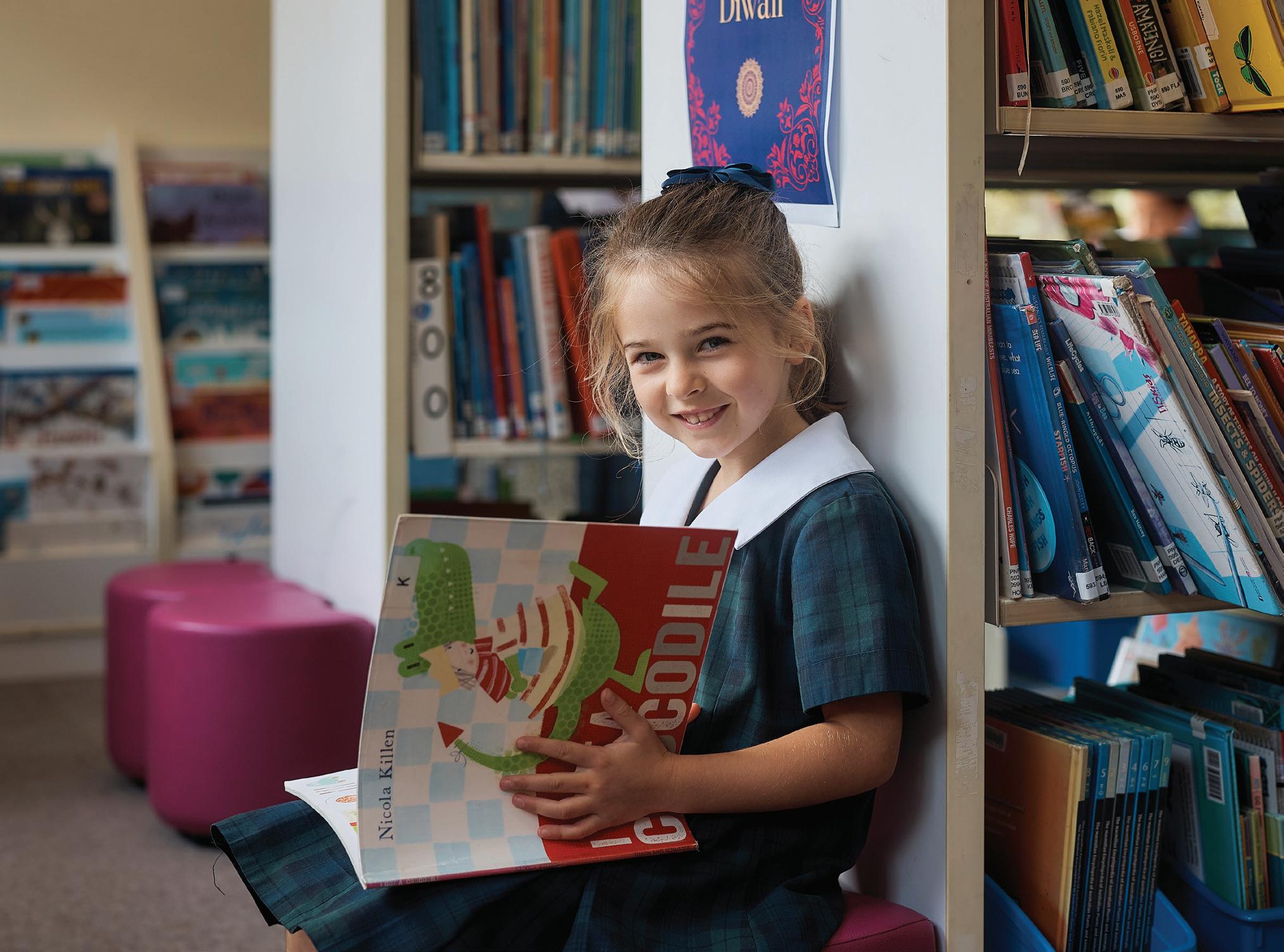
Josephine Laretive, Junior School Teacher Librarian K-2, Pymble Ladies’ College
This paper provides insight to how Year 2 students participated and contributed to the Shadow Judging program of the Children’s Book Council of Australia (CBCA). As a teacher librarian of young learners, I aspire to foster literacy development and promote reading through literature-based activities that inspire both engagement and enjoyment
of books and reading. The Shadow Judging program, launched in 2022, is a valuable initiative that allows children to act as critical readers and provides a unique opportunity to engage with quality texts. The program encourages a sense of ownership and agency, as children’s voices are given opportunities to provide opinions and contribute to judging literature traditionally
dominated by adults. Participation in the program empowers children to review, reflect and express informed judgments. Shadow Judging promotes collaboration and community, connecting young readers across schools and libraries. The contribution of Year 2 students not only enables them to collaborate and connect with one another but also positions them within a
national program that fosters deeper involvement with reading.
The CBCA was established in 1945 and is celebrating its eightieth anniversary this year. The CBCA’s purpose is to enrich young lives through Australian stories. Each year, they hold the Book of the Year Awards to promote children’s and young adult books of “high literary and artistic quality” (CBCA, 2025a). The major annual event of the CBCA is Children’s Book Week. During this week the Honour books and Book of the Year announcements are made and children around Australia celebrate children’s books through a variety of literature-based activities and events that connect books with creativity and imagination. Book Week holds a unique place in Australian schools and libraries as it promotes and celebrates Australian authors and illustrators, ensuring young readers encounter stories that reflect and enrich their lives.
The CBCA Book of the Year Awards comprise six categories that capture the interests of children from early childhood to the senior years of school. Within each category there are the Notables, the Shortlist, the Honour books and the Book of the Year. In 2025, a total of 730 books were entered into the CBCA Book of the Year Awards, all of which were assessed by the judging panel before 122 titles were selected as Notables. The CBCA reported that this collection represented 31 Australian publishers, 114 Australian writers and 79 Australian children’s book illustrators (CBCA, 2025b). From the Notables list, six books in each category are then shortlisted, from which the Honour Books and the overall Book of the Year are chosen.
Each year this impressive collection provides insight into historical, social, and cultural (McDonald, 2023) aspects of life in Australia at the time of publication. As Simpson and Cremin (2022, p.10) outline, “all children deserve opportunities to connect, to escape from reality, to imagine alternative worlds and to expand their cultural understanding through life-resonant and life-expanding literature.” Owing to the extent of the Notables categories, children from the early years through to senior levels of schooling are exposed to award winning texts and afforded opportunities to engage with quality literature across a wide range of genres.
In 2022, the CBCA launched the Sun Project Shadow Judging program to provide young readers a voice and to develop and honour reading (Erskine, 2023). Since its launch, Year 2 at Pymble Ladies’ College have participated as Shadow Judges and have focused on the six Early Childhood Shortlist picture books. Year 2 closely follow the CBCA judging criteria which incorporates elements such as examination of the setting and characterisation, the pace and flow of the story, engagement of the plot, how images extend meaning, and the overall book design (CBCA, 2025c).
Picture books integrate visual and written modes of communication that support comprehension and engagement. As outlined by McDonald (2023), picture books allow children to make meaning through both the text and visuals. The text is read in order and comprehended, whereas the visuals allow the reader to gain additional meaning. When text and image work together, they
invite prediction, inference, and interpretation, helping readers achieve a deeper understanding of the story. As Year 2 have commenced reading and visual literacy skills to “interpret meaning from both print and images” (Lowien & Thomas, 2025), they are encouraged to closely view the illustrations to extend and enhance the text.
A picture book read aloud offers children a shared space for connection, emotional exploration, and collaborative interpretation. Merga (2023) implies that reading aloud to children and allowing for opportunities to ask questions and share experiences related to the story inspires and engages reading. Additionally, reading aloud has a positive impact on social connections, strengthens literacy skills, and increases motivation to read. As highlighted by Simpson and Cremin (2022), reading and discussing high quality literature with children develops new knowledge and broadens their awareness of the world. “The ability to identify, analyse and critique construction of meaning” (Simpson and Cremin, 2022, p.6) through reading picture books encourages critical thinking, collaboration, empathy and imagination. The Shadow Judging program encourages such abilities and contributes to children’s identity and allows them to make personal connections with texts.
In 2025, the Shadow Judging program had approximately 400 groups registered. We are proud to have been part of this initiative and contributed to the Shadow Judges book awards. As Shadow Judges, Year 2 expressed opinions in literary conversations, and were empowered to think critically and express their
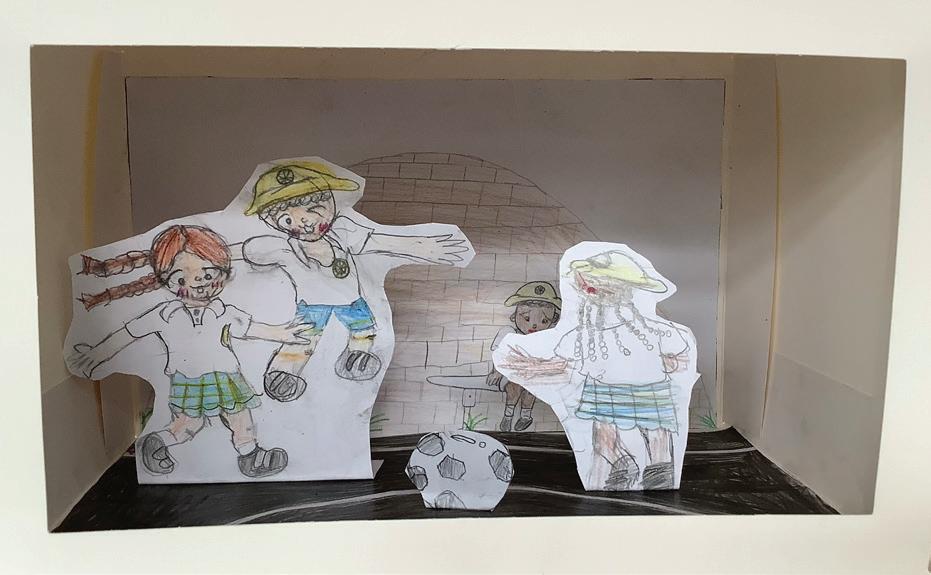
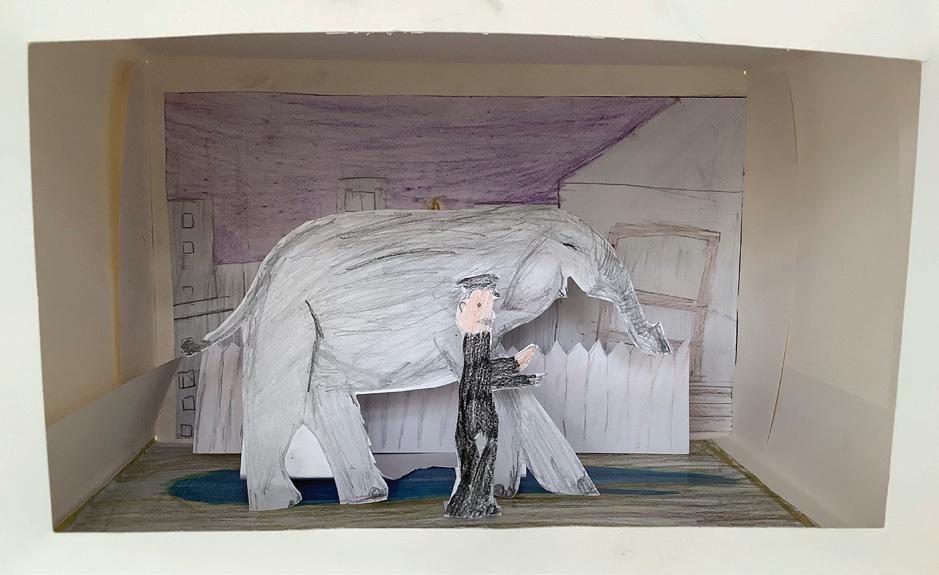
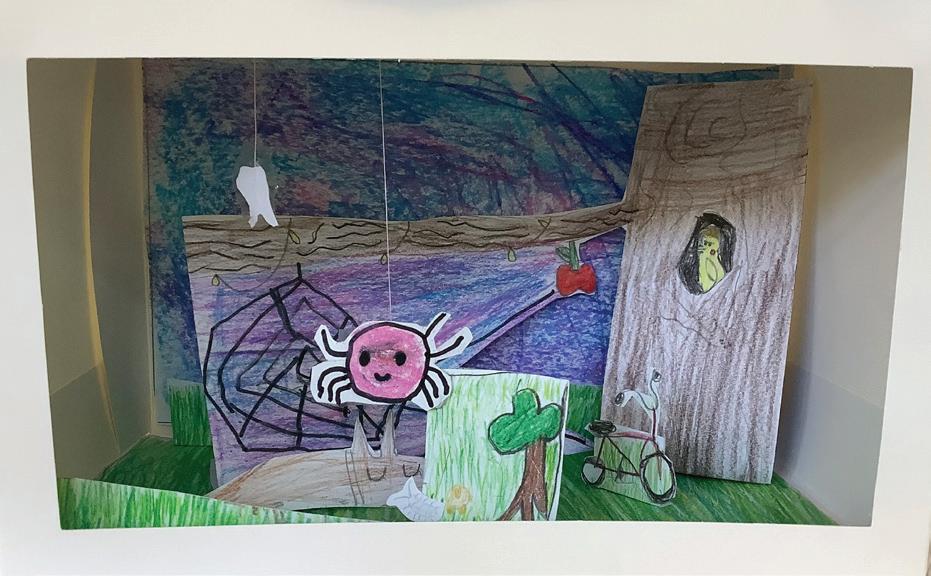
own judgments. In submitting their vote to the program, Year 2 collaborated and connected to a national community of young readers.
In the lead-up to Book Week, I design lessons and complete registration to position Year 2 students as official Shadow Judges. They are introduced to the program and informed that they will be judging the Early Childhood category, although
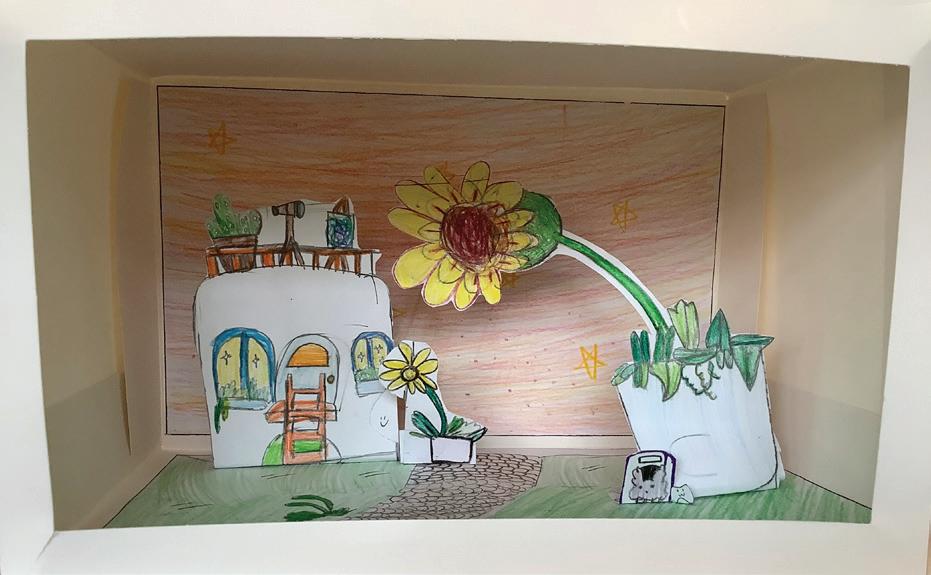
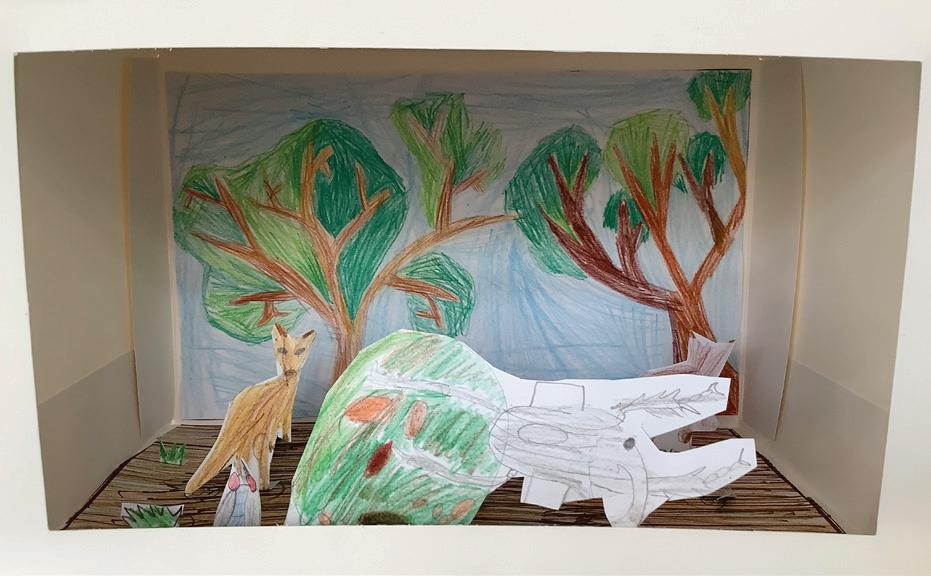

recommended for readers aged 0–6 years, their experience with picture books places them in a strong position to identify titles likely to appeal to younger audiences. Given that Year 2 also participate in a Buddy program with Kindergarten, they are encouraged to consider their Buddies’ interests and the appeal of the story when evaluating each book. During a series of library lessons, the Early Childhood shortlist books are read aloud to the whole class. The evaluation criteria I designed for Year
2 was modelled on the official judges’ guide and incorporated consideration of character, setting, plot, illustrations, and overall book design. See Figure 2 for an example. This adaptation of the formal criteria enabled Year 2 students to engage authentically with the evaluative process, fostering both an appreciation of literary quality and an understanding of the principles framing professional literary judgment. In reflecting on character, students were encouraged to consider whether the description felt authentic
and to assess the extent to which a younger reader might be able to understand or relate to the characters. The setting of each story was examined through illustrations, with attention given to the degree to which the visual representation aligned with the text and depicted a meaningful sense of place. Discussion of the plot centred on the level of engagement students experienced as the story was read aloud, while the conclusion was evaluated according to the level of satisfaction one had at the end of the story.
In relation to the illustrations, I modelled how they might be examined for the ways in which they enrich the narrative and contribute additional layers of meaning. One dimension of this analysis was connected to “aspects of emotional literacy” (Farrar, 2024, p. 996), with particular focus on how a character’s feelings can be interpreted through their actions, expressions, and posture. As students evaluate whether characters appear authentic and consider how younger readers might relate to them, Year 2 practise recognising and articulating emotions within literary contexts. This process not only strengthens their comprehension but also fosters empathy as they consider viewpoints other than their own.
When considering the overall design and quality of each book, I introduced the potential for a book to be valued by readers over time. We also discussed how effectively a book might capture readers’ attention and provide an enjoyable experience to hold and read. Students then reflected on the messages or lessons within each story. The discussion further involved identifying a symbol to represent the story and articulating
the ideas or reflections the text inspired enabling them to connect personally with the story.
Engaging with the Shadow Judging program had a positive effect on reading enjoyment and provided opportunities for students to contribute to discussions about books. Such book discussion, as noted by Oxley and McGeown (2023), encourage communities of readers as students collaborate, discuss, and negotiate responses to literature which has a positive impact on reading motivation. In addition, the shared reading of the shortlist books not only introduced new authors and genres, but it also encouraged a calming experience which is supportive of student wellbeing (Oxley and McGeown, 2023).
Once Year 2 submitted their Shadow Judging vote, each student added a star to a voting chart in the K-2 library. This chart encouraged a wide range of discussion by K-2 students as they could clearly see what book Year 2 enjoyed most. As both Kindergarten and Year 1 were also reading the Early Childhood shortlist books during their library lessons and responding with a variety of creative compositions, the discussion around the six shortlist books continued over several weeks. Fortunately, Kindergarten and Year 1 were able to add their vote to the library voting chart which provided a Shadow Judges shadow and revealed an overall favourite Shortlist book for K-2 students. An extension of the Shadow Judging project enabled Year 2 students to engage more deeply and respond creatively to the shortlist books. Each class was divided into teams and assigned one of the shortlisted titles to represent
through a diorama (see Figure 1). In revisiting their allocated texts, students re-examined the narrative and collaboratively designed a scene to bring it to life. As they constructed their dioramas, I observed how their choices revealed what they understood and valued most in the stories. The process prompted close attention to detail, encouraged consideration of characters’ feelings, and supported representation of setting. As a result, this creative task allowed students to connect more deeply with the texts while expressing personal interpretation and imagination.
Year 2 students’ involvement in the CBCA Shadow Judging program demonstrates the value of engaging young learners as active and thoughtful readers. Through collaborative discussion, close evaluation, and creative responses, students developed literacy skills while also deepening their enjoyment of literature. The program empowered them to see themselves not only as readers, but as participants in the wider literary community, with voices that matter in judging and celebrating books.
For teacher librarians and primary educators, Shadow Judging offers a meaningful framework to foster reflection, critical thinking, creativity, and connection through literature. The Shadow Judging program highlights the transformative potential of inviting young readers to read, review, and reflect in authentic and purposeful ways.
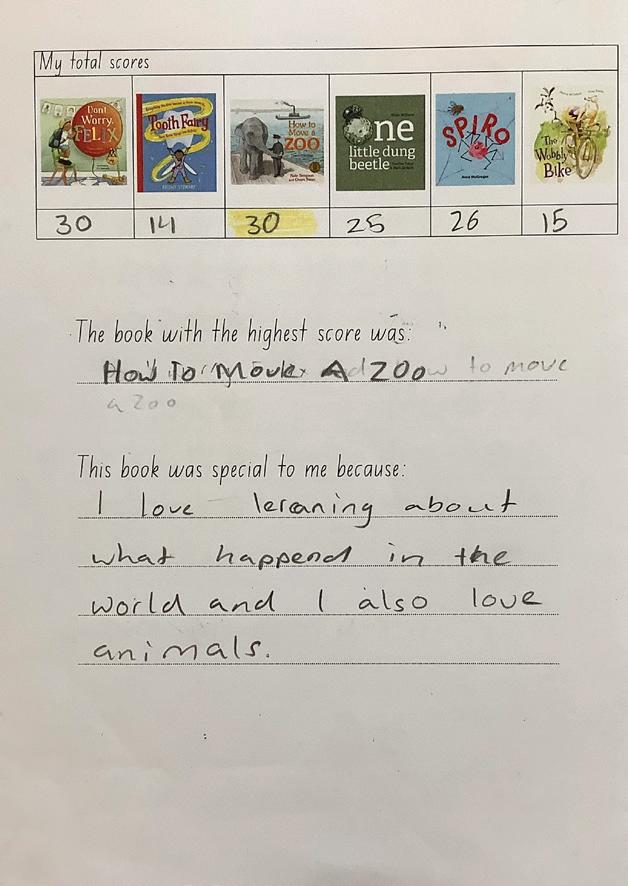
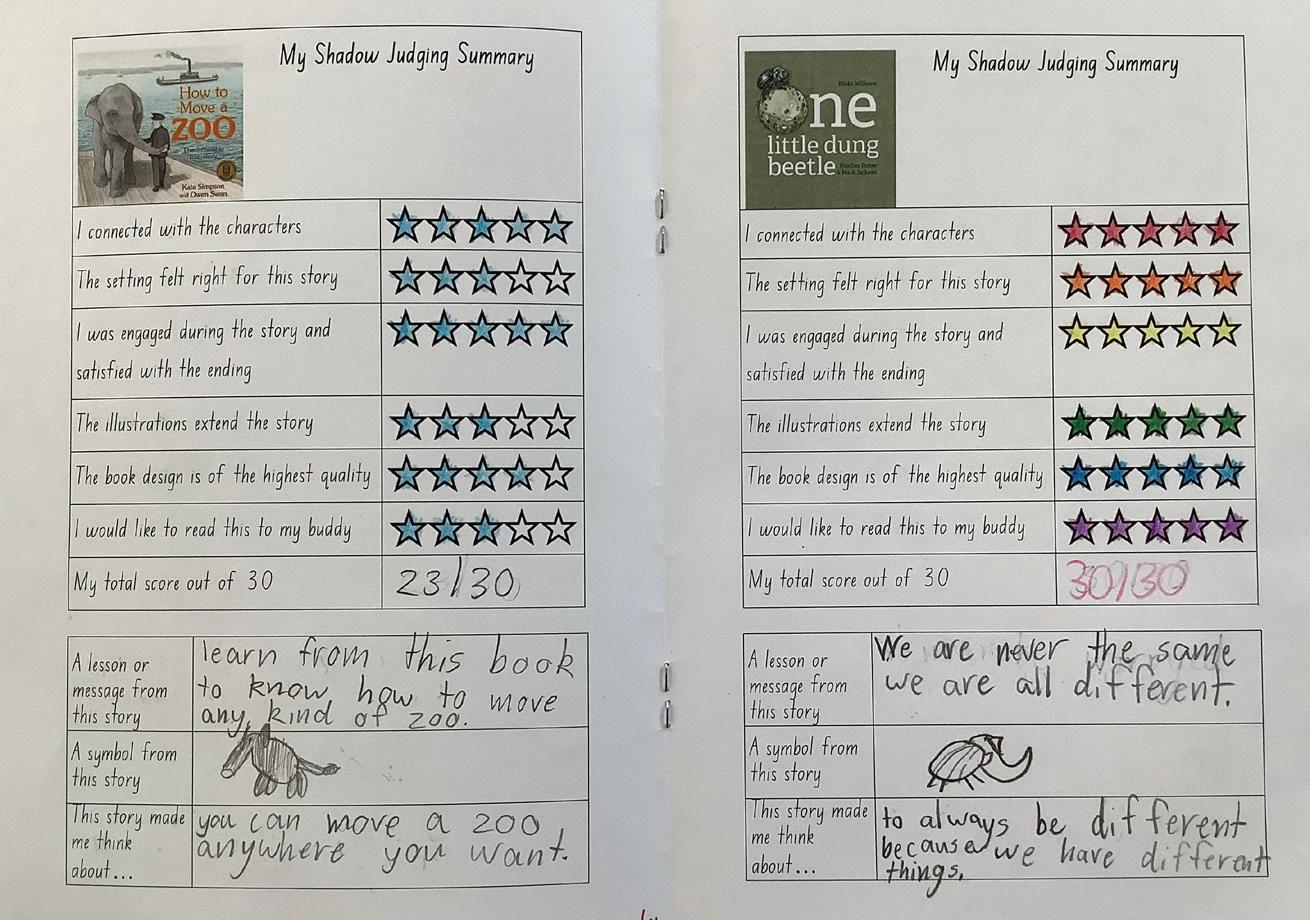
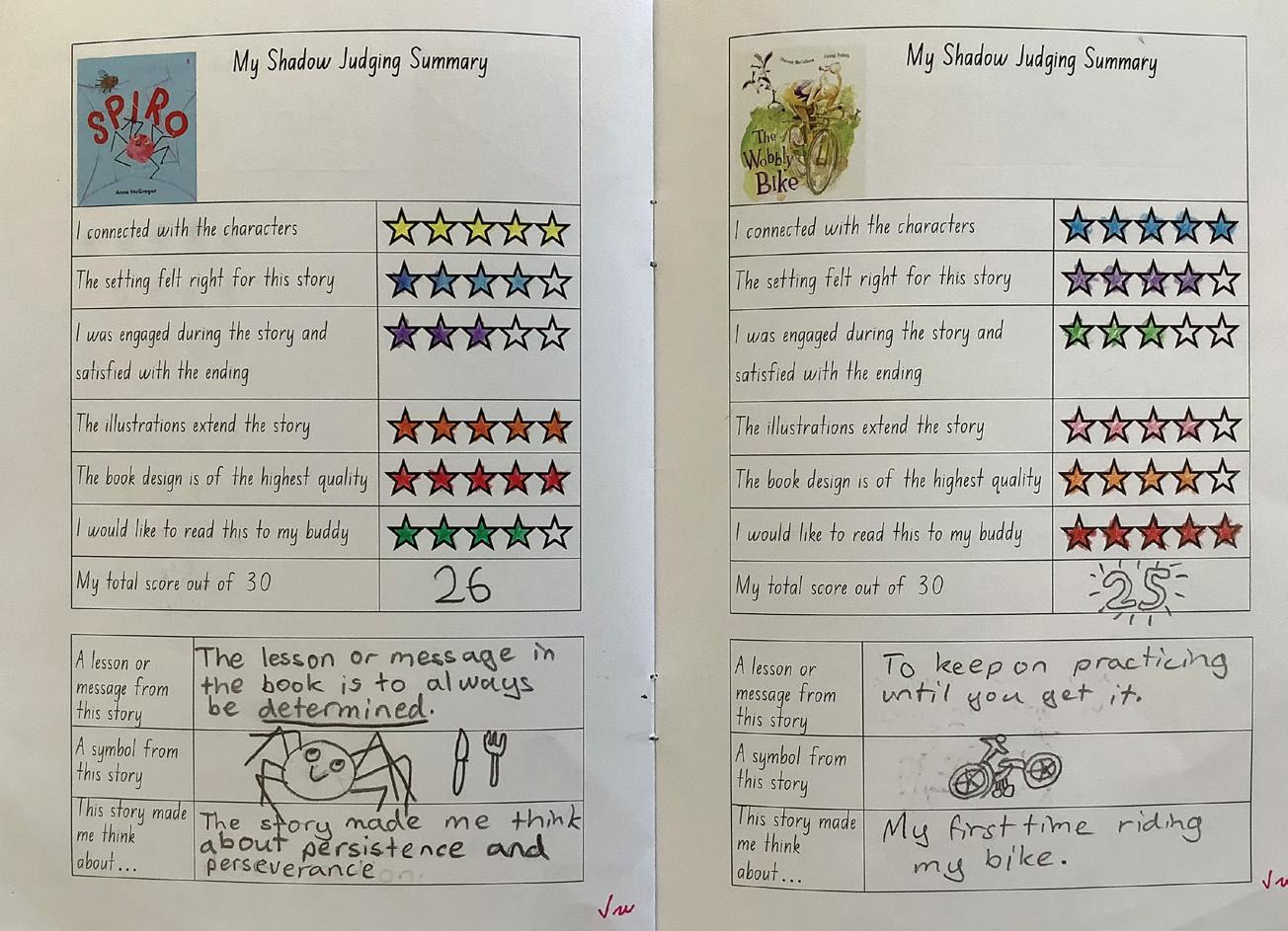
Children’s Book Council of Australia. (2025a). About the Children’s Book Council of Australia. https://cbca.org.au/about/
Children’s Book Council of Australia. (2025b). 2025 Book of the Year Awards – Notables. https://cbca.org.au/2025-notables/
Children’s Book Council of Australia. (2025c). 2025 Shadow Judging Criteria unpacked. https://shadowjudging.cbca.org.au/wp-content/ uploads/2025/03/Criteria-table-2025.pdf
Devezy, Y., & Alice, K. (2024). Don’t worry, Felix. New Frontier Publishing.
Erskine, G., & Nicoll-Hatton, V. (2023). Beyond comprehension - the child reader as critic. Scan: The Journal for Educators, 42(2), 55–60. https://search.informit.org/doi/10.3316/informit.141748291578569
Farrar, J., Arizpe, E., & Lees, R. (2024). Thinking and learning through images: A review of research related to visual literacy, children’s reading and children’s literature. Education 3-13, 52(7), 993–1005. https://doi.org/10.1080/03004279.2024.2357892
Lowien, N., & Thomas, D.P. (2025). Multimodal reading interpretation: Reading the world-reading the text. Australian Journal of Language and Literacy, 48, 141–160). https://doi.org/10.1007/s44020-02500080-2
McCallum, D., & Smith, C. (2024). The wobbly bike. Walker Books Australia
McDonald, L. (2023). A new literature companion for teachers. (3rd ed.). Primary English Teaching Association Australia. McGregor, A. (2024). Sprio. Scribble
Merga, M. K. (2023). Creating a reading culture in primary and secondary schools A practical guide. Facet Publishing.
Oxley, E., & McGeown, S. (2023). Reading for pleasure practices in school: Children’s perspectives and experiences. Educational Research, 65(3), 375–391. https://doi.org/10.1080/00131881.2023.22 36123
Simpson, A., & Cremin, T. M. (2022). Responsible reading: Children’s literature and social justice. Education Sciences, 12(4), 264. https://doi. org/10.3390/educsci12040264
Simpson, K., & Swan, O. (2024). How to move a zoo. Allen & Unwin. Stewart, B. (2024). Everything you ever wanted to know about the tooth fairy (and some things you didn’t). Lothian Children’s Books.
Williams, R., Potter, H., & Jackson, M. (2024). One little dung beetle. Wild Dog Books.
Martha Itzcovitz, Junior School Teacher Librarian, Pymble Ladies’ College
This project was enabled through the generous support of the Pymble Ladies’ College Ex-Student Union Artist in Residence Grant of 2024.
Applying for the Pymble Ladies’ College Ex-Student Union Artist in Residence Grant gave us the potential in the Junior School to not only enrich our writing program but to spark a broader culture of creative confidence across Year 5. As a teacher librarian, I often see how students at this age begin to lose their imaginative experimentation, focusing instead on getting things “right”. The grant provided a way to change that—to give girls the time and space to explore authentic creative practice, write alongside a professional author, and take creative risks in a supported environment. Partnering with an author whose work embodies humour, heart and imagination offered the girls direct access to the habits and mindset of a professional writer. We chose Kate Temple, an award-winning Australian
children’s author whose books—The Dangerous Business of Being Trilby Moffat, the Underdog series and the Jimmy Cook/Alice Tooley books—are celebrated for their wit, energy and inventive worlds. Kate has a gift for connecting with young readers and empowering them to find their voice through storytelling. Her background in advertising and design, and her passion for media literacy, add an extra dimension to her workshops, blending literacy, creativity and visual communication seamlessly. Kate’s belief that “creativity takes time” underpinned every aspect of the residency. Her approach encouraged the girls to lean into uncertainty, persist when ideas faltered, and recognise that the process of finding a story is just as valuable as finishing one.
The Writer in Residence program was structured in two stages: a Mini Workshop series for all Year 5 classes, and two Extended Workshops for a
small group of fifteen girls.
Mini Workshop (45 minutes per class over two days)
Each Year 5 class participated in an advertising and persuasive language activity designed to merge creativity with critical thinking. The girls invented their own “weird product”— an imaginary object or idea—and then wrote and illustrated an advertisement for it using persuasive techniques. This playful activity drew on Kate’s advertising background and provided a dynamic entry point for the girls to see how language can be both creative and purposeful. Importantly they were able to either write or illustrate their “weird product” so that the focus was on creative thinking rather than getting the words “right”.
I then called for expressions of interest for the extended workshops, and the response was extraordinary! One hundred and eight applications for just fifteen spots, highlighting
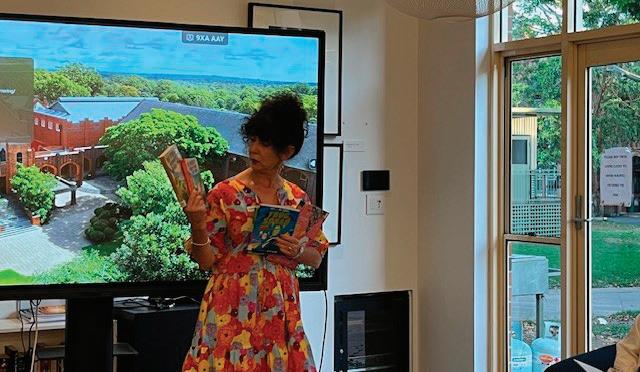
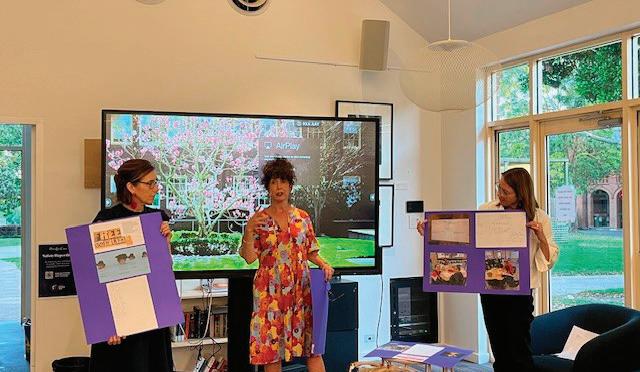
both the enthusiasm of our girls, their appetite for creative opportunity, and the accessibility of Kate’s initial workshop. Again, it was very important to Kate and I that the next round of workshops were accessible for everyone and we chose girls based on the passion and enthusiasm they expressed in their expression of interest application.
Workshop 1 (2 hours)
The first extended workshop focused on character creation. The girls developed small groups of characters—pairs like Jimmy and Alice or teams like The Underdogsselecting animals as their inspiration. They designed profiles, sketched their characters, explored personalities, and defined the characters’ goals
and motivations. Through Kate’s guidance, they discovered that character development is about empathy and curiosity: getting to know your characters so well that you understand how they will act when faced with a challenge.
Workshop 2 (2 hours)
The second workshop delved into world-building and story development. With their characters in hand, the girls explored where their stories might unfold. Would it be a fantastical setting like Trilby, or something grounded in a recognisable world like Dogtown from The Underdogs? Kate modelled her own process for constructing a world—its rules, tone, and logic—and then set the girls to work.
Once their worlds took shape, it was time to write. Kate introduced a mysterious story starter and sent everyone off on their narrative journeys. When creative blocks inevitably appeared, she produced “The Great Unstucker”—a bingo spinner filled with quirky prompts designed to jolt writers out of stuck moments. Laughter, groans, and sudden bursts of writing filled the library!
The girls’ reflections speak volumes about their engagement:
“The slogans were so much fun to write.”
“I really liked being able to draw my product and then write the slogan.”
“We went back to class and made an ad for our product.”
“I loved the Unstucker—it really helped!”
“We have enjoyed expanding our writing knowledge with Kate, who incorporates fun tasks, such as writing freely for 10 minutes about a chosen picture.”
From Kate’s perspective:
“Fostering creativity in young people has immense benefits that reach far beyond the arts. In our busy, organised world it can be difficult to find the time—and creativity takes time. The Writer in Residence Program allowed the selected group of girls to deep dive into creative thought and build characters, story, and settings. Each session began with 10 minutes of ‘free writing’ prompted by an image. The only rules were:
don’t stop and don’t worry about mistakes. The aim was to get the flow going and enter a creative headspace.
The girls would start writing, hit a barrier, then push through and discover another idea waiting for them. Throughout each two-hour session, they experienced both the thrill of creative discovery and the uncertainty of what to do next. It was wonderful to see them sit with that uncertainty and take creative risks. At the end, they all had stories and characters they were proud of.
One girl asked, ‘Is this class nearly finished?’ For a moment I thought she wasn’t enjoying it. When I said, ‘We have another hour left—is that okay?’ she grinned and said, ‘Yes!’ before diving back into her story.”
Teachers echoed the value of the experience:
“I can teach the conventions of writing, but creativity is not in my skill set, so it’s incredibly valuable to have someone come in with that expertise.”
“It was fabulous to have some media literacy with the advertising component as well.”
The Writer in Residence Program delivered outcomes far beyond what we had imagined. The most immediate benefit was the boost in creative confidence among the participating students. They saw that writing is not just about structure or grammar—it’s about ideas, persistence, and play. The sessions modelled that getting stuck is part of the process, and that creative problem-solving can be joyful.
For teachers, the residency served as professional learning in itself. Observing Kate at work provided insights into how creativity can be scaffolded through manageable, repeatable techniques such as visual prompts, time-bound free writing, and the deliberate use of humour. It also offered cross-curricular connections, particularly through the advertising component which linked literacy with media studies and visual communication.
A further highlight was the book launch of Kate and Jol Temple’s latest title, Mega Rich Guinea Pigs at Pymble, which coincided with the residency. This gave students the rare experience of engaging directly with a newly published work and hearing firsthand about the process from
idea to print—strengthening the link between classroom writing and realworld publication.
The success of this program has planted the seed for a sustained investment in Writer in Residence initiatives at Pymble. My long-term goal is to apply for future grants to continue this model, inviting a diverse range of creatives—writers, illustrators, poets, and storytellers—to work alongside our students and staff. My hope is that each residency would not only enrich students’ creative capacity but also build teachers’ confidence in facilitating open-ended creative learning.
The Writer in Residence Program has reaffirmed the importance of giving students time, space, and trust to be creative. Watching the Year 5 girls lose themselves in stories of mischievous animals and fantastical worlds was a reminder of what authentic engagement looks like— when curiosity drives learning and imagination is allowed to lead. As Kate Temple reminded us, “Creativity takes time.” Thanks to this grant, we were able to give our students that time—and they used it to discover just how far their imaginations could take them.
References
Temple, K., & Temple, J. (2012). Parrot Carrot. Allen & Unwin.
Temple, K., & Temple, J. (2013). I got this hat. HarperCollins. Temple, K., & Temple, J. (2014). Mike I don’t like. ABC Books.
Temple, K., & Temple, J. (2016). Captain Jimmy Cook discovers third grade. Allen & Unwin.
Temple, K., & Temple, J. (2017). Captain Jimmy Cook discovers X marks the spot. Allen & Unwin.
Temple, K., & Temple, J. (2018). Room on our rock. Scholastic Australia.
Temple, K. (2018). Yours Troolie, Alice Toolie. Allen & Unwin.
Temple, K. (2019). The birthday wars (Alice Toolie series). Allen & Unwin.
Temple, K., & Temple, J. (2019). Are you my bottom? Scholastic Australia.
Temple, K., & Temple, J. (2020). Move that mountain. Scholastic Australia.
Temple, K., & Temple, J. (2020). Bin chicken. Scholastic Australia.
Temple, K., & Temple, J. (2021). Winner winner bin chicken dinner
Scholastic Australia.
Temple, K., & Temple, J. (2021). The underdogs: Catch a cat burglar Hardie Grant Children’s Publishing.
Temple, K., & Temple, J. (2021). The underdogs: Fake it till they make it. Hardie Grant Children’s Publishing.
Temple, K., & Temple, J. (2022). Bin chicken flies again. Scholastic Australia.
Temple, K., & Temple, J. (2022). The underdogs: Hit a grand slam Hardie Grant Children’s Publishing.
Temple, K., & Temple, J. (2022). The underdogs: Rock ’n’ roll over Hardie Grant Children’s Publishing.
Temple, K. (2022). The dangerous business of being Trilby Moffat Hachette Australia
Temple, K., & Temple, J. (2022). Bin chicken and the Christmas turkey Scholastic Australia..
Temple, K., & Temple, J. (2023). The underdogs: Fish for trouble Hardie Grant Children’s Publishing.
Temple, K. (2023). The perilous promotion of Trilby Moffat. Hachette Australia.
Temple, K., & Temple, J. (2023). Bin chicken vs bush turkey. Scholastic Australia.
Temple, K., & Temple, J. (2024). Bush turkey rescue. Scholastic Australia.
Temple, K., & Temple, J. (2024). Bin chicken lights up the night Scholastic Australia.
Temple, K., & Temple, J. (2024). Frog Squad: Dessert Disaster. Harper Collins Australia
Temple, K., & Temple, J. (2024). Frog Squad: Bungle in the Jungle Harper Collins Australia
Temple, K., & Temple, J. (2024). Trashy Tales: Duck for Cover Scholastic Australia.
Temple, K., & Temple, J. (2025). Trashy Tales: Bin Chicken’s Wipe Out Scholastic Australia.
Temple, K., & Temple, J. (2025). Frog Squad: Sink or Swim. Harper Colins Australia
Temple, K., & Temple, J. (2025). Mega rich guinea pigs. Scholastic Australia.

Jo Howe, Lead Teacher Excellence, English - Stage 6, Pymble Ladies’ College
Thanks to a generous grant from Pymble’s Ex-Students’ Union, the Pymble English Faculty secured the celebrated Australian author, Emily Maguire, as a writer-in-residence for one week in Term 2, 2025. Through bespoke lectures, workshops and mentoring discussions, Emily worked alongside our Stage 6 (Year 11-12) students and teachers, inspiring new ways of reading texts through a writerly lens, of meeting the challenges of composition with control and confidence, and of embracing the joys of a writing life.
Amidst current concerns over the declining writing skills of Australian students, as evidenced by a 2025 analysis of NAPLAN data revealing that most Australian Year 9 students are writing at a Year 4 level, the imperative to revitalise writing pedagogy in secondary schools has never been greater. Compounded by the rapid advancement of artificial intelligence (AI), debates within education now revolve around the continued relevance of manual
writing skills in the classroom. Yet, as Rebecca Marone at the University of South Australia’s Centre for Change and Complexity in Learning affirms, the skills of ideating, drafting, refining and editing our own unique compositions remain fundamental: “In an age where AI can compose essays in seconds … we are asking the question, ‘Do students still need to learn how to write?’ But the answer is unequivocally ‘yes’. These skills are foundational [to everything we do. They are] skills we can’t afford to lose to automation” (Duffy, 2025). The ability to generate
unique and compelling texts for specific audiences with a clear purpose underpins success across all disciplines and careers, making its explicit teaching and practice indispensable.
Within this context, the incorporation of a writer-in-residence program emerges as a compelling and forward-thinking intervention.
While AI challenges traditional conceptions of authorship and the mechanics of writing, the processes that underpin skilled writing – idea generation, audience awareness, cognitive planning, and revision – are deeply human and essential to personal and intellectual development; connected as they are to self-expression, creativity, and critical thought, their development remains at the heart of effective education (Duffy, 2025). In this light, writing is not merely a functional skill but “a vehicle for identity formation and intellectual development” (English Teachers Association, n.d.). Current research underscores the complexity of writing. It is not a singular skill but “a goal-directed and self-sustained cognitive activity” that requires the coordination of knowledge, technique, motivation and social purpose (Graham, Gillespie & McKeown, 2013). At the same time, writing is deeply contextual and cultural, shaped by genre, audience, and community (Graham, 2018). Effective learning environments must therefore foster both the skills and the social conditions that enable students to develop as confident writers.
Bringing a published writer into the classroom directly supports this dual
focus. It situates writing as a creative, purposeful, and collaborative act, in line with contemporary writing development models such as Graham’s (2018) “writer within community” model and Berninger and Winn’s (2006) “not-so-simple view of writing”.
A writer-in-residence initiative is aligned with best practice in writing instruction – research confirms the effectiveness of approaches that prioritise regular writing, genrespecific guidance, and writing for real audiences (Hochman, Wexler & Lemov, 2017; National Council of Teachers of English, 2016). Effective writing instruction is attentive to how the inherently effortful and challenging experience of learning to write well impacts student motivation (McLean, 2022). Given writing motivation is, in part, affected by the value placed on, or interest in, the learning activity, the teaching of writing must give time and attention to the value and numerous purposes of writing, and to creating a supportive writing environment (McLean, 2022). The presence of a writer-in-residence fosters a literary culture, elevating the status of the craft of writing and signalling to students that writing is valued and celebrated.
Hosting a writer-in-residence also forms an important part of helping students understand where their writing skills might one day take them, introducing students to the world of professional authorship, demystifying the writing process, and exposing them directly to the craft and industry of writing.
Other benefits include:
• creative inspiration and engagement: workshops and masterclasses offer experiential, hands-on learning, moving beyond formulaic writing tasks to authentic, audience-driven composition. Direct engagement with a working author introduces students to new and ‘tested’ approaches, inspires them to find their own voice and passion for writing, and fosters a sense of possibility;
• industry exposure: students gain a real-world understanding of what it means to pursue a career in the literary arts, insight into pathways to publication, and an understanding that a career in writing is possible, not merely aspirational;
• teacher professional development: watching a writer-in-residence at work can validate the efficacy of teachers’ current approaches to the teaching of writing, as well as inspiring new methods and adaptations to teaching and learning routines;
• community enrichment: writerin-residence programs nurture a shared literary culture, enriching the life of the school and strengthening community bonds through shared reading and writing experiences, “injecting fresh life into the artistic veins of the hosting institutions” (L, 2023).
Emily Maguire is an acclaimed Australian fiction and non-fiction author. Her 2016 novel, An Isolated Incident, was shortlisted for the 2017 Stella Prize and Miles Franklin Literary Award. Her 2024 novel, Rapture, won the Queensland Literary Award for Fiction and was nominated for the 2025 ABIA (Australian Book Industry Awards) Literary Fiction Book of the Year. Emily’s articles and essays
have been published in newspapers and journals such as The Sydney Morning Herald and Griffith Review She is also an experienced mentor to emerging writers, teaching several reading and writing courses annually through Writing NSW.
Over her week at the College, we were incredibly fortunate that Emily was able to work with almost every Stage 6 English student. In each session, she tailored her content and approach according to student readiness and the varied demands of the curriculum, and modelled for students the recursive, exploratory nature of writing. Emily’s willingness to position herself as a co-learner – openly discussing the messiness of revision, the difficulty of crafting authentic worlds, characters and voices, and the pleasure of imaginative risk – brought to life the core values of contemporary writing pedagogy.
In sessions with Year 11 English Standard, Emily encouraged students to find ‘touchstones’ – moments of deep personal resonance in literature, film, or music – and gave them practical ways to recreate these experiences for other audiences in their own writing. By centring emotional engagement, she made writing purposeful and meaningful to students, tapping into their lived experiences to generate authentic texts.
With Year 11 English Advanced, the sessions were focused on the students’ study of Ian McEwan’s Atonement, with Emily offering fresh interpretive lenses on the novel’s postmodern commentary on how narratives shape our world. Her
approach modelled how to analyse and inhabit complex texts from a writer’s perspective – a critical skill for Stage 6.
Emily’s work with Year 12 English Advanced and Extension 1 students was attentive to the specific demands of their HSC coursework, providing students with practical and thought-provoking ways to write discursively, to appreciate and craft literary worlds, and to shape fictional characters in which readers connect and invest. These sessions reinforced the recursive relationship between reading and writing and underscored writing as a shaped, intentional act. Students in the English Extension 2 cohort were keen to hear from Emily about her drafting, refining and editing processes; as such, Emily shared with them industry insights drawn from her work with her own editors and from her mentorship of emerging writers, as well as generously workshopping solutions for hurdles that students were facing in crafting their Major Works. These sessions also featured Emily’s professional, real-world guidance to students on where their writing skills could lead them in the future – and how they might make their way toward these dreams.
Emily also spent some time with a select group of aspiring Year 9 and 10 writers from the Talent Development Program, providing one-on-one mentorship and creating a lasting impression on these high-potential writers.
The week-long residency produced tangible and intangible outcomes. Qualitative feedback indicated heightened student engagement, renewed enthusiasm for writing,
increased confidence in the ability to revise and refine, and a deeper appreciation for writing as both a craft and form of personal expression. The experience also contributed to a vibrant literary culture within the school: re-centring and celebrating writing as a meaningful act of connection, creativity, and community.
As writing research reminds us, sustained, supported, and socially embedded experiences of writing are essential to nurturing confident, capable composers. At a time when writing proficiency is in decline and AI and automation threaten to further deskill students, innovative, research-based interventions like writer-in-residence programs offer a compelling way to deepen student engagement with the power and purpose of the craft of writing.
The Pymble English Faculty is so incredibly grateful to Emily Maguire for generously giving to the College her time and expertise, for being so attentive to our Faculty’s specific context and aims, for her responsiveness to student interest and needs, and for the inspiration she gave to teachers and students alike. We are also indebted to the Pymble Ladies’ College Ex-Students’ Union for their munificence; this residency was made possible by their generous grant.
Berninger, V., & Winn, W. (2006). Implications of advancements in brain research and technology for writing development, writing instruction, and educational evolution. In C. A. MacArthur, S. Graham, & J. Fitzgerald (Eds.), Handbook of writing research (pp. 96–114)
Duffy, C. (2025, June 26). Teaching resources reverse students’ poor writing NAPLAN. ABC News. https://www.abc.net.au/ news/2025-06-26/teaching-resources-reverse-students-poor-writingnaplan/105454122
English Teachers Association. On Writing. https://www.englishteacher. com.au/about-us/positions-on-english/on-writing
Graham, S., Gillespie, A., & McKeown, D. (2013). Writing: Importance, Development, and Instruction. Reading & Writing, 26(1), pp. 1–15. https://doi.org/10.1007/s11145-012-9395-2
Graham, S. (2018). A revised writer (s)-within-community model of
writing. Educational Psychologist, 53(4), pp. 258–279.
Hochman, J. C., Wexler, N., Lemov, D. (2017). The Writing Revolution: A guide to advancing thinking through writing in all subjects and grades (1st ed.)
L, S. (2023). How a Writer in Residence can boost your creativity and collaboration. https://medium.com/@soufiane.L/how-a-writer-inresidence-can-boost-your-creativity-and-collaboration-91d0b9ab8586
McLean, E. (2022). Writing and writing instruction: An overview of the literature. Australian Education Research Organisation (AERO). https:// apo.org.au/node/322989
National Council of Teachers of English. (2016). Professional Knowledge for the Teaching of Writing. https://ncte.org/statement/ teaching-writing/

Edward Zhao, Bachelor of Education and Bachelor of Arts (Honours) student, University of Sydney
This report is part of research conducted for an Honours thesis in Education. It was conducted with assistance from the English Faculty at Pymble Ladies’ College. The author gratefully recognises the assistance of the staff and students who participated.
Generative Artificial Intelligence (GenAI) is no longer peripheral to how young people write and learn. A growing body of scholarship (e.g., Trust et al., 2023; Curwood et al., 2024; Nazari et al., 2021) has identified
its uses for the teaching and learning of writing: it can create lesson plans, provide language instruction, and advance formative feedback. Despite the promises of GenAI, its practical enactments in English writing pedagogy remain under documented in Australia, and teachers often find themselves grappling with rapidly evolving technologies without adequate instruction or professional development (Curwood et al., 2024). This is problematic given the release of the Australian Framework for GenAI in Schools, which stipulates its uses
to “enhance and support teaching and learning” (Commonwealth of Australia, 2025, p. 6). Simultaneously, concerns persist around academic integrity, privacy, environmental sustainability, and the normative epistemologies upheld by AI (Akgun & Greenhow, 2022; Cheuk, 2021; Golda et al., 2024; Wu et al., 2021). This Honours thesis addresses the current gaps in literature through a qualitative case study of one teacher and two secondary English classes in Sydney. First, it identifies practical applications of GenAI in writing
pedagogy, addressing the absence of Australian, classroom-based examples. Second, it investigates how AI can function as an effective feedback tool for students, given the mixed results of Automatic Writing Evaluation (AWE) research internationally (Nazari et al., 2021; Wilson et al., 2024).
Keywords: generative AI (GenAI); secondary English; writing pedagogy; scaffolding; differentiation; formative feedback; sociocultural theory.
This research is underpinned by Vygotsky’s (1978) sociocultural theory, the idea that students are products of their sociocultural milieu, and that knowledge is a socially mobilising tool. Literacy is not merely “a technical skill that is contextfree [and] neutral”, but a way for students to assert their sociocultural values and beliefs (Davidson, 2010, p. 251). Accordingly, Woodard et al. (2017) highlight the importance of writing as a culturally sustaining tool which prompts students to “master dominant discourses while maintaining cultural integrity” (p. 216). Writing and its pedagogy have been increasingly complicated by developments in GenAI, which now occupies a central place in students’ sociocultural worlds (Curwood et al., 2024). Given its prevalence, this study articulates ways machine learning can amplify diverse student voices rather than reproducing dominant linguistic and cultural codes (Cheuk, 2021). It showcases how AI can empower learners to write using slang, cultural allusions, transliteration (D’warte, 2018), and other language which builds their “emerging personal style” (NSW Education Standards Authority [NESA], 2025, EN5-ECA-01).
This thesis addresses the gaps in Australian research by examining a Sydney-based, high school English teacher and her students. It articulates practical strategies through which AI can enhance writing instruction, and support formative feedback. Research Design. Drawing on a sociocultural framework, this research was primarily dialogic and focused on centralising participants’ unique voices and lived experiences. Thus, an interpretive, qualitative method was most fitting, as it views individuals and their knowledge as subjective constructions of their social world (Merriam & Tisdell, 2015). The discursive rendering of teacher and student realities would not have been possible through a quantitative, positivist method, which risks reducing nuanced perspectives to numerical data (Cooley, 2013).
This study took place at Pymble Ladies’ College, which has an ICSEA value of 1181, with 74% of its students in the top quartile of socio-educational advantage. Additionally, over half (57%) the students come from a Language Background other than English (LBOTE) (Australian Curriculum, Assessment and Reporting Authority, 2025). Over a ten-week term in 2025, I conducted a qualitative case study of one teacher participant and two of her English classes. The teacher is a mid-career teacher who described her English pedagogy in an interview as prescriptive and “traditional”: focusing on an explicit, transmissive method of teaching. Despite this, she had been using ChatGPT for lesson planning prior to this study, and she was eager to develop and innovate her pedagogy through AI. The Year 9 class involved in the study included
students from a range of backgrounds, including those with some English learning needs. They were beginning an analytical writing unit comparing Romeo and Juliet with Baz Luhrmann’s film adaptation. Her Year 10 class, a mixed-ability group of 18 students (13 participants), comprised students from a range of abilities, including EAL/D students. This cohort was introduced to discursive writing, a form of creative non-fiction. The teacher described both classes as generally eager and participatory, though sometimes less engaged when English seemed irrelevant to their lives. Prior to the study, some students had experimented with AI for idea generation, while some others reported the temptation to use it for plagiarism.
This study used a range of data sources, including student artefacts, class observation notes, teacher lesson plans, and focus group interviews, to promote credibility (Shenton, 2004). Data sources were triangulated to ensure emerging findings were supported by multiple forms of evidence, thus bolstering the validity of the research (Carter et al., 2014; Merriam, 2015). Any audio-recorded data (e.g., interviews, co-design sessions with the teacher) was transcribed and memberchecked to ensure it was an accurate representation of participants’ claims (Creswell & Miller, 2000).
Collected data was analysed through an inductive method of thematic analysis, where salient themes emerged from participants rather than being presupposed (McMillan & Schumacher, 2010; Saldaña, 2013). In the first cycle, all transcripts, observation fieldnotes,
and artefacts were read line-by-line. Descriptive and in vivo codes were applied to meaningful fragments, allowing participants’ perspectives to be distilled in their own language. By using a coding method that centralized participants’ voices, this study aligned with its sociocultural framework. Typical student in vivo codes included “repetitive,” “pleasantly surprised” and “it makes me lazy,” while teacher codes included: “streamlined lesson planning,” “scaffolding tool” and “wouldn’t emulate my voice”. These codes were then organized under the two research questions. In the second cycle, axial coding was used to relate and condense first-cycle codes into broader subcategories (e.g., “GenAI is a lesson planner”, “GenAI activities are repetitive”). These subcategories were then synthesised into emerging themes to address the two research questions (e.g. “GenAI creates scaffolded writing activities, but must be prompted to ensure the activities are varied rather than repetitive). Finally, these themes were crosschecked with the initial data set to confirm the key findings and ensure credibility (Merriam & Tisdell, 2015).
This study suggests that GenAI supported English writing pedagogy in two key ways. First, ChatGPT was used to plan lessons, scaffold student writing, and differentiate for diverse learners. These capabilities reduced teacher workload and improved students’ access to learning. However, ChatGPT outputs were often generic or overly prescriptive without teacher re-prompting and mediation. Second, students used ChatGPT as an AWE tool to solicit pre-submission feedback and build their overall writing confidence, but the bot’s inconsistency and tendency to dilute
personal voice reinforced the need for critical appraisal and teacher guidance.
GEN AI
While ChatGPT can streamline lesson planning and generate engaging activities, it risks producing one-sizefits-all solutions for diverse learners, revealing the need for teacher mediation to ensure genuine student inclusion. In her final interview, the teacher noted that ChatGPT “makes my life easier. It can help come up with well-sequenced lesson plans a lot quicker”. She described entering syllabus outcomes and unit content into ChatGPT to generate lessons, demonstrating how teachers can use AI to accelerate decoding of the syllabus and reduce their workload (Sogut, 2024). The teacher used also used ChatGPT to create classroom resources tailored to her students’ needs. She noted that her Year 9 class were developing their skills in identifying literary techniques, so she aimed to create handouts that would clearly outline these devices. Although the first version of the resource was inaccurate, the teacher praised the GPT’s adaptability. She re-prompted the chatbot to include more complex literary devices, to provide examples for each device, and to produce the handout as an editable document. The revised output closely reflected her suggestions.
This process of the teacher as an iterative prompter highlights that teachers cannot be replaced by GenAI in resource development. Rather, their mediation is essential to refine outputs and ensure it aligns with students’ learning needs. Nonetheless, it demonstrates the potential of AI to supplement
teachers’ resource creation and reduce their workload. However, in the co-design sessions, the teacher emphasised that learning disabilities such as ADHD are not a monolith, as students’ needs manifest differently and cannot be addressed through a one-size-fits-all approach. Thus, this study reveals that ChatGPT prompts should reflect students’ unique needs rather than reducing them to a single diagnostic label. AI is not an authority on inclusive pedagogy, and teacher appraisal is essential to ensure outputs genuinely accommodate all learners. Her practice aligns with the TPACK (Technological Pedagogical Content Knowledge) framework, highlighting how teachers must draw on professional and disciplinary knowledge to mediate AI use (Mishra et al., 2025).
GenAI can also create differentiated activities that accommodate students’ diverse literacy needs, though this differentiation may lead to prescriptive tasks that impinge on students’ personal writing styles. Analysis of the teacher’s prompts showed that even a simple request for “one easy, one medium, one hard” produced differentiated tasks, highlighting AI’s value in streamlining what is otherwise a time-intensive process (Goyibova et al., 2025). However, many students reported that the scaffold’s sentence frames were overly prescriptive. During an observation, Mindy (Year 9) (pseudonyms are used for student names) explained that she felt constrained by the rigid phrasing and, therefore, chose to disregard the scaffold altogether, preferring instead to construct the paragraph herself.
Beyond differentiation, GenAI is a valuable scaffolding tool that helps students refine, structure, and generate ideas for their writing, but
its supports must be mediated by teachers to ensure they align with students’ literacy levels. During the co-design sessions, the teacher used ChatGPT to generate a range of scaffolding strategies, including sentence starters, paragraph frames and visual aids (Raxmonova & Baratova, 2024). She claimed in the interview that these scaffolds varied her instructional routines and allowed for all students to access the learning. From a sociocultural perspective, such scaffolds propel students into the Zone of Proximal development, supporting them to jointly construct responses above their individual capabilities (Vygotsky, 1978). Sophie, another Year 9 student who reported struggles with essay writing, found AI-generated paragraph frames and sentence starters immensely helpful in helping her structure her writing. Thus, ChatGPT reduced cognitive load by providing “linguistic support” without “linguistic restriction”, encouraging students to form their own critical conclusions (Barko-Alva & Chang-Bacon, 2023, p. 436). The teacher flagged a persistent risk that AI’s phrasing “will not necessarily mimic how a student would write” and would instead use language that was too difficult. Evie, a Year 9 student, echoed this claim by saying that AI sometimes introduced “crazy [unlearned] literary techniques”. Thus, teachers must ensure they “know their students and how they learn” to minimise the disjunction between AI-generated tasks and students’ writing abilities (Australian Institute for Teaching and School Leadership, 2022).
While ChatGPT can generate inclusive, scaffolded lesson plans, they also risk being generic, repetitive, and misaligned with summative assessments, highlighting the
necessity of teacher mediation to ensure outputs are socioculturally relevant and syllabus-aligned. The Year 10 focus group was particularly critical of machine-generated lessons, with the most frequent in vivo codes used to describe them being “soulless”, “boring”, and “repetitive”. Beyond a lack of diffuse activities, the Year 10s complained that machine-generated activities were often misaligned with their summative task. These limitations extend on Yilmaz Can and Durmus’ (2024) findings that AI lesson plans can be “superficial”, and “inappropriate for student level” (p. 48). Thus, machine-generated lessons “require significant editing” to ensure they are dynamic, socioculturally relevant, and backward mapped from summative tasks (Yilmaz Can & Durmus, 2024, p. 50). Practical strategies include inputting assessments into ChatGPT to guide AI planning, seeking colleagues’ feedback, designing lessons independently before using AI to adjust them, and directly consulting students on the relevance of AIgenerated activities.
This study extends prior research (e.g., Rudolph et al., 2023; Li et al., 2024) that GenAI can act as a personal writing tutor offering tailored support, yet it cannot replicate the relational, trustworthy, and adaptive qualities of human tutoring. Jamie (Year 10) claims that when she was confused by an assessment, she would put her assessment notification “into ChatGPT and have it explain the task to me”. Similarly, Ella, a Year 10 EAL/D student, used ChatGPT to summarise texts “like I’m 10 years old in terms of the language, but Year 10 in terms of the conceptual complexity”. Despite its benefits, Ella (Year 10) and Evie (Year 9) contend that AI could never replace a private tutor, as a human “can relate to you”, and possesses “knowledge
you can trust”. However, not every student has access to a private writing tutor, and AI can promote equity by serving as an alternative for those without access (Afzal et al., 2024).
Students viewed ChatGPT as a useful source of pre-submission feedback that built their writing confidence, but they also highlighted its inconsistency, and tendency to overcorrect or dilute personal voice. However, a recurrent theme from classroom observations and student interviews was that ChatGPT sometimes overcorrected, suggesting changes that stripped a writer’s personal voice. Karina (Year 10) had a negative view towards AI feedback, claiming it oscillated between “nitpicky… or very vague…”. AI feedback was also critiqued for its inconsistency, and tendency to appease the user. Jamie (Year 10) reported that: “ChatGPT gave me a set of feedback I didn’t like and thought was confusing, so I reprompted it. It then just gave me completely different feedback… it pleases more than it informs us”. These concerns around consistency corroborate Zeevy-Solovey’s (2024) findings, who argues that machine feedback must be mediated by teachers, and cross-referenced with their comments.
AWE is most effective when framed not as a replacement for teacher commentary, but as a scaffold for developing students’ critical literacy and independence as writers. In the final interview, she claimed that AI “wouldn’t emulate my voice” and “sometimes just gets it wrong”. In fact, she noted that tweaking AI feedback for accuracy and fidelity would “take
more time than if [I] just wrote it [my] self”’. The teacher’s concerns reflect the findings that humans ultimately “provide higher quality feedback than AI” in terms of clarity, accuracy and empathy (Steiss et al., 2024, p. 7). However, she found immense value in empowering students to solicit formative feedback from AI themselves. During a classroom observation, she had Year 10s use ChatGPT to evaluate their creative writing drafts, while she walked around to affirm, deny or extend on the machine-generated feedback.
The teacher found this exercise “really successful,” as an unanticipated benefit was the development of students’ critical AI literacy. She observed Year 10 students “spotting mistakes from ChatGPT” and rejecting advice that stifled their personal voice and writing style, while still adopting advice that was helpful. This finding aligns with the literature (e.g., Oravec, 2023, p. 228; Trust et al., 2023), which positions teachermediated AI use as an opportunity for students’ metacognitive development. The teacher attributed the activity’s success to her modelling of effective prompting. Jamie, previously sceptical, reported being “pleasantly surprised,” while Ella admitted it encouraged her to use AI more productively outside of class. Not all students shared this view, however: Karina found ChatGPT’s comments “unhelpful”, overly prescriptive, and contradictory to her teacher’s feedback. Others were dissatisfied by the initial output, but re-prompted the bot to suit their preferences. For instance, Anna (Year 10) adapted the prompt to specifically request “dot point feedback,” and reported that the output was clearer and easier to apply. Overall, this activity demonstrates that AWE becomes pedagogically valuable
when students are taught to prompt, adapt feedback to their needs, and evaluate feedback accuracy alongside human input. Student participants claimed that this study emboldened them to use ChatGPT more outside of class, specifically for writing ideation, scaffolding and feedback, rather than for academic misconduct.
This qualitative case study investigates one teacher and two secondary English classes in Australia to identify practical strategies for integrating GenAI into writing pedagogy. This research finds that AI accelerated teacher planning by decoding syllabus outcomes into scaffolded lesson sequences. It generated sentence starters, paragraph frames, visuals and tiered supports that students could self-select, propelling them into their Zone of Proximal Development (Barko-Alva & Chang-Bacon, 2023; Vygotsky, 1978). However, students reported that AI-generated lessons risked being generic, repetitive and misaligned with summative tasks. Moreover, several students found that ChatGPT sometimes over-scaffolded, creating rigid writing frames that constrained their “emerging personal style” (NESA, 2025, EN5-ECA-01).
Finally, some students were sceptical of AI use in the classroom, attributing it to diminished teacher effort and care.
This study highlighted how AIgenerated feedback is a useful supplement, but its accuracy must be critically appraised by students and teachers. Students valued low-stakes, pre-submission commentary to refine language mechanics, clarity and structure, but they also encountered inconsistency, over-correction and homogenisation of voice. When
ethical, efficient AI usage is modelled, students are emboldened to prompt, rather than to copy and paste.
These findings hold significant implications for English writing education. Teachers must critically mediate AI-generated materials to ensure they are dynamic, syllabusaligned, and backward mapped from summative tasks. They should specify students’ interests, dispositions, and learning needs to generate outputs that are relevant and inclusive. Finally, AI should be positioned as an equity tool to support learners with limited access to private tutoring.
Despite its insights, this study has limitations in its scale and time. It is bound by a single site (an independent, high-ICSEA girls’ school on Sydney’s North Shore), one teacher, two classes and a ten-week term, which constrains generalisability across other contexts. There was no control group, and the study’s qualitative nature centralises participants’ voices, which may be subject to bias. This study also investigates only one iteration of one AI tool (ChatGPT), and its findings may not be transferable as newer models emerge. Future research should extend these findings in more varied contexts and longer-term studies. GenAI holds significant potential for English teaching, functioning best as a supplementary tool whose value depends on student and teacher mediation. Used uncritically, it is repetitive and disengaging, erases students’ personal writing styles, and undermines trust towards teachers.
Adams, W. C. (2015). Conducting semi-structured interviews. In K. E. Newcomer., H. P. Hatry., & J. S. Wholey (Eds.), Handbook of practical program evaluation (pp. 492-505). Wiley.
Afzal, S., Zamir, S., & Ali, M. A. (2024). Tailoring shadow education: Leveraging ChatGPT to transform private tutoring landscape to optimized performance of students. Journal of Development and Social Sciences, 5(2), 313-323. https://doi.org/10.47205/jdss.2024(5II)30
Akgun, S., & Greenhow, C. (2022). Artificial Intelligence in education: Addressing ethical challenges in K-12 settings. AI and Ethics, 2(2), 431440. https://doi.org/10.1007/s43681-021-00096-7
Al Finsih, M., Wolor, C. W., & Swaramarinda, D. R. (2025). The effect of AI literacy and differentiated instruction on educational scaffolding in FEB UNJ [Conference paper]. International Student Conference on Business, Education, Economics, Accounting, and Management (ISCBEAM), 803–813. https://doi.org/10.21009/ISC-BEAM.013.55
Australian Curriculum, Assessment and Reporting Authority. (2025). MySchool. https://www.myschool.edu.au/school/43846
Australian Institute for Teaching and School Leadership. (2022). Australian professional standards for teachers. https://www.aitsl.edu. au/standards
Baecher, L., Artigliere, M., Patterson, D. K., & Spatzer, A. (2012). Differentiated instruction for English language learners as “variations on a theme”: Teachers can differentiate instruction to support English language learners. Middle School Journal, 43(3), 14–21. https://doi.org /10.1080/00940771.2012.11461807
Barko-Alva, K., & Chang-Bacon, C. (2023). Over-framing: interrogating sentence frames as pedagogical support vs. language restriction. Language, Culture and Curriculum, 36(4), 422–438. https://doi.org/10. 1080/07908318.2023.2218096
Bodnar, M. (2015). Teaching English to young learners with ADHD and dyslexia. World Scientific News, 8(1), 37-53. .
Carruthers, J. (1990). A rationale for the use of semi-structured interviews. Journal of Educational Administration, 28(1), 45-64. https:// doi.org/10.1108/09578239010006046
Carter, N., Bryant-Lukosius, D., DiCenso, A., Blythe, J., & Neville, A. J. (2014). The use of triangulation in qualitative research. Oncology Nursing Forum, 41(5), 545-547. https://doi.org//10.1188/14.ONF.545547
Chen, S., Yin, H., & Cheung, A. C. K. (2025). How professional capital empowers ICT Integration: The roles of teachers’ constructivist belief, differentiated instruction and AI literacy. International Journal of Educational Research, 133(1), 1-14. https://doi.org/10.1016/j. ijer.2025.102715
Cheuk, T. (2021). Can AI be racist? Color-evasiveness in the application of machine learning to science assessments. Science Education 105(5), 825-836. https://doi.org/10.1002/sce.21671
Commonwealth of Australia (2025). Australian framework for generative Artificial Intelligence in schools. https://www.education. gov.au/schooling/resources/australian-framework-generative-artificialintelligence-ai-schools
Cooley, A. (2013). Qualitative Research in Education: The Origins, Debates, and Politics of Creating Knowledge. Educational Studies, 49(3), 247–262. https://doi.org/10.1080/00131946.2013.783834
Creswell, J. W., & Miller, D. L. (2000). Determining validity in qualitative inquiry. Theory into practice, 39(1), 124-130. .
Curwood, J. S., Kelly, N., Grace, K., & Lazarou, K. (2024). A technologyagnostic framework for designing assessments in the era of artificial intelligence. Learning Letters, 4(33), 1- 10. https://doi.org/10.59453/ ll.v4.33
D’warte, J. (2018). Enhancing English learning: Building on linguistic and cultural repertoires in 3 school settings. Western Sydney University. https://doi.org/10.26183/5ba9a85c6759b
Davidson, K. (2010). The integration of cognitive and sociocultural theories of literacy development: Why? How? Alberta Journal of Educational Research, 56(3), 246-256. https://doi.org/10.11575/ajer. v56i3.55409
Delgado, A., Wilson, J., Palermo, C., Cordero, T. M. C., Myers, M. C., Eaker, H., Potter, A., Coles, J., & Zhang, S. (2024). Relationships between Middle-School Teachers’ Perceptions and Application of Automated Writing Evaluation and Student Performance. The Routledge international handbook of automated essay evaluation (pp. 261-277). Routledge.
Derewianka, B. (2024). A teaching and learning cycle. https://www. windale.catholic.edu.au/wp-content/uploads/2024/10/TEACHINGAND-LEARNING-CYCLE-1-1.pdf
Escalante, J., Pack, A., & Barrett, A. (2023). AI-generated feedback on writing: insights into efficacy and ENL student preference. International Journal of Educational Technology in Higher Education 20(57), 1-20. https://doi.org/10.1186/s41239-023-00425-2
Limo, F. A., Hurtado Tiza, D. R., Mamani Roque, M., Espinoza Herrera, E., Muñoz Murillo, J. P., Jinchuña Huallpa, J., Ariza Flores, V. A., Rincón Castillo, A. G., Puga Peña, P. F., Martel Carranza, C. P., & Arias Gonzáles, J. L. (2023). Personalized tutoring: ChatGPT as a virtual tutor for personalized learning experiences. Social Space, 1(23), 292-312. .
Ghafouri, M., Hassaskhah, J., & Mahdavi-Zafarghandi, A. (2024). From virtual assistant to writing mentor: Exploring the impact of a ChatGPTbased writing instruction protocol on EFL teachers’ self-efficacy and learners’ writing skill. Language Teaching Research, 0(0). https://doi. org/10.1177/13621688241239764
Golda, A., Mekonen, K., Pandey, A., Singh, A., Hassija, V., Chamola, V., & Sikdar, B. (2024). Privacy and security concerns in generative AI: A comprehensive survey. IEEE Access, 12(1), 48126-48144. https://doi. org/10.1109/ACCESS.2024.3381611
Goyibova, N., Muslimov, N., Sabirova, G., Kadirova, N., & Samatova, B. (2025). Differentiation approach in education: Tailoring instruction for diverse learner needs. MethodsX, 14(1), 1-9. https://doi.org/10.1016/j. mex.2025.103163
Higgs, J. M., & Stornaiuolo, A. (2024). Being human in the age of generative AI: Young people’s ethical concerns about writing and living with machines. Reading Research Quarterly, 59(4), 632-650. https://doi.org/10.1002/rrq.552
Huyen, T. T. N., & Trang, N. H. (2020). EFL teachers’ perceptions towards schema activation in English reading comprehension. Vietnam Journal of Educational Sciences, 2(1) 71-87. .
Knight, S., Dickson-Deane, C., Heggart, K., Kitto, K., Çetindamar Kozanoğlu, D., Maher, D., Narayan, B., & Zarrabi, F. (2023). Generative AI in the Australian education system: An open data set of stakeholder recommendations and emerging analysis from a public inquiry. Australasian Journal of Educational Technology, 39(5), 101–124. https://doi.org/10.14742/ajet.8922
Koraishi, O. (2023). Teaching English in the Age of AI: Embracing ChatGPT to Optimize EFL Materials and Assessment. Language Education & Technology (LET Journal), 3(1), 55-72. .
Kusmaryono, I., Wijayanti, D., & Maharani, H. R. (2022). Number of response options, reliability, validity, and potential bias in the use of the Likert scale education and social science research: A literature review. International Journal of Educational Methodology, 8(4), 625-637. https://doi.org/10.12973/ijem.8.4.625
Li, E. Y., & Jan, A. (2023). Impact of artificial intelligence (AI) in enhancing productivity and reducing stress among students. Proceedings of the International Conference on Electronic Business (ICEB 2023) [Conference proceedings paper]. https://aisel.aisnet.org/ iceb2023/33/
Li, H., Wang, Y., Luo, S., & Huang, C. (2024). The influence of GenAI on the effectiveness of argumentative writing in higher education: evidence from a quasi-experimental study in China. Journal of Asian Public Policy, 18(2), 405–430. https://doi.org/10.1080/17516234.2024 .2363128
Lingard, L. (2023). Writing with ChatGPT: An illustration of its capacity, limitations, and implications for academic writers. Perspectives on Medical Education, 12(1), 261-270. https://doi.org/10.5334/pme.1072
Maher, D. (2024). Embracing AI in the classroom. Teacher Learning Network Journal, 31(2), 41–44. https://search.informit.org/doi/10.3316/ informit.T2025021000005001755651055
McMillan, J. H. & Schumacher, S. (2010). Research in education: Evidence-based inquiry (7th ed.). Pearson.
Merriam, S.B., & Tisdell, E. J. (2015). Qualitative research: A guide to design and implementation, (4th ed.). Jossey-Bass
Mishra, P., Warr, M., & Islam, R. (2023). TPACK in the age of ChatGPT and Generative AI. Journal of Digital Learning in Teacher Education 39(4), 235-251. https://doi.org/10.1080/21532974.2023.2247480
Nazari, N., Shabbir, M. S., & Setiawan, R. (2021). Application of Artificial Intelligence powered digital writing assistant in higher education: randomized controlled trial. Heliyon, 7(5), 1- 9. https://doi. org/10.1016/j.heliyon.2021.e07014
NSW Education Standards Authority [NESA]. (2025). English K-10 syllabus. NSW Curriculum. Retrieved July 14, 2025, from https:// curriculum.nsw.edu.au/learning-areas/english/english-k-10-2022/ content/stage-5/fa69488ede
Oravec, J. (2023). Artificial intelligence implications for academic cheating: Expanding the dimensions of responsible human-AI collaboration with ChatGPT. Journal of Interactive Learning Research 34(2), 213-237. https://doi.org/10.70725/304731gmmvhw
Palermo, C., & Thomson, M. M. (2018). Teacher implementation of Self-Regulated Strategy Development with an automated writing evaluation system: Effects on the argumentative writing performance of middle school students. Contemporary Educational Psychology, 54(2), 255-270. https://doi.org/10.1016/j.cedpsych.2018.07.002
Pang, S., Nol, E., & Heng, K. (2025). Generative AI as a personal tutor for English language learning: A review of benefits and concerns. International Journal of Changes in Education, 1-10. https://doi. org/10.47852/bonviewIJCE52023724
Raja, S., Jebadurai, D.J., Ivan, L., Mykola, R.V., Ruslan, K., Nadiia, P.R. (2024). Impact of Artificial Intelligence in Students’ Learning Life. In: Khamis, R., Buallay, A. (Eds.), AI in business: Opportunities and limitations (pp. 3-17). Springer. https://doi.org/10.1007/978-3-03149544-1_1
Raxmonova, G. N., & Baratova, M. R. (2024). Enhancing writing skills in young learners. Western European Journal of Linguistics and Education, 2(3), 12-17. .
Rudolph, J., Tan, S., & Tan, S. (2023). ChatGPT: Bullshit spewer or the end of traditional assessments in higher education? Journal of
Applied Learning & Teaching, 6(1), 342- 363. https://doi.org/10.37074/ jalt.2023.6.1.9
Saldaña, J. (2013). The coding manual for qualitative researchers. Sage Publishing
Shenton, A. K. (2004). Strategies for ensuring trustworthiness in qualitative research projects. Education for Information, 22(2), 63-75. https://doi.org/10.3233/EFI-2004-22201
Silva, B. B., Kutyłowska, K., & Otwinowska, A. (2021). Learning academic words through writing sentences and compositions: Any signs of an increase in cognitive load? Language Teaching Research, 28(3), 1143-1175. https://doi.org/10.1177/13621688211020421
Sogut, S. (2024). Generative Artificial Intelligence in EFL writing: A pedagogical stance of preservice teachers and teacher trainers. Focus on ELT Journal, 6(1), 58-73. https://doi.org/10.14744/felt.6.1.5
Steiss, J., Tate, T., Graham, S., Cruz, J., Hebert, M., Wang, J., Moon, Y., Tseng, W., Warschauer, M., & Olson, C. B. (2024). Comparing the quality of human and ChatGPT feedback of students’ writing. Learning and Instruction, 91(1), 1-15. https://doi.org/10.1016/j. learninstruc.2024.101894
Suri, H. (2011). Purposeful sampling in qualitative research synthesis. Qualitative Research Journal, 11(2), 63-75. https://doi. org/10.3316/QRJ1102063
Trust, T., Whalen, J., & Mouza, C. (2023). ChatGPT: Challenges, opportunities and implications for teacher education. Contemporary Issues in Technology and Teacher Education, 23(1), 1-23. .
Vygotsky, L. S. (1978). Mind in society: Development of higher psychological processes. Harvard University Press.
Wang, R. (2021). A study of junior high school English writing teaching based on scaffolding theory. International Journal of Education & Multidisciplinary Studies, 17(3), 130-142, http://dx.doi.org/10.21013/ jems.v17.n3.p3
Wilson, J., Zhang, S., Palermo, S., Cordero, T. C., Zhang, F., Myers, M. C., Potter, A., Eacker, H., & Coles, J. (2024). A Latent Dirichlet Allocation approach to understanding students’ perceptions of Automated Writing Evaluation. Computers and Education, 6(1), 1-10. https://doi.org/10.1016/j.caeo.2024.100194
Woo, D. J., & Guo, K. (2023). Exploring an AI-supported approach to creative writing: Effects on secondary school students’ creativity. 1-40. https://doi.org/10.13140/RG.2.2.24489.06247
Woodard, R., Vaughan, A., & Machado, E. (2017). Exploring culturally sustaining writing pedagogy in urban classrooms. Literacy Research: Theory, Method, and Practice, 66(1), 215-231. https://doi. org/10.1177/2381336917719440
Wu, C., Raghavendra, R., Gupta, U., Acun, B., Ardalani, N., Maeng, K., Chang, G., Behram, F.A., Huang, J., Bai, C., Gschwind, M.K., Gupta, A., Ott, M., Melnikov, A., Candido, S., Brooks, D., Chauhan, G., Lee, B., Lee, H.S. … & Hazelwood, K.M. (2021). Sustainable AI: environmental implications, challenges and opportunities [Conference paper]. 5th MLSys Conference, Santa Clara, USA. https://proceedings.mlsys.org/ paper_files/paper/2022/file/462211f67c7d858f663355eff93b745ePaper.pdf
Yilmaz Can, D. & Durmus, C. (2024, June, 18-21). From AI-Generated Lesson Plans to the Real-Life Classes: Explored by Pre-Service Teachers. 10th International Conference on Higher Education Advances. Valencia. https://doi.org/10.4995/HEAd24.2024.17060
Zeevy-Solovey, O. (2024). Comparing peer, ChatGPT, and teacher corrective feedback in EFL writing: Students’ perceptions and preferences. Technology in Language Teaching & Learning, 6(3), 1-23. https://doi.org/10.29140/tltl.v6n3.1482
Annie Bala, Junior School Teacher and Year 5 Co-ordinator, Pymble Ladies’ College
Lara Bird, Deupty Head of Junior School – Academics, Pymble Ladies’ College
Darcy Bornstein, Junior School Teacher, Pymble Ladies’ College
Kate Brown, Head of Junior School, Pymble Ladies’ College
Kylie Latham, Junior School Teacher, Pymble Ladies’ College
Katelyn Ormes, Junior School Teacher, Pymble Ladies’ College
This paper has been co-written by colleagues from Pymble Ladies’ College Junior School team. The group represent a wide range of experience, from newly graduated teachers to those with many years in the classroom and in leadership roles. The group has teaching experience across public, Catholic and independent schools.
This article seeks to highlight the purpose and vision of an initiative known as the Pymble Familiarisation Program. The program is designed for teachers who are new to the Pymble Ladies’ College Junior School team and it emphasises the importance of intentionally supporting teachers, regardless of experience, by recognising that transitioning into a new professional environment requires connection and support. This article affirms our
shared commitment to investing in our educators, to not only strengthen their individual professional journeys, but to contribute to the diversity and wellbeing of the Junior School community.
Since the times of the COVID-19 pandemic, the media has continued to report on the global crisis in the teaching profession by highlighting that an increasing number of teachers are considering careers away from teaching due to burn out (see James, 2025; Mockler, 2023). McCrindle’s Thriving Schools Index (2025) espouses the teacher engagement challenge, revealing that in 2024, 58% of teachers had considered leaving teaching over the past two years. Whilst this is a decrease from the 66% of teachers who responded in that way in 2023,
pressure is on schools to provide opportunities for career pathways and to give support to teachers to help retain them in the profession. Research also points to schools needing multiple strategies in place which make teaching a more attractive career, including marketing campaigns and mentoring strategies (Mills, van Leent, Bourke, Wood, White, Readette & Mills, 2024).
The McCrindle Thriving Schools Index (2025) proposes that engagement of teachers is supported by three key factors. In their research, high numbers of teachers report these areas as having a positive impact on them:
• Trust in the school leadership team – 87% of teachers who have high engagement with their school community cite this as a factor;
• Feeling well supported by the
school to provide a quality learning experience for their students –74% of teachers who have high engagement with their school community cite this as a factor;
• Belief that the school leadership team listen well – 77% of teachers who have high engagement with their school community cite this as a factor.
As a College, Pymble is committed to cultivating a thriving learning community where we identify and support teacher strengths and growth opportunities. Good relationships with the leadership team and experiencing support for their work in the classroom enables teachers to develop their professional pathways. This type of recognition contributes to a positive, learning-focused community where teachers can enable students to feel empowered to challenge themselves at their highest level.
Reflecting on the needs of teachers and the capacity of leaders within the College, a new initiative was explored in the Pymble Ladies’ College Junior School in 2023. This was to increase the support given to teachers through the introduction of the Pymble Familiarisation Program. The program was designed to support the onboarding of new teachers to the Junior School, regardless of their level of experience in schools.
The Pymble Familiarisation Program provides optional workshops for teachers beginning their journey in the Junior School and at the College. Designed to provide insight into processes specific to the Junior School, and more broadly across the College, throughout the first
year of employment, the program provides a series of mini workshops and get-togethers to enable staff to grow their sense of belonging and confidence across all aspects of being a teacher at Pymble
As part of their initial onboarding, new staff are given a pacing guide setting out dates, times and content of the Pymble Familiarisation workshops across the year. One of the participants reflected on the information available to her in the early part of the process,
The initial onboarding process was the best I have been involved in at an independent school. The website tailored to new staff was particularly helpful and it answered so many of my burning questions over the January holiday break. It helped me put names to faces and gave me valuable insight to the Pymble community that I was joining.
The optional program also recognised different levels of experience amongst new academic staff, and teachers could choose to come to any, or all, of the sessions throughout the year. These sessions were comprised of a series of thirty minute workshops spaced across the first semester of the school year, led by Junior School leaders. The sessions explored the following focus areas:
• Junior School strategic focus: led by the Head of Junior School – an introduction to how the College’s four strategic pillars are embedded in Junior School practices, as well as an introduction to the Junior School’s kindness ambassador, Heidi the Hedgehog. Heidi’s mission is to foster a mindset of kindness to self, others and the environment in our community.
• Student Connection: led by the
Head of Wellbeing – a discussion about knowing the students, understanding and unpacking the data we collect from surveys and other tools, and exploring how to support divergent needs in our school.
• Communicating with Parents: led by the Deputy Head of Junior School Academics and the Head of Wellbeing – a discussion around communication trees, internal school IT systems and how best to use the student diary.
• Student data: led by the Deputy Head of Junior School Academics – how to unpack different types of data and how student tracking data contributes to awards and other recognition points.
• Academic Discussions: led by the Deputy Head of Junior School Academics – how to set yourself and students up for success and impact in Learning Discussions held with parents.
• Reporting: led by the Deputy Head of Junior School Academics – a discussion around the format of reports and an introduction to the Pymble report writing style guide.
Alongside the practical workshops, a series of learning walks and one on one and group check-ins are also held. The check-ins are deliberately informal and designed to bring new staff together for a cup of tea or coffee and a chat. Encouraging staff to share reflections and wonderings on their journey, builds a sense of trust and support through collective and shared experiences.
As part of the Pymble Familiarisation program, teachers are given time away from their class to participate in Learning Walks which aim to foster
conversation towards a shared vision of high quality teaching. Learning walks take place in the latter part of the school year. The walks also allow new staff to gain an understanding of diverse approaches to best practice teaching at Pymble which bring to life our goal to positively impact students through excellent learning activities. Participants in the Familiarisation program participate in Learning Walks in small groups and follow a prescribed process of four steps, including:
• Participation in a pre-walk meeting with the Deputy Head of Junior School Academics to clarify and establish the focus of the walk and protocols.
• Visits to scheduled classrooms for ten minutes each to observe practice and collate evidence related to the agreed focus.
• Participation in a small group debrief to engage in reflective conversation around observations and share wonderings; and,
• Reflection on observations in relation to own practice.
Now in its second year, the Pymble Familiarisation program seeks to adapt to feedback from staff who journey through the workshops to ensure its ongoing effectiveness and positive impact. As we adapt and grow the program, we continue to meet with the teachers who undertake the program to hear their feedback, and the leadership team continually evaluates the impact of the program through a series of questions:
What concerns or questions did you have about starting at Pymble prior to commencing work here?
‘I felt very informed from the outset. My appointment was late in the year so there was a tight deadline, yet I felt
confident that I was fully informed and my time was valued. This reassured me as I value time. I also appreciate that meetings are short and to the point which reinforces how my professional and personal time are valued’.
‘I knew it was the right choice straight away as the onboarding process was the most efficient I have experienced. Initially nervous, as I had stepped away from leadership in my previous school, my nerves were alleviated at once for a range of reasons. I wasn’t expected to write programs in my first term, rather I was given programs to tweak which was a gift! It also meant I was able to settle in, find my groove and focus on building connections with the girls’.
‘The Welcome dinner was so special. In all my years of teaching across independent schools, my husband has never been invited to an event. This event alone confirmed for me that I had made the right choice as I felt I would belong here’.
How settled do you feel at this point?
‘I feel connected to every level of the school. I know members of the Executive are approachable and I can ask any question at any time – I don’t have to wait for a formal meeting’. ‘I have felt very supported in terms of having a mentor to guide me and the goals I want to achieve this year’.
‘I love that my academic mentor supported my crazy idea and backed me giving it a go! I feel very supported in being able to research and try new approaches. I’ve been teaching at other schools for many years, but I feel very inspired here and I’ve got a new pep in my step!’ ‘I love that my mentor is supporting
me to do an action research project in my Maths class. It’s very invigorating to work with the Pymble Institute and there is so much support for my own professional learning’.
‘In my previous leadership role, I was really confident as I knew every aspect of the school I was working at and the processes there. The Familiarisation program has helped settle me and smoothed the transition process for me. I love how we’ve connected with one another as new staff through these meetings’.
‘I feel very included and cared for by the Monday email from Dr Hadwen and the Friday email from Kate Brown as my Head of Junior School. These emails bookend my week and connect us all. They help me feel part of the wider College team’.
What aspect of the onboarding process has been most impactful or has most resonated with you? ‘Through the onboarding process I connected with Secondary School staff and I have continued to see them and chat with them throughout the term through things like Pymble Stride [the staff walking/running group] and just being around the campus. It’s lovely how friendly and welcoming everyone is’.
‘It felt nice when we came in with the three leaders and they checked in to see how we were and made us a cup of tea. There is a genuine feeling of care here. I feel very seen and supported’.
‘I really appreciated the welcome pack I got and the handwritten note inside. These small gestures really create a sense of belonging. My family can see that in me, they see how I feel I belong here – we all belong here as a family’.
McCrindle’s (2025) report suggests that a key component in retaining high quality teachers is establishing a culture of continuous learning for staff within a school. These data show that, currently, only 40% of teachers strongly or somewhat agree that they are receiving adequate professional learning opportunities. Furthermore, McCrindle’s data reveal that teachers who have not considered leaving the teaching profession are almost two times more likely than those who have to strongly or somewhat agree that they are receiving appropriate opportunities for professional development at their school.
As a College, we are determined to be an employer of choice. We need to continuously look for ways we can provide staff with time and professional learning opportunities to support their practice, goals and wellbeing.
The writing team who produced this article reflected on the structure of the program and the inclusive process of writing together. As the leader of staff, the Head of Junior School, Kate, highlighted the importance of building culture through building connections: ‘The Pymble Familiarisation Program offers a pathway for staff new to the College to connect with others
sharing their journey and develop a strong sense of belonging. Just as we do for the girls, teachers need to be supported in the pursuit of their goals as this generates a sense of value, belonging and loyalty and fosters a strong, positive learning community. This sense of belonging and community helps us attract and retain exceptional staff to the College’.
A new staff member, Darcy, shared his insights related to groundedness and connection:
‘The Pymble Familiarisation Program gave me a pathway to follow when embarking on a new school as an early career teacher. I wanted to tell this story to give plaudits to the way the program kept me grounded through this transition period whilst allowing me to connect impactfully with those walking along a similar path. Likewise, the program gave me a strong foundational connection with my leadership team, breaking down any barriers that come with joining a new establishment’.
Kylie, an experienced teacher who joined the team this year, reflected on the broader process of settling into a new school and ways connection can be built beyond the initial get-to-know-you stages;
‘Contributing to this article, in itself, provided the valuable opportunity
for reflection and discussion and feedback about the Pymble Familiarisation Program. It is with a sense of gratitude that I thank those staff responsible for the organisation and leadership of such a comprehensive program to welcome educators like myself to the Pymble family’.
The perspective of a teacher in her first year in the profession is shared by Katelyn; ‘Being part of the Pymble Familiarisation Program, as a first-year teacher, has been an invaluable opportunity that has significantly contributed to my growth as an educator. It has enhanced my teaching practices within the classroom, and I have thoroughly enjoyed learning from the leadership team. I have also felt genuinely welcomed into a positive and supportive learning community that fosters both personal and professional development’.
The intentional support of teachers –regardless of experience – is essential in maintaining a high performing, professional and resilient school community. By fostering essential collaboration between educators and a culture of professionalism, mutual accountability and collegial support, teachers are empowered to contribute meaningfully, and thrive in their individual professional journey.
References
James, S.M. (2025, 31 July). Think teacher education is to blame for shortages? EduResearch Matters, Australian Association for Research in Education. https://blog.aare.edu.au/think-teacher-education-is-toblame-for-shortages/ Mills, M., van Leent, L., Bourke, T., Wood, C., White, S., Readette, M., & Mills, R. (2024). Teacher shortages: A social justice perspective on an Australian teacher education policy. Teaching Education, 36(1), 1–17.
https://doi.org/10.1080/10476210.2024.2404831
McCrindle. (2025). Thriving schools index. https://mccrindle.com.au/ industries/education/thriving-schools-index/
Mockler, N. (2023). “Are we there yet?” 25 years of reform (and reform, and reform, and reform) of teacher education in Australia. History of Education Review 21 November 2023; 52 (2-3): 115–131. https://doi. org/10.1108/HER-06-2023-0014
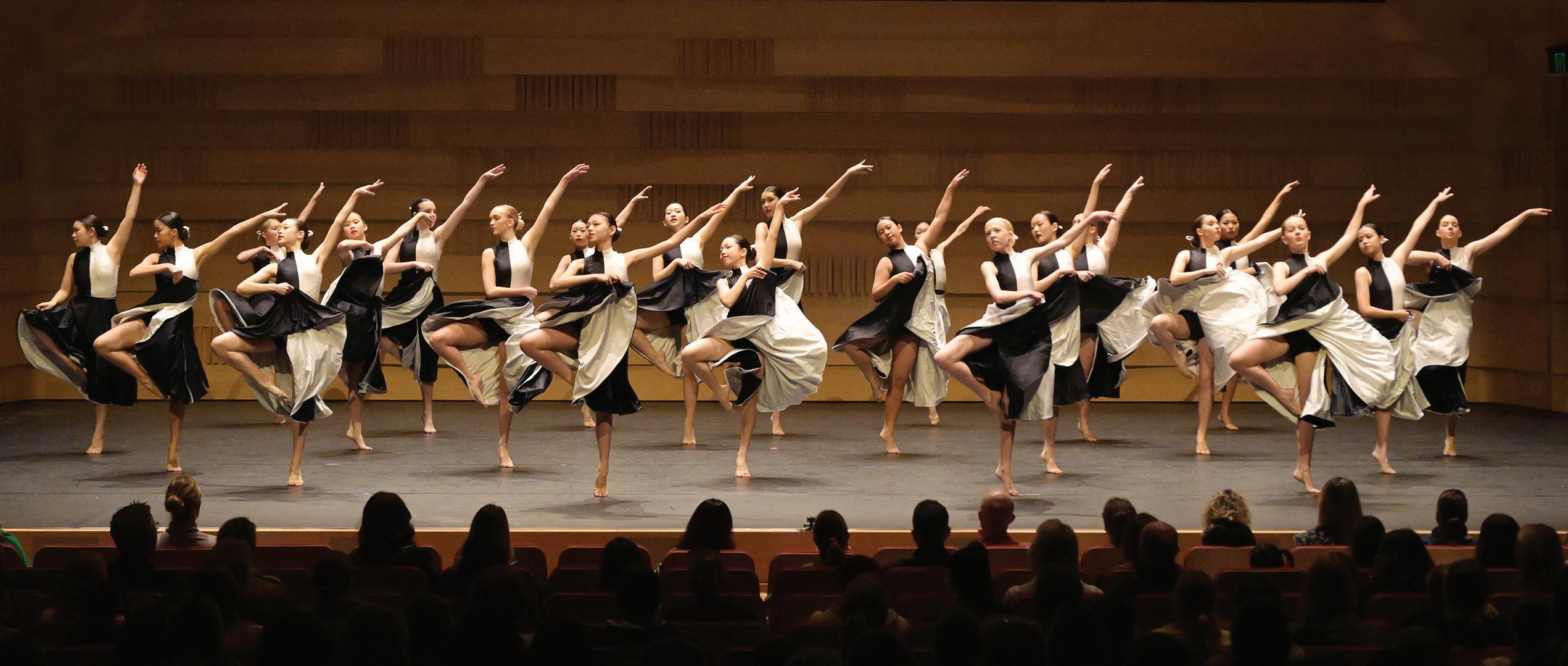
Lucy
Eaton, Dance Co-ordinator - Secondary School, Pymble Ladies’ College
This article is an excerpt from a thesis submitted for the Master of Arts in Education (Dance Teaching) validated by the University of Bath, supervised by Fiona Booker, Faculty of Education, Royal Academy of Dance.
ABSTRACT
This research examines disparities in Contemporary dance education in Sydney’s private sector, highlighting challenges due to a lack of regulation and standardisation in pre-professional training. The
study investigates the impact of geographic location on teaching and learning across four Sydney Local Government Areas, exploring how regional dialects, symbols, and language affect movement. It also examines the effectiveness of codified modern dance techniques in addressing movement affectations. The findings suggest that tailoring modern dance techniques to address regional dialects can improve pre-professional dance training outcomes, with teacher awareness of
student context enhancing technique and performance and bridging the gap between education and industry standards in Contemporary dance training.
In the context of this research, the term private sector refers to dance studios, excluding schools.
It can be argued that there is a lack of sufficient contextual understanding among teachers
in the Contemporary dance field, and an absence of knowledge underpinning the pedagogical practices in private institutions. Unlike the public education sector; where standards are regulated by the Australian Institute for Teaching and School Leadership (AITSL); the private sector lacks oversight in terms of teacher qualifications, accreditation, curriculum balance, personalised learning plans and against outcomes to maintain a high pedagogical standard. This lack of regulation or standardisation results in discrepant teaching methods and content in private dance contexts rather than content which employs a curriculum that is deliberate, specific and prescribed. In the absence of an administrative body, such as the AITSL, programming remains unmoderated in the private sector. I suggest that more optimal outcomes may be reached, and more quickly, by way of personalised teaching and learning strategies for students at a preprofessional level in the private sector.
This research addresses the lack of contemporary teaching methodology in the private sector. Its findings meet a pedagogical need for educators specifically in the area of professional development toward holistic dance education (Werbrouck 66). The aim of this research is to discover trends in Contemporary dance training through the lens of socio-cultural context and analyse the deficiencies which are currently experienced. It examines variations in contemporary dance, which can be compared to those of spoken language (Koff 27) between four diverse areas within one city. The investigation inherently provokes questions about liminality, habitus and dualism through its pursuit of
a link between practice and place. The project seeks a more direct and efficient method for delivering dance training which is tailored to individual students’ capabilities and limitations.
Contemporary as a genre cannot be easily defined, with layered history, contexts, and distinctions that identify the different styles within the style. SanSan Kwan’s (2017) research acknowledges the crucial role of context in defining contemporary dance, stating that when viewed through the lens of concert-dance, the term implies “shared aesthetic values” (38). Conversely, when placed in the context of world dance styles it suggests a particular time period and possibly a substyle, with contemporary African dance serving as a case in point (Kwan 38). Considering Kwan’s perspective on the use of the contemporary label and the distinctions between concert, commercial and worlddance contemporaries, it is clear why there are variations in the aesthetics of Contemporary dance and varied approaches to its instruction. An adjacent view on aesthetics in dance was shared much earlier in 1999 by Sondra Fraleigh and Penelope Hanstein, who state that “aesthetic properties belong to movement” rather than being superficially layered on top (193). This reinforces the view that aesthetics are deeply ingrained, in contrast to the superficiality which the word aesthetic might initially suggest. Further, it is arguable that to achieve an equal aesthetic standard across all students through teaching and learning, students’ learning origins must be recognised. If the role of teachers in the preprofessional private sector is to prepare students for the physical demands of the professional industry then initiative should be taken to
ensure competency in the breadth of skills and technical and performance standards are met in the studio. For equitable access to Contemporary dance training across NSW and aesthetic values which are shared between education and industry contexts, consistency in the programming in private dance studios is paramount.
During the course of this project, the teacher-researcher has engaged in reflective questioning regarding the influence of geographic location on learned dance practices and movement vocabulary. Specifically, whether the influence is more pronounced or allowed more space to present itself in Contemporary dance rather than in other, more defined or codified genres Additionally, this inquiry extends to exploring the varied definitions and practices of Contemporary dance in different Australian studios, and how this diversity may lead to dialects forming within the genre.
The initial phase focuses on identifying the developing sub-genres of Contemporary dance within four different Local Government Areas (LGA) in Sydney to explore any connections between sociogeographic factors and dance techniques. The secondary goal is to tackle variations in dance technique among the cohort by teaching codified, standardised modern dance techniques, thereby enhancing class programming to improve results in performance. Additionally, by introducing personalised learning plans, the project aims to offer a more thorough and practical grasp of Contemporary dance instruction, addressing technical disparities through the integration of modern dance methods.
In the context of this research, the term dialect has been employed to describe the subtle variations within the broader and ever-changing Contemporary dance genre which, this research suggests, have been formed by variations in geographic location. The term pre-professional has been used to describe dancers who are intending to and are capable of entering the professional industry in a performance capacity within the next two years.
Main question:
How can teaching and learning of Contemporary dance at preprofessional level in the private sector in Sydney, Australia be improved/ moderated by primary consideration of the physical impact of students’ sociocultural context in programming?
Sub-questions:
1. Are there dialects of Contemporary dance in four different Local Government Areas areas of Sydney, Australia? If so, what are their distinguishing characteristics (technical strengths and/or deficiencies)?
2. What is the influence of geographic place, symbols and language on learning movement?
3. How might the affectations be addressed through programming specific training in Modern dance techniques?
4. Is the implementation of codified Modern Dance techniques in programming an effective teaching response for any or all of the movement affectations in Sydney’s pre-professional Contemporary dance landscape?
SCOPE AND CONTEXT
The following data relating to the four sampled LGA reveals characteristics
including advantages, disadvantages, education and occupations of the demographics according to the Socio-Economic Indexes for Areas (SEIFA), Australia as published by the Australian Bureau of Statistics, referencing the 2021 Census:
Inner West:
Population of 182,818, SEIFA
Percentile 96, SEIFA Quintile 5 (most advantaged)
Georges River:
Population of 152,274, SEIFA Percentile 88, SEIFA Quintile 5 (most advantaged)
Sutherland Shire:
Population of 230, 211, SEIFA Percentile 94, SEIFA Quintile 5 (most advantaged)
The Hills Shire:
Population of 191,876, SEIFA Percentile 98, SEIFA Quintile 5 (most advantaged)
In interpreting these statistics, it’s fair to discern that each of the LGA from which the participants analysed in this research come, are of an equal socio-economic standing, of similar population size, offer considerable access to education and opportunity and are thereby comparable.
THEORYEMBODIMENT, DUALISM, KINAESTHESIA AND THE HABITUS
In 2016, Chris Barker and Emma Jane theorised how symbols and language can permeate culture and infiltrate educational and professional settings in different ways (19). While existing research has examined the emergence of signposts of cultural values in other artforms, the causal effect on contemporary dance, specifically, remains to be discovered.
Throughout my personal teaching experience, I have observed that movement choices and performance affectations within the genre present similarly in students from the same geographical and socio-cultural background which affirms the perspective of Barker and Jane.
A dancer’s developmental training experiences can significantly impact their physicality. Angela Pickard discusses the evident impact of social and contextual symbols on young dancers’ bodies, drawing on Pierre Bourdieu’s theory of the habitus to describe how specific technical instructions and aesthetic expectations shape the physical form (27). A substantial collection of publications on the concept is Conversations on Embodiment Across Higher Education (2018), in which Jennifer Leigh draws together understandings of this term as it relates to a range of disciplines from an otherwise fragmented literature base. The evaluation of Leigh’s selected works indicate that the resounding perspective of existing literature is that embodiment is a situational convention in which the practical environment becomes intertwined with human character (Leigh 2008). This image which refers to the weaving of tactile, audible and visual experiential aspects impacting the malleable human body is resonant of Cynthia Novack’s concept of the kinaesthetic imprint which is unpacked in the following paragraph. Pickard analysed how dancers internalise the experienced choreographic styles and underlying training techniques both mentally and physically, imbuing the inscriptions with social significance and contextual meaning (Pickard 28). The idea that dancers carry inscriptions as
evidence of lived histories has been revisited and unpacked significantly since the publications of Michel Foucault. Sally Ann Ness and Carrie Noland asserted that inscriptions are reinforced through repetition of gesture, and that dancers wear these in their “ligaments, bone structure, musculature and the carriage” (Ness and Noland qtd. in Mokotow 4). This idea of embodied history significantly influenced Australia’s Anny Mokotow’s inquiry into the idea of embodied media.
The concept of dualism, particularly in relation to embodied culture is a significant consideration in this project. Mark Johnson’s 2007 philosophies, which pioneer the literature on aesthetics and cognitive science, substantiate this research’s premise that human experiences, specifically through formative childhood and adolescence, are the origin of bodily behaviour (Johnson, The Meaning of the Body). From as early as 1987, Johnson theorised the connection between cognitive and bodily structures. He argued that meaning is rooted in our bodily experiences, underscoring the significance of the body in shaping our understanding of the world (Johnson, The Body in the Mind). Improvisation in dance serves as a window into culture, as dancers draw upon their embodied experiences, memories and kinaesthetic stimuli to inform their movement vocabulary and punctuations, thereby reinforcing learned physical symbols over time. Dancers’ bodies house a vast repository of body schema, which influence their sensorimotor system and are developed through training and practice, and once skills are performed autonomously, these schema create what is commonly known as muscle memory (Bar and
DeSouza 1). Recalling movement based on musical memory therefore travels the embodied cultural symbols from which they learned. This process of skill acquisition involves strengthening neuromuscular pathways through habit, over time. In her 1988 work, Looking at Movement as Culture, anthropologist Cynthia Novack explored the concept of the kinaesthetic imprint. She noted that this imprint develops before language emerges, laying a foundation for both identity and relationships (169). Additionally, she points out that kinaesthesia is a biological process which facilitates sensory and aesthetic experiences originating right from the moment humans interact, using contact improvisation as an example (Novack 170). A perspective which reflects Bourdieu’s and Novack’s, Pickard says that every habitual movement emphasis, posture or mannerism displayed by the dancers in the class conveys nuanced, embodied aesthetic inscriptions like tessellating pieces that comprise the body.
The habitus is a sociological concept developed by Pierre Bourdieu which theorises that people’s personal dispositions can be influenced by their social circumstances, including the materialisation of bodily behaviours and thoughts into “instinctive responses” (Danaher et al. 115). In Understanding Bourdieu (2002) it is clarified that the habitus relates not only to the individual but also to the collective, shared experiences of a group. (Danaher et al.115). A highlysaturated concept in dance literature since the 1990s, the habitus represents the convergence of educational frameworks, dance practices and cultural or lived experiences that exist within each dancer.
This project aims to expand upon existing literature regarding the influence of culture in dance, with a specific focus on Homi Bhabha’s work, The Location of Culture (1994). Of particular relevance to this project are Bhabha’s discussions on cultural hybridity and the concept of liminal space, where cultural symbols intersect and interact (213). This notion of liminality can be applied to the educational setting in which this project is situated, exploring how the dance class serves as a liminal space characterised by a fusion of diverse symbols and languages brought by the dancers. James Clifford’s essay Travelling Cultures (1992) further explores the concepts of embodied culture and culture in different locations, asserting that culture thrives in movement and adaptation (Clifford 99). In the context of this project, the studios in which students train have been considered the boundaries and the new, curated environment that encompasses their individual experiences and embodied memories.
Three strands of the habitus were named in Varieties of Habitus and the Embodiment of Ballet: individual, institutional and choreographic (Wainwright et al. 537). These components are correlated with aspects such as body type, gait and posture, creating a perpetual feed between the body and mind. This theory posits that a dancer’s identity is intricately linked to their contextual experiences. This research offers an opportunity to access these inscriptions during improvisational exercises, enabling participants to integrate their practices and foster a liminal space where diverse experiences can converge.
PEDAGOGICAL THEORYCODIFIED AND UNCODIFIED MOVEMENT VOCABULARIES
The Contemporary Dance genre in Sydney, NSW, does not follow a syllabus and does not have a codified vocabulary of steps or standard of execution. While there are small contemporary syllabi used to structure classes or supplement contemporary training in some private sector settings, these are not used widely or consistently enough or even for a long enough duration of time to standardise the genre city-wide. Chapter 51 of the most recent edition of The Oxford Handbook of Contemporary Ballet describes the different understandings of contemporary as stylistic categories (Farrugia-Kriel and Nunes Jensen 874). Clarifying that it is no longer, exclusively, the postmodern European movement category that followed the 1960s, it is always referring to what is new and evolving and its characteristics are thereby indefinable, permanently (Farrugia-Kriel and Nunes Jensen 874). Reflecting on a personal choreographic process from 2015, the authors speak to the embodied experiences of dancing bodies, in “bodies carry histories that are not linear but circular” and “the dancing body carries earlier dance techniques and choreographies” (Farrugia-Kriel and Nunes Jensen 874).
There are fundamental differences in the movement vocabulary, and teaching and learning of techniques which are codified and those that aren’t. Primarily, the differences are a predetermined movement vocabulary in the form of a syllabus, the existence of an ideal performance standard, streamlined teaching points and linear stages of skill acquisition. These key
and discerning characteristics may present both benefits and disadvantages throughout the pedagogical process.
Four codified Modern Dance
Techniques have been selected as tools within the research intervention:
• Graham Technique
The eccentric and concentric curves typical of Graham technique are anticipated to draw participant attention to centrally initiated movement, as is the emphasis on breath as an initiation of movement (Giguere 418).
• Horton Technique
The basis of Horton technique in anatomical studies is intended to benefit students in range of motion, control, coordination and spatial awareness to enhance whole-body Awareness (Perces et al.7).
• Cunningham Technique
The Cunningham emphasis on precision and clarity of lines by refining the connection between head, pelvis and legs in a range of planes is intended to improve participant kinaesthetic awareness (Copeland 117).
• Laban’s Effort Actions
Laban first introduced a principle which is now known by the term, countertension. This concept which means to apply equal energy to two opposing body parts is anticipated to facilitate deliberate and varied dynamic efforts. The eight effort actions; Wring, Press, Flick, Dab, Glide, Float, Punch and Slash; are intended to inspire more deliberate consideration of weight and force through imagery (Ewan and Sagovsky 612).
Specific Modern Dance techniques were introduced in response to these
movement affectations observed in students from different areas in Sydney. Martha Graham’s contraction and release technique was implemented and aimed towards dancers belonging to The Hills Shire who can present open/ flared floating ribs and extended lumbar spine. Lester Horton’s strengthening and lengthening fortifications was implemented and aimed towards dancers belonging to Sydney’s Inner West who often present a misaligned chin and neck and/or downcast eyes. Merce Cunningham’s focus on clarity and form was implemented and aimed towards dancers belonging to the Georges River area who present lack of articulation of the tarsals and metatarsals and incomplete leg lines. Laban’s eight movement effort actions were implemented and aimed towards dancers belonging to the Sutherland Shire who present intensity and mono-dynamics. Improvisation, a distinguishing factor that sets Contemporary dance apart from other concert dance styles, is directly communicative of a student’s dance history and personal movement values.
The project took place at the teacher-researcher’s dance space in Newtown, Sydney’s Inner-West region, with students attending weekly sessions as part of a year-long pre-professional program while also engaging in classes at different studios in various areas of Sydney. The studios are equally competitive and despite belonging to different LGAs., It is clear through my partnership with these teachers that each studio and the classes they teach are culturally unique and have influence on the students’ movement habits and, in this case, movement affectations.
Students from different dance studios attended a one-hour contemporary class followed by one hour Repertoire session each week, to supplement their existing training schedules at their respective studios. Five Sunday afternoon classes accrued ten access hours throughout the project. During the Repertoire sessions the dancers work on building a Contemporary dance work, learning a few new phrases and rehearsing already-learned work. Changes were implemented during the contemporary class and the following repertoire session allowed for observations of the impacts of each strategy.
The research involved ten female dancers, aged fourteen to twenty-one, in a pre-professional Contemporary dance program at a private institution. Each student brings different training experiences and are all of the same standard of technical proficiency. In this unique teaching context, the teacher-researcher engages with the students’ dance studio teachers to challenge their development and provide portfolio-building opportunities to develop employable, entry-level dancers.
Dancer A - Georges River, 28 years old
Dancer B - Hills Shire, 21 years old
Dancer C - Hills Shire, 15 years old
Dancer D - Georges River, 20 years old
Dancer E - Inner West, 21 years old
Dancer F - Sutherland Shire, 19 years old
Dancer G - Hills Shire, 14 years old
Dancer H - Georges River, 21 years old
Dancer I - Inner West, 16 years old
Dancer J - Sutherland Shire, 17 years old
(Qualitative) Data Collection
• Observation: ongoing and conducted by the teacherresearcher documented in the observation rubric reflections
• Focus group discussion (FCD): transcribed from audio to text using Concept Content Analysis
• Document Collection: Dance studio programs
Initial and most pertinent questions included:
• How do you define or describe contemporary dance?
• What is important to the genre, technically, stylistically or theoretically?
• What distinguishes contemporary from other concert dance styles?
• Which characteristics constitute a “good” contemporary dancer?
• Which key skills do you think should be programmed into a Contemporary dance class?
• Do you consider there to be a range of styles or subgenres within contemporary dance? If so, what are they?
• Is the Contemporary dance you do here the same as or different to Contemporary dance at your studio? How so?
• What is your experience with Contemporary dance outside of your studio and area? How would you describe the similarities or differences you noticed?
Results were analysed through four frames: in the form of each of the three data sets (Frame 1), in relation to each LGA (Frame 2), each intervention (Frame 3) and holistically (Frame 4). Highlights of analyses from Frames 1 and 2 are presented in this excerpt.
FRAME 1: A) FOCUS GROUP DISCUSSIONS
“... . getting the variety of movement in contemporary is really important.”
(Dancer J)
In Transcript 1, Dancer J (Sutherland Shire) states that a defining characteristic of a contemporary class is the range of skills and structures within it, however, this statement could also be referring to the variety of sub-genres within contemporary and their varied qualities. Variety and structure and their relationship to each other are key codes revealed in the analysis. Similarly to a ballet class, a correlation Dancer A identified, a well-balanced contemporary class will focus on centrework, cornerwork, floorwork and travel, for example, providing access to the range of skills through structure. Where the inconsistency arises here is in the lack of common structure of contemporary classes and perhaps the omission or addition of structures which leads to imbalance in movement focus for students.
“... .I think like when I do studio contemporary it’s very different to what we do here. I don’t really know what to call it, it’s not commercial.”
(Dancer C)
In Transcript 1, Dancer C (Hills Shire) clearly states the contrast in contemporary styles experienced in contexts only 25 minutes apart and attempts to characterise the differences by use of sub-genre prefixes or classifications. This statement so boldly validates the teacher-researchers perspective that stark differences exist in classes of the same genre, for the same age and experience level and so close together. The question of the cause
remains.
“... . the structure of other classes is way more prescribed. It depends on like who’s leading the class, whatever they want to do and what you did before... .”
(Dancer E)
In Transcript 1, Dancer E (Inner West) explicitly notes the discrepancies in class structure and content, identifying that the differences depend on the teacher and their experiences or preferences. This statement clearly links the movement exposure in classes to the experiences of the teacher and the local geography.
“... . the alignment is different in certain types of contemporary dance. Like you’ve been sort of focusing on lines and stuff. So it’s not always just like the dynamic.”
(Dancer E)
In Transcript 2, Dancer E (Inner West) states that the alignment expectations of each sub-genre of Contemporary dance is different, affirming the views expressed shortly prior from Dancers D and J that the variances in the style are subtle and have been made clearer through the exploration over the last 5 weeks.
“I think it stretches us in different ways. We definitely grow as dancers through working together and doing ensemble or partner stuff, it definitely taught me to notice other people and see what works and how I can work with them.”
(Dancer H)
In Transcript 2, Dancer H (Georges River) notes that the active identification of differences between dancers, and a conscious effort to
address these in training directly contributes to holistic growth. Importantly, Dancer H spoke about their experience of technical and performance discrepancies among dancers in this specific, eclectic company context. They tie the concept of growth directly to the acknowledgment of technical and performance discrepancies and the intent to address these through training. This statement both validates the program design (which brings dancers of different ages and experiences) and supports the premise of this research.
“... .I think it’s good and bad. Like you don’t want everybody to be the same but it’s kind of important you can be the same when you need to.”
(Dancer B)
In Transcript 2, Dancer B (Hills Shire) articulates the positives and negatives of differences in dance technique. Similarly to this participant, the teacher-researcher does not believe that all movement affectation or evidence of contextual influence should be addressed to achieve a mainstream performance ideal, however, it is important to recognise trends to improve the teaching and learning process to inform future practice and provide at least an opportunity to access consistency across the genre.
B) PARTICIPANTS RESULTS FROM OBSERVATION RUBRIC
Dancer A (Georges River)
This participant showed notable improvement in two of the four intervention sessions, with most significant change seen in the repertoire rehearsal following the Graham and Cunningham technique sessions which were designed
to address torso alignment and quality of leg lines, respectively. This participant, from the Georges River area, demonstrated corrected vertebral movement in contractions in the choreography following the Graham session (Intervention 1, Week 2) which was prescribed for dancers from The Hills Shire. As intended, this participant exhibited a range of small improvements following the prescribed Cunningham session (Intervention 3, Week 4). In the repertoire, there was more consistent and purposeful use of the iliopsoas to stabilise extensions in devant and seconde. In transfers of weight from one base of support to another; including from partial to full, or from left to right; there was increased resistance between phalanges and floor. This participant did not demonstrate any changes in quality of lines in derriere or utility of metatarsals on demi pointe. Interestingly, the shift in vertebral alignment was still observable in the final repertoire rehearsal session in Week 5, indicating a long-lasting improvement as a result of this intervention. The interventions affected improvement at 50% success rate for this participant.
Dancer B (Hills Shire)
This participant showed notable improvement in three of the four intervention sessions, with most significant change seen in the repertoire rehearsal following the Graham technique session and throughout the Cunningham and Laban interventions, which were designed to address quality of leg lines and dynamic control and variation, respectively. This participant, from the Hills Shire, demonstrated corrected vertebral movement in contractions in the choreography following the
Graham session along with all other participants (Intervention 1, Week 2) and rhythmic accuracy during the Cunningham session (Intervention 3, Week 4) which was prescribed to enhance dance technique in dancers from this area, although an improvement was seen in performance quality, instead. This refined performance quality is believed to be linked to the control and coordination in shifts of weight facilitated by kinaesthetic awareness of the lower legs and feet. In the Laban session and in the repertoire rehearsal which followed, this participant demonstrated a depth of applied understanding of weight and force, and controlled this to maintain dance technique while exhibiting the most outstanding contrast of dynamics in the execution of the repertoire. The interventions affected improvement at 75% success rate for this participant.
This participant improved in one of the four intervention sessions, with the most significant change seen following the Horton technique session which was designed to address projection due to misalignment of the chin and chest in Dancers E and I from Sydney’s Inner West. Dancer E demonstrated tension in the jaw and neck during the isolations in Week 3, which in turn affected their use of breath and cervical alignment. Immediately following the isolation exercise, Dancer E continued to demonstrate such tension but at reduced frequency. Additionally, this participant exhibited moments of improved turnout, and maintenance of turnout along with a suspended dynamic in an adage phrase of the repertoire which has been attributed to a heightened awareness of the
gluteus medius and maximus after activating them in the preceding tilt exercise. The interventions affected improvement at 25% success rate for this participant.
This participant improved in one of the four intervention sessions, with the most significant change seen following the Graham technique session which was designed to address torso misalignment. The Laban session designed to enhance dynamic application from this participant did challenge their release of energy, weight/ force, however with no noticeable improvement during the session. It’s possible that this particular performance deficiency could take longer, and more frequent intervention to affect change. The interventions affected improvement at 25% success rate for this participant.
The intended success rate for each participant was 25%, given that one of the four modern dance sessions were prescribed to affect positive change in each dancer. The results met this intended rate almost twofold, with the mean success rate being 42.5%. The specific technique sessions prescribed for each dancer affected positive change in seven of ten cases, indicating an 70% accuracy rate in the identification and response, with the outliers being Dancers D, F + J. Two-thirds of the outliers are from the Sutherland Shire, with the remaining participant from Georges River. Improvement was evidenced at times throughout the five-week intervention and for varying lengths of time. Improvement was not always the direct result of the intended teaching strategy, and at times was the peripheral result of another dance technique.
The document collection presented limited data. Two of the four dance studios indicated that there were no programs or class schedules used, and that competency tracking or planning of this nature was not a consideration for the businesses.
The studio in Sydney’s Inner West incorporates exercises from the Progressing Ballet Technique syllabus into their contemporary classes to supplement technical training. The studio in the Georges River area incorporates exercises and skill competencies provided by the Australian Teachers of Dancing.
LGA: Inner West Dancers E and I
Teacher/researcher observation notes indicate that movement affectations improved after the prescribed modern dance technique intervention in 100% of the above participants, with more substantial change seen in Dancer I, who performed with self-corrected flaring of ribs, initially noted as an attempt to restore balance when wobbling. These participants, along with Dancer F who is out-of-area, were counterbalancing protruding chins with over rotation in the top/active hip in tilts, especially left sides which are weaker for all. Further, this group of participants demonstrated enhanced dance technique and/ or performance quality in one additional techniques, prescribed to benefit an alternative geographic area. Data indicates that the three participants from Sydney’s Inner West demonstrated the most improvement of the group.
LGA: Georges River
Dancers
A, D and H
Teacher/researcher observation notes indicate that movement affectations improved after the prescribed modern dance technique intervention in 66% of the above participants. Improvement appears to have been initiated by the use of the iliopsoas and kinaesthetic awareness of the pelvis, as the origin of all leg lines. An interesting relationship between full leg extensions and musicality was revealed through two-thirds of participants; Dancers A and D; indicating that dancing ahead of the beat is having a domino effect on the amount of time in flight to extend the backs of the knees fully. Further, this group of participants demonstrated enhanced dance technique and/or performance quality in additional techniques, prescribed to benefit an alternative geographic area.
The main question has been answered in part, in that preprofessional Contemporary dance education in Sydney has been improved by the primary consideration of the physical impact of students’ socio-cultural context in programming and the research’s sub-questions have been answered to varying degrees. Some of the key ideas in existing cultural literature have been affirmed and some previous research findings have been supplemented. Primarily, this data reinforces the ideas that culture infiltrates educational contexts (Barker and Jane) through of body-based meaning (Johnson) or embodied culture (Clifford) which forms the kinaesthetic imprint (Novack) with a newfound clarity on the application of these concepts to the Sydney scene. This agrees with further literature in that the concept
of the habitus (Wainwright et al.) and of liminality (Bhabha) should be considered paramount in the learning process, as they have been evidenced as integral in improving performance outcomes in this sample group.
A future development which could possibly follow compounding evidence presented by additional and/ or larger datasets, is a crossanalysis with trends in physiotherapy and injury statistics in correlating LGAs. This data could serve to link movement affections that result from these dialects with musculoskeletal outcomes. It is possible that upon analysis of more substantial data in this area, and a survey of injury trends in dancers in these distinct areas, that preventative measures could be taken to ensure more conscious employment of safe dance practice.
The outcomes of this research support the introduction of strategic programming in the private sector, through providing an insight into a new approach to Contemporary dance teaching for adolescents. This could assist young people to achieve more optimal results in performance and possibly, achieve results sooner through more direct movement correction. The dialects of Contemporary dance that result from the unmoderated content of dance classes in the New South Wales private sector can be addressed through a personalised prescription of modern dance techniques. The diverse backgrounds of educators should not interfere with the coherence of teaching programs or lead to educational inequalities across regions of Sydney. It should be a responsibility of educators to present a unified delivery of the
multi-faceted genre, in order to prepare students according to the professional requirements of the style. Data reveals how teaching and learning of Contemporary dance in Sydney’s dance studios can be improved and moderated by primary consideration of the students’ socio-cultural context in programming. Incorporating more diverse movement vocabularies and global references has the potential to enrich the educational experience for all stakeholders, contributing to a more valid program of learning. Explicit inclusion of Modern dance techniques in any degree in Contemporary dance programming will ensure students are exposed to the origins of Contemporary dance and can, therefore, access a richer dance history and movement vocabulary. Unlike the other scarcelyimplemented syllabi on offer, this strategy may be used consistently or intermittently within programs to affect either consistent and long term or immediate and short term change.
Concept-Content-Analysis-Chart Green codes indicate responses which were the most common (appearing more than 5 times), and represent the majority of the participant perspective. Orange codes indicate responses which were fairly common (appearing 3-5 times) and are somewhat representative of the participant perspective. Blue codes indicate responses which were the least common (appearing 1-2 times) and represent a minority perspective. Codes have been arranged in descending order, with the most highly saturated views appearing at the top of each category.
CODE
Diverse
Variety of skills/styles
Broad
Indefinable
Technique
Structure
Specificity
Weight Placement
Performance Quality
Adjunctive Training
Growth
Kinaesthetic Awareness
Collaboration
Knowledge / Understanding = Embodiments
Table 1: Concept-Content-Analysis-Chart
ABS. “Socio-Economic Indexes for Areas (SEIFA), Australia.” Australian Bureau of Statistics, 20th July, 2024, https://www.abs.gov.au/statistics/ people/people-and-communities/socio-econic- indexes-areas-seifaaustralia/.
Bar, Rachel J. and DeSouza, Joseph F. X. “Tracking Plasticity: effects of long-term rehearsal in expert dancers encoding music to movement.”
U.S. National Institutes of Health’s National Library of Medicine, 2016.
Barker, Chris and Emma Jane. Cultural Studies: Theory and Practice 5th ed. SAGE, 2016.
Bhabha, Homi. The Location of Culture. 2nd ed. Routledge, 1994.
Clifford, James. “Travelling Cultures”. The Cultural Geography Reader edited by Timothy Oakes, Patricia L. Price, Routledge, 1992, pp. 316325.
Copeland, Roger. Merce Cunningham: The Modernizing of Modern Dance. 1st ed. Routledge, 2024.
Danaher, Geoff, Tony Schirato and Jenn Webb. Understanding Bordieu. SAGE, 2002.
Ewan, Vanessa and Kate Sagovsky. Laban’s Efforts in Action: A Movement Handbook for Actors. Bloomsbury Methuen Drama, 2018.
Farrugia-Kriel, Kathrina and Jill Nunes Jensen. The Oxford Handbook of Contemporary Ballet. Oxford University Press, 2020.
Fraleigh, Sondra and Penelope Hanstein. Researching Dance: Evolving Modes of Inquiry. University of Pittsburgh Press, 1999.
Giguere, Miriam. Beginning Modern Dance. Human Kinetics’ Interactive Dance Series, 2013.
Johnson, Mark. The Body in the Mind: The Bodily Basis of Meaning,
CATEGORY
Definition
Content
Identification
Outcome Response
Imagination, and Reason. University of Chicago Press, 1987.
---. The Meaning of the Body: aesthetics of human understanding University of Chicago Press, 2007.
Koff, Susan. “Toward a Definition of Dance Education.” Childhood Education, vol. 77, no.1, 2000.
Kwan, SanSan. “When is contemporary dance?” Dance Research Journal, vol. 49, no. 3, 2017.
Leigh, Jennifer. Conversations on Embodiment Across Higher Education. Routledge, 2018.
Mokotow, Anny. “Signposting Bodies Rethinking intentions.” Dance Dialogues: Conversations across cultures, artforms and practices 2009.
Ness, Sally Ann and Carrie Noland. Migrations of Gesture. University of Minnesota Press, 2008.
Novack, Cynthia. “Looking at movement as culture: contact improvisation to disco”. The Drama Review. Cambridge University Press, vol. 32, no. 4, 1988.
Perces, Majorie, Ana Marie Forsythe and Cheryl Bell. Dance Technique of Lester Horton. Princeton Book Company, 1992.
Pickard, Angela. “Schooling the dancer: the evolution of an identity as a ballet dancer.” Research in Dance Education, vol. 13, no. 1, 2012.
Wainwright, Steven, Clare Williams & Bryan Turner. “Varieties of habitus and the embodiment of ballet”. Qualitative Research, vol. 6, no. 4, 2006.
Werbrouck, Debbie. “The Responsibilities of Private Sector Dance Educators.” Journal of Dance Education, vol. V, no. 4, 2011.
Heidi Lynch, Year 6 Co-ordinator, Pymble Ladies’ College
Kate Giles, Head of Wellbeing (K-6), Pymble Ladies’ College
In 2024, Pymble Ladies’ College introduced a school-managed, restricted function phone which provided an alternative to a smartphone which gives students full access to the internet and social media apps. The Pymble Wise Phone is designed for students in Years 4 to 8 and is managed centrally by the school with gives access to apps according to grade level. The development of the Pymble Wise Phone initiative was based on
feedback from parents, teachers and students and considered research regarding the negative impacts of mobile phone use on children’s health and wellbeing (Hu, Ren & Liu, 2024).
Seeking to harness student voice and agency, which has been shown to be essential for both engagement and learning (Cook-Sather, 2020), Year 6 students were involved in the process to encourage their use of the phone. The students embarked
on an exciting journey of student-led advocacy and collaboration as they prepared and presented a pitch to advocate for a musical streaming app on their Pymble Wise Phones. Although ultimately successful in achieving their goal, this remarkable journey, which unfolded over several weeks, showcased leadership, teamwork, critical thinking and a genuine commitment to enhancing their own wellbeing.
PITCH PROCESS - WILL THE GIRLS ACCEPT THE CHALLENGE?
The process started with a challenge. The Head of Junior School, Kate Brown, and Director of Innovative Technologies, Anthony England, had heard the girls’ feedback which was for more apps and greater capabilities on their Pymble Wise Phones. In front of the entire Year 6 cohort, the girls were challenged to consider their phones and what functions they wanted to see on them. However, this wasn’t just about getting a new app - it was about learning how to propose an idea with responsibility and purpose and the message to the girls was clearchoose wisely, think critically and speak boldly.
The pitch process was outlined, as follows:
• The girls needed to choose, as a cohort, the app they wanted to have on their Pymble Wise Phone;
• They needed to then select the team they felt could best represent the views of the cohort when ‘pitching’ to a panel of the College Executive.
• The pitch would:
» Be a debate style presentation where speakers gave evidence both for and against the chosen application.
» Consist of a maximum of seven presenters - one person to introduce the pitch, five people to present the evidence both for and against the change and one to summarise the arguments.
» Be no more than fifteen minutes of speaking, broken down per speaker.
» Be grounded in research and evidence. Students needed to carefully consider how this change to the College-managed phone would improve wellbeing
and learning, and what may be the potential risks or negative impact of this change.
» Be supported by a team of student researchers to assist in building the evidence for the pitch.
What would they decide? The girls chose to accept this challenge.
The first step was selecting the team to represent the views of the cohort. Who could speak clearly, persuasively and passionately, while explaining the case for the new app? The Student Representative Council Leaders met and decided that to hold a fair and inclusive process, all Year 6 girls were invited to express interest in being on the Pitch Team by submitting a short blurb about why they were passionate about this cause. A student vote then determined the seven speakers. The Pitch Team were chosen to represent the grade. A research team of nine students was also chosen to help with the development of the case.
The next step was deciding on the app. What would students like to include on their Pymble Wise Phones? This discussion centred around the phone’s values of safety, purpose and connection and, after a thoughtful discussion process, four options were shortlisted as possibilities:
• A music streaming app (such as Spotify, Apple Music or Amazon Music)
• Duolingo
• Games
The music streaming app received the most support from the Year 6
cohort, so the Pitch Team began to build their case around it.
The Pitch Team knew that to be successful, they needed to show they had considered all options, including benefits and risks and had evidence to support any arguments they made. The team conducted a survey of the Year 6 cohort to understand why their peers wanted music on their Pymble Wise Phones and how their peers would use music if it was allowed. They discovered:
• 96.7% would use music on the Pymble Wise Phone
• 48% wanted music to assist with relaxation and calming
• 37.5% wanted music to aid focus and study
• 14.5% reported that music would help connect with others
WHY
48% – Assist with relaxation and calming
– Aid focus and study
– Help connect with others
The Pitch Team then conducted a rigorous literature review, gathering evidence which showed the benefits of music for concentration, mental health and social connection, citing articles from Harvard Health, Oxford University and the Royal College of Psychiatrists.
Step 4
Once the research was complete, the girls constructed their arguments carefully, created a compelling and visually appealing slideshow to complement their arguments. They rehearsed their pitch, seeking feedback from key teachers, such as the Year 3-6 Teacher Librarian, Martha Itzcovitz, who provided important advice on presentation and clarity.
The team boldly stood before their entire cohort and a panel of Senior Executive Staff including Anthony England, Director of Innovative Technologies, Dr Sarah Loch, Director of the Pymble Institute and Michelle Hunt, Acting Deputy Principal- Students, and presented their case. The opening speaker declared, “Today, we stand here not just as individuals, but as a united and spirited group of Year 6 girls who are proud, determined, courageous, and ready to lead”. From outlining risks and solutions, to proposing a trial period and ambassador roles, the team showed that they were not asking for entertainment but were advocating for empowerment and enrichment. They shared quotes from Beethoven to Steve Jobs, tying their message to the Year 6 theme - “Challenge Accepted” - and made a compelling case for why music belongs on their Pymble Wise Phones.
Highlights from the girls’ arguments included:
• Music is a tool to focus and calm minds
• According to research from Oxford University, shared music experiences increase empathy and connection between people, leading to stronger friendships (Stupacher, Mikkelsen and Vuust, 2021).
• The Stanford University Neuroscience team found that music can alleviate stress and improve memory, stimulating the brain to improve performance (Sridharan et al., 2007).
• Year 6 have demonstrated their leadership, resilience and engagement in the ‘real world’ many times this year, including their courage at Glenworth Valley for their outdoor education program, the pioneering Formula Goblin race team, connecting with the community through service initiatives, their mentorship and leadership of younger students through clubs and House and their passion and engagement in all aspects of school life.
• Emphasis on trust, balance and digital maturity - showing not only how they can be trusted, but a clear understanding of the importance of balance when it comes to technology use and screen time.
• Solutions for potential risks such as filtered content, collaborative play lists and a commitment to utilise parental controls.
The pitch was concluded by Aurora who summarised the collective passion and maturity of her peers;
Music is not just noise. It is not just background.
Music is a tool.
A companion.
A way to focus.
A way to calm our minds.
A way to boost our mood and motivation.
It can help us study. It can help us write. It can help us walk through our day with joy and presence.
We know this request may not be simple.
We understand the importance of safety, responsibility, and boundaries. We are open to compromises. We are open to restrictions. We are open to proving that we can use music to lift us up, not pull us away.
We are choosing focus. We are choosing growth.
We are choosing music. And we are choosing to use our voices, together, to ask for a tool that can truly help us thrive.
Beethoven once said, “Music can change the world.” And as our Pymble slogan reminds us, “Watch Us Change the World.”
Change starts with us—but it also starts with you.
Steve Jobs, the creator of the iPhone, once said, “Technology is nothing. What is important is that you have faith in people.”
We hope you have faith in us.
Following the compelling arguments presented by the girls, the panel posed questions to the girls to dig deeper into their arguments and ensure their understanding of the arguments for which they were advocating. The girls responded thoughtfully and with poise, explaining how they understood the need for compromise and limitations when it came to phone use at their age. The panel then took time to deliberate, keeping the girls guessing as they provided them with feedback.
Eventually hearing the words from Anthony England, “Yes, you can have music”, was cause for cheers from the entire Year 6 cohort. Even when he qualified this with a ‘but’, the feeling of pride and achievement was not diminished. The panel agreed to a six week trial period during which time the girls would collect feedback
and data, monitor impact and guide students in responsible usage of music on their phones. The girls needed to prove that music could be a connector and enhancer, rather than a distraction.
The committee created to oversee the trial period sought feedback and surveyed the girls’ use of the music app using feedback forms and a survey box. The evidence was clear, within the first twelve hours of having access to music, over 50% students had accessed the app and within the first week, over 80% of students had downloaded a music app onto their Pymble Wise Phone.
When asked about purpose, the majority of students reported listening for relaxation and enjoyment, followed by support with study and homework and dancing or movement. Smaller groups noted using music for podcasts, audiobooks, sleep, or practical needs such as alarms and travel. Importantly, the large majority of students indicated that having music on their Pymble Wise Phone had been beneficial, most often helping them to focus on study tasks and manage stress. As Kaylee explained, “I love being able to use music when I study, it makes me focus more and makes homework less stressful”. Of note, the girls’ have repeatedly expressed the significance of the pitch process. It not for simply getting them access to music on their phones, but for showing them that they are trusted and respected. This was not taken lightly by the girls, who have shared their pride in feeling valued and heard in this way. Isabella shared, “Making our pitch to the Executive was such a good
experience, it felt amazing to have our voices heard and to actually convince them to let us have music on our phones.” Lucy emphasised the sense of responsibility this brought, noting, “Convincing the Executive to add music was such a proud moment. It showed that we are trusted and that we are mature enough to use it responsibly.”
The Year 6 teaching team reflected that the pitch process became a valuable springboard for authentic and honest conversations about phone use. It provided an opportunity to explore both the benefits and potential drawbacks of screen time, while encouraging self-awareness and responsibility. Through these discussions, the students highlighted the importance of maintaining real world connections and expressed a desire for an app that would promote relaxation and enrich their daily experiences, rather than draw them further into their devices.
Student voice projects such as this, where students and teachers work together in partnership to create change, have been shown to not only improve school engagement and experience for students, but also lead to improvements in teaching and learning generally (Ruddock, 2007). The Pymble Wise Phones Initiative pitch process proved just how important providing opportunities for student voice and agency are when it involves decisions that will shape young people’s lives and the lives of their peers (Mitra, 2008). The girls have embraced the responsibility of having music on their phones sensibly and with maturity, determined to prove that they are worthy recipients of the trust placed in them.
“We are choosing focus. We are choosing growth. We are choosing music. And we are choosing to use our voices, together, to ask for a tool that can truly help us thrive”.
This project is a shining example of how students can lead change when given the trust, support, and a platform to do so. Congratulations to the Year 6 students who have truly accepted the challenge and inspired others along the way.
Cook-Sather, A. (2020). Student voice across contexts: Fostering student agency in today’s schools. Theory Into Practice, 59(2), 182-191 https://doi.org/10.1080/00405841.2019.1705091
Hu, S., Ren, L., & Liu, H. (2024). The relationship between primaryschool children’s moderate to vigorous physical activity, cell phone screen time and cell phone dependence. Social Behavior and Personality, 52(1). 1-8 https://doi.org/10.2224/sbp.12762
Mitra, D. L. (2008). Amplifying student voice. Educational Leadership 66(3).
Mitra, D. L. (2008). Student voice in school reform. Albany, NY: SUNY Press.
Ruddock, J. (2007). Student voice, student engagement, and school reform. In D. Thiessen & A. Cook-Sather (Eds.), International handbook of student experience in elementary and secondary school (pp. 587–610). Dordrecht, The Netherlands: Springer.
Sridharan, D., et al. (2007). Neural Dynamics of Event Segmentation in Music: Converging Evidence for Dissociable Ventra and Dorsal Netwiring. Neuron, Volume 55, Issue 3, 521-532
Stupacher, J., Mikkelsen, J., & Vuust, P. (2021). Higher empathy is associated with stronger social bonding when moving together with music. Psychology of Music, 50(5), 1511-1526. https://doi. org/10.1177/03057356211050681 (Original work published 2022)