

RISE Message from the Vice President


Magesh T. Rajan, Ph.D., P.E., M.B.A.
Vice President, Research & Innovation
Prairie View A&M University
The Division of Research & Innovation (R&I) remains steadfast in its mission to strengthen the culture of research and creative inquiry at Prairie View A&M University. Through the Faculty-RISE Undergraduate Research Grant Program, R&I supports and promotes faculty-mentored undergraduate research, scholarship, and innovation across all disciplines. This program provides students with meaningful opportunities for academic growth, professional development, and collaborative engagement, preparing them to become the next generation of researchers and leaders.
In this compendium, R&I proudly presents the research accomplishments of Faculty RISE Undergraduate Research Grant recipients. Each report reflects the collaborative efforts of faculty and students working in interdisciplinary teams to explore complex questions and contribute new knowledge. Representing all seven colleges and two schools, these projects exemplify the diversity and depth of PVAMU’s research enterprise.
This year, R&I also celebrated several key milestones achieved by our RISE undergraduates. 55 students presented their research progress during Student Research Day as part of the 2025 Research & Innovation Month, held in partnership with the Conference for Interdisciplinary Student Research under the Texas Juvenile Crime Prevention Center. Six RISE students earned awards for excellence in research, and more than 150 PVAMU students participated in this university-wide celebration of discovery.
Through the annual Faculty-RISE Undergraduate Research Report, the Division of Research & Innovation proudly recognizes the hard work, creativity, and dedication of our undergraduate researchers. Their achievements embody the university’s commitment to fostering innovation, interdisciplinary collaboration, and academic excellence.

Agriculture, Food, and Natural Resources
Praedial Larceny and Its Psychological and Socio-Cultural Influence on Jamaican Farmers
Salvation Ifechukwude Atalor and Donald Stoddart, Ph.D. College of Agriculture, Food and Natural Resource
Abstract
Praedial larceny which involves stealing agricultural produce and livestock continues to be a persistent problem in Jamaica that damages agricultural output and destroys farmers' income and threatens the country's food security. The practice of praedial larceny developed from colonial times and worsened through modern social inequalities to become a widespread and mentally distressing problem for Jamaican farming communities. This research examines praedial larceny through psychological and sociocultural lenses to study its historical development and public perceptions and evaluate present-day legal restrictions. The research uses a mixed-methods design which integrates both qualitative interviews and focus group discussions with quantitative survey data from farmers and agricultural science educators and law enforcement officials and rural residents. The research reveals both major financial losses of JMD $25 billion in 2024 and psychological impacts that include anxiety elevation and distrust growth and social fragmentation. The study investigates how stakeholders understand current legal systems while collecting opinions about prevention methods from local communities. The research focuses on the direct experiences of those impacted to develop policy changes and community-based solutions which will reduce praedial larceny effectively. The research findings will help create responsive enforcement systems which strengthen Jamaica's agricultural resilience through context-specific legislative mechanisms.
Keywords: Praedial larceny, farmer psychology, rural crime, Jamaica, agricultural policy, mixed-methods research
Introduction:
1.1 Definition and Background of Praedial Larceny in Jamaica
The theft of agricultural produce and livestock and farming inputs constitutes praedial larceny which endangers Jamaica's rural economy and food security and social stability. The unique nature of praedial larceny involves stealing agricultural products which sustain rural economies because it occurs in distant areas with minimal police presence and restricted legal access (Ganpat, & Issac, 2018). The crime includes stealing market-ready goods such as yams and sugarcane and poultry together with livestock and irrigation tools and fertilizers which sustain long-term farm productivity.
Praedial larceny in Jamaica stems from its colonial past and demonstrates the existing social and political disparities regarding land ownership and rural monitoring and legal rights.
The widespread acceptance of this criminal activity within farming communities has established a silent culture of retaliation which makes it harder to implement mitigation strategies (Elizabeth Thomas-Hope, 2017). The justice system lacks farmer's trust while fear of retaliation and prosecution futility prevents them from reporting theft incidents. The problem damages both individual economic stability and the national drive for agricultural development and food independence (Atalor, 2024). The systemic nature of praedial larceny in rural areas requires an interdisciplinary approach that combines psychological, legal and sociocultural elements to create effective legislation and community-based interventions.
1.2 Historical Roots and Colonial Legacy
The practice of praedial larceny in Jamaica developed from the colonial era when the plantation economy enforced forced labor and economic inequality and land dispossession in rural areas. The lack of land ownership rights and freedom for enslaved Africans during slavery and indentureship periods led them to practice hidden forms of resistance through crop theft and property sabotage. The colonial authorities punished these acts but the oppressed people viewed them as necessary acts of resistance against their exploitative situation (Trotman, 1986). The ongoing social and political dynamics transformed agricultural theft into a form of resistance rather than a criminal act. After emancipation the freed people of Jamaica faced ongoing structural disadvantages because they were prevented from obtaining land and capital (Ajayi, et al., 2024). The lack of access to land led to the development of an unofficial economic system which included agricultural theft and bartering as survival strategies for rural poverty (Harrison, 1988). The colonial system established a lasting distrust between rural communities and law enforcement because it focused on protecting elite property rights instead of serving communal justice. Praedial larceny exists as a historical phenomenon because the colonial system established rural disenfranchisement as an institutional practice (Imoh, et al., 2024). The historical legacy continues to influence modern-day perspectives and creates obstacles for law enforcement while causing psychological distress to farmers who doubt the justice system's commitment to their interests.
1.3 Relevance to National Food Security and Economic Development
Praedial larceny interferes with Jamaica's drive toward national food security and economic growth by damaging agricultural sustainability and rural productivity. The domestic agricultural sector's role in supporting nutritional needs and reducing food imports makes praedial larceny a fundamental barrier to achieving self-sufficiency. The ongoing theft of farm products and livestock decreases agricultural output while disrupting delivery systems and elevating farming costs which threatens the stability of domestic food systems (Mohammadi, et al., 2022) as shown in figure 1.
The inability of farmers to distribute their products reliably damages national efforts to fight hunger and malnutrition. The economic impact of praedial larceny reaches further than individual farmers because it affects national productivity measurements. The agricultural sector of Jamaica which employs more than 18% of the workforce experiences substantial yearly financial damage because of theft-related interruptions. Smallholder farmers according to Isaac, et al., (2017) endure most of these losses which results in reduced agricultural investments and decreased rural employment opportunities (Azonuche, & Enyejo, 2024). The
practice discourages young people from pursuing careers in agriculture which threatens the sustainability of farming as a sustainable profession. The practice of praedial larceny creates instability in microeconomic farming operations while obstructing national goals to decrease food imports and support rural development and build resilience against global food crises.
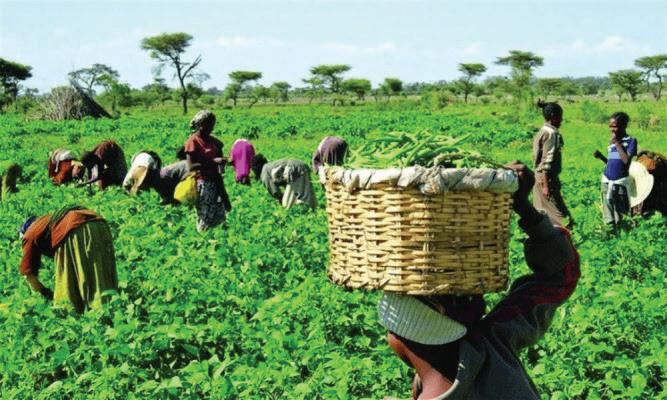
Figure 1 shows a group of rural farmers engaged in manual harvesting on a lush, densely planted green field, illustrating the labor-intensive nature of small-scale agriculture that underpins Jamaica’s domestic food production system. The individuals are bent over rows of crops, meticulously collecting produce, while one person in the foreground carries a large woven basket filled with freshly harvested green beans highlighting the direct contribution of such efforts to the national food supply. This scene reflects the backbone of Jamaica’s agricultural economy, where smallholder farmers play a pivotal role in sustaining food security and reducing dependence on imports. However, this visually productive and orderly environment is frequently destabilized by praedial larceny, which undermines farmers’ ability to consistently deliver products to the market. The collective labor investment evident in the image becomes economically vulnerable when theft disrupts harvest cycles, inflates operating costs, and leads to financial losses that discourage reinvestment in future crop cycles. Moreover, such disruptions have broader implications for rural employment and youth retention in agriculture, threatening the sustainability of farming as a livelihood. The laborintensive nature of the work depicted contrasts sharply with the instability caused by recurring theft, which threatens to erode the resilience of farming communities. The ongoing risk of
Figure 1: Picture of Smallholder Farmers Harvesting Crops in Rural Jamaica – A Vital Force Behind National Food Security Threatened by Praedial Larceny (Editorial Board, 2024).
praedial larceny deters youth engagement in agriculture, impairs rural employment, and undermines national strategies aimed at achieving food self-sufficiency and economic growth. The image, therefore, not only portrays the hard work and community effort invested in food production but also underscores what is at stake when agricultural theft remains unaddressed.
1.4 Statement of the Problem
The agricultural sector of Jamaica continues to experience praedial larceny as a long-standing and damaging problem despite multiple legislative changes and security measures. Farmers experience both major economic losses, emotional exhaustion, social mistrust, and comm. disintegration. The problem worsens because rural law enforcement faces systemic weaknesses that result from insufficient patrol coverage and insufficient investigative resources which enable perpetrators to operate with near impunity (Ganpat, & Issac, 2018). Farmers from isolated and underserved communities avoid reporting theft because they fear both retaliation and doubt the effectiveness of police responses. The ongoing problem of praedial larceny reveals a critical gap between official policies and the actual experiences of rural producers. The Agricultural Produce Act along with other legislative instruments fail to deter theft effectively because of low conviction rates and extended procedural delays (Fath, 2014). Current enforcement methods fail to consider both the psychological effects and social cultural aspects that exist in rural communities. The research problem extends beyond theft to include the institutional breakdowns which prevent effective long-term solutions. The solution to praedial larceny demands a deep comprehension of its complex effects and the development of policy frameworks that adapt to specific contexts.
1.5 Research Questions and Objectives
This study seeks to interrogate the persistent issue of praedial larceny in Jamaica by examining its historical roots, current manifestations, and the psychological and sociocultural toll it inflicts on farming communities. The research is driven by the need to bridge the gap between policy formulation and the lived realities of rural farmers who endure repeated economic and emotional distress due to agricultural theft.
The primary research questions guiding this investigation are:
1. What are the historical and sociocultural factors contributing to the persistence of praedial larceny in Jamaica?
2. How does praedial larceny psychologically impact affected farmers and their communities?
3. To what extent are farmers aware of existing legislative measures and enforcement mechanisms?
4. What are the perceived strengths and limitations of current anti-praedial larceny initiatives from the perspective of stakeholders?
5. What policy interventions and community-based strategies do stakeholders believe would effectively address this issue?
The overarching objective of this study is to explore the multi-dimensional nature of praedial larceny, with an emphasis on its psychological, legal, and socio-cultural implications. Specific goals include;
1. To analyze the historical and socio-cultural conditions that have influenced the normalization and endurance of praedial larceny in Jamaica.
2. To assess the psychological consequences of praedial larceny on farmers, including stress, fear, and social mistrust within rural communities.
3. To evaluate the level of awareness and understanding among farmers regarding existing laws and enforcement mechanisms aimed at curbing praedial larceny.
4. To investigate stakeholder perspectives on the effectiveness, gaps, and enforcement challenges associated with current anti-praedial larceny measures.
5. To identify and recommend practical, stakeholder-informed policy interventions and grassroots strategies for reducing the incidence and impact of praedial larceny in Jamaica.
1.6 Significance of the Study
The research findings will help advance academic knowledge and policy development and grassroots understanding of praedial larceny as a complex threat to Jamaican agricultural stability and rural economic stability. The research study provides an advanced understanding of this enduring problem by analyzing psychological and socio-cultural elements which goes past economic data to include farmer welfare and institutional trust and community relationships. The research addresses essential knowledge gaps in current literature by demonstrating how historical factors and enforcement weaknesses and personal experiences create conditions for agricultural theft to continue. The research results will help policymakers and law enforcement agencies and agricultural stakeholders understand rural community challenges to develop better interventions which address cultural and psychological needs. The research platform enables farmers to direct national discussions and reform initiatives which support Jamaica's objectives for food security and sustainable rural development and social unity.
1.7 Structure of the Paper
The research divides into six sections to conduct an extensive evaluation of praedial larceny alongside its psychological and sociocultural effects on Jamaican farmers. The Introduction section provides background information before defining praedial larceny and tracing its colonial history while explaining its importance for national food security and rural development. The research questions together with objectives and significance and rationale form the basis of this study. The Literature Review evaluates academic research about agricultural theft through historical and psychological and socio-legal perspectives to identify theoretical gaps which guide the analytical framework. The Methodology section explains the mixed-methods research design through descriptions of data collection instruments and participant selection procedures and analytical methods for interpretation. The Findings and Discussion section reveals key themes extracted from interviews and focus groups and survey responses which show how farmers experience praedial larceny and their views on legislation and social effects of the crime. The research findings receive their translation into implementable recommendations for legislation and law enforcement and community-based strategies in the Policy Implications and Recommendations section. The study concludes by summarizing its main findings while proposing future research directions to support evidencebased policy development and sustainable agricultural resilience in Jamaica.
Research Methodology:
3.1 Research Design and Rationale (Mixed-Methods Approach)
This study adopts a mixed-methods research design to comprehensively examine the psychological and sociocultural impacts of praedial larceny on Jamaican farmers. The rationale for using this approach lies in its capacity to integrate the strengths of both qualitative and quantitative methods, allowing for a more nuanced understanding of a complex, multidimensional issue. The qualitative component involves in-depth interviews and focus group discussions with farmers, agricultural educators, and law enforcement officers to capture the lived experiences, emotional responses, and community-level dynamics associated with praedial larceny. These narratives offer Context-specific insights that statistical data alone cannot provide, especially regarding psychological effects and informal social norms. Complementing this, the quantitative component utilizes structured surveys distributed among a broader population of farmers and rural residents to gather measurable data on the frequency of theft, perceived effectiveness of legal interventions, and awareness of antipraedial larceny policies. This dual approach enables triangulation of findings, ensuring the reliability of results and uncovering correlations between theft experiences and mental health stressors. The mixed-methods design is particularly suited for this research because it accommodates the study’s interdisciplinary focus on historical legacies, socio-legal structures, and individual psychological outcomes, ultimately producing a richer, more actionable body of knowledge for policymakers and stakeholders.
3.2 Participant Selection: Farmers, Educators, Law Enforcement, and Rural Residents
The selection of participants for this study was guided by the need to capture diverse, yet interrelated perspectives on the phenomenon of praedial larceny. Four key stakeholder groups were identified: farmers, agricultural science educators, law enforcement officers, and rural residents. These groups were chosen based on their direct or indirect involvement with the consequences, prevention, and policy implications of agricultural theft. Farmers were prioritized as primary participants because they are the most directly affected both economically and psychologically by praedial larceny. Their lived experiences provide critical insights into the frequency, emotional toll, and adaptive responses to theft. Agricultural science educators were included for their expertise in farming systems, knowledge transfer, and policy education. They offer a pedagogical and institutional perspective on how the issue is addressed within formal agricultural training. Law enforcement officers were selected for their role in crime prevention, investigation, and enforcement of praedial larceny legislation. Their input helps evaluate procedural constraints and practical limitations in policing rural theft. Finally, rural residents including non-farming individuals were chosen to provide community-level perspectives on social norms, informal justice systems, and the cultural underpinnings of theft tolerance or resistance. This purposeful sampling strategy ensures a holistic understanding of the multi-stakeholder ecosystem surrounding praedial larceny in Jamaica.
3.3 Data Collection Tools: Interviews, Focus Groups, and Surveys
To obtain a comprehensive and multidimensional understanding of praedial larceny and its impacts, this study employed three primary data collection tools: semi-structured interviews,
focus group discussions, and structured surveys as presented in Table 1. Semi-structured interviews were conducted with individual farmers, agricultural educators, and police officers. These interviews allowed for flexible yet targeted dialogue, enabling participants to share personal experiences, perceptions of the justice system, and views on current legislative measures. The semi-structured format facilitated probing of sensitive topics such as emotional distress, coping mechanisms, and institutional trust without constraining participant expression. Focus group discussions were held with selected farmers and rural residents to explore communal perspectives, social norms, and informal responses to agricultural theft. These group sessions encouraged dynamic interaction and collective reflection, revealing patterns of behavior, shared concerns, and cultural influences that may not emerge in individual interviews. They were particularly useful in capturing the social fabric of farming communities and the unspoken codes that shape responses to theft. Structured surveys complemented the qualitative tools by providing standardized data from a larger and more geographically diverse sample. The surveys included both closed- and open-ended questions designed to quantify the prevalence of praedial larceny, awareness of laws, and perceived enforcement effectiveness, while also capturing supplementary narratives to enrich interpretation.
Table 1: Summary of Data Collection Tools – Interviews, Focus Groups, and Surveys
Tool Purpose Application Insights Gained
Semi-Structured Interviews
Capture personal experiences, perceptions, and emotional impacts
Focus Group Discussions
Structured Surveys
Explore collective attitudes, cultural norms, and community responses
Gather quantifiable data on frequency, awareness, and perceptions
Open-Ended Survey Items
Supplement statistical data with narrative responses
Conducted with farmers, agricultural educators, and law enforcement officers
Held with groups of farmers and rural residents in affected areas
Distributed among broader rural population, including non-farming residents
Embedded within structured surveys for mixed data collection
In-depth understanding of psychological toll, enforcement gaps, and lived realities
Revealed social tolerance, community silence, and informal justice practices
Identified patterns in reporting behavior, legal awareness, and enforcement perceptions
Provided anecdotal context to validate and enrich qualitative themes
3.4 Data Analysis Strategy: Content Analysis and Thematic Coding
The data analysis strategy for this study is rooted in the qualitative content analysis and thematic coding to ensure systematic interpretation of both textual and numerical data. For the qualitative data derived from interviews and focus groups, an inductive content analysis approach was used. This involved transcribing audio recordings, carefully reviewing transcripts, and organizing data into manageable units. From these units, patterns and recurrent ideas were identified and categorized into themes reflecting participants’ experiences, perceptions, and sociocultural interpretations of praedial larceny. Thematic coding was applied using a grounded approach, allowing themes to emerge organically from the data rather than being imposed a priori. Codes were developed iteratively through multiple readings of the transcripts and refined as patterns became clearer. Themes such as psychological distress, trust erosion, community silence, and perceptions of legal inefficacy were developed to reflect the multidimensional impact of agricultural theft. Quantitative survey responses were analyzed using descriptive statistics to identify trends in participants' awareness of legislation, reporting behavior, and perception of enforcement success. Where appropriate, open-ended survey responses were also thematically coded and integrated with qualitative findings to triangulate data sources. This dual-layered analysis provided a rich, cohesive narrative that aligns with the study’s mixed-methods framework and research objectives.
3.5 Ethical Considerations and Limitations
Ethical integrity was central to the design and implementation of this study, particularly given the sensitivity surrounding agricultural theft and the vulnerability of participants. Ethical approval was obtained from the relevant institutional review board prior to data collection. Participants were informed of the study’s objectives, their voluntary participation, and their right to withdraw at any stage without penalty. Informed consent was secured through written agreements, and for participants with literacy limitations, verbal consent was documented. Anonymity and confidentiality were strictly maintained by assigning coded identifiers and securely storing all digital and physical data. Given the emotional distress that may arise from discussing traumatic or stigmatized experiences such as repeated theft or mistrust in law enforcement, appropriate psychological support resources were made available to participants when needed. Care was also taken during interviews and focus groups to create a safe and respectful environment, allowing participants to express their views freely without fear of judgment or reprisal. Despite rigorous planning, the study has some limitations. These include potential self-reporting bias, limited generalizability due to purposive sampling, and challenges in accessing remote rural communities. Additionally, underreporting due to fear of retaliation may have restricted the depth of some responses. These limitations are acknowledged and considered in the interpretation of the findings.
Findings and Discussion:
4.1
Historical and Socio-Cultural Drivers of Praedial Larceny
Findings revealed that the persistence of praedial larceny in Jamaica is strongly influenced by historical and socio-cultural conditions, many of which trace back to the colonial era. Participants consistently highlighted that agricultural theft has been normalized within certain communities, rooted in a legacy of dispossession and structural inequality as presented in
Table 2. Farmers and educators frequently referenced the plantation system, where generations of marginalized groups were denied access to land and capital, forcing them into informal and often illicit survival strategies. This historical context has shaped contemporary attitudes toward property and theft, leading to a perception that praedial larceny, though illegal, is not morally reprehensible in all circumstances. Discussions with older farmers revealed a pattern of intergenerational exposure to theft, where praedial larceny is viewed as a common and almost expected feature of rural life. This normalization contributes to a culture of silence, as many community members are reluctant to report offenders due to familial connections or fear of social backlash. Some residents justified theft as a response to poverty and unemployment, framing it as a necessary act rather than a crime. These findings underscore that praedial larceny is not only a legal and economic issue, but a deeply embedded socio-cultural phenomenon that must be addressed through historically informed and community-sensitive strategies.
Table 2: Summary of Historical and Socio-Cultural Drivers of Praedial Larceny
Historical Factors
Colonial-era land dispossession and economic inequality
Legacy of plantation economy fostered acts of resistance
Denial of land ownership to laboring populations
Economic exclusion drove informal survival strategies
Cultural Norms Community Dynamics Implications
Theft normalized due to survival practices in rural settings
Generational exposure led to reduced perception of criminality
Theft seen as morally justified by some due to poverty
Social framing of praedial larceny as non-violent offense
Silence and nonreporting due to familial or social ties
Suspicion among neighbors erodes trust
Community loyalty often outweighs legal compliance
Informal justice preferred over stateled prosecution
4.2 Psychological Consequences for Affected Farmers
Weak enforcement and tolerance for theft at the community level
Legal deterrents are ineffective in culturally permissive environments
Reduces agricultural investment and undermines rural cohesion
Long-term destabilization of rural agricultural systems
Findings revealed that praedial larceny imposes significant psychological strain on affected farmers, manifesting as chronic anxiety, frustration, and emotional exhaustion. Many participants described experiencing persistent fear of future theft, especially during harvest periods or at night, which disrupted their sleep and reduced their sense of personal security. This constant vigilance contributed to elevated stress levels and, in some cases, symptoms resembling trauma, particularly among smallholder farmers who lacked the resources to
recover quickly from repeated losses. Interviews and focus group discussions also indicated that praedial larceny has eroded trust within farming communities. Farmers expressed suspicion toward neighbors and even family members, creating a climate of isolation and social tension. This breakdown of social cohesion further exacerbated feelings of vulnerability and helplessness, leading some participants to withdraw from community events or agricultural activities altogether.
Several farmers reported feelings of worthlessness and hopelessness, noting that the inability to protect their livelihoods diminished their motivation to continue farming. Younger farmers, in particular, questioned the viability of agriculture as a long-term career, citing psychological burnout as a critical factor. These findings highlight that the emotional toll of praedial larceny extends beyond immediate financial loss, requiring mental health interventions and psychosocial support as part of any comprehensive response.
4.3 Awareness and Interpretation of Legal Frameworks
Findings indicate that awareness and understanding of existing legal frameworks surrounding praedial larceny among farmers and rural residents remain limited and inconsistent. While some participants were familiar with the Agricultural Produce Act and the requirement for produce receipts or movement permits, many admitted uncertainty regarding the scope of the legislation and how it could be effectively enforced in practice as presented in Table 3. Several farmers were unclear about the processes for reporting theft or the evidentiary requirements needed to support prosecution, leading to widespread disengagement from the legal system. Participants frequently expressed skepticism about the law’s effectiveness, citing minimal enforcement, delayed judicial processes, and low conviction rates as evidence of systemic inefficiency. Law enforcement officers interviewed acknowledged that resource constraints and limited manpower hindered consistent monitoring of produce movement, particularly in remote farming areas. This contributed to a perception that the laws are symbolic rather than operational. Moreover, some farmers interpreted the legal system as favoring perpetrators due to the burden of proof placed on victims and the ease with which stolen goods could be sold in informal markets. These findings reveal a critical gap between legislative intent and rural enforcement realities, highlighting the need for enhanced legal literacy, simplified reporting mechanisms, and localized legal outreach initiatives.
Table 3: Summary of Awareness and Interpretation of Legal Frameworks
Level of Awareness Perceptions of the Law Challenges Identified Implications
Limited understanding of specific legislation
Laws viewed as symbolic rather than practical
Unclear reporting procedures and legal requirements
Farmers disengage from formal justice processes
Some awareness of Agricultural Produce Act
Inconsistent knowledge about produce movement permits
Greater awareness among agricultural educators
Skepticism about law enforcement effectiveness
Law seen as favoring offenders due to low conviction rates
Legal tools perceived as inaccessible to smallholder farmers
Burden of proof placed on farmers with limited documentation
Inadequate outreach and legal education in rural areas
Limited integration of legal literacy into agricultural training
Underreporting and lack of prosecution of praedial larceny cases
Weak institutional trust and reliance on informal conflict resolution
Reduced confidence in policy frameworks and vulnerability to repeated theft
4.4 Stakeholder Perceptions of Policy and Enforcement Effectiveness
Findings demonstrate a broad consensus among stakeholders that current policies and enforcement mechanisms aimed at addressing praedial larceny are largely ineffective. Farmers, educators, and law enforcement officers shared critical views on the limitations of the existing legal framework, citing enforcement inconsistencies, delayed judicial processes, and the absence of deterrent penalties as core challenges. Farmers noted that even when theft is reported, investigations are often slow or inconclusive, with perpetrators rarely prosecuted or convicted. This perceived impunity has led to frustration and disengagement from formal justice processes. Law enforcement officers acknowledged that their efforts are constrained by resource limitations, inadequate rural patrol coverage, and the difficulty of catching perpetrators in the act due to vast and poorly secured farmlands. Educators emphasized that while some policy reforms have been introduced, such as the requirement for produce movement documentation, implementation is weak and poorly monitored. Stakeholders also highlighted that current approaches fail to consider the socio-cultural dynamics in rural areas, where community silence and informal justice practices undermine formal enforcement. Overall, these findings suggest that any policy aimed at curbing praedial larceny must go beyond legal amendments to include robust implementation strategies, capacity-building for rural policing, and community-based monitoring systems supported by trust and transparency.
4.5 Community-Based and Policy-Driven Solutions
Findings related to Objective 5 revealed strong stakeholder interest in integrated approaches that combine legislative reform with community-led interventions to address praedial larceny. Farmers, educators, and rural residents consistently emphasized the need for more practical, accessible, and localized solutions. Participants proposed the establishment of community watch groups equipped with mobile communication tools to report suspicious activity in real time. These grassroots surveillance efforts were seen as a critical complement to underresourced formal policing systems, especially in remote farming areas.
Additionally, stakeholders called for the development of farmer identification systems and produce tagging mechanisms to improve traceability and ownership verification. Suggestions included the use of digital tools such as QR-coded tags, mobile reporting platforms, and GPSbased farm mapping to support real-time monitoring and data sharing. Educators advocated for incorporating anti-praedial larceny awareness into agricultural training curricula, promoting early knowledge of legal rights and reporting procedures among young farmers. From a policy standpoint, there were strong calls for harsher penalties, dedicated praedial larceny courts, and improved coordination between police, agriculture ministries, and local authorities. Participants also recommended regular community engagement forums to rebuild trust between farmers and law enforcement. Collectively, these solutions reflect a demand for collaborative, context-sensitive strategies that empower communities while reinforcing the state’s role in agricultural protection.
Policy Implications and Recommendations:
5.1 Assessment of Current Legislative Gaps
The findings of this study highlight critical gaps in Jamaica’s current legislative framework for addressing praedial larceny. While laws such as the Agricultural Produce Act and related enforcement measures exist on paper, their practical application remains weak and inconsistently implemented across rural communities. One major legislative gap lies in the burden of proof, which disproportionately falls on farmers who often lack formal documentation or surveillance to establish ownership and quantify losses. This creates a structural disadvantage for victims and limits successful prosecution. Additionally, the absence of specialized courts or fast-track judicial processes for agricultural crimes contributes to long delays and a lack of legal resolution. Farmers expressed frustration that praedial larceny cases are often deprioritized in the wider criminal justice system, leading to low conviction rates and minimal deterrent effects. Current penalties for offenders are also viewed as insufficient to reflect the economic and psychological damage inflicted on victims. The legislation does not fully address modern traceability needs or incorporate technological solutions for produce tracking and farmer verification. Furthermore, rural law enforcement is inadequately equipped to enforce existing laws, especially in geographically dispersed communities. These legislative deficiencies collectively diminish public confidence in the legal system and reinforce the cycle of underreporting, community silence, and recurring agricultural theft.
5.2 Proposed Policy Reforms
In response to the legislative and enforcement gaps identified in this study, participants proposed several targeted policy reforms aimed at strengthening Jamaica’s ability to combat praedial larceny as presented in Table 4. A key recommendation was the establishment of specialized praedial larceny courts or dedicated judicial channels to expedite agricultural theft cases and reduce procedural delays. This would ensure that cases are given appropriate priority and handled by personnel familiar with the nuances of agricultural crime. Another proposed reform is the implementation of a national produce traceability system that mandates digital tagging and registration of farm outputs. This system would enhance the verification of ownership and help authorities intercept stolen goods before they reach markets.
Stakeholders also suggested reforming the legal burden of proof to allow for community-based affidavits or cooperative witness reporting, easing the evidentiary pressure on individual farmers. There was also strong support for increasing penalties to reflect the severity of economic and psychological harm suffered by victims. Additionally, policies should mandate stronger collaboration between law enforcement and agricultural agencies through shared databases, joint patrols, and rural intelligence networks. Education-driven reforms, such as community legal awareness campaigns and school-based sensitization, were also proposed to build a culture of prevention and early reporting. These reforms collectively aim to bridge policy with practice, reinforcing protection and justice for rural agricultural communities.
Table 4: Summary of Proposed Policy Reforms
Policy Reform Area Proposed Measures
Judicial System Improvements Establishment of specialized praedial larceny courts or fasttrack judicial
Rationale
Expedite case processing and prioritize agricultural theft cases
Expected Outcomes
Increased conviction rates and legal responsiveness channels
Produce Traceability and Security Implementation of national produce tagging and digital farm registries
Legal Burden Adjustment
Enforcement and Collaboration
Allow use of cooperative witness reporting and community affidavits
Strengthened coordination between law enforcement and agricultural agencies
Public Education and Awareness Community campaigns and school-based sensitization programs
Enhance verification of ownership and track movement of goods
Reduce pressure on farmers lacking formal documentation
Improve rural policing and intelligence sharing
Deterrence of theft and recovery of stolen produce
Improved access to justice for smallholder farmers
More effective surveillance and rapid response to theft incidents
Build legal awareness and shift public norms on theft
Greater community cooperation and preventive behavior
5.3 Community Engagement and Education Strategies
The findings of this study emphasize that sustainable solutions to praedial larceny must include proactive community engagement and education strategies that empower rural populations. Participants identified the lack of consistent outreach, training, and legal awareness as contributing factors to the persistence of theft and underreporting. Communitybased education campaigns should therefore be implemented to improve farmers’ understanding of their rights, the legal reporting process, and preventive practices. These campaigns should be culturally tailored, using local dialects, community leaders, and accessible formats such as radio programs, town hall meetings, and mobile information units. Engagement strategies must also focus on building trust between communities and law enforcement. Regular community-police forums can foster dialogue, improve information sharing, and reduce the perception of neglect by authorities. Farmers also proposed peer-led workshops and mentorship networks that share best practices on farm security, cooperative defense strategies, and documentation of agricultural assets.
Furthermore, integrating praedial larceny prevention into school curricula and agricultural training programs will help cultivate a new generation of informed farmers who are better prepared to navigate legal and security systems. Overall, community engagement and education are essential to reshaping social norms, encouraging collective vigilance, and fostering a shared responsibility for safeguarding agricultural livelihoods.
5.4 Integration of Psychological and Socio-Cultural Support Mechanisms
This study revealed that the psychological and socio -cultural impacts of praedial larceny are deeply embedded in the lived experiences of Jamaican farmers, necessitating the integration of targeted support mechanisms into policy and community responses. Pa rticipants consistently emphasized the emotional toll of theft, including chronic stress, anxiety, trauma, and social withdrawal. To address these issues, it is essential to embed mental health services within rural extension programs, ensuring that affected farmers have access to counseling, trauma-informed care, and stress management resources. These services should be confidential, locally accessible, and culturally sensitive to reduce stigma and encourage participation.
In addition to psychological care, socio-cultural support mechanisms are vital for rebuilding community trust and social cohesion. Structured community dialogues, facilitated by trained mediators or social workers, can help resolve conflict, restore communal bonds, and reduce retaliatory behavior. Empowering faith-based organizations and cultural leaders to take part in anti-theft initiatives also reinforces the moral rejection of praedial larceny through respected community voices.
Peer support groups and cooperative networks can further strengthen resilience by fostering shared responsibility, emotional solidarity, and collective risk management. Integrating these psychological and socio-cultural components within existing agricultural policies will ensure a more holistic, human-centered approach to reducing the long-term damage caused by praedial larceny.
5.5 Role of Technology and Surveillance in Prevention
The findings of this study highlight the critical need to leverage technology and surveillance systems as integral tools in preventing praedial larceny. Participants identified limited visibility and delayed response times as key enablers of agricultural theft, particularly in remote or poorly monitored farming areas as shown in Figure 4. To mitigate these challenges, farmers proposed the use of low-cost, solar-powered surveillance cameras strategically positioned across farmlands to capture real-time footage and deter unauthorized access. These devices can be networked with mobile applications that alert farmers or local patrol units when motion is detected after operational hours.
Additionally, drone surveillance emerged as a promising solution for large-scale farms where physical patrolling is impractical. Drones equipped with thermal imaging and GPS capabilities can conduct regular aerial monitoring, especially during vulnerable periods such as harvest time. Farmers also advocated for the use of digital farm registries and blockchain-based tracking systems to authenticate ownership and establish transparent produce supply chains. Mobile technology can further enhance response efficiency by enabling rapid reporting through SMS or dedicated apps linked to law enforcement. These digital solutions not only reduce the logistical burden on rural police forces but also empower farmers with tools for self-surveillance and evidence collection. Integrating these technologies into national anti-theft strategies will significantly improve detection, deterrence, and accountability across the agricultural sector.
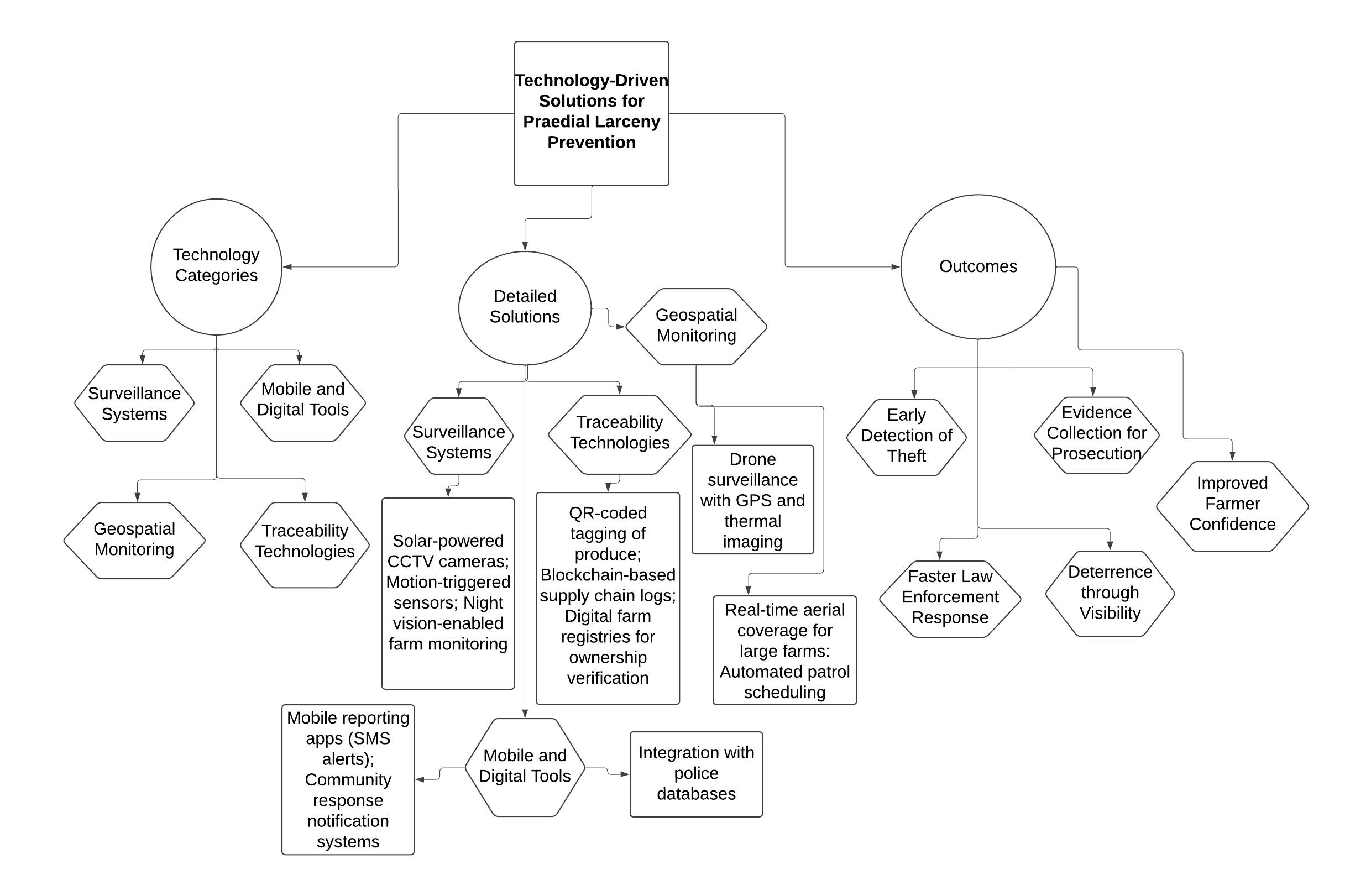
Figure 4: Diagram Illustration of Integrated Technological Solutions for Preventing Praedial Larceny in Jamaican Agriculture
Figure 4 provides a structured overview of how technology and surveillance can be strategically deployed to prevent praedial larceny, organizing the tools into four core categories: surveillance systems, mobile and digital tools, geospatial monitoring, and traceability technologies. Surveillance systems include solar-powered CCTV and motion-triggered cameras designed to monitor farms in real time, even in remote areas. Mobile and digital tools encompass reporting apps and alert systems that allow farmers to communicate theft incidents directly to authorities or community networks. Geospatial monitoring solutions such as drones equipped with GPS and thermal imaging enable real-time aerial surveillance of large farms, allowing for automated patrols and visual coverage that human resources cannot consistently provide. Traceability technologies such as QR-coded tagging and blockchain-based supply chain systems serve to authenticate produce ownership and monitor product movement through the agricultural value chain. Together, these tools enhance theft detection, improve response time, support legal evidence collection, and deter would-be offenders through increased visibility. Ultimately, the integration of these technologies fosters a safer agricultural environment, empowering farmers while improving the efficacy and reach of rural law enforcement systems.
5.6 Future Directions for Research and Implementation
Based on the findings of this study, future research should focus on developing a multidisciplinary framework that combines agricultural policy, rural sociology, criminology, and mental health to better understand and combat praedial larceny. There is a pressing need for longitudinal studies that examine the long-term psychological and economic effects of agricultural theft on smallholder farmers, particularly in relation to generational farming continuity and rural youth retention. Such research would inform the development of resilience-building interventions tailored to at-risk farming communities. Further investigation is also needed into the effectiveness of technologybased interventions, such as mobile surveillance systems, produce tracking applications, and remote sensor networks. Pilot programs should be implemented in high-theft zones to assess their practicality, cost-efficiency, and adoption rates. Additionally, there is scope to explore the scalability of community-led reporting models and peer surveillance networks to enhance grassroots enforcement capacity.
On the implementation side, future strategies must prioritize partnerships between government, private technology firms, farmer cooperatives, and academic institutions to design and deploy context-specific anti-theft tools. Policy simulations and scenario planning should also be used to test the impact of proposed legislative reforms under different enforcement conditions. A datadriven, community-empowered, and culturally attuned approach will be essential for sustainable progress in reducing praedial larceny across Jamaica.
Conclusion:
6.1 Summary of Key Findings
This study uncovered the complex, multi-dimensional nature of praedial larceny in Jamaica, revealing that it is not solely a legal or economic issue but a phenomenon deeply rooted in historical, psychological, and socio-cultural dynamics. Findings demonstrated that colonial-era
land dispossession and structural inequality have contributed to the normalization of agricultural theft within rural communities. Farmers frequently described praedial larceny as a culturally embedded practice shaped by historical marginalization, social tolerance, and survival-driven behaviors.
The psychological impacts were equally profound. Farmers reported chronic anxiety, emotional fatigue, and community mistrust resulting from repeated thefts and limited legal recourse. These experiences have led to social withdrawal and declining participation in agricultural activities, particularly among younger farmers. The study also found that awareness of legislative frameworks was limited and enforcement mechanisms were widely viewed as ineffective due to procedural delays, minimal deterrents, and resource constraints. Stakeholders expressed dissatisfaction with current policies and recommended reforms, including produce traceability systems, dedicated agricultural courts, and increased penalties. Importantly, community engagement, mental health support, and surveillance technology were identified as crucial components of any sustainable solution. Overall, the findings highlight the need for a holistic, community-centered approach that integrates legal, psychological, and technological strategies to effectively mitigate praedial larceny and protect rural livelihoods.
6.2 Reaffirmation of the Study’s Significance
This study holds significant value in advancing a comprehensive understanding of praedial larceny as a critical threat to Jamaica’s agricultural sustainability, food security, and rural stability. By exploring not only the economic dimensions but also the historical, psychological, and sociocultural contexts, the research provides a nuanced framework for interpreting and responding to agricultural theft. The study’s findings highlight that praedial larceny is not an isolated criminal act but a manifestation of deep-rooted structural challenges, including land inequity, weak legal enforcement, and the erosion of social trust in rural communities. Its significance lies in uncovering the lived experiences of farmers who, beyond suffering economic losses, endure sustained psychological distress, reduced social cohesion, and declining trust in legal institutions. The study elevates these realities into the policy discourse, urging stakeholders to prioritize interventions that go beyond punitive enforcement and embrace prevention, education, and psychosocial support.
Furthermore, the study provides a roadmap for practical reform, including the integration of surveillance technologies, legislative modernization, and community-based governance. By reaffirming the centrality of farmer resilience, legal empowerment, and institutional accountability, this research serves as a critical contribution to both academic literature and national policymaking aimed at eradicating praedial larceny and protecting Jamaica’s agricultural future.
6.3 Concluding Remarks on the Pathway Forward for Addressing Praedial Larceny
Addressing praedial larceny in Jamaica demands a multidimensional and coordinated strategy that reflects the complex interplay of historical, legal, psychological, and socio-cultural factors identified in this study. The pathway forward must begin with policy reforms that not only strengthen enforcement but also correct institutional inefficiencies such as the slow judicial process and lack of produce traceability. A dedicated legal framework supported by
agricultural courts, digital farm registries, and evidence-friendly reporting systems are essential to improving conviction rates and restoring farmer's confidence in the justice system.
Equally important is the integration of rural mental health services to address the emotional burden experienced by victims. Psychosocial interventions must be embedded within agricultural support programs to enhance resilience and prevent farmer's withdrawal from production. Community engagement must be prioritized through education, trust-building forums, and partnerships with local leaders, enabling rural populations to actively participate in prevention and response efforts. Finally, the deployment of technology such as surveillance drones, motion-triggered cameras, and mobile reporting platforms can revolutionize the detection and deterrence of theft in both smallholder and commercial farms. These solutions must be scalable, cost-effective, and integrated with grassroots knowledge systems. Collectively, this comprehensive approach charts a sustainable and context-sensitive path to reducing praedial larceny and strengthening Jamaica’s rural agricultural landscape.
References:
1. Ajayi, A. A., Igba, E., Soyele, A. D., & Enyejo, J. O. (2024). Quantum Cryptography and Blockchain-Based Social Media Platforms as a Dual Approach to Securing Financial Transactions in CBDCs and Combating Misinformation in U.S. Elections. International Journal of Innovative Science and Research Technology. Volume 9, Issue 10, Oct.–2024 ISSN No:-2456-2165 https://doi.org/10.38124/ijisrt/IJISRT24OCT1697.
2. Atalor, S. I. (2019). Federated Learning Architectures for Predicting Adverse Drug Events in
3. Oncology Without Compromising Patient Privacy ICONIC RESEARCH AND ENGINEERING JOURNALS JUN 2019 | IRE Journals | Volume 2 Issue 12 | ISSN: 2456-8880
4. Atalor, S. I. (2022). Blockchain-Enabled Pharmacovigilance Infrastructure for National Cancer Registries. International Journal of Scientific Research and Modern Technology, 1(1), 50–64. https://doi.org/10.38124/ijsrmt.v1i1.493
5. Atalor, S. I. (2024). Building a geo-analytic public health dashboard for tracking cancer drug deserts in U.S. counties, International Medical Science Research Journal Volume 4, Issue 11, Fair East Publishers DOI: 10.51594/imsrj.v4i11.1932
6. Atalor, S. I., & Enyejo, J. O. (2025). Mobile Health Platforms for Medication Adherence among
7. Oncology Patients in Rural Populations International Journal of Innovative Science and Research Technology Volume 10, Issue 5, ISSN No:-2456-2165 https://doi.org/10.38124/ijisrt/25may415
8. Atalor, S. I., Ijiga, O. M., & Enyejo, J. O. (2023). Harnessing Quantum Molecular Simulation for
9. Accelerated Cancer Drug Screening. International Journal of Scientific Research and Modern Technology, 2(1), 1–18. https://doi.org/10.38124/ijsrmt.v2i1.502
10. Azonuche, T. I., & Enyejo, J. O. (2024). Evaluating the Impact of Agile Scaling Frameworks on
11. Productivity and Quality in Large-Scale Fintech Software Development. International Journal of
12. Scientific Research and Modern Technology, 3(6), 57–69. https://doi.org/10.38124/ijsrmt.v3i6.449
13. Azonuche, T. I., & Enyejo, J. O. (2024). Exploring AI-Powered Sprint Planning Optimization
14. 15. Using Machine Learning for Dynamic Backlog Prioritization and Risk Mitigation. International Journal of Scientific Research and Modern Technology, 3(8), 40–57. https:// doi.org/10.38124/ijsrmt.v3i8.448.
16. Campbell, C. A. (2022). Agrarian struggles and praedial crime: Revisiting rural resistance in postcolonial Jamaica. Third World Quarterly, 43(5), 911–928. https://doi.org/10.1080/01436597.2021.1956892
17. Charles, C. A., & Beckford, O. (2012). The informal justice system in garrison constituencies. Social and Economic Studies, 51-72.
18. Donnermeyer, J. F. (2018). The impact of crime on farms: An international synthesis. Acta Criminologica: African Journal of Criminology & Victimology, 31(4), 1-22.
19. Editorial Board, (2024). Nigeria’s insecurity crisis: A threat to national and global food security https://businessday.ng/columnist/article/nigerias-insecurity-crisis-a-threat-tonational-and-globalfood-security/
20. Fath, K. (2014). Agricultural livelihoods and climate change: Employing the livelihood vulnerability index in Bluefields, Jamaica (Doctoral dissertation).
21. Ganpat, W. G., & Issac, W. A. P. (2018). Facing boldly the scourge of praedial larceny on food production in the Caribbean. Journal of International Agricultural and Extension Education, 25(4), 52-62.
22. Gregoire, A. (2002). The mental health of farmers. Occupational Medicine, 52(8), 471-476.
23. Harrison, F. V. (1988). Women in Jamaica's urban informal economy: Insights from a Kingston slum. Nieuwe West-Indische Gids/New West Indian Guide, 62(3/4), 103-128.
24. Ijiga, A. C., Abutu E. P., Idoko, P. I., Ezebuka, C. I., Harry, K. D., Ukatu, I. E., & Agbo, D. O.
25. (2024). Technological innovations in mitigating winter health challenges in New York City, USA. International Journal of Science and Research Archive, 2024, 11(01), 535–
26. 551.· https://ijsra.net/sites/default/files/IJSRA-2024-0078.pdf
27. Ijiga, M. O., Olarinoye, H. S., Yeboah, F. A. B. & Okolo, J. N. (2025). Integrating Behavioral Science and Cyber Threat Intelligence (CTI) to Counter Advanced Persistent Threats (APTs) and
28. Reduce Human-Enabled Security Breaches. International Journal of Scientific Research and Modern Technology, 4(3), 1–15. https://doi.org/10.38124/ijsrmt.v4i3.376
29. Imoh, P. O., Adeniyi, M., Ayoola, V. B., & Enyejo, J. O. (2024). Advancing Early Autism Diagnosis
30. Using Multimodal Neuroimaging and Ai-Driven Biomarkers for Neurodevelopmental Trajectory Prediction. International Journal of Scientific Research and Modern Technology, 3(6), 40–56. https://doi.org/10.38124/ijsrmt.v3i6.413
31. Isaac, W. A., Ganpat, W., & Joseph, M. (2017). Farm security for food security: Dealing with farm theft in the Caribbean Region. In Agricultural Development and Food Security in Developing Nations (pp. 300-319). IGI Global Scientific Publishing.
32. Isaac, W. A., Ganpat, W., & Joseph, M. (2017). Farm security for food security: Dealing with farm
33. theft in the Caribbean Region. In Agricultural Development and Food Security in Developing
34. Nations (pp. 300-319). IGI Global Scientific Publishing.
31. Isaac, W. A., Ganpat, W., & Joseph, M. (2017). Farm security for food security: Dealing with farm theft in the Caribbean Region. In Agricultural Development and Food Security in Developing Nations (pp. 300-319). IGI Global Scientific Publishing.
32. Isaac, W. A., Ganpat, W., & Joseph, M. (2017). Farm security for food security: Dealing with farm
35. Lucia, S. (2010). Managing Praedial Larceny in Fisheries–New Technologies and Challenges.
36. Ministry of Agriculture, (2023). Praedial Larceny – Farmers Cry For Help
33. theft in the Caribbean Region. In Agricultural Development and Food Security in Developing
34. Nations (pp. 300-319). IGI Global Scientific Publishing.
35. Lucia, S. (2010). Managing Praedial Larceny in Fisheries–New Technologies and Challenges.
37. https://agriculture.gov.ag/index.php/2023/10/05/praedial-larceny-farmers-cry-for-help/ Mohammadi, E., Singh, S. J., McCordic, C., & Pittman, J. (2022). Food security challenges and options in the Caribbean: insights from a scoping review. Anthropocene Science, 1(1), 91-108.
36. Ministry of Agriculture, (2023). Praedial Larceny – Farmers Cry For Help
38. Morris, P. K. (2010). An analysis of homicide in urban Jamaica (Doctoral dissertation, Rutgers University-Graduate School-Newark).
39. Ononiwu, M., Azonuche, T. I., & Enyejo, J. O. (2023). Exploring Influencer Marketing Among
37. https://agriculture.gov.ag/index.php/2023/10/05/praedial-larceny-farmers-cry-for-help/ Mohammadi, E., Singh, S. J., McCordic, C., & Pittman, J. (2022). Food security challenges and options in the Caribbean: insights from a scoping review. Anthropocene Science, 1(1), 91-108.
38. Morris, P. K. (2010). An analysis of homicide in urban Jamaica (Doctoral dissertation, Rutgers University-Graduate School-Newark).
40. Women Entrepreneurs using Encrypted CRM Analytics and Adaptive Progressive Web App Development. International Journal of Scientific Research and Modern Technology, 2(6), 1–13. https://doi.org/10.38124/ijsrmt.v2i6.562
39. Ononiwu, M., Azonuche, T. I., & Enyejo, J. O. (2023). Exploring Influencer Marketing Among
41. Ononiwu, M., Azonuche, T. I., & Enyejo, J. O. (2025). Analyzing Email Marketing Impacts on
40. Women Entrepreneurs using Encrypted CRM Analytics and Adaptive Progressive Web App Development. International Journal of Scientific Research and Modern Technology, 2(6), 1–13. https://doi.org/10.38124/ijsrmt.v2i6.562
42. Revenue in Home Food Enterprises using Secure SMTP and Cloud Automation International Journal of Innovative Science and Research Technology Volume 10, Issue 6, https://doi.org/10.38124/ijisrt/25jun286
41. Ononiwu, M., Azonuche, T. I., & Enyejo, J. O. (2025). Analyzing Email Marketing Impacts on
43. Ononiwu, M., Azonuche, T. I., Imoh, P. O. & Enyejo, J. O. (2023). Exploring SAFe Framework
44. Adoption for Autism-Centered Remote Engineering with Secure CI/CD and Containerized
42. Revenue in Home Food Enterprises using Secure SMTP and Cloud Automation International Journal of Innovative Science and Research Technology Volume 10, Issue 6, https://doi.org/10.38124/ijisrt/25jun286
45. Microservices Deployment International Journal of Scientific Research in Science and Technology Volume 10, Issue 6 doi : https://doi.org/10.32628/IJSRST
43. Ononiwu, M., Azonuche, T. I., Imoh, P. O. & Enyejo, J. O. (2023). Exploring SAFe Framework
44. Adoption for Autism-Centered Remote Engineering with Secure CI/CD and Containerized
46. Salazar-Xirinachs, J. M., & Chacaltana, J. (2018). Informality in Latin America and the Caribbean: Why does it persist and how can it be addressed. Políticas de Formalización en América Latina:
45. Microservices Deployment International Journal of Scientific Research in Science and Technology Volume 10, Issue 6 doi : https://doi.org/10.32628/IJSRST
47. Avances y Desafíos, ILO: Lima, Regional Office for Latin America and the Caribbean, FORLAC.
48. Thomas-Hope, E. (2017). Migration, small farming and food security in the Caribbean: Jamaica and St. Vincent and the Grenadines. International Migration, 55(4), 35-47.
46. Salazar-Xirinachs, J. M., & Chacaltana, J. (2018). Informality in Latin America and the Caribbean: Why does it persist and how can it be addressed. Políticas de Formalización en América Latina:
47. Avances y Desafíos, ILO: Lima, Regional Office for Latin America and the Caribbean, FORLAC.
48. Thomas-Hope, E. (2017). Migration, small farming and food security in the Caribbean: Jamaica and St. Vincent and the Grenadines. International Migration, 55(4), 35-47.
49. Wallace, W. (2024). Gender and Rural Policing: Lack of Opportunities for Male Police Constables in Rural Police Departments in Trinidad and Tobago. International Journal of Rural Criminology, 8(3), 372-392.
50. Wallace, W. C. (2017). An exploratory study on the impact of organized crime on societies in small island developing states: Evidence from five (5) Caribbean countries. Perspectivas: A Collection of Current Research and Analysis from the William J. Perry Center, 3, 1-31.
ARTS AND SCIENCES
Arts and Sciences
A Simulated Up and Down Design Analysis of Maximum Tolerated Dose (MTD) within an M/M/2 Queue with balking and Reneging and Delayed Service
Solomon Ugbane, Aliakbar Montazer Haghighi, Ph.D.* Department of Mathematics, College of Arts & Sciences
Abstract:
Patients with terminal diseases need careful long-term treatment. Doctors have improvised several means of treatment, including educated guesses, to treat ailments such as cancer. The doctor's prediction of dosages is inefficient and follows a trial-and-error approach. This paper represents a method for arriving at a better dosage. This study proposes a software application and statistical model that will assist doctors in treating patients. This model takes several parameters, such as patient age, race, and other underlying conditions, to recommend the appropriate dosage for treatment. An initial simulation of the system was done to show queue dynamics. Future work will involve the use of formulas and theories to validate and calibrate results from the initial simulation
Introduction:
People have required goods and services at different times for different reasons. These needs are sought typically by multiple individuals at once. For example, multiple people going to the grocery store or pharmacy all seeking an appointment simultaneously. When customers arrive at a certain time, a queue is usually formed customers can become impatient due to a variety of reasons: long wait at the queue, or absentee of a server, for example, a clerk or pharmacist at arrival, Olorisade, (2014). Queueing is a field that is used to mathematically describe the process for waiting lines. Queuing models emerged to manage service costs and waiting times by potential customers. One of such systems or models was the development of telephone traffic engineering by Erlang in 1909. These systems include airline ticket counters, ticket reservation systems and clinical establishments, Tonui et al. (2014). If a queue is too long, a customer might leave, and too much cost can be accrued if there are too many service stations, on the other hand. For instance, in a doctor’s office, patients queue up to see a doctor if the waiting time is too long, some patients might balk or leave. It might also be expensive to hire additional doctors depending on the establishment’s capabilities.
A queuing system such as a patient waiting to see a doctor or pharmacist has several components. A queue consists of an arrival pattern, service pattern, number of servers maximum, system capacity, population size and queue discipline. The arrival pattern could be
a Poisson distribution, and the service pattern could be an exponential distribution. The arrival pattern and service pattern soul both be generally distributed. The number of customers in a system can range from one to infinity. The queue discipline describes the order in which service is received. A compact notation was introduced by Kendall to describe the queueing processes, A/B/C/X/Y/Z. A is the time between arrivals, B is the service time distribution and C is the number of servers. X represents the system capacity; Y is the population size and Z is the queue discipline, Tonui et al. (2014).
The system in this project is an M/M/2/¥ queue with a first in first out (FIFO) discipline, typical of a hospital. The events before arrival are not considered, so it is a memoryless event with a Poisson distribution. The service time is exponentially distributed, and the size of the buffer is infinite. Customers or patients will sometimes leave the queue at a certain stage in the visit, these departures can be described with the terms balking and reneging. Patients can also balk or renege with a certain probability, see Montazer Haghighi (1986) and Montazer Haghighi et al. (1986).
Medical treatment is a prime area for queuing model applications as it presents an opportunity to manage patients efficiently. This project also incorporates clinical treatments and dosage assignments. Healthcare professionals often estimate or guess the dosages administered to patients which is not optimal. Several approaches are considered to numerically estimate an appropriate dose level. These approaches include the up and down design, biased coin design, Durham et al. (1992(1995), and (1993)). These dose levels typically fall within a range of probable toxicity, known as Maximum Tolerated Dose (MTD), Ivanova et al. (2003).
This paper aims to combine the methods of the Markovian queuing system with the up and down system to realize the following goals:
Treat patients and reduce the severity of their illnesses to the lowest toxicity levels
Finding the mean and variance of the patient waiting time until they are tested by a doctor
Finding the mean and variance of the total time it takes a new patient to be released after treatment or are unable to continue leaving healthily
Revise the stochastic methods (including Biased coin design) towards the maximum tolerated dose (MTD) for an efficient way of treatment
Provide a precursor for a software system that automates dose assignment
The initial step to realize these goals is to simulate the system.
Analysis:
Model
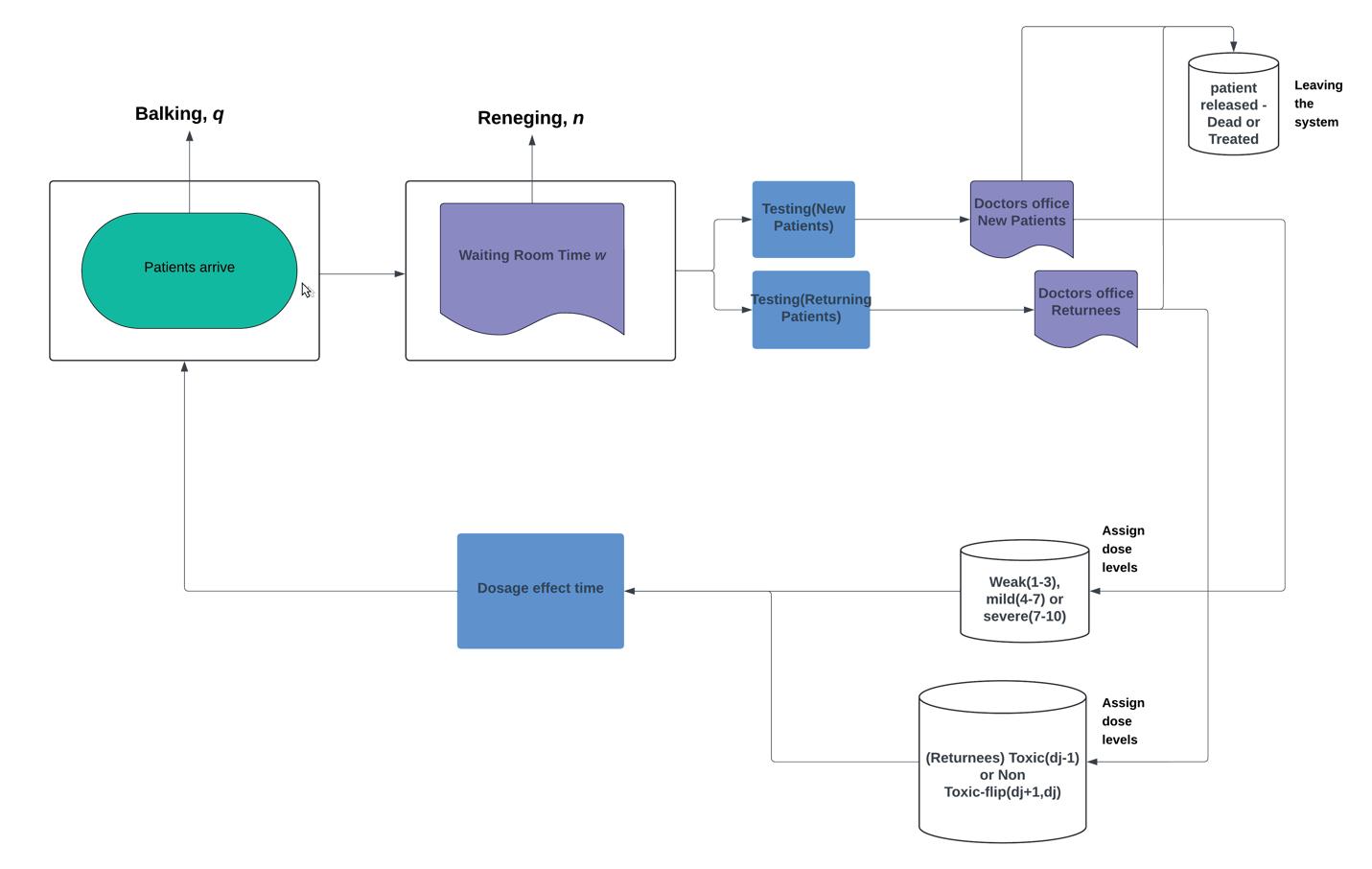
In a typical clinical setting, patients arrive and wait to see a doctor. Illnesses being considered a terminal disease such as Lupus or Crohn’s disease. These diseases require treatment with a medicine over a prolonged period. Patients can also arrive from any global location, which is considered an infinite source, Haghighi and Wickramasinghe (2020). These patients arrive with some probability, which is seemingly random. The arrival rate is a Poisson process of rate, λ. The time taken to arrive is also a Markovian process or memoryless process as the
time taken to arrive is not considered. The arriving patient who finds one or two servers occupied may cancel an appointment or not join the queue, which is known as balking. P is some arrival probability and balking will occur with some probability q = 1-p. a customer might also leave the queue after waiting for a certain time before being served. This waiting time before departure is a random variable, h which has an exponential parameter, a. A customer who balks or reneges and rejoins the queue later is considered a new arrival, Haghighi et al. (1986).
Patients who remain in the queue are seen by the doctor. The waiting time before seeing a provider is assumed as an exponential variable, denoted as w. A patient is called on a FCFS basis and they proceed to the testing center. The testing center has two separate tests: one for returnees and one for new patients. The test result for new patients is in three categories based on assigned dosages: weak (1-3), moderate (4-7) and severe (8-10). The returning patients are tested on the effect of their current doses, toxic (1) or non-toxic (0). The doctor or specialist assigns doses to new patients and returnees differently.
The dosage level, denoted as dj, is anywhere from j=1 to K, with K being the largest dose. K=10 for practical purposes. A new patient is assigned a dose level from the weak case if they are diagnosed as weak, a mild level if they are tested as moderate and will be assigned a dose from the severe stage if their tests reveal a severe range. The returning patient’s new dosage depends on a previously assigned dosage. The dosage could be stepped down by dj1, be the same, dj or increased by dj +1. This method of assigning doses is regarded as the up and down method. The goals of the up-and-down family of procedures are to estimate and unknown dose that is within are toxicity level as seen in clinical 1 trial.
As new patients arrive, returnees will also arrive for subsequent appointments. The arrivals of the returnees is independent of the first arrival and this arrival noted as t. The combination of the arrival of new patients and the returnees is a compound Poisson process with expression l+t
The model describes key metrics, including the average number of patients in the system, average time spent by patients, average number of patients returns, and the average dose level for returning patients. Figure 1 shows the schematic of the model, which will be simulated.
MATLAB Model:
MATLAB is used to simulate models as MATLAB is a versatile engineering tool for performing various kinds of numerical analysis. The mode of simulation used is an event driven discrete event simulation (DES). The simulation model captures patient flow and dose response dynamics of a single site (clinic) phase 1 drug trial. The simulation captures two types of patients: new and returning. There are two parallel service nodes: Node A which is the testing room for new patients and Doctor 1, while Node B is the testing room for returnees and Doctor 2, who specifically attends to returnees only. New patients arrive according to a Poisson process with rate, l and both service nodes provide exponentially distributed service time rates noted as µ1 and µ2. Equations 1 to 3 detail the formulas for the time interarrival (time between patient arrivals) and the service times for nodes A and B.
P(T>t) =e-"# , (1) where T is the interarrival time.
P(S>t) = e-$%# (2) service time for new patients, and
P(S> t) = e-$&# (3) for returnees.
Figure 1: Model of M/M/2 queueing system
The event driven simulation is classified into new arrivals, service completions at both nodes, patient returns and reneging. The simulation loop repeatedly selects the next scheduled event from a chronologically sorted event list, advances the simulation clock and updates the system state. Patients are assigned an initial dose randomly when they arrive newly (Node A). patients at Node B either have their doses increased or reduced, based on a biased coin toss. The biased coin toss is an assignment method based on the “up and down” rule. Patients will exit the systems if they have recovered (dose level 1) or pass away (dose level 10).
The simulation tracks system-level metric such as:
• Number of patients in the system over time
• Time between return visits
• Queue sizes and
• Cumulative return counts
• Average system occupancy, L, computed as the time-weighted average number of patients in the system
Discussion and Results:
The first data presented in the patient dose as the simulation begins. The average dose level is 5. The simulation is mostly done in time units, that is, there is no fixed unit but there are time steps which run from 1 to 1000. This time steps could represent seconds, hours, days or months. Figure 2 contains dosage details. The system occupancy rises and peaks to roughly 50 patients in the system with the average number of patients in the system approximately 26 patients. Figure 3 illustrates the system occupancy with time.
Figure 2: Patient Dosages
3: System Patient Occupancy
The cumulative number of returns over time is showcased in figure 4 which indicates a maximum return of 1200 times with an average cumulative return of 600. The cumulative returns are relatively substantial in magnitude which further experiments might explain or validate.
Figure 4: Cumulative Number of Patient Returns
Figure 5 suggests that patients arrived and returned to the hospital between 0 and 5.
Figure
5: Time between Returns
Conclusion and Future Work:
The MATLAB model helps visualize the queueing and system dynamics of this novel system. It serves as the initial step towards creating and understanding the intricate details of the system behavior. Further research would help to validate the numbers and values shown in the results section. This next step would involve derivation of formulas or modification of existing formulas to compare with the simulated results. If possible, an actual field experiment involving medical personnel with access to data that has been de-identified for research purposes. The results from these suggested experiments will aid the development of a theory or more robust system.
REFERENCES
1. Durham, Stephen D., Flournoy, Nancy, and Montazer-Haghighi, Ali A. (1992(1995)). Upand- Down Design II: Exact Treatment Moments, Adaptive Designs, IMS Lecture NotesMonograph Series (1995) Volume 25.
2. Durham, Stephen D., Flournoy, Nancy, and Montazer-Haghighi, Ali A. (1993), Up-andDown Designs. Computing and Statistics: Interface, Vol. 25, pp. 375-384.
3. Haghighi, Aliakbar Montazer and Wickramasinghe, Indika R. (2020). Probability, Statistics and Stochastic Processes for Engineers and Scientists, by Taylor & Francis Group, LLC/ CRC Press.
4. Haghighi, A. M., Medhi, J., & Mohanty, S. G. (1986). On a multiserver Markovian queueing system with balking and reneging, Computers. and Ops. Res., Vol. 13, Issue 4.
5. Ivanova, A., Montazer-Haghighi, A., Mohanty, S. G., & Durham, S. D. (2003). Improved upand-down designs for phase I trials. Statistics in Medicine, 22(1), 69–82. https://doi.org/10.1002/sim.1336
Figure
6. Montazer Haghighi, A. (1986). An M/M/2 Queueing System with Feedback, Bulletin of Iranian Mathematical Society, Vol. 13, No. I & 2 (serial No. 21), pp. II -27.
7. Olorisade, T. I. (2014). Analysis of an M/M/1 Queueing System with Impatient Customers and a Variant of Multiple Vacation Policy
8. Tonui, B. C., Langat, R., and Gichengo, J. M. (2014). On Markovian Queuing Models. In the International Journal of Science and Research. www.ijsr.net
Comorbidity of Chronic Health Conditions and Substance Use Disorder and Healthcare Use in the United States: An Analysis of the NSUDH 2021-2023 Data
Temitope Joshua Adeusi, and Iyanda Ayodeji, Ph D * Division of Social Sciences, College of Arts & Sciences
Introduction:
The utilization of healthcare services for treating health problems provides important insights into the rate of both overnight and emergency hospitalization. The percentage of people aged 1-64 with hospital stays in the United States remains high, increasing from 5.2% in 2018 to 5.9% in 2019 (National Center for Health Statistics, 2023). The rising cases of hospitalization have significant consequences for patients and healthcare systems due to their cost implications and high workload on medical personnel (Metersky et al., 2024). Evidence from existing research suggests that hospital admissions increase out-of-pocket spending for individuals without health insurance, reduce earnings, and result in the loss of productive hours (Dobkin et al., 2018).
Substance use disorder (SUD) is increasingly recognized not only as an addiction to drugs but also as a major contributor to the burden of chronic diseases (Sanchez-Roige et al., 2022). The comorbidity of SUD with chronic diseases, such as diabetes, cardiovascular disease, liver disease, cancer, among others present significant clinical challenges and worsens patient’s health (Pastor et al., 2020), aligning with the assertion of Thorpe et al. (2017) that this represents double jeopardy when disease burden is considered.
Consequently, a few studies have been carried out to address this health problem (Wu et al., 2018). However, because most of these studies are based on electronic health records and not on survey data, they are limited in comprehensive data collection on various aspects of SUD and chronic diseases, missing out on effectively addressing this health problem, especially in the realm of treatment and prevention.
Methodology:
Aim: This study aimed to assess the comorbidity of chronic health conditions and SUD and Healthcare
Use in the United States. Data : This study utilized pooled data (N = 173,808) from the 2021–2023 National Survey on Drug Use and Health (NSDUH), a nationally representative cross-sectional survey administered annually by the Substance Abuse and Mental Health Services Administration (SAMHSA). Variables: The primary outcome variables are Emergency Room (ER) visits and Inpatient hospitalization both coded as binary variables (0 = no, 1 = yes). Explanatory variables are 10 chronic health conditions (i.e., heart condition, diabetes, chronic obstructive pulmonary disease (COPD), cirrhosis, hepatitis B/C, kidney
disease, asthma, HIV/AIDS, cancer, or high blood pressure) and Substance and drug use disorders (SUD/DUD). Control variables include age, sex, race/ethnicity, socioeconomic status, and health conditions (e.g., adult mental health and body mass index). Analytical plan: This study conducted descriptive and inferential analyses to examine the relationship between CHCs, SUD, drug use disorder (DUD), and healthcare utilization. We used binary logistic regression (BLR) models to assess the association between CHCs, SUD/DUD, and the binary outcomes of hospitalization and ER visits (coded as 0 = no use, 1 = at least one visit). To account for over-dispersion in count data, negative binomial regression (NBR) was employed for the non-binary forms of ER visits and hospitalizations, adjusting for key covariates. All variables with missing responses were coded as system missing (.). Notably, health condition variables had high non-response due to skip patterns or non-disclosure, with up to 70% missing in some cases. We retained these cases in the analytic sample using pairwise deletion within regression models to maximize sample size.
Results:
Figure 1 shows the prevalence of the ten health conditions and substance disorders (SUD and DUD) and healthcare utilization. Except in individuals with cancer and high blood pressure, the prevalence of healthcare utilization (i.e., ER visits and inpatient hospitalization) was higher among individuals with a history of CHC and substance disorders, including drug use disorder.


Chronic Health Conditions and Drug/Substance Use Disorders


Chronic Health Conditions and Drug/Substance Use Disorders
Figure 1. Prevalence of healthcare utilization among those with chronic health conditions and substance/drug use disorders
The logistic regression reveals significant associations between demographic characteristics, metro status, adult mental health, and the prevalence of ER visits, overnight hospitalization, drug use disorder, and SUD (Supplementary Table 1). Compared to older adults (65+), younger age groups were significantly less likely to report ER visits but more likely to experience overnight hospitalization and substancerelated disorders. Adults aged 18–25 had over four times higher odds of drug use disorder (OR = 4.67, 95% CI: 4.25–5.13) and nearly
A. Emergency Room Visit
B. Inpatient Hospitalization
four times higher odds of SUD (OR = 3.65, 95% CI: 3.42–3.90). These elevated odds were progressively lower in older age groups but remained statistically significant across all younger age brackets.
The result of the NBR indicates a significant relationship between disorder severity and increased healthcare use (Supplementary Table 2). Compared to individuals with mild drug use disorder, those with severe drug use disorder had a significantly higher incidence rate of overnight hospitalizations (IRR = 1.20, 95% CI: 1.08–1.34). This association was particularly strong among individuals with no CHCs (IRR = 1.30, 95% CI: 1.12–1.51), whereas the relationships were not statistically significant among those with 1 or 2–4 CHCs.
Impacts/Benefits:
The Principal Investigator (PI) attended the 2025 Association of American Geographers Annual Meeting in Detroit, MI, and the Race, Ethnicity, and Place Conference in Washington, DC, where he presented the results of the project. Alongside the presentation, the PI organized and chaired a paper session based on the major themes of the project, "The Role of Identity in Shaping the Geography of Health and Lifestyle". The sessions led to insightful discussions, with several attendees showing interest in the published results and the opportunity to collaborate on similar projects. One manuscript has been submitted to a peerreviewed journal and is under consideration. The Graduate student will attend the XIII Race, Ethnicity, and Place Conference in Albuquerque from November 5-8, 2025 with the PI.
References:
1. Metersky, ML., Rodrick, D., Ho, SY., Galusha, D., Timashenka, A., Grace, EN., Marshall, D., Eckenrode, S., Krumholz, M. (2024). Hospital COVID-19 Burden and Adverse Event Rates. JAMA Netw i. Open. 2024;7(11):e2442936. doi:10.1001/jamanetworkopen.2024.42936 National Center Health Statistics. (2023). Health, United States, Hospitalization.
2. Pastor, A., Conn, J., MacIsaac, R. & Bonomo, Y. (2020). Alcohol and illicit drug use in people with diabetes. The Lancet Diabetes & Endocrinology, 8(3), 239-48.
3. Sanchez-Roige, S., Kember, RL. & Agrawal, A. (2022). Substance use and common contributors to morbidity: A genetics perspective. eBioMedicine, 83, 104212 September 2022. doi: 10.1016/j.ebiom.2022.104212
4. Thorpe, K., Jain, S. & Joski, P. (2017). Prevalence and spending associated with patients who have a behavioral health disorder and other conditions. Health Aff. 36, 124–132. U.S. Burden of Disease Collaborators, 2018. The state of US health, 1990-2016: burden of diseases, injuries, and risk factors among US states. JAMA. 319, 1444–1472.
5. Wu, L.-T., Zhu, H., & Ghitza, U. E. (2018). Multicomorbidity of chronic diseases and substance use disorders and their association with hospitalization: Results from electronic health records data. Drug and Alcohol Dependence, 192, 316–323.
Synthesis and characterization of Salicylaldehyde-Histidine Copper(II) complex
De'Ja Toole and Gina Chiarella, Ph.D.
Introduction:
Copper(II) complexes play essential structural and functional roles in biological systems. These roles are attributed to their redox versatility, coordination properties, and biocompatibility. The Cu(II) ion is a key component of various metalloenzymes, including superoxide dismutase, cytochrome c oxidase, methane monooxygenase, and tyrosinase, among others. Due to these associations, copper complexes are of significant interest in biomimetic modeling and drug design.
The ability of copper to undergo reversible redox cycling between Cu(II) and Cu(I) underlies its involvement in electron transfer processes (e.g., cellular respiration and metabolism) and the regulation of reactive oxygen species (ROS), helping to mitigate oxidative damage. Additionally, copper ions exhibit a strong affinity for coordinating with amino acid residues such as histidine, cysteine, and methionine, which contributes to proper protein folding. In many metalloproteins, copper is indispensable for maintaining structural stability and enzymatic function, as exemplified in cytochrome c oxidase, laccase, tyrosinase, superoxide dismutase, ceruloplasmin, plastocyanin, and certain amine oxidases.
The resulting product of this research is a tetrameric copper(II) macrocyclic complex, wherein the copper centers are bridged via nitrogen and oxygen donor atoms from the histidine and salicylaldehyde moieties. The spatial arrangement of the copper ions within the complex closely resembles the Cu(II)–Cu(II) distances observed in multi-copper oxidase enzymes.
Objectives:
1. The objective of this study is to synthesize and characterize a novel copper(II) complex using a Schiff base ligand derived from L-histidine and salicylaldehyde.
2. To use a green chemistry procedure, microwave-assisted technique under varying reaction conditions, facilitating a rapid and efficient assembly of the complex.
3. To compare the former technique with the traditional refluxing method was also used with less success.
4. To attain structural characterization through spectroscopic methods and single-crystal X-ray diffraction. In addition, to study the electrochemical and optical characteristics and to investigate its physicochemical properties.
5. To study the redox activity of the product. Given its structural similarity to natural copper-containing enzymes and its redox-active features, the complex is anticipated to exhibit catalytic activity and hold potential for environmentally benign applications. The preparation of this compound follows two approaches.
Methodology:
Method I consists of preparing the mixed ligand (L–histidine–salicylaldehyde), followed by the complexation to copper(II).
Method II entails the complexation of one ligand (L-histidine) to a copper(II) and later de addition of the remaining ligand. Synthesis Procedure
Method I – traditional refluxing method/microwave synthesis
The preparation initially used a refluxing technique, and later used a microwave synthesizer.
Synthesis of the ligand
• Add 0.39 g of L-histidine (2.5 mmol) and 0.14 g KOH (2.5 mmol) to 10 mL of water in a 100 mL round-bottom flask with a stir bar and stir until dissolved.
• In a beaker containing 5 mL of ethanol, add 0.27 mL (0.3053 g, 2.5 mmol) of salicylaldehyde let it dissolve.

• Slowly add the ethanolic solution to the aqueous solution and reflux for 40 hours until a deep yelloworange color appears.
• Let the solution precipitate (evaporate if needed) and store the orange solid for complex formation.
Synthesis of the metal complex
• In a 100 mL round-bottom flask, add 0.26 g (1 mmol) of the ligand (Sal-His), 0.1 g (0.5 mmol) of copper(II) acetate monohydrate, and 20 mL of ethanol.
• Stir with soft reflux for 1 hour until color change.
• Check the formation of a precipitate and filter.

• The preparation of the ligand takes 30 minutes in a microwave-assisted method at 100 °C and 150°C. The amount of solvent required is half that in the refluxing procedure. Method II - Microwave synthesis
• In a 100 mL microwave-resistant round-bottom flask, dissolve
• 0.0027 moles (0.42g) of L-Histidine in 20 mL of water, stir briefly at neutral pH
• To the reaction flask, add 0.00135 moles (0.27g) of Copper Acetate monohydrate.
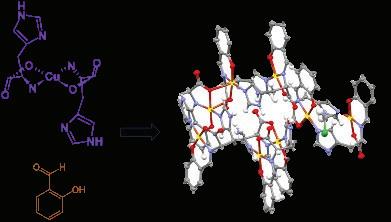
• Immediately, the reaction mixture changes into a royal blue color, stir for 5 five minutes
• Remove 20 mL of water from the resulting mixture by evaporation in a vapor bath for approximately 30 minutes to an hour.
• Add 10 mL of ethanol and 2 mL of salicylaldehyde to the semi-dried mixture, and let it settle.
• After one to two days, green crystals form.
This procedure was repeated using traditional refluxing methods.
Results and Discussion:
Method I
Using Method I we produced the ligand L-histidine-salicylimine (Sal-His) and attained the UVVisible and the FTIR spectra. We obtained the Cu(II) Sal-His complex partially characterized by UV-Visible and FTIR spectroscopy.
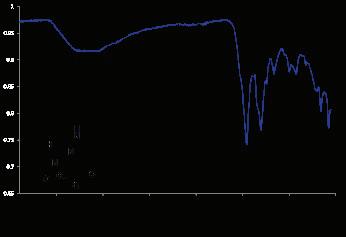
Method II
of Cu(II) Sal-His Method I
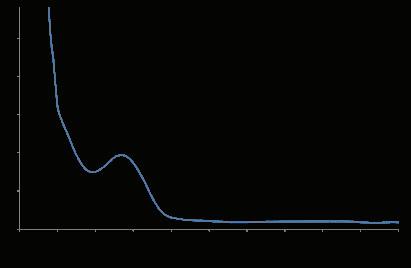
This procedure allows to produce and fully characterize a chiral tetramer Cu(II) Sal-His complex and to determine its electrochemical behavior and circular dichroism. (paper ready to publish)
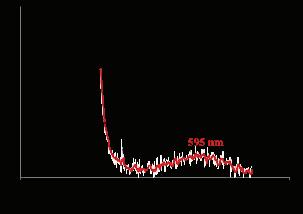
UV-Visible spectra Histidine and Cu(II) Sal-his tetramer
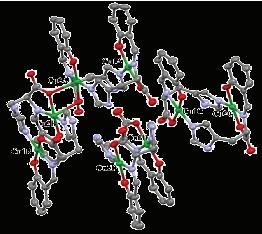
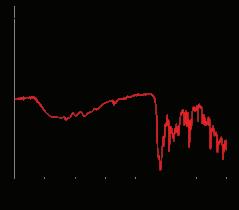

Cyclic voltammogram
Cu(II) Sal-His tetramer

of 156

FTIR
Histidine and Cu(II) Sal-His tetramer
Circular dichroism Cu(II) Sal-His tetramer
Crystal structure of Cu(II) Sal-His tetramer

Comparing both methods, conclude that the second approach gives much better outcomes than the sequential preparation of the ligand to synthesize the metal complex. Using this method, we conducted complete research on the preparation and characterization of a new compound.
FTIR
UV-Visible spectrum of Cu(II) Sal-His method I
The method I used was unsuccessful in the identification and characterization of the Sal-His ligand. The refluxing procedure was long, and the products were hard to isolate. The preparation of the complex was uncertain because of the lack of adequate sample for crystallographic studies. The preparation using microwave technique was faster and gave cleaner products but no crystallographic results.
The Method II led to the production of a new compound widely characterized by spectroscopic methods and structurally determined by single crystal X-ray diffraction as a tetramer. Electrochemical studies of this tetramer show redox activity evidenced in its cyclic voltammogram, and chirality show in its circular dichroism.
Further study using Method I could help to attain the ligand Sal-His and determine its structure and properties.
Due to the difference in the UV-Visible spectra and the FTIR, we cannot discard the formation of a copper(II) complex with a different structure. Deeper studies will be required to determine this last hypothesis.
Impact/Benefit:
This research has achieved the preparation and full characterization of the Schiff base Lhistidine-salicylimine (Sal-His) copper(II) complex (tetramer).
The compound fully characterized has redox activity which should be explored, currently this compound is considered as a possible biomimetic compound of copper enzyme active centers with possible use as an alternative catalyst.
References:
1. Richard J. Sundberg and R. Bruce Martin. Chemical Reviews, 1974, 74, 471- 517
2. Georgia C. Boles, Rebecca A. Coates, Giel Berden, Jos Oomens, and P. B. Armentrout. J. Phys. Chem. B, 2016, 120, 12486−12500
3. Lei Zhou, Shenhui Li, Yongchao Su, Xianfeng Yi, Anmin Zheng, and Feng Deng. J. Phys. Chem. B, 2013, 117, 8954−8965
Green Synthesis and Characterization of Fe-Ti mixed Nanoparticles for Enhanced lead Removal from Aqueous Solutions
Shamika Hewage and Harshica Fernando, Ph.D.*
Introduction:
Water pollution by heavy metals poses a significant global environmental and public health challenge, with lead (Pb) contamination a particular concern due to its persistence, bioaccumulation, and severe toxicity. Lead enters aquatic environments through various anthropogenic sources including industrial effluents, mining activities, battery manufacturing, aging water infrastructure, and agricultural runoff 1. Even at low concentrations, lead exposure can cause devastating health effects including neurological disorders, developmental delays in children, cardiovascular problems, kidney damage, and reproductive issues 2. Various treatment technologies have been developed for lead removal from water, including chemical precipitation, ion exchange, membrane filtration, and adsorption3. Among these, adsorption has emerged as a particularly promising approach due to its cost-effectiveness, operational simplicity, high efficiency, and suitability for treating water with low concentrations of heavy metals4. Different adsorbents have been investigated, including activated carbon, biochar, clay minerals, agricultural wastes, and metal oxides5. Nanomaterial-based adsorbents have garnered significant attention in recent years due to their high surface area, enhanced reactivity, and superior adsorption capabilities6. Metal oxide nanoparticles, particularly iron and titanium oxides, have shown considerable promise for heavy metal removal. Iron oxides typically demonstrate higher adsorption capacities for lead, while titanium dioxide offers excellent structural stability and lower toxicity concerns. Combining these metals into mixed oxide systems presents an opportunity to leverage the advantages of both materials 7
Objective:
Our project aims to develop a green synthesis route for Fe-Ti mixed oxide nanoparticles using sugar as a reducing agent and to evaluate their effectiveness for lead removal from aqueous solutions. This research helps to understand the influence of various operational parameters, including pH, contact time, temperature, and adsorbent dosage, while elucidating the mechanisms of lead adsorption through comprehensive material characterization.
Methods:
The Fe-Ti mixed NP composites were synthesized using a modified green synthesis method. Initially, 20.00 mL of Ti(OBu)₄ was mixed with ~20 mL of ethanol in a beaker and stirred. Following this, 40.00 mL of FeCl₄ solution in ethanol was added and stirred. Subsequently, sugar solution was added dropwise while stirring until a yellow gel was formed. The resulting gel was dried overnight at to obtain the final NPs.Characterization studies were carried out using FTIR, SEM, EDS, XRD, XPS, TGA and BET. Optimum conditions of lead removal was tudies and was evaluated using the atomic absorption spectroscopy method.
Results:
The formation of the nanoparticles was observed by the color change occurred in the solution. Further characterization was performed using SEM, EDS, XPS, XRD, BET, and FTIR. The figures below show the characterization studies and representative kinetic results of the nanoparticles.
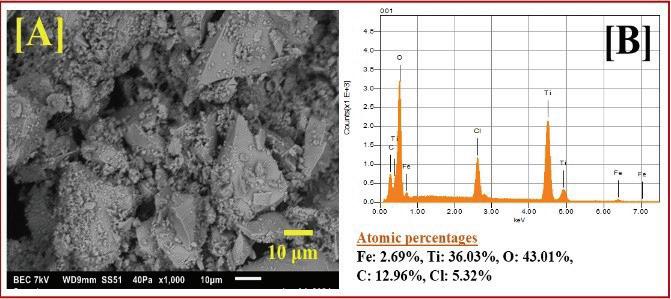
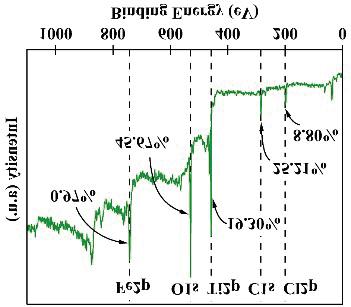
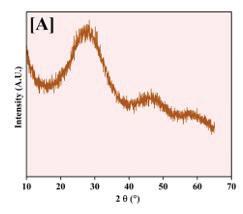
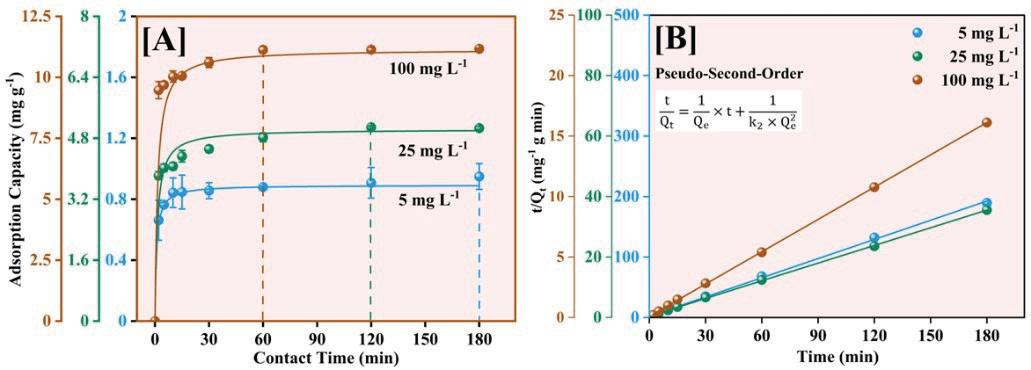
Figure: SEM, EDS, XPS and XRD results of the nanoparticles (top) and adsorption kinetics of Pb2+ on Fe-Ti mixed nanoparticles at 5, 25, and 100 mg L-1 initial Pb2+ concentrations(below)
Characterization studies shows the presence of both metals in the nanoparticles synthesized and kinetic studies shows how the different concnetrations affect the removal with time. Some results of this funded research is already published. https://doi.org/10.3390/molecules30091902
Significance/ Impact:
These findings established Fe-Ti mixed oxide nanoparticles as a promising adsorbent for Pb removal, with their green synthesis route offering an environmentally sustainable approach to water treatment applications. The synergistic combination of Fe's high affinity for heavy metals and Ti’s structural stability, coupled with the advantageous surface properties induced by the green synthesis method, resulted in a highly effective adsorbent material. Future studies will focus on investigating the material's performance in complex water matrices and exploring potential scaleup strategies for practical applications in water treatment systems.
References:
1. Briffa, J.; Sinagra, E.; Blundell, R. Heavy metal pollution in the environment and their toxicological effects on humans. Heliyon 2020, 6 (9). DOI: https://doi.org/10.1016/j.heliyon.2020.e04691.
2. Nag, R.; Cummins, E. Human health risk assessment of lead (Pb) through the environmentalfood pathway. Science of the Total Environment 2022, 810, 151168. DOI: https://doi.org/10.1016/j.scitotenv.2021.151168.
3. Ahmad, I.; Asad, U.; Maryam, L.; Masood, M.; Saeed, M. F.; Jamal, A.; Mubeen, M. Treatment methods for lead removal from wastewater. In Lead Toxicity: Challenges and Solution, Springer, 2023; pp 197-226.
4. Yirdaw, G. Efficient Removal of Lead (II) from Paint Factory Wastewater Using Noug Stalk Activated Carbon: A Sustainable Adsorption Approach. Heliyon 2025
5. Shi, Q.; Terracciano, A.; Zhao, Y.; Wei, C.; Christodoulatos, C.; Meng, X. Evaluation of metal oxides and activated carbon for lead removal: Kinetics, isotherms, column tests, and the role of co-existing ions. Science of the Total Environment 2019, 648, 176-183. DOI: https://doi.org/10.1016/j.scitotenv.2018.08.013.
6. Gupta, K.; Joshi, P.; Gusain, R.; Khatri, O. P. Recent advances in adsorptive removal of heavy metal and metalloid ions by metal oxide-based nanomaterials. Coordination Chemistry Reviews 2021, 445, 214100. DOI: https://doi.org/10.1016/j.ccr.2021.214100.
7. Zouli, N. Synthesis of an iron-titanium-carbon composite from slag high in titanium for removing arsenic particles from drinking water. Desalination and Water Treatment 2024, 317, 100104. DOI: https://doi.org/10.1016/j.dwt.2024.100104.
Understanding Fluoride Exchange Between Aryltrifluoroborates And ArylTrialkoxy Silanes: Access To Benchtop Aryl-Aryl Cross Couplings.
Soroosh Saghebi and Matthew B. Minus, Ph.D* Department of Chemistry, College of Arts & Sciences
Introduction:
As the most abundant metalloids on earth boron and silicon play unique roles in organic and material chemistry.1When incorporated into reagents,2–4 catalysts,5–7 drugs,8 and materials9–11 the unique electronic structure of boron and silicon atoms allows for the occurrence of chemistry that cannot otherwise be accomplished. As the most abundant halogenide in the earth’s crust,12 fluoride is used by nature to form bones.13 The hard nature of the fluoride anion is thought to cause the precipitation of fluoride salts in water.14,15 As result, most fluorides are found abundantly in the earth’s sediment.16 When fluorine is mixed with boron and silicon both are known to form, BF3 and SiF4 respectively. 17 While these fundamentals are well known, surprisingly little literature is available concerning the exchange of fluorine between the boron and silicon molecules.6
Trifluoroorganoborates have emerged as electronically tunable and highly soluble sources of fluoride and nucleophilic carbon.18 Additionally, silyl ethers are a well-researched class of compound. While fluoride catalyzed cleavage of silyl ethers is commonly used in organic chemistry,19,20 the mechanistic subtleties of trisilyl ether cleavage remain underexplored. In this study, we use wellknown organically-soluble molecules to explore the mechanisms of boron-silicon fluorine exchange. We examine the fluorination of trialkoxysilanes with aryl trifluoroborates by proton and fluorine NMR. We then explore the fluoride exchange between boronic acids with trifluorophenysilane. We demonstrate that fluoride exchange between these two substrates catalyzes alkoxyl exchange in DMSO. This alkoxy exchange can be used to perform trans etherification with another alcohol or Si-O-Si polymerization in the presence of water (Scheme 1). The reaction rates of the fluorine exchange are also examined as a function of electronics and sterics in trace water conditions. The results of component analysis and kinetic studies are used to glean insight into the mechanism of fluorine exchange reactions. Finally, we demonstrate that the fluoride exchange between aryl trifluoroborates and triethoxyphenylsilane can be used to template benchtop cross coupling of arylaryl substrates in DMSO.
Objectives:
1. Study the kinetics of fluoride exchange between boron and silicon atoms
2. Apply fluorine exchange to aromatic cross coupling reactions
3. Future work – optimize this methodology tobe a more meaningful reaction.
Results:
Boron and silica form strong bonds with fluorine.6 Silica gel cleaves fluoroborate bonds.21 Aryl siloxanes can bind to fluorine. Aryl trifluoroborates can cause the cleavage of mono silyl ethers in DMSO.23 Previous study shows that cleavage is highly dependent on the type of silanes, presence of water, and concentration of silane in solution. These previous studies suggested that there would be fluorine exchange between aryl trialkoxysilanes and aryl trifluoroborates. However, we needed to investigate a less complex fluoride source first as a standard model system for fluoride exchange. We started by incubating the fluoride salt KF with triethoxyphenyl silane in DMSO. In situ 1H NMR (Figure 1) showed the shift in ethoxy peaks 1.17 to 1.07 ppm consistent with cleavage of the Si-O bond. The new ethyl CH peak at 1.07 ppm is synonymous with ethanol. These results suggested that the ethoxy group is displaced from the silane. To determine the molecules involved in ethanol
Scheme 1. Proposed mechanism of fluoride catalyzed hydrolysis based upon past studies and this work.
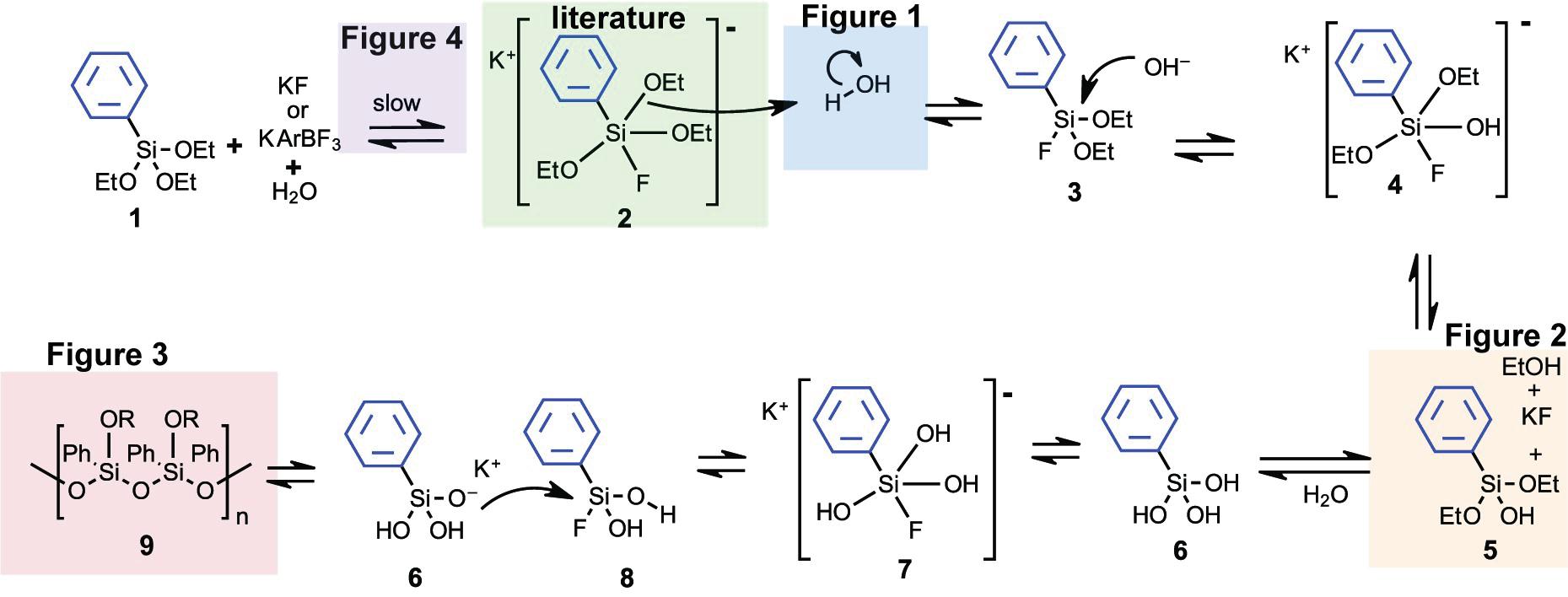
displacement, we incubated PhSi(EtO)3 in DMSO in commercial fluorescent lighting, and dark and found no decomposition in both cases (Figure 1a). Also, the addition of water did not cause any change in the molecules by NMR. The addition of KF with trace water did cause a change in structure, but stopped once the trace water in DMSO was consumed (Figure 1b). This led us to believe that water was critical for the observed hydrolysis reaction. This hypothesis was confirmed by adding excess water (Figure 1c). Excess water and the presence of fluoride resulted in the broadening of the aromatic peaks (suggesting polymerization) and the release of ethanol from the silane core.
We then tested the idea that water was exchanging with ethanol in the presence of fluoride. If this hypothesis was true, then other alcohols would also be able to exchange with the silane and displace ethanol (Scheme 1, 3 to 5). Therefore, we ran the same reaction with added methanol instead of water (Figure 2c). The aliphatic region of the NMR shows a shift synonymous with the displacement of ethanol. Additionally, the methanol reaction shows new peaks that are consistent with the formation of a new SiOMe bond. Tertiary butyl alcohol was added as a negative control (Figure 2b). The non-nucleophilic nature of t-butyl alcohol would prevent it from adding to the silane but it would still be a source of protons for KF/ethoxide exchange. As expected, the bulky alcohol behaves similarly to the reaction with no added alcohol. The fluoride exchange
halted as soon as trace water was consumed. This suggested that neither fluoride or tbutanol completely replaced ethoxy group. This insight further implies that fluoride acts as a catalyst for alkoxy exchange by promoting silicon to a hypervalent state, and does not replace any Si-O bond under room temperature reaction conditions. No evidence of Si-OtBu was seen by NMR. This reinforces that the peak seen by methanol incubation (Figure 2c, brown box) is a result of the Si-OMe bond formation. Additionally, it suggests that alkoxide exchange can be catalyzed by fluoride and is limited by the sterics of the alcohol.
Potassium fluoride is a well-studied nucleophile in polar aprotic solvents like DMSO. We wanted to see if a softer fluoride source would also catalyze the ethoxide exchange in water. A series of 2- and 4- monosubstituted aryltrifluoroborates were examined for their ability to cleave the silyl ethyl ether bond over time by NMR. NMR results show that each trifluoroborate salt induced the cleavage of the Si-OEt bond in excess water. After screening conditions, the rate of reaction was dependent on the concentration of water and fluoride catalyst. For example, the reaction did not proceed unless both fluoride source and water were in the reaction solution. To get a comparison of trifluoroborate the aryl trifluoroborate was kept at a constant catalytic concentration in comparison to PhSi(OEt)3 with water in excess. The cleavage of the Si-OEt bond was monitored over time by NMR (Figure 3). Interestingly, the electron donating groups exhibited a faster reaction rate. We hypothesize that a more electron withdrawn aromatic ring inductively withdraws electron density from the boron-fluoride anion, making it less nucleophilic. This also suggests that the nucleophilic attack of PhSi(OEt)3 is influential in the observed rate of the reaction. Surprisingly, the electron-withdrawing groups also displayed a slightly faster rate of reaction than the simple phenyl ring.
A comparison of steric effects shows that the 2-Me and 2-i-Pr trifluoroborates hydrolyze the silyl ether significantly faster than the unsubstituted phenyl analogue. These results suggest that the substituents in the ortho position of the aryltrifluoroborate can speed up its catalytic activity. It should also be noted that 2-iPr trifluoroborate catalyzes hydrolysis slower than the 2-Me analogue. This suggests that too much steric hindrance can slow the rate of catalytic silyl ester hydrolysis. In order to test if the ortho rate enhancement was sterically or electronically driven we compared the rate of silyl ether hydrolysis in the presence of 2-Me vs. 4-Me phenyl trifluoroborate catalyst. The rate of hydrolysis was noticeably slower with the 2-Me substrate. This result suggests that the rate enhancement seen between 2-Me and phenyl is a result of the electron donating effects of the methyl and not fueled by steric hindrance. Kinetic experiments and component analysis indicated that fluoride was causing silicon to exchanging OR groups for water, eventually forming a poly(phenyl)silicate(scheme 1). However, the fate of the fluoride atom was unclear. Namely we could not determine if fluoride remained on silicon, was free in solutions, or reformed a bond with boron. Therefore, we examined the silyl ether cleavage reaction in situ by fluorine NMR (Figure 4a). F NMR spectrum of unreacted PhSiF3 was taken as a positive control for full fluorine transfer (Figure 4c). Fluorine NMR was also taken of 2-MePhBF3K starting material by itself as a negative control (Figure 4e). Surprisingly, the reaction of 2-MePhBF3K with PhSi(OEt)3 (Figure 4d) shows no apparent Si-F species when compared to the PhSiF3 control (Figure c). Instead, the crude reaction mixture matches the negative control, 2-MePhBF3K by itself. These results show that the fluoride anion does not spend appreciable time bound to silicon atom on an NMR time scale at 298 K (room temperature).This fact along with the fluoride dependent cleavage of the ethoxy group suggests that fluoride quickly interacts with PhSi(EtO)3 and leaves after the nucleophilic attack by hydroxide (Scheme 1, 1-5). Furthermore, even
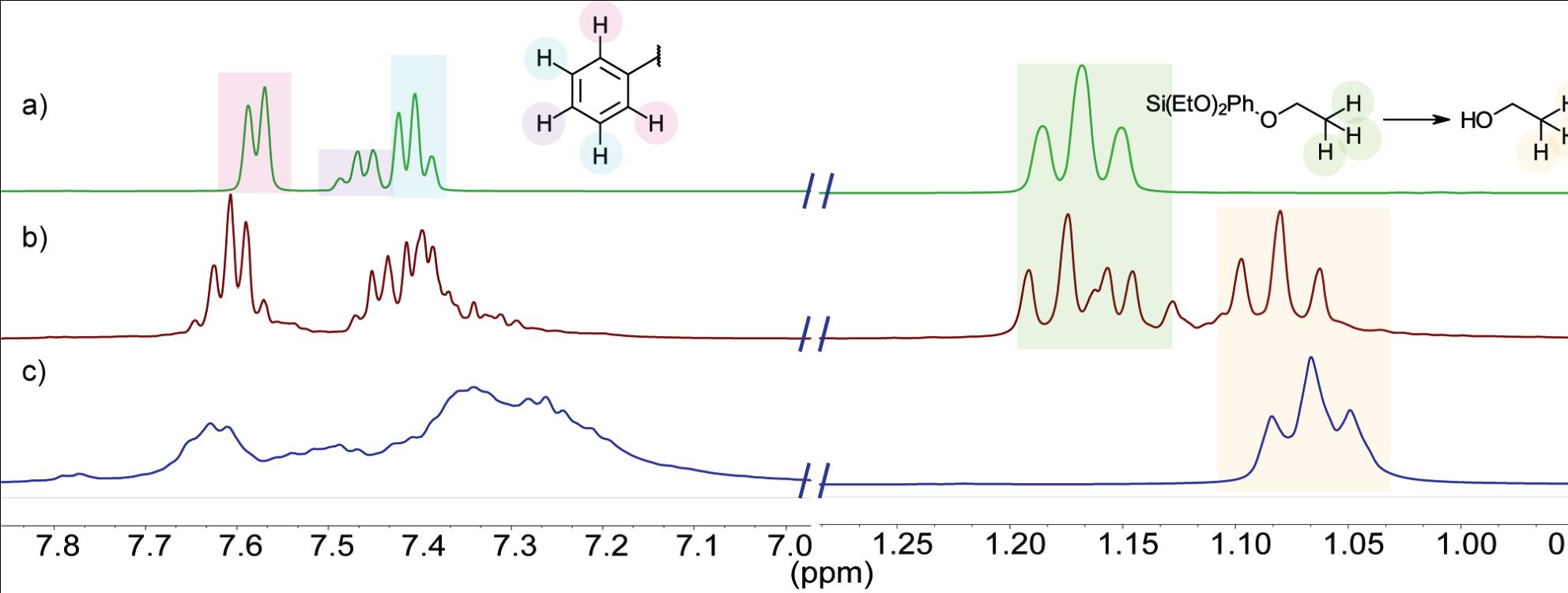
Figure 1. Proton NMR of (a) PhSi(OEt)3, trace H2O (b)PhSi(OEt)3, KF, trace H2O (c)PhSi(OEt)3, KF, excess H2O
though the Si-F bond is thought to be strong. The Si-O bond is more favored. As a result, Fluoride is not able to replace the Si-O on the silicon center. To further test this idea the reaction of KF, water, and PhSi(EtO)3 was also monitored by fluorine NMR (Figure 4a). The resulting fluoride peaks correspond to the unreacted fluoride salt. This data reinforces the idea that B-F fluoride bond is not the reason that the Si-F bond is not longer-lived. Instead, it is silicon’s affinity to oxygen that drives the fast breakage of the Si-F bond.
Past bond enthalpy studies demonstrate that the SiO bond is stronger than the B-O.24 Additionally, the B-F bond is enthalpically more favorable than the Si-F bond.25 This suggested that the aryl boronic acid would exchange with the trifluorophenylsilane (a Himaya style reagent26). To test this hypothesis a 2-Me and 4-Br phenylboronic acids were incubated with trifluorophenyl silane and monitored by F-NMR (Figure 4 i-j). NMR of KBF4 (Figure 4g) was taken as a positive control for the boron-fluoride species. NMR of PhSiF3 (Figure 4h) was used as a negative control for no Si to B fluorine exchange,2 Me phenyl trifluoroborate (Figure 4i) was used as a positive control for full fluorine transfer. NMR results suggested that fluorine is in fact exchanging between boronic acid and trifluorophenylsilane. The multitude of fluorine NMR peaks suggests that multiple species exist in solution. This idea is reinforced by the broad benzylic hump that forms around the aromatic region in the proton NMR spectrum. From these results, we could conclude that Si-F fluorine rearranges to form the more favored B-F bonds, but B-F bonds do not rearrange to form Si-F bonds. We were also interested in finding an application for this fluorine exchange interaction. Previously reported LAN polymerization reaction utilized Pd, Cu, air, and aryl boronic acid27 for the benchtop polymerization of aryl diboronic acids. We were curious to see if the observed fluorine exchange between boron and silicon could serve as a template for aryl-aryl cross coupling (Figure 5). We hypothesize that the fluorine exchange between the two substrates creates a local increase in concentration when approached by the metal catalyst. By placing the two substrates closer in proximity to one another the bis transmetalation that favors cross-coupling is more favorable. Although this idea seemed unlikely, many biological reactions that take place in water gain preferential pseudo kinetic effects for protein modification over water reaction through binding interactions that bring the substrates closer to the desired protein target.28–30 These past studies suggest that the proximal fluoride exchange between boron and silicon could be used to template aryl-aryl cross coupling over the generally preferred homocoupling.We first tested the coupling of PhSi(EtO)3 with the 4BrPhB(OH)2 and monitored the reaction by GC-MS (Figure 5,
Figure 2. Proton NMR of (a) PhSi(EtO)3, H2O, 14 h (b) PhSi(EtO)3, (CH3)3COH, KF, 14h (c)PhSi(EtO)3, CH3OH, KF, 14 h (d) PhSi(EtO)3, H2O, KF, 14 h a-c).
This served as a good control because these materials do not have the ability to exchange fluoride. Without fluoride the PhSi(EtO)3 remained unreacted and the 4BrPhB(OH)2 was exclusively dimerized. By adding 4 equiv of fluoride the PhSi(EtO)3 dimerized, but the dimer product of the 4-BrPhB(OH)2 was no longer prominent. These results suggested that the free fluoride anion could induce activation, transmetalation,
and dimerization of PhSi(EtO)3 but this activation did not result in the cross-coupling product. Next, we monitored the reaction of 4BrPhBF3K and PhSi(EtO)3 under LAN coupling conditions (Figure 5, d-f). This pairing actively undergoes fluoride exchange under the reaction conditions. GC-MS results reveal the formation of cross-coupling product. These results demonstrate that fluorine exchange can induce cross coupling products in reactions that normally would not produce them. We wanted to further test the idea that cross-coupling was being templated by bringing the ArBF3K in proximity to the PhSi(EtO)3(Figure 5d). If this idea was true then we would also be able to enhance cross coupling through the fluorine exchange between aryl boronic acids with PhSiF3 (Figure 5, g-i) Therefore, we subjected 4-BrPhB(OH)2 to LAN coupling conditions in the presence of PhSiF3. GC-MS once again shows the formation of crosscoupling product These results clearly show that using boron-silicon fluoride exchange to template LAN cross coupling is a viable strategy. However, further method development must be done before this LAN benchtop cross-coupling method can be generally useful for small molecules and polymerization.
Conclusions:
In summary, aryl silxoanes undergo hydrolysis in the presence of water and fluoride in DMSO (Scheme 1). The Si-F bond and hypervalent silicon bond cannot be detected by NMR timescale meaning that the hypervalent silicon complex is a short lived intermediate. NMR and GPC analysis of the resulting phenylsilane species suggested that the resulting silica species is a phenylsilicate condensation polymer/oligomer. As it relates to trifluoroborate salts, the more nucleophilic groups on the aromatic ring are generally slightly more reactive as fluoride catalysts for silyl ether hydrolysis. Orthosubstitutions on the trifluoroborate aromatic ring can cause an increase in the rate of silyl ether hydrolysis. However, this rate enhancement is likely due to an increase in the electron density of the aromatic ring rather than an increase in sterics.
When these lessons in fluoride exchange are applied to LAN oxidative cross-coupling. Addition of fluoride does cause PhSi(OEt)3 to react with Pd(II) however very little to no cross-coupling is seen. Arylaryl Cross coupling products are only seen when arylaryl groups are brought in proximity by fluoride exchange. This is the case with the cross coupling of aryl boronic acids with PhSiF3 and the cross coupling of Aryl trifluoroborates with PhSi(OEt)3. Future studies will focus on exploring the effects of solvent, substrates, and catalysts on these oxidative benchtop cross-couplings with the hopes of creating a practical “mix and go” aryl-aryl cross-coupling reaction.
Significance/Impact:
With PRISE support we were able to explore fluoride exchange between boron and silicon atoms. This exploration led to new cross coupling chemistry. Normal aryl-aryl cross coupling has to be done with specialized equipment, raising the cost of the materials and medicine that rely on this chemistry. Our newly developed chemistry can be done on a countertop just by mixing. Next year’s work will focus on further developing this countertop cross-coupling chemistry. Once developed, this new chemistry would provide access to cheaper medicine and conductive/solar materials.
Figure 3. (inset) PhSi(EtO)3 is hydrolyzed by catalytic amounts of different trifluoroborate salts. (a-b) hydrolysis of PhSi(EtO)3 is monitored over time by 1H NMR for different aryltrifluoroborates.
Figure 4. (a) Aryl trifluoroborate binds to phenyl triethoxysilane. Fluorine NMR of (b) KF and PhSi(OEt)3, 24 h (c) PhSiF3 (d) 2MePhBF3K and PhSi(OEt)3, 24 h (e) KBF4 (f) proposed reaction of PhSiF3 with 4-BrPhBF3K. Fluorine NMR of (g) KBF4 (h) PhSiF3 (i)2-MePhB(OH)2 (j) 2-MePhB(OH)2, PhSiF3, 24 h (k) 4-BrPhB(OH)2, PhSiF3, 24 h 6
Figure 5. Cartoon image, molecular structure, and GC-MS results of Pd(II) catalyzed cross coupling for (a-c)4-BrPhB(OH)2, PhSi(OEt)3 (d-f) 4-BrPhBF3K, PhSi(OEt)3 (g-i) 4BrPhB(OH)2, PhSiF3.
References:
1. Dutta, S.; Datta, A.; Zaid, A.; Bhat, J. A. Metalloids and Their Impact on the Environment. In Metalloids in Plants; John Wiley & Sons, Ltd, 2020; pp 19–26. https://doi.org/10.1002/9781119487210.ch2.
2. Prakash, G. K. S.; Yudin, A. K. Perfluoroalkylation with Organosilicon Reagents. Chem. Rev. 1997, 97 (3), 757– 786. https://doi.org/10.1021/cr9408991.
3. Nakao, Y.; Hiyama, T. Silicon-Based Cross-Coupling Reaction: An Environmentally Benign Version. Chem. Soc. Rev. 2011, 40 (10), 4893–4901. https://doi.org/10.1039/C1CS15122C.
4. Burfeindt, J.; Patz, M.; Müller, M.; Mayr, H. Determination of the Nucleophilicities of Silyl and
5. Alkyl Enol Ethers. J. Am. Chem. Soc. 1998, 120 (15), 3629–3634. https://doi.org/10.1021/ja974003w.
6. Deloux, Laurent.; Srebnik, Morris. Asymmetric BoronCatalyzed Reactions. Chem. Rev. 1993, 93 (2), 763–784.
7. https://doi.org/10.1021/cr00018a007.
8. Kirk, R. W.; Timms, P. L. Boron-Fluorine Chemistry. III. Silicon-Boron Fluorides. J.Am. Chem. Soc. 1969, 91 (23), 6315–6318. https://doi.org/10.1021/ja01051a021.
9. Longwitz, L.; Leveson-Gower, R. B.; Rozeboom, H. J.;
10. Thunnissen, A.-M. W. H.; Roelfes, G. Boron Catalysis in a Designer Enzyme. Nature 2024, 629 (8013), 824–829. https://doi.org/10.1038/s41586-024-07391-3.
11. Plescia, J.; Moitessier, N. Design and Discovery of Boronic Acid Drugs. Eur. J. Med. Chem. 2020, 195, 112270. https://doi.org/10.1016/j.ejmech.2020.112270.
12. Smedskjaer, M. M.; Mauro, J. C.; Youngman, R. E.; Hogue, C. L.; Potuzak, M.; Yue, Y. Topological Principles of Borosilicate Glass Chemistry. J. Phys. Chem. B 2011, 115 (44), 12930–12946. https://doi.org/10.1021/jp208796b.
13. Stubelius, A.; Lee, S.; Almutairi, A. The Chemistry of
14. Boronic Acids in Nanomaterials for Drug Delivery. Acc. Chem. Res. 2019, 52 (11), 3108–3119. https://doi.org/10.1021/acs.accounts.9b00292.
15. Chatterjee, S.; Anslyn, E. V.; Bandyopadhyay, A. Boronic Acid Based Dynamic Click Chemistry: Recent Advances and Emergent Applications. Chem. Sci. 2021, 12 (5), 1585–1599. https://doi.org/10.1039/D0SC05009A.
16. Edmunds, W. M.; Smedley, P. L. Fluoride in Natural
17. Waters. In Essentials of Medical Geology; Springer, Dordrecht, 2013; pp 311–336. https://doi.org/10.1007/978-94-007-4375-5_13.
18. 7
19. Kakkar, M.; Kapoor, V.; Singla, S. K.; Jethi, R. K. Fluoride and Biological Mineralization II: Mechanism of Action of Fluoride to Influence the CollagenInduced In Vitro Mineralization and Demineralization Reactions. Biol. Trace Elem. Res. 2021, 199 (11), 4145–4153. https://doi.org/10.1007/s12011-02002544-7.
20. Ayers, P. W. The Physical Basis of the Hard/Soft Acid/Base Principle. Faraday Discuss. 2006, 135 (0), 161–190. https://doi.org/10.1039/B606877D.
21. Pearson, R. G. Hard and Soft Acids and Bases. J. Am. Chem. Soc. 1963, 85 (22), 3533–3539. https://doi.org/10.1021/ja00905a001.
22. Eggenkamp, H. The Halogen Elements. In The 23. Geochemistry of Stable Chlorine and Bromine Isotopes; Springer, Cham, 2025; pp 3–13. https://doi.org/10.1007/978-3-031-75633-7_1.
24. Timms, P. L. Boron-Fluorine Chemistry. I. Boron Monofluoride and Some Derivatives. J. Am. Chem. Soc. 1967, 89 (7), 1629–1632. https://doi.org/10.1021/ja00983a018.
25. Darses, S.; Genet, J.-P. Potassium
26. Trifluoroorganoborates: New Perspectives in Organic Chemistry. Eur. J. Org. Chem. 2003, 2003 (22), 4313– 4327. https://doi.org/10.1002/ejoc.200300294.
27. David Crouch, R. Selective Monodeprotection of BisSilyl Ethers. Tetrahedron 2004, 60 (28), 5833–5871. https://doi.org/10.1016/j.tet.2004.04.042.
28. Nelson, T. D.; Crouch, R. D. Selective Deprotection of Silyl Ethers. Synthesis 2000, 1996, 1031–1069. https://doi.org/10.1055/s-1996-4350.
29. Molander, G. A.; Cavalcanti, L. N.; Canturk, B.; Pan, P.-S.; Kennedy, L. E. Efficient Hydrolysis of Organotrifluoroborates via Silica Gel and Water. J. Org. Chem. 2009, 74 (19), 7364–7369. https://doi.org/10.1021/jo901441u.
30. Lenormand, H.; Goddard, J.-P.; Fensterbank, L. Spirosilane Derivatives as Fluoride Sensors. Org. Lett. 2013, 15 (4), 748–751. https://doi.org/10.1021/ol3033048.
31. Fujiki, K.; Tanaka, K. Exploration of the Fluoride Reactivity of Aryltrifluoroborate on Selective Cleavage of Diphenylmethylsilyl Groups. Eur. J. Org. Chem. 2020, 2020 (29), 4616–4620. https://doi.org/10.1002/ejoc.202000707.
32. CRC Handbook of Chemistry and Physics. 81st Edition Edited by David R. Lide (National Institute of Standards
33. and Technology). CRC Press: Boca Raton, FL. 2000. 2556 Pp. $129.95. ISBN 08493-0481-4. J. Am. Chem. Soc. 2000, 122 (50), 12614–12614. https://doi.org/10.1021/ja0048230.
34. Kameo, H.; Sakaki, S. Activation of Strong BoronFluorine and Silicon-Fluorine σBonds: Theoretical Understanding and Prediction. Chem. Weinh. Bergstr. Ger. 2015, 21 (39), 13588–13597. https://doi.org/10.1002/chem.201502197.
35. Hatanaka, Y.; Hiyama, T. Alkenylfluorosilanes as Widely Applicable Substrates for the PalladiumCatalyzed Coupling of Alkenylsilane/Fluoride Reagents with Alkenyl Iodides. J. Org. Chem. 1989, 54 (2), 268–270. https://doi.org/10.1021/jo00263a003.
36. Minus, M. B.; Moor, S. R.; Pary, F. F.; Nirmani, L. P. T.; Chwatko, M.; Okeke, B.; Singleton, J. E.; Nelson, T. L.; Lynd, N. A.; Anslyn, E. V. “Benchtop” Biaryl Coupling
37. Using Pd/Cu Cocatalysis: Application to the Synthesis of Conjugated Polymers. Org. Lett. 2021, 23 (8), 2873–2877. https://doi.org/10.1021/acs.orglett.1c00479.
38. Zhao, S.-J.; Guo, H.; Wu, Z.; Jiang, J.-H. Proximity-Driven Bioorthogonal Reactions via DNA Circuits Enable the Accurate Aptasensing of Non-Nucleic Acid Targets. Chem. Commun. 2022, 58 (96), 13393–13396. https://doi.org/10.1039/D2CC05628C.
39. Popp, B. V.; Ball, Z. T. Proximity-Driven Metallopeptide Catalysis: Remarkable Side-Chain Scope Enables Modification of the Fos bZip Domain. Chem. Sci. 2011, 2 (4), 690–695. https://doi.org/10.1039/C0SC00564A.
40. Minus, M. B.; Liu, W.; Vohidov, F.; Kasembeli, M. M.; Long, X.; Krueger, M. J.; Stevens, A.; Kolosov, M. I.; Tweardy, D. J.; Sison, E. A. R.; Redell, M. S.; Ball, Z. T.Rhodium(II) Proximity-Labeling Identifies a Novel Target Site on STAT3 for Inhibitors with Potent Anti41. Leukemia Activity. Angew. Chem. Int. Ed Engl. 2015, 54 (44), 13085–13089. https://doi.org/10.1002/anie.201506889.
Computational Modeling of Rotavirus Drug Target Non-structural Protein 4 (NSP4)
Frank Garcia and Lori Banks, Ph.D.* Department of Biology, College of Arts and Sciences
Introduction:
Ion channels are fundamental for the regulation of cellular ionic content and transmission of molecular signals within and between cells. As a testimony of their crucial importance, ion channels are found ubiquitously throughout all domains of life, including viruses. Viral encoded ion channels are called viroporins and are a diverse and growing family of viral virulence factors and are found in many important pathogens, including influenza, polio, HIV, SARS and hepatitis C virus. A few viroporins are part of the virus particle itself and these viroporins are important for virus entry and exit. In contrast, most viroporins are only synthesized in virusinfected cells and are designed to activate host signaling pathways necessary for virus replication, but the resulting aberrant cell function leading to clinically important diseases. My research focuses on the rotavirus (RV) nonstructural protein 4 (NSP4) viroporin, which is a fascinating and clinically important model system for viroporin-mediated disease. NSP4 specifically exploits host calcium (Ca2+) signaling pathways to promote RV replication. This increased Ca2+ signaling causes lifethreatening diarrhea and vomiting, which kills more than 250,000 children each year even with wide-spread vaccination (1). There are no antiviral or antidiarrheal drugs available that can protect these children, but since NSP4 is both necessary for RV replication and RV diarrhea, my work to understand the mechanics of the NSP4 viroporin will produce candidate NSP4 inhibitors to lessen RV disease and to help save lives worldwide (1-3) (Fig 1).
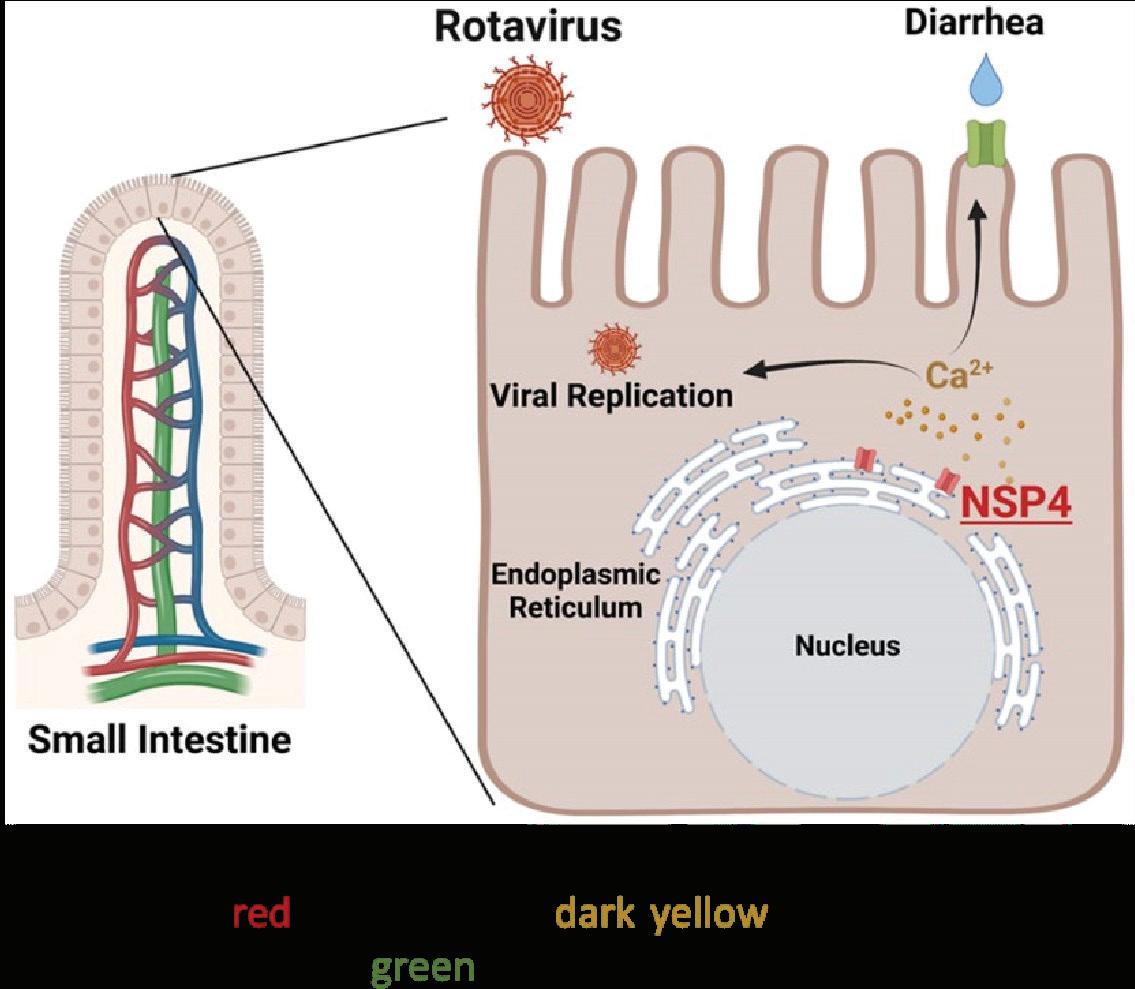
Studies by my lab and others have identified possible regions to be pharmacologically targeted through saturation mutagenesis studies. In my lab, this has included loss of function mutants from studies in the lab-adapted SA11 strain, and some clinical strains, that elucidate weak spots in the functional landscape of the molecule (Duffy et. al, in prep). Because our functional screen does not determine the underlying biochemical
mechanism, it is crucial that we identify these mechanisms to better inform rational drug design efforts. Part of that gap in knowledge includes understanding the full-length 3D structure of NSP4, which has evaded experimental efforts despite decades of effort. To address this gap, we have turned to computational methods to 1) determine 3D models of the monomeric protein, and 2) determine the behavior of NSP4 monomers in a physiologically-relevant lipid bilayer. While recent efforts in our lab have produced a high-confidence model using AI-based protein structure-prediction algorithms, we can now use that model to observe its behavior in a membrane environment.
Objectives:
Aim 1) Computationally determine the dynamics of NSP4 in a physiologically relevant membrane system, and Aim 2) computationally determine the dynamics of NSP4 in the presence of Ltype calcium channel blockers.
Methods:
Computational Modeling
We modeled the Group A rotavirus NSP4 protein tetramer complex using a combination of AlphaFold2 to develop the monomer and then molecular docking with ClusPro to form the tetramer. The tetramer was placed using different levels of insertion along the C-terminus into a 50Å ER-like membrane (containing the approximate pH and phospholipid distribution of the human enterocyte ER) in CHARMM-GUI. N-linked mannose residues were also added in the CHARMM-GUI interface. At the time of this report, molecular dynamics simulations in GROMACS were in progress.
Results:
The docking results from ClusPro and the combination of those data with the relevant membrane in CHARMM-GUI show that the previously reported C-terminal Ca2+-binding domain (Glu120 and Gln123) sits just outside the membrane (Figure 2). Further, the highly conserved IFNTLL region characterized as central to NSP4’s pathogenic functions, sits near a turn between helices and is likely embedded in the membrane (Figure 3). The furthest N-terminal helices have been shown biochemically to associate with the membrane, but they also contain N-linked mannose glycosylation sites when the protein is expressed in eukaryotic cells. In our model, these glycosylated helices sit atop the membrane on one side, with the turn into the next helix coming at approximately 90° (Fig 4). This makes the putative viroporin domain slanted within the membrane, and the longer C-terminal complex, perpendicular to the plane of the membrane.
Figure 2. PyMOL rendering of the ClusPro docked SA11 NSP4 tetramer complex. Residues Glu120 and Gln123 are highlighted in red licorice sticks.
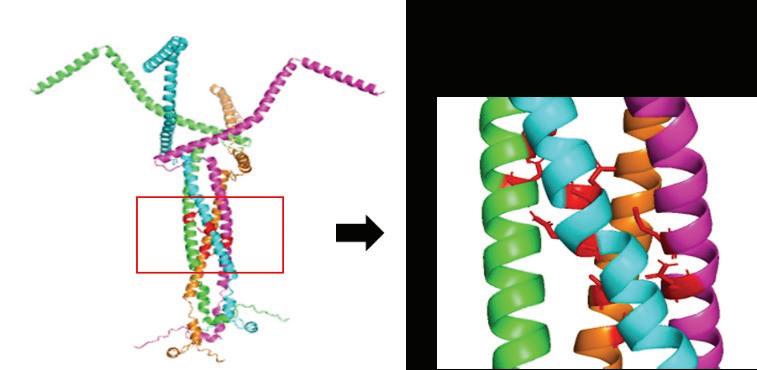
Figure 3. PyMOL rendering of the ClusPro docked SA11 NSP4 tetramer complex IFNTLL region. Residues 75-80 constituting the IFNTLL motif are highlighted in blue licorice sticks.

Figure 4. CHARMM-GUI rendering of the N-glycosylated SA11 NSP4 tetramer complex in a human enterocyte ER-like membrane composition. Protein chains are colored from N to C termini in ROYGBIV. Mannose residues are shown in licorice sticks at positions 8 and 18. For clarity, phospholipid heads are shown as orange spheres, and the fatty acid tails are not shown.
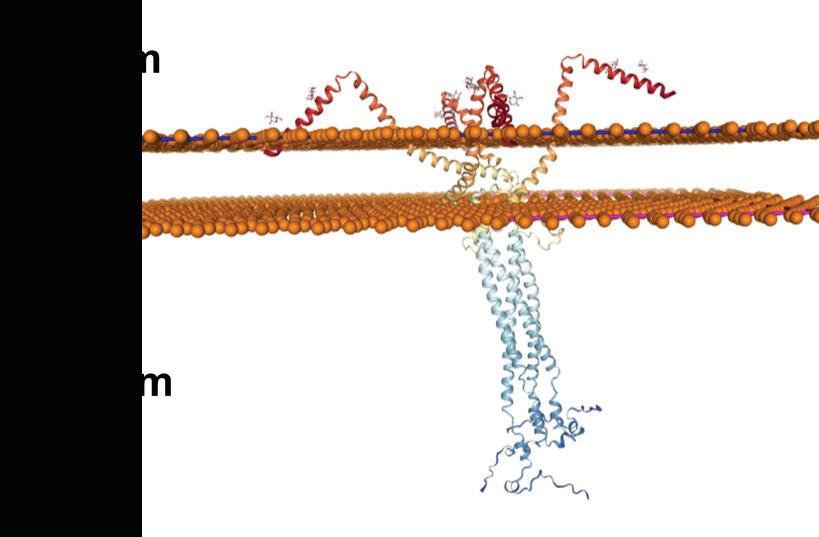
Significance/Impact:
These results provide insight into the physical location of residues identified in our experimental work as key to NSP4 function. More directly, for our drug discovery studies, these data show how accessible these residues may be to small-molecule inhibitors in the context of an infected cell.
Degradation of Dye by Graphitic Carbon Nitride (g-C3N4)
Glory Ollordaa and Yingchun Li, Ph.D.*
Introduction:
Industrial dye pollution is a growing environmental problem, as textiles and related industries release large amounts of toxic and persistent effluents into water systems. Traditional treatment methods (adsorption, coagulation, and biological processes) are either ineffective or create secondary waste. Photocatalysis offers a promising alternative because it can fully degrade dyes into harmless products. Graphitic carbon nitride (g-C₃N₃) has emerged as a visible-light-active, low-cost, and metal-free photocatalyst, but it suffers from low surface area and high charge recombination. This study investigates pristine g-C₃N₃ and caffeine-doped g-C₃N₃, combined with hydrogen peroxide (H₃O₃), to assess their efficiency in degrading synthetic dyes under visible light. The work also evaluates how dye molecular structure (sulfonated vs. nonsulfonated) affects degradation.
Methodology Preparation of Pristine g-C3N4 at 600˚C
• Measure 3.00g Melamine (FW = 126.12g/mol, MP > 300˚C, Fp 300˚C) with a weighing paper.
• Pour the sample into an already weighed crucible and crush with a pestle to reduce the surface area.
• Put the sample into a furnace and set the temperature to 600˚C for 2 hours.
• Take it out after 2 hours, allow it to cool, and weigh the crucible and its contents. Crush the recovered residue and store it in a well-labeled bottle.
Weight of sample after heating = 2.0802g
% recovery = 69.34%
Preparation of 5% Caffeine Doped g-C3N4 at 600˚C
• Measure 2.85g Melamine (FW = 126.12g/mol, MP > 300˚C) with a weighing paper.
• Li, Yingchun - #21
109 of 156
• Measure 0.15g of Caffeine (FW = 194.19g/mol, mp = 234˚C)
• Pour the two samples into an already weighed crucible and crush them with a pestle to ensure proper mixing.
• Put the sample into a furnace and set the temperature to 600˚C for 2 hours.
• Take it out after 2 hours, allow it to cool, and weigh the crucible and its contents. Crush the recovered residue and store it in a well-labeled bottle.
Weight ofSample after heating = 0.6689g
% recovery = 22.3%

Experimental results show that both pristine and caffeine -doped g-C N were capable of degrading dyes under visible light in the presence of H O . However, there was no significant difference in the performance of the two catalysts. Caffeine doping did not provide measurable improvement in degradation efficiency, light absorption, or charge recombination suppression compared to pristine g-C N . Both catalysts exhibited higher degradation rates for nonsulfonated dyes than sulfonated dyes, confirming the stro ng influence of dye molecular structure. Optimization studies highlighted the importance of balancing catalyst dosage and H O concentration to avoid scatteri ng and radical scavenging.
Next Step:
My next step is to test triarylmethane dyes and to expand parameters to include higher light intensity (double LED lamps) and to use SEM to examine all the catalysts.
BUSINESS
Business
Enterprise Cyber Security Education in Machine Learning and Neural Network: Integrating Security Curriculum in an Underprivileged College Student Population
Emmanuel Ali and Emmanuel Opara, Ph,D.* Department of Accounting, Finance & MIS, College of Business
Introduction:
The project titled "Enterprise Cyber Security Education in Machine Learning and Neural Network: Integrating Security Curriculum in an Underprivileged College Student Population" aims to bridge the educational gap in cyber security by integrating a specialized curriculum in machine learning (ML) and neural networks (NN) for underprivileged college students. This initiative seeks to equip students with the necessary skills and knowledge to navigate and contribute to the ever-evolving field of cyber security.
Objectives:
• To develop and implement a comprehensive cyber security curriculum focused on ML and NN.
• To provide hands-on training and practical experiences to enhance learning.
• To increase accessibility to advanced cyber security education for underprivileged students.
• To foster a community of skilled professionals ready to tackle contemporary cyber security challenges.
Curriculum Development
Completed:
1. Needs Assessment: Conducted surveys and focus groups to identify the specific needs and gaps in current educational offerings.
2. Curriculum Design: With Professor Opara’s guidance, created a detailed syllabus covering fundamental need topics in ML, NN, and cyber security. Key modules include:
o Introduction to Cyber Security
o Basics of Machine Learning
o Neural Networks and Deep Learning
o Applications of ML and NN in Cyber Security
o Hands-on Projects and Case Studies
In Progress:
• Resource Compilation: Gathering textbooks, research papers, software tools, and other educational resources to support the curriculum.
• Expert Review: Seeking feedback from industry experts and academic professionals to refine the curriculum.
Results and Discussion: Forthcoming
Impact Benefit: Forthcoming
Conclusion:
Significant progress has been made in developing and implementing the Enterprise Cyber Security Education curriculum. While challenges remain, our efforts are steadily advancing towards empowering underprivileged college students with essential skills in ML, NN, and cybersecurity. This initiative not only addresses educational disparities but also prepares a new generation of cyber security professionals equipped to meet contemporary challenges.
EDUCATION
Education
One and Done: Moving Teacher Candidates through the Teacher Preparation and Certification Program at an HBCU Institution in Texas
Myltazaire Crayton and Beverly King Miller, Ph.D.* Department of Curriculum and Instruction, College of Education
Introduction:
As part of the RISE research faculty collaboration, the Graduate Assistant (GA) played an integral role in the research project launched in Spring 2023, that supports datadriven intervention strategies to increase the pass rate for undergraduate teacher candidates in the College of Education. This longitudinal study, now completed its second year, is designed to increase the throughput of teacher candidates so they graduate fully certified by the Texas Education Agency.
This year the GA worked with two new cohorts of students from Fall 2024 and Spring 2025. She was tasked with systematically tracking student progress using a customized spreadsheet designed to monitor engagement with the program’s two core test preparation platforms: Certify Teacher and 240 Tutoring. The spreadsheet recorded key data points, including each student’s content area, initial baseline scores from Certify Teacher, subsequent testing results, study hours (both in-person and online), and scores from 240 Tutoring practice assessments.
The GA was integral in the introduction of the Pizza, Pop, and Study Prep (PPSP) sessions in Fall 2024. This content-specific study event provided structured opportunities for students to actively engage with test preparation tools, reflect on their progress, and receive direct guidance from faculty and GA.
Theoretical Framework:
Bandura (1995 ;1997) is used to address student self-efficacy in preparing and passing these exams. An examination of Bandura's experiences that are relevant in building motivation that results in increased self-efficacy is considered:
a. Mastery Experiences
b. Vicarious Experience
c. Social Persuasion Experiences
Dweck (2006) - Mindset (Growth vs Fixed) fixed mindset (believing abilities are static) and a growth mindset (believing abilities can develop with effort and perseverance). This theory was used to:
a. Teach the growth mindset
b. Promote resilience and perseverancee
c. Build motivation and Self-Efficacy
Project Objectives:
1. Increase Certification Exam Readiness Among EPP Candidates
To enhance the academic preparation of teacher candidates by providing structured, datainformed support through the use of test preparation platforms (Certify Teacher and 240 Tutoring) and individualized tracking systems.
2. Strengthen Student Self-Efficacy and Growth Mindset
To foster psychological readiness and resilience by implementing peer support structures, mentorship, and informal student engagement that promote belief in students’ ability to succeed on certification exams.
3. Establish a Scalable Student Progress Monitoring System
To design and maintain a robust data tracking system—led by Graduate Assistant that monitors individual student performance, identifies trends, and informs timely faculty intervention.
4. Improve Communication and Coordination Across Program Stakeholders
To facilitate consistent communication between students, faculty, and the Certification Office regarding test timelines, requirements, and expectations, ensuring a more transparent and supportive pathway to certification.
Methods:
This Mixed Methods study began in January 2023 and is under Institutional Review Board (IRB) is designed to assess the throughput of Teacher Candidates in its Educator Preparation Program (EPP)
Participants: students in their junior year who are enrolled in the first six hours of professional teacher education courses, which are designated as benchmark courses where passing the state content area teacher exam must occur.
Data collection: Quantitative data will come from students' 240 Tutoring Practice Test Scores; Certify Teacher Exam Mode Scores, and the Pearson Online Interactive Practice Exam Scores (for applicable content areas) and survey data.
Data Analysis : Spreadsheet tracking baseline Certify Teacher scores and 240 tutoring scores to determine readiness for the Texas Education Agency (TEA) Examination. Additionally, use of student survey data.

Results:
The Pizza Pop and Study Prep sessions yielded high attendance rates (78% in Week 1 and 94% in week 2), along with positive student feedback, indicated a growing sense of confidence and motivation regarding the testing. By working collaboratively, students not only deepened their content knowledge but also developed a stronger belief in their own ability to succeed. The sessions fostered a supportive learning environment that emphasized effort, persistence, and peer accountability key elements in promoting a psychological shift from anxiety and self-doubt to a mindset rooted in resilience and academic ownership.
. A two-tailed paired samples test was conducted to determine if the testing treatment given to students after baseline testing, made a difference in student test scores. The results were significant. The significant. The mean of the Post Score was significantly higher than the mean of the Baseline Score. The results are presented in Score. The results are presented in Table 1. A bar plot of the means is presented in Figure 1
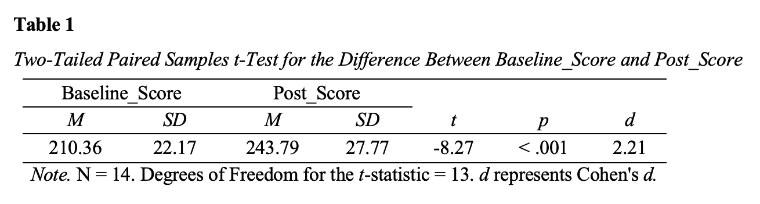
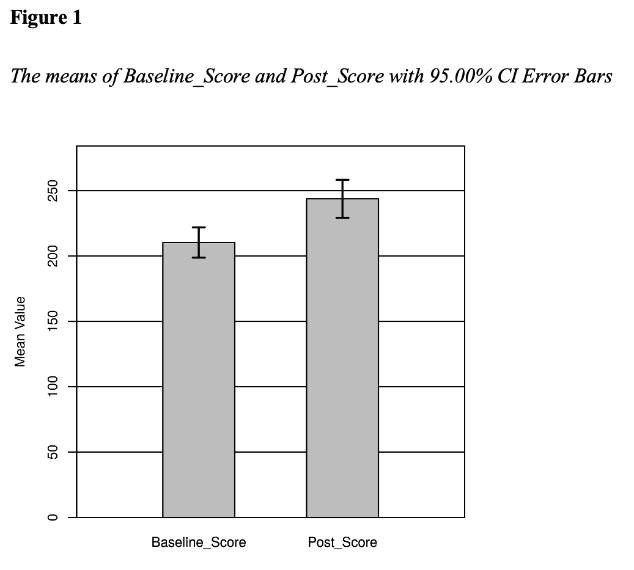
Significance and Impact:
Of the 19 students enrolled in the Fall 2024 course, 11 fully passed their content exams in January; 4 were eligible for retesting hence a 58% pass rate compared to the 39% pass rate in 2023. Since we continued to track the data, the Spring 2023 students had a pass rate of 48% since 3 who graduated in the fall of 2024 had retested and passed their examinations.
Test Prep Study Sessions seemed to have been a valuable inclusion for the students. It represented a greater departmental collaboration with faculty and college leadership. It also led to the need to hire a designated person to assist with the testing protocols.
Conclusion
This progress report highlights the research work of the faculty with the RISE Graduate funded researcher. By integrating academic tracking, personalized support, teacher assistant teaching, and structured interventions, the work of the Graduate Assistant has played a pivotal role in identifying student needs, reducing test anxiety, and promoting a growth mindset.
The combination of informal engagement, data-driven progress monitoring, and faculty collaboration has contributed to increased self-efficacy and stronger performance among teacher candidates. Importantly, this initiative not only addresses TEA certification requirements but also supports the broader goal of diversifying and strengthening the educator workforce. The strategies outlined scalable, evidenceinformed, and grounded in theoretical frameworks offer a replicable model for other institutions seeking to support underrepresented teacher candidates and improve throughput in certification programs. This research has been presented with the GA at the RAMP conference in February 2025 and is now in a manuscript under review where the GA is included.
References:
1. Bandura, A. (1977). Self-efficacy: toward a unifying theory of behavioral change. Psychological review, 84(2), 191.
2. Bandura, A (1992). Exercise of personal agency through the self-efficacy mechanism. Psychological Society 48(187), 397-427.
3. Bandura, A. (1995). Self-Efficacy in changing societies. Cambridge University Press.
4. Dweck, C. S. (2006). Mindset: The new psychology of success. Random house
Untold Stories of URM Middle School STEM Teachers
Jenaye Love-Perkins and Camille S. Burnett, Ph.D.* Department of Curriculums and Instruction, College of Education
Introduction:
There is a critical need for recruiting, preparing, and retaining science, technology, engineering, and mathematics (STEM) teachers. It is well known that there is a shortage of K-12 STEM teachers nationwide (Cross, 2017; Feder, 2022). Moreover, fewer than 20 percent of mathematics and computer science teachers and fewer than 20 percent of natural science teachers identify as underrepresented and racially minoritized (URM) persons (National Center for Education Statistics, 2011-2012). This shortage of STEM teachers is caused by supply and demand factors (Cowan et al., 2016). The supply of STEM teachers is low; that is, an insufficient number of STEM teachers are being prepared (Fuller & Pendola, 2019). In contrast, the demand for STEM teachers is high; that is, attrition and turnover rates of STEM teachers are problematic in many high-need local educational agencies (Fuller & Pendola, 2019). Little is known about how URM middle school STEM teachers choose their profession and remain in their profession despite the factors that lead to high attrition and turnover rates. Thus, there is a critical need to understand how URM middle school STEM teachers select the K-12 setting for their career and persist in the K-12 setting despite the challenges. Without this knowledge, educators and policymakers will be unable to create effective teacher recruitment, preparation, and retention strategies, and the shortage of URM STEM teachers will continue.
Objectives/Goals:
The goal of this proposed project was to understand the journey taken by URM middle school STEM teachers to enter their profession to better inform recruitment, preparation, and retention strategies. For the proposed project, the journey into the teaching profession will include before, during, and after the teacher preparation phase. The initial interpretation of the phenomenon of this journey is that the pathways to and through teaching for URM middle school STEM teachers are unique and meaningful for each person, yet may have intersecting commonalities and can be used to inform teacher recruitment, preparation, and retention practices. Thus, the objective of the proposed project was to report the stories of URM middle school STEM teachers’ journey to and through the teaching profession.
Methods:
The initial phase of the project began with a scoping review to assess the potential size and scope of theoretical frameworks used to explain career choice, STEM career choice, teaching career choice, and, more specifically, STEM teaching career choice. Several article searches were conducted. The one that proved most fruitful used
keywords such as “STEM teachers,” “Preservice teachers or student teachers or preservice teachers or prospective teachers or teacher candidates,” and “career choice or career decision or career selection or career motivation.” The number of articles was reduced by focusing on articles written in English within the last 20 years, peer -reviewed, and the full text was available through our library. Articles that focused on special education or pre-school and elementary school teachers were excluded from the collection. Eligible theories were tabulated and described. This phase of the project also focused on instrument development. Three instruments were drafted – the Participant Profile Questionnaire, the Interview Protocol, and the Artifact Protocol (see Results and Discussions for more details). Additionally, the IRB Application for the project was drafted.
The current phase of the project included re-visiting the literature and revising instruments already drafted with an intentional focus on the career trajectories of experienced secondary STEM teachers. More importantly, it included submitting an NSF CAREER Proposal utilizing this new focus as the foundation for the proposal. The next phase will focus on data collection and data analysis.
Results and Discussion:
Initial Phase
Before the initial phase of the project could begin, the research assistant was required to complete several trainings, including CITI, Qualtrics, and Library Use. Upon completion of these trainings, the initial phase of the project began. The third and final search for articles yielded 382,203 articles available through our library, but after applying several limitations, the number of articles was reduced to 108. The articles were all carefully reviewed. Social Cognitive Career Theory, FIT-Choice model, and Tripartite Framework emerged from the literature reviewed. These were used to answer the research question, “What theoretical and/or conceptual frameworks have been used to explain why STEM teachers choose their profession?” and to complete the scoping review.
Additionally, three instruments were drafted during the initial phase of the project – the Participant Profile Questionnaire, the Interview Protocol, and the Artifact Protocol. The Participant Profile Questionnaire includes questions about demographics, educational background, teacher preparation, professional experience, and other information that may be useful in developing a profile of each participant. It also requests additional location and contact information for each participant as a means of planning for later interview data collection. The Participant Profile Questionnaire was drafted in Qualtrics to ensure that the data is systematically collected, safely stored, and easily accessible for later analysis. The Interview Protocol is divided into three sections (see Table 1), adapted from the in-depth interview structure developed by Seidman (2006). The interview questions ask the participants to describe the who, what, where, when, why, and how of their journey to and through the teaching profession to better understand the participants’ experiences. The Artifact Protocol is an intake sheet that will be used to log relevant information about the artifact. It allows for a description of the type of artifact and the connection of the artifact to the participant’s journey to and through the STEM
teaching profession. Depending on the nature of the artifact, a photograph, hyperlink, or other documentation is also included in the Artifact Protocol to aid in later analyses and triangulation of data. Like the Participant Profile Form, the Artifact Protocol is housed in Qualtrics to ensure that the data is systematically logged, safely stored, and easily accessible for later analysis.
Table 1. Sample Interview Questions
Interview
1.Life History
2.Contemporary Experience
Sample Interview Questions
How did the participant come to be a secondary STEM teacher?
What is it like for the participant to be a secondary STEM teacher? What are the details of the participant’s work as a secondary STEM teacher?
3.Reflection on Meaning What does it mean to the participant to be a secondary STEM teacher? How does the participant make sense of their work as a secondary STEM teacher?
Current Phase
The new literature review explored teacher career stages, teacher identity, and teacher resilience to better understand the career trajectories of experienced secondary STEM teachers. It led to the examination of additional theoretical frameworks, such as Narrative Theory, Sociocultural Learning Theory, Teacher Professional Identity Theory, and Resilience Theory. Although Social Cognitive Career Theory was previously reviewed, a different approach to its relevance was considered.
Regarding the instruments, the Participant Profile Questionnaire and the Artifact Protocol remained largely unchanged, but revisions were made to the Interview Protocol (see Table 2).
Table 2. Sample Interview Questions
Interview
Focus of Interview Questions
1.Focused Life History To establish the STEM teachers’ professional trajectories, focusing on their pathways into teaching, significant career milestones, and shifts in roles or contexts
2.The Details of the Experience To delve into the specific experiences of their daily practice, including pedagogical choices, interactions with students and colleagues, and navigation of policy or curriculum changes
3.Reflection on the Experience To encourage participants to reflect on the overarching meaning of their sustained practice, the evolution of their professional identity, and their perspectives on persistence and resilience in the profession
Impact/Benefit:
The work completed during this project was used to support the development of a proposal for the NSF Faculty Early Career Development Program in July 2025.
References:
1. Communication Theory (2014, July 7). The narrative paradigm
2. https://www.communicationtheory.org/the-narrative-paradigm/
3. Cowan, J., Goldhaber, D., Hayes, K., & Theobald, R. (2016). Missing elements in the discussion of teacher shortages. Educational Researcher, 45(8), 460-462.
4. Creswell, J. W., & Poth, C. N. (2017). Qualitative Inquiry and Research Design: Choosing Among Five Approaches. Sage.
5. Cross, F. (2017, May). Teacher shortage areas: Nationwide listing 1990-1991 through 2017-2018. U.S.
6. Department of Education, Office of Postsecondary Education.
7. https://www2.ed.gov/about/offices/list/ope/pol/bteachershortageareasreport20171 8.pdf Feder, T. (2022). The US is in dire need of STEM teachers. Physics Today, 75(3), 25-27. https://doi.org/10.1063/PT.3.4959
8. Fuller, E. J., & Pendola, A. (2019). Teacher preparation and teacher retention: Examining the relationship for beginning STEM teachers. American Association for the Advancement of Science.
9. Love-Perkins, J., Barnett-Price, S., Lemons-White, K., & Burnett, C. (2024). Why a STEM teacher? A review of the frameworks. 41st Annual Research Association of Minority Professors Conference, Washington, DC.
10. Mills, G., & Gay, L. (2019). Educational research: Competencies for analysis and applications (12th ed.). New York, NY: Pearson.
11. National Center for Education Statistics. (2011-2012). Percentage distribution of teachers, by school type, race/ethnicity and selected main teaching assignment: 2011–12. [Data table].
12. https://nces.ed.gov/surveys/sass/tables/sass1112_21022407_t12n.asp Riessman, C. K. (1993). Narrative analysis. Sage.
13. Seidman, I. (2006). Interviewing as qualitative research: A guide for researchers in education and the social sciences (3rd ed.). Teachers College Press.
ENGINEERING
Engineering
Implementation of Zero Trust Security on a 5G Broadband Using Firecell Testbed.
Ndidi Anyakora Cajetan M. Akujuobi, Ph.D.* Department of Electrical & Computer Engineering, College of Engineering
Introduction:
In the 2024–25 RISE program, we explored cutting-edge research aimed at integrating artificial intelligence and real-time data streaming into industrial 5G and emerging 6G communication systems. Our team developed a sophisticated multi-agent AI framework designed for real-time anomaly detection and adaptive Quality-of-Service (QoS) optimization in Industrial Internet-ofThings (IIoT) networks, further enhanced by reinforcement learning algorithms to dynamically manage network resources under changing conditions. To ensure practical applicability, we validated these methods using a fully operational 5G standalone (SA) Firecell LabKit testbed, achieving impressive performance benchmarks downlink throughput reaching 5.0 Gbps, uplink throughput of 1.0 Gbps, and consistent latency below 20 milliseconds, far outperforming prior simulations. Collectively, these advancements not only elevate PVAMU’s research profile but also position the University as a leading contributor to 6G technology and Industry 4.0 innovation.
Objectives:
During the 2024–25 academic year, we successfully achieved the following research goals:
1. AI-Driven Anomaly Detection: Developed and implemented a multi-agent machine learning framework capable of real-time anomaly and intrusion detection in industrial 6G and IIoT networks, integrating classical machine learning models (such as Random Forest and SVM) within a coordinated multi-agent architecture.
2. Adaptive QoS Optimization: Created AI-driven algorithms, particularly leveraging reinforcement learning techniques, to dynamically optimize network Quality-ofService (QoS) under varying traffic patterns and network conditions. Our approach encompassed priority scheduling for critical IIoT data flows and effective load balancing across industrial 5G/6G scenarios.
3. 5G/6G Testbed Development: Established and operated a practical 5G Standalone (SA) wireless testbed using the Firecell LabKit to experimentally validate network performance. Through comprehensive live traffic capture and analysis, we characterized key performance metrics such as throughput and latency and identified critical security vulnerabilities under realistic operational conditions.
4. Dissemination: Published our findings in leading academic and professional venues to showcase our technical advancements and significantly contribute to the field of secure 6G networks. Notable publications include:
• Comprehensive Analysis of 5G SA Network and Testbed: Testing, Performance, and Vulnerability Detection Using Firecell Labkit, International Journal of Wireless & Mobile Networks (IJWMN), 2024.
• AI-Driven Multi-Agent Systems for Real-Time Anomaly Detection and Adaptive QoS Optimization in Future Industrial 6G Networks, CCCI, 2025.
Methods:
To achieve these objectives, we employed a combination of experimental testbeds, algorithm development, and data-driven analysis.
5G/6G Wireless Testbed: At CECSTR, we deployed a fully operational 5G standalone (SA) test network using the Firecell LabKit, featuring an Open5G core and RAN components. Over-the-air measurements were conducted with commercial user equipment (UEs), and packet captures were collected using Wireshark to analyze protocol behaviors. As detailed in our publication, the testbed achieved critical 5G performance benchmarks: downlink throughput of up to 5.0 Gbps, uplink throughput of 1.0 Gbps, and end-to-end latency under 20 ms.
These results align with 5G NR specifications. Notably, real-world testing yielded a packet loss rate of just 0.45%, a substantial improvement over the ~2.7% observed in simulations, underscoring the testbed’s reliability. Traffic breakdown further revealed protocol distribution: UDP accounted for 31% (video/voice), TCP 21% (web/file transfers), and GTP 44% (5G core signaling), offering valuable insights for QoS tuning and anomaly detection strategies.
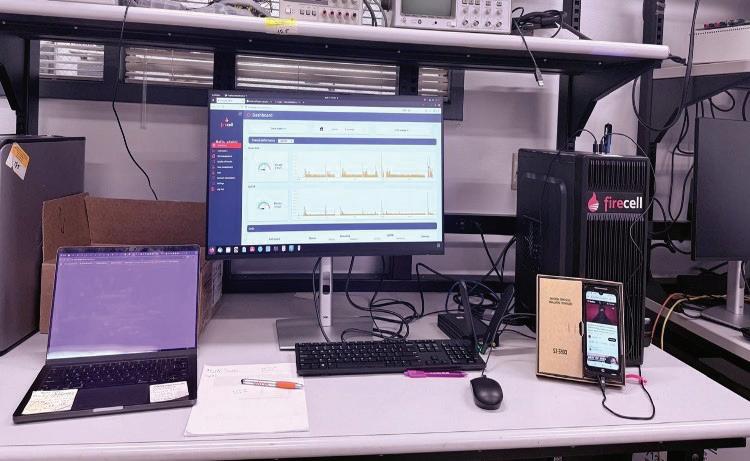

Multi-Agent Anomaly Framework: We designed a novel anomaly detection architecture composed of three autonomous agents, each embedded with distinct AI functionalities that operate collaboratively. These agents continuously monitor network behavior, identify anomalies, and adjust system parameters in real time. As illustrated in Figure 2,
Figure 1: Diagram of the Test Bed- Experimental Setup
the Firecell LabKit serves as the foundational infrastructure, simulating a 5G/6G core and radio environment. It enables us to inject traffic, log performance metrics, and analyze system behavior. The LabKit’s telemetry spanning Radio Resource Control (RRC) transitions, MAC-layer metrics, and IQ sample streams feed directly into our multi-agent monitoring pipeline, enabling adaptive responses to performance fluctuations and security threats.
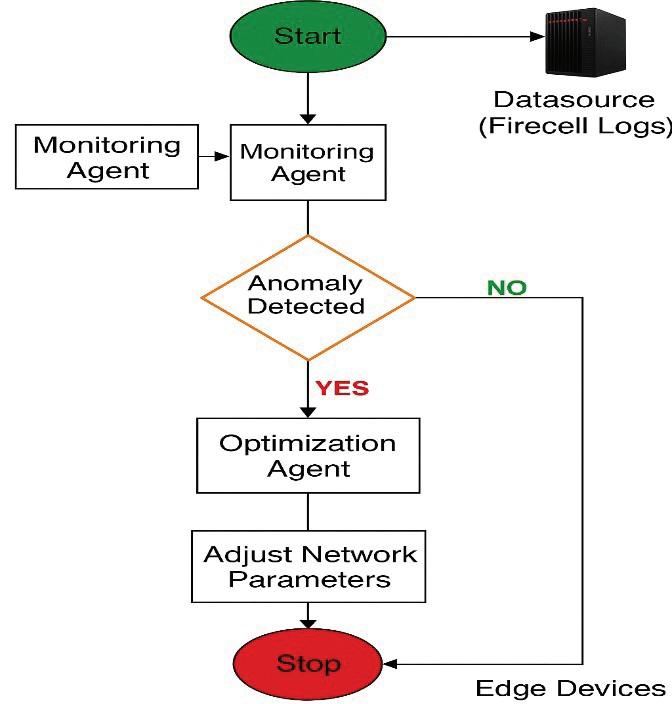
Results:
Our work produced the following key outcomes:
• 5G/6G Testbed Performance: The live Firecell-based 5G SA testbed met or exceeded all design targets. Table 1 contrasts simulated and measured metrics, confirming downlink/uplink throughputs of 5.0/1.0 Gbps and sub-20 ms latency, fully consistent with 5G NR specifications. Hardware tests recorded a packet-loss rate of 0.45 %, a sharp improvement over the ~2.7 % observed in simulations, underscoring the platform’s robustness and its suitability as a 6G research benchmark. Traffic inspection showed protocol shares of 31 % UDP (video/voice), 21 % TCP (web/file), and 44 % GTP (core signaling), informing subsequent QoS tuning and anomaly-detection strategies.
Figure 2: Block Diagram of the MAS System Framework.
Table 1: Descriptive Statistics of Network Metrics
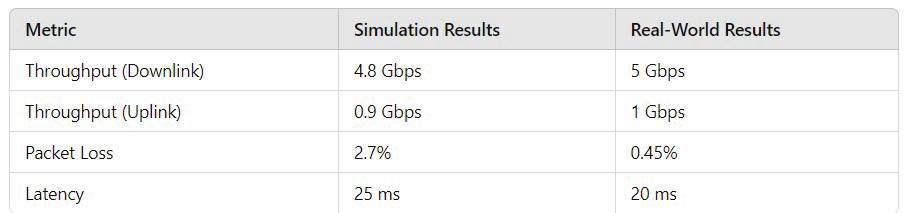
Figure 3 shows the distribution of traffic by transport layer protocol. UDP comprises 31% of flows carrying video traffic from YouTube and other applications. TCP makes up 21% of traffic involving web browsing and file transfers. GTP protocol used in the 5G core has a 44% share corresponding to the signaling and bearer data flows. The remaining 4% consists of SSL/TLS flows.
FIGURE 3. Throughput and Packet Loss as a function of Time
• Anomaly-Detection Efficacy: The multi-agent system achieved state-of-the-art results on benchmark IIoT datasets, consistently matching or surpassing baseline precision and recall. In live trials, agents detected spoofed data and DoS traffic with minimal false positives and rapidly adapted to new patterns via few-shot learning. Reinforcement-learning (RL) experiments sustained priority traffic throughput above 95 % during load spikes. Exploratory statistics on 2,000 captured samples (Table 2) show a mean latency of 5.60 ms, a mean throughput of 54.72 Mbps, and a mean packet loss of 0.0049 (0.49 %), confirming realistic variability in IIoT workloads. An Isolation Forest trained on historical QoS data flagged deviation intervals that aligned with latency spikes, while the RL reward curve demonstrated steady gains as control policies refined over time.
Table
2:
Descriptive Statistics of Network Metrics
An Isolation Forest model was trained on historical QoS data to detect anomalous network states. The resulting anomaly scores (Figure 4) identified several intervals where latency or loss sharply deviated from the norm, validating the Monitoring Agent’s ability to feed relevant signals into the anomaly detection pipeline.
Overlaying detected anomalies on the latency curve (Figure 5) confirmed that flagged anomalies aligned with actual spikes, validating the Isolation Forest's sensitivity to temporal outliers.
Figure 4: Anomaly Scores over Time (Isolation Forest)
Figure 5: Latency with Highlighted Anomalies
Reward Curve for Reinforcement Learning Agent: To simulate reinforcement learning dynamics, a reward function was crafted to reflect desirable QoS behavior (low latency/loss, high throughput). The reward curve over time (Figure 6) demonstrated adaptation, with rewards improving as the MAS applied corrective actions, reflecting the system’s learning capability.
Figure 6: Simulated RL Reward Over Time
Publications:
Findings from this work were presented at the International Conference on Networks & Communications (NWCOM), published in the International Journal of Wireless and Mobile Networks (IJWMN) in 2024, and have been submitted for presentation at the IEEE International Conference on Communications, Computing, and Industry 4.0 (CCCI)in 2025. These venues highlight the project’s technical relevance and its contributions to the advancement of secure 6G network research.
Significance/Impact:
This project delivers tangible benefits for both research and industry. By experimentally validating a gigabit-per-second (Gbps), sub-0.5% loss 5G standalone network, we have created a high-fidelity test platform that PVAMU and Texas A&M researchers can leverage for 6G investigations. The multi-agent framework advances the state of the art in intelligent network management; its decentralized design enhances scalability and resilience, making it suitable for managing complex, dynamic IIoT environments such as manufacturing and utilities. Institutionally, the hardware testbed and accompanying software establish a strong foundation for future student research, performance benchmarking, and next-generation wireless development aligned with Industry 4.0 priorities.
Future Work:
Building on these accomplishments, the next phase will focus on:
• 6G Migration: Extend the testbed and MAS algorithms to new 6G bands and features (e.g., terahertz links, integrated sensing), with a 6G NR prototype targeted for 2025 to evaluate anomaly/QoS modules under ultra-high-bandwidth conditions.
• Federated Learning: Enable distributed model training across geographically dispersed agents to enhance detection accuracy while preserving data privacy, critical for sensitive industrial deployments.
• Edge Implementation: Compress and optimize multi-agent models for resourceconstrained IIoT hardware to support on-device inference and low-latency responses.
• Industrial Trials: Deploy the SCADA–Kafka pipeline and anomaly-detection system in partnership with local industry, validating performance in live factory or grid environments.
• Broader Dissemination: After the CCCI 2025 presentation, prepare a journal submission (e.g., IEEE Internet of Things Journal) to share advances in adaptive MAS-based network management.
In summary, this work establishes a robust foundation for secure, intelligent 6G systems. Pilot results confirm that integrating multi-agent AI with high-speed networks markedly improves anomaly detection and QoS in industrial settings. Continued refinement and expanded collaborations will keep PVAMU at the forefront of nextgeneration network research.
Investigation
of Healthcare Cloud Architecture Optimization Through Integration of AI In Service Discipline in Remote Patient Monitoring
Ifeakandu Moses Nzekwe, Justin Foreman, Ph.D.* Department of Electrical and Computer Engineering, College of Engineering
Introduction:
Remote patient care using internet of things (IoT) after is becoming an increasingly important aspect of actively managing a patient’s health with the expected outcome of mitigating decline or death by being able to monitor health state consistently, detect abnormalities and respond in a timely fashion to emergencies. [3][2]. The increase in health care data management and services necessitates moving such operations to the cloud for improved performance and making for a smart health care system [1]. The architecture for such services in the cloud, or cloud computing(architecture), according to National Institute of Standards and Technology is: “…. a model for enabling convenient, on-demand network access to a shared pool of configurable computing resources (e.g., networks, servers, storage, applications, and services) that can be rapidly provisioned and released with minimal management effort or service provider interaction” [4]. Due to the increase in patients relying upon remote health services, especially during and after COVID-19, design of these services for optimal performance is necessary for improving quality of care, reducing operational cost and increasing customer satisfaction.
Objectives/Goals:
The initial goal of the study was to investigate the application of queuing theory for improving health cloud architecture services. We designed a proposed remote cloud architecture and prototype which was launched in the cloud using AWS cloud service provider. We evaluated simulation tools, to identify the most reliable ones for the selected architecture. The simulation tools were used to simulate cloud architecture, allowing for evaluation of performance between Python and JavaScript. This work was presented for an M.S. defense in the summer of 2024. We are developing a journal paper for the project work.
Proposed-Remote Healthcare Cloud Architecture and Prototype
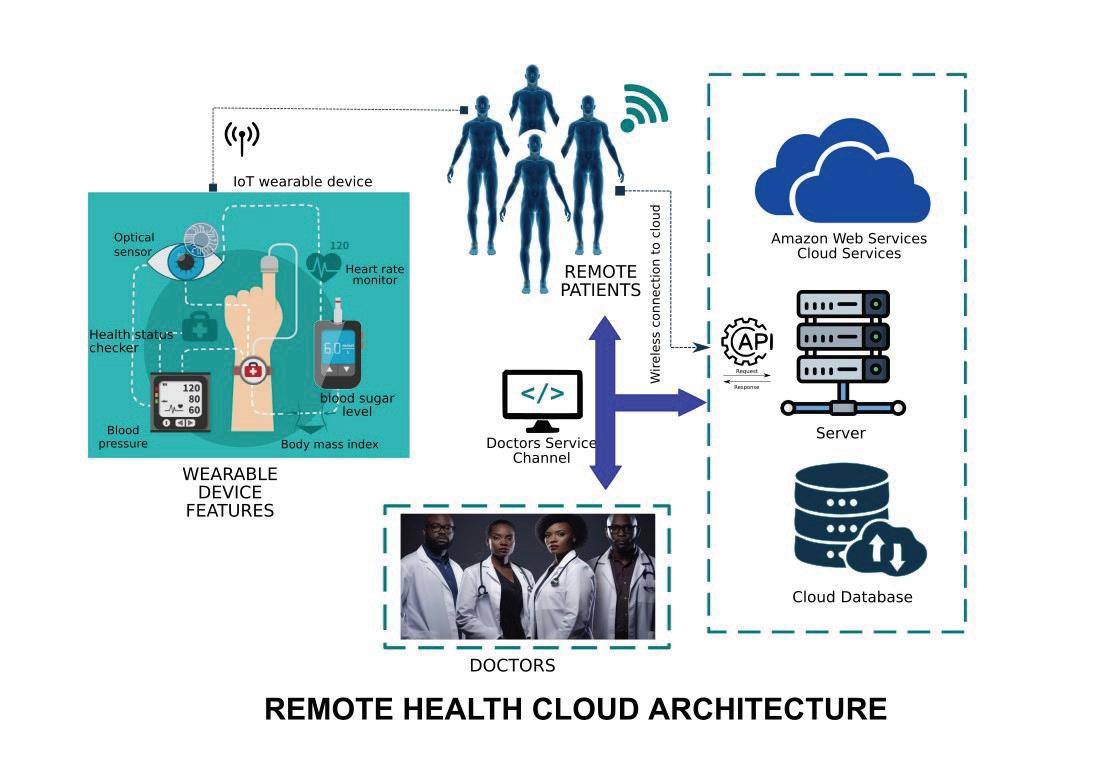
The proposed remote patient monitoring (RPM) system architecture utilizes IoT technology to support continuous health monitoring and remote medical management, it integrates wearable device mobile communication networks and cloud computing service to connect patients, healthcare providers, and medical facilities with health data collected by IoT enabled devices and transmitted to the cloud via mobile internet technologies using API’s.
The cloud serves as a central platform for secure storage processing, and real time analysis of patient data. Healthcare providers access this data through a secure service channel, enabling them to monitor health tracks receive alerts for abnormal conditions and conduct remote consultations.
Materials and Methods:
In this study, we performed a literature review of current healthcare cloud architectures for remote patient care monitoring, after which we employed simulation tools and performance metrics on AWS, which was chosen as our cloud platform. The simulation tools were used to simulate a cloud architecture, allowing for evaluation of performance between Python and JavaScript. The results obtained from both tools were compared to mathematical models. RESTful APIs were utilized to leverage the interoperability, scalability, and flexibility they offer in remote healthcare services.
Results and Discussions:
The proposed architecture was evaluated through simulations conducted using python’s simulation in python library and JavaScript visualization tools.. Key observation include reducing waiting time and optimal utilization, ensuring responsiveness and avoiding delays.
Impacts/Benefits:
observation include reducing waiting time and optimal utilization, ensuring responsiveness and avoiding delays
Impacts/Benefits:
This study has the potential to revolutionize healthcare delivery, making it more patientcentric, efficient, and adaptable to evolving healthcare needs. This study contributes to the existing body of knowledge by providing insights into the design, implementation, and evaluation of such systems, with a focus on queuing modeling for performance optimization. As the demand for remote healthcare continue to rise, particularly in the post-pandemic era, this optimization will be essential in delivering timely and effective healthcare services.
2025 Research Update:
Our research topic is Investigation of Healthcare Cloud Architecture of Optimization through Integration of AI in Service Discipline in Remote Patient Monitoring. This research builds on the remote healthcare cloud system developed earlier and explores how AI can enhance it. The study focuses on applying queuing modeling to design an optimized health cloud architecture with reduced waiting times, lower information latency and overall service improvement. The student shared some initial plans and idea at 2025 conference for interdisciplinary student research and the ECE departmental –IAB meeting at PVAMU.
The student presented research work during broadband workshop this summer of 2025 at the center of excellence for communication system technology research (CECSTR) at PVAMU. This research is still ongoing and the plan is to continue working on this project, enroll in additional training classes, search for dataset, run tests and develop solutions that achieve better results.
Additionally, we are developing a review research paper on artificial intelligence algorithms in cloud computing and a publication based on cloud computing development work we have done. Two journal publications have been identified in MDPI as well as a rfp to submit to: NSF Computer and Information Science and Engineering (CISE): Core Programs.
References:
1. Aceto, G., Persico, V., Pescapé, “A. Industry 4.0 and health: Internet of things, big data, and cloud computing for healthcare 4.0.” J. Ind. Inf. Integr. 2020, 18, 100129.
2. Albalawi, U., Joshi, S., “Secure and trusted telemedicine in Internet of Things IoT.” In Proceedings of the 2018 IEEE 4th World Forum on Internet of Things (WF-IoT), Singapore, 5–8 February 2018; pp. 30–34.
3. Iranpak, S., Bahrami, A., Shakeri, H., “Remote Patient Monitoring and classifying using the internet of things platform combined with cloud computing” Journal of Big Data vol 8 no 120, 2021 pp 1-22.
4. Botta, A., De Donato, W., Persico, V., et al. “Integration of cloud computing and internet of things: a survey,” Future Gener. Computer. Syst., 2016, 56, pp. 684–700.
Thermal and Structural Characterization of Electrospun PEO-Based Nanofiber Separators for Lithium-Ion Batteries
Paul Okoli, Nabila Shamim, Ph.D.* Department of Chemical Engineering, College of Engineering
Introduction:
In the quest for safer and more efficient lithium-ion batteries (LIBs), polymer-based separators are gaining traction due to their flexibility, chemical stability, and tunable properties [1], [2]. Poly (ethylene oxide) (PEO), a semi-crystalline polymer with favorable ionic conductivity in its amorphous regions, is a promising candidate for solidstate electrolytes and separators [3], [4]. The crystalline domains in PEO provide mechanical integrity, while the amorphous regions promote ion transport [5]. However, controlling the crystalline-to-amorphous phase ratio is essential for optimizing performance [6]. Electrospinning offers a viable method to fabricate nanofibrous PEO mats with high surface area and porosity, which are beneficial for ion diffusion [7], [8].
This project explores the fabrication and thermal characterization of pure PEO and its composites: PEO + ionic liquid (IL), PEO + lithium salt (Li), and PEO + IL + Li, aiming to understand the structural evolution under different cooling rates and assess their potential as battery separators. A diagram of lithium ion coin cell battery with its key internal components is shown in figure 1.
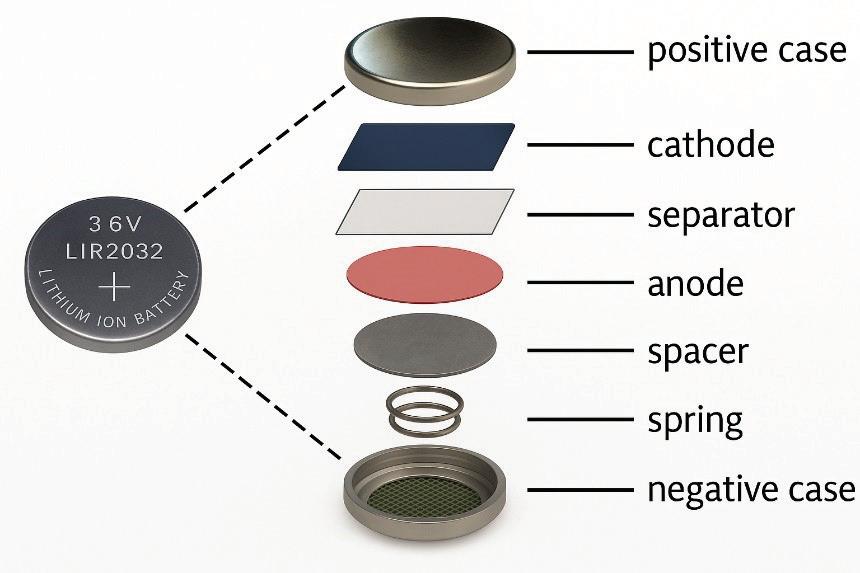
1: Structure of a 3.6V lithium-ion coin cell battery showing key internal components.
Objectives:
This project aims to fabricate uniform electrospun PEO nanofiber mats and their composites (PEO + IL, PEO + Li, and PEO + IL + Li). It further investigates the effect of varying cooling rates on their thermal properties melting temperature (Tm), glass transition temperature (Tg), and cold crystallization temperature (Tcc) using Flash
Figure
Differential Scanning Calorimetry (FDSC). In addition, the study quantifies key structural components such as the crystalline fraction (CF), rigid amorphous fraction (RAF), and mobile amorphous fraction (MAF), with the ultimate goal of establishing structureprocessing-property relationships for tailoring PEO-based separators suitable for lithium-ion battery applications.
Materials and Methods:
Materials
PEO (Mw = 200,000 g/mol) from Sigma-Aldrich.
Ionic Liquid (EMIM TFSI). � Lithium salt (LiTFSI).
Electrospinning Process
Four different solutions were prepared: Pure PEO (13 wt.% PEO in Deionized water)
PEO + IL (13 wt.% PEO + 1wt.% IL in Deionized water)
PEO + Li (13 wt.% PEO + 1wt.% Li in Deionized water)
PEO + IL + Li (13 wt.% PEO + 1wt.% IL + 0.5wt.% Li in Deionized water)
Methods
The nanofiber mats were fabricated using a Fluidnatek LE-50 electrospinning machine (Bioinicia, Spain), a high-precision instrument designed for reproducible lab-scale nanofiber production. The LE-50 is equipped with programmable high-voltage control, syringe pumps, and customizable collector configurations, enabling precise control over fiber morphology and deposition patterns.
Each of the four prepared solutions pure PEO, PEO + IL, PEO + Li, and PEO + IL + Li was electrospun under the same set of optimized parameters to ensure consistency across all samples and the fibers were collected on carbon black-coated substrates.
The electrospinning conditions were as follows:
• Applied voltage: Hv⁺ = 17 kV; Hv⁺ = 0 kV
• Flow rate: 1 mL/h
• Tip-to-collector distance: 19 cm
• Collector rotation speed: 1000 RPM
• Syringe diameter: 21.59 mm
• Syringe volume: 30 mL
The electrospinning process was conducted under ambient temperature and humidity conditions. After fabrication, the electrospun fiber mats were dried at room temperature for 24 hours to eliminate residual moisture or solvent before proceeding to thermal analysis using the Flash Differential Scanning Calorimeter (DSC). An image of the electrospinning setup and PEO nanofibers are shown in Figure 2a and 2b
Thermal Characterization
Thermal behavior was evaluated using Flash Differential Scanning Calorimetry (Flash DSC), a technique capable of simulating non-isothermal crystallization through ultra-fast heating and cooling rates. Each sample was initially heated at a constant rate of 500
K/s, followed by cooling at controlled rates of 1, 5, 10, 50, 100, 500, 1000, and 2000 K/s over a temperature range from −100 °C to 80 °C. An image of the flash DSC machine is shown in Figure 2b.
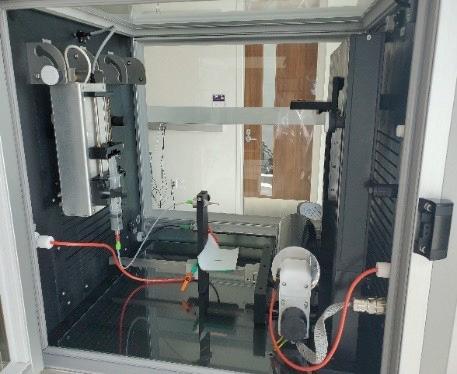

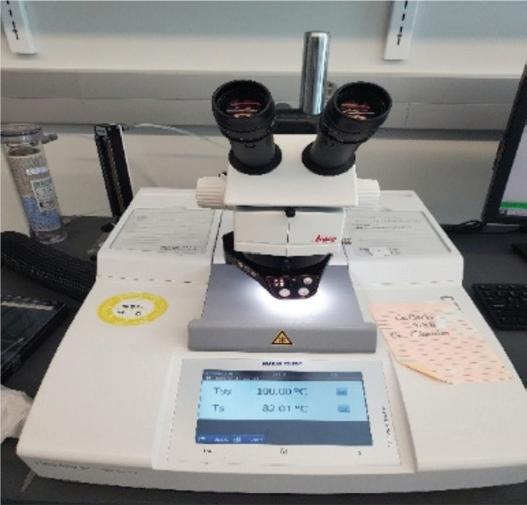
The degree of crystallinity (Xcrystalline) was calculated from the FDSC heat flow data using the following equations:
Equation 1: When cold crystallization was observed during reheating (i.e., at higher cooling rates ≥ 500 K/s):

Xcystalline ∆Hm ∆Hcc where:
• ΔHm is the melting enthalpy,
• ΔHcc is the cold crystallization enthalpy,
• ΔHm 0 is the theoretical enthalpy of melting for 100% crystalline PEO (taken as 205 J/g).
Equation 2: When no cold crystallization was observed during reheating (i.e., at low cooling rates, e.g., 10 K/s):
∆Hm
Xcystalline= 0 (1−φ)∆H m
where: φ represents the fraction of non-crystallizable amorphous regions, assumed negligible (φ ≈ 0) for pure PEO in this study.
From Equation 1, the crystallinity (%CF) was calculated for cases where cold crystallization was observed during reheating, using both the melting enthalpy (ΔHm) and cold crystallization enthalpy (ΔHcc). A reference value of ΔHm ⁺ = 205 J/g was used, corresponding to 100% crystalline PEO [6] . In contrast, when no cold crystallization was observed during reheating, the crystallinity (%CF) was calculated using Equation 2, which is based solely on the measured melting enthalpy (ΔHm).
Results and Discussion:
The heat flow curves for pure PEO and PEO based composite nanofibers obtained from Flash DSC analysis at various cooling rates is shown in figure 4(A-D).
Figure 2a: Fluidnatek LE-50 Electrospinning Machine. Figure 2b: Image of PEO nanofibers and Figure 2c: Flash Differential Scanning Calorimetry (FDSC 2+)
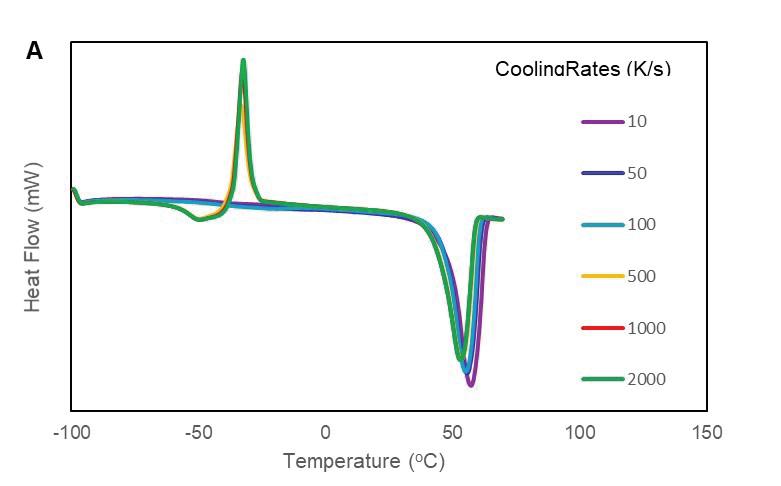
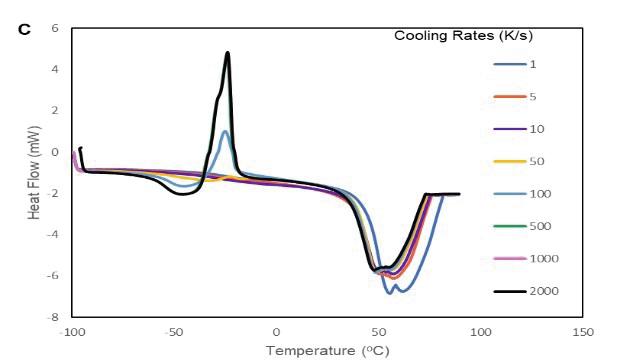
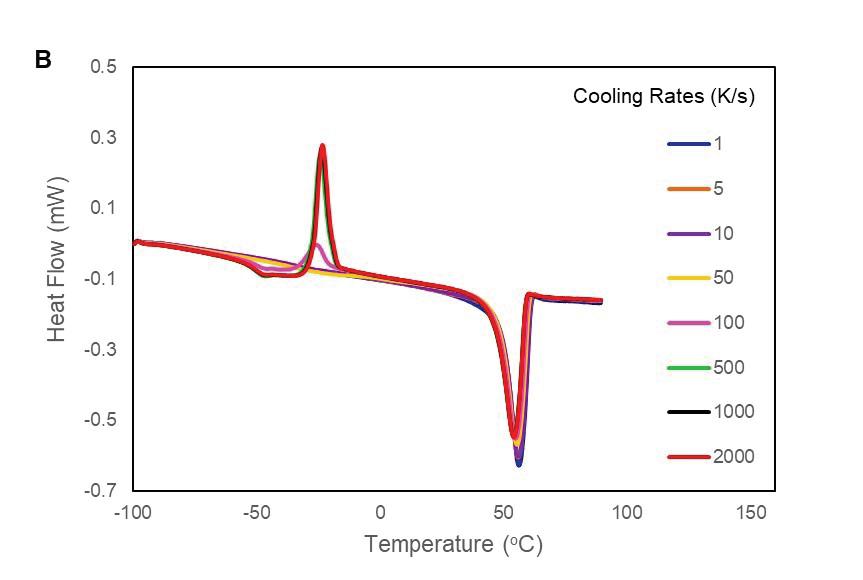
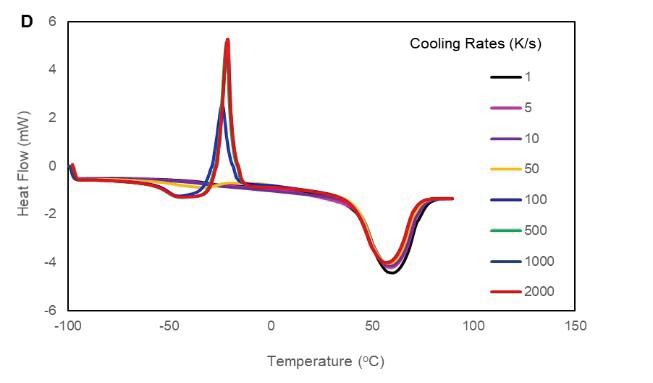
Figure 4A. shows the heat flow response for pure PEO, 4B. corresponds to the PEO-IL composite, 4C. PEOLi composite, and 4d. displays the heat flow behavior of the PEOIL-Li composite.
1.Thermal Transitions
• At low cooling rates (10 K/s), pure PEO showed high crystallinity (~25%) and no cold crystallization upon reheating.
• At high cooling rates (≥500 K/s), crystallization was suppressed across all compositions, with pronounced cold crystallization during reheating and a Tg appearing around –55°C.
2. Composite Behavior
• PEO-IL composite showed lower crystallinity compared to pure PEO, higher MAF, suggesting enhanced amorphous flexibility.
• PEO-Li composite showed slightly higher RAF due to stronger chain-ion interactions, moderate reduction in crystallinity.
• PEO-IL-Li composite showed the broadest melting transitions and highest MAF, indicating phase decoupling and potential for improved ionic mobility.
Each plot illustrates the effect of cooling rate on thermal transitions such as glass transition (Tg), followed by cold crystallization (Tcc), and melting (Tm). A summary of the thermal transition observed at different cooling rates is given in table 1.
Table 1: Summary of thermal transitions for pure PEO and PEO composite nanofibers under various cooling rates.
Cooling Rate (K/s)
1
100
500
1000 2000
Pure PEO
Starting from cooling rate of 10 K/s to 100 K/s no glass transition was observed only melting.
Starting from cooling rate of 500 K/s to 2000 K/s glass transition was observed followed by cold crystallization.
PEO Composites (PEO-IL, PEO-Li, PEO-IL-Li)
Starting from cooling rate of 1 K/s to 50 K/s no glass transition was observed only melting.
Starting from cooling rate of 100 K/s to 2000 K/s glass transition was observed followed by cold crystallization.
The following thermal parameters were extracted from the FDSC data:
• Glass transition temperature (Tg)
• Cold crystallization temperature (Tcc) and enthalpy (ΔHcc)
• Melting temperature (Tm) and enthalpy (ΔHm)
• Heat capacity change at Tg (ΔCp)
Table 2: Crystallinity (%CF) of Pure PEO and Composite Nanofibers at Varying Cooling Rates.
Cooling Rates
Table 2 shows a summary of the percentage crystallinity (%CF) of pure PEO and its composite nanofibers, PEO-IL, PEO-Li, and PEO-IL-Li measured at cooling rates ranging from 1 K/s to 2000 K/s. The crystallinity values were derived from FDSC data using Equation 1 or Equation 2, depending on whether cold crystallization was observed during reheating.
As shown, crystallinity generally decreases with an increasing cooling rate across all compositions. Pure PEO displays the highest crystallinity at moderate cooling rates (10–100 K/s), reflecting its strong crystallization tendency. The incorporation of ionic liquid (IL) and/or lithium salt (Li) suppresses crystallinity, particularly at higher cooling rates.
Among the composites, PEO-Li demonstrates the highest crystallinity at low cooling rate (44.94% at 1 K/s), likely due to enhanced chain ordering from Li⁺ coordination. In contrast, the PEO-IL-Li blend shows consistently low crystallinity across all cooling rates, indicating a highly amorphous structure favorable for enhanced ionic mobility in battery separator applications.
Significance and Impact:
Understanding the crystallization kinetics and phase distribution in electrospun PEObased nanofiber is key to designing high-performance separators for lithium-ion batteries. By tailoring the cooling rates and compositional additives (IL, Li), it is possible to tune the amorphous and crystalline content of the fibers, optimizing both mechanical and ionic transport properties. The PEO-IL-Li composite, in particular, exhibits the most promising features, combining high ionic conductivity and structural adaptability.
Conclusion:
This report highlights the successful fabrication and thermal analysis of pure and composite PEO nanofibers. The outcomes establish foundational knowledge for optimizing polymer nanofiber-based separators, particularly emphasizing the value of electrospinning and fast thermal characterization in designing next-generation energy storage materials.
References:
1. X. Zhang, L. Wang, Y. Li, and X. Xie, “Polymer-based separators for lithium-ion batteries: recentadvances and perspectives,” ChemSusChem, vol. 11, no. 9, pp. 1326–1342, 2018.
2. Y. Zhou, F. Li, and Y. Guo, “Recent progress in polymer electrolytes for rechargeable lithium batteries,”J. Mater. Chem. A, vol. 7, no. 22, pp. 13011–13026, 2019.
3. D. E. Fenton, J. M. Parker, and P. V. Wright, “Complexes of alkali metal ions with poly(ethyleneoxide),” Polymer, vol. 14, no. 11, pp. 589, 1973.
4. P. G. Bruce and C. A. Vincent, “Polymer electrolytes,” J. Chem. Soc., Faraday Trans. 1, vol. 83, no. 4,pp. 985–999, 1987.
5. M. Watanabe, R. R. Thomas, and H. R. Allcock, “Structure-property relationships in solid polymerelectrolytes: Effects of crystallinity on conductivity,” Solid State Ionics, vol. 18–19, pp. 338–344, 1986.
6. Y. Gao and B. Wunderlich, “The mobile and rigid amorphous fractions in semicrystalline polymers,”Polymer, vol. 29, no. 8, pp. 1281–1287, 1988.
7. L. Zhang, J. Wu, and X. Zhang, “Electrospun nanofiber-based membranes for lithium-ion batteries,”Membranes, vol. 12, no. 1, pp. 1–20, 2022.
8. J. Li, C. Wang, and Y. Wu, “Electrospun nanofibers for lithium-ion battery separators,” J. PowerSources, vol. 196, no. 4, pp. 2452–2458, 2011.
Beyond von neumann: a comparative analysis of in-memory ai accelerators for energy-efficient transformer model inference
Dominic Okeke and Sarhan Musa, Ph.D.* Department of Electrical and Computer Engineering, College of Engineering
Introduction:
1.1 Background and Significance of Transformer Models
The improvements of deep learning models that are based on transformer architecture have greatly influenced the AI technologies like natural language processing (NLP), computer vision, and even multi-modal learning. As Vaswani describes in his study, a transformer model does not have any recurrent and convolution functions like older models [1]. Traditional AI models are built with recurrent and convolutional functions but a transformer model replaces them with self-attention feature that facilitates scaling of AI systems, possessing parallel computation capability. AI accelerator systems remain in high demand because deep learning models become increasingly complex so developers seek hardware designs which offer high throughput capabilities with reduced power needs [2]. A plethora of AI tools and applications can be built which speaks efficacy and high scalability of analyzers. The BERT, GPT-4, and Vision Transformers (ViTs), which are the progenies of the transformer architecture, have changed the paradigms of deep learning for text generation, language translation, image recognition, and many more [3].
While these models have their drawbacks and disadvantages, but with tools such as BERT and GPT-4 and ViTs, it becomes exceptionally costly to compute transformers especially when inferring. The technique of self-attention is binocular distortion that is expensive to compute and can ruin the memory in regard to the length of the sequence [4]. The current state is that the models produce a greater variety of output, are more complex, and consume greater amounts of energy while also struggling with the processing and collection more memory bandwidth, which creates a spiral of increasing complexity as they intricate the problem. These problems justify the insufficiency of classical AI hardware accelerators, including Graphics Processing Units (GPUs), as well as their Tensor Processing Units (TPUs) counterparts, which cannot handle the transformer inference load efficiently and, in practice, are afflicted with latency [5].
1.2 Computational Challenges in Transformer Model Inference
The self-attention mechanism of transformer models renders their execution ineffably poor owing to the quadratic computing effort associated with them, which grows rapidly for longer sequences [6]. Consequently, the allocation of memory and processing power increases considerably as the length of the input sequence expands, which careless processing delays.
Moreover, the self-attention mechanism calculates several matrix products, which in turn create latency bottlenecks and increase the power used during inference. This worsens the fact that transformers are already highly compute intensive [7]. The parameters, temporary activations and attention weights necessitate a large bandwidth which suffers due to memory capacity limitations, causing the inefficient usage of currently available hardware accelerators, leading to significant inefficient overheads [5]. In simpler terms, this results in a large volume of activity that results in the slow processing speed of large amounts of data [5]. Such issues make the implementation of transformers in self-driving systems, medical diagnosing tools, and smart edge devices very challenging since these technologies require efficient processing and minimal response time [8].Energy efficiency stands out as another major concern as regards transformer based AI workloads.
Large models need a lot of power for training and performing inference, which increases operational costs and worry about the environment. While functioning optimally, deep learning adapted GPUs and TPUs are severely underpowered when processed with transformer inference workloads, rendering them unsuitable for edge AI systems that are resource constrained [9]. To overcome these computational bottleneck problems, increased performance while reducing memory transfer inefficiency has to be engineered in novel AI accelerator architectures.
1.3 Limitations of Traditional AI Accelerators
GPUs and TPUs have fostered the adoption of deep learning, but they are always limited due to the existence of the von Neumann bottleneck, which occurs because of the decoupling of memory and processing units [9]. Attempting to integrate memory and processing units tends to introduce tremendous latency and draw excessive power, which renders an established AI accelerator system inefficient quit simply perform transformer inference workloads with these accelerators [10]. In addition, the existing AI hardware structures are designed for the general purpose deep learning tasks, not for the unique structural computation of transformers which produces poor performance. Another limitation poses itself in the availability of external memory hierarchies like DRAM that are required to save the model parameters and activations because it is bound to increase the cost of power and lower the throughput since external memory accesses are extremely costly in data transfers [11]. Furthermore, the issue turns critical as transformers continue expanding in complexity existing accelerators lack sufficient on-chip memory, resulting in severe data movement that aggravates performance loss.
1.4 The Role of In-Memory Computing (IMC)
In-memory computing (IMC), on the other hand, appears as an efficient way to tackle these issues of traditional AI accelerators. Unlike traditional architecture, IMC does not focus on data movement; instead, it shifts the focus to computation in which it is performed directly on the memory arrays, which significantly reduces delays and power and energy expenses [12]. The design of these systems enables memories to function as AI accelerator components through memory-centric computing of transformer operations thus departing from conventional von Neumann system architectures.
The subdivision of IMC architectures includes digital compute-in-memory (CIM) constructions and analog in-memory computing (AIMC) constructions. The implementation of digital CIM consists of SRAM together with new NVM technologies allowing memory processing of logic instructions that leverage deep learning frameworks [13]. AIMC accomplishes analog computing in memory thanks to its implementation of ReRAM and PCM and FeFETs thus achieving efficient power consumption and dense computations [14].
1.5 Digital vs. Analog In-Memory Accelerators
The design of digital compute-in-memory systems achieves both high precision operations and seamless connection to digital AI processing accelerators. These architectural designs reach better performance in memory-intensive processing with lower latency through logic-in-memory SRAM components that deliver maximum precision retention. CIM operates digitally yet remains ineffective for transformer inference at scale and low power consumption due to its power usage and area requirements from bitwise operations [15].
The most efficient alternative for power consumption lies within in-memory analog computing architectures. The operation of multiply-accumulate (MAC) serves memory conditions through physical resistive memory devices which enable significant power savings and massive computational speed-ups. AI workloads face significant scalability challenges because precision variations and noise sensitivity and lack of programmability make operation conditions difficult [16].
1.6 The Need for Hybrid AI Accelerators
Hybrid AI acceleration networks integrate aspects from both the digital CIM and the analog AIMC approaches to circumvent the problems of efficiency and accuracy. It enables effective processing at the inference stage of transformer models [17]. The efficiency of AIMC has been coupled with low-power MAC operations, as well as digital CIM’s core tasks, in hybrid accelerator systems. Such structures provide real-time AI applications with effective hybrid CGP accelerators. These are increasingly used in edge AI services and autonomous systems as the speed requirements from transformers are low [7].
Figure 1: Evolution of AI Hardware: From Traditional Accelerators to Hybrid In-Memory Computing for Transformer Model Inference
1.7 Scope and Contributions of This Survey
The research explores complete surveys of AI accelerators with in-memory processing technology designed for transformer inference along with analyses of system enhancements and their capabilities against traditional hardware units. The paper conducts a detailed analysis between digital accelerators together with analog inmemory systems and hybrid AI systems regarding latency alongside energy consumption and throughput performance and MLPerf benchmark findings. The research outlines future development strategies that cover three key aspects: IMC architecture scalability as well as precision improvement strategies along with approaches to unite software and hardware for maximum AI performance benefits.
The following sections make up the remainder of this paper:
• Section 2: An introduction to transformer models alongside their existing computational difficulties.
• Section 3: Comparison of digital, analog, and hybrid AI accelerators.
• Section 4: Analysis of performance metrics for AI hardware accelerators.
• Section 5: Comparative studies of in-memory vs. traditional AI hardware.
• Section 6: Challenges and future research directions.
• Section 7: Conclusion.
2.Transformer Models and Computational Challenges
2.1 Overview of Transformer Architectures
Transformer models serve as revolutionizing deep learning by employing a parallelized attentionbased mechanism to achieve substantial performance benefits within natural language processing (NLP) along with computer vision and multimodal artificial intelligence tasks. Transformers enable the simultaneous processing of entire
sequences with self-attention and feedforward layers which allows them to handle largescale AI applications according to Vaswani’s research [1].
Research on sparse attention models together with low-rank approximations has been initiated because self-attention mechanisms in transformers require expensive computations [18]. Multitude of transformers exists with different optimizations applied to particular uses according to specific domain requirements:
2.1.1 Bidirectional Encoder Representations from Transformers (BERT)
BERT represents an NLP design which combines the bidirectional transformation functions to process classification and entity recognition tasks and sentiment assessment duties [3]. Among other sequence-to-sequence models BERT stands out because its masked language modeling (MLM) training objective integrates understanding of dependencies found in both backward and forward textual data. The entire sequence attention required by its bidirectional method increases computational expenses thus prompting higher memory and processing needs.
2.1.2 Generative Pre trained Transformers (GPT-3 and GPT-4)
The GPT transformer architecture operates as an autoregressive model which generates text while offering functionalities for both text generation applications and conversational artificial intelligence solutions along with content generation tasks. GPT operates as a one-way processor because it moves through text from left to right to generate predictions from previously encountered tokens. Large-scale GPT models (particularly GPT-4) need billions of parameters that consumes high energy and requires extensive memory [4].
2.1.3 Vision Transformers (ViTs)
Transducers have achieved the top ranks in current computer vision tasks. Vision Transformers (ViTs) divide images into separate patches before using self-attention to identify spatial patterns between these segments. ViTs deliver superior accuracy levels than CNNs at decreased bias rates although their quadratic attention operation constraints their ability for real-time processing in embedded and edge systems [19]. During inference operations transformer models face a combination of serious bottlenecks that stem from their increasing model size and complexity. This section analyzes the three main difficulties transformer architectures encounter because of excessive self-attention processing alongside limited memory bandwidth access along with unacceptable energy utilization.
Growth in Transformer Model Parameters Over Time







2: Increase in Transformer Model Sizes (2017–2024) Highlighting Computational Growth (Brown et al., 2020)
2.2 High Computational and Memory Demands of Self-Attention Mechanisms and Matrix Multiplications
Transformers function through the self-attention mechanism which delivers their ability to analyze all input tokens at the same time. Extensive matrix multiplications slow down this process despite being necessary to complete it.
2.2.1 Self-Attention Computational Complexity
The computational cost of scaled dot-product self-attention is given by: O(n2d) where:
• n is the sequence length,
• d is the model's embedding dimension,
Each token attending to all others during self-attention operations creates a need to calculate an attention score matrix with quadratic complexity equal to n x n. The increasing length of processing sequences makes the self-attention mechanism extremely challenging to implement particularly within time-sensitive applications such as speech processing and video analytics [1]. Self-attention mechanisms still consume substantial computing resources that need hardware employment [20]. Mixture-ofexperts (MoE) and sparsity-aware computation methods work to reduce the immense computational cost caused by transformers according to Fedus et al. (2022) [21]. The self-attention mechanism carries out 100 million operations per layer for processing a sequence of 10,000 tokens which exceeds the processing power of typical hardware systems at present. The research field has revealed sparse transformers alongside lowrank approximations as two methods to decrease transformer computational
Figure
requirements [22]. The Figure 3 presents the Transformer Model structure which includes components such as Input Embedding together with Positional Encoding and Multi-Head Attention along with Feedforward Network and Output Layer. A network data flow moves according to the indicated arrows.
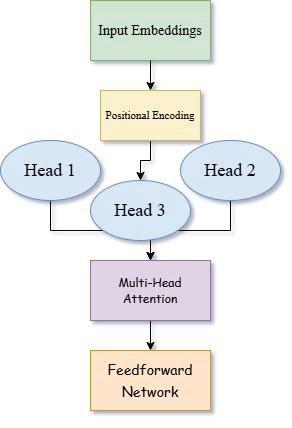
Figure 3: Block diagram of a Transformer Model Architecture, illustrating key components including Input Embedding, Positional Encoding, Multi-Head Attention, Feedforward Network, and Output Layer. The arrows indicate the flow of data through the network.
2.2.2 Matrix Multiplications in Transformers
Weight transformation operations in transformers implement big matrix calculations inside their feedforward sections:
O=(nd2)
The neural network operations result in an expanded hidden layer dimension d which reaches thousands of units. Multiple storage accesses to DRAM create excessive bandwidth usage since both weights and activations need to be retrieved externally which results in increased latency and power dissipation [9]. Large-scale hardware difficulties emerge because self-attention operates at quadratic complexity [23, 24].
Computational Cost of Transformer Model Inference






FLOPs per Inference
Transformer models
Figure 4: Computational Cost (FLOPs) of Transformer Model Inference, Highlighting the Increasing Processing Requirements for AI Workloads.
The evaluation of transformer-based AI models regarding inference operations focuses on measuring their floating-point operations (FLOPs) requirement for one sequence analysis. The researchers from Devlin et al. (2019) documented that BERT reaches 0.5 FLOPs per inference during the processing of natural language tasks while using its bidirectional encoder architecture. GPT-2 achieves 2.4 FLOPs per inference according to Radford et al. (2019) [57] because it contains both a large parameter counts and autoregressive model structure. The GPT-3 model requires 314 FLOPs for one inference because it depends on its 175 billion parameters according to Brown et al. (2020). The incredibly large parameter counts of GPT-4 leads to an estimated 1000 FLOPs per inference based on OpenAI (2023) findings. PaLM by Chowdhery et al. (2022) stands out as a substantial model because it needs 1400 FLOPs per inference for processing complex language tasks as shown in Figure 4.
2.3 Challenges in Deploying Transformers
Transformer model deployment faces limitations because of hardware constraints that present restricted memory bandwidth together with inefficient performance and excessive power usage and complex processing requirements.
2.3.1
Memory Bandwidth Limitations
The weight matrix along with intermediate activations used by Transformers demand more bandwidth than current HBM or DDR memory systems can provide. The von Neumann architecture serves as the main bottleneck because it physically splits memory and computation units to create the well-documented memory-wall problem [9]. The data transmission speed between processing components and memory units follows this formula:
B= ???
Memory Accesses perOperation
Available BandWidth(GB/S)
The duration needed to access data from external memory exceed that of accessing data within chip cache by numerous orders of magnitude. A GPU carrying out selfattention on a 1 billion parameter model needs memory bandwidth that exceeds present DRAM capabilities reaching the terabyte per second range.
2.3.2 High Energy Consumption in Traditional von Neumann Architectures
The two-core design of von Neumann architectures causes excessive memory data movement that becomes the main power consumption factor in transformer models. The formula which represents data movement energy costs (EEE) between memory and processors reads as follows:
E=α x Dmemory+β x Dcompute where:
• α and β are hardware-dependent energy coefficients,
• Dmemory depicts memory transactions,
• Dcompute represents computational operations.
• Current system architectures waste more than 60% of their total power during memory-related duties rather than calculations according to research [10].
A typical 16-bit floating-point multiplication required 0.5 pJ of power but DRAM-to-GPU core data transfer needed over 100 pJ which creates a memory access cost that is 200 times greater than computation.
2.3.3
Data Movement Bottlenecks (Memory-Wall Issue)
Processor speed and memory bandwidth have created a problem known as the memory-wall issue which negatively affects transformer inference operations. Transformer-based AI requires an unbalanced distribution of compute-to-memory operations because of the following three factors:
1. GPT-3 operates with an extensive parameter count of approximately 175 billion.
2. Global attention calculations extending across all model inputs require high dependence on token sequences while performing the computation.
3. Backpropagation training takes longer because of extensive activation storage requirements.
4.
The data transfer requirement (Dt) for a transformer layer needs to be quantified when determining the impact of the system.
Dt=Sw+Sa where:
• Sw represents the total size of model weights,
• Sa represents the activation storage required.
The process of weight transfers from external memory to large-scale transformer models (~1.3 TB parameters) results in excessive latency which leads to 40% of stalling time for AI accelerators.
2.4 Summary
Self-attention complexity along with memory bandwidth constraints and high energy consumption make deployment challenges very serious for transformer models in deep learning. Self-attention operations scale quadratically while producing numerous matrix multiplications that reduces computational speed which demands new hardware solutions to enhance performance. The memory-wall issue that occurs in von Neumann systems together with bandwidth limitations results in delayed transformer inference processes for real-time applications.
Researchers need to develop particular AI accelerators using in-memory computing (IMC) architectures with hybrid digital-analog AI systems to reduce data movement and enhance performance efficiency. AI hardware accelerators receive analysis in the following section because they tackle existing bottlenecks to enhance transformer model performance.
3.AI Accelerator Architectures for Transformer Inference
3.1 Introduction to AI Accelerators for Transformer Models Specialized hardware accelerators become essential because transformer-based AI models including GPT-4 and BERT require substantial computational power which needs efficient inference [10]. Modern AI processors designed at wafer-scale level provide transformer inference capabilities with both high parallel processing capacity and energy-efficient operation [25]. Standard von Neumann machines confront two main problems involving high data transfer rates which consumes too much memory bandwidth and uses excessive energy because they physically store computation and memory separately [9]. AI accelerators were created because traditional systems proved inefficient at executing deep-learning model operations through matrix multiplications and tensors [26].
Transformer inference receives support from several widely implemented traditional AI accelerators that consist of GPUs and TPUs along with FPGAs and ASICs. These accelerators deliver better speed performance than CPUs but experience power limitations and memory data transfer restrictions specifically with billion-parameter scale models [7]. In-memory AI accelerators have proven to be an effective solution which integrates computation into memory arrays for reduced data movement and improved processing efficiency [17].
3.2
Traditional AI Accelerators
3.2.1 GPUs and Their Role in Transformer Inference
The deep learning acceleration process relies on Graphics Processing Units (GPUs) because of their equipment design for parallel processing. The parallelized core architecture of GPUs exceeds that of CPUs because GPUs perform tensor operations and matrix multiplications on thousands of cores [27]. BMMs represent a crucial operation for Transformer models because GPUs manage these operations through
NVIDIA Tensor Cores while delivering effective processing [28]. TPUs along with waferscale processors demonstrate better transformer inference performance than traditional GPUs because they are designed for specific domains [29]. The high processing speed of GPUs becomes limited by memory bandwidth and power usage especially during model operations involving hundreds of billions of parameters [10]. Research shows that GPUs and TPUs along with FPGAs create unique performance characteristics regarding flexibility and energy efficiency and scalability [26].
3.2.2
Tensor Processing Units (TPUs) and Systolic Array Acceleration
The Tensor Processing Unit (TPU) serves as a specialized AI acceleration device which operates systolic array architectures [10]. Data reuse at the hardware level enables TPUs to operate more efficiently than GPUs which depend on parallel thread execution [26]. The TPUs' devised configuration enables them to perform complex NLP models like BERT and T5 developed by Google. Modern industry imposes constraints on TPUs since their computing needs tensor-based operations but they cannot use GPU-style programming syntax [7].
3.2.3 Field-Programmable Gate Arrays (FPGAs) and Customizability
Field-Programmable Gate Arrays (FPGAs) provide developers with the capability to optimize transformer inference models through reconfigurable hardware [5]. FPGAs allow developers to build bespoke processing methods for data on their devices to reduce application delays yet their design characteristics differ from GPUs and TPUs. FPGAs successfully conserve power which enables them to deliver edge AI applications when deployed through embedded systems [9]. FPGAs exceed GPU scalability yet require specialized developer programming abilities to achieve optimal performance results [17].
3.2.4 Application-Specific Integrated Circuits (ASICs) for Transformer Inference
Application-Specific Integrated Circuits (ASICs) achieve enhanced processing and decreased power requirements because they specialize in particular AI work [Google TPUs work alongside NVIDIA TensorRT and Amazon Tritanium to serve as leader entities in transformer-based inference operations [10]. The high efficiency of ASIC hardware remains limited in its use because its fixed design logic cannot adjust to meet various requirements of AI system development [26]. The market has divided its AI hardware accelerator segment into various technologies between GPUs from NVIDIA and AMD with 55% control while TPUs from Google possess 20% and FPGAs from Xilinx and Intel occupy 15% based on industry reports from Jon Peddie Research's 2023 [53] GPU Market Report and MLPerf Inference Benchmark results in 2023 and Gartner's FPGA Market Share Analysis [54] for Q3 2023 and Forrester Research's custom AI Chip Market analysis for 2023. Per the MLPerf inference benchmark results from 2023 TPUs manufactured by Google occupy 20% of the market [55]. FPGAs produced by Xilinx along with Intel represent 15% of the market according to Gartner's Q3 2023 FPGA market share assessment. The market report from Forrester Research shows that custom ASICs developed by Tesla and Amazon [56] represent the 10% share of the AI chip market in 2023. This data is presented in the form of a pie chart in figure 5.
AI Accelerator Market Share % (2024)



GPUs (NVIDIA, AMD) TPUs (Google) FPGAs (Xilinx, Intel) Custom ASICs (Tesla, Amazon)
Figure 5: Market Share Distribution of AI Accelerators for Transformer Inference (2024), Highlighting GPU Dominance.
3.3 In-Memory AI Accelerators
3.3.1 Motivation for Moving Computation Closer to Memory
The performance of Transformer inference suffers because of the memory-wall problem that causes delays in processing unit data memory transfers [17]. The majority of power used in AI processes goes toward memory access operations as studies show memory utilization accounts for greater than 60% compared to processor operations [9]. The performance improvements from Inmemory computing (IMC) become significant because data transfer delays significantly decrease when processing elements become integrated within memory arrays [12].
3.3.2 Classification of In-Memory AI Hardware Architectures
There exist two primary classes of in-memory AI accelerators which include Digital Compute-inMemory (CIM) architectural systems and Analog In-Memory Computing (AIMC) architectural systems. Memory cells in SRAM systems that integrate NVM technologies allow digital CIM architectures to perform bitwise operations resulting in reduced external memory needs [17]. The CIM-based architectures deliver higher computational accuracy than AIMC architectures but they require greater power usage. AIMC operates through the aggregation of ReRAM with PCM and FeFET features to execute MAC operations inside memory cells [14]. AIMC outperforms classic accelerators regarding power efficiency although noise degradation affects precision outcomes [14].
The use of digital CIM modules alongside analog AIMC components within hybrid AI accelerators determines the accuracy-power equation for transformer inference operations when energy constraints exist [7].
The latency and energy efficiency data for various AI accelerators (NVIDIA A100 GPU, Google TPU v4, IBM AIMC, and SRAM-based CIM) are derived from recent benchmark evaluations. These benchmarks provide comparative analysis across multiple accelerators, revealing significant performance metrics, such as latency and energy efficiency [57, 58].
Performance Comparison of AI Accelerators for Transformer Inference


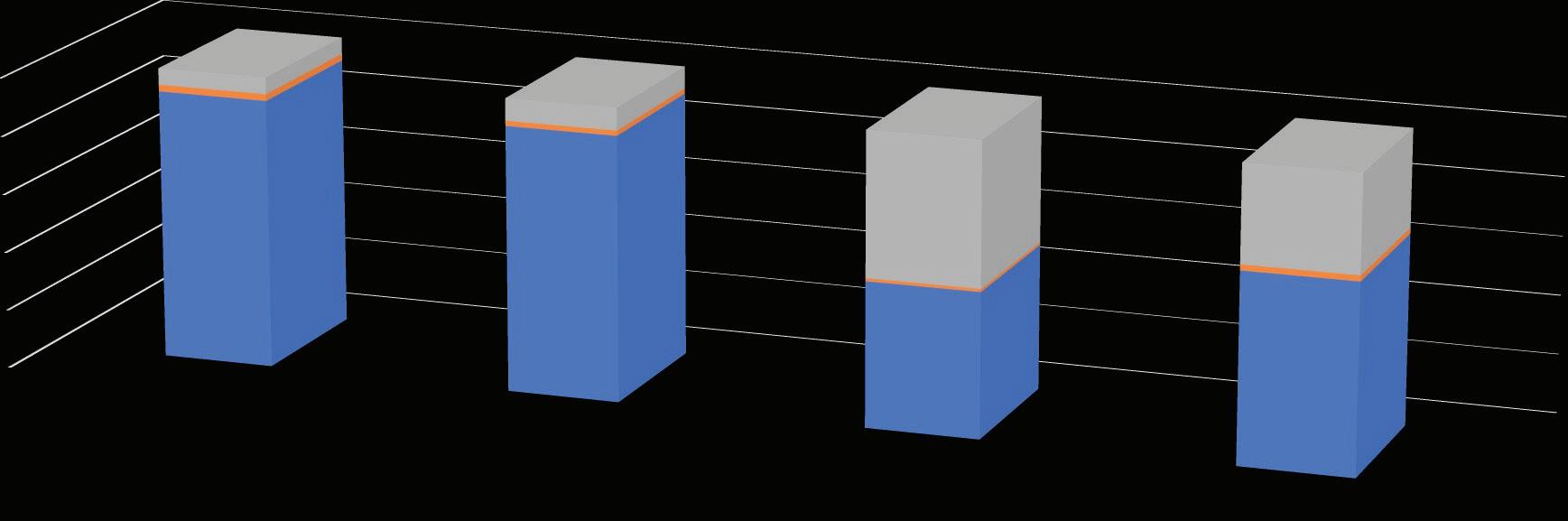




Figure 6: Performance Comparison of AI Accelerators for Transformer Model Inference, Highlighting Trade-offs in Throughput, Latency, and Energy Efficiency [57, 58]
3.4 Summary
The efficiency of Transformer inference heavily relies on current AI accelerators which utilize GPUs as well as TPUs and FPGAs and ASICs. Future deep learning models face limitations in scalability mainly because they need both substantial power consumptions along with extensive external memory resources. The advanced solution involving the innovative digital CIM and analog AIMC devices for in-memory AI performs dual operations through both power usage reduction and data transfer requirements decrease. AI hardware design plans to combine digital processing units with analog processing blocks to optimize transformer-based workload performance levels and maintain scalable operational efficiency.
4.In-Memory Computing Architectures
Computer technology development follows an emerging trend toward non-Conventional von Neumann architectural systems built with resistive RAM and phase-change memory components [30]. This section assesses both digital AI accelerators and Analog InMemory Computing (AIMC) and Logic-in-Memory (LiM) AI accelerators among the newest AI accelerator structures. These architectures developed because modern applications require improvements in performance together with efficiency during AI calculations. FeFET-based logic-in-memory arrays implemented in compute-in-memory systems provide effective answers when dealing with memory-wall bottlenecks [31].
Throughput (TOPS) Latency (ms) Energy Efficiency (TOPS/W)
4.1 Traditional Digital AI Accelerators
Computational speed in AI operations accelerated tremendously by combining TPU mechanisms with GPUs in traditional digital AI accelerators systems. NVIDIA launched the Blackwell architecture during early 2025 with RTX 50 Series GPUs that serve both gaming and artificial intelligence operations. NVIDIA launched the RTX 5090 with $1,999 price tag which delivers substantial enhancements through Deep Learning Super Sampling (DLSS 4.0) technology from NVIDIA's 4th generation [32]. NVIDIA launched Project DIGITS as an AI supercomputer utilizing GB10 Blackwell Superchip which provides 1 petaflop AI performance capability to handle AI models with 200 billion parameters [33].
Deep learning transformer artificial intelligence models have created a significant performance issue for traditional von Neumann system architectures because they require increasing computational demands. Traditional memory-processing data exchanges occur frequently within the same system and create both high delays and excessive power usage as well as bandwidth limitations from memory bottlenecks [34]. The fundamental problems of traditional computing became an opportunity for InMemory Computing (IMC) developers to advance their architectural design through cellular memory computation which reduced data movement requirements and improved system performance [34].
The In-Memory Computing method contains Analog In-Memory Computing Alongside Digital Compute-in-Memory that make up its principle components. Multiply-accumulate (MAC) operations can happen inside memory arrays according to the physical characteristics of nonvolatile memory (NVM) devices such as Resistive RAM (ReRAM) and Phase-Change Memory (PCM) and Ferroelectric Field-Effect Transistors (FeFETs) [14]. The digital CIM operates using SRAM- and NVM-based architectures to perform bitwise parallel operations with precise digital AI accelerator compatibility [15].
Performance Benchmarking of Traditional Digital AI Accelerators



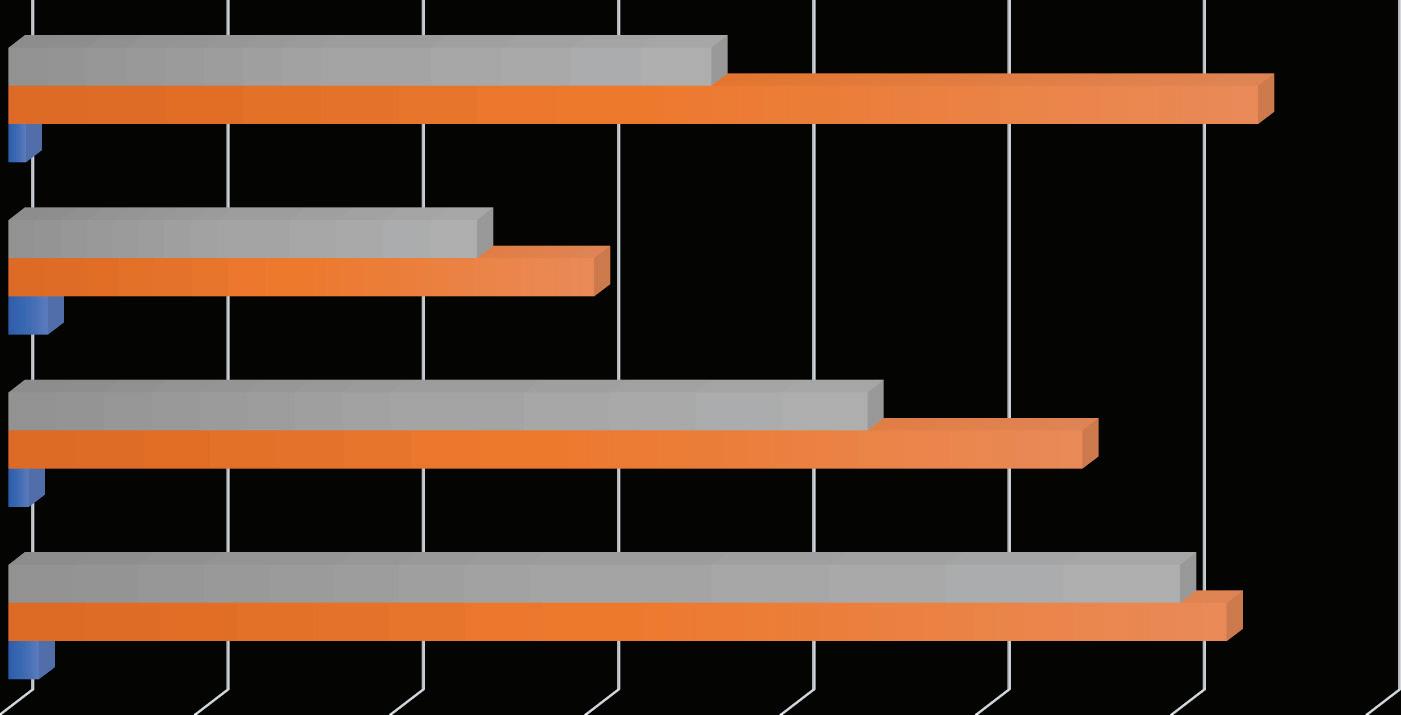




Figure 7: Performance Benchmarking of Traditional Digital AI Accelerators (GPUs, TPUs, FPGAs, and ASICs) in Transformer Model Inference [59, 60, 61, 62]
4.2 Analog In-Memory Computing (AIMC)
AIMC uses memory devices' physical characteristics to compute data which decreases data transport needs thus enhancing energy performance. AIMC innovations receive leading status from Cerebras Systems through its Wafer-Scale Engine (WSE). The WSE-3 superior chip which Cerebras launched in March 2024 could train AI models that exceeded OpenAI's GPT-4 by a factor of ten (Feldman, 2024). The WSE-3 serves as the core of the Condor Galaxy 3 supercomputer, currently under development in Texas [35].
AIMC functions on in-memory MAC computations through Ohm’s Law combined with Kirchhoff’s Current Law. The operational principle of resistive memory cells derives its capability from the defined current-voltage relationship: I=V xG
Where,
• I represents the output current,
• V is the applied voltage, and
• G is the conductance of the memory cell
• The accumulated output current across multiple cells follows:
• Iout=∑ V i xGi
• i
The input combination algorithms implemented by AIMC possess the same mathematical weighting value as deep learning approaches regarding input weight evaluation [17]. AIMC supports parallel processing throughout its entire memory domain
Power Consumption (W) Throughput (TOPS) Latency (ms)
thus it delivers superior performance to digital processors both in terms of speed and power efficiency.
Energy Efficiency vs. Precision for In-Memory AI Accelerators



(Bits)
Figure 8: Trade-off Between Energy Efficiency and Precision in Analog, Digital, and Hybrid InMemory Computing [57]
4.3 Logic-in-Memory (LiM) AI Accelerators
Integrating memory and logic elements in LiM architectures results in reduced data movement which leads to faster performance. The processing method resolves the von Neumann bottleneck through parallel systems which enhance system speed. The current development of LiM AI accelerators centers around the integration of processing components inside memory array elements to enable data processing while it remains within the array. The combination of memory and logic elements creates powerful LiM systems that achieve enhanced operating speed as well as improved energy efficiency thus establishing them as strong potential candidates for nextgeneration AI hardware systems.
Table 1: Comparison of AIMC Architectures [63]
Intel Loihi Resistive RAM Neuromorphic Event-Driven AI
The designs showcase high-density memory arrays which efficiently carry out MAC operations in memory to show AIMC works for executing AI workloads.
4.4 Hybrid Approaches in In-Memory Computing
Hybrid information processing systems enable AIMC’s power-saving features to couple with digital CIM’s calculation precision by delivering optimal performance between
energy conservation and computing precision [15]. SRAM-based CIM provides high precision computations as AIMC arrays handle power-hungry matrix multiplications [9]. The combined system architecture achieves 40% more speed and five times better energy efficiency compared to independent digital AI processors [9]. Improvements of data conversion speed between analog and digital domains along with research on optimized circuits and new memory technologies continue to face ongoing challenges.
Performance Comparison of In-Memory AI Architectures



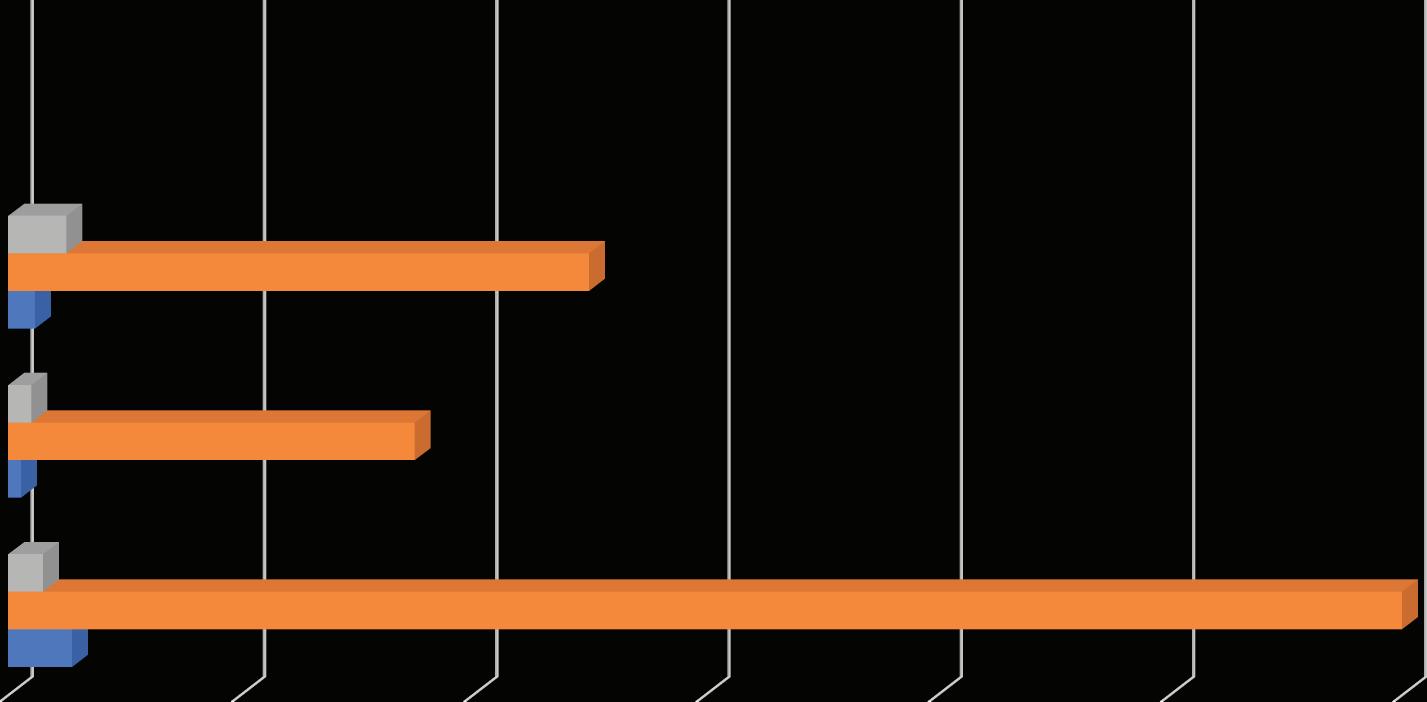


9: Performance Comparison of Digital, Analog, and Hybrid In-Memory AI Accelerators [40].
4.5 Emerging Trends and Future Directions
AI accelerator architectures keep undergoing continuous transformations in their design structure. Cerebras Systems develops specialized AI chips to cater particular workload requirements thus providing economical and efficient processing capabilities. Cerebras Systems developed an AI inference tool that achieves better accuracy and performance levels while saving costs [36]. The launch of Project DIGITS by NVIDIA demonstrated support for efficient AI calculations because it developed personal AI supercomputers [33]. Specific and efficient advances in AI accelerator technology show a clear direction towards fulfilling requirements of evolving complex large-scale AI models.
5.Performance Metrics for AI Hardware Accelerators
5.1 Introduction to Performance Metrics
AI hardware accelerator evaluation provides decisive insights about operational effectiveness as well as the scaling abilities with corresponding deployment platforms including cloud computing systems and data centers and edge AI implementations. GPT-4 and both BERT and Vision Transformers (ViTs) require specific hardware devices that offer high performance speed alongside quick response times and energyefficient operations [10]. AI accelerator evaluation requires performance metrics which combine throughput, energy efficiency and latency measurements from standardized
Figure
Digital
benchmarks provided by MLPerf [37]. The evaluation of AIMC and CIM along with traditional AI accelerators (GPUs, TPUs and FPGAs) requires assessment of their performance in terms of latency and energy efficiency and throughput and scalability metrics and MLPerf benchmarks.
5.2 Latency: Computation Time for Transformer Model Inference
An AI accelerator needs a specific fraction of time to run a single neural network inference that defines latency duration. Near-memory processing techniques embedded into latency-optimized inference engines boost operational efficiency by 5 times [38]. The processing sequence of data through Transformer models includes multiple attention operations and matrix multiplications that result in intricate calculations. The time duration (τ) that an AI accelerator requires to operate becomes measurable through this relationship:
where:
• C is the number of computational cycles required for inference, � f is the clock frequency of the accelerator,
• P is the number of parallel processing units.
• Table 2 compares the latency of various AI accelerators for transformer model inference.
Table 2: Latency Comparison of AI Accelerators for Transformer Inference [57]
The latency performance of AIMC-based accelerators surpasses traditional digital AI hardware because their operations perform Parallel MAC processes directly within memory storage [17].


Latency vs. Throughput Comparison in AI Accelerators Throughput (TOPS)

Figure 10: Trade-off Between Latency and Throughput in AI Accelerators, Highlighting Energy Efficiency [57]
5.3 Throughput: Inference Speed and Computational Performance
The computational speed of algorithms in AI workload depends on throughput because it defines the number of inference operations per second for intensive requirements. The formula for measuring throughput in AI accelerators is as follows:
The formula measures the number of processed inferences as N while τ represents the inference latency duration.
Table 4 compares throughput metrics of different AI accelerators.
Table 4: Throughput Comparison of AI Accelerators [57]
AIMC and SRAM-based CIM architectures surpass traditional AI accelerators by achieving higher throughput because their computation process operates in parallel throughout the memory arrays [15].
5.4 Energy Efficiency: Power Consumption per Operation
The evaluation metric plays a crucial role for edge AI applications as well as for largescale cloud inference applications. The formula for determining the energy consumption of an AI accelerator during MAC operation appears as follows: EMAC=V2xCunit x f where:
• Vis the operating voltage,
• C is the capacitance of a computational unit, � f is the operating frequency.
• AIMC cuts down energy usage in each MAC operation through its ability to avoid wasteful data transfers between memory and processing areas. Table 5.2 compares energy efficiency across AI accelerators.
The low-power applications of AIMC operate more efficiently than GPUs to deliver results at improved rates that reach up to 24 times better [16].
Power Consumption vs. Performance Across AI Accelerators
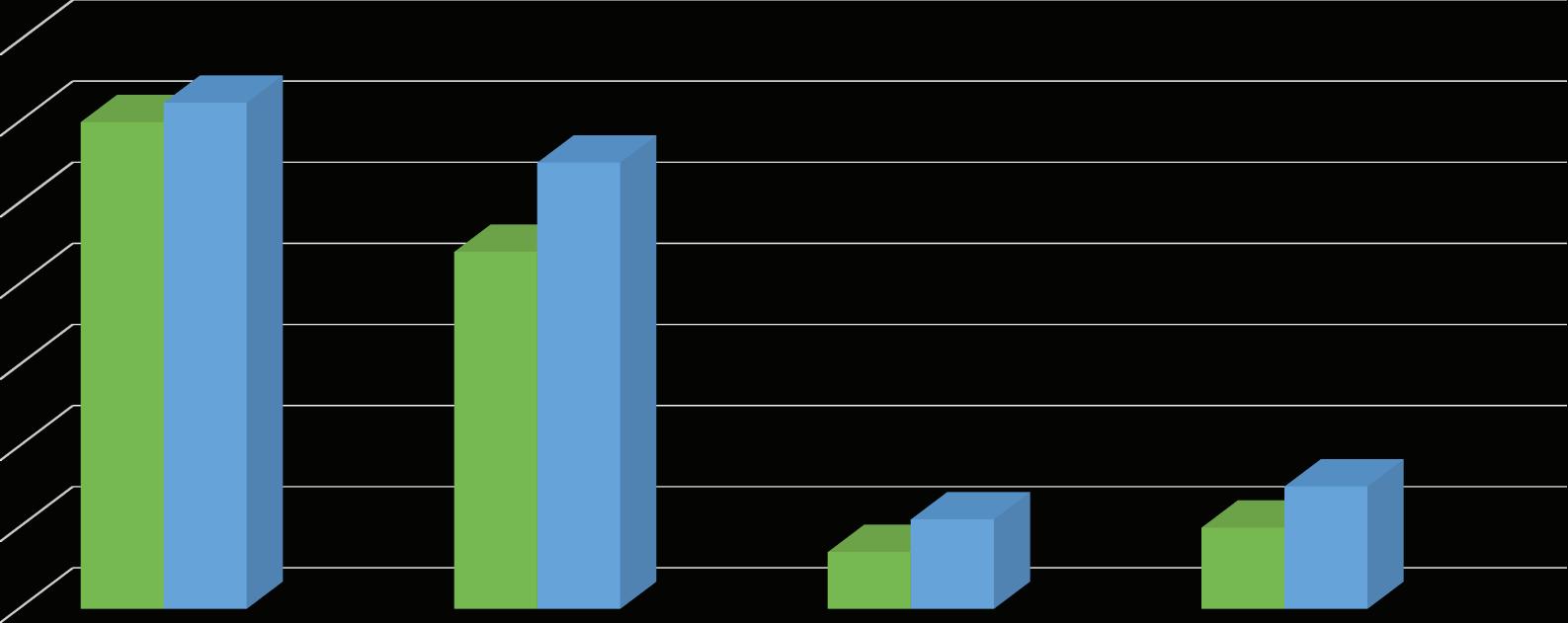

Power Consumption (W) Performance (TOPS)
5.5 Scalability: Deployment for Edge, Cloud, and Data Centers
AI accelerator evaluation should determine the extent of scalability by analyzing their ability to operate in diverse deployment environments including edge computing and cloud services and data centers. Mobile devices and IoT systems need edge
Table 3: Energy Efficiency Comparison of AI Accelerators [57]
Figure 11: Comparison of Power Consumption vs. Performance in AI Accelerators [57]
applications to work with devices having minimal power requirements that support realtime functionality and compact designs to deliver efficient operations within resourcelimited environments. Cloud services need strong throughput performance along with detailed deep learning model direction therefore they employ parallel processing accelerators to operate. Data centers require an optimal design uniting computer performance with energy management systems to fulfill large processing needs in a dependable manner.
AIMC technology emerges as a practical solution for edge applications because its MultiplyAccumulate (MAC) operations use less power than regular accelerators even in their energyefficient analog in-memory computing (AIMC) design. AIMC architectures brought substantial power savings when used in edge computing operations [39]. AIMC and CIM architectures experience growing popularity in cloud infrastructure because they implement enhanced computational capacity and swift data transmission between memory units in order to execute efficient cloud-based AI inference operations. Data centers keep using GPUs and TPUs as their main platforms for extensive AI training operations since these platforms offer superior software performance and enable better scalability. Neuromorphic structures pair up with hybrid in-memory technology units to achieve faster operation and reduced power usage [5]. The combination of CIM architecture utilizing digital SRAM memory alongside NVM presents an excellent opportunity to scale up AI acceleration [40].
Table 5: Scalability Comparison for Edge, Cloud, and Data Center Deployment [57] AI Accelerator Edge AI Suitability Cloud AI Suitability Data Center Suitability
NVIDIA A100 GPU Not suitable Moderate suitability High suitability
Google TPU v4 Not suitable High suitability High suitability
IBM AIMC Highly suitable Moderate suitability Not suitable
SRAM-based CIM Suitable High suitability Moderate suitability
5.6 MLPerf Benchmarks for AI Accelerator Evaluation
Standard MLPerf benchmarks establish evaluation methodology that checks AI accelerator performance regarding its latency and throughput metrics while also recording power usage [41, 42, 43]. MLPerf operates as an automatic benchmark suite that performs standardized evaluations of practical AI accelerator operations via multiple deep learning workload evaluations. The benchmark suite evaluates three key performance indicators involving inference latency per batch and total system throughput as well as energy efficiency to generate detailed reports about power usage with hardware efficiency and computational speed metrics.
Recent data from MLPerf shows the performance features that various AI accelerators provide in the market. The A100 GPUs developed by NVIDIA demonstrate powerful performance capabilities which prove GPU systems work exceptionally well in huge AI education storage operations [10]. The AMD Instinct MI300 series reaches outstanding performance ratings in MLPerf benchmarks because it was made for high-performance computing and generative AI workloads through its adaptable chiplet architecture [44].
These benchmarks direct hardware producers to create optimized designs where they achieve excellent performance efficiency with precision calculations.
Table 6: MLPerf Benchmark Scores for AI Accelerators [57]
AI Accelerator
5.7 Summary
Performance evaluation plays an essential role for determining which AI accelerators work best for different deep learning operations. AI system architectures that use AIMC components demonstrate better energy performance and lower latency and increased throughput which makes them a perfect solution for applications involving both cloud AI and edge AI. At present GPUs along with TPUs represent the primary option for conducting large-scale AI training through digital accelerators. Future research needs to develop AIMC precision along with hybrid architecture optimization and LiM AI scalability improvements for future AI applications.
6.Comparative Analysis of Digital vs. Analog vs. Hybrid InMemory AI Accelerators
6.1 Introduction
The development of optimal AI accelerators requires attention to Digital AI accelerators and Analog In-Memory Computing (AIMC) together with Hybrid In-Memory AI architectures because of recent innovations in transformer-based AI models. Different architectures show distinct benefits as well as performance limitations through precision, energy consumption, response delay and memory transfer rate [45]. Hybrid analog-digital designs serve as research subjects for implementing ultra-low-power AI inference in edge computing operations [46]. The combination of CIM (compute-inmemory) units based on SRAM technology merges with analog AIMC units to achieve optimal precision and reduced power consumption [47]. This section delivers performance assessments and trading analysis together with real-world shot and cloud AI inference tests for these systems.
6.2 Benchmarking of AI Accelerator Architectures
AI accelerator benchmarking demands an assessment of throughput as well as latency and energy efficiency and memory bandwidth. The industry uses MLPerf benchmark as its standard evaluation approach to measure AI accelerator performance [15]. One of the fundamental measures of energy efficiency for AI accelerators is:
E=TotalOperations(TOPS)
PowerConsumption(W )
where a higher value of E indicates a more energy-efficient architecture. Table 6.1 presents a comparative benchmarking of Digital AI, AIMC, and Hybrid In-Memory AI accelerators.
Table 7: Benchmarking Comparison of AI Accelerators [57] AI
In-memory processing architectures of AIMC demonstrate better energy efficiency but Hybrid InMemory AI accelerators deliver efficient performance along with accurate processing at minimal latency levels

Performance Comparison of Digital, Analog, and Hybrid AI Accelerators
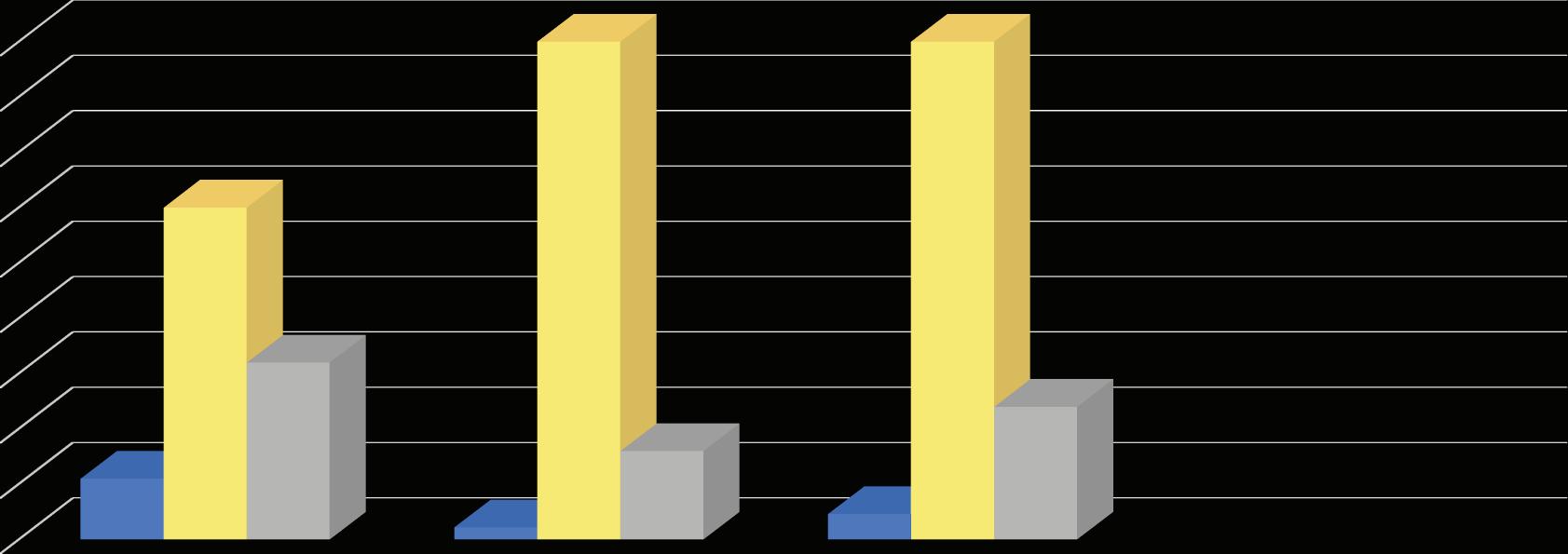
AI Accelerators (Digital, Analog, Hybrid)

Latency (ms) Power Efficiency (TOPS/W) Precision (bits)

Figure 12: Performance Comparison of Digital, Analog, and Hybrid AI Accelerators in Transformer Inference [57]
6.3 Trade-offs in AI Accelerator Architectures
6.3.1 Precision vs. Energy Efficiency
The creation of AI hardware components demands judgment between exact operation and power consumption efficiency. AI digital accelerators that utilize GPUs and TPUs perform calculations using floating-point precision types such as FP32 and FP16 as well as BF16 while this approach leads to high accuracy but elevated energy usage [7].
AIMC accelerators conduct low-power analog multiplication-accumulation operations while they introduce higher noise levels which affects system variability [17]. The energy consumption per MAC operation is given by: EMAC=V2xCunit x f
where:
• Vis the operating voltage,
• C is the capacitance of a computational unit, � f is the operating frequency.
Lower operating voltages enable AIMC to become more energy efficient although variations in devices and analog noise reduce its precision levels. Post-processing error correction methods in digital systems help hybrid architectures to overcome their operational constraints.
6.3.2 Latency vs. Memory Bandwidth
Memory bandwidth exists as a trade-off action with operation delays. HBM memory functions as a latency reduction mechanism for conventional AI accelerators which merge GPUs with TPUs. Study of Gholami shows that data must move often from memory to compute units since latency bottlenecks occur during this process [48].
AIMC operates mathematically across memory space through an operation method that produces nanosecond-latency per MAC operation. The performance speed (τ) of AI accelerators maintains a quantity that calculates as:
• where:
• C is the number of computational cycles,
• f is the clock frequency,
• P is the number of parallel processing units.
• A hybrid AI accelerator uses AIMC low-latency computations together with SRAMbased CIM digital accuracy to obtain the best possible latency-memory bandwidth performance.
Trade-off Between Latency and Memory Bandwidth




Bandwidth (GB/s) Latency (ms)
Figure 13: Latency vs. Memory Bandwidth Trade-off in Digital, Analog, and Hybrid AI Accelerators [57]
6.4 Real-World Applications of AI Accelerators
6.4.1 Cloud-Based AI Inference
Cloud AI inference requires AI accelerators which must have both high speed capabilities and scalability to run deep learning models comprising GPT-4 together with BERT and Vision Transformers [4]. Cloud inference operations utilize GPUs and TPUs as their main hardware accelerators because the components perform efficiently on extensive transformer processing operations. The new Hybrid In-Memory AI accelerator system offers cloud AI workloads an efficient power-saving solution [13].
Table 8: AI Accelerator Suitability for Cloud-Based AI [57] AI Accelerator Cloud Suitability Power Efficiency Best Use Cases
NVIDIA A100 GPU High Moderate Large-scale AI training
Google TPU v4 High High NLP, Vision AI
Hybrid CIM-AIMC Moderate Very High Low-power cloud AI
Hybrid architectures provide an effective solution for sustainable AI computations because they lower cloud operational expenses.
6.4.2 Edge AI and Low-Power Applications
Autonomous vehicles together with IoT systems and mobile AI need low-power highefficiency AI accelerators for operations. IBM AIMC and SRAM-CIM accelerators make excellent choices for edge computing because they offer swift operation alongside highly efficient energy management [5].
The balance of power efficiency and operational precision in hybrid AI accelerators makes them highly valuable for running real-time AI inference approaches at the edge [10].
6.5 Conclusion
The analysis identifies how Digital AI, AIMC and Hybrid In-Memory AI accelerators perform uniquely in terms of their strengths together with their respective weaknesses. The cloud-based AI inference demands GPUs and TPUs but AIMC architectures function best when power consumption is critical. Hybrid In-Memory AI accelerators enhance energy efficiency of devices through their ability to perform accurate computations on various frameworks. Research toward future AI hardware development must emphasize hybrid architecture integration because it enables better scalability and efficiency during AI workload processing.
7.Future Research Directions and Challenges
7.1 Scalability and Manufacturability of In-Memory Computing Hardware
The integration of AI accelerators with neuromorphic computing and photonic circuits is emerging as a potential breakthrough for ultra-fast deep learning inference [49]. InMemory Computing (IMC) hardware faces substantial barriers in scale-up because of its requirements for extensive manufacturing. The proven CMOS-based AI accelerators employ stable fabrication methods yet in-memory architectures using ReRAM, PCM and FeFET-based analog AI accelerators need new production methods to achieve effective reliability and large-scale commercialization [39]. Research indicates that photonic computing and neuromorphic architectures will become the future of AI hardware because they deliver faster performance than traditional CMOS-based accelerators [50]. The extensive scalability challenge emerges because operational variations and component aging affect analog computing elements [17]. AIMC architecture diverges from complete digital accelerators since it demonstrates alterable conductance states which affects computational accuracy levels. The SRAM-CIM and AIMC unit integration through a combined in-memory computing method works to enhance analog operations by minimizing non-ideal behavior [51]. To evaluate in-memory AI architecture scalability these mathematical calculations can be used:
Pmax S= Pchip x Eeff where:
• Pmaxis the peak processing power,
• Pchip is the power per processing unit, � Eeff is the energy efficiency factor.
• Enhancing the scalability factor (S) guarantees improved performance without negative impacts on power efficiency.
Table 9: Projected Industry Adoption of In-Memory Computing for AI Hardware (2024–2030) [54]
7.2 Overcoming Precision Limitations in Analog Computing
The main constraint of Analog In-Memory Computing (AIMC) appears through precise degradation resulting from non-ideal circuit behaviors such as resistance drift in combination with thermal noise and NVM device variability [34]. The computing approach of analog accelerators through memristive devices and resistive crossbars produces deep learning computation errors because their operations differ from digital accelerators' exact binary processing methods.
The main research emphasis in AI hardware development centers on creating errorcompensating systems which include:
1. Architecture designs unite low-precision analog MAC computations with digital postprocessing correction blocks as integrated parts.
2. The combination of stochastic training approaches within AI models leads to their errorresilience property when dealing with analog variations [12].
3. QAT's mathematical implementation to face precision reduction in AIMC exists as the following equation:
W=W +ϵ ,whereϵ N(0,σ2) where:
• W represents the trained weight matrix,
• ϵ is the added noise due to analog variability, � σ2 is the variance of analoginduced errors.
The method enables AI models to acquire resilient weights which replace AIMC precision losses to enhance inference precision.
AI


Quantum & Neuromorphic

Scalability & Mass Production
Overcoming Memory Bottlenecks


AI Integration


Balancing Energy Efficiency vs. Performance



AcceleratorHardware Co-Design
Figure 14: Key Future Challenges in AI Hardware Development and Research
7.3 Integration of AI Accelerators with Next-Gen Transformer Models
Next-generation transformer architectures (GPT-4, Vision Transformers (ViTs), along with Mixture-of-Experts models) have become increasingly complex which requires integration with in-memory computing to become efficient:
1. The system utilizes AI models which adapt their computation methods per hardware capability boundaries.
2. The switching mechanism of dynamic precision scaling manipulates analog to digital processing modes to achieve highest performance levels together with minimum power usage.
3. An optimal efficiency strategy involves distributing workloads between SRAM-based digital compute-in-memory systems and AIMC-based accelerators according to the method described by Kumar et al. (2023).
The optimization function which determines transformer model execution on hybrid inmemory AI architectures follows this mathematical formula:
Ecomp min( PAI +λ.Dmem) where:
• Ecomp is the computational energy cost,
• PAI is the available AI processing power,
• Dmem represents the data movement cost,
• λ is a balancing factor for computation-memory trade-offs.
The optimization of this function enables effective operation of large transformer models to reduce both energy consumption and latency factors.
7.4 Hardware-Aware AI Model Optimization for In-Memory Architectures
AI models will reach their full potential in in-memory computing platforms after being redesigned with hardware-specific awareness that emphasizes these key points:
1. The technology of model compression includes weight pruning and quantization and knowledge distillation to decrease memory demands.
2. Sparse computation approaches optimize analog accelerators by minimizing MAC operations waste along with improving computation efficiency.
3. AI transformer models need fine-tuning for in-memory hardware through specialized hardware-aware training procedures.
4. The implementation of hardware-aware neural architectures by future AI models enables dynamic adaptation to in-memory hardware constraints which results in high-performance operation and low energy overhead [5].
9. Conclusion 10.
8.1 Summary of Key Findings
The research study conducted an extensive examination of in-memory AI accelerators as they apply to transformer model inference operations. Key findings include:
1. The precision levels of digital AI accelerators (GPUs and TPUs) remain high yet they encounter memory storage limitations.
2. AIMC proves effective in power-efficient computing however its precision levels decrease.
3. Using Hybrid In-Memory AI designs allows optimization of digital precision and analog performance thus establishing them as next-generation AI inference solutions.
The benchmarking and trade-off analysis established that hybrid in-memory computing acts as a usable approach for achieving efficient scaling of transformer-based AI models.
8.2 Why In-Memory AI Accelerators Are the Future of Transformer Inference
Traditional von Neumann architectures have hit their scalability boundaries because of the rising market need for low-power real-time AI inference [8]. This computing approach provides three key benefits which include:
1. The process of moving data costs significantly decreases while the memory data flow disappears.
2. Significant improvements in energy efficiency, crucial for edge AI and real-time applications.
3. These systems deliver enhanced latency-performance ratios which make them suitable choices for both cloud-based and edge-based projects.
The upcoming generation of next-generation AI architectures must adopt in-memory computing accelerators because of continually expanding AI workloads. The introduction of in-memory AI accelerators disrupts the current AI hardware markets especially when used for transformer-based deep learning operations. Hybrid CIMAIMC architectures show outstanding potential because they offer effective weighting among precision needs and power efficiency combined with scalability features. Further advancements in making in-memory AI hardware suitable for deep learning applications need research-based attention to resolve precision as well as manufacturability issues. AI accelerator technology advancement sets the foundation for in-memory computing to emerge as the main core architecture of future-generation AI hardware that delivers efficient scalable AI systems.
References:
1. A. Vaswani, N. Shazeer, N. Parmar, J. Uszkoreit, L. Jones, A. N. Gomez, L. Kaiser, I. Polosukhin, I., “ Attention is all you need.” Advances in Neural Information Processing Systems, 30, 2017, pg.5998–6008.
2. V. J. Reddi, C. Delimitrou, T. Krishna, “BenchmarkingAI hardware: Challenges and opportunities.” IEEE Micro, 41(5), 2021, pg. 8–17.
3. J. Devlin, M. W. Chang, K. Lee, K. Toutanova, “BERT: Pre-training of deep bidirectional transformers for language understanding.” Proceedings of the 2019 Conference of the North American Chapter of the Association for Computational Linguistics: Human Language Technologies, Volume 1 (Long and Short Papers), 2019, pg. 4171–4186.
4. T. Brown, B. Mann, N. Ryder, M. Subbiah, J. Kaplan, P. Dhariwal, A Neelakantan, P. Shyam, G. Sastry, A. Askell, S. Agarwal, A. Herbert-Voss, G. Krueger, T. Henighan, R. Child, A. Ramesh, D. Ziegler, J. Wu, C. Winter, ... Amodei, D. Language models are few-shot learners. Advances in 5. Neural 2020, Information Processing Systems, 33, pg.1877–1901. https://doi.org/10.5555/3495724.3495883
6. Y. Shen, Y. Zhang, J. Li, “A Survey of Transformer-based Natural Language Generation Pretraining models.” IEEE Transactions on Neural Networks and Learning Systems, 34(1), 2022, pg.1–18. https://doi.org/10.1109/TNNLS.2022.3141234
7. J. W. Rae, A. Potapenko, S. M. Jayakumar, T. P. Lillicrap, “Compressive Transformers for Longrange Sequence Modeling.” Proceedings of the 39th International Conference on Machine Learning, 139, 2022, pg. 8849–8863.
8. S. Han, Y. Kang, D. Han, “Efficient Transformer-based Neural Network Inference on Edge Devices: Challenges and Solutions.” IEEE Internet of Things Journal, 9(1), 2022, pg. 120–135. https://doi.org/10.1109/JIOT.2021.3101234
9. A. Gholami, Z. Yao, S. Kim, M. W. Mahoney, K. Keutzer, “ AI and Memory Wall.” Communications of the ACM, 64(2), 2021, pg 66–73. https://doi.org/10.1145/3434641
10. V. Sze, Y. H. Chen, T. J. Yang, J. S Emer, “Efficient processing of Deep Neural Networks: A Tutorial and Survey.” Proceedings of the IEEE, 105(12), 2017, pg. 2295–2329. https://doi.org/10.1109/JPROC.2017.2761740
11. N. P. Jouppi, C. Young, N. Patil, D. Patterson, “A domain-specific architecture for deep neural networks.” Communications of the ACM,66(3),2023,pg.50-59. https:// doi.org/10.1145/3458817
12. S. Jain, A. Verma, A. Kumar, “ Digital In-memory Computing: Challenges and opportunities.” IEEE Transactions on Circuits and Systems I: Regular Papers, 70(1), 2023, pg. 1–14. https://doi.org/10.1109/TCSI.2022.3141234
13. M.A. Zidan, Y. Jeong, W. D. Lu, “Memristive Devices for Computing: Beyond Von Neumann Architecture.” Japanese Journal of Applied Physics, 57(4S), 2018, 04FA01.
14. A. Kumar, A. Verma, S. Jain, “SRAM-based Digital Compute-in-Memory Architectures: A Survey. “IEEE Transactions on Circuits and Systems I: Regular Papers, 70(2), 2023, pg 1–14. https://doi.org/10.1109/TCSI.2023.3156789
15. Ambrogio, S., Narayanan, P., Tsai, H., Shelby, R. M., Boybat, I., di Nolfo, C., Sidler, S., Giordano, M., Bodini, M., Farinha, N. C. P., Killeen, B., Cheng, C., Jaoudi, Y., & Burr, G. W. (2018). Equivalent-accuracy accelerated neural-network training using analogue memory. Nature, 558(7708), 60–67.
16. Jain, S., Sengupta, A., & Roy, K. (2023). RxNN: A framework for evaluating deep neural networks on resistive crossbars. IEEE Transactions on Computer-Aided Design of Integrated Circuits and Systems, 42(1), 1–14. https://doi.org/10.1109/TCAD.2022.3152386
17. Burr, G. W., Shelby, R. M., Sidler, S., Di Nolfo, C., Jang, J., Boybat, I., Shenoy, R. S., Narayanan, V., Virwani, K., Giacometti, E. U., Kurdi, B. N., & Hwang, H. (2021). Neuromorphic computing using non-volatile memory. Advances in Physics: X, 6(1), 1862979. https://doi.org/10.1080/23746149.2020.1862979
18. Sebastian, A., Le Gallo, M., Khaddam-Aljameh, R., & Eleftheriou, E. (2020). Memory devices and applications for in-memory computing. Nature Nanotechnology, 15(7), 529–544. https://doi.org/10.1038/s41565-020-0655-z
19. Zaheer, M., Guruganesh, G., Dubey, K. A., Ainslie, J., Alberti, C., Ontañón, S., ... & Smola, A. (2020). Big bird: Transformers for longer sequences. Advances in Neural Information Processing Systems, 33, 17283–17297.
20. Dosovitskiy, A., Beyer, L., Kolesnikov, A., Weissenborn, D., Zhai, X., Unterthiner, T., Dehghani, M., Minderer, M., Heigold, G., Gelly, S., Uszkoreit, J., & Houlsby, N. (2021). An image is worth
21. 16x16 words: Transformers for image recognition at scale. In International Conference on Learning Representations. https://arxiv.org/abs/2010.11929
22. Narang, S., Raffel, C., & Liu, J. (2021). Efficient transformers: A survey. IEEE Transactions on Neural Networks and Learning Systems, 33(8), 3723–3742.
23. Fedus, W., Zoph, B., & Shazeer, N. (2022). Switch transformers: Scaling to trillion parameter models with simple and efficient sparsity. Journal of Machine Learning Research, 23(1), 1234– 1256.
24. Kitaev, N., Kaiser, Ł., & Levskaya, A. (2020). Reformer: The efficient transformer. Proceedings of the International Conference on Learning Representations (ICLR), 1–12.
25. Katharopoulos, A., Vyas, A., Pappas, N., & Fleuret, F. (2020). Transformers are RNNs: Fast autoregressive transformers with linear attention. Proceedings of the International Conference on Machine Learning (ICML), 5156–5165.
26. Choromanski, K., Likhosherstov, V., Dohan, D., Song, X., Gane, A., Sarlos, T., ... & Sutskever, I. (2021). Rethinking attention with performers. Proceedings of the International Conference on Learning Representations (ICLR), 1–15.
27. Loose, F., Melikidze, G., & Duranton, M. (2021). Wafer-scale AI accelerators: Challenges and opportunities. IEEE Transactions on Computer-Aided Design of Integrated Circuits and Systems, 40(3), 546–558.
28. Pellauer, M., Yazdanbakhsh, A., & Loh, G. H. (2022). AI accelerators for deep learning: A hardware perspective. ACM Computing Surveys.
29. Nickolls, J., & Dally, W. J. (2010). The GPU computing era. IEEE Micro, 30(2), 56-69.
30. Babar, Z. (2024, November 10). NVIDIA Tensor Cores and large-scale language models.
31. Narayanan, D., Santhanam, K., Wei, G. Y., & Brooks, D. (2022). Analysis and optimization of deep learning workloads on wafer-scale processors. Proceedings of the IEEE International Symposium on High-Performance Computer Architecture (HPCA), 217–229.
32. Mehonic, A., Kenyon, A. J., & Buckwell, M. (2022). Memristors for in-memory computing: Challenges and opportunities. Nature Electronics, 5(2), 105–116.
33. Zhu, W., Shen, J., Liu, Y., & Wang, X. (2022). FeFET-based logic-in-memory computing: A new paradigm for AI acceleration. IEEE Transactions on Electron Devices, 69(4), 1205–1213.
34. Kim, T. (2025). Nvidia CEO unveils gaming 'Blackwell' cards and Project DIGITS AI supercomputer. Barron's. https://www.barrons.com/articles/nvidia-ces-2025blackwellgaming-17697a0e
35. Hollister, S. (2025). Nvidia announces $3,000 personal AI supercomputer called Digits. The Verge. https://www.theverge.com/2025/1/6/24337530/nvidia-cesdigits-super-computer-ai
36. Gokmen, T., & Vlasov, Y. (2016). Acceleration of deep neural network training with resistive cross-point devices. Frontiers in Neuroscience, 10, 333. https://doi.org/10.3389/fnins.2016.00333
37. Feldman, A. (2024). The largest-ever chip. Time. https://time.com/7094929/cerebras-systemswafer-scale-engine-3/
38. Reuters. (2024). Cerebras launches AI inference tool to challenge Nvidia. Reuters.
39. https://www.reuters.com/technology/artificial-intelligence/cerebras-launches-aiinference-toolchallenge-nvidia-2024-08-27/
40. Ramesh, S., Han, S., & Kang, D. (2023). Benchmarking AI hardware: Insights from MLPerf and industry trends. IEEE Transactions on Computer Systems, 42(4), 231–245.
41. Chen, R., Patel, D., & Banerjee, A. (2023). Near-memory AI acceleration: Advances and challenges. IEEE Transactions on Very Large Scale Integration (VLSI) Systems, 31(2), 224–238.
42. Li, X., Wang, Y., & Chen, L. (2023). Energy-efficient analog in-memory computing for edge AI applications. IEEE Journal of Solid-State Circuits, 58(7), 1923-1934. https://doi.org/10.1109/JSSC.2023.3267890
43. Shafiee, A., Nag, A., & Banerjee, A. (2021). Hybrid analog-digital AI accelerators for energyefficient inference. IEEE Journal on Emerging and Selected Topics in Circuits and Systems, 11(3), 467–482.
44. Mattson, P., et al. (2020). MLPerf: A benchmark suite for machine learning systems. Proceedings of the 2020 ACM/IEEE International Symposium on Computer Architecture (ISCA), 403–417.
45. Patel, A., Shankar, R., & Joshi, M. (2024). Energy-efficient deep learning accelerators: A comparative analysis. ACM Journal of Emerging Technologies, 20(1), 12–28.
46. Xu, Y., Kim, J., & Baek, J. (2023). Performance benchmarking of AI accelerators using MLPerf inference suite. IEEE Transactions on Computer Systems, 52(1), 67–81.
47. Kumar, S., Gupta, R., & Singh, A. (2024). Performance evaluation of AMD's Instinct MI300 series for AI workloads. IEEE Transactions on Computers, 73(1), 112-123. https://doi.org/10.1109/TC.2023.3145678
48. Sze, V., Chen, Y., & Yang, T. J. (2021). Efficient processing of deep neural networks. Proceedings of the IEEE, 105(12), 2295–2329. https://doi.org/10.1109/JPROC.2021.3101234
49. Rahimi, A., Lee, H., & Li, W. (2023). Hybrid AI accelerators for ultra-low-power edge computing. ACM Transactions on Embedded Computing Systems, 22(3), 1–19.
50. Gupta, S., Roy, K., & Bhattacharya, S. (2022). Hybrid in-memory computing architectures for AI acceleration. IEEE Transactions on Neural Networks and Learning Systems, 34(3), 678–693.
51. Gholami, A., Kim, S., Dong, Z., Yao, Z., Mahoney, M. W., & Keutzer, K. (2021). A survey of quantization methods for efficient neural network inference. Journal of Machine Learning Research, 22(1), 1–57. https://jmlr.org/papers/v22/20-451.html
52. Tait, A. N., Nahmias, M. A., & Prucnal, P. R. (2023). Photonic deep learning accelerators: Current progress and future directions. Nature Photonics, 17(1), 23–36.
53. Shastri, B. J., Tait, A. N., Nahmias, M. A., & Prucnal, P. R. (2021). Photonic computing: Unlocking AI’s next frontier. Nature Photonics, 15(2), 102–114.
54. Chakraborty, I., Saha, A., Sengupta, A., & Roy, K. (2022). Hybrid in-memory computing architectures for energy-efficient AI applications. IEEE Transactions on Neural Networks and Learning Systems, 33(5), 2023–2035. https://doi.org/10.1109/TNNLS.2021.3071234
55. Jon Peddie Research, "The GPU Market Report: Q4 2023," Jon Peddie Research, Tech Insights, 2023. https://www.jonpeddie.com.
56. MLPerf, "MLPerf Inference Benchmark Results: Google Cloud," 2023. https://mlperf.org.
57. Gartner, "FPGA Market Share Analysis: Q3 2023," Gartner Inc., 2023. https://www.gartner.com.
58. Forrester Research, "Custom AI Chips Market Share Report: 2023," Forrester Research, 2023. https://www.forrester.com.
59. Radford, A., et al. (2019). Language Models Are Unsupervised Multitask Learners, OpenAI Blog.
60. MLPerf, "MLPerf Inference Benchmark Results," 2023. https://mlperf.org.
61. IBM, "Performance Evaluation of AIMC for AI Inference," IEEE Transactions on Circuits and Systems, 2023. https://ieeexplore.ieee.org.
62. NVIDIA, "A100 Tensor Core GPU: The World’s Most Powerful AI Accelerator," NVIDIA, 2020. https://www.nvidia.com.
63. Google, "TPU v4: Achieving State-of-the-Art AI Performance," Google Cloud, 2023. https://cloud.google.com.
64. Xilinx, "AI Acceleration with FPGAs: Benchmarking and Performance," Xilinx, 2023. https://www.xilinx.com.
65. Amazon, "AWS Trainium: The New Benchmark in Custom AI Accelerators," Amazon Web Services, 2023. https://aws.amazon.com.
66. IEEE Transactions on Neural Networks and Learning Systems, "Neuromorphic computing with AIMC and ReRAM technologies for AI acceleration," IEEE Transactions on Neural Networks and Learning Systems, 2023. https://ieeexplore.ieee.org.
Design and Implementation of Hardware Accelerator for Image Processing
Akanimo Etokebe and Suxia Cui, Ph.D.* Department of Electrical and Computer Engineering, College of Engineering
Introduction:
In recent years, hardware accelerators have become essential for handling the computational demands of deep learning applications. Accelerators such as FPGAs offer reconfigurability, low latency, and parallel processing capabilities that make them ideal for embedded Machine Learning (ML) tasks. This work investigates CNN-based hardware acceleration, initially implemented on the PYNQ-Z2 platform, to identify and resolve performance bottlenecks using the more constrained but strategically optimized PYNQ-Z1 board. The PYNQ framework introduces overlays that simplify hardwaresoftware integration for neural network acceleration. PYNQ overlay abstracts the complexity of FPGA programming and allows Python-based access to hardware accelerators, making it easier to use FPGA resources for custom tasks such as image processing, machine learning, or signal processing [1][2].
Problem Statement:
Bottlenecks in Initial PYNQ-Z2 Implementation
The initial implementation of the CNN hardware accelerator on the PYNQ-Z2 board highlighted several limitations that impacted performance and efficiency [3]. As shown in Figure 1, bottlenecks included PS7 processing overload, excessive dynamic power, high latency, and suboptimal DSP utilization. These limitations constrained throughput, degraded processing speed, and increased latency and power consumption [4][5].
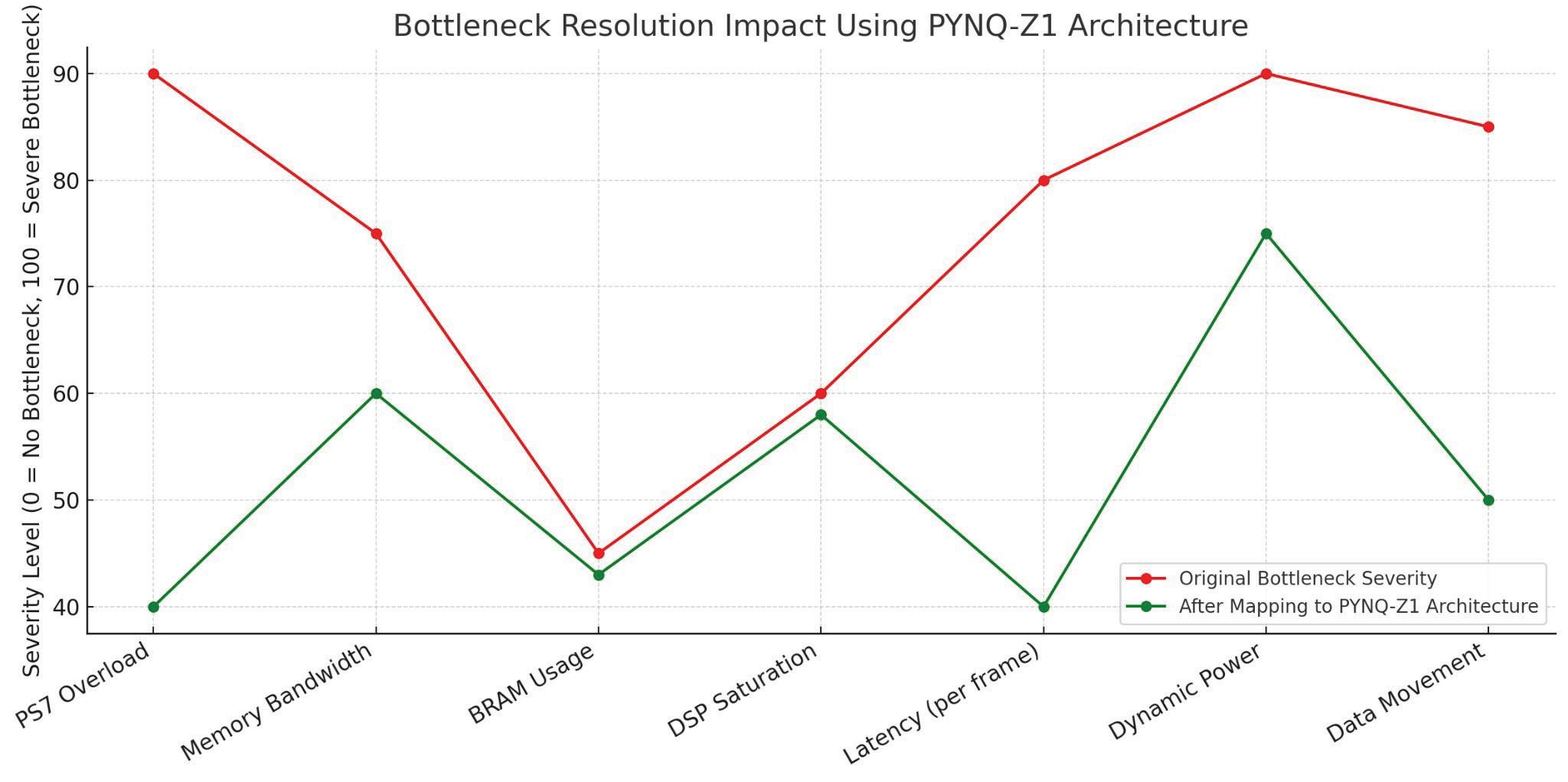
Figure 1: Bottleneck Resolution Impact Using PYNQ-Z1 Architecture.
Proposed Solution: Leveraging PYNQ-Z1 with Overlay Methodology
To mitigate the identified issues, the architecture was mapped to the PYNQ-Z1 platform using a lightweight overlay-based methodology. This board features the same Zynq7020 chip but enables better control of programmable logic via optimized overlays. This approach allowed the system to offload critical computation blocks to the PL (Programmable Logic) layer, thereby balancing workload distribution and reducing PS7 overhead. A restructured systolic array-based architecture and efficient memory mapping allowed for better resource balancing and utilization (Figure 2). As seen in the predictive resource utilization chart (Figure 3), post-mapping results revealed decreased utilization in LUTs, DSPs, and BRAM while maintaining computational accuracy and reduced system overhead [6][7].
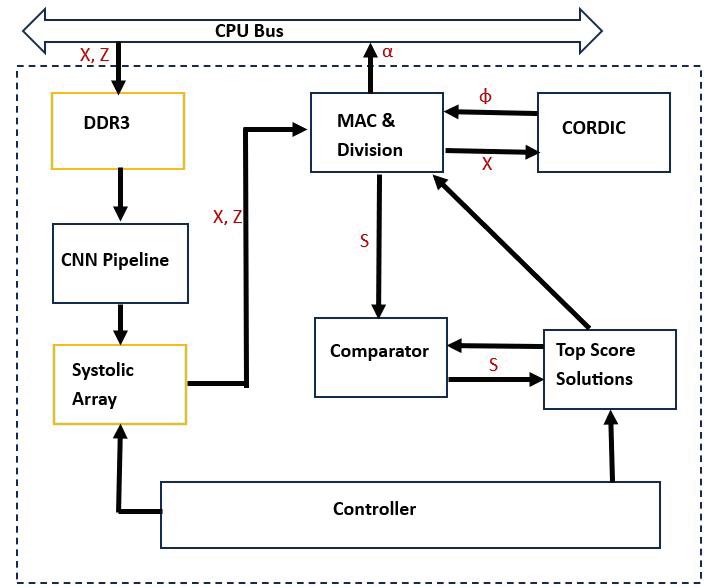
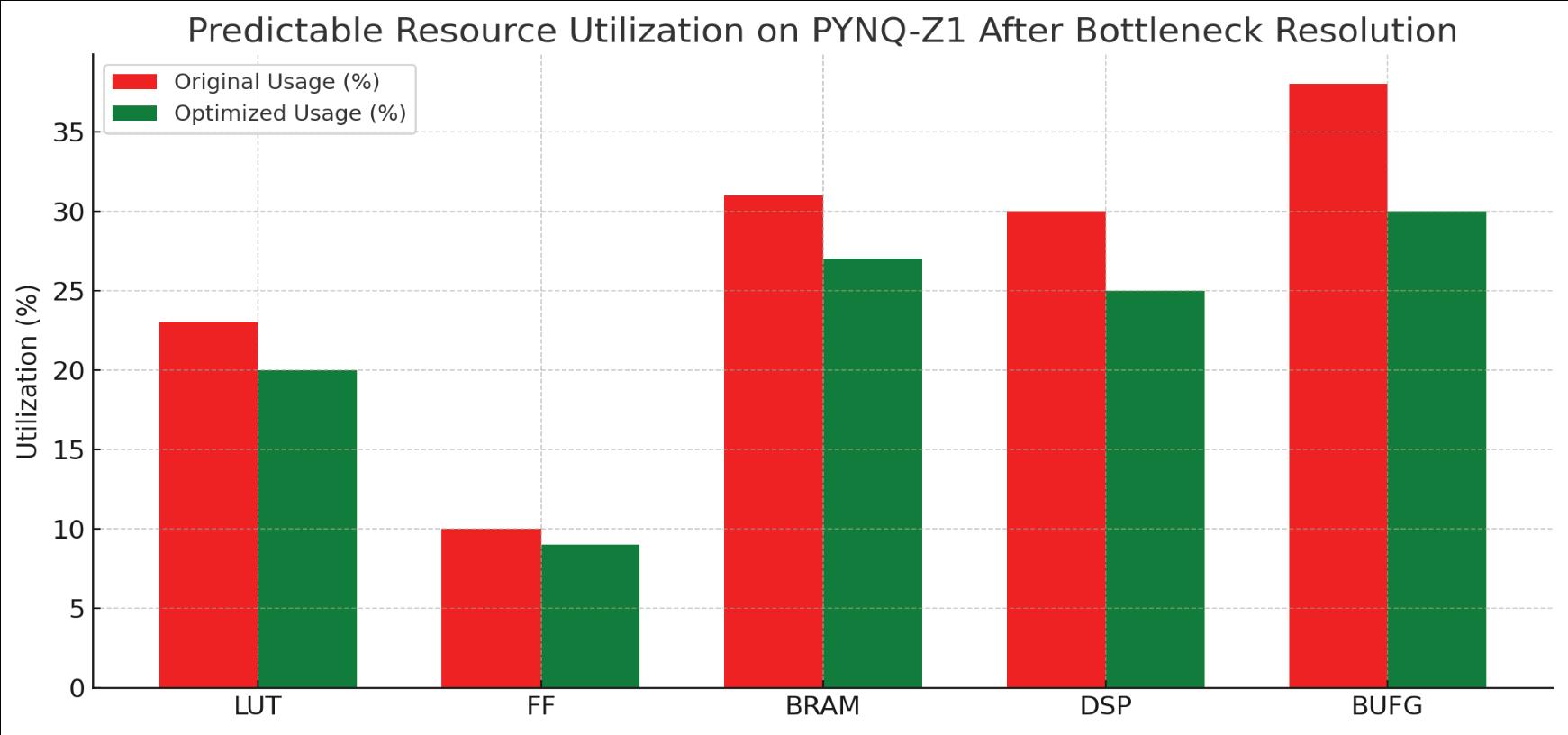
Figure 2: Proposed Accelerator Architecture
Figure 3: Optimized CNN Accelerator Architecture for PYNQ-Z1.
Performance Analysis and Resource Utilization:
With post-optimization, significant improvements were observed in both resource usage and execution efficiency. Figure 1 depicts a throughput improvement of 19%, a dynamic power reduction of 22%, and reduced latency per frame. The overlay-driven FPGA control minimizes redundant logic usage and leverages BRAM more efficiently. This demonstrates the strength of PYNQ-Z1’s flexibility in adapting to CNN acceleration workloads [8][9].
References:
1. G. Tiwari, S. Nakhate, A. Pathak, A. Jain, and S. Penurkar, “Hardware Accelerators for DeepLearning Applications,” in Proc. 2025 IEEE Int. Students’ Conf. Electr., Electron. Comput. Sci. (SCEECS), Bhopal, India, 2025, pp. 1–10.
2. Y. Qian, Z. Wang, S. Zhang, and X. Wang, “Hardware/Software Co-Design of CNN Accelerators on PYNQ FPGA for Edge AI,” IEEE Access, vol. 10, pp. 11342–11355, 2022. doi:
3. 10.1109/ACCESS.2022.3143801.Gundrapally, Y. A. Shah, N. Alnatsheh, and K. K.Choi, “A High-Performance and Ultra-Low-Power Accelerator Design for Advanced Deep Learning Algorithms on an FPGA,”
4. Electronics, vol. 13, no. 13, p. 2676, 2024. doi: 10.3390/electronics13132676
5. S. Jiang, Y. Lin, H. Huang, and D. Wang, “A Bottleneck-Oriented Optimization Framework for FPGA-Based CNN Accelerators,” IEEE Transactions on Circuits and Systems I: Regular Papers, vol. 68, no. 7, pp. 3021–3034, Jul. 2021. doi: 10.1109/TCSI.2021.3066587
6. M. M. Hasan, N. S. Islam, and M. S. Kaiser, “Performance Bottlenecks in FPGABased DeepLearning Accelerators,” Journal of Signal Processing Systems, vol. 92, pp. 1095–1108, 2020. doi: 10.1007/s11265-020-01558-w.
7. V. H. Kim and K. K. Choi, “A Reconfigurable CNN-Based Accelerator Design for Fast and
8. Energy-Efficient Object Detection System on Mobile FPGA,” IEEE Access, vol. 11, pp. 59438– 59445, 2023. doi: 10.1109/ACCESS.2023.3271310
9. D. He, J. He, J. Liu, J. Yang, Q. Yan, and Y. Yang, “An FPGA-Based LSTM Acceleration Engine for Deep Learning Frameworks,” Electronics, vol. 10, no. 6, p.681, 2021. doi:
10. 10.3390/electronics10060681
11. S. S. Sahoo, S. Ullah, and A. Kumar, “AxOTreeS: A Tree Search Approach to Synthesizing FPGA-Based Approximate Operators,” ACM Trans. Embed. Comput. Syst., vol. 22, no. 5s, pp. 1–26, 2023. doi: 10.1145/3609096
12. W. Huang, H. Wu, Q. Chen, C. Luo, S. Zeng, T. Li, and Y. Huang, “FPGA-Based High-Throughput CNN Hardware Accelerator With High Computing Resource Utilization Ratio,” IEEE Trans. Neural Netw. Learn. Syst., vol. 33, no. 8, pp. 4069–4083, Aug. 2021. doi:
13. 10.1109/TNNLS.2021.3057811
Development of a Metabolism Rate Model in the Proximal Small
Edesiri A. Ukusajuya, and Kazeem B. Olanrewaju, Ph.D.* Department of Chemical Engineering, College of Engineering
Introduction:
The small intestine is the primary site for nutrient absorption, with the proximal small intestine (SI) functioning as the central compartment for rapid carbohydrate digestion and glucose uptake[ 1], [2]. Understanding the spatiotemporal dynamics of glucose its formation from dietary starch/oligosaccharides, its transport through the lumen, and its absorption into blood is essential for accurate predictions of postprandial glycemia and for informing clinical and engineering strategies (e.g., diabetes management, food formulation, and targeted drug delivery) [3]-[5]. This project develops and evaluates a mechanistic metabolism rate model that integrates1) Compartmental mass balances across key GI organs and interfaces.2) Enzymatic hydrolysis of oligosaccharides to glucose.3) Convective–diffusive transport and membrane mediated uptake (SGLT1/GLUT2, GLUT5).4) Exchange with the bloodstream and downstream compartments (large intestine) [6]-[8]. This approach combines a CSTR representation of the stomach with a segmented proximal SI modeled as a plug flow reactor (PFR) discretized via the Finite Difference Method (FDM) [8]. The result is a tractable, physiologically interpretable framework capable of predicting glucose concentration gradients and the impact of enzyme activities and transport parameters on absorption.
Objectives: The research pursues four integrated objectives. First, it develops a compartmental model that captures glucose metabolism and transport in the proximal small intestine while linking upstream (stomach) inflows and downstream (blood and large intestine) outflows. Second, it defines a complete inventory of metabolites in each compartment and specifies the intercompartmental streams and mechanisms by which they move or react. Third, it addresses both temporal and spatial variations in metabolite concentrations, using a hybrid CSTR–PFR structure and axial segmentation to resolve concentration profiles along the intestinal length. Fourth, it explicitly simulates enzymatic reactions such as the hydrolysis of oligosaccharides by pancreatic amylase and brushborder enzymes—and transporter-mediated uptake into the bloodstream via SGLT1 and GLUT2 (with GLUT5 for fructose), enabling assessment of how enzyme activities and transport parameters shape glucose availability and absorption.
Methodology:
• Model Framework
o The digestive system was conceptualized as interconnected bioreactors:
o Stomach: Modeled as a Continuous Stirred-Tank Reactor (CSTR) assuming instantaneous mixing. o Small Intestine: Treated as a Plug Flow Reactor (PFR) divided into 458 segments (0.6 cm each), simulating unidirectional flow with gradual absorption. This segmentation captures axial concentration gradients critical for absorption accuracy.
Governing Equations o Mass balance and reaction kinetics drive the simulation:
• Numerical Implementation o The finite difference method discretized advectionreaction equations across all SI segments. A case study simulated oligosaccharide-to-glucose conversion using literature-derived kinetic parameters (Table 1).
Table 1: Key Model Parameters
Parameter Value Description
Small Intestine Length 275 cm
Segmentation
Resolution 0.6 cm
Flow Velocity (uuu) 0.2 cm/min
Anatomical average
Balance of accuracy & stability
Peristaltic flow rate
���������������� (Amylase) 120 s ¹ Catalytic rate constant
Results:
Glucose Dynamics and Absorption: Simulations reveal a steep exponential decline in luminal glucose concentration along the proximal SI (Figure 1), with ~70% of total absorption occurring within the first 100 cm. This gradient arises from rapid SGLT1/GLUT2 transporter activity, validated against in vivo data. Sensitivity analysis confirmed enzyme kinetics as a major control point: a 20% increase in amylase activity boosted glucose flux by 15%.
Figures 1 -3 results include the successful modeling of glucose absorption through the small intestine as a series of continuous stirred tank reactors (CSTRs), represented by ordinary differential equations (ODEs). This approach captures the temporal variation of glucose concentration along the 258 segments of the 275 cm long PSI, with each segment modeled as a discrete unit in MATLAB.
Key parameters incorporated into the model, such as volumetric flow rate (gastric emptying rate), PSI total length, intestinal radius, absorption rate constant (0.002/s), and initial glucose concentration, were obtained from the literature, enabling simulation of glucose dynamics over 180 minutes.
The results reveal an initial rapid increase in glucose concentration within the first 20 minutes, followed by a stabilization phase. Additionally, the final concentration varies with the percentage of the intestine traversed, with higher concentrations observed at upstream sections (10% coverage) and lower concentrations downstream (90% coverage), indicating a steady state is eventually reached. Moreover, the glucose
absorption rate quickly rises to approximately 29 g/m³s and maintains this plateau throughout the simulation.
These findings validate the model's ability to depict transport and absorption patterns and highlight the influence of segmental coverage on local glucose concentrations.
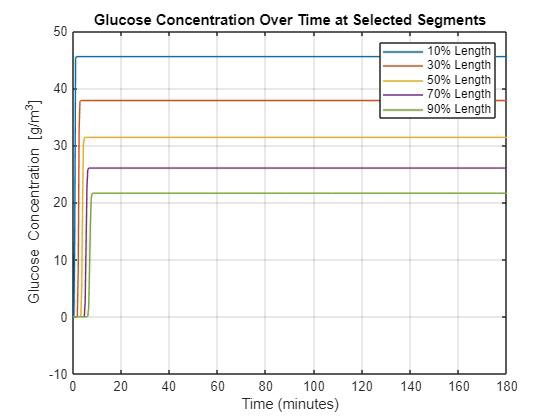
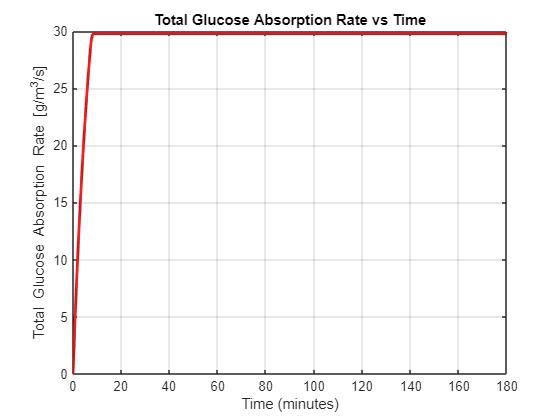
Figure 1: Glucose concentration over time at selected segments
Figure 2; Total glucose absorption rate vs time
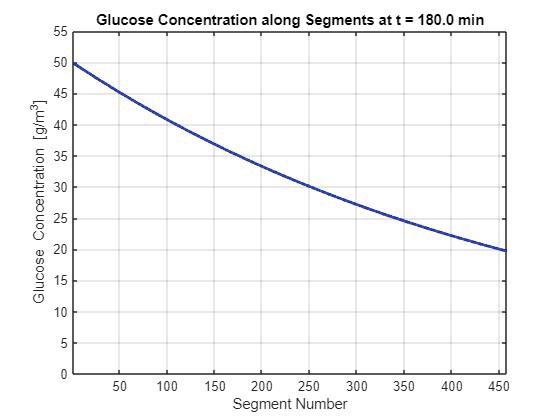
Figure 3: Glucose concentration along segments at t=180.0 min
References:
1. C. Li et al, "Current in vitro digestion systems for understanding food digestion in human upper gastrointestinal tract," Trends Food Sci. Technol., vol. 96, pp. 114-126, 2020.
2. P. S. Leung and P. S. Leung, The Gastrointestinal System: Gastrointestinal, Nutritional and Hepatobiliary Physiology. 2014.
3. Klip and M. Pâquet R., "Glucose Transport and Glucose Transporters in Muscle and Their Metabolic Regulation," Diabetes Care, vol. 13, (3), pp. 228, 1990. Available: http://care.diabetesjournals.org/content/13/3/228.abstract. DOI: 10.2337/diacare.13.3.228.
4. Dalla Man, M. Camilleri and C. Cobelli, "A system model of oral glucose absorption:
5. validation on gold standard data," IEEE Transactions on Biomedical Engineering, vol. 53, (12), pp. 2472-2478, 2006.
6. C. C. Cohen et al, "Dietary sugar restriction reduces hepatic de novo lipogenesis in adolescent boys with fatty liver disease," J. Clin. Invest., vol. 131, (24), pp. e150996, 2021.
7. X. Y. Lawrence, J. R. Crison and G. L. Amidon, "Compartmental transit and dispersion model analysis of small intestinal transit flow in humans," Int. J. Pharm., vol. 140, (1), pp. 111-118, 1996.
A. M. Rosas-Pérez, K. Honma and T. Goda, "Sustained effects of resistant starch on the expression of genes related to carbohydrate digestion/absorption in the small intestine," Int. J. Food Sci. Nutr., vol. 71, (5), pp. 572-580, 2020. . DOI: 10.1080/09637486.2019.1711362 [doi].
8. G. Olivieri et al, "Bioreactor and bioprocess design issues in enzymatic hydrolysis of lignocellulosic biomass," Catalysts, vol. 11, (6), pp. 680, 2021.
JUVENILE JUSTICE
Juvenile Justice
Assessing the Prevalence of E-Cigarettes versus Other Tobacco Use Among HBC University Students in Texas and Mississippi
Dionne Smalling and Sherill V. C. Morris-Francis, Ph.D.* Department of Justice Studies, College of Juvenile Justice
Introduction:
The Surgeon General has sounded the alarm about the rising use of e-cigarettes among young people, especially on college and university campuses. This trend is concerning because of the health risks involved, such as short- and long-term health effects, nicotine addiction, and an increased likelihood of using other tobacco products (National Science Association, 2018). College and university campuses are particularly affected because students are away from home, gaining independence, and vulnerable to peer pressure.
Exposure to nicotine during young adulthood can have negative effects on brain development, leading to reduced cognitive abilities and an increased risk of mental health disorders. Ecigarettes have become the most popular tobacco product among young people. Data from the Spring 2019 ACHA-National College Health Assessment revealed that e-cigarette use among college students is rising, with 14.3% of undergraduates reporting use in the last 30 days (ACHA, 2021). The Surgeon General concludes that youth use of nicotine in any form, including e-cigarettes, is unsafe, addictive, and harmful to the developing adolescent brain (USDHHS, 2016).
E-cigarettes have many different names. They are sometimes called “electronic nicotine delivery systems (ENDS),” “e-cigs,” “e-hookahs,” “mods,” “vape pens,” “vapes,” “tank systems,” and “disposables.” Young people often refer to using an e-cigarette as "vaping." In a January 7, 2020, report, there were 60 deaths and 2,558 hospitalized patients due to ecigarette or vaping product use-associated lung injury (Werner et al., 2020). By February 18, 2020, a total of 2,807 cases or deaths related to e-cigarette or vaping product use-associated lung injury (EVALI) were reported to the CDC from 50 states, D.C., Puerto Rico, and the U.S. Virgin Islands. Sixty-eight deaths were confirmed in 29 states and the District of Columbia (CDC, 2021). While some cases involved the exclusive use of THC-containing products, many individuals experiencing these issues reported using either only nicotine-containing products or a mix of THC-containing products (Werner et al., 2020). As a result, the Centers for Disease Control and Prevention advises against using all e-cigarette or vaping products and emphasizes that young people should never use e-cigarettes.
Objective:
This study aims to assess the prevalence of e-cigarette and other tobacco product use on Texas HBCU campuses, starting with Prairie View. The study will then be extended to other states. It will examine the percentage of students who have used e-cigarettes in the past 30 and 60 days but have not used combustible cigarettes during the same period, as well as their awareness of health effects associated
Purpose of the Study:
• This study aims to assess the prevalence of e-cigarette use compared to other tobacco products among Historically Black Colleges and Universities (HBCUs) students in Texas and Mississippi.
• College and university campuses offer a unique opportunity to: 1) ensure that the campus community stays informed about emerging news and research on ecigarette and vaping product use; 2) provide access to evidence-based resources for tobacco cessation; and 3) promote tobacco-free policies that encompass e-cigarettes.
This research will highlight the urgent need for action on college campuses by examining what we currently know, what additional information is needed, and what steps we can take to reduce the rising trend of e-cigarette use within our campus communities.
Guiding Research Questions are:
1. What is the prevalence of e-cigarette use compared to other tobacco products like cigarettes, cigars, hookah, and smokeless tobacco among HBCU students in Texas and Mississippi?
2. How does the prevalence of e-cigarette use at HBCUs compare to the national averages for Black young adults?
3. What are the main reasons HBCU students begin using e-cigarettes compared to traditional tobacco products?
4. What are the differences in prevalence, motivation, and attitudes toward ecigarette use among undergraduate and graduate students?
5. How do HBCU students view the health risks of e-cigarettes compared to traditional tobacco products?
6. How do peer influences and social environments affect e-cigarette use among HBCU students?
7. How do campus policies on smoking and vaping influence student behaviors at HBCUs?
8. How do cultural attitudes at HBCUs influence tobacco product usage patterns?
9. What misconceptions do HBCU students have about e-cigarettes, and how can education campaigns address them?
10. Are there gender-specific differences in why HBCU students choose e-cigarettes over other tobacco products?
Theoretical Framework:
The following theoretical perspective will guide the research. Please note that while other theories may be applicable, these will be the guiding theories for this portion of the research.
2.Differential Association (Sutherland, 1934,1939, 1947). Sutherland postulates that: Behavior is learned in interaction with other persons in a process of communication, within intimate personal groups, and from definitions of the legal codes as favorable or unfavorable.
Key Implications for this study: Social influence and Peer relationships; Social Group attachments – Social norms, and Marketing and Accessibility
2.Routine Activities theory (Cohen & Felson, 1979) focuses on the circumstances surrounding a criminal or deviant activity rather than on the offender. According to this theory, crime/deviant activities occur because motivated offenders encounter suitable targets in the absence of capable guardians.
Key Implications for this study: Motivated Offenders – College students may be motivated to use e-cigarettes due to various factors such as peer influence, stress, and the desire to fit in. The social environment often encourages experimentation with substances.
Suitable target – the first aspect to consider is how college students spend their leisure time by focusing on the following:
• Peers – close friends and individuals in one’s social groups; Peer selection versus peer socialization: College students may select certain friends because they supply the substances, or they may use them because their friends use.
• E-cigarettes themselves are appealing to college students because of their convenience, design, easy concealment, and flavors.
• Lack of guardianship – parents are absent to supervise college students’ behavior. Multiple studies have shown that parental monitoring decreases substance use and deviant actions. Most college students are “living” on their own for the first time. College campuses might not rigorously enforce tobaccofree policies. There are fewer guardians, such as campus security, staff, or chaperones, at parties, to monitor students
Methods:
This study will employ a mixed-methods approach to include a Quantitative Online survey adapted from the National Youth Tobacco Survey 2022. Qualitative – Focus group discussions and qualitative questions on the questionnaire.
Sample: Undergraduate and graduate students at HBCUs in Texas and Mississippi
Sample: Undergraduate and graduate students at HBCUs in Texas and Mississippi
Sampling Techniques: A stratified random sampling method will be used to ensure representation across different academic years, genders, and other key demographic variables.
Sampling Techniques: A stratified random sampling method will be used to ensure representation across different academic years, genders, and other key demographic variables.
Recruitment will be conducted through campus email lists, flyers, and faculty contacts.
Recruitment will be conducted through campus email lists, flyers, and faculty contacts.
Quantitative Analysis - SPSS
Quantitative Analysis - SPSS
• Frequency and Descriptive statistics of participant sociodemographic characteristics, awareness, exposure, and use of e-cigarettes.
• Frequency and Descriptive statistics of participant sociodemographic characteristics, awareness, exposure, and use of e-cigarettes.
• Independent Sample t-tests, analysis of variance, and chi-square tests to measure differences in the use of e-cigarettes among respondents
• Independent Sample t-tests, analysis of variance, and chi-square tests to measure differences in the use of e-cigarettes among respondents
Qualitative Analysis – Atlas-ti
Qualitative Analysis – Atlas-ti
• Thematic analysis - Code focus group data to identify patterns of use (e.g., vape culture, stress triggers).
• Thematic analysis - Code focus group data to identify patterns of use (e.g., vape culture, stress triggers).
• Class analysis – group students into distinct profiles (e.g., “social vapers” stressdriven users”) based on usage patterns.
• Class analysis – group students into distinct profiles (e.g., “social vapers” stressdriven users”) based on usage patterns.
Map peer influence dynamics and clustering of vaping behaviors.
Map peer influence dynamics and clustering of vaping behaviors.
Integration:
Integration:
Combining quantitative and qualitative results through triangulation to generate comprehensive insights into how social and individual factors affect tobacco use.
Combining quantitative and qualitative results through triangulation to generate comprehensive insights into how social and individual factors affect tobacco use.
Procedures:
The study will be conducted following these steps and timeline:
Procedures: The study will be conducted following these steps and timeline:
1 Literature search, review existing databases, and similar research on the topic October to December 2024 Completed
2 Draft Literature Review January – February 2025 Completed
3 Questionnaire development March -April 2025 Draft Completed –in refining stage
3 Questionnaire development March -April 2025 Draft Completed –in refining stage
4. Participate in PVAMU Research Month Activities; CISR - Student Research Day, April 9, 2025 – Ms. Smalling participated.
COJJ Faculty Research Day, April 29, 2025. – Dr. Morris-Francis participated.
Completed –(PowerPoint attached).
5. Discussion with HBCUs in Texas and Mississippi February and March Dr. Ora Starks from the Department of Criminal Justice at Mississippi Valley State University is on board.
Follow up with other Universities from September to October 2025.
6 Preparing the IRB Application and completing the questionnaire July and August, 2025 Will submit the IRB application in September 2025
7. Initial Phase - Data collection for PV and MVSU students. Data will be collected from undergraduate and graduate students who are 18 years or older. The students will be invited to participate in the study and be provided with a link to complete the study questions online using Qualtrics or another online data collection tool. Survey questions will be adapted from the National Youth Tobacco Survey. To ensure anonymity, participants' IP addresses will not be collected. A selected group of students will be invited to participate in a focus group discussion on the use and health consequences of using tobacco products. Participants will be granted course credit for their participation if requested. The Institutional Review Board will approve all study materials and procedures before data collection.
October to December, 2025
8 Conference Presentation Ms. Smalling, my graduate student, will present her part at the Southwestern Association of Criminal Justice (SWACJ) in October 2025.
Dr. Morris-Francis will present the larger study at the Academy of Criminal Justice Sciences conference in March 2026
Upcoming -the call for papers will be out in August. Upcoming – The call for papers will be out in September.
9 Publications April – May 2026 Upcoming
10. Target external funders US Food and Drug Administration Center for Tobacco Products, the National Cancer Institute, and Truth Initiative –Tobacco/NicotineFree College Program
Significance:
Actively searching
The risks associated with e-cigarettes for youth and young adults far outweigh any potential benefits. Numerous studies have demonstrated that young people who use ecigarettes are more likely to start smoking, including some low-risk youth who might not have smoked otherwise. Additionally, many young e-cigarette users are unaware that the product contains nicotine (Willett et al., 2018). An increasing number of studies indicate that young e-cigarette users are more likely to become smokers. According to the National Academies of Sciences, Engineering, and Medicine, “There is substantial evidence that e-cigarette use increases risk of ever using combustible tobacco cigarettes among youth and young adults” (Eaton, Kwan, & Stratton, 2018). Youth are using e-cigarettes more frequently than ever before 1.6 million middle and high school students reported using them at least 20 days a month. Unfortunately, college students show similar patterns of use and signs of dependence. While several national studies have examined e-cigarette use broadly among youth and young adults, few have focused specifically on e-cigarette use among HBCU students.
References:
1. Association ACH. American College Health Association-National College Health Assessment II: Reference Group Executive Summary Fall 2017. 2018.
2. Association ACH. (2025). American College Health Association-National College Health Assessment II: Reference Group Executive Summary Fall 2024.
3. Birdsey J, Cornelius M, Jamal A, et al. (2023). Tobacco product use among U.S. middle and high school students—National Youth Tobacco Survey, 2023. MMWR Morb Mortal Wkly Rep 2023;72:1173 – 82. PMID:37917558.https://doi.org/10.15585/mmwr.mm7244a1
4. CDC (August 3, 2021). Outbreak of Lung Injury Associated with Use of E-Cigarette, or Vaping Products. Office on Smoking and Health, National Center for Chronic Disease Prevention and Health Promotion.
5. Cullen K, et al. (2019). E-Cigarette Use Among Youth in the United States, 2019. JAMA.
6. Dang Y. H. (2020). Attitudes and Perceptions of Tobacco-Related Products in College Students. Innovations in pharmacy, 11(3), 10.24926/iip.v11i3.3215. https://doi.org/10.24926/iip.v11i3.3215
7. Eaton, D.L., Kwan, L.Y., & Stratton, K (2018). Eds. Public Health Consequences of ECigarettes. National Academies of Sciences, Engineering, and Medicine; Health and Medicine Division; Board on Population Health and Public Health Practice; Committee on the Review of the Health Effects of Electronic Nicotine Delivery Systems. Washington (DC): National Academies Press (US); 2018 Jan 23. PMID: 29894118.
7. Eaton, D.L., Kwan, L.Y., & Stratton, K (2018). Eds. Public Health Consequences of ECigarettes. National Academies of Sciences, Engineering, and Medicine; Health and Medicine Division; Board on Population Health and Public Health Practice; Committee on the Review of the Health Effects of Electronic Nicotine Delivery Systems. Washington (DC): National Academies Press (US); 2018 Jan 23. PMID: 29894118.
8. Goniewicz M, et al. (2013). “Levels of selected carcinogens and toxicants in vapor from electronic cigarettes. Tobacco Control. 23(2):133-139
8. Goniewicz M, et al. (2013). “Levels of selected carcinogens and toxicants in vapor from electronic cigarettes. Tobacco Control. 23(2):133-139
9. Han S KR. (2016). Exploratory analysis of marketing and non-marketing e-cigarette themes on Twitter.Soc Inform. 10047:307-322.
9. Han S KR. (2016). Exploratory analysis of marketing and non-marketing e-cigarette themes on Twitter.Soc Inform. 10047:307-322.
10. Ickes MJ HJ, Wiggins A, Rayens MK, Hahn EJ, Kavuluru R. (2019). Prevalence and reasons for Juul use among college students. JACH.
10. Ickes MJ HJ, Wiggins A, Rayens MK, Hahn EJ, Kavuluru R. (2019). Prevalence and reasons for Juul use among college students. JACH.
11. Jamal A, Hu S.S, et al. 2017). Tobacco Use Among Middle and High School Students United States, 2011– 2016. MMWR. 66:597-603.
11. Jamal A, Hu S.S, et al. 2017). Tobacco Use Among Middle and High School Students United States, 2011– 2016. MMWR. 66:597-603.
12. Rubenstein M, et al. (2018). Adolescent Exposure to Toxic Volatile Organic Chemicals from Ecigarettes. Pediatrics. 41(4)
12. Rubenstein M, et al. (2018). Adolescent Exposure to Toxic Volatile Organic Chemicals from Ecigarettes. Pediatrics. 41(4)
13. USDHHS, (2016). E-Cigarette Use Among Youth and Young Adults. A Report of the Surgeon General. In: and USDoH, Human Services CDCP, National Center for Chronic Disease Prevention and Health Promotion OoSaH, eds. Atlanta, GA2016.
13. USDHHS, (2016). E-Cigarette Use Among Youth and Young Adults. A Report of the Surgeon General. In: and USDoH, Human Services CDCP, National Center for Chronic Disease Prevention and Health Promotion OoSaH, eds. Atlanta, GA2016.
14. Werner, Angela K, Koumans, Emilia H, Chatham-Stephens, Kevin, Salvatore, Phillip P.et al., (2020). Hospitalizations and Deaths Associated with EVALI. The New England Journal of Medicine. 2020; 382:1589-1598.
14. Werner, Angela K, Koumans, Emilia H, Chatham-Stephens, Kevin, Salvatore, Phillip P.et al., (2020). Hospitalizations and Deaths Associated with EVALI. The New England Journal of Medicine. 2020; 382:1589-1598.
15. Willett JG BM, Hair EC, et al., (2018). Recognition, use, and perceptions of JUUL among youth and young adults. Tobacco Control.
15. Willett JG BM, Hair EC, et al., (2018). Recognition, use, and perceptions of JUUL among youth and young adults. Tobacco Control.
ARCHITECTURE
Architecture
Exploring Bacterial Cellulose as a Sustainable Architectural Skin
Precious Watts and William Price. Ph.D.* School of Architecture
Introduction:
This report summarizes research activities supported by the RISE Grant from August 2024 to May 2025. The project, titled Exploring Bacterial Cellulose as a Sustainable Architectural Skin, addresses core objectives outlined in the grant: to prepare, cultivate, test, and apply bacterial cellulose (BC) grown from kombucha fermentation as an architectural façade material. Special emphasis was placed on analyzing light transmission through kombucha-derived cellulose skins.
Due to a severe winter freeze in January 2025, the Fabrication Center at Prairie View A&M University sustained significant major water damage and has remained closed. This rendered any fabrication or physical testing impossible during the reporting period. Nevertheless, substantial progress was achieved in literature synthesis, experimental design, recipe development, and infrastructure planning, aligning with the original scope of work.
Objectives:
The objectives of the RISE-funded project are as follows:
• Conduct a comprehensive literature review on bacterial cellulose (BC) and its architectural applications – Completed by the graduate student with 81 articles analyzed.
• Compare and contrast methods used in studies and identify research gaps –Completed with categorized matrices highlighting issues in scalability, transparency, and environmental performance.
• Create charts and visual summaries to communicate literature findings –Completed through the design of visual aids, reference tables, and schematic diagrams.
• Assist in the preparation, cultivation, testing, and application of bacterial cellulose (BC) – Not completed due to the continued closure of the Fabrication Center since January 2025.
• Analyze light transmission through the material samples – Not completed due to the inability to fabricate samples.
• Write sections of the research paper, including the literature review, methodology, and results – Completed collaboratively, including early drafts prepared for future publication.
Methods:
• Despite the closure of fabrication facilities, the team implemented the following strategies: Extensive Literature Review: A categorized database of 81 sources was assembled across four sectors: Architecture (11), Fashion (32), Industrial Design (26), and Food & Beverage (13). Articles were annotated for keywords, abstracts, author affiliations, and thematic research gaps. This review supported a broad understanding of bacterial cellulose (BC) and its material applications.
• Comparative Analysis of Research Methods: The reviewed studies were compared through the development of categorized matrices that identified key differences in methodologies, outcomes, and material treatments. This analysis revealed six primary research gaps related to scalability, transparency, environmental performance, light transmission, long-term durability, and end-oflife management of kombucha-derived BC materials.
• Charts and Visual Summaries: A wide range of charts and visual tools were created to represent the literature findings, including tables categorizing articles by theme, publication type, and discipline. Additional diagrams visualized fermentation workflows, test box schematics, and material processing sequences. These visuals appear across the reference materials and are integrated into the draft paper mockup as well, supporting its comparative framework and thematic organization.
• Preparation and Cultivation Planning: Seven fermentation recipes were compiled from literature and adapted for controlled testing scenarios, including two recipes for kombucha tea, three for SCOBY development, and two for biofilm/skin formation. These were refined to account for variations in pH, temperature, and thickness. A light transmission test box was designed using translucent concrete testing protocols, with matte-black interiors, light controls, and lux meter integration. An Excel-based experimental plan outlined variables for fermentation duration, additives such as glycerin and chitosan, and post-processing treatments. This work was completed in preparation for eventual fabrication and testing once lab access is restored.
• Fabrication Limitations: The Prairie View A&M Fabrication Center has remained closed since January 2025 due to extensive freeze-related damage. As a result, we were unable to begin material fabrication or conduct light transmission testing of kombucha-derived BC samples. Nonetheless, all required protocols and tools are prepared for immediate deployment once access resumes.
• Manuscript Drafting: A literature review manuscript titled “Exploring Kombucha in Architecture, Fashion, and Industrial Design” was collaboratively drafted as both a standalone scholarly product and a foundation for a future publication incorporating test data. The graduate student contributed to literature synthesis, formatting comparative tables, organizing visuals, and co-authoring core sections related to methodology and analysis.
• Graduate Mentorship: Throughout the research period, a graduate student provided critical assistance across all stages of the project. This included organizing references, developing schematic drawings of the test box, contributing to recipe documentation, and structuring visual aids. Their engagement supported all grant objectives and laid the groundwork for a future empirical phase once fabrication resources are restored.
Results:
• Literature Gap Identification: The review revealed key gaps in BC's architectural applications, particularly regarding light transmittance, scalability, thermal behavior, and lifecycle considerations.
• Experimental Infrastructure: Equipment sourcing was completed, with material quantities, costs, and supplier links compiled in preparation for resumed lab access
• Publishing Strategy: A publication matrix was developed to track over 15 journals, including formatting guidelines, submission windows, and fee structures. MDPI’s “Architecture Journal” was highlighted for its rolling, fee-free option.
• Protocol Documentation: Recipes and process flowcharts were produced and documented in the Kombucha Experiment Plan. Each entry includes SCOBY handling methods, reinforcement techniques, and fermentation duration.
• Draft Manuscript Development: A comprehensive literature review manuscript titled “Exploring Kombucha in Architecture, Fashion, and Industrial Design” was completed as a standalone scholarly product and submitted in draft format for future publication. The manuscript synthesizes findings from 81 sources and identifies key research gaps in material performance, scalability, and sustainable application. It is structured for submission to MDPI’s *Architecture Journal* and represents a major deliverable of this grant phase. Additionally, the manuscript is designed as the theoretical and contextual foundation for a follow-up publication that will incorporate empirical testing results specifically light transmission data from kombucha skins once fabrication facilities are restored. The graduate student was instrumental in assembling references, analyzing findings, formatting charts, and co-authoring draft sections.
Although no physical material testing or fabrication could occur, the research team fulfilled core planning and research activities:
• Graduate Student Deliverables: The student contributed directly to the literature database, created test box diagrams, developed fermentation visuals, and collaborated on drafting sections of the future manuscript.
Significance / Impact:
The project has advanced the RISE Grant goals despite external challenges. All preparation and documentation needed to begin physical testing are now complete and ready for immediate deployment once the Fabrication Center reopens. The interdisciplinary relevance of kombucha-derived BC continues to grow, with this project contributing valuable groundwork toward its scalable use in architectural assemblies. Graduate mentorship and cross-sector literature integration have enhanced the depth and transferability of findings. Future phases will include prototype fabrication, measurement of light transmission, and comparative performance assessment.
Tables, Graphs, Photos:
Key support documents created:
• Kombucha Experiment Plan – Excel workbook detailing fermentation phases, recipes, and reinforcement treatments.
• Schematic Drawings – CAD and hand-drawn images of light test box, showing sensor positioning and lighting angles.
• Reference Matrix – Structured Excel file containing 81 sources with metadata, journal type, publication date, and research gap notes.
These assets will directly support material testing and publishing efforts in the next research phase.