
The PRISE grant program, now in its fourth year, continues to strengthen collaborative research between Prairie View A&M University and Texas A&M University. As a joint initiative of the two land-grant universities within The Texas A&M University System, PRISE supports innovative projects that address national and global challenges across six strategic themes: Community and Economic Resilience, Emerging Technologies and Innovations, Health and Quality of Life, National Security, Space Exploration, and Sustainability and Environment.
In 2024, the program awarded $520,000 to 13 interdisciplinary faculty teams following a competitive review of 57 proposals. Each funded project received $40,000 for one year, providing faculty with critical resources to advance their research and develop strong external funding proposals. By fostering collaboration across institutions and disciplines, PRISE continues to expand opportunities for discovery, innovation, and long-term impact. This booklet is a compendium of the progress reports from the awarded teams.
Combining Knowledge VisualizaMon and Intelligent Tutoring to Support Learning in STEM EducaMon: The Development of KVIS (Knowledge VisualizaMon Intelligent System)
Anne Lippert, Ph.D.
Anne Lippert, Ph.D.
Assistant Professor
Assistant Professor Department of Psychology College of Arts and Sciences
Department of Psychology
College of Arts and Sciences
Prairie View A&M University
Prairie View A&M University

Donggil Song, Ph.D.
Donggil Song, Ph.D.
Associate Professor
Associate Professor
Department of Engineering Technology and Industrial Distribution
Department of Engineering Technology and Industrial DistribuFon College of Engineering
College of Engineering
Texas A&M University

Texas A&M University
Proposed Objectives:
The project’s primary goal was to scaffold STEM students’ knowledge monitoring process through an AI coach-embedded knowledge visualization supporting system. The objectives were to (1) develop a knowledge visualization tool with an AI coach in an online learning environment and (2) promote participants’ self-regulated learning and learning performance through KVIS.
Summary of Project Outcomes and Impact:
Through this project, the team developed a web-based knowledge visualization tool (KVIS system) that introduces a novel approach using emerging technologies to optimize knowledge visualization for STEM learners. The product offers effective, engaging, and user-friendly STEM learning experiences, supporting learner scaffolding and understanding the learning process. The project promotes diverse STEM learners’ writing process. Additionally, outcomes have been disseminated through publications and presentations in STEM education, engineering education, and learning technologies. Additionally, we applied for external funds to elaborate KVIS and implement the system with a broader range of participants in different types of STEM programs at multiple institutions including local colleges and universities around Prairie View A&M University (PVAMU) and Texas A&M University (TAMU)
Description of PVAMU-TAMU Collaborative Activities:
We collaboratively focused on emerging technologies and innovations, specifically machine learning-based text analytics and AI chatbot agents. Dr. Song at TAMU explored text analytics, a rapidly growing research field that develops approaches for generating clear and visually appealing visualizations of textual data. Meanwhile, Dr. Lippert at PVAMU worked on identifying key terms using algorithms such as TF-IDF (term frequency-inverse document frequency) and TextRank to create graphical structures. Through this collaboration, we
implemented interactive activities by simulating human-like dialogue patterns and behaviors, enabling users to engage in learning tasks and enhancing their learning performance.
This study examined the challenges engineering students face in writing tasks in the era of generative AI. While these technologies offer opportunities for learning, concerns about overreliance, ethical considerations, and equitable access persist. To address these issues, the project team explored how text analytics-based knowledge visualization tools can support students' writing performance, focusing on their self-monitoring processes.
The study revealed several important insights into writing performance and learning support: First, there were no significant relationships between students’ self-regulated learning (SRL), learning performance, and writing performance. Regression analysis confirmed that SRL and course grades were not strong predictors of writing outcomes. Second, although overall SRL did not predict improvements, students’ writing performance evolved throughout the semester, highlighting the dynamic nature of writing skill development. Third, while SRL showed no main effect, learning performance significantly influenced writing performance. A closer look at individual components revealed an interaction effect between learning performance and time in the evaluating aspect of writing tasks. Fourth, students with lower grades showed greater improvement in their ability to evaluate their writing topics and work. The knowledge visualization tool seemed to support these students’ self-evaluation processes, enabling them to identify strengths and weaknesses in their writing more effectively. Last, self-evaluation, a critical component of SRL, emerged as a key mechanism in this study. Defined as the comparison of one’s performance against standards or past performance, self-evaluation helps students identify gaps and improve over time. For low-grade students, the knowledge visualization tool provided structured opportunities to enhance this skill, which may otherwise be challenging to develop independently. This aligns with prior research showing that selfevaluation, particularly when frequent and structured, significantly supports learning and skill acquisition.
Given the high value placed on written communication in engineering, the findings underscore the importance of foundational writing skills. While generative AI tools can serve as useful aids, students must first master essential skills such as audience awareness and argument construction. Institutional programs like writing centers can address this need, but they are often resource intensive. In contrast, tools like our knowledge visualization offer a costeffective way to enhance writing instruction, particularly for students with lower initial proficiency.
Future Direction:
Although the study’s design was exploratory and could not definitively attribute improvements to the knowledge visualization tool, the results suggest its potential as a writing support tool. The observed gains in low-grade students’ evaluation skills point to the value of integrating similar tools in engineering education. Future experimental studies could build on these findings, assessing the tool’s impact under controlled conditions and exploring its integration
with generative AI for balanced and ethical writing support. The team calls for further studies in an experimental setting with a control condition and a larger sample.
The team plans to secure additional external funding to further develop the KVIS system and implement it with a broader audience. By enhancing the system and conducting large-scale implementation, the project aims to identify effective methods for scaffolding diverse students’ writing skills and constructing knowledge.
Societal Impact:
This project introduces a novel approach using emerging technologies to optimize knowledge visualization for STEM learners. The product, KVIS system, provides effective, engaging, and userfriendly STEM learning experiences. By addressing the dynamic nature of knowledge acquisition, it supports learner scaffolding and understanding the learning process. The project promotes educational equity by engaging diverse STEM learners, including underrepresented students at PVAMU and TAMU. Additionally, outcomes have been disseminated via publications and presentations in STEM education, engineering education, and learning technologies.
Sameh H. Abdelwahed, PhD
Sameh H. Abdelwahed, Ph.D. Assistant Professor Department of Chemistry
Assistant Professor Department of Chemistry
College
of Arts and Sciences
College of Arts and Sciences

Prairie View A&M University
Prairie View A&M University
Shiqing Xu, PhD
Shiqing
Xu, Ph.D.
Assistant
Professor
Assistant Professor Department of PharmaceuFcal Sciences, School of Pharmacy Health Sciences Center
Department of Pharmaceutical
Sciences, School of Pharmacy
Health Sciences Center
Texas A&M University

Texas A&M University
Proposed Objectives:
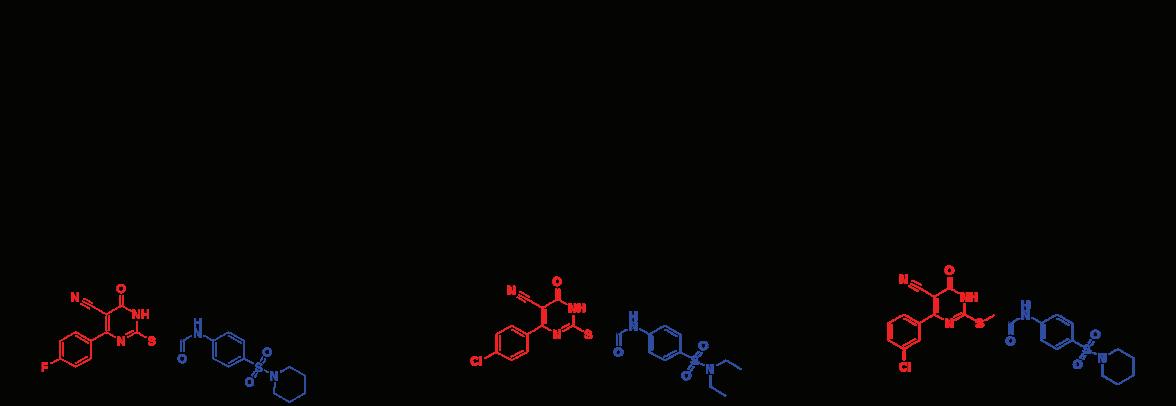
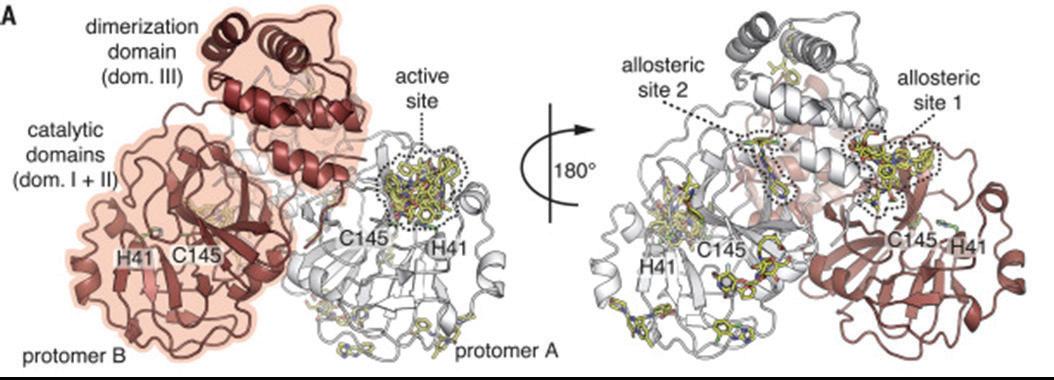
The primary objective of this project is to develop novel nonpeptide-based inhibitors targeting the main protease (MPro) of SARS-CoV-2. The main protease is a highly conserved enzyme among coronaviruses, making it an ideal target for broad-spectrum antiviral drugs. By focusing on nonpeptide-based inhibitors, we aim to overcome the limitations associated with peptidebased inhibitors, such as low selectivity, poor cellular permeability, and limited stability. The ultimate goal is to create effective antivirals that can combat current and future strains of corona viruses, thereby contributing to global health security.
Summary of Project Outcomes and Impact:
The project has successfully identified several promising nonpeptide-based inhibitors of the SARS-CoV-2 main protease (MPro). These inhibitors have demonstrated significant enzymatic inhibition in preliminary studies, with some compounds showing IC50 values in the micromolar range. The development of these inhibitors represents a significant step forward in the fight against COVID-19 and other coronavirus-related diseases. The findings from this project have the potential to lead to the development of new antiviral therapies that can be used to treat a wide range of coronavirus infections.
Description of PVAMU-TAMU Collaborative Activities:
The collaboration between Prairie View A&M University (PVAMU) and Texas A&M University (TAMU) has been instrumental in the success of this project. Researchers from both institutions have worked closely together, leveraging their respective expertise in chemistry and pharmaceutical sciences. Regular meetings and joint research activities have facilitated the exchange of ideas and resources, leading to significant advancements in the design, synthesis, and testing of new MPro inhibitors. This collaborative effort has also provided valuable training opportunities for students at both institutions, fostering the next generation of scientists and researchers.
Key Results and Significance:
1. A total of 25 new compounds were synthesized, with several showing promising inhibition of the SARS-CoV-2 main protease (MPro).
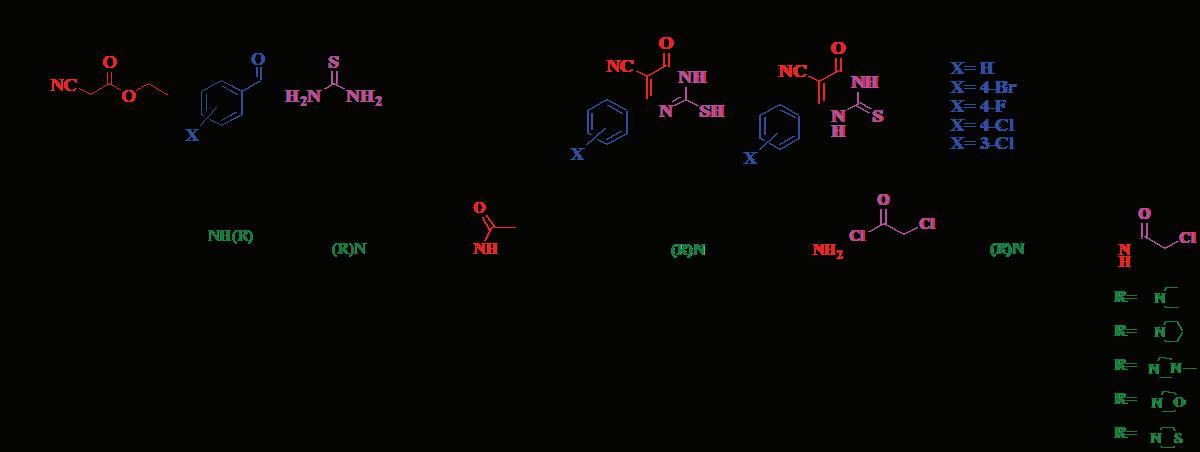
2. The project developed a streamlined platform for rapid structural characterization of MProinhibitor complexes, enabling efficient optimization of inhibitor design.
3. Two compounds, in particular, exhibited strong inhibitory activity with IC50 values of 63.7 μM and 79.5 μM, respectively.
4. The nonpeptide-based inhibitors demonstrated improved selectivity, cellular permeability, and stability compared to existing peptide-based inhibitors.
5. The findings from this project have been disseminated through multiple publications in high-impact scientific journals, contributing to the broader scientific community's understanding of MPro inhibition.
Future Directions:
1. Further optimization of enzymatic and cellular potency will be pursued to enhance the efficacy of the identified MPro inhibitors.
2. Efforts will be made to improve the pharmacological properties of the inhibitors, including metabolic stability, cellular permeability, and solubility.
3. Continued collaboration between PVAMU and TAMU will be essential for securing additional funding for advanced preclinical studies.
4. The most promising inhibitors will be evaluated for their potential in clinical trials and commercialization.
5. The research team will explore the application of the developed platform for identifying inhibitors against other viral targets, broadening the scope of antiviral drug discovery.
Societal Impact:
The project aims to develop broad-spectrum antivirals to combat COVID-19 and prepare for future coronavirus outbreaks, potentially saving lives and reducing the economic and health impacts of pandemics.
SupporMng Low-Income CommuniMes Make Customized Home Energy Retrofit Decisions Using ArMficial Intelligence
Rambod Rayegan, Ph.D.
Rambod Rayegan, Ph.D.
Associate Professor
Associate Professor
Department of Mechanical Engineering
Department of Mechanical Engineering
College of Engineering
College of Engineering
Prairie View A&M University
Prairie View A&M university

Ashrant Aryaln, Ph.D.
Ashrant Aryaln, Ph.D.
Assistant Professor
Assistant Professor
Department of ConstrucFon Science
Department of Construction Science
College of Architecture
College of Architecture
Texas A&M University
Texas A&M University

Proposed ObjecGves:
The technical objecFves were to: 1) Develop algorithms that can generate possible renovaFon alternaFves using an exisFng building energy model, 2) Automate the evaluaFon of Return On Investment (ROI) for different renovaFon alternaFves, and 3) UFlize AI-driven opFmizaFon to select opFmal retrofit plan.
Summary of Project Outcomes and Impact:
The key outcome is that we were able to develop the proposed algorithm to generate, evaluate, and select opFmal retrofit plan as we originally envisioned. 1 journal paper describing our results is under review, and 1 more is under preparaFon.
DescripGon of PVAMU-TAMU CollaboraGve AcGviGes:
This project supported 1 MS student at PVAMU and 1 Ph.D student at TAMU. We had bi-weekly meeFngs throughout the project which provided the necessary mentoring for students.
Key Results and Significance:
This project addressed the limitaFons of tradiFonal building envelope retrofit planning by developing an automated framework. The framework is designed to overcome the shortcomings of generic, "one-size-fits-all" approaches, which ohen fail to account for the unique characterisFcs of individual buildings and their environmental contexts. The primary objecFve was to create a tool capable of generaFng tailored retrofit plans that maximize energy savings and return on investment (ROI) while managing computaFonal costs. Key components include a framework that considers various detailed aspects of building envelopes and their surrounding environments, as well as a novel balanced sampling method that enhances the performance of the machine learning component.
The framework uFlizes physics-based simulaFons to generate datasets for machine learning (ML) models, which are then integrated with a mulF-objecFve geneFc algorithm (MOGA) to idenFfy opFmal soluFons by balancing energy savings and cost. This approach allows the framework to efficiently evaluate numerous retrofit strategies and their respecFve impacts. To validate the effecFveness of the framework, we applied it to a model of a small office building in three disFnct climate zones within the U.S.: Tucson, Rochester, and New York City. These tests demonstrated the framework's ability to adapt to real-world condiFons and generate tailored soluFons that provide significant energy savings.
The outcomes of this project include a funcFonal automated framework that has advanced the granularity and scalability of retrofit soluFons. The method can generate highly detailed retrofit plans while remaining computaFonally efficient. This balance is achieved by the balanced sampling method and the integrated ML models, which allow for accuracy and stability even with smaller datasets. This makes the framework more accessible than tradiFonal methods.
The overall significance of this project lies in the creaFon of a tool that can help overcome the challenges of subopFmal retrofit projects. By providing tailored soluFons that are appropriate for specific buildings and climaFc condiFons, this framework will contribute to greater reducFons in energy consumpFon and greenhouse gas emissions. Furthermore, it offers a scalable, customizable, and accessible approach, making it easier for a wide range of stakeholders to invest in cost-effecFve and environmentally conscious retrofilng opFons.
Future DirecGons:
While it took longer than expected to get the algorithm developed, we have mulFple avenues to push forward in advancing our approach into a user-friendly tool, and to experimentally validate the findings of our algorithm. Furthermore, we want to expand our approach into an end-to end pipeline for idenFfying opFmal retrofits for each building. Our plan is to submit an NSF proposal during the Spring 2025 semester.
Societal Impact:
The developed framework has the potenFal to contribute to reduced building energy consumpFon, which may result in lower greenhouse gas emissions. The framework aims to enhance indoor comfort and may offer the prospect of reduced energy expenditures for building occupants. By improving accessibility to retrofit planning, the framework may encourage greater adopFon of retrofilng pracFces, which could posiFvely impact local economies and energy equity. Broader implementaFon may contribute to more sustainable communiFes and inform building-related policy decisions. The research also provides a basis for advancing analyFcal tools in building performance assessment.
Ram Ray, Ph.D.
Ram Ray, Ph.D. Professor
Cooperative Agriculture Research Center
CooperaFve Agriculture Research Center
College of Agriculture, Food, and Natural
Resources
College of Agriculture, Food, and Natural Resources
Prairie View A&M University
Prairie View A&M university
Muthukumar Bagavathiannan, Ph.D.
Muthukumar Bagavathiannan, Ph.D.
Professor
Department of Soil and Crop Sciences
Department of Soil and Crop Sciences
College of Agriculture and Life Sciences

Agriculture and Life Sciences
Texas A&M University
Texas A&M University
Proposed ObjecGves:
1. Design and development of an integrated system of opFcal camera and LiDAR module for field data collecFon.
2. CollecFon of mulFmodal data of crops in lab and field condiFons.
3. Design and development of deep learning models for within-field plant detecFon in agricultural field environment.
4. Comparison of single modality and fusion data deep learning methods for plant biomass and crop yield esFmaFon.
Summary of Project Outcomes and Impact:
EffecFve and low-cost esFmaFon of plant biomass and crop yield is a criFcal need in agriculture since this informaFon is vital for management decision-making and yield predicFon. In this regard, remote sensing and object localizaFon applicaFons can be beneficial, and two prominent data sources for this purpose include opFcal imagery and Light DetecFon And Ranging (LiDAR)-based depth esFmaFon. Both data sources have unique characterisFcs that make them useful in specific applicaFons. The use of the deep learning approach for the generaFon of monocular depth esFmaFon and plant biomass esFmaFon is proposed here.
Different deep learning methods suitable for efficiently uFlizing the complementary characterisFcs of both data sources will be uFlized to fuse the mulF-modal data effecFvely. The development, calibraFon, and tesFng of hardware systems in laboratory and field condiFons will give insights into the pracFcality and scalability of the approach. In this work, the potenFal of the canopy's spectral, structural, textural, and category informaFon derived from mulFple sensors for plant biomass predicFon within the framework of mulFmodal data fusion and deep learning is invesFgated. It was found that the proposed method provides an efficient means for esFmaFng plant biomass and crop yields, thereby helping to improve agricultural management acFviFes.
DescripGon of PVAMU-TAMU CollaboraGve AcGviGes:
learning is invesFgated. It was found that the proposed method provides an efficient means for esFmaFng plant biomass and crop yields, thereby helping to improve agricultural management acFviFes.
DescripGon of PVAMU-TAMU CollaboraGve AcGviGes:
1. Experimental designs were replicated in both College StaFon and Prairie View locaFons.
2. The experiment was set up and conducted with three different densiFes and three replicaFons of Cereal Rye in a total of one acre.
3. Digital mulFmodal data and biomass data were collected with collaboraFve effort.
4. Dry and wet biomass data were measured collecFvely.
5. A poster was designed and developed collecFvely.
6. Digital data was collected, processed, and analyzed collecFvely.
7. ObservaFon from the data was inferred collecFvely.
Key Results and Significance:
1. It was observed that data fusion of image and depth data improved object detecFon in agricultural field condiFons compared with any single modality data.
2. Designed and developed a novel roboFc plamorm for mulFmodal data collecFon using LiDAR, two three-channel RGB cameras, and a stereoscopic camera.
3. A Cartesian roboFc plamorm over a high-performance wheeled robot was implemented for efficient mulFmodal data collecFon.
4. An onboard micro-computer was used to collect and process mulFmodal data and then generate a depth map from stereoscopic images on-fly, thus improving the data processing pipeline.
5. It was observed that sparse ground truth from LiDAR enhanced depth esFmaFon generated from monocular RGB image data.
6. It was observed that LiDAR provided sub-millimeter depth resoluFon for all operaFng distances compared to the degrading sub-cenFmeter resoluFon of stereoscopic camera data.
7. The spare LiDAR data enhanced dense stereoscopic image data using data fusion.
8. A novel deep learning method was implemented for monocular high-resoluFon depth esFmaFon and plant biomass esFmaFon from simple RGB image data.
Future DirecGon:
1. Use mulFmodal data and the generated 3D informaFon for creaFng field-level 3D map.
2. Use mulFmodal data fusion for enhanced localizaFon and plant height esFmaFon.
3. Use generated 3D informaFon along with a deep learning model for precise plant morphological parameter esFmaFon.
Societal Impact:
The proposed method in the awarded project has great scienFfic and societal implicaFons. The novel method of combining the advantage of mulFmodal field based data and learning-based model improved plant idenFficaFon and esFmaFon of its biomass. One of the direct real-world applicaFons is for the predicFon of field level early emergence weed height and biomass esFmaFon for farmers to make informed decisions on herbicide applicaFon rate. This way, the farmer community can benefit from using the opFmal amount of resources, thereby saving producFon costs, boosFng sustainability, and reducing adverse environmental effects. This mulFmodal data is a treasure to researchers working on digital agriculture applicaFons for developing future machine-learning and deep-learning models.
Mohamed Chouikha, Ph.D,
Mohamed Chouikha, Ph.D,
Chief Scientist & Executive Director Executive Professor
Chief ScienFst & ExecuFve Director ExecuFve Professor
Department of Electrical and Computer Engineering Department Engineering
Department of Electrical and Computer Engineering Department College of Engineering
Prairie View A&M University
Prairie View A&M University

-Purry, Ph.D.
Karen Butler-Purry, Ph.D.
Professor
Department of Electrical and Computer Engineering College of Engineering
Department of Electrical and Computer Engineering Engineering
Texas A&M University
Texas A&M University
Annamalai Annamalai, Ph.D.
Annamalai Annamalai, Ph.D.
Professor and Department Head
Professor and Department Head
Department of Electrical and Computer Engineering Department Engineering
Department of Electrical and Computer Engineering Department College of Engineering
Prairie View A&M University
Prairie View A&M University

Samir Abood, Ph.D.
Samir Abood, Ph.D.
Lecturer I
Department of Electrical and Computer Engineering Department College of Engineering
Department of Electrical and Computer Engineering Department Engineering
Prairie View A&M University
Prairie View A&M University
Ana Goulart, Ph.D.
Ana Goulart, Ph.D. Professor
Department of Engineering Technology & Industrial DistribuFon Engineering
Department of Engineering Technology & Industrial Distribution College of Engineering
Texas A&M University
Texas A&M University

Proposed ObjecGves:
Goal 1: Reconstruct a real-Fme CPS test bed and develop a laboratory-based CPS test bed.
ObjecFve 1.1:
a. Reconstruct the power system framework for the real-Fme CPS testbed using a real RTDS at TAMU to model and simulate power systems.
b. Develop the power system framework of a smart grid for the power laboratory-based CPS test bed using the Lucas-Nülle power engineering laboratory equipment sets at PVAMU to model and simulate distribuFon-level smart grids/microgrids.
ObjecFve 1.2:
a. Develop the cyber framework of the real-Fme CPS testbed using a communicaFon simulator/emulator and hardware switches to model and simulate various communicaFon networks and protocols. Explore the feasibility of two implementaFon opFons for the cyber framework connecFon to the RTDS simulator: an implementaFon of a simulated communicaFon system at PVAMU with a connecFon to the RTDS at TAMU using a highspeed connecFon and an implementaFon of a simulated communicaFon system at TAMU with connecFon to RTDS via TAMU local internet connecFon.
b. Develop the cyber framework of the laboratory-based CPS testbed using a cybersecurity module at PVAMU to implement various network protocols.
ObjecFve 1.3:
a. Implement a simulated advanced metering infrastructure (AMI) for a generalized power distribuFon feeder in the real-Fme CPS test bed and a supervisory control and data acquisiFon (SCADA) system for a generalized distribuFon feeder in the power laboratorybased CPS test bed.
Goal 2: Simulate cyber-aqacks and study their impact on the power system in both test beds.
ObjecFve 2.1:
a. Simulate and study cyber-aqack studies in the communicaFon network of the advanced metering infrastructure (AMI) model in the real-Fme test bed.
ObjecFve 2.2:
a. Simulate and study cyber-aqacks in the communicaFon network modeled in the cybersecurity module of the power laboratory-based test bed.
Goal 3: Using the lessons from the studies and preliminary results, idenFfy research problems for future collaboraFve research projects and proposals.
Summary of Project Outcomes and Impact:
This research developed and tested simulated cyber-physical systems (CPS) for smart grids and microgrids, achieving the following outcomes:
1. Constructed operaFonal CPS test beds for distribuFon-level simulaFon.
2. Assessed cyber-aqack impacts using AMI and SCADA systems.
3. Enhanced fault detecFon and isolaFon through advanced analysis.
4. Developed cybersecurity protocols, including Telnet and SSH.
The work yielded three published papers and one in progress, advancing the understanding of cyberaqack impacts on criFcal infrastructure and proposing pracFcal miFgaFon strategies. Five
proposals were submiqed (1 funded, 3 pending, 1 declined) and one is under development. Current research focuses on analyzing SSH vulnerabiliFes through Man-in-the-Middle aqack simulaFons to enhance protocol security.
DescripGon of PVAMU-TAMU CollaboraGve AcGviGes:
The proposed work will explore the feasibility of hosFng the power system simulaFon at TAMU while interconnecFng to the Science DMZ network. Cyber-aqacks will be conducted in the realFme CPS testbed to study areas for development, detecFon, and miFgaFon approaches for improving energy resilience.
Key Results and Significance:
The project successfully developed and operaFonalized CPS test beds at TAMU and PVAMU, enabling advanced simulaFon of smart grid and microgrid scenarios. Key outcomes include:
1. Impact Assessment: Studied the effects of simulated cyber-aqacks on AMI and SCADA systems, revealing vulnerabiliFes in criFcal infrastructure.
2. Enhanced Fault DetecFon: Improved early detecFon and isolaFon of cyber-aqacks using FFT analysis, prevenFng system-wide failures.
3. Cybersecurity Protocol Development: Configured and tested Telnet and SSH protocols, providing insights to strengthen network security.
4. Its significance lies in advancing the resilience and cybersecurity of power grids, fostering collaboraFon among diverse students, and contribuFng to sustainable infrastructure soluFons.
A real-Fme cyber-physical power system (CPS) simulaFon testbed was developed to invesFgate the vulnerabiliFes and resilience of acFve power distribuFon systems. The power systems are simulated using a Real-Time Digital Simulator (RTDS) system, and the communicaFon networks are simulated using the Common Open Research Emulator (CORE) sohware. The testbed was validated with a simulated peak shaving applicaFon in a simulated power system, which included an aggregator, a remote terminal unit (RTU), a distribuFon transformer, and four distributed energy resources (DERs). The communicaFon network emulated the TCP protocol for communicaFon between the RTDS GTNETx2 module and CORE via Ethernet cable. The two cyber-aqacks, denial of service (DoS) and man-in-the-middle (MITM), were simulated by aqacking the communicaFon between the Aggregator and DERs.
Next, the research focused on modeling a smart distribuFon feeder from the SMART-DS syntheFc dataset in the real-Fme CPS testbed. The simulated distribuFon feeder includes models of photovoltaics (PVs) and baqery energy storage systems (BESSs), electric vehicle (EV) chargers, and advanced metering infrastructure (AMI) with smart meters, routers, and collectors. The AMI communicaFon networks between the smart meters and collectors were modeled as RF mesh networks. The wide area network between the collectors and the distribuFon system operaFon staFon was modeled as fiber opFc cable. Two scenarios were simulated, and studies were performed to study the impact of cyberaqacks on the simulated smart distribuFon feeder.
ComparaFve analysis between normal system operaFon and post-aqack operaFon revealed the potenFal for a significant impact on power system operaFon. Hence, cyber-physical power system simulaFon can provide valuable insights for researchers in developing methods for detecFng and miFgaFng cyberaqacks in acFve distribuFon systems.
Future DirecGon:
Building on the current research, future efforts will focus on some of the under-listed items:
1. Advanced Cybersecurity Frameworks: Expanding the cyber-physical test beds to incorporate emerging technologies like quantum-resistant cryptographic protocols, ensuring resilience against sophisFcated cyber threats.
2. Enhanced Aqack SimulaFon Models: Developing more complex cyber-aqack scenarios, including zero-day exploits and AI-driven intrusion models, to test and improve exisFng infrastructure defenses.
3. Real-World ImplementaFon: CollaboraFng with industry stakeholders to pilot the developed cybersecurity soluFons in real-world power grid and microgrid systems.
4. SSH Protocol OpFmizaFon: ConFnuing analysis of SSH vulnerabiliFes, focusing on miFgaFng risks posed by Man-in-the-Middle (MitM) aqacks and implemenFng enhanced authenFcaFon mechanisms.
5. Machine Learning IntegraFon: Leveraging machine learning for real-Fme anomaly detecFon and automated response systems, enabling adapFve protecFon for criFcal infrastructures.
6. Interdisciplinary CollaboraFon: PromoFng further partnerships between academia, industry, and government to drive innovaFon and implement policy frameworks supporFng grid cybersecurity.
These projecFons aim to posiFon this research at the forefront of cybersecurity and resilience innovaFons, ensuring the reliability of power systems for future generaFons.
Societal Impact:
This research enhances power grid resilience and cybersecurity, directly benefiFng communiFes by ensuring reliable and secure electricity, a criFcal infrastructure for modern society. Improved fault detecFon and aqack miFgaFon protects against system-wide failures, safeguarding public safety and economic stability. The project fosters collaboraFon among PVAMU and TAMU students from diverse backgrounds, promoFng teamwork and inclusivity. Furthermore, the work advances sustainable power distribuFon planning, posiFvely impacFng the environment. These contribuFons support resilient energy systems, secure communicaFon protocols, and workforce development, driving societal progress and technological innovaFon.
Andrea McDonald, Ph.D., CHES, ACUE Director and Assistant Professor School of Public and Allied Health
Andrea McDonald, Ph.D., CHES, ACUE

Prairie
View A&M University
Director and Assistant Professor
School
of Public and Allied Health
Prairie View A&M University
Kelly L. Wilson, Ph.D., MCHES
Kelly L. Wilson, Ph.D., MCHES
Professor College of Nursing
Professor College of Nursing
Texas
A&M University
Texas

A&M University
Proposed ObjecGves:
The objecFve of this project is to expand academic opportuniFes for Prairie View A&M University (PVAMU) students, enabling them to develop knowledge and skills that integrate mental and behavioral health into public health pracFce. By the end of the PRISE project period, we aim to understand which acFviFes most effecFvely improve adherence to Mental Health First Aid standards among cerFfied individuals, including the emerging public health workforce from an HBCU.
Summary
A recent 5-year study highlighted the growing, dangerous, and costly mental health issues among college students. Increasing numbers of students, parFcularly those experiencing anxiety and depression, report that these challenges affect their academic performance and personal relaFonships. HBCU students, in parFcular, report higher rates of anxiety and depression compared to their non-HBCU peers. The rising demand for mental health services on campuses has made it difficult for insFtuFons to provide adequate support. Over half of college students will face mental health challenges before graduaFon. Therefore, reducing wait Fmes for mental health services is crucial, though increasingly challenging. Our vision is to protect students' health and safety by addressing mental health sFgma and implemenFng evidence-based intervenFons.
PVAMU-TAMU CollaboraGve AcGviGes: We collaborated extensively on insights and lessons learned from a Mental Health Awareness funded project, idenFfying key opportuniFes for PVAMU and Texas A&M University (TAMU) to work together in bringing Mental Health First Aid (MHFA) to both campuses, benefiFng students and the future healthcare workforce. We also worked together to develop an instructor model and framework to sustain the implementaFon of this evidence-based program across both universiFes. This collaboraFve effort was supported by a comprehensive literature review and
several significant presentaFons that showcased our shared lessons learned and the successful partnership between PVAMU and TAMU.
Key Results and Significance:
We successfully developed and launched a mental health awareness iniFaFve at PVAMU, modeled aher a successful program at TAMU. The iniFaFve began with training a select group of instructors in Mental Health First Aid (MHFA), followed by the cerFficaFon of 18 students in MHFA. Two of these instructors were also cerFfied to teach MHFA, ensuring the sustainability of the program. They are now authorized to offer MHFA training for the next three years, allowing future PVAMU students to receive cerFficaFon as long as resources allow. This self-sustaining model will conFnue to expand and benefit the student body beyond the iniFal implementaFon. The majority of MHFAcerFfied students were seniors, meaning they will graduate with a valuable, naFonally recognized cerFficaFon. This cerFficaFon sets them apart from other graduates who may not have received similar training, providing them with a compeFFve edge in the job market.
Furthermore, it enhances the overall public health workforce’s mental health literacy, equipping students with specialized skills that make them more prepared to address mental health issues in professional selngs. In summary, the iniFaFve not only introduced a crucial mental health resource to PVAMU but also ensured its longevity and scalability through instructor cerFficaFon, which will conFnue to benefit future students and improve their employability.
Future DirecGon(s):
Dr. McDonald and Dr. Wilson, the Principal InvesFgators (PIs), will remain in communicaFon to explore future opportuniFes for the iniFaFve. Building on the lessons learned from implemenFng the MHFA program, several key areas for growth and development have been idenFfied. One potenFal direcFon is the creaFon of a shorter mental health awareness course to complement the exisFng MHFA cerFficaFon. A more concise training opFon could reach a broader audience, providing accessible mental health educaFon, while sFll maintaining the value of the MHFA cerFficaFon for those seeking a more in-depth program. Another opportunity is to integrate mental health educaFon with other criFcal health issues for college students and the broader community, such as substance abuse, nutriFon, and physical health. This would offer a more comprehensive approach to wellness and student well-being. Expanding the program to reach addiFonal priority populaFons, including youth, military veterans, and first responders, is another promising direcFon. This would broaden the program’s impact and increase mental health awareness in diverse and ohen underserved groups. AddiFonally, there is a need to assess the program’s impact across different colleges and academic units. Many professions are beginning to require mental health training, and adapFng the program to meet the specific needs of these fields could enhance its effecFveness and reach. The iniFaFve also presents an opportunity for students to take mental health awareness back to their home communiFes. By equipping students with the tools to promote awareness and reduce sFgma, the program could foster a culture of mental health support and advocacy beyond the university. Lastly, future direcFons will focus on increasing students’ sense of value and belonging by enhancing mental health literacy and creaFng an inclusive campus
environment. These efforts will contribute to a stronger, more supporFve university culture. In conclusion, the future of this iniFaFve holds significant potenFal for expansion, integraFon, and community impact, with the aim of creaFng lasFng, posiFve change both at PVAMU and in broader communiFes.
Societal Impact:
Mental Health First Aid (MHFA) cerFficaFon empowers community members to respond effecFvely in mental health crises, reducing sFgma and fostering compassion. It enhances the capacity of the healthcare workforce to address mental health challenges, promoFng advocacy within organizaFons. By increasing awareness and competence, MHFA helps professionals provide Fmely, supporFve care and advocate for mental health awareness. AddiFonally, quality referral networks are crucial for connecFng individuals to the appropriate resources during a crisis. CollaboraFon among mental health service providers and support organizaFons is essenFal for creaFng resilient communiFes and ensuring comprehensive care for those in need.
Impact of Dairy Manure, Chicken Manure, and Biochar on Soil Structure, Soil Water-Holding Capacity, and Plant Growth, UMlizing a Pedostructural Approach
Ali
Fares, Ph.D.
Ali Fares, Ph.D.
Endowed
Professor
Professor
College of Agriculture Food and Natural Resources
College of Agriculture Food and Natural Resources
Cooperative Agriculture Research Center
CooperaFve Agriculture Research Center
Prairie View A&M University
Prairie View A&M University , Ph.D.
Rabi Mohtar, Ph.D. Professor
College of Agriculture and Life Sciences and the College of Engineering
College of Agriculture and Life Sciences and the College of Engineering
Department of Biological and Agricultural Engineering
t of Biological and Agricultural Engineering
Texas A&M University
Texas A&M University
Proposed ObjecGves:
1. to quanFfy changes in both soil water retenFon and plant-available water from 11 combinaFons of various treatment rates of biochar, chicken manure, and dairy manure amendments through analysis of a soil characterisFc curve, crahed from both the soil shrinkage curve and water retenFon curve, and
2. to determine the relaFonship between plant growth, biomass, and crop yield and the hydrostructural changes of the soil for these applicaFon combinaFons
Summary of Project Outcomes and Impact:
The overall goal of this research is to determine which combinaFon and treatment levels of biochar, chicken manure, and dairy manure amendments will yield the highest increase in water retenFon and thus plant-available water. By quanFfying this, we can then make recommendaFons for applicaFon in agriculture, such as large-scale farming, allowing growers to achieve the same yields with less water inputs, as less water will be lost to the environment. In the case of the manures, this will also impact nutrient needs, allowing less strain to be put on the energy-intensive ferFlizer industry.
DescripGon of PVAMU-TAMU CollaboraGve AcGviGes:
• PVAMU provided the experimental field which consisted of 3 replicates of 13 different treatments, from a total of 39 plots (some were further replicated).
• TAMU and PVAMU faculty and students collected samples together, 2 from each plot for a total of 78 samples. PVAMU faculty taught TAMU students how to properly take soil core samples. o Samples were analyzed in the TAMU Pedostructure Laboratory, where a new device was constructed by filng Keyence lasers to a HYPROP2. This new methodology was
shared with PVAMU, who allowed TAMU to borrow an addiFonal HYPROP2 to accelerate the analysis.
• PVAMU faculty assisted TAMU students in understanding soil science and shared data necessary for wriFng the final paper.
Key Results and Significance:
Not all treatments have been analyzed yet, however, the biochar amended samples did show a notable increase in water retenFon, plant-available water, and potenFal energy necessary to remove water from the soil. This shows that biochar can be used as a soil amendment for improving the water-holding capacity of soil, which can allow for lower water inputs for agriculture. While there was no significant change in sorghum height or biomass, there was a significant increase in yield in biocharamended soil, most likely due to the improvement in the soil’s ability to hold water for the plants.
Future DirecFons:
Once the remaining samples are analyzed, the top combinaFons of amendments should be tested on a larger scale, perhaps at the field level, to account for variaFon in nature and to verify that it can be used as an effecFve large-scale farming pracFce. AddiFonally, environmental impacts need to be assessed to ensure that our recommendaFon is sound and will not cause unnecessary environmental harm, such as if we recommend an applicaFon rate that is not too high for the soil to successfully retain, causing harmful runoff of nutrients and potenFal eutrophicaFon.
The pedostructure lab will be expanding its research using this data to find ways to rebuild soil characteristics from small pieces of known data from previously analyzed samples. This will allow widespread management decisions to be made without having physical samples in the lab.
Societal Impact:
By funding this research, we have been able to develop a new methodology with a new device that is much more accessible than the current TypoSoil. This allows many more labs access to this vital process for understanding soil structure. AddiFonally, the research itself is being used to lower the water needs for agriculture, freeing up more water to be used in other sectors such as energy. This will help us close our society’s water gap and will allow farmers the ability to conserve water and the funds they use for that water, all without sacrificing their harvest.

Raghava R. KommalapaM, Ph.D.
Raghava R. Kommalapati, Ph.D. Professor
Department of Civil & Environmental Engineering
College of Engineering
Prairie View A&M University
Department of Civil & Environmental Engineering College of Engineering Prairie View A&M University
Shankar Chellam, Ph.D.
Shankar Chellam, Ph.D. Professor
Department of Civil & Environmental Engineering
College of Engineering
Department of Civil & Environmental Engineering College of Engineering
Texas A&M University
Texas A&M university

Proposed ObjecGves:
To develop a novel treatment process train to purify unconvenFonal oil and gas wastewater to an extent where it can be beneficially reused to irrigate non-food agricultural crops.
Summary of Project Outcomes and Impacts:
Recycling produced water (PW) reduces freshwater demand and injecFon volumes. Our research developed a sequenFal treatment combining coagulaFon-flocculaFonsedimentaFon-
filtraFon with air-gap membrane disFllaFon (AGMD) for reusing PW in nonfood agriculture. We opFmized chemical dosing for high-salinity water from the Permian Basin, achieving over 95% removal of turbidity and colloidal iron. AGMD showed improved performance at higher feed temperatures and flow rates, with over 85% removal efficiency for most pollutants. This integrated process offers a promising soluFon for effecFve PW treatment, reusing treated PW thereby reducing deep well injecFon volumes, and making unconvenFonal oil & gas exploraFon and producFon more sustainable.
DescripFon of PVAMU-TAMU CollaboraFve AcFviFes:
The raw produced water sample was received from the Permian Basin. This water was kept refrigerated and was pulled out no more than 24 hours before experiments to acclimate to room temperature. Rapid mixing began using a programmable jar tester (Phipps and Bird) and flocs seqled in B-KER2 jars. Bleach was then added into each jar to oxidize the iron within the produced water, with 2 mg/L of free chlorine remaining aherwards. Aluminum chlorohydrate (ACH) (9 g/L stock soluFon) was added as the coagulant, followed by an anionic polymer (Flopam EM 235, 0.8 g/L) as a coagulant/flocculant aid, both in varying concentraFons during rapid mixing. Rapid mix (300 s-1) lasted for 1.0-1.5 minutes, depending on the experiment. The jars were programmed to flocculate (40 s-1) for 5 minutes immediately following rapid mixing.
SedimentaFon occurred unFl the produced water appeared opFmally clarified, anywhere from 30 minutes to 120 minutes aher flocculaFon.
This supernatant was slowly poured through a vacuum filtraFon system with a 22 µm Whatman cellulose filter paper prior to sending to PVAMU. These steps consFtute pretreatment for airgap membrane disFllaFon and were completed in College StaFon. The pretreated PW was further purified using an AGMD system at PVAMU with a 0.45 µm polytetrafluoroethylene (PTFE) membrane. The PW was treated at flow rates of 1, 2, and 3 L/min while maintaining the feed soluFon temperature at 60°C. AddiFonally, treatment was conducted at temperatures of 40, 50, and 60°C with a constant flow rate of 3 L/min. Both treatments were run for 5 hours with the coolant temperature kept at room temperature. The quality of the pretreated PW and AGMD permeate was analyzed for pH, conducFvity, chemical oxygen demand (COD), total nitrogen (TN), total phosphorus (TP), total solids (TS), total suspended solids (TSS), total dissolved solids (TDS), total volaFle solids (TVS), volaFle suspended solids (VSS), volaFle dissolved solids (VDS), total fixed solids (TFS), fixed suspended solids (FSS), and fixed dissolved solids (FDS) according to Standard Methods for the ExaminaFon of Water and Wastewater. Triplicate analyses were conducted to ensure the accuracy of the results.
Key Results and Significance:
The turbidity of the raw produced water was 147 NTU, which was reduced to 3.45 NTU aher pretreatment via coagulaFon-flocculaFon-sedimentaFon and to 2.92 NTU aher filtraFon. The iniFal concentraFon of iron in the raw produced water was 29.0 mg/L Fe, which was then reduced to 0.620 mg/L Fe by coagulaFon-flocculaFon-sedimentaFon and to only 0.075 mg/L Fe aher filtraFon. Hence, pretreatment removed 98.0% turbidity and 99.7% total iron thereby facilitaFng desalinaFon by air-gap membrane disFllaFon.
The treatment of pretreated PW using AGMD with varying flow rates and temperatures demonstrated that increasing both the feed soluFon temperature and flow rate improved the permeate flux. The highest average flux of 2.5 L/m²-h was achieved at 60°C and a flow rate of 3 L/min. CharacterizaFon of the PW and AGMD permeate revealed that the PTFE membrane achieved a removal efficiency of 86.8% of COD and 92.8% of TN. The removal efficiencies for TS, TFS, TVS TSS, VSS, FSS, TDS, VDS, FDS were 89.8%, 89.3%, 92.2% , 85.3%, 60.9 %, 94.4%, 89.9%, 92.9%, and 89.2%, respecFvely.
Future DirecGons:
The future direcFon of this project involves a thorough analysis of the treated PW to assess its suitability for irrigaFng non-food agricultural crops. AddiFonally, we will explore and evaluate various membrane technologies for post-treatment to idenFfy the most effecFve method for this applicaFon. PVAMU and TAMU will conFnue these interacFons (both at the Principal InvesFgator level and with students/post-docs) and submit a paper for peer-review and pursue external grants for further experimentaFon.
ComputaMonal Design of Fluidic Pressure-Fed Mechanism (FPFM) for Thermal Stability of NanoposiMoning Systems
Jaejong Park, Ph.D.
Jaejong Park, Ph.D.
Assistant Professor
Professor of Mechanical Engineering Engineering
Department of Mechanical Engineering
College of Engineering
Prairie View A&M University
Prairie View A&M University , Ph.D.

ChaBum Lee, Ph.D.
Associate Professor
Associate Professor of Mechanical Engineering Engineering
Department of Mechanical Engineering
College of Engineering
Texas A&M University
Texas A&M University
Proposed ObjecGves:
This research aims to invesFgate thermo-dynamic behaviors and models of a nanoposiFoning system architecture (stage, sensor, actuator, and controller) for high-temperature atomic force microscopy using structural opFmizaFon.
Project Summary:
This research addresses the comprehensive system architecture needs of U.S. industries and naFonal science iniFaFves for high-speed, low-cost, high-resoluFon microscopy and applicaFon of mechanical, electrical, chemical, and bio-medical topography and property characterizaFon. Significant advancements in addiFve manufacturing at a nanoscale, thermal management planning, dynamic system design, and advanced control systems will be leveraged to develop a novel nanoposiFoning system for scanning and alignment applicaFons.
DescripGon of PVAMU-TAMU CollaboraGve AcGviGes:
• CollaboraFve proposal development: 2 NSF proposals (1 pending, 1 declined), 1 TAMU TSI proposal (1 declined), PRISE (1 declined).
• TAMU PI, Lee invited PVAMU students for his NSF-funded workforce development projects (Spring 2025).
• Selected for Blue Sky CompeFFon finalist in Manufacturing Science and Engineering Conference 2024. Two PIs and Dr. Farid Ahmed (at University of Texas at Rio Grande Valley) presented the collaboraFve research work at the compeFFon. They were selected among 6 groups of the finalist.
Key Results and Significance:
• Two PIs have had more than 20 Fmes (in-person and virtual) of technical meeFngs.
• Blue Sky CompeFFon finalists in Manufacturing Science and Engineering Conference 2024: Repair Engineering Framework: Metrology, Reverse Design and AddiFve Manufacturing
Future DirecGon:
Two PIs will conFnue to work together to enhance the research and educaFon strength for each insFtute, seeking for grants, publicaFons and technological properFes.
Societal Impact:
The successful implementaFon will significantly improve the thermal stability of nanoposiFoning systems and enable the acquisiFon of increasing amounts of surface, structural, material, electrical, chemical, and/or bio-medical informaFon at elevated temperatures in a fast and convenient manner. Graduate and undergraduate students pursuing careers or higher educaFon in dynamic system design and instrumentaFon will be produced through this research. Specific focus will be made on providing opportuniFes to underrepresented student cohorts. The research results will be applicable to a wide range of (sub-) nanostructure characterizaFon or analysis, e.g., thin-film growth phenomena, phase transiFons, and surface reacFon mechanisms, and will benefit society through higher-profit and beqer-quality U.S. instrumentaFon.
Md Jobair Bin Alam, Ph.D.
Md Jobair Bin Alam, Ph.D.
Assistant Professor
Assistant Professor of Civil & Environmental Engineering Engineering

Department of Civil & Environmental Engineering
College of Engineering
Prairie View A&M University
Prairie View A&M University
Chukwuzubelu Ufodike, Ph.D.
Chukwuzubelu Ufodike, Ph.D.
Assistant Professor
Assistant Professor
College of Engineering - Texas A&M Engineering Experiment Station
Engineering - Texas A&M Engineering Experiment StaFon
Department of Engineering Technology & Industrial Distribution
Department of Engineering Technology & Industrial DistribuFon

Texas A&M University
Texas A&M university
Proposed ObjecGves:
The overarching goal of this interdisciplinary research is to invesFgate the interplay between soil pore volume and root development for sustainable civil infrastructure design. The specific objecFves are:
RO1: Evaluate root-soil interacFon and idenFfy the soil density at which plant roots (Bermuda grass) exhibit maximum growth performance under natural condiFons.
RO2: QuanFfy the opFmum pore volume for ideal root growth by creaFng and analyzing 3D-printed analogs of natural root-integrated soil samples derived from controlled compacFon experiments.
Summary of Project Outcomes and Impact:
The project successfully developed and tested soil cylinders at varied compacFon levels to evaluate root growth under different pore configuraFons. Preliminary results indicate a strong inverse relaFonship between soil bulk density and root development. CT scans and 3D models are currently in preparaFon to replicate soil structure for pore-volume and hydraulic analyses. This project contributes to geotechnical and environmental engineering by establishing a novel methodology to opFmize soil structure using addiFve manufacturing and bioinspired principles. It has enhanced student training, supported inter-insFtuFonal collaboraFon, and set the stage for large-scale funding proposals to NSF and USDA.
DescripGon of PVAMU–TAMU CollaboraGve AcGviGes:
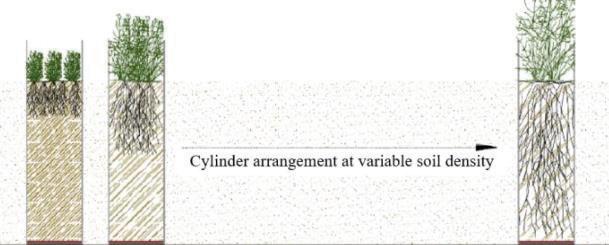
• The soil compacFon and root growth experiments were led by PVAMU, where three
• 2-foot cylindrical columns were compacted at varying densiFes based on the Standard Proctor Test. Two were on the dry side of the OpFmum Moisture Content (OMC), and one on the wet side.
• TAMU contributed to the CT imaging, 3D modeling, and prinFng pipeline development, with plans to replicate the pore geometry of the undisturbed root-soil samples.
• Both teams coordinated site visits, student mentoring, and data analysis through shared cloud storage and scheduled collaboraFve research meeFngs.
• The effort fostered a mulFdisciplinary environment combining civil engineering, geotechnics, addiFve manufacturing, and biological modeling.
1. Soil Cylinder PreparaFon: Three 2-h soil columns were compacted at varying densiFes using the Standard Proctor Test two on the dry side of OMC and one on the wet side. Bermuda grass was seeded, and density the columns were exposed to natural environmental condiFons for 6 months. Cylinders were wrapped to control lateral moisture loss, allowing for controlled observaFon of root behavior under realisFc field condiFons.
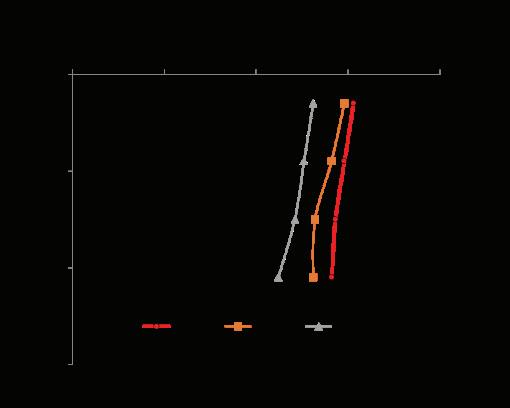
2. Preliminary Root Analysis: Root mass density (RMD) was measured from core samples. Results show a clear inverse correlaFon between soil bulk density and root growth. The wetside sample showed the highest RMD, confirming that increased compacFon restricts root development and likely reduces soil permeability.
3. AddiFve Manufacturing PreparaFon: CT scans of undisturbed root-soil samples are underway. Segmented 3D models are being developed for prinFng soil replicas that preserve pore architecture. These models will enable precise hydraulic tesFng to assess how pore structure affects conducFvity.
4. InnovaFve Methodology:
This study uniquely integrates soil compacFon, plantroot interacFon, and 3D prinFng. It offers a replicable framework for designing sustainable soils with opFmized hydraulic and biological performance, both ecological infrastructure design and addiFve manufacturing in geotechnics.

Future DirecGons:
• 3D PrinFng and Hydraulic TesFng: Complete CT imaging, print high-resoluFon analogs using Dremel and resin-based systems, and perform hydraulic conducFvity tests.
• StaFsFcal Modeling: Analyze root behavior and hydraulic efficiency using ANOVA and Duncan’s MulFple Range Test to determine staFsFcally significant correlaFons.
• External Proposal Development: Submit proposals to NSF (Future Manufacturing, Ecosystem Design), USDA (NIFA), and DoD (Strategic Environmental Research and Development Program – SERDP).
• Field-Scale ApplicaFons: Translate findings to slope stabilizaFon, landfill cap performance, and sustainable green infrastructure systems.
Societal Impact:
This study uniquely integrates soil compacFon, plant-root interacFon, and 3D prinFng. It offers a replicable framework for designing sustainable soils with opFmized hydraulic and biological performance, advancing both ecological infrastructure design and addiFve manufacturing in geotechnics.
Exploring the growth of extremophile terrestrial plants on simulated lunar soils
Aruna Weerasooriya, Ph.D.
Aruna Weerasooriya, Ph.D. Professor
Cooperative Agricultural Research Center
CooperaFve Agricultural Research Center
College of Agriculture, Food, and Natural Resources

Prairie View A&M University
College of Agriculture, Food, and Natural Resources
Prairie View A&M University , Ph.D.
Alan Pepper, Ph.D. Professor
Department of Biology
Department of Biology
Collage of Arts and Sciences
Collage of Arts and Sciences
Texas A&M University
Texas A&M University

Proposed ObjecGves:
Caulanthus amplexicaulis is an annual plant species in the mustard (Brassicaceae) family that is adapted to extreme soil condiFons characterized by mineral nutrient deficits and toxic heavy metals. Within this species, the genotype designated CAA1 is adapted to dry, rocky soils from recently exposed granite outcrops, while CAB1 is adapted to serpenFne soils which have limited mineral nutrients such as nitrogen, phosphorous and potassium and have toxic levels of heavy metals nickel, chromium and cobalt. The original primary objecFve of the proposal was to obtain necessary preliminary data on the growth phenotypes of CAA1 and CAB1 in lunar regolith simulants to use as a basis for future grant proposals to examine the geneFc basis of adapFve phenotypes affecFng plant growth on the moon. However, as ohen happens in science, new discoveries led to a major change in the objecFves of this project. Several months into the project, new high-resoluFon digital geological maps became available that led to the discovery of an overlap of the range of Caulanthus amplexicaulis with a geological formaFon composed of a rare (on earth) aluminum and Ftanium-rich rock type known as anorthosite. Anorthosite is the major geological component of the light-colored upland regions of the lunar surface. This finding led to the eventual discovery and acquisiFon of seeds from two new populaFons of Caulanthus amplexicaulis plants (designated CAA10 and CAA11) growing on a regolith that is composed of newly eroded anorthosite with a small fracFon of gabbro that very closely matches the physiochemical properFes of lunar regolith. This exciFng discovery led us to switch our key objecFves to focus on the propagaFon and characterizaFon of these newly discovered genotypes at the taxonomic, geneFc and phenotypic levels.
With support from this award, the PI was able to travel to California for field work that led to the discovery of and collecFon of seeds from Caulanthus amplexicaulis growing on barren anorthosite/gabbro outcrops. Further, funds from this award were used for tesFng of soils from the root zones of Caulanthus plants growing on these outcrops (TAMU Soil and Forage TesFng Lab) demonstraFng that they are physiochemically highly similar to both authenFc and
simulated lunar soils. Further, collaboraFve efforts with PVAMU led to opFmized protocols for hydraFon of lunar simulants sub-opFmal hydraFon leads to the physical concreFzaFon of regolith that prevents plant establishment.
DescripGon of PVAMU-TAMU CollaboraGve AcGviGes:
InteracFons between PVAMU and TAMU focused on the development of methodologies and management pracFces for plant growth on lunar regolith simulants. These included regolith preparaFon and hydraFon, and the exploraFon of low-cost alternaFves for controlled plant growth experiments (the plant growth chambers in the TAMU Biology Department are anFquated and in extreme disrepair). Our interacFons included mulFple cross-campus visits involving the PIs, research scienFsts, post-docs, and students. One of these was a formal seminar at PVAMU given by the TAMU PI (Pepper) enFtled “MulF-omics studies of plant adaptaFon to extreme terrestrial (and non-terrestrial?) environments.” Our interacFons included wide ranging discussions about future collaboraFve research on a variety of topics in which our respecFve areas of experFse are complementary.
Key Results and Significance:
Although we deviated from our original plans, this project generated the foundaFonal materials and knowledge for exciFng new research trajectory: the development of plants adapted to lunar soils using knowledge gained from extremophile terrestrial plants growing in similar geochemical condiFons.
Future DirecGons:
We are conFnuing to develop this project with the objecFve of conFnued submissions to extramural funding enFFes. This collaboraFon has now grown into a much larger collaboraFve and highly interdisciplinary network of TAMU and PVAMU scienFsts with interests in plant growth and agriculture in space. With leadership from Prof. Jeffry Tomberlin (TAMU Entomology), this network has recently submiqed two proposals totaling $6M to the Texas Space Commission Space ExploraFon and AeronauFcs Research Fund (SEARF).
Societal Impact:
This award provided summer research experiences for two first-generaFon TAMU undergraduates, and a mentorship opportunity for a first-generaFon PhD student. This award sFmulated the coalescence of a larger community of scienFsts across the PVAMU and TAMU campuses with interests in plant growth in extraterrestrial environments; This group includes plant physiologists, soil scienFsts, geologists, entomologists, microbiologists, geneFcists, and persons with experFse in systems engineering and controlled environment agriculture (CEA). Finally, the work supported by this award provided a foundaFon for future advances in plant growth and agriculture in extreme environments, both on Earth and beyond.
RadiaMon Effects on the Mechanical Behavior of Hybrid Organic-Inorganic Perovskites for Robust Photovoltaics in Space ExploraMon

Richard Wilkins, Ph.D,
Richard Wilkins, Ph.D.
Late Professor and Graduate Coordinator,
Department of Electrical and Computer Engineering
Late Professor and Graduate Coordinator, Department of Electrical and Computer Engineering Center for RadiaFon Engineering and Science for Space ExploraFon Center for Applied RadiaFon Research College of Engineering
Center for Radiation Engineering and Science for Space Exploration
Center for Applied Radiation Research
College of Engineering
Prairie View A&M University
Prairie View A&M University
Qing Tu, Ph.D.
Assistant Professor
Qing Tu, Ph.D.
Department of Materials Science & Engineering
College of Engineering
Texas A&M University
Assistant Professor Department of Materials Science & Engineering College of Engineering
Texas A&M University
Proposed ObjecGves:
The Overarching Goal of our team is to unravel the influence of radiaFon on the performance and reliability of hybrid organic-inorganic perovskites (HOIPs) and the underlying damage mechanism for photovoltaics (PV) in space exploraFon. The objecFve of this project is to uncover the effect of the energeFc photon and parFcle radiaFons on the elasFc modulus, fracture strength and faFgue lifeFme of 2D HOIPs, and the dependence of these radiaFon effects on the materials’ structure parameters.
Summary of Project Outcomes and Impact:
Using nanoindentaFon, we measured the out-of-plane elasFc modulus ���� and hardness ���� of 2D HOIPs, (C4H9-NH3)2(CH3NH3)n-1PbnX3n+1 exposed to various dosage of x-ray and proton irradiaFon. For I-based 2D HOIPs, both ���� and ���� decrease quickly as the radiaFon dosage increases but then plateau. However, as we change the halide in the material, Br shows beqer resistance to radiaFon-induced mechanical property deterioraFon. The response of the mechanical properFes to the radiaFon is also sensiFve to n-value. Our results provide indispensable insights into the radiaFon influence on the mechanical reliability of 2D HOIPs and guide the material design for durable space applicaFons.
Key Results and Significance:
We grew prototypical 2D HOIP single crystals with a general formula of (C4H9-NH3)2(CH3NH3)n1PbnX3n+1 (n = 1 to 5 and X = I, Br, or Cl) by soluFon method following our previous work. We first fix n = 3 and X = I (abbreviated as C4n3I), and expose the crystals to various x-ray radiaFon dosage under vacuum to mimic the space environment. The out-of-plane elasFc moduli (E) and hardness (H) of these C4n3I single crystals were then measured by nanoindentaFon. As shown
in Figure 1, E and H first drop due to radiaFon induced damage to the materials. As the radiaFon dosage further increases, the mechanical properFes of the materials plateau, showing good tolerance of C4n3I to the radiaFon-induced mechanical property changes.
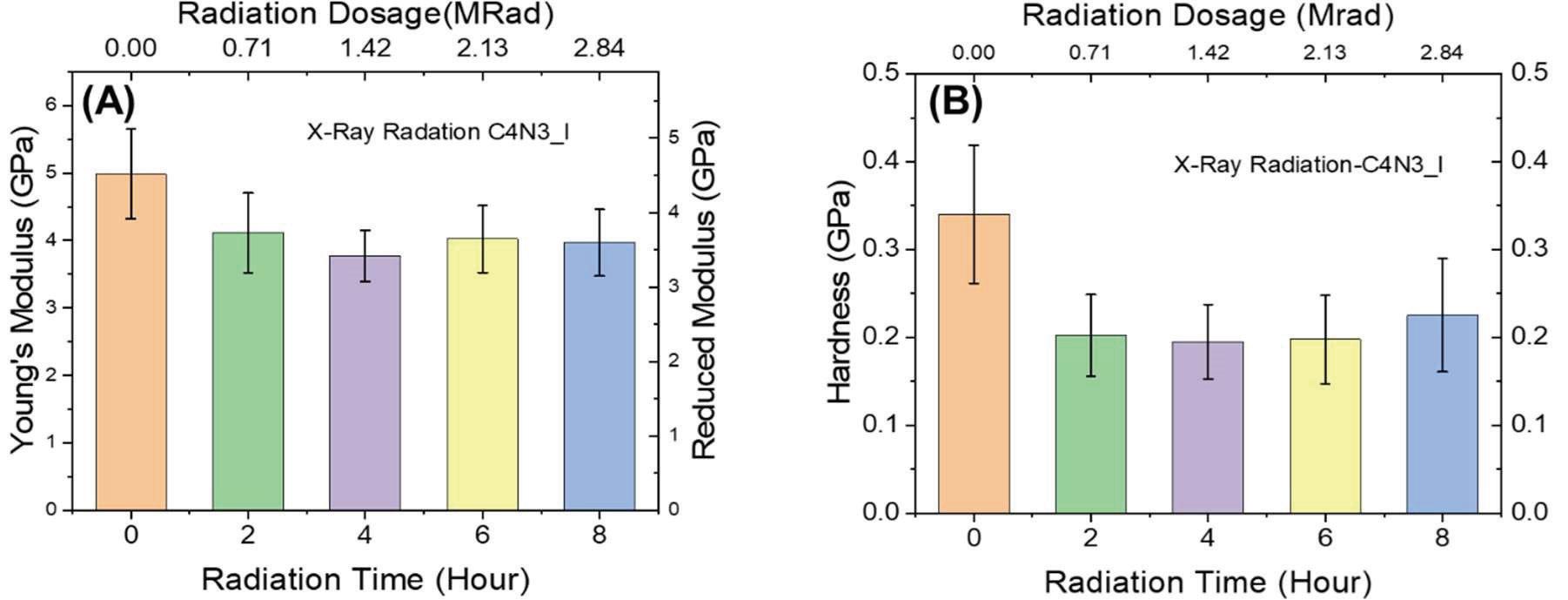
Figure 1. Out-of-plane mechanical proper>es of C4n3I single crystals as a func>on of Xray exposure >me (boFom) and the corresponding radia>on dosage (top): (A) Young’s Modulus; (B) hardness.
We further evaluate the influence of the halide on the radiaFon tolerance of the 2D HOIPs’ mechanical properFes. We fixed n = 1 and vary the halide ions (abbreviated as C4n1X, X = I, Br, or Cl). The radiaFon dosage was kept to about 1.42 Mrad (4 hours), which is sufficient to reach the plateau values. The key results are summarized in Figure 2. Clearly, the halide composiFon greatly impacts the mechanical property change in response to the radiaFon treatment. While 4-hour x-ray treatment induces a slight drop in E for Cl samples, it causes almost not change in E for the I samples, but enlarges sFffness of Br samples. Regarding H, x-ray radiaFon causes significant drop in I samples, almost no change in Cl samples, and a slight increase in Br samples. These results show different response to radiaFon treatment regarding the materials elasFc and plasFc behaviors. Brbased 2D HOIPs shows the best radiaFon tolerance regarding their mechanical properFes.
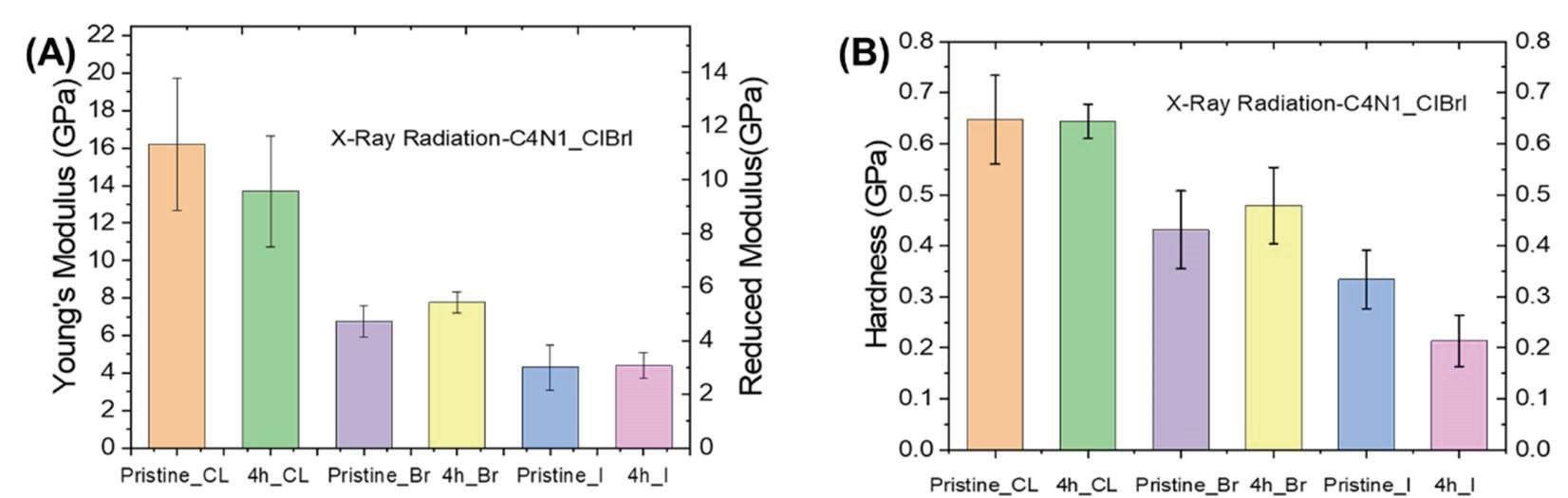
Figure 2. Out-of-plane mechanical proper>es of pris>ne and x-ray-treated (4h) C4n1X single crystals. (A) Young’s Modulus; (B) hardness.
We further evaluated the influence of n-values on the radiaFon-induced mechanical property change, and measured the proton-radiaFon-induced mechanical property change in 2D HOIPs.
To the best of our knowledge, these are the first study to invesFgate the mechanical behavior of 2D HOIPs aher being exposed to space-relevant radiaFon.
Future DirecGons:
We are currently trying to quanFfy the structure and chemistry change in 2D HOIPs resulted from radiaFon, which will then be correlated to the mechanical properFes to unveil the fundamental mechanism.
Furthermore, we will systemaFcally study how the high energy photon, electron and proton will affect the mechanical behavior of 2D HOIPs, including elasFcity, fracture, and faFgue, to pave the road for mechanically reliable, HOIP-based semiconductor applicaFons in space exploraFon.
Societal Impact:
The space exploraFon and the commercial space industry is rapidly growing. Both human and roboFc exploraFon require reliable, long-term and efficient generaFon of solar power for instrumentaFon and life support. Mechanics-coupled stability issues are emerging boqlenecks that limit the lifeFme of light-weight, highly-efficient HOIP PVs. The proposed research will provide indispensable insights to improve the mechanical reliability of HOIP PVs and expedite their deployment in space exploraFon. Owing to the structural relaFonship between 2D and 3D HOIPs, the research on n-dependent radiaFon effect will also shed light on whether 2D HOIPs are mechanically more radiaFon tolerant than 3D HOIPs.