FMS CREAMERY: SWEET SESSIONS Big Nance x ShangriLa Collective
CRAZY UNCLE MIKE’S: An Evening of Billy Joel w Andrew Klein
5/28
MIAMI BEACH BANDSHELL: Peter London Global Dance Co
5/29
RESPECTABLE STREET: The Jumpcuts, Blabscam, Ladyboy, Daylily, JM & the Sweets
PROPAGANDA: D’Generates, Killed by Florida, Mutiny Act, Best Days Behind
WAR MEMORIAL AUDITORIUM: Cooper Alan ARTS GARAGE: Arts Garage’s 15th Anniversary Party w 70s Jukebox
CRAZY UNCLE MIKE’S: Havoc 305
5/30
PROPAGANDA: Domedy
CHURCHILL’S PUB: The Degenerates
ARTS GARAGE: Gerald Law II & The Clutch
CRAZY UNCLE MIKE’S: STP & Maximum Friction
REVOLUTION LIVE: Crawling (Linkin Park), Got The Life, Arms Wide Open
5/31
PROPAGANDA: Summer Sunday
CRAZY UNCLE MIKE’S: Rock Bottom Band
6/1
REVOLUTION LIVE: Babyfxce E, Luhh Dyl
6/2
CHURCHILL’S PUB: Kinoplex Movie Night ft Rachel Ormont
HARD ROCK LIVE: Yungblud
PROPAGANDA: Karaoke
6/3
RESPECTABLE STREET: The Black Queen ‘Fever Daydream 10 Year Anniversary Tour”, Trace Amount, Violet Silhouette
REVELRY: K!nky Karaoke w Shonuff Ent
PROPAGANDA: Rebel Roots
FILLMORE MB: Dance Gavin Dance
6/4
MIAMI BEACH BANDSHELL: Mishka and Blak Diamond Band
WAR MEMORIAL AUDITORIUM: Young the Giant, Cold War Kids, Almost Monday
ZEYZEY: French Montana + Max B
FUNKY BISCUIT: Wayne Krants and Keith Carlock
REVELRY: Live Music Bingo w Smerks & the Nightmares
PROPAGANDA: Open Mic
6/5-8/15
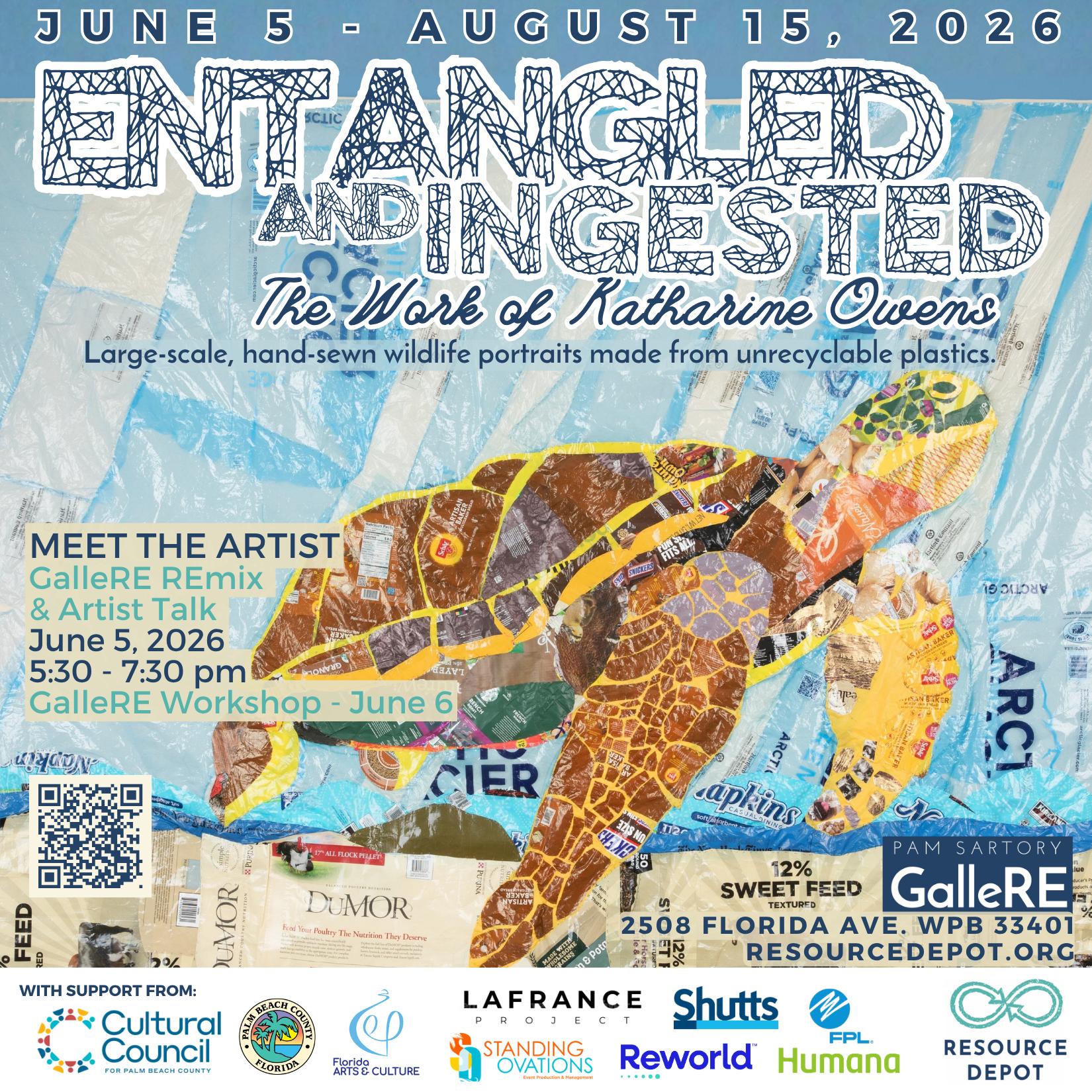
RESOURCE DEPOT: Entangled and Ingested, the work of Katharine Owens. Meet the artist 6/5
6/5
ARTS WAREHOUSE: Art Walk, Exhibitions & Open Studios
REVOLUTION LIVE: The Broken Hearts (Tom Petty)
ZEYZEY: Miguel Gallardo, Mendoza
HARD ROCK LIVE: Charlie Puth
REVELRY: Live Band Emo Karaoke w 180 X Summer
ARTS GARAGE: The Eagles Revival
PROPAGANDA: Dyke Night
6/6
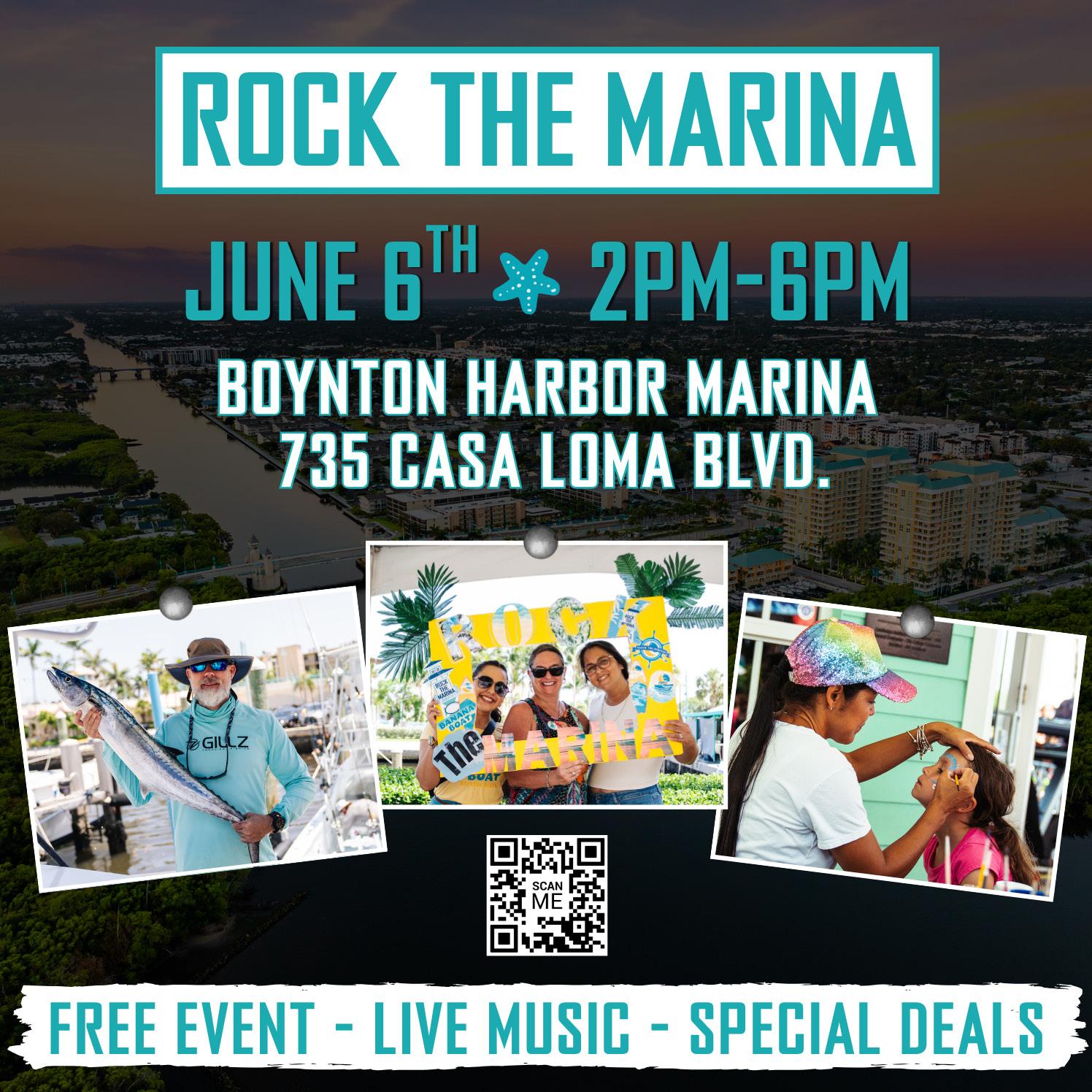
BOYNTON HARBOR MARINA: Rock the Marina 2-6pm, FREE!
PROPAGANDA: Skawaian Punk III ft The Interpreters — members of Live From ‘05 & Fuakata performing songs by The Interrupters — plus More Better Band, Bomb the Algorithm, Give It Up
REVOLUTION LIVE: Earlybirds Club
ITHINK AMP: Hank Williams Jr
MAD ARTS: Good Problems Collective presents
SOUNDLAB Broward
HARD ROCK LIVE: Morgan Jay
ZEYZEY: Buko Bash, Jeremy Sylvester
REVELRY: Rock & Blues w Joel Dasilva Band
CRAZY UNCLE MIKES: Southern Blood ARTS GARAGE: Tito Puente, Jr
6/7
LAKOU: Miami Is An Island Monthly Record Fair ARTS GARAGE: Tito Puente, Jr
6/10
MIAMI BEACH BANDSHELL: Laurent Voulzy
REVELRY: K!nky Karaoke w Shonuff Ent
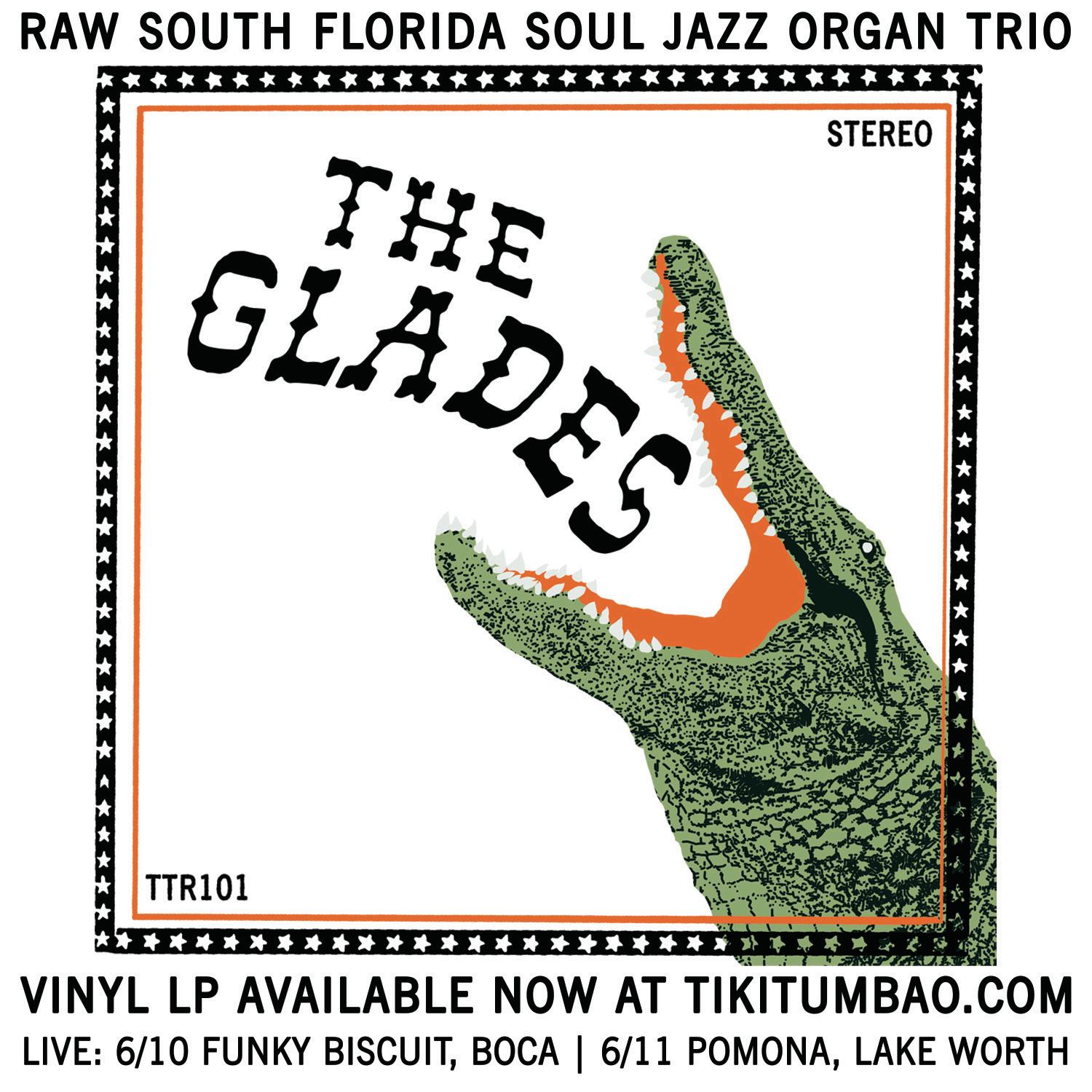
FUNKY BISCUIT: The Glades
PROPAGANDA: Dirty Bingo
6/11
POMONA: The Glades 7-10pm, FREE! PROPAGANDA: Rocksteady, Mangrüve, Mad Mellow
PROPAGANDA: Goat Rope, Written Off, Bomb the Algorithm, Wild Spark, Miss Queue, Killed by Florida, Wolf Wench and Her Sexy Plague Doctors
THE GLADES
by abel folgar
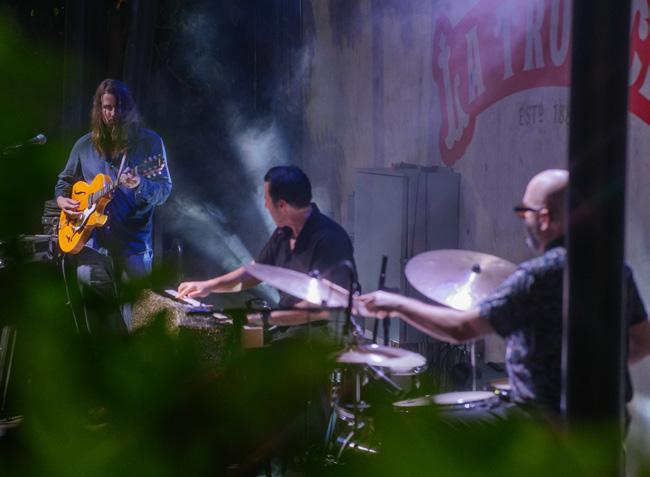
A new wave of jazz is forming in Miami as younger players embrace groove, funk, soul, and organ trio vibes without treating them like museum pieces. At the center of this movement is The Glades, whose self-titled debut on the Tiki Tumbao label feels less like a throwback than a continuation of a long, evolving South Florida musical lineage.
The Glades came together organically through sessions at Hammond organist Adam Scone’s local studio with two expats from Los Angeles, guitarist Addison Rifkind and percussionist Michael Duffy. What emerged wasn’t simply a band, but a songwriting project rooted in collaboration. “Every session we would do three songs,” Scone tells PureHoney. “One each.”
That democratic approach gives The Glades its distinct personality. The album moves fluidly through modern jazz, soul, groove, and funk while remaining remarkably unforced. “Our intention wasn’t ever to make a record that sounded like a different era or even make a ‘jazz’ record,” says Rifkind. “Just staying true to all of our individual musical personalities.”
That sensibility may explain why the record feels so alive. There are traces of classic organ trio records — think South Florida’s much-missed Lonnie Smith — and late-night soul-jazz sessions throughout, but also something undeniably contemporary; music shaped as much by instinct and chemistry as by tradition. Duffy describes the album as “gumbo,” informed by the trio’s varied musical backgrounds and collective trust in one another’s interpretations.
For South Florida, the timing feels significant. From the late ’60s through the mid-’70s, Miami sustained a vibrant jazz scene that gradually faded from prominence by the early 2000s. The Glades don’t present themselves as revivalists, but they are helping place Miami back into conversations surrounding groove-heavy modern jazz and organ trio music. “There is also a great lineage of funk and soul music born here,” says Rifkind, “and I hope these records continue that history in some way.”
The Glades play Wednesday, June 10 at The Funky Biscuit in Boca Raton, Thursday, June 11 at Pomona in Lake Worth, Friday, June 12 at Pilars in Orlando, and Saturday, June 13 at Dunedin Brewery in Dunedin. theglades.bandcamp.com/album/the-glades
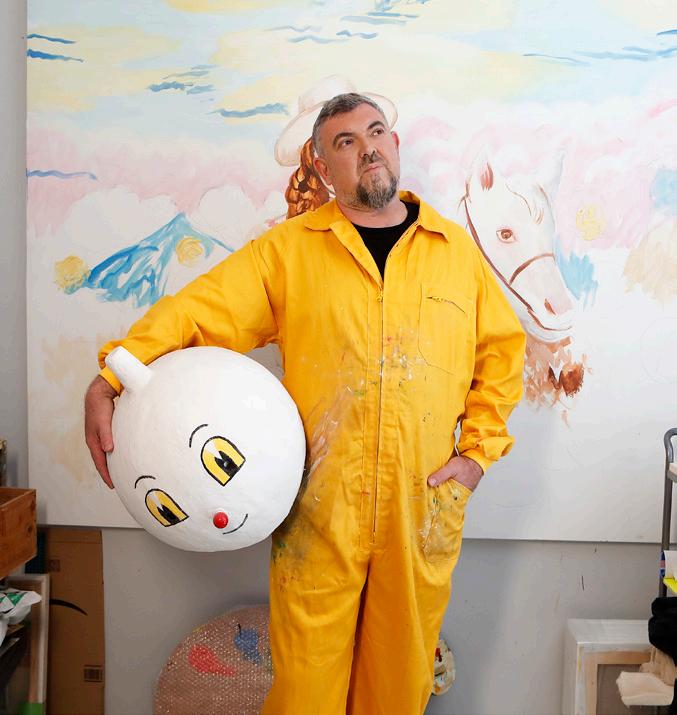
SERGIO MORA
by kelli bodle
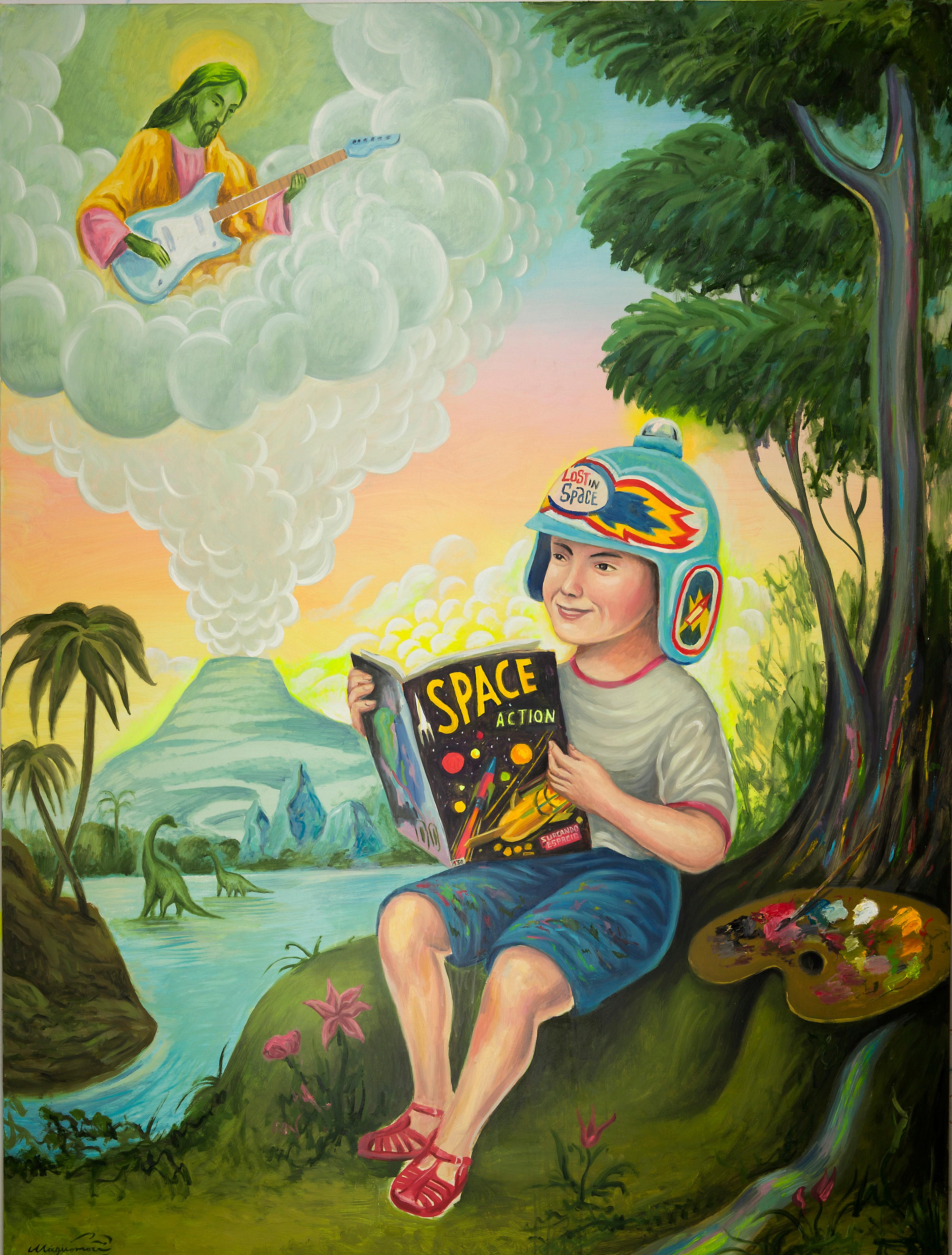
Wherever you fall on the high-low culture spectrum, the art of Sergio Mora is bound to resonate, partly because Barcelona-born Mora’s work springs from so many influences. “As a child, very different worlds coexisted naturally in my imagination,” says the PureHoney artist of the month. “I could be painting an oil canvas while watching The Munsters or Looney Tunes, surrounded by sci-fi comics, Donald Duck, and books on Diego Velázquez, Leonardo da Vinci, or Salvador Dalí. Over the years, I’ve come to understand that my work grows out of that mixture—where art and popular culture exist without hierarchy.”
In the book Nobrow: The Culture of Marketing, the Marketing of Culture, author John Seabrook wrote about the art of representing identity through culture. “Judgments of identity rather than quality … do not depend on knowledge of the canon, tradition, history, or some shared set-up standards about what constitutes ‘good taste’ to give them weight.” Instead, Seabrook wrote, the art you gravitate to creates a “small relationship economy … around culture products …as a source of status.”
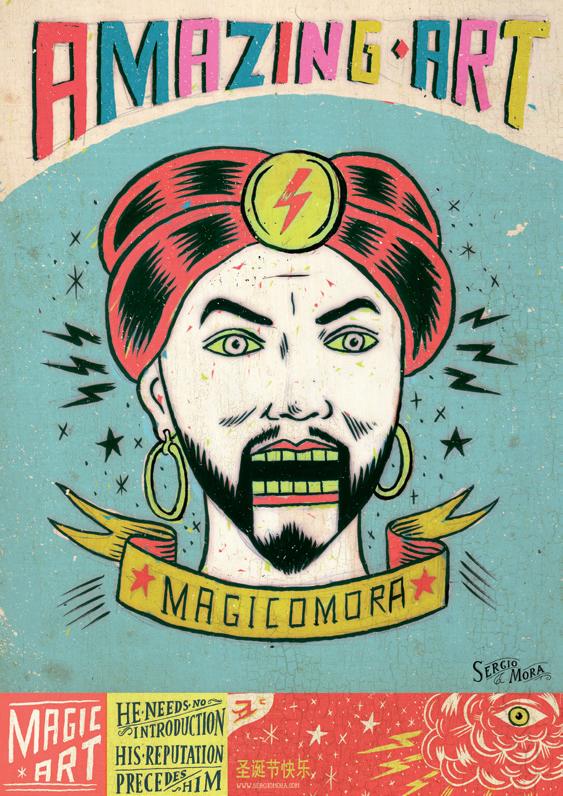
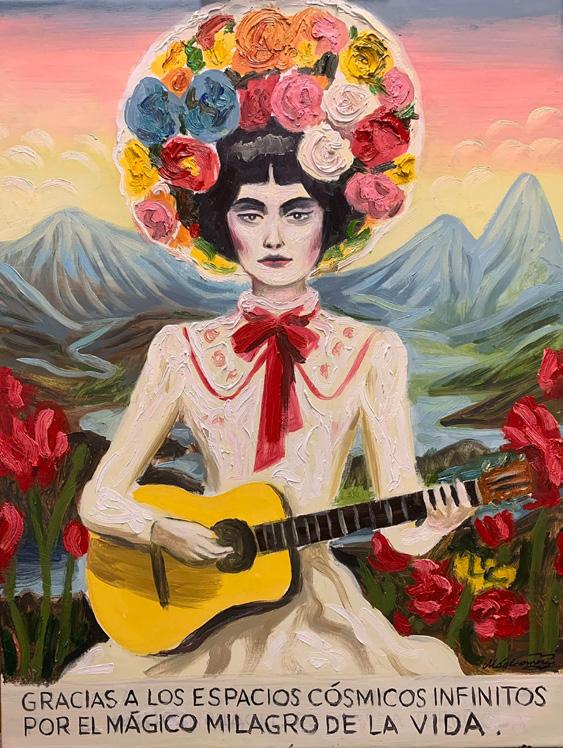
Landing squarely on “nobrow” — outside of traditional elitist tastes or common-denominator commercial products — Mora roams across and between canons to create a visual world with a variety of entry points, subverting traditional boundaries of class and schooling, and upending hierarchies that place old-world masters multiple rungs above contemporary street artists.
Mora says he is not “narrating my story” in his paintings, illustrations and graphic novels: “I’m building an ecosystem where that story has dissolved.” There are references to religion, such as Jesus playing drums with a “God Loves You” band logo stenciled across the kick drum. Or there’s Milicent Patrick, a reallife Hollywood pioneer who features in Mora’s graphic novel, La chica de Serie B.
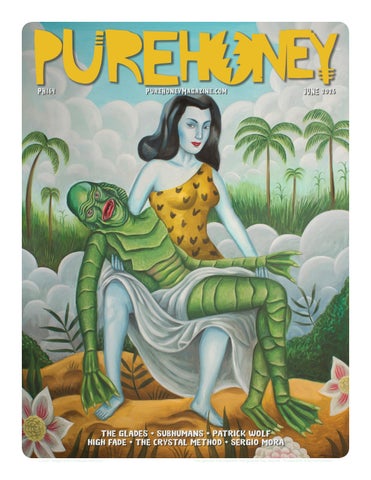
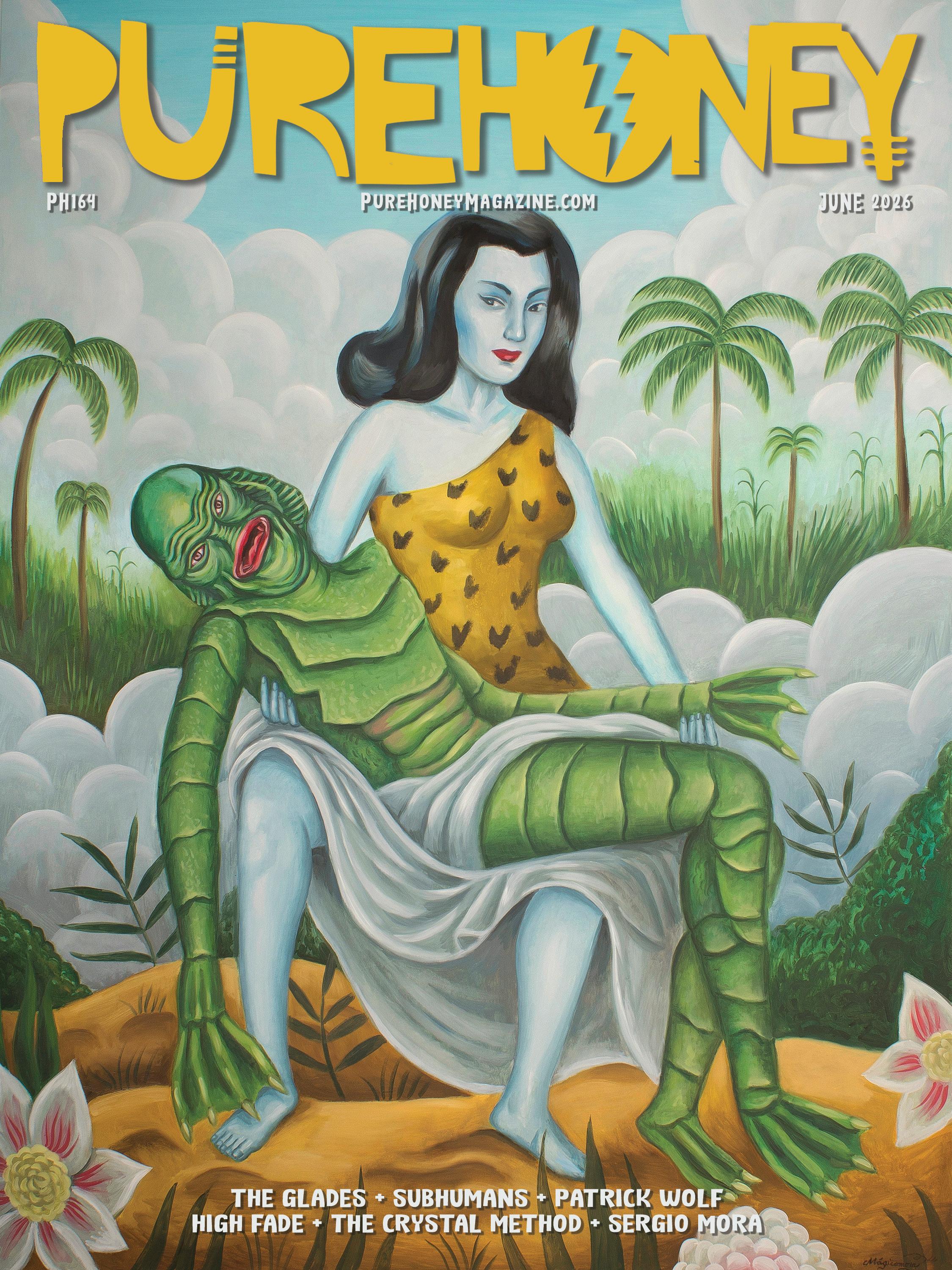
Patrick — Disney animator, actress, and makeup effects designer who created the iconic visage of the Creature From The Black Lagoon — was mistreated by the industry in her day and long overlooked by Hollywood historians. Yet here she is in Mora’s comic book roman à clef, her life the subject of a movie being filmed by one Simón Sagal, a fictional Spanish film director who’s had a surprise hit with his debut feature and is struggling to follow it up. Paralyzed by self-doubt, Sagal descends into drug abuse, an illicit affair and other noir-themed pitfalls. Trading in cultural references, high and low, Mora creates a captivating visual world that can strike a chord with art scholars and taggers alike.
The common denominator in this eclectic universe is Mora. Adamant though he is that he’s not retelling his own life story, he does allow that he mines it for “emotional material.” As he explains, “There’s an intention to sustain multiple layers at once: narrative, symbolic, and philosophical, I’m interested in the reader not only following a story but entering a particular mental state.”
The mental state suggested by Mora’s candy-colored worlds filled with anachronistic characters — dinosaurs prowling a tropical landscape behind a woman dancing the hula in the foreground, for example — is one of play. Mora says that playfulness “destabilizes certainty,” adding, “When something makes you smile, your guard drops, and in that moment deeper readings can emerge. I’m interested in characters that don’t fully belong to a specific moment.”
“There’s a strong visual tradition in Spain where the religious, the popular, folklore, and the baroque coexist — and all of that leaves a trace, even when it’s not consciously addressed,” Mora says. “But rather than thinking of identity as something fixed, I see it as something in motion — more like a system of relationships. My work is built from that perspective: bringing together elements that don’t seem to belong together — folklore, pop culture, science fiction, humor — and allowing them to coexist.”
“We live in a moment where everything is increasingly segmented,” he continues, “defined by categories and target audiences. I’m interested in doing the opposite: crossing those boundaries, contaminating languages.”
Although based in Spain, Mora is known internationally. You can see his work up close starting in October if you can make it to Mortal Machine Gallery. in New Orleans.
HIGH FADE
by tim moffatt
Being in a band is great but challenging once the songwriting starts and the members find their collective tastes running from Abba to Frank Zappa. What’s a wide-ranging crew to do when the ADHD meds haven’t kicked in and the internal radio stations are rotating through channels faster than The Gravitron?
One solution: Pick everything. Consider the Scottish trio High Fade, who whirl through genres like a fair ride in overdrive and somehow make it work. The official band bio declares “funk, rock, disco, jazz, metal, punk and soul” as core influences. High Fade sometimes sound like they’re playing them all at once.
We at PureHoney are advancing an evidence-based rumor — with the music as the evidence — that that these three lads were sired on a gambling cruise by a James Brown impersonator while Thin Lizzy and John Coltrane played simultaneous gigs on separate decks. There are high-strung instrumental runs, head-snapping stops, chatty lyrics and and the maniacally focused energy of a self-styled “three-man crusade to set dance floors alight.”
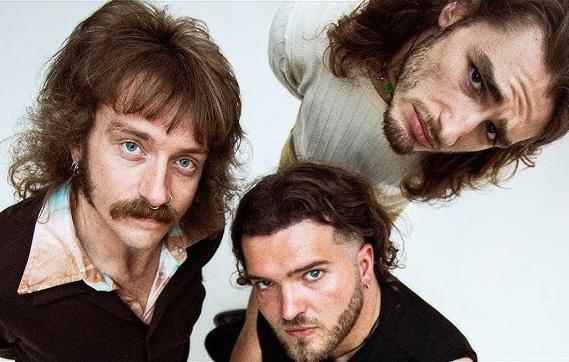
They look like furry classic rockers, but guitarist and frontman Harry Valentino, bassist Oliver Sentence and newest recruit Health Campbell on drums are tougher to categorize by decade or sound except to say they’re committed to the beat. Their arc from busking phenoms to international act is a story of willpower abetted by touring, talent and moxie.
For their just-released second album, Twice As Nice, the band laid claim to rock ’n’ roll lineage, splitting track time between London’s storied RAK Studios and East Iris Studios in Music City, USA, aka Nashville. Their label, RPN Records, is their own. Keeping everything DIY lets High Fade make the music they love without annoying “production notes” from the big-money, music-conglomerate representative who thinks he’s in the band. If the suits can’t pigeonhole you, they can’t sell you to a preselected audience, and when you find your own way and your own crowd by doing what you do, that’s when you know you’re making art.
High Fade play 7pm Tuesday, June 23 at Miami Beach Bandshell. highfademusic.live
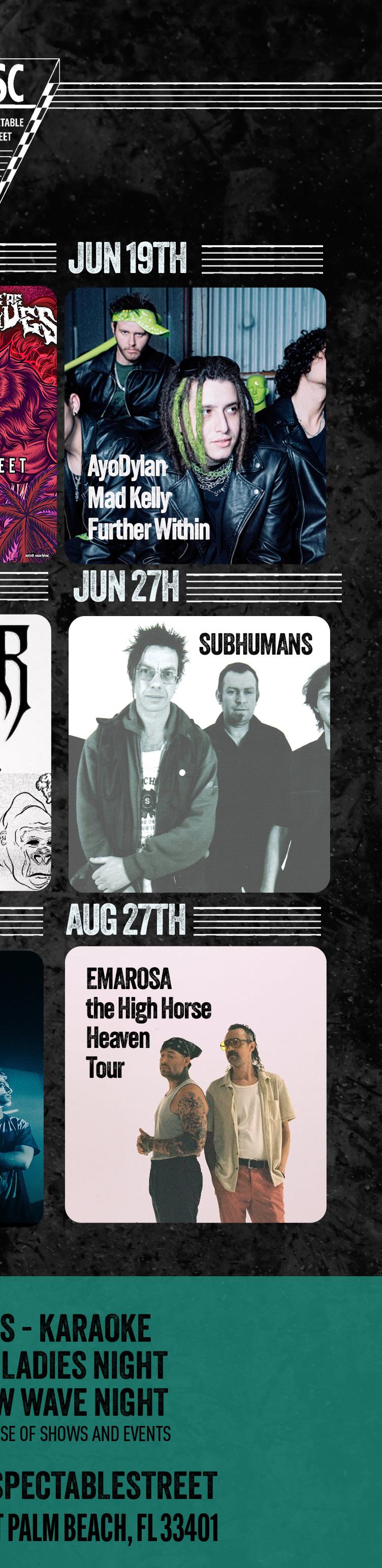
SUBHUMANS
by erik kvarnberg / sean piccoli
The UK’s Subhumans started out in an era that still holds a lot of sway, for better or worse, over our present-day social and economic ordering. To see frontman and sole original Subhumans member Dick Lucas on tour today is to consider that he might have been a prophet.
Lucas, originally of The Mental, joined forces in 1980 with members of another British band, Stupid Humans, to make direct, uncompromising punk music that urged listeners to look at the world without illusion. Their first full-length album, 1982’s The Day The Country Died, was an outburst of pentup energy and diagnostic rage recalling the advent of the Sex Pistols
. The album contains anarcho-punk gems such as “Mickey Mouse is Dead” and “No,” and lyrics that may be more relevant than ever. “Theres a scanner in the toilet/to watch you take a bath/And there’s a picture of Hiroshima/to make sure you never laugh,” Lucas chants on “Big Brother” to guitars crashing like planes overhead.
1983’s From The Cradle To The Grave was anchored by a 17-minute title track that blended an EP’s worth of music into a shimmery atmospheric showcase of newfound dynamic range — more melodic, with true push and and pull, moments of introspection building up to classic Brit-punk breakouts. Worlds Apart, from 1985, preceded the band’s first breakup, with brooders influenced by the reggae-punk fusion of Bad Brains, faster songs aligned with the rise of hardcore, and what sounded like forays into Scratch Acid noise rock.
A post-breakup farewell album, 29:29 Split Vision, followed and Lucas went on to pursue his interest in ska with Culture Shock and Citizen Fish. Subhumans later regrouped for tours, and then released new albums: 2007’s Internal Riot and 2019’s Crisis Point. Both step into earlier selves to fight battles old and new amid the modern wars of attention and ongoing global class struggle. “Too Fat Too Thin” tackles identity crises and corrosive social standards. “Never Ending War Song” could be played at any antiwar protest today.
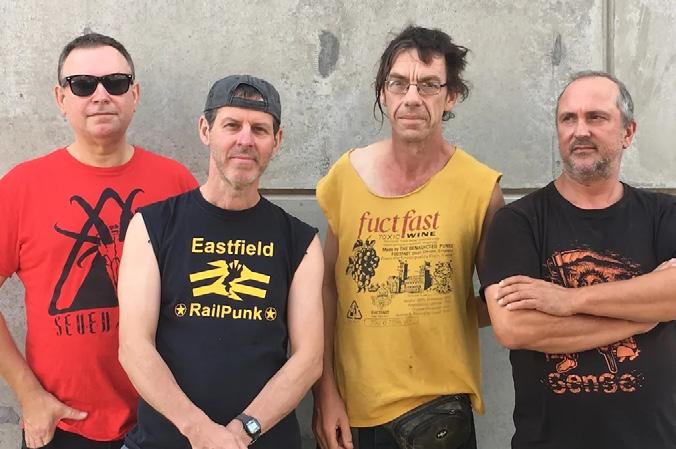
Subhumans and The Iron Roses play 7pm Saturday, June 27 at Respectable Street in West Palm Beach. subhumans.net
PATRICK WOLF
by david rolland
From his home in Ramsgate, England the art pop performer Patrick Wolf tells PureHoney via Zoom about the origin of his versatile musical influences. “My father was a jazz musician. My mother was always playing music heavy on storytelling like Leonard Cohen, Judy Collins, or Kate Bush.” Wolf himself was a literal choir boy who performed in front of a Pope, but then his voice broke and he started listening to rock ’n’ roll. “That’s when I started to write music.”
As a multi-instrumentalist Wolf got to play with many of his musical heroes, joining Patti Smith’s band as a fiddle player for a decade and opening for John Cale whose viola playing in Velvet Underground greatly influenced Wolf. As a solo musician he yearns for a musical form of self-expression that will have him performing in Florida for the first time ever on June 13 at Churchill’s Pub.
“I’ve never played Miami, but I went crazy there for a few days for a wedding. It was the most chaotic three days of my life. So I’m glad to go back with my music and sobriety to make amends.”
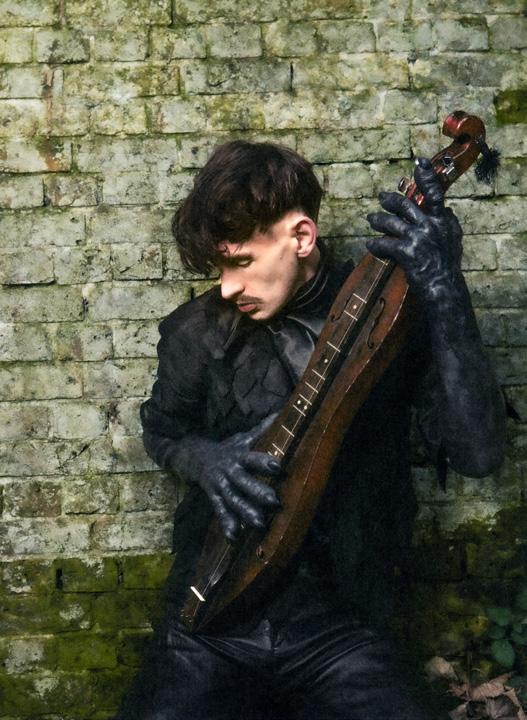
He performs as a sort of one man band making songs out of everything from a piano, viola, a dulcimer, and harpsichord along with a couple rarer instruments like the chromaverb that plays with electromagnetic frequencies and a stringed instrument of his own design called the kantalyre. On stage Wolf also also takes seriously his role as a storyteller, giving insight into the origins of many of the songs audiences will hear.
Much of the music will stem from his latest full length album, 2025’s Crying the Neck. “The album was meant to immortalize my mother; it was a tribute to her,” he says. “I’d always stayed away from folk music. Now at 42, my circle of musicians come from that world. I always played fiddle so it makes sense, but I never considered myself a folkie. But the genre is now more esoteric. I guess we become our parents as we get older.”
Patrick Wolf performs 8pm Saturday, June 13 at Churchill’s Pub in Miami. patrickwolf.com
THE CRYSTAL METHOD
by olivia feldman
If you were raving in South Florida in the 1990s, you might have spent a few nights in a state of bass-heavy, synth-drenched vibration at The Edge in Fort Lauderdale, with an act such as The Crystal Method at the decks. The Edge flies under a different name today, Revolution Live, and the rave fare known back then as “big beat” has been chopped up and reprogrammed by newer electronic acts, and fully absorbed into pop culture. (See Taron Egerton psycho-dancing to “Go” by The Chemical Brothers in the wilderness thriller Apex.)
But thirty-odd years later, The Crystal Method is still finding new rooms to blow up — though reconfigured as a party of one. Founding duo Ken Jordan and Scott Kirkland honed their DJing in Las Vegas, spreading big beat in parallel with UK peers such as The Chemical Brothers, Propellerheads, Fatboy Slim and The Prodigy
Their 1997 debut album, Vegas, reflected a grittier view of their hometown, not the glitzy casino and showgirl culture of Sin City’s marketing arm. Working with hard rockers such as Tom Morello and Scott Weiland, the duo combined rock and metal aggression with techno and house, creating a punchy, punk-adjacent sound that swept dance floors and, almost as quickly, TV, film and video games. The theme track to the syndicated science-nerd crime drama Bones has introduced The Crystal Method to countless viewers. A more laid-back 2001 sophomore album, Tweekend, added tracks such as “Name of the Game” and “Roll It Up” to the turn-of-the-century zeitgeist.
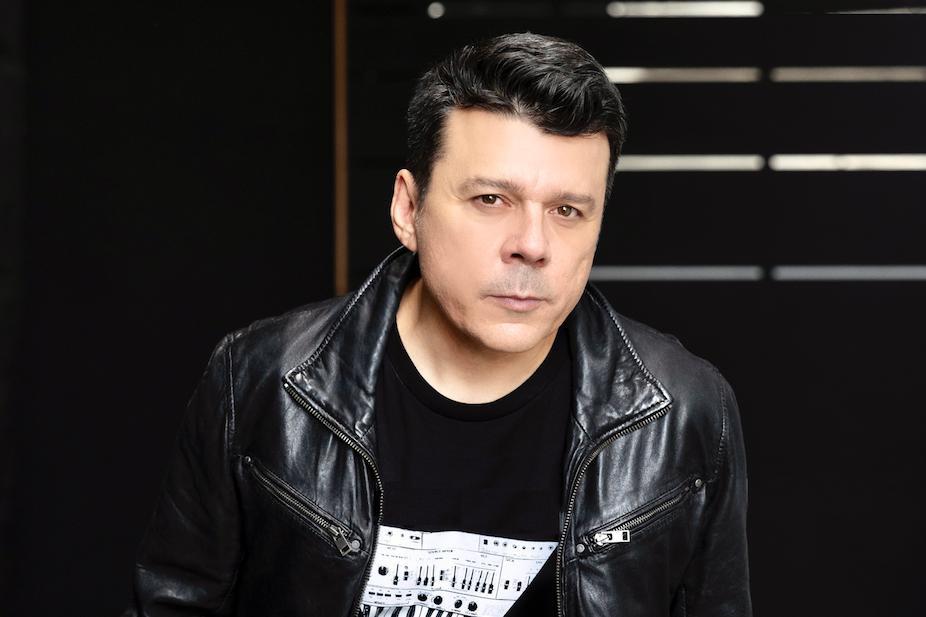
Since Jordan retired from music in 2017, Kirkland has carried on solo, of late touring with fellow ’90s EDM icon Paul Oakenfold on their United Champions Tour. Together for the first time in 20 years, their distinct energies complement each other, Kirkland bringing big beat grit and Oakenfold offering trance and progressive house immersion. Back at the renamed venue where rave kids gathered long ago, United Champions is a revival and a resurgence because every generation needs space to throw down and bliss out. The Crystal Method and Paul Oakenfold with special guest Liquid Todd perform 8pm Wednesday, June 24 at Revolution Live in Fort Lauderdale. thecrystalmethod.com