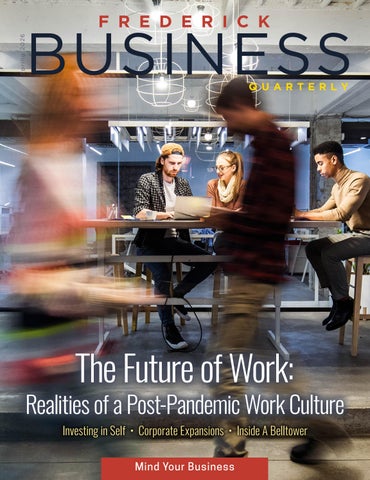
The Future of Work:
Realities of a Post-Pandemic Work Culture
Investing in Self • Corporate Expansions • Inside A Belltower

Mind Your Business


Realities of a Post-Pandemic Work Culture
Investing in Self • Corporate Expansions • Inside A Belltower
Mind Your Business
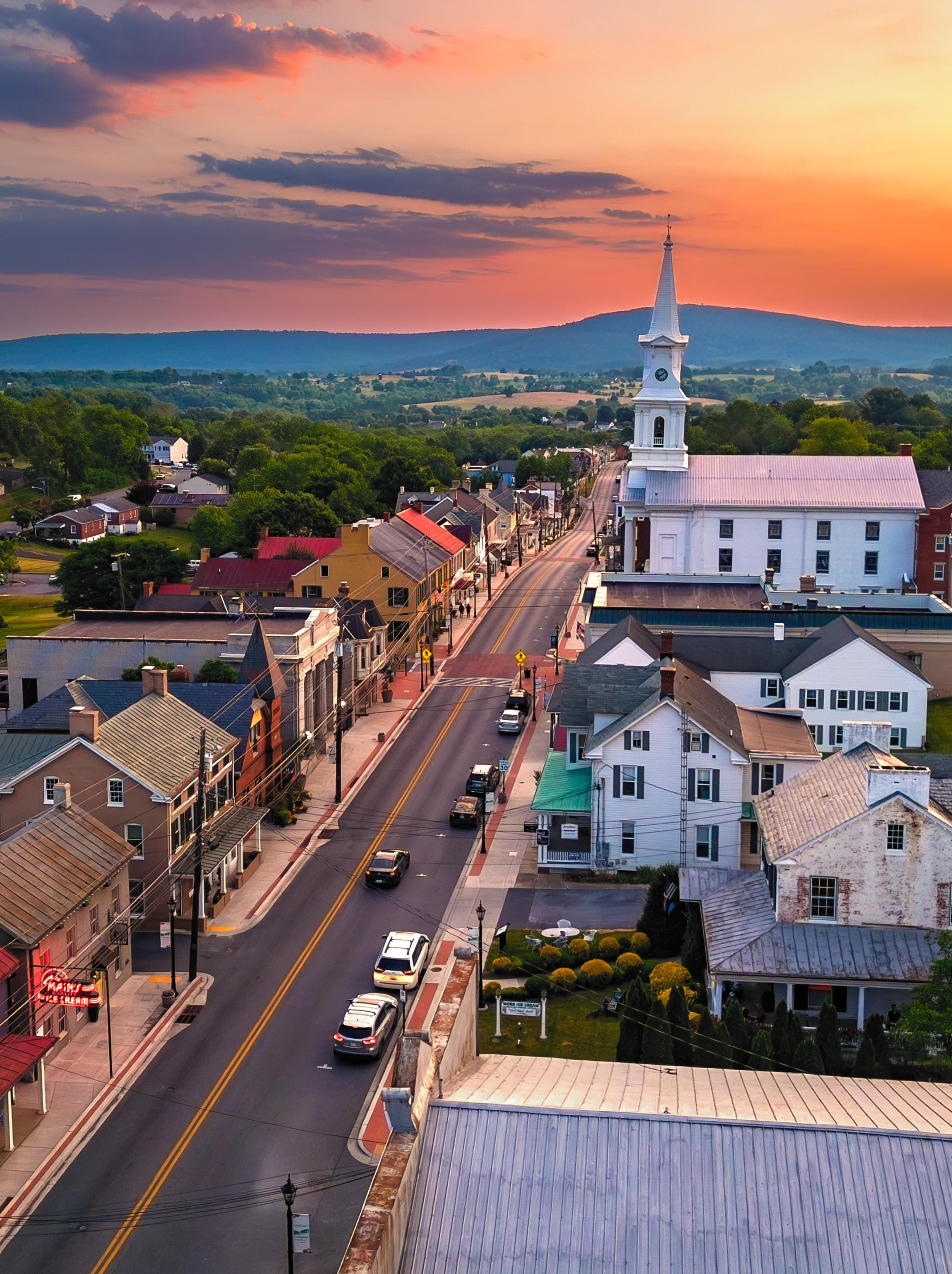
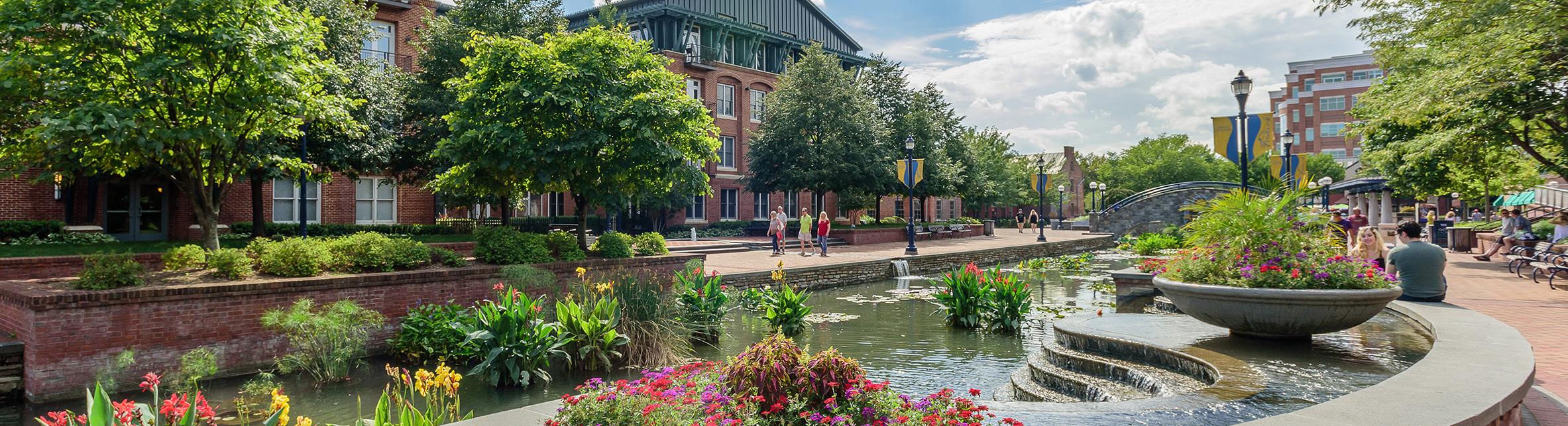
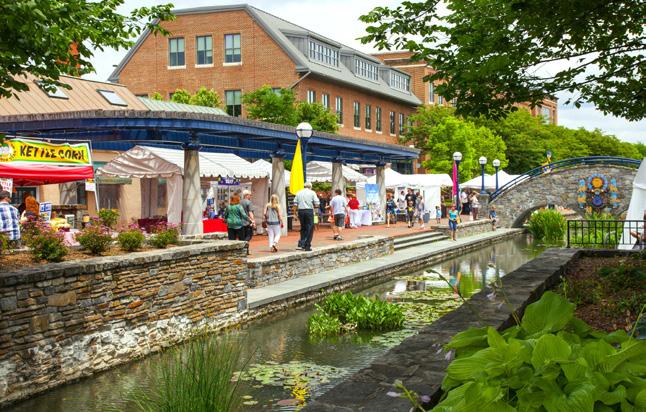
Main Street Middletown is more than beautiful views. Our Main Street is full of businesses that started small, but have grown to serve generations of families, reach clients throughout the nation, and even world-wide! Our vibrant downtown is populated with niche businesses, restaurants, retail, and healthcare. Despite our rural views, we are conveniently located within minutes of downtown Frederick, major interstates, and an hour from Washington DC and Baltimore.
Main Street Middletown works to revitalize, preserve, promote, and support our fascinating downtown. We provide business support throughout the life of your business - from grand opening celebrations to milestone anniversaries, business mixers with technical assistance and educational opportunities, grants for building improvements, a robust marketing plan for the downtown, and special events that bring potential clients to your front door.
Dear Readers,
The history and concept of what work is—and who or what performs it—have evolved over many centuries. Frederick County is a perfect microcosm of those changes. With roots in large family farms, the county later saw the rise of numerous small textile mills. During the 19th century, those small mills eventually transitioned into large mechanical operations. This shift moved work traditionally done by women in the home into manufacturing jobs largely held by men.
Then, in 1889, Frederick’s Union Manufacturing Company became known as a safe and respectable place for young women to work, producing cotton, silk, and wool hosiery for men, women, and children.
Fast forward to present-day Frederick County, Maryland. In this post-pandemic world, work continues to transform into something my grandfather (1923–2013) would find nearly unrecognizable—yet equally exciting. The way Frederick works today relies on its farms and farmers, as well as all the small business owners and their employees, corporations with their vast resources, local government providing infrastructure, and the many technology and pharmaceutical companies that have expanded into the county.
In this issue, our contributors explore the new ways we work while highlighting several businesses that are expanding locally and creating new job opportunities. We also meet a carillonneur who works high in a bell tower and a financial coach whose work aims to raise women’s financial IQ.
Yes...work looks different these days, but as Frederick County continues to grow and adapt, it also embraces ingenuity and resilience.
We hope this issue offers both insight and inspiration as you consider how work shapes not only our local economy, but also Frederick County's shared future.

PUBLISHER
Donna S. Elbert donna@pulsepublishing.net
EDITOR/CREATIVE DIRECTOR
Melissa Howes-Vitek melissa@pulsepublishing.net
DIRECTOR OF OPERATIONS
Gabby Mongeau gabby@pulsepublishing.net
COPY EDITOR
Molly Fellin Spence molly@pulsepublishing.net
GRAPHIC DESIGNER
Ana Lazo Eastep
CONTRIBUTING PHOTOGRAPHERS
AK's Grafix & Photo
Shuan Butcher
Naomi Pearson DISTRIBUTION distribution@pulsepublishing.net
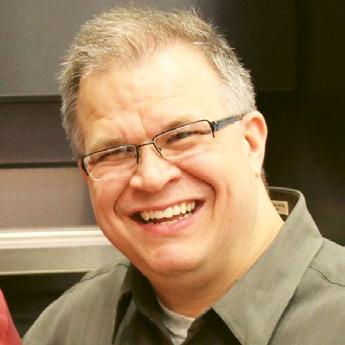
Shuan Butcher is a nonprofit professional, writer, and event planner. He previously served as the executive director of the Frederick Arts Council and has been a member of the City of Frederick’s Public Art Commission and the Visit Frederick board of directors.
Naomi Pearson is an accomplished journalist who began writing features and short articles for local magazines about people, activities, and community issues particular to Frederick County, shortly after moving to the area in 2009. She freelanced as a side hustle to her day job in her previous role as a technical writer and editor. She also was a Citizen Blogger ("Fresh in Frederick") for the Frederick News Post until the program was discontinued in 2017.
Chris Slattery is an avid storyteller who covered the arts and entertainment for The Gazette and the Arts & Humanities Council of Montgomery County’s CultureSpotMC and now writes for a variety of corporations and publications while procrastinating over several unfinished works of fiction.
Molly Fellin Spence is an accomplished writer and editor with more than two decades of experience in the world of journalism. She’s worked with a variety of print and digital publications in the Mid-Atlantic region creating and honing compelling content to engage readers. A native Pennsylvanian, she has called Frederick, Maryland, home since 2002.















CORPORATE MEMBERSHIP PROGRAM
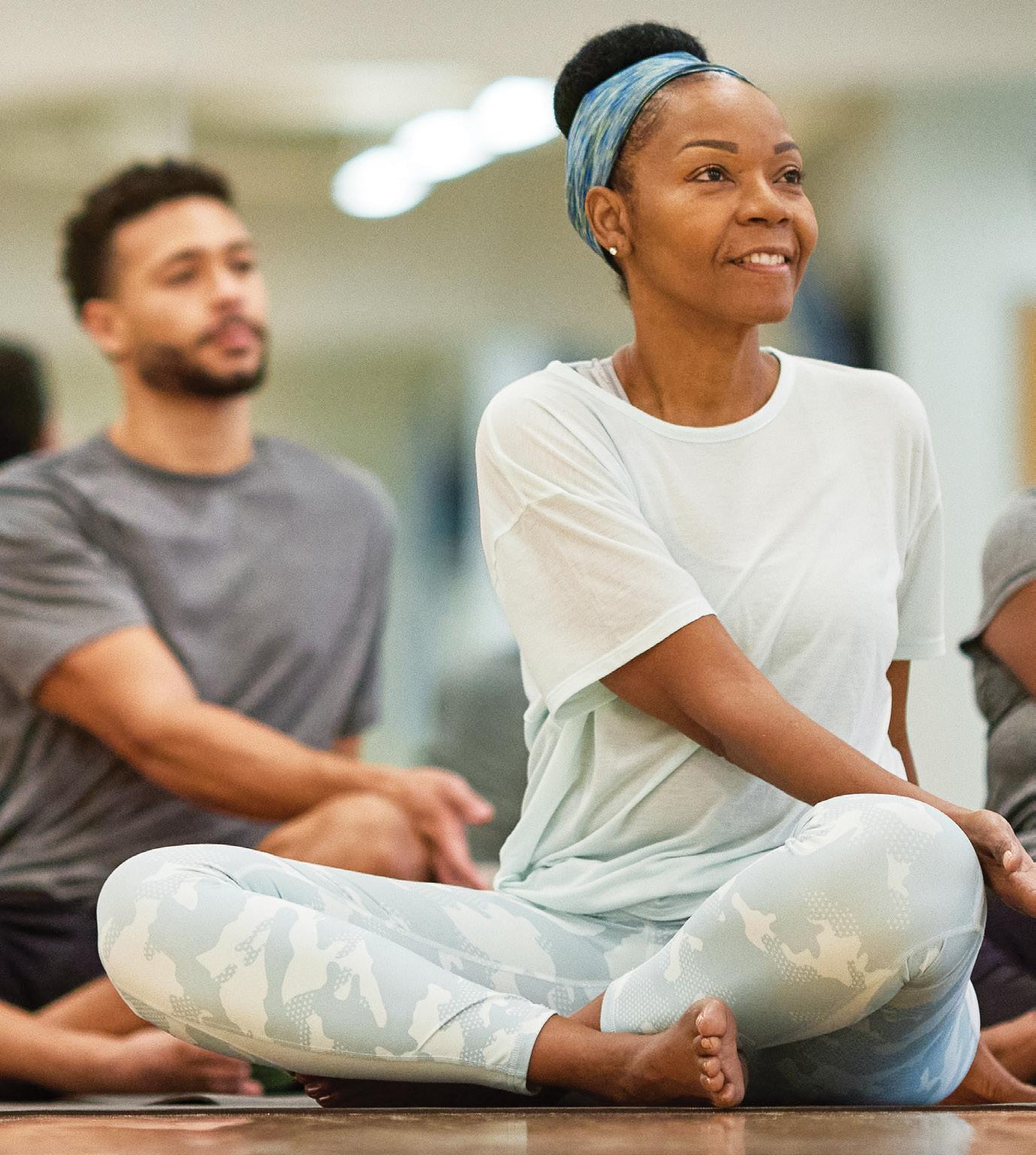

YMCA OF FREDERICK COUNTY CORPORATE OPPORTUNITIES AT THE YMCA Partnerships and











By Amanda Haddaway
The future of work is often framed as a debate about location. Office versus remote. Hybrid versus fully distributed. That framing misses the bigger shift underway. The real change is not where work happens, but how work is designed, measured and experienced.
Over the last five years, organizations have been forced to experiment at scale. Some experiments worked. Others exposed gaps in leadership capability, culture and systems that were already fragile. As we move forward, the most successful employers will be those who stop chasing a single “right” model and instead build intentional, flexible frameworks that support both business outcomes and human sustainability.
Hybrid work is a culture issue, not a scheduling issue
Hybrid work has become the default model for many organizations, yet it remains poorly defined. Too often, hybrid simply means “some people come in sometimes.” That ambiguity creates inequity, frustration and unspoken resentment.
The real risk with hybrid work is proximity bias. Employees who are physically present more often can receive greater visibility, better assignments and faster access to decision-makers, even when performance is comparable. Left unaddressed, this undermines trust and inclusion. This often shows up in who gets tapped for highvisibility projects, who is invited into impromptu conversations and whose work is top of mind during performance discussions.
Organizations that get hybrid right do three things well. First, they define what hybrid means operationally. That includes expectations for availability, collaboration and in-person time. Second, they redesign how performance is evaluated so outcomes matter more than visibility. Third, they invest in manager capability. Leading a hybrid team requires more communication, more clarity and stronger coaching skills than managing a fully in-person workforce.
Hybrid work is not about flexibility alone. It is about fairness, consistency and trust.
Remote work exposed leadership gaps
Remote work did not lower performance. Instead, it exposed weak leadership practices that were previously masked by physical oversight. Managers who relied on monitoring activity instead of setting clear expectations struggled. Employees who lacked clarity about priorities felt overwhelmed.
In organizations where remote work succeeded, leaders focused on results, not hours. They communicated goals clearly, documented decisions and normalized asynchronous work. They also recognized that remote work requires boundaries. Without them, work expands into every corner of life.
The future of work demands leaders who can manage outcomes, not time. That shift requires training, accountability and, in some cases, hard conversations about who is ready to lead in this new environment.
Workplace culture will be the differentiator
As work becomes more flexible, culture becomes more intentional. Culture is no longer reinforced by shared space alone. It is reinforced through behaviors, systems and leadership choices.
Employees are paying closer attention to how organizations handle burnout, psychological safety and workload expectations. Flexibility without support quickly becomes exploitation. Unlimited autonomy without clarity becomes chaos.
High-performing cultures in the future of work will prioritize energy management, not just productivity. They will normalize rest, model boundaries and treat well-being as a performance strategy, not a perk.
The future of work is already here. The question is whether organizations are designing for it or reacting to it. Employers should start by auditing their current practices. Identify where policies are unclear, where managers are underprepared and where flexibility exists in theory, but not in practice. These choices have implications for compliance, pay equity and risk management, areas where clarity matters just as much as flexibility.
Next, invest in leadership development that emphasizes communication, coaching and trust. Finally, listen to employees with curiosity instead of defensiveness. Their behaviors are data.
The future of work is not about choosing remote, hybrid or in-office. It is about designing work that is sustainable, equitable and aligned with how people actually live and perform. Organizations that embrace that mindset will not just adapt. They will lead.
SPONSORED CONTENT

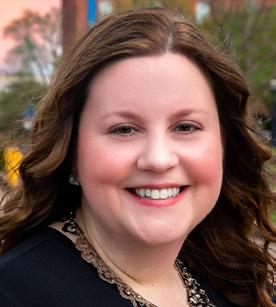
Amanda Haddaway is a Frederick-based human resources consultant, executive coach and workplace culture expert with more than 25 years of experience helping organizations build practical, people-centered workplaces. As the managing director of HR Answerbox, she partners with employers across industries and geographies and enjoys working remotely with her clients to deliver strategic HR guidance, leadership support and compliance expertise.

Where do executives and small business owners go to tune into the latest trends and cultivate inspiration? We asked a few of our contributors for their top picks in print and podcasts.

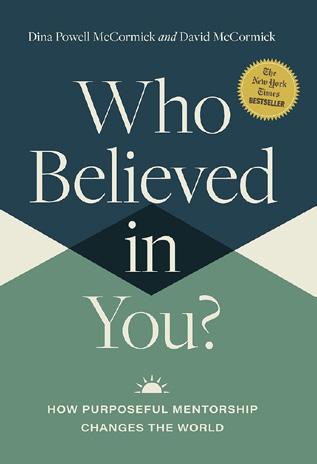
By Dina Powell McCormick and David McCormick
Married partners Dina Powell McCormick and David McCormick released the book "Who Believed in You? How Purposeful Mentorship Changes the World" in spring 2025 to fill a need. They saw how the pandemic had left many people adrift and at a loss for connection, and the McCormicks chose to act.
Chockfull of interviews with a variety of people, from political leaders to CEOs, the stories of encouragement demonstrate each subject's perspective on having both received it and offered it.
Reading other's stories gave me pause as I took personal inventory of those who held the ladder for me. While my own career path historically has been more chutes and ladders, every exciting zig and zag was the result of someone else investing in
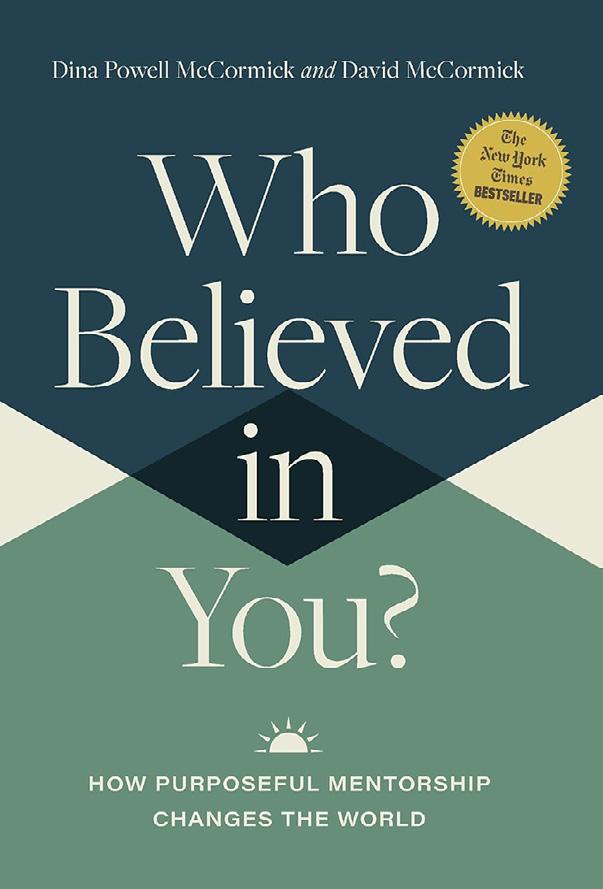
“Unleash the power of transformative mentorship. You can change somebody's life—and that can change the world.”
- Dina Powell McCormick David McCormick
me, fostering my talent, building my confidence, cheering when things worked and encouraging when things got tough. Sometimes you just need someone to call and say, "Hey, do you really think I can pull this off?"
I hope that I've been that for others through the years!
The book focuses on four critical elements of transformative mentorship — mutual trust, shared values, meaningful commitment, and the importance of instilling confidence. Then it invites readers in any sphere of influence to consider putting these elements into practice with younger people around them.
Mentoring doesn't need to be a formal arrangement, just a commitment to notice who may need an assist and focusing on how you can help. I hope this book inspires you as much as it did me!
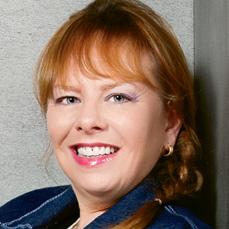
Melissa Howes-Vitek Editorial/Creative Director Pulse Publishing
The “Masters of Scale” podcast, launched in 2017, “serves a global community of entrepreneurially minded leaders and lifelong learners” and features business leaders from every industry sharing lessons, strategies, and hard-won wisdom learned as they grew their companies.
I listened to a few episodes chosen randomly, wondering what bigwigs from companies so far removed from my experience could share that might apply to a little ol’ freelancer like me. Several episodes later, I was hooked by the compelling stories of challenges and triumphs along the path to the pinnacle of success.
What I liked best was that each leader shared without boasting of superior business acumen. On the podcast, you’ll hear stories of formulating goals and finding unexpected new paths. Some found that mistakes were made as they learned to purposefully scale up, while staying true to their mission. And others learned that the mission or its execution needed to change.
I was amazed to hear the leaders’ humility in admitting when they had underestimated a situation, or let pride trip them up.
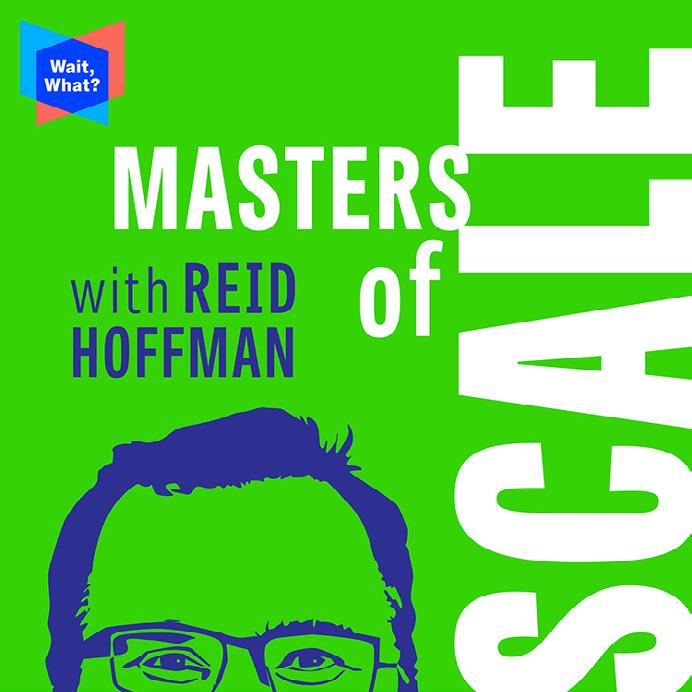
One guest, Fawn Weaver, CEO of whiskey company Uncle Nearest, Inc., shared her theory on why people stall out in their ventures: “People believe that they have a fear of failure, and it’s the reason why a lot of people never launch or a lot of people refuse to scale. … It’s not really a fear of failure, it’s a fear of public embarrassment, of people knowing that you failed.“
Of course, these leaders moved beyond those mistakes to success, but to know that even they made (and owned up to) them, is a reminder that mistakes are learning opportunities and stepping stones in growing a career and a business.
The attitude that keeps Weaver pushing forward, struck a chord with me: “[I]f I fail, I’ll build it again. It’s of no consequence to me.”
Guests on “Masters of Scale,” come from a range of ethnicities and backgrounds and a variety
of leadership positions across a plethora of industries. This allows the podcast to provide a wide range of viewpoints and lessons learned from which anyone –business owners and entrepreneurs, community leaders, students, and more – can glean inspiration and actionable insights.
Some of the inspiring themes weaving through the podcasts: maintaining hope during hard times and persistence in the face of obstacles; discovering different perspectives and obtaining clarity; welcoming change and learning to pivot; embracing adaptability without compromising one’s core values, and the realization that “scaling” is more than growing a business for wider reach – it includes reaching new heights in personal and professional development.
While I may not concur with every guest’s perceptions, it’s helpful to see how business leaders move within their fields, what their values are, how those values shaped their choices and even how they weighed their professional lives against their personal lives.
I look forward to listening to more.
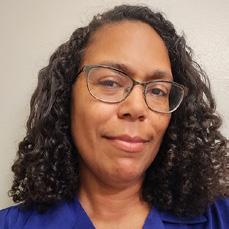
Naomi Pearson is an accomplished journalist who began writing features and short articles for local magazines about people, activities, and community issues particular to Frederick County, shortly after moving to the area in 2009.

Antietam WorldTravelService is the only storefront travel agency and corporate travel management company in Frederick, Maryland We combine personalized local service with global buying power, advanced reporting tools, and 24/7 traveler support all with a dedicated consultant assigned specifically to your company Cost Control Built Into Every Trip
Our corporate clients benefit from quality-control technology including FareCk™, QualityCk™, and WebCk™ to search for the lowest logical fares and ensure policy compliance. We also provide unused ticket tracking, custom financial reporting, and secure systems to protect both traveler safety and company data. Global Reach. Local Accountability.
Through our global distribution partnerships, we access preferred airline, hotel, and car rental programs not available to the public. Combined with redundant secure systems and round-the-clock emergency service, we ensure your travelers are supported wherever business takes them.

In Frederick County, many businesses are owned and operated by community members whose names may be familiar, though their daily work may be less so. Each issue invites you behind the scenes for a glimpse into the everyday life of one of those business owners, their employees or independent workers.
Words and Photos By Shuan Butcher
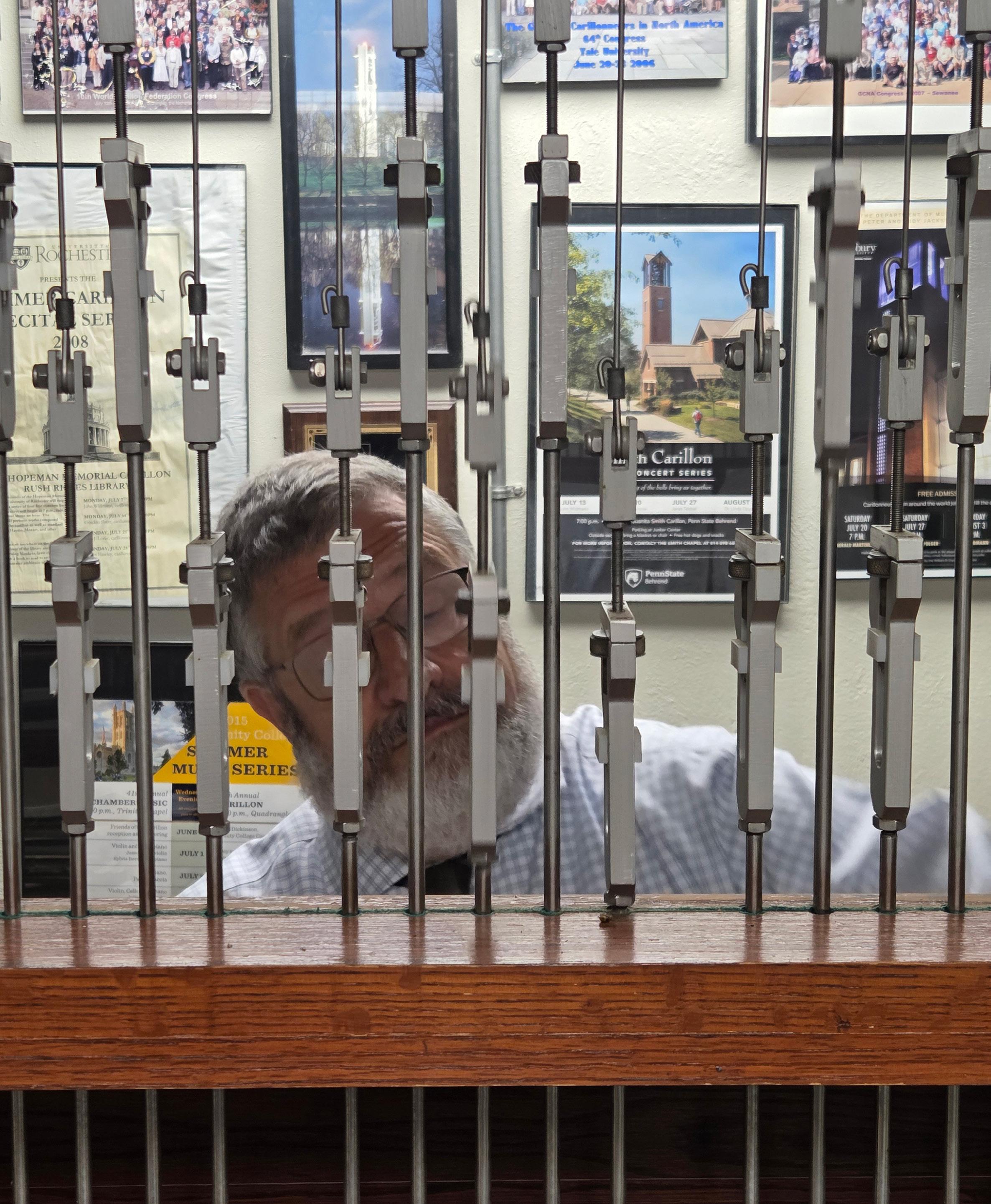
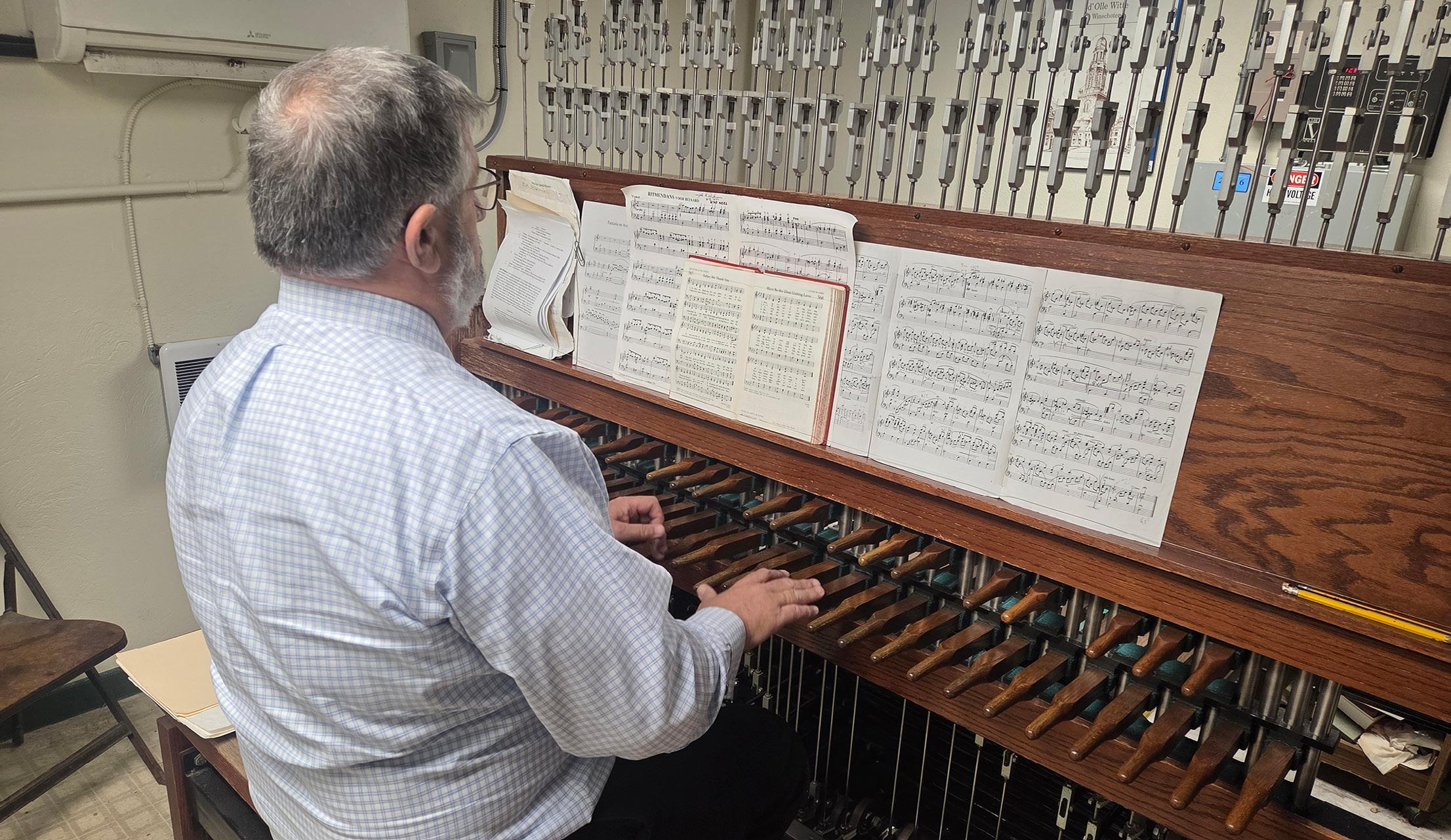
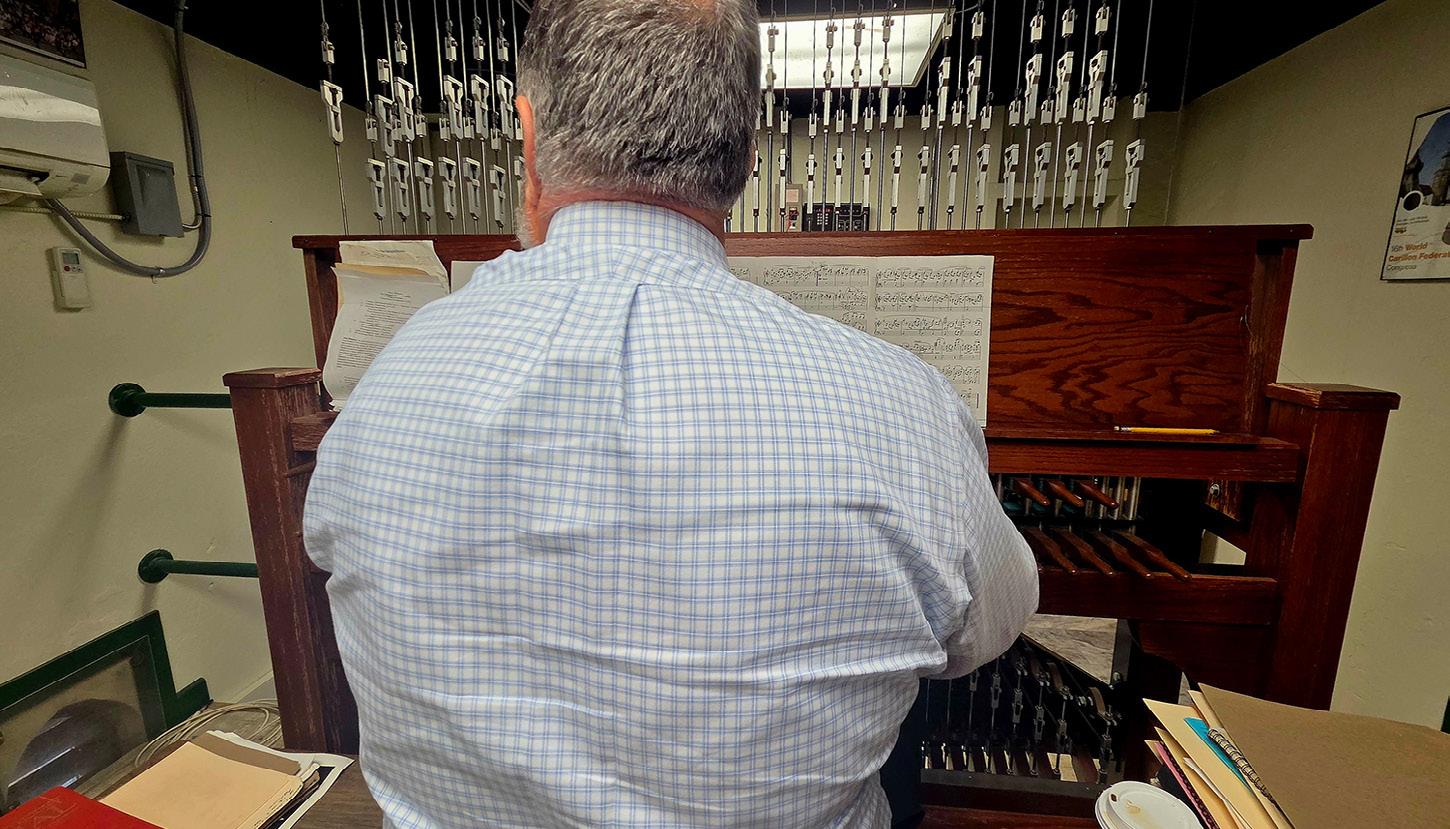
Every Sunday at 12:30 p.m., Frederick residents and visitors alike are treated to something special — a live carillon concert. From his perch 50 steps above Baker Park, John Widmann sits with his shoes off, ready to perform on what he would argue is “the world's largest type of instrument.”
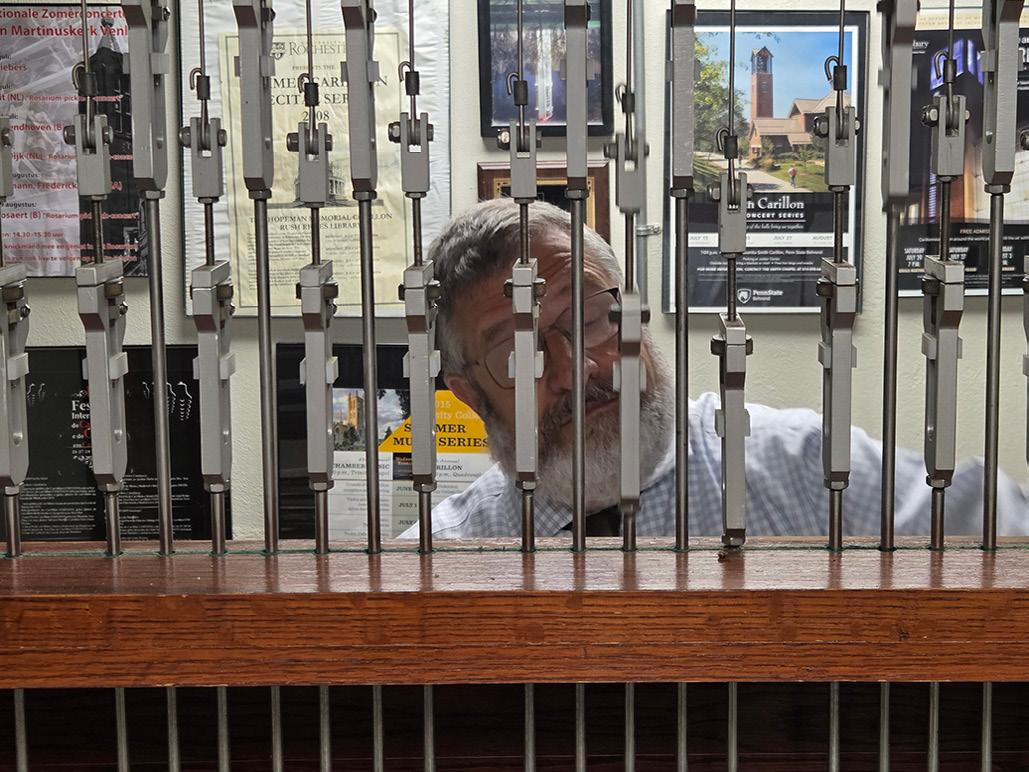
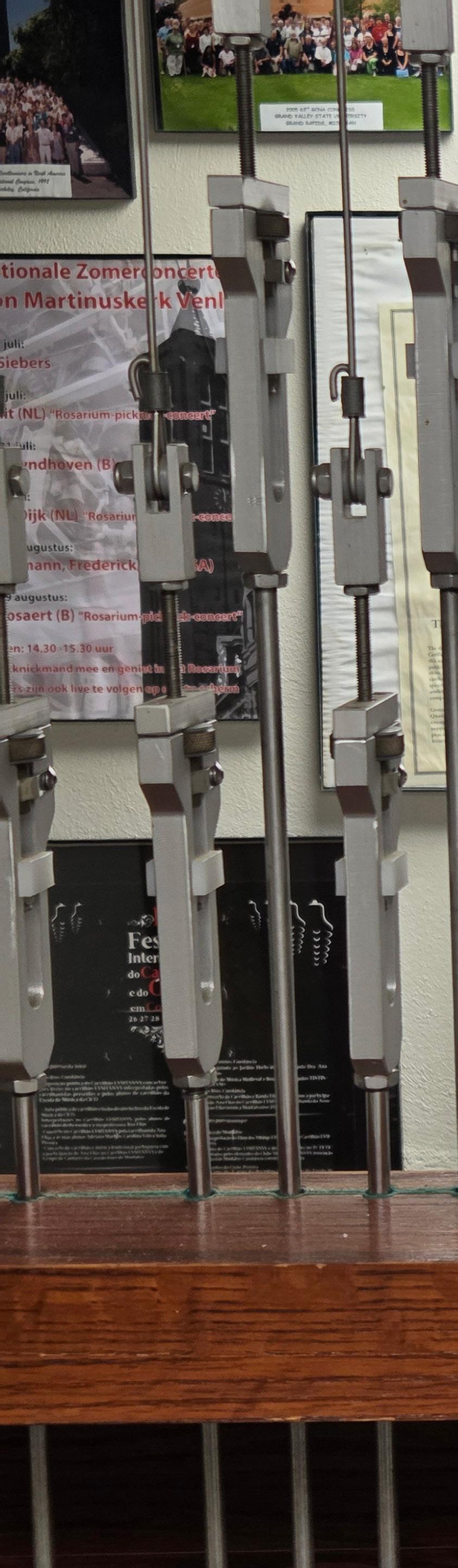
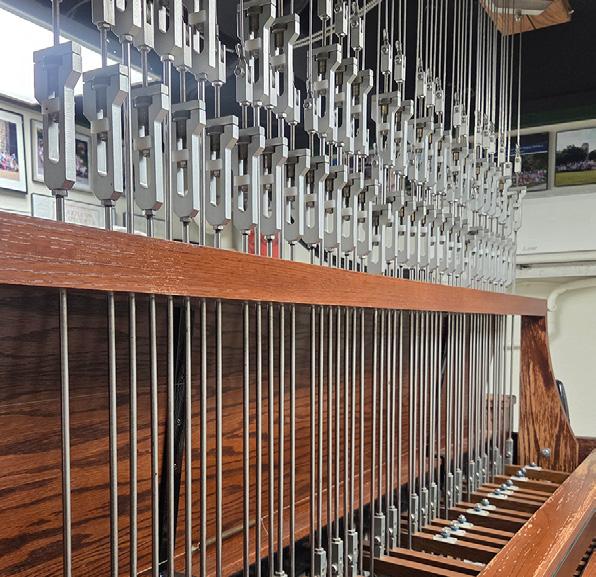
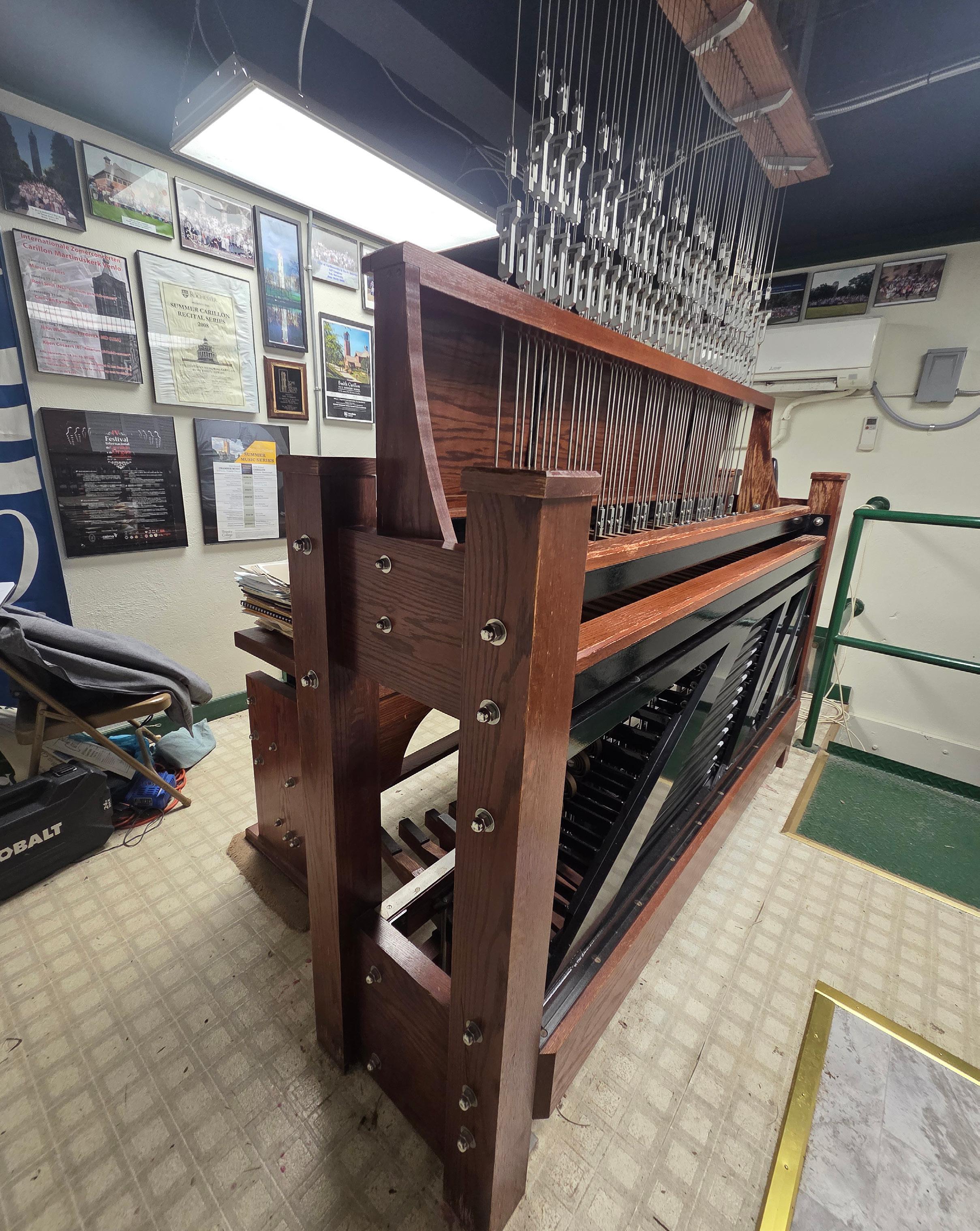
Acarillon is a musical instrument composed of at least 23 cast bronze bells, tuned chromatically and housed in a tower. Played via a keyboard with wooden batons and foot pedals, it allows for musical expression through variations in touch, with the bells remaining stationary while only the clappers move. The player, known as a carillonneur, uses both hands and feet to strike keys connected directly to the clappers.
For more than 33 years, Widmann, 62, has served as Frederick's city carillonneur, one of just a few municipal carillonneurs in the U.S. He has the fortune to play on one of the less than 200 carillons in
North America, according to the Guild of Carillonneurs in North America.
His journey to this unique position began in an equally unique way.
"I found a key in an envelope on my doorstep with my name on it," Widmann recalls of how his predecessor, Dr. Galen Brooks, bestowed the position upon him in 1992. Widmann is only the third carillonneur in the city’s history, following Brooks and H. David Hagan before him.
Widmann's musical journey began with piano lessons as a child, eventually leading him to Indiana University of Pennsylvania, where he studied music education, organ, and voice. He earned a master’s in music from Towson and served many years as a
In addition to playing regularly in Frederick, Widmann has literally travelled the world playing some unique carillons, including one at Longwood Gardens in Pennsylvania and instruments in Belgium and the Netherlands.
music teacher with Frederick County Public Schools. He retired in 2021.
He received carillon training at Mercersburg Academy and the Washington Cathedral. But certification as a carillonneur requires more than musical training. In 1996, Widmann passed the rigorous carillon playing test. "You play anonymously in front of the national convention and are voted on," he explains.
In addition to playing regularly in Frederick, Widmann has literally travelled the world playing some unique carillons, including one at Longwood Gardens in Pennsylvania and instruments in Belgium and the Netherlands.
“I usually give eight to 10 guest recitals each year,” he said. Widmann also serves as the organist and choirmaster at Saint
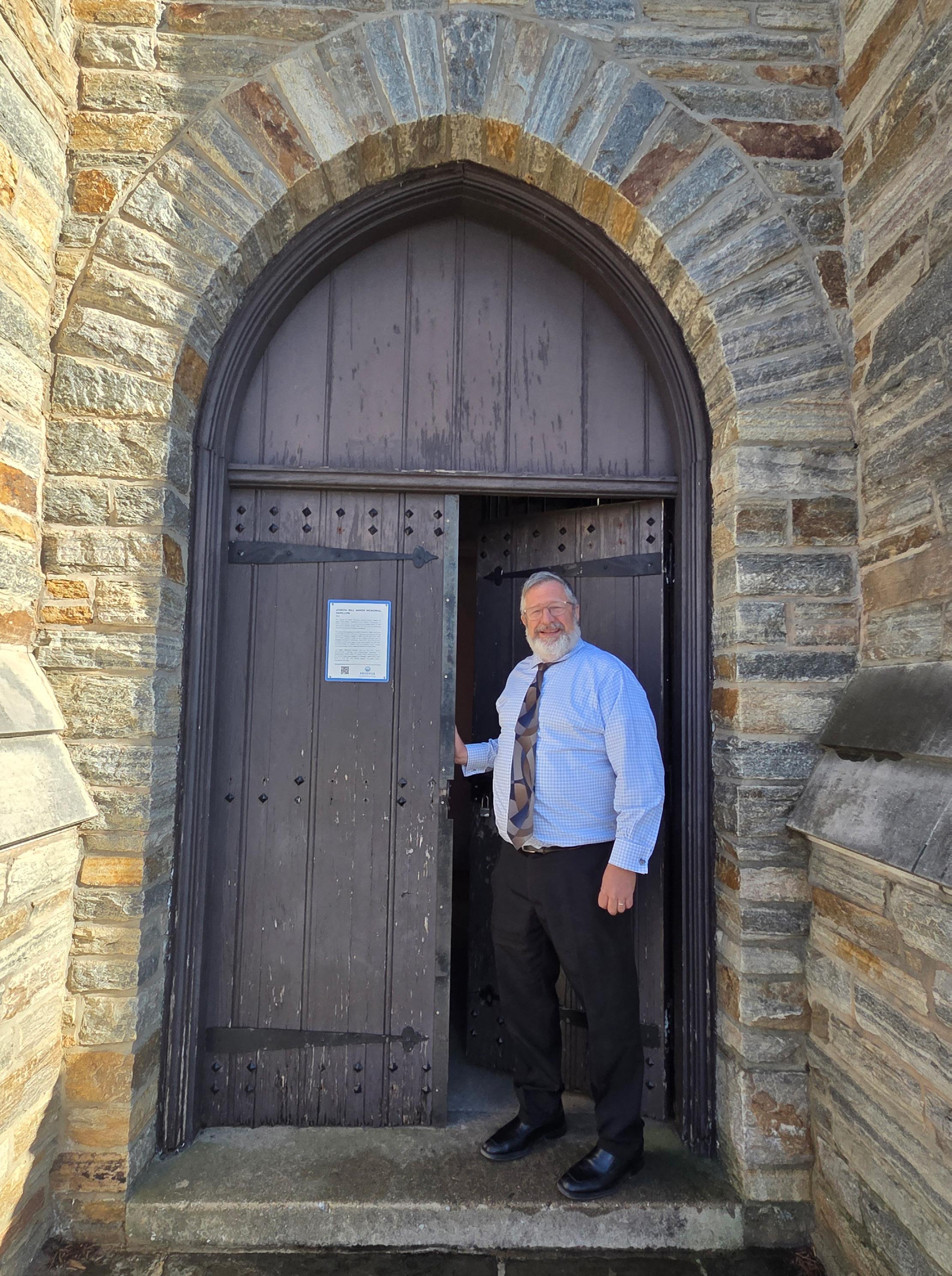
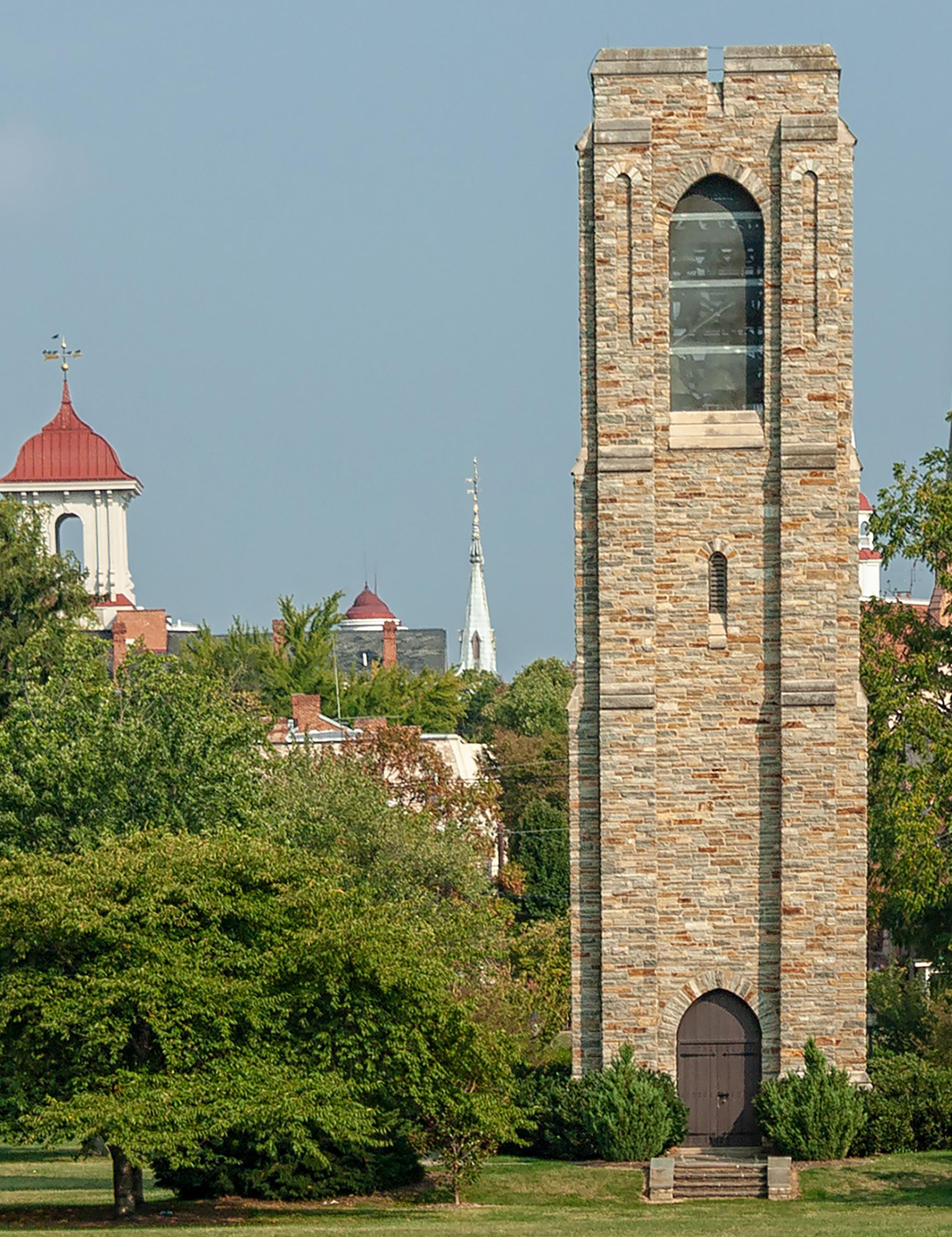
The Joseph Dill Baker Memorial Tower stands 70 feet tall in Baker Park, a stone edifice constructed of granite from Baltimore County with a foundation extending 12 feet underground to rest upon solid rock. Dedicated on Nov. 30, 1941, just one week before the attack on Pearl Harbor, it honors the local businessman and philanthropist who secured the land for the park.
It is one of just three carillons in Maryland. Many of us gaze upon the stone structure and refer to it as Frederick’s carillon. But technically, the carillon is the instrument Widmann plays inside. The stone structure is actually a bell tower, or campanile. According to Widmann, the most common owners of carillons are, of course churches, followed by educational
institutions, then civic institutions, and finally private owners.
Frederick’s original installation featured just 14 bells cast by the Meneely Bell Foundry based in Watervliet, New York. "Really good bells," Widmann notes. In June 1967, nine bells were added, transforming the installation into Maryland's first true carillon. By definition, a carillon must contain at least two octaves (23 bells), while installations with fewer bells are classified as chimes.
In 1995, for the city's 250th birthday, 26 more bells were added, bringing the total to 49.
"Every bell that is put in this carillon is still here; no bells have ever been removed," Widmann said.
Each bell ranges from 22 pounds to 3,500 pounds. These copper bells are played not by swinging, but by clappers
• The Joseph Dill Baker Memorial Carillon is in Baker Park, near the corner of 2nd Street & Dulaney Avenue.
• Free recitals are given every Sunday, year-round, 12:30-1 p.m.
• The carillon was dedicated on Nov. 30, 1941.
• Though it has always been called a carillon, it was not truly a carillon until 1966, when nine more bells, cast by Eijsbouts in Asten, Netherlands, were added, along with a two-octave mechanically played keyboard.
• In 1995, 26 bells, cast by Petit&Fritsen of Aarle-Rixtel, Netherlands were added, along with the current four-octave keyboard.
• The instrument is annually maintained by the designer of the 1995 renovation, Meeks, Watson & Co., of Georgetown, Ohio.
Every Sunday, Widmann arrives early at the tower to prepare for his 12:30 p.m. recital. At the bottom of the tower sits a practice keyboard which dates back to 1926, which he will sometimes use to practice playing before the public hears anything.
that strike them from within — all controlled by a mechanical keyboard that requires no electricity.
"These batons are mechanically connected to the clappers, which are pulled into stationary bells," Widmann explains.
Every Sunday, Widmann arrives early at the tower to prepare for his 12:30 p.m. recital. At the bottom of the tower sits a practice keyboard which dates back to 1926, which he will sometimes use to practice playing before the public hears anything. He may also need to adjust the main instrument, depending on the environmental conditions. “Humidity and temperature affect the mechanism,” he explains.
His repertoire for each performance is carefully chosen. "I start with an appropriate hymn," he says. "It is Sunday and there are a lot of churches downtown."
As an accomplished church musician familiar with the liturgical calendar, Widmann draws from databases that track the three liturgical years (A, B, and C) and
their three readings, ensuring his music complements the worship happening in Frederick's downtown churches.
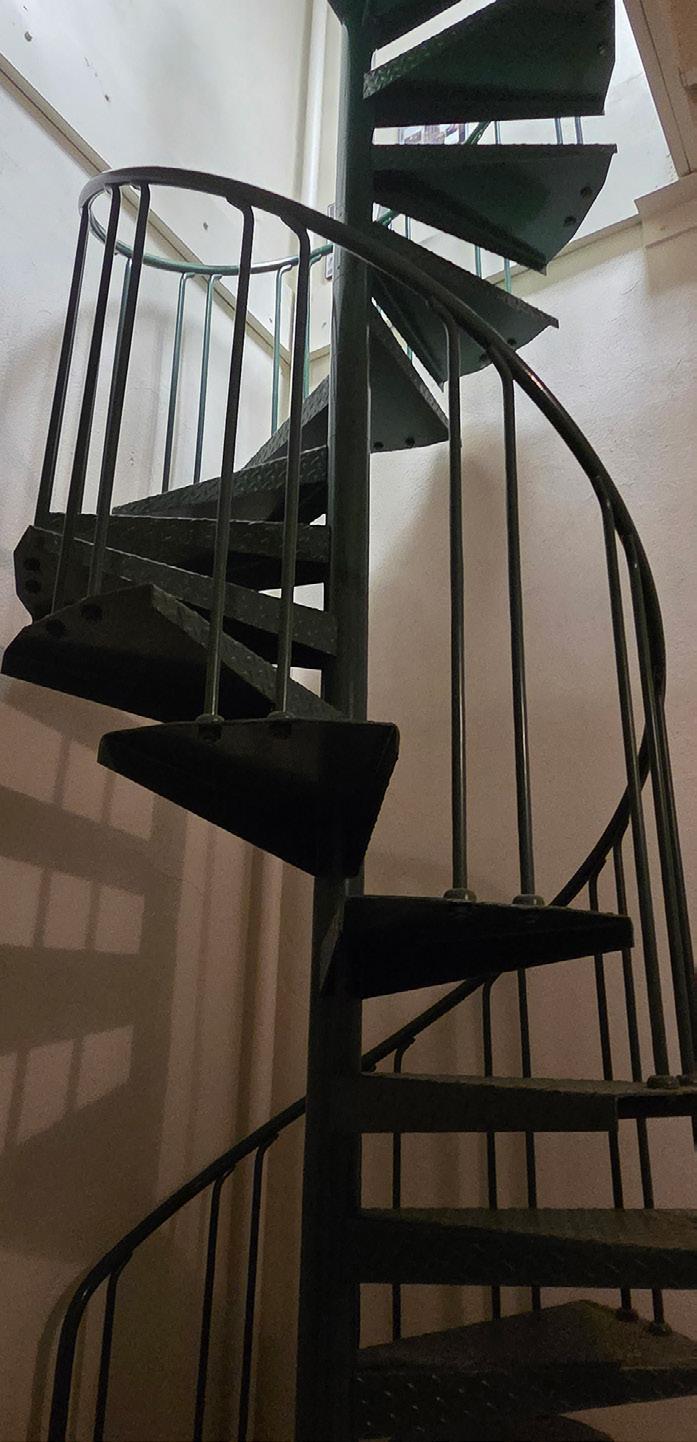
Often, Widmann leaves the door open to the tower, so anyone who wishes can climb the 50 steps up the two-story curved metal staircase to observe Widmann play. Widmann sits at the helm, using his fingers, fists and feet to strike batons and pedals arranged in rows similar to piano keys.
On a recent Sunday, Widmann started with a hymn, then played some classical pieces, a piece he arranged, and even a little Billy Joel. So you never know what you might hear.
For the past three decades, Widmann has been the custodian of this remarkable instrument. His dedication to this unique art form — one practiced by only a few hundred people worldwide — has made the Sunday carillon concert an enduring tradition in Frederick, a weekly reminder of the city's history and its commitment to public art and culture. His leadership has also led to Frederick hosting significant
carillon events, including the National Congress in 2000.
Widmann says he has no plans to retire anytime soon. When he does, the keys to the carillon may have to pass on to a nonlocal player. Though he knows of some good young players in Washington, D.C., he doesn’t know of any in Frederick.
For now, he’ll keep playing every Sunday for all who want to listen. The sound of the carillon carries for several city blocks, making it truly accessible public music. Frederick’s carillon is not only part of our public soundscape, but also part of our city’s identity. 3
iIf you plan to go:

By Mary Ford-Naill
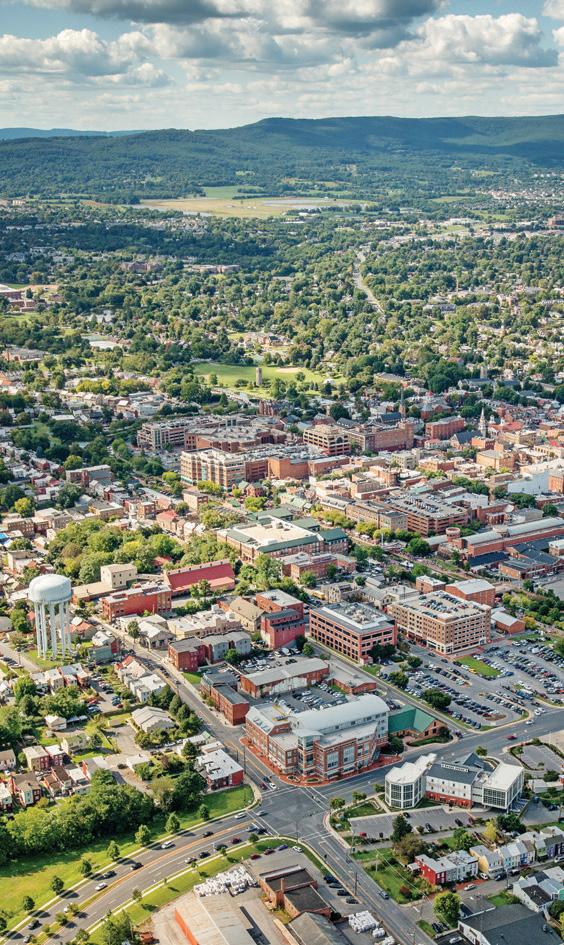
In economic development, whether meeting with businesses or networking with jobseekers, we hear two stories playing out at the same time—and they don’t seem to match.
On one hand, employers say they can’t find the right talent. Not just technical skills, but the fundamentals: reliability, communication, a willingness to learn, and the ability to work as part of a team. They want candidates who can grow with the company, adapt, and contribute to a positive workplace culture.
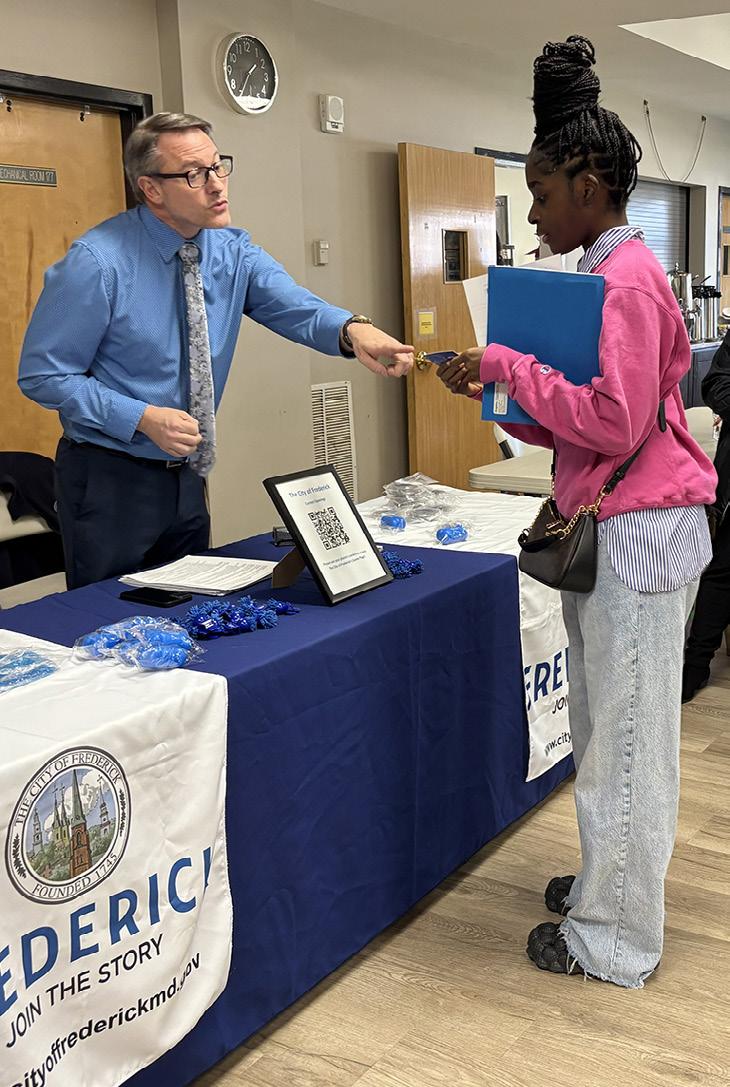
On the other hand, job seekers—especially young adults and individuals re-entering the workforce—tell us they apply to dozens of positions and never hear back. They feel employers are unwilling to take a chance on them, even when they bring transferable skills, motivation, and a desire to contribute. Sometimes entry-level candidates expect higher starting salaries before they’ve had the opportunity to prove themselves, creating a mismatch in expectations. This disconnect poses an economic development challenge for any community. When businesses can’t find the desired talent and residents can’t find the right opportunity, the local economy risks losing momentum. Frederick’s continued growth depends on narrowing this gap.
So how do we shift the narrative in a community filled with amazing companies and incredible talent?
Strategies for Job Seekers: Owning the Journey
Frederick’s job market is full of opportunity, but success requires intention and persistence. In a conversation with Patty McDonald, Manager of Business and Career Services with Frederick County Workforce Services, job seekers can strengthen their position by focusing on three core strategies:
Be intentional: Research companies before applying. Seek out organizations whose mission, culture, and goals align with your own. Employers notice when candidates understand who they are and why they want to be part of the team.
Network with purpose: Connections matter. Many opportunities never make it to job boards, and a warm introduction can open doors that a résumé alone cannot. Attend local events, join professional groups, and build relationships that support your long-term career path.
Stay positive: Job searching can be discouraging, but resilience is a competitive advantage. Maintaining a positive mindset helps candidates stay engaged, confident, and ready when the right opportunity appears.
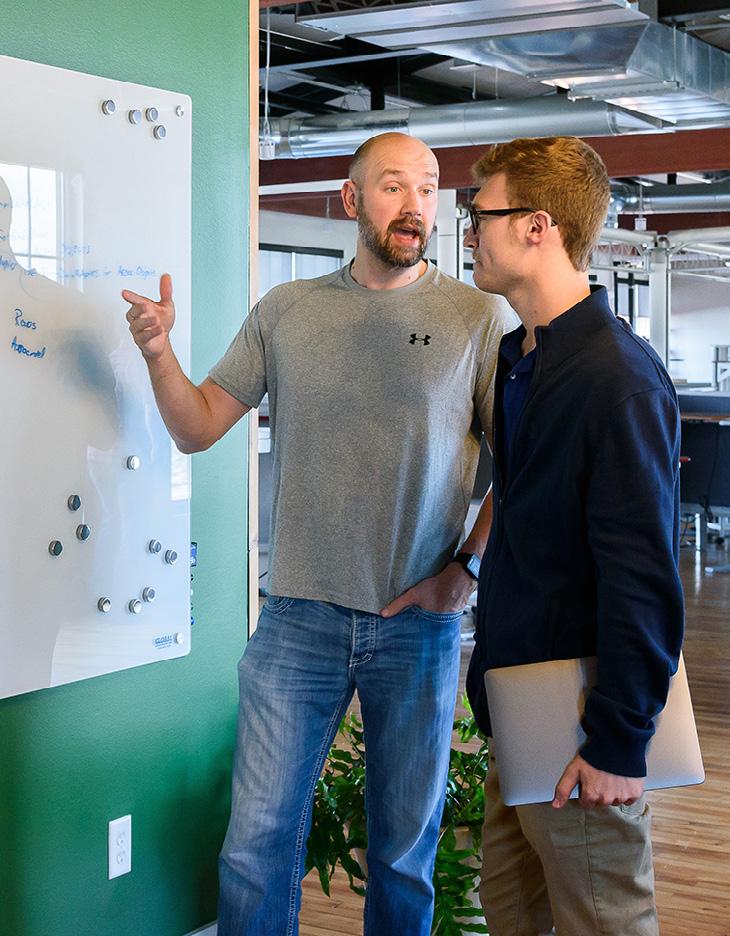

Employers also play a critical role in strengthening Frederick’s workforce pipeline. A few shifts can make a big difference:
Embrace flexibility: Today’s workforce values balance, autonomy, and modern workplace practices. Offering flexible scheduling, hybrid options where possible, or creative shift structures can expand the talent pool and improve retention.
Recognize transferable skills: A candidate may not check every box on a job description, but they may bring adaptability, customer service experience, leadership potential, or problem-solving skills that translate across industries. Hiring for potential—and training for specifics—builds stronger teams.
Both the City of Frederick’s Office of Opportunity and Transformation and the Frederick County Workforce Services continue to expand intentional, youth centered programming that introduces young people to the wide range of educational, career, and civic opportunities available locally—helping them envision a future in Frederick and encouraging them to build their lives here. One of the flagship programs, Catalyst, offers eligible young adults ages 16 to 24 individualized career services at no cost. The city also recently hosted a Youth Dialogue Forum, giving local students a space to explore their futures in Frederick and make meaningful connections with members of the business community. Frederick is the fastest-growing city and region in Maryland, and that growth is no accident. With so many positive business trends converging—new investment, expanding industries, and a rising talent pipeline—this is a moment of real opportunity. However, continued success requires continued effort. By strengthening connections between employers and job seekers, embracing flexibility, and investing in people, we can support even greater business growth and make Frederick an even more attractive destination for companies looking to build their future here.
To learn more about training programs, apprenticeship, internship, and returnship opportunities at the city, county and state, connect with our economic development team at www.BusinessinFrederick.com.
To learn about local resources for talent development or programs and support for job seekers, connect with:
The City of Frederick’s Office of Opportunity and Transformation https://www.cityoffrederickmd.gov/1881/Office-of-Opportunity-and-Transformation or Frederick County Workforce Services – www.frederickworks.org
Mary Ford-Naill is the Manager of Economic Development for the City of Frederick, where she leads efforts to attract and retain businesses across diverse industries. She holds a BA and MBA from Hood College and is a graduate of the Executive Program of Leadership Maryland (2023) and Leadership Frederick County (2003). Mary has over 30 years of experience in commercial and residential real estate and has also owned her own business. Passionate about community and service, she thrives on fostering long-term, collaborative relationships.
Are you a small business owner looking to maximize tax
and boost your cash flow? At BMC, we specialize in providing tailored advisory services that help you build a robust financial strategy. Our expert team is dedicated to understanding your unique needs and delivering solutions that drive growth and efficiency.
• Strategic Tax Planning: Our advisors work with you to develop a comprehensive tax strategy that minimizes liabilities and maximizes savings.
• Cash Flow Optimization: We help you identify opportunities to improve cash flow, ensuring your business remains financially healthy.
• Exceptional Communication: We pride ourselves on maintaining clear and consistent communication, keeping you informed every step of the way.
• Next Level Service: Our exclusive Next Level program offers proactive strategic planning and monthly financial reviews, empowering you to take your business to new heights.
Take the Next Step with BMC Partner with BMC and experience the difference that expert advisory services can make. Contact us today to schedule a consultation and start your journey towards financial success.

By Naomi Pearson
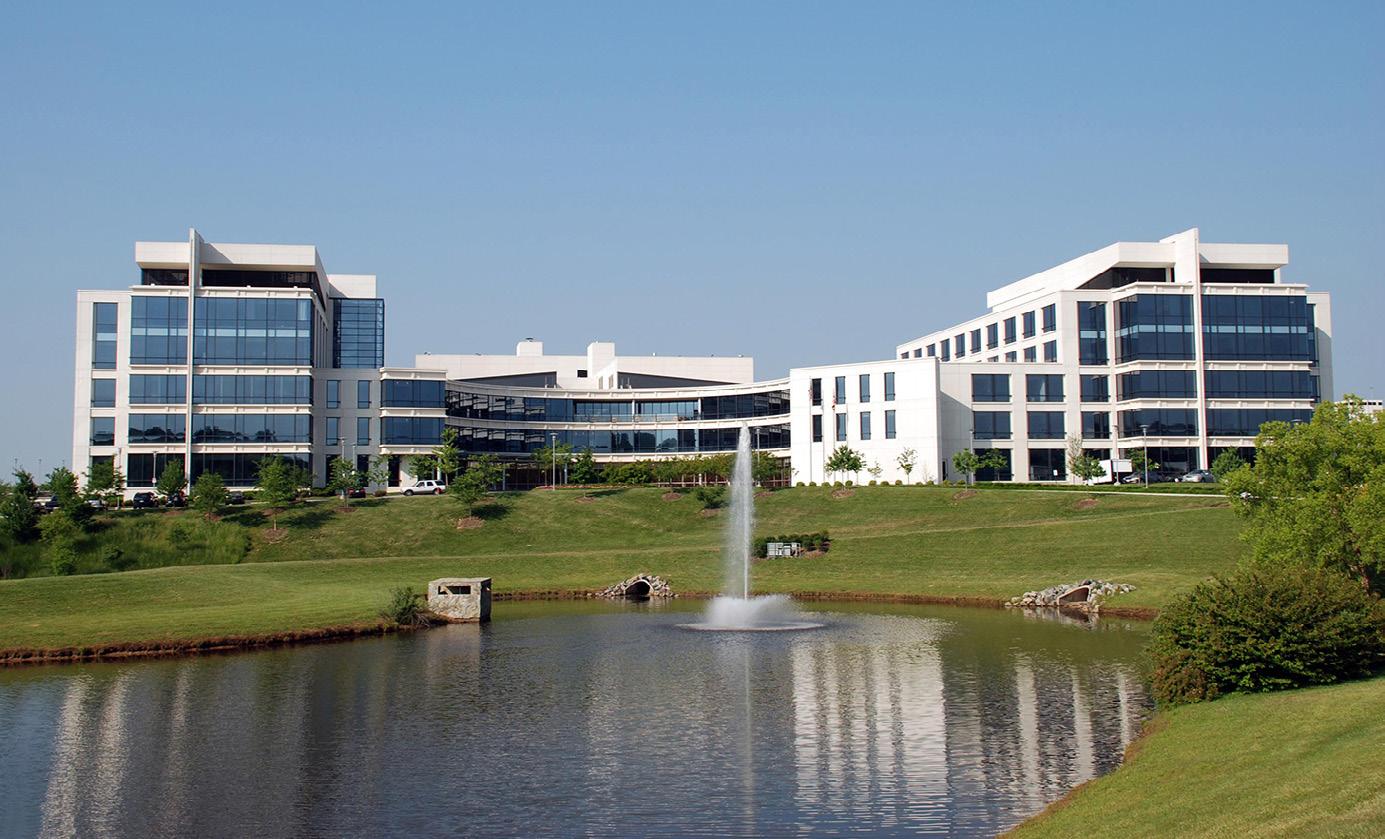
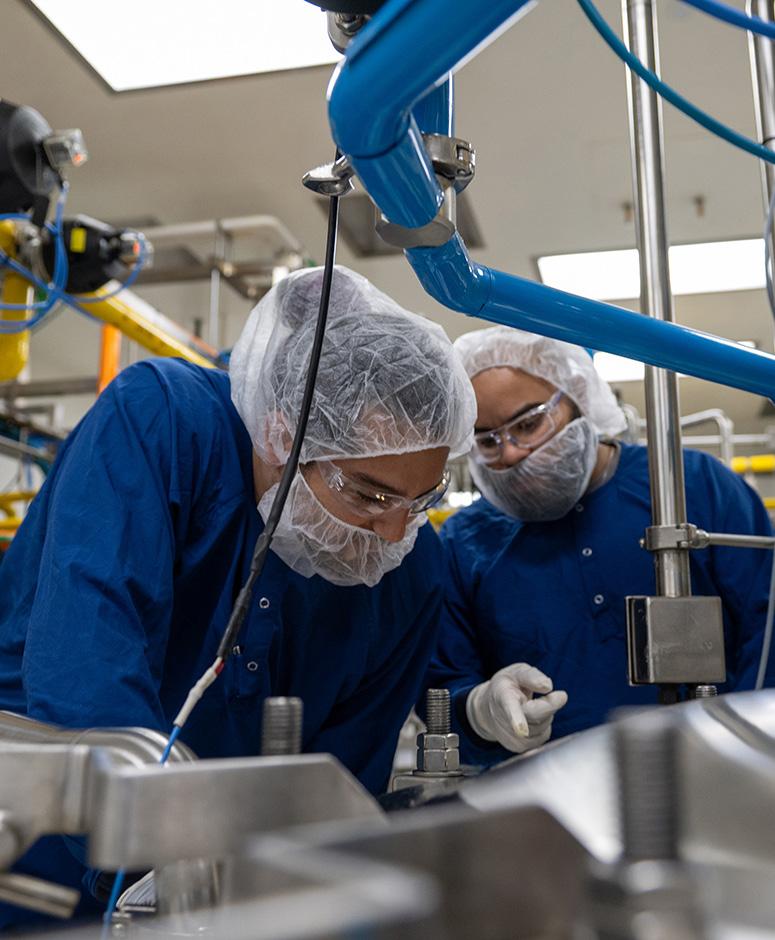
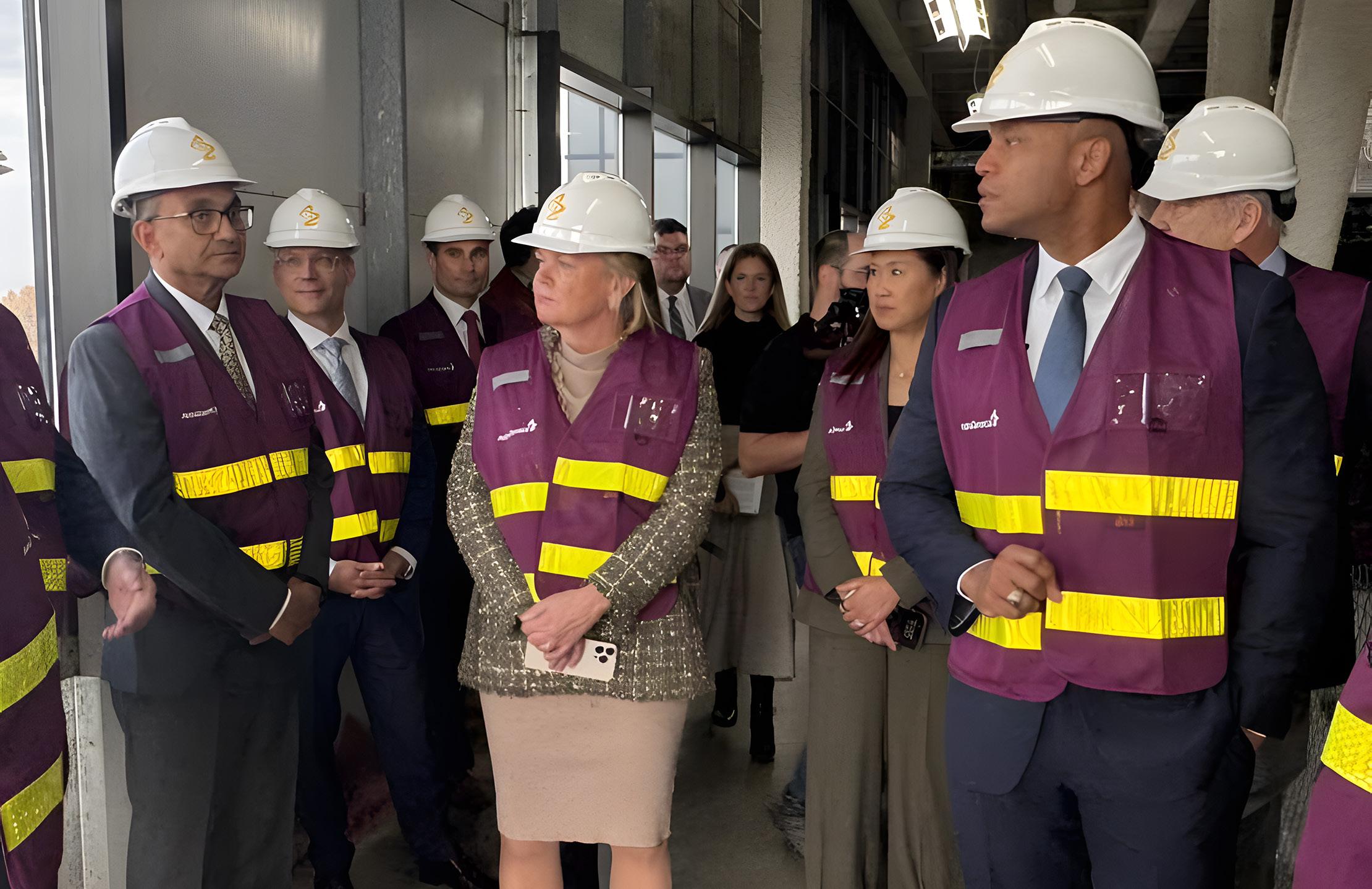
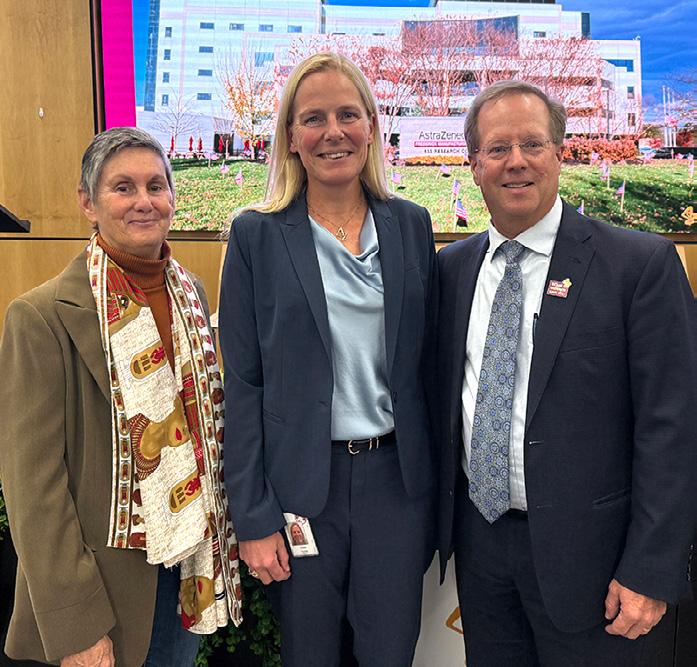
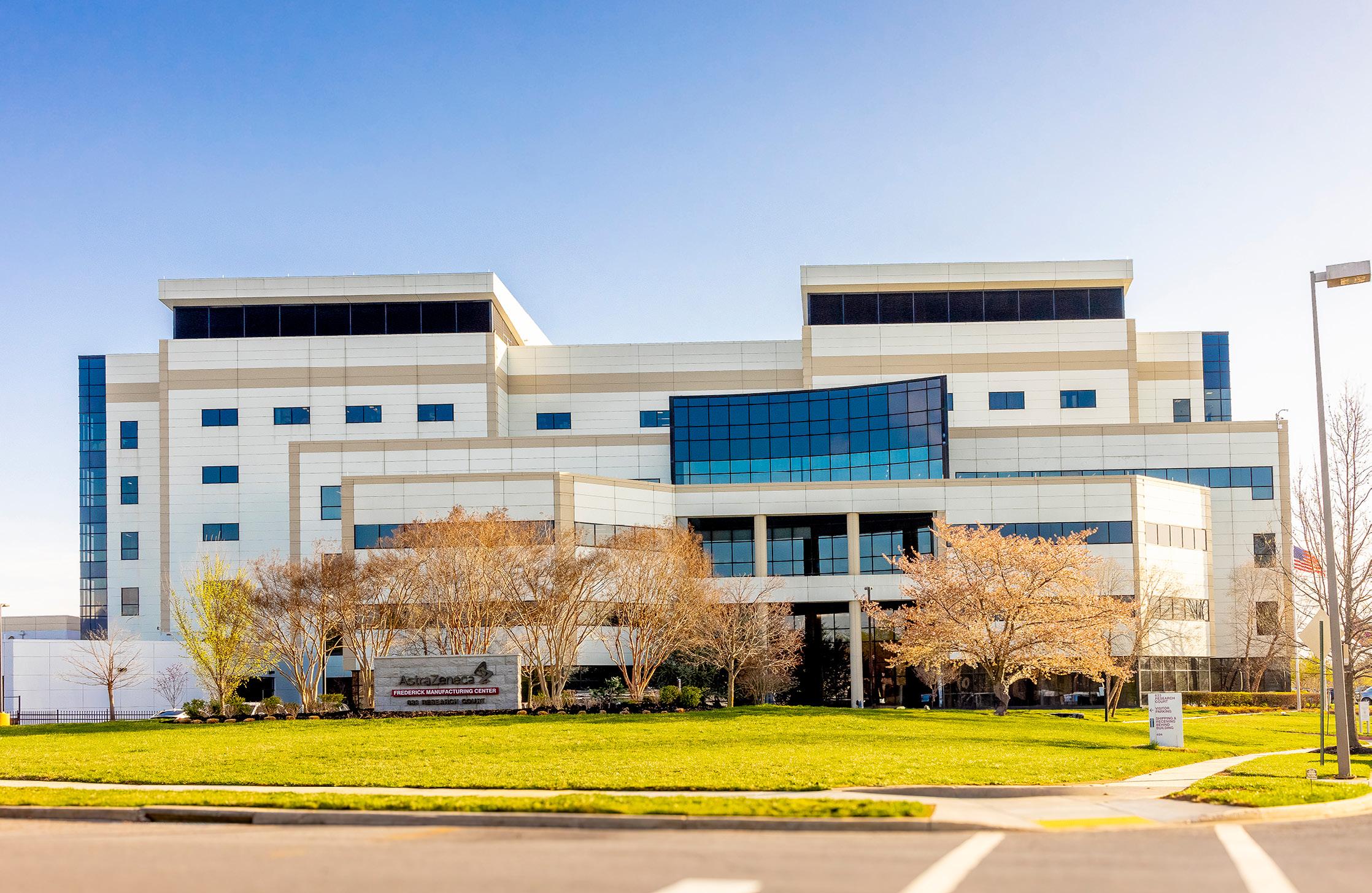
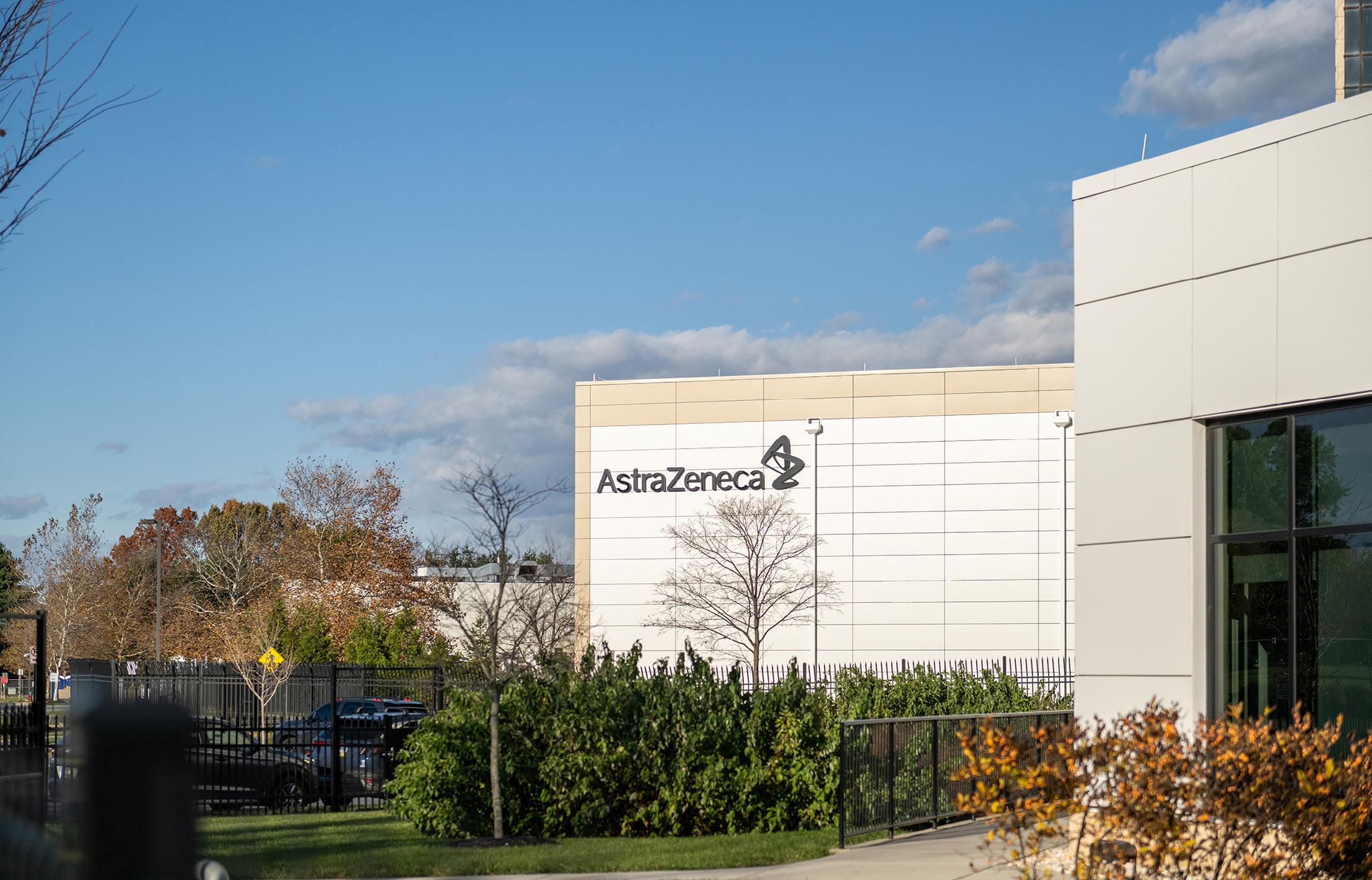
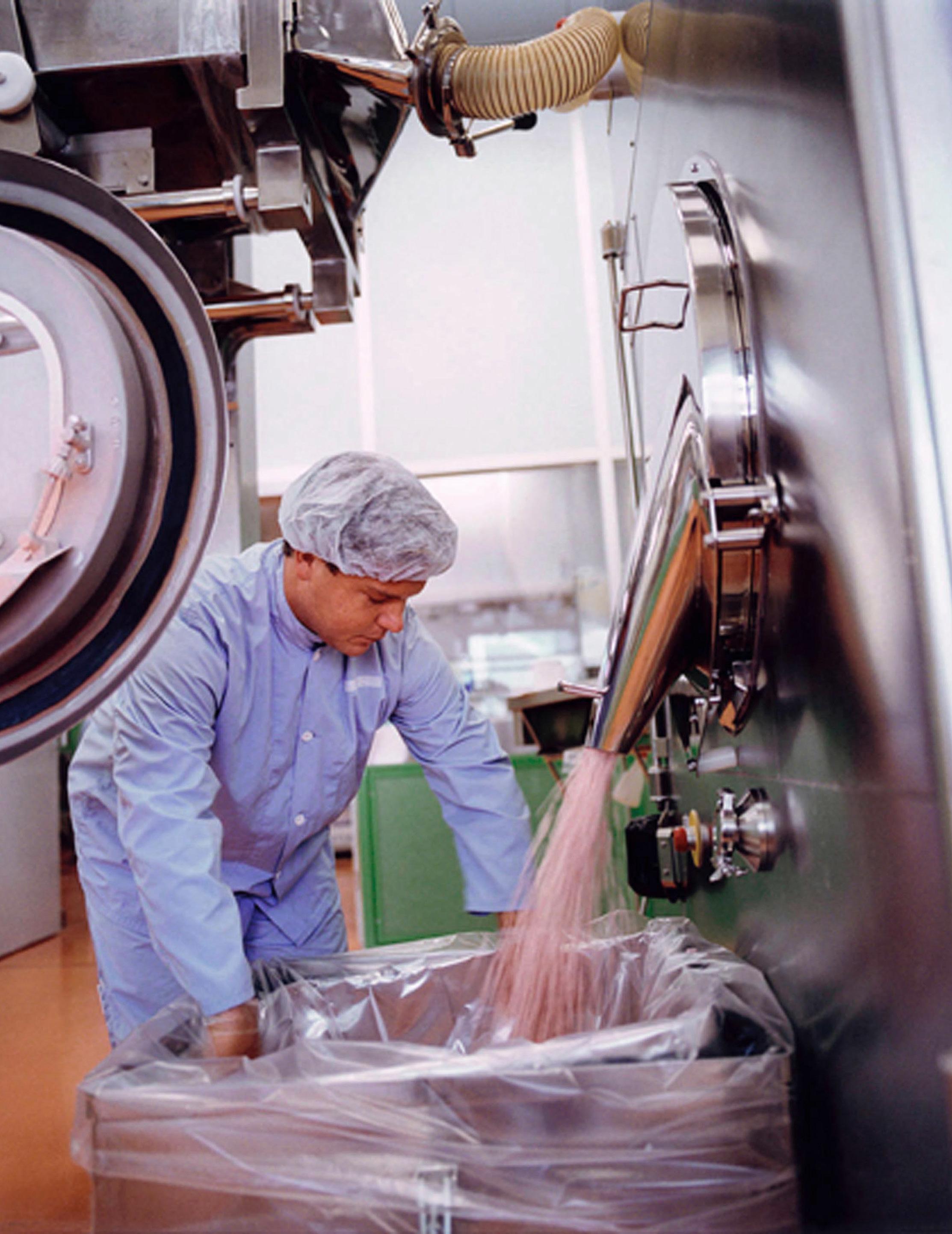
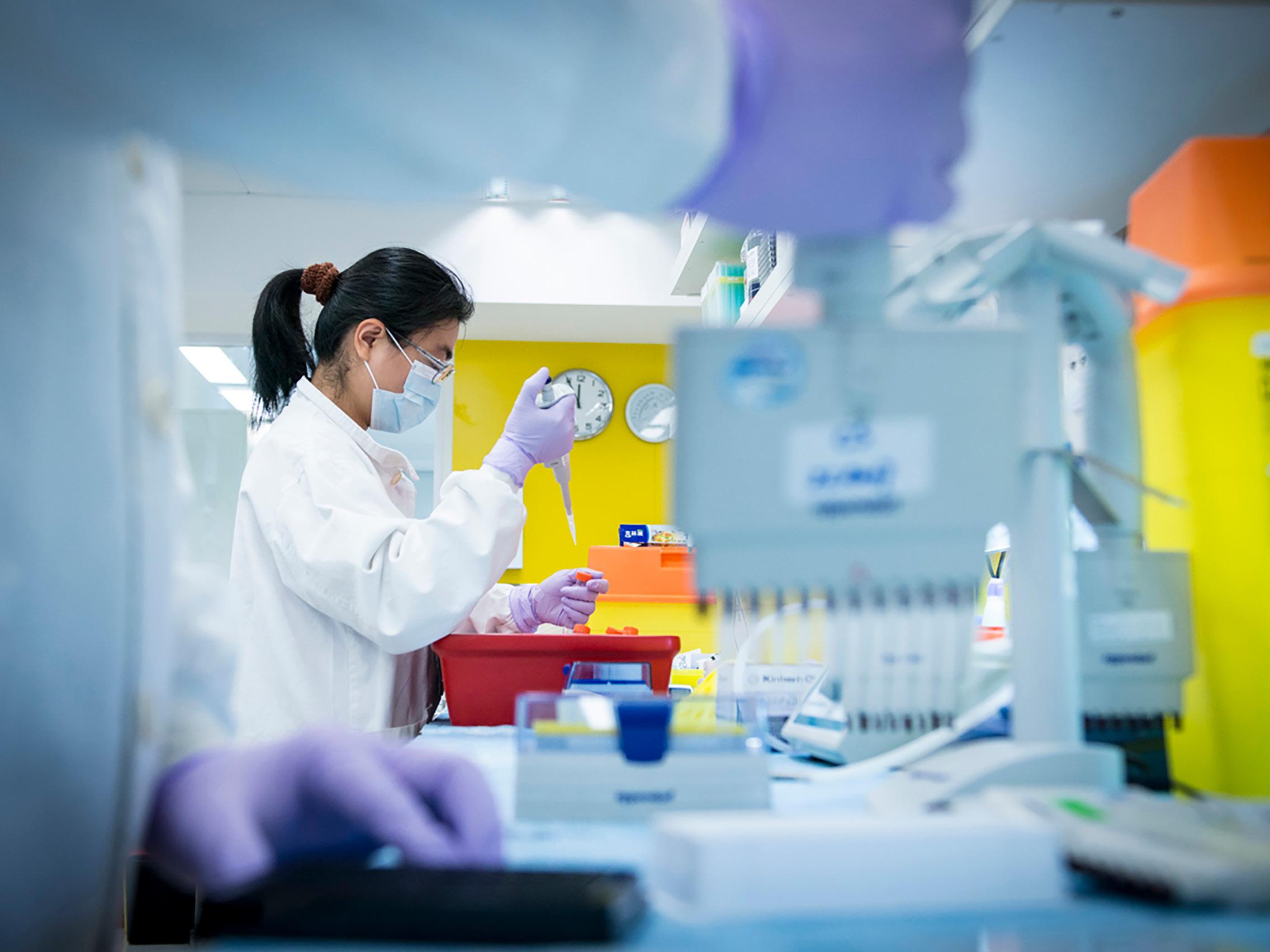
Global pharmaceutical powerhouse, AstraZeneca, plans to invest nearly $2 billion in Maryland to expand its flagship biologics manufacturing facility in Frederick, and to build a state-of-theart clinical manufacturing facility in Gaithersburg, according to a news release from the company.
Beth Woodring, acting director of Frederick County’s Division of Economic Opportunity, said AstraZeneca, a global leader in life sciences, is a major employer in Frederick County and her department is focused on helping to retain and expand existing businesses here to create new jobs and opportunities.
“We welcome every opportunity to continue to support the ongoing innovation and growth of AstraZeneca as a key anchor to our life sciences ecosystem,” Woodring said.
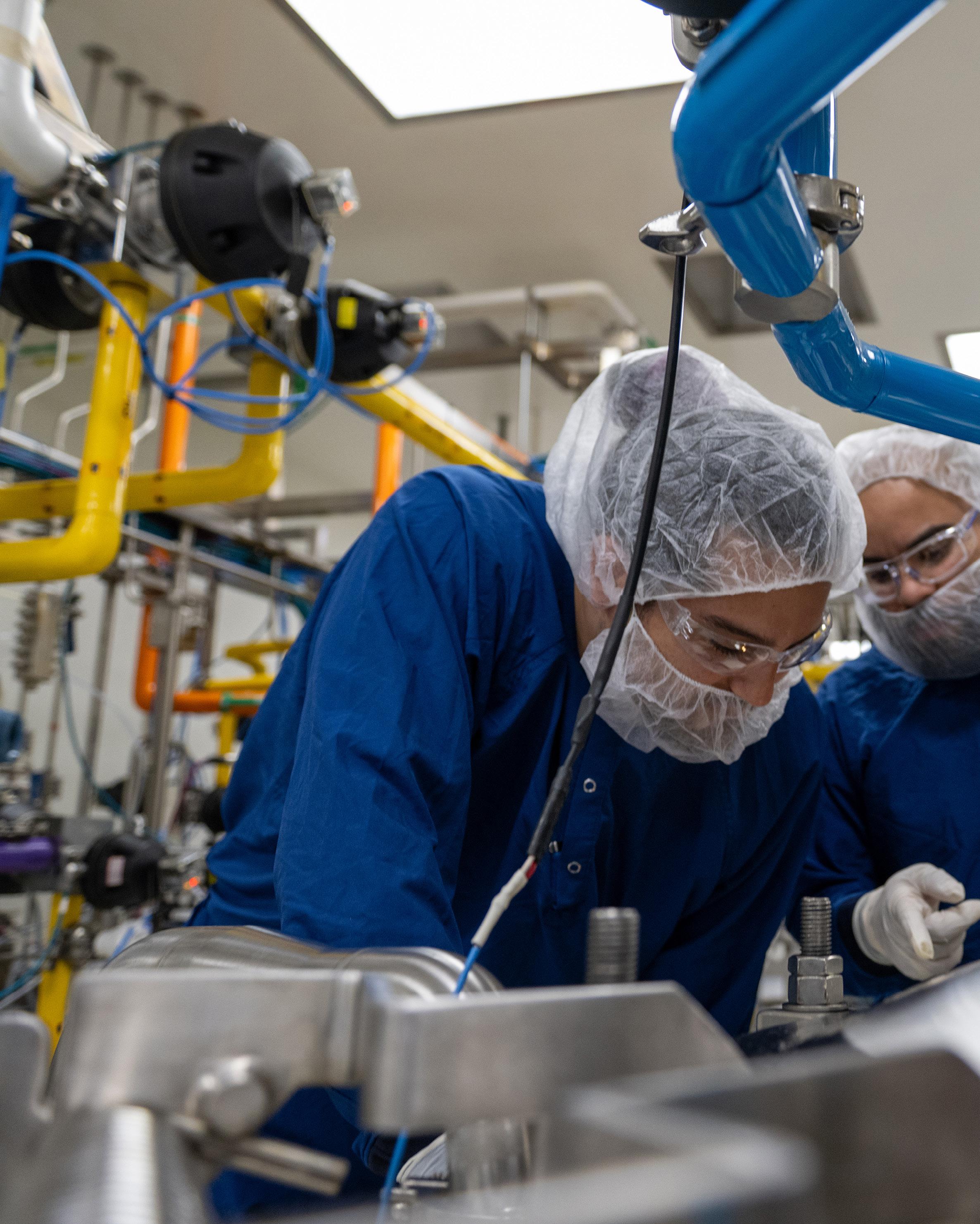
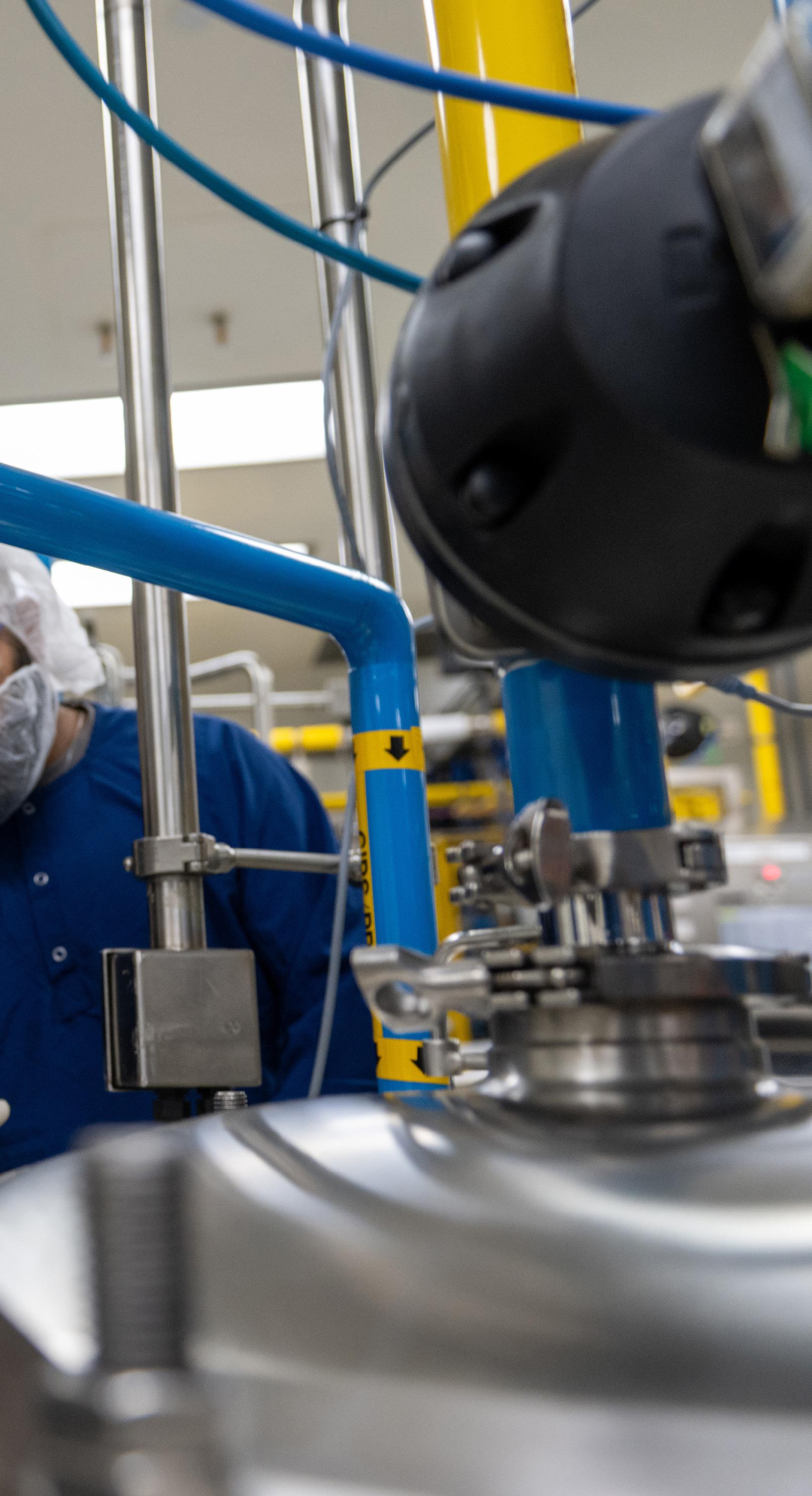
The company’s Frederick manufacturing center at 633 Research Drive produces biologics — medications produced from biological substances, such as microorganisms, plant or animal cells — that are used across AstraZeneca’s portfolio of cancer, autoimmune, respiratory and rare disease treatments. continued
The
Frederick expansion will create 900 construction roles, and at its operational completion expected in 2029, will be home to an additional 200 highly skilled jobs.
The facility expansion will almost double its manufacturing capacity and will substantially increase its supply of existing medicines, and accelerate the production of medicines across the company’s rare disease portfolio.
The construction will adhere to environmental standards, and the finished facility will leverage cutting-edge artificial intelligence, automation and data analytics in its operations.
The Frederick expansion will create 900 construction roles, and at its operational completion expected in 2029, will be home to an additional 200 highly skilled jobs.
Frederick could see economic gains even during the construction phase.
Richard Griffin, director of economic development for the City of Frederick, explained that construction workers often depend on large and multiyear projects for financial stability, and money can be
poured back into the local community as they patronize area gas stations and restaurants, stay in hotels or local rentals and purchase groceries during the project.
Most of the 200 highly skilled jobs will be in production, according to an AstraZeneca spokesperson, and available jobs will be posted to the company’s career portal.
”We hire based on the skills needed for the positions and encourage local residents meeting the requirements to apply for available roles when we begin hiring in mid- to late-2028," the spokesperson said.
Griffin said in a City of Frederick News Flash: “The announcement by AstraZeneca to expand its footprint and product manufacturing in Frederick follows decades of investment and growth at this campus and the city looks to a long future together for the benefit of our resident workers and region.”
Frederick’s Mayor, Michael O’Connor said the company’s investment will
AstraZeneca’s expansion aligns with the City of Frederick’s strategic priorities to support business growth, strengthen its innovation ecosystem and cultivate a diverse and skilled workforce
help today’s residents as well as future generations.
“It will create high-quality jobs, attract additional private sector growth and reinforce Frederick’s role as a major contributor to Maryland’s life sciences leadership,” he said.
AstraZeneca’s expansion aligns with the City of Frederick’s strategic priorities to support business growth, strengthen its innovation ecosystem and cultivate a diverse and skilled workforce, the city has said.
Frederick County Executive Jessica Fitzwater echoed the sentiments, lauding the company for making an investment in the county doing work that will not only “create high-paying jobs in our community,”
but also “improve the lives of people around the world.”
AstraZeneca said its investment in the Frederick and Gaithersburg projects “underscores our commitment and reflects the highly talented people in the state and the strength of the ecosystem here." 3

Don’t call it a food hall –Wonder, a tech-driven restaurant with a unique ordering concept, will soon open its doors
By Molly Fellin Spence
on Urbana Pike

One of the newest and most exciting concepts in fast-casual dining and food delivery is coming soon to Frederick.
A year before the pandemic was declared, most of what we would now consider
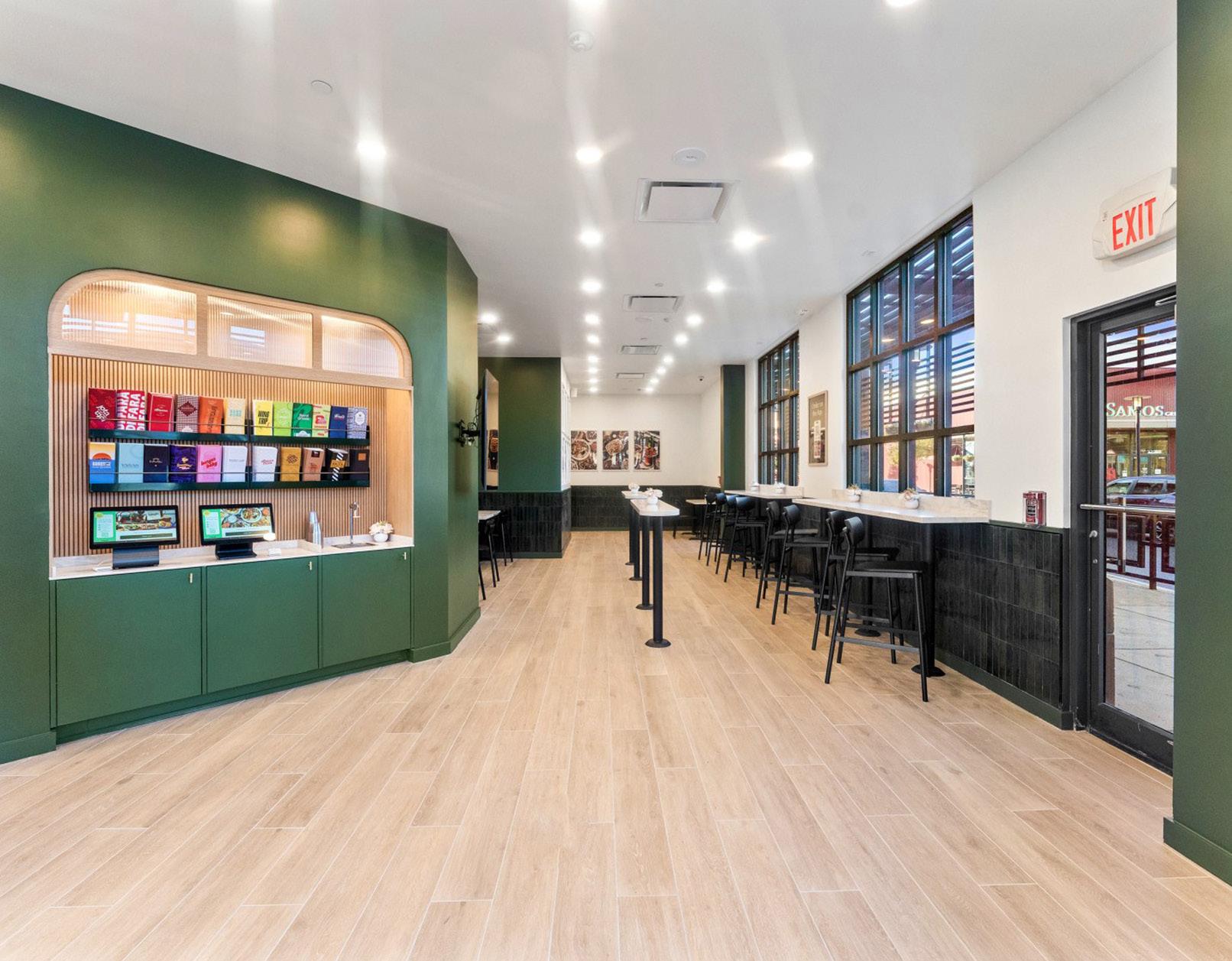
Wonder is a tech-driven "virtual food hall" that uses a single, centralized kitchen at each of its locations to prepare menu items from dozens of different, high-quality restaurants for rapid delivery or pickup. Instead of offering just one kind of menu item or cuisine, Wonder offers dozens, hosting 20 to 30 virtual "restaurants" under one roof that customers can order from simultaneously.
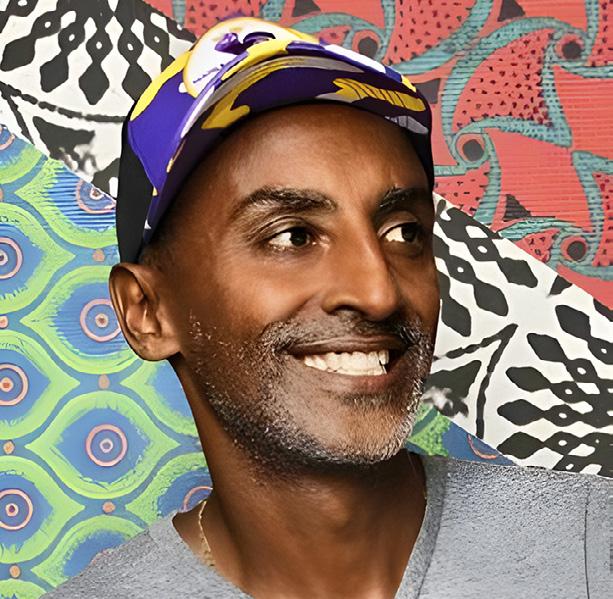
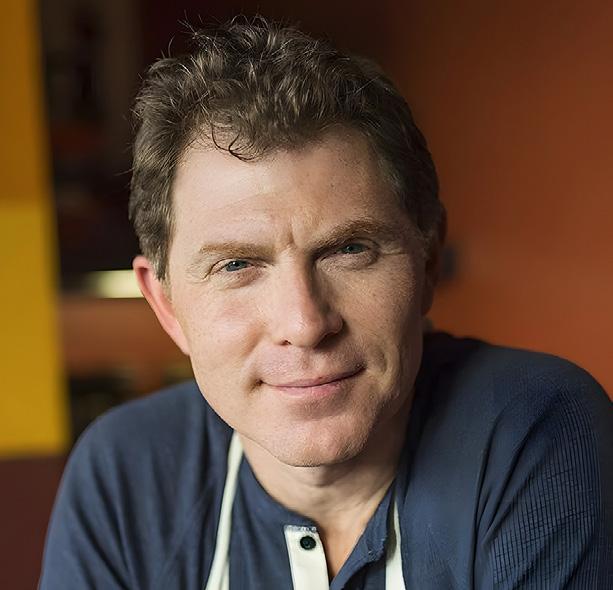
So, while you order a filet mignon with a side of rosemary-parmesan french fries from Bobby Flay’s steakhouse, your companions can get a spicy fried chicken sandwich from Streetbird by Marcus Samuelsson.
The celebrated restaurant concept is set to open in Frederick this spring at 5473 Urbana Pike in Frederick’s Riverview Plaza shopping center along Route 355.
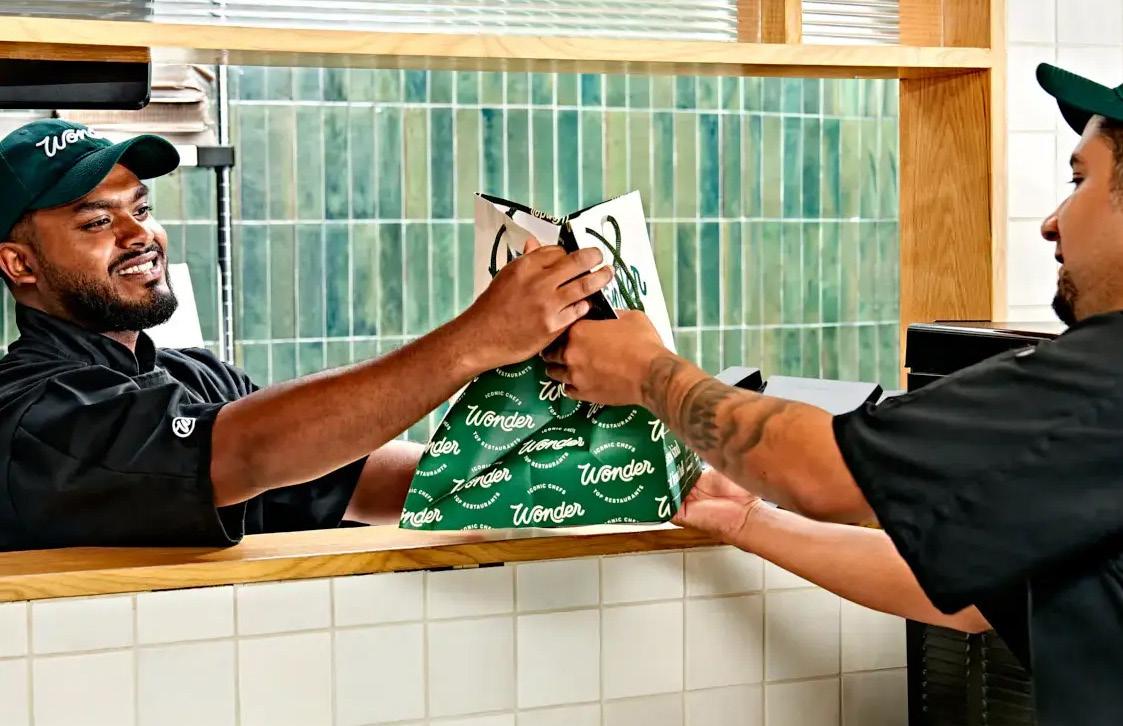
The communications team with Wonder says it’s actually a bit misleading to call the restaurant a "food hall" because unlike a traditional food hall, Wonder doesn’t lease space to independent vendors. Instead, it partners directly with award-winning chefs and celebrated restaurants from across the country to develop and serve their dishes, all made fresh to order under one roof.
This gives guests access to chef-driven concepts they wouldn’t otherwise find locally – with the added convenience of ordering from multiple restaurants in a single meal.
Though the company would not provide specifics about the Frederick location ahead of its opening, Wonder has built a name for itself across the region and has been rapidly expanding across the Northeast in the last year.
It has opened locations in New York, New Jersey, Massachusetts, Rhode Island, Connecticut, Virginia, Delaware, and Washington, D.C. More locally, existing Maryland locations are in College Park and Baltimore, and shops are slated to open in Annapolis and Bel Air this spring.
. . . Wonder doesn’t lease space to independent vendors. Instead, it partners directly with award-winning chefs and celebrated restaurants from across the country to develop and serve their dishes, all made fresh to order under one roof.
The company was founded in 2018 by Marc Lore, the billionaire ex-Walmart executive and entrepreneur who founded Diaper.com and Jet.com. In 2023, Wonder acquired Blue Apron, a meal kit service that delivers pre-portioned, fresh ingredients and chef-designed recipes directly to customers
for home cooking. And last year Wonder acquired three businesses — Grubhub, the online and mobile food ordering and delivery marketplace; Tastemade, a media company with 160 million followers on social platforms and 13 million monthly viewers across streaming channels; and Spyce, a robotics




courtesy of Wonder

company that developed Sweetgreen’s automated Infinite Kitchen makeline.
The late fall acquisition of Spyce was a strategic move by Lore, who said in a news release that his focus is on evolving “from a first-of-its-kind, multi-restaurant operator into a truly scalable, technology-powered food platform.”
“The acquisition of Spyce’s Infinite Kitchen gives us leading robotics capabilities that will transform how food is prepared and served. This technology enables us to eventually operate more than 100 restaurants across any cuisine type and price point, all out of a small kitchen, while serving food faster, hotter and with flawless accuracy and consistency,” Lore said.
Wonder has been focused on rapid growth in recent years, Lore has acknowledged. In an interview with CNBC, Lore said his plan is to grow from just over 90 locations in 2026 to 400 by 2027.
Wonder’s restaurant locations combine food delivery, takeout, and dine-in service under one roof, offering menus from multiple well-known and chef-driven restaurant
concepts. Customers can order from multiple restaurants in a single order, a central feature of the concept. Wonder describes its model as lightning fast food delivery, takeout, and dine in from iconic restaurants, all in one place.
The focus at Wonder is “to make great food more accessible, bringing more restaurants to more people, in more places, at more times of day and at more affordable prices.”
The Frederick restaurant will share a building with the Starbucks that opened in 2022, directly in front of Target along Urbana Pike. The shopping center is also home to Target, Men’s Wearhouse, Old Navy, Sierra, PetSmart and Bob’s Discount Furniture. 3


On-site, hybrid, remote — in the post-pandemic world of making a living, it’s time to ask:
By Chris Slattery
It’s been six years since the world of work experienced the sudden revolution brought about by COVID-19. The masks went on, the lights went out, and Zoom, Teams, and heavily annotated Google docs took the place of conference rooms and water coolers as workers Brady Bunched their way through meetings and met virtually with clients wearing business attire from the waist up.
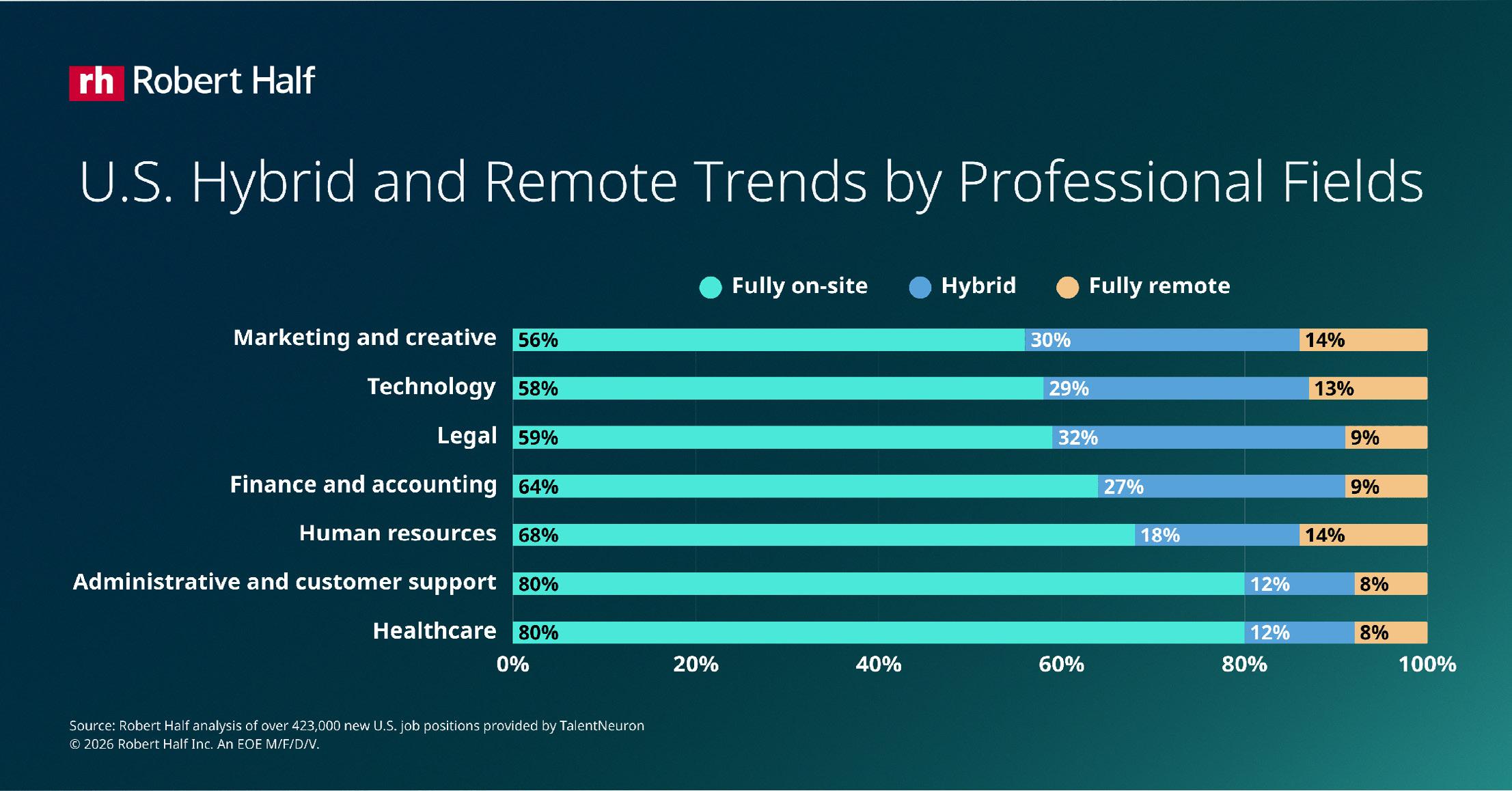
A year before the pandemic was declared, most of what we would now consider “remote-capable employees”— people with jobs that could be done at least partially from home — worked solely on-site (60%). One in three worked hybrid (32%), and less than one in 10 (8%) worked exclusively remotely. In March 2020, when social distancing, empty grocery shelves, and handwashing while singing the alphabet song became part of the pandemic lifestyle, 70% of remote-capable employees shifted to working exclusively from home, according to Gallup, a global analytics firm.
Many of them are still there.
“We’ve definitely seen an increase in workplace flexibility,” said Frederick native Amanda Haddaway, managing director of HR Answerbox. “I think that’s a good thing that came out of the pandemic.”
Haddaway, an award-winning human resources consultant, corporate trainer and certified executive coach, is quick to point out that in some industries — hospitality, retail, manufacturing and public service — remote work was never a long-term possibility. Businesses that can be flexible, however, have shifted to accepting or even encouraging a new work model.
“We’ve seen some companies going fully remote, some having hybrid schedules where there’s either total flexibility or a set schedule mandating one or two days in the office so that people still have that in-person collaboration,” she explained. “We’re also seeing an increase in contractors, freelancers – the gig-based economy.”
Years ago, particularly with the Baby Boomer generation, an employee could work for the same company for their entire career. continued page 47

“We’ve definitely seen an increase in workplace flexibility, I think that’s a good thing that came out of the pandemic.”
- Amanda Haddaway Managing Director, HR Answerbox

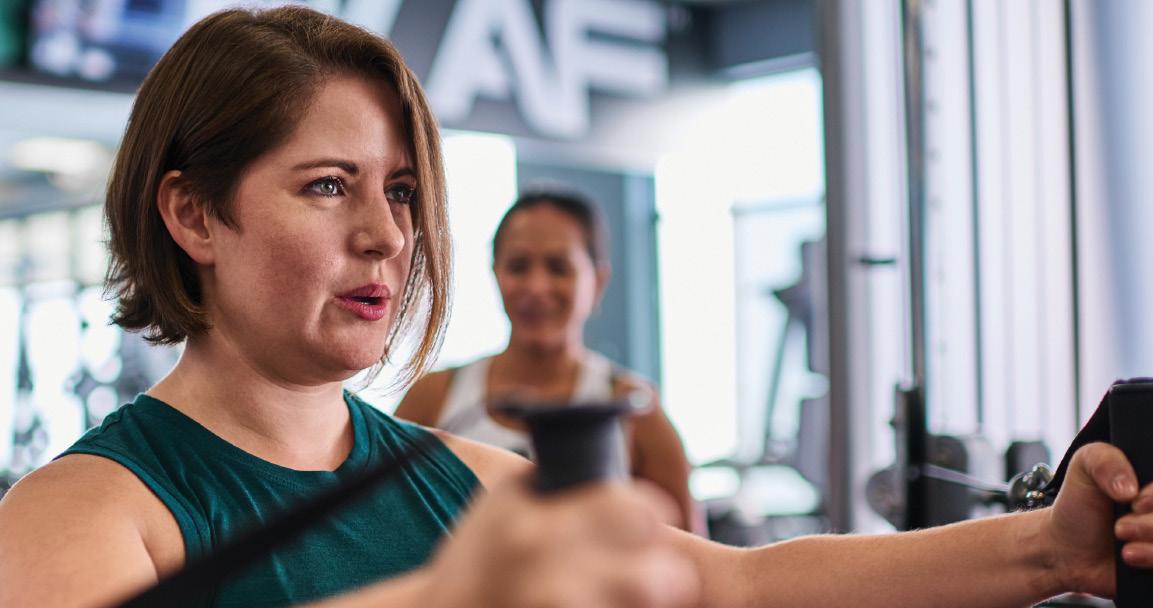
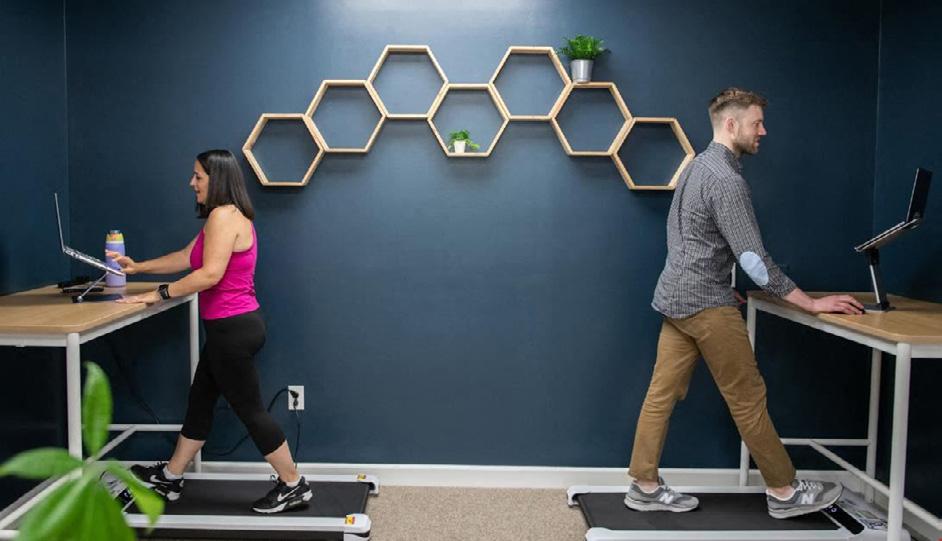
Work. Train. Sauna. Connect. Squadstyle makes it convenient to support your overall well-being all under one roof.
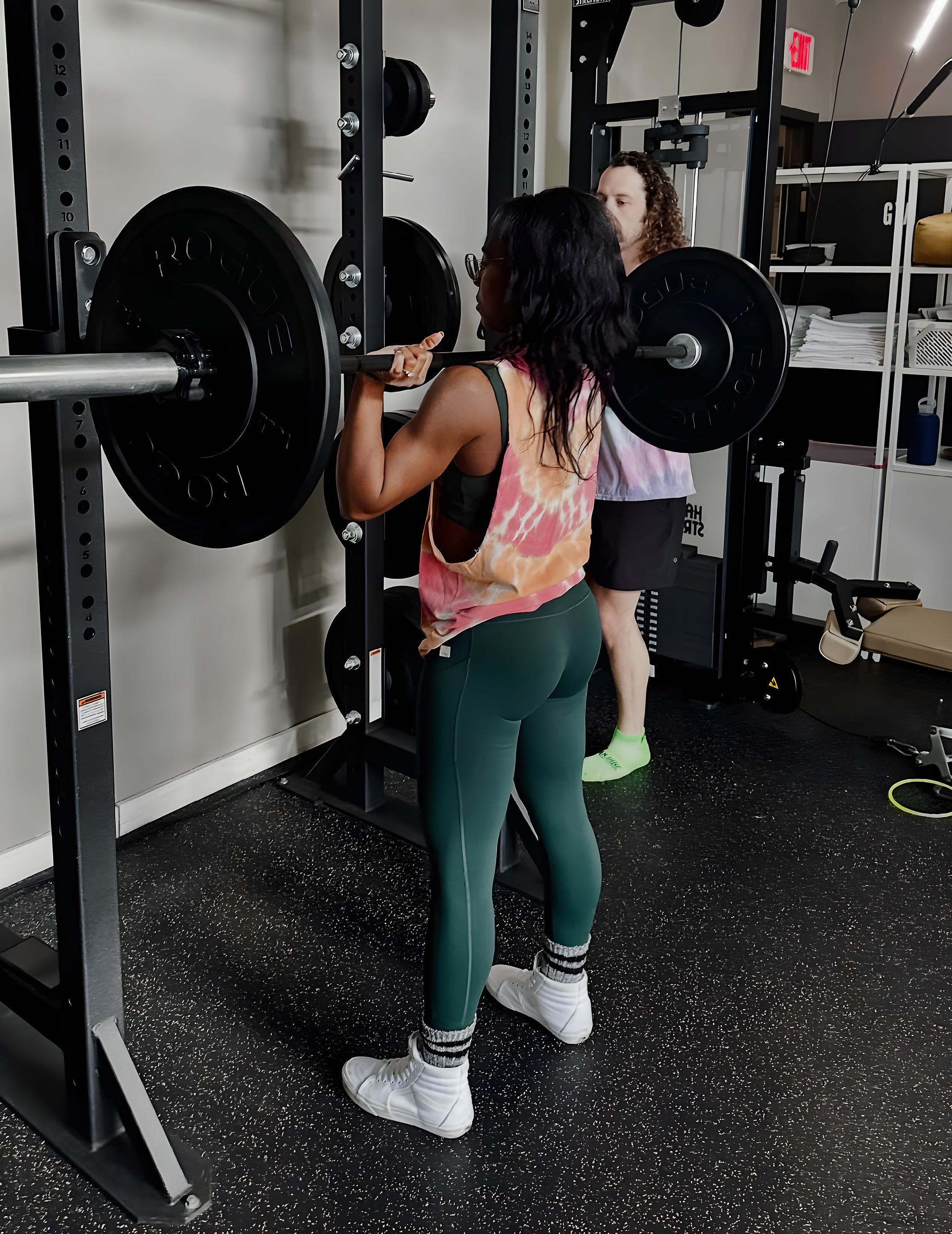
courtesy of Squadstyle
One way to provide the coveted work-life balance is by moving to hybrid remote work, which approximately 88% of employers have done, according to a survey by human resources consulting firm Robert Half.
But now, according to Haddaway, “what we’re seeing is people having what I would call a ‘portfolio career.’
“They’re working for employers directly, doing some contracting work or gig work, being freelancers and only staying with employers for a shorter period of time.”
Haddaway says she frequently receives resumes from people who have stayed with an employer for just a few years.
“When I started my career in HR 27 years ago, those people were kind of looked down upon as job hoppers,” she said. “Now that’s become the norm.”
What else is “the norm” as workers and employers settle into post pandemic life? Work-life balance. Recent statistics show that finding ways to seamlessly blend a career with outside interests, hobbies and family life has become a top priority for employees, with 83% considering it the most important factor
when choosing a job. Yes, more important than salary — a first, according to the Hubstaff survey.
One way to provide the coveted work-life balance is by moving to hybrid remote work, which approximately 88% of employers have done, according to a survey by human resources consulting firm Robert Half.
“Hybrid seems like it’s still emerging, and could eventually become the default,” Haddaway said. “It’s uneven across industries and occupations; not every job has the ability to do hybrid.”
She added that “you really are seeing a diverse spectrum of how employers are setting up work environments,” and the statistics seem to support that viewpoint, with 88% of employers providing some hybrid work options, and 25% offering hybrid work to all employees. The Robert Half survey found that in the second quarter of 2025, 24% of new job postings were for hybrid roles, while 12% were fully remote.
“What I’m observing with my clients is that many who are mandating in-office time have expensive office leases and they don’t want that space to be totally empty,” says Haddaway. “So they’re trying to balance what they’re paying with the utilization of that space.”
To solve that problem, she explained, some employers are designating in-office days for their employees, allowing remote work part of the week but mandating certain times when all employees must be together in person.
“Employees are putting controls in place so they can maintain their workplace culture,” she says. “They’re also trying to encourage teamwork, and you can see people on those in-office days in team meetings, meeting in person with clients, doing the brainstorming and collaborating activities that are needed for or those parts of the job to be successful.”
The infrastructure, equipment, and social network of a traditional office environment blended with the flexibility, autonomy, and authenticity of having your own business.
Shared Office Space/Phone Rooms for Private Calls/ Private Offices/Meeting Rooms/Mail Service
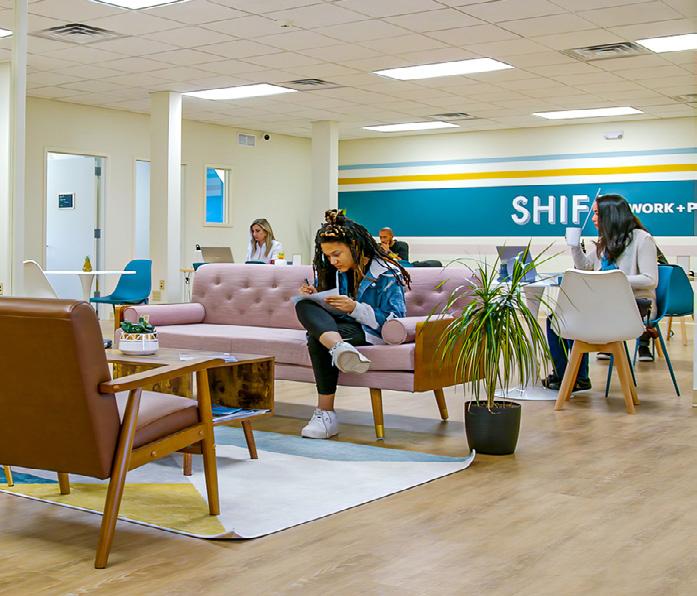
is a modern coworking space for busy professionals, entrepreneurs and their families. Featuring a beautiful playroom with dedicated staff, SHIFT is Frederick’s premier workspace for parents and caregivers trying to balance it all.
Squadstyle is a curated social club for adults who want more out of where they work, train, and connect. Their unique blend of coworking, gym, and sauna offers an unmatched opportunity to seamlessly integrate wellness into your day.
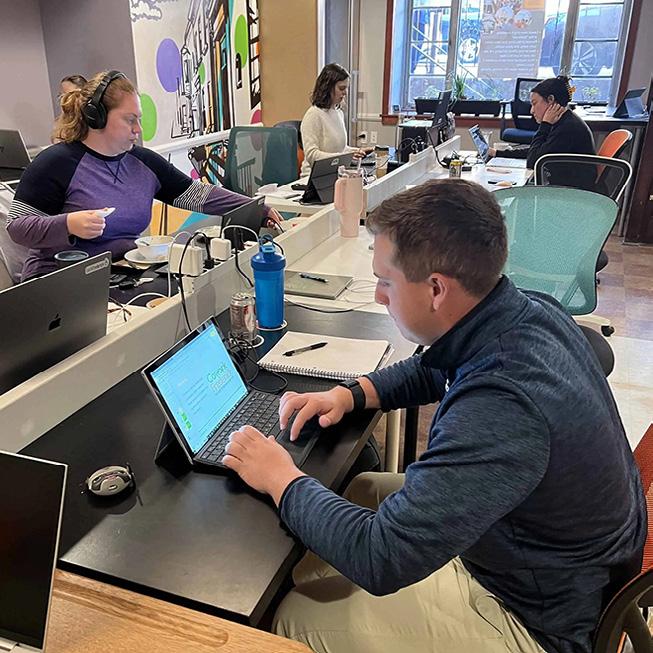
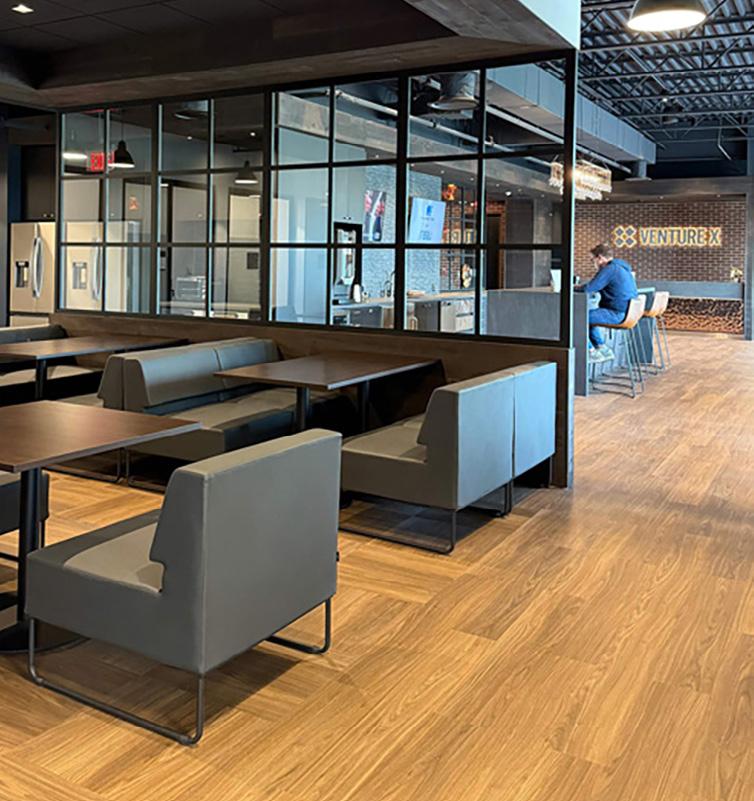
Venture X is designed with modern professionals in mind, offering flexible workspaces, state-of-theart amenities, and an inspiring atmosphere that fosters creativity and collaboration. Whether you’re an entrepreneur launching your next big idea, a remote team seeking a dynamic environment, or a creative professional looking to grow, their spaces provide the ideal setting to work, connect, and thrive.
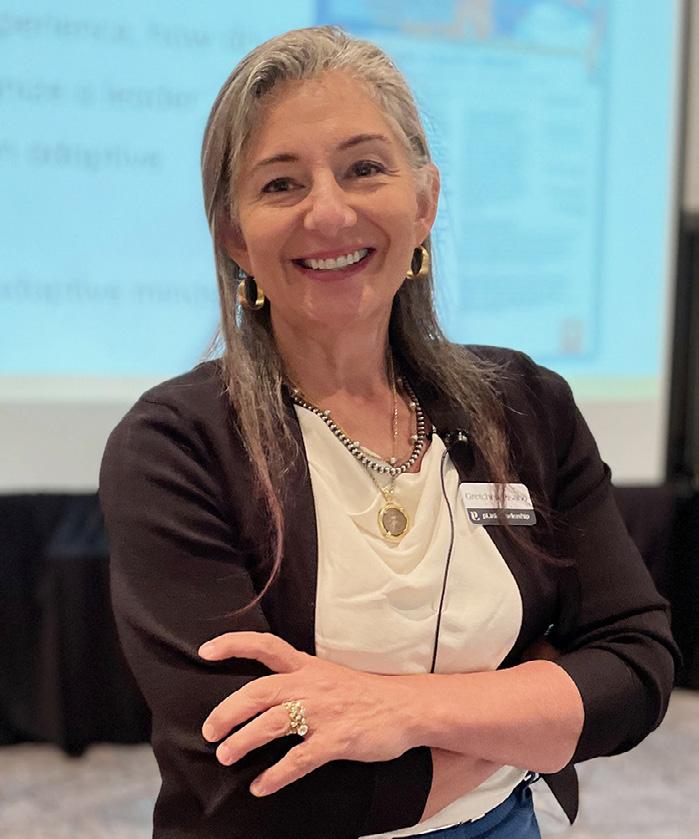
“This generation coming in, they have a very different mental model about work and lives...And they expect that kind of flexibility and autonomy.”
- Gretchen Pisano CEO, PLink Leadership
Leadership development expert and executive coach Gretchen Pisano understands the post-COVID pressure to find a new normal that many companies are now experiencing.
“I tend to think about this as a threeact shift,” explains Pisano, CEO of PLink Leadership, headquartered in Frederick. “When COVID started there was forced remote — nobody had a choice, it was a mandate.”
That early compulsory remote model was for what Pisano refers to as “knowledge workers,” meaning employees who generate and disseminate information in professions requiring specialized expertise and analytical skills. While essential workers couldn’t work remotely, knowledge workers were required to — and many continue, with the Robert Half poll showing that as of the first quarter of 2024, 22.9% of employed individuals were teleworking, with 35.5 million people working from home for pay.
During the pandemic remote work (or teleworking) was pretty much an experiment that was being forced on a wary economy.
“By 2021 (or) 2022, when guidance was shifting and some of the restrictions were lifting, we went into this phase of experimentation,” Pisano said. “Companies needed to know: ‘Can we stay fully remote? Am I getting what I need from my workers?’”
And the answers to those questions varied. As the pandemic retreated, human resources executives had figured out how to write and rewrite company policies,
how to move senior executives forward in their thinking, and how to keep knowledge workers happy and productive.
As the post-pandemic stabilization period set in, new questions arose about how to move forward and remake the workplace to everyone’s satisfaction.
“There was pressure on big companies to bring people back to the office for economic reasons, — commercial real estate, as well as all kinds of things that get impacted when the city gets deserted, so to speak, by its knowledge workers,” Pisano said.
Moving into 2026, Pisano sees the hybrid approach as being “much more common.
“That’s not necessarily true everywhere — there are some companies that have had a hard, firm return-to-office protocol. But that has stirred up some resentment issues, and some retention issues, too.”
For Haddaway, the topic of retention is key. Holding on to “portfolio career” employees means holding on to continuity and institutional knowledge and avoiding “this constant cycle of onboarding, orientation, trying to get someone up to speed.”
Providing a hybrid setup for employees who demand it is one way to get a full return on investment. Another way is making sure you’re investing wisely.
“Not to be overly obvious — it boils down to how you treat your employees,” Haddaway said. “A big piece of it is workplace culture: What are you doing to retain employees?
How are you showing them you care about them not just as worker bees but as someone who can thrive and grow in your environment? Are you investing in them through benefits packages? What type of professional development are you providing, and what incentive is there for the employee to continue to work for the employer?”
For Pisano, the post-pandemic shift in how work is defined and carried out has been an evolution, an enforced reimagining of a new era of tech and knowledge that just doesn’t fit into the templates left over from the manufacturing era. As the workforce lives longer, ages better, and demands a better balance among work, family and leisure time, the paradigm has shifted for good.
“This generation coming in, they have a very different mental model about work and lives,” she said. “And they expect that kind of flexibility and autonomy.”
Haddaway, too, sees the new mental model, and suspects that the evolution of work is still very much underway.
“It’s a dialogue, and a discussion, and sometimes a compromise,” she said, “But that’s just the way the job market works now.” 3
Could this be where you belong?
Cowork Frederick provides office amenities like desks, printers, good coffee, and secure, high-speed internet. But that’s not what we do. We create opportunities for freelancers and remote workers to connect, learn, and grow. We’re that “third place” of belonging, in a great Downtown Frederick location with not-office vibes.

I liked what I saw the day I took a tour, but it’s even better than I expected. I love the community. There’s no catchjust people who really support you and are interested in what you’re doing.
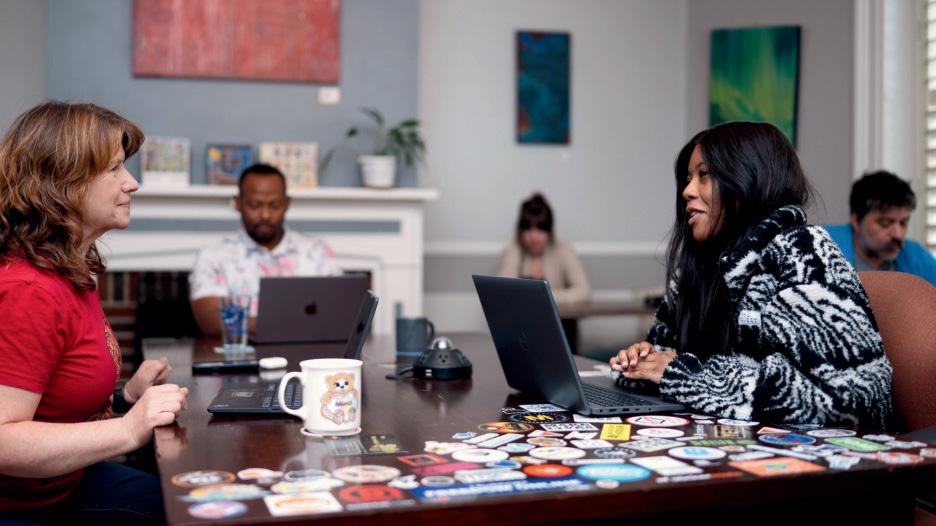
Cowork Frederick is the most down to earth, authentic, welcoming coworking space I’ve ever been to: friendly faces, focused work, sweet events, and a group of regulars who maintain a healthy, collaborative, community-driven culture. If you’re looking to be productive while feeling at ease, this the place.

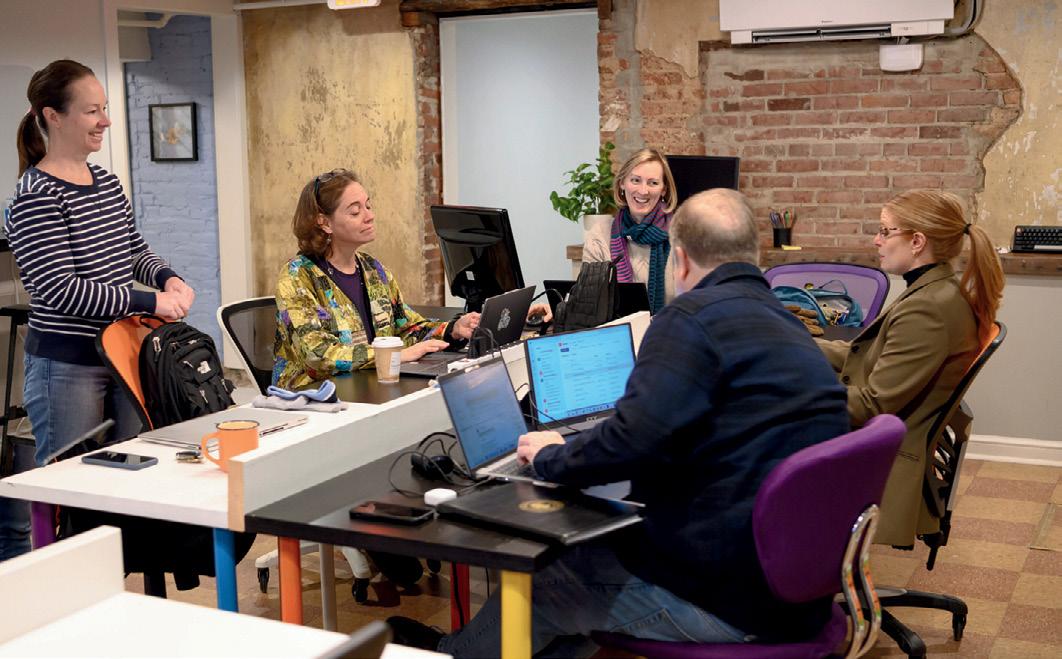
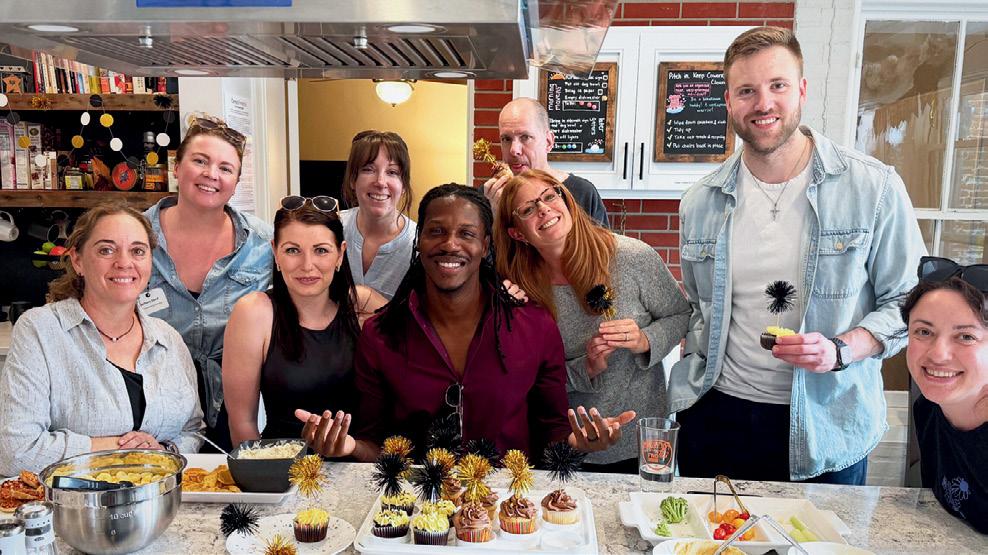
There’s something special about being around people who want to be where they are. The energy is lighter, happier. From now and then to every day, from focused work to lunch & learns and indie movie nights, opportunities abound. Come see. Are we where you belong?
Working from home is great ... until it isn’t. You start to feel isolated. Energy drops. Focusing gets harder. Distractions tug on you. You miss having others to bounce ideas off of or to celebrate successes with. We can help. Work. Play. Learn. Connect. With coworkers you choose.

By Dr. Vera Kurdian
As we navigate the evolving landscape of work, with hybrid schedules, remote collaboration, and the rise of side gigs, one truth remains unchanged: workplaces thrive when the people who staff them as well as the families they care for are healthy.
At Advanced Behavioral Health (ABH), we may not serve businesses directly, but the support we provide to children, adolescents, and families has a profound impact on the overall health of the workforce and communities.
Let me share a story that illustrates this connection. A few months ago, we worked with a family where the father, John, was a dedicated employee at a local tech company. John’s teenage daughter, Emily, was struggling with anxiety and depression, which began to affect her school performance and social life. The stress of the constant worry about his daughter impacted his work resulting in a significant drop in his performance
Recognizing the need for support, John reached out to ABH. Our team provided counseling and resources not just for his daughter but for the entire family. Over time, this positive change translated into a renewed focus and energy at work.
This story is a testament that supporting families can strengthen their resilience both at home and work. When employees and their families receive the care they need, they can bring their best selves to their professional roles. By investing in the well-being of families, organizations can create a more productive, engaged, and loyal workforce.
Let's take action together to build a future where every family is supported, and every workplace thrives.
Healthy families lead to healthier employees and healthy employees build stronger workplaces. When families receive quality mental health care, employees experience:
• Greater emotional stability
• Fewer crises requiring unexpected time off
• Improved ability to focus and problem solve
• Stronger engagement and communication



Advanced Behavioral Health (ABH) is committed to providing accessible, comprehensive mental health services that promote stability, long term resilience, and improved daily functioning for children, adolescents, and families. Our treatment model is built around meeting clients where they are emotionally, developmentally, and physically.
ABH provides:
• Individual, family, and group therapy in confidential, supportive environments.
• Clinic based, off site, and telehealth services, allowing care to be delivered at home, at school, in the community, or virtually.
• Comprehensive psychiatric evaluations and medication management through our psychiatrists and nurse practitioners.
• In depth assessments and personalized treatment plans, reviewed regularly to ensure progress and meet each child’s unique needs.
• Bilingual clinicians and interpreter support, including Spanish speaking therapists.
• Youth mentoring and psychiatric rehabilitation programs that build emotional regulation, independent living skills, and long term confidence.
ABH’s care philosophy centers on collaboration. With parental permission, our clinicians coordinate care with schools, pediatricians, and other community supports to ensure children receive consistent, connected treatment across the environments where challenges might appear.
While ABH’s services focus on families, the ripple effects benefit employers in meaningful ways. When children receive appropriate care, parents experience less emotional strain and fewer emergencies that interrupt their workday. They can be more present, reliable, and engaged employees.
As work models continue to evolve, mental well being remains a central pillar of workplace success. Employers who understand the connection between family health and employee performance are better prepared for the challenges of the modern workplace.
ABH is proud to support children, adolescents, and families with services that restore balance, build resilience, and promote emotional wellness. And when families thrive, businesses—and entire communities—thrive alongside them.
SPONSORED CONTENT

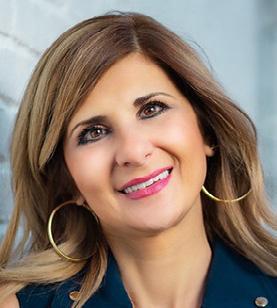
Dr. Vera Kurdian is the CEO of Advanced Behavioral Health, Inc. and a licensed clinician with nearly 25 years of experience. In her role as CEO, Dr. Kurdian oversees the services and operations of five ABH offices, with a sixth location opening this year in Washington County. Outside of work, Dr. Kurdian enjoys traveling and spending time with her children.

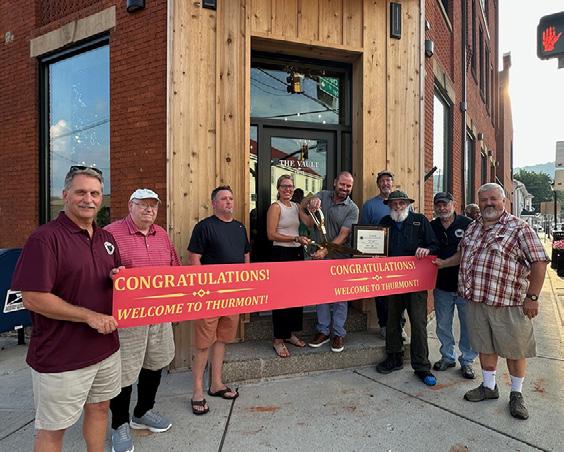
From supporting Biotech Bootcamp to hosting ribbon-cuttings and groundbreaking ceremonies to everything in between, the Frederick County Office of Economic Development (FCOED) and the City of Frederick Economic Development (DED) have both had an exciting few months.
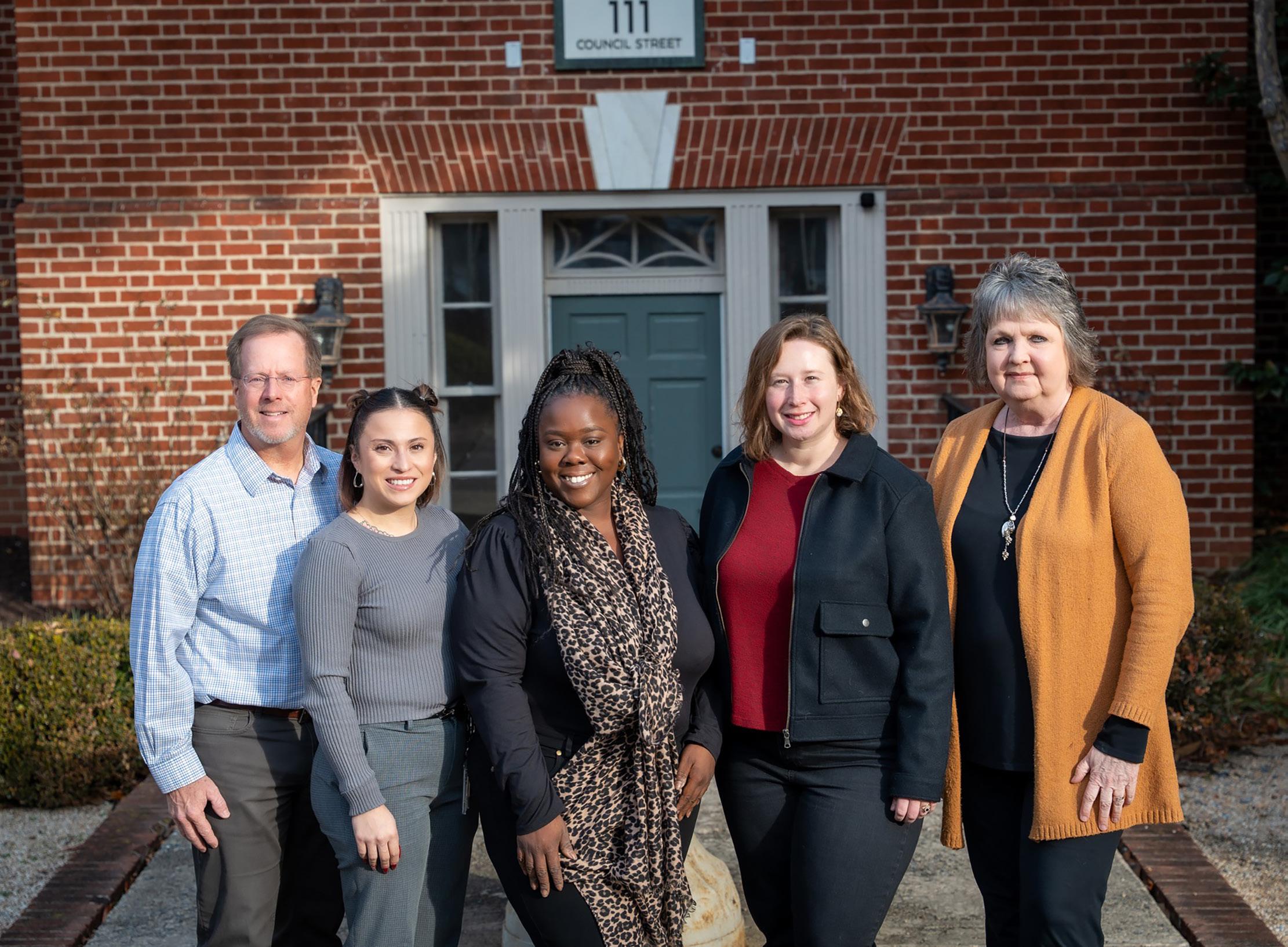
As of Jan. 5, 2026, the DED has officially moved from City Hall to its new home at 111 Council St. DED has welcomed Cindy Perez as its new office manager and Andie Feldman as its new bilingual economic development specialist, which the DED believes will increase its capacity to serve businesses across Frederick. www.businessinfrederick.com.
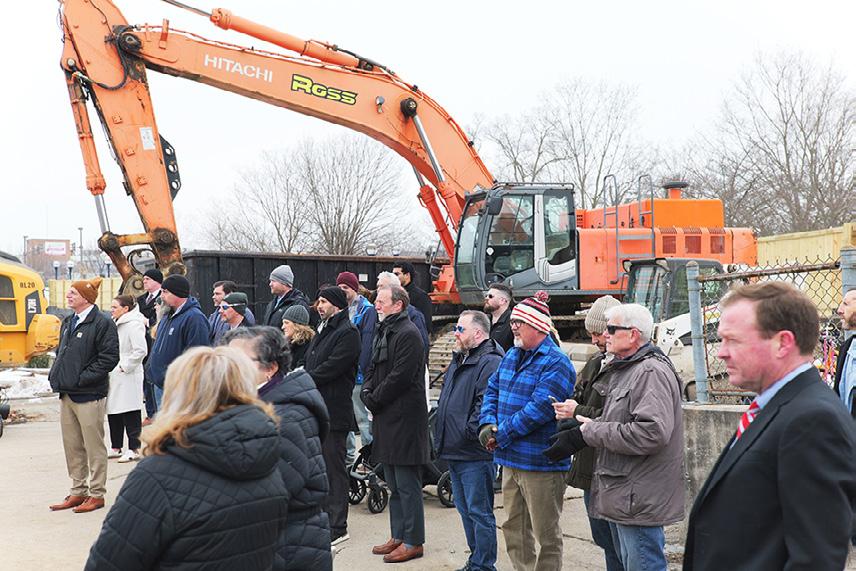
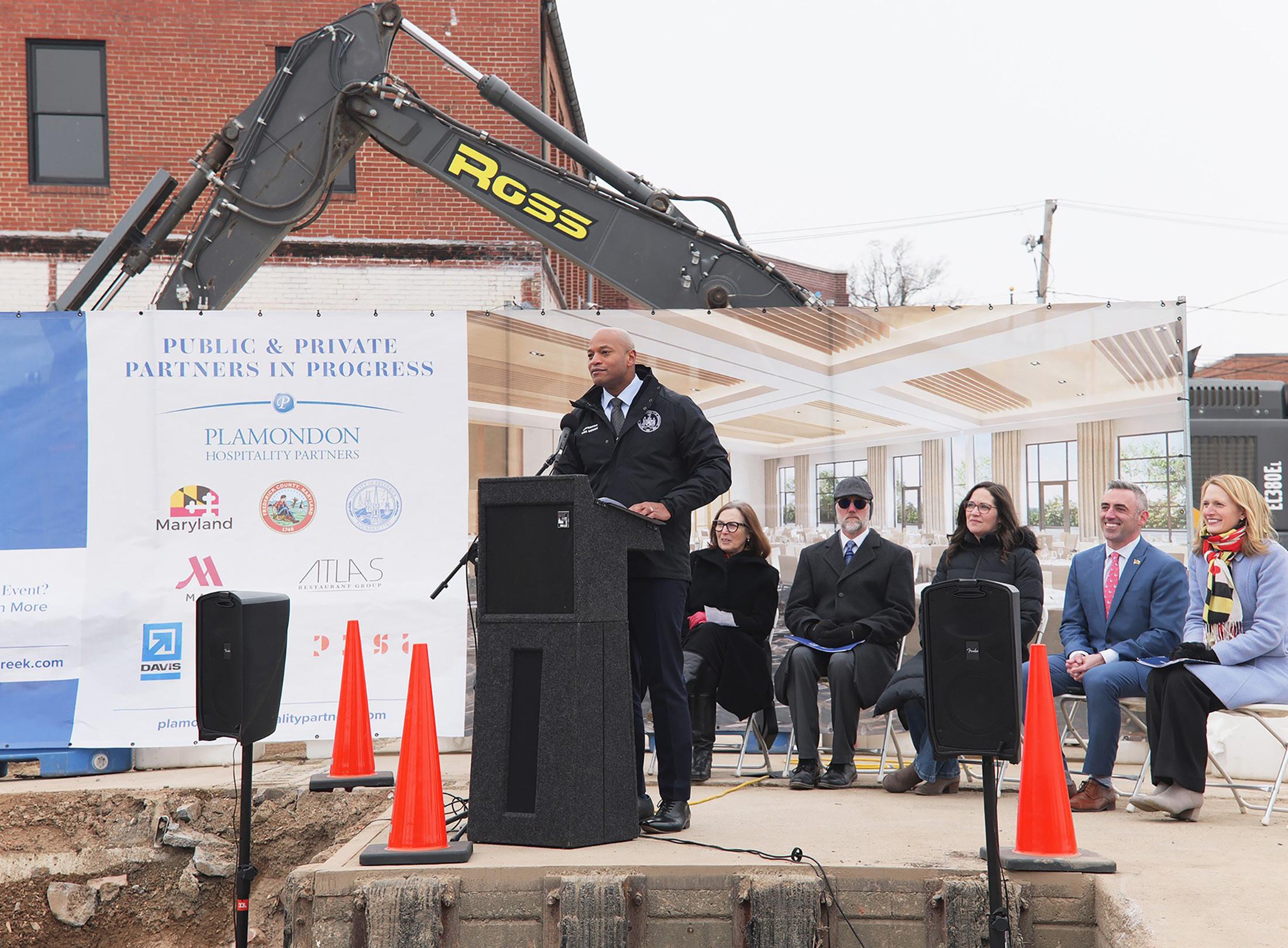
Maryland Gov. Wes Moore recently announced $69.5 million in fiscal 2026 awards for statewide community revitalization and economic development, and several Frederick projects and initiatives will be the beneficiary of these grant awards. One such project is the newest hotel and conference center. Feb. 6, 2026 marked an exciting milestone in the huge economic project for Frederick County as well as the City of Frederick. The official groundbreaking for the Marriott Downtown Frederick at Carroll Creek was a celebration of the patience and perseverance that was necessary to see this project come to fruition. Many were on hand on the cold winter day to support the project and its potential as a major economic driver for the county. Learn more about the project at https://www. downtownhotelatcarrollcreek.com.
Whether it's a change in leadership, a new service offered, or an upcoming expansion, PR Frederick wants to help get the word out. PR Frederick is a news release distribution service offered to Frederick County businesses through FCOED. Continued business growth is essential to the people and to the economy of the Frederick community. FCOED wants to help businesses increase media outreach and market exposure at no cost to the business. PR Frederick's uses an online newswire service that will distribute a company's stories to thousands of media outlets regionally, nationally, and abroad. Distributing a release via PR Frederick heightens your visibility, competitive edge, and multimedia exposure.PR Frederick's web page on the county's website also provides a large collection of topics that provide tips and tricks to get the most eyes on the latest news from your business. discoverfrederickmd.com

We believe in making a difference where it matters most — right here in Frederick County.
Our commitment to community empowerment has inspired us to support several impactful local initiatives, including two recent projects that are worth highlighting.
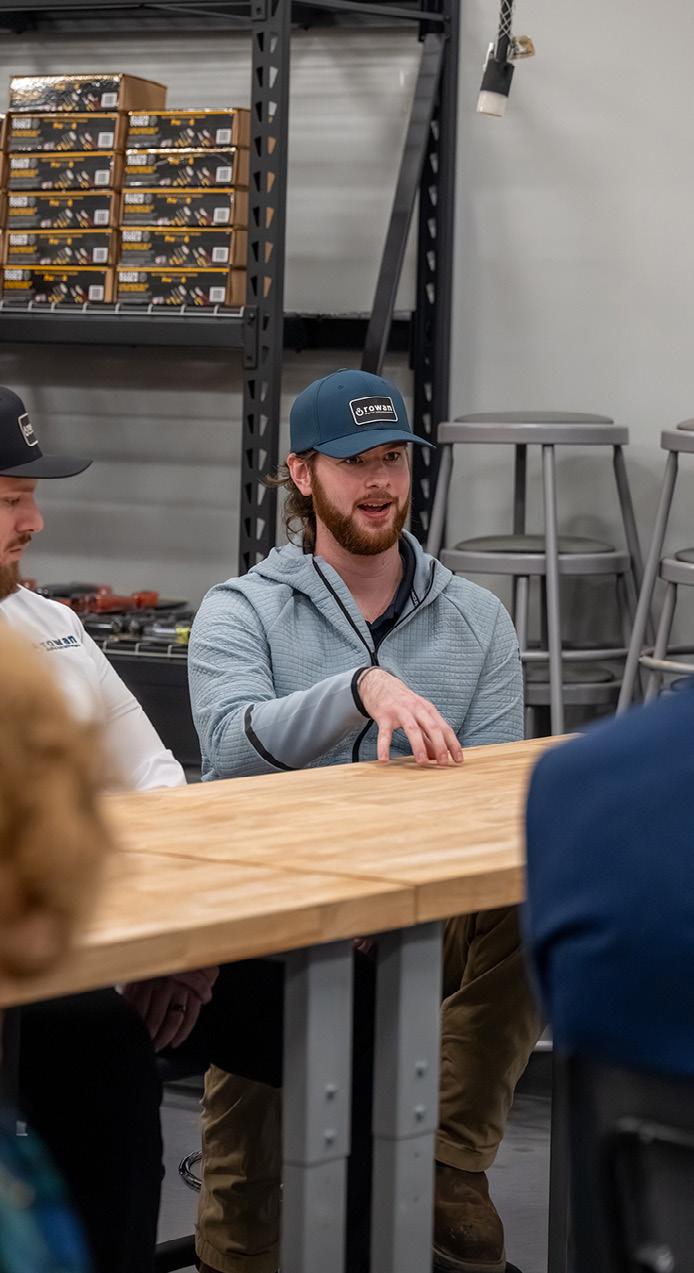
We launched a new STEM Center at Lincoln Elementary School (our second in Frederick County), and a brand-new Technology Lab at the Boys & Girls Club of Frederick County.
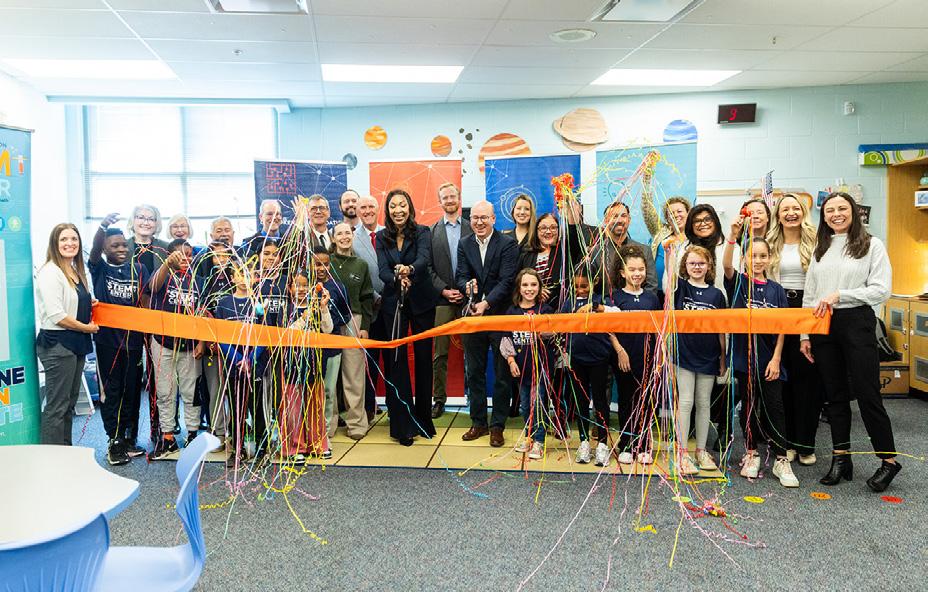
Our STEM Center sponsorship is about more than funding; it’s about sparking a lifelong love for science, technology, engineering, and mathematics. This space, similar to our first STEM Center at Carroll Manor Elementary, provides Lincoln Elementary students with hands-on learning experiences, helping them imagine the future and feel empowered to shape it.
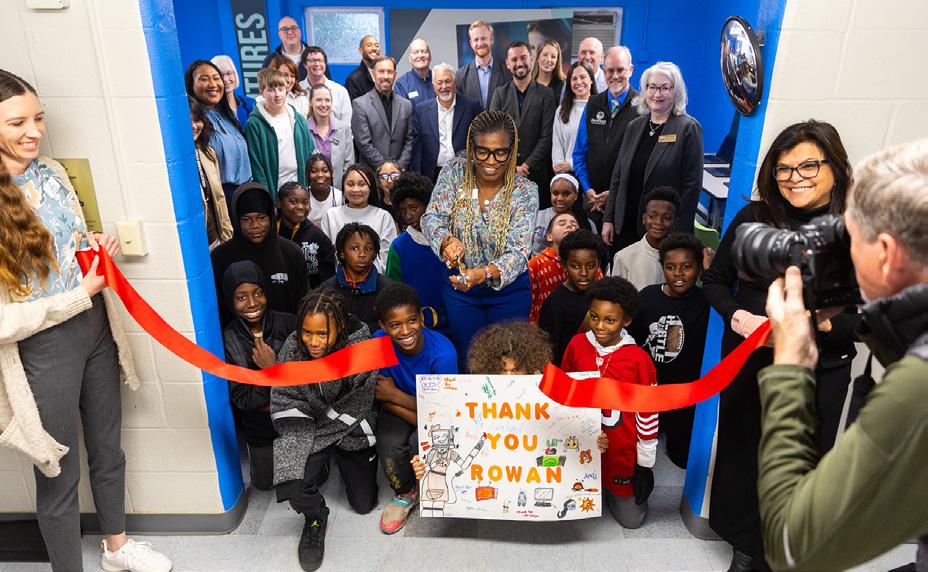
The Boys & Girls Club plays such a vital role in this community, providing support, structure, and inspiration after school and throughout the year. By funding their new Tech Lab, Rowan is thrilled to be helping expand that impact –giving kids the tools to dream bigger and build confidence in their future.
Our Commitment to Frederick County
For us, investing in the community is a promise to support and uplift the people around us. Together, we’re nurturing the builders and dreamers of tomorrow and creating spaces for every family to feel at home.
Discover more about our efforts at rowanfrederick.com and let us know your thoughts— we’d love to hear from you!
By Joe LeGare
My path from an intern to a full-time employee at Rowan Digital Infrastructure has been shaped by two things: exposure to meaningful work and access to strong industry training. Neither required big speeches or dramatic moments — just consistent opportunities to learn, contribute, and understand how large-scale digital-infrastructure projects come together.
I entered Rowan through an internship I found while attending school at Frederick Community College. The technical foundation I received at FCC prepared me for the realities of working on complex programs like Rowan’s Bauxite developments in Frederick County. During my internship, I saw how engineering, construction, permitting, and community engagement intersect across a hyperscale project. I wasn’t just observing; I was contributing to the workflows that help keep projects moving. That early experience made the transition to full-time work straightforward and purposeful.
When I was a student, FCC’s new Trades Lab did not exist. At the time, most training took place in traditional classroom settings and smaller workshop spaces. They were effective, but they couldn’t fully replicate the environments we encountered on live project sites.
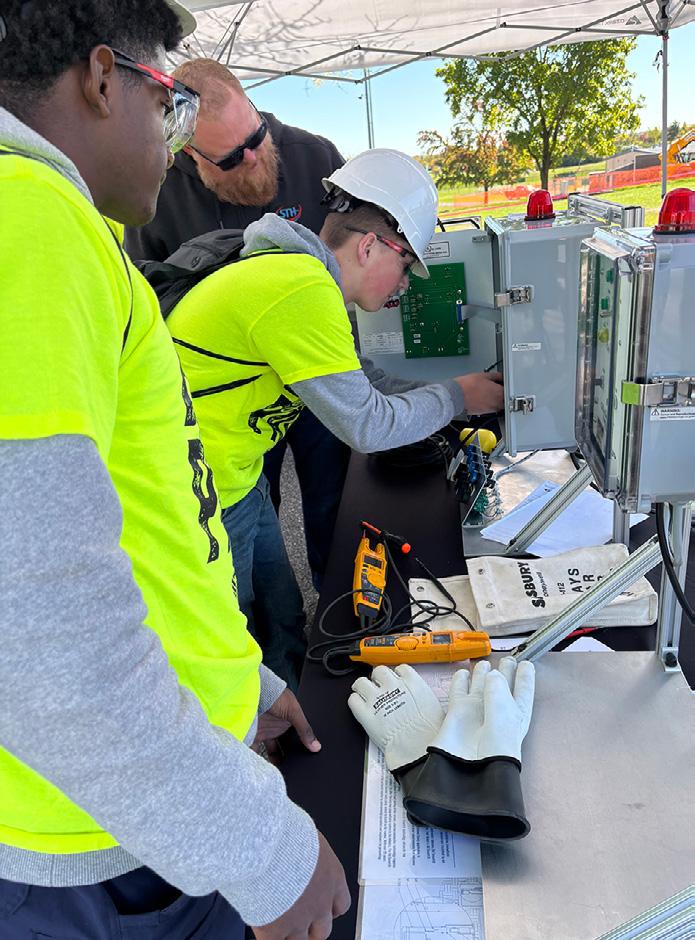
Supporting Rowan at the ribbon-cutting in January for the new Trades Lab highlighted just how much has changed. The lab is practical — built around real equipment, real tools, and real scenarios that mirror what teams like ours work with daily. It’s the kind of space that accelerates readiness. And for those hoping to join us on the construction site, it’ll provide a clearer understanding of on-theground expectations before ever stepping onto a Rowan project.
What stood out to me at the opening was how intentionally the lab aligns with local employer needs. The setup reflects the skill areas our teams rely on: electrical systems, HVAC, construction methods, and equipment handling. Students entering into the data center industry here in Frederick County will now arrive with experience that directly translates to the tasks they’ll take on.
What made my early experience at Rowan so impactful was the access to people who were willing to teach. Whether I was helping track progress on components of the Bauxite campus or working with teams preparing for community-engagement milestones, there was always someone willing to explain the “why” behind the work.
That matters. It turns day-to-day tasks into long-term capability.
Rowan’s model — pairing large-scale project delivery with community investment — creates an environment where employees see how their work fits into broader regional goals. It also makes the company’s talent pipeline feel intentional rather than incidental. Spaces like FCC’s Trades Lab are part of that system: consistent, predictable, and aligned with actual industry needs.
Now, in a full-time role, my perspective is straightforward: Rowan is growing, and the demand for technically skilled, detail-oriented talent is growing with it. Facilities like the FCC Trades Lab ensure that future interns and early-career employees will begin their journeys with even stronger preparation than I had.
It’s encouraging to see a clear, practical path emerging for students who want meaningful technical careers in this industry. And it’s even more encouraging to know Rowan is committed to supporting that path — not just through hiring, but through partnerships and investments that strengthen the local workforce long before someone submits an application.
SPONSORED CONTENT
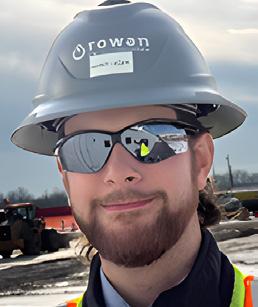
Joseph LeGare is a project engineer at Rowan Digital Infrastructure, working on the Bauxite data center development in Frederick County. He will complete his associate degree at Frederick Community College in May 2026 and plans to continue his studies at the University of Maryland Eastern Shore through the Universities at Shady Grove, where he will pursue a bachelor’s degree in construction management.

By Naomi Pearson
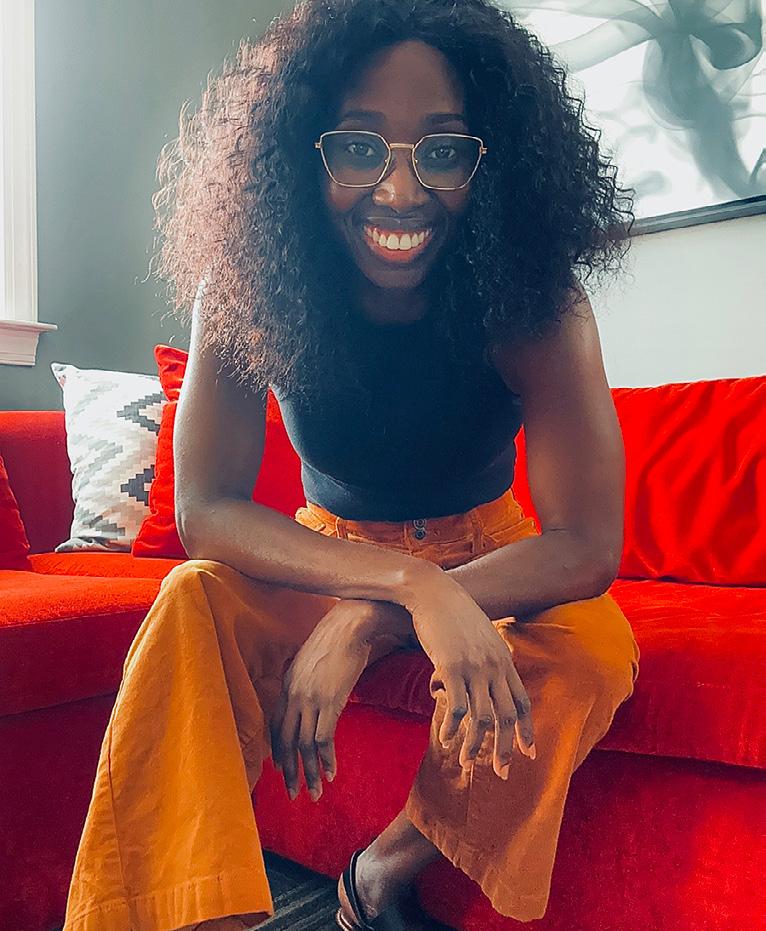
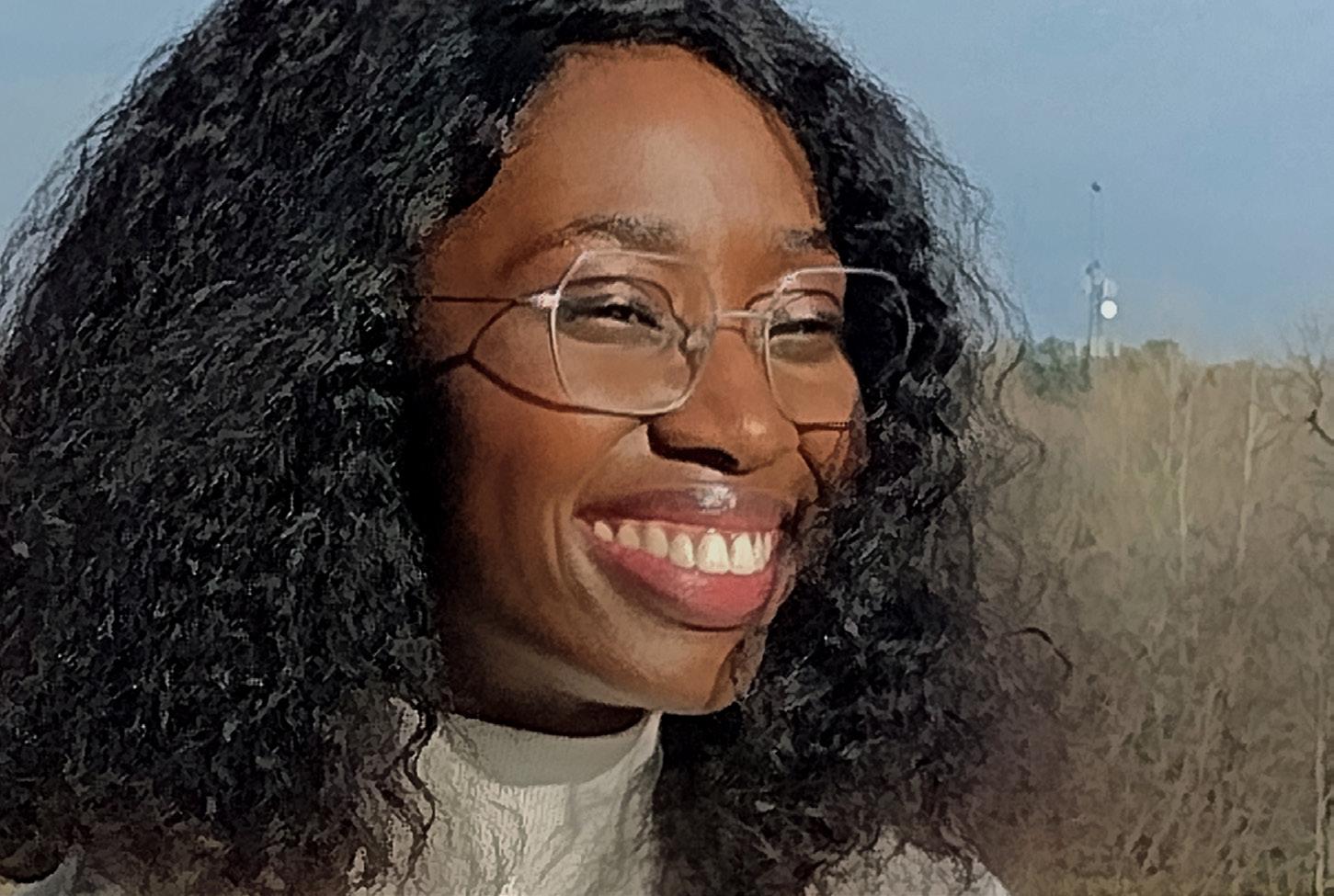
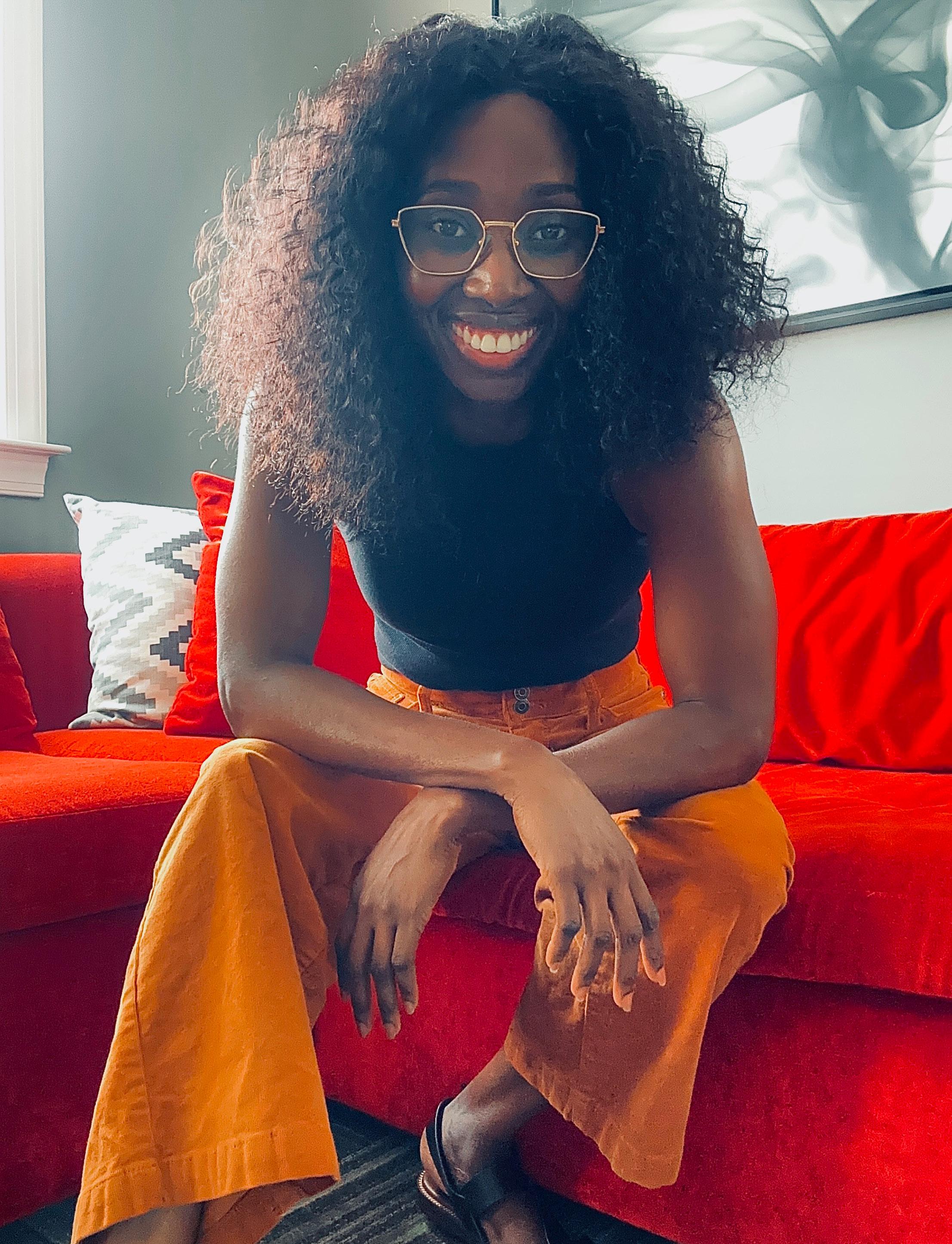
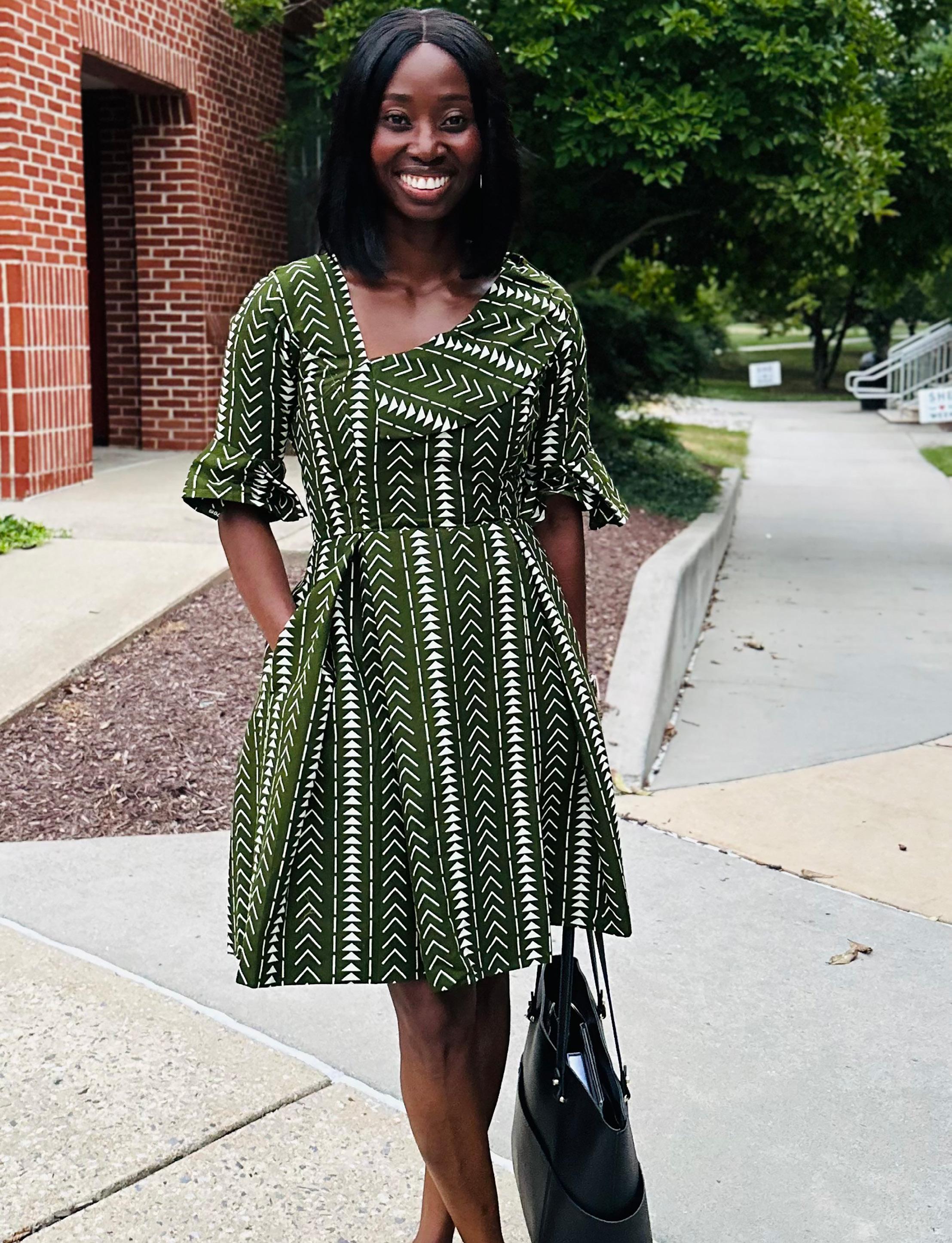
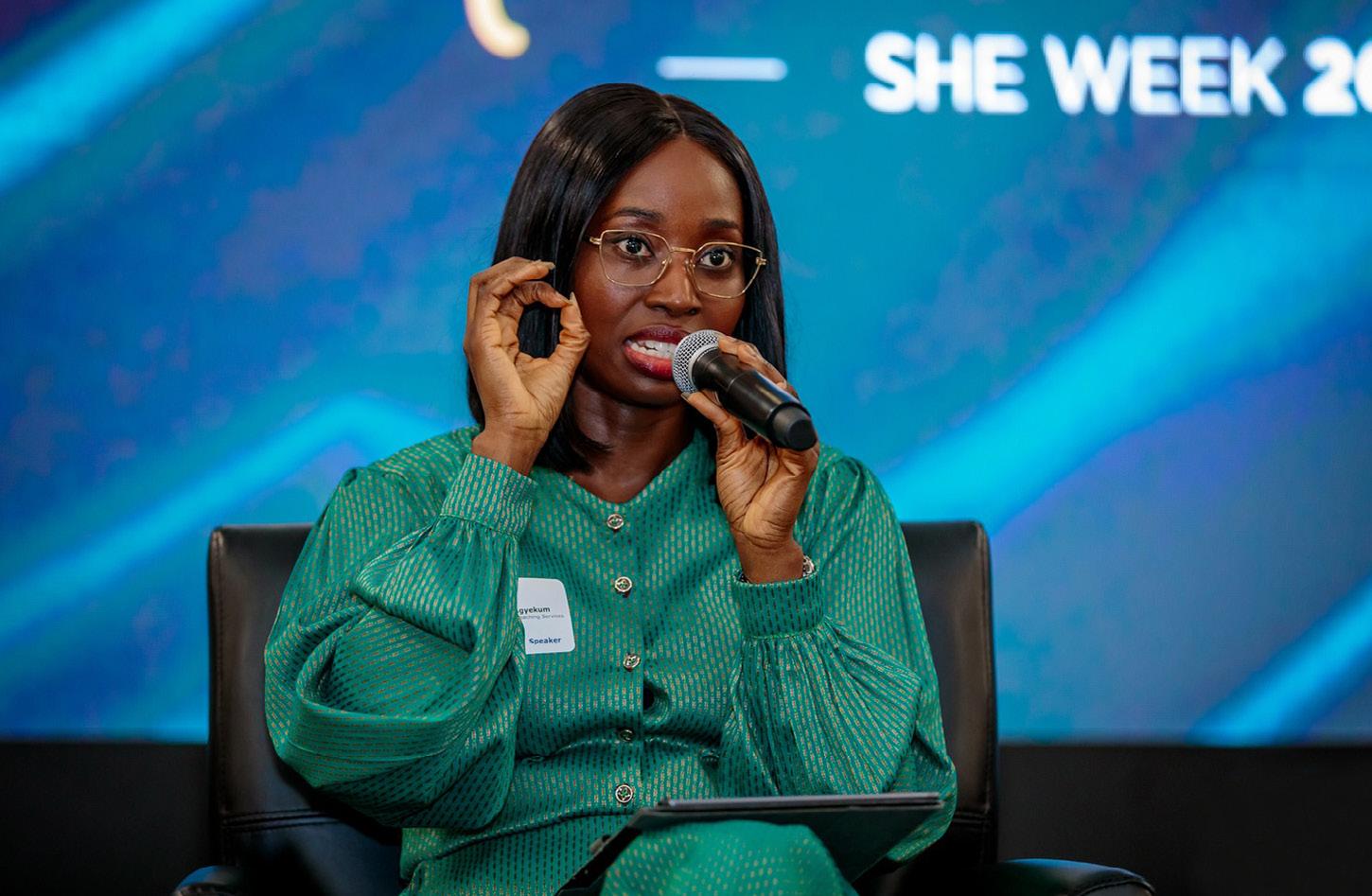
Celestina Dankwa Agyekum, the Ghanaian-American owner and founder of Colliding Into Place coaching services, provides culturally aware coaching in personal finance, executive function, and life coaching as a certified life coach with an international reach.
Her faith-based approach addresses foundational factors that affect general life issues people may be facing in their finances, career and academics, and leverages practical knowledge, personal experience, habits and practices that she applies in her own life and can attest to the effectiveness of.
Agyekum’s goal is helping people break generational cycles of flying blind with no real blueprint for successful life and financial management. Additionally, many of her clients experience the conflict of living in a consumable society like that of the U.S., while coming from a remittance culture – meaning if a person makes money, they are expected to give back to their family of origin, no questions asked and without protest.
What sets Agyekum apart is instead of urging clients to discard their foundation and conform to stereotypical guidelines for personal and financial success, she helps them to assess their background, values
and long-held assumptions to determine what they mean in relation to fulfilling their own goals, developing effective executive function, creating new habits and setting boundaries, while still honoring their faith, culture and themselves in the establishment of functional frameworks for their finances, career and life in general.
She specializes in working with preteens building foundational skills in executive function, “First-Anythings,” working professionals from multicultural backgrounds
navigating workplaces within the dominant culture and anyone negotiating responsibility without inherited blueprints.
Agyekum is an example of a “First Anything” in her family – she is the first to not conform to family and cultural expectations as the first to earn a masters degree, the first to travel extensively internationally, and the first to own property at her age in her own name in her family’s home country, while still single and child-free.
by

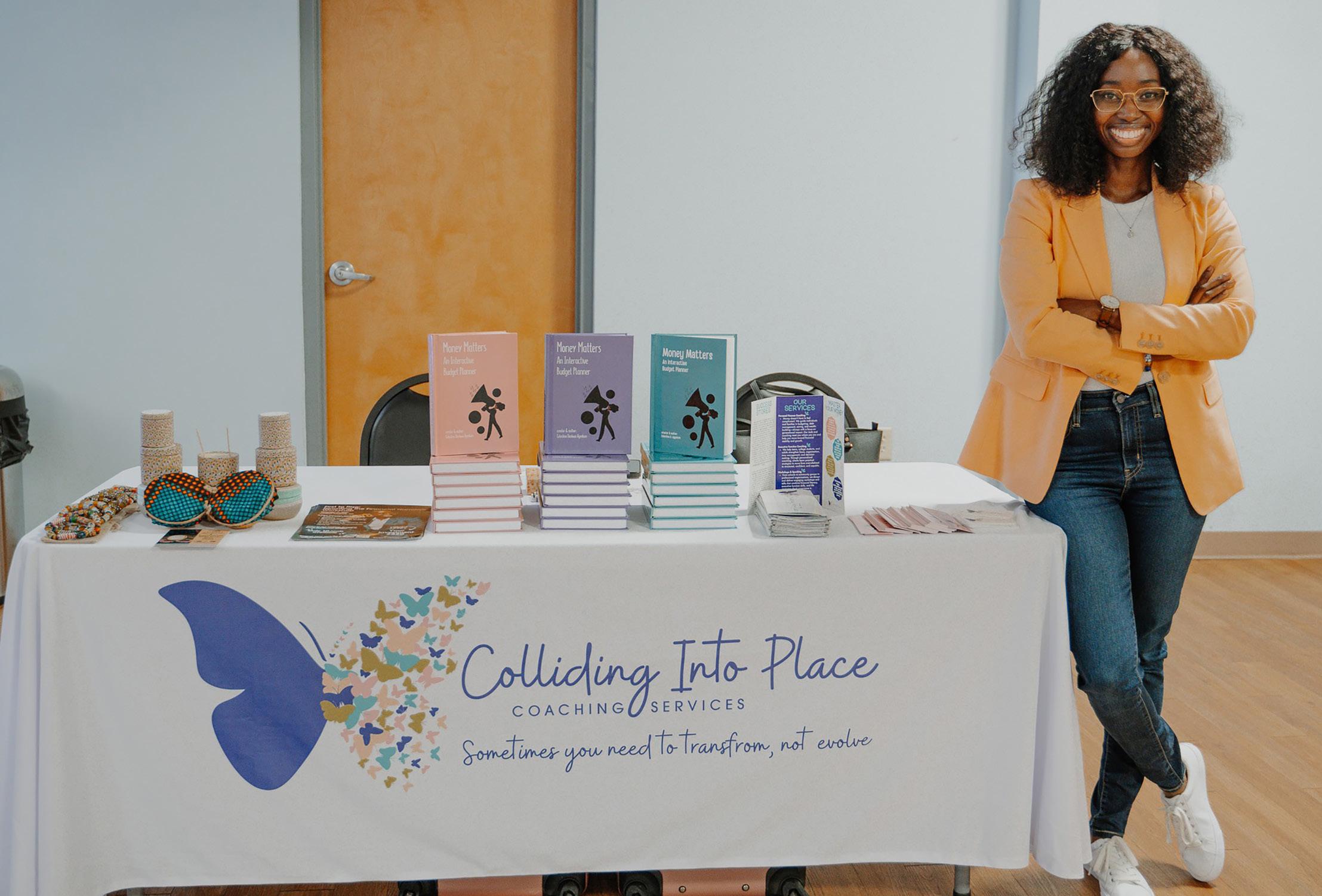
But she also knows how it feels to hit a career and financial rock-bottom. Her experiences provide a unique point of view in her coaching.
“I know it’s not easy,” she said. “l’ve done the same thing, if not more.”
In 2018, she exited a toxic job environment and ended up living in her sister’s Chicago basement. With continued unemployment and its accompanying financial insecurity lasting longer than the young go-getter had ever dreamed it would, Agyekum struggled to see how things could get better. She had no tools to navigate loss, debt and recovery, nor clear guidance on how to start over.
In her search for employment and financial stability, she also sought financial counseling to pursue a deeper understanding of money management principles. She deconstructed her own beliefs about money that she had been
raised with “in a Ghanaian and African context where money was rarely discussed openly,” she said.
“I did a lot of sitting in silence with myself,” she said, “to let the process do what it was supposed to do. I dId the work behind the scenes.”
As she rebuilt her own financial foundation, bolstered her executive function and decision-making skills, and developed clarity in leading herself, she refused to let others struggle with the same patterns and habits that created roadblocks to success.
She shared what she had learned in informal conversations with friends in similar situations, along with tools she had developed to help herself. And rather than resting in inherited habits of avoidance, if there was a question she couldn’t answer, she said, “I don’t know, but let me go find out!”
Through that process, Agyekum developed the architecture for her coaching
services and obtained coaching certification. But, she said, ”I reached a turning point in my coaching; I realized I hadn't heard their story first, and missed nuances of communication, so for them, just ‘making a budget’ was not working.” There were cultural, emotional, generational patterns, communication, boundaries that needed to be addressed first.
As her tagline says, “Sometimes you need to transform, not evolve.” The vision and mission for her business had transformed; she moved away from solely financial coaching to helping her clients navigate life, work, and money – incorporating systems and tools that fit their life.
In 2024, she rebranded, registering her business as “Colliding Into Place” – the name taken from the title of a poetry book she wrote while processing her personal transformations. “I had been ‘colliding into place’ for years,” she said. ”The path was not
While serving in the Peace Corps in Burkina Faso, performing graduate work for her master’s degree in India, working as a youth facilitator for immigrants and refugees in New England, and a year as a program manager for a philanthropic project in Senegal, she cultivated relationships that led to the international reach of her coaching services.
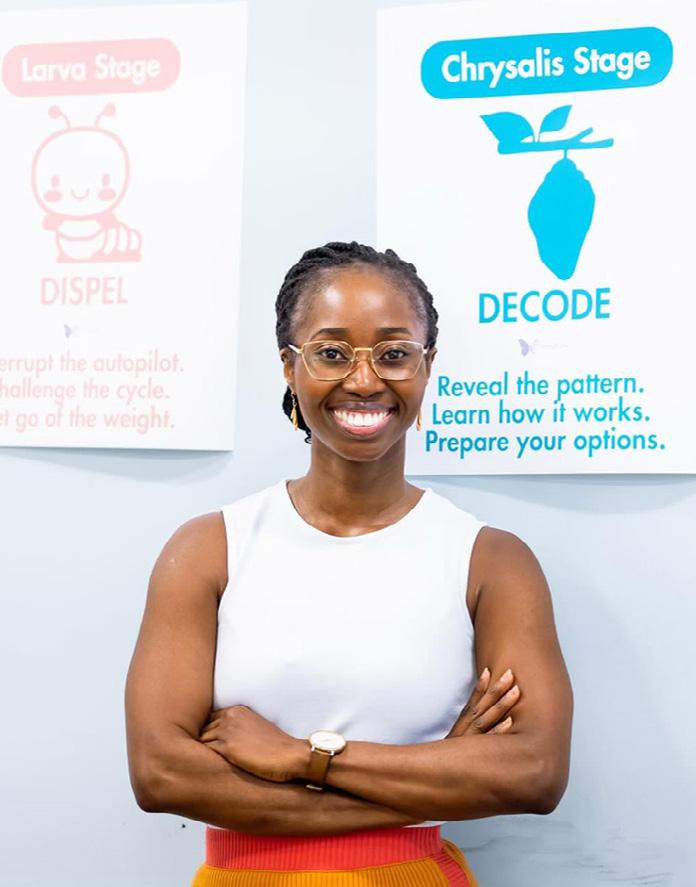
smooth; there were lots of collisions, but they were into the right place.”
Her clients come mostly via referrals from former clients or internet searches. She offers a complimentary 20- to 30-minute “clarity call” for potential clients. Her coaching packages are an investment, but the variety available can make them more financially accessible. The 45-minute virtual or phone sessions are available in threemonth coaching packages with weekly sessions, or six, nine and 12-month packages with biweekly sessions. She expects clients to ‘graduate’ from coaching rather than have perpetual sessions.
“I meet them where they are,” she says, “accommodating their needs but within tailored boundaries for me and them.”
Her deep love of service to others, along with her background in education and International Development and Social Change, underpin her coaching outreach.
While serving in the Peace Corps in Burkina Faso, performing graduate work for her master’s degree in India, working as a youth facilitator for immigrants and refugees in New England, and a year as a program manager for a philanthropic project in Senegal, she cultivated relationships that led to the international reach of her coaching services.
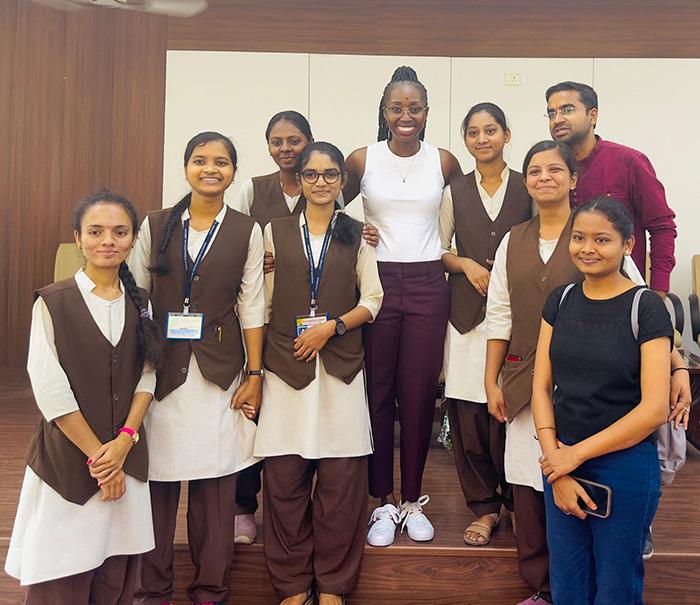
Agyekum continues to travel and share her coaching, knowledge and experience. She was a keynote speaker in February 2025
at Bharatiya Mahavidyalaya Amravati, an educational institution in India, sharing financial independence strategies and life skills development to empower students, in an example of her international reach.
Closer to home, as a panelist for the “Financial Momentum: Building Wealth and Security for Women” discussion at Frederick County Chamber of Commerce's Women in Business Committee’s S.H.E. (Strength, Heart and Equality) Week in August 2025, she spoke on leadership, money and navigating professional success.
As her business grows, she would eventually like to partner with companies and organizations to provide coaching consultation to employees to help them develop habits to help them better manage projects, as well as to develop the adaptability and interpersonal skills needed, instead of crashing through office mores, policies and expectations. 3



Event Spaces to Help Create the Ultimate Networking Experience