THE LAZY DAYS OF SUMMER for all of us at PULSE MEDIA are a myth. With the days being longer, we value sunlight over darkness, and they are not wasted. There are too many things to do and never enough time to do them all.
The one element of life we all share equally is TIME. We cannot put it in a bank to draw interest or save it for a later date. Once gone, it can never be reclaimed. A major part of being happy, healthy, and successful is time management. As we get older, this becomes more important. Be firm yet flexible in your daily schedule. Although I work every day, I take time to read, think, pray, and spend time with my family.
Support your local businesses.
Jim Conkle
Pg 6 Marcy's Musings
Pg 10 Bartow's Michelangelo Part 2
Pag 12 Del Taco: A Desert Legend Rises Out of Yermo
Page 14 Music Family of Noizemakers Part 2
Page 18 The Best Hope Series: The Lead Case Manager
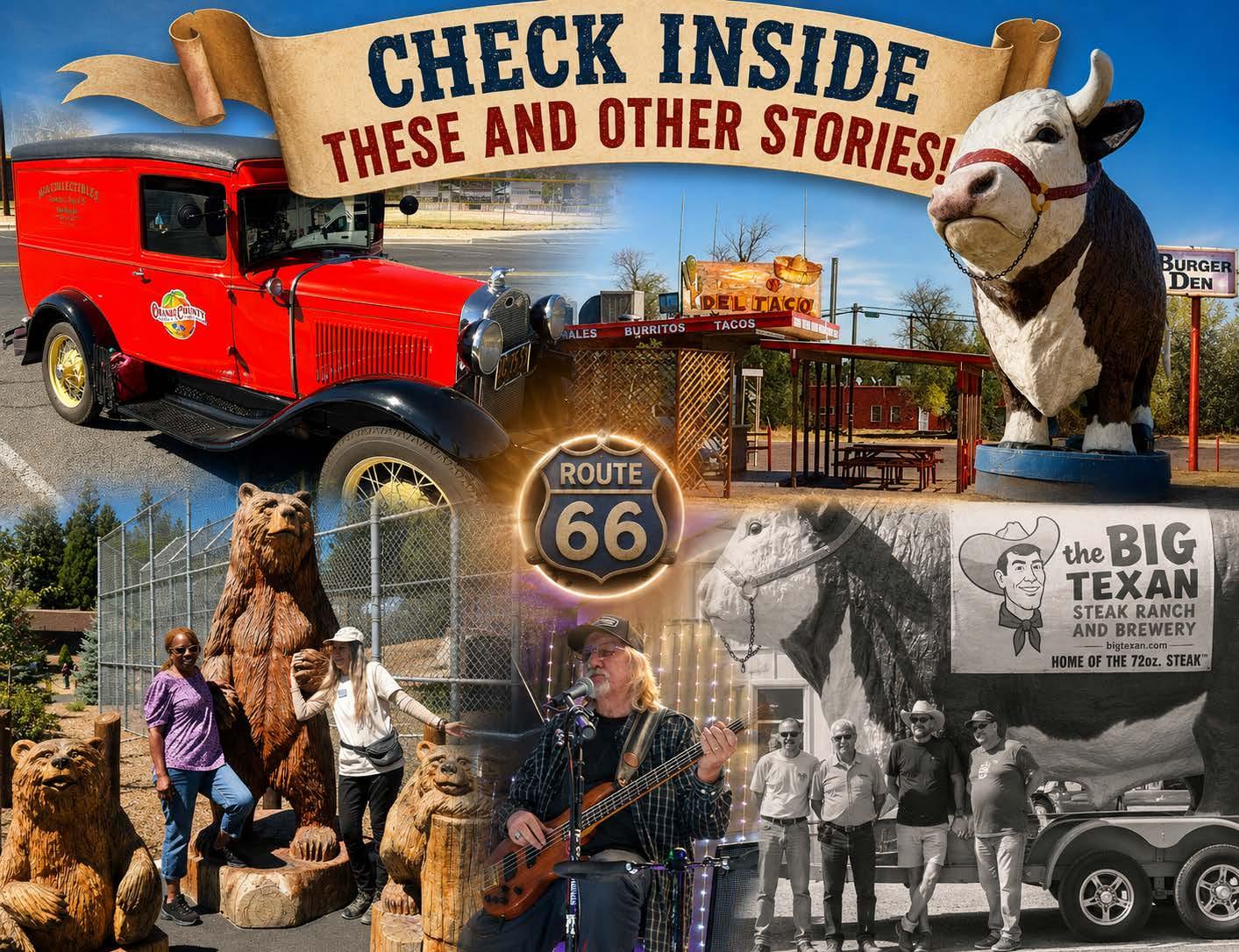
Page 20 Kingsman with the Big Texan Caravan
Marcy’s Musings
Older Than Route 66
ALL ACROSS THE EIGHT
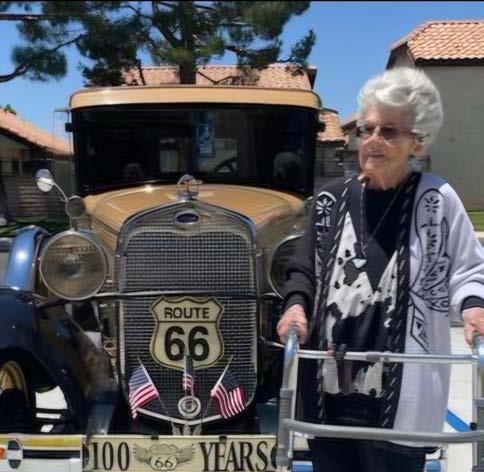
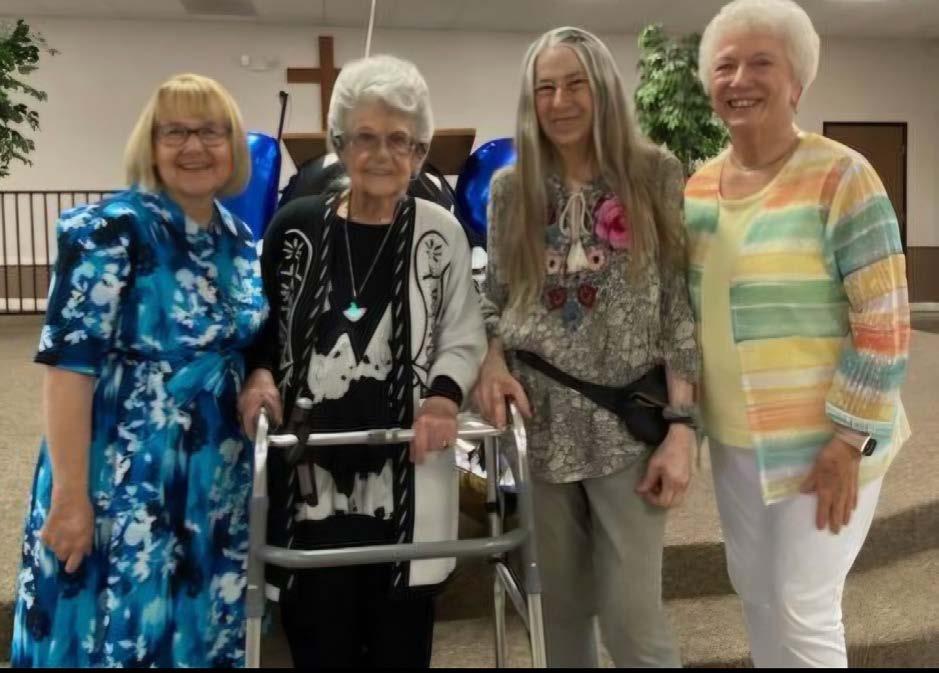
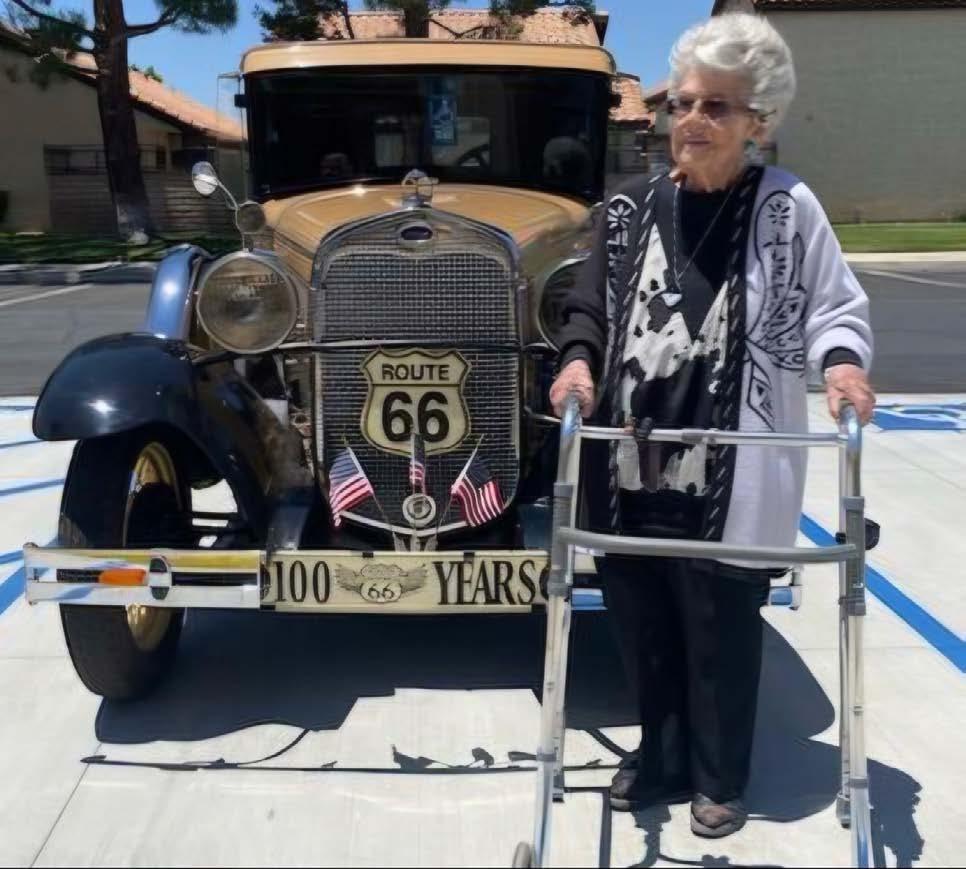
ROUTE 66 STATES, from Illinois to California, residents and travelers alike have been celebrating and wishing the Mother Road a very happy Centennial birthday. But did you know that on Sunday June 21, the longest day of the year, at the Community Church at Jess Ranch in Apple Valley, California, a very special lady, June Langor, surrounded by friends and relatives, was celebrating her very long life of 103 years. Yes, June is three years older than the Route 66!!
Born in 1923 and raised on Chicago's South Side, June grew up, married,
and had two children. The wanderlust eventually struck the young family. With their ten-year-old daughter Mary and fifteen-year-old son Dave, they took a five day driving trip to Glendale, California, on, you guessed it, the good old Route 66. (Mary remarked to me that she was too young to understand it at the time, but her family was traveling during the era when the Green Book was a necessary travel guide for many Route 66 adventurers.)
After 40 years in Glendale and a 22year teaching career in San Gabriel, the desert winds were calling. June relocated to Sun City in 2006, where she leads a busy and active life. She is a well-known member of the High Desert Branch of the California Writers Club, a member of the High Desert Artists group, as well as an active member of the California Retired Teachers Association (CalRTA.) She was named a "Distinguished Woman" by the Delta Kappa Gamma Iota Xi, an international educational sorority. June is an active member of her church, and recently became a life member of the Mohahve Historical Society. She plays Canasta (with 7 decks) weekly and paints
at the Sun City Clubhouse.
Here's another interesting tidbit of information. June's daughter Mary Langor Thompson Lujan, a retired teacher and principal, remarried two years ago. And I'll bet Sam Lujan is the only bridegroom on this earth who ever inherited a 101-yearold mother-in law! Now that's something to think about!
Congrats, June, on another milestone birthday. It doesn't seem like that long ago that we were at the church celebrating your Centennial! You don't look a day older than half your age, and your hair is always perfect! You are a definite role model for all of us that have the pleasure of knowing you.
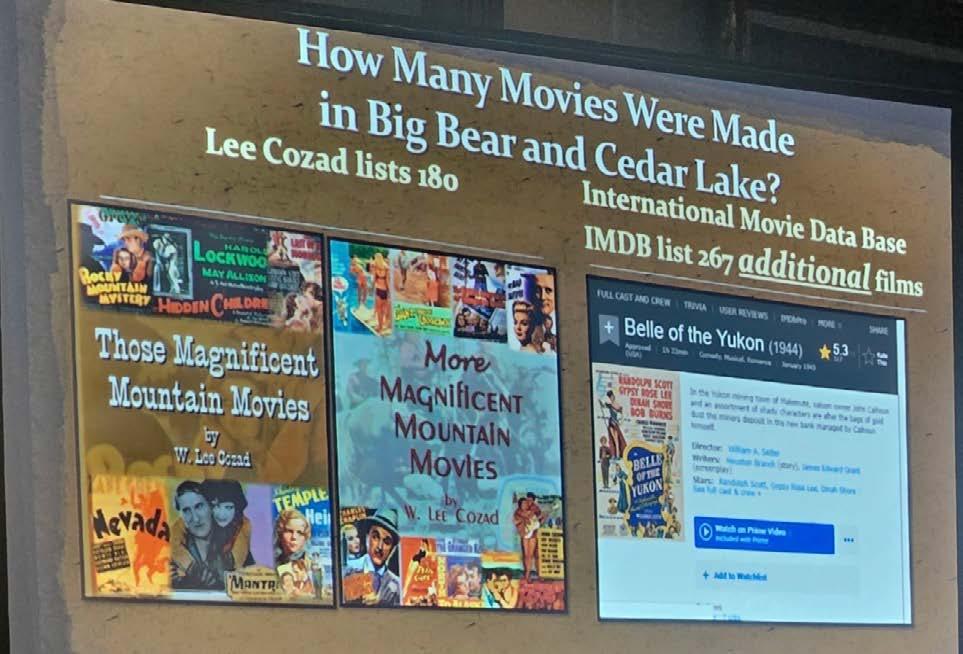
Big Bears Long History With Hollywood
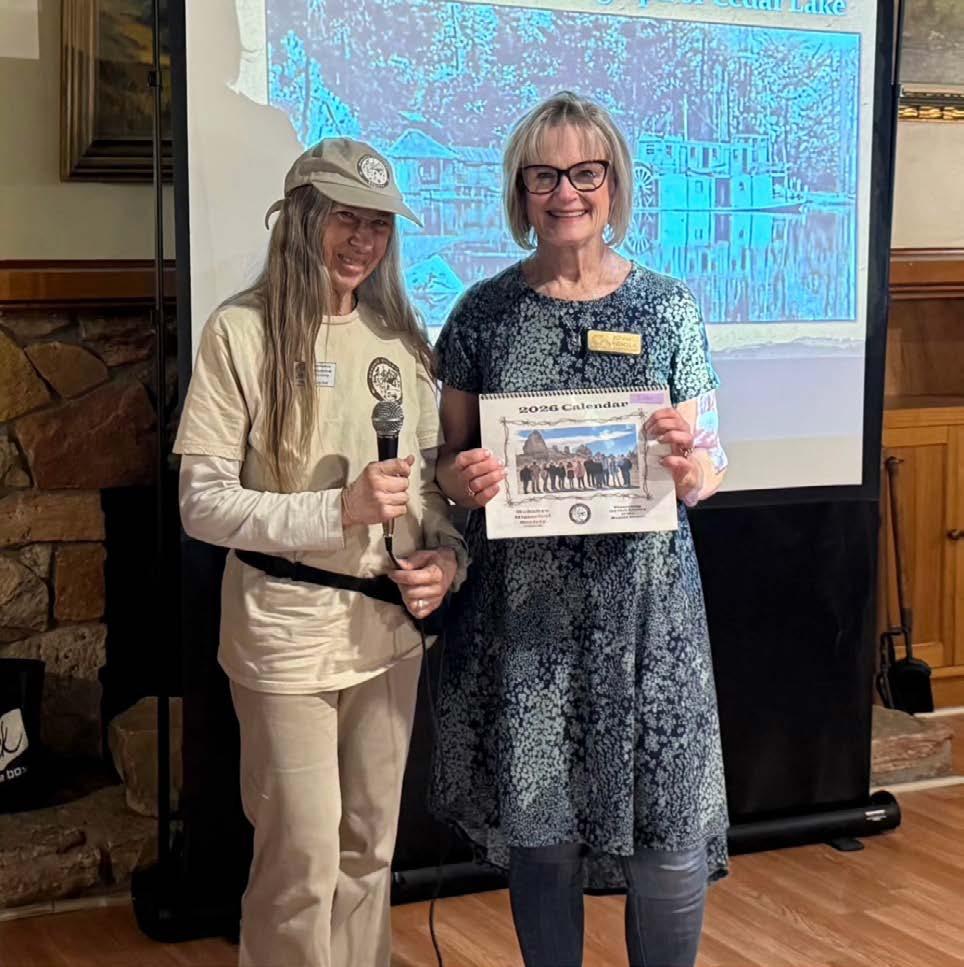
BIG BEAR MUSEUM historian, docent, and exhibit curator, Jonni Vindioli, took us along for an exciting armchair adventure of movies made in the Big Bear area. Credit goes to colleagues and fellow historians Richard Graham and Ann Roark for helping put together the sideshow. Our first lesson was on the development of film, from the 1839 Daguerro type, through the mid-1800's glass plates and tin type, the good old 1901 Brownie camera, and color film dating from 1907. Hundreds
of films were shot in the San Bernardino Mountains, despite the enormous effort it took for film companies to even get up there with all of their crew and equipment.
The 1909 to 1917 era featured 20-minute reels filmed with one stationary camera, so movies were short and sweet with no sound. By the 1940's Westerns were popular, including Roy and Dale's "Don't Fence Me In" and Hopalong Cassidy's "Lumberjack." In addition to the full-length movies, many mid-century cowboy TV shows clearly show Big Bear scenery, including "Bonanza" and "The Roy Rogers Show." A little later Elvis Presley's 1969 filming of "Kissing Cousins" with Ann Margaret really caused some local excitement.
Numerous movie sets were built in the Big Bear area, the remains of some still visible today. A number of movies featured the giant water wheel, the seaplane, and the sternwheeler, all very exciting to audiences of the time. Many locals were
hired as extras, including Sheriff Emmett Shay and Cowboy Bill Betterley in the 1936 "The Trail of the Lonesome Pines."
Thank you, Jonni, for coming down off the mountain to share your interesting presentation with us. And keep up the good work at the Big Bear Museum, preserving, displaying, and sharing local history.
39 Before 40
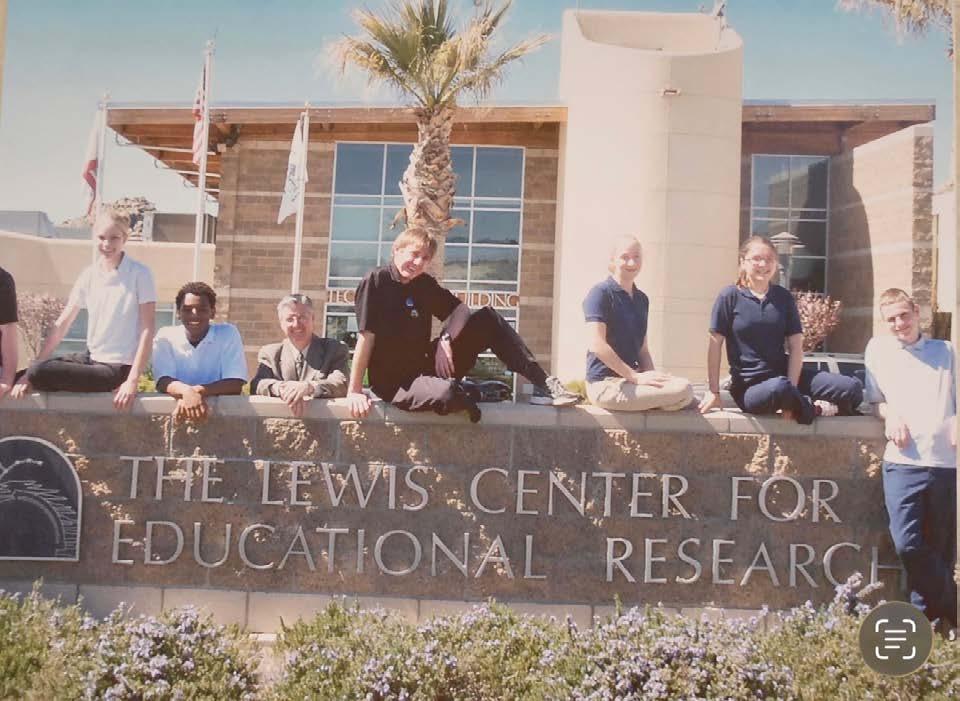
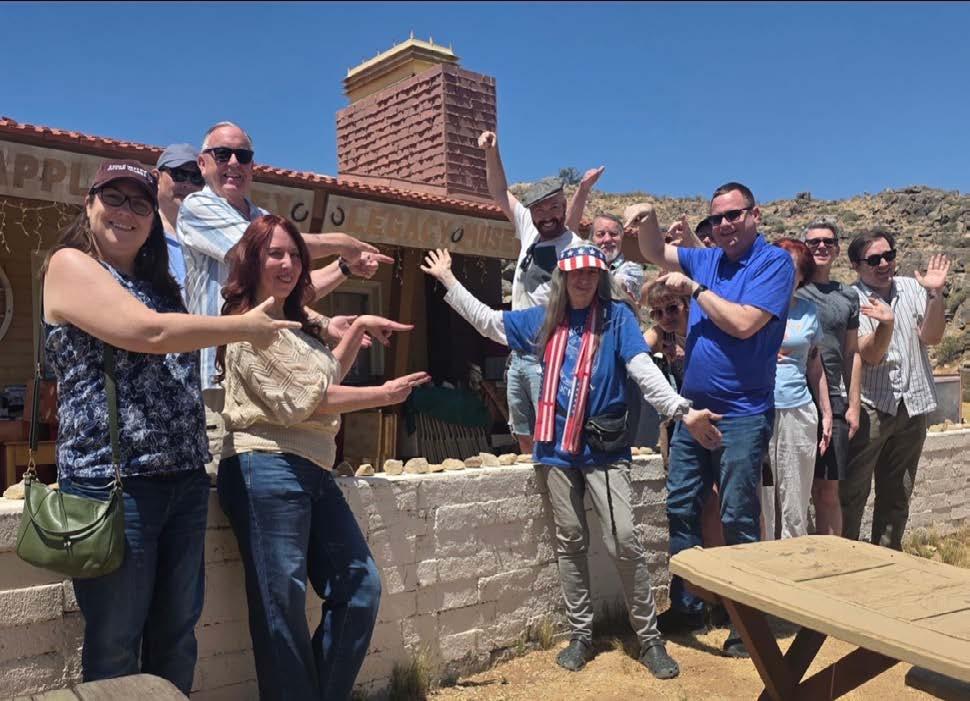
IN HONOR OF MEMBERS of the Academy of Academic Excellence graduating class of 2004 turning 40, a group of them held a year's worth of events dubbed "39 Before 40," the brainchild of Hastin Zylstra. On Memorial Day weekend, they returned to good old Apple Valley to reminisce and visit the Apple Valley Inn, which they were surprised to learn is now a French Fry restaurant. So their reminiscing was done at the Apple Valley Legacy Museum, where they bought vintage brochures, postcards, and books, and gave a generous donation.
An Escape to the Mountains
WHEN THE DESERT heats up in May and June, Mohahve Historical Society members have a habit of taking a trip to the higher elevations, including two trips to Wrightwood and two prior trips to Big Bear. So on Saturday May 27 it was back up the Highway 18 switchbacks for our third trip to that beautiful mountain resort town.
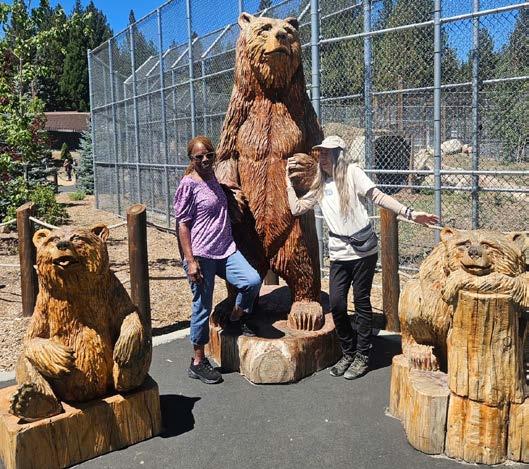
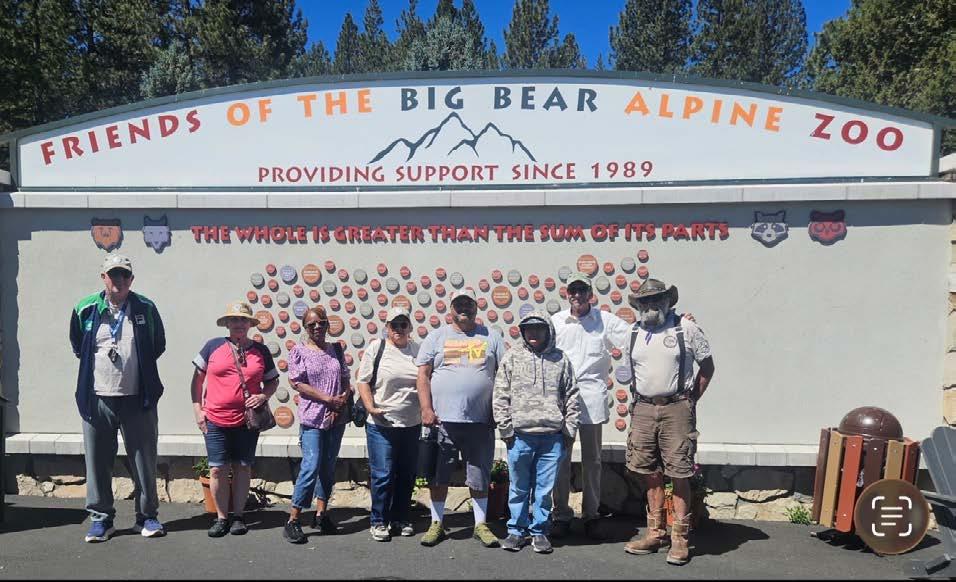
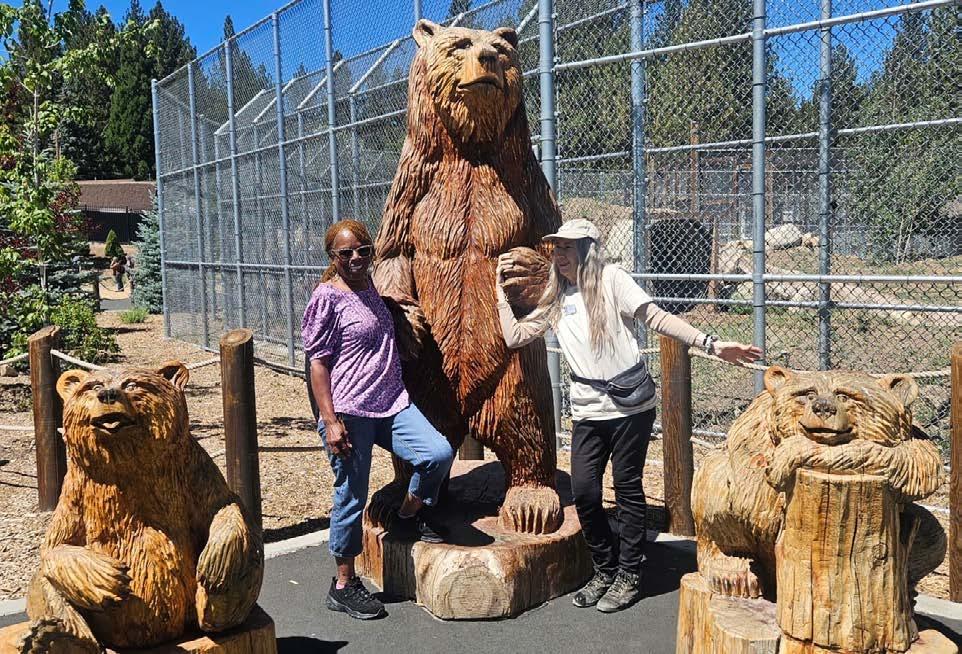
Our first stop was the Big Bear Alpine Zoo, a more modern version of the former Moonridge Animal Park. Originally established in 1959 as a rehabilitation center for animals displaced by wildfires, the zoo's name was changed in 2012 and the location in 2020 when a more modern facility was established on a five-acre site down the road. Their core mission remains to rescue, heal, and then release injured or orphaned animals back into then wild.
The 13 members of our group enjoyed seeing mountain inhabitants in a quiet peaceful setting with large enclosures mimicking natural habitats. And we could certainly see that the big cats and birds and other species were content and well fed, with resident eagles enjoying a meal of nice juicy rats. Other animals relaxed in the shade, under logs, in trees. or in
hammocks. What a life!
Our next adventure was a ride on the Big Bear Trolley, providing needed transportation for residents and a scenic tour for visitors like us. The Blue Line picked us up and returned us to Veterans Park on the south side of the lake, close to where we boarded the boat last year. We enjoyed a loop around the lake, past homes and mountain retreats nestled among the trees, as tourists and locals hopped on and off, some toting backpacks and fishing poles. When the seats were full, it was standing room only, so hold on tight!
Next it was back across the Stanfield Cutoff to North Shore and a stop at the Discovery Center. We were greeted outside by some young people inviting us to examine various animal hides, and offering to answer any questions we might have. Inside we could pick up maps and brochures for various scenic sites, trails, and hikes in the area, and of course purchase a souvenir or two.
Some of us picked up an adventure pass to hike the Interpretive Woodland Trail starting about a mile down the road. Although the brochure described the 1
1/2 mile loop as "easy and mostly flat with some short ups and downs," in reality it had some very steep rocky inclines more suited to seasoned hikers and mountain bikers. Some of the group made it to all 16 stops; others turned around when the going got tough.
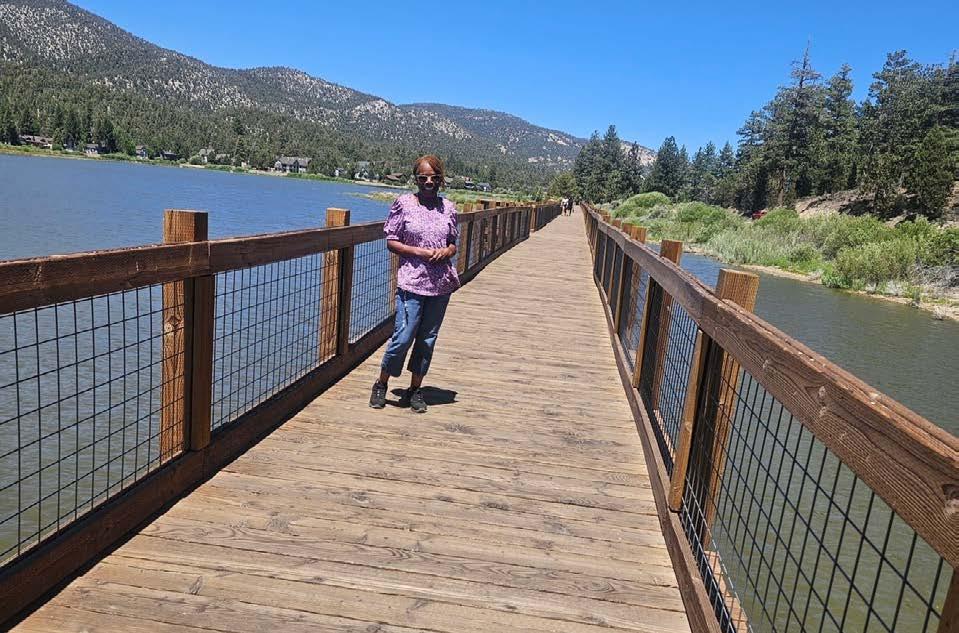
At the last stop we took a leisurely walk across the nice flat and scenic Stanfield marsh Boardwalk, which was more suited to some of us. What a pleasure to see a blue heron fishing in the reeds, and a mother duck with two babies close behind swimming through the tall marsh grass.
Big Bear never disappoints. Some participants enjoyed a tasty lunch at Thelma's restaurant, "Home of Chicken Pot Pies." One adventurous group took a side trip to Butler Peak Fire Lookout towering above Big Bear, where volunteers aim to keep the residents safe from disaster. After a pleasant day, heading back down the hill can be another great experience, savoring the view while navigating the curves on the way down to Lucerne Valley. It's easy to see why so many early movies were filmed in scenic settings in this land of lakes, mountains, and towering pine trees.
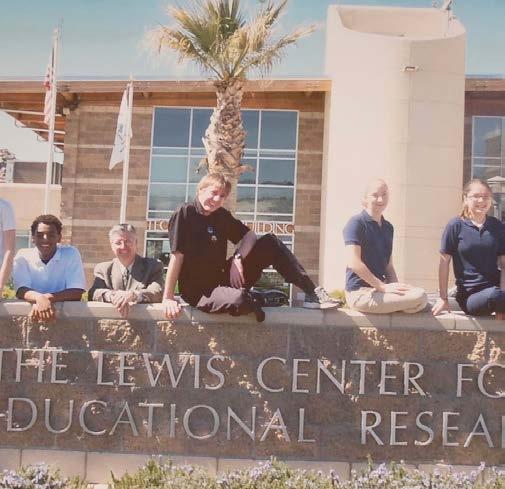
2004 photo placed by the late CEO Rick Piercy upon opening of the AVLM in 2015. Hastin pictured on the far right.
May 2026 at Apple Valley Legacy Museum
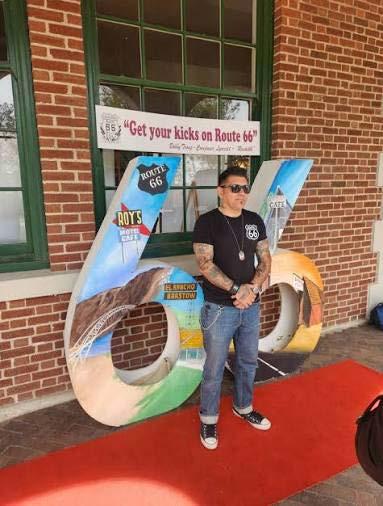
Barstow’s Michaelangelo Part 2
WE’RE EATING
BREAKFAST at Los Domingo’s. Raymundo Valles—the subject of this story—is very familiar with this place as he and his crew from Fort Irwin often meet here on their Friday off. He has ordered the “machaca” plate with tortillas on the side. It sounds good compared to my ham and eggs but I’m sure I have misspelled it. He has told me about living in Pomona, followed by a move to Lucerne Valley where at the early age of fourteen, he started a rock band called Black Rose. He could shred a guitar. It was a skill he came by, “organically,” he said. They did heavy metal.
“I became a diehard Kiss fan,” he proudly proclaims. “ I even got a Kiss tattoo ... okay? I had to represent the Kiss Army.” He pauses and plays an air guitar for a couple of seconds before he continues. “I've been a diehard Kiss fan ever since.” He smiles when he admits he still listens to hard rock while driving to work at Fort Irwin. “We still hang out to this day,” he says of his friends in the band. “Hopefully we’ll reunite the crew for a reunion tour. Why not? Everybody else is.
But Ray was a young man blessed with more than one talent. He was also in a t-shirt painting business with a friend and they’d go to weekend swap meets in Fontana to sell their stuff. Ray—as his friends and family call him—was a gifted artist. They used an air brush which was no problem for him.. He was drawing portraits of people at nine.
Nine!
Heck, at nine, I was watching Foreman Scotty on a Motorola TV back in Oklahoma City and eating cupcakes for breakfast. The cupcakes were good but Foreman Scotty wasn’t. But back then, in the heyday of 50’s, we only had three channels to choose from. Now we have like a million, almost all of them are informercials, and we pay for them.
Progress.
But Ray’s dad was old school. “I grew up at 14,” he says, interrupting my musing as he looks up from his plate of food. He
takes a bite and chews it quietly for a few seconds then adds, “I knew [how to work early on.] My dad had instilled that in us.”
The “us” he refers to are his nine siblings. He jokes that, when they were young, his father and mother spent a lot of time making babies. It’s not a complaint. He loves his family. But his father said ‘you gotta work,’ so that’s how he ended up working two jobs during the summers he was in high school.
One of the jobs was as a landscaper. For it, you “ . . . gotta wake up before the sun goes up in the summer. So we were waking up at like 4 in the morning. Getting all our gear ready and everything else at
By J.P. Garner
the Marine Base, mowing the lawns and everything.
“Everything,” he explains, “has to start before seven. Especially during the weekdays. People don't want to hear the noise. So, we’d start at four in the morning. And we were done by noon. That's it. You can't go on past noon.”
He laughs as he recalls those early mornings and hot days. He continues, “It might be too hard to imagine but after that, I’d go home, take a shower, and my dad would make me a quick sandwich, or my mom would make me some food, and I'm driving to Fort Irwin just to get to work by one o'clock.
“Just the drive alone takes a half hour. I was a Rec Assistant.”
I laugh and ask, “You were wreaking things.”
Ray knows I’m kidding. He smiles when he corrects me. “No . . . a recreation assistant for preteens. Twelve and under.” He pauses and thinks about his answer for a second then clarifies, “I was like a big brother. Play basketball and blow the whistle when they're being unruly or whatever.”
From there, Ray, the artist and rock novice, went to work at the Marine base where, after three months, he was fired. He laughs. “I didn't have no experience besides construction. I was just a hole digger and they said I was too slow. I was only eighteen and I was the youngest one, but they were like, nope, you need to kick it up a notch or two because we need to
move things. So they gave me my last check after three months.” Heck, for some of us it takes three months just to grow some facial hair. But for those of us who have some mileage in this journey called life know that most often a door closing simply means a door is opening to something better.
In Ray’s case, the opening occurred at Fort Irwin. But Ray isn’t thinking the move to the Army’s desert warfare training center is permanent. “No, I was like, this is all temporary because I'm probably gonna go to art school or something.”
Art school or something?
He didn’t know what the “something” could be. He was fairly certain his stay in Barstow was only temporary and the fault for that rests with his art teacher in junior high school. She planted the idea that commanded his attention when he went to work at Fort Irwin. It ws one of things that’s at the back of your mind, always there and either annoying you ... or inspiring you.
“In junior high, I'm like drawing all kinds of stuff and my art teacher pulls me to the side and she says, ‘Ray, you got so much potential. You need to get away from the crew that you're in. They're gonna drag you down.
“To help me, she gave me a big book like a sketch pad and pencils and she goes, ‘Over the summer break, I want you just to sketch and draw your heart's content. Bring it back when you come back. There's some schools. I want you to apply for.’ This is my art teacher,” Ray finishes; his tone one of disbelief mixed with some pride.
“I was fourteen. Yeah … I remember because I was getting ready to go to ninth grade. She knew that and she said you're going into high school now, and you need to start applying to art schools.
“‘I'm gonna show you,’ she said. ’I'm gonna guide you when you when you come back.’ And, you know, half of my little brain, I was like, oh yeah, that’s cool. And then the other half was like, ‘whatever.’"
But at the time, Ray was a musician. It was his first love and his way out. His goal was to be great, and make it big in a rock band, And if he didn’t, he wanted to be the illustrator of the album covers for great rock bands. You know, like back in the 70s and 80s and all the fantasy art.
“I'm sure the artist or the illustrator got good money. I will be part of the music world and be famous because of that. So I always had that in the back of my mind. But, you know, thank God for my art teacher, because you have those …” He hesitates and thinks. “What do you call them?” he asks. “Like those pivotal moments and it lights up something, and you’re inspired, and then maybe there’s a chance. You have hope ...” Hope.
Ray’s voice trails off as he thinks back. He’s putting the pieces of his past together. When he returns from wherever he went, he’s somber. Not sad, but more matter-of-act. Blunt even. “My dad was an alcoholic,” he admits. “… and it was pretty bad at home. For everybody in the band, and at age fourteen you want to escape.
“So the only way we could do this was like what I told my friends,
my bandmates, let's get so good that we get to play some places in Victorville, and then we start touring in a van. I mean, this is all you think about at fourteen … just to escape your home.”
But what sees now when he looks back is that his life was shaped more by his work and having a baby at eighteen. He learned quickly that being at Fort Irwin temporarily was what everybody said. When they were eighteen, twenty or thirty years ago, they said the same thing. But family and having a kid changed his point of view.
“It's a different planet out there. It’s like working at from Santa Fe, they’re their own community because they've known each other for so long. It's like that out at Fort Irwin. After thirty years, I know a lot of people and I have become a master craftsman. A carpenter.
“I remember my pastor started showing me how to paint signs. Then I bought my first house in 1997 or 98. I kind of already knew how to paint houses, but not work around them. My dad did everything. My dad, he worked on everything. So I kind of learned everything from him.
“So you gotta learn how to work on your own now. Things break. I started learning how to do that stuff. So, I built my first shed by myself in my backyard, and my dad kind of laughed at me. I'm like, hey, I read the instructions.
“That's all it took. It gave me inspiration. I was like, you know what? I'm gonna do this. I like doing this. And before you know it, I'm working on people's houses. Are you doing this as a side job, also? Yeah. Hold on a second. I'm gonna do something.”
But his passion for drawing and painting didn’t wane. How he became a muralist is not a story of a man’s hobby or part-time job, But of a God-given skill that is more an extension of what he is at his core and what his special gift is to the rest of us.
Does he ever wonder what he might have become had he gone to art school had he not returned to ninth grade in the high school in Lucerne Valley?
If he did, it’s something we’ve all done when we look back on those intersections we encountered in our journey and wondered what our life would look like now had we chose to go left instead of right.
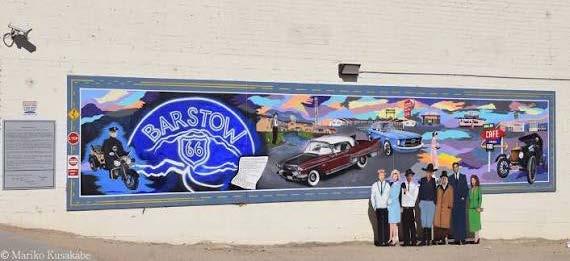
For Ray Valles, the direction he took was always toward family and work, and because of it, his life looks pretty good. He’s working a job he loves. He has a family of his own that he loves even more. And, on the side, he’s able to do that which sets him apart from average human beings: he paints murals on the empty walls of the town in which he lives,
In this sense, then, he is comparable to Michelangelo of old. Part three of Ray’s story will reveal how his unique artistry shares our history with the millions of visitors who pass through our little city each year … not unlike the millions who pass through the Sistine Chapel in Rome.
Del Taco: A Desert Legend Rises Out of Yermo
By Jaylyn And John Earl www.thedesertway.com
THE STORY OF DEL TACO, first called Casa Del Taco when Ed Hackbarth set his stake in the sand in 1961, doesn’t simply begin; it reveals itself the way desert truths do.
And on that morning, beneath a sky bright enough to feel holy, the Mojave opened its hand and let the future step forward.
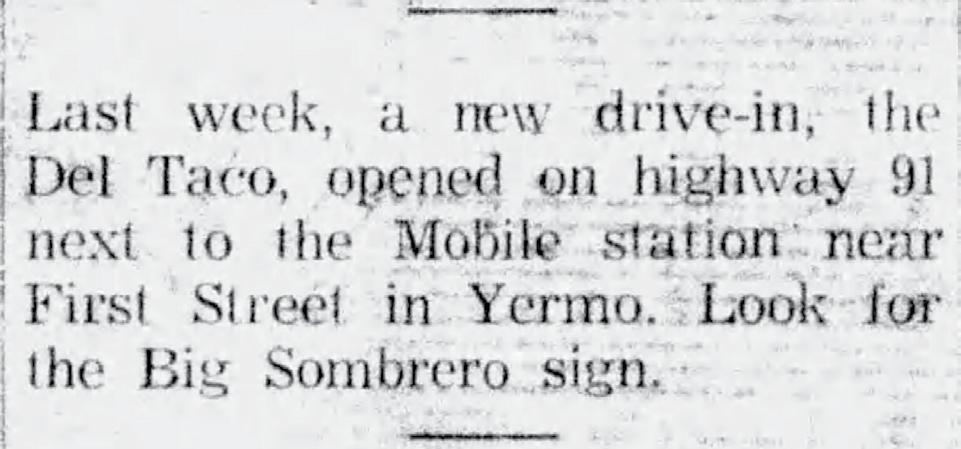
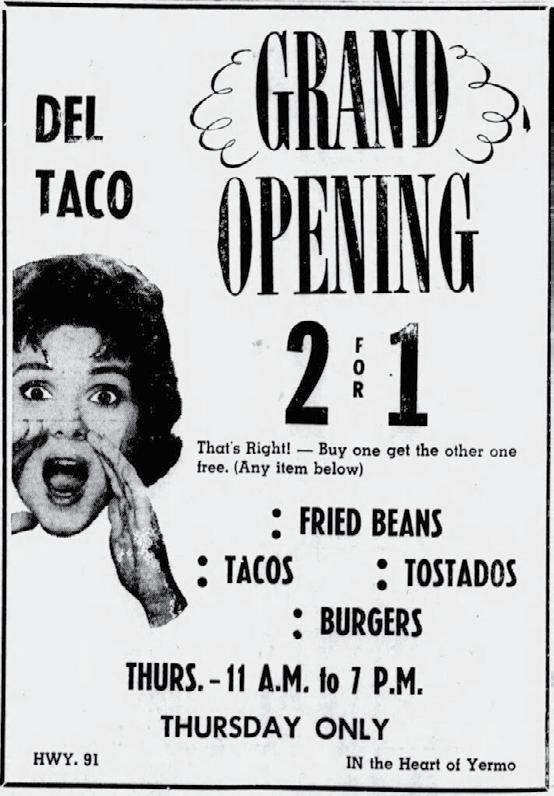
On September 16, 1964, Ed Hackbarth and David Jameson opened a small stand called Del Taco in Yermo, California, a lonely outpost along the highway where the wind never quite stops blowing.
After that first day, the till held $169, the equivalent of 900 tacos. Not much by city standards, but out here, in the Mojave, it was enough to spark a fire.
Word traveled the way it always does in the desert: slow at first, then all at once.
Soon there were two more Del Tacos in Barstow, another in Needles, and a fifth in Corona, the first to boast a drive-through window, a frontier innovation that would change the way travelers ate on the run.
Desert Dispatch,Wed, Nov 08, 1961, Page 7
A man named Richard “Dick” Naugle rode into the picture next. He’d come to install kitchen equipment to improve efficiency in the Corona store, but what he found impressed him enough to join Hackbarth and Jameson in their growing enterprise.
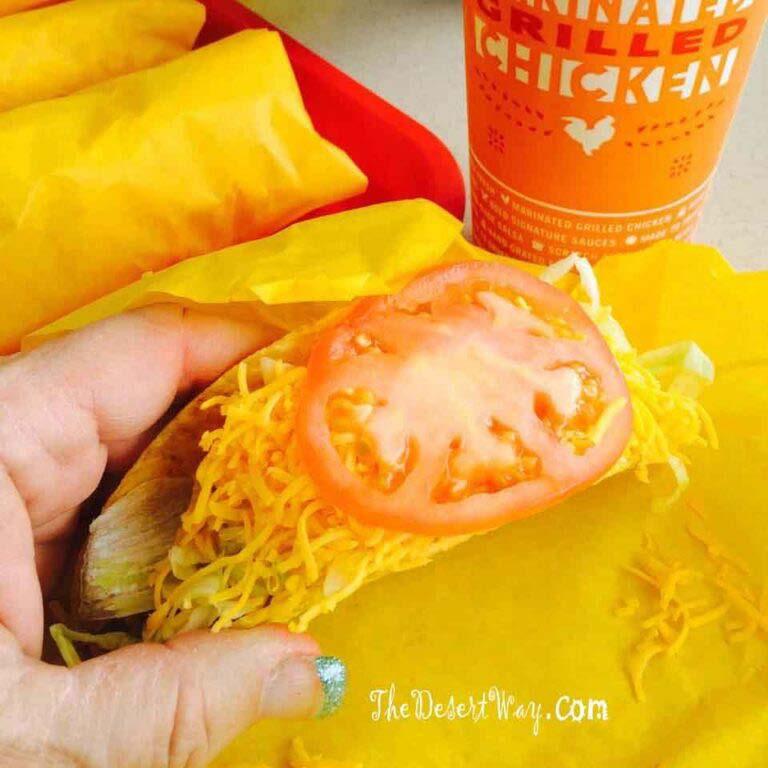
For those who have never experienced the original Barstow Taco, here it is in its full, delicious, magical glory. If you’re already familiar with this local tomatoey, cheesy, meaty bite from Heaven, you know you want one in your belly again.
For a time, the three men pushed the brand forward together, until Naugle eventually split off to start his own outfit, carving his own delectable trail through the Southwest.
According to Dick Naugle’s grandson, Bill Naugle, author of The N Effect, a biography about the elder Naugle, his grandfather “partnered with investors to open a restaurant in Corona, California, called Del Panther. The menu was simple: tacos, tostadas, and hamburgers.
Naugle designed the “twin kitchen” concept to handle both Mexican and American food efficiently. The success of Del Panther eventually led to the formation of Del Taco on Grand Avenue in Corona.”
Desert Dispatch, Thu, Oct 19, 1961 ·Page 3
Barstow taco, get in my belly!
Corporate histories and industry archives all point to when W.R. Grace and Company stepped forward in 1976 and claimed Del Taco’s rising brand. And from that point on, Del Taco lived beneath Grace’s banner for more than a decade. These were Taco Villa–branded stores, not Del Taco–branded.
In February 1989, the two chains met again on the open range. Del Taco merged with 171 Naugle’s restaurants, creating a single, larger force in the fast-food frontier. In 1992, W.R. Grace sold Del Taco to PepsiCo/Taco Bell.
On April 4, 1992 the Los Angeles Times reported that although they shared the same name, Grace Co. operated its units independently of Costa Mesa-based Del Taco. Officials at Del Taco said the sale would end the name confusion.
By 2000, Del Taco had grown to 372 stores across ten states, and by January 2008, the company celebrated its 500th restaurant in Burbank, California — a long ride from that first dusty counter in Yermo.
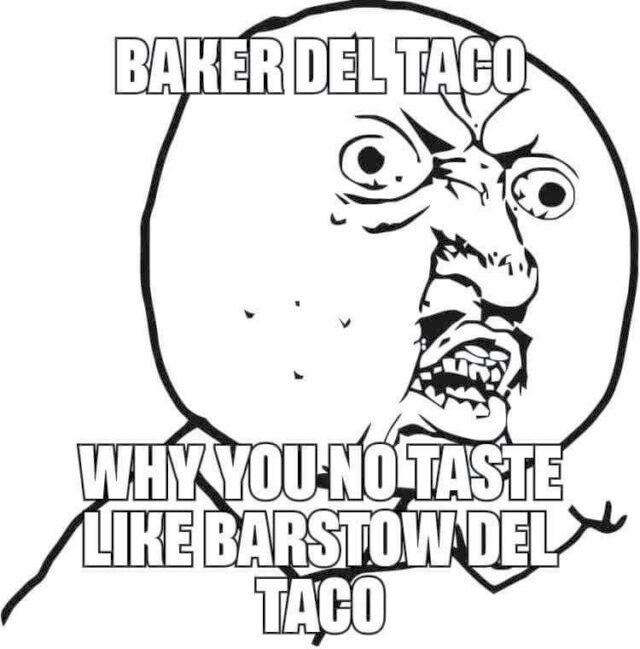
Only three Del Tacos offer Barstow Tacos and you guessed it, they’re all in Barstow: 401 N. First Street, 1310 E. Mountain View Street and 2871 Lenwood Road. Those Hackbarths are geniuses. Savor that little party in your mouth. You won’t find Barstow Tacos anywhere else.
Because they are not bound by current corporate rules, the Barstow Del Taco’s serve exclusive items like the “Bun Taco” and the Barstow Taco and offer more generous meat and cheese portions.
The Del Tacos located just off Route 66 on First Street, and Mountain View are still operated by the Hackbarth family. Ed Hackbarth owns the Lenwood Del Taco. Julie Hackbarth-McIntyre still serves customers at the drive-thru window on Mountain View.
Julie holds the distinction of being the second woman in Barstow's history to have held the position of Mayor, from December 2012 to December 2020. Julie’s accolades and awards are numerous.
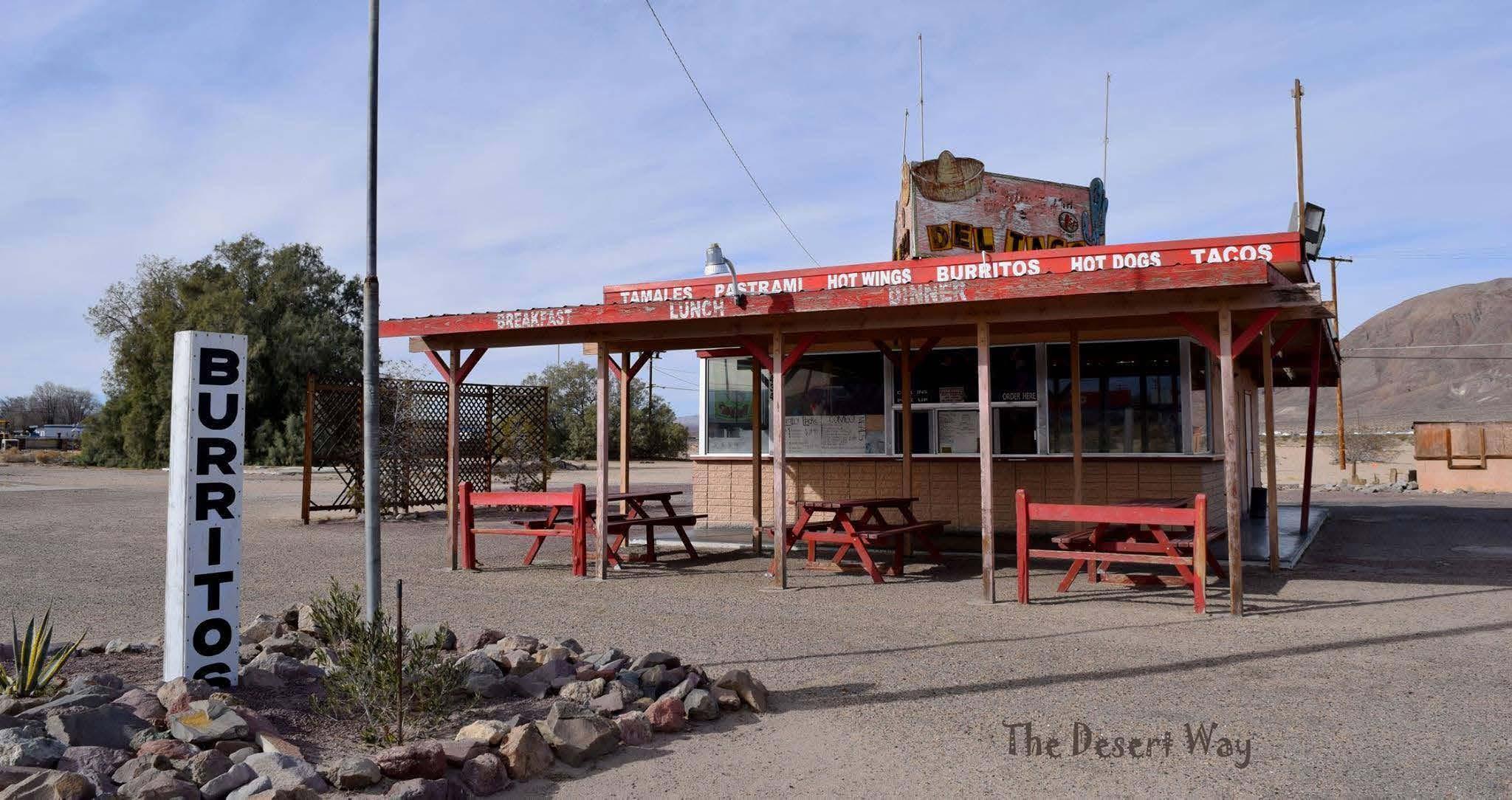
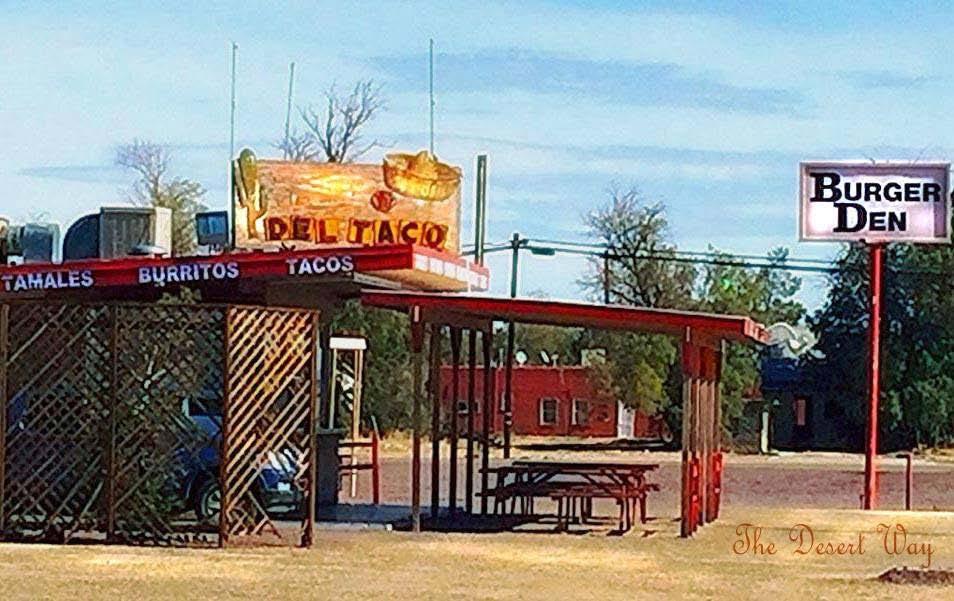
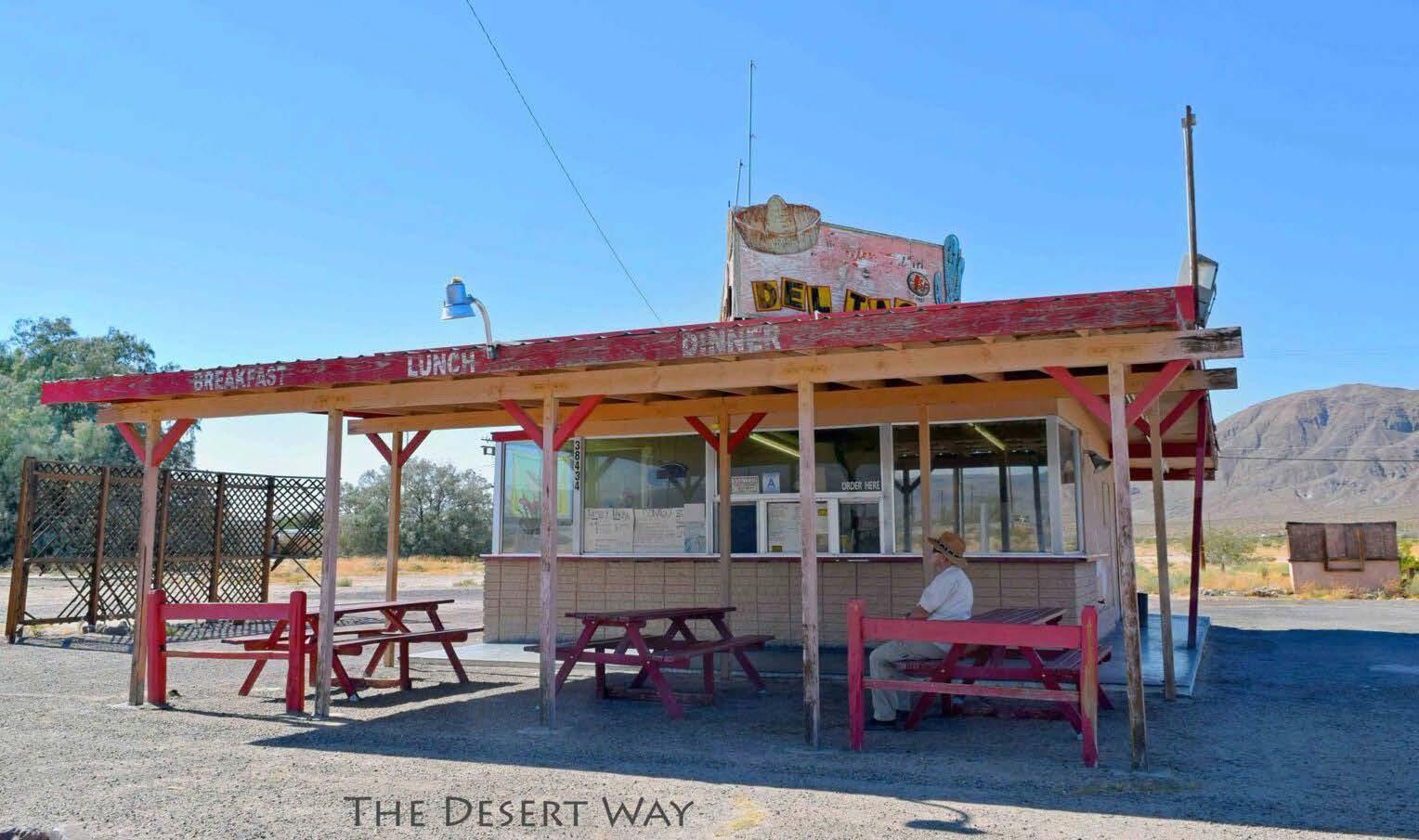
John contemplated desert life in the shade at the original Del Taco, now called the Burger Den, located in sleepy downtown Yermo.
All Tita had left after a busy summer Saturday were Carne Asada tacos, burritos and strawberry shakes, so we ordered two of everything. Despite the sweltering triple digit temps, it did not disappoint.
By the way, did you know they call burritos “breakfast tacos” in southern Texas? Not only that, the only remaining Del Taco in the entire Lone Star state is in Fort Worth. No wonder we hurried back to California.
But every legend has a birthplace. And for Del Taco, it will always be Yermo, California, where the desert sun watched the first sign go up and the story began. You can find the original restaurant and historical marker at 38434 E Yermo Road.
On December 20, 2021, Jack in the Box announced its plans to acquire Del Taco for $575 million dollars. A day later, the
founders of Del Taco delivered an online message that assured customers that Jack in the Box wouldn’t lay a corporate hand on any of its family-owned restaurants in Barstow, according to the Daily Press on December 21, 2021.
Under its new parent company, Yadav Enterprises, Del Taco operates nearly 600 locations across 17 states. The chain maintains its corporate headquarters in Lake Forest, California.
References
• Barstow Community College District Board of Trustees President, Julie Hackbarth-MacIntyre, https:// www.barstow.edu/directory/juliehackbarth-mcintyre
• De La Cruz, Rene Ray, Daily Press; Tue, Dec 21, 2021 ·Page A2-02, retrieved July 6, 2026.
• Del Taco Historical Marker https:// www.hmdb.org/m.asp?m=184830
• Del Taco Website https://deltaco. com/history.html
• Del Taco, Wikipedia, https:// en.wikipedia.org/wiki/Del_Taco
• Lamb,Mike, DailyPress; https://www. vvdailypress.com/story/news/local/ desert-dispatch/2015/04/15/statesenator-honors-mayor-julie/, April 14, 2015, retrieved July 6, 2026.
• Naugle, Bill, The N Effect, free download, https://naugles.com/ product/the-n-effect-ebook-epubversion/
• Naugles Inc. Blog https://naugles. com/blog/
• Original Del Taco Website (Barstow CA) https://www.originaldeltaco.com/
• Woodyard, Chris, Los Angeles Times; Sat, Apr 04, 1992 ·Page 275, retrieved July 6, 2026.
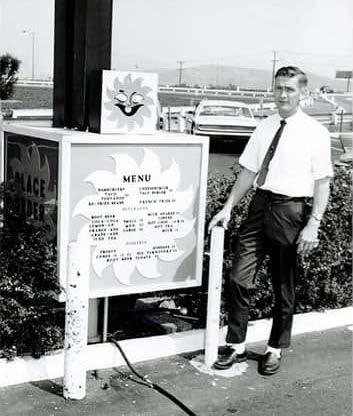
A young Ed Hackbarth standing next to the menu of an early Del Taco in the 1960s.
Music Family of Noizemakers Part 2
By Paul Sebastian
THE REASONS
THAT MUSICIANS become followers of the muse are as individual and varied as there are grains of sand on the beach. Those that possess natural talent are compelled by the tantalizing call of these lyrical temptresses to reveal the internal music that she has implanted into their souls. Those sounds become an irresistible force that gnaws at the artist until it blooms from their instruments and voices. The murmurings of the muse are not confined to those with native born talent but may also find fertile ground in those with latent abilities not yet discovered. For some the artist’s calling may have been muted but as time passes the slow adagio of sound builds into an overwhelming crescendo of song. The dynamics of artistic ability are nearly impossible to define and how people of different callings find a home together in a band is the mental Gordian knot that may never be unraveled. However, in the High Desert our area is blessed to have a group that has found that glue of unity and they have blended their abilities and personalities to give us some of the best you will hear. The curtain rises, the intro begins, and their efforts find many welcome ears.
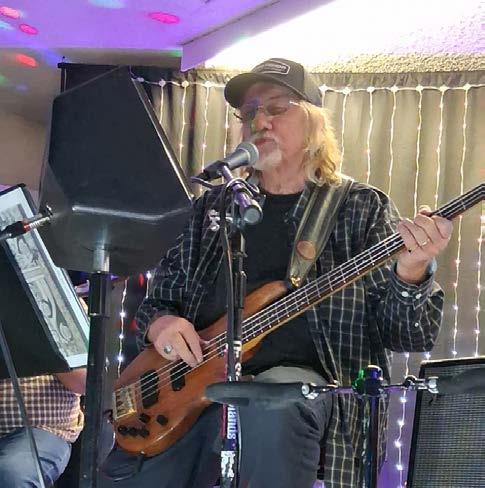
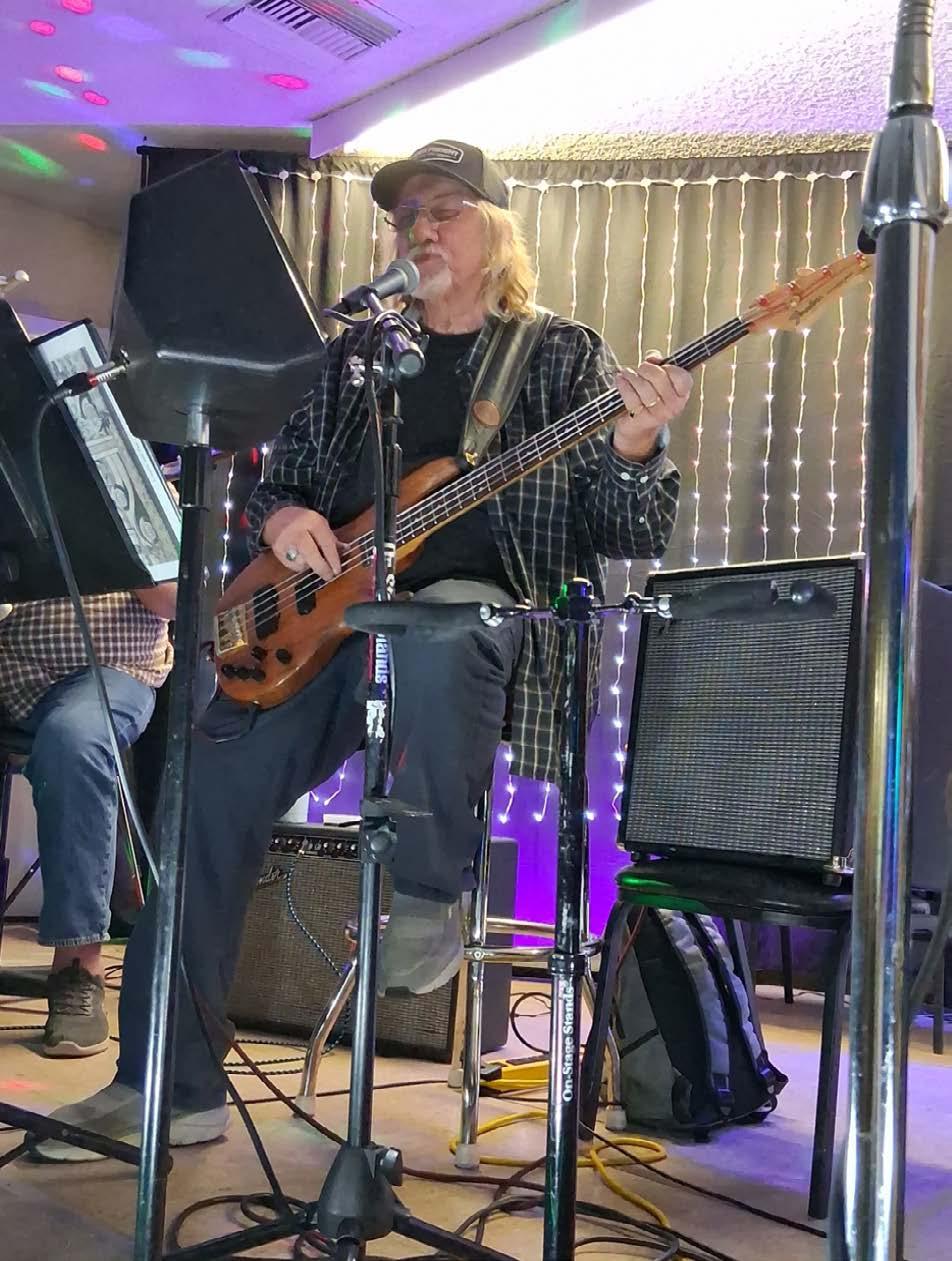
Doug McGinnis- Founder, guitar, vocals, & bass. Every ship has its anchor, compass, and a keel to help steady the ship and guide her navigation. The same can be said of Doug as the founder of the Noizemakers. As the founder of the group, he has been the bass line that the others can rely on to be a resource for musical direction as well as assisting other bands source key positions for their group. For him, it’s not about spotlighting his personality but more about supporting his musical next of kin in their efforts to improve their music.
Doug was born in the High Desert to parents who endured the crucibles of the Depression and WWII. Their beliefs and values were at their core, and they instilled in Doug their values of patriotism, self-reliance, and a highly principled work ethic. These bedrocks would later become part of his nature and help him to guide his bandmates. His father was a veteran who had been wounded twice and had fought at the bridge at Remagen.
Doug attended Victor Valley high school and learned to play the guitar very early. At 16 he began playing locally with other musicians and he formed his own band. They started playing local venues, and Doug’s father took them to several local bars as the band’s manager. They played popular songs of the day by artists such as The Young Rascals, The Rolling Stones, and other Top 40 groups. They didn’t limit themselves to just rock and roll and began playing country songs to increase their appeal to local audiences. as they honed their craft and attracted local fans.
Their abilities improved as time went on, they soon found themselves playing in larger venues and gaining attention from bigger promoters and record companies. Once they were playing in a community room in the Sierras and they were asked to be the opening act for a band called The Stone Ponys. At first glance they weren’t impressed with the lead singer. That singer was Linda Ronstadt. His education in the industry not only included the school of hard knocks but also included attending a music school with more popularly known songwriters, attorneys, producers, and other artists. Such incredible talents such as Keith Moon, Rick Nelson and other industry moguls. He founded the Noizemakers to share knowledge with likeminded artists on writing, producing,
crafting songs, and understanding the business end of their craft. For him it was only about how to make better music and master your own fate. It’s a camaraderie of craftsmen rather than a guild and the exchange of ideas assists the artists in how to avoid normal pitfalls. For Doug he finds satisfaction knowing that he helped someone to succeed and, in his words, “Just lucky to be friends with the guys.”
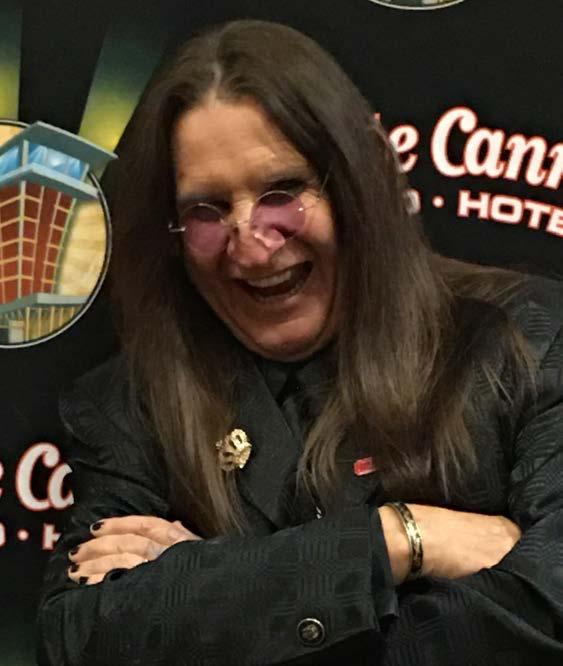
Don Rugg, lead singer and Ozzy Osborne impersonator. If you had asked Don about 20 years ago that he would gain fame as “The Prince of Darkness”, he might have thought you were on too many pharmaceuticals. His taste in music follows the mellow rhythms of Neil Diamond, Barry Manilow, or Neil Sedaka. If he had heard the music of The Heavy Metal of Oz, he would have thought it reminded him of the screech of sideswiping metal hulls of rusty barges with a crew of banshees. However, there are curveballs that life throws at you and Don swung blindly and hit it out of the park.
About 15 years ago he and his wife were walking in the streets of Cabo and as they walked, young adults were waving and pointing at him. Don was perplexed because he didn’t know why they were carrying on that way except that he had allowed his hair to grow to a length that resembled a horse’s mane. His wife, Sunny, also noticed the reactions he was getting and then realized that her husband had unintentionally transformed into the physical form of one of heavy metals greatest icons. He thought they were saying, “Aussie, when in fact they were yelling, “Ozzy”. She immediately whispered back to Don, “Just wave back and smile.” Unlike her husband, her musical tastes ran along the lines of Led Zeppelin and Jimi Hendrix and she was delighted at the resemblance between him and Ozzy. When she told him why the kids were greeting him in that fashion they both took humor at the confusion, but it was Sonny who saw potential for a career as an Ozzy impersonator.
They both went to work cultivating his image into the Prince of Darkness and Don listened to Black Sabbath’s music to learn how to be Ozzy’s doppelganger. However, it was the reality show, “The
Osbourne’s”, that gave him the biggest clues as to how to talk, act, react, and sing. They put together the wardrobe and began to hit the impersonator’s circuit. He won several competitions for the best impersonator and his impersonations began to be indistinguishable from the original. He performed his shows with 4 different Sharons, one Kelly, and one Jack who brought hilarious entertainment to their different shows. They found excited fans very enthusiastic about their replication, and they marveled at their strong appearance and accurate resemblance. Impersonator gigs increased and Don appeared at many of the more prestigious events in Las Vegas, Florida, San Diego, and Los Angeles. Fans everywhere were overcome by an Ozzy fervor and in some cases were completely fooled by his act. When Don appeared at Oz Fest he entered the event inside a car that could have been mistaken for a hearse. As he exited the vehicle, he was clad in full Ozzy regalia
and a stunned crowd moved towards him in awe hoping to speak to The Great Ozzy. As he conspicuously strutted by the tailgaters in character, the fans believed he was the Dark Maestro and the illusion was complete. Even the security teams and sheriff’s deputies were convinced that he was The Madman of Metal, and they quickly ushered the entourage back to the dressing rooms to prepare for the show. To her horror his stage wife thought they were heading for the hoosegow but Sunny kept them in character so as not to blow their cover. When they entered the dressing room they came face to face with the Metal Godfather himself and after a moment of total surprise, Ozzy muttered in his inimitable accent, “You look like a rather handsome young man.”. To which Don replied, “You rather look like a handsome young man too.”
As good as that meeting was, the most meaningful meeting came when Don visited different support groups for
troubled youth and acting as Ozzy he discouraged any sort of drug and alcohol use. On one such occasion a certain young man approached him and hugged him tightly. He was convinced that Don was Ozzy and he swore he wouldn’t drink or do any drugs again. Don was stunned but he saw in the eyes of the man’s parents to continue in character. This intervention touched Don because of the good he could do. He now makes a point of visiting these centers to help other troubled people who look up to him. It is these meaningful connections that mean the most to him because he is making a positive difference in someone’s life.
Saving the Stories of the Mother Road
DAGGETT, Calif. Along Historic Route 66, there are places travelers stop because they have become famous. Then there are places that deserve to be famous because they have never forgotten where they came from.
Daggett is one of those places.
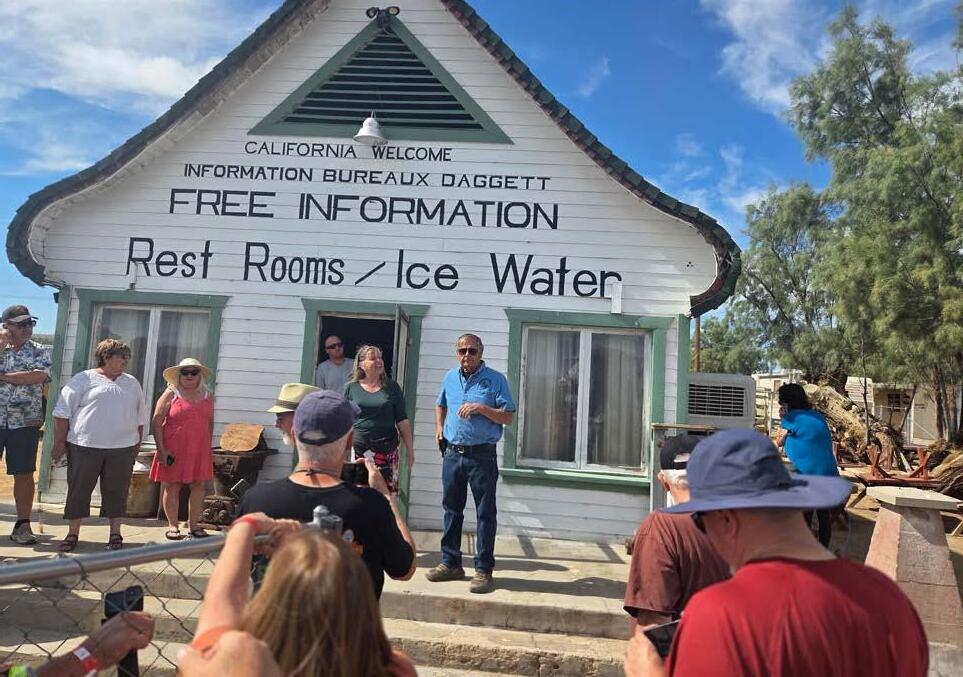
During the Route 66 Centennial Caravan, our group was welcomed by the Daggett Calico Historical Society at the historic California Welcome Information Bureau, a small white building that once greeted travelers crossing the Mojave Desert with free maps, free information, ice water and a warm welcome to California. Nearly a century later, that same building still welcomes visitors, not with modern attractions, but with authentic history.
It quickly became apparent that this is far more than a museum. It is a labor of love built by volunteers, historians and residents who understand that once history is lost, it can never truly be replaced.
Inside the museum, every shelf tells another chapter of the American West.
Glass cases are filled with bottles recovered from abandoned homes, mining camps and forgotten desert sites. Some still bear their original labels while others show the scars of decades buried beneath the Mojave sands. Together they tell the story of families who lived, worked and built communities in one of America's harshest environments.
One display that immediately caught my attention was the original school bell from Old Calico. Generations of children once gathered at its sound before racing into a one room schoolhouse in one of California's richest silver mining towns. Today it sits quietly as a reminder that thriving communities once existed where many people now only see desert.
Outside, history stretches across the property.
By Tiffanie Nicole - Pulse Media
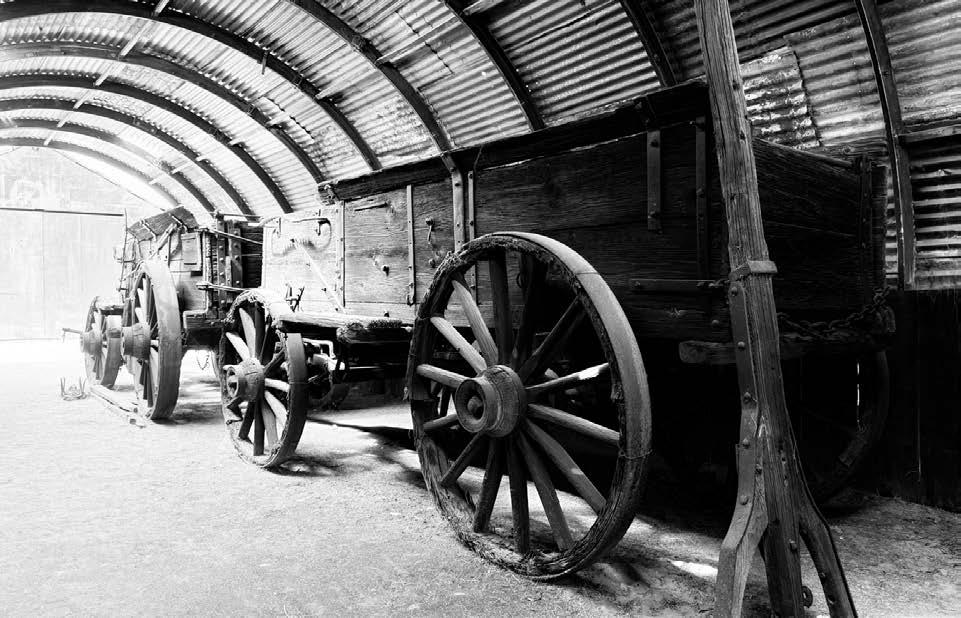
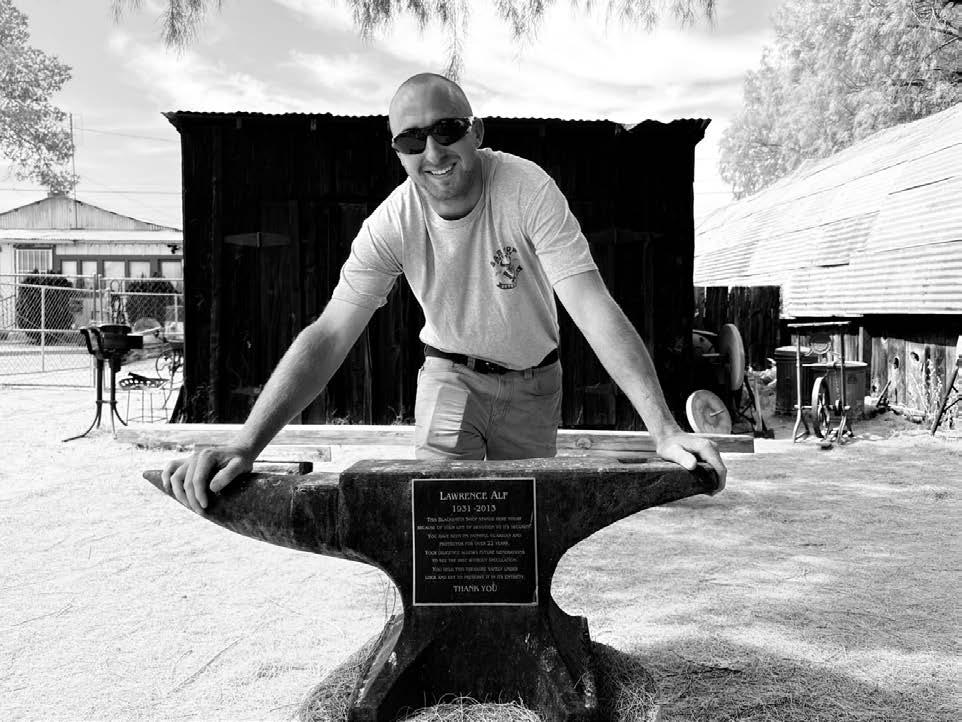
Original mining carts still rest on narrow gauge rails where ore was once transported from nearby mines. Wagons stand preserved beneath weathered structures that have survived generations of desert heat and wind. Visitors can walk through the historic blacksmith shop where hundreds of original tools still hang on the walls exactly as craftsmen left them. Massive anvils, hand forged tongs, hammers and equipment remain in place, offering a rare glimpse into the skilled work that kept an entire mining community operating.
One of my favorite photographs from our visit captures those tools perfectly. Presented in black and white, the image almost erases the modern world. Looking at it, you could easily believe you had stepped into the late 1800s as a blacksmith prepared another day's work.
Several of the photographs from our visit were intentionally captured in black and white, and I believe they tell the story even better than color ever could. The timeless images remove modern distractions and allow the craftsmanship, textures and history to become the focus. The weathered wood, aged iron, antique wagons and mining equipment seem to come alive, making it easy to imagine what Daggett looked like during its busiest years.
One image shows the original mining carts lined up on their rails waiting for another load that will never come. Another captures the massive wooden wheels of an original freight wagon, still standing as though it could begin another journey across the desert tomorrow. Even the historic blacksmith shop seems frozen in time, with sunlight filtering through the old wooden walls onto tools that helped shape an entire community.
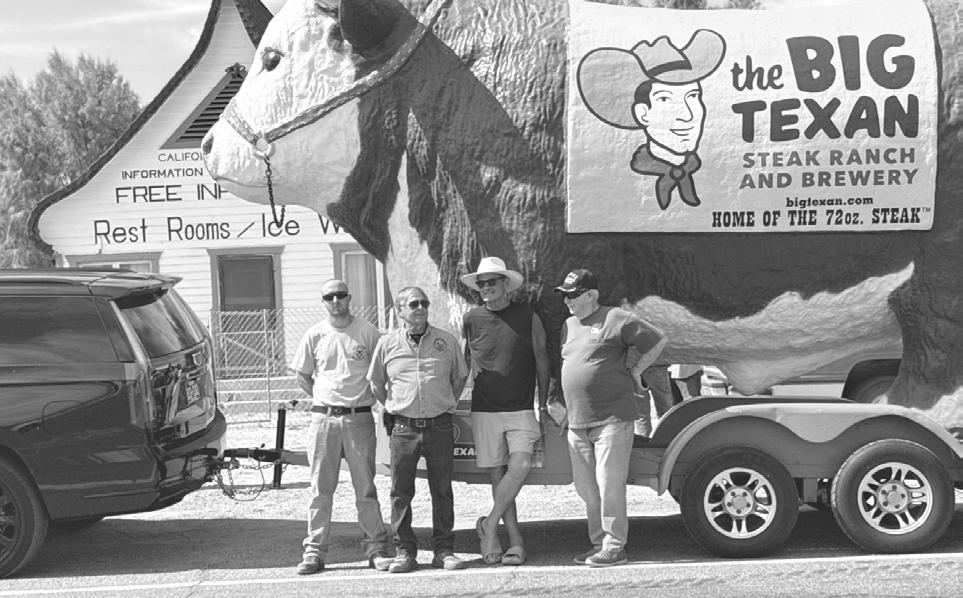
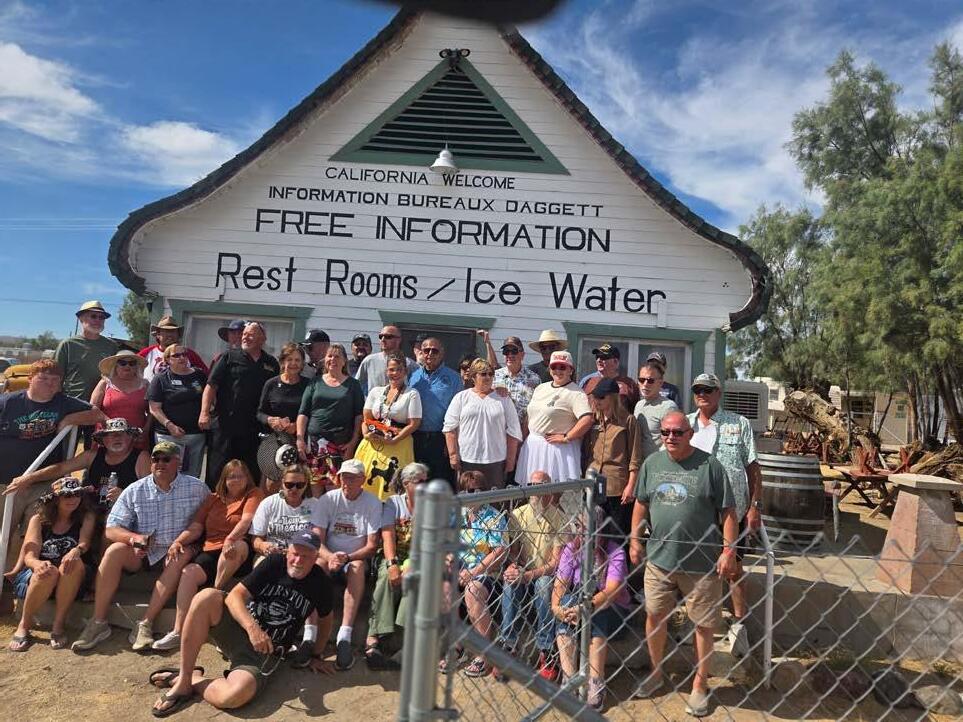
Our Route 66 Centennial Caravan gathered for a group photograph in front of the historic California Welcome
Information Bureau before continuing west. Among those making the stop were Route 66 Magazine publisher Jim Conkle, members of the Centennial Caravan, representatives from The Big Texan Steak Ranch and Brewery and the volunteers of the Daggett Calico Historical Society. The visit reflected something that has become one of the greatest strengths of Route 66. Communities, businesses and preservationists from across the country continue working together to ensure the Mother Road remains alive for future generations.
Throughout our visit, the Daggett Calico Historical Society shared far more than artifacts. They shared the stories behind them.
That distinction matters.
A bottle is simply glass until someone explains who carried it. A mining cart is just steel until you understand the men who pushed it underground. An old school bell becomes priceless when you realize it once called children together in a town that helped shape California's mining history.
The Daggett Calico Historical Society has spent years protecting those stories through countless artifacts, historic buildings and photographs. Their work ensures visitors experience authentic history rather than reproductions created decades later.
As Route 66 approaches its 100th anniversary, communities across America are preparing to celebrate the Mother Road. Few places, however, offer an experience quite like Daggett.
This is not history recreated for tourists. This is history that never left.
Walking through Daggett is a reminder that America's greatest treasures are not always found in large cities or famous landmarks. Sometimes they are discovered in a quiet desert town where dedicated volunteers continue preserving the stories that built a nation, ensuring they will still be waiting for the next traveler who chooses to slow down and listen.
The Best Hope Series: The Lead Case Manager
“For the Lord sees not as man sees: man looks on the outward appearance, but the Lord looks on the heart.”
1 Samuel 16:7
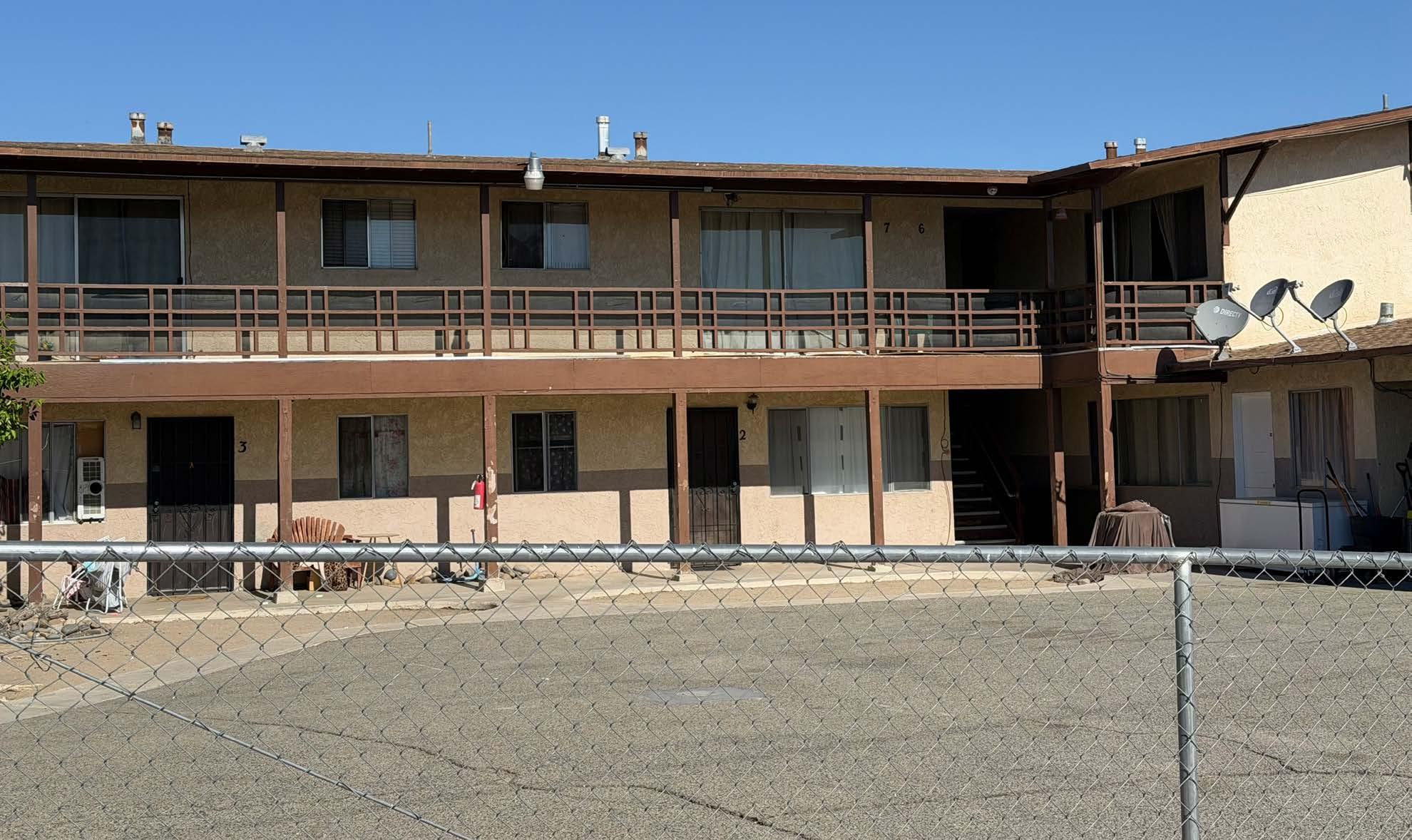
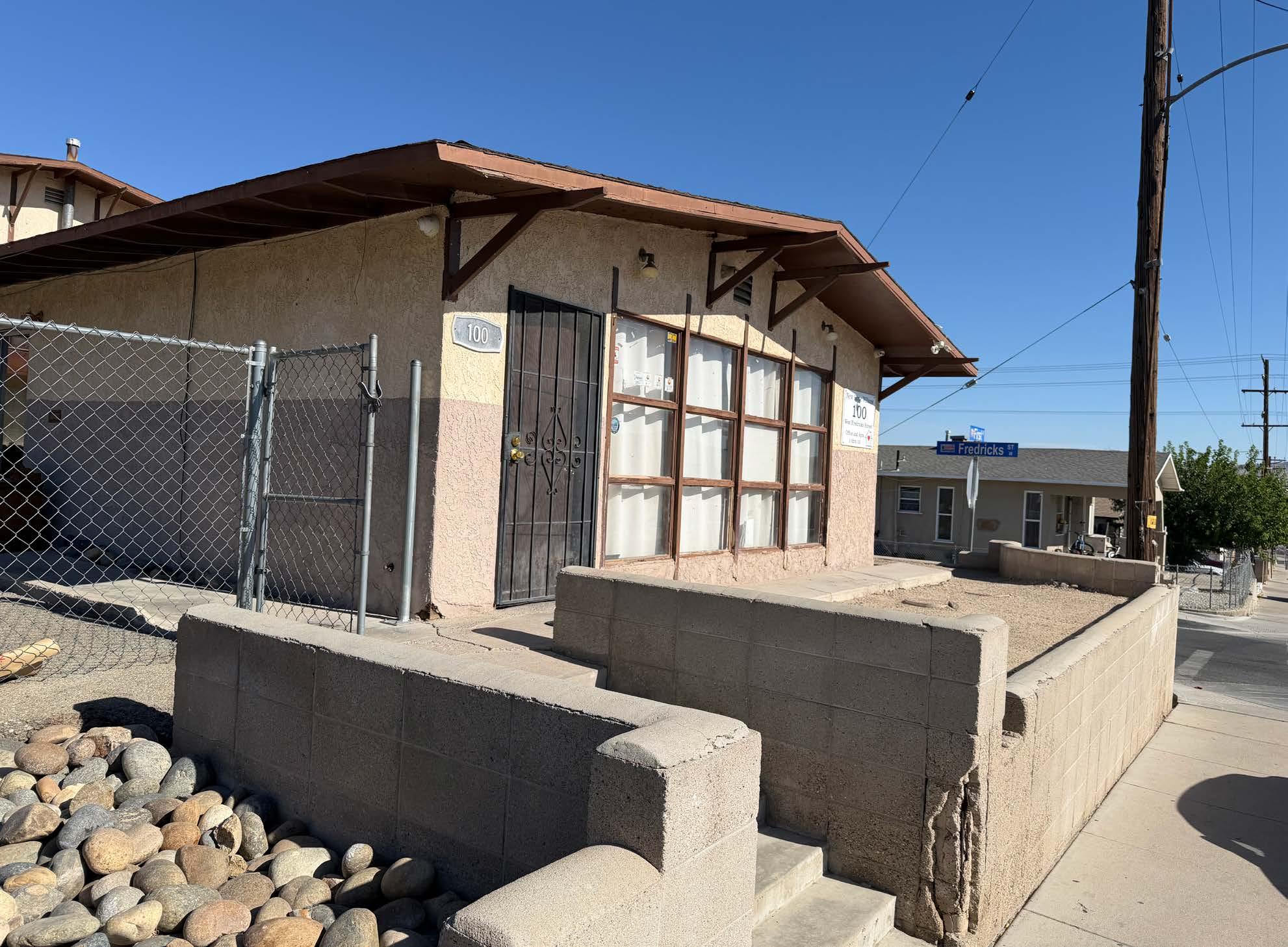
IT’S OFFICE IS AN IN DESCRIPT BUILDING on 1st Street. A short distance from the high school. The ten apartments in which its clients reside are set back from the street, separated from it by a chain-link fence.
The complex, two-stories in height and a sand-color stucco common to the desert, is remarkable only because of its size compared to the cookie-cutter homes that line the street and make the structures look out of place. You have to look closely to identify the building’s purpose as the sign out front looks more like that of a realtor selling something than that of the best non-profit in California’s District 19.
People drive by it every day, unaware of the good work performed inside.
By J.P. Garner
God’s work some say.
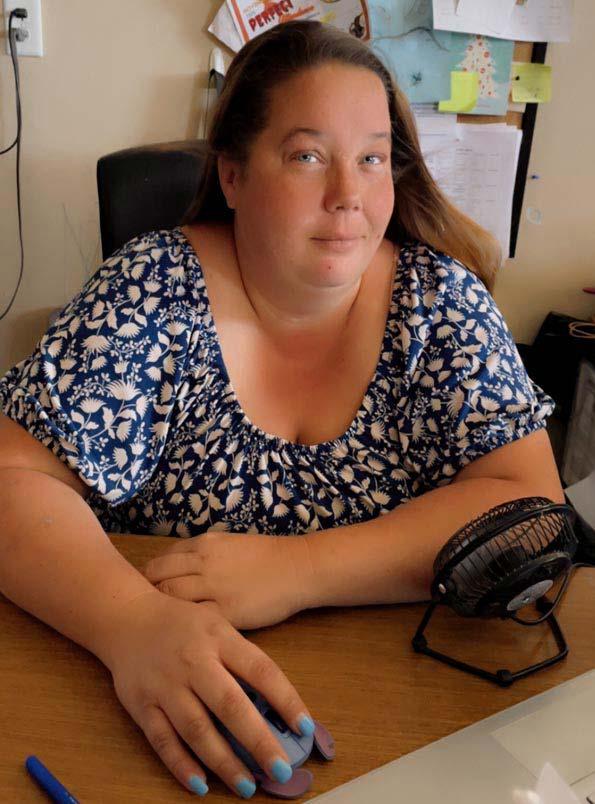
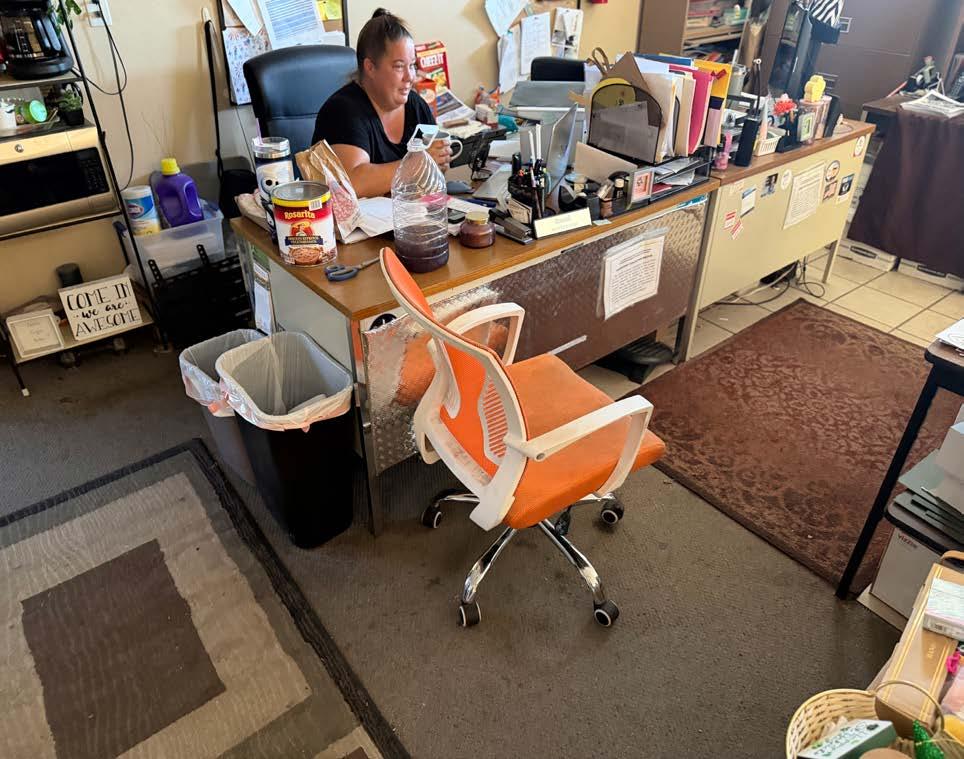
On entering the office building, your first impression is that the office is unorganized. But that impression changes once you sit down opposite the Lead Case Manager at her desk, whose flat surface supports small stacks of paperwork and file folders … the evidence that she, like her compatriots, is a busy person.
Very busy.
After you have settled into the orange chair with the white frame that’s meant for visitors, you soon realize that this room is where the good work is performed and that, despite its appearance, everything is where it is supposed to be.
This is the operation center of the New Hope Village. If there’s heartbeat to this place, it is here where the strategies and plans to restore homeless people to their families—if they have any—and to a productive life are implemented and managed. Opened in 1999, the non-profit’s mission is to guide and aid “motivated individuals.” And that’s the key to success: to be motivated—to be determined to break free from the grip of homelessness, hunger, and addiction and become selfsufficient.
To come back from a life in the streets and merge with the real world where family, food, and faith abound. To sleep again in clean sheets on a bed and not on the hard ground with the bugs in the places where the feral cats go.
In the large room, there’s Lisa, a former client and now the Life Skills Coordinator and Apartment Manager; Chris the aforementioned computer guy; and Danielle, the program’s Lead Case Manager. Of the three, the process to install an applicant as a “client” starts with and is overseen by her.
“We get together with the clients and make a life plan. We set up obtainable goals for them, but everybody's different. They all have different goals. And then we just stay on track of keeping the goals.
“[For example,] some want to get a high school diploma,” she explains. “And some are going for college degrees. We just had a client whose goal was a high school diploma, then she went on and got her AA. Now she just got her BA and she's going on further.”
What a “client” accomplishes is entirely up to them but first, to be accepted into the program, they must pass a credit check,
a criminal record check, and verify their homeless status and if they’re issue is with drugs or alcohol.
But the crucial step is the interview. Specific questions are asked to determine an applicant’s level of commitment to a lifestyle change, to accepting the program’s policies and rules, and to putting forth the effort needed to overcome whatever it was in their past that pushed them into the streets.
All applicants are vetted thoroughly before they are accepted into the program. Once that’s accomplished, Danielle says they sit down with the client and “… set obtainable goals [for them.] Five per week. Anything from enrolling in school or something as simple as making a doctor’s appointment because they haven’t done that in years.
“I give them the first week to do it themselves. If they don’t do it by the second week, then the third week we’re doing it together. For example, we'll pick up
Hcollege, or high school. Whatever it is. So I do a lot of one on one work with the clients.”
A lot of one-on-one.
She knows about that. She’s done so many.
But while going to school is encouraged, the thing that’s needed to stay in the program is a job. Part-time or whatever, so long as the client can pay their rent and their bills to include utilities and food. You know, everyday expenses that we in the real world pay every day. This is vital to the healing process. Working not only allows a client to take care of themselves—and their kids if they are with the client—but also contributes greatly to a client’s selfimage. To their self-respect.
That, more than money, is essential to their recovery. Especially since selfsufficiency is the ultimate goal. Critical to achieving that goal is having a savings account.
the phone together and call a healthcare provider for an appointment, and then turn around and call to get them a ride to their appointment.”
Sounds like babysitting, but some clients have been out in the streets for so long, they haven’t the confidence to act on their own. They have to be re-educated on how to perform the simplest of tasks.
“But sometimes we’ll go on my computer, and we’ll fill out applications for a job, or
“So we ask them how their credit report is. Because we need to know how to help them step out of the hole they’re in when they enter New Hope Village, we have them start saving. They have a credit savings and a general savings. The credit savings they can take out and use for themselves. We had one client buy a car.
“It's kind of a necessity, but not really because we have city transportation, but it makes life easier. We had another one pay off an eviction so they could move out. Which helped their credit report and made it possible for them to get into their own place.”
Moving from the temporary housing provided while they go through the program—for which they pay rent—to permanent housing is one of the end goals. Being on their own, staying clean and sober, and being committed to living a successful life is not simply a dream at New Hope Village, but a reality for nine out of the ten graduates who stick with the program.
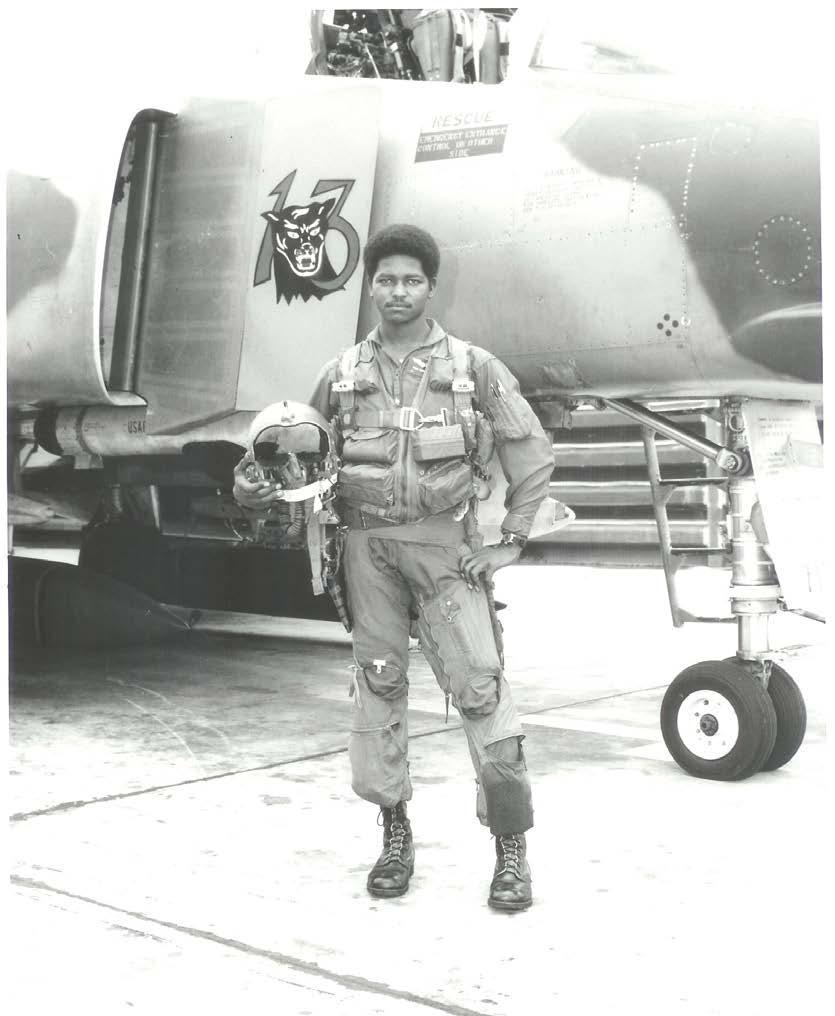
Hanoi Hilton
E’S A FORMER F-4 PHANTOM WEAPONS SYSTEMS OFFICE r who was held as a prisoner of war (POW) during the Vietnam War. He was shot down on July 3, 1972, and endured captivity until his release during Operation Homecoming on March 29, 1973. A graduate of the Air Force Academy in
By J.P. Garner
1968, he spent his time as a POW in the infamous "Hanoi Hilton" and the "Zoo". He retired a Lieutenant Colonel and later flew commercial jets for United for 16 years. He now resides in Apple Valley and dedicates considerable time educating students and sharing his story of resilience. He was shot down on his 266th mission.
Kingman with The Big Texan Caravan
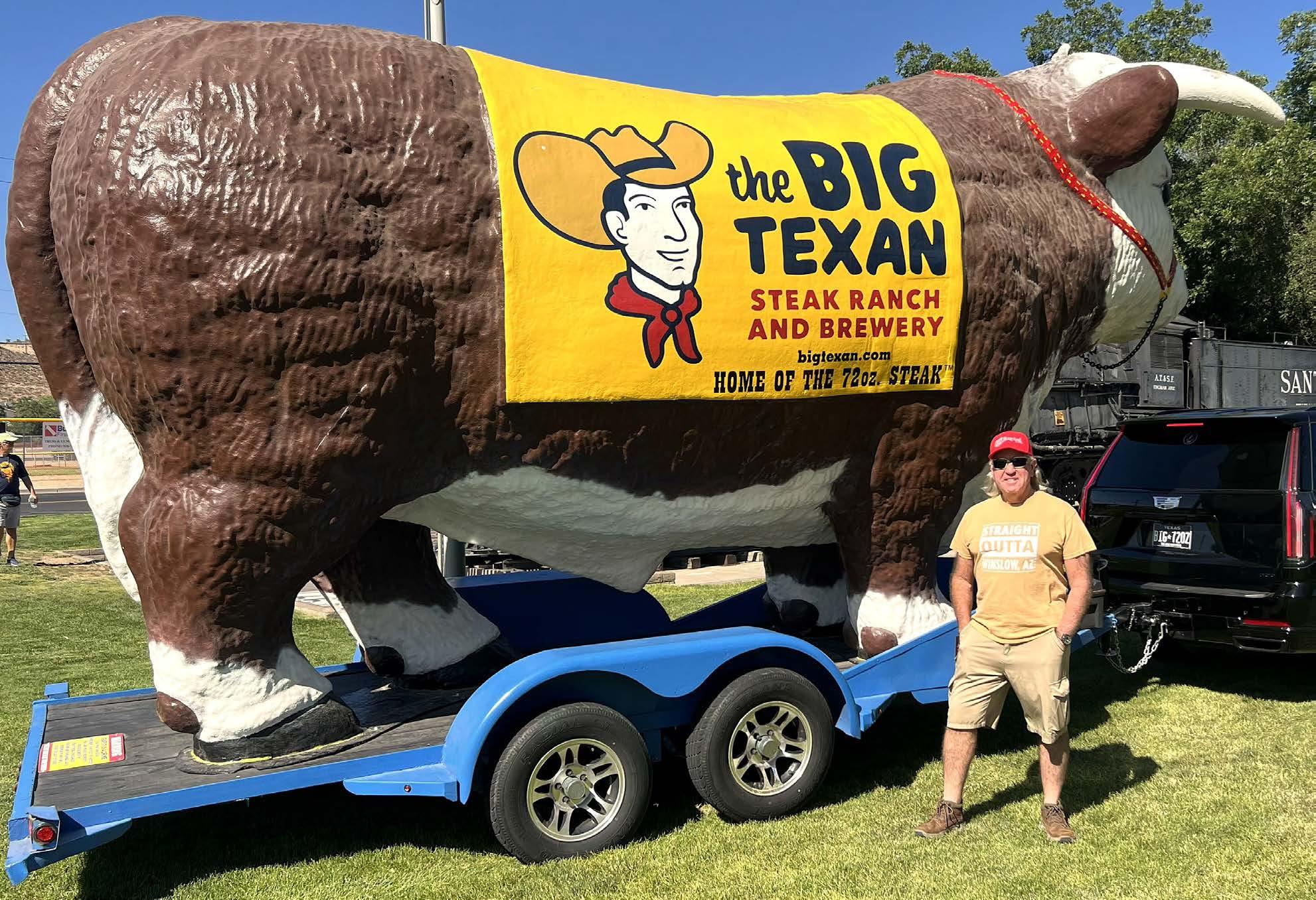
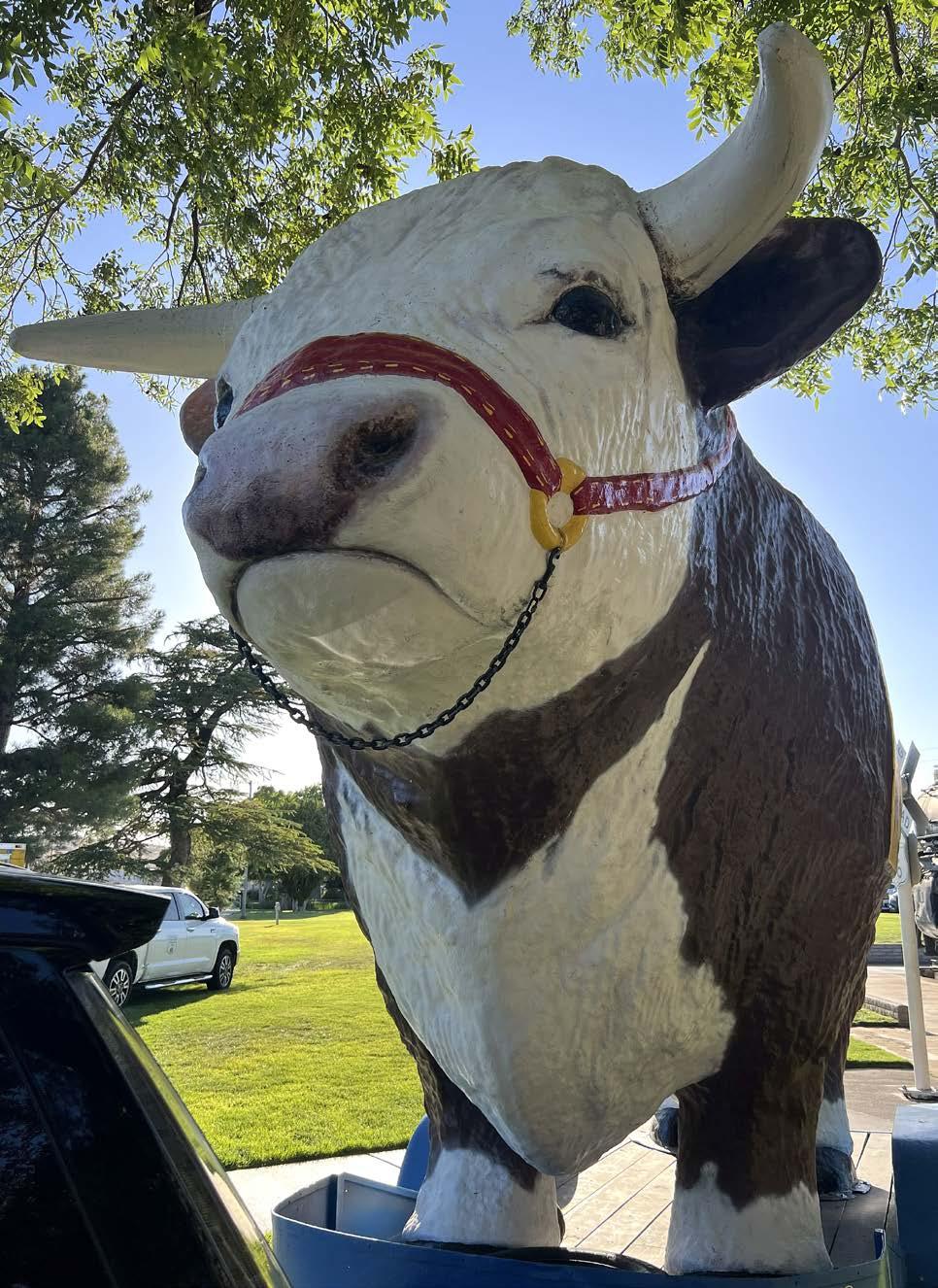
IHAD NEVER SEEN such a large cow being towed on a trailer behind a solid black SUV. I have seen cows on ranches, on television, and in the backs of trucks, but this cow was huge. Okay, it was not a real cow. The cow was a plastic-molded beast that took up most of a long flatbed trailer and weighed in at over 700 pounds.
It was being driven by a group of Texans cruising from Santa Monica all the way to Chicago along Route 66. It belonged to The Big Texan Steak Ranch out of Amarillo, Texas. This world-famous restaurant and brewery promises that if a customer can consume a 72-ounce steak with all the trimmings in less than an hour, then that meal is free.
Though the diner would need to pay for any follow-up visit to the cardiologist on his own.
This trip by The Big Texan Steak Ranch was a 13-day advertising odyssey to promote the 100th anniversary of Route 66, tied in with plenty of red, white, and blue as homage to the United States 250th birthday.
The thought of crossing half the country intrigued me as a writer, explorer, and just one proud American, but time can be sometimes challenging, and unfortunately, I could only spare three days on what John Steinbeck called the Mother Road.
I’ve traveled parts of Route 66 numerous times, but this would be the first time in a caravan featuring classic cars, classic people, and a classic plastic cow.
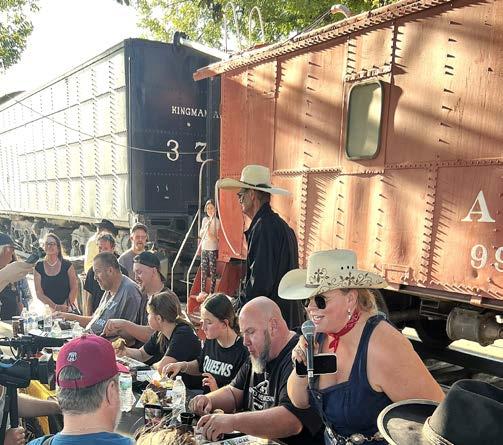
The weather was warm in Kingman as the cow made its appearance, but already a sizable crowd was milling around Locomotive Park near the corner of Beale Street and Grandview Avenue. A tourist can not miss this park, also known as Metcalfe Park, with the huge Santa Fe Steam Locomotive sporting number 3759 detailed along its jet-black metal frame.
As the team from The Big Texan Steak Ranch was setting up for the 72-ounce eating contest, I decided to meander a bit up Beale Street and see what I could see.
I have always liked Kingman, Arizona. It has two distinct sides to it that many cities do not share.
On this side of town, the historic section,
By John Beyer
you have the history of this once-bustling railroad town. It still is, but in its heyday, steam-engined locomotives would stop for a water fill-up before heading either east or west out of town.
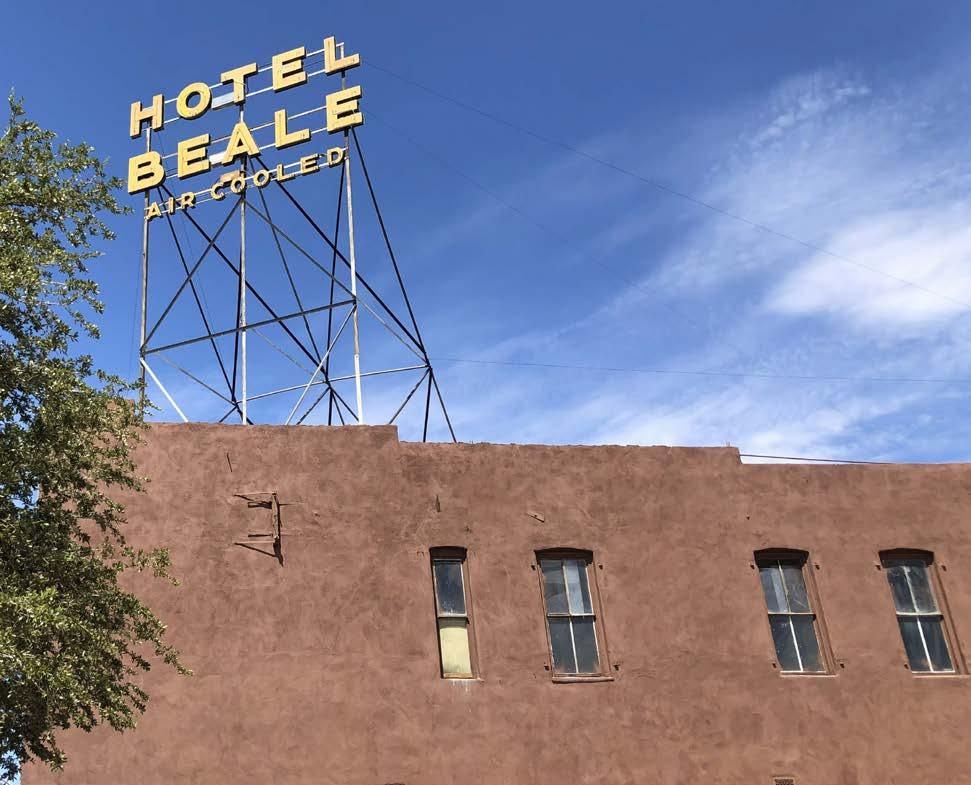
All within walking distance, for those who like to stretch their legs, are the Bonelli House, built in 1915, the Hotel Beale, constructed in 1899, the Hotel Brunswick, erected in 1907, and the Powerhouse, built in 1907, which now hosts the Kingman Visitor Center.
Each historic building has its particular niche in Kingman, but one of the most interesting is the Hotel Beale.
An earlier fire destroyed the original Hubbs House at the location, and the rebuilding of the later known Hotel Beale was created with a brick-and-masonry construction, which is a pretty smart thing to do to decrease an errant structural fire from taking down the entire block.
In 1906, the property was purchased by the actor Andy Devine’s parents, Tom and Amy Devine. The famous cowboy actor grew up there, mixing it up with travelers from the railroad, workers, and those who were just moseying through Kingman on their way to here or there.
Rumor has it that Andy Devine learned
his acting skills by meeting so many interesting and sometimes odd fellows who frequented the hotel during his growing-up years in Kingman.
Famous folks like Buster Keaton stayed at the Hotel Beale while filming his movie, Go West, in 1925, and Charles Lindbergh stayed at the hotel while building a local airfield near Kingman.
But, as a writer, the most important person to stay at the hotel was Louis L’Amour, who stayed there quite often while working at the Katherine Mine near the Colorado River. That is also how Katherine Landing on Lake Mohave got its name, after the mine's founder’s sister, Katherine.
Unfortunately, the hotel has been abandoned for decades, but there is hope that the city of Kingman or a generous benefactor could bring the building back to its historic splendor.
John R. Beyer standing next to The Big Texan Steak Ranch cow
Folks testing the limits at the big challenge by The Big Texan Steak Ranch
I was getting a bit exhausted with all the history of Kingman and decided a cold beverage may be in store.
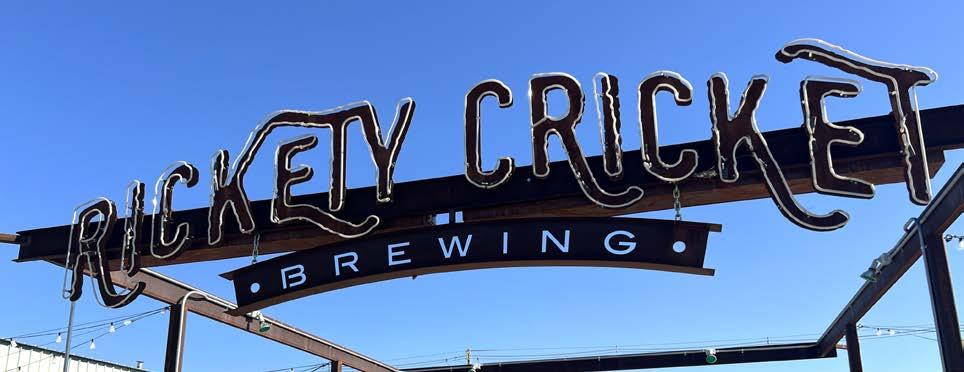
Thus, I found myself at Rickety Cricket Brewing on Beale Street. A great place for a cold libation and perhaps a bite of this or that. One of my favorite places in Kingman to stop in and enjoy the atmosphere, food, and good selection of taps.
Afterwards, I sauntered down Beale Street westbound toward the goings on in Locomotive Park but could not resist stopping in at the Black Bridge Brewery. It was warm, and the walk from Rickety Cricket Brewing had gotten me rather parched. One more for the road - though
I was not driving since my hotel was just around the corner and my feet were my transportation for the moment. So, it was actually one more for the sidewalk.
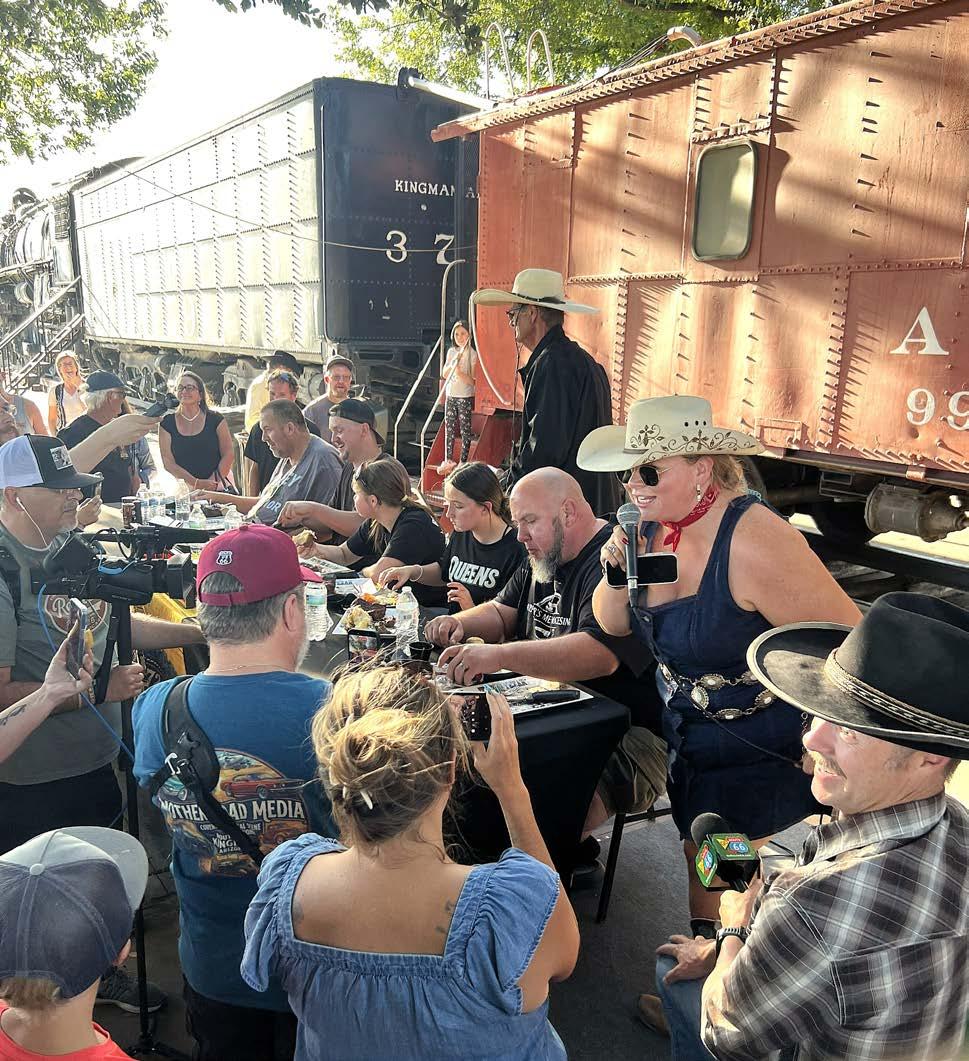
Within thirty minutes, a large crowd was standing in Locomotive Park watching all the action near beneath the tarps covering a long table with folks who believed they could outeat the contest the Big Texan Steak Ranch was dishing out.
It was a fun-filled time with laughter, yelling, and goading on by the crowd watching the participants slowly but effectively putting away every bite.
Some attacked the steak alone. Some attacked the side dishes first. Others attacked like a shark seeing a bleeding swimmer on a lonely beach, grabbing every morsel available.
It was fascinating, gruesome, and fulfilling.
Soon, after nearly thirty minutes, there was a winner, and he was asked how he felt by one of the emcees. He stated the obvious: “Full.”
It was a great day spent in Kingman. I met new friends, ditched others before they got a chance to see me, and learned that there is no way I could take on the eating wager The Big Texan Steak Ranch offers.
I waved goodbye to the huge plastic bovine and called it an evening, wondering what tomorrow’s adventure would bring.
For more information:
• https://ricketycricketbrewing.com/
• https://www.blackbridgebreweryaz. com/
• https://www.explorekingman.com/ attraction-Powerhouse-Route-66Museum/ John can be contacted at: beyersbyways@gmail.com
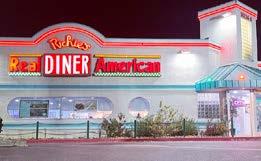
The Rickety Crickets Brewery in Kingman, Arizona
A huge face on that cow from Texas
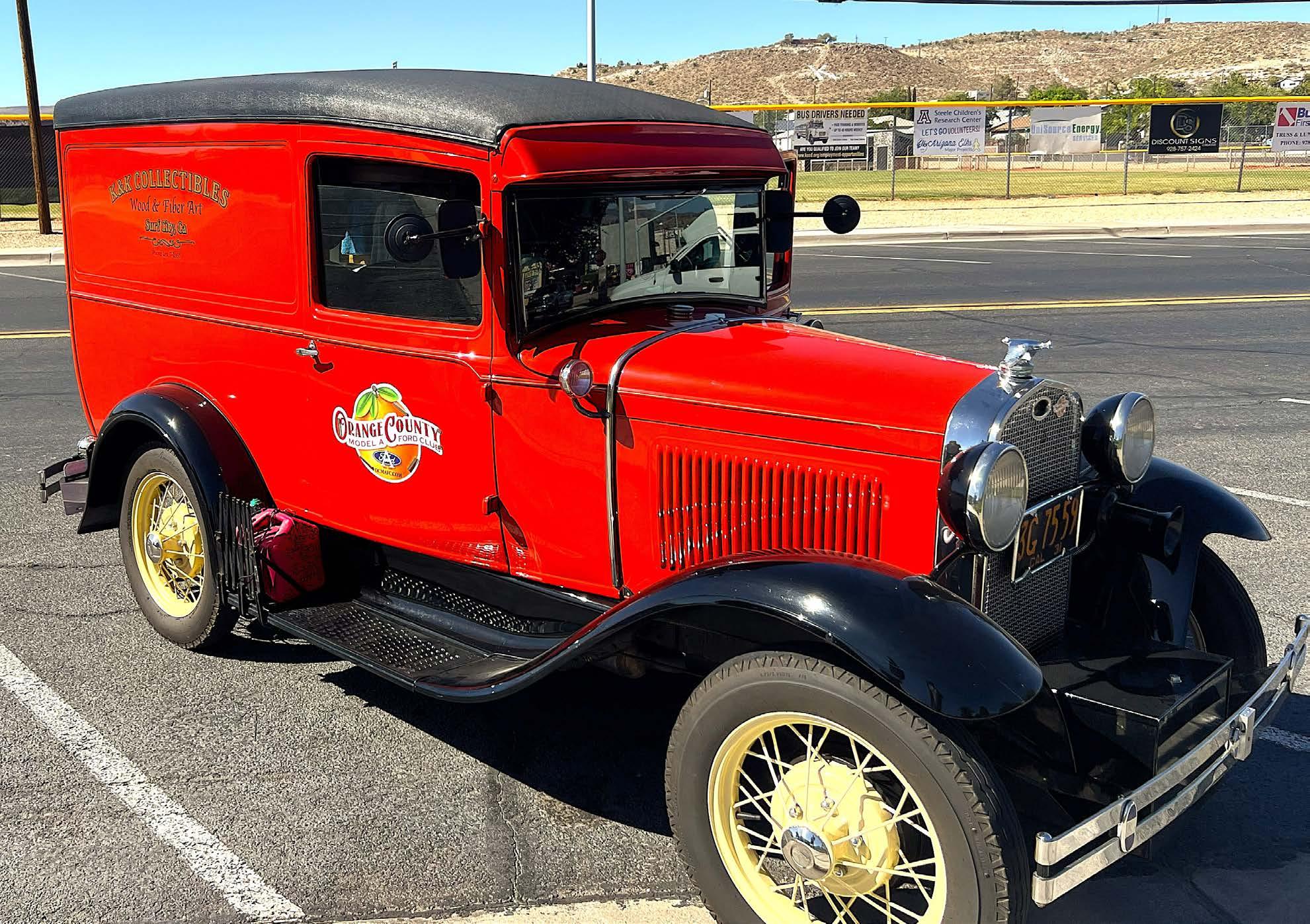
Just one of many classic cars showing up in Kingman, Arizona
Hotel Beale in Kingman, Arizona
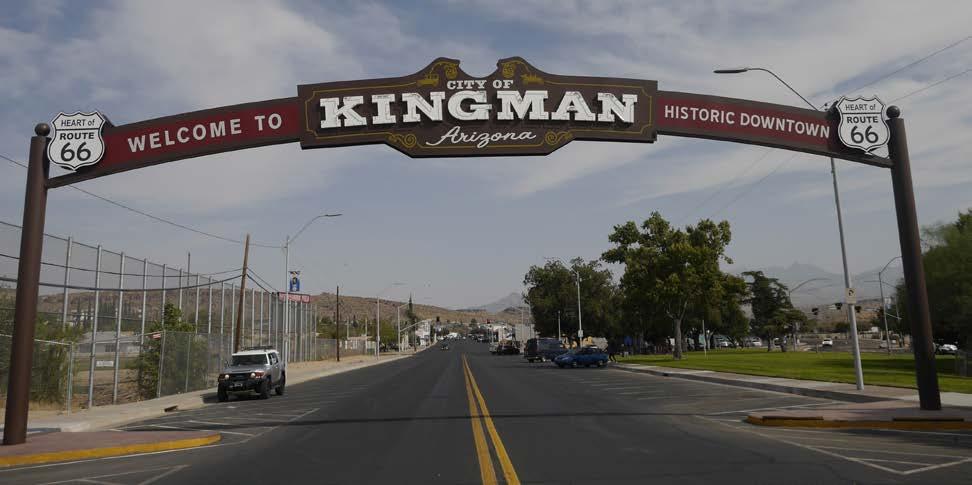
Welcome to Kingman, Arizona, near Locomotive Park
SWIM
• Aug 6 San Bernardino County Fire Department
Captain David Newman
• Aug 13 Ozzy Osborne Impersonator
Don Rugg
• Aug 20 Hydroponics
Alfredo Gomez
• Aug 27 Free Estate Planning
Mike Johnson
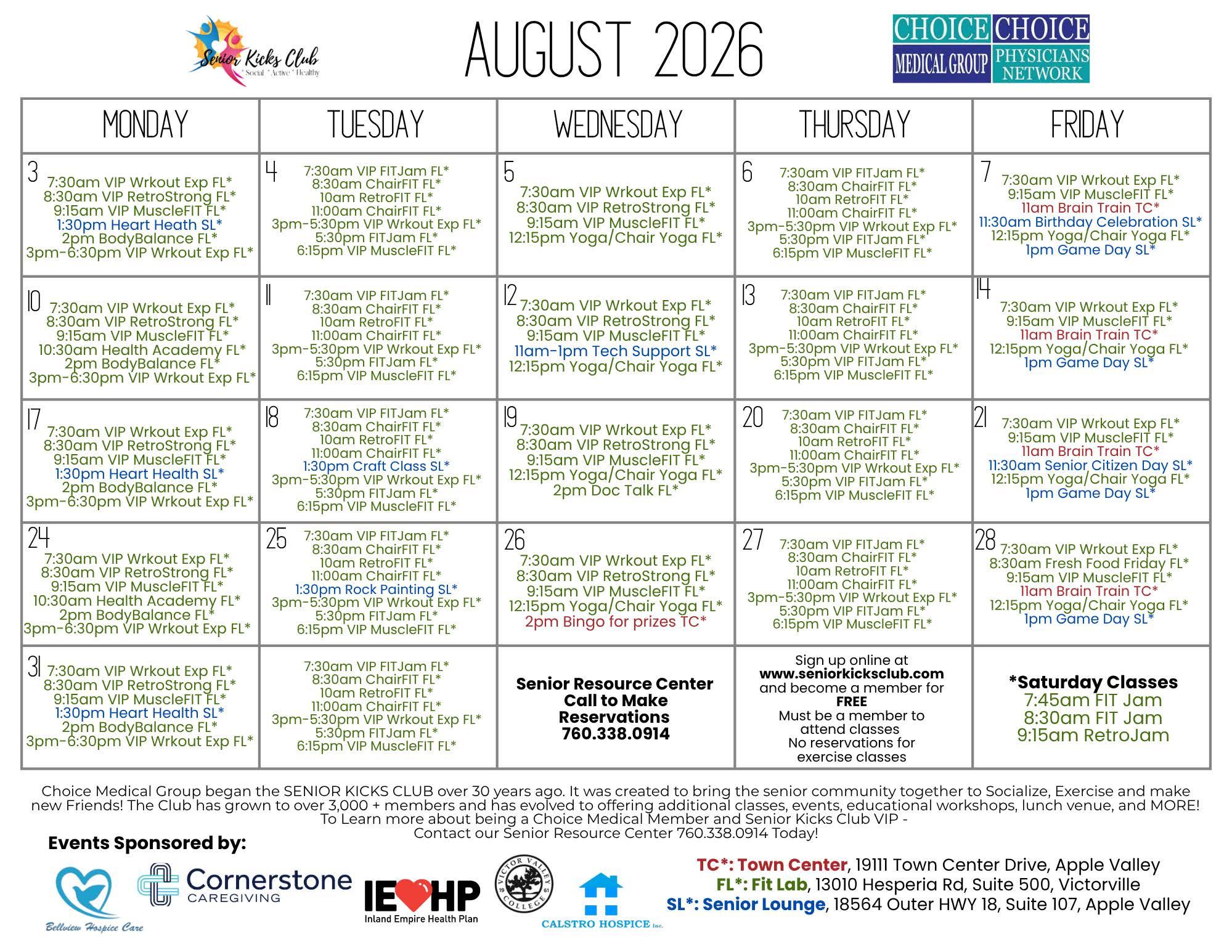
Seniors With Inquiring Minds (SWIM) meets every Thursday from 1:00-2:00 pm in the Percy Bakker Center located at 9333 E Avenue in Hesperia, CA 92345
UpcomingCommunity Events
• Aug. 1- The Way Resource Center - Resource Fair, 20601 Hwy 18 Apple Valley, Backpack give-way 10-1:00
• Aug. 8- Apple Valley Flea Market, Lions Park, 8-1:00
• Aug. 8- Victorville Fire Dept. Centennial- 8th Street Old Town, 9 AM
• Aug. 10- NAACP Branch 1082 General Meeting- Branch Office 6 PM
• Aug. 11- Friends of the AV Library membership meeting11:15 AM
• Aug. 21- Movie Night at AV Legacy Museum- 20601 Hwy 18 #153 "Roy Rogers Tribute," 7 PM, $5 admission includes snax and raffle
The Dagget Welcome Center
WAY BACK IN THE EARLY 1980S , we knew it as Mrs. Bells’s house. It was more commonly referred to as “that house with the weird roof.” I have a little experience framing and roofing and I can’t look at that roof without wondering how it was built. The odd roof style, known as Bochka, Russian for barrel, has given the building several names. The Russian House, The Ski Lodge Roof House, the Ski Lodge, are just a few. The unique structure has had about as many uses as names.
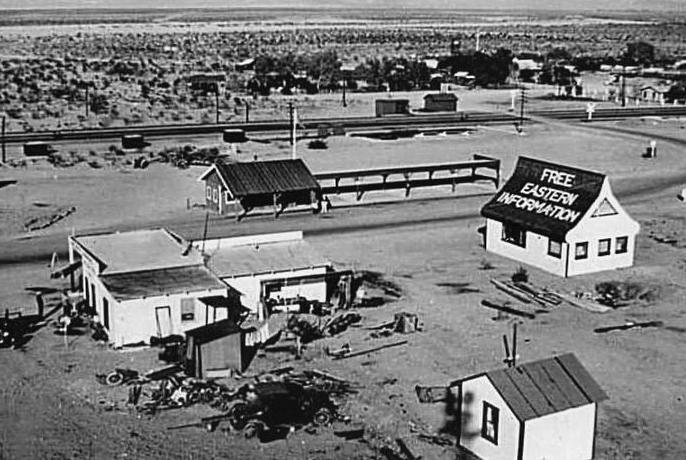
From what I can gather, it was built by the Minneola Land Development Company in 1922. It was located across the street from the first agricultural inspection station on the National Old Trails Road dedicated in 1912. Also known as the “Coast to Coast Highway” it ran from Baltimore to Los Angeles. The travelers who stopped at the inspection station would be drawn to the signs advertising the welcome center with free information, ice water, and restrooms. All three would have been appreciated in those days.
The growing number of automotive travelers outgrew the inspection station, and a new larger facility was built to the east. It too was replaced by an even larger station, the remains of which can be seen by the airport. The original inspection station was torn down, and nothing remains. The land developers were unsuccessful, and the building became the private residence of the poet Alice Richards Salisbury. By 1930, it was the residence of Marie Millet. She opened “Ma Millet’s Café there and served hungry travelers until 1947. Pearl Bell was the last and longtime resident. Now, going full circle, the historic structure is once again sporting the replicated Welcome Center signage advertising free information, restrooms and ice water. The
Welcome Center is undergoing restoration by the Daggett Historical Society. They hope to have it functioning again as a visitor’s center with information, cold drinks and snacks for travelers. Located on the Historic Route 66, they hope to use it to inform Route 66 travelers of the much older historic sites across the tracks in Daggett’s historic district. It will be a part of the “Spend a Day in Daggett” walking tour.
Daggett was the very important shipping center for the nearby Calico mines and Borate. Founded in 1882 as Calico Junction, it was renamed in 1883 as Daggett in honor of then Lieutenant Governor and owner of the Bismark Mine in Calico, John Daggett. The main street through Daggett was the original National Old Trails Road and later U.S. 66. It was realigned south of the tracks to the current National Trails Highway. Much of the Daggett historic district is being preserved by the Daggett Historical Society and is well worth a visit.
On June 8, I had the opportunity for a rare view of inside the welcome center. It was open for a visit by the Main Street of America Centennial Caravan, led by
By John Wease
Rhys Martin. The caravan had some three hundred people sign up for all or part of the west to east trip from Santa Monica to Chicago. Many more joined in along the way. The first stop on their third day was a visit to what is believed to be California’s first Welcome Center.
The building is wood framed, single story, and has a high peaked roof with a large triangular attic vent. In the days before air conditioning that vent would have helped with the intense summer heat. The building is furnished with period correct furniture. The interior was dark and a little crowded for photos when I was there. It looks like a residence, true to most of its long history. Outside, in the fenced yard, there is a collection of antique vehicles. A recent addition is the old Calico Ghost Town signs that were recently replaced. Daryl Schendel, president of the Daggett Historical Society, gave an informative presentation about the Visitor Center. Daryl owns many of the businesses in Calico and has personally purchased historic buildings in Daggett to preserve them. Many are planned to be mini museums as part of the Spend a Day in Daggett tour. He is a wealth of historical knowledge of Calico and Daggett. If I had to pick a favorite part of the presentation, it must be Mrs. Bell’s solution to the leaky roof. Daryl said they found several buckets placed in the attic by Mrs. Bell to catch rainwater. They were left in place as part of history. Any desert dweller must see the logic. With annual rainfall measured in a few inches, you can’t patch the roof while it is raining. When the rain stops, there are no more leaks.
The Welcome Center is located at 35421 National Trails Highway. It is well worth a stop if you are travelling on Route 66. Cross the tracks and turn on Santa Fe to see Historic Daggett. I think you will enjoy it. Maybe I’ll see you there.
Group photo of caravan visit at the Welcome Center
Daryl Schendel explaining the history of the Welcome Center.