WHAT DOES THE 4TH OF JULY MEAN TO YOU? For many of us this day is full of memories of family picnics, parades, fireworks and celebrating our country’s birthday.
We at PULSE MEDIA wish all of our fellow country men and women a HAPPY BIRTHDAY. We come from all walks of life, many from other countries and speak different languages, yet we are all proud to be AMERICANS.
As always I urge you to use our Advertisers products or services.
Jim Conkle
Pg 6
Marcy's Musings
Pg 10 New Hope Village
Pg 12 A Desert Legacy So Far
Pg 14 Music Family of Noizemakers
Pg 18 A Slice of Life
Pg 20 Essex is Still There - Almost
Pg 22 Events
Pg 23
Future Farmers
Marcy’s Musings
One Hundred Years and Still Kickin' on Route 66
I'M SURE BY NOW YOU KNOW that 2026 marks the Centennial of the Route 66, celebrating the Route's completion across eight states from Chicago to Los Angeles back in 1926. And you probably know that all of Seventh Street in Victorville and "D" Street heading west were a vital part of the original road, making Old Town Victorville a busy little spot in the desert. Yes, Victorville, the "Heart of the High Desert," had all the service stations, restaurants, hotels, and stores that a traveler might need, when coming in by either train or automobile.
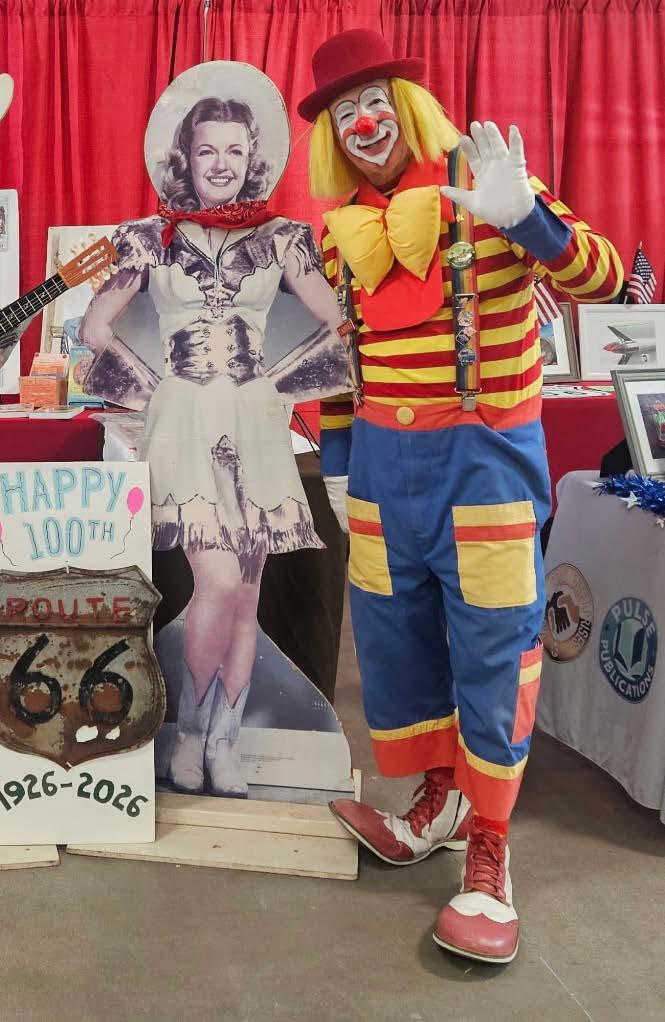
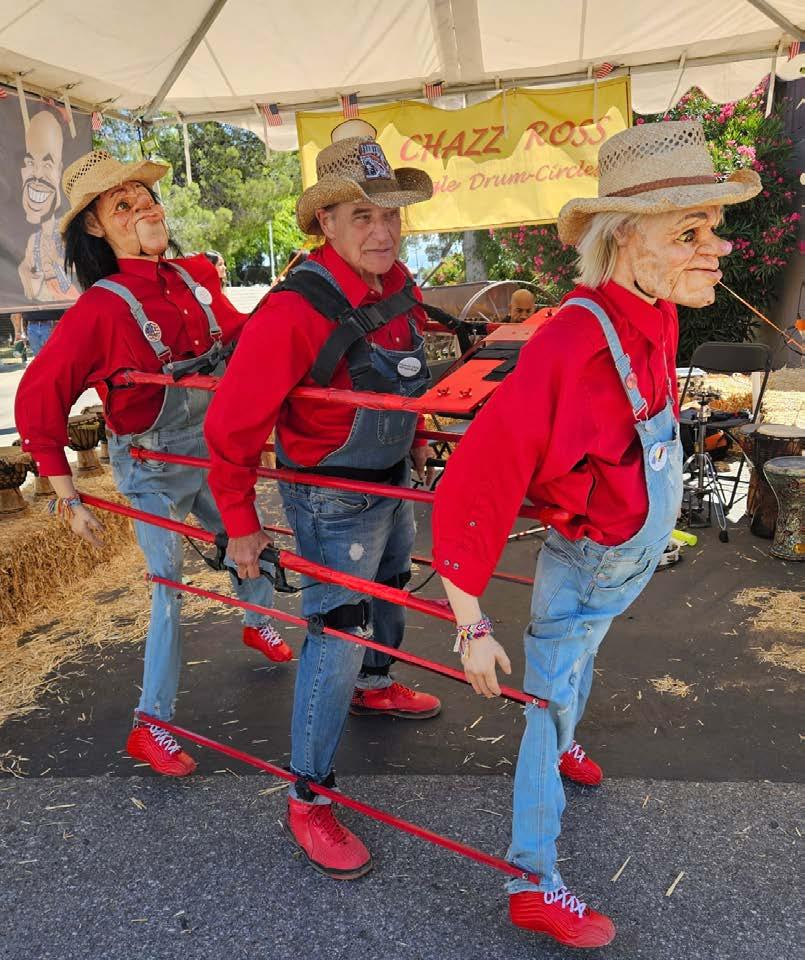
But do you know our San Bernardino County Fair is one of the last, if not THE last, Fair to occupy its original location on Route 66. Yes, the first Fair was held 79 years ago, right at our fairgrounds, with cows, chickens, fruits and vegetables, housewares, clothing, rugs, quilts, and everything you can think of on display inside giant tents with lightbulbs dangling from the tops. (You notice I did not mention carnival rides.) No, the main entertainment was square dancing, pie eating contents, diaper derbies, guitar pickers, clowns, tractor pulls, cattle drives, rodeos, and parades. Leading up to the Fair's opening day, the Fair mascot, Bingo the Donkey, accompanied by some of the local queens, was known to stand on Seventh Street selling tickets, with no need for credit cards or QR codes.
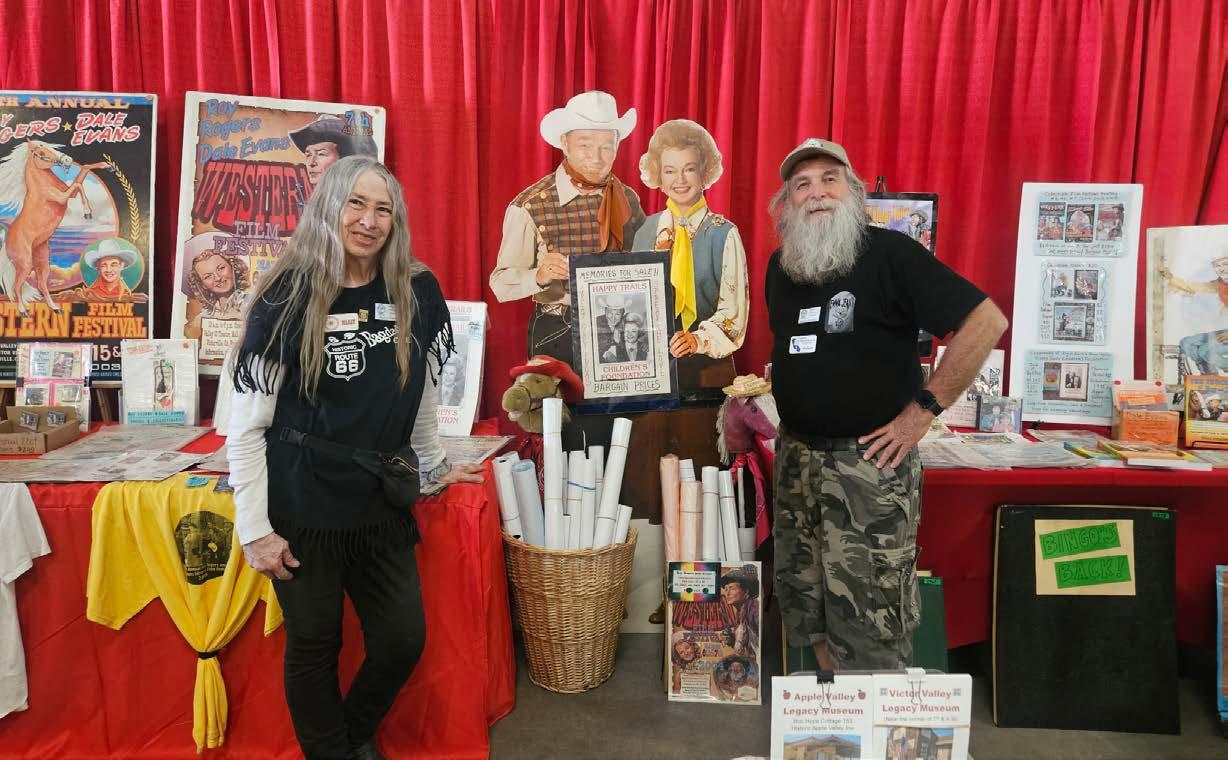
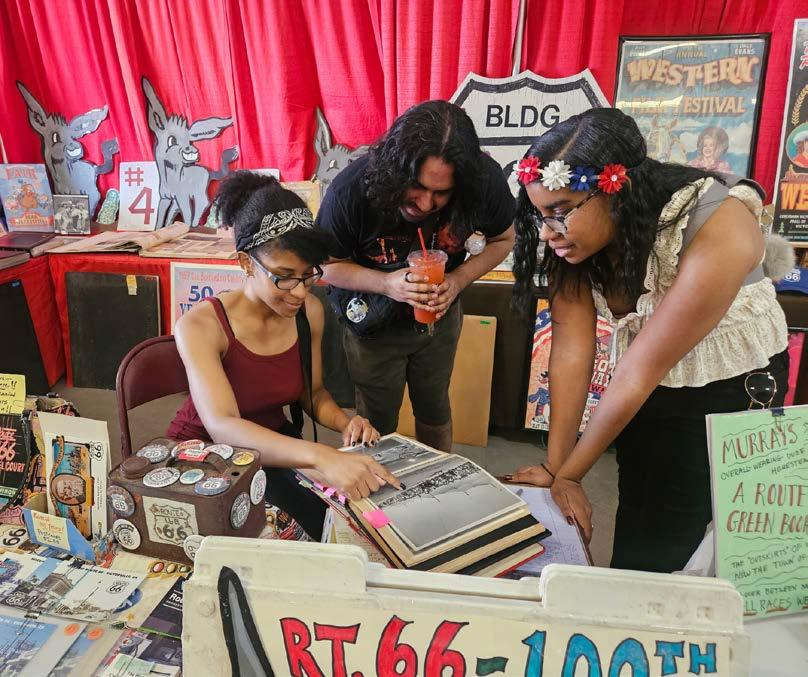
We history buffs were fortunate to occupy a large display area in Building #2 the last two weekends in May, to promote and share the almost eight-decade legacy of the SBC Fair. Route 66 books and collectibles, Roy Rogers and Dale Evans memorabilia, Apple Valley golf artifacts, and Mohahve Historical Society books and logo-wear were all available for purchase. In addition, we highlighted the little known important spot on the desert, the Murrays Ranch "on the outskirts of Victorville, a welcoming Green Book spot along the long dusty road across the Mojave Desert. Thanks to the 11 MHS members who staffed the booth, and to our Pulse Magazine booth sponsors, Jim and Frances Conkle, for making it all possible. There's nothing better than the chance to visit with locals and out-of-towners, young and old, families and friends, other vendors and FFA cowboys and cowgirls, all excited to experience the 79th SBC Fair right here in the center of the largest county in the United States of America!
Eat Your Heart Out, Route 66ers
THE ROUTE 66 Centennial Caravan, celebrating 100 years of traveling the Main Street of America, left Santa Monica Sat. June 6 for its three-day trek across California. Organized by the Route 66 Road Ahead Partnership. the purpose of this official certified Route 66 Centennial event is to highlight preservation, as the
convoy passes through small towns and big cities along the 2, 448 miles through eight states, arriving in Chicago June 25. Stop 3 at the Barstow Harvey House Sunday June 7 was a well-attended affair. Displays of antique and classic cars, and a long line of tear-drop trailers, were a nod to nostalgic days gone by. The Mother Road Museum and the Western American Train Museum, both located in Casa Del Desierto, had their doors wide open. Guest perusing vintage displays and Route 66 artifacts could be heard reminiscing and sharing their prior Mother Road experiences.
Members of the California Route 66 Association and the Old Route 66 Association of Texas were busy at their booth, answering questions and handing out souvenirs. A large number of Route 66 Queens of various ages and hailing from a number of different cities moved through the crowd showing off their sashes and
Cruisin' Down
posing for photos.
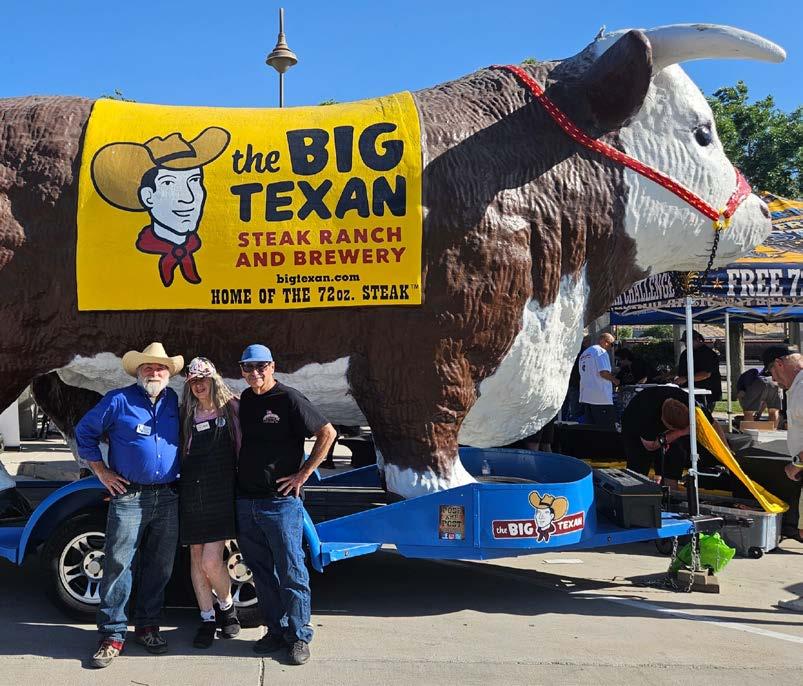
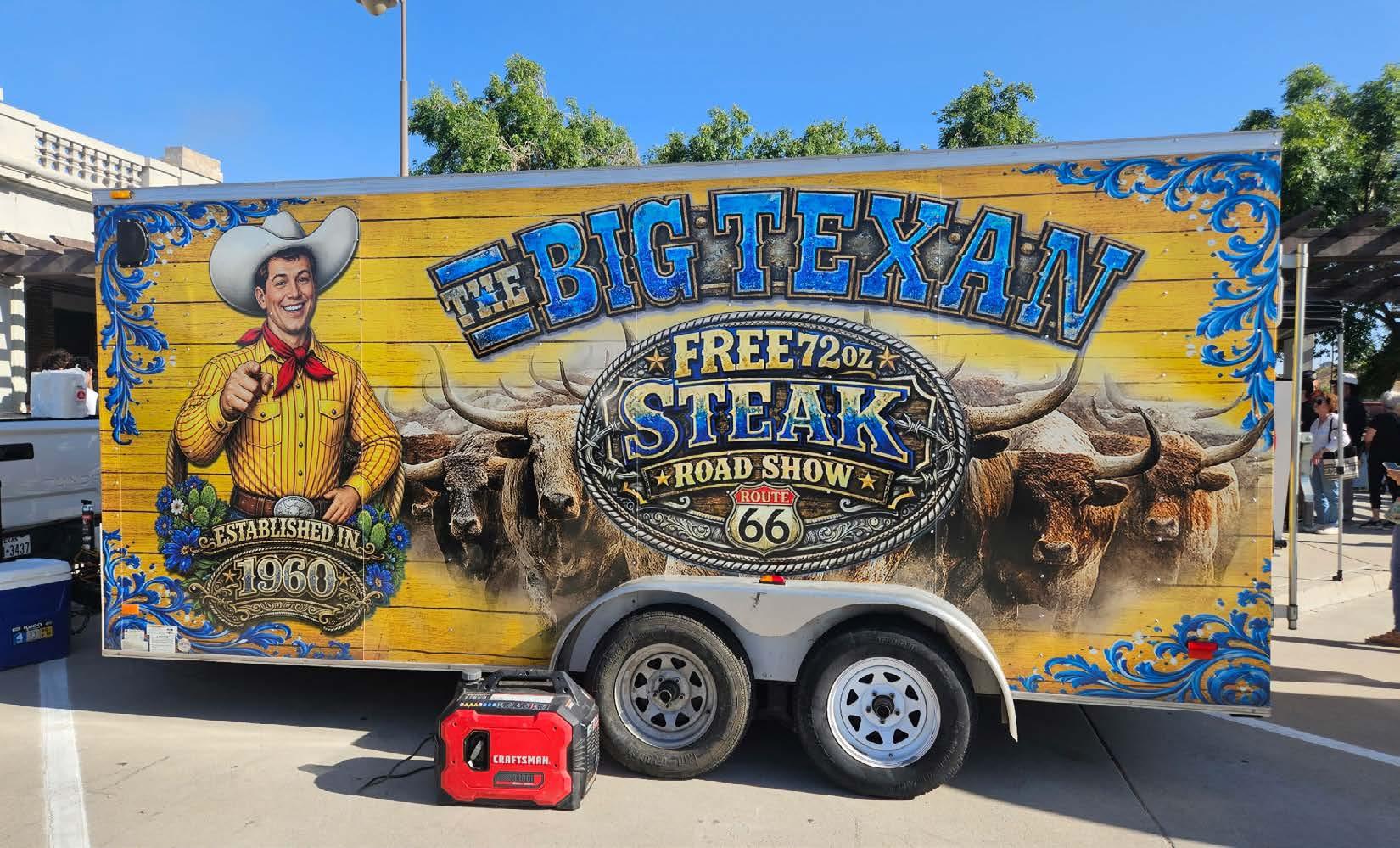
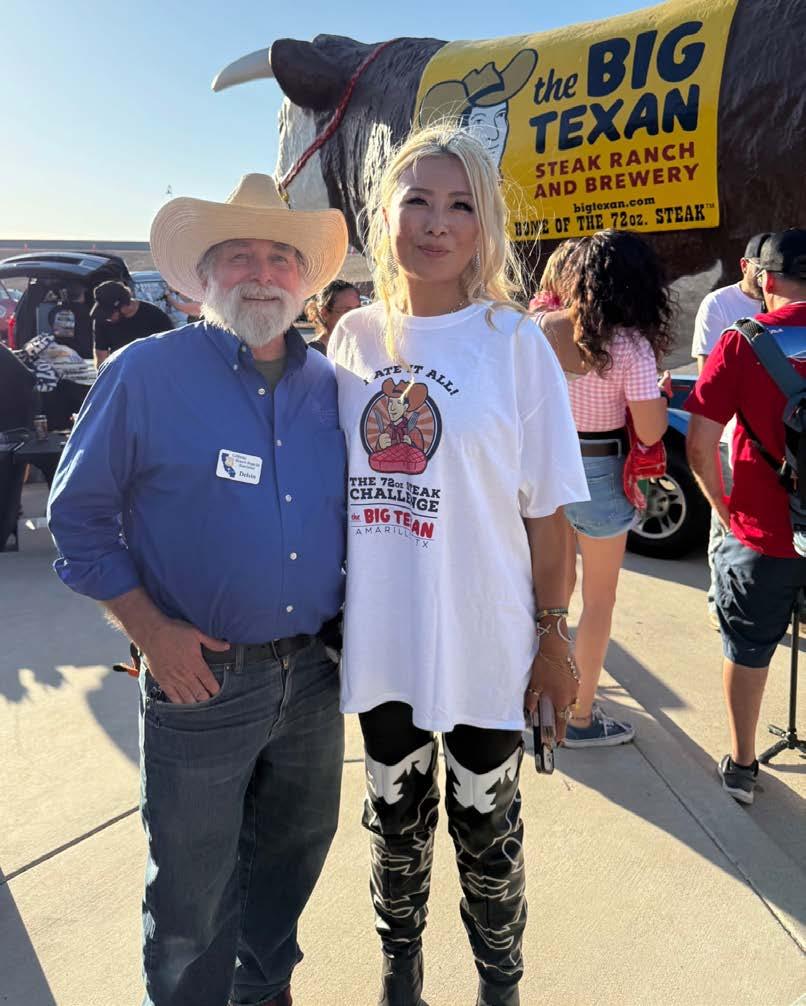
The main event, however, was the Big Texas 72-Ounce Steak Challenge. Contestants were attempting to chow down that huge slab of meat along with a giant baked potato and other sides in less than an hour. Believe it or not, the first to succeed in 14 minutes 13 seconds was Raina Huang, a petite muscular female, who had not eaten a bite all day, despite a three-hour workout session. Oh, so that's how it's done.
Two other contestants, Frank Shaw and a man with the moniker Freak Eating, also completed the challenge. Score so far: Santa Monica ZERO, Pasadena ZERO, Barstow THREE! A little bit of credit also goes to the Barstow Team, the Mayor, the Police Chief and the Assistant City Manager; however, three mouths are batter than one. As for me, I went home and ate a salad and ice tea for dinner.
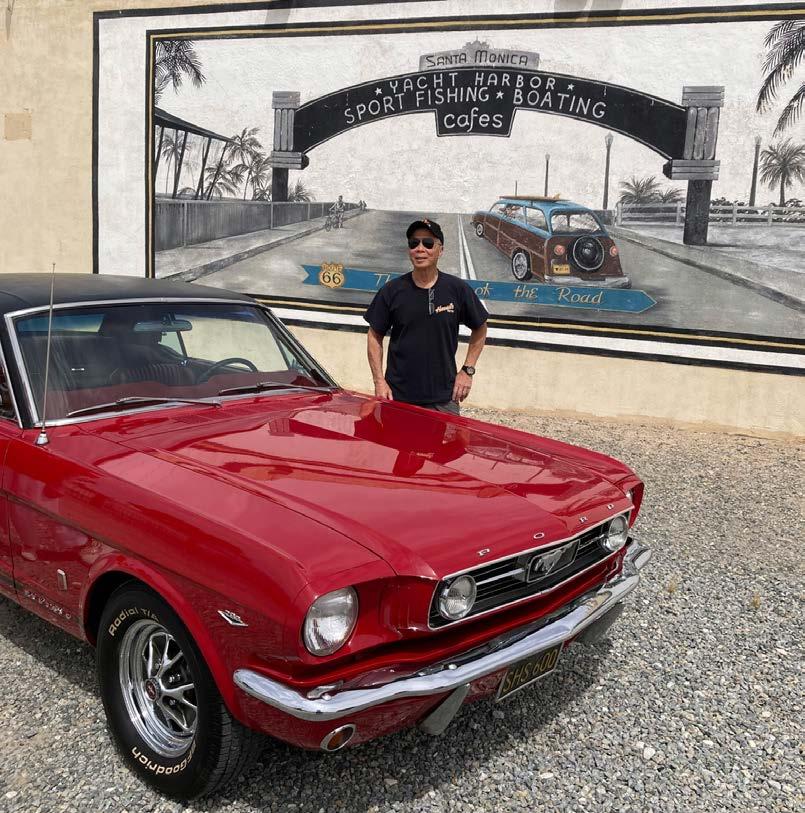
Route 66 in a '66
6/06/2026- Seems like a great day to drive a '66 Mustang to the Route 66 Museum on Route 66! And Dennis and Stephanie Hom did just that. Still getting their kicks in that shiny red car after 44 years, since 1982. Happy 100th birthday, Mother Road!
First Apple Valley Memorial Day Ceremony at New Location
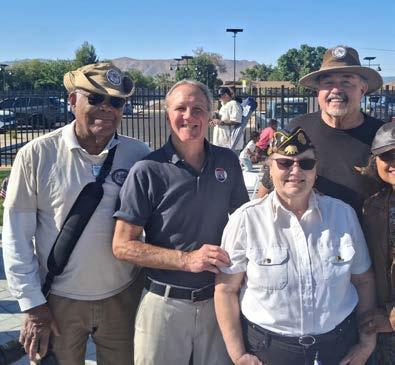
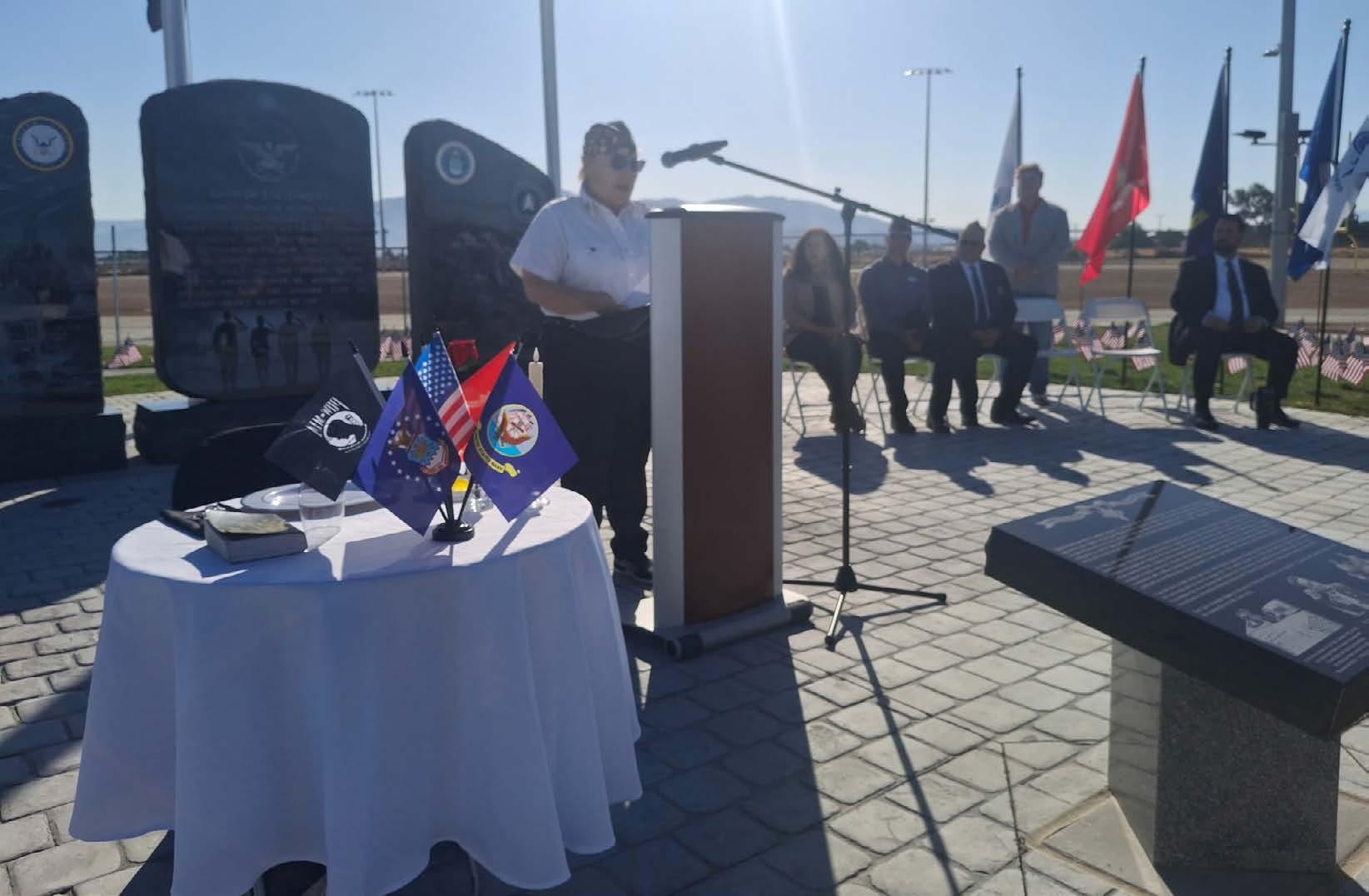
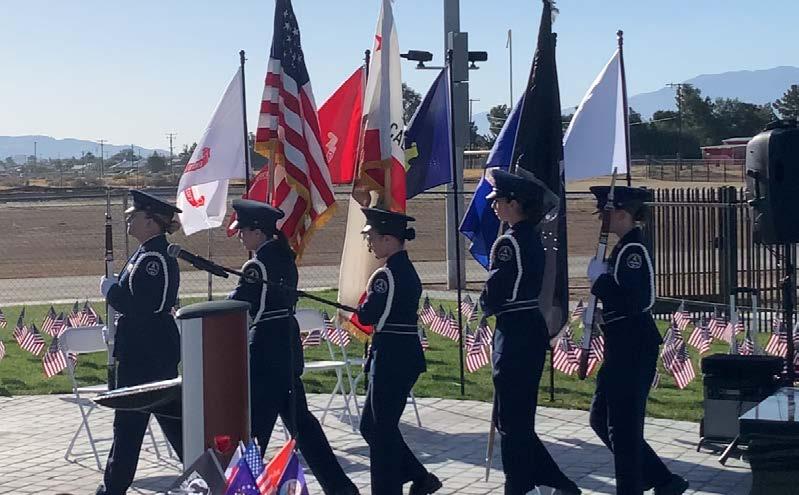
THE CAPTAIN JOSEPH MCCONNELL, JR . USAF Park, whose grand opening took place last November 11 on Veterans Day, hosted its first Memorial Day Ceremony on Monday May 25, 2026. Three hundred American Flags were placed to honor the fallen. Academy of Academic Excellence Color Guard and the Space Force Junior ROTC posted the colors, followed by the
singing of the "National Anthem" by Shane Churchill, Choir Director at Granite Hills High School.
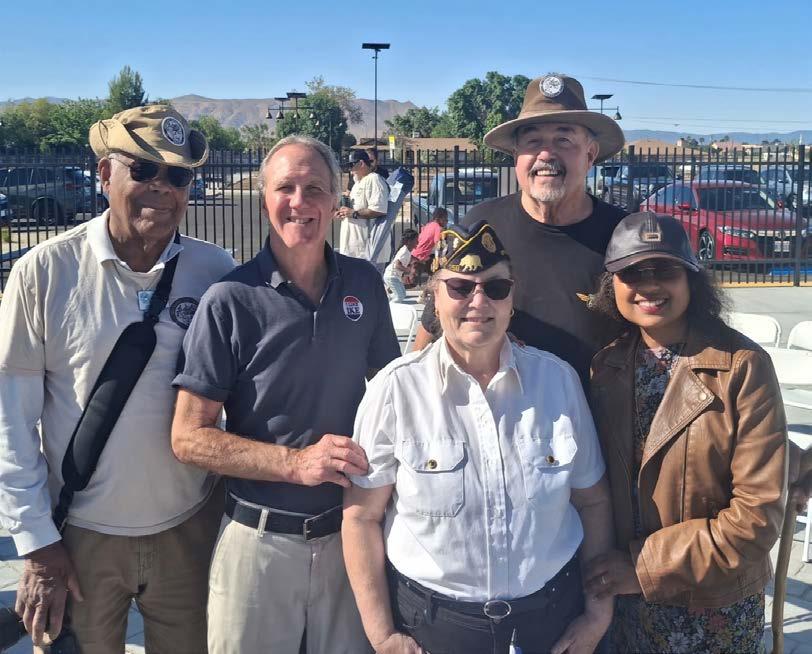
Speakers included Town of Apple Valley Mayor Scott Nassif, representatives from the offices of Congressman Jay Obernolte, DAV Chapter 92, and VFW Post 2924. Representing American Legion Post 256 was Mohahve Historical Society member and Post Commander Therese Moore.
High Desert Girls in Nashville
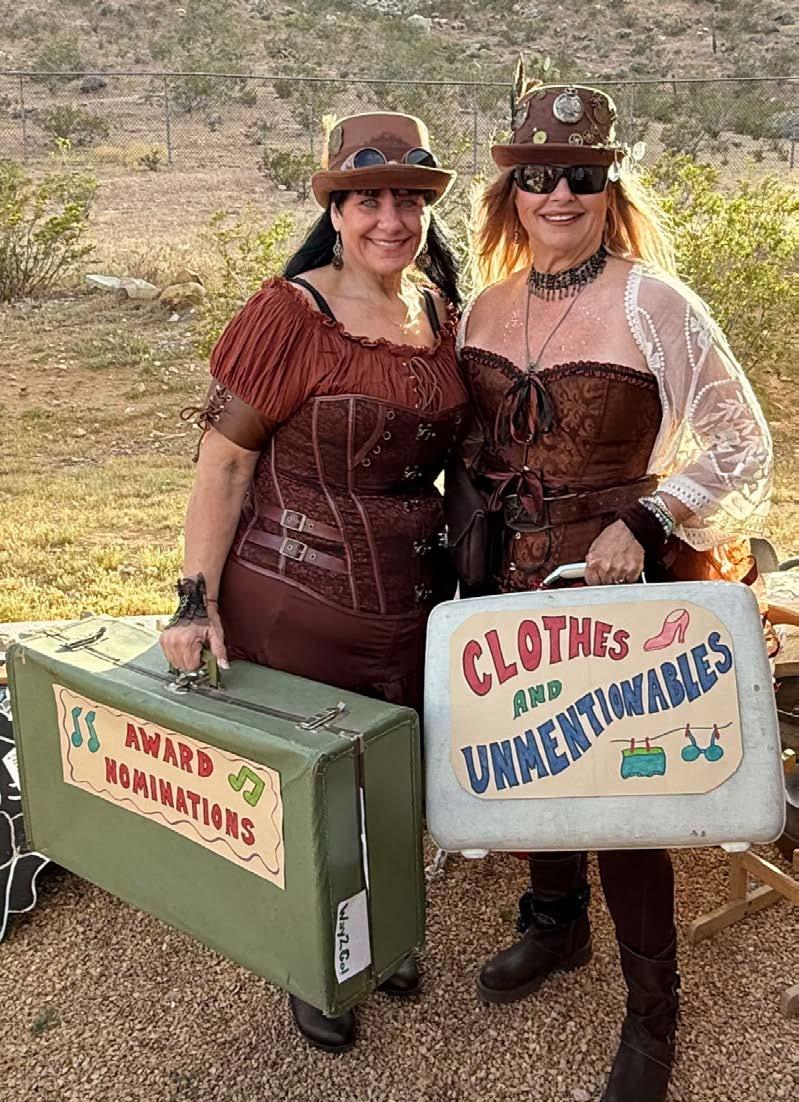
TWO HIGH DESERT locals have successfully made the BIG TIME!! Deby Kelley and Dorie Dupin, better known as the duo Mystic Rose, are shown here standing on the corner of Broadway and 15th Avenue (Highway 40) pointing themselves out on a large billboard in Nashville, Tennessee, during CMA week. You go, girls!
And a big thank-you to both of them for the complimentary performance at the Apple Valley Legacy Museum's 11th Anniversary Celebration March 28, 2026, and to Swamp Water Fox Uncle Leo J. Eiffert for booking them to sing and perform in our skit. No wonder that suitcase full of award nominations was so heavy Deby could barely lift it. And we still don't know what Dorie was hiding in her luggage. Congrats, ladies! Another High Desert success story!
Thanks to the Mohahve Historical Society members in attendance, several representing more than one organization, for joining the Town of Apple Valey in remembering and honoring our fallen servicemen and women on Memorial Day 2026.
New Hope Village The Best Hope - Part 1
By J.P. Garner
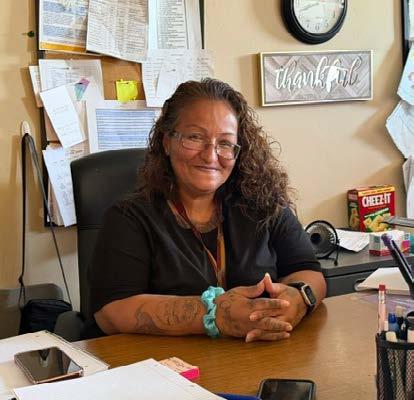
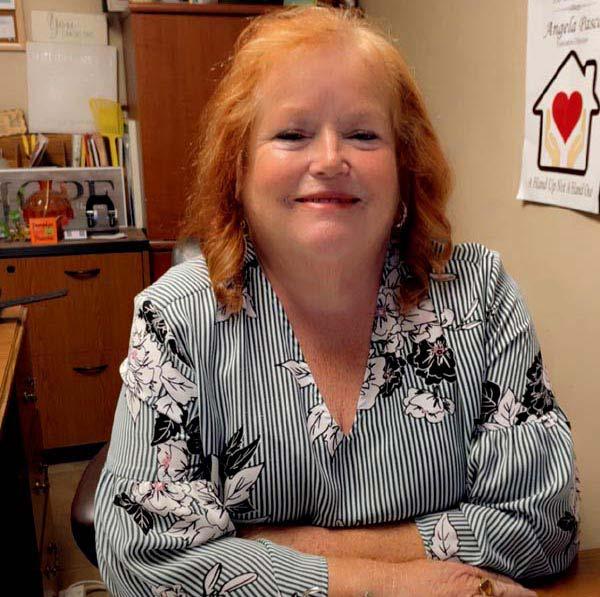
SHE’S THE PERFECT BOSS for what she does. She’s lived the life she’s saving others from. She’s been in the streets, the alleyways, and the river bottom. She knows what it is to be hooked on drugs and to rise from addiction so that now, 26 years later and clean, she gives a hand up to others from the life she had once lived.
Angela Pasco-Ortez is the Executive Director of the New Hope Village nonprofit in Barstow that transitions the homeless from the streets into productive lives. Their success rate is 96%. That’s 9 out of 10 people who are enrolled in the program, prompting State Senator Rosilicie Ochoa Bogh to select it as the Non-Profit of the Year in her district for 2026.
That means the best in a district that spans 18,730 square miles across San
Bernardino and Santa Barbara counties. It is the 2nd largest of the 40 state senate districts. In terms of population, it contains roughly 950,000 residents.
Twenty-five thousand of them reside in the little city with a big heart.
The challenges are great, the funding a competition between the biggest cities and the smallest, but Angela is up to the task. She’s inspired by the people in the program. “I kinda know what they're going through,” she says, recalling her own experience with addiction. “Kinda” hardly describes the six years she was homeless. “Because,” she explains, “… when you’ve walked it already, you understand it better. I'm grateful that I'm twenty-six years clean now.”
Twenty-six years clean and grateful.
But not initially.
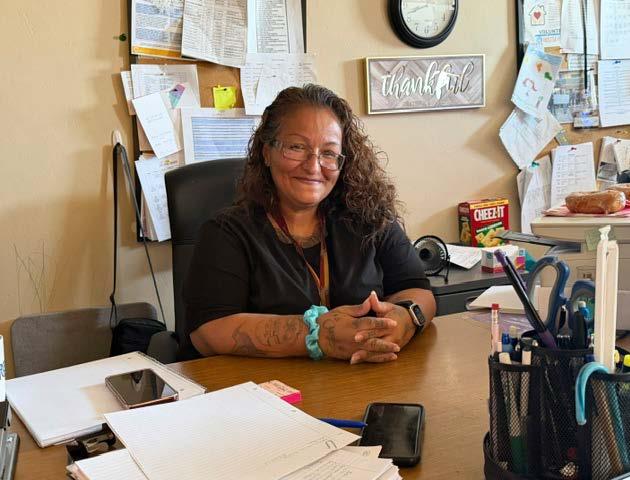
We sit at her desk in her office which is cluttered with office supplies and stuff. Not junk, but stuff for the program. She pauses and looks back to that time when she entered the program and what it was that motivated her to stick with it. She smiles when she thinks of her daughter. That’s what made her brave and determined.
“I think [that] early on, I was involved with the midtown church. It used to be called the Free Methodist Church. I was hooked into them and they would take me to meetings and things like that. But, to be honest, I wasn't grateful the first three years. I was miserable.
“It was hard to pick myself up by my bootstraps, because of where I had come from. I used to work at the county office. I was an eligibility worker, and from that to being in the streets, homeless was really
rough.
“And then, when I got into New Hope Village up the street, I just had to start looking for work and not use drugs or drink no matter what. And I just maintained that, and after three years of being clean, that’s when I got grateful”.
Got grateful.
That’s the story about New Hope Village. About people getting clean and getting their lives right. A hand-up, not a handout. It’s the daily mantra of the most successful homeless program in the 19th District. But of the 20 billion dollars the state has reportedly spent on homeless initiatives over the past five years, not a penny went to New Hope Village.
“We don't get anything from the state,” Angela confirms. “I don't see too many grants for homeless from the state. And yet, the state talks about helping the homeless. It costs about eleven thousand dollars a month to run New Hope Village. And we just received a grant from the church of the Latter-day Saints. We got twenty thousand and that will roll us into when the CDBG comes out, and then we'll pray.”
Pray? Really? For funding something as successful as New Hope Village? Where did the 20 billion go that the state spent on the homeless?
CDBG stands for Community Development Block Grant. According to Google it is a flexible, long-standing federal funding program administered by the U.S. Department of Housing and Urban Development (HUD). The program provides annual grants to states, counties, and cities to fund local infrastructure,
Angela Pasco-Ortez Executive Director
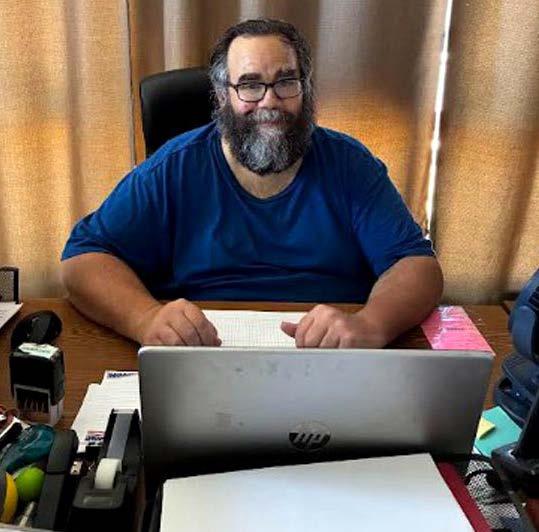
Chris Kramlich HMIS
Danielle Bird Lead Case Manager - Lead HMIS
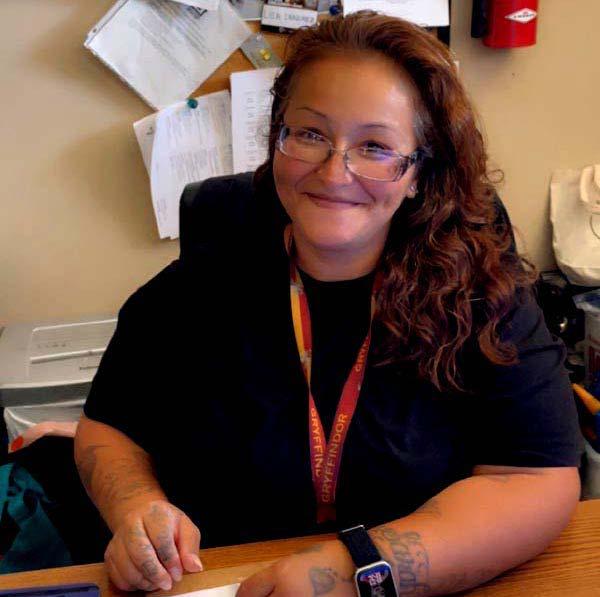
Lisa Sanchez Life Skill Coordinator
affordable housing, and economic development.
That money comes from the county and 70% of it must be used to pay for programs benefitting low- and moderateincome individuals like those enrolled in New Hope’s program. “We requested it and we got four thousand dollars. Barstow doesn’t get a lot of that money. Not like the other cities. We get short changed a lot.”
Senator Ochoa Bogh has heavily criticized the state for pouring billions of dollars into homelessness initiatives with little to no tracking of the outcomes. She led a successful bipartisan effort to request a state audit of homelessness spending to understand exactly how funds have been used.
California has spent more than $20 billion over the last five years on homelessness and has seen the population of unhoused in this state explode to more than 172,000.
In 2025, Governor Newsom announced that he planned to spend another $1 billion of taxpayer dollars with the hope of reducing the homeless population by a mere 15 percent.
“Homelessness is the most urgent issue facing California,” said Senator Roger Niello. “Given the crisis has only worsened, we need to know what the money has accomplished and what programs have been effective in moving
people to permanent housing.”
Someone needs to tell Senator Niello about Barstow’s New Hope Village. It’s been successful for years. So we have to wonder if it’s because we’re Barstow that New Hope isn’t considered a model program for other cities to mimic?
“At one point, I had to pay the bills to keep the lights on, with our credit card, because we didn't have the money in the bank. I've never done that. We've always just wrote checks.”
People complain about the homeless. They lump all homeless into three categories: druggies, alcoholics, and the mentally ill. Regrettably, some of them
prefer to be homeless. When I posted a story about buying food for a young girl, a man said we should round up all homeless and put them in jail.
They’re not cattle and that’s not a solution. It’s punishment.
But the New Hope Village program is a solution. A good one. It turns people beaten by life into winners. What’s sad is that politicians who eagerly spend billions on a high-speed train won’t spend a nickle on that.
(NOTE: Part Two will discuss how the programs works and share some of its success stories.)
A Desert Legacy So Far
WHILE THIS MAY APPEAR
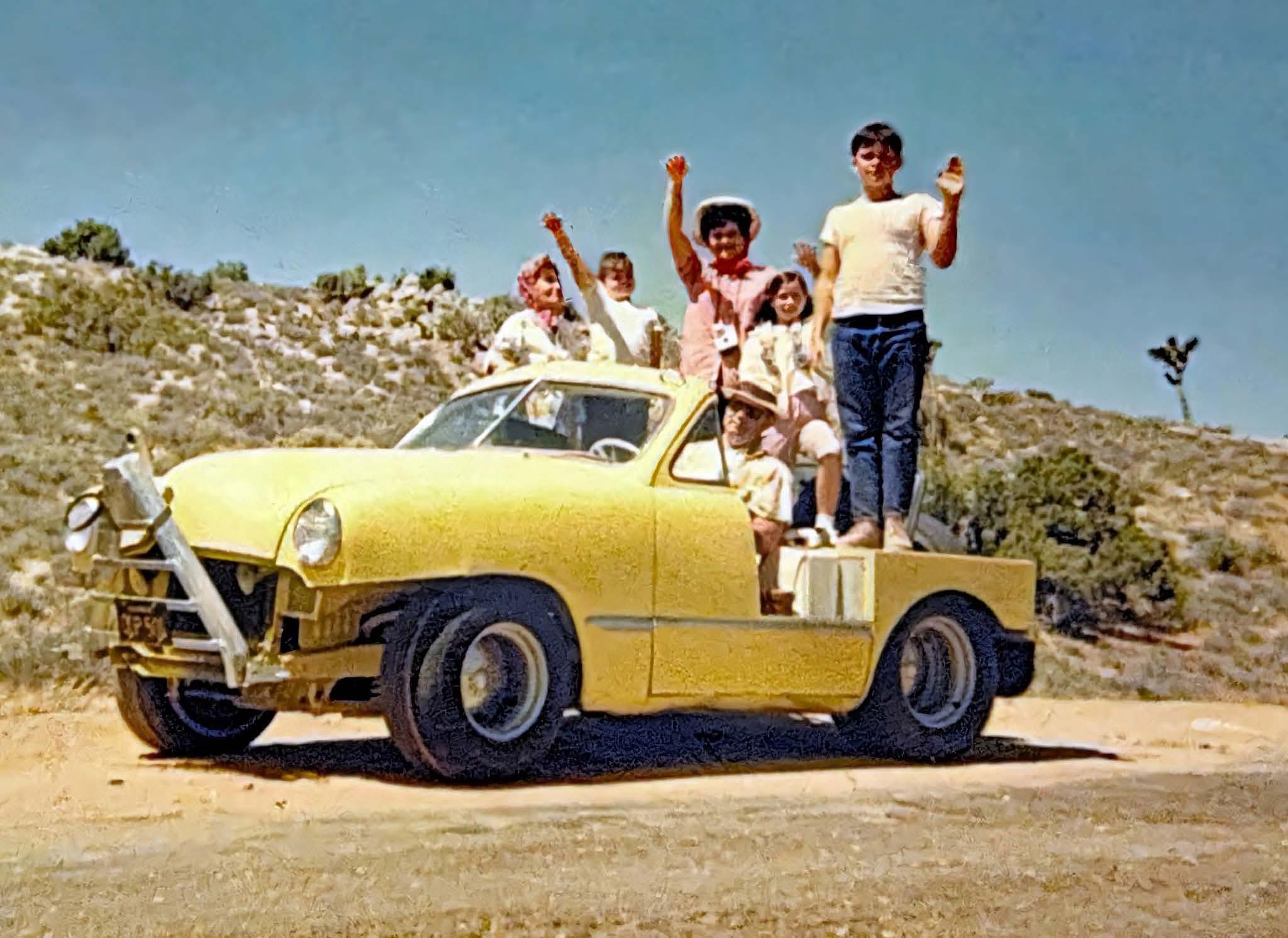
to be a stock photo of the Beverly Hillbillies visiting Joshua Tree National Monument in 1965, it is, in fact, my father driving his creation, a heavily chopped and modified 1950 Ford with a flathead V8 and 3 on the tree. One of the earlier varieties of soon-to-be popular sand and dune buggies.
The dopey 11-year-old kid standing up in back behind the driver is yours truly. Also shown from left to right are my grandmother, my brother, my mother and a friend of the family. On second thought, maybe it was the Beverly Hillbillies.
Sometime after this photo was made, I was taught how to drive the buggy right there at Joshua Tree, some 60 years ago.
Now, some people don’t go for repairing and colorizing old photos and such, but it is my family’s photo, so there’s that.
By Jaylyn And John Earl www.thedesertway.com
My grandmother and grandfather moved there in ’74, and stayed until 1980. Then they moved to Moreno Valley, California.
Imagine that. A life full of excellent choices, punctuated by one mistake.
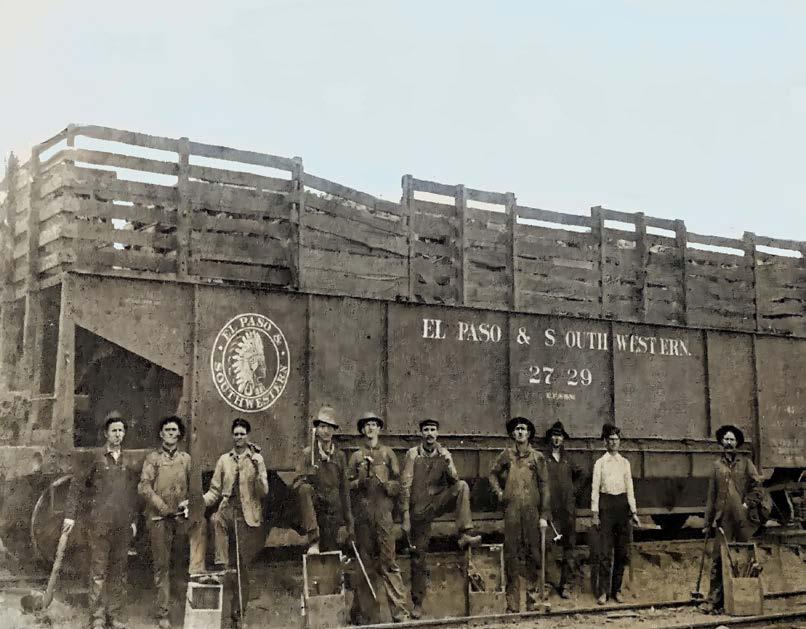
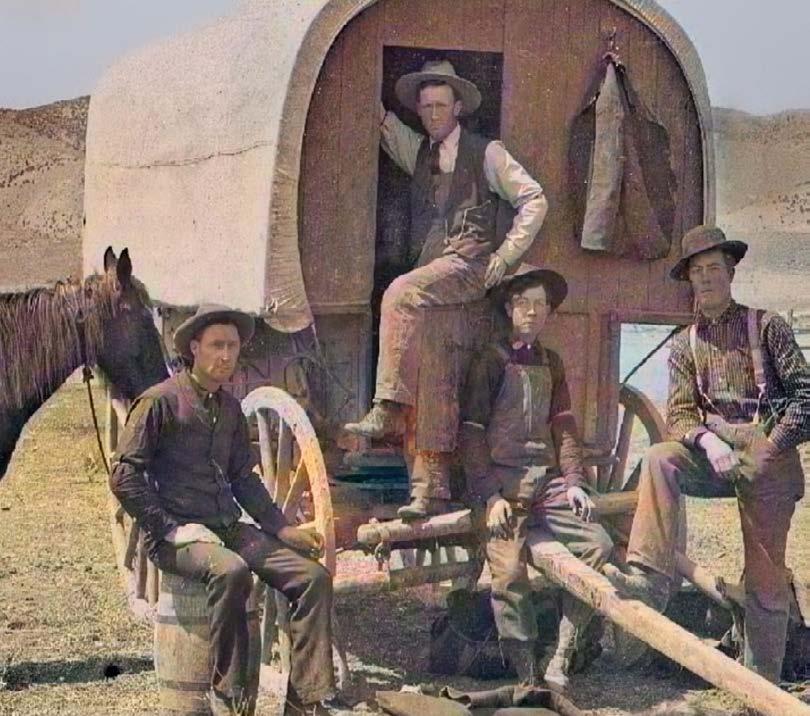
Here, in Tucumcari, New Mexico. The year was 1910. I’m pretty sure of that date, ’cause the gentleman standing under the ‘E’ in El Paso, is my great great grandfather.
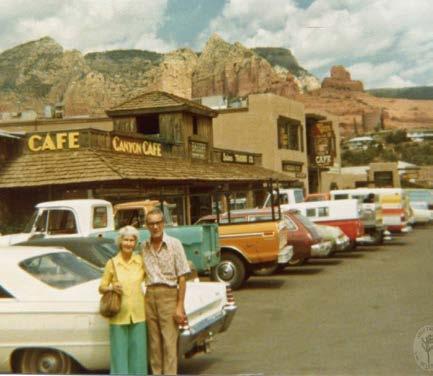
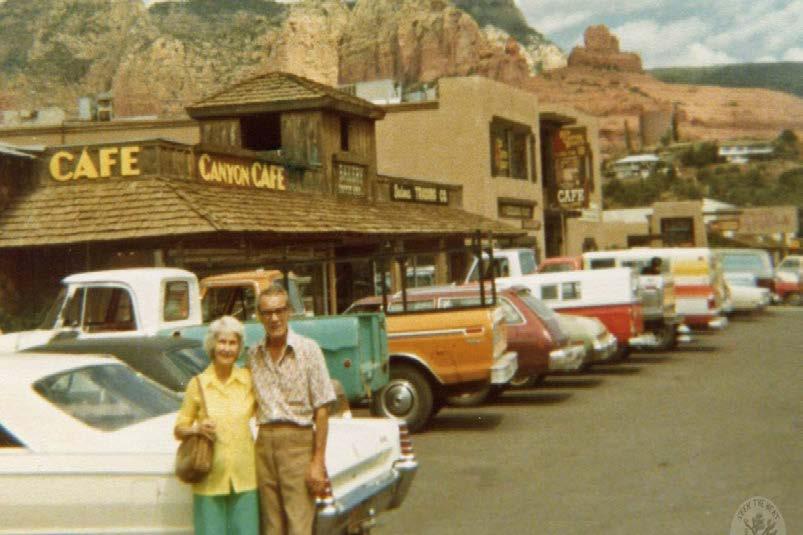
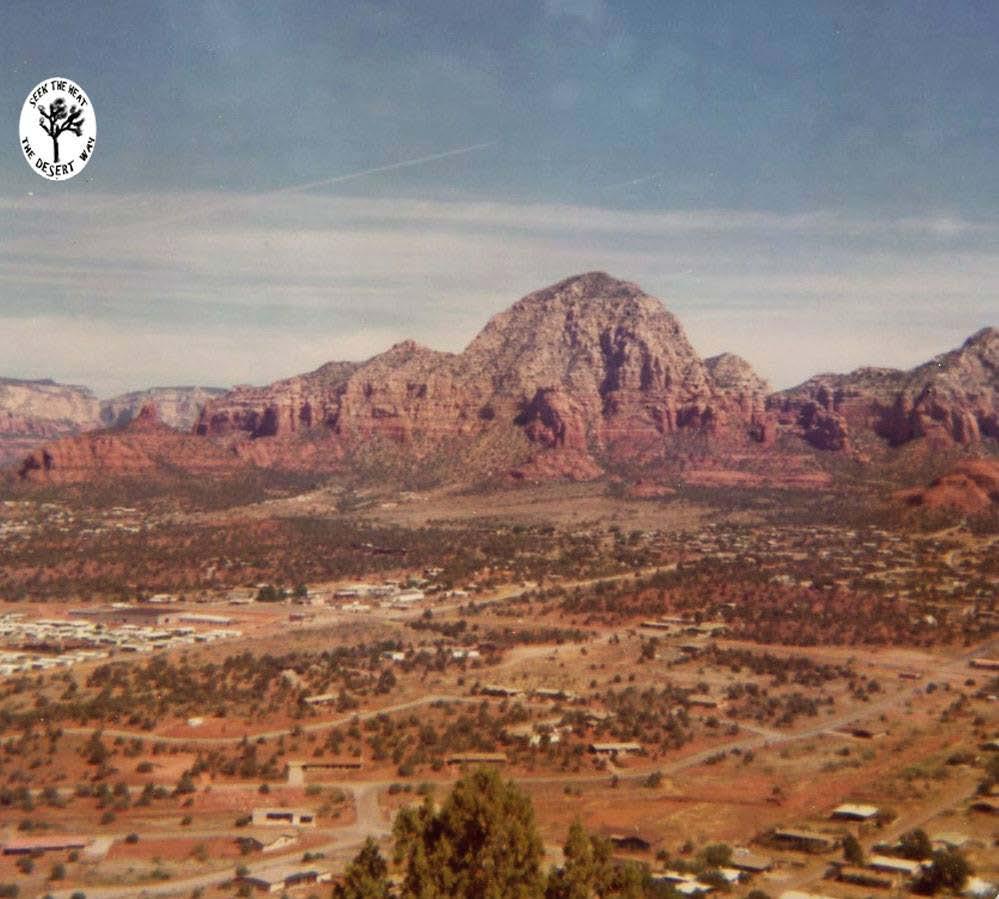
The main drag in Sedona, once upon a time.
I rolled into town, driving my ’67 Volkswagen. Back then I wasn’t really tuned into the special places in the world. Even so, I knew this was one of them.
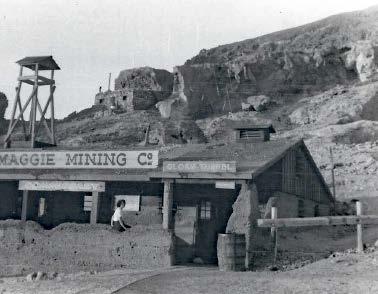
I’m talking about Calico, of course.
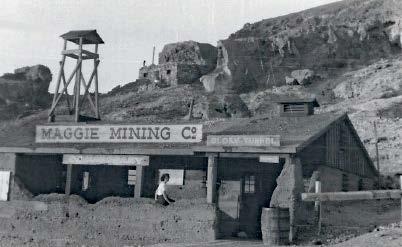
Sadly, I don’t remember the visit. However, I do remember the lady sitting in front of the Maggie Mine. My mother, Shirley.
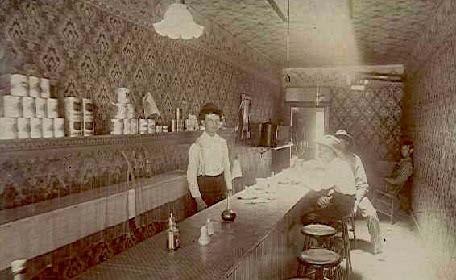
Where did railroad track laying crews eat in the 1920s? In well- appointed dining cars that looked like diners, of course.
The photo is on a prairie, somewhere in Utah, between 1902 and 1905. He lived to be 91 years old, and I recall that he attributed his long life to a gin and tonic each evening.
He wasn’t your average Mormon, after all.
The fellow standing up behind the counter was Summers S. Butler. My great uncle on my mother’s side.
Little has changed here, except the passing of both. I miss all three.
I think I finished this particular race second to last in my class, which is pretty
much where I finished most races if I didn’t crash first.
I’ve changed a bit over the years, but only a little.
Like Toby Keith sang: “I ain’t as good as I once was but I’m as good once as I ever was”.
Like most things in life, there’s usually a back story. That dapper cowboy, actually a sheep herder because the name sheepboy conjures up things nobody decent wants to think about, in the door of the wagon is my Great Grandfather, Brigham Carter.
In this photo, it’s 1959 and yours truly was about 5 years old, and visiting a brand new attraction in the desert that just a few short years earlier was a mining boom town in ruins, before Walter Knott restored it to its earlier splendor, and a little bit more.
Sedona, Arizona, 1976. Before the invasion.
He was a member of the track laying crew for El Paso & Southwestern RR, so I can only guess that it was either a help-yourself kitchen, or members took turns working the counter.
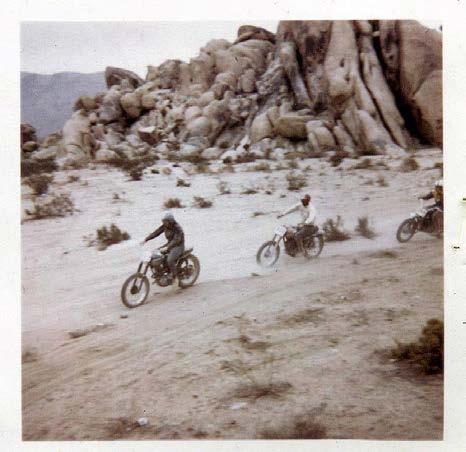
Desert race in Apple Valley at Dead Man’s Point in about 1969. The 15 year-old fellow in the dark leather jacket on the Triumph, briefly leading the pros, used to be me.
Music Family of Noizemakers Part1
By Paul Sebastian
FAMILY CAN BE DESCRIBED in such diverse ways as kindred, clan, or tribe. In the music world the word band can be described as company, outfit, bunch, group, or crew. In the High Desert there exists a group of talented musicians that embody all these terms and much more so because of their love for playing music together. If you think you haven’t seen them, think again. There’s an excellent chance you have heard one or more of these skilled musicians playing in some of the High Desert’s restaurants, fundraisers, vintage car shows, bars, or private parties. They play regular gigs at Leisure League, Silver Lake, Wrightwood, or Apple Valley Senior Center and they will draw a full house every time. They play in bands called Lonnie and the Lugnuts, Groove Hunters, and Phoenix Rising. The Noizemakers founder, Doug McGuiness, says that altogether there may be as many as 20 members performing around the US and about 10-12 members performing locally. Their repertoire is extremely impressive as they expertly play many milestone hits from country, rock, and the blues from the 1950s onward. However, their greatest strength is the unwavering sense of family you get when you see them perform together. The communication between them is with a look or a motion and instantly the others know when to set up for a solo or end the song on the right note. It’s in that synchronous moment when the audience, and the music, become one with the band through their music and it elevates the experience. This is the impetus that keeps them playing together and the need to recreate it because this is the epitome of their art.
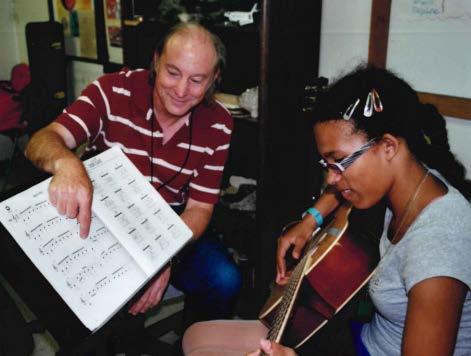
The Noizemakers ensemble track one: On guitar, bass, keyboards, and vocals: Dave Spinka became involved in music when he took Guitar Class at Hesperia Jr. High. After two years of Guitar Class, he then played bass guitar in The Apple Valley High School Jazz Band. He continued taking music class in college and earned a Music Minor from Cal State San Bernardino where he took 2 years of Music Theory and played the standup bass and Bari Sax in the Cal State San Bernardino Wind Ensemble. Dave has played in numerous
bands since high school including The Ruff Edges, The Educators, Lonnie and The Lugnuts, 3-D, Full Steam Ahead and The Groove Hunters to name a few.
While teaching Special Ed at Victor Valley High School, the Choir Director quit in the middle of the school year so the principal asks Dave to take over the choir class position, which he did. This was challenging but also rewarding. Dave went back to teaching Special Ed after the semester was over, but a few years later became the Guitar Teacher at Encore High School. Dave writes and records his own original songs and had one called "Art Teacher" played on indy radio stations in the bay area and in Tucson. He has a classical guitar CD called "Classical Music Classics" and a Christmas CD called "Christmas Comes once a Year" available for downloads on CDbaby.com Producer Clarke Rigsby. Clarke was raised in Oro Grande and graduated from Victor Valley high school. He learned to play the guitar and soon joined local bands as a singer and lead guitar player. Clarke heard numerous musical styles while growing up such as rock, country, blues, and jazz and his submersion into
these developed into a genuine love of music in all its forms. One of his biggest musical influences was Tex Williams who was known for the song, “Smoke, Smoke, Smoke (That Cigarette) and his Swing style of country music. Another influence was the writer Sonny Curtis who had been a member of Buddy Holly’s band, The Crickets, and wrote such classics as, “I Fought the Law and the Law Won”. However, the biggest influence on him was Snuff Garrett who became a highly sought after studio producer because of his golden ear and ability to find hit songs. Snuff worked as a DJ, but it was as a producer that he had the most impact on Clarke. While working with Garrett, Clarke absorbed what it took to produce good music as well as learning the intricacies of the business. Snuff saw a kindred spirit in Clarke and liked him from the start because of his openness to the diverse qualities of each class of music and the ability to blend those qualities into a better song. His diverse appreciation for all styles gave him a unique take on music and he learned to incorporate the best of what worked from the various styles that would increase the appeal of the song for
audiences. This creative contribution grew into an expertise and a well-developed ear for sound that changed his direction.
As he started his career, he played at local venues in his own band or backed up other bands that might be touring the area. For a time, he followed in the footsteps of his mentor, Snuff Garrett as a DJ on KCIN radio. As he learned how to make the sausage, he became his own sausage maker by starting his own recording studio called Tempest Recording and he found himself working with bands of all genres helping them to create their music. His education was real life as he puts it, and that real life experience gave him the musical colors for the canvases he was creating. Over time his golden ear didn’t go unnoticed. His keen talent rapidly adapted to the plethora of singers that sought his expertise. Once he told Levi Stubbs of the Four Tops, that he didn’t sing a particular song the way he
normally did. Stubb’s reply was “Clarkey, I’ve been doing this for 35 years so don’t tell ME what I did or didn’t do.” After the replay Stubbs heard his own mistake and instantly trusted Clarke’s judgement and sharp ear. Clarke’s ability to get a peak performance from any group every time soon circulated among the artists in the industry who actively sought him out to work his magic on their bands. Artists of great distinction such as Franki Valli, Stevie Wonder, Steve Gadd, Tower of Power, Burt Reynolds, Paul McCartney, Jesse Colter, Waylon Jennings, Tanya Tucker, Alice Cooper, and so many others that this might become a general listing of timeless Grammy winners.
His oil and paints are the mixing board knobs and dials that enhance or shape the sounds coming from the musicians. His efforts allow the instruments and voices to better connect with us listening to their craft. Most of his equipment is older than
some but he has mastered the nuances of his instruments so that he can add definition to each piece of music with quality and definition. As a teacher at ASU, he teaches Advanced Recording, but it is the work on developing a superior ear and keeping an open mind to the artist’s intent and potential that distinguishes a good record from a bad one.
Dave and Clarke are just two of the Noizemakers, and when they perform, it’s not a show that should be missed. One of the musical treats at their gigs, is seeing them play their own compositions that show off their individual talents not to mention gaining satisfaction from seeing the floor hopping. At the end of the day, it’s the music that draws them together and builds a sense of purpose between them. The kindred spirit of these musicians keeps them together and keeps them dedicated to their music and each other.
Extraordinary Women Among Us: Announcing the 2026 Women of Excellence Honorees
By Margaret Smith
TODAY’S WOMAN Foundation (TWF) is proud to introduce the twelve remarkable women selected as this year’s Women of Excellence honorees. Nominated by their peers from across the High Desert, these inspiring women will be honored at the organization’s 9th Annual Gala, to be held on Saturday, October 3, 2026, at the Victor Valley College Event Center.
Through their dedication and service, these honorees have enriched the lives of others as leaders, trainers, authors, mentors, volunteers, and champions of positive change.
Honorees were chosen based on their demonstrated character, perseverance in overcoming adversity, commitment to community service, and dedication to being positive role models for others.
We hope you will join us in the celebration of these women. While their contributions have strengthened countless
lives throughout the High Desert, each honoree carries her accomplishments with humility, serving not for recognition, but from a genuine desire to make a positive difference in the lives of the people around her.
Tickets will go on sale August 1, 2026, and may be purchased through our website at Todayswomanfoundation. org. For questions or additional information, please contact Cindy Bostick at todayswomanfoundation@gmail.com.
Faith, Family, and Football: One Team’s Journey to a State Championship
By Paul Sebastian
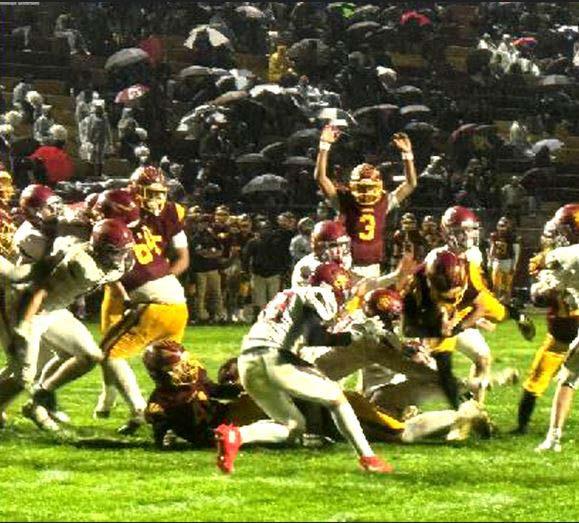
SELDOM HAS A STORY AND WRITER been so perfectly matched and it seemed that fate had determined that John would tell their deeply moving tale. What inspired him was a profound connection between the team and the townspeople of Barstow that grew from one player kneeling and praying in the end zone and in the end game, the entire team, coaches, and townspeople joined him. The strength and unity that the team gained from their faith gave them the humility and determination to overcome their earlier defeats and Win the Day.
John Garner is no stranger to football, being originally from Oklahoma and some of his earliest memories are of the Sooners playing football. As an adult he joined the Marines and then the Army where he learned leadership skills that would serve him well as a coach for different high school teams that he joined. He also acquired a keen eye for the action on the gridiron and recognized the winning techniques needed as a coach to teach the players how to win. He was quick to identify these qualities in other coaches, and he cultivated those relationships to establish solid teamwork and precision. John has always wanted to write an inspirational story of faith and family and that opportunity presented itself during the preseason of 2025. He and the head coach of Barstow HS, Clayton Leleimene, knew that this was the year of destiny. There was a convergence of spirit, determination, and the divine as the coaches and players prepared for the coming season. During
practice that conviction that they would become champions that year inflamed the confidence of the players with a heat so intense that it burned away the barriers and melded them and the town into one family. That sense of family through the conduit of faith enraptured the good people of Barstow and the third part of their trident was welded on. However, no achievement comes without a punishing struggle. The Aztecs lost their first 3 games of the season not due to lack of talent but by making mistakes that the lesser quality teams took advantage of. However, Coach Leleimene did not lose his faith that this was a superior team destined for a winning season. His firmness of purpose and unwavering faith in his players and coaches gave them an iron will to face down on any adversity. At a critical moment after the team prayer one of the players knelt in reverence in the end zone and prayed again. In that epiphanic moment, they became one family. Their flagging spirits were immediately revived, and they fought on with renewed strength. Coach Leleimene and his assistants drilled down on all game films to construct the tactics that would create a juggernaut to dominate the rest of the season. His intense focus on just concentrating on the game coming up funneled the team’s energy to just the opponent in front of them and they pulled together with a clear plan on how to attack their weaknesses. As each team was met, they were met with a unified group of young men with only one thing in mind: to WIN! All the strategies were in place. All the practice drills and film study prepared the Aztecs for each match. In the end it was execution on the field born from their deep faith and the unification of the faith, family of the team and community that overwhelmed every challenger. Mistakes were minimal and each player knew his job so well that any play that the other team sent over was anticipated and counter acted. Their momentum was staggering as they entered the championship and the singularity of spirit with their faith, family, and town became the unmovable rock. Their staunch belief was a bulwark against the doubts they may have suffered earlier
in the season and the family that came from the town of Barstow gave them that relentless drive to make each play count. It was an undeniable triumph! The Aztecs dominated their opponents and dismantled each of their maneuvers with precision, skill, and a tireless attack exposing their shortcomings.
John’s book details each step of their travails and brings out the spirit of faith and family that cemented Coach Leleimene’s preparation and planning. Coach Clayton Leleimene’s professionalism and expertise cannot be underestimated or understated as the architect of their final victory. His confidence that this team would take the championship was unflagging and that spirit of being winners was infused into his players, his coaches, and his community. To paraphrase City Councilman John “Tex” Williams’ comments after the final game, “Through your coaching you have shown that wins are not given but earned.” In the end it was a prayer that reached out to a higher power for strength and guidance that connected an entire city with the team and its school that inspired everyone from Barstow city councilmen to the average people of Barstow. Truly a team that was divinely inspired, faithfully executed, and with their unfailing devotion, they all became a family.
From the Street to the Front Office
By J.P. Garner
LIFE IN THE STREETS IS BRUTAL. Killing time is probably the worst of it. There’s so much of it. And then there’s not knowing where the next meal will come from, or where you’re going to sleep at night.
When she had the money, though, Lisa Sanchez said she’d bounce from motel to motel. Maybe the Desert Inn was one. That’s the Taj Mahal for those living beyond the edge. But most of the time she slept in the parks. Out in the open. In the cold, and the heat, but when it rained, that was bitter. Almost punishment.
But the hardest part was being away from her kids. That hurt. Deeply. Because they needed her. She tried rehab several times. And when she failed at that, she failed them. And you’d think that that would be the reason she’d bust ass to succeed, but it wasn’t.
“I hadn’t hit rock bottom,“ she says, her voice firm as she recalls when she came back from the other side. She shifts in her seat and regroups, her voice now relaxed. The words flow easily from her.
“When I‘d get kicked out of rehab, I knew I had my family coming. I knew I would go back to my family. They would always take me back. And it kept happening and happening until they finally said, ‘You know what?’ and they pushed me away and closed the doors.”
Click. The latch is turned. That’s what rock bottom sounds like: the door closing and being locked.
She got her start with drugs because of her husband. “He introduced it to me to drugs,” she explains. “And then it started with the abuse with him. And then the drinking, and then more drugs. And it became a pattern.”
A pattern that lead to her descent into the streets. She lost everything. Her kids. Her family. Her life. She doesn’t even recall hw long she was homeless.
“I had nowhere to go and that’s when I went cold turkey. I went into Gibson House, and I finally got it right. And from there, I transferred over to New Hope, and I've been here ever since.”
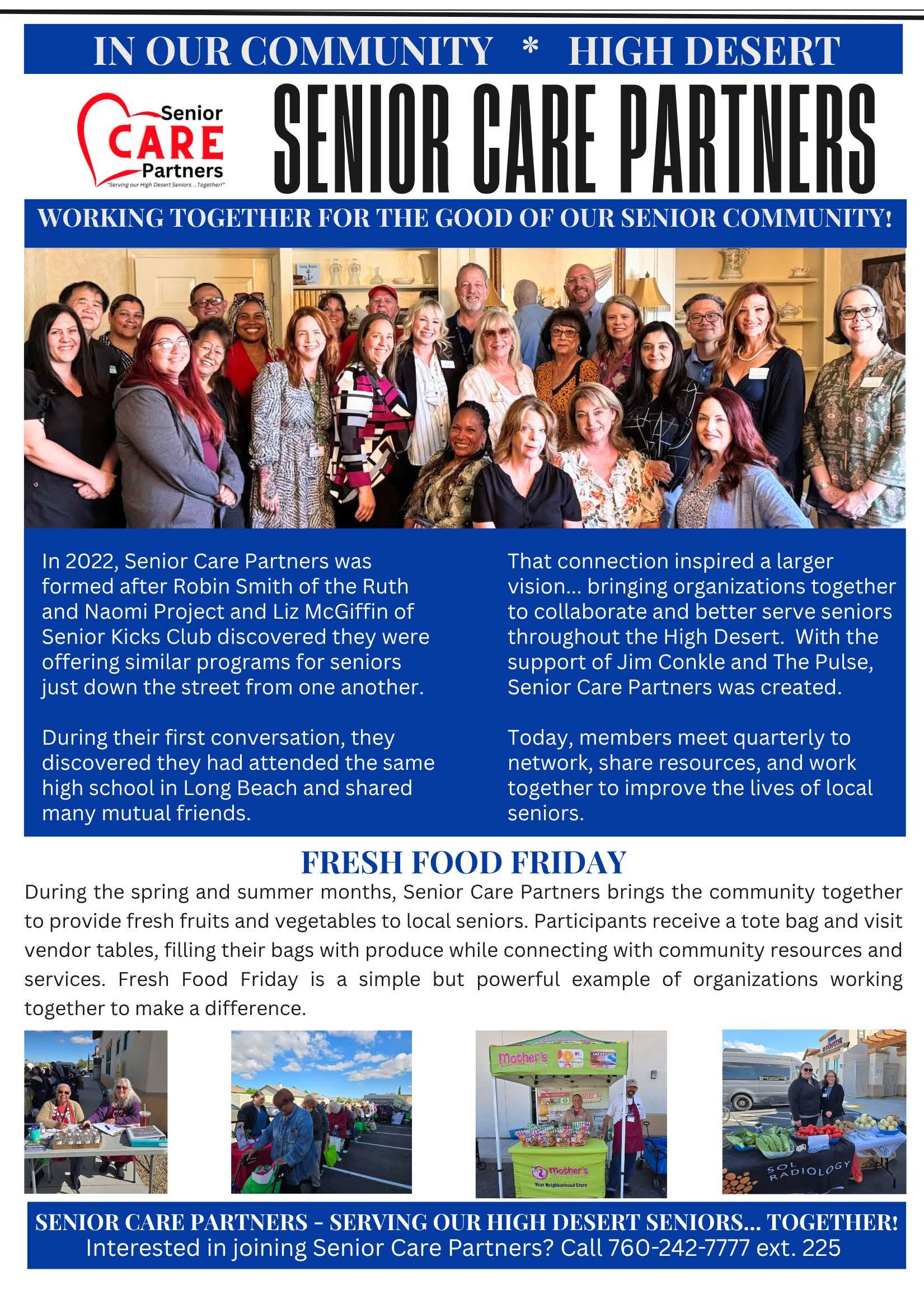
She smiles she’s so proud. We’re seated in the front office at New Hope Village on Fredricks Street where she now works. “I’ve been clean going on six years in August,” she adds. Her smile broadens.
Curious, I ask when she started working for the non-profit she credits with saving her. She pauses to calculate the time in her head. “I had got hired on in 24. So basically two years now,” she cheerfully answers. “I came from a client status, then I moved into being an apartment manager as well as being a client. I've worked my way up.
“But it started with [me being] a volunteer in the office for like six months straight because I had got laid off from my one job. So while I was looking for a job, I was volunteering here in the office because we had an emergency going on and [the office] needed help.”
As for the transition from the street, I wondered how much was faith based. So many programs rely on faith to restore drug users and alcohol-lics to stable, productive lives. Lisa was eager to respond. “I want to say there was a lot of it in the beginning. And a lot of it is now too. But mostly I replay the tapes.” The tapes?
“Yes, the tapes of my life. I replay the memories of my life and what I went through because I won’t go back to that time. I replay them almost every day. There's no going back.”
Her reply is firm. There’s a steadfastness to it born of her struggle to overcome her addiction and the memories of her abuser. She recalls the battle to break free from the lure of drugs, and the rhapsody of a life with-out rules.
She looks at me, her gaze steady. “I don't want to be nowhere else but here,” she declares
Essex is still thereAlmost
By John Beyer
IT WAS JUST NIPPING at a hundred and six degrees when I drove into the tiny outpost known as Essex.
“It’s gonna be a hot one,” I could hear the slight breeze whispering, as I got out of my truck and snapped a few photos.
Snapping photos is a thing we photojournalists do. Freeze a moment in time forever, and then go home and write about it. It’s the perfect synergy – words and photos.
I was in Essex for two reasons. One, I hadn’t been there in decades. Two, readers have written to ask when Route 66 and the National Trails Highway would be open all the way to Needles.
The first reason to be in Essex was fulfilled. I was back, and the town appeared completely deserted – I mean completely.
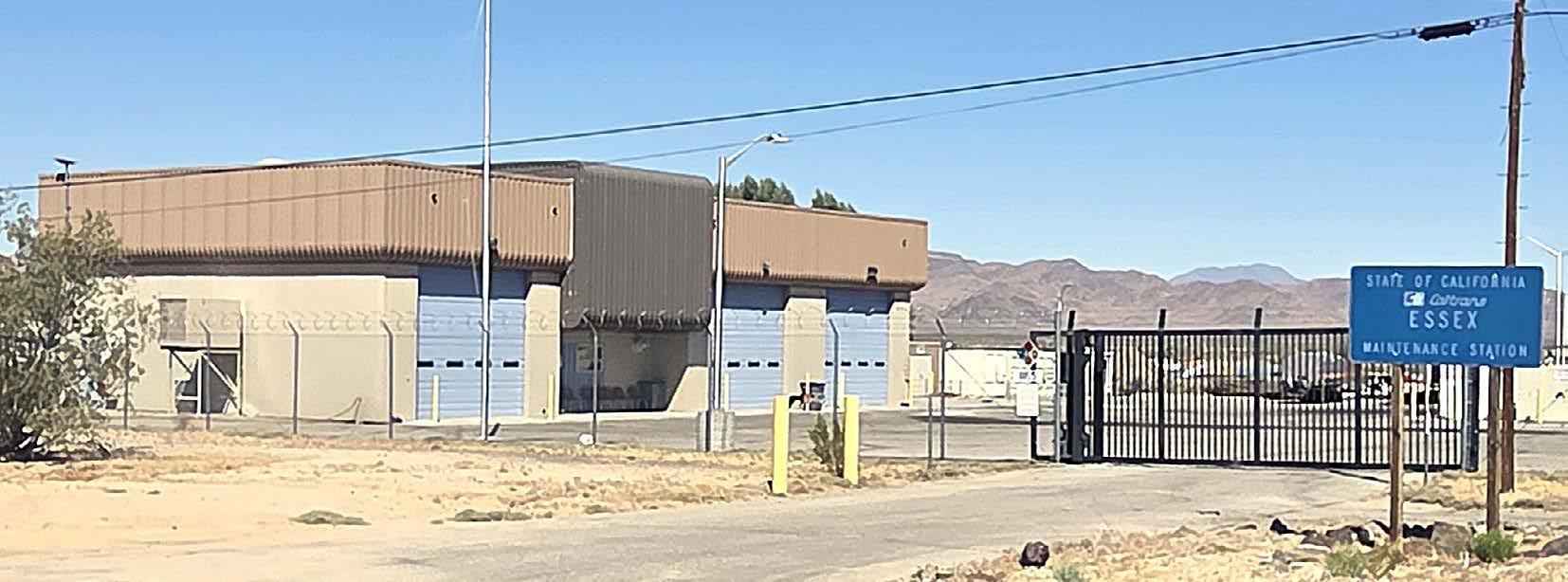
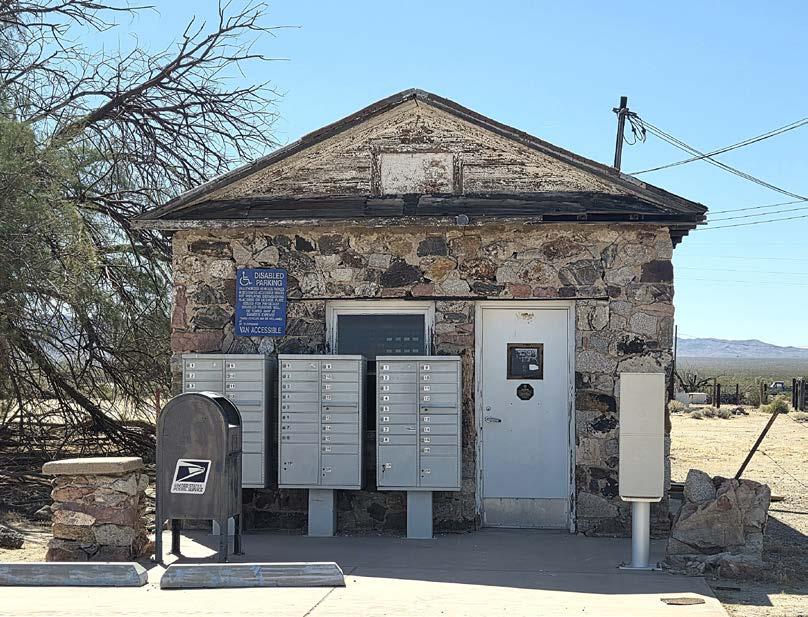
Of course, there is the well-maintained Caltrans maintenance yard, and a small United States Post Office made of rock walls. That’s about it, really.
According to longtime resident and font of knowledge about Essex's history, John Bentley, the current population of the town
is around 6 people.
“Most people have moved on,” Bentley stated. “With Route 66 closed, along with National Trails Highway, there’s no one who comes through here.”
The legend of Essex is that a driver had a flat tire, but there was nothing there. Nothing but a long drive – especially on a dud of a tire – no place to find assistance. But soon, an entrepreneur opened Bell’s Towing. Then, the Wayside Café was built to serve up tasty meals for road-weary travelers making their way across the Mojave Desert. A United States post office opened for the convenience of more and more people moving to this remote stretch of the highway, and the Essex Elementary School was founded in 1937.
The population never amounted to a great deal in numbers, but again, in that strong sense of pioneerism, people lived and thrived here.
Turns out that Jim Craig, Bentley’s greatgrandfather, had come into the area from Texas over a hundred years ago. He was
a miner, working the mines in the local mountains and desert. He had traveled with his brother to seek their fortunes and then branched out into desert ranching.
One thing Bentley didn’t tell me is the story that Jim Craig may have been making moonshine during Prohibition while living near Sunflower Springs. Not sure if this is a true story, but according to the blogger, Darthjenni, Jim Craig moved to the area with his family of 5 children around 1914. He worked for the Rock Springs Land and Cattle Company. During the federally mandated drought on alcohol in the United States, they decided to be a little creative with liquor manufacturing.
Again, I am not certain if this is true, but it makes a great story.
As Bentley himself said, “People tell a lot of stories about what happened in the early days out here. Some accurate and some not so much.”
But around the 1930’s, Jim Craig did start his own ranch, and brought in the cattle which could graze on little more than small desert plants.
“They used desert cattle that had been here for centuries,” Bentley told me. “They are well used to surviving out here. Crazy, isn’t it?”
Standing there in the hot, now noon-day sun, I had to admit it sounded a bit crazy. But what is desert ranching? Looking across the millions of acres of brown, arid soil, I didn’t see where anything could be ranched. Perhaps some jack rabbits and lizards, but the market for that sort of cuisine is probably limited.
Turns out, again, this is what a sharp
The Caltrans maintenance yard in Essex
The Caltrans maintenance yard in Essex
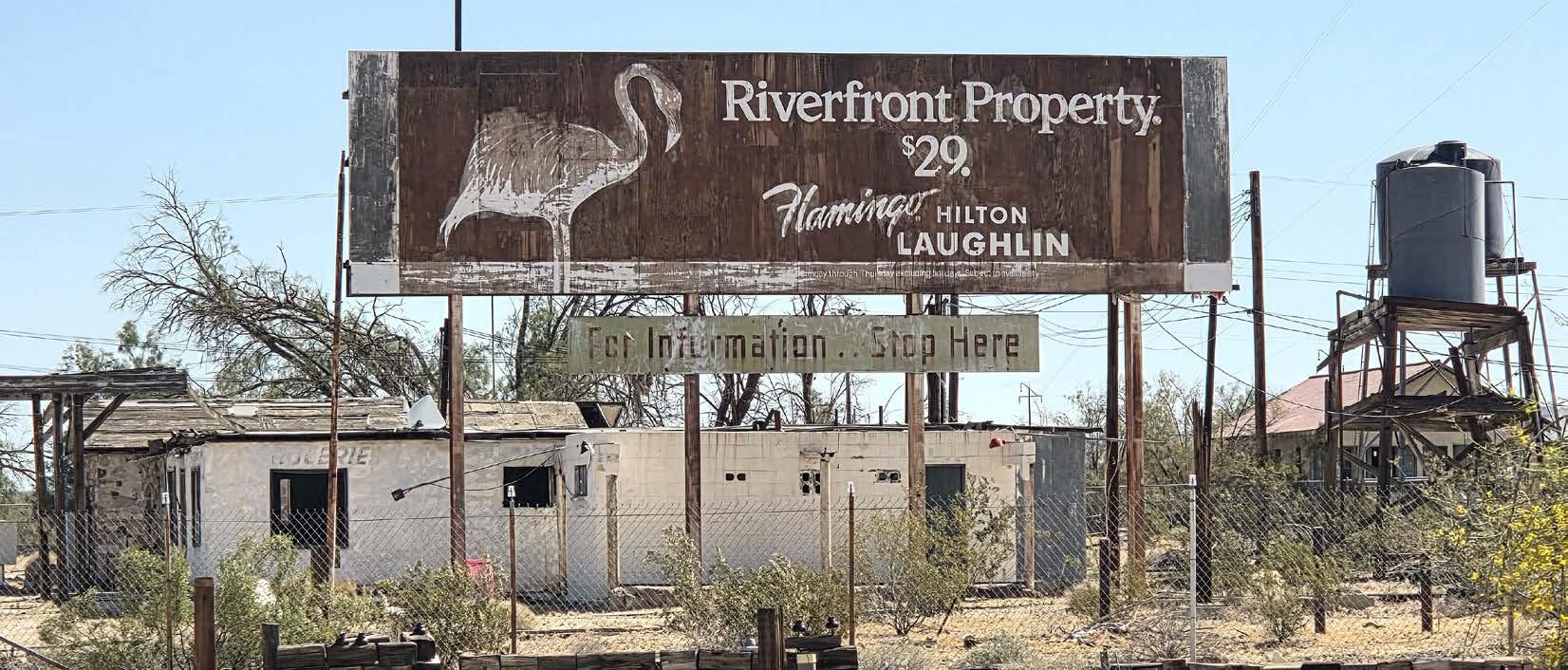
Original advertisement for Hotel Rooms available in Laughlin, Nevada
researcher’s mind can learn: the cattle are called Criollo. A cattle breed brought to America by Columbus and then to the southwest by Spanish conquistadors. A cow that can thrive in the desert.
What will those conquistadors think of next?
And thrive they did, but it turns out these cattle need a lot of space – a lot of space, to roam and nibble on sparse vegetation. And as they did this, desert tortoises suffered greatly, so by the early 2000’s, cattle ranching virtually disappeared from the Mojave Desert. Outdoor groups and the Bureau of Land Management found the grazing to be too dangerous for the endangered tortoise, and a move was made to limit or discourage ranching altogether.
Though – this is just what I have observed traveling remote areas of the Mojave - there are still ranches out in the desert lands – I’ve viewed a lot of cattle, the Criollo, walking here and there looking for something to munch on.
More research is needed on this subject. I’ll have to ask one of the cows what’s up the next time I encounter them. Of course, some of these cattle have pretty big and pointy horns. This is when social distancing takes on a whole new meaning.
But, with the traffic on both Route 66 and National Trails Highway, the town of Essex thrived – just like those Criollos
Tourists on the way west or east stopped by for gas, tires, a repair, or just something to eat, and things were going swimmingly for the townsfolk. And then – yep, Highway 40 was built just about six miles north of Essex. That’s all it took to make a small town even smaller.
On an interesting side note, in 1977, the town of Essex received television for the first time. In fact, when the late-night television host, Johnny Carson, heard the news, he had the entire town driven in for a taping of The Tonight Show
Ed McMahan exclaimed, “Heeerrrreee’s Johnny and the whole town of Essex!”
Maybe not quite like that – but the whole town was invited and attended the taping of the Tonight Show
The population began to dwindle with less and less traffic, and by 2005, the population was a mere 89 people, and continues to dwindle.
“There’s no business here,” Bentley stated. “We’ve stuck it out because we love the solitude but pretty much everyone is thinking of leaving eventually.”
I asked him about the Caltrans signs stating the road is closed to through traffic
just as soon as a traveler exited the Essex Road off-ramp. Actually, the signs are clearly marked that Route 66 and National Trails Highway are closed east and west of Essex. The road to Essex is fine with no issues – except those darn highway signs stretched across the roadway.
“That’s the problem. We’d still have some sort of business, but people see those signs and just get back on the freeway.”
Well, this guy didn’t. In fact, I even drove east on National Trails Highway, around the road closure signs, to see why this path to Needles has been closed for nearly a decade. What could take Caltrans that long to fix a road? Is there another Area 51 out there? What was the government hiding? Were Martians marching around demanding we stop sending rovers to their world? Really – that could be annoying.
As I’ve mentioned in other articles, I don’t believe in conspiracy theories, but I just love a good conspiracy.
Turns out, that a few miles east of Essex on the National Trails Highway, an entire bridge was destroyed from some pretty nasty flooding years back. Not passable. I returned to Essex, dejected at not finding out anything but the truth: the roadways are not drivable.
There’s not much to see in Essex today. The buildings are deserted, falling, and dangerous to wander through.
But if you listen to the wind, I believe you could still hear distant, happy voices in this small desert town when it was alive and thriving.
John can be contacted at: beyersbyways@gmail.com
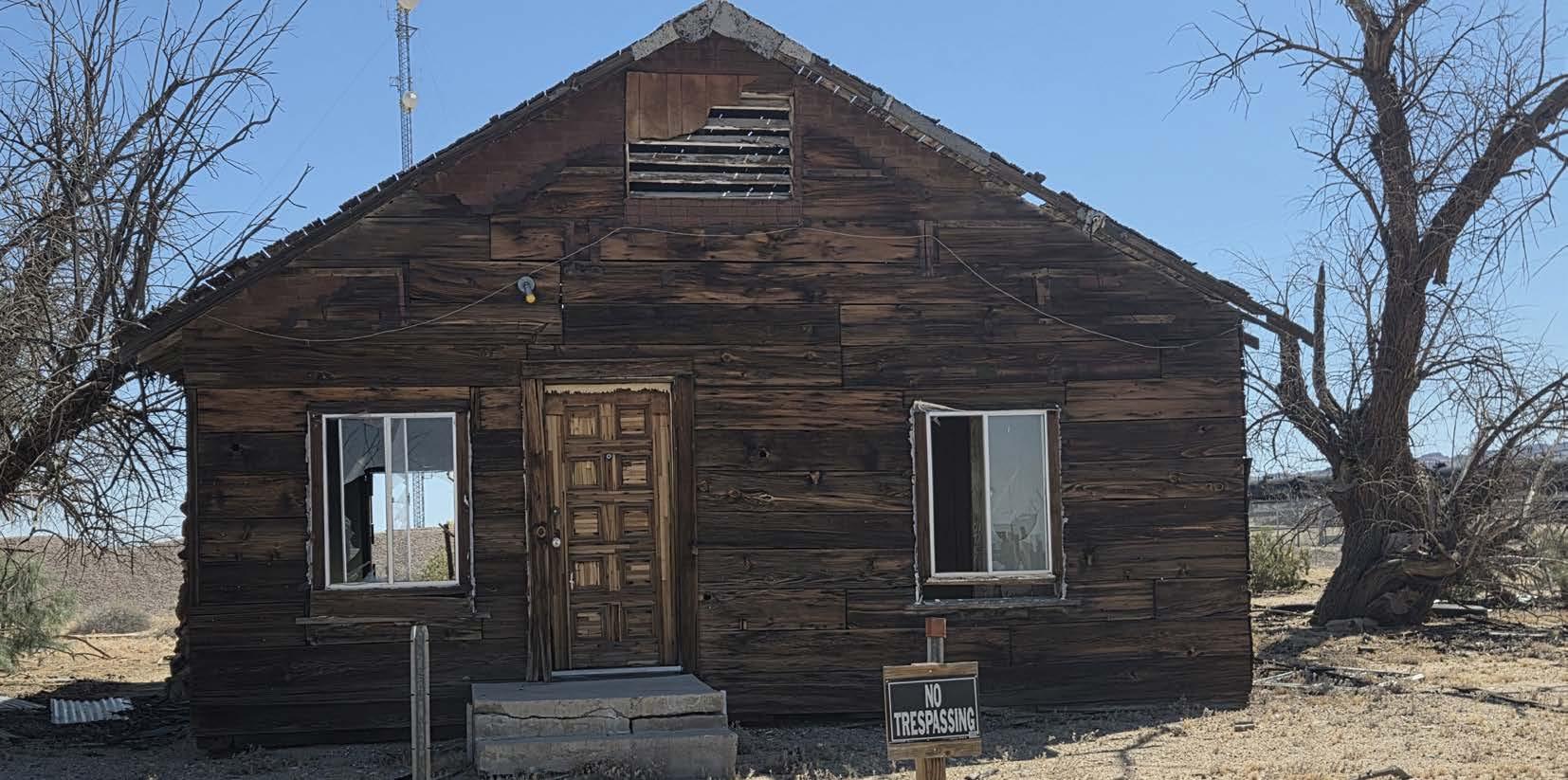
One of the few homes left standing in Essex, CA
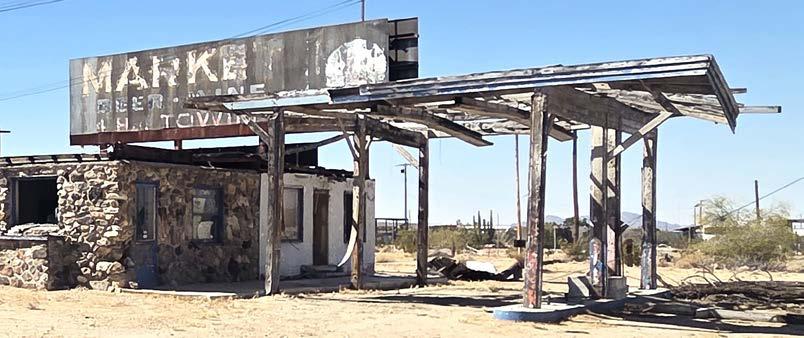
The remains of the only market in Essex, CA
SWIM
July 2 Pot Luck
New Officers Recognition
July 9 Vietnam POW
Tony Marshall
July 16 Identity Theft
Debbie Walker
July 23 Rockin Our Disabilities
Dana Hernandez
July 30 Fall Prevention
Maxine DiDonato
Seniors With Inquiring Minds (SWIM) meets every Thursday from 1:00-2:00 pm in the Percy Bakker Center located at 9333 E Avenue in Hesperia, CA 92345
UpcomingCommunity Events
Thursday July 9, 16, 23- 6-9:00 PM Sunset Concerts, Apple Valley Civic Center Park- free admission
Monday July 13- Victorville Branch 1082 NAACP General Membership meeting- 6:00 PM, Victorville Office, all are welcome
Friday July 17- Movie Night at the AV Legacy Museum, AV Inn Cottage 153- 7:00 PM, 1955 "Fox Fire" filmed at Inn, $5.00 Admission includes drink, cookie, popcorn, raffle ticket, music, and movie. Call or info (760) 985-1918
Future Farmers
WITH THE COMMON CONCERN about our industrialized farm-produced food, laden with who knows what chemicals, we must wonder about the future of the American small farm. Here in Newberry Springs, residents Pastor Charles and Gwen Patrick are doing their best to do something about it. They own Patrick Family Farms and raise a great deal of sweet potatoes, pumpkins, and several other vegetables every year. Their most valuable products are the future farmers who attend their agricultural learning academy.
The Patricks host after school K-12 programs for the Silver Valley Unified School District during the school year and morning sessions in the summer. The classes include every stage of crop production, from planting seeds to harvesting. The participants learn
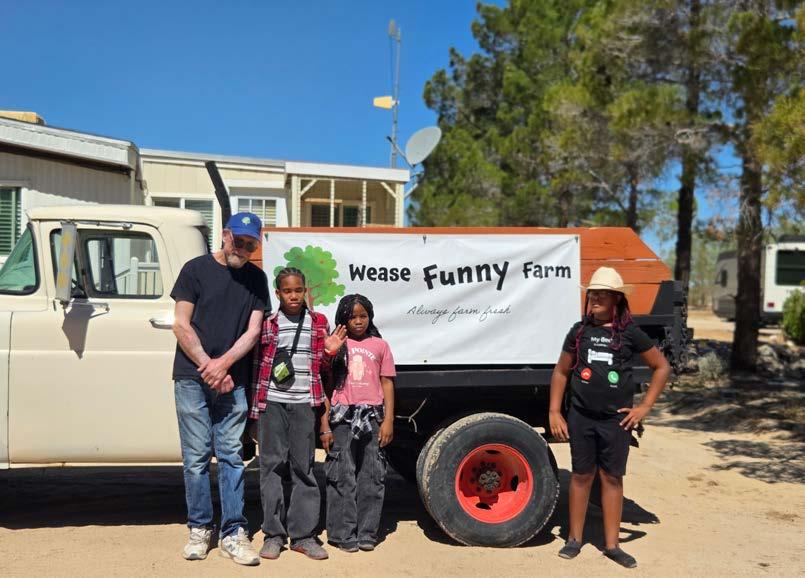
cooking, marketing, and have had classes on canning. They make field trips to local farms, museums, and other interesting places. On June 16, Gwen brought a small group of Future Farmers to visit our smallscale farm.
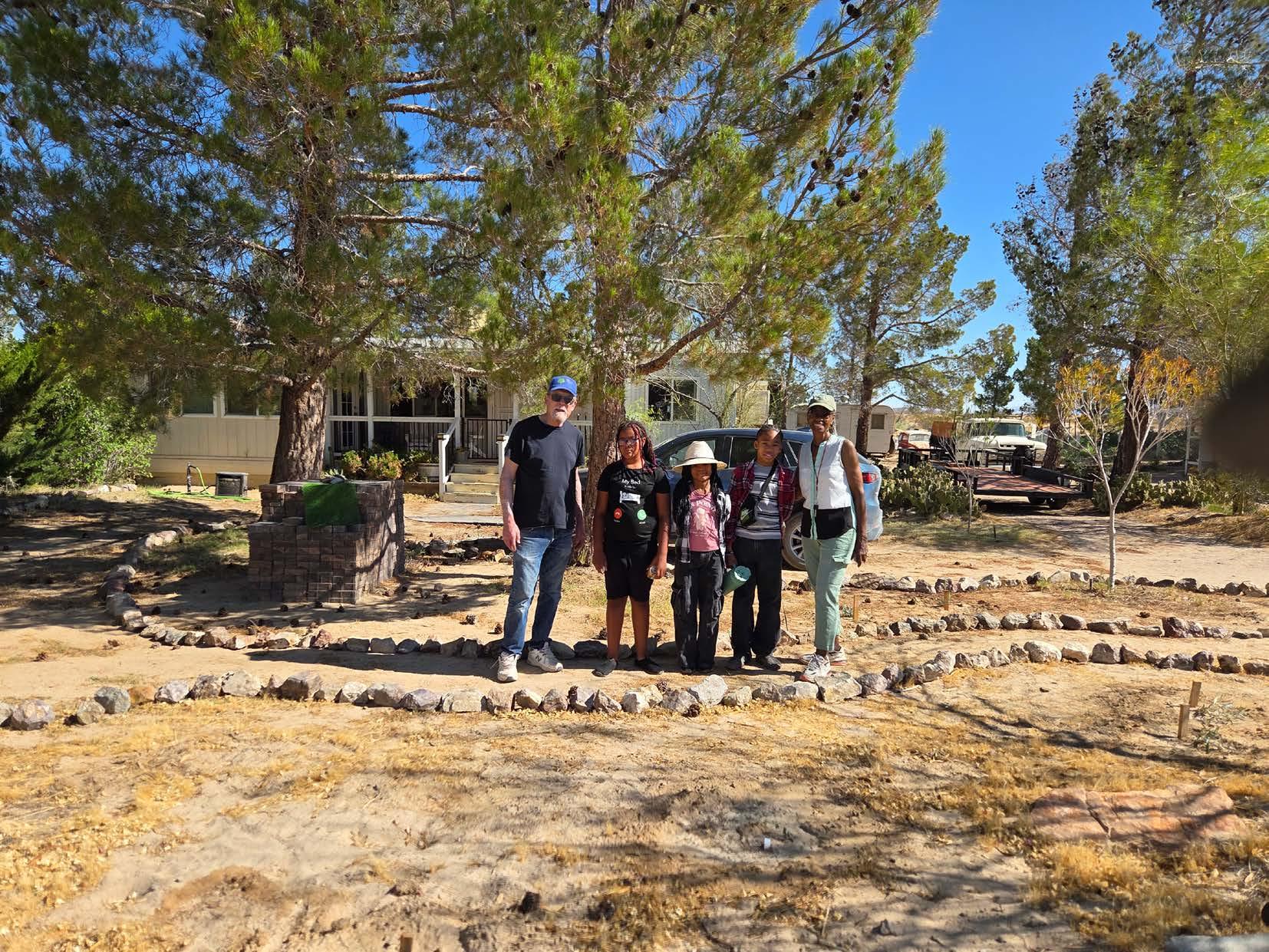
The Future Farmers were Jeremiah Pegg and Jay‘Onna Pegg of Barstow and Serenity Riley of Adelanto and Newberry. As one of the directors of the Desert Gardeners group here in Newberry Springs, I regularly help teach adults about gardening in our not-too-friendly desert environment. I was somewhat concerned about how interesting our little farm would be to eight-, nine-, and ten-year-olds. As it turned out, youngsters in general and city dwellers in particular find many things we take for granted quite fascinating.
We started in my new native plant garden. The plants were purchased recently at the Vicor Valley College plant
By John Wease
sale and are quite small. No matter, the future farmers were fascinated by the rock border. Serenity showed me a specimen of basalt she picked up on a recent field trip to Pisgah Crater with visible obsidian. I explained the importance of desert milkweed for migrating butterflies and native plants in general for pollinators.
In our blackberry patch the berries are through for the year. A few straggling blackberries were still on the vine but far from ripe. They had never seen blackberries growing, nor had they eaten any. I warned them that red blackberries would be very sour but that didn’t stop them from tasting them and eating more.
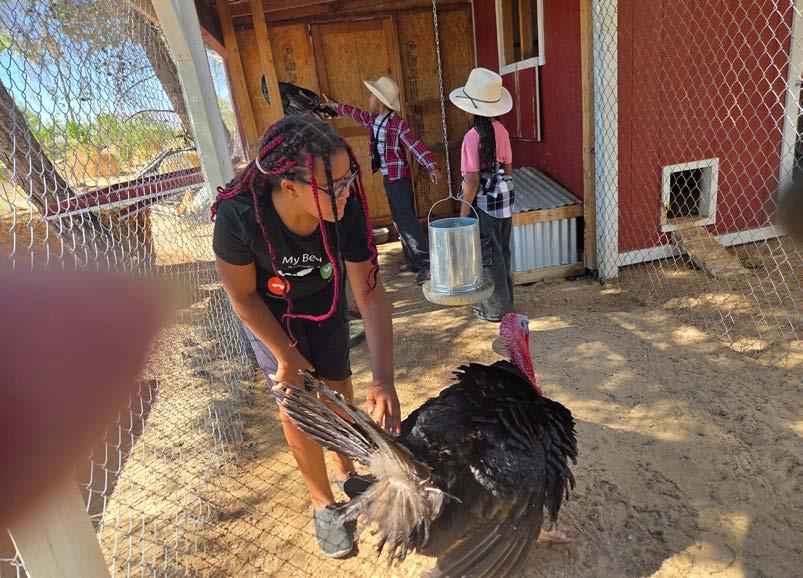
A favorite attraction appeared to be the poultry pens. None had ever seen a live turkey. Once they got past the intimidatingly large size of Don Tomas, the Black Spanish tom turkey, they were able to pet their first turkey. The chickens went into stranger danger panic mode. Serenity was able to hold the docile chicken Lucy Brown for a while and loved it. Lucy, maybe not so much.
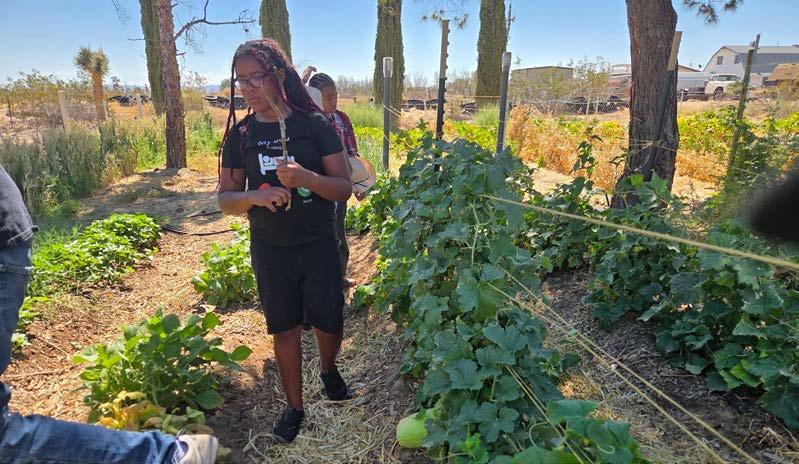
We strolled through the vegetable garden next. They were able to identify most of the varieties. I explained that I interplant basil and oregano to deter the insect pests who find their favorite plants by the smell of the leaves. Companion planting was not new to them though as our resident permaculture expert, Dr. Keller Horton, has given them a couple of sessions about permaculture. Companion planting is a key part of permaculture.
I think everyone enjoyed the visit. If you have children, or grandchildren, and you would like to see them involved in something beyond their cell phones, television, or electronic games, the Future Farmers may be just the thing. What could be better for them than spending time outside, getting their hands dirty, and learning to grow their own healthy food. For more information on the Future Farmers, call Gwen Patrick at 310-251-3326. I think the youngsters would enjoy it.