HEN I SIT DOWN to write my editorial, my mind is usually buzzing with ideas I want to share with our readers. But today, the first thought that crossed my mind was whether anyone actually reads these pieces — brief as they may be. As the publisher and editor, what matters most to me is the publication as a whole. If our readers enjoy the articles, attend the events, and support our advertisers, then we’ve achieved our purpose.
We want to extend our heartfelt thanks to all our readers, supporters, subscribers, and advertisers for allowing us to continue publishing The PULSE of the High Desert. Each of you plays an important role in keeping this publication alive and thriving.
If you have suggestions, advice, or ideas you’d like to share, we welcome them. Our entire TEAM looks forward to assisting you and continuing to serve our community.
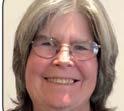
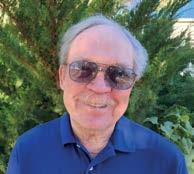
Jim Conkle
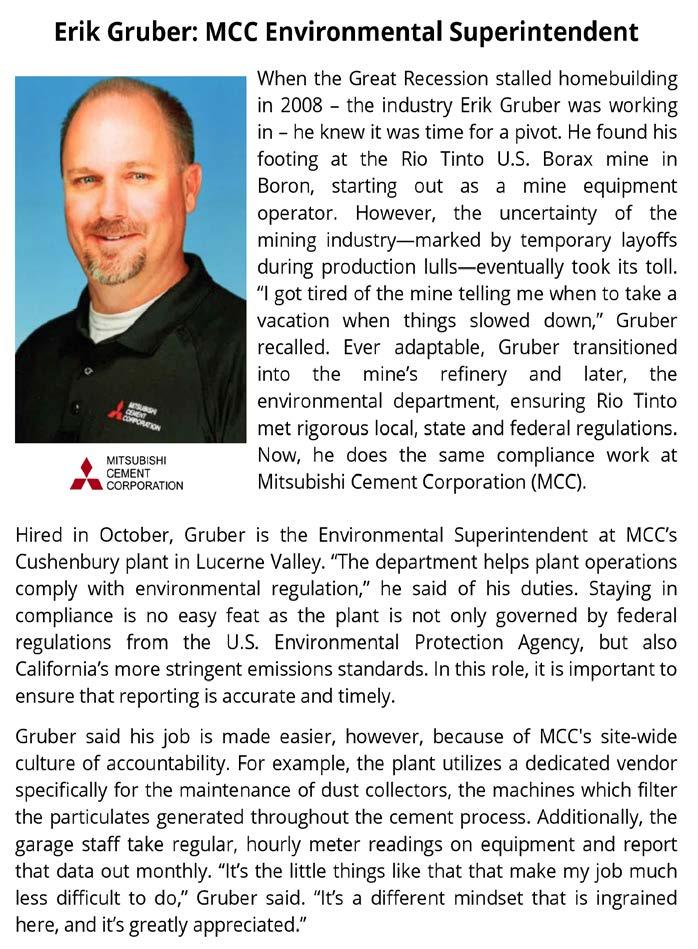
The search for balance at Town’s End distillery
By Paul Sebastian
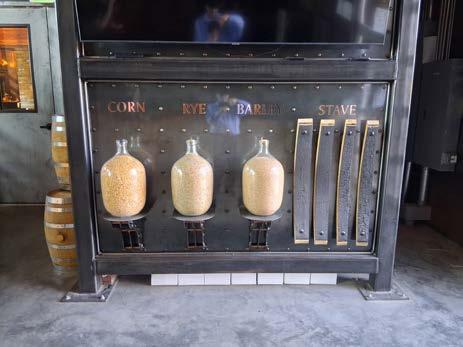
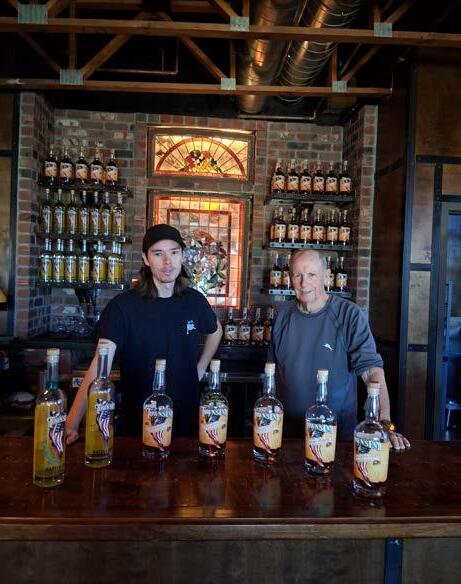
FOR THOSE OF US WHO LOVE the spirit world (and I’m not talking about ghosts) we tirelessly look for innovative flavor profiles that reflect the area it’s produced in. In Apple Valley there is such an enterprise who are setting themselves apart with their scientific approach that blends artistry into the mashbill. Town’s End distillery is such a group of explorers who have taken the principles of science and added the human touch to the distillate for an individual and local taste experience.
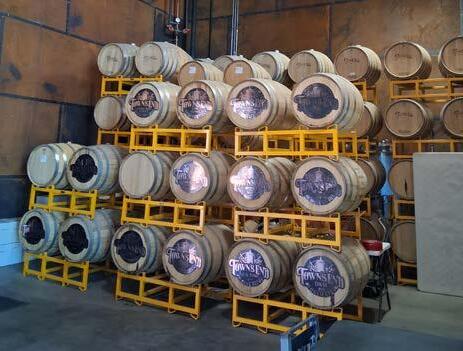
As you open the door into the artisan’s studio there are barrels of aging whiskey and rye aging in graceful repose. Among these beautifully coopered beauties you will find Dan Leary the master craftsman, busily monitoring the complex processes and machinery that produce these quality spirits. His attention is tirelessly engaged on each stage of the distillation as he focuses on the smallest details of temperature, water level, and still adjustment. His objective is to obtain a well-balanced spirit through precision, consistency, and tasting at each crucial step seeking the desired flavor. Each recipe is painstakingly examined for its contribution to the finished spirit. His analysis delves into the reactions of the yeast, stills, barrel type and forecasts the years needed to mature. Even if all these factors are in perfect proportion, in the end it’s the human palate that determines if they were successful or not. Production of whiskey is not an exact science and is subject to random elements that may taint the final product. Just as any artist will sometimes destroy a failed effort, he will dispose of any distillate that does not come up to his expectations and would rather start over than serve an unworthy beverage.
Dan Leary was a science teacher at Apple Valley High School and later became principal of the school. His interest in whiskey began with the owner of the distillery Chet Hitt, who visited a distillery in Texas and became fascinated with the world of distilling. He asked Dan to start the business based on his biochemistry background. Dan’s own curiosity grew as he learned about the scientific principles used in distillation. He started experimenting with 5-gallon stills and then graduated to 12 gallon as his efforts produced better quality spirits. Dan’s background as a teacher of biochemistry gave him basic understanding of the methods needed to distill successfully, and he soon expanded to other forms of spirit. Rye, whiskey, bourbon, gin, and vodka are produced at Town’s End and are served to their eager customers.
During Covid, Dan was faced with a terrible financial challenge that might have
ended his dream. However, using all his resourcefulness to protect his fledgling business, he made hand sanitizer to meet the demands of the local population. This included a generous donation of sanitizer to the local homeless shelters to aid those people who were in greatest need, especially the Battered Women’s shelter.
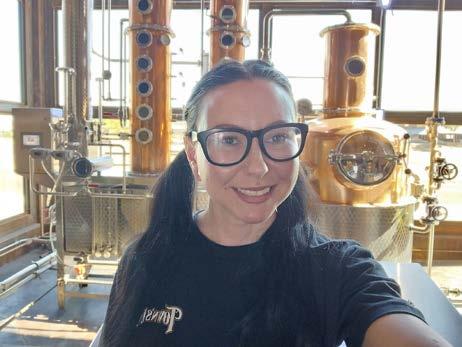
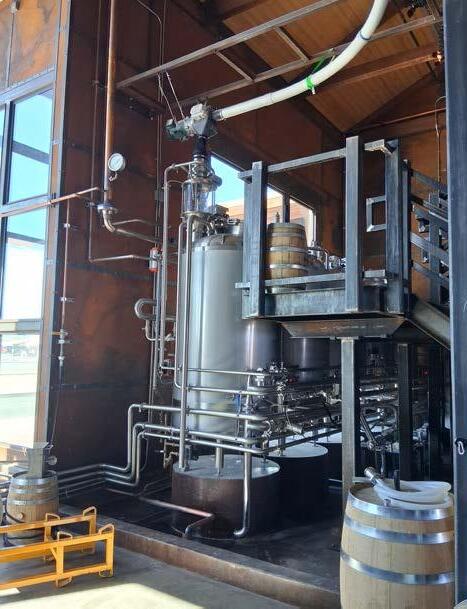
As you enter the inner workings of the distillery you will be awed by the copper stills which appear more as large copper sculptures than the highly calibrated pieces of equipment they are. The machinery inside is set up for seamless production of spirits that meet all quality control and cleanliness standards. It is organized as a laboratory should be and it’s there that the balance of processes is accomplished. Because the methods of making spirits can be extremely complicated and lengthy, I have abbreviated the steps down to just a few key points.
Malting the grains is the step where they have been steeped in water to begin the germination process and the roots will begin to grow. As they become visible the starches inside have started to convert the enzymes into sugars for the plant to grow. At this point the growth process is stopped to keep the sugars for the yeast in fermentation. To keep a Californian influence on the flavor the malted grains used in his process have been sourced from California and the juniper berries used in his gin are harvested locally. Once the solids have been separated during the mashing process the leftover grains are called draff and are given to the local farmers as feed for their cattle. The water is now full of dissolved sugar, now called “wort”, and is then sent to a fermentation tub where yeasts are put in to produce the alcohol.
To distill the spirits, they use a copper pot still and column still to increase the alcohol by volume and remove the water. The pot still has a 500-liter capacity and operates on a batch production model. The column still stands approximately 8 feet tall and operates continuously using copper plates to affect the alcohol levels. Copper is required because it removes the impurities during distillation. Once the distillate is condensed, it is sent to a “spirit safe” where the potable alcohol is
separated and sent for maturing.
The barrels are standard American 53-gal barrels sourced from Minnesota. Once filled, they are matured until the flavor becomes compatible with his profile. The climate in Apple Valley influences the flavor of the whiskey through expansion and contraction which forces the spirit in and out of the wood of the barrel. One of the most fascinating aspects of this distillery is that he has several hundred barrels of whiskey, rye, and bourbon aging here and the variety of flavors possible are limitless. Vodka and gin are not required to be aged; however, Dan is experimenting with a fascinating and quite flavorful gin that requires some maturing. He also has an innovative jalapeno infused vodka that will make a great Margarita or Daiquiri.
Dan’s knowledge has been of tremendous value to the distillery, and he has protected that knowledge by training two very able people who are as passionate about the business as he is. Lonnie Polson and Julie Perteet are mastering the techniques of spirit making and putting their own stamp on the quality of the output. Lonnie began by homebrewing his own mead and developing his expertise on the processes. He started as a busser to get his foot in the door and when the chance opened, he jumped in with both feet. Julie was a student of Dan’s years before and she used
her understanding of scientific properties of biochemistry to create good flavors in their products. Both their accomplished palates and practical experience are now taking the distillery forward by creating innovative flavor profiles of their own.
It’s exciting to see how this team has succeeded and given back to the community and it looks like better days are coming. Dan’s approach has garnered much of the success he deserves, and the patrons of his handicraft have responded with kudos for all their efforts. What is most admirable is their desire to improve their spirits with each batch and take the distillery to new flavor frontiers and it looks like a venture to watch.
All three are available to schedule tastings for individuals and groups and will speak about the technical. v
Where to buy Town’s End spirits:
• Town’s End Restaurant
• Uncle Albert’s
• Los Domingos
• Oakwood
• Luxury Liquor
• Las Brisas
• Mama Carpino’s
• Jocko’s
• Website: TownsEndDistillery.com
• Social Media:
• Instagram townsenddistillery
Marcy’s Musings
Exploring Joshua Tree and 29 Palms
IT WAS THE LAST DAY of February, the month that had 4 Sundays, 4 Mondays, 4 Tuesdays, and you get the idea. While much of the country was frozen and covered with snow and ice, the low desert area of Joshua Tree and 29 Palms was warm and basking in sunshine. We learned some things on that trip. Lesson #1- Huge crowds frequent the shops, boutiques, restaurants, and street fair booths all along Highway 62 (29 Palms Highway) on beautiful warm sunny winter Saturdays.
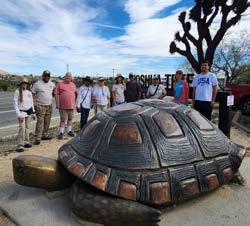
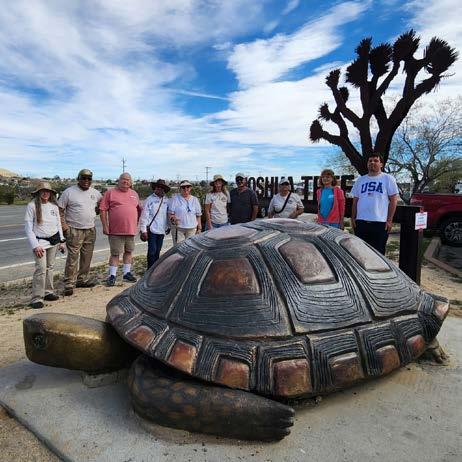
Once we found some parking spots, we gathered in front of the Trading Post Market in Joshua Tree, where 60 years ago, we could have had a perfect view of the Queen riding atop Myrtle the Turtle in the annual Joshua Tree parade. Our next challenge was to get to the other side of the highway, where another street fair was going on, to meet good ole Myrtle, the twin of Apple Valley's Sherman, who resides
in front of the Victor Valley Museum. The desert tortoise, the symbol of Joshua tree, played such an important role in desert history, that the Woman's Club of Apple Valley was inspired to create our own huge concrete desert tortoise. And who would have guessed that member Kelly DeLand used to enter eight to ten of his own turtles in the annual turtle race that followed the yearly parade? (Is this the same guy that told us, when we were at Giant Rock last year, that he used to attend UFO conventions down there? Hmmmm.)
Next was a stop at the 29 Palms Visitor Center, where we were met by docent Breanne Dusastre and representatives from the Bureau of Land Management. This is where we photographed our first mural, #21 "Neighbors in Nature." After a short visit, with map and guidebook in hand, we were off to cruise Adobe Road to find some of the other 25 murals that make up the "Oasis of Murals" project.
Here's a preview:
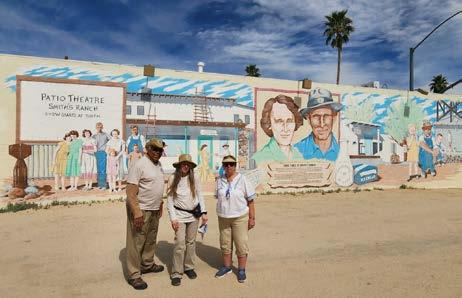
• Mike, Marcy, and Diane, dressed in their finest MHS clothing, posing in
front of Mural #19, "Good Times at Smith Ranch."
• Mural #25, "Keys' Desert Queen Ranch."
• Mural #13, "Flash Flood."
• Mural #2, "Early Life at the Oasis of Mara."
• Mural #24, "Palms Skateboard Park."
• Mural #18, "Boys Basketball Tournament"
• and Mural #3, "Dr. James B. Luckie, the Father of 29 Palms."
The last part of our trip took us down National Park Road to Inn Road, which led us to our lunch stop at the 29 Palms Inn, and finally the wonderful Old School House Museum. It was a trip back in time to browse the many displays inside the 1927 adobe building constructed by homesteaders and financed by donations. In 1992 the 29 Palms Historical Society moved the school building to its present location to serve as a museum to preserve and share local history. What a great way for 13 High Desert residents and one guest from San Diego to spend an 88 degree winter day on the lower desert, where, once again, art and history meet! v
One Hundred Years and Still Kickin'!
WHEN AMERICAN SONGWRITER and jazz
musician Bobby Troup
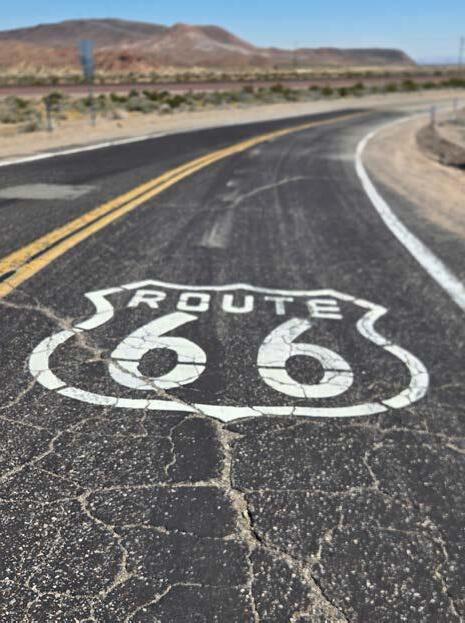
invited you to "Get Your Kicks on Route 66" back in 1946, he probably had no idea that his catchy song would still resonate all along the eight states that make up the iconic highway, for the Centennial celebration in 2026. Yes, it's 100 years of the road and 80 years of the song, first recorded by Nat King Cole.
The current slogan is "100 Years and Still Kickin'!"
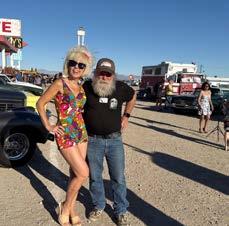
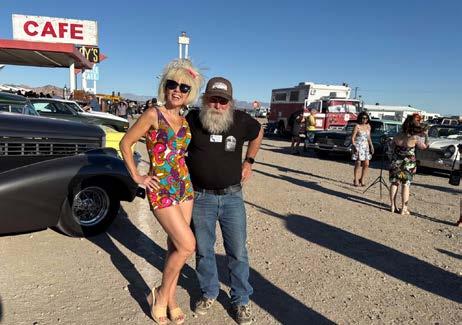
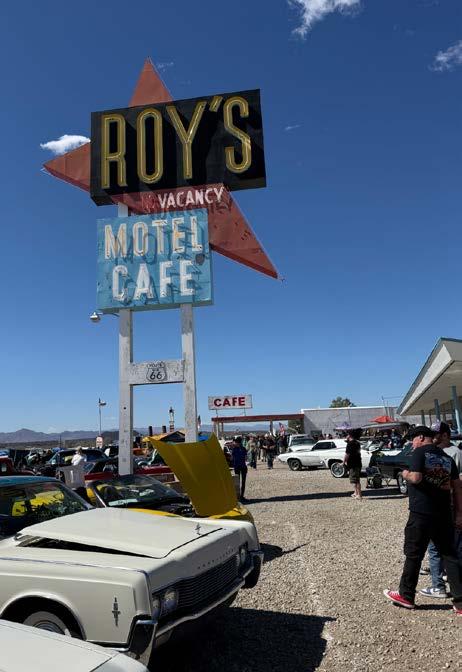
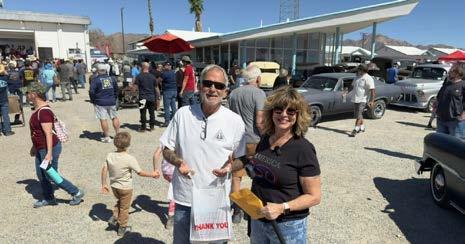
As the Pulse magazine staff highlights one Route 66 state a month (Illinois in January, Missouri in February, and all 14 miles of Kansas in March,) they won't get to California until August. However, California celebrations are already in full swing. Saturday March 7 was Amboy's turn to rock 'n roll, with their "Second Annual Route 66 Cruise." Motorcycles,
choppers, dune buggies, classics and antiques all rolled in, 3 times as many as last year, and filled the Roy's Cafe parking lot. The decommissioned San Bernardino County's Sheriff's car, the Victorville Route 66 Museum's VW bus, and even the late
Albert Okura's SS Chicken Boat, built on top of a Cadillac, were all a part of the fun. The car show's grand prize went to none other than a member of the Billy Holcomb Chapter 1069 of E Clampus Vitus, Wayne Rollins. His entry was the 101-year-old 1925 Model T Ford, which started out as a school bus in San Luis Obispo. In his interview with Wonder Hussy, Wayne let it be known that the Clampers are not only "a drinking club with a history problem," but men who have a sincere interest in preserving local history through the placement of monuments. In fact, right behind him, Wayne pointed out their recently placed Route 66 Centennial monument, joining the several others there in Amboy. But the stupendous car show wasn't even the main attraction. Nope, the Ms. Amboy Pin-up Girls Contest got that honor.
Our own Delvin Harbour, Vice-President of the Route 66 Association California East, appeared in the video of the event. He got credit for introducing "Turbo," of the Victorville Route 66 Museum to podcaster Wonder Hussy, exactly one year ago at the first car show. And just a few months from now, in June, they will be taking off
Mission Accomplished
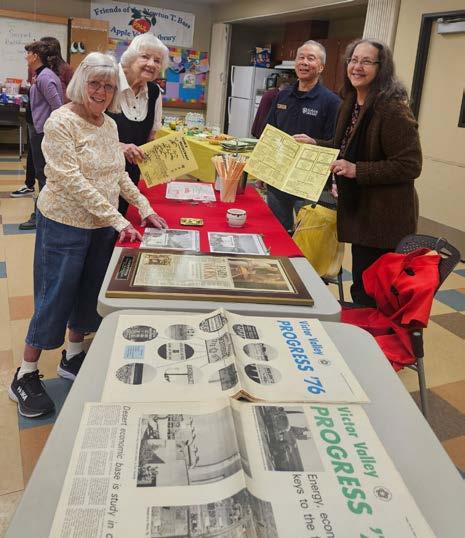
ONE OF THE MISSIONS of the Mohahve Historical Society is for members to preserve and share history by presenting to other groups and organizations. Dennis Hom did just that with his March 10 presentation to the Friends of the Apple Valley Library, "Growing up in Old Town Victorville." And he had a lot of support with 13 MHS members in attendance, 11 of whom are also FAVL members.
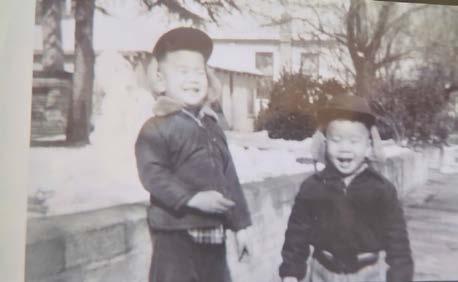
From his birth at Onofrio's Maternity Home on Westside Street, through his elementary, junior high, and high school years, Dennis painted a picture of his wonderful carefree childhood. While his address for his first 19 years was 15534
Sixth Street (house still standing and occupied), he considered the whole small town of Victorville including the streets, the parking lots, the park, and the river, his own backyard and playground.
Dennis's talk started off with his Chinese family's history. His dad, Tommy, came to the US at age 15 as a "paper son," sponsored by his "uncle," who may or may not have been an actual relative. After three months on Ellis Island, Tommy ended up in San Francisco as basically an indentured servant, who could never pay off his sponsor. But with a bit of luck and some gambling money, he made his way to Victorville in 1946 to get his start in the restaurant business.
Dennis's American born mother, Edna, on the other hand, ended up returning to China to live for a period of time. She made it back to the states, married, and raised a family before the Communists closed the borders in 1969. Her mother was not so lucky and never got out of the country again. Dennis, his older brother Al, and younger sister Elaine, all grew up as Americans, as there were no other Chinese in Victorville. They did not have to struggle to learn English as their parents
on an eight-states adventure, leaving from Santa Monica and traveling the Route 66 all the way to Chicago. There will be stops at 64 announced locations, and "a few" secret locations, only to be revealed at a later time. Hmmmm!!
It will be quite a year of celebrations, as people across the country celebrate, while keeping the legacy of the Mother Road alive and well for generations to come. v
had, and celebrated Christmas and other American holidays.
Dennis's slide show was a real history lesson, with a large number of then and now shots of the stores, hotels, and other businesses lining Seventh and D Streets, as well as Sixth Street and other residential areas of Old Town, which didn't stretch much past Forrest at that time. For recreation, he and his friends enjoyed
playing Army with with war surplus clothes and supplies from Joe's Trading Post, swimming in the Mojave River, cruising over speed bumps, drag-racing on the abandoned run-ways of the original Apple Valley Airport, and watching the drunks fight in the alleyway behind the Covered Wagon Bar.
Much of the presentation focused on his parents' three family restaurants. First working at the State Cafe on lower Seventh, they moved to the Red Log on upper Seventh during the 1950's, and then in 1983 opened the well-known Hom's Restaurant on Palmdale, then considered to be WAY out of town. Tommy and Edna Hom were hard-working to say the least, open from 7 AM to 9 PM daily. The restaurant served both Chinese and
American food, and the whole family was expected to help. Dennis's career in the restaurant business began at age 9, as soon as he was tall enough to stand on a box and reach the sink. Besides feeding the actual customers, Tommy made sure the hobos and hungry area teens got a plate out back in the alley. Edna, in her "spare time," made her own uniforms and clothes for the whole family, often from the same bolt of material.
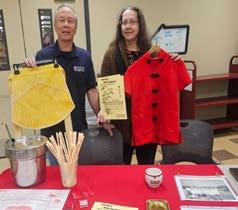
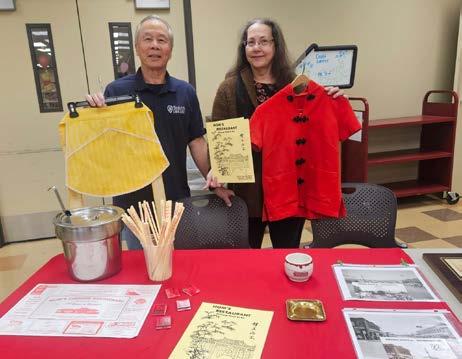
Before and after the talk, attendees enjoyed looking at the tableful of Homs Restaurant memorabilia, including chopsticks, placemats, uniforms, and fortune cookies. And the 60's/70's era news articles and maps on display gave a good idea of what life was like in smalltown Victorville at that time. Dennis, we
thank you for sharing your adventurous life growing up in Old Town, back when it was really the place to be! And thanks also to Joe Manners, also born at Onofrio's Maternity Home, for adding your two-bits worth. We loved it! v
Searles Valley Historical Society Celebrates the Route 66 Centennial
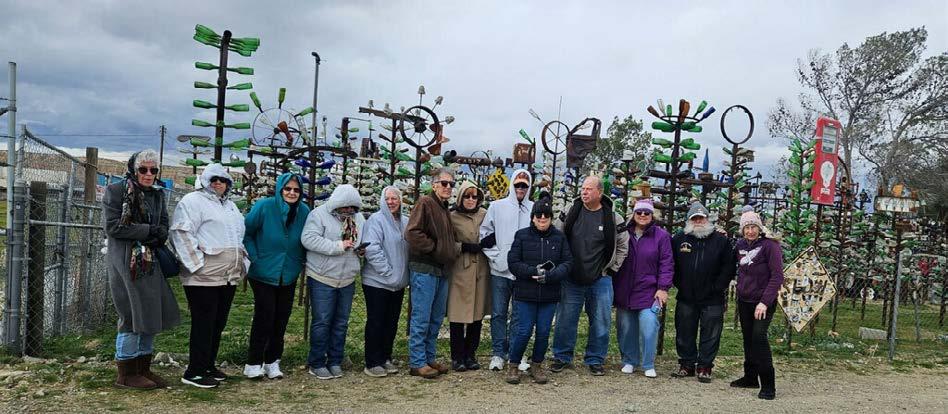
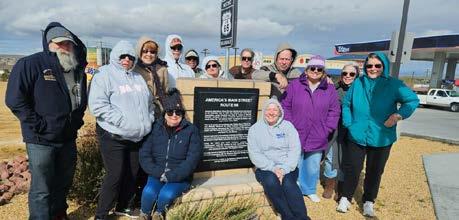
DESPITE FEB. 19, 2026 , being a rather cool and windy day with a chance of rain, the group that came down from the far northern edge of San Bernardino County enjoyed their visit to the old Route 66 Towns of Helendale and Oro Grande. Five Mohahve Historical Society members, Delvin, Mike, Giulio, Martha, and Marcy, met the group of eleven Searles Valley Historical Society members, that hailed from Trona and Ridgecrest, and their fearless leader, Norma, all the way from the small snowy, icy very small town of Onyx, on the other side of the 5250-foot Walker Pass.
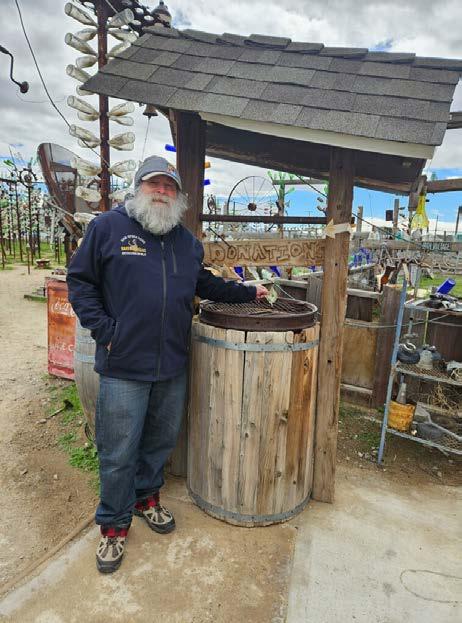
The first three stops were to our three Helendale monuments, "Main Street USA," "Point of Rocks," and "One Hundred Year Time Capsule," each complete with a dose of history of the surrounding area. After a short driving tour of the Silver Lakes Community led by Giulio, we were off heading south on the old Route 66, also known as the Mother Road, to Sage Brush Annie's and Elmer's Bottle Tree Ranch. Who knew that in Helendale, California, thousands if not millions of bottles (and other objects) grew on trees?
Then it was on to Oro Grande to the famous quirky Cross-Eyed Cow Pizza Parlor, serving delicious entrees, whose ingredients are grown at the Cross-Eyed Cow Farm up in Helendale, the site of a previous MHS field trip. The unusual decor inside the restaurant, and the numerous murals outside, serve to enhance the dining experience. Our exciting trip
concluded right down the street at the also-famous Antique Station just as it finally started to rain. This gigantic rustic store is packed inside and out with more vintage and antique items than you can imagine. It just goes on and on and on- a real antique lover's paradise. My favorite is the kid's wrought iron mini ferris wheel, with five little hanging seats, that must have brought a lot of joy to toddlers back in the day.
Thanks, Searles Valley folks, for making the trip down, and for hosting us in the past. We hope to see you again real soon. v
A Gift of Gold
Part 1
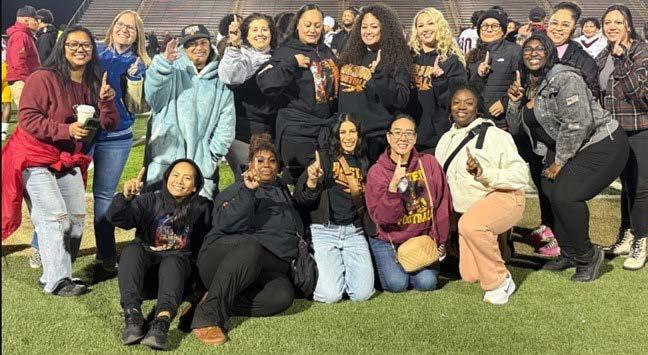
THE WORK BEGAN in earnest long before the 2025 season did, even before the players gathered for spring training in April. They got a month off at Christmas and then they had to come back and begin raising money again.
They didn’t know it at the time but 2025 was going to challenge them in ways no other season had before. And, it should be said that had they known, they’d probably not have changed a thing except to add more nights they fed the team.
Because now that they’re gearing up for another run at a state championship in 2026, they can reflect on the previous campaign with some nostalgia and quiet pride in the special way only a state champion can. You know, from the mountain-top and in that humble you-don’t-have-to-say-a-thing kinda way that reveals the joy they feel at what they—the Barstow Football Booster Club—accomplished.
It was a lot of work, but it was done with love for the kids, the school, and the town that, at the beginning, didn’t love them back.
Losing the first three games of the season can do that. It can turn hope into back-biting bitterness. Especially because we had been the league champions the year before, and gone to the playoffs. The expectation shared by everyone was that we would again. We be BAD! So, the losses morphed a hopeful, even wishful, fan base into a frustrated, almost angry one.
It was people just being people. Often
impatient and easily disappointed because that’s what we, in general, have become. In a hurry. Everything now rather than later. Fast food, fast internet, fast everything. Why wait for snow or even December when we can start celebrating Christmas the day after Halloween? It’s the same attitude about winning. The three losses had already defined us as a team rather than us waiting to see how we’d finish.
The Booster Club understood that, though the caustic comments made about the team were irrational and hurtful. Many of the club members were mothers of players like Suzanne Krishna who describes the initial reaction of the fans. “Because we’re Boosters, we hear a lot of things. And, in the beginning, when we lost those three games, we heard a lot of [grumbling] from everyone. Everybody’s a coach ... right?”
Right! Too many perhaps. Everyone is a rocket scientist.
But, again, that’s people being people. Former jocks postulating on the abilities of the coaches or offering up game-winning strategies with some vigor and profanity from the cheap seats. Noelani Leleimene, the head coach’s wife, laughs lightly as she recalls one occasion during a JV game
By J.P. Garner
when Barstow fans became too exuberant. Her husband was seated in the stands, watching the game with her, and the fans didn’t know it.
“They were yelling when he [turned to them] and said, ‘By all means, here’s an application.”
Here’s an application! LOL … that shut them up.
But, more than silence the crowd, Noelani adds that the comment, “Also reflected something deeper about the program. Building a team takes more than words shouted from the [stadium seats.] It takes commitment, belief in the players, and a culture that surrounds them with support.”
She added with some passion, “That same spirit was reflected by the Booster Club who helped create a family around the team, and a place where the players felt they were part of something bigger than football.”
Something bigger than football.
What that was is two things.
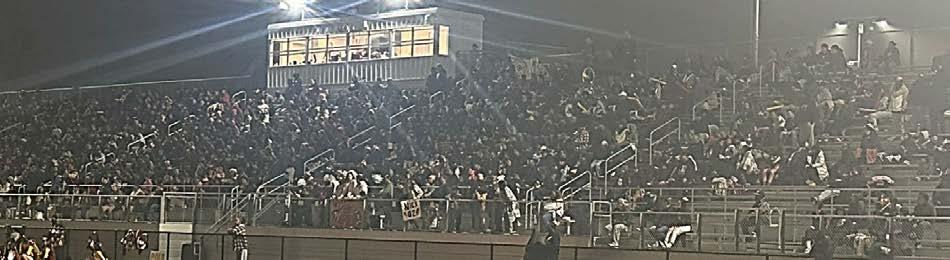
On Friday nights, it was the fans in the stands supporting the team. The change in them came not in the blow-out wins over Sultana and Burroughs, but in the amazing upset of Victor Valley in the Battle for the Axe, The roar booming from the crowd that night was filled with excitement and joy at the pounding administered to our nearest neighbor..
That level of fanaticism from the Barstow faithful increased each week, with each win. When we arrived at Buena Park High School for the state CG, parking spaces were an issue because, as one parking attendant complained, “Nobody expected Barstow to show up in the numbers it did.”
Ever since the astonishing win over Apple Valley, our fans were loud and proud. One voice that celebrated our eleven and drowned out the opposition. So, that in the weeks leading up to the BIG game, the team gave us a reason to cheer our hometown; to even raise our voices in
praise of Barstow. The majority of whom had no familial connection to any player. Just a love of the game and, most likely, were gleeful and giddy alumni
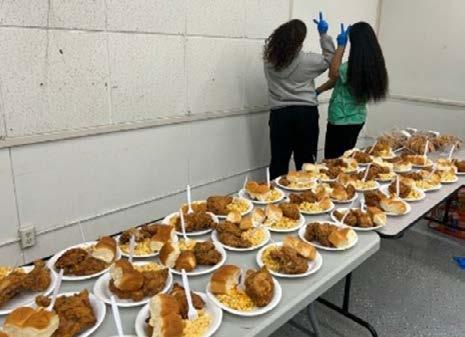
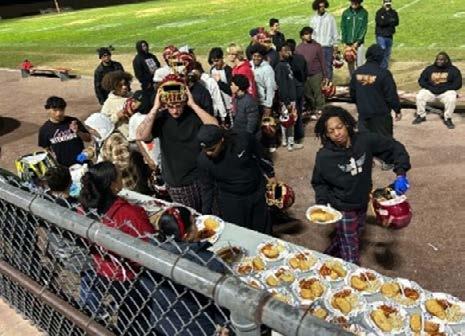
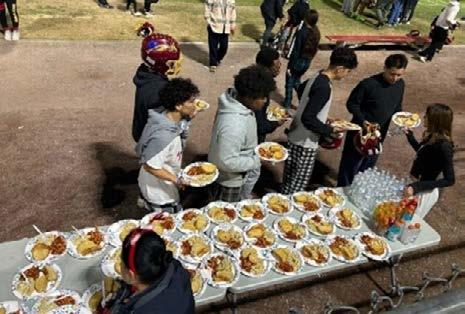
The other thing, and this was the glue that bound the players together, was what occurred in the time the team prepared for Friday night. When the stadium—as stoic as an ancient relic from a distant past— was empty and the instructions of the coaches echoed into the air. It was then that the Boosters performed their magic. Serving meals, handing out protein packs, and offering encouragement.
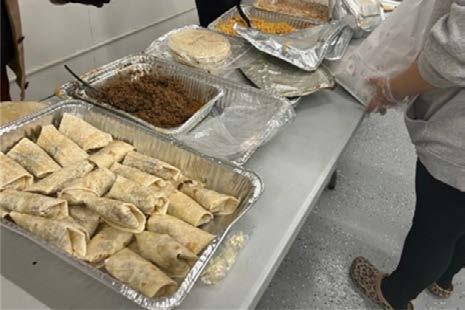
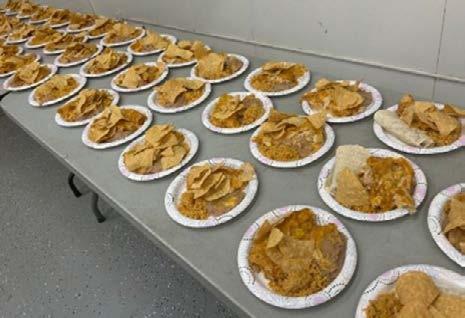
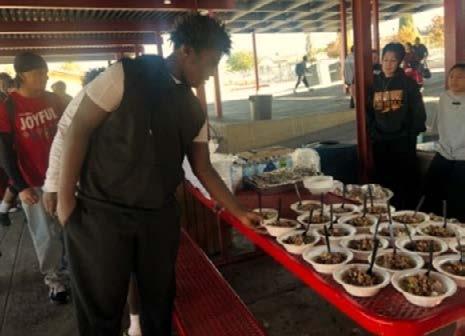
It was there on the field and the patio area that the mothers, fathers, sisters, brothers, grandparents and local businesses delivered their love of the program and the kids in the form of delicious hot meals for the entire team throughout the regular season, and then only for the Varsity in the 30 days they were in the playoffs.
And though the five women seated around the conference table at the Canton Restaurant have been here through the good, the bad, and the low hum of the middle, they never saw a season like Barstow football had last year. A season that challenged the ever-faithful Boosters in ways they could not have imagined way back in August when the kids came to Langworthy Field for fall practice.
The criticism arising from the initial losses in 2025 paled in comparison to the many challenges created by the 12-game win streak that carried Barstow’s Aztecs to the pinnacle of high school football in the CIF’s state tournament. Of the 1,267 high schools in California, we were one of 15 to
win a state championship.
The only one ever to win a state championship in football in the High Desert.
And there was nothing fast about that.
The Barstow Booster Club was traditional in concept but not in practice. The big thing was the food. They must have served a thousand meals if they served one. Especially during the playoffs when the served a meal every day for 30 days. And not just to the Varsity players but the JV and the Freshman too.
Even some to anyone who was hungry.
But it wasn’t just food they served. It was something greater. Something all too often missing in a world divided by hate and bias. Something that bound the kids together as a family rather than a football team. It was love. Not of the game, though it was that that brought the mothers and volunteers together in a common purpose.
But of the kids. As one Booster explained, “We wanted the team to be able to bond. So, [we asked ourselves,] how do we cultivate that?”
The two things the coaches brought to bear on the players were their faith and a connection to the family in the stands, which grew dramatically each week that Barstow won. But the Booster Club cultivated a love of the players through the numerous meals they served and their variety. A luscious treat in most cases because as Suzanne pointed out, “Barstow is economically challenged.”
That’s a nice way of saying we’re poor. And we are. Forty-three percent of our population draws some form of state aid. Providing the players with regular meals was not only creating a family environment but was also God’s work. In First John we learn that faith must be accompanied by
action, and not just words. Because of it, as was mentioned before, some of the kids served didn’t play football.
They were just hungry kids.
The meals were provided by a grocerylist of sponsors like the Wilhoit Family and Cheer Coach Christiine Parrish-Clark and local restaurants who toed the line like Del Taco, DiNapoli’s, Barstow Auto Supply, and Los Domingos to name a few. Several parents would simply make food while pizzas would be provided by Domino’s and Costco.
It was a community-effort. There was hardly no one in town who didn’t pitch in to the feeding of the players and guests. “Sometimes,” one Booster added, “we’d have the kids go to the where the Club met to eat or later on in the season, we just set up the tables, and had our cars there, and we’d just fed them on the field on the track.”
The idea for the meals came about years ago, but Meghan Alvarado, a long-time Booster whose son, Degan Cardenas, a Varsity player who recorded 17 tackles in one game was there, declared that “I’ve never seen a team feed players like that, even during the playoffs. I was like, we're feeding them every day!”
After an away game, it was SOP for the team to feed at an In-N-Out. They once ordered over 100 cheeseburgers. French fries, and sodas.
At the heart of this team are three things: faith, family and football. But that which made them a family was the love and compassion extended to the them by way of the meals regularly served by the Booster Club.
In a poor town like Barstow, a good meal is often as priceless as a gift of gold. v
Senior Care Professionals
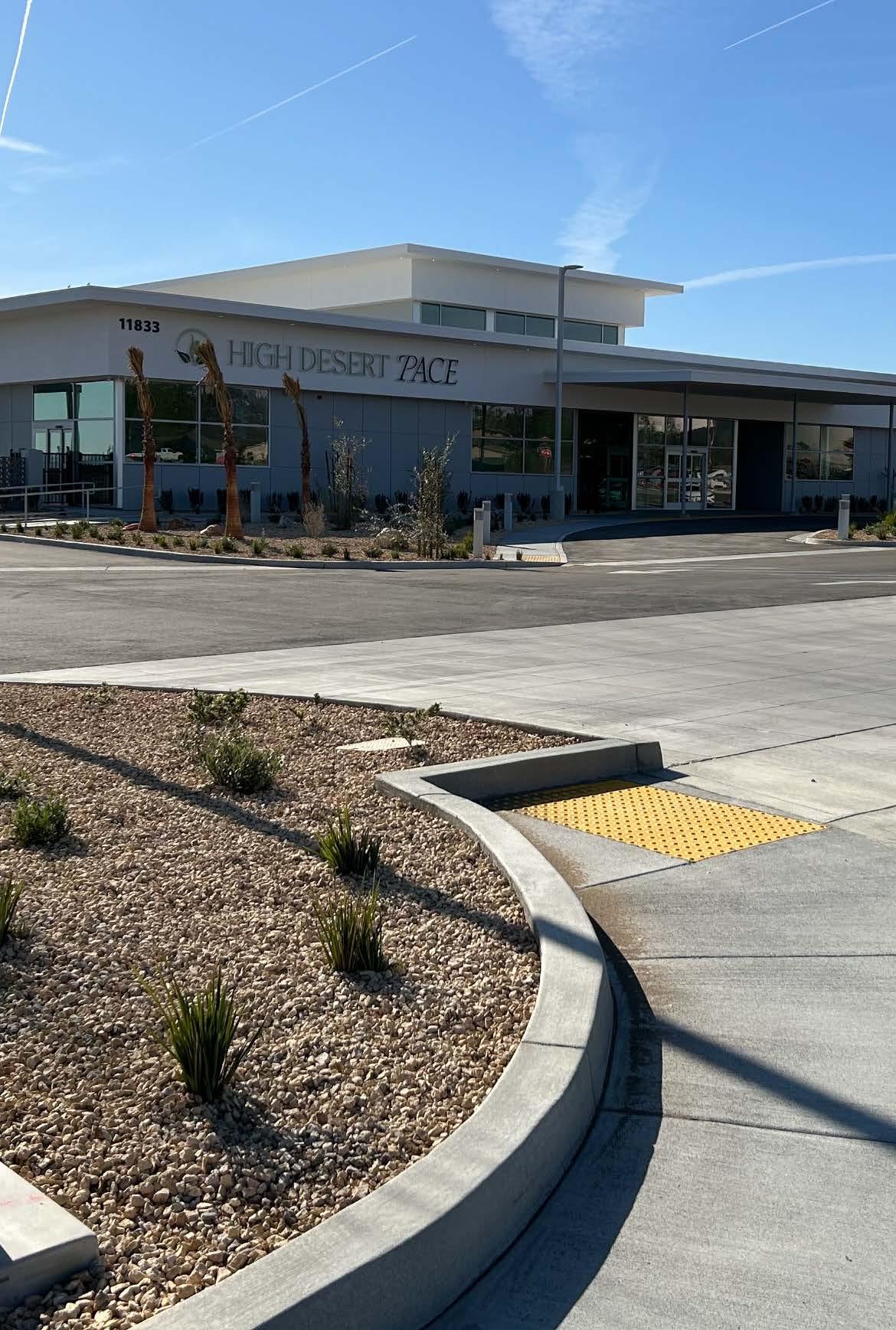
FOR DR. OTASHE N. GOLDEN, medicine has never been just a profession. It has always been a calling rooted in listening, compassion, and the belief that caring for others is one of the most meaningful ways we can serve our communities.
As the Medical Director and Chief Clinical Officer of High Desert PACE, Dr. Golden brings more than two decades of medical experience and a deep commitment to caring for some of the most vulnerable members of society.
Her journey to medicine began with an unexpected combination of interests.
“I have always loved language and communication,” Dr. Golden shared. “I studied Biological Sciences and English at UC Davis before attending Albany Medical College. That background taught me that medicine is not just about science. It is about understanding someone’s story.”
That perspective has guided her throughout her career.
After completing her Family Medicine residency through the UC Davis and Sutter program, Dr. Golden knew she wanted a path that would allow her to care for patients across all stages of life. Over the past 25 years she has served in many roles including hospitalist, nocturnist, palliative care consultant, outpatient physician, and medical director.
But one constant has remained throughout her work.
“I have always been drawn to the patients others find most complex or overlooked,” she explained. “Those are often the people who need the most thoughtful and compassionate care.”
That commitment ultimately led her to High Desert PACE.
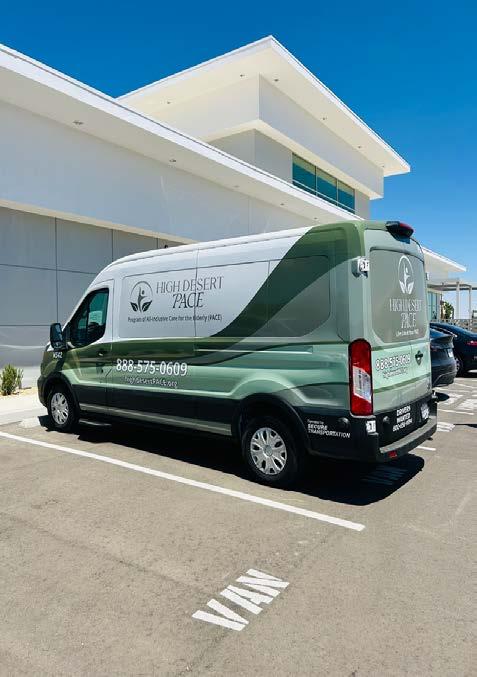
PACE, which stands for Program of All Inclusive Care for the Elderly, is designed to help older adults receive comprehensive healthcare and support services while remaining in their own homes and communities.
A Life of Service Through Medicine
High Desert PACE’s Dr. Otashe Golden Brings Compassionate Care to the Community
By Tiffanie Nicolle - Pulse Media
For many families, that model can be life changing.
“What drew me to High Desert PACE is the model itself,” Dr. Golden said. “It is one of the most thoughtful and comprehensive frameworks for caring for older adults in American healthcare.”
But just as important to her is the community the program serves.
“The High Desert has historically been an underserved region,” she explained. “Residents often face real barriers to care including distance, limited access to specialists, and economic hardship. They deserve a healthcare team that meets them where they are.”
PACE does exactly that.
Participants receive coordinated medical care, therapy, transportation, social services, and daily support from an interdisciplinary team that works together to ensure each patient receives personalized care.
The goal is simple yet powerful: help older adults live safely, comfortably, and with dignity in their own homes.
For Dr. Golden, seeing the impact of that work is what inspires her every day.
“This program is not just about treating illness,” she said. “It is about supporting people as they age and helping them maintain their independence, their relationships, and their connection to their community.”
As High Desert PACE continues to grow, leaders like Dr. Golden are helping ensure the program remains rooted in compassion, collaboration, and the belief that healthcare should always be personal.
Because at the heart of medicine is not just treatment.
It is care.
And for Dr. Otashe Golden, that care begins with listening to every patient’s story. v
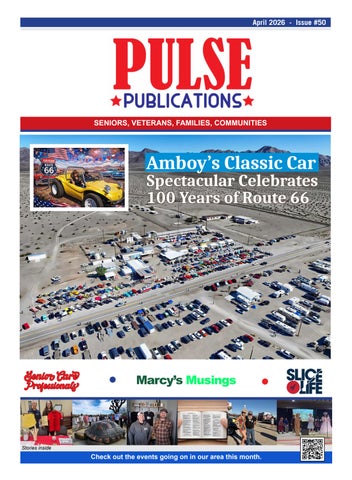
Amboy’s Classic Car Spectacular Celebrates 100 Years of Route 66
By Jaylyn And John Earl
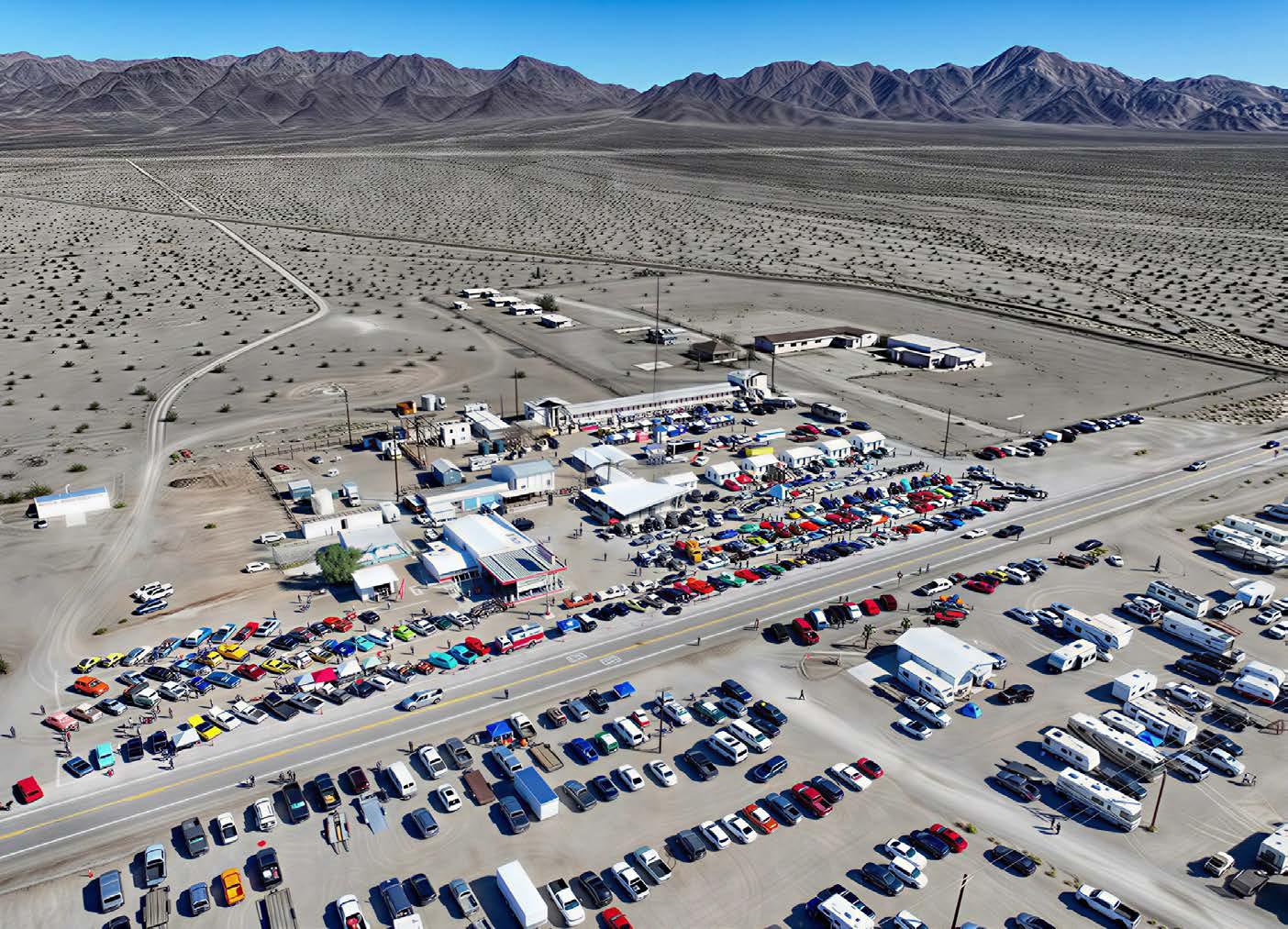
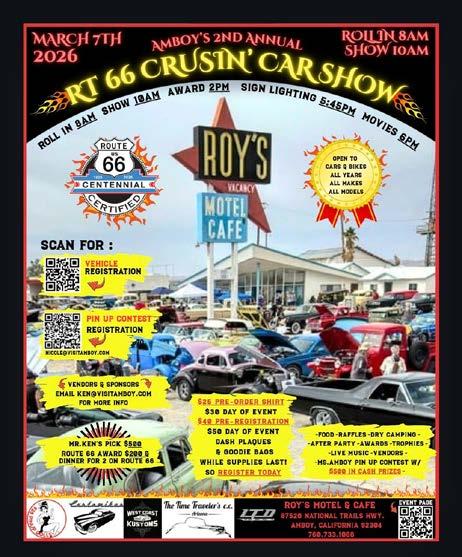
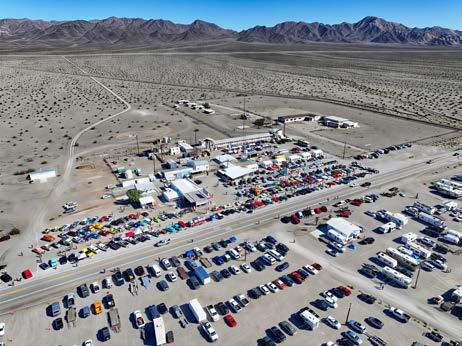
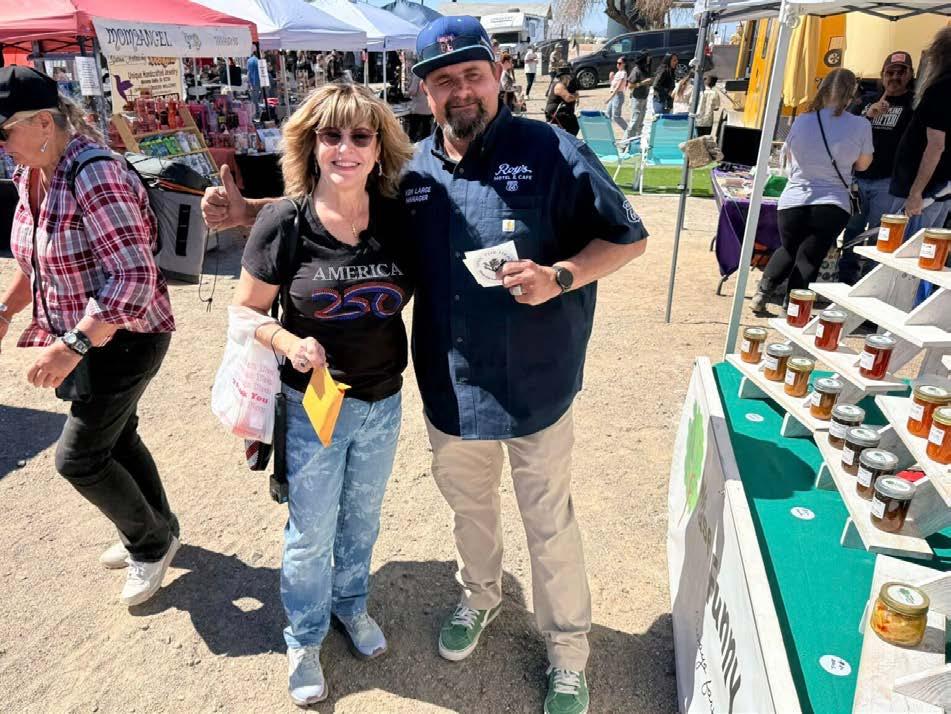
ROUTE 66 IS CELEBRATING ITS 100TH YEAR anniversary this year–and what a fun kick-off Amboy gave it on March 7, 2026. Town manager, Kenneth Large, explained Roy’s Motel and Cafe in Amboy, California, owned by the Okura family, always wanted to have a car show. Last year, Amboy finally got to see a dream take shape. Kenneth’s friend, Kenny Earls, launched the Time Travelers Car Club, and it exploded into something bigger than anyone expected, a wide-open, all-welcome gathering of every kind of classic car you can imagine. Kenny Earls of West Coast Kustom’s Arizona was the first one who really showed up for Amboy. He didn’t just say he wanted a car show; he walked in with cars, with heart, with his sleeves already
rolled up. He was the one who believed in what Kenneth was trying to build before it even existed, and he put in the time, the effort, and the faith that helped turn an idea into something real.
That first show brought in about 188 rides, and this year the field nearly doubled, swelling to around 375. Numbers like that don’t just mark growth, they echo the spirit of the club and the community gathering around it, a kind of heartbeat rising out of the dust. And woven through all of it is the quiet, stubborn love people still hold for the little town of Amboy. Every polished engine and every mile traveled to get there feels like a small prayer for a place that still matters.
Kenneth Large carries a perspective few others have. As a Historic Route 66 board
member, he works alongside volunteers who pour their hearts into preserving the Mother Road, watching the direction they choose and the legacy they’re trying to protect. At the same time, he’s operating Amboy almost entirely on his own as a living Route 66 destination; greeting travelers while keeping the Cafe open for gas and refreshments that means more than most people realize.
Beneath all of that is the view this military veteran had his whole life as a desert resident, who’s watched towns fade, landmarks crumble, and history slip into silence. What drives him now is the hope of seeing things come back, not just as memories, but as living pieces of the past brought forward for a new generation.
Kenneth is one of the few who’s actually made the trip to both the national and international Route 66 events, the kind of gatherings where the future of the Mother Road is shaped. And in California, he stands alone as the sole representative speaking as a true stakeholder, not just an enthusiast volunteer. It’s a rare position, one that carries both responsibility and perspective. While others show up out of passion, Kenneth shows up carrying the voice of Amboy, the desert, and the history he’s been fighting to keep alive.
Since 2026 marks the 100th anniversary of Route 66, Roy's Motel and Cafe planned to honor that milestone in true desert style, planning Amboy's biggest, boldest car show yet, a celebration worthy of the Mother Road’s century-long story.
And in the middle of all that excitement, the Yucca Valley Sunset Rotary stepped in and rented us their stage, a simple gesture that felt huge. Seeing that stage rise against the desert backdrop of the Bristol Mountains, knowing a local group believed in what we were building, added its own kind of movie-moment to the day. It was one more reminder that this show isn’t just about cars; it’s about the community stepping forward, piece by piece, to help something special take shape.
Mr. Ken’s pick for the car show winner and the recipient of the $500 prize was
Sandra Filkill, who rolled in with a stunning 90% original 1940 Dodge after driving all the way from Placerville, California. Her arrival felt like a scene out of a classic road film, the kind that reminds you why people still chase the horizon.
The soundtrack of the day came alive with performances by Sarah Barlow, Hard Rooster, and Forever Came Calling, each band adding its own pulse to the desert air and turning the show into something unforgettable.
Albert Okura’s story started in Southern California in 1951. The son of parents who, just a few years earlier, were interred at a forced relocation camp for Japanese
Americans during WW2. Albert’s Father had been a minor league baseball player for a Japanese team at the time but joined the U.S. Army.
His son, Kyle, never met anyone with so much energy, drive and ambition as his Dad. Albert was the only person he knew that could work 365 days a year from morning until night. An opportunity arose to buy a whole town in the Mojave Desert. For Albert, it was kismet. Kyle poignantly recalled the day in 2005 when he found out. Kyle was 12 years old and on the computer playing video games.
He remembered his Dad announcing to the family he was going to buy a town. Kyle was confused and asked him to explain. Albert reiterated it’s a town called Amboy and I’m going to buy it. Kyle still could not fathom his Dad’s decision and asked why. Albert grinned, looked him straight in the eye and asked, “Who do you know that owns a town?” Suddenly the concept seemed cool. Albert passed away at age 71 on January 27, 2023. However, thanks to the Okura family and Kenneth Large, Amboy continues to live.
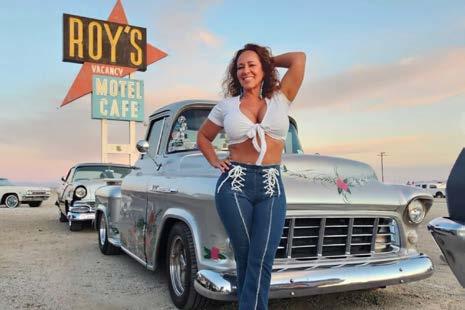
Michelle Caporosso Mckie was crowned Miss Amboy 2026, a moment that felt stitched straight into the town’s long, sun-bleached history. Twenty-one contestants stepped forward in costumes honoring the Mother Road, echoing the days when Amboy was a bright stop on a long journey, a place where travelers paused for refreshment and stories traded hands.
Two planes swept in over the desert and touched down at the Amboy Airport, as if the sky itself wanted a front-row seat to the celebration. It felt like something
Photo courtesy of Robert Jensen
The man, the myth, the legend, Amboy town manager, Kenneth Large.
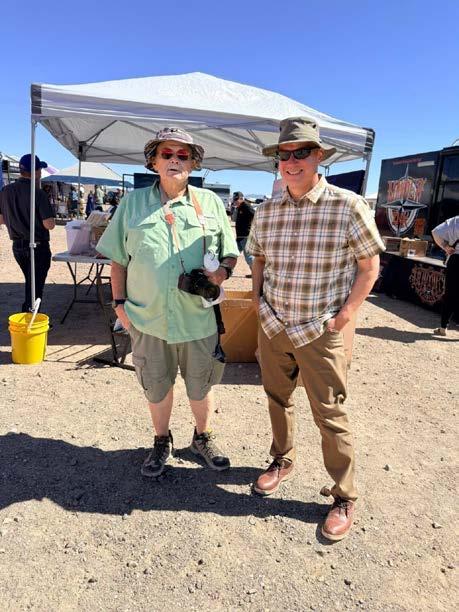
John with Four Miles East of Bagdad author and historian, Steve Reyes.
straight out of the old Route 66 legends, the kind of moment where the dust lifts, and the whole world seems to lean in. When those planes rolled to a stop beside the gathering of chrome and history, it was clear: this wasn’t just a car show anymore. It was Amboy calling out across the Mother Road, and people were answering from every direction.
Kenneth Large works hard to promote Amboy but is humble. He expressed his appreciation to every single person who helped him along the way, and everyone who showed up to support the event. Standing there in the middle of it all, he truly felt the weight and wonder of a 100th-anniversary celebration, not just in the size of the crowd, but in the way people came together. What meant the most was how deeply inclusive it all felt, a gathering where everyone who attended had an important role.
hand and mingle with the crowd. Author John Wease and his lovely wife sold homemade jams from Newberry Springs. Even the California Highway Patrol had a booth.
Kenneth Large is already gearing up for the 2027 event, and the momentum is unmistakable. Hard Rooster and Sara Barlow are set to return, bringing that same electric energy that lit up the desert this year, and the pin-up girls will be back to give the show that classic Route 66 charm.
Someone has already stepped forward to sponsor every single trophy, a sign of just how strongly the community is rallying behind this event. And the excitement is so real that the first two cars have already called in, eager to claim their spot for next year. Amboy’s story just keeps growing more legendary. We had so much fun and we're looking forward to the next show!
Kenneth expressed his deep appreciation for Kenny Earls, Jared Johnson, David Ayre, Heather Russel, Mason Lemerande, Nicole Rachel and all the other people who stood beside him, lifted the vision, and helped turn a simple idea into a gathering with real heart.
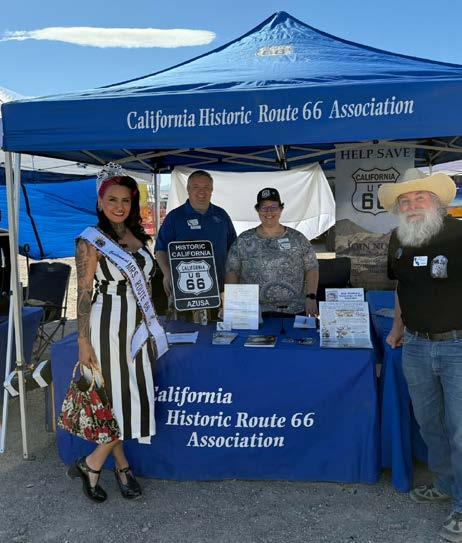
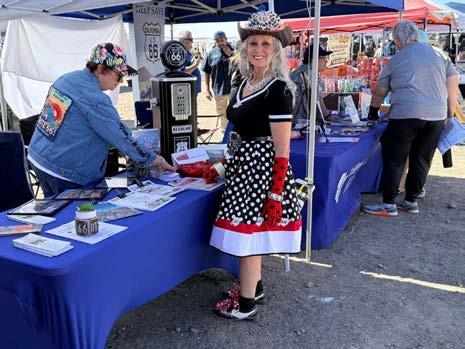
YouTubers and models Sarah of Wonderhussy Adventures, and HotRod Holly Ansman proved to be fan favorites, the kind of personalities and eye candy who fit right into Amboy’s quirky, storied heartbeat. Authors Steve Reyes of Four Miles East of Bagdad also attended. Beth Murray, President of the Historic Route 66 Association, hosted a popular membership booth. Her vivacious vice president, Delvin Harbour, was also there to lend a helpful
Route 66 Museum owner in Victorville and Barstow, Brendan O'Brien, was also an appreciated supporter. The personable Mayor of Needles, Janet Jernigan, also hosted a booth promoting Route 66. Their presence added an unexpected spark, a reminder that Amboy still has the power to draw in motorheads, storytellers, adventurers, and anyone chasing a good tale of yesteryear along the Mother Road. John got really excited when he spied a hotrod just like his father used to own in his youth. Known as a rat rod, it is a style of custom hot rod designed to have a purposefully unfinished, weathered, or "patina" appearance, often built using lowbudget or vintage components.
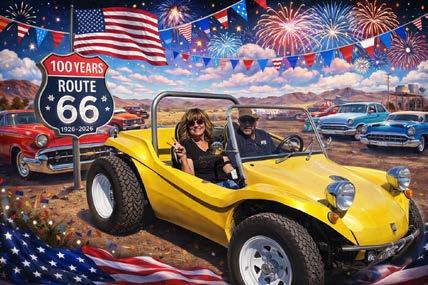
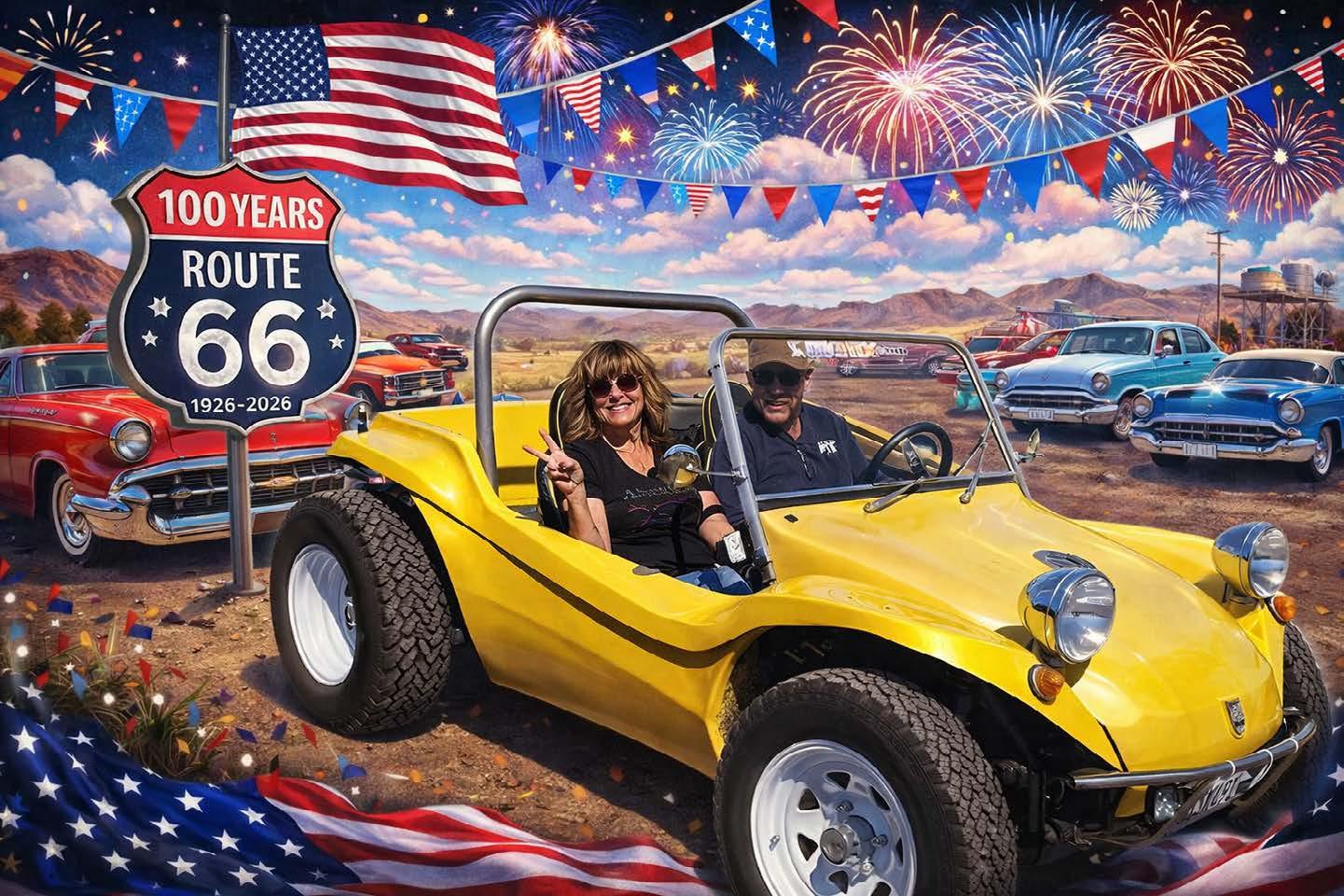
Taking a lap on Route 66 around Amboy in Julie Stocker's bright yellow Meyers Manx was so much fun! Now we have to get one because it matches our Jeep. Note to self: there are no door handles because there are no doors! Just climb right in. The iconic dune buggy company was founded by Bruce Meyers in 1964. Julie is the granddaughter of Sheriff James W. Stocker, former owner of the Whitewater Ranch.
Old friends found each other in the crowd, new friendships sparked over engines and stories, and Desert Way decals flew out by the handful like souvenirs from a day that already felt legendary.
The latest E Clampus Vitus plaque in Amboy, situated next to the post office, was unveiled on January 16, 2026, by Billy Holcomb Chapter 1069. The monument was dedicated during a Route 66 Centennial celebration event at Roy's Motel & Cafe. Known as "the Clampers," they are fraternal "historians" often in red shirts who place plaques at historical sites, honoring miners and supporting widows. We hope you get the opportunity to tour Route 66 on its centennial this year but we especially hope you visit Amboy. The route begins in Chicago, Illinois, and ends at the Santa Monica Pier in California. Check social media for scheduled caravans you may want to join. Please do not miss this important tourist corridor on Route 66 by staying on the boring interstate. Always check ahead for possible detours on areas of Route 66 due to weather or repairs and plan accordingly. Feel free to contact us for helpful itinerary suggestions along California Route 66 in the eastern Mojave Desert. v
Miss Route 66 Newberry Springs, Miss Karla Claus, with Needles Mayor Jernigan.
It’s always a blast meeting up with former jarhead Joe Foltz. Joe entered his sassy green Bullit Mustang in the car show. Semper fi!
Photo of HotRod Holly Ansman courtesy of K. Mikael Wallin @Customikes
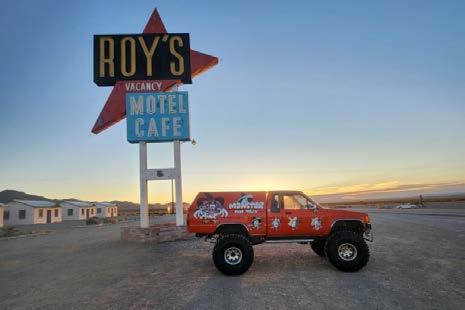
Kenneth Large brought in Albert Okura’s Monster Chicken truck he used for parades. It broke down in transit to Amboy, so Kenneth Large repaired it. Photo courtesy K. Large.
A Small Black Bible
By J. P. Garner
IT WAS A SATURDAY MORNING at Los Domingos that the old coach met with the graphic designer of his book.
The young man’s name was Adrian. He was trained at FDIM in Los Angeles and was uniquely gifted. The meeting was meant to be about the football book but it strayed quickly to the good book. The old coach didn’t know that Adrian was a Christian.
For an hour they talked about the feelings the old coach had been experiencing … feelings of being drawn to something greater than himself. He sat there, sipping coffee, listening to Adrian, thinking that God had brought the young man to him. As they were talking—excitedly in fact—an elderly gentleman that Adrian knew walked by. He was carrying a backpack and he paused by the table and joined in.
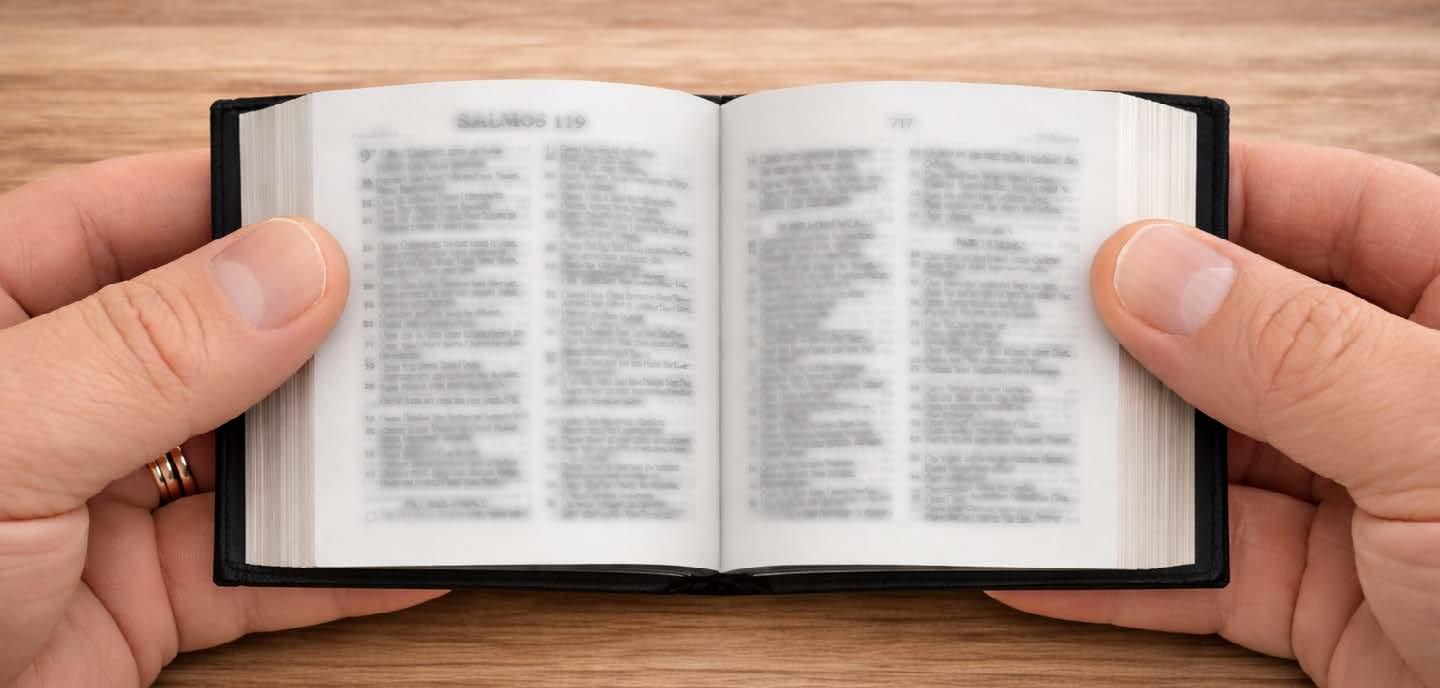
Soon, he started talking about the Rapture and described Heaven as a place where there are no marriages and no last names. He kinda commandeered the conversation and the old coach didn’t object. He figured the elderly gentleman rarely got a chance to talk about his faith. After awhile, he opened his backpack in which the old coach could see a large collection of small black books. All smaller than a wallet. He gave one to the old coach and the graphic designer. He then wished them well and departed.
The old coach thought the encounter uncanny. As if part of a script.
When he studied the book, he saw it was a Bible. It was so small and not easily read. But as the old coach held his Bible, a thought came over him that was so powerful that it felt like an instruction. He had a sudden need to change his thinking
about a painful event from last year. When he returned to his home, he acted upon the thought immediately. He asked for forgiveness of friend he had hurt. He felt it was from God that he had received this piece of guidance. It was, he knew, the right thing to do. Not so much for his friend, but for himself.
Talking to a friend from his writer’s club on Thursday started the process by which the old coach is now feeling healed and hopeful. Talking to Adrian finished it. He convicted the old coach, who has no idea what will happen next. He thinks, though, that he cannot be a full-blown Christian because he believes in freedom of choice. He cannot tell anyone else how to live, love, or pray.
Especially now that he was finally learning how to do all three. v
Brewing up an enterprise in the High Desert with Style
By Paul Sebastian
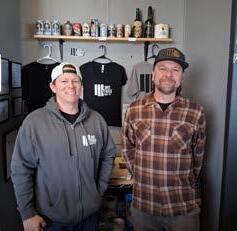
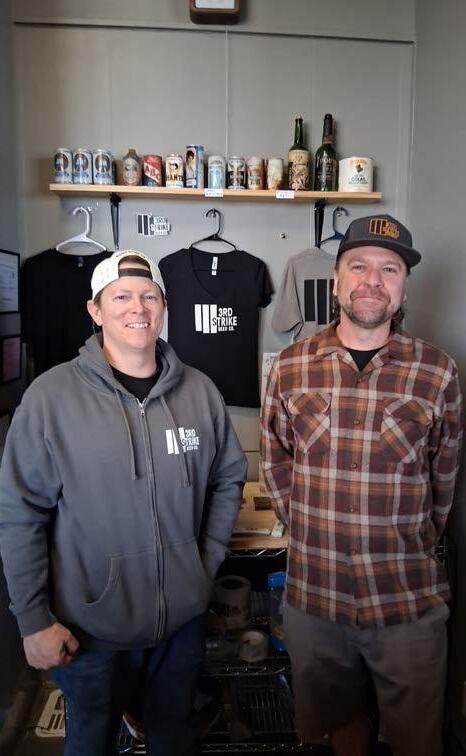
JESSE CANCEL AND MIKE HALE
are swinging for the fences with their new brewery “3rd Strike” located on Poplar St and the 395 in Hesperia. This homegrown venture from two hometown guys uses their expertise to deliver gold medal style quality in every style of beer that they produce. With styles that range from lagers, Pils, IPAs, and blondes each batch of brew is born from their original recipes and mash bills to set themselves apart from other brewers. When I arrived, I was saw an old-style English bar top reminiscent of a neighborhood pub that had seen many a pint go across its surface. Its dark mahogany-colored grains and beer mug divots didn’t fully cover the tall tales that seemed to be just below the surface waiting to come out and join the gathering. Contrasting the warmness of the bar was the décor of antique beer crates and beer themed neon lights setting the mood for one thing and one thing only. Sampling the fresh brewed suds made on site with high craftsmanship.
Jesse is the General Manager born, raised, and schooled in the High Desert. He studied biochemistry in college and has an MBA. Studied at VVC, bachelor’s at UCR, MBA at Cal State San Bernadino. He previously owned Bear Valley Hydroponics and Homebrewing. His interest in brewing began in 2000 when he became interested in the process and taught himself how to brew his own beer. He started High Desert Homebrewers Anonymous in 2011. The club gave him the opportunity to test his recipes and get feedback from his fellow brewers on the flavors he created.
Mike Hale was raised in Hesperia and after being a ROTC student joined the Army where he spent the next 4 years at various duty stations. As fate would have it, Mike also joined the same brewers club as Jesse and they both realized that they had the same passion for brewing. Mike says, “We fell in love with the process and it turned into a search for the best flavor they could produce in beer.” Both have been president of the club, and both have started 2 brewery businesses each before coming together on 3rd Strike.
As I stared at the 20 taps in front of me, I noticed the small sampling glasses that were calling to me like a siren from
the depths. Guessing my thoughts, Mike poured a small sample of a beautiful dark amber colored brew that had been freshly brewed. As we both analyzed the color, I was pleased by the familiar aroma of English style beer and the caramel like nose. The taste was a robust flavor with well-balanced malt and hops. Mike informed me that they seek out unique flavor profiles that they enjoy and then develop their recipes from the memory of the tasting. Their research on the different recipes usually begins at home using a smaller version of their cookers which may go through several attempts before reaching the desired result.
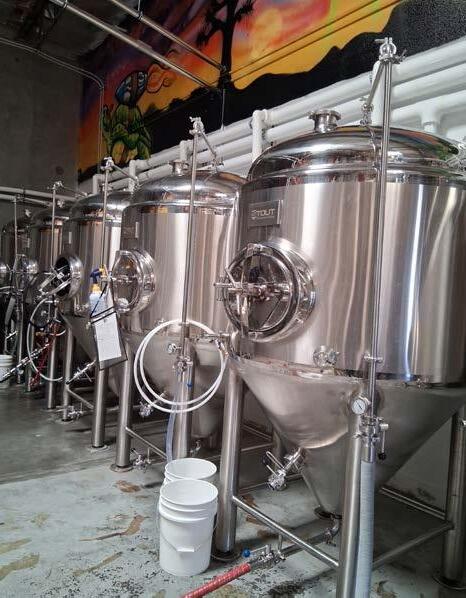
Next, we entered the brewing room where the first impression is that you are in a highly sanitized operating room with NASA style monitors carefully tracking temperatures and production. Every piece of equipment is painstakingly cleaned to exacting standards to ensure a safe beer as well as a great tasting one. Each recipe has been calculated to work with the most compatible temperatures to help the yeast do their job or to help balance the hops influence on the brew.
Production of beer can be complex so with this in mind I have condensed
these steps into 6 basic areas to avoid information overload.
Malting is the step of steeping them in water until the roots begin to penetrate the husks. The enzymes inside the grains reach a point where they convert the starches inside into fermentable sugar for the yeast to feed on. 3rd Strike uses sourced malted grains barley, wheat, corn, oats, or rye either alone or in combination.
Mashing occurs after the malted grains have been ground and placed inside a large cooker or Mash Tun with water and heated to dissolve the sugar into the water. The large stainless-steel apparatus has the appearance of a giant pressure cooker and inside the water is separated from the solids and sent to a boiler. The liquid is now known as wort.
Boiling now takes place and at this point the hops are added to balance the wort’s flavor, and it begins to take on more beer taste. These large pots boil the liquid to kill harmful bacteria that could taint the liquid and negatively affect the flavor.
Fermentation is when the yeast or yeasts are added and they eat the sugars and the alcohol and carbon dioxide are the result. At this point the alcohol by volume will vary. An open tub shows the expulsion of carbon dioxide which will show up as bubbles coming to the surface like shaking a soft drink bottle.
There are a multitude of variables, not listed, that affect the production of beer
and these few mentioned just give you a small peak at the overall effort and precision that must be executed to create a truly unique quality beer. Jesse said, “I will not serve anything less than the freshest high-quality beer. If it doesn’t meet our standards, we dispose of it and begin again.” Mike pointed out their motto that they proudly display for all to see that supports this, “First Place in
the Thirst Race.” Jesse and Mike have proved that they can bring that process to fruition with an eye on innovation to please the most discriminating customer. It’s exciting to see a brand-new business succeed in the High Desert with one foot in the neighborhood and the other always improving.
Food truck is outside with restaurant quality comfort food and bands playing
excellent live music.
Closed Monday & Tuesday
Open Wednesday & Thursday 2p to 9p
Friday & Saturday 2p to 10p
Sunday 11am to 5p
Where you can buy 3rd Strike- Town’s End Restaurant and Distillery, BJ’s, Joshua Inn, Better Days, & Roper’s Lounge v
Transported to OZ
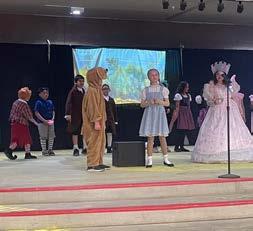
HOW COULD A GROUP of elementary students, most less than ten years old, put on a production of The Wizard of Oz that left me feeling that I had seen a full-on Broadway production?
They followed the adage, less is more. It really is.
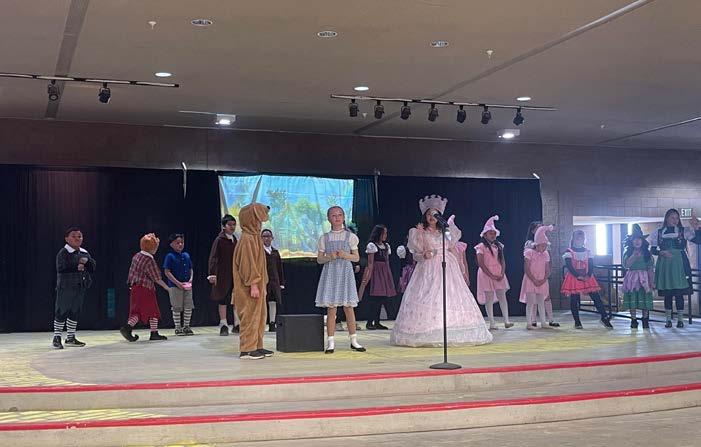
Topaz Preparatory Academy in The Hesperia Unified School District did a performance of The Wizard of Oz on February 28th in the school’s concrete lunch area. The stage, another slab of concrete, was bare as bare could be. In fact, the only set on the stage was three black, wooden boxes about eighteen inches high that were moved around the concrete.
So where were the sets? The Farm? The Snake Oil Salesman’s wagon? Munchkin Land? The Forest? The Land of OZ? The Witch’s castle? Whereas Broadway productions spend hundreds of thousands of dollars on elaborate sets, this production was every bit as elaborate and beautiful—I saw it all!
The sets were in my imagination. Having seen The Wizard of OZ dozens and dozens of times, my mind filled in all the gaps. What a stroke of brilliance for the directors of the play (Amanda Tate, Leslie Miranda, Nicole Bales, Lourdes Castaneda, Patrick Nicholson, and a special high schooler) to leave the stage barren so our minds were free to populate it with our memories.
Now, the performances were terrific. The girl who played Dorothy sang, “Somewhere Over the Rainbow,” with the same depth of feeling that Judy Garland did so many years ago. The cackling Wicked Witch was also amazing—a real crowd pleaser. All the characters did such a fantastic job, no one said, “Well, it’s just an elementary school play, after all.” We were all impressed.
I hope other elementary schools will follow Topaz’s excellent example and begin to put on plays of their own. v
By Mike Apodaca
UpcomingCommunity Events
• April 11- 10-7:00 Oro Grande Car Show and Round Up 18880-19242 National Trails Highway
• April 13- 6:00 pm- NAACP Victorville Branch 1082 General Membership meeting- Victorville Office
• April 14- 11:15 am Friends of the Apple Valley Library meeting- "Porch Pirates"
• April 18- 10-4:00 Inland Empire History Day, Norton AFBbooths, live music, museum open
• April 22- 6:30 pm Mohahve Historical Society, Lone Wolf Colony, "History of Water- Hesperia"
• April 25- 10 am- Hesperia Murals/ Hesperia Monuments/ Hesperia Lake tour- sponsored by Mohahve Historical Society
Call (760) 985-1918 for further info on any of these events
Friends of Victorville Library
Tuesday April 14
$5/bag book sale, 9 a.m.- 3 p.m. at our NEW facility, 14144 Green Tree Blvd. Victorville.
S.W.I.M
April 2
History of Water in the High Desert Griz Drylie
April 9 Early Days in Apple Valley
Jack Barry
April 16 Tortoise Club
Erica Schaffer
April 23 Spring Into Legacy Planning
Mike Johnson
April 30 The Not So Newlywed Game SWIM members
Seniors With Inquiring Minds (SWIM) meets every Thursday from 1:00-2:00 pm in the Percy Bakker Center located at 9333 E Avenue in Hesperia, CA 92345
WOW Agenda
• Apr 04, 10am: Speaker Tommy Caspary With Dave's Automotive Repair On Auto Maintenance
• For Easter, Bring A Homemade Decor To Be Judged, See Newsletter
• Apr 11, 10am: Be Each Other's Helping Hand, See Newsletter
• Apr 18, 10am: Breakfast At Denny's On Main St Hesperia
• Apr 26, 10am: Game Day W/Scratcher Prizes
Piñon Hills Chamber of Commerce
Networking during Chamber meetings, events and online - Be a guest speaker and stand in the spotlight!
Join and Share your Ideas & Goals at a Membership Luncheon on the 3rd Tuesday of each month Where? – Mountain Top Cafe, 7637 CA-138, Phelan, CA - 11am to 1pm
Sign up for upcoming Art Shows
Contact us for advertising space on our upcoming Business Directory.
More Information – reach us at 760-868-7191 or email us: info@pinonhillschamber.info
Get Your Musical Kicks
By John Wease
FOR MOST OF US, music is a part of the driving experience. We routinely get in the car, adjust the seat, buckle up the seatbelt, and turn on the tunes. Not necessarily in that order. If we were around in 1926 when the numbered highways were designated, we would have had three choices for music as we drove. You could sing, whistle, or hum. The Galvin brothers didn’t have the first, successful, mass-produced car radio on the market until 1930. They called it Motorola. In the early days, there was even a controversy as to whether radios should be allowed in cars. People feared drivers would be too distracted. If only they could see us now with our iPods, satellite radio, and the dreaded cell phone.
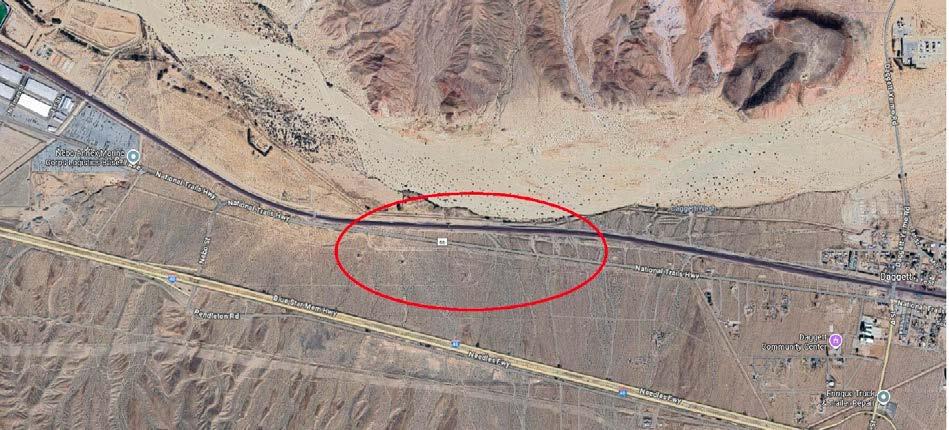
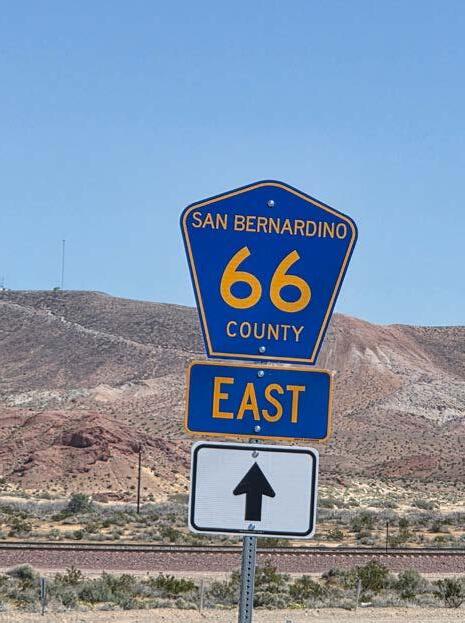
And now, one hundred years later, we are celebrating the centennial of the iconic Route 66. There are many special events planned, including the Big Birthday Bash here in Newberry Springs on May 2. The Mother Road is famous for the quirky attractions along the road. The U.S. Centennial Commission has approved a plan to build a musical highway in each of the eight states U.S. 66 passed through. A road surface that produces music as you drive over it should qualify as a quirky attraction. Each state will have a different song.
The project for California is a collaboration of Route 66 Musical Roads LLC, California Historic Route 66 Association, Marine Corps Mounted Color Guard Association, and Sully Miller Contracting Company. With the support of County Supervisor
Marine Col (Ret) Paul Cook, and County Supervisor Dawn Rowe, the location selected is just east of Nebo Road on Historic Route 66 in Daggett. The song you will hear, if you drive at the specified speed, is the Marine Corps Hymn. The Hymn is a good choice as the repetitive marching beat works well. It also honors the Marine Corps and its importance to our area.
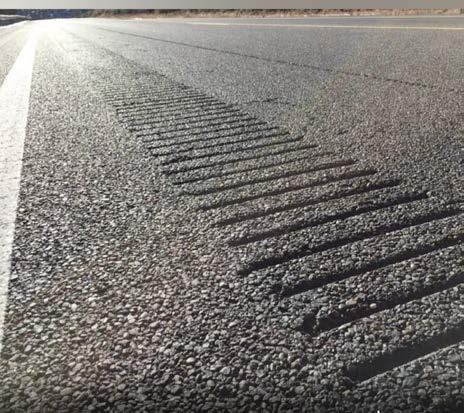
All sounds we hear are vibrations. The number of vibrations per second determines the musical note. Something that vibrates at 330 times per second produces the musical note E. It can be a guitar string, a saxophone reed, or a car tire driving over grooves in asphalt. If you have driven over the rumble strips along the edge of our rural freeways, you would have heard the audible signal designed to alert the drowsy or inattentive driver. These same types of grooves, spaced correctly, create recognizable music.
For that E note, you would have to drive at about 45 mph over 330 grooves spaced exactly 2.4” apart. Grooves closer together create higher notes, grooves spaced farther produce lower notes. People smarter than I am say calculation of the groove spacing is simple. The hard part is the precision creation of the strips in the road surface. To work properly, the road surface needs to be replaced. The length of the road surface determines the length of the song. The musical highway in Daggett will be 2200 feet long.
Like many interesting ideas, the problem is the cost. The total cost for the local musical highway project is $332,907. Donations are being accepted by the California Historic Route 66 Association (CHR66A). There are several levels of sponsorship ranging between $100,000, $50,000, $10,000 $5,000, etc. You can even sponsor an individual groove for only $40. The CHR66A is a 501c3 non-profit. They hope to raise the money and create the musical highway this centennial year. It is guaranteed to be groovy.
For more information, check out their website: route66musicalroads.com
Or email Lynne Miller at: CA66MusicalHighway@gmail.com.
The Watergate Hotel, an infamous place in history
By John Beyer
ON JUNE 17TH, 1972 , a group of operatives working on the reelection campaign for President Richard M. Nixon got caught on the sixth floor of a large complex while setting up surveillance equipment. They had chosen to ‘bug’ the Democratic National Committee headquarters in the nation’s capital at the Watergate Hotel.
A bug in the surveillance world simply means one party wants to listen to another party without the second party knowing, while the first party does, and has everything recorded.
No one really knows where the term "to bug something" came from. There are many theories, and one is that when alarm systems became standard fare for businesses, burglars would refer to the place as being 'bugged,' as though the police were already there.
It doesn’t really matter where the
term originated, since Room 214 at the Watergate had been bugged, and the operatives on June 17th were just going back to ensure their bugs would not be detected by the bigwigs running the Washington D.C. branch of the DNC.
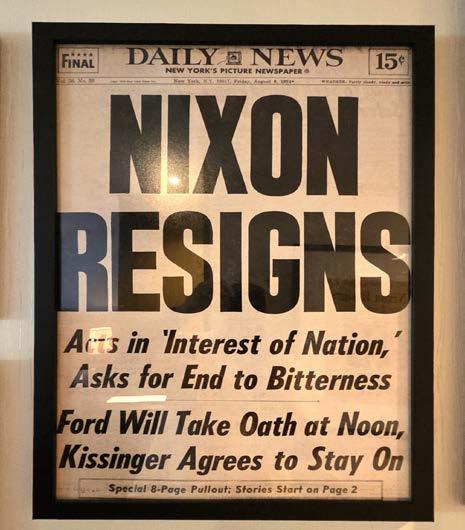
Unfortunately for President Nixon, this issue at the Watergate Hotel would cost him the presidency, even though he won in a landslide victory in November of 1972, securing his second term in office. Due to the fallout from this break-in, which turned out to be an international tale of intrigue and conspiracy, he would have to resign from office in August of 1974.
This is where, throughout the years, fortunes have been made from coffee cups, t-shirts, flags, bumper stickers, which show President Nixon standing proudly with both hands raised and fingers flashing V’s, with the tag - I am Not a Crook.
I have to be honest, I don’t really recall any of this except for history lessons in school. Of course, I was around at the time, but being in high school, I was more interested in sports, girls, friends, and the like instead of following the goings-on in Washington, D.C. Heck, I wasn’t even close to voting age, so why should I care?
But as the decades slipped by and I became more of a history buff, I found the circumstances around the demise of a president’s reign mid-term - fascinating.
It was even more fascinating when Laureen, my lovely wife, and I were doing our typical ten-mile sauntering around Washington, D.C., a couple of years ago, and found ourselves standing in front of the infamous Watergate Hotel on Virginia Avenue.
“That’s the Watergate Hotel,” I said.
“I see that,” Laureen responded. “We weren’t even looking for it, and here it is.”
“I would call that a serendipitous bit of luck,” I said.
It was awesome to be standing in front of such a gorgeous hotel as the Watergate and realize the intrigue that had occurred here a short five decades ago.
Now, fast forward to the summer of 2025, and Laureen and I found ourselves staying at the very same Watergate Hotel.
The hotel sits just a couple of streets
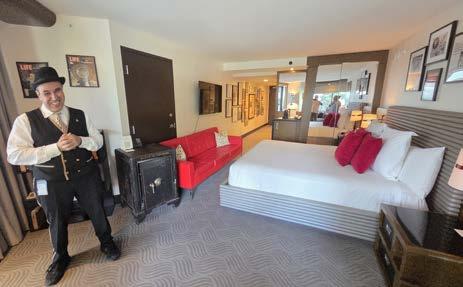
Aziz, the historian, in the Scandal Room
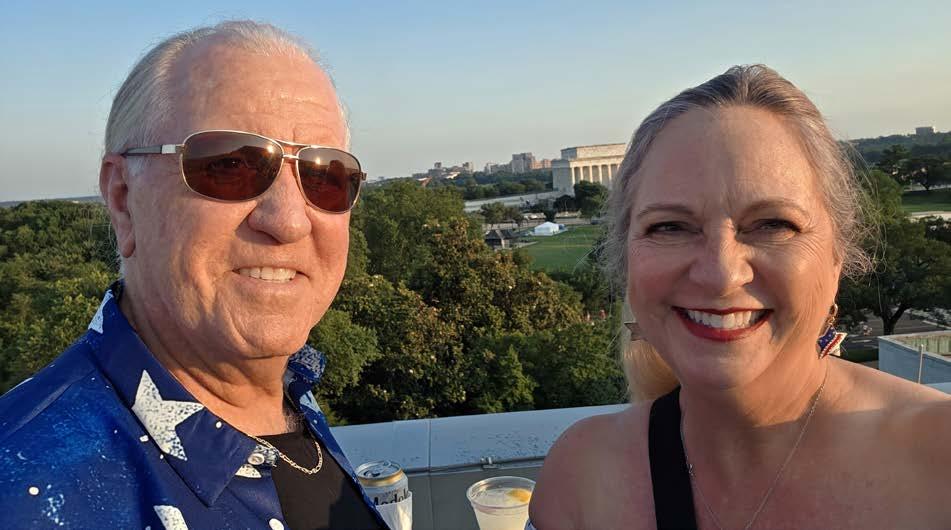
John and Laureen at the Top of the Gate
A mockup of the tools used to listen into the DNC Headquarters at the Watergate Complex
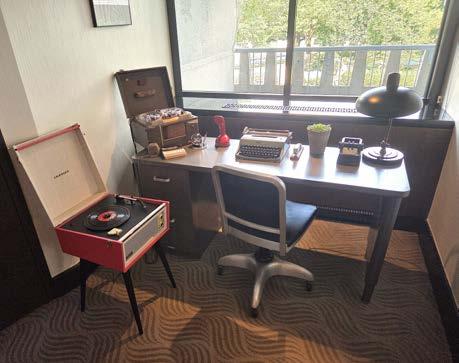
Some of the memorabilia in the Scandal Room
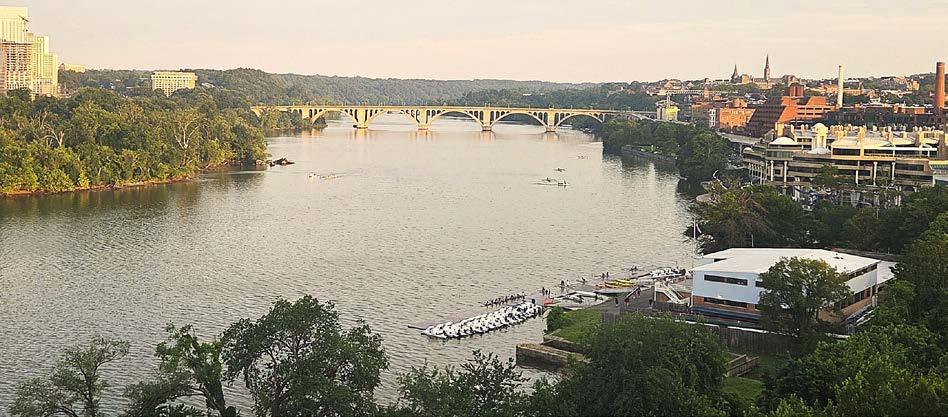
away from the beautiful, tree-lined Potomac River with majestic views from pretty much every room. It is referred to as a luxurious place to stay while visiting Washington D.C., and we found that to be true in every fashion.
The entire Watergate Complex, which housed business offices, shops, and the hotel itself, was built during the 1960s and designed by the famous Italian architect, Luigi Walter Moretti.
He had wanted this complex to mirror the gentle flowing of the Potomac River as it swept by below the bluffs where the Watergate was built. Moretti did a fantastic job as the building does seem to bend in a way like the river sweeping by the Wharf DC, which has tasty restaurants, night spots, and other venues to keep locals and tourists engaged.
The Top of the Gate is an open bar and restaurant allowing incredible views of Washington D.C. itself as well as the surrounding areas of Georgetown, Dupont Circle, and Foggy Bottom (I still chuckle typing that).
I am not going to say we had a few drinks at the Top of the Gate while visiting Washington D.C. - but we did. The sunsets, the city lights in the distance, and a cold drink were what Congress would order if it had that sort of power.
But, I was there not only to enjoy the ambiance but to find out what I could about this Watergate Scandal, as though there had not been enough written about it.
It was something to do with the tape that led investigators to locate and ultimately convict those involved in the break-in at the DNC, those being most famously E. Howard Hunt and G. Gordon Liddy.
According to Azinz, the unofficial historian of the Watergate Hotel, it was a simple piece of sticky tape that did the burglars in. And, here I always thought it had to do with more subterfuge involving tape in a recorder.
“No,” Aziz said. “It was a security guard at the time, Frank Wills, who first spotted a piece of tape across a door latch leading to the area where the burglary was taking place.”
That was news to me.
“In that manner, the doors leading to the DNC headquarters would not lock, thus giving anyone, the burglars, time to go in and out of the room. After removing the tape, Wills did another check an hour later and saw the tape had been replaced and then called the police.”
It turns out that most likely the bugging of the office would not have been discovered if the group doing the burglary had simply removed the tape from the latch when they finally left the office. They did not, and down came a presidency.
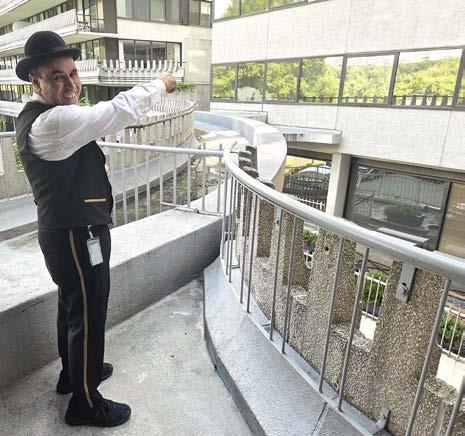
Now known as the Scandal Room, the room is set up as it would have looked on that fateful day in 1972. The furniture is retro 70’s, there are numerous photos and news clippings from the time, recording devices and typewriters that spell another time, and finally the balcony that overlooks the once DNC headquarters across from Room 214 in the complex.
The history lesson of the Watergate Scandal was enlightening and frightening to think of what political parties, on both sides, are capable of doing - especially right in the nation’s capital, practically under George Washington’s nose.
But Watergate is not only known for that one infamous incident, but is also known for all the celebrities, past and present, who have made the Five Star Hotel home. Including Ruth Bader Ginsburg, Andy Warhol, Sammy Davis Jr., and a host of Hollywood types. And of course, those of us who just want to experience a 5 Star hotel while visiting the nation’s capital v
For more information: https://www.thewatergatehotel.com/ https://washington.org/
John can be contacted at beyersbyways@gmail.com
Aziz pointing toward the office where the DNC Headquarters were located in 1972 at the Watergate Complex
View of the Potomac River from atop the Watergate Hotel