PULP


President's Foreword
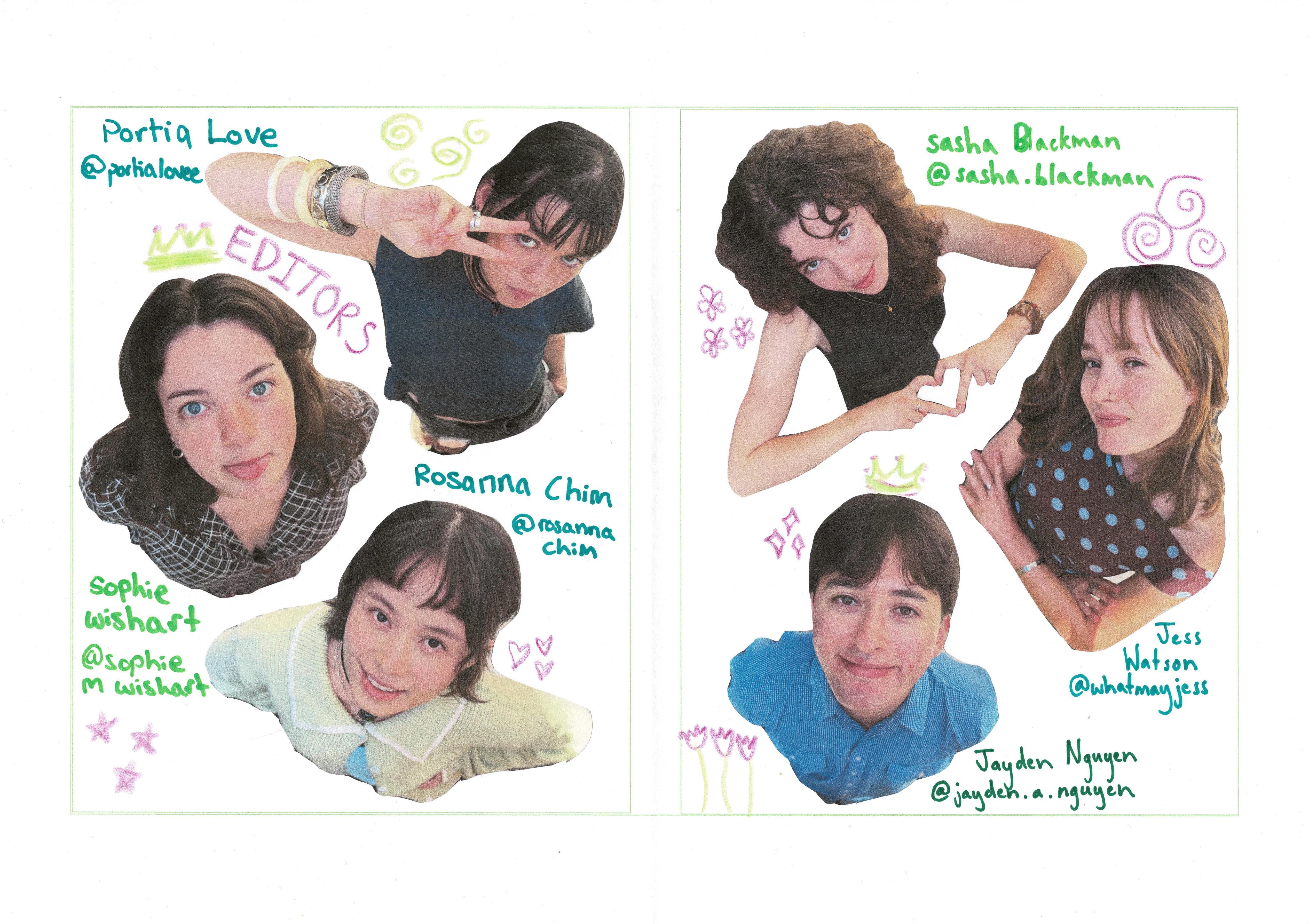
Whether this is your !rst semester strolling down Eastern Avenue or you’re a seasoned face amongst the food truck line, on behalf of the USU: welcome to campus!
In case we haven’t met yet, I’m Phan, your USU President until the end of this semester. It’s been a real privilege to serve our 60,000+ members over the past six months. We’re heading into a strong 2026 – with bigger signature events, more campus upgrades, and a big structural glow-up behind the scenes. e USU’s incorporation is in its !nal stages, locking in a stronger USU and a better student experience for the years ahead.
If this is the !rst time you’ve picked up a copy of PULP, prepare to uncover the best arts and culture writing, photography, poetry, visual art, music, you-name-it USYD has to o er; all under one masthead.
e physical magazine has been a key part of the USU for almost !ve years, and online since 2016. Run by a team of USYD students from June to June, PULP is the beating heart of independent, literary creativity. ey throw great parties too (if the other bene!ts weren’t enough).
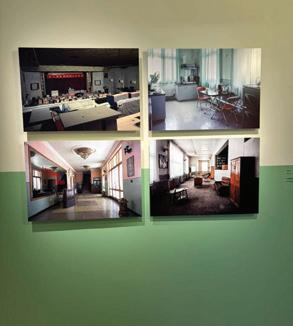
Before the mid-sem creeps by, there are plenty of activities and events on campus to get your Arts & Culture !x. Verge Gallery is hosting a new show by Cindy Chen entitled Dismantle/Assemble shortly, the USU bars music program around the corner, and grab your plate in preparation for the USU International Food and Culture Festival. More information about these events, and many more, can be found on the USU website.
Please feel free to reach out to myself or my fellow board members for anything, we’re your representatives.
President@usu.edu.au




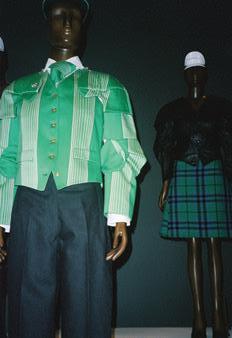
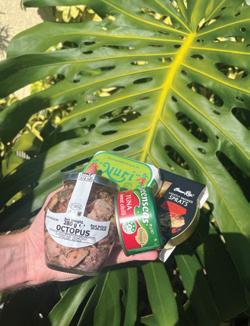
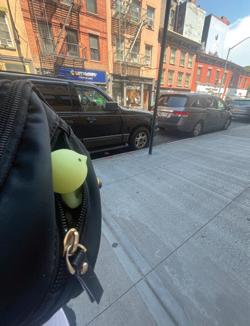
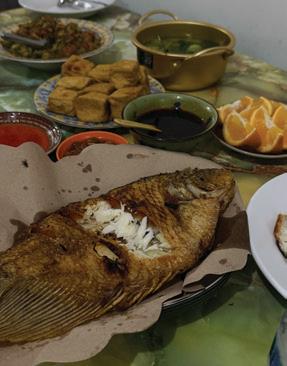

CONTENTS
1. Good Enough
Rosina Carbone
pg.1
4. A Good Host
Ananya Thirumalai pg.15
Amaneurosis
Jesse Carpenter
Crocin
2. No More Need For Greenwashing
Jess Watson pg.5
5. The Keymaster
Clare Casha pg.17
8. Stonefruit
Grace Winspear pg.27
11. Simple Beautiful Things
Sasha Blackman pg.35
13. Berde Doesn’t Mean Envy
(But We Know It Anyway)
Marc Paniza pg.39
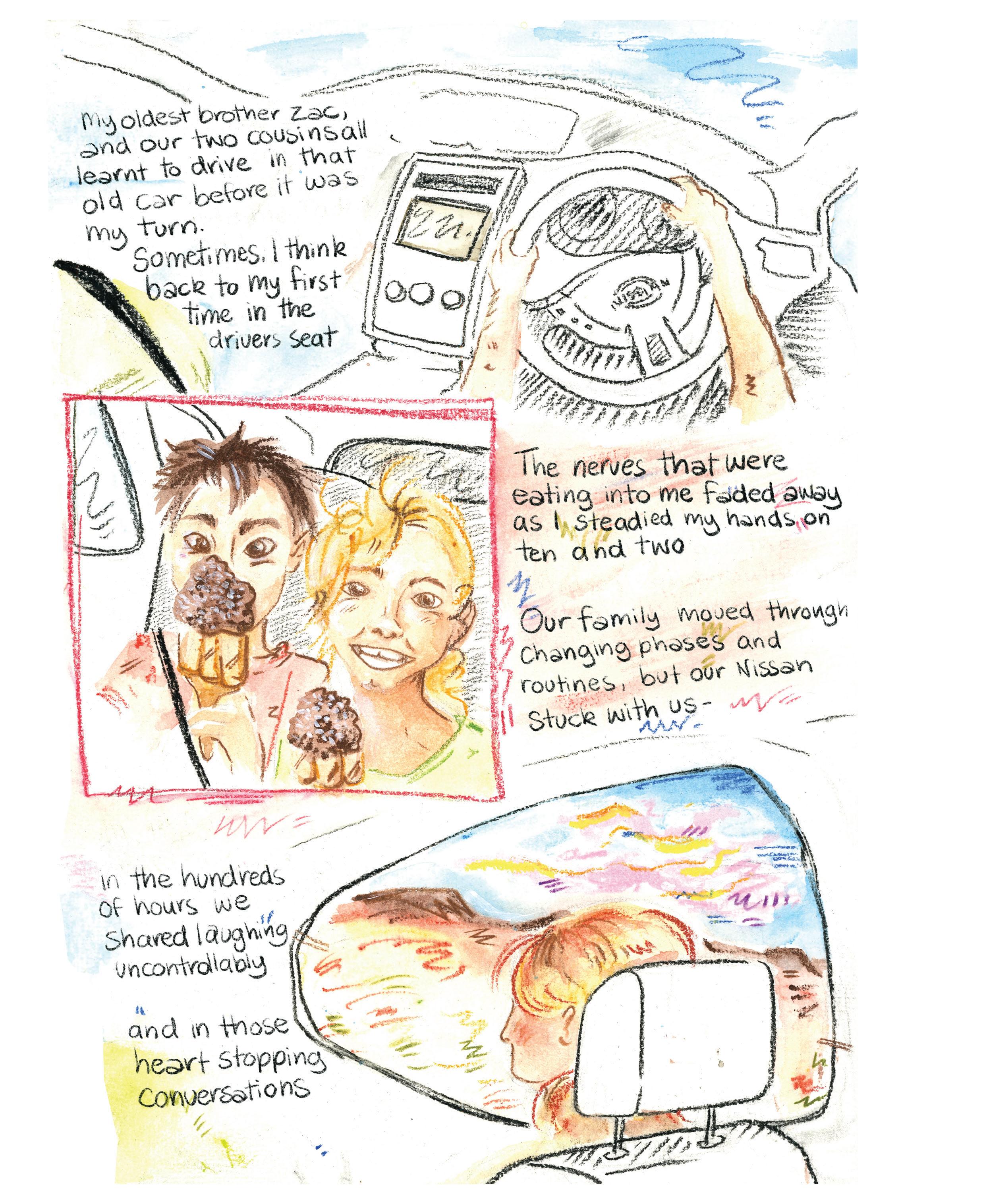
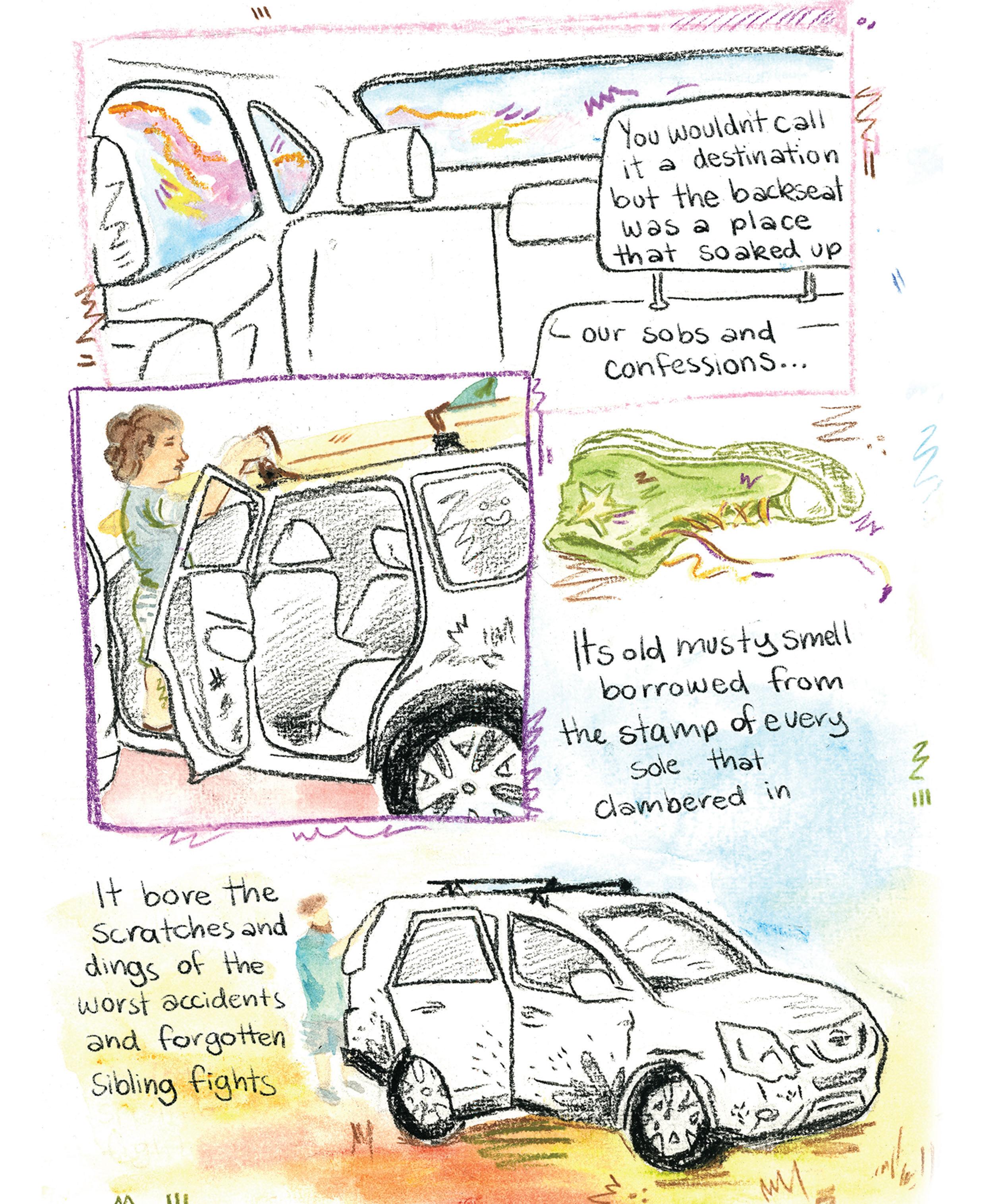
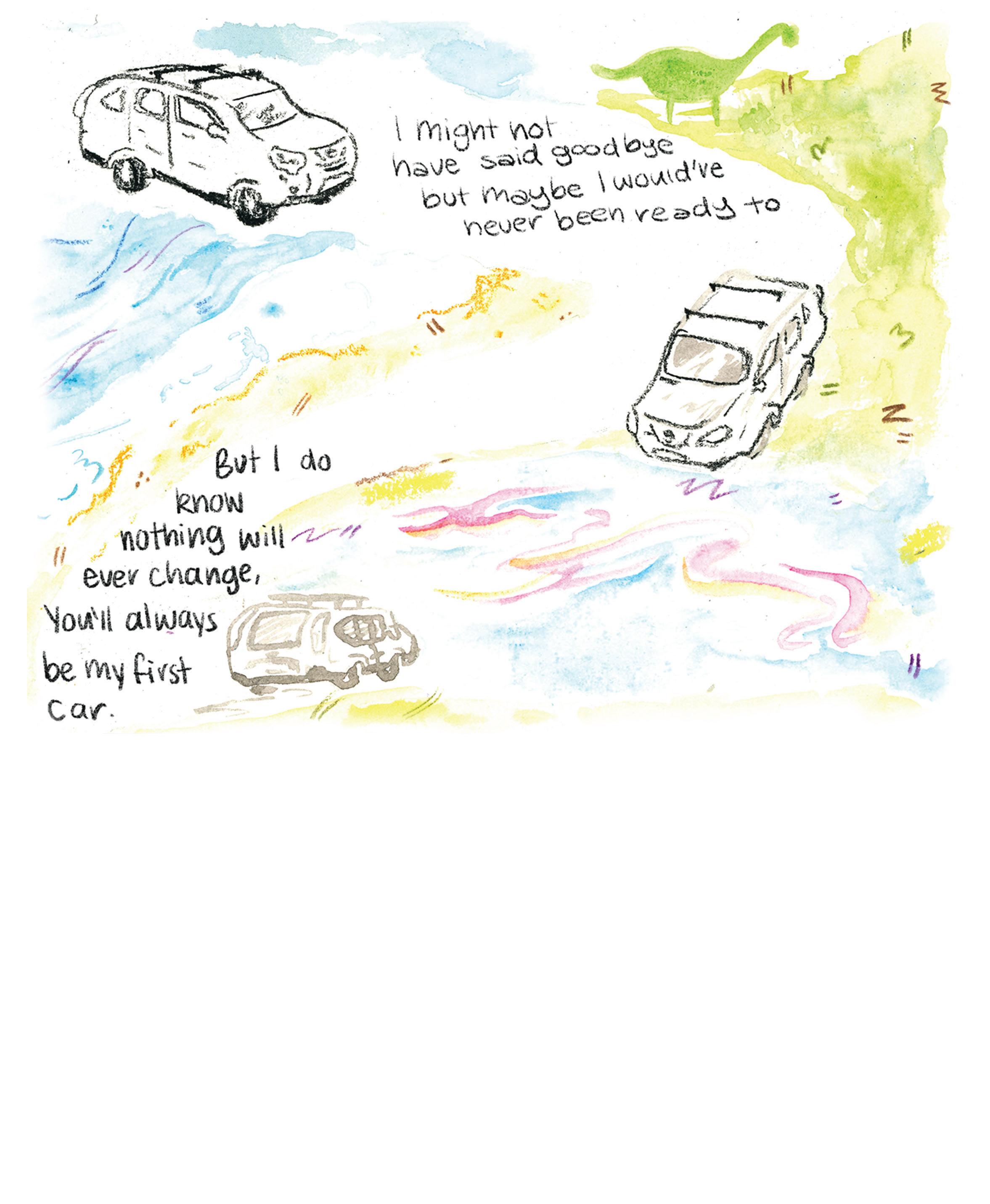
3. To Our Beat Old Nissan Keziah Bailey pg.9
6. How To Brine Olives
Calista Burrowes pg.23
9. Ashwinpur
Purny Ahmed pg.29
12. Diary of an (Ex) LimeBiker™
Jade Rasmussen pg.37
14. The Year I Delete Instagram
Sophia Robinson pg.41
Enough Good
Rosina Carbone







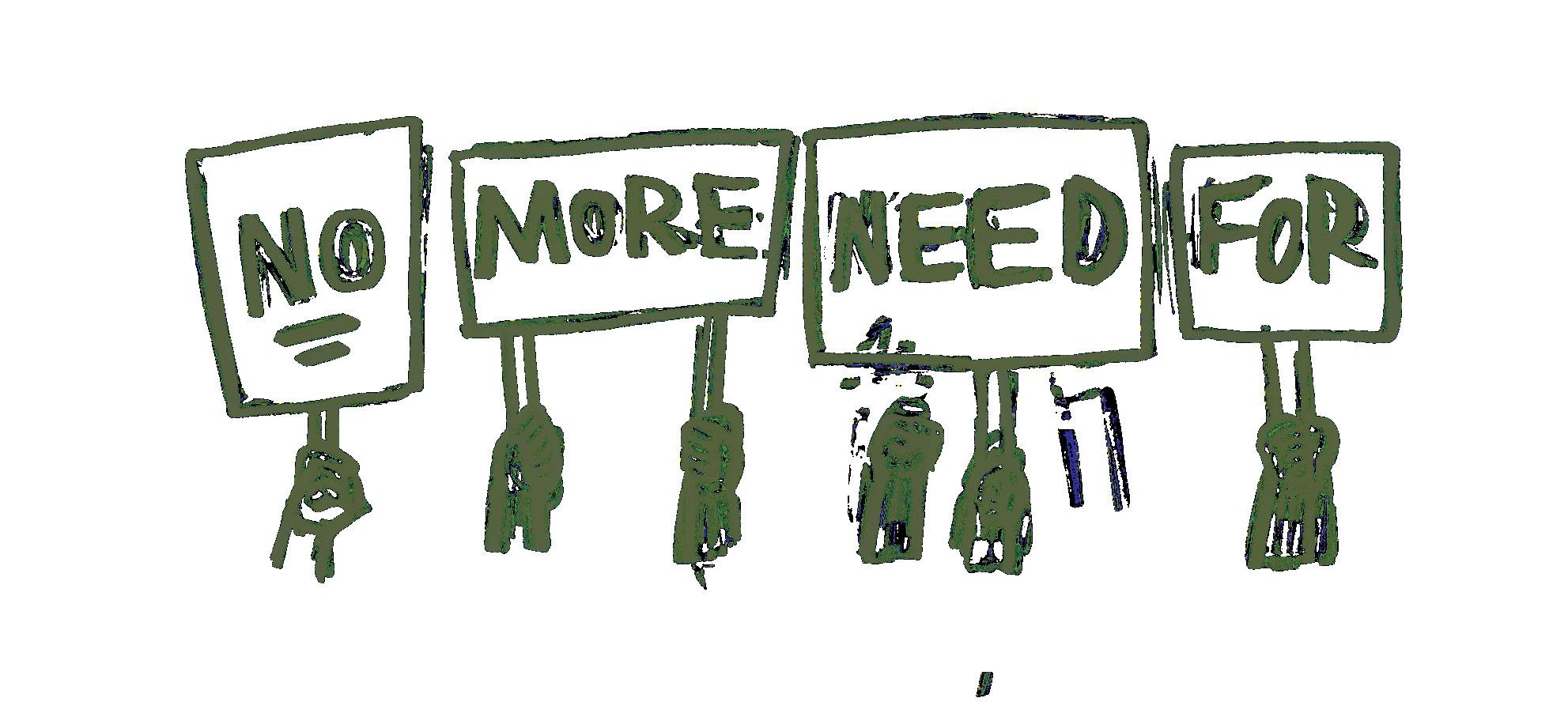
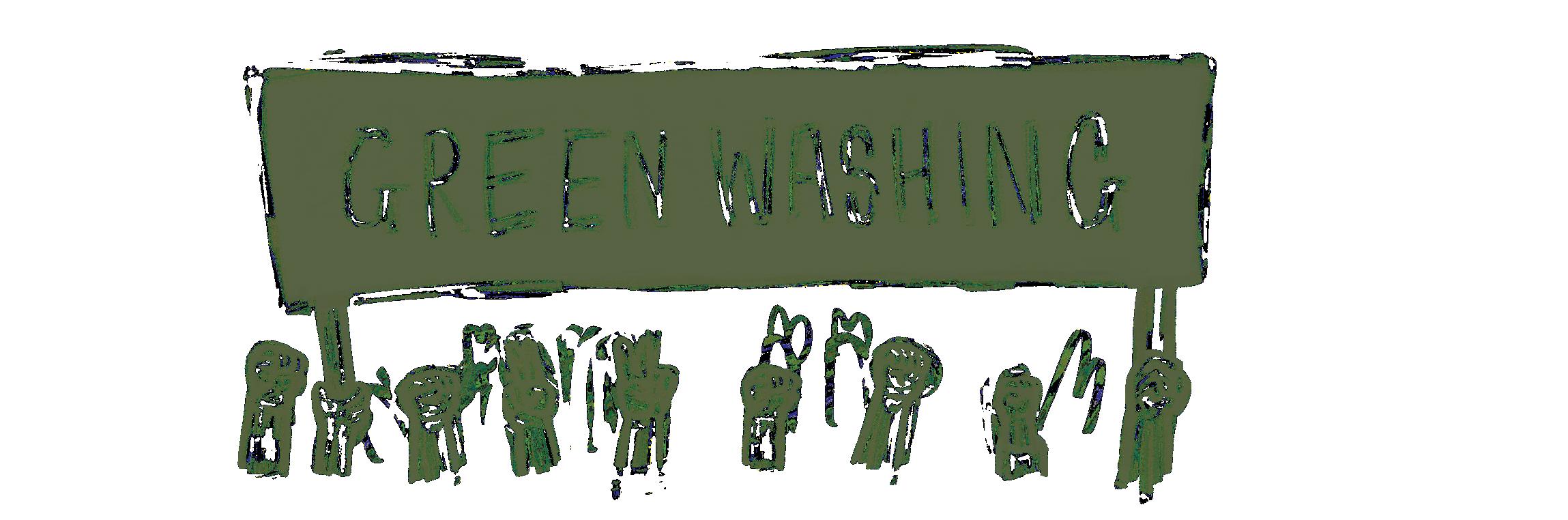
In 2018, we pedalled our bikes across the Commonwealth Avenue Bridge in Canberra in the burning sun to stand on the red bricks outside Parliament House. ousands of school kids and wellmeaning parents armed with pump-top Banana Boat sunscreen, side by side in a cacophony of noise and colour with one demand: Climate Action. Now.
A!er my arms began to ache from holding up a brightly painted sheet of cardboard, the doors of parliament $nally swung open and our selected student representatives marched into the air-conditioning to discuss our demands. Amongst the crowd there were cheers, another round of chanting, and sweaty arms linked together as we le! in pursuit of Calippos from the Local IGA.
But by the next summer, the air was $lled with smoke. In their dying throes, the burning trees brought tears to our eyes, so our vision was clear even as our lungs $lled with ash. e bike path I took to get to the march was made from dirt. I rode over the cracks with abandon and took no note of the way in which my hope slowly began to slip into the $ssures of the packed red earth.
e Nationals abandoned support of net zero targets in their federal platform last year. Early this year, One Nation—no longer a laughing stock of the mainstream but a party with a considerable primary vote of 23% as per January’s Freshwater poll—took to social media to double down on their longstanding approach to climate (in)action. e party posted that they would withdraw Australia from the Paris Agreement “immediately” if they were in power. A promise of action for climate change, once crucial to assuage public anxieties and win traction in Australian politics, now seems to limp far behind home ownership schemes and the
deeply entrenched cultural debates i.e immigration in a positive feedback loop, solidifying voter loyalty on either side of the political spectrum.

e 2010s were a notable window for climate discourse, as Australia committed to successive international climate targets. Australia pledged commitment to the Cancun Agreement in 2010, aiming to reduce greenhouse gas emissions to 5% below 2000 levels by 2020. e Paris agreement of 2015 followed on its back, increasing this target to a 28–29% reduction by 2030. is promise of change thrived in the vacuous gap between speech and action. e nature of the carbon credit counting itself is misleading, generously enabling o sets and carrying over a surplus of credit—the tonnes of emissions which Australia could have produced based on the Cancun emissions budget, but didn’t—to later targets. In the 2019 climate stock take, the Federal Government acknowledged the $ndings of the OECD’s review of Australia’s poor environmental performance: Australia is one of the most carbon-intensive OECD countries, has adopted a piecemeal approach to achieving emissions reductions and should strengthen its climate change policy.
Now, there is a fresh blatancy of disregard for climate change mitigation that can be viewed amongst a kaleidoscope of other events and changes in the world: the radicalisation of nationalist right wing movements in the West, a media landscape which platforms sensationalist political rhetoric, an increasing wealth disparity which politicians o!en address with a logic of economic expansion rather than redistribution. I see this woven into my social interactions, nestled in a nook between then and now. When I chuck my waxlined takeaway co ee cup into the recycling bin, I am no longer arrested by the voice of a plaintive sixteen-
year-old—“you can’t recycle that!”—but a conciliatory “Australia doesn’t recycle anything anyway.” While climate change still feels existential, the narratives I consume have changed. ey do not place the weight of the world on my shoulders, as popular discourses o!en did in the past. Instead, they paint me as powerless and send me spiralling into inertia.
Privately-owned media giants, major corporations and politicians walk hand in hand, their $nancial and in%uential growth capitalises on each other’s success. Media empires in Australia are enabled by relaxed competition laws which facilitate the concentration of media ownership. Meanwhile, politicians generate political capital from lobbying and the $nancial support of corporations. In 2024, Senator Larissa Waters highlighted that Labor had received over $100,000 in donations from oil and gas giant Santos alone. Waters also pointed out that Adani and its subsidiaries donated $250,000 to the coalition in the same year as it received approval for its then-new Queensland coal mine. In this landscape, narratives of climate change in mainstream media have always been geared to the interests of the major corporations. As early as the 2000s, political momentum for climate change was obfuscated by false equivalence in media narratives which debated the existence of climate change, despite resounding acknowledgement in the scienti$c community. A 2019 clip from Last Week Tonight with John Oliver featuring Bill Nye satirised this mirage perfectly, with a single unquali$ed person denying climate change to 96 experts representing the scienti$c community. In 2004, a PR representative working for BP invented the carbon tracker, which turned out to be a stroke of genius for the anti-climate change movement. e focus of climate action was neatly shi!ed from corporate extractivism and consumerism to individual behaviours. While I
was crippled with consumer-guilt over the mega pack of palm-oil ridden two minute noodles I had just purchased, major corporations were extracting massive amounts of oil from the ground, protected by narratives which aimed to dissolve a uni$ed front for collective action. e school strikes in 2018, despite being frequently lamented for motivating little structural change, solidi$ed climate change as a relatively indisputable fact in Australia’s mainstream media and applied pressure for promises of climate action to become a priority in political platforms—think of the 2019 Climate Solutions Package, Snowy 2.0 or green energy more generally.
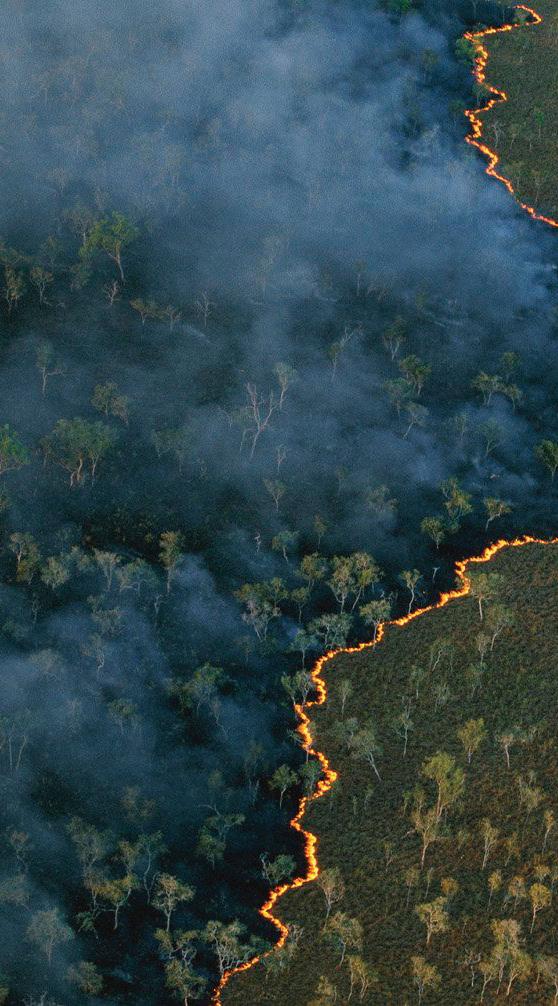
Today, we feel the spectre of past inaction viscerally. Here in Sydney, the year is early in its life and smoke from Victoria covers our heads like a burial shroud. I think back to the summer of 2019, when politicians reinforced the stories of $res begun by arson, when media reports emphasised the precise action and moment at which a $re was started. Our eyes were o!en drawn to the individual, localised thread of $re instead of the greater tapestry of global warming which ignited them. Now, I read about $re warnings in relation to heat waves and climate change but the transparency does not feel like a concession.
We hear the message that we are not on track, we have missed the deadline, there is no turning back. ese ideas build on a narrative which is cloaked in familiar rhetorical patterns and continues to serve corporate interests, centring on the idea that technological innovation will shape our future, somehow transcending the bounds of the planet’s $nite resources. In the recent electoral campaign, the Liberal Party drew on a tech-solutionist ideology, with a climate and energy plan that proposed to reform the energy
industry through nuclear power. e shadow of AI is inserted into almost every discussion of our general future, politicians refusing to detail its form even as they praise its power to shape our future. Recently, Albanese struck a deal with Amazon Web Services, who are investing $20 billion into data centre infrastructure in Australia. Preemptively addressing public concern over the impact of data centres on the climate, the accompanying parliamentary media release states that AWS matches 100% of its electricity consumption with renewable energy across its global operations, including Australian data centres, as part of its plans to achieve net zero by 2040.
e idea of ‘sustainable AI’ is an oxymoron, a sister to the idea of ‘clean-coal’, ‘safe-extractions’ or carbon o sets that can make air travel carbon neutral. Matching electricity consumption with renewable energy does not replenish the initial instance of resource consumption or reverse environmental damage caused by emissions. e government has not responded to public outcry over the water-intensive operation of data centres in a parched landscape. e government’s backtracking from previous regulatory guidelines for high-risk AI, while not directly implicating climate action, are indicative of a laissezfaire approach to regulatory policy in general.
While there is a wealth of scepticism towards AI, the structural integration of AI into our everyday lives promotes the narrative that AI, much like evolution, is inevitable in its progress. e evolution of technology is framed as being autonomous, masking the policies and actors which shape its progress and direction. e structural insinuation of AI in our daily lives, as it is absorbed into our workplaces, search engines and spotify playlists, supports this narrative. As does the vagueness of language surrounding its operation. AI is slippery in our ngers, di$cult to dig our nails into, an
entity (falsely) portrayed as incorporeal. Even if we do not trust the idea that AI will solve issues like climate change, these narratives, portrayed in dominant news platforms, are constructed to make us feel as if human agency over the future of our climate is a pipe dream. When measured against a mainstream audience, the perceived capacity of collective action to direct our future shrinks. e future of our climate becomes framed in terms of our ability to innovate—either technology will land on a magical solution, or we will fail.
e media, however, encompasses far more than mainstream news; it is a vessel for communication and storytelling. Counternarrative has been woven into the past and present of our media and this resistance will be written into our future. My memories of summer are infused with the scent of eucalyptus leaves, coaxed by the hot sun to release their oil into the air. In these old eucalypt forests, there are underground networks of mycorrhizal fungi, which have been proven in other parts of the world to act as a channel which allows trees to ‘talk’ to each other. Mother trees send signals through the fungi, adjusting their roots to make space for new trees and sharing carbonbased resources. In the digital age, we have more capacity to share resources and information instantly. Climate activism crosses the oceans with urgency.
Mia Mottley, elected leader of Barbados, is one prominent climate activist who has spoken out on the interconnectedness of countries’ responses to climate change. Refusing an isolationist perspective, she states in her famous COP26 speech that “national solutions to global problems do not work”. In particular, Mottley has pioneered the Bridgetown Initiative, proposing to restructure global debt systems to breathe oxygen into climate resilience projects in poorer countries. In 2024, Mottley collaborated with the Nature Conservancy and the Inter-American Development Bank to re$nance
high interest bonds. e Inter-American Development Bank reported that USD $125 million in $scal savings was freed to be placed into resilience investments like water management. ese moments show that leaders and activists can propel climate change responses into mainstream news cycles, catalysing further action. ese policies, ideas and movements are able to exist in the mainstream when they can attract our attention and our empathy. is in itself resists sensationalised narratives of defeat. Xiye Bastida, the famous 22-yearold Mexican climate activist in New York, has emphasised the importance of “stubborn optimism”. In a landscape where corporations actively try to create the ideal conditions for apathy to fester, remaining positive and continuing to invest our care in the planet is a $ght. In a 2022 interview with Spencer Bailey for Time Sensitive, Bastida reminds us to “experience that joy we are $ghting for”.
Sometimes, I scroll on my phone and the tidal wave of negative news stories begins to erode my future. e idea of hope begins to feel like naivety, a cheesy platitude that lacks any structural integrity. Yet, narratives of hope are essential to the reimagining of our future. While mainstream media in Australia o!en buries our hope in defeat and obsesses over what we have lost, there is a wealth of alternative media and counter narratives that turn our attention to the resources we already hold. Released in 2019, Damon Gameau’s $lm 2024, imagines what the future could look like if we actioned the solutions and knowledge we already possess; fostering ocean permaculture, empowering women and implementing regenerative agriculture. Like Mia Mottley, Gameau speaks to the importance of restructuring, rather than accelerating, our current systems. e resources of our present become the seeds of our future. For tens of thousands of years, indigenous people in many countries have centred land management strategies on principles of preservation and sustainable growth, rather than extraction and
surplus. In the wake of Australia’s 2019 $res, Victor Ste ensen published the novel Fire Country (2020). In it, he writes of controlled burning as an Aboriginal Australian land care strategy. When the land is “sick with weeds and too much tea tree”, small, controlled burns have long been used to restore diversity and help prevent large-scale future bush$res. However, government regulations have restricted Indigenous people’s practice—and Ste ensen describes the su ering of the land as a result.
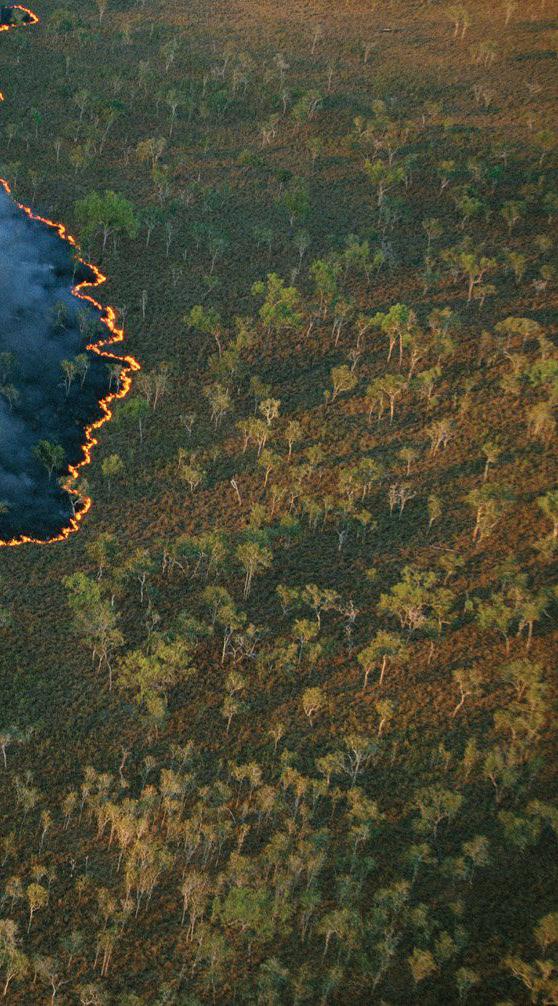
Sustained in all of these narratives of resistance is the idea that climate change and environmental decay is a social issue, shaped by human hands with roots in oppression, alienation and isolation. It is our prerogative, then, to diversify the narratives in our media with the resources we possess in relation to this frame—our attention. In the $nal chapter of Fire Country Ste esen writes: “ e thing with climate change is that it is presented in a way like we can’t do anything about it. Just hang our hats on climate change... We need to get away from the debates and just get on with doing something about it. Climate change means that the land is telling us something, it is not all doom and gloom. If we look at it the right way, it is an opportunity for change, if we all come to realise it.”
Sitting in my best friend’s paddling pool in the hot sun this summer, I refreshed the Fires Near Me app and saw Victoria swamped in clusters of red icons. I opened the news and for every Tasmanian seaweed-eating cow, there was a burnt out husk of a farm. I scrolled back up to the Tasmanian cows. Read the article again. Clicked on an article about the use of AI to monitor animal health in Europe. About tree bark microbes reducing greenhouse gases. Put my head under the water of the pool to have a moment of respite from the heat.
A Good Host
It begins inside me as a change in weather, a subtle dampness seeping into what I had assumed was stable internal architecture. e walls of the mind sweating, the air thickening into something faintly sweet, the ground so!ening into a dark, nutritive mush. I had imagined myself a poor host for anything that requires sustained care, emotionally speaking; more concrete than soil, more drought than rainforest. But once the invisible spores settle they behave with a blind, tireless appetite, threading themselves through cracks in memory, blooming behind surfaces I don't regularly inspect, feeding on residue and warmth.
It wasn't anything worth dignifying as a moment. No dramatic confession that would later justify my $xation. Just a name, released casually into the air between us, and then, almost as an a!erthought, the clari$cation that this person was an ex. I nodded, performed the appropriate facial expression of mild interest, let the conversation keep moving, convinced that nothing had lodged itself inside me, that the ecosystem remained sealed, dry, and intact.
Except the mind, when o ered a foreign spore, immediately begins to irrigate.
Later I learned there was a word for what followed: retroactive jealousy, the particular embarrassment of becoming emotionally preoccupied with a lover’s past, with people who belong to an earlier tense. I found myself replaying the sound of the name, turning it over with an attention I pretended was accidental, letting it dissolve and reform in the mouth, attaching it to a speculative body, a speculative voice, the imagination quietly pumping moisture and oxygen into a seed I had sworn I hadn't planted. At $rst, it seemed harmless, faintly amusing even, this small private tending of a stranger, and I told myself, generously, that this was simply curiosity.
Ananya Thirumalai
Infestations proliferate quietly at $rst, with small internal adjustments that go unnoticed until the air has grown heavy and the light no longer reaches the %oor, the original landscape smothered under a dense mat of opportunistic growth that seems to have organised itself overnight. Vines begin looping around every available structure, slick and muscular, squeezing out whatever native so!ness once occupied the space. Fungal bodies push through the dark in obscene little eruptions, swelling and collapsing, releasing clouds of invisible spores. Warm pockets of thought become breeding grounds for insects I never consciously invited, their bodies multiplying in the warmth of my uncertainty, feeding on scraps of imagined intimacy, leaving behind a constant low-grade buzzing that makes it impossible to locate silence.
e ex stops being a person in any recognisable sense and becomes an invasive species, a contamination that seeps into neutral moments, dri!ing through conversations, attaching itself to songs, to the way my partner laughs, to the angle of light on a wall, so that even ordinary tenderness begins to feel infected, already halfway absorbed into the monoculture that now dominates the interior.
What's most humiliating is how total the takeover feels, given the complete lack of material presence. How a stranger I have never touched, never meaningfully encountered has managed to install themselves inside my mind, a $ctional ecosystem capable of producing real physiological panic, real envy, real tightening in the chest. I catch myself circling the same questions again and again, probing the same damp corners for new information that never appears, as if repetition might eventually yield a di erent species of answer, as if the organism might $nally reveal a weakness if I worry at it long enough, even as the entire exercise begins to feel increasingly absurd, an environmental collapse staged for an audience of one.

It becomes harder to pretend this is a purely internal disaster once you notice how e&ciently the phone delivers nutrients directly to the infestation. It functions as an endless irrigation system, dripping images, histories, comparisons, so! proofs of other people’s lives into the already saturated soil, training the mind to scroll, catalogue, cross-reference, remember, to behave less like a human brain and more like a badly calibrated archive, incapable of forgetting. Within this environment, the broader culture seems designed to support this particular species of $xation, scattering fertiliser everywhere and calling it connection.
Romance o!en arrives pre-packaged in looping narratives that reward excavation and hindsight, that encourage the belief that every previous attachment contains essential information about the present, that love can be reverse-engineered if you gather enough data points. e ecosystem comes to privilege accumulation over rest, analysis over air, density over circulation, until the interior begins to resemble an industrial monoculture, all diversity stripped out in favour of a single high-yield crop of speculation and quiet envy. Even memory, once a messy terrain, starts behaving algorithmically, resurfacing the same contaminated fragments again and again with cheerful e&ciency, while any attempt to apply common-sense pesticides—perspective, reassurance, distraction— administered in small, ine ective doses, only seems to encourage more resistant strains of the original growth.
None of this is coincidental. e environment favours the infestation. e infestation adapts quickly.
I do attempt containment, snipping back visible tendrils of thought, starving certain mental pathways of oxygen, staging small controlled burns of distraction and discipline that look impressive for a few hours and then quietly fail to alter the underlying climate.
Sometimes the ecosystem cooperates, settles into a fragile truce, the growth appearing dormant enough to lull me into a premature sense of competence, as though I have $nally learned how to manage the terrain. Other times it surges back with renewed intensity, exploiting whatever lapse in vigilance I have generously provided, sending fresh shoots through hairline cracks I didn't realise existed. Nothing is ever eradicated, only temporarily displaced, pressed %atter, encouraged to wait underground until conditions become favourable again, which they inevitably do, because the environment remains hospitable, and because I remain, inconveniently, myself.
ese days the ecosystem appears permanently altered, the soil never quite returning to its original dryness, the air always carrying a faint sweetness that I notice most on quiet a!ernoons or in the pause before sleep. e organism has not disappeared. It has adapted to live smaller, to coil itself into the darker pockets of the terrain, to pulse so!ly, a low subterranean hum that reminds me the ground is never truly neutral. Sometimes I feel it breathing alongside me, no longer actively hostile, but never benign, an occupant that arrived uninvited and stayed. e landscape still functions. ings still grow. But the earth remembers what passed through it.
The Keymaster
Clare Casha
PING PING PING
How to Brine Olives
Calista Burrowes
1. Pick your olives, making sure that they are dark and plump.
e Greek diaspora reminds me of the olives that have fallen around the trunk of my olive tree. Some have fallen on their own, others in aging clusters. e diaspora is the scattering of people, the communities that grow from the shared thread of being away from the same homeland. Being a part of the Greek diaspora is comforting in a sense, to have a connection to where you came from. Stuart Hall proposes that cultural identity is not innate but is something that is becoming, and is not only experienced but simultaneously taking place and developing. In the same way that olives leave a bitter, chalky taste in the mouth if you pick and eat them right from the tree, diasporic groups are compelled to change and grow over time. Like picking those dark olives straight and indulging without thought, I found that for me, accepting my culture without truly considering its signi$cance and teachings was an unful$lling experience. By re%ecting on my culture, I can mould my independent life. e stories and experiences passed down to me take time to settle and ripen, like the olives on the tree.
2. You can smash the olives open and they can be eaten within a week. Or you can leave them whole, and they will be ready in a month.
My childhood memories are scattered with stories about patience; to avoid acting like Prometheus stealing $re and rushing the universe. Greeks love the slow life, something which is o!en incompatible with capitalism and an increasingly demanding world, where every waking moment requires productivity. Sipping on Greek co ee as the sun darkens your skin and lolling about for hours is valued just as much as having a good job. Although you can crack the olives immediately, you lose the enjoyment of watching the briney water turn dark and the olives blossom into a salty delicacy. Patience is a muscle that needs exercise,
otherwise it atrophies. e same goes for the tree. We can play God and rush the course of nature by smashing the olives, but we lose the chance to watch our harvest become our own edible delight. We need this time of nothingness; the process privileges us with a slow life.
e cosmic egg is the symbol of the universe emerging from a single entity; the concept that everything we know and don’t, everything we see, touch, feel and experience, comes from a single point. e olive tree is one of the oldest living plants, having existed for millions of years. In its lifespan, it has grown untouched by human hands and been cultivated across the Mediterranean basin. e olive tree has seen the evolution of apes into humans, it has seen the face of the earth change, it has seen extinction take other fruitful trees. And still it lives on. It is incredible to think that as I stare at my olive tree, as I sit under its branches, someone just like me might very well have been doing the exact same thing thousands of years ago. I think about my grandparents who have watched the world change in their lifetimes, for better or worse. eir passports changed, their language changed—but the olive trees came with them to Sydney. Just as the central point of the universe comes from that single egg, the olive tree is my north star that guides me through life with a familiarity I o!en take for granted.
5. If your olives are whole, use warm water with olive oil and lemon to create a salty and sour taste. Do not touch the jar, let it take its time and settle.

4. If your olives are smashed, change the water daily, ensuring that the water covers the olives. Add a lemon rind and parsley to create an aromatic taste.
But the humble tree is threatened. By raging $res and %oods, but mostly by us humans. Polluters, greedy tycoons and sel$sh politicians are the tree’s greatest enemy. “Where have all the %owers gone?” ey have been stolen by settlers in Jenin and Nablus, as Palestinians sing ‘Dala’ouna al-Zaytoun’, during their harvest. ey are riddled with bullet holes in Kalavryta, 80 years on, a!er 700 people were massacred in the Second World War. We take their grandiosity for granted, we assume they will always be with us, we do not defend them with the vigour that is demanded. Yes, they are resilient, but they are also threatened by those who are scared of their phoenix-like tendencies, their ability to regrow and regenerate.
e dinner table would always be set out with tzatziki, patates, pita, a feast dedicated to our homeland. en there were the olives, still shining a!er being freshly removed from the brine, with pits on everyone’s plates. But I would never touch them. I had to be tricked into eating those little salty things and the taste would send me into hysterics. But as I have grown older, I no longer recoil at the taste of olives, I have grown into a relationship of ambivalence with them. We may not always see eye to eye but I will always approach them with gentle hands, plucking those dark and plump things o my tree and watching with anticipation the magic of salty water turn them pleasant.
Jesse Carpenter

Anaesthetised night no longer twitching and telephone poles are acupunctural in the bloated clouds. My hand is pressed hard against the window, and I am looking at the bloodlessness of my ngertips and the so cracking o -white paint on the wooden windowsill. My other hand is hovering in front of the electronic pencil sharpener, but my ngers are too big, I think.


Fuck that sounds like shit. ere’s a loud beep from the tape recorder as I click it o . If I had a pencil sharpener I would really try to $t my fucking $ngers in there. It’s clearly not working anymore, but I used to like the tape recorder because it makes you look for good words because there is only so much tape. I write that down in my notes app and I append it with “PHRASE MORE ELOQUENTLY”. While I type, I think of the three bulk boxes of cassettes I ordered during a postBlack Friday dead stock sale.


e tape recorder sits, a sad stray dog as the phone swallows the morning and me, both half-naked. I get out of bed eventually because I need to shit eat shower, but really because the battery is shot and I moved my charger to the far wall two nights ago to make myself more productive. My phone stays in bed, noising up the windowless room playing the same reel over and over, all broken-record-stucktape-street-preacher; yelling “this is all there is!” over amen breaks and atavistic shots of mountains and forests that are rubble and logs by now. I take the tape recorder with me to the bathroom, my emotional support puppy. I shave my legs at the start of my shower and think about whether the tape recorder is making me better at $nding good words and doing its job like a good emotional support puppy should, or whether it should be sent to the farm with all the other old things I buy to make me feel better about how much I love new things.

I am picturing how good it would look in the family crypt, right next to my copy of Confucianist Kabbalah and the yetto-be-started Ancient Grains Today, when I get caught in the thought of one last day together, a big one: a walk in the park where I can really watch its wheels run, a bar of chocolate, my hand wrapped around its cool metal snout as I ru'e its buttons, and then a slow heaving cry as that last shaky breath leaves and the whir of tape fades, goes unrecorded, hardly hangs in the air before it atomises, that comes from nothing and returns to nothing, that is itself, nothing.
I start washing my armpits but forget that I’m still holding the razor, and now I have a monastic bald patch on my le! armpit.
I am very grateful the tape recorder is o because I am not saying good words at all. While I dry myself, I focus on words that I might be able to say today, like aphoristic and quotidian and gizmo. I imagine scenarios I might be able to use my good words, like if the co ee shop stayed open later than 2pm and a barista looked at me all pretty and their eyes had little bits of light in them but not in a city-like way more like a tangle-of-$re%ies way and I could say to them a small %at white please and by the way your eyes are bucolic and I would record the whole thing and the little silence that follows my speaking would be the sound of pure human connection without any of the fat that clouds experience, and the whole rest of the day would be the shadow and the cradle of our life together.
I put on a singlet, and before I look in the mirror I remind myself to take my meds and fantasise about having enough energy to jerk o e singlet is alright aside from how it exposes my balding le! armpit. I pick up a hoodie-toupée o the %oor, and the tape recorder $ts snugly in the right pocket next to two cherry stems that I failed to tie into knots with my mouth and one piece of gum in its wrapper that I successfully chewed with my mouth.
Aha! Phytogenesis. I take the tape recorder out and press the button once it is close to kissing me and say one two three check and then pause to say phytogenesis before I click it o . God I feel good, real good. I lace my shoes and think of the word demiurge. I see it in black sans serif over a white expanse and trace its syllables with my tongue. My socks are mismatched but it doesn’t really bother me.
It takes me a while to lock the door because I’m shaking with excitement and clutching one hand tight around the tape recorder. While I fumble with the key, I think about words and I think about getting a diary; one that I could use to begin dra!ing blueprints for a device that connects via Bluetooth to the brain stem and uses a series of graph isomorphisms and matrices to imbue a goodness metric onto the linguistic subspace of thought and does some sort of modi$ed Dijkstra algorithm to $nd the uniform-most-good word. Or I could use the diary to write down an exhaustive pro-con list of the quarries in my area based on both the accessibility and price of semi-hard rock and somewhatharder-than-semi-hard chisel, so I could use the two to slowly and painstakingly etch a body for the words that stick out thumblike to me. I debate the two vigorously and dialectically while carefully jiggling the doorknob to make sure it’s locked.
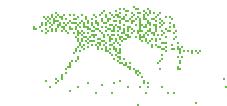
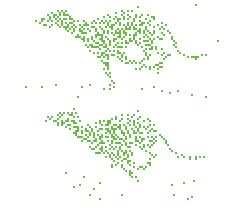
I’ve always loved stonefruit because it has a prize in the middle. A little pit of promise nestled in the %esh and I know you’re not supposed to but I eat it every time even though they say it can make you sick because I thought it could make something grow inside of me.
It’s hard going down; the tip of the pit carves its way down my throat like a spider’s crawl. I choke.
But I drink a lot of water and lie down a!erwards someplace nice in the sun, because I read somewhere that’s how you make it take root.

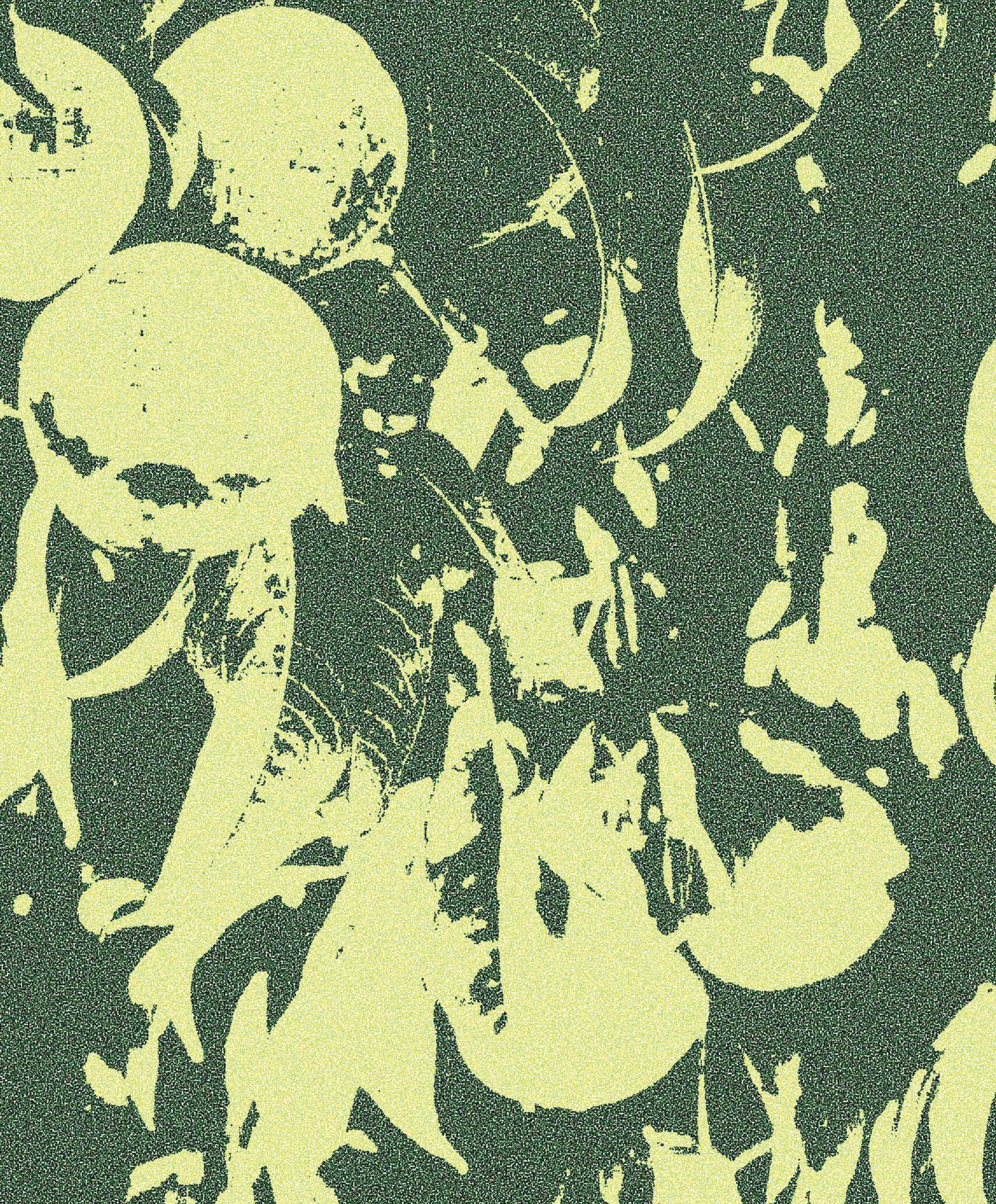

A spider weaves its web and rests and waits, like me.
ey say that waiting makes you good, waiting makes things happen, and besides, it’s nice to sit, to press my stomach, feeling vainly for the lumps that fail to produce themselves beneath my $ngertips.
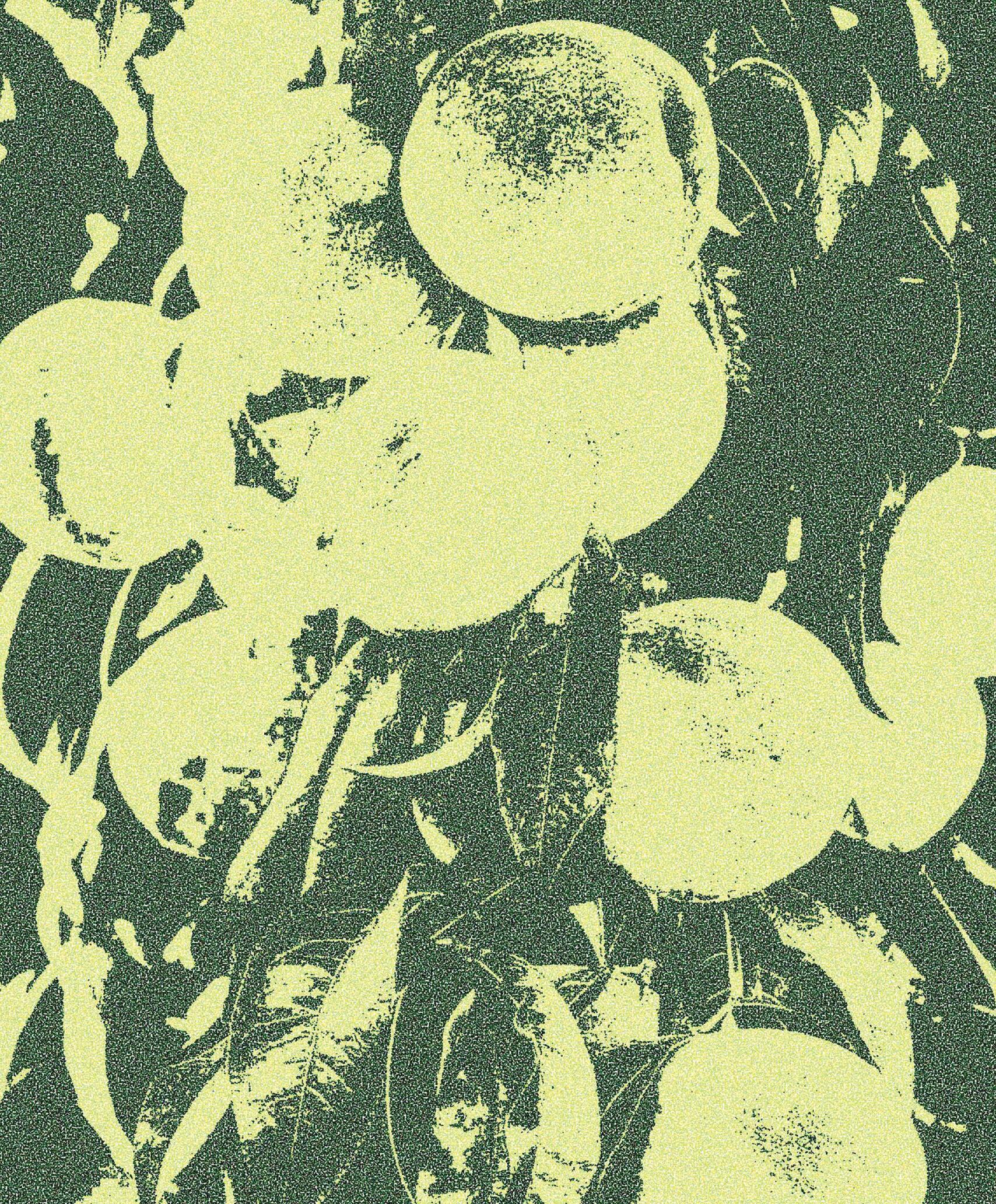
e stones never did grow, they never came out either. Eventually I stopped wondering where they went.
e spider devours her husband I recoil, lurching, sick, I spew the remnants of a dream onto the pavement. I don’t remember eating that.
Ashwinpur
Purny Ahmed

ree men, sick to their cells in Periyar Nagar Hospital.
Limbs aswill, an aguey mercury pulped against anvil.
Staled breaths murmur the prophecies of blind men:
Stirring the tar of the sewer, indistinct nerve and sinew soundlessly fracture.
Caste is scourged into marrow and knuckled into bone, caked like dirt under nails.
Mute lingams of brains are $ssured by scripture, an inculcated self-erasure.

Toddy is made and slave labour is bought so cheaply.
Blue-throated from poison, bodies coil into themselves like oil-braided serpents— half prison, half person.
Slivers of silver movement scour the basins, coins smelt by acetylene— the welts of generations.
Splintered and blackened as spent matchsticks, stamped at the altar of an extinguished candle.
Sacri$cial damnation by a Manichean God grinding out births and deaths on his mortar and pestle.
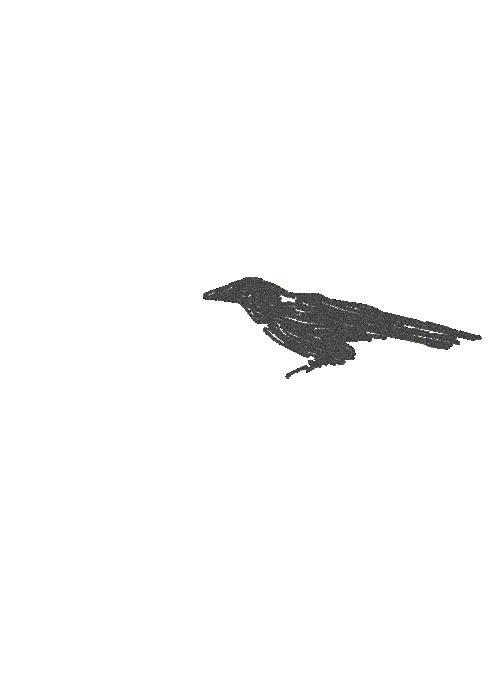
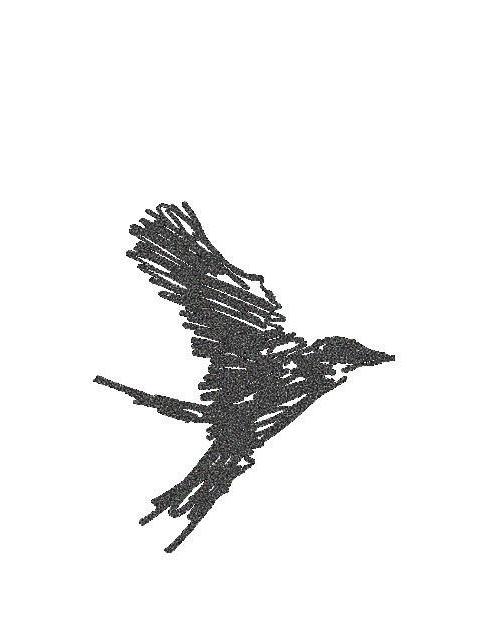
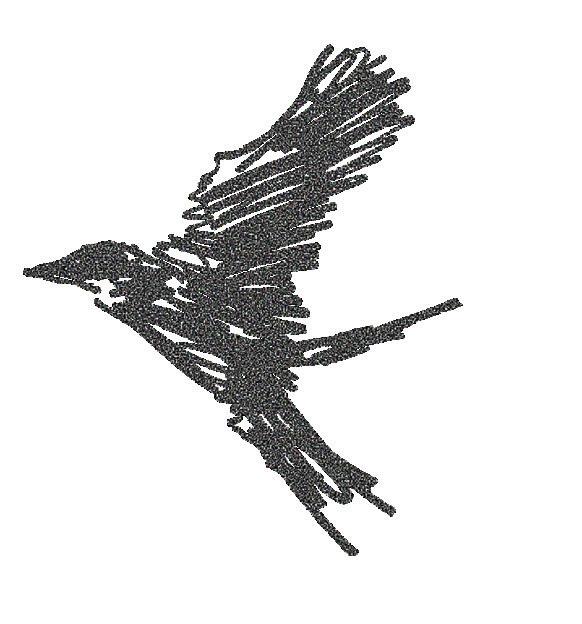
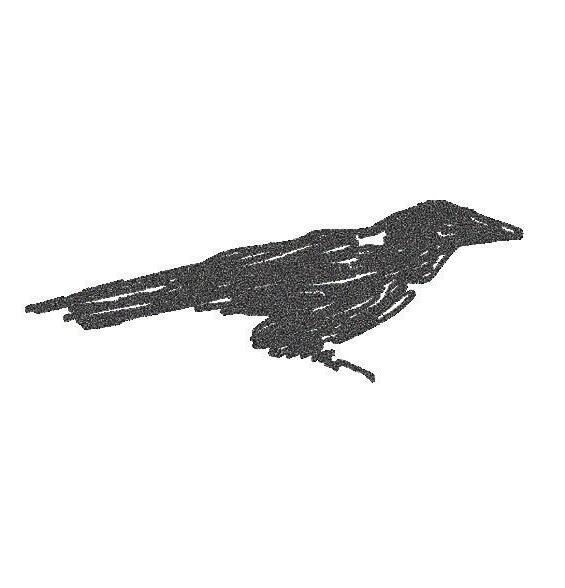
Crows throng white morsels, cawing their famine. Portraits of sons are hung with jasmine.
Promises are broken like the tumoured system that multiplies its ills in fractals.
Simple Beautiful Things
Sasha Blackman
Diary of an (Ex) LimeBiker™
Jade Rasmussen
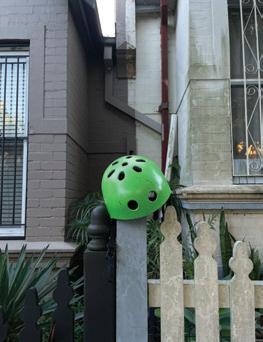
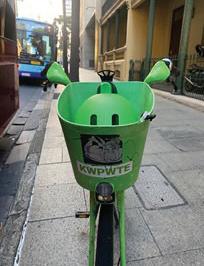
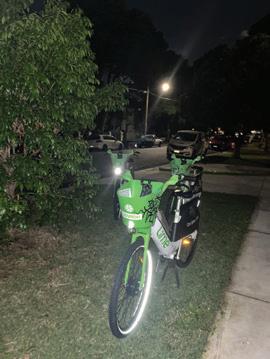
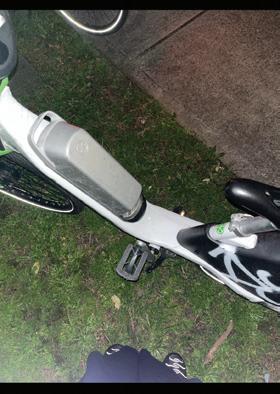
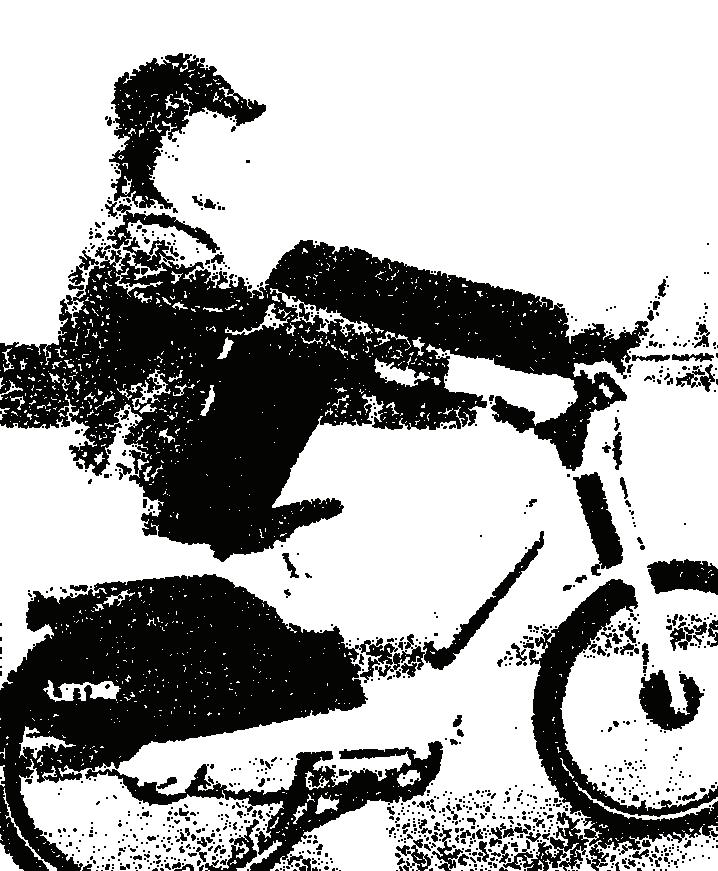
A neon %ash interrupts my bus window daydream. Two cyclists, pedalling in tandem. A bright green helmet rolling around in one basket. ey push languidly as the motor weaves them through Oxford Street’s footpath hierarchy. A stream of innovative phosphorescence gleams in the a!ernoon sun behind them. e bus pauses and they sail ahead. One rider keeps his thumb on the bell of convenience. eir %uorescent pro$les fade into the a!ernoon’s shadows as the shrill resonance echoes down the street a!er them. Six weeks prior, LimeBiking™ through the cool, midnight air, my silhouette glowed too. Brighter, greener. A sheen of suburban enlightenment that has since faded with each week’s hospital appointment and each day’s utterly ine&cient bus ride.
Six weeks ago, the world blurred around me and my green chariot. e whirring motor drove me, brilliant and impulsive, through the humming darkness of a summer’s night. My radiance re%ected o emerald tra&c lights and iridescent street signs. Up the hill, turned towards the starlit sky, I pedalled hastily; pedestrians questioned my imperceptible, glinting existence. And then, a familiar weightlessness. I materialised out, above the stratosphere, Liming™ across the cosmos. I was infallible, invincible, perfect. A universal shi! then, as I landed back onto the pavement, sweaty and immobile, into a reality of broken bones and slow living. e pace of performances, parties and post-semester pay-checks slowed to a crawl. Was the freedom worth the fall?
A crimson coating on the abandoned vehicle, spotted from the walk to the ER the next morning. ere it lay, unparked and unashamed. Its battery depleted, its white and green coating obscured by dried blood. e morning air assuaged the throb of my own battle wound. Could I skirt fault for this injury? Could I accuse those radiant bikes, vehicles of convenience, a ordability and adrenaline, of ensnaring me in their motorised spokes? Or must I dip into a pool of re%ections and acknowledge my own hand in this?
I was not always a LimeBiker™. e gradual emergence of commercialised E-Bikes on the corners of Sydney’s CBD le! me unphased. ey weeded between the cracks of asphalt and cement around Redfern and Town Hall. A mechanised city bloomed before our eyes. e assimilation of subscription-service ‘freedom’ into everyday living persisted until ‘micro-mobility’ became a staple of Sydney’s daily commute. A sliced wedge, a citrus wheel. Lime’s™ budding insignia spoke to the city’s desire for novelty and personalised mobility, unmediated by restrictions or regulation. With Lime’s™ roots in the ground, it wasn’t long before they wrapped around my own jaded limbs.
Zodiac-inspired cocktails preceded my $rst ride into the tra&c-lit streets of Newtown. A block down from the dumpling restaurant, an innocuous group of freshly grown LimeBikes™. Tormentingly accessible, they whispered something of reckless abandon, liberty, a fanciful freedom from the constraints of road rules and train timetables. It wasn’t long before a ride became something else, something irresistible, relentless, repeated. My senses, alight in green.
Later, words of the accident’s frequency were used to console me. I was not the only LimeBike™ wrestler in the hospital on Macquarie Street. A friend’s broken foot. A coworker’s concussion. A rider’s fatality. At work, drunk guests wax poetic over a desire to dim the LimeBike’s™ glow. Slurred notions of regulations, bike paths, legislation. My tumble, however, was perhaps of a di erent consequence. I was silver and quick in the night, my decisions were un$ltered by both beer and youth. An inability to disengage hijacked my mechanical legs as I %ew up and down the climb merely for the thrill of the wind in my ears and the stars in my hair. It served me right and wrong to fall; my naivety, my hubris met Lime’s™ capitalisation on a human desire for liberty and pleasure and I did not leave unscathed.

A bandaged $nger, my weakest link. I fractured all over. Uselessness pervaded every day of le!-handed living. Sevendigit touch typing rendered days slow, ine&cient. Outside, bloodstained bikes disappeared and reappeared overnight, moved as if by some disembodied poltergeist. A familiar whirr dri!ed past my window. A predictably green streak of residue lingered in the street. Was the rider’s safety assured by their judicious restraint? eir rational, entirely unrecreational ride? Or were their injuries imminent? Relentless, repeated, would Lime’s™ impulsive spark o er them the stars too?

Safety, Sustainability, Community, Innovation. e words on the Lime Micromobility website taunted me as I searched for their insurance policy. A dull ache as my $nger clicked through e Lime Times. “2025 Ride Replay: A celestial year in motion: ‘2025 was a year shaped by the stars and tracked through every Lime adventure.’” My constellations turned dark. eir brilliance died the night I reached them. I pushed the cool, night sky away and sat with the stillness of December’s warmth.
I am cautious now. I watch neon cyclers with envy and disbelief. I do not act with the passion of a month or so ago. Infallible, invincible, perfect. e words which spurred my frantic pedalling have since dimmed. Now, I order an Uber and watch the stars go by, far above my head, and I leave my hands inside the vehicle at all times.


Berde Doesn’t Mean
Envy
(But We Know It Anyway)
Marc Paniza
In Tagalog, berde means green. e colour of leaves, unripe mangoes, the plastic lawn chairs at family gatherings where someone will always bring up who got which piece of land. e word comes from the Spanish verde, a remnant of colonial language that stayed literal in translation. We don’t say “green with envy” because the metaphor doesn’t exist here—it didn’t cross over with the word.
e English phrase never made sense to me growing up. I learned what envy actually looked like not from idioms but through watching Filipino telenovelas. Every night in the living room, my family would gather around the TV to watch women tear each other apart on screen, over who got to keep the surname, the inheritance, the mother’s love. e funny thing is, this side of my family, my grandfather’s side, has been ghting over land for years. Massive pieces of property, inheritance disputes that never end, siblings who don’t talk anymore because one of them got a bigger share. Watching telenovelas felt less like ction and more like watching a slightly more dramatic version of family reunions.
e kontrabida (villain) is the only reason these shows are watchable. Without them, you’d just be watching someone su er patiently for sixty episodes, which sounds unbearable. e villains are the ones who actually do things, who refuse to accept their lot and decide they deserve more. I was in year 7 when Kambal, Karibal (2017) aired—the title literally means Twin Rivalry—and I was obsessed. e setup is two sisters, Crisanta and Criselda, who are close until Criselda dies from a rare immune disease. Criselda then comes back as a spirit that only Crisanta can see.
ings fall apart when they both fall for the same guy, Diego, and when their mother starts paying more attention to the living daughter than the dead one. Criselda’s envy eats at her so much that she possesses another woman’s body—Cheska— just so she can return and take everything she believed Crisanta stole. I remember this one scene where Criselda, inhabiting Cheska’s body, humiliates Crisanta at a party by pulling her hair and pushing her face- rst into a chocolate fountain in front of everyone. My family was yelling at the screen. In another episode, Cheska is ungrateful to her own mother a er receiving a sentimental birthday gi , but lights up when her dad gives her a brand new phone. My relatives were livid. Walang hiya (shameless), they kept saying. But we never missed an episode. Cheska was the kind of villain you love to hate because she was doing what everyone dreams about but won’t admit.
ese shows work as morality tales, and they’re made for the Philippines’ mostly Catholic, pretty conservative audience. Within Catholicism, envy is one of the seven deadly sins, and telenovelas drive that home over and over.
e kontrabida schemes, crosses every line, takes what isn’t hers, and by the end she’s punished. Always. Cancer, dis gurement, prison, death—something terrible happens to her. e protagonist, meanwhile, just endures. She’s mabait (kind), mapagpasensya (patient), she su ers beautifully like she’s being tested by God.
obvious: stay in your lane, don’t want more than given. Waiting is holy. e embodies the idea that if enough, God or fate e isn’t just wanting more, wait, refusing to su er wants the shortcut, and to be destroyed. e class hierarchy like it’s it’s divinely planned. that’s your cross to envious, you’re sinning.
the shows also let you envy for weeks. at’s them addictive. You you understand why do what they do. knows the moral is villain always loses. protagonist always tune in for 59 episodes because that’s satisfaction is. You get ower (2017) years to destroying the especially Emilia, the ruined her parents’ walked away clean. just revenge, it’s fury at how unfair everything is. Or e (2014), where Monica is the protagonist, the actual wife, and Nicole (mistress). Nicole doesn’t just want the husband, she wants what Monica e title. Being the one in the family photos. Being chosen rst instead of being someone’s mistake. en there’s Flordeliza (2015), which is just premised on two babies switched at birth—one grows up rich, one grows up poor. Two cribs, same nursery, but one got the green grass and one got concrete. e whole show asks: what if that was your crib?
What if you were the one who got the good life? e shows let you fantasise about it, let you live in that wanting, before they smack you with the moral lesson at the end.
My family used these shows like warnings. When kids on screen got too greedy or acted spoiled, someone would turn to the younger cousins and say, “See? at’s why you need to marunong tumanaw ng utang na loob (know how to be grateful).” It was never just about what was happening on TV. It was about us. e shows were teaching us that moving up in the world is possible but only if you do it the right way. Patient. Virtuous. Grateful. e kontrabida’s sin isn’t wanting more, it’s wanting to take what’s someone else’s, trying to steal a life instead of earning one. But I think everyone has a bit of kontrabida in them, even if we don’t want to admit it. I’ve caught myself being envious; of cousins who got ‘nicer’ gi s than me during Christmas, of classmates who would do something cool over the summer, of people who seemed to move through the world with less e ort than me. e shows taught me to recognise that feeling and bury it, because wanting too much, wanting the wrong way, makes you the villain. But I never wanted to be the protagonist, either. e protagonists were good, sure, but they were also boring. ey just stood there and took it. e villains had hunger. ey had rage. ey refused to wait, and even though we knew they’d lose, even though they always lost, we watched them ght and destroy and burn everything rst. We don’t have a word that connects envy to the colour green. Berde came from Spanish and stayed literal—just a colour, nothing more. But we grew up watching shows that put every shade of envy on display.
Maybe the metaphor never translated because we weren’t meant to so en what envy is like. We don’t hide envy behind leaves or grass. We name it directly. Inggit. Sama ng loob. e shows taught us envy was wrong, but they also taught us it was real, understandable, human. We’ve spent our whole lives watching it unfold on TV, with our families narrating every betrayal, every punishment, every moment someone wanted too much. And sometimes, if you’re honest, you see it in yourself too—that wanting, that hunger, the refusal to accept what you’ve been given as nal. We don’t say “green with envy,” but we know exactly what it is.
The Year I Delete Instagram
Sophia Robinson
Sitting at this distance from the city— resonant intolerable growl, and its back shimmering in the old-growth smoke, it is some dying thing in immense planes of prehistory, it is starship stripped for parts. Jazz sounds, incipient %ick of %oodlights, then from that gloom faces of the young people, all half-eaten or mummi$ed, walking on bridges, dozing in the sun, medicated, swimmers in a dream, woozy overdrunk, woozy with a love they have no name for, something some call hope or fear or shame.
Such tender new muscles aching, such tears that %ow: let the year roll over me like a great grassland, like a lover turning on their back away from me, like these $ngers that run like water over glass, glossed machine visions, seeing only war, its expanses on which our generation will cut its teeth, what a waste of expensive dentistry, what a waste. And then $reworks.


Let the muscles open, arms outstretched, let me read your palm—deep love line, bifurcate, these thick uncertain $ngers: tang of sweat, three kids in a clapboard on the coast. No great romance, an early death, a sinful passion, cigarettes on the verandah a!er $ve.
Pub %oor—sawdust—cider—spit of someone in love—drunkard’s piss—fallen evening light. Or you cling fast, come unstuck, like a shell opened and showing your silver mouth, an entire gleaming world.

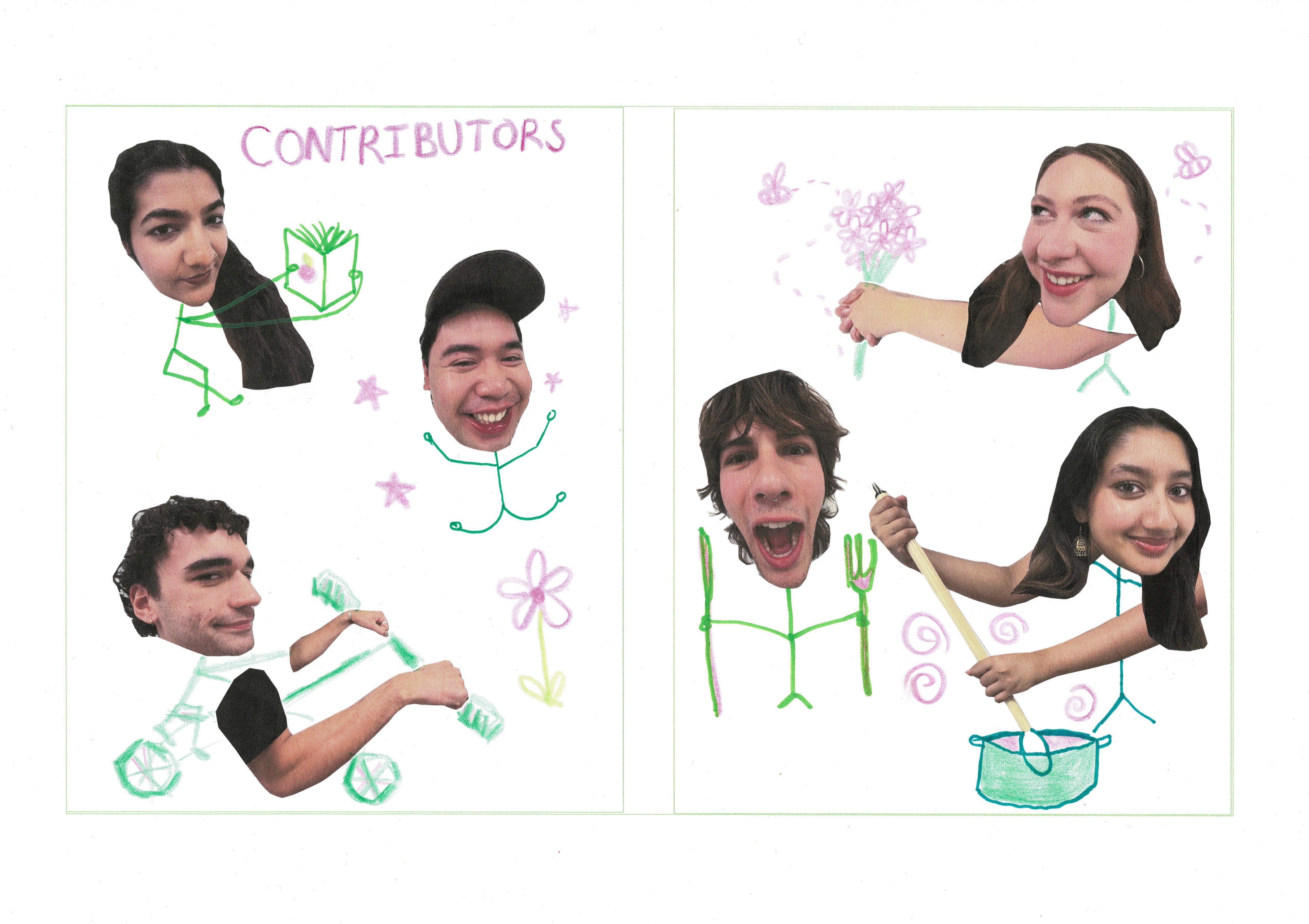
Marc Paniza @marc_paniza
Jade Rasmussen @radmataz
Ananya Thirumalai @anyathirumalai
Jesse Carpenter @rainbowspoon1
Calista Burrowes @calistaaaathena
Purny Ahmed @purnyahmed__
Rosina Carbone @haventsinalately
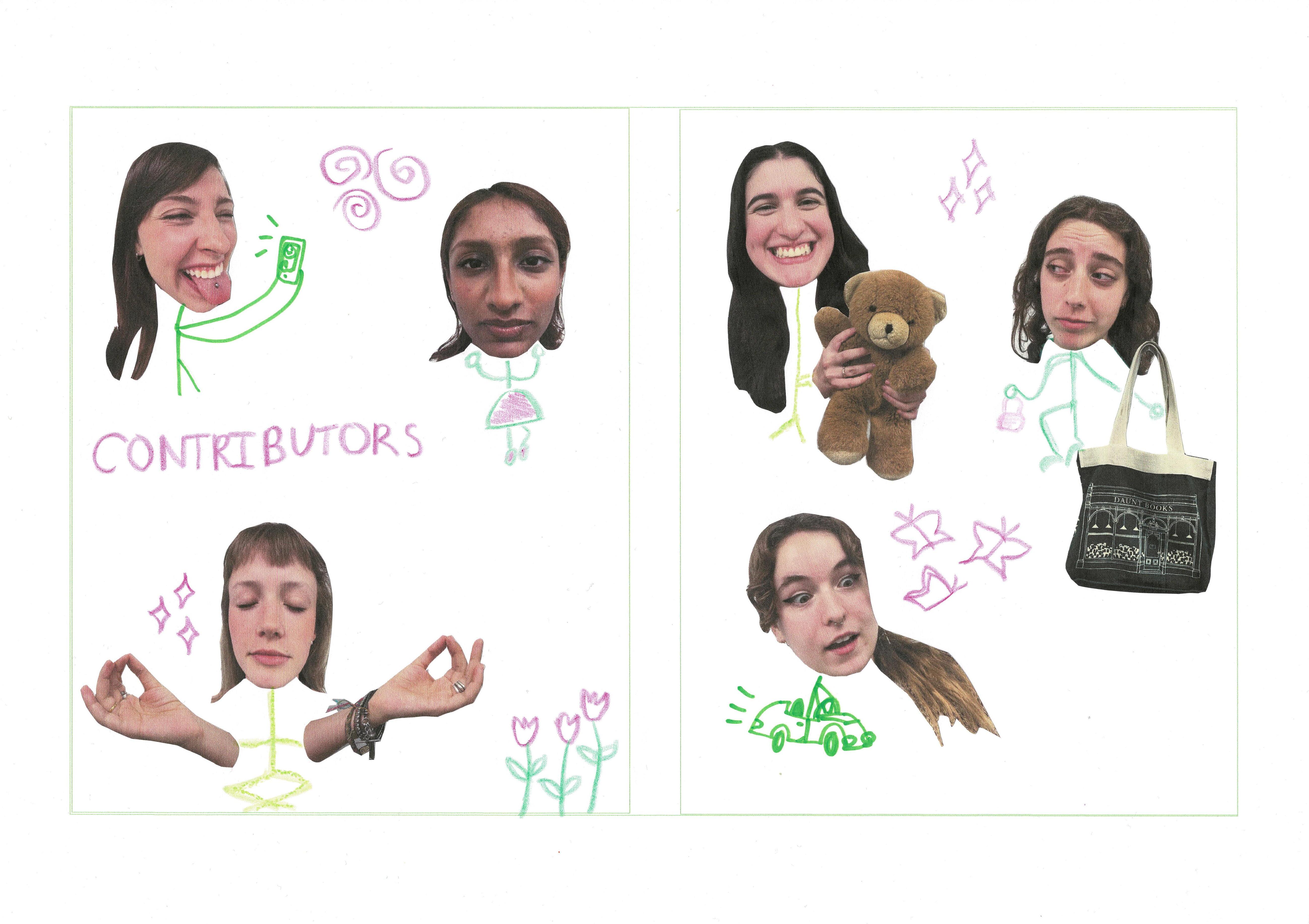
Kuyili Karthik @kuyilikarthik
Sophia Robinson @sophiiarobinson
Are you a creative student at USyd? Display your ar t on campus with
VERGE PROJECTS
Lear n more and apply now:







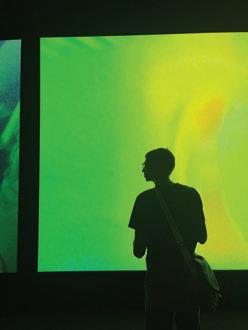
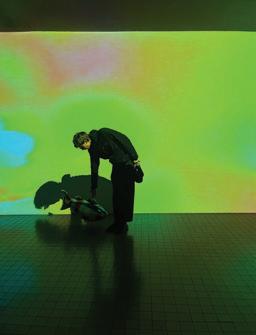
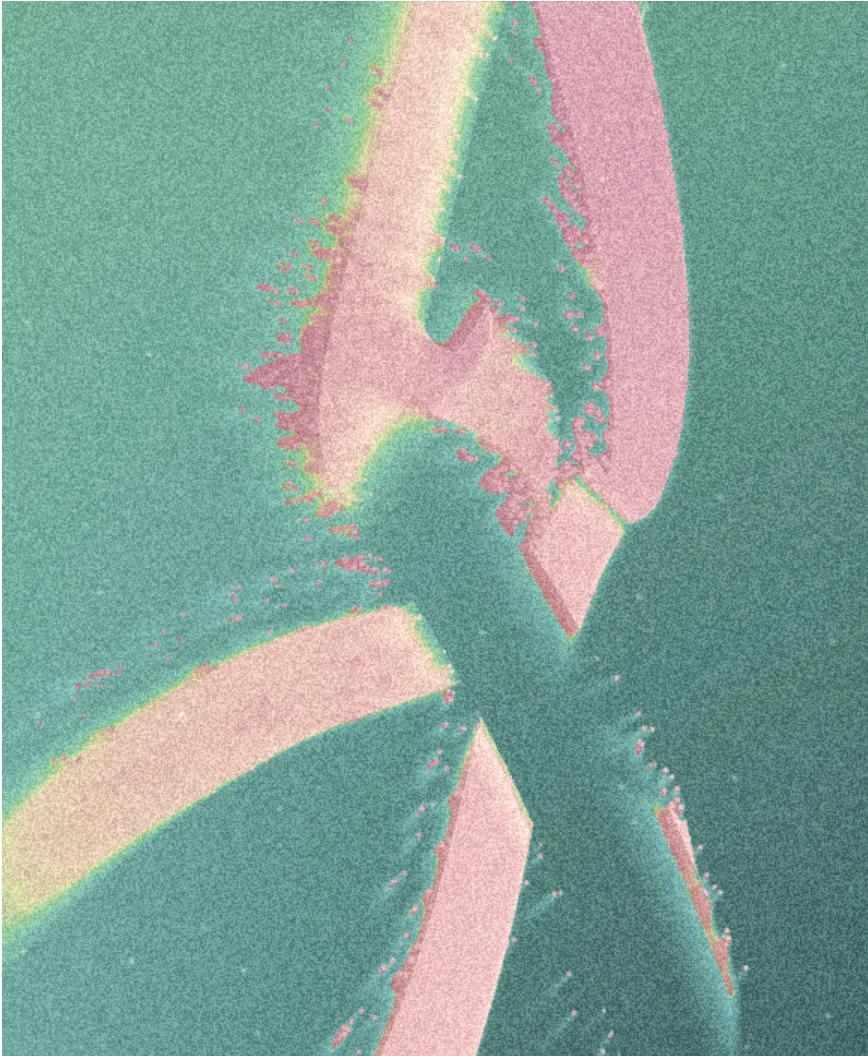
Evan James, Littoral Zone 1 (detail), 2024. Image cour tesy of the ar tist.
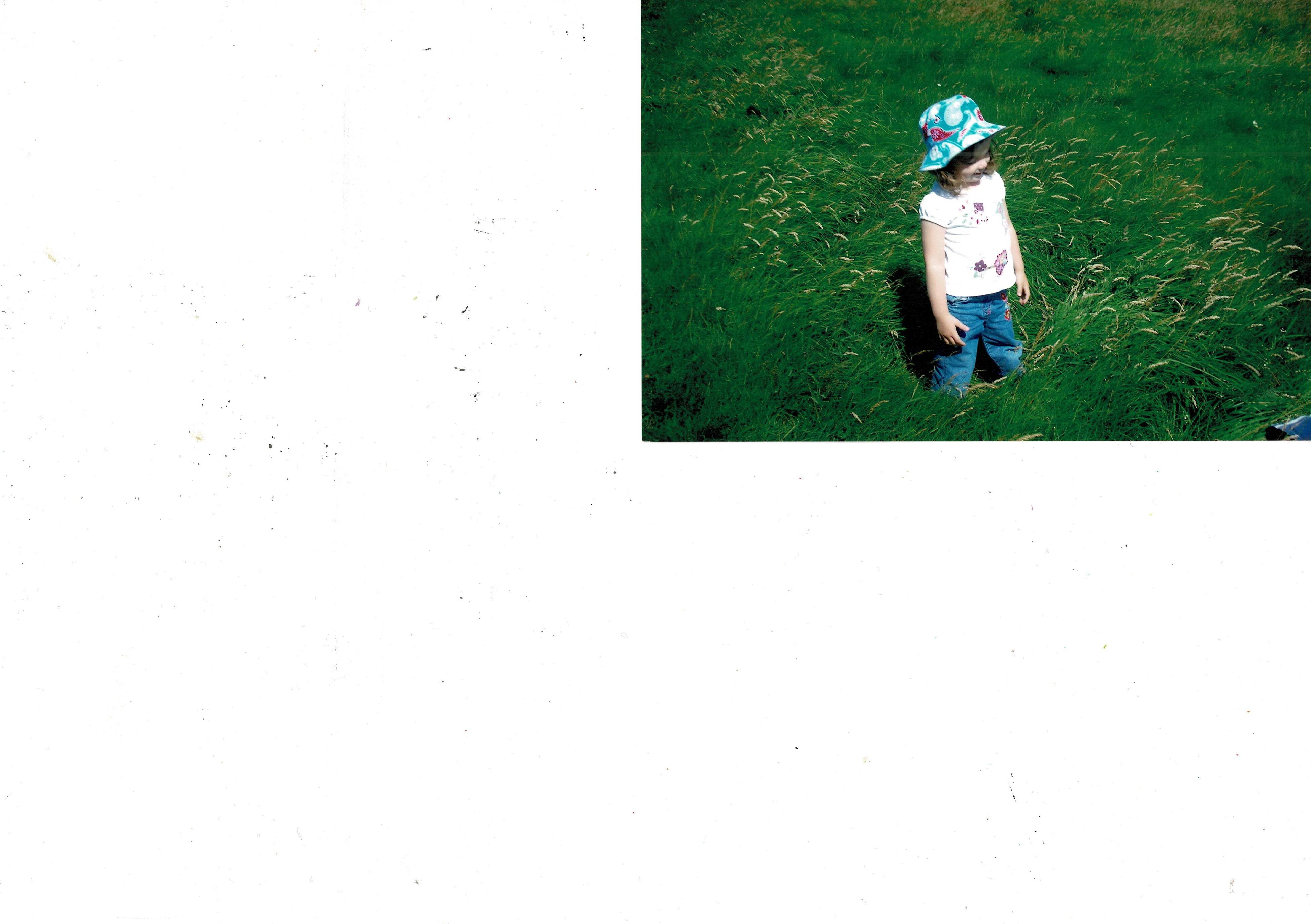
(touch grass)