PUEBLO COUNTY
PULSE PULSE PULSE
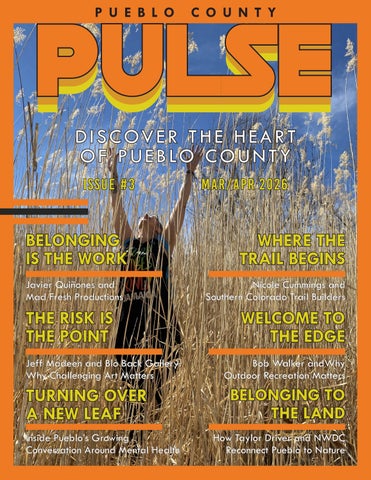
DISCOVER THE HEART OF PUEBLO COUNTY
ISSUE #3 MAR/APR 2026
BELONGING IS THE WORK
Javier Quiñones and Mad Fresh Productions
Jeff Madeen and Blo Back Gallery: Why Challenging Art Matters
TURNING OVER A NEW LEAF
Inside Pueblo’s Growing Conversation Around Mental Health
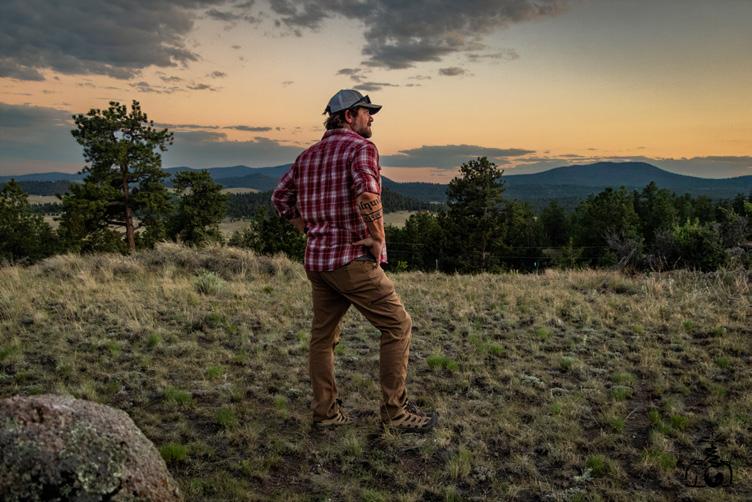
Nicole Cummings and Southern Colorado Trail Builders
WELCOME TO THE EDGE
Bob Walker andWhy Outdoor Recreation Matters THE RISK IS THE POINT
BELONGING TO THE LAND
How Taylor Driver and NWDC Reconnect Pueblo to Nature WHERE THE TRAIL BEGINS




WHERE THE TRAIL BEGINS
Nicole Cummings and Southern Colorado Trail Builders
TO THE EDGE
Bob Walker and Why Outdoor Recreation Matters
TO THE LAND
How Taylor Driver and NWDC Reconnect Pueblo to Nature
Jeff Madeen and Blo Back
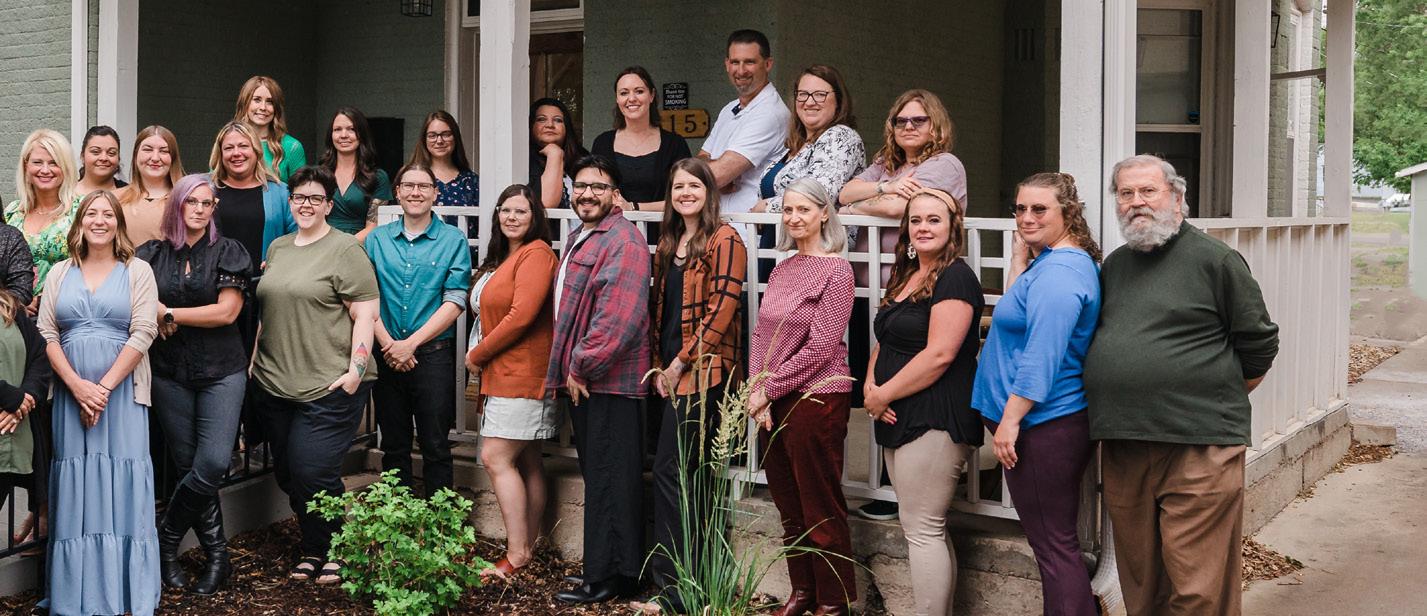
PUBLISHER’’S NOTE
Every place carries a story, but some places ask something more of the people who live there. Responsibility. Care. A sense of belonging that goes deeper than simply occupying space.
Working on this issue of Pueblo County Pulse, I noticed a thread connecting the people and organizations we feature. Whether it’s Indigenous cultural leaders preserving ancestral knowledge, educators helping kids reconnect with the outdoors, artists expressing identity through movement and tradition, or community groups protecting wildlife and open spaces—the common theme is relationship to the land, and to each other.
In Colorado, Pueblo is known as the Steel City. And that reputation is well earned. The grit, industry, and resilience of this place are part of its DNA. But beyond the iron and smokestacks, there is another story unfolding all around us.
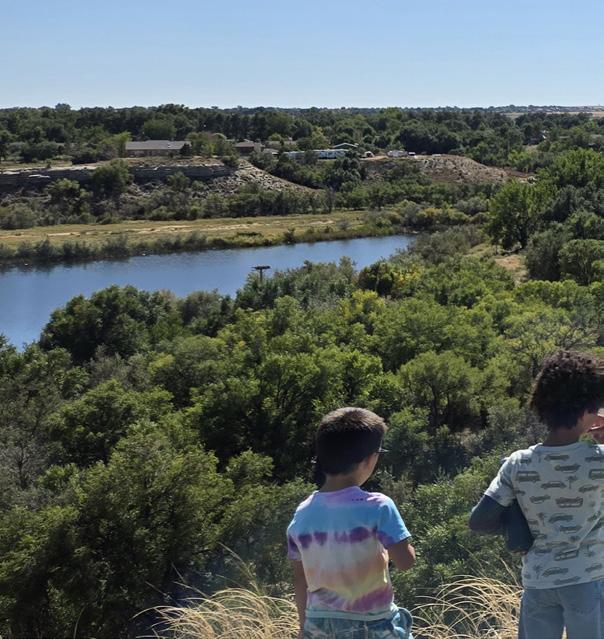
There is the Arkansas River carving its quiet path through the valley. There are the prairie grasses bending under big sky winds. There are trails, canyons, and mountains rising just beyond the city’s edge. And there are people, many of them lifelong stewards of this region, working every day to protect, celebrate, and share what makes this landscape meaningful.
Belonging to a place also means caring for it.
As I continue meeting the people who make Pueblo what it is, I’m reminded that this magazine is really a journey—one of discovery, community, and connection to the land we all call home. I’m grateful to share that journey with you.
- Nate Jordon -
BELONGING IS THE WORK
JAVIER QUINONES ON MAD FRESH PRODUCTIONS, YOUTH EMPOWERMENT, AND PUEBLO’S CREATIVE FUTURE
by Nate Jordon
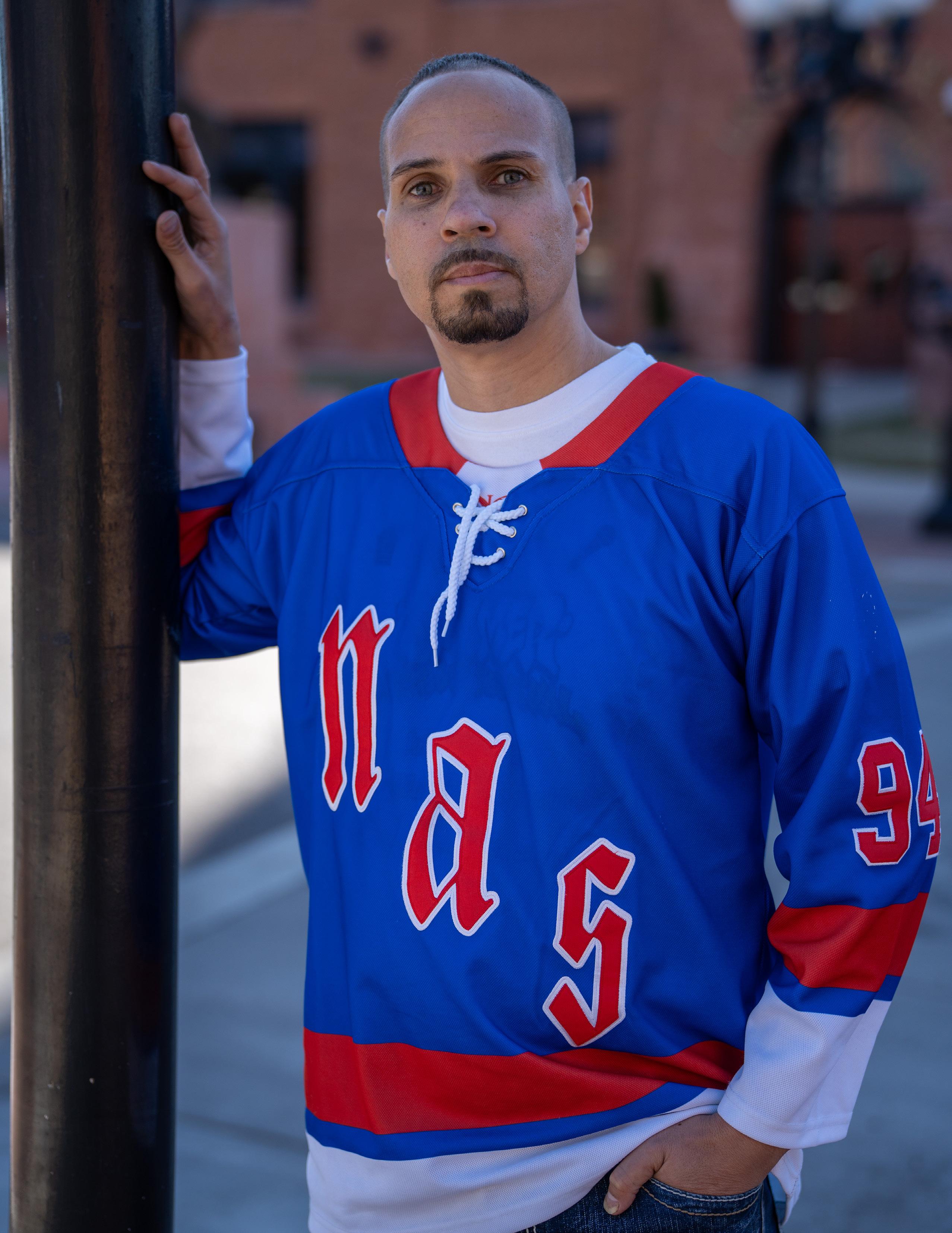
Javier Quiñones is an arts nonprofit leader based in Pueblo. He’s been instrumental in developing initiatives that connect artists, educators, and residents that strengthen the local creative economy. His work focuses on expanding access to arts education and cultural participation across southern Colorado. As a leader within Pueblo’s arts community, he has collaborated with public agencies, schools, and civic organizations to ensure the arts remain an integral part of local identity and economic development. His leadership reflects a belief that the arts are a catalyst for social cohesion and community resilience—values that have shaped Pueblo’s broader cultural renewal.
Photo © Chris Osorio ~
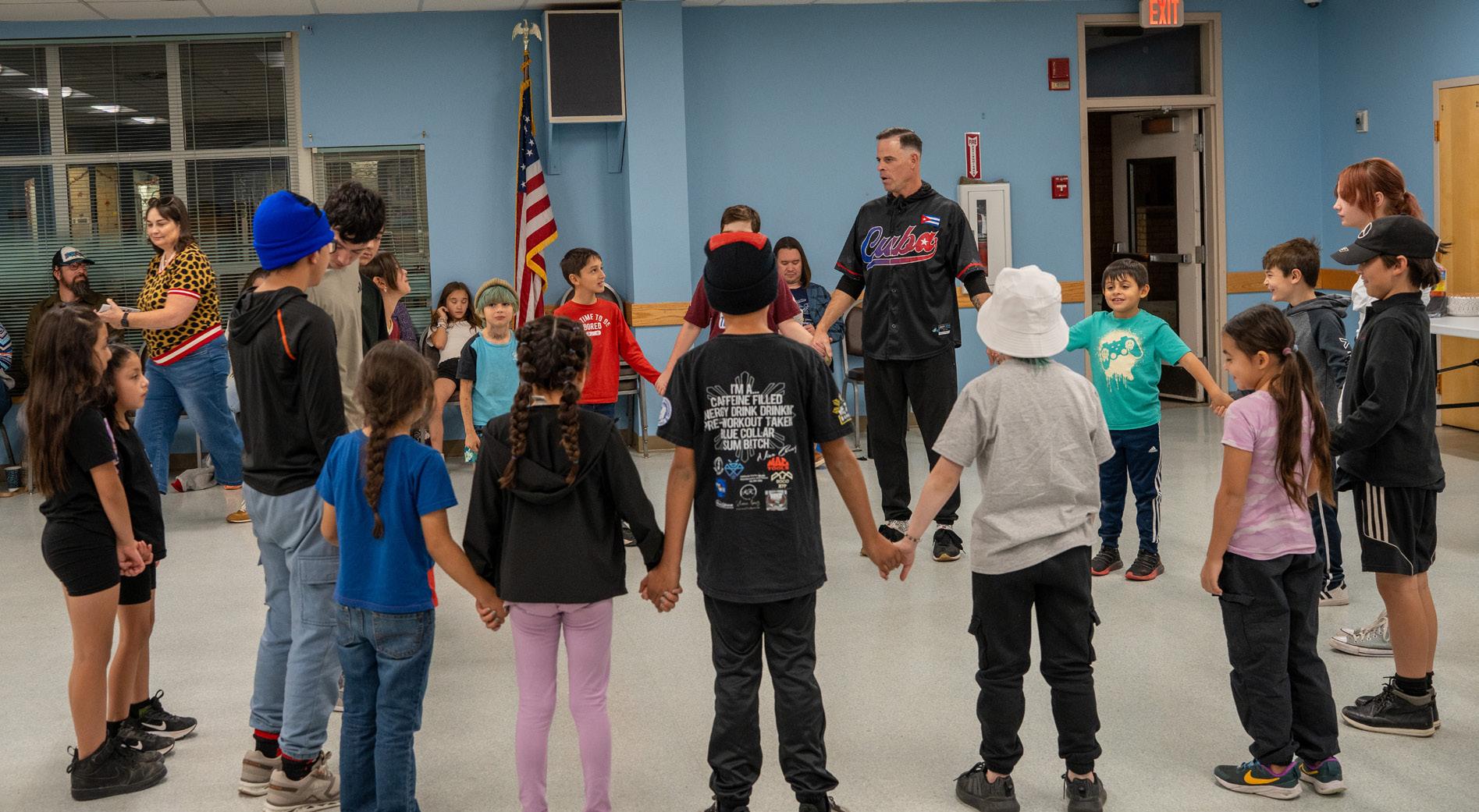
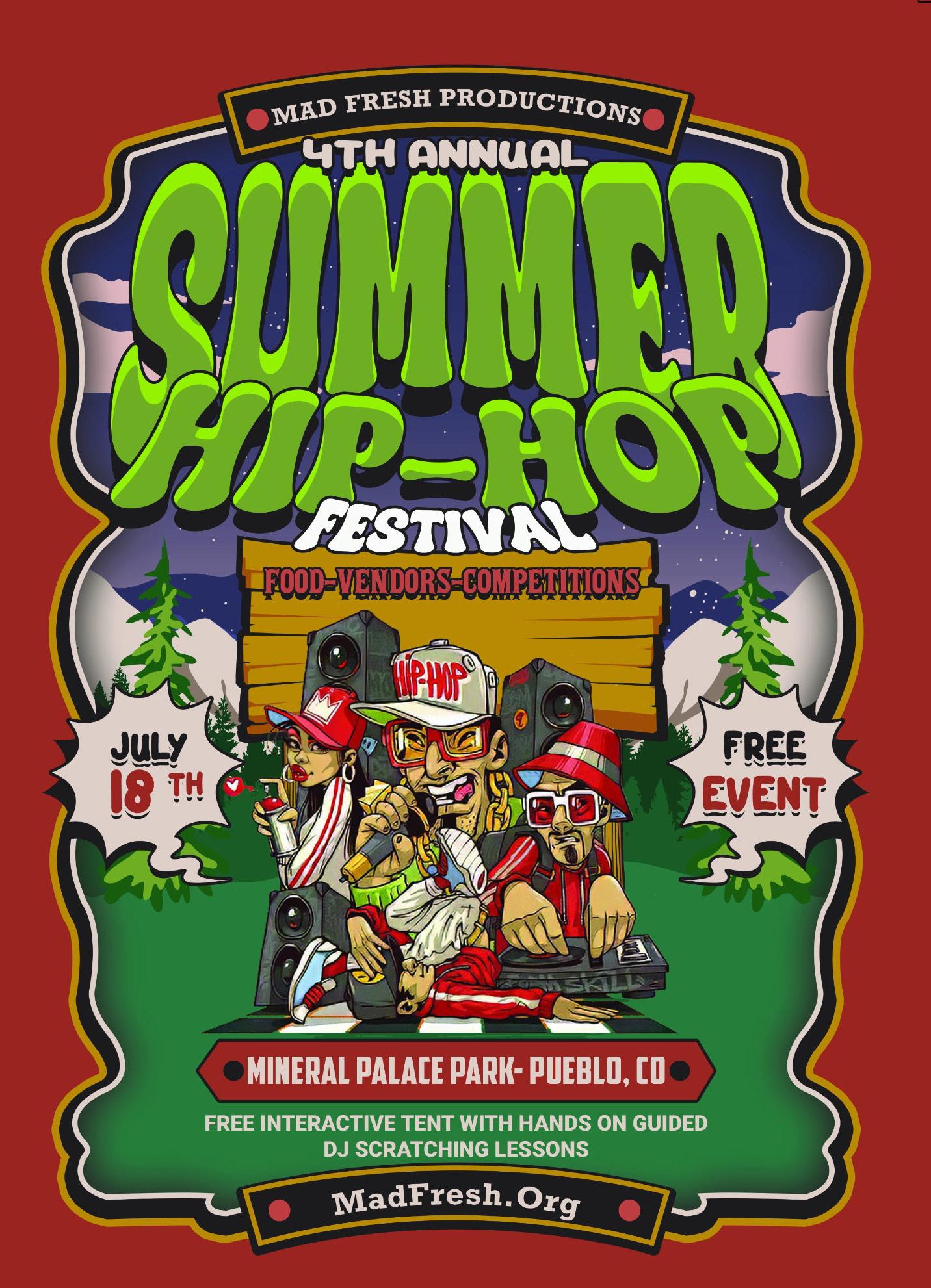
Javier Quiñones doesn’t talk about art as an abstract good, he talks about it as a tool, a lifeline, and a responsibility. As the founder and executive director of Mad Fresh Productions, Quiñones has spent years building something Pueblo desperately needed: a creative ecosystem where young people are given space, mentorship, and permission to be fully themselves.
Rooted in hip-hop culture, community organizing, and lived experience, Mad Fresh operates at the intersection of art, youth development, and social change. Their Hip-Hop Festival and Multi-Cultural Festival—spanning music, dance, visual art, fashion, culture, and performance—are less about polish and more about possibility. They ask a simple but radical question: What happens when we invest in young voices before the world tells them they don’t matter?
For Quiñones, that question is personal. His journey—from growing up in the Chicagoland area surrounded by poverty, violence, and survival-driven creativity to becoming a cultural leader in Pueblo—shapes everything Mad Fresh stands for. In a city defined by grit, pride, and reinvention, his work reflects a belief that art doesn’t just mirror a community, it helps build one.
We met on warm January morning at 3 Birds Coffee in downtown Pueblo.
PULSE: Mad Fresh Productions didn’t start as an institution, it started as an idea. What problem or gap did you see in Pueblo that made you feel this work had to exist?
QUIÑONES: Mad Fresh started because I saw a lot of raw talent in Pueblo—especially among young people—but very few pathways for that talent to be nurtured, respected,
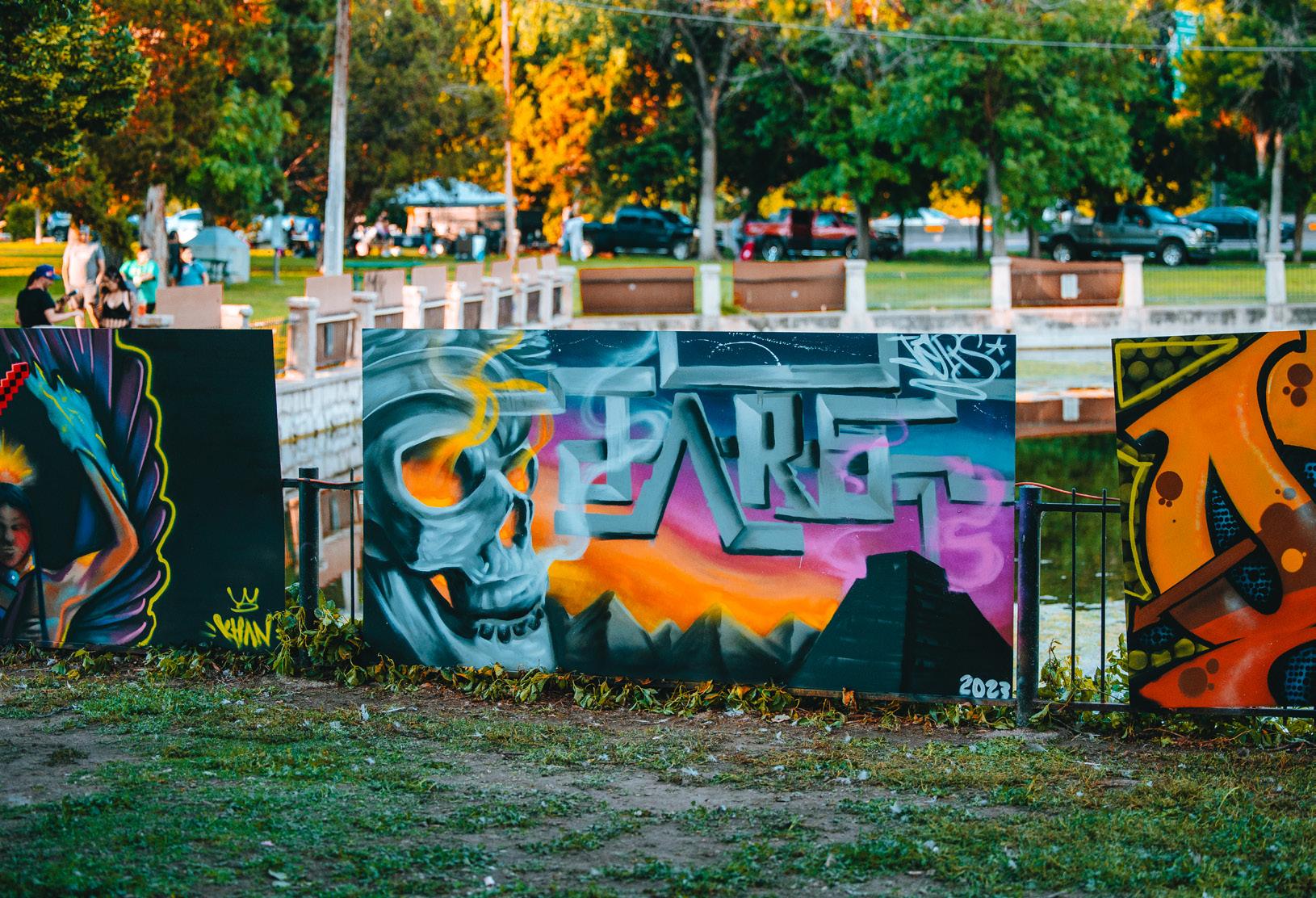

or taken seriously. I grew up understanding how art can be a lifeline. In an impoverished neighborhood in the Chicagoland area, my family lived the struggle firsthand. We lived the street life. Members of my family were involved in gangs, and drugs and violence were part of our daily reality. We got into fights, made mistakes, and saw firsthand how easy it was to get pulled under. For many of us, creative expression wasn’t a hobby—it was survival. Breakdancing, graffiti, raps and poetry, DJing— those were the outlets that kept us grounded when everything else felt stacked against us.
When I came to Pueblo, I recognized that same spark in youth here: creativity, voice, and potential—but not enough safe, consistent spaces where they could explore freely, without judgment, cost barriers, or pressure to fit into a box. Mad Fresh exists to fill that gap. It exists to say your story matters, your culture matters, and your creativity belongs here.
PULSE: You work at the intersection of art, youth development, and social change. How do you define success when it comes to creative programs— what does “impact” look like to you?
QUIÑONES: Impact isn’t just numbers or attendance—it’s transformation. Success looks like a young person who walks in unsure and walks out standing taller. It looks like confidence, consistency, and community. When a kid shows up every week because they finally feel seen, when a parent tells us their child has found purpose, or when an artist realizes their voice has value—that’s impact. If our programs help people believe in themselves and envision a future they didn’t think was possible, then we’re doing something right.
PULSE: Pueblo has a long history of grit, resilience, and cultural pride. How does that local identity show up in the work Mad Fresh produces and the artists it supports?
QUIÑONES: Pueblo’s grit is in everything we do. We honor lived experience, cultural roots, and the reality of struggle without glorifying it. Our artists come from working-class families, multigenerational households, and communities that have had to fight to be heard. That shows up in our storytelling, our music, our movement, and our festivals. We don’t try to polish Pueblo into something it’s not—we celebrate it as it is. That
Photo © Armando Chavez II
@armando2photo
authenticity is our strength.
PULSE: Many young creatives struggle with visibility, confidence, or access. What are the most common barriers you see, and how does Mad Fresh actively work to remove them?
QUIÑONES: The biggest barriers are access and belief. Access to affordable programs, to mentors who understand them, to platforms where their work is valued. And belief—both self-belief and the belief that some-
one will actually invest in them. Mad Fresh removes those barriers by offering low-cost or free programming, bringing in mentors who reflect our community, and creating real stages—literally and figuratively— where young creatives can shine. We don’t just teach skills; we build trust and confidence.
PULSE: As both a founder and an executive director, you wear multiple hats. How do you balance visionary leadership with the day-to-day realities
of running a nonprofit?
QUIÑONES: It’s a constant balance. Vision keeps us moving forward, but the day-to-day work is what keeps everything from falling apart. Wearing every hat means juggling strategy, finances, logistics, and problem-solving—often all in the same day. Sustainability matters just as much as passion, because passion alone doesn’t pay bills or keep programs running. That means budgeting late nights, building and maintaining strong partnerships, listening closely to my team, and knowing when to ask for help before burnout hits. I stay grounded by remembering why we started—every spreadsheet, meeting, and email represents real work behind the scenes, all in service of real people and real lives.
PULSE: Can you share a specific story—an artist, a performance, a moment—where you realized Mad Fresh was truly changing lives?
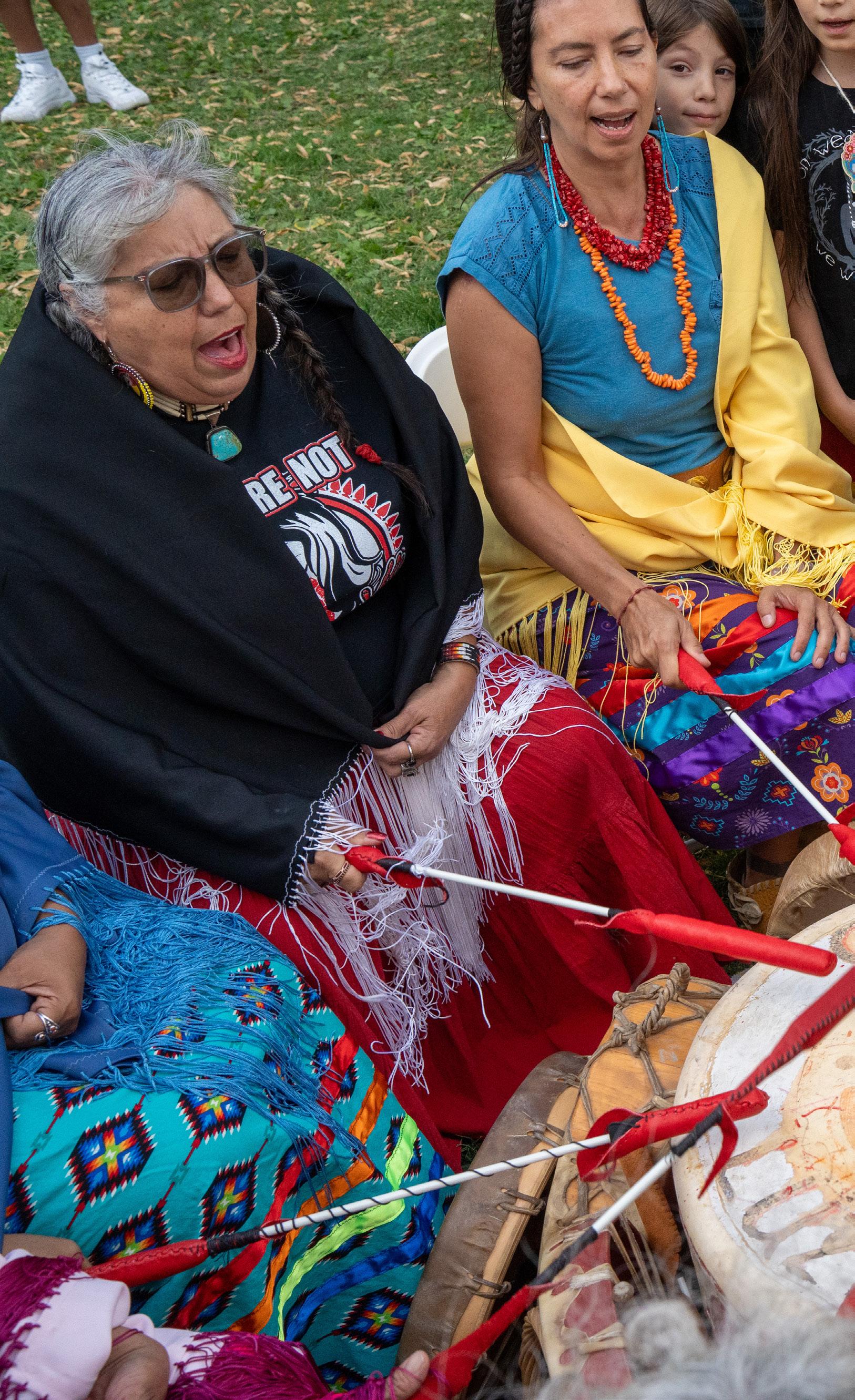
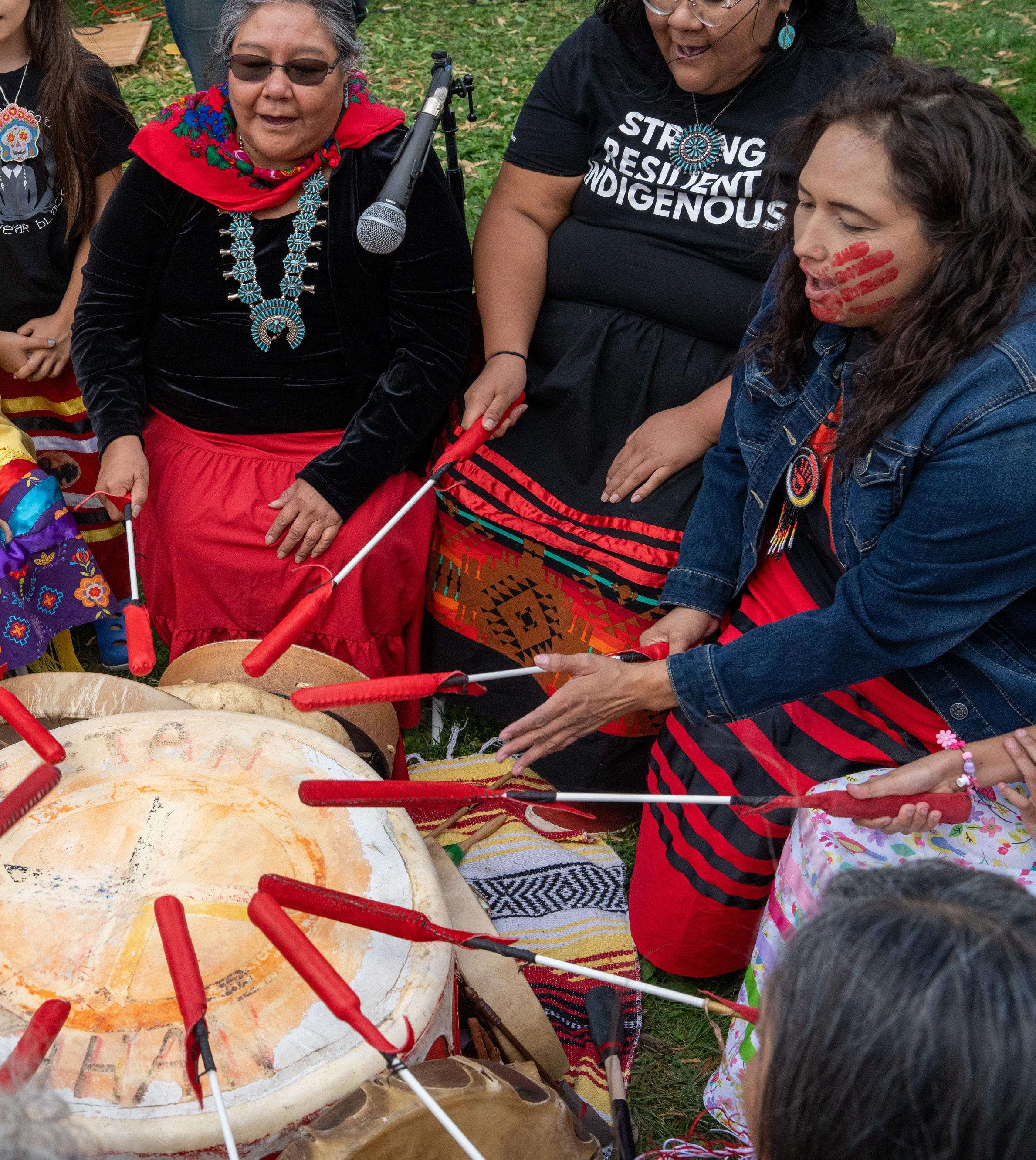
QUIÑONES: There are honestly too many to count. One moment that will always stay with me was watching Grupo Chicimecoatl, an all-women Indigenous drum group, perform for the first time at our 5th Annual Multicultural Festival. It had never been done before, and witnessing that sacred moment brought tears to so many women in the crowd—more than a dozen—who felt the power of being part of something deeply cultural, spiritual, and affirming.
I think about our kids who started in our breakdance classes and later stepped into their very first breakdance battle at our 2nd Annual Hip-Hop Festival. Or the five youth who entered the graffiti battle that same year—putting their work out there with courage and pride. I think about the dozen kids who walked out of their first completed sewing
We don’’t just teach skilLS; we build trust and confidence.”
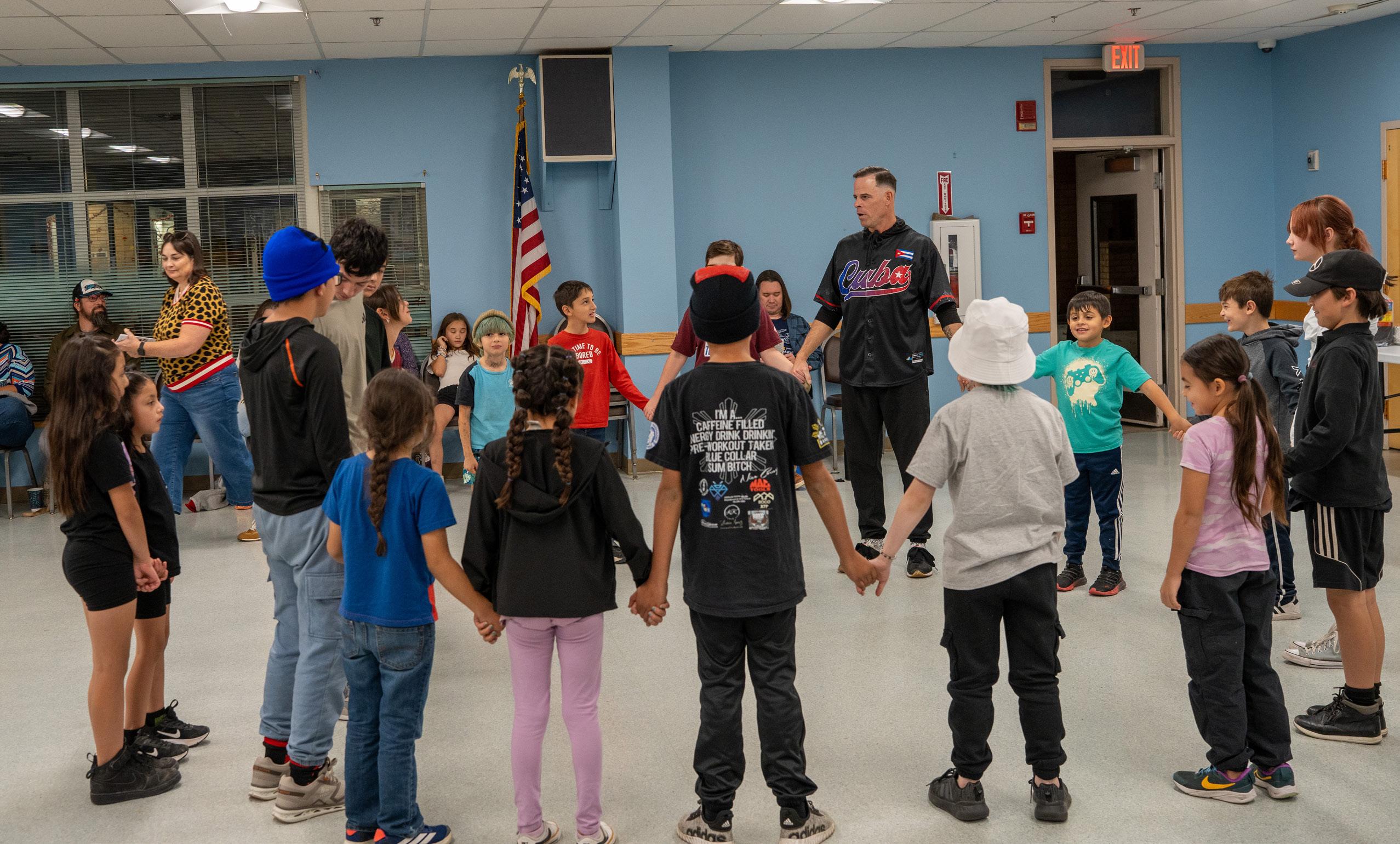
program holding pillows and tote bags they made themselves, realizing they could create something with their own hands.
And then there were our graffiti youth participating in their very first kids’ art gallery—nearly every one of them selling all of their merchandise. Watching that shift, from “Can I do this?” to “People value my work,” is everything.
The impact stories really do go on and on. Each one is a reminder that this work isn’t just about art—it’s about confidence, culture, and belonging.
PULSE: Creative spaces don’t just produce art; they create belonging. Why is “safe, inclusive space” so central to your mission, especially for young people?
QUIÑONES: Because so many young people don’t have that anywhere else. A safe space means you don’t

have to explain yourself, hide parts of who you are, or fear being judged. Inclusion isn’t a buzzword for us—it’s a responsibility. Especially for youth navigating trauma, identity, or instability, belonging can be life-changing.
PULSE: What role do you think arts organizations like Mad Fresh play in the broader future of Pueblo—economically, culturally, and socially?
QUIÑONES: Arts organizations are economic drivers, cultural preservers, and social bridges. We attract visitors, create jobs, and keep culture alive. More importantly, we invest in people. When you support creativity, you support innovation, mental health, and community pride. Mad Fresh is part of a larger ecosystem working to make Pueblo a place where people don’t just survive—they thrive.
PULSE: Looking back, what’s something you had to learn the hard way as a
leader, and how did it change the way you approach your work today?
QUIÑONES: I had to learn that I can’t do everything myself. Burnout doesn’t serve the mission. Building something lasting means trusting others, setting boundaries, and valuing rest as much as hustle. That lesson changed how I lead—I focus more on collaboration, transparency, and sustainability now.
PULSE: Finally, when you imagine Mad Fresh Productions five or ten years from now, what do you hope people will say about its legacy in this community?
QUIÑONES: I hope people say Mad Fresh believed in Pueblo when it mattered. That we created opportunities where none existed, uplifted voices that were overlooked, and built a community where creativity and culture were honored. I hope they say we helped both youth and adults grow into confident leaders—people
Photo © Javier Quinones @mad_fresh_productions_
who learned to trust their voices, take responsibility for their communities, and move with purpose. If our legacy is that people felt seen, empowered, and inspired to give back, then we’ve done our job.
* * *
Listening to Javier Quiñones, it becomes clear that Mad Fresh Productions isn’t chasing trends or quick wins, it’s playing the long game. The real measure of success isn’t found in festival attendance or program counts, but in the quieter transformations: confidence taking root, voices strengthening, young people realizing they belong exactly where they are.
In Pueblo, where resilience has always been part of the culture’s DNA, Mad Fresh offers something both practical and profound: a framework for turning creativity into agency. Quiñones’ leadership reminds us that safe spaces don’t appear by accident; they are built through intention, trust, and a willingness to listen.
If Mad Fresh’s future legacy holds true to its present work, it won’t simply be remembered as an arts organization. It will be remembered as a place where people were seen early, supported fully, and encouraged to carry their culture—and their community—forward with purpose.

@mollybilker
Photo © Molly Bilker
WHERE THE TRAIL BEGINS
Nicole Cumming s and SouTHern ColoRAdo TRAil Builders
by Nate Jordon
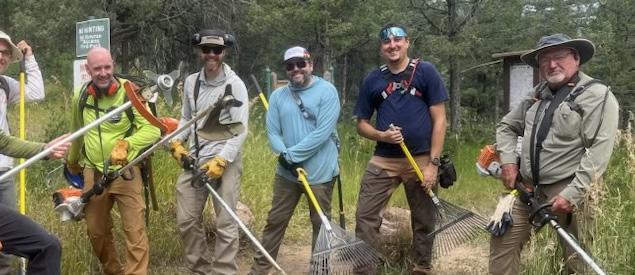
Nicole Cummings is a driving force behind Southern Colorado Trail Builders (SCTB), a nonprofit dedicated to creating, maintaining, and advocating for sustainable trail systems across Southern Colorado. But it wasn’t through a grand plan that she came to trail building, it was through community—one gathering that led to a meeting, then a workday, then the kind of hands-in-the-dirt responsibility that quietly turns volunteers into stewards.
Today, as Board President, Nicole helps guide a 100% volunteer-powered organization shaping some of the region’s most loved and heavily used trail systems—from Lake Pueblo State Park to the growing network in
Beulah. SCTB’s work lives at the intersection of science and soul: trained crew leaders studying drainage, grade, and sustainability; outreach teams teaching trail etiquette and land awareness; and a steady commitment to making the outdoors feel welcoming, navigable, and worth protecting. Rooted in the belief that trails are more than recreation corridors, Nicole sees them as pathways to connection—linking people to nature, to each other, and to a shared responsibility for the land beneath their feet.
I met Nicole on a cold January morning—something of a rarity this winter—at a bustling Sacred Bean in downtown Pueblo.
PULSE: What first pulled you into trail work,
and when did you realize this was more than a hobby—that it was something you wanted to help lead and grow?
NICOLE: I actually started by going to a party. Southern Colorado Trail Builders had connections through my husband’s work, and some of the people leading the organization were colleagues of his. They were working on the Carhart Trail in Beulah, and we kept saying, we should go help with that. But life with kids pulls you in a lot of directions, and we never quite made it out there—though we did make it to the party.
That event really clicked for me. It was fun, social, and connective. I realized how many people I already knew who were involved and how trail building brought people together. After that, I started paying closer attention, especially when SCTB began working closely with land partners to
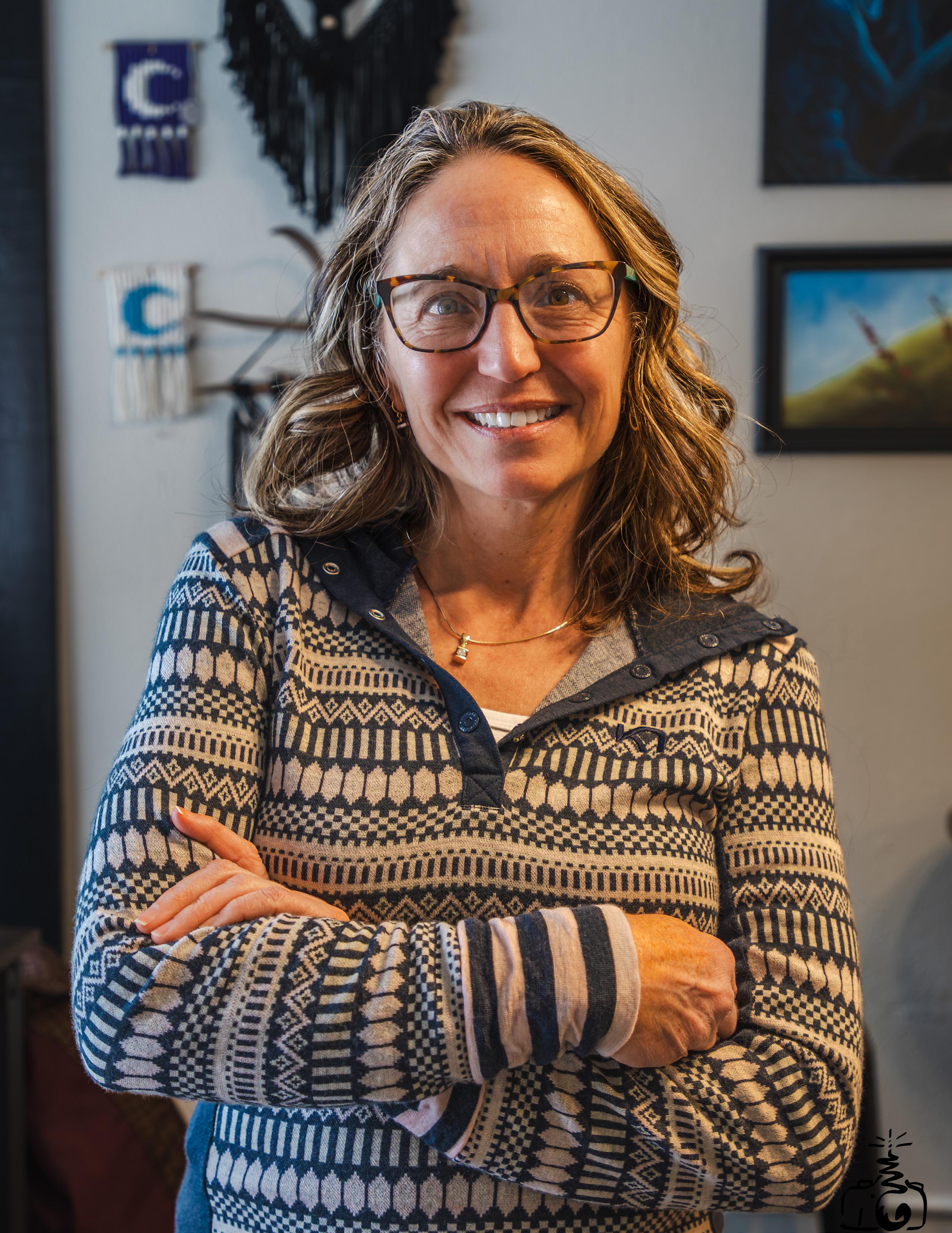
TRAiLS give people something real— - movement, conversaTIon, shared experience— - when so much of life feeLS disconneCTed”
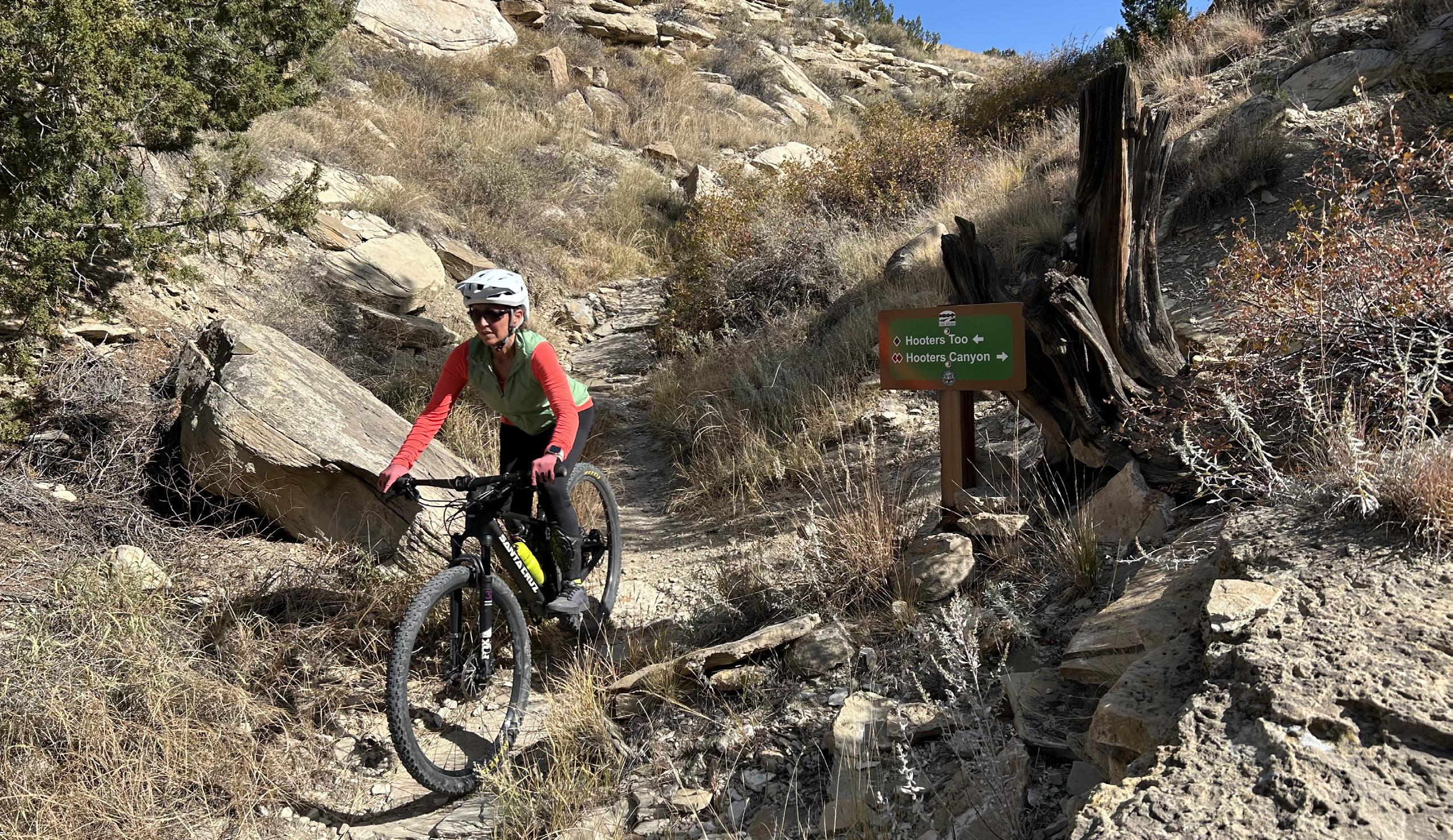
legitimize trails, particularly with Colorado Parks & Wildlife. That process involved land studies—historical significance, riparian areas, environmental concerns— and when trail closures were discussed, my curiosity was piqued.
A friend encouraged me to attend a meeting, which led to volunteering on signage projects. We removed old signs, dug into shale to set new posts, and installed wayfinding markers. It was hard, physical work—but deeply fulfilling. Seeing an arrow pointing the right way and knowing you helped create clarity for trail users was powerful.
In 2023, I was anonymously nominated to join the board. I still don’t know who nominated me, but I accepted—and here I am.
PULSE: Southern Colorado Trail Builders does more than build trails—it builds relationships. How do you think physical trails shape social connection and a sense of belonging here?
NICOLE: These are homegrown trails. They
weren’t designed by a firm from outside the community—they were built by people who live here. That’s what makes them special. The names, the terrain, even the technical challenges reflect Pueblo. There’s a trail called Broken Hip—named because someone literally broke their hip out there. That kind of story speaks to grit, humor, and community ownership.
The trail system at Lake Pueblo State Park is multi-use—hikers, mountain bikers, equestrians—and access points range from formal trailheads to informal pull-offs like Red Gate. It’s a shared space shaped by the people who use it, and that creates connection.
PULSE: Trail access often reflects deeper questions about equity and inclusion. How do you approach making outdoor spaces feel welcoming to people who may not traditionally see themselves represented in outdoor recreation?
NICOLE: My day job is as an occupational therapist, so inclusion is central to how I think. With SCTB, there truly is a job for
everyone. You don’t need to swing a pickaxe to contribute—if you show up, we’ll find a way for you to help.
We host outreach days at Arkansas Point Campground where volunteers talk with trail users about what goes into maintaining trails and how people can support the work. We also host an annual Trails Bash—a celebration with guided hikes, bike rides, and family-friendly activities designed to bring new people in.
I’ve also learned a lot about accessibility through exposure to OPDMDs—other power-driven mobility devices—which allow people with injuries or disabilities to access trails. Pueblo has a history of being a leader in progressive ideas, and accessible trail design is one worth continuing to explore.
PULSE: For people who don’t fully understand trail building, what actually goes into creating and maintaining a sustainable trail—and why does that work matter long after the ribbon-cutting?
NICOLE: In 2025 alone, volunteers logged more than 500 hours of trail work at Lake Pueblo State Park and the Nature & Wildlife Discovery Center in Beulah—and that doesn’t include board planning hours.
Sustainability is everything. We formally train trail crew leaders through the Rocky Mountain Field Institute, and we’ve sent at least seven people through that program. Trail work is science-based—drainage, grading, sight lines, erosion control—not just digging wherever it looks bad.
We also focus on signage, wayfinding, first aid training, and proper tool use. And maybe most importantly, we work closely with land partners like Colorado Parks & Wildlife, the Bureau of Reclamation, the Forest Service, and local organizations. Every project requires coordination, approval, and patience.
PULSE: Southern Colorado’s landscape is rugged, beautiful, and sometimes fragile. How do you balance increased recreation with conservation and long-term land health?
NICOLE: Partnership and education are key. Our mission centers on outreach and education alongside trail work. Last year we hosted guest speakers from Colorado Parks & Wildlife who talked about
everything from park management during peak season to local paleontology—helping people understand what they’re seeing under their feet.
We’re also hosting Palmer Land Conservancy at an upcoming community meeting. The more people understand the land, the more thoughtfully they engage with it.
PULSE: What role do volunteers play in SCTB’s mission, and what do you see happen when people put their hands in the dirt and help build something together?
NICOLE: We are a 100% volunteer-run organization—no paid staff. Volunteers are SCTB. Civic engagement is at the heart of what we do, and trail work gives people a tangible way to contribute.
There’s real satisfaction in fixing a problem on a trail—like addressing drainage on Cuatro Sinko so riders no longer have to dodge a hidden rut. Knowing your work made the trail safer and more sustainable is incredibly rewarding.
PULSE: As a leader in a physically demanding, historically male-dominated field, what challenges have you faced—and what changes are you encouraged by?
NICOLE: Honestly, SCTB has a long history of women in leadership roles. I feel like I’m adding to an existing culture rather than breaking new ground. I’ve felt welcomed and supported, and that’s something I’m really proud of for this organization.
PULSE: How do trails contribute to mental and emotional well-being, especially in a time when people are craving connection, movement, and time outdoors?
NICOLE: People come to us looking for connection. Trails create space for that— through workdays, community meetings, and informal group rides. We help connect women’s mountain bike groups, family rides, and even men’s riding groups because there’s a real desire for face-to-face interaction.
In a time when social media often disconnects us, trails offer something real—movement, conversation, and shared experience.
PULSE: Can you share a moment—on a trail build, community project, or partnership—that reaffirmed why this work matters to you personally?
NICOLE: Two moments stand out. The first
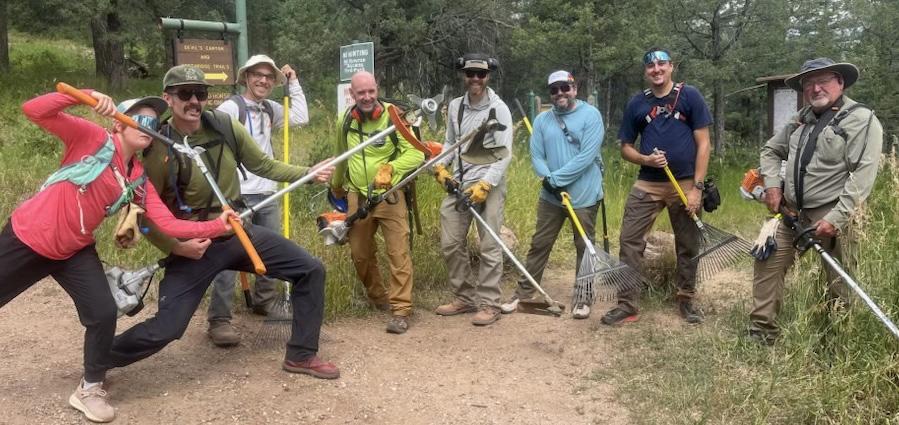
was participating in a women’s mountain biking clinic after being hesitant. I attended with my daughter, and it completely changed how I ride and how I think about biking. It was transformative, and I want more women to experience that confidence.
The second was hosting a trail workday with Centennial High School’s Science Club. Even if those kids never come back, we planted a seed. Maybe ten years from now they’ll remember volunteering and choose to give back again.
We’re now coordinating with the Youth Climate Initiative Club at Centennial. Graduates can earn a Seal of Climate Literacy for the first time this year, and students plan to attend trail days this spring as part of that work.
PULSE: Looking ahead, what is your long-term vision for Southern Colorado Trail Builders, and what kind of legacy do you hope these trails—and this organization— leave behind?
NICOLE: I hope we continue to build a diverse, well-trained volunteer base and maintain a strong voice at the table for trail projects in our region. Through outreach, education, and partnerships, I want SCTB to keep engaging people, caring for the land, and building something lasting together.
for years, creating better wayfinding for first-time hikers, or planting a seed of civic engagement in the next generation, the organization’s legacy is already taking shape. The trails may wind through shale, canyon, and prairie, but what they’re really carving is something lasting: a shared sense that this place—and these paths—belong to all of us, and they’re worth showing up for.
Talking with Nicole, the takeaway is simple: trails don’t maintain themselves—and neither does community. Southern Colorado Trail Builders isn’t chasing prestige or profit. It’s logging hundreds of volunteer hours, training leaders, working alongside agencies, and doing the unglamorous work that keeps rugged terrain usable and safe long after the “new trail” excitement fades.
Just as importantly, SCTB is building a culture around those trails—one that values inclusion, education, and face-to-face connection at a time when people are hungry for exactly that. Whether it’s fixing a drainage problem that’s plagued riders

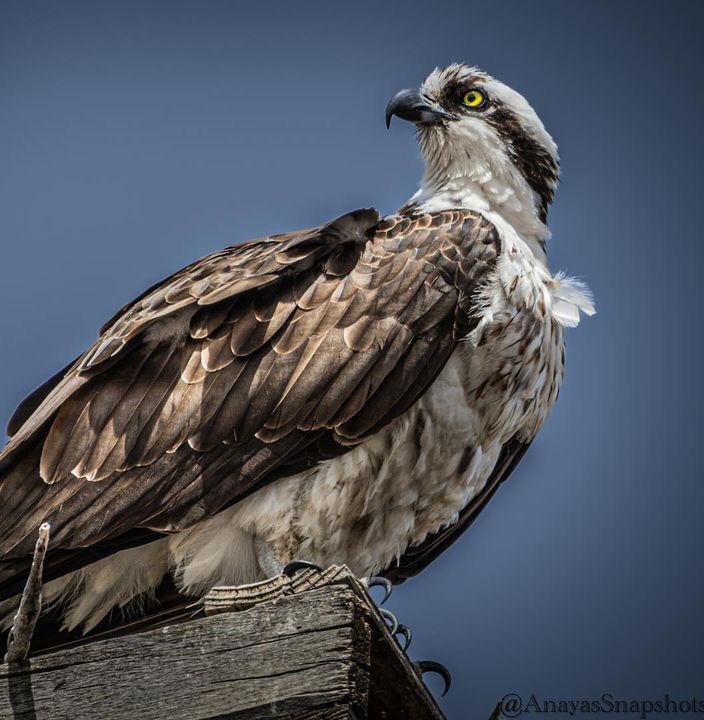
Osprey at River Campus / Photo © NWDC @anayassnapshots
WHAT WAS HERE THE WHOLE TIME
by CYD CRADDOCK
Igrew up in dust. In the corners of my mouth in the morning, on the windows of the back of the school bus. Dust in my eyes on the playground. On my shoes and pants and hands after a walk through the prairie. Dust that settles into everything, even the air, even the light. It’s a coating that just doesn’t ever wash off completely. Not out here, anyway.
Out here is the beginning of the plains in Colorado. West of Pueblo. West of Pueblo West. Thirty miles or so from the foothills that eventually become the Rockies. Those foothills are dusty, too, but not in the same way. The trees and boulders protect the limestone from being pounded by rain and hail and sun and sun and more sun.
The dust in the foothills smells like ponderosa and lichen. The dust on the plains smells dry. Baked. Like the scratched-off bits of an unpainted ceramic pot. Chalky.
This was the geography of my childhood.
We would drive to town. That’s what we called it. For groceries. For gas. Sometimes we’d meet my dad for a Dutch lunch across from the mill. The mill where he worked since 1955. The mill that meant we were close to home after a long camping trip. The mill that employed almost every adult I knew. Not that I knew many.
Pueblo was never abstract to me then. It was practical. It was where things happened because they had to. Only later did it become something else. Something to explain, to defend, to brace against when people heard where I was from.
In 2005, I left for Ohio and grad school. I packed up my life and my five-year-old daughter and headed east. It felt like there was nothing here for me. That Pueblo was too small. Too dirty. That my daughter needed different opportunities as
much as I needed to unlearn how to be from this town.
Once I left Colorado, no one cringed at “Pueblo” but me. That reaction came with me. Non-natives would only ask why I would leave such a beautiful state. Of course, many non-natives think of Colorado as a place made entirely of ski towns and majestic mountain views. They think of Aspen and Breckenridge. Not Pueblo.
They don’t know Colorado is half high plains: poor towns, stockyards, onion fields, coal mines, prairie.
What non-Coloradoans know about Pueblo is the commercial from their childhood, slipped in between Saturday morning cartoons, the one about the government bookstore. What non-Puebloans know about Pueblo is, well, mostly wrong.
I came back in late 2020. Not because Pueblo had changed, but because I had. I missed my family.
More than I anticipated. My daughter had graduated from high school the year before. I was working remotely, so location didn’t matter.
Distance had taught me what leaving couldn’t: that escape doesn’t automatically mean growth, and staying isn’t the same thing as stagnation. Pueblo was still dusty. Still overlooked. Still carrying more weight than anyone gave it credit for. What I noticed this time wasn’t what it lacked, but what endured.
And what changed.
What I noticed first was familiarity.
occupied. Food that felt alive again. Tacos Fuego convinced me the town was still breathing more than any statistic ever could. Union, downtown, spaces that existed before I left, felt occupied now. Lived in. Places people gathered because they wanted to, not because there were few alternatives. Pueblo hadn’t been reinvented. It had been reinhabited.
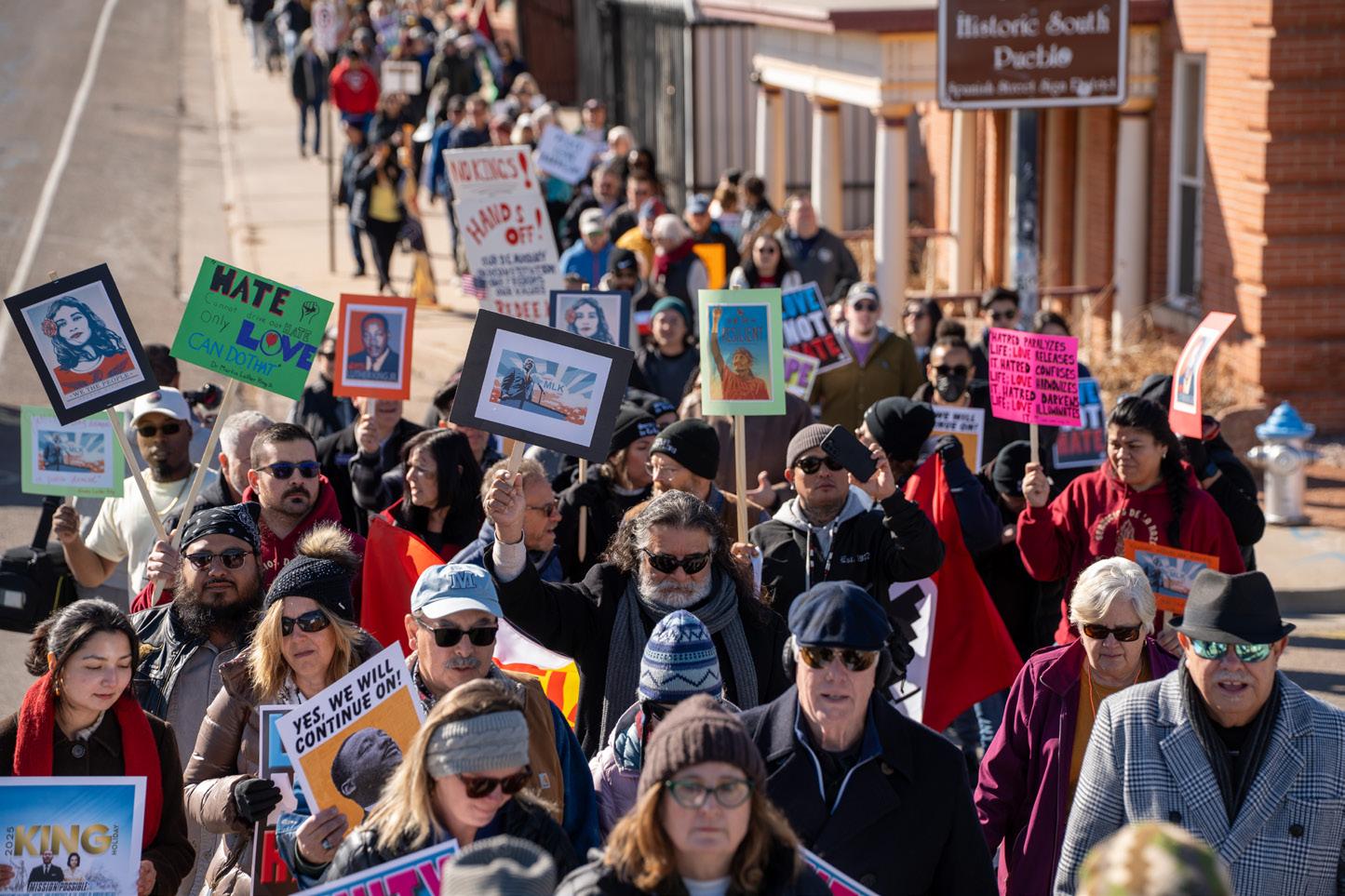
It wasn’t until the political climate across the U.S. started getting really ugly that I understood what I’d been doing. I realized I would never feel part of this community by observing it. Belonging doesn’t come with proximity. It takes participation.
ON THE COVER
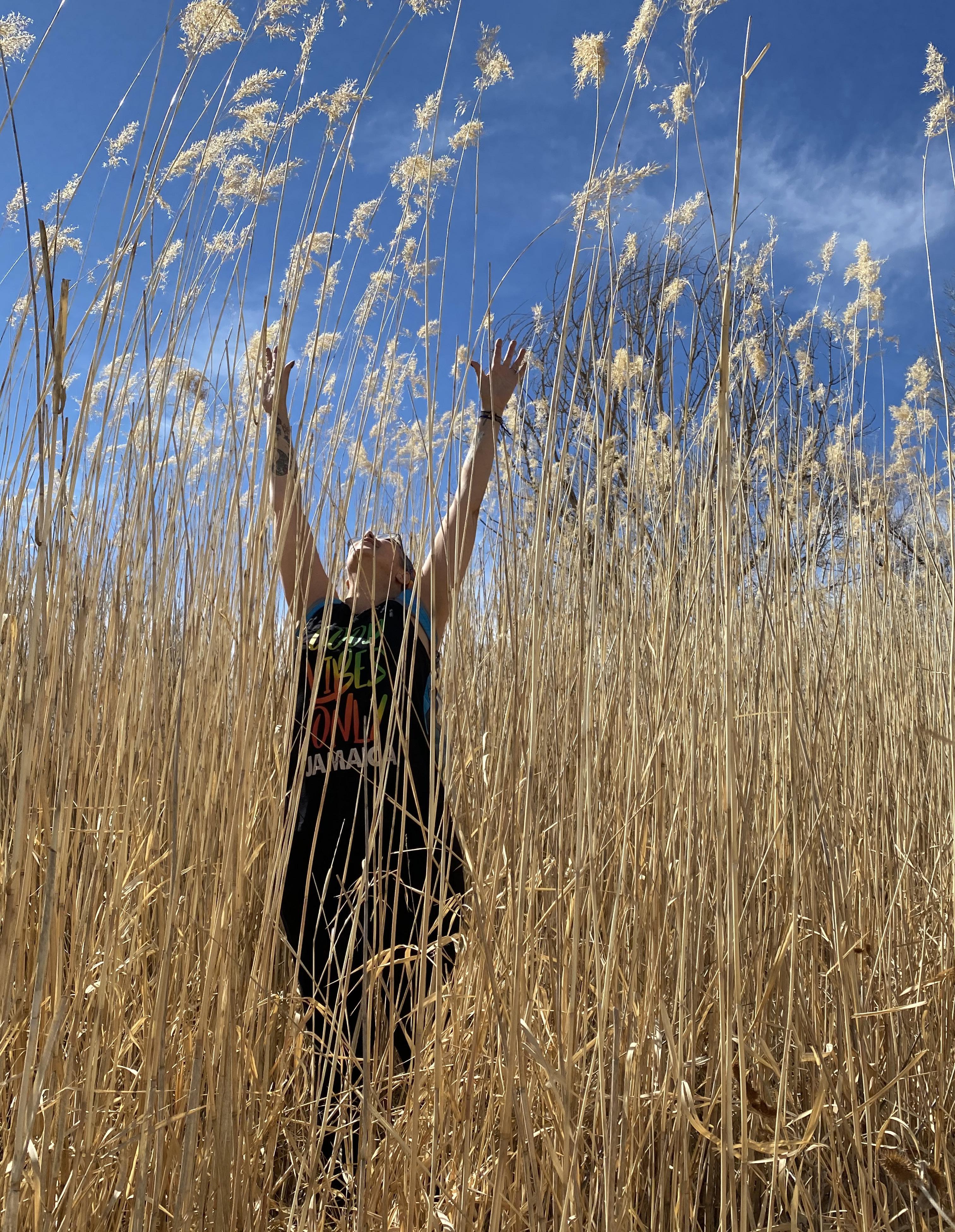
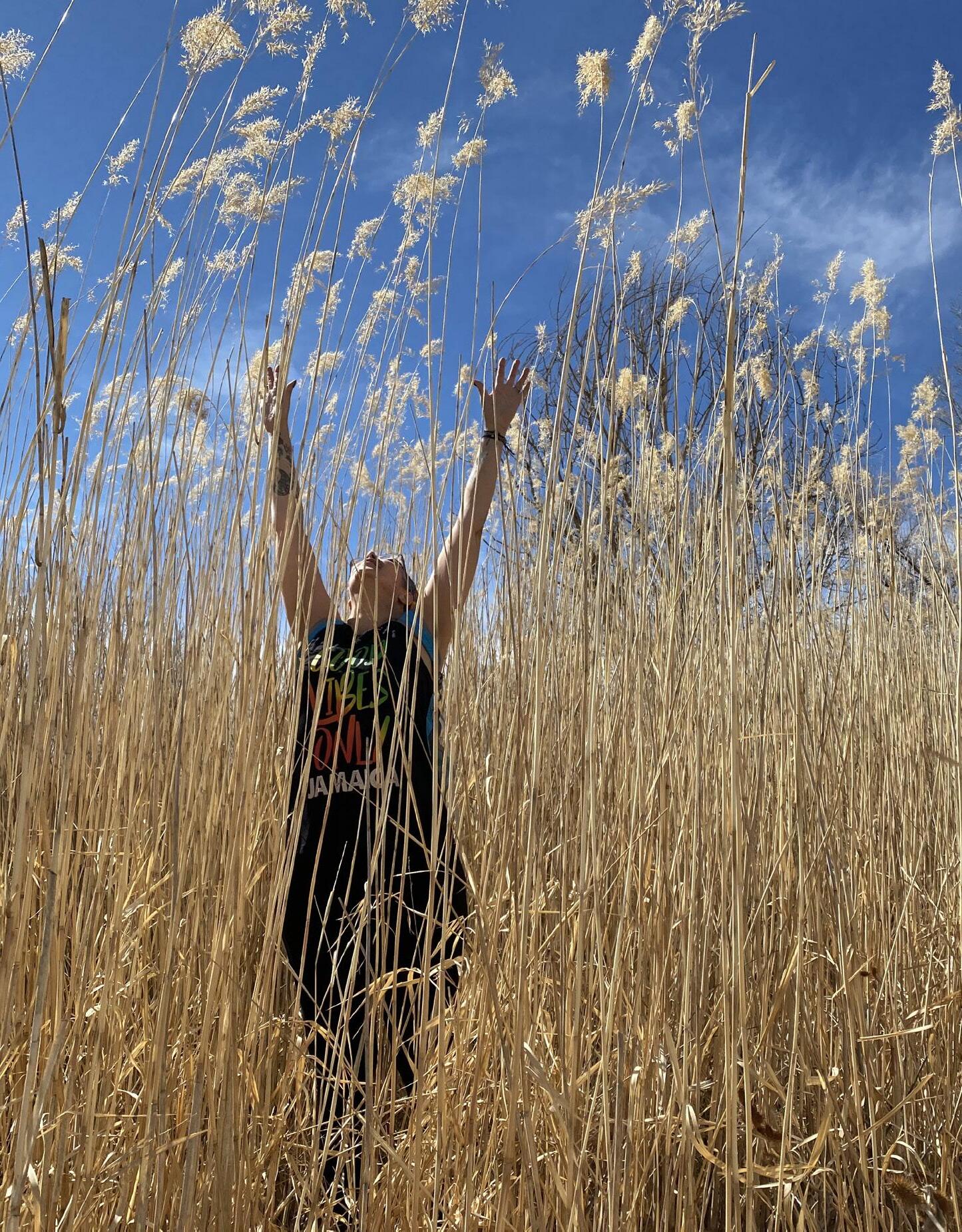
Low Runoff, Tall Grass by
Cyd Craddock
“During an unusually low summer and fall runoff, the Arkansas River west of Pueblo Reservoir dropped enough to expose shoreline that is typically underwater. Hiking further out than usual, we came across a stretch of tall grass that had taken hold in the exposed ground.”
The mill, quieter but still a beacon. The mountains still pressed against the prairie. Or maybe the prairie pushing back. Pueblo felt like someone I recognized immediately, even if I couldn’t yet name what had changed.
The change didn’t feel like relief. It felt like reorientation. For the first few years, I stayed mostly inside my house or escaped to the prairie I grew up in. I kept leaving. I drove to Westcliffe. To Beulah. Trying to stay close without getting too close.
But when I started really looking, the change showed up in use, not appearance. The same buildings, newly
But even before I left, I wasn’t really in it. I was from the perimeter. Pueblo West first, then County High. When I finally moved into town, I thought that would change something. That I’d see the real story. I didn’t.
Maybe that’s just who I am. A perimeter person. I stand at the edges of rooms and watch. I used to think that was a limitation, that being on the outside meant I didn’t belong.
But maybe it’s just how I move through the world. Watching. Noticing. Trying to understand by staying just far enough away.
It’s one way to be in a place. But it’s not the same as being of it.
And being of a place, I was learning, doesn’t come from geography or time alone. It doesn’t come from knowing the backroads or showing up once in a while. It comes from paying attention. From listening. From letting the place speak before you decide what it means.
When you grow up somewhere, you don’t always learn its history. Just your version of it. What your parents tell you. What your friends say. What
Maybe THat’’s what rESilience really is. A story you step into, whether you mean to or not.”’’”
strangers assume when you tell them where you’re from. What the schools choose to teach. Sometimes that’s enough to get by. But it’s not enough to belong.
I had grown up knowing Pueblo through my own narrow window: steel, school buses, Dutch lunches, and summer dust. What I hadn’t known was the deeper context: the layers of struggle, survival, and resistance that shaped this place long before I was born.
I hadn’t learned that Pueblo sits at a crossroads, historically and literally, where Indigenous trade routes once moved people and goods across the continent. Where Mexican and Native families built lives and communities that existed long before Colorado had a name. Where resilience has never been a slogan but a necessity.
I didn’t know what happened down the road at Ludlow. About the families in tents, the children lost in a strike meant to protect workers like my
father, even if he didn’t arrive at the mill until the 1950s. I didn’t know how much had been fought for, or how much had been lost, to keep this place going.
The stories were here all along. I just hadn’t known to look for them. Like in the 1921 photo of my grandmother, standing in front of the flood postcard stand, not long after the water receded. Like my grandfather, setting type and binding books at the Colorado Bank Note Company. Like my dad, who spent his life at the mill.
These family details were proof we’d always been part of the town’s fabric. I hadn’t come back to find something new. I’d come back to see what had been here the whole time. Maybe that’s what resilience really is. A story you step into, whether you mean to or not.
Pueblo doesn’t talk about resilience. It lives it. It’s not loud. It doesn’t need to be. It shows up in the things that last because people keep choosing them:
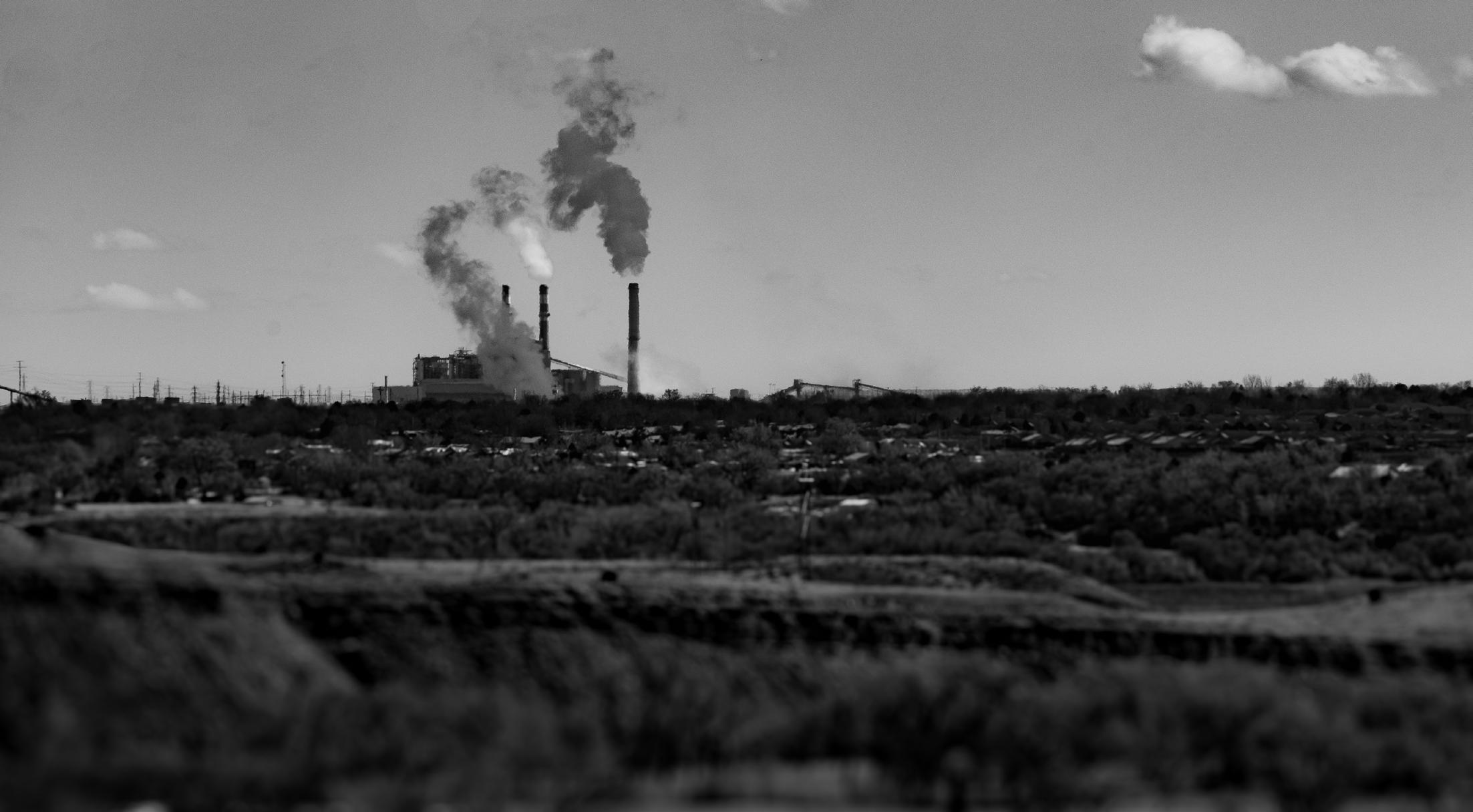
Photo © Steven Spencer @photos.scs
the families who stay, the ones who leave and feel themselves pulled back, even the ones who come for cheaper rent and end up building something they can’t quite walk away from.
Pueblo doesn’t draw you in with shine. It holds you in place with weight. With memory. With a kind of gravity only people who’ve lived here understand.
This community tries to fix what’s broken because replacement isn’t always an option. We keep going without fanfare. Resilience, in Pueblo, isn’t aspirational or poetic. It’s practical. It looks like continuation.
It looks like chili roasting season, when the air smells like fire and tradition and you can hear people arguing over which stand has the best batch. It looks like the levee, layered with fresh art, stories painted over stories, while trash still collects along the freeway no one’s cleaned yet.
It looks like places that have held people together for generations: Coors Tavern. Gagliano’s. Gus’s. And it looks like newer spaces finding their footing: Blo Back Gallery, Fuel & Iron. Tacos Fuego, where you don’t even need the menu to know your order.
It looks like Pueblo Pride and the Fiesta Day parade: lawn chairs on curbs, candy flying through the air. Like the State Fair: loud, chaotic, fried, full of families who haven’t missed a year in decades.
People come here for these things. For our food, our music, our sense of community. They come to celebrate what we’ve built. What we’ve kept. What we’ve kept going.
And yes, we have problems. I’m not blind. Schools are closing. The wealth gap is obscene. People are hurting. Unemployed. Unhoused. There’s
corruption, denial, dysfunction. The kind that makes headlines and the kind that doesn’t. But that’s not the whole story. That’s not the only truth.
Because people stay. People return. People try. Pueblo isn’t perfect, but it’s ours.
But what does that look like for an insider-outsider? For someone who couldn’t wait to leave all those years ago, and now will not go anywhere else?
It looks quieter than I expected. It looks like the apothecary I opened downtown, across the street from my sister’s pottery studio, where people come for salves and sleep support, but end up telling me about their aging parents, their kids’ schools, the ache behind their ribs. It looks like waving to the same man walking his dog every morning. It looks like knowing who painted which mural. Like buying zucchini from someone I went to middle school with.
I don’t know everyone. In fact, I know fewer people here than when I was a kid. I still get things wrong. And still wonder, sometimes, what might’ve happened if I’d stayed in Ohio. But
I’ve stopped looking for the perfect version of home. I love the one I’ve got.
Belonging doesn’t always come from legacy. Sometimes it’s a choice. To stay. To build something, however small, in the place that built you. From showing up for the mess and the beauty. From saying: this is mine. I am of this.
I grew up in dust. And I came back to it. I came back to keep something rooted here. To be part of the continuation.
Photo © Javier Quinones @mad_fresh_productions_
WELCOME TO THE EDGE

by NATE JORDON
BOB WALKER AND WHY OUTDOOR RECREATION MAttErs
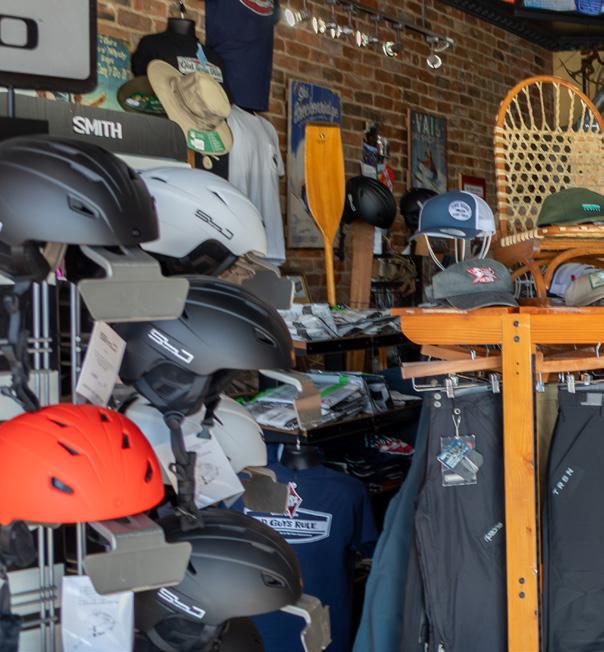
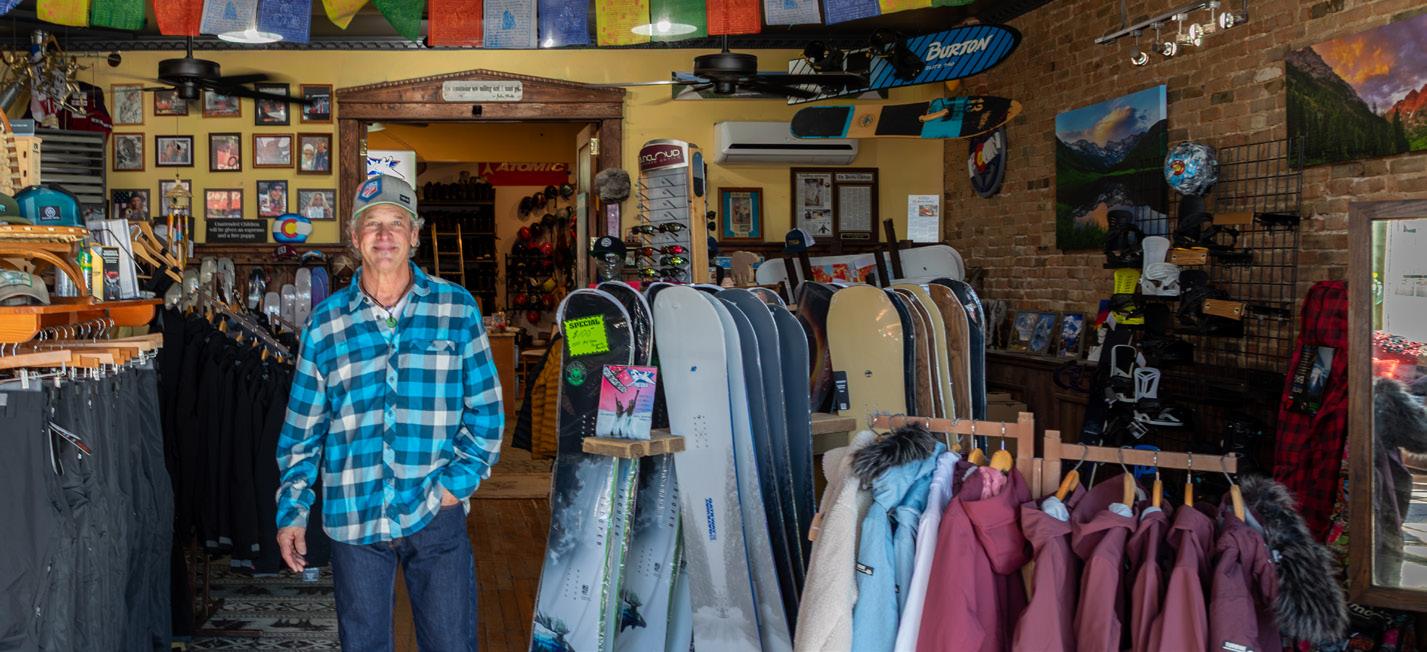
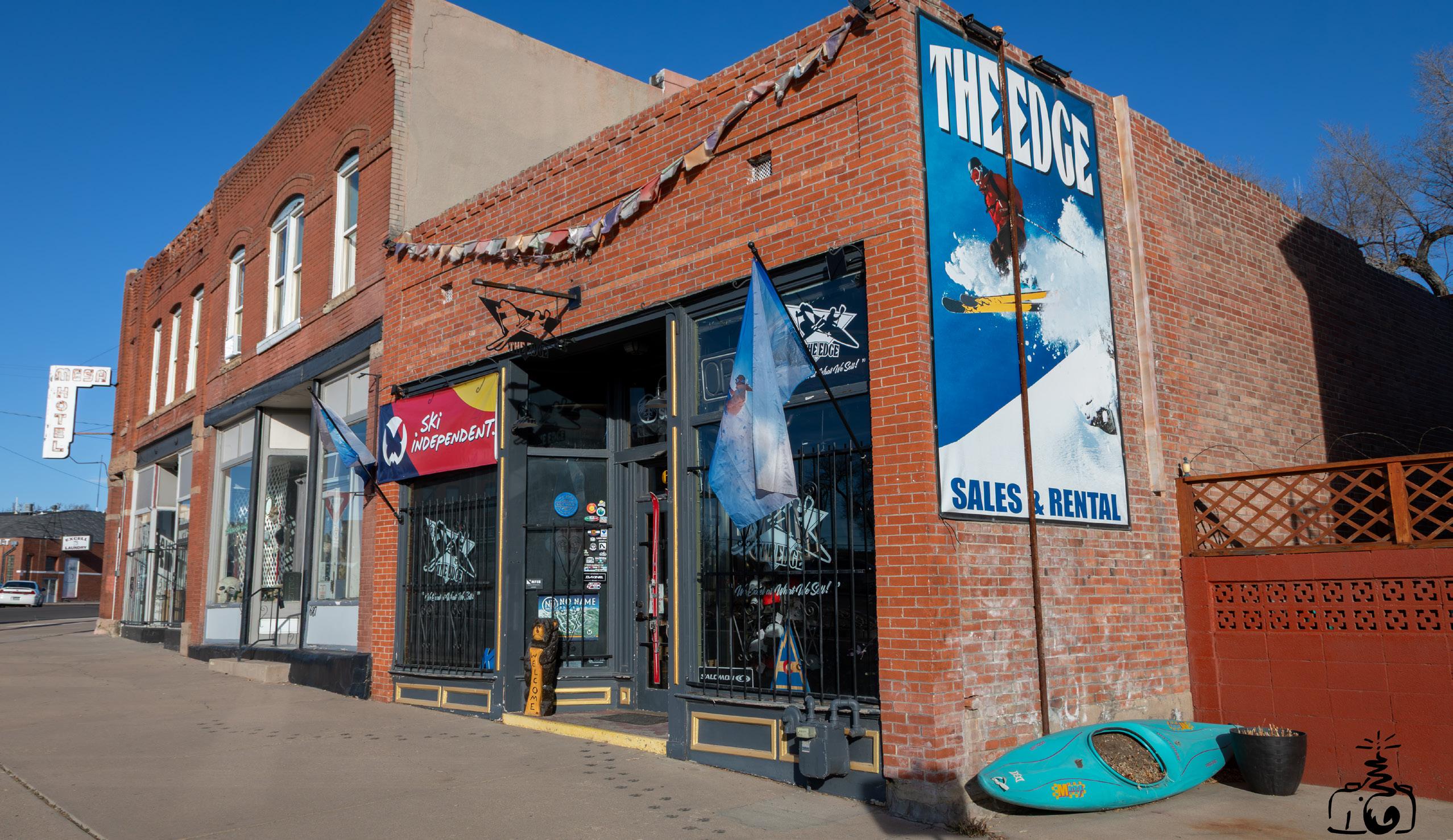
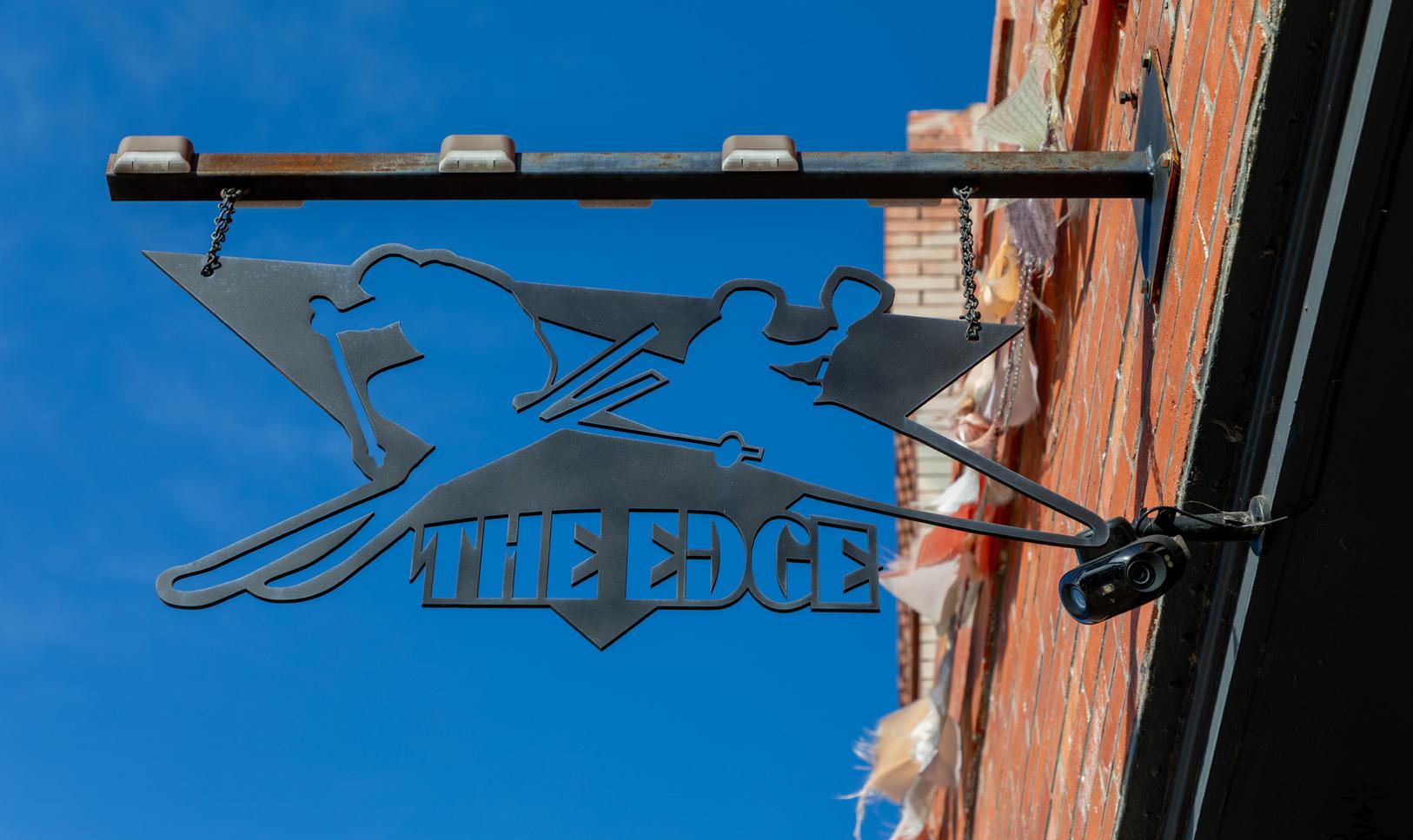
Bob Walker is the owner of The Edge: Ski, Paddle & Pack, a longtime fixture in Pueblo’s outdoor community and a quiet anchor for skiers, paddlers, and adventurers across Southern Colorado. But The Edge isn’t really a store in the usual sense. It’s part gear lab, part community bulletin board, part unofficial tourism office, and part quiet rescue mission for anyone who wants into the mountains or onto the river without getting sold junk they don’t need.
Bob, a lifelong skier raised in a big, athletic family, learned customer service in one of Colorado’s oldest ski shops, then worked nearly every job in nearly every ski town before returning home to keep the stoke alive in the Arkansas River Valley. Along the way he helped “plant the seed” for Pueblo’s whitewater park, started kayaking instruction programs, and built a shop culture where “you’re only a stranger once.”
What follows is a conversation about Pueblo’s underestimated outdoor
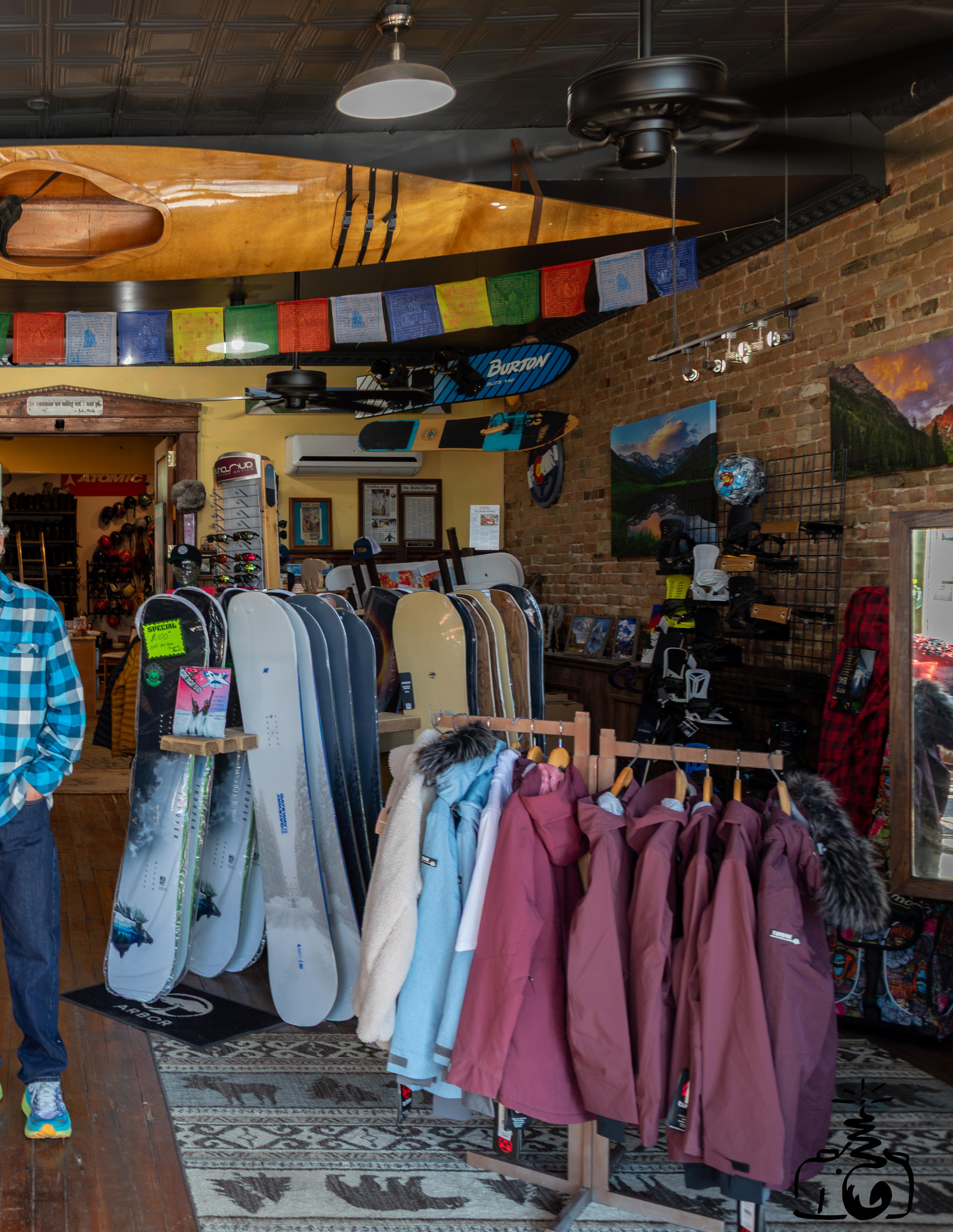
identity, the evolution of gear and river access, and why Bob believes recreation might be the most important way Pueblo can rebrand itself.
PULSE: For people who may know the shop but not the story—how did The Edge come to be, and what originally pulled you into the outdoor industry?
BOB: I’m the youngest of five, and my whole family were athletes—especially skiers. I chased everybody around my whole life. My older brother and sisters were fantastic
THE EDGE: SKI, PADDLE & PACK
685 S. Union Ave.
Pueblo, CO
719.583.2021
edgeskiandpaddle.com
skiers, and the rule was: if you kept your mouth shut and kept up, you could ski with us. So I learned fast. I joke I was probably 10 or 12 before I learned to turn, because I had to go straight just to stay with them.
My parents were very outdoorsy and supportive, so I was always outside. I grew up working at Bud’s Ski Shop, one of the oldest ski shops in the state. That’s where I learned customer service and fell in love with the whole ski-shop world… which had to evolve, because in summer you can’t just sit empty.
Also: I wasn’t a student. I wasn’t going to be a doctor or a lawyer. So I had to do what I knew—what came natural. I lived in a lot of ski towns, did a lot of ski jobs, and eventually realized: if I wanted my favorite job, running my own thing, I’d always be commuting from someplace I could afford.
So I came back to Pueblo and took
over a shop that was retiring. That became The Edge.
PULSE: Pueblo isn’t always the first place people think of when they think “outdoors town.” What do you think outsiders get wrong about the outdoor culture here?
BOB: This is one of the most important questions.
Ski-wise, Pueblo has a huge advantage over a lot of Summit County places. Pueblo has turned out remarkable skiers—not necessarily racers, but free skiers. I’d put a lot of Pueblo skiers up there with anybody. We’ve got Pueblo skiers running Breckenridge’s ski school. Pueblo skiers on the national demo team. And we grew up on real snow up at Monarch. Not manmade snow.
What people misunderstand is that Pueblo has always had a tie to recreation, especially working peo-
ple. Folks here worked their butts off all week, and recreation mattered. I didn’t grow up taking big vacations. Our vacations were every other weekend—camping, running through the woods, living in a tent, scraping together food, coming home feeling like we’d done something real.
There’s also history people don’t know. The CF&I owner back in the day had this idea that a man who goes to the mountains to recreate comes back “twice rested.” He lent out trucks and camping gear for workers to go camp.
And between Wetmore and Beulah, San Isabel—some of those areas were among the earliest government-funded camping facilities. The Civilian Conservation Corps built these big chimney structures—four fireplaces so four families could camp near each other. Some of it’s still up there in pieces.
Pueblo’s always been tied to the
mountains. Always.
PULSE: You’ve watched outdoor recreation change a lot over the years— gear, access, climate, and attitudes. What’s been the biggest shift you’ve witnessed, and how has it shaped the shop?
BOB: When I first took over, equipment had kind of stagnated. New skis were basically the same ski in a different color, so people went, “Eh, my skis are fine.”
Then I went to demo day at Copper Mountain. On the way out I saw this little tent—these ugly ducklings—and they were pushing the first “shape skis.” The big thing was: wider, more hourglass shape, easier turns. They didn’t even have long lengths—because surface area changed the whole game.
I tried them. They turned on a dime. That innovation gave people a reason to try and buy new stuff. If I could get someone on a pair, they sold themselves. A teenager struggling gets better in a weekend. A 65-year-old skis easier, longer. That matters.
In the summer, I’m a big kayaker, and I had to fight and scratch to build a summer clientele. Parks and Rec donated pool time because of the river improvements and Riverwalk momentum, and I taught kayak lessons three nights a week. I was wet five days a week, driving a stinky gear van, always trying to dry things out.
Then something really big happened.
The Conservation Corps did a habitat study from the dam down to Santa Fe—foot by foot. They can only put money toward habitat, not recreation. When they got to the levee, they said: “Can’t touch it. It’s deep, it’s wide, the sun reflects into the water, nothing spawns, no habitat. Dead zone.”
And I kind of said: “Can I have it?”
They said, “What?”
I said I wanted to narrow it down, create a wave, make a kayak park.
They basically told me to sit down. But later a city council guy went to South Bend, Indiana, saw a restored waterway turned into an Olympic training center, and heard a restaurant owner say: if you’ve got a navigable river in your city and you’re not doing something with it, you’re losing money.
He came back and said, “There was a long-haired ponytail guy who mentioned kayaking…”
Then we got Lottery money—around $2.8 million—that could go to recreation. The Corps of Engineers changed some structures, backed water up, lowered temperature, improved habitat—and the plan shifted from a fish ladder to a whitewater park.
I planted the seed. The city, parks and rec, and a lot of people made it happen. But that was huge for Pueblo.
PULSE: The Edge feels less like a retail store and more like a community hub. Was that intentional from the start, or did it evolve naturally over time?
BOB: Somewhat intentional.
Bud Greenberg at Bud’s taught me that warm, welcoming shop vibe— where you’re only a stranger once. Not bright-and-shiny glass and chrome. A shop where people feel at home.
All week long I meet people who came in because someone sent them. And if they walk out thanking me after spending $700, I did my job. If they write a review and use my name after meeting once? I did my job.
We reinvent constantly. We’ve got hats that say “The Edge Surf Shop.” Who didn’t want to be a surfer at some point?
We sell disc golf equipment, because we’ve got guys who are pro-level. We’re picking up skateboards because Pueblo hasn’t been able to keep a skateboard shop alive—but we’re already in the board world: surfboards, paddleboards, snowboards. And we’ve got community leaders passionate about it, like Bryan Rivera from Morning Star Creations.
Bottom line: we excel at what we sell. We don’t put stuff in here that we can’t talk about inside and out.
PULSE: How do you balance being a business owner with being a steward of outdoor ethics—things like conservation, safety, and responsible recreation?
BOB: Safety is number one. It doesn’t do me any good to get people hurt. That’s why I’m a good fit for tube rental and surf rental at the park— because I know the water inside out, and I’m always watching.
Second is ethics: leave the place better than you found it. Pick it up whether you dropped it or not. And be willing to step up when people aren’t—even when it’s uncomfortable.
Third is business. And honestly, me “winning” money-wise isn’t the most important thing. If I take care of safety and ethics, business usually follows.
So I live with my fingers crossed for snow, for water, and for my business.
PULSE: Southern Colorado offers a unique mix of mountains, rivers, and high desert. How does that diversity influence what you stock and how you advise customers?
BOB: I’m a specialty shop. I can’t stock everything. But I’m not afraid to make a phone call.
If you’re going to Europe and want an $800 jacket, I don’t keep that on the wall—but if all I have to do is call, I’ll order it, give you a good price, and you get what you actually need.
And I try not to oversell. If you’re going someplace one time, maybe you don’t need $500 boots. My job is often saving people from themselves.
PULSE: What’s a common mistake you see people make when they’re first getting into skiing or paddling—and how
do you help them avoid it?
BOB: I like to say I’m not a salesman—I’m a recreational tutor.
People think you can buy skill. You can’t.
If a beginner buys a high-end pro ski, it’s going to eat them alive—and they just spent a few hundred more than they needed to. Same with paddling: someone comes in saying they bought a kayak at a garage sale and need a skirt, and I’ll say: wrong boat, wrong setup, you’re going to have a horrible day.
Sometimes before I even “sell” anything, I walk out to their car and look at what they’ve got. And I’ll tell them the truth: “It was free? Great. But it’s useless for what you want. Cut it up and make a chair.”
My job is to get them in the right thing so they’re safe, they learn faster, and they actually come back for more.
PULSE: Running a specialty shop in the age of big-box retailers and online shopping isn’t easy. What’s allowed The Edge to survive—and thrive—where others haven’t?
BOB: Customer service—and giving back to the community.
It’s hard for someone to watch you give up your Saturday to take at-risk kids skiing or paddleboarding and not think: “I’m going to give that guy a chance.”
We’re part of the community. People might buy something out of town, but when it breaks, they come here and we fix it.
And I say yes—probably too much. Someone calls and asks if I’ll support their event? I already know I’m going to say yes, and a gift certificate is
probably leaving the shop.
That’s the advantage: relationship.
PULSE: Is there a moment, customer interaction, or story over the years that really captures what this shop means to you?
BOB: There are too many.
I’ve got shelves full of little trinkets kids brought me. A kid thought I looked like Chewbacca and gave me a doll. Stuffed animals. Little gifts people saw and thought, “Bob should have this.”
And I’ve got an envelope with literally hundreds of thank-you cards—from children’s groups, the Chamber of Commerce, the mayor, Boys and Girls Clubs, college outdoor programs, Trinidad groups—just endless.
When I moved locations after 30 years, I sat on the floor with a pile of correspondence and photos I was going to throw away, but I got overwhelmed and couldn’t. All those moments mean too much to me.
One group that sticks with me: A group of kids 15 and under, every one of them had been sexually or physically abused. I took them paddleboarding on the reservoir. At the beginning of the day, they wouldn’t even make eye contact with me. But by the end of the day? They were crawling all over me like puppies, having the best time on the water. As they left on the bus, their faces were pressed to the windows, waving and yelling at me, “Thank you, Mr. Bob!”
I fall apart every time I tell that story.
And another one. When I moved into the new place, the Chamber planned a ribbon cutting. As it turned out, my mom died that same morning. Everyone said, “We can cancel.” I said no,
if I canceled a party, my mom would be pissed. She loved the shop. She’d sit here at 90 and just look around proud. So we did it. And I swear she was here.
PULSE: Looking ahead, what do you hope The Edge represents for Pueblo in the next decade—and what role do you think outdoor recreation plays in the city’s future?
BOB: As far as The Edge goes, I’ve always hoped to be here to provide affordable, quality gear. And advice. I’ll talk and talk and talk.
Right now, Pueblo is at the most important, pivotal time to rebrand itself. I think outdoor recreation plays a huge part, and you can see all around the state, the cities that have gotten out in front of this already, they’ve benefited a lot. Salida was once a ranching town; now it’s an outdoor recreation town. Gunnison was a ranching town; now it’s an outdoor recreation town. Buena Vista was an old mining town; now it’s an outdoor recreation destination itself. The one thing they all have in common is that they have well-funded tourism and parks departments. That’s what Pueblo needs.
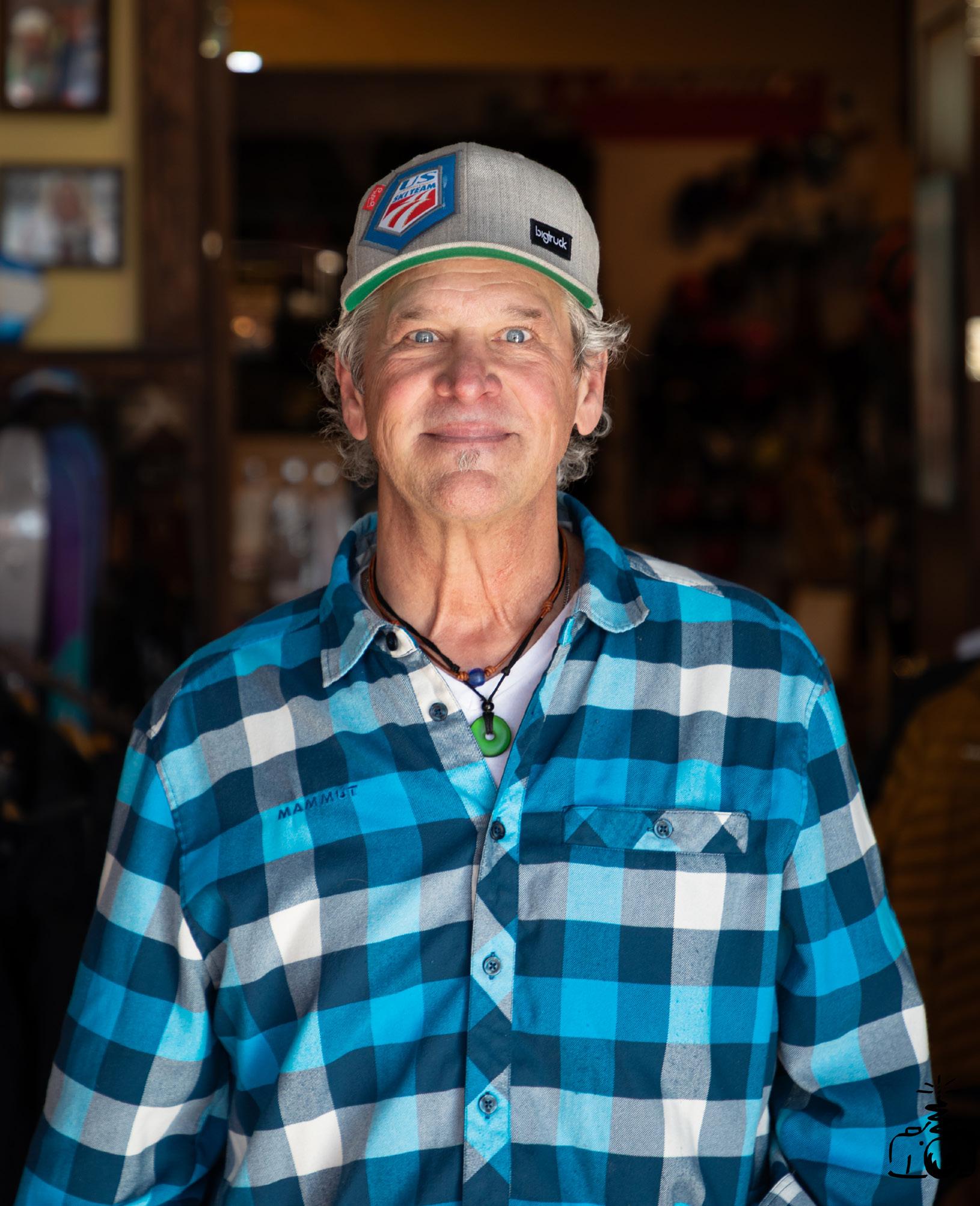
Listening to Bob talk, you realize The Edge isn’t built on sales tactics or trend-chasing. It’s built on continuity—of knowledge passed down, of community trust earned slowly, of a city’s identity that’s always been outdoorsy even when it didn’t advertise itself that way. Bob’s stories bounce between skis and surfboards, ribbon cuttings and river hydraulics, thankyou cards and budget spreadsheets. The through-line in Bob’s stories is simple: if people feel safe, welcomed, and capable outside, they come back better—more confident, more connected, and “twice rested.”
Bob doesn’t argue that outdoor recreation is a cure-all for Pueblo. But he makes a persuasive case that it’s one of Pueblo’s clearest advantages, hiding in plain sight: a river running through town, mountains close enough to touch, and a working-class tradition of getting out because you’ve earned it. For the next decade, he hopes Pueblo stops trying to imitate other places and instead funds the departments that help it become itself—louder about what it already has.
And in the meantime, he’ll keep doing what he’s always done: guide peo-
ple to the right gear, send them out prepared, and turn strangers into regulars—one honest conversation at a time.
BELONGING TO THE LAND
How Taylor Driver and NWDC ReconneCT Pueblo to Nature
by Nate Jordon
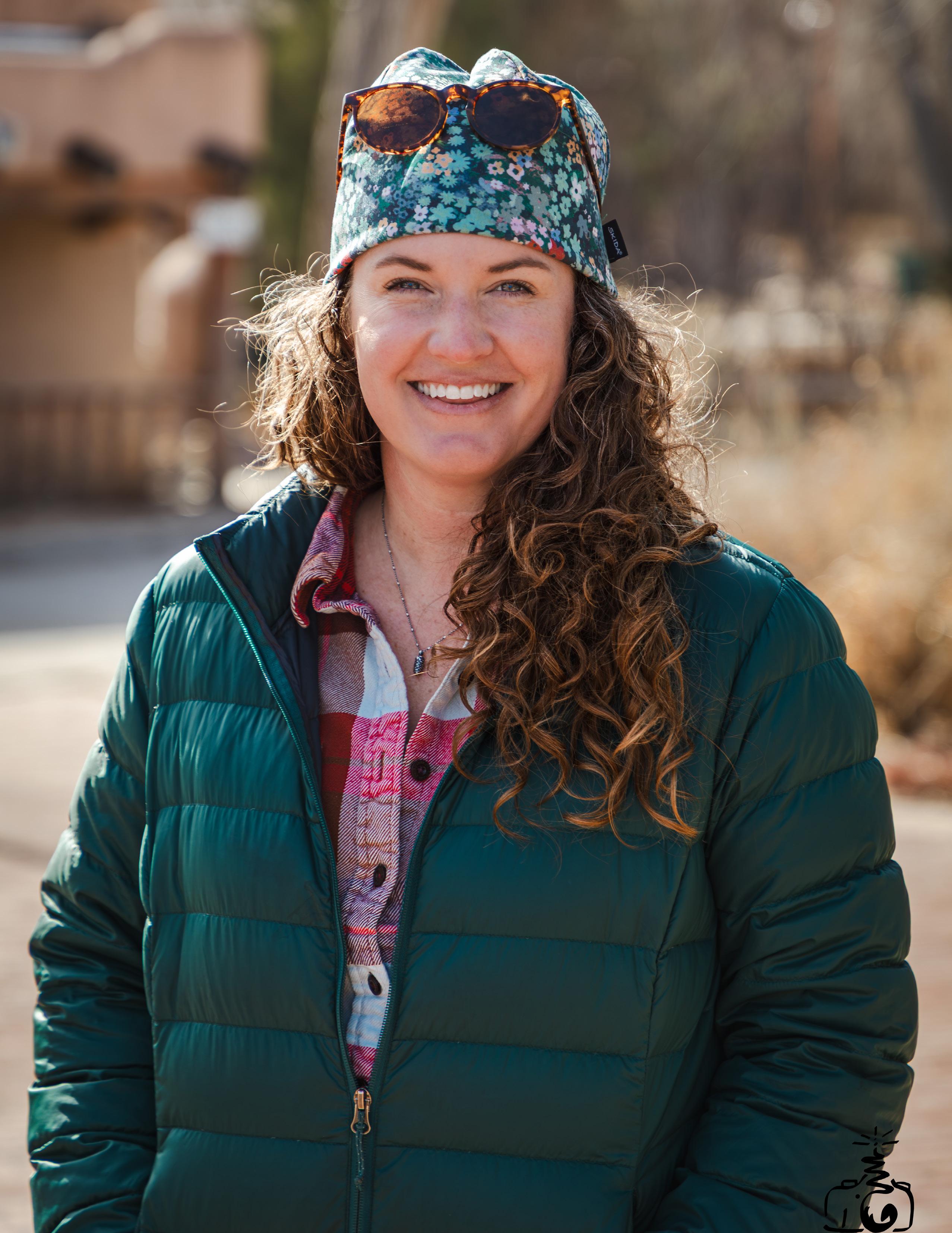
Taylor Driver is the Executive Director of the Nature & Wildlife Discovery Center, where she leads efforts in environmental education, wildlife rehabilitation, and outdoor recreation. Originally studying international relations, she discovered her calling through outdoor education and worked her way from environmental educator to nonprofit leader, driven by a desire to support both kids and the staff serving them. Under her leadership, NWDC focuses on building meaningful, hands-on connections between people and the land, especially for youth who may have never explored the natural spaces just beyond their neighborhoods. At her core, Taylor believes that when people feel they belong to a place, they will care for it, and that sense of belonging can shape a lifetime.
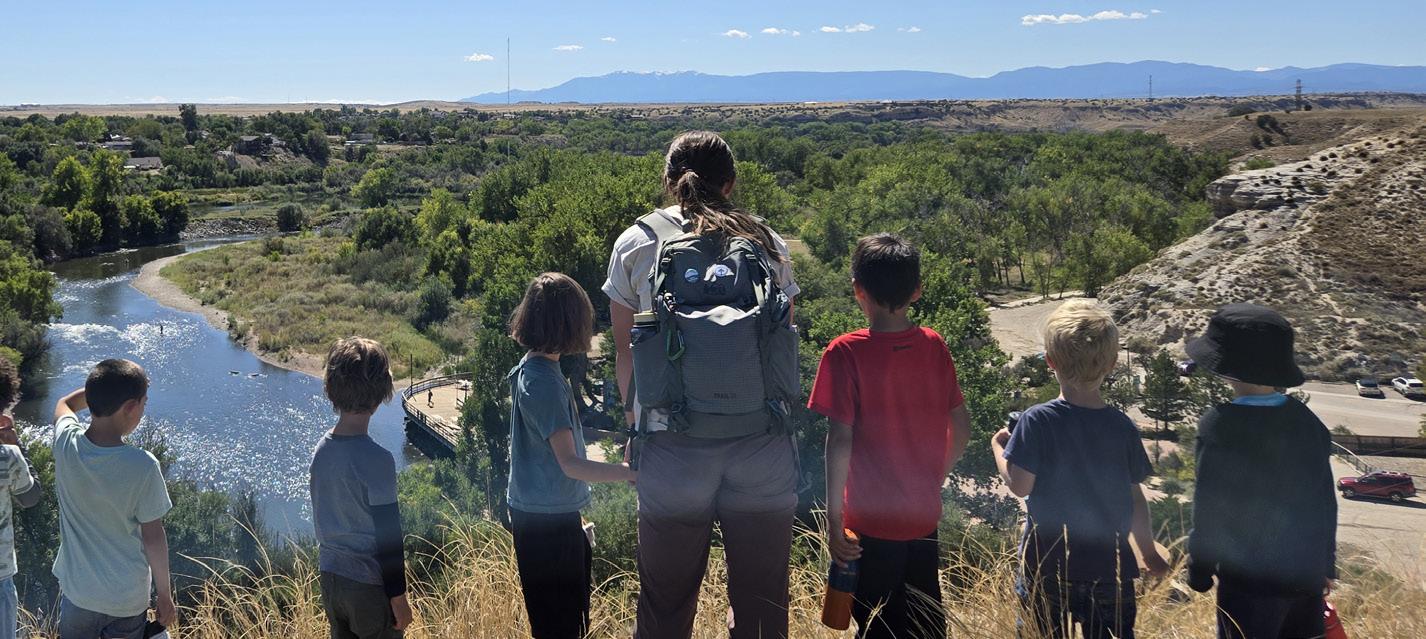
On a cold winter morning along Pueblo’s river corridor, the Nature & Wildlife Discovery Center feels anything but dormant. Even in the quiet season, kids are still showing up. Educators are setting up classes. Boots hit the trails.
For Taylor Driver, Executive Director of NWDC, the work begins with making sure people—and programs—are supported. The organization spans environmental education, wildlife rehabilitation, and outdoor recreation, but the thread tying it together is simple: connection. Between people and place. Between curiosity and care. Between Pueblo’s youth and the land that has shaped generations before them.
In a city that knows what it means to be underestimated, NWDC is helping families reclaim what has always been here: public wildness, local pride, and the restorative power of stepping outside long enough to feel grounded again.
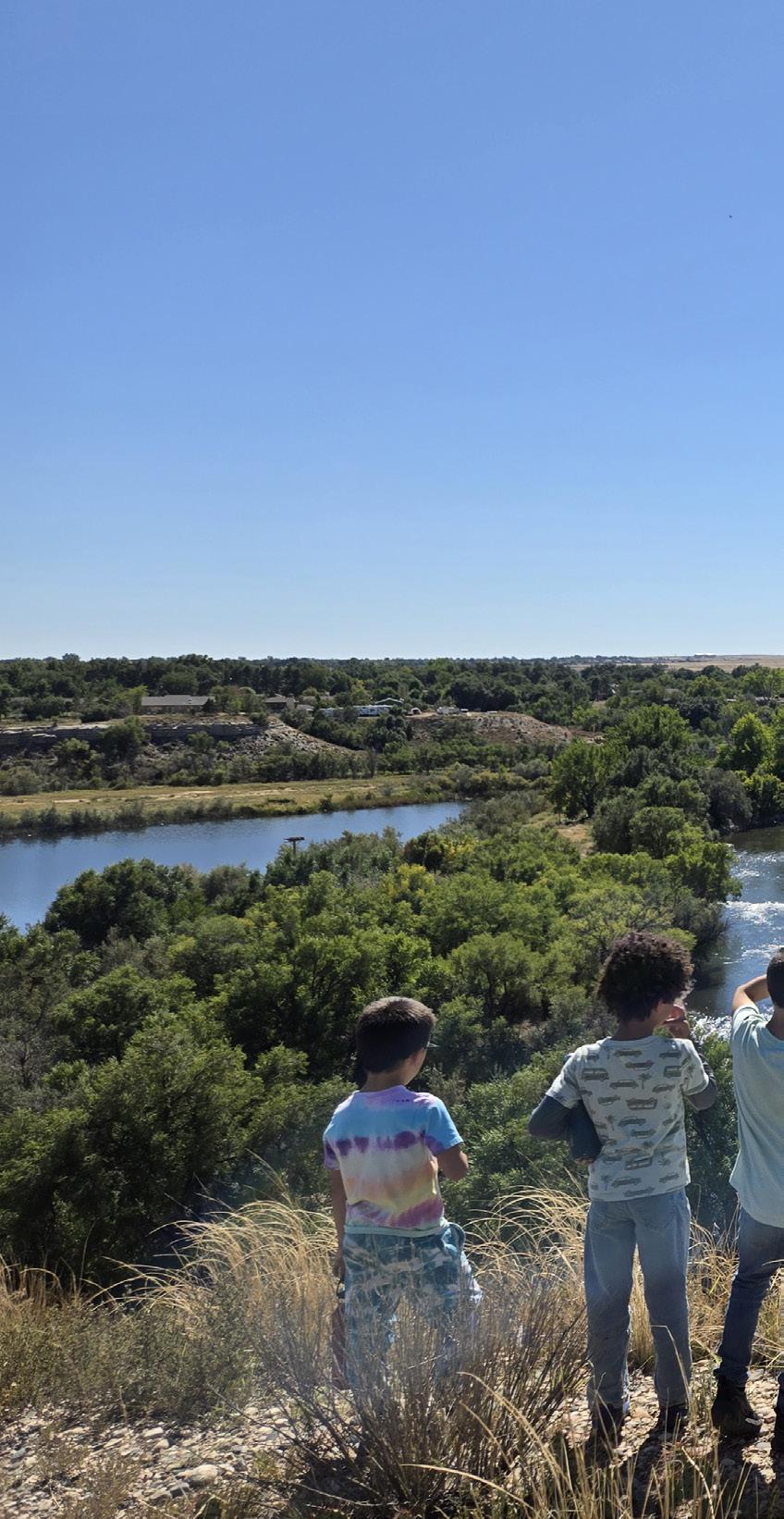
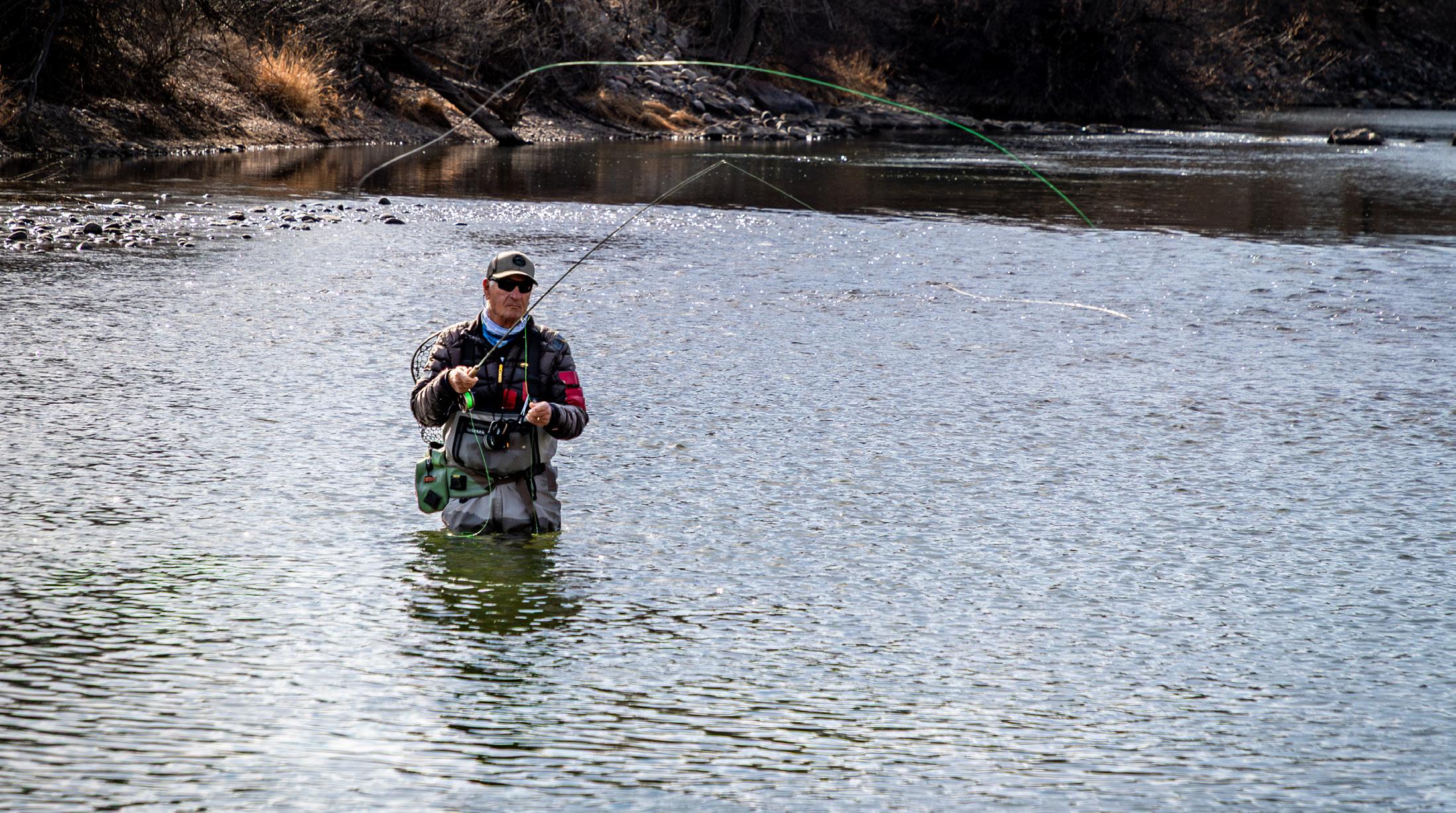
I met Taylor at NWDC’s River Campus, perched along a slow bend in the Arkansas River. As we talked, three fly fishermen waded below us, casting quietly into the current.
PULSE: What drew you personally to wildlife education, and how did that path eventually lead you to becoming executive director?
TAYLOR: I didn’t start out headed toward this work at all. I loved being outside growing up, but at the time, I didn’t realize the variety of jobs in this industry. I was studying international relations at Colorado State University in Fort Collins with an Arabic minor, thinking I might follow my dad into international work.
Then I worked at a backpack-
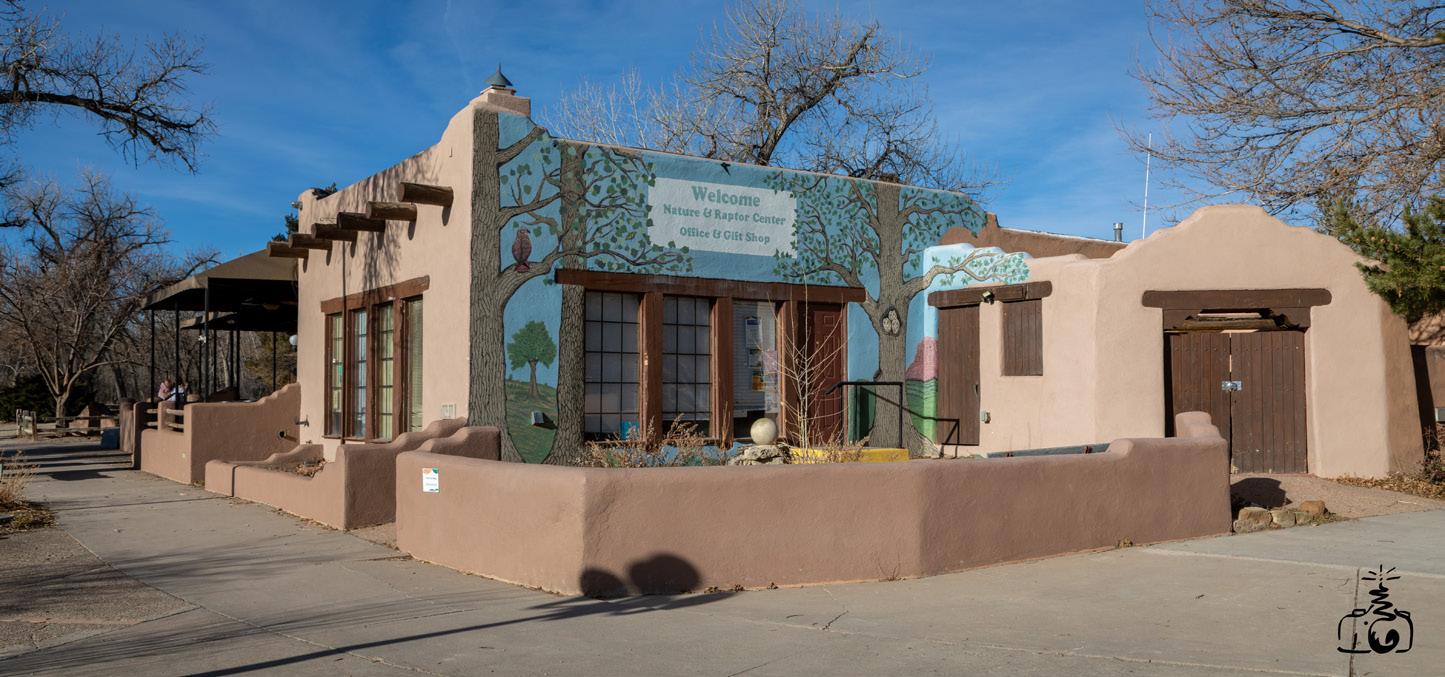
Nature & Wildlife Discovery Center—River Campus
5200 Nature Center Rd. / Pueblo, CO / 81003
719.485.4444 / hikeandlearn.org
ing-based summer camp in Durango. It felt like a dream job, and it introduced me to people studying outdoor-focused degree programs. That curiosity turned into more summers in the field, and eventually, I transferred to CSU Pueblo for their Outdoor Leadership program.
While I was in school, I worked part-time as an environmental educator at what was then the Mountain Park Environmental Center—now our mountain campus. That was the spark. I saw how transformative nature-based education could be, especially for kids.
I never set out to become an executive director, but over time, I stepped into leadership because I wanted the people doing the on-the-ground work to be supported. After working in Denver with Volunteers for Outdoor Colorado, the ED role here opened up. I’ve always loved Pueblo, and I know how important this organization is to the community. It felt right to come back and help it succeed.
PULSE: At its core, what mission drives the Nature & Wildlife Discovery Center, and how do you translate that into experiences that stick—especially for kids?
TAYLOR: Our mission is built on three
pillars: nature education, wildlife rehabilitation, and outdoor recreation. But at its heart, it’s about connection—connecting people to nature, to wildlife, and to each other.
That guides how we design programs and how we steward the properties we manage for the City of Pueblo. Even in winter, we’re running full schedules.
Connection becomes real through consistent, lived experience. Earth Keeper Nature School is a licensed early childhood program rooted in a forest school ethos, where children ages 4-7 spend nearly every day outdoors. Curiosity leads, questions are encouraged, and time in nature becomes the foundation of learning. Our Outdoor Explorations Program (OEP) is a homeschool enrichment program that serves K–12 students, weekly, throughout the school year. And for more than 20 years, we’ve partnered with District 60 to bring every fifth grader out into the field through our Earth Studies Program, often more than 15 hours of hands-on environmental education across a school year.
But it’s not just about kids. We work hard to bring families and adults into these spaces. Through community events, weekend Raptor Center Tours,
guided hikes, and seasonal programs, we aim to create opportunities for people of all ages to connect.
Our two campuses are also public parks. People don’t need to come only through our programs—they can walk the trails, fish, birdwatch, picnic, or just put their feet in the river. We want these spaces to feel welcoming and accessible.
That also means removing barriers. We offer scholarships and free opportunities whenever possible, because cost shouldn’t keep anyone from accessing nature.
PULSE: In a screen-saturated world, why is hands-on interaction with nature more important than ever?
TAYLOR: Nature helps regulate our nervous systems. Even five minutes outside—looking up, grounding yourself—can calm the body and mind. Right now, people are overwhelmed by constant stimulation. Nature brings us back to how life is meant to be experienced.
For kids especially, there’s value in getting dirty, playing, and using their imagination. When kids step away from devices, that imagination “muscle” comes back online. We intentionally build free play into our programs because it reconnects kids to curiosity, joy, and one another.
We’re also realistic about technology—it’s not going away. So we try to use it as a bridge. Apps like iNaturalist or Merlin Bird help kids learn names. And once you know the name of something—a flower, a bird, a tree—the relationship deepens. When people feel connected, they care.
PULSE: Southern Colorado has a unique relationship with the natural world. How does that regional context
shape your work?
TAYLOR: We serve Pueblo County and surrounding southern Colorado communities. One of the biggest benefits of our 2018 merger—the Mountain Park Environmental Center and the Nature and Raptor Center— is that we now operate two campuses in very different ecosystems.
We have the urban river corridor and prairie here, and foothills and mountain environments at our mountain campus. That allows for a tiered experience: meeting kids where they are, showing them nearby nature, then gradually expanding their understanding of what’s just beyond town. It builds both familiarity and pride in Pueblo’s landscape.
PULSE: What misconceptions do people have about wildlife here, and how does education help replace fear with understanding?
TAYLOR: A common misconception is that wildlife is either dangerous or
WHEN PEOPLE FEEL CONNECTED, THEY CARE.””
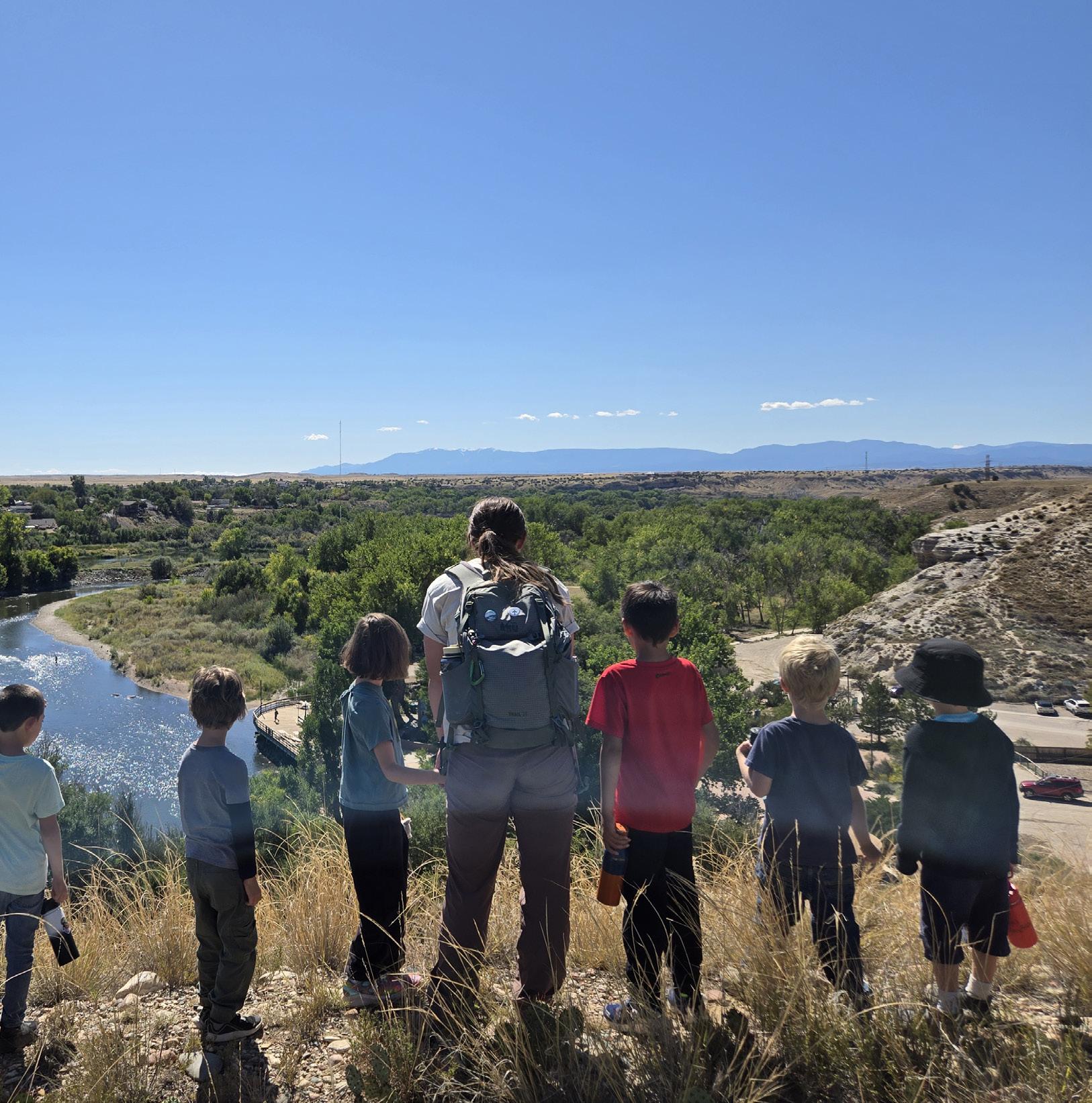
Above the River Campuse / Photo © NWDC
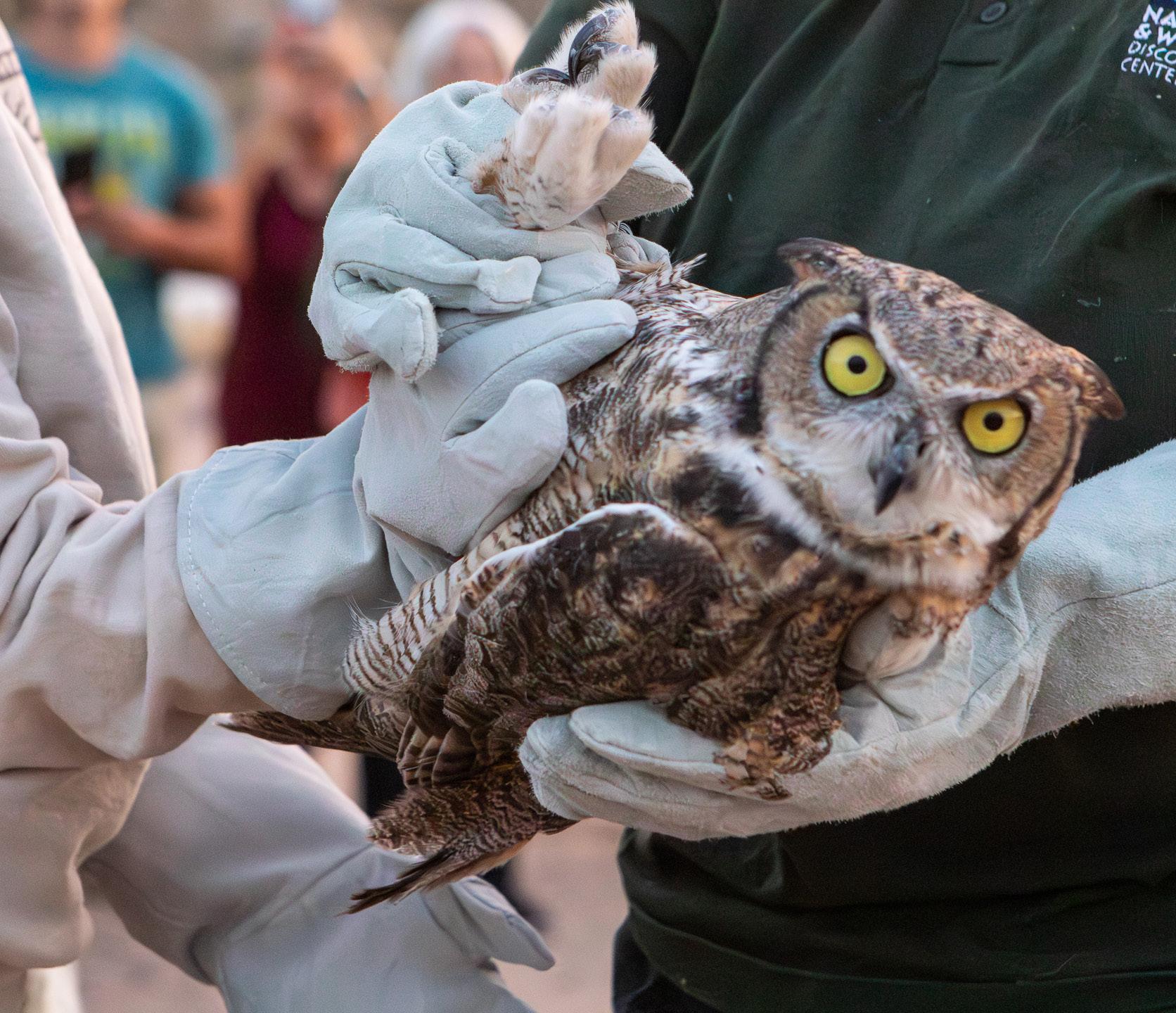
Great Horned Owl Release / Photo © NWDC @jeneralyokay
completely separate from daily life. In reality, we share space with wildlife constantly—foxes, coyotes, birds, squirrels, deer—especially along the river corridor and into town.
Education helps bridge that gap. Our Raptor Center programs alone reach 6,000–7,000 people annually. Seeing ambassador birds up close sparks awe, and that awe turns into respect—and eventually stewardship.
We also focus on practical understanding: learning habits and behaviors, using skins and skulls, and teaching what to do during encounters. When people understand wildlife, fear can be replaced with awareness and care.
PULSE: Can you share a moment that
reminded you why this work matters?
TAYLOR: One that sticks with me goes (WAY) back to my time as an environmental educator—my badge actually said “Ranger Grumpy.” I was working with fifth graders at the mountain campus doing pond ecology.
There was one student who wanted nothing to do with being outside. She stayed on the sidelines until the first jar of aquatic macroinvertebrates (pond bugs) came out. She wandered over, got curious, and then something flipped. Suddenly she was belly-down in the mud, arm deep in the pond, completely engaged.
She ended up being one of the most enthusiastic students that day. Those moments—watching a kid go from
“no way” to “I’m in”—stay with you.
PULSE: Conservation can feel abstract. How do you help people see the everyday impact of their actions?
TAYLOR: We bring it back to home. When people feel connected to a specific place—their stretch of river— they care more about what happens to it. That understanding ripples outward.
We also create volunteer pathways. People want to help; they just don’t always know how. Our community has told us they want more opportunities to give back to both campuses.
And throughout our bird of prey programs, we teach small, practical shifts: not throwing trash from cars, avoiding lead ammunition and fishing weights, and properly disposing of fishing line. Small changes add up to real protection for wildlife, especially our raptors.
PULSE: What challenges do you face balancing education, conservation, funding, and access?
TAYLOR: Capacity is always a challenge. Pueblo nonprofits do a lot with very little. Funding is a constant pressure, even with strong partnerships.
We manage these properties through a contract with the city, and like other departments, we experienced a 15% funding cut. At the same time, we made a values-based decision in early 2025 to remove the parking fee at the river campus—a fee that generated about $20,000 annually—because it was a barrier to access. That revenue mattered, but access mattered more.
The bright spot is that challenges also allow for new collaboration. We’re part of the Generation Wild Pueblo
Region coalition, funded by Great Outdoors Colorado, working with organizations focused on getting kids outside—especially in the Y-Zone and Avondale. When resources are tight, the answer isn’t isolation; it’s partnership.
PULSE: How does nature connection support emotional well-being and empathy for young people today?
TAYLOR: Nature gives kids space—to slow down, to feel uncomfortable, to wonder. About 60% of the fifth graders who visit our mountain campus have never been to the foothills. They’re learning to navigate trails, problem-solve, move differently, and sometimes be without cell service.
That builds resilience. We also see empathy grow—kids helping peers, noticing the impacts of going off trail, and understanding how their actions affect habitat. Confidence rises. Curiosity deepens. Teachers consistently tell us that students’ understanding of science improves.
PULSE: Looking ahead, what is your long-term vision for NWDC?
TAYLOR: Our five-year strategic plan focuses on building systems that support long-term connection to nature in Pueblo and southern Colorado.
That includes strong educational pathways into outdoor careers, resilient wildlife rehabilitation—especially for birds of prey—deep partnerships, and continued leadership in Generation Wild, which now includes 14 coalitions statewide.
Ultimately, we want kids to grow up seeing nature as something they belong to—something to be proud of and responsible for. Not just nearby, but in relationship with it.
6,000 hours of care—labor valued at over $230,000.
But the organization’s impact isn’t best measured in numbers. It shows up in quieter ways: a family that starts seeing the river as theirs; a teenager who learns they can lead a stewardship project instead of scrolling past the world’s problems.
Taylor is candid about the realities—funding gaps, capacity strain, the constant work of making access meaningful—but she keeps returning to the same belief: when people feel connected to a place, they protect it. That’s the long game the Nature & Wildlife Discovery Center is playing in Pueblo County—helping the next generation grow up not just near nature, but in relationship with it.
Taylor is quick to point out that the real engine behind NWDC is its team, volunteers, and partners. In 2025, the Raptor Center alone relied on over 30 volunteers who contributed nearly
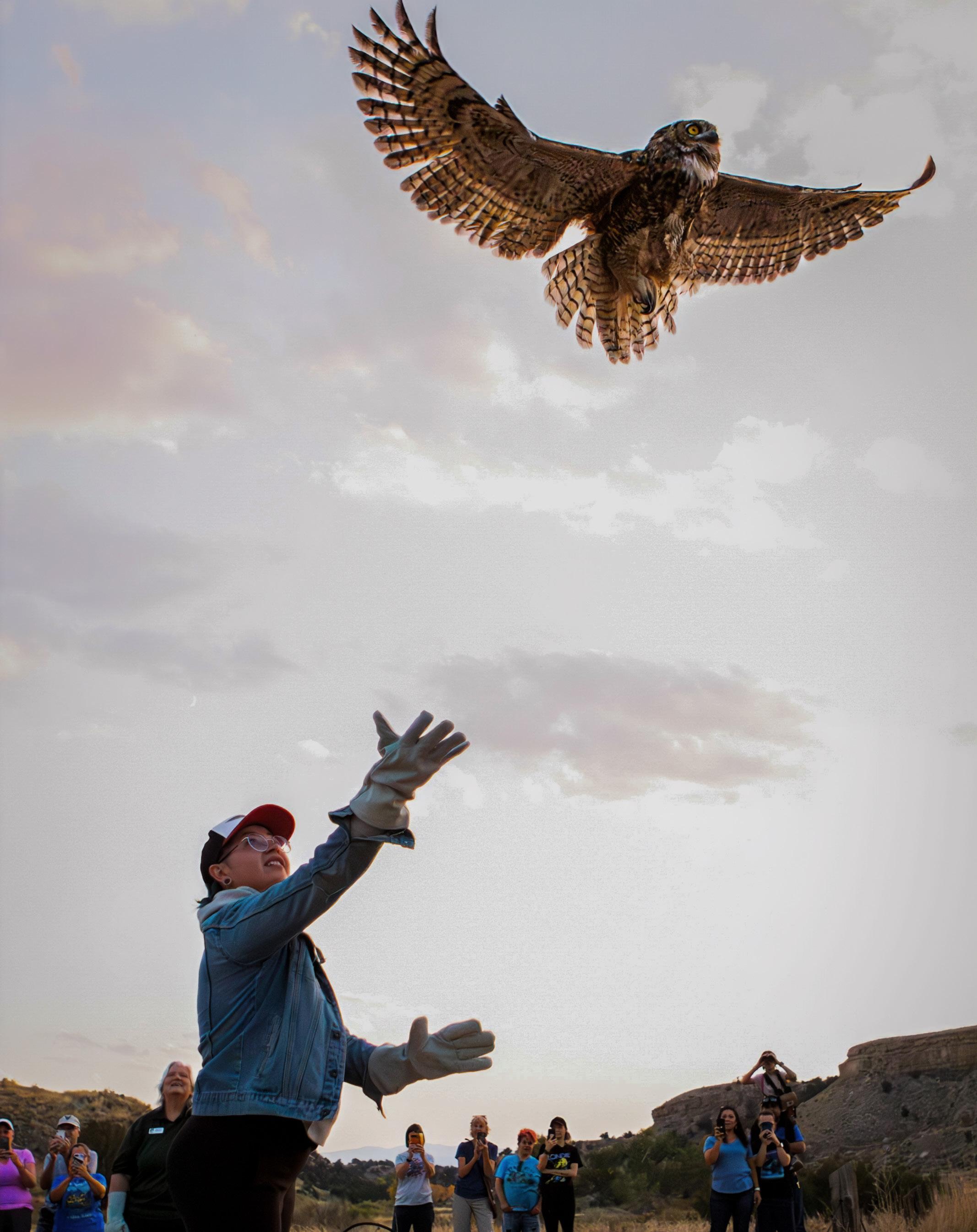
Great Horned Owl Release / Photo © NWDC @jeneralyokay
THE riSK IS THE POINT
JJeff Madeen and Blo Back Gallery Why
Challenging
Art Matters
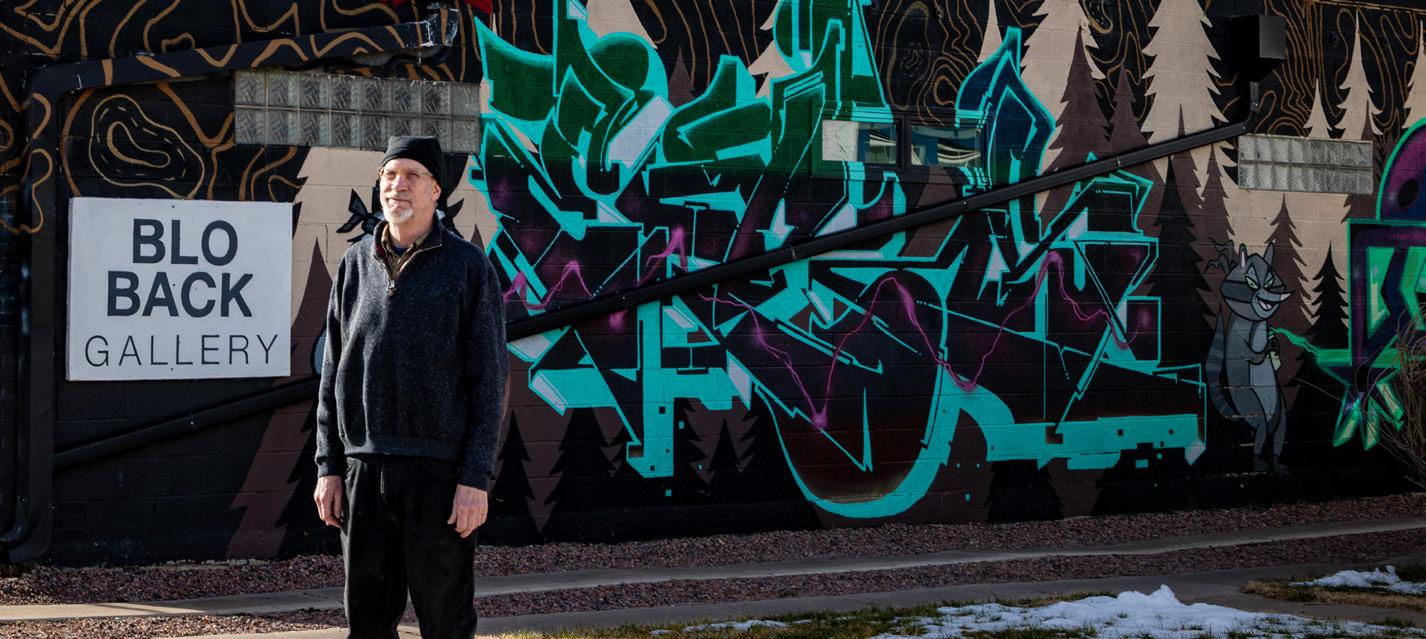
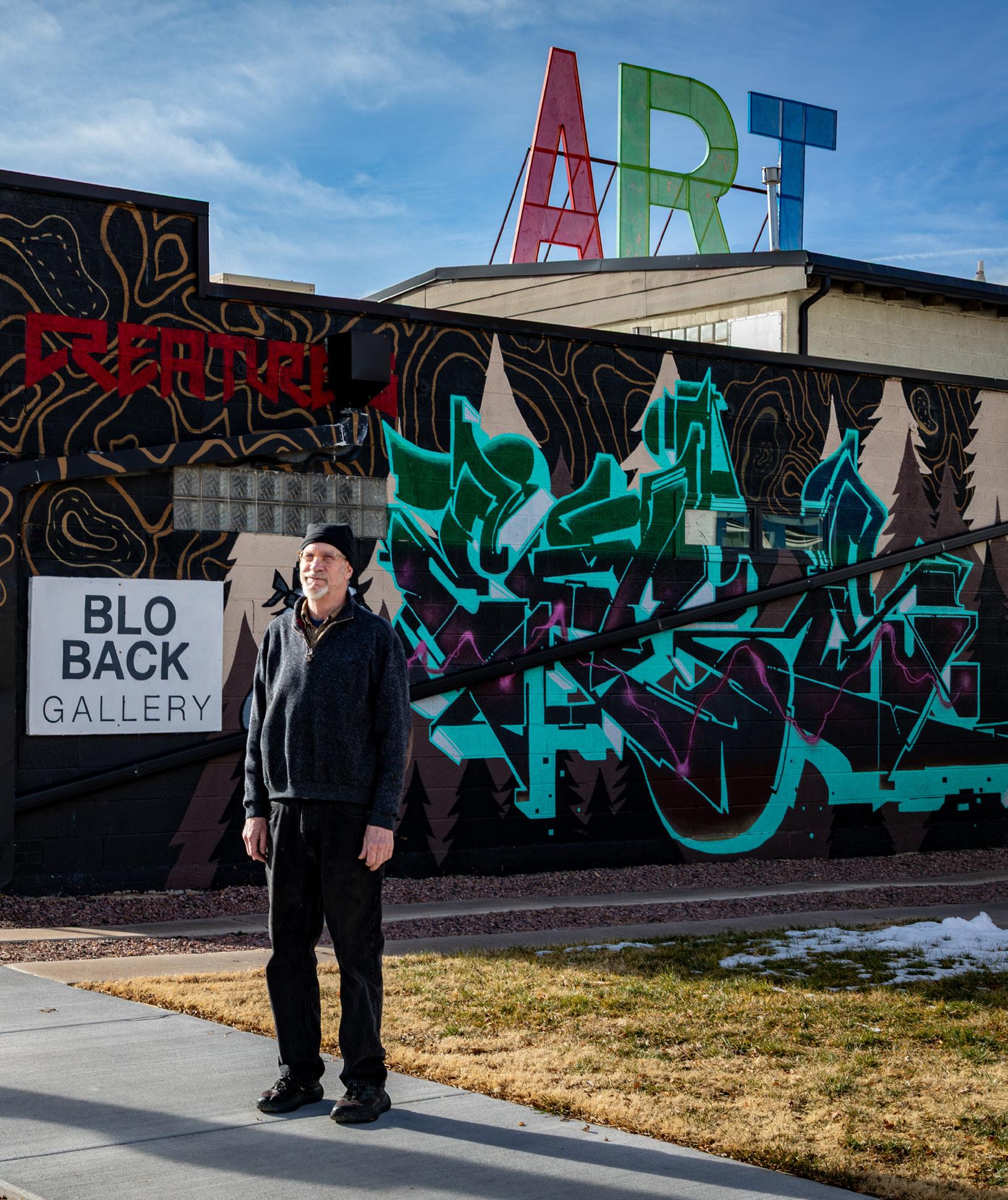
eff Madeen is the owner and curator of Blo Back Gallery, a contemporary art gallery in downtown Pueblo that has become a platform for bold, experimental, and often unconventional work. More than a traditional white-wall gallery, Blo Back functions as a creative incubator—championing emerging and established artists while embracing risk, dialogue, and artistic freedom.
by Nate Jordon
Under Madeen’s direction, Blo Back Gallery has cultivated a reputation for work that challenges viewers and sparks conversation, offering space to artists whose voices might otherwise be overlooked. His approach prioritizes authenticity over trend, community over commercialism, and curiosity over comfort. In a city shaped by industry, resilience, and reinvention, Madeen has helped carve out a space where contemporary art feels both accessible and unapologetically raw—adding an essential layer to Pueblo’s evolving cultural landscape.
PULSE: Where you from originally?
MADEEN: Elgin, Illinois, but I’ve moved all over. After I went to the Art Institute in Chicago, I was an artist-in-residence at the North Chicago
VA hospital, where I made 4 monumental sculptures for the grounds. After that, I was a carpenter on a couple of condo projects and got a job making kitchen cabinets for one of the units. Because of that, I started a cabinet and millwork company with a couple of artists, that lead to us getting unionized. We did many high-end projects for 10 years, with one of the notable projects being Michael Jordan’s house.
Then I moved to Durango. Lived there for 21 years. There was a lot of money there until the economic implosion of 2008. In 2009, there was one building permit for a two-car garage in the entire county. It went from boom to nothing.
I was also an organic farmer for a couple years. I worked really hard, and it was fulfilling, but I just didn’t make much money. So I hit the road for a while.
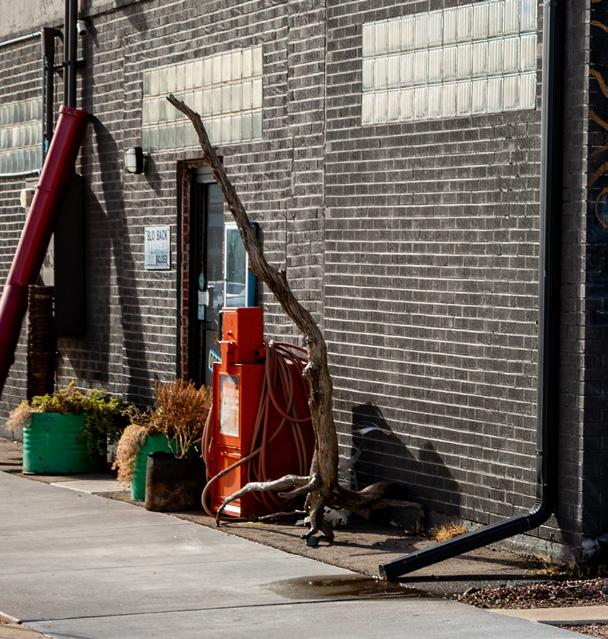
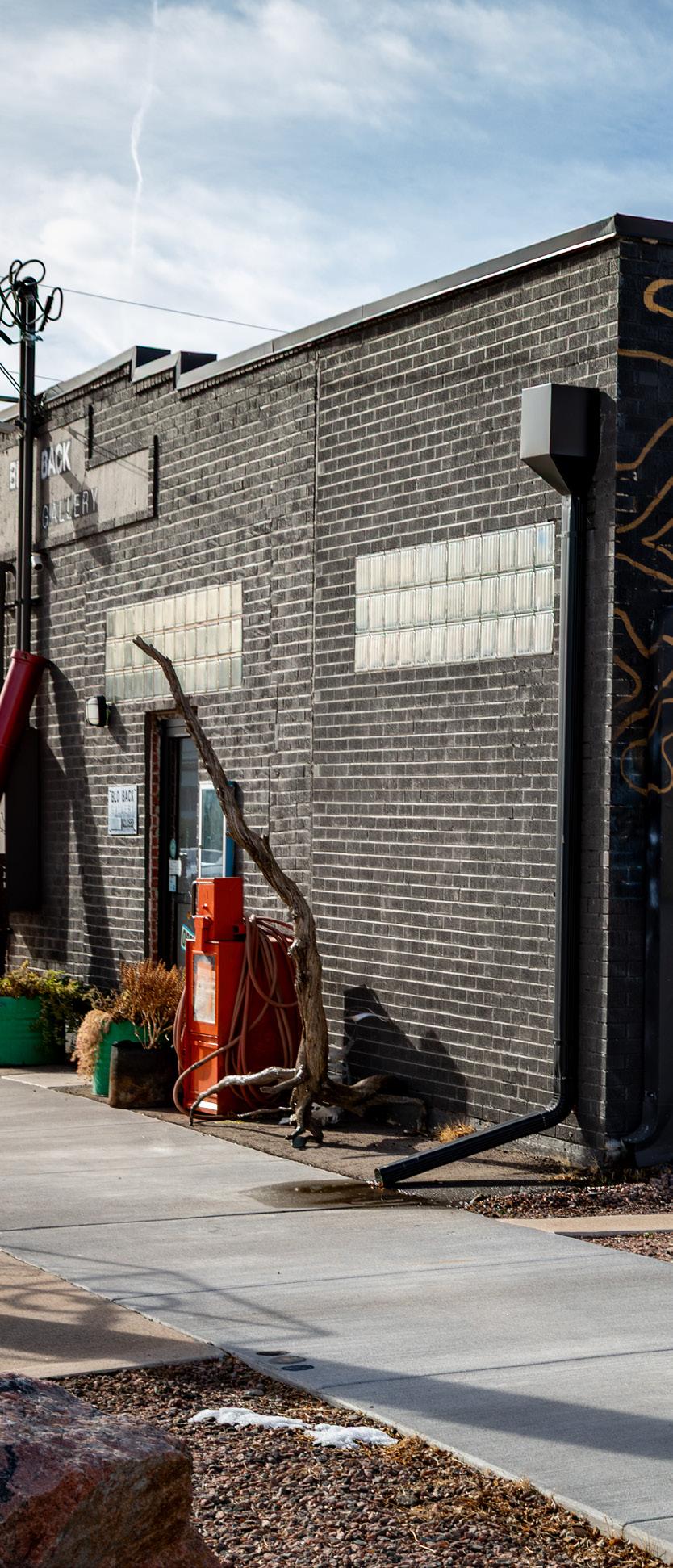
After checking out Phoenix, Arizona, Houston, and Marfa in Texas, then all the way up the eastern seaboard and back, my last stop was Pueblo. I started looking at buildings and found this one. It was exactly what I wanted. It was cheap. Block wall. Funky roof. Came with a lot across the

street. I purchased it in August of 2016
PULSE: Blo Back Gallery doesn’t feel like a traditional gallery. Was that intentional from the beginning, or did it evolve naturally over time?
MADEEN: It’s evolved. In the beginning, I wasn’t sure what I was going to do. I decided: Okay, let’s do a gallery. First order: Create the studio. Then build the narrow OG Gallery. We did shows every First Friday for three years.
The first show was my dad and me. And artists told artists told friends… people brought portfolios… and I started programming a year ahead. That’s what we’ve done since.
PULSE: “Build it and they’ll come.”
Jeff: That’s exactly it.
PULSE: What originally drew you to Pueblo as a place to build a contemporary art space?
MADEEN: My wife and I met a couple from here. They’d tell stories about
Pueblo. Sounded a lot like where I’m from—Elgin, Illinois—an industrial town on a river. I was an avid fly fisherman, so I needed to live on a river. It’s what originally drew me to Durango.
But there were about 10 reasons I moved here: the buildings, the climate, the creativity, little traffic, the steel mill—I like grit. Durango got less gritty over time, with more money coming in from California and Texas, and a lot of people weren’t giving anything back. Durango became more trafficky. I hate that. Pueblo didn’t have that.
Pueblo has modern architecture, like the library, but also old brick—urban fabric. Neighborhoods with different tones. Chicago was like that. Pueblo used to be called “Little Chicago”.
PULSE: You’ve shown work that’s bold, experimental, and sometimes uncomfortable—how do you decide which artists or pieces belong on your walls?
MADEEN: To me, art’s job is to get people to ask questions and think. There’s a place for beauty, landscapes, portraits—sure—but I like pushing. Not everything is “hit you with a 2x4,” but I have done that. And with that, there is blowback
For instance, we got canceled last year. We did a show called “Truth”. For the first three years, no one got pissed. There were pieces that triggered people, but they weren’t thinking about what they were looking at. They thought it promoted Nazis and Hitler—it wasn’t that. It was asking you to think. I don’t think I did anything wrong. I believe in freedom of speech. Nobody was throwing hate out there. But the mob can’t think.
Hundreds of people have said this is the best community place in town. So,
nothing changed. It hurt like hell, but we kept going. And word continues to spread. We do fundraisers. We rent for weddings and parties, too.
PULSE: Do you see yourself more as a curator, a facilitator, or a disruptor within the local art scene—and why?
MADEEN: All three. You’ve got to be. I curate the shows. I hang shows myself now. I maintain the space, patch walls.
Our mission statement says: to provide an uncensored platform that may challenge what we believe to be true.
And disruption.... I want people to question: What is a gallery?
We did shows in OG called Suicide and Addiction—90 pieces of art in that small room. Well attended. Sold some things. It was about message and platform.
I’m also involved with boards: Friends of the Arkansas River, the Keating School Project—we’re trying to save the old junior high where there’s 75 apartments planned—the Pueblo Film Fest, the Spontaneous Combustion Art Performance Ensemble, and Destination Pueblo.
PULSE: What role do you think galleries should play in smaller or mid-sized cities like Pueblo, especially compared to major art markets?
MADEEN: Have shows for young breakout artists so they can get their work out there in front of collectors and art fans in a quality gallery setting. Make a space available for community art events, art talks, and/ or just gatherings of human beings.
PULSE: Can you talk about a show or artist that fundamentally changed how you think about art, curation, or your role as a gallery owner?
We met Jeff at Blo Back Gallery where, within the labyrinth of spaces in its interior, Jeff brought us to his personal studio where he showed us his work-in-project, a metal sculpture called “Tatonka”.
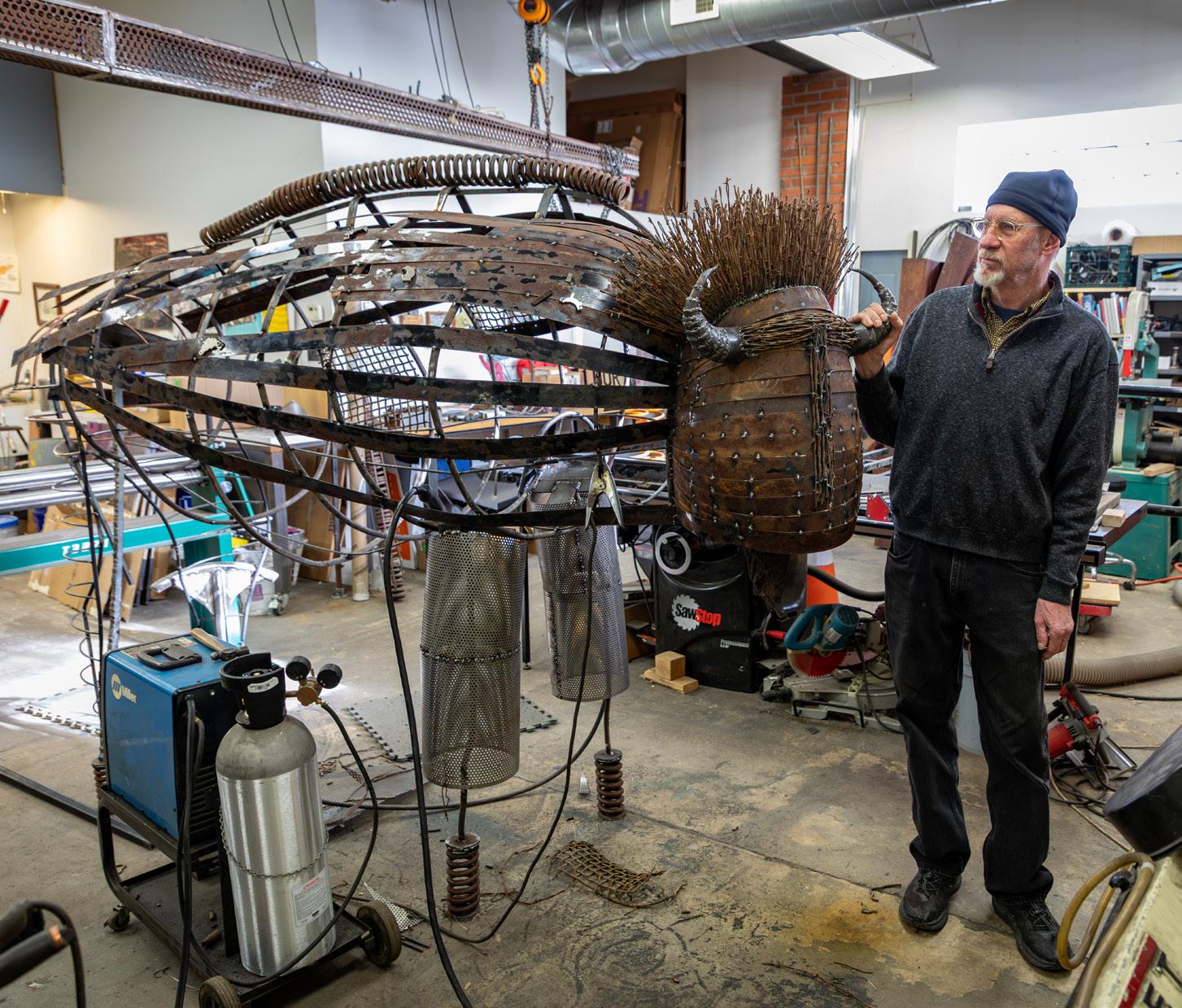
MADEEN: The Truth Show and the Third Eye Carnival. The Third Eye Carnival people—besides a couple—were not artists, more podcasters and speakers. They caused a lot of drama here.
I’m thinking I won’t do Truth this year, and definitely not Third Eye Carnival, to see if we can heal the problem. But if they don’t want to heal, then it is what it is. I’m willing to talk. You can yell at me, scream at me, call me names—but I’m still willing.
PULSE: How do you balance supporting artists creatively while also navigating the realities of running a small business?
MADEEN: Since last year, proceeds from art sales and music have been enough to pay two part-time employees. Not enough to pay me—I have no paycheck.
Art’’s job is to get people to ask quESTIons and THink.”
PULSE: I know what that’s like.
MADEEN: Yeah. It’s sacrifice. And I appreciate what you’re doing. It’s what it takes to be independent. You don’t have opinions driven into your head the way some people do.
PULSE: Fresh eyes and new energy can change a town.
MADEEN: Exactly.
PULSE: What do you think Pueblo does uniquely well when it comes to art and culture—and where do you think it still has room to grow?
MADEEN: The Arts Center is a great facility. That’s like the center of the circle, and things spread out. The Creative Consortium—people can come, sit in, listen. You should come. There’s a meeting tomorrow.
There are silos here. There’s two theaters in town, and they hate each other. But I see us as on the same team. I want to get people out of their clicks—bring their people here, go somewhere different.
Pueblo has stereotypes, but most cities have bad parts. I had friends in Durango react instantly: “Pueblo? That shithole?” I’d ask, “Have you been there?” No? That’s ignorance.
New people move here. They Google “art galleries” and find us. We welcome them. We just go forward. You can give in or go forward.
There’s so much in Pueblo: Heritage Museum, El Pueblo History Museum, the Arts Center, the levee, whitewater park—people who’ve lived here their whole lives haven’t been there. It blows my mind.
The riverwalk stuff is incredible. You can do loops. I love being on the river.
PULSE: Have you ever taken a risk on an artist or exhibition that didn’t land the way you expected? What did you learn from it?
MADEEN: The risk was the Truth show and Third Eye Carnival. For years, it was fine. Then it wasn’t.
PULSE: Looking ahead, what do you want Blo Back Gallery to represent five or ten years from now—for artists, for Pueblo, and for yourself?
MADEEN: Hopefully, before 10 years are up, I have a succession plan in place, but before then, I’ll continue to work towards making Blo Back one of the best galleries in Colorado for great contemporary art and music. Pueblo has a bad rep around the

state, and with the gallery and our programming, it will be known in other parts of the state, and hopefully, people will come here to see the gallery, but also to visit the other art establishments and museums in Pueblo. It is our time.
In an era when many creative spaces hedge their bets or soften their edges, Jeff Madeen has chosen a harder, more vulnerable path, one rooted in conviction, curiosity, and community. Blo Back Gallery is not simply a venue for viewing art; it is a place for engagement, disagreement, and growth, shaped by a belief that culture only moves forward when people are willing to ask uncomfortable questions. Madeen’s story mirrors Pueblo’s own—marked by grit, reinvention, and an insistence on going forward rather than giving in. As Blo Back continues to evolve, it stands as both a challenge and an invitation: to artists, to audiences, and to the city itself, reminding us that meaningful art doesn’t just decorate a place—it helps define it.

GOING TO THERAPY ISN’’T WEAKNESS. IT’’S COURAGE.”
TUrnING OVER A NEW LEAF
Inside Pueblo’s Growing ConversaTIon Around Mental Health
by Nate Jordon
In Pueblo, conversations about mental health are changing— slowly, deliberately, and with more honesty than ever before. What was once kept behind closed doors or handled quietly within families is increasingly being met with openness, language, and support. At the center of that shift is A New Leaf Therapy, a practice that has grown alongside the community it serves, responding not only to crisis, but to the everyday realities of burnout, transition, trauma, and the desire for a life that feels more whole.
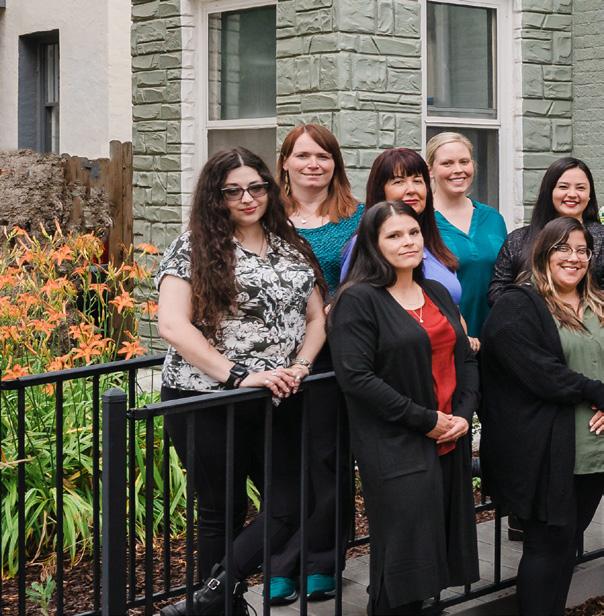
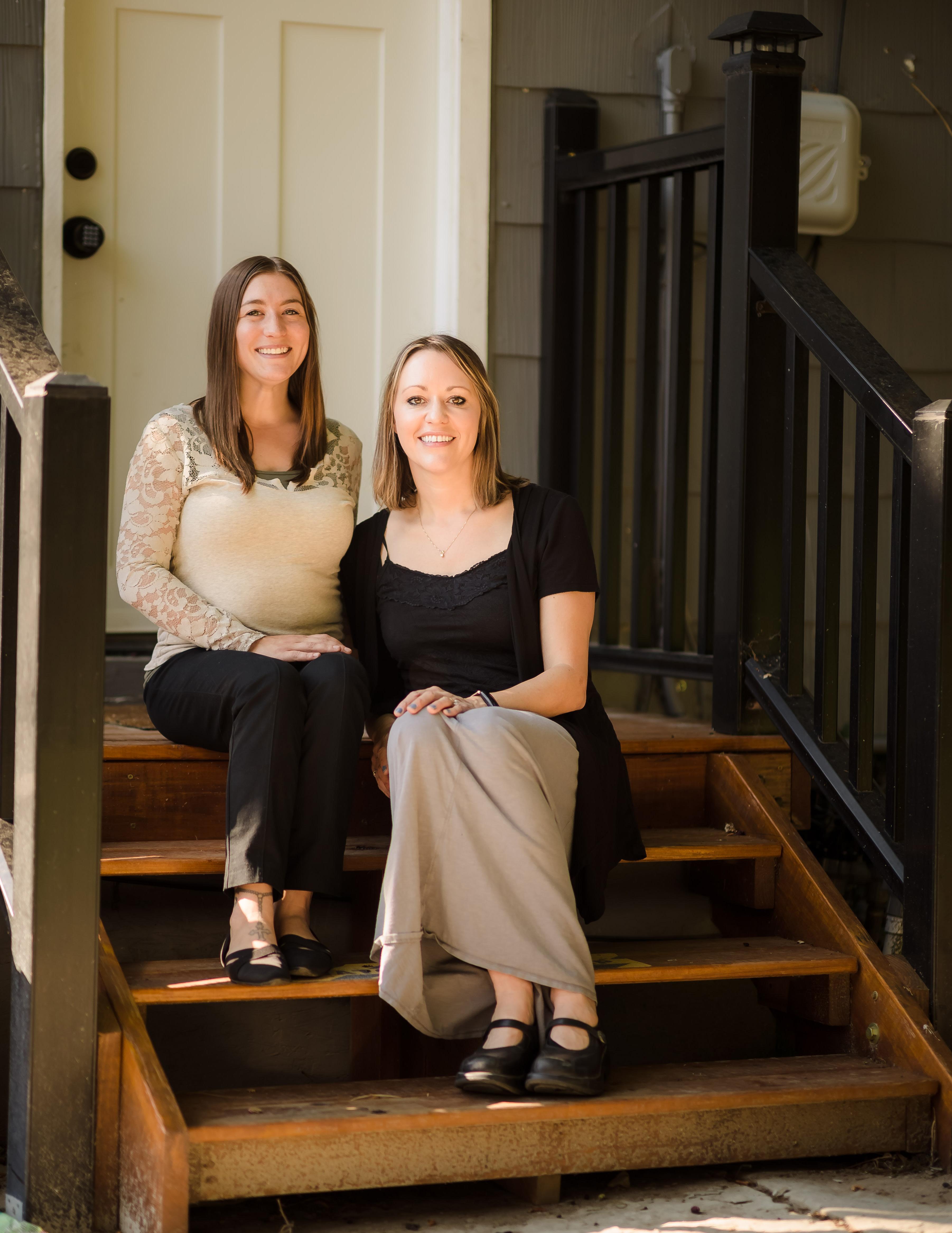
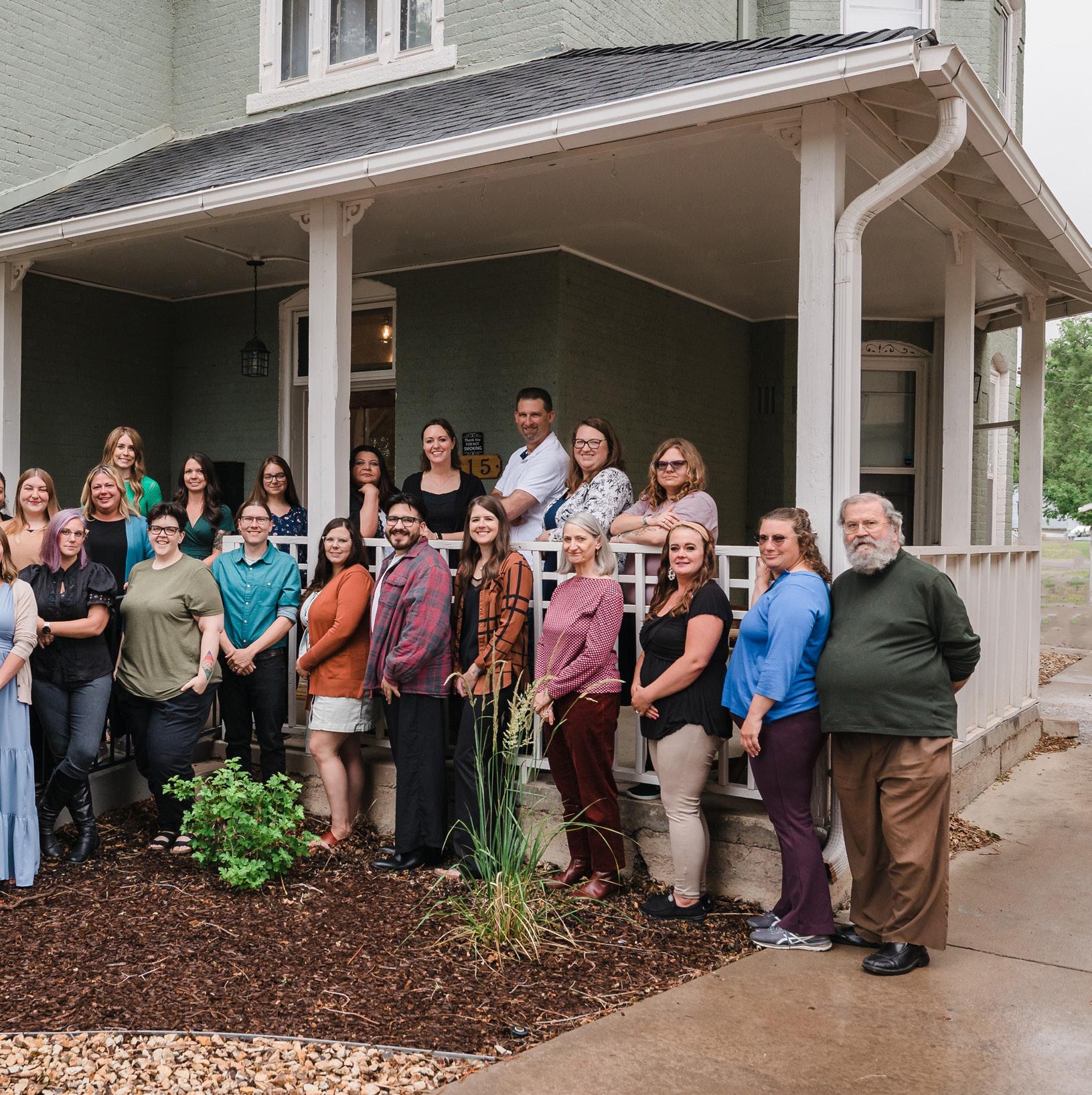
Founded by therapist and CEO Regan Young, A New Leaf Therapy has expanded from a solo practice into a network of seven locations and a large team of clinicians, all rooted in the belief that therapy should feel human, accessible, and connected to place. Alongside Operations Director Kristin Brown, Regan has helped build a collaborative model that prioritizes care not just for clients, but for ther-
apists themselves—recognizing that sustainable healing starts at every level.
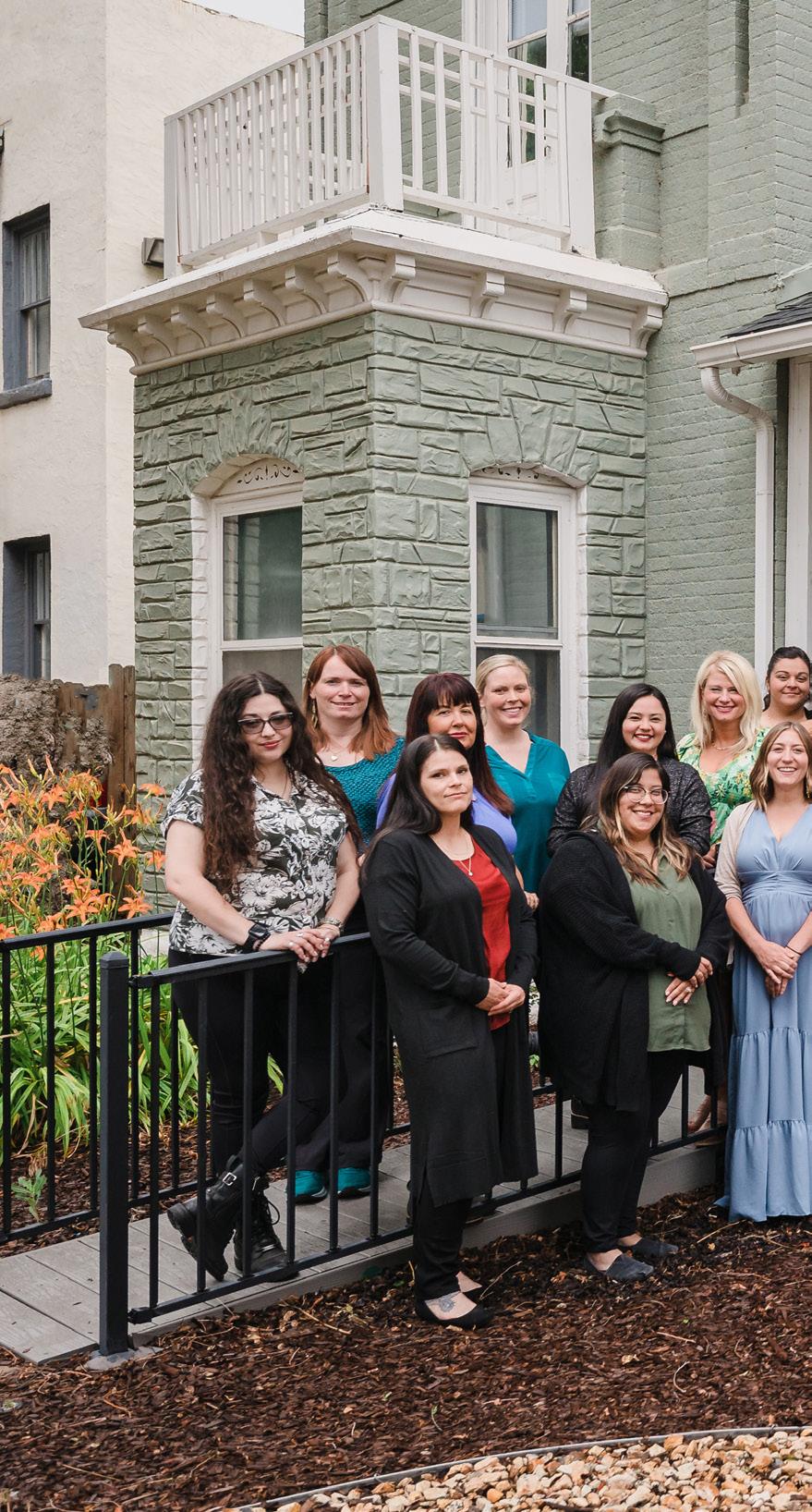
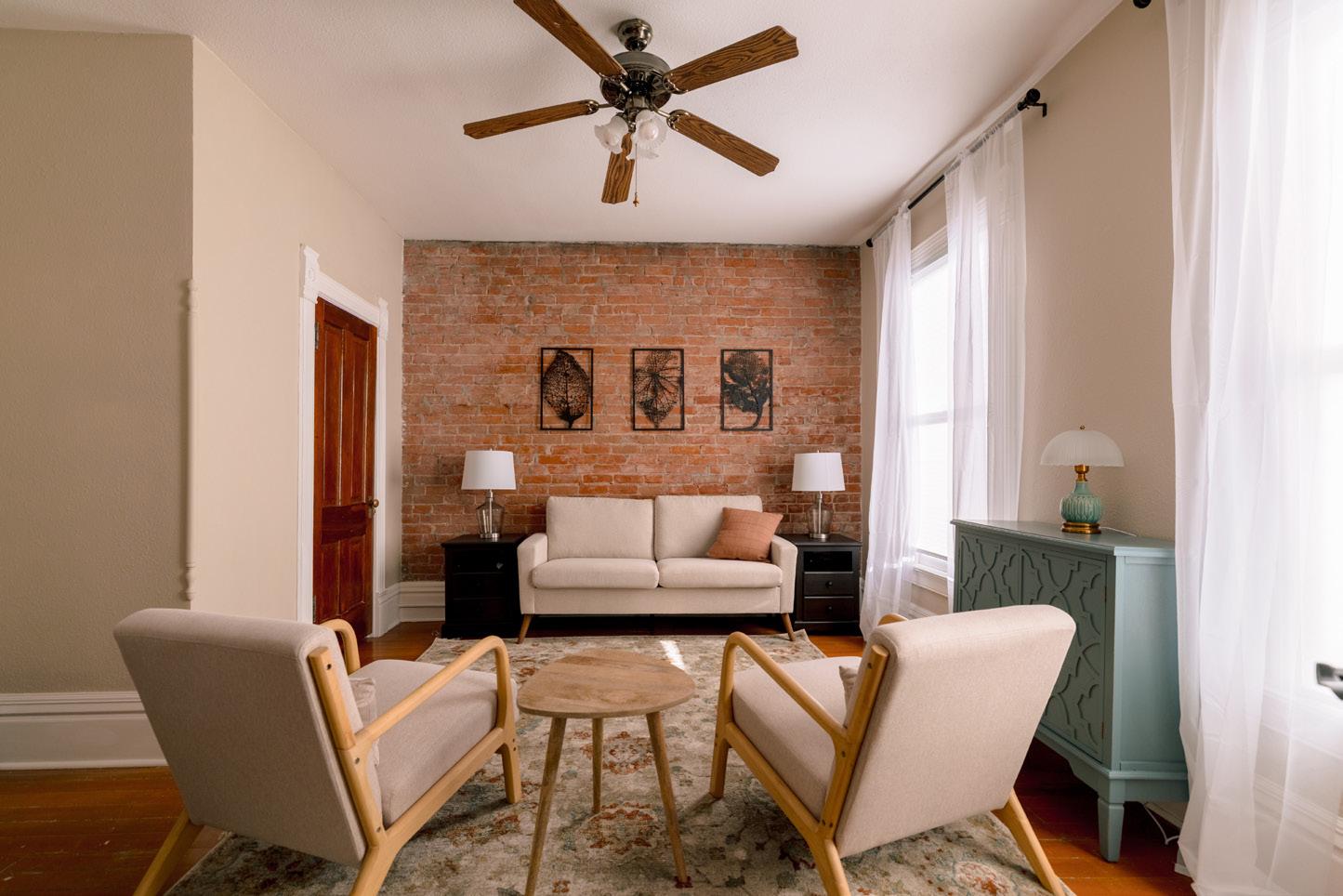
I met Regan at one of New Leaf’s Colorado Avenue locations, a converted home that feels more like a living room than a clinic. After walking me through the practice’s philosophy and growth, she dialed in Kristin via Zoom to join the conversation. What followed was a wide-ranging discussion about access, burnout, community care, and what it truly means to “turn over a new leaf.”
PULSE: Tell our readers a little about yourself and A New Leaf Therapy.
REGAN: I’m Regan Young, CEO and therapist here at New Leaf. We’re an award-winning counseling center, and we just celebrated our 11th anniversary.
We have 55 therapists and nine administrative staff across seven lo-
cations in Pueblo—six of them within a single block. We work with anxiety, depression, trauma, relationship issues, work stress, and life transitions. While we specialize in supporting professionals and “helping helpers”— teachers, first responders, nurses, veterans—we work with people of all ages and backgrounds.
We’ve been honored with Best of Pueblo and Community Votes awards for mental health care, which really speaks to the trust this community has placed in us.
KRISTIN: I joined the team in 2019. I’m originally from Pittsburgh, so I moved from one steel city to another. But even after moving back home recently, I stayed on virtually because the culture here matters that much.
REGAN: And because our team is so large, we’re able to offer a wide range of approaches—individual, couples, family, and group thera-
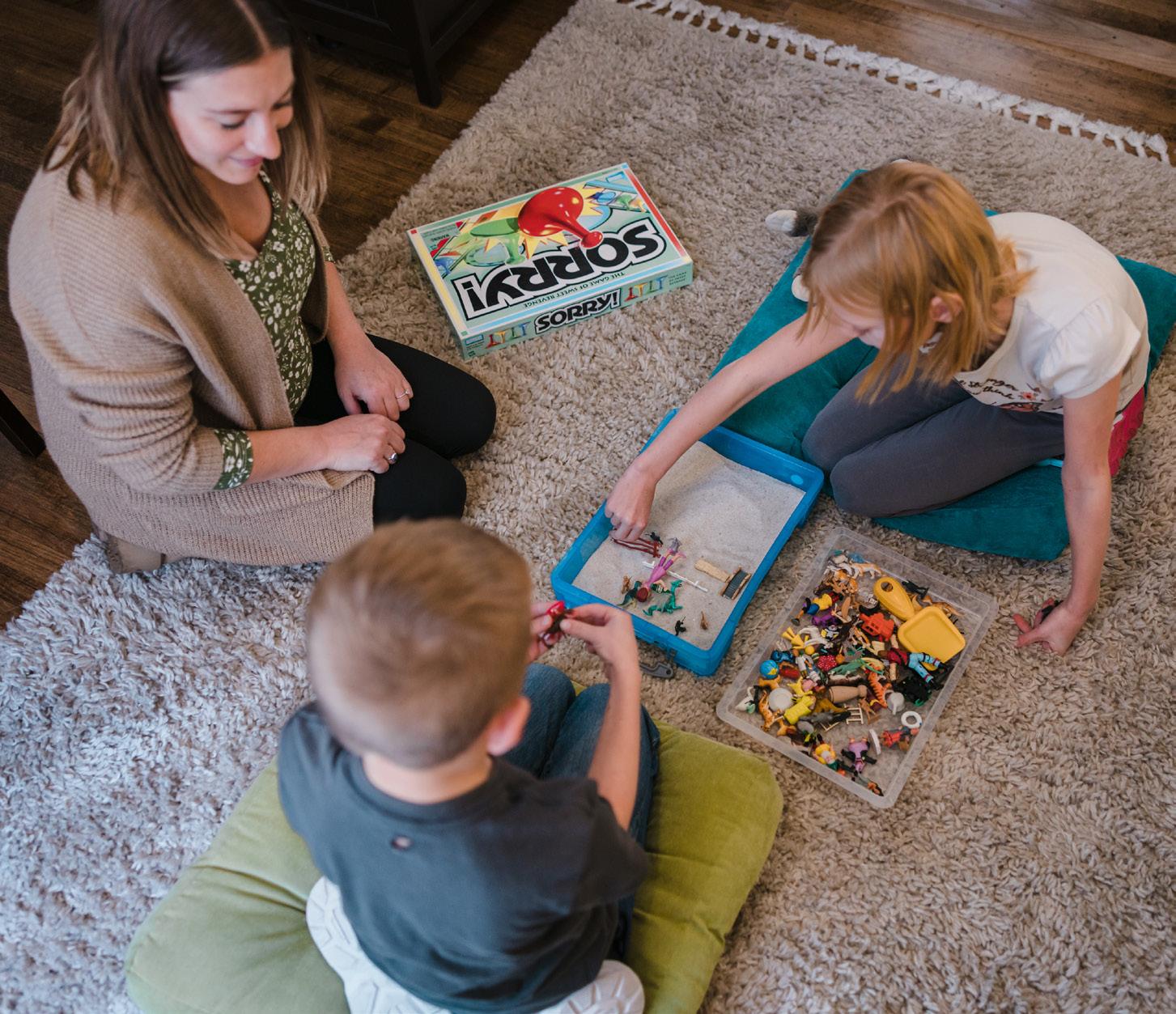
py, along with biofeedback, EMDR, brainspotting, play therapy, animal-assisted therapy, and walk-andtalk sessions. We currently serve over 2,000 active clients and continue to expand to meet demand here.
Most of our spaces are old homes converted into therapy offices. It’s intentional—we want people to feel comfortable and at ease. Over time, we’ve grown into what feels like a little village, including a major location at 11th and Santa Fe with group rooms and even a small Zen garden.
PULSE: So, what led you to create New Leaf, and what need did you see in Pueblo?
REGAN: When I started, it was just me doing everything. I quickly realized private practice felt isolating, and more importantly, Pueblo was underserved. I didn’t have space in my schedule, and there were few places to refer people. That felt unacceptable.
So, I started hiring, building a team, and growing in response to need. New Leaf exists because the community needed it.
KRISTIN: Many clinicians come here after experiencing burnout in isolated or unsupported environments. What’s different here is collaboration. We share ideas, support each other, and stay connected. That matters in a field that can be emotionally heavy.
We also encourage therapists to bring their passions into their work— movement, creativity, gardening, animal-assisted therapy—because when clinicians are supported, clients benefit.
REGAN: Our mission is to provide high-quality care for clients, employees, and students. We realized early on that therapists need healing
workplaces too.
PULSE: Mental health care can feel intimidating or inaccessible. How does New Leaf lower those barriers and make therapy feel more human and approachable?
REGAN: The space itself helps—it feels warm and home-like. We also accept many insurance plans, Medicaid, EAPs, FSA/HSA, CareCredit, and victim compensation in certain cases. Pueblo County employees receive free sessions through our EAP, and first responders often qualify for extended coverage.
We also offer lower-cost options through supervised graduate interns and provide telehealth statewide.
KRISTIN: We’re especially proud of our rural school partnerships. Therapists travel to schools like Aguilar, Fowler, Manzanola, and Huerfano, removing transportation barriers and filling major gaps in care.
Pueblo is an underserved mental health care. THe need was impossible
underserved community for care. A New Leaf exists because impossible to ignore.”
PULSE: Your practice emphasizes growth and transformation—what does “turning over a new leaf” look like in real, everyday terms for your clients?
REGAN: Sometimes it’s getting out of bed again. Sometimes it’s leaving the house without panic. And sometimes it’s not a crisis at all—it’s a high-functioning person wanting to understand patterns, improve relationships, or build a more meaningful life.
We take a whole-person approach: routines, movement, hobbies, community—not just symptom management.
We also offer rotating groups and specialized programs—from self-compassion and LGBTQ+ groups to equine-assisted therapy, acudetox, and walk-and-talk sessions. Therapy doesn’t have to happen inside four walls.
KRISTIN: When grant funding is available, investing it in mental health— especially for kids—has long-term community impact.
REGAN: Our internship and case management programs are also essential. We help clients navigate housing, employment, insurance, routines, and support systems—often at very low cost.
PULSE: Pueblo has its own cultural identity, strengths, and challenges. How does being rooted in this community shape the way you and your team approach care?
KRISTIN: In many Italian and Hispanic families — which are a big part of Pueblo — it historically wasn’t common to talk about mental health outside the family. There’s generational trauma that gets healed every day, and we don’t take that for granted.
We also try to approach first-time
Out in the wild with Mike Marino — the craftsman behind Marino Decoys, where realism meets results.
Spotted in the field with a client, Marino shows why hunters trust his work: lifelike decoys, real success. This isn’t just gear — it’s legacy in motion.
therapy clients with patience — you can’t push too hard. Safety, empathy, and presence matter, especially for people who were taught not to talk about feelings.
REGAN: We also believe it’s important to normalize therapy — especially for men. Many men have been told not to talk. But going to therapy is courageous. It shows a different kind of strength.
Our team is also diverse in age, background, and perspective, which helps us match clients with the right fit.
PULSE: What misconceptions about therapy do you encounter most?
KRISTIN: That therapists are “fixers.” Clients are the experts on themselves—we’re just the guides.
REGAN: Another is that therapy is “venting”. It’s much deeper than that. Therapists are trained in evidence-based approaches that help people recognize and change patterns they may not even see themselves.
PULSE: What has your own professional journey taught you about burnout and resilience?
KRISTIN: That self-care isn’t bubble baths—it’s boundaries, routine, and support. I haven’t experienced burnout here because the system is sustainable.
REGAN: Burnout is normal and often misunderstood. It doesn’t always mean quitting—it means adjusting patterns and support. We normalize that internally and address it early.
PULSE: How do you measure impact in a field where progress isn’t always linear or visible, and what does success look like beyond clinical outcomes?
KRISTIN: Not burning out is one measure. Sustainability. Growth. Building meaningful partnerships. And continuing to develop as clinicians.
PULSE: Mental health doesn’t exist in a vacuum. How do relationships, work, finances, and community pressures show up most often in the lives of your clients?
REGAN: People come to therapy for many reasons. Sometimes they’re working through past experiences or trauma that are impacting them. Other times, challenges are rooted in the present, such as stress related to work, finances, or relationships. For some, therapy is about an ongoing state of being and changing long-standing patterns.
In the past, the message around mental health suggested that therapy was only for people experiencing severe functional impairment. While we certainly meet those needs, what we also find today are high-functioning and professionally accomplished people choosing to care for their mental health in an effort to enhance those strengths. Some pursue mental health care to deepen their sense of contentment, well-being, and joy.
One of the strengths of having such a large, eclectic team is our ability to meet clients’ needs on a very wide spectrum.
PULSE: What role do you think local businesses, schools, and organizations play in supporting mental well-being?
KRISTIN: Early intervention matters. Teaching emotional language and coping skills early benefits the entire community over time.
PULSE: Looking ahead, what legacy do you hope A New Leaf leaves in Pueblo?
KRISTIN: Our vision is to help people — clients, students, and therapists — live their best lives.
REGAN: Culture matters. As we grow, we’re maintaining our connection and values. We now have therapists working remotely from Texas, Pennsylvania, Minnesota, and South Carolina — but we’re being intentional about keeping our team cohesion.
Listening to Regan and Kristin, it’s clear that New Leaf is doing more than responding to need—it’s reshaping how mental health care is understood and sustained in Pueblo. Their work challenges the idea that therapy is only for moments of crisis or that healing must be rigid, clinical, or isolated.
Instead, they’ve built something flexible and deeply human: a practice rooted in community, cultural awareness, and long-term resilience. By caring for both clients and clinicians, New Leaf continues to grow without losing its center.
As Pueblo continues to evolve, so does its relationship with mental health. New Leaf’s legacy may ultimately be measured not in buildings or numbers, but in normalization—in the quiet relief of someone walking through the door for the first time, realizing they don’t have to carry everything alone. Turning over a new leaf, here, isn’t about reinvention. It’s about permission—to pause, to reflect, and to begin again.
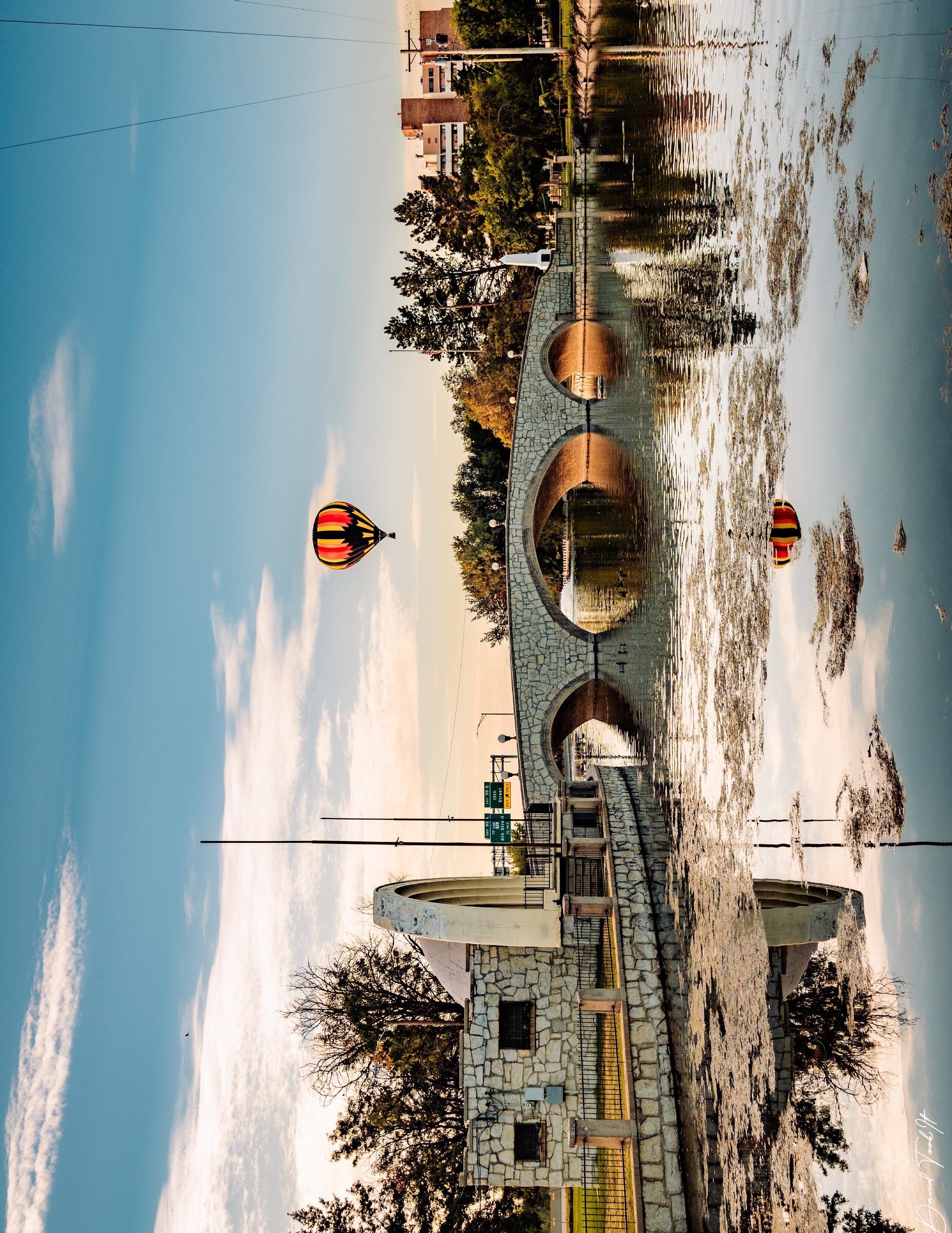

Hot Air Balloon over Mineral Palace Park
Photo © David Took It @
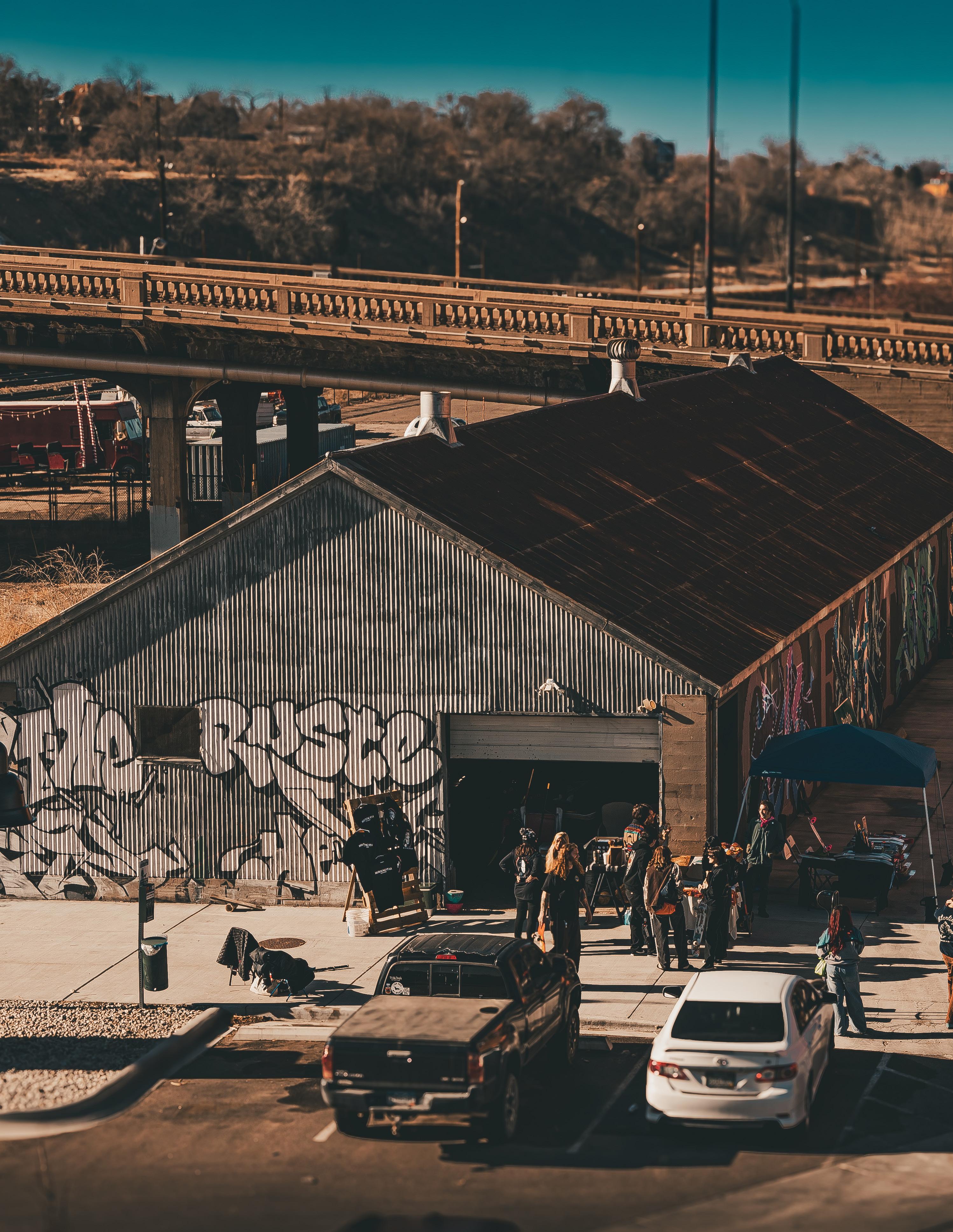
SEEN & SCENE
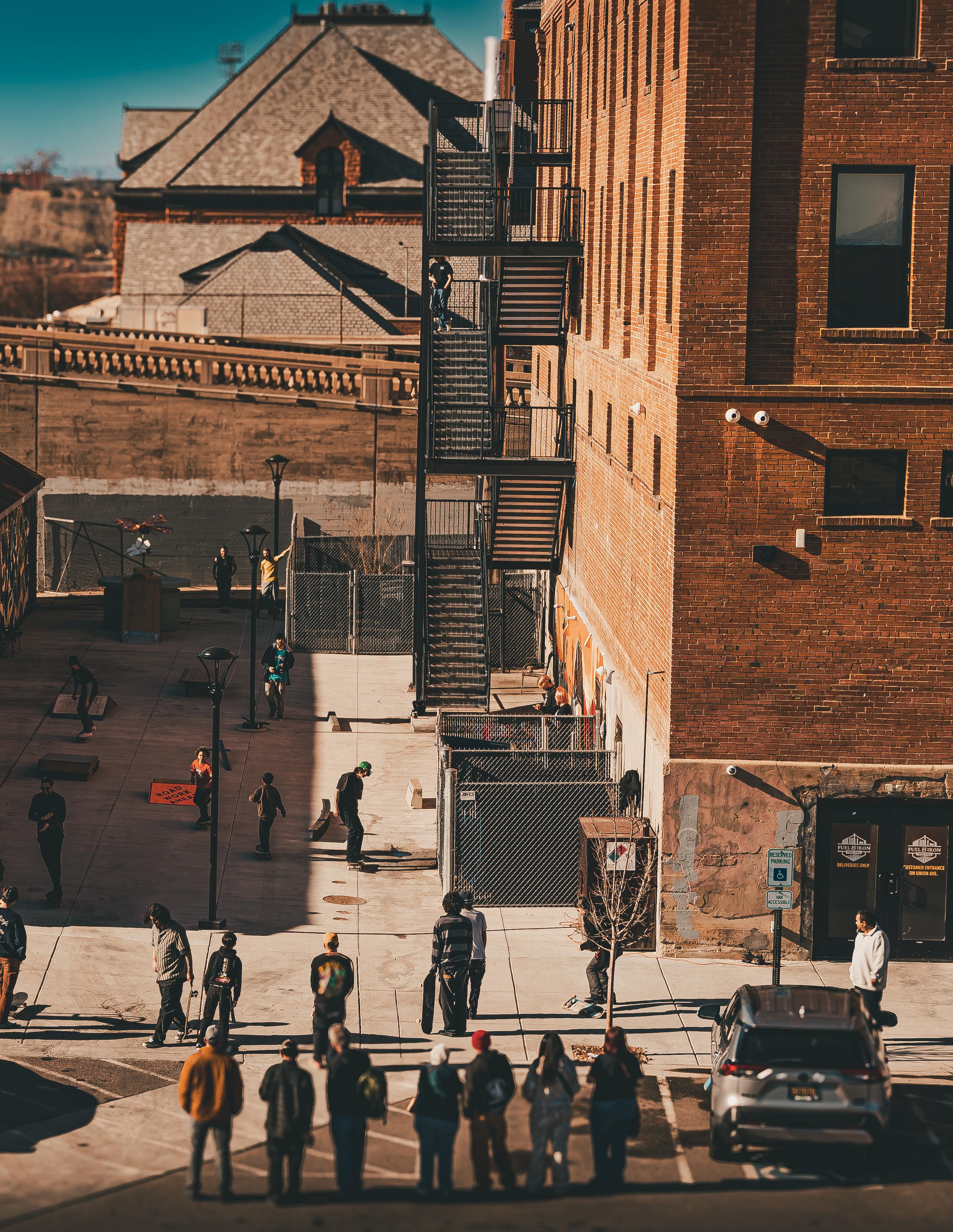

TWO MILES TO THE HOriZON
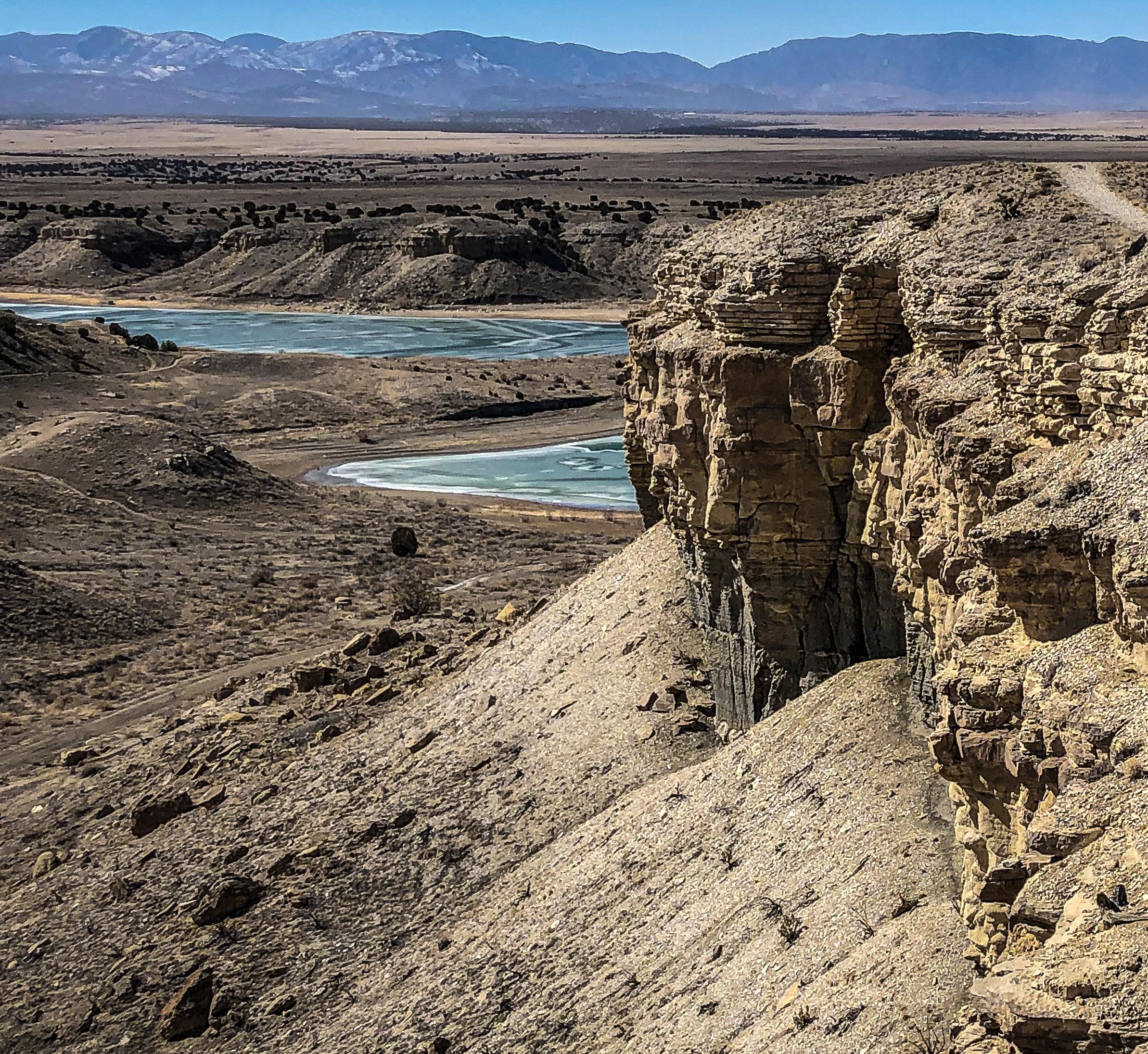
WHY ARKANSAS POINT TRAIL IS ONE OF LAKE PUEBLO stATE PARK’S MOst REWARDING HIKES
by FORD GRANADA
The first hike to draw my attention after moving to Pueblo was the Arkansas Point Trail in Lake Pueblo State Park. Mainly because my wife and kids are from Arkansas (I claim Texas & California equally).
The Arkansas River looks a lot different down in the South. But the trail also drew my attention because it’s a short hike—and I was still packing my youngest kid on my back.
Arkansas Point is a trail we keep returning to because it’s local, quick, and there’s an incredible payoff for the effort: sweeping vistas of the lake and surrounding landscapes. If you’re looking for a hike that gives you shoreline, ridgeline, and open sky in one easy loop, this one can’t be beat.
TRAIL SNAPSHOT
• Distance: ~2 miles
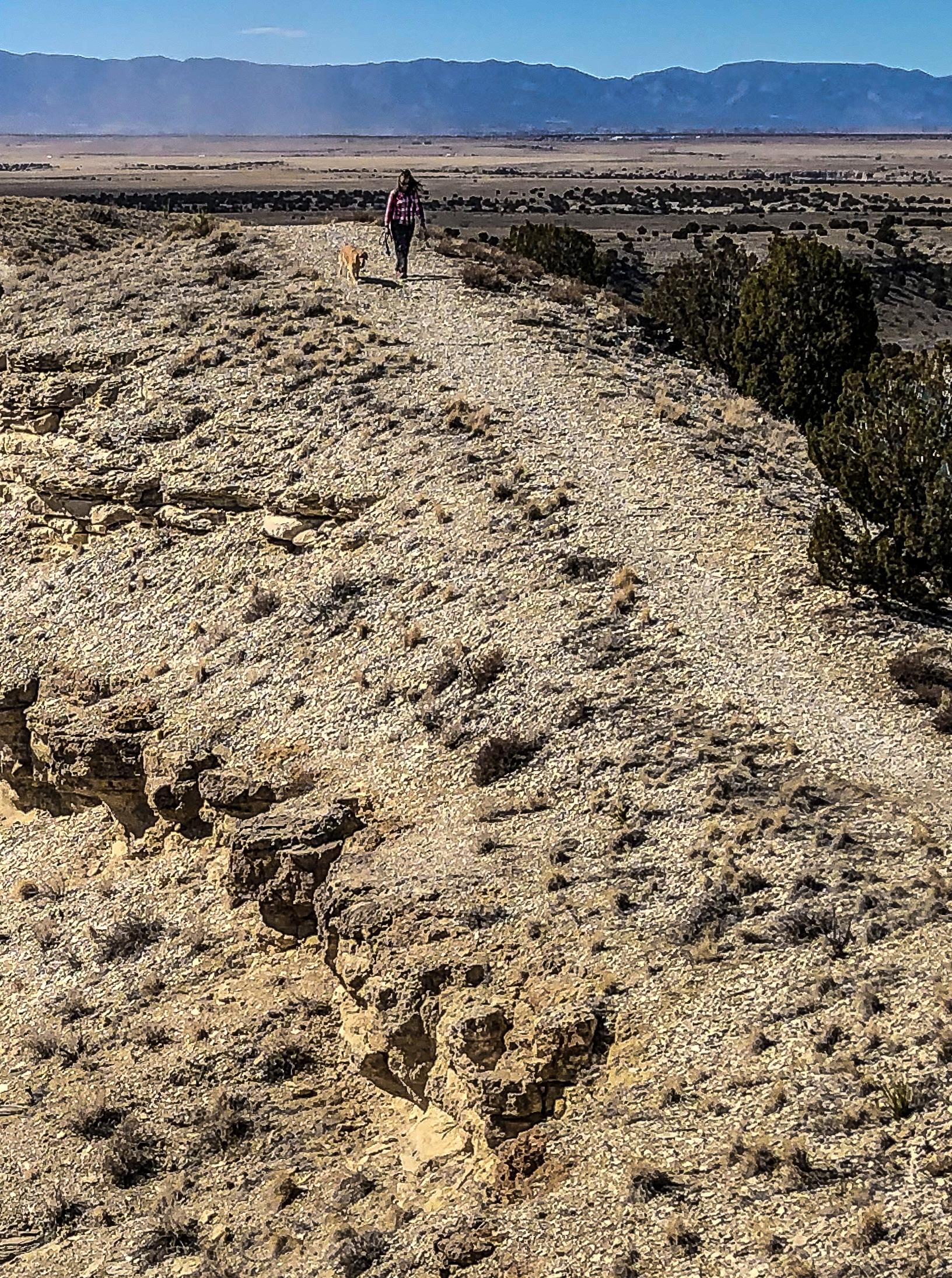
• Difficulty: Easy to Moderate
• Elevation Gain: Minimal
• Trail Type: Loop (with spur access to shoreline)
• Best Season: Off Season (of course)
• Dog Friendly: Yes (leashed)
• Fees: Colorado State Parks pass required
Just because this is an “easy” hike, don’t mistake easy for boring. Arkansas Point quickly and quietly stacks scenic rewards.
SUGGESTED ROUTE PLAN (ONE-HOUR LOOP)
1. Start from the campground trailhead.
2. Follow the main loop clockwise.
3. Climb gently to the ridgeline.
4. Pause for photos at the highest viewpoint.
5. Take one shoreline spur for a water-level perspective.
6. Complete the loop back toward parking.
You’ll cover roughly two miles in about an hour with photo stops. If you’re building a full outdoor day, this trail makes an excellent anchor. There’s so much to do and explore in the park.
GETTING THERE
From Pueblo, head west on Highway 96 toward the park. Enter through the Arkansas Point entrance and follow signs toward Arkansas Point Campground. Parking is available near the trailhead and campground loop.
Because this section sits slightly removed from the busier marina side of the park, it often feels calmer, especially in the off-season. That’s part of the appeal.
THE FIRST HALF-MILE: SETTLING IN
The trail begins gently, winding
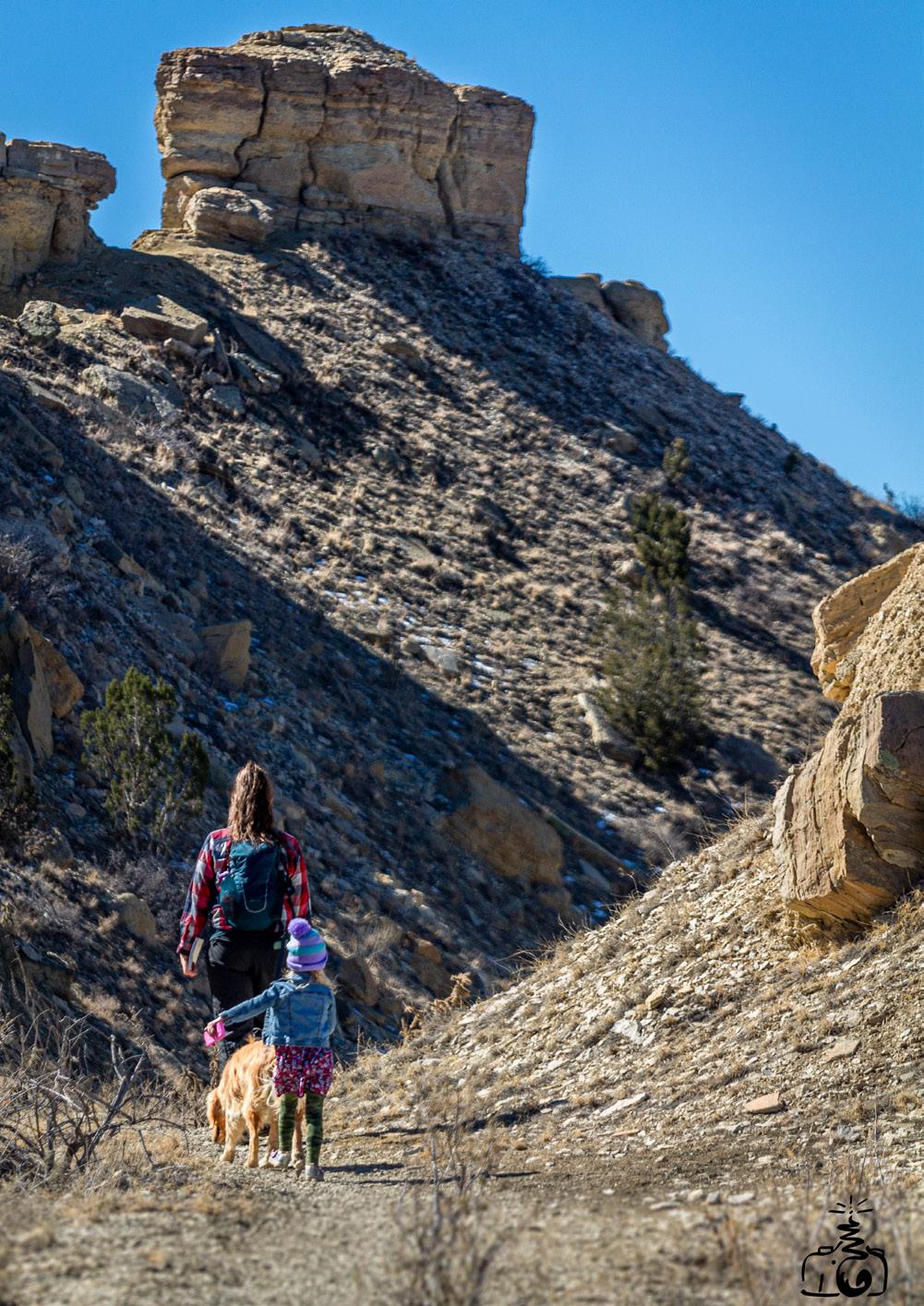
through scrub oak, juniper, and open grassland. The terrain here is classic high desert—dusty in summer, crisp and clean in winter. Within minutes, the reservoir reveals itself through breaks in the brush.
The water stretches wide against sandstone bluffs. On calm mornings, it mirrors the sky. On windy afternoons, it carries that steel-blue texture that feels distinctly Colorado.
THE RIDGE SECTION: ELEVATION WITH PERSPECTIVE
As you continue, the trail subtly climbs above the shoreline, changing your perspective. This is where Arkansas Point earns its name. From this ridgeline, you can look down over the curve of land jutting into the reservoir. To the south and west, the rolling hills frame the water. On clear days, you’ll see the layered landscape fade into the horizon. Take a breath here. Soak

in the views. Grab that photo.
SHORELINE ACCESS: A CHOOSEYOUR-OWN-ADVENTURE MOMENT
One of the best parts of Arkansas Point is how accessible the water is. Several spur trails lead down toward the shoreline. Water levels fluctuate seasonally, revealing hidden natural treasures in the form of rock shelves, coves, and pebble beaches. In low-runoff years, more shoreline reveals itself. In fuller years, the reservoir presses close to the trail.
WILDLIFE & WHAT TO WATCH FOR
Because this section borders both water and open scrubland, wildlife sightings are common. Be on the lookout for:
• Mule deer in the brush
• Bald Eagles catching fish
•Coyotes skittering amongst cacti
• Red-tailed hawks riding thermals •Great blue herons stalking the shallows
• Western meadowlarks flashing yellow
That’s a small list of all the wild neighbors that call the park home. Hiking in winter? Look for tracks in soft dirt. Hiking in summer? Listen. The landscape comes alive.
Important sidenote: This is rattlesnake country. Stay aware. Keep your ears open.
TRAIL CONDITIONS & PRACTICAL ADVICE
Summer It gets hot out there, and there’s very little shade. Start early, carry water, and respect the sun.
Winter Winds coming off the water will make
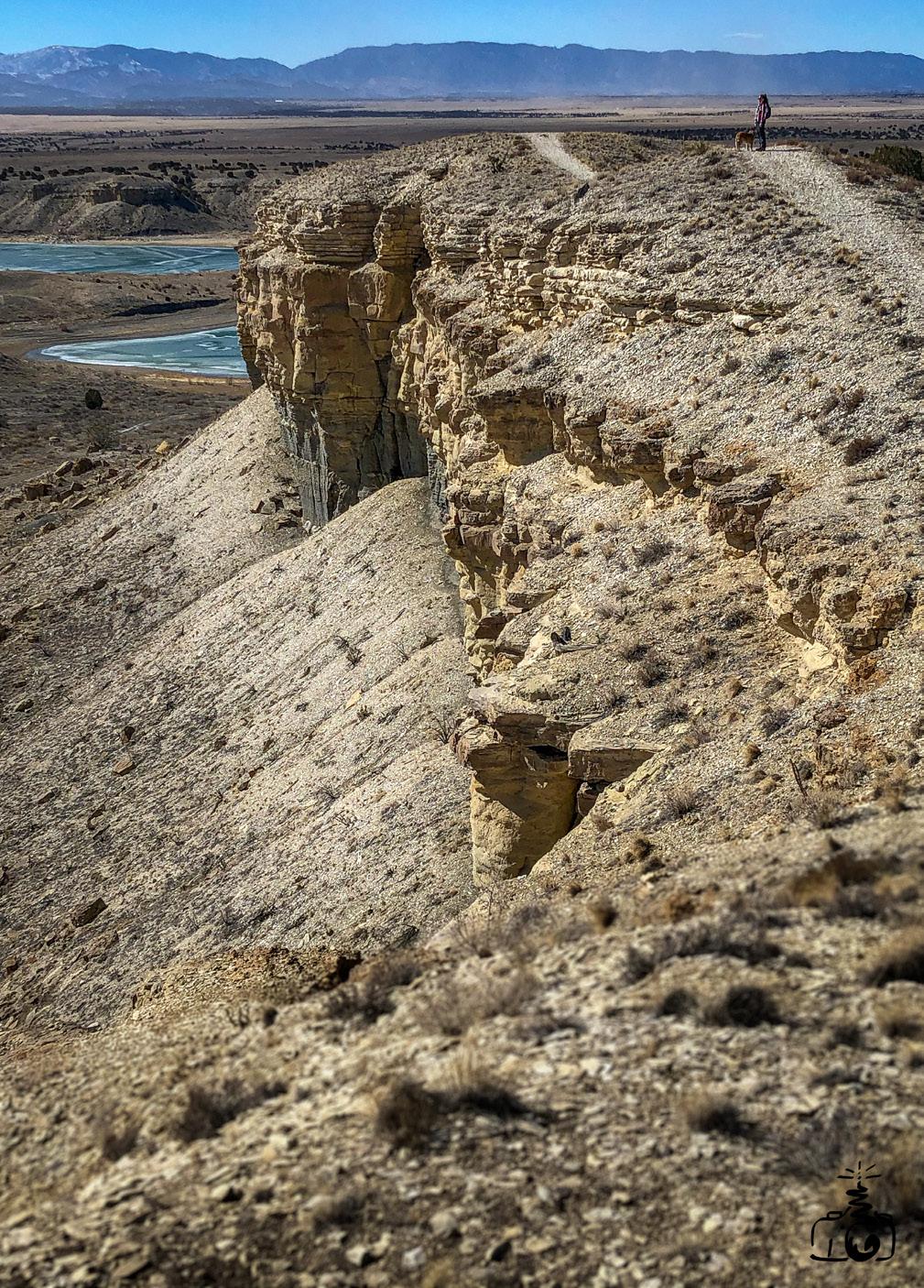
your teeth chatter, so bring layers. The trail stays hikeable through the season, though icy patches can form in shaded dips.
Footwear
Standard hiking shoes or trail runners are fine. No technical gear needed.
Water
This is crucial. Bring more than you need. This is an arid, high desert environment, and the winds and sun will suck the moisture right out of you. Don’t rely on campground spigots being active year-round.
Crowds
Who likes those? To avoid them, plan your visit during the week and off-season—the park is much quieter then.
WHY ARKANSAS POINT TRAIL WORKS
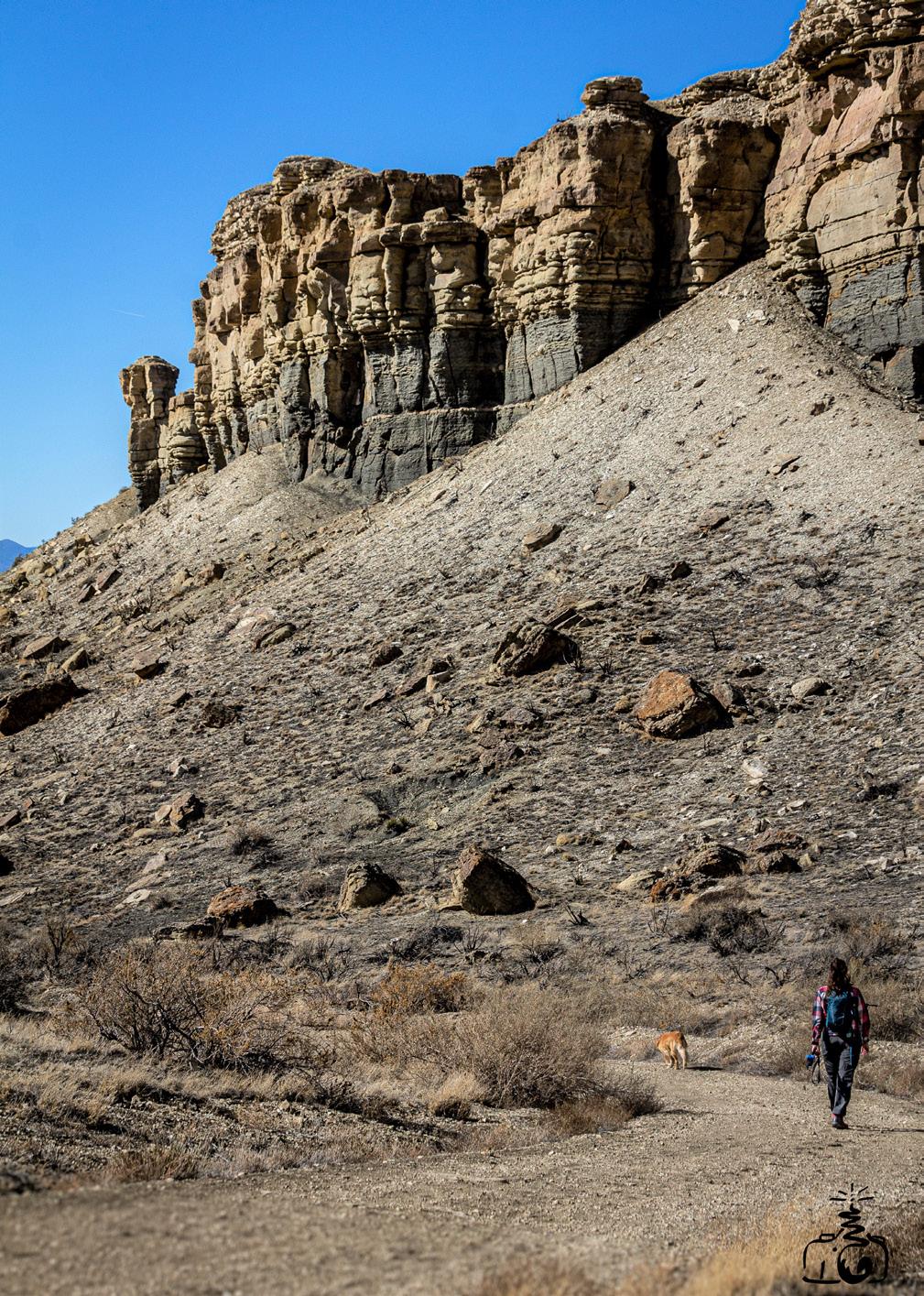
For a short hike, Arkansas Point Trail has epic payoffs. Wide open vistas stretching as far as the eye can see are available within a few minutes and a few huffs. Some trails impress you with scale. Others impress you with a challenge. Arkansas Point Trail gives you both—and it’s accessible for the whole family.
It gives you:
• Elevation without punishing climbs
• Solitude without deep wilderness logistics
• A quick reset within minutes of town
For locals, Arkansas Point Trail is the kind of place you can return to again and again and never get bored. Conditions always change. Light constantly changes. Water levels shift. Meanwhile, the trail stays familiar. And it’s a short drive from Pueblo.
PHOTOGRAPHY NOTES
Arkansas Point Trail is a photographer’s dream. If you’re carrying a camera, this trail gives you several options to focus on. If you have a DSLR, you might consider bringing a wide-angle lens for landscape shots and a telephoto lens for up-close wildlife shots (and bokeh). Morning light comes from the east, illuminating the hills. Evening light warms the bluffs and the water’s surface. Cloudy days? Even better. The contrast between sandstone and steel-gray water can be dramatic.
FINAL WORD
Within a short distance, Arkansas Point Trail offers epic contrasts and perspectives. Desert against sky. Canyons carved with shadow. Wind across open water. In under two miles, you’ll climb just enough to see clearly. And sometimes, that’s exactly what a trail is supposed to do.
CONTriBUTOrs
DAVID ARMENTA
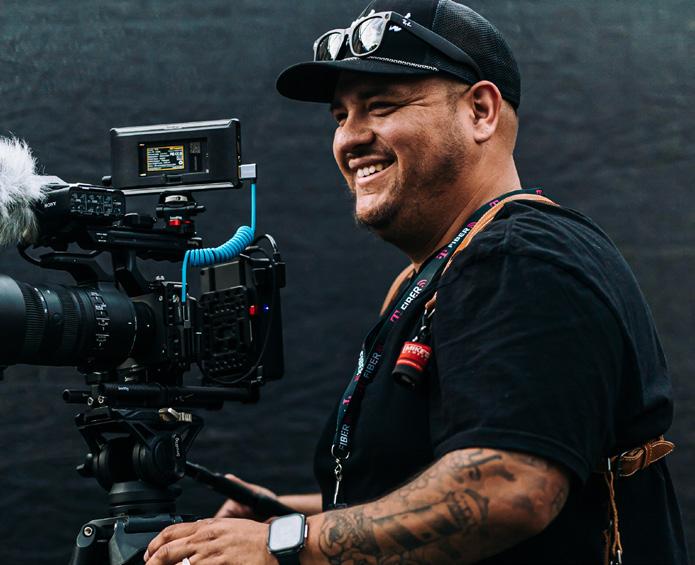
David (aka David Took It) is one of Pueblo’s signature photographers. David’s work is instantly recognizable. His use of light, both natural and artificial, is what makes his work pop, as well as his use of warm tones. David provides us with eye-catching images of the people and events that make Pueblo County a unique place to live and visit.
STEVEN SPENCER

Steven is a retired veteran with a master’s degree in film, bringing a disciplined eye and storytelling mindset to everything he creates. As a photographer, he focuses on capturing moments with intention, blending technical skill with narrative depth shaped by both service and cinematic training.
JAVIER QUINONES MISHILA MONDRAGON
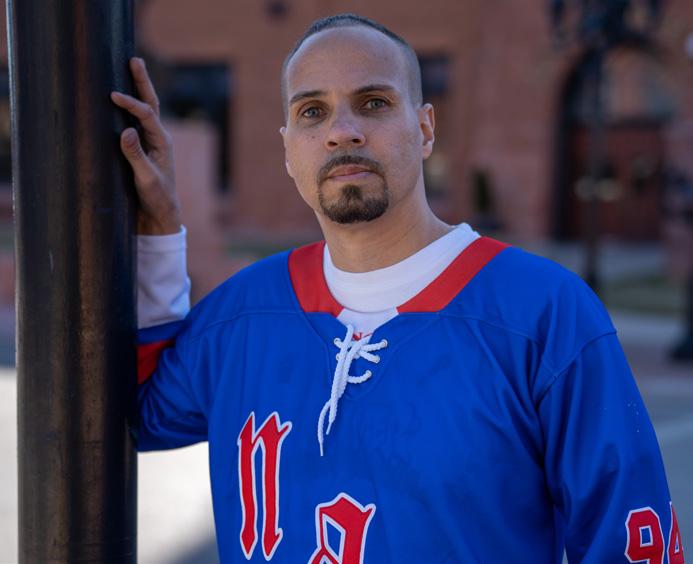
Javier is a community leader and arts advocate based in Pueblo. He is the founder and executive director of Mad Fresh Productions, a nonprofit dedicated to youth development through Hip-Hop culture. Javier creates platforms that celebrate graffiti, breakin’, emceeing, and DJing while strengthening community connections. Through events like the annual Hip-Hop Festival, he empowers young people to lead, create, and thrive.
CYD CRADDOCK
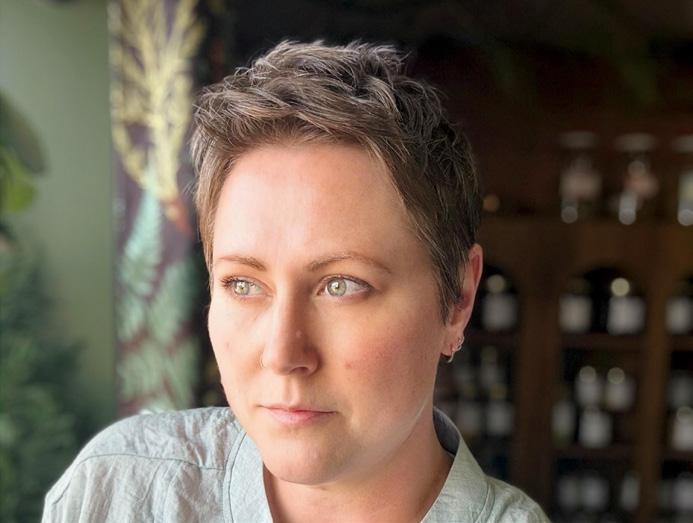
Cyd is a small business owner, writer, and photographer based in Pueblo, Colorado, where she grew up and returned in 2020. Her work focuses on place, memory, and bearing witness to the lives, landscapes, and patterns that shape us. She runs a small apothecary in downtown Pueblo.
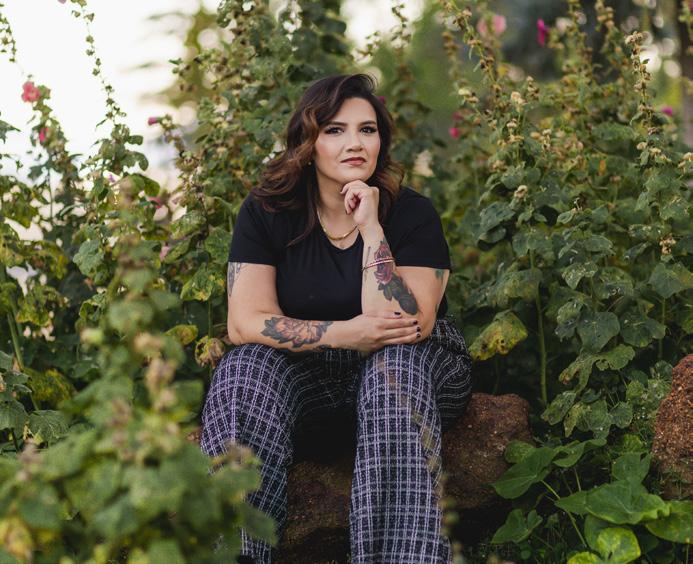
Mishila is a professional photographer specializing in portrait, wedding, and event photography. Known for a people-centered approach, she is dedicated to capturing authentic moments. Mishila’s work blends artistry with storytelling, creating images that feel both timeless and personal.
ASPEN JORDON

Aspen took the photo for this issue’s Publisher’s Note. She’s in third grade and is an Honor Roll Student. She plays piano, and loves to take photos and make short films. She lives in Pueblo West with her dad, mom, big brother, two dogs, a bunny, and a flock of chickens.
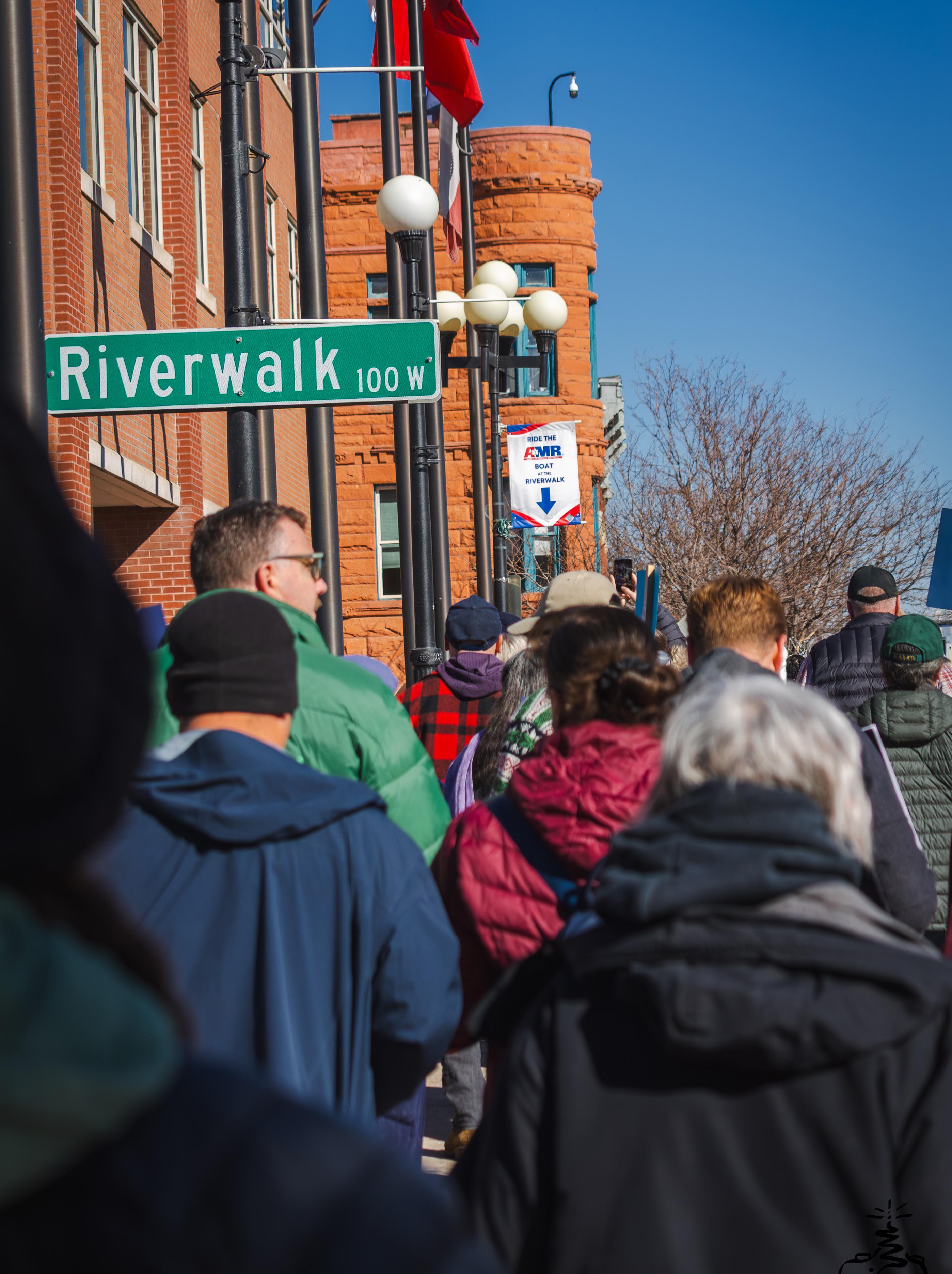
This is Pueblo. When the people stand together. When the people walk together. When the community shows up to support each other. This was taken during this year’s Martin Luther King Jr. Day March. We marched together in solidarity to honor his legacy and Black History Month.