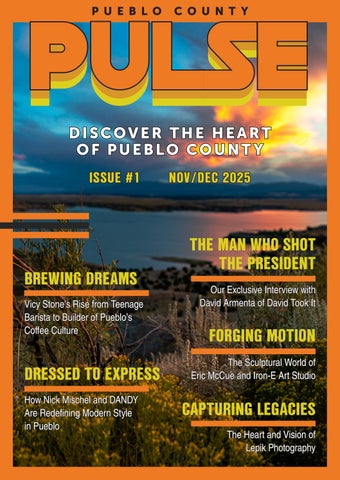
Our Exclusive Interview with David Armenta of David Took It BREWING DREAMS
Vicy Stone’s Rise from Teenage Barista to Builder of Pueblo’s Coffee Culture DRESSED TO EXPRESS
How Nick Mischel and DANDY Are Redefining Modern Style in Pueblo
FORGING MOTION
The Sculptural World of Eric McCue and Iron-E Art Studio
The Heart and Vision of Lepik Photography THE MAN WHO SHOT THE PRESIDENT
THE MAN WHO SHOT THE PRESIDENT
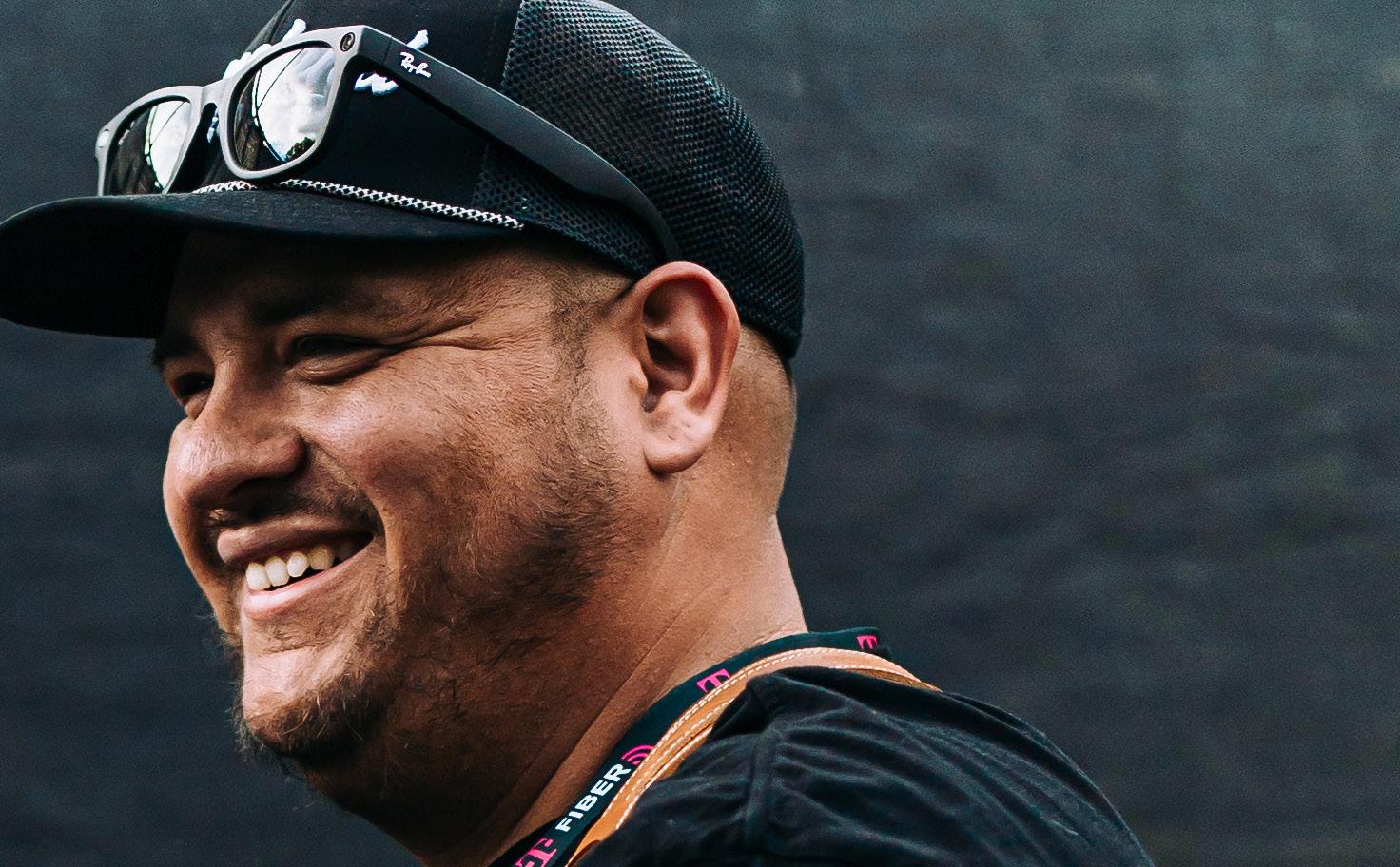
Our Exclusive Interview with David Armenta of David Took It
MEET THE PUBLISHErs
07 BREWING DREAMS
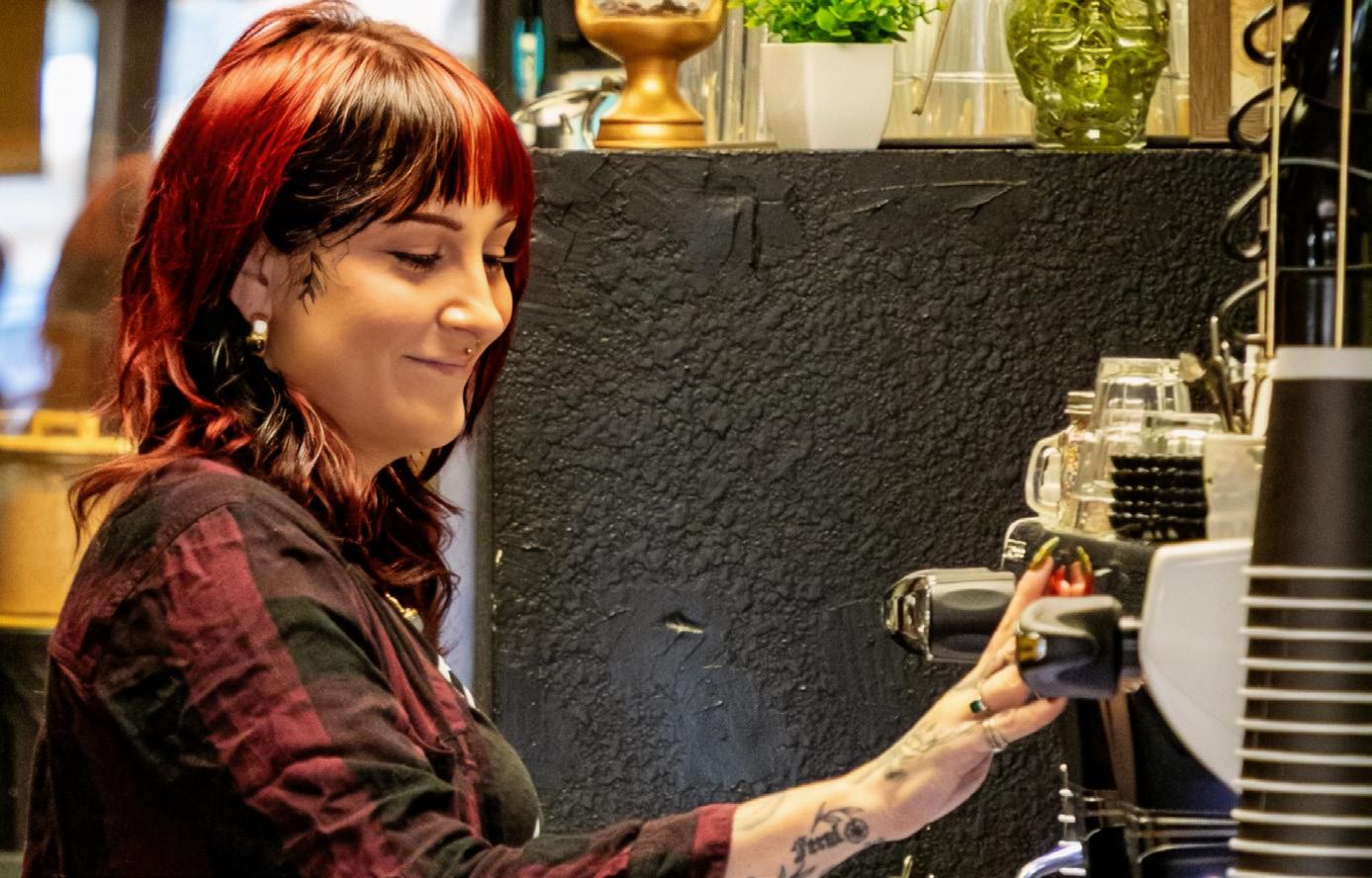
Vicy Stone’s Rise from Teenage Barista to Builder of Pueblo’s Coffee Culture
13 FORGING MOtiON
The Sculptural World of Eric McCue
The Heart and Vision of Lepik Photography
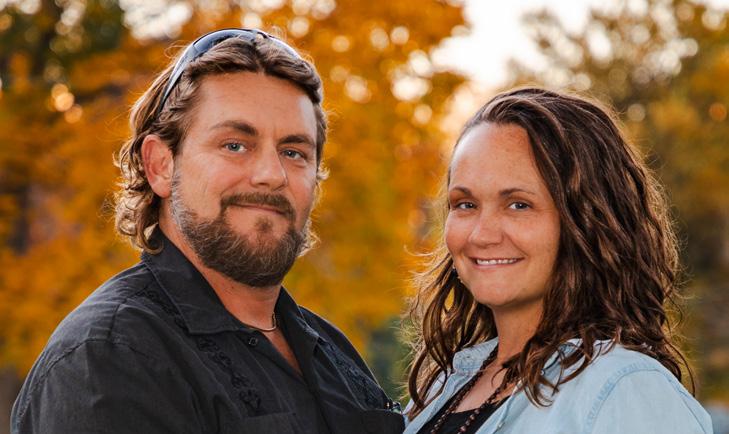
We are Nate and Chelsea Jordon, the publishers of Pueblo County Pulse. We have lived in Pueblo County since 2020 and are proud to call it home. We know Pueblo County is growing and we want Pueblo County Pulse to grow with it.
Nate went to graduate school in Boulder and started his first publishing venture, Monkey Puzzle Press, while completing his MFA. After graduating, he moved his business to Denver. After ten years as an independent publisher, Nate then took a hiatus to focus on his family.
Now that Nate is back in Colorado, he’s decided to return to publishing in an effort to offer his local community a unique reading experience, both in print and online. As an artist, a history buff, and an Army veteran (11B, 25th Infantry Division), Nate is proud to call the Home of Heroes his home, too.
Chelsea is a recent graduate of Mitchell Hamline Law in Minneapolis, Minnesota, receiving her Juris Doctor in June 2025. She passed the Colorado Bar in September and plans on serving the community within Pueblo County. Originally from northwest Arkansas, she loves Southern Colorado and the lifestyle that comes with it.
Together, Nate and Chelsea have three talented kids spanning university to elementary school. They also have two Golden Retrievers, two cats, a flock of chickens, and a handful of rabbits. If that isn’t enough to keep them busy, they also own a few local businesses, their latest enterprise being Pueblo County Pulse.
THE MAN WHO SHOT THE PRESIDENT
OUR EXCLUSIVE INTERVIEW WITH DAVID ARMENTA OF DAVID TOOK IT
by Nate Jordon @davidtookit
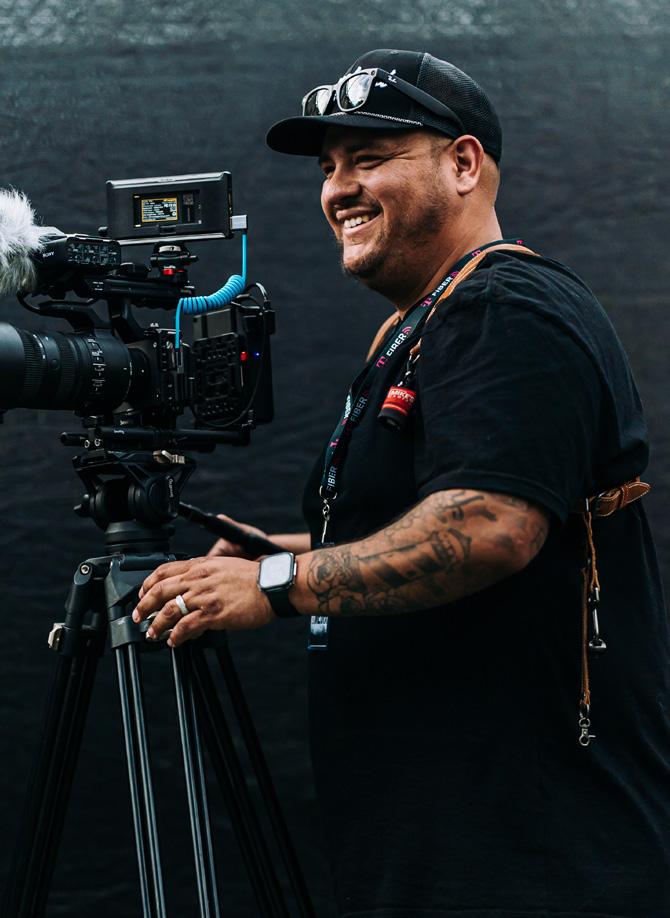
Photographer David Armenta, known as David Took It, has built a reputation for blending technical mastery with genuine storytelling, capturing everything from Pueblo’s cultural heartbeat to national moments like President Biden’s visit. His brand thrives on speed, authenticity, and connection—rooted deeply in community while expanding into high-profile collaborations. David continues to evolve as a visual storyteller driven by passion, precision, and a relentless pursuit of growth.
David Armenta, better known as David Took It, has become one of Pueblo’s most recognizable visual storytellers. From weddings and senior portraits to real estate, fitness, and small business promotions, his work balances technical precision with a deep respect for the stories people carry. With a brand built on speed, creativity, and authenticity, David has carved out a space that’s both local and far-reaching—capturing everything from Pueblo’s cultural events to national moments like President Biden’s visit. His journey is one of restless creativity, constant growth, and a commitment to putting Pueblo’s people and stories at the forefront.
I met David on a crisp September morning at Solar Roast in Downtown Pueblo. The following are the highlights of a 90-minute discussion that could’ve gone a lot longer.
PULSE: Your brand, “David Took It,” is both clever and memorable. What’s thestorybehindthename?How’dit come about?
DAVID: Back in high school, I had a family member who always wanted Instagram photos, so we’d go out and take pictures—even just with my phone. One time at the pumpkin patch, she looked at a shot and said, “David took it,” and told me that should be my name if I ever blew up. I ran with it, even putting “David Took It” on the photo, and later got a logo when I decided to take it seriously. Now it’s my brand—catchy, easy for social media, and something people love to play off.
PULSE: You specialize in everything from weddings to fitness and headshots. Is there a particular genre or subject that speaks to you most, and why?
DAVID: Those are pretty broad spectrums, but I probably shoot real estate more than anything else. However, what fuels me and fuels the pockets at the same time is shooting people who are passionate about something.
I don’t care what you’re into. Underwater basket weaving? I want to shoot it. I want to capture your passion and whatever you’ve dedicated your life and story to, let me capture that. That’s my jam
PULSE: Your site advertises a 24-hour turnaround on some services. How doyoumanagethatbalancebetween speedandquality?
DAVID: I first learned about fast turnarounds from photographer Jeff Lopez, who can deliver full wedding galleries within days. Working alongside him and my business partner, Natasha Rose, taught me the value of speed and quality. For me, the 24-hour turnaround isn’t just for clients—it’s about clearing my own slate so I’m not lying awake wondering if I nailed the shot. It means finishing the work the same night, so by morning, I have a happy client and a clean slate.
DAVID: Pueblo is where I want to build because it’s rich in history, full of diversity, and everyone has a story worth telling. I capture community events big and small—whether I’m paid or not—so
those moments live on, maybe one day even in a coffee table book. Despite the challenges, people travel from outside cities to work with me, and I’ve collaborated with incredible local talent that shows Pueblo isn’t limited unless we limit ourselves. There’s a growing creative energy here, and now that younger voices are stepping up, the city feels ready for change and growth while still offering something for everyone.
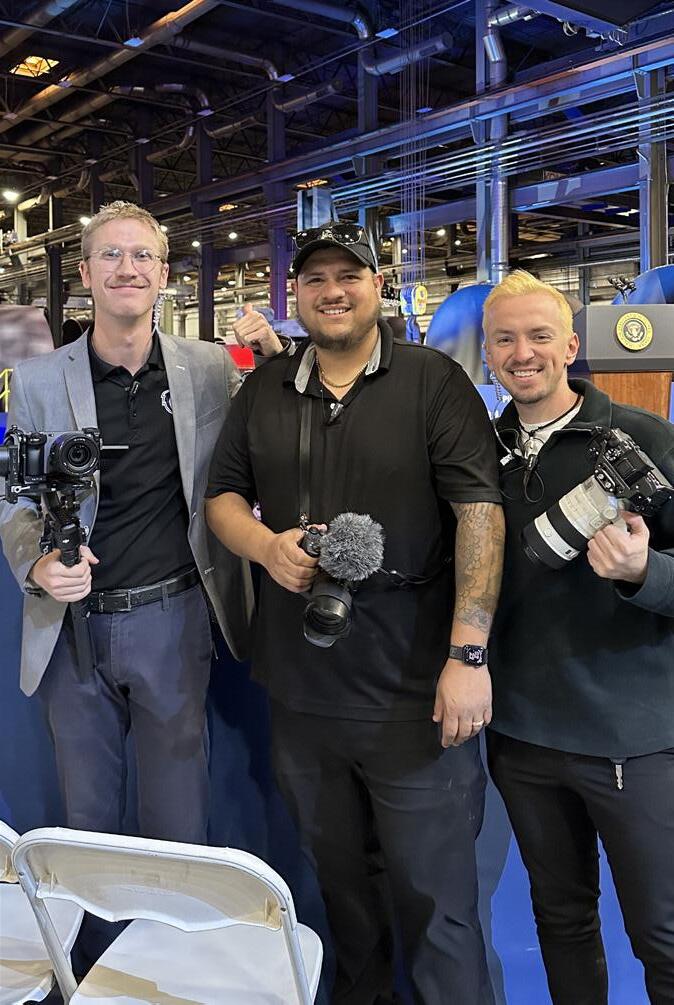
DAVID: I got a call from an event planner in town who said a VIP event needed vendor background checks and a team. I brought in Tyler Shown of Jolly Mule Productions and Jerod Young of Jrod Visuals, trusted collaborators I’d worked with before. After a train derailment delayed things, President Biden’s visit to Pueblo finally happened. Security was intense—Secret Service, bomb dogs, rooftop snipers. The venue completely transformed for national media. I was the only independent photographer given a White House press pool badge, standing alongside national news outlets like CNN, NBC, CBS, all of us plugged into the same polished audio system. I was witnessing a tightly orchestrated production. Clearly, getting the opportunity to photograph the President of the United States is a pinnacle moment. But being part of that behind-thescenes process was just as pivotal for me.
More recently, I connected with Swiss Pod through a last-minute headshot job, which turned into an ongoing relationship as they test the Hyperloop a MXV Rail. Their founder, Denis Tudor, won Elon Musk’s SpaceX competition, and now we’ve built a close working relationship. It’s been surreal to document projects of that scale and an honor to help tell those stories.
PULSE:You’rea10×publishedpho-
David’s crew standing in front of the Presidential podium before President Biden’s visit to Pueblo.
DAVID: Took It Fitness grew out of David Took It after I realized bodybuilding content didn’t connect with a broad audience, even though I wanted to highlight the dedication of the pros I worked with. During quarantine, a friend and I—who once dreamed of combining his gym with my photography—made it happen, and his gym has since taken off. That experience showed me the value of separating niches, like fitness and real estate, into their own brands rather than mixing them under one umbrella.
Another project was the Lasting Legacy Podcast, which I co-hosted with my accountant, the first person I called when I considered quitting my job. He believed in me, helped me handle taxes, and taught me how to run a legitimate business so bigger opportunities wouldn’t slip away. We recorded 32 episodes, interviewing local business owners, and though we haven’t done a second season yet, we often talk about bringing it back. The podcast not only built community but also brought us real business opportunities, and now with a studio setup, future seasons will be even smoother.
DAVID: It’s easy to chase trends on TikTok or Instagram, but likes and views rarely translate into money unless you’re pulling astronomical numbers for brand deals. I treat Instagram more like a yearbook or portfolio—a place to showcase stories and work—while keeping everything backed up on hard drives and the cloud. Sometimes I post less, not because I’m inactive, but because it’s not the right time or story to share.
When I experiment on TikTok, like
covering the coroner search warrant scene, it’s more about documenting what I saw than pushing a narrative. Clients almost never find me through my website or SEO; 95% of my work comes from referrals or people seeing my Instagram. One exception was a woman from Iran who Googled me for headshots, but even she checked my Instagram afterward. Ultimately, Facebook works better for audiences over 40, Instagram for under 40, and I’m content with how my presence is set up now.
DAVID: When I quit my job in September 2020, I was in a strange place, unsure of where I fit. Around that time, my friend Kenny Garcia—big from his Vine days—called me with a wild opportunity: to help shoot visuals for a DJ who had just released a song with Loren Gray, one of the biggest TikTokers in the world. I flew to LA, shot behind-the-scenes photos and video at The Billy Studio and on the streets, and within 24-hours, my photos were shared by Loren Gray herself and even used by Apple Music.
It was a surreal, affirming experience that proved I could hang with top talent in LA, even if I don’t love that world. The shoot was positive, fun, and full of those “only in LA” moments, like Loren casually inviting us to watch her Ghost Adventures episode at her house. Two weeks later, Kenny and I shot a $250,000 McLaren with no plan, perfect overcast skies, and ended up with some of the best car shots I’ve ever taken. Looking back, those moments reminded me why I left my job: freedom, creativity, and the thrill of making it happen on the fly.
DAVID: It really depends on what I’m shooting. Time is money, so planning
matters. For seniors, I keep it simple. I ask for inspiration photos and just two questions: city or nature? From there, I let the session flow organically without overposing. Bigger projects, like fashion brands or special requests such as recreating a “grunge New York” vibe in Neon Alley, require more planning, scouting, and attention to detail.
DAVID: I love using Ray-Ban Metas for behind-the-scenes work because they let me review lighting and setup while showing the effort behind each shot. Instagram only reveals a fraction of what it takes to capture an image. As for gear, I’m all in on Sony—my favorite focal length is 85mm, though I’ll use a 35mm when I need to include architecture or let the background tell the story. I prefer fast primes (1.4) for their look, but I keep zooms like the 24–70 and 70–200 handy for documentary-style work. On a wedding day, though, I stick with an 85 and 35 every time.
PULSE:Howlonghaveyoubeenin businessasaprofessionalvisualstoryteller?Hasyourvisualstyleevolved significantlyovertime?Howwould youdescribewhereitstartedversus where it is now?
DAVID: I shot my first wedding in 2015 using anything I could find—an iPhone, a Sony A6000, a Rebel T6, a drone, and more—after my brother landed the gig for a relative. The highlight was wild footage of a Hellcat Challenger and Dodge Vipers tearing through Liberty Point, which made the video go viral because no one had seen a wedding video like that before. Editing was a nightmare—my computer crashed three times—but I learned a lot from those mistakes, even if I’d never share that video today. Since then, my style has evolved, and as of September 2020, I’ve been working full-time in photography for six years with no backup plan.
PULSE:Whatadvicewouldyougive someonestartingasaphotographer orvideographertoday,especially someone in Southern Colorado?
DAVID: My advice is, find community. Find a Facebook group like the one Josh Lepik runs. He does monthly photo contests, and it’s not who has the best photo or who has the best gear. It’s who’s thinking outside the box. His last one was a doorway competition. Just get involved with photography groups, especially within your niche.
DAVID: The desire for perfection. Always chasing that perfect photo and that dopamine hit you get once you get close. And continuing to inspire others while telling the stories that need to be told.
What stood out in talking with David is not just his technical skill, but his hunger to keep evolving, whether that’s diving into new gear, exploring
niche projects, or mentoring through community. His eye is always on the next challenge, but his foundation remains rooted in Pueblo and its people.
For him, photography is more than images; it’s about preserving moments, building community, and chasing that perfect blend of light, story, and emotion. David Took It isn’t just a clever name, it’s a statement of presence, one Pueblo will keep seeing for years to come.
David’s shot of President Biden during his visit to Pueblo.
Grassroots Gravel 2025
Photo Credit: Unalome Photography, LLC
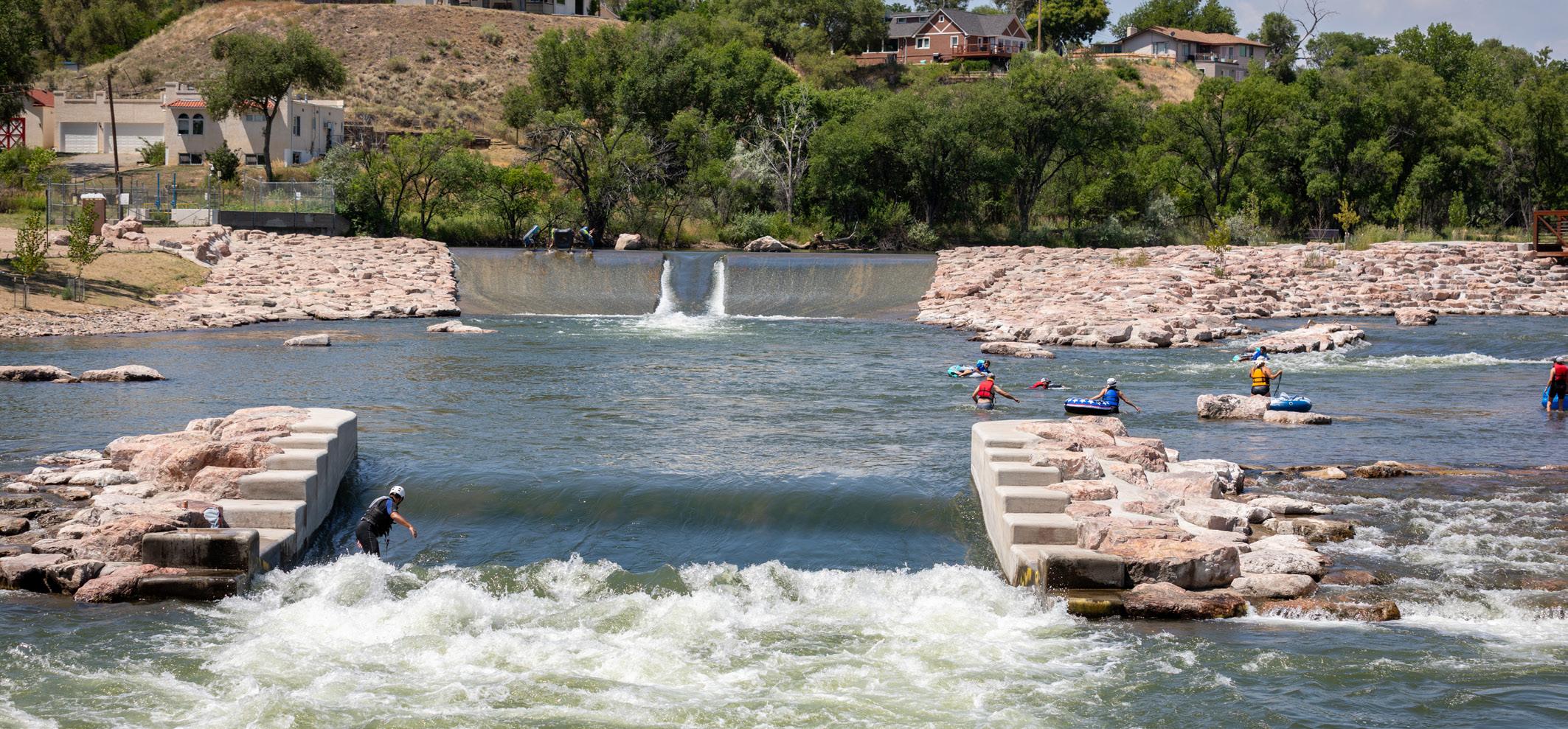
Arkansas Riverwalk 2025
Photo Credit: Unalome Photography, LLC
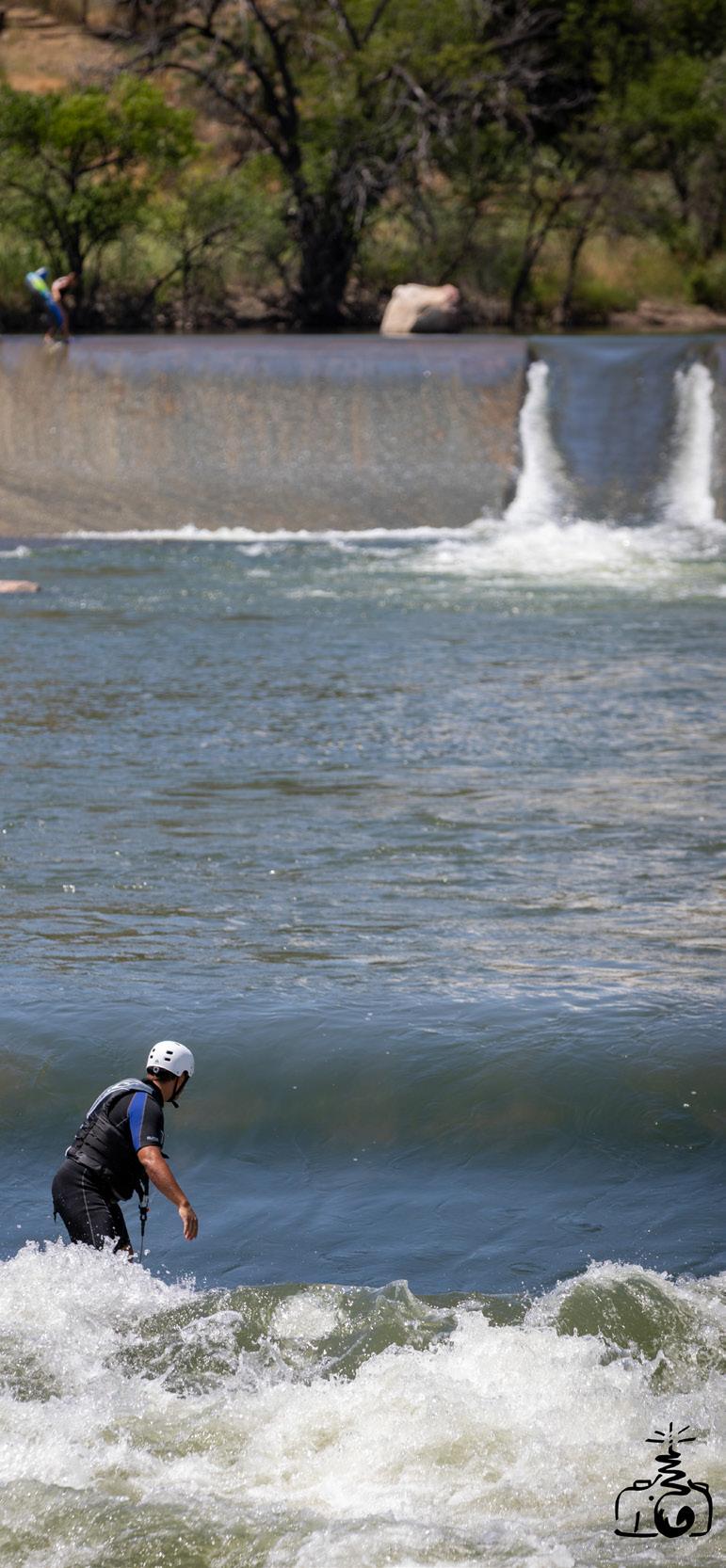
Waterworks Park 2025
Photo Credit: Unalome
SCENE & SEEN
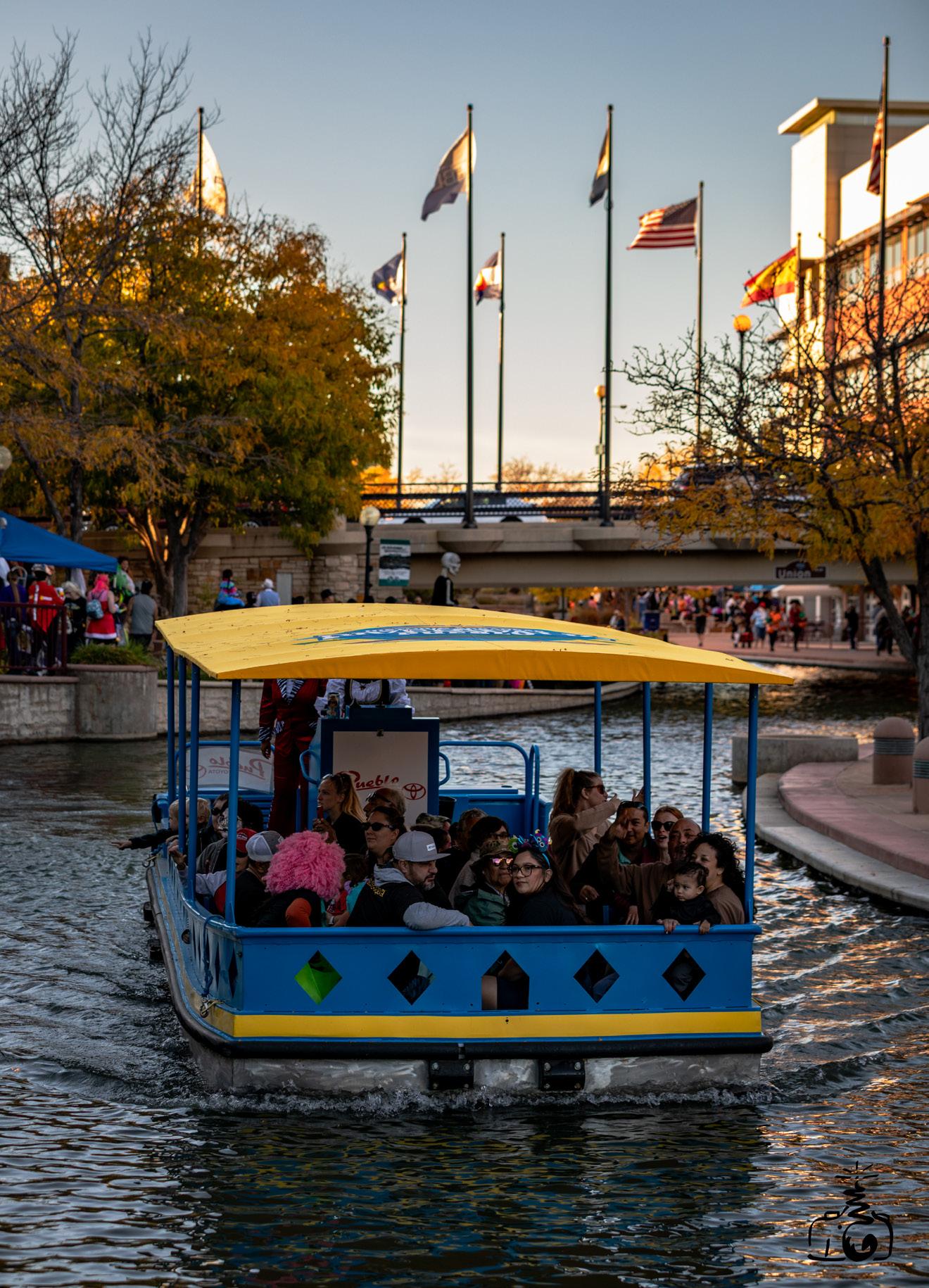
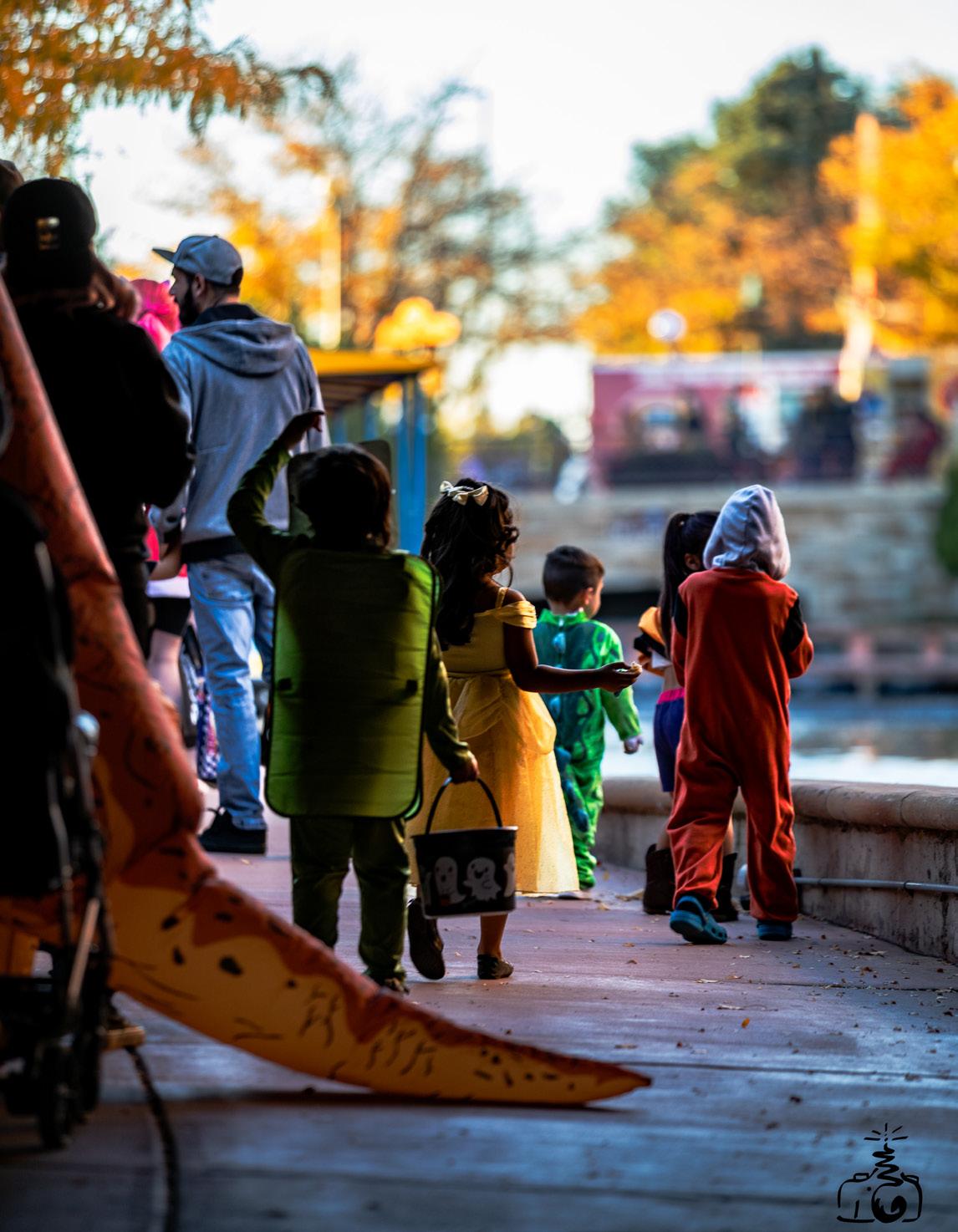
Fright Night on The Riverwalk 2025
Photo Credit: Unalome Photography, LLC
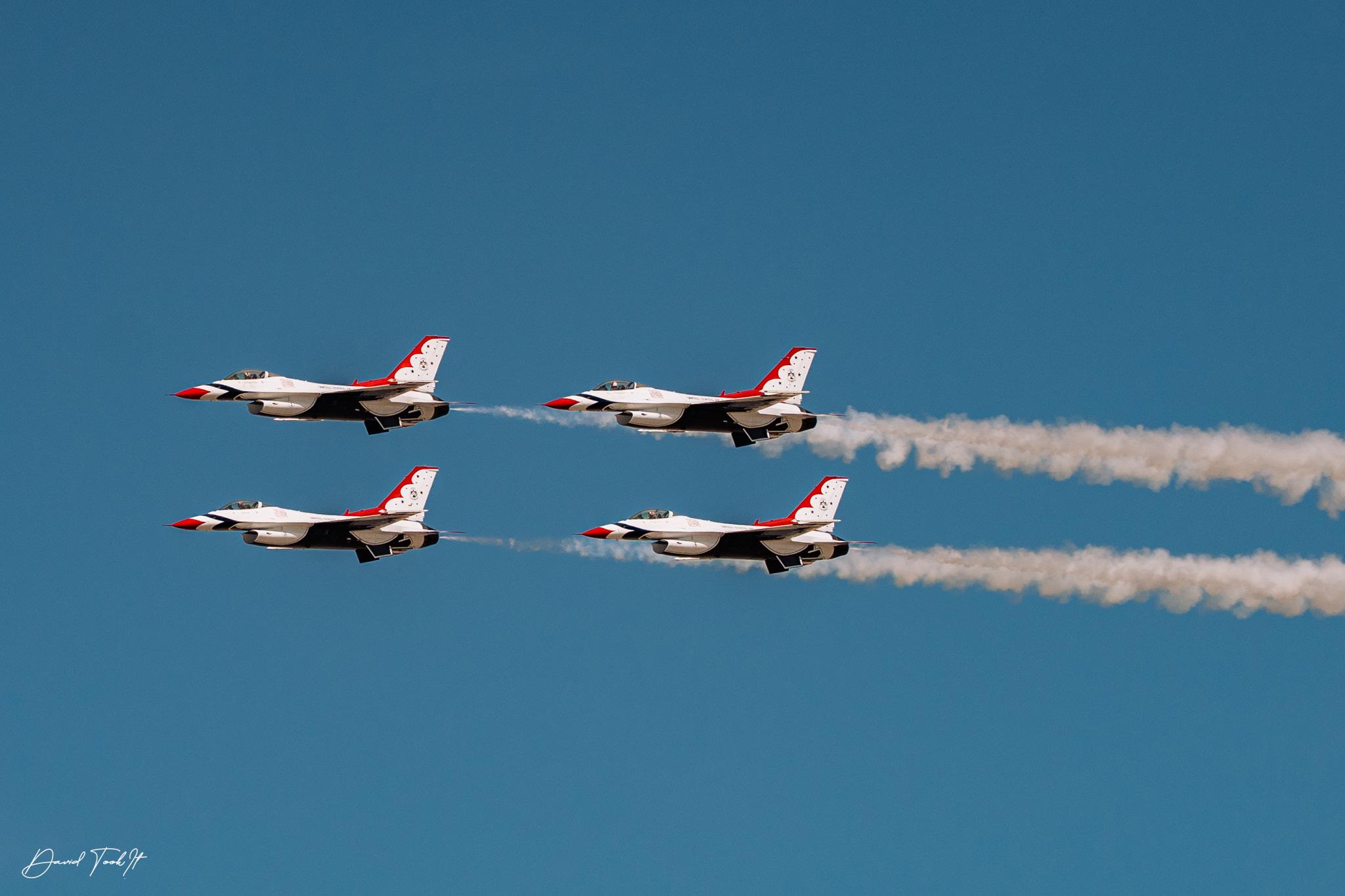
Air Force Thunderbirds
Pueblo Air Show 2025
Photo Credit: David Took It
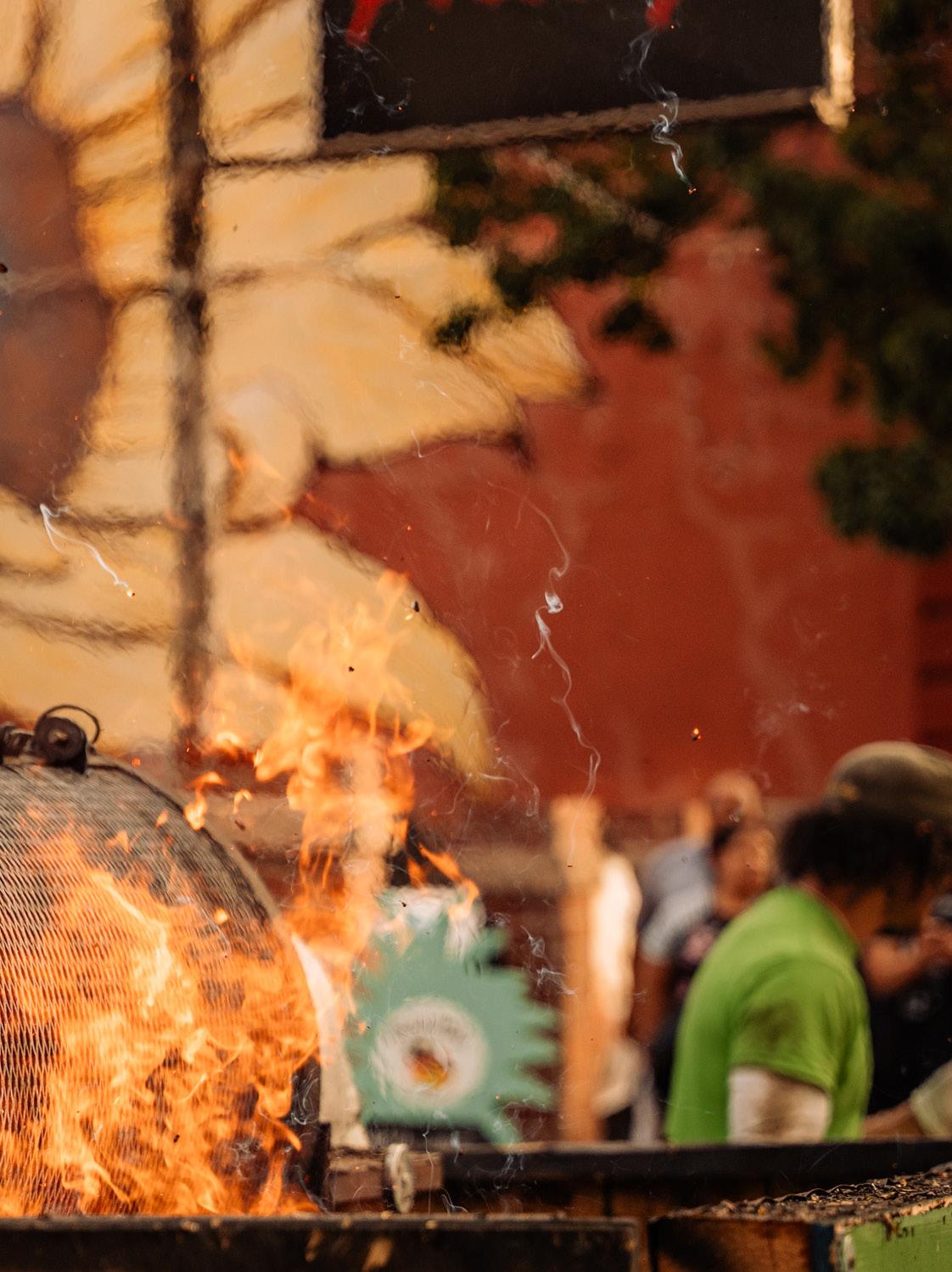
Chile & Frijoles Festival 2025
Photo Credit: David Took It
2025
Unalome Photography, LLC
BREWING DREAMS
FVicy Stone’’s
RIse from Teenage BaRISta to Builder of Pueblo’’
’
s Coffee Culture
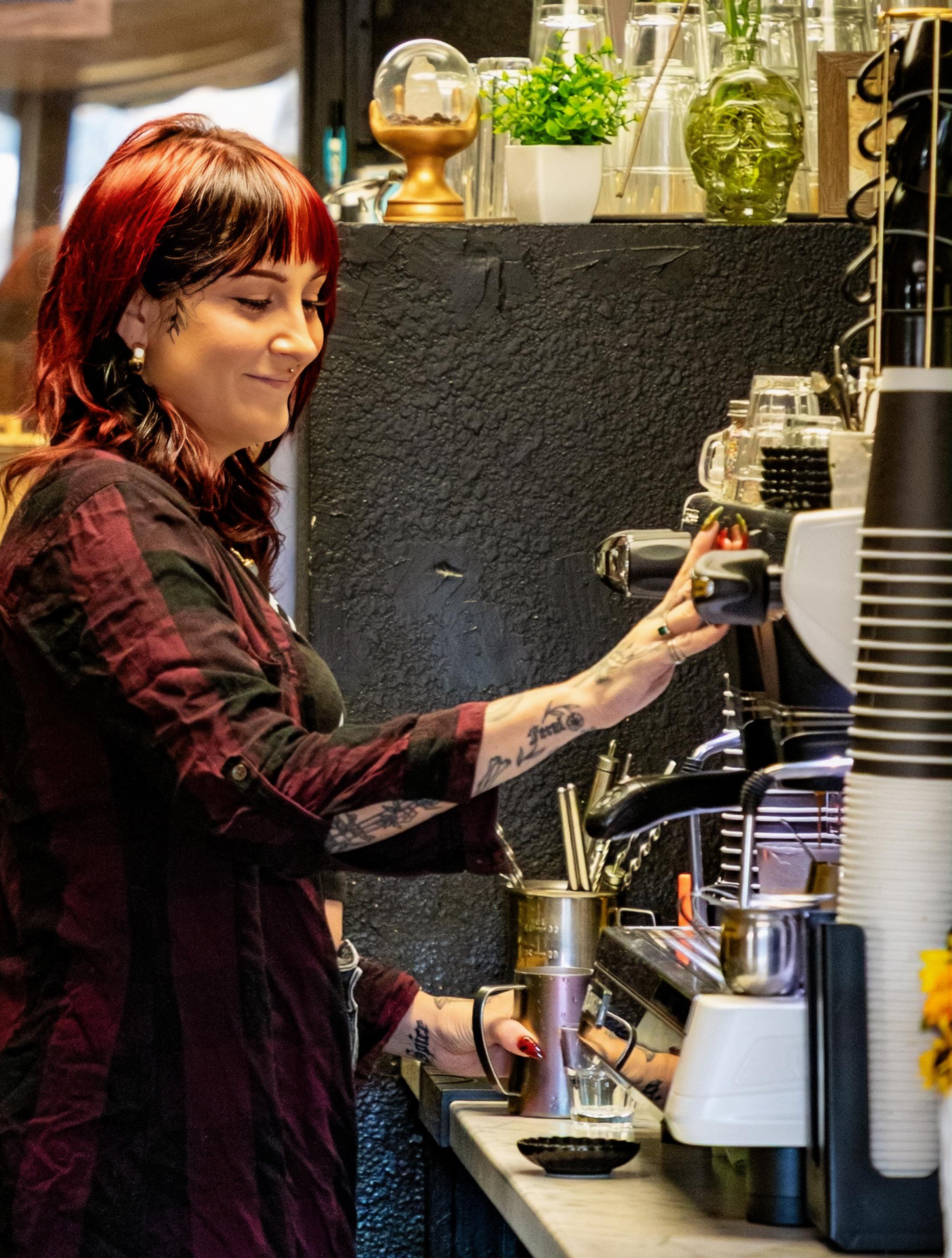
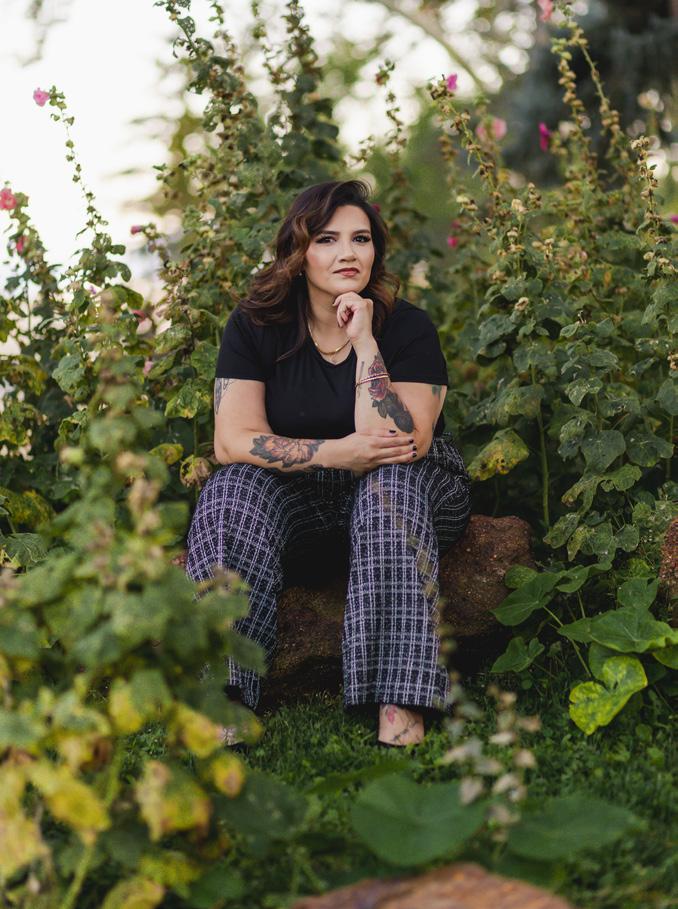
or Vicy Stone, owner of The Sacred Bean in Pueblo, coffee has never been just a beverage—it’s been a calling. What began as a teenage job at The Daily Grind grew into a lifelong pursuit of craft, community, and connection. From sketching out dreams in a high school notebook to teaching herself latte art on a grocery-store espresso machine, Vicy has built her vision one pour at a time. Today, The Sacred Bean stands as both a tribute to her journey and a gathering place where Pueblo’s diverse cultures meet over something simple yet profound: a cup of coffee.
Vicy opened The Sacred Bean on her only day off and made us both cortados. We met on a chilly September morning and sat in the sun as it was peaking above the old red brick buildings of downtown Pueblo.
by Nate Jordon
PULSE:Whatfirstinspiredyouto create The Sacred Bean, and what doesthenamemeantoyou?
VICY: This building is actually where I started making coffee, back when it was The Daily Grind. I worked here for twelve years as the manager. During that time, my boss really sparked my passion for coffee. Charles shared how, in many cultures, coffee is considered a “sacred bean”—something that brings people together, almost ritualistically. That idea stuck with me.
Over the years, I kept planning little pieces of it, imagining that maybe one day it could become real. Eventually, I left, had kids, and life moved forward— but that seed of an idea never left.
PULSE:Havingkidsisabigchange, isn’t it?
VICY: Oh, yeah. I was pregnant and had both of my kids while I was managing The Daily Grind. After a while, I thought, I should probably step back and spend more time with them. While at home, we bought our first little coffee machine for the house—just a standard De’Longhi from the grocery store. At the time, nobody in Pueblo was doing latte art, and the coffee scene felt pretty stale. So I decided that’s what I’d focus on. I taught myself how to pour latte art on that cheap little machine.
I started posting photos and videos of my pours, and another local shop found me on Facebook. They swooped me up and asked me to manage their space while I planned my own thing. I taught their staff how to pull shots, texture milk, and pour latte art. I even created their recipes and ran their social media. But in the end, it wasn’t a great experience. They underpaid me, and baristas weren’t allowed to take tips. That really shaped my idea of what kind of boss I wanted to be—and @the.sacred.bean
definitely what not to be.
So, I left. That became the push to finally start something of my own. At the time, I had a Nissan Rogue and was sketching out plans for a little pull-out counter in the back, like a mobile espresso bar. My husband had this old Volkswagen bus he’d had since high school, just sitting around. We joked about using it, but then he ran with the idea. He did the full build-out—countertops, electrical, the works. That’s how we launched. We were in the bus for a couple of years.
Then, full circle: our friend Ed Perry, a local realtor, called and said the owner of The Grind was selling the building. The buyers wanted someone to lease the space, and Ed thought of us. It felt like everything had come back around. So, we jumped in—and here we are.
VICY: I was only fifteen when I started here—it was my first job. Not long ago, we were cleaning the building and found some of Charles’s old paperwork. My husband was moving a folder off a shelf, and out fell my original work permit from when I was fifteen. I still have it. It’s wild to think it’s been almost twenty-three years since then.
VICY: The idea really started while I was working at The Daily Grind. I’d catch myself wondering what it would be like to have my own place.
Back in high school, I even kept a notebook—it was kind of like a dream journal. I filled it with little ideas, and that’s where I first wrote down the name. I must have been about seventeen. I even sketched out a logo: a coffee bean with wings and rays of
light coming off it.
Back in high school, I even kept a notebook—it was kind of like a dream journal. I filled it with little ideas, and that’s where I first wrote down the name. I must have been about seventeen. I even sketched out a logo: a coffee bean with wings and rays of light coming off it.
VICY: My personal experiences with past employers really shaped our atmosphere and values. I want this to be a safe space for employees, where they’re paid well and actually want to be. Everyone’s had that really terrible boss—that’s honestly my inspiration: to never be like them. I know my employees appreciate it. They feel valued, and that’s the most important thing.
VICY: Pueblo has an immense sense of culture and community. We host local artists, put on community events, and highlight the many cultures that blend together to make Pueblo unique.
When I was developing the menu, I wanted to create drinks that honored those different backgrounds—including my own. For example, our Potica Latte is inspired by a Slovenian sweetbread, a nod to my Slovenian roots. We also serve a Puerto Rican drink called a Mazagran, an espresso soda. Little touches like that bring diverse cultures into the coffee world.
VICY: I want our café to be a place where people come together. Coffee, like I said, is sacred—it’s ritual. It creates moments, and those moments can shape a day or even a life.
Coffee is about connection. It gives us time for ourselves, for our families, and for our community. People don’t just come here to sit alone with a cup of
coffee. I see them meeting others they might never have connected with otherwise. That’s what it’s about—community.
VICY: Well, my favorite drink is a cortado. We’re the only place in town that makes a true, traditional cortado. Starbucks has kind of skewed the idea with their own version, but for me, a cortado is the best way—outside of straight espresso—to really taste the flavor notes. You get the full body of the espresso without it being lost in milk or sugar.
If I had to pick something more unique from our menu, I’d probably say the blueberry basil latte—it sounds unusual, but it’s one of my favorites. We also have an ube latte made from a Filipino sweet potato, and that one is really popular too.
PULSE: What’s the most underrated drinkyouservethatpeopleshould giveachance?
VICY: The Mazagran—it’s a Puerto Rican drink. Traditionally, it’s made with seltzer water and a vanilla rum syrup. I make ours with butterscotch, vanilla, and an orange slice. Basically, it’s a soda with espresso—a sparkling Americano. It’s a little different from what most people expect when they order coffee, but it’s definitely worth trying.
VICY: Honestly, it’s the hours. We’re here a lot, and with my health issues, it can be tough. That’s my biggest struggle—balancing my health while still putting the business first. Sometimes I have to step back and take care of myself, and that’s not always easy.
VICY: Fortunately, Pueblo really loves its local businesses. The community here is fiercely supportive, and even other business owners cheer each other on. That’s something you’ll never get from a chain—a chain doesn’t care about your community the way locals do.
Local businesses create space for artists, for events, for connection. You don’t find that in a corporate setting. And Pueblo really appreciates it.
VICY: I hope to see us still out here doing what we love, with even more community involvement. Hopefully, we’ll have the bus back out on the street, too. More than anything, I just want to keep inspiring people—whether it’s through coffee or simply encouraging them to chase their own dreams.
I still pinch myself every day when I walk in here. I can’t believe this place is mine.
PULSE: It’s the culmination of belief in oneself and dedication and hard work.
VICY: And it’s not just my story—it’s the community’s story too. So many people have helped along the way. A lot of my regulars from The Daily Grind have followed me everywhere, uplifting and motivating us.
We actually launched the bus right before COVID hit. We had to adapt quickly, and we ended up doing some crowdsourcing since we’d paid for everything out of pocket. We’re not wealthy people; this has always been a shoestring, DIY effort. Both of us come from working-class backgrounds.
My husband, a Marine, even worked with me at The Grind for a while after our daughter was born, and he developed his own love for coffee. After we opened here, I finally taught him how to pour latte art, which was a really cool full-circle moment.
PULSE: If The Sacred Bean were a person,howwouldyoudescribeits personality?
VICY: I feel like I’ve put so much of my own personality into this place that it’s hard not to ask, who am I?
But if I had to describe The Sacred Bean as a person, I’d describe it as quirky but hip, eclectic yet poised, with a radically diverse taste in music and art—and probably covered in tattoos.
VICY: I hope they carry a little bit of inspiration with them throughout their day and their lives. Our staff and I put a lot of passion into what we do. So, I want it to make a difference in people’s day-to-day lives, and how they view coffee culture and our coffee scene.
The Sacred Bean is proof of what happens when hard work, creativity, and community support converge in the right place at the right time. In a city that values its local roots and the people who nurture them, Vicy has created more than a café; she’s built a space for inspiration, connection, and the daily rituals that remind us why coffee is, in her words, sacred. The Sacred Bean isn’t only a reflection of Vicy’s passion—it’s Pueblo’s story too.
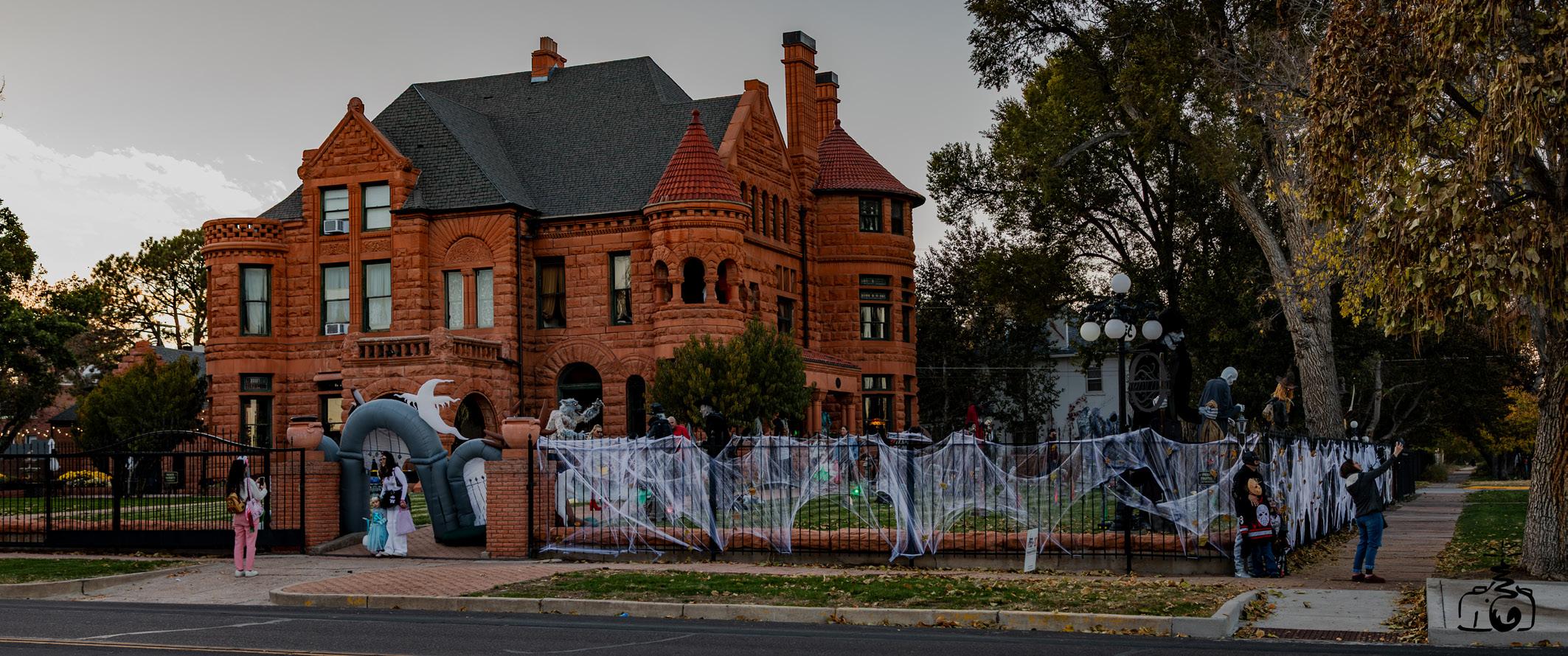
The Orman Mansion, Halloween 2025
Photo Credit: Unalome Photography, LLC
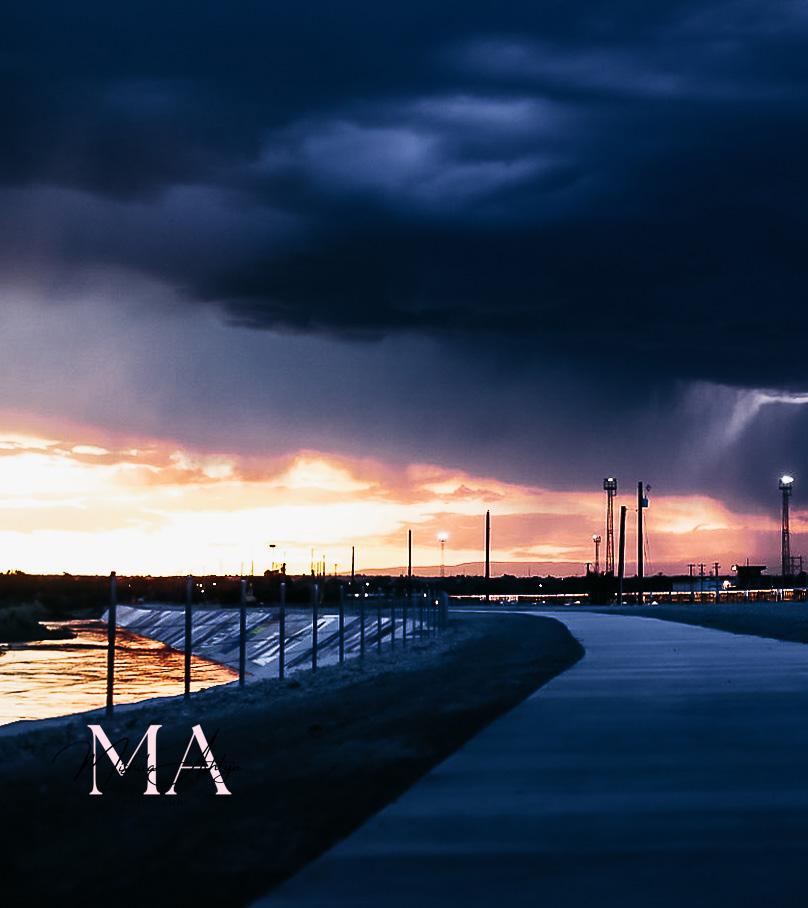
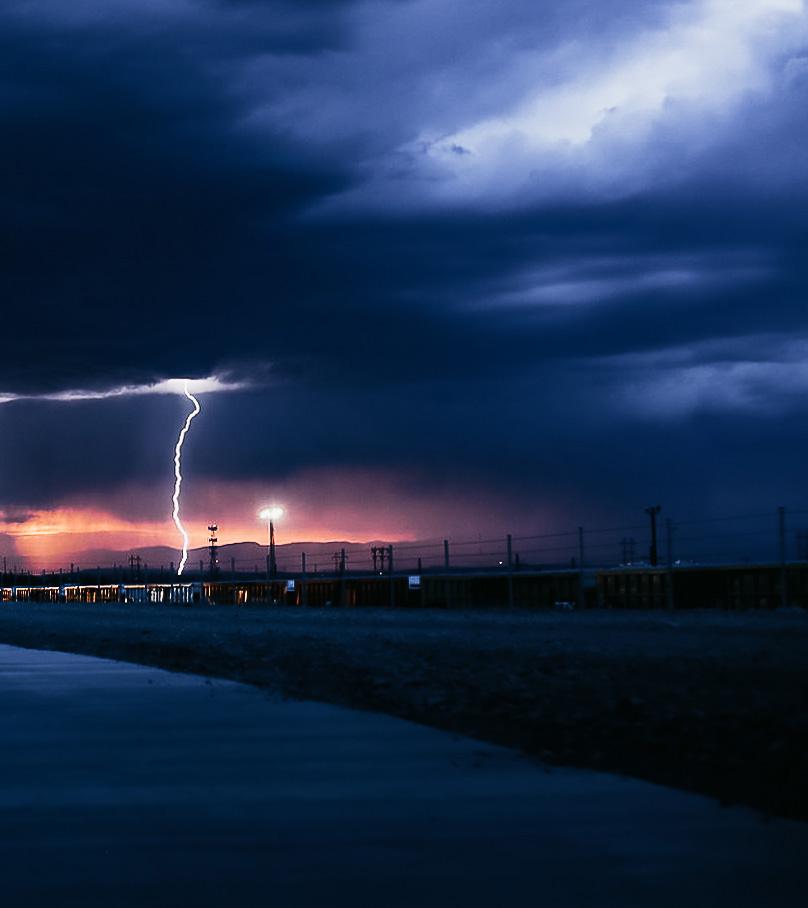
This once-in-a-lifetime shot of lightning over the Pueblo Levee Mural comes from the lens of local photographer Mishila Ashlyn.
FORGING MOtiON
PTHE SCULPTURAL WORLD OF ERIC MCCUE AND IRON-E ART StUDIO
ueblo’s creative landscape has always thrived on a mix of grit and imagination, and few embody that balance more than sculptor Eric McCue of Iron E Art Studio. Known for works that range from monumental public pieces to colorful, motion-inspired forms, McCue brings a background steeped in graffiti, welding, and fine art to his sculptures. His career is defined by equal parts artistry and engineering—whether he’s shaping monumental blades of grass for children to play among or preparing to install a double-sided “Vitruvian Man” for Pueblo’s forthcoming DaVinci Museum. In this conversation, McCue reflects on his journey, his creative process, and what it means to build art that people can not only see but experience.
ERIC: No memory pops up. More so, how to live as an artist and creator, the brutal self-promotion, dedication (especially when the creative bug is aloof), and back-of-the-house things that are in constant motion when shows or unveilings are coming up.
PULSE:Howdidyourbackground—es-
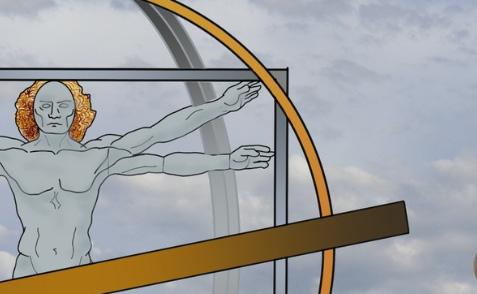
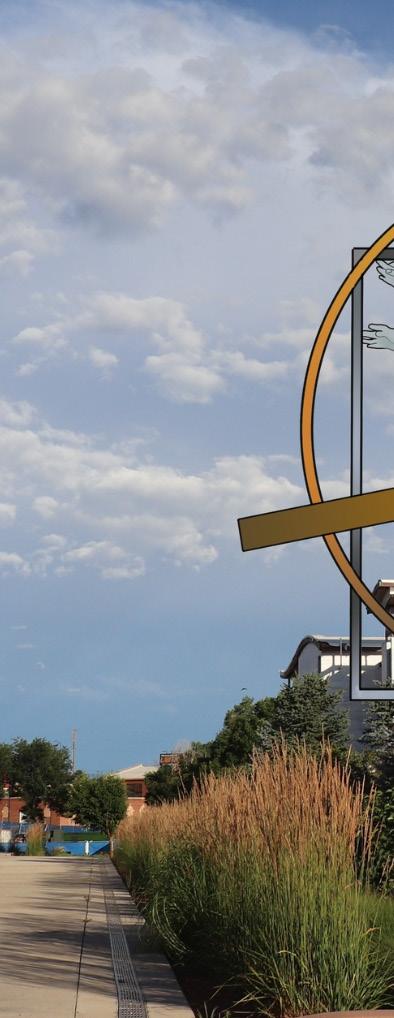
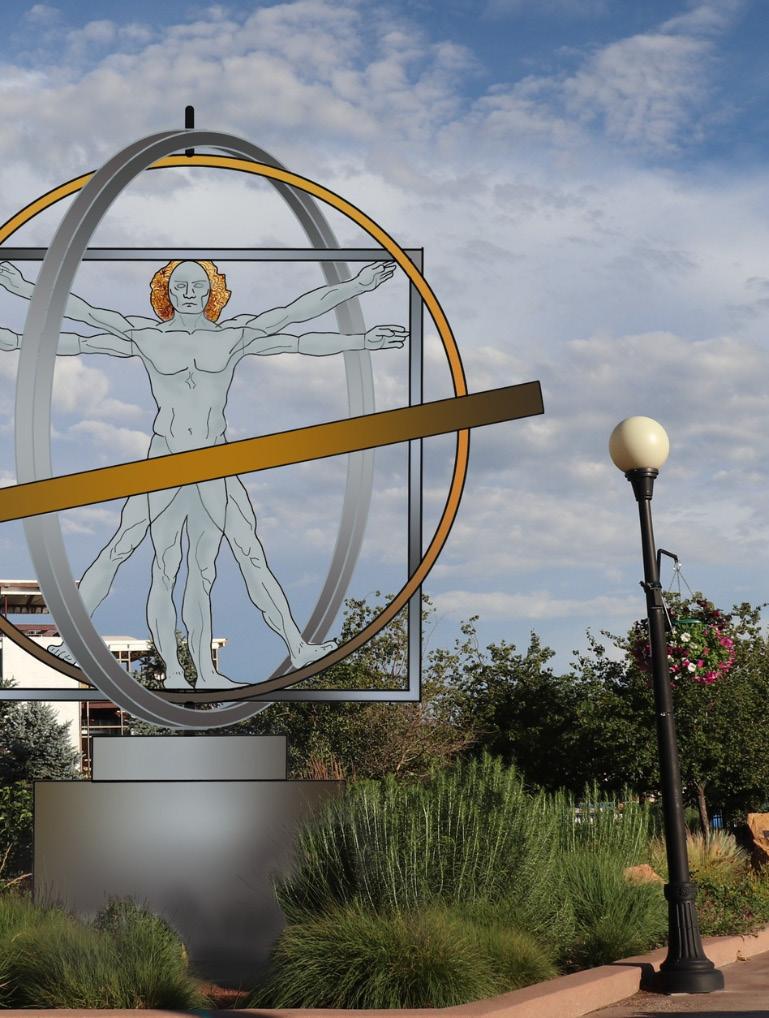
This is Eric’s mock-up for his sculpture of Leonardo DaVinci’s famous “Vitruvian Man” commissioned by the DaVinci Museum of North America, coming soon to Pueblo.
ERIC: With the street art that I did, it was not as spur-of-the-moment as most assume street art is. There would be scouting missions, countless sketches, collecting materials, sometimes multi-trips to deliver said materials to the location, depending on the scope of the piece, and most importantly, acquiring permission from owners of the properties. That was all before I went “professional” with it. At that time came the contracts and renderings. More to the question, my years with that helped me create the illusion of spontaneity and movement in my pieces.
ERIC: “Space Jack” is the only piece of mine of that scale made from found objects. Generally, I like to joke that I am a “Metal Diva” and use new steel and materials. With the hazardous coatings that are used on steel (i.e., old lead-based paint, galvanizing, etc.) and never knowing the life of the material (was it once used in a sewer, or a gold leach pit), I try to avoid it. Though, as a metal sculptor, people do tend to give you “cool” metal objects they have found or have lying around. I normally try to pass these down to artists more attuned to using such items.
ERIC: Normally, I do my sketching digitally after talking with the client and seeing the direction they want to go. It gives me the ability to edit colors and put things in 3D modeling so the client can see as close to “real world” dimensions and presence it will have. Furthermore, I can take the renderings to other software and “flatten” things to cut on my CNC plasma table to save the client money and my time. Sometimes, as with DaVinci sculpture, I will make a mini 3D mockup.
ERIC: I used to really only enjoy creating large pieces. But over the years, I have started to enjoy the medium-sized ones (less than 8 feet and over 3 feet) as I get to create more pieces throughout the year and try out new techniques and processes I have learned. Normally, I only mess with tabletop pieces to give away to nonprofits for fundraisers or presents for family and friends.
PULSE:You’vesaidyourfinalpieces are meant to be interacted with and experiencedfromnearandfar.Can youtalkaboutanaudienceinteraction thatsurprisedordelightedyou?
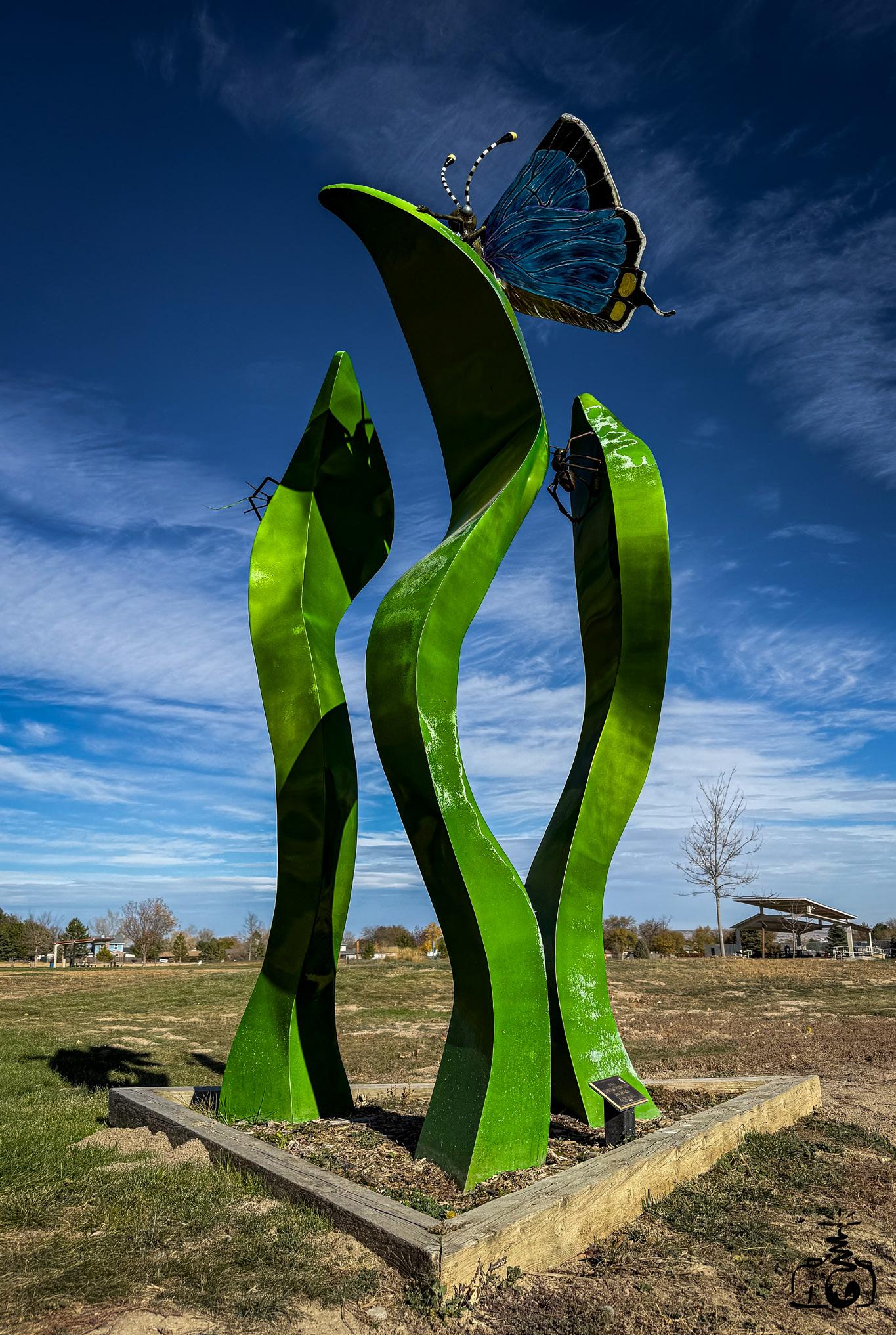
ERIC: During the unveiling of the first public piece I did, “Always Greener”, the organization that commissioned it and eleven other pieces hired break dancers and interpretive dancers to interact and react to the pieces. Seeing the videos and photos that came from that got me hooked. My piece was eighteen blades of grass, weaving and intertwining with each other. The joy of the dancers moving and interacting with it was beautiful. Then seeing the kiddos playing in it like they were in “Honey, I Shrunk the Kids” was all I needed to see to know I had succeeded in what I set out to do: Make something everyone could enjoy.
ERIC: In the realm of my 3D pieces, that is a one-of-a-kind thing. Generally, I steer clear of heavy social topics like that in my art, though I am very much on the “granola” side of things in my daily life. I prefer to make pieces everyone can enjoy and that brighten the areas they end up in. Though I will say it was a wonderful experience working with the Impact Youth Initiative young adults and helping bring their ideas to life.
PULSE:Congratulationsonyourcommission for the new DaVinci Museum inPueblo!Whatexcitesyoumost aboutthatproject,andhowdoyou envisionyoursculptureinteracting with the museum’s themes?
ERIC: Thank you. It’s quite an honor I have and am very grateful for it. As I’ve been working closely with them, the design truly encapsulates their values and intentions for the museum.
ERIC: The piece is a 3D recreation of the “Vitruvian Man”. It is a double-sided figure. One side will have the carved stone sculpture on it, and the second side will be a modernized stainless-steel take on the figure. It is a combination of the museum’s board members and my vision to combine the old and the new and promote science and creation in Pueblo.
ERIC: A lot of the public pieces I do end up in rotating sculpture programs. That means they are normally on display for a year or two before I find a new city or location to move them to for another rotation. So normally, I make them easily repairable on site and easier to transport. But with the Museum, I have to take into consideration using the longest-lasting and least in need of maintenance materials (i.e., stainless steel, copper). The Colorado sun and our climate throughout the year can cause havoc on most paints and thinner-gauge steel (i.e., hailstorms).
ERIC: Like Davinci, I have always been fascinated by the movement of things. And catching the moments in time as they interact with the natural things like wind currents. I really hope they feel and see the movement that I intended to create. As well that they may be inspired to take a moment and just watch the world that is constantly in motion that we often overlook daily.
PULSE:Howdocolorandtextureplay aroleinyoursculptures?Isthereintentionalitybehindparticularpalettes or surface finishes?
ERIC: They play a huge part in my work. For one, I am a victim of bringing bright colors and intense palettes over from my graffiti days to my pieces. As well, I am kind of known for large, colorful pieces such as monumental flowers, butterflies, figures, and shapes. Though it hasn’t been present in a lot of my current work beyond painting in the texture on butterfly wings to give them life, it is something I love adding. I have always believed that art is to be enjoyed by all. Adding texture gives my pieces added life for those who may be visually impaired. To the dismay of main gallery directors, I always tell people they can touch and interact with the work. I lovingly joke that I clear coat the living hell out of everything so people can.
ERIC: Not sure people realize the amount of planning and adapting it takes to make things on such monumental levels. The hidden frameworks, the countless meetings with structural engineers, city infrastructure departments, and road crews (sometimes to have to schedule street shutdowns to move pieces into place with cranes), the insane amount that pieces end up weighing. A lot of the time you end up wearing equal hats of artist and project manager, working on a piece as you are taking Zoom meetings with clients to stay on schedule. Most artists just want to create, and the time away from that drains and annoys us. But to create on such levels, you have to be able to do “The Dance.”
PULSE:Lookingbackonyourbodyof work,isthereaparticularprojectthat stands out as most transformative or memorableforyou—andwhy?
Our Big, Tiny World Civic Center Park
Pueblo West, Colorado
ERIC: Probably “Nature’s Dance” was the most transformative for multiple reasons. One, it was the first time a client of such financial means had come looking for me based on previous work. Two was the first time I got way in over my head for my experience and had to enlist the help of others to stay remotely on schedule. Third, when I finally got to install it at the private client’s house in DC, I was blown away by their art collection and was honored to be among the likes of Chihuly, Degas, and Lichtenstein. And the fourth reason is, I didn’t make a lick of money off it because I spent my whole budget buying tools and equipment to make it!
Eric McCue’s story is a reminder that large-scale art isn’t just about steel and structure—it’s about risk, resilience, and finding joy in motion. From Pittsburgh roots to Pueblo landmarks, he’s built a body of work that carries both weight and playfulness, engineering and imagination. As Pueblo prepares to welcome his DaVinci commission, McCue stands as proof that dedication and persistence can turn daydreams into fixtures of community life. His sculptures invite us to pause, to move, and to see the world—like the wind through grass or a cyclone frozen in steel—as alive with possibility.
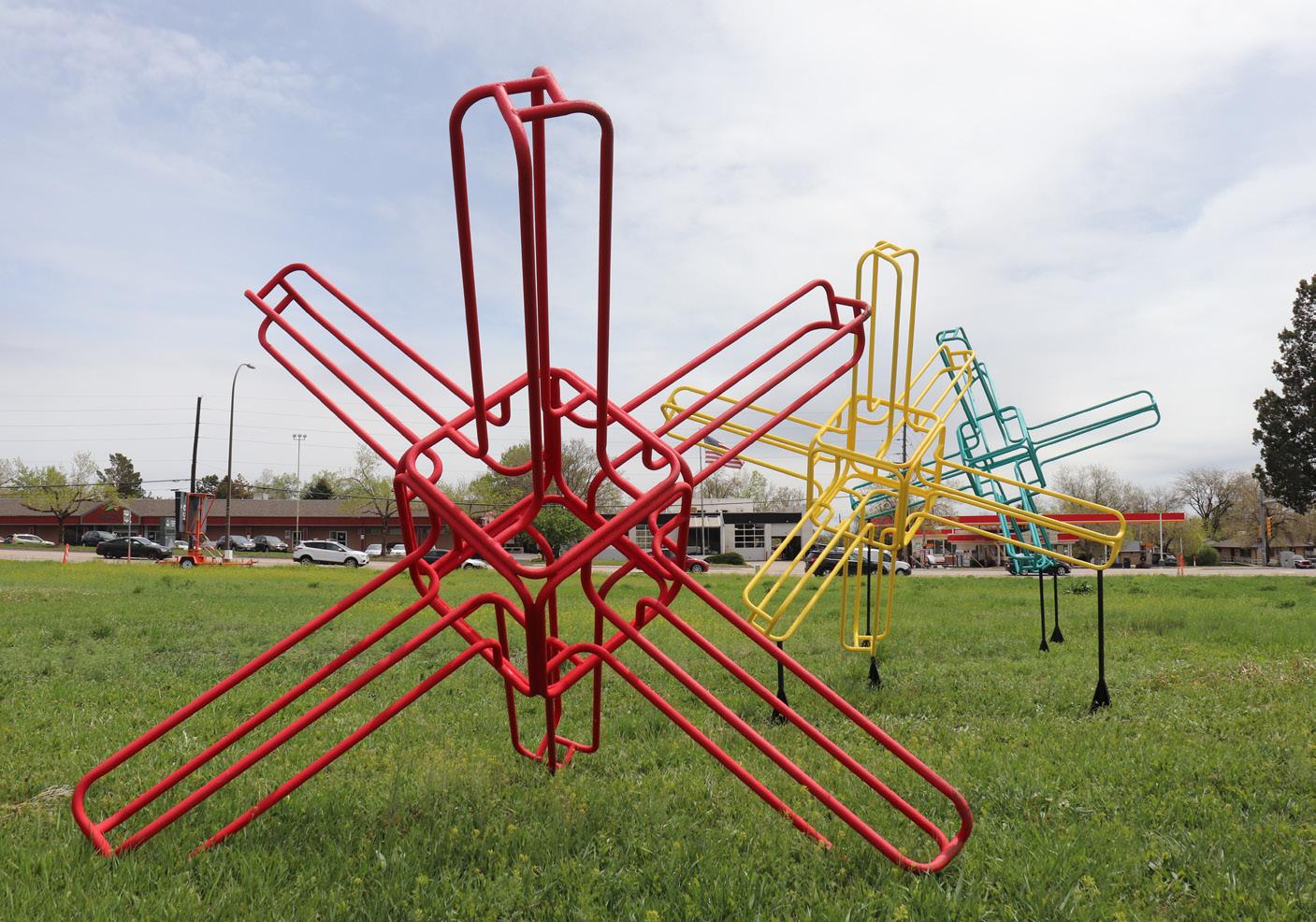
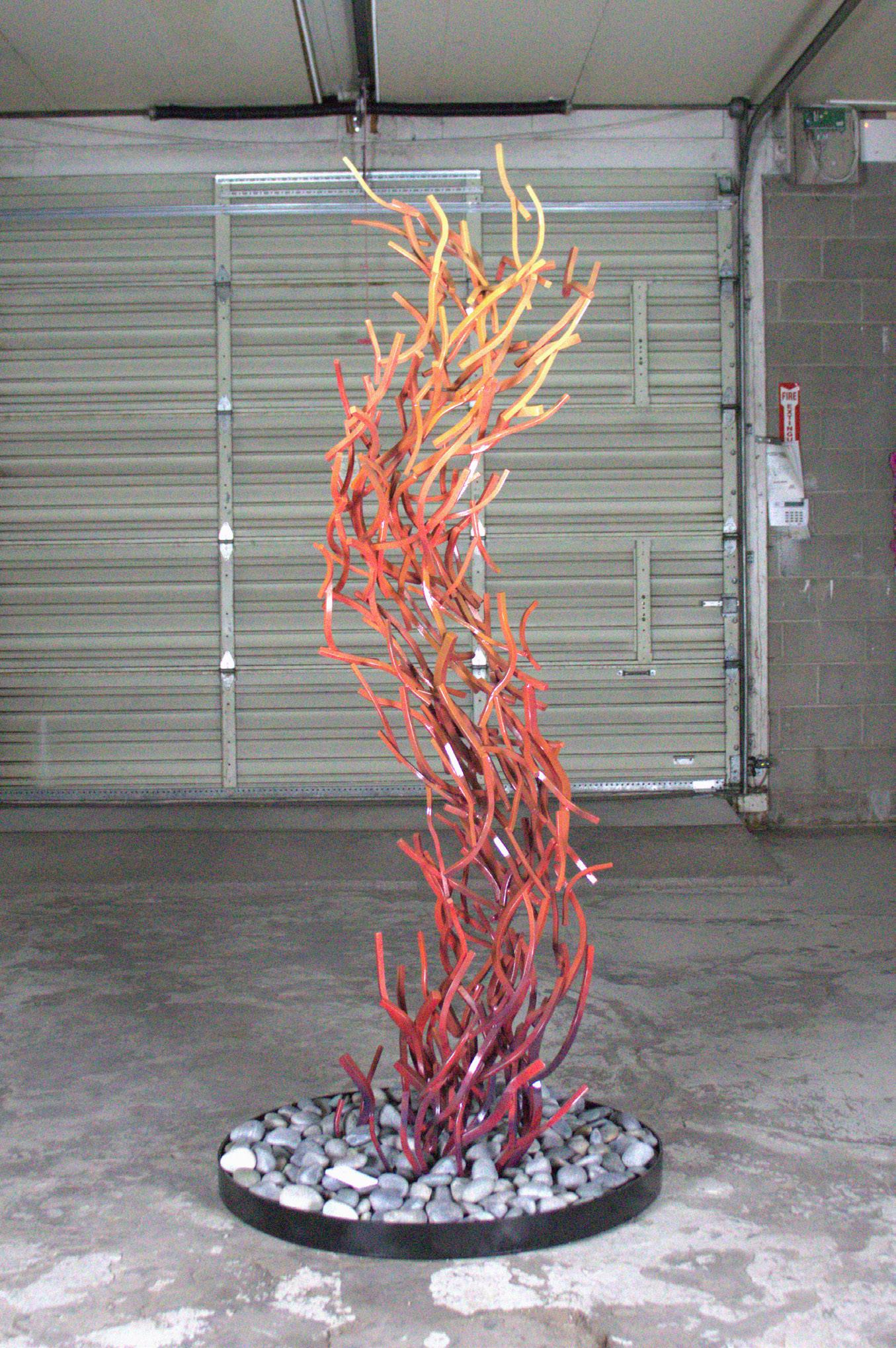
Fire Tornado Iron E Art Studio Pueblo, Colorado
Photo Credit: David Took
CAPTURING LEGACIES
THe Heart and ViSIon of Lepik PhotogRAphy
by Nate Jordon
Photography has a way of freezing time, but for Josh and Kristan Lepik of Lepik Photography, it’s also about weaving legacies. What began as a personal refuge for Josh—a neighbor’s gift of mentorship and a camera—grew into a shared calling with Kristan, whose background in modeling and engineering gave their partnership both artistry and structure. Over the past fifteen years, the couple has built a reputation in Pueblo and beyond for their consistent, timeless style and their deeply personal approach to working with clients. From weddings and senior portraits to small business projects and documentaries, the Lepiks have cultivated more than a business—they’ve built a practice rooted in connection, collaboration, and community pride.
I met Josh and Kristan on an early Tuesday morning in September at The Sacred Bean in Downtown Pueblo. It’s their favorite coffee shop in town—and one of ours.
JOSH: I grew up in a household where my stepdad was very abusive. In the ’90s, he moved us to Kalispell, Montana. One day, I noticed my next-door neighbor had a basketball hoop. I walked over and said, “Hey, my name’s Josh. Can I play basketball on your hoop?”
The hoop belonged to a young guy and his fiancée, probably in their early twenties. He told me, “Yeah, go ahead and use it whenever you want.” Turned out I was there all the time, and he eventually started coming out to shoot hoops with me.
That’s how I found out he was a photographer for National Geographic. He worked at a photo lab, but he also went up to Glacier and Yellowstone to photograph wildlife. He noticed I was avoiding going home and would ask me what was going on at home. I told him about my stepdad being abusive and how I just didn’t want to be there.
We built a friendship from there. One day he asked my mom if he could take
me up to Glacier. On that trip, we photographed bighorn sheep, bear, and a moose. It was incredible watching him work. But even better was when we came back and he developed the slides. We’d sit with his projector, pick our favorites, and he’d print them. That whole process hooked me.
Eventually, because he worked at the photo store, he helped my mom get me a good deal on my first camera.
PULSE: Which was?
JOSH: A Canon Rebel X with and 18–55mm kit lens. Film. That was my first camera, and it let me start taking my own photos. Of course, in Glacier, you couldn’t capture wildlife with a kit lens while he was out there shooting with something like an 800mm f/2.8. But I kept that camera into my late teens, then photography kind of faded out of my life for a while.
Years later, Kristan and I were planning a trip to Hawaii. She knew I always loved photography, so before we left, we went up to Mike’s Camera in Colorado Springs and bought a
We make it a point to ask quEStions and have real conversations wiTH our clients. One of THe first THings we ask is, What do you like about yourself? Is THere anyTHing you’re self-conscious about?”
Photo Credit: Kayla Powell
Canon T2i for the trip. Right after we picked it up, we went to Helen Hunt Falls and Seven Bridges. I started taking photos of her, and she said, “Oh my gosh, you’re really good at this. These photos are great.”
KRISTAN: I did tell him, I said, “This is one of the best photos I’ve ever had taken of me, which is funny because with my origin story, it means a lot.”
JOSH: From there, I started taking photos of people. We got our first wedding for like $500 here at the Union Depot. That was fifteen years ago.
KRISTAN: I actually started in front of the camera. I modeled from the time I was little through college—mostly hair modeling. When Josh first took my photo, I remember thinking, Oh my gosh, this is the best photo I’ve ever had. I’d been photographed my whole life, but his photos blew me away. I told him, “You should photograph people for a living.”
When we started sharing his photos, friends began asking if he could photograph their families. At first, it was just a hobby. I drew on my own experience with posing, angles, and being in front of the camera, while Josh started teaching me the technical side of photography. I’d only ever used a point-and-shoot, so switching to manual was frustrating—it felt like a whole new language. But Josh was patient, and after a few years I began to really understand it.
Beyond the creative, I leaned on my professional skills as a software engineer. I built our website, automated processes, and helped streamline the business. What started as a hobby turned into something bigger. For a long time, we were both working two jobs, learning and refining as we went, always asking clients for feedback. The business kept growing. And now Josh has been able to step away from his corporate career to embrace photography full-time.
PULSE:Howdoyoubalancerolesas
businesspartnersandasamarried couple?
KRISTAN: Well, that’s easy enough. We’re best friends.
JOSH: Yeah, we really are.
KRISTAN: We only start squabbling when we don’t spend enough time together. Which is weird.
JOSH: We are each other’s lobsters. But I will say it was hard when the business first started. It was just me. I was doing everything—the website, marketing, photography, editing. When Kristan started taking on more of those roles, it was hard for me to give up control. Over time, though, we realized we needed defined roles, just like in a corporate job.
Now we have a system. Kristan handles most of the technical and client-facing side—website, invoicing, contracts. We’ve learned to stay in our lanes because there’s simply too much work for one person.
There are still things we overlap on— social media, shooting, editing—but even there, we have a flow. After a shoot, I upload everything and get it ready for her. Kristan does the culling, picking out the best images—she loves that part, and I hate it. Then I do the first round of edits: our base look, skin cleanup, lighting adjustments, removing major distractions. Once that’s done, it goes back to her for the artisan edits—removing exit signs, stop signs, or adding creative touches like double exposures. When she’s finished, it comes back to me for exporting, uploading to the client gallery, and final delivery. Depending on our workload, one of us handles sneak peeks for marketing.
KRISTAN: Because I’m a little OCD—in a good way—we use a checklist system. We have a professional tracker for taxes and IRS purposes, but I also keep an internal tracker just for us. Every client goes through the checklist: when they book, I confirm they’re in
the calendar—even though it’s automated, I double-check in case tech fails. Then I make sure they’ve received the style guide, invoice, and contract. After that, we confirm location details, firstround edits, second-round edits, upload, sneak peeks, and final delivery. If they ordered a USB, that’s on there too. Every step is documented, so nothing gets missed.
The checklist also helps us stay connected as a team. Once a client is fully closed out, we know we don’t need to follow up anymore.
But we still keep the process personal. When sneak peeks are ready, I text clients directly. It’s not some automated, aloof message—it’s me saying, We’re so excited, your sneak peeks are coming out today—keep an eye on our socials! For weddings, we walk them through every step: Tomorrow’s your slideshow, a few days later your wedding video, then your full gallery. We’re always communicating so they never have to wonder what’s next.
PULSE:Doyoufindyourcreative visionsusuallyalign,ordoyoubring contrastingstrengthsthatcomplement each other?
KRISTAN: Consistent look, different views.
JOSH: 100%.
KRISTAN: We can look at the same scene and see completely different things. For example, we shot a wedding at Cave of the Winds a couple of weeks ago. As soon as we walked in, Josh said, “I know exactly what I want to do,” and I thought, That’s so cool—here’s what I want to do. When we’re shooting, we each see different details, and those perspectives end up complementing each other, even though they come from completely different views.
JOSH: Our photos have a consistent look and feel, but they come from completely different perspectives. There are many times when, if we set
the images aside for six months and came back, we wouldn’t even remember who shot what. We’d both just say, “Wow, those are amazing. Did I take that?” The only way to know would be to check the camera settings and see which lens was used.
KRISTAN: We don’t follow trends or chase a “look.” Our goal is for someone to look back at their photos in fifty years and still be in love with them because the style has stood the test of time. Our work leans toward light and airy, with natural, true-to-life coloring and just a hint of added blues.
JOSH: Consistency is so important in running our business. If a client visits our Instagram, Facebook, or website and sees four different styles, they may expect one look but receive something different—and end up disappointed. That’s why we’ve committed to keeping our edits as true-to-life as possible, with just enough of our own touches and flair.
KRISTAN: We’re known for things like silhouettes and our “tiny people” shots—creative approaches that still keep the colors natural while pushing the artistry a little further. Even when we experiment with motion blur or other techniques, the overall look and feel remain consistent. People recognize our style. We’ll hear, “Oh, that’s definitely a Lepik shot,” just from the way a silhouette or detail is captured.
JOSH: For the most part, if time allows and we’re working together, one of us is the primary shooter, fully focused on the person being photographed.
Using seniors as an example, the other will spend time with the parent—explaining our process, asking how they heard about us, and building rapport. In that moment, one is the photographer and the other essentially takes on the role of an assistant.
KRISTAN: Yeah, we joke that one of us ends up being the mule—carrying everything. Especially with seniors, parents will sometimes chime in, saying, “Smile with your teeth, look at the camera.” And we have to step in and say, “That’s just stressing them out. Let Josh or Kristan—whoever’s shooting— handle it. We’ll get the expression we need.” Meanwhile, the other is talking with the parents, distracting them a bit, and building that rapport.
JOSH: One of the first things we do is address the elephant in the room: it’s awkward to be photographed. It’s not natural to stand in front of a camera and know how to look or pose. We see celebrities on red carpets and think, Wow, they look amazing, but the truth is they’ve been trained—where to put their hands, how to stand, how to move. Watch closely and you’ll notice most of the men do the same poses, because they were taught that.
So we tell our clients right away, “This is going to feel awkward at first, and that’s normal.” Before we ever take a photo, we walk them through posing— starting with a foundation for men, a foundation for women, and then moving into couples. By teaching them from the start, we take away that initial tension. If they trust us and the process, they’ll look great in the photos.
KRISTAN: If we notice a client is still nervous, we’ll say, “Hey, just stand over there for a second. Let me grab a quick shot.” We take one photo of them standing naturally, then give a few simple directions—“Do this, this, and this”— and take another. Then we show them the back of the camera: Here’s you just standing there, and here’s you posed.
Almost every time they say, “Oh my gosh, I look so good! This is amaz-
ing.” And we tell them, That’s what we’re going to do all session long. Right away, they relax and buy in. From there, it’s a lot of hyping them up, being their biggest cheerleaders throughout the shoot.
JOSH: We make it a point to ask questions and have real conversations with clients. One of the first things we ask is, What do you like about yourself? Is there anything you’re self-conscious about? Everyone has insecurities, and asking up front helps us pose them in ways that highlight their best features. For example, if someone says, “I hate how my nose looks when I turn to the right,” we’ll make sure to pose them facing left or straight on. That way, when they look back at their photos, they feel confident instead of fixating on something they didn’t like.
KRISTAN: It’s never just “stand there and say cheese.” Even with small children, our approach is to joke, laugh, and do silly things until they’re genuinely cracking up. Most of the time, we simply let kids play. Parents will try to line them up and say, Stand here, but we step in and say, No, let them explore for a bit. That freedom always brings out the most natural smiles.
PULSE: What makes Pueblo a meaningfulbackdropforyourwork?
JOSH: It’s home.
KRISTAN: It’s home. We love to travel, but Colorado itself offers so much—hiking, biking, paddleboarding—that we’re often exploring close by. And yet, we hear the stigma all the time: Oh, you’re from Pueblo? People say it with a negative impression.
For me, Pueblo is a wonderful place. I grew up here, and I love it. It’s fun, it’s beautiful, and I like showcasing it the way I see it, not through the lens of that stigma.
PULSE: Are there particular Pueblo locations you love to shoot in—or ones you feel are underrated gems?
JOSH: Downtown is full of hidden gems. All you have to do is wander and you’ll discover something new. Within just a few blocks, you can find so much variety: side streets lined with graffiti art, a garden covered in vines and greenery, the train tracks by Union Depot, small businesses adding their own character, Memorial Hall, The Riverwalk. That’s probably the number one spot—when people don’t know where to go, we send them there. It’s an iconic part of Pueblo.
KRISTAN: On our website, we list some of our top locations: spots at the reservoir, downtown, City Park, Mineral Palace Park, and Memorial Hall. But our hidden gems? Those we don’t share. That’s the one thing I’m a little protective about. I get some flack for it in our creative group, because newcomers will ask, Hey, where did you find that? My answer is always the same: Get out and explore.
KRISTAN: We often say we’re capturing memories. Josh has always put it as, Let us capture your legacy, and it’s become something of a slogan for us. You’ll even see it on our website: Capturing Your Legacy.
JOSH: Because that’s what it is—people’s legacies, told through different stages of life. Maybe it’s their first birthday, a sweet sixteen, senior photos, engagements, or prom.
KRISTAN: Over time, we’ve had the privilege of watching families grow, kids turn into young adults, and generations evolve. In a way, it’s also watching Pueblo grow alongside them—and hopefully helping carry that spirit of positivity into the next generation.
JOSH: I think it’s cool to photograph some of the local, small businesses and see them get a boost in exposure and sales.
KRISTAN: That’s another reward. We
know their success isn’t tied directly to us, because they’re the ones doing the work. But if we can support them along the way, even in a small way, that feels impactful. When they grow and thrive, it creates space for more small businesses to do the same, and that strengthens the community as a whole.
KRISTAN: I’m preparing to retire from my corporate career—which is honestly the scariest thing in the world. But our goals are clear. By then, Alyssa will be out of the house, and we want more freedom to travel. I’d love to shoot more destination weddings, capturing love stories around the world. I also want us to be busy enough that we need to hire additional photographers—people we can mentor. I’d like us to reach a point where we can open a studio without stressing about monthly overhead. Ultimately, my goal is for us to expand, diversify, and use our experience to help more people learn, succeed, and thrive.
JOSH: I just want to keep doing what we’re doing—all of that—but with you. We’ve talked before about how amazing it is to see one connection lead to another, and then another, like a spiderweb. I just want our web to keep growing, to be woven into even more of other people’s amazing stories.
JOSH: We’ve been working with The Martini Shot. We first met them four years ago when we photographed them at an event and had dinner together. Since then, we’ve been working on their documentary. Last week, they celebrated their 25th anniversary at Stargazers in Colorado Springs, and on October 18th, they’ll hold a second anniversary party at Brues Alehouse in Pueblo. At both shows, we’re debuting the trailer for their documentary,
which is set to release in early 2026.
It’s our biggest project yet—taking twenty-five years of memories, footage, highs, and lows, and shaping it into a feature-length documentary. We’re currently building the chapters and storyline, and we can’t wait to share it. For now, the trailer is reserved for the anniversary crowds, but after the 18th, it’ll go live on social media. This project is huge for us, and we’re beyond excited.
At its core, Lepik Photography is about more than images. It’s about preserving stories, elevating local voices, and encouraging people to pause long enough to notice the beauty around them. Whether photographing milestones for Southern Colorado families, supporting small businesses, or crafting a feature-length documentary, Josh and Kristan bring authenticity and intention to every frame. Their motto, Capturing Your Legacy, rings true—not just for the clients they serve, but for the way their work continues to shape Pueblo County’s story, one photograph at a time.
HI St ORIC ARKANSAS RIVERWALK
THE
SCENE & SEEN
Photo Credit: Unalome
DRESSED TO EXPRESS
How Nick Mischel and DANDY Are Redefining Modern Style in Pueblo
by Nate Jordon
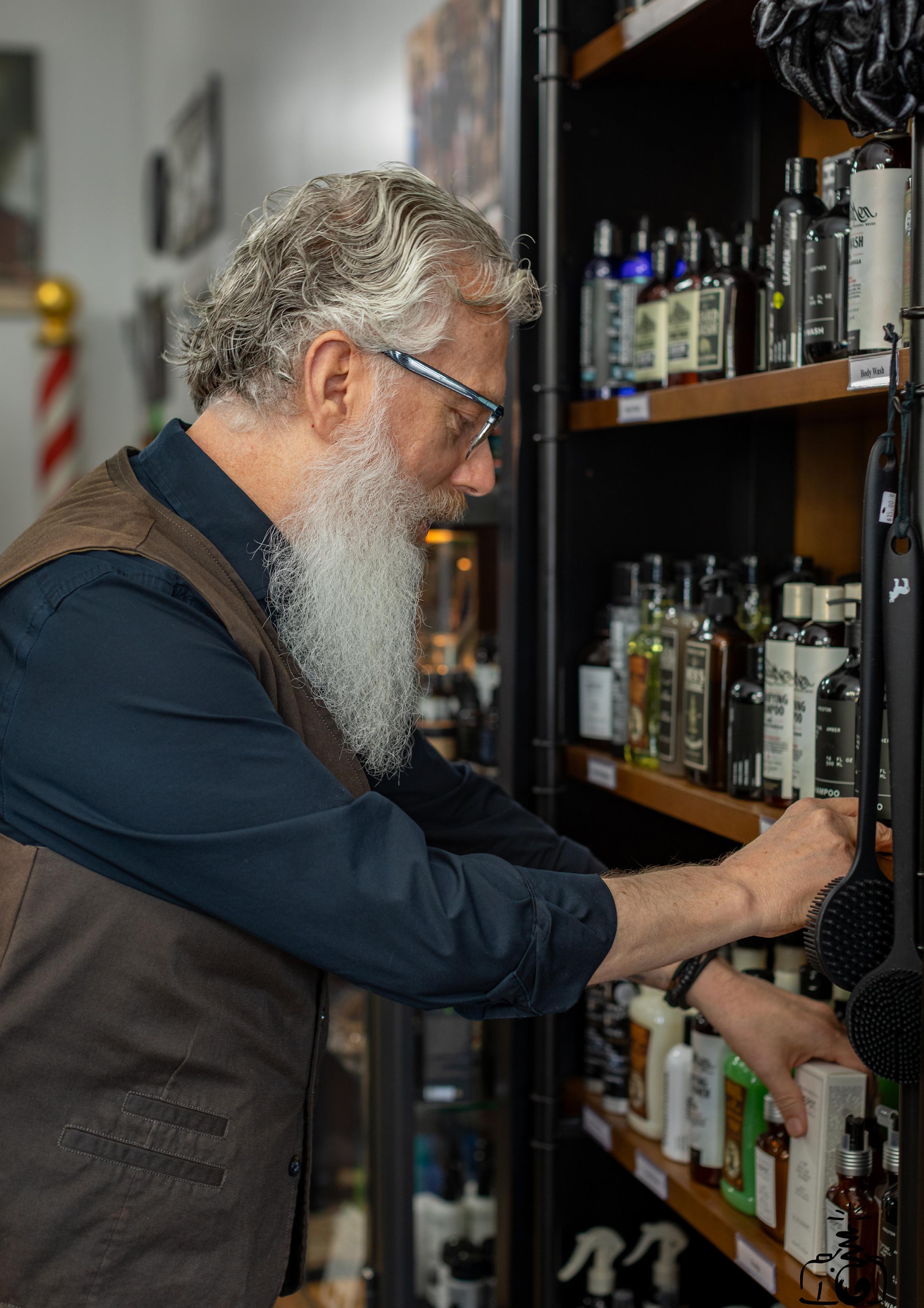
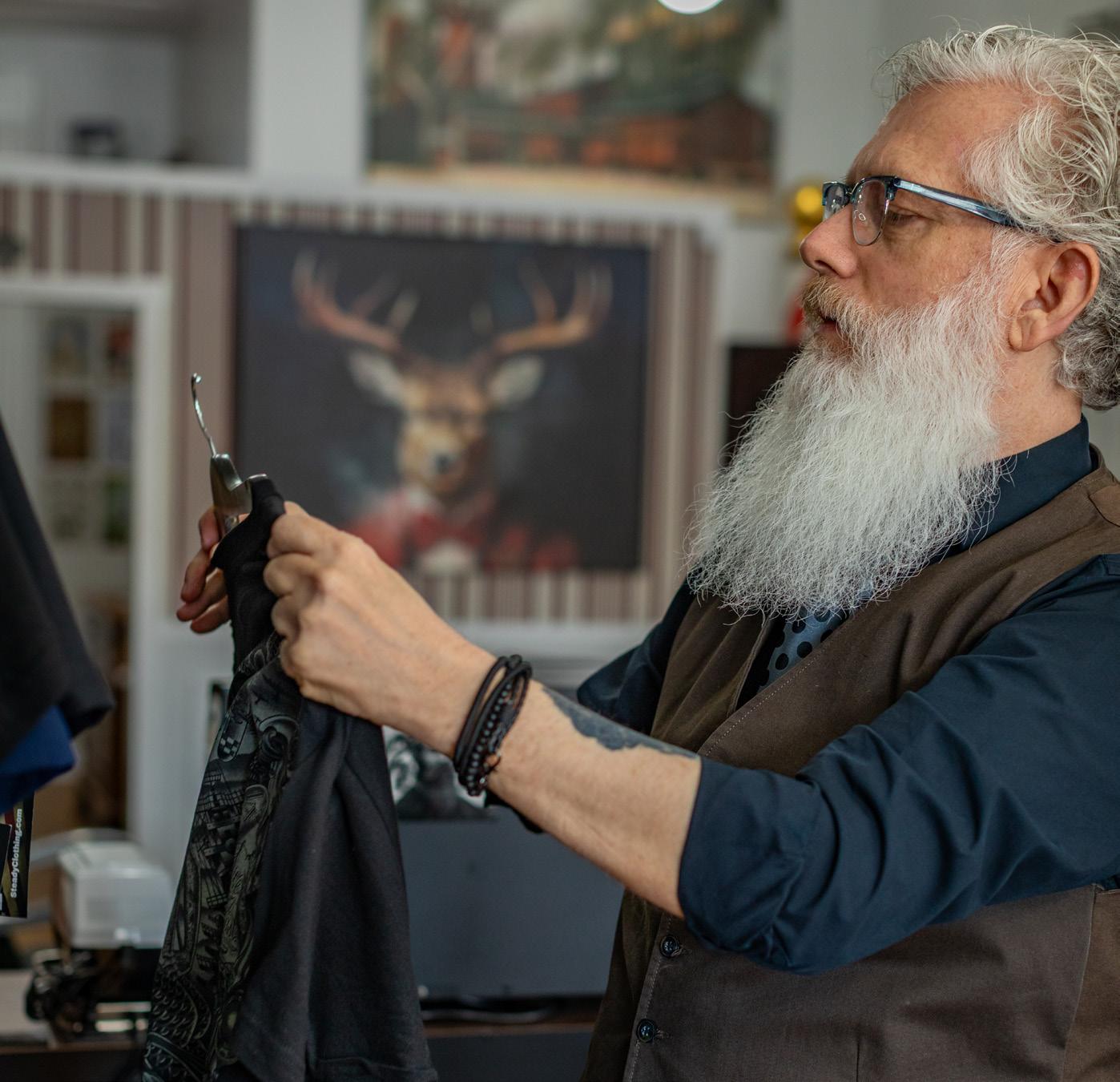
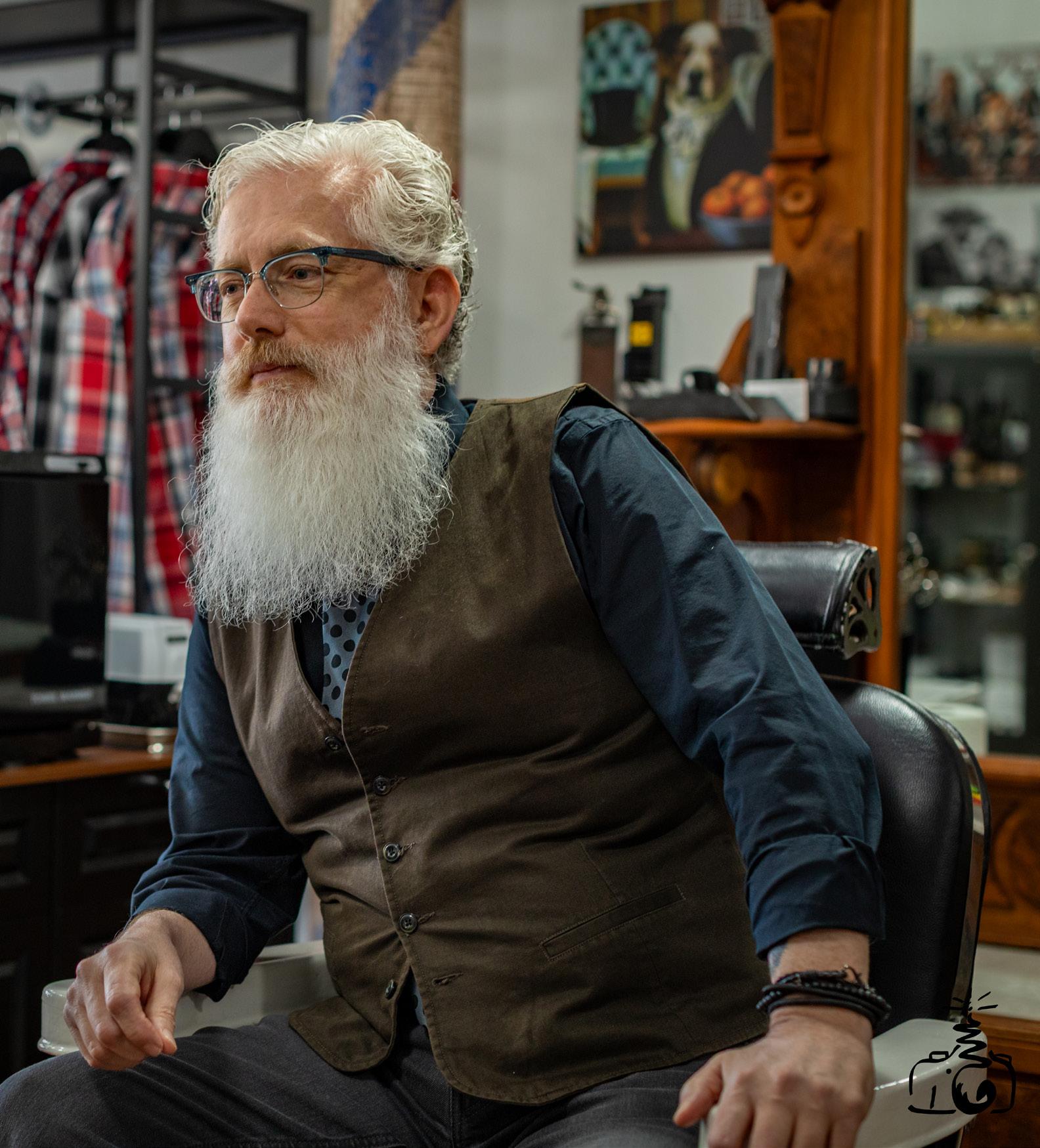
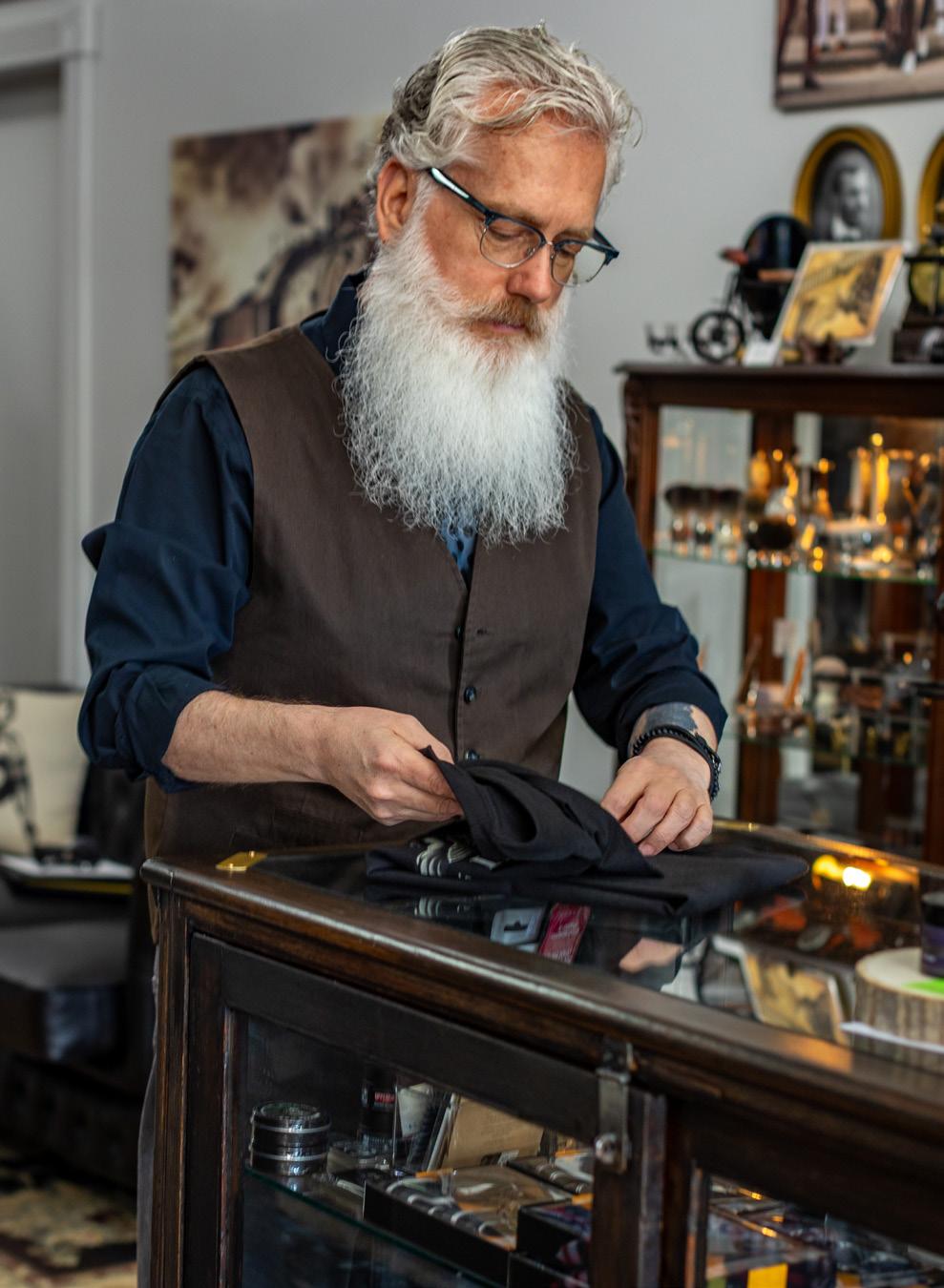
In the heart of downtown Pueblo, DANDY is a men’s mercantile straight out of a Hollywood movie set. Providing a large selection of men’s grooming products, select apparel, and gifts, DANDY is also home to a single-chair barbershop for the private clientele of licensed professional barber Nick Mischel. His aesthetic transports the customer to an other-worldly setting of a 1930s barbershop that includes traditional barbering, expert beard service, straight-razor shaves, hot steam towels, scalp and shoulder massage, and the classic scents of menthol and bay rum aftershaves. DANDY itself is a statement about confidence, craft, and self-expression. The shop blends classic style with modern grit, inviting men to look sharp without losing their edge. For Nick, it’s not just about fashion; it’s about helping people show up as their best, most authentic selves.
I met Nick at DANDY on a crisp Autumn morning. He had just finished barbering a client.
NICK: After four years in the Union Depot, as The Gentlemen’s Barbershop, I simply outgrew the space. Before COVID and the Depot, I owned Barber & Beards, Co., which was an Abriendo storefront that essentially was a “beard store.” Since then, the beard community has changed, and yet there’s a niche that hasn’t been fulfilled in Pueblo, until DANDY. It’s a boutique for men, and a place where women can feel comfortable shopping for the men in their lives - so I added a “gift store” element.
NICK: As a barber, I’ve had the pleasure of having some very fashion-forward guys in my chair. Over the years, as styles changed, I’ve cut everything from Justin Bieber’s haircut popularity, the hipster look, gentlemen’s combovers, pompadours, the edgy ‘Peaky Blinder’ haircuts, and hard parts to sheer minimal buzzcuts, head shaves, and now a transition away from fades altogether in favor of longer, lived-in hair. So, there’s a flexibility in who my audience is.
There’s an assortment of styling products on the shelf that reflects that versatility. The same is true with our shampoos, soaps, lotions, and the types of clothing we stock. I’ve tried to provide something for every type of man out there: the tatted, businessman, car enthusiast, bike rider, nature-lover, musician, bearded or non-bearded dude. It’s an Everyman retail space.
PULSE: Men’s fashion often walks a line between tradition and rebellion — where does DANDY sit on that line?
NICK: I am aware that my store is a new concept for Pueblo. DANDY represents the working-class community of Pueblo. I include the blue-collar man when I think about fashion—and I consider what will sell in our city. We are not Aspen or Boulder. Look around and you’ll see it’s a hybrid of comfort and the quirky “pop” of one’s individual style.
PULSE: What’s one item in the store thatbestrepresentsyourphilosophy onstyleandself-expression?
NICK: It’s unusual for sure, and something that’s not always considered in establishments: The Music. It creates a mood. At DANDY, it’s an ongoing soundtrack of the 1930s. It intends to remind you that we tip our hats to the past. It may be a bygone era, but it adds a sense of nostalgia to the shopping experience. It reminds you that Pueblo once had booze-running in tunnels under the city and that the street where DANDY sits was once underwater. And when you’re in here, you may hear vintage songs sung in a megaphone, what was played on a Victrola, and with lyrics about love and dancing on a moonbeam. It’s timeless. It adds to the ambiance.
NICK: At this very moment, that working-class soul you mention is having a tough time making ends meet. Pueblo people have been laid off or let go in this economy. Eating out has become a luxury lately. And as a retailer, we could write a whole other article on how local businesses are being affected by tariffs. Wholesale prices alone on clothing have doubled in the last year, and suppliers are low in stock. Many ingredients in haircare products are foreign and difficult to obtain, so manufacturers are cutting corners or discontinuing production altogether. But local shop owners are people too. We limit choices (not necessarily by choice), reduce our prices (and profit margins), research and compare vendors, incentivize, and still hope customers will come into the store. As long as people are looking, they will find bargains. I would encourage shoppers to support local small businesses rather than big box or online shopping because retailers need support, just as consumers are seeking to make a purchase.
COME AS YOU ARE, SAY WHAT YOU WANT, LIStEN, RESPECT, REPEAT.””
NICK: Because I am still a new storefront (opened in August), so far, most of the business transactions have occurred because of my barber clientele. Most of my clients are loyal, for which I am extremely grateful. But they have also helped me succeed professionally and personally and have lent support through a number of challenging times over the past decade. There is a genuine connection any barber has with his/her clients, and for me, I have been blessed to
“If you take pride in your appearance, you might value yourself more, see yourself in a new light, consider your potential, or have confidence in yourself. If you start caring about yourself, perhaps it will motivate you to care more for others. Perhaps it will inspire you to make a difference.”
make several lasting friendships. It’s reciprocal mental health therapy because I hear about the trials and tribulations of my clients. Whether it’s DANDY as a store or a barbershop, there is a connection because we are all real people. Come as you are, say what you want, listen, respect, repeat. Well...don’t repeat. Barbers know secrets!
PULSE:Howhasrunningasmall business in downtown Pueblo changedyourrelationshipwiththe community?
NICK: I’m a huge admirer of Pueblo history. I’m a member of the historical society and have a genuine love for the city I call home. I see it as a place of opportunity. I am grateful not just to my longtime clients, but also to people who gave me a break when I first came to town or helped me grow by providing a place to do business. I am extremely thankful for my landlords over the last five years because they trusted my ideas and let me create unique spaces, provided fair rental agreements, and are known preservationists when it comes to historic Pueblo. I’m inspired by their respect and love of Pueblo.
DANDY Men’s Mercantile is a shop in downtown Pueblo specializing in men’s grooming essentials, beard-care items, and carefully curated selection of men’s apparel from shirts, hats, jewelry and accessories.
PULSE:Whatdoes“style”meantoyou outsideoffashion—maybeintheway someone carries themselves or moves throughtheworld?
NICK: My first clients every day are booked at seven AM. I usually arrive forty-five minutes early to prepare. One of the things I do in the morning is sweep the sidewalk outside the store. A client asked me once why I did that, considering the wind would blow around leaves and trash again later in the day. He then asked, “What difference does it make?” I realized that not everyone would sweep their sidewalk, but to me, it makes a difference. I care what impression people perceive when they see cigarette butts, gum, paper, leaves, mini liquor bottles, and plastic wrappers in front of a store. People notice when someone has made an effort to sweep and make the entry presentable. It’s welcoming. It says, “I care what you see and think!” I carry that notion throughout most of what I do. I care because people literally pay me to make a difference. In their appearance, perhaps in the clothes they wear, or in the personal changes they want to make, I have the education and skills to make a difference. Even the smallest details matter.
PULSE:What’samomentwhenyou realizedDandyMen’swasbecoming more than a store?
NICK: Before opening in August, it took nearly three months to get the storefront ready. From designing, ordering, and installing the fixtures, to obtaining licenses and approvals, and getting signage and cash-wrap set, all while maintaining barber appointments, there was the inventory. There was a lot of frustration getting wholesale accounts established. There was a lot of red tape and hoops to jump through. We opened our first day on the Saturday of the State Fair parade. The store looked gorgeous. Everything was out on the shelves, the racks were full, and items were abundant. Now, having done my ordering for fall and the holiday season, I realize I have sold many things, and for the moment, the store might look half as full as it did. People are coming in, buying things, and the word is catching on. I believe my idea for a men’s boutique is unique, and people will want to experience it. Just like a good haircut, DANDY is something to behold in person.
NICK: I like to think that in five or ten years from now, people will still value looking good. I am not necessarily optimistic about that, though, because
in the last five or ten years, we have become lax with our appearance. Maybe it doesn’t matter as much as it once did, but it wasn’t that long ago when we wouldn’t be caught dead in sleepwear at the grocery store. Our footwear was more than a single pair of Crocs. We went to the barbershop every two weeks. Looking good meant a store like DANDY wasn’t a niche. It was the standard. In the future, I would like to raise the bar even higher. It doesn’t mean I suggest we all go back to wearing suits. But if you take pride in your appearance, you might value yourself more, see yourself in a new light, consider your potential, or have confidence in yourself. If you start caring about yourself, perhaps it will motivate you to care more for others. Perhaps it will inspire you to make a difference.
DANDY reflects a simple but powerful idea: style is a conversation between who we are and who we’re becoming. Through his shop, Nick Mischel isn’t just selling shirts and ties — he’s redefining what it means to be a modern man in Pueblo. In doing so, he’s tailoring a movement as timeless as it is local.
Waterworks Park
Photo Credit: Unalome Photography, LLC
As mountains rise always remote and high sailing along in a bone china sky a gently unyielding unknown fleeing refined solitude the self enchanted ashy desolation the Snow Leopard appearing as if in an old Tibetan thangka painting curled up snake like with its cold grey twilight surround coat its eyes yellow as a winter sun yellow in the snow rock surround the rock black as India ink the red sun rising already and the dark grey shadowed soul disappearing looking behind the precision coldness in retreating an opposite assassin concentrated in the escapeJon Watson -
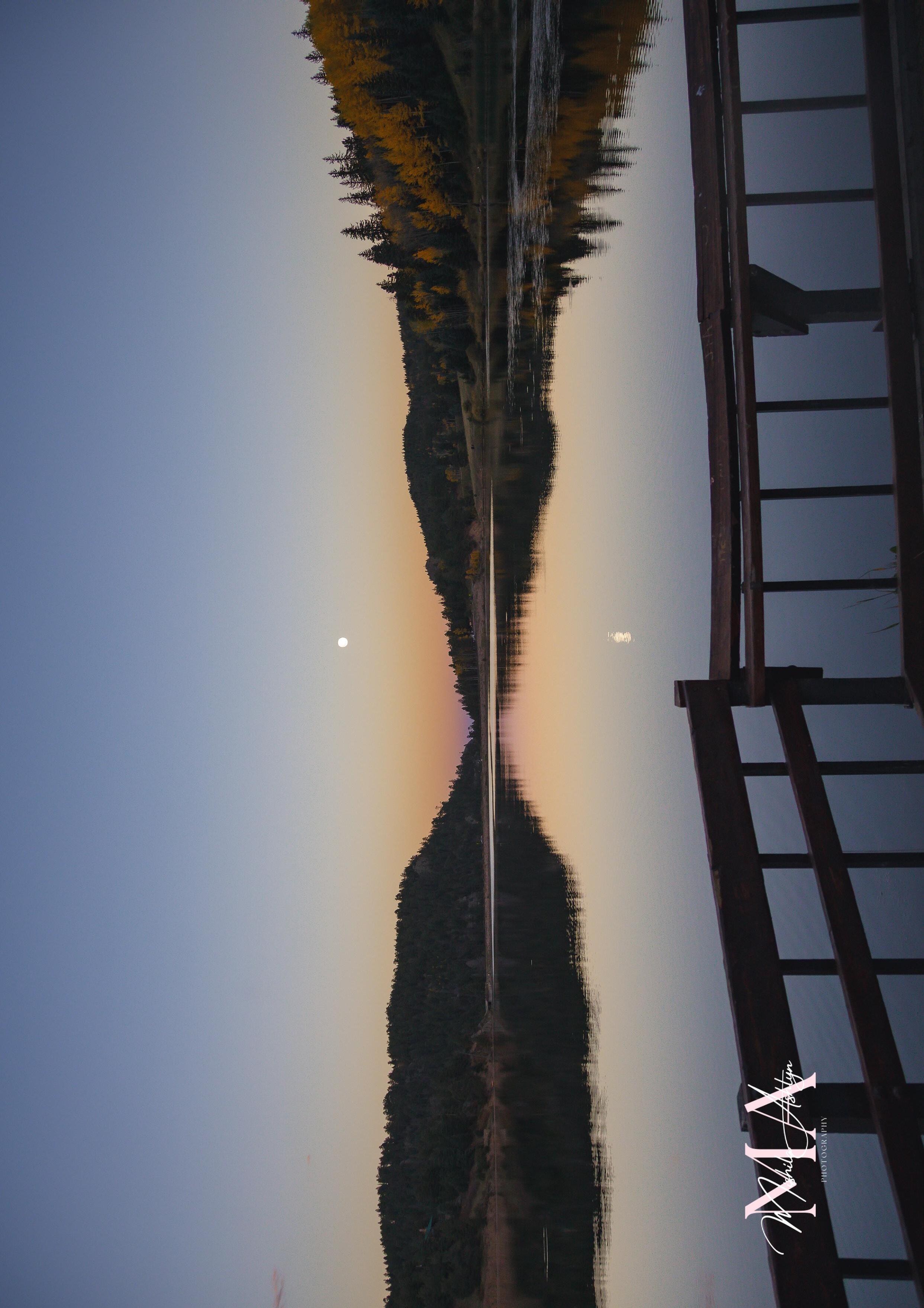
Blue Hour at Lake Isabel
Photo Credit: Mishila Ashlyn Photography
DEVIL’S CANYON LOOP
FROM CANOPIED CANYONS TO SKY-WIDE VIStAS
by FORD GRANADA
If you’re looking for a scenic hike within Pueblo County that the whole family can enjoy all year long, Devil’s Canyon Loop is a fun choice. It’s located in Pueblo Mountain Park, nestled in the Wet Mountains just west of Pueblo. The trail system winds through forests, canyon walls, a seasonal stream, and open viewpoints over the Beulah Valley. According to various trail guides, the loop via the Mace Trail and Devil’s Canyon Trail covers about 1.8 to 2.3 miles with an elevation gain of 400800 feet, depending on your route.
GettingThere&BasicLogistics
• Location: Pueblo Mountain Park, near Beulah — about 20-25 minutes west of Pueblo on Highway 78.
• Trailhead: Head to the Devil’s Canyon Trailhead (or join via Mace Trail) within the park.
• Permit/Access: The park is managed by the city of Pueblo and the local nature/wildlife center. Always check for any current closures or conditions.
• Difficulty: Rated “easy to moderate” for the shorter loop (-2 miles), but parts of the canyon involve rock scrambling and uneven terrain, so don’t mistake it for a flat stroll.
TrailDescription/Step-by-Step
Start: Begin at the trailhead for Devil’s Canyon (or join via Mace Trail).
Step 1: Follow Devil’s Canyon Trail. You’ll hike through shaded canyon walls, over rock and mixed substrate, including parts of a creek bed. About 1 mile and -400 ft. gain is cited to the high point along the junction with the Mace Trail.
Step 2: At the junction, transition to Mace Trail (or optionally via Northridge Trail for a longer route). Mace Trail opens up into more sun-exposed terrain, ridge views, and leads back toward the start.
Finish the loop via Mace Trail (or add Northridge Trail for more extension). Along the ridge you’ll gain nice vistas
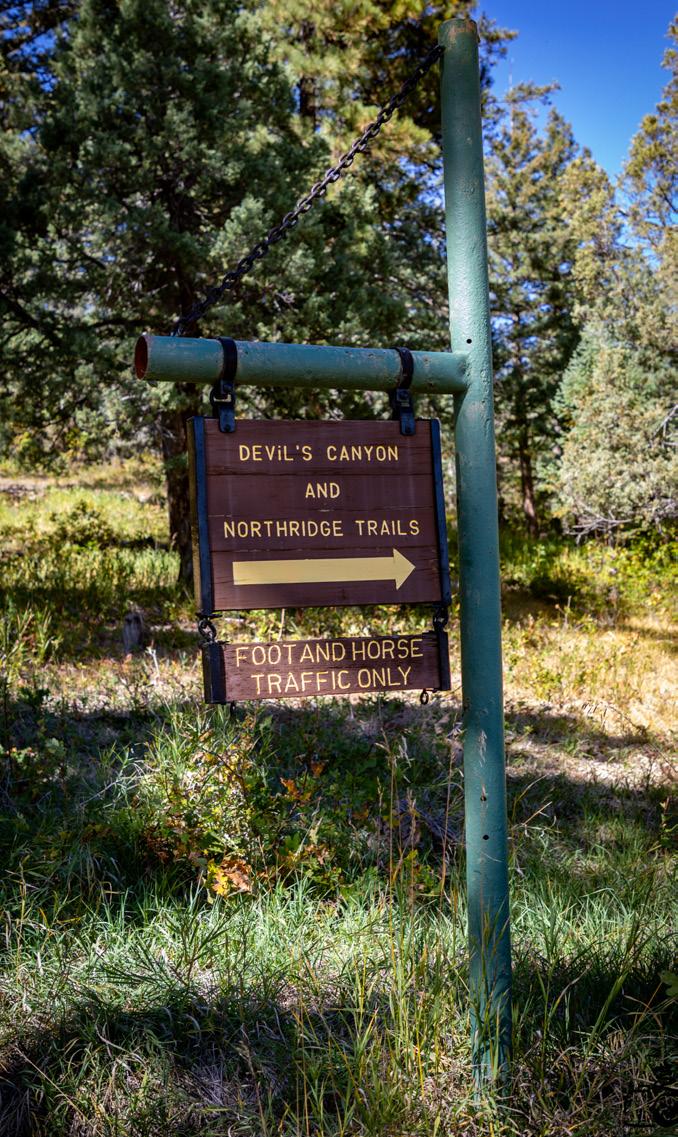
Devil’s Canyon Trailhead
Mountain Park
of Beulah Valley and the canyon below. The full Northridge + Devil’s Canyon loop is -2 miles with -800 ft. gain.
HighlightsYouWon’tWanttoMiss
• Rock window & canyon walls: Near the canyon’s pour-off, you’ll find a natural “rock window” viewpoint beneath the southeast wall.
• Seasonal stream/waterfall: The lower part of Devil’s Canyon follows a creek bed that may have flowing water in wetter months and becomes a dry trickle in dry seasons.
• Viewpoints of the valley: Once you climb out of the canyon via Mace Trail or Northridge Trail, you’ll get sweep -
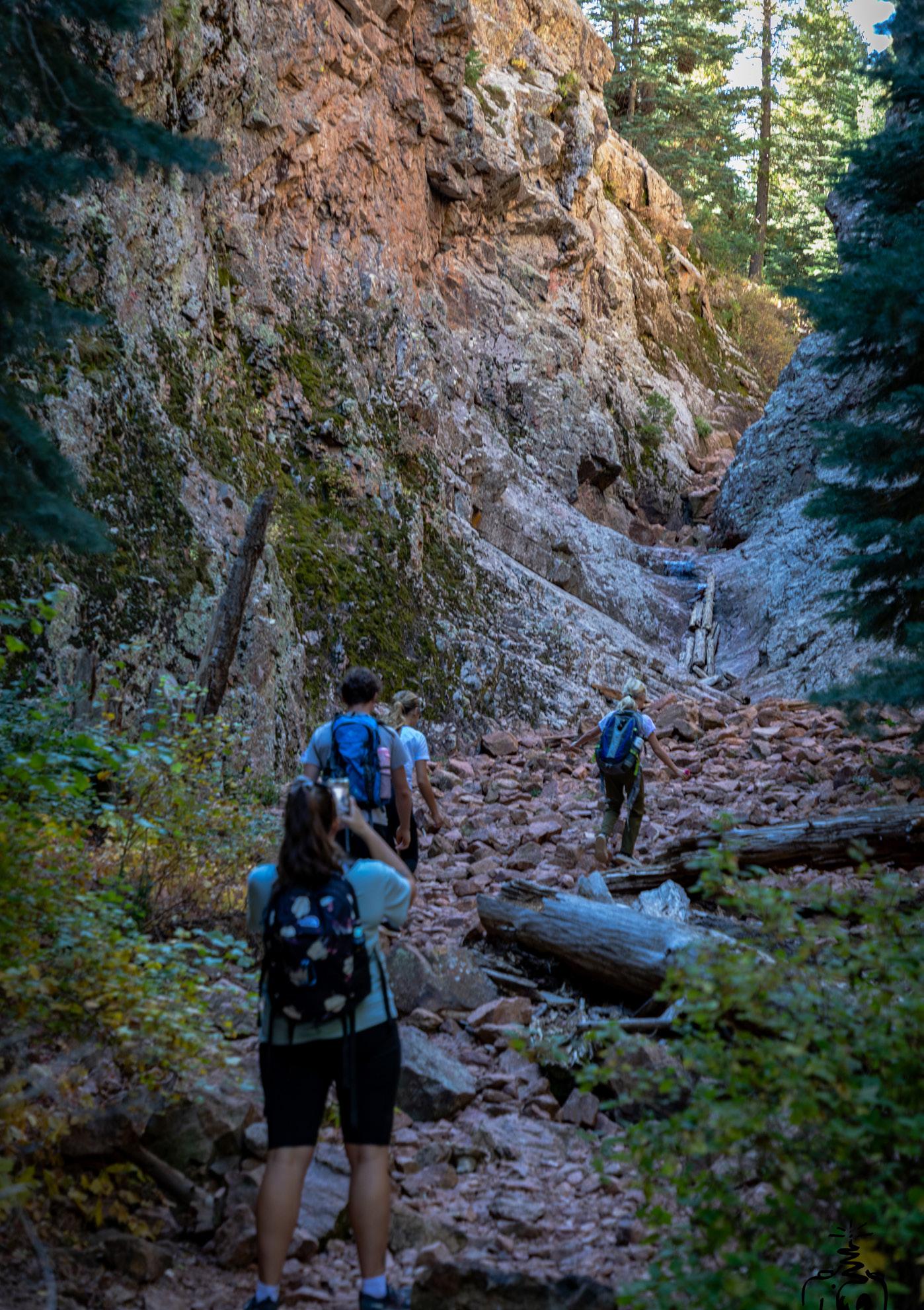
Devil’s Canyon Loop is an easy-moderate hike the whole family can enjoy. It gets cool during the summer months, offering a canopied respite from the heat.
ing views of the surrounding valley and mountains.
When to Go
While you can hike this trail yearround, the best time is spring through fall, when the trails are accessible and the views clear. Summer brings shade in the canyon, which is a bonus; fall adds color. Winter is possible but more challenging with ice present.
Pack List
• Hiking shoes
• Water and snack
• Sunscreen
• Layers
• Traction (in winter months)
Tips&Cautions
• The canyon trail is narrow, rocky, and can be slippery, especially around the pour-off or waterfall.
• Dogs are generally allowed. Bring a leash.
• The park is popular but not overly crowded; go early if you want quiet.
• Being in the Wet Mountains means you’re in bear and mountain lion country; stay alert, stay alive.
WhyItMatters
For residents and visitors of Pueblo County, this hike offers a relatively quick escape into nature without committing to a full day. It showcases the natural beauty of the region — canyon walls, forest, elevation change, and views of Beulah Valley. It’s a solid local gear up, whether you’re prepping for bigger hikes or just grabbing a quality trail near home.
Snapshot
METRIC APPROXIMATE
Length
1.8 - 2.3 miles
Elevation Gain 400 - 750 feet
Difficulty Easy - Moderate Time 1 - 2 hours
Start Point Devil’s Canyon Trailhead
CONTRIBUTOrs
DAVID ARMENTA MISHILA ASHLYN THE LEPIKS
David is the man behind David Took It, one of Pueblo’s signature photographers. David’s work is instantly recognizable. His use of light, both natural and artificial, is what makes his work pop, as well as his use of warm tones. David provides us with eye-catching images of the people and events that make Pueblo County a unique place to live and visit.
JON WATSON
Jon is a grunge dinosaur, a 90s relic marinated in Beat poetry, 18th Century English Lake poetry, an humble disciple of Cobain, Corso, and Shelley. Lone member of the Snow Leopard Tribe. Hermit of Greenhorn Mountain.
Mishila is a professional photographer specializing in portrait, wedding, and event photography. Known for a people-centered approach, she is dedicated to capturing authentic moments. Mishila’s work blends artistry with storytelling, creating images that feel both timeless and personal. Discover her work at: Mishila Ashlyn Photography.
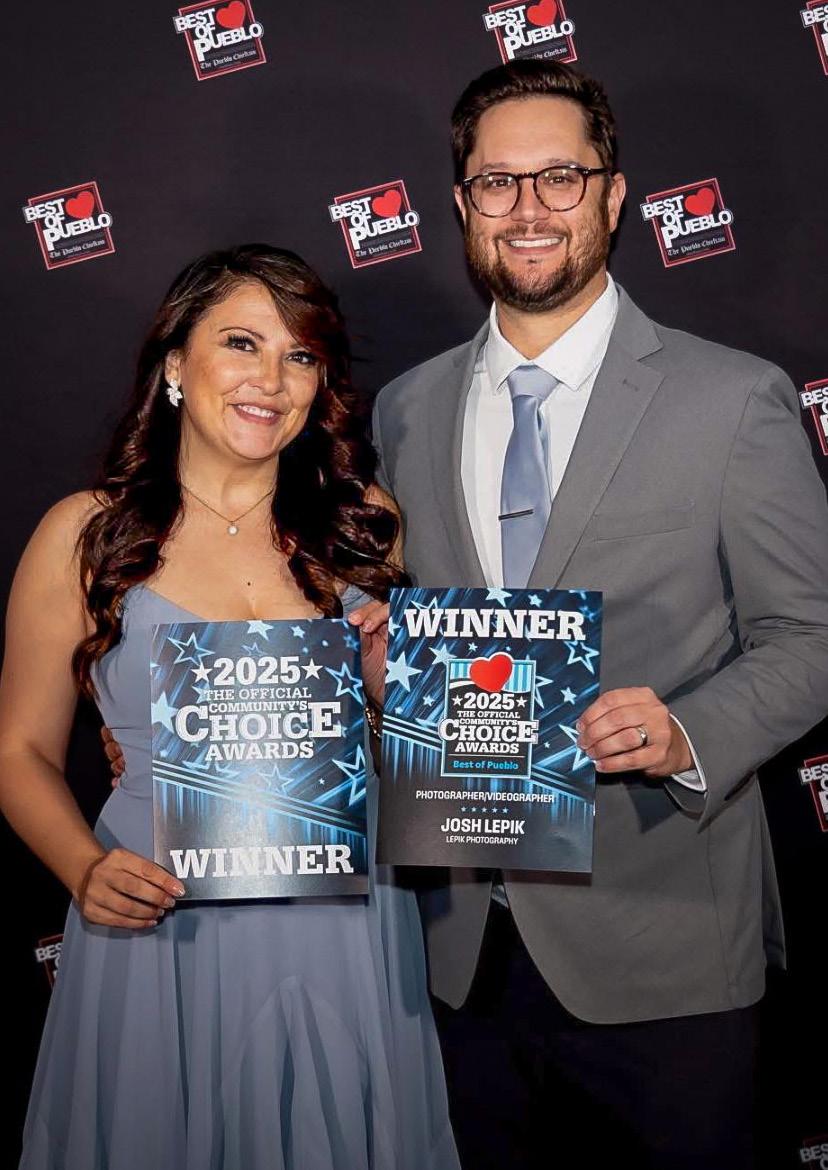
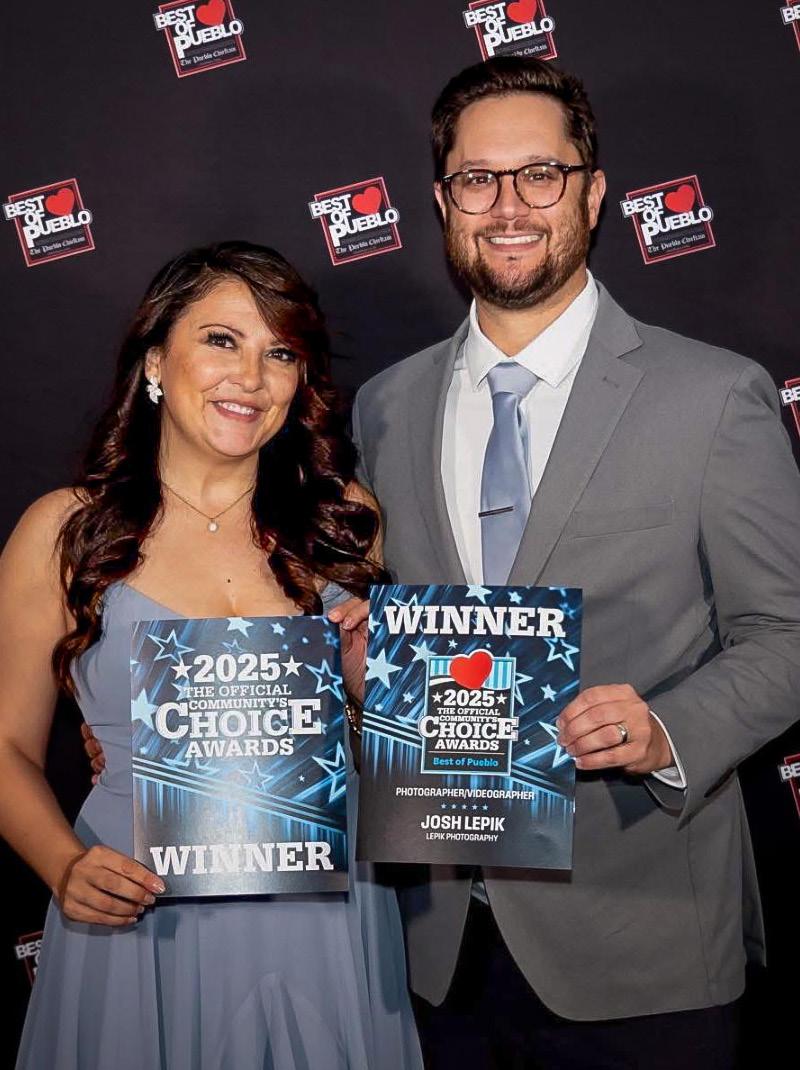
From weddings and senior portraits to small business projects and documentaries, Lepik Photography has cultivated more than a business—they’ve built a practice rooted in connection, collaboration, and community pride. This dynamic duo was recently awarded the 2025 Best of Pueblo for Photography / Videography!
KAYLA SEARS FORD GRANADA
Born and raised in Pueblo, Kayla has been pursuing photography professionally since 2015. She is a mom, enjoying life and doing what she loves to do: helping others make memories to cherish forever. Check out her work at: Soulful Moments Photography.
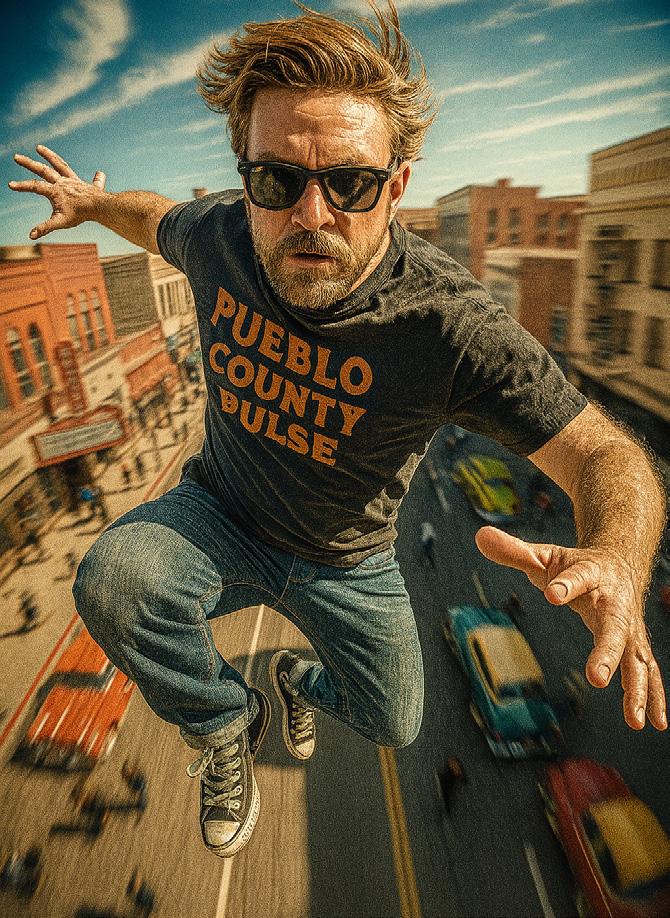
The bastard child of Rocky Balboa and Forrest Gump, Ford has lived a life like no other. When he’s not creating visual and written content for Pueblo County Pulse, he creates content for his creative experiment: THE LIFE AND MISADVENTURES OF FORD GRANADA.
SPRINGS LAW GROUP THE SACRED BEAN DANDY
Springs Law Group is a Colorado Springsbased personal injury law firm that represents clients hurt in car accidents, slips & falls, dog bites and other negligence cases. They offer free consultations, work on a contingency fee basis (you pay only if they recover compensation), and emphasize compassion, responsiveness and transparency throughout their process.
The Sacred Bean in downtown Pueblo is a vibrant café known for its inventive specialty coffees—think Pueblo Chile mochas—and rich brunch offerings including vegan pastries.
DANDY in downtown Pueblo is a curated men’s lifestyle shop offering premium grooming products, beard care items, and stylish accessories alongside gifts suited for grooms and groomsmen.
A creative project blending photography, narrative writing, videography, and place-based reflection inviting readers into the messy, beautiful world of Ford Granada. A window into a life of travel, risk-taking, spiritual enlightement, and a life in motion.