OUR HEART IS IN THE COUNTRY



Two nights, two landscapes, one luminous journey of art and nature
Two nights, two landscapes, one luminous journey of art and nature
A night walk like no other
A night walk like no other



Book your tickets here
Book your tickets here
An Outback symphony
An Outback symphony

Dear Pasengers, As we move into the cooler months, now is the perfect time to embrace a different kind of travel – one that invites you to slow down, unwind, and experience the distinctive charm of regional Australia during autumn and winter.
As temperatures begin to fall and the landscape turns to rich seasonal colours, there is no better time to explore regional New South Wales, Victoria and Tasmania. From the acclaimed wineries and restaurants of Griffith to the coastal character of Burnie, where sweeping beach views meet a rich local history, each destination offers something unique for a memorable escape.
In Narrandera, reconnect with nature and experience one of Australia’s healthiest koala populations, while in Mildura, Bruce Munro’s Trail of Lights will transform the Murray River into
a striking display of light and colour. As you plan your next Australian journey, explore our route map and discover curated itineraries and travel inspiration at rex.trulyaus.com
I would also like to sincerely thank our pilots and our ground staff, who truly went above and beyond to support flood-affected Queensland communities earlier this year.
Rex assisted isolated regions by maintaining essential air freight services between Boulia and Bedourie, while also transporting impacted passengers and critical personnel across the region.
To our valued passengers, thank you for your continued support. We look forward to welcoming you on board for your next regional or rural escape.
Warm regards,
Neville Howell Chief Executive Officer
Publisher & Editor: Michelle Hespe publisher@trulyaus.com
Deputy Editor: Matilda Meikle matilda@trulyaus.com
Designer: Ryan Vizcarra
Sub-editor: Claire Hey
ADVERTISING & MARKETING publisher@trulyaus.com
Abby Crawford
Matilda Meikle
Michelle Hespe
Niel Mcaliece
Dr Nipa Saha Rachael Lenhan
PRINTING
Printcraft 37 College Street, Hamilton, Qld 4007 printcraft.com.au
Truly Aus is published by AusBiz Pty Ltd, (ABN: 78 621 375 853 ACN: 621 375 853) Level 1, 3 Westleigh Street, Neutral Bay, NSW 2089 publishingbychelle.com
The reproduction of any content, in whole or part without prior written permission by the publisher is strictly prohibited. Opinions expressed in the content are those of the contributors, and not necessarily those of the publisher. All information in this magazine was believed to be correct at the time of publication, and all reasonable efforts have been made to contact copyright holders. Ausbiz Pty Ltd cannot accept unsolicited manuscripts or photographs. If such items are sent to the magazine, they will not be returned. We apologise if we don’t get back to your email, as we do receive a large volume of communication via various online channels. Some images used in TrulyAus are from iStock and Getty Images, and we make every effort to credit all contributors.
36.

20. A slice of Italy in Griffith
Take a bite out of the wineries, restaurants and farms of Griffith, inspired by the city’s rich Italian culture and heritage.
28. An orchestra in the outback
Light artist Bruce Munro has created a Fibre Optic Symphonic Orchestra in the middle of the outback.
32. Visiting Leeton Art Deco Festival
Immerse yourself in the culture, food, fashion and music of the Art Deco period, from 1910 – 1940s.
44. New offerings of Falls Creek
Falls Creek is Victoria’s largest alpine resort and an outdoor wonderland. What’s new on the mountain this ski season?
The home of real Australian stories
58. BUSINESS
Abby Crawford from Australian Power Equipment reflects on the logisitcs of Australian businesses in light of the fuel crisis.
62. ENVIRONMENT
What are the benefits of home repairs and how can Aussies get involved? One competition seeks to encourage more DIY.
48. History and nature in Burnie
From coastal walks to heritage museums, we unpack the best historic and natural attractions in Burnie.
50. Behind the buzz of Bermagooey
Bermagooey produces delicious single-estate honey from 100 per cent natural honeycomb.
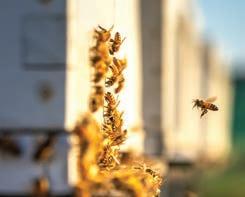
68. NATURE
Scientists have proven that bees can understand numerical information.
74. CHARITY
Three Aussie charities supporting education, economic relief and emergency housing for those in need.
78. TECHNOLOGY
A new study reveals that children are being shown junk food ads in online games.

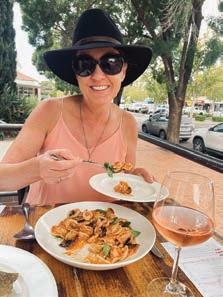
Lately I’ve been looking into who my ancestors were, and so I took a DNA test. Turns out I‘m 35 per cent Scottish, 25 per cent Irish, with the other 40 per cent scattered across Europe.
Having always loved food and its provenance, it led me to thinking about how lucky we are in Australia to have such a huge range of different cultures, all with their own approach to growing, sourcing and creating products and meals. We have access to native foods that Indigenous Australians have been using for thousands of years, and as much of Australia’s population came from 160,000 convicts from Britain and Ireland, alongside nearly 200,000 free settlers and immigrants who arrived between 1793 and 1850, we have one of the most diverse populations in the world. People lived and worked in tough conditions back then, but the land and the weather proved to be ideal for growing food and then later, producing wine.
Much of this issue is devoted to New South Wales, as my partner and I recently explored Griffith, Wentworth, Mildura and Narrandera. Everywhere we stayed, there was an abundance of produce, and in Griffith, we dived into the incredibly rich Italian heritage.
More than 340,000 Italians have settled in Australia throughout the 20th century. While initial numbers were low, significant waves arrived post-World War II, particularly between 1949 and the 1970s. Records now indicate there were over 390,000 Italian arrivals between July 1949 and June 2000, and today, around 60 per cent of Griffith’s residents have Italian heritage.
It’s a perfect place to sample the many classic products and dishes that Italians are so proud of. Even if the classics have been made a million times before – pastas, pizzas and salami –someone is always doing something different, and to me, that’s one of the best things about food and drinks. A teaspoon of something can change the entire meal, making it different to anything else.
In Wentworth, I experienced the inspiring new outback light installation called FOSO, by artist Bruce Munro, and met koalas in the pretty town of Narrandera. In this issue, we also dive into the food and drinks scene in Port Douglas, and share some tales from Falls Creek in the stunning Victorian High Country.
In AusBiz, we look at the benefits of repairing products, and how Australians can get involved in a movement that’s gaining traction, and in science, we report on how bees can understand numbers. In technology we delve into how fast food companies are advertising in online games for children, and cover some charities doing great things for others.
Enjoy the read and your journey today.

24-30 AUGUST 2026
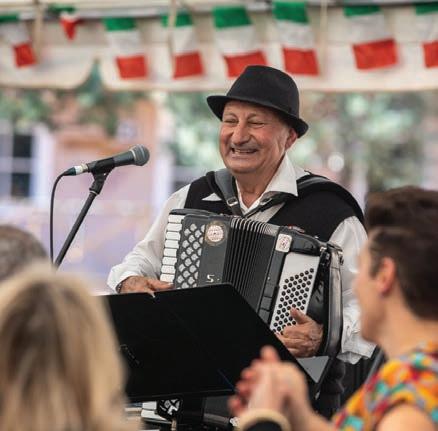
LOCAL EVENTS

FOOD & WINE
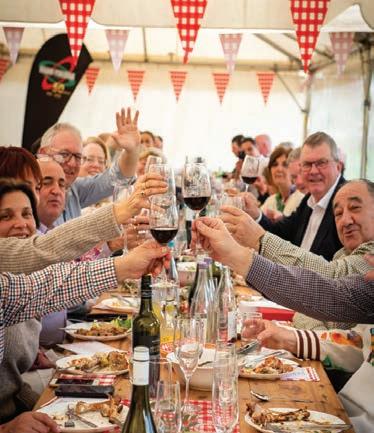
A Taste of Italy Griffith is a week long celebration showcasing Griffith’s authentic Italian culture and warm hospitality. Enjoy shopping, cellar door and dining experiences, live music and local events as you taste your way around Griffith from 24 - 30 August 2026. You’ll be spoilt for choice with an impressive range of Italian inspired festivities for the whole family to enjoy.
As you sit back in comfort en route to your destination, the Rex crew hope you enjoy this entertaining and informative light reading.
Q. Why do the flight attendants insist that all window blinds be up for take-off?
A. The most critical phases of a flight are the take-off and landing. In the most unlikely event of a situation that requires an emergency evacuation, it is important that crew and passengers are able to have a clear view of the outside conditions in case of obstructions. For example, before exits are opened, staff must check for fire or other obstacles that may present potential hazards during the evacuation.
Q. Why do I have to stow my hand luggage in the overhead lockers, under the seats or in the seat pockets for take-off and landing?
A. Flight crews are required by Civil Aviation Regulations to secure the cabin as well as possible for take-off and landing. As mentioned, these are the most critical phases of the flight, and securing as much hand luggage as possible ensures that, in the unlikely event of an emergency, the exits and aisles stay as clear as possible, in case evacuation is necessary. It is also important to keep hand luggage secure whenever possible to ensure heavier items do not become airborne within the cabin. This is especially important when the aircraft is experiencing turbulence.
Q. Why do I feel so tired from flying?
A. As the aircraft altitude increases, air pressure decreases. As the pressure decreases, the body absorbs less oxygen than it would at sea level – so, it must work harder to supply oxygen to the body’s cells. As the body is working harder, it becomes more tired.
Q. Why do I sometimes feel pain in my ears or sinuses during ascent or descent?
A. The sinuses and middle ear are air-containing cavities that connect with the nose via narrow channels. As aircrafts ascend and cabin pressure drops, air passes out of these cavities (without any effort from the passenger) to balance the cabin pressure. It is a different matter during descent, as the cabin pressure increases. The channels close down and must be actively opened by holding the nose and blowing to inflate the cavities. Facial and ear pain can occur during descent if re-inflation does not occur, and this is much

more likely if the passenger has nasal congestion. If you must fly with hayfever, use a decongestant nasal spray before descent and buy some ‘ear planes’ to plug your ears.
(Information contributed by Dr Daniel Hains, ENT surgeon.)
Q. When can electronic equipment such as laptops, iPods and mobile phones be used?
A. All Personal Electronic Devices (PEDs) must be placed in flight mode if access to the tarmac (including by bus) is required during boarding or disembarkation, and when instructed to do so by the cabin crew. Small handheld PEDs weighing less than 1kg, such as mobile phones, can be used in flight mode during all stages of flight. PEDs over 1kg, such as laptop computers, must be stowed appropriately for taxi, take-off and landing, and are permitted to be used only during cruise when the ‘Fasten Seatbelt’ sign is switched off. PEDs cannot be used while crossing the tarmac.
Q. What is the average speed of the aircraft when cruising in flight?
A. Our Saab 340 has an average cruising speed of approximately 500 kilometres per hour.
Q. Why do I have to get permission from the Captain to move to a vacant seat?
A. The aircraft’s take-off speed is calculated by the weight and balance of the aircraft, and many factors need to be considered for a successful take-off. Factors include the weight of passengers and where they are seated, the weight of cargo, freight and fuel, the distance available on the runway, etc. For example, if there are 100 or more kilograms of freight in the cargo, the balance of the aircraft will be better maintained if passengers are seated in the forward rows.
Q. Aircraft often experience air turbulence, but what causes it?
A. Imagine the air around the aircraft is water in a stream. We can see how water is disturbed around rocks or when two streams converge. Turbulence in the air is
similar: as the aircraft passes through cold air or in the vicinity of terrain that has disturbed the airflow – often incorrectly referred to as ‘air pockets’ – the aircraft climbs and descends in the same way that a boat moves on water. Though turbulence can be uncomfortable, it poses no threat to the aircraft and is akin to driving on a rough or unsealed road. More severe turbulence can be associated with developing thunderstorms. Aircraft have a sophisticated weather radar that pilots use to avoid these areas. Occasionally, a flight attendant will discontinue serving passengers in turbulent conditions; this is a precaution to ensure everyone’s safety.
Q. Why should I keep my seatbelt fastened even when the ‘Fasten Seatbelt’ sign is switched off?
A. On occasion, the flight crew cannot foresee turbulence or it is not picked up on the flight-deck radar. Because of this, we could unexpectedly experience turbulence at any time. Rex recommends that you always keep your seatbelt fastened while you are seated – for your safety, just in case unexpected turbulence is encountered.
Q. Why do the aircraft’s engine noises change during the flight?
A. Aircraft need more power to climb than to descend, in the same way that a car needs more power to go up a hill than down one. Rex aircraft have more than enough power to climb, so shortly after take-off you will notice a change in noises as the power is reduced. The pilots also control the pitch angle of the propellers for various stages of the flight, and as they ‘change gears’ this can also be heard in the cabin.
Q. What should I do if I see or hear something that does not look or sound right?
A. Please advise your flight attendant. The flight attendant may be able to answer your query and allay any fears. If not, the flight attendant will contact the flight deck and advise the pilots of anything unusual. Rex encourages open communication and will always treat a passengers’ concerns with the utmost seriousness.
Online check-in
You can check-in online through the Rex website, rex.com.au, on your desktop or mobile devices between 48 hours and 60 minutes prior to the scheduled departure time of your flight.
Airport check-in
If you have checked baggage, we recommend that you arrive at the airport for check-in at least 60 minutes before the scheduled departure of your flight at all airports except Burketown, Queensland (90 minutes before).
Rex check-in closes:
• 60 minutes prior to scheduled departure time at Burketown airport.
• 30 minutes prior to scheduled departure time for domestic and regional flights (with the exception of Burketown above).
Special requirements:
Passengers with special requirements must check-in at the airport (online check-in is not available) no later than:
• 90 minutes prior to departure for domestic flights and flights departing from Burketown, QLD.
• 60 minutes prior to departure for all regional flight departures except Burketown, QLD.
Passengers with international connections (within 24 hours) are permitted a 23 kilogram baggage allowance upon presenting a valid itinerary or ticket.
Please refer to rex.com.au for more baggage allowance information.
Excess baggage
Additional checked baggage allowance may be purchased during booking.
For baggage presented at check-in which is over the baggage allowance, excess baggage is subject to capacity and a surcharge of $5.50 (incl GST) per kilogram is applicable.
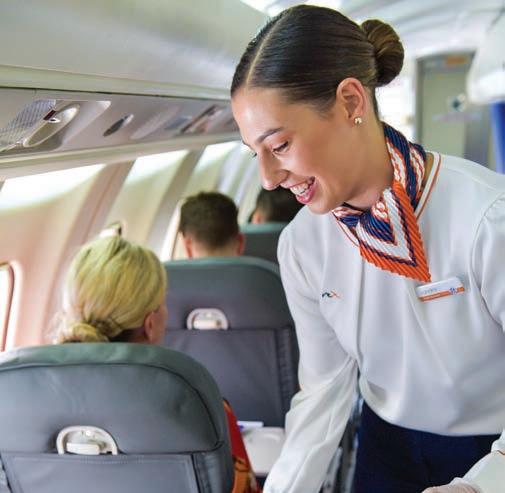
Carry on baggage
Checked baggage




During the Queensland floods earlier this year, Rex played a vital role in supporting isolated regional communities, including Bedourie, which was cut off by floodwaters for several months.
Working closely with local stakeholders, Rex operated multiple freight services from Boulia to Bedourie, ensuring the continued delivery of essential supplies such as food and medicine to residents.
At the same time, urgent travel requests were accommodated, with critical personnel transported into the region, including technicians needed to restore a lightning damaged water treatment plant and replacement crew for flood response helicopter operations.
Travel was carefully prioritised for those essential to community safety and continuity, in close coordination with emergency services and local councils across the state.
To further support affected communities, Rex introduced flexible booking arrangements by waiving change fees, increased the availability of Saver fares on northern routes, and operated additional Gulf services to meet heightened demand amid infrastructure limitations and fuel shortages.
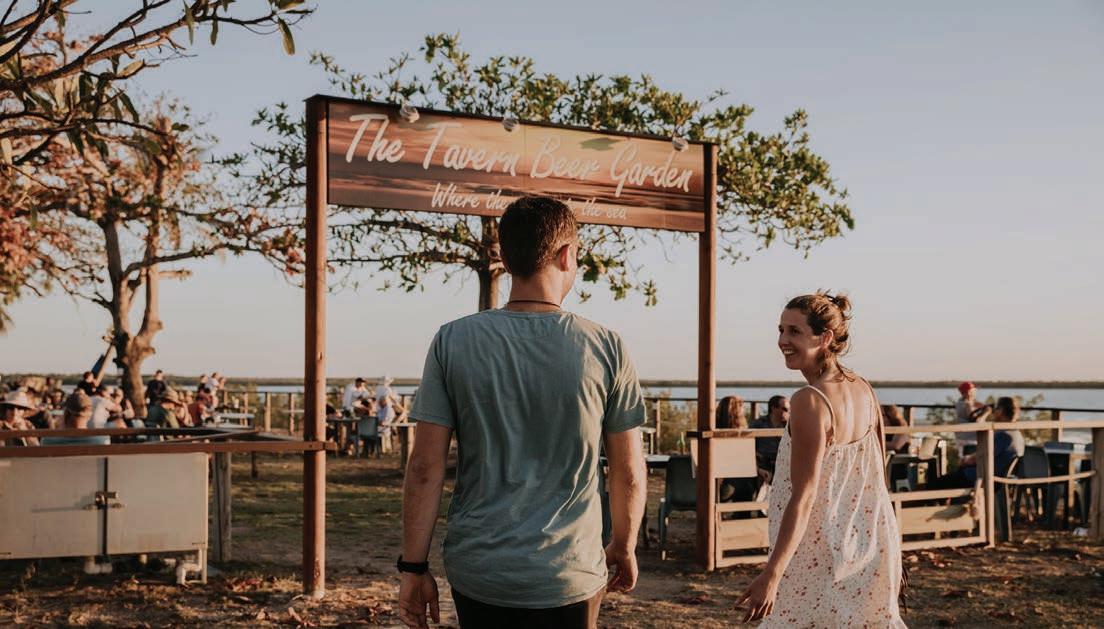
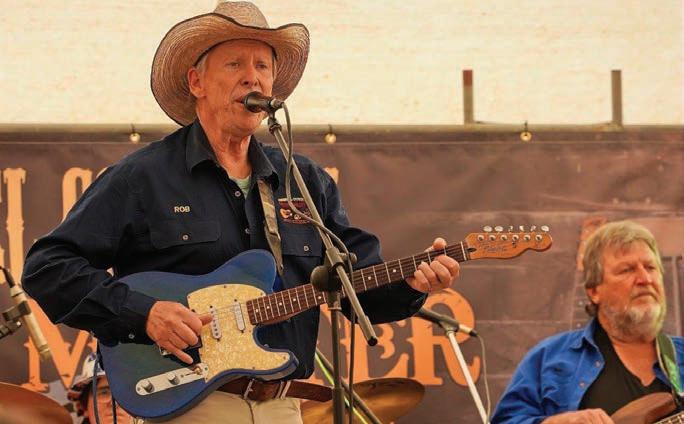
Pull on your boots and dust off your cowboy hat, because Channel Country Music Muster in Thargomindah is returning for one week of classic country fun.
From July 13 to 19, Thargomindah Rodeo Grounds will transform into a hub of outback entertainment. Think campfire cook-ups, food stalls, line dancing, and nightly live music.
This year, the line-up of artists includes Rob Breese, Owen Blundell and Sandie Dodd, with each evening centred around a different theme.
From 1970s disco to good ol’ country and Western music, there’ll be tunes for everyone.
Settle in and enjoy a flick on movie night, where nostalgic Aussie classics
will be shown on the big screen, or get cooking at the Golden Camp Oven Award. This damper cooking competition is not for the faint of heart, as many serious campers will take on the challenge.
Regular shuttle buses will be operating to get you back to your
accommodation, and attendees are welcome to set up camp with non-powered sites available for just $5 a night. Campsite facilities include hot showers, clean bathrooms and generators. You’re even encouraged to bring dogs along, as long as they remain on their leads.
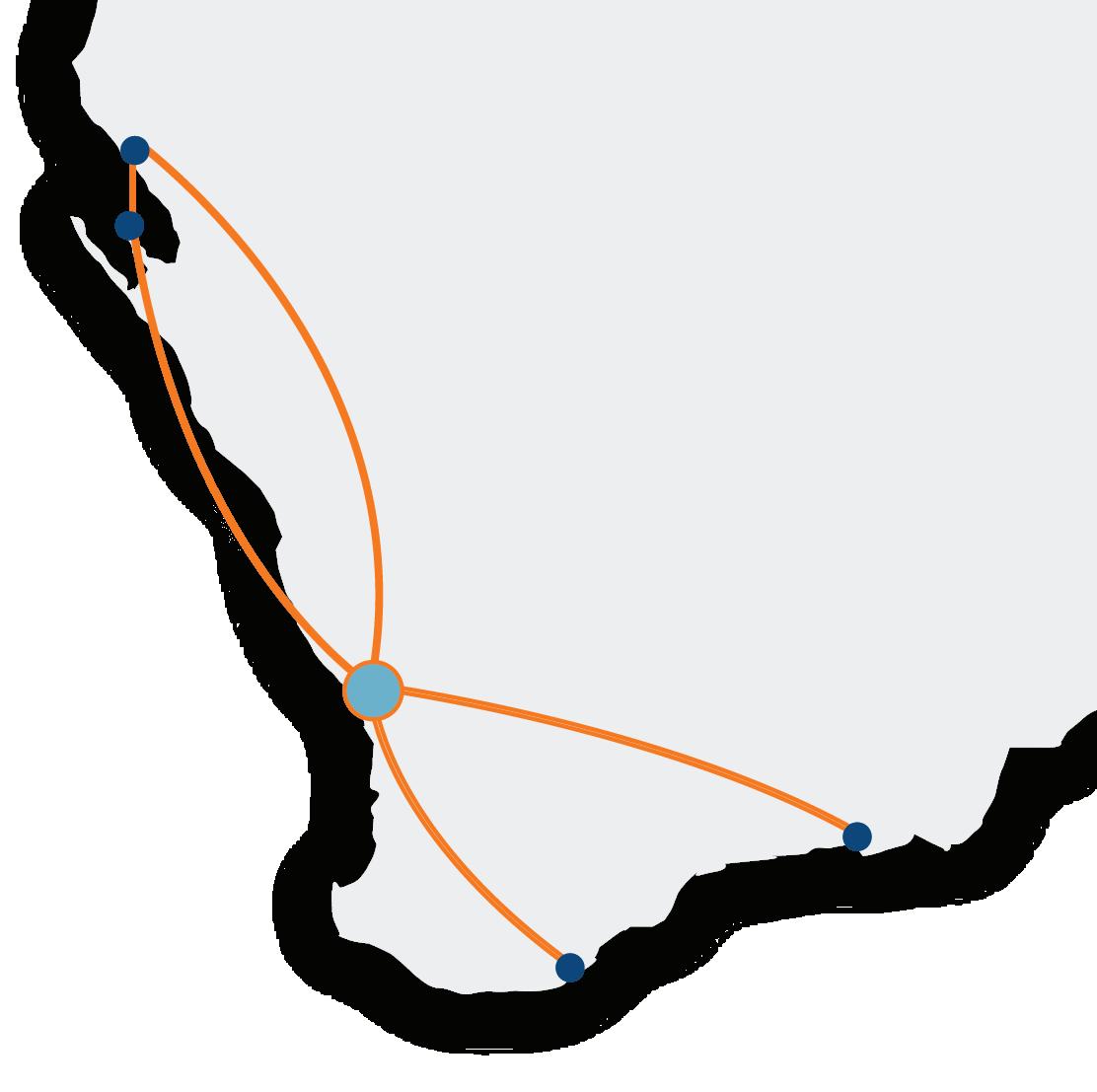
From whale spotting off the majestic coastline in Albany, Esperance’s famous white beaches, to Australia’s first Satellite Earth Station at the Carnarvon Space & Technology Museum and world-famous dolphin experience at Monkey Mia, Western Australia offers bucket-list adventures and breath taking landscapes. s
Explore Western Australia at rex.com.au.

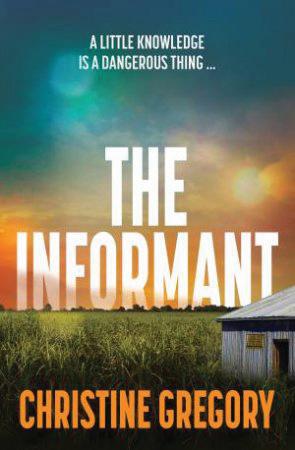
by Christine Gregory
May, Hardie Grant, Crime
The town of Hopeville descends into chaos when Silas Ziccone, president of a notorious bike gang, is found dead on a quiet dirt road. What follows is a heart-pounding crime thriller about motorcycle gangs, organised crime and police corruption centred around three vital characters: Silas’s girlfriend Ashley, his son Anton, and journalist Lars Nilsson. All are determined to uncover the truth, but who will get there first?

June, Warner Bros.
Discover the origin of Kara Zor-El, also known as Supergirl, who travels across the galaxy with her dog Krypto until a tragedy leads her on a murderous quest for revenge. Starring Aussie superstar Milly Alcock, this punchy action-comedy will showcase Supergirl in a standalone feature for the first time in 40 years. warnerbros.com
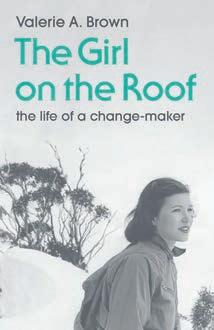
by Valerie A. Brown
June, Scribe, Memoir
When environmental advocate Valerie Brown was young, she realised that her parent’s words and actions were often misaligned. This simple observation led to a lifetime of concern over the damage done when a community’s good intentions aren’t turned into practice. From Australia’s first degree in health education to the country’s first national drug summit, she charts her experiences fighting for positive social change in this powerful memoir.

July 10-26, QTC
After delighting crowds in its 2025 season, the Queensland Theatre Company’s retelling of Pride and Prejudice is back for another glorious run. Discover how smart and stubborn Elizabeth Bennet deals with arrogant but infuriatingly eligible Mr Darcy in a new version of literature’s most iconic romance.
queenslandtheatre.com.au
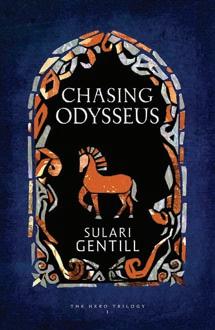
by Sulari Gentill
May, Ultimo Press, Mythology
Sulari Gentill’s retelling of The Odyssey is the start of a stunning three-part fantasy-adventure series tracking Hero, the daughter of a herdsman of Mount Ida, and her brothers as they chase after Odysseus in the hope of freeing their people from claims of treachery. But Odysseus’s path is dangerous, and not everyone will succeed. Discover Homer’s ancient classic as you’ve never seen it before.

Acast, Pop culture
Hosted by Clare Stephens, The Pile-On is an energetic and well-informed podcast about what happens when the internet turns against you. Released weekly, each episode dives into a new celebrity blacklisted by the online world, sifting through the comment sections and news articles to get to the heart of the problem. acast.com
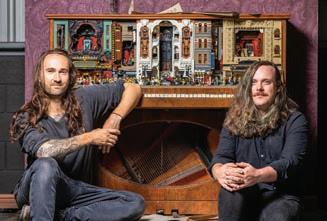
If you’re in Coffs Harbour between March 28 and July 19, YAM is hosting RELICS – A New World Rises, which is an immersive exhibit created by Perth duo (and LEGO Masters winners) Jackson Harvey and Alex Towler. Coffs Harbour is the first regional town to host it.
Set in the year 2130, the exhibit envisions the Earth abandoned by humans after they’ve exhausted its resources. Within relics such as vintage refrigerators, typewriters and even an old car, incredibly complex LEGO communities have adapted and flourished, turning each object into a tiny city, newsroom or cryogenic resort. The playful, thought-provoking scenes invite visitors to explore layered narratives, find hidden details,
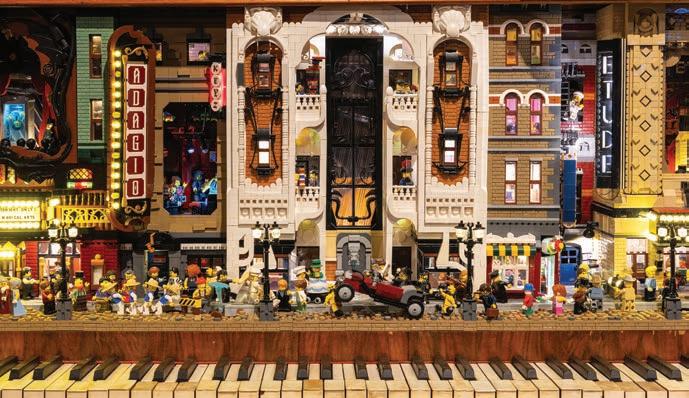
and reflect on consumerism and our relationship with material culture.
The experience is designed for all ages. Kids will be dazzled by the tiny scenes while adults will appreciate the nostalgic nods and deeper themes. Interactive elements such as LEGO building zones and scavenger hunts add to the fun, making RELICS more than just an exhibit.

Compiled by: matilda meikle
May 8-17
Tasting Australia
Adelaide, SA
A celebration of the incredible food and drinks of South Australia, featuring a program of guided tastings, long lunches, cooking masterclasses and tours of Adelaide’s most beautiful regions. tastingaustralia.com.au
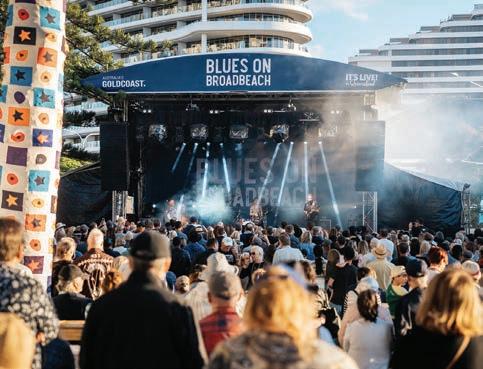
MaY 14-17
Blues on Broadbeach
Broadbeach, Qld
Marking its 25th anniversary in 2026, Blues on Broadbeach delivers four days of live music from local and international artists who share a love of blues music. bluesonbroadbeach.com
May 16-17
Straddie Salute
Stradbroke Island, Qld
Tackle one of Australia’s most beautiful triathlon courses on North Stradbroke Island, with other races including the kids’ competition, ocean swim and trail run across the weekend. straddiesalute.com.au
May 16-17
Great Ocean Road
Running Festival
Apollo Bay, Vic
Choose from one of eight distance races, enjoy a weekend of live entertainment, and soak up stunning views of the Great Ocean Road with the whole family. greatoceanroadrunfest.com.au
May 17-24
Sydney Writers’ Festival
Sydney, NSW
A week-long celebration of storytelling and ideas with standout speakers and starstudded pannels featuring R.F. Kuang, Jacinda Ardern and Trent Dalton. swf.org.au
May 21-24
Ballarat Heritage Festival
Ballarat, Vic
Discover the fascinating history of Ballarat with tours of historic buildings, theatre performances, vintage transport shows and exhibitions backdropped by Victorian architecture. ballaratheritagefestival.com.au
May 22 – June 13
Vivid Sydney
Sydney, NSW
A stunning light show that takes over Sydney’s most famous landmarks, with live music, cooking masterclasses and thought-provoking talks from the world’s leading minds. vividsydney.com

May 23-24
Paniyiri Greek Festival
Brisbane, Qld
Now in its 50th year, this cultural festival honors the history and spirit of Greece with dances, markets and music from the Greek community. paniyiri.com
June 4-7
Wagga Comedy Fest
Wagga Wagga, NSW
World-famous comedians including Ross Noble, Tom Gleeson and Mel Buttle head to Wagga Wagga for a festival of laughter and fun. civictheatre.com.au
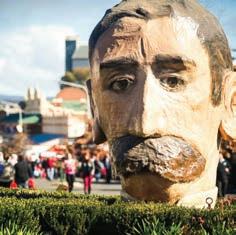
June 4-8
Henry Lawson Festival
Grenfell, NSW
An annual festival held in the birthplace of poet Henry Lawson that promotes the arts through competitions, poetry readings, parades, street parties and markets. henrylawsonfestival.com.au
June 5-8
Merimbula Jazz Fest
Merimbula, NSW
Australia’s longest-running celebration of jazz brings together more than 500 musicians and 100 bands for a long weekend of swing, funk, and traditional jazz. merimbulajazz.org.au
June 6
Winter Wine Down Festival
Renmark, SA
A showcase of Riverland wines and local producers on the banks of the Murray River, soundtracked by live music and comedy shows. southaustralia.com
June 12-13
Country Fest
Townsville, Qld
Embrace the country spirit with performances from the best Australian country music artists, as well as mechanical bull rides, food trucks and market stalls. countryfest.com.au
June 19-28
Rise Manly
Sydney, NSW
Watch the Manly Corso and laneways transform into a hub of live performances, light installations and artworks designed to delight all ages. hellomanly.com.au
June 27
Winter Harvest Festival
Kalbar, Qld
Explore the best culinary offerings of the Scenic Rim as producers and world-famous chefs fill your day with tastings, demonstrations and exciting competitions. eatlocalmonth.com.au

june 11-22
Dark Mofo
Hobart, Tas
Welcome to the mid winter with this gritty and ambitious arts festival, known for its nude solstice swim, winter feast and burning of the Ogoh-Ogoh effigy. darkmofo.net.au
Find a hook that’s fun, tasty, and worthy of a reel, and you’re bound to pull the crowds into a new eatery. Linla in Surry Hills is helmed by Taiwaneseborn, Sydney-based restaurateur and mixologist Charles Chang. With Linla he’s brought a fun (hello, street chicken that you shake up in a bag) yet super sophisticated (uber-stylish, dimly lit underground bar vibes) cross-cultural energy to something unique. Chang also founded nearby Japanese fusion venue Moku, that was a Top 100 finalist in the renowned Diageo World Class Competition, so he knows what he’s doing when launching something aimed at often-fickle Sydneysiders.
At Linla’s heart is a simple yet meaningful ritual: sharing a drink. In Taiwanese dialect, Linla evokes the sound and sentiment of friends toasting life and food.
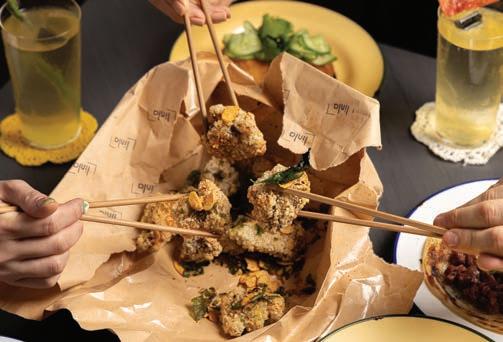
The menu leans into pan-Asian flavours with a social and immersive edge.
This is summed up by the hugely popular Night-Market Crispy Chicken, presented with the chicken pieces in a paper bag and ramekins of spices, so that diners can not only customise the flavour to suit their tastebuds, but also have fun shaking up the chicken. The pork and prawn wontons in a rich tom yum beurre blanc sauce are as silky as they are wickedly delicious, and it’s hard to go past the sticky rice arancini filled with Taiwanese sausage and house-made salted radish.
There are non-stop smiles across the long bar and restaurant, and the
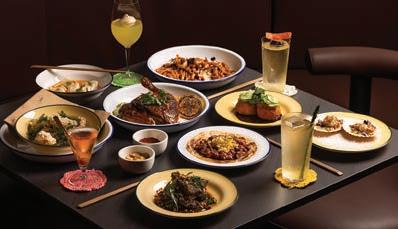
laughter says it all: Linla is a fun place to enjoy awesome dishes and innovative cocktails from a country known for its modern approach to savoury and sweet comfort meals.
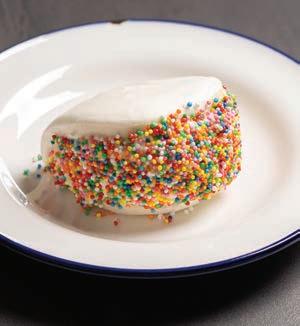
Desserts uphold the playful vibes, including a nod to an iconic Aussie party staple that shot to popularity in the 1920s: tuck into some delish fairy bread bao with vanilla ice-cream. linla.com.au
You’d be hard-pressed to find a social Sydneysider who hasn’t stepped foot into the Coogee Bay Hotel. It’s one of those places where you look around and can’t help but think: “Oh, if only these walls could talk.”
The Coogee Bay Hotel started out as a single-storey school back in the 1850s and 1860s, before becoming a popular beachside hotel and then a premier resort destination by the 1920s. The decades rolled on and it evolved into a local institution and a famous live music venue, with night club Selinas hosting legendary bands such as Nirvana and Midnight Oil.
After a $111 million-dollar makeover, the main pub, restaurant and sunny beer garden are just three parts of a sprawling precinct that includes a boutique hotel, suites above the main bar, a cool sports bar, stylish conference and events centre, coffee shop and cocktail lounge.
From shucked oysters and saltand-pepper squid to classic burgers, tacos, fish and chips, and woodfired pizzas, the modern-Aus menu has something for everyone.
The rooms and suites are lightfilled, stylish havens – the pale blue and crisp white colour palette adding to the sense of seaside serenity.
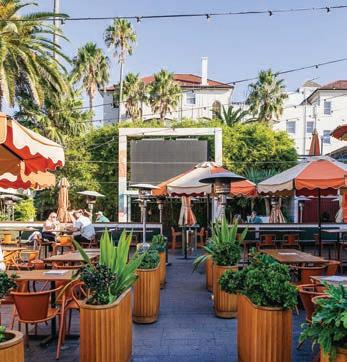
While preserving its charming heritage elements, the reimagined Coogee Bay Hotel has so many new connected spaces, you could spend an entire weekend relaxing and indulging in the good life. Judging by the happy crowds, it’s never going to lose its place as an iconic Sydney destination. coogeebayhotel.com.au
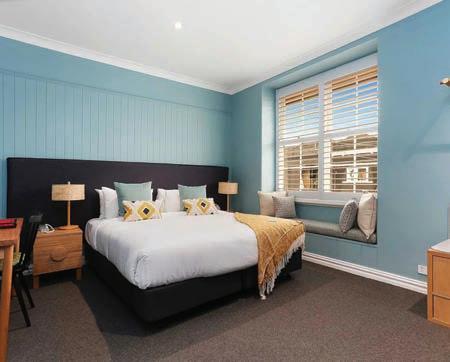
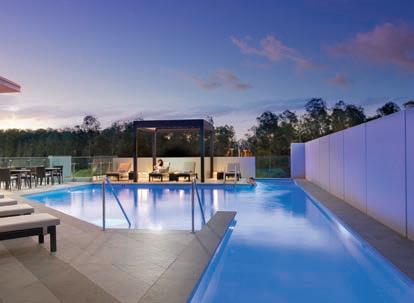
At the renowned Skytrax World Airport Awards, Pullman Brisbane Airport was crowned the Best Airport Hotel in Australia and the Pacific, leading an extraordinary result that saw Accor secure five of the top six positions across the region.
The accolade marks the fifth win in the past six Skytrax Awards for Pullman Brisbane Airport, owned by Brisbane-based brothers Scott and Anthony Flynn – two of Accor’s most prominent franchise partners in the Pacific. This latest victory once again cements the hotel’s status as the region’s benchmark for airport hospitality, while its previous rankings among the World’s Top 10 Airport Hotels highlights its standing on the global stage. “We are thrilled to see Pullman Brisbane Airport once again recognised as the Best Airport Hotel in the Australia/Pacific,” says Alex
Penklis, Chief Executive Officer of Brisbane Airport Hotels Group.
“This award is a testament to the dedication, skill and passion of our team. From day one, our goal has been to redefine what an airport hotel can be – combining premium comfort, thoughtful design and a seamless guest experience.
“Being acknowledged in such a competitive region reinforces that our approach is resonating with travellers, and we remain committed to raising the bar for airport hospitality with every stay.”
“Airport precincts are evolving rapidly into vibrant, multi-dimensional destinations, and Accor is proud to play a leading role alongside our partners in that transformation,” adds Adrian Williams, Chief Operating Officer for Accor in the Pacific region. bneahg.com.au


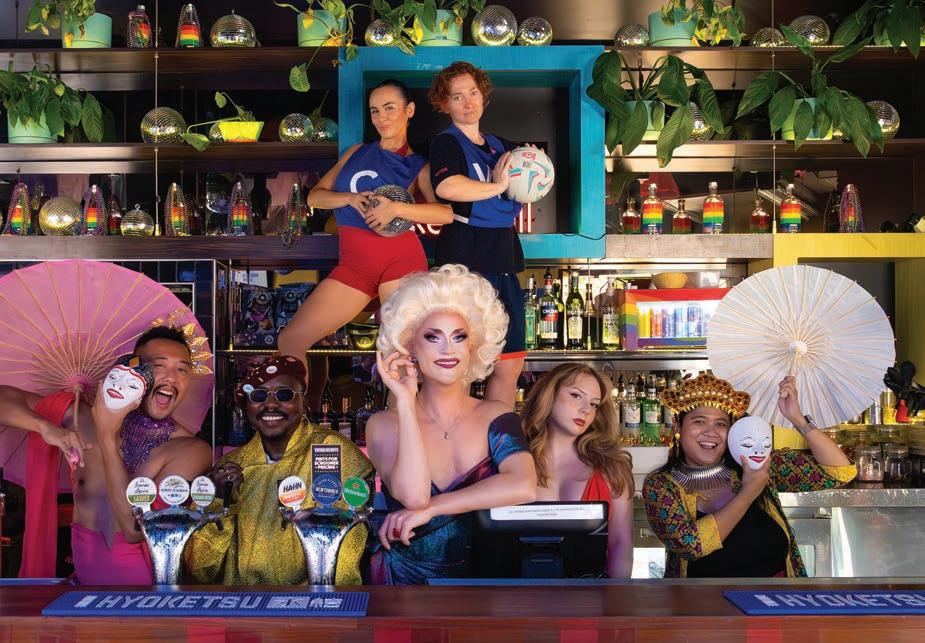
This June, Qtopia Sydney will transform the heart of the city into a vibrant celebration of queer culture, as Pride Fest 2026 returns bigger, bolder and more inclusive than ever.
Running for the month of June (timed to coincide with International Pride Month), the festival will feature more than 300 events, marking its largest program to date with drag, cabaret, comedy, film, workshops and so much more.
For the first time, Pride Fest is taking over the entirety of Oxford Street, with venues all along the iconic strip set to come alive with colour, performance and plenty of pride.
The celebrations begin with the inaugural Pride Fest Gala on June 2. Designed as a showcase of the festival’s diversity and talent, the gala promises a night of standout performances and community spirit all in one place.
Make sure to get tickets for Skank
Sinatra, the award-winning cabaret sensation who is returning with a showstopping one-hour performance of all your favourite musical theatre hits, complete with a live pianist, sparkly costumes and comedy.
Then, join musicians Kala Gare and Victoria Falconer for a high-energy variety show, Juicy Riot, at The Eternity Playhouse. Think music, cabaret and performance art all rolled into one.
For the duration of Pride Fest, there will be two mini festivals –Intersections and Fit N’ Proud. Intersections is a celebration of cultural diversity that champions First Nations, Pasifika and CALD LGBTQIA+ creatives with an inspiring series of workshops, performances and talks. Fit N’ Proud is all about connection through inclusive sports, fitness and dance events such as ‘80s aerobics classes, line dancing, gay boxing, restorative yoga, and even a class on the history of swordplay.
If you’re looking to make new friends,

sign up for the Palomar Community Dinner Party or Linla Community Dinner Party, where you’ll head to these restaurants and enjoy a community meal at a shared table. For those interested in learning more about Sydney’s queer history, check out the screening of Dykes on Bikes: An Origin Story, which is followed by a meet and greet with the Dykes on Bikes themselves. Then, in the following week, honour the legacy of the 1978 Sydney Mardi Gras in a powerful evening with the people who attended the first march (widely known as the 78ers).
Tickets are now available for the entire program. For $45, the Pride Pass will give you access to five two-for-one entries, 10 percent off at the bar, and 10 percent off Pride Fest merch.
Find out more and purchase your tickets at qtopiasydney.com.au
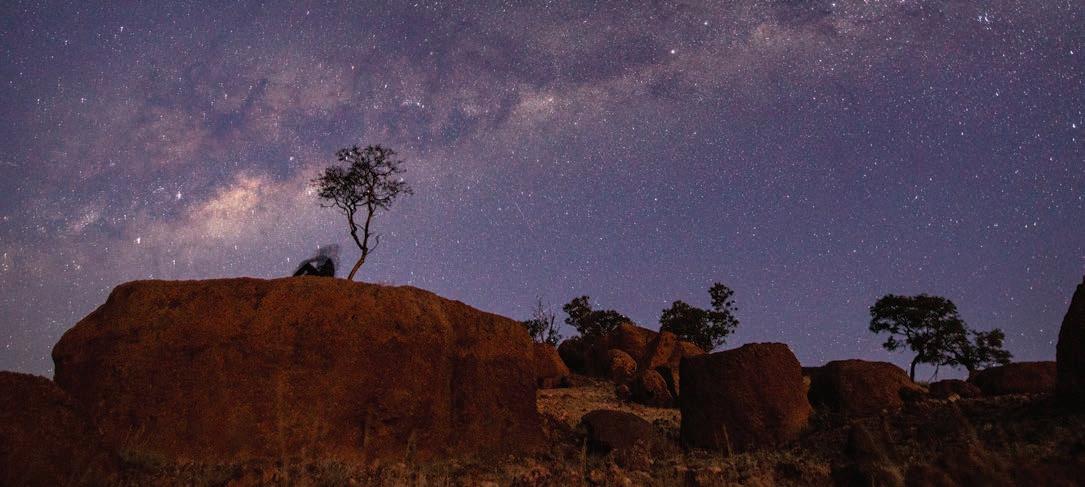
The Outback Queensland Desert Champions Way: Outback Camel Trail is one of Australia’s most distinctive outback experiences.
Dive into a month-long celebration of camel racing, culture and community staged across some of the state’s most remote and characterfilled towns. Running through July, the trail links Jundah, Birdsville, Bedourie, Boulia and Winton in a rolling festival that combines sport with storytelling, music and classic bush hospitality. At its heart is camel racing, a tradition dating back to the late 19th century when cameleers played a vital role in opening up inland Australia.
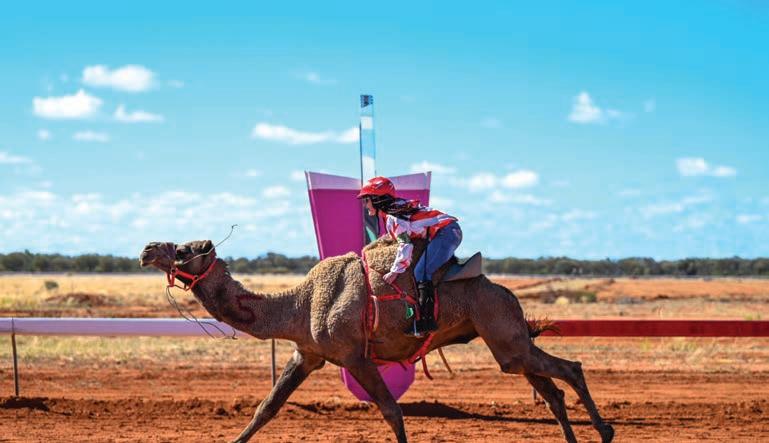
Each stop along the trail hosts its own event, from the lively Jundah Camel Races to the newer Birdsville Camel Carnival and the family-friendly Bedourie races. The pinnacle is the Boulia Camel Races – often dubbed the “Melbourne Cup of camel racing” – where competitors thunder down a 1500-metre track in a spectacle of dust, speed and unpredictability. But the trail is more than a sporting circuit. It’s a journey through the cultural heart of Outback Queensland,
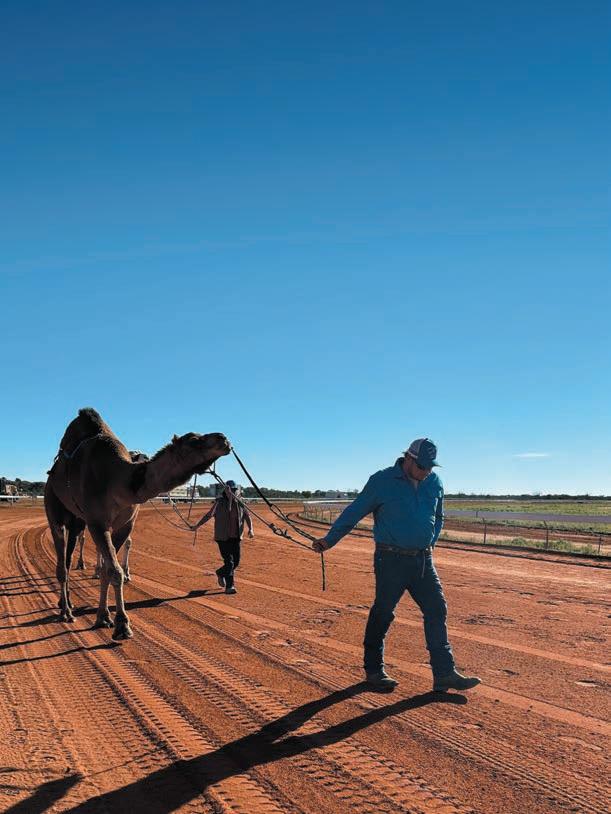
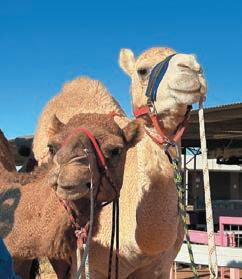
with live music, local markets, arts, and stories woven into each destination. Visitors can expect everything from novelty races and concerts under desert skies to encounters with the region’s rich cameleer heritage.
Blending adventure, history and plenty of community spirit, the Outback Camel Trail offers a rare chance to experience the Australian outback at its most vibrant – when red dust rises, crowds gather, and the desert truly comes alive. TA
Embark on an epic journey through the heart of Outback Queensland, where the thrill of camel racing intertwines with the region’s rich history and lively culture.
If you’re a true Italophile, when A Taste of Italy transforms Griffith into a smorgasbord of eccellenza, you should be at the table.
WORDs: Michelle Hespe photography: rachael lenehan
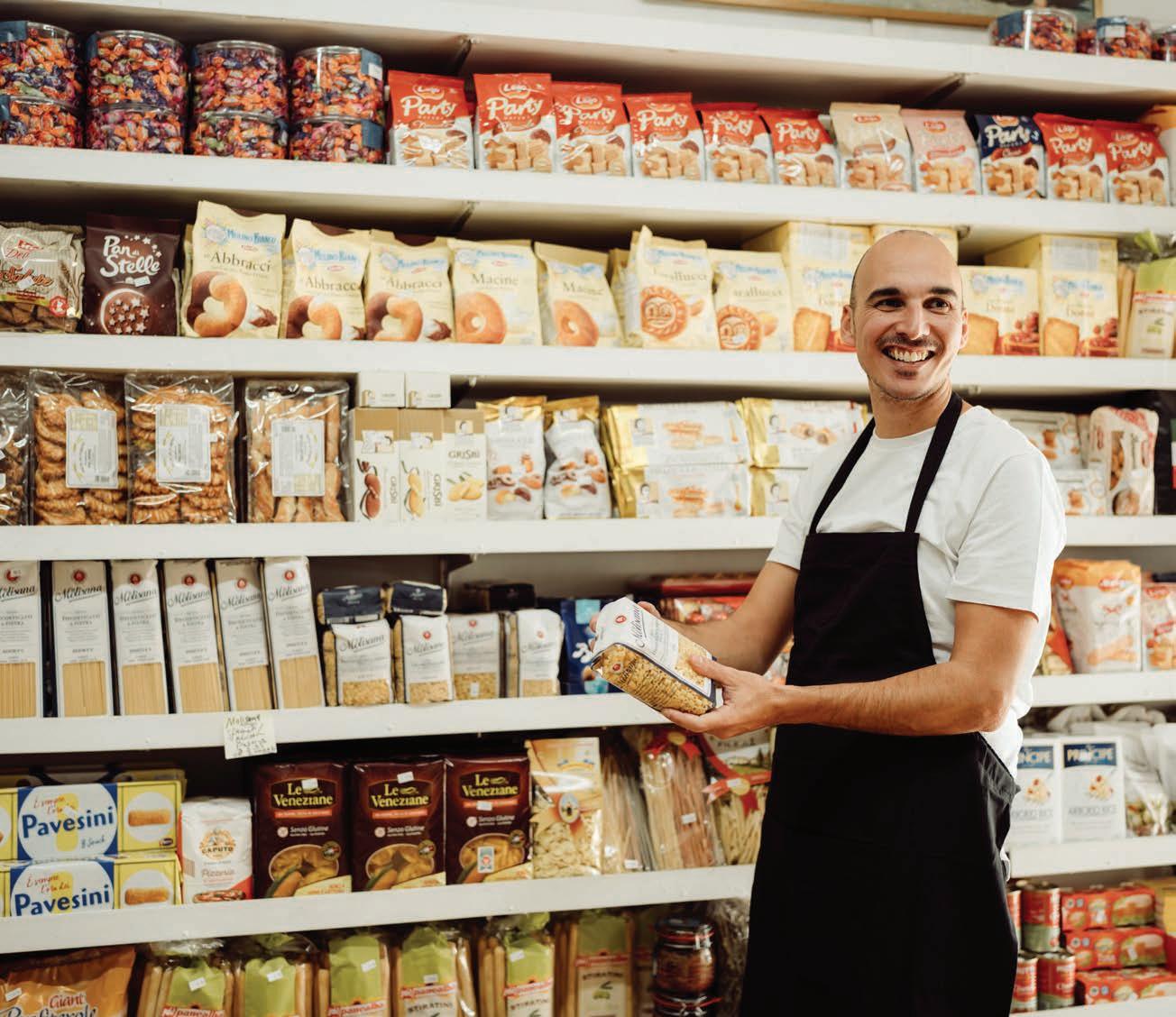
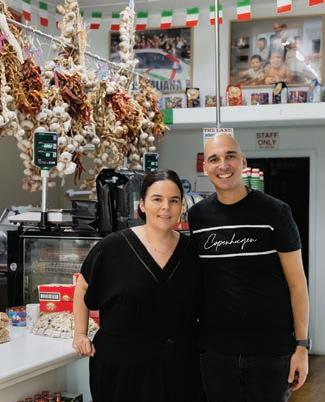
AS I push open the door of La Piccola Grosseria, the soft tinkle of a bell announces my entrance into a perfect little pocket of Italy. The store’s owner Sam Trimboli flashes me a huge welcoming smile as he packages some sliced ham for a lady happily laden with a basket of cheeses, pastas and nougat.
Then there’s kisses on both of my cheeks, a bear hug, and Sam and his sister welcome me into their world –a place where every spare centimetre is meticulously packed with all things gloriously Italian.
Thick chilli and garlic braids hang from the ceiling above perfect rows of crispy wafers, and behind me the fridges are stocked with olives, hams, cacciatore, salamis, trays of juicy sun-dried tomatoes, gnocchi and a mouthwatering array of cheeses. The shelves next to them are neatly stacked with handmade pastas, pastries, chocolates, sauces, pickled vegetables and jars of sweet treats.
“Everything you see is everything I love!” Sam says, waving a hand with Italian gusto. “I’ve been running this business for 22 years and I wouldn’t change a thing. I love the produce and the people. It’s an amazing life here,” he says, beaming.
Sam hands my partner and me two of his paninis packed with ham,
cheese, prosciutto, pickled veggies and olives. “Fit them in later,” he says. We tuck them into our bag, as we know how much food lies ahead of us. After bear hugs goodbye, we hit the food trail in our stretchy pants.
Attracted by the prospect of land ownership in the newly developed Murrumbidgee Irrigation Area of the Riverina, Italian settlers started arriving in Griffith around 1913.
Pioneering many agricultural sectors, such as viticulture and citrus farming, immigrants worked hard to set up homes for their families back in Italy, and after World War II, more than
2,300 Italians arrived between 1947 and 1950, leading to Griffith having one of the highest concentrations of Italians in Australia. Today, Griffith has the highest population of Italian ancestry of any local government area in Australia.
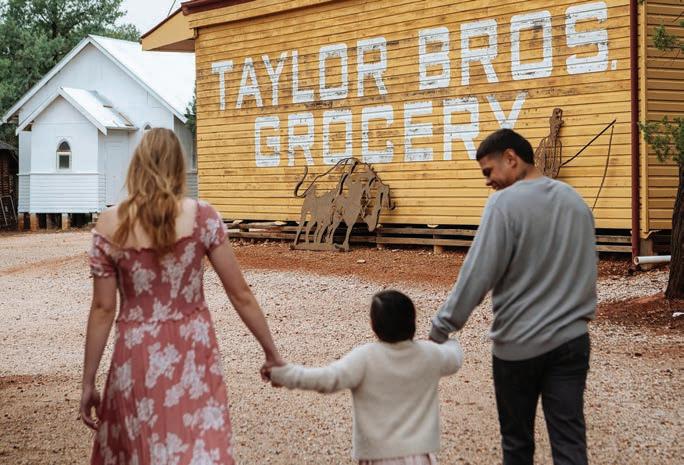
To gain an understanding of how Griffith has evolved over the past century, we step back in time at the open-air Griffith Pioneer Park Museum, which is a fantastic replica of the shanty town that it was during the 1910s. Back then it was called ‘Bagtown’ because canal workers and early settlers used hessian cement bags salvaged from irrigation construction sites to build makeshift shanty huts and tents.
Astounding collections of wellpreserved memorabilia, antiques and fascinating records are housed in each recreated building – such as a grocery store, pub, saddlery, hospital, and local newspaper and printing press.
The Griffith Italian Museum is a great place to start, as it offers in-depth insight into the people and produce that have made this bustling Riverina city what it is today.
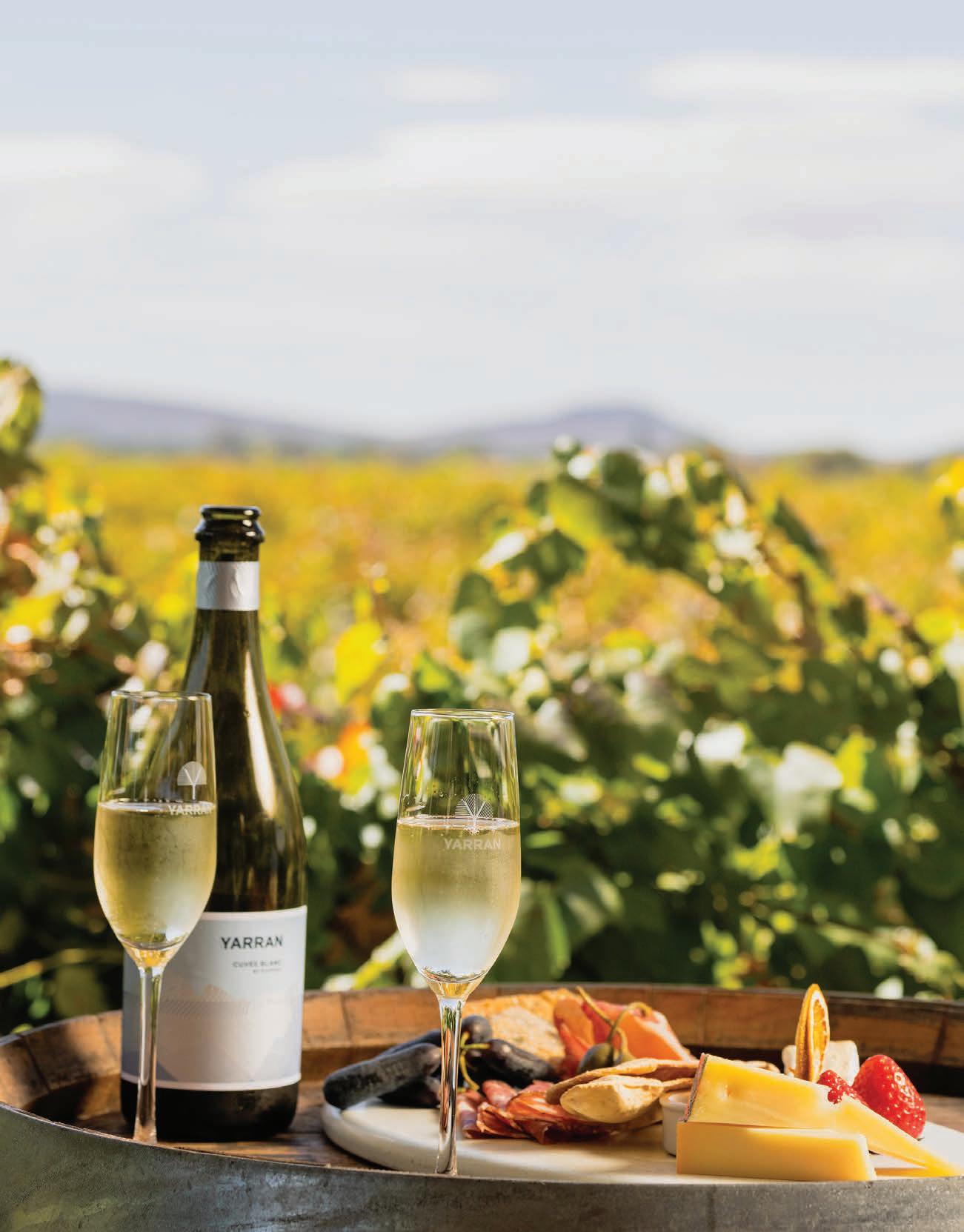
We can thank Italians for kickstarting the wine region in and around Griffith, where there are now more than 30 wineries and a smattering of familyrun cellar doors.
established the vineyard in the late 1990s and it’s since grown from having a single shiraz release into a diverse portfolio of varietals and styles, all crafted from estate-grown fruit by wunderkind winemaker Sam Brewer, who has a firm focus on organic, innovative, small-batch winemaking.
“She went overseas for a month, and I thought: 'Yes! She’ll finally share the recipe so I can make some for guests', but instead, she baked enough to last us and kept her secret,”our sommelier explains with a laugh and a slap of the table.
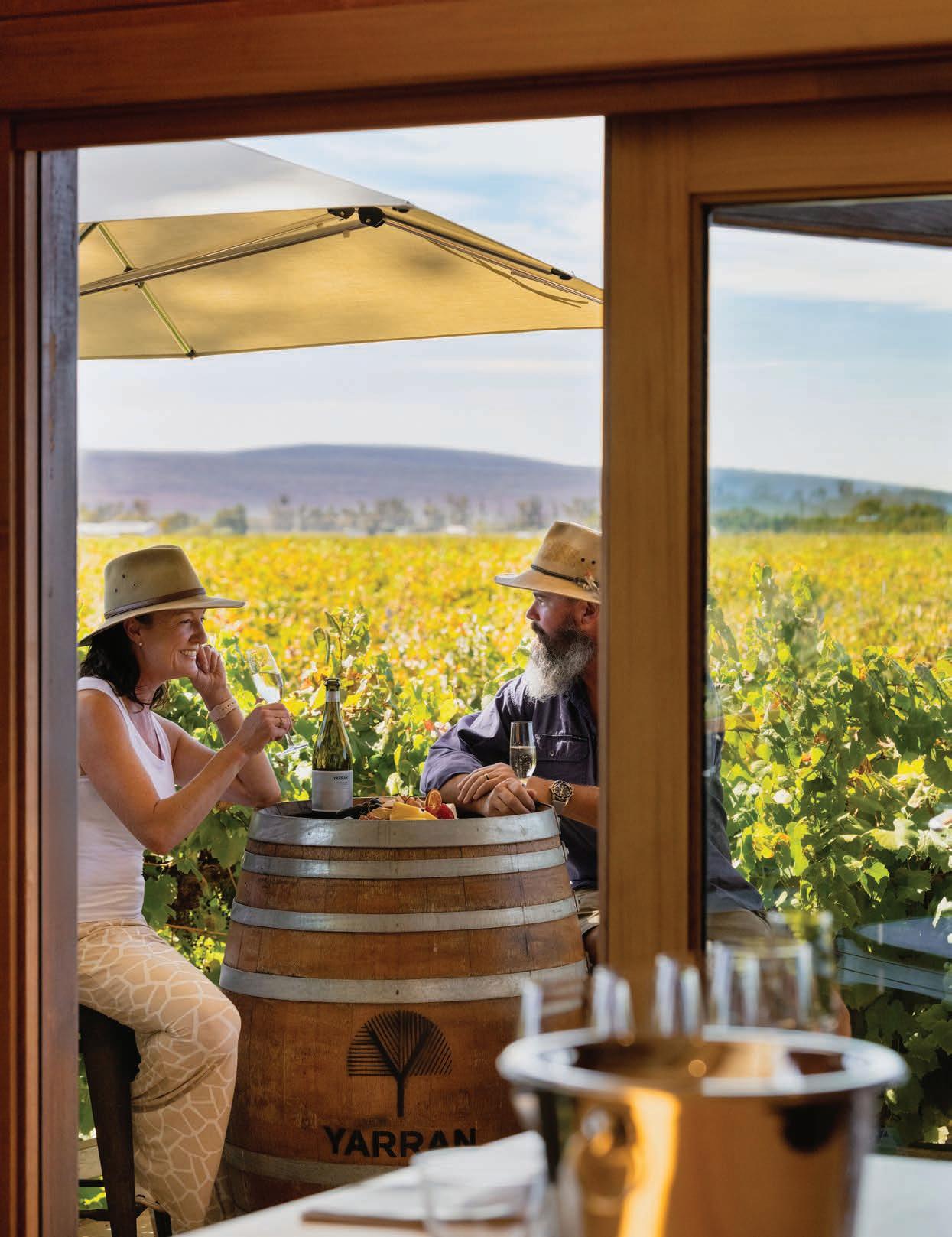
Standout varieties include durif and pinot grigio, while the Yarran Cuvee Blank (which sells for a super reasonable $18) is a refreshing crowd-pleaser with crisp lime notes.
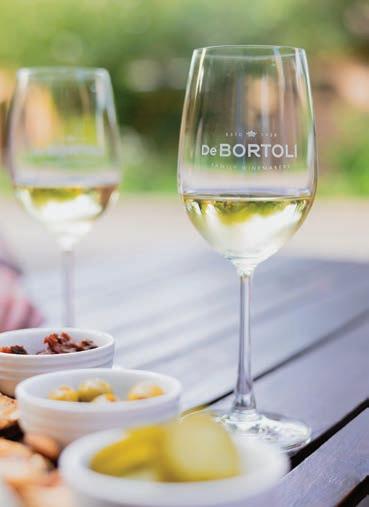
For wine lovers, De Bortoli Wines needs no introduction. It’s one of Australia’s most recognised family owned wine producers, and was founded in 1928 by Italian migrants Vittorio and Giuseppina De Bortoli. Starting out with small batches of shiraz, it quickly grew into a multigenerational enterprise.
We meet Margot De Bortoli, who organises a delicious platter of local produce and a tasting of the classic Buttery Chardonnay (full, with bright peach and melon notes), the Pale & Dry Rosé, and the world-famous Noble One botrytis semillon – a dessert wine that helped define De Bortoili's impressive reputation.
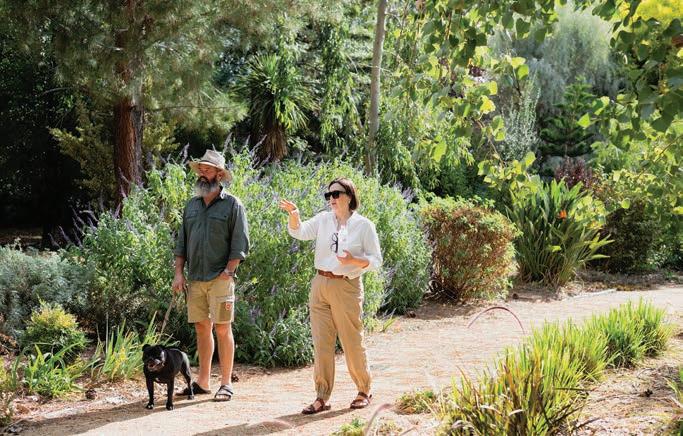
After our tasting we enjoy a walk around the winery’s enchanting garden, which was lovingly created by matriarch Emeri De Bortoli. Before Emeri’s husband Deen De Bortoli passed away in 2003, he promised her 14 acres for the garden that has since been her pride and joy.
The fairytale landscape – with bridges, trellised walkways draped with flowering vines, a dam and a rockery – is a mesmerising living artwork comprised of different environments bursting with colour.
Next is Calabria Family Wines, which was established in 1945 by Italian couple Francesco and Elizabeth Calabria. This third-generation winery has grown from humble beginnings into a dynamic producer with vineyards in both Griffith and the Barossa Valley, and it would not look out of place in Tuscany.
We begin our wine trail at Yarran Wines, where it feels more like a property in Veneto than somewhere in Australia. The Brewer family
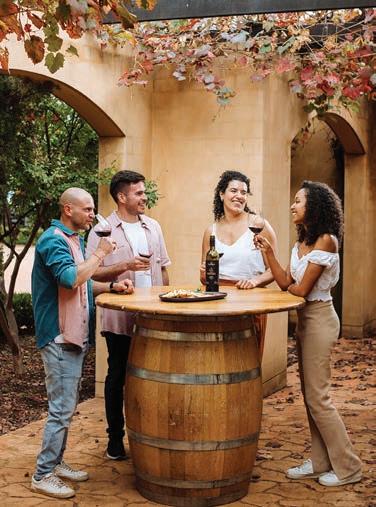
At the cellar door, which opens on to a sprawling wooden deck overlooking the vineyards, we enjoy a relaxed tasting paired with a platter of local produce – cheeses, prosciutto, olives and delicious crackers made by Sam’s mother, who refuses to share the secret recipe with anyone.
Known for its expressive Italian varietals – such as aglianico,
montepulciano and Nero d’Avola –alongside classic Australian styles, Calabria balances heritage with forward-thinking winemaking. The super-stylish Griffith cellar door has tastings in polished surrounds, dining and a gorgeous, lush green garden where we sat under the grapevines and enjoyed a classic margherita pizza and a glass of Belena Pinot Grigio.
Choosing where to eat in Griffith is no easy task, but we slice our three days as perfectly as Italians slice pizza.
For breakfast we head to Milano’s, where we sip on some of the best coffee in town, then enjoy avocado, tomato, feta and poached eggs on sourdough. Just down the street is Bertoldo’s Pasticceria – which has been serving Griffith Italian treats for more than 70 years. We swoon over a legendary cream-filled cannoli.
Limone is our lunch spot, where award-winning head chef Luke Piccolo delights customers with his exquisite meals showcasing produce from his family’s Piccolo Farm. Luke’s signature tagliatelle with basil pesto and pecorino is a flavour explosion, with the fresh basil doing all the talking.

We’re not the first people to wax lyrical over his baccala (salt-cured cod) patty crumbled with polenta on a bed of tomato sugo and celery, and the family’s famous lemon meringue pie is so light and fluffy it looks like the meringue is going to rise from the crust and fly away.
Afterwards we visit Luke’s father (aka Farmer Pete) at Piccolo Family Farm, where he and his wife Rosa settled more than 50 years ago.
It’s not usually open to the public, but hosts special events and weddings, and it’s where Luke and his father are building a winery so that son Luke can pursue his passion for winemaking.
For dinner we head to the legendary La Scala, which began its days as a beloved restaurant pioneering authentic cuisine, called Belvedere.

Established by Italian immigrants Onorato and Catarina Vico, it was renamed La Scala and the Vico family are still at the helm at its new home in local fave, Exies Bagtown.
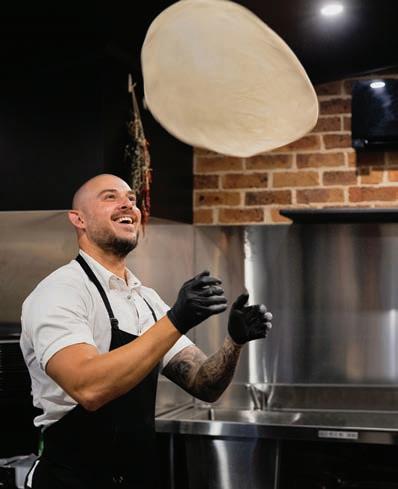
We begin with the perfectly plump and creamy burrata with roasted figs and some of the best wood-fired "balloon" bread I’ve ever had the pleasure of plunging a breadknife into. The smoky, charred exterior drizzled with olive oil and the hot, soft interior is an easy addiction to take up. Next up is a crispy-based La Scala pizza which has generous servings of smoked leg ham, prosciutto and perfectly stretchy mozzarella, and a steak that’s cooked to perfection.
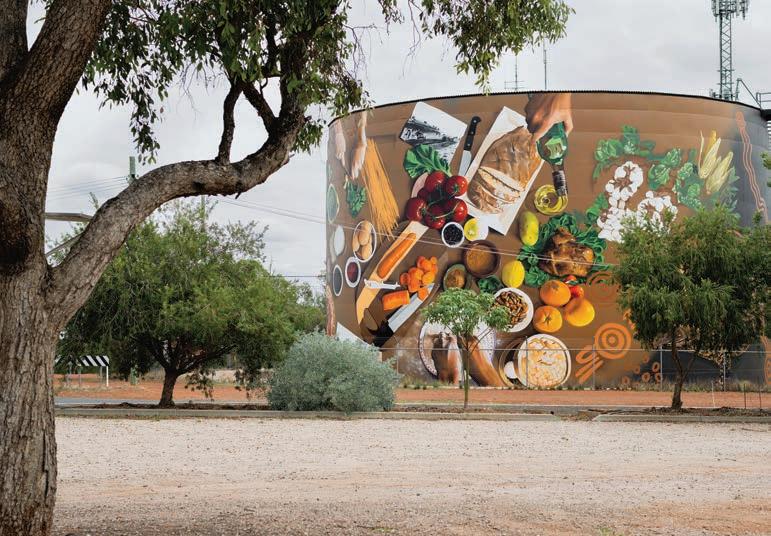
On our third day, we pick up a map of the Mural Art Trail from the bright, welcoming Griffith Tourism Hub, which features 37 artworks of local produce, history and modern life,

Open 7 Days for lunch & dinner
Close at 12.30am every night
Open all public holidays except for Christmas Day
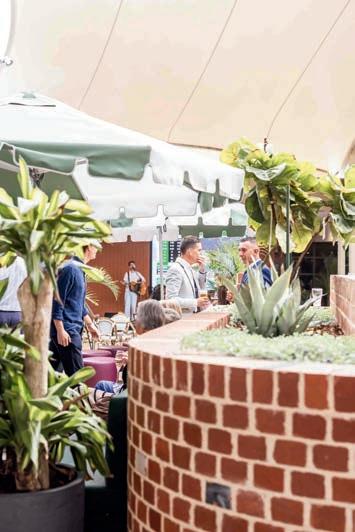
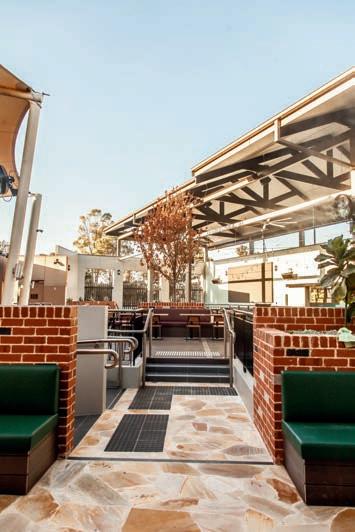
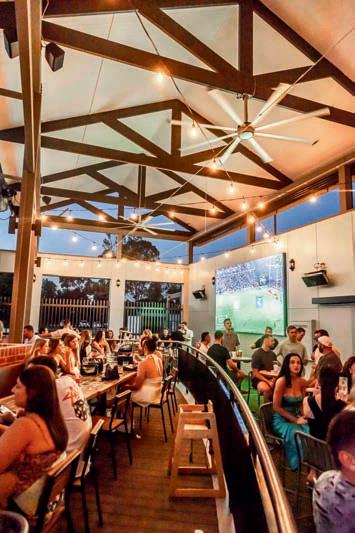
There’s something about the Griffith Leagues that stays with you. Sun-drenched afternoons, warm golden nights, and that feeling of being exactly where you’re meant to be. For some, it’s their local. For others, it’s their escape. Either way, you’ll find more than a club — you’ll find your place.
A cornerstone of the community since the Bistro first opened in 1999, the GLC has always brought people together over great food, drink, and memorable moments — think Riverina produce, seasonal menus, and timeless pub classics.
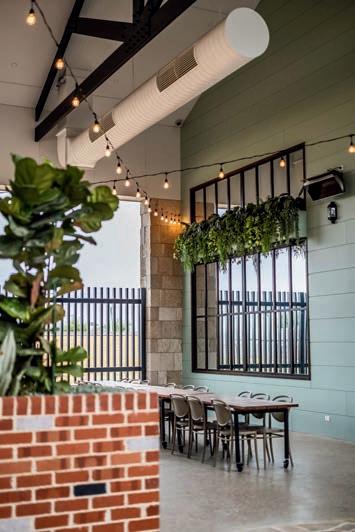
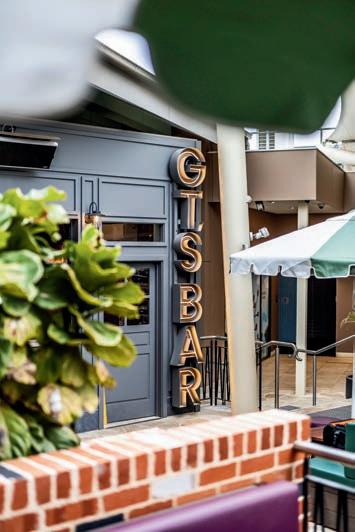
April 2025 marked an exciting new chapter with the completion of the Alpen Terrace renovation. The Terrace received a significant upgrade in the form of a new outdoor bar named GT's, a cosy tribute to long-serving Chairman Graeme Trevett, pouring cocktails, local wines, and cold beers on tap, and The Pavilion, a stylish semi-private events space catering for up to 120 guests. The Terrace boasts multiple sports screens and a complete refresh of the Terrace all accessible to members via a new rear entrance from the Bridge Road Car park.
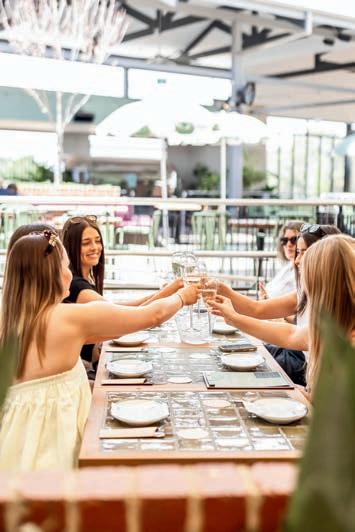
Come for the occasion, Stay for the feeling.
including the city’s water tower, which is now a stunning montage of Griffiths’ produce by Mongolian artist, Heesco.
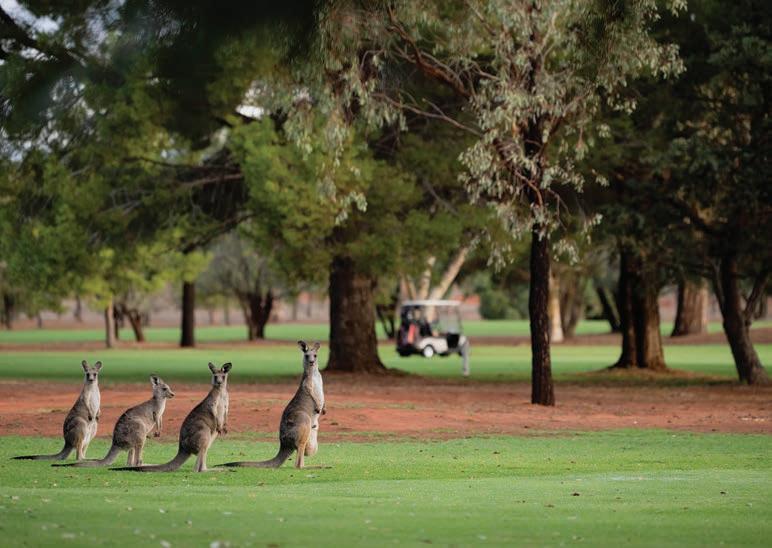
We enjoy another walk around the 18-hole picture-perfect Griffith Golf Club, which is celebrating its 100th birthday this year. The brilliantly green fairways are lined with native trees and mobs of kangaroos are a common sight. From the Clubhouse balcony, we enjoy a tea while taking in the gently undulating verdant blankets peppered with happy golfers.
Next is a stop by Harvest HQ – a wine bar and tasting hub owned and operated by the Riverina Winemakers Association that’s housed in a former ambulance station. The stylish Art Deco building has been beautifully renovated and it’s a sophisticated, homely place to spend an afternoon.
The word "synonymous" was made for Italy and pasta, and so lunch on our last day is at Zecca Handmade – a chic restaurant housed in a 1920s bank owned by mates Ben Di Rosa, Daniel D’Aquino, and Michaela Cangelli.
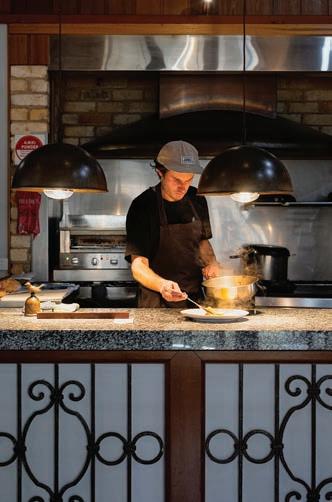
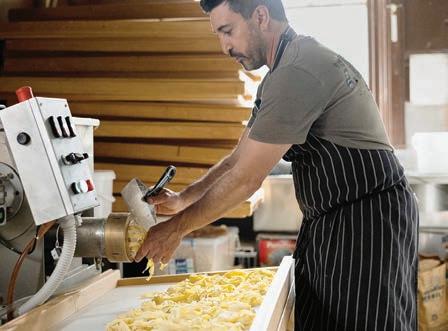
The high, ornate ceilings and Art Deco light fittings are gorgeous, but the handmade pasta and salumi are the stars of the show, and upon arrival, we get a tour of the "pasta lab"behind a secret door disguised as a painting.
Clearly in his happy place, Ben talks about his passion for pasta making whilst feeding the machine and cranking the rollers. Soon a tray is filled with coils of tagliatelle.
“It’s not just the food that makes Griffith so special,” he says. “It’s the people and their passion for their lives and what they do.”
Everything on Zecca’s menu is made from scratch and the chalkboard menu changes daily. The driving philosophy is to not complicate the high quality, farm-fresh ingredients.
We indulge in an orecchietta pasta (and immediately know that we’ve been doing it all wrong our entire lives) and a baked Murray cod with crispy skin that’s simply divine.
We politely decline dessert, but of course, being Italian, Ben delivers two cannoli rolls filled with heaven. “They’re small, right?” he says with a wink and a big smile.
One thing’s for sure – we won’t be small when we roll out of Griffith.
Our final dinner is at Bull & Bell, which is a classic steakhouse with a polished, contemporary edge. Known for its premium Riverina beef, the menu champions perfectly cooked steaks, hearty sides and a strong local wine list that showcases the region’s
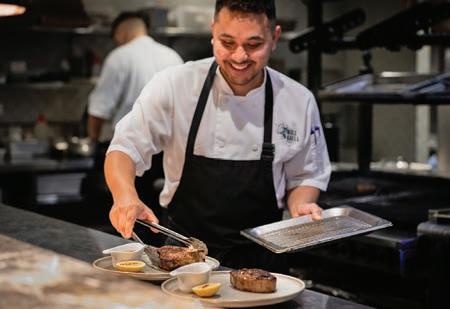
best drops. The atmosphere strikes a balance between relaxed and refined.
With Griffith in our rear vision mirror, and a backseat crammed with handmade Italian produce, we recount some of the stories from the museum – how Italian immigrants walked to Griffith from as far away as Broken Hill to make their homes and businesses. How they started with nothing and made so much from the land, creating family legacies that will continue to cultivate their culture and share it with the world.
This leads to us debating what our favourite dishes were. “Zecca’s pasta!” I squeal. “Hang on, La Scala’s pizza and burrata were the best!”
“Sam’s paninis and Limone’s dreamy lemon meringue pie!”
Cannoli, prosciutto, pecorino, tiramisu, prosecco, baccala… the debate goes on. We can’t agree on a winner, but do agree that we’ll have to go back for more, so we put A Taste of Italy Griffith in the diary and start counting down the days. TA

SYMPHONY
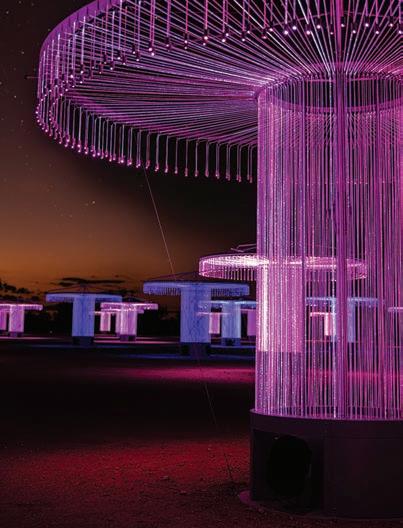
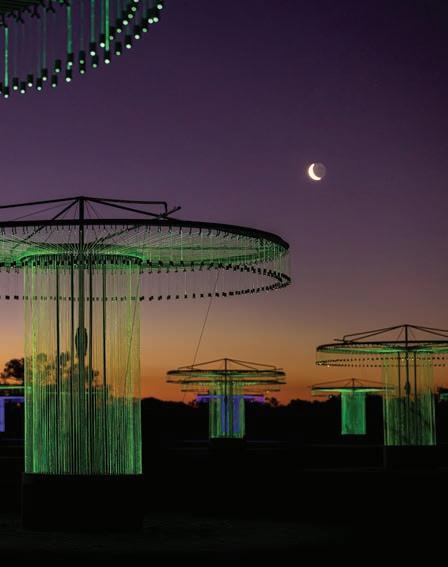
There aren’t many people who’ve had the pleasure of walking through an orchestra. Thanks to the childhood fantasy of acclaimed light artist Bruce Munro, you can do just that at the Fibre Optic Symphonic Orchestra.
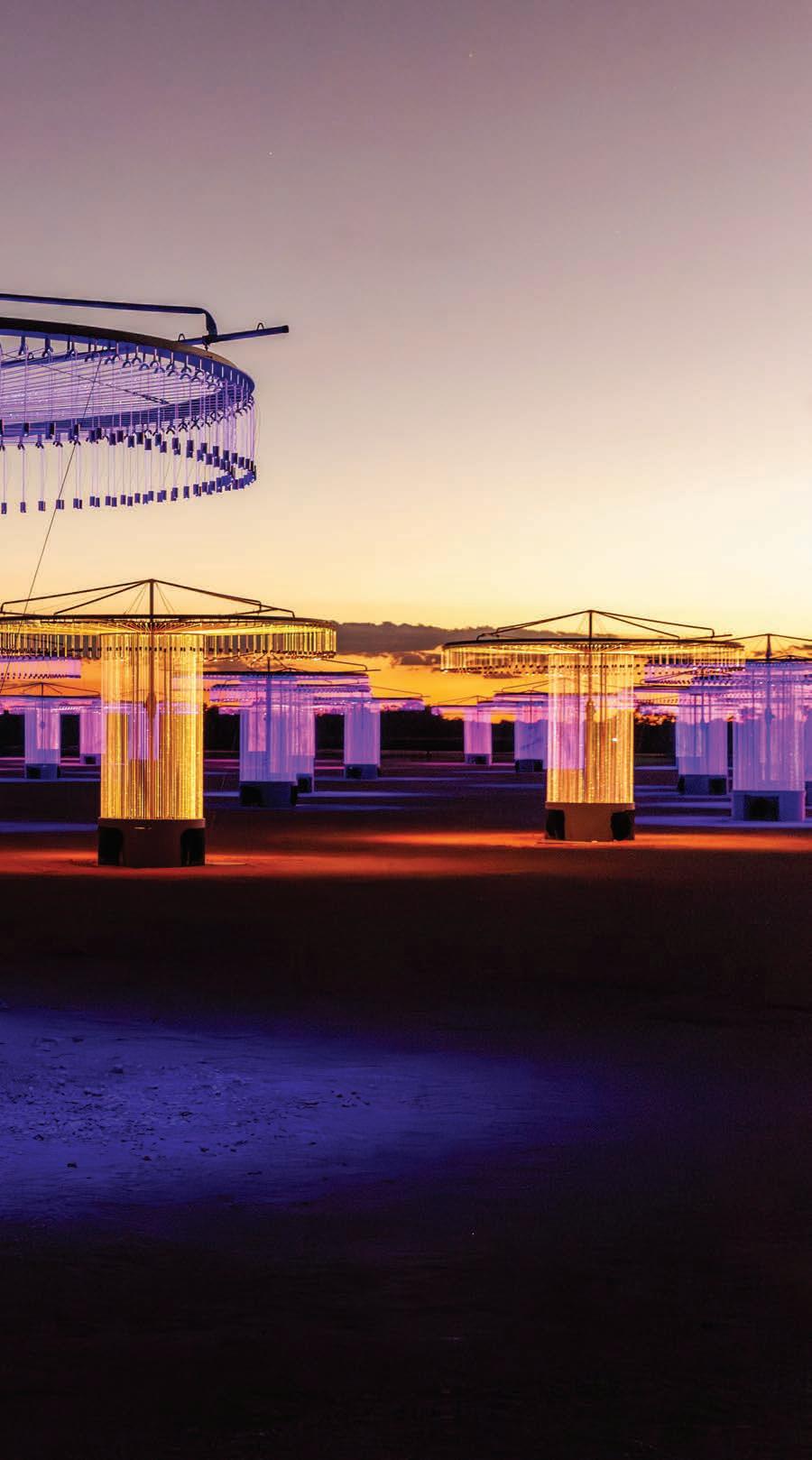
WHEN THE sky is clear in the outback at night, the stars shine so brightly it feels as though you can reach out and brush your fingers against the vast blanket of dazzling diamonds.
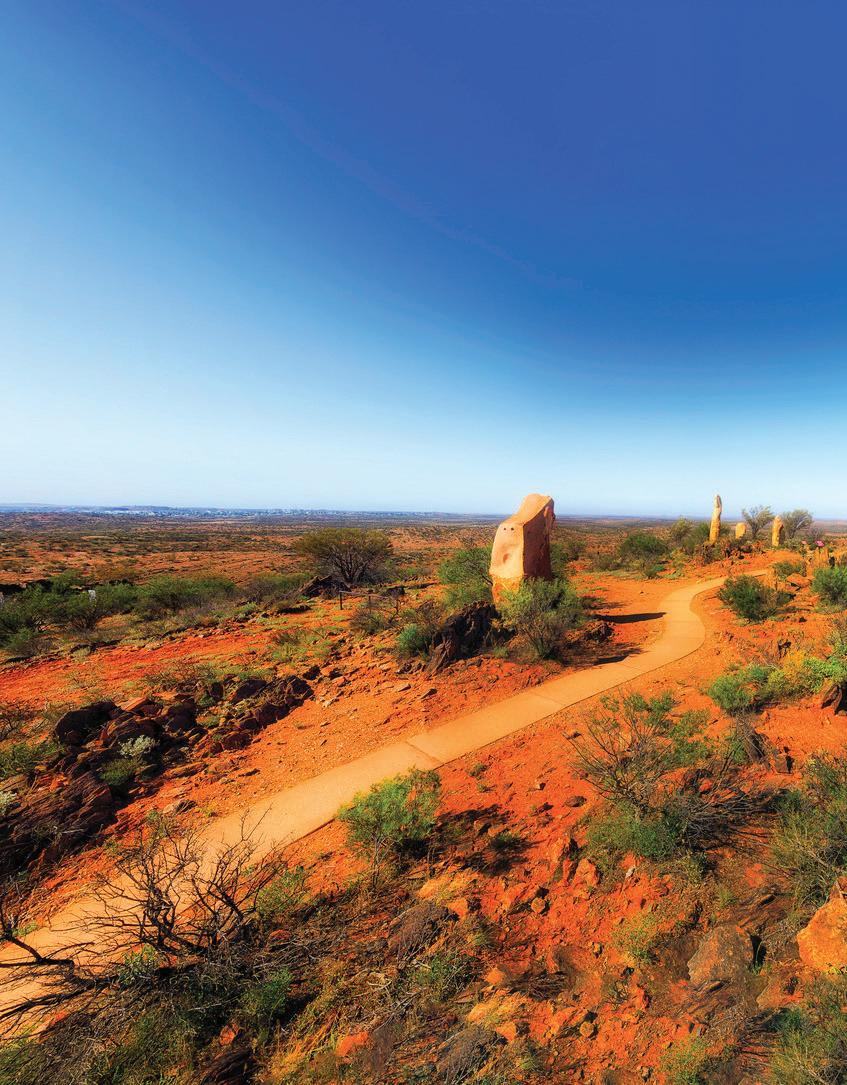
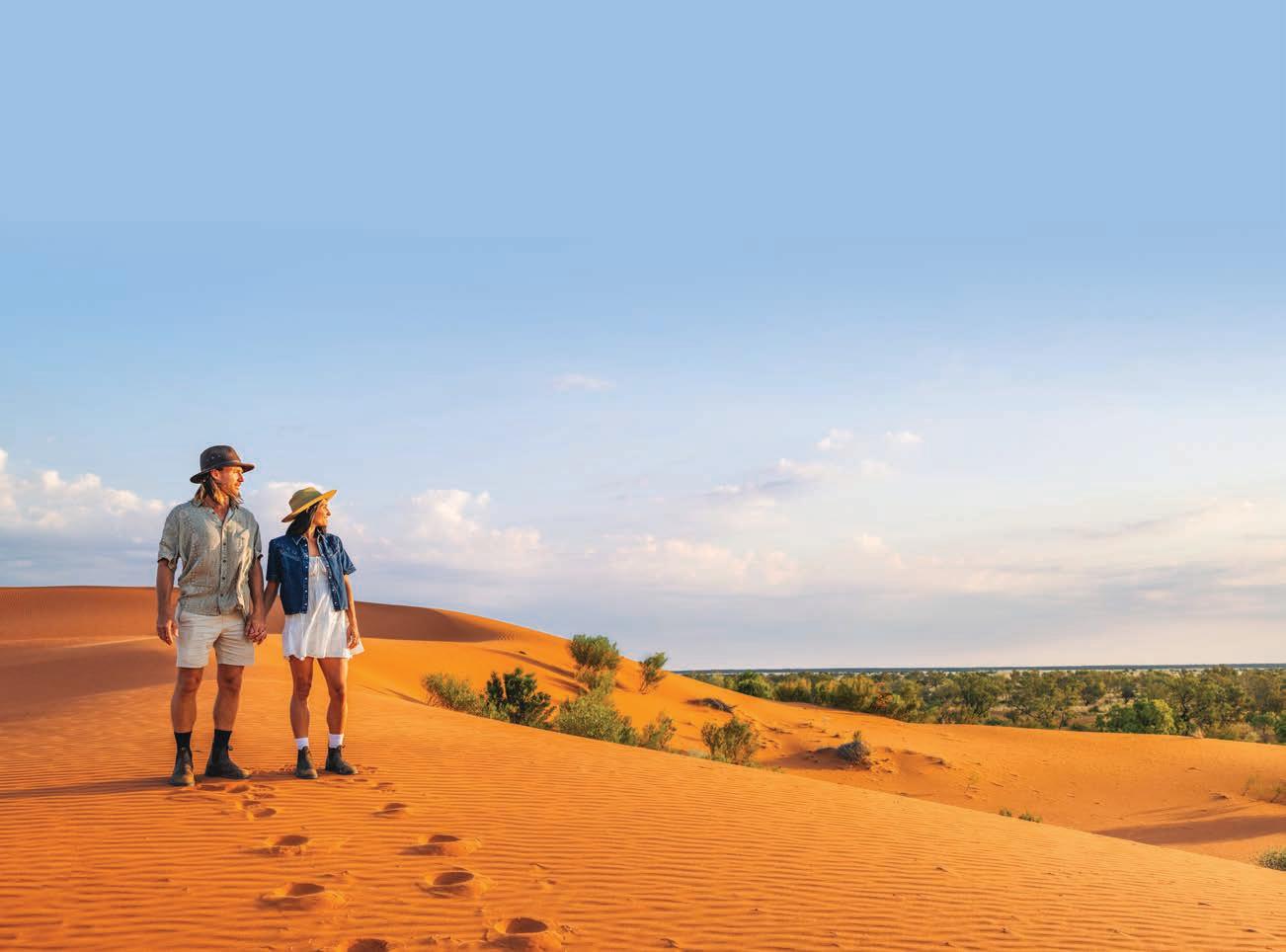
As I walk through the Perry Sandhills – just outside the town of Wentworth – it’s one of those nights. And not only do I have stars mesmerising me, but an orchestra of light, shining bright.
The vibrations from the string instruments front and centre give me goosebumps, the wind and brass instruments make my heart beat faster, and the percussion melodies put a spring in my step.
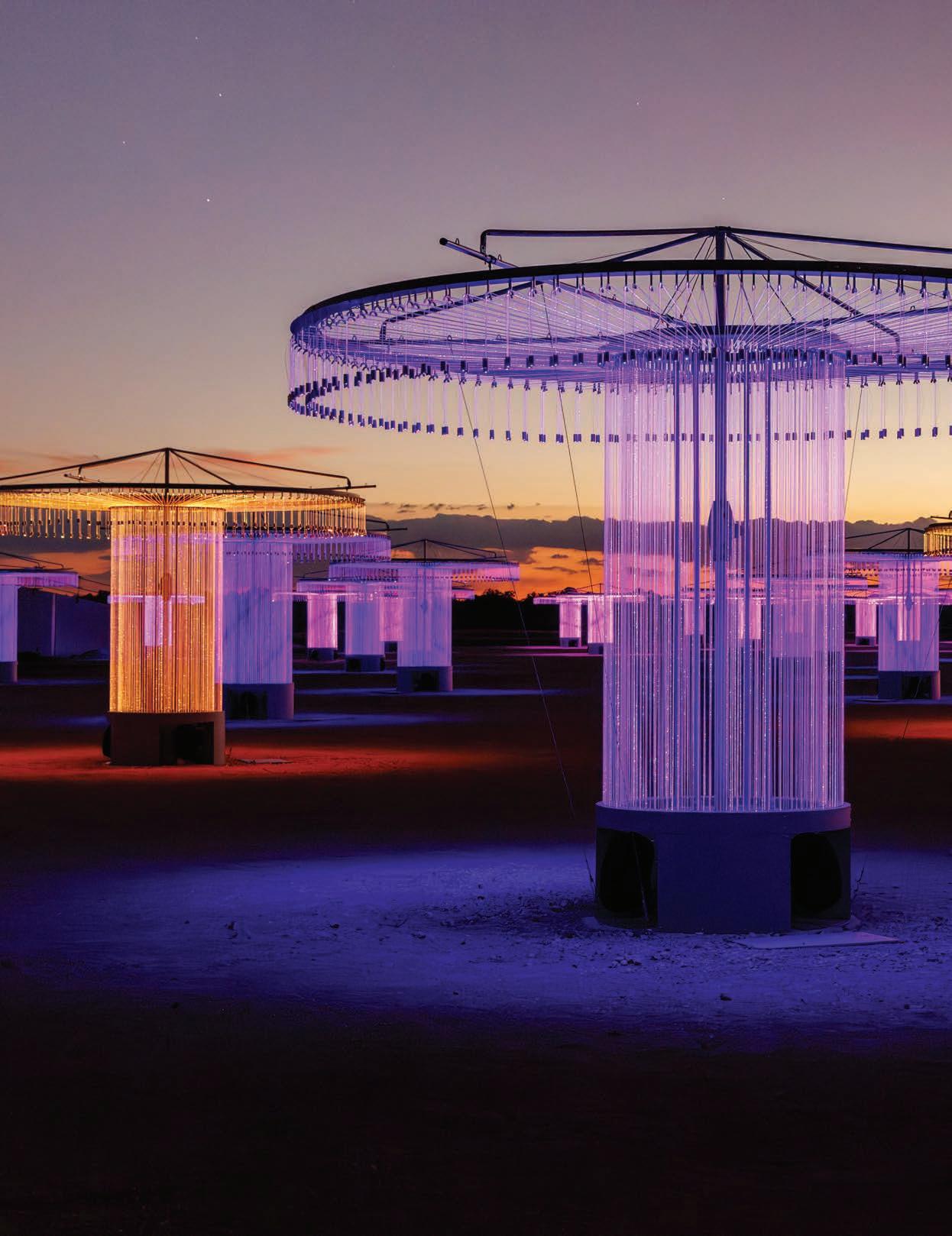
The score, created by acclaimed British composer Nainita Desai, is emanating from 240 speakers hidden in the bases of 80 towering Hills Hoist-like sculptures glowing brilliantly in the darkness. Thousands of fibre optic strings fade in and out, colours shooting up, down and across the main columns, then out across the hoists’ arms in time with the rising and falling of the hypnotic sonatas.
The enchanting symphony under the stars has hundreds of people walking around as though we’re all under a spell, blindly following the Pied Piper into the middle of nowhere. If this sounds like something out of a dream, that’s because it is.
"Every Australian who grew up with a Hills Hoist has memories from time spent around it in the backyard."
“I had this dream as a child… an idea really, that I wanted to bring to life,” says light artist Bruce Munro. “I would often think: 'Why can’t I walk through an orchestra? Wouldn’t that be amazing?' I realise that there are practicalities as to why you can’t – such as bumping into musicians and disturbing things – but I wanted to bring that childhood fantasy to life.”
Bruce is from England, but he travelled to Australia in his early 20s, met his wife Serena in Sydney, and spent many
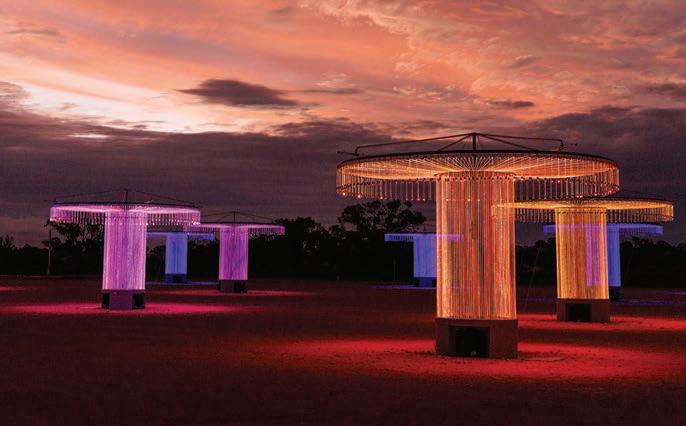
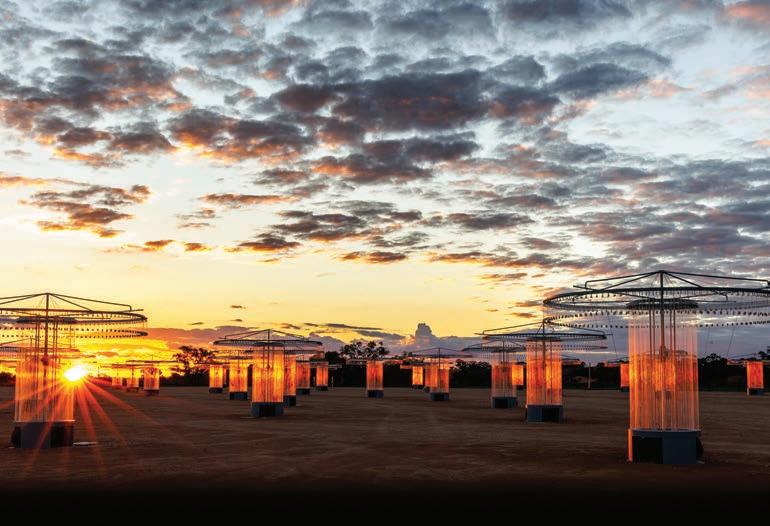
years exploring our sunburnt country. He formed an affinity with Australia and the couple vowed to come back. With this affinity came a love of iconic Australian things, including the Hills Hoist. “Every Australian who grew up with a Hills Hoist has memories from time spent around it in the backyard,” says Bruce. “Summer barbecues around it, swinging on the arms of it with your mates. Using it as a stumps in a cricket match. It’s such an iconic Australian invention that means so much to so many people.”
Another of Bruce’s now iconic light installation is Field of Light Uluru. Also based in the desert, and just like FOSO, it creates a profound experience for anyone who encounters it.
Field of Light opened in 2016, with the dramatic, sprawling display inspired by the desert’s energy and the vibrant colours of the landscape.
“It was based on the idea that dormant seeds bloom after rain, which I envisioned as glowing, flower-like stems at night,” Bruce
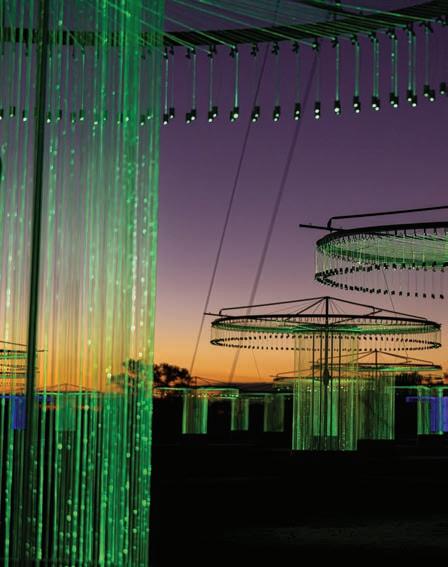
said. ”Honestly, being there at Uluru was life-changing for me. I felt so bloody alive!”
What many people might not know is that Bruce’s first Field of Light installation was created in 2004 in a field behind his family home in Wiltshire, England. After that lifechanging visit to Uluru, he wanted to recreate the sense of magic he felt whilst there.
This love of colour and landscapes was with Bruce from a young age, and he has spent the past two decades
"I didn’t want to make art for the sake of it, and I didn’t want it to be about ego."
continuing to push the boundaries of what he can achieve with light, and now music.
“My grandfather was very musical, and I enjoyed all sorts of music, but I wasn't musically talented," Bruce says with a laugh. "I loved listening to music and trying to understand it, and I also have a strong memory of my mother taking 35mm slides out of Kodak box and popping them into one of those viewer machines.
I'd never been to many of the places on those slides, but I found it so fascinating – that I was looking at people and places as though through a Lilliputian stained-glass window. Here were these magical little worlds of light captured on slides.”
Bruce tried his hand at painting and sculpture and spent years working with an agency in a creative capacity, but it was his father’s death
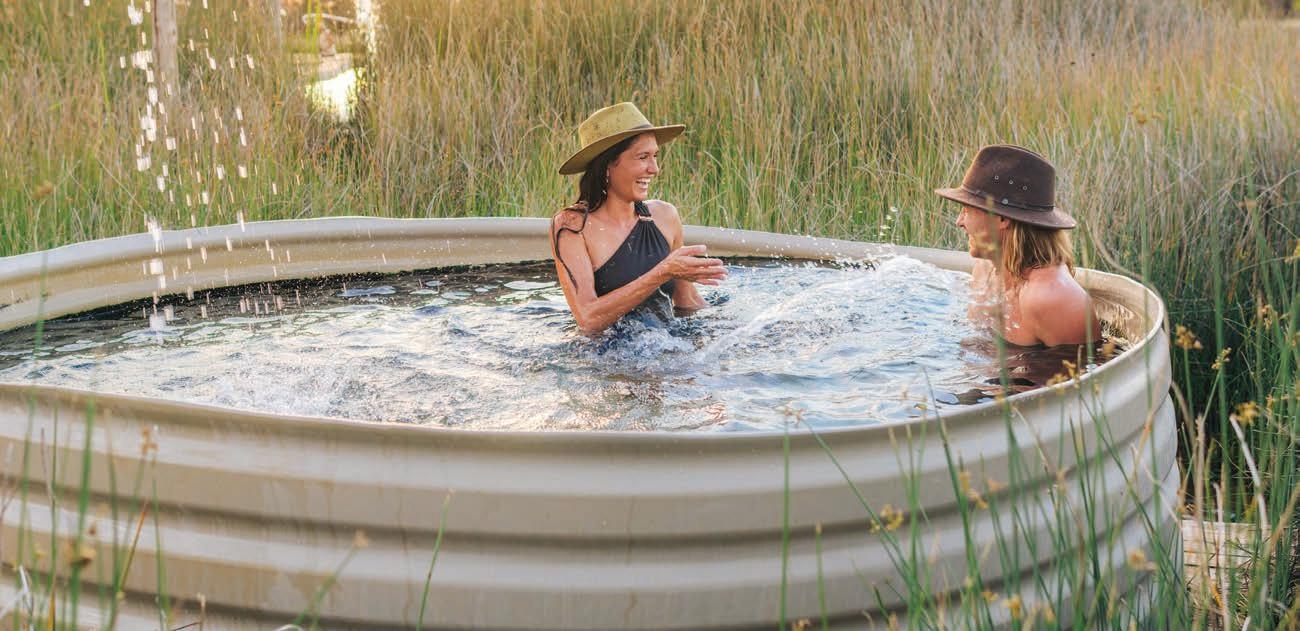
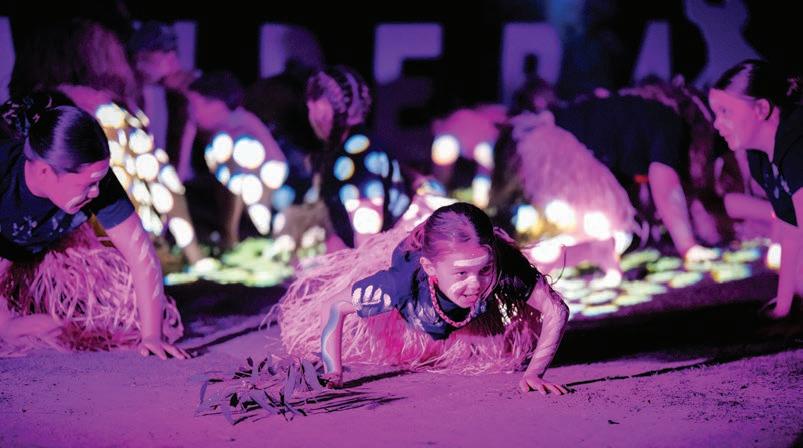
Trail of Lights is another ethereal light installation by Bruce Munro that was launched in 2025 on Mildura’s Lock Island. As Mildura is only a 35-minute drive from the Perry Sandhills in Wentworth, FOSO and Trail of Lights (TOL) create an immersive two-night adventure that showcases the diversity and beauty of the MurrayDarling region after dark.
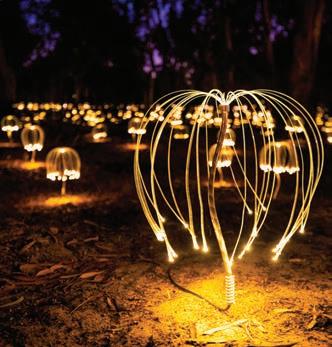
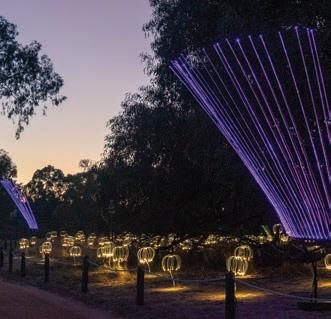
With Trail of Lights, Bruce had a dream of illuminating the 37 acres of native Australian bushland on the island, encouraging visitors to quietly wander along the many pathways, surrounded by a magical carpet of 12,500 glowing sculptures that he’s dubbed ‘Fireflies’.
Once more enchanted, and feeling like a tiny person lost in a sparkling fairyland, I follow the winding trails in the semi-dark, the delicate alien-like sentinels fanning out in all directions. I’m aware that there are other people
out there exploring the island, but I’m surprised by the quietness and the sense of being alone. It’s meditative.
When a breeze stirs the fireflies into a slow, delicate dance, they move so gently – like upturned flowers or jellyfish floating in a deep black sea, each of their fine 24 individual fibre-optic strands gracefully swaying.
Along the river’s edge are clusters of long fibre-optic rods of vertical light called ‘Gone Fishing’. More than 3,000 stems continually, slowly change colour – iridescent red, yellow, lime green, blue and purple hues shooting into the night like laser beams.
Seeing Trail of Lights, Bruce hopes people will experience “a lifting of the heart and spirit.” As I wander amongst the fireflies, I certainly do. “Let the art speak to your heart, and the rest will take care of itself,” he says.
For tickets, visit mildura.com/lights
that pushed him into the work he now does, and the life he lives.
“When my father passed away, I thought: ‘Right, I’d better get on with things,” Bruce says. “I didn’t want to make art for the sake of it, and I didn’t want it to be about ego. Life is all about those little joyful experiences we have –no matter how simple or small they may be –that make us feel connected to a moment. I want to build a visual narrative of those moments. They don’t have to be connected in a certain way, because that’s life.”
Walking through those red sand hills in the outback, it occurred to me that although FOSO is such a complex installation that will inspire everyone in different ways – there's also a beautifully simplistic take on it: FOSO is a visual narrative of music that has the power to create endless special moments. TA
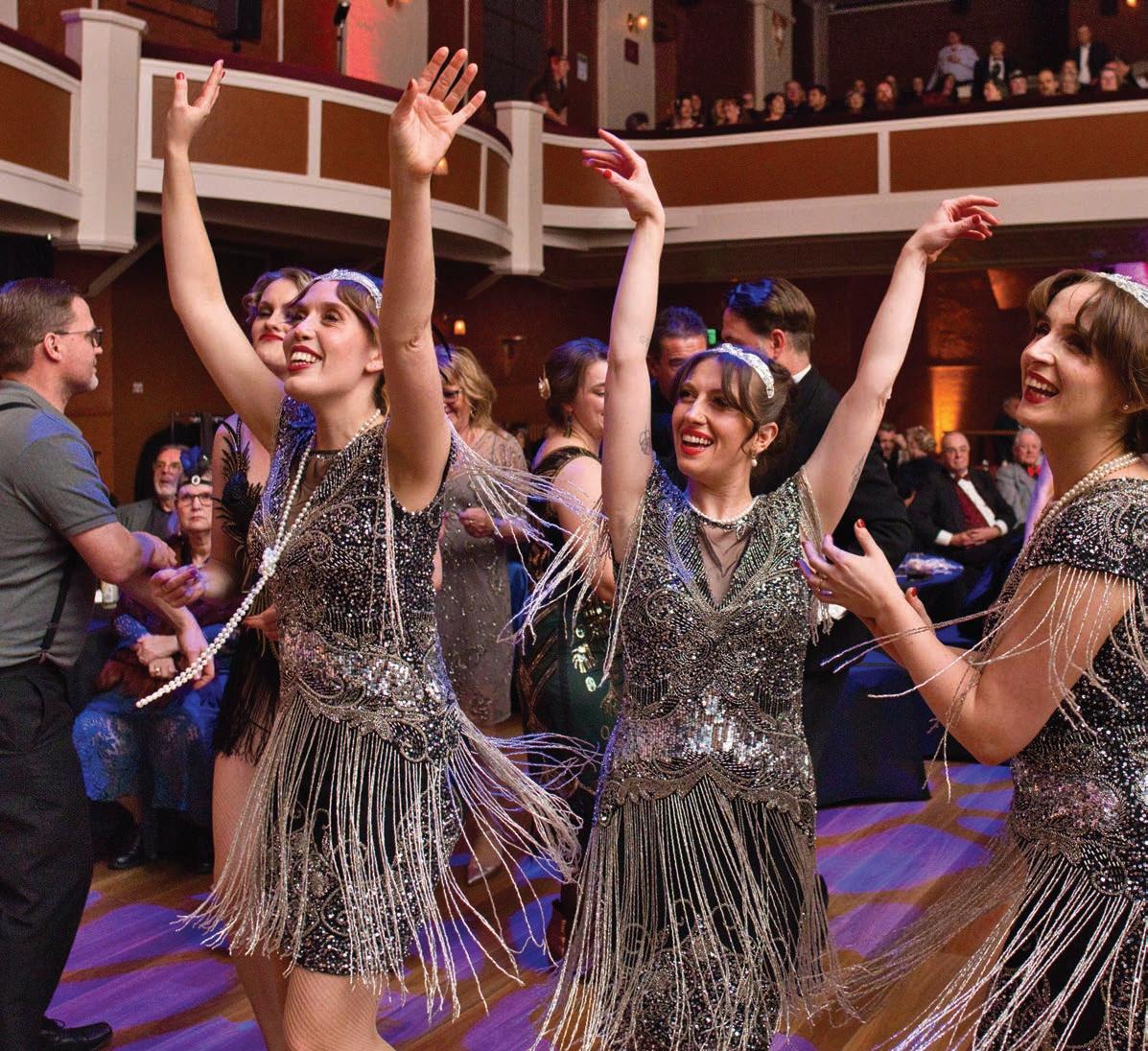
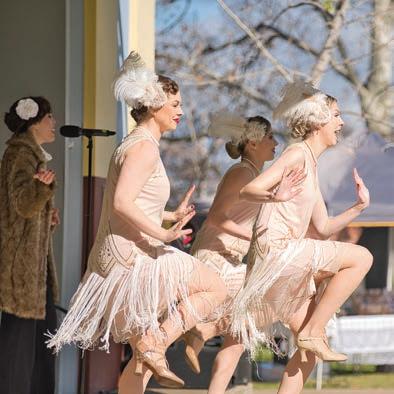


Fancy a shimmy or a foxtrot in the Riverina region?
Pack your Fedora and feathered finery, and head to Leeton from July 10-12, where the Australian Art Deco Festival brings the Jazz Age roaring back to life.
WORDs: Michelle Hespe photography: Neil McAliece from NDM Photography
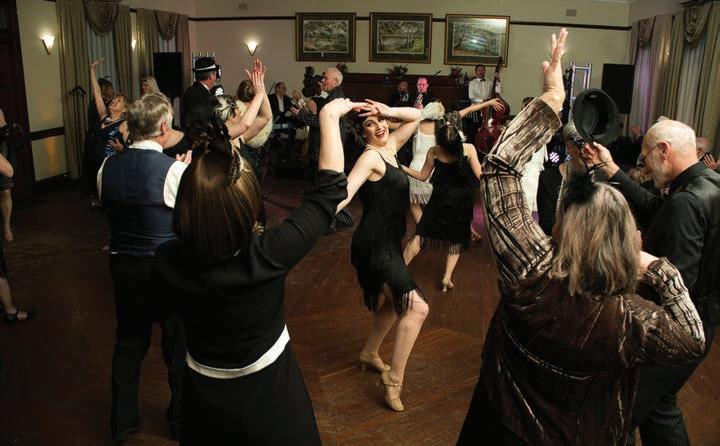
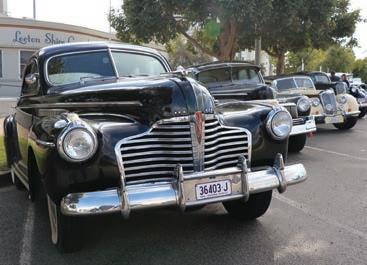
WHEN THE Australian Art Deco Festival rolls around, Leeton trades its quiet rural rhythms for feathers, fine suits, jazz and the exuberance of the interwar years. Over three lively days, the town fills with flappers, vintage cars and the kind of swank you would expect at a Great Gatsby party.
The festival is Australia’s largest celebration of the Art Deco era, drawing visitors from across the country for a weekend of music, fashion, design and community spirit. At its heart, the festival celebrates Leeton’s architectural heritage and the community that brings it to life.
Shaped in part by Walter and Marion Burley Griffin’s draft plans, Leeton has one of the most cohesive collections of Art Deco buildings in regional Australia. Landmarks such as the Roxy Community Theatre –a striking 1930s cinema with neon-lit flair – and the Leeton Museum and Art Gallery anchor the experience, giving visitors a tangible connection to the optimism and design ambition of the 1920s and ’30s.
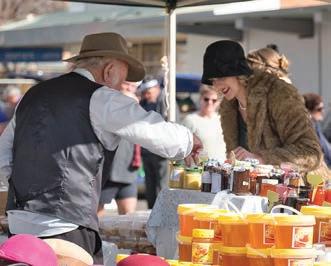
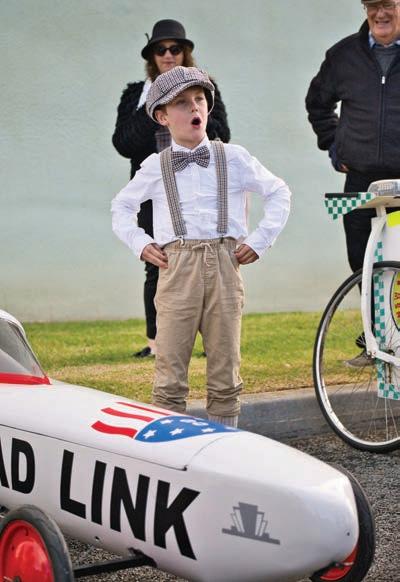
But this isn't just a festival to be observed; it's one you step into. Feathered headpieces, cloche hats, shimmering dresses, tailored suits and suspenders transform the streets into a living stage. Locals and visitors alike embrace the look, blurring the line between performers and audience.
The 2026 program, as in previous years, is expected to be broad and lively. Think hot jazz and swing performances, vintage car displays, bustling markets, and a calendar of workshops and talks that explore everything from Art Deco design to cocktail-making techniques. Walking tours are also a highlight, guiding guests through Leeton’s streets while unpacking the stories behind its architecture and the broader cultural context of the era.
Signature events turn the festival into something truly memorable. Glamorous evenings such as the gala dinner and casino-style nights invite guests to indulge in the decadence of the period. These are not low-key affairs. Jazz bands play late,
“It’s a celebration of creativity, community and the enduring allure of an era defined by bold design and boundless optimism.”
champagne flows, and the dance floor fills with couples foxtrotting, guests doing the Charleston and the occasional move that would have scandalised polite company.
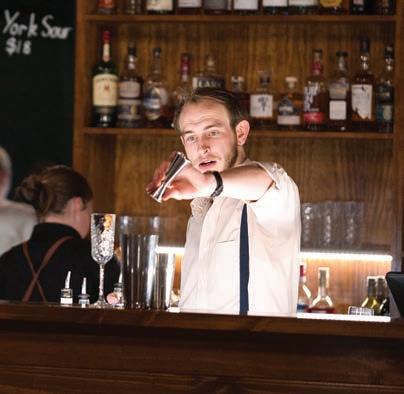
Food and drinks are part of the pleasure too. The festival embraces the social rituals of the Art Deco era, and that means long brunches, elegant high teas and cocktail soirées, all while showcasing the best of the Riverina’s produce. It’s a reminder that Art Deco was not just a visual aesthetic, but a lifestyle defined by indulgence, optimism and a love of social gatherings.
What gives the Australian Art Deco Festival its special appeal is its setting. Unlike city-based events, Leeton offers an experience that feels personal and whole-of-town.
From shopfronts dressed in perfect period style to community members volunteering, performing and hosting events, the entire town joins in.
There’s also a deeper cultural layer underpinning the festivities. The event acknowledges its place on Wiradjuri Country, recognising the Traditional Custodians and their ongoing connection to the land. That grounding gives the weekend added

depth, placing the celebration within a much longer and richer continuum of Australian history.
Ultimately, the Australian Art Deco Festival in Leeton is more than a nostalgic throwback –iIt’s a celebration of creativity, community and the enduring pull of bold design, music and boundless optimism.
For a few winter days in 2026, Leeton becomes a place where the past feels vivid, playful and very much alive. In the words of Velma Kelly in All that Jazz from the musical Chicago: C'mon babe, why don't we paint the town? And all that jazz. I'm gonna rouge my knees and roll my stockings down. And all that jazz. Start the car, I know a whoopee spot, where the gin is cold, but the piano's hot. And all, that…. jazz TA leetonartdecofestival.com.au
Narrandera has more than its fair share of spectacular scenery. Life here in the Riverina region revolves around the great outdoors, and one of Australia’s most beloved icons.
WORDs: Matilda Meikle photography: Meg hollins
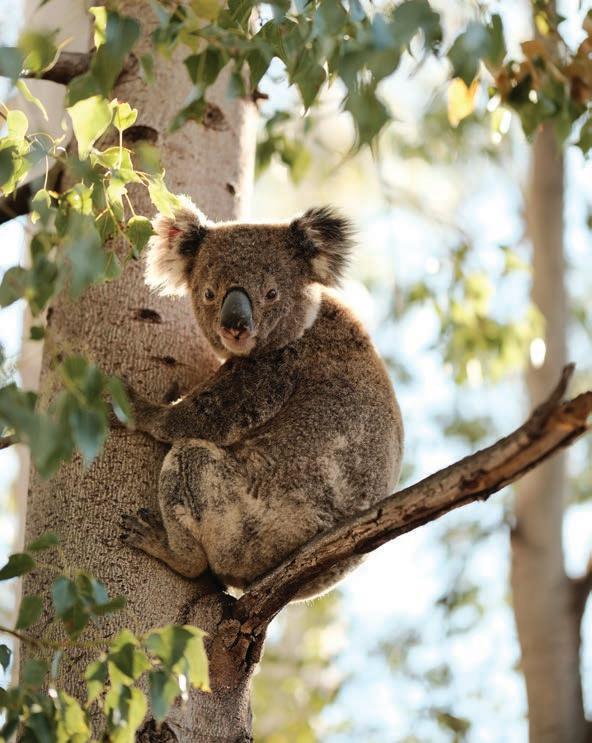
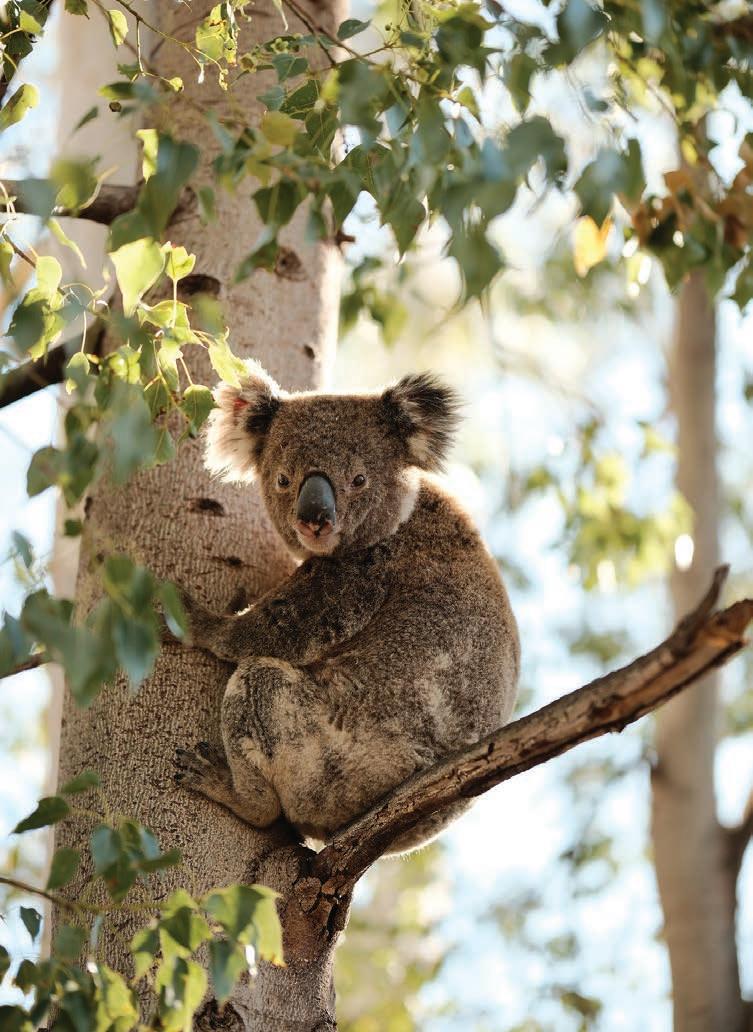
Narrandera is a peaceful town where you can enjoy an abundance of walking trails, cycling paths and waterways for fishing and kayaking. And there’s the bonus that while you’re out and about admiring the marvels of Mother Nature, you might also spot one of Australia’s most beloved creatures – the koala.
While Narrandera is home to more than 300 wild koalas, these iconic Aussie marsupials were once extinct in the Riverina region. Fur trading and habitat loss caused the population to decline in the early 1900s, and eventually, they disappeared entirely.
Luckily, koalas were reintroduced to the region in the 1970s in one of the earliest conservation translocation efforts in New South Wales. Around 20 koalas were moved to Narrandera Flora and Fauna Reserve, which is now home to one the densest, healthiest koala populations in the state.
Recent studies have confirmed that this special population of koalas is genetically diverse and disease-free. In fact, Narrandera’s koalas are currently part of a landmark study
being undertaken by the Koala Sentinel Program, which is assessing health, genetics, nutrition, habitat and ecology across six unique landscapes.
If you’ve always wanted to see koalas in the wild, Narrandera is one of the best places in New South Wales to bring that dream to life. Almost all of the local koalas live in the Flora and Fauna Reserve, which is 71 hectares of protected bushland just minutes from the centre of town.
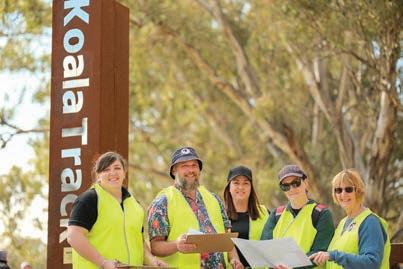
The park is home to some accessible walking tracks that wind along the Murrumbidgee River on flat terrain. One of the most popular routes is the Koala Track, which follows the canal all the way to the Rocky Waterholes. This hidden gem is a great place to enjoy kayaking, paddleboarding and fishing while surrounded by gum trees – which are the primary habitat for koalas.
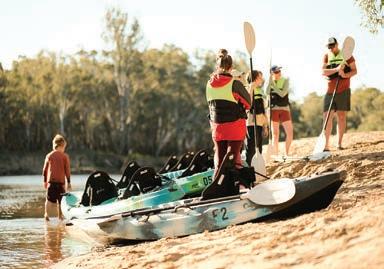
There’s a handy boat ramp so visitors can slip a kayak in and drift alongside the track, which is another great way to spot koalas. There are toilet facilities and a barbecue area with picnic tables for lunch amongst nature, so it also makes for an inexpensive day out.
Further along in the reserve are the lovely sandy shores of First Beach and Second Beach. These river beaches are popular picnic spots, and visitors often notice koalas climbing from their perches to drink from the river. While koalas get most of their water from eucalyptus leaves, they will often rely on the river in warmer months.
Koalas are masters of camouflage, so keep an eye out for fresh scratch marks on tree trunks, small droppings beneath trees and a faint musky scent which emanates from male koalas.
Interestingly, the Flora and Fauna Reserve forms part of the longest continuous stretch of River Red Gum Forest in the world.
FROM FAR LEFT:
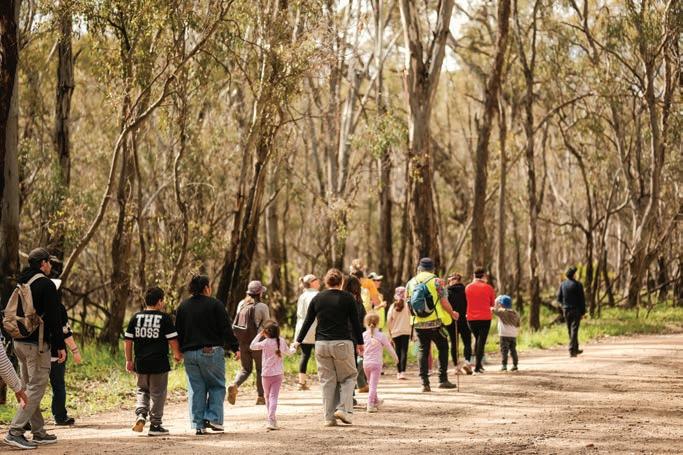
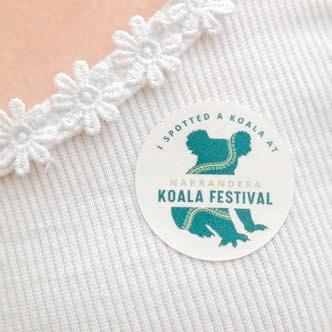
One of 300 wild koalas in Narrandera; The 2025 Koala Count begins; Visitors join a popular koala-spotting kayak tour; An Indigenous performance at the Koala Festival; A badge confirming the spotting of a koala during the festival.
To pack more koala-themed fun in, time your trip with Narrandera’s annual Koala Festival. Each spring, the town is transformed into a cultural hub complete with guided bushwalks, koala habitat tours by trail and kayak, expert talks, live music, artisan markets and even reptile encounters.
One of the festival highlights is the Koala Count, which has been held every year since 1989. It’s one of Australia’s longest-running citizen science events, where visitors are taken off the beaten track with knowledgeable locals to find and count the thriving koala population in the Flora and Fauna Reserve.
The festival is free to attend, with tours and workshops available to book online in advance. On the banks of the Murrumbidgee River, the spacious, dog-friendly and free camp site has loads of room for tents and caravans, with picnic areas, barbecues and toilet facilities for a comfortable stay.
Across the way is the reserve’s namesake – Oakbank Brewery, which officially closed in 1924 but is still a striking landmark surrounded by native bushland. The red brick tower rises 90 feet into the sky, making it one of Narrandera’s most recognisable historical landmarks.
The Koala Festival is also dedicated to honouring the Traditional Owners of the area in a series of cultural events that celebrate connection to community and Country.
In 2026, the festival will introduce a climate resilience workshop, focusing on how Aussies can protect koala populations by helping them to adapt to challenges such as heatwaves, floods and bushfires. This year, the Koala Festival will run from September 19-20. TA
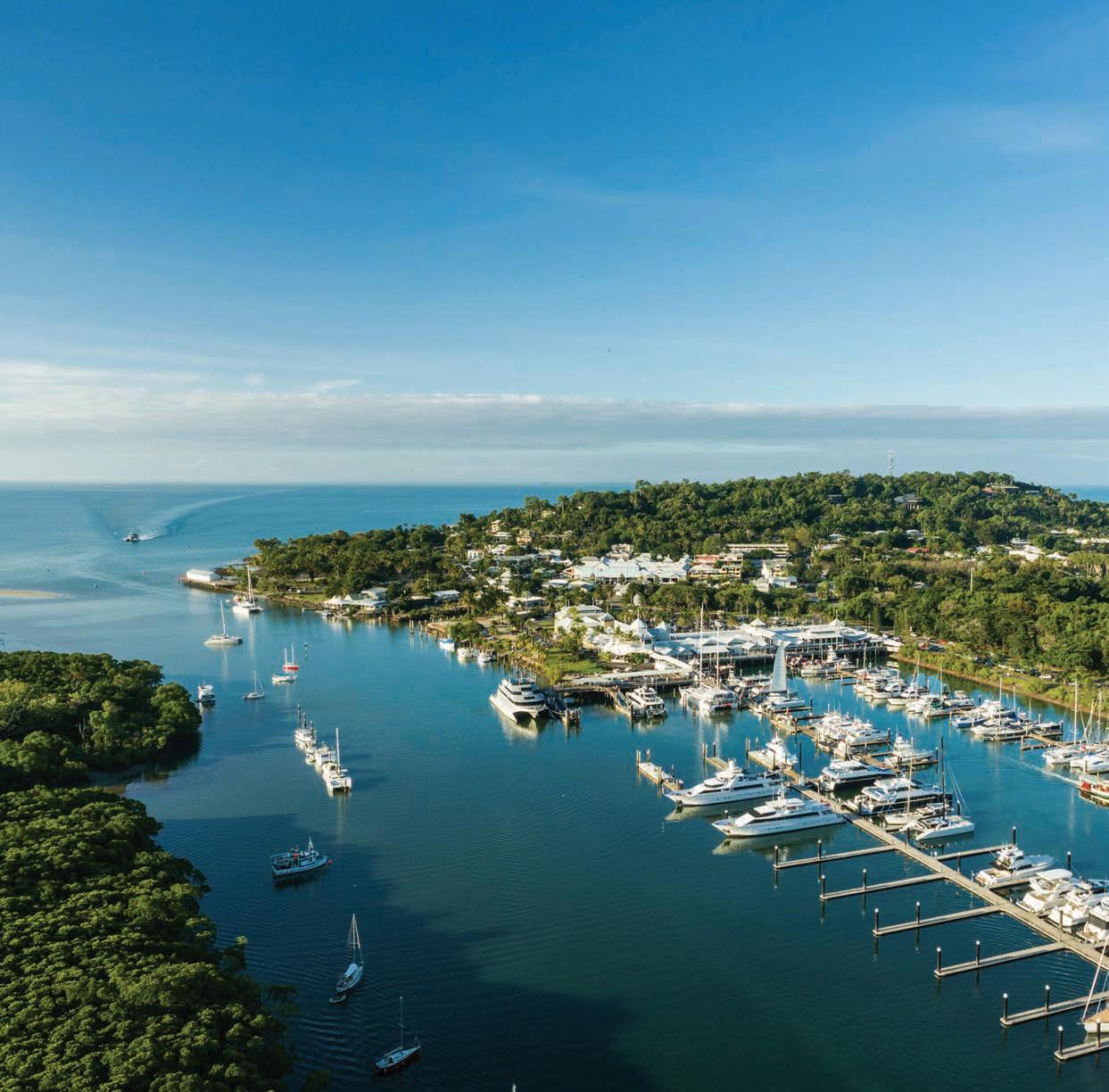
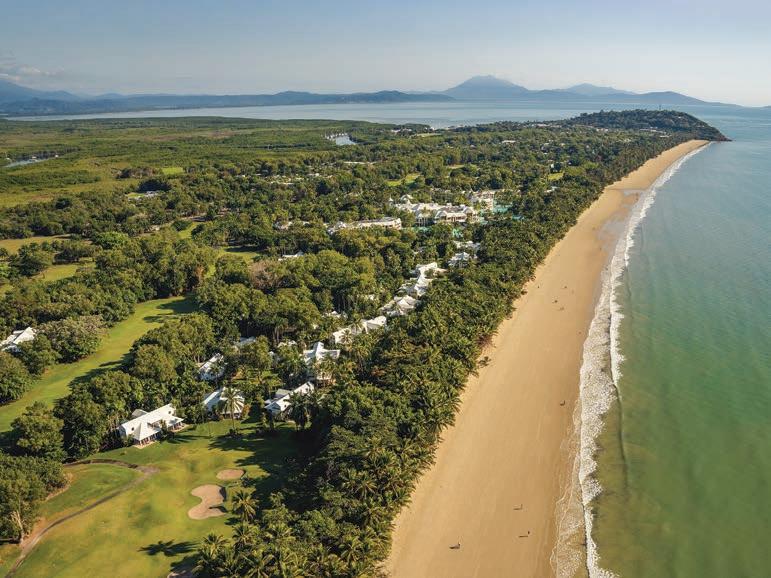
Port Douglas may be a relaxed tropical town in North Queensland, on the edge of the Great Barrier Reef and Daintree Rainforest, but it takes its food very seriously.
With everything on offer from classic café fare to award-winning haute cuisine, bold breweries and elegant European diners, food lovers will find themselves spoilt for choice.
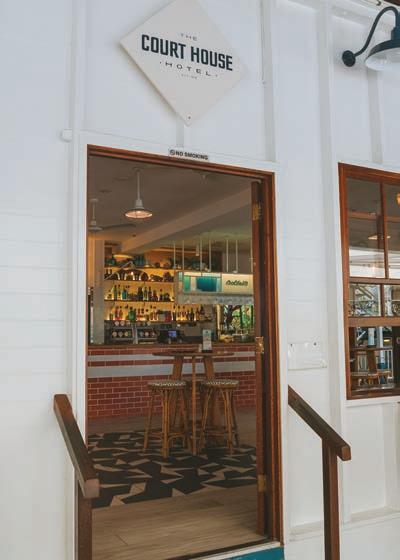
Affectionately known as ‘The Courty’, this iconic venue is the oldest pub in Port Douglas. Walking up the town’s main street, it’s hard to miss the hotel’s elegant Queenslander facade with a sprawling veranda –a precursor to the classic country atmosphere you’ll find inside.
The menu is all about fresh local
produce sourced by the chefs from around the bountiful region. Think soft tortillas generously filled with grilled barramundi and chipotle slaw, grain-fed Angus rump steak, and juicy pork belly bites with honey and sesame. You’ll also find all the pub faves and a dedicated kids’ menu.
Five nights a week, the beer garden is transformed into the top

No one should miss out on Harrisons' signature coconut ash charcoal bread with malt and molasses butter.
destination in town, live sport is streamed on the big screen, and the rooftop bar transforms into a tropical oasis for sunset cocktails.
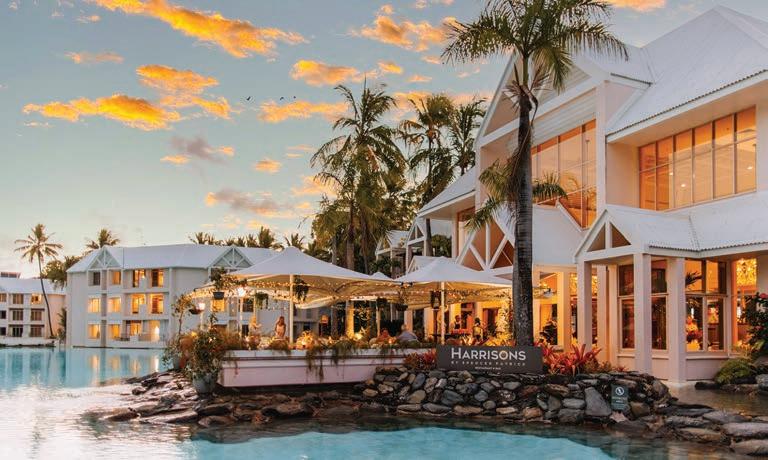
Two-hatted Harrisons, located in the Sheraton Grand Mirage Resort, offers a high-end gastronomical dining experience inspired by modern British flavours.
Spencer Patrick, the owner and renowned Head Chef, uses the best Australian produce he can get his
hands on (he’s a judge for the delicious. Australia Produce Awards) and the menu is inspired by his time working in London, including seven years alongside culinary superstar Marco Pierre White.
The bar opens at 3.30pm for "social hour", serving cocktails made to beat the heat, such as the Lychee Martini and Elderflower Spritz.
For the dinner service, guests can choose to dine à la carte, or indulge in the $100, nine-course set menu.
No one should miss out on Harrisons' signature coconut ash charcoal bread with malt and molasses butter, and other standouts include the tiger prawn ravioli with a ginger and lemongrass bisque, and the 16-hour slow-cooked lamb shoulder served with Madras spices and kipflers.
Groups are invited to try the threecourse feasting menu, which can be paired with a three-hour beverage package for an evening of indulgence. Or, pre-order the amazing mud crab feast, which comes with a variety of delicious sides.
CLOCKWISE FROM LEFT:
Create your own cheeseboard at the Epicurean; Choo Choos at the Marina serves deliciously fresh and healthy meals; Hemmingway's Brewery is inspired by Far North Queensland (Credit: Krista Eppelstun).
For more relaxed dining, Choo Choos at the Marina is open for breakfast and lunch seven days a week.
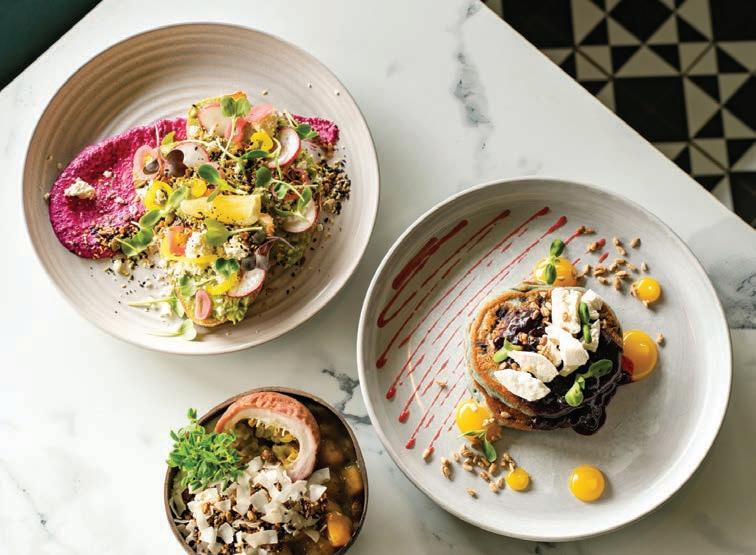
Take a seat in a carriage of the Bally Hooley Steam Train, which was a heritage railway that operated in Port Douglas until 2021. Now renovated, the adjoined train gives Choo Choos its unusual name.
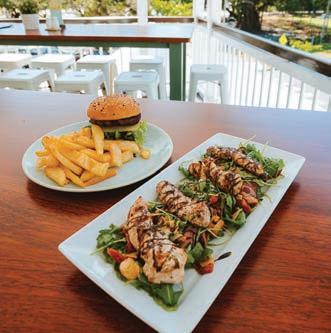
This unique café is dog-friendly, so your pooch can relax by the waterfront while you enjoy barista-made coffee, smoothies and delicious, healthy granola bowls. Some standouts include classic blueberry pancakes with lemon curd, crispy meringue and ice cream.
For lunch, the pulled pork sandwich with American cheese and slaw is a popular choice, and the satay chicken salad with vermicelli noodles and peanut dressing is a tangy treat.
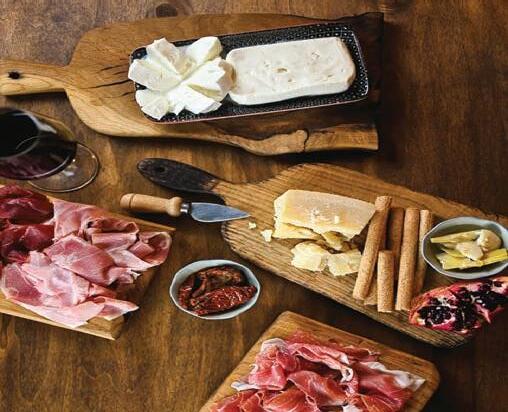
For a mini cellar door experience, head to the Epicurean. This French
Mediterranean restaurant specialises in grazing boards and charcuterie, offering a variety of share plates featuring rillettes and pâté made in-house, artisan French cheeses, handcrafted cured meats, and sourdough baguettes, which are hand rolled and baked fresh each day.
These offerings can be mixed-andmatched to create the perfect board, or you can choose from a selection of pre-set options. Regular seafood specials take your long lunch to the next level, including freshly cooked prawn cutlets and Queensland scallops cured in saffron infused citrus.
Meals can be accompanied by some top drops from an extensive selection of more than 80 wines, including 16 Australian varietals and the muchloved French champagne, Louis
Roederer. Guests can enjoy wines by the glass or as part of a wine flight during Apero afternoons from 4-6pm on Fridays. The flight, which includes three wines, changes monthly so there's always something new to try.
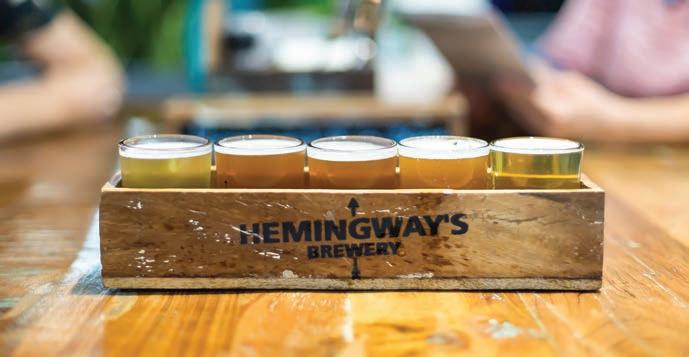
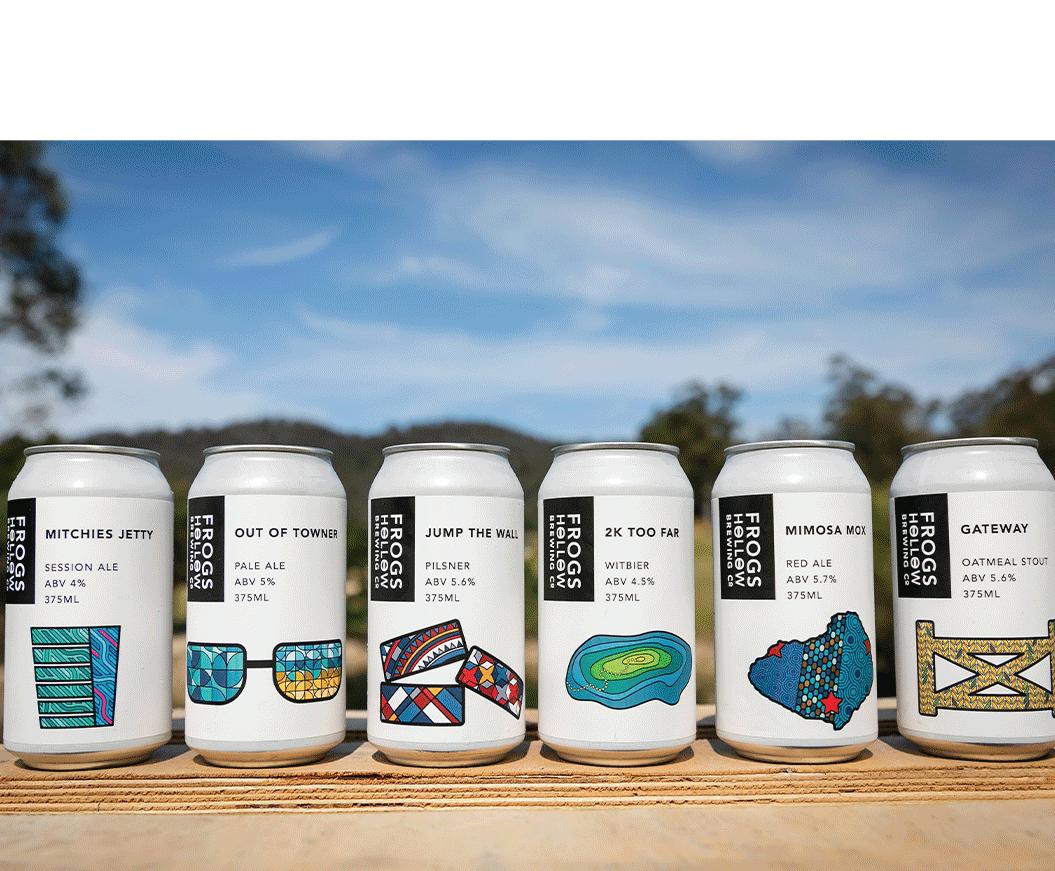
Local fave Hemingway’s Brewery is an independent company crafting beers inspired by Far North Queensland. On the waterfront at Crystalbrook Superyacht Marina, it's known for its relaxed vibes and as a top location for unwinding with a cold one while soaking up the afternoon sun.
Try a tasting paddle of five awardwinning beers, while the beer-savvy staff share tasting notes and the stories behind each brew.
For those who know what they like, two-litre beer towers are available in the entire classics range, including the Tunnel 10 Lager, Pitchfork Betty’s Pale Ale and The Prospector Pilsner. Pair your drink with a cheesy pizza, juicy burger, or a hearty serving of fries, and bring the little ones along to enjoy the dedicated kids’ menu.
There are plenty of non-alcoholic options available, as well as wines, cocktails, and spirits from local distillers, which can also be enjoyed as a flight.
Hemingway’s hosts regular specials and events, such as the popular Brewed & Distilled afternoon, where Hemingway’s head brewer, Lee Drummond, and some top distillers set up shop at the brewpub for three hours of tastings, stories and behindthe-scenes insight. Order a paddle, ask your burning questions, or simply pull up a chair and listen to the pros.
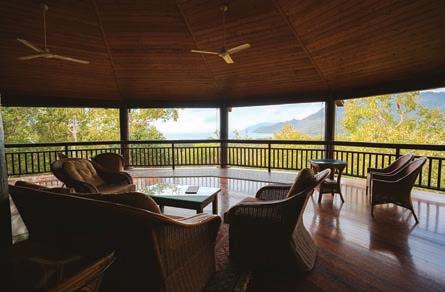
A 10-minute drive south of Port Douglas will have you at Osprey’s Restaurant, tucked into the Thala Beach Nature Reserve.
Open for breakfast, lunch and dinner, this popular spot is quite literally hidden in the treetops, with views across the rainforest to Port Douglas and the Great Barrier Reef.
The à la carte menu changes seasonally and is inspired by the freshest local produce sourced from the on-site coconut plantation, the thriving edible garden, and whatever the neighbouring producers are growing at the time.
For lunch, try the grilled pork belly with corn purée and homemade jus, or a prawn carpaccio with mango coulis and citrus herb cream.
Start your dinner off with fresh oysters and a glass of champagne, before moving on to dishes such as spicy duck leg with rice noodles and grilled chorizo, or barramundi wrapped in banana leaf with steamed coconut rice and pak choi.
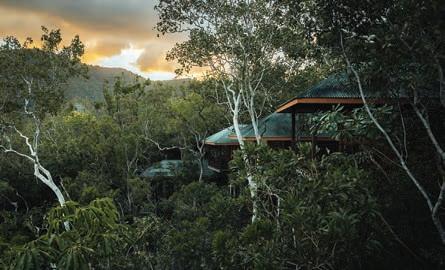
The bar is open all day for drinks on comfortable sofas with views of the Coral Sea, and if you want to linger longer, book one of the 83 boutique, eco-designed timber bungalows and suites elevated on stilts within the forest canopy. The Sandpiper Suite is an intimate hideaway located metres from the beach, featuring a private lookout path and views of the coastline, while the Birdwing Suite is set in the treetops with 180-degree views of the Coral Sea.
Wildlife is so abundant on the property, that the restaurant has a chalkboard on which visitors can list the animals they have spotted while staying or dining.
On the sands of Four Mile Beach is Zinc – a contemporary Australian eatery and bar with a menu inspired by classic European flavours.
Zinc’s cocktail bar is open from 2pm until late, while the dining room is open for lunch and dinner, with share plates and mains designed by Head Chef Brendan Cronin. Brendan, inspired by the abundance of local seafood, meats, tropical fruits and vegetables, works closely with sommelier Shevyn Perera to create a thoughtful menu and wine list.
You could start your evening by tucking into grilled prawns with an orange and butter sauce and bacon dust, then move on to the deliciously pillowy gnocchi with lamb ragu and parmesan cream, or for something lighter, indulge in a barramundi fillet with a coconut curry.
Zinc butchers daily, selecting its meat from some of the country’s top farmers before cooking each cut over a custom-built open woodfire and charcoal grill. From Bangalow pork cutlet to 365-day-grainfed wagyu rump, all meat comes with your choice of house-made sauces. TA




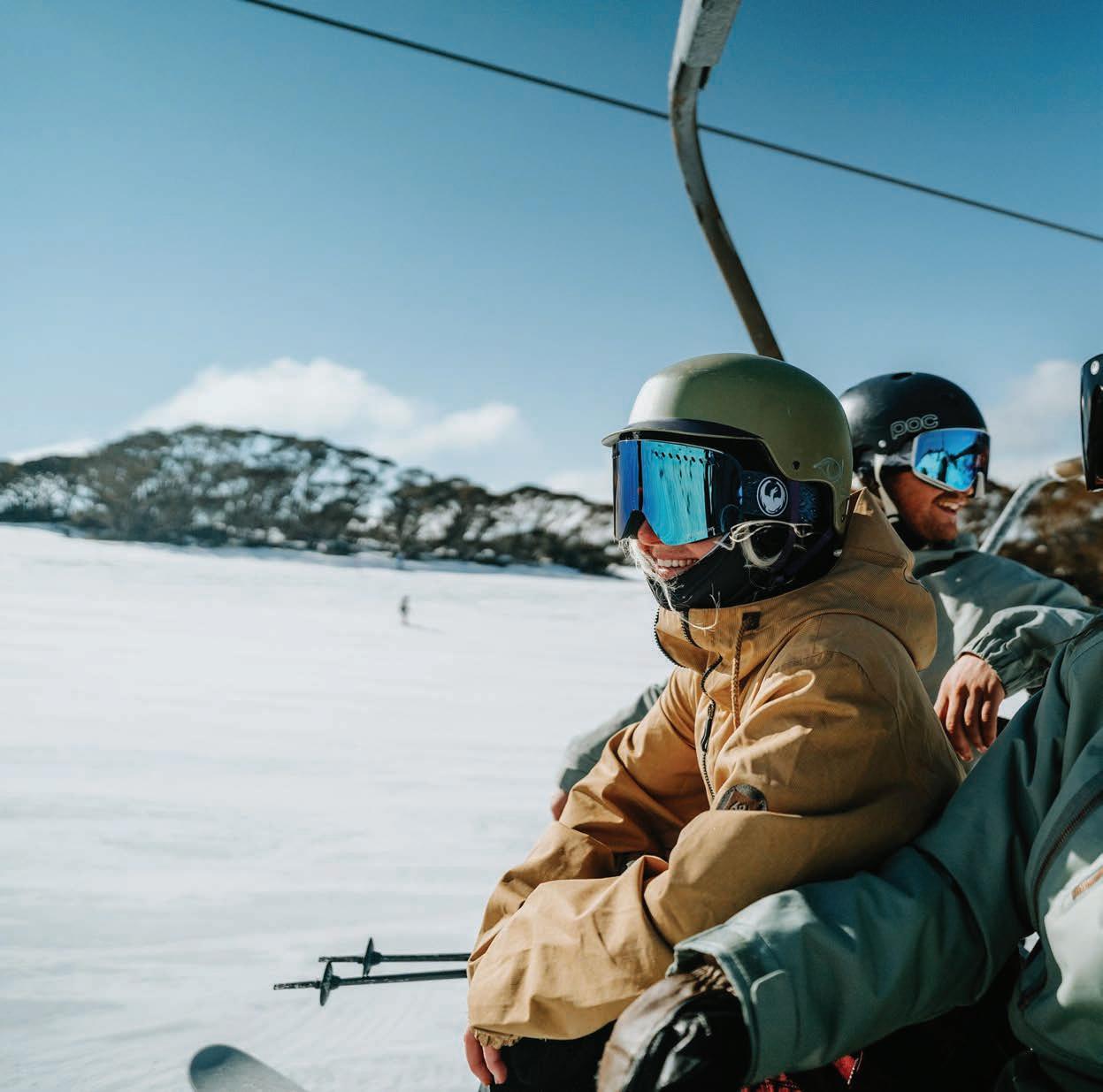
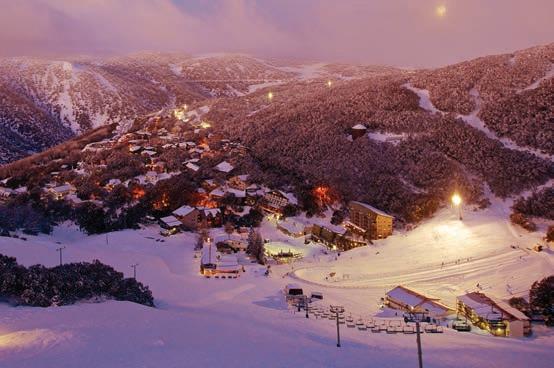
Everyone has their happy place. The first time I arrived in Falls Creek and looked up at the glistening white slopes of Mount McKay, rising 1,849 metres into a bluebird sky, I knew I’d found mine.
WORDs: Michelle Hespe


WHEN IT comes to holidays, I think there are two types of people: homing pigeons that like the familiarity of going back to somewhere tried and tested. That’s my husband. His attitude is: if you love it, why change it? Then there are people who fly by the seat of their pants and go where the wind takes them. That’s me.
Saying that, for the last 14 years, despite our polar opposite personalities and our distinctly different ways of doing things (he’s slow and cautious while I’m fast and fearless), every year we head to Falls Creek in the Victorian High Country. We’re both drawn to a mountain that now holds so many memories, every year it’s like going home.
Falls Creek is the largest ski resort in Victoria’s Alpine National Park, around 4.5 hours from Melbourne and a 90-minute scenic drive from Albury. The European-style ski-in, ski-out village sits at 1,580 metres, with the ski lifts reaching a peak of 1,780 metres. Across the 450 hectares there are 14 lifts and more than 90 runs. Falls gets an average of four metres of snow every year, and as it’s kitted out with 200 snow guns covering around 30 per cent of the runs, a season lacking in snow is rare. Even if there’s not much snow at the base of the mountain, once you reach the top, a winter wonderland sprawls out in a magical vista, with Rocky Valley Reservoir shimmering beyond the lifts and trails.
Falls Creek is known for having many intermediate-friendly slopes including the beloved 2.2-kilometre Wombat’s Ramble (the longest beginner slope in Australia) and it’s also home to extensive cross-country trails and serious black runs where many famous Olympians train.
Here’s where my husband and my differing approaches to a holiday come into play: Our three teens and I glide between the fun blue runs – wide and
welcoming Main Street and Ruined Castle and Nastar racecourse, which gently weaves through the trees.
Sometimes we hit a black run such as steep and challenging St Elmo’s Slide.
Jeff goes up and down wide and easy-sloping Drover’s Dream, loving the fact that he can cruise along on his snowboard, familiar terrain at every turn. He’ll spend a few hours doing the same run, while we throw ourselves into whatever looks fun.
The good thing is, the kids always know where to find Dad, while it’s anyone’s guess where I am. Possibly even enjoying a mulled wine on the deck of a café, watching families smile, laugh and pick their kids up from tantrums on the snow.
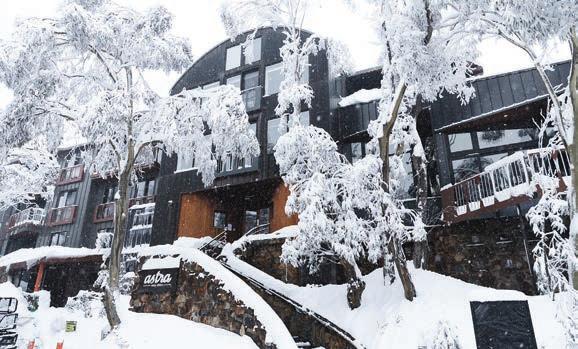
When we arrive in Falls Creek – laden with dreams of snowfall overnight – we check into our favourite hotel in Australia: Astra Falls Creek. A year doesn’t go by when Astra doesn’t win an award. Awarded Best Boutique Ski Hotel for 10 consecutive years at the World Ski Awards, it’s a perfect blend of luxury, sophistication and homeliness, surrounded by snow gums and eucalyptus trees donned in thick blankets of snow.
Astra’s rooms and family studios are havens of style – a palette of light and dark blues blending with crisp white and chocolate brown décor, offsetting the wood panelling lit up by copper pendant lamps.
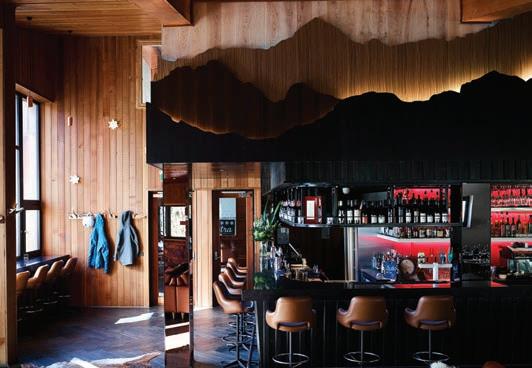
The restaurant, bar and lounge area with a huge stone fireplace follow suit, with wooden walls blending into a spectacular ceiling sculpture resembling a sunrise over the mountains. We love an après ski cocktail over a boardgame, and dinner is always an exciting affair, as the innovative menu celebrates seasonal high-country produce alongside local wines and craft beers.
At the end of each day we all unwind by the underground pool and soak in the spa bath before sweating it out in
the sauna and then slipping back into the pool. It’s a special couple of hours when I disappear into Astra Day Spa, which won Best Luxury Ski Resort Spa in Australia & Oceania in 2025.
The food scene in Falls Creek is varied enough to try a different restaurant or café every night while you’re in town, each oozing with its own special mountain-village charm.
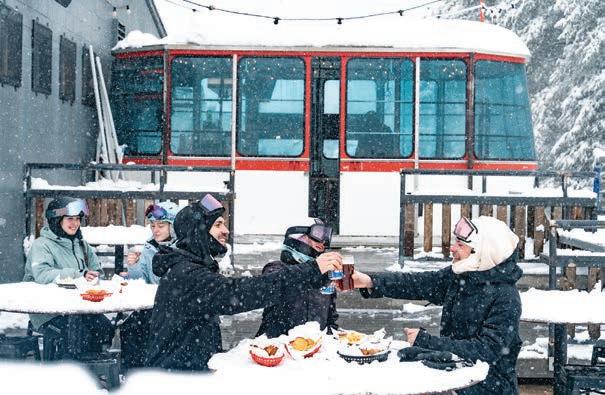
If you enjoy a lively pub-like atmosphere, Frying Pan Inn in the Village Bowl is known for its warm, rustic interiors and woodfired, hearty barbecue-style menu. With pool tables, darts and cosy corners, it strikes a balance between relaxed dining and mountain nightlife. The popular Gondola Bar adds to the energy, serving drinks from inside the gondola that was brought over from Euorpe to now sit on a wide wooden deck.
For breakfast we head to Ory’s, which dishes up comfort food with refined presentation, built around quality local produce. The friendly staff and owners have created a welcoming atmosphere and there’s always a happy bunch of early risers waiting on great coffee in the mornings, and plenty of rosycheeked groups sipping on cocktails when the lifts close for the day.
The most iconic eatery on the mountain is Cloud 9. This sprawling venue sits at the top of Halley’s Comet chairlift with killer views over the slopes and the village far below. For lunch and dinner there’s woodfired pizzas, pastas, burgers, grab-and-go staples such as muffins and pies, and there’s a fully
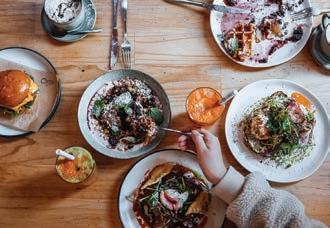
stocked bar, including one of my fave mulled wines. We always make the time to have a drink on the back deck. With the snow falling and the familiar rustle of ski clothes as everyone bustles in and out, it always gives us one of those, "ah, how lucky are we?" moments.
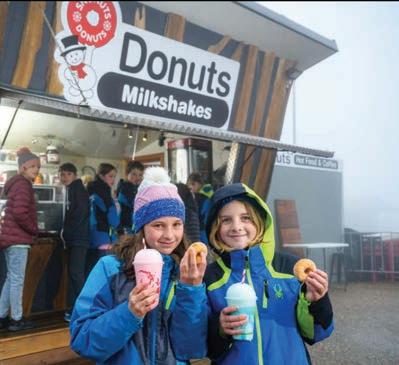
For a sugar fix while on the go, Snonuts is where it’s at. Found at the base of the main chairlift, our kids have been getting their Nutella Snonuts here since they were toddlers, and it’s the first place they head to, even now.
For a vibrant South-East Asianinspired menu, Huski Kitchen (next door to Astra) has everything from fragrant curries to tasty stir-frys and share-style plates, alongside creative cocktails and a lovely wine and beer list.
For something more up-market – with chilled Falls Creek vibes – Sorella Falls Creek blends modern Mediterranean flavours with a warm alpine atmosphere.
Open for breakfast, lunch and dinner, it offers everything from casual bites to awesome steaks and delicious pastas paired with local wines. The interiors are plush and inviting, centred around an open fireplace where you can toast marshmallows. Next door, the sleek Apartment 3 cocktail lounge adds an extra layer of après sophistication, with moody lighting and velvet lounges.
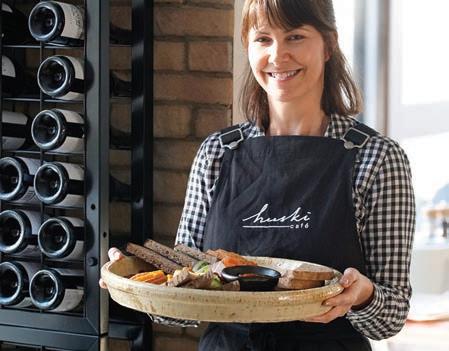
I’ve been skiing for most of my life, and yet I always find the time to have some lessons with a professional. It’s amazing what someone else picks up when they are trained to watch how you ski, and what you’re doing wrong or right. All of the ski instructors at Falls Creek are talented and friendly, and they love sharing stories of their ski adventures across the world.
We usually spend three to four days in Falls Creek, and after five or six hours on the slopes, I’m content to sit with a book and a lovely glass of red by the fireplace at Astra, or enjoy a hot chocolate on our couch, watching the snow pile up and snowboarders and skiers trundle by with their gear.
Our kids, not wanting to miss a single moment on the mountain, hit Wombat’s Ramble after sunset for some night skiing. It’s then that the village twinkles like a perfect little toy town in a snow globe – an inky sky sprinkled with stars framing a mountain of memories rising up behind. TA
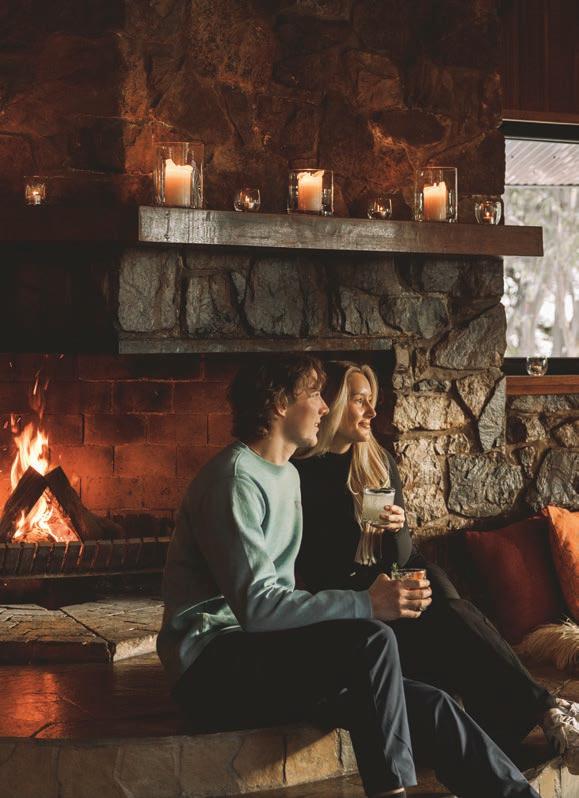

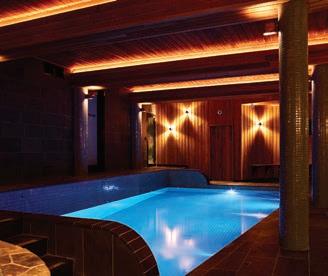
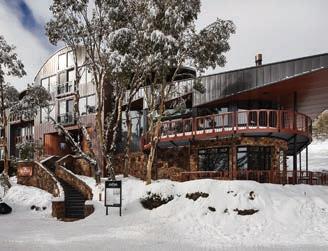
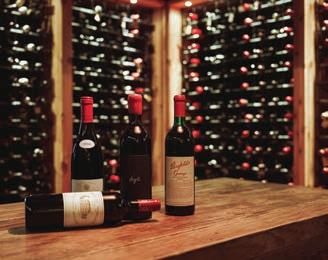
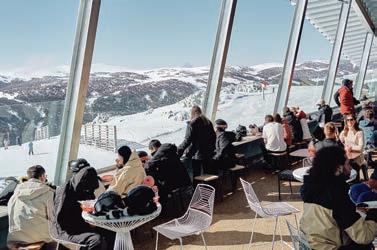
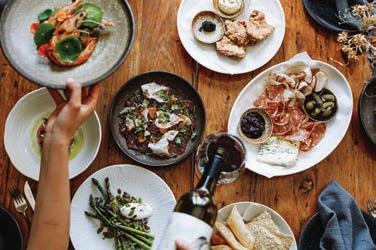
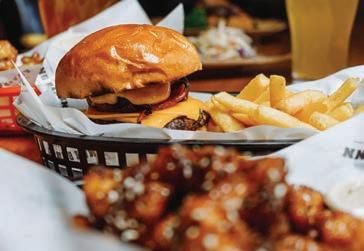
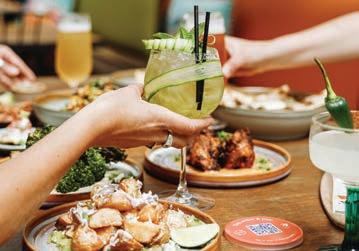
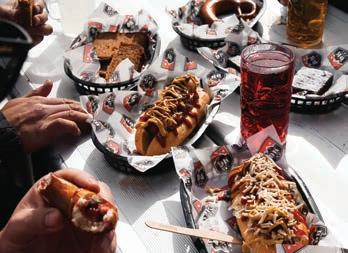
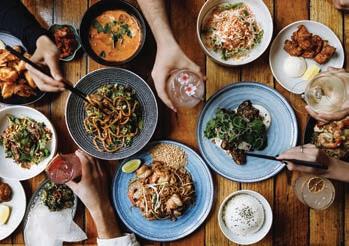
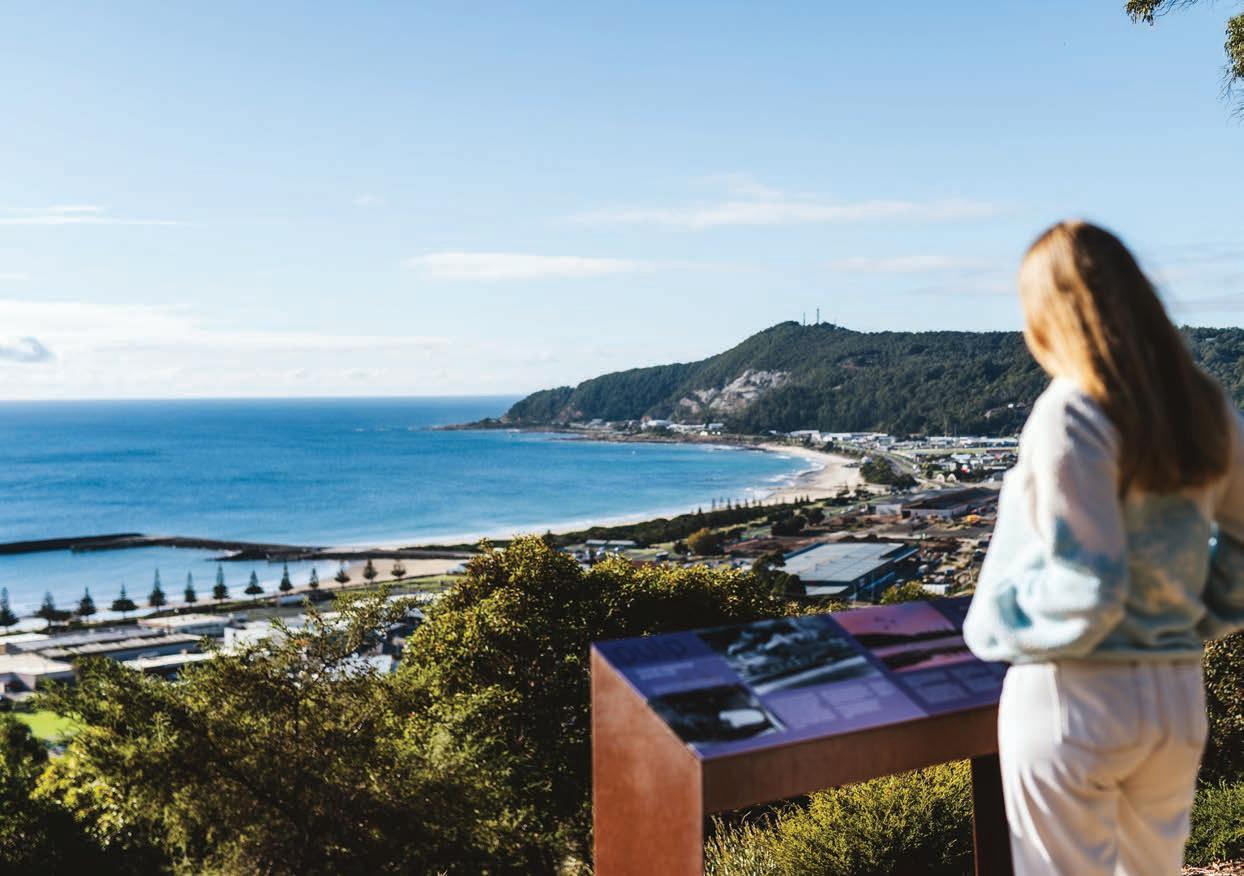
ON THE surface, Burnie is a bustling port city known for its industry. But look a little deeper, and you will discover a world of Art Deco architecture, penguins and gardens.
From coastal walks to immersive museums, discover the best historic and natural attractions in Burnie.
Every trip to Burnie should start at the waterfront foreshore, which looks out onto West Beach. Kids will love the playground and aquatic feature, which is inhabited by two octopus statues called Callum and Murray.
On one end of the foreshore timber boardwalk, the promenade viewing platform offers bench seats and strip lighting to guide your evening stroll, while a large picture frame overlooking the beach encourages photos aplenty.
On the other end, the Little Penguin Observation Centre runs nightly talks as you watch the local colony of little penguins waddle back to their nests. Knowledgeable volunteers share stories of these penguin families,
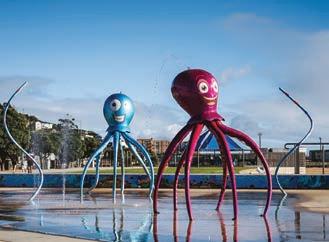
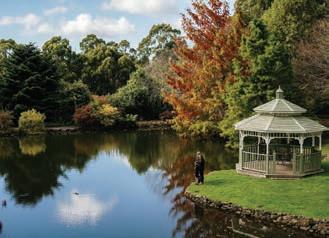
from courtship through to chick rearing, while also answering your burning questions and helping you with photos (as long as you keep the flash off). There’s even a live feed of the penguins on YouTube, so you can keep up-to-date with their lives when you’ve returned home.
For thrill-seekers, the Burnie mountain bike trails offer dirt jumps, downhill runs and a children's zone for smaller biking challenges. There’s also a meeting and hangout area with shelters to enjoy a much-needed break after your ride.
Travel less than four kilometres from the heart of Burnie, and you will find
yourself immersed in the tranquil oasis of Fern Glade. Take the main trail along the banks of Emu River for the chance to see native animals in their natural habitats, including platypus. Or, tackle the two-kilometre lookout loop and trek your way to the top of the walking track while surrounded by more than a dozen species of native orchids. The park also contains a picnic area and barbecue, so you can bring the supplies for a delicious lunch while soaking in your stunning surroundings.
Emu Valley Rhododendron Garden is only 15 minutes from Burnie, and well worth the drive. The 11-hectare garden boasts more than 24,000 plants
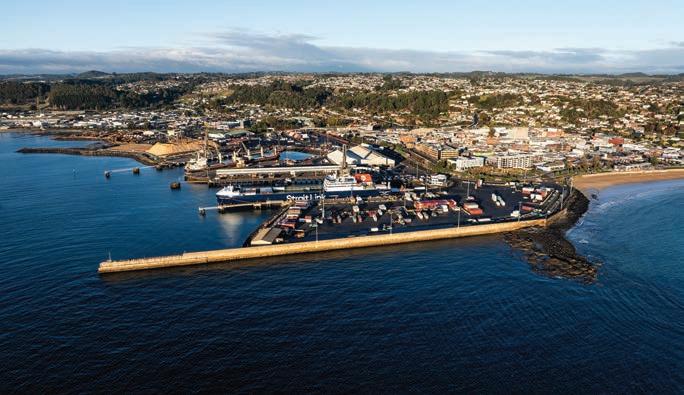
amongst a tranquil woodland setting, including half of the roughly 1,000 known rhododendron species from around the world. Roam around the three main lakes and you might even spot the resident platypuses.
After a morning of exploring, head to Rosetree Cafe in the heart of the garden for tea with delicious hot scones, homemade cakes and coffee, or a hearty pasta lunch.
Step inside the unassuming Burnie Regional Museum, and you will be transported back to the mid-1820s in its immersive pioneer village display. The museum has reconstructed Federation Street to show you how local inhabitants lived more than 100 years ago, with photographs, memorabilia and vintage tools scattered throughout the exhibition.
Each store along the street honours a trade or profession important to Burnie’s pioneering community, including a saddler, boot maker, blacksmith, printer and dentist. Each has been designed based on an actual business that once existed in Burnie, and today reminds visitors of the town’s fascinating past.
In fact, Burnie was once home to a major paper mill, which began producing fine paper from eucalyptus trees in the 1930s. At its height, the mill employed around 4,000 people and produced 22,500 tonnes of paper a year. It was the centre of industry
in town, with housing for employees, childcare facilities, a grand ballroom, indoor gym and cafeteria. Today, despite ceasing its operations, it remains a striking example of Art Deco architecture, and many buildings have been restored to their former glory.
To learn more about the importance of the paper industry to Burnie, you can explore the Pulp Paper Trail. This scenic waterfront path sits opposite the remains of the paper mill, and features a number of stunning sculptures honoring the men and women who worked at the mill between 1937 and 2010. Interpretive signs along the way offer more detail about the generations of makers who turned Burnie into a thriving port town, while the sculptures themselves are beautiful spots to stop and admire the rich history around you.
Continue your historic tour of town at Burnie Port, which welcomed its first ships in 1827. Almost 50 years later, when tin was found at Waratah, a mining boom saw minerals arriving at the port to support a growing industry. The region thrived as companies moved their businesses into town and built new railways, resulting in a number of Federation-style buildings popping up all over town.
These buildings are known for their red-brick exteriors, elaborate timber fretwork, terracotta tiled roofs and decorative windows, blending British Edwardian influence with Australian lifestyles. On the Burnie Federation

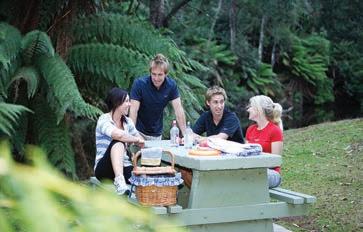
Walk, you can tour the prime examples of this type of architecture that remain scattered throughout the town, as well as the impressive heritage-listed Gothic Baptist Church, and a heritagelisted dental surgery that has been faithfully recreated inside the Burnie Regional Museum.
Burnie Port is Tasmania’s largest general cargo port – handling more than five million tonnes of freight each year – and it's a great place to watch industry in motion. TA
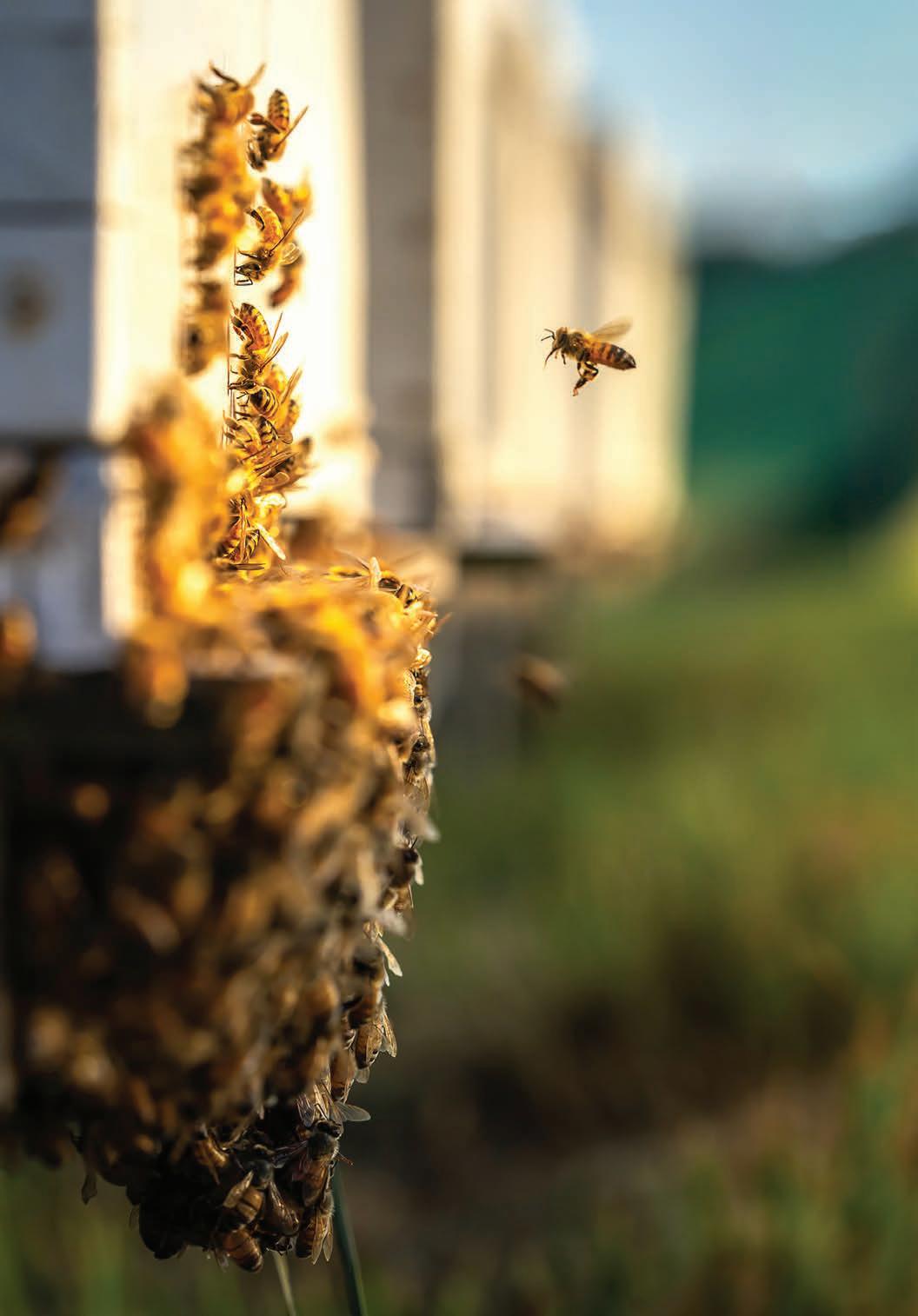
DRIVE ONE hour from Moruya to the vibrant seaside town of Bermagui, and you’ll discover a coastal estate surrounded by native forest, dramatic coastal headlands and sheltered bushland. This is the home of Bermagooey – a farm producing single-estate honey – taken from 100 per cent natural honeycomb and cold-pressed without heat treatment or pasteurisation.
At its helm is Sue Roseman, who works with her husband David on a mission to capture a sense of place in their products, rather than creating another generic honey.
“Bermagooey began with a fascination for bees and the remarkable way they translate landscape into honey,” Sue explains. “We wanted to create something that truly represents where it comes from – the plants, the seasons and the coastal environment surrounding the hives.”
Honey is one of the most regionspecific foods in the world. Bees collect nectar from the plants available in the surrounding landscape, and this shapes the colour, texture, aroma and flavour of the final product.
On a private farm on the Far South Coast of New South Wales, Sue Roseman brings together pasture, bushland and ocean in every jar of Bermagooey honey.
WORDs: Matilda meikle
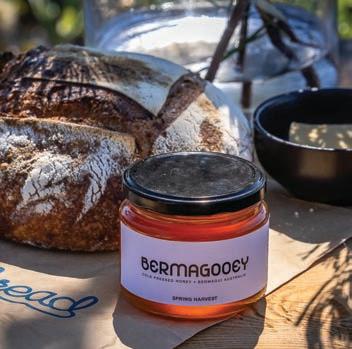
However, most commercial honey brands blend their final product with ingredients from multiple sources to standardise the flavour, and heat it to make it easier to filter and bottle. What results is a uniform product with a milder flavour, removed of the individuality that comes with place.
According to Sue, this is the antithesis of the mission at Bermagooey.
“With single-estate honey, we choose not to standardise the honey; rather, we allow each harvest to reflect the landscape and season it comes from. This natural variation is part of what gives honey its character. Something like a wine vintage,” she says.
“The Far South Coast provides an incredibly diverse environment for bees. Within a small radius of the hive, the pasture, coastal heath and native bushland all feature different flowering plants producing nectar throughout the year.”
Combined with factors including coastal weather patterns, rainfall and temperature, all of which influence how much nectar a flower can produce and how concentrated that nectar is, the single-origin approach results in a honey reflective of the environment and season.
“You can often taste much more of the landscape in the honey – subtle floral notes, deeper caramel tones or delicate herbal flavours depending on what the bees have been visiting,” explains Sue. “The result is a honey with far more character, and one that naturally changes from season to season.”
Working on a small scale is central to the Bermagooey approach. It means working closely with the bees and the environment, and adapting to unpredictable coastal conditions such as rain and wind, which can influence flowering and nectar flow. Production can be less predictable than it is for commercial honey companies, but Sue believes this is part of the fun.
“Each season is different, so each harvest reflects the natural rhythms of the landscape,” Sue explains.
“Along our coast we have native heath, as well as tea tree and other wildflowers that produce bright, aromatic nectars. Bushland also contributes a wide range of native flowering plants that can add deeper,
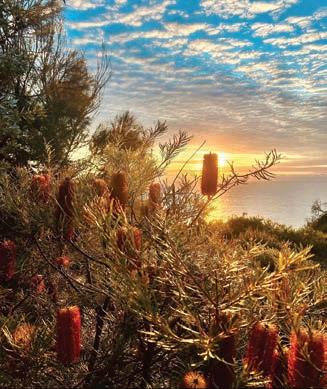
TOP TO BOTTOM:
The flavours of the honey change depending on the plants and season; Sue works closely with the bees; The property is home to a herd of Scottish Highland Cows.
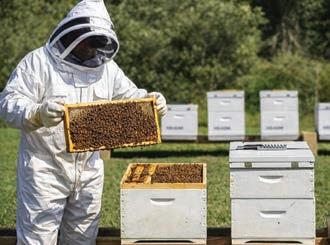
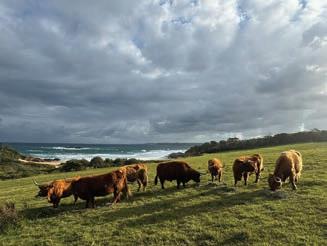
more complex flavours, while pasture areas introduce seasonal flowering plants that can soften or round out the profile.
“Because these environments exist close together, the bees move between them throughout the season.
"You can often taste much more of the landscape in the honey – subtle floral notes, deeper caramel tones or delicate herbal flavours depending on what the bees have been visiting."
The result is a honey that reflects the diversity of the surrounding landscape rather than a single plant source. It is a layered flavour profile shaped by coast, bush and pasture working together.”
The bees forage across the coastal bushland and pasture, on a landscape shared with native flora, local wildlife, and small herds of Scottish Highland cows and Dorper sheep.
This means that every jar of Bermagooey honey tastes slightly different and captures a particular moment in the flowering cycle. Sue loves hosting tastings, and people are always surprised by the difference in colour, aroma, texture and flavour that is noticeable when comparing harvests.
Working with bees has given Sue a greater appreciation for the coastal landscape, making her more aware of flowering cycles and seasonal changes.
“What once looked to us like ordinary bushland or pasture becomes an incredibly complex ecosystem supporting pollinators, and any additional planting we do always takes the bees’ preferences and wellbeing into consideration,” she says.
Sue is also more aware of how closely food production is linked to healthy environments.
“In many ways, the bees become guides to the rhythms of the landscape,” she adds.
By producing small-batch, singleestate honey, every jar embodies the character of the region. Dry seasons concentrate the nectar for more intense flavour, while wet conditions result in lighter styles, but the mission remains the same no matter the weather.
“By producing small-batch, singleestate honey, our aim is to create something that carries the identity of the region,” Sue says. “We want to give visitors something they can taste, and by doing so, connect with the place it comes from. If they enjoy it, they can take a little bit of Bermagui home in a jar.” TA
Compiled by: Matilda Meikle

Grounded Goods is a B Corp certified and female-led business which aims to eradicate single-use plastic waste with its range of eco-friendly cups, containers and packaging solutions. The Uppercup is made using BPA-free copolyester with double-wall insulation to keep your drink hot and your hands cool.
groundedgoods.com.au
$22.50
All watch straps from Artisan Straps are entirely cut, saddle stitched and edge painted by hand to ensure a durable and refined finish. Every product is made from full-grain leather, resulting in unique natural characteristics. The Epsom strap is crafted from embossed grain, chrome-tanned leather, which is naturally resistant to water and scratches.
artisanstraps.com
$125
G’Day Baby makes comfy kids clothes from natural Australian fabrics and dyes for a soft and safe finish. The Ribbed Sleep Set is made from 100 per cent organic cotton with wide bands and soft elastic for a relaxed fit. It is available in three unisex shades, and sizes from one to 14 years.
gdaybaby.com.au
$55
Spotters is the only glass lens sunglass company manufacturing in Australia, and it specialises in polarised Crown Glass lenses for optical clarity, natural colour perception and distortion-free vision. The Jade were designed with non-slip grips and a lightweight frame, perfect for stylish all-day wear. spotters.com.au

$319.95
Cookout is a father-and-son brand handcrafting premium barbecues and accessories. The portable classic gas barbecue is made from marine-grade stainless steel to withstand harsh outdoor conditions, with adjustable heat control and a flame failure safety device perfect for the boat, beach, balcony or bush. cookout.com.au
$2,450
Designing and manufacturing all their clothes in Thornbury, Melbourne, husband and wife duo Feeona and Troy are dedicated to producing bio-degradable, soft textiles from extra-fine Merino wool. The Henri Jumper features a cable-knit pattern and cosy shawl collar for added warmth. uimi.com.au
$299
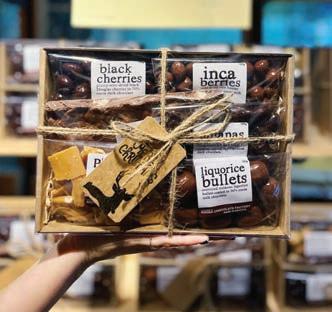
At Noosa Chocolate Factory, every creation is made using ethically sourced ingredients, without palm and vegetable oil, and handcrafted within 72 hours of delivery. The Medium Hamper contains a large chocolate slab and five packets of chocolate goodness, featuring random picks from the extensive range. noosachocolatefactory.com.au
$75
Inspired by the stunning Australian landscape, every product from Native Collars is designed for grand outdoor adventures with your pooch. The Waterproof Dog Collar is made using a vegan leather alternative. It is stink proof, waterproof, easy to clean, and fully adjustable to suit your pup’s needs. nativecollars.com
$45

Each piece from Kate & Kole is individually designed and finished in the Newcastle studio, using mostly recycled gold and silver. The Tiny Pearl Necklace starts with a hand-chosen pearl which is delicately wrapped with solid gold or silver wire and strung onto a cable chain. Each pearl is completely unique and hand-selected. kateandkole.com.au
$150

Polka uses top-quality South Australian grapes and native botanicals to craft its range of non-alcoholic drinks, for those who love the taste of premium wines and spirits without the buzz. The Spritz Duo features two delicious flavours, yuzu & mandarin and limoncello, crafted using real de-alcoholised wine. polkadrops.com.au
$45
Minijumbuk has been partnering with local South Australian woolgrowers to produce its range of handcrafted and sewn quilts, pillows and mattress toppers for more than 45 years. The Merino blanket is made using 100 per cent pure Merino wool, with a yarn-dyed reversible design and generous size to fit any bed or sofa. minijumbuk.com.au
$599.99

Camp Cove Swim was founded with a love of retro styling and exclusive designs. The Nicole Swim Short is a high-waist, boyleg cut swim bottom made from recycled fabrics and printed with a unique pattern designed by the Camp Cove Swim team. It provides 50+ UPF protection and full coverage. campcoveswim.com
$120
JERVIS BAY NSW

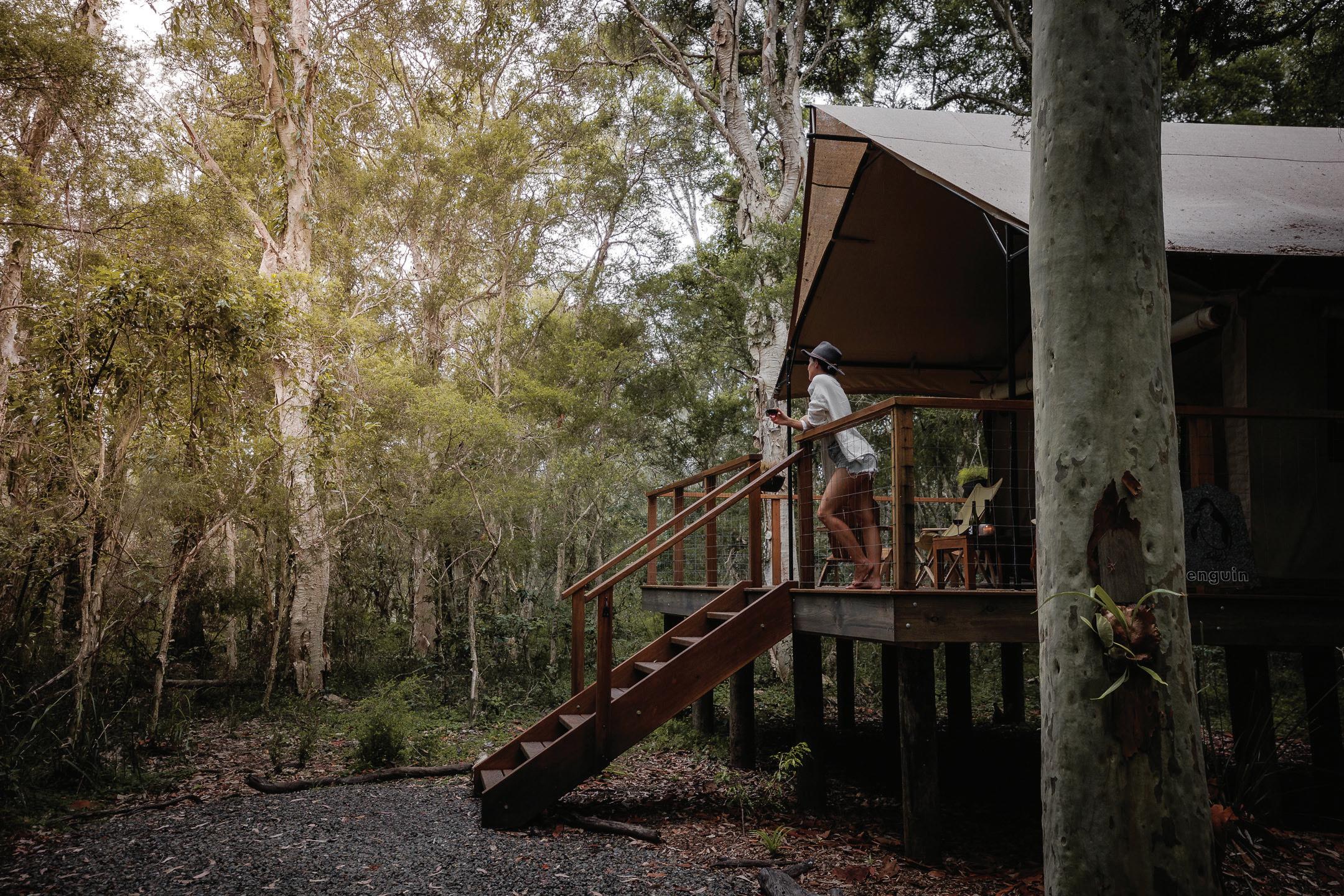
Co�bi�i�g pre�iu� te�ted acco��odatio� wit� wo�derful food a�d war� �o�pitality, Paperbark Ca�p offer� a peaceful bu�� retreat i� beautiful Jervi� Bay,- t�i�k ca�pi�g for grow� up�!

New study confirms that honeybees have the ability to process numerical information.
A variety of cooking apple thought to be extinct has been identified on a rural property in the Southern Tablelands of New South Wales.
Since 1995, only eight trees growing the rymer apple variety, known for its large size, smooth skin and yellowish flesh, have been identified: six in Wales, one in India, and another in the US.
That is, until cider maker Gary Sully visited a local orchard owned by Rudi Stachow, and thought he recognised the fruit. In 2023 he got in contact with the Marcher Apple Network, responsible for identifying many lost apple varieties, and together Sully and Stachow collected leaves from the
rymer trees, stored them in tea leaf bags topped with silica gel, and shipped them overseas for DNA testing.
In 2025, a positive result came back, identifying the farm as a home of rare rymer trees. Stachow was able to trace the origin of the trees on his property back to a 19th-century settler in the area, namely Frederick Routley, who would have planted them around 1895. Sadly, of the trees planted on the property, only three remain and the trunks are rotting.
In an attempt to keep these precious trees alive, Gary Sully has been using propagation to grow
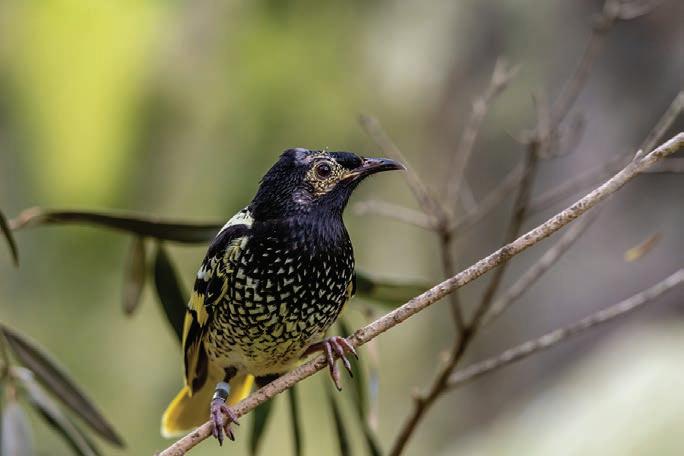
Scientists are attempting to rescue the song of one of Australia’s rarest birds.
The critically endangered regent honeyeater was once found in large flocks from Queensland to South Australia. However, significant population decline means that these beautiful birds are now confined to the Blue Mountains area in New South Wales. There are less than 250 left in the wild, and their song has
diminished with their numbers.
In fact, the song now contains half the number of syllables it once had, leaving scientists concerned about the impact on reproductive success, as male birds use their voice to attract attention from females and establish territory.
To combat this worrying reality, experts have been teaching young males kept in Taronga Zoo as part

dozens at his own home, and receives fresh supplies from the orchard whenever he needs. If these plants can be kept alive, they will offer vital opportunities to apple growers who can use them to breed new apple varieties resistant to climate change and disease.
of a captive breeding program to sing their full song. For the first year of the study, the team played recordings of young regent honeyeaters to the captive birds every day, but the trial was unsuccessful.
In the second year, they used two wild-born males to teach the younger males how to sing, with a much higher success rate.
“We took fledgling birds from all different parents, and we creched them with a wild male who sang correctly,” says Dr Daniel Appleby from the Australian National University.
“The proportion of juveniles that learned the song increased from zero to 42 per cent in three years.
“The full version of the wild song taught to zoo-bred males disappeared from the wild during the study, making the zoo population the only remaining source of traditional song culture.”
These zoo-bred males have now learned the complete song and taught it to the next generation, sparking hope that the species will become self-sustaining as more birds from the breeding program are released into the wild.
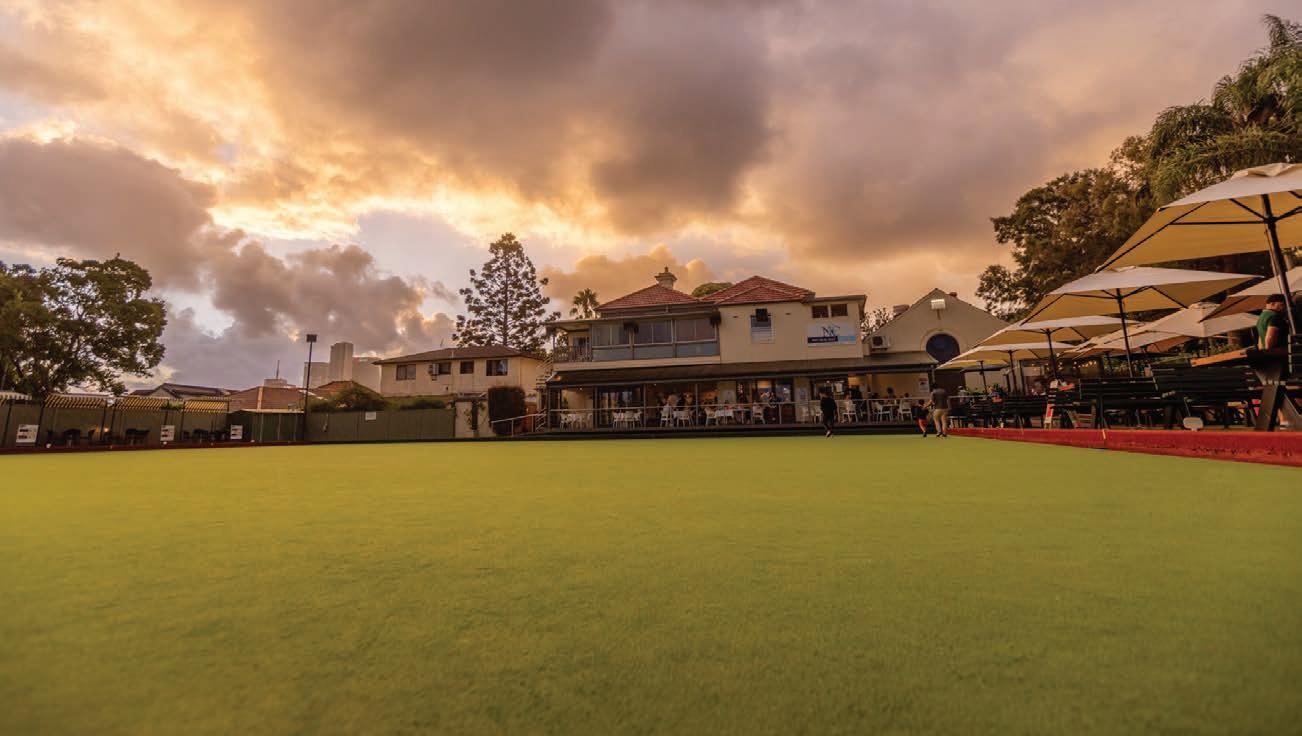
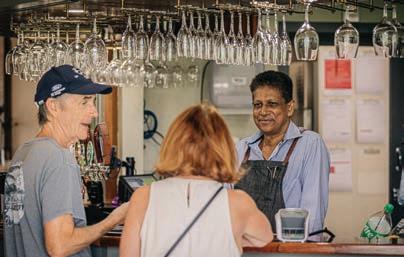
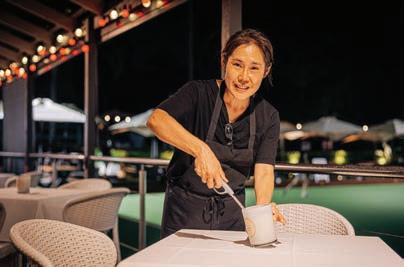
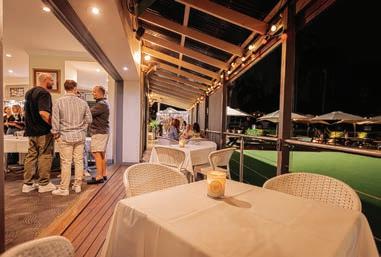
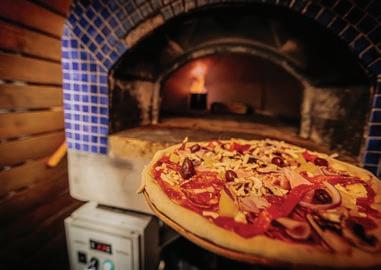
We’re so much more than just a bowls and tennis club. We’re a community.
With a rich 140-year history, we proudly offer one of Sydney’s most stunning all-weather bowling greens, four top-tier competition tennis courts, a bistro and bar serving your favourite meals and drinks, and our renowned on-site wood-fired pizza oven. You’ll find us in the heart of Neutral Bay.
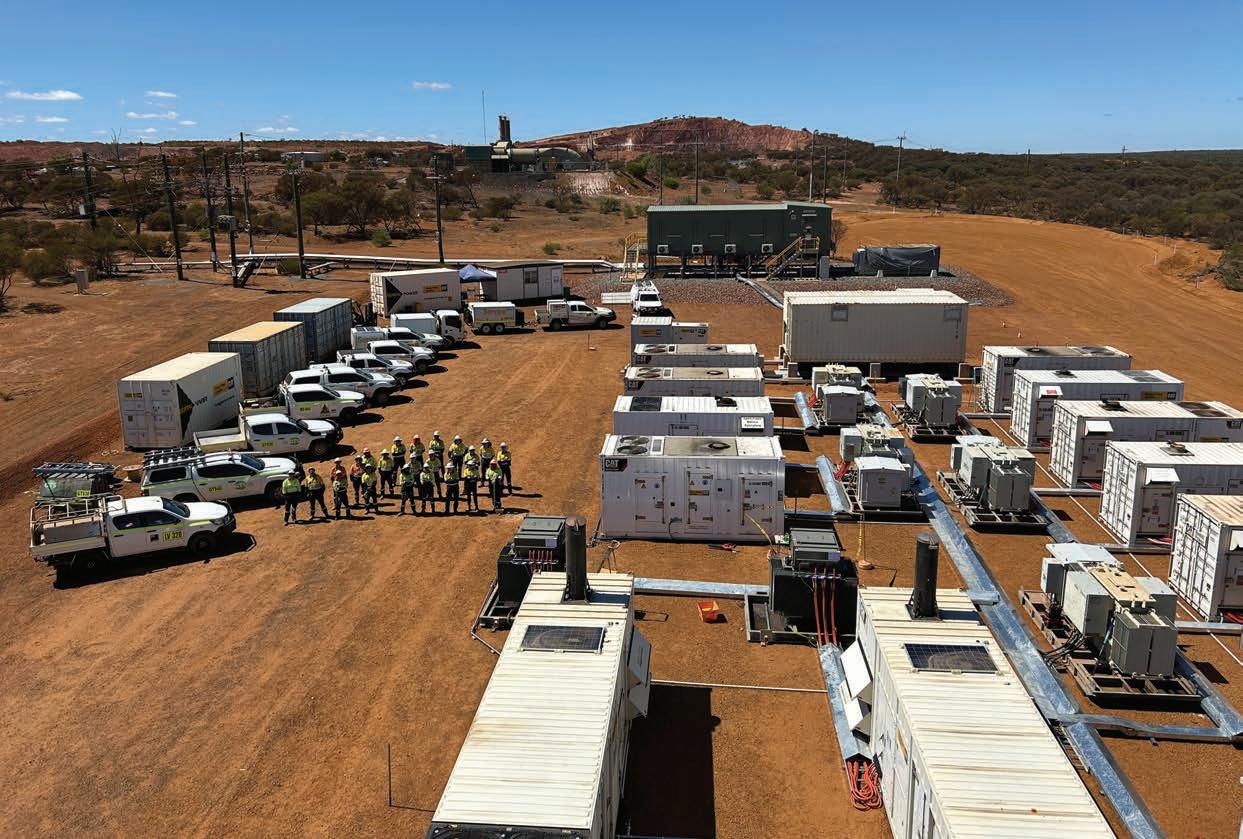
Across industries, global fuel pressures and shifting logistics are once again reshaping how Aussie businesses operate. Words: Abby Crawford
Rising transport costs, constrained shipping routes and ongoing volatility in fuel supply are not just impacting timelines, they are influencing decision-making at every level.
For many, the immediate response has been to adapt. But what we’re seeing is something more meaningful than a temporary pivot.
It’s a recalibration.
For Australian businesses, particularly those operating in infrastructure, energy and resources, the question is no longer simply “how do we get it here?” but rather “what do we already have, and how do we use it better?”
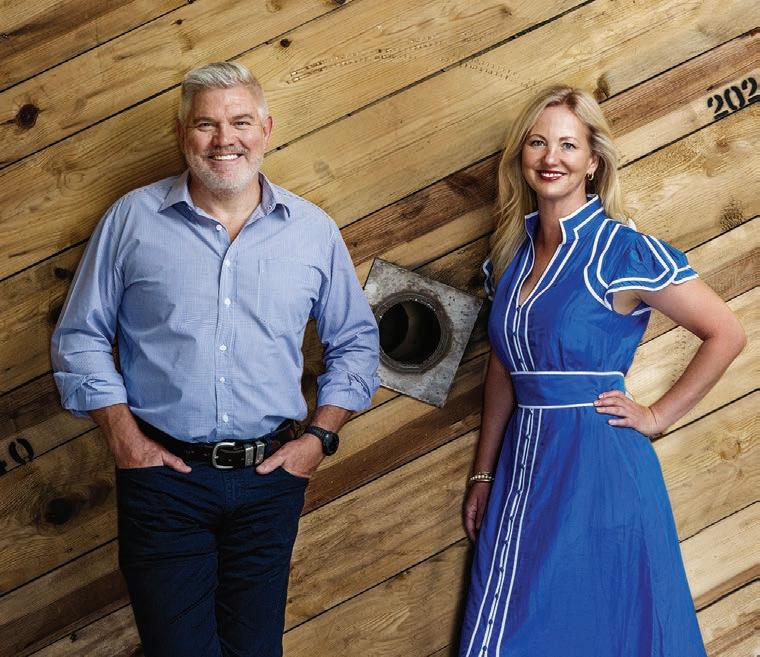
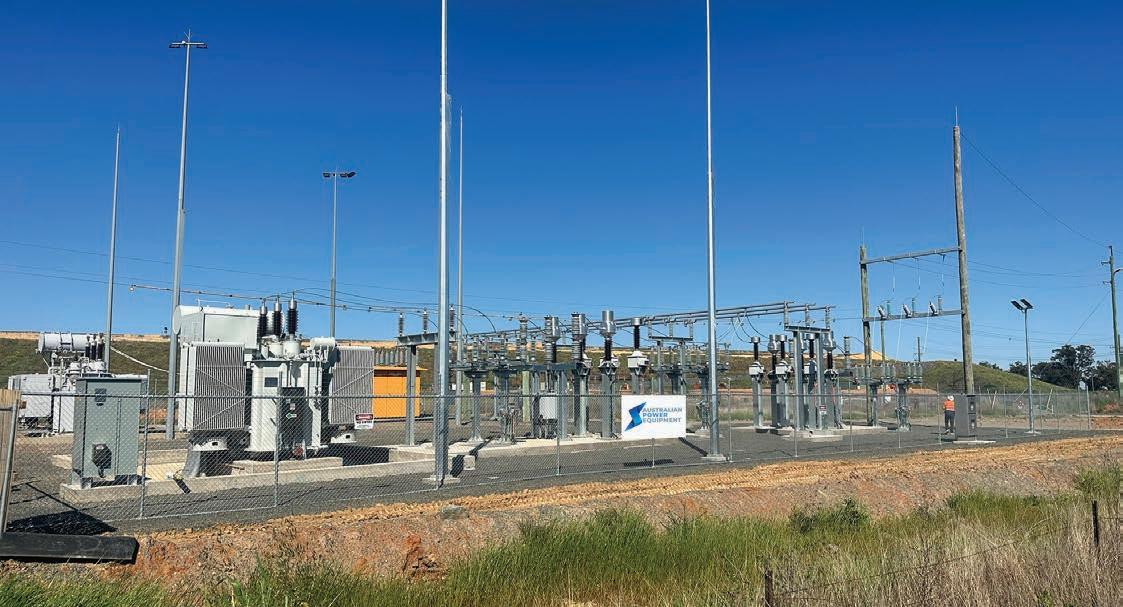
At Australian Power Equipment (APE), this has reinforced something we have long believed: capability already exists within reach.
APE’s model has always included a balance of new and refurbished equipment, supported by stock held locally and internationally. In times of global uncertainty, that balance becomes a strategic advantage. Equipment that is already available, already compliant, and already fit for purpose removes layers of risk that are often overlooked in traditional procurement cycles.
“From a technical perspective, efficiency isn’t just about performance, it’s about the life cycle of equipment,” says Andrew Cockbain, Co-director of Australian Power Equipment.
“For example, our transformers using FR3 natural ester fluid are not exposed to the same fuel volatility as traditional mineral oil systems. They offer longer insulation life, higher temperature tolerance, and reduced environmental impact. So, by using these products, you’re improving efficiency both operationally and over the asset’s life.”
This is not about compromising on
“When you remove layers of shipping risk and global dependency, you’re able to make clearer, more confident decisions, and that’s where real efficiency starts to come through.”
quality or specification. In many cases, it is actually the opposite. When businesses are less reliant on extended global supply chains, they gain greater visibility, faster response times, and the ability to make decisions based on operational need rather than external constraints.
We are seeing a shift towards practical efficiency, where timelines, reliability and adaptability are valued just as highly as upfront cost.
There is also a broader benefit. By utilising equipment that is already in market (whether held in stock, refurbished, or redeployed) businesses reduce the embedded energy and emissions associated with manufacturing and transporting new assets. What was once considered an alternative approach is increasingly becoming part of mainstream strategy.
“Having equipment in stock isn’t just about speed,” says Abby Crawford, Co-director of Australian Power Equipment. “It’s about
certainty. When you remove those layers of shipping risk and global dependency, you’re able to make clearer, more confident decisions, and that’s where real efficiency starts to come through.”
It’s a reminder that resilience doesn’t always come from looking further afield. Sometimes, it comes from looking closer.
This shift is not about stepping back from global markets. International partnerships, innovation, and supply chains will always play a critical role in Australia’s future, but what is changing is how businesses balance global reach with local capability.
The strongest operators are not those who rely on one or the other, but rather, those who can move between both with confidence.
In a climate where fuel limitations and logistics pressures continue to evolve, this flexibility is no longer a competitive edge. It’s becoming a baseline expectation.
Diversification of Brodie and Kevin Game’s enterprise to raise male progeny as steers for beef production supported the sustainable growth of their farm. Yet, after enduring drought between 2017 and 2019, followed by bushfires and floods, many challenges were presented along the way.
“Every disaster has changed the management of our business because it’s not an ‘if’ these things will happen again, it’s a ‘when’, and now there’s different levers we can pull to get through things,” Brodie says.
Floods between 2020 and 2022 caused significant pasture losses and eroded cow lanes and waterways on the Games’ farm. In order to mitigate the impacts of future disruptions, the couple turned to a Farm Investment Loan from Regional Investment Corporation (RIC) to recover and improve their on-farm infrastructure.
Since 2018, and as of March 2026, RIC has delivered low-interest farm business loans on behalf of the Australian Government to more than 3,500 Australian farmers, valued at over $3.77 billion.
RIC loans can be used to prepare for, manage and recover from tough
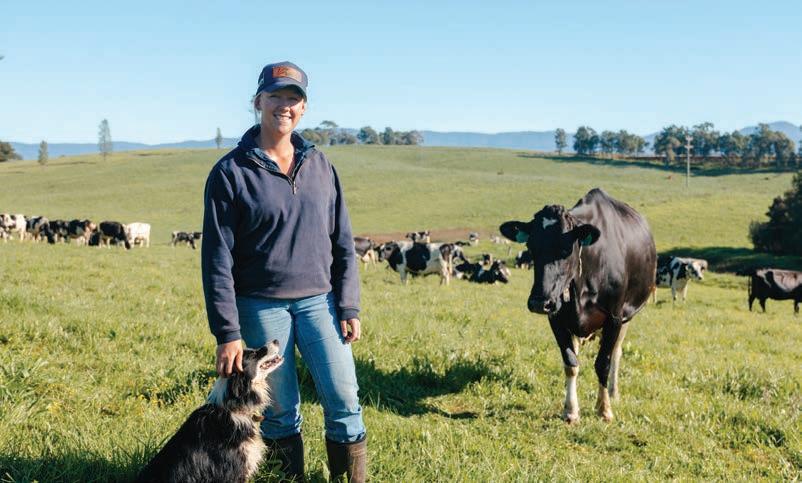
Sixteen years after establishing their dairy farm, Brodie and Kevin Game from the Bega Valley in New South Wales now run over 700 Holstein cows, supplying 2.8 million litres of milk a year to Bega Cheese.
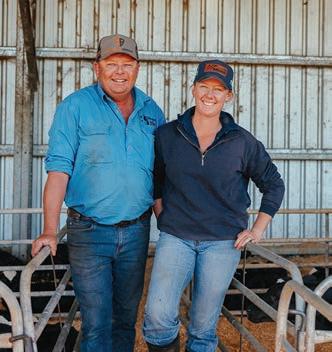
financial times due to drought, natural disasters, biosecurity issues or other significant market events. They can also help established farmers to create new businesses, first-generation farmers, or succession planning for next-generation farmers.
For Brodie and Kevin, a RIC loan funded the purchase of a pivot to irrigate and deliver increased nutrients to an additional 35 hectares of pasture – a significant upgrade on the existing inefficient bike shift irrigation they’d been using.
“Homegrown feed is the most cost-efficient way to feed our cows,
and in this area there can be six weeks between wet and dry periods, so our pastures are vital,” explains Brodie. “For the irrigation systems we had in place, maintaining that was very labour intensive.”
RIC’s low, variable interest rate of 5.18 per cent, interest-only repayment period, and no-application or earlyexit fees provided attractive terms to help manage the farm’s cash flow as the improvements were made.
“The interest-only period for the first five years of the 10-year loan term was very enticing because it gave us more time to install the pivot and pay the money back once it made money for us,” Brodie said.
Before applying, farmers can check their eligibility and speak with their accountant or rural financial counsellor, and notify their bank, as they’ll likely need to share loan security. Good preparation can make the application process smoother, and shorten the time period to receive a decision.
During tough times, RIC is helping strengthen Australian farms. For more information on RIC’s loans, visit ric.gov.au, or call 1800 875 675.

Improve cash flow and gain financial breathing space to manage through, recover and prepare.
Borrow up to 50% of your commercial debt. Refinance or secure new funding at concessional interest rates.
Loan features
Interest rate variable rate reviewed every 6 months*
Borrow up to $2 million
Term 10 years with 5 years interest only, then 5 years principal and interest repayments
Repayment options monthly, quarterly, half yearly
No ongoing loan account management fees
Check ric.gov.au for current interest rate.
1800 875 675

Before you apply
Visit our website for to check eligibility criteria, educational tools, and loan guidelines ric.gov.au/before-apply
Get advice from your financial counsellor, accountant or trusted advisor, and talk to your commercial bank or lender

Get in touch with our Agri Lending Specialists
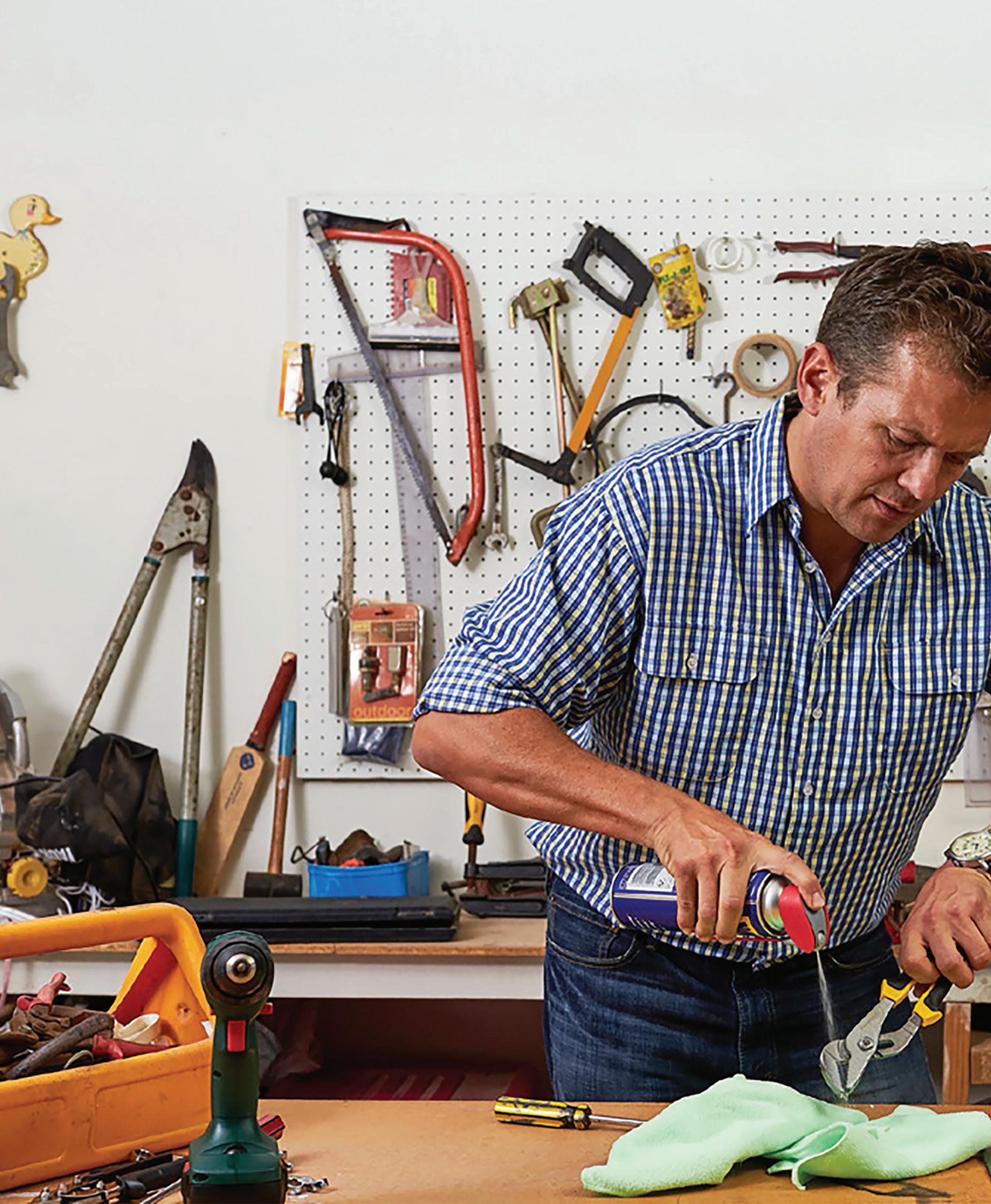
The WD-40 Repair Challenge saw
thousands of Aussies
showing off their best home repairs, proving that a little DIY can go a long way.
Words: Matilda Meikle
Whether it's small household items or full-scale renovations, more and more Australians are choosing to repair rather than replace.
To celebrate this shift towards practical mending, WD-40 Company held its annual Repair Challenge from March 1 to April 18 this year. The competition invited home fixers, local makers and professional repairers to showcase their most impressive projects.
The challenge was open to everyone in Australia, and welcomed video entries demonstrating repairs on any scale. The aim was to promote a more sustainable way of reducing waste and encourage new skills.
For those unsure about where to start, Men’s Sheds and Repair Cafes offered a space where participants could find tools, materials and expert guidance for their projects.
The Repair Challenge proves that no repair is too small to make a difference. According to Rosemary Murphy, Marketing Manager at WD-40 Company, it was started to bolster the growing repair movement by allowing curious community members the chance to learn about the art of repairing for themselves.
“The challenge began as a way of showing entrants that giving new life to belongings can reduce waste, save money and help them develop valuable, practical skills along the way,” Murphy explains.
“Ultimately, it is about raising awareness about the environmental and economic benefits of repair, while encouraging more people to give it a go.”
“The challenge began as a way of showing entrants that giving new life to belongings can reduce waste, save money and help them develop valuable, practical skills along the way.”
Since its inception, the competition has grown to welcome a wave of less experienced fixers, suggesting that more people are turning to DIY when faced with an item that needs mending. Murphy believes this may have started as a result of the cost of living crisis, but as new people join the repair community, they discover all the other benefits to learning these skills.
“In the past the motivation to repair was often economic, but today more Australians are choosing to extend the life of their belongings for both practical and environmental reasons. There’s a renewed pride in practical skills and people are increasingly interested in maintaining the things they own rather than immediately replacing them,” she says.
“We’re also seeing growing interest from younger families and first-time homeowners who want to develop basic repair skills and become more self-reliant. Community initiatives such as Repair Cafes and Men’s Sheds are playing an important role in this shift, creating welcoming spaces where people can learn from one another, share knowledge and reconnect with practical skills.”
For those wishing to try their hand at repairs before next year’s competition, Murphy says it’s as simple as starting small.
“Simple fixes like tightening loose parts or reviving old tools are great
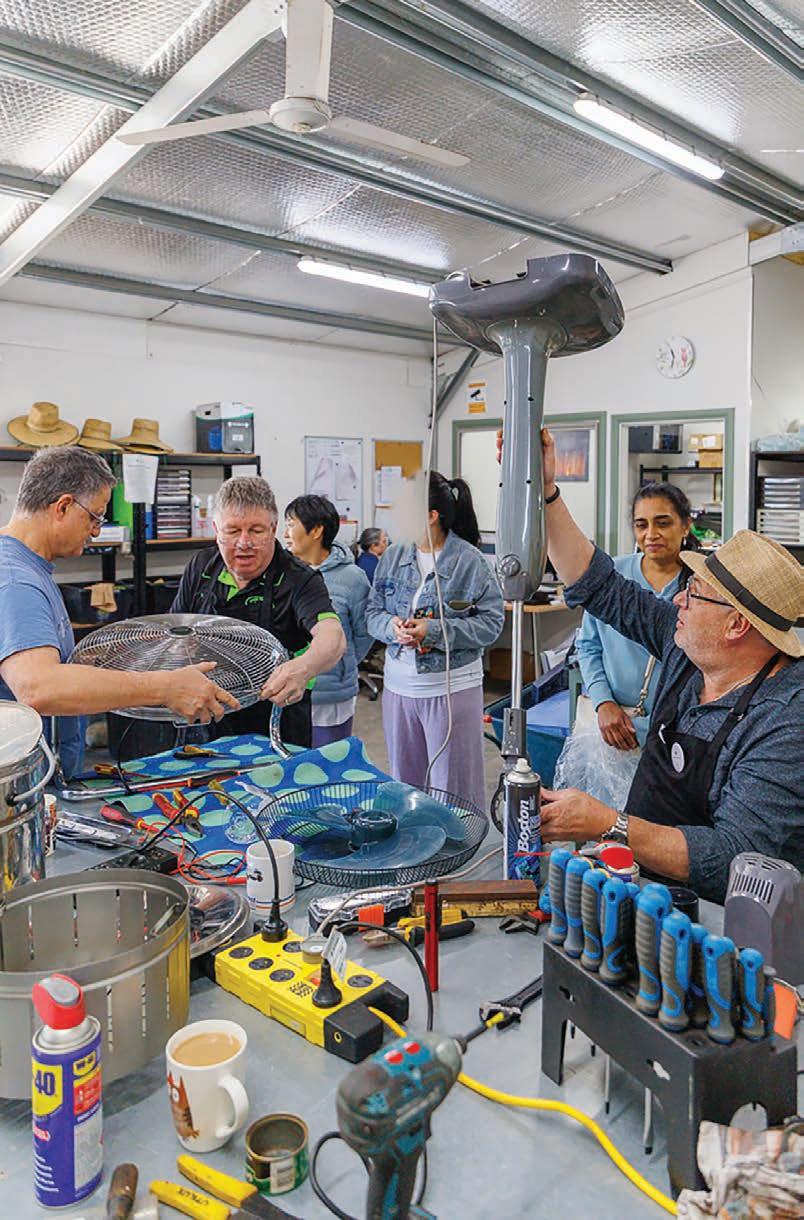
THIS PAGE: KNOX REPAIR CAFE WELCOMES
COMMUNITY
MEMBERS HOPING TO LEARN HOW TO MAKE THEIR OWN REPAIRS. CREDIT: REBEKAH PHOTOGRAPHY.
ways to build confidence and learn how things work.
“It’s also helpful to connect with others who have experience. Repair is often about curiosity and patience rather than specialist expertise. The Repair Challenge celebrates people at every skill level and shows that even small repairs can make a big difference.”
In fact, the best way to kickstart a repair journey is to engage in community initiatives such as Repair Cafes and Men’s Sheds, which bring together people with practical knowledge who are willing and excited to share their skills with beginners.
Dr Mark Glazebrook, Founding Director of Knox Repair Cafe, says the competition is just an extension of Australia’s long tradition of tinkering and "making do". At his Repair Cafe, volunteers are selected both for their skill and ability to make visitors feel welcome.
“Some of our wonderful volunteers are social workers who have supported isolated or struggling community members to stay connected and find further help,” he explains.
The cafe runs workshops and offers bike repairs and car maintenance, and members attend broader volunteer events to connect with locals. But the heart of its mission is simple –to encourage people to get hands-on with their repairs.
“Sometimes we limit ourselves when the solution is within our reach,” Glazebrook says. “Repairing makes you feel more confident, and there is a sense of achievement and pride when you can fix something yourself. It also saves you a lot of money.”
“Repairing makes you feel more confident, and there is a sense of achievement and pride when you can fix something yourself. It also saves you a lot of money.”
Glazebrook believes that the Repair Challenge is a great way to show how easy it is to repair something, even when it might seem daunting at first. It’s also a way to meet new friends and build a supportive network.
“See if you can share some items with neighbours and friends, rather than buy everything yourself," he suggests. "Whether it’s garden tools, tyre pumps, or mowers, you’ll build relationships with people so quickly in the world of repair.”
His overall message is one of sustainability and improvement.
“Many things can be fixed with little or no special knowledge, so pause before you throw an item away.”
The Repair Challenge wrapped up its 2026 event with some incredible entries from around the country. Its mission – to inspire Aussies to repair items and extend their life – is now more powerful than ever.
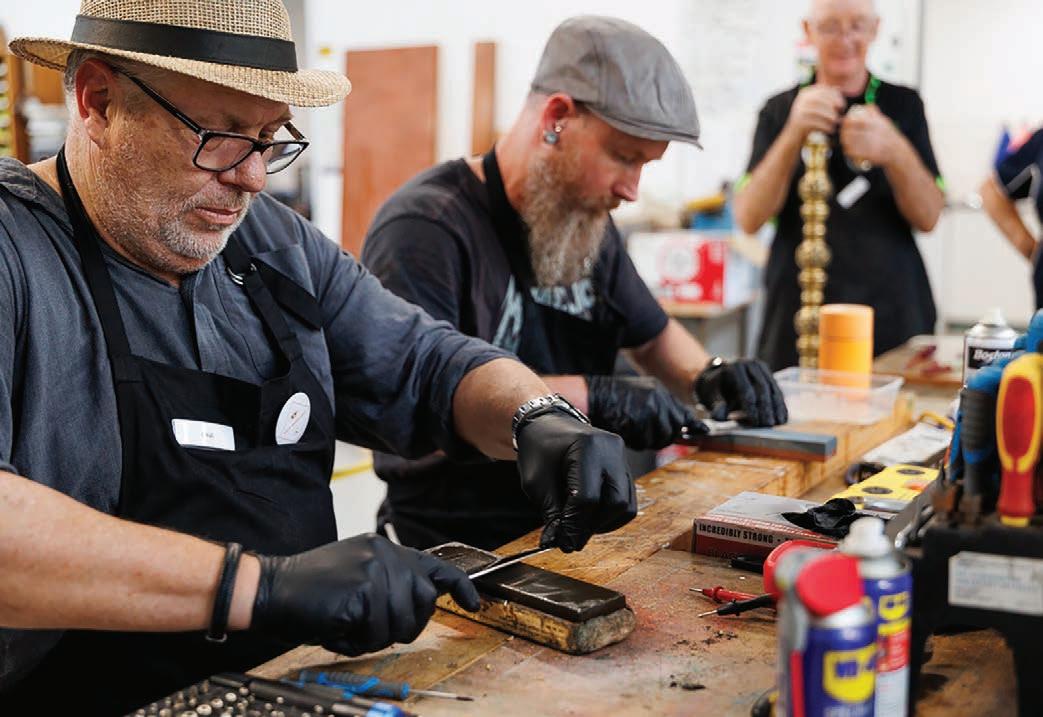
For over 35 years, Drivetrain has been powering industry with trusted powertrain and engine solutions across some of the world’s toughest operating environments.
Supporting sectors including mining, energy, transport, agriculture, and defence, Drivetrain partners with customers to deliver reliable products, expert service, and the confidence to keep operations moving.
With a national footprint and a team of highly skilled technicians and engineers, Drivetrain provides complete lifecycle support – from supply and installation through to maintenance, repair, and overhaul.
Core to the business is Drivetain’s advanced Maintenance, Repair and Overhaul (MRO) capability. With purpose-built workshops strategically located across Australia, Drivetrain is equipped to carry out full strip, inspection, rebuild, and testing of critical driveline components to exact OEM specifications. From transmissions, converters, or complete driveline systems, every component is rebuilt using genuine OEM parts to ensure optimal performance and reliability.
As an Authorised Allison OffHighway Service Centre, Drivetrain delivers factory-standard support backed by genuine parts, OEM processes, and deep technical expertise.
The company’s strength lies in the precision and quality behind every rebuild, with each component handled by factory-trained service technicians and rigorously tested to ensure it meets exact performance specifications before returning to service.
Drivetrain’s operations are underpinned by ISO 9001 accredited quality systems and further reinforced through stringent audits by our leading OEM partners, ensuring every process, tool, and outcome meets the highest s tandards.
Beyond rebuilds, Drivetrain delivers complete lifecycle maintenance solutions designed to maximise asset performance and minimise downtime. Every component undergoes a full assessment, with detailed technical reporting to provide complete transparency. During overhaul, all critical wear components are replaced, as standard, with genuine parts, reducing risk and improving long-term reliability.
Investment in advanced testing capability, including TE50 transmission testing, enables in-house performance validation, delivering faster turnaround
times, reduced costs, and greater confidence in every rebuild. Combined with a well-established service exchange program and extensive inventory of ready-to-go components, Drivetrain ensures minimal disruption to its clients’ operations.
Backed by a responsive international network, Drivetrain delivers preventative maintenance, breakdown support, engineering services, and genuine parts supply, providing end-to-end solutions wherever and whenever they are needed.
At Drivetrain, we don’t just repair components – we extend the life of your assets, improve performance, and keep all your equipment operating at its best.
Over 35 years of experience creating innovative solutions that respond to some of the toughest conditions on earth.
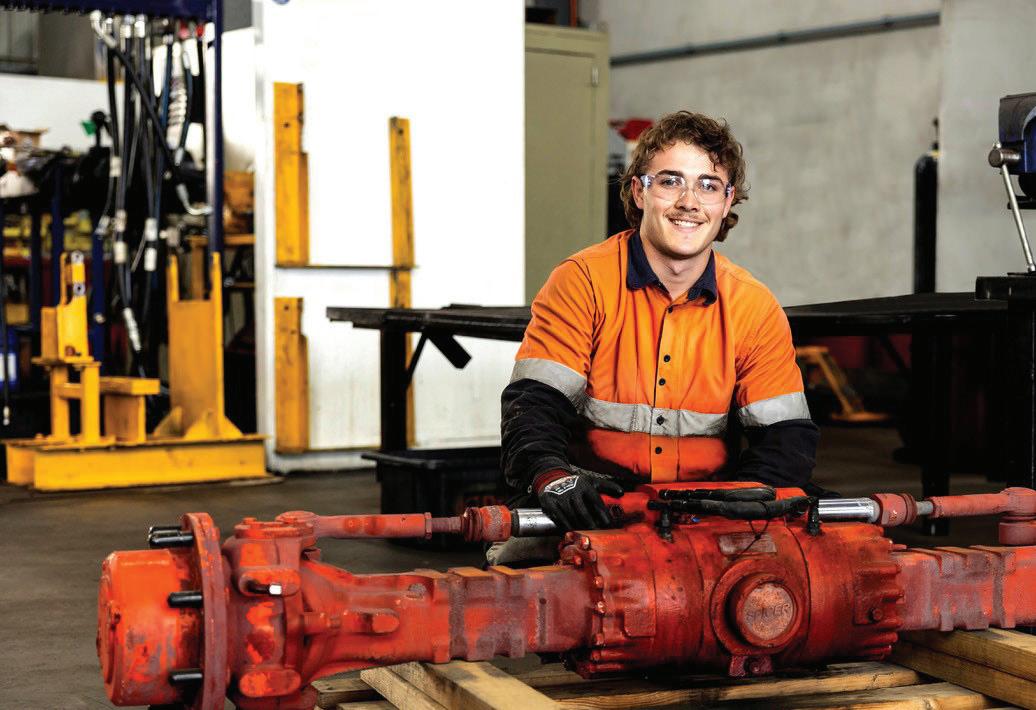
With state‑ of the ‑art service centres, Drivetrain leads the market in supply, service, and support as an authorised Allison Off‑Highway Service Centre.
We have a comprehensive range of engine and powertrain products for diesel‑electric locomotives. We provide driveshaft design, production, modification, and we have a repair service.
Transmissions and Torque Converters
We rebuild transmissions and torque converters to factory specifications using genuine spare parts. Each component is rigorously tested to ensure it meets strict quality standards.
Axles and Braking Systems Maintenance, Repair and Overhaul
We supply and service a wide range of axles. Our axle designs incorporate top ‑level brake safety systems and all of them meet Australasian mine safety regulations.
We take care of Maintenance, Repair, and Overhaul (MRO) solutions and supply genuine parts for off‑ highway’s most respected powertrain brands.
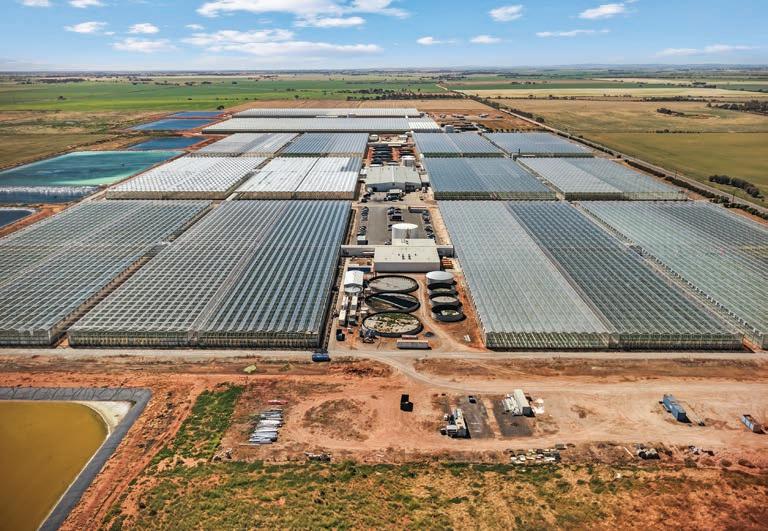
Food sustains life. It is the lynchpin of living. But in an era of extreme weather depleting crop yields and rising global populations driving demand for produce, the need for smarter agricultural technologies to ensure reliable food supplies is more crucial than ever.
In our current system, agriculture needs to become more efficient, both in production and distribution. To achieve this, investments in technology and innovation across the agribusiness sector are essential.
Those who invest will gain exposure to a burgeoning industry that is becoming increasingly vital for people’s wellbeing, and in doing so, bring new meaning to what a diversified portfolio could look like.
What then, are the central drivers behind innovation in AgTech? At a basic level, it’s the development of tools and processes striving to increase agricultural yields while reducing dependence on optimal weather conditions.
AgTech can mitigate risks associated with climate, pest
infestations and disease outbreaks. Predictive analytics, protected cropping (such as glasshouses) and real-time data allows farmers to make informed decisions, thus reducing the potential for crop failures and financial losses.
Protected cropping via high-tech glasshouses and greenhouses is the cutting edge of innovation.
Did you know Centuria is the largest owner of high-tech glasshouse assets in Australia? Such assets not only provide the ability to grow a wider variety of crops, but also employ a range of technologies to increase yield and promote year-round farming through innovations such as:
• Coloured LED lighting to extend growing times and enhance plant life.
• Climate control technology to promote optimal growing conditions with protection from climate, pest and quality risks.
• Little or no-soil systems reducing water usage and exposure to soil-borne pests and disease.
THIS PAGE: CENTURIA IS THE LARGEST OWNER OF HIGH-TECH GLASSHOUSE ASSETS IN AUSTRALIA.
• Light diffusing glass panels which evenly distribute the available light, increasing crop yields by up to 15 per cent when compared to standard glass.
Investing in Australian AgTech offers a unique opportunity to benefit from the booming global demand for reliable food sources.
Agriculture can provide access to high-quality investment opportunities that provide both income and capital growth potential in a rapidly evolving sector.
This evolution of, and innovation within, the agriculture sector is also enhanced by Australia’s:
• Longstanding reputation for quality produce, exacting production standards, stringent biosecurity and traceability systems, and low sovereign risk.
• Culture of technical innovation amid government prioritisations.
• Regional proximity to Asia, with its fast-growing population and changing consumer patterns.
While agriculture is a huge sector, one accessible option for investors might be an unlisted property fund, particularly one that focuses on high-quality fresh food production.
For more information: centuria.com.au
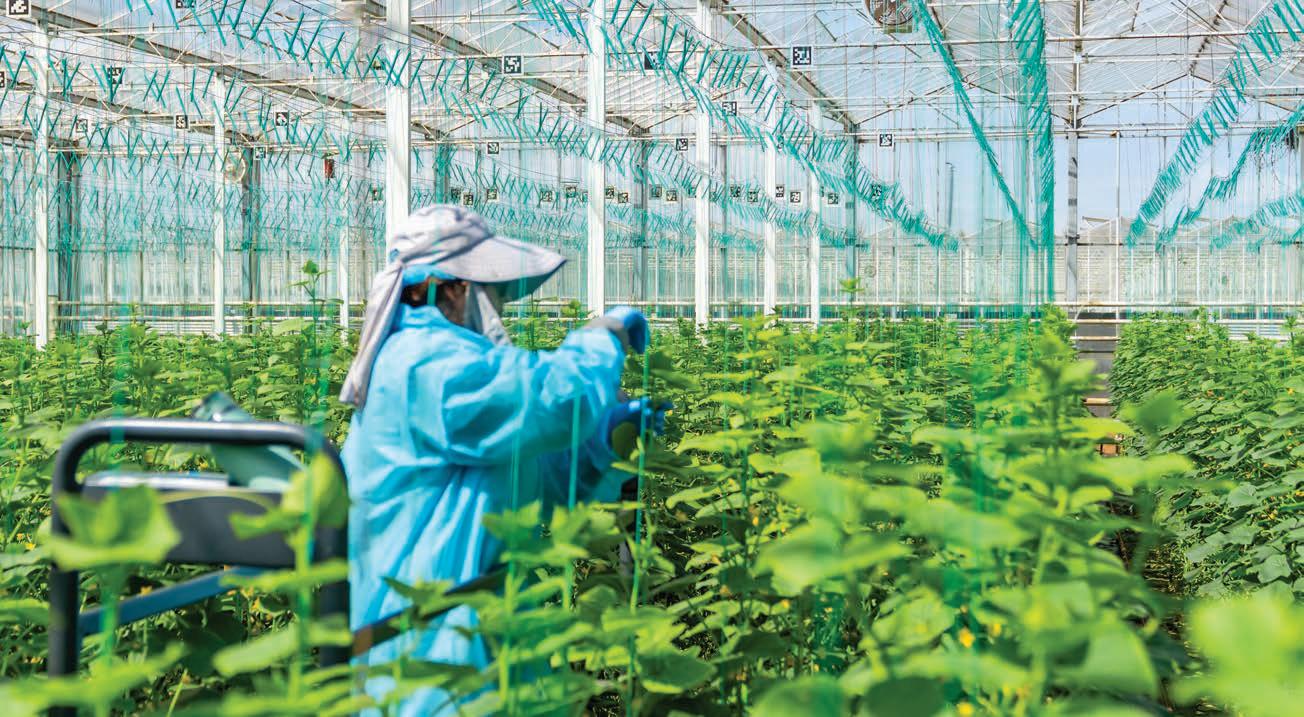
New research confirms that bees can assess and understand numbers, with important implications for future studies.
Words: Matilda Meikle

THIS PAGE: SCIENTISTS HAVE PROVEN THAT BEES CAN PROCESS NUMERICAL INFORMATION.
Honeybees have the ability to process numerical information, according to a new study from Monash University.
Responding to an ongoing international dispute over whether bees can actually comprehend numbers or simply react to visual patterns, Australian researchers set out to design a test that reflected the specific constraints of the species. What resulted was a study that could shift how researchers approach their tests of animals moving forward.
The study, published in Proceedings of the Royal Society B: Biological Sciences, challenged critiques of bee intelligence by creating a test that worked with the unique nature of the honeybee’s sensory and perceptual a bilities.
According to Monash University Senior Lecturer Dr Scarlett Howard, the paper is a prime example of what findings can be made when researchers avoid human-centric biases in animal research.
“We must put the animal's perspective first when assessing their cognition or we may under or overestimate their abilities,” she says.
“We see and experience the world quite differently from animals, so we must be careful not to centre human

perspectives and senses when studying animal intelligence.”
In the past, critics have argued that bees are merely sensitive to visual cues such as spatial frequency, accounting for their perceived ability to understand numerical information. However, when Monash University researchers shifted their analysis to a bee’s-eye view, they found that evidence of numerical cognition increased significantly.
The new study builds on previous research conducted by Monash that showed honeybees preferred to order their numbers from left to right, like humans.
Researchers tested this theory by showing bees small cards containing varying amounts of shapes in different patterns. Over several different combinations and placements of the cards, the bees repeatedly showed that they preferred smaller numbers on their left and larger ones on their right.
Adjunct Professor Adrian Dyer explains that the information processing skills of bees adds to our understanding of evolution.
“The last time we had a common ancestor with bees was more than 600 million years ago, but they have either retained or separately developed this ability that is so like our own,”
Associate Professor Dyer says.
“We must put the animal's perspective first when assessing their cognition or we may under or overestimate their abilities.”
THIS PAGE: THE STUDY ANALYSED THE BEES WITH A FOCUS ON THEIR UNIQUE COGNITION.
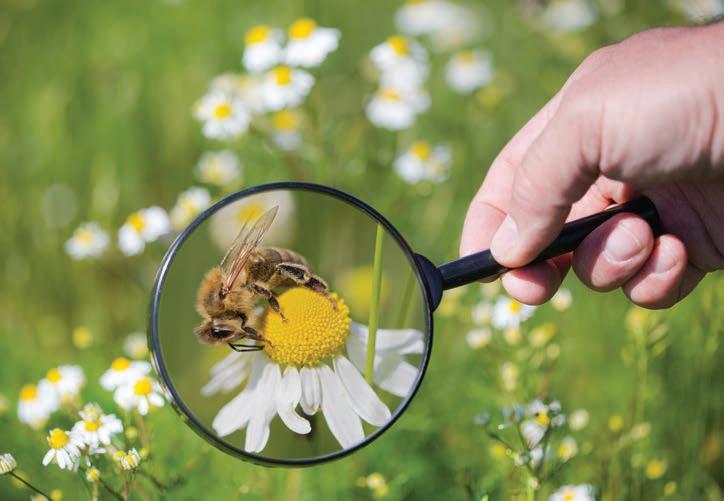
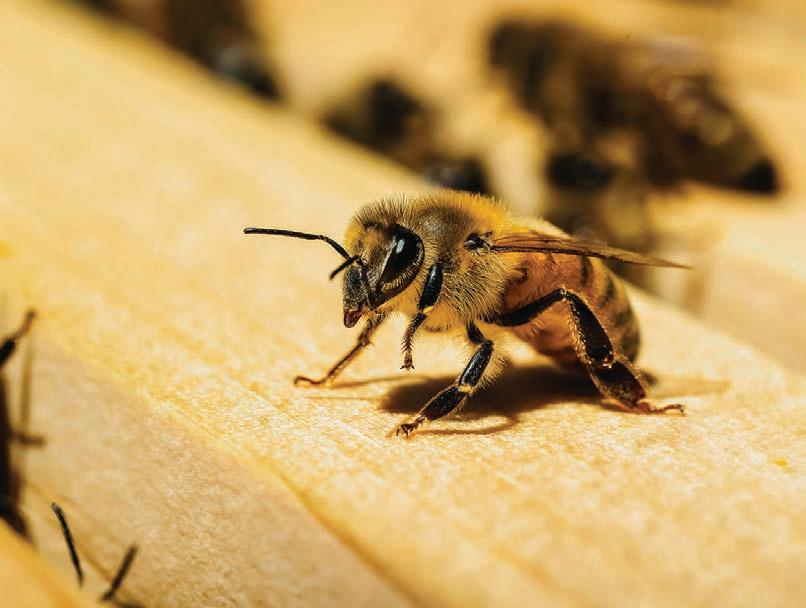
The recent Monash University study, which was published in April 2026, emphasises the importance of designing and analysing experiments with the focus species in mind for the entire process.
“Humans have almost 100 billion neurons in our brains, whereas bees have less than a million, yet we have these measurable similarities in neural processing.”
“We tend to overlook the intelligence of animals with smaller brains, but it’s not always the case.
“Humans have almost 100 billion neurons in our brains, whereas bees have less than a million, yet we have these measurable similarities in neural processing.”
While it’s not yet clear exactly how bees are able to process numerical data and count objects, one prevailing theory is that the bees use serial sequential processing. Simply put, this means the bees handle information one at a time, and must complete one step before the next begins. Think of it like a single-file line at a coffee shop. The barista takes the
order from customer one, then makes and delivers that coffee to the customer before taking the order from the next person in line.
For bees, this means that when they are presented with numbers or a pattern, they closely inspect each and every element in the pattern and commit it to memory before moving on to the next, allowing them to count one number after another.
Bees may also have a mental number line, which naturally (or perhaps even biologically) leads them to prefer smaller numbers on the left and larger numbers on the right. This is a phenomenon also recorded in humans.
Dr Mirko Zanon, from the Centre for Mind Brain Sciences at the University of Trento, says ignoring how an animal perceives the world could lead to scientists drawing the wrong conclusions.
“There has been a debate about whether bees are really ‘counting’ or just reacting to visual patterns. Our results show that this criticism doesn’t hold when you consider the biology of the animal,” he says.
“When we analyse the stimuli in a way that reflects how bees actually see the world, what remains is actual sensitivity to numbers.”
With this study proving not only that bees can count, but that designing research to suit the particular needs of the focus species is vital, there’s no telling what possibilities have opened up.
Applying this philosophy to future studies could lead the way for more accurate, reliable and insightful research into all types of flora and fauna.



TOP TO BOTTOM: FARMERS ANGELS
SUPPORT PRODUCERS FACING HARDSHIP; NASCA IMPROVES EDUCATIONAL OUTCOMES FOR INDIGENOUS YOUTH.
These three Australian charities are building a better world by prioritising education for Indigenous youth, relief for farmers, and housing for those experiencing homelessness.
Words: Matilda Meikle
There are more than 60,000 charities in Australia, each playing a role in supporting those in need. For these three organisations, helping others isn’t just a mission; it’s central to everything they believe.
In 1995, NASCA became the first organisation in Australia dedicated to encouraging Indigenous participation in sports. Since then, it has grown into a 100 per cent Indigenous governed and led charity on a mission to connect young
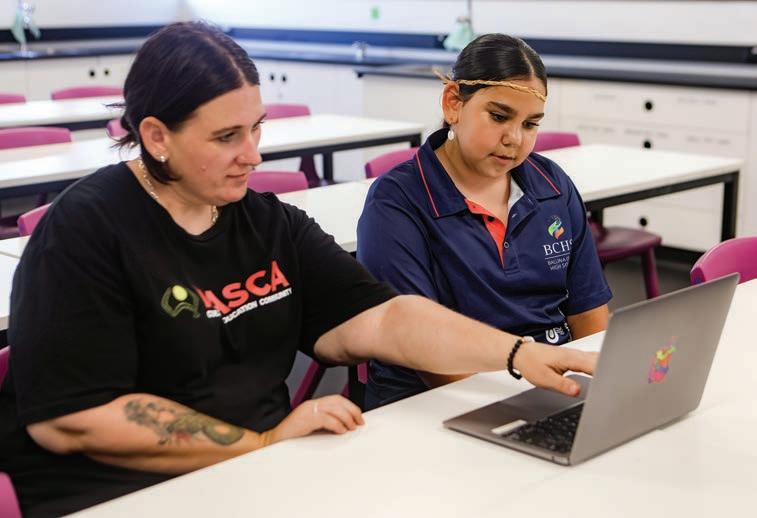

Mob to Culture and improve educational outcomes.
This mission is carried out through four main programs, with an impressive 93 per cent graduation rate overall.
The Young Women’s Academy provides one-on-one and group mentoring, in-class support, cultural excursions, camps, workshops and dedicated safe spaces tailored to help young women and girls succeed in secondary schooling. The focus is on students at a critical drop-out point, who need help re-engaging with their education. So far, thanks to 38,000 hours of support, 2,200 young women have been helped to succeed at school.
The All Gender Academy operates on a similar structure for students between the ages of 12 and 18. Whether this means transportation to and from school, healthy meals, academic support or well-being workshops, volunteers work with Indigenous students of all identities to foster a love of learning. The program also provides opportunities to connect with Culture through activities and excursions.
The Pathways Program stays with students from Year 9 until they leave high school, helping them to develop post-school plans, teaching resume writing and assisting with entry into university and TAFE. Students are also encouraged to gain other professional accreditations including White Cards
and First Aid Certificates. Beneath the surface, the program is all about building confidence, resilience, and goals for the future.
Finally, the Northern Territory Program is a workshop run three times a year in nine remote communities across the NT. NASCA acknowledges that great education is sometimes hard to access in remote communities, delivering in-class support, beforeand after-school activities, sports, and wellbeing workshops to boost educational outcomes and inspire kids to follow their passions.
So far, NASCA has supported more than 19,000 young people across its programs, with a 70 per cent school attendance rate.
TOP TO BOTTOM: NASCA HAS HELPED MORE THAN 19,000 YOUNG PEOPLE; FARMERS ANGELS OFFERS DISASTER RELIEF TO FARMERS.
Initially known as Drought Angels for its work supporting farmers impacted by prolonged periods of drought, Farmers Angels has since expanded its efforts to provide financial assistance, food hampers, care packs and wellbeing support to more than 4,700 primary producers affected by natural disasters in more than 1,300 regional and rural communities. Despite functioning as the backbone to Australian industry, farmers face significant pressures including market fluctuations, family responsibilities, natural disasters and financial stress. This has a profound effect on mental health and wellbeing, with one farmer committing suicide every 10 days. Farmers Angels seeks to change this reality through several important programs. Angels on the Ph one offers short-term financial assistance and relief for producers impacted by natural disasters. This means individuals can call and instantly process applications for assistance,
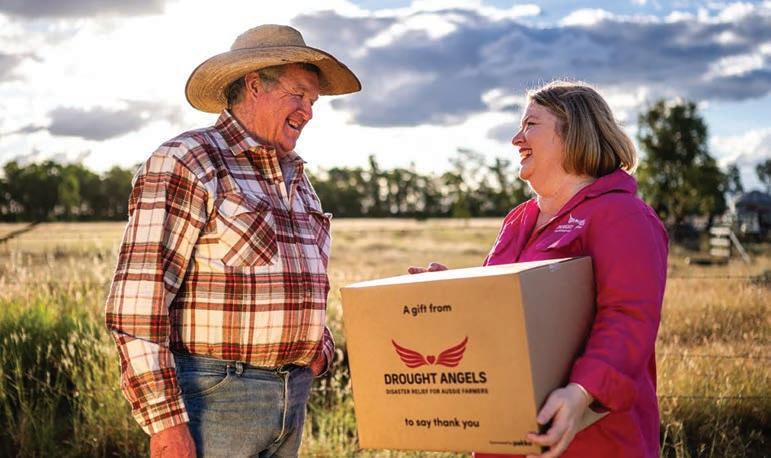
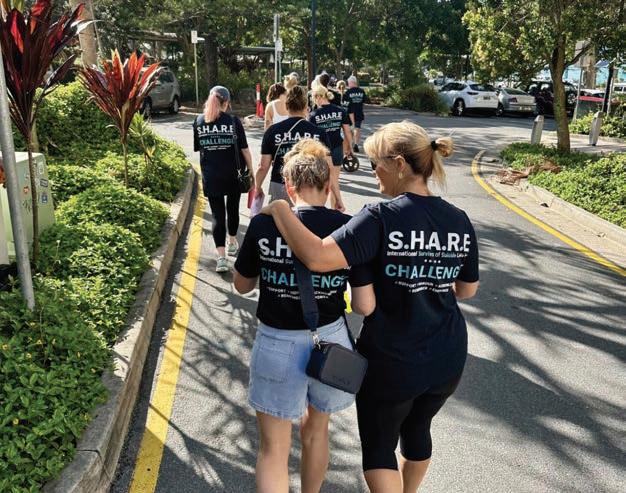
while the team of Angels – who are farmers or rural community members themselves – also follow up with regular mental health check-ins.
The Angels on the Road program involves visiting farmers on their properties to deliver food hampers and care packs, while also providing a listening ear. As Angels come from a rural background, they are well versed in topics such as cattle prices, soil moisture and other farm issues, so they understand what producers are going through. They can even refer farmers to mental health services and financial counsellors for additional support.
Over the last financial year, Farmers Angels have travelled 151,923 kilometres to deliver $250,171 worth of goods and hampers to farmers.
For Rural Day Off, Angels select a community in need and bring together farmers and neighbours for a day of connection and pampering. Over the course of the day, producers and families are offered morning tea, lunch and an evening meal, and local community members provide services including haircuts, massages and entertainment to show support and improve spirits.
Farmers Angels aims to stand by all Aussie farmers to make sure they never feel alone, even in times of hardship, through tailored assistance.
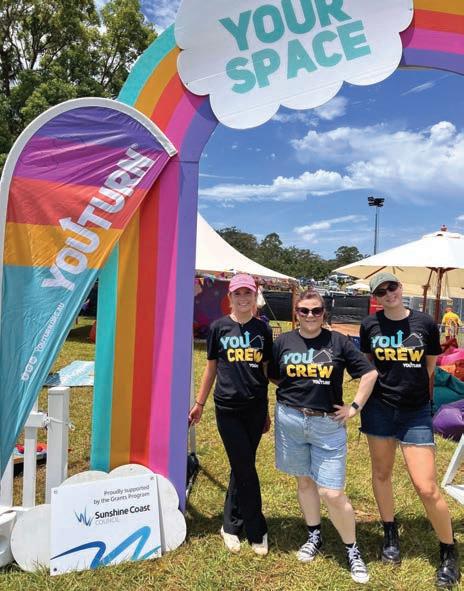
Youturn is a not-for-profit supporting individuals experiencing homelessness across southern Queensland. The organisation believes that having a home is not simply about shelter, but creating a stable and safe place to live a healthy life.
The Child Safety Program is a suite of more than 15 different services committed to helping vulnerable families to maintain the family unit, and children who cannot safely remain with their parents to achieve independence and connection.
Young people transitioning to adulthood can join the independent living service, allowing them to live out of home while still receiving education, training and employment opportunities to increase confidence and capability. They will also learn life skills such as housekeeping, cooking and budgeting.
Families in need are supported by the Bridging Families Program, where they work with the Child Safety Service to create a safe and protective environment with guidance from a professional. Youturn works with around five vulnerable families each week who are impacted by a range of unique challenges.
Specialist Homelessness Service is another major initiative. Youturn operates 50 beds across almost 20 properties, including several 24-hour, fully supervised locations taking in young people between the ages of 16 and 25. Wrap-around case management means that individuals continue to receive support and information even after leaving the accommodation, including emergency food vouchers, hygiene packs, groceries and clothing.
Those in need can also access financial counselling to learn about budgeting and money management strategies, realistic debt payment plans, and referrals to further support options.
For those struggling with mental health issues, Youturn has a team of clinicians and healthcare workers available to provide psychological support specifically for young people aged 12 to 25. It has also established StandBy, Australia’s leading suicide postvention program, supporting anyone who has been impacted by suicide, including individuals, families, friends, witnesses and first responders. The service is available seven days a week, with free face-toface and telephone support at a location best for the individual.


Australian children are being exposed to junk food marketing through online gaming platforms, despite efforts to limit harmful advertising aimed at young audiences.
ways that traditional regulations were never designed to address.
Roblox is now Australia’s most popular gaming platform, with children under the age of 16 spending an average of 137 minutes per day on the app. While restrictions exist for users under 13, the book notes that 42 per cent of Australian players fall within this age group – raising concerns about the effectiveness of current safeguards.
prepare combos, and make home deliveries to their gamified customers’ homes.
“Children aren’t just watching ads any more, they’re interacting with them inside games. These are immersive environments where marketing is woven into gameplay, and current regulations simply don’t account for that.”
Dr Saha says the findings point to a growing gap between policy and children’s real-world media use.
Despite long-standing efforts to limit advertising to young audiences and efforts by platforms to introduce age-based accounts to give parents greater control over what children see online, our kids are still being fed junk food marketing on popular platforms such as Roblox.
The newly published book Food Advertising to Children in Australia argues that gaming environments have become a major blind spot in Australia’s food advertising rules, allowing brands to reach children in
Evidence has shown even brief exposure to high-fat, high-sugar food advertising increases children’s daily calorie intake.
“Roblox is the most popular gaming platform among Australian children aged four to 12,” says Macquarie University media and communications lecturer and the book’s author, Dr Nipa Saha.
“The platform’s popularity among children made it the favourite playground of corporate advertisers. For example, in the McDonald’s Land game on Roblox, players cook, create, and have fun managing their own McDonald’s. The players take orders,
The research also highlights privacy concerns, with platforms collecting personal data including names, ages and email addresses, which can be used for targeted marketing.
This raises questions about whether current laws, including the Online Safety Amendment (Social Media Minimum Age) Act 2024, are equipped to deal with newer digital environments such as gaming platforms.
Dr Saha argues that without broader regulation, food companies will continue to reach children through channels that fall outside existing rules and laws.
Boarding life carries a rhythm all its own. At St Joseph’s Nudgee College, that rhythm is most evident in the moments that unfold beyond the classroom: structured, spirited, and deeply communal.
On any given evening, the transition from supervised study to house time is immediate and unmistakable. Quiet focus gives way to energy and movement, as boys gather in the Bathersby Boarding Village, united by tradition and shared experience. Led by senior students, these moments of collective voice and
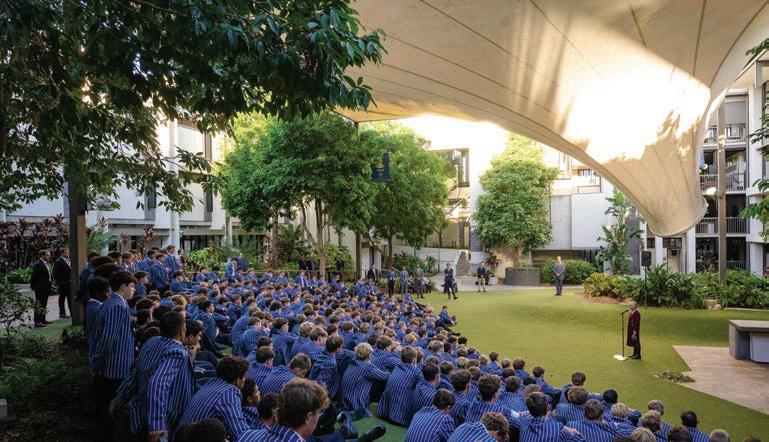
connection are both spirited and grounding, reinforcing a strong sense of belonging.
Yet the true essence of boarding is found every day. It is heard in the friendly competition of a common room game, the laughter echoing through corridors, and the informal conversations that shape lasting friendships. It is equally present in quieter moments, when staff and peers offer reassurance to a younger boarder finding his feet away from home.
There is balance, too, between reverence and light-heartedness. From the harmony of Chapel liturgies to the enthusiasm of house activities, boys are encouraged to express themselves while remaining connected to something greater than themselves. Together, these moments form the soundtrack of boarding at the College: dynamic, supportive, and unmistakably Nudgee.
To learn more, visit nudgee.com.
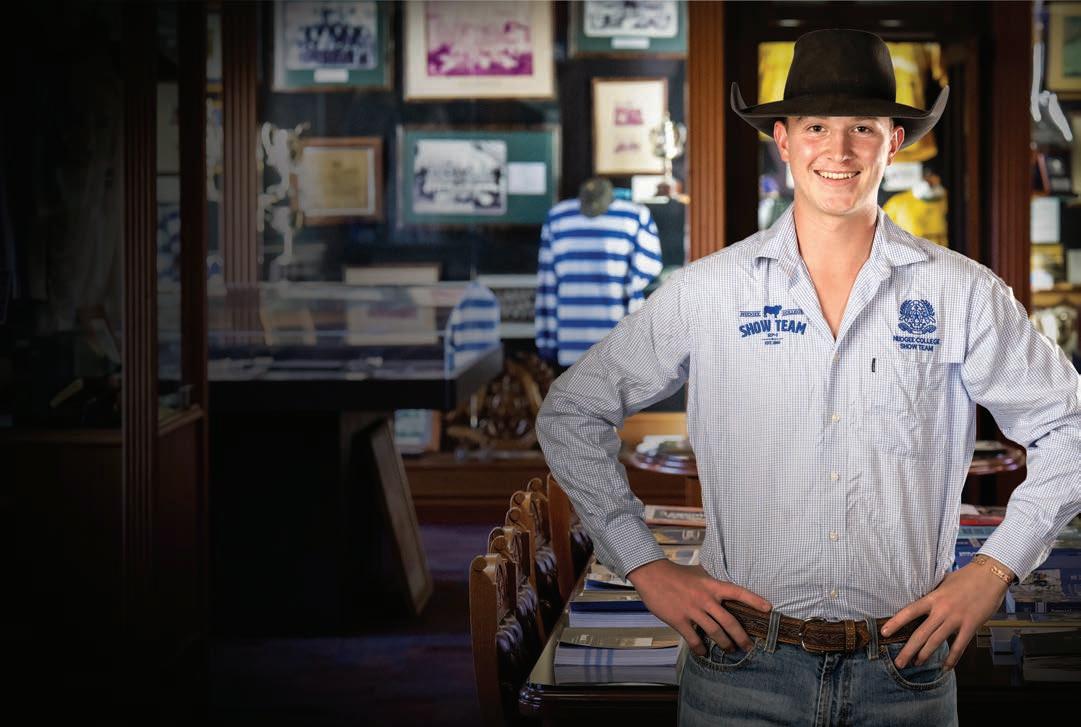


The re-examination of a fossil first identified in Western Australia in the 1960s has offered new insight into an ancient predator.
Words: Matilda Meikle
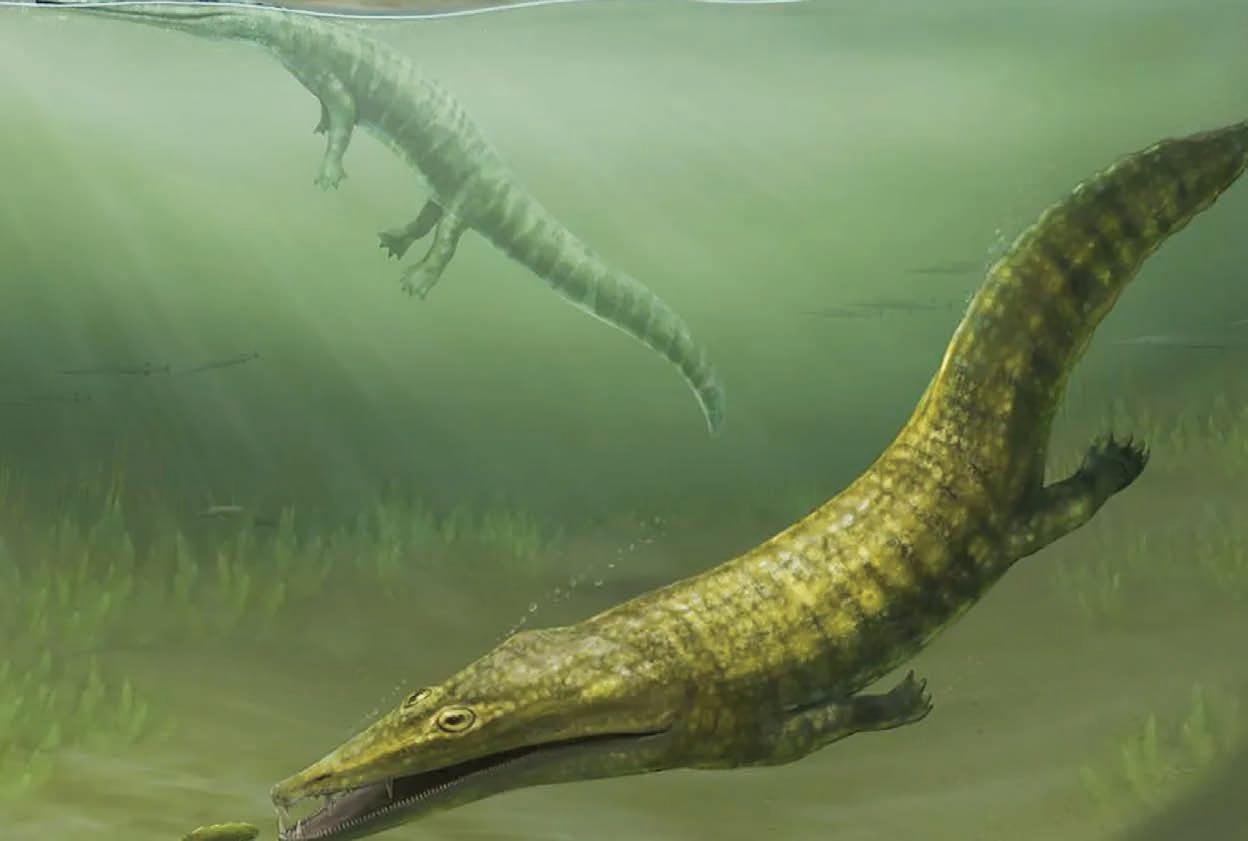
Research on a recovered fossil first found in the Kimberley region in the 1960s has changed how experts understand the Aphaneramma, a crocodile-like dinosaur.
When three skull fossils were first unearthed on Noonkanbah Station, nearly 400km east of Broome, palaeontologists identified them as fragments of the Erythrobatrachus species of the temnospondyls order. Over the next 50 years, these fragments were separated and sent to museums around the world. Eventually, they were lost.
Thankfully, the Western Australian Museum retained a plaster cast of one of the fossils, which was being studied by palaeontologist and UNSW lecturer Dr Lachlan Hart, when one of the missing skull pieces was located in a museum in Berkeley, in the US.
Using modern technology, Dr Hart was able to compare the two fragments, and realised that they
belonged to two different species both of the temnospondyls order: Erythrobatrachus and Aphaneramma
While both would have been roughly the same size, with skulls around 40 centimetres long, the shape of these fragments suggested different diets and hunting strategies.
While the broad head of the Erythrobatrachus would have made it a top predator, the long, thin snout of the Aphaneramma suggests it adapted to catch small fish. Both creatures are identifiable for their crocodile head and salamander body.
According to Dr Hart, these marine amphibians would have travelled across the world from Norway to the Kimberley almost 250 million years ago. Fossils have been found in rocks around the world, some less than one million years after the mass extinction event at the end of the Permian period, known as the Great Dying.
ANCIENT MARINE AMPHIBIANS ERYTHROBATRACHUS (FOREGROUND) AND APHANERAMMA (BACKGROUND). CREDIT: POLLYANNA VON KNORRING.
"Temnospondyls are a really important group of animals because they survived two of the big five mass extinction events that have happened in Earth's history," Dr Hart explains.
"Including the largest one that ever happened, and that's where about 90 per cent of all living things were wiped out."
He believes this decades-long mistake is likely not the only time fossils have been misidentified. In fact, there are probably lots of fossils sitting in museums that researchers don’t know about.
Luckily, collection techniques and studies are significantly more advanced now, making it much easier to ensure that proper identification and preservation is being carried out.
"We are very careful to document every fragment and fossil that we get from the field and where it ends up," Dr Hart says.
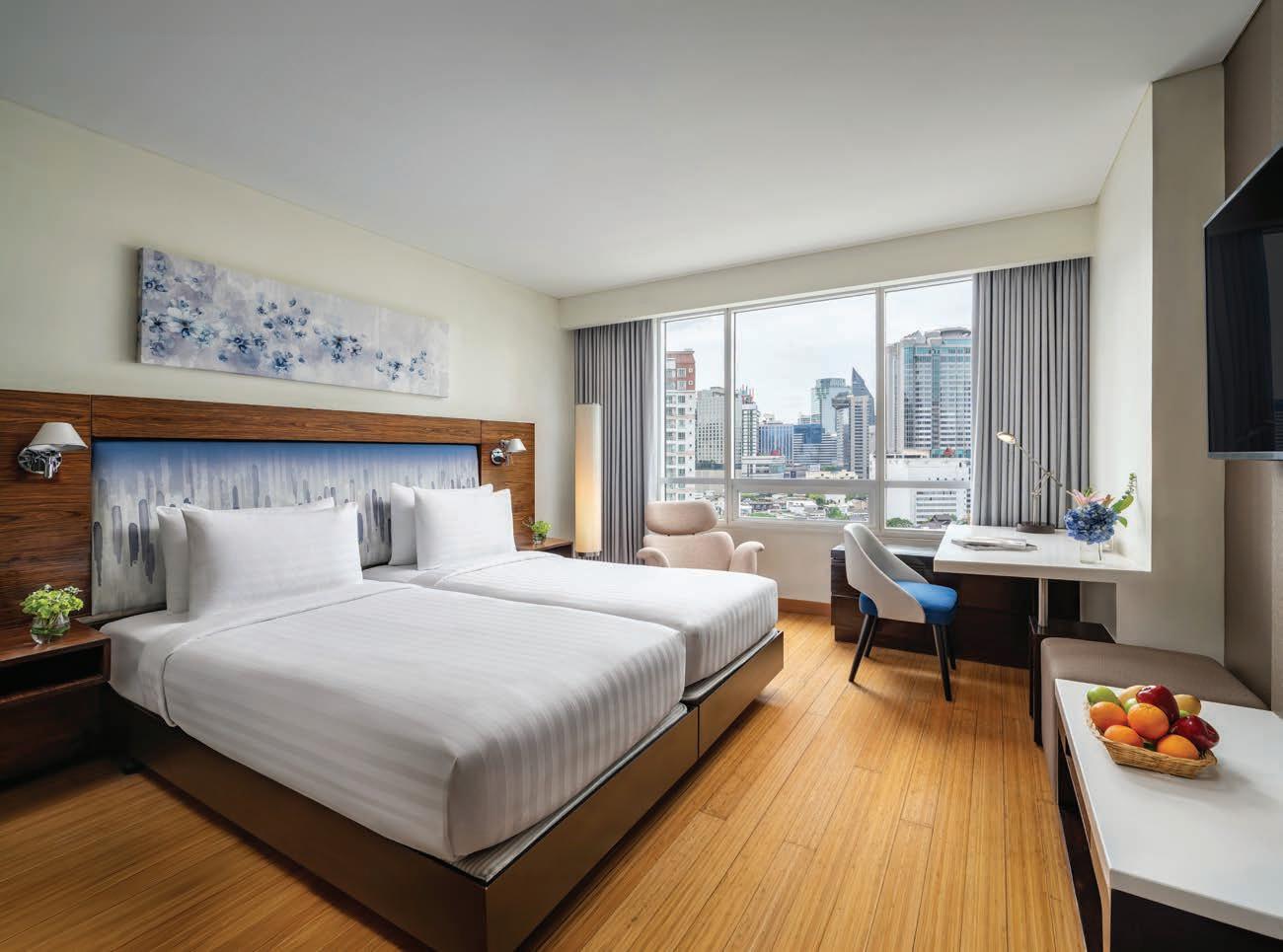
Just minutes from Suncorp Stadium, ibis, Novotel, and Pullman Brisbane Airport give you the ultimate base to soak up State of Origin and NRL excitement.




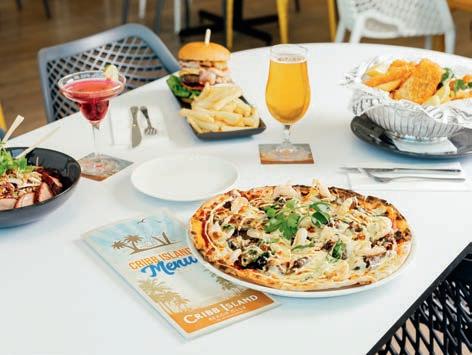
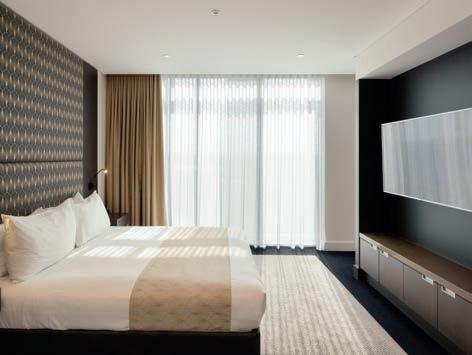







PULLMAN - 5-TIME WINNER
Best Airport Hotel in Australia / Pacific
Ranked in Top 10 Best Airport Hotels in the World 2019, 2022 & 2023