68. DECARBONISING STEEL PRODUCTION
Scientists are developing a way to decarbonise steel using Pilbara iron ores.
EXPERTS CONVERT PLASTIC RUBBISH INTO RENEWABLE ENERGY
Experts from Adelaide University are exploring how solar-powered systems can transform discarded plastic waste into hydrogen, syngas and other useful chemicals.
Each year, more than 460 million tonnes of plastic is produced using environmentally dangerous fossil fuels. This has sparked an increased search for clean energy sources around the globe.
In a new study, published in the journal Chem Catalysis in April, local researchers explain how plastics rich in carbon and hydrogen could be an untapped resource in this fight for greater sustainability.
“Plastic is often seen as a major environmental problem, but it also represents a significant opportunity,” said Adelaide University PhD candidate Xiao Lu. “If we can efficiently convert
Ancient white wine grapes reducing water consumption in the Barossa Valley
In Australia’s largest grape-growing wine region, the Barossa Valley, a local farmer is trialling the ancient Cypriot variety called Xynisteri.
The grape is known for its thick skin and resistance to heatwaves, pests and low-rainfall conditions, making it the perfect crop for a region that has recorded three consecutive years of below-average rainfall.
Yianni Koutouzis, the man about to harvest the grapes in the region for the first time, says that while most of his other vines need watering every two days, his 800 vines of Xynisteri can go months without water. “It’s reduced our consumption so much – using about 75 per cent less water than our shiraz or chardonnay,” he explains.
While there is more than 50 years of farming history in his family, this is the first time Yianni is growing a crop that connects him to his Greek ancestors.
“It’s a surreal feeling to be able to connect not just to the variety, but

waste plastics into clean fuels using sunlight, we can address pollution and energy challenges at the same time.”
This process is known as solardriven photoreforming, and involves using light-activated materials called photocatalysts to break down plastics at low temperatures. The reaction produces hydrogen, which is a clean fuel with zero emissions.
So far, the team have been able to produce high levels of hydrogen, acetic acid and diesel-range hydrocarbons,
even keeping the conversion system operating for more than 100 hours. However, there is still a way to go before the technology can be applied on a large scale.
“There is still a gap between laboratory success and real-world application,” Professor Xiaoguang Duan from the School of Chemical Engineering at Adelaide University says. “We need more robust catalysts and better system designs to ensure the technology is both efficient and economically viable at scale.”
Despite these hurdles, the team is confident that they can scale up the technology to improve energy efficiency and roll out solar-powered, plastic-to-fuel technologies in the future.

also to my family ... making wine the way my grandfather and grandmother used to back in the Peloponnese in Greece,” he says.
Xynisteri was first planted in Cyprus more than 5,500 years ago. In 2018, Dr Alexander Copper brought the vines to Australia for the first time, after researching wine grape varieties that might withstand Australia’s warming climate.
“Cyprus and most of the eastern Mediterranean is very limestone-based soil, so it looks very similar to the Riverland,” he says.
Other major wine growing regions, such as McLaren Vale, specialise in cooler-climate varieties due to high levels of rainfall. However, with the climate changing quickly, these crops are still suitable for Victoria and Tasmania, but many growers in South Australia are being forced to consider alternatives.
Now, early signs suggest that Xynisteri might offer hope during tough times for Australia’s wine industry, thanks to its reduced water usage and ability to thrive in warmer climates.
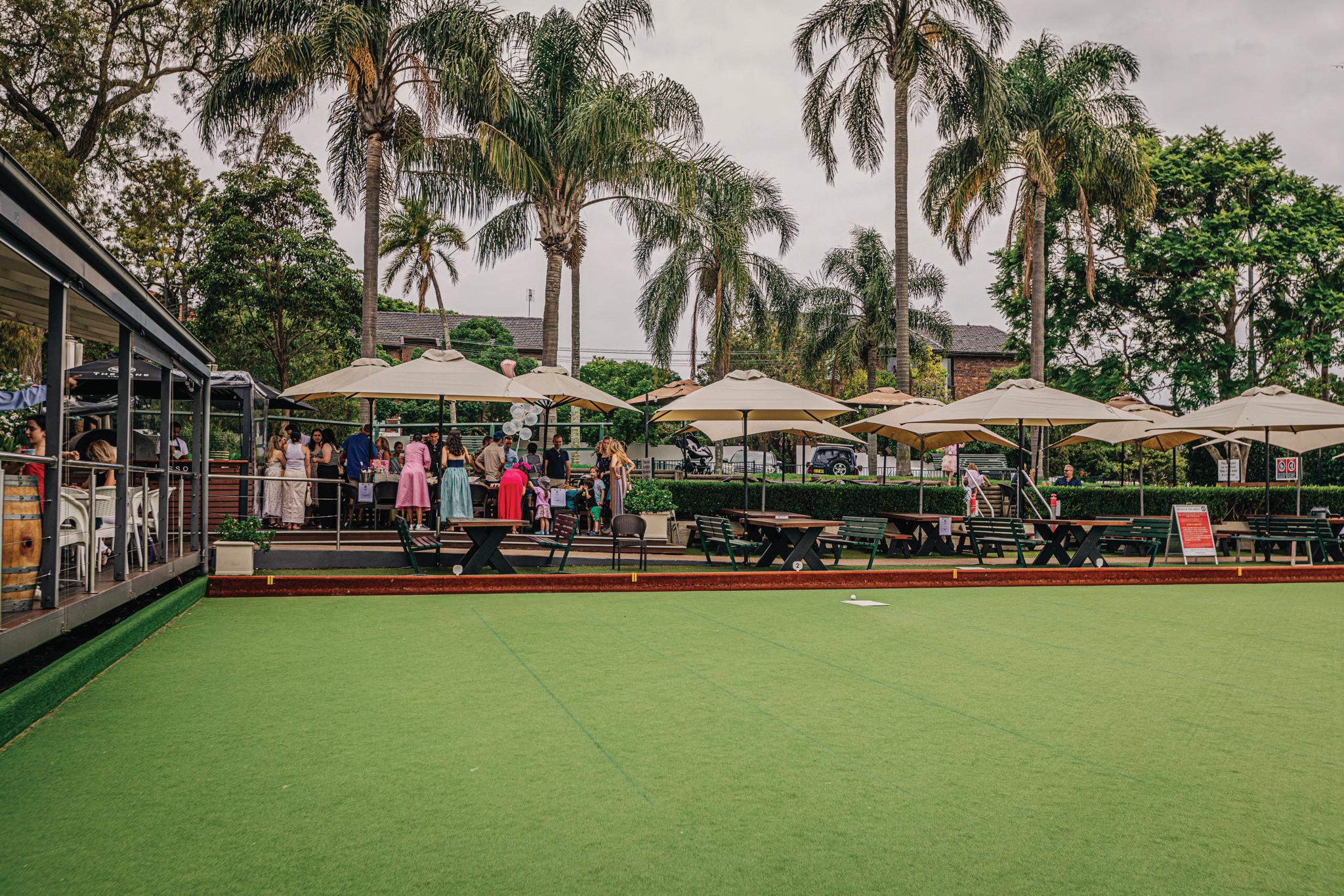
THE NEUTRAL BAY CLUB


LOOKING FORWARD WITH PURPOSE
As another financial year ends, it’s a time to reflect. Not only on business performance, but on the values that shape growth.
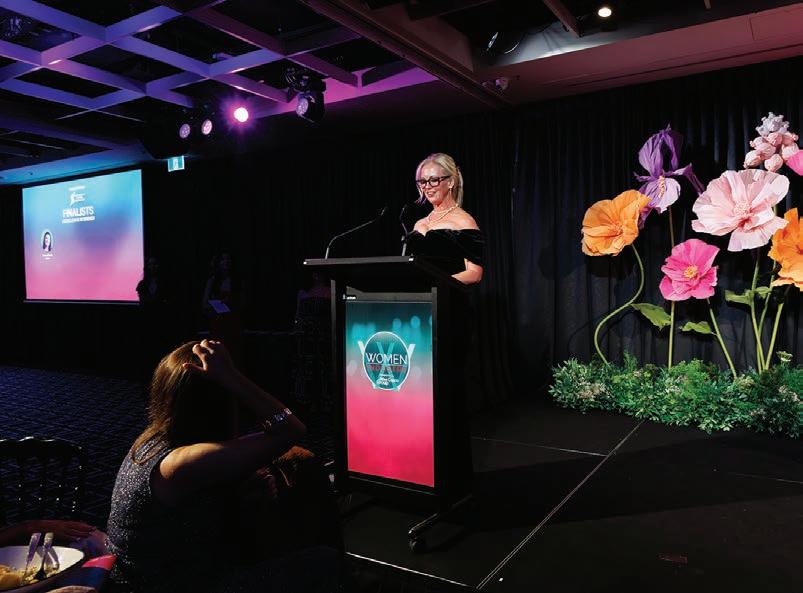
Recently Australian Power Equipment (APE) was proud to sponsor the Excellence in Energy Award at the Women in Industry Awards, with CoDirector Abby Crawford presenting both the Excellence in Energy and Mentor of the Year awards.
“Technical excellence is essential, but so is leadership, mentorship and creating ample opportunities for the next generation.”
Words: Abby Crawford
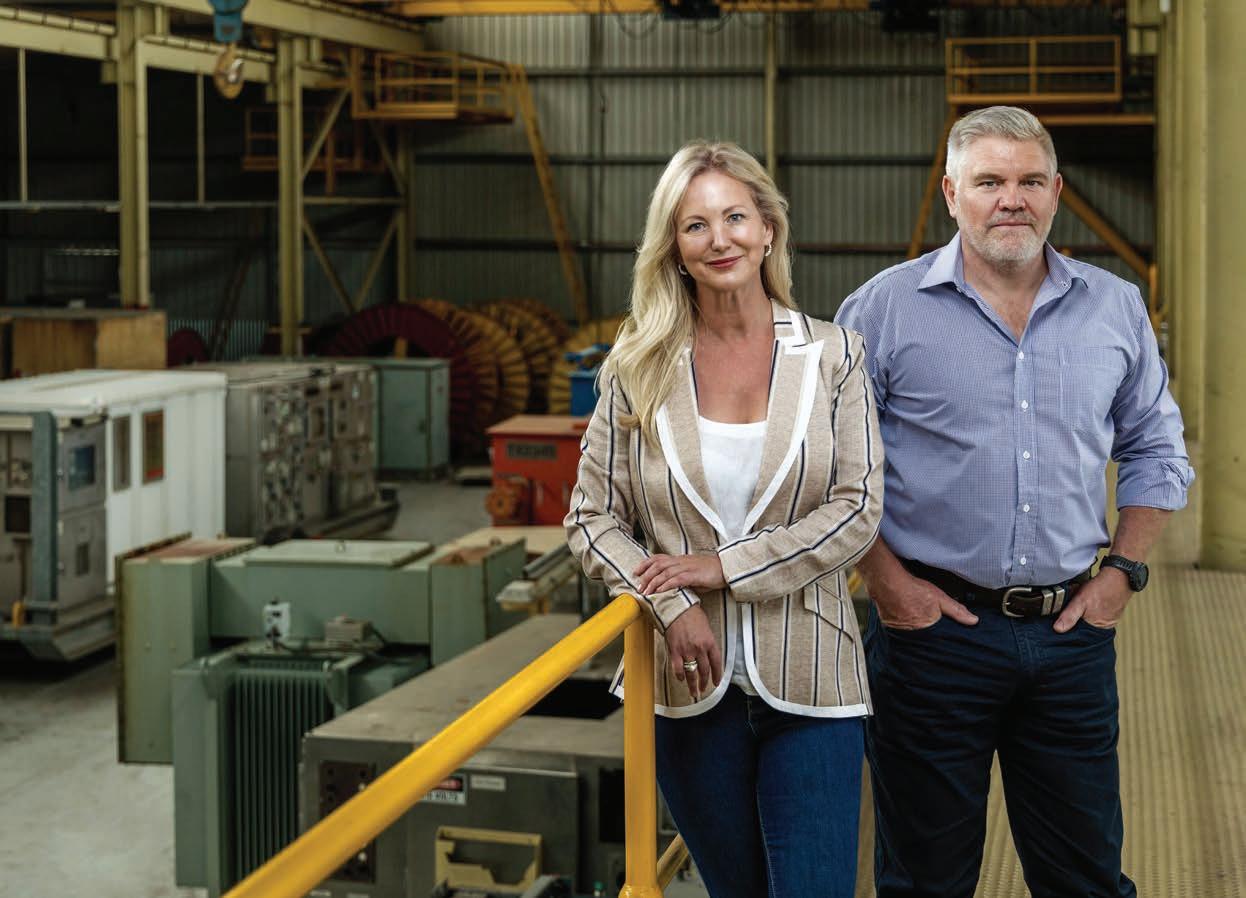
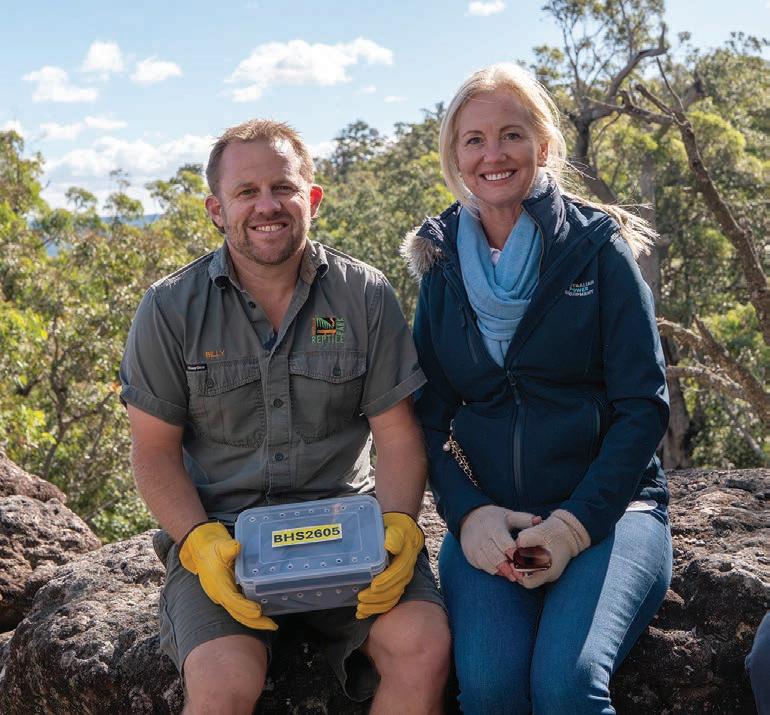
TOP TO BOTTOM: ABBY CRAWFORD & ANDREW COCKBAIN; ABBY SPEAKING AT THE WOMEN IN INDUSTRY AWARDS.
“Each year we set ourselves two goals. The first is to build a stronger business. The second is to ensure that success allows us to contribute more – to our customers, our industry, our community and the conservation projects we’re passionate about.”
Celebrating the achievements of exceptional women and recognising those who invest in developing others was a reminder that strong industries are not only built through innovation and infrastructure, but people.
“Supporting the Women in Industry Awards reflects the kind of business we want to be,” Abby says.
“Technical excellence is essential, but so is leadership, mentorship and creating ample opportunities for the next generation. Our industry is stronger when we recognise the people helping to shape its future.”
As Australian industry continues to evolve, the challenges facing mining, energy and infrastructure remain significant. The transition to more efficient power systems, increasing demand for reliable electrical infrastructure and a growing focus on sustainability continue to influence the way projects are delivered.
For Australian Power Equipment, this means continuing to invest in strong international partnerships, responsive customer service, and practical engineering solutions and
support that help customers keep critical projects moving.
“Our focus has always been on solving problems,” says Co-Director Andrew Cockbain. “Whether that’s sourcing specialist equipment, delivering refurbished assets or supplying new infrastructure designed to meet today’s performance expectations, our priority is helping customers make confident decisions backed by technical expertise.”
Looking ahead to the new financial year, the company remains equally committed to another important measure of success: its ability to create positive environmental impact. Through ongoing partnerships supporting Australian wildlife conservation, Australian Power Equipment continues to direct part of its success towards protecting species and habitats for future generations.
The philosophy is simple: business growth should create opportunities
to contribute above and beyond commercial outcomes.
“Success has never been the finish line,” Abby says. “Each year we set ourselves two goals. The first is to build a stronger business. The second is to ensure that success allows us to contribute more – to our customers, our industry, our community and the conservation projects we’re passionate about.”
As a new financial year begins, Australian Power Equipment looks forward to continuing to support Australia’s mining, energy and infrastructure sectors while remaining focused on the values that have guided the business since day one: trust, long-term relationships, innovation and purpose. Because ultimately, success isn’t measured only by what a business achieves, but by the positive impact it leaves behind. australianpowerequipment.com.au
BILLY COLLETT FROM CONSERVATION ARK , WHIC IS A CHARITY THAT APE SUPPORTS), WITH ABBY.

BACK PAIN AND BUSINESSES: HOW EMPLOYERS CAN SUPPORT SPINAL HEALTH
For National Spinal Health Month in June, the Australian Chiropractors Association (ACA) launched a campaign to encourage workplaces to consider the numerous ways that back pain affects workers.
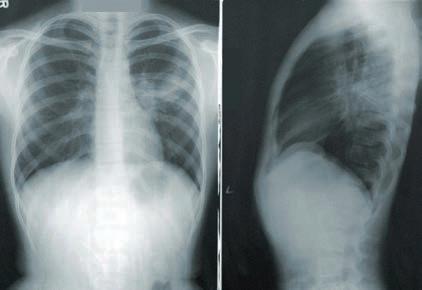
In particular, many men are not actively taking care of their spinal health, with men’s GP consultation rates falling by 20 per cent since 2024. Without proper treatment, there’s the increased risk of chronic back pain and secondary issues, resulting in decreased productivity and high healthcare spending.
CHRONIC BACK PAIN: THE FLOW-ON EFFECT
Both extensive movement or a lack of it can lead to back pain, making it common to contract from physically demanding labour or even desk jobs.
Experiencing back pain is not easy; it’s uncomfortable, inconvenient, and treatment can be expensive.
When back pain sets in, employers and even workers themselves are often not considering the flow-on effects. Ignoring small conditions can lead to increased severity, and take pain from being a manageable
Back pain can quickly go from acute to chronic, and often men do not seek help. Here’s how employers should support employees’ spinal health.
inconvenience to a chronic injury.
When chronic back pain sets in, the impact goes beyond functional limitations, increasing a worker’s risk of mental health conditions while also threatening the operation and productivity of the company where they are employed.
With many men avoiding or even refusing medical care, more healthcare involvement is eventually needed, and it’s often businesses paying the price.
“Early care can provide workers with an opportunity to resolve their problems with less intervention

and more conservative care,” says President of the Australian Chiropractors Association(ACA) Dr Billy Chow.
“The flipside of this is an expensive mix of complex treatment, possibly a leave of absence, and also the risk of mental health issues.”
With early intervention and the treatment of acute pain, workers are protecting themselves from worsened consequences, and also financially protecting their employer.
ACTING EARLY RATHER THAN POST-INJURY
With such high numbers of reported back pain and evidence of its effect on workplace activity, the problem goes beyond the individual, and employers should be proactively trying to identify and deal with cases as early as possible.
“Employers can’t diagnose or treat workers’ conditions, but they can shape an environment that makes seeking help easier,” says Chow, adding that managers can ensure workers are comfortable with voicing their health concerns, no matter how small they consider them to be.
As suggested by Chow, a simple
“According to the ACA, 93 per cent of employed Australians have had or are experiencing back pain.”
approach is observing workers’ behaviour. Examples could be changes in movement or increased irritability, and signs of physical or mental struggle.
Further, he says that an employer who recognises that physical and mental wellbeing are equally as important is more likely to reach a worker who may otherwise stay silent.
Additionally, employers can be more communicative and flexible, because often workers avoid addressing back pain because they’re unaware of available resources, or perhaps their hours don’t allow time for the necessary appointments and the resulting treatment.
Taking a reactive perspective is what continues this pattern of poor spinal health and back pain.
Chow says: “The picture is mixed. Some employers act early, while many still react only after an injury.”
For workers in roles that are physically demanding, further impairment is difficult to manage as role-specific tasks can strain the spine even after early treatment. With more risk involved, employers in these fields are encouraged to employ more specific measures.
Chow suggests that a business can run task-based risk assessments, which essentially measure and identify tasks that require repetitive movement, unnatural postures or heavy lifting. This allows employers to adapt the work environment to better support spinal health. An example of this is reducing manual handling through mechanical aids.
ACTING EARLY RATHER THAN POST-INJURY
According to the ACA’s Spinal Health survey, 93 per cent of employed Australians have had or are experiencing back pain, and over 20 per cent reported productivity impairment. This presents a real danger of back pain going beyond an individual’s spinal health. The worker is at risk of further strain and ongoing expenses, and the business is too.
Even the slightest decline in efficiency can disturb a business and lead to financial loss. According to the ACA, if preventative measures aren’t put in place, an estimated $638 billion in lost productivity will occur over the next decade.
For more info, visit: chiro.org.au
UNDERSTANDING THE TWELVE APOSTLES

Scientists have identified how Australia’s iconic Twelve Apostles were formed.
words: Matilda Meikle
Drive along Victoria’s Great Ocean Road and you’ll no doubt find a group of visitors gathering on clifftop lookouts to snap a photo of the iconic Twelve Apostles.
These towering limestone pillars, dating back many thousands of years, rise up to 70 metres from the wild Southern Ocean. Each year, more than two million tourists visit these giant landmarks, and yet up until this year, no one really understood how they were formed.
Now, a study published in the Australian Journal of Earth Sciences reveals that these structures began forming millions of years ago.
LOOKING INTO THE LAYERS OF LIMESTONE
The key to understanfing the Twelve Apostles is the layers of limestone that make each pillar. Each layer was created underwater during the Miocene epoch, a period in Earth’s history marked by a transition from warm to cool climates that took place between 23 million and 5 million years ago. Each new layer of rock indicates a change in weather conditions, such as temperature, chemistry or water movement. This means experts can read the layers like the rings of a tree.
The team behind the new study used high-resolution digital imagery and
traditional fieldwork to uncover the secrets of the iconic Aussie landmark. This also meant analysing fossils of microscopic sea creatures, called foraminifera, trapped in the rock.
According to Stephen Gallagher, Associate Professor at The University of Melbourne, one pillar contained around 760 trillion tiny fossils.
By analysing these rock layers, Gallagher and his colleagues were able to determine that the oldest layers of limestone were around 14 million years old, while the youngest were closer to 8.6 million.
Underneath the limestone is a layer of older, softer material called the
Gellibrand Marl, which was deposited when the seas were warmer roughly 15 million years ago.
THE ROLE OF ANCIENT EARTHQUAKES
So, how did stone that formed underwater end up 70 metres above sea level? According to the study, after the Australian continent split from the Antarctic continent, it began drifting north. This change caused the Earth’s crust to compress the region, which buckled and lifted the limestone out of the sea.
If you look closely at the pillars today, you can see that the layers are not perfectly straight. Small faults are also visible along the cliff face, evidence of ancient earthquakes caused by the movement of the tectonic plates.
DATING THE CLIFFS
Perhaps the most interesting find – according to Professor Stephen Gallagher – is the age of the cliffs and the Twelve Apostles themselves. While the limestone making up these formations is millions of years old, the dramatic coastal scenery only took shape in the last few thousand years. In fact, experts believe that the pillars appeared roughly 23,000 years ago after sea levels rose 125 metres following the last ice age.
As the sea flooded in, waves fractured and eroded the rock already weakened by tectonic forces. The stone eventually collapsed to leave only the iconic sea stacks now on display. This phenomenon is similar to the process being recorded today.
When the Twelve Apostles were first recorded in 1798 by English sailor George Bass (who actually called them the ‘Sow and Piglets’ until the Victorian Government rebranded them in the 1920s for marketing purposes), there were only nine pillars.
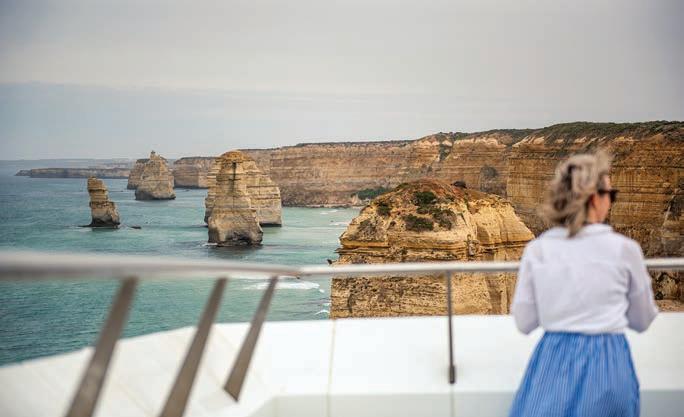

One collapsed in 2005, and another in 2009, leaving seven rocky structures still standing. The eroding nature of waves means that further collapses are inevitable, and will eventually reclaim the limestone back into the sea where it was formed.
Scientists believe that there is still much to learn from these structures while they still stand. By analysing the stone, they may be able to reconstruct finer details about how climate, sea levels and ocean conditions have changed across millions of years.

THIS PAGE: SEA STACKS ON DISPLAY; SOUTHERN OCEAN COAST; THE STACKS FROM SHORE.
TAKING ACTION FOR OUR BEES
Rabobank and the Wheen Bee Foundation have teamed up to help fund the habitats of bees, and in turn help Australia to produce $100 billion worth of farm gate output by 2030.
Words: Matilda Meikle
Rabobank has partnered with the Wheen Bee Foundation to support the Trees for Bees Community Tree Grants program – helping community groups and organisations to increase vital habitat for bees to forage, live and breed.
THE IMPORTANCE OF HONEY BEES
Bees are responsible for maintaining the planet’s biodiversity, while also contributing to the food production system. By collecting pollen from flowers and spreading it to new areas, they allow plants to reproduce.
According to the Australian Honey Bee Industrial Council (AHBIC), they also contribute $14.2 billion to the Australian economy each year.
“If bees became extinct, we would still be able to eat items that do not need them for pollination, such as wheat, rice, oats and potatoes, but our diets would have very little variation because many of the delicious and nutritious foods we consume – foods which are particularly important to our health – would no longer be available,” says AHBIC Chair, Trevor Weatherhead.
“There is an aim to have $100 billion worth of farm gate output produced in Australia by 2030, and our bees will have an important role to play in achieving that target.”
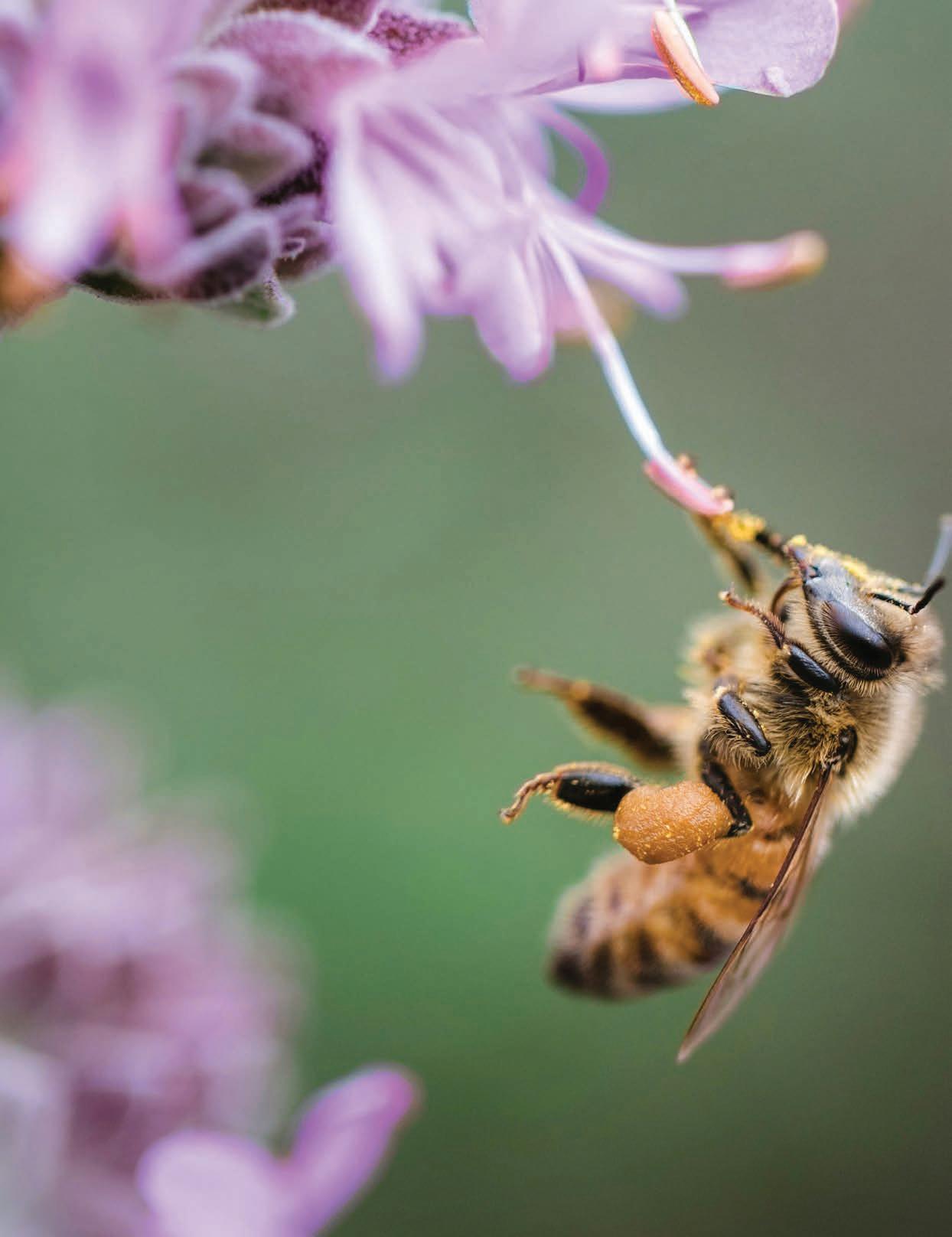
LEFT TO RIGHT: HONEY BEES ARE VITAL FOR MAINTAINING EARTH'S BIODIVERSITY.; PESTICIDES CAN HARM BEES
“Australia is the world’s largest exporter of iron ore, responsible for roughly 55 percent of global market share in 2024.”
over 67 per cent to be effective and this excludes lower-grade Pilbara ore.
Instead of waiting for new technologies to emerge, which could take decades, the CSIRO is currently testing whether existing DRI technology can be enhanced to separate the elements of lowergrade ore.
CSIRO researchers are part of a cross-industry project to determine if DRI operations can be enhanced to include a broader range of materials.
TECHNOLOGICAL WONDERS
The main focus at the current stage of development is determining whether Pilbara ore can be adapted for new production processes. When the metal is heated, a structural change occurs and it becomes full of microscopic holes that weaken the material. In a shaft furnace, where the ore is weighed down by other materials, it could break apart.
Luckily, a recent study uncovered
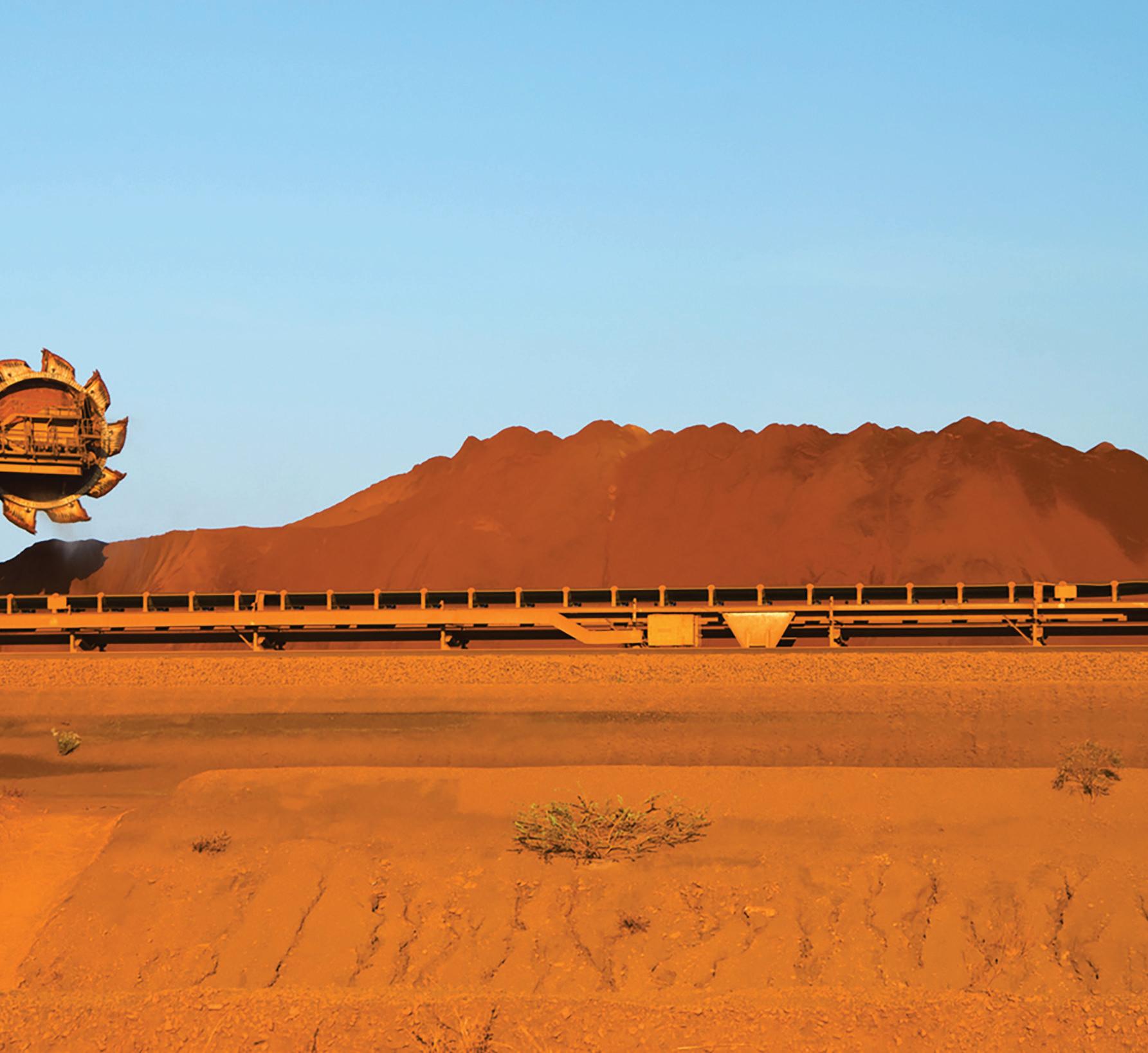
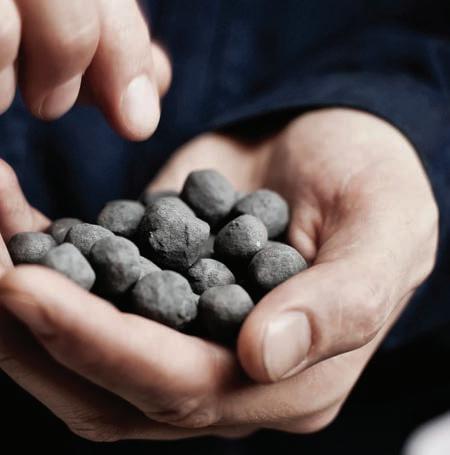
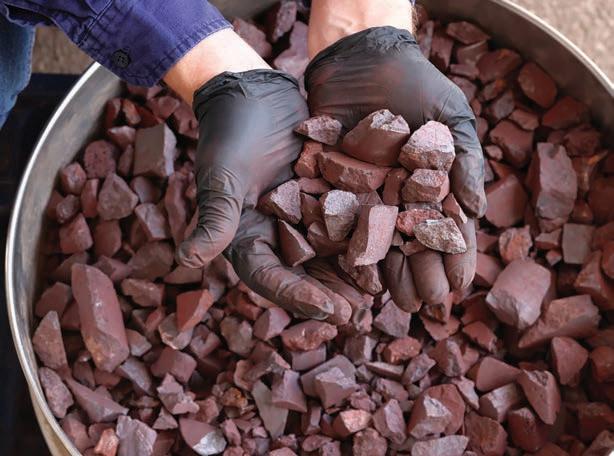
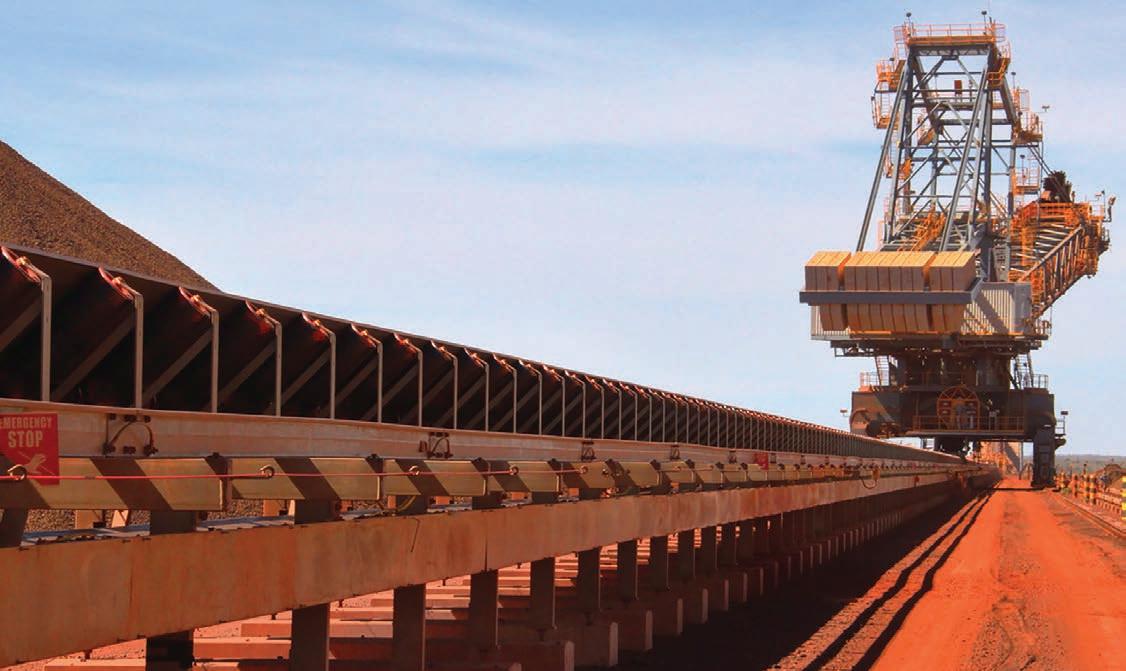
TOP, THEN LEFT TO RIGHT: IRON ORE BEING STOCKPILED; IRON ORE PELLETS; HIGH-GRADE IRON ORE FROM THE PILBARA.
In fact, one third of the food that we consume is dependent on honey bee pollination. For example, 140 bees are required to produce one kilogram of macadamias, and 18 bees are needed to pollinate one kilogram of avocados.
Honey bees are also important for meat production, as livestock often feeds on crops that require pollination.
Sadly, bees are constantly at risk due to habitat loss, intensive farming practices, changing weather patterns, and the use of agrochemicals such as pesticides. Now, more than ever, supporting bee habitat growth is vital to maintaining global industries.
A FUND FOR GOOD
In response to this call for the protection of bees, Rabobank and the Wheen Bee Foundation have teamed up. Rabobank, a specialist food and agribusiness bank, will provide grants of $500 to encourage planting of bee-friendly trees in gardens, communityowned land, schools, sports clubs and urban areas across Australia.
Rabobank community engagement manager, Skye Ward, says this issue is close to the bank’s heart, as a company supporting its clients' farming businesses.
“As a global cooperative, founded by farmers, Rabobank has a long history of community engagement. Now, thanks to our Rabo Community Fund, we can make an even bigger impact in the communities where our clients live,” she explains.
The grants program launched during World Bee Day on May 20, and is open for notfor-profits, schools, Landcare
“There is an aim to have $100 billion worth of farm gate output produced in Australia by 2030, and our bees will have an important role to play in achieving that target.”
groups, community groups and sustainability organisations.
Applicants are judged based on three criteria:
1. How the planting will benefit pollinators;
2. T he size of the planting and details of the area, such as whether it extends on an existing pollinatorfriendly garden;

3. T he number of people involved in the planting and how many people will learn about the importance of bees as a result of the project.
According to the Wheen Bee Foundation CEO Fiona Chambers, the grant program is an important part of the foundation’s overall mission to encourage the growth of a lasting habitat for bees.
“The grants are always incredibly popular, with hundreds of
applications from communities keen to take action for bees,” she says.
“The program is about more than planting trees. It creates real, lasting habitat for bees, while bringing people together and building a stronger understanding of the role pollinators play in our food systems and environment.”
Rabobank will also be supporting the foundation’s Centre for Bee Education by funding 20 learning kits. Each kit contains resources, information sheets and lesson plans for educators and students to engage in a deeper understanding and appreciation of bees and other pollinators.
The hands-on activities develop participants’ knowledge about how hives operate, the life cycle of bees, and the importance of bees for food security.
WELL SUITED: A FRESH APPROACH TO MODERN TAILORNG
Forget the rack. InStitchu builds every suit around the person wearing it: fabric, fit, colour and style.
Story by: Zoe Gonzalez
There’s a certain confidence that comes from wearing something made for you, and that’s the driving philosophy behind Australian tailoring company InStitchu.
Founded by Robin McGowan and James Wakefield in 2012, the brand has built its name on madeto-measure tailoring, moving away from the idea that a suit should be picked off a shelf and then adjusted. Instead, every garment starts with a meeting and measurements, and then a discussion around style, and what the upcoming occasion is.
InStitchu has crafted more than 200,000 wedding suits, and whether a customer walks in for a wedding, a work wardrobe refresh or a black-tie event, a stylist guides them through every decision, including fabric, fit, buttons, lining, and lapels.
THE FITTING ROOM EXPERIENCE
Step into an InStitchu showroom and the feel is less errand and more occasion. Customers sit down with a stylist, talk through what they’re after, get properly measured, and the design process starts from there. It’s a guided process through fabrics, colours and cuts, with the goal of helping people make the right call for
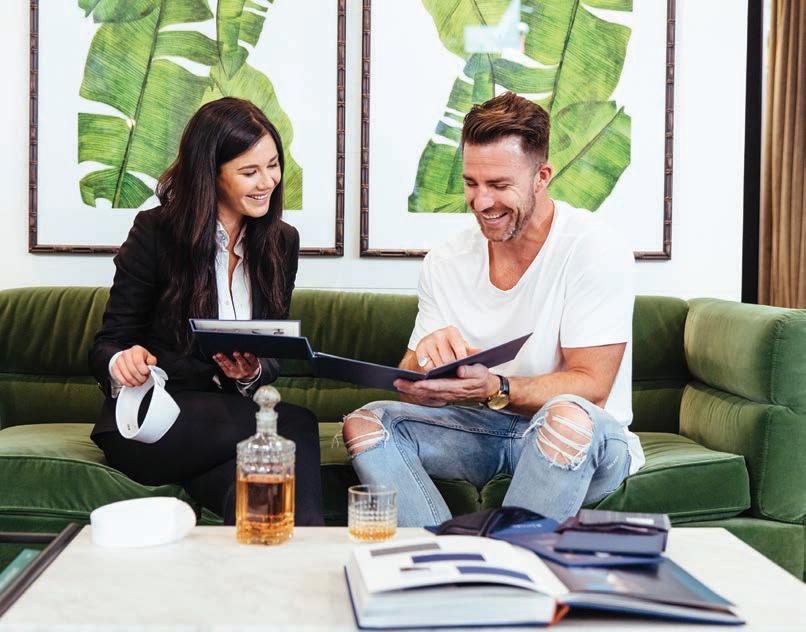
their body and their event. And there’s a drink involved to suit everyone: a whisky, wine or water.
Fabric selection follows the same customer-first logic. Some people want a navy suit they can wear weekly for years, others want something for a wedding, a summer linen number, a tuxedo, or even a print with a bit more personality. InStitchu balances timeless staples with seasonal colours and textures, but quality is their nonnegotiable; a fabric has to look good, feel good and hold up over time.
WHY NATURAL FIBRES MAKE A DIFFERENCE
Anyone who knows anything about a good suit will tell you that the quality of the fabric is key. InStitchu builds its suits from natural fibres: they breathe, move and drape in ways synthetic fabrics simply can’t replicate, and they age more gracefully too.
Australian merino wool is a top choice for many, as it helps regulate body temperature – which really matters in Australia’s climate – and it has a natural softness that keeps a suit wearable all day rather than something to be peeled off the second you’re in your hotel room.
That commitment extends to sourcing. InStitchu works specifically
with Woolmark-certified Australian merino wool, prioritising quality and provenance.
SO THEN, WHAT MAKES A PERRECT SUIT?
According to InStitchu, the perfect suit is one you put on and instantly feel good in. The fit, fabric and construction should work together so the shoulders sit right and the trousers feel comfortable, backed up by the kind of confidence that makes someone stand a little taller.
The brand’s Perfect Fit Guarantee means if something’s off, the suit is altered or remade for no extra charge.
As for where Australian style is heading, the stylists at InStitchu have noticed a shift towards less traditional suit colours – olive, chocolate and softer blues are being chosen, alongside classic suit hues such as navy and charcoal. Wedding suits are trending toward cream tones, linen and relaxed textures, and customers increasingly want versatility: a jacket that works with chinos just as well as it does walking down the aisle.
Ultimately, comfort and confidence is the name of the game. It’s about feeling dapper without feeling overdressed or overheated. institchu.com

DECARBONISING STEEL FOR A GREENER FUTURE
The CSIRO is employing new technologies to decarbonise steel production for reduced carbon emissions.
words: Matilda Meikle
Scientists are working hard on developing a way to decarbonise steel using Pilbara iron ores.
The focus on renewable technologies in mining could help Australia’s economy (and our zerocarbon energy transition) to flourish as the country looks to switch to green metals – steel, aluminium and other metals produced without fossil fuels.
INVESTING IN IRON
Australia is the world’s largest exporter of iron ore, responsible for roughly 55 per cent of global market share in 2024. Nearly all of this metal is from the Pilbara region in Western Australia, which is also the world’s largest exporter of alumina.
However, iron and steel production accounts for 6 to 8 per cent of global carbon dioxide emissions, while aluminium is responsible for another 2 per cent.
According to projections from the Superpower Institute, switching to "green" iron production using renewable energy could grow the country’s iron ore export earnings from $116 billion in 2025 to $386 billion by 2060.
But before this fossil-free production is possible, there are several challenges that experts need to overcome. The most complex of these challenges is the purity of Pilbara ore, which is around 55 to 62 per cent iron and not pure enough for current low-carbon and carbon-free technologies.
RESOLVING THE PURITY PROBLEM
Iron ore from Pilbara contains silica and alumina, which reduces the ratio of iron content while increasing the ratio of gangue (waste rock and minerals). These impurities are bound to the iron oxide in the rock and can only be removed using hightemperature processing.
In order to remove oxygen and impurities from iron ore in the steelmaking process, it is typical to use coal in blast furnaces. This means there is a large amount of carbon dioxide released into the atmosphere.
More environmentally friendly direct reduction (DRI) options use gas or hydrogen to reduce impurities, however the iron ore content must be


“By ramping up iron production gradually, the country can expect a revenue of around $386 billion by 2060.”
a promising method for making pellets to go into the shaft furnace. Researchers are also finding ways to remove unwanted material such as silica and alumina in the initial processing stage, so less ore needs to go through the energy-draining grinding stage. After grinding, classification systems have been enhanced to avoid recycling fine materials back through the technology.
The key to the classification stage is the hydrocyclone, which sorts particles at an industrial scale using water and centrifugal force.
While the hydrocyclone has lower accuracy than simpler methods, it can be scaled up for industry, and a commercialisation partner is now deploying it in operations.
The CSIRO is also building endto-end pilot-scale capability to simulate the entire process of iron ore production. Coupled with an electric smelting furnace and existing pelletising equipment, successful tests could mean this technology is rolled out in the coming years.
To achieve the ambitious goal of net-zero iron ore production, a massive investment in infrastructure is required, including the construction of an industrial-scale renewables grid. Energy levels will need to drop to competitive levels, which is difficult when the Pilbara region is so remote. Most shipments in or out must go through Fremantle, before taking a 1300 kilometre journey by road.
Solving these problems is the first step towards a renewable future.
A GREENER FUTURE
Thankfully, there are several projects currently underway that are using reformed natural gas as a bridge fuel.
Gas reforming uses steam heated at 700 to 1000 degrees Celsius to turn methane into hydrogen and carbon monoxide. This process uses 50 per cent less CO 2 than a blast furnace.
Importantly, new furnaces designed for gas-based reduction can easily switch from natural gas to renewable hydrogen to kickstart carbon-free iron production. Already, two major
companies have announced plans to prepare hydrogen-ready DRI plants for three years of test operations.
Studies have shown that a technology called molten oxide Electrolysis (MOE), which was initially developed by NASA to manufacture iron on the moon using electricity, is another possible pathway for material processing. However, it has not been tested at a large scale.
If experts are able to overcome the current hurdles, Australia could be looking at significant economic benefits.
By ramping up iron production gradually, the country can expect a revenue of around $386 billion by 2060.
Moving away from fossil fuels would also shift Australia from an ore exporter to a value-added producer connecting renewable energy with overseas partners. By switching to green metals, the country could transform its environment and economy.
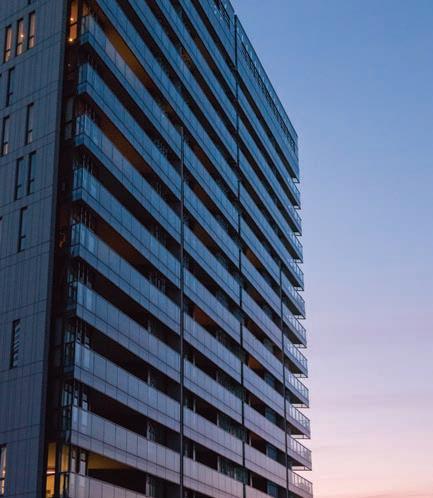

RECYCLE, REHOME AND RECONCILE: THREE AUSSIE CHARITIES MAKING A DIFFERENCE
Whether it’s providing essential furnishings for those in need, offering veterinary services to pets of the homeless or educating Indigenous youth, these Aussie charities are doing their bit to support our vulnerable communities.
Words: Matilda Meikle
RELOVE
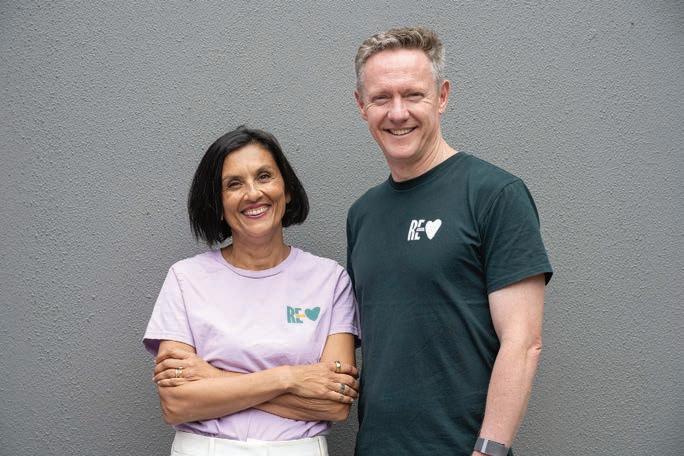
ReLove is a not-forprofit organisation providing Aussies in crisis with essential home furnishings to help them restore dignity and supply comfort. Whether it’s women and children escaping domestic violence, homeless individuals or those coming out of incarceration, the charity offers good quality restored furniture and household items to an average of 25 families each week.
furniture and other items that they like from the online portal, empowering them with choice at a time when everything seems out of their control. ReLove then delivers it directly to the home, assembles the furniture and ensures appliances are connected. Those in need can also select kitchen and linen starter packs to help make a house feel like a home.
Last year, ReLove created more than 2000 fully furnished homes in 209 Sydney suburbs, using more than $10 million worth of furniture. That’s equivalent to more than 3,800,000 kilograms of CO2 emissions stopped from entering the atmosphere.
PETS OF THE HOMELESS
THIS PAGE: RELOVE MAKES A HOUSE A HOME FOR OVER 2,000 FAMILIES IN JUST ONE YEAR
By redistributing second-hand furniture, items that would otherwise end up in landfill are given new purpose with those in need. In 2025 alone, more than 6500 tonnes of furniture were saved from landfill.
In total, ReLove aims to fully furnish 1000 homes each year. This means reusing items from suppliers with surplus and ex-floor stock, corporate offices, hotels, removalists and community donations, and fully furnishing a home within 24-48 hours.
Clients are able to select the
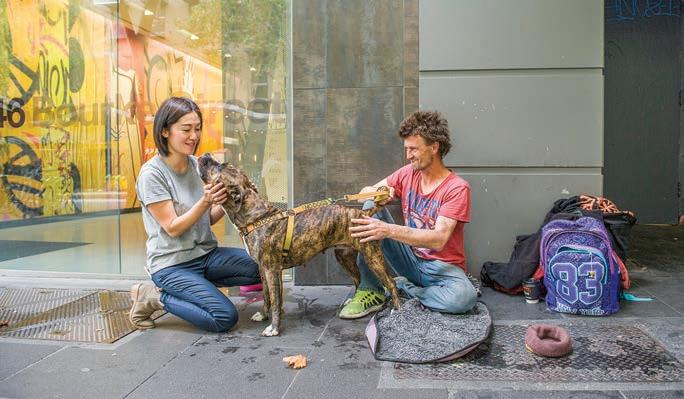
Pets of the Homeless aims to keep vulnerable people and their pets connected by providing essential pet care during tough times. The charity recognises that the bond between people and their pets plays a vital role in maintaining health and wellbeing, and seeks to create a community where no one is separated from their pet due to homelessness or disadvantage.
The Pet Food Bank in Cheltenham, Victoria, packages donated and purchased pet food to distribute it across the state using partners such as soup kitchens, food pantries and dropin centres. This way, vulnerable owners can spend less money on essential needs while still providing for their pets. In 2025, Pets of the Homeless distributed more than 700,000 pet meals.
Vet Assistance is a program contributing to, or completely covering, routine procedures, vaccinations and major surgeries for pets. This includes Fix-A-Friend, an initiative providing low-cost, subsidised community desexing. The clinics are held monthly in different locations across the state. As well as helping with blood tests, dental care, urgent surgery and other diagnostics, Pets of the Homeless offers a Farewell
Fund to cover the costs associated with losing an animal companion. Whether that’s the cost of veterinary care or cremation, the fund ensures that individuals who can’t afford a peaceful passing for their pets can still give them the send off they deserve.
Most crisis accommodation doesn’t accept pets, forcing many people experiencing homelessness to remain in unsafe environments rather than part with their companion. In response, Pets of the Homeless arranges temporary care for pets in need while their owners get back on their feet. This includes up to 12 months of foster care with carefully matched families, and emergency boarding for pets that can’t be accommodated in a foster home.
Since its foundation, the charity has provided more than 43,000 days of safe shelter, and helped over 4000 pets with veterinary care.
RED DUST
Red Dust is a not-forprofit dedicated to enriching the lives and improving health of Indigenous youth and families. The range of health, wellbeing and reconciliation programs have been co-designed with remote communities to encourage participants to adopt healthier lifestyles through mentoring.
The Healthy Living Program is a school-based initiative providing young people with a safe space to build wellbeing, confidence and
cultural connection. The range of sport, art and multimedia activities teach these kids about healthy habits and leadership skills to experience success once they leave the classroom. Each session is tailored to align with the curriculum and offers employment, mentoring and upskilling opportunities for community facilitators.
The Strong Young Women program brings young women and girls together with Elders and Aunties to share stories in yarning circles and develop belonging and identity with themselves, their families, and Country. On-Country learning and hands-on activities combine cultural health with leadership development to open new doors for participating women. Similarly, the Strong Young Men and Boys program provides a similar opportunity for men and boys who work with Elders to support their wellbeing.
THIS PAGE: PETS OF THE HOMELESS SUPPORTS MAN'S BEST FRIEND; RED DUST CARES FOR INDIGENOUS YOUTH
The Storytelling program is all about cultural preservation and celebration. It invites First Nations individuals and communities to participate in an artistic project that brings to life stories from that region. This means participants can learn new skills in music, video production and recording, while preserving stories for the next generation and teaching youth about their connection to Country.
Red Dust also runs cultural education sessions, where Indigenous and non-Indigenous facilitators work side-by-side to deliver cultural awareness, education and immersion programs both in-person and online. Corporations and community groups can register for programs structured around developing cultural foundations, truth telling and reconciliation action.
Each program purchased by an organisation supports more than 120 First Nations employment opportunities in remote communities. From online learning modules to on-Country immersion programs for employees, there are many ways to bring cultural learning to corporations.
In 2025, more than 1980 program participants and 10,100 community members engaged in programs and sessions run by Red Dust.

DONATE HERE
BOARDING AT HUTCHINS –A COMMUNITY FOR LIFE
Set against the stunning backdrop of Hobart’s Derwent River, The Hutchins School offers a boarding experience unlike any other.
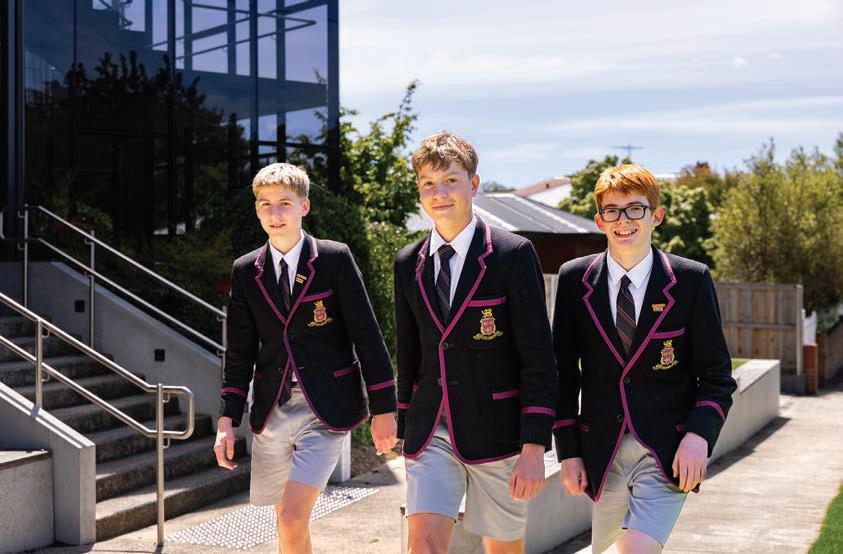
Established in 1846, Hutchins is Tasmania’s only boys’ boarding school and one of Australia’s oldest and most respected educational institutions. For generations, it has provided boys with the opportunity to learn, grow and thrive within a community built on integrity, humility, kindness, courage and respect.
At Hutchins, boarding is far more than accommodation during the school term. It is a welcoming and supportive home where boys develop independence, confidence and lifelong friendships. Guided by dedicated staff who know each
student personally, boarders benefit from outstanding academic support, a strong focus on wellbeing and countless opportunities to pursue their interests.
The School’s expansive campus features modern learning spaces, science and technology laboratories, libraries, a Performing Arts Centre, Dance Studio, chapel and newly constructed N J Edwards Hub, creating an environment where every boy can discover and develop his unique strengths. Inclusion and belonging sit at the heart of the boarding experience, ensuring
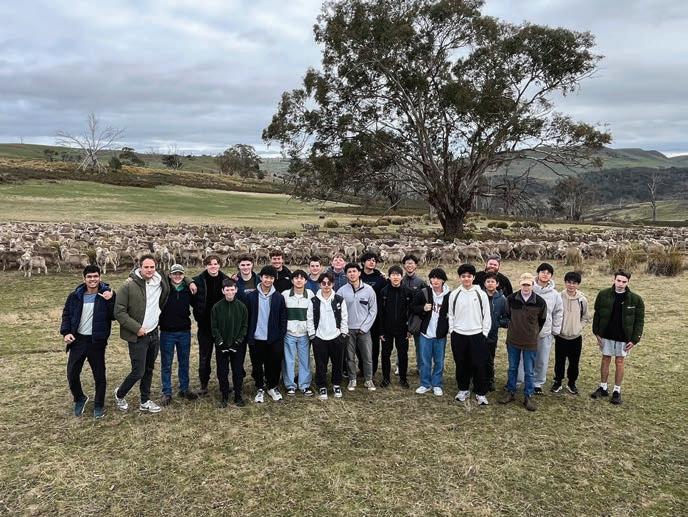
students feel connected, valued and supported throughout their journey.
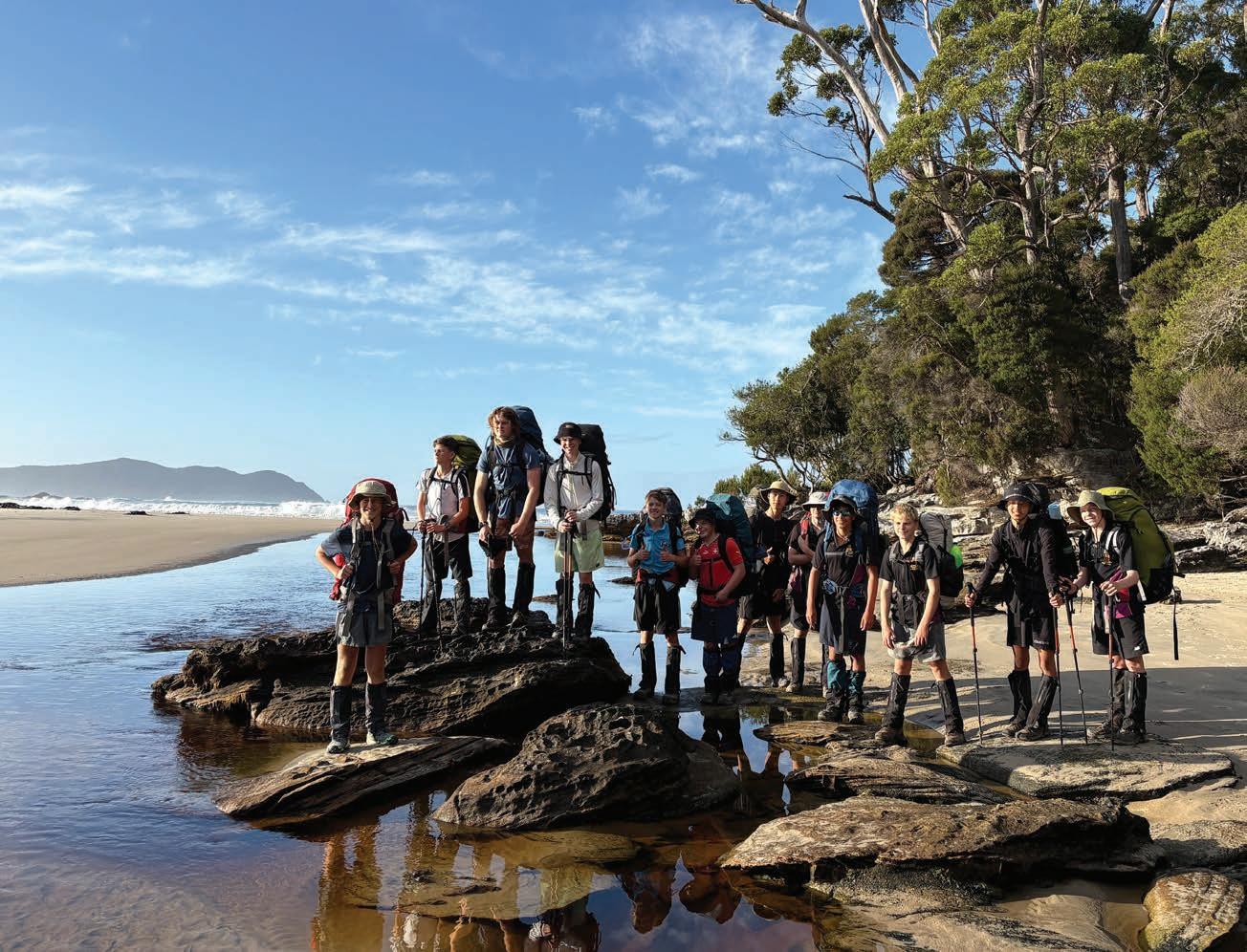
A defining feature of a Hutchins education is the innovative Power of 9 program. Designed to foster purpose, resilience and self-awareness, Year 9 students spend a term immersed in experiential learning at our waterfront campus. Outdoor expeditions across Tasmania, Australia and beyond challenge students to step outside their comfort zones and develop the character and leadership skills that will serve them throughout life. Recent adventures have included wilderness treks, sailing voyages, cultural immersion experiences in Fiji and community service programs in Alice Springs.
Connection is central to life in boarding. Through shared activities, sporting opportunities and social events with co-operating schools, students form friendships that extend well beyond their time at school.
For many boys, boarding at Hutchins becomes a second family.
As one current boarder reflects, “I’ve made lifelong friends here who feel like brothers.”
At The Hutchins School, boarding is more than a place to stay – it is a community for life, preparing young men not only for academic success, but for meaningful futures wherever their journey takes them.
The Hutchins School is an Anglican day and boarding school for boys from Pre-Kindergarten to Year 12 located in Hobart, Tasmania. With a long tradition of developing character in boys, we offer an outstanding education where each student is nurtured, challenged and inspired to achieve their personal best. Enrolments are now open for 2027.
For more information contact our Enrolments Assistant on 03 6221 4236 or enrolment@hutchins.tas.edu.au. THE HUTCHINS SCHOOL 71 Nelson Road, Sandy Bay, Tasmania hutchins.tas.edu.au/boarding
LIFE AT NUDGEE COLLEGE BOARDING
Boarding at St Joseph’s Nudgee College is far more than just accommodation; it is a vibrant, close-knit community focused on care and personal growth.
Home to over 310 young men from across Queensland, New South Wales and the Pacific Islands, the Bathersby Boarding Village offers a structured, supportive environment where students thrive both academically and socially.
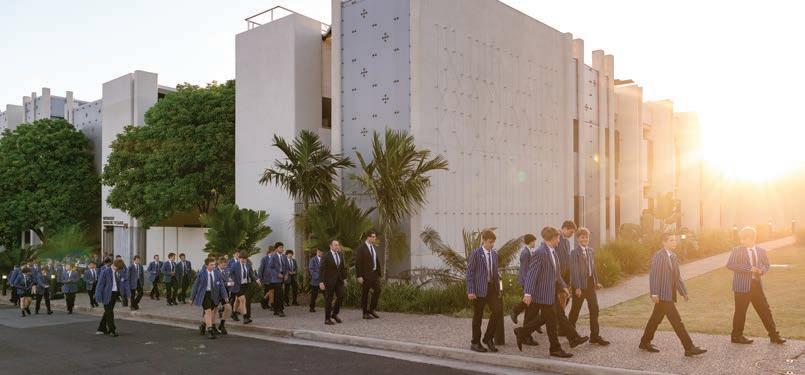
As evening approaches, the village routine shifts seamlessly. Structured study leads into house time, where senior-led discussions allow the boys to unwind and bond, transforming a diverse group into a true brotherhood. It is the everyday moments, shared laughter in common rooms and mutual support during times of homesickness, that cultivate lifelong friendships and a deep sense of belonging.
This thriving environment is also anchored by a dedicated support network. Nudgee’s House Mothers offer essential stability and warmth,
working alongside Heads of House, tutors, medical staff and counsellors to ensure that every boy feels at home.
Trusted by regional families across Queensland and Papua New Guinea, Nudgee perfectly balances rigorous academia with robust sports, recreation and wellbeing programs.
Ultimately, Nudgee Boarding is defined by its people, who work together to turn a new experience into a supportive second home.
Interested in boarding?
Discover more at nudgee.com



SUPPORTING BOARDING FAMILIES
Churchie focuses on making great men through four core principles: academic excellence, service, spiritual awareness & personal growth.
For more than a century, boarding has been at the heart of Churchie, welcoming boys from rural, regional and international communities into a supportive, immersive environment.
Located on a spacious Brisbane campus just minutes from the CBD, boarders benefit from extensive academic, sporting and cultural opportunities, as well as easy access to the city’s recreational offerings.
Life in Churchie Boarding is shaped
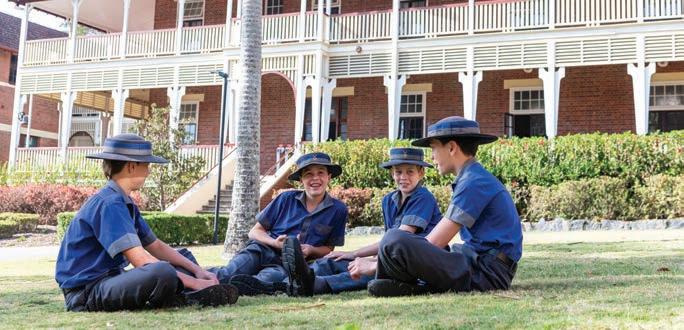
by a strong sense of belonging. Dedicated staff live on campus and work closely with boys to support their academic progress, personal growth and wellbeing, fostering resilience, independence and lifelong friendships.
Churchie is committed to ensuring this opportunity is accessible. Through the Churchie Foundation – boarding bursaries are available for students from rural and remote Australia who may not otherwise have the financial means to attend the school. Families can apply
by visiting churchie.com.au/boarding/ bursaries and completing an expression of interest, submitting financial and supporting documentation, and attending an enrolment interview if shortlisted. Applications for 2027 bursaries close on July 31, 2026.
At Churchie, boarding is more than just a place to stay. It is a place to grow, connect and discover a broader world, grounded in tradition and focused on the future.
Visit: churchie.com.au


FINANCIAL SUPPORT AVAILABLE churchie.com.au/boardingbursaries

HEADS UP –SOCIAL MEDIA IS AFFECTING KIDS’ MENTAL HEALTH & THEIR FUTURES
Social media didn’t cause the youth mental health crisis, but it accelerated it. As Australia attempts to legislate its way out of the problem, researchers and parents are asking whether a ban can undo what the algorithm has already built.
Words: Mikaela Smigo
Children and teenagers are incredibly impressionable. When experiencing the world, what they see can quickly turn into who they become. Adding social media to this equation, the prospect of what they’ll absorb becomes vastly greater. Although restrictions are attempted, they’re often too weak to perform the way they’re intended to.
INTRODUCING THE HEADS UP ALLIANCE
The Heads Up Alliance – an Australian parent movement advocating for delayed smartphone and social media
access, is already seeing this play out.
“While social media companies have largely flouted the new law, it is quite simply not in their interests for it to succeed,” says Dany Elichi, CoFounder and Movement Director of the Heads Up Alliance.
“Many parents are still using the fact of the legislation to draw stronger boundaries within their own families.
However, families who are delaying social media for their children tell us that their children are sleeping better, play more, read more, engage with their parents more meaningfully, and are generally happier.”
SOCIAL MEDIA AS AN INTEGRAL PART OF YOUNG LIVES
Social media is taking over teens’ lives. Parts of their growth revolve around it, from developing humour, to curating style, even establishing social status.
With this, there’s pressure: are they engaging with the “right” things?
Children and especially teens have always been judgemental, but now there’s an additional layer, a hawk-eye view of their peers’ lives. With such acute observation, children and teens are hyper-conscious of what they interact with and how they portray themselves online.
Social media makes these young minds worry more about how they look than the integrity of their actions. This has grown over time, from the mannequin in the window, to celebrities on the radio, to movies and television – but these methods of influence were monitored. Now, anyone can influence a child to look or act a certain way, and it’s right at their fingertips.
The mental health toll is welldocumented. For teens who
excessively engage with social media, researchers have identified addictionlike, dependent behaviors.
This problem cannot be attributed to social media alone. Children and teens naturally seek dopamine, especially after a long school day. Social media fills that gap with rapid intervals of hits that feel more engaging than healthier alternatives, ultimately replacing these activities and resulting in consistently poor moods.
Mood swings are a normal aspect of any teenager’s day-to-day life as they experience hormonal changes. However, seeing symptoms of mood disorders in younger children, rather than in adolescence, raises concerns about the trajectory of their emotional growth.
AUSTRALIA TAKES ACTION: DECEMBER 2025 SOCIAL MEDIA BAN
In December 2025, Australia became the first country to ban children under the age of 16 from accessing social media platforms. Many questioned how this would be enforced, and Australia has not inflicted a penalty on children or parents who disobey guidelines. Rather, any big tech
company that fails to take reasonable steps to enforce the ban will face fines exceeding $30 million.
Just over six months into the ban, there are varying conclusions around its effectiveness.. Some teenagers have found ways around the ban and older teens aren’t changing their routines or use.
Legislation alone may not be the answer. “Legislation is not the silver bullet that will give our children their childhoods back,” says Elichi. “Ultimately, families need to set a new standard in the home, using the legislation as a scaffold. The hope is that, in time, we will collectively set a new cultural norm.”
BEYOND THE BAN: SAFE SOCIAL MEDIA USE
Social media is here to stay. As it continues to grow in its development and its catalogue of information and posts, restrictions or bans placed now will become outdated.
Many argue that the focus should not be on banning access, but on creating a safer virtual environment. With this, teaching children about digital literacy and how to navigate a virtual space will give them the skills

to properly use social media. Balance is something most people strive for, but if it’s difficult for adults of all ages, why should we expect children to figure out this balance on their own?
In the current version of the Australian curriculum taught in schools nationally, the framework for digital literacy is based on four elements: practicing digital safety and wellbeing, investigating, creating and exchanging, and managing and operating.
The United Nations Children’s Fund (UNICEF) urges for children-specific tools to be built, as current existing tools target a general population of users. It’s easier for adults to limit screen time because most have once lived in a world without it. How do we expect children to remove themselves from an integral aspect of their lives without the proper tools?
ALGORITHMS: WHAT REELS YOUNG PEOPLE INTO THE DIGITAL TRAP
The more time children spend on their screens, the more the algorithm develops a connection with the individual. Rather than connecting with a peer of their own intellectual level, they are creating a connection with artificial intelligence that has far greater access to knowledge.
The more an individual interacts with a social media algorithm, it picks up on preferences and behaviors to create suggestions for the user to engage with next. The deeper the content, the more likely it is to be misleading, evoke extreme emotion or impact controversial takes. By limiting screen time, the algorithm has less of a chance to pull impressionable children and teens into rabbit holes of content.
“The algorithms and the whole structure of social media is designed to hook children,” says Elichi.
“Families were previously in an unfair fight, pitted against some of the smartest and richest corporations on the globe. The new laws give strength to the parents.”
EVIDENCE OF THE OLDEST COMPLEX LIFE ON EARTH FOUND IN AUSTRALIA
Words: Matilda Meikle
Scientists have discovered evidence of the oldest known form of life on Earth inside mudstone from the Northern Territory.
Stored in an open-air warehouse in Darwin, this mudstone (a type of sedimentary rock made from hardened seafloor mud) was unearthed by mining companies decades ago. The miners were unaware that inside the rock cores, which were made from drill holes hundreds of metres below the surface, were fossils of microscopic organisms buried on the seafloor of an ancient inland sea over 1.5 billion years ago.
THE ORIGINS OF US
Life on Earth can be divided into two categories, each completely unique on a cellular level.
The first is prokaryotes, which covers most single cell organisms such as bacteria and archaea. The second is eukaryotes, which contain cells with a nucleus and organelles. This group includes all animals, plants, algae and fungi.
Eukaryote fossils can be found cemented in rock all over the world and typically date back 1.5 billion years. The new fossils discovered in the Northern Territory, however, reach all the way back to 1.75 billion years ago, making them the oldest known eukaryotic organisms in the world. These samples were from the McArthur and Birrindudu basins, which contain a number of
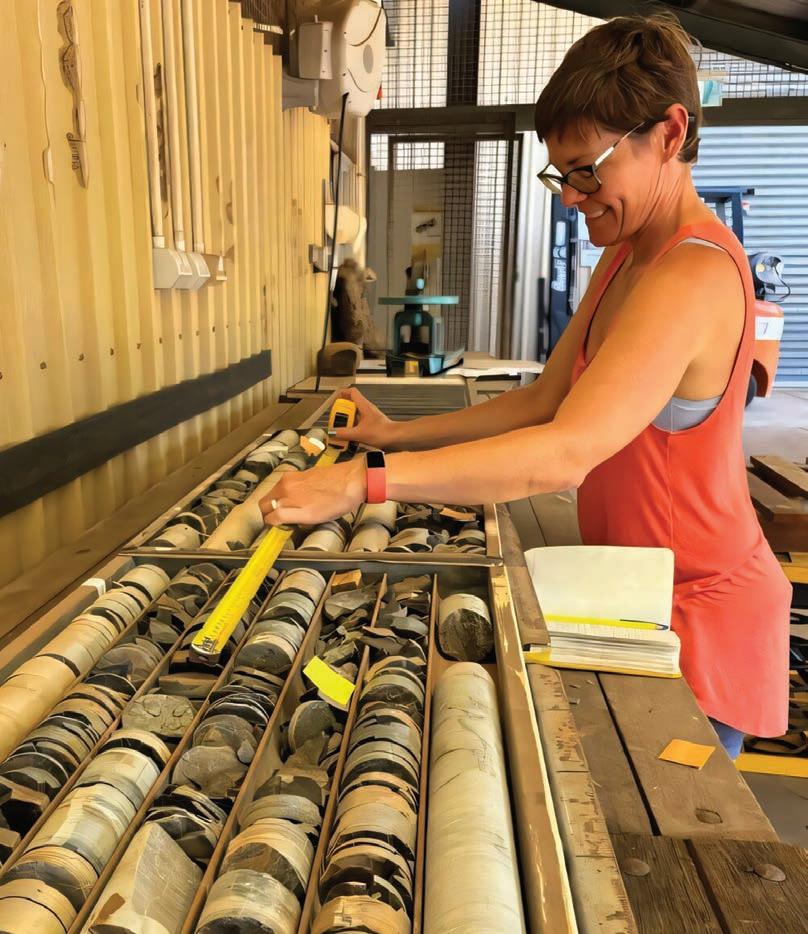
THIS PAGE: HIDDEN IN UNASSUMING ROCK CORES LAY EARTH'S OLDEST EUKARYOTE FOSSILS
environments including outback, savanna, billabongs and forests. However, 1.75 billion years ago, this region was a shallow inland sea containing lagoons, offshore mudflats and coastal waters. While oxygen was beginning to develop in the ocean at this time, atmospheric concentrations were around 1 per cent of current levels.
A SURPRISING DISCOVERY
A recent study, with findings published in the journal Nature, involved crushing and dissolving the mudstone cores. Examining this concentrate under a microscope, scientists were able to identify more than 12,000 individual fossils.
The team also analysed the mudstones that contained the
fossils to better understand what the environment was like when these sediments were created. They found that eukaryotes lived in a diverse range of environments including coastal mudflats and open seas.
Interestingly, while samples of prokaryotic forms have been found in oxygen-free environments, the researchers were able to confirm that the eukaryotes samples were only present in deposits from oxygenated settings. This supports the long-held hypothesis that oxygen played a key role in supporting the evolution of early eukaryotes.
While understanding the rapid evolutionary development of eukaryotes is still a major area of research, it is hoped ongoing studies of these microfossils will teach us more about our origins.






DAY STAY & REFRESH


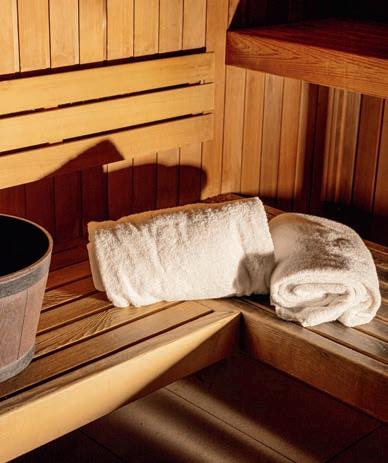
Make the most of your time in this holiday season with our offer. The perfect mix of relaxation, comfort, and calm before you continue your journey.
Starting from $165, unwind between 9am–5pm with poolside relaxation, delicious dining and a tranquil private space to refresh and recharge.
Start your holiday refreshed, not rushed !

SCAN TO BOOK