Silverstone Port has developed into a multipurpose terminal
Port of Kokkola Customer publication for customers and interested parties
CHIEF EDITOR:
Torbjörn Witting
EDITORIAL STAFF:
Jorma Uusitalo
LAYOUT:
Olli Ilmanen/WTF Design
PRINTED IN:
Waasa Graphics Oy
PHOTOS:
Clas-Olav Slotte
Hiutale Films
Hooli Stevedoring
Jorma Uusitalo
Kokkolan Satama
COVER PHOTO:
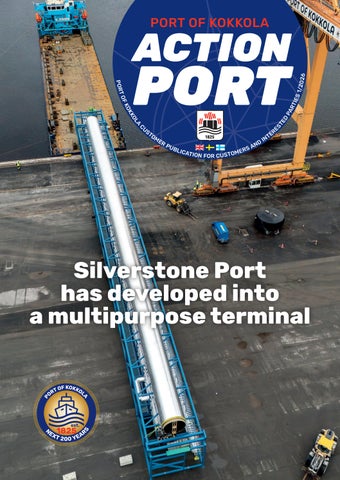
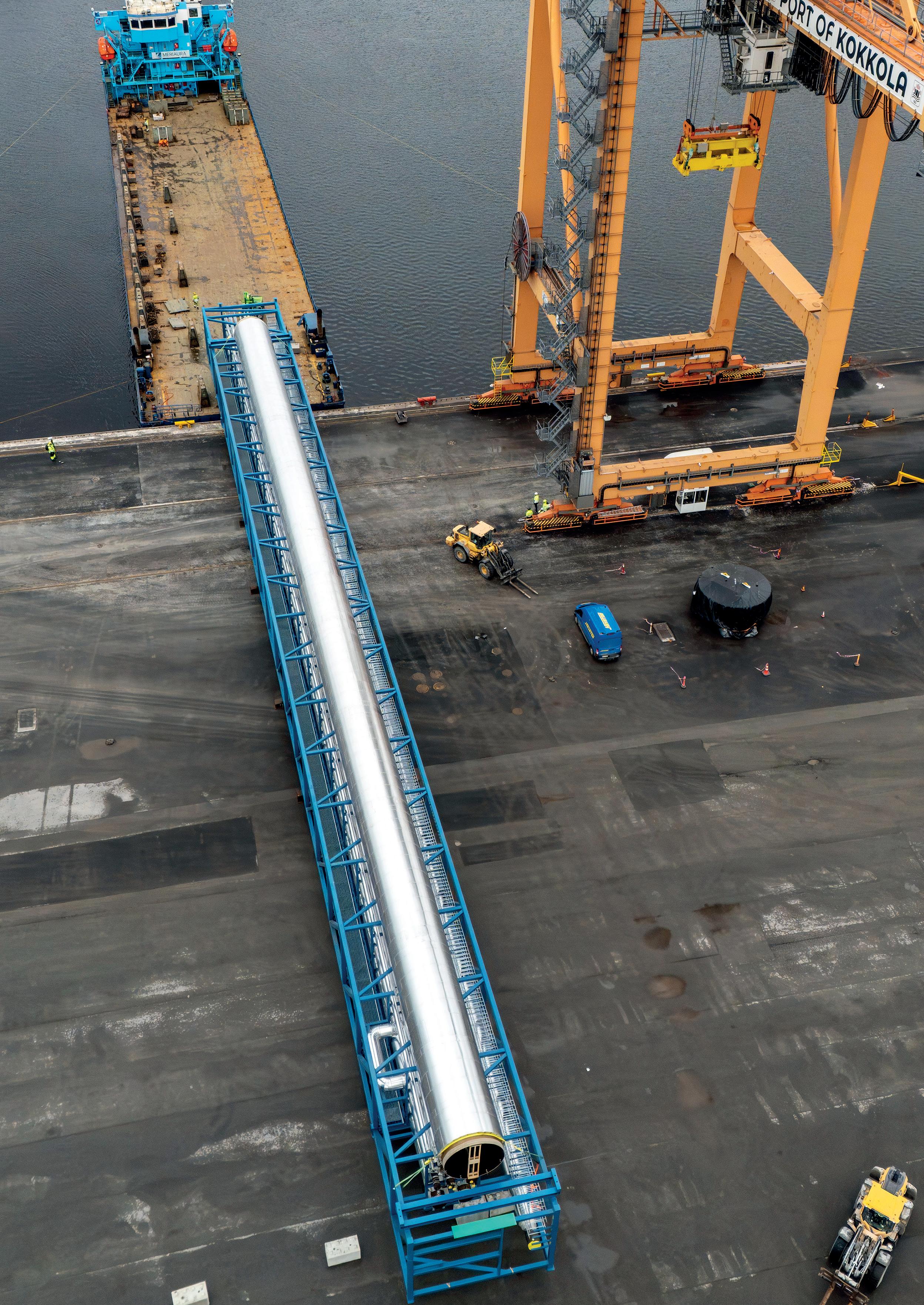
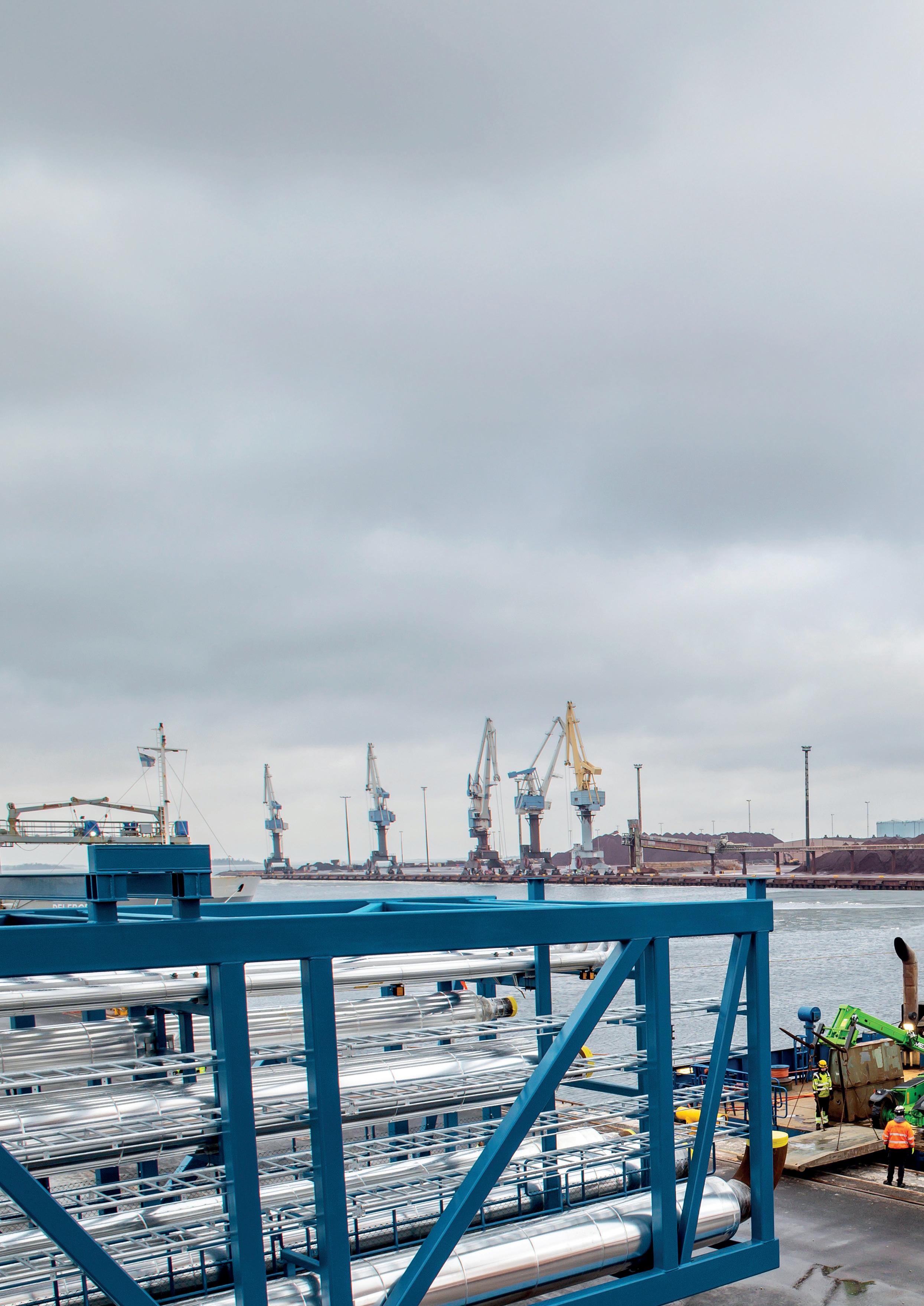
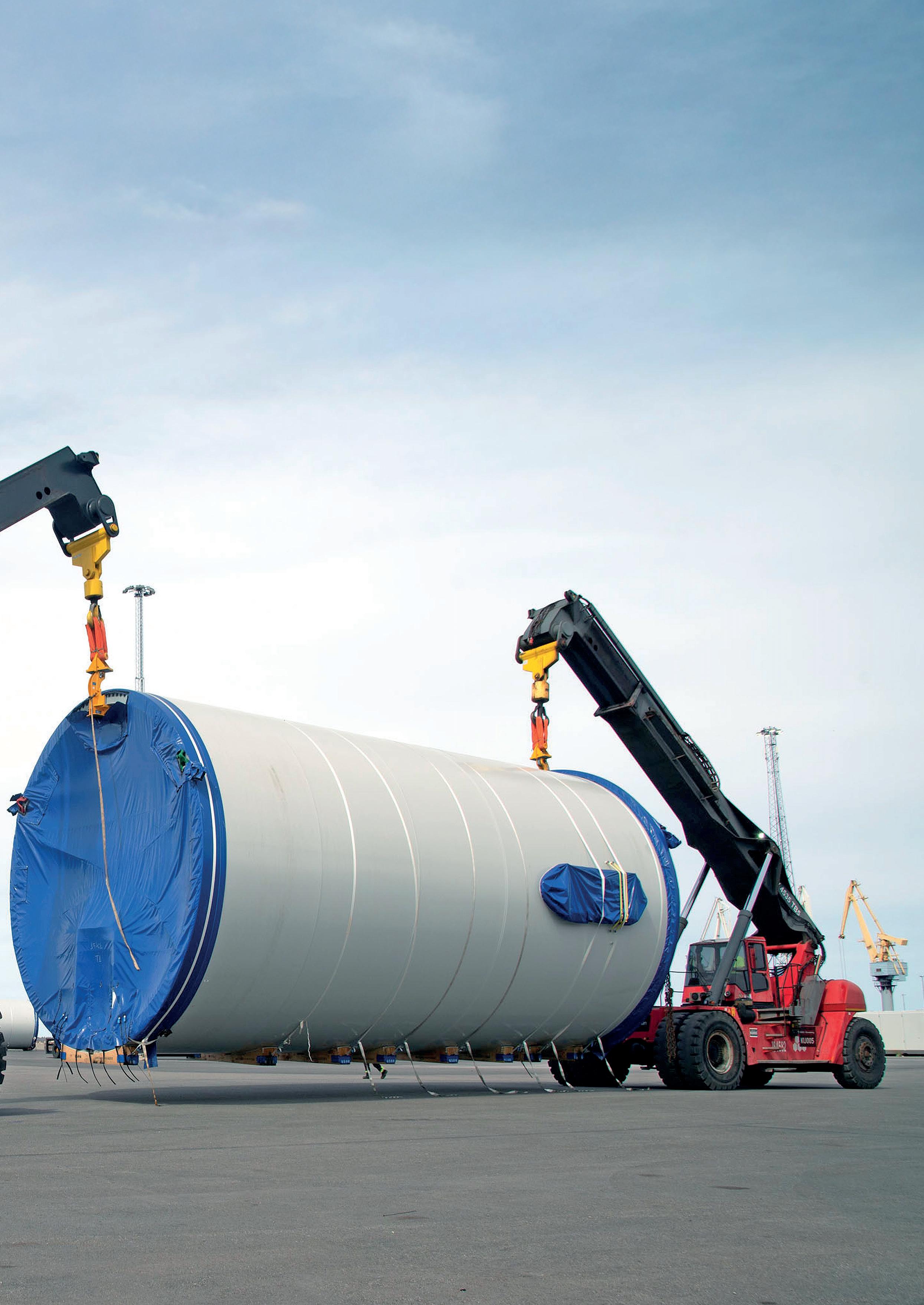
A giant tubular bridge was completed in early winter at Silverstone Port multi-purpose terminal for a Swedish customer.
FOTO: CLAS-OLAV SLOTTE
Wind power logistics has become part of the established operations in the port of Kokkola
The year 2026 has begun in a positive mood at the port of Kokkola. As those familiar with the history of the port of Kokkola know, our established customer base includes, among others, large-scale industry in Kokkola and industry in Central Finland. Now, wind power logistics has established itself as a new function.
Wind power logistics has become an established part of operations. Shipments of wind turbine components to Silverstone Port in Kokkola, their storage across the extensive terminal area, and their onward transport by road along dedicated special transport routes have remained at a pleasingly high level during the first half of the year. As a result of years of long-term development work, we have succeeded in creating a functional concept that wind power industry operators trust.
Geopolitics significantly affects port traffic, as ports are part of the international logistics and trade chain. For example, in 2025, maritime transport accounted for over 90 percent of Finland’s foreign trade exports. The annual ports traffic directly reflects the trends in international trade, depending on which types of goods are dominant in which port.
The traffic by large ships in Kokkola’s Deep Port has been at a low level for some time, specifically due to geopolitical tensions. In the port community, we are waiting with interest to see if this year will bring a turning point that will result in the large ship traffic becoming active again.
While we carry out daily operational work in port logistics, we continue to develop systematically. The services provided by Port of Kokkola are an important part of the whole that en ables the implementation of various major pro jects in our area. Related development must be done proactively in the long term. Then we can welcome investors by saying that we already have the framework in place.
We will also talk about developments in more detail in this publication, and I hope we shall offer topics of interest for every reader.
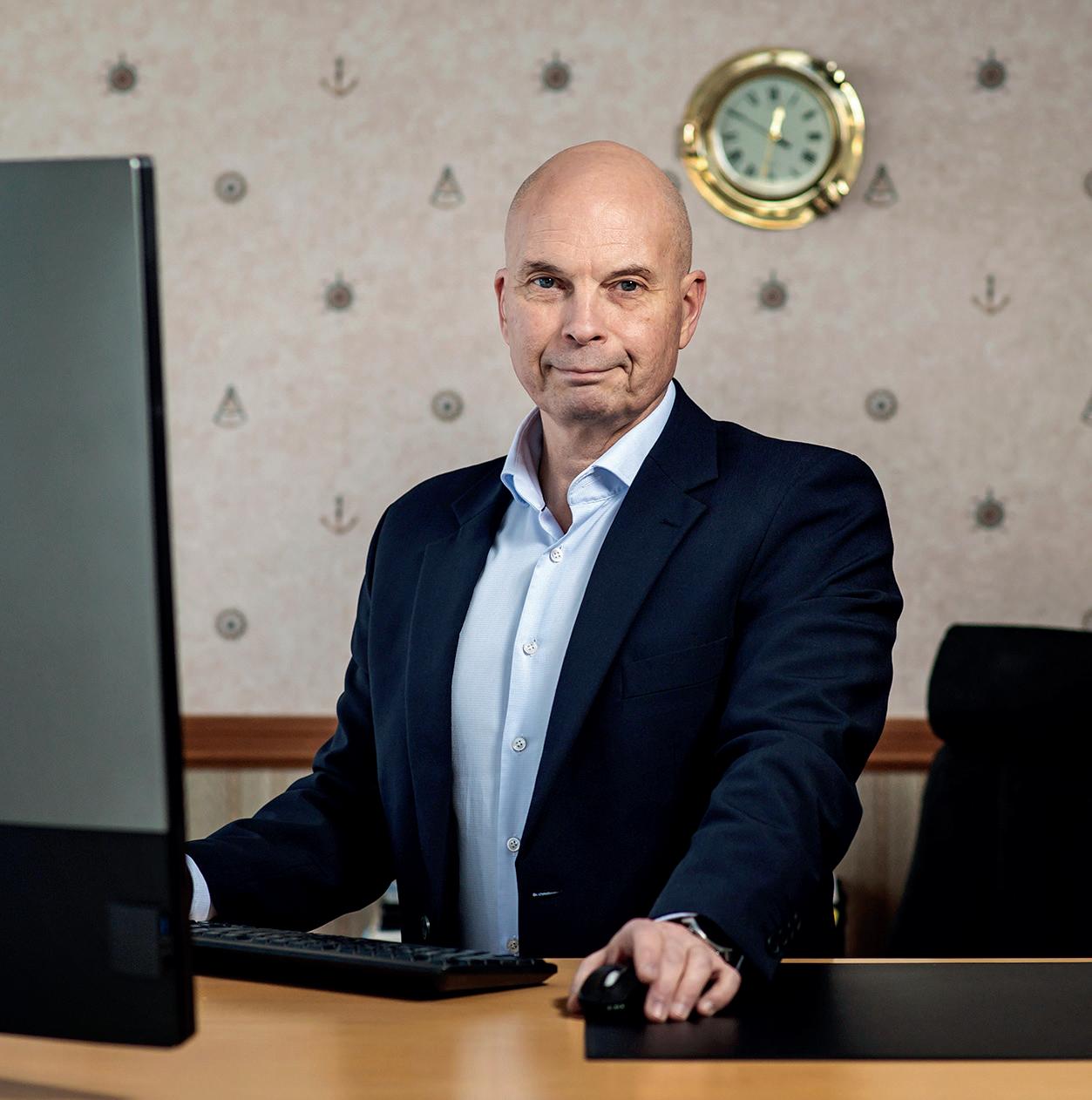
TORBJÖRN WITTING CEO Port of Kokkola Ltd.
Silverstone Port to be completed with a Ro-Ro ramp
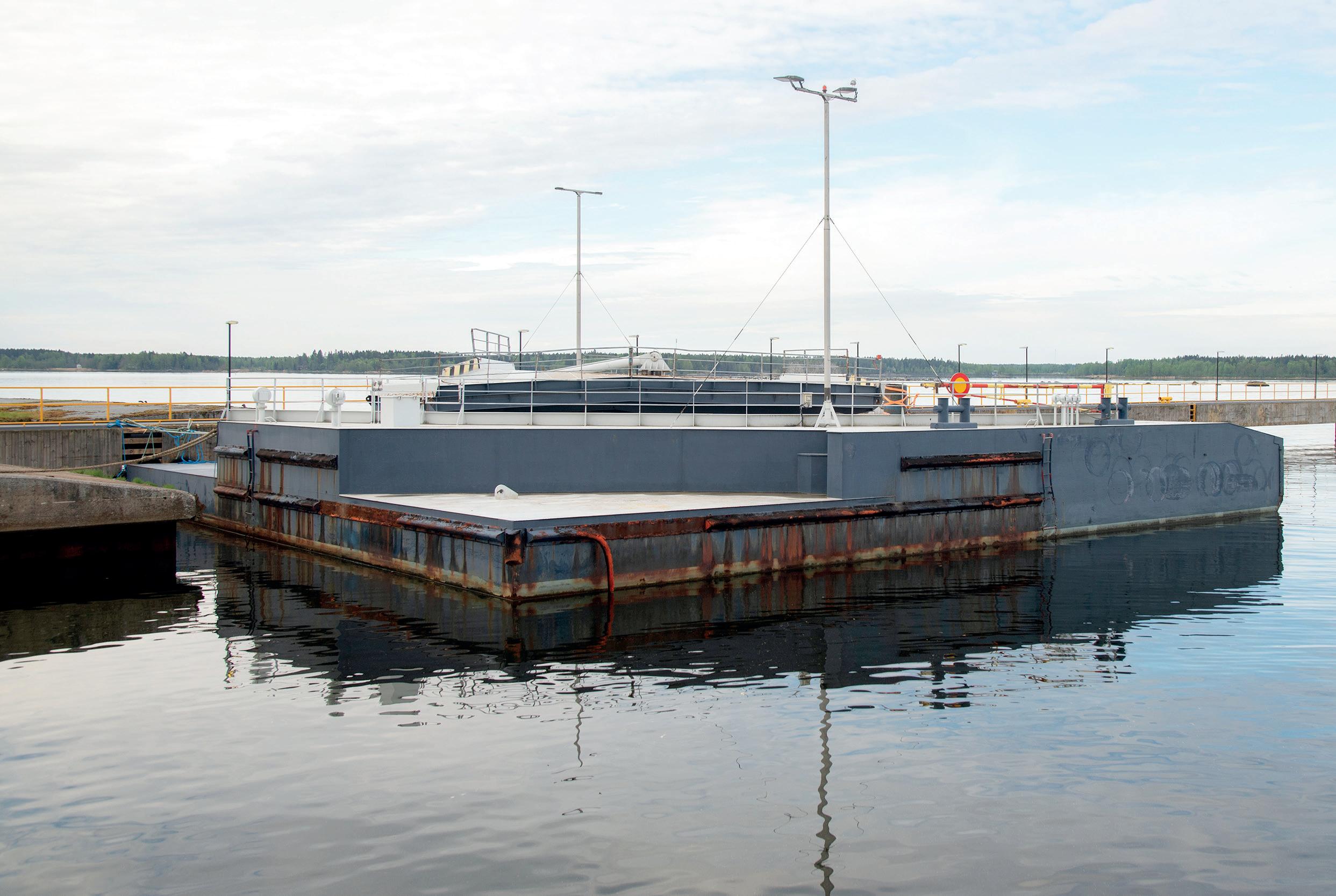
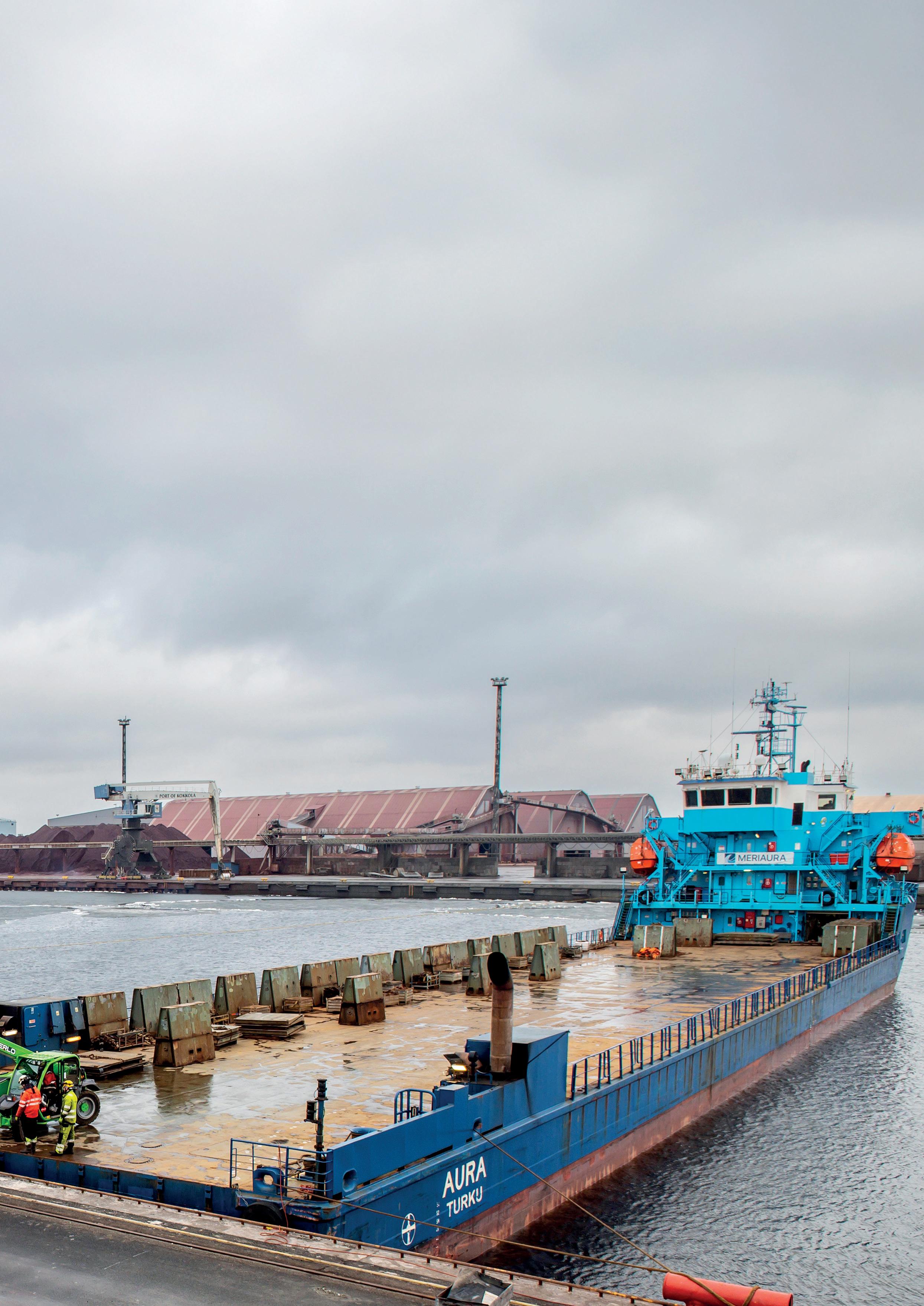
Once the modification is complete, the Ro-Ro ramp will be moved from General Port to the western end of Silverstone Port.
Port of Kokkola has invested in a floating Ro-Ro ramp, which is scheduled to be put into operation in early autumn of this year at the latest. According to Anssi Martinmäki, Commercial Manager of Port of Kokkola, the Ro-Ro ramp will create an intermodal terminal in Silverstone Port that combines different modes of transport.
In addition to the fact that the Ro-Ro ramp serves Port of Kokkola’s current customers, the port company has identified, according to Martinmäki, that numerous new projects that require Ro-Ro connections are located in the port’s so-called hinterland, including in central Finland. The investment will also improve security of supply.
The 26 x 22 meter ramp arrived at Kokkola’s General Port last Christmas, where it is currently being modified to suit the demanding conditions of the Bothnian Bay area. In addition to the significant range of water level variations, one significant addition to the equipment is a de-icing system installed on the ramp, which allows the ramp to be used 24/7 even in the coldest winter conditions.
AFTER the modification, the Ro-Ro ramp will be towed from the General Port to Silverstone Port, where it will be placed at the western end of the Silverstone quay and attached with booms to the quay structures and to the loading ramp being built for the ramp. The port complex, which consists of the General Port, Silver -
stone Port and the Deep Port, has traditionally been developed with functionality in mind. This is also the case now. – We didn’t set out to optimize parts, but to carefully design an overall solution that works in the best possible way. Finding the solution took time, but the end result is rewarding, Anssi Martinmäki says.
In the future, the container and Ro-Ro traffic terminals will be located at the western end of Silverstone. This will allow both Gottwald cranes and the STS container gantry crane to operate ships at the same time as Ro-Ro operations are underway. The solution now being implemented will also enable uninterrupted liquid bulk traffic. Similarly, the project cargo handling will be smoother than ever, as the different traffic types are clearly in separate area modules without intersecting traffic flows.
According to Martinmäki, the concept is made even better by the fact that Silverstone Port has good connections to both the European TEN-T highway network and the TEN-T core rail network. The currently 15-hectare Silverstone has developed into an intermodal terminal that combines different modes of transport, especially since it will be technically possible to get from the ship to the mainline train connections and vice versa on wheels.
Pipe bridges were completed for a Stockholm energy company
Silverstone Port, developed as a multi-purpose terminal, serves a wide range of customer needs. During the spring and summer, a large-scale project has been underway at Silverstone, in which Kokkola-based Fineweld has assembled pipe bridges that were transported by sea as part of a carbon dioxide capture and storage plant invested in by the Stockholm energy company (Stockholm Exergi).
Oncecompleted, the plant will capture and store 800,000 tons of carbon dioxide annually from the Värtaverket thermal and power plant. The carbon dioxide will be stored in the bedrock beneath the seabed. The investment value is approximately EUR 1.2 billion.
Among many players, Fineweld won the tender for the plant’s pipe bridges and plant piping. Late last year, the company began manufacturing the piping and steel structures and moving forward with other aspects of the project.
– In large projects such as this, logistics are a very important part of the whole. After going through different options, we recognized that sea transport was the only option for such large modules, says Fineweld CEO Jukka Karhula. When the company considered
where the products would be shipped to the customer and what made the most sense for the project, eyes quickly turned to the port of Kokkola.
– We sat at the same table, and with the active ideation of Port of Kokkola, Silverstone Port came up on the planning table. After negotiations, we concluded that Port of Kokkola was the best solution out of the various options, because our machine shop is located nearby, and we can operate from there quite flexibly. In addition, Silverstone Port has the right infrastructure for our needs. Such massive assembly work needs space around it so that large machines can operate and move around safely, Karhula continues.
FINEWELD and Port of Kokkola jointly designed an area that could be safely isolated, practically as Fineweld’s own space. The extensive terminal area in Silverstone became necessary, as the steel construction dimensions have been enormous. Various types of modules were completed for the Stockholm energy company, the most visible of which was a tubular bridge over 90 meters long and weighing 300 tons. In
completed in Silverstone Port company
addition, the delivery has included several 20–25 meter long modules, which are also massive.
The project’s special feature has been the delivery of the aforementioned huge tubular bridge from the port of Kokkola to Stockholm in one piece. It attracted media attention, and in particular, the lifting of the tubular bridge into place at night in Stockholm received a lot of attention.
– This project is a testament to the skills of both our own team and the engineering department, as well as our subcontractors. We used local subcontractors in very important roles, for example in the manufacture of steel structures, surface treatment and insulation. Havator was responsible for the overall logistics, including the transport and lifting of heavy components, and Rauanheimo handled the loading of smaller components. By mass, most of the components are transported by sea from the Silverstone Port, and a small part is transported by lorries.
So far, two ships have left Silverstone as Just-OnTime deliveries. The timing of future deliveries will be determined as the project progresses. For Fineweld, the final installations and project handover are scheduled for early 2028.
INDUSTRIAL PIPEWORK manufacturing and installation projects are Fineweld’s core business. Industrial pipelines often involve pipe bridges, which are one of the company’s key products. Fineweld’s market is the Nordic countries, especially Finland and Sweden. In addition to the investment in Stockholm, Fineweld had a large project underway in its hometown of Kokkola at the time of the interview in late April, where the company was carrying out piping, equipment and steel structure work for electric boilers built by Kokkola Energy in connection with its power plants.
Fineweld’s customers come from the mining and process industries, as well as the energy and battery industries. Depending on the projects, the company’s annual turnover typically ranges between 20 and 30 million euros.
– As a manufacturing engineering company, the port is very important. It is important for us to be able to ship different products flexibly, and that is why Port of Kokkola’s investment in a ro-ro ramp is a very good thing. The crane capacity and the All Weather Terminal (AWT) in the General Port also serve our needs, says Jukka Karhula.
The newest port in the Kokkola port complex, Silverstone Port, demonstrated its versatility in the Fineweld contract.
That’s it!
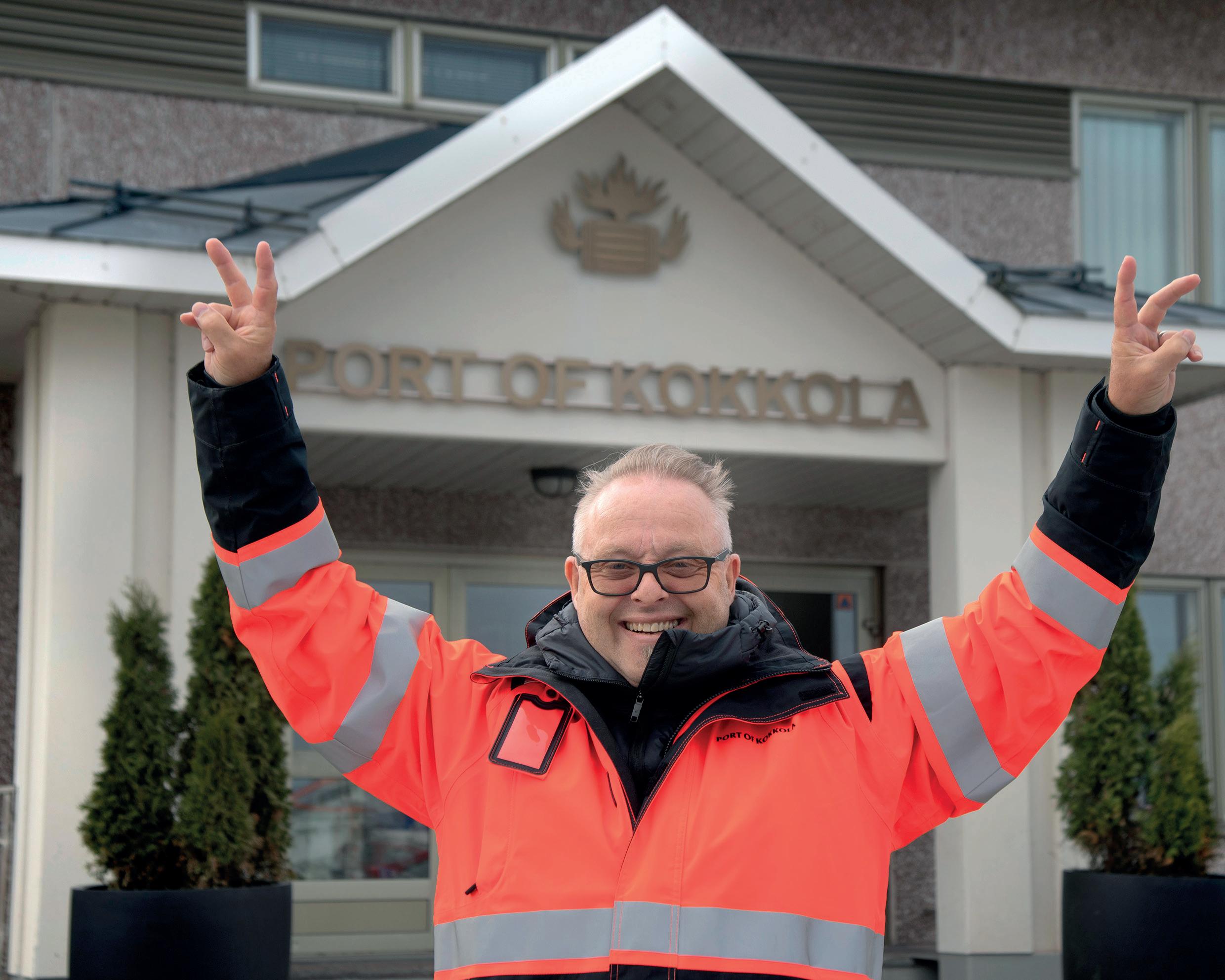
An era at Port of Kokkola will come to an end next August when Technical Manager Tapio Lampinen retires after working for the port company for 24 years. Lampinen has been a long-term member of the management team of Port of Kokkola, during whose time the port has grown into one of the largest in Finland.
In his career, first at the Finnish Maritime Administration and then at Port of Kokkola, Tapio Lampinen has, in his own words, experienced some great moments. An exceptional experience has been the cooperation with the close-knit team of Port of Kokkola, whose members Lampinen praises as top professionals and great people.
– From my perspective, we have the best team in the world, where everyone knows their job. Many good friendships and relationships have been formed, and credit for the past years also go to a good employer.
A strong glue in Port of Kokkola’s work community is the sense of humour. When conducting this inter-
view, Tapio has in mind a farewell speech addressed to his colleagues, inspired by Private Honkajoki’s evening prayer.
– In some inexplicable way, through my twisted imagination, it kind of points to the future of the Port, but let’s not divulge on that, Tapio laughs.
HOWEVER, THE END OF Tapio Lampinen’s career can be summed up in one gigantic hydraulic engineering project and the period of over 3 years that followed, when the atmosphere was gloomy and there was little room for humour. Sometimes the incident even kept him awake at night.
It is necessary to set the stage for what happened by first stating that Tapio is particularly passionate about hydraulic engineering, and has been instrumental in the last three projects, which have deepened the deepwater channel and port leading to Kokkola. In addition, the port has carried out many quay construction
projects, which have been challenging experiences. The third deep-water channel dredging and the deepening of the port were carried out in 2018–2020, when Tapio worked on the project as a project manager representing Port of Kokkola, responsible for, among other things, dredging the port and constructing the dumping areas where the excavated material from the entire dredging project was deposited, a total of approximately 3 million cubic meters. It is also noteworthy that the project was one of the largest circular economy projects in Finland in terms of mass soil material and has been presented at various conferences as far away as Asia and South America.
It was a big job, as the dredging of the seaway and the port cost 63 million euros, of which the Port of Kokkola’s share was 28 million. It is no wonder that the atmosphere in the port office was serious when it was announced that the Dutch party to the consortium responsible for the contract had filed a claim for damages against Port of Kokkola and the Finnish Transport Infrastructure Agency.
The contractor demanded in the District Court that Port of Kokkola Ltd. be ordered to pay it a total of 5.6 million euros in damages, including default interest, and to reimburse the legal costs.
The Dutch company’s demands were based on the claim that the soil in the contract area could not be dredged as expected based on the tender documents provided by Port of Kokkola and the Finnish Transport Infrastructure Agency, which, according to the contractor, had led to higher than expected dredging costs.
– It was a brutal experience. The court proceedings weighed heavily on my mind and those were really difficult years for me mentally while the
Tapio Lampinen, Technical Manager of Port of Kokkola, is not talking about the start of the summer vacation, but rather about being on leave a little longer when retirement arrives next August.
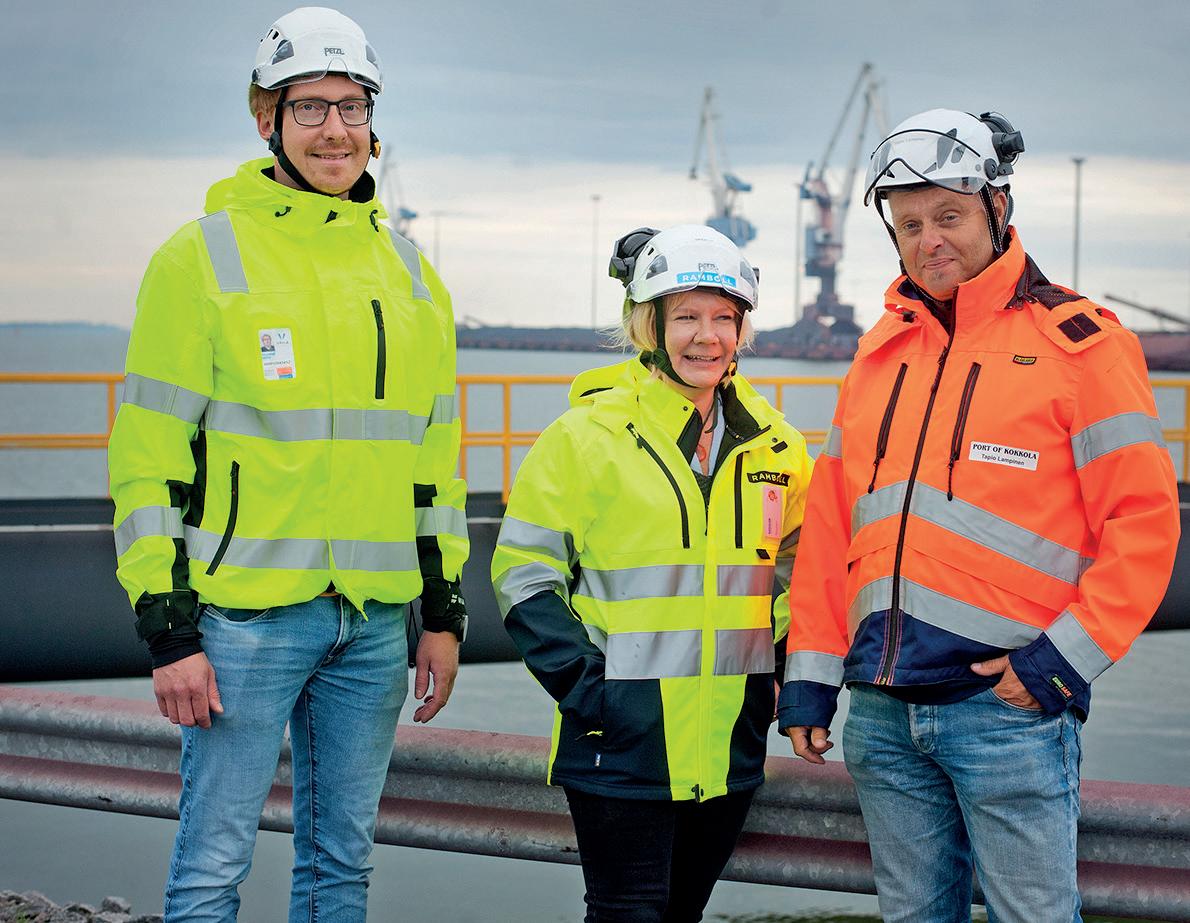
The fairway deepening completed in autumn 2020 was Tapio Lampinen’s (right) third deepening of the Kokkola fairway and port in which he participated. Also pictured are project manager Merja Autiola from Ramboll and Seppo Paukkeri from the Finnish Transport Infrastructure Agency, who worked as project manager on the fairway deepening.
matter was being handled. If the court decision had been against us, it would have turned my entire career upside down. Now, however, I know that I acted correctly on the contract and no one can say afterwards that the Port of Kokkola incurred millions in compensation because of my incompetence.
IN ADDITION TO hydraulic engineering, the technical manager is responsible for much more, practically the entire technical sector. In addition to infrastructure, this includes all machinery and equipment owned by Port of Kokkola. Similarly, permit issues, from building and hydraulic engineering permits to environmental permits, are absolutely central to the long-term development of the port.
– One major investment during my time has been Silverstone Port, which has been under construction since 2008. Currently, there are approximately 15 hectares of paved area and almost 50 hectares of areas still to be developed. Significantly more quays, a total of almost half a kilometre long, have also been built.
According to Tapio, it is important to plan ahead when developing a port, because, for example, when applying for funding, permits must be in order. The principle of prioritization is also applied to the construction of port fields.
– New port facilities are built almost naturally and also cheaply, because we utilize various circular economy raw materials in the construction. When a company in need of port logistics needs our services, we practically have the framework ready instead of building the necessary infrastructure at a rapid pace at a much higher cost.
IN HIS RETIREMENT DAYS, Tapio Lampinen plans to enjoy not having to wake up at six in the morning. The family’s detached house and a summer residence will provide plenty of things to do in the coming days, and exercise also plays a big role.
– Cycling, walking the dog and golf. I can also take it easy in golf because I’ll soon be hitting the tee shots from the red tee-off, Lampinen laughs.
He subscribes to the view that it is not worth leaving the professional expertise and experience, which has been accumulated over decades, unutilized, despite the fact that the actual working years will soon be behind.
– My work is still close to my heart, and I don’t plan on just lying on the couch, because there seems to be a demand for expert and consulting services in the field.
CEO Antti Koulumies:
Logistics is an important part of Terrafame’s cost competitiveness
The top management of Terrafame, a battery chemicals and strategic metals producer in Sotkamo, visited Kokkola as Rauanheimo’s guests in May. During their two-day visit, Terrafame representatives got to know the Kokkola large-scale industrial area and port.
-This was my first visit to Kokkola Industrial Park and I must say that we have been very impressed with what we saw. KIP is impressive both in terms of its industrial park concept and as a port. You don’t really believe how special this area is until you see it for yourself, said Terrafame CEO Antti Koulumies, describing his experience when he met with the media at the Silverstone Port.
Terrafame’s Commercial Director Jaakko Savolainen also highlighted KIP’s industrial symbioses.
– When processes and companies are physically close to each other in this way and the processes are integrated, it creates an advantage that enables Finland and Europe to be internationally competitive, he said.
THE ROLE OF LOGISTICS was naturally a key focus during the visit. Terrafame and Rauanheimo have collaborated for a long time, and in addition to the port of Kokkola, Rauanheimo offers Terrafame a comprehensive service in Tuhkakylä, Sotkamo, and the port of Mussalo, Kotka.
According to Koulumies and Savolainen, the port of Kokkola is conveniently located within easy reach of the Sotkamo mining and factory area. Three trains a week arrive at Kokkola from Tuhkakylä. Kokkola serves as the second main port for the unloading of nickel, and zinc products also leave for the world from Kokkola. Terrafame brings various production aids to Kokkola.
– At the moment, most of our products do not end up in Europe, but in the Far East and on the other side of the Atlantic. Cost competitiveness plays a very big role in our products, and that is why we need to get the most out of logistics. This means, among other things, that the trains run as full as possible in both directions. In addition, the whole thing includes flexible storage and loading capacity. We just went to look at the warehouses for Terrafame’s outgoing goods, and it looked exactly as I wanted, that is, the warehouses were as empty as possible, Koulumies laughed.
He also praised the collaboration between Terrafame and Rauanheimo.
– Terrafame has also had to streamline its operations a lot in recent years. It is then really significant that together with our key partners we bring ideas to the table from both sides on how to improve productivity. Often, saving is not the only way to save yourself, but rather productivity. I think we have succeeded well in this dialogue with Rauanheimo.
Rauanheimo’s CEO Tero Kosonen was of the same opinion.
– Rauanheimo has been on the journey with Terrafame and its predecessor from the very beginning. It has been an eventful journey and it is great to see that new things are being created all the time. It is also very interesting to hear about Terrafame’s new investment plans and development of operations. Such activities are needed here, and we are happy to support Terrafame in this matter as well, Kosonen referred to Terrafame’s recently published plan to start recovering scandium from the production process, which is classified as a critical raw material in the European Union.
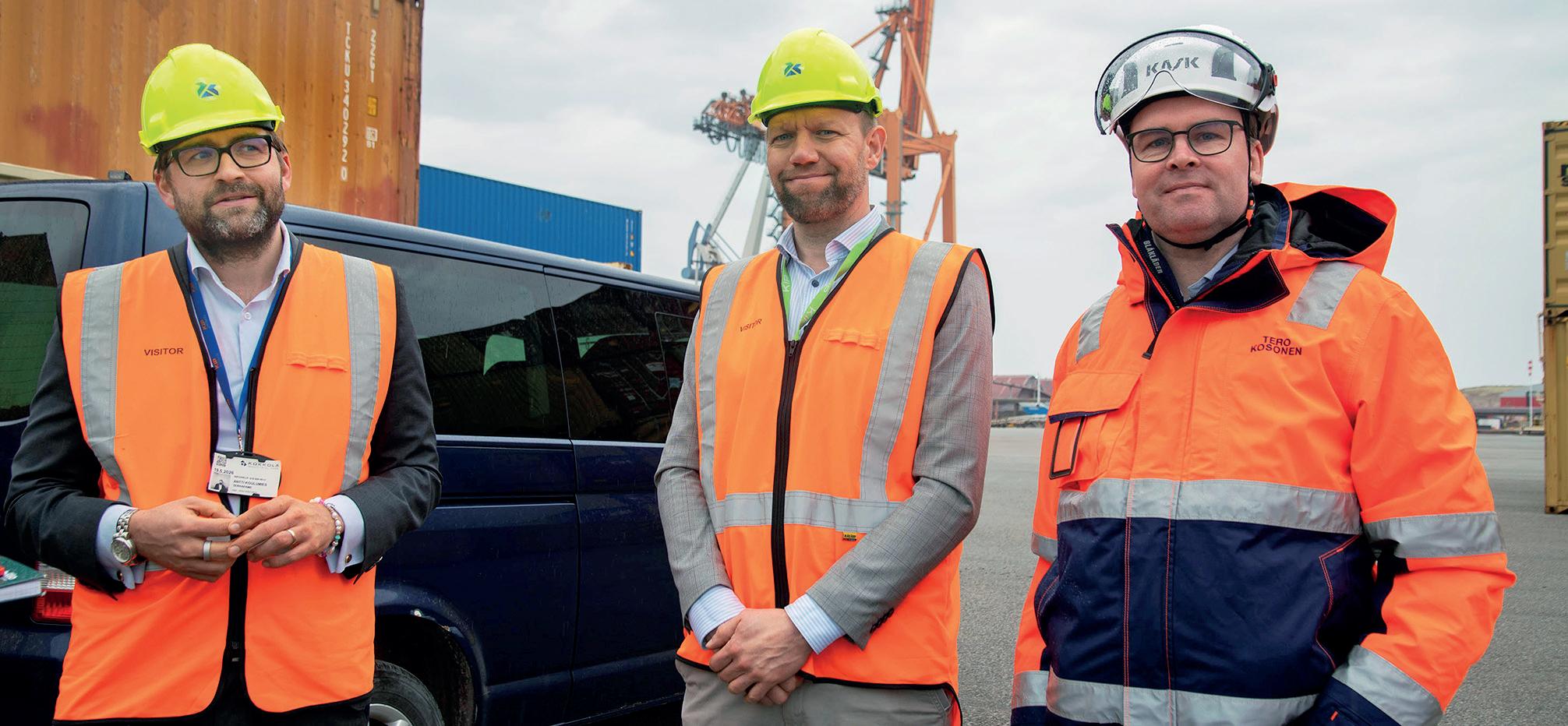
Terrafame CEO Antti Koulumies (left), Commercial Director Jaakko Savolainen and Rauanheimo CEO Tero Kosonen at the Silverstone Port.
Rauanheimo pilots fully electric truck
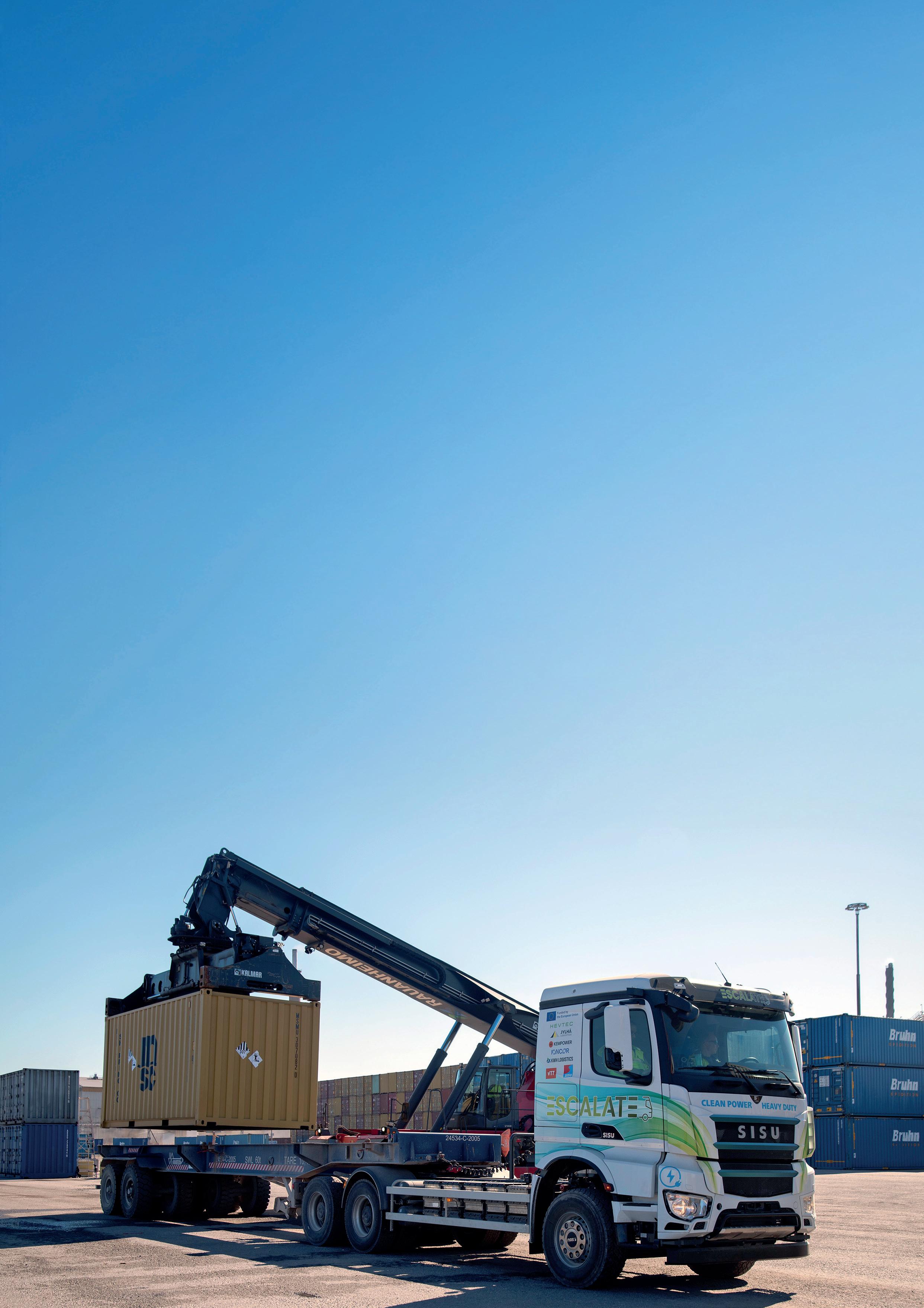
Electric vehicles and work equipment are also the future of ports. In the spring, Rauanheimo tested a fully electric truck manufactured by Sisu for internal transport at the port of Kokkola as part of the EU-funded international ESCALATE project. The project’s goal in the first phase, is to achieve a range of up to 500 kilometers for heavy equipment on a single charge.
Rauanheimo, part of the KWH Group, used an electric truck to transport big bags to the General Port, which, according to Rauanheimo’s Sales and Development Director Niko Orpana, were very typical internal port transfers.
– The transfers are very fast-cycle, as in this case. Loading takes 15–20 minutes, followed by a few minutes of transfer, and then unloading takes 15–20 minutes.
The user experiences were very positive and we see that the electric truck is definitely suitable for continuous daily driving, Orpana sums up.
Joakim Laxåback, President of the KWH Logistics business group, says that the group’s strategy aims to reduce emissions by 20 percent between 2025 and 2028.
– Increasing the number of electric vehicles serves this goal. Whenever we make new investments, we study what types of electric machines are on the market, and often together with our customers we consider what the best solution is at any given time, says Laxåback.
ELECTRICAL EQUIPMENT solves the idling problem, for example.
Studies show that the proportion of idling can even
be greater than the actual driving performance. The user’s operating methods play a major role here, as switching off the engine during loading and unloading largely depends on the driver. On the other hand, in extreme conditions, continuous use of the engine may also be justified during loading and unloading. Electric vehicles do not idle at all, which is a significant advantage compared to internal combustion engine vehicles.
– Although electric equipment is more expensive to invest in, it is cheaper to operate compared to traditional equipment, says Niko Orpana. According to him, how quickly ports can switch to electric vehicles and work machines depends in part on the development of battery technology and how well the electricity grids support the development of charging infrastructure.
– We want to be a responsible industry player and a pioneer in the electrification of fleets whenever possible, taking the whole picture into account. Our customers are also paying more attention to the emissions caused by our operations and the measures we are taking to reduce them, Orpana continues.
From the port of Kokkola, the fully electric truck will be transferred back to Sisu for upgrades, and then to KWH’s partner O.Jylhä for commercial traffic on the Jyväskylä–Vuosaari–Jyväskylä route. Mikko Pihlatie, project manager at VTT, who is coordinating the Finnish part of the ESCALATE project, says that for long-distance driving, the truck will be equipped with a 640 kWh battery, a fuel cell that extends the driving range, and a hydrogen tank.
– With the heaviest combinations, we aim for a range of around 300 kilometres on a single charge in all-electric mode and around 550 kilometres by combining fast intermediate charging with depot charging and hydrogen fuel cell technology. This would be a solution where the battery capacity is sufficient for basic driving while the fuel cell extends the range, Pihlatie says.
The fully electric truck manufactured by Sisu, which was in pilot use in Rauanheimo, was well suited for transfers made in the KIP and port areas.
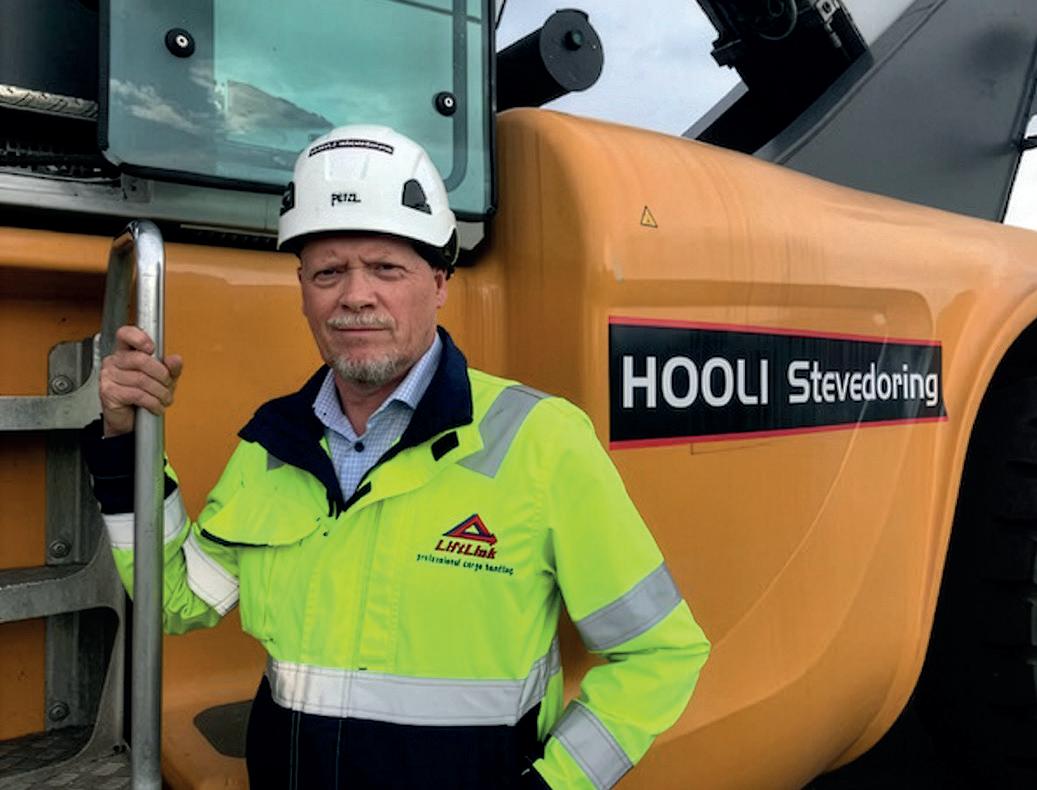
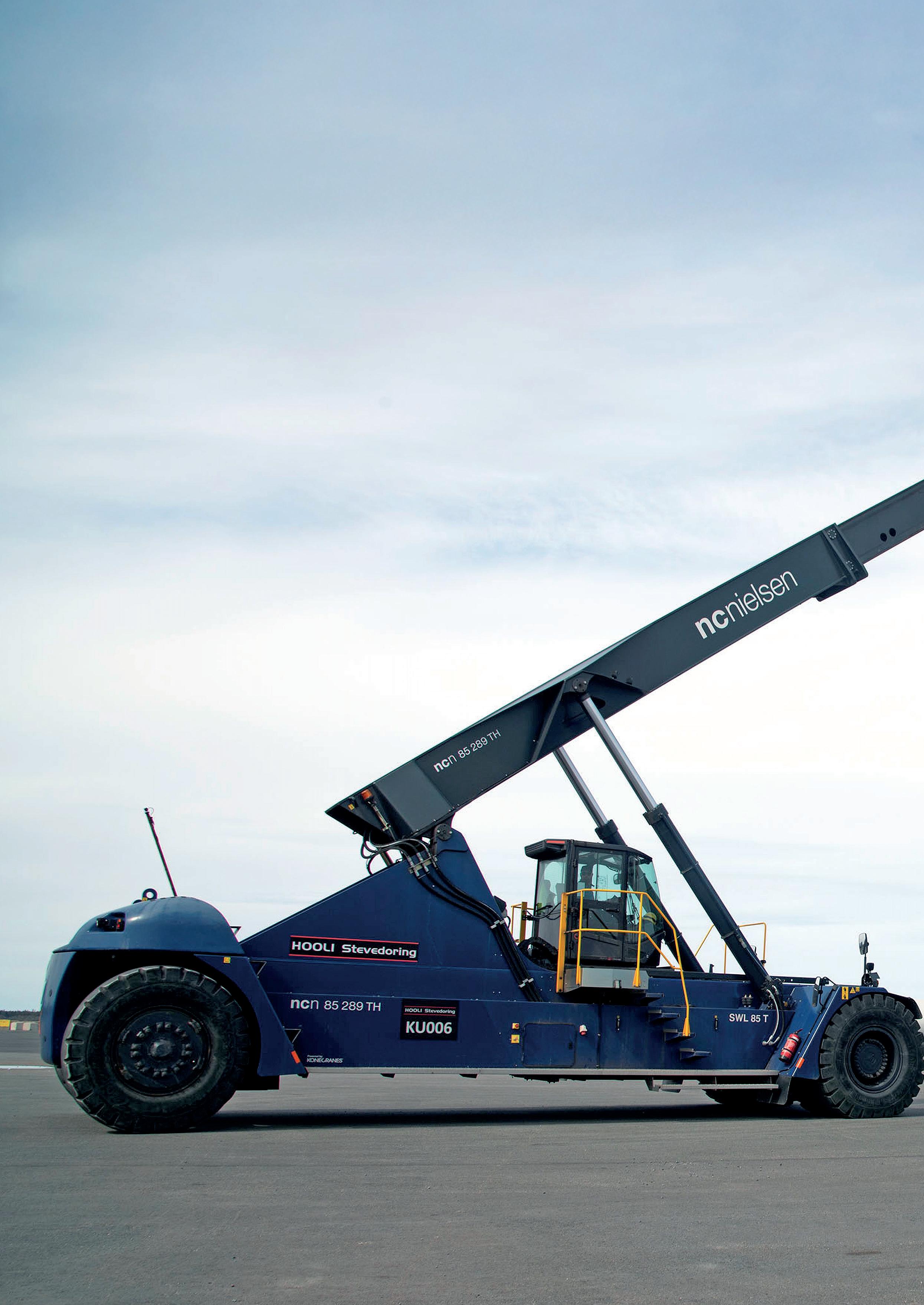
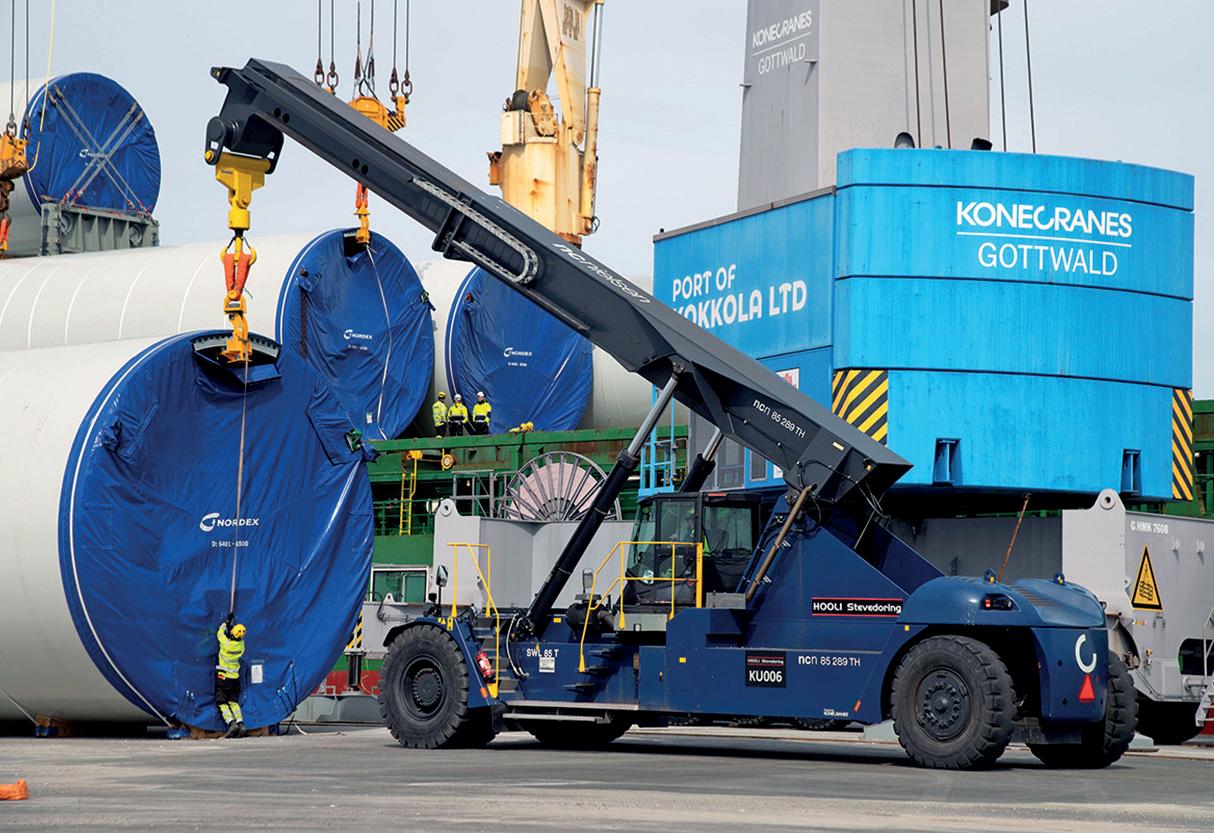
Hooli Stevedoring, based in Raahe, has been operating as a port operator at the Silverstone Port since last February in OX2’s Halsua Honkakangas wind power project. Hooli Stevedoring has grown into one of Finland’s most significant processors of onshore wind power components.
In the Honkakangas wind power project, components are unloaded from the ship using Port of Kokkola’s cranes by crane operators from the Port’s subsidiary Silverstone Bay Logistics. Hooli Stevedoring has brought in other personnel and equipment required for port logistics.
The Honkakangas onshore wind farm consists of a total of 16 wind turbines with a combined total output of approximately 105 megawatts. Slightly more than 200 shipments depart from the port of Kokkola to Honkakangas via a special transport route.
– In this project, we have a complete contract for port operations. Including maintenance, we have 15 employees in Kokkola, says Ari Hooli, CEO of Hooli Stevedoring.
– For a few years now, our cus tomers have been asking us to consider whether we could offer our services elsewhere in addition to Port of Raahe. From the perspec tive of the Raahe staff, Kokkola is quite close, and when the customer was ready to order us to Kokkola after the tender, we decided to get the project started, the CEO continues.
HOOLI STEVEDORING has solid experience in port logistics for wind power projects, as the company has handled the port operations of 530 wind turbines over the past six years. Hooli says the company has invested heavily in equipment and has also developed its own solutions, which make port operations fast and cost-effective.
– We have our own wind turbine blade and tower transport systems, implemented in collaboration with Movela, for longer transfers in ports and industrial areas. This brings flexibility to component transfers when ships are being unloaded and improves our company’s solvency, says Ari Hooli.
According to statistics from the Finnish Renewable Energy Association, over 56,000 megawatts (MW) of planned onshore wind power projects had been published in Finland last Jan-
According to him, it has been pleasant to work on a project in the port of Kokkola.
– We are naturally ready to respond to future requests from the industry, and hopefully this project will continue on a regular basis in Kokkola.
Hooli Stevedoring CEO Ari Hooli believes that data centres will accelerate the growth of wind power produc-
Hooli Stevedoring operates at the heart of the energy
PHOTO: HOOLI
uary. There were over 12,800 MW of projects planned in Finnish territorial waters. Ari Hooli sees the future of wind power construction as positive.
– Currently, 50–60 turbines are being built in Finland per year. However, data centres have brought pressure so that in a couple of years 100 turbines per year will be built, and that is where this industrial boom starts. It is good to remember that data centres absolutely ensure a stable electricity supply for themselves. This means that data centres also invest in electricity production, which makes electricity production profitable. So the market economy does take care of this issue too.
HOOLI STEVEDORING was founded in 2017, but the family business’s roots go back to the 1960s. At that time, Ari and his brother Kimmo Hooli’s father laid the foundation for the family’s entrepreneurial activities by starting to transport timber logs to the industry by truck. Gradually, the operations expanded to include chipping services.
When the brothers took over the family business in 1990, the main business at the time, supporting wood industry factories with port cranes, was transferred under the LiftLink name. As the business expanded, port crane services were also offered to the steel industry. With Hooli Stevedoring, Hooli increasingly focused its operations on stevedoring and handling
operates transition
In the picture, components are being unloaded from a ship and transported from Silverstone Port to OX2’s Honkakangas wind farm in Halsua.
project transport, which has become one of its core businesses.
– We have a really innovative team in the company that can tailor safe and flexible solutions for project processing and other goods flows. The last few years have been difficult for port operators, but I believe that better times are coming, as long as we keep the doors open for investments, says Ari Hooli.
Berner invests in a lye terminal in Kokkola Deep Port
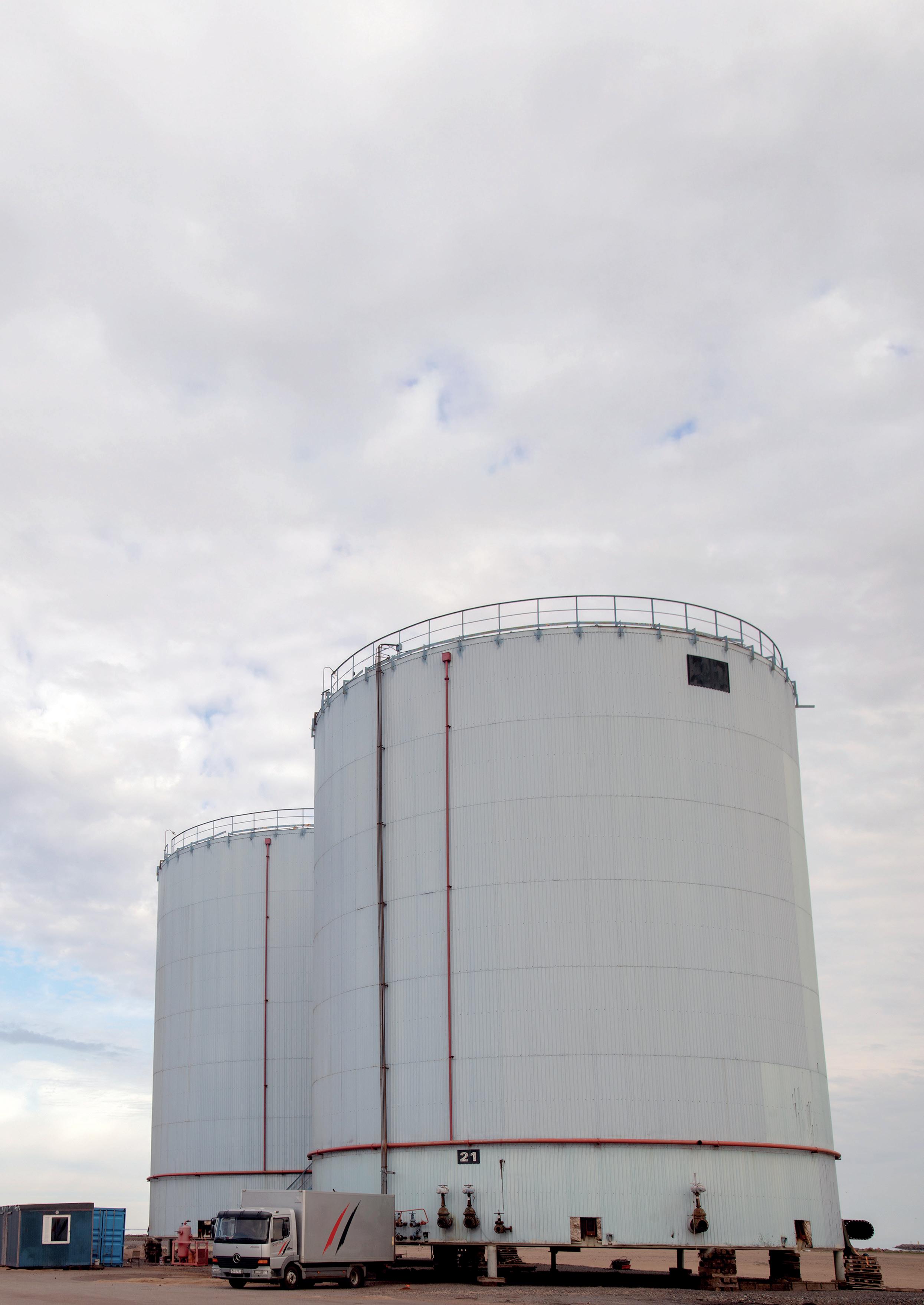
The Berner Industries is investing in the port of Kokkola by building two lye tanks and a liquid tank terminal in the Deep Port area. Lye is distributed from the terminal to trains and trucks, with some of the lye staying in the large industrial area.
The investment is related to the expansion of Berner Industries’ liquid product storage capacity, which started in 2021 at the port of Tahkoluoto in Pori.
IN ITS ENVIRONMENTAL PERMIT APPLICATION, the company states that a maximum of 230 000 tonnes of lye, or sodium hydroxide, will be stored in Kokkola per year, which is imported by ship from the EU and the United States. Lye is used in the chemical and metal industries, as well as the pulp and paper industries.
– Thanks to our central location, we are able to serve several industries in Finland from Kokkola with
tanker and rail transport. As a company, we are also striving to expand in the Kokkola region, and in connection with this, we acquired Voda Nordic, a water supply chemicals manufacturer in Kokkola Industrial Park, in the summer, says Sales Support Director Olli-Pekka Taivalmaa from Berner.
According to him, the preparation of the Kokkola project has been carried out in good collaboration with Port of Kokkola. The goal is for the terminal to be commissioned during the summer of 2027.
– It is significant, among other things, in terms of service and supply security that the investment will provide Finland with more tank and terminal capacity,” says Anssi Martinmäki, Commercial Manager of Port of Kokkola, commenting on the project.
Port of Kokkola extends Berner a warm welcome to the port community!
The Berner lye terminal is located in the Deep Port area.
” The port’s anniversary was the result of careful planning”
Last year’s 200th anniversary was an investment in the future of Port of Kokkola. The anniversary was carefully planned between the Port, its city owner, and the Marco Group, which acted as the strategic event partner and implementer of the anniversary.
Few operators get the opportunity to celebrate their 200th anniversary, but Port of Kokkola had such an opportunity last year. The anniversary was considered an excellent time to highlight the Port’s role in industrial competitiveness, Finland’s security of supply and enabling a clean transition. The anniversary succeeded in strengthening the reputation of Port of Kokkola as an internationally interesting logistics hub. In addition to the port, the city of Kokkola also gained a lot of visibility.
– The successful outcome was based on the fact that Port of Kokkola defined clear goals and target groups for the anniversary year from the very beginning, which Port of Kokkola wanted to reach with its anniversary theme. In addition to customers and stakeholders, the target group was the people of Kokkola, who practically own the port. We got started well in advance, as the project, including planning and all the preparations, took about three years. Port of Kokkola deserves great recognition for bravely setting out to build a long-term series of events, and for trusting us as the project implementer, says Minna Salin-Kivimäki, CEO of Marco Group.
DURING THE ANNIVERSARY YEAR, several events were organized for the Port’s customers and stakeholders to support the Port’s business, which attracted a large number of participants. The main event of the anniversary year was the international Port of
Kokkola Forum held in August. One of the highlights was the inauguration of the Silverstone container port, which was honoured with the presence of the President of the Republic, Alexander Stubb.
According to Minna Salin-Kivimäki, one of the goals of the anniversary year was that every resident of Kokkola would know that Port of Kokkola is celebrating its 200th anniversary.
– I believe we succeeded in this too. Several events were organised for the city’s residents, including the summer’s guided bus tours of the harbour, which were very popular and were attended by around 1 000 visitors.
Each event was built around the main theme mentioned at the beginning so that the events supported each other, forming a coherent event entity. This ensured that Port of Kokkola achieved the best possible impact with its anniversary investment. According to Minna Salin-Kivimäki, the anniversary also showed that events are a very effective way to target messages to the desired target group.
Minna Salin-Kivimäki is a member of the Finnish Event Industry’s corporate events working group, which is a vantage point for the future of the industry. According to her, the industry is moving in a direction where event planning professionals like Marco Group enter into long-term partnerships with companies. This allows events to be planned with a long-term perspective, maximizing their impact.
– In practice, long-term partnerships mean that the utilization of events is actually managed from a strategic perspective, so that each individual event advances the company’s goals.
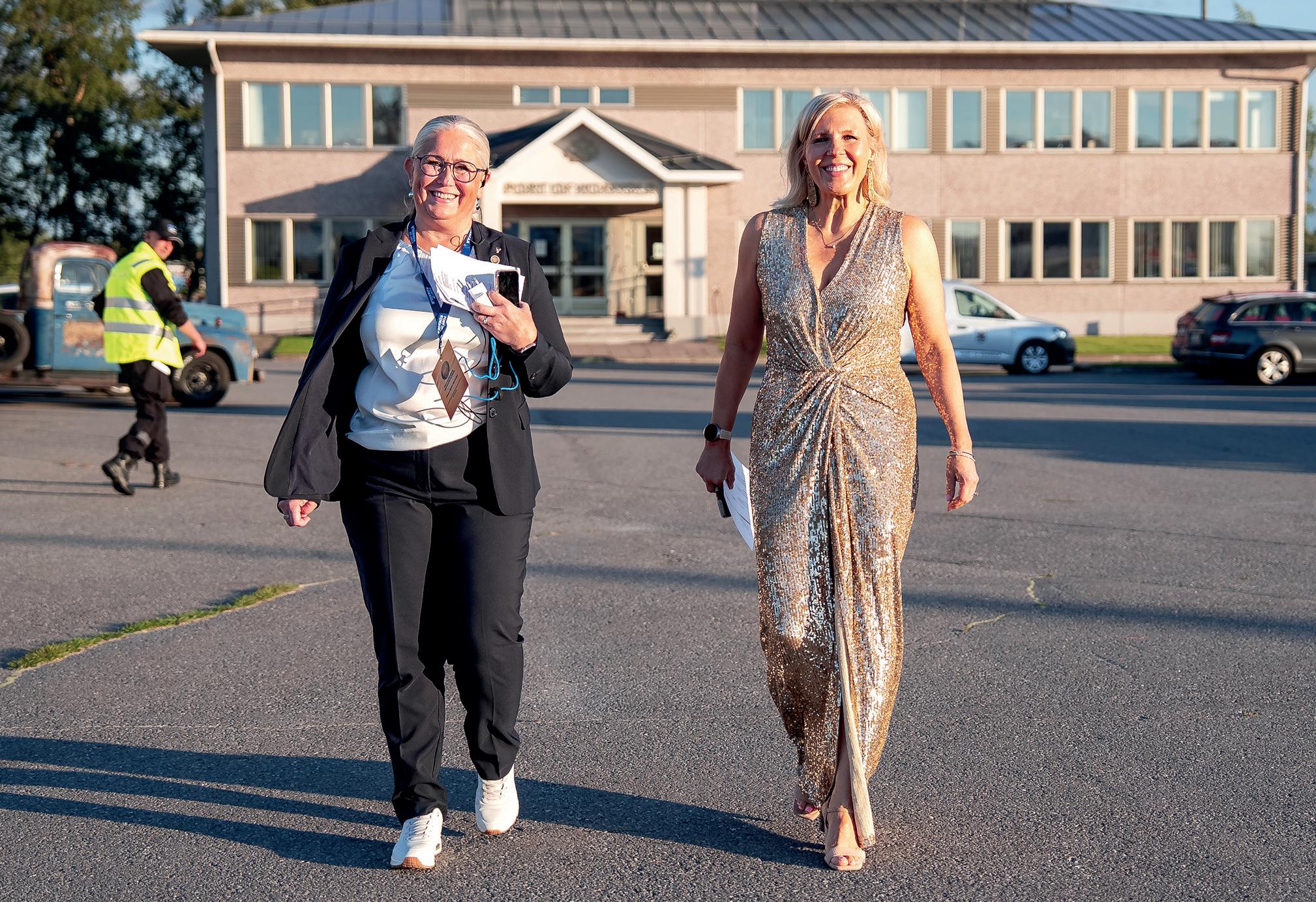
Minna Salin-Kivimäki and Vappu Pimiä are a familiar pair from many corporate events.
PHOTO: HIUTALE FILMS
95 years since the founding of the Seamen’s Mission
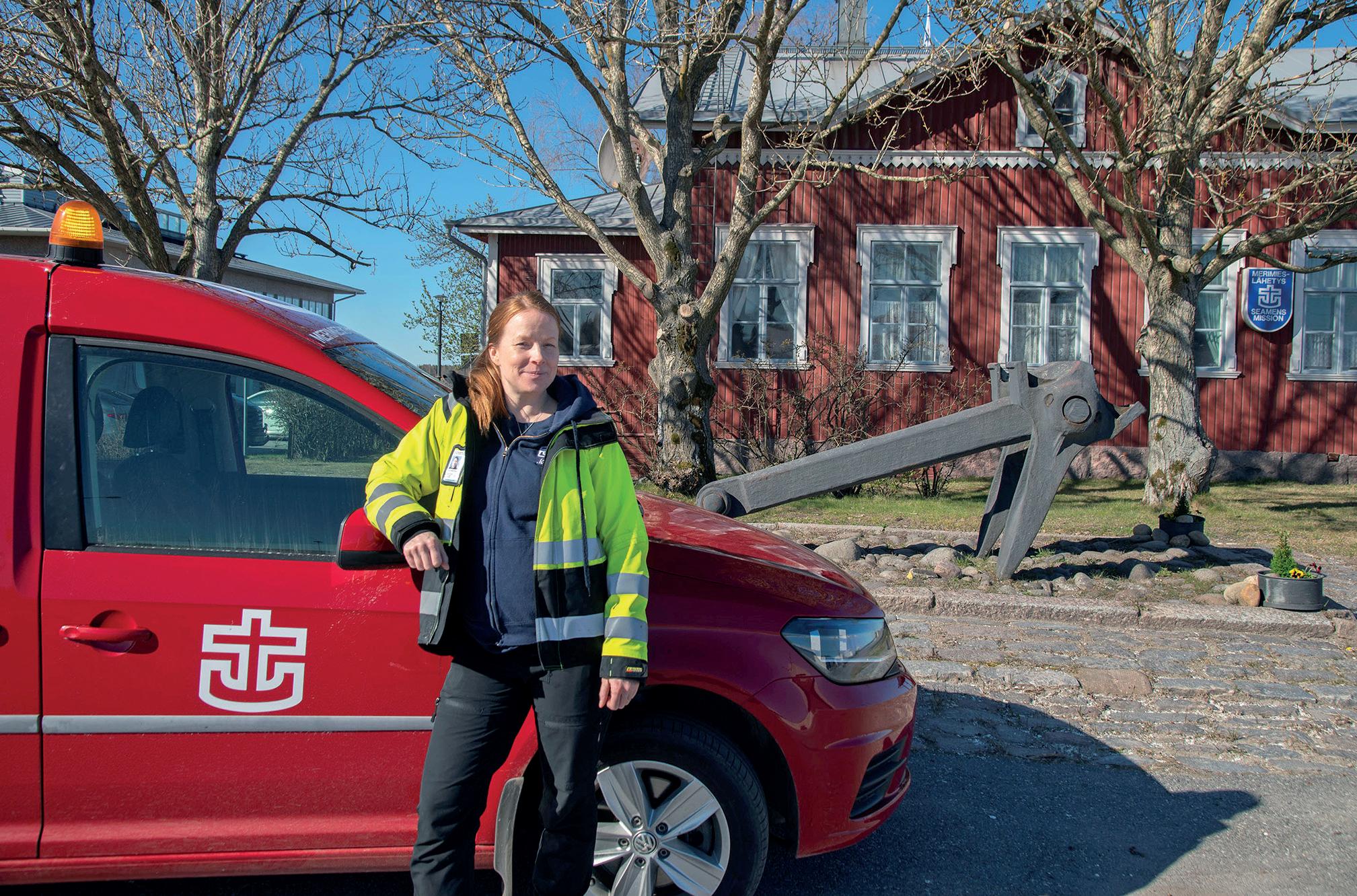
Jonna Kastell-Klapuri, the harbour curator of the Kokkola Seamen’s Church. In the background is the old Kokkola harbour office building, where the Seamen’s Church now operates, which will be 140 years old this year. In the middle stands the monument to the dockworkers, erected 51 years ago.
The Kokkola Seamen’s Mission has been operating in Kokkola for 95 years this year. The previously named Kokkola Ykspihlaja Port Mission was founded in 1931, and a common thread throughout its history has been to support people’s mental and spiritual well-being. However, the types of work have changed over the decades.
TheFinnish Seamen’s Mission Society has operated under the name of the Finnish Seamen’s Church since 1994. When the Seamen’s Mission was founded in Kokkola almost 100 years ago, one of the strong figures was Alma Hongell, who herself participated in sea voyages for years with her husband, sea captain Gustaf Hongell. She headed the Seamen’s Mission Society in Kokkola until her death in 1935.
There was probably a sailor’s home or reading room in the port of Kokkola even before the establishment of the port mission, but there is no precise information about who maintained it.
Jonna Kastell-Klapuri, an employee of the Kokkola Seamen’s Church and harbour curator, says that encounters with seafarers play an important role today.
– In earlier times, the idea was to gather together, hold a devotion, do crafts and perhaps organize a small raffle for the benefit of seafarers. Now such activities have faded, although there is still an active group in Pietarsaari that knits wool socks to be donated to seafarers at Christmas time. The Ykspihlaja Mission and Diaconate District, as well as other communities and individuals from Kokkola and elsewhere in Finland, are also contributing to the cause.
MEETING PEOPLE is, however, something that has endured for decades, says Jonna Kastell-Klapuri, giving a recent, personal example.
– Keeping in touch with family members during months-long sea voyages is really important for people. I went to take phone cards to the ship and met a person there whose English was not very good. However, I was able to communicate with the man in his native language, and then the conversation just started. The man told me about his son who was fighting at the front, his difficult family relationships, politics and everything. Finally, when I got off the ship, he shook my hand with both hands and thanked me for letting him express his feelings to me in that moment.
– This is precisely our most important task, to be present for people in such everyday matters and situations. I believe that for some people, seeing the anchor cross is also a sign that makes it easier for them to open up to a fellow human being who is ready to listen.
Jonna Kastell-Klapuri estimates that she meets hundreds of seafarers a year in her work, of which about half arrive at the Seamen’s Church in the Main Harbour. The rest of the encounters take place on ships or in port areas. If the ship’s personnel are busy with work, the encounter may be limited to a cheerful greeting. Sometimes a seafarer is pleasantly surprised to hear that the Seamen’s Church will give them a ride to town to run some errands.
The diversity of the port curator’s work is also reflected in the work attire.
– One moment I’m at the Seamen’s Church, baking and pouring coffee, wearing an apron. After that I can be at an event in my uniform or collared shirt, or in safety shoes, a high-visibility vest and a helmet on the port field, Jonna Kastell-Klapuri laughs,
Torbjörn Witting was awarded the Knight’s Order of the Lion of Finland
Torbjörn Witting, CEO of Port of Kokkola Ltd., has been presented with the Order of the Lion of Finland, awarded by the President of the Republic. The orders of the Order of the Lion of Finland are awarded to citizens who have distinguished themselves in the service of their country in recognition of notable civil and military merits.
Torbjörn Witting has worked for Port of Kokkola since 1996. He started as Port Director at the beginning of 2004.
– The award was given to me personally, but above all, I consider it a recognition of the entire Port of Kokkola team for their meritorious and long-term work for the benefit of Port of Kokkola and its customers, says Torbjörn Witting.
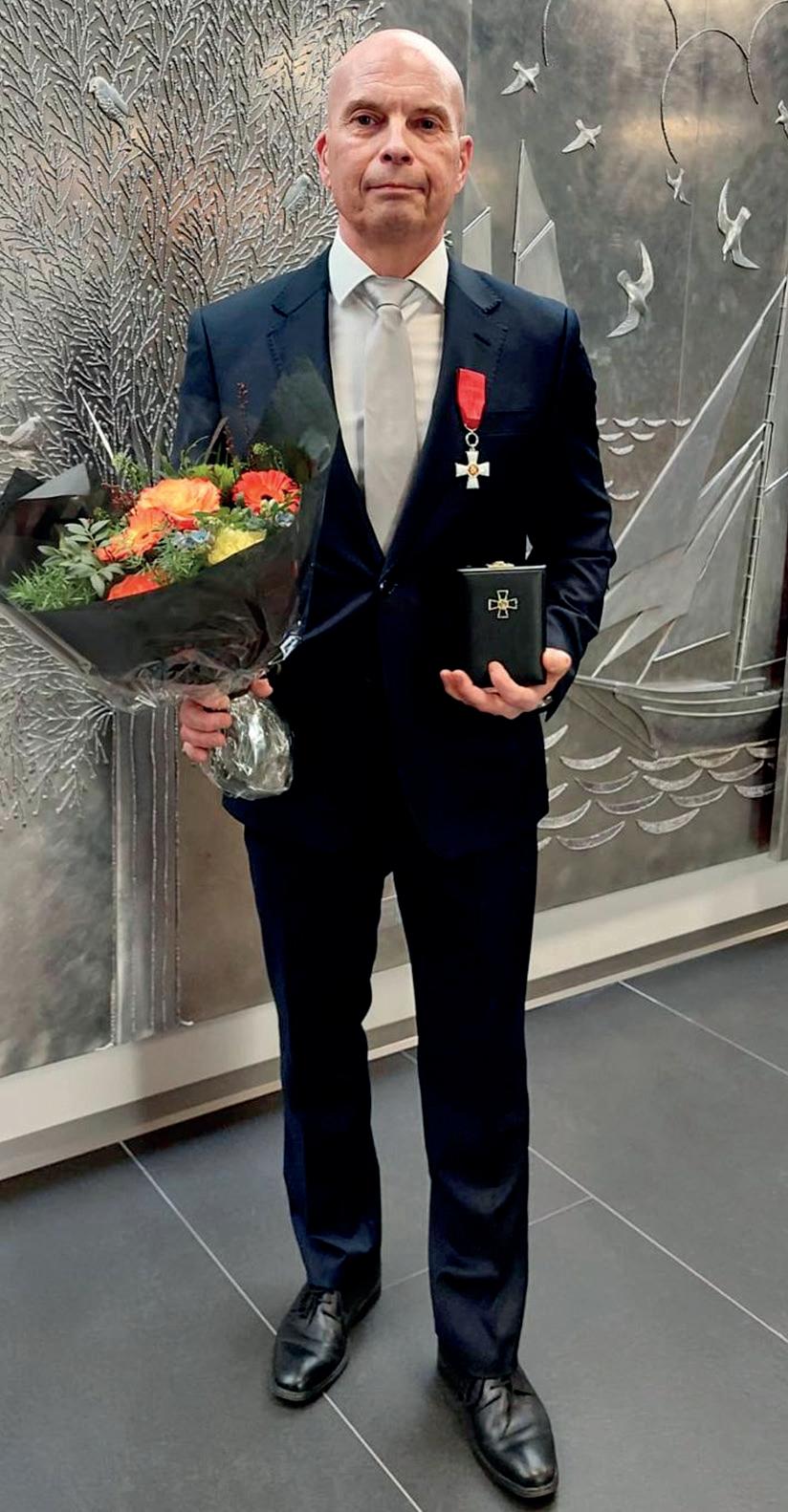
According to CEO Torbjörn Witting, the award he received is a tribute to the entire Port of Kokkola team.
Business developer Els Berkers was impressed by the Port of Kokkola and KIP
Port of Kokkola had the pleasure and honour of receiving Business Development Officer Els Berkers from the Dutch Embassy in Stockholm as a guest and introducing her to both Port of Kokkola and the Kokkola Industrial Park.
During her visit, Els Berkers was impressed by what she saw. She is based in Stockholm and is responsible for business development in the Nordic region, including promoting export and investment opportunities and creating networks between the Netherlands and the Nordic countries. The two-day visit also included a meeting with the management of the city of Kokkola.
– We met Els Berkers earlier this year in the Netherlands at a port industry event, to which the Dutch Ministry of Foreign Affairs had invited representatives of Nordic ports, including the undersigned from Finland, as well as representatives from the port of Helsinki and the Ports Association. The themes of the meetings were commercial issues, the green transition and security of supply. I was pleased to invite Els Berkers on a return visit to get to know Port of Kokkola and the KIP area and to discuss what kind of cooperation opportunities the above-mentioned themes could offer in our case, says Torbjörn Witting, CEO of the Port of Kokkola.
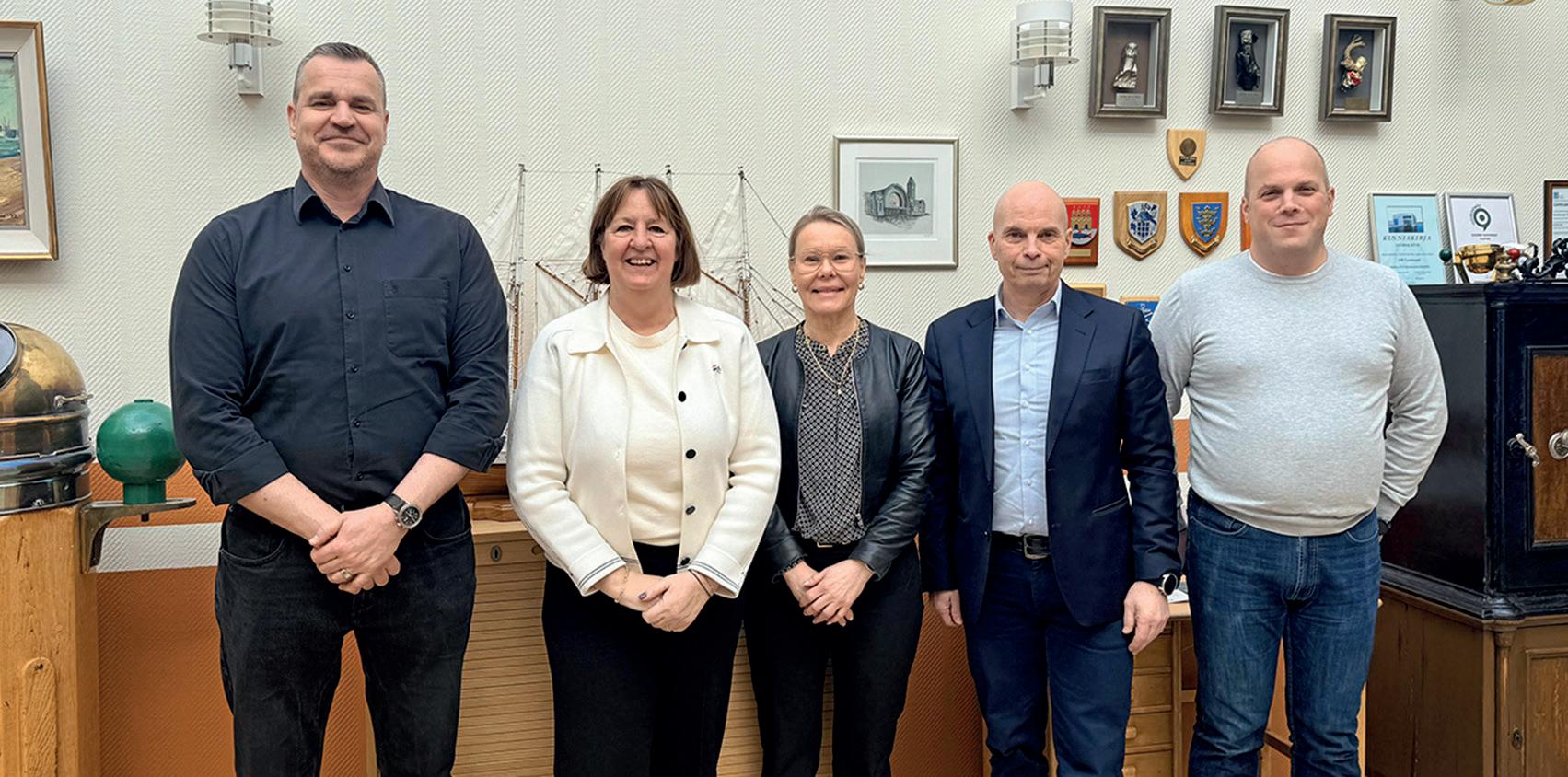
Els Berkers (2nd left) from the Dutch Embassy in Stockholm also met with the staff of Port of Kokkola during her visit to Kokkola.