Emergency Response Procedure

ISO14001 Toolkit: Version 3
ISO14001 Toolkit: Version 3
The header page and this section, up to and including Disclaimer, must be removed from the final version of the document. For more details on replacing the logo, yellow highlighted text and certain generic terms, see the Completion Instructions document.
The Emergency Response Procedure sets out in detail how the organization will initially react to an environmental incident and manage it going forward. It is intended to be used at the point at which an incident has occurred.
This document addresses the following sections of the ISO14001 standard:
• 8. Operation o 8.2 Emergency preparedness and response
This procedure is intended for use where the impact, or potential impact of an incident, is significant and possibly widespread. You will need to think carefully about who should be included in the incident response structure so that the right people are available in the event of an incident. The procedures contained in this document need to be clear and concise as they will possibly be used in times of stress to the people involved.
Try to always have a Plan B for each aspect of the procedure, such as deputies for the people involved, an alternative command centre and access to critical documents and resources.
We would recommend that this document is reviewed at least annually and after every relevant exercise or test.
This document may contain fields which need to be updated with your own information, including a field for Organization Name that is linked to the custom document property “Organization Name”.
To update this field (and any others that may exist in this document):
1. Update the custom document property “Organization Name” by clicking File > Info > Properties > Advanced Properties > Custom > Organization Name.
2. Press Ctrl A on the keyboard to select all text in the document (or use Select, Select All via the Editing header on the Home tab).
3. Press F9 on the keyboard to update all fields.
4. When prompted, choose the option to just update TOC page numbers.
If you wish to permanently convert the fields in this document to text, for instance, so that they are no longer updateable, you will need to click into each occurrence of the field and press Ctrl Shift F9.
If you would like to make all fields in the document visible, go to File > Options > Advanced > Show document content > Field shading and set this to “Always”. This can be useful to check you have updated all fields correctly.
Further detail on the above procedure can be found in the toolkit Completion Instructions This document also contains guidance on working with the toolkit documents with an Apple Mac, and in Google Docs/Sheets.
Copyright notice
Except for any specifically identified third-party works included, this document has been authored by CertiKit, and is ©CertiKit except as stated below. CertiKit is a company registered in England and Wales with company number 6432088.
This document is licensed on and subject to the standard licence terms of CertiKit, available on request, or by download from our website. All other rights are reserved. Unless you have purchased this product you only have an evaluation licence.
If this product was purchased, a full licence is granted to the person identified as the licensee in the relevant purchase order. The standard licence terms include special terms relating to any third-party copyright included in this document.
Please Note: Your use of and reliance on this document template is at your sole risk. Document templates are intended to be used as a starting point only from which you will create your own document and to which you will apply all reasonable quality checks before use.
Therefore, please note that it is your responsibility to ensure that the content of any document you create that is based on our templates is correct and appropriate for your needs and complies with relevant laws in your country.
You should take all reasonable and proper legal and other professional advice before using this document.
CertiKit makes no claims, promises, or guarantees about the accuracy, completeness or adequacy of our document templates; assumes no duty of care to any person with respect its document templates or their contents; and expressly excludes and disclaims liability for any cost, expense, loss or damage suffered or incurred in reliance on our document templates, or in expectation of our document templates meeting your needs, including (without limitation) as a result of misstatements, errors and omissions in their contents.

DOCUMENT REF EMS-DOC-08-3
VERSION 1
DATED [Insert date]
DOCUMENT AUTHOR [Insert name]
DOCUMENT OWNER [Insert name/role]
date]
Distribution
NAME TITLE
NAME POSITION SIGNATURE
This document is intended to be used when an incident of some kind has occurred that affects the business operations of [Organization Name] and has a significant environmental impact.
The procedures set out in this document should be used only as guidance when responding to an incident. The exact nature of an incident and its environmental impact cannot be predicted with any degree of certainty and so it is important that a good degree of common sense is used when deciding the actions to take.
However, it is intended that the structures set out here will prove useful in allowing the correct actions to be taken more quickly and based on more accurate information.
The objectives of this emergency response procedure are to:
• Provide a concise overview of how [Organization Name] will respond to a significant incident affecting the environment
• Set out who will respond to an incident and how our emergency response procedures will be invoked
• Describe the facilities that are in place to help with the management of the incident
• Define how decisions will be taken with regard to our response to an incident
• Explain how communication within the organization and with external parties will be handled
• Provide contact details for key people and external agencies
• Define what will happen once the incident is resolved, and the responders are stood down
All members of staff named in this document will be given a copy which they must have available when required.
Contact details will be checked and updated at least three times a year. Changes to contact or other relevant details that occur outside of these scheduled checks should be sent to emergency.planning@organization.com as soon as possible after the change has occurred.
All personal information collected as part of the emergency response planning process and contained in this document will be used purely for the purposes of emergency response and is subject to relevant data protection legislation.
The flow of the emergency response procedure is shown in Figure 1 and explained in more detail in the rest of this procedure.
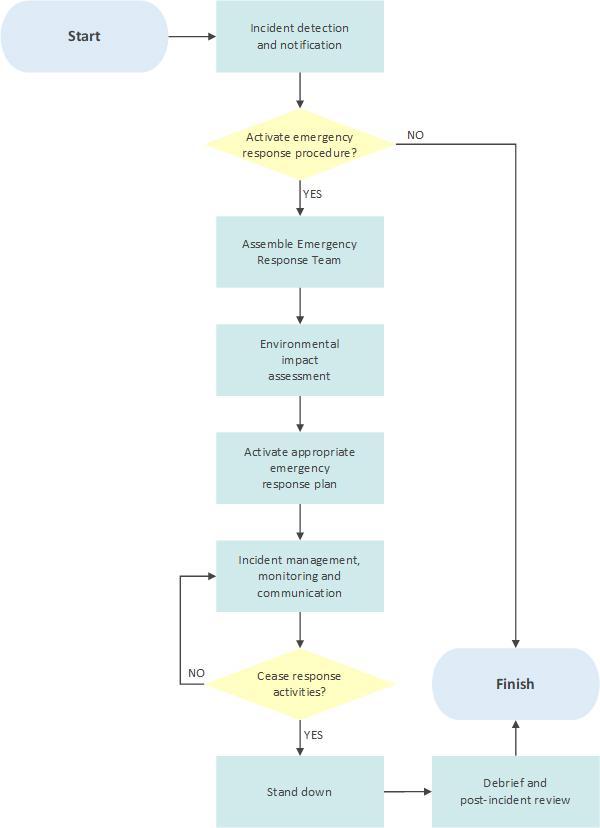
The incident may initially be detected in a wide variety of ways and through a number of different sources (including emergency services), depending on the nature and location of the incident. The most important factor is that the emergency response procedure must be started as quickly as possible so that an effective response can be given.
The following contacts will act as initial responders for a significant environmental incident. Any of these contacts may be notified of an incident. They all have the authority to contact the Emergency Response Team (ERT) Leader at any time to ask him/her to assess whether the Emergency Response (ER) Procedure should be activated.
On receiving notification of a possible incident, the person taking the call should record the details given, including:
• The name of the caller
• Caller’s contact details
• Date and time of the call
• Call taker’s name
• Exact description of the incident, including:
o Date and time of the incident
o Nature of the incident, e.g. fire, flood, explosion, leak
o Location of the incident
o Whether emergency services have been called (if appropriate) and, if so, are they in attendance?
o Any injuries or loss of life, if known
o An estimate of the scale of the impact
• Any other relevant information available
The initial responder to the incident should then contact the Emergency Response Team Leader (or nominated deputy) using the contact details below to convey the above information. Outcome options are “Contacted”, “No answer”, “Message left” and “Unreachable”.
Team Leader
Deputy 1
Deputy 2
Deputy 3
In the event that none of the above can be contacted, the initial responder has the authority to decide whether or not the Emergency Response Procedure should be activated.
Once notified of an incident, the Team Leader must decide whether the scale and actual or potential impact of the incident justifies the activation of the Emergency Response Procedure and the convening of the Emergency Response Team.
Guidelines for whether a formal incident response should be initiated for any particular incident of which the Team Leader has been notified are as follows.
• There is significant actual or potential danger to life, or:
• There is significant actual or potential impact to the environment, or:
• Any other situation which may cause significant impact to the organization and its environmental compliance obligations
Guidelines for the definition of “significant” within the above criteria are as follows:
• A major leak or spillage of corrosive or hazardous materials
• Significant release of pollution, e.g. into water or air
• Emergency services are involved
• Potential for damage to reputation via coverage in local and national press, and social media
• More than X employees affected
• [define the level of impact that should trigger the incident response procedure]
In the event of disagreement or uncertainty about whether or not to activate an incident response, the decision of the Team Leader will be final.
If it is decided not to activate the procedure, then a plan should be created to allow for a lower-level response to the incident within normal management channels. This may involve the invocation of an environmental response procedure at a local level.
If the incident warrants the activation of the ER procedure, the Team Leader will start to assemble the ERT as described in the next section.
Once the decision has been made to activate the emergency response procedure, the Team Leader (or deputy) will ensure that all role holders (or their deputies if main role holders are un-contactable) are contacted, made aware of the nature of the incident and asked to assemble at the Incident Command Centre.
The exception is the Incident Liaison who will be asked to attend the location of the incident in order to start to gather information for the impact assessment that the ERT will conduct so that an appropriate response can be determined.
The Emergency Response Team (ERT) will consist of the following people in the roles specified and with the stated deputies.
MAIN ROLE HOLDER DEPUTY
Team Leader
Team Facilitator
Incident Liaison
Business Operations
Health and Safety
Human Resources
Communications
Legal and Regulatory
Table 3: Emergency response team members
Contact details for the above are listed in the form Emergency Response Contact Log.
The responsibilities of the roles within the Emergency Response Team are as follows:
5.2.1
• Decides whether or not to initiate a response
• Assembles the emergency response team
• Overall management of the emergency response team
• Acts as interface with the board and other high-level stakeholders
• Final decision maker in cases of disagreement
5.2.2
• Supports the emergency response team
• Co-ordinates resources within the command centre
• Prepares for meetings and takes record of actions and decisions
• Briefs team members on latest status on their return to the command centre
• Facilitates communication via email, fax, telephone, or other methods
• Monitors external information feeds, such as weather and news
5.2.3
• Attends the site of the incident as quickly as possible
• Assesses the extent and impact of the incident
• Provides a first-person account of the situation to the ERT
• Liaises with the ERT on an on-going basis to provide updates and answer any questions required for decision-making
5.2.4
• Contributes to decision-making based on knowledge of business activities, products and services
• Briefs other members of the team on operational issues
• Helps to assess likely impact on customers of the organization
5.2.5 Health and safety
• Assesses the risk of death or injury of the incident
• Ensures that legal responsibilities for health and safety are met at all times
• Liaises with emergency services, such as police, fire and medical
• Considers environmental issues with respect to the incident
5.2.6 Human resources
• Assesses and advises on HR policy and employment contract matters
• Represents the interests of organization employees
• Advises on capability and disciplinary issues
5.2.7 Communications
• Responsible for ensuring internal communications are effective
• Decides the level, frequency and content of communications with external parties such as the media
• Defines approach to keeping affected parties, such as customers and shareholders, informed
5.2.8 Legal and regulatory
• Advises on what must be done to ensure compliance with relevant laws and regulatory frameworks
• Assesses the actual and potential legal implications of the incident and subsequent actions
5.3 Incident command centre
In order to accommodate the ERT, a pre-prepared location has been selected for the Incident Command Centre.
5.3.1 Location
The address of the command centre is as follows:
[Give the full address of the command centre]
A location map and floor plan of the command centre are shown in Appendix B of this document.
5.3.2
During office hours (8am to 5.30pm Monday to Friday) the command centre is accessible via reception at the main entrance to the building. Outside of office hours the Duty Facilities Manager must be contacted on xxx xxx xxxx to provide access within one hour of it being requested.
5.3.3
Parking is available 24 hours a day, 7 days a week at the public facility directly across the street from the office building containing the command centre.
5.3.4
The following facilities are available with the command centre:
• Main office area
• Separate conference room
• 8 x landline telephones
• 8 x computers
• Access to the corporate network
• Internet access
• 8 x desks and chairs
• Washroom facilities
• Small kitchen with kettle and microwave
• Projector with screen
• 1 x colour printer (networked)
• Television
• 8 x hard hats and high visibility vests
• 4 x flashlights/torches
• Stationery (pads, pens, pencils, hole punch, staplers)
A variety of shops are within easy walk of the command centre should additional equipment be needed (shop hours only).
In the event that the incident command centre is not available for any reason, a secondary facility exists at the following location:
[Give the full address of the alternate command centre. Add location map, floor plan and facility list if available]
Once the ERT has been assembled at the command centre, a more detailed environmental impact assessment must be carried out in order to decide the appropriate response.
The information that should have been recorded at the time of notification of the incident is as follows:
• Date and time of the incident
• Nature of the incident, e.g. fire, flood, explosion, leak
• Location of the incident
• Whether emergency services have been called (if appropriate) and, if so, are they in attendance?
• Any injuries or loss of life, if known
• An estimate of the scale of the impact
In addition to this initial indication, further information should be available from the Incident Liaison team member of the ERT, who should be at the location of the incident.
Useful further information could include:
• Likely duration of the incident
• Any obvious knock-on effects
• The extent of impact on the environment, e.g. pollution, effect on wildlife
• The business units affected and the extent of the impact to them
• The effect on production or service delivery
• A list of those people who will not be able to assist in the recovery
• Initial indication of the likely cause of the incident
This information should be documented so that a clear time-based understanding of the situation as it emerges is available for current use and later review. A form template is provided for this purpose in the Incident Impact Information Log
A list of the business activities, products, services, teams and supporting processes which have been affected by the incident should be created together with an assessment of the extent of the impact. A template form to record this information is in the Plan Activation Log.
Once the ERT has been assembled at the command centre and as much detail as possible has been collected about the incident and its impact, a decision needs to be made about the most appropriate response.
[Organization Name] has a variety of emergency response plans that provide for actions to be taken to respond to different types of environmental incidents.
These plans are as follows:
Table 4: Emergency response plans
Based on the current understanding of the environmental impact of the incident, an appropriate combination of the above plans should be activated to try to mitigate the impact.
The form Plan Activation Log should be used to record the plans which are activated to address the specific environmental impact of the incident.
The method of activation of each plan is detailed in the individual plan document.
Once an appropriate response to the incident has been identified and the relevant emergency response plans activated, the ERT needs to be able to manage the overall response, monitor the status of the incident and ensure effective communication is taking place at all levels.
Regular ERT meetings must be held at an appropriate frequency decided by the Team Leader. A standard agenda for these meeting is in Appendix A. The purpose of these meetings is to ensure that recovery resources are managed effectively and that key decisions are made promptly, based on adequate information. Minutes of each meeting will be created by the Team Facilitator.
The Incident Liaison will provide updates to the ERT to a frequency decided by the Team Leader. These updates should be co-ordinated with the ERT meetings so that the latest information is available for each meeting.
It is vital that effective communications are maintained between all parties involved in the incident response.
8.1.1
The primary means of communication during an incident will be telephone, both landline and mobile. In the event of telephone communications being unavailable, provision may be made for the use of radio communications, although the usable range of such equipment should be assessed.
Email should not be used unless telephone and equivalent alternatives are unavailable.
The following guidelines should be followed in all communications:
• Be calm and avoid lengthy conversation
• Advise internal team members of the need to refer information requests to the ERT
• If the call is answered by someone other than the contact:
o Ask if the contact is available elsewhere
o If they cannot be contacted, leave a message to contact you on a given number
o Do not provide details of the incident
• Always document call time details, responses and actions
All communications should be clearly and accurately recorded using the form Message Log.
Calls incoming to the command centre should use the main number, which is:
+xx xxx xxx xxxx
Eight lines are available for incoming calls. If there is no answer, a message may be left. If the call is urgent, the caller should both leave a message and call back, as well as trying alternative methods of communication if available.
If leaving a message, ensure you leave:
• Your name
• Your number
• Your organization
• The name of the person the message is for
• The message
Details of the incident should not be given when leaving a message.
Depending on the incident, there may be a variety of external parties which will be communicated with during the course of the response. It is important that the information released to third parties is managed so that it is timely and accurate.
Calls which are not from agencies directly involved in the incident response (such as the media) should be passed to the member of the ERT responsible for communications.
Emergency responders such as the police, fire and ambulance services will be well practised in incident handling and will have their own structured methods for communication. Every effort should be made to comply with these. A listing of the phonetic alphabet used by the emergency services is in Appendix C.
There may be a number of external interested parties who, whilst not directly involved in the incident, may be affected by it, and need to be alerted to this fact. These may include:
• Customers
• Suppliers
• Shareholders
• Regulatory bodies
The Communications ERT member should make a list of such interested parties and define the message that is to be given to them. A list of some external agencies is given in External Contact List
Interested parties which have not been alerted by the ERT may call to obtain information about the incident and its effects. These calls should be recorded in the message log and passed to the Communications member of ERT.
There are a number of national and regional risk advisory systems which may be able to provide information about the incident and likely developments.
The following such systems are monitored:
The frequency of monitoring these systems should be increased for those that are directly relevant to the incident in hand. All relevant warnings should be logged and communicated to the ERT Team Leader.
In general, the communication strategy with respect to the media will be to issue regular updates via top management. No members of staff should give an interview with the media unless this is pre-authorised by the ERT.
The preferred interface with the media will be to issue pre-written press releases. In exceptional circumstances, a press conference will be held to answer questions about the incident and its effects. It is the responsibility of the Communications ERT member to arrange the venue for these and to liaise with press that may wish to attend.
In drafting a statement for the media, the following guidelines should be observed:
• Personal information should be protected at all times
• Stick to the facts and do not speculate about the incident or its cause
• Ensure legal advice is obtained prior to any statements being issued
• Try to pre-empt questions that may reasonably be asked
• Emphasise that a prepared response has been activated and that everything possible is being done
The following members of staff will be appointed spokespeople for the organization if further information is to be issued, e.g. at a press conference:
The most appropriate spokesperson will depend upon the scale of the incident and its effect on the environment, customers, supplier, the public and other stakeholders.
The Team Leader will decide, based on the latest information from the Incident Liaison and other members of the team, the point at which response activities should be ceased and the ERT stood down. Note that the recovery and execution of emergency response plans may continue beyond this point but under less formal management control.
This decision will be up to the Team Leader’s judgement but should be based upon the following criteria:
• The situation has been fully resolved or is reasonably stable
• The pace of change of the situation has slowed to a point where few decisions are required
• The appropriate response is well under way and emergency response plans are progressing to schedule
• Affected business activities have been resumed, although perhaps at a lower level than normal
• The degree of risk to the environment has lessened to an acceptable point
• Immediate legal and regulatory responsibilities have been fulfilled
If recovery from the incident is ongoing, the Team Leader should define the next actions to be taken. These may include:
• Less frequent meetings of the ERT, e.g. weekly, depending on the circumstances
• Informing all involved parties that the ERT is standing down
• Ensuring that all documentation of the incident is secured
• Requesting that all staff not involved in further work return to normal duties
• Returning the command centre to a state where it may be used for a future incident
All actions taken as part of standing down should be recorded.
After the ERT has been stood down, the Team Leader will hold a debrief of all members, ideally within 24 hours. The relevant records of the incident will be examined by the ERT to ensure that they reflect actual events and represent a complete and accurate record of the incident.
Any immediate comments or feedback from the team will be recorded.
A more formal post-incident review will be held at a time to be decided by top management according to the magnitude and nature of the incident. As input to this review, the Team Leader will complete a Post Incident Report using the form Post Incident Report as a template.
It is recommended that the following standard agenda be used for meetings of the Emergency Response Team.
Attendees: All members of the Emergency Response Team
Location: Command Centre or online if appropriate
Frequency: Every two hours, on the even hour
Chair: Team Leader
Minutes: Team Facilitator
1. Actions from previous meeting
2. Incident status update
3. Decisions required
4. Task allocation
5. Internal communications
6. External communications
7. Standing down
8. Any other business
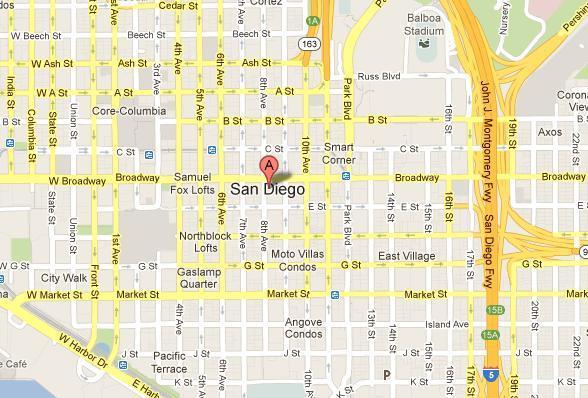
12.1 Location map
The location of the incident command centre is shown below [replace with map of your command centre].
12.2 Floor plan
The layout of the incident command centre is shown below [replace with layout of your command centre]
In order to ensure that messages are understood correctly, the phonetic alphabet should be used when spelling out words and numbers.
• A: Alpha
• B: Bravo
• C: Charlie
• D: Delta
• E: Echo
• F: Foxtrot
• G: Golf
• H: Hotel
• I: India
• J: Juliet
• K: Kilo
• L: Lima
• M: Mike
• N: November
• O: Oscar
• P: Papa
• Q: Quebec
• R: Romeo
• S: Sierra
• T: Tango
• U: Uniform
• V: Victor
• W: Whiskey
• X: X-ray
• Y: Yankee
• Z: Zulu
• 0: Zero
• 1: Wun
• 2: Two
• 3: Tree
• 4: Fower
• 5: Fife
• 6: Six
• 7: Seven
• 8: Ait
• 9: Niner