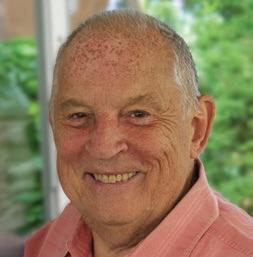
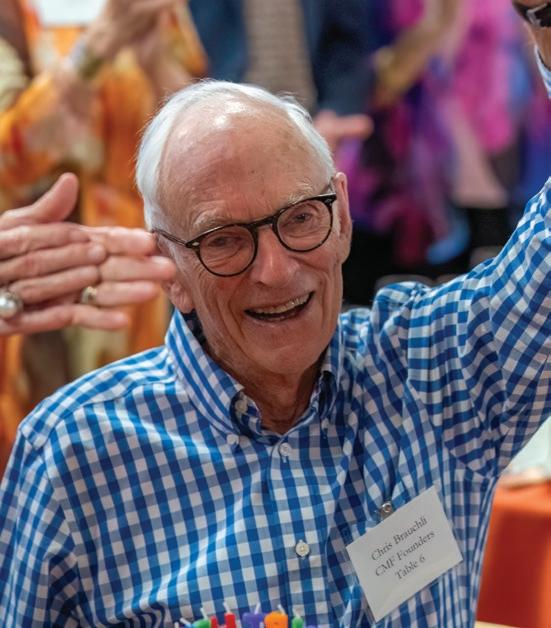
The 2026 Season is dedicated to the memory of our dear friend, Ralph “Chris” Christoffersen.
FRI // JUL 31 // 7:00PM 1 Opening Night
SAT // AUG 1 // 7:00PM 1 Martha Graham Dance Company SUN // AUG 2 // 6:00PM 1 UpClose with Damian Woetzel
MON // AUG 3 // 7:00PM 1 State of Grace featuring Balanchine’s Serenade with Colorado Ballet
TUES // AUG 4 // 6:00PM 1 Dance for $20.26
2026 PERFORMANCE SCHEDULE
WED // AUG 5 // 6:00PM 3 Rennie Harris Puremovement
THURS // AUG 6 // 5:30PM 4 Dancing in the Park FRI // AUG 7 // 7:00PM 1 International Evenings of Dance I SAT // AUG 8 // 5:00PM 1 International Evenings of Dance II SAT // AUG 8 // 8:00PM 1 International Evenings of Dance III SUN // AUG 9 // 6:00PM 3 Colorado Dances featuring Colorado Ballet & Cleo Parker Robinson Dance MON // AUG 10 // 7:00PM 1 NOW: Premieres
WED // AUG 5 // 11:00AM 2 Watching Dance with Heather Watts 1 - Gerald R. Ford Amphitheater 2 - Vail Mountain School Theatre 3 - Vilar Performing Arts Center 4 - Avon Performance Pavilion at Nottingham Park Programming subject to change.
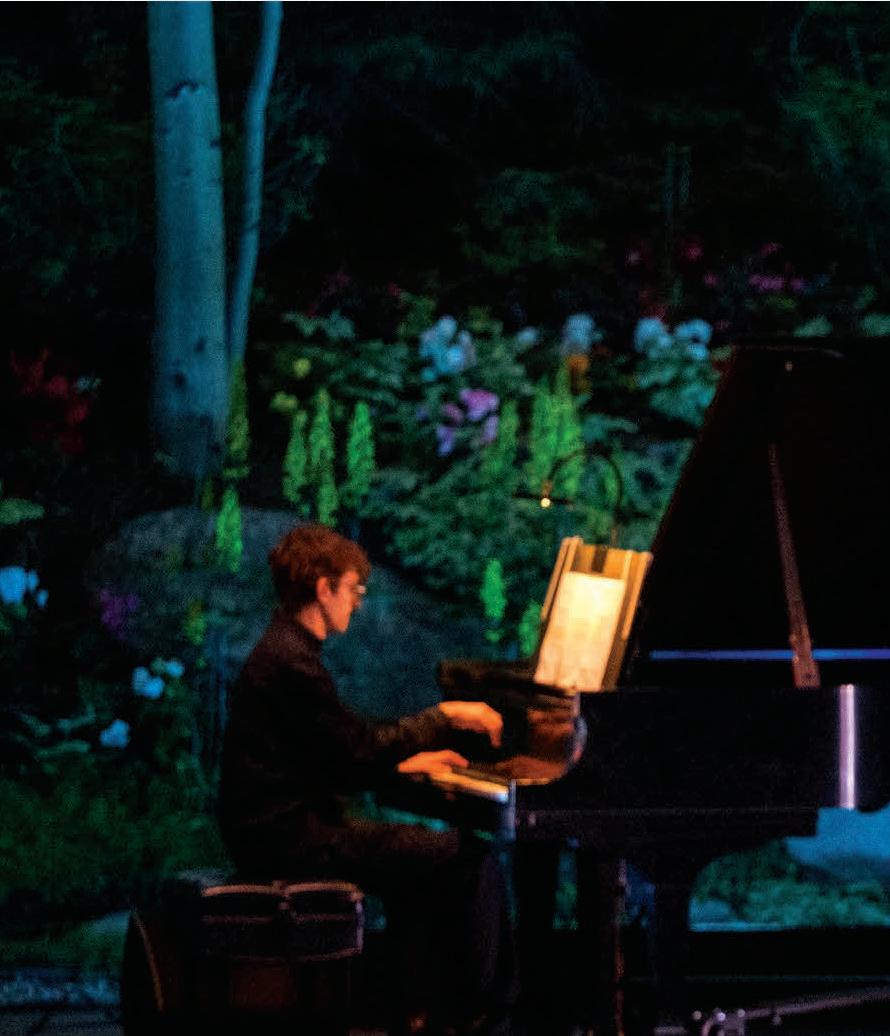
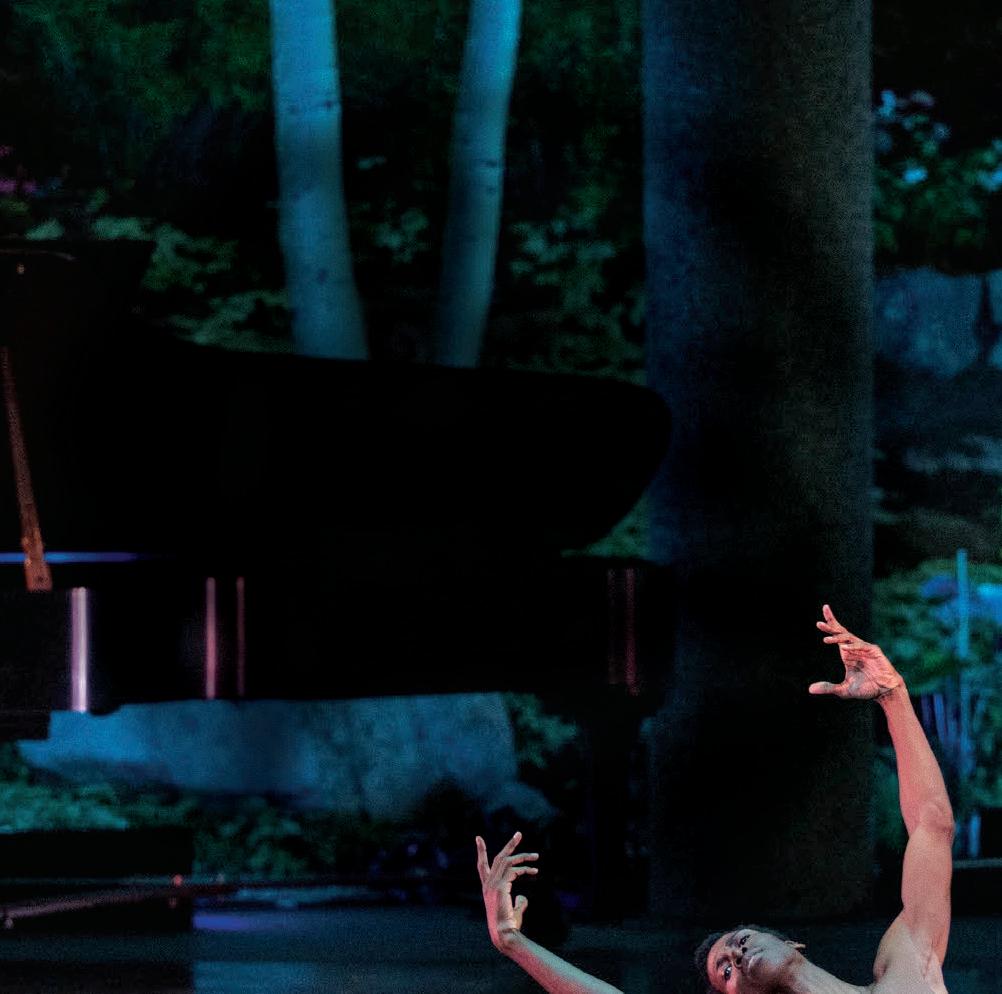
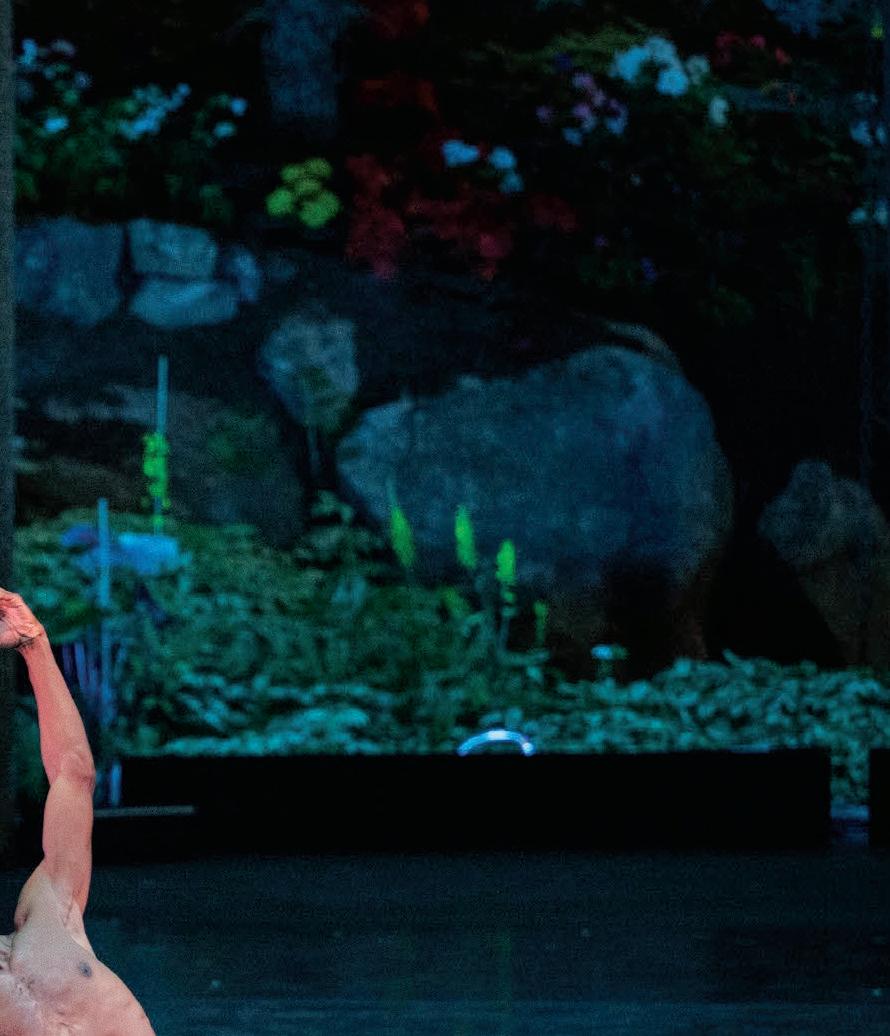
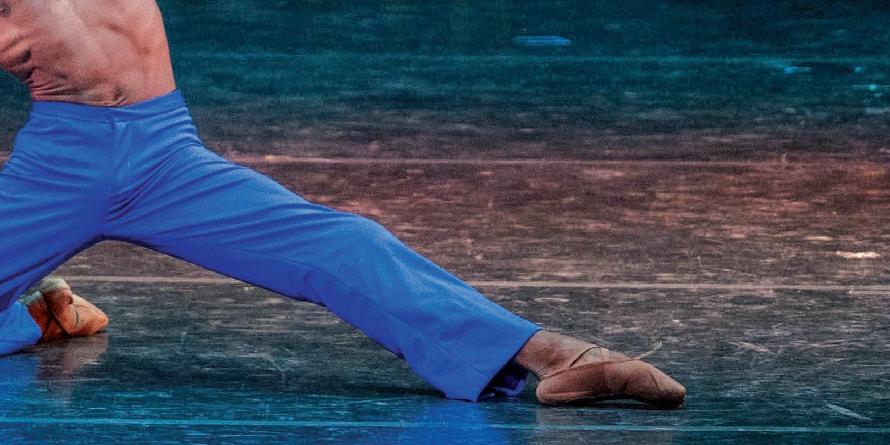
Calvin Royal III performs with Joel Wenhardt at the 2025 Vail Dance Festival. Photo by Christopher Duggan..
WELCOME TO OUR 50 TH SEASON
This year, the stars truly align as we celebrate the Colorado Music Festival’s 50th anniversary and the Center for Musical Arts’ 30 th. Together, these milestones mark decades of music, learning, and community, right here in Boulder County.
For 50 years, the Festival has been a cornerstone of this community, bringing world-class artists and unforgettable performances to the Chautauqua stage.
For 30 years, the Center has extended that impact through music education, nurturing students of all ages and abilities. We are united by a shared belief—music has the power to connect, inspire, and transform lives.
At the Colorado Music Festival, performance and education go hand in hand. This season, we’re proud to present a wide range of programs that reflect the full spirit of our organization, inviting you to get closer to the music in new and meaningful ways.
As we gather beneath the iconic wooden beams of Chautauqua, surrounded by the beauty of the Flatirons, we celebrate more than an anniversary. We celebrate connection across generations, backgrounds, and experiences.
Music offers us a shared language, one that brings us together in curiosity, joy, and understanding.
This season is also a time of transition. After 10 years of service, Liz will step down as Executive Director in August. We are so grateful for her dedication to the organization and the community. Stay tuned for a new leadership announcement this summer.
Over the past decade, we have strengthened the Festival’s artistic excellence, expanded the Center’s reach, and created a vibrant musical home for students, artists, and audiences alike.
Whether this is your first season or your 50 th, you are part of something special. Thank you for being here, for supporting this work, and for sharing in the joy of live music.
Warmest regards,
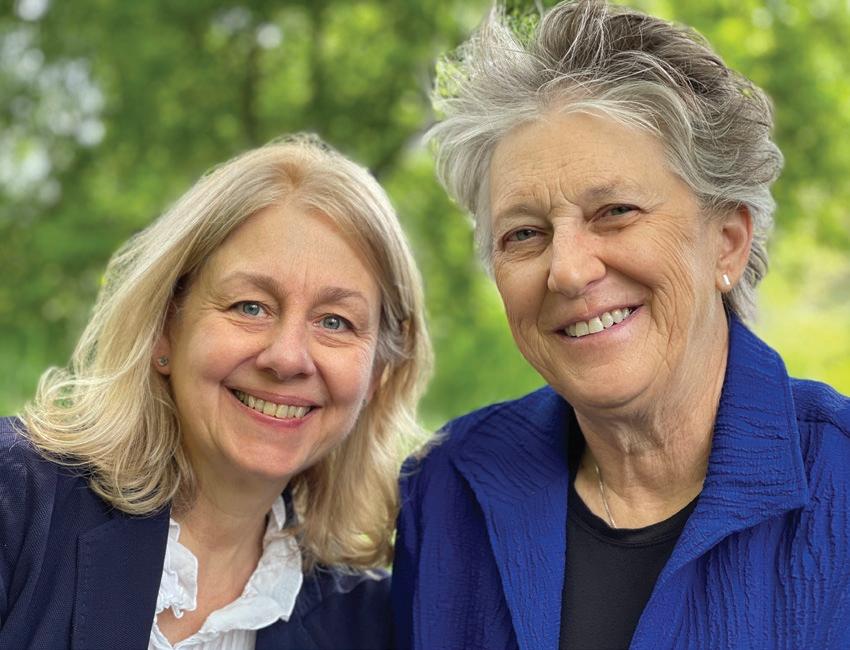
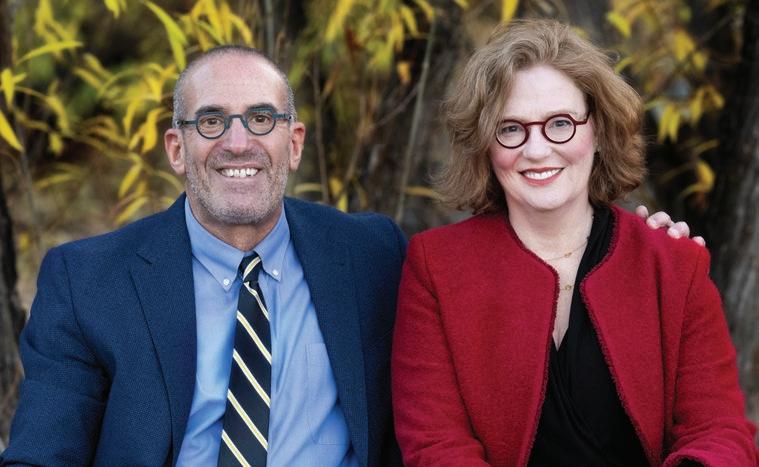
Jim Heeter
Elizabeth McGuire Board President Executive Director
Colorado Music Festival and Center for Musical Arts
SEASON RAiSING VOICES AND S P Irits21
2026/2027 SEASON
7/23–8/2 | Savoy Denver
8/6–8/23 | Dairy Arts Center, Boulder
| Savoy Denver – | Dairy Arts Center, Boulder
THE FAIR MAID OF THE WEST
12/3–12/27 | Dairy Arts Center, Boulder
A Susan Blackburn Prize finalist coming to Colorado by way By Sonya Kelly
Best New Play finalist, Writer's Guild of Great Britain, | Dairy Arts Center, Boulder
LIBERATION By Bess Wohl
2026 Pulitzer Prize for Drama, New York Times Critic’s Pick,
Critics’ Circle Theater Award for Best New Play 4/15/27–5/9/27 | Dairy Arts Center, Boulder
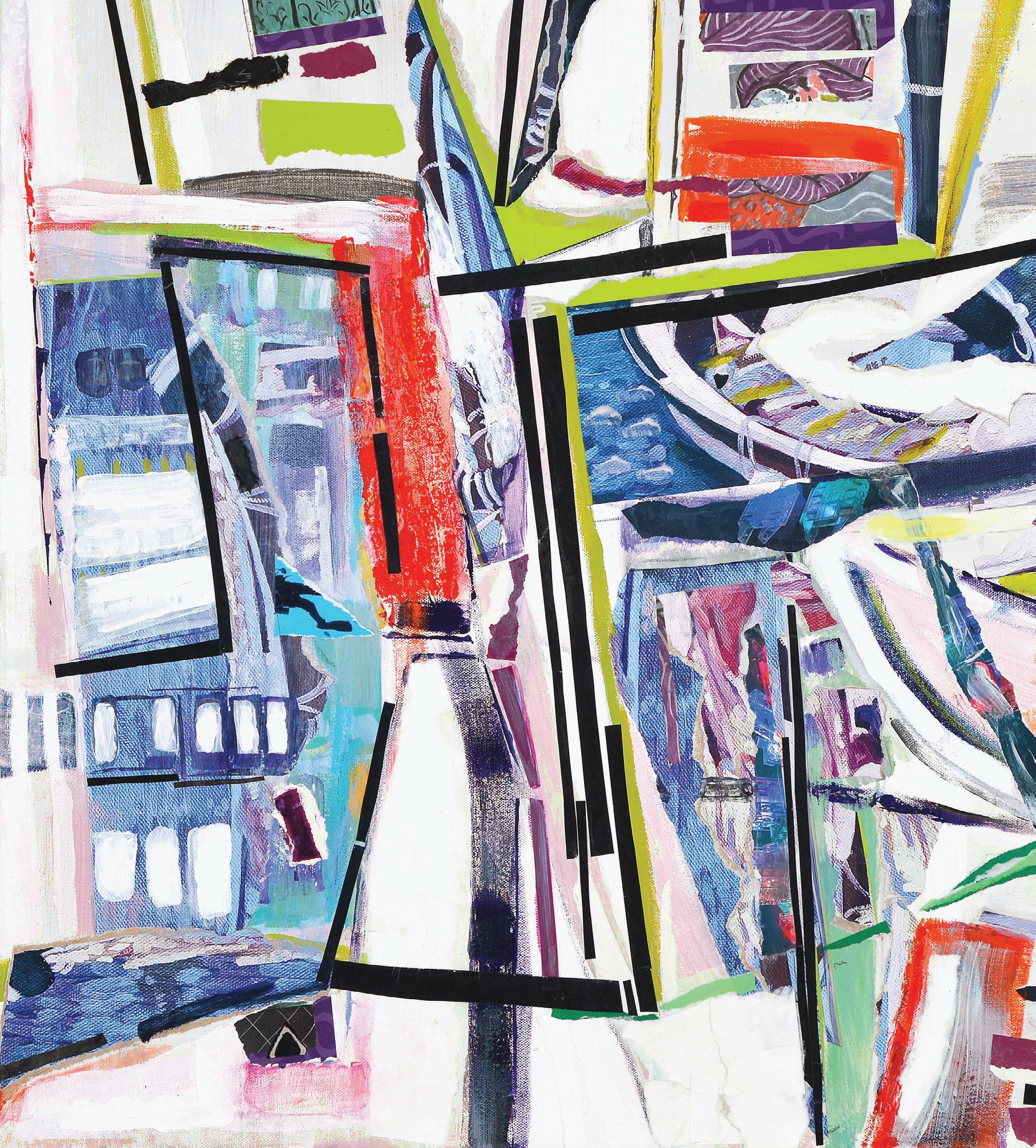
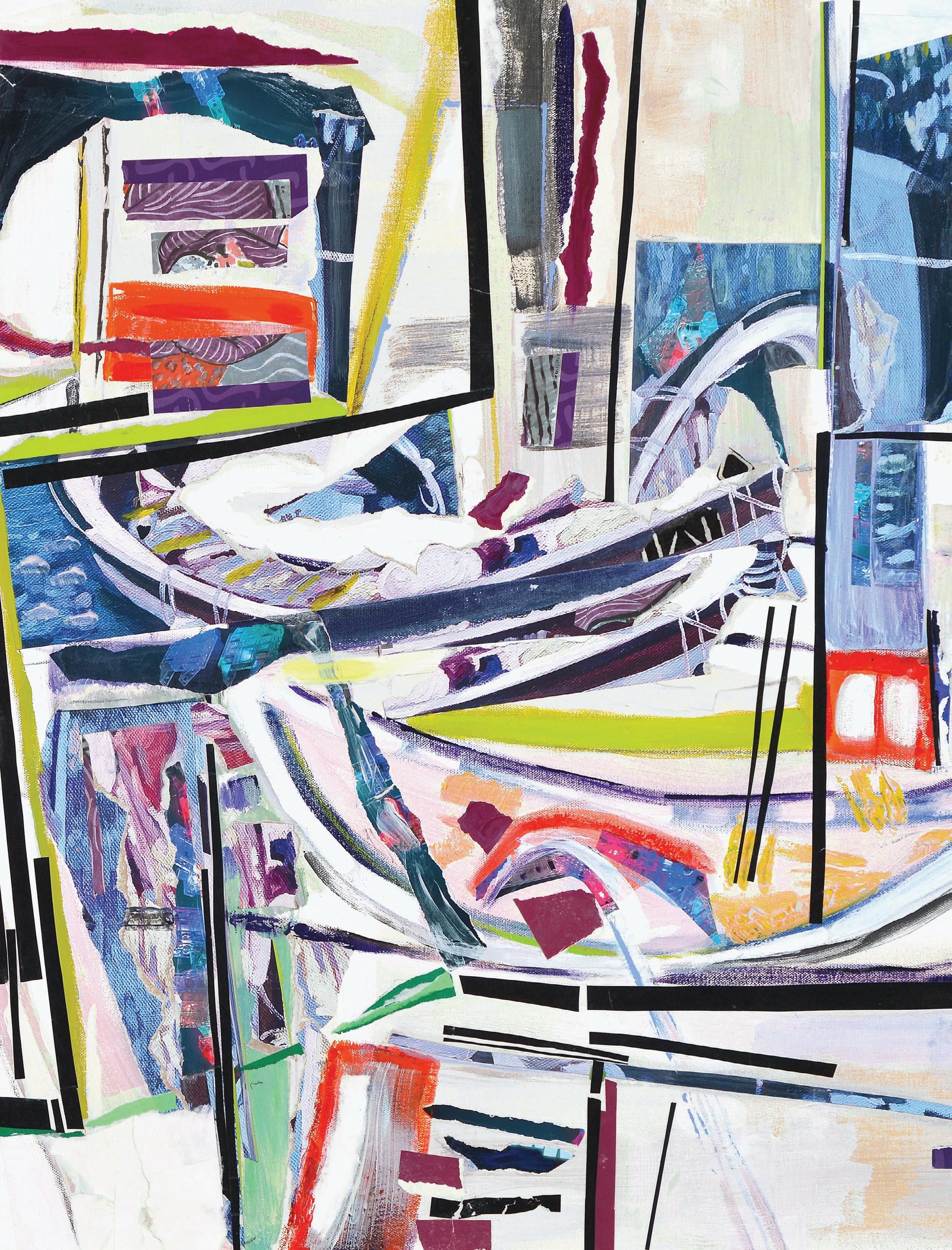
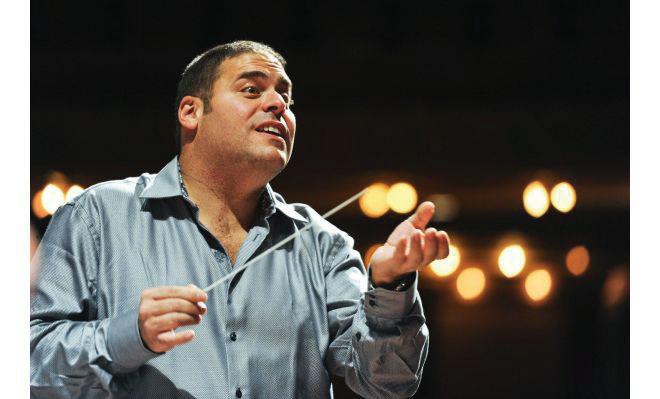
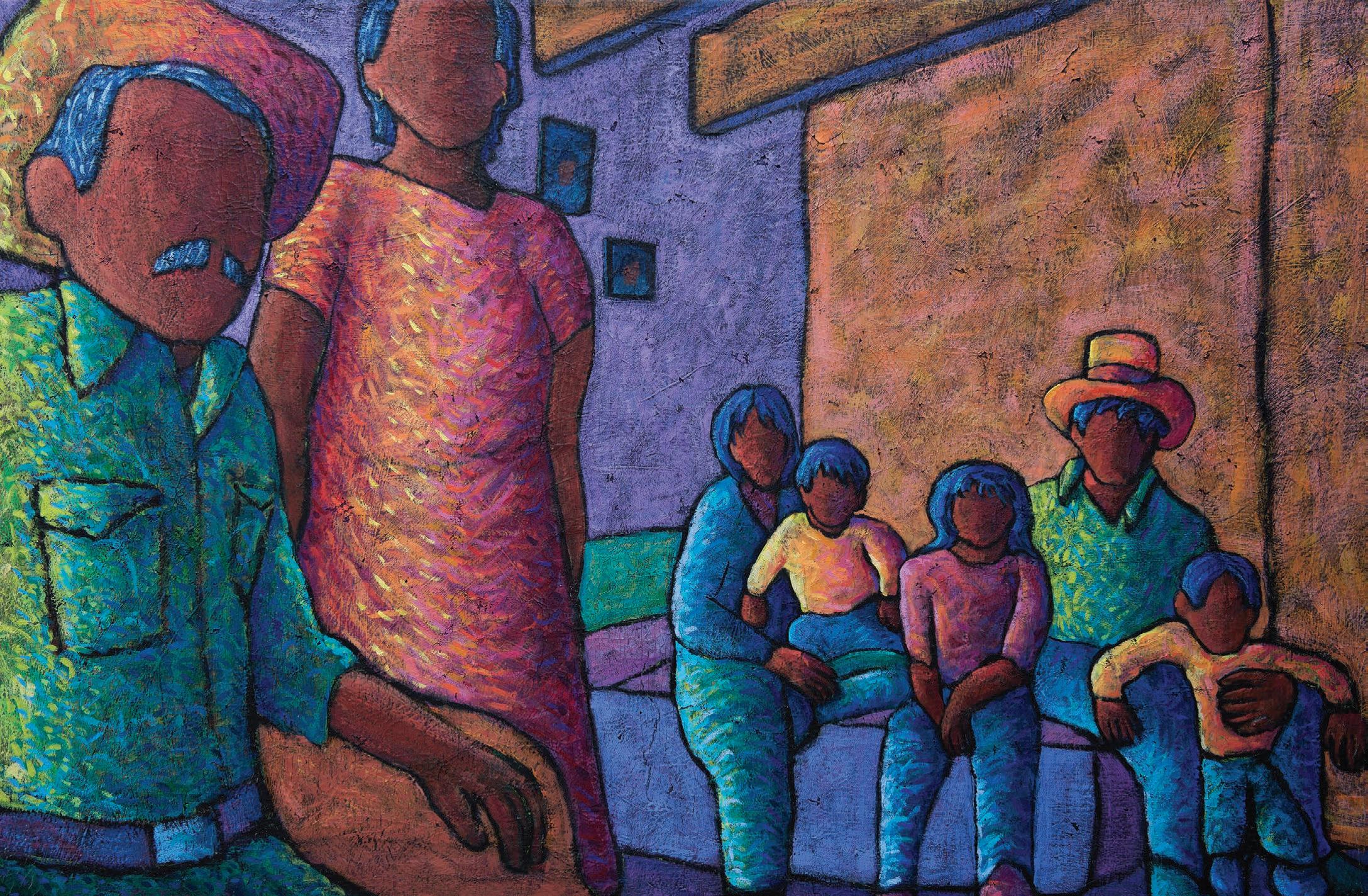
Maestro, Acrylic and paper on canvas, 40 x
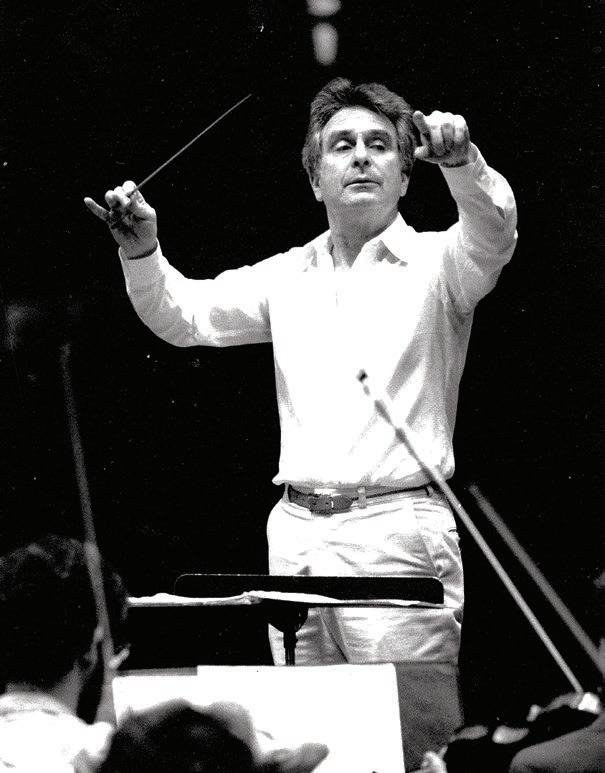
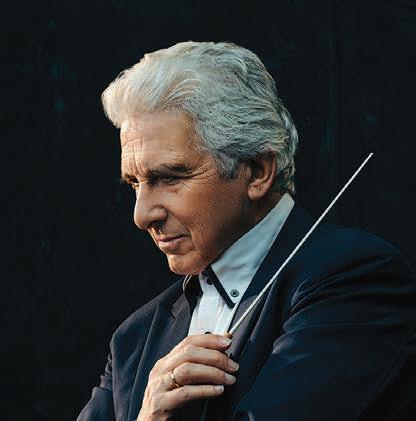
PETER OUNDJIAN
MUSIC DIRECTOR
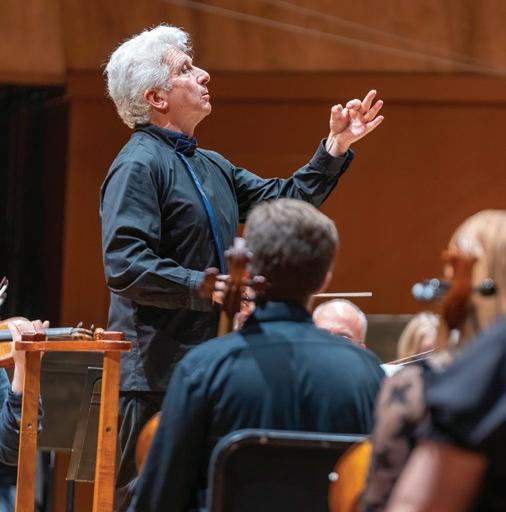
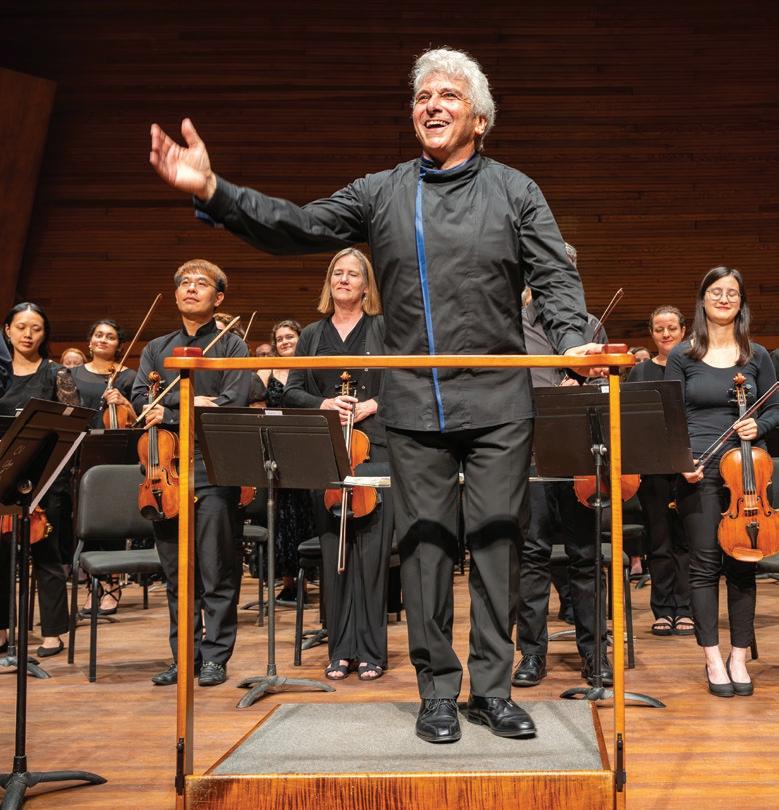
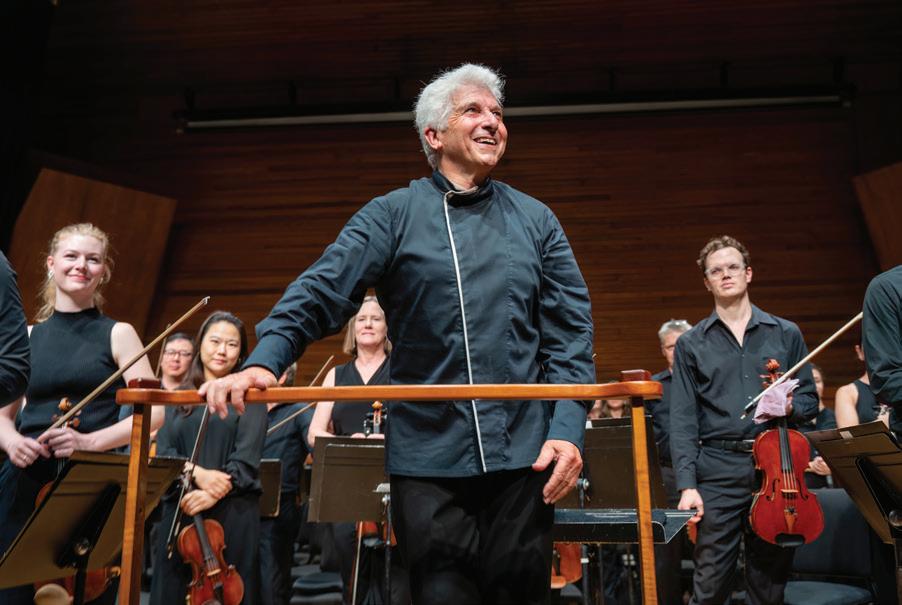
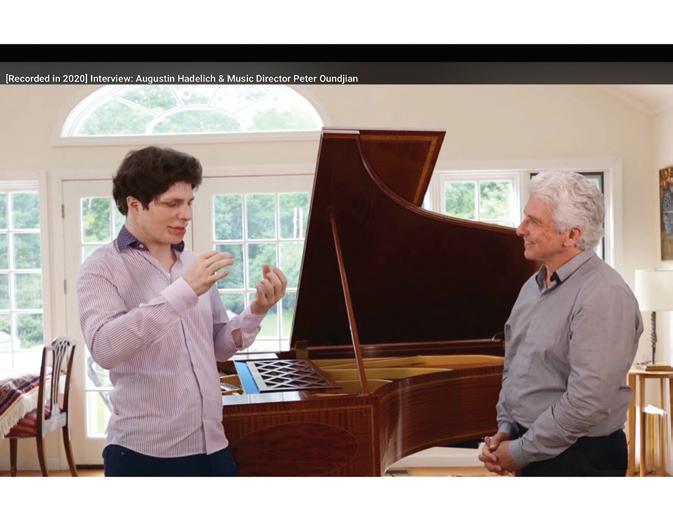
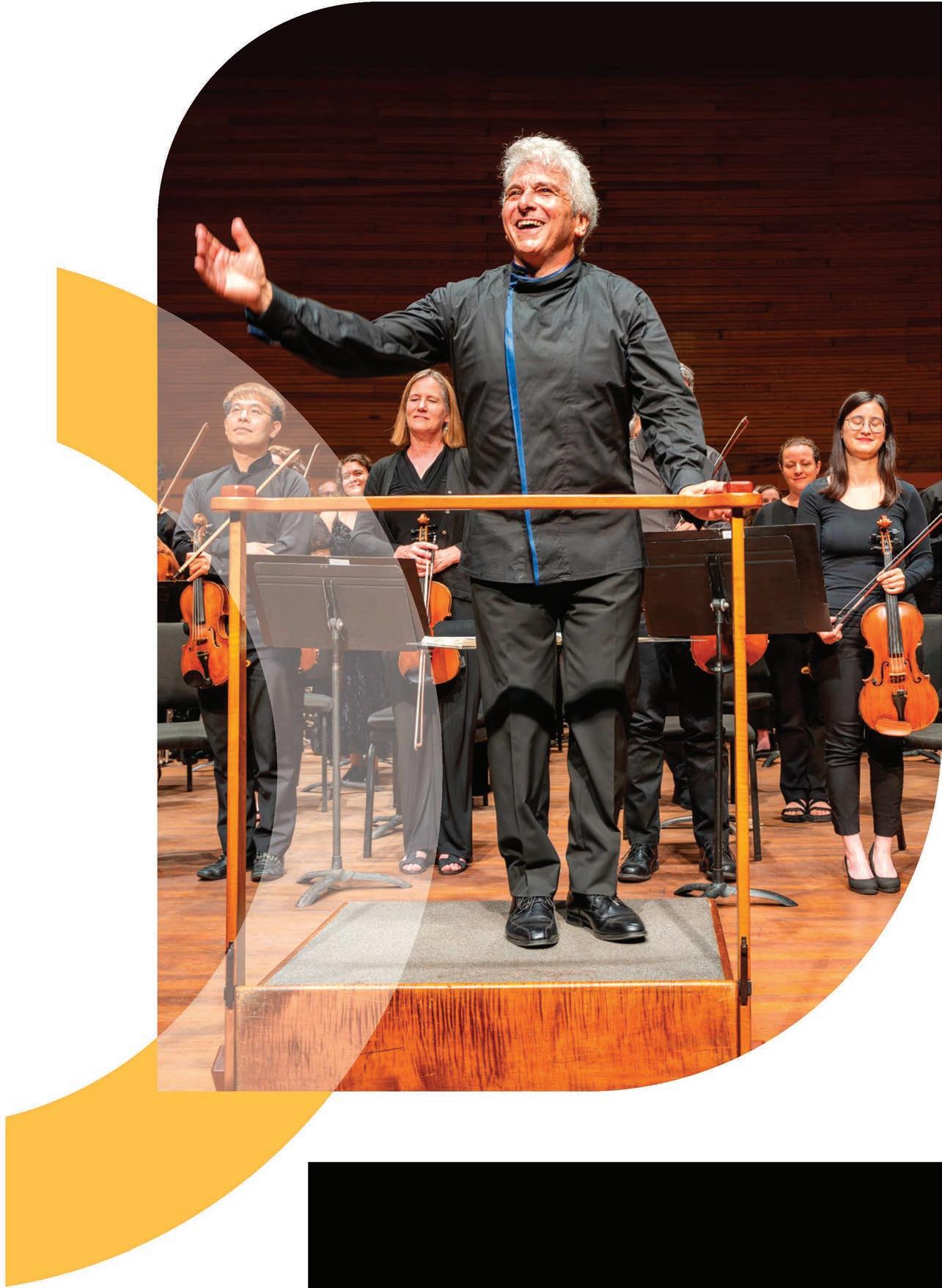
Peter Oundjian is a dynamic presence in the conducting world with an international career leading preeminent orchestras in many of the world’s major musical centers, from New York and Seattle to Amsterdam and Berlin.
He is Music Director of both the Colorado Music Festival (CMF) and Colorado Symphony. At CMF, he continues to program and conduct concerts each summer that delight audiences with beloved masterpieces alongside music written by living composers.
Elsewhere in 2025-26, Oundjian leads the Toronto Symphony Orchestra (where he is Conductor Emeritus), Seattle Symphony, Vancouver Symphony Orchestra, Fort Worth Symphony Orchestra, Kansas City Symphony, and Sarasota Orchestra, and makes international visits to the KBS Symphony Orchestra (Seoul, South Korea) and the Armenian National Philharmonic Orchestra (Yerevan, Armenia).
Over the course of his 14-year tenure as Music Director of the Toronto Symphony Orchestra, which concluded in 2018, he reinvigorated the orchestra with acclaimed innovative programming, artistic collaborations, extensive audience growth, national and international tours and several outstanding recordings, including Vaughan Williams’ Orchestral Works, which garnered a GRAMMY® nomination and a Juno Award. Under his leadership, the Symphony underwent a transformation that significantly strengthened its presence in the world. He currently serves as Conductor Emeritus of the Symphony.
From 2012-18, Oundjian served as Music Director of the Royal Scottish National Orchestra, which he led on several international tours, including North America, China, and a European festival tour with performances at the Bregenz Festival and Dresden Festival, as well as in Innsbruck, Bergamo, Ljubljana, and elsewhere. His final appearance as the orchestra’s Music Director was at the 2018 BBC Proms where he conducted Britten’s epic War Requiem.
Oundjian served as Principal Guest Conductor and Artistic Advisor of the Detroit Symphony Orchestra from 2005 to 2008 and Artistic Director of the Caramoor International Music Festival in New York from 1997 to 2007. He was also Music Director of the Amsterdam Sinfonietta from 1998-2002. Throughout his conducting career, Oundjian has appeared as guest conductor with the country’s leading orchestras, including The Philadelphia Orchestra, Boston, Chicago, Pittsburgh, Atlanta and San Francisco Symphonies, among others.
Oundjian has been a visiting professor at Yale University’s School of Music since 1981, and has received honorary doctorates from the San Francisco Conservatory of Music and The Royal Conservatory of Music in Toronto.
FESTIVAL FELLOWS
The Festival Fellows Program brings outstanding emerging artists to Boulder each summer to train, perform, and grow within the Colorado Music Festival. Designed to expand access and representation in classical music, the program connects fellows with world-class mentors while offering hands-on experience in orchestral and chamber music settings.
2026 FESTIVAL FELLOWS
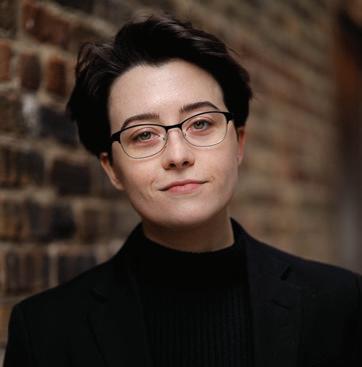
Ezra Calvino, Assistant Conductor
Ezra Calvino has been recognized for their insight, clarity, and sensitivity as a conductor, violist, and chamber musician. Throughout their studies, they have sought to draw on diverse musical disciplines to develop a unique artistic perspective that seeks to transcend mere aesthetic nicety and participate in holistic social healing. Ezra has served as Associate Conductor to the Ravinia Festival in Chicago, where they lead the Sistema Ravinia youth ensembles. They were also named the 2024 AAF/Faber Conducting Fellow with the Vienna Philharmonic at the
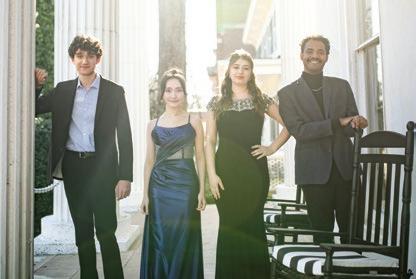
Amara Quartet
Hanami Froom, violin
Ben Linton, violin
Govanny Brown, viola
Kathryn Fakeley, cello
The Amara Quartet is an emerging ensemble of young artists distinguished by their energetic artistry and adventurous spirit. Though newly formed, the quartet has rapidly established a meaningful profile through collaborations and world-class mentorship.
Currently fellowship young artists at the McDuffie Center for Strings, the quartet works closely with Cavani Quartet member and Director of Chamber Music, Annie Fullard, along with Lawrence Dutton, violist of the Emerson Quartet. The ensemble has toured alongside acclaimed artists including violinist Amy Schwartz Moretti, pianist Orion Weiss,
Salzburg Festival. Most recently, Ezra served as Assistant Conductor to the Peninsula Music Festival in Door County, Wisconsin. They currently reside in New Haven, Connecticut where they study conducting at the Yale School of Music and are the current Music Director of the New Haven Chamber Orchestra. Additionally, they serve as Guest Conductor to the San Gabriel Valley Symphony in Los Angeles, as well as Assistant Conductor to the Yale Philharmonia. Ezra holds degrees in both Orchestral Conducting and Viola Performance and is an alumnus of notable training programs including the National Orchestral Institute + Festival, the Eastern Music Festival, and the International Conducting Workshop and Festival. They currently study with Peter Oundjian.
and violinist Robert McDuffie, and has performed at the Rome Chamber Music Festival Members of the quartet have received guidance from renowned ensembles and artists including the Balourdet and Ehnes Quartets, as well as world renowned violinists, Peter Salaff and Jaime Laredo.
Beyond their rigorous conservatory training, the Amara Quartet is deeply committed to community engagement, believing that chamber music speaks to the universal human experience. They regularly perform for diverse audiences— from school-age children to adults—bringing chamber music into their surrounding community. By balancing artistic excellence with active outreach, the Amara Quartet represents an inspired generation of musicians dedicated to both the highest standards of performance and the transformative social impact of the arts.
Sponsored by The Sei Solo Foundation
ORCHESTRA BY INSTRUMENT
CONDUCTOR’S PODIUM
Peter Oundjian
Music Director
The Kassoy Family Conductor’s Podium
VIOLIN
Juliette Kang
Guest Concertmaster
The Philadelphia Orchestra, First Associate Concertmaster
Kevin Lin Guest Concertmaster
Indianapolis Symphony Orchestra, Concertmaster
Joseph Meyer
Associate Concertmaster
Charlotte Symphony Orchestra, Associate Concertmaster
The Phoenix Symphony, Associate Principal 2nd Violin
Alice Hong
Freelance
The Aris and Suzanne Sophocles Chair
Jessy Je Young Kim
National Arts Centre Orchestra (Canada)
Audrey Lee Freelance
Natalie Lee
Naples Philharmonic
The Glennys McPhilimy Chair
Lenora Leggatt
Charlotte Symphony Orchestra
You-xin Aaron Li
Seattle Symphony
Yuqi Li
Oregon Symphony
Aimee Toomes Lopez
San Antonio Philharmonic
The Art Rudeseal and Mary Ann Eliasson Chair
Emily Richardson Freelance
The Coates Samuelson Chair
Sophia Stoyanovich
Opera Philadelphia, Associate Concertmaster
Chloé Tardif
New West Symphony, Associate Concertmaster
Helen Vassiliou
New Jersey Symphony Orchestra
Lisa Vaupel
Delaware Symphony Orchestra, Principal
The John and Kathleen Krampf Chair
Jim Wallenberg
Toronto Symphony Orchestra
Evgeny Zvonnikov
Lubbock Symphony Orchestra, Principal
The Paul and Kay Passmore Chair
VIOLA
DJ Cheek Principal
Fort Worth Symphony, Principal
Darren Carter
Assistant Principal Civic Orchestra of Chicago
Mark Deatherage
The Phoenix Symphony, Associate Principal Anonymous musician chair sponsor
Elizabeth Jaffe
Delaware Symphony Orchestra, Associate Principal
Bruce Owen
Louisiana Philharmonic Orchestra, Assistant Principal
The Lee Carlin Chair
Valentin Ragusitu
Toledo Symphony Orchestra, Principal
Yumi Sagiuchi Shultz
Bergen Philharmonic Orchestra
The Jan Burton Chair
Borys B. Smolaga
Shreveport Symphony Orchestra, Principal
The Margot and Christopher Brauchli Chair
CELLO
Austin Huntington Principal
Indianapolis Symphony, Principal
The David Brunel and Stacey Steers Chair
Evan Kahn
Assistant Principal
New Century Chamber Orchestra, Principal
Noémie Golubovic
Freelance
Morgen Johnson
The Phoenix Symphony
The Gayle and Randy Ellis Chair
Aaron Merritt
Nu Deco Ensemble, Principal
The Joan Leinbach Chair
David Morrissey
Calgary Philharmonic Orchestra
Bridget Pasker
The Phoenix Symphony, Associate Principal
Lucia Ticho
Toronto Symphony Orchestra
BASS
Matt Heller Principal
Calgary Philharmonic Orchestra
Kirby Nunez
Assistant Principal
Dallas Opera Orchestra
The Joan and Paul Lavell Chair
David Crowe
Opera Colorado, Principal
The Daniel and Heather Wilkinson Chair
Karl Fenner
Atlanta Symphony Orchestra
The Katherine and Charles Minter Chair
Mark Foley
Wichita Symphony Orchestra, Principal
Paul Macres
Louisiana Philharmonic Orchestra
Jean Posekany
Detroit Opera
The Jane Henry Chair
FLUTE
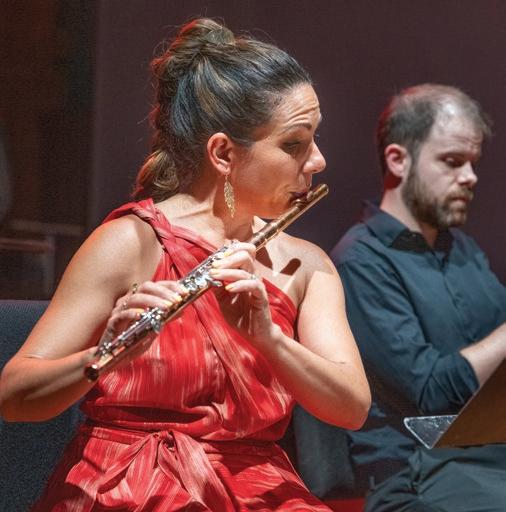
Viviana Cumplido Wilson
Principal
The Phoenix Symphony, Principal
The Blessing Foundation Chair
Jessica Petrasek
Assistant Principal/Piccolo Lecturer in Flute, Georgia State University
The Penny and Jean Friedberg Chair
Laura Dwyer
Santa Fe Symphony Orchestra
The Norma Ekstrand Chair
OBOE
Olav Van Hezewijk
Principal New Haven Symphony Orchestra, Principal
Joshua Lauretig
Acting Assistant Principal Oboe/English Horn
Buffalo Philharmonic Orchestra
The John and Jane Cowdrey Chair
Matt Lengas
Acting Oboe/English Horn
Kansas City Symphony, English Horn and Utility Oboe
The Jennifer Egbert Chair
CLARINET
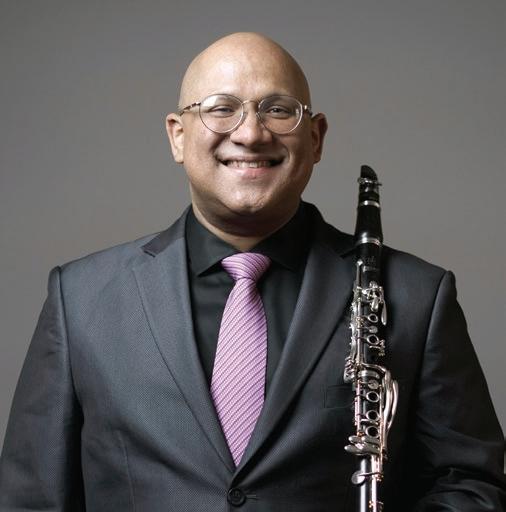
Louis DeMartino
Principal
The Phoenix Symphony, Principal
The Hans and Dolores Thurnauer Endowed Chair
Steve Hanusofski
Assistant Principal/Eb
Clarinet
The Phoenix Symphony, Associate Principal
The Terry Thomas and Anne Adams Chair
Eric Chi
Acting Clarinet/Bass Clarinet
Houston Grand Opera and Houston Ballet, Prinicpal
BASSOON
Wenmin Zhang
Principal
North Carolina Symphony, Assistant Principal
Tommy Morrison
Assistant Principal/2nd
Hawaii Symphony, Acting Principal
Adam Trussell
Bassoon/Contrabassoon
Houston Symphony, Contrabassoon
The Marion Thurnauer and Alexander Trifunac Chair
HORN
Gerald Wood Principal
Fort Worth Symphnoy Orchestra, Principal
The Avenir Foundation Endowed Chair
Andrew Karr
Assistant Principal/3rd Horn
The Florida Orchestra, Associate Principal/3rd
The Barbara Miller and James Alleman Chair
Nicolee Kuester
2nd Horn Freelance Chair, in honor of Kathy Kucsan
Stephen Laifer
Acting 4th Horn
Rochester Philharmonic
The Kathy Krol Chair
Emily Houston
Acting Utility Horn Freelance
TRUMPET
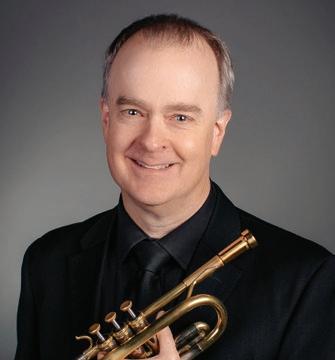
Jeffrey Work
Principal Oregon Symphony, Principal
The Joan and Paul Lavell Chair
Eric M. Berlin
Assistant Principal Albany Symphony, Principal
Derek Lockhart
Detroit Opera
The George Lichter Family Fund Chair
TROMBONE
Jason Robins Principal Atlanta Symphony Orchestra, Acting 2nd Trombone
The Jim and Judy Heeter Chair
Michael Hosford Assistant Principal Greenville Symphony Orchestra (SC), Co-Principal
Caleb Christiansen
Guest Principal Bass Trombone Freelance
Jason Sato
Guest Principal Bass Trombone
Jacksonville Symphony, Bass Trombone
TUBA
Carson McTeer Principal West Virginia Symphony, Principal
The TK Smith and Constance Holden Chair
TIMPANI
Peter Wilson Principal Harrisburg Symphony Orchestra, Principal
The Sophie and Jack Walker Chair
To learn more about supporting a musician chair, contact development@comusic.org.
PERCUSSION
Joseph Petrasek
Principal
Atlanta Symphony Orchestra, Principal
The Wernsdorfer (Family) Chair
Gerald Scholl
Assistant Principal Percussion/Assistant Principal Timpani
Wichita Symphony Orchestra, Principal
The Judy Reid and Richard Collins Chair
Caleb Breidenbaugh Rochester Philharmonic Orchestra, Principal
The Hon. Andrew and Amy Hartman Chair
HARP
Andrea Mumm Trammell Principal
Charlotte Symphony Orchestra, Principal Anonymous musician chair sponsor
KEYBOARD
Vivienne Spy
Principal Freelance
The Susan Kolwicz Chair in memory of Al Kolwicz
LIBRARIAN
Tim Ressler Librarian
Opera Philadelphia Librarian
ORCHESTRA PERSONNEL MANAGER
Lisa Vaupel
BOARD OF DIRECTORS AND STAFF
COLORADO MUSIC FESTIVAL & CENTER FOR MUSICAL ARTS
BOARD OF DIRECTORS
John Krampf
FORMER BOARD PRESIDENTS
2022 – David Brunel
2020 – Anne Beer
2018 – Stephen Trainor
2017 – David Brunel
2017 – Ted Lupberger
2015 – Jane Houssiere and Caryl Kassoy
2013 – Jane Houssiere
2012 – Jim Williams
2010 – Victoria Marschner
2008 – TK Smith
2006 – Jack Walker
2004 – Patricia Magette
1998 – Christopher Mueller
1996 – Paul Repetto
1993 – Richard Collins
1990 – Caryl Kassoy
FORMER RMCMA BOARD PRESIDENTS
2008-09 – John Bernhard
2003-08 – Louise Christopher
2002-03 – Justine Rowinski
STAFF
Kari Bartkus, Bookkeeper
Nancy Brace, Registrar
Larry Brezicka, Artistic Coordinator
Bella Christoffersen, Stagehand
Colin Crake, Assistant House Manager
Abbey Davis, Development Manager
Jay Starnes Dees, Production Manager
Kiana Fan, Stagehand
2000-03 – Susi Tattershall
1998-00 – Nancy Grimes
1989 – Dennis Rezendes
1987 – Roger Dewey
1986 – Jane Butcher
1985 – Phyllis Katz
1984 – Edwin Wolff
1982 – John Firor
1979 – Alan Shapley
1977 – Christopher Brauchli
1997-98 – Janet Montgomery
1995-97 – Julia Colwell
Rachel Fetler, Student Services and Operations Associate
Natalia Korenchuk, Marketing Coordinator
Geremy Kornreich, Photographer
Becca Kronyak, Assistant Registrar
Melissa Martinez, Assistant Housing Coordinator
Xenia Mathys, House Manager
Kirsten Mills, Marketing Manager
Ryan Murphy, Housing Assistant/ Stagehand
Michael Quam, Audio Recording Engineer
Tim Ressler, Orchestra Librarian
Yian Shen, Stagehand
Lisa Vaupel, Orchestra Personnel Manager
Kevin Yetter, Stagehand
Jim Heeter, President
Elizabeth McGuire, Executive Director Alberto Gutierrez, General Manager
James Knowles, Director of Philanthropy
Cindy Hohman, Director of Marketing
Kathy Kucsan, Co-Founder Center for Musical Arts and Education Director
Doree Hickman
Coates Samuelson
Anne Beer
Larry Jones
Michael Sherman
David Brunel
Kathy Czerny
Norma Ekstrand
Kathy Krol
Amy Hartman
Joseph Romano
“Pay-what-you-can”
GET CLOSER TO THE MUSIC
At the Colorado Music Festival, we believe world-class performance and music education belong together. This season, we’re proud to offer a wide range of educational programs that celebrate the full spirit of our organization, bringing together the Colorado Music Festival and the Center for Musical Arts.
July 24 | 2 PM | $150
WAYS TO GIVE
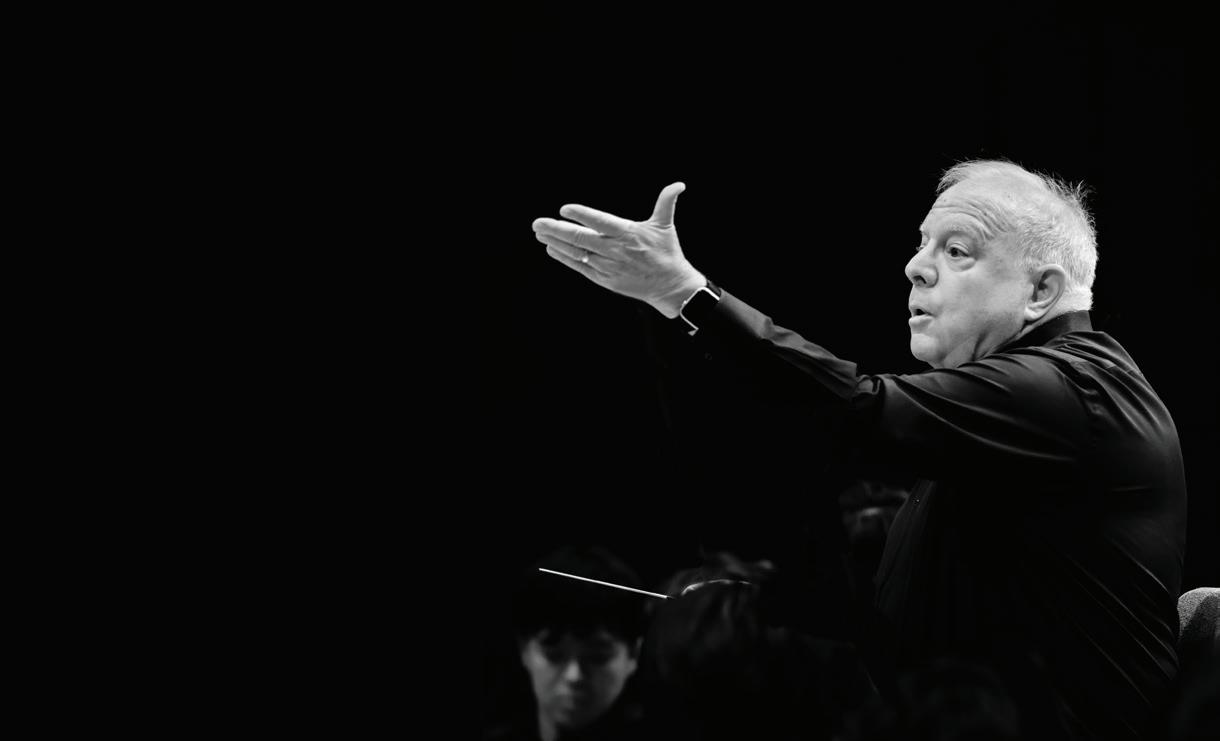
Get insights about conducting from Maestro Leonard Slatkin in a hands-on workshop onstage at Chautauqua Auditorium.
July 14 and Aug 4 | 10 AM
July 24 | 10:30 AM
Peek behind the scenes to experience how Music Director Peter Oundjian and the Festival Orchestra prepare for their world-class performances.
July 10, 17, 24, 31, and Aug 7
Immediately following Friday concerts, you’re invited to a brief, interactive Q&A with the program’s conductor and soloist.
July 9, 16, 23, 30, and Aug 6 | 6:30 PM
Our highly popular pre-concert talks return on the north side of the Auditorium.
All of these programs depend on your support:
COMPLIMENTARY TICKETS FOR OUR NONPROFIT PARTNERS
You help us provide Festival tickets to our friends at Circle of Care, VetTix, and the I Have A Dream Foundation.
FESTIVAL FELLOWS
With your support, the Festival Fellows program offers the opportunity for four aspiring professional musicians to perform with the orchestra and receive chamber music coaching.
TUITION ASSISTANCE AND INSTRUMENT BANK
Your support allows us to teach over 650 students every week at the Center for Musical Arts, regardless of financial circumstance, through our tuition assistance program, Heartstrings. In addition, our Instrument Bank makes more than 300 instruments available for rent at low or no cost.
LIFESONG CHORUS
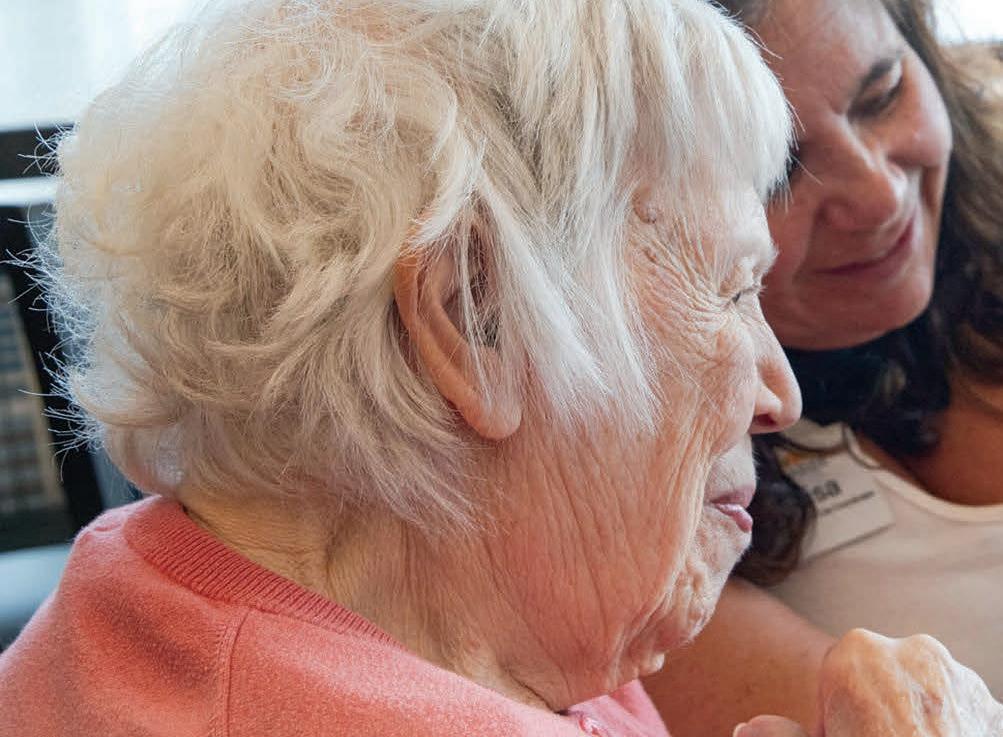
A welcoming group designed especially for people with early-onset Alzheimer's (and other dementias) and their caregivers to help bring joy, improve well-being, increase quality of life, and provide social engagement.
Please consider making a gift today. Your support helps connect people to the music that brings them joy, provides connections, and helps our youth to build skills for the future.
GIORA BERNSTEIN
COLORADO MUSIC FESTIVAL’S FOUNDING MUSIC DIRECTOR (1976-2000)
“The uniqueness of the Festival was that we engaged wonderful, serious musicians who wanted to play fine music and came here because they preferred to perform challenging works in an atmosphere conducive to artistic expression… We were never generic and we were never mainstream. The program always bore the stamp of individuality.”
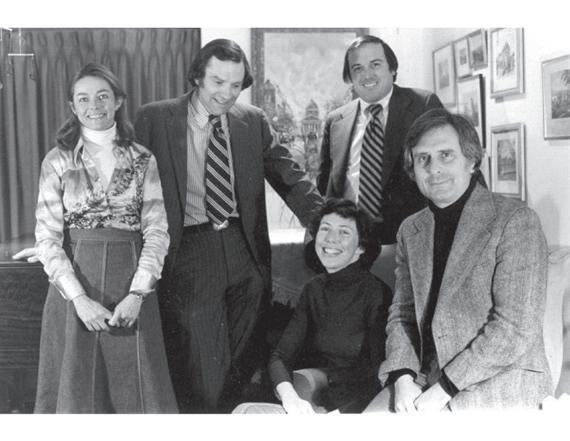
Giora Bernstein was the founding Music Director of the Colorado Music Festival, for which he received national acclaim. He moved to Boulder in 1975, invited by the CU College of Music to be a violin professor and orchestra director. He co-founded the Colorado Music Festival in 1976, along with Christopher Brauchli, the Festival’s first board president.
In January 1977, the board started planning the summer series. Under the name Denver and then Colorado Chamber Orchestra (CCO), a 50-musician orchestra performed its first year’s concerts in the First Presbyterian Church in Boulder. Musical selections included Mozart, Prokofiev, and Beethoven. After a concert, a reporter for The Denver Post noted that “the church sanctuary was packed like a minister’s wildest dreams of Sunday services.”
Guest artists that first year included soprano Judith Raskin, violinist Sidney Harth, clarinetist Richard Stoltzman, cellist Leonard Rose and the Colorado Chamber Chorus directed by Erick Brunner.
The CCO was the only summer classical music program in the Denver metropolitan area. To meet the demand during those early years, the orchestra also traveled to other locations including Fort Collins, Estes Park, and Arvada.
In 1997, Margot Brauchli suggested that the festival move to the Chautauqua Auditorium. The building had been neglected and was in need of repair, but it held an appeal to Bernstein who arranged to use it for his last rehearsal in 1977.
Recalling that day in an interview, Bernstein said he walked around the Auditorium during the rehearsal and claimed that the all-wooden building literally vibrated. He found it “acoustically wonderful” and an ideal venue. By then, the board had changed the Festival’s name to the Colorado Music Festival. Bernstein booked the Auditorium beginning with the 1978 season.
“Without music, Chautauqua could not exist,” stated a writer for the Chautauqua Journal. “All lovers of music are invited to the feast, spread daily, under the cooling shadows of the rock-ribbed mountains.”
Giora Bernstein took the Colorado Music Festival from its humble beginnings to world attention. As an early pioneer in innovative programming, he envisioned a Festival that would bring together the arts, theater and music. He brought some of the finest young soloists in the world to Chautauqua, including cellist Yo-Yo Ma, violinists Hilary Hahn and Gil Shaham, and pianist Helene Grimaud.
On retiring in 2000, Bernstein reflected in the Daily Camera:
“I am looking forward to new things. I hope the festival will regain its sense of adventure—even if it is not reflected immediately in the bottom line—and that the greater community will embrace it. I must say that I am content. The festival is on the map, perhaps even more so outside of Boulder. I am leaving it in good shape.”
THE CENTER FOR MUSICAL ARTS (CMA)
CMA CELEBRATES 30 YEARS IN 2026
On September 9, 1996, the Rocky Mountain Center for Musical Arts opened its doors in Lafayette with a vision of “Music for all…for Life!” At the time, it was the only community music school in Colorado focusing on music education. The school merged with the Colorado Music Festival in 2009. In 2013, the name was shortened to Center for Musical Arts.
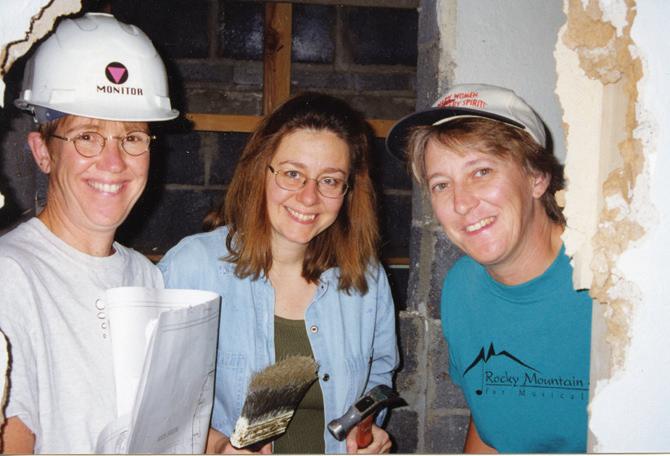
Co-founders Peggy Bruns and Kathy Kucsan met as graduate students at the CU College of Music. At the time, both were headed toward more traditional music careers (Bruns in public schools and Kucsan in higher education), but they soon discovered that they shared a philosophy and an approach to music education that aligned with the National Guild for Community Arts Education: access to music for all, regardless of background or financial circumstances. The school began with the belief that no one should ever be turned away because of lack of ability to pay (and in 30 years, no one ever has been). The name Rocky Mountain Center for Musical Arts was chosen in order to provide potential future expansion into other communities.
Our core philosophy is EXCELLENCE, ACCESS, COMMUNITY, and HEART. The Center for Musical Arts employs 40 teaching artist level faculty who provide excellence in musical mentoring via individual and group lessons, classes, workshops, and ensembles. Students are nurtured and encouraged to discover their own excellence through music. Since its inception, the school has provided access (need-based tuition assistance and low/no cost instrument rentals) to any interested member of the community, regardless of background or financial circumstance. The CMA builds community through music, with diverse programming and service to the larger population. And through a lifelong love of music and careful attention to the individual, our approach is heart -centered and inclusive. There is a place for everyone at the CMA.
Since 1996, we have served over 22,000 students. Taught over 150,000 lessons. Loaned instruments to students from five surrounding school districts, reached almost 5,000 students with need-based tuition assistance. We’ve sent students to prestigious music schools including New England Conservatory, Eastman, Juilliard, Oberlin, Berklee College of Music, Indiana University, and of course, the CU Boulder College of Music. But mostly, we have fostered a lifelong love and appreciation of music. Yesterday’s CMA students are today’s CMA’s parents, enrolling their children (and sometimes the entire family!) in lessons. Today, the CMA serves more than 700 students weekly with programming from early childhood music classes to individual and group lessons, Piano Lab, the Rocky Mountain Concert Band, Jazz Studies, Broadway on Baseline, and the Big Band. Still deeply rooted in the founding philosophy of equity and inclusion, the Center for Musical Arts has become a focal point for music in the region, a musical home for everyone.
Rocky Mountain Center for Musical Arts Founding Values:
• The significant power of music to enrich human existence and create community
• The value of all kinds of music
• The creative potential of every individual
• Access to music for all members of the community
• Excellent and inspiring musical mentorship
• The value of trust, integrity and respect, within a heart-centered environment
THURSDAY 7:30 PM
JULY 9
FRIDAY 6:30 PM
JULY 10
ARTISTS
Peter Oundjian, conductor
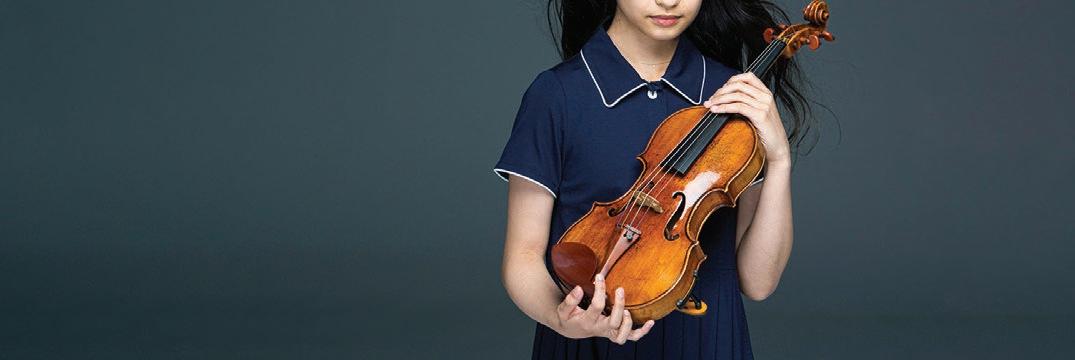
Himari, violin
Carter Pann, composer
PROGRAM
Carter Pann: I Remember Chris (world premiere)
Jean Sibelius: Concerto for Violin in D Minor, op. 47
I. Allegro moderato
II. Adagio di molto
III. Allegro, ma non tanto
Pyotr Ilyich Tchaikovsky: Symphony No. 5 in E Minor, op. 64
I. Andante - Allegro con anima
II. Andante cantabile con alcuna licenza
III. Valse: Allegro moderato
IV. Finale: Andante maestosoAllegro vivace
HIMARI PLAYS SIBELIUS + TCHAIKOVSKY 5
I Remember Chris Carter Pann
As the composition chair at the University of Colorado Boulder’s College of Music, Carter Pann was an ideal figure to pay tribute to Ralph “Chris” Christoffersen, who died on September 20, 2025 at the age of 87. Christoffersen was, in the best sense of the word, an institution in Colorado’s classical music life.
A passionate and generous board member at the Colorado Music Festival, Christoffersen, along with his wife Barbara, gave generously to arts organizations, supporting the Takács Quartet and the University of Colorado. With degrees in chemistry and mathematics, he led a lengthy career in academia, including as a chemistry professor and administrator at the University of Kansas. He eventually became president of Colorado State University and later worked as a biotechnology CEO and venture capitalist. Friends and family described him as “a lifelong learner who never stopped pursuing his passions.”
Pann himself holds the Ralph E. and Barbara L. Christoffersen Faculty Fellowship at the University of Colorado, where he teaches composition and leads two programs: the Boulder Altitude Directive and the Emerging Composers Project. His music has been performed by the London Symphony, City of Birmingham Symphony, Seattle Symphony, and the National Repertory Orchestra, among numerous other ensembles. He was a finalist for the Pulitzer Prize in Music in 2016.
Pann offers some personal reflections on Christoffersen in this introduction: “I first met Chris and Barbara Christoffersen in late 2016 at a loud and crowded mixer at the Boulder Cork. I will never forget how Chris was surrounded by folks with wide smiles, all eyes trained on him. I very quickly came to feel his magnetism after our first five minutes of conversation. Chris was one of the most alive people I’ve ever known. He would engage you with both thoughtful introspection and fervent interest. Chris touched so many lives in this way. Like so many, I was moved to tears at his beautiful memorial celebration a short while ago. Chris was there in all his friends’ and family’s presence. He supported so many people in so many ways that it’s difficult to imagine one life could ripple out so far and have as blooming an effect as his.
The July 9 concert is sponsored by
The July 10 concert is sponsored by
“I Remember Chris was written to open the Colorado Music Festival’s 50 th Season as a “thank you” to my friend for how he made me feel in the short years before he left. He encouraged my ideas and always inspired a surge of energy in me. This short work of mine moves quickly between meditative, excited, and joyous episodes, reminding me of Chris’ character when I knew him. The principals in the orchestra have a special role (as a solo string quartet), evoking his love and devotion to our local and brilliant Takács Quartet.”
Concerto for Violin in D Minor, op. 47
Jean Sibelius
Jean Sibelius’ unabashed affection for the violin pours out of his Violin
Concerto in D Minor, a piece that was rooted in his own youthful aspirations
ANNE AND HENRY BEER
on the instrument. Starting at age 14, the Finnish composer spent a decade studying the violin in an all-consuming effort. He practiced “practically from morning to night,” but timing was not on his side: “My preference for the violin lasted quite long,” he admitted, “and it was a very painful awakening when I had to admit that I had begun my training for the exacting career of an eminent performer too late.”
If the concerto is something of a farewell to youthful dreams, it is also a confident statement by a 38-year-old composer with two symphonies and several popular tone poems under his belt. As far as we know, the concerto doesn’t reference Finnish landscapes or mythology but instead casts the soloist as a Romantic-era hero. It was a formidable test of virtuosity, and beyond the capacities of the soloist at its 1904 premiere. The composer withdrew the piece and, a year later, began a thorough rewrite, tightening its overall narrative. The retooled version was warmly received at its 1905 premiere in Berlin featuring soloist Karl Haliř and conducted by none other than Richard Strauss.
Years later, Sibelius advised a student, “I warn you against long preludes and interludes. And this refers especially to violin concertos. Think of the poor public.” Indeed, after just four bars of string murmurs, the violin enters with a keening, rhapsodic melody — the first of three themes that are explored with the orchestra. Instead of a classic development section, the soloist delivers a soliloquy-like cadenza before rejoining the orchestra. The opening themes are recapped and the movement ends defiantly.
The songful, melancholic slow movement features warm orchestral colors and a brief climax that suggests Tchaikovsky in the way it expresses grief before breaking off to a mood of noble acceptance. The finale is a gruff but joyful dance, its lumbering main theme once called “a polonaise for polar bears” by the English conductor and writer Donald Tovey. Violin pyrotechnics abound (leaps, arpeggios, double-stops) as the music steadily builds to an exhilarating conclusion.
Symphony No. 5 in E Minor, op. 64
Pyotr Ilyich Tchaikovsky
As program notes for symphonies go, they don’t get much more cryptic than Tchaikovsky’s description of his Symphony No. 5. After previously providing his patron, Nadezhda von Meck, with a detailed program for his Fourth Symphony, he was far more mysterious with the Fifth. All that survives is a notebook page outlining a rough scenario for the first movement:
“Introduction. Complete resignation before Fate, or, which is the same, before the inscrutable predestination of Providence. Allegro. (I) Murmurs, doubts, plaints, reproaches against xxx. (II) Shall I throw myself in the embraces of faith???”
Historians have long debated the meaning “xxx.” Whether it was his homosexuality, a gambling habit, or a particular individual, nobody knows for sure. The composer had
recently returned from an extensive European conducting tour, where the demands on his time and energy conflicted with his cherished privacy. He retreated to his country house where he balanced work with introspective walks in the woods.
As with the Fourth Symphony, the first movement of the Fifth opens with a fate motive, yet this one spreads doubt and uneasiness as it reappears in each of the four movements. Its melodic shape comes from a passage in Glinka’s opera A Life for the Tsar, linked to the words “turn not into sorrow.” After the fate motive is played by two low clarinets in the doleful introduction, the main body of the first movement turns more triumphant; Tchaikovsky saves the intimacies for the next movement.
The second movement opens with a deeply affecting horn melody (once quoted by John Denver in “Annie’s Song”), followed by two more tender themes, before the fate motive ominously interrupts. The third movement is a lilting waltz reminiscent of Tchaikovsky’s finest ballet music, and again visited by the fate motif. When the motive comes raging back in the fourth movement, it ultimately compliments the main themes instead of interrupting them. Though some critics perceived the major-key ending as hollow or forced, it was also quintessentially Russian — a brilliant refraction of musical colors. — Brian Wise
After concerts, you can catch the HOP 2 Chautauqua return service bus on the east side of the auditorium.
SUNDAY 10:30AM
JULY 12
ARTISTS
Samuel Hollister, conductor Really Inventive Stuff
Dr. Perla Delgado, narrator
PROGRAM
John Williams: Liberty Fanfare
Antonín Dvořák: Symphony No. 9 in E Minor, “New World,” II. Largo
Sergei Prokofiev: Peter and the Wolf, op. 67 (Spanish and English)
FREE FAMILY CONCERT
Liberty Fanfare
John Williams
When the Statue of Liberty turned 100 in 1986, New York Harbor was the setting of a four-day pageant featuring a procession of tall ships, a military armada, and the biggest fireworks display in American history. It was clearly a moment for John Williams. At dusk on the Fourth of July, the composer led the Boston Pops Esplanade Orchestra in an all-American concert at Liberty State Park in Jersey City, N.J. With the newly renovated statue in the background, Williams presented his Liberty Fanfare.
The TV impresarios David Wolper and Norman Lear packaged the concert for a national television broadcast, one that leaned into ‘80s patriotic kitsch — all buglers in plumed hats and blue capes and actors in colonial garb marching in formations. Williams wore a tuxedo and a chunky headset, while keeping his focus on the musical forces (the program survives on YouTube).
For all of the spectacle, the piece is remembered as one of Williams’ finest American anthems. It begins with a dramatic trumpet herald and ceremonial gongs before the music moves into a wistful central section, inspired by “our parents and everyone who came through the immigrant experience,” as Williams says in author Tim Grieving’s new biography of the composer. The music builds to a steady gallop, eases back briefly, and then darts ahead for one final flourish. Writes Grieving, “It was a splendid orchestral exhibition on a special occasion, but also an astounding amount of narrative and feeling packed into four minutes.”
Reviewing the Liberty Fanfare for the Boston Globe, Anthony Tommasini wrote that “as fanfares go, [it] is a humdinger. It’s got two great tunes… [and] a long-lined tune for hushed-up strings that sounds like lots of others. Williams has composed for Hollywood but still gets you right in the back of the throat.”
Symphony No. 9 in E Minor, “New World,”
II. Largo
Antonín Dvořák
More than a musical postcard from across the Atlantic, Antonín Dvořák’s Symphony No. 9 was offered up as a blueprint for future generations of American composers. In 1892, the Czech composer arrived in New York City to lead the National Conservatory of Music, where he would teach composition and serve as a figurehead for the fledgling school. Just three months after his ship docked in Hoboken, N.J., the composer had another task at hand: a symphony he would call From the New World
The Family Concert is sponsored by
Back in Europe, Dvořák was among a series of Eastern European composers (followed by Bartók and Kodály) who used folk tunes as source material. Arriving in the US he saw no reason not to apply these same principles, perhaps not fully aware of the country’s legacy of slavery and racial persecution. He made some cursory investigations into Native American music and was introduced to Black spirituals by Harry T. Burleigh, an African-American student who would go on to become an accomplished composer in his own right. By 1895, Dvořák was giving newspaper interviews and writing essays that advocated using multi-ethnic folk music as a basis for a national style.
The New World Symphony’s second movement shows this advocacy put into practice. After a solemn chord progression, an English horn solo enters, plaintive and nostalgic. A darker subsidiary theme unfolds in the strings and there’s a brief outburst in the brass, but the overall mood is gently pastoral, and the English horn theme returns to sum up the movement. In the 1920s, a Dvořák student named William Arms Fisher made a choral arrangement of the theme, Goin’ Home, which became so popular that it was often mistakenly assumed to be a spiritual that Dvořák had quoted.
Dvořák’s approach to American classical music was greeted with racial animosity by some music critics and composers, but he persisted. “I am now satisfied that the future music of this country must be founded upon what are called the Negro melodies,” he told the New York Herald. “They are the folk songs of America, and your composers must turn to them. In the Negro melodies of America, I discover all that is needed for a great and noble school of music.”
Peter and the Wolf, op. 67 (Spanish and English) Sergei Prokofiev
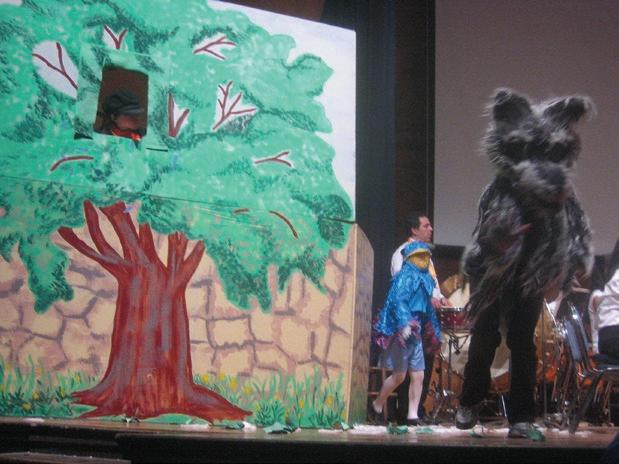
Of all the symphonic works written expressly for children, Prokofiev’s Peter and the Wolf stands apart in its rich musical characterization. A composer of ballets about Romeo and Juliet and Cinderella, Prokofiev was no less skilled with the enchanting story about a boy and his animal friends who capture a wolf.
In 1936, soon after Prokofiev returned to his native Russia after two decades living abroad, the Moscow’s Children’s Theater approached him with a commission: to write a piece that would introduce children to orchestral instruments. It was also to be suitable for the Soviet Young Pioneer movement — a sort of politicized Cub Scouts. Prokofiev fashioned Peter as a Pioneer, though the story is not overtly political. After rejecting an original supplied text, Prokofiev himself wrote the simple narrative and assigned each character an instrument or instrument family: the bird a flute, the cat a clarinet, the duck an oboe, Peter’s grandfather a bassoon, and the wolf three
horns. Peter himself is assigned a wholesome-sounding string section. Prokofiev particularly excelled at capturing the characters’ gestures and sounds, be it the meowing clarinet, the quacking oboe, or the big bad French horn in the woods. At the same time, he kept moralizing to a minimum. Prokofiev biographer Harlow Robinson writes, “If the story has a moral, it seems to be this: don’t be afraid to challenge established beliefs (grandfather’s caution) or to take risks.” Robinson also calls Prokofiev’s text “a subtly subversive tract, encouraging children to rely on their wits and not on the greater experience (and inertia) of their elders.”
The Moscow premiere of Peter and the Wolf drew little notice (Prokofiev called it “inauspicious at best”), but the piece caught on after its US premiere with the Boston Symphony Orchestra (with Richard Hale narrating) in 1938. It was adapted for ballet, made into an animated film by Walt Disney, and eventually, recorded hundreds of times in more than a dozen languages.
— Brian Wise
By joining the Musicians’ Circle and underwriting an orchestra chair, you play a vital role in bringing talented musicians to the Colorado Music Festival. Options start at $3,000 and are season long. For more information, contact development@comusic.org Connect your passion and love of music to your giving – support a musician chair in 2026!
TUESDAY
7:30PM
JULY 14
ARTISTS
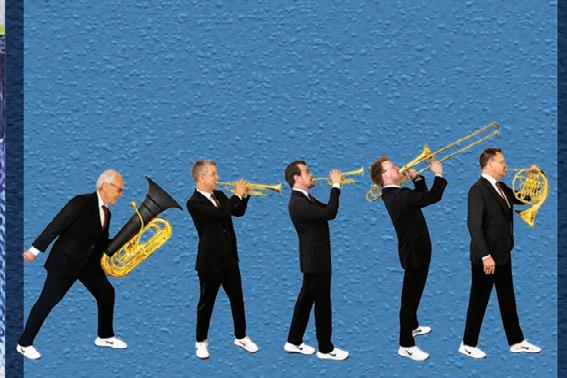
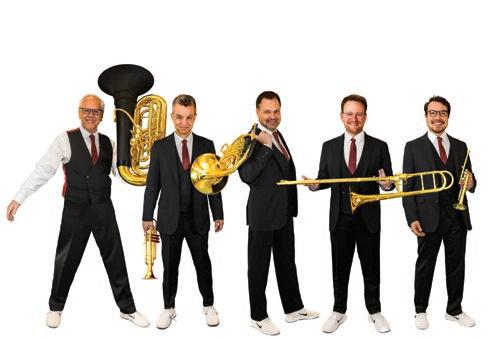
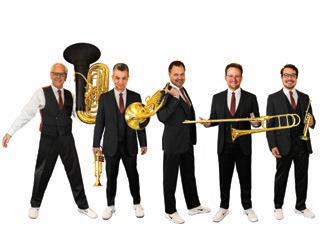
Canadian Brass:
Joe Burgstaller and Mikio Sasaki, trumpets
Jeff Nelsen, horn
Keith Dyrda, trombone
Chuck Daellenbach, tuba
The July 14 concert is sponsored by GORDON AND GRACE GAMM
CANADIAN BRASS
With an international reputation as one of the most popular brass ensembles today, Canadian Brass has truly earned the distinction of the world’s most famous brass group. Masters of concert presentations, Canadian Brass has developed a uniquely engaging stage presence and rapport with audiences. What set Canadian Brass apart from all other performing artists in 1970 was the relentless search for repertoire that was both loved by its performers and embraced by a growing brass audience. Each of their concerts exhibit a full range of musical styles, from trademark Baroque and Dixieland tunes, to Bach, Handel, Vivaldi, Joplin, Gershwin and Ellington to ballet, opera and new compositions and arrangements created especially for them.
Carmen and Her Friends
Program to be announced from the stage, and selections may include:
W.A. Mozart, arr. Watkin: Overture to The Magic Flute, K.620
G. Frescobaldi, arr. Fred Mills: Toccata
J. Brahms, arr. Ralph Sauer: Chorale Prelude No. 10
J.S. Bach, arr. Luther Henderson: Well Tampered Bach
BeBop Bach
Cool Bach
Dixie Bach
Agustín Lara, arr. Don Bagley: Granada
Lennon and McCartney, arr. Christopher Dedrick: Eleanor Rigby Harry de Costa, arr. Luther Henderson: Tuba Tiger Rag
Coldplay, arr. Brandon Ridenour: Viva la Vida
Samuel Barber, arr. Stephen McNeff: Adagio
Astor Piazzolla, arr. Joe Burgstaller: Très Tangos Nuevos
Contrabejeando
Oblivion
Libertango
Georges Bizet, arr. Fred Mills: Selections from Carmen Overture
Habanera
Duet
La Virgen de la Macarena (arr. Canadian Brass) Procession of the Toreadors
The official website of Canadian Brass is canadianbrass.com
Keep up with Canadian Brass via Instagram, Twitter, Facebook and YouTube.
Canadian Brass recordings are available at canadianbrassstore.com
Canadian Brass is represented by Opus 3 Artists opus3artists.com.
CENTER FOR MUSICA L ARTS
You Belong in Our Inner ircle
The Colorado Music Festival and Center for Musical Arts invites you to become part of a community of passionate supporters who believe in the power of music to inspire, connect, and enrich lives . Our Giving Circles are designed for donors whose generosity reflects both a love of music and a commitment to ensuring that world-class performances and exceptional music education remain accessible for generations to come.
As a Giving Circle member, you'll enjoy meaningful opportunities to deepen your connection to our organization, artists, and fellow music lovers while directly supporting programs that strengthen and uplift our community.
Join one of our giving circles today!
Musicians' Circle
Starting at $3,000 annually
Support Festival musicians by underwriting an orchestra chair.
Founders' Circle
Starting at $5,000 annually
Receive invitations to exclusive events, pre-sale access to tickets and subscriptions, and opportunities to support guest artists and new works.
Music Director's Circle
Starting at $25,000 annually
Enjoy deeper engagement through exclusive gatherings, naming opportunities, and sponsorship opportunities for concerts and special events.
Your support helps make possible:
• Low- and no-cost access to performances for youth, students, veterans, and seniors, along with tuition assistance for music students in need
• Innovative programs such as Festival Fellows and LifeSong Chorus
• The creation and performance of new music by today's leading composers
• World-class performances and music education experiences that strengthen our community
THURSDAY
7:30PM JULY 16
FRIDAY 6:30PM JULY 17
ARTISTS
Peter Oundjian, conductor
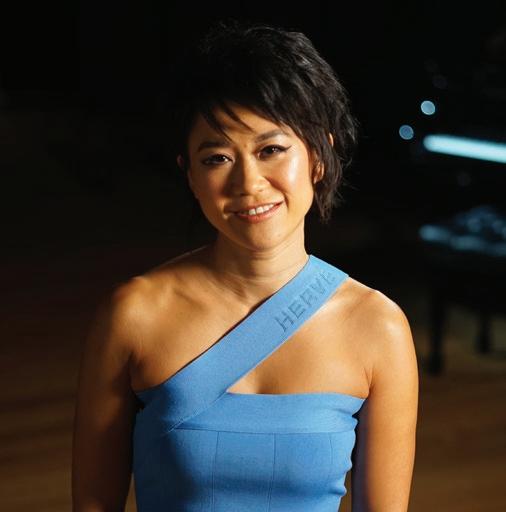
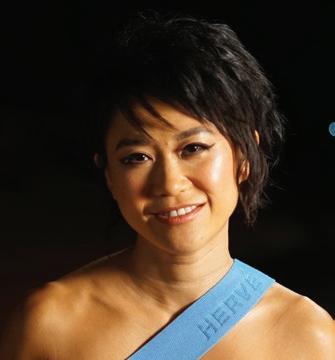
Yuja Wang, piano and conductor
PROGRAM
Sergei Prokofiev: American Overture, op. 42bis
Samuel Barber: Piano Concerto
I. Allegro appassionato
II. Canzone
III. Allegro molto
Camille Saint-Saëns: Bacchanale from Samson and Delilah
Yuja Wang, conductor
Leonard Bernstein: Symphonic Dances from West Side Story
I. Prologue
II. “Somewhere”
III. Scherzo
IV. Mambo
V. Cha-cha
VI. Meeting Scene
VII. ”Cool” Fugue
VIII. Rumble
IX. Finale
YUJA WANG + WEST SIDE STORY
American Overture Op. 42bis
Sergei Prokofiev
When executives at the Aeolian Company, the maker of pianos, mechanical organs, and pianolas, wanted to celebrate the opening of their new Manhattan headquarters in 1927, they hired Prokofiev to write a short overture to be played in the building’s 150-seat auditorium. Given the dimensions of the hall, the composer restricted his forces to a modest chamber orchestra and originally titled it Overture for 17 Instruments. This wasn’t a traditional chamber orchestra, but a novel assemblage of two pianos, two harps, a small group of woodwinds and brass, three double basses, celesta, and percussion.
The sonic result was decidedly more percussive and heterogeneous than that of a more conventional ensemble, an effect that Prokofiev accentuated in his bright and economic scoring. Though living in Paris and touring the world, Prokofiev imbued the piece with a certain New York sensibility.
After a declamatory introduction, the main theme has an exuberant, busy vitality, emblematic of the 1920s metropolis. The overall form is a classic rondo (ABACA) and the chugging (“A”) material is offset by moodier, more contemplative lyrical episodes, at times evoking the dry, spiky sonorities of Stravinsky’s neoclassical style. But a joyful mood wins out in the end: This is, as composer James M. David writes, “a Russian in New York” overture, much in the spirit of Gershwin’s An American in Paris
Piano Concerto
Samuel
Barber
Samuel Barber was in his mid-20s when his Adagio for Strings put him on the international map, but it would be another quarter-century before he would complete a concerto for his own instrument. To those who attended the September 1962 premiere of the Piano Concerto at New York’s Lincoln Center, it was worth the wait. The piece drew widespread critical and audience acclaim (not necessarily a given for late-career Barber) and it won the Pulitzer Prize for Music in 1963.
One of several works that Barber wrote for Lincoln Center in the 1960s, the concerto had special significance, being composed for the 1962 opening of Philharmonic Hall (now David Geffen Hall). It was part of a celebratory week featuring several top orchestras, each of whom made a point of including some American music. The music publishing firm G. Schirmer commissioned Barber to write a piano concerto for the Boston Symphony Orchestra, conducted by Erich Leinsdorf (the commission also celebrated G. Schirmer’s own 100 th anniversary). Barber initially hoped to lure Vladimir Horowitz out of retirement to give the premiere, but he instead turned to John Browning, an impressive young Juilliard graduate with a series of competition victories.
The July 17 concert is sponsored by
The July 16 concert is sponsored by KATHY KROL AND BOULDER CENTER FOR FOOD AND AGRICULTURE
Barber took pains to not only exploit the piano’s potential for lyricism, color, and percussiveness, but also tailored the piece to Browning’s individual strengths. It was a formidable score, notes Howard Pollack in his 2025 biography of Barber. “Featuring whirling filigree, thunderous octaves, fleet double-notes, and great fistfuls of chords, the piano part proved unusually demanding,” Pollack writes, adding that Browning deemed some passages in the finale to be unplayable at full tempo, requiring Barber to scale back.
The moody, suspenseful first movement opens with a solo piano prologue featuring a bold theme built on several sturdy octaves. It becomes the most prominent theme of the movement, extensively developed and joined by subsidiary melodies in the oboe, horn, and flute. The reflective second movement, Canzone, features muted strings playing a gossamer accompaniment to a mostly gentle piano melody. In the third movement, Barber evokes the boisterous, perpetual motion finale to his Violin Concerto. With an asymmetrical 5/8 beat, the movement slightly relaxes in two contrasting episodes before charging ahead to a brilliant finish.
Bacchanale from Samson and Delilah
Camille Saint-Saëns
As a frequent traveler across North Africa and points beyond, SaintSaëns had a taste for the exotic, as heard in works such as the Piano Concerto No. 5 (The Egyptian) and the Orientalist opera La princesse jaune. But this was evidently not to everyone’s liking in 19 th century France. After Paris theaters refused to stage his opera Samson et Dalila, in part because its biblical subject was deemed controversial, Franz Liszt stepped in and arranged for a premiere in Weimar, then an avantgarde musical hub.
The opera dramatizes the life of Samson, the Israelite strongman, and Delilah, the Philistine woman who seduces and betrays him to her religious leaders. The story builds to a violent finish, as Samson and his foes are crushed when he causes a temple to collapse. But first comes the Bacchanale, in which Samson is held captive as Delilah leads a wild and provocative dance to taunt him. The number opens with a slithering oboe melody before a steady pulse
develops in the orchestra. As the strings carry the theme forward, drums begin to pound, dancers cavort, and the scene builds a wild climax.
While directors often struggle with the portraying temple collapse, the Bacchanale is an opportunity for lavish, suggestive spectacle. The opera finally opened in Paris in 1892, and it has remained in the international repertory ever since.
Symphonic Dances from West Side Story
Leonard Bernstein
Endlessly revived and debated since its Broadway premiere in 1957, West Side Story enjoys a cultural footprint like few other 20 th century stage works. The musical’s themes of migration, striving, and assimilation hit close to home for Leonard Bernstein, whose own parents escaped persecution in the old country to build a better life in America. Its specific origins date to the late 1940s, when directorchoreographer Jerome Robbins envisioned a remake of Shakespeare’s Romeo and Juliet, moved to the streets of New York City.
In the original scenario, the musical was to be an “East Side Story,” with clashes between Jewish and Irish Catholic gangs. But once the project got underway six years later, the setting was moved to San Juan Hill on Manhattan’s west side, and there were new warring factions: the Anglo Jets, depicted with streetwise jazz and blues sounds, and the Puerto Rican Sharks, identified with various Latin and Caribbean dance forms. Shakespeare’s star-crossed lovers became Tony, a former Jet, and Maria, whose brother leads the Sharks.
West Side Story had an original run of 732 performances, followed by a national tour and six Tony Awards. In 1960, Bernstein revisited the score
and plucked out nine sections to create the Symphonic Dances. Predating the (first) film version by a year, this orchestral suite covers most of the familiar music of the show. There’s the competitive Mambo, the simmering and snapping Cool, and the climactic Rumble. Tony and Maria are the focus of the delightful ChaCha, which, like other numbers in the musical, uses a haunting tritone as its melodic kernel. The printed score includes the following descriptions:
Prologue (Allegro moderato) —The growing rivalry between two teenage street gangs, the Jets and Sharks.
“Somewhere” (Adagio) — In a visionary dance sequence, the two gangs are united in friendship.
Scherzo (Vivace e leggiero) — In the same dream, they break through the city walls and suddenly find themselves in a world of space, air, and sun.
Mambo (Meno presto) — Reality again; competitive dance between the gangs.
Cha-cha (Andantino con grazia) — The star-crossed lovers [Tony and Maria] see each other for the first time and dance together.
Meeting Scene (Meno mosso) — Music accompanies their first spoken words.
“Cool” Fugue (Allegretto) — An elaborate dance sequence in which the Jets practice controlling their hostility.
Rumble (Molto allegro) — Climactic gang battle during which the two gang leaders are killed.
Finale (Adagio) — Love music developing into a procession, which recalls, in tragic reality, the vision of “Somewhere.”
— Brian Wise
SUNDAY 6:30 PM
JULY 19
ARTISTS
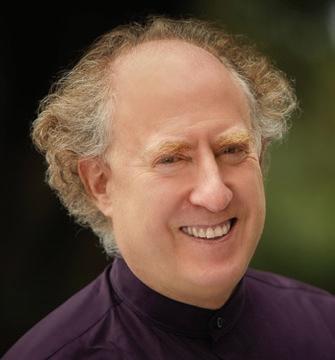
Jeffrey Kahane, leader/fortepiano
PROGRAM
Johann Sebastian Bach: Brandenburg Concerto No. 1, BWV 1046, F Major
Olav Van Hezewijk, Joshua Lauretig, Matt Lengas, oboes; Gerald Wood, Andrew Karr, horns; Joseph Meyer, violin
I. [Allegro]
II. Adagio
III. Allegro
IV. Menuet; Trio 1; Menuet; Polonaise; Menuet; Trio 2; Menuet
Johann Sebastian Bach: Brandenburg Concerto No. 3, BWV 1048, G Major [Allegro]
Allegro
Johann Sebastian Bach: Brandenburg Concerto No. 5, BWV 1050, D Major
Viviana Cumplido Wilson, flute; Kate Arndt, violin
I. Allegro
II. Affettuoso
III. Allegro
Johann Sebastian Bach: Brandenburg Concerto No. 6, BWV 1051, B-flat Major
DJ Cheek, Darren Carter, violas
I. [Allegro]
II. Adagio ma non tanto
III. Allegro
Johann Sebastian Bach: Brandenburg Concerto No. 4, BWV 1049, G Major
Viviana Cumplido Wilson, Jessica Petrasek, flutes; Kevin Lin, violin
I. Allegro
II. Andante
III. Presto
Johann Sebastian Bach: Brandenburg Concerto No. 2, BWV 1047, F Major
Maximilian Morel, trumpet; Jessica Petraskek, flute; Joshua Lauretig, oboe; Kevin Lin, violin
I. [Allegro]
II. Andante
III. Allegro assai
BACH’S BRANDENBURG CONCERTOS
Brandenburg Concertos Nos. 1-6
Johann Sebastian Bach
It’s widely believed that J.S. Bach composed the Brandenburg Concertos as a kind of cold-call job application. In 1719, while on his way to Berlin to pick up a new harpsichord, Bach paid a visit to Christian Ludwig, the Margrave of Brandenburg. The Margrave asked to see more of Bach’s music, and then either reconsidered or forgot about the request. Two years later, he was likely surprised to receive a beautifully autographed score package of the six concertos along with an obsequious letter of dedication. “I humbly pray for you not to judge their imperfection,” Bach wrote, “by the severity of that fine and delicate taste which everyone knows you have for music” (offering some insight into the social standing of an 18th -century composer).
Unfortunately, it appears that the Margrave never replied to Bach, nor were the concertos performed as a set, and they lay unnoticed for more than a century. They were eventually discovered in the Brandenburg archives in 1849, but even then, they remained rarities until the mid-20 th century. This may have been due to their Baroque-specific style and instrumentation, which included recorders, a violino piccolo (a smaller violin), violas da gamba, and harpsichord. But as ensembles adapted the Brandenburgs to modern instruments — as in this performance — the pieces became paragons of the concerto grosso form, in which a small group of soloists stands out from a larger accompaniment (ripieno) group.
Bach likely tested out his concertos while serving as the kapellmeister (music director) in Cöthen. With Prince Leopold’s court band at his disposal, he worked with some formidable players who inspired him to heights of color, expression, and ingenuity. Below are a few signposts for each of the six Brandenburg Concertos.
Brandenburg Concerto No. 1, BWV 1046, F Major
The First Concerto is the most unusual in form, cast in four movements instead of the usual three, and closing with an extended minuet. The ensemble includes a solo violin, three oboes, and a pair of hunting horns as the solo group, with strings and basso continuo (the bass line plus harmonic filler) accompanying. The first movement is largely orchestral, with all instruments playing together, apart from some short passages for the horns. The second movement features an operatic-style duet between the solo oboe and violin while the third is brilliantly virtuosic and uses a variety of instrumental combinations. The fourth movement is a regal minuet containing a stylized Polish dance, variously described as a polonaise or polacca.
Brandenburg Concerto No. 3, BWV 1048, G Major
The Third Concerto calls for no solo instruments, and along with the Sixth Concerto, it is one of two with no wind instruments. This places it somewhat outside the concerto grosso tradition, and instead, Bach divides the strings into three groups of three instruments each (violins, violas, cellos). Also unusual is the lack of a written-out second movement. Instead, the two outer allegros are separated by a two-chord adagio cadence. In concert, Bach, on harpsichord, or a string player, would have improvised this movement, which would end with the two chords.
The July 19 concert is sponsored by
Brandenburg Concerto No. 5, BWV 1050, D Major
The Fifth Brandenburg Concerto was inspired by the new harpsichord Bach ordered in Berlin, as it is one of three solo instruments, along with the flute and violin. In the first movement, the harpsichord (a fortepiano in this performance) deploys glittering solo lines, leading to a monster of a cadenza. It’s hard to understate how innovative this was: Bach had unexpectedly elevated an accompanying voice to a solo role, anticipating his later keyboard concertos. In the middle movement, the soloists play what amounts to an intimate trio sonata. The closing Allegro is a fugue, which puts the soloists on more equal footing as they toss material amongst themselves and are joined by the full ensemble.
Brandenburg Concerto No. 6, BWV 1051, B-flat Major
The Sixth Brandenburg has often been pegged as the outlier of the set, being unusually scored for a lower-
pitched combo: two violas, two violas da gamba, and obbligato cello, but no violins. In modern practice, two cellos and a contrabass substitute for the gamba family. Violas especially shine here, starting the first movement with a vigorous chase, before the other instruments are drawn in. The second movement is a trio for violas and continuo while the Allegro finale is a bright gigue (a dance related to the jig) and perhaps the most tuneful movement in the entire set.
Brandenburg Concerto No. 4, BWV 1049, G Major
In the Fourth Concerto, Bach’s soloists are a violin and a pair of recorders, the latter parts sometimes played on modern flutes. All three are set against a body of strings and continuo. The opening Allegro is a jaunty dance in which the recorders (or flutes) play in thirds while the solo violinist weaves an intricate tapestry. The central slow movement is a reflective sarabande, with the recorder soloists contrasted through loud and soft dynamics. The
final Presto is a fugue with chasing, winding lines and the violin treating listeners to all manner of virtuosic display.
Brandenburg Concerto No. 2, BWV 1047, F Major
Alongside the Fifth Brandenburg Concerto, the Second is probably the most celebrated of the set, thanks in part to its gleaming trumpet solos. In fact, the trumpet is one of four solo instruments, along with the recorder, violin, and oboe, and each takes turns presenting itself in the first movement. It’s worth noting that trumpets in Bach’s day were valveless, meaning that notes — and rapid trills — were sounded by varying lip pressure alone. The second movement is scored for a solo trio (the trumpet is silent), plus the continuo group. The full solo group returns for the finale, a galloping fugue in which each of the four soloists takes up the melody in turn, and new ideas continuously add to the exuberant discussion.
— Brian Wise
TUESDAY
7:30PM
JULY 21
ARTISTS
Mozart:
Louis DeMartino, clarinet
DJ Cheek, viola
Vivienne Spy, piano
Stephenson:
Jeffrey Work, trumpet
Joseph Meyer, violin
Kate Arndt, violin
Yumi Sagiuchi Shultz, viola
Bridget Pasker, cello
Kirby Nunez, bass
Tchaikovsky:
Kevin Lin, violin
Ahra Cho, violin
DJ Cheek, viola
Darren Carter, viola
Austin Huntington, cello
Evan Kahn, cello
James Stephenson, composer
PROGRAM
Wolfgang Amadeus Mozart: Trio in E-flat Major, K. 498, “Kegelstatt”
I. Andante
II. Menuetto
III. Rondeaux: Allegretto
James Stephenson: Love Notes for Trumpet and Strings (world premiere)
I. Parental Love
II. Peer Love
III. Partner Love
IV. Personal Love
Pyotr Ilyich Tchaikovsky: String Sextet in D Minor, op. 70: Souvenir de Florence
I. Allegro con spirito
II. Adagio cantabile e con moto
III. Allegretto moderato
IV. Allegro con brio e vivace
TCHAIKOVSKY’S SOUVENIR DE FLORENCE
Trio in E-flat Major, K. 498, “Kegelstatt”
Wolfgang Amadeus Mozart
Mozart’s E-Flat Major Trio has a particularly fanciful subtitle, Kegelstatt, which in Viennese German refers to a skittles alley — skittles being like modern-day bowling. A story goes that Mozart composed it during a session of the game with his friend, the clarinet virtuoso, Anton Stadler. But historians later found that the skittles connection actually applied to a set of horn duos, and the nickname was applied to the trio in a misunderstanding. Nevertheless, Kegelstatt fits the music’s spirit: A piece for friends, heard at a convivial gathering and possibly assisted by an adult beverage, which Mozart also enjoyed.
The trio premiere took place at the home of the prominent Jacquin family, and the choice of instruments suggests it was during a social gathering. Mozart wrote the viola part for himself, the piano part for his teenage piano student, Franziska von Jacquin, and the clarinet part for Stadler (for whom he also wrote the Clarinet Concerto and Clarinet Quintet, among other works). The trio’s textures are intimate in character, with particularly detailed part writing for both the clarinet and viola, instruments that Mozart especially adored. A note written on the score, likely from the publisher, shows that the clarinet part could also be played by a violin, then a far more common instrument.
In his biography of Mozart, Jan Swafford sets the scene for the premiere. “One imagines the party, the food and drink and laughter,” he writes, with “everybody sitting down to what turned out to be one of the most affable of Mozart’s chamber works, his gift for melody on display from start to finish.”
The first movement unfolds with a pure warmth and intimacy; its two main themes are marked by a melodic turn called a grupetto. The second movement is unusually dark and serious — a far cry from the courtly air of most Classicalera minuets. Listen for the back and forth between a four-note clarinet phrase and the viola’s scurrying triplet response in the central trio section. The finale begins with a long, lyrical clarinet solo, a breath of fresh air after the tense minuet. The clarinet and piano offering consoling gestures to the viola’s bouts of angst, and the leisurely good spirits continue to the very end.
Love Notes for Trumpet and Strings (world premiere)
James Stephenson
James Stephenson certainly knows his way around the brass family, having played trumpet for 17 seasons in the Naples (FL) Philharmonic. During that time, he took to arranging works for the orchestra’s brass quintet, of which he was a member, and then for the full ensemble. Now a full-time composer and based outside of Chicago, he has developed an extensive catalog that includes symphonies, concertos and sonatas written for nearly every instrument. He has written works for the Chicago Symphony Orchestra, the Boston Pops, and the Minnesota Orchestra, St. Louis Symphony, Houston Symphony, and “The President’s Own” US Marine Band.
Interested in sponsoring a concert or other program?
Contact James Knowles, Director of Philanthropy, at james@comusic.org.
Love Notes is Stephenson’s second major score for Colorado Music Festival Principal Trumpet Jeffrey Work, following his Trumpet Concerto No. 1, introduced in 2003. Stephenson writes the following on Love Notes:
It’s not often that one gets to compose not one, but two concertos, for a dear lifelong friend. Jeff Work and I have essentially been fast friends since he walked over one summer day, while I was a 12-year-old practicing trumpet at Interlochen, to sort of say, “Hey, let’s talk trumpet.” Little did I know then that someday I would become a full-time composer and could “talk trumpet,” but now in terms of my writing for the instrument, not playing it. Jeff was responsible for the opportunity to write my first trumpet concerto, which was my first chance to “dig in” as a composer, and which I can honestly say directly led to my subsequent visibility in the composition world.
Almost 25 years later, Jeff and his life partner May Lu approached me for another concerto. This time it was to be one inspired by May’s four definitions of different kinds of love: Parental (the organic and natural form of love), peer (born of independent thinking), partner (the most complex, affectionate), and personal (the highest form of love, summarizing all the others). With this inspiration as a start, it was my job to turn these thoughts into music.
Parental Love: I wanted this music to start softly, organically, with an extended introduction before the solo trumpet enters. This is meant to symbolize the ensemble as parental and almost giving birth to the trumpet. The subsequent music incorporates some dissonance and struggle, as parenting is not always easy, but ultimately is beautiful, and full of strength, support, and safety. Motifs and themes get fleshed out throughout the work, indicating that we always draw from our childhood throughout our lives.
Peer Love: This was a chance to insert some of Jeff’s and my history into this piece, as we are, of course, peers. The very first thing Jeff and I discovered about one another is that we both love puns. Our pun-offs over the years have been legendary (at least to us), as we constantly try to “pun up” the other with our witty commentary. Another early memory is his teaching me the “Betty Botta” tonguetwister. Once learned, we would have speed contests, or duets, performing this fun tongue twister. Therefore, the music becomes Jeff teaching this tongue twister to the strings. The different string instruments each do it their own way, from the bass to the viola, cello, violin section, and then, the first violinist, who comes around and performs it in a rather “classical” and stately way. Lastly, the whole ensemble does it together and celebrates.
Partner Love: The idea here was to subtly combine Jeff and May’s “East meets West” love, through harmonies borrowed from each culture (pentatonic vs. “bluesy sevenths”). The opening accompaniment (viola pizzicato) is meant to be metrically complex, meaning that, at first, one cannot tell where the beat falls. Ultimately, I wanted the music to be beautiful, as their relationship is, and extremely harmonious, which I’ve also viewed in their partnership. The ending quotes the Chinese “Jasmine Flower” folksong, a cherished memory of May’s upbringing.
Personal Love: As is common in most concertos, I wanted to be sure the last movement was a virtuosic showcase, exploiting Jeff’s incredible talent on the instrument, and symbolizing his personal life achievement. The movement
incorporates motifs from the other movements, but mostly in new forms, symbolizing how Jeff has taken from all the other three “Loves,” and drawn on them to build his own persona.
String Sextet in D Minor, op. 70: Souvenir de Florence Pyotr Ilyich Tchaikovsky
Tchaikovsky was not the first prominent 19 th -century composer to draw inspiration from a trip to Italy. Hector Berlioz, Felix Mendelssohn, and Richard Strauss were all veritable snowbirds who traveled south and returned with musical tributes to the country’s landscapes and cultural riches. But Tchaikovsky especially seemed to relish any wintertime escape he could get, and delivered two Italian-themed works: his Capriccio italien, inspired by an escape to Rome in 1879, and the Souvenir de Florence, composed in 1890 during a trip to Florence, Rome, and Venice.
The St. Petersburg Chamber Music Society commissioned Souvenir de Florence in 1886, just as it named him an honorary member. There were few precedents in the sextet medium beyond a pair of works by Brahms and one by Dvořák. Tchaikovsky confessed to a constant feeling that he was writing a piece for orchestra and then rearranging the music for six players (two violins, two violas, and two cellos).
The first movement, Allegro con spirito, has a taut, agitated mood, and apart from a few sunlit passages, the Italian influence is muted. But the second movement brings its most Italianate theme, which unfolds over pizzicato (plucked) strings, suggesting a guitar serenade. The third movement takes us back to Russia, with what sounds like a burly Slavic folk tune intoned by the viola and taken up by other instruments. The finale is Russian to the core, with a well-wrought fugue and a joyous ending in D Major.
— Brian Wise
THURSDAY 7:30PM JULY 23
FRIDAY
6:30PM
JULY 24
ARTISTS
Leonard Slatkin, conductor Njioma Grevious, violin
PROGRAM
Aaron Copland: Rodeo (ballet in one act)
John Corigliano: Chaconne for Violin and Orchestra from The Red Violin (1997)
Ron Nelson: Savannah River Holiday (1952)
Cindy McTee: Adagio for String Orchestra (2002)
George Gershwin: An American in Paris
ALL AMERICAN: COPLAND, GERSHWIN, & MORE
Rodeo (ballet in one act)
Aaron Copland
New York City-born and bred, Aaron Copland had likely never seen a cattle ranch in person when choreographer Agnes De Mille approached him about writing the 1942 ballet Rodeo. But the myth of the Wild West was so ingrained in popular culture that Copland would have had no trouble accessing cowboy songs to create a convincing musical portrait. He chose several traditional cowboy tunes from two anthologies — John and Allan Lomax’s Our Singing Country, and Ira Ford’s Traditional Music of America — and turned them into folksy, whimsical, and touching dance movements.
De Mille (niece of film giant Cecil B. DeMille) requested the score for the Ballet Russe de Monte Carlo, a company that had moved to the US during World War II. Impressed with Copland’s earlier ballet, Billy the Kid, De Mille herself played the lead in this tale of a cowgirl who comes to terms with her femininity as she seeks a partner.
Rodeo is distinct among Copland’s pieces in that he leaves the folk tunes largely intact while highlighting their inherent humor. In the opening Buckaroo Holiday — in which the cowgirl seeks the affections of the head wrangler, despite competition from the rancher’s daughter — Copland quotes two melodies: the railroad tune “Sis Joe” and “If He’d be a Buckaroo.” The latter is played by the solo trombone with amusing slurs and unexpected pauses. The Corral Nocturne uses no recognizable folk material and instead captures the lovesick musings of the cowgirl with a lyrical melody in the bassoon and oboe.
The Ranch House Party features a detuned “honky-tonk” piano to capture a western saloon ambience. Saturday Night Waltz is a down-home American take on the European dance form using the Western song “I Ride an Old Paint.” Hoedown is built from several melodies including the square dance tune “Bonaparte’s Retreat.” A pause near the end signals the climactic kiss between the cowgirl and a champion roper before the piece ends with a joyous fanfare. Rodeo premiered on October 16, 1942, at the Metropolitan Opera House, where it received 22 curtain calls.
Chaconne for Violin and Orchestra from The Red Violin (1997) John Corigliano
John Corigliano’s music for Francois Girard’s 1998 film The Red Violin has enjoyed an unusually diversified life in the concert hall. Besides the Oscarwinning score itself, he refashioned the material in several other guises — as a concerto, a suite, a set of caprices, and perhaps mostly notably, the Chaconne for Violin and Orchestra. The music flows naturally from the story of the violin and its 300-year odyssey from 17th -century Italy to contemporary Canada, taking in Oxford, Vienna, and Shanghai along the way.
The July 23 & 24 concerts are sponsored by THE KASSOY FAMILY IN MEMORY OF CARYL F. KASSOY
Given the episodic story, Corigliano decided that a single musical idea could serve as a thematic glue. He turned to a chaconne, a repeated chord pattern popularized in the Baroque era (and previously used by Corigliano in his Pulitzer Prize-winning Symphony No. 1).
The chaconne theme features incantatory dotted rhythms, first heard in low winds and brass. It is soon followed by what he calls Anna’s theme, a lyrical yet intense melody representing the violin builder’s doomed wife. Joining
these themes is a series of virtuosic “etudes” that stem from the film’s Vienna sequence. All this builds in intensity through rising gestures and a mix of songful and frenzied violin writing; there are violent wallops of orchestral sound and teeming climaxes. After an extended solo cadenza, the music reaches its impassioned conclusion.
Savannah River Holiday (1952)
Ron Nelson
Ron Nelson (1929-2023) wrote music that seemed perfectly suited to the post-World War II age when interstate highways and jet travel put America’s natural wonders within closer reach. His Savannah River Holiday kicked off a series of pictorial overtures, including Rocky Point Holiday, Aspen Jubilee, and Sonoran Desert Holiday. Leonard Slatkin once called Nelson “the quintessential American composer. He has the ability to move between conservative and newer styles with ease. The fact that he’s a little hard to categorize is what makes him interesting.” Nelson earned three degrees at the Eastman School of Music, where he studied with Howard Hanson, followed by studies at the Paris Conservatory under a Fulbright Scholarship.
Savannah River Holiday received its premiere on NBC Radio in 1953 and 20 years later was transcribed for wind band by the composer. Buoyant and a bit rambunctious, the eightminute piece consists of a punchy brass-dominated theme and a more reflective woodwind melody. There is an Adagio middle section with a touching string theme before music winds up to a crisp and sparkling finish.
Adagio for String Orchestra (2002)
Cindy McTee
The roots of Cindy McTee’s Adagio for String Orchestra began with a former teacher, the legendary Polish composer Krzysztof Penderecki. The two met while McTee was a student at music at Pacific Lutheran University
in the 1970s. Penderecki reportedly struck a deal in which he would teach her composition lessons, and in exchange, she would teach his children English. She spent a year living with his family in Poland and studying composition, counterpoint, and various techniques. She has gone on to have a successful career that included a longtime teaching position at the University of North Texas. In a tribute to Penderecki, McTee used a melody from the Agnus Dei of his Polish Requiem in her own organ piece of the same title. She then adapted it for this string work composed after the Sept. 11, 2001 terrorist attacks.
Rather than quoting Penderecki’s theme outright at the start, McTee builds up to it, and it finally appears in its entirety about three-quarters of the way through. “Most of the material in my piece consists of two or three-note fragments taken from this melody,” she writes, emphasizing the interval of the minor third. The piece traces an arch-like form, beginning with tension and anguish, then turning more consonant and peaceful, then ending on an uncertain, questioning note.
McTee acknowledges the influence of another famous Adagio for Strings, that of Samuel Barber. “Barber was definitely on my mind,” she said, in a pre-concert talk at the Detroit Symphony Orchestra. “There are a couple of places that you might think come from the Barber, although I was not conscious of it at the time I wrote the organ piece.” McTee later arranged her Adagio twice: for string quartet and as the second movement of her Symphony No. 1: Ballet for Orchestra.
An American in Paris
George Gershwin
A jazzy, nostalgic stroll through the city of light, An American in Paris was a major leap forward in the brilliant career of George Gershwin. A commission from the New York Symphony Society, the piece followed the dizzying success of his Rhapsody in Blue and Concerto in F, and while there were still critics
and composers who sniffed at his Broadway background, attitudes were rapidly changing.
In March 1928, Gershwin sailed to Europe in the company of his sister “Frankie,” his brother, Ira, and Ira’s wife, Leonore. In George’s suitcase were sketches for the new symphonic work. Following a stopover in London, the party settled in Paris, where they attended a series of performances of Rhapsody in Blue, along with receptions, parties, and meetings with other composers. Far from the party circuit, Gershwin spent one afternoon wandering through auto supply stores in search of some oldfashioned taxi horns. He’d become quite a resourceful orchestrator and believed that their squeaky sound could perfectly evoke the happy chaos of Parisian traffic.
That summer, a few months before the premiere, Gershwin told Musical America, “My purpose here is to portray the impressions of an American visitor in Paris as he strolls about the city, listens to various street noises, and absorbs the French atmosphere.”
After some first impressions, “Our American friend, perhaps after strolling into a café and having a couple drinks, has succumbed to a spasm of homesickness,” Gershwin continued. “The harmony here is both more intense and simpler than in the preceding pages. The blues rises to a climax, followed by a coda in which the spirit of the music returns to the vivacity and bubbling exuberance of the opening part with its impressions of Paris.” Homesickness overcome, the visitor is “once again an alert spectator of Parisian life. At the conclusion, the street noises in French atmosphere are triumphant.”
An American in Paris took on new life as the climactic ballet of the 1951 Academy Award winning film of the same name, starring Gene Kelly and Leslie Caron. At the time it cost $500,000 — the most expensive musical number ever filmed.
— Brian Wise
SUNDAY 6:30PM JULY 26
ARTISTS
Peter Oundjian, conductor
Tony Siqi Yun, piano
PROGRAM
Mozart: Serenade No. 12 in C Minor, K. 388, “Nachtmusik” (Night Music)
I. Allegro
II. Andante
III. Menuetto in canone
IV. Allegro
Mozart: Piano Concerto No. 20 in D Minor, K. 466
I. Allegro
II. Romanza
III. Rondo: Allegro assai
Mozart: Symphony No. 35 in D Major, K. 385, Haffner
I. Allegro con spirito
II. Andante
III. Menuetto
IV. Presto
This performance has no intermission
Tony Siqi Yun North American representation: Kirshbaum Associates Inc.
307 Seventh Avenue, Suite 506 New York, NY 10001 kirshbaumassociates.com
This concert is sponsored by
MOZART: HAFFNER, NIGHT MUSIC, & MORE
Serenade No. 12 in C Minor, K. 388, Nachtmusik (Night Music)
Wolfgang Amadeus Mozart
Mozart did not use C minor that often, and when he did, he generally reserved it for heavyweight scores. The multi-movement serenade, by contrast, was a kind of lighter alternative to the symphony, reserved for garden parties, wedding receptions, and other outdoor events. But this serenade has all the hallmarks of his sturm und drang (storm and stress) symphonies, starting with the uncompromisingly stern, even tragic, opening Allegro. There is contrast in the tuneful major-keyed secondary theme, announced by the oboe, but the overall mood is imposing.
Relief comes in the Andante, a mellow 3/8 movement in E-flat Major. The Minuet suggests Mozart’s study of Bach and Handel, with the bassoons chasing the oboes in a snaking canon (the influence of Haydn’s Symphony No. 44 is also suspected here). The finale is a variations movement in which every member of the octet is given a moment to shine. Tension relief comes in the last variation, in which the key turns to major.
Piano Concerto No. 20 in D Minor, K. 466
Wolfgang Amadeus Mozart
A harbinger of the Romantic age, the Piano Concerto No. 20 is one of just two piano concertos by Mozart in a minor key, with the other being his C-minor concerto (K. 491). Both are known for their restless and stormy moods — rare in classical concertos and enhanced by trumpets and timpani. This was Beethoven’s favorite Mozart concerto, and the one that the composer himself always kept in his own performance repertory. Mozart also used D minor for ominous moments in his vocal music, such as the penultimate scene in Don Giovanni in which the statue drags the title character down to hell. Mozart himself premiered the concerto in February 1785 at a subscription concert in Vienna. His father reported in a letter to Mozart’s sister that “the concerto was incomparable, the orchestra excellent,” but also noted that his son completed it so close to curtain time that he was busy supervising the copyist instead of rehearsing the final movement. Nevertheless, Leopold gave no suggestion that the music was rushed — nor does it seem so to modern ears.
The Allegro first movement, the longest of the three movements, opens with throbbing, syncopated string figures that surely would have provided a healthy jolt to the elegant subscription crowd. When the piano enters with a plaintive melody, we’re momentarily in an elegant space. But this is just the start of a perpetually unsettled discourse in which the piano is pushed out of its serene world to jab and jostle with the antagonistic orchestra.
The second movement is a lovely Romanza, though it too has a blustery, minor-key passage. The finale, one of Mozart’s few rondos in a minor key, marks a return to the fire and brimstone of the first movement. A crisp piano refrain adds to the strife, but after the cadenza, the music turns suddenly (yet organically) optimistic, concluding in the key of D Major.
Symphony No. 35 in D Major, K. 385, Haffner
Wolfgang Amadeus Mozart Mozart was skilled in the art of recycling music from one format to another, taking a celebratory piece for a garden party and turning it into a pointedly “serious” work for the concert hall. In 1776, he composed an eight-movement serenade for the wedding of Elisabeth Haffner, the daughter of Salzburg’s late mayor Sigmund Haffner, Sr. The piece used the full forces available in town: pairs of oboes, bassoons, horns, trumpets, drums, and a full complement of strings.
The serenade was so successful that six years later, when Elisabeth’s
brother, Sigmund Haffner, Jr. was to be elevated to the aristocracy, he naturally asked Mozart to write music for the occasion. By then, however, Mozart had moved to Vienna and was characteristically swamped with other projects, including his opera, The Abduction from the Seraglio, not to mention his own wedding plans. Though unenthusiastic, Mozart obliged. He eventually reworked the earlier piece to fashion a second Haffner Serenade, four movements of which were then excerpted to create the Haffner Symphony.
The Haffner Symphony maintained the serenade’s celebratory spirit even as the march movement and one of two minuets were eliminated. Flutes and clarinets, both previously
unavailable in Salzburg, were added. The opening Allegro “must be played with great fire,” the young composer told his father Leopold; the music’s opening theme leaps two octaves then unleashes fiery scale passages. The middle two movements inherit the serenade’s lighter sound world, with a graceful andante speckled with operatic embellishments, and a minuet full of regal pomp. Mozart wanted the dazzling finale to be played “as fast as possible.” Its main theme is drawn almost note for note from a triumphal aria from The Abduction from the Seraglio
— Brian Wise
2026-27 SEASON BEGINS SEP 27
ISIDORE STRING QUARTET
JEREMY DENK, PIANO
SUN, SEP 27, 2027 | 4:00 PM
GABRIELA MONTERO, PIANO
SUN, OCT 12, 2026 | 7:30 PM
ORPHEUS CHAMBER ORCHESTRA
ISATA KANNEH-MASON, PIANO
SUN, NOV 15, 2026 | 4:00 PM
NIKOLAI LUGANSKY, PIANO
SUN, JAN 24, 2027 | 4:00 PM
DANISH STRING QUARTET
THU, FEB 18, 2027 | 7:30 PM
PAVEL HAAS QUARTET
SUN, MAR 14, 2027 | 4:00 PM
ANTHONY MCGILL, CLARINET
CONRAD TAO, PIANO
MON, APR 5, 2027 | 7:30 PM
IMANI WINDS
WED, MAY 12, 2027 | 7:30 PM
Danish String Quartet Anthony McGill, clarinet
Gabriela Montero, piano
TUESDAY
7:30PM
JULY 28
ARTISTS
Martinů:
Viviana Cumplido Wilson, flute
Austin Huntington, cello
Vivienne Spy, piano
Beethoven:
Olav Van Hezewijk, oboe
Louis DeMartino, clarinet
Wenmin Zhang, bassoon
Gerald Wood, horn
Vivienne Spy, piano
Stravinsky:
Ezra Calvino, conductor
Steve Hanusofski, clarinet
Wenmin Zhang, bassoon
Jeffrey Work, cornet
Jason Robins, trombone
Gerald Scholl, percussion
Juliette Kang, violin
Matt Heller, bass
PROGRAM
Bohuslav Martinů: Trio for Flute, Cello, and Piano, H. 300
1. Poco allegretto
2. Adagio
3. Andante - Allegretto scherzando
Ludwig van Beethoven: Quintet in E-flat Major for Piano and Winds, op. 16
I. Grave - Allegro ma non troppo
II. Andante cantabile
III. Rondo: Allegro ma non troppo
Igor Stravinsky: L’Histoire du Soldat (The Soldier’s Tale)
1. Marche du soldat (The Soldier’s March)
2. Petits airs au bord du ruisseau (Airs by a Stream)
3. Pastorale
4. Marche royale (The Royal March)
5. Petit concert (The Little Concert)
6. Trois danses (Three Dances): Tango, Waltz, Ragtime
7. Danse du Diable (The Devil’s Dance)
8. Grand choral (Great Chorale)
9. March triomphale du Diable (Triumphal March of the Devil)
BEETHOVEN & STRAVINSKY
Trio for Flute, Cello, and Piano, H. 300
Bohuslav Martinů
With his irrepressible thirst for novelty, Czech composer Bohuslav Martinů wrote more than 400 works in every format and genre. His life was as remarkable as his music. The son of a town watchman, he was raised in a church tower and later attended the Prague Conservatory until he was expelled for “incorrigible negligence.” His horizons broadened considerably in 1923 when he moved to Paris, immersed himself in the avant-garde, and cultivated a wonderfully quirky musical language.
In 1940, with the Nazis only days away from Paris, Martinů and his French wife, Charlotte, fled to the US. Though he pined for his Czech homeland, he settled into life in America and stayed remarkably busy. In addition to a series of symphonies and concertos, he wrote pieces for smaller, unusual groupings of instruments, including this Trio for Flute, Cello, and Piano.
Though wind-led trios aren’t unheard of — Mozart’s Kegelstatt Trio with clarinet was performed earlier this season — the Trio for Flute, Cello, and Piano is of a rare species. Martinů composed it over five days in July 1944, while teaching at Tanglewood. Despite the wartime backdrop, the music is spirited and ebullient. Its highlights include the syncopated drive of the first movement, as the three instruments playfully exchange phrases that gather little tension. The reflective Adagio opens with a substantial piano solo before the flute and cello enter with darker, yearning gestures. In the finale, Martinů continues the pensive spirit before a jaunty main section filled with hints of jazz and Czech folk rhythms.
Quintet in E-flat Major for Piano and Winds, op. 16 Ludwig van Beethoven
Beethoven charted a remarkably carefree musical style while in his 20s, writing several color and tuneful chamber works for wind instruments. A prime example is his Quintet in E-flat, which premiered in 1797 as a “Quintet for the Fortepiano and Four Wind Instruments” (oboe, clarinet, French horn, and bassoon). When it was published in 1801, the then-30-year-old composer produced a second version for piano and strings (violin, viola, and cello). Both quartets had the same opus number and were nearly identical otherwise. Beethoven took clear inspiration from Mozart’s Quintet in E-Flat (K. 452), written 13 years earlier in the same key, and scored for the same instruments. Beethoven opens the score with a stately introduction whose dotted rhythms suggest a Baroque French overture. The ensuing Allegro brushes aside any pretense to pomp as the three main themes are introduced, each with an easygoing charm. The main theme of the Andante second movement is arching and songful, led by the piano and interrupted twice by darker minorkey interludes.
The last movement is labeled as a rondo, which is typically structured as A-BA-C-A. But in Beethoven’s conception, the C section is really an embellishment of A; some B material also appears towards the end. But what really matters is the witty, effervescent flow of ideas throughout. At one performance, the composer teasingly stretched out the brief piano cadenza near the conclusion — to his great amusement and to his colleagues’ considerable irritation.
Interested in sponsoring a concert or other program?
Contact James Knowles, Director of Philanthropy, at james@comusic.org.
L’Histoire du Soldat (The Soldier’s Tale)
Igor Stravinsky
Likely the first-ever jazz-theater piece on a Faustian theme, Stravinsky’s The Soldier’s Tale arose from the turmoil of World War I and the Russian Revolution. In 1918, the composer had taken refuge in Lausanne, Switzerland, cut off from his estate in Russia and unable to collect royalties through his publisher. Even if publishing income had been forthcoming, performances of his seminal ballet scores, including The Rite of Spring, had all but dried up during the war.
While scraping by, Stravinsky was introduced to the Swiss writer CharlesFerdinand Ramuz, and together they hatched a plan to create a theater work that could be produced on the cheap, using only a handful of performers and a portable stage. It would bring in some desperately
needed income while traveling to small, makeshift venues at a minimal cost. After studying a collection of Russian folk tales, the two men conjured up The Soldier’s Tale, scored for seven instrumentalists plus a dancer and three speaking parts. Stravinsky’s use of jazz, however inexact, gives the score much of its freshness. His friend, conductor Ernest Ansermet, had recently returned to Switzerland from a US tour with a pile of jazz recordings and sheet music, including possibly Jelly Roll Morton’s “Jelly Roll Blues.” Stravinsky’s scoring was loosely based on those early jazz band lineups, with a violin, cornet, trombone, clarinet, bassoon, double bass and percussionist with a drum kit. The individual movements feature a pithy and tart assortment of dance numbers (ragtime, tango and waltz), as well as marches, a Spanish pasodoble, and a Lutheran chorale. Ramuz’s story tells of a soldier returning home from the front with a
magic violin that he foolishly trades with the devil for a book that can predict the future and make him rich. He soon discovers that he has been swindled, however, and wishes only that he could get his fiddle back. In the second part, the soldier manages to regain his violin, as well as the hand of a princess (played by a dancer), but in the end, he unwisely gives in to the devil and loses his instrument yet again.
When The Soldier’s Tale was staged on a shoestring budget in Lausanne, it was largely a success. But the tour never took place (despite being the initial motivation), as members of the performance troupe fell victim to the 1919 influenza epidemic. Nonetheless, Stravinsky kept the score alive through multiple concert versions, including the nine-movement suite presented on this program.
— Brian Wise
SUPPORT
THURSDAY
7:30PM
JULY 30
FRIDAY
6:30PM
JULY 31
ARTISTS
Peter Oundjian, conductor
Nobuyuki Tsujii, piano
Leigha Amick, composer
PROGRAM
Leigha Amick: O Beautiful Unity (world premiere)
Sergei Rachmaninoff: Piano
Concerto No. 2 in C Minor, op. 18
I. Moderato
II. Adagio sostenuto
III. Allegro scherzando
Gustav Holst: The Planets, op. 32
1. Mars, the Bringer of War
2. Venus, the Bringer of Peace
3. Mercury, the Winged Messenger
4. Jupiter, the Bringer of Jollity
5. Saturn, the Bringer of Old Age
6. Uranus, the Magician
7. Neptune, the Mystic
The July 30 concert is sponsored by The July 31 concert is sponsored by THE DIAMOND FAMILY IN MEMORY OF KAREN DIAMOND CHERYL AND DALE GRAY
HOLST’S THE PLANETS
O Beautiful Unity
Leigha Amick
In the time-honored tradition of using hymn tunes as a basis for classical compositions, Colorado native Leigha Amick turned to “America the Beautiful” as she developed a commemorative piece for the 250 th anniversary of the Declaration of Independence. The composer writes the following:
O Beautiful Unity was commissioned to recognize the 150 th anniversary of Colorado and the 250 th anniversary of the US. The piece has two primary musical materials. The first is a lyrical eight-note melody inspired by the lyricism often found in early 20 th -century American orchestral music (such as that by Aaron Copland and his contemporaries). The second set of material is drawn from “America the Beautiful,” in honor of the fact that Katherine Lee Bates wrote its text inspired by a trip to Colorado. Throughout the piece, strands of both melodies arise in different key areas and tempos, at times in coordination with one another, and at times in greater conflict. Partway through the piece, the lowest voices of the orchestra enter with an incredibly slow rendition of the “America the Beautiful” melody in its original key of F Major, gradually increasing in tempo as the upper voices of the orchestra continue with their previous material. As this melody reaches its peak, the upper voices reach a compromise. The lyrical melody and a second rendition of “America the Beautiful” (in C Major) coexist with the F Major rendition, along with additional harmonic and melodic material. Despite their differences, they arrive in a harmonic space that is primarily concordant, representing the hope of healthy compromise and collaboration.
In 1947 after conducting a performance of the original version of Copland’s Third Symphony, Leonard Bernstein wrote to Copland to say “Sweetie, the end is a sin. You’ve got to change.” Perhaps Bernstein took issue with the intensity and length of what Copland expressed and preferred a piece that was slightly more measured and less effusive. After reading Bernstein’s quote, I found myself reflecting on what kind of ending felt appropriate in 2026. Since we find ourselves in a different time than Bernstein and Copland did, it is my hope that the piece can acknowledge the tension that many Americans are currently experiencing while still looking to the future with hope, energy, and optimism.
Piano Concerto No. 2 in C minor Sergei Rachmaninoff
Voted the most popular piece of classical music for three years running in a survey by British broadcaster Classic FM, Sergei Rachmaninoff’s Second Piano Concerto has an appeal that cuts across generations and nationalities. It was a comeback score after a flop: the First Symphony, whose disastrous premiere in 1897 was conducted by a reportedly drunk Alexander Glazunov. It forced the 24-year-old composer into a multi-year writer’s block. “My dreams of a brilliant career lay shattered,” he wrote. “My hopes and confidence were destroyed.”
Instead of composing, Rachmaninoff channeled his energies into piano performance and conducting. When he joined the London Philharmonic in a tour of his own music in 1899, the orchestra’s management invited him to return the next season and play his First Piano Concerto. Instead,
Rachmaninoff brashly promised “a newer and better” concerto. But first, he had to climb out of his depression. The composer’s family suggested he consult Dr. Nikolai Dahl, a Paris physician known for treating alcoholism through hypnosis. In January 1900, Dahl began a series of daily sessions with Rachmaninoff that combined positive-suggestion therapy with hypnosis (“You will begin your concerto … it will be excellent,” was one of the mantras). After four months, Dahl persuaded the composer. “Although it may seem incredible,” Rachmaninoff claimed, years later, “this cure helped me. New musical ideas began to stir within me — far more than I needed for my concerto.”
Rachmaninoff unveiled the second and third movements in Moscow in 1900; he finished the whole concerto a few months later. Dedicated to Dr. Dahl, it became the work that put Rachmaninoff’s name on the international map.
Beyond its immense piano writing and often lavish orchestration, the score is remarkable for its effortless flow of ideas. At the outset, the piano’s giant chords — recalling the Russian love of enormous bells — grow into the first of the work’s ravishing, utterly Russian-sounding themes.
After the first movement’s ravishing drama, the slow movement is a richly spun nocturne, with a midpoint burst of pianistic fireworks. The finale opens with a surging theme in the orchestra, before landing on an alluring melody
delivered in deep viola tones and soon expanded by the soloist (and years later repurposed for the pop hits “All by Myself” and “Full Moon and Empty Arms”). The melody rises to a glittering climax as the key shifts from C Minor to C Major and both soloist and orchestra race to an exhilarating finish.
The Planets, op. 32 Gustav Holst
When Gustav Holst began composing The Planets in 1914, nothing so radical had yet been tried in British music. The continent had heard pieces inspired by pagan mythology, primitivism and the occult — think of Stravinsky’s The Rite of Spring, Strauss’ Salome, or Prokofiev’s Scythian Suite — but London was not Paris or Vienna. Holst’s symphonic suite was the result of his introduction to astrology by a friend.
The composer had previously dabbled in Hindu literature and philosophy and wrote songs to his own translations of Sanskrit texts. He recognized that astrology was not exactly pure science and called it “my pet vice.” Yet he also became, in his own words, “a skilled interpreter of horoscopes” and was keen to emphasize that his suite focuses on the astrological associations of each planet rather than their physical characteristics.
Wide-ranging in its moods, The Planets is the product of an experienced composer in his mid40s who had a keen ear for epic
and atmospheric gestures. Holst completed Mars, the Bringer of War in the summer of 1914, thus not only foreshadowing the outbreak of the First World War, but all the mechanized warfare of the 20 th century. His new sound world combines menacing brass fanfares, percussive string effects, and an embattled euphonium solo, all against a wild march in 5/4 time.
Venus, the Bringer of Peace is dominated by a rapt string melody and hints of Wagnerian harmony while Mercury, the Winged Messenger suggests the ethereal sound worlds of Debussy and Ravel. For Jupiter, the Bringer of Jollity, Holst summons his love of English folk song and dance; its rich orchestration signals the Solar System’s largest planet. The processional Saturn, the Bringer of Old Age begins with a syncopated portrait of the beginnings of human life, continues with a plodding march for middle age, and ends with a dirge signaling the ravages of old age.
Uranus, the Magician arrives with a four-note brass motif representing Holst’s name, before the music settles into what seems like a phantasmagorical version of Dukas’ The Sorcerer’s Apprentice Neptune, the Mystic is purely impressionistic, dominated by rippling harp figures, sustained high strings, and finally, a wordless melody sung by an off-stage chorus of sopranos and altos. Given how relatively little we know about Neptune, it is perhaps the most fitting of all these extraterrestrial portraits.
— Brian Wise
Colorado Music Festival and Colorado Chautauqua Association are two distinct organizations, though we have a long-term partnership that began when the Festival was created in the 1970s.
SUNDAY
6:30PM
AUGUST 2
ARTISTS
Gemma New, conductor
Ricardo Morales, clarinet
PROGRAM
Sergei Prokofiev: Symphony No. 1 in D Major, op. 25, “Classical”
I. Allegro con brio
II. Larghetto
III. Gavotte: Non troppo allegro
IV. Finale: Molto vivace
Aaron Copland: Clarinet Concerto Slowly and expressively Rather fast
Gioachino Rossini: Introduction, Theme and Variations
Maurice Ravel, Ma mère l’oye (Mother Goose)
1. Pavane de la Belle au bois dormant
2. Petit Poucet
3. Laideronnette, Impératrice des pagodes
4. Les Entretiens de la Belle et de la Bête
5. Le Jardin féerique
This performance has no intermission
More information on Gemma New can be found at gemmanew.com. Management for Gemma New: Primo Artists, New York, NY primoartists.com
PROKOFIEV, COPLAND, ROSSINI & RAVEL
Symphony No. 1 in D Major, op. 25, “Classical” Sergei Prokofiev
For most composers, embarking on a first symphony is serious business. It’s a declaration that you are following in the path of Beethoven and Brahms, Schubert and Mahler. Sergei Prokofiev, however, took a different outlook, fashioning a witty, 15-minute burlesque on the music of the late 18th century. He did not seek objective inspiration in the past — as Stravinsky would do a decade later — but rather, satirized it. He claimed that that the First Symphony was in a compositional style that Haydn might have used if he were still alive in 1917.
Prokofiev was living in a war-torn Petrograd (now St. Petersburg) where anyone in the street could have been ambushed or shot in cold blood. More than once he found himself ducking for cover, and he reportedly composed an early piece while crouching behind a wall to avoid artillery fire. In the summer of 1917, Prokofiev fled the turmoil for a nearby village where he chose a residence without a piano, deciding that “a composition written this way would probably have more transparent orchestral colors.” (Haydn previously took up this technique.)
The playful first movement sticks close to the 18th -century prototype, set in sonata-allegro form and featuring a snappy second theme, played very softly with the tip of the string bows. In the second movement, the ethereal violin theme unfolds in a register far too high to be by Haydn. The third movement, based on a courtly gavotte, is most pronounced in its satire, with modern twists of harmony and purposefully clumsy phrases. More clever turns of phrase and harmony await in the effervescent finale, which, like the rest of the symphony, might provoke smiles more than laughter, which is exactly what the composer had in mind.
Clarinet Concerto
Aaron Copland
In 1947, “King of Swing” Benny Goodman faced a turning point in his career, as the big band music on which he’d made his reputation was ebbing in popularity. Rather than move to swing’s successors — such as bebop or cool jazz — he pivoted to the classical repertoire, commissioning Bela Bartók (1938’s Contrasts) and Aaron Copland, who composed his Concerto for Clarinet and Orchestra. Copland was riding high at this stage in his career, having won a Pulitzer Prize for the ballet Appalachian Spring in 1945, and engaged in a goodwill tour of South America two years later.
This concert is sponsored by
Like Copland’s 1926 Piano Concerto, the Clarinet Concerto is in two movements. The opening movement sets up a wistful, tender mood, with hints of a lilting waltz rhythm. Copland’s stroke of genius is the gear-change of the central cadenza, in which he gradually pivots to the sassy, Latin-flavored style of the second movement. Copland wrote much of this score while spending a month working in Rio de Janeiro. In his letters, he describes a rented apartment with “picture-postcard” vistas of the city. When a radio interviewer asked him about the concerto during his visit, Copland replied, “Since I am writing [the concerto] here, I would not be surprised if some Brazilian rhythms got into it.”
Years later, he mentioned that “a phrase from a currently popular Brazilian tune… became embedded in the secondary material in F Major.” The actual tune remains a mystery, but the staccatissimo passages in the clarinet’s highest register point to the influence of popular samba and bossa nova singers. That, combined with a dash of blues, rhumba, and boogie-woogie sounds — and all topped off with a great glissando at the end — have helped to make the piece a modern landmark of the clarinet repertory.
Introduction, Theme and Variations
Gioachino Rossini
Instrumental arrangements of opera arias and scenes became a staple of late 19 th -century concert life, especially in violin showpieces like Sarasate’s Carmen Fantasy and Wieniawski’s Fantasy on Themes from Gounod’s Faust. Gioachino Rossini effectively predicts the trend with his Introduction, Theme and Variations for clarinet and orchestra in 1819. Though Rossini did not explicitly bill the piece as an operatic fantasy, its two main themes are drawn from his own, very popular operas of the era: The theme of the introduction recycles an Act II aria of Mosè in Egitto (“La pace mia smarrita” or “My Lost Peace”). For the variations, he draws on another popular opera melody, from his melodrama La Donna del lago (the Act I cavatina “Oh quante lagrime,” or “Oh how many tears”).
With these melodies, Rossini demonstrates how Italian bel canto writing could be effectively transferred to the clarinet’s pliant, lyrical voice. The composer dedicated the piece to Alessandro Abate, a composition student of his who was also a clarinet professor in Naples and a member of the theater orchestra in Messina. Rossini himself was just 18 years old, yet he had a developed understanding of clarinet techniques. After the florid introduction, which preserves graceful air of the original aria, the theme is introduced in a cheerful, leaping melody by the soloist, at once echoed in the strings. Very quickly, it’s off to the races with five buoyant and increasingly demanding variations. Listen for the quasi-duet with the flute in Variation One and the quicksilver pyrotechnics of the final variation.
Ma mère l’oye (Mother Goose)
Maurice Ravel
With his love of elaborate mechanical toys and wondrous fairytales, Maurice Ravel related particularly well to children. In 1908, he composed his Mother Goose Suite as a set of piano duets for Jean and Mimi Godebski, the son and daughter of a Polish couple who hosted regular soirees in their Paris apartment. “Ravel used to tell me marvelous stories,” Mimi would later write of those gatherings. “I would sit on his knee and he would begin, ‘Once upon a time...’ And it
was Laideronnette, Beauty and the Beast, and the adventures of a poor mouse that he had made up for me.” Two other children of Ravel’s acquaintance, Jeanne Leleu and Geneviève Durony, premiered the duets in 1910. The following year he orchestrated the duets as a fivepart symphonic suite and shortly after, expanded it into ballet, with choreography by Jane Hugard. Each movement of the symphonic suite is a crystalline miniature, starting with Pavane of the Sleeping Beauty, in which Ravel uses the old Aeolian church mode to evoke the tale of the princess who has been asleep for 100 years.
The second Movement, Petit Poucet, depicts the Charles Perrault fairytale of Tom Thumb, who loses his way in the forest after his trail of breadcrumbs is devoured by birds. Tom is represented by the oboe, the birds by wind trills. In Laideronnette, Empress of the Pagodas, Ravel uses a woodblock and other percussive sounds to evoke the Javanese gamelan that he heard at the Paris Exhibition of 1889.
In Conversations of Beauty and the Beast, the Beauty is a lilting waltz tune played by the clarinet while the beast is a grumbling chromatic line in the contrabassoon. The work concludes with The Fairy Garden, where Prince Charming enters the enchanted garden and awakens his princess at daybreak.
— Brian Wise
Colorado Music Festival & Center for Musical Arts is a non-profit organization for which ticket sales only comprise 18% of our revenue. Your donation ensures that we can deliver high-quality performances into the future. Donate today at coloradomusicfestival.org/donate
TUESDAY
7:30PM
AUGUST 4
ARTISTS
Danish String Quartet: Frederik Øland, violin
Rune Tonsgaard Sørensen, violin
Asbjørn Nørgaard, viola
Fredrik Schøyen Sjölin, cello
PROGRAM
Wolfgang Amadeus Mozart: Divertimento in F Major, K. 138
1. Allegro
2. Andante
3. Presto
Dmitri Shostakovich: Quartet No. 3 in F Major, op. 73
I. Allegretto
II. Moderato con moto
III. Allegro non troppo
IV. Adagio (attacca)
V. Moderato
Maurice Ravel: String Quartet in F Major, M.35
1. Allegro moderato
2. Assez vif, très rythmé
3. Très lent
4. Vif et agité
Exclusive representation: Kirshbaum Associates Inc. 307 Seventh Avenue, Suite 506 New York, NY 10001 kirshbaumassociates.com
The Danish String Quartet is currently exclusive with ECM Records and has previously recorded for DaCapo and Cavi-Music/BR Klassic.
DANISH STRING QUARTET
Divertimento in F Major, K. 138
Wolfgang Amadeus Mozart
The product of a 16-year-old Mozart, the Divertimento in F Major has all the freshness and assurance one might expect from the Austrian wunderkind. It’s one of three divertimentos that he finished in the winter of 1772, after he and his father had recently returned from their second tour of Italy.
As the name suggests, the divertimentos were probably composed as light entertainment for house concerts in Salzburg. Scholars have debated whether Mozart intended these for four single strings or a slightly larger ensemble. He would, in fact, compose genuine string quartets later that same year, yet these have been credited as more original and fluid in their string writing. As Mozart biographer Jan Swafford writes, “In these divertimentos, there is a kind of effortless perfection so easily worn that they seem almost to have written themselves. And they are fresh, incomparably his own.”
While the outer movements delight with their sparkling interplay among instruments, the lovely slow movement especially stands apart: Listen for how the long notes in the two violins create suspensions against contrasting figuration in the lower voices, creating an almost mystical effect. “At 16, Mozart was already one of the finest of melodists,” continues Swafford, “but more important, he was creating art capable of making life sweeter, more poignant, more intense.”
String Quartet No. 3 in F Major, op. 73
Dmitri Shostakovich
World War II yielded two of Dmitri Shostakovich’s mightiest symphonies, the Seventh and Eighth, along with his most irreverent, the controversial Ninth. Ready to step back from the public scrutiny that surrounded these works, the Russian composer turned his focus to chamber music. While his first (1938) and second (1944) string quartets adhered closely to classical models, the String Quartet No. 3 of 1946 is a more densely layered work, set in five movements and revealing a strain of darkness and despair beneath its often jaunty surfaces.
Shostakovich composed the Third Quartet for the Beethoven String Quartet, a Moscow-based ensemble with whom he often collaborated. He told the quartet’s cellist, Sergei Shirinsky, “I have never been so pleased with one of my works as with this quartet. Probably, I am mistaken, but for the time being this is exactly how I feel.” His opinion is shared by many performers and critics who rank the Third among Shostakovich’s most inventive chamber works.
This concert is sponsored by JULIA RECHTER AND VENA KOSTROUN
There is much evidence that Shostakovich composed the Third with a narrative in mind. He initially gave each movement a descriptive heading, though for unknown reasons, he retracted the titles before the score was published. The first movement, originally labeled “Calm unawareness of the future cataclysm,” has an undercurrent of mockery and burlesque beneath its carefree surface and classical form. The caustic second movement, originally titled “Rumblings of unrest and anticipation” is notable for its ghostly trio section, in which the full quartet delivers unison, whispered staccatos.
The third movement, originally called “The forces of war are unleashed,” is a march-like scherzo marked by machine gun-like phrases and a slashing melody traded among the instruments. The fourth movement (“Homage to
the dead”) is a heartfelt funeral march with Beethovenian undercurrents, which moves without pause into the fifth movement (“Why, and for what?”). This features a dark, restless cello theme accompanied by the viola’s pizzicato harmonics, before fading to a mysterious silence.
String Quartet in F Major, M.35
Maurice Ravel
When Ravel’s String Quartet in F Major premiered in 1904, the reviews were mostly favorable. But there was also a vocal faction of critics who disliked the piece, claiming that it borrowed heavily from Claude Debussy’s String Quartet, written a decade earlier.
Typical was a review in Le Temps, which griped, “In its harmonies and successions of chords, in its sorority and form…it offers an incredible
resemblance with the music of M. Debussy.”
Debussy rushed to support his younger colleague, telling him, “In the name of the gods of music, do not touch a single note of your quartet.”
Despite Debussy’s support, the controversy simmered in newspapers and Paris cafes and eventually caused a rift between the two men. An exasperated Ravel finally said, “It’s probably better for us, after all, to be on frigid terms for illogical reasons.”
Ravel’s String Quartet is an early work, composed when he was a 28-year-old student of Gabriel Fauré at the Paris Conservatoire. It was also advanced, both harmonically and rhythmically, gathering influences as wide-ranging as Mozart and the music of East Asia. The first movement opens with a theme for the full ensemble, its strict sonata form combined with lush textures and enchanting tonal effects.
In the playful second movement, Ravel conjures bells or perhaps a Javanese gamelan by having the strings play pizzicato while divided into different time signatures (the outer two instruments play in 3/4 meter while the inner ones unfold in 6/8).
The rhapsodic third movement features continually shifting tempos and episodic construction while material from the opening movement subtly returns. The vigorous finale opens with an angry snarl and features a tense theme in quintuple meter, alternating with 3/4-time recollections of the opening movements. Following the premiere, a critic for Le Mercure de France observed, “A healthy and sensitive temperament of a pure musician is developing here… One should remember the name of Maurice Ravel. He is one of the masters of tomorrow.”
—Brian Wise
THURSDAY
7:30PM
AUGUST 6
FRIDAY
6:30PM
AUGUST 7
ARTISTS
Peter Oundjian, conductor
Michelle Cann, piano
Ezra Calvino, conductor
Valerie Coleman, composer
PROGRAM
Giuseppe Verdi: La forza del destino Overture
Valerie Coleman: Concerto for Piano No. 1 (world premiere)
1. Visions of the brave
2. Requiem for the brave
3. Shouts of the brave
Hector Berlioz: Symphonie fantastique, op. 14
1. Rêveries, Passions
2. Un bal (A Ball)
3. Scène aux champs (Scene in the Country)
4. Marche au supplice (March to the Scaffold)
5. Songe d’une nuit du sabbat (Dream of a Witches’ Sabbath)
Michelle Cann is represented by Curtis Artist Management at Curtis Institute of Music.
PIANIST MICHELLE CANN + SYMPHONIE FANTASTIQUE
La forza del destino Overture
Giuseppe Verdi
Few would deny the sprawling nature of Verdi’s middle-period opera La forza del destino (The Power of Fate), but its overture is as vividly and crisply argued as curtain-raisers come.
The composer in 1860 was at the peak of his powers, phenomenally wealthy, and contemplating retirement when a commission arrived from the Imperial Theatre of Saint Petersburg. The Russian company would pay Verdi a substantial sum, plus travel expenses, to write a grand opera of his choice. He chose to adapt Don Álvaro o la fuerza del sino, a Spanish drama from 1835, from which his longtime collaborator Francesco Maria Piave crafted the libretto.
Set in the 18th century, the story concerns the fate of Leonora, the daughter of an influential and wealthy family in Seville, and her lover, Don Alvaro, a nobleman of Incan descent. When Alvaro unwittingly causes her father’s death, her brother, Don Carlo, vows revenge. This triggers the starting gun for a chain of deaths as the story zigzags across wartime Spain.
The overture introduces some of the opera’s key themes and ideas, starting with a solemn three-note “fate” motif. A driving string theme follows, serving as the dominant idea from which later melodies are taken. Given a story this expansive and action-filled, Verdi masterfully unifies its complex world.
Concerto for Piano No. 1
Valerie Coleman
The American composer and flutist Valerie Coleman writes the following about her Piano Concerto:
Concerto for Piano No. 1 was intentionally created with a central theme of virtuosity, with movements meant to allow the soloist to shine and collaborate with the orchestra. However, it became clear that shutting out the external noise in order to connect to a higher source and flow was not meant to be. Instead, this concerto’s birth lays bare the external challenges and complexities in this moment of history that has inadvertently given an opportunity for the human spirit — and a nation — to climb up out of dark times through determination and resilience: to be brave.
The August 6 concert is sponsored by
The August 7 concert is sponsored by
The first movement begins with sounds of fifes and drums personified as a rallying cry to attention, in a nod and somber wink to America’s history of the instruments and the 250 th anniversary. The piano soloist emerges with a stark fanfare depicting the state of bewilderment and trauma, but a sense of resilience and determination emerges soon after, moving from internal response towards outward charity and connection.
The second movement, titled Requiem for the Brave, commemorates Civil Rights leaders, activists and the brave souls who lost their lives while standing in the crosshairs to protect others from hate and violence. Featuring a melody created in my teenage years that I had kept close all this time, I discovered that there is still mourning left to do for all the beautiful souls of children and teachers who were lost within the Uvalde school shooting. It is all connected.
The third and final movement was originally conceived as a Juba, which is a West African dance and treasured tool of griots to share the news, and an homage to Florence Price, who used the title frequently within her orchestral works. What unfolded is an invitation by the soloist and orchestra that stomps, dances, and cheers fiercely for decency and humanity, defining American patriotism as a vastly varied and dignified soup pot of cultures and equality.
— V. Coleman
Symphonie fantastique, op. 14
Hector Berlioz
With its autobiographical story of seduction and drug-induced hallucinations, Hector Berlioz’s Symphonie fantastique was, in the estimation of Leonard Bernstein, “the first psychedelic symphony in history.”
The work’s origins can be traced to an English Shakespeare troupe’s visit to Paris in 1827. The 23-year-
old Berlioz attended the company’s Hamlet and became infatuated with Harriet Smithson, the actor playing Ophelia. He spoke not a word of English and Smithson could speak no French. Nevertheless, for two years he labored unsuccessfully to get her attention by sending her letters and gifts and appearing backstage after a performance. Berlioz even rented an apartment near Smithson, but she managed to avoid his advances. Finally, he planned a five-part “Fantastic Symphony” that would “stagger the world” and surely win her over.
The score details the extravagant journey of an opium-taking artist who becomes increasingly unhinged over an ideal but unattainable woman. She is represented by an an idée fixe, an obsessive theme that is introduced in the opening movement, Daydreams—Passions. The idée fixe haunts the artist as he roams from an elegant ball in the second movement to a stroll in the countryside in the third movement.
Finally, in the fourth movement, March to the scaffold, the spurned protagonist overdoses on opium, hallucinates that he has killed the woman, and now must witness his own execution by guillotine. In the fifth movement, the artist finds himself at a witches’ sabbath, where “ghosts, sorcerers and monsters” gather for his funeral. The idée fixe is twisted into a drunkard’s song; there are tolling bells and brass chanting the Dies irae.
Berlioz’s bizarre tale is spectacularly depicted through orchestration. In the finale, violins tap their bows like rattling skeletons, bassoons grunt like feral beasts, and oboes play wild trills. Smithson finally met Berlioz after hearing the symphony, and remarkably, they married a few months later. But Berlioz lost interest, and they separated seven years later. Even so, the Symphonie fantastique, in all its technicolor virtuosity, can seem as audacious today as it did in 1830.
— Brian Wise
THANK YOU TO OUR DEDICATED VOLUNTEERS
MUSICIAN
HOUSING HOSTS
Sharon Belew
Jan Burton
Annie and Jim Fox
Ellen Morris and Stefan Magnusson
Laura McCutcheon
Molly McDonough
Susan Olenwine and Frank Palermo
Diane Rehnberg
Jon and Laurel
Seppala-Etra
Susan Weissberg
Gail Zucker
VOLUNTEERS
Alexandra Aguilar
Betsy Block
Peggy Bruns
Eliot Collender
Naoko Crowns
Lucy Dunne
Shannon GoldenSchubert
Tamara Goldstein
Donna Harmon
Susan Humphrey
Cameron Kelley
Geremy Kornreich
Sabine Kortals
Kathy Minter
Elisabeth Murphy
Fernanda Nieto
Stella Pradeau
Farah Safwat
Justin Smith
Jack Walker
Wendy Webster
USHERS
Mia Axon
Sandy Bainbridge
Kathie Ball
Brian Barton
Theodora
Barychewsky
Craig Blockwick
Kathy Blockwick
Bonnie Booth
Mary Boulet
Barbara ByrnesLenarcic
Rona Cantor
David Carson
Gail Chadwell
Cheryl Christensen
Jeanne Christenson
Barbra Cohn
Eliot Collender
Jacalyn Colt
Deborah Crabbe
Floss Craig
Naoko Crowns
Kimberly Cunningham
Stacy Dee
Tom Feiereisen
Steve Fox
Abraham Frandsen
Linda Gathany
Cynthia Ghiron
Joe Golden
Tamara Goldstein
Virley Gottfried
Janet Hatton
Willy Hereman
Nancy Hiester
Dave Hillery
Jeannette Hillery
Susan Humphrey
Hudson Jones
Holly Klaus
Debora Kolwey
Neil Lacey
Elizabeth Lamanna
Kerry Landsman
Sherry Lane
Margot LaPanse
Ray LaPanse
John Lee
Janet Lowe
Heidi Lynch
Beverly Lyne
Charlie Marquez
Tamah Matejka
Linda Mathes
Xenia Mathys
Madeleine
McCormick
Brenda Mehos
Mark Mehos
Leila Moore
Margi Ness
Kathryn OLeary
Beth Ornstein
Peter Ornstein
Judy Owens
Alice Peters
Ginger Pisik
Marilyn Powell
Stella Pradeau
Dorothy Riddle
Lisa Rogowski
Michael Rollins
Les Ronick
Cheryl Runyon
Gary Schmitz
Ann Scolnick
Randel Sharon
Jamie Sherer
Tim Stokes
Wendy Stokes
Neal Thielen
Robert Thompson
Elizabeth Tolbert
Ellie Voss
Marianne Weingroff
Sandi Woodward
To learn more about volunteering or ushering, email development@comusic.org.
SUNDAY
6:30PM
AUGUST 9
ARTISTS
Peter Oundjian, conductor Fleur Barron, mezzo-soprano
St. Martin’s Festival Singers Boulder Children’s Chorale
PROGRAM
Gustav Mahler: Symphony No. 3 in D Minor
ERSTE ABTEILUNG [First Section]
1. Kräftig; Entschieden
ZWEITE ABTEILUNG [Second Section]
2. Tempo di menuetto: Sehr mässig
3. Comodo. Scherzando. Ohne Hast
4. Sehr langsam; Misterioso
5. Lustig im Tempo und keck im Ausdruck
6. Langsam. Ruhevoll. Empfunden
This performance has no intermission
This concert is sponsored by DAVID BRUNEL AND STACEY STEERS
MAHLER 3
Symphony No. 3 in D Minor
Gustav Mahler
When the conductor Bruno Walter visited Gustav Mahler in the Austrian village of Steinbach am Attersee in 1896, he paused to admire the alpine peaks soaring above Mahler’s composing hut. “No need to look up there,” Mahler famously declared. “I’ve already composed all that.”
Mahler had recently completed his Third Symphony, a work that captures his love of nature over six movements and more than 90 minutes of music. This inspiration was more than academic. He spent many working summers in the Austrian Alps and the Dolomites, where he soaked in the alpine lakes and took long walks through the valleys. The enormity of his symphonies stemmed partly from a desire to capture all the sounds he heard.
Yet more than simple nature painting, the Third Symphony is a journey from the outer to the inner world. Mahler gave descriptive titles to each of its movements, but later suppressed them, concerned that listeners would become too preoccupied by the imagery. Still, they offer some clues to the composer’s original thoughts.
Originally titled “Summer Marches In,” the first movement is what biographer Deryck Cooke once called “the most original and flabbergasting thing Mahler ever conceived.” Mahler himself described its opening as “the rough and crude effect” of summer awakening after a long winter. After a commanding horn introduction, the piece unfolds with marches and fanfares, birdcalls and primordial outcries. The solo trombone suggests the mighty struggle of spring over winter.
Mahler characterized the second movement as “the most carefree thing that I have ever written” and likened it to flowers bending in a gentle wind. The third movement considers the birds and beasts of the forest. It grows out of a wry little song (“Ablösung im Sommer” from Des Knaben Wunderhorn) about a nightingale who sings all summer long after a cuckoo falls to its death at the end of spring. The rustic animal dance gains a menacing edge, only to be met with a posthorn call (an offstage trumpet).
The final three movements are played without pause. In the fourth movement, Mahler introduces the contralto soloist, who sings lines from Nietzsche’s poem “Midnight Song.” The intellectual centerpiece of the symphony, this hushed movement explores the nature of human suffering, pain, joy, and eternity. In the fifth movement, children and women’s voices join in an angel’s song about eternal bliss, with delightful imitations of morning bells. Mahler concludes the symphony with a majestic adagio originally titled “What Loves Tells Me.” Built on two themes, both introduced by the strings, the movement is often heard as a portrait of divine love and transcendence. Mahler gathers the disparate strands of the preceding movements as the piece ends with a radiant hymn.
— Brian Wise
JOIN OUR COMMUNITY OF DONORS
There are many ways to support our work
Colorado Music Festival and Center for Musical Arts relies on the generosity of our wonderful donors to provide musical opportunities so critical to our community. Not only does your gift ensure the music you love thrives, but your donation ensures music is accessible to all. Giving at $3,000 or more provides benefits that bring you even closer to the music. Please visit coloradomusicfestival.org/giving-circles to learn more about giving levels and benefits.
HOW TO GIVE
DIRECT CONTRIBUTION
Give directly via check, credit card, or cash. Checks should be made out to Colorado Music Festival & Center for Musical Arts and mailed to: 200 E Baseline Road Lafayette, CO 80026
DONOR ADVISED FUNDS
WAYS TO GIVE
A donor-advised fund (DAF) is managed by a community foundation or financial institution. Contributions to the fund can be timed for maximum tax advantages while enabling the donor flexibility in recommending grants to their preferred nonprofit organizations over time.
QUALIFIED IRA DISTRIBUTION
If you are 70 ½ or older you may arrange with your IRA manager to donate directly from your IRA using required distributions to nonprofits of your choice, avoiding claiming the distribution as income, and saving on taxes. Speak to your IRA manager for more information.
GIFTS OF STOCK
Gifts of securities have tax benefits and are terrific outright contributions.
BEQUESTS AND BENEFICIARY DESIGNATIONS
A revocable bequest made in your will or trust costs nothing today and allows you to make a significant impact for the future. Beneficiary designations are another great way to make a legacy gift that comes with significant tax advantages.
CORPORATE SPONSORSHIP
Your business can be a supporter and enjoy sponsor recognition and benefits.
NICOLEE KUESTER
COLORADO MUSIC FESTIVAL ORCHESTRA MUSICIAN (HORN) FORMER CENTER FOR MUSICAL ARTS STUDENT
“Community music schools like the Center for Musical Arts are incredibly important to provide a space to take lessons or play in ensembles. The sound of people practicing in one space is contagious. The energy is contagious and it sets up an environment in which music-making is exciting and communal.”
Walk us through your musical journey.
I was born and raised in Boulder. My dad is an engineer and a big classical music fan. He has a sizable record collection, so I grew up listening to my dad’s records. He’s into 20 th -century orchestral music, so I grew up with a lot of Mahler, Shostakovich, Prokofiev, and Stravinsky. There were these big post-romantic orchestral sounds that were in my ears since I was a kid. I knew what orchestral music was because of him.
In the Boulder Valley Public School system, the instrumental music program started in the fifth grade, when you get to pick an instrument. I was a quirky kid, so I knew I didn’t want to play a “normal” instrument. I wanted to play something that sounded beautiful and was off the beaten path.
I went in the direction of the horn and the band director told me, “The horn is hard and you’re going to need to take lessons.” I found Devon Park, who still teaches at CMA, and he was my teacher until the end of high school. Devon was a steady presence in my life and very gentle and encouraging. He quietly guided me through a lot of the major horn repertoire. For me, CMA was an incredibly useful and consistent space in my childhood.
When did you know you wanted to be a musician?
I think it was surprisingly early, because I was good at the horn and that’s an unusual thing to encounter — a child who can operate this instrument. I played in a few local youth orchestras and loved that feeling, with both the sense of community and being part of a larger creature that’s making something bigger than you could ever be. I started out in the Boulder Youth Symphony and then was in the Front Range Youth Symphony, and for the last three years of high school, I was in the Denver Young Artists Orchestra.
After high school, I wanted to go to a school where I could study English and music at the same time. Oberlin was appealing to me because they have a double degree program where you can get a liberal arts degree and a bachelor of music at the same time. So I have two bachelor’s degrees in creative writing and horn performance. I went on to UC San Diego for grad school, which is an interesting choice because the program there is entirely avant-garde, experimental music. I got my master’s degree and then I did four years of a doctorate, where I pursued creative projects. I found that I was missing romanticism and melodies. I thought, “I just want to play chamber music.” So I applied to the Marlboro Music Festival in Vermont. And that experience led me towards a career in both more traditional and experimental music.
I ended up moving to New York for a two-year fellowship with Carnegie Hall called Ensemble Connect for young professionals. That started my shift into a varied freelance career. Now I’m a member of the International Contemporary Ensemble, which is the preeminent new music ensemble in the US.
When I saw that CMF was having auditions, I remembered growing up going to CMF concerts with my dad. I grew up hearing the CMF Orchestra in the summer and Michael Christie was conducting at the time. I got this real image of what a professional orchestra looks like. I thought I should audition and be able to go home, hang out with my family and play with this great orchestra. I was flabbergasted to get the position! It is fascinating to be an adult and think, “Oh, wow. I grew up coming here and now 20 years later I get to be in these concerts at Chautauqua.”
Do you think you would be where you are today without the Center for Music Arts?
No, absolutely not. Community music schools like CMA are incredibly important to provide a space to take lessons or play in ensembles. The sound of people practicing in one space is contagious. The energy is contagious and it sets up an environment in which music-making is exciting and communal.
A VISION THAT BECAME A TRADITION
REMEMBERING CARYL KASSOY
What began as one woman’s initiative, supported and championed by The Friends, has grown into a defining Festival tradition, reaching generations of young listeners.
Long before family concerts became a beloved part of the Colorado Music Festival experience, they were simply an idea—one that Caryl Kassoy refused to let go. “I guess that was sort of my baby, as the expression goes,” she recalled of the Festival’s first Young People’s Concert.
A trained pianist, Kassoy brought a deeply personal commitment to music, education, and access. She believed that great music should be experienced early and without barriers. When support for a children’s concert was slow to materialize, she moved forward anyway, launching the effort through The Friends of the Colorado Music Festival. “I wanted for several years to do that and didn’t get much encouragement… and finally decided I was just going to go forward and do a children’s concert.”
Concerns that the program might strain Festival resources were met with determination. “I said, I will go out and get new money and it won’t be a drain on the Festival.” And she did. With the support of The Friends, and through tireless outreach to individuals, businesses, and community groups, Kassoy secured the funding needed to bring the concert to life. “I certainly felt… there was plenty of money out in the community for supporting something for children and education. And I guess I was proved very right.”
The first concert quickly exceeded expectations, selling out and captivating young audiences. “We started small… but it was very successful. And it went from there.” What began as one woman’s initiative, supported and championed by The Friends, has grown into a defining Festival tradition, reaching generations of young listeners. The program’s impact was later recognized nationally by the League of American Orchestras, affirming its artistic quality and community value.
Kassoy’s legacy extends well beyond the Family Concert. She championed artistic excellence, stepped into leadership as interim executive director during critical moments, and, together with her husband David, gave generously to sustain and strengthen the organization.
This, season, we remember her for the vision, determination, and generosity that helped shape the Colorado Music Festival—advancing a lasting commitment to access, excellence, and community.
Interview content courtesy of the Carnegie Library for Local History, Boulder.
Caryl Kassoy (center)
KATHY MINTER
2026 VOLUNTEER OF THE YEAR
“I’ve enjoyed seeing the institutional growth over my 25 years of taking minutes at CMF/CMA Board meetings and, through the Board experience, meeting exceptional people and some lifelong friends.”
What is the history of your involvement with CMF/CMA?
Having gone to Colorado Music Festival concerts for several years, a neighbor got me involved with the Friends (CMF volunteer group) in the late 1980s. Planning Young People’s Concerts was probably my most consistent Friends contribution. In addition, I have served as Recording Secretary for the CMF/CMA board for 25 years (half of the Festival’s life), and I’ve ushered at CMF concerts for about 20 years. Another volunteering opportunity we’ve enjoyed is hosting Festival musicians in our home for the past 10 years.
What drew you to get involved with the organization?
My love of classical music started in college living next door to a pair of opera majors who educated me and took me everywhere to hear music. As an usher, I dipped into Festival offerings and enjoyed further learning opportunities with a musician living with us for the summer. For several years, I sang in the Festival Chorus under Michael Christie’s baton. From an early age and through high school, our daughter took music lessons on a number of instruments and wanted to go to concerts. Cute story: After a few CMF concerts our very young daughter Elise said, “Mama, why do they always start with the same song?” (Orchestra tuning!) We love the Chautauqua setting.
What about CMF/CMA has motivated you to give of your time so generously?
As an usher, I drank in the Festival trying a broad range of music. Between hosting musicians and ushering, the Festival became the equivalent of a little music seminar each summer. We happily donated daughter Elise’s instruments to the CMA to further educational opportunities for the Center’s students. While Elise and I took music lessons in private studios, I was inspired by the merger of the Festival with the Center for Musical Arts, which would provide a variety of opportunities making music more accessible to a broader community. For example, my first childhood experience was group accordion lessons!
What are some of your favorite memories of your time with the organization?
I’ve enjoyed seeing the institutional growth over my 25 years of taking minutes at CMF/CMA Board meetings and, through the Board experience, meeting exceptional people and some lifelong friends. Other favorite memories include hosting musicians, roaming Chautauqua Auditorium as an usher, and basking in the power and beauty of the orchestra and soloists. One humorous memory is a rainy concert with a leaky roof, and the conductor asked audience members for umbrellas to shelter the visiting chorus from Japan.
Any other words you’d like to share about this anniversary season?
Maintaining the quality and expense of the Festival over 50 years is a remarkable achievement. The year-round presence of the Center for Musical Arts and concert series culminating in the summer Festival assures interface between musical education and the brilliant live performances at the Festival.
OLAV VAN HEZEWIJK
PRINCIPAL OBOE
Olav Van Hezewijk is principal oboe of the Colorado Music Festival, assistant principal oboe and English horn of the Eastern Connecticut Symphony Orchestra and principal oboe of the New Haven and Waterbury Symphony Orchestras. He has soloed with the aforementioned orchestras plus the Yale Camerata, Jupiter Symphony and China National Symphony, where he was guest principal oboe in 2003. He was a prize winner in the International Double Reed Competition in Graz, Austria in 1984, following graduation from the Yale School of Music. Van Hezewijk is from the Netherlands and graduated from Het Twents Conservatorium in 1982.
“I love performing in Boulder. Playing in the presence of the Flatirons creates a special experience that is hard to articulate, but every one of our concertgoers understands.”
When did you start playing in the Colorado Music Festival Orchestra?
I started with the Festival in 1993 and became principal oboe in 2001, with Michael Christie as music director.
What do you love about participating in the Colorado Music Festival each summer?
I love performing in Boulder. Playing in the presence of the Flatirons creates a special experience that is hard to articulate, but every one of our concertgoers understands. Also, after 30+ years, I have many beloved colleagues with whom this is our only chance to perform together, as well as many returning concertgoers with whom I have established friendships.
What are some of your best memories associated with CMF as it celebrates its 50 th season?
One of my favorite memories is performing Arne Running’s English Horn Concerto and having that be one of the pieces featured on the only CD CMF ever produced.
Does any performance stand out as unforgettable? If so, why?
So many. In recent memory, performing Christopher Rouse’s Symphony No. 6 with Peter Oundjian conducting and Prokofiev’s Symphony No. 5 with Jean-Marie Zeitouni on the podium. I also fondly remember performing Mozart’s Gran Partita at the Stanley Hotel in Estes Park with former Musid Director Michael Christie. Playing the famous English Horn solo in Dvořák’s New World Symphony with founding Music Director Giora Bernstein — after having to say goodbye to my beloved golden retriever “Gigi” earlier that afternoon — was a poignant moment.
I feel that what we do musically when we play all this incredible music has some other spiritual dimension to it that we very often don’t talk about. I think that’s why we feel it’s such a privilege to be performing musicians… sharing our love of this great repertoire with people who choose to come.
Watch an interview with Music Director Peter Oundjian and Olav Van Hezewijk, including a part on oboe reed making, on our YouTube channel: bit.ly/olavinterview.
GUEST ARTIST BIOGRAPHIES
HIMARI Born in 2011 in Japan, HIMARI has been described as a “once-in-a-generation talent,” captivating the global classical music scene with her exceptional technique, imaginative interpretations, and remarkable depth of expression. In March 2025, she made her debut with the Berliner Philharmoniker in a subscription concert, becoming the youngest Asian soloist ever to appear with the orchestra.
She began playing violin at age three and performed with a professional orchestra by six. In 2022, she became the youngest student admitted to the Curtis Institute of Music, where she studies with Ida Kavafian. HIMARI has won top prizes, including the Lipiński & Wieniawski (Grand Prix) and Arthur Grumiaux International Violin Competitions. In 2019, she became the youngest performer at the Salzburg Festival, and in 2023, won the Public Award at Mini Violini in Montreal. She has appeared with major orchestras worldwide, including the Berliner Philharmonic, Chicago Symphony Orchestra, and London Philharmonic Orchestra.
CARTER PANN Composer/pianist Carter Pann resides in the forest just north of Lyons, Colorado and is the chair of the composition department at CU-Boulder’s College of Music. He founded and conducts the Emerging Composer Project, an ongoing opportunity for young, local composers to receive premiere performances and recordings of their works by Boulder Philharmonic musicians. He also conducts the Boulder Altitude Directive ensemble with a mission to premiere and record the new works of students on CU’s campus with the College’s best players. He has written for and worked with musicians around the world, with performances by the London Symphony and City of Birmingham Symphony, the Tchaikovsky Symphony in Moscow, many radio symphonies around Europe, the Seattle Symphony, National Repertory Orchestra, the Colorado Music Festival Orchestra, the Youth Orchestras of New York and Chicago, and countless wind ensembles.
SAMUEL HOLLISTER, a conductor, pianist, harpsichordist, composer, and theorist, believes that music tells powerful stories that can create and strengthen community. Since 2024, he has served as Assistant Conductor of the St. Louis Symphony Orchestra and The Fred M. Saigh Youth Orchestra Music Director of the St. Louis Symphony Youth Orchestra. A doctoral post-resident in orchestral conducting at the Yale School of Music, he previously served as Music Director of the Civic Orchestra of New Haven and as Director of Orchestral Activities at the University of Rhode Island. He has assisted conductors including Leonard Slatkin, Marin Alsop, Peter Oundjian, and John Storgårds. He holds master’s degrees in orchestral conducting and music theory pedagogy from Peabody and a bachelor’s in music and mathematics from Yale, and was the David Effron Conducting Fellow at Chautauqua Institution in 2024. He has conducted, performed, and studied internationally across South Africa, Spain, Mexico, Hungary, Austria, Ukraine, Bulgaria, and Canada, appearing in masterclasses with Yo-Yo Ma, Jeffrey Kahane, Awadagin Pratt, Dalia Stasevska, Larry Rachleff, Rune Bergmann, and Jonathon Heyward.
REALLY INVENTIVE STUFF, Theater Company
Sara Valentine, Production Director & Designer
Michael Boudewyns, Actor & Narrator (English)
Sara Valentine and Michael Boudewyns, co-founders of Really Inventive Stuff, are thrilled to return to the Colorado Music Festival for a fifth season with their new bilingual Peter and the Wolf / Pedro y el Lobo, which debuted at the Music Academy of the West in Santa Barbara, California last summer. Since 2005, Really Inventive Stuff has delighted audiences of all ages with playful, vaudeville-inspired performances across the US, Canada, and internationally. Now in its 21st year, the Colorado Music Festival’s 2026 family concert marks their 178th performance of Peter and the Wolf
Historic Boulder, Inc. has been Saving Places that Matter since 1972. Don't miss our 2026: Pearl Street Walking Tours Boulder Histories Film Festival History Hikes Meet the Spirits in Columbia Cemetery Homes for the Holidays Mapleton Hill
https://go.historicboulder.org/shakes
InHuman Chautauqua Auditorium • Sep 19
Dancers’ Choice
Gordon Gamm Theater • Oct 24 -25
The Nutcracker Macky Auditorium • November 27 - 29
Rebels and Innovators: Wong, Adorlee, Ragland
Gordon Gamm Theater • March 5 - 7
Vital
Gordon Gamm Theater • May 14 - 16
Ballet In The Park Boulder Bandshell • May 29 - 30
boulderballet.org
GUEST ARTIST BIOGRAPHIES
CANADIAN BRASS Joe Burgstaller and Mikio Sasaki, trumpets; Jeff Nelsen, horn; Keith Dyrda, trombone; Chuck Daellenbach, tuba
With an international reputation as one of the most popular brass ensembles today, Canadian Brass has truly earned the distinction of the world’s most famous brass group. Masters of concert presentations, Canadian Brass has developed a uniquely engaging stage presence and rapport with audiences. What set Canadian Brass apart from all other performing artists in 1970 was the relentless search for repertoire that was both loved by its performers and embraced by a growing brass audience. Each of their concerts exhibit a full range of musical styles, from trademark Baroque and Dixieland tunes, to Bach, Handel, Vivaldi, Joplin, Gershwin and Ellington to ballet, opera and new compositions and arrangements created especially for them.
YUJA WANG Pianist Yuja Wang is celebrated for her charismatic artistry, emotional honesty, and captivating stage presence. She has performed with the world’s most venerated conductors, musicians, and ensembles, and is renowned not only for her virtuosity but also for her spontaneous and lively performances, famously telling The New York Times, “I firmly believe every program should have its own life, and be a representation of how I feel at the moment.” Yuja began piano at six, training in Canada and at the Curtis Institute under Gary Graffman. Now one of the world’s leading artists, her recordings have earned five Grammy nominations, a 2023 GRAMMY® win, and an Opus Klassik Award. Recent projects include collaboration with David Hockney, play-direct tours with the Mahler Chamber Orchestra, a duo recital tour with Víkingur Ólafsson, and a residency with the New York Philharmonic.
In 2025-26, Wang opens the San Francisco Symphony and Philadelphia Orchestra seasons, appears at Carnegie Hall performing and directing Tchaikovsky’s Piano Concerto No. 1, tours Europe with the Swedish Radio Orchestra, performs with the Royal Concertgebouw Orchestra, Cleveland Orchestra, and Rotterdam Philharmonic, continues Mahler Chamber Orchestra tours, and presents an Asian recital tour. In November 2025, Playing with Fire: An Immersive Odyssey with Yuja Wang opens at Paris Philharmonie.
JEFFREY KAHANE Celebrated for his “imagination, devotion and supreme musicianship” (Los Angeles Times), Jeffrey Kahane is in the fifth decade of an expansive and eclectic musical career. As a pianist, conductor, and scholar, his career highlights run the gamut from concertos with the New York Philharmonic and San Francisco Symphony, to recitals with Yo-Yo Ma and Joshua Bell and European tours at the podium of the Los Angeles Chamber Orchestra, along with countless lectures and artistic collaborations. Kahane is Music Director of a new orchestra, Harmonium of Texas. He previously led the Los Angeles Chamber Orchestra for 20 seasons, touring internationally and launching new programming. He has premiered works by composers including Kevin Puts and Andrew Norman, and performed Gabriel Kahane’s Heirloom. He also served nine seasons as Music Director of the Sarasota Music Festival and teaches and coaches at the USC Thornton School of Music.
JEFFREY WORK joined the Oregon Symphony as Principal Trumpet in the Fall of 2006, following 13 years as an active freelance musician in the Boston area. Since 1999, he has also served as Principal Trumpet of the Colorado Music Festival in Boulder. As an orchestral musician, Jeff can be heard on several recordings, most notably as a featured performer on the Oregon Symphony’s acclaimed 2011 release, Music for a Time of War. In addition to his orchestral duties in Portland and Boulder, Jeffrey Work performs concerto and chamber repertoire as his busy schedule will allow. His reputation has grown steadily, and the press frequently praises him for playing with an artistry not often associated with his chosen instrument. He has given solo performances with the Oregon Symphony, the Colorado Music Festival Orchestra, the Boston Chamber Music Society, the Boston Philharmonic Orchestra, and the United States Army Band, as well as regional, community, and festival orchestras throughout the country.
PHOTO:
47 Years of Connecting Communities
Founded as Special Transit Services in 1979, Via Mobility Services provides affordable, inclusive transportation for older adults, people with disabilities, and individuals with mobility challenges.
We operate public transit and shuttle services with RTD and local governments, helping connect communities across Colorado.
More than a ride. A lifeline when it matters most.
During emergencies like wildfires and floods, Via Mobility Services provides free, around-the-clock rides to support safe relocation and access to care.
Scan the QR Code to Learn More About Community Benefits
GUEST ARTIST BIOGRAPHIES
MAXIMILIAN MOREL is a New York–based trumpeter active as both a soloist and orchestral musician. He is a prizewinner at numerous international competitions, including the National Trumpet Competition of France, Moscow Tchaikovsky Conservatory Competition, Jeju International Brass Competition, Roger Voisin Competition, and Girolamo Fantini Competition.
Maximilian holds the principal trumpet position with the American Ballet Theatre Orchestra and regularly performs with leading ensembles such as the Orchestra of St. Luke’s, New York City Ballet Orchestra, Metropolitan Opera Orchestra, and Orpheus Chamber Orchestra. He is also on faculty at The Juilliard School, where he teaches Ear Training and Music Theory in the Extension and PreCollege divisions.
JAMES STEPHENSON Composer James Stephenson’s music has been described as “astonishingly inventive” (Musical America). Foremost in his style is the ability to create music that resonates with musicians and audiences alike. Since becoming a full-time composer in 2007, he has enjoyed premieres in all walks of the musical landscape, including the Chicago Symphony (Muti), San Francisco Ballet, Boston Pops, and “The President’s Own” US Marine Band. The latter premiered his “Fanfare for Democracy” at the Inauguration of President Joe Biden.
Stephenson’s works have been premiered by major ensembles including the Minnesota Orchestra, St. Louis Symphony Orchestra, Houston Symphony, and the Cabrillo Festival of Contemporary Music. His one-act opera Cåraboo premiered in 2023, marking his first opera, and his catalog includes four symphonies, his Second performed over 50 times worldwide along with concertos and sonatas for nearly every instrument, with upcoming projects including his Fifth Symphony and a new ballet for The Joffrey Ballet, all shaped by a strong focus on storytelling through works like Once Upon a Symphony, performed nearly 400 times globally.
LEONARD SLATKIN Internationally acclaimed conductor Leonard Slatkin is Music Director Laureate of the Detroit Symphony Orchestra, Directeur Musical Honoraire of the Orchestre National de Lyon (ONL), Conductor Laureate of the St. Louis Symphony Orchestra (SLSO), Principal Guest Conductor of the Orquesta Filarmónica de Gran Canaria (OFGC), Artistic Consultant to the Las Vegas Philharmonic (LVP), and Music Director of the Nashville Symphony.
Slatkin’s 2025–26 season includes engagements with ensembles such as the National Symphony Orchestra of Ireland, Manhattan School of Music Symphony Orchestra, St. Louis Symphony Orchestra, USC Thornton Symphony, Taiwan Philharmonic, and KBS Symphony Orchestra. A sixtime GRAMMY® Award winner with 35 nominations, Slatkin’s recordings have been widely released on Naxos, featuring works from Gershwin to Williams, and he has received major honors including the National Medal of Arts and France’s Legion of Honor.
NJIOMA GREVIOUS Praised for her expressive tones, elegant playing and a “dazzling performance” with the National Symphony Orchestra of Washington, DC, violinist Njioma Chinyere Grevious is a passionate and versatile solo, chamber and orchestral musician. A winner of the prestigious 2024 Avery Fisher Career Grant, she has been described as “superb” by the Chicago Classical Review. A graduate of the Juilliard School (2021), she was awarded the John Erskine Prize. In 2023, she earned the Robert F. Smith First Prize and Audience Choice Award in the Senior Division of the Sphinx Competition, as well as Grand Prizes from Concert Artists Guild (CAG) and Young Classical Artists Trust (YCAT).
During the 2024–25 season, Njioma made debuts at the Concertgebouw with the Brussels Philharmonic, Carnegie Hall with the Sphinx Virtuosi, and Wigmore Hall on a UK tour as a YCAT artist. She appeared in recitals across the US, including Seattle Chamber Music Society, Cal Performances, and Strathmore.
GUEST ARTIST BIOGRAPHIES
TONY SIQI YUN
The Canadian-born pianist Tony Siqi Yun, Gold Medalist at the First China International Music Competition (2019) and awarded the Rheingau Music Festival’s 2023 LottoFörderpreis, is quickly becoming a sought-after soloist and recitalist. At the age of 23, he has been hailed as a “poet of the keyboard” (Pianist Magazine), and The Philadelphia Inquirer noted his thrilling performance and “interpretive flashes that point to an emergent big personality: moments of grandness or deep expressivity.”
The 2025–26 season includes appearances with Orchestre Métropolitain, Louisville, Las Vegas, and Lincoln symphonies, alongside recital debuts at Wigmore Hall, Concertgebouw, Flagey, and Harrogate, and returns to Vancouver, Ghent, and China (Beijing and Hangzhou). Tony also debuts at Ravinia and the Aspen Music Festival, performing Tchaikovsky’s Piano Concerto No. 1 with Xian Zhang.
NOBUYUKI TSUJII Described by The Observer as the “definition of virtuosity” Japanese pianist Nobuyuki Tsujii (Nobu), who has been blind from birth, won the joint Gold Medal at the Van Cliburn International Piano Competition in 2009 and has gone on to earn an international reputation for the passion and excitement he brings to his live performances.
This season includes debuts with the Chicago Philharmonic and The Cleveland Orchestra, a return to Carnegie Hall with the Orpheus Chamber Orchestra, a Munich recital, performances of Grieg’s Piano Concerto with Klaus Mäkelä and the Orchestre de Paris, chamber concerts in Paris, and a tour of Prokofiev’s Piano Concerto No. 2 in Tokyo, Mexico City, and Oslo; past seasons include appearances with major ensembles such as the Los Angeles Philharmonic, Philharmonia Orchestra, NHK Symphony Orchestra, and the Royal Liverpool Philharmonic Orchestra, including a BBC Proms performance at Royal Albert Hall.
LEIGHA AMICK Composer Leigha Amick writes music to spark intellectual curiosity and express human experience. Her compositions have been performed by ensembles including the Curtis Symphony Orchestra, Boulder Philharmonic, Orlando Philharmonic, Indiana University New Music Ensemble, NOTUS Contemporary Vocal Ensemble, and Ars Nova Singers. Amick was a 2025 fellow for Copland House CULTIVATE and the Cabrillo Festival Conductors/Composers Workshop. In 2024, her piece Cascade was performed by the New Jersey Symphony via the Edward T. Cone Composition Institute. In 2023, she was a fellow at the Aspen Music Festival. In 2022, New Voices Opera premiered Rhiannon’s Condemnation, a chamber opera based on a Welsh legend from The Mabinogion, with libretto and music by Amick; a revised version was performed in 2024 at the Curtis Institute of Music, conducted by Mariana Corichi Gómez.
GEMMA NEW
Known for her “unique sensitivity and a heightened attention to detail and texture” (The Washington Post) and “programming prowess” (Vancouver Sun), New Zealand-born Gemma New (ONZM) is Artistic Advisor and Principal Conductor of the New Zealand Symphony Orchestra, and a highly sought-after guest conductor worldwide. She is the recipient of the prestigious 2021 Sir Georg Solti Conducting Award and was appointed an Officer of the New Zealand Order of Merit in 2024.
Highlights of New’s 2025-26 season include debuts with the Pittsburgh Symphony Orchestra, KBS Symphony Orchestra, City of Birmingham Symphony Orchestra, Nashville Symphony Orchestra, Belgian National Orchestra, SWR Sinfonieorchester, and Houston Grand Opera leading Rossini’s The Barber of Seville. She returns to Atlanta, San Diego, Seattle, and National Arts Centre orchestras, BBC Philharmonic, Orquesta y Coro Nacionales de España, Münchner Rundfunkorchester, BBC National Orchestra of Wales, BBC Scottish Symphony Orchestra, Orquesta Sinfónica de Castilla y León, and Bochumer Symphoniker.
GUEST ARTIST BIOGRAPHIES
RICARDO MORALES A leading clarinetist, he became principal clarinet of The Philadelphia Orchestra in 2003 after serving in the same role with the Metropolitan Opera Orchestra at age 21. He has also appeared as guest principal with the New York Philharmonic, Chicago Symphony Orchestra, and Berlin Philharmonic, and performs regularly with the Saito Kinen Orchestra and Mito Chamber Orchestra.
He has performed with major orchestras including the Metropolitan Opera Orchestra and Chicago Symphony Orchestra, debuted with the The Philadelphia Orchestra in 2004, and premiered Clarinet Concerto by Jonathan Leshnoff. He has appeared at Carnegie Hall, collaborated with artists including Emanuel Ax and Gil Shaham, and teaches at Temple University.
THE DANISH STRING QUARTET
Frederik Øland (Violin); Rune Tonsgaard Sørensen (Violin); Asbjørn Nørgaard (Viola); Fredrik Schøyen Sjölin (Cello)
The Danish String Quartet is widely regarded as one of today’s leading string quartets, celebrated for its dynamic precision, vitality, and inventive programming that pairs classical repertoire with arrangements of traditional folk music. The GRAMMY® nominated ensemble performs to soldout audiences worldwide and released its latest album, Keel Road, in 2024, following acclaimed recordings including Wood Works and Last Leaf, both named among the year’s top classical albums by NPR and The New York Times
MICHELLE CANN Lauded as “exquisite” by The Philadelphia Inquirer, Michelle Cann is a GRAMMY Award-winning pianist who has performed with major orchestras including the Chicago Symphony Orchestra, Cleveland Orchestra, The Philadelphia Orchestra, and Los Angeles Philharmonic, and is a recipient of the Sphinx Organization Medal of Excellence.
Cann’s 2025–26 season features the Colorado, New Jersey, and Kansas City Symphonies, and Ireland’s National Symphony Orchestra. Recital highlights include Stanford Live, Music Toronto, Chamber Music Detroit, the Isabella Stewart Gardner Museum, Spivey Hall, and a Chinese tour.
VALERIE COLEMAN is a GRAMMY-nominated composer and flutist named one of The Washington Post ’s “Top 35 Women Composers.” One of today’s most performed living composers, she has received honors from ASCAP and Chamber Music America, and her work Umoja has become a staple of the woodwind repertoire.
In 2024, Valerie Coleman premiered Concerto for Orchestra (Renaissance) with the The Philadelphia Orchestra and Yannick Nézet-Séguin, with subsequent performances by the Louisville Orchestra and Atlanta Symphony Orchestra. Her recent work also includes appearances at the BBC Proms with the Chineke! Orchestra and premieres with Sphinx Virtuosi.
FLEUR BARRON Hailed by The Times as “a knockout performer,” Singaporean-British mezzosoprano Fleur Barron won a 2025 GRAMMY Award for Best Opera Recording for Kaija Saariaho’s Adriana Mater with the San Francisco Symphony under Esa-Pekka Salonen. Mentored by Barbara Hannigan, she performs internationally in opera, symphonic, and chamber repertoire, with recent and upcoming appearances at the Salzburg Festival, Teatro dell’Opera di Roma, Barbican Centre, and with leading orchestras including the New York Philharmonic, Berlin Philharmonic, and Bavarian Radio Symphony Orchestra.
n Open for breakfast, lunch, happy hour, and dinner. Until 10pm daily
n Everything is made fresh and in-house with all-natural ingredients
n Lots of gluten-free, dairy-free and vegetarian options
n Rice and quinoa bowls with international sauces
n Ciabatta sandwiches - chicken pesto, chipotle steak, caprese, angus burger, veggie burger and blackened fish
n Homemade soups and salads
n Fish, shrimp and carne asada tacos
To Quinoa or not to Quinoa?
CREATE A LASTING LEGACY THROUGH MUSIC
If the Colorado Music Festival and Center for Musical Arts holds a special place in your heart, we invite you to consider joining our Legacy Club. Planned gifts help ensure that inspiring performances, exceptional music education, and meaningful community programs continue for generations to come.
One of the simplest and most impactful ways to support CMF&CMA is through a bequest in your will or living trust. You may also choose to name CMF&CMA as a beneficiary of a retirement account, IRA, life insurance policy, or donor-advised fund. Many planned gifts can be arranged at little or no cost during your lifetime, creating a lasting impact on the future of music in our community.
LEGACY CLUB
Tax-wise gifts, including appreciated securities and IRA charitable rollovers, are also deeply appreciated and can provide meaningful financial benefits to donors while supporting our mission.
If you have already included CMF&CMA in your estate plans, please let us know so we may thank and recognize your generosity through membership in our Legacy Club.
Learn more about estate planning, planned giving, and Legacy Club membership at plannedgiving.comusic.org or by contacting James Knowles, Director of Philanthropy, at james@comusic.org.
Please consult your financial advisor prior to making any decision.
Scan the QR code for more information:
We gratefully acknowledge the following individuals who have included the Colorado Music Festival and Center for Musical Arts in their estate plan or make annual donations using tax-savvy planned giving methods. To learn more about planned giving options, please visit bit.ly/taxsmartgifts.
Janet Ackermann and Scott Wiesner
Jane Allen
Elaine Alpern and Nicholas Cafferillo
Anonymous
Jane Beard
Samuel Beeler
Anne and Henry Beer
Gil and Nancy Berman
The Benedict-Miller Foundation
Neil and Judy Bicknell
Tom and Betsy Blumenthal
The Blessing Foundation
Susan and Larry Boothby
Christopher and Margot Brauchli
Bill Briggs
David Brunel and Stacey Steers
Joe Butler
Tom Campbell
Lee Carlin
Carob Gift Fund
Dennis and Marie Channer
Barbara Christoffersen
Cielo Foundation
Richard Collins and Judith Reid
Joseph Alan and Hazel Cope
Grant Couch and Louise Pearson
John and Jane Cowdrey
Bernard Cyr
Kathy and Karl Czerny
Roger and Barbara Davidson
Kitty and Fred Dawson
Louis Diamond
Dr. Ronald Englert
Jacob and Louise Epstein
The David R. Ericson Trust
Barbara S Fahey
Polly and Tyler Fields
Richard and Marguerite Franklin
Ann and Ford Frick
Pat Fridland
Penny and Jean Friedberg
Marvin and Shirley Gang
Lloyd and Mary Gelman
Benjamin and Kerry Gilbert
John and Ellen Gille
Louise and Ferd Grauer
Dale and Cheryl Gray
Edmond and
Menucha Greenberg
Suzan Grenier
Nancy Grimes
A.J. Grant and Kate Fay
David and Kathy Holland
TK Smith and Constance Holden
Mark Ringer and Christine Hrenya
Arnie and Victoria Jacobson
Patricia L. Johnson
Larry and Helayne Jones
David R. Kassoy
Susan Kolwicz
Glenn Korff
Julia Rechter and Vena Kostroun
John and Kathleen Krampf
Katharine Krol
Kathy Kucsan and Julie Colwell
Joan and Paul Lavell
Joan Leinbach
Jane and John Lippmann
Kenneth and Madeleine McCourt
Mike Mickley and Pamela Lambert
Doug Moran
Bryan and Axson Morgan
Robert Morehouse and Noel Maye
Edie Morris
Priscilla P. Newbury
Cody Oreck
Mary and Alfred Rollins
Arthur Rudeseal and Mary Ann Eliasson
Alan Rudy
Daniel and Boyce Sher
Nancy Simon
Carol and David Smith
Stacy and Eyal Soha
Betty Solek
Lynn Streeter
Robert Sutherland
Susan Swaeby
Harris Tannenbaum
Marion Thurnauer and Alexander Trifunac
Walter and BJ Vieregg
Sophie and Jack Walker
Gordon Ward
Daniel and Heather Wilkinson
Kenneth Wilson and Priscilla Corielle
Mary Wolff
The Wolf Fund
Matt and Deanna Young
We are grateful for the continued partnerships and relationships with the following financial institutions where our supporters hold donoradvised funds.
Bank of America Charitable Gift Fund Community Foundation of Boulder County
DAFgiving360 Fairfield County Community Foundation
Fidelity Charitable Gift Fund
National Philanthropic Trust
Raymond James Charitable
Renaissance Charitable Vanguard Charitable
We continue to honor and remember the Legacy Club members whose generosity and vision created lasting support for our organization. Their meaningful gifts have helped strengthen and secure the future of music in our community. We gratefully acknowledge these individuals.
Jane Beard
Barbara Beeler
Wanee Butler
Allene Mae Odom Cash
Chris Christoffersen
Charlotte Corbridge
Jean Crawford
Dr. Joop de Heer
Karen Diamond
David Ericson
Marilyn Fead
Joanne Flock
Arnold Fridland
Reuben and Ruth Fuchs
Gerald Hickman
Marion Higman
Madeleine and Hans Holland
Curt Johnson
Patricia L. Johnson
William Johnson
Caryl Fuchs Kassoy
Glenn Korff
Harold Leinbach
Pat Magette
Jack Major
Ted Manning
Dorothy “Happy” Martin
Edith Morris
Marianne Pfaff
Harold Pyle
Daniel Raizman
Irene Roberts
Maggie Schoechle
Kay and Alan Shapley
Joyce Thurmer
Lois Ward
Helen and Peter Weil
Edwin L. Wolff
Jane Work
CHRISTOPHER BRAUCHLI
The Colorado Music Festival (CMF) was founded in 1976 by University of Colorado Professor Emeritus in music, Giora Bernstein, and now-retired Boulder attorney, Christopher Brauchli. Initially named the Denver Chamber Orchestra, followed by the Colorado Chamber Orchestra, the Boulder Daily Camera called the CMF “a good idea whose time has come.”
“In a letter to my mother, I wrote, ‘If we can get this moved to Chautauqua, this will become one of the big music festivals in Colorado.’ And, boy, were we right about that… It’s a wonderful five weeks of great music in Boulder.”
Tell us about the inception of the Colorado Music Festival.
Giora Bernstein came to Boulder in the mid-70s to be the conductor of the CU Orchestra and a violin professor. I met him the first fall he was here when I was playing violin in a small orchestra. We became good friends, had dinner together, enjoyed wine and played quartets together regularly.
The second year that we knew each other, Giora said it would be fun to start a festival. He had started one in Claremont, California, and wanted to do the same thing here. First we called it the Denver Chamber Orchestra and he thought that was too provincial, so we changed the name to the Colorado Chamber Orchestra. His original idea was for it to be a small orchestra that would give concerts all over the state. But before it even started, it was changed to the Colorado Music Festival.
I don’t know how we came up with the First Presbyterian Church as a venue. There were no venues in Boulder to play, other than churches. The only thing that went on at the run-down Chautauqua Auditorium back in those days were the 25-cent movies, and our kids attended those.
The first season at the church was successful. I had put together a good board of some very generous people. Our budget back then was something like $100,000, which was a lot of money at the time.
One cold day in November, my wife Margot suggested, “We’ve got to move the Festival to Chautauqua.” I thought that was an incredibly good idea. Margot, Giora and I went up to Chautauqua, where Margot stood on the stage singing and Giora walked around, clapping his hands to get an idea of the acoustics. When we left, all three of us agreed that was the place to have the concerts next summer.
What makes you proud about the Festival?
It was great fun getting it started. I’m proud of the fact that it’s still going on and it’s doing brilliantly now with Peter Oundjian as music director. Peter is wonderful. I really like him.
Do you have a wish for the Festival in the next 50 years?
The Festival’s on a great roll. What more can you ask for? It’s super. I remember in a letter to my mother, I said, “If we can get this moved to Chautauqua, this will become one of the big music festivals in Colorado.” And, boy, were we right about that.
I love Aspen, but I love having something here on the Front Range, and you just can’t beat it. It’s a wonderful five weeks of great music in Boulder.
TRIBUTE GIFTS
Many of our supporters make tribute donations in honor of loved ones or in memory of those who have passed. We gratefully acknowledge the following donors who have made gifts in honor or memory of someone special.
HONORARIUMS
In Honor of Lucas Barnes
Jessica Quintanilla
In Honor of Anne Beer
Ann Frick
In Honor of CMF’s Fine Musicians
Arthur Lieb
In Honor of Sharon Dalebout
Elizabeth McGuire
In Honor of Jessica Daniel
Tyler Redick
In Honor of Karen Sorin
Diamond
Andrea Ach
Nancy Ahner
Rachel Amaru
Chris Aquilante
Steve and Carol Barta
Vida and Ron Bierman
Adam Block
Martin Boone
The Boro Family, San Francisco
Ellen Brock
Jacob Bronstein
Kim Bujnowski (Diamond)
Barry and Sue Carter
Dan and Sharyn W. Corson
Ethan Decker
Robin DeForest
Elainea de Vera
Robert Domol
C David Elm
Dr. Ronald Englert
Ashley Evans
Feldman Architecture
Ashley Felson
Beverly and Bruce Fest
John and Debora Freed
Sandy Friedman
Susanne Gerson
Dan Gilchrist
Edward Goldman
Jillian Gregg
Rebecca Gross
Hana Hartman
Penny Haws
Doree Hickman
Debbie Kahn
Madeleine Kane
Joshua Kim
Sue Kim
Charlotte Klaus
Roberta Klein
Michelle Kletter
Tarikh Korula
Scott Lamb
Jamie Lasser
Lorin Lear
Susan & Kevin Lee
Adele and Sheldon Lobel
Beatriz Loiederman
Robert MacLaren
Jane Menken
Katherine Minter
Linda Norris
Chikai Ohazama
Matt & Relissa Payne
Lauren Park
Lynn Pierskalla
John Robertson
Gwen Rock- Keishold
Miriam Rokeach
Rebecca Roser
Alan Rudy
Kathleen Salzberg
Linda Wohlmuth Salzman
Michelle Schoen
Marlo Searcy
Jane and Dan Seidl
Alan Shapiro
Dmitri Simberg
Robert Sorin
Michael Steinberg
Mary Kay Stoehr
Jim Topping
Nicholas Troiano
Gabriel Velasco
Edward Victor
Kathryn Vizas
Kathy Walker
Sophie and Jack Walker
Steven Wallace
Sally Ward
Jean Watson
Harold and Brian Weinberg
Amy and Wallace Westfeldt
Alyssa Whitcraft
Ruth Wilcox
Helen Xenos
In Honor of John Eaton
Stacey Bernstein
In Honor of Kiana and Robert Fan
Bob and Darcy Fan
In Honor of Estelita
Sanchez Gutierrez
Alberto and Margaret Gutierrez
In Honor of Cynthia Johnson, PhD Anonymous
In Honor of Andrew Kassoy
Susanne Gerson
Jeffrey Linsky
Sophie and Jack Walker
In Honor of James Knowles
Courtney Fett
Timothy Knowles and Amy Hart
In Honor of Joan Leinbach
Lori and Mark McAllister
In Honor of Faye Nepon
Amy Fischoff
In Honor of Peter and Nadine Oundjian
Cody Oreck and Phil Guillery
In Honor of Bruce Owens
Anonymous
In Honor of Rebecca Roser
Ron Stewart
In Honor of Wilma Kruse Wallin Sagers
Anonymous
In Honor of Alex Sierra
Rachel Fetler
Elizabeth McGuire
In Honor of Stephen Spink
Jim Spink
In Honor of Priscilla Walker
Sarah McRae
MEMORIALS
In Memory of Michael David Blum
Barbara Cherry
In Memory of Ralph “Chris” Christoffersen
Khalid Albaiz
Anonymous (2)
Ann and Les Cole
Sandy Confetti
Norma Ekstrand
John Gille
Judith Harmony
Doree Hickman
Holly Hickman
TK Smith and Constance
Holden
Eric and Jennifer Love
Elizabeth McGuire
Don and Ann Parfet
Susan Perrins
Michael Ritter
Marty and Rick Rowley
Laurie Hathorn and Peter Spear
Marion Thurnauer and Alexander Trifunac
Dawn Vogeler
Mary and Bob Woods
In Memory of Karen Sorin Diamond
Leslie Adler
Mr. and Mrs. William Belanger
Janice Berman
Neil Bicknell
Beverly and David Brunson-Thompson
Elaine Alpern and Nicholas Cafferillo
Maura Clare
Bill Cohen
Lise Cordsen
Chad and
Nancy Dickerson
Alice Doyle
Jacob and Louise Epstein
Andy Franklin
Friends of
Karen Diamond
Marvin Gang
Robert and Wendy Gibney
Ellen Gille
Hana Hartman
Blake Hill
TK Smith and Constance Holden
Kesher Zion Synagogue
James and Jacqueline Kilburn
Douglas Kridler
Nancy Gottesman and David Kurlandsky
Jeffrey Linsky
Douglas and Mary Ann Looney
Heidi Lynch
Sara Mason
Elizabeth McGuire
Julian and Lynn Meyer
Lois Michaels
Barbara Miller
Joan Nagel
Peter Nichol
Beth Ornstein
Claude and David Paulsen
Michael Ritter
Todd Saliman
Daniel and Boyce Sher
Janine Siegel
Daryl Smith
Stacy and Eyal Soha
Laurie Hathorn and Peter Spear
Lilia and Zalman Stern
Norman & Renee Stoller
Arthur Strasburger
David and Patricia Stricklin
Martin & Deirdre Weil
Alon Zvi and Erit Yonatan
In Memory of Bruce Ekstrand
Norma Ekstrand
In Memory of Mark Fahey
Barbara S Fahey
In Memory of Dr. Arnold Fridland
Pat Fridland
Janice Hamer
In Memory of Christine Hoyt, a lifelong lover of music
Anonymous
In Memory of Caryl Kassoy
Anonymous (2)
Bill Cohen
Norma Ekstrand
Arnold and Pat Fridland
Susanne Gerson
TK Smith and Constance Holden
Elizabeth McGuire
Kathleen Salzberg
Karen Sweeney
Marion Thurnauer and Alexander Trifunac
In Memory of Richard Kraemer
Linda Norris
In Memory of Patricia K. Magette
Norma Ekstrand
In Memory of Kay and Alan Shapley
David and Laura Skaggs
In Memory of Nancy Simon
Richard Reed
In Memory of Alice Crawford Thomas
Terry Thomas and Anne Adams
CONTRIBUTORS
Colorado Music Festival and Center for Musical Arts is deeply grateful for the support of these individuals and organizations. Thank you for helping us improve lives through musical performances and educational programs. These giving levels reflect donations from May 2025 through May 2026.
$50,000+
Anonymous
Christopher and Margot Brauchli
Spike Buckley
The Christoffersen Family
Kassoy Family
John and Kathleen Krampf
Kathy Krol
Joan and Paul Lavell
Melissa Ann Leonhardt Fund
Scientific & Cultural Facilities District
SeiSolo Foundation
$25,000 - $49,999
Harlan and Lois Anderson
Family Foundation
Anonymous
David Brunel and Stacey Steers
Jim and Judy Heeter
Michael E. McGoldrick
Charitable Foundation
Kathy and Charles Minter
Peter and Nadine Oundjian
Julia Rechter and Vena Kostroun
Estate of Irene Roberts
William E. Smith
$10,000 - $24,999
Janet Ackermann and Scott Wiesner
Anonymous
Samuel Beeler
Anne and Henry Beer
L. P. Brown Foundation
Jan Burton
Carob Gift Fund
Cielo Foundation
Judith Reid and Richard Collins
Chris Cooper
Norma Ekstrand
Art Rudeseal and Mary Ann Eliasson
Hon. Andrew and Amy Hartman
TK Smith and Constance Holden
Larry and Helayne Jones Family Fund
Sue and Robert Morse
Cody Oreck and Phil Guillery
Ron Stewart and Becky Roser
Coates Samuelson
Mandi Sherman
Michael Sherman
Terry Thomas and Anne Adams
Marion Thurnauer and Alexander Trifunac
Sophie and Jack Walker
$5,000 - $9,999
Anonymous
Andy Wernsdorfer and Terri Ashinhurst
Neil and Judy Bicknell
The Blessing Foundation
Lee Carlin
Louise Pearson and Grant Couch
Chad and Nancy Dickerson
The William H. Donner Foundation
Jennifer Egbert
Gayle and Randy Ellis
C David Elm
A.J. Grant and Kate Fay
First Interstate Bank
The Fridland Family Fund
Penny and Jean Friedberg
Arlene Gerwin
John and Ellen Gille
Louise and Ferd Grauer
Cheryl and Dale Gray
Peggy LaPlante and Joel Johnson
Nate Koch
Susan Kolwicz
Lockwood Family Foundation
Taryn Luterbach
Kenneth and Madeleine McCourt
Elizabeth McGuire
Glennys McPhilimy
Pam Lambert and Mike Mickley
Bob Morehouse
Susan Olenwine and Frank Palermo
Paul and Kay Passmore
Ruettgers Family Charitable Foundation
Charles Schwab & Co.
Joyce Shambaugh
Daniel and Boyce Sher
Suzanne and Aris Sophocles
Josh and Ellen Taxman
$2,500 - $4,999
Barbara R. Miller and James Alleman
Anonymous
Boulder Convention and Visitors Bureau
Bill Briggs
Steve and Deborah Clem
Kathy and Karl Czerny
Ann and Ford Frick
Doree Hickman
David and Kathy Holland
Laura and Douglas Houston
Joan Leinbach
George Lichter Family Fund
Michael Shull and Melissa Mahaney
Gerald and Marla Meehl
Vivienne Spy and Bruce Mitchell
Dan Paulien
Richard Reed
Ramsey Ringo
Anne Slichter
Daniel and Heather Wilkinson
$1,000 - $2,499
Advantage Treatment Center
Ernie and Barbara Andrade
Anonymous
Steve and Carol Barta
George Berg
Gil and Nancy Berman
Paula and William Bernstein
Family
Ray and Penny Bertrand
Adam Block
Tom and Betsy Blumenthal
The Boro Family
San Francisco
Boulder CPA Group
Beverly and David Brunson-Thompson
Elaine Alpern and Nicholas Cafferillo
Tom Campbell
Terry and Jenny Cloudman
John and Jane Cowdrey
Stephen Trainor and Alison Craig
Louis Diamond
Frank and Jean Dubofsky
Gale and Sandy Dunlap
Dr. Ronald Englert
Jacob and Louise Epstein
Andy and Audrey Franklin
Richard M. and Marguerite W. Franklin
Suzan Grenier
Nancy Grimes
Andy Grolnick
Valerie Anderson and Lester Houtz
Arnie and Victoria Jacobson
Charlotte L. Jorgensen
Joshua Kim
Spencer and Sara King
James Knowles and Cori Medler
Douglas Kridler
Frank and Monty Kugeler
Malcolm and Chantelle Ludski
Sarah Pierce Martin
Charles Wesley Morriston
Priscilla P. Newbury
Michael and Michele Ritter
Gwen Rock-Keishold
Kathryn Rolfes
Leann and Charlie Sander
Kaye Howe and Cynthia Schmidt
Robert Sorin
Richard Replin and Elissa Stein
Lynn Streeter
Bryan Surface
Robert Sutherland
Ellin Todd
Marianne Van Pelt
Diana Verrilli
James and Priscilla Walker
Mary Ann Wilner and James Lovett
Kate Wilson
Christopher Wirth
Wren and Tim Wirth
Matt and Deanna Young
$500 - $999
Leslie Adler
Rachel Amaru Anonymous
Megan Barbour
Betsy Block
Bill and Louise Bradley
John Brown
Kim Bujnowski (Diamond)
Colorado Gives Foundation
Joseph Alan and Hazel Cope
Ken Wilson and Priscilla Corielle
Create Boulder
Diane Cullinan
Bernard Cyr
Robert Domol
Polly Donald
Ann Duncan
Barbara S Fahey
Pawel Fludzinski
Marvin and Shirley Gang
Ben and Kerry Gilbert
Eloise Gore
The Gornick Fund
Julie Grayson
Mark and Lola Grueskin
Todd Hatfield
Lindsey Heeter
Suzanne and Dave Hoover
Illinois Tool Works Inc.
Jane Menken and Richard Jessor
Carolyn and Sam Johnson
Holly Kabacoff
Will and Jennifer Kassoy
Michael and Joyce Kole
Scott and Susan Lancashire
David Driscoll and Claire Levy
Arthur Lieb
Jeffrey and Lois Linsky
Heidi Lynch
Mr. and Mrs. Kim and Nancy Malville
Lindsay Mangat
Victoria Marschner
Jacquie and Andrew McKenna
Cecile McNulty
Doug Moran
Andy Nathan
Nancy Headlee and Robert Pasternak
Claude and David Paulsen
Susan and Steve Perrins
Vivianne and Joel Pokorny
Stella and Lily Pradeau
Patricia Read
Stacy and Eyal Soha
Mary and Al Rollins
Xenia Rutherford
Monika Rutkowski
Todd Saliman
Michelle Schoen
Don and Nora Singer
Carol and David Smith
Daryl Smith
Betty Solek
Laurie Hathorn and Peter Spear
Tom Steenland
Ron Stewart
Fernando Torre and Maria Eugenia Tapia
BJ and Walter Vieregg
Gaya Vinay
Kathy Walker
Gordon Ward
Ruth Wilcox
The Wolf Fund
Mary and Bob Woods
Charlotte Ziebarth
IN-KIND CONTRIBUTORS
Academy Boulder
Jordan Aguilera
Sharon Belew
Jan Burton
Judith Reid and Richard Collins
CBS Colorado Environmental Construction Specialists
Polly Fields
Annie and Jim Fox
Free Range Geeks
Sharon Hagan
Cynthia Kennedy
Geremy Kornreich
Doris Lenhert
Claire Levy
Ellen Morris and Stefan Magnusson
Laura and Roy McCutchen
Molly McDonough
Pamela Lambert and Mike Mickley
Susan Olenwine and Frank Palermo
Prairie Mountain Media
Joe Prinster
The Publishing House
Carol Raehn
Diane Rehnberg
Tom Ruwitch
Linda Schwall
Jon and Laurel Seppala-Etra
Susan Weissberg
Daniel and Heather Wilkinson
Gail Zucker
TIPS FOR CONCERTGOERS
FOOD AND DRINK: Food, drinks other than bottled water, and smoking are not permitted in the Auditorium. For food options before concerts, see the Dining at the Festival section below.
RESTROOMS: ADA accessible restrooms are located outside the venue on the west side, as well as on the south side and lower level of the Dining Hall.
LOST AND FOUND: Located at the Chautauqua Box Office. Neither Colorado Music Festival nor Colorado Chautauqua Association is responsible for the loss of valuables or personal items.
CHILDREN: All patrons, regardless of age, must have a ticket for admittance. Please avoid bringing children under five to evening concerts. Disruptive children and their parents may be asked to leave.
LATECOMERS: Auditorium doors will be closed when the concertmaster or conductor appears on stage, except during evenings of extreme heat. Latecomers will be permitted to take their seats between movements or pieces, as cued by the ushers.
PHONES AND CAMERAS: Please silence your cell phone. Cameras and other recording devices are strictly prohibited during Colorado Music Festival performances.
DINING AT THE FESTIVAL
DINE WITH A FESTIVAL PARTNER
Looking for a bite before or after the concert? We’re proud to partner with a variety of nearby Boulder restaurants offering delicious food and exclusive perks for Festival guests. Whether you’re after a quick snack or a leisurely dinner, you’ll find great options just steps from the music. Explore partner dining options and discounts at coloradomusicfestival.org/dining.
PICNIC ON THE LAWN
Bring a meal to enjoy on the lawn or at one of the many picnic tables.
ACCESSIBILITY: ADA accessible seating is available; please inform the Box Office of your needs when ordering tickets. A limited number of ADA accessible parking spaces are available in the Academic Hall parking lot.
HOP 2 CHAUTAUQUA SHUTTLE: Free round-trip shuttle service begins 90 minutes before the concert. At the end of the performance, all outbound HOP buses will pick up patrons, including guests with accessibility needs, on the east side of the Auditorium and will run for 30 minutes after each show. There are ADA shuttles available to patrons with accessibility needs that pick up prior to the concert at the New Vista High School parking lot. The drop off location is at the South Entrance of the auditorium. For more information, visit coloradomusicfestival.org/shuttle.
TICKET EXCHANGES:
Subscribers may exchange tickets free of charge (quantity varies by subscription type). There is an additional cost if seating upgrades apply. All exchange requests are subject to availability. Ticket exchanges can be made by phone at 303-440-7666, through intermission on performance nights, or in person at the Chautauqua Box Office. For box office hours, visit chautauqua.com/concerts-events/box-office/. Exchanges must occur prior to 5 PM on the day of the concert. Unused tickets may be returned to the Box Office prior to concerts as a tax-deductible donation to the Colorado Music Festival.
DINING HALL
Make a reservation at the Chautauqua Dining Hall to enjoy great food and beautiful views. Groups of 14 or more may contact the Chautauqua Dining Hall to set up a preselected menu. For reservations, call 303-440-3776 or email reservations@chautauquadininghall.com.
BOXED MEALS
Groups of 8 or more can order boxed meals from the Chautauqua Dining Hall by calling 303-440-3776.
SPONSORS AND PARTNERS
The 2026 Season is dedicated to the memory of our dear friend, Ralph “Chris” Christoffersen, whose generosity, friendship, and love of music continue to inspire our community.
Harlan and Lois Anderson Family Foundation | Arts!Lafayette | Anne and Henry Beer
Boulder Center for Food and Agriculture | Boulder County Arts Alliance
David Brunel and Stacey Steers | Cielo Foundation
Colorado Gives Foundation | Gordon and Grace Gamm | Cheryl and Dale Gray | Kassoy Family
Kathy Krol | Julia Rechter and Vena Kostroun | RevUp Growth Partners
Marion Thurnauer and Alexander Trifunac
MEDIA PARTNERS
TRANSPORTATION PARTNERS
June 22 – August 16
Keep the music playing long after the concert ends. Let CPR Classical be your musical guide to world-class summer music festivals across Colorado, and hear the best of the Colorado Music Festival with concert recordings and top-notch soloists all summer long.
Any way you Explore Summerfest
| 88.1FM Denver | 99.9FM Boulder | On your smart speaker | cprclassical.org | Colorado Public Radio app
Beethoven Symphony No. 9 with Peter Oundjian
SEP 11-13
Elgar Cello Concerto & Dvorák Symphony No. 7 with Peter Oundjian & Johannes Moser
NOV 20-22
Beethoven’s Fifth & Emperor Concerto with Kahane & Oundjian MAR 12-14 Strauss Also sprach Zarathustra with Peter Oundjian & Masabane Cecilia Rangwanasha
10/3/2026 at 4pm
Dairy Arts Center
featuring Camden Shaw with CORE
CPE Bach’s fiery Cello Concerto and trio sonata, + JSB’s 6th Cello Suite & Brandenburg #4!
12/12/2026 at 4pm
featuring Christopher Holman
Dairy Arts Center
featuring Taylor Raven with CORE
Splendid arias by Vivaldi, Purcell, Händel, Bach + a Torelli concerto!
Virtuoso solo tracker organ recital of JS, JC, and CPE Bach + Haydn!
2/19/2027 at 7:30pm Grace Commons (lecture at 6:30)
4/3/2027 at 4pm
Dairy Arts Center featuring Vadim Gluzman with CORE
Bach’s sublime E Major Violin Concerto, + Vasks, Heinichen, and a world premiere!
5/28/2027 at 7:30pm
Dairy Arts Center
Mendelssohn’s blazing Piano Concerto (1822), + Graupner and J.S. Bach!